
5 April, 2024
After a quiet morning we walk a few steps to the bus stop and get the 1:00 pm No. 33 bus that goes right to the Rathaus stop in the Old Town where we need to get off.
Lynn tells me that she last visited Heidelberg in June 1985. What she remembers is: the Old Bridge with its ‘salt and pepper’ towers; discovering that footpaths in town are divided into a pedestrian lane and bicycle lane and make sure you don’t walk in the wrong one (DING-DING!), and attempting to watch an episode of ‘Bonanza’ on TV that was dubbed in German with Lorne Greene’s gracious and melodious voice replaced with a harsh, guttural one, more akin to Hoss’s!
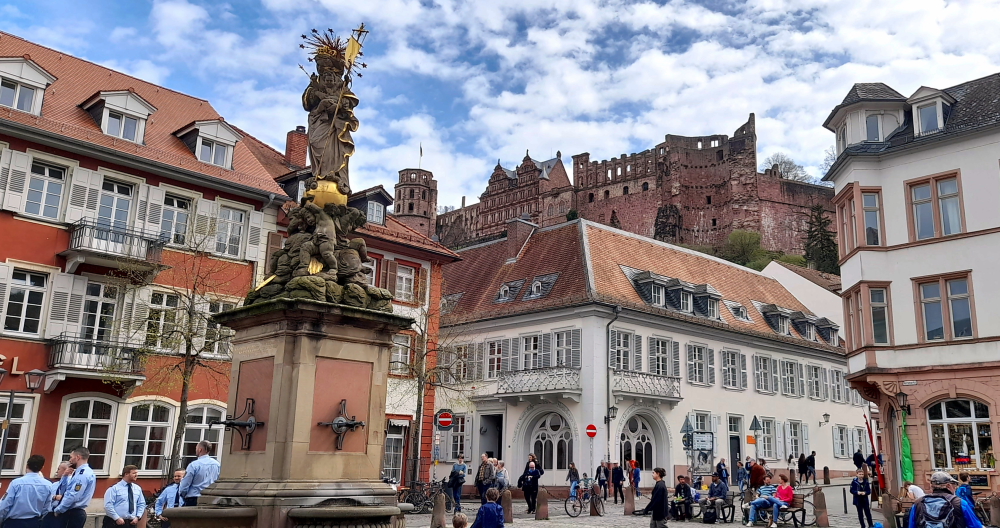
We are booked on a 2:00 pm GuruWalk and need to meet in front of the Rathaus in Marktplaz. As we arrive 30 minutes early we go for a quick wander. Yesterday, we arrived in rain and 13 Deg. C. Today it’s due to be 26 and tomorrow 27!
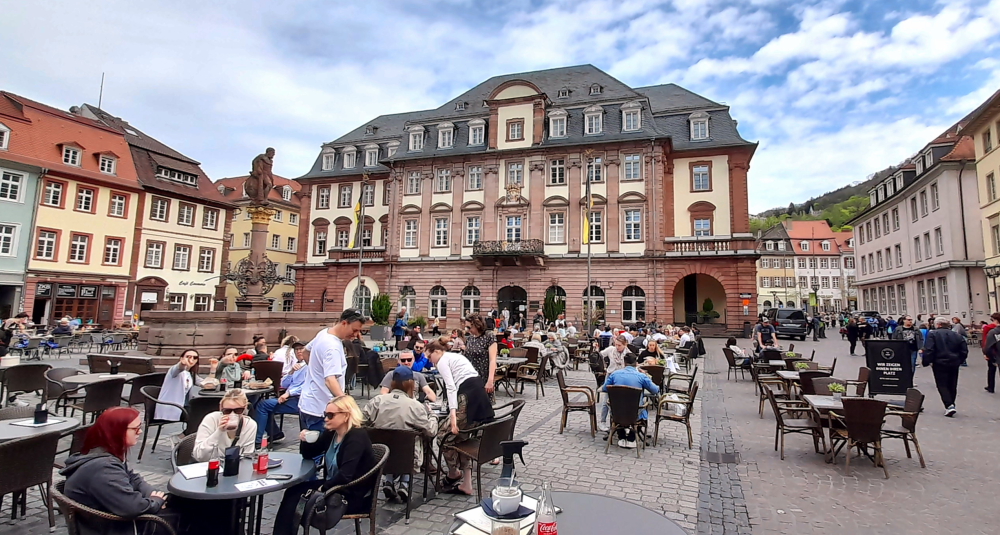
By the time 2:00 pm arrives, it has clouded over and a cold breeze has arrived. Unlike our guide – “look for a guy with a moustache” – but we find the rest of our party: Catherine, French but lives in Germany and Johanne and her husband from Canada who now live in Israel.
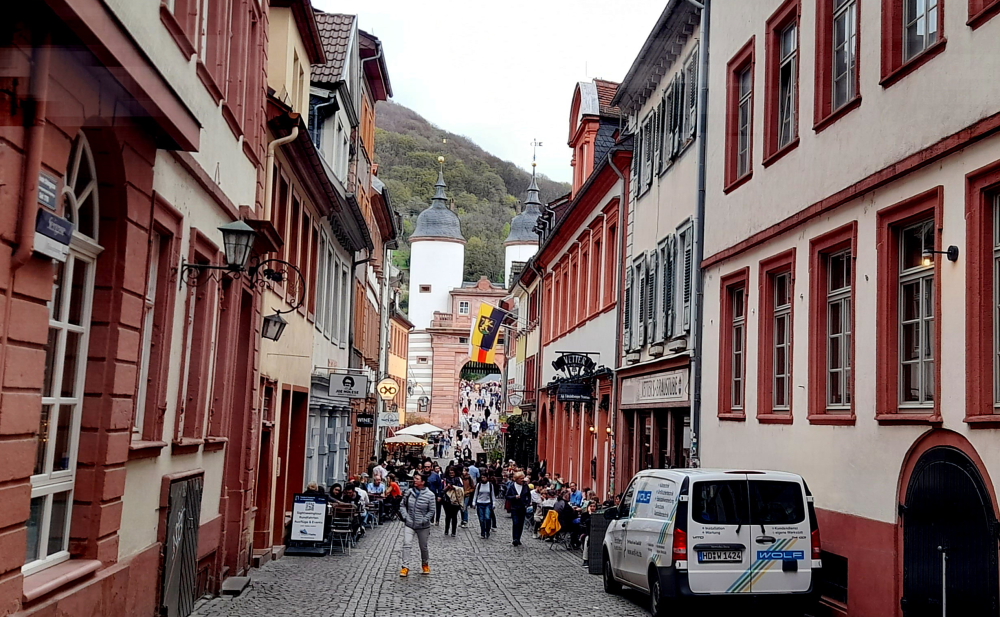
We all thought we had been communicating with our guide, Henry, a Brit who has lived in Heidelberg for 12 years, but turns out our guide today is Viktor, from Siberia, who is undertaking his PhD in this university town of Heidelberg.
Our first stop is outside the Heiliggeistkirche on Marktplatz. founding year 1398. Ludwig III laid the foundation for the later famous Palatine Library, the Biblioteca Palatina, by having the first books placed in the galleries of this church. During the reign of Louis V (1508-1544), when the most important palace buildings were also being constructed, the tower continued to be built and completed.
In the course of the Reformation, the church changed several times between Lutheran and Reformed-Calvinist denominations. In 1563, the Heidelberg Catechism emerged as the Reformed confession. With the 30 Year War and the conquest of Heidelberg by Catholic troops, the city, and the church became Catholic for many years, and as spoils of war, Pope Gregory XV had the Biblioteca Palatina brought to Rome in 1623.
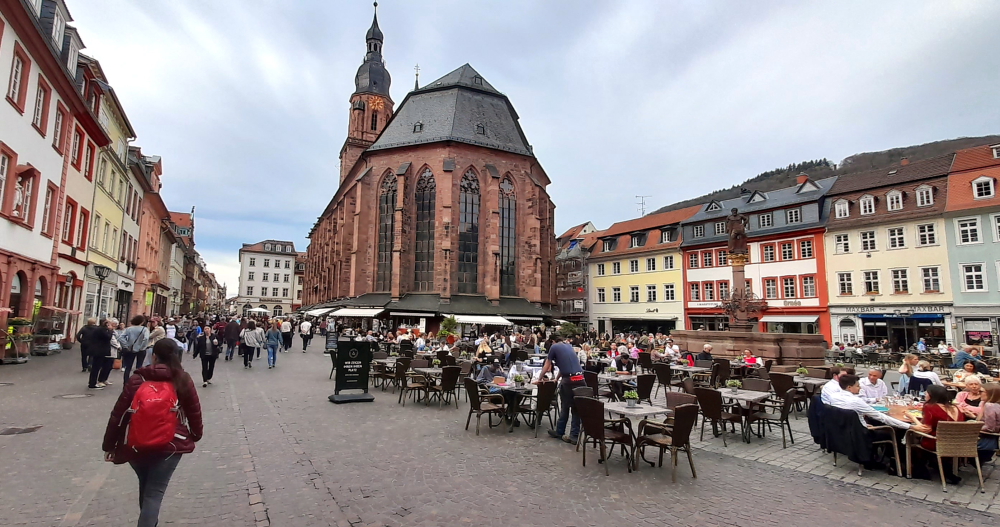
In the course of the Palatine-Orléans War of Succession, the church was severely damaged in 1693. Only the one tombstone of the Elector Ruprecht II, the founder of the church, is preserved. Of the once 5000 books and 3524 manuscripts, only 885 made it back to Heidelberg in 1816, all the rest remained in the Vatican.
In the following two centuries, both Catholics and Protestants laid claim to the church in equal measure, so that, separated by a dividing wall, Catholic mass was celebrated in the chancel and Protestant services in the nave. 1936 an agreement was reached with the Catholic Church whereby the church passed entirely into the possession of the Protestant Church in Baden [heidelberg-marketing.de].
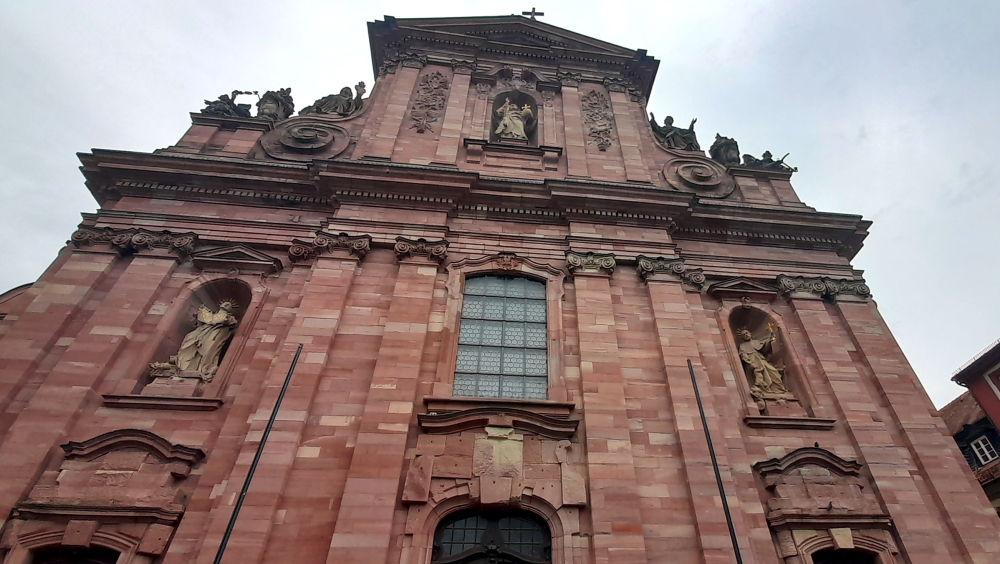
From the Marktplatz our next stop is the Jesuit Church (Jesuitenkirche). During the 16th century Heidelberg was the centre of a tug-of-war between Lutherans, Calvanists, Catholics and Protestants. The construction of the Jesuit Church began in 1712, and was built in several phases, the last one adding the tower from 1866 – 1872.
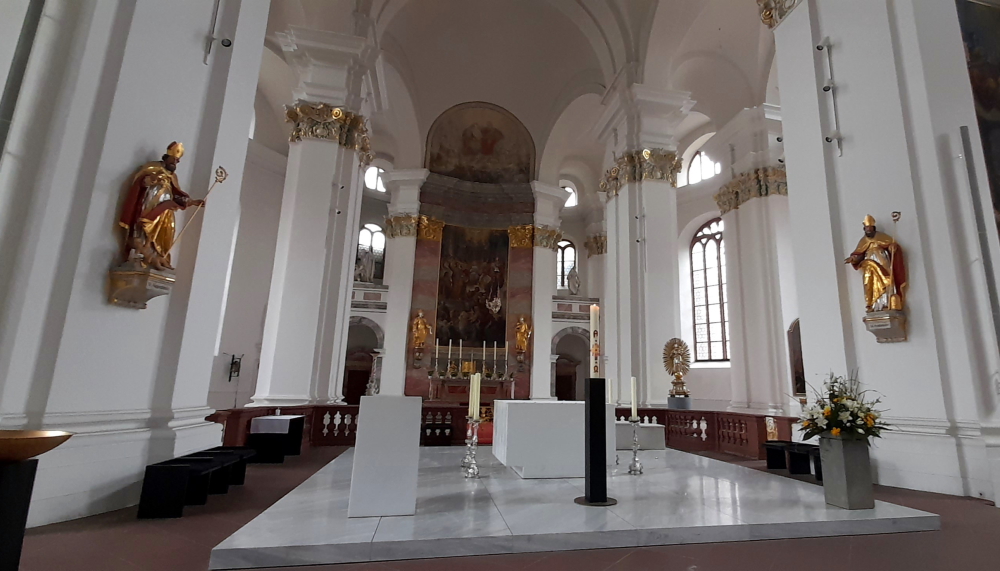
The baroque furnishings are no longer preserved today but the altar painting by the Kaulbach student Andreas Müller has been. The Elector Frederick the Victorious is buried in a crypt in the northeast corner of the church.
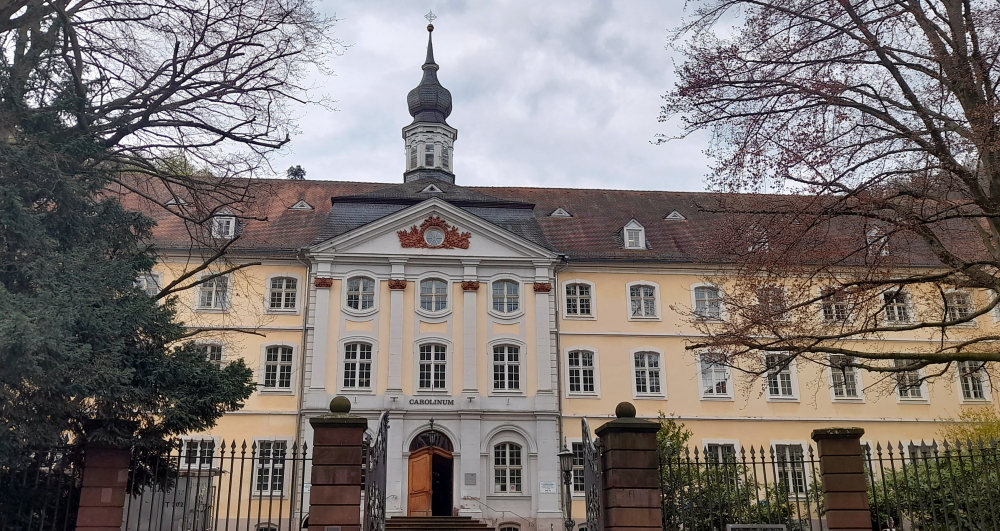
To the east of the church is the entrance to the former Jesuit college. Originally, the facilities of the Jesuits comprised a grammar school (today the Philosophical Seminary) and the Carolinum seminar, which is now used by the university administration. The church is home to the Museum of Ecclesiastical Arts (Museum für sakrale Kunst und Liturgie) [heidelberg-marketing.de].
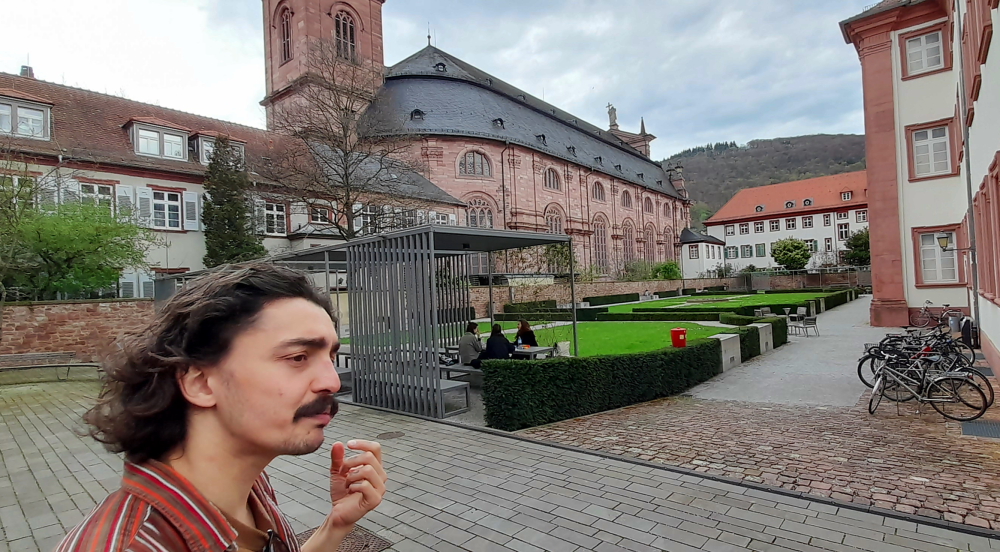
From here we walk to Karlsplatz (Karls Square) where we are treated to an unobstructed view of Heidelberg Castle. Named after Grand Duke Karl Friedrich of Baden, the square extends over the area of the Franciscan monastery, which was demolished in 1803.
Not only home to the Heidelberg Academy of Sciences and the Palais Boisserée, the Square is also home to two of Heidelberg’s oldest and best-known student pubs and several fraternity houses. Generations of fraternity students have been guests at the “Zum Seppl” inn, built in 1634, and the “Zum Roten Ochsen,” built right next door in 1703 [heidelberg-marketing.de].
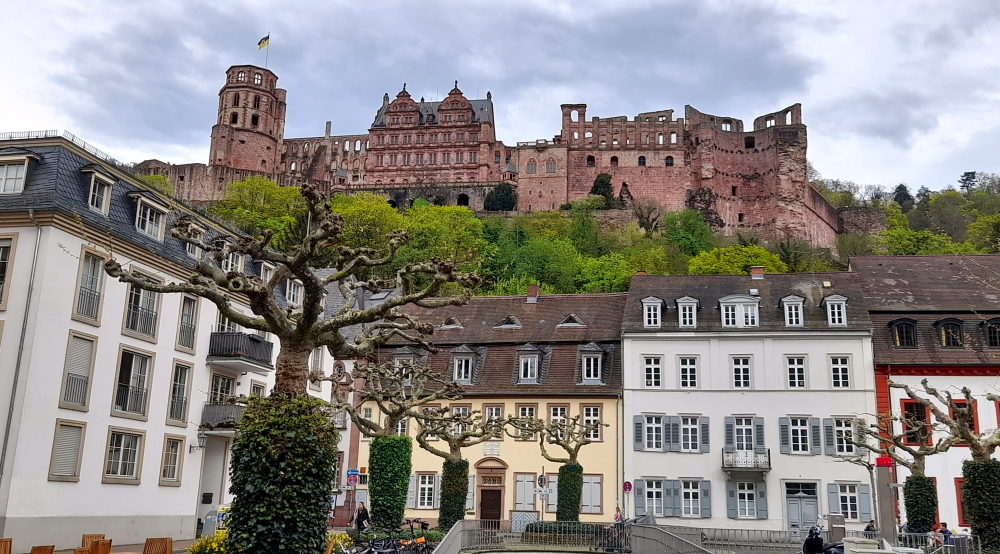
Walking towards the river we walk past the ‘salt and pepper’ pillars of the Old Bridge (which we return to after the tour) to Chocolaterie Knösel on Haspelgasse. Established in 1863, it soon became a popular meeting place among Heidelberg’s residents, male students and the young ladies attending Heidelberg’s finishing school whose governesses and chaperones were never far away.
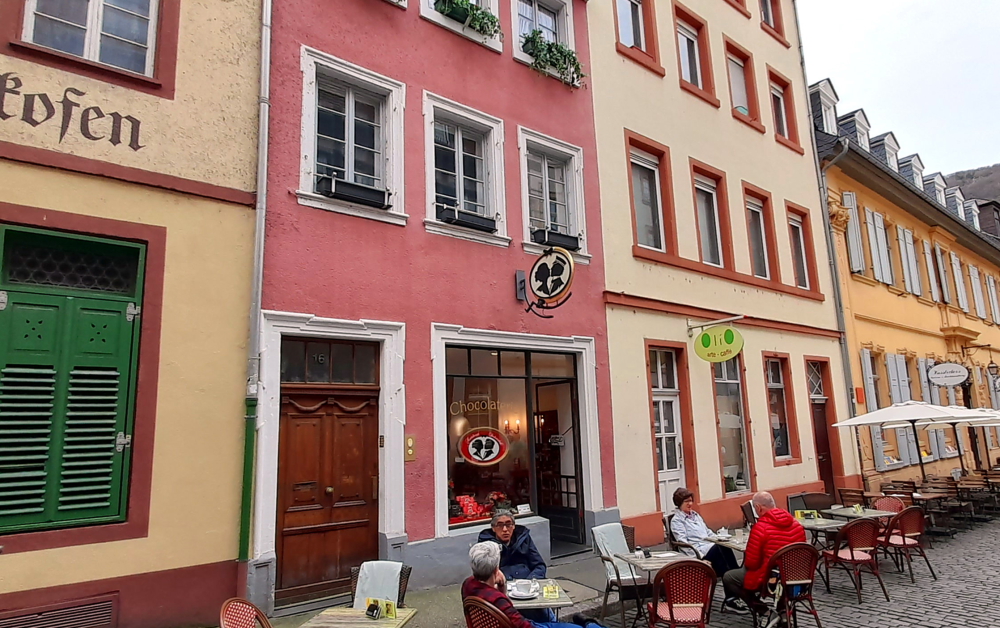
These secret longings did not go unnoticed by the chocolatier, Fridolin Knösel. One day he created a particularly delicious chocolate delight, which he impishly called the ‘Studentenkuss’. Given as a present, it was such an exquisite, gallant token of affection that not even the chaperones could object [heidelbergerstudentenkuss.de].
A short walk from here we arrive at Universitätsplatz where there is a plaque dedicated to Martin Luther. Heidelberg University played a leading part in Medieval Scholasticism, Renaissance humanism, the German Reformation, and in the subsequent conflict between Lutheranism and Calvinism during the 15th and 16th centuries.
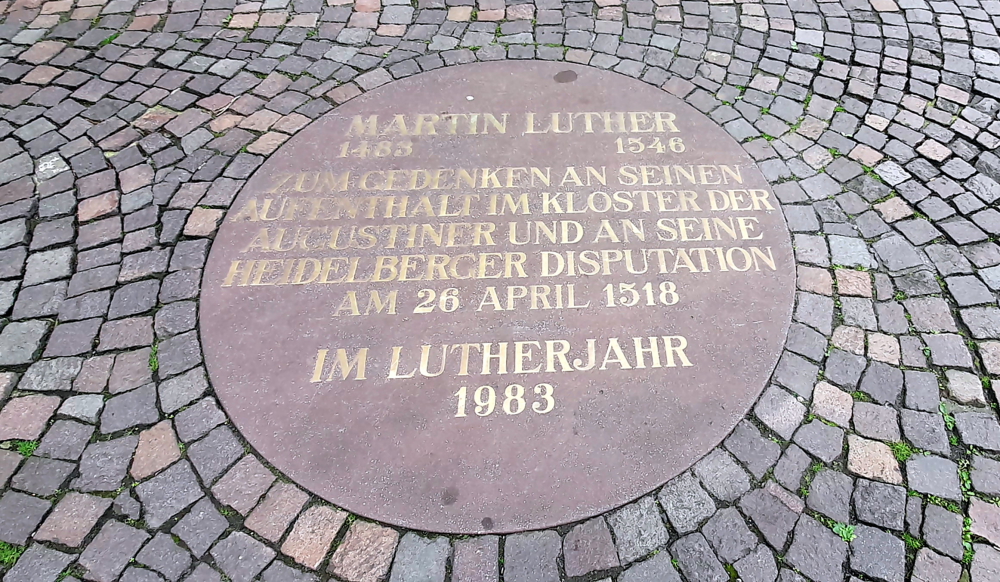
In April 1518, a few months after proclaiming his 95 Theses, Martin Luther was received in Heidelberg, to defend them.
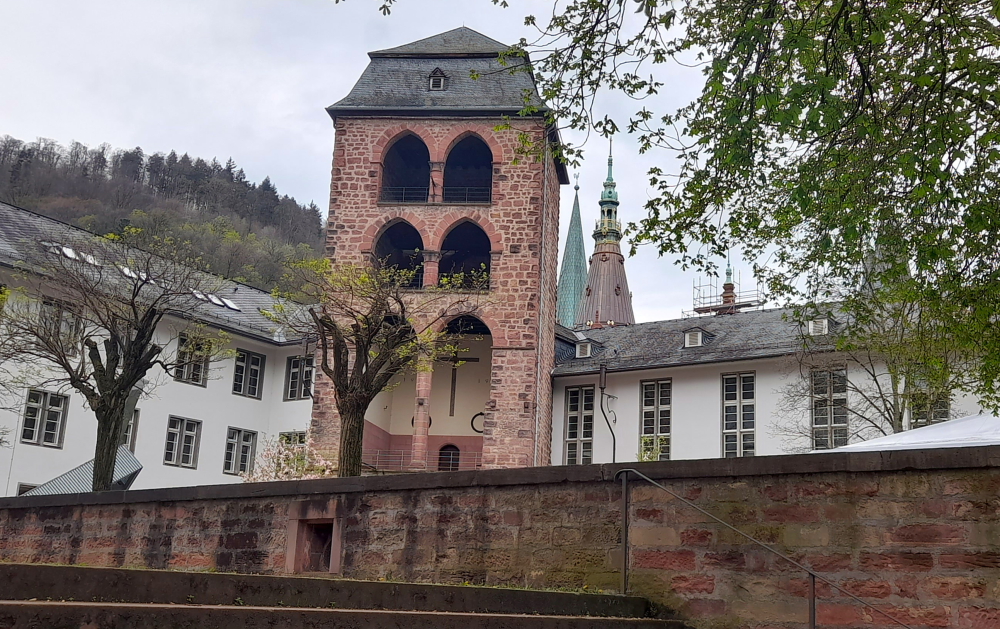
He was invited to introduce his theology at the tri-annual meeting of his Augustinian Hermits order in Heidelberg. The Heidelberg Disputation took place on April 26, 1518, in the lecture hall of the liberal arts faculty at the University.
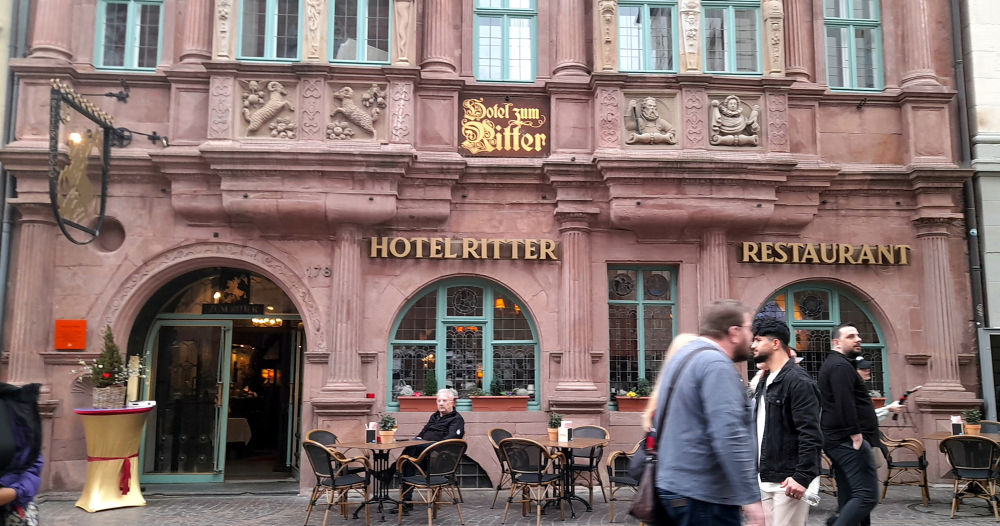
Walking up Hauptstrasse towards Marktplatz our final stop is in front of Hotel Ritter. The historic town house Zum Ritter Sankt Georg (Knight St. George) was built in the year 1592 by the cloth merchant Carolus (Charles) Belier and served as an inn already 300 years ago. It is one of the few buildings to survive the War of Succession not to mention numerous fires. Standing across from the Church of the Holy Spirit, it was built in the style of the late Renaissance. It is named after the sculpture at the top.
From here we head to the river and the iconic Alte Brucke.
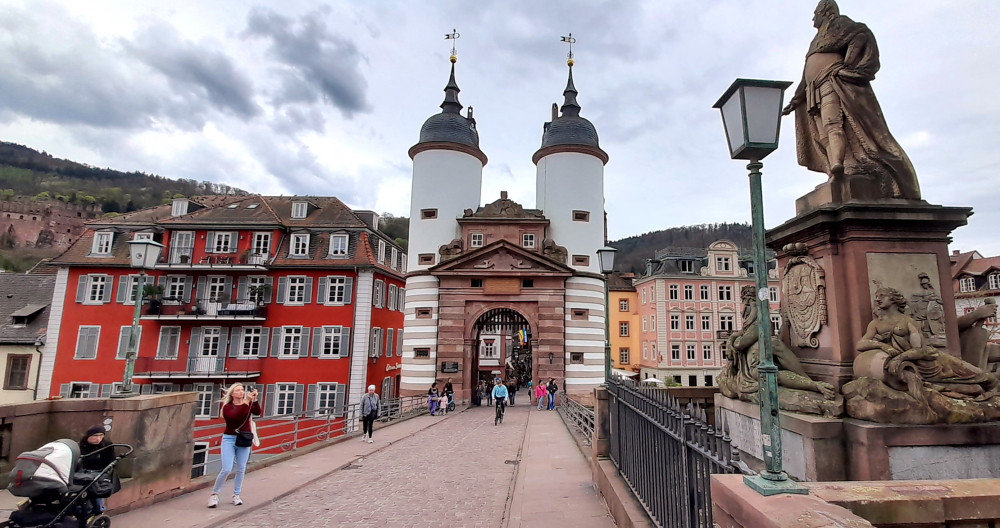
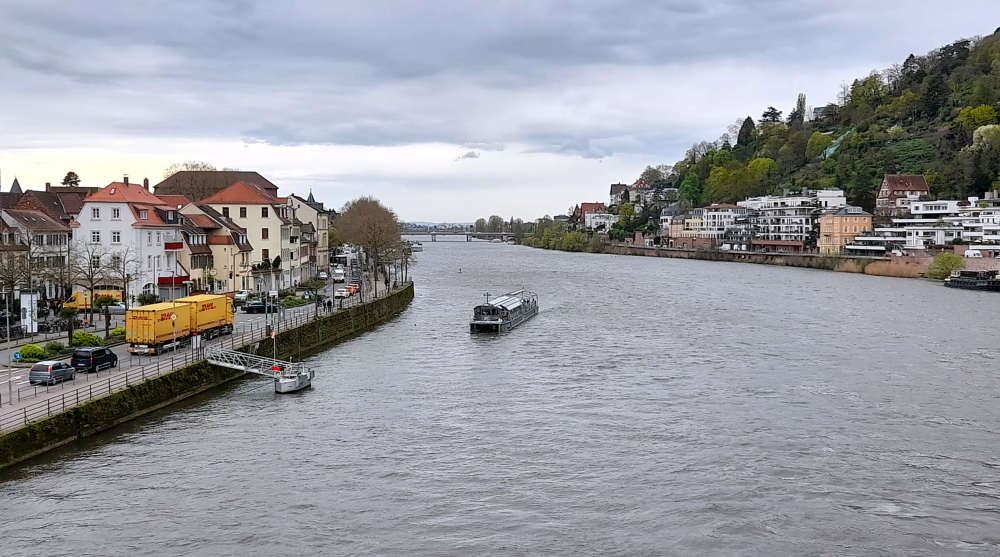
The Karl Theodor Bridge, commonly known as the Old Bridge (Alte Brücke), is an arch bridge in Heidelberg that crosses the Neckar river.
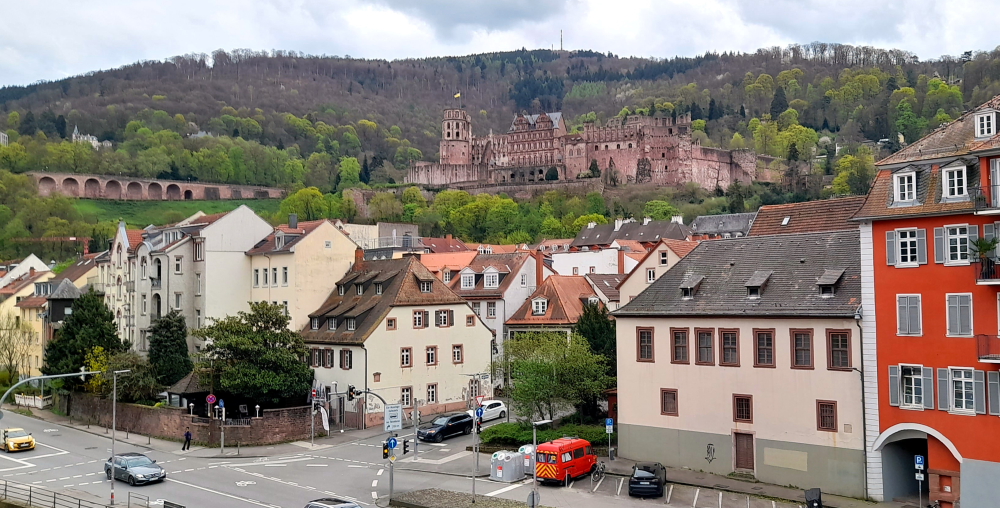
It connects the Old City with the eastern part of the Neuenheim district of the city on the opposite bank.
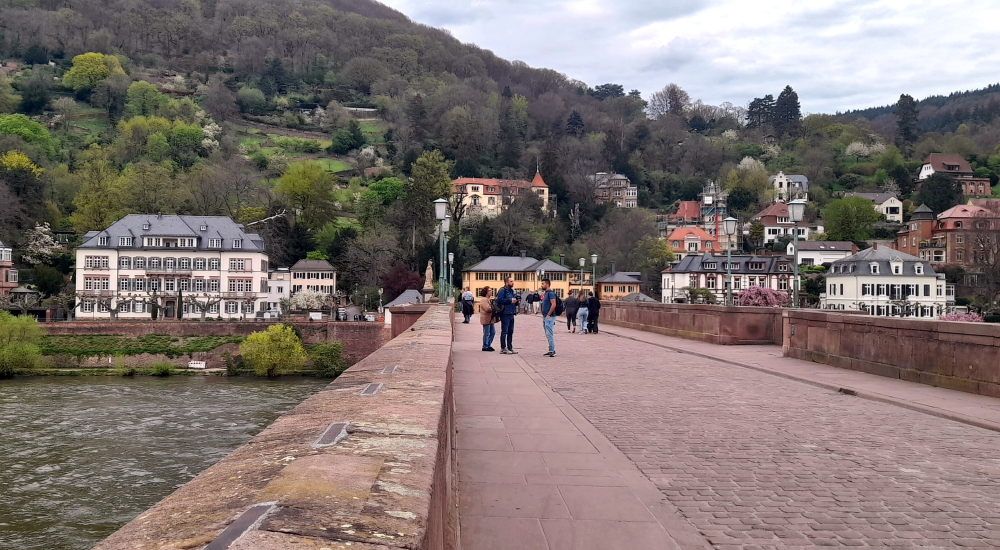
The current bridge, made of Neckar sandstone and the ninth built on the site, was erected 1786-1788 by Elector Charles Theodore, and is one of the best-known landmarks and tourist destinations in Heidelberg.
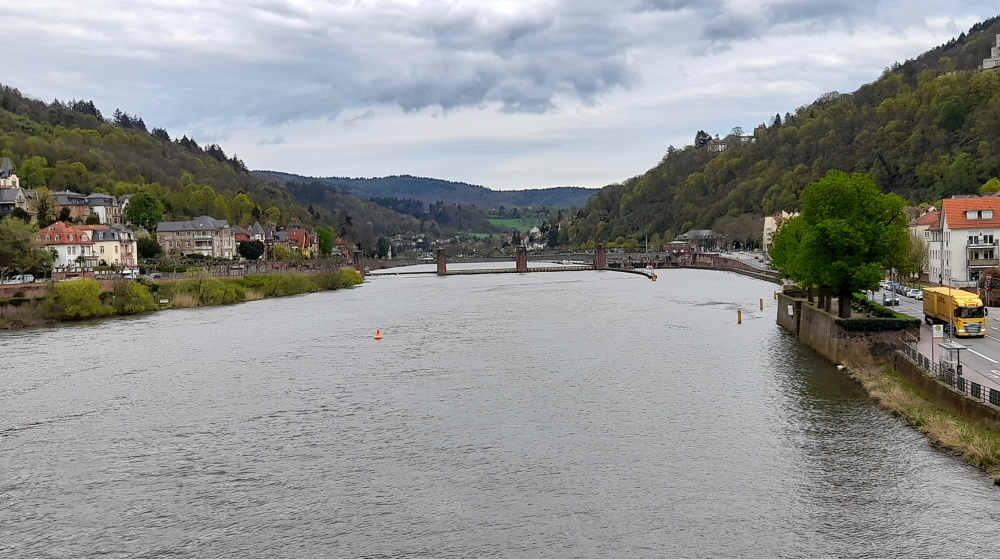
A medieval bridge gate is on the side of the old town, and was originally part of the town wall. Baroque tower helmets were added as part of the erection of the stone bridge in 1788.
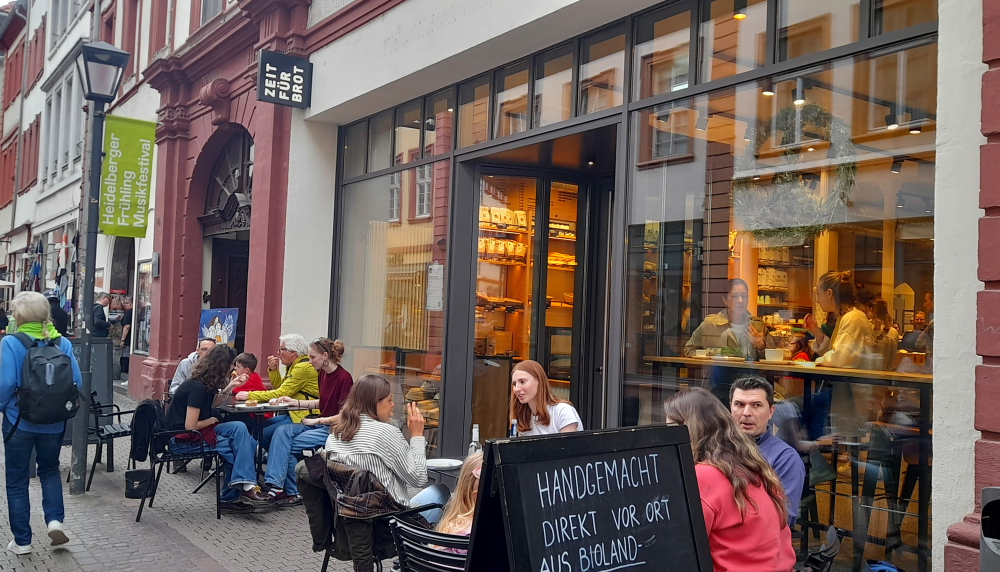
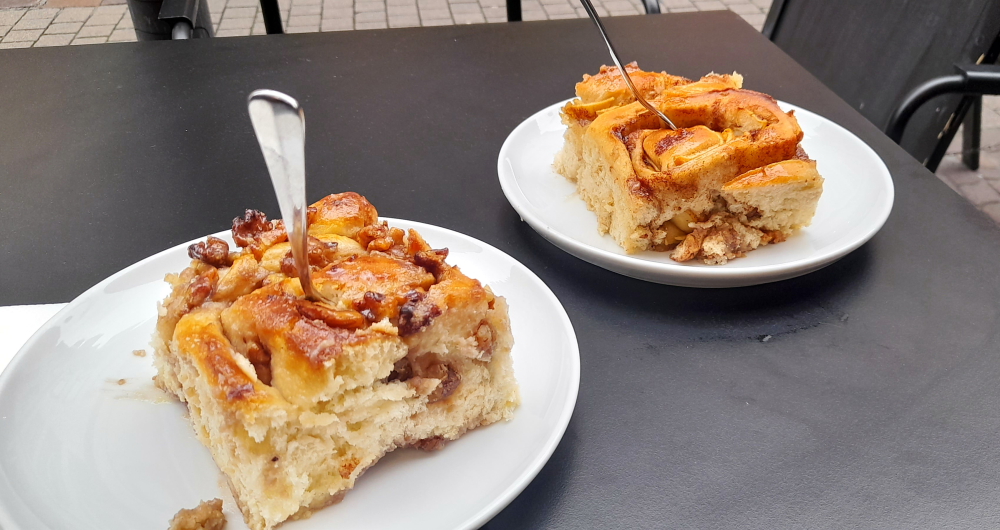
By this time we are absolutely famished so we make a beeline for Zeit Fur Brot on Hauptstrasse for a cinnamon bun each.
Then catch the No. 33 bus back to the Aparthotel.
6 April, 2024
Another 27 Deg. C. day today so around 10:30 am we catch the No. 22 tram that terminates at Bismarkplatz where we swing by a Deutsche Bank ATM before promenading along the Hauptstrasse to the Old Town.
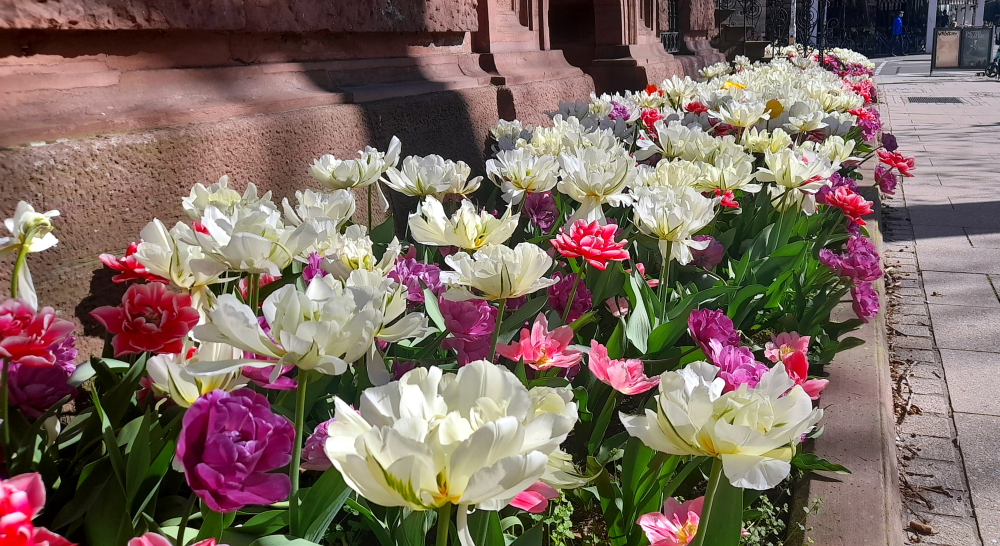
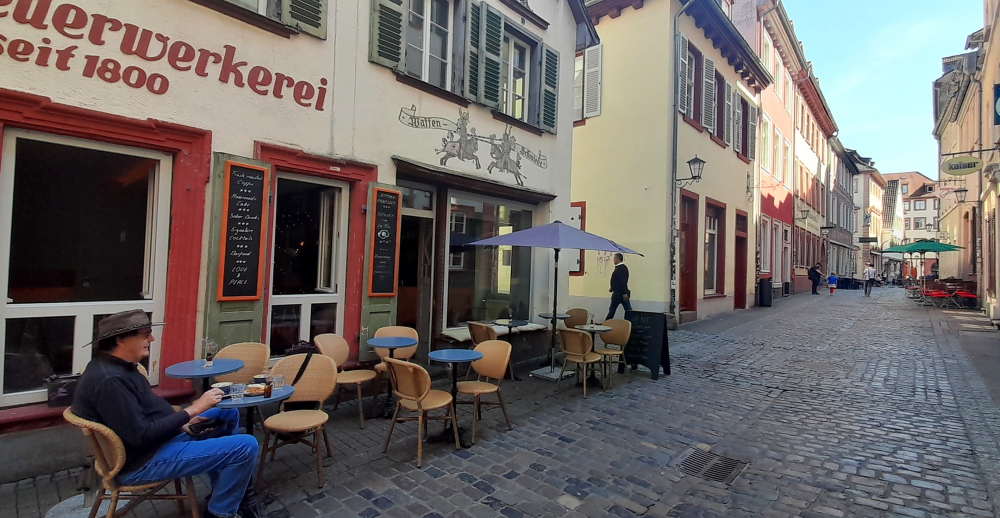
Lynn has a hair appointment at noon and as it’s 11:30 am we stop for some excellent ‘kaffee und kuchen’ at La Fee cafe, near Marktplaz. It’s a nice haven from the busy cafes and heaving Hauptstrasse just one block over.
During the 30 minutes that Lynn is under the scissors, I wander over to Station Kornmarkt to find out how to procure tickets for the funicular to Heidelberg Castle.
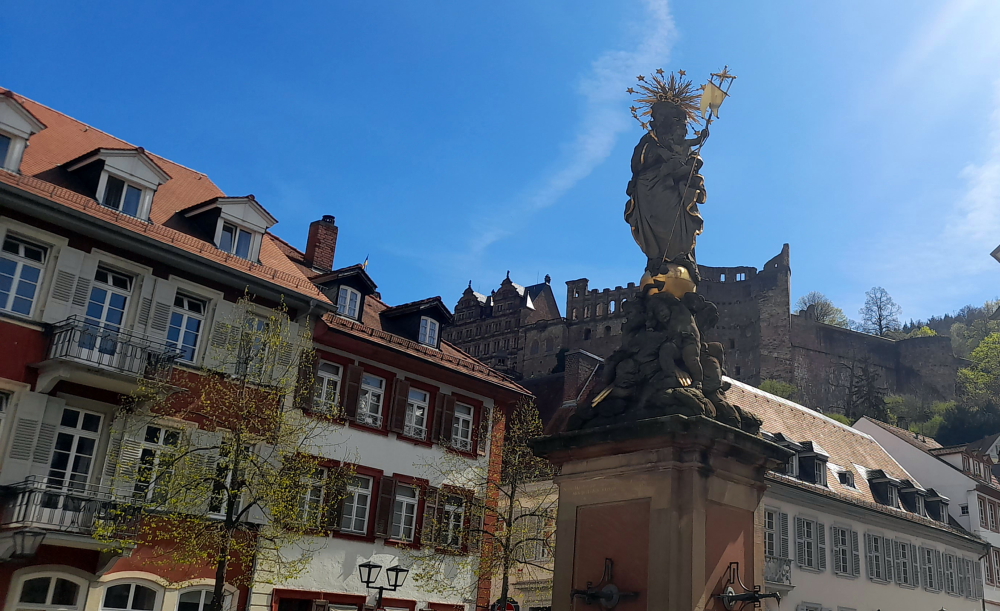
The beauty of buying the funicular tickets is that it’s for the return trip, it includes access to 2 museums within the castle and I can buy it from an English-speaking ticket machine with a credit card and without having to wait in a queue. Result!
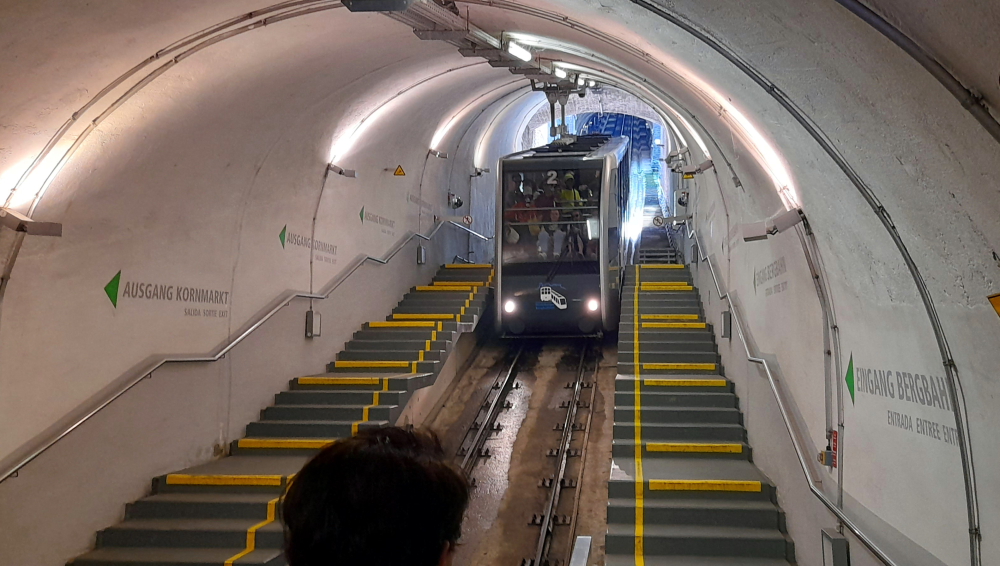
As soon as Lynn arrives we walk through the barriers and within a couple of minutes a car arrives. The Heidelberger Bergbahn funicular railway runs from Kornmakt to the summit of the Königstuhl via the castle. We get off at the Castle stop.
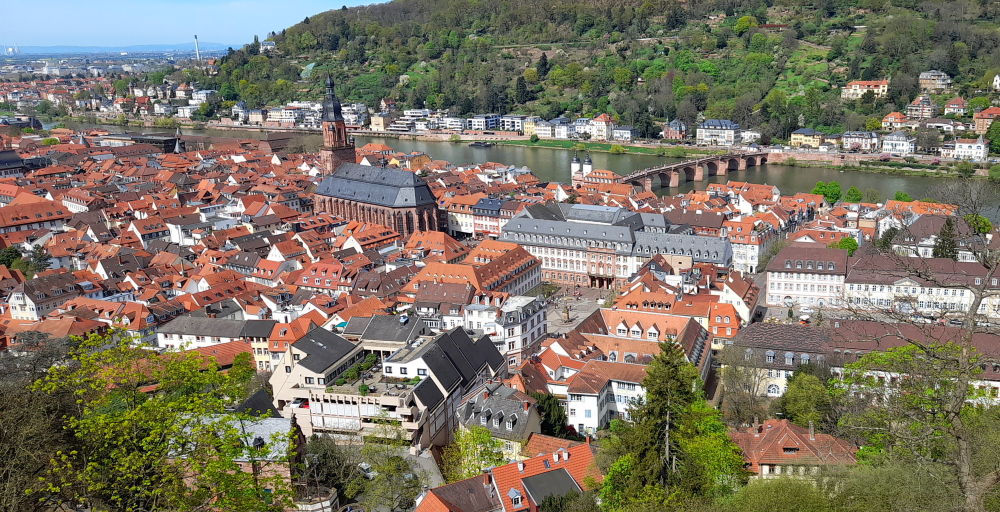
Needless to say the Castle and its grounds are busy and by the time we leave some 3 hours later it’s absolutely heaving.
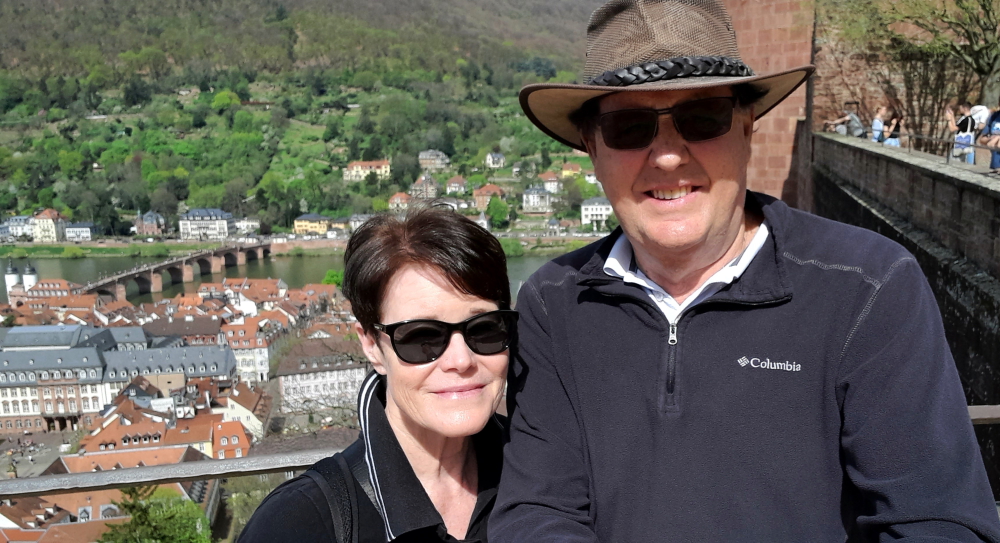
Towards the entrance to the Castle is the Elizabeth Tower (Elisabethentor). Built in 1615 by the French engineer and garden architect Salomon de Caus in the style of a Roman triumphal arch, and renovated in 1951.
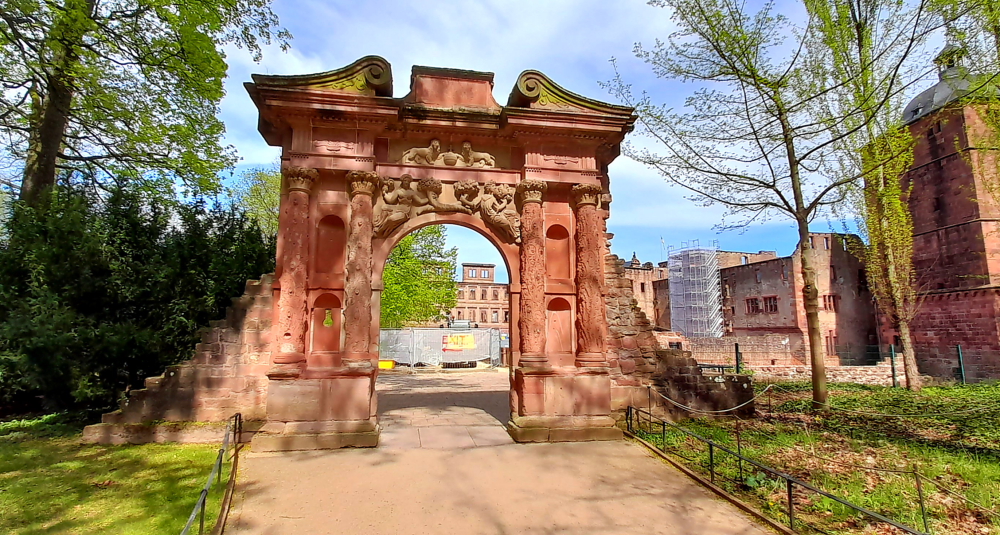
Built in only 1 night by Kurfurst Friedrich V (1610-19) for his spouse Elisabeth Stuart as a birthday present, originally integrated in the ornamental garden on the raised bulwark, the “Stuckgarten”.
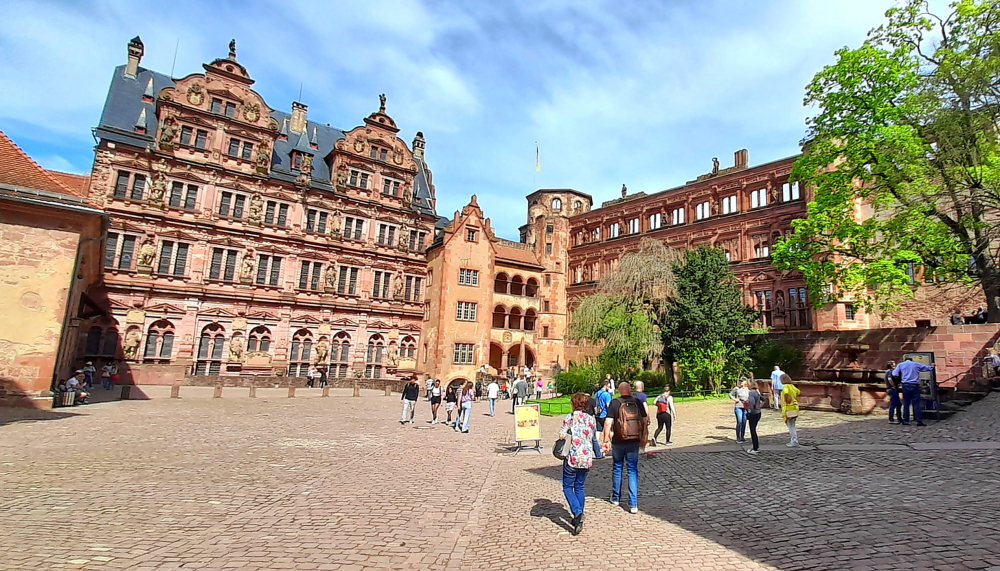
The castle is a mix of styles from Gothic to Renaissance. Prince Elector Ruprecht III (1398–1410) erected the first building in the inner courtyard as a royal residence.
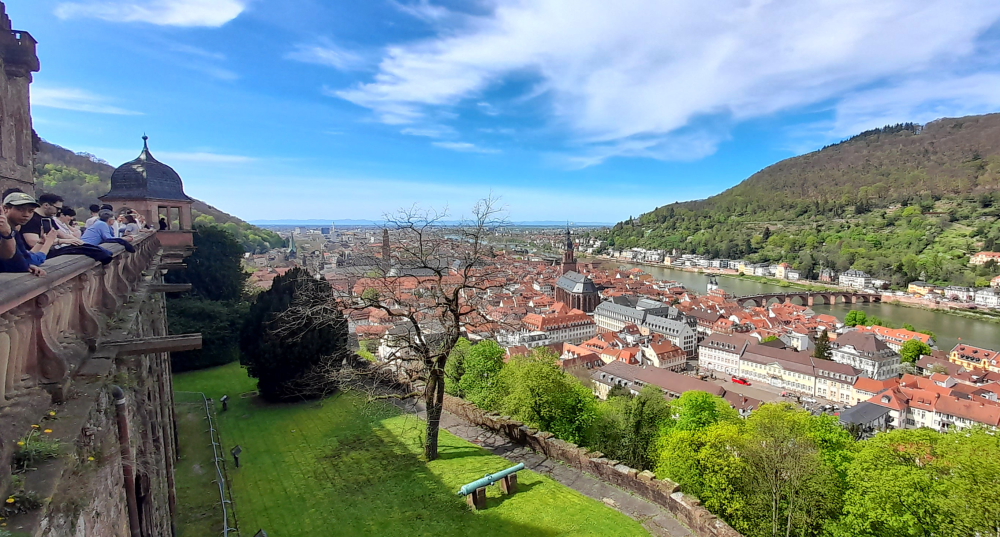
In the 16th and 17th centuries, the Prince Electors added two palace buildings and turned the fortress into a castle.
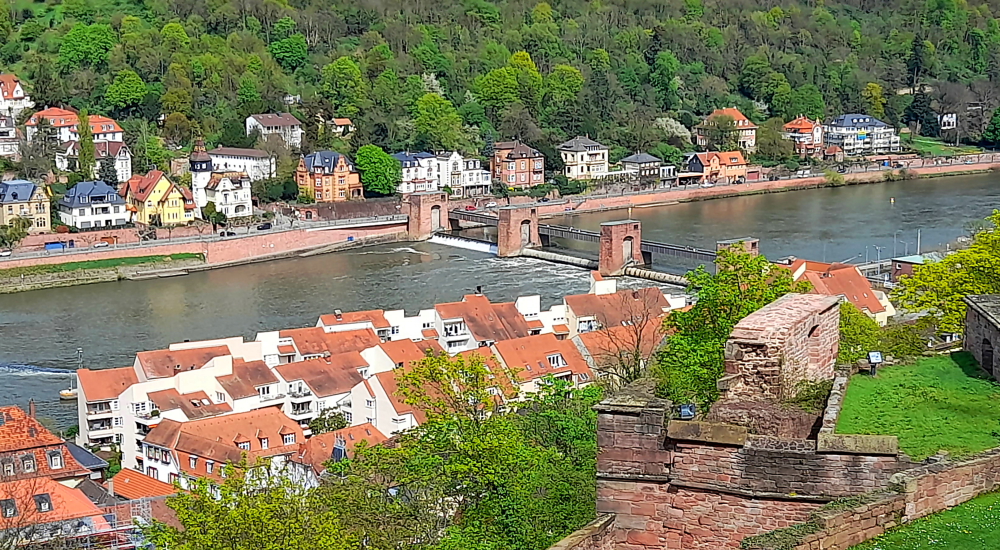
The two dominant buildings at the eastern and northern side of the courtyard were erected during the rule of Ottheinrich (1556–1559) and Friedrich IV (1583–1610). Under Friedrich V (1613–1619), the main building of the west side was erected, the so-called “English Building”.
Prince-Elector Friedrich V had the Hortus Palatinus, a representative palace garden, installed between 1616 and 1619. Grottoes, ornate beds, intimate garden alcoves, and “magical machines” were planned across staggered terraces, for the pleasure of courtly society. However, today, it is uncertain how many of the plans were implemented. In the western area of the palace grounds, old fortifications gave way to the garden. The Artillery Garden was built here as a walled-in, private pleasure garden for Electress Elizabeth.
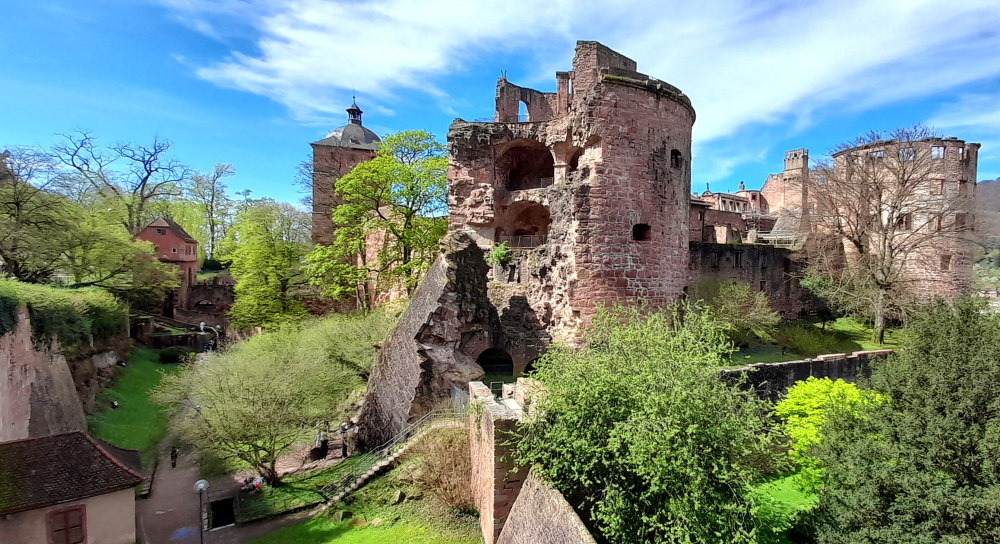
The castle and its garden were destroyed several times during the Thirty Years’ War and the Palatine War of Succession. As Prince Elector Karl Theodor tried to restore the castle, lightning struck in 1764, and ended all attempts at rebuilding.
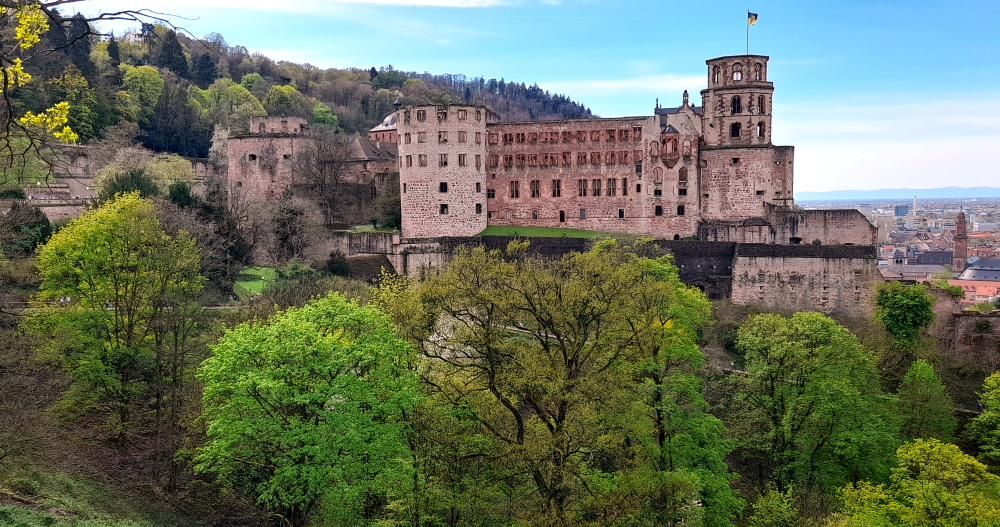
Later on, the castle was misused as a quarry; stones from the castle were taken to build new houses in Heidelberg. This was stopped in 1800 by Count Charles de Graimberg, who then began the process of preserving the castle.
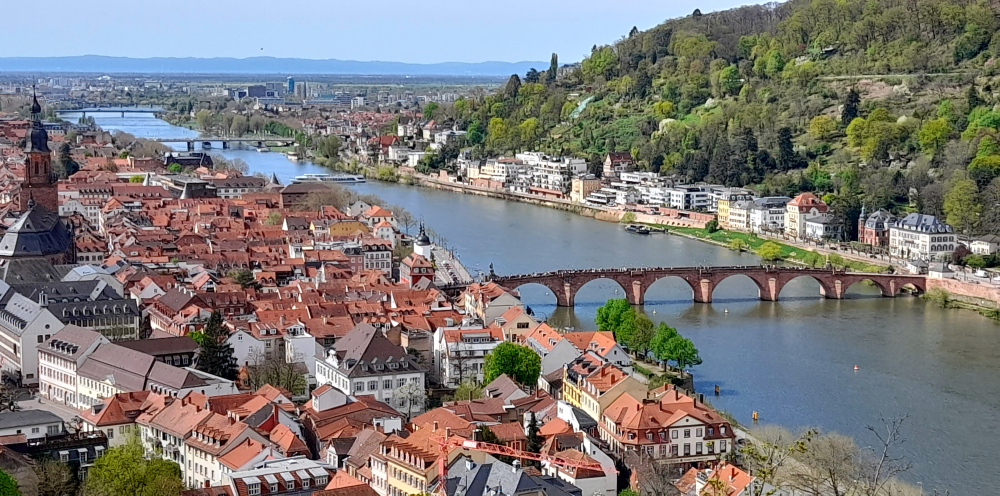
The castle is surrounded by a park, Schlossgarten, where the famous poet Johann von Goethe once walked. A bronze bust next to a large, stone bench are in his honour.
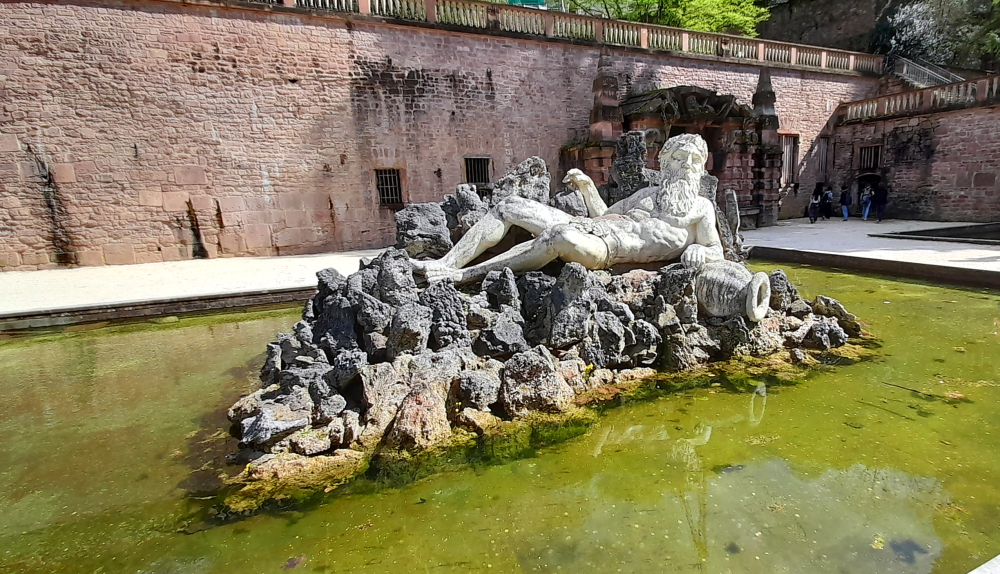
At 2:45 pm we join the queue to get back onto the funicular to ascend 1 more stop to the Molkenkur station.
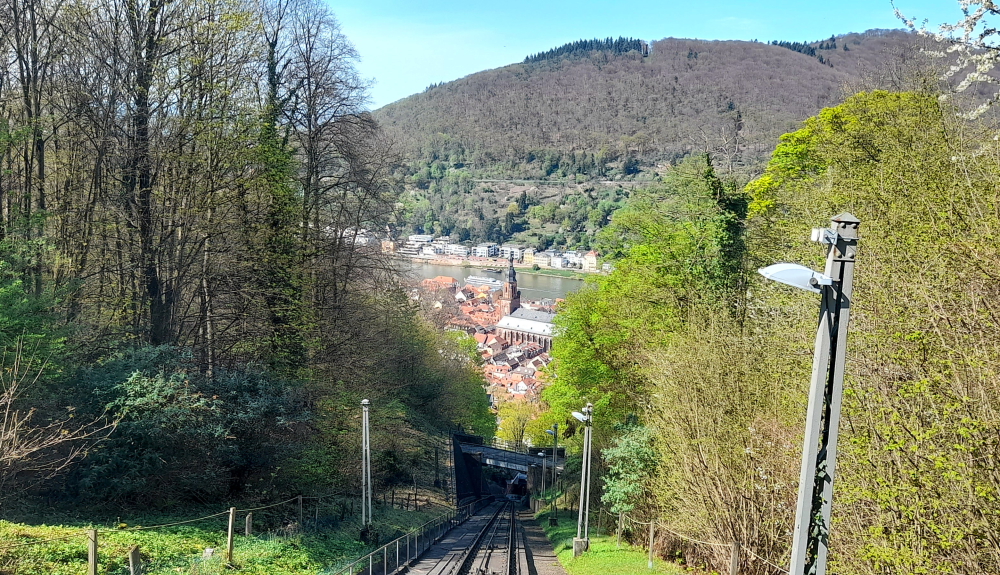
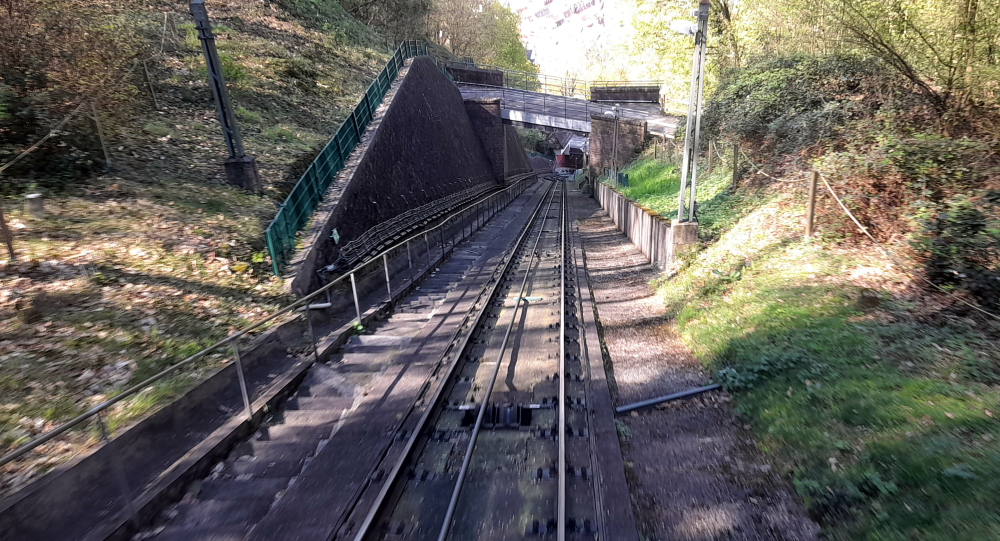
From there, one of the oldest electrically-operated mountain railroads continues to the King’s Chair (Konigstuhl), the highest point in the city, at an altitude of over 550 metres. But, the waiting time to get this train is over an hour so we stay in the car and ride it back down to Kornmarkt Station.
One of Viktor’s restaurant recommendations is the “Schnitzelbank” on Bauamtsgasse, a 10-minute walk towards Bismarkplatz. Excellent choice!
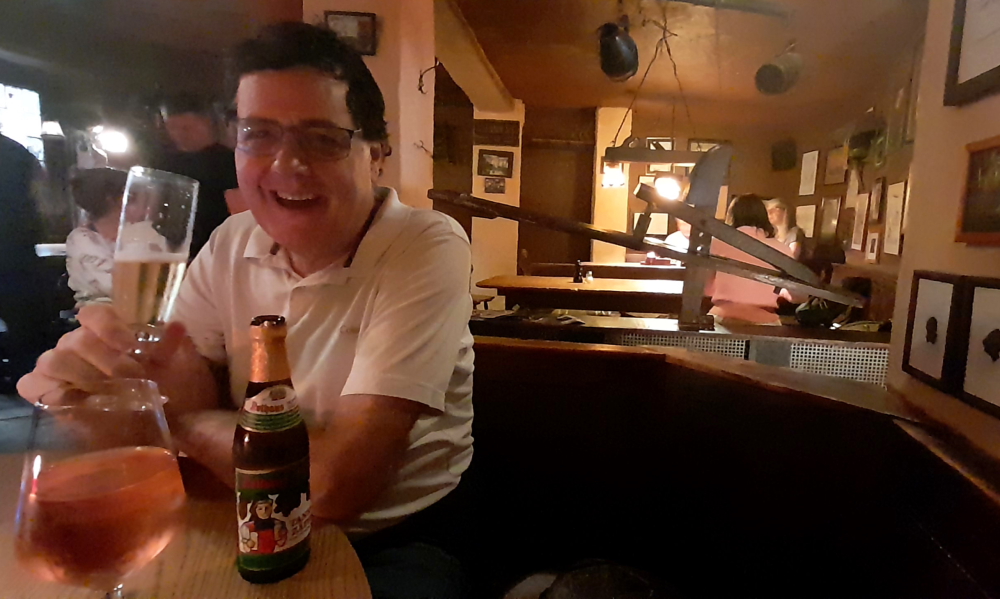
It turns out to be a hole-in-the-wall tavern. A small, rustic wine bar steeped in history, established in 1882 as a cooper’s workshop that made barrels for the local winemakers then became a bar in 1900. Indoors it’s very snug with a few former wooden workbenches for tables to share and old workshop tools for decoration. It offers authentic dishes from Baden and the Pfalz region. Outdoors there are a few tables on the pavement. Besides kitchen staff who we don’t see but hear above banging away at schnitzels, it’s run by 2 great guys who work in an impossibly small serving area with a dumb-waiter and a dishwasher.
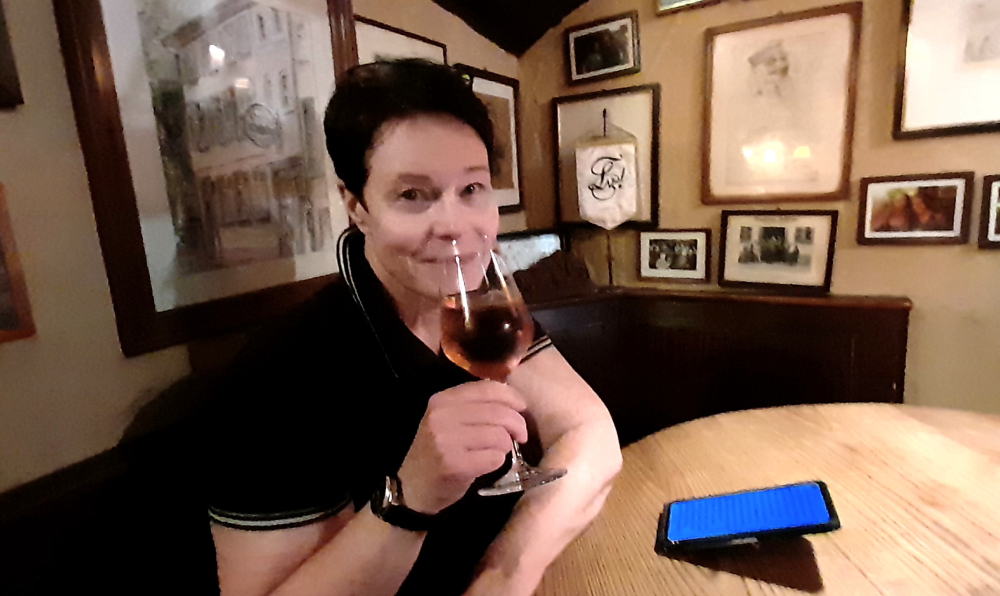
We opt for the cool interior after walking around in the sun the past few hours. As it’s around 3.30 pm we get a table to ourselves and indulge our taste buds with delicious classic schnitzel dishes accompanied by salad, potatoes and noodles, washed down by a chilled pils and a semi-dry rose.
When I ask my standard question to one of the waiters whether there is WiFi, he chuckles and says, “Sorry. You’re here to eat, drink and talk!”
Time to walk back to Bismarkplaz and catch a No. 22 tram to the Aparthotel. While Lynn goes to the local Alnatura supermarket I put on a couple of loads of laundry. Long story short, the hotel’s guest laundry is busy (including a hotel guest who doesn’t understand the WeWash app and tries to highjack our washing machine, mid-wash!) and by the time the tumble dryer finishes its 2.5 hour cycle (!) it’s midnight.
7 April 2024
Another sunny, 24 Deg. C. day. Thanks to the late night we have a late start to the day which is taken up with ironing, packing and catching up on 2 days of blog.
Tomorrow we drive 275 km over 3 hours to a self-catering holiday home in Altenburg, Germany which is just down the road from Rheinfall, Switzerland, for a couple of days.
8 April, 2024
By the time we hit the road at 11:00 am it has clouded over but it’s 26 Deg. C. Originally we were going to take the 5, 8, 81 roads past Stuttgart to the Swiss border but just before we are to take the 8, I get a traffic notification that there is a 17-minute tailback so we continue on the 5.
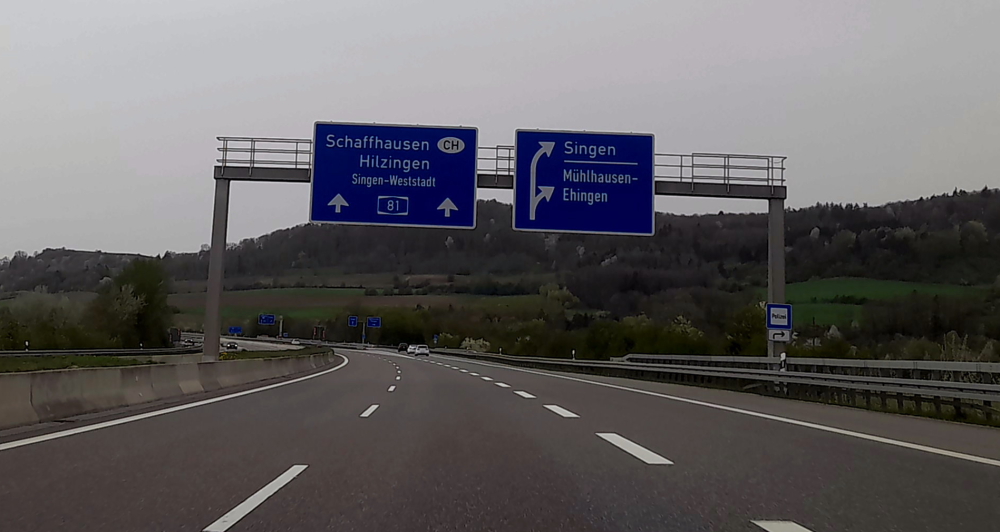
The GPS ends up taking us to Freiburg im Breisgau, over some hills to join the 81 just outside of the border – an extra 60 km and an extra hour. Which is why I love German autobahns with no speed limits. Got the Insignia up to 161 kph!
In the meantime it starts to rain and I discover that the left windscreen wiper blade is disintegrating. Now, it would have been useful to have found this out yesterday as our hotel was directly over the road from an Opel dealership!
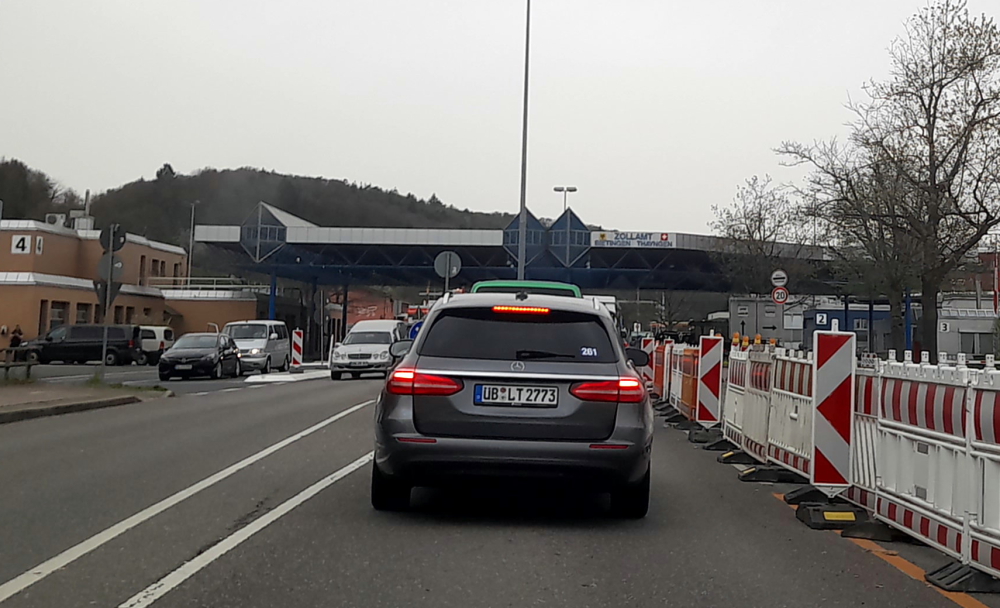
Although there are plenty of Swiss border guards at the barrier the booths are unmanned so we drive through and stop immediately at a cash point to purchase our mandatory highway vignette for Eu40 and stick it on the windscreen. They are valid for 14 months from 1 December of the preceding year through to 31 January of the following year – i.e. ours will expire on 31/01/2025.
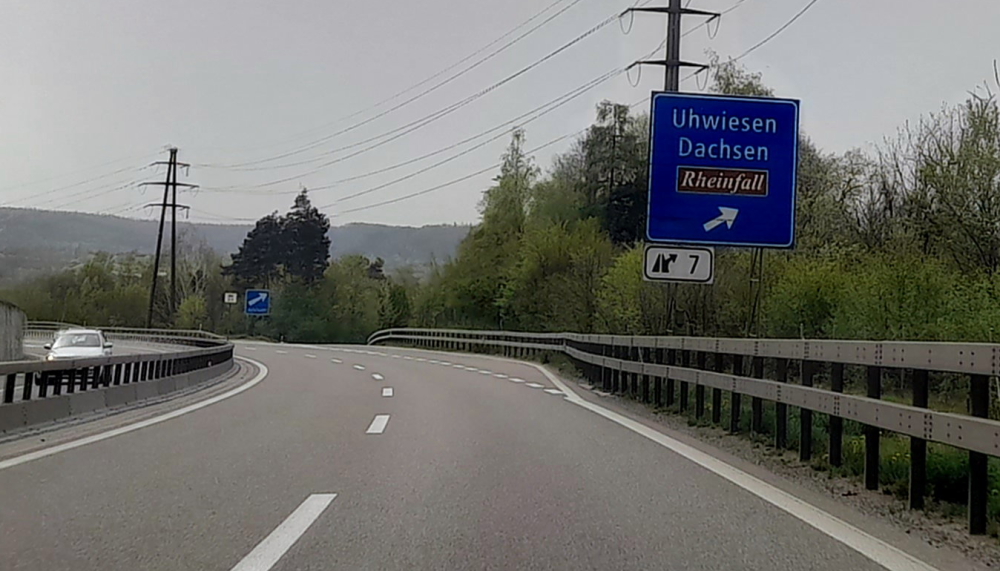
Also, our original plan in staying at Altenburg for 2 days was to visit the awesome Rheinfall but as the weather forecast is to change tomorrow to over 90% rain and the temperature to drop from 26 Deg. C to 14, we decide to call in on our way.
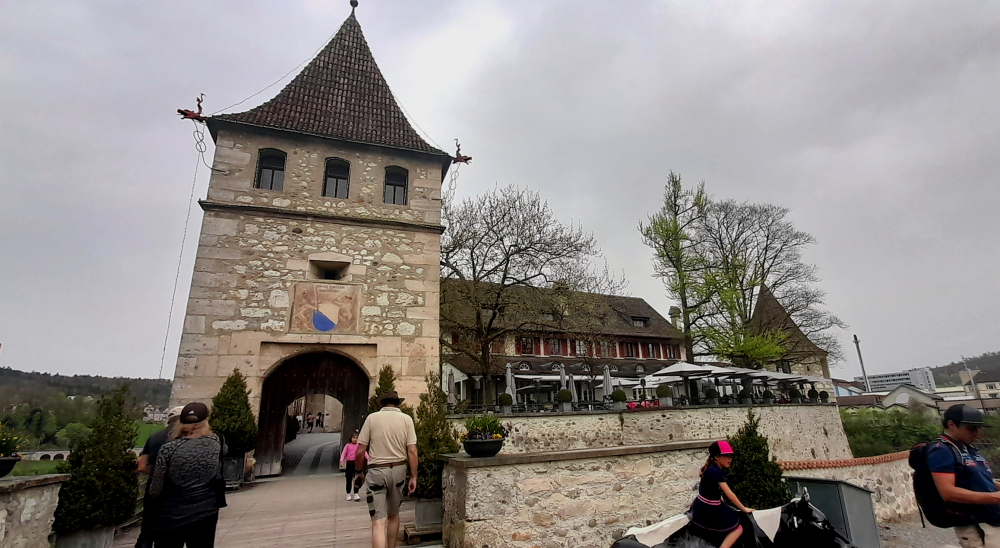
When I was last here around 2005 it was free to view this amazing natural phenomenon. Now, it’s CHF5 for parking and CHF5 each to go through the turnstile!
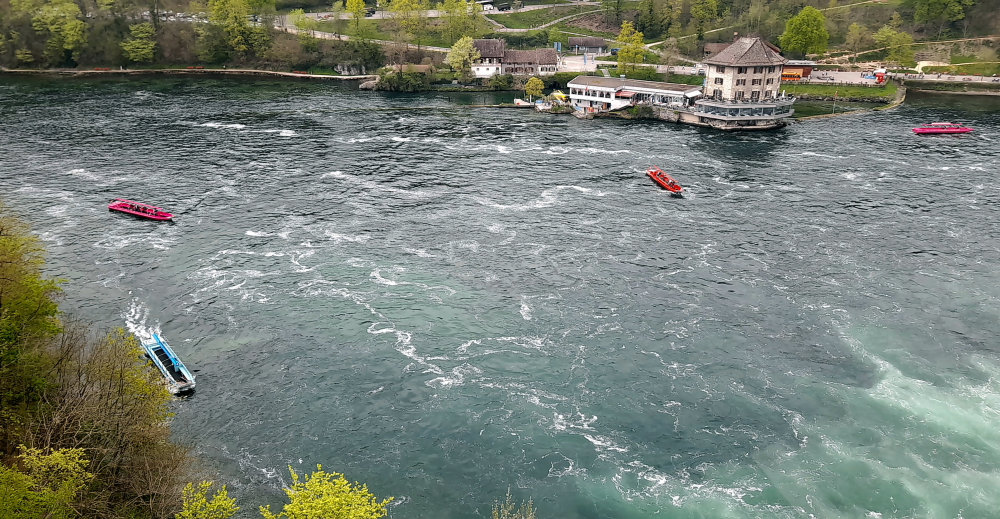
And, last time there were no boats. Now there are several that embark from the opposite side of the river and either motor to the base of the falls or one will actually drop you off at the rocky outcrop mid-stream.
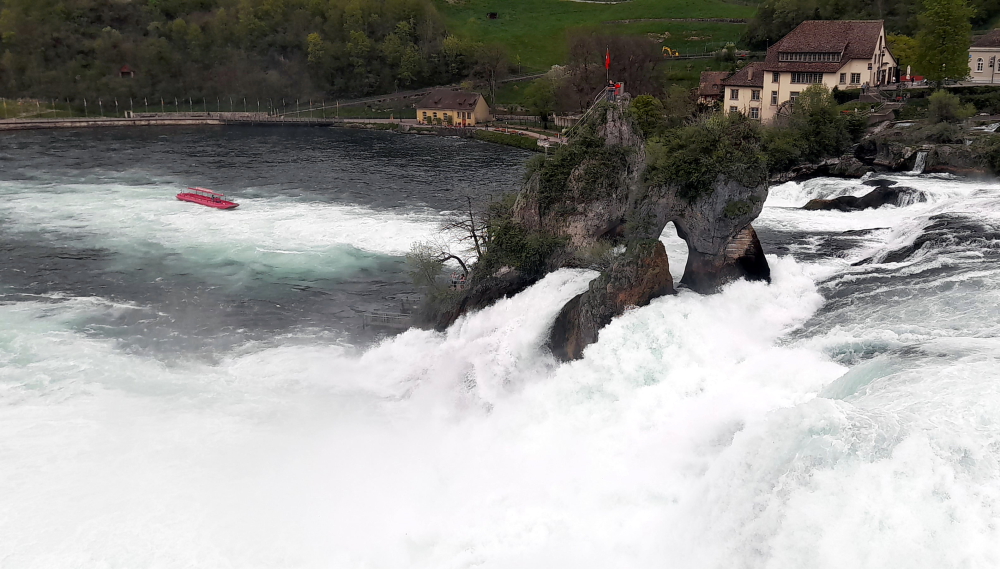
Honestly, this place is becoming just like the Niagra Falls’ experience, but with smaller boats!
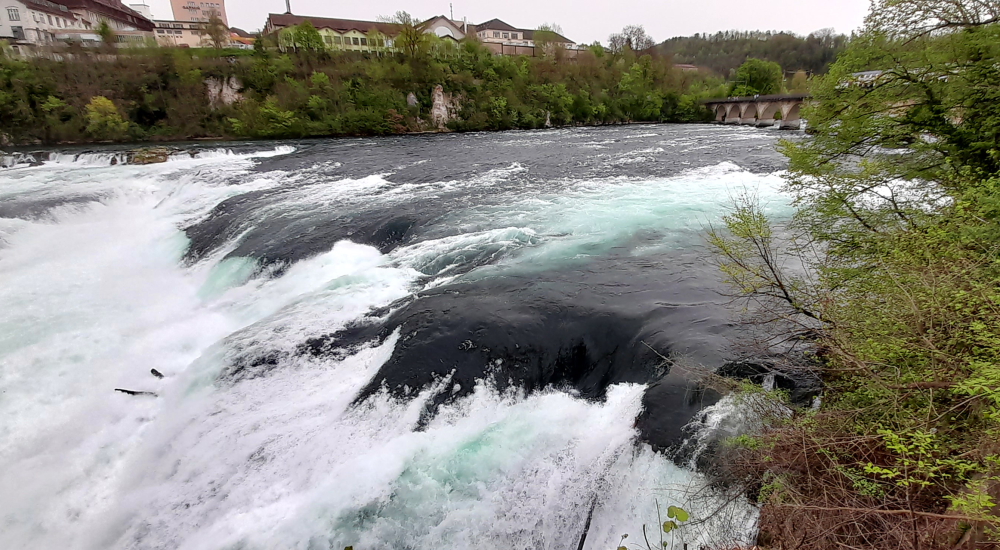
The Rhine Falls, formerly also called Grosser Laufen, located 4 km SW below the city of Schaffhausen, is one of the 3 largest waterfalls in Europe.
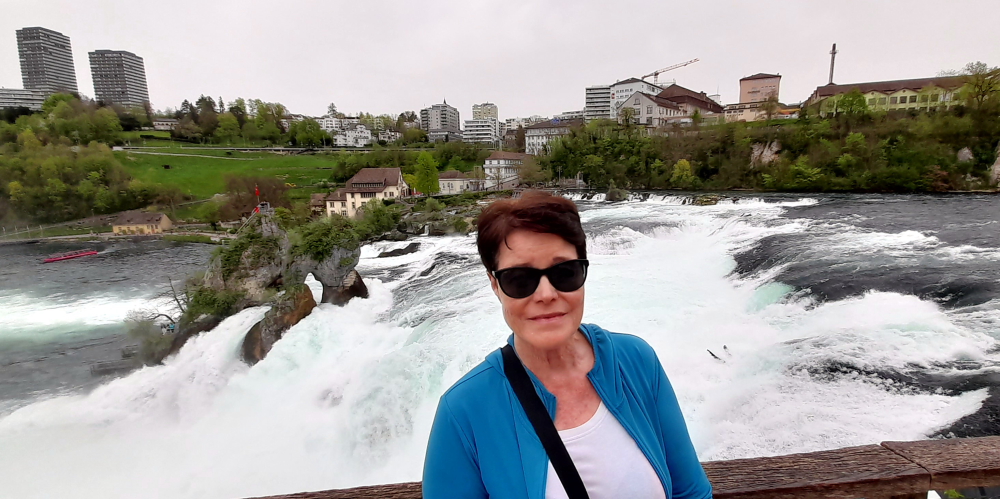
The others are The Sarpsfossen in Norway, which is equally high, and the Dettifoss in Iceland, which is twice as high. The Sarpsfossen has an average of 577 m³/s with more water, while the Dettifossen only has about half as much water.
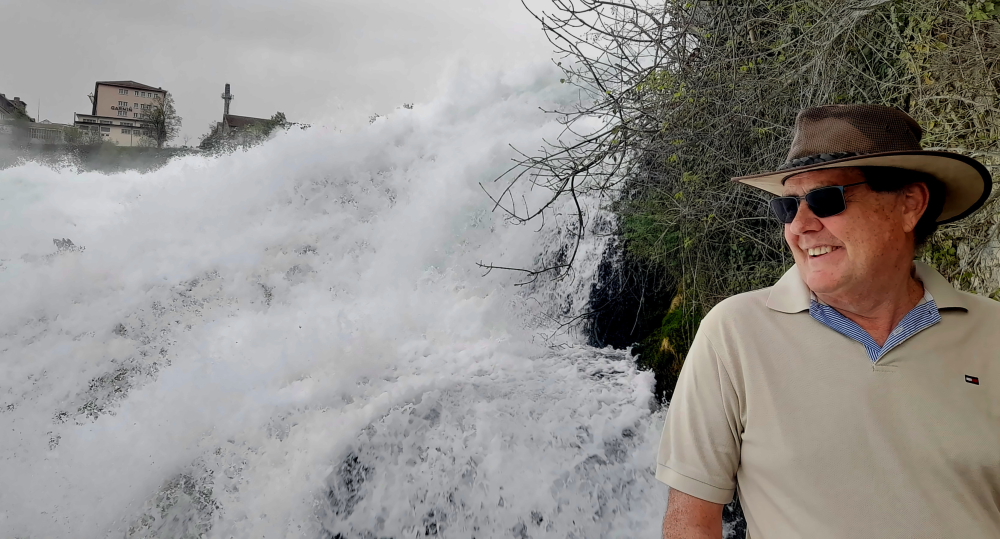
The reason we are here today is because we gave the one in Norway a miss as it was too far off our route to view it, when we could so easily come here.
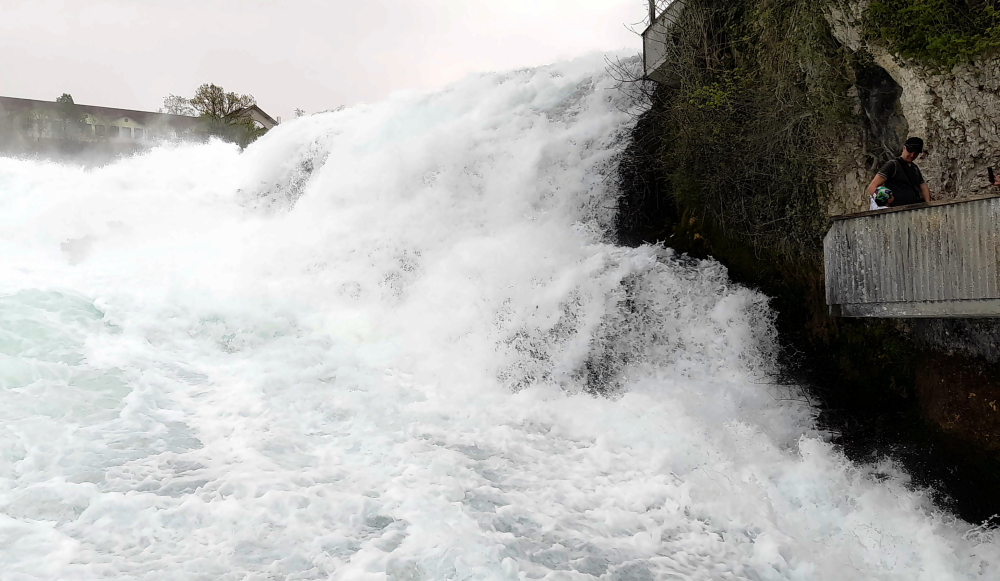
The Rhine Falls is 23 metres high and 150 metres wide. The scour in the impact zone is 13 metres deep.
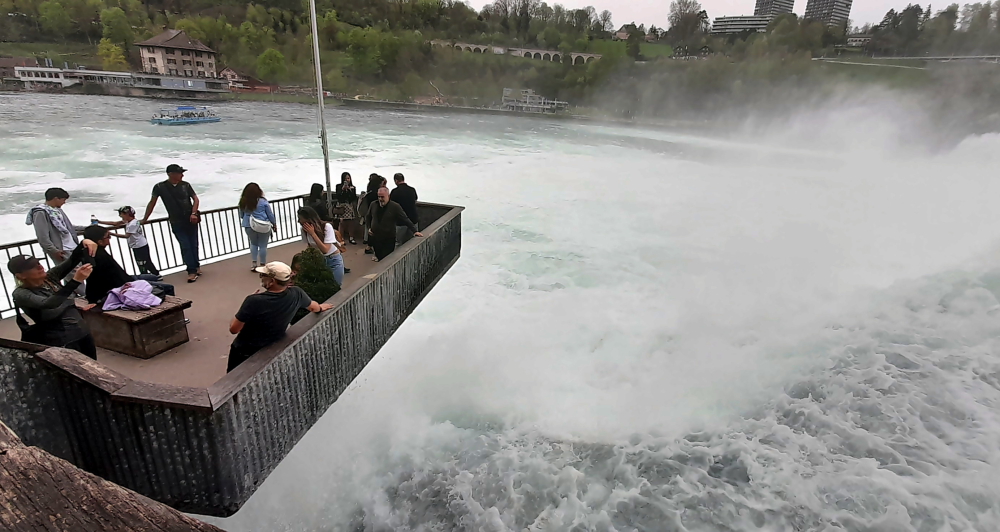
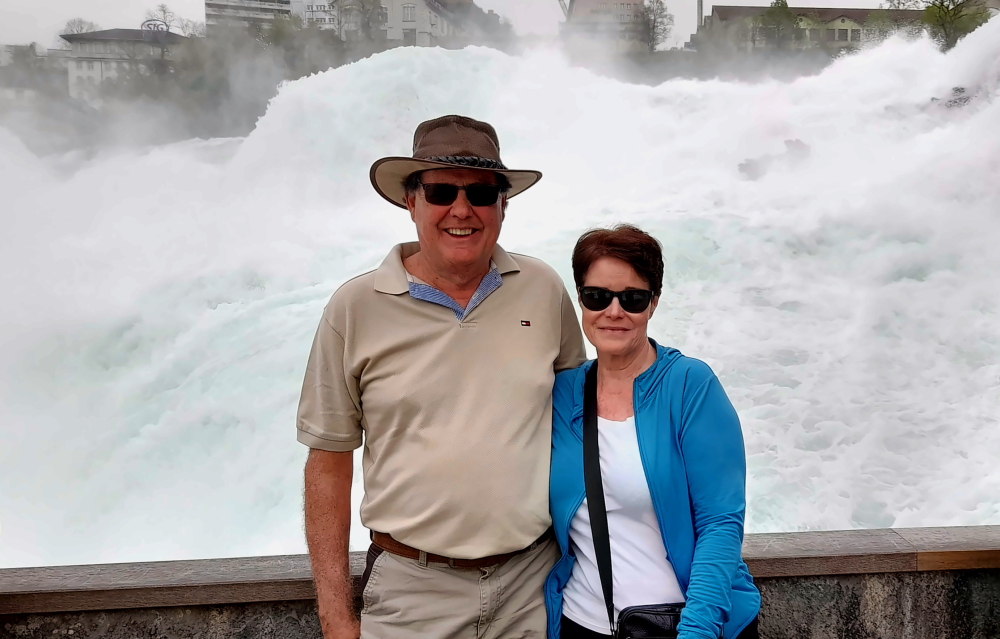
At average water levels in the Rhine, 373 cubic metres of water per second fall over the rocks in the Rhine Falls (average summer discharge: around 600 m³/s). The highest flow rate was measured in 1965 at 1250 cubic metres, the lowest flow rate was in 1921 at 95 cubic metres/second. The outflow was similarly low in 1880, 1913 and 1953. In 2013 it was visited by 1,300,000 visitors.
After a quick stop at a nearby supermarket we drive the 10 minutes’ to our accommodation in Altenburg. This involves crossing back into Germany at a small, semi-derelict, closed border control building at a rural T-junction.
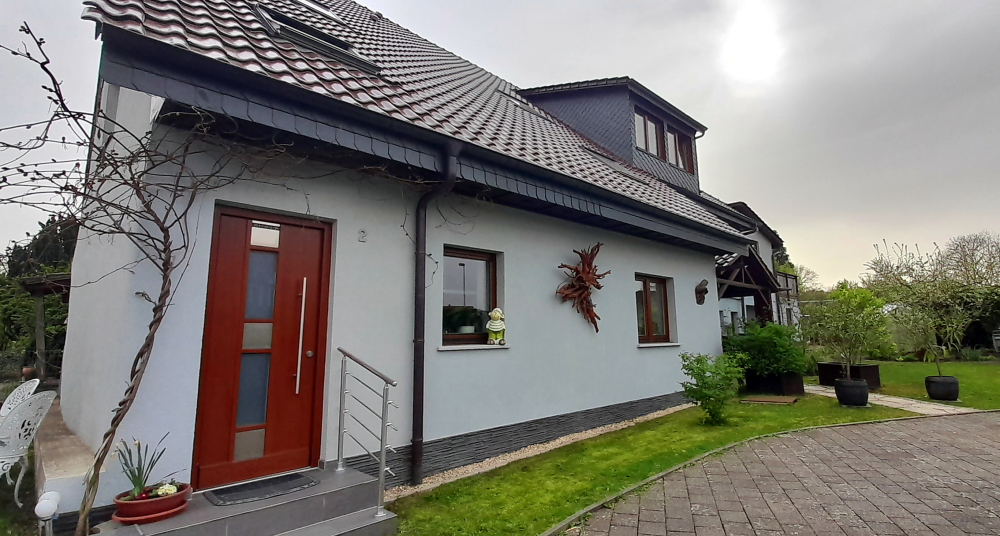
It turns out that our small cottage, adjacent to the owners’ house (to the right) is also attached to a much larger, and old-style farmhouse at the rear which has a yard. In this small community, there are a number of older-style, large farmhouses, interspersed with smaller, newer dwellings.
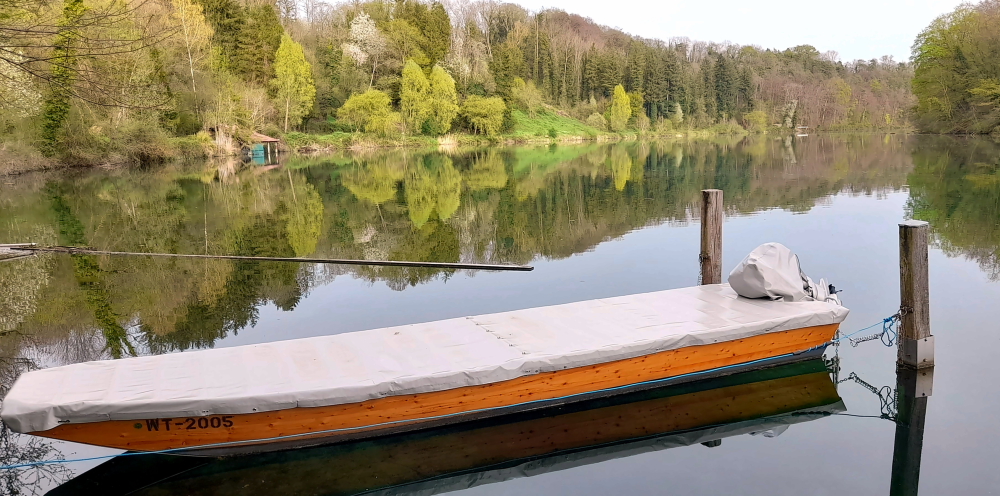
And the Rhine River is just a 5-minute walk away, so after a quick unpack we head out the door, walk part way down Trottenberg (street), then take a small downhill path past people’s grassy backyards until we arrive at the shoreline.
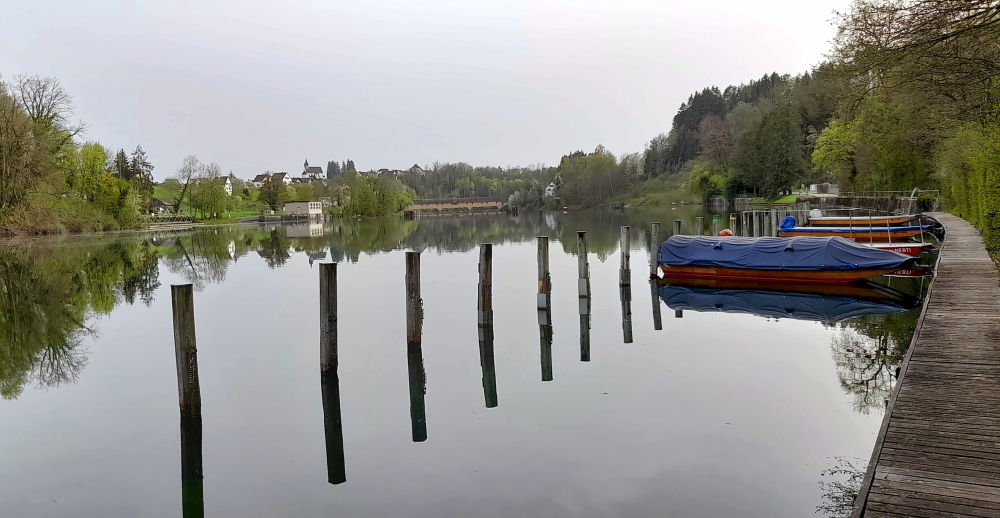
It’s difficult to imagine that we are downstream from the turbulent waters of the Falls, as the water is almost at a standstill. So still and clear that we can easily see the vegetation on the bottom.
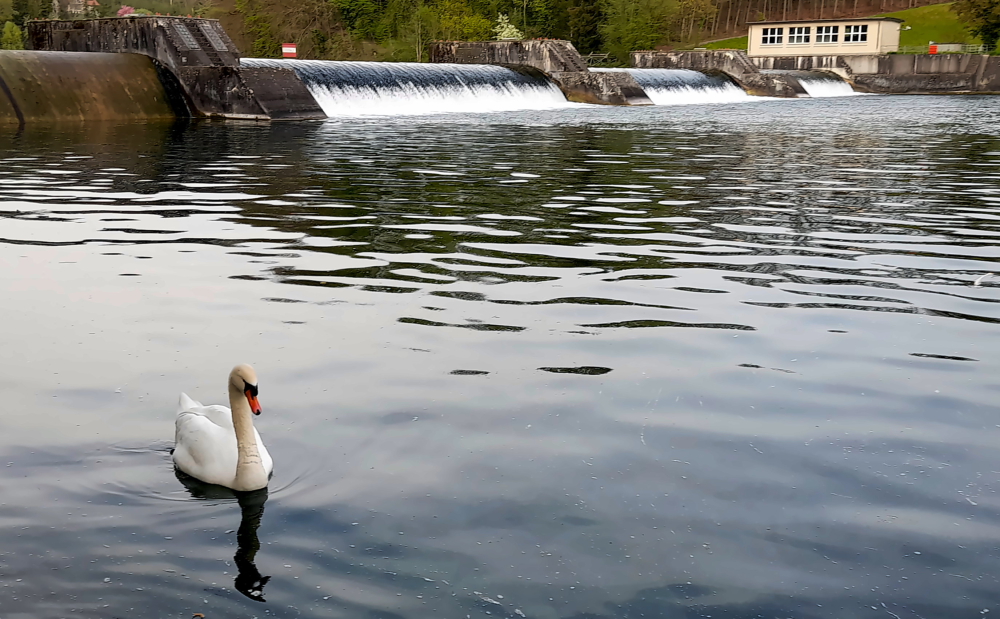
Part of the reason for the water’s stillness is a small weir between where we arrived at the shoreline and the covered bridge further downstream.
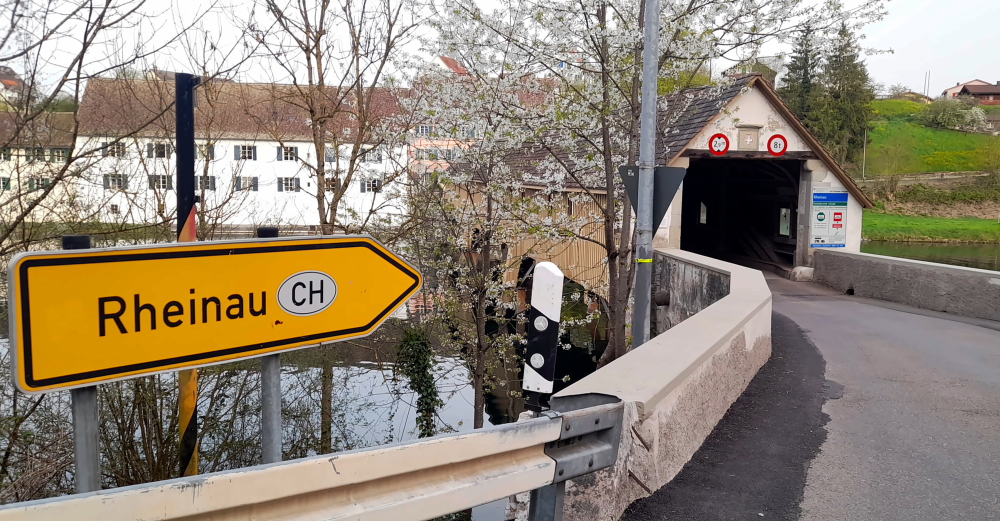
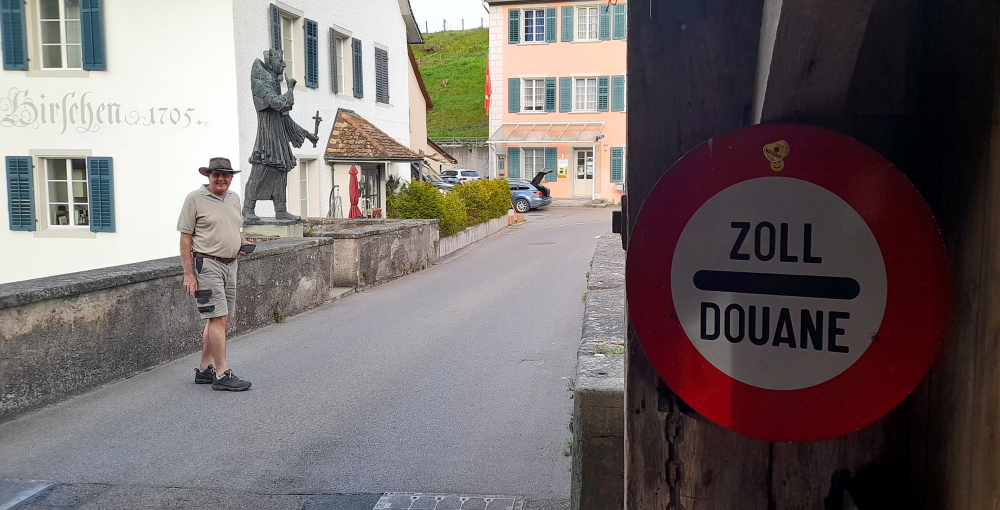
When we arrive at the bridge we discover it’s the border between Germany and Switzerland, again. Switzerland is on the other side with the border actually running down the middle of the river.
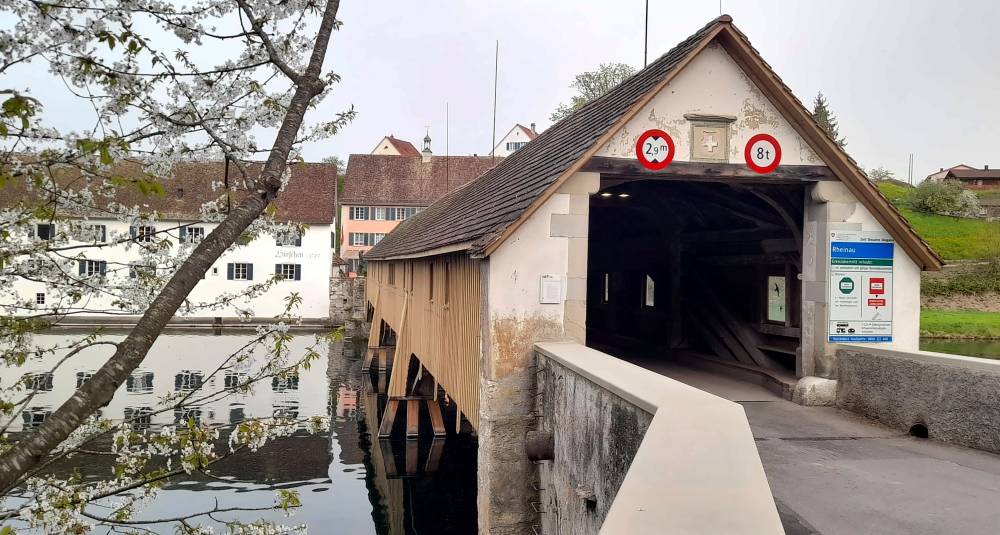
The Rheinau–Altenburg Rhine Bridge is a road bridge that spans the High Rhine and the border between Switzerland and Germany. The covered wooden bridge is designed for one lane and is one of the rare pile bridges today.
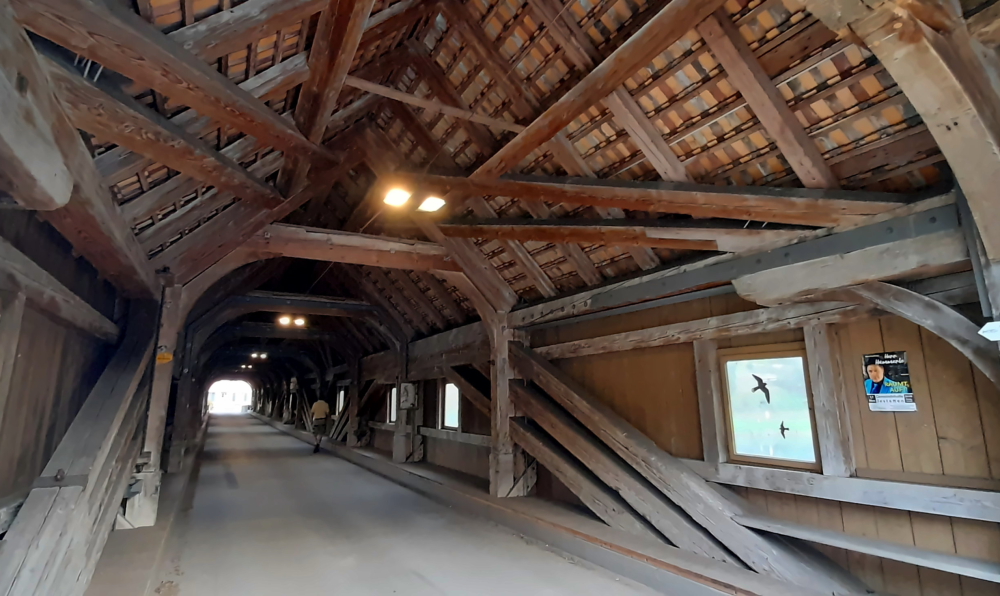
The first references to a Rhine bridge near Rheinau date from the year 1247 and it was documented in 1324. The narrow, covered wooden bridge with four to five pile bays was mentioned in a purchase agreement in 1355 by the Rheinau abbot Heinrich V. von Aitlingen and initially served the Rheinau monastery as a connection to its lands on the northern side of the Rhine.
From 1444 to 1799 the bridge was subjected to damage during numerous wars. Between 1804 and 1806, Blasius Balteschwiler built the current oak structure on behalf of the Canton of Zurich for 6,600 guilders. Major repairs were carried out in 1885, 1918-1930 and 1954 with extensive repair work costing 2 million francs in 1988.
As we are retracing our steps I see a flurry of bubbles hit the river’s surface which to me indicate there are divers below. Sure enough, it is a dive site due to little current, high visibility and the canyons and sinkholes in the Rhine.
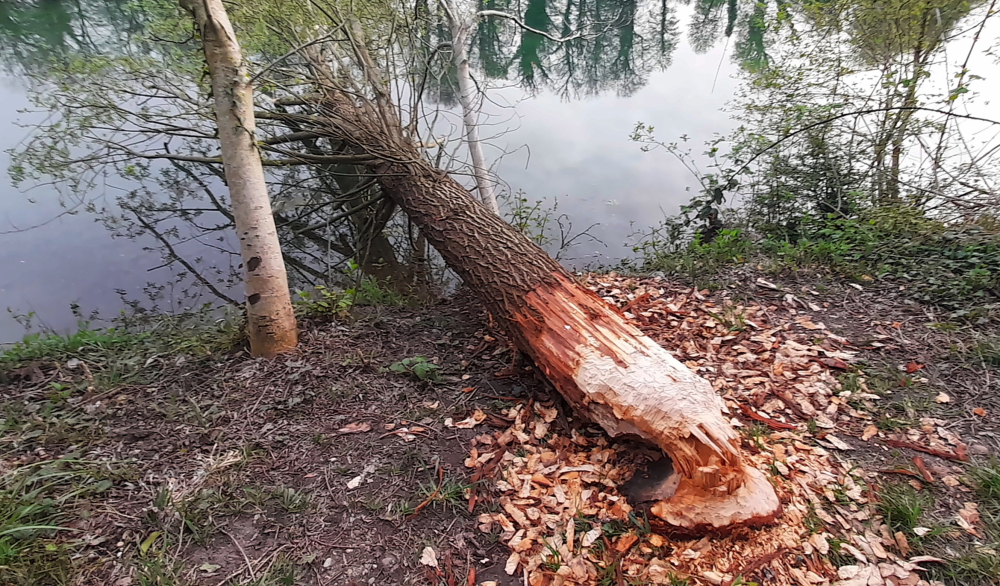
On the map we see that we can take the shoreline path past our entry point to a path that joins Trottenberg. We pass by a tree that has been felled into the river by what appears to be by axe, except there are teeth marks on the trunk! Beavers?? And apparently there are, along the Rhine between Lake Constance and Basel and we are halfway along that route.
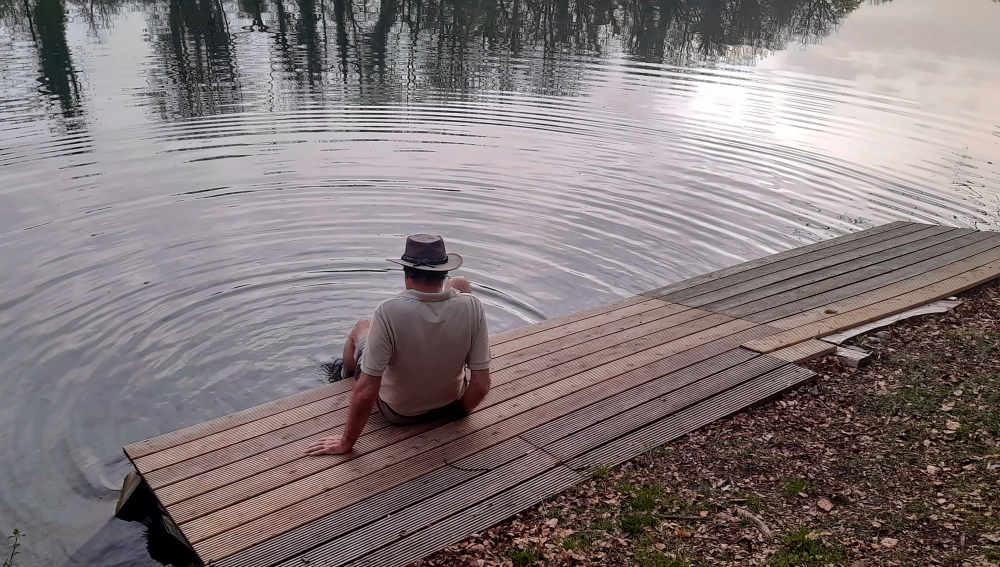
At the point where the track joins Trottenberg there is a space where several long, streamlined canoes are stored by the shore. Here we wash the soles of our boots from the muddy patches we’ve walked through. It is just so quiet and peaceful sitting here on the decking.
9 April, 2024
No rain yet, but it’s 9 Deg. C. outside. Brrr!
Yesterday, when driving along the road from the supermarket to our accommodation, we saw the Falls from the other side of the river and the imposing Laufen Castle above on the Zurich side. So we pop out over the border to get a photo this morning.
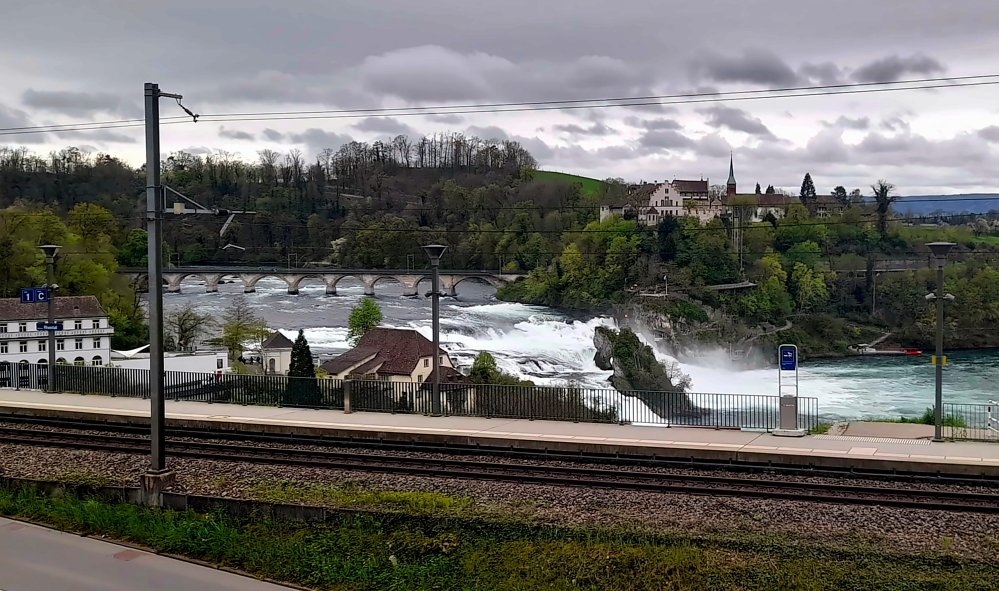
Unfortunately, there are no places to park to take a shot on Nohlstrasse, so I have to park briefly in a private car park while Lynn scampers about trying to capture the scene – hindered by a railway line, traffic, trees and overhead cables.
Interestingly, as we drive back to Altenburg, past the closed, old border post, there’s a black van filled with border guards parked out front!
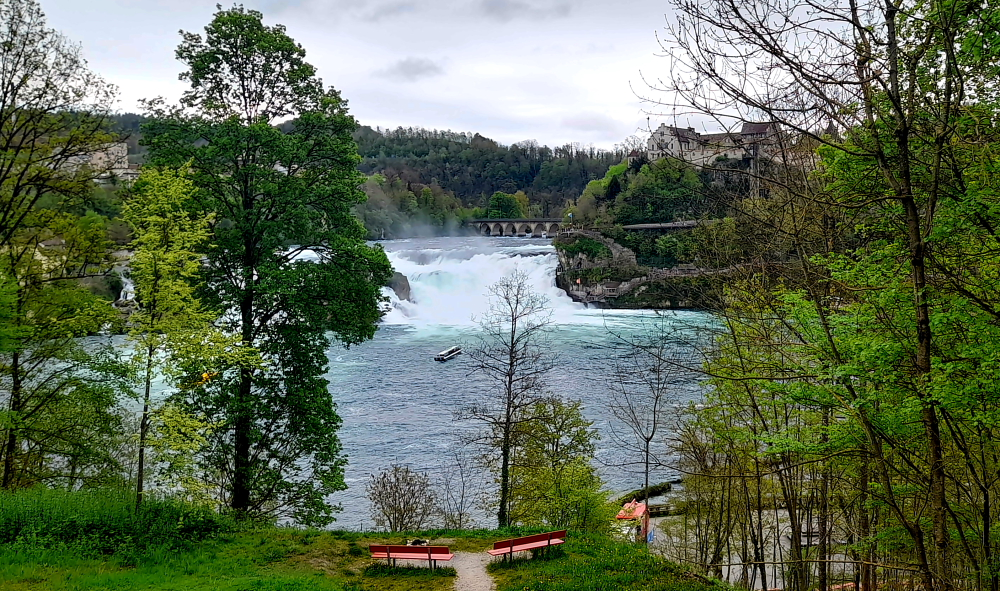
We spend the rest of the day catching up the blog and getting organised for our drive tomorrow which will take us further south into central Switzerland to Beckenried on Lake Lucerne.
10 April, 2024
Today’s trip is around 120 km that should take us about 1.5 hours. At 10:00 am when we depart it’s sunny and 10 Deg. C. We have at least 2 stops on the way: 1 to refuel and the other to purchase new windscreen wipers. But, before then, 12 minutes later we cross back into Switzerland at Rafz-Solgen.
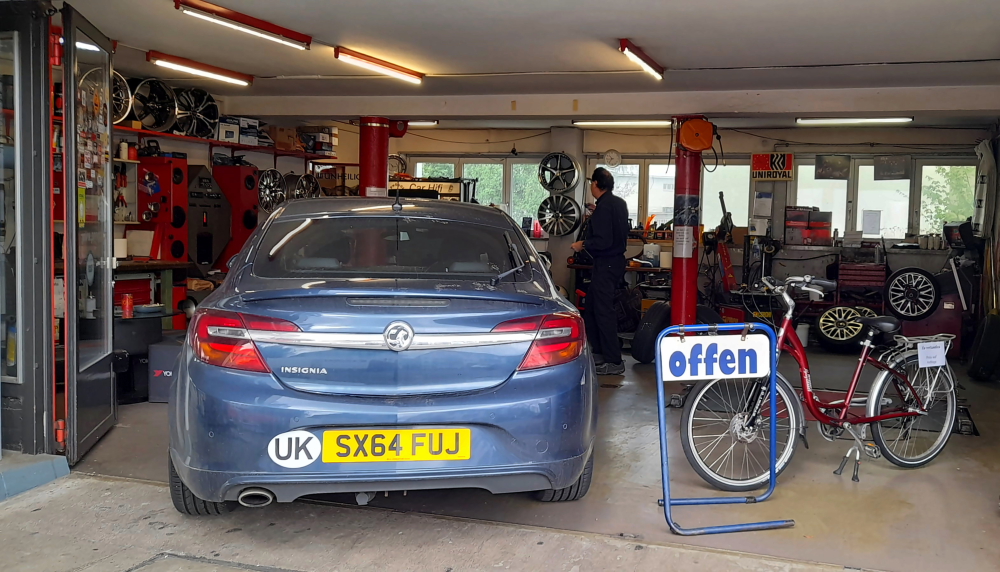
The A51 takes us around Zurich airport and about an hour after our departure I find a small servo that has an even smaller auto workshop attached in Glattbrugg. For CHF50 we get new, flexible blades and the guy even fits them for us. Hoorah! (Incidentally, turns out to be a good price as they would have cost the same in Australia, but unfitted!)
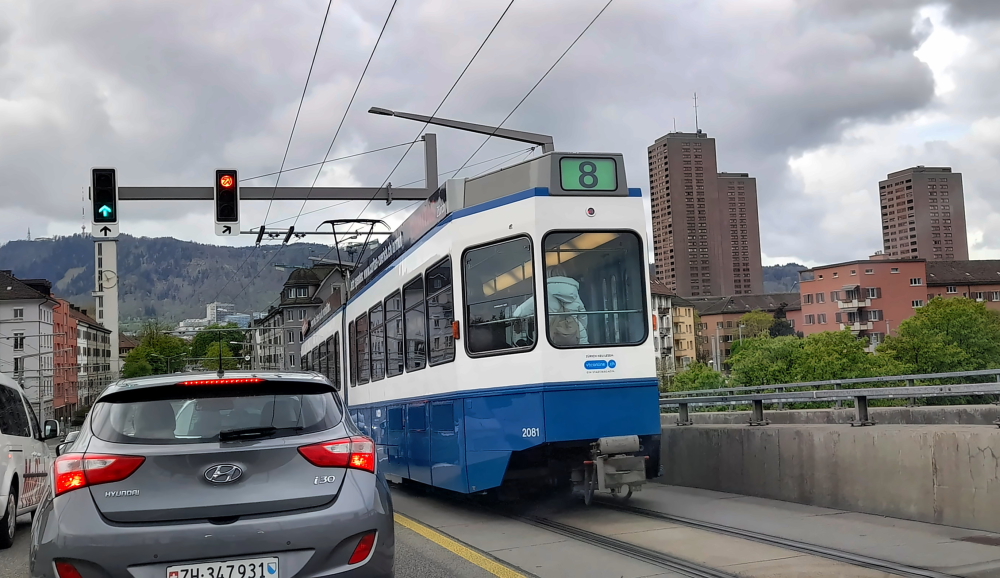
I want to avoid the direct route to our next destination as it will take us through Lucerne.
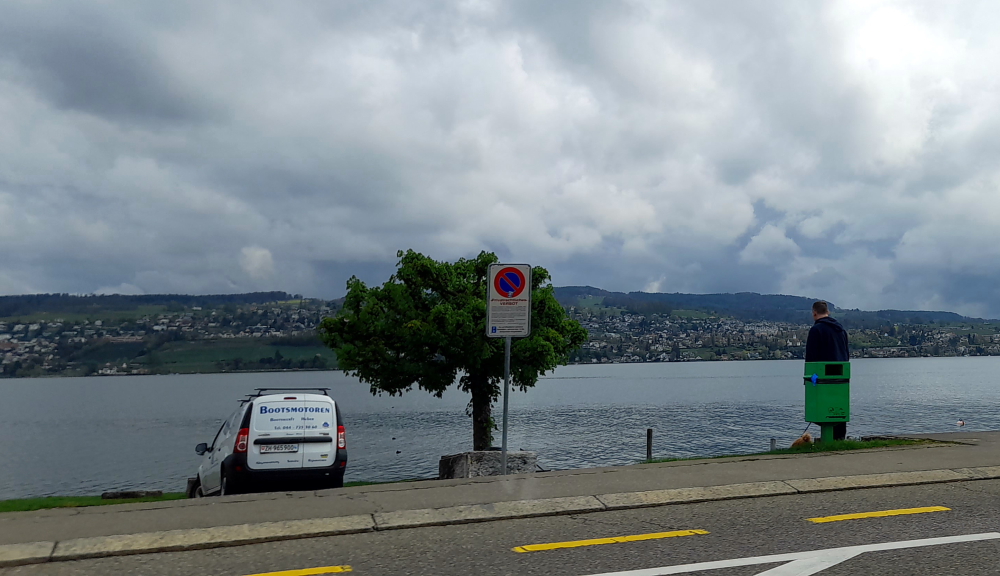
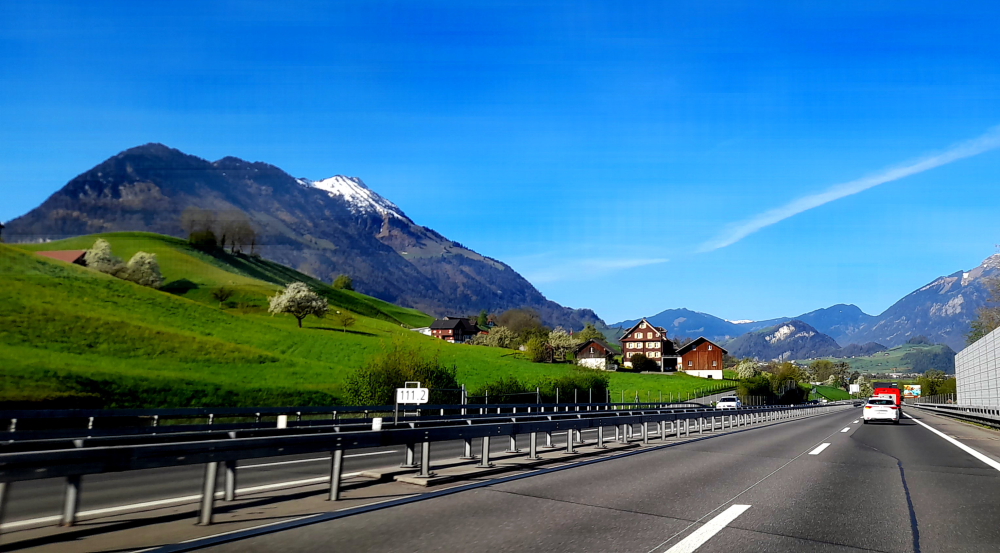
Instead, we take the 3 road SE that hugs Lake Zurich past Thalwil, where we stayed in 2012 when we visited Meg, Nev and the kids, until Wollerau where we take the 8 south across the hills. It’s now raining but the new wiper blades are working a treat.
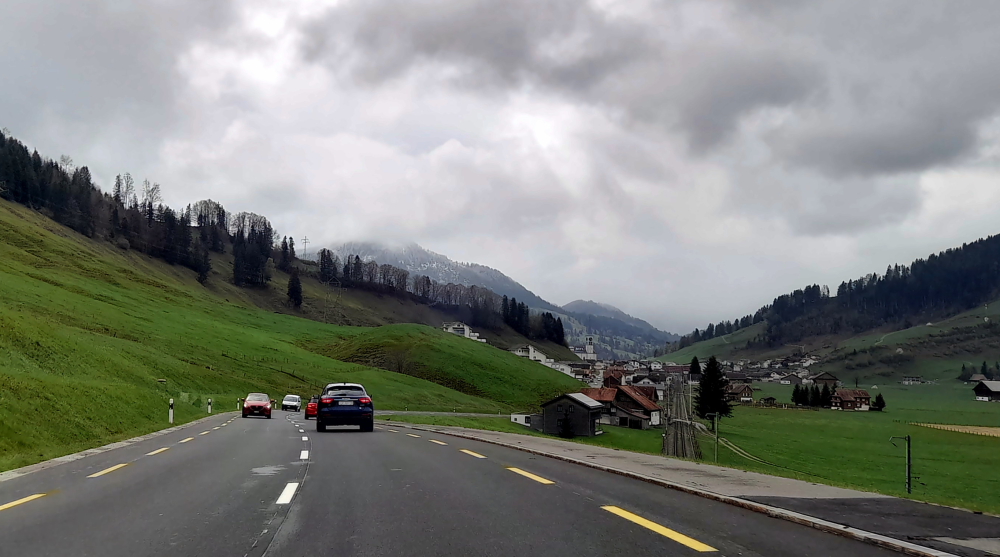
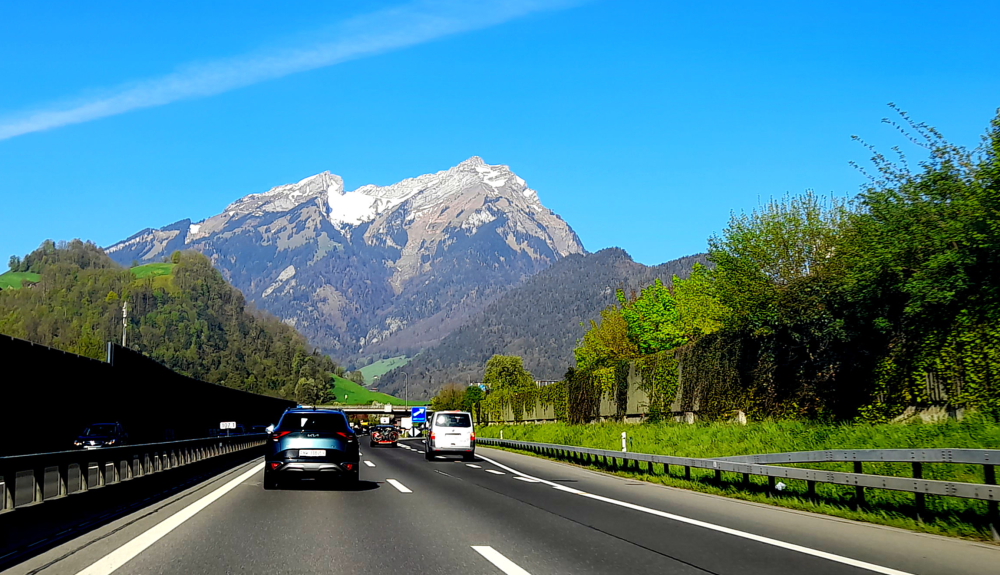
The landscape changes to steep, green hills with snow-capped hills looming in the distance. It’s now 5 Deg.
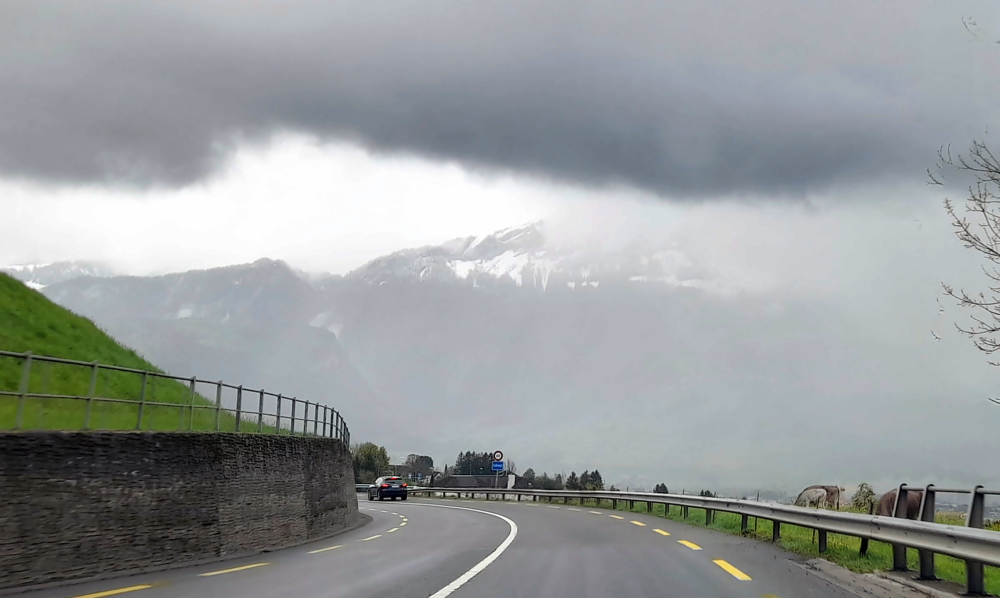
In need of a pit stop, we cut down to Seewen on the shores of Lauerzersee (Lake Lauerz).
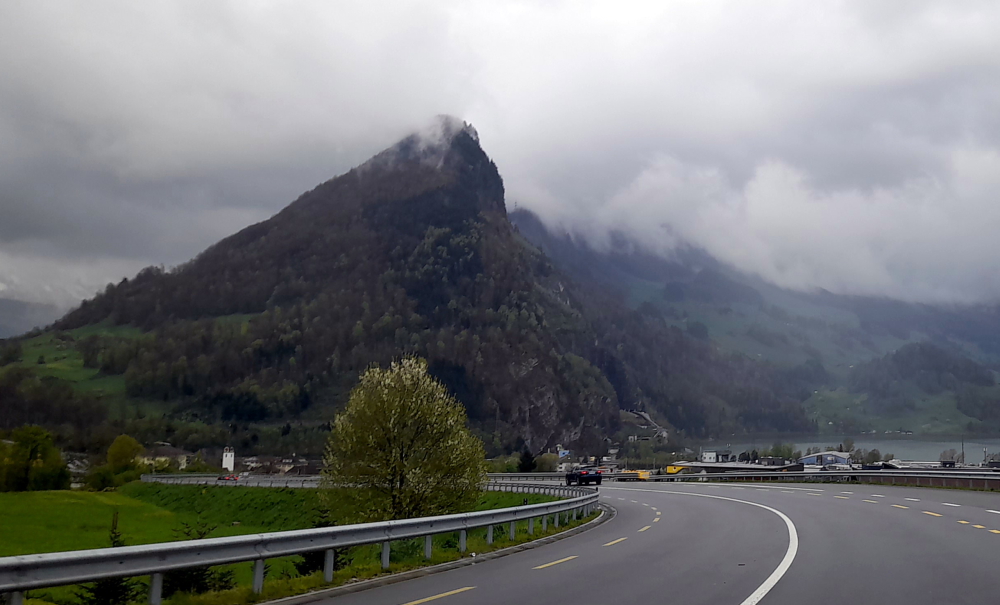
Soon after, having driven through the 1.1 km Mosi Tunnel that bypasses Ingenbohl, we are driving on the A2 that hugs the shoreline of the southern branch of the next lake, Lake Lucerne.
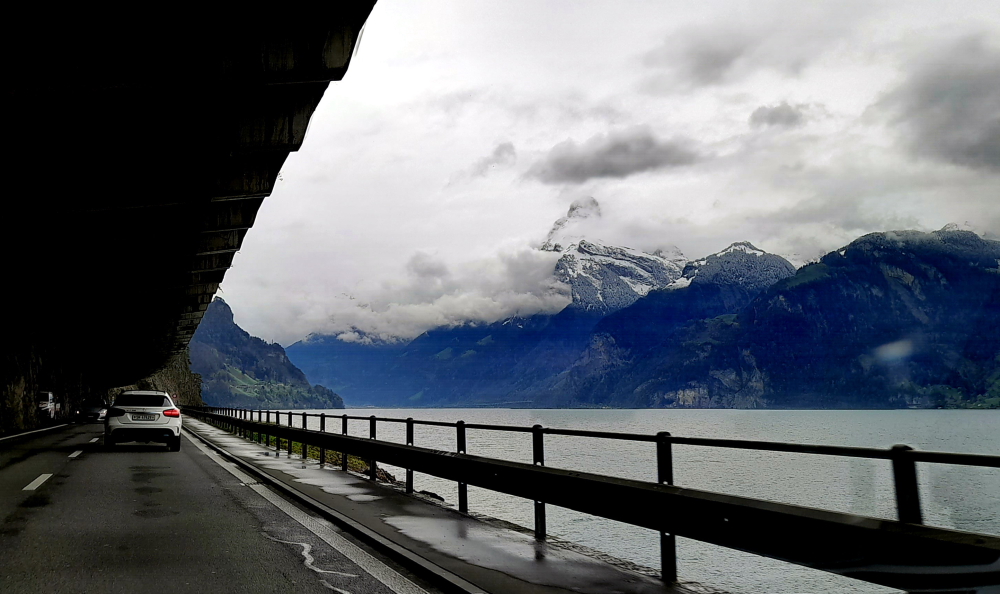
Along this part of the shoreline, on Axenstrasse, we are driving either through short tunnels or under massive concrete overhangs with impressive mountainous views across the lake.
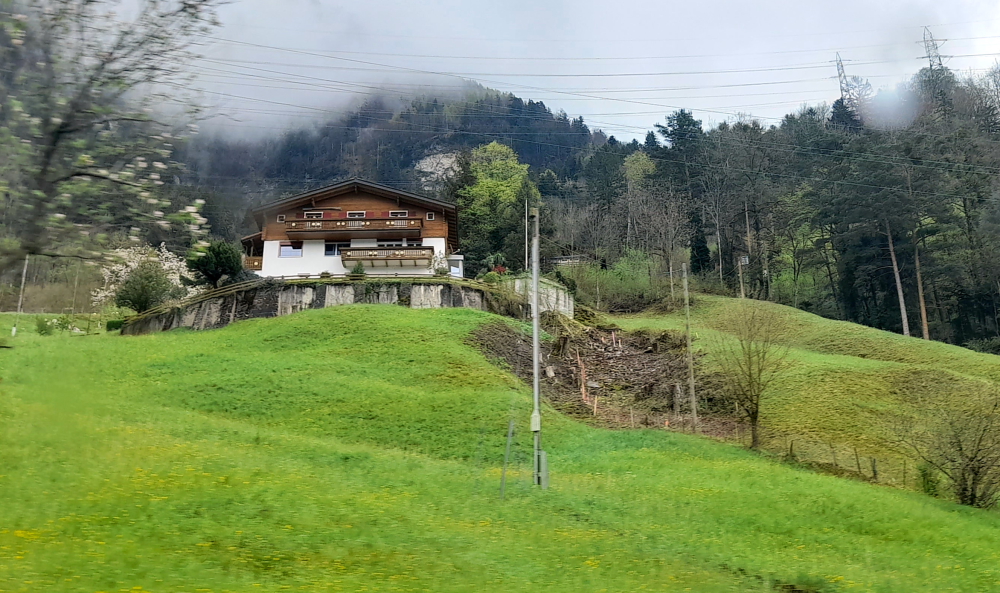
Finally, at Fluelen, at the bottom end of the lake, we see a sign to our destination, Beckenried.
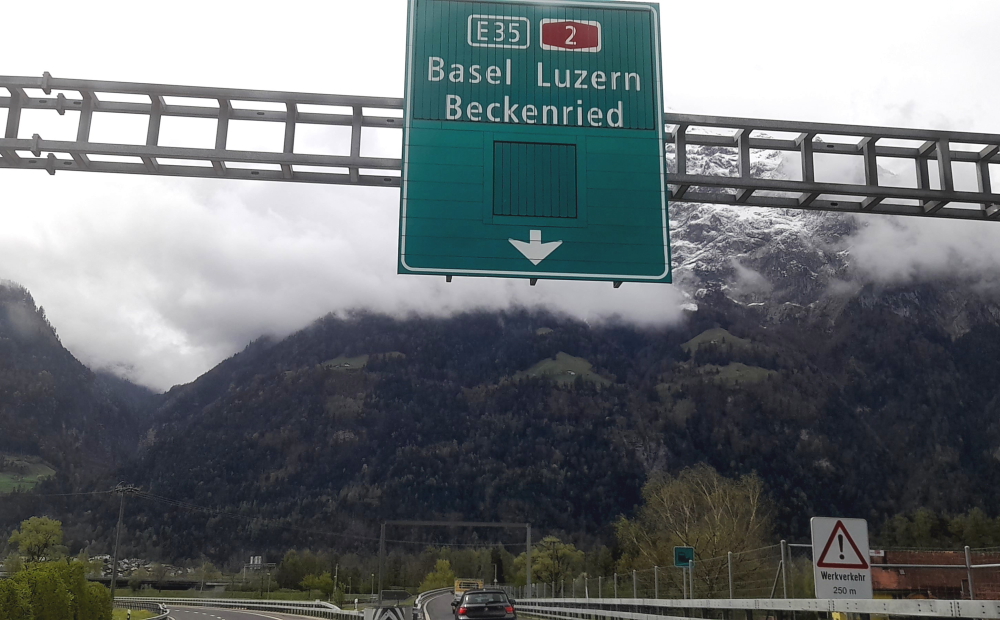
From here we drive NW up the lake, through the 17 km Seelisberg Tunnel, to our lakeside hotel at Beckenried Neiderdorf and arrive around 1:00 pm – in sparkling sunshine!
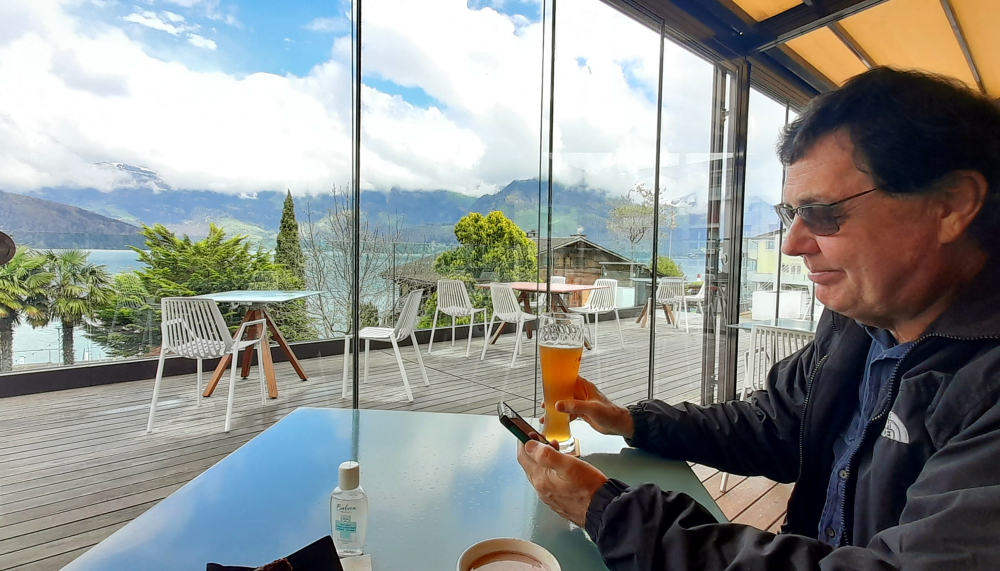
While we wait for our room to be ready we take advantage of the hotel’s terrace and its gorgeous views over the lake. About an hour later we move in, unpack and have a cuppa with chilled milk from our cold bag (no minibar in our room) which we’ve located on the balcony. With the balcony out of the sun, cold overnight temperatures and the freezing balcony tiles it’s up to the task!
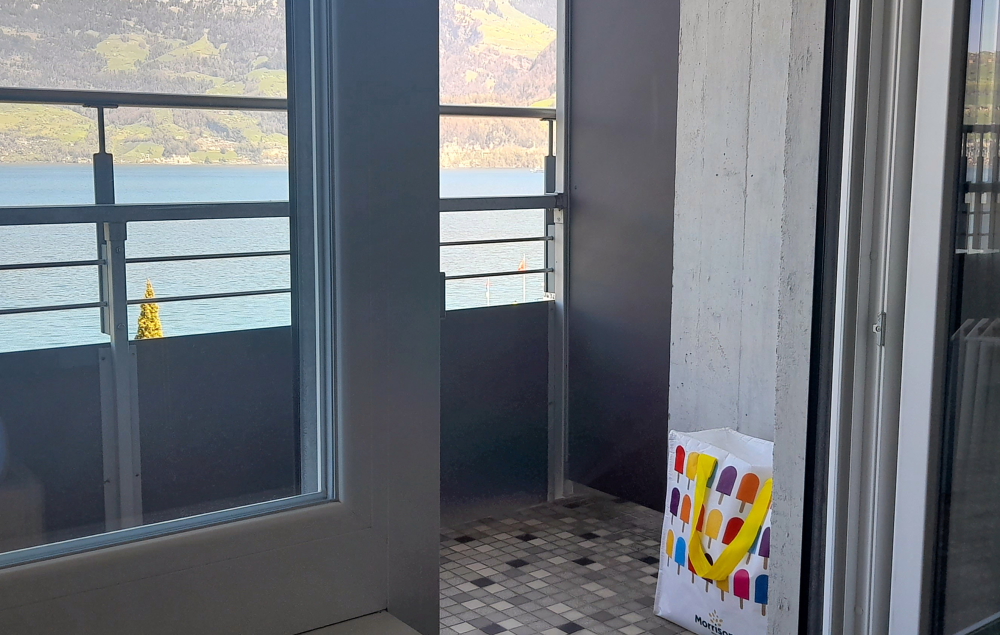
Around 4:00 pm we decide to walk the 20 minutes into the village of Beckenried to check it out and also the bus and ferry transportation options into Lucerne.
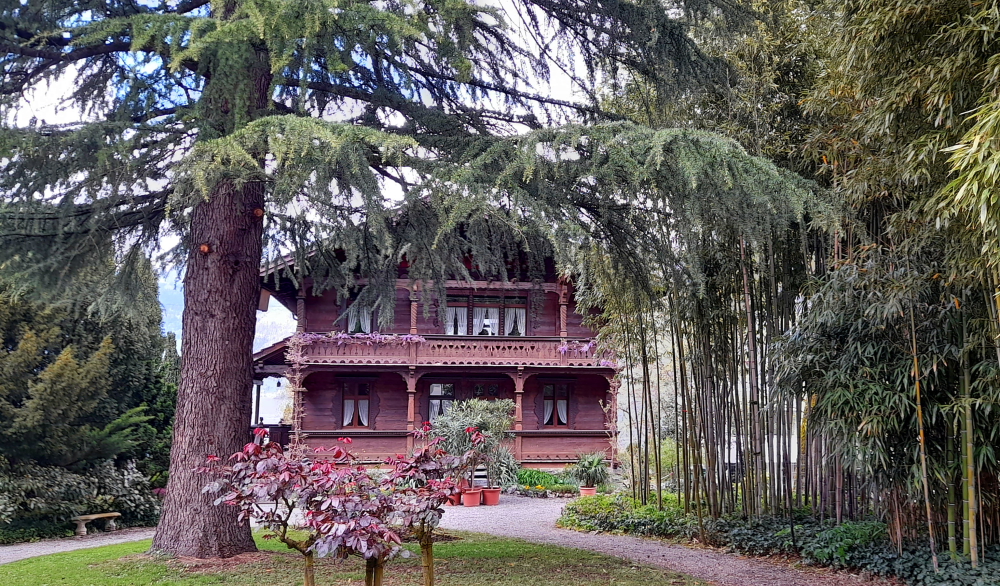
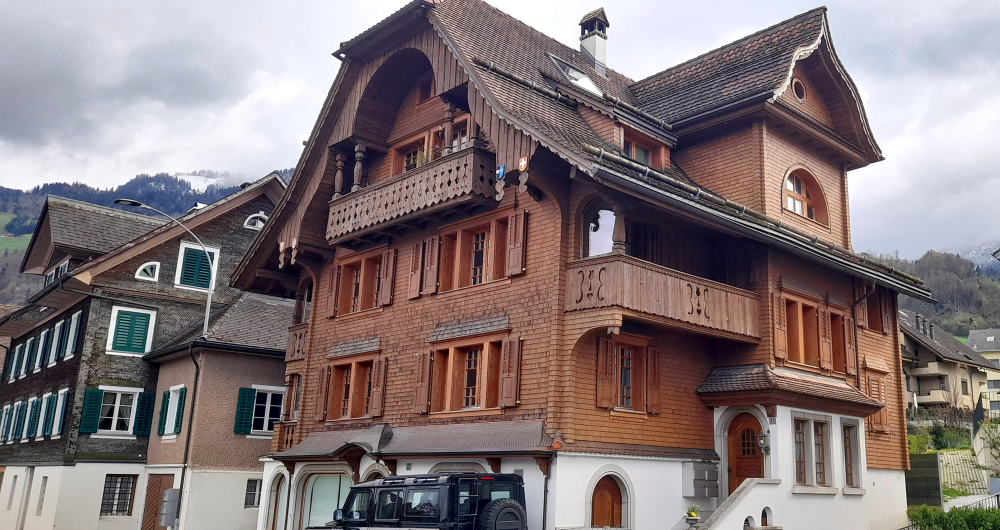
The town is full of both traditional, wooden shingle or carved wooden houses and ugly, newer tiled ones.
At Beckenried village there is the terminal for the passenger ferry that goes to Lucerne, whereas next door to our hotel is the car ferry that crosses the lake.
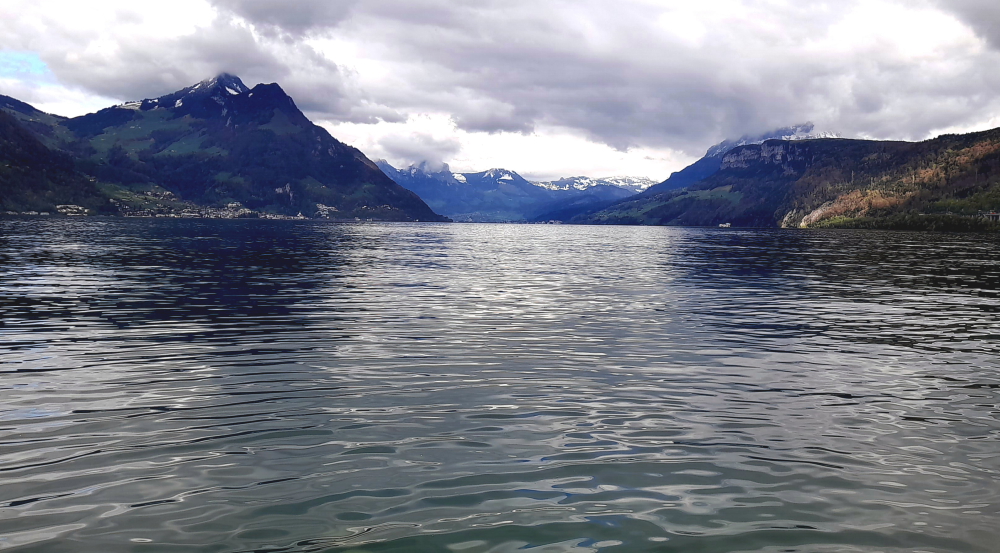
Our original plan was to take the passenger ferry to Lucerne and return for a day trip. After our inquiries today we discover that it would cost us CHF64 each and a total of 2.5 hours. To take the bus and connect to the train in Stans would cost us CHF20 each and 2.5 hours.
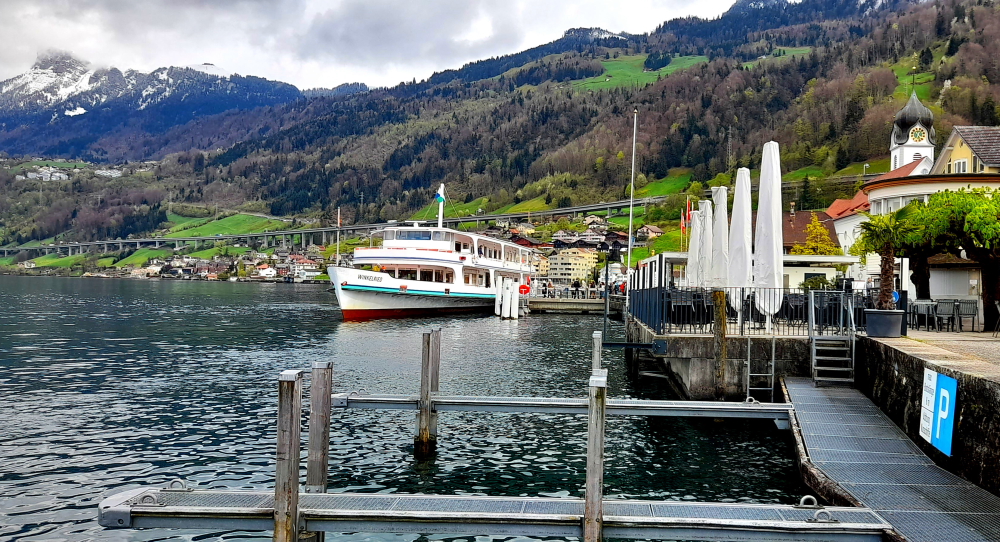
Taking the car has won out as it will cost us CHF8 for 3 hours’ parking, CHF8 for fuel and 45 minutes. That’s CHF128 v CHF40 v CHF16 or, the Ozzie equivalent of AUD215 v AUD68 v AUD26. Obviously the Swiss have no interest in promoting cheap, public transport! Perhaps they could meet their zero emissions targets but promoting public transport.
Across the road from the passenger ferry terminal is St Heinrich’s Church. A first chapel (Heinrich’s patron saint) is mentioned as early as 1323. Today’s church was constructed by Niklaus Purtschert in 1792-1807. Inside it has baroque features reminiscent of the Catholic churches that Lynn saw in Austria.
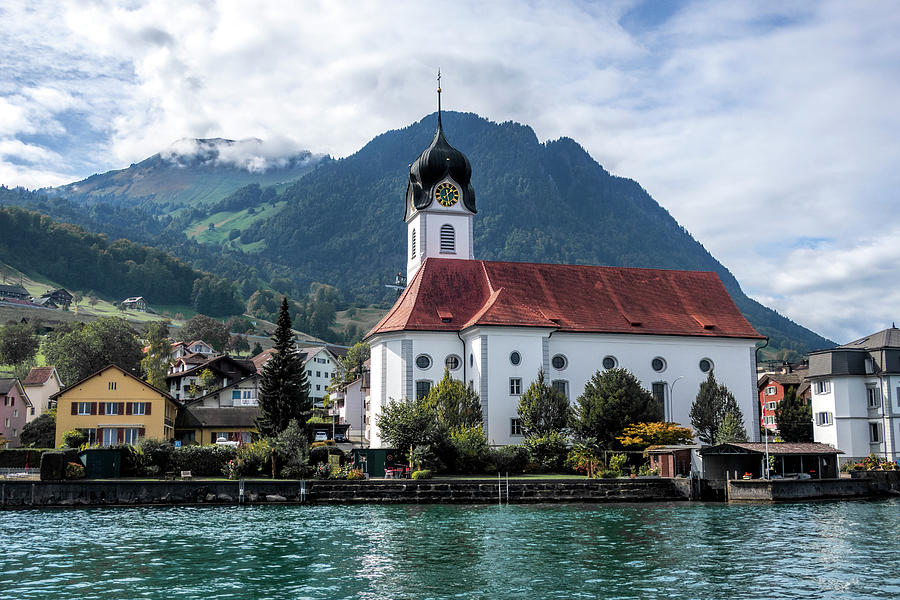
As the above photo by Phyllis Taylor (uploaded to fineartamerica.com on 26/07/2019) conveys both the beauty of the church and the town far better than our meager street shot and only possible from a boat, we’ve used it instead.
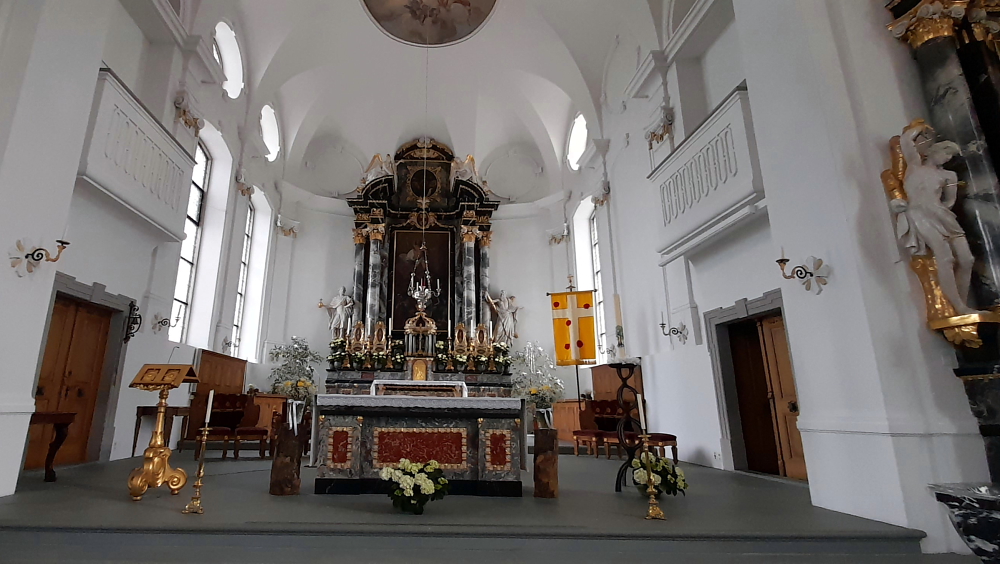
An interesting fact that she mentions is that the church has its own boathouse on the lake!
The town also has a cable car that travels up the mountain called Klewenalp which is behind the town. Sadly, it’s closed for maintenance until May.
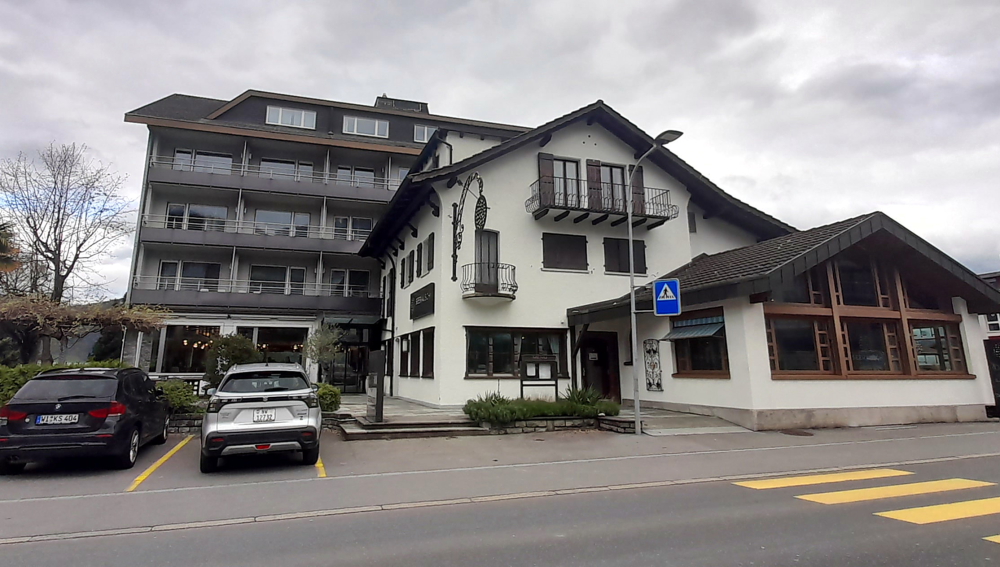
We get back to the hotel around 5:00 pm then head to its restaurant an hour later.
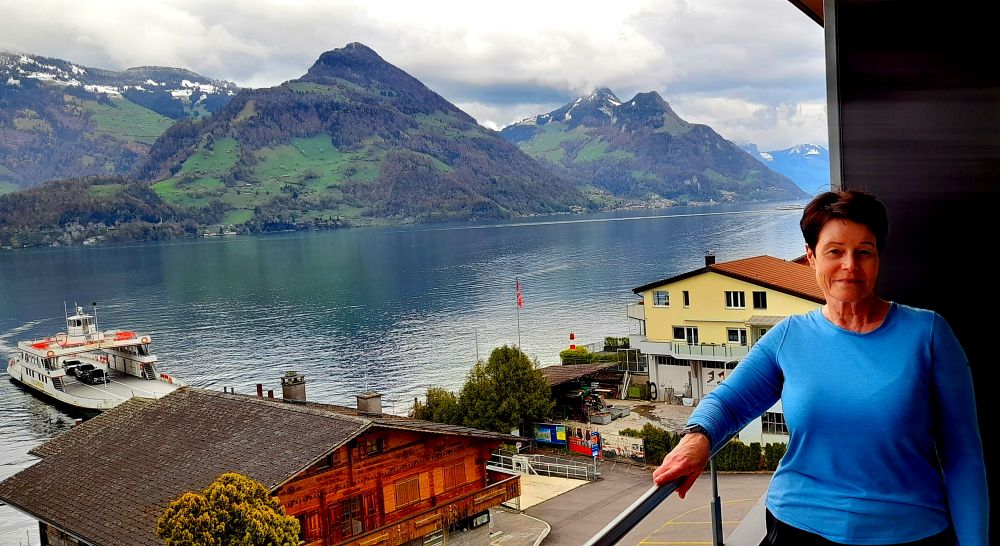
Glad we don’t plan on eating here every night. Lynn has consomme (CHF13 – AUD22) and I have a small chicken breast (CHF32 – AUD54). We avoid alcohol and have a carafe of tap water instead – even that cost CHF2.50 (AUD4.20). What a joke!
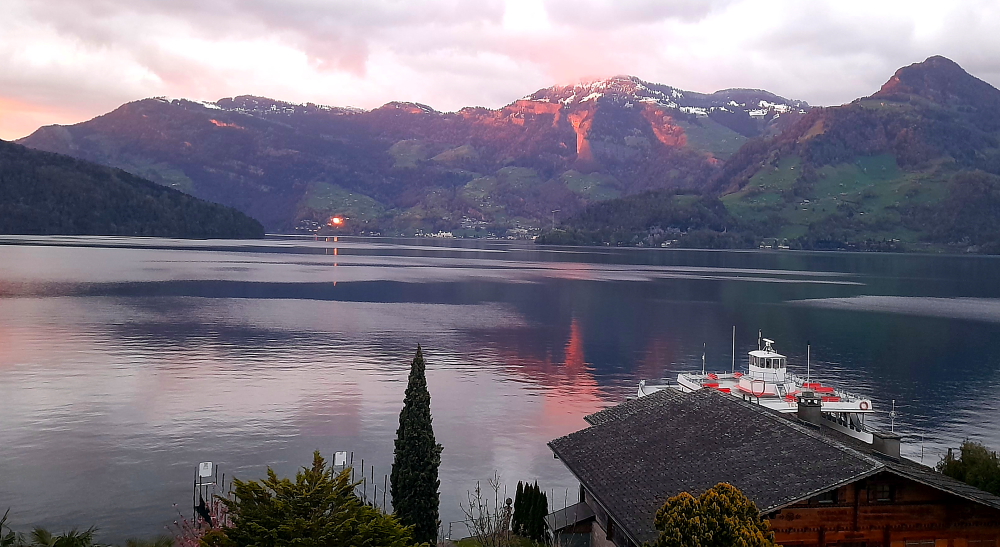
Fortunately, the colours of sunset make up for it – priceless!
11 April, 2024
Although a top of 15 Deg. C. and sunshine is forecast for today we decide we’ll have a rest day to enjoy the gorgeous view and will drive into Lucerne tomorrow as it’s due to be sunny and 19.
Alarmingly, we sit and watch the snow on the opposite hillsides melt before our very eyes!
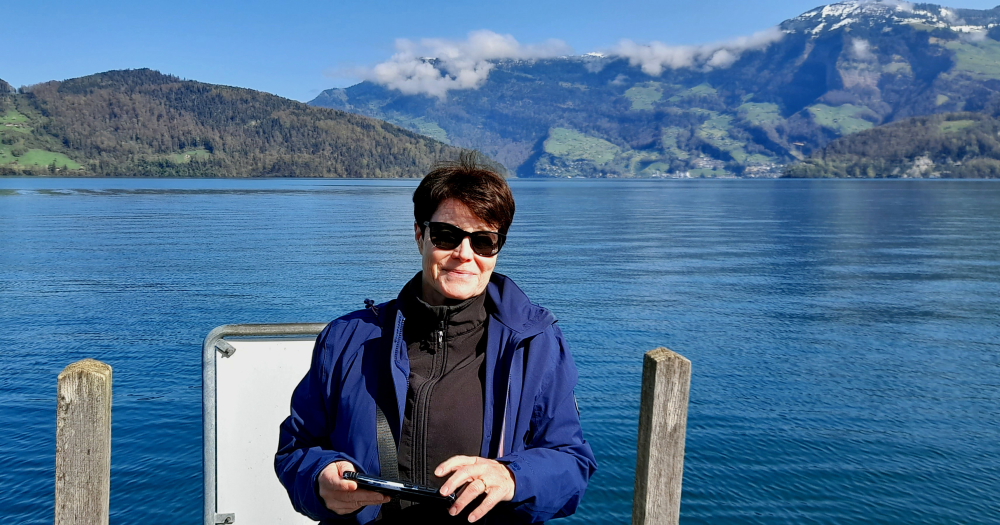
After a late breakfast we walk down to the piers in front of the hotel.
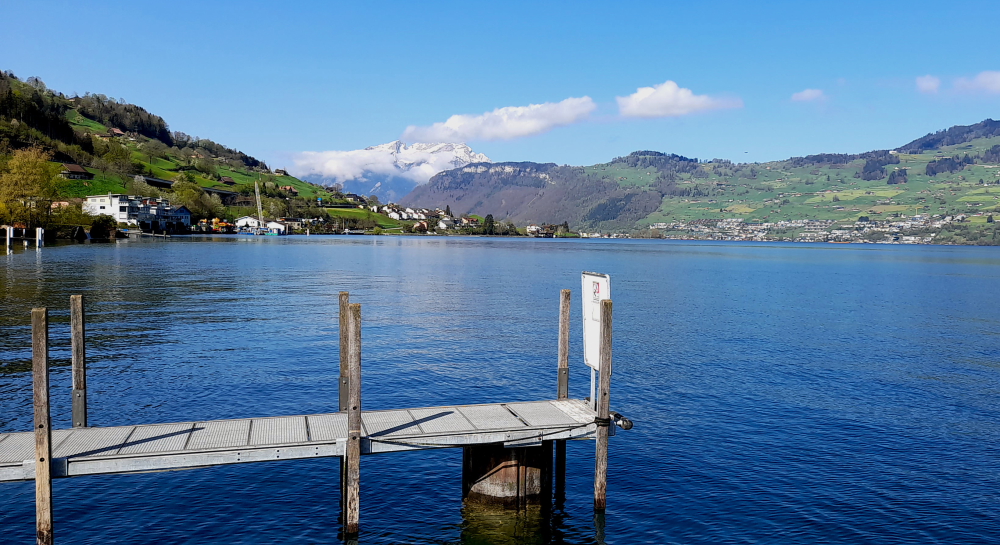
Here we get a better view of the mountain towards the west which is Mt Pilatus. The mountain is composed of several peaks, the highest (2,128.5 m) is named Tomlishorn. During the summer, the “Golden Round Trip” — a popular route for tourists — involves riding a boat from Lucerne across its lake to Alpnachstad, ascending on the cogwheel railway, descending on the aerial cableways and panorama gondolas, and catching a bus back to Lucerne. I hate to think what that would cost! Luckily we couldn’t do it this time of year, anyway.
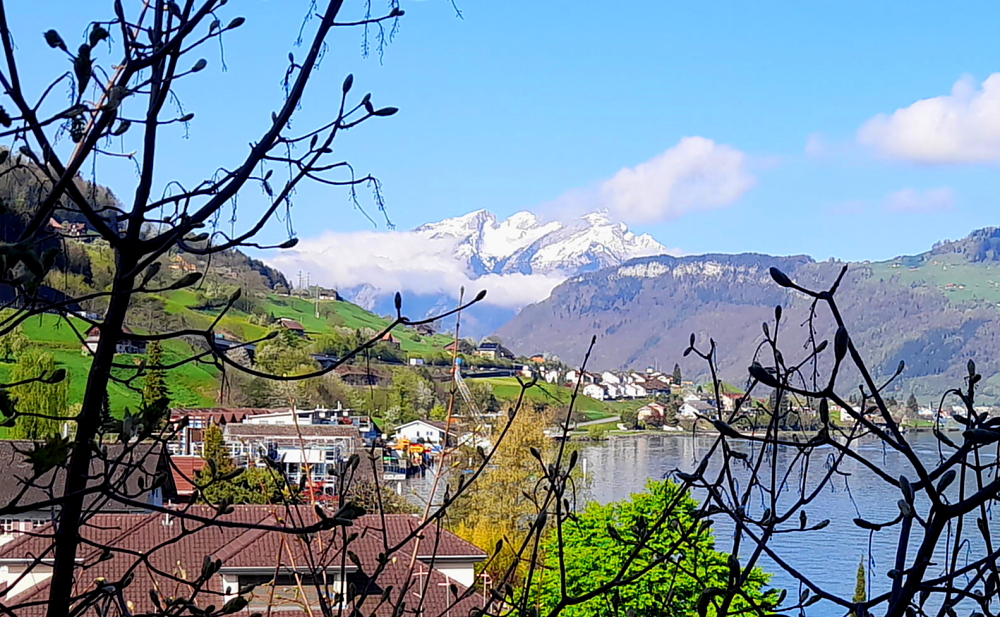
Tonight we are going to try a small, Swiss restaurant for dinner which is over the road from the hotel – Restaurant Schafli. Hopefully it will have more realistic prices or we might be on a diet of pizza for the next few days. As it turns out it has a very limited menu – tonight it’s serving a toasted cheese and ham sandwich and a small, cold meat and cheese platter. Together with a small, local beer and glass of rose cost us Eu50 (A$90) cash!
12 April, 2024
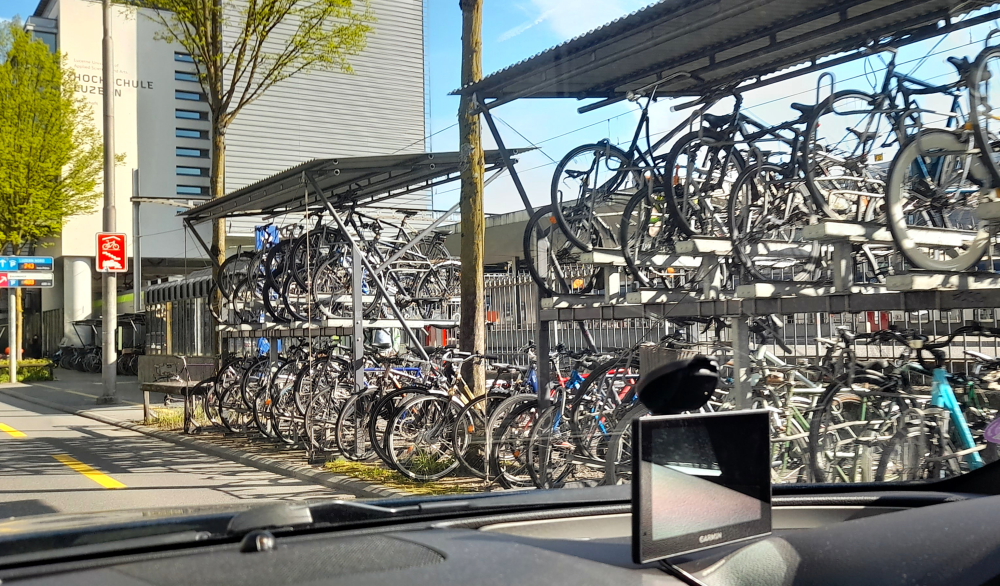
It’s 14 Deg. C. and 9:30 am as we drive out of the hotel car park on our 20-minute drive into Lucerne.
Why are we visiting Lucerne? So that Lynn can see the Kapellbrucke (Chapel Bridge) which captured her imagination in the 1960s when she was about 9 or 10 years old when she first saw a Peter Stuyvesant advert before a Saturday matinee at the Regent cinema in her hometown of Albury.
She has a vivid memory of the advert that showed a group of beautiful people, enjoying a jetset lifestyle, arriving on Lake Lucerne and the bridge was in the background. She said to her mother who was sitting next to her: “Wow! Where is that?” to which her mother replied: “Somewhere in Switzerland, I think.”
Despite the advert’s impact, over the past 55 or so years she has not resorted to “… Peter Stuyvesant, your international passport to smoking pleasure” – rather she has enjoyed many years of traveling pleasure thanks to her own passports!
Lynn has chosen 4 sites for us to visit today: the Lion monument, the Musegg Wall, the Old Town and the Chapel Bridge.
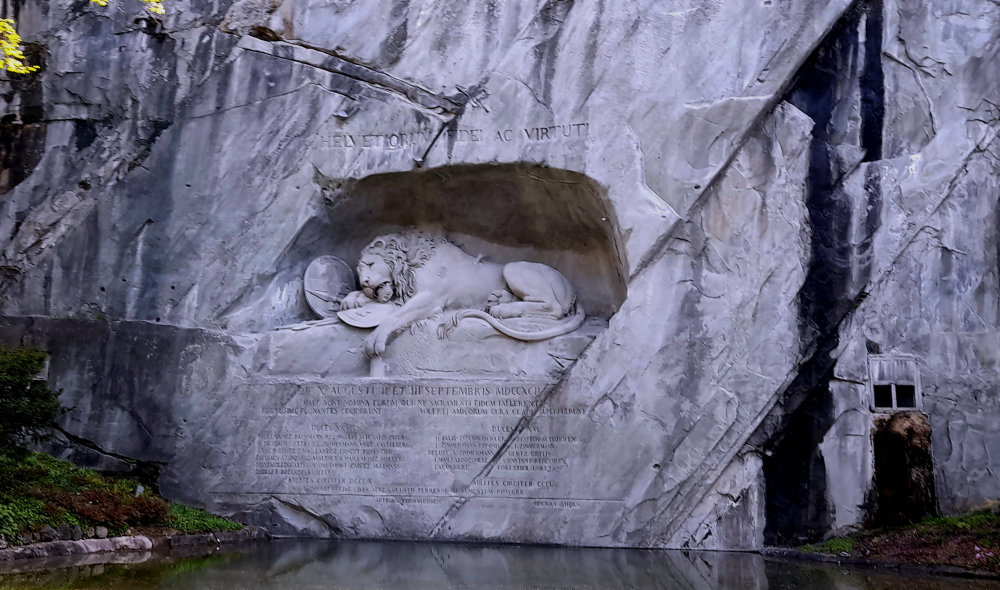
Carved out of rock, “Dying Lion of Lucerne” commemorates the heroism in 1792 of hundreds of Swiss soldiers serving King Louis XVI who died attempting to protect his Tuileries Palace in Paris during the French revolution.
Carl Pfyffer von Altishofen (1771-1840) who was a young Swiss Guard’s officer witnessed events of the French Revolution but was on furlough in Lucerne during the insurrection of 10 August 1792. Creating a monument to his fallen comrades that day became his life’s purpose. Designed in Rome by Danish artist Bertel Thorvaldsen and carved in the rock face of a former quarry by stonemason Lukas Ahorn from Constance, in 1821 he saw the work completed.
Mark Twain has described this monument as: “…the saddest and most moving pieces of rock in the world”. [The Official Lucerne City Guide].
10 minutes’ walk SW brings us to the Musegg Wall. With its 9 towers it forms part of Lucerne’s historic fortifications.
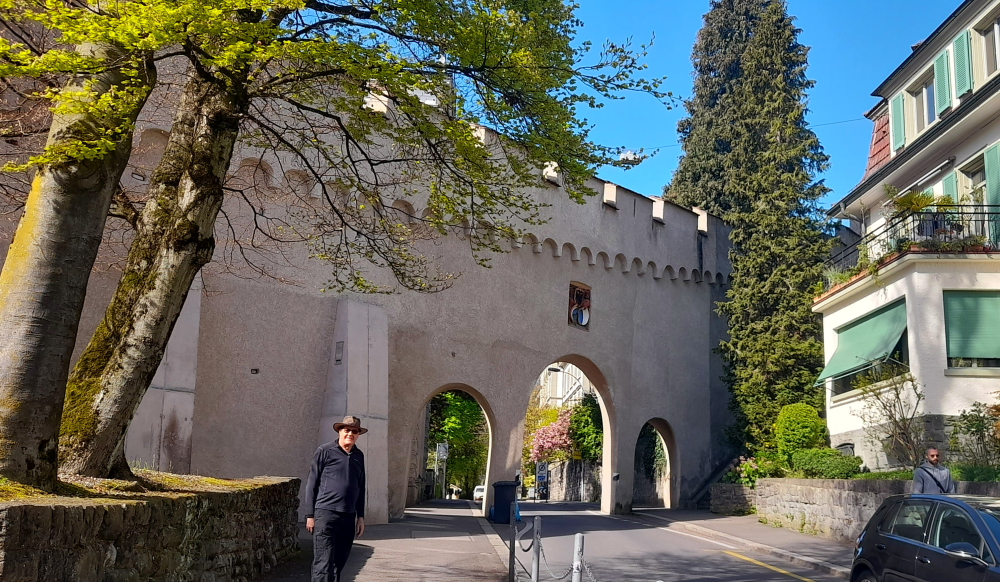
We enter via the Schirmer Tower. Dating from 1420 it was last restored in 1995 after being partially destroyed by fire the previous year.
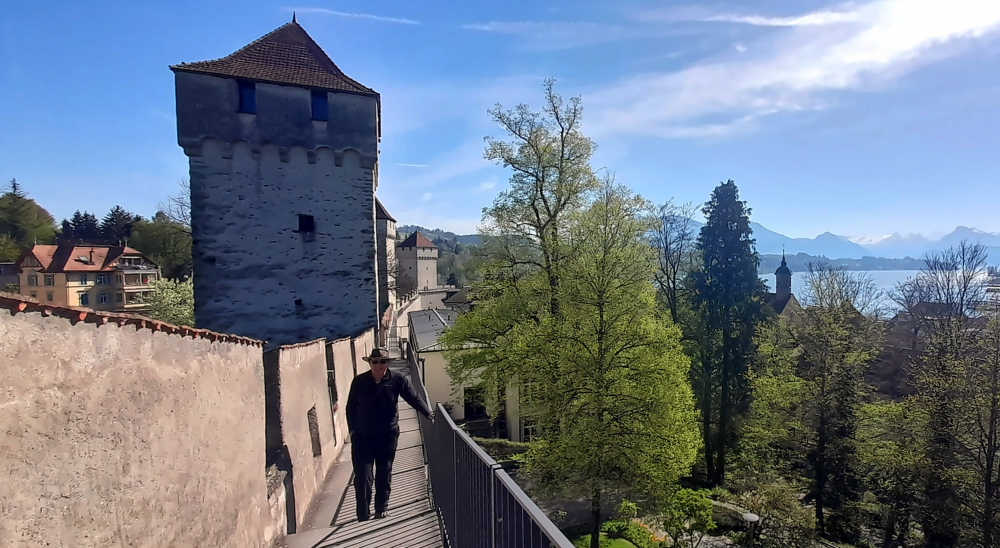
Walking along the Wall past the Pulver Tower we come to the Zyt Tower – the clock tower.
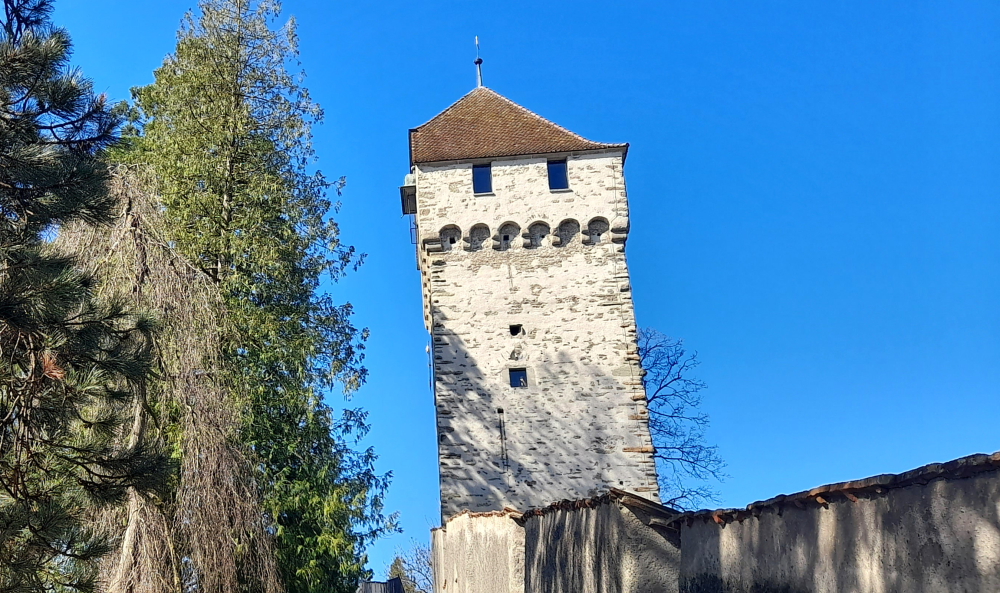
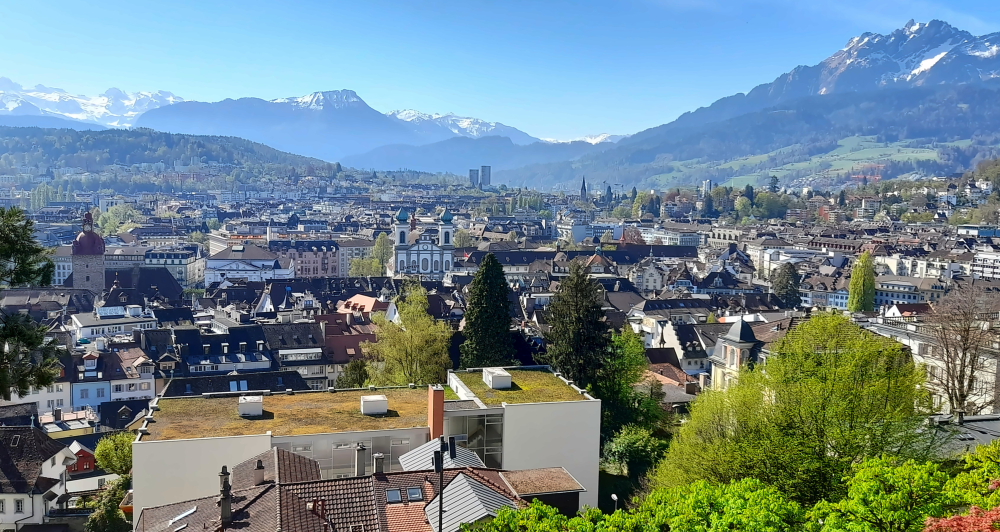
From the city wall to the right we have a commanding view of the mountains to the south of Lucerne plus the Old and New Towns.
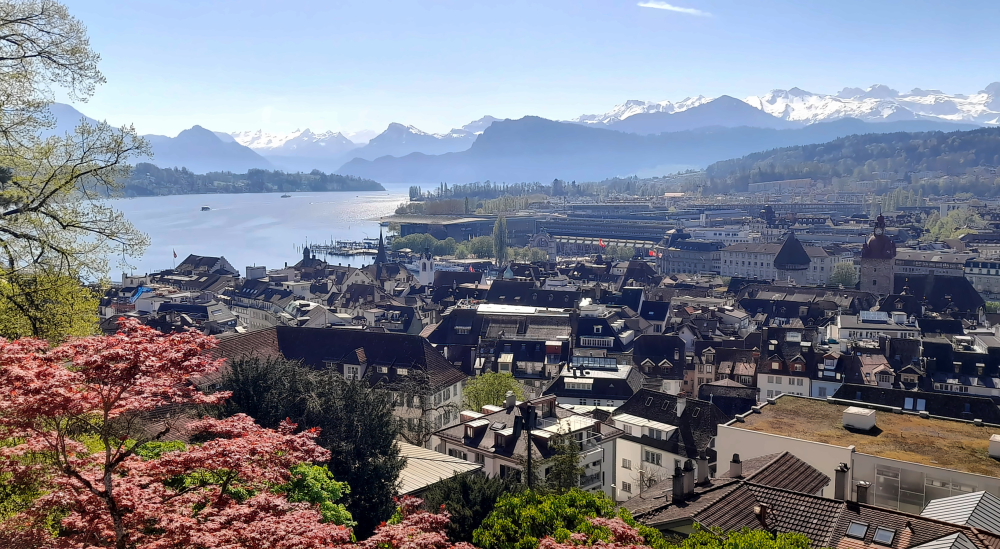
And to the left the Water Tower that is part of the Chapel Bridge, the Bahnhof and the beginning of Lake Lucerne.
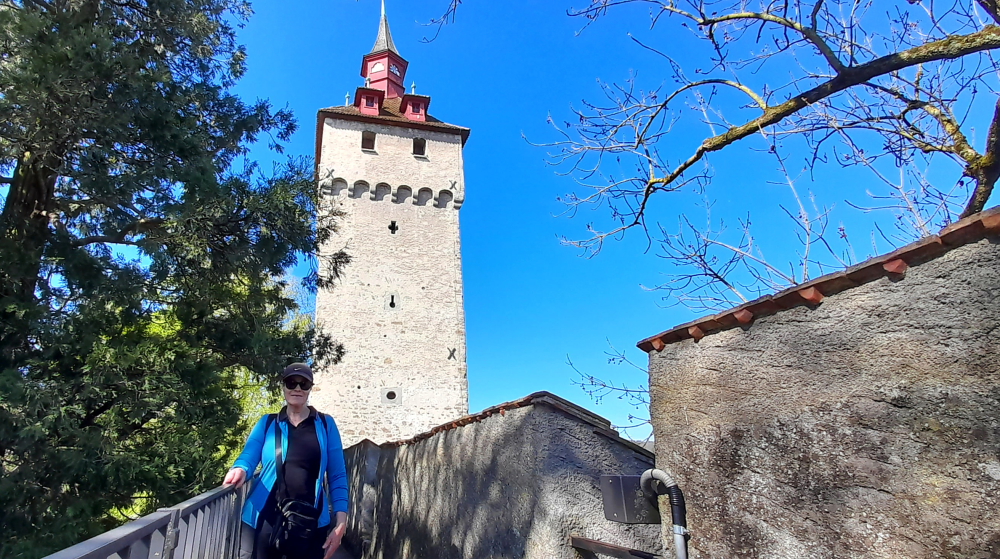
Walking as far as we can on the city wall we come to the Wacht (Watch) Tower. The medieval tower replaced by the Wacht Twer was being used to store 350 hundredweight of gunpowder when it was hit by lightning on 30 July 1701. The town’s fire wardens relocated to the Wacht from the Luegisland Tower in 1768.
Retracing our steps we enter the Zyt Tower. This tower was erected in 1403 for defensive and timekeeping purposes.
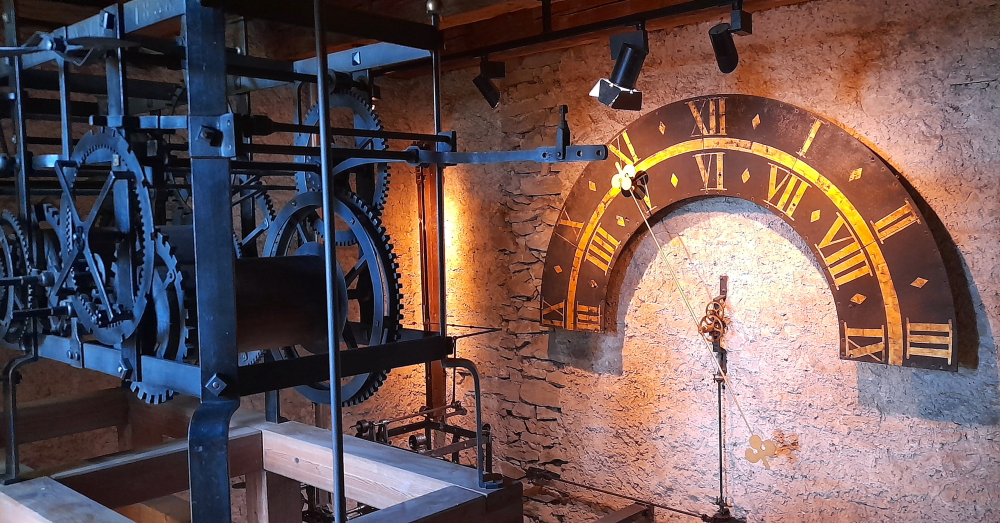
At the time, it accommodated the oldest public clock in existence. The clock turret once rose alone above the battlements until 1408 when it was incorporated within the tower’s newly-created attic floor.
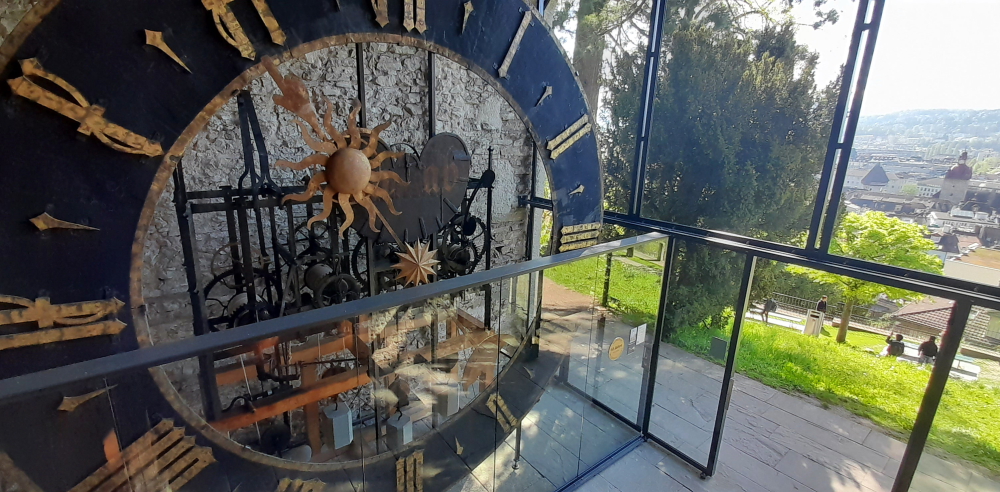
The clock mechanism was replaced in 1535. This clock has the privilege of chiming the hour 1 minute before all the other clocks in the town – which we can attest to when we exited the tower at 2 minutes to 11 o’clock.
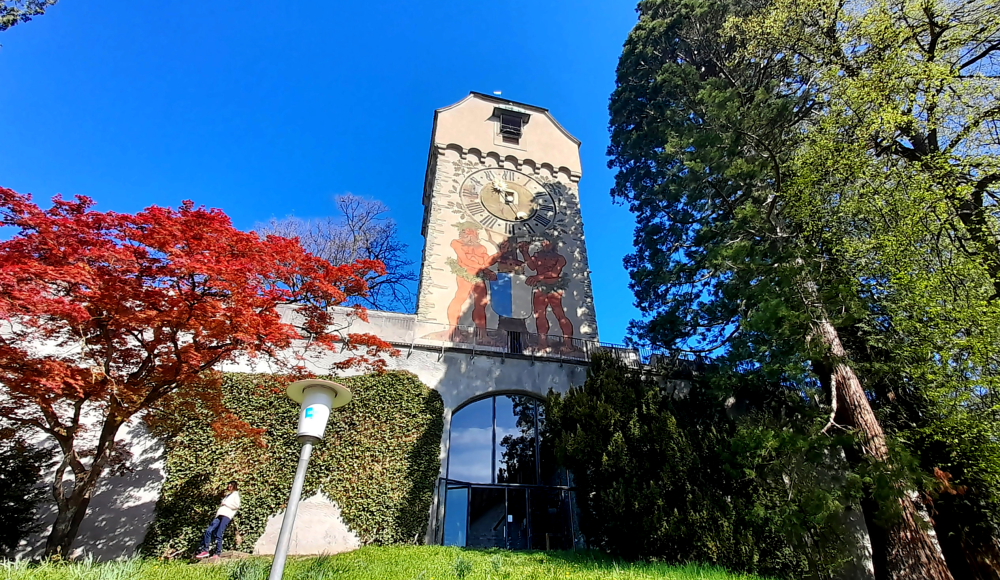
Straight downhill from here we enter the Old Town and the Kornmarkt 7 minutes later. Here at the Kornmarkt, in the middle of the Old Town near the Reuss River, is the Rathaus where photos of a small wedding are taking place.
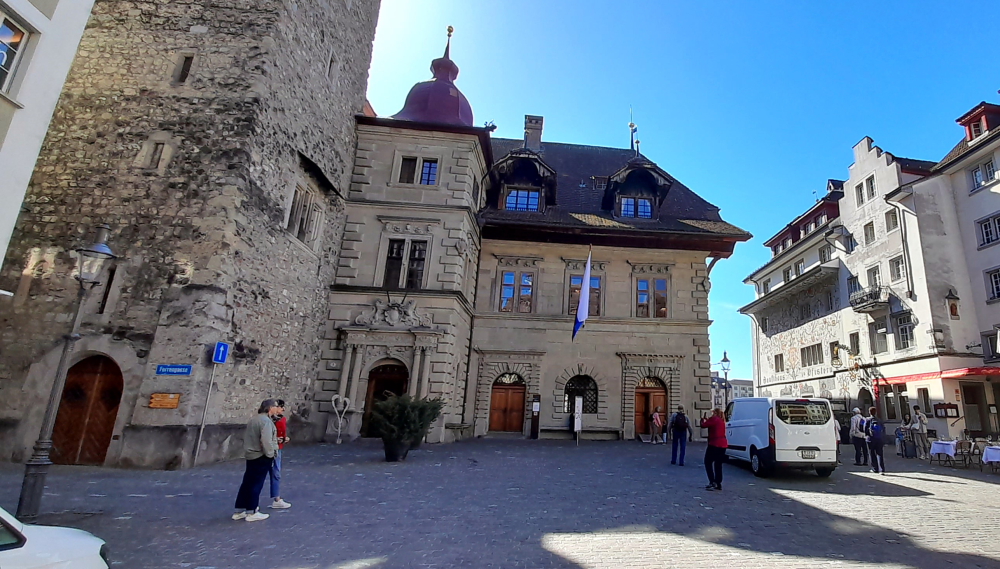
The Italian architect and master builder Anton Isenmann built the structure between 1602 and 1606 in the Italian Renaissance style. The grain chute is on the ground floor. It used to be a department store and is now used for exhibitions and concerts.
On the 1st floor is the Parliament Hall with two monumental paintings by painters Melchior Wyrsch and Josef Reinhart. The coffered ceiling, paneling and 18th century oven give this room its character. The Conference Hall is in the empiric style, built by Josef Singer. Today, civil weddings are primarily celebrated here.
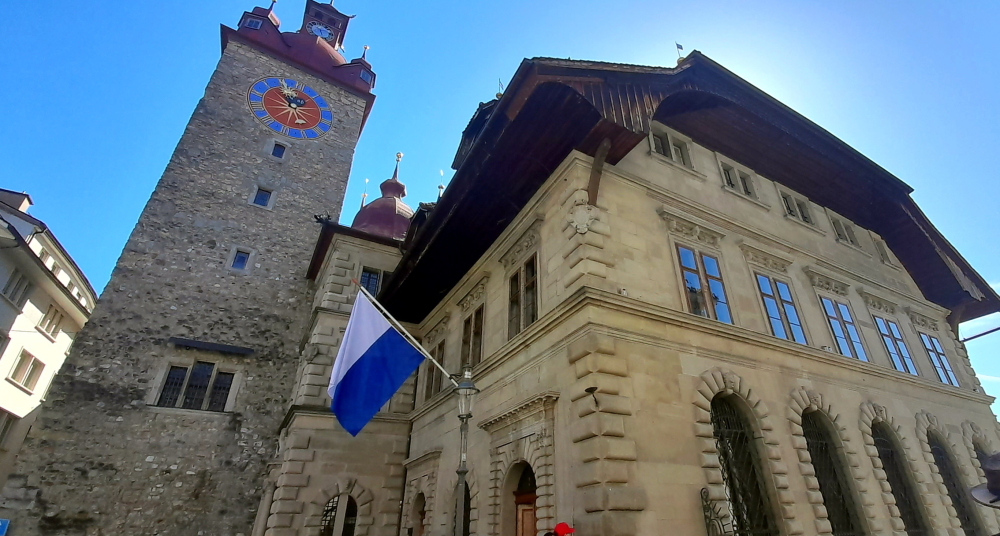
The Old Chancellery of Renward Cysats is located on the upper floor of the medieval family tower, while the New Chancellery, built in the Italian Baroque style, is located between the town hall and the tower. The wide, drawn-down roof is a Bernese farmhouse roof. In the attic is a dovecote, built in 2003 [luzern-com].
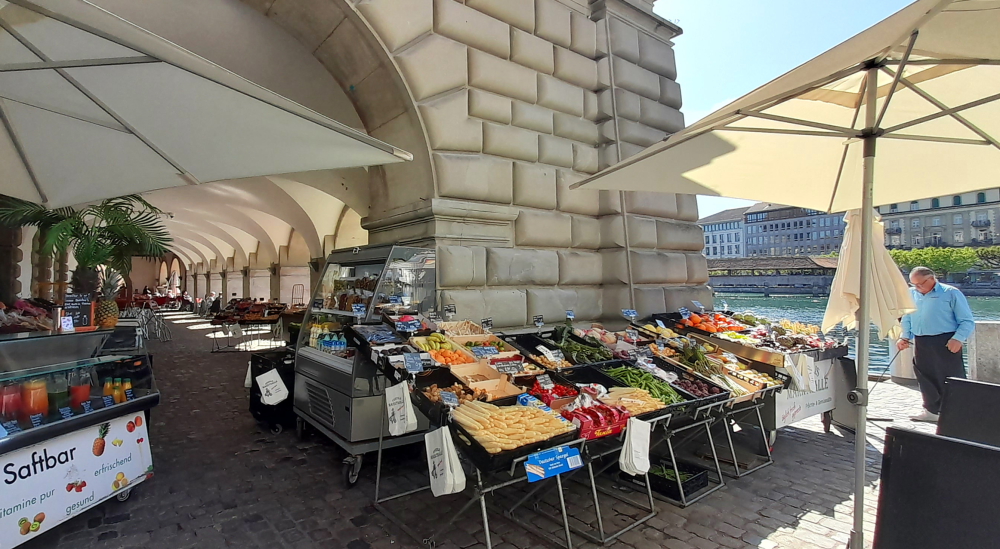
Adjacent to the Rathaus is the Rathaussteg Bridge, a narrow pedestrian bridge which crosses over the Reuss River next to the Chapel Bridge.
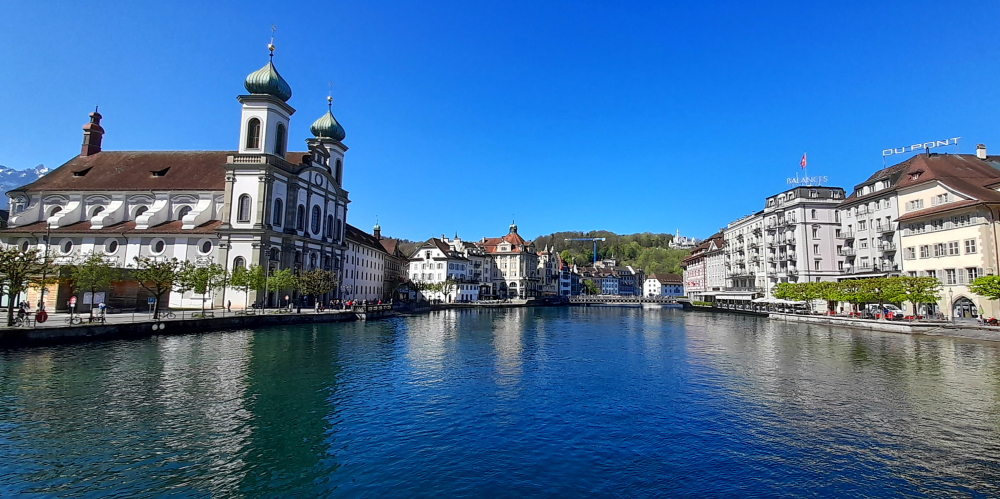
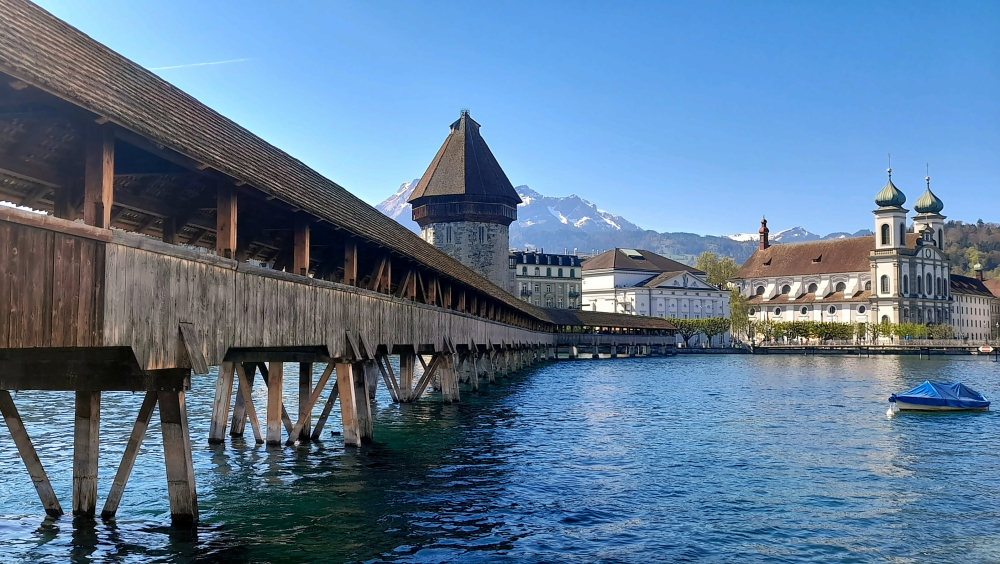
Finally, THE iconic bridge and its Water Tower – or as Lynn knows it as, the Peter Stuyvesant bridge.
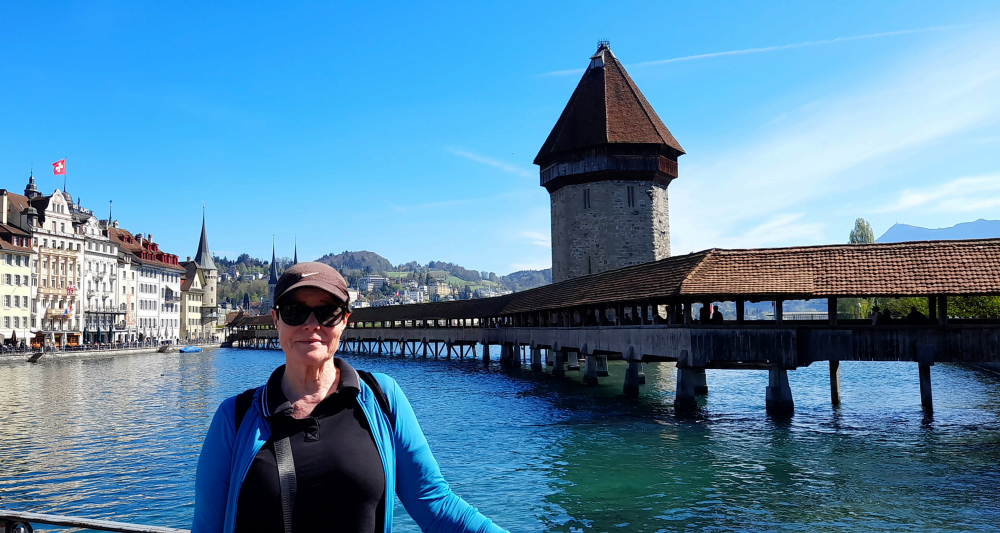
Built around 1300 – before the Chapel Bridge – the octagonal tower stands in the middle of the Reuss River.
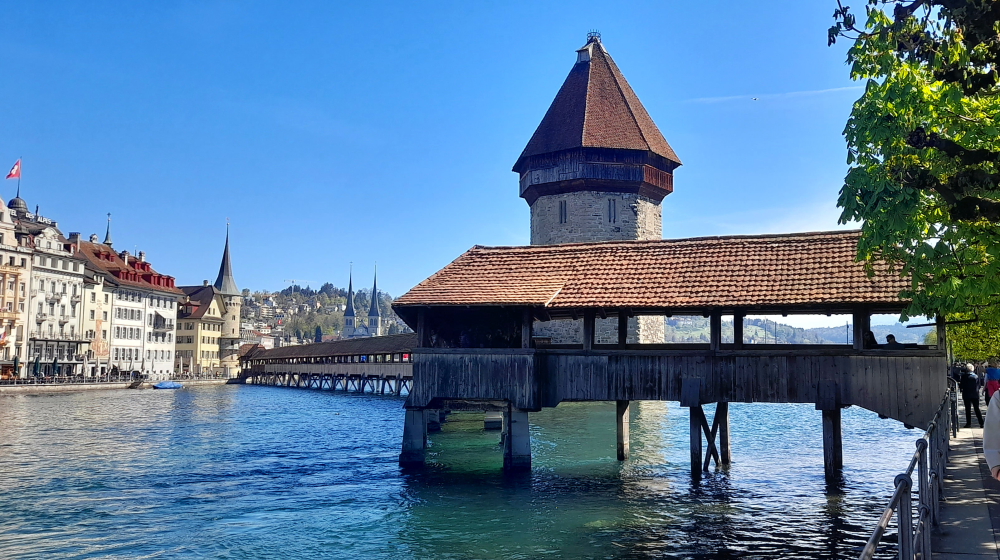
It served as a fortification and lookout post and was a cornerstone of the defenses.
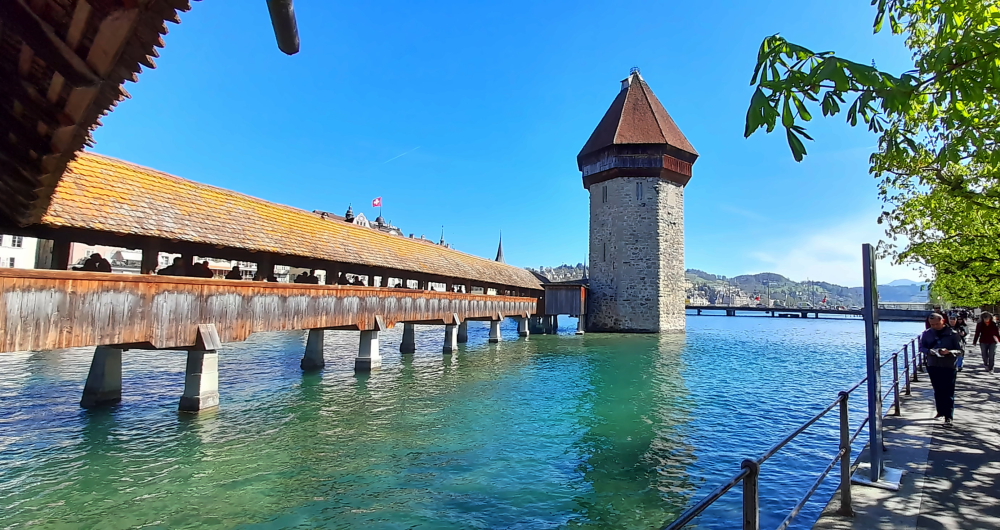
Over the ensuing years it was used to store the town’s archives and treasure, and it even saw use as a prison and torture chamber. Over 34 m in height, this Lucerne landmark is Switzerland’s most-photographed monument.
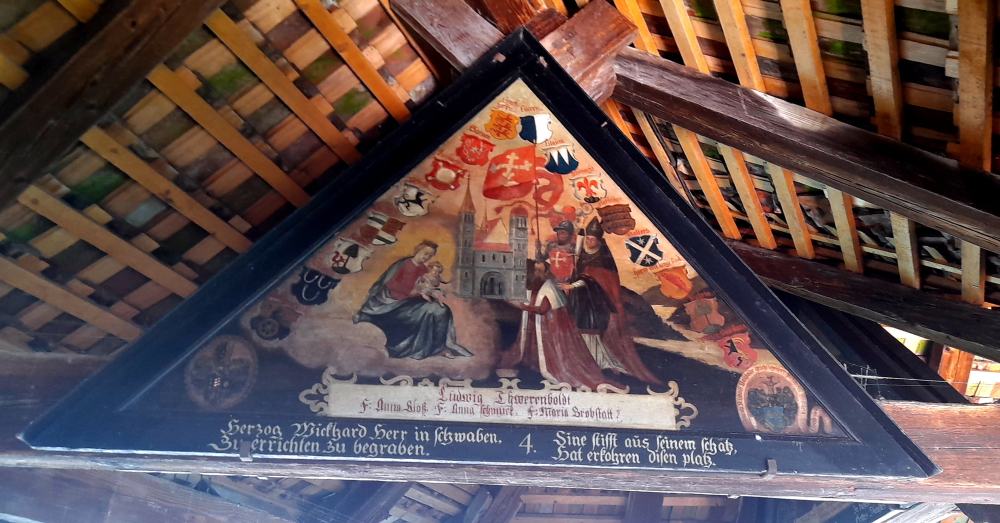
The Chapel Bridge is the oldest and, at 204.7 m, the 2nd longest roofed timber bridge in Europe. It was built around 1365 as a battlement and links the Old Town and “New Town” which are separated by the Reuss. The bridge’s gables feature triangular paintings depicting important scenes from Swiss history.
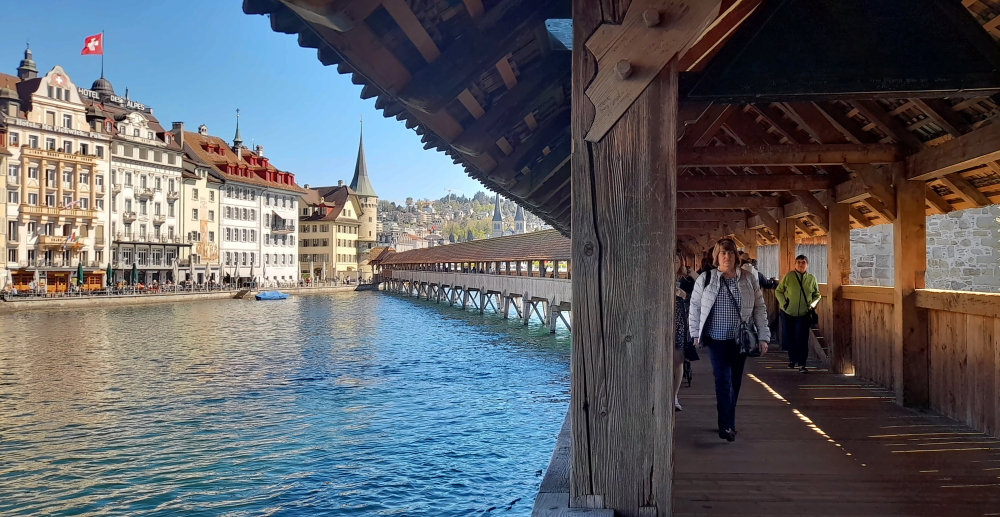
On 18 August 1993 the bridge fell victim to a blaze, which as blamed on a carelessly discarded cigarette. “Appropriate” says Lynn, “given the Peter Stuyvesant connection!”
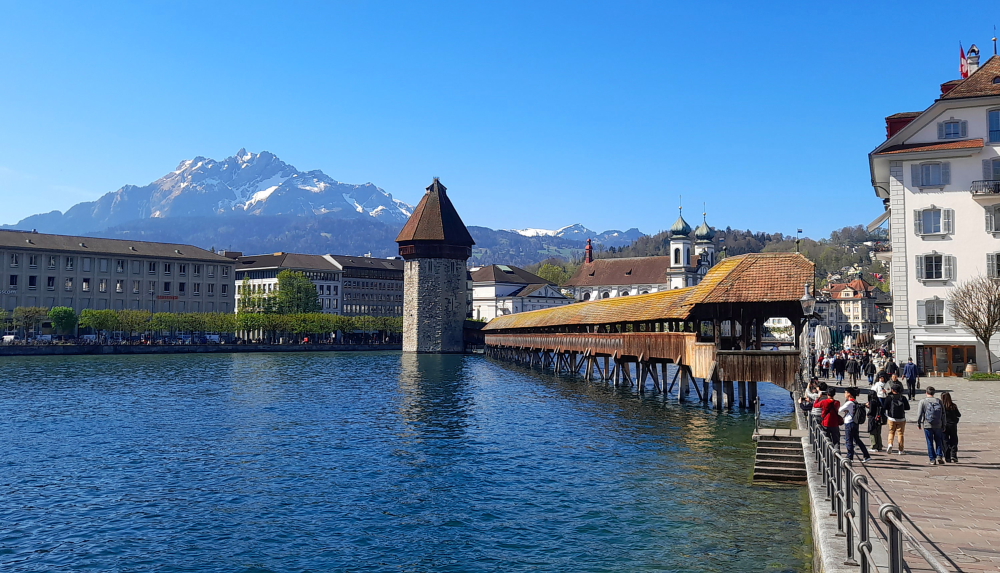
The conflagration destroyed a large part of the structure including 78 of the 111 famous pictures. Swiftly rebuilt and restored it was inaugurated and reopened to pedestrians on 14 April 1994.
Across Rosengartplatz and through an alleyway next to Peterskapelle is another marketplace, Kapellplatz. Here, at the entrance to Lucerne’s Old Town stands the Fritschi fountain with its colourful column. The fountain features a bannerman atop a pillar adorned with multiple carnival masks, among them those of Fritschi and his spouse. Water pours into the fountain’s base from four jester masks. Designed by the architect August von Rhyn, the fountain was unveiled on October 14, 1918.
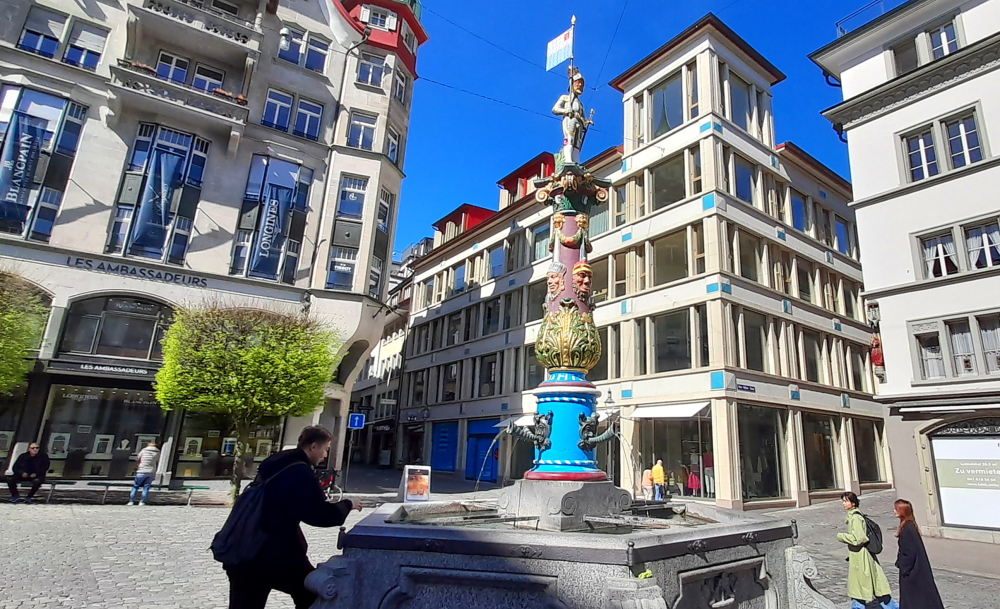
The Fritschi fountain holds significance in Lucerne’s annual carnival celebrations, the roots of which stretch back to the 15th century. The Fritschi parade starts Carnival Season whereby a life-sized straw effigy of Fritschi is paraded through the city in the company of various guilds and clubs. The procession is led by drummers and pipers, trailed by soldiers donning substantial beards and armor. This parade commemorates both the onset of the Lenten Season and a historic military triumph.
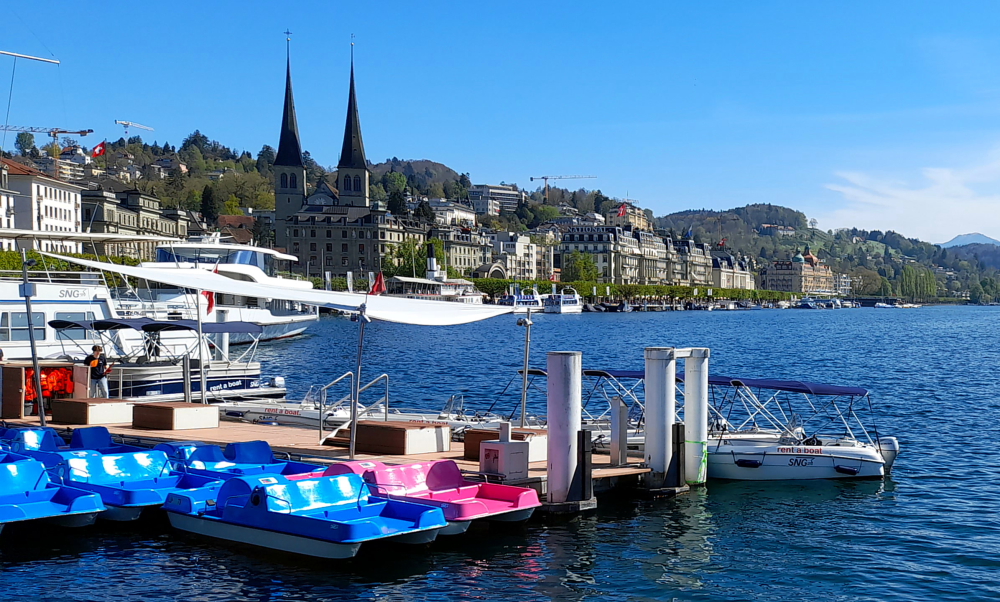
The car park is a short, 3 minute walk from here. We’ve been away for 1 hour and 45 minutes.
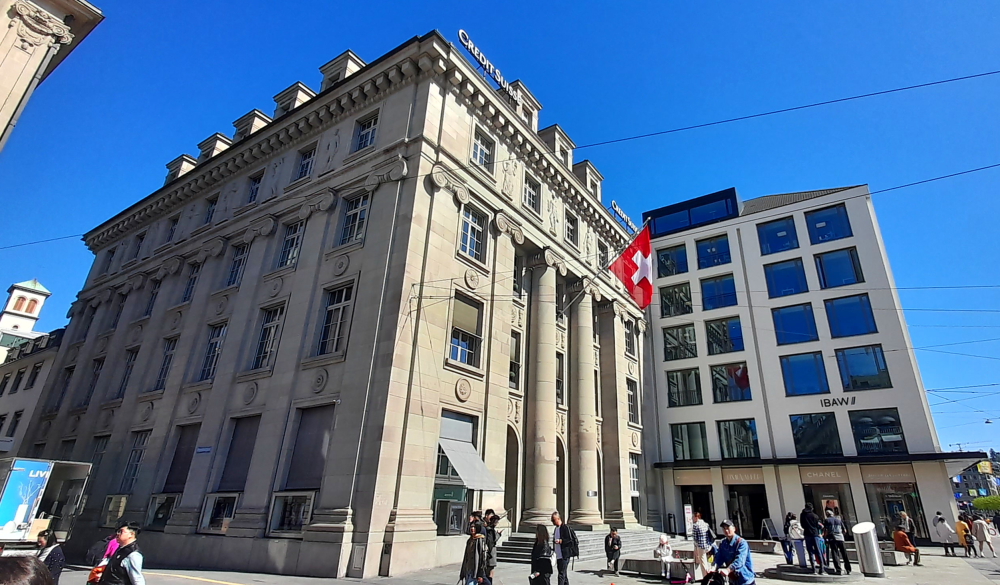
Driving back to the hotel we can see that snow that is on the lee side of hills on this side of Lake Lucerne still have snow, unlike their counterparts on the opposite side of the Lake.
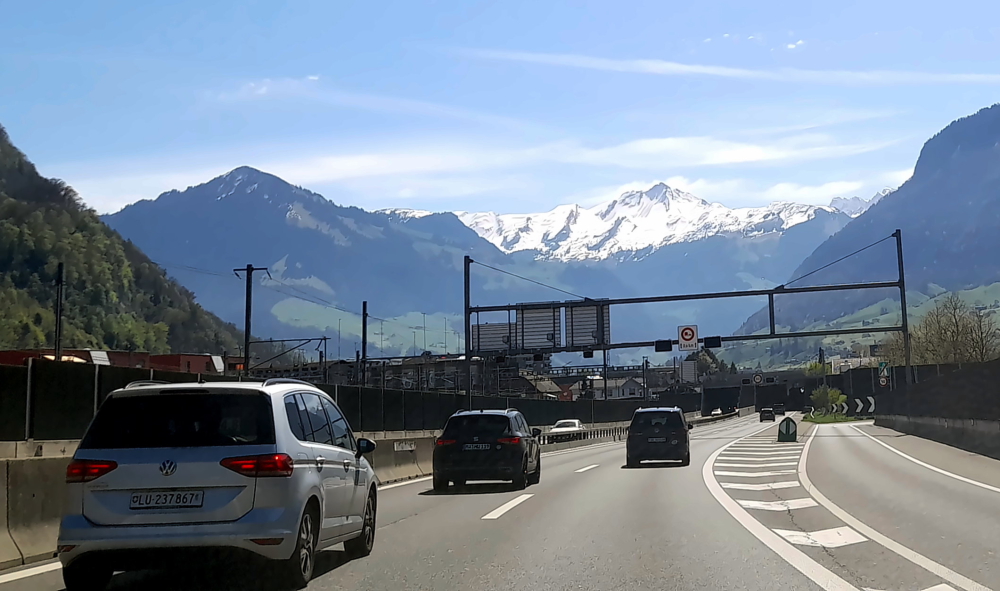
We’re back just after noon. All up, our return trip to Lucerne has cost us less than we thought – about CHF7 (A$12) compared to CHF 128 (A$215) by ferry.
Around 4:30 pm we walk into Beckenried to the bakery/eatery opposite the ferry terminal and pick up a couple of salads and apple strudels which we’ll have for dinner, sitting out on our balcony watching the sun set.
13 April, 2024
A bright and sunny 26 Deg. C today. So, another lazy day catching up the blog and soaking up the lakeside view. Around 4:00 pm we walk into town to the pizzeria.
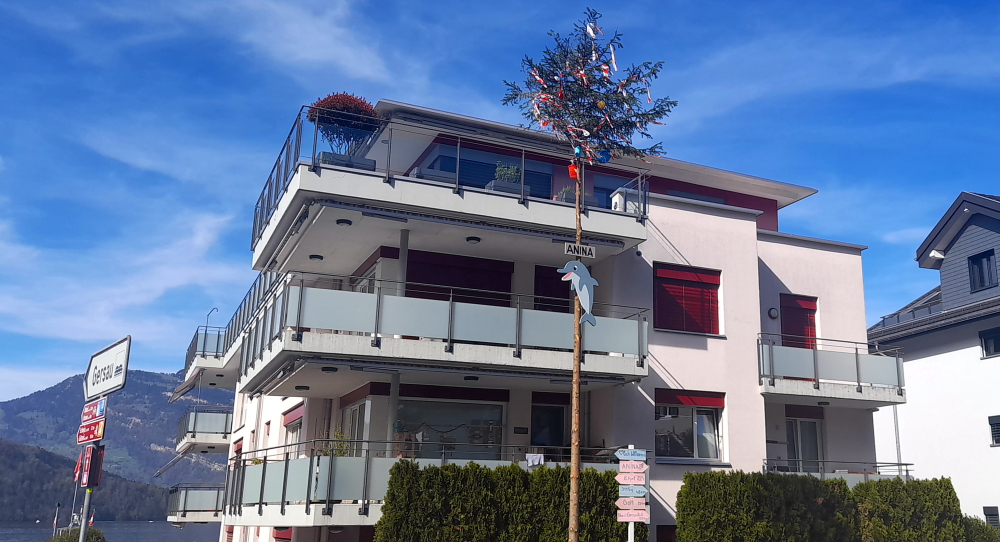
On our way we pass by several houses that have notices outside indicating that they each have had a new arrival to the household – signs with the baby’s name, date of birth, even weight! One house has taken the novel approach of decorating a very tall fir tree in their front yard for baby Anina. So what looks like a Christmas tree is, in fact, a Baby tree. Actually, I suppose they are the same thing!
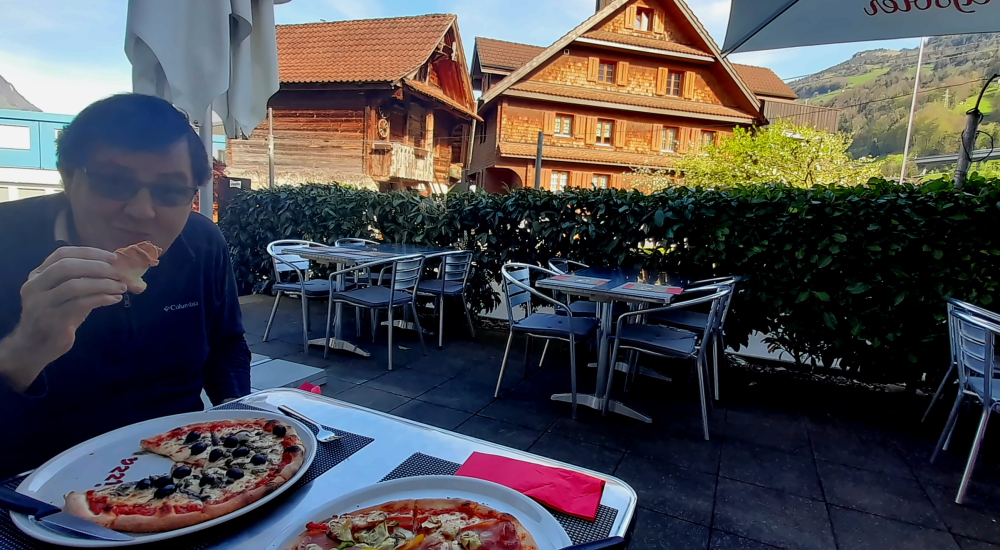
Next door to the cable car station is Pizzeria Klewen. On Sundays it’s open from 10:30 am which is why we are here at 4.30 pm and have the place to ourselves. We order a 10″ pizza each which is the perfect size and take in the views down to the lake, the surrounding neighbourhood and up the hill.
Tomorrow we have a 3 hour 15 minute drive to Tortona in Italy.
14 April, 2024
Another 26 Deg. C. day in Beckenried as we depart the hotel at 10:15 am while it’s still only 15. When we arrive in Tortona around 1:30 pm it should be 28.
As soon as we turn onto the A2 that runs past Beckenried the car GPS informs me that we have 170 km before we turn off.
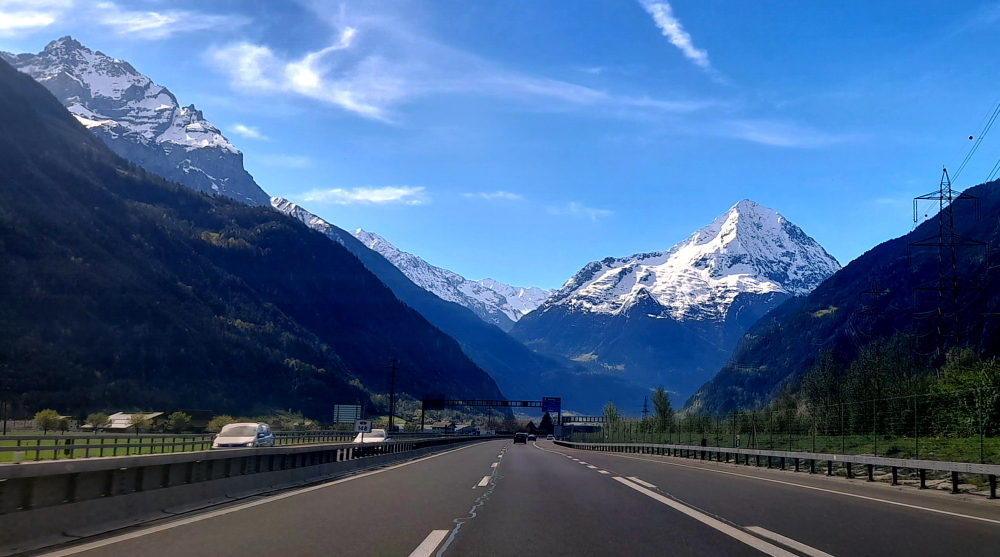
About 30 minutes later we are stopped on the freeway – for a set of traffic lights on red. Turns out this is the beginning of the Gotthard Tunnel – all 17 km of it – that passes under the mountains from Goschenen to Airolo. When we enter the tunnel it’s 20 Deg. C. but driving through it the outside temp. gets to 31!
Which is when we realise that the car’s air conditioning system isn’t bloody working! The same air conditioner that we had fixed back in October 2022, a couple of weeks after we bought the car. We resort to driving with the windows down.
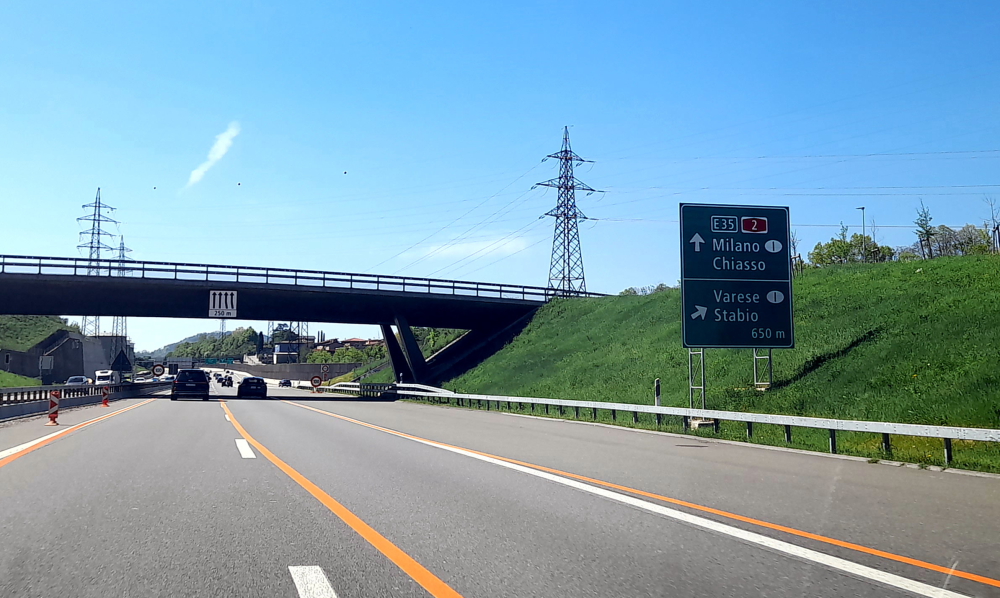
When we emerge from the tunnel on the other side of the Alps, the landscape has taken on a distinct Italian look and feel, such as ‘Uscita’ for exit instead of ‘Ausfahrt’ and ‘Benvenuto’ instead of ‘Willkomen’ – even though the border is still another hour (111 km) away.
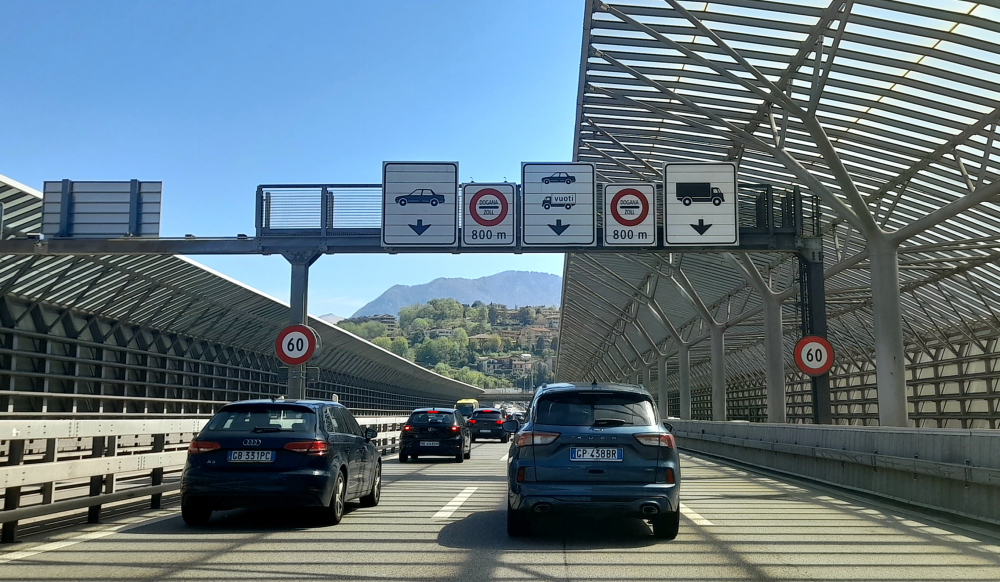
Finally, the border hoves into view – thanks to the tailback that has formed. At the barrier the fast lane becomes the slow lane as it’s that lane that the border police are stopping cars. The lane that we are in continues unhindered.
From here on the A9 then A7 it takes us 1 hour 15 minutes to bypass Milan and Pavia, and pay 3 Italian tolls totaling Eu11, to arrive at our gorgeous Art Deco guest house on Castle Hill in Tortona. Like our last visit to Italy back in 2014 it costs more for tolls than it does for fuel.
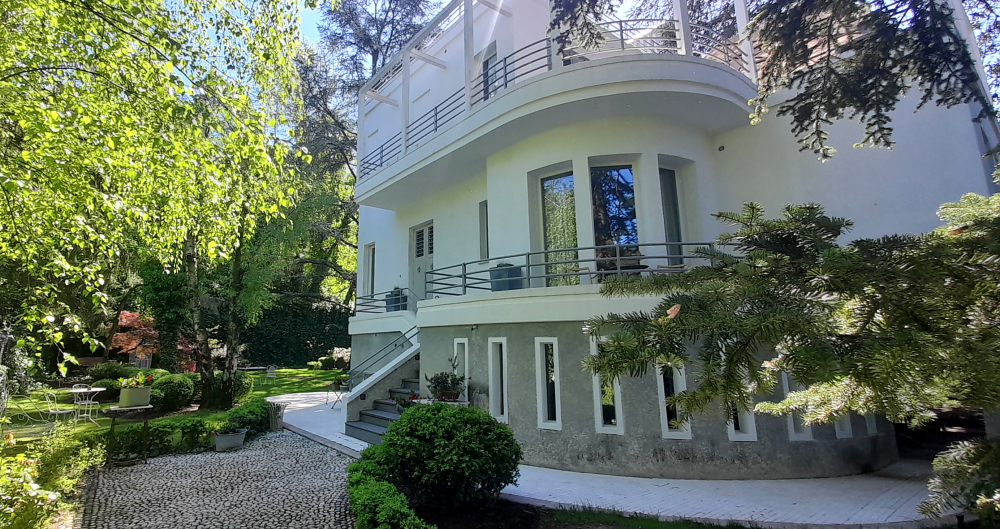
Cuniolo house was built in 1936 on the grounds of Castle Tortona alongside the Royal Gate. The surrounding Castle Park, overlooking the centre of Tortona, is built on the old fortress that dates back to Roman times but which has had many transformations over the centuries from Barbarossa and Spanish rule to Napoleon.
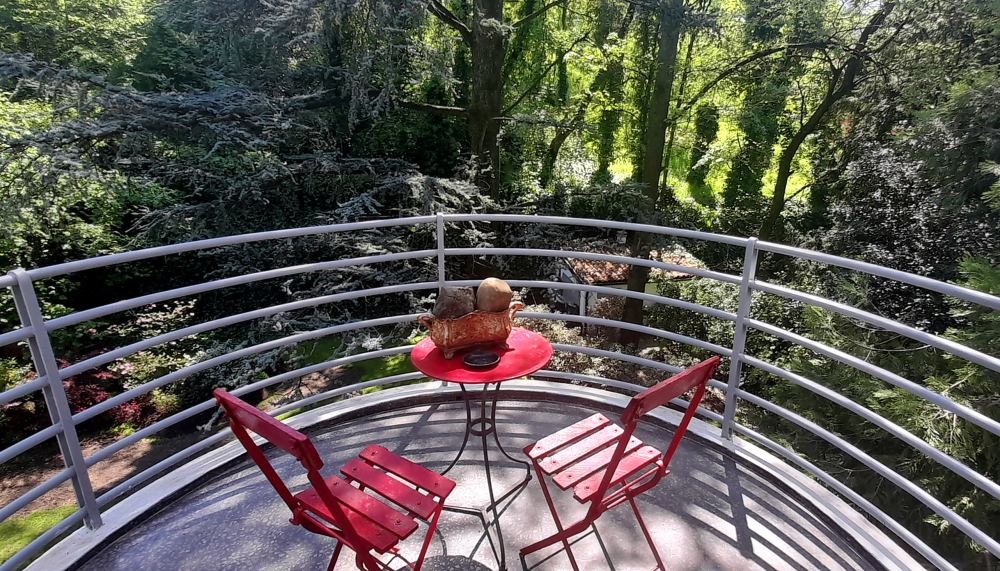
It was built by Giuseppe Cuniolo to be used as a home for the family of his son, the painter Gigi Cuniolo (1903-1976), a Piedmontese exponent of 20th century landscape painting.
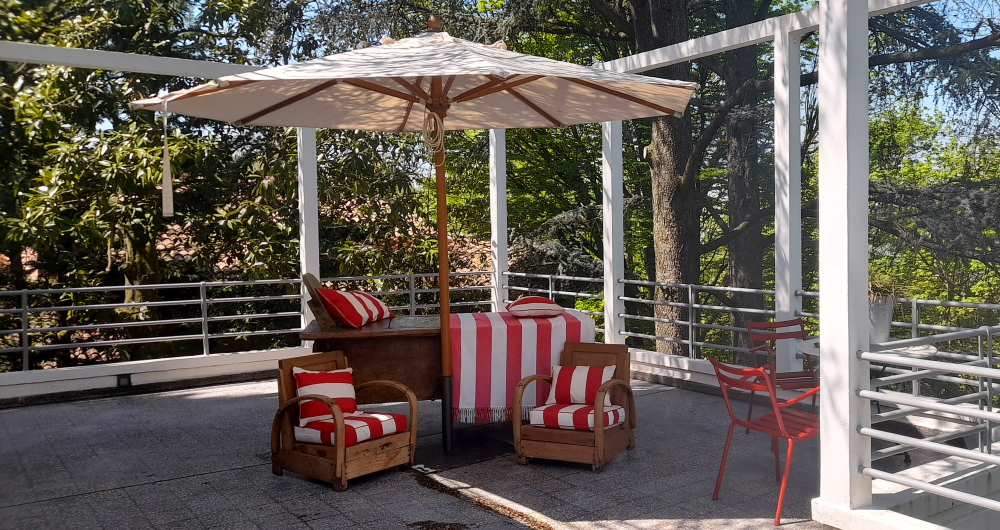
We have a large room on the 2nd floor, with a large bathroom, a small balcony and a large terrace facing opposite aspects.
After we unpack I check under the bonnet and conclude that it is possibly the air conditioner’s compressor or its clutch that is the problem, so not a cheap fix. Tomorrow I’ll have to get our host to phone the Opel dealer in La Spezia, where we are next staying for a week, to check the car in.
And we soon realise we are back on Italian time for dinner – nothing opens before 7:30 pm where we are booked at a local trattoria, some 15 minutes’ walk down the hill.
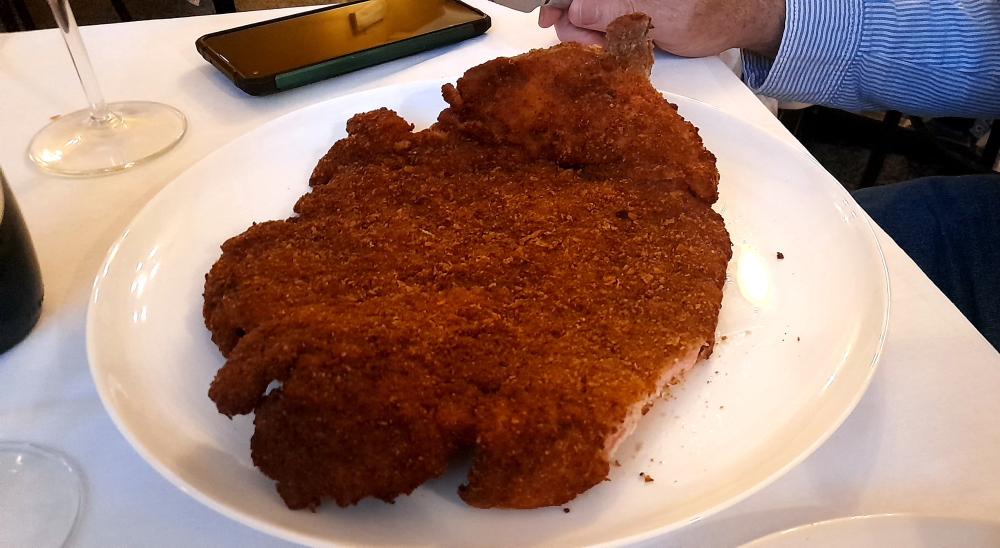
The tratt isn’t very elegant and has a very limited menu but I order the house special which turns out to be a massive 30cm schnitzel and Lynn just orders a couple of vegetable side dishes. We also ordered a half bottle of very nice red wine. I could only manage half of my schnitzel so it will be lunch for tomorrow. At least the price for dinner was a little more realistic than we experienced in Switzerland. Our total bill was EU 36.00 (A$60).
 THE CONTINUING TRAVELS OF YOGI & BOO BOO