The hotel internet (or lack of) has meant that we spent the entire day swearing and cursing at the unreliable internet. I managed to add all the photos early in the morning but Lynn spent the next few hours trying to write the blog. She gave up and decided to write the blog in a Word document and I would have to cut and paste it on to the blog when she (eventually) finished it.
What a waste of a day!
Wasting a full day due to very poor internet at the hotel.
While I waited hour by hour I took the occasional stroll over to the Bremen Hbf station to check out where we will catch the train for our day trip to Hamburg tomorrow. The station is a bit seedy and while I was there at least two pick pockets were arrested by the station police. There is a permanently-manned police van in the square outside the station.
Perhaps Bremen, in hindsight, was not a good tourist stop. Or perhaps it is just the Best Western Hotel here. I have seen faster dial-up internet in the 1990s.
17 September, 2023
While we were at Anne and Jurgen’s place Anne helped us book a train trip to/from Hamburg while we are staying at Bremen. The train fare included unlimited use of the underground and buses for the day in Hamburg.
We cautiously head over to the Bremen Hbf railway station which is only about 100 metres away. That, and a good breakfast, is about the only thing going for this hotel.
Bremen Hbf Station.
We easily find the correct platform and the train is already at the station when we arrive so we board and take a good seat. The train doesn’t seem to be that busy but then again it is a Sunday.
Time to board the train to Hamburg.
The train comes complete with a reasonable quality WiFi signal but no power outlets. With power we could have brought the laptop and avoided the hotel WiFi frustrations.
The train internet is faster than our hotel internet.
It takes us about 1 hour 20 minutes for the all-stops run to Hamburg but we enjoy the very comfortable ride checking out the scenery on the way and catching up with some emails.
Once we arrive at Hamburg Hbf (Central Rail Station) we walk over to the underground metro to the U1 line to Stephansplatz at the Botanical Gardens. Why not? Just as good as any for our starting point to check out Hamburg for the day.
The Japanese Garden in Hamburg Botanical Gardens.
The gardens don’t seem that impressive and they are in need of some serious weeding but that may be because summer is coming to an end and very soon everything will be in hibernation. However, there are lots of people out enjoying what could be the last warm weekend.
The Alster Fountain on Lake Binnenalster.
Lynn decides that we should walk to our next stop. I would have taken the metro since there is no additional cost but Lynn rightfully remarks that we need the exercise after a week of over indulgence in way too much food and drink.
Lynn wants to see the Hamburger Kunsthalle which houses 7 centuries of world art. I make the snide remark by asking is it stolen Nazi art. That came with a slap from Lynn. I have no interest in paying a hefty fee to see art that should be on display for free so we just pass by and take a photo from the outside.
I did however ask Lynn if there are Hamburgers on display (perhaps an old Big Mac?) since it is called the Hamburger Kunsthalle. Ouch, another slap!
The Hamburger Kunsthalle Art Museum.
By this point we have walked along the North West bank of the city lake known as Binnenalster. We continue along the South West bank and get some great views of the lake and the town centre.
Not sure that the Telecommunications tower adds to the scenery.
In the centre of the lake is a large fountain. This giant water spray reaches up to 60 metres and has a city backdrop.
We are heading for the Hamburger Rathaus (yes, that is its official name). It conjures up visions of a giant Big Mac with Rats running through it.
On the way we pass Kleine Alster which resembles the canals of Venice only with better-built buildings. It seems that Hamburg was also built on swampy grounds which were later turned in to canals and a very productive harbour.
One of the many canals around Hamburg.
Hamburg City Hall (German: Hamburger Rathaus) is the seat of local government of Hamburg and the seat of one of Germany’s 16 state parliaments. The Rathaus is located in the Altstadt quarter in the city centre, at the Rathausmarkt square, and near the lake Binnenalster and the central station. Constructed from 1886 to 1897, the city hall still houses its original governmental functions with the office of the First Mayor of Hamburg and the meeting rooms for the Parliament and the Senate.
Hamburger Rathaus.
We have a quick look inside the Town Hall but visitors only have limited access to the main entrance since it is a working Parliament Building and it is a Sunday.
Inside the Rathaus.
Its courtyard is decorated with a Hygieia fountain. Hygieia is the goddess of health and hygiene in Greek mythology and its surrounding figures represents the power and pureness of the water. It was built in remembrance of the cholera epidemic in 1892, the former technical purpose was air cooling in the city hall.
The inside courtyard of the Rathaus.
Lynn has a number of places to visit on her itinerary but unfortunately they require significant walking. I am sure that we could have taken the metro… Our next stop is the St Nicolai Church which is now just ruins from WWII and has been converted to a war monument.
St. Nikolai Main Church.
The clearly visible tower of the Church of St. Nicholas served as a goal and orientation marker for pilots of the Allied Air Forces during the extensive air raids on Hamburg. On 28 July 1943, the church was heavily damaged by aerial bombs. The roof collapsed and the interior of the nave suffered heavy damage. The walls began to show cracks, yet neither they nor the tower collapsed.
After the war, the basic structure of the Gothic church remained intact to a large extent and reconstruction was a realistic option. Nevertheless, it was decided to demolish the nave while leaving the tower untouched.
The tower and some remains of the wall have since been preserved as a memorial against war. For several decades they were not cared for, and, consequently, they gradually decayed. In 1987, the Rettet die Nikolaikirche e.V. (Rescue St. Nicholas’s Church) foundation began to restore the existing fabric of the building and erected a so-called “place of encounters” (a room for events and exhibitions) in the crypt. The organization attempts to salvage pieces of rubble that were removed in 1951, such as pieces from the destroyed nave pulled from the River Elbe in November 2000. A reconstruction of the church, as done with the Church of Our Lady in Dresden, is not intended. However, a 51-bell carillon was installed in 1993 as a memorial.
View through the ruins of the church.
It is now starting to get quite warm at around 26 Deg C so I am truly ready for a rest and perhaps a cool drink. No? More trudging to do… We are now heading towards yet another church past more waterways with buildings that look like they all have a rising damp issue.
The waterways of Hamburg.
Only 15 minutes walk away Lynn proudly announces. But that really means 15 minutes to the next stop and we will be another 15 minutes further away from a rest stop. Hopefully we can find a metro station for the return journey.
St. Michael’s Church.
St. Michael’s Church is one of Hamburg’s five Lutheran main churches (Hauptkirchen) and one of the most famous churches in the city. St. Michaelis is a landmark of the city and it is considered to be one of the finest Hanseatic Protestant baroque churches. The church was purposely built Protestant unlike many other Hamburg churches which were originally built by Roman Catholics and were converted to Protestantism during the Reformation. It is dedicated to the Archangel Michael.
Inside St. Michael’s Church.
Offering 2,500 seats, the Michel is the largest church in Hamburg. The church has a Latin cross plan with 44 m width, 52 m length and 27 m height.
The church has five organs including a Marcussen organ and a large Steinmeyer organ with its 85 registers, 5 manuals and 6674 pipes. On 9 October 2008, St. Michael’s received a new crypt organ, named after Felix Mendelssohn Bartholdy.
In fact, among the famous people who have been to this church was pianist and composer Johannes Brahms who was baptized here.
The pulpit is in the centre of the building which was crafted out of marble by sculptor Otto Lessing from Dresden in 1910. It was designed to look like a rounded chalice and features a magnificent staircase. The large pulpit roof is crowned by the Angel of Annunciation.
St Michael’s Church as we head to the harbour.
The 132 m (433 ft) clock tower is a significant feature of the city skyline and was a navigation aid for ships sailing on the river Elbe. The clock features an 106 m (348 ft) observation level which allows a panoramic view of the city and harbour. The clock tower features four 8 m (26 ft) clock faces and are the largest clock faces in Germany. The minute hands are 4.91 m (16.1 ft) and the hour hands are 3.65 m (12.0 ft).
While we were visiting Lubeck that only had a couple of brick warehouses, Jurgen suggested that we visit the extensive Warehouse District in Hamburg while we are there. Really? More walking…
The Warehouse District (Speicerstadt) is well south of the town centre and serviced by lots of waterways. Lynn also wants to get up close to see the odd-looking Elbphilharmonie Building.
Elbphilharmonie Hamburg building behind the Harbour.
The Elbphilharmonie (“Elbe Philharmonic Hall”), popularly nicknamed Elphi, is a concert hall in the HafenCity quarter of Hamburg, on the Grasbrook peninsula of the Elbe River.
The new glassy construction resembles a hoisted sail, water wave, iceberg or quartz crystal resting on top of an old brick warehouse (Kaispeicher A, built in 1963) near the historical Speicherstadt.
We are now well and truly in the Warehouse District – blocks and blocks of brick warehouses stretching into the distance and straddling either sides of a number of artificial waterways.
The Speicherstadt museum in the Warehouse District of Hamburg.
The Speicherstadt (literally: ‘City of Warehouses’, meaning warehouse district) in Hamburg, is the largest warehouse district in the world where the buildings stand on timber-pile foundations, oak logs, in this particular case. It is located in the port of Hamburg—within the Hafen City quarter—and was built from 1883 to 1927.
The district was built as a free zone to transfer goods without paying customs. The district and the surrounding area have been under redevelopment for many years as the port industry has evolved. As an exceptional example of Neo-Gothic and modernist architecture, and for its testimony to the development of international maritime trade, the Speicherstadt was awarded the status of UNESCO World Heritage Site on 5 July 2015, along with the Kontorhaus District.
Just a load of old buildings?
I don’t know what I expected to see in the Warehouse District but blocks of warehouses seem a bit dull. I think that I expected waterside cafes and converted 19th century buildings in to shops and boutiques like the Sydney Rocks area. Nope, just brick building after brick building.
Even Lynn is starting to need a break so we find the nearest metro station (which is still a good kilometre walk away as the nearest one is closed, of course) and head back to the Binnenalster lakeside where we know that there are some good cafes overlooking the lake.
We stop at Cafe Alex for a late lunch or early dinner and order drinks, a light meal and a loo stop. Lynn rounds off her meal with a glass of chocolate ice cream covered in Baileys.
After a long rest we head back to the metro and take the train to Central Station for our trip back to Bremen, in the hope of catching an earlier train than is listed on our return ticket. Much to our surprise (since it is now late Sunday afternoon) the platform is absolutely heaving with people trying to get on the train from Hamburg to Bremen. Did I miss something? Is this a war-time refugee train – the last one out of Hamburg???
No, this is a normal Sunday afternoon exodus from a day in town for the locals. We manage to manoeuvre our way on and find a seat each, albeit not together for the run back to Bremen. Un-German like, the train is 5 minutes late leaving Hamburg and as we pull out of a station half way home the train behind us pulls in. Surprisingly our train doesn’t stop at any of the remaining scheduled stops to Bremen so we get back a little faster than expected.
18 September, 2023
The plan for this morning is to continue the fight with the pathetic hotel internet to try and do our best to catch up on the blog then to go on our booked guided walking tour which is scheduled for 2:00 pm this afternoon.
By the time we have breakfast Lynn receives a message from our guide to inform us that he has cancelled as he needs 5 people for the tour to be viable and apparently we are the only 2. Not happy. This is the 2nd Bremen walking tour that has been cancelled on us in the past 3 days. Lynn hurriedly pulls together an itinerary so it will be a Lynn-guided walking tour. With all the issues with the hotel internet and our day trip to Hamburg we have seen almost nothing of Bremen after 3 days. I just hope it will be worth the trip here at all.
We head towards the old town which was encircled by an old town wall. The wall is gone now, as you would expect, but once we leave the seedy part of the more recent parts of Bremen we encounter what you could describe as being quite charming.
No gun control here.
Walking into town we are quite surprised to see a gun shop on the main street, and not just revolvers but semi-automatics and knives, lots of knives – and no reinforced shop windows, either!
Crossing the old town moat.
Crossing the bridge we have a view of Beck’s Muhle, now a restaurant.
The Marktplaz – old town market square.
A couple of minutes later we arrive in Marktplaz, the old town market square. Several prominent buildings border it: the Town Hall, the Cathedral and the Schutting.
Bremen City Hall (German: Bremer Rathaus) is the seat of the President of the Senate and Mayor of Bremen. It is one of the most important examples of Brick Gothic and Weser Renaissance architecture in Europe. The old town hall itself was originally constructed in the 15th century. Since 1973, it has been a protected historical building. In July 2004, the part consisting of the Roland Statue and the Town Hall was listed as a UNESCO World Heritage Site because of its outstanding architecture and its testimony to the development of civic autonomy in the Holy Roman Empire.
Bremen Town Hall.
The Bremen Cathedral is, in general, a medieval building. The oldest visible structures are its two crypts. Since the late 1220s, vaults and walls were erected in bricks, partly hidden by sheets of sandstone. St Peter’s is one of the largest historic brick structures in Europe, but it comprises too many stone structures to be subsumed to Brick Gothic. During the great restoration of 1888 to 1901, the western towers and most of the western façade were rebuilt. The crossing tower was a new addition, using the medieval crossing tower of Worms Cathedral as an example.
St. Petri Dom Church.
At least parts of the market place had been in use since the age of Charlemagne. In fact, the building ensemble which flanks the Marktplatz is considered one of the most beautiful in Germany with sandstone and brick being uniformly used for the facades of the buildings. The entire complex is listed as a heritage site.
Historically significant buildings on Bremen Old Town Square.
On the opposite side of that square there is the ancient guildhall, called Schutting, still today the seat of the board of commerce.
Schütting.
Near the northern corner of the town hall, there is a sculpture by Gerhard Marcks of the Town Musicians of Bremen based on a German fairy tale collected by the Brothers Grimm and published in Grimms’ Fairy Tales in 1819.
The town emblem.
An alleyway off the Marktplatz is the Böttcherstraße. Only about 100 m (330 ft) long, it is famous for its unusual architecture and ranks among the city’s main cultural landmarks and visitor attractions.
Bringer of Light (Der Lichtbringer).
Most of its buildings were erected between 1922 and 1931, primarily as a result of the initiative of Ludwig Roselius, a Bremen-based coffee-trader, who charged Bernhard Hoetger with the artistic supervision over the project.
Böttcherstraße.
The street and its buildings are a rare example of an architectural ensemble belonging to a variant of the expressionist style. Several of the houses can be classed as Brick Expressionism. Since 1973, the ensemble has been protected by the Monument Protection Act.
At 2:00 pm the Glockenspiel starts to chime and it goes on for 15 minutes while a fake window rotates displaying important figures in the aviation industry.
Glockenspiel House.
At the end of the street is the banks of the Weser River and its promenade where various sailing vessels now used as bars and restaurants are moored.
Weser River Harbour.
Nearby is Schnoor, a neighbourhood in the medieval centre of Bremen and the only part of it that has preserved a medieval character.
The Schnoor Quarter.
The neighbourhood owes its name to old handicrafts associated with shipping.
We found a cafe and some outside seating so Lynn orders a hot chocolate and a Mandelhornchen (a German almond horn cookie). I had a simple Cafe Latte.
Coffee and cake stop in the Schnoor.
The alleys between the houses were often associated with occupations or objects: There was an area in which ropes and cables were produced (string = Schnoor) and a neighboring area, where wire cables and anchor chains were manufactured (wire = Wieren).
Lovely shops in the Schnoor.
The neighbourhood is adjacent to the parkland that borders what would have been a moat around the original town. This parkland is called Wallanlagen.
Walking along the old moat fortifications.
As the cathedral was closed when we first arrived, we return to the Markplatz to venture inside.
Back to see the inside of St. Petrie Dom.
Back at the hotel Lynn makes us a nice cup of tea. Again the internet has failed so I try my luck at taking the laptop down to the business centre. The internet is even worse in the business centre but I try unplugging the hotel computer from the data port and plugging the laptop into the same data port. Presto! I have reasonable internet and get stuck into trying to catch up on the last couple of days. By 6:30 pm I have completed everything except today’s wording. Time for dinner and I may try to complete the last of the blog either tonight or in the morning before we check out.
Tomorrow we leave Bremen for Leeuwarden in the Netherlands. Hopefully the internet will be better there. If nothing else we need some down time to rest after a few hectic weeks.
Time to leave Berlin for our trip to Neu Thulendorf near Rostock to stay with our friends, Anne and Jurgen, whom we met in 2017 on a Halong Bay cruise in Vietnam.
It should take us 2.15 hours to drive the 229 kms there. At 11:25 am it’s 21 Deg. C and by the time we arrive the mercury has climbed to 29 Deg. C.
On the road to Rostock.
Thanks to Anne’s excellent directions we easily find their gorgeous home in a semi-rural setting surrounded by a luxurious garden complete with pond, turtles, carp, apple trees and a veggie patch. And a very friendly dog named Twiggy.
Anne & Jurgen’s home in Neu Thulendorf.
After a very warm welcome by Anne and Jurgen (and Twiggy) we unpack and tuck into a light lunch and a local beverage – the first of many!
The start of a 7-day feast.
Later we drive to a nearby forest to take Twiggy for a walk.
Taking Twiggy for a walk in the forest.
As it’s such a hot day, we welcome a cool al fresco drink in the shade. A feature of the garden is this amazing wicker, double-seater lounge with canopy and inbuilt foot stools and drink holders that the guys commandeer. Later, we enjoy a twilight dinner under the stars.
Pre-dinner drinks in the back garden.
9 September, 2023
Another hot day is forecast today with rain later in the week so while Jurgen works in the garden Anne drives us to Graal-Muritz to view the Baltic Sea, its beaches and how Germans spend their beach-side leisure time.
Beach life on the Baltic Sea.
We find that the double-seater, canopied, wicker lounges are also very popular along all the beaches that we visit. In fact, the “Strandkorb” beach chair was invented in 1882 in the beach resort of Warnemunde (see below). Apparently it provides comfortable and healthy seating while taking in the sea air and now enjoys a world-wide reputation – including the Garbe Family’s garden.
No waves on this beach.
Today, the Baltic Sea is flat, blue with clear water and the beaches a combination of white sand and pebbles.
Soaking up the sun on the pier.
One of the features of this area is its long pier.
Seaside Artwork.
Even here there is artwork – this time advertising exactly what this building’s function is.
Ferry from Hohe Dune to Warnemunde.
20 kms away, on the coast, is Hohe Dune, where we park the car and catch the ferry with other passengers, cyclists and some cars – a 5-minute ride – across the river mouth to Warnemunde, a Baltic seaside resort town.
Ferry ride across the Unterwarnow River, Rostock Harbour.
This is another harbour associated with Rostock which is about 12 kms further upstream. Here in Warnemunde the AIDA cruise line office is located and today the AIDA Diva ship is moored.
When we disembark we come across an elaborate sand sculpture with hints of Kraken constructed for the Summer Festival. In fact, the whole town is packed and everyone is in a festive mood with live music and even a brass band marching along the streets.
Sand sculpture for the Summer Festival.
Walking past the train station we cross the Alter Strom canal/harbour and arrive at the old town.
The Rostock council archives reveal that the “Alter Strom” was excavated as early as 1423 and fortified with bulwarks. Until 1903 it was the only and therefore most important shipping access from the Baltic Sea to the port of Rostock. As early as 1288, the Hanseatic city of Rostock took care of the maintenance of the Warnemünde harbor.
The first inhabitants of today’s Warnemünde were Slavs. They were followed by the Frisians and finally Lower Saxony, who founded the village of “Warnemünde” west of the “Alter Strom” around 1100 and settled there. The architectural style of the historic houses south of the station bridge has been preserved to this day.
The Alter Strom (Old Stream) boat harbour.
Until the 19th century, only the streets “Vörreeg” (today “Am Strom” ) and “Achterreeg” (today “Alexandrinenstraße” ) existed. Both streets were built parallel to the Alter Strom.
The 18th Century Captain’s Houses, complete with balconies, on the water’s edge.
We join everyone else walking along Warnemünde’s promenade in the direction of the west pier and lighthouse and pass by many lovingly renovated captain’s houses with shops and restaurants. Groups of people are relaxing at outdoor restaurants and cafes watching fishing boats, excursion boats and yachts sailing by or watch other people strolling through boutiques and small shops along the Alter Strom.
At the end of the pier we retrace our steps to the 36.90m tall lighthouse which was put into operation in 1898.
The Leuchttum Warnemunde Lighthouse.
At the base of the lighthouse is a restaurant called the “Teepott” where we gladly rest in the shade of its outdoor terrace with a view of the beach and the sea beyond while sipping on homemade lavender lemonade.
Homemade lemonade in 28 Deg C heat.
We arrive back at the house at the same time that a hot and sweaty Jurgen is finishing off mowing the lawns. After a shower, cocktail and another delicious al fresco dinner we head inside, enticed by Anne and Jurgen’s invitation to play a new game: Tiominoes.
The nightly ritual game of Triominoes.
5 nights later it appears I have somewhat mastered the game as I come out on top of the leader board of 11 games with 1,701 points followed by Lynn (1,520), Anne (1,512),then Jurgen (1,121). Definitely a game we’ll purchase when we get home to Brisvegas.
10 September, 2023
Today Anne and Jurgen are taking us on a guided tour of historic Rostock.
Throughout the eight centuries of its history, the university, shipyard and port city of Rostock has always been the most powerful and progressive municipality in Mecklenburg, though never its capital (Schwerin).
Beim Grunen Tor – old town gate.
600 AD – the Slavs, who lived in patriarchic clans, form the largest ethnic group in Europe and settled at the Warnow river. In the 7th century these Slavic tribes named their settlement “Roztoc” which means “River that widens”.
In 1218 Rostock’s town privileges (town charter of Lübeck) were acknowledged. Rostock became one of the most important cities of the Hanseatic League – a medieval commercial and defensive confederation of merchant guilds and market towns in Central and Northern Europe. The other German cities were Bremen, Hamburg, Lubreck and Luneburg. Evidence is still visible today in Rostock in its typical merchant houses.
We walk past the old town gate to the fortress – its previous existence evidenced by a moat, bastion walls and a lake which was once a water supply. At the other side of the moat on August-Bebel-Strasse is the Zeecksche Villa.
The Rostock old town fortress moat.
One day a year there is an Open Day of buildings in Rostock that aren’t usually open to the public. Today is that day! And the Zeecksche Villa is one of those buildings.
The Zeecksche Villa was designed in the style of a baroque country house and was the residential and commercial building for the family of department store owner Gustav Zeeck who had lived in Rostock since 1896. The house was built in 1909 by Heinrich Quade based on designs by architect Paul Korff.
Front entrance to the Zeechsche Villa.
After WWII Russian officers were quartered in the villa. The Rostock district court was based here in 1949. In 1953 the Zeeck family was expropriated and moved away. Then the University used this buillding until 1996 when the Zeeck family got their villa back and sold it to a building contractor who began renovations in 1998. Until 2015 the Institute of Physics used the building which was then purchased by the Arcona hotel group at the end of 2017 and extensively renovated. It’s now the hotel group’s Rostock HQ.
Back of the house.
Through a gate in the town wall we come to the Monastery Church of the Holy Cross (University Church) where we make a quick visit to its Kulturhistorisches Museum and view a collection of medieval art and religious artifacts.
Top end of Rostock old market place.
Through the museum gates we walk along the Universitatsplatz to Kropeliner Strasse until we reach Neuer Markt and the Rathaus.
The old market square.
The historic town hall building – the Rathaus – was originally a group of three houses, dating back to the 13th century. It is the oldest preserved secular building in the city and is considered – like the Lubeck town hall – to be one of the most important secular brick Gothic buildings in the Baltic region.
Rathaus (Town Hall), Rostock.
After a lunch of a huge half pizza each at the nearby L’Osteria restaurant we retrace our steps to the St-Marien-Kirche.
The Marienkirche (St Mary’s Church) in the background.
Built in the 13th century the triple-nave cross-shaped basilica is in Brick Gothic, a building style typical of the Hanseatic port cities of northern Germany. The huge tower was not completed until the end of the 18th century.
The Alter piece in St Mary’s Church.
Besides its 1290 bronze font, the Renaissance pulpit in 1574 and the striking high altar built in 1721, a stunning feature is its astronomical clock built in 1472 by Hans Duringer, a clockmaker from Nuremberg.
Astronomical Clock.
It comprises 3 partitions: Top – an ‘apostle-go-round’. Middle – a clock with daily time, zodiac, moon phases and month. Bottom – a calendar which is valid until 2150 (in 2018 this table replaced the 4th, which lasted from 1885 to 2017). The medieval clock is the only one of its kind still in working condition with its original clockworks.
Photo of organ
The church pulpit and organ.
Another striking feature is the huge baroque façade of the “Marienorgel’, designed and built in 1770 by Paul Schmidt, a Rostock organ builde. While Jurgen, Lynn and I take the Church Tower tour, Anne does the organ tour including being able to actually walk into the organ mechanism itself.
The bells of St Mary’s.
To get to the top of the tower requires walking up some 200 brick steps of a tight, spiral staircase. Unfortunately I only get half way thanks to an excruciating pain in my knee so I hobble back down.
The view from the bell tower.
So it’s thanks to Lynn being 3 years younger than me and my skiing and squash knee injuries trumping her basketball knee injuries that she is able to capture these cityscapes from the top of the church tower.
View to the old Rostock Harbour from the bell tower.
Lastly we visit another Open Day building, Hausbaumhaus (House Tree House).
Built in 1490 it is one of the oldest merchants’ houses in Rostock and a wonderful example of a late Gothic gabled house from the 15th century. The support for the house is one, large tree trunk supporting several levels.
Tree as a vertical foundation.
11 September, 2023
As today is Monday and there aren’t any museums open today, we have a bit of a catch up day. This morning is a video conference call with our financial advisor. This afternoon Lynn and Anne head off to Ribnitz-Damgarten to get their hair cut.
But firstly they drive to Putnitz where they walk a short way along the River Recknitz to view the Gutshaus Putnitz where one can rent large, comfortable and stately-furnished holiday apartments in this former manor house.
Gutshaus Putnitz.
Next they drive to Damgarten where they visit a factory which produces jewellery and other items using amber. There is also an Amber Museum in Ribnitz-Damgarten which outlines amber findings on the coast of Mecklenburg-Vorpommern, the history of amber hunting, the amber turning trade in the Middle Ages and the large-scale amber extraction in the 19th century.
Amber Factory.
Finally, after being coiffed, they call into the fishmongers to buy herring for a future evening meal.
Town gate to Ribnitz-Damgarten.
12 September, 2023
Our historical education continues today with a trip to the Freilichtmuseum (open air museum) at Klockenhagen, between Ribnitz and Graal-Muritz. The museum represents a 6 hectare “village within a village” where historical buildings from 18 villages in Mecklenburg-Western Pomerania were dismantled, rebuilt and renovated here showing what village life looked like over the past 300 years.
Harvest display at the museum entrance with the Bauernhaus Strassen to the left.
Various farm/smoke houses with a central corridor which usually housed several families – the smoke leaking through the ceiling rather than via a dedicated chimney.
Bauenhaus Klockenhagen.
Outbuildings for grain or machinery, a windmill, a structure surrounding a large oven, an innumerable examples of progressive farming technology.
One of the buildings has the collection of this year’s Harvest Corn Crowns accompanied by the judges’ placements in the competition.
Harvest Corn Crowns.
Various crops are in the fields including sunflowers, an orchard and several flower gardens including medicinal herbs.
Sunflower garden.
This restored windmill demonstrates how windmills worked originally – where the entire housing swiveled in response to the wind, rather than just the roof.
Wooden windmill.
Always on our return to the house we are individually greeted by an eager Twiggy. She had already demolished one of her toys so we bought her another. But no sooner she gets her fangs around it, she manages to remove the “squeaker” in it and then promptly dismantles it, too.
Playing with Twiggy.
Tonight we drive back into Rostock down by the harbour.
Walking to dinner along the harbourside.
I expressed my desire to consume a truly traditional German meal – pork knuckle. Jurgen knows of an excellent restaurant that serves such traditional fare. I’m not disappointed. Both of us order the 1 kg pork knuckle dish with a side of sauerkraut and fried potatoes and a half litre of Pilsen. I manage to finish ¾ of it while Jurgen polishes off the lot!
A 1 kilogram pork knuckle – each!
13 September, 2023
As predicted, when we wake this morning it’s raining, with rain dripping off the cut edges of the roof thatch.
Not to be deterred, we drive to Bad Doberan to see its Minster – a 13th century ex-Cistercian abbey-church dedicated in 1368 with rich medieval furnishings.
Waking up to rain on the thatched roof.
The first abbey in Mecklenburg, founded in 1171 was also used as the burial site for the regional rulers which continued after the dissolution of the abbey in 1552. Of special importance are the architecture and furnishings in the Minster. The interior was mostly spared the ravages of war. No other European Cistercian abbey can lay claim to such a large amount of original interior still intact. Among the treasures are the main altar which is the oldest wing-altar in art history, the monumental cross altar and the sculpted tomb of Danish Queen Margarete Sambiria.
Bad Doberan Minster.
What is also significant about this building is that it was built on a swamp, with timber piles driven into the bog. There is also a circular charnel house located next to the Minster.
Monuments to the dead.
Besides the royal tombs, the most stunning item is the monumental double-sided cross (1360-1370). Photo of leafy cross
The cross is shown as the tree of life, per the words of Christ: “I am the vine and you are the branches – John 15:5. Decorated with what looks like green enameled metal in the shape of leaves with gold flashes and diamante orbs, presumably representing grapes.
Off on a steam train ride.
We drive to Bad Doberan Bahnhof where Jurgen, Lynn and I jump on the Molli – the Mecklenburgische Baderbahn Molli GmbH – for the 30-minute, 15.4 km journey to Kuhlungsborn West where the Molli Museum is located.
Full steam ahead.
The steam engine is one of 3 built by Orenstein & Koppel (99.321-23) that were delivered in 1932 and train carriages delivered during 1910-1930.
Train in the main street.
Anne meets us as the terminus then takes us on a drive around the sea resort that was known as Arendsee in 1910 – still a luxurious resort town full of regal hotels and guest houses reminiscent of a former era.
Swapping engines at the end of the line.
Nearby is Heiligendamm with its beach-side gated community and the luxury Grand Hotel Heiligendamm on the Mecklenburg Baltic coast. The hotel was the first seaside resort in Germany and was founded in 1793 by the then ruler Friedrich Franz I. Guests included Felix Mendelssohn Bartholdy, Queen Luise of Prussia, Nicholas I of Russia, later Adolf Hitler and Bemito Mussolini.
Heiligendamm.
The complex consists of 6 buildings which were all built as a seaside resort between 1793 and 1870 and is renowned to be the first example of resort architecture. The main building (Haus Grandhotel) was built in 1814 and reopened in 2003 after 3 years of revitalisation work.
The Grand Hotel Heiligendamm.
The G8 summit was held here in 2007 when thousands of anti-capitalist activists blocked the roads to Heiligendamm and a further 25,000 anti-globalization protesters demonstrated in Rostock.
14 September, 2023
Today is our last full day here. Happily, the sun is shining and we are off to another of the Hanseatic cities, Lubeck, which is about a 1.5 hour drive west but first we stop at Tressow so that Anne can show us an example of a schloss.
Werner von derschulenburg (1832-1880) inherited the estate in 1847 and greatly reduced its debts. During 1862-65 he had the late classicist mansion, Tressow Castle, built on a hill south of Lake Tressow by a student of Schinkel. Next to the manor house a stately stable was built based on the model of the Scherwin Grand Ducal Stables.
The Tressow Schloss.
One of its inheritors, Fritz Dietlof von derschulenburg (1902-1944) was hanged as one of the group responsible for the failed assassination attempt on Hitler.
In the 1980s the building fell into disrepair. In 2000 the new owners began renovations and now offer holiday apartments in the Castle and wedding opportunities.
Next we drive to Klutz to visit another castle in an idyllic park, Schloss Bothmer – billed as ‘A piece of England in Mecklenburg’. At the peak of his career, Count Hans Caspar von Bothmer lived in London – in the legendary 10 Downing Street. From there he had the magnificent complex built in the Klutzer Winkel starting in 1726.
Schloss Bothmer from the Avenue.
He was the first Prime Minister to live at 10 Downing Street, which was then called Bothmer House which meant that his castle in Mecklenburgh actually became a true English country house. The Counts of Bothmer lived here until 1945.
Before we stroll around the grounds we make a bee-line for the Orangerie Schloss Bothmer café for refreshments, including a plate of ice cream for Jurgen which he promptly wears on his nice, white shirt.
Schloss Bothmer – full frontal.
It’s mid-afternoon by the time we drive into Lubeck, or should I say sit in a traffic jam on the edge of the island where the old town of Lubeck is located.
The Lubeck canal.
After parking the car we cross the Stadttrave onto the island. It seems that a number of structures here would give Pisa a run for its money.
No spirit levels in Lubeck.
A row of warehouses by the river lean alarmingly. Even the stunning grand town gate with its fairy tale turrets has wonky walls.
The leaning Holstentor Tower Gate.
The considerable inclination and sag of the Holstentor’s south tower is clear to see. This is caused by insufficient foundation during the construction period in the 15th century. As the gate was built on marshy subsoil, close-set piles were driven into the ground onto which two layers of beams were laid, forming a so-called raft foundation. However, only the towers where built on top of this construction, while the heavy middle wing is unsupported. The towers therefore sank unevenly into the ground, tilting toward each other as a result of the immense pressure from the massive middle section. These movements were not stopped until the restoration of 1933/34.
The gatehouse from the rear.
Soon we arrive at St Marien zu Lubeck. Massive in height it isn’t a patch on the other churches we have seen so far.
St Mary’s Church in Lubeck.
It also has an astronomical clock but not a patch on the one in St Mary’s in Rostock.
Try painting this ceiling.
Photos in the church show how it was destroyed during WWII, including the felling of the bells and how it was restored. Of interest is the “Dance of Death” chapel which shows a modern frieze of traditional ones featuring skeletons dancing with people used in churches to convince congregation members to repent.
The bells where they fell during WWII.
After that macabre note we walk around the corner to Das Café Niederegger, this famous café known for the creation of marzipan. After viewing the array of cakes in the circular display case we all opt for cups of hot chocolate only.
Anyone for Marzipan?
Across the way is the extensive Rathaus. When we enter we are greeted by the porter who, it turns out, has visited Australia including Brisbane and the Gold Coast. After a chat with us he kindly agrees to a photo op.
An Australian fan at the town hall.
We had planned to dine at a famous fish restaurant here in Lubeck but after we visit it we discover that it is booked out until after 8 pm.
Urban garden in Lubeck.
So Anne calls another of her favourite restaurants, Schlumachers with an Italian-inspired menu, where we arrive at 6.30 pm, taking a circuitous route via the other town gate.
The other town gate – Lubeck.
After an excellent meal we leave around 8.30 pm for the 1.5 hour drive home in the dark.
Poor Twiggy. She’s been cooped up in the house since we departed this morning so was she glad to see us – and the garden! Even though it is now 10:00 pm we opt for another 2 games of Triominoes over a bottle of champers.
15 September, 2023
After a leisurely breakfast and booking and printing out train tickets to Hamburg from Bremen for Sunday, we bid Anne, Jurgen and Twiggy a sad but fond farewell. What an amazing week they’ve shared with us. Such a high bar for when they come to visit us in Brisbane. Challenge accepted!
It’s 12.15 pm, 21 Deg. C, and 3.15 hours’ drive to cover the 312 kms to Bremen.
Saying farewell to Anne, Jurgen and Twiggy.
We have to contend with the usual reduced lanes on freeways and congestion tail backs which delays us a further 30 minutes. Around 4:00 pm we arrive at the Best Western near the railway station in Bremen. Contrary to its somewhat modern exterior, it turns out to have a rather dated interior, with an even more dated internet.
Sitting in traffic on the way to Bremen.
As we are now 7 days behind on the blog we were planning on catching up while we are here but not if the internet isn’t fast enough. We try 2 other rooms to see if they have a better connection but it appears that the internet coverage is strong in reception and the corridors but as soon as you go into a room, including the ‘business centre’ absolute nada. What is even worse is the receptionist’s attitude. She gives us the keys to view the 2nd room and says, “Last chance!”
After I ask to see the manager she quickly changes her tune. We come to the conclusion that we’ll stay in our original room and see just how bad the internet connection is while using the laptop. For our trouble we are allowed to order what we like to eat and drink at the bar for free.
11:00am is the meeting time at the Rotes Rathaus (Red City Hall) for our 2.45 hour walk through the historic part of what was East Berlin. We walk up the road to Stadtmitte Underground and catch the U6 to Unter den Linden then the U5 to Rotes Rathaus – about 20 minutes all up.
Trying out the U-Bahn in Berlin.
We arrive with about 30 minutes to spare so we check out the square.
St Mary’s Church
The square is dominated by the Berlin TV tower (Berliner Fernsehturm) which looks like a ‘Sputnik-on-a-Stick’. It was constructed between 1965 and 1969 by the government of the German Democratic Republic, or East Germany, as both a functional broadcasting facility and a symbol of Communist power.
At the edge of the square, on a more human scale, is St Mary’s Church (St Marienkirche). It is located on Karl-Liebknecht-Straße (formerly Kaiser-Wilhelm-Straße) in central Berlin, near Alexanderplatz. It is mentioned in German chronicles in 1292 and so is presumed to date from earlier in the 13th century.
Inside St Mary’s Church.
It’s the oldest church in Berlin, made from granite and brick. It was heavily damaged by Allied bombs. After the war, this area was cleared of ruined buildings and today the church stands in the open spaces around the Alexanderplatz, and is overshadowed by the East Berlin television tower.
59 years ago, at the invitation of Willy Brandt, Mayor of West Berlin, Dr. Martin Luther King, Jr, traveled to Cold War Berlin in September 1964 to speak at the 14th annual cultural festival. After learning that an East Berliner had been shot when he attempted to escape to West Berlin, King insisted that he also visit East Berlin.
During a sermon at the Marienkirche, East Berlin, on September 13, 1964 he preached essentially the same sermon he gave earlier that day in West Berlin to 2,000 standing-room-only East Berliners: “…we are all one in Christ Jesus, for in Christ there is no East, no West, no North, no South, but one great fellowship of love throughout the whole, wide world.”
The Neptune Fountain in front of the Red Town hall.
Designed by Reinhold Begas, the Neptunbrunnen was built in 1891. The Roman god Neptune is in the center. The four women around him represent the four main rivers of Prussia at the time the fountain was constructed: the Elbe (with the allegorical figure holding fruits and ears of corn), Rhine (fishnet and grapes), Vistula (wooden blocks, symbols of forestry), and Oder (goats and animal skins). The Vistula is now entirely in Poland, while the Oder forms the border between Germany and Poland.
The fountain was removed from its original location at the Schlossplatz in 1951, when the former Berliner Schloss (Berlin Palace) there was demolished. Eventually, after being restored, the fountain was moved in 1969 to its present location between the St Mary’s Church and the Rotes Rathaus.
The town hall of Berlin is the home to the governing mayor and the government of the state of Berlin. The name of the landmark building dates from the façade design with red clinker bricks built between 1861 and 1869. Heavily damaged by Allied bombing in World War II it was rebuilt to the original plans between 1951 and 1956. After German reunification, the administration of reunified Berlin officially moved into the Rotes Rathaus on 1 October 1991.
The Rotes Rathaus (Red Town Hall).
Our walking tour kicks off at 11:05am with 23 patrons & JR, our American guide. First stop is at the Marx-Lenin-Forum which also borders the square between Spandauer Strasse and the Spree River..
Marx & Engels statues.
Crossing over the bridge at the Spree River we arrive at the Berliner Schloss, also known as the Prussian Palace. The Berlin Palace (colloquially City Palace ) on the Spree Island in the historic center of Berlin was from 1443 the main residence of the Electors of Brandenburg from the House of Hohenzollern , who had been kings in Prussia since 1701, kings of Prussia from 1772 and German emperors since 1871. It, too, was damaged in World War II and blown up in 1950. From 2013 to 2020 it was reconstructed with the help of donations and now primarily serves the Humboldt Forum as an exhibition and event location.
The rebuilt Prussian Palace.
Also on the island at the rear of the Lustgarten is the Alte Museum Old Museum) for displays of Greek and Roman artifacts.
The Alte Museum.
But the most prominent building is the Berliner Dom (Berlin Cathedral) at the Lustgarten on the Museum Island. The largest Protestant church in Germany, it was built in the years 1894-1905 according to designs by Julius Raschdorff in Neo-Renaissance and Neo-Baroque style and is one of the most important dynastic burial sites in Europe.
The Berlin Cathedral.
As we cross another bridge over the Spree River we are now on Under den Linden Boulevard and arrive at the Neue Wache (New Guard), a listed building.
Neue Wache housing the Memorial to the Victims of War & Tyranny.
Erected from 1816 to 1818 according to plans by Karl Friedrich Schinkel as a guardhouse for the Royal Palace and a memorial to the Liberation Wars, it is considered a major work of Prussian Neoclassical architecture. After reunification, in 1993 the Neue Wache was rededicated as the Central Memorial of the Federal Republic of Germany to the Victims of War and Tyranny.
????
At the personal suggestion of the Federal Chancellor of Germany Helmut Kohl, the East German memorial piece was removed and replaced by an enlarged version of Käthe Kollwitz’s sculpture Mother with her Dead Son. The pietà-style sculpture is directly placed under the oculus, and so is exposed to the rain, snow and cold of the Berlin climate, symbolizing the suffering of civilians during World War II.
Close by we walk into the quadrangle of what was the Berlin University, now the Humboldt University. Here was the site of the famous Nazis book burning events.
The Humboldt University – site of the Nazi book burning.
From here we walk 7 minutes south to the French Dom. The French (Reformed) Church of Friedrichstadt or Französischer Dom (‘French cathedral’) is in Berlin at the Gendarmenmarkt, across the Konzerthaus and the German Cathedral.
Louis Cayart and Abraham Quesnay built the first parts of the French Church between 1701 and 1705 for the Huguenot (Calvinist) community. During this time, Huguenots constituted about 25 percent of the city population. The French Church was modelled after the destroyed Huguenot temple in Charenton-Saint-Maurice, France.
The Französischer Dom was severely damaged during World War II and rebuilt between 1977 and 1981. Today, it is used by its congregations, and for conventions of the Evangelical Church in Germany.
The French Cathedral.
Usually the Gendarmenmarkt is on the tourist route, but of course it is cordoned off, under repair.
From here we walk 3 minutes onto the main throughfare of Friedrickstrasse to the Russian House of Science and Culture. What a Soviet monstrosity!
The Russian House.
Also in Friedrichstrasse we see some blue, decommissioned Friedrichstrasse station U-bahn entry points. At the time of the division of Germany, Friedrichstraße station was one of the most important border crossing points between East and West Berlin .
Decommissioned Friedrichstrasse Station U-bahn entry points.
Nearby we see at pavement level some bronze blocks known as “Stolpersteine” – stumble stones.
“Stumble Stone” monuments to Jewish victims.
Each individually list the name of a Jewish person who was removed from the building and their death date.
Checkpoint Charlie (from the East Berlin side).
10 minutes later we are at the East Berlin side of Checkpoint Charlie where, if we had continued, we would have been entering the American Sector, back in the day.
Demonstrators & Soviet tanks, 17 June 1953.
At the junction of Friedrichstrasse and Zimmerstrasse (Checkpoint Charlie) are hoardings which show historical photos of scenes at this junction. Above, demonstrators flee from Soviet tanks behind the border line at the corner of Friedrichstrasse and Zimmerstrase, 17 June 1953.
Friederichstrasse crossing, 14 August 1961.
Closure of the border, access routes blocked off at the crossing point at Friedrichstrasse, 14 August 1961.
At our feet is a plaque that marks where the Berlin Wall stood during 1961-1989.
Berlin Wall location near Checkpoint Charlie.
5 minutes’ walk west from the Checkpoint along Zimmerstrasse we come across the ‘Topography of Terrors’, and outdoor/indoor history museum which we will visit ourselves tomorrow.
Remnants of the Berlin wall and location of Nazi torture house.
Across the road is a huge, Nazi-looking building which, during the war, was the Luftwaffe building. Today, it houses the Federal Ministry of Finance.
The ex-Luftwaffe Building.
Around the corner on Leipziger Strasse is a Communist propaganda mural on the wall of the Finance Ministry building showing an idyllic communist existance. It faces the “People’s Uprising of 1953 Plaza”.
1950s Communist propaganda mural.
Here in the Plaza is a photograph from the 1953 Uprising, the same size as the propaganda mural which demonstrated that the communist idyllic didn’t exist, at all.
Location of 1953 uprising against the Communist rule.
After walking through the Mall of Berlin we come to Gertrud-Kolmar-Strasse and an ordinary car park facing an apartment building. Apparently this was the site of Hitler’s Bunker where he and Eva Braun took their lives and their bodies burned, as instructed.
The location of Hilter’s Bunker. Now a parking lot.
In the next block is the “Memorial to the Murdered Jews of Europe” or the Holocaust Memorial, designed by architect Peter Eisenman and Buro Happold. It consists of a 19,000-square-metre site covered with 2,711 concrete slabs or “stelae”, arranged in a grid pattern on a sloping field. The stelae are 2.38 m long, 0.95 m wide and vary in height from 0.2 to 4.7 metres. hey are organized in rows, 54 of them going north–south, and 87 heading east–west at right angles but set slightly askew.
Building began on 1 April 2003, finished on 15 December 2004 and inaugurated on 10 May 2005, 60 years after the end of World War II in Europe.
Memorial to the Murdered Jews of Europe – the Holocaust Memorial.
In the next block is the Brandenburg Gate (Brandenburger Tor), an early neoclassical triumphal gate that stands on the west flank of the square Pariser Platz in Berlin’s Mitte district that was built in the years 1789- 1793 on the instructions of the Prussian King Friedrich Wilhelm II according to designs by Carl Gotthard Langhans. The sculpture of the Quadriga crowning the gate is a work designed by the sculptor Johann Gottfried Schadow.
At the Brandenburg Gate, Berlin.
The gate is the only surviving one of the last 18 Berlin city gates. After severe war damage, the gate was restored by 1958. A comprehensive, almost two-year renovation took place in 2002 by the Berlin Monument Protection Foundation.
The gate is the most famous Berlin landmark and a German national symbol, with which many important historical events of the 19th and 20th centuries are connected. After the 1806 Prussian defeat at the Battle of Jena-Auerstedt, Napoleon was the first to use the Brandenburg Gate for a triumphal procession, and took its quadriga to Paris. 8 years later, after Napoleon’s defeat in 1814 and the Prussian occupation of Paris by General Ernst von Pfuel, the quadriga was restored to Berlin. It was now redesigned by Karl Friedrich Schinkel for the new role of the Brandenburg Gate as a Prussian triumphal arch.
Until the Iron Curtain came down, it stood right on the border between East and West Berlin, symbolizing the clash between the Warsaw Pact and NATO during the Cold War. Since 1990 the Brandenburg Gate has also been seen as a symbol of overcoming the division of Germany and Europe.
The Adlon Hotel at the Brandenburg Gate.
Not to be outdone, facing the Gate is the Hotel Adlon where, on 19 November 2002, the 44-year-old King of Pop (Michael Jackson) showed himself to the waiting fans at the window of his fifth-floor suite shortly after arriving at the Hotel Adlon – and he also presented his youngest son, nine-month-old Prince Michael II. With a white cloth over the baby’s head, he held the baby in one arm over the balcony railing then seemed to lose his grip on the child.
It’s now around 2:00pm and 27 Deg. C. Only another 25 minutes of walking back to the hotel where we can put our feet up.
5 September, 2023
Yesterday’s walk didn’t include the Tiergaten, the Reichstag, nor the ‘Topography of Terrors’ so these are on our agenda today.
We walk to the Stadtmitte U-bahn station and catch a U2 to Zoologischer Garten, then the U9 to Hansaplatz. A stroll down Altonaer Strasse brings us to the heart of the Tiergarten – the Siegessaule – the Victory Column.
At the Zoo Garden underground train station.
The Victory Column was designed by Johann Heinrich Strack. Construction began in 1865 and took eight years. The winged sculpture of Goddess Victoria on top was designed by Friedrich Drake.
The Victory Column.
The monument is meant to commemorate Germany’s victories against Denmark, Austria and France between 1864 and 1871, a fact that is indicated by the sculpture’s victorious pose as well as the gilded gun barrels on the columns and the mosaic by Anton von Werner in the colonnade.
Bullet holes in the bronze reliefs.
The base is decorated with four bronze reliefs depicting the most important battles of the German wars of unification – the Battle of Düppel in the German-Danish War (1864), the Battle of Königgrätz in the German-German War (1866), the Battle of Sedan in the German- French War (1870) – and the victorious entry of the allied troops into Berlin (1871).
More shots taken.
We exit the monument and walk for 30 minutes through the Tiergarten on a path parallel to the Strasse des 17 Juni, towards the Brandenburg Gate.
Just before we reach Ebertstrasse, we call into the Soviet War Memorial which is stark and intimidating with 2 tanks sitting on each side.
The Soviet War Memorial in the Tiergarten.
Then off to the left is the Reichstag. Typically, it is surrounded by temporary fencing with the forecourt ripped up and pile drivers by the fence. The view from here doesn’t show the odd glass dome that tops the roof at the centre of the building. Looks a bit like the Hiroshima Dome, but with glazing. Later we see from historical photos that there used to be a large copper dome with squared-away edges.
The Reichstag building was built between 1884 and 1894 according to plans by Paul Wallot. With the proclamation of the German Empire in 1871, Berlin became the capital of the empire. Wallot wanted to create a representative and monumental building, so he combined elements of Renaissance, Baroque and Classicism.
The inscription in the gable “Dem Deutschen Volke”, which is still preserved today, was only added in 1916. The Reichstag was badly damaged during the war and was not used again for the time being. The dome had to be blown up for structural reasons.
The Reichstag Building.
A first conversion began in 1957 by Paul Baumgarten. Baumgarten glazed the plenary hall and pushed back almost all of the building’s historic features. In a second conversion phase from 1994, the British architect Sir Norman Foster implemented his designs for the glass dome, among other things.
The Reichstag building has been the seat of the German Bundestag since 1990 with the first session of the Bundestag in the new Reichstag building on April 19, 1999.
The Brandenburg Gate from the Reichstag.
We turn right and walk along Ebertstrasse between the rear of the Brandenburg Gate and the Tiergarten. The Tiergarten is the green heart of Berlin. Between the Brandenburg Gate and the zoo, the park, with its large meadows and shady trees, offers plenty of space for relaxation, sport and leisure. It’s three kilometers wide and one kilometer deep, and looks like an inner-city island.
There once was the Wall in front of the Gate.
The Tiergarten repeatedly suffered major damage during World War II. Especially the last year of the war and the fighting in the center of Berlin were catastrophic for the park. After the war, the park was almost completely cleared by Berliners looking for firewood. The reforestation of the park began in 1949 and at that time could only be carried out with tree donations from other German cities.
Cooler walking through the garden.
From here we can see the Reichstag dome more clearly. The 800-ton structure made of steel and glass measures 40 meters in diameter and 23.5 meters in height. On the inside, two spiral paths wind up to the viewing platform and back down to the roof terrace.
The glass dome of the Reichstag.
At the end of Ebertstrasse is Potsdamer Platz. The Potsdam Gate was built in 1734 during the construction of the Berlin customs and excise wall. With the Potsdam long-distance train station , the underground station and the numerous tram and bus lines , Potsdamer Platz was one of the busiest places in Europe until the end of the Second World War.
Remains of the Berlin Wall at Potsdamer Platz.
After the end of the war , Potsdamer Platz formed a “border triangle” between the Soviet, British and American sectors in the divided Berlin . From August 1961, the Berlin Wall ran across the square, which for almost three decades eked out a marginal existence as inner-city wasteland . After the Wall came down on November 9, 1989, a new situation arose: early in the morning of November 12, a section of the Wall at Potsdamer Platz was cleared and a provisional border crossing created.
10 minutes’ walk away is the “Topography of Terrors”.
Intact wall at the Topography of Terrors.
It’s located on Niederkirchnerstrasse, formerly Prinz-Albrecht-Strasse, on the site of buildings, which during the Nazi regime from 1933 to 1945 were the SS Reich Security Main Office, the headquarters of the Sicherheitspolizei, SD, Einsatzgruppen and Gestapo.
The back side of the Berlin Wall.
The buildings that housed the Gestapo and SS headquarters were largely destroyed by Allied bombing during early 1945 and the ruins demolished after the war. The boundary between the American and Soviet zones of occupation in Berlin ran along the Prinz-Albrecht-Strasse, so the street soon became a fortified boundary, and the Berlin Wall ran along the south side of the street, renamed Niederkirchnerstrasse, from 1961 to 1989. The wall here was never demolished.
Checkpoint Charlie.
Lastly, a walk past Checkpoint Charlie on our way back to the hotel.
5 September, 2023
I don’t like Street Art, but my wife does. Lynn has booked herself on another walking tour this morning entitled: “Berlin Wall – Graffiti and Street Art in Kreuzberg”. Another journey on the U-bahn, she arrives at the meeting point by 10:00am, along with 20, like-minded beings.
Berlin has long been a global capital of street art. From the murals that covered the west side of the Berlin Wall during the Cold War, to the pieces found across the city today, few creative progressions explore the intersection of art, society and politics quite like graffiti. With a mission to reclaim public space, graffiti transforms this city’s walls into enormous, always-evolving galleries.
At the time of the Berlin Wall, the smaller post code area of SO 36 in Kreuzberg was surrounded on three sides and developed an alternative culture of its own on the eastern edge of West Berlin. Here David Bowie, Iggy Pop, Nick Cave, Depeche Mode, among others, created an alternative and counterculture atmosphere that is still lived in its streets today.
“Graffiti is 100% art,” says Dan Pearce (mixed media artist). “It’s a symbol of rebellion, and it presents a fantastic new form of creativity, but what makes it art is an individual’s opinion” – think Banksy. But there is a moral line that shouldn’t be crossed. “Graffiti can fall into the category of vandalism or ‘defacing’ when it is a random tag on any old wall that has no meaning,” he accepts. Street art, on the other hand, can be thought of as (licensed), image-based artistic expression in a public space – think large-scale installations commissioned by local councils or communities.
Victor Ash’s ‘Astronaut/Cosmonaut.
One famous artist is Victor Ash. His ‘Astronaut/Cosmonaut’ might be one of the most recognized works of graffiti art in the world. Reprinted on tee shirts, postcards, poster prints and stickers this mural is prominently displayed on the side of a white cement building in the Kreuzberg district of Berlin. ‘Astronaut/Cosmonaut’ tells the story of a spaceman suspended in both atmosphere and time. His face is obstructed by his helmet and black paint drips past his frame and all the way down the wall. The painter himself has been working in the graffiti art medium since the early 1980s and is considered one of the pioneers of contemporary Berlin street art. His pieces always aim to comment on present-day issues, especially those significant to the city’s youth.
Today, however, his ‘canvas’ has been encroached upon by other graffiti-ists, such as 1UP and slightly more respectfully, Paradox.
Advertisement created by Urban Artists.de.
A more recent phenomenon has been the commissioning of artwork on buildings for advertising purposes, rather than massive advertising posters. The above done by Urban Artists.de.
After wandering through the neighbourhood learning about various graffiti collectives and identifying their work, techniques and messages, the tour crosses the River Spree and eventually comes to the East Side Gallery.
Once it was the Berlin Wall. Now it’s the longest open-air gallery in the world. At 1,316 metres long, the open-air art gallery on the banks of the Spree in Friedrichshain is the longest continuous section of the Berlin Wall still in existence. Immediately after the wall came down, 118 artists from 21 countries began painting the East Side Gallery, and it officially opened as an open air gallery on 28 September 1990. Just over a year later, it was given protected memorial status.
In more than a hundred paintings on what was the east side of the wall, the artists commented on the political changes in 1989/90. Some of the works at the East Side Gallery are particularly popular, such as Dmitri Vrubel’s Fraternal Kiss and Birgit Kinders’s Trabant breaking through the wall.
East Side Gallery – East Berlin side of the wall (graffiti).
Two-thirds of the paintings were badly damaged by erosion, graffiti, and vandalism and have been subject to remediation in 2000 and 2009, so instead of the originals from 1989/90, only the replicas from 2009 exist today.
East Side Gallery – West Berlin side of the wall (street art).
Paintings from Jürgen Grosse alias INDIANO, Dimitri Vrubel, Siegfrid Santoni, Bodo Sperling, Kasra Alavi, Kani Alavi, Jim Avignon, Thierry Noir, Ingeborg Blumenthal, Ignasi Blanch i Gisbert, Kim Prisu, Hervé Morlay VR and others have followed. The paintings at the East Side Gallery document a time of change and express the euphoria and great hopes for a better, more free future for all people of the world.
Below is a photo of Ignasi Blanch at work on the Wall in 1990.
Artist Ignasi Blanch.
And here is the finished product, preserved today.
Parlo D’Amor – Ignasi Blanch’s finished product.
According to Kinder: “The Trabi is a symbol for the East with its corners and edges, narrow and eternally gray security, little technical progress and stinking loud. Completely made of plastic, it offered little driving comfort and safety. The Wall was a military bulwark of the division of Berlin, Germany, Europe and the world. Now this unstable little Trabi bangs through this thick wall, with the urge for freedom!!! However, the Trabi is not damaged in any way – not even the mirror is off. This is my metaphor for the “PEACEFUL REVOLUTION” – no bloodbath, no war!!! Instead, dancing people between the Brandenburg Gate and the Reichstag. Only through the painting of artists from all over the world has the wall now become a meeting place for people from Berlin, from Germany, from Europe and from all over the world. We artists have achieved that the whole world meets peacefully at the ESG for dialogue. It is only through our pictures that the testimony of the division as a whole is almost completely preserved.
The title “TEST THE BEST” is exemplary for the many Trabis that drove over immediately after the fall of the Berlin Wall to test the West for the best, but then to be able to confidently drive home again. Despite the shortage, many East Germans have created a beautiful home for themselves that they did not want to give up.”
Test the Best – Birgit Kinder’s Trabant.
Lance Keller is an American artist. At the end of the 1980s he was in West Berlin, where he painted murals in restaurants. In 1990 he transferred the cover photo of the album “The Wall” (“Die Mauer”) by the rock band Pink Floyd from 1979 to the Berlin Wall as an oversized copy.
The enlarged copy of the cover photo of Pink Floyd ‘s album “The Wall” was apparently made on the occasion of the rock band’s concert on July 21, 1990 in the border strip at Potsdamer Platz. The original from 1979 comes from the artist Gerald Scarfe. In the picture, figures distorted like monsters look through gaps in a white wall. In the center marches an army of hammers.
Lance Keller – The Wall (Pink Floyd).
“My God, Help Me to Survive This Deadly Love”, sometimes referred to as the “Fraternal Kiss” (Bruderkuss), is a graffiti painting by Dmitri Vrubel on the eastern side Berlin wall. Painted in 1990, it has become one of the best known pieces of Berlin wall graffiti art. The painting depicts Leonid Brezhnev and Erich Honecker in a socialist fraternal kiss, reproducing a photograph taken in 1979 during the 30th anniversary celebration of the foundation of the German Democratic Republic.
Leonid Brezhnev and Erich Honecker kissing as painted by Dmitri Vrubel.
And Hot off the Press!!
At the end of the Gallery, the tour continues over the Oberbaumbrucke Bridge and next to the elevated railway line is another of Berlin’s famous murals.
The Pink Man by BLU.
BLU’s ‘The Pink Man’ is an enormous mural visible from the Oberbaum Bridge in Berlin’s Kreuzberg district, and one of the most famous works of graffiti art in the city. ‘The Pink Man’ features a building-sized monster made up of hundreds of tiny, naked humans clinging to one another in fear. The monster, mouth gaping, appears ready to consume one of the miniature humans.
Lastly, nearby, is a recently-painted mural on an apartment building entitled: “No Border. No Nation”.
No Border. No Nation.
After a 2.5 hour walk in 29 Deg. C. heat everyone is ready for a very cold beer.
A very cold beer in the hotel’s beer garden.
7 September, 2023
Today has been a very frustration and unproductive day. We have one last hotel booking to complete for the France / Spain trip for November / December / January / February. We also have to book the car ferry from Folkstone in the UK to Calais and return.
It has taken all day! Firstly HSBC in their wisdom has decided that they don’t like the activity on Lynn’s Global Money card so they put a stop on it. We only found out because her card and then my Everyday Global card were rejected by the tunnel train company. We spent hours getting both cards operating again. It seems that HSBC security system is so secure that you can’t actually use your own accounts. If we had another option we would tell them where to stick their accounts. Not Happy Jan!
Trying to find suitable accommodation from Ardres, France to Calais was also as frustrating. It seems that the French in this area really don’t care about quality accommodation. Perhaps they only cater for the English crossing the channel for an overnight stay to stock up on duty free wine.
Tomorrow morning we are heading to Rostock, Germany to spend a week with our dear friends Anne and Jurgen who we met back in 2016 in Halong Bay, Vietnam. We have been trying to visit with them since that date and finally we get to see them again.
We spend the evening frantically repacking so we can get on the road before 11 am tomorrow.
Today is our first full day of 5 in Warsaw, Poland. We have 11 days in Poland as we head west to Germany on the first leg of our 3 month trip around Northern Europe. We will be returning to Poland and finish the tour back here in Warsaw in November where it will be much closer to 4 Deg C than the 27 Deg C expected today.
This afternoon Lynn has booked us on a 2.5 hour, free GuruWalk tour – Warsaw Old Town and Royal Route.
Copernicus Monument – the walking tour start point.
The meeting point is an 18-minute walk from our Mercure Hotel on Krucza to the Copernicus monument in front of the Staszic Palace, the seat of the Polish Academy of Sciences on Krakowskie Przedmieście. Designed by Danish sculptor, Bertel Thorvaldsen in 1822 and completed in 1830 it is a bronze statue of Renaissance astronomer Nicolaus Copernicus holding a compass and armillary sphere.
Copernicus (1473-1543) was born and died in Royal Prussia, a region that had been part of the Kingdom of Poland since 1466. He was a Renaissance mathematician, astronomer, physician, classics scholar, translator, governor, diplomat, and economist. He formulated a model of the universe that placed the Sun rather than Earth at its center. The publication of this model in his book De revolutionibus orbium coelestium (On the Revolutions of the Celestial Spheres), just before his death in 1543, was a major event in the history of science. In 1517 he derived a quantity theory of money—a key concept in economics—and in 1519 he formulated an economic principle that later came to be called Gresham’s law.
Apartment in which Frederik Chopin lived with his family.
Fryderyk Chopin (1810-1849), a Polish composer and virtuoso pianist of the Romantic period who wrote primarily for solo piano, spent his childhood and early youth in Warsaw. The Chopin family lived on the second floor in the left wing of the Czapski Palace. The building also housed the Warsaw Lyceum, which Chopin attended. Chopin spent his last years here before leaving the country permanently in 1830. It was here that he composed two concertos recognised as his most important works of his Warsaw period – Concerto in F Minor op. 21 and Concerto in E Minor op. 11, hailed by the press as “the work of a genius”.
On the footpath in front of this building, and in other places related to Chopin, there are multimedia benches which offer information about the composer’s work and life and a button to press on each to hear one of his compositions.
Across the street are the gates to the public University of Warsaw. Established in 1816, it is the largest institution of higher learning in the country offering 37 different fields of study as well as 100 specializations in humanities, technical, and the natural sciences. It had a fraught history of opening and closing due to occupations, political tensions and war from 1816 to the present day.
University of Warsaw Gates.
Further along Krakowskie Przedmieście is the Roman Catholic Church of the Visitants. This 17th-century church survived World War II and preserves to this day most of its original decoration.
Bernardo Bellotto (c. 1721/2-1780), was an Italian urban landscape painter or vedutista. He was also the student/nephew of Canaletto and sometimes used the latter’s illustrious name. He is famous for his vedute of European cities – Dresden, Vienna, Turin, and Warsaw – where he drew this church. His style was characterized by elaborate representation of architectural and natural vistas and it is plausible that he may have used the camera obsura in order to achieve this superior precision of urban views.
Roman Catholic Church of the Visitants.
Nearby is the Bristol Hotel, a 5-star hotel of The Luxury Collection hotel chain and in the immediate vicinity of the Presidential Palace. Originally, the site of the hotel (second half of the 19th century) was the Tarnowski Palace. In 1901 the hotel opened with many innovative features such as a power station, central heating, elevators, telephones and electric omnibuses used to serve guests. Like most Warsaw buildings its success fluctuated with history’s events. It was due to the Nazis’ occupation of the building that is was spared destruction during WWII.
After many years of renovation, it was restored and reopened in 1993 with Margaret Thatcher officially opening the hotel. During its many years of history, the hotel has become famous for its guests, balls and parties on such occasions as receiving the Nobel Prize by Maria Skłodowska-Curie or the successes of the operetta singer Lucyna Messal.
The Bristol Hotel.
Further along the street is the Presidential Palace, the official residence of the Polish head of state and president since 1994. Originally constructed in 1643 as an aristocratic mansion, it was rebuilt and remodelled several times over the course of its existence by notable architects. The current neoclassical palace was completed in 1818.
Throughout its history, the palace has been a venue for important historical events in Polish, European, and world history such as the Warsaw Pact signed between the Soviet Union and the Eastern Bloc countries on 14 May 1955.
The Presidential Palace.
As we continue along the street we come across a group setting up a marquee and shouting slogans, apparently a recognised right-wing group, closely observed by a couple of Policja.
Right-wing demonstrators.
At the end of Krakowskie Przedmieście we come to Plac Zamkowy which houses Sigismund’s Column. Originally erected in 1644 by the King’s son, it’s located at Castle Square and is the first secular monument in the form of a column in modern history. The column and statue commemorate King Sigismund III Vasa, who in 1596 had moved Poland’s capital from Kraków to Warsaw.
Sigismund’s Column now stands at 22 m and is adorned by four eagles with the king dressed in armour, carrying a cross in one hand and wielding a sword in the other. At the time its erection was contentious as up until that time only the Virgin Mary and Saints could adorn columns so, as a compromise, the king’s statue included a large cross.
Sigismund’s Column.
Next we enter the courtyard of the Royal Castle (Zamek Królewski w Warszawie). Now a state museum and a national historical monument it formerly served as the official royal residence of several Polish monarchs. The personal offices of the king and the administrative offices of the royal court were located in the Castle from the 16th century until the final partition of Poland in 1795. Situated in the Castle Square, at the entrance to the Warsaw Old Town, the Royal Castle holds a significant collection of Polish and European art.
WWII brought complete destruction to the building. In September 1939 it was targeted and ignited by Luftwaffe fighter aircraft, and then detonated by the Nazis after the failed Warsaw Uprising in 1944. In 1965, the surviving wall fragments, cellars, the adjacent Copper-Roof Palace and the Kubicki Arcades were registered as historical monuments.
The reconstructed Royal Palace.
In 1971 the decision was made to rebuild the castle from voluntary contributions. By May 1975 the Fund had already reached 500 million zlotys and more than a thousand valuable works of art had been given to the Castle by numerous Poles resident in Poland and abroad and by official representatives of other countries.
A big money box – the 1970s crowd funding method.
Reconstruction was carried out in the years 1971–1984, during which it regained its original 17th century appearance. In 1980, the Royal Castle and surrounding Old Town became a UNESCO World Heritage Site.
Walking down Świętojańska in the Old Town we are surrounded by decorated buildings, some of which look like they’ve been tattooed with henna.
Tattooed buildings.
Soon we arrive in front of the Archcathedral Basilica of St John the Baptist (Bazylika Archikatedralna w Warszawie), a brick Gothic Roman Catholic church within the Old Town precinct in Warsaw.
Originally built in the 14th century in Masovian Gothic style, the cathedral served as a coronation and burial site for numerous Dukes of Masovia. The archcathedral was connected with the Royal Castle by an elevated 80-metre-long corridor that had been built by Queen Anna Jagiellonka in the late 16th century and extended in the 1620s after a failed attempt to assassinate King of Poland Sigismund III in front of the cathedral.
Reconstructed Church.
The church was rebuilt several times, most notably in the 19th century, it was preserved until World War II as an example of English Gothic Revival. After the collapse of the Warsaw Uprising (August–October 1944), the German Destruction Detachment blew up the cathedral destroying 90% of its walls. Following the war the cathedral was rebuilt once again with its exterior reconstruction based on the 14th-century church’s presumed appearance (according to an early-17th-century Hogenberg illustration and a 1627 Abraham Boot drawing), not on its pre-war appearance.
Side streets offering views of the Royal Palace buildings.
Predictably, the Old Town is quite crowded today with pedestrians and entertainers.
Classical buskers in front of the Jesuit Church.
Świętojańska terminates at the Old Town Market Square, the center and oldest part of the Old Town. The Market Place originated in the late 13th century at the same time the city was founded. Here guilds and merchants met in the town hall (built before 1429, pulled down in 1817), and fairs and the occasional execution were held. The houses around it represented the Gothic style until the great fire of 1607, after which they were rebuilt in late-Renaissance style and eventually in late-Baroque style by Tylman Gamerski in 1701.
Our guide Ana with a photo of the Old Market Square at the end of WWII.
Immediately after the Warsaw Uprising, it was systematically blown up by the German Army in 1944 and after World War II the Market Place was restored to its pre-war appearance.
The Old Town Market Square.
The current buildings were reconstructed between 1948 and 1953 to look as they did in the 17th century when it was mostly inhabited by rich merchant families.
The Mermaid of Warsaw in today’s Old Market Square – reconstructed.
The Warsaw Mermaid, a bronze sculpture by Konstanty Hegel, has stood as the symbol of Warsaw since 1855.
As we walk down Nowomiejska from the Market Square we approach the Barbican.
Heading towards the medieval town walls.
The city walls of Warsaw are composed of two lines: inner and outer, with several gates round the Old Town. Originally raised between the 13th and 16th centuries, then rebuilt in 1950–1963. The best-preserved fragments of the fortification are those parallel to Podwale street, from the Warsaw Royal Castle to the Barbican and further to the Vistula Embankment.
The outer town wall.
The construction works of the first line of the walls were started probably around 1280. In effect, a 1,200-metre-long (3,900 ft) wall enclosed 8.5 hectares. The fortification included numerous towers and turrets (mostly rectangular).
The inner and outer wall.
The inner ring was built before 1339. Between the second half of the 15th century and the beginning of the 16th century, the outer ring was raised. The second line was about 4 metres shorter, yet 0.6 m thicker. The whole construction was surrounded by a 4-metre-deep (13 ft) moat.
The Barbican.
The Barbican was designed by Jan Baptist the Venetian and built in 1548. The youngest element of the city’s fortification it divides the New and Old Towns.
Heading to the river.
After exiting the Barbican we walk to the Madame Curie Museum (Maria Skłodowska-Curie Museum) on Freta Street in the New Town district (dating from the 15th century) and is housed in the 18th-century tenement house in which Maria Skłodowska was born.
Madam Curie’s home & museum.
The museum is devoted to the life and work of Polish double Nobel laureate Maria Skłodowska-Curie (1867–1934), who discovered the chemical elements polonium and radium.
Where she lived as a child.
Around the corner we walk down Świętojerska until we come to the Warsaw Ghetto boundary markers at the junction with Nowiniarska. The markers are memorial plaques and boundary lines that mark the maximum perimeter of the former ghetto established by Nazi Germany in 1940 in occupied Warsaw.
Warsaw Ghetto Wall location.
The markers were erected in 2008 and 2010 on 22 sites along the borders of the Jewish quarter, where from 1940–1943 stood the gates to the ghetto, wooden footbridges over Aryan streets, and the buildings important to the ghetto inmates.
Law Courts located inside the old Ghetto.
We continue past the rear of the Law Courts until we reach the Warsaw Uprising Monument dedicated to the Uprising in 1944 against the Nazis. Unveiled in 1989, it was designed by Jacek Budyn and sculpted by Wincenty Kućma and is located on the southern side of Krasiński Square.
Krasinski Square.
The Warsaw Uprising, which broke out on 1 August 1944 and lasted until 2 October 1944, was one of the most important and devastating events in the history of Warsaw and Poland. Up to 90% of Warsaw’s buildings were destroyed during the hostilities and the systematic destruction of the city carried out by the Germans after the uprising.
However, it was also an event that the communist authorities of the post-war People’s Republic of Poland found highly controversial, as it was organised by the Polish resistance movement that had fought for Poland’s independence during World War II, principally the Home Army, the remnants of which were brutally suppressed by the postwar Stalinist regime. The uprising was brutally crushed by the Germans over a period of 63 days while the Soviets watched on (even after they had finally resumed their offensive and capturing the right bank the River Vistula in mid-September 1944). After the uprising, the Germans expelled the entire population from the city and spent the whole of October, November and December 1944 in looting Warsaw and destroying whatever was still standing.
Monument to the 1944 uprising against the Nazis.
It’s now 5:00 pm and the end of the tour so we wend our way back to the hotel via the Saxon Garden where the Tomb of the Unknown Soldier is located.
The monument, located at Piłsudski Square, is the only surviving part of the Saxon Palace that occupied the spot until World War II. Since 2 November 1925 the tomb houses the unidentified body of a young soldier who fell during the Defence of Lwów. Since then, earth from numerous battlefields where Polish soldiers have fought has been added to the urns housed in the surviving pillars of the Saxon Palace.
Tomb of the Unknown Soldier – Saxon Garden.
The Saxon Garden was originally the site of Warsaw fortifications, “Sigismund’s Ramparts,” and of a palace built in 1666 for the powerful aristocrat, Jan Andrzej Morsztyn. The garden was extended in the reign of King Augustus II, who attached it to the “Saxon Axis”, a line of parks and palaces linking the western outskirts of Warsaw with the Vistula River.
Saxon Gardens Fountain.
The park of the adjoining Saxon Palace was opened to the public on 27 May 1727. It became a public park before Versailles (1791), Stourhead (1946), Sissinghurst (1967) and most other world-famous parks and gardens. Initially a Baroque French-style park, in the 19th century it was turned into a Romantic English-style landscape park. Destroyed during and after the Warsaw Uprising, it was partly reconstructed after World War II.
25 August, 2023
Today is supposed to be 2 Deg. C. cooler than yesterday, but with rain. While Lynn slaves over yesterday’s blog I venture out to check out the ‘hood and possible eateries for this evening.
I head for the centre of the Business District with its many modern office towers. Just the usual glass skyscrapers but I did walk around the very interesting Palace of Culture and Science.
The Palace of Culture and Science.
The Palace of Culture and Science (Polish: Pałac Kultury i Nauki; abbreviated PKiN) is a notable high-rise building in central Warsaw. With a height of 237 m, it is the second tallest building in both Warsaw and Poland (after the Varso Tower), the sixth tallest building in the European Union and one of the tallest in Europe. At the time of its completion in 1955, the Palace was the eighth tallest building in the world, retaining the position until 1961. It was also the tallest clock tower in the world until the installation of a clock mechanism on the NTT Docomo Yoyogi Building in Tokyo, Japan.
Motivated by Polish historical architecture and American art deco high-rise buildings, the Palace of Culture and Science was designed by Soviet-Russian architect Lev Rudnev in “Seven Sisters” style and is informally referred to as the Eighth Sister.
The Palace houses various public and cultural institutions such as theatres, cinemas, libraries, university faculties and authorities of the Polish Academy of Sciences. Surrounding the building are a collection of sculptures representing figures of the fields of culture and science, with the main entrance featuring sculptures of Polish astronomer Nicolaus Copernicus, by Ludwika Nitschowa, and Polish poet Adam Mickiewicz, by Stanisław Horno-Popławski. Since 2007, the PKiN has been enlisted in the Registry of Objects of Cultural Heritage.
The building was originally known as the Joseph Stalin’s Palace of Culture and Science (Pałac Kultury i Nauki imienia Józefa Stalina), but in the wake of destalinization the dedication to Stalin was revoked. Stalin’s name was removed from the colonnade, interior lobby and one of the building’s sculptures.
This evening we plan to go to a Polish Restaurant about 15 minutes walk away but since it is Friday night things may be a bit busy.
Dinner at Gosciniec Polish Restaurant.
We get a table just before the restaurant fills upl. We chose inside as there are a few wasps flying about outside.
The beer is cold.
I order a local beer which is pretty good and Lynn has a mulled wine.
Traditional Polish fare.
The food is also quite good and for the first time in a while mine is just enough so that I didn’t feel over full – soup in a bread bowl. We can’t fit in a dessert but we still decide (read, Lynn decided) that an ice cream would be nice to finish off on this warm evening.
26 August, 2023
30 Deg. C. predicted for today so we decide to head to the river this morning. One of the first things we saw in Warsaw is this palm tree in the middle of one of the main roads. Correct! A palm tree. Reminded us of those we saw in Dubai which were all plastic and were thinly-disguised mobile phone towers. This, however, is an art installation by Polish artist Joanna Rajkowska who, during a trip to Israel decided to stick a palm tree in the Polish capital to give it some sunny cheer. The steel column trunk, especially designed to bend in the wind, is covered with natural bark and the fronds are made from polyethylene – which definitely look like plastic.
Plastic Palm Tree.
We cut down Tamka past the old city wall and walk towards Most Swietokrzyski Bridge where the city’s 2nd mermaid statue (Pomnik Syreny) is located. A fountain forms part of the walkway to it and today kids young and old are walking through it to keep cool.
Cool spray when it is 28 Deg C in the sun.
“Feisty, beautiful and busty” is how Warsaw’s ‘Syrenda’, the iconic freshwater warrier mermaid has been described. She overlooks the body of water that the mythical icon is alleged to have dwelled in – the Vistula River. The 2.75m tall bronze work was created by sculptor Ludwika Nitschowa. The model of the sculpture was presented for the first time during the 1st Polish Sculpture Salon in the Warsaw Institute of Art Propaganda in May 1937. It was unveiled in June 1939, a few months before the outbreak of WWII.
After Warsaw’s devastation during both the Nazi invasion and Soviet ‘liberation’ it’s remarkable that the Powisle Mermaid stood the whole time in this spot and sustained only minor damage.
The Mermaid City Emblem.
The monument was to commemorate the coat of arms of Warsaw and contribute to the aesthetics of the Vistula boulevards.
Very bland river walkway with the National Stadium in the background.
Unfortunately, the other side of the river to the ‘Vistula Boulevards’ has no aesthetics whatsoever.
This side of the river we walk past the Copernicus Science Centre and Planetarium until we stop parallel to the University of Warsaw’s Library where we cross the road and walk the stairs to its rooftop garden.
Roof top garden on the University Library.
In 2002, a garden was opened on the University of Warsaw Library roof measuring over 1 ha. It is one of the largest roof gardens in Europe. The roof garden is divided into two parts – the upper and the lower parts – joined by a cascading stream.
View from the garden rooftop.
Individual sections of the garden are connected by paths, bridges and pergolas. The rooftop is also an ideal viewing point of Warsaw’s panorama as well as the library interiors.
Bird’s eye view of the library through a porthole.
Along Dobra Street, the metallic walls of the University Library host texts from different cultures and times: a musical score, Maxwell’s equations, the Upanishads, etc. – open books.
Walking back past the Library.
Returning home, we are greeted by a familiar sight – balloons! Are we back in Asia??
Are we back in Asia?
Back at the Mercure Hotel we need a couple of hours to cool down and rest the weary legs after walking about 8 kms in the heat. Tonight we are trying out a local Italian Restaurant. Mainly because it is only a block away but also we hope the food might be good.
Italian de Antonio.
Well, the food was a little disappointing and the service was slow but at least we only had to walk about 100m each way. So far it is obvious that Poland has still not fully shaken off all of its Soviet past.
27 August, 2023
Last night we both received Alert RCB (Polish Government) SMSs warning us of storms and strong winds (120 kph) overnight and up to 11:00 AM tomorrow with the risk of power outages. As far as we are aware nothing happened.
Instead we wake to another sunny day with a predicted top of 26 Deg. C. with showers later in the day. So, time to head out the door this morning for Lazienki Krolewskie (Royal Baths Park), a 25-minute walk SE of our hotel.
The Chopin Monument in the Lazienki Krolewske.
This 17th century park, spread over 74 ha, hosts a number of landmarks: the Chopin Monument, Belweder Palace, Palace on the Isle/Water, and Myslewicki Palace as well as numerous cultural and educational events. Among the best-known are the summer concerts near the Monument to Chopin, which take place each Sunday from May-September.
President of Poland, former residence.
Near to the Monument, but facing the street is Belweder (from the Italian belvedere, “beautiful view”), a neoclassical palace. Erected in 1660 and remodelled in the early 1800s, it is one of several official residences used by Polish presidents as well as a state guest house for visiting heads of state.
During World War II, the building was extensively remodelled for Hans Frank, Governor of Nazi-occupied Poland and the so-called General Government. It remains one of the few original structures in Warsaw to survive the war.
From 1989 to July 1994, it was the official residence of Poland’s presidents (Wojciech Jaruzelski and Lech Wałęsa), but proved too small for that purpose.
Belweder is normally used by the president and the government for ceremonial purposes, while the president resides at the “Presidential Palace” in the city center.
Palace on the Isle/Water.
The centrepiece of the park is the Palace on the Isle. Its origins date back to the late 17th century. The Bathhouse was built at the behest of Prince Stanisław Herakliusz Lubomirski, one of the most important politicians, writers and philosophers of the time.
The Baroque garden pavilion, designed by the Dutch architect, Tylman van Gameren, was intended as a place for resting, leisure and contemplation. The interiors of the Bathhouse were stylized on a grotto with a spring which symbolized the Hippocrene, a fountain on Mount Helicon in ancient Greece, which was the source of poetic inspiration for the Muses.
In 1764, when looking for a place in which to build his summer residence, King Stanisław August purchased the Bathhouse together with the Ujazdowski estate. Thanks to two architects – the Italian born Domenico Merlini and Johann Christian Kammsetzer, who was born in Dresden – the King transformed the Baroque Bathhouse pavilion into the neoclassical Palace on the Isle. Modelled on Italian architectural icons, such as the Villa Borghese and Villa Medici, it was intended to symbolize the dream of an ideal, modern and sovereign state.
Myslewicki Palace.
Nearby is the Myslewicki Palace with its characteristic semi-circular form, originally conceived as the King’s primary residence. Over time, it took on a more official and representative function. Matters of state were discussed in its elegant interiors, and over the centuries the apartments were used to accommodate tsarist generals, members of the Polish government, as well as foreign guests of Polish rulers.
Not only were national issues discussed within these walls. Diplomatic relations between two of the world’s super powers, China and the United States of America, were established here. 1958–70 the Myślewicki Palace was the venue for a series of meetings between the Republic of China and the United States of America. At that time the talks held at the Palace were the main form of dialogue between the two countries and helped to forge mutual trust and maintain peace.
After viewing all that elegant architecture, on our return walk to the hotel we are confronted with clashing architectural forms.
Quality Soviet era buildings.
Speaking of Russia, today’s news is that Russian investigators, using molecular-genetic examinations, confirm that Prigozhin died in the plane crash 4 days ago, along with 9 others including Utkin in charge of Wagner’s military operations and logistics mastermind, Chekalov.
28 August, 2023
We check out of the Mercure Hotel Warsaw at about 11:00am and our taxi arrives right on time at 11:15am to take us to Chopin Airport Warsaw where we are to collect our hire car for our three-month drive around 7 countries in Northern Europe. I just hope that we can fit our two suitcases in the boot so that we don’t have to have one on the back seat as we did on our first European trip.
The taxi back to the airport is about half of what we paid by booking a meet-and-greet car from the airport who didn’t meet or greet. Finding the car rental desk is a bit of a palava but we get there in the end and we are still 15 minutes early for our midday pick up. As we learnt in Copenhagen it is usually useless arriving early to pick up a hire car as they are seldom ready and it can affect your return time at the end of the rental.
In this case we arrive at the autoUnion rental desk only to find that it is unmanned and locked. “No problem” we thought, the guy must be taking a quick toilet break. However, we speak to an American family also waiting for the autoUnion desk but they had been there since 9:00am and trying to call the company on the phone number on the door. No answer. While we wait for midday to come and go the Americans give up and just book a car from the open rental car company next door. Easy for them as they hadn’t paid for their booking.
The lights are on but nobody’s home.
Just prior to midday Lynn calls the number that we had been given on our rental agreement and the call was answered by the Warsaw desk who assured Lynn that an employee was on his way and would be there in 6 minutes. Meanwhile I contact our rental car broker, Holiday Autos (this was our first rental with Holiday Autos as we usually use RentalCars.com) on their WhatsApp Chat line. The Holiday Autos Help Desk agent just advises that they will investigate the issue and guarantee to respond within 20 days. Fat lot of good that will do us right now. I suggest that he go and callaAutoUnion and find out where they are. Subsequently the agent gets a very poor service rating on their survey request.
6 minutes comes and goes so Lynn’s back on the phone to autoUnion and they assure her that a representative would be here in 30 minutes. He has been caught up with a customer issue in downtown Warsaw. If it wasn’t more expensive to pick up the car in downtown Warsaw we would have. However, we are staying at the Marriott at the airport on our way back in three months so the car return should be easier.
View of the departures hall and the Marriott Hotel from outside the rental car office.
Finally at about 12:45pm the autoUnion guy arrives and opens the office. He asks us to wait a moment while he tries to deal with the American family who had completed their hire car documentation with the other company and are just waiting for their car to be brought around. The Americans quickly dismiss him.
Our turn at last. Luckily we are not in any hurry. We have a three-hour drive to Poznan but we make sure that we go through our well-rehearsed hire car pick up process. We are taken across the road to the airport parking area where the hire car companies keep their rental cars. It is right under the Marriott so our return will be very easy.
We do the usual detailed inspection, despite the very poor lighting in the garage, by phone flashlight. The suitcases and our carry-on bags all fit in the boot (just). I get familiar with the car controls, adjust mirrors, insert our music drive, set up the GPS and GPS and phone power. Last job is to enter the GPS co-ordinates and find our way out of the parking area until the GPS locates its satellites.
Doing the obligatory rental car handover.
The car is a Fiat Tipo Sedan. Typical Fiat POS, it is in good condition with about 44,000 km on the clock but typical Italian logic to the controls. It is a 5-speed manual, small-engine sedan which has little torque but should be light on petrol. As I find out it really needs a 6-speed gearbox but gets along at the amazing freeway speed limit of 140 kph. Unfortunately I still can’t get the cruise control to work but the music system is excellent and the gearbox and clutch are light and accurate. Naturally, there is no handbook supplied with the car.
Just out of Warsaw, heading west on the A2 to Poznan.
We quickly reach the A2 motorway and once on the motorway it is straight ahead for 280 kms. Tolls on Polish motorways are a bit strange. Most sedans and motorcycles can travel on most of the motorway for free except for the two sections where we have to stop to pay about A$10 per section by card at a manned booth. Still, the road is in fantastic condition (if only my cruise control would work). Traffic is a little heavy close to Warsaw, especially with road freight, but thins quite quickly as we head west. The land is very flat and the motorway is straight.
We have two small tailbacks on the drive where some road works reduce the lanes from three to one but we are only delayed by a couple of minutes. We manage to drive through a number of short-lived rain showers and even experience light hail. Luckily none of the showers are heavy enough to even significantly wet the roads.
Road works on the A2.
Unlike the hour-long tailbacks in the UK most drivers merge quickly and the trucks patiently queue in the single slow lane so any lost time is quickly recovered.
Polish drivers are a bit kamikaze but they consistently keep out of the way of faster cars. This is particularly helpful as the A2 reduces to two lanes for most of the way to Poznan and the semi-trailers outnumber cars by about 5:1. The number of trucks going west is astounding. It looks like they need a freight rail system from Warsaw west to Germany.
When we left Warsaw it was a hot 26 Deg C but as we approach Poznan the outside temperature has continued to drop to a chilly 16 Deg C. The traffic is now minimal and the landscape if still flat farmland.
Wide open farmland and a clear A2 motorway.
The traffic in downtown Poznan is quite manageable but my GPS settings seem incorrect so Lynn takes over the navigation and does a superb job given her MapsMe app has a habit of changing its mind about its correct location. We spot the Mercure Hotel in the distance and find our way to the parking area with relative ease. The plan tonight is to recheck our hotel GPS reference points and add them to our Garmin.
Check-in is easy and we are given an upgraded room with a view towards the city centre overlooking the tram and railway. It sounds bad but the trams and railways are very well presented and will be useful for our city explorations.
View from our “Privilege” room.
Apparently Poznan is known for a couple of things (at least for tourists). The head butting goats on the Town Hall clock and a pastry known as a St Martin Croissant.
The Polish Croissant.
Lynn tells me that they are quite yummy. The hotel presented two of the croissants to us but they are filled with Almond cream which is not to my taste.
Dinner tonight is in the hotel restaurant as we are too tired to bother heading out to look for a restaurant. We both had a pork chop with boiled cabbage and new potatoes. Best pork chop I have ever had.
29 August, 2023
It is a chilly 14 Deg C out this morning but after breakfast we need to head out to do the weekly laundry and buy some supplies for our road trip.
The laundromat is about 13 minutes’ walk away into the suburbs to the NNW of our hotel. The area is a little dilapidated but seems to be going through a gentrification process as many of the building are being renovated. Most were originally built between 1900 and 1914 and were probably neglected from WWII through the Soviet era. Luckily they have survived and are now elegant, stately apartment blocks.
After passing the laundromat a couple of times we finally find it sunken halfway below the pavement level.
The Laundromat signs are easily missed.
The laundromat is modern, clean and has an easy card payment system. Initially it is a bit difficult to work out how to use the machines but luckily there is an Australian (originally from Iraq) man who is very familiar with the process. Our helpful Australian is from Sydney where he moved to after he left Iraq in the early 1990s. He is in Poznan visiting friends.
The Speed Queen is the machine – not the user!
After a quick lesson the process becomes quite easy. Since it is going to take about 45 minutes to complete the wash cycle we head down the road to a supermarket for some essential supplies. Once back, and while I attend to the washing Lynn heads around the corner to acquire a couple of coffees. No room for an ‘ekler’ (eclair) though – their specialty.
The ‘ekler’ patisserie and cafe around the corner.
The coffee is good and the laundromat is excellent albeit quite expensive but soon our laundry is done for at least another week.
We take a different (and shorter) route back to the hotel and come across a local market place. Lots of fresh fruit, vegetables and flowers for sale.
The local market place.
The buildings around here are beautifully restored and probably very expensive given their location close to transport and the city centre. Some buildings date back to the early 19th Century.
Beautifully-restored buildings.
Back at the hotel Lynn starts the ironing process. All very domestic but all very essential. While she irons I head over to the tram station to investigate the ticketing process and the route that we will take tomorrow for our old town walking tour and city centre exploration.
The trams seem quite easy to access and while I am out I buy two, 24-hour tram tickets for about A$5.75 each. The 24 hours start the moment that we validate the ticket on our first tram trip. Too easy. All set for tomorrow as long as the weather holds off.
30 August, 2023
It is another dreary weather day this morning but we plan to take a leisurely breakfast before we head in to the town centre. Our planned walking tour has again been changed and will now start at 5:00pm. It will be getting quite dark by the time we finish so we decide to go downtown and be at the Town Hall for the midday goat headbutting and trumpet solo.
Riding the Poznan trams sure beats walking.
Around 11:15am we jump on a No. 8 tram across the road from the hotel. About 10 minutes later we alight at the Male Garbary stop and walk the short way to the Old Market Square and Town Hall.
Mud, mud everywhere! What should have been a beautiful and colourful market square is a construction zone, all around the Town Hall.
Naturally… construction in the Old Town Square.
Formerly the seat of the city council, the Town Hall is one of the most valuable Renaissance architecture monuments in central Europe. The earliest mention about it dates back to 1310 but constructed earlier as evidenced by a keystone preserved in the cellar that bears the coat of arms of the Przemyślid dynasty, represented on the Polish throne from 1300 to 1306 by Waclaw II.
Waiting for the midday attraction.
Between 1550 and 1567 the town hall was reconstructed in the Renaissance style by the Italian architect Giovanni Batista Quadro of Lugano with its facade decorated with a 3-storey loggia. This front elevation with the colonnaded 3-storey loggia and the 3 turrents above is the building’s most attractive feature.
Headbutting goats. A bit like being a tourist nomad.
The medallions between the first and the second floor portray heads of wise men and heroes of antiquity. The attic storey features heads of the Polish kings from the Jagiellonian dynasty. Pictures of the kings from the Piast dynasty, designed by Zbigniew Bednarowicz, started to be posted below the side turrets. In the centre turret, under the clock, there is a cartouche with the initials of king Stanislaus Augustus.
Right above the clock there is a small ledge where every day at noon a pair of billy goats appears from behind 2 small doors and butt heads 12 times to mark the mid-day hour – like a cuckoo clock. At noon, a trumpeter appears at the top of the Town Hall and plays a bugle call, which is when the two goats appear. These mechanical goats first battled it out in the year 1551, all because of an overcooked deer…
Scrambling construction it get to ??? Church.
We see an attractive church down one of the roadways off the market square. It is the Bazylika kolegiacka Matki Bozej Nieustajacej Pomocy, sw. Marii Magdaleny i sw. Stanislawa Biskupa, (Basilica of Our Lady of Perpetual Help, Mary Magdalene and St Stanislaus) locally known as the Parish Church of St. Stanislaus. One of the most monumental Baroque churches in Poland built by the Jesuits in the 17th century.
Just in time for the organ recital.
Inside there is the famous pipe organ – the work of the 19th century organ builder Frederic Ladegast and today there is a recital which we take time out to sit down and absorb the stunning acoustics.
Old Town Square houses.
Next to the Town Hall are colourful houses with characteristic arcades which used to be where craftsmen and tradesmen sold fish, candles and salt. Old craftsmen trade signs from the 16th Century can still be found on some of the houses.
The Drunk Cherry.
Around the corner from the Market Square on Plac Kolegiacki is a bronze statue of the 2 Poznan Goats – the symbol of Poznan – made by Robert Sobocinski in 2002. Apparently a hit with children!
A goat on a goat.
We spy another interesting building from the Market Square and make our way towards it – to find the reconstructed 13th century Royal Castle.
Once the pride of Poznań, the original construction was begun approximately 1249 by Przemysł I – Duke of the Piast dynasty who had chosen Poz as his capital. During the Siege of 1945, the castle had the misfortune of being in the line of fire with the Nazi stronghold on Citadel Hill. In 1959 the decision was taken to rebuild which became the home of the Applied Arts Museum. Between 2010 and 2016, the castle was completely reconstructed and now once again overlooks the city.
13th century restored Royal Castle.
Nearby is the National Museum in Poznań (Polish: Muzeum Narodowe w Poznaniu), abbreviated MNP, a state-owned cultural institution and one of the largest museums in Poland. It houses a rich collection of Polish painting from the 16th century on, and a collection of foreign paintings (Italian, Spanish, Dutch and German). The museum is also home to numismatic collections and a gallery of applied arts.
Mosaics on the old wing of the National Museum.
The National Museum in Poznań was established in 1857, as the “Museum of Polish and Slavic Antiquities”. The current building was designed by Carl Hinckeldyen and built in 1904. During World War II the building was damaged, the collection looted by German military, while numerous museum exhibits, including the natural and ethnographic collections, were destroyed. After the war the Polish Government retrieved many of the works.
The front of the old wing of the National Museum.
The works of many prominent Polish artists are displayed in the Gallery of Polish Art. The main building features one of the largest galleries of foreign paintings in Poland, predominantly originating from the collection owned by Count Raczyński.
Poznan Street Art or just an advertisement for a car?
Strolling through the neighbourhood to get to the tram station we pass numerous old apartment buildings with inner courtyards and an interesting advertisement for Skoda on one of the building’s wall.
Courtyards behind building facades.
After a couple of hours at the hotel we venture out again to catch the No. 8 tram, this time to the Katedra tram stop. Slight hitch, we have to wait 13 minutes for the next No. 8 train and it’s already 4:30pm so we check the tram map and see that we can walk to the next stop and get a No. 17 tram which arrives 3 minutes later.
We arrive at Katedra at 4:45pm and eventually find our meeting point. By 5:00pm, our rescheduled time, there are 9 of us in the tour group.
The Archcathedral Basilica of St. Peter and St. Paul in Poznań is one of the oldest churches in Poland and the oldest Polish cathedral, dating from the 10th century. It stands on the island of Ostrów Tumski north-east of the city centre.
Poznan Cathedral
The cathedral was originally built in 968 within the fortified settlement (gród) of Poznań, which stood on what is now called Ostrów Tumski. This was one of the main political centers in the early Polish state.
Mieszko himself was baptised in 966, possibly at Poznań – this is regarded as a key event in the Christianization of Poland and consolidation of the state. The cathedral was built around this time; it was raised to the status of a cathedral in 968 when the first missionary bishop, Bishop Jordan, came to Poland.
During its history the cathedral has been rebuilt in various styles: pre-Romanesque, Romanesque, Gothic, Baroque and neo-Classical. The last of the great fires occurred on 15 February 1945, during the liberation of the city from the Germans. The damage was serious enough that the conservators decided to return to the Gothic style, using as a base medieval relics revealed by the fire. The cathedral was reopened on 29 June 1956.
Altar screen inside the Cathedral
The 19th century Golden Chapel contains the sarcophagi and statues of the first Polish rulers – Mieszko I and his son Boleshaw Chrobry.
Statues of Mieszko I and Boleshaw in the Golden Chapel.
From the cathedral we walk over the Warta River bridge and on to the Old Market Square. Here the guide mentions to us that the Polish explorer, Strzelecki – who climbed and named Mount Kosciusko – in 1997 his ashes were placed in the Crypt of Distinguished People of Greater Poland in the basement of the church of St. Wojciech, Poznań .
Old Town Square houses.
From the Square we walk past the Baroque Church of St Stanislaus to the Post-Jesuit College next door which surrounds a large courtyard. Formerly one of Poland’s best secondary schools (18th century), it currently houses Poznan City Counil. In 1806, for 3 weeks, it hosted Napoleon Bonaparte. Fryderyk Chopin also played here.
Post-Jesuit College & courtyard.
Curiously, we find a small metal Gnome hiding in a corner of the courtyard.
A cornered Polish Gnome.
The tour continues to the Poznan Goat sculpture and up to the Royal Castle where the tour ends. We return to the Old Market Square to one of the restaurants for dinner.
As it turns out, we are sitting behind an Australian couple, the guy of Polish descent. The guy had obviously given the waiter a tip in Australian currency saying to him that “he could exchange it or use it when he visited Australia”. Lynn turns around to the waiter and jokingly says: “Make sure it’s not a $1 note that he’s given you!” {$1 notes were replaced by $1 coins in 1984].
31 August, 2023
Before we leave Poznan I try to get rid of a ‘Service Required’ alert on the car’s dashboard after having phoned the hire car company to check that a service had, in fact, been done. Would you believe the instructions to clear it are: “Turn ignition on. Fully depress accelerator. At same time press brake 7 times. Wait 1 minute before releasing accelerator. Turn off ignition. Wait 1 minute. Turn on ignition.” Nope! alert is still there. Who’d buy a Fiat!!
Likewise, Lynn found an English version of basic instructions on how to engage/disengage the cruise control. This car is missing the icon in the centre of the surrounding cruise control buttons – the one that you are supposed to press to engage it. Assumption – this car does not have cruise control! A 2021 model car without cruise control. What????
Leaving Poznan.
After those frustrating shenanigans in the hotel car park, we leave an overcast 17 Deg. C Poznan for a 1.5 hour drive to Zielona Gora, a town within a wine-producing area of Poland.
The A2 motorway continues long, straight and in good condition. We encounter one, 3-minute tail back at road works and bouts of heavy rain followed by brilliant sunshine.
Turning off to Zielona Gora.
It’s 1:45 pm when we arrive at the hotel and are met by a taciturn male receptionist. I put the car into the underground car park while we wait. 30 minutes later we quickly unpack and walk into the old town, 5 minutes’ walk away, to make the most of the sunshine.
Lynn has already mapped out key spots to visit so we make our way along that route. The first stop is Plac Pocztowy (Post Office Square). This area developed as a suburb of the town founded in the first part of the 13th century. In the 19th century there were also famous hotels around the square and the wealthiest residents lived here.
The silica brick tenement house.
On one corner is a silica brick tenement house which was built in 1901 and was used as a bookstore and publishing house of the old Grunberger Wochenblatt weekly newspaper.
Next is the Town Square and Rathaus. It’s here that we first notice little comical bronze statues dotted around the square – mini Bacchuses. We call into the Tourist Bureau in the Rathaus to collect a city map and learn of the Route of the Little Bacchuses.
The Town Square – Stary Rynek.
The Little Bacchuses is a collection of miniature metal figurines of Bacchus, the Roman god of agriculture and wine, all wearing at least a grape leaf and grape wreath on their heads and sporting either a wine goblet, bottle, flask or barrel in addition to a feature that makes each unique. There’s even a special brochure/town map dedicated to the Route of the unbelievable 66 miniatures dotted around the town. There is also an annual wine festival which, this year, starts next week on 9 September. Needless to say, Bacchus is the town’s symbol.
As a sample, we’ve included 4 of the 66.
No. 22 – Polporek.
Outside a watch shop is a Bacchus leaning on a clock with a goblet of wine in one hand, a grape leaf and grapes wreath encircling his head, 2 watches on his opposite wrist and 1 on his ankle. The brochure’s description is: “Watchmaker Polporek has been working non-stop and has been producing amazing watches for years.”
No. 30 – Brukus.
“Brukus is still working with a large hammer in his hand, efficiently splitting granite cubes.”
The local picture theatre on the pedestrian street.
The Old Town has been a central point of Zielona Gora from the 13th century until today. In the 1960s road traffic was forbidden from the Old Town creating one of the longest pedestrian areas in Poland, including the lime-tree lined Aleja Niepodleglosci.
No. 46 – Magikus Zamiennikus.
“The Ugly Substitute works magic, turning water into wine when he is thirsty.”
Across from him is another, this time a female sitting on a window ledge with a piggy bank.
No. 45 – Kredytus.
“Szelma Kredytus keeps emptying her ‘pig’ and stands out with her champagne humour.”
Did you hear me? Like talking to Lynn.
Various artworks dot the promenade. This bronze sculpture is composed of a table and 2 chairs. Klemens Felchnerowski (1928–1980), a legend of the Lubuskie cultural milieu, a painter, provincial monument conservator, and director of the Zielona Góra museum, sits on one of them . The second chair remains free, inviting a person to join the artist’s table. On the table there is ” Gazeta Lubuska “, which K. Felchnerowski read every day . The sculpture refers to the painter’s favorite table in the Ratuszowa restaurant, where he often sat. It is also the first monument dedicated to a resident of post-war Zielona Góra.
Heroes Square – Plac Bohaterow.
Nearby is Heroes Square which features a fountain and a monument to the heroes of WWII.
The Solidarity Monument on Ulanska.
Tucked away on Ulanska, just off the promenade and opposite the Church of the Most Holy Savior, is an unassuming monument to the Workers of the Solidarity Polish trade union.
Solidarność is a Polish trade union founded in August 1980 at the Lenin Shipyard in Gdańsk, Poland. Subsequently, it was the first independent trade union in a Warsaw Pact country to be recognised by the state. The union’s membership peaked at 10 million in September 1981, representing one-third of the country’s working-age population. Solidarity’s leader Lech Wałęsa was awarded the Nobel Peace Prize in 1983 and the union is widely recognised as having played a central role in the end of Communist rule in Poland.
In the 1980s, Solidarity was a broad anti-authoritarian social movement, using methods of civil resistance to advance the causes of workers’ rights and social change. The government attempted in the early 1980s to destroy the union through the imposition of martial law in Poland and the use of political repression. Operating underground, with significant financial support from the Vatican and the United States, the union survived and by the later 1980s had entered into negotiations with the government.
The 1989 round table talks between the government and the Solidarity-led opposition produced agreement for the 1989 legislative elections, the country’s first pluralistic election since 1947. By the end of August, a Solidarity-led coalition government was formed and in December 1990, Wałęsa was elected President of Poland.
Palm House on the hill in Winery Park.
Walking back down the promenade we turn left onto ul. Bankowa and head towards Winery Park (Park Winny), its Palm House (Zielonogorska Palmiarnia) and restaurant.
This year’s wine festival programme.
In the lobby is a poster for this year’s annual wine festival entitled “Winobranie (Vintage) 2023”. Pity we won’t be here for it!
Some of the views from the roof of Palm House.
On level 3 there is an observation deck giving 360 degree views of the town. The church spire in the centre is the Church of the Most Holy Savior, opposite the Solidarity monument.
We decide to have an early dinner and for once agree on a dish that we can share (advertised as a sharing plate for 2, mind you)! Out comes a sizzle plate with 4 skewered portions of 3 grilled meats (chicken, bacon and beef), roasted veg and spuds. Best BBQ’d meat we’ve had on this trip, so far. I had a great-tasting beer and Lynn a glass of an ‘average’ local wine – a Stara Winna Gora czerwone (Old Wine Mountain red). Hmm, perhaps best we aren’t here for the wine festival, after all!
Massive dinner among the palms.
6:00pm and we walk down through the urban vineyard towards the main road and back to our hotel.
Winery Park with Palm House on the hill.
At the end of the vineyard we find another Little Bacchus, but we think this one might be a ‘ring in’ as it doesn’t feature on the official brochure/map.
A ring in golfer??
1 September, 2023
Despite predicted rain, it’s another sunny day so we walk back into the Old Town to visit the remainder of the town’s sights and also set ourselves a goal of trying to find as many Little Bacchuses as we can en route.
Hunger/Bath Tower.
First stop is the Hunger/Bath Tower which is the only remaining part of the town gate, once a tower of the New Gate. The 35m high brick tower was built in 1487. You can just see a tiny black speck hanging from the tower. Yep, another mini Bacchus, No. 4 – Odpadek (Waste).
Nearby is the most important sacred monument in town, the Co-cathedral of Saint Hedwig – Duchess of Silesia (Konkatedra sw. Jadwigi).
Co-cathedral of Saint Hedwig – Duchess of Silesia.
The first official records relating to the church are from 1310. Inside there are neo-Gothic altars, late Gothic sculptures and a Baroque organ gallery.
Inside the Co-cathedral of Saint Hedwig.
ul. Kupiecka bisects the Old Town. Walking along it, and on a shop wall in a laneway, is another example of Street Art, this time of famous actors in various movie roles.
Street Art. Can you name the movie stars?
We cut through to the Greater Poland Insurrectionist Square (Plac Powstancow Wielkopolskich) where open air concerts by musicans from the Zielona Gora Philharmonic, which sits on the square’s edge, are performed.
The main part of the philharmonic hall was formerly a Catholic parish house and became particularly significant to the contemporary history of the city, due to the riot that took place on 3 May, 1960 between the police and the residents who were defending the building from the communist authorities who saw it as a place of resistance to their ideology.
The Zielona Gora Philharmonic.
Several steps away is the Church of Our Lady of Czestochowa (Kosciol pw. Matki Bozej Czestochowskiej) built between 1746-48 as an evangelical church of a timber-frame construction. Its tower was built in 1828.
The Church of Our Lady of Czestochowa.
The rich interior furnishings were largely funded by the local town residents. There is a Baroque high altar, pulpit and Rococo stone font plus an amazing 3-tiered gallery.
Multi-layered worship levels in the church.
Walking back to the hotel we see a weird-looking building on the main street. No, we haven’t been drinking but perhaps the builder had been indulging in the local wine when he built this place.
Now this is “Wonky Walls”.
The rest of the afternoon is devoted to making more French hotel bookings for January/February and a late dinner in the hotel’s restaurant. We find another 18 Little Bacchusses today, in addition to the 19 yesterday (+1 unknown). Only 29 more to go!
2 September, 2023
This morning is devoted to catching up the blog. This afternoon we walk back to the Old Town for some more Bacchus hunting and an early dinner. We find another 16. Three seem to be missing. The rest are located out of town so we’ll give them a miss. But, what a fun way to discover the town – a bit like a treasure hunt!
Jubilerus. Number 56 of 66.
On our way back to the hotel we stop for dinner at an Italian Restaurant for some very good food and a well deserved cool drink.
Ahhh, better after a long walk.
Tomorrow we are heading west again, to Berlin, for the start of our Northern Germany trip.
3 September, 2023
It’s 221 kms to our next hotel in East Berlin, next door to Checkpoint Charlie. The day is already 20 Deg. C. as we leave at 10:45am and are due to arrive at 13:06pm.
Nice freeways in Poland.
Just before the Polish/German border we make a pit stop and can’t believe the number of cars that are queued up at all 4 lanes at the Orlen petrol station and even back to the motorway off ramp. Wow! Petrol must be expensive in Germany!
Surprisingly, as soon as we drive into Germany there is a distinct change in the quality of the Autobahn and its speed limit drops to 120 kph. We have several tail backs to negotiate thanks to reduced lanes and road works.
Predictably, as we are approaching the turn off from the A10 to the A113 to head into Berlin, the overhead road signs which had shown that the A113 was open, right at the turn off shows that it is closed and no diversion sign in sight! Thankfully, all we need to do is a U-turn further up the road and we are back on track.
We drive past the Berlin Brandenburg Airport and into the uninspiring outskirts of Berlin. As Lynn says: “I’m not feeling the love.” Especially when we drive past some Nazi-looking buildings which turn out to be the huge, semi-circular Flughafen Tempelhof. The site of the former Tempelhof Airport is located in the inner city area of Berlin within the S-Bahn ring , four kilometers south of the city centre.
Berlin-Tempelhof Airport was one of the first commercial airports in Germany and started scheduled services in 1923. Until its closure in 2008 it was one of three international airports in the greater Berlin area.
Check point Charlie.
Shortly after we turn left and are faced with a small, white guard house behind which is a large photo of a Soviet soldier and a large sign that says: “You are leaving the American Sector”. Welcome to Checkpoint Charlie. Around the corner we arrive at our hotel at 13:40pm.
We have to wait for our room to be ready but once we reach our room we are greeted with a suite on the second to top level. Should be comfortable for the next 5 days.
Today’s mission is to head south to Lutterworth, Leicestershire. It is only an overnight stop on our way to Anvil Green where we will be leaving our car for three months while we travel around Northern Europe. The plan is to fly out of London Heathrow airport to Warsaw on Wednesday. We will overnight at the Burns’ residence tomorrow then take a train to Heathrow and stay overnight on Tuesday at the Sofitel, Terminal 5.
On our way to Lutterworth we have a couple of things to do. The first being to stop at a car accessory store in Stafford to buy a ‘Europe Drive Pack’ so that our car will be compliant for our planned drive around the south of France which we begin two days after we return from Northern Europe in three months’ time.
The second task is to stop in Stone, a market town in Staffordshire, at The Three Crowns pub to have lunch with Bob McLean who is a former colleague of Lynn’s. It’s probably been at least 15 years since they last met.
Lunch with Bob McLean.
After a delightful lunch we head on to our overnight stay at the Lutterworth Best Western Plus Golf Resort. The resort is very comfortable and we have a large suite to allow us to repack and sort our “stuff” before we have to drop off the car tomorrow for the repairs and decide what to take for our flight to Warsaw for our 3 months in Northern Europe.
We also try again to prepay the Dartford Crossing Toll which we tried over the weekend. This time they had finally fixed the online payment issues and we successfully pay the GBP4 toll. The crossing has only electronic tolls (no booths) but it also doesn’t have electronic tag accounts so the only way to pay the toll is online. The whole process falls apart when the online payment system fails. Looks like the Department of “finding the hardest way to do things” has been active again in the UK.
21 August, 2023
A sunny 21 Deg. C when we depart Lutterworth at 10:00 am, due to arrive Anvil Green Farm at 12:46 pm. All goes well for 45 minutes until we hit ‘congestion’ on the M1 – 7 kph in a 113 kph zone. The cause – 5 minutes later we pass a slight accident. 15 minutes later more ‘congestion’ due to a stranded car on the hard shoulder. What??!! – another 7 kph in a 113 kph zone due to absolutely nothing blocking the motorway??
But, a highlight of the ‘crawl’ on the M25 is the sign on the back of a Davies lorry that Lynn sees: ‘SuperCalibreFrigoLogisticsExportImportDavies’ – someone had fun coming up with that.
Stuck in traffic but entertained.
When we finally get to the Dartford Bridge that crosses over the Thames, it is traffic free in our direction but backed up for miles going the other way into the Darftford Tunnel.
The Dartford Crossing south.
We arrive at Alex and Ross’s house about 1:30 pm, 45 minutes late due to the tail backs. After quickly unloading the car we follow Alex to the car repair garage, drop it off and get a lift back with Alex in her ‘truck’.
Next we book and pay online for tomorrow’s train tickets from Ashford International to Heathrow Terminal 5 via Kings Cross/St Pancras, then finally get to relax over a chilled bottle of Prosecco – after all, it’s 26 Deg. C. now – while we catch up with what the Burns Clan has been doing since we last saw them in early November last year.
Finally, son Hayes returns from Cricket Camp and Ross gets home from work so we all bundle into the truck and drive to Canterbury for dinner where we meet up with the Burns middle daughter, Ivy, at Cafe des Amis, a Mexican restaurant near Canterbury’s ancient and awe-inspiring West Gate.
Dinner with the Burns Clan – sans Amy.
Knowing my policy on tipping, you will understand that I absolutely hated that the restaurant had quietly added a GBP33 tip to our bill (10% service fee) then Ross left a GBP30 cash tip not realising that the restaurant had already included their own tip. No wonder the waitress returned to our table and thanked us for our ‘very generous’ tip!!
West Gate in Canterbury.
Notwithstanding, a great evening with the Burns Clan – as always!
22 August, 2023
We leave our excess baggage at the Burns house then depart at 11:25 am for Ashford. While collecting our physical tickets at the window, the train guy suggests just going from Ashford to Stratford International – the stop before Kings Cross/St Pancras – then underground via the Elizabeth Line to Heathrow Terminal 5 – an easy change and faster.
All the trains are on time and fast. We even have WiFi on the express from Ashford. However, at Stratford we have a bit of a walk from the station exit to the Underground station entrance through a Westfield Shopping Centre. The down escalator to the Elizabeth Line platform is broken so we take the overcrowded lift down and proceed to Platform 5 only to find that the lift up to the platform is also broken. Our choice is to either backtrack a distance to another lift or for me to carry both our 20kg suitcases each up 3 flights of stairs (just like China). Pity wheel chair people…
Once on the platform we wait 15 minutes for the next direct train to Terminal 5. As we get onto the train there is a Middle Eastern guy and an Indian guy sat in area for luggage and handicapped, etc but it is an English gentleman who stands up to allow Lynn to sit next to me with our luggage. Rule Britannia!
One of the reasons we chose the Sofitel is its easy access from the Heathrow Terminal 5 underground station and easy access to Terminal 5 itself for tomorrow. The usual, lovely Sofitel-standard hotel where we finish our flight check-in and print our boarding passes.
23 August, 2023
An excellent night’s sleep thanks to soundproofing and blackout curtains followed by an excellent breakfast complete with entertaining patter from the egg chef.
Again an easy walk to the terminal from hotel. But, the big question today is: “Is Lynn going to be allowed into Poland?”
Dropped baggage proves to be a fairly easy process. Not so much security which involves more faffing than necessary with insufficient space for people to pack the bins. Time to head to Immigration.
But, where is border security?? Lynn checks with the BA Customer Centre to be told that the UK doesn’t care who leaves the UK, just who comes in. So, how would an Aussie passport holder prove that they left the UK before the 6-month deadline?
As we left plenty of time in case we had Immigration processing issues, we end up hanging around terminal gates for several hours.
Leaving the sunny and green UK.
Surprisingly, the BA flight departs on time and we have a vacant seat between us. Then typically, the guy behind Lynn has a coughing fit and isn’t wearing a mask. Luckily, we are. Nice, comfy seats for Economy Class but, as usual, no leg room for me.
Crossing the coast in to Europe.
We arrive Warsaw 10 minutes early and proceed to the ‘All passports’ lane at Immigration as I’m traveling with a non-EU passport person. There are only two booths open so it takes a bit longer than we were used to with Euro passports. Will Lynn be let in? She has all the EU documents and copies of the “Practical Handbook for Border Guards” in multiple languages printed and ready to defend her right to be excluded from the 90/180 day stay limitation in the Schengen area.
The border guard is very friendly and processes us both with no issues or drama. Just as well, as all our European travel plans and bookings from now until we return to Oz next year have been based on that right. On to baggage collection.
Warsaw Airport has very efficient baggage handlers as by the time we arrive at the carousel the last bag from the flight has already been loaded so only half an hour between plane arrival and exiting the terminal but, no driver waiting for us!
The driver was supposed to meet us with a sign in the Arrivals Hall but it turns out he is just a taxi driver who has been assigned to us. Once I get Internet in the terminal we are told to go to the Departure area which is upstairs to meet the driver at a specific door which is not sign posted. Way too hard to find. It would have been easier to just catch a cab. I usually prepay for a driver when we go to a city for the first time until we learn the best way to get from an airport to our hotel. After a phone call he finally meets us and 20-minutes later we are at the Mercure in town.
Apple with Vodka & Polish Dumplings.
The usual Mercure-style hotel and a spacious room. And not 1, but 2 sets of vouchers for free drinks. In the restaurant we try some Polish delicacies – dumplings washed down with an apple juice and vodka cocktail. Very refreshing!
Interestingly, a breaking news report is that a plane has crashed in Russia, on a flight from Moscow to St Petersburg. Apparently Wagner chief, Prigozhin, and 2 of his leadership are on board. No survivors. It is exactly 2 months after the Wagner founder’s armed revolt.
After travelling down the M6, an hour later we arrive at Mike and Janet’s lovely home in Wigan. The last time we saw them was in San Francisco in September 2010, in a hotel bar, when Lynn and Mike converged there to attend an ARMA conference with me and Janet as +1s.
The back garden of Mike and Janet’s house in Wigan.
Yesterday Lynn received an email from Mike letting us know that, as soon as we arrive, we would be attending a family birthday celebration with them. Turns out it is their daughter-in-law’s 40th birthday and is being held at the ‘Neon Jambon’ restaurant a couple of blocks from ‘Penny Lane’ in Liverpool where we see the barber shop and the bank.
Mike, Stephen and Lauren (the birthday girl).
We are warmly welcomed by their son, Stephen, plus Lauren and are quickly introduced to their 2 boys plus other friends, relatives and assorted kids.
Party time with Janet.
It is a big, loud, vibrant family affair with kids, young and old, enjoying the festivities. We sit – or should I say, fall about – with Janet most of the time. That woman is a hoot! She should do standup.
Happy 40th birthday.
Our return route is via Queens Drive where we see Brian Epstein’s former residence. We’re home by 7:00 pm, have a cuppa then retire upstairs to our suite, unpack and fall into bed.
31 July, 2023
Some of today is dedicated to family tree research so after breakfast we brave the mizzle and drive east-ish on the M61/60 to Prestwich, north of Manchester.
The Parish Church of St Mary the Virgin is our destination. It’s recorded that here on 10 February 1841, Lynn’s maternal 3 times great grandparents, Henry Lord and Sally Howard, were wed. (The original ‘When Harry met Sally’??)
Where Henry Lord married Sally Howard.
Half-an-hour later we arrive further east at Lower Fold Avenue in Royton which is north of Oldham. Here on 1 April 1842 William Lord, son of Henry and Sally, was born. His future wife, Sarah Halkyard, was also born in Royton.
The area where William (Bill) Lord was born.
Presumably Henry and Sally moved from Prestwich to Royton (12 miles away) after they were married in order to work in the local cotton mill. Records show that in 1861 William was an Overlooker and Sarah a Frame Tenter, both cotton mill occupations at that time.
A surviving mill building near to Henry Lord’s birthplace.
A 10-minute walk from Lower Fold Avenue is the derelict ‘Lion’ mill in Fitton Street. Currently a Grade II listed building, it is a former cotton spinning mill, steam powered and built in 1890 to the designs of Wild, Collins and Wild, for the King Spinning Company Ltd. This is an example of the type of mills in Royton but due to its construction date, not one that the Lords would have worked in. A list of Royton mills is here: https://en.wikipedia.org/wiki/List_of_mills_in_Royton
At its peak, there were 40 cotton mills in Royton—some of the largest in the United Kingdom—employing 80% of the local population. Imports of foreign cotton goods began the decline in Royton’s textile industry during the mid-20th century, with its last mill closing in 1998.
Originally, Lynn thought that just William and Sarah Lord had emigrated to Australia in August 1863. Further research revealed that Henry left the UK for the Australian goldfields in 1856 on the “Royal Charter”. Apparently he did rather well and sent for his family who arrived in early 1863 on the “Great Tasmania”. William and Sarah had already married but by the time they arrived Henry had purchased land at Mitta Mitta, Victoria. William then purchased a farm on neighbouring land.
Interestingly, a 3-minute walk from Lower Fold Avenue is the ‘Bulls Head Hotel’. It’s now an Indian restaurant but 30-odd years ago when Lynn first visited Royton, it was still operating as the pub. Co-incidentally, the grand daughter of William, Myra Lord, ended up living on a diary farm at Bullhead, near Tallangatta, Victoria.
By the time we finish our research it is bucketing down again so we head back to Wigan just in time for a hot cuppa.
1 August, 2023
As neither of us has been to Liverpool before Mike and Janet kindly offer to take us there for a few hours today.
The Liver Building in Liverpool.
We drive by the Liver Building and docks before we park nearby then walk to The Cavern Quarter where the famous Cavern Club was/is located. The doorway was originally where the Cilla Black statue now stands.
Mathew Street. Home of the Cavern Club.
Through seven eventful decades, before, during, and after The Beatles, this legendary cellar has seen its share of setbacks yet has played a role in each epoch of music, from 1950s jazz to 21st century indie rock.
Statue of John Lennon.
16/01/1957 – The Cavern Club opened in a warehouse cellar at 10, Mathew Street, Liverpool. Owner Alan Sytner named the club after the Paris jazz club, Le Caveau De La Huchette and planned for it to become the top jazz venue outside London. Top of the bill on the opening night was the Merseysippi Jazz Band. 600 jazz fans crammed inside and hundreds more queued in Mathew Street, hoping to get into the club.
The Cavern Club – near to the original site.
09/02/1961 – the Beatles first performance at the Cavern Club featured John Lennon, Paul McCartney, George Harrison, Stuart Sutcliffe with Pete Best on drums. They soon established themselves as the Cavern Club’s signature act.
19/08/1962 – Ringo Starr appeared at the Cavern Club as the Beatles drummer for the first time.
Inside the Cavern Club.
Cilla Black knew she wanted to work as an entertainer so she took a job as a cloakroom attendant at the Cavern Club and was often able to sing there to help start her career. Today a statue of her graces Mathew Street.
Cilla Black bronze statue in Mathew Street.
09/11/1961 – Liverpool businessman Brian Epstein, whose family owned the nearby record store NEMS, visited the Cavern Club for a lunchtime session and saw his first performance by The Beatles. Brian Epstein offered to become the band’s manager and by June 1962 had secured a recording contract for them with Parlophone Records.
Brian Epstein statue.
Liverpool’s docks dominated global trade by the early 19th century. When it opened in 1846, Albert Dock changed the way the docks worked here forever.
Pier Head’s 3 Graces – Royal Liver, The Cunard & Port of Liverpool Buildings.
Its warehouses were fireproof and secure; traders could do deals before their import taxes were due; hydraulic cranes hauled heavy cargoes across the flagstones. The speed with which ships unloaded and turned around was cut in half. Construction cost the equivalent of £41 million today.
The old docks in Liverpool with new buildings.
Post-war, the Dock was awarded Grade I listed status, and is now the largest single collection of Grade I listed buildings anywhere in the country. In the 1970s containerisation moved the city’s dock focus north towards Seaforth and the City Council decrees the docks a conservation area.
The Royal Albert docks.
By 1981, the entire Albert Dock complex is abandoned. The Merseyside Development Corporation was established to regenerate Liverpool’s waterfront and docks. In 2004 it was awarded World Heritage status and Royal status in 2018 .
By the River Mersey on a windy day.
Today, the Docks house the Tate Liverpool, The Beatles Story, Merseyside Maritime Museum and International Slavery Museum, alongside a vast array of shops, bars and restaurants.
As our ‘thank you’ to Mike and Janet for their hospitality we treat them to dinner at Albert’s, a stylish nearby restaurant in Standish which now includes a modern extension attached to the former Beeches Hotel, originally built in the late 1800s as the family home of the Almond family who ran the brewery and chain of pubs.
Dinner at Albert’s.
2 August, 2023
Today we continue with our family tree research. Calthwaite, where our next accommodation is located, is about 2 hours’ drive north, but en route we will be stopping at several villages in Cumbria from where Lynn’s paternal grandmother’s ancestors hailed. Naturally, is it bucketing down with rain throughout our journey.
In search of Lynn’s Crosby ancestors.
Crosby Ravensworth is where John Park (Lynn’s 3 times great grandfather) was born in 1792 and where his son, John Bartholomew, was listed to have lived in 1841, aged 4, and later worked here as a blacksmith.
The Old Forge.
We had no other information about this village, but when we find the parish church we come across a wealth of information about the headstones in the surrounding graveyard and collect burial data about the Park and related Ellwood and Salkeld families.
St Lawrence Church, Crosby Ravensworth.
The name ‘Crossebi’ links to the existence of a cross in the dale in the late 7th century, with a Saxo-Danish wooden church developed by the end of the 10th. The early church was replaced by a stone-built Norman Church in the possession of Whitby Abbey from the year 1109. During Henry II’s time in the 1200s the church was rebuilt and in 1487 it was re-modeled by Sir Lancelot Threlkeld.
Finding family graves at St. Lawrence Church.
Between 1809 and 1816 the church underwent major reconstruction and re-modelling with funding from wealthy benefactors. Construction materials – 2,566 cart loads of limestone, lime, state, etc – were all brought to the site by local inhabitants with the large timbers coming from Melkinthorpe Wood on hired wagons and by Lord Lonsdale’s own team and carriages. Another restoration in the mid-1800s used the services of JS Crowther, the famous Manchester Architect.
Today, the original 1190 Norman entrance door archway still stands as does the remains of the early Saxon (7th century) stone cross, which stands on the south side of the church.
Next stop at Maulds Meaburn.
A mile north is Maulds Meaburn. According to records Mary Salkeld, wife of John Park, was born in Maulds Meaburn in 1803 and Mary Bailey Ellwood (Lynn’s 3 times great grandmother), wife of Mark Coulston, was born here in 1815.
Stone bridge at Maulds Meaburn across Lyvennet River.
From the inscription on one of the headstones in the St Lawrence Church in nearby Crosby Ravensworth, we learn that Annie Park of Meaburn Hall died January 11th, 1955 aged 89 years.
Meaburn Hall.
The Historic England Register has Meaburn Hall as a Grade II Listed building (No. 1326730). The Gatehouse Gazetteer describes it as: ‘Site of medieval hall house, fortified house and tower house, demolished in 1610 and replaced by the present hall house. The south wing of the present house contains foundations of the old tower. The property belonged to the Vernon family in the later middle ages and passed from them to Sir John Lowther in 1602. It ceased to be a residence of that family c. 1750. ‘
Apparently slow children in Reagill.
3.2 miles NW is Reagill where John Park lived in 1872 (aged 80) and where his son, John Bartholomew Park, was born in 1837. Today there are just a couple of farms here.
Next stop, Morland.
3.6 miles further north is Morland where Thomas Thompson and Margaret Robinson (Lynn’s 6 times great grandparents) were married in 1741. We have no record as to where so assume it was in the local parish church of St Lawrence.
St Lawrence Church, Morland.
St. Lawrence Church in Morland, a Grade I listed building, has the only Anglo-Saxon Tower in the North West of England. Although the top story was added in the 17th century, the rest retains many original features. The tower contains a 17th century bell-chamber housing three bells, dated 1696, 1727 and 1764.
Although nothing is known of the original building that went with the tower, the present 12th century nave and 12th and 13th century chancel and transepts are well documented. The chancel was largely rebuilt in the 16th century, but some original features were retained.
The interior was restored in the 1896, with the woodwork being influenced by the ‘Arts and Crafts’ movement. Luckily some of the earlier woodwork was kept, including two medieval screens, a 17th century communion rail and font cover (1662 stone font), and and early 18th century pulpit.
A lot more of Lynn’s ancestors in Cliburn.
1.9 miles NNW from Morland is Cliburn where the majority of the ancestors are located. We were going to visit this village in 2 days’ time, but as it is so close we decide to check it out now.
12 relatives are listed for this village:
Mary Dalton (Lynn’s 7 times great grandmother) was born in 1667 and married Thomas Crosby here in 1691. The Crosby family originated from Crosby Ravensworth. One of their daughters was Ann Crosby.
The entrance to St Cuthbert’s Church, Cliburn.
Henry Coulston was born (1692), married Ann Crosby (Lynn’s 6 times great grandparents) in St Cuthbert’s Church, Cliburn (1722) and died (1781). Ann Crosby was born (1693), married (1722) and died (1766).
St Cuthbert’s Church, Cliburn.
Thomas Coulston (son of Henry Jr) was born (1764), married Mary Thompson (1795) and died (1838). Mary Thompson was born (1767), died (1852) and assumed to be buried with Thomas in Westmorland.
The only pub in Cliburn (now closed).
Mark Coulston (son of Thomas) was born (1803) and lived here as a farmer (1841) after he married Mary Bailey Ellwood in Lowther (1835). They are both buried in Yackandandah, Victoria.
John Bartholomew Park married Ann Coulston here in 1862 and were living here in 1871. They died in Bethanga, Victoria.
Mary Baily Ellwood lived in Garbridge Lane, Appleby-in-Westmorland, 7.6 miles SE of Cliburn, in 1851.
Garbridge Lane, Appleby-in-Westmorland.
Kirkby Thore is 4.9 miles NW of Appleby and 4.7 miles E of Cliburn. Here Thomas Crosby (father of Ann) was born (1670) and died (1724) presumably buried in St Michael’s Parish Church. He had married Mary Dalton in Cliburn in 1691.
St Michael’s stands to the NE of the earlier Roman cavalry fort of Bravoniacum. Founded in c. 80 AD, the fort was rebuilt in stone in the 2nd century, had a garrison of c. 500, and protected the junction of the York-Carlisle road and the Maiden Way over the Pennines to Whitley Castle and Hadrian’s Wall. Thus the village of Kirkby Thore marked an important link in the Roman communications network in the north.
The first mention of St Michael’s is in 1179 with the grant of land by the Lord of the Manor (the Whelp family) to build the church. The 12th century church, using stone from the Roman fort, followed a simple Norman plan of nave and chancel with a tower at the west supported by stepped buttresses. Almost all of this church was destroyed 200 years later in a Scottish raid into Westmorland, probably in 1388. Some lower parts of the tower and western nave remain, including a 13th century single lancet window.
In 1540, when Shap Abbey was closed by King Henry VIII, the Abbot ‘arranged’ to become Rector of St Michel’s and brought with him the bell, Big Tom, raising the height of the tower to accommodate it.
St. Michael’s Church of Kirkby Thore.
Mid-afternoon we arrive at our ‘penthouse’ accommodation on a redeveloped farm, unpack, put on a load of washing and drive the 11 miles NE to Carlisle to shop for groceries.
3 August, 2023
Lynn has arranged to have lunch with a former colleague of hers from her Trust days in London, so we are meeting up with Frank and his wife Margaret at The Punchbowl Inn, Askham today. After that we will visit the church in Askham, and the nearby villages of Lowther and Barton to finish off the family tree research here in Cumbria.
Askham for lunch at The Punchbowl Inn.
Lynn met Frank while she worked at the International Records Management Trust, Russell Square in London during 1992-1995. Frank was one of numerous Public Record Office (National Archives) staff that volunteered as consultants for the numerous in-country projects the Trust ran in conjunction with the UK’s then Overseas Development Agency and the governments of The Gambia, Ghana, Uganda and other developing Commonwealth countries.
Lynn and Frank first worked as part of a 10-member team that visited Ghana to help overhaul its National Archives, records legislation, staffing, resourcing and training. Subsequently they worked together on numerous occasions as a 2-man team in The Gambia.
Margaret had also been employed by the PRO including running its Family Records Centre but this is the first time we’ve met her.
Lunch at The Punchbowl Inn with Margaret and Frank.
As usual, although it’s been some 27 years since Lynn and Frank last met, as Frank and Margaret left London and moved to the Lake District c. 2004 and Lynn left London in 2010, conversations just seemed to be picked up and continued.
After a very pleasant lunch and lots of reminiscing and catching up we part company and drive just down the road to the parish church. It’s recorded that John Thompson (Lynn’s 5 times great grandfather) was married to Elizabeth Harrison in Askham in 1766.
St Peter’s Church, Askham.
Records show that a Church dedicated to St Kentigern existed in 1240, and as far as is known stood until 1832. Sir Robert Smirke who was at the time working on the design for Lowther Castle, also designed the present church building – the foundation stone of which was laid on 28th June 1832.
Internally the grade II listed Church is simple and unadorned whilst being light and airy. The quality of light is achieved by the uniquely curious design of the windows. These are made of individual leaded diamond panes in blown glass, each being set at an angle so that the available light from outside is ‘caught’ at any daylight hour.
The South Transept, which was originally the Sandford family burial chapel (1225), was rebuilt on the ground plan of the old church. In 1950 the Sandford Chapel was dedicated as a Baptistry, containing the 17th Century font from the old church.
A third of a mile up the hill from St Peter’s Church is St Michael’s Church and Mausoleum of the 2nd Earl of Lonsdale which is a mile’s drive from Lowther Castle, Gardens and Estates. In 1835 Mark Coulston and Mary Ellwood married in Lowther.
St Michael’s Church & Mausoleum, Lowther.
Lowther Castle is a country house in the historic county of Westmorland, which now forms part of the modern county of Cumbria, England. The estate has belonged to the Lowther family, latterly the Earls of Lonsdale, since the Middle Ages. It is a fully-managed ruin, open to visits by the public to the shell of the castle and some of the gardens since 2011. Additional work was completed since that time, most recently on the extensive gardens.
Francis Knollys escorted Mary, Queen of Scots to Lowther Hall (as the house was then known) on 13 July 1568 on her way to Wharton and Bolton Castle.
Lowther Castle.
In the late 17th century John Lowther, 1st Viscount Lonsdale rebuilt the family home on a grand scale. The current building is a castellated mansion which was built by Robert Smirke for William Lowther, 1st Earl of Lonsdale between 1806 and 1814, and it was only at that time that the site was designated a “castle”. The family fortune was undermined by the extravagance of the 5th Earl of Lonsdale, a famous socialite, and the castle was closed in 1937. During the Second World War, it was used by a tank regiment. Its contents were removed in the late 1940s and the roof was removed in 1957. The shell is still owned by the Lowther Estate Trust.
Lowther Castle entrance.
Barton is the last location to visit where the only building in the surrounding farmland, besides the Rectory, is St Michael’s Church. The Grade I listed building stands in a circular churchyard, and possesses the only central Norman tower on a medieval church in Cumbria.
In 1716 Thomas Thompson was born in Barton and lived here, presumably with his wife, Margaret Robinson, although they married in Morland in 1741. In 1813 his son, John, died in Pooley, Barton – burial details unknown. There is no information about his wife, Elizabeth Harrison, other than they married in Askham in 1766.
St.Michael’s Church, Barton.
The ancient parish of Barton covered the entire Ullswater valley. The church’s plan is dominated by a squat 12th century central tower, whose narrow windows show that it may have been used for defence during the border raids. The original narrow arches connecting the chancel to the nave were widened in the 14th century to give the church a double arch feature which is thought to be unique in this country.
Nice form but not sure that it is functional.
All four corners of the Norman nave survive, and the north and south aisles were added in the 13th and early 14th centuries. The nave and chancel have striking wagon roofs. The west window, dated 1912, is by the prominent Victorian designer Charles Kempe.
St Michael is the Wordsworth family church. The poet’s grandfather, aunt and cousin are buried here, his father grew up in the parish and his nephew owned the Queen’s Head in nearby Tirril. I tried the Tirril Pilsener a few nights ago but really not to my taste.
One of the rural views from our apartment in Calthwaite.
By 5.30 pm we are back at the apartment. The tumble dryer has only lived up to half of its name – all tumble, no drying. Time to call the property manager to get it fixed before we leave in a couple of days’ time. We end up drying the clothes on a drying rack but the property owner has promised to replace the dryer tomorrow.
4 August, 2023
Typical, just when we are due for several days ‘in’ to catch up on ancestry.com and the blog, the rain has stopped and the sun is shining! As promised, a tradesman turns up this afternoon with a new tumble dryer. I’ll give it a whirl the day before we leave.
View out the front of the apartment.
While Lynn continues doing catch up all day I head over to Lazonby 10 kms away to buy some cream for the apple pie that we bought at Tesco. Apple pie is just not right without cream or custard or ice cream or all of these things. We are definitely remote here as the closest shop is over 15 minutes’ drive away. At least there is a local pub just 2 kms away for dinner tomorrow night.
5 August, 2023
Ahhh, a long lie-in this morning listening to the pitter-patter of raindrops on the windows. More work updating ancestry.com and dinner tonight at the local pub, The Globe Inn.
We are well overdue for a few quiet days in to relax and do some catch ups.
The “local” pub.
The Globe Inn food is typical pub grub but it is only a 3-minute drive away and has a good atmosphere.
6 August, 2023
There is still more rain about today so yet another rest day. This may be the last rest day for some time as we have a full schedule for the next two weeks then we are off to Poland, northern Germany, Netherlands, Belgium, Czechia, Slovakia, mid-Germany and Austria for three months.
7 August, 2023
A sunny day, a cool 16 Deg. C, and a 10:00 am departure for our trip into Scotland visiting Hawick (pronounced Hoyk), Galashiels and our hotel located near St Boswells in the Scottish Borders. We drive along the A7, the Borders’ Historic Route.
Rolling hills of the Scottish Borders region.
About an hour and 20 minutes later we arrive in Hawick, the largest of the Border towns and internationally famous for fine quality knitwear, including the now-closed Pringle factory.
Pronounced Hoyk.
The town was formally established in the 16th century, but was previously the site of historic settlement going back hundreds of years. By the late 17th century, the town began to grow significantly, especially during the Industrial Revolution and Victorian era as a centre for the production of textiles, with a focus on knitting and weaving, involving materials such as tweed and cashmere. In fact, the term ‘Tweed’ originated here as a result of a miscommunication of twill for the River Tweed upon which the town is located.
Downtown Hawick.
By the late 20th century, textile production had declined but the town remains an important regional centre for shopping, tourism and services. Hawick’s architecture is distinctive in that it has many sandstone buildings with slate roofs.
My 2 times great grandmother, Agnes Henderson, was born in Hawick in 1848. Unfortunately, 4 Back Row where she was born must have been renamed as we’ve been unable to find it. (Subsequently we discover it is now called Drumlanrig Square.)
Hawick Town Hall in the High Street.
17 miles north and 50 minutes later we arrive in Galashiels, known locally as ‘Gala’. The town is a major commercial centre for the Borders region with extensive history in the textile industry including the present day. Galashiels is the location of Heriot-Watt University’s School of Textiles and Design. And in 2021 a new £6.7m Great Tapestry of Scotland Centre opened in Galashiels to house one of the world’s largest tapestries and community arts projects.
Further North to Galashiels.
The Great Tapestry of Scotland was hand stitched by over 1,000 people across Scotland and had been taken for display around the country throughout its six-years’ creation, the original brainchild of Edinburgh-born author Alexander McCall Smith, whose vision it was to create a tapestry telling the history of Scotland.
27 High Buckholmside, Galashiels.
Galashiels is where my 2 times great grandmother, Agnes Henderson, lived at 27 High Buckholmside after she married John King Watson.
11 Hall Street, Galashiels.
And died at 11 Hall Street, in 1882. Interestingly, she married at 4 Back Row, Hawick on 27 February 1866, next door to where Agnes Murdie Watson was born on 4 October 1866.
We drive 9.5 miles SE of Galashiels towards the Dryburgh (pronounced like Edinburgh) Abbey Hotel via the B6360/B6356 and stumble across 2 gems: Scott’s View and the William Wallace statue.
Scott’s View provides a stunning vista of the River Tweed, the Eildon Hills and the ancient Gledswood to the right. The hills serve as a reminder of the volcanic activity that once took place in the area. The lookout was known to be one of Sir Walter Scott’s favourite places to come and reflect.
Stopping for the view at Scott’s View.
3 minutes’ drive south is a statue commemorating William Wallace statue near the grounds of the Bemersyde estate, near Melrose.
A walk through the forest to see the William Wallace statue.
It was commissioned by David Stuart Erskine, 11th Earl of Buchan. Made of red sandstone by John Smith of Darnick it was erected in 1814. It stands 31 feet (9.4 m) high and depicts Wallace looking over the River Tweed.
Tiny Lynn next to William.
As we are an hour too early to check in, we visit the structure that gives its name to our hotel, namely Dryburgh Abbey, which is conveniently located over the fence from the Hotel.
Visit to the Dryburgh Abbey.
The abbey was established by Premonstratensian canons in 1150. Hugh de Moreville, Constable of Scotland and Lord of Lauderdale, had invited them to this idyllic spot from Alnwick Priory, Northumberland. Dryburgh became the premier house in Scotland of the French order, which was established by St Norbert of Xanten in 1121 at Prémontré. Its six Scottish houses also included Whithorn Priory.
Portal to the past.
Dryburgh was never as wealthy or influential as the abbeys at Kelso, Jedburgh and Melrose, and monastic life was on the whole pretty quiet. However, the abbey did suffer four savage attacks – the most famous in 1322 – when Edward II’s soldiers turned back to set fire to Dryburgh having heard its bells ringing out as the English army retreated. The Protestant Reformation of 1560 effectively ended monastic life at the Abbey. By 1584, just two brethren remained alive.
Would have been impressive.
The church is a fine relic of Gothic architecture. The cloister’s highlight is the 13th-century chapter house with its faintly-visible painted wall plaster.
The Abbey’s Chapter House.
In the 1700s, the ivy-clad ruin attracted the attention of David Erskine, 11th Earl of Buchan and chief founder of the Society of Antiquaries of Scotland. Buchan bought Dryburgh House and set about creating a charming landscape in which the ancient abbey figured prominently. When he died in 1829, he was laid to rest in its sacristy.
Sir Walter Scott’s grave.
Sir Walter Scott, antiquarian and novelist, and Buchan’s close friend, was buried here three years later, on 26 September 1832. His tomb is in the north transept. A third great Scot, Field-Marshal Earl Haig, was interred beside Scott in 1928.
The River Tweed on the edge of the Abbey estate.
Located in 101 acres of fine wooded grounds by the River Tweed, Dryburgh Abbey Hotel, a castellated mansion formerly known as Dryburgh House (formerly Mantle House), dates from 1845 and was remodeled in 1892, but probably stands on or near the site of a much older building. This site does not appear to be marked on maps until Armstrong’s map of Berwickshire on 1771, although this certainly predates the present house.
This property (and not the abbey) appears to have been held by the Haliburtons of Dryburgh in the 16th, 17th and 18th centuries. The house was home to Lady Grisell Baillie in the 19th century, and the Baillie Lords Jerviswood held the property until 1929 until it was sold and was then used as a hotel.
The Dryburgh Abbey Hotel over the fence from the Abbey.
The house is said to be haunted, although we haven’t had any ‘close encounters of the astral kind’. A young lady of the house fell in love with a monk, but on hearing of the monk’s earthly love, the abbot had the poor man killed. When the young lady found out she threw herself into the Tweed and was drowned. Her apparition, a ‘Grey Lady’, has reputedly been seen on the suspension bridge and in outbuildings of the hotel.
Checking in at the Dryburgh Abbey Hotel.
Fortunately we are able to check in at 2:30 pm as at 3:00 pm, the usual check-in time, we are booked for afternoon tea where we will be meeting, for the first time, a distant cousin of mine, Bill, with whom we share great, great, great grandparents. We made our connection through ancestry.com DNA.
Afternoon Tea with cousin Bill..
We spend a very pleasant couple of hours in Bill’s delightful company sharing family details and stories and an invitation to Bill and his wife to visit when they are next in Australia.
Saying goodbye after an informative catch up.
8 August, 2023
A light breakfast this morning as we need to be in Melrose, 15 minutes’ drive NW, at 12:30 pm to meet another distant cousin John, and his wife Marjory, for lunch at ‘Burt’s Hotel’.
Burt’s Hotel Melrose
After a tasty lunch we clear the table so that I can compare notes with John via laptops, phones and paper records for several hours.
As it happens, Marjory, an artist, has a showing at the Courtyard Gallery, Bowhill House, Selkirk this afternoon so we invite ourselves along.
Bowhill House.
The exhibition is called ‘WASPS SELKIRK’ which stands for Workshop & Artists Studio Provision Scotland (not White Anglo-Saxon Protestants!).
Exhibit Poster.
The 12 studios and their artists are located at St Mary’s Mill, Selkirk. 8 artists are being exhibited: Joy Parker, Alan Richmond, Marjory Boyle Crooks, Jim Douglas, Liz Douglas, Fiona Miller, Rob Hain and John Berry.
John & Marjory at the Courtyard Gallery.
Marjory has ventured into oils recently. Her 4 paintings represent the movement of energy, growth and the connection to earth.
Marjory’s Art.
After a large lunch at Burt’s Hotel and a long day driving around Selkirk we are back at the Abbey Hotel for a very light dinner of a starter followed by apple crumble – but not as we know it! We have a long drive tomorrow so we pre-pack the suitcases so that we can be on the road by 10:00 am.
9 August, 2023
We only have one stop on the way to Driffield today. We plan to stop at Sledmere to see the church where Lynn’s 5 times great grandparents (John and Allis King) lived and died.
We have a 4-hour drive south today and the Garmin is taking us around the York bypass. We are mainly driving on A roads today and the trek takes us through some very nice rolling hills on the Scottish border.
The York bypass takes us onto the A64 and the GPS then takes us around the double roundabout near the University of York Campus East. Almost through the last set of lights on the roundabout and, as we are about to exit, an impatient driver decides that he wants to speed past a lorry and try to cut around us on our left hand side. He didn’t quite make it and hit us on our front, near-side guard (or ‘wing’ using UK speak).
Soft French car panels.
As you expect from today’s technology our dash cam decides that today is a good day to stop working. I can understand how the other driver chose the wrong lane. The road lane markings have worn away so he didn’t see that his lane wasn’t meant to continue right.
Bloody inconvenient.
Unfortunately, without dash cam evidence, this incident is going to cost us an excess plus an increased premium on renewal as we will lose our no claim bonus.
This won’t polish out!
After exchanging details we continue on to Sledmere. We easily find St. Mary’s Church and stop in to see what we could find. We don’t expect to find any family graves as the people for whom we are looking died in the 18th Century and very few headstones still exist from that era.
The entrance to St Mary’s Church, Sledmere.
While Lynn checks out the inside of the church I walk around the graveyard but as expected nothing is evident from earlier than the 1920s.
St Mary’s Church, Sledmere.
We head on to Driffield and check in at our holiday let for the next two nights and unpack the car. Since we have no provisions we are then back in the car and in to Tesco for supplies including two bottles of red wine. After today’s events that may not be enough.
Back at the house we unpack and I try to download the dash cam videos without success. I swap over the SD card in the hope that I may be able to recover the video over the next few days. In the meantime I call the insurance company to start the claims process. Thankfully they are very good to deal with and the car is now booked in for assessment and repairs while we will be away on our Northern European trip from late August.
At least the car is drive-able despite the fact that the insurance premium which is due in a few weeks will be even more expensive than last year.
Time for red wine!
10 August, 2023
We noticed that there is a car hand wash business in town. We had originally planned to have the car cleaned inside and out while we were in Driffield as it is covered in mud after the last few weeks of driving around country lanes. The car is also booked in for an MOT inspection next week so I have to remove excess mud from the car. The car has also not been washed since Northern Ireland in April so the inside really needs a good clean out. After the car is washed most of the Peugeot paint has washed off. Cheap French cars!
While the car is being washed we stroll along Market Street to check out market day and we stop in for a quick coffee. We also take the opportunity to drop off some of our old clothes and glasses at the opp shop.
Driffield Market Day.
Lynn has spent most of the remainder of the day dealing with her Schengen issues so that she has the facts when we fly into Poland in a couple of weeks. I may well be traveling alone in Northern Europe for the next three months. I hope that she has a Plan B in place.
11 August, 2023
It’s 22 Deg C. at 10:20 am when we depart Driffield for Camblesforth where we are due to catch up with Jan and Bill (Lynn’s sister and her husband) from Nagambie, Victoria, over lunch at noon.
En route we need to stop 15 minutes’ drive SW from Driffield at Middleton-on-the Wolds which is where Hannah Witty (Lynn’s 4x great grandmother) was born c. 1776.
St. Andrews Church, Middleton-on-the-Wolds.
Although we had no records in relation to the local parish church, St Andrews, for her, we call in anyway and find a number of Wittys’ headstones in the church yard. It looks like a bonanza of information that will need to be added to the family tree.
Job done. Now a 45-minute drive to Camblesforth where we are due to arrive at 11:40 am.
Typical – the road we are due to take is closed for bridge repairs so we need to turn back onto the A614 which is fine for 30 minutes when we find ourselves at the end of a slow-moving traffic jam at 11:36 am.
45 minutes to drive less than 3km.
We finally break free by taking a diversion through Howden rather than via the M62 tailback and past the monstrous Drax Power Station to Camblesforth.
Drax Power Station.
Where we arrive at the Black Dog Inn at 12:20 pm. Fortunately Jan & Bill, driving from Halifax, had no such issues and have been patiently awaiting our arrival for over half an hour.
Lunch at last in Camblesforth.
Not to worry. We tuck into an excellent pub lunch while catching up on what’s been happening since we stayed with them in Nagambie in May 2022 plus their travel experiences in Greenland, Lofoten Islands and Iceland last month and Scotland and England plans until the end of August when they return home.
Lunch at the Black Dog Inn.
It’s now 2:45 pm (and a warm 26 Deg. C) so we need to part company and drive via the M62 (no traffic jam to be seen!), M180 and A161 to Gainsborough.
Roger Hiley (Lynn’s 4 x great grandfather) lived in Gainsborough and was buried at All Saint’s Church in 1835. The church is shut and there are no headstones in the church yard. Also in Gainsborough, his son, Roger Hiley, was born in 1794 and in 1837 Ann Gurnill, his daughter-in-law (married to Roger Hiley), died.
The All Saints Church in Gainsborough.
1.6 miles away is Tealby Close where the Lynn’s 5 x great grandfather, Roger Hiley lived, once farmland but now a housing estate.
Once a farm now a housing estate, Gainsborough.
Half an hour later we arrive at our stylish accommodation in Gibraltar Hill, Lincoln, where we’ll spend the next 5 nights.
View of downtown Lincoln from our deck.
The apartment is small but comfortable and has everything that we will need for the next 5 days.
12 August, 2023
Lynn has some chores to do downtown so heads out while I update ancestry.com.
River Witham.
Bisecting High Street is the River Witham that looks a lot like a canal.
At the top end of High Street it splits in two: St Martin’s Square and The Strait.
The Strait, Lincoln.
The Strait becomes Steep Hill at the Jews House – 0.2 miles of puffing before it becomes Bailgate at the top of the hill.
The Jews House – the beginning of Steep Hill.
At least there are lots of good restaurants within a steep but short walk.
And Steep it is!
Lynn has managed to walk 12 kms today and mostly up and down steep streets.
Tudor-style Lincoln Visitor Centre cnr Castle Hill, Bailgate & Exchequer Gate.
After Lynn returns we head out to find 4 of her ancestor sites in Lincoln.
Sounds about right.
Firstly, Water Lane where the grandson, Richard Hiley, lived at No. 6 according to the 1861 census and No. 5 where his wife, Elizabeth Keep lived according to the 1851 census.
Water Lane.
Today it is a spare block wedged between commercial buildings close to North Witham Bank and the river.
The river at the end of Water Lane.
As we walk back up High Street we come to an archway through a stone wall. The Guildhall and Stonebow has been the meeting place of Lincoln City Council from Medieval times to the present. The term Stonebow, which is derived from the Danish word stennibogi, indicates a stone archway that visitors entering the city from the south, along the High Street, would have passed through.
Stonebow & Guildhall.
Lynn retraces her steps from this morning and leads me up High Street, the Strait and Steep Hill until we arrive at the junction of Castle Hill, Bailgate and Exchequer Gate where St Mary Magdalene church is located. Here Elizabeth Keep and Roger Hiley, her 3 x great grandparents, were married in 10 November, 1825.
Parish Church of St Mary Magdalene dwarfed by Lincoln Cathedral behind Exchequer Gate.
As expected, the view up Castle Hill is Lincoln Castle, a major medieval castle constructed during the late 11th century by William the Conqueror on the site of a pre-existing Roman fortress. The castle is unusual in that it has two mottes. There are only two such castles in the country, the other being at Lewes in East Sussex.
Lincoln Castle.
Through Exchequer Gate the full magnificence of Lincoln Cathedral is revealed. Also known as Lincoln Minster, the Cathedral Church of the Blessed Virgin Mary of Lincoln and sometimes St Mary’s Cathedral. Construction commenced in 1072 and continued in several phases throughout the High Middle Ages. Like many of the medieval cathedrals of England, it was built in the Early Gothic style.
Lincoln Cathedral.
It became the tallest building in the world upon the completion of its 160 metres (525 ft) high central spire in 1311. It was the first building to hold that title since the Great Pyramid of Giza, and held it for 238 years until the spire collapsed in 1548 and was not rebuilt. Had the central spire remained intact, Lincoln Cathedral would have remained the world’s tallest structure until the completion of the Washington Monument in 1884. For hundreds of years the cathedral held one of the four remaining copies of the original Magna Carta, now securely displayed in Lincoln Castle.
Inside the Lincoln Cathedral.
Our last stop is the Canwick Road Old Cemetery. Originally we were going to drive the 1.7 miles but we decided we need the exercise so off we trot to the river valley on the other side of town.
Long walk to Canwick Road Old Cemetery.
The cemetery is extensive and without a map it will take us forever to find the headstone of Roger Hiley buried here in 1865 and possibly his wife Elizabeth who died in 1872. Fortunately, the cemetery is managed by Lincoln City Hall which has a website and phone number that we can consult.
After a couple hours to rest the feet and after a rain storm we walk the 4 minutes back to The Strait to Lawson’s Bar & Bistro for dinner and paid a reasonable price for 2 courses each of some very good food.
Plans are to drive to Mansfield and Nottingham tomorrow on the ancestry trail.
13 August, 2023
Leaving Lincoln on an overcast day with 18 Deg C. we drive via the A45/52, due to arrive in Nottingham at 11:11 am. That goes well for 20 minutes until we hit a long tail back – at another blood roundabout – where we drive at 6 kph in a 113 kph zone! We eventually arrive at the Victoria Centre car park at 11:20 am only to be held up by an old codger who becomes confused at the barrier as to which machine he needs to use and when he needs to pay for parking.
We exit the car park on the ground floor of the Centre’s mall and decide on a precautionary pee before we head out. But, where are the loos? None to be found until we spot a sign for loos in the House of Fraser store where they are tucked away on the 2nd floor. Come on, people! Who designed this shopping mall??
45 Lower Parliament Street this side of Pryzm.
The Centre exits onto Lower Parliament Street, which is one of the streets that we are interested in – No. 45 to be precise. This is where Lynn’s 3 times great grandfather, James Franks, lived during the 1871 census as an inn keeper. No inn is in evidence today at that location which is near today’s Pryzm building. Originally named the Palais de Danse when it opened as a dance hall in 1925, it later became the popular nightclub Ritzy in the late 1980s, then the Palais, Oceana and currently Pryzm.
One of the pubs on Lower Parliament Street, Nottingham.
Next we walk down Clumber Street which runs along the side of The Old Dog & Partridge pub, past the very impressive Exchange building to Peck Lane which runs between Poultry and St Peter’s Gate. Here at the lower end of Peck Lane at St Peter’s Gate, in the 8 Bells Inn, James’ widow, Lucy Adlington, died in 1885 aged 73.
The top end of Peck Lane.
The 8 Bells Inn was located at the lower end of Peck Lane across the street from St. Peter’s Church. The Inn was replaced in the early 1970s by a typically ugly 1970s architecture shop.
Where the 8 Bells Inn once stood.
The original building would have been much better than a 1970s concrete block.
The old 8 Bells Inn as it was in the early 20th C.
There are no records as to where either James Franks (d. 1875) nor Lucy Adlington were buried upon their deaths in Nottingham.
The St.Peter’s Church opposite Peck Lane, Nottingham.
However, St Peter’s Church is across the road from where the 8 Bells Inn was located on St Peters Gate, so perhaps here?
Lynn’s paternal step-grandfather came from Nottingham, but as we are only researching blood relatives we won’t be investigating the Smith family.
Inside St Peter’s Church, Nottingham.
It’s now 24 Deg. C. when we leave Nottingham to drive 25 minutes up the A614 north to Mansfield. Here, Lucy Adlington was born in 1812 and her son, James Franks, in 1831; where Lucy and James Franks married in 1827 and where James (Jnr) lived at 154 Bull’s Head Lane during the 1851 census. This lane no longer exists but is now Portland Street on which St Mark’s Church is located.
St. Mark’s Church, cnr Portland Street & Nottingham Road, Mansfield.
We have no details as to where James and Lucy were married in Mansfield, but perhaps St Mark’s Church given its proximity to the former Bull’s Head Lane?
After being out and about and driving these past 5 hours we’re both keen on something quick for dinner so we walk 4 minutes down the hill to the nearest restaurant which is a hole-in-the-wall pizzeria, ‘Slow Rise’, that has seating capacity for about 15 people.
The Slow Rise Pizza Parlour.
For a vegetarian pizzeria (which we discover once seated) the food is delicious and reasonably priced, the booze cold and refreshing and the service fast and friendly. Later we discover it has a 4.9 rating. No wonder!
14 August, 2023
It is back to winter weather again this morning. It is bucketing down outside and since we have lots to do adding the data that we have recently collected to Ancestry we are happy to have a day in.
By late afternoon the rain has eased and we need to go to Tesco to buy some wine for our 3-day stay with Karen and Chris at Scalford. The original plan was to find a good restaurant for dinner tonight but while we are at the supermarket we just source enough supplies to eat in for the next 2 nights. There is nothing better than a couple of rest days after some hectic travel.
The apartment has Netflix and Amazon available so we treat ourselves to a movie after dinner. ‘Living’ starring Bill Nighy is available to watch. We had planned to see this movie when we were in Anvil Green with the Burns clan last November but didn’t see it due to scheduling times. We both enjoy the movie and Bill Nighy did a great job. He seems to get better with age and he does have lots of age.
15 August, 2023
The sun is finally shining this morning by the time we drag ourselves out of bed. Lynn has a hair appointment this morning and it is washing day for me.
All a bit domestic but these things have to be done and very soon we will be repacking for northern Europe.
16 August, 2023
A sunny 20 Deg. C. when we depart Lincoln at 10:25 am for an hour’s drive to Scalford to stay with Karen and Chris for a couple of days. Lynn was last here in 2006 when she met Chris and it was at Lynn’s leaving bash at the Royal Exchange, London, in April 2010 when Lynn last saw Karen.
Getting a lift back from the mechanic’s garage.
Before we can settle down for a catch up, the first order of business is for me to follow Chris to his local garage to drop off the Insignia for its pre-check, any subsequent repairs and get its MOT done for another year of car registration. It is great to get a lift back in his 2001 model MR2 as it reminded me of the days when I owned my British Racing Green MR2.
Hopefully the garage will also be able to finish the boot water ingress issue. I suspect that the car will also need some work done on the exhaust in addition to its annual service.
Taking tea in an English country garden.
Car delivered we settle in for a long lunch and chat in the garden enjoying some rare British sunshine.
17 August, 2023
Today Chris and Karen are treating us to a bit of a drive around the local countryside including a visit to Woolsthorpe Manor, Isaac Newton’s birthplace, ancestral home and apple orchard.
Sir Isaac Newton farm.
Before our allocated time slot to enter the house, we inspect “the” tree – ancient and gnarled – which had been blown down and damaged centuries ago but had regrown and still produces apples.
The ancient apple tree where gravity was “invented”.
A genetically identical tree is growing at Newton’s alma mater, Trinity College, Cambridge. Several more grow at Parkes Observatory in Australia, and another at the Massachusetts Institute of Technology. Descendants and clones of the Woolsthorpe Manor tree dot college campuses and research centers on every continent, except Antarctica.
The Newton farm house.
Inside, sketches drawn by the revolutionary physicist, mathematician, and astronomer still adorn the house’s walls and in his bedroom is a glass prism placed in front of a slit in a wooden partition producing a spectrum on the opposite wall.
Sir Isaac Newton’s bedroom with “graffiti”.
Time for lunch so we drive to the town of Stamford, Lincolnshire, 15 minutes’ drive SE. The town has 17th- and 18th-century stone buildings, older timber-framed buildings and five medieval parish churches.
It is a frequent film location including Middlemarch (1994); Pride & Prejudice (2005); Bleak House (2005) and Elizabeth: The Golden Age (2007). Its name has been passed on to Stamford, Connecticut, founded in 1641.
Lunch at The Tobie Norris pub in Stamford.
Lunch is in The Tobie Norris pub. Dating back to 1280, the building was once owned by the Tobie Norris family who were bell founders and made their smaller bells in this building which features cracked oak beams, wonky walls and vertiginous staircases.
On the drive back home we travel via Rutland, the smallest county in the country, to visit its reservoir and unusual structure that appears to float on the lake when the reservoir is full. Normanton Church – originally St. Matthews Church – served as a parish church until the early 1700s when a large part of the village was demolished to create an estate for the Heathcote Baronets. These wealthy aristocrats used the church as their private chapel and mausoleum.
However, in 1920, the Heathcote family relocated and their estate was divided up. St. Matthews Church remained as a lonely, isolated mausoleum, unloved, unwanted and without purpose until the creation of Rutland Water.
Normanton Church saved from the waters of Rutland Reservoir.
A suitable site for a much-needed new reservoir was required and the Gwash valley in Rutland was chosen c. 1970. The valley had to be cleared of several villages and so Normanton Church was deconsecrated and scheduled for demolition, but the general public protested and were successful.
Sailing on the artificial lake.
When it came time to flood the area, it became obvious that the church would be partially submerged once the high-water level was reached so a causeway was built connecting it to the nearby shore of the lake and an embankment constructed around the building.
After a walk around the church in beautiful sunshine we treat ourselves to ice cream.
Resting under the shade of the lakeside trees with an ice cream.
18 August, 2023
A cool and misty start to the day after some overnight rain. We are driving to several villages in search of more of Lynn’s paternal ancestors but today we are taking the little blue car – the electric one – rather than the SUV as it will be easier to navigate the villages’ narrow streets and lane ways.
The electric car experience.
Ancaster is a 35 kms NE drive away. Here we stop at St Martin’s Church where I immediately find the 2 headstones we are looking for. They are in front of the church and are legible as they are made of engraved black slate which doesn’t erode and are lichen-free.
St Martin’s Church. Finding the Hales.
Robert Lister Hales and his wife Ann King – Lynn’s 3 times grandparents – were buried here at St Martin’s Church in 1849 and 1859 respectively.
Karen also has an MA in Local History and is able to use several additional resources to provide us with information about the church and its graves.
Inside St Martin’s Church, Ancaster.
According to the 1841 and 1851 censuses, Robert (merchant) and Ann (draper) lived at 11 Ermine Street, Ancaster, close to the church, and Louisa Hales, their daughter, was born in Ancaster in 1831.
3 kms E is the hamlet of Wilsford where Robert Lister Hales was born in 1797.
St Mary’s Church, Wilsford.
Perhaps he was baptised in this church?
Inside St Mary’s Church, Wilsford.
2 kms S is the village of Kelby, where John King, farmer, lived and presumably also his wife, Allis Frankes.
Their son, Stephen King, and his wife, Hannah Witty, were buried at St Andrew’s Church, Kelby, respectively in 1835 (aged 71) and in 1861 (aged 87) underneath an obelisk-shaped monument.
Finding the King family at St Andrew’s Church, Kelby.
Also inscribed on the sides of the monument are the death details of their son John, who died in 1814 (aged 10) and their daughter Emily Louisa who died 1836 (aged c. 1).
The St Michael & All Angels Church.
In Heydour, 2.5 kms further South, we stop at St Michael & All Angels Church where we find the graves of possible relatives, George King, died 1886 (aged 78) and his wife Ann who died 1892 (aged 78). Adjacent is the grave of Alice King who died 1845 (aged 3 months).
Lastly we visit St Bartholomew’s Church in Welby, 4.5 kms drive SW. Hannah Witty lived in Welby at 33 Main Street in 1851 but although there are numerous cottages bordering this long street, we couldn’t find a No. 33, nor any family graves in the church yard.
St Bartholomew’s Church, Welby.
On our way back to the house we call into the garage in Melton Mowbray to collect the Insignia. The cost is an eye-watering GBP678.00 but they did a full service, found a cracked rear coil spring (both rears replaced), sorted out a seized rear brake caliper and hopefully resolved the leaking boot. This is the first time that we have had the car seriously checked over so it is worth the money if everything is sorted.
Tonight, Karen and Chris have another village pub in mind for dinner so we drive 17 kms NE to the village of Denton to visit another Welby, this time The Welby Arms pub.
The Welby Arms Pub, Denton, for dinner.
The food is excellent and the beer is cold. What more do you need?
19 August, 2023
As it’s our last full day, after putting on a load of washing we drive to Melton Mowbray, 6.3 kms S of Scalford to wander about the town. Mowbray is the Norman family name of early Lords of the Manor – namely Robert de Mowbray. The town is also the home of the Melton Mowbray pork pie and is the location of one of six licensed makers of Stilton cheese.
Out for a green drive in a blue car to Melton Mowbray.
Windmill sites and signs of ironstone working and smelting suggest that the town site was densely populated in the Bronze and Iron Ages. In Roman times, Melton benefited from proximity to the Fosse Way and other major Roman roads.
Melton has been a market town for over 1,000 years. Recorded as Leicestershire’s only market in the 1086 Domesday Survey, it is the third oldest market in England. Tuesday has been market day since royal approval was given in 1324. The market was founded with tolls before 1077.
The Regal Cinema, Melton Mowbray.
In addition to medieval buildings, Melton has a variety of architecture including an Art Deco cinema with a colourful facade formed with faience tiling.
Melton Mowbray pork pies are made by a specific “hand-raising” process and recipe. In 2008 the European Union awarded the Melton Mowbray pork pie Protected Geographical Indication status.
Old-fashioned butcher selling pork pies.
Only pies made in a designated zone round Melton using uncured pork may bear the Melton Mowbray name. The pork was originally a by-product of cheese making as the whey was fed to pigs. Karen buys 2 types that we sample at lunch.
Stilton cheese was and is only made in the Leicestershire, Nottinghamshire and Derbyshire border area. The makers took it to Stilton, Cambridgeshire, to sell it to travellers on the Great North Road (now the A1). So they called it Stilton, as in it’s the cheese sold at Stilton. Today the cheese is still made in Melton at the Tuxford & Tebbutt creamery, one of only six dairies licensed to do so.
More local Pork Pies.
One of the town’s ancient buildings is Anne of Cleves House. This was built in 1384 and housed chantry priests until the Dissolution. It was then included in the estates of Anne of Cleves by Henry VIII, as a divorce settlement in the 16th century, although there is local debate about whether she ever stayed there.
Anne of Cleaves House. Now a pub.
The town is also famous for the saying … “Painting the Town Red”. I will leave that up to you to research.
As a last hurrah, we are back in Melton tonight for a slap-up Italian. Tomorrow we are heading to Lutterworth via Stone. At Stone we have a lunch planned with another of Lynn’s UK work associates.
This is the last of our Midlands trip as we head south in the morning and start our move to Europe for three months.
Our ferry to Douglas, Isle of Man, departs at 10:45 am today from Belfast, we need to be there before the 10:00 am cut off for check-in and it’s a 40-minute drive. So, we decide to leave at 8:30 am which should have us in the queue at 9:10 am.
All goes well for the first 15 minutes of our journey, until we start to take the ramp down onto the Belfast Road, to be confronted by its traffic at a standstill. Lynn consults MapsMe and finds a route to the east which rejoins the A2 closer to Belfast. We dive down those 2 roads, along with a bunch of other cars, and when we rejoin the A2 at the traffic light intersection, are relieved to see that the traffic is running smoothly. Shortly after an ambulance is heading in the opposite direction.
We follow the small, road signs to the Isle of Man Ferry and come to a dead end, the roadway barred by cyclone fencing, a heavy, padlocked gate that secures derelict, industrial wasteland and a young, skinny guy in a high viz jacket sitting on a concrete block.
Waiting for the Manx Ferry.
“Yes, you are at the right place,” he says. “Just turn left and keep driving until you’re told to stop.” So, at 9:20 am we are sitting in the queue and around 9:30 am we drive onto the ferry, where we have to drive up spiral ramps with some cars in front of us having to drive then reverse several times in order to fit into the tight ramps. Quite a bizarre configuration, but the ship is a twin hulled high speed cat.
Load on the Manannan Manx Ferry.
I had booked reserved seating in the Niarbyl Lounge on the ferry for the 3-hour crossing. As a bonus, the Lounge has a very nice view of the Titanic Museum across the way.
Sunshine in Belfast.
It’s so nice being on a vessel once again and out on deck enjoying the sea air.
Our private lounge deck area.
3 hours later we are heading into port at Douglas, cruising by the ‘Tower of Refuge’ in the bay.
Arriving in the port of Douglas.
A short 10-minute drive later we arrive at our home for the next 5 days: the Comis Hotel & Golf Resort.
On the way to Comis Golf Resort.
As the weather forecast is for sunshine today and rain tomorrow we decide to drop the bags in our room and drive the southern third of the island.
We take the A6 SW past Ballasalla, the A5 West past Castletown, Port Saint Mary to Port Erin then the A36 /A27 up the coast through Dalby, Glen Maye, Patrick to Peel. There are some great views of coastline, farmland and purple, heather-clad moors.
In the hills of SW Isle of Man.
The plan was to take the A1 SE to St Johns, Crosby and Glen Vine to the A5 just outside of Douglas, but we are thwarted by a no entry sign. Instead we need to take a diversion on the A20 and in order to cross back to reconnect with the A1 at St Johns, Lynn directs me to take a right onto the Brack-a-Broom Lane (the D1) at Poortown.
Back roads Isle of Man.
Well, apparently a ‘lane’ in Manx means a single-lane, pot-holed goat track only suited to tractors…
Back of the Back Roads Isle of Man.
…not to mention that we’d have to cross a fast-flowing creek via a ford!
Is it too deep for the Insignia?
We survive the plunge and return to the hotel and after unpacking enjoy a relaxing dinner in the restaurant with a view of the golf course.
26 July, 2023
Yesterday, the hotel receptionist gave us some recommendations, one of which was that as it is forecast to rain today that we take the steam train from Douglas down to Port Erin.
Which we duly do. We find the Tongue Car Park where we can pay either GBP3.00 for 4 hours’ parking or GBP5.50 for 24 hours. However, actually paying the GBP5.50 is an entirely different proposition. The parking ticket vending machine’s instructions are totally incomprehensible to the point where I end up paying for 4 hours which is insufficient.
Lynn spies a guy parking his car and approaches him, asking if he could assist. Which he does very graciously, not only instructing us in the black art of the ticket machine, but also buying a GBP5.50 ticket and swapping our GBP3.00 for it.
Downtown Douglas.
A short distance away is the Steam Railway Station where we purchase 2 return tickets for GBP38.00 to Port Erin on the 11:50 am train. At this point we have an hour before departure, so Lynn heads into town to run some banking errands and instructs me to have a coffee at the station while she does this.
Douglas Steam Railway Station.
Seating is first-come-first-served so embarkation commences 25-minutes earlier and the train departs on time in warm sunshine.
Perched up in the last carriage.
However, before the train departs we are joined in our cabin by 3 elderly women then, at the last minute, an elderly couple, the man with a walking stick…
Fine day so far to watch the Isle of Man coast go by.
…who regales us with his life experiences the entire hour’s journey in his load, monotonous, Yorkshire accent. I tried to ignore him but he keeps jabbing me in the ribs to ensure that I am paying him attention. He reminds me of the Monty Python skit about the most boring man in the world talking about shovels.
Monty Python’s most boring Yorkshireman.
The Isle of Man Steam Railway is the longest narrow gauge steam line in Britain that still uses its original locomotives and carriages.
Station stop on the way south.
The 3′ narrow-gauge railway was opened in 1873 and runs through the Island’s countryside between Douglas, the island’s capital, terminating at Port Erin some 15.5 miles away, with stops at Port Soderick, Santon, Ballasalla, Castletown, Colby and Port St Mary.
Engine change at Port Erin.
Naturally, the weather deteriorates the closer we get to Port Erin with a light rain falling when we disembark. We only have 30 minutes to wander around Port Erin – involving the purchase of a bottle of red wine at the Coop – before we need to return to the station.
Port Erin beach.
By the time we’re ready to clamber aboard it’s raining quite heavily. Luckily we manage to avoid the Yorkshireman who gets on the carriage in front of us. And, once again, a bunch of people pile into our cabin just before departure.
Getting ready to return to Douglas.
Thankfully our foggy return trip is quiet except for the drone of the Yorkshireman next door which we can hear through the thin walls.
Very wet but quiet, return trip to Douglas.
Back at the hotel we crack the bottle of red, update the blog and head out into the now very heavy rain to a nearby restaurant for dinner. Ever since we returned to our hotel it has been raining heavily.
Still bucketing down.
We struggle to find parking at the ‘Forge Tavern’ but no problem getting a table. I plan to order ribs but again the Poms think that two bones of ribs is a rack. No thanks, I could buy the whole pig for what you want to charge for two rib bones. I order half a chicken and chips for A$35. It comes with a pepper sauce and that’s it! I also order a beer which is typical British larger (almost undrinkable) at A$12.
Eye-watering expensive, low-quality drinks.
Even our hotel has better quality dinner. Yet again, KFC would be a better alternative.
27 July, 2023
It’s 19 Deg. C at 10:30 am when we decide to hell with the rain, we’re going out exploring anyway. I check the car boot and guess what, it’s still leaking. I’ll have to buy some silicone sealant today and seal the other 2 plugs at the top of the hatch back.
Cindy, the very helpful receptionist at the hotel, decided to set us a mission: (1) to find the Magnetic Hill stone on the Ronague Road, Ronague (A27), and (2) to drive the hill to experience its magnetic qualities. Mission accepted!
Magnetic Hill.
We arrive at its GPS co-ordinates (54.129350, -4.691440) but see nothing. Then, considering how myopic Lynn is, she manages to see the stone amongst the dense vegetation as we drive past.
Up still seems like up and down is down.
We put Cindy’s theory to the test: put the car in neutral and watch in amazement as the car ‘drives’ itself up the hill without any powered assistance – i.e. by the force of magnetism.
Foggy on the hill top.
Balderdash! Maybe we just have a better idea of which way is up. Or perhaps we don’t drink as much as the Manx folk. Either way the only way that this car is rolling is down hill.
On the TT track/road.
We drive on up to St Johns and join the A3 north which is part of the TT circuit. Corners, bridges, fences and poles are padded and orange, white and black signs appear as mile markers.
At the 9-mile marker.
At Ballaugh we turn left onto the A10 and drive through Jurby to Bride where we turn left onto the A16 and drive to the northern most point of the Isle of Man, the Point of Ayre.
The top end of the Isle of Man.
Here we find several light houses and a humongous fog horn. The Arctic Turns are nesting in the pebbles on the beach so most of the area is roped off to protect the tourists from the aggressive turns.
Great views from the Electric Rail.
Driving south past Ramsey we follow the electric train line to Laxey where we plan to park and catch the electric train to the Snaefell summit which is only accessible by either railway or by hiking up. All Aboard! Train it is then.
Boarding the electric rail from Laxey.
Although the car park is packed we find a spot and walk the short way to the Laxey Manx Electric Rail Station.
The single car, Snaefell Mountain Train.
As it’s now 1:12 pm we doubt we’ll get on the 1:15 pm train to the summit. Lucky for us the connecting train from Douglas hasn’t arrived yet so we get to scamper onboard.
Beautifully-restored carriages.
The Snaefell Mountain Railway (Manx: Raad Yiarn Sniaull) is an electric mountain railway and is the only electric mountain railway in the British Isles. It joins the village of Laxey with the summit of Snaefell, at 2,036 feet (621 m) above sea level the highest point on the island. The Railway has been running for 128 years, since 1895, with the majority of Victorian era infrastructure and rolling stock still in use.
The Douglas to Laxey train.
During the height of prosperity of the Great Laxey Mine, the Laxey Wheel was erected. The wheel was named the Lady Isabella, after the wife of Sir Charles Hope, who at the time was the Lieutenant Governor of the Isle of Man. During its working life the wheel was capable of pumping 250 gallons (1100 litres) of water a minute from a depth of 200 fathoms (370 metres).
Climbing up past the Laxey Wheel.
The Great Laxey Mine was a silver, lead ore and zinc mine which reached a depth in excess of 2,200 ft (670 m) and consisted primarily of three shafts. From 1823 the mine was served by the Great Laxey Mine Railway and by 1833 over 200 men were employed in the mine.
Past the old Great Laxey Mine.
By the beginning of the 20th century the mine’s yield had begun to decline dramatically. In March 1904 a fire broke out and in December, 4 miners were killed.
In 1924 at age 84, Robert Williamson – creator of Laxey Glen gardens and also Susie’s great-great grandfather – purchased the properties of the Great Laxey Mines which had closed 2 years previously, concerned that the village would be decimated if its main industry was to cease. The mines were reopened and, despite a world-wide depression in the mining industry, managed to continue working until their final closure in 1929. He died in 1927.
Half-way up across the TT track – the Victory Cafe.
Bungalow Station (more commonly The Bungalow) is the only intermediate station on the Isle of Man’s Snaefell Mountain Railway and is located where the main mountain road intersects the line. The area was so called because until 1958 there was a large hotel here of that name.
Half-way station stop.
When the line originally opened in 1895, a wooden “chalet” type building was erected, but due to increased popularity with Victorian holidaymakers, a replacement stone structure was installed in 1902 and featured castellated turrets and was more Gothic in appearance.
At the summit.
It is the replacement building that serves the railway today but in a much-simplified format.
View from the summit down to the Victory Cafe.
Peaked at 2,036 feet above sea level, on a clear day it is said that you can see some, or all, of the Seven Kingdoms – England, Ireland, Wales, Scotland, the Isle of Man and the kingdoms of heaven and the sea.
Summit to the sea view.
Due to the drifting mist, we saw the last three.
Driver’s view from the top back down the hill.
The Railway is 5 miles (8 km) long, built to 3 ft 6 in (1,067 mm) gauge and uses a Fell Incline Railway System centre rail for braking on the steep gradients.
Getting fogged in.
It is electrified using overhead wires at 550 volts direct current, with bow collectors.
Reservoir view on the way down.
We catch glimpses of the sea and the Irish coast on the way down, including the Sulby Reservoir.
Crossing back over the TT track.
An hour later we tumble off the carriage and walk past our car for a closer view of the Laxey Wheel.
The Laxey Wheel (also known as Lady Isabella) is built into the hillside above the village of Laxey in the Isle of Man. It is the largest surviving original working waterwheel in the world. Designed by Robert Casement, the wheel has a 72-foot-6-inch (22.1 m) diameter, is 6 feet (1.8 m) wide and revolves at approximately three revolutions per minute.
Walk to the Laxey Wheel.
Back in the car Lynn decides that we need to retrace our route north to Ramsey so that we can drive that part of the TT circuit that we just crossed in the train, underneath Snaefell, the A18.
Just after driving under the TT gantry at Ramsey we encounter the circuit’s infamous Hairpin Bend.
The Infamous TT Hairpin Bend.
The A18 takes us south into Douglas. Near to our hotel is a B&Q hardware store where I buy some silicon sealant and apply to the offending plugs. Hopefully this will seal the leaks.
For dinner this evening we venture south to the outskirts of Castletown and sup at the Viking Hotel.
The Viking Hotel for dinner.
Where we find an old-style dining room and a bar tender with a very dry sense of humour.
Now that’s a password!
The food was very good. I had a lasagna and Lynn had a goats’s cheese salad. The apple pie looked excellent but neither of us could fit one in.
We found a hardware store near the Hotel and after dinner I added some silicone sealant around the two other panel clips. Hopefully this will fix the leak.
28 July, 2023
Today we’ve arranged to meet up with Dave, the dad of Richo, a mate from my Commbank Brisbane days, and his partner Lyn.
What was an offer to buy him a beer has turned into them offering to drive us around the Island and to experience it like a local.
So, first stop Laxey Village and Promenade for a ‘Whippy’.
Ice Cream by the Sea at Laxey.
Next, Maughold Broogs and lighthouse.
Maughold Broogs Lighthouse.
And the Kirk Maughold Parish Church where there is a collection of medieval Manx crosses from across the island.
Manx Cross
A stop at Port Lewaigue where you can see the pier at Ramsey. Apparently the 2 houses by the wall below can sometimes be inundated by waves if the wind blows onshore.
Port Lewaigue.
In Ramsey we drive across the Swing Bridge at low tide, past the old shipbuilding yards, and onto Mooragh Promenade.
Beautifully restored Victorian Terrace houses.
On the Promenade are some beautifully restored Victorian mansions.
Street art at ground level.
Together with some shelters decorated by local artists.
A quick stop at Chez Richardson in the village of Andreas. Dave, a joiner by trade, built this fine bungalow as his home when he first arrived on the Island in 1975. Motorbike enthusiasts themselves, Dave and Lyn also host 9 guests here during the TT in late May/early June each year.
Regular spot in the front garden for neighbours to perch & chat.
Driving anti-clockwise around the Island we stop at Peel and Saint Patrick’s Isle. By this time it’s 3:00 pm and time for a bite at the Peel Breakwater Kiosk – a favourite haunt of motorbike riders. “That’ll be 4 crab baps, please.”
St Patrick’s Isle from Peel Bay.
The Kiosk is adjacent to Peel Castle and the Old Cathedral on St Patrick’s Isle. Until the building of a causeway in the 18th century, St Patrick’s Isle was separated from the mainland by a narrow channel of water. It has been both a religious site and a fortress during its long history.
Crab baps for lunch.
It’s been inhabited for at least 7000 years. The Isle began as a religious settlement when Irish monks arrived here around 500AD and founded a Monastery. The earliest remains are the Round Tower and St Patrick’s Church which date from the 10th century.
The Vikings arrived around 900AD. Seven pagan Viking graves have been found including that of the ‘Pagan Lady’ which was one of the richest female graves found outside Scandinavia. The Norwegian King, Magnus Barelegs, who arrived in Peel in 1098 built the first recorded fortifications, realising its strategic importance.
When Castle Rushen was completed in 1242, it became the main seat of the Kings of Mann. The Isle was no longer needed as a fortress and Magnus II gave it to the church in 1257. At the end of the Viking rule in 1266, the Isle of Man changed hands several times between Scotland and England, until finally coming under English control in 1346. The remainder of the curtain wall was completed in the late 15th century, possibly as a response to a Scottish attack in 1456.
Fenella Beach in front of the causeway.
In 1785, the Duke of Atholl ordered that the castle, apart from the armoury and storehouses, be demolished. A causeway was built to connect it to the mainland.
During the American War of Independence, the Commodore of the US Navy, John Paul Jones attacked British vessels in the Irish Sea, and Peel Castle was once again occupied an important military position. The defences were further strengthened in response to the threat of the Napoleonic Wars. With growing reputation as a holiday destination in the 19th century, Governor Loch decided to develop St Patrick’s Isle as a tourist attraction.
The causeway and Peel Harbour.
As we walk back to the car, the Peel RNLI boat is being maneuvered into its station by a purpose-built tractor.
Lifeboat Station.
At the southern end of the Isle is The Sound and the Calf of Man, between Port Erin and Port St Mary. On the rocks in front of us is a small colony of seals.
The Sound & the Calf of Man.
On the way to Port St Mary is Cregneash, a living illustration of a farming and crofting community in the 19th and early 20th centuries…
Cregneash hamlet.
… hosting several Manx Loaghtan sheep, a rare breed of sheep (Ovis aries) native to the Isle of Man. The sheep have dark brown wool and usually four or occasionally six horns. The Manx Loaghtan is one of the Northern European short-tailed sheep breeds, and descends from the primitive sheep once found throughout Scotland, the Hebrides, and Shetland Islands. The word Loaghtan comes from the Manx words lugh dhoan, which mean mouse-brown and describe the colour of the sheep.
Manx Loaghtan – sheep with 4 horns.
Past the seaward side of the airport we arrive at Saint Michael’s Isle.
The island commands the entrance to what was the vital strategic port of Derbyhaven. This was something which necessitated the construction of a fort in order to safeguard the entrance to the bay and which gave rise to the name of Fort Island. Work was initially carried out by Edward Stanley, 3rd Earl of Derby on the order of King Henry VIII with subsequent upgrading taking place in 1645 on the instructions of the 7th Earl.
Following the ending of the Napoleonic Wars the forts around the Isle of Man fell into decline and their strategic importance to the defence of the Island became irrelevant and this fort is thought to have fallen into disuse by the early 1820s.
Derby Fort on Saint Michael’s Isle.
St Michael’s Chapel, a 12th-century chapel, is on the south side of the island. This Celtic-Norse chapel was built on the site of an older Celtic keeill.
12th Century Church ruins.
At 6:00 pm we are delivered back to our hotel with the promise that we will catch up with Dave and Lyn when they plan to be in Brisbane to spend Christmas 2024 with Richo.
29 July, 2023
Yesterday, when we were driven along the very long Douglas Promenade, we noticed a familiar-looking statue which we decided we needed to visit this morning.
Douglas Promenade.
The Bee Gees Statue by sculptor Andy Edwards was unveiled in Douglas in 2021. It is located on Loch Promenade. The 7-foot (2.1 m) bronze sculptures depict Barry, Maurice, and Robin Gibb, inspired by the group’s music video for “Stayin’ Alive” and to commemorate their birth in Douglas. The £170,000 project was commissioned in 2019. Another statue of the Bee Gees is located in Redcliffe, Queensland.
Bee Gees Statue on the Promenade, Douglas.
Time to get back to the hotel to tidy up loose ends as we have an early start tomorrow in order to catch the 8:45 am ferry to Heysham, near Lancaster, England for our 3.5 week tour around the Midlands on another family tree quest for the 2 of us.
It hasn’t rained since I sealed the panel plugs near the boot but while Lynn edits the blog I check out some online chat about leaking boots in Insignias. It seems that I may have sealed the wrong plugs as there are apparently two plastic grommets under the trim that I sealed and it is these grommets that tend to leak. Looks like I have more work to do in the next couple of weeks to resolve the issue.
30 July, 2023
We are up by 5:15 am to make sure that we depart the hotel by 7:15 am as the ferry check in closes at 8:00 am promptly. We manage to have a very quick breakfast as the hotel breakfast doesn’t open until 7:00 am.
Waiting to board the ferry at Douglas.
The crossing is initially a bit rough with a strong wind behind us but once we are clear of the Isle of Man the Captain puts out the stabilisers and the remainder of the crossing is quite smooth.
We disembark the ferry at the port of Heysham and just as we start out for our destination of Wigan it starts to rain heavily. Apparently we have a busy evening tonight as we have been invited to a family 40th birthday party.
We must have been exhausted last night. We both slept well. The view from our room looks over the sea and although there are rain showers about, Donaghadee is very pretty and very green.
We have a slow and late breakfast before I have to take Lynn to the dentist at Helen’s Bay which is about a 20-minute drive away. I wait in the car for her for over an hour. When she comes out Lynn advises me that she has to come back tomorrow for a 3-hour session to finish the installation of a crown on one molar and a filling in another. A total of GBP1,225.00 (A$2,300). I feel faint…. now I know why the British tend to have bad teeth.
However, it seems that the dental work needed to build the new crown is all done in-house with digital imagery and 3D printing at the dental surgery so unlike Australia the work will be complete with two visits over two days.
Back at Donaghadee, Margaret has prepared a delicious meal which goes down very well with a bottle of Ozzie red wine.
20 July, 2023
This morning we help Patrick walk the 2 dogs. He goes one way with Benson and we go the other with Alfie along the foreshore. Alfie belongs to Olivia who is a friend of Patrick and Margaret. Olivia was away for a few days so Alfie is another house guest until Monday.
Lynn is off to the dentist again this afternoon for what turns out to be a 3.5 hour session but this morning after yet another wonderful night’s sleep I remove the car boot carpets to try to remove the mold and dry out the boot. I initially thought that the water ingress was through a damaged boot rubber seal but it seems that one of the plastic trim plugs is missing so that may be the cause.
Possible cause of the leak?
I go online to find a supplier and may be in luck. Halfords, a major auto parts retailer, may have a suitable solution. There happens to be an outlet on the way to the dentist so I will try my luck when I go to pick up Lynn this evening.
To satisfy our craving for a proper, Italian-style cafe latte, the 4 of us head into town and park ourselves at ‘The Stormy Cup’, a very cosy and vibrant cafe just off The Parade’s beach front.
The Stormy Cup.
The cafe’s walls are decorated with row upon row of framed vintage travel posters, documents and currencies from the 1940s and other memorabilia. A veritable treasure trove – and damn fine coffee!
Time for Coffee.
Patrick is heading past the Dental Surgery this afternoon on his way to pick up a friend’s dog who will be staying over for a few play days with Benson. Patrick very kindly offers to take Lynn to his dentist while I work on the blog and send more financial information to our accountant so that he can do our tax returns.
I head off around 4:30 pm to pick up Lynn and buy the car parts. They don’t have the exact part that I need but I bought a plug pack and find one that is a close fit and just to make sure that it is watertight I mix up some epoxy glue and cover the plug. This won’t be the cause of any future leak.
I’m at the dentist half an hour before Lynn stumbles out with lock jaw, a thick lip, and 2 throbbing teeth – partly due to the 9 injections she had. No hot or cold food and drink for the next 24 hours and nothing dark to eat or drink – like red wine and coffee – for a week as the ceramic crown is still ‘proving’ and will absorb dark colours until it has fully hardened. So, instead of enjoying Margaret’s delicious beef stew this evening served with a glass of red wine, she has to sup on some wafer-thin Parma ham slices, a mashed boiled potato and a mug of warm water.
21 July, 2023
Again we walk Alfie this morning, but today we let him off the lead a couple of times. Boy, are we surprised! In the house Alfie totters around looking like a geriatric dog but off the lead he is fairly sprinting across the grass.
Lynn’s 15-minute dentist’s check-up appointment is at 1:00 pm where she gets the all-clear.
Grace Neil’s Pub.
Tonight we are dining at Grace Neill’s pub. We dined here when we last stayed at Donaghadee over New Year.
A pre-dinner drink in the ‘1611’ snug.
The original front part of the pub is heritage listed and there are a number of very old timber beams. The height is only suitable for tiny Irishmen and Lynn
The heritage listed old bar.
The pub sign says that it’s been in business since 1611, and Ireland’s oldest pub, but apparently that claim is a case of “Don’t let facts get in the way of a good story!” But apparently the pub was in business in the 1600s and known as the “Kings Arms”.
Dinner in the main dining room.
The food was very good but we all ate way too much.
22 July, 2023
After walking the dogs we jump in the car and head into town for a coffee at the “Saints & Sinners” cafe.
Time for a coffee before shopping for supplies.
Tonight Margaret and Patrick are hosting a BBQ here at the house. Several of their friends are due to be attending, including the bridal couple, Janice and Guy, and a couple we met here on New Year’s Eve, Mandy and Peter – but Mandy and Peter can’t make it so it is just the 6 of us.
Wine and BBQ – Irish style.
We were looking forward to sampling an outdoors Irish BBQ but due to the incessant rain the steaks are cooked on the barbie on the back porch and we dine inside.
23 July, 2023
Another wet and windy day, perfect for computer time to finalise tax documentation, renew our travel insurance and do the laundry.
Meanwhile Lynn prints out copies of EU Directive 2004/38/EC that gives her “freedom of movement” in the EU as a beneficiary and the same advice in an email from the EU – in English, Polish and French. Something tells me she doesn’t want to go through a repeat of her Copenhagen Airport Border Guard detention experience again – especially when we enter Poland next month and exit in November next and again entering France in December and existing next year.
24 July, 2023
Sunshine at last! This morning we are going on a 2.5 hour historical walking tour of Donaghadee, thanks to Margaret’s recommendation. The tour is lead by retirees Robert and Tom Neill. Apparently not brothers but Tom is the great-great-grandson of Grace Neill, of pub fame.
Robert & Tom Neill.
We start at the harbour and learn about its construction and the history of the town and its landholders.
As we walk towards the town along the Parade we bypass the filming of an episode of the Irish TV series “Hope Street”.
Filming of Hope Street TV Series.
Walking along the foreshore we see where the river had been diverted to stop its regular flooding of the town; the Shore Street Presbyterian Church; the Coastguard Station and the Norman motte, its ex-powder magazine and its current inhabitant, a camera obscura.
The Powder Magazine.
We were given a viewing of the camera obscura and a tour of the inside of the magazine. There is a great view of the village and we could see as far as Scotland and down to the Isle of Man.
The view of Donaghadee from the Powder Magazine.
Nearby is the Church of Ireland and its cemetery of ancient gravestones dating back to the 1660’s.
Stories of the historical residents of Donaghadee.
Finally we walk down the High Street to Manor Street where, predictably, the local manor house was located. Then to the harbourside where the historic lifeboat, Sir Samuel Kelly, is in ‘dry dock’ in the car park.
The Sir Samuel Kelly lifeboat.
The lifeboat has an iconic status locally because of its role in rescuing 33 survivors from the Princess Victoria disaster in January 1953. The lifeboat was stationed at Donaghadee from 1950 until 1976, after which it served in the reserve fleet in Ireland. At the end of its service life it featured in the headlines again seeing action during the ill-fated Fastnet Yacht Race disaster in August 1979, whilst stationed at Courtmacsherry Co Cork.
Time for a coffee at the “Stormy Cup” once again then back to the house to pack ready for our departure tomorrow for the Manx Ferry to the Isle of Man.
This evening we will be joined for dinner by Olivia, Alfie’s owner, before she takes him home tonight.
Tomorrow we have to be awake early to be on the road to Belfast to be on the ferry to the Isle of Man. An early night then tonight.
One of the reasons we decided to spend the last couple of days in this part of Denmark is to visit Frederiksborg Slot which is located in the centre of North Sealand.
View of Frederiksborg Slot from Rendelaeggerbakken.
Frederiksborg Castle is a palatial complex in Hillerød, Denmark. It was built as a royal residence for King Christian IV of Denmark-Norway in the early 17th century, replacing an older castle acquired by Frederick II and becoming the largest Renaissance residence in Scandinavia. The aim of the building was to show off and enhance Christian IV’s status as a powerful European monarch. On three islets in the Slotssøen (castle lake), it is adjoined by a large formal garden in the Baroque style.
Hair-raising day overlooking the Slot & its lake.
After a serious fire in 1859, the castle was rebuilt on the basis of old plans and paintings. Thanks to public support and the brewer J. C. Jacobsen, its apartments were fully restored and reopened to the public as the Danish Museum of National History in 1882. Open throughout the year, the museum contains the largest collection of portrait paintings in Denmark – the National Portrait Gallery.
Designed in the classic Dutch Renaissance tradition, Frederiksborg is shaped in a quadrangular structure. Dutch Renaissance architecture used red bricks for the exterior and the buildings were topped with stepped gables and towering copper spires.
View of courtyard from under the Fangetarnet (Prison Tower).
There are four main structures, which make up the quadrangular castle. To the west, is the Chapel Wing built in 1606. Centre is the main wing, the King’s Wing, built in 1604. To the east, the Princess Wing built in 1608. The fourth structure is the clock tower built in 1617 after nine years of construction. The Terrace Wing joins all these buildings together to form the great Frederiksborg Castle.
The first room we enter is the Rose Dining Room (also known as the Knight’s Room). This room on the lower level is a recreation of the great Dining Room of King Christian IV. The naming of this room as the “Rose Room” is a hint at the true nature of the goings-on at royal dinner parties. The Latin phrase sub rosa means “under the rose”, and is used in English to denote secrecy or confidentiality. This dining room was where the court could come and be themselves, away from the eyes of the public.
The Rose Dining Room also known as The Knight’s Room.
The chapel, consecrated in 1617, is also part of the museum. It is the best-preserved part of the Renaissance complex, having largely escaped damage in the 1859 fire. The chapel extends along the entire length of the west wing with a long nave and a two-storey gallery. The richly decorated six-vaulted stucco ceiling is borne by pillars rising from the galleries. The pillars bear grisaille frescos of Biblical figures, painted in the 1690s. Grisaille is a painting technique that uses only shades of grey to imitate the looks of sculptures. It was a method of achieving a more luxurious look at half the cost.
The Chapel’s most significant artifact is the organ, built by Esajas Compenius in 1610. It was installed by Compenius himself shortly before his death in Hillerød in 1617. The oldest organ in Denmark, it has 1,001 wooden pipes. Its original manually-driven blower has been preserved. The instrument is richly decorated with ebony, ivory and silver.
The altarpiece and pulpit from the early 17th century are the work of the silversmith Jacob Mores from Hamburg. In the king’s prayer chamber adjoining the Chapel, there is a small silver altar crafted by the goldsmith Matthäus Wallbaum from Augsburg in 1600.
The Chapel inside Frederiksborg Castle was for more than just the king’s private prayer room. After 1648, the chapel was the place where the future kings and queens of Denmark were crowned and anointed.
The Chapel.
A pale blue room with a star vaulted ceiling is dedicated to the reign of Frederik II. Hanging above the main wood dresser are two portraits, facing each other. This is King Frederik and Queen Sofia, who would have made this room their bedchamber.
Small bed for royalty.
The Great Hall was built for King Christian IV (ruled Denmark 1588-1648) but was destroyed in the great fire. It was almost fully restored thanks to architectural paintings made by Heinrich Hansen and F.C. Lund. The restoration work, completed in 1880, was carried out by Ferdinand Meldahl who made use of preserved segments of the ornate gilded ceiling.
This room was used for balls throughout Christians’ reign and is set directly above the Chapel so has the same dimensions as it as well. The Hall is also known as the ‘Hall of Knights‘ as the king would often host galas for members of his royal order here.
The Great Hall.
Since 1878 Frederiksborg Castle has housed The Museum of National History, which presents 500 years of Danish history with a collection of portraits, history paintings, furniture and applied art. The Museum was established by the founder of Carlsberg, brewer J. C. Jacobsen, and ever since has been an independent department of the Carlsberg Foundation.
View of the Prison Tower & courtyard from the Slot.
In the National Portrait Gallery, one of the current Special Exhibitions is “Marie Hald: Exposed” where body activism, taboos and vulnerability are featured. Hald is one of the most trend-setting female photographers in Denmark.
Titillating – the exhibition’s promotion poster.
Photojournalist Marie Hald does away with stigmatizing and unattainable beauty ideals. With a series of self-portraits, together with images of women of all ages and sizes, she shows her own vulnerability. Hald’s ‘Exposed’ is about having permission to exist and be who you are.
View of the Slot from its Baroque garden.
1.5 hours after entering the Slot we take a well-earned rest in the outdoor area of the Slot’s cafe for a cold beer.
Best part of the visit – a beer at Cafe Havehuset (Cafe Garden House).
Tonight we are hosting Henning and his wife Vibeke for dinner at our hotel’s restaurant to reciprocate their hospitality at their home and for lunch at the Maersk offices in Copenhagen 3 months ago.
Vibeke and Henning.
17 July, 2023
We need to return the hire car at Copenhagen Airport by noon so we check out at 9:35 am and drive the 45 minutes to firstly top up the tank, drop our bags at the hotel and drive a couple of km up the road to return the car. All good.
In the lift I notice a sign mentioning a laundry room. Enquiries at reception reveal that, yes, we can wash and dry our clothes for the price of DKK50 per load. 2 loads of washing are ready to be dried but for both dryers their automatic sensors aren’t working properly and after several paid loads I give up and Lynn has to iron my clothes dry. We are re-embursed DKK50. What should have taken 1.5 hours turns into 3. Even the maintenance guy who we had summoned couldn’t fix the dryers.
Thank goodness getting our boarding passes printed by Reception went without a hitch.
18 July, 2023
5:00 am alarm wakes us in time for an early breakfast and check out at 7:00 am. A cool but sunny start to our last day in the Scandies. A quick walk across the road and through Terminal 2 to the Ryanair check-in kiosk and bag drop then head to security.
A large queue of people plus us shuffles its way towards the various conveyor belts. Copenhagen has automated the process so that when you get to the head of the queue you have to wait until an automated sign tells you which belt to proceed to, even though that belt could be at the other end of the hall to where you are standing, so people are criss-crossing the space. Most inefficient!
We are separated and both of us end up behind families who proceed to remove articles from various bags at the belt rather than have them ready beforehand, plus have baby buggies and lots of liquids to be scanned. What should have taken 10 minutes turns into 25. We need COFFEE! It’s now about 8:40 am. Gate information is due at 8:55 am. Our flight is at 9:35 am with the gate closing at 9:05 am.
While I park myself at a table Lynn goes in search of a proper Italian coffee machine as she knows how much I detest the pre-selected ones. That turns into a 20-minute wait in a short queue for her as there are insufficient staff. When she leaves the queue is now 4x as long.
Departing Copenhagen.
When Lynn gets up to go 35 minutes before the gate closes I say to her: “What’s the rush? We have priority boarding. There’s plenty of time.” To which she replies: “You don’t know that.”
Sure enough, although there is no queue at Passport Control, when we are processed together at the EU booth the Border Guard says to Lynn: “You have exceeded your time in the Schengen Area. Please wait here.” This came as a complete surprise to both of us as I’d used the official Schengen Calculator to plan our itinerary and we still had 2 days up our sleeves before we would have reached the 90 day limit for her.
That aside, she explains that she has official EU advice that the 90/180 day limitation doesn’t apply to her as a non-EU passport holder as long as she remains with me, her husband (an EU passport holder), the entire time we travel in the Area. He disputes this and calls for other Border Police to come and investigate further. It is now 20 minutes before the gate closes.
10 minutes later 2 Border Police arrive and state that according to their documentation she has exceeded the time limit and the scenario Lynn is describing doesn’t exist, unless she has a residency permit. They tell me that I can go but that they will hold Lynn’s passport and air ticket, she will be detained, she will miss the flight and she will need to pay a fine of EUR200. So, she hands me our onward bus tickets and the spare key to the car and I head off to the gate.
In the meantime Lynn forwards her EU email to one of the police officers and after multiple phone calls, in Danish, they tell her she is free to go and that she needs to sprint to the gate to catch the flight. Really??! Telling a pensioner that she has to sprint! It’s now 9.10 am, 5 minutes after the gate has closed.
Just as well she’s been released as our next 6 months’ itinerary and bookings (and plans to September 2024) are based on that EU advice. If that advice had been disputed we’d be screwed. Well, Lynn would be screwed, I’m all right, Jack. I’d just leave her behind and do Europe myself. Turns out my Irish passport is (Kerry) Gold!
Arriving Dublin.
After that bit of drama, 2 hours 20 minutes later we land in a cold, dull, damp, and rainy Dublin. Our bags arrive after some delay and are covered in raindrops.
Although we are booked on the 1:20 pm Translink X1 bus service to Belfast, we scoot through the rain to get to the bus stop as we may be able to get on an earlier bus but arrive at 11:21 am, 1 minute too late and no bus in sight.
We hang around the seat-less bus shelter waiting for the next X1 at 12:20 pm and although Translink staff assure us we’ll get on it as it’s not usually busy, the crowd grows. Probably because I’m wearing an orange outdoor coat, people keep coming up to me asking for information and instructions about buses and destinations!
Of course, by the time the bus arrives there is a huge queue. So, all those with online bookings for this bus board first, then all those whose flight was delayed and had booked earlier buses, then all those who haven’t booked any seats but can pay cash are next to board. Thanks to Lynn’s tenacity, by sticking to the end of the cash payers’ line, she is able to secure the last 2 seats on the bus as we have pre-booked tickets for the next bus.
10 minutes late, the bus finally departs and 104 minutes later we arrive in Banbridge, our destination. Lucky for us, there are taxis at the bus station so we jump into one and 10 minutes later we are at Harry and Jenny’s.
Thanks to Harry’s diligence and charging the car battery previously, the car starts first go. Now, all I have to do is remember to drive on the left and that I have to change gears!
Flags and bunting in the streets remind us that we are now in Northern Ireland. These are left over from the Glorious 12th – William of Orange, the Battle of the Boyne and all that – marches and celebrations that happened on 12 July. Some of the Union Jack flags even have a picture of King Charles on them.
Driving to Dunaghadee.
The car feels much better to drive than the hire car was in the Scandies. There is a lot better feel to the steering and brakes but I have to admit that some of the driving aids will be missed.
One thing is obvious when we collect the Insignia. It seems that there is a nasty water leak in the boot and the boot carpets are starting to get a bit mouldy. Once I catch up on a few things this week it looks like I have some cars issues that need attention. I can’t imagine how many car issues will be facing me when we get back to Oz after two years when we try to fire up the Calais at home.
Belfast street art.
Driving on towards Donaghadee Lynn spots more street art on small, town buildings. Perhaps these are to antagonise the Republicans?
We arrive at Donaghadee by 4:10 pm and after we drag inside our luggage and all our extra items that had been left in the car for the past three months we do a quick unpack only to find that some of our clothes are damp as the rain has seeped through the zipper during baggage handling. Time to say hello to Patrick, Margaret and Benson (the old English Sheep dog).
Tonight we have been invited to a wedding celebration. Janice and Guy are friends of Margaret and Patrick and they very kindly invited us to their wedding dinner, too. We have a wonderful evening with lots of great food and booze. Typical Northern Irish hospitality. We feel like part of the family.
Guy, Janice, Patrick and Margaret.
After a few drinks in great company the stress of dealing with the European border guards, Scandinavian idiosyncrasies and flying in the Ryanair sardine can fade and we start to relax and enjoy being back in our second home in Northern Ireland.
The wedding cake.
The wedding includes some brief but hilarious speeches, meeting new friends and great food and drink – and delicious wedding cake to boot.
Cutting the cake.
It seems that the whole town is here enjoying the festivities. We seem to be the first people to leave the wedding at 10:00 pm but by the time we scramble into bed at around 11:00 pm we quickly fall asleep after a very long, busy and dramatic day.
We will be in Donaghadee for the next week so it will be catch up time and Lynn has a couple of dentist appointments to fix 2 broken teeth.
Must be time for another free walking tour. It is! We leave the hotel at 9:30 am to walk to the meeting point at Gustav II Adolf torg via Vasagatan and the Nordstrom (North Stream).
Moe, Larry & Curly?
We’re booked on a 2.5 hour walk through Gamla Stan, the Old Town, one of the largest and best preserved medieval city centers in Europe where Stockholm was founded in 1252.
All of Gamla Stan and the adjacent island of Riddarholmen are like a pedestrian-friendly museum full of sights, attractions, restaurants, cafés, bars, and places to shop. The narrow winding cobblestone streets, with their buildings in so many different shades of gold, give Gamla Stan its unique character.
Our meeting point – Gustav II Adolf statue.
Sager House is the prime minister’s official residence in Stockholm. The first historical records of a building on the site are from the 1640s. In 1880 the property was purchased by the Sager brothers. The Sager Palace was owned by the Sager family from 1880 to 1986. In 1893 Robert Sager had the palace remodeled, including the addition of a new floor within a Mansard roof and a French Baroque Revival style facade with Neo-Rococo details, that are still seen.
The Swedish State bought the house in 1988 specifically for the PM’s residence. After extensive renovation the first PM to be housed in this building was Göran Persson (1996–2006).
It lies across from the Parliament House (Riksdag) building (on the island Helgeandsholmen), and the Royal Palace (on the island Stadsholmen), and is connected with them over the Norrström River through the Riksbron and Norrbro bridges, respectively.
The Prime Minister’s House.
Stockholm Palace (Royal Palace) is the official residence and major royal palace of the Swedish monarch (King Carl XVI Gustaf and Queen Silvia use Drottningholm Palace as their usual residence). The offices of the King, the other members of the Swedish royal family, and the Royal Court of Sweden are here. The palace is used for representative purposes by the King whilst performing his duties as the head of state.
This royal residence has been in the same location by Norrström since the middle of the 13th century when the Tre Kronor Castle was built. In modern times the name relates to the building called Kungliga Slottet. The palace was designed by Nicodemus Tessin the Younger and erected on the same place as the medieval Tre Kronor Castle which was destroyed in a fire on 7 May 1697. Due to the costly Great Northern War which started in 1700, construction of the palace was halted in 1709, and not recommenced until 1727—six years after the end of the war. When Tessin the Younger died in 1728, the palace was completed by Carl Hårleman who also designed a large part of its Rococo interior. The palace was not ready to use until 1754, when King Adolf Frederick and Queen Louisa Ulrika moved in.
The rear of the Royal Palace.
The Palace photo was taken from the bridge (Stallbron) that separates the Kvarteret Luna Island from Stockholm City. This Island is the Old Town where Stockholm (meaning log island) was established over a thousand years ago. A bridge leading over to the Royal Stables is first mentioned in 1288. The present bridge was opened in 1904. It was widened in 1987 and an enclosed passage was added beneath the bridge to link parliament with its offices.
Vasterlanggatan, Gamla Stan.
Västerlånggatan and Österlånggatan are the district’s main streets. The city wall that once surrounded the city ran inside these streets along what is now Prästgatan.
Politician’s apartments in Förvaltninghuset surrounding Brantingtorget & its statue “Morning”.
There are several beautiful churches in Gamla Stan, including Sweden’s national cathedral Stockholm Cathedral. But, across a narrow channel on Riddarholmen Island is Riddarholmen Church, the church of the former medieval Greyfriars Monastery in Stockholm.
Riddarholmen Church.
The church serves as the final resting place of most Swedish monarchs including Magnus III (d. 1290) and Charles VIII (d. 1470) and from 1632 to 1950. Today the church is used only for burial and commemorative purposes.
A view from Stora Nygatan.
In the middle of Gamla Stan is Stortorget, Make sure not to miss Riddarholmen and the Riddarholmen Church. The church is a royal burial church and was built as a Franciscan monastery for the so-called Grey Brother monks in the thirteenth century.
Wirstroms Pub on Stora Nygatan.
At the end of Stora Nygatan is a square featuring a statue called “The Bow Tensioner” by Engelbrekt Engelbrektsson erected in 1916 with funds from the Association for the Decoration of Stockholm with Works of Art and was the first work of art that the association gave to the city of Stockholm. Here we stop to look at the next island behind us, Sodermalm, currently festooned with construction cranes.
The Bow Tensioner.
Also in this square is a food truck selling nystekt stromming – freshly fried herring – and seems to be a permanent fixture here…
Freshly fried herring.
… as are these 2 vintage telephone boxes.
More telephone boxes.
Next stop is Järntorget (‘The Iron Square’), a small public square. located in the southernmost corner of the old town. The second oldest square in Stockholm, slightly younger than Stortorget, Järntorget dates back to around 1300 and remained the city’s most important trade centre for centuries with several streets accessing the Baltic Sea and other leading into Gamla Stan and the mainland.
Just off this square is Mårten Trotzigs gränd (Mårten Trotzigs alley). It’s the narrowest alley in Gamla Stan, only 90 centimeters wide at its narrowest point.
Very narrow lane.
From here we walk past the German Church. It is named for standing in the centre of a neighbourhood that in the Middle Ages was dominated by Germans. Officially named Sankta Gertrud, the church is dedicated to Saint Gertrude (626-659), abbess of the Benedictine monastery of Nivelles, in present-day Belgium, and patron saint of travelers.
Another church – The German Church.
We stop by a small square and the restaurant “Under Kastanjen” (Under the Chestnut Tree) a tree which provides a leafy canopy on this warm, sunny day.
A few steps further on, in Köpmantorget (Merchants’ Street), is another small square where a statue of St George and the Dragon is located which was molded by Otto Meyer. Unveiled on 10 October 1912, marking the anniversary of the Battle of Brunkeberg, it is a bronze replica of Bernt Notke’s wooden Saint George and the Dragon, which is in Stockholm’s Storkyrkan (Cathedral).
St George, the Dragon & our guide, Sanchia.
Next we visit Stockholm’s smallest statue (15 cm high) in the backyard of the Finnish Church. The sculpture of the Swedish artist Liss Eriksson (1919 – 2000) is actually named “Little boy looking at the moon”. However, it is usually just called “Järnpojke”, the “Iron Boy”.
From there we enter Slottsbacken and walk past Gustav III’s Obelisk into Stortorget the oldest square in Stockholm. Stortorget is the central point from which runs Köpmangatan, the oldest street in Stockholm, which was mentioned as early as the fourteenth century.
Our resting place to watch the Changing of the Guard.
It was from the beginning the central point around which the city grew. Stortorget was also the site of Stockholm’s bloodbath in 1520 (represented by the red building). The events occurred after the coronation of Christian II as the new king of Sweden when guests in the crowning party were invited to a meeting at Tre Kronor castle. (Christian II was a Scandinavian monarch under the Kalmar Union who reigned as King of Denmark and Norway, from 1513 until 1523, and Sweden from 1520 until 1521).
.Archbishop Gustav Trolle, demanding economic compensation for things such as the demolition of Almarestäket’s fortress, questioned whether the former Swedish regent Sten Sture the Younger and his supporters had been guilty of heresy. Supported by canon law, nearly 100 people were executed in the days following the meeting despite promises of amnesty. Among those killed were many people from the aristocracy who had been supporting the Sture Party in the previous years. Thereafter King Christian II became known in Sweden as Kristian Tyrann (‘Christian the Tyrant’).
Stortorget.
Our tour ended at 12:30 pm so we sat in the shade on the steps of the Obelisk awaiting the arrival of the Army Band which is part of the daily Changing of the Guard at the Royal Palace.
The arrival of the Army Band.
Unlike the Changing of the Guard in Oslo, this ceremony lasts 40 minutes and features several pieces of music played by the Band, along with maneuvers, in the Palace Outer Courtyard.
The changed guards exiting the Outer Courtyard.
The Band then marches to the space between the Stockholm Cathedral and the Obelisk to play their final number.
The Finale in the square in front of the Stockholm Cathedral.
It’s now around 1:00 pm and time to start our 30 minute walk to the Vasa Museum located on another island called Djurgården.
Miny, miney, moe.
The weather has managed to stay dry so far and even at 24 Deg C it feels quite hot. We will certainly rack up the kilometers walking around today.
Still short.
We hardly take 10 steps when we realise Susie and Paul are no longer with us. Being the proud parents of ‘Colin’, their miniature dachshund, they couldn’t resist saying hello to another dachshund and its owners.
Couldn’t resist a Colin clone.
Our route takes us past the front of the Royal Palace, across Skeppsbron, along Stallgatan onto Nybrokajen which skirts the harbour where most of the ferries dock onto Strandvagskajen.
Front of the Royal Palace.
Paul, Susie and I enter the museum after a cool drink in the shade of the outdoor museum cafe. Lynn stays to mind our bags as she had already visited the museum years ago.
A maritime museum, the museum displays the only almost fully intact 17th-century ship that has ever been salvaged, the 64-gun warship Vasa that sank on her maiden voyage in 1628. She sailed a total of 1km before she sank. The Vasa Museum opened in 1990 and, according to the official website, is the most visited museum in Scandinavia.
The 1628 Vasa Warship.
Inside the museum the ship can be seen from six levels, from her keel to the very top of the sterncastle. Around the ship are numerous exhibits and models portraying the construction, sinking, location, and recovery of the ship. There are also exhibits that expand on the history of Sweden in the 17th century, providing background information for why the ship was built.
Impressive museum.
1.5 hours later we emerge and walk the 30 minutes back to the hotel.
Shaded stroll home.
After a long day on our feet we need a rest in our rooms then dinner just two doors down at a very nice Asian restaurant. It’s Sunday so the restaurant can’t sell wine or beer but Chinese Tea is just the shot after a day in the sun.
Total steps today: 15,078. Total km:- 9.8. Total calories burned: 588.1. This is starting to read like Bridget Jones’ Diary!
10 July, 2023
After a day of walking yesterday we’ve decided we want to see a lot more of Stockholm but sitting on our bums instead. Enter stage right – a 2.5 hour Stromma cruise through Stockholm’s archipelago – from Stockholm to Vaxholm return. Perfect day for it with sunshine and 24 Deg. C.
Before breakfast Lynn and I go online to book the tickets. Worryingly, the instructions were that we needed to be at the dock 20 minutes before departure otherwise we might lose our seats to people who hadn’t booked tickets.
Lynn, being her usual cautious self, has us leave the hotel at 1:00 pm for the 20-minute walk to the boat. While we go and sit in the shade of a nearby park she ventures to the dock to check out the situation. Just as well as a queue has already started to form in the ‘pre-booked’ queue. So she waits in the queue, in the sun, and has us join her at 1:40 pm. By the time we get there the pre-booked queue is huge with only a couple of people in the other queue.
The M/S Ostana.
The M/S Östanå I, was built in 1906.
All seated on the boat.
Lynn and Susie scamper onto the boat and up the stairs to the outside, covered deck and snag some bench space for the 4 of us. Right on time the capacity-filled boat departs for Vaxholm.
Docked in the harbour facing the Radisson Collection Strand Hotel.
Had we known, we would have gone to the other side of the boat as the guide’s commentary on the way out and back tends to refer to historical, cultural and natural features on the other side of the boat.
Departing the dock in front of the red awnings of the Hotel Diplomat.
The boat’s outward route goes to the right of Djurgarden and up the channel, around the island of Tegelon and into the port of Vaxholm.
The first island we pass is Djurgården (technically Kungliga Djurgården Swedish for ‘The Royal Game Park’), home to historical buildings and monuments, museums, galleries, the amusement park Gröna Lund, the open-air museum Skansen, the small residential area Djurgårdsstaden, yacht marinas, and extensive stretches of forest and meadows.
Prins Eugens Waldemarsudde & windmill on Djurgarden.
Since the 15th century the Swedish monarch has owned or held the right of disposition of Royal Djurgården. Today, this right is exercised by the Royal Djurgården Administration which is a part of the Royal Court of Sweden.
Campus Manilla school, Djurgarden.
Unlike other lakes and bodies of water that we’ve driven past in Sweden, the Stockholm waterways are busy with a variety of watercraft (at least in the summer months or weeks).
“The Shamrock” – definitely a party boat.
The boat deviates from the channel and takes a detour around the small island of Tegelon (Brick Island). In 2005, Tegelön had 24 permanent residents and also has many holiday homes. In the past, the island has belonged to Velamsund’s manor. Its current name is linked to a brickworks that existed on the island during the 17th and 18th centuries.
Summer house on the island of Tegelon.
Around 3:15 pm we arrive at Vaxholm where we stop for 5 minutes to drop off and collect some passengers.
Vaxholm Fortress was originally constructed by Gustav Vasa in 1548 to defend Stockholm against shipborne attacks from the east. The fortress lies in the middle of the Kodjupet strait, one of two main routes into Stockholm from the open sea.
The town of Vaxholm, which lies adjacent to the fortress but on the western side of the Kodjupet strait, was established in 1558, when King Gustav Vasa bought some farms from Count Per Brahe the Elder. It later received rights as a merchant town (köping) and in 1652 was granted the Royal Charter.
Fortress at Vaxholm.
In 1849, the Djurgårdens Ångbåts-Aktie-Bolag introduced a steamboat service from Stockholm to Vaxholm. Through a number of acquisitions and mergers, this company became that known today as Waxholmsbolaget. As a consequence and in the 1860s, Vaxholm became a popular resort town, especially for bathers, and many wooden summer houses were built by people from Stockholm.
The Ferry to Gothenburg.
Our return route from Vaxholm skirt the righthand side of the islands of Ostra and Vastra Granholmen, Stora Hoggarn and Saltsjon before rejoining the main channel back to the Stromma mooring site in front of the Hotel Diplomat.
Danvikshem Retirement Home
Originally a hospital Danvikshem was converted to a retirement home a few years ago. We all smiled at the though of older folk trying to climb the stairs to the penthouse rooms in the eves. Hopefully they have installed elevators since the original 1801 building was built.
As soon as we disembark at 4:30 pm we walk up Artillerigatan to the Hedvig Eleonora kyrka where we cut through the church yard onto Storgatan and the square that faces the Ostermalms Saluhall (Ostermalm’s Sales Hall or in this instance, Food Hall).
The idea being to stroll around the various food stalls then choose one restaurant from the many nearby for dinner.
The approximately 3,000 m² hall was inaugurated on 30 November 1888 in the presence of King Oscar II. At that time, only six months had passed from the start of construction to completion. In part, 300 to 500 men were employed in the record building. On December 1, Östermalm’s Saluhall opened its doors to the public and Stockholm had its own temple for the culture and preservation of good food.
Hedvig Eleonora Church.
The architects were Isak Gustaf Clason and Kasper Salin , who were also responsible for the complicated inner cast iron construction . Prior to the work on Östermalm’s Saluhall, Clason and Salin had gained inspiration during a scholarship trip in 1883-1886, when they studied many new examples of brick architecture in Northern Germany, Italy and France. Particularly in France, there were several monumental cast iron constructions of this advanced type that would become the framework of Östermalmshallen’s brick cathedral, the facades of which were built in Börringitegel. Construction was a novelty in Sweden. Right from the beginning, the hall had electric lighting with arc lamps and light bulbs.
The Stockholm Food Hall.
The building is dominated by a corner tower with a slate-clad roof surmounted by a lantern with the winged hermes hat (the symbol of commerce) on top. The building is one of Sweden’s finest in brick from the late 19th century.
Inside the Food Hall.
During 2016-2020 the hall was closed for renovation which was based on the building’s period character and cultural-historical values. The hall retained its warm and convivial atmosphere while the building’s original star-shaped layout from 1888 was recreated as were original details such as colours, friezes, paintings and carpentry.
Fish for dinner?
Today there are 18 traders, many of whom run family businesses that have been here for several generations.
Now, that’s one ugly fish.
As it’s such a nice evening we choose to eat outside and to have something light – each of us choosing a different smorrebrod. Smørrebrød, “butter bread”, is a traditional open-faced sandwich in the cuisines of Denmark, Norway and Sweden that usually consists of a piece of buttered rye bread, topped with commercial or homemade cold cuts, pieces of meat or fish, cheese or spreads, and garnishes.
Early dinner at the Food Hall.
For dessert we purchase ice cream cones from a stall inside the Hall which we eat while walking back to the hotel where we all convene in Susie and Paul’s larger room over a glass of DOCG Chianti.
11 July, 2023
Our route today takes us South West from Stockholm to Jonkoping via Granna on the Vattern Lake. About a 300 kms trip under sunny skies where we should arrive in Jonkoping at around 3:00 pm after a short stop in Granna.
Back on the E4 we drive through extensive farmland and rarely pass a caravan driving south – most are heading north. We also come across our first extensive solar farm covering a couple of fields. But the gathering dark clouds that we are driving towards and the corresponding weather forecast are likely to make the panels redundant for at least the next week.
At around 1:15 pm we drive into Granna along with every other tourist in Sweden, it seems. The long, main street is heaving with cars, caravans, motor homes and pedestrians.
Gränna is an idyllic (when tourist-free!) small town with painted wooden houses, cobbled streets, candy bakeries and a lively harbour area. It was founded in 1652 and planned following a certain symmetry and spaciousness in its design.
The granite cliffs behind Granna.
Since the 1850s, the small town has been renowned for its red-and-white candy canes. Today, there are around a dozen bakeries in the town centre making “polkagrisar”.
Crowded village to buy sweets.
Almost all of them offer visitors the chance to watch the manufacturing process. The shapes, colours, sizes and flavours of the sweet are varied and the candy canes are a popular souvenir.
Sweeties.
15 minutes is more than enough time walking in this crush so we jump in the car to drive the 30 minutes to our hotel in Jonkoping. 15 minutes later it starts to rain.
Thanks to the GPS we easily negotiate the complicated exits off the E4 and drive into the hotel’s parking garage. We are staying at the Best Western Plus John Bauer Hotel for the next 2 nights on the edge of Lake Munksjon which, via a narrow channel, feeds into Lake Vattern.
The hotel’s interior is very “arty” and has reproductions of Bauer’s work throughout. John Albert Bauer (1882-1918) was a Swedish painter and illustrator. His work is concerned with landscape and mythology, but he also composed portraits. He is best known for his illustrations of early editions of Bland tomtar och troll, an anthology of Swedish folklore and fairy tales. Bauer was born and raised in Jönköping.
Nordic Myth by John Bauer
Our room is very tastefully decorated including books and artwork.
Hotel room with a view & artwork.
Jönköping’s old city area consists of a sandy area with two smaller lakes (Munksjön and Rocksjön ) on the southern shore of Lake Vättern, surrounded by hilly slopes. The urban area also includes the former urban areas Huskvarna and Norrahammar. The city received city privileges as early as 1284. Jönköping’s charters are the oldest in Sweden.
View from our room of the Munksjo Bridge over Lake Munksjon.
Jönköping is called the city of matches, which is based on the success that the Jönköping Tändsticksfabrik from the end of the 19th century had with its safety matches. No less than five match factories were active in the city for a period.
Walking around the town – Radhuset & Radhusparken.
Paul, Lynn and I venture out for a quick recce of nearby streets. After visiting the pier that juts into Lake Vattern we walk into the old town.
Sofiakyrkan.
The Sofia Church is built in neo-Gothic style and designed by the architect and professor GF Dahl, who also designed the Royal Library in Stockholm. The church is named after Queen Sofia, Oscar II’s wife.
Inside the church.
The town’s streets feature both traditional wooden houses and shops as well as modern civic buildings, shops and units.
Punnet of strawberries, anyone?
Around the hotel are numerous restaurants taking advantage of the boardwalk along the waterfront.
Beginning of the boardwalk by the lakeside.
While having dinner in La Vue restaurant we notice a flotilla of swimmers crossing the lake.
Swimming training in the cold lake.
Time for dessert – ice cream, naturally – and a walk around the other side of town.
Ice cream for dessert.
We made pigs of ourselves on rather large ice creams so after Susie and Paul go home we are back on a diet.
What’s your favourite dessert, Paul?
We get as far as the Göta Court of Appeal which is one of the six appellate courts in the Swedish legal system. The court was established in 1634 during the regency of Queen Christina. It is the second oldest of the Swedish courts of appeal.
Monkeying around outside the old Court of Appeal.
Time to head home!
12 July, 2023
The Swedes seem to have some very strange engineering. It seems OK with them to almost get things right but it seems that they just can’t be bothered making things perfect. In the shower this morning I found that although our room is one of the best so far in the past three months the shower is about 30 cms too low so I can’t stand upright under it. It seems that close enough is good enough in Sweden.
No head room in this shower.
As predicted, the 100% chance of rain today has come true. We decide that today is a ‘day in’ day, except for a quick sprint across the road to ‘La Vue’ for elevenses.
While Lynn catches up the blog for the past couple of days, Susie and Paul visit the Jonkoping County Museum which features John Bauer’s fairy-tale art, Småland cultural history and collections of Swedish 20th century art.
Just as we are about to head out to dinner the rain stops and the sun breaks through at last. We can’t guarantee that we won’t get wet later so we take our wets and head out to ‘Hemma’ for a very nice dinner.
Still sunny as we leave the restaurant.
We didn’t get to visit the Jonkoping Rose Gardens today due to the weather but the plan is to head there in the morning on our way to Kristianstad as there seems to be a two-hour dry window in the morning according to the forecast. The plan is to be on the road by 10:30 am tomorrow.
13 July, 2023
Bang on 10:30 am we are driving out of the hotel parking garage on our way to Rosenlunds Rosarium, a 6-minute drive away. Rosenlund Rose Garden is beautifully situated in the grounds of Rosenlund Manor, just a stone’s throw from Vätterstranden beach. The Manor was built in 1788 by Gustaf Posse.
In the late 1970s, the Rose Garden was added to the east of the Manor, followed in 1993 by a perennial garden lined with an assortment of shrubs and perennials. Between 1997 and 1999, the Rose Garden was given a complete makeover by the Jönköping municipal landscape architect Björn Kalin. In 2007 and 2008, the park was enhanced even further with the addition of more rose beds and trellises.
A short visit to the Rose Gardens in Jonkoping.
The Rose Garden boasts around 600 varieties of roses, both old-fashioned and newer shrub roses, climbing roses, groundcover roses, wild roses, and polyantha roses, all enclosed by low box hedges. Checks are made continuously and any sub-standard plants are removed and replaced.
Taking time to smell the roses.
Peonies run along both sides of one of the footpaths, mainly common garden peonies, but also a few varieties of tree peonies.
A clematis area with custom-made trellises was laid in 2005. More clematis were planted in 2013 to climb among the roses lining the rose arch.
Sweet smelling roses.
Every year, around 30 different dahlia varieties are planted in the flower beds at the southern end of the park
Heading back to the car before it rains.
The clone archive for 36 selected varieties of Småland cultivated roses has been established. The work took place in collaboration with POM, Sweden’s National Program for Cultivated Plant Diversity.
Rain as usual on the way south.
We drive through intermittent rain the entire trip along the E4, 15 and 19. The odd moose sign along the road, then one for wild boar. 1.5 hours into the trip Lynn says, “We haven’t had any speed cameras today.” 8 minutes later, 2 speed cameras!
And, true to form, 1 km from our hotel there are road works which have closed our designated route which means we have to find another as no diversion has been set up.
Our hotel in Kristianstad.
But our hotel – First Hotel Christian IV – is very grand, having previously been a Sparebank building. The hotel is located in the “new” savings bank’s building from 1901.
Former Bank building transformed into The First Hotel.
It was chosen as Kristianstad’s most beautiful building in connection with the Year of Architecture 2002. Today, the wine cellar is fittingly located in what used to be the bank’s spacious vault.
Room with a balcony and a view.
Of course, there are lots of references to Christian IV (1577 – 1648) in the hotel including numerous portraits. Christian was King of Denmark and Norway and Duke of Holstein and Schleswig from 1588 until his death in 1648. His reign of 59 years, 330 days is the longest of Danish monarchs and Scandinavian monarchies.
A view in both directions from the balcony.
After we check in we head out to find a cafe. The neighbourhood is a mixture of modern and historic buildings with the ubiquitous cobble streets.
Pedestrian Mall in Kristianstad.
Not to mention the occasional piece of street art.
Big cats in this town.
Near to the hotel is the Heliga Trefaldighetskyrkan (Holy Trinity Church) built between 1617 and 1628 by Christian IV of Denmark. He had founded the city of Kristianstad in 1614 at a time when Scania was part of the Kingdom of Denmark. The church’s large size and style reveal the king’s ambitions for his new city.
Designed by the Flemish-Danish architect, Lorenz van Steenwinckel, the grand building is widely considered by many to be Scandinavia’s finest Renaissance church. Like many Danish churches of the times, it is built of red brick. But this church is decorated with many sandstone statues and ornaments, including several monograms of Christian IV, testifying to his involvement.
Holy Trinity Church.
Trinity Church has been little altered since it was built. The carved benches are as old as the church itself. The main addition is its 59 metre-tall tower constructed in 1865. The church is abundantly illuminated due to its 26 tall windows.
The pulpit, which is carved in Belgian and Italian marble, shows Christ and the four evangelists. The impressive canopy hanging above the pulpit weighs almost a ton.
Inside the church.
The Baroque organ case survives, including the case pipes, from German-born Johan Lorentz’s 1630 organ, but the organ itself has been replaced.
Impressive organ.
While Lynn was doing some window shopping Susie, Paul and I checked out what was left of the old town fortress. The star-shaped fort base and some of the old moat still exist and some replica cannon have been posted around the moat. One of the old town fort gates is still standing and seems to be under restoration.
The fort gate.
We meet up with Lynn at the church then head back into the mall area for a coffee as storm clouds are starting to form overhead. We find an Italian Cafe just as it starts to bucket down and by the time we down our coffees with a slice of cake the storm has passed. We stroll back to the hotel to unpack and rest before heading out again for dinner at the Swedish restaurant, ‘Smaca’. And the food was lip-smackingly good, too.
At the Smaca Restaurant, Kristianstad.
14 July, 2023
Hoorah! The weather forecast has improved from rain during the day to sunshine with 2% probability. This means we can head out of town today to visit a couple of sites/sights.
Vittskovle Slott.
The first stop is Vittskovle Slott, about 30 minutes’ drive south of Kristianstad. The building is one of the best preserved Renaissance castles in Sweden and it is Scania’s largest castle building with over 100 rooms. The castle is today a private residence owned by the Stjernswärd family.
NE corner view of the Slott
During the last years of the Middle Ages, the estate belonged to the Archbishop of Lund. The main house was erected by Jens Brahe (ca 1500–1560) in the 16th century as a defense structure. It was completed in 1577. In the 18th century, the northwest tower burned and the spire was built in a romantic medieval style. The park and gardens were mainly built by Adolf Fredrik Barnekow (1744–87).
At the beginning of the 19th century, the castle was newly decorated with murals and ceiling paintings by Swedish painter Christian Laurentius Gernandt (1765-1825). Vittskövle has belonged to members of the Stjernswärd family since 1837. East of the Slott is the village of Vittskovle and its church.
SW corner view of the Slott.
The oldest parts of the church are built in Romanesque style during the late 12th century or early 13th century. In the 15th century a chapel was built in the north and dedicated to Saint Anne. In this chapel there are the symbols of the evangelists, as well as the four female medieval saints: Saint Barbara, Saint Ursula, Saint Gertrude and Saint Catherine. The tower was built in the 16th century.
Sadly, the church is closed today but Wikipedia reveals that the vaults were built in the 15th century with murals from the 1480s, showing stories from Genesis. In the chancel, the legend of Saint Nicholas has been depicted. The pulpit is made in oak 1704–1705. The baptismal font is from the Middle Ages and made of sandstone. In the 17th century a grave chapel was built to the south for the members of the Barnekow family.
Weird tree within the church graveyard at the village of Vittskovle.
13 kms NE is the town of Ahus. We were planning on visiting its famous beach but it seems that there is a summer festival happening at the beach today and the car parks are full. So we turn around and park in the Torget next to the Ahus Museum and after a quick walk to the Kloster Bageriet we sit in the shade for cold drinks and buns.
Shops bordering the town square in Ahus.
Our 3rd stop today is Backaskog Slott, a 30-minute drive NNE of Ahus. We drive through vast fields of crops where workers are busy hand harvesting.
Fields of potatoes.
Built on an isthmus between Lakes Oppmannasjon and Ivoleden, Bäckaskog was founded as a monastery in the 13th century but ceased at the Reformation in 1537 when Bäckaskog was taken over by the Danish state. In 1640 it was converted to a castle. It was granted to the Ulfstand, Brahe , Bille and Parsberg families. Finally, it was left with ownership to the Ramel family.
Backaskog Slott from its courtyard.
In 1684 it was withdrawn to the Swedish crown by Charles XI. It then became the residence of the colonel of the Södra Skåne cavalry regiment. Among the owners, it is in particular field marshal Johan Christopher Toll and Karl XV who beautified the castle and its surroundings. Oscar I leased the property in 1845 and in 1853 transferred the contract to Crown Prince Karl, later Karl XV. He was the owner of Bäckaskog until his death in 1872. Crown Prince Fredrik of Denmark, later Fredrik VIII, took over the property in 1885, but in 1900 handed over the contract to chamberlain Filip Stjernswärd.
Inside the hotel.
Around 1924, Bäckaskog was leased by Per Åkers (Nilsson), who was director of the Swedish-owned telephone company in Poland. In 1956, the castle was separated from agriculture. The castle was leased by Gustav Ferlenius , who made Bäckaskog a popular tourist destination. Since then, Bäckaskog has been used for conferences and courses and is open to the public. In 1996, the castle was bought by the Statens Fastighetsverk and is now a hotel.
The SW corner of the Slott.
It’s now 1:30 pm as as there is a Rock Concert being held in town this weekend I’m keen to get back and reclaim our free hotel car parking spot – which we do.
Tivoli Park is next to the car park so we decide to check it out. ‘Flabben’ (like flabbergasted) is a quaint, wooden restaurant and bar. According to its website: ‘As a tribute to Bengt Österman, Flabben was named exactly Flabben. Come as you are, eat and drink, and go home.’
Flabben Restaurant & Bar, Tivoli Park, Kristianstad.
Nearby is the Teater. Kristianstad’s theater is one of the country’s oldest still in use. Kristianstad’s Axel Anderberg (1860-1937) was the architect of this white wooden building in Art Nouveau style, who also designed the Royal Theater and the Oscar Theater in Stockholm, among other things.
The Teater building across the road from our hotel.
The salon is in red, green and gold with two balconies, 362 seats and ceiling paintings with mythological motifs by Nils Asplund. The theater functions as a guest theater with, among other things, yearly recurring musical productions, by, among others, Emil Sigfridsson’s company, the Riksteatern, concerts and more.
Tivoli Park also boasts a small rose garden to which Susie is drawn.
A visit to the rose garden in Tivoli Park.
Across the Helge A River is ‘Naturum Vattenriket’ (Water Kingdom) – a visitor center that is located in the middle of Kristianstad’s Water Kingdom Biosphere Reserve. On stilts in the middle of the water, entirely made of wood with unusual angles and nooks and crannies, the naturum is a node between city and nature.
The Biosphere Reserve & Visitor Centre.
Kristianstad’s Vattenrike is Sweden’s first biosphere reserve and was inaugurated in 2005. The area is three by three miles, from the forest in the north along Helgeån and further out to Hanö Bay. Within the biosphere area, farmers, entrepreneurs in ecotourism, associations and authorities cooperate to preserve and develop the landscape.
Vattenriket works actively to ensure that community and cooperation lead to sustainable development. Through appointed biosphere ambassadors money is collected and supports various projects in the biosphere area. There is also a biosphere camp where young people and children have the opportunity to learn more about Vattenrike and become young ambassadors during the summer holidays.
The view back across the swamp to our hotel.
We even hear a cuckoo just as we turn to walk back over the bridge to the hotel.
A royal wave from our balcony.
We have been dreading the thought of the noise that a concert this evening will generate. Crew have been setting up 2 concert stages in Tivoli Park across the road from our hotel. Tommy Korberg’s Grand Finale concert was due to happen tonight but then we see a notice in the hotel lobby that it has been cancelled due to his ill health.
Tomorrow night is a rock concert but we’ll be miles away in Snekkersten, Denmark. Whew!!
15 July, 2023
After breakfast we are heading SW to Denmark and will be leaving Sweden and its half-finished engineering behind.
Departing Kristianstad and on to Denmark.
However, we cross the incredible Oresund Bridge that joins Sweden to Denmark near Malmo. Perhaps the good engineers spent all their time designing the bridge so had no time to work on Swedish highways, hotels or buildings.
The Oresund Bridge.
The Øresund or Öresund Bridge is a combined railway and motorway bridge across the Øresund strait between Denmark and Sweden.
Half way across the bridge section.
It is the longest in Europe with both roadway and railway combined in a single structure, running nearly 8 kms from the Swedish coast to the artificial island Peberholm in the middle of the strait.
Leaving Sweden and entering Denmark.
The crossing is completed by the 4 km Drogden Tunnel from Peberholm to the Danish island of Amager.
The bridge connects the road and rail networks of the Scandinavian Peninsula with those of Central and Western Europe. A data cable also makes the bridge the backbone of Internet data transmission between central Europe and Sweden. The international European route E20 crosses via road, the Øresund Line via railway. The construction of the Great Belt Fixed Link (1988–1998), connecting Zealand to Funen and thence to the Jutland Peninsula, and the Øresund Bridge have connected Central and Western Europe to Sweden by road and rail.
The bridge was designed by Jørgen Nissen and Klaus Falbe Hansen from Ove Arup and Partners, and Niels Gimsing and Georg Rotne.
The bridge toll is a whopping A$104 each way. I would hate to commute across this everyday. Makes Sydney NW tolls look cheap.
The justification for the additional expenditure and complexity related to digging a tunnel for part of the way, rather than raising that section of the bridge, was to avoid interfering with air traffic from the nearby Copenhagen Airport, to provide a clear channel for ships in good weather or bad, and to prevent ice floes from blocking the strait. Construction began in 1995, with the bridge opening to traffic on 1 July 2000. The bridge received the 2002 IABSE Outstanding Structure Award.
When we were planning our trip we were going to finish our drive in Sweden in Helsingborg and take the ferry across to Helsingor in Denmark. Turned out that it was cheaper to drive to Malmo, cross the Oresund Bridge and pay the toll and drive up to Snekkersten.
We drop Susie and Paul at their hotel in Copenhagen then continue on to Snekkersten for our last 2 full days in Denmark. Before we drive away I notice that we have passed the 10,000 km mark on the odometer. That means that we will have driven about 10,250 km in the past 3 months in the Scandinavian countries. My original estimate was just over 7,500 km for the trip and my fuel budget.
Dropping Susie & Paul at the Strand Hotel, Copenhagen.
En route we pass the sign for Karen Blixen’s house – she of ‘Out of Africa’ fame. About 30 minutes later we arrive at our mixed traditional/modern-style Danish hotel, the Comwell Borupgaard.
Borupgård is an estate (originally a manor) with a long history. It is now the Comwell Hotel Borupgaard .
The Comwell Hotel grounds.
Borupgaard by Snekkersten belongs to the country’s oldest settlements. From the time of Valdemar Sejr, the name form Bothorp 1211 has been handed down. The farm belongs to the torp group of Danish place names and has its origins perhaps as far back as around the year 1000, when the great new cultivation began.
The hotel grounds.
In the 12th century, Borup and its land belonged to Esrom Kloster. Later it is mentioned in privileges to the bishops of Roskilde such as Absalon and Peder Sunesen. From the later part of the Middle Ages, nothing is heard of the farm. It is not until the middle of the 16th century that the farm reappears in documents, and from then on it is mentioned regularly until approx. 1800. In 1898 , the farm was 27 3/4 acres of hartkorn , 338 acres of land, of which 8 acres were forest, the rest arable.
Our room with woodland views.
While it’s still sunny we drive the 4.5 kms to see Kronborg Castle, otherwise known as Hamlet’s castle which is heavily defended by a couple of moats landside and the sea on its far side.
Kronborg is a castle and stronghold in the town of Helsingør, Denmark. Immortalized as Elsinore in William Shakespeare’s play Hamlet, Kronborg is one of the most important Renaissance castles in Northern Europe and was inscribed on the UNESCO’s World Heritage List in 2000.
The castle is situated on the extreme northeastern tip of the island of Zealand at the narrowest point of the Øresund, the sound between present Denmark and the provinces of present Sweden that were also Danish at the time the castle was built. In this part, the sound is only 4 kms (2.5 mi) wide, hence the strategic importance of maintaining a coastal fortification at this location commanding one of the few outlets of the Baltic Sea.
Kronborg Slot aka Hamlet’s Castle.
The castle’s story dates back to a stronghold, Krogen, built by King Eric VII in the 1420s. Along with the fortress Kärnan in Helsingborg on the opposite coast of Øresund, it controlled the entrance way to the Baltic Sea. From 1574 to 1585, King Frederick II had the medieval fortress radically transformed into a magnificent Renaissance castle. The main architects were the Flemings Hans Hendrik van Paesschen and Anthonis van Obbergen, whereas the sculptural work was coordinated by Gert van Groningen.
In 1629, a fire destroyed much of the castle, but King Christian IV subsequently had it rebuilt. The castle also has a church within its walls. In 1658, Kronborg was besieged and captured by the Swedes who took many of its valuable art treasures as war booty. In 1785 the castle ceased to be a royal residence and was converted into barracks for the Army. The Army left the castle in 1923, and after a thorough renovation it was opened to the public.
Kronborg Castle.
While we are here we decide to drive part of the northern coast. The north coast is nicknamed ‘The Danish Riviera’. Along the almost 70 km stretch between Lynæs and Nivå, there are golden sandy beaches, classic promenades and cosy seaside resorts.
We drive along Nordre Strandvej to Julebaek Strand, 4 kms from Helsingor.
Checking out a North Coast beach – Julebaek Strand.
Hmmm – not our idea of a beach, but then again French Riviera beaches are known for their pebbles (rocks), too!
Looking back to the Castle and over to Sweden.
On our way back to the hotel we stop for a quick car wash and our last full tank of petrol for Scandinavia.
Dinner tonight is a quick Burrito and Pizza at Omo’s next door to the hotel. For fast food it was very good and the place was very busy. It seems that the locals really like this place.
Walking back to the hotel we take a stroll around the hotel gardens to enjoy the very pleasant summer evening in the quiet gardens.
100 year old tree.
Lynn also takes a photo of one of the traditional buildings that is part of the hotel.
Hotel wing with clock tower.
Tomorrow is our last day of being a tourist in Denmark so Lynn has planned for us to visit the Frederiksborg Castle.

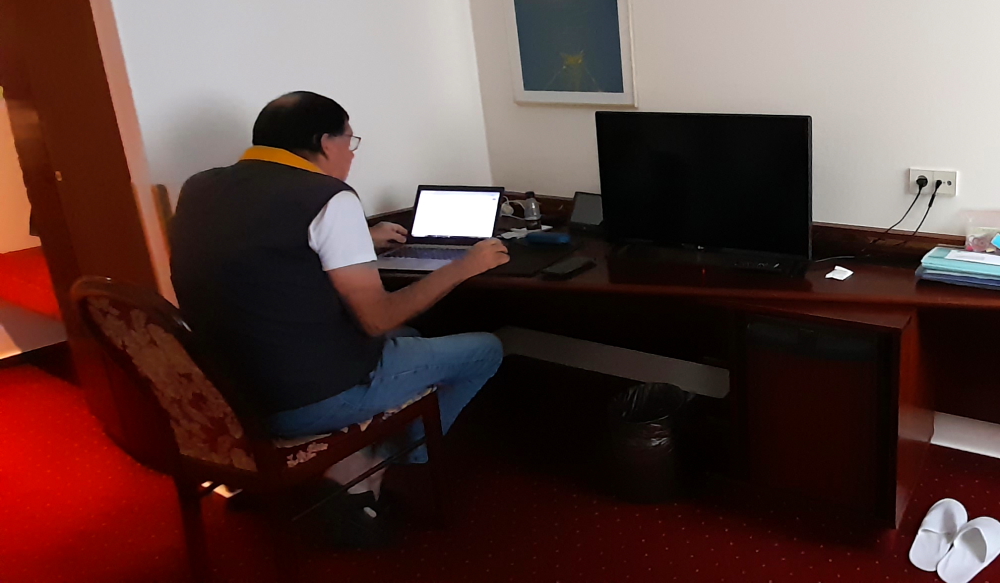
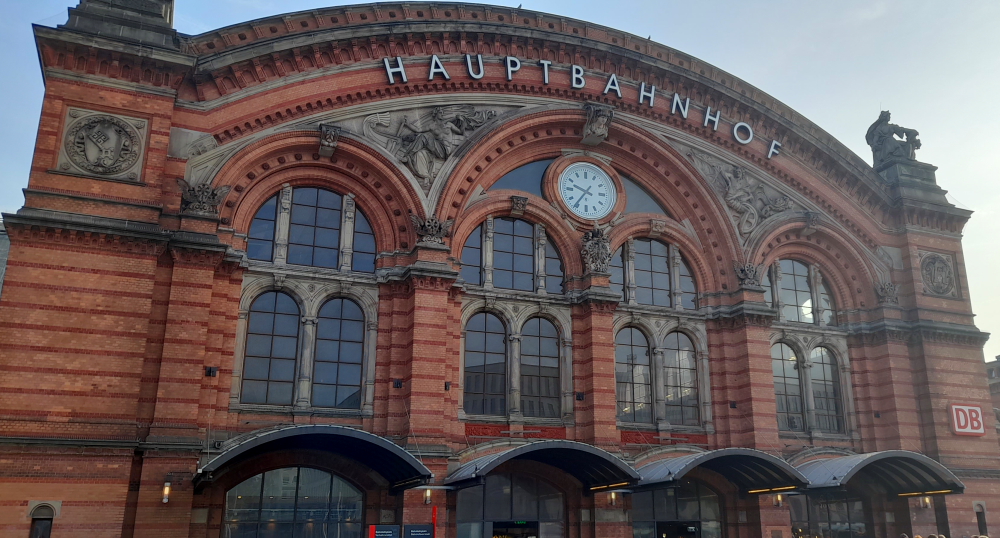
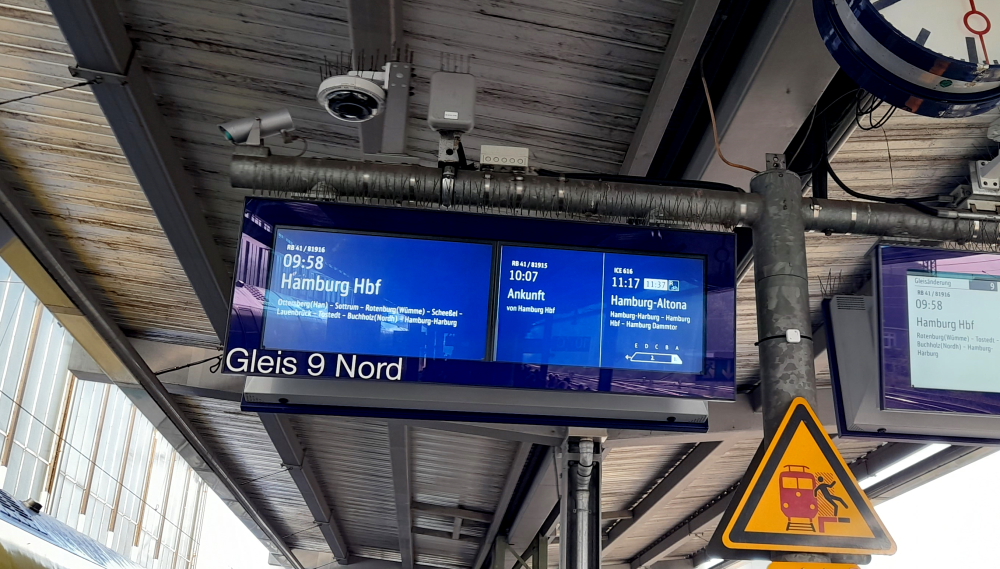
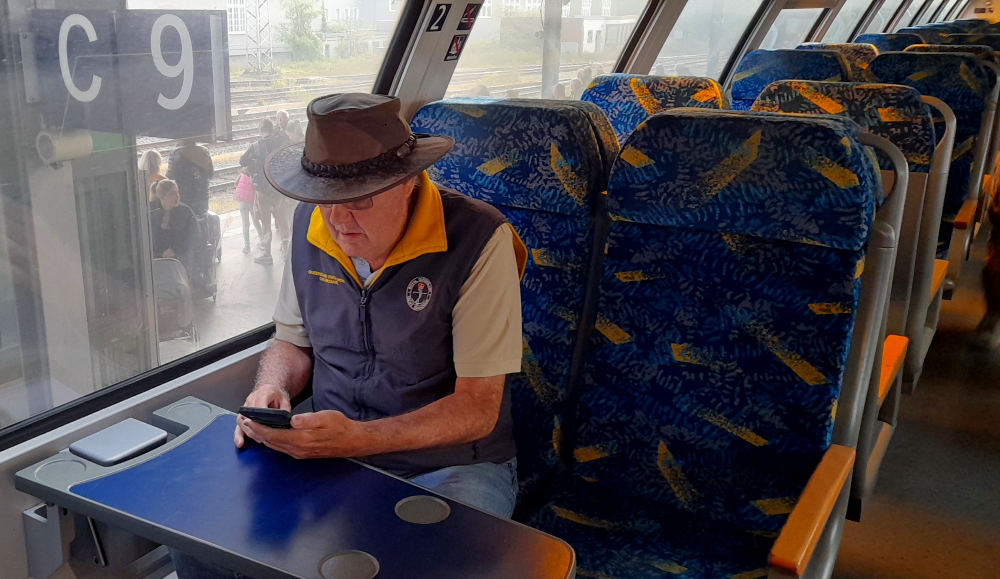
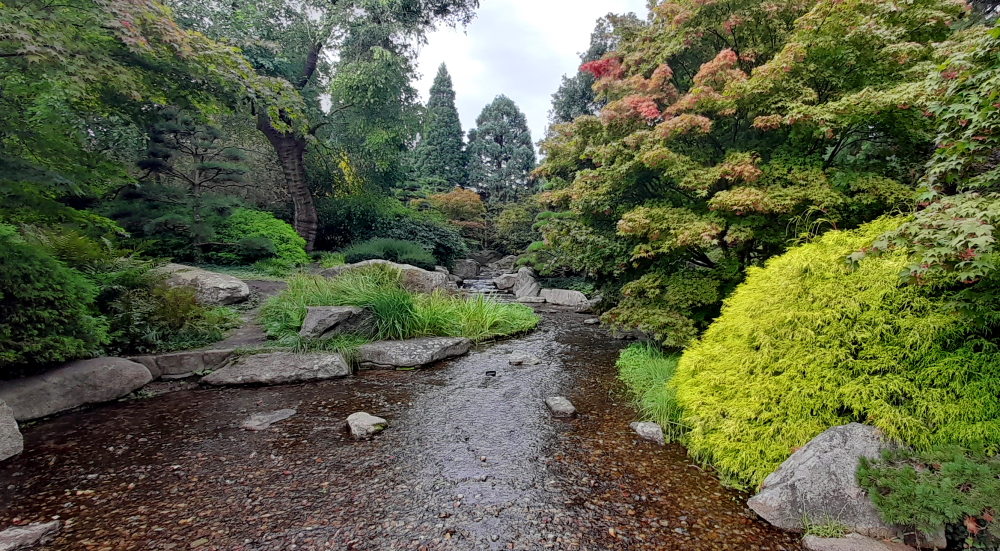
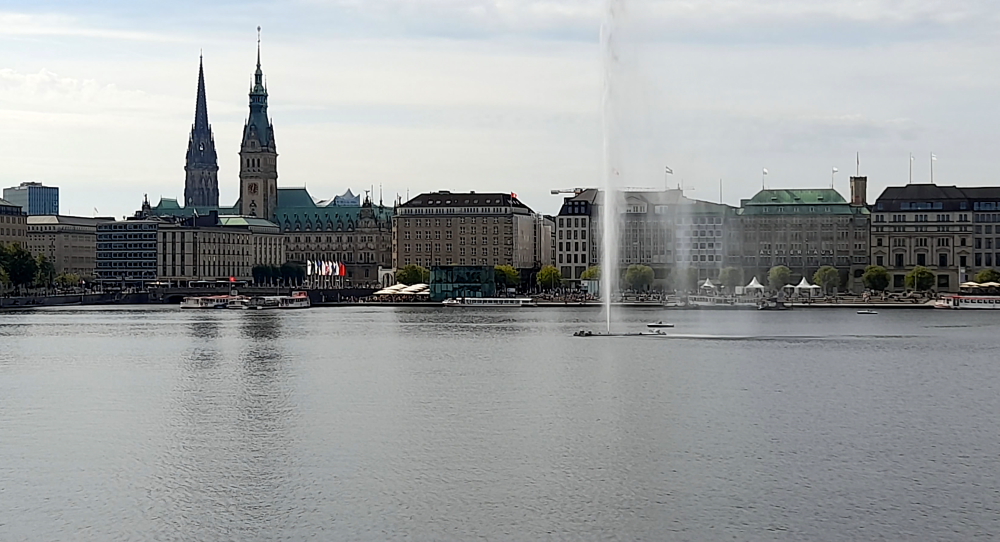
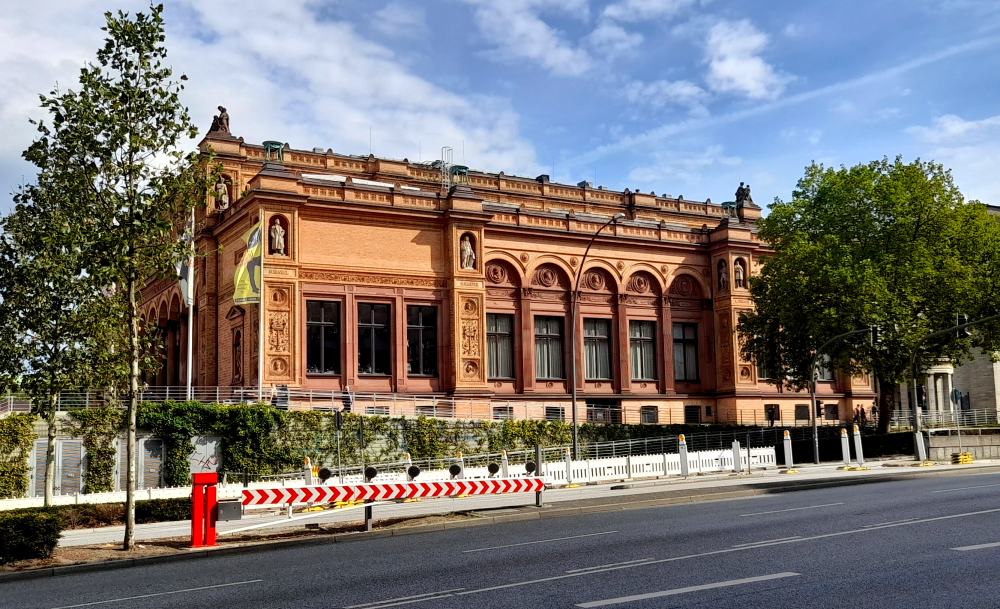
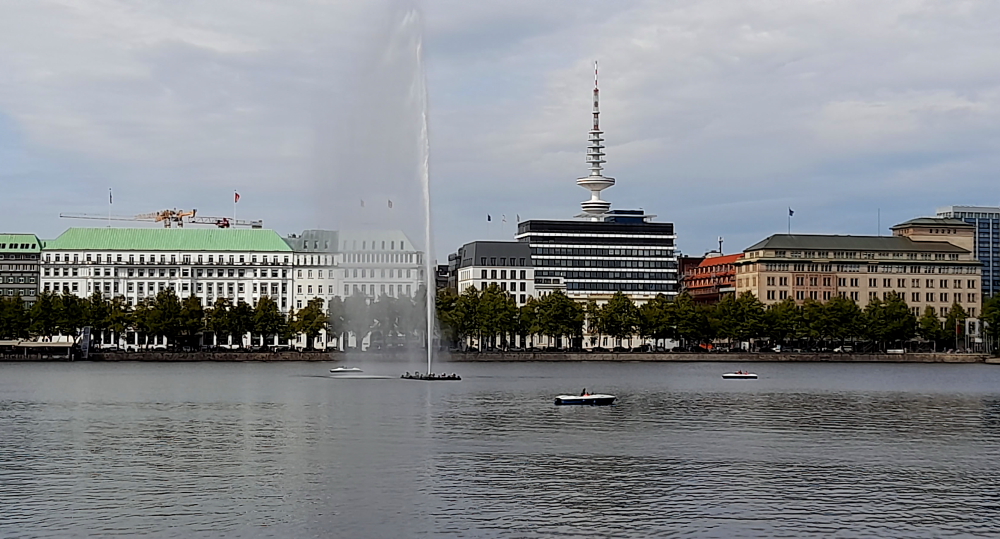
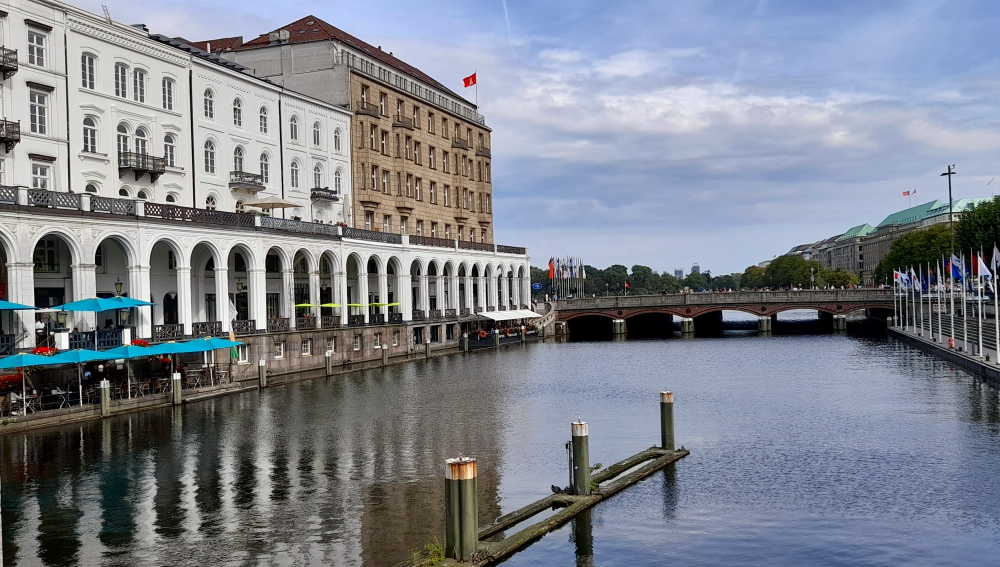
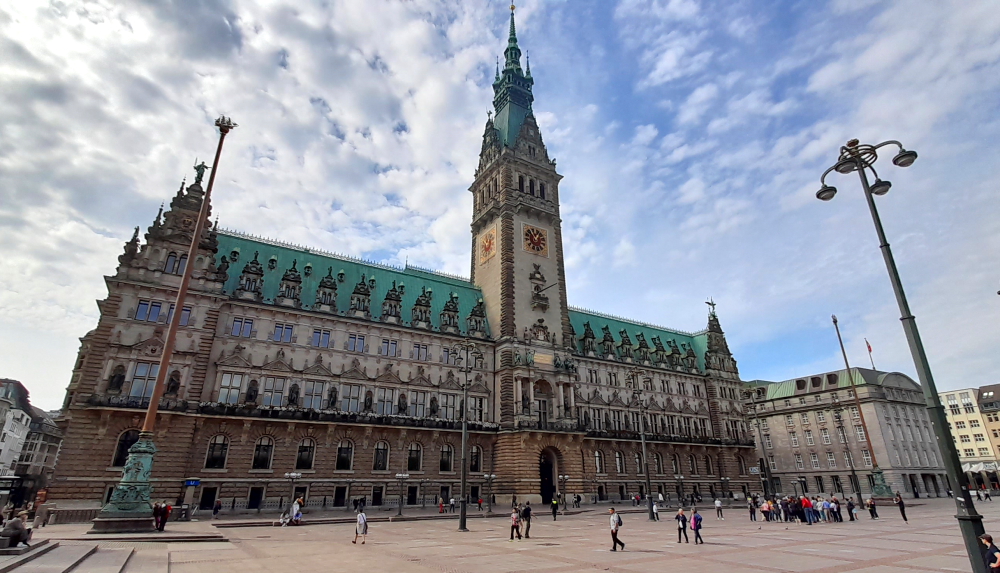
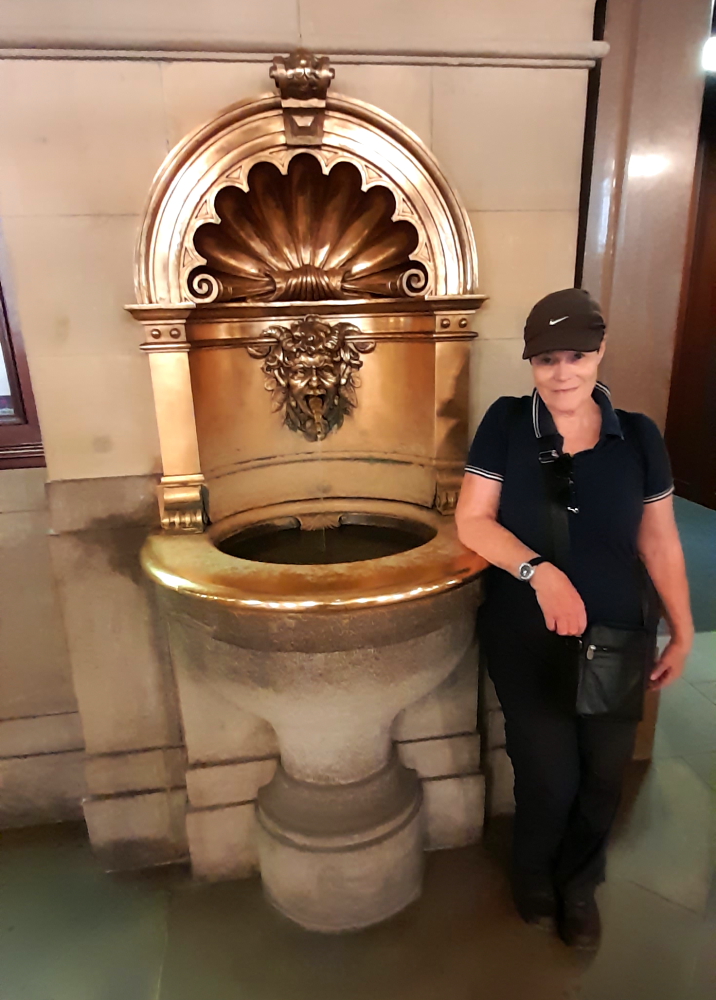
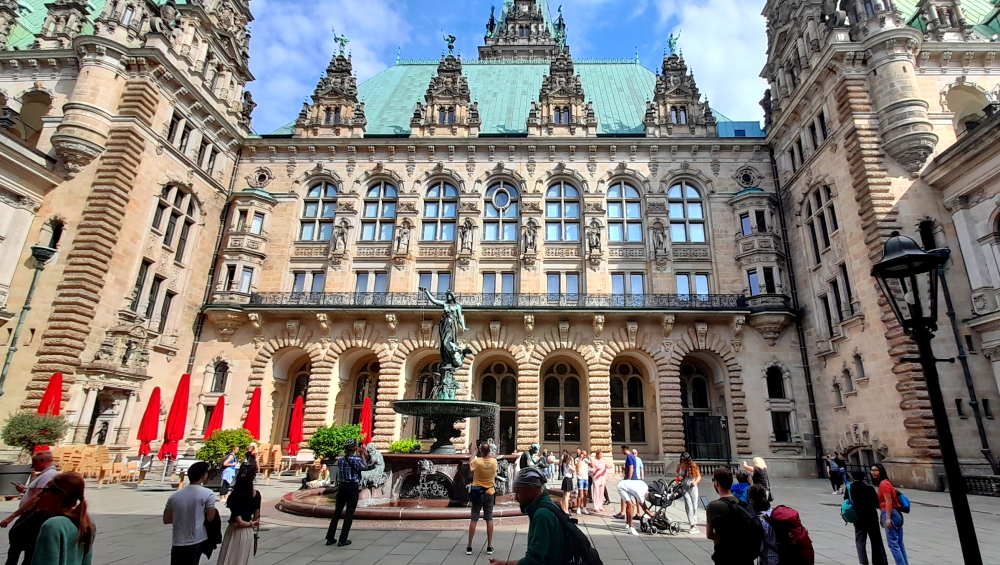
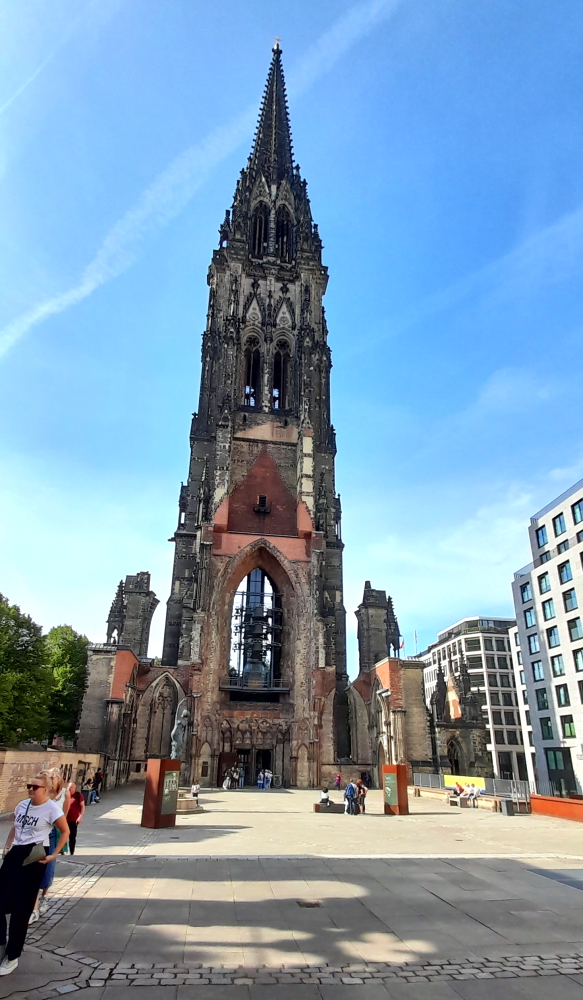
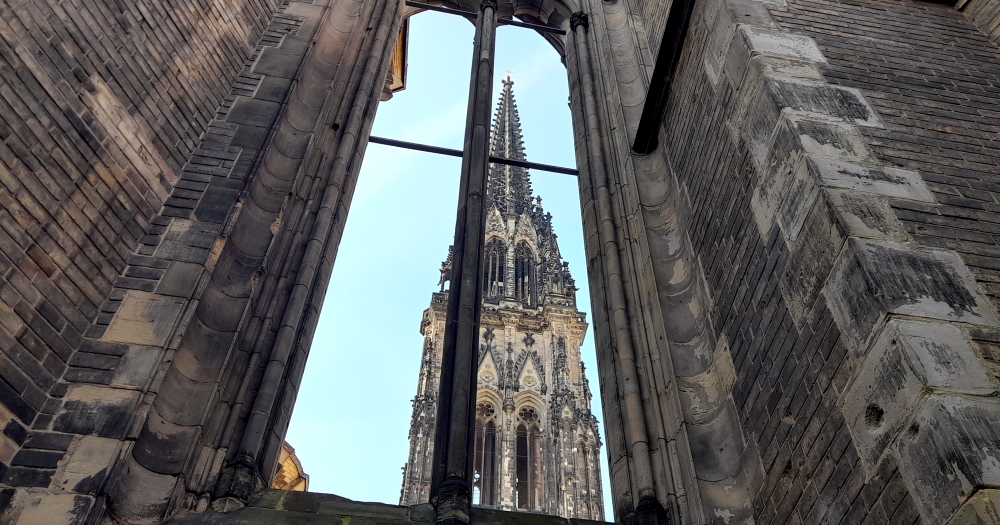
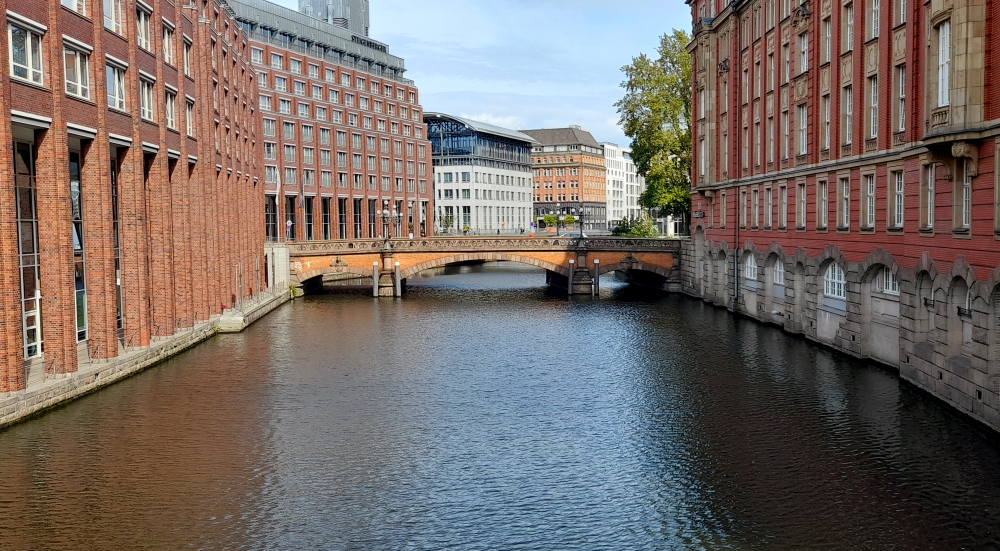
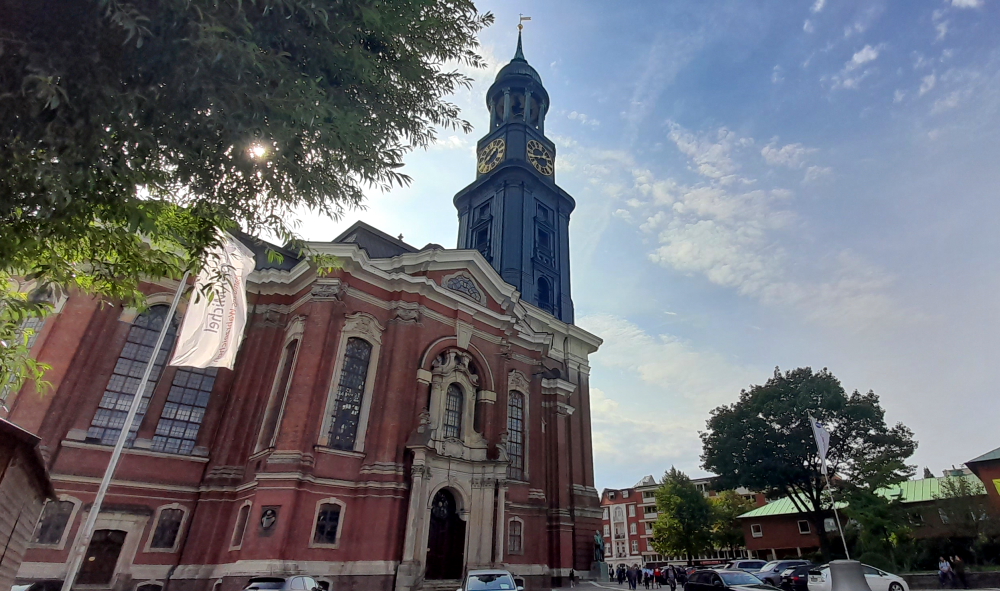
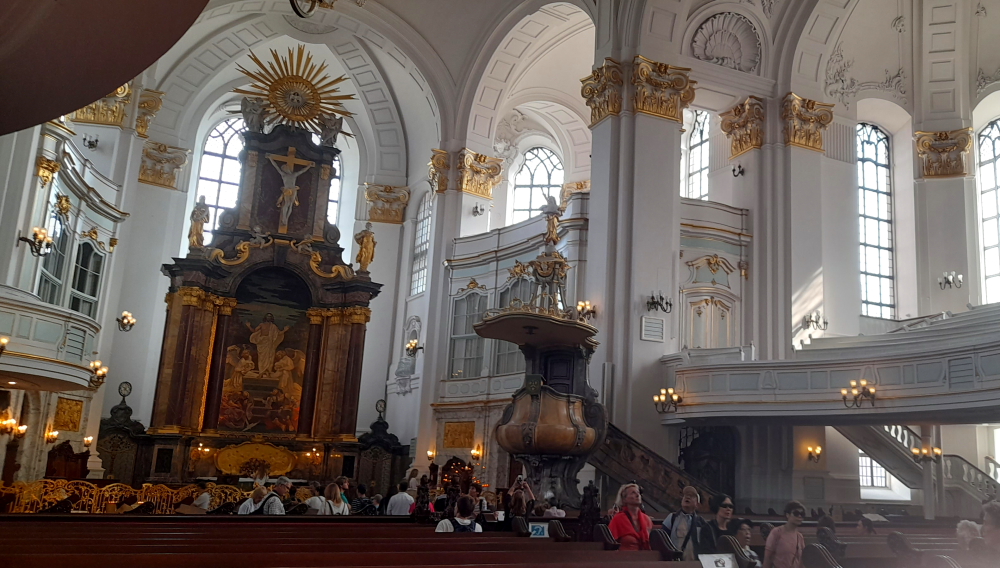
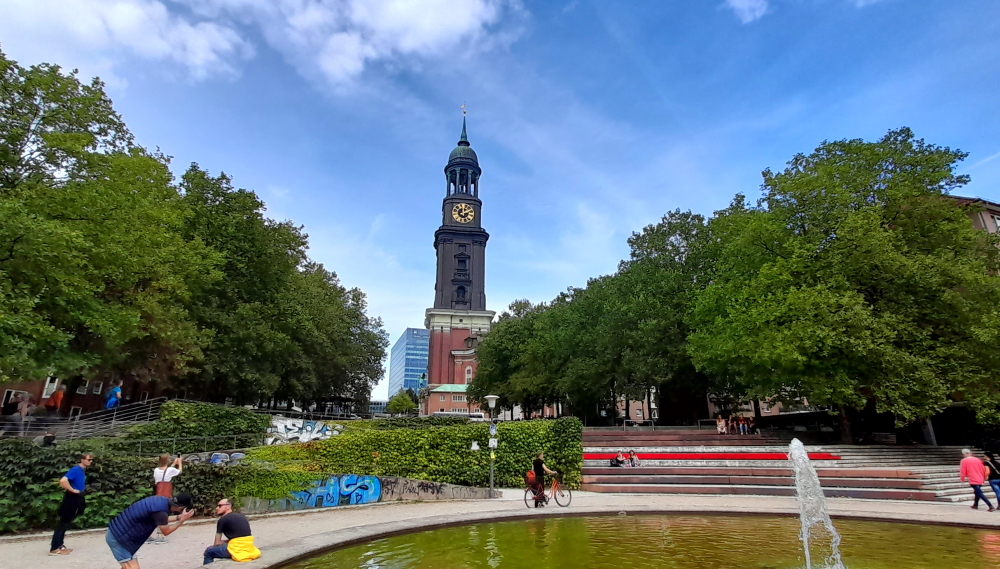
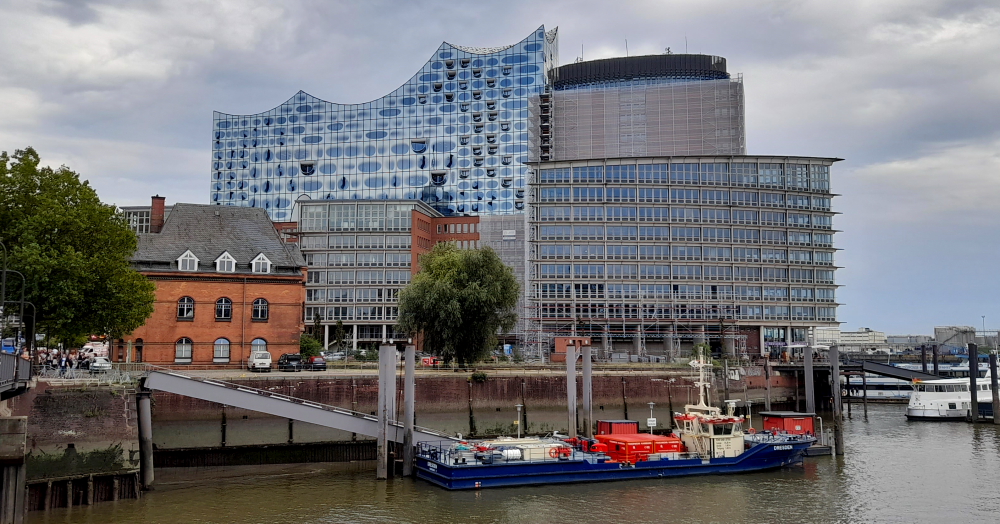
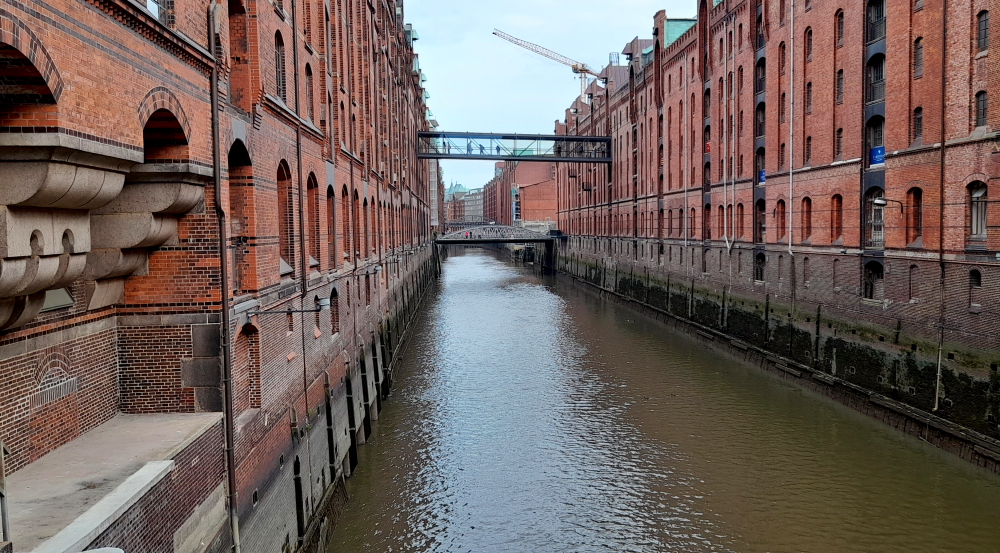
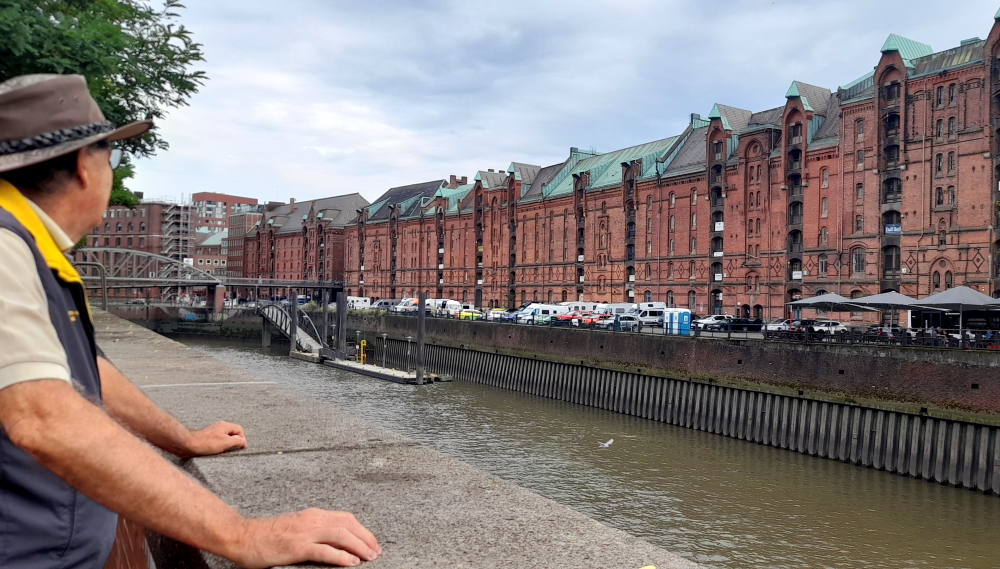
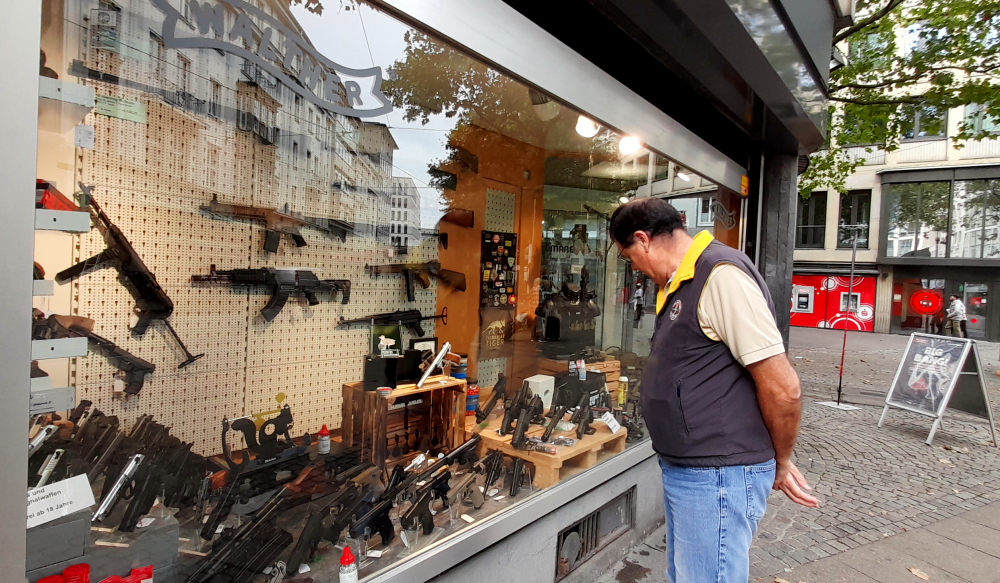
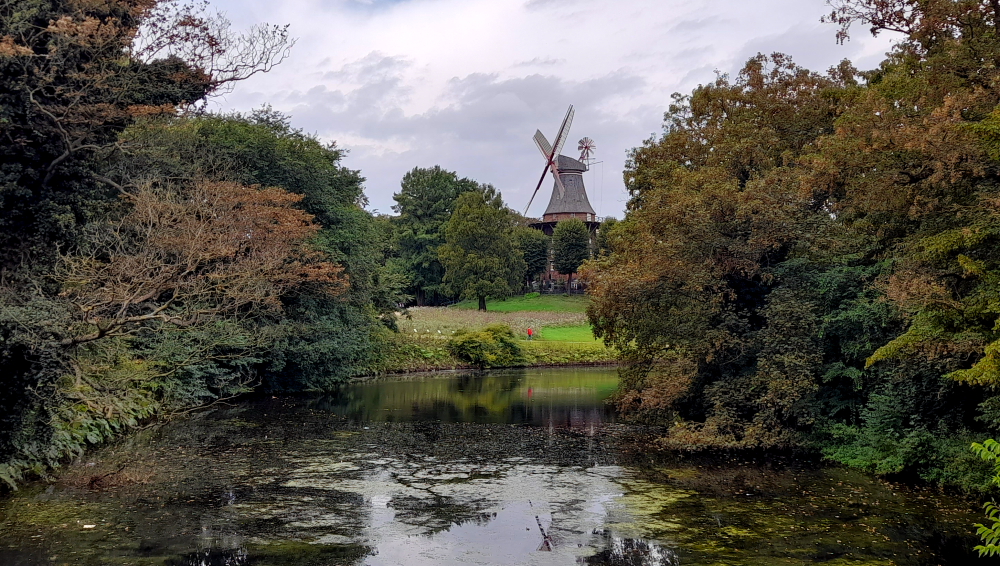
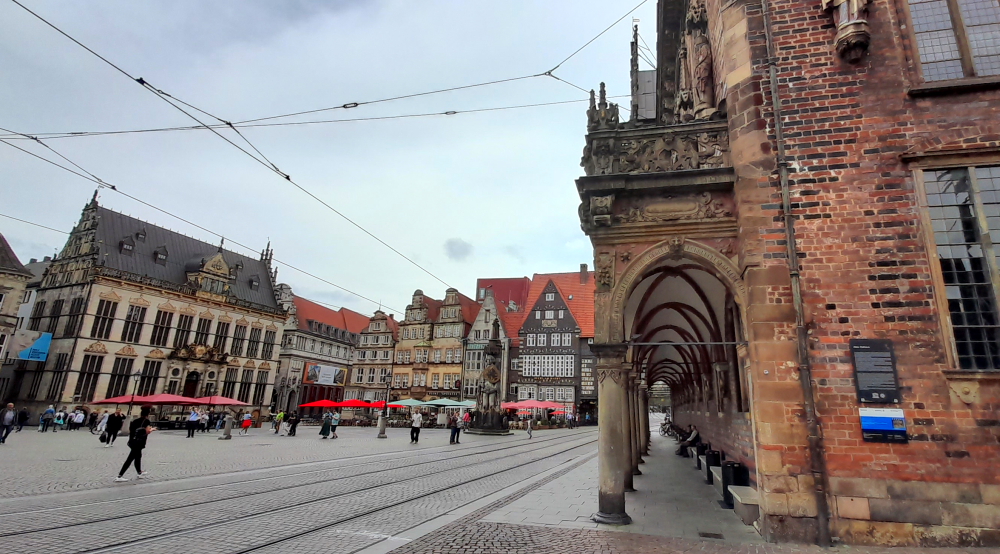
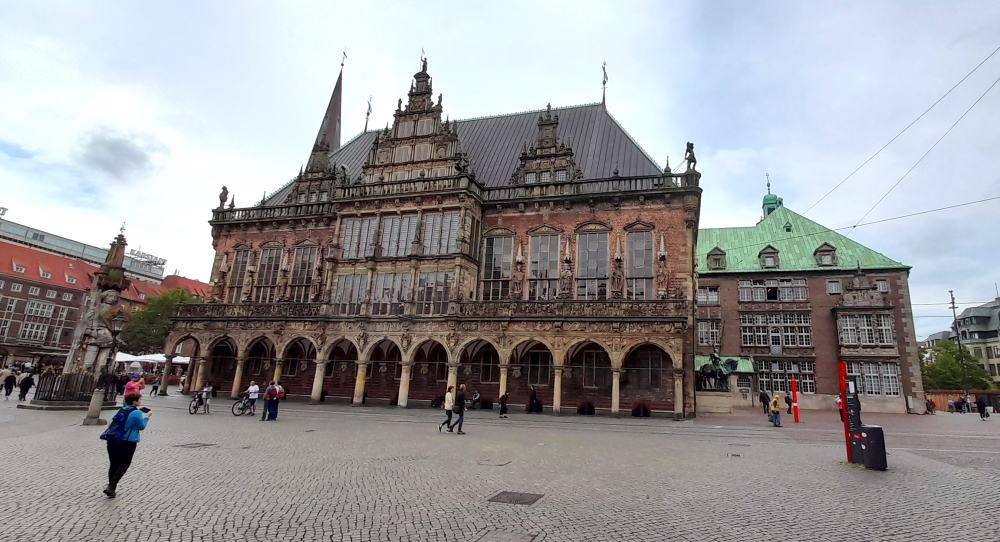
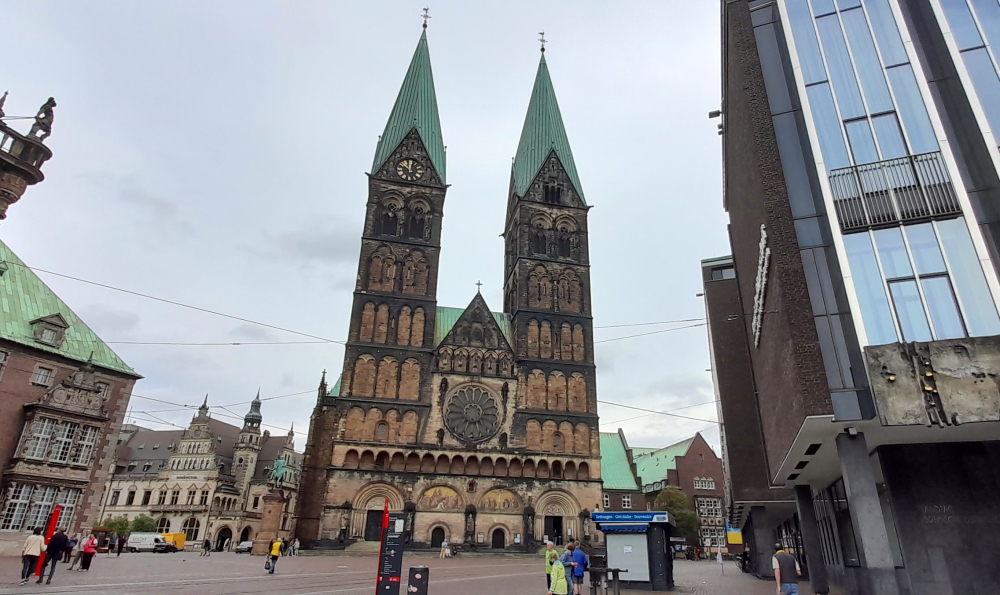
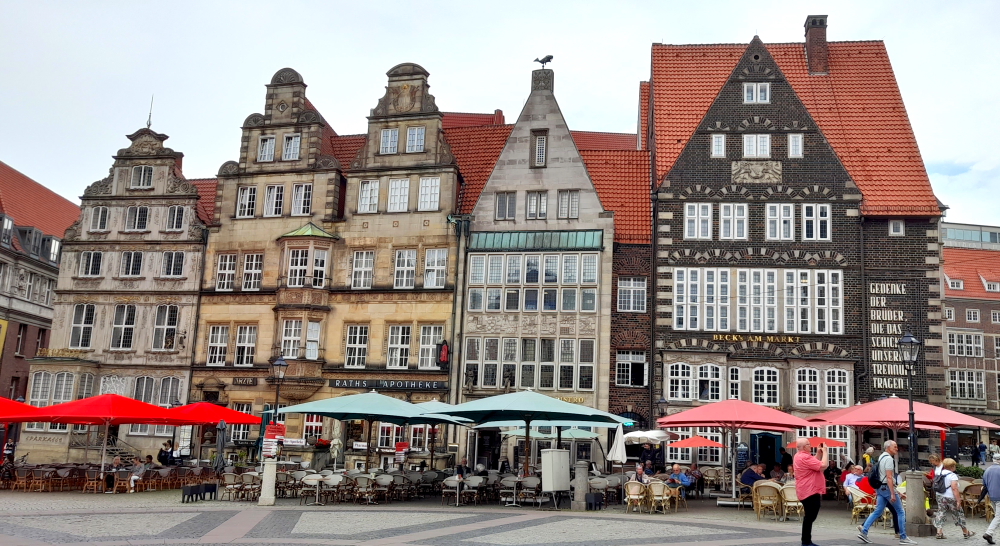
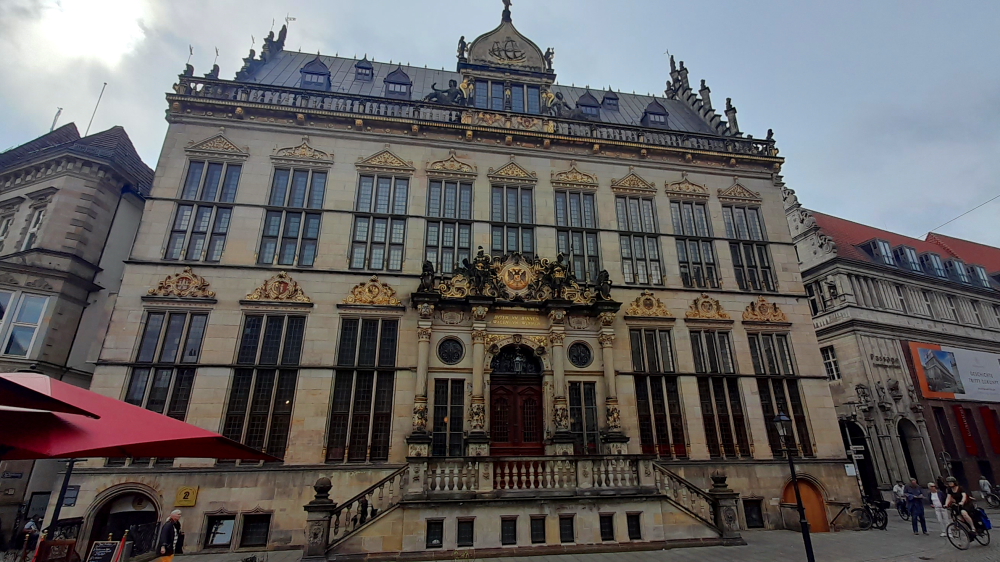
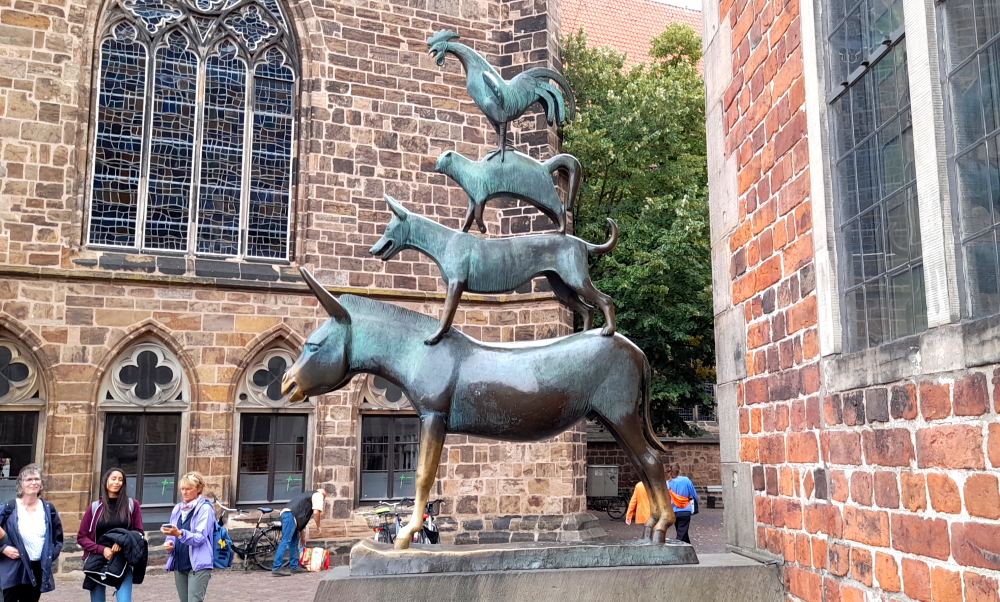
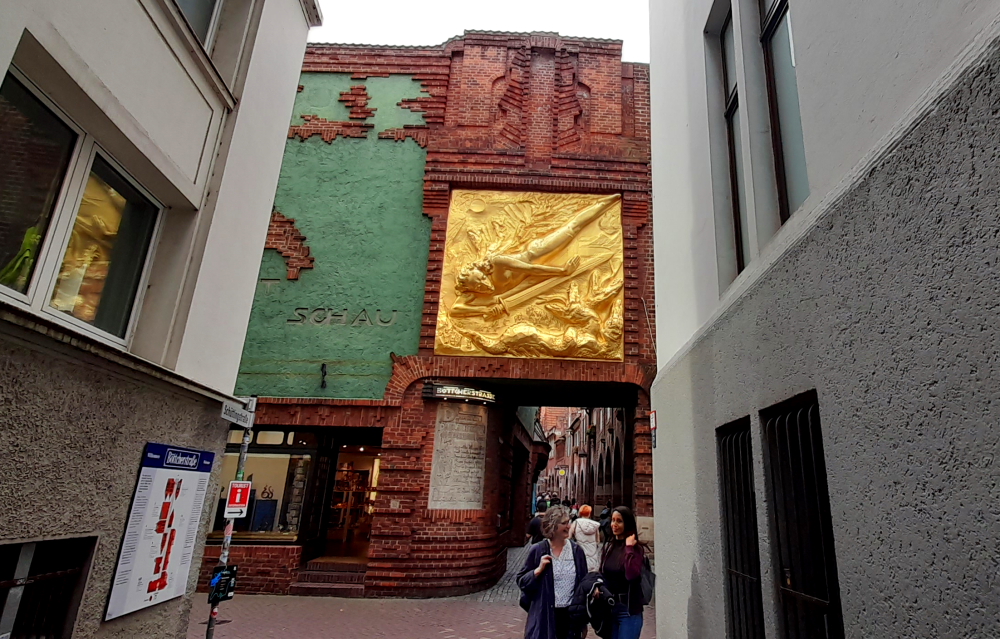
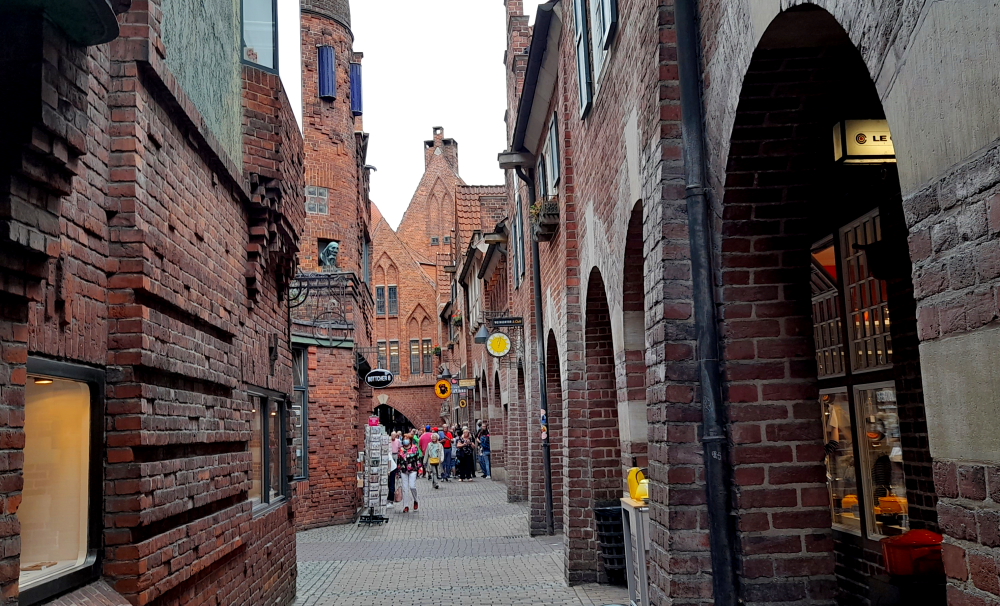
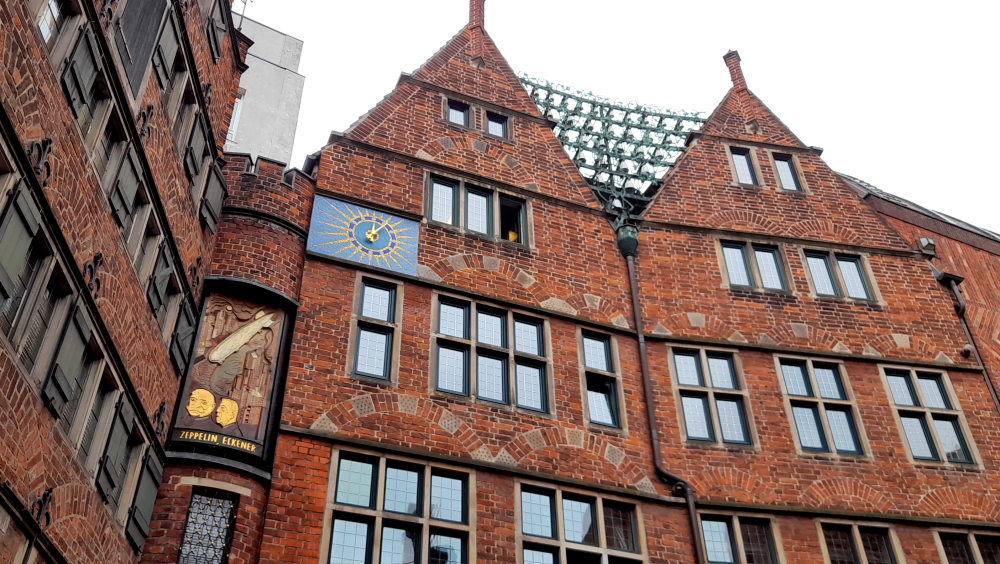
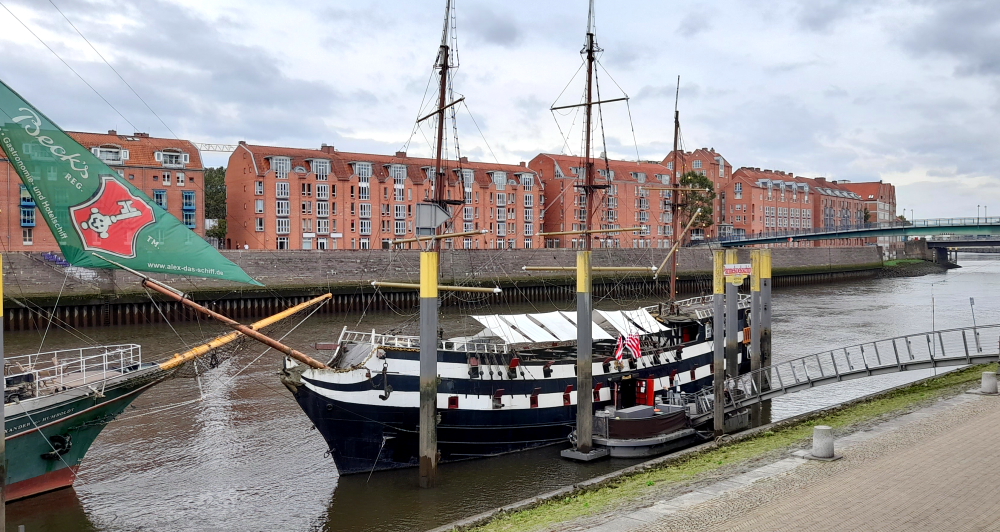
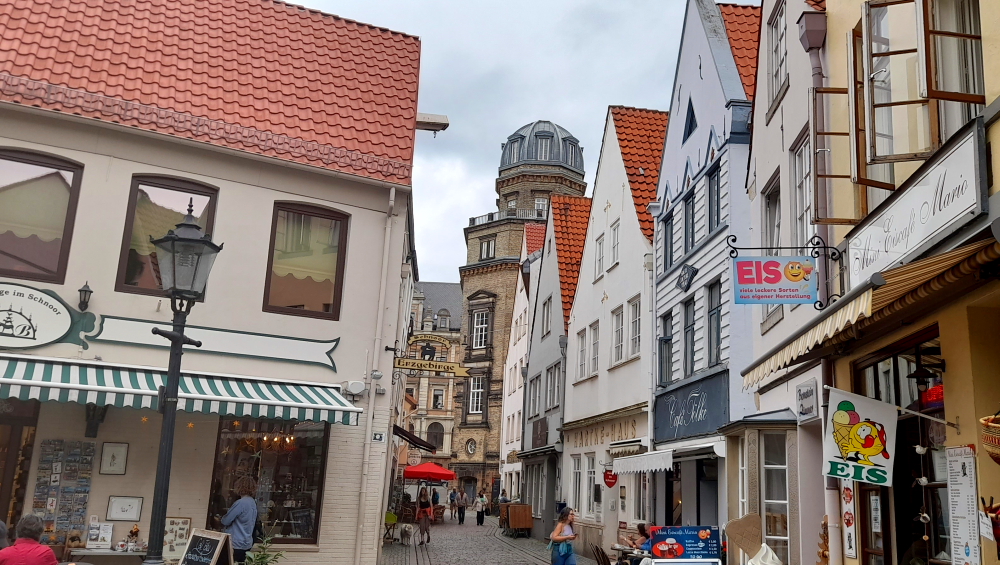
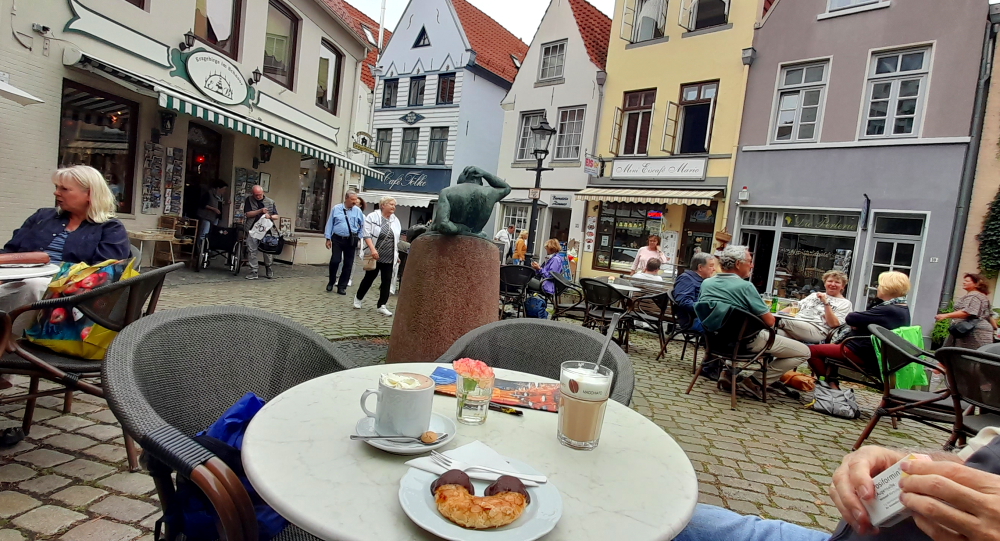
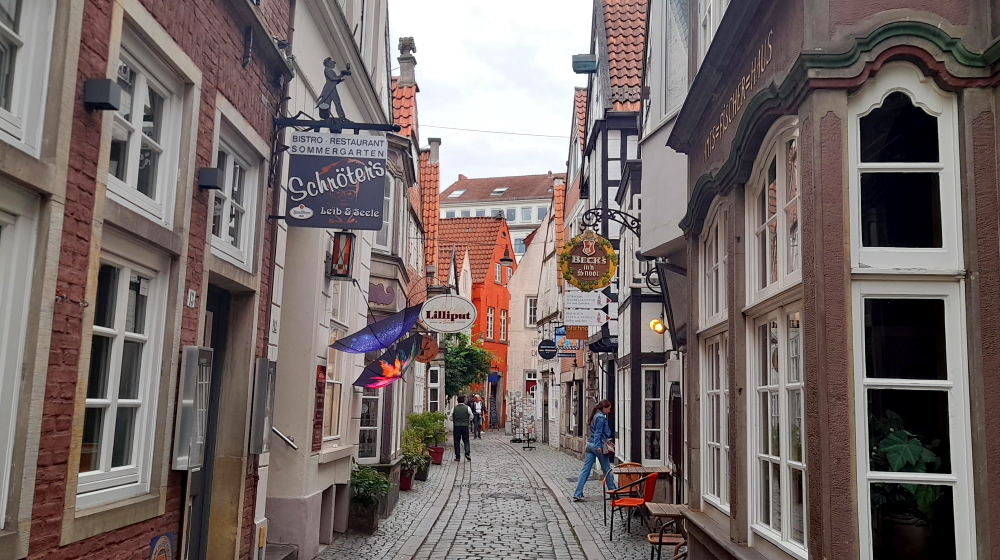
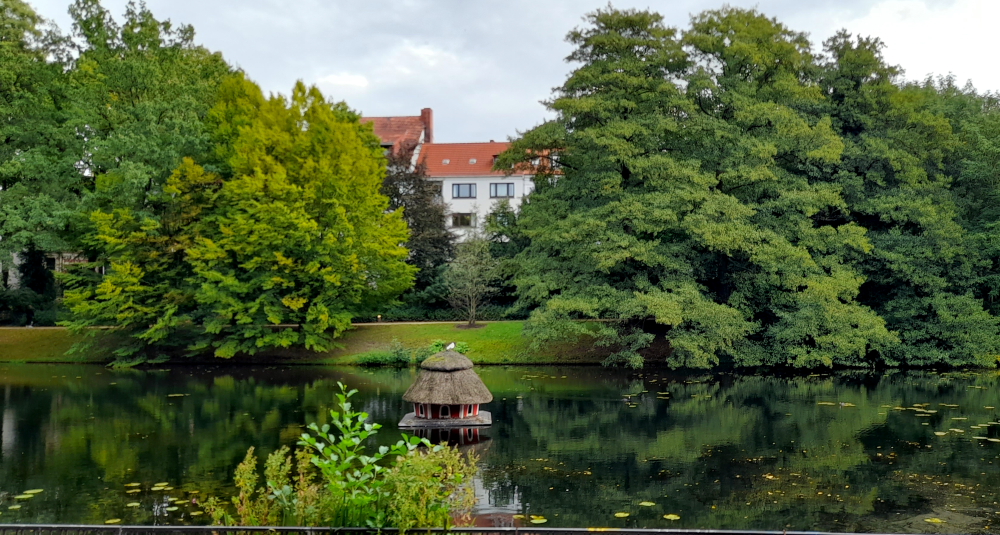
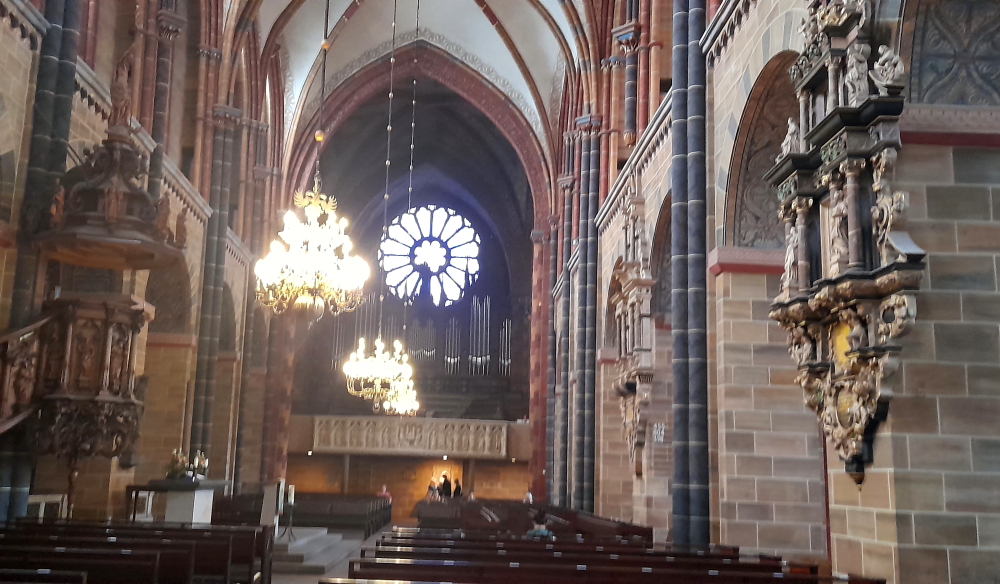
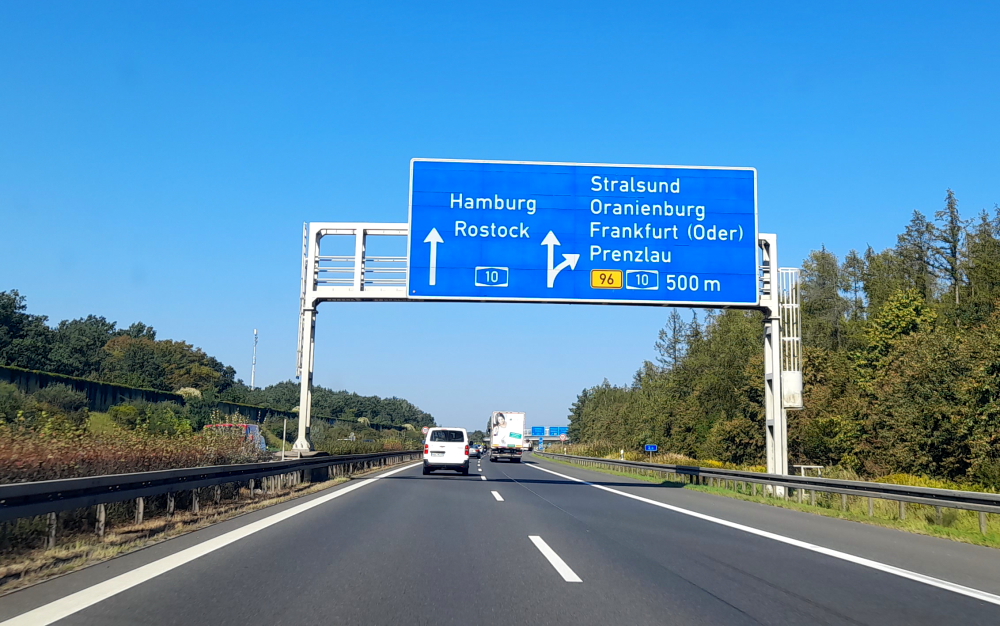
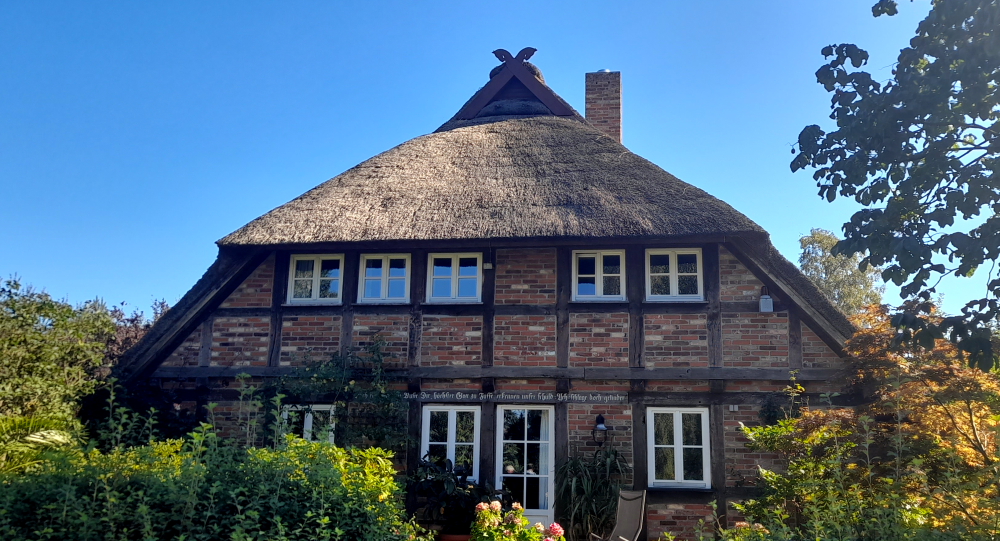
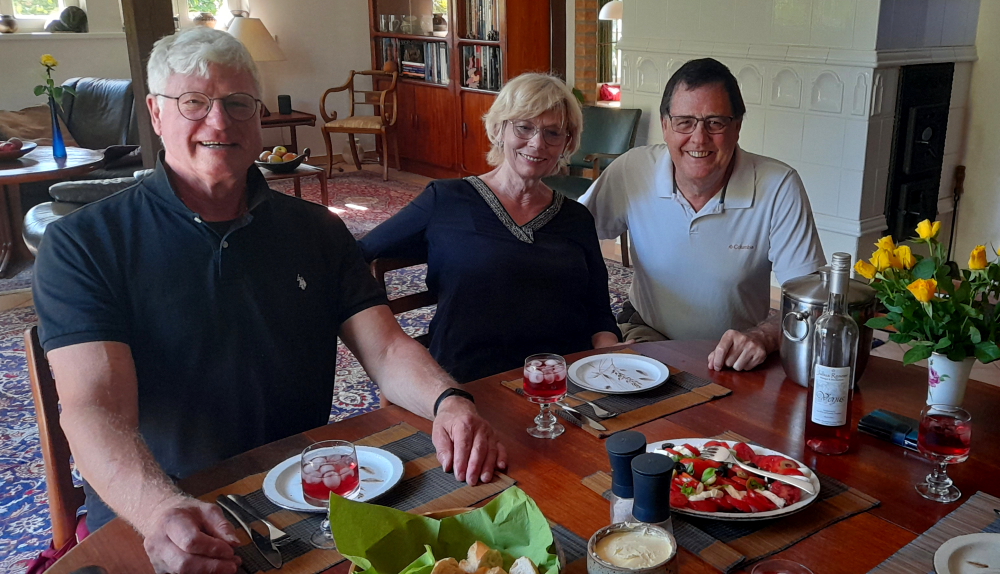
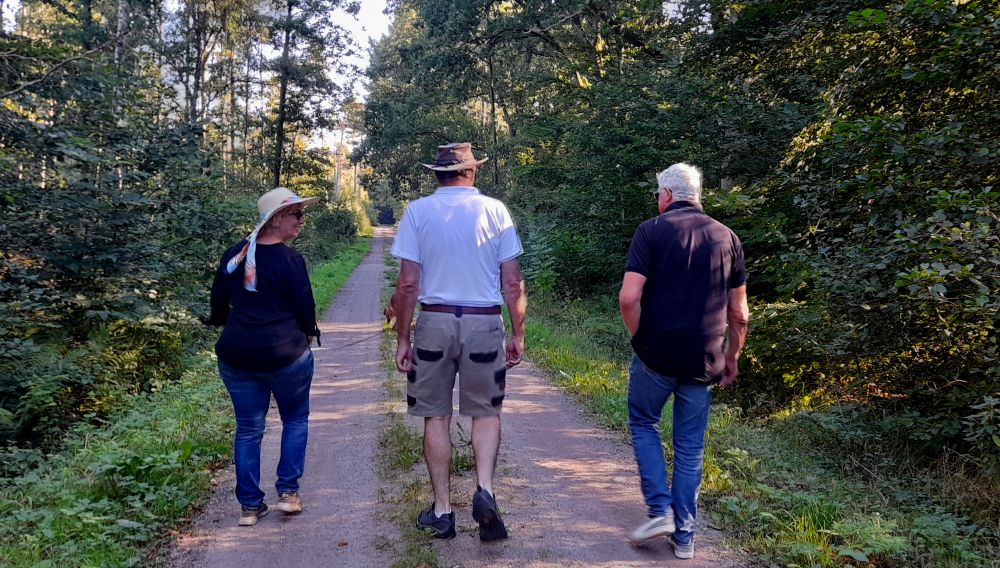
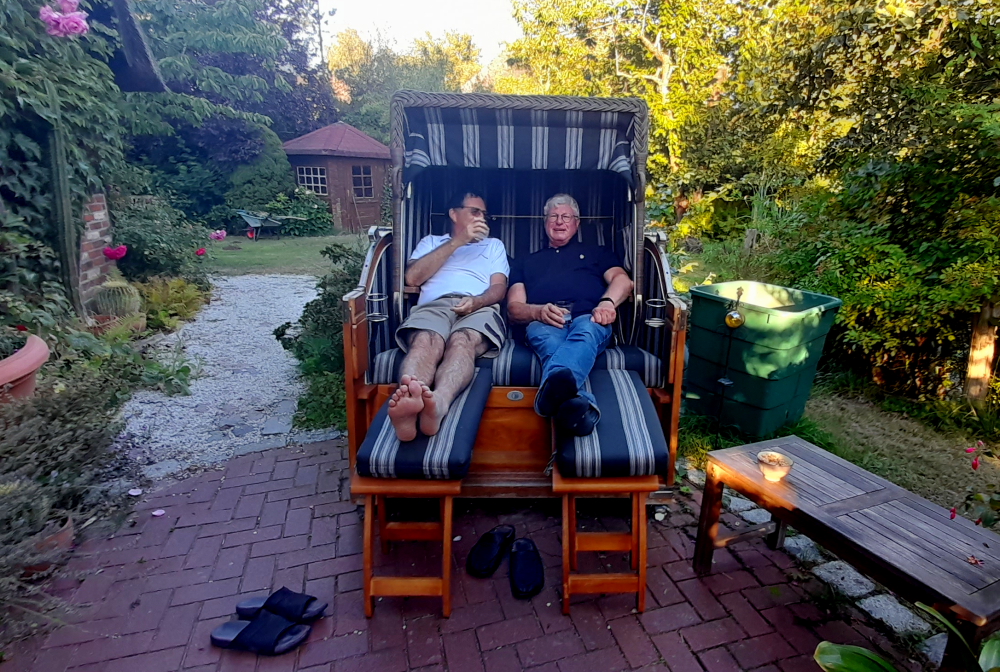
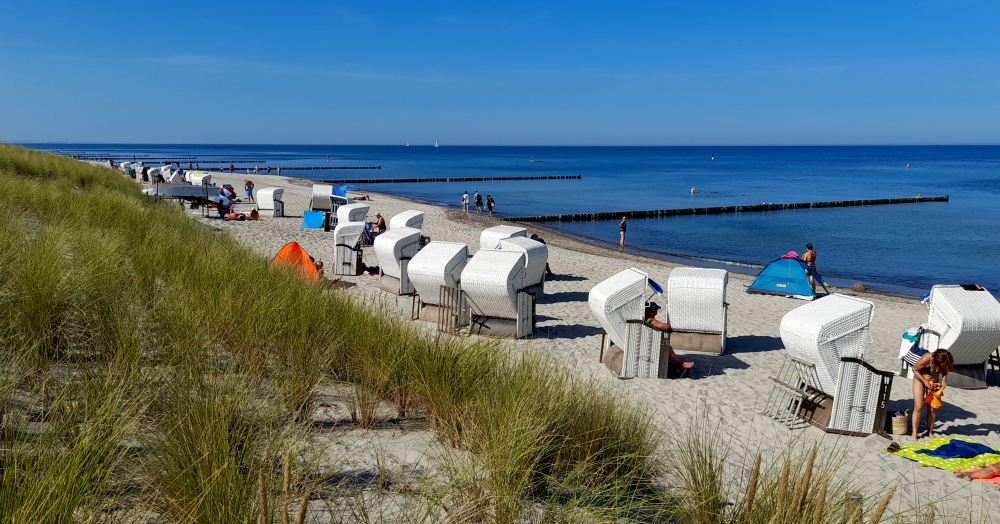
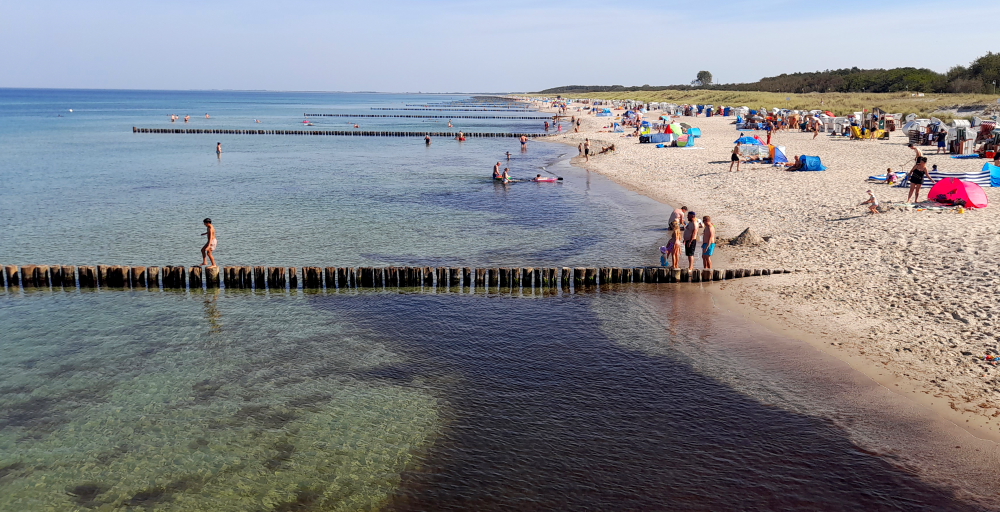
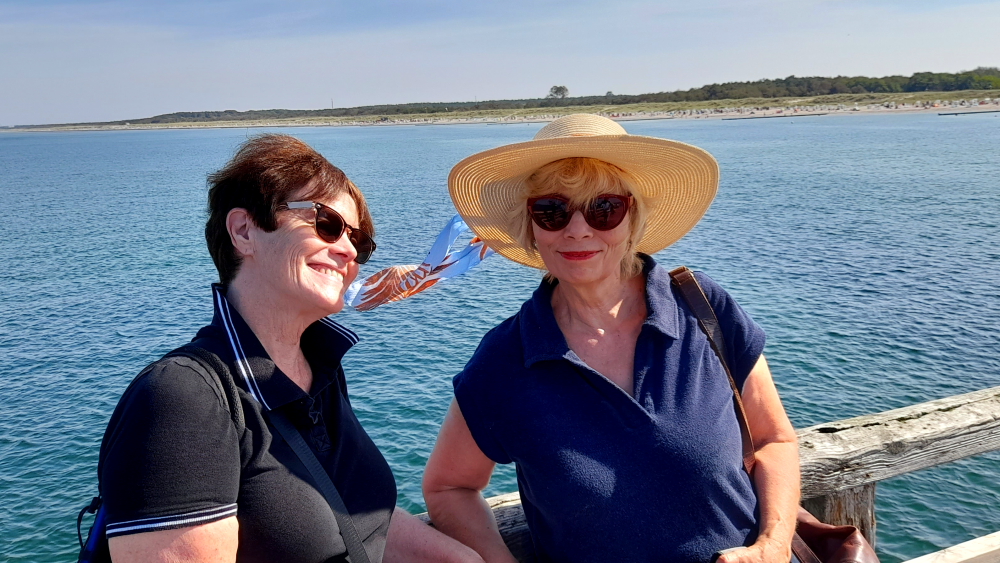
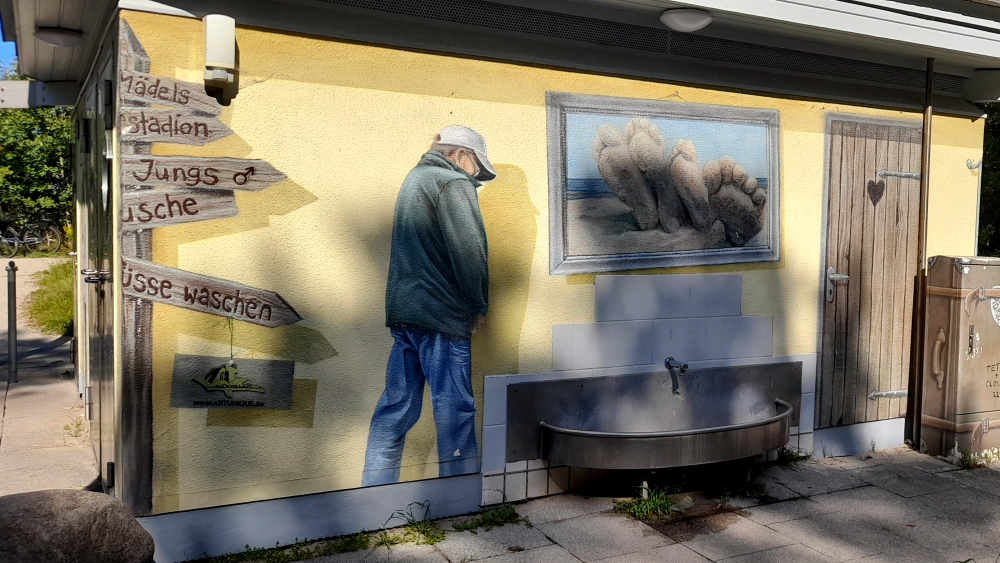
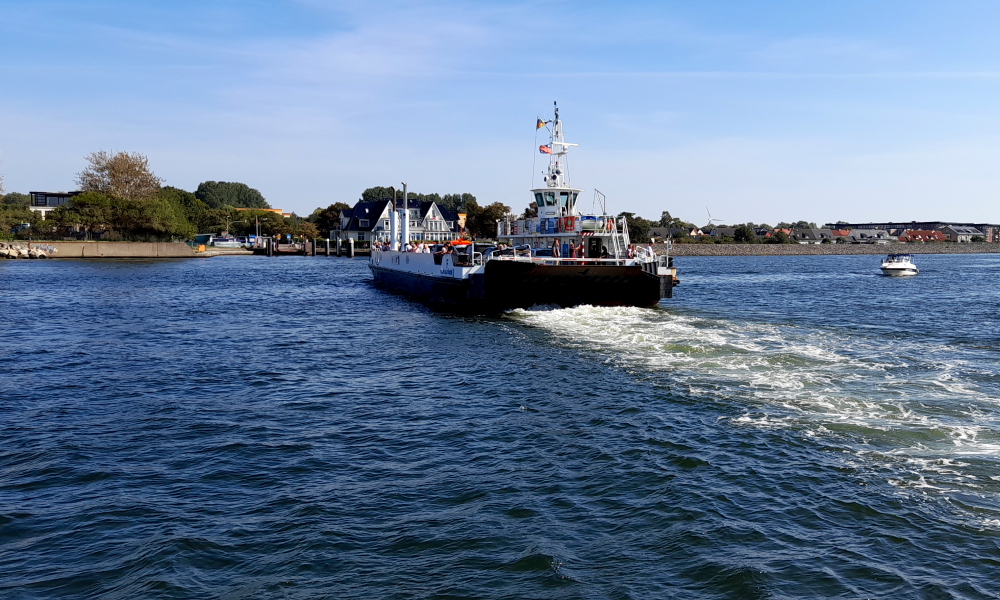
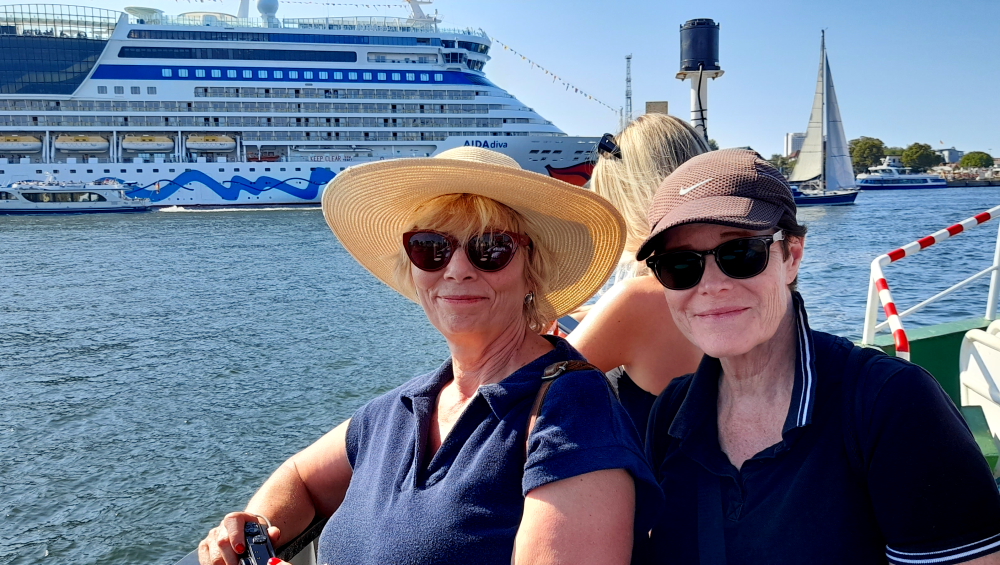
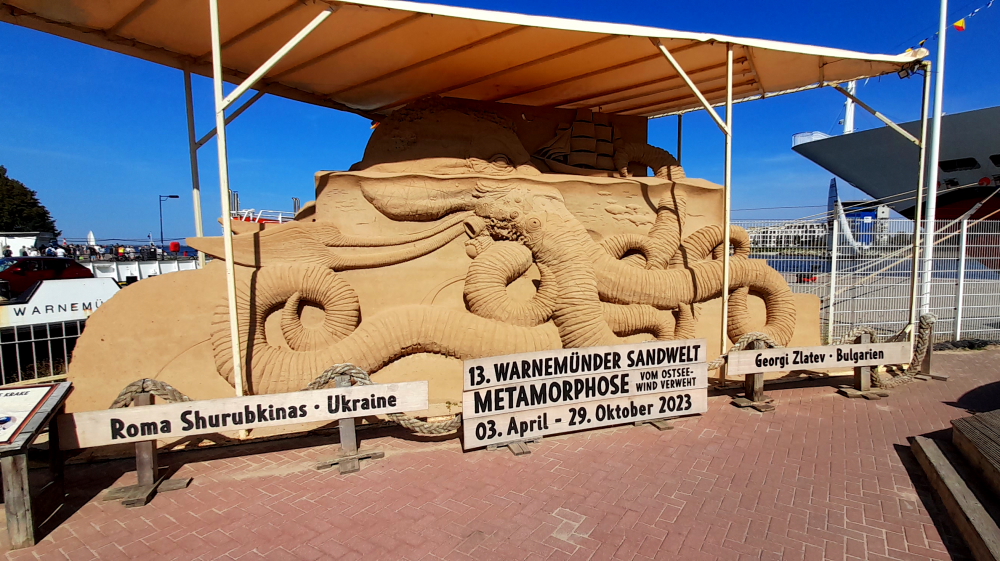
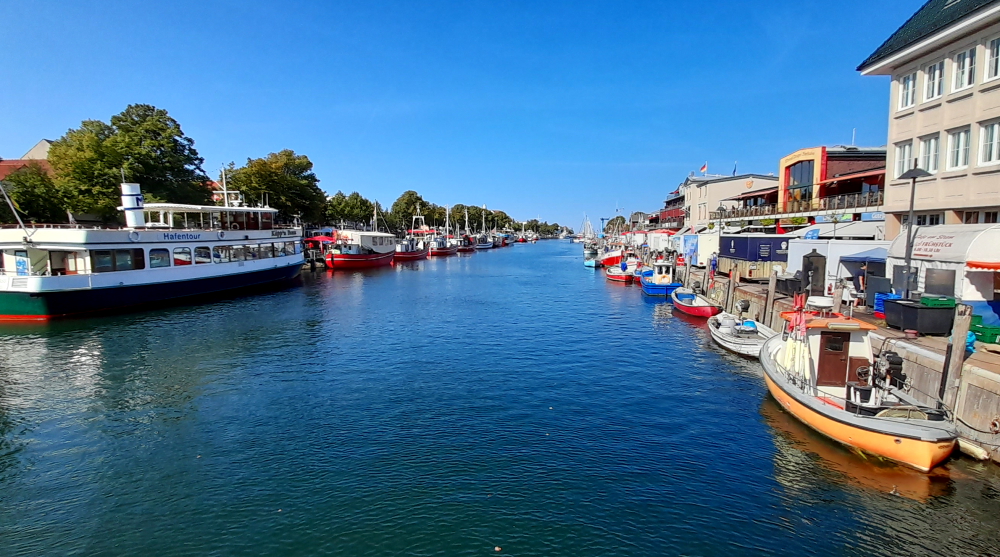
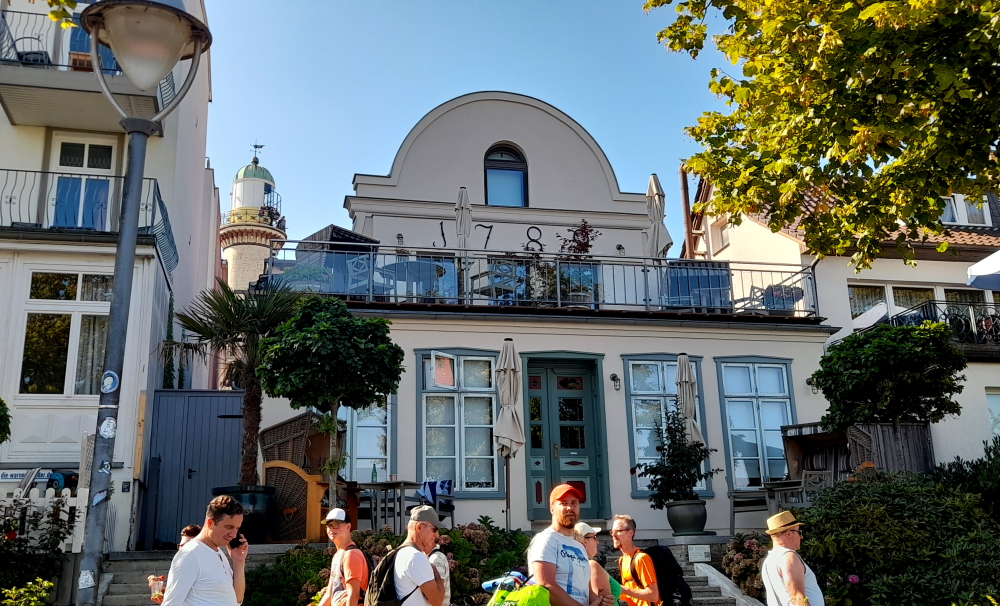
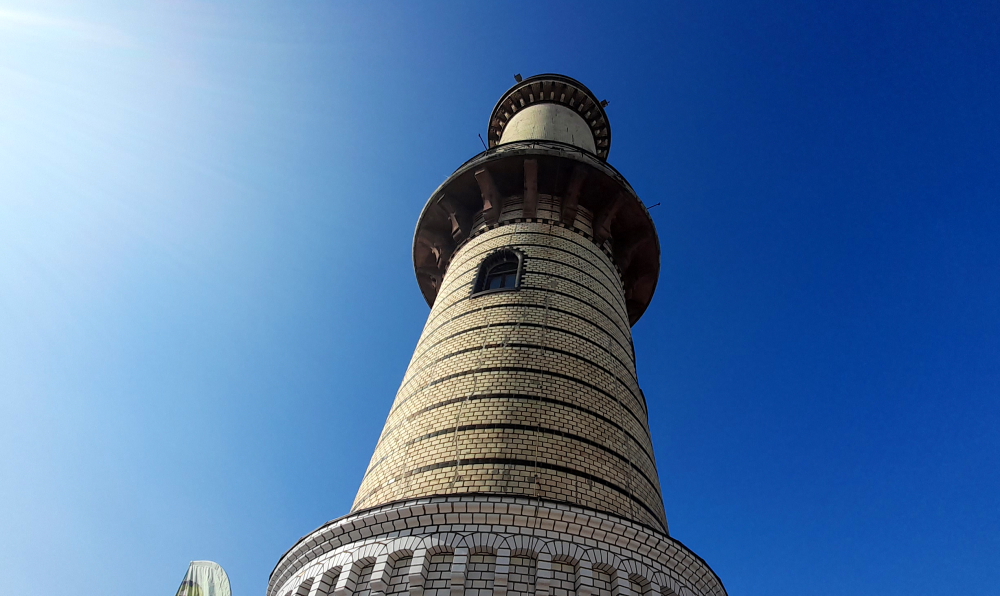
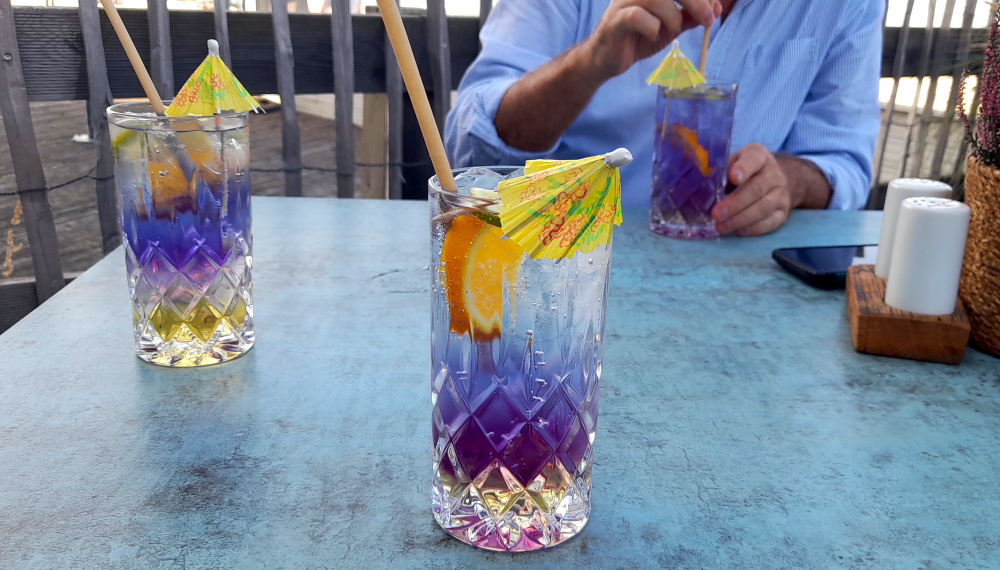
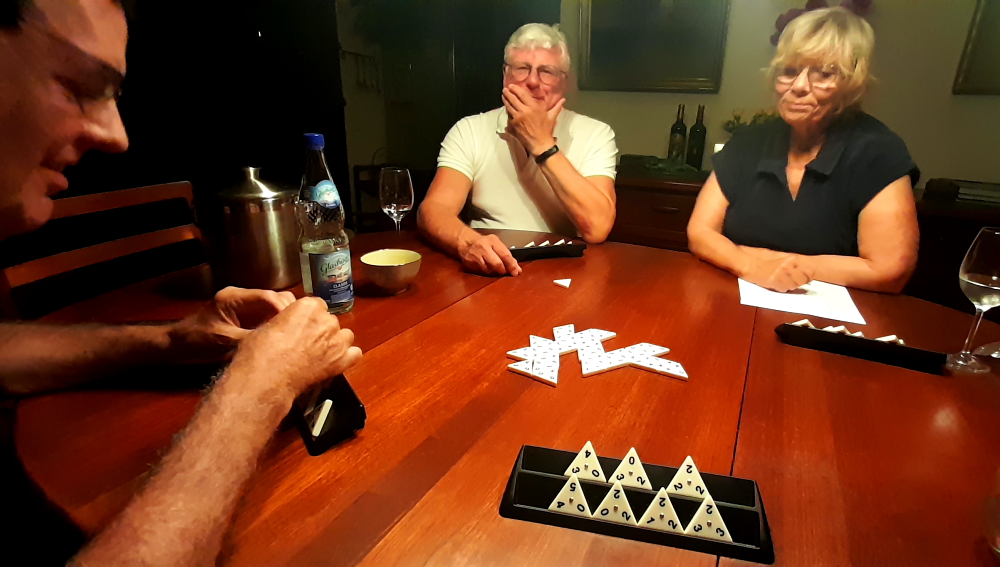
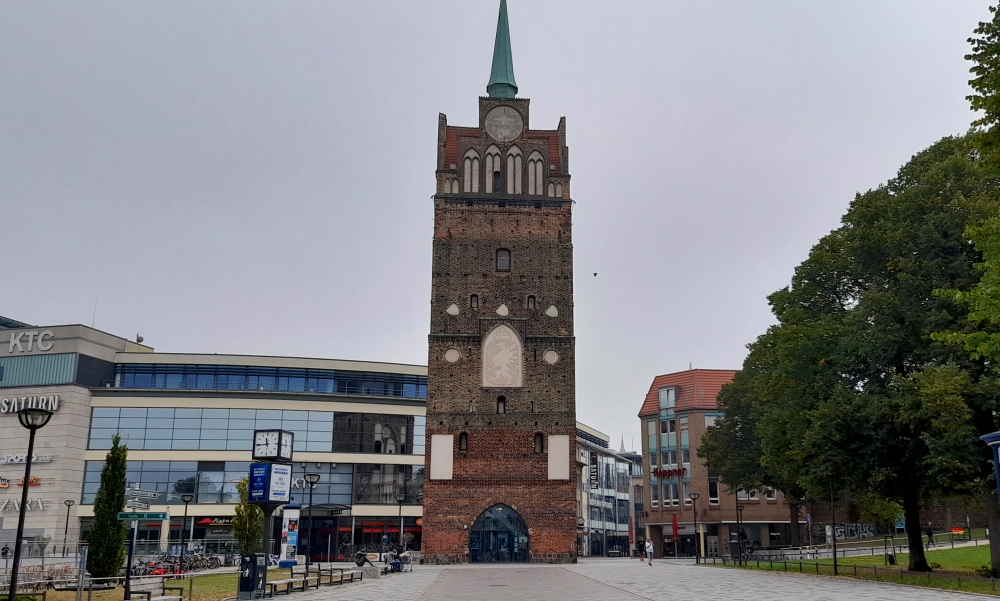
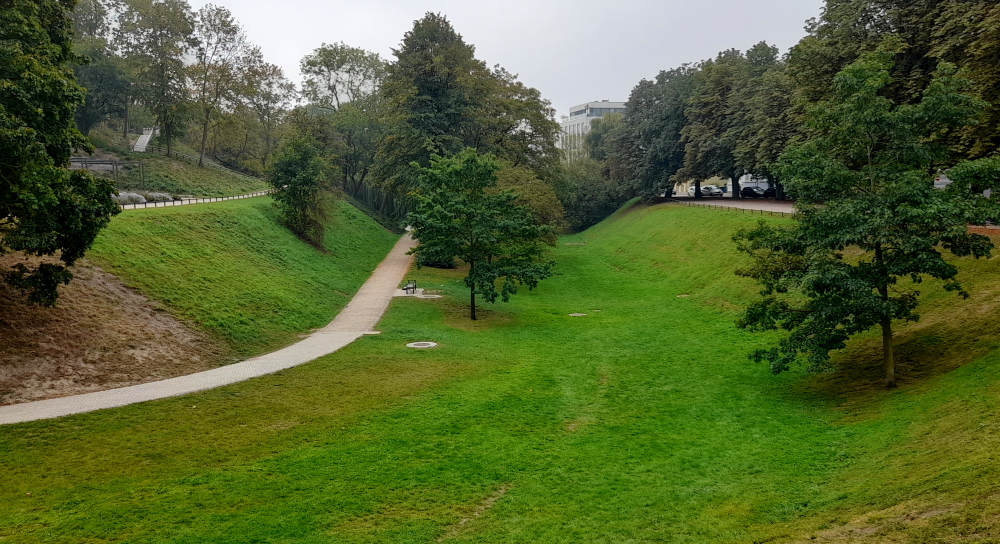
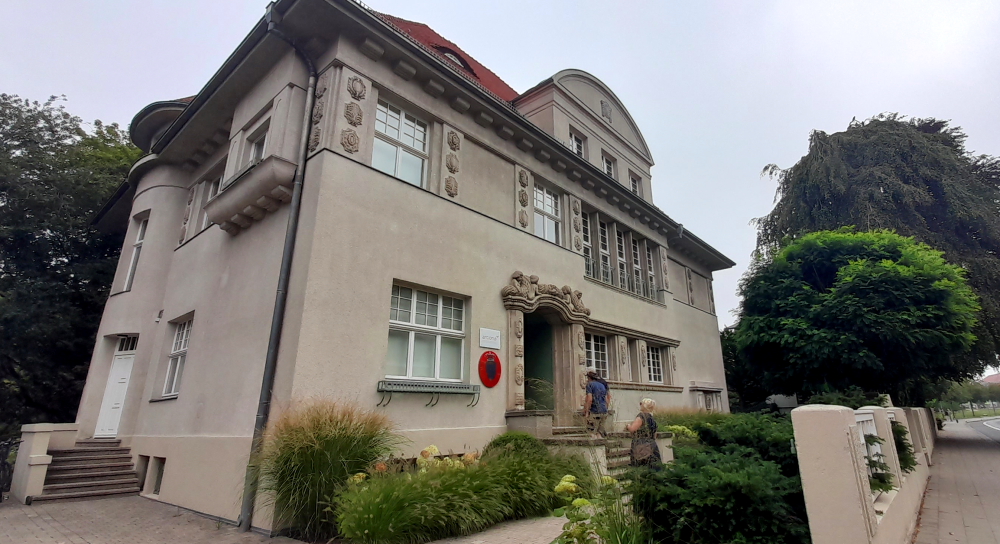
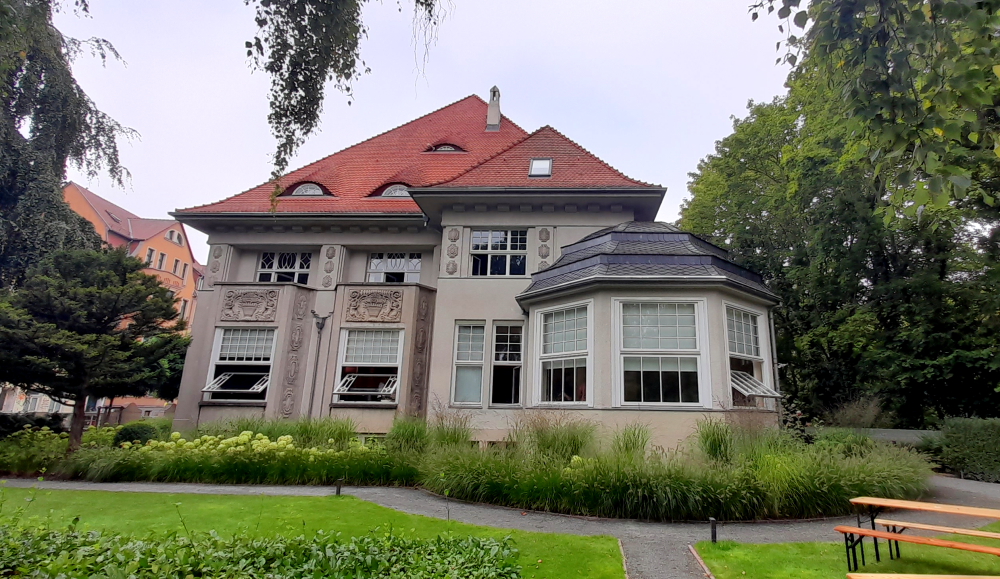
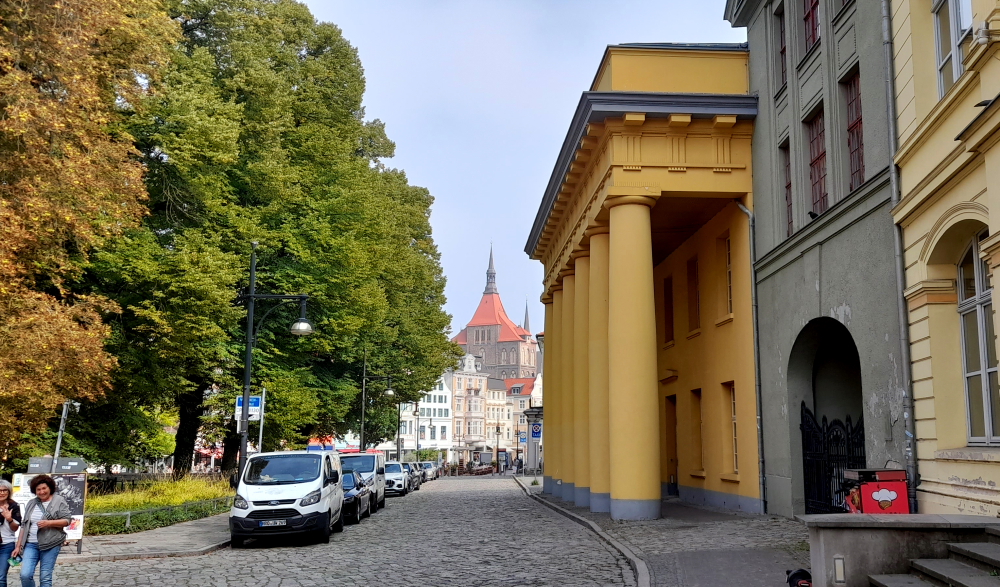
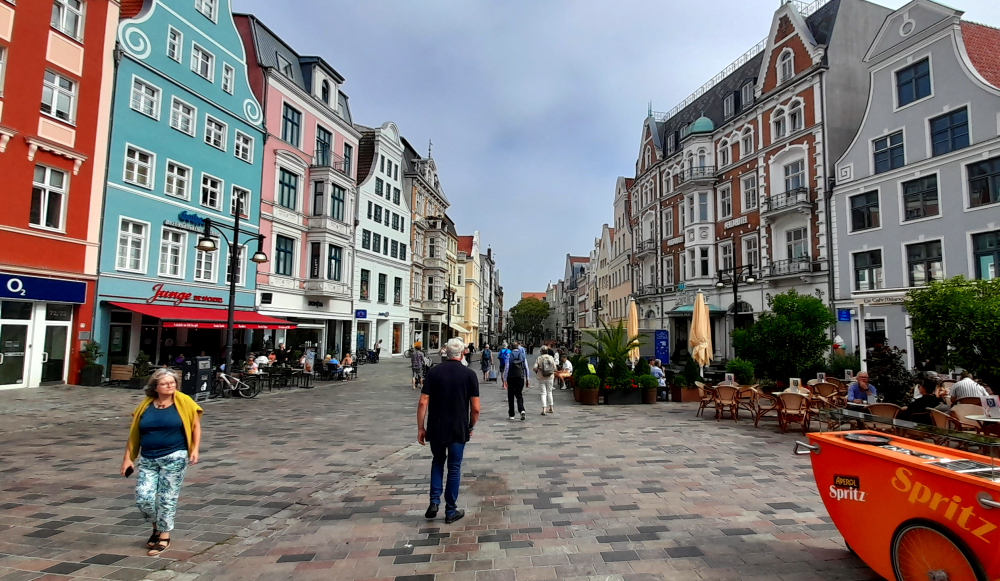
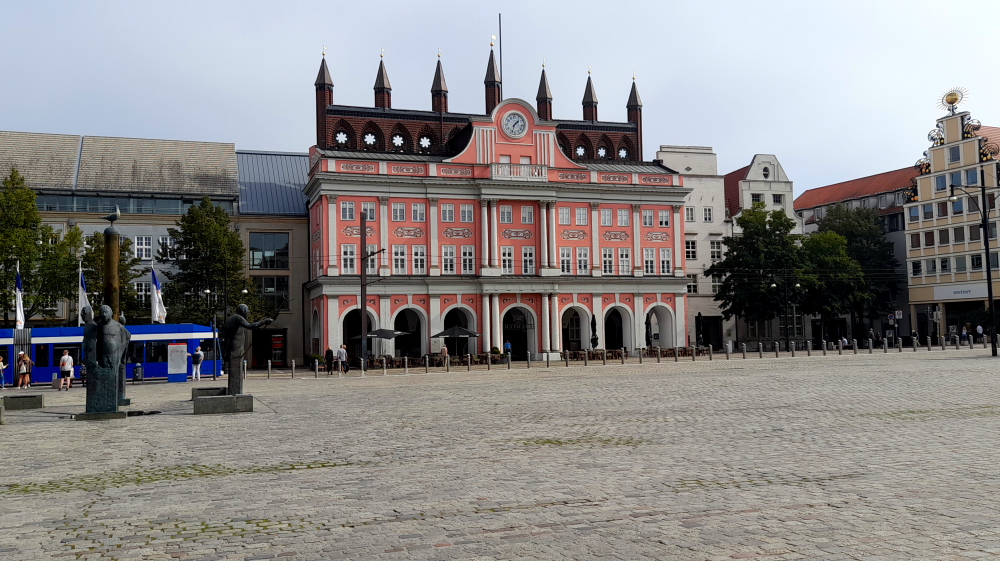
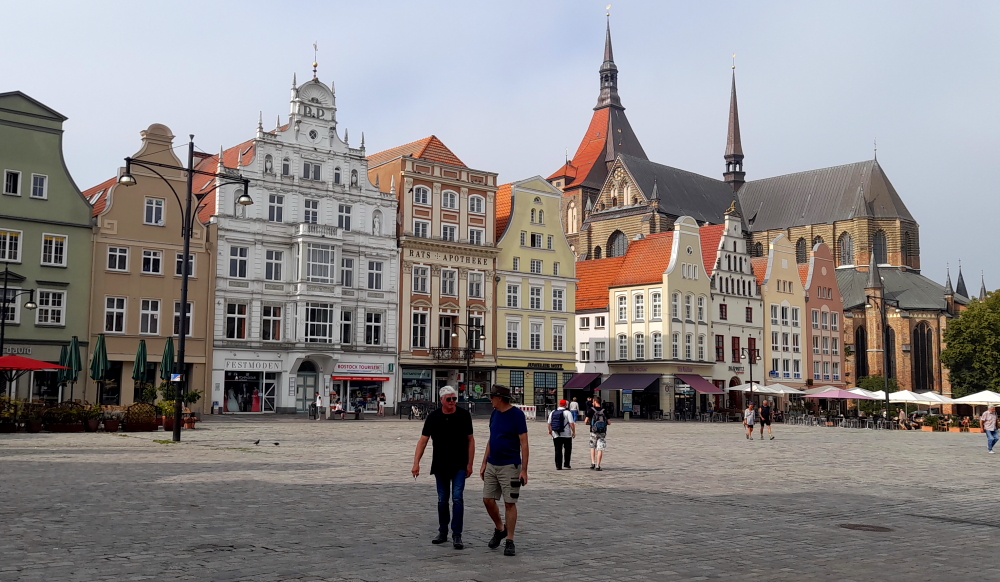
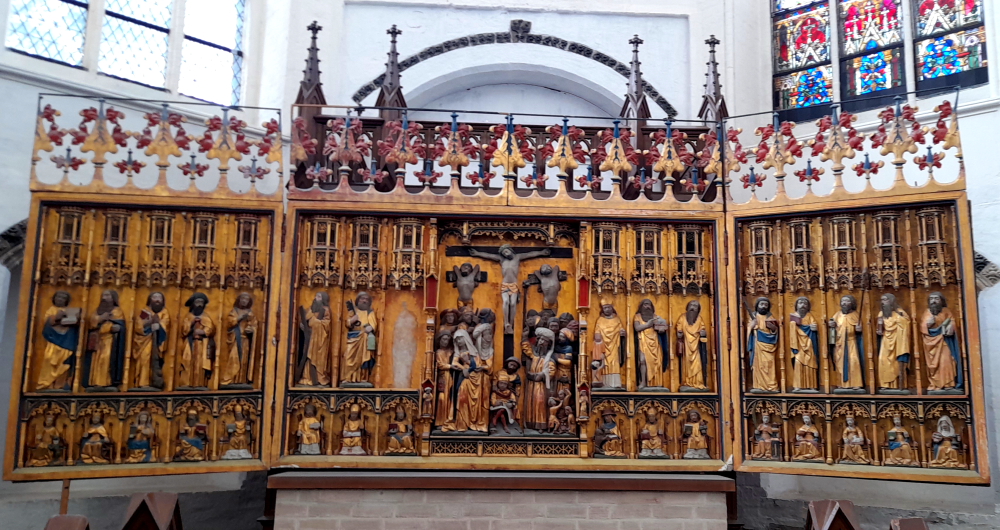
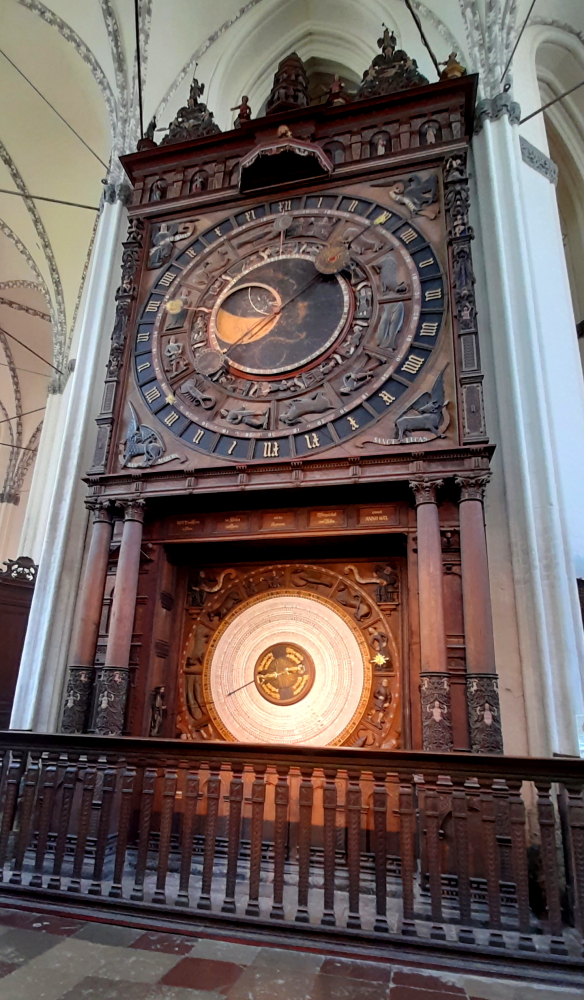
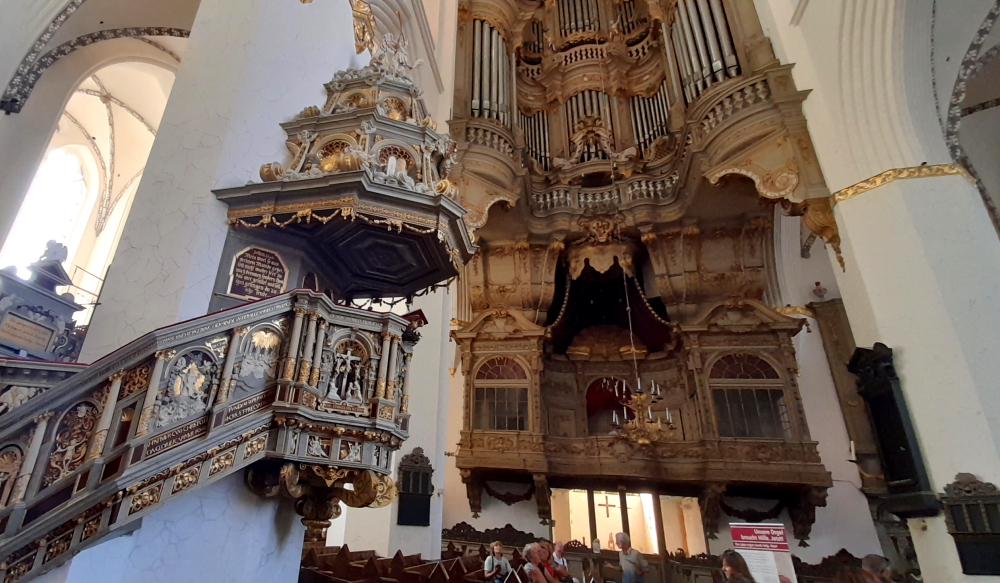
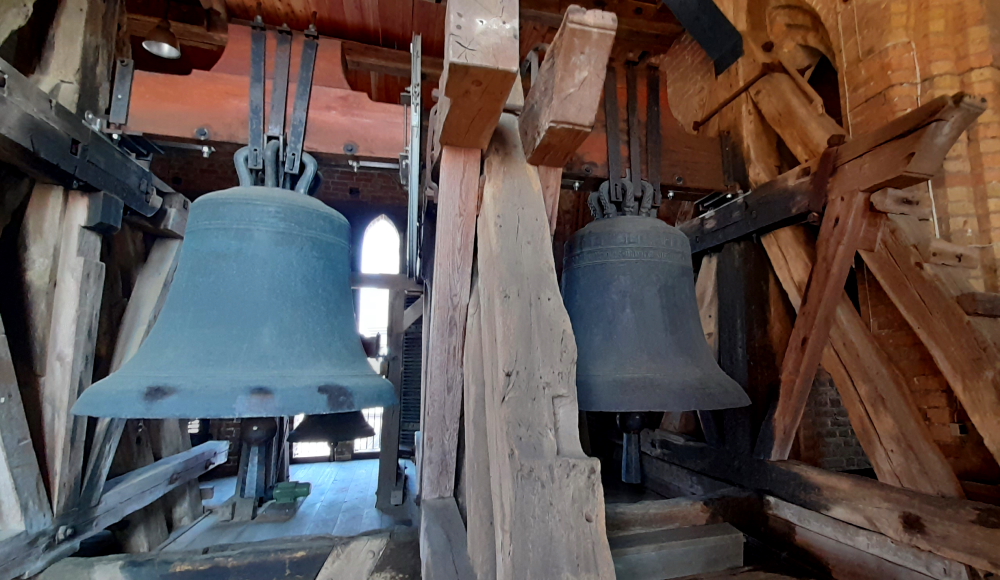
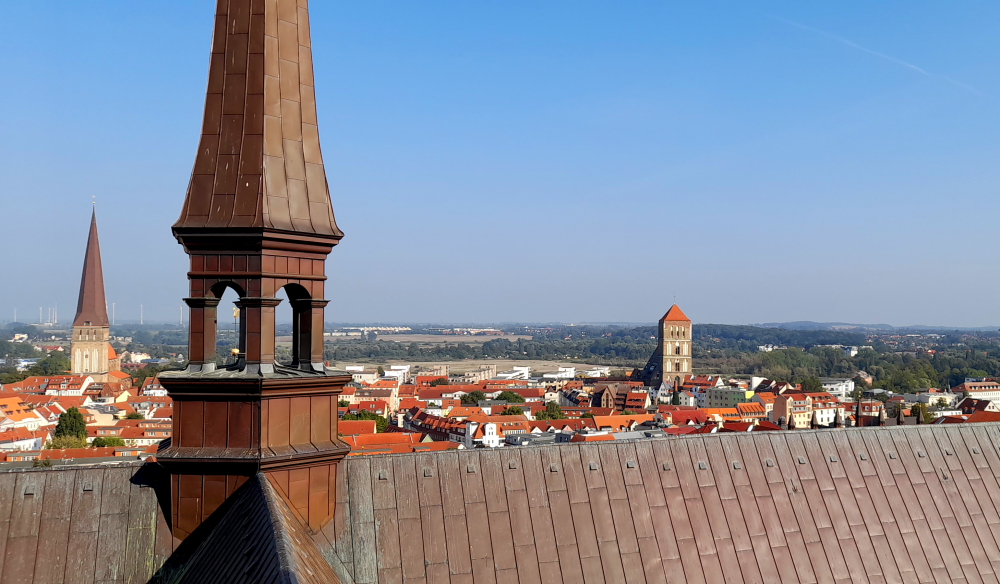
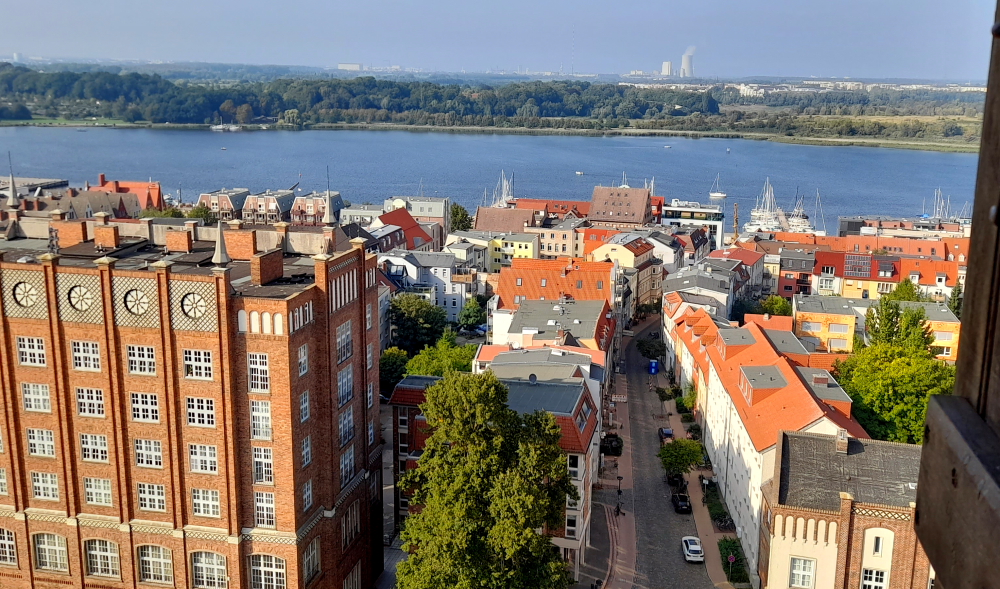
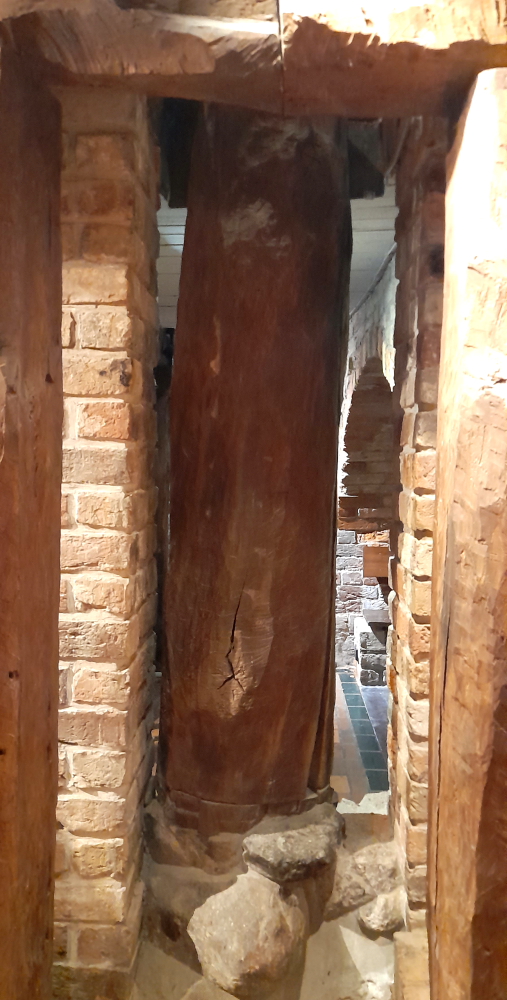
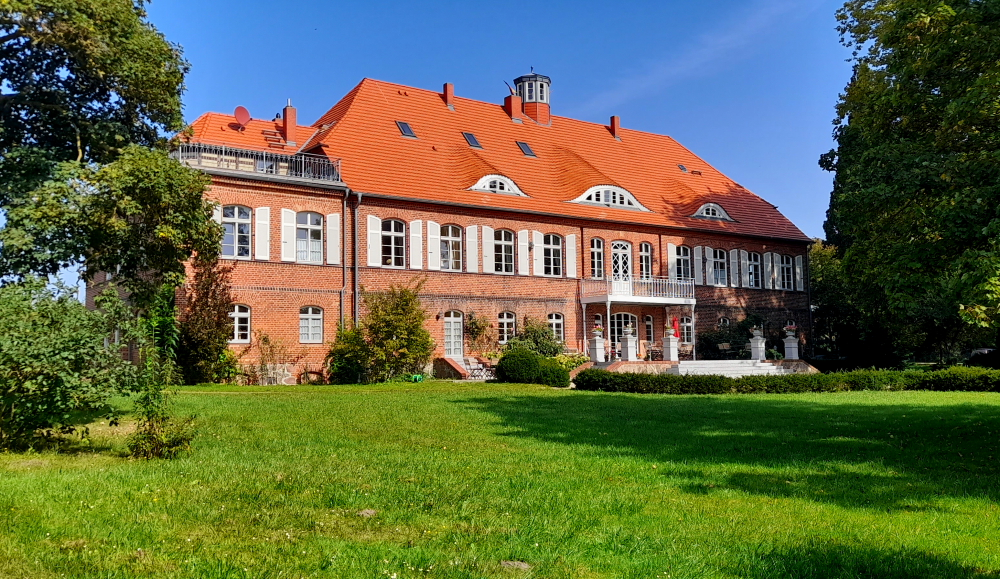
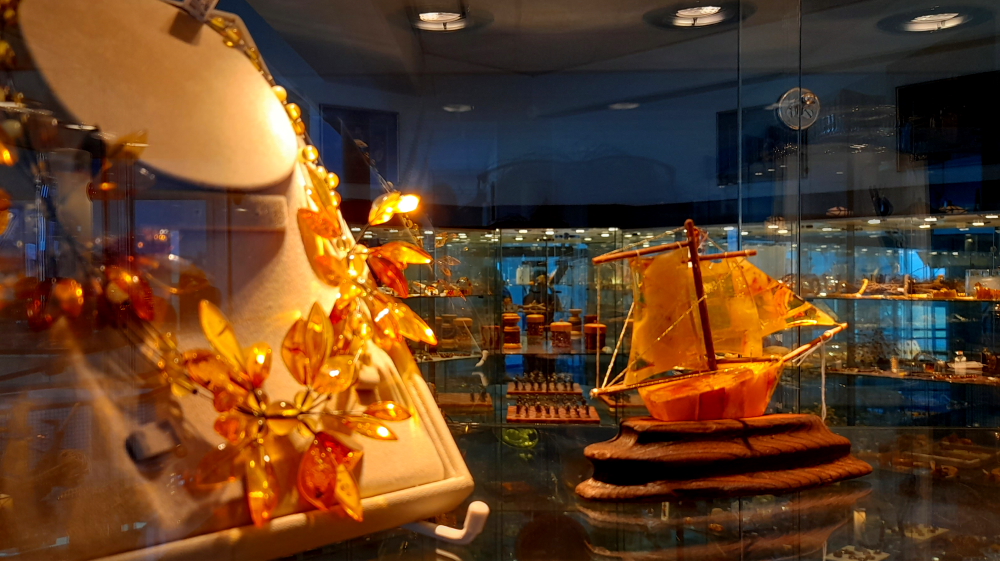
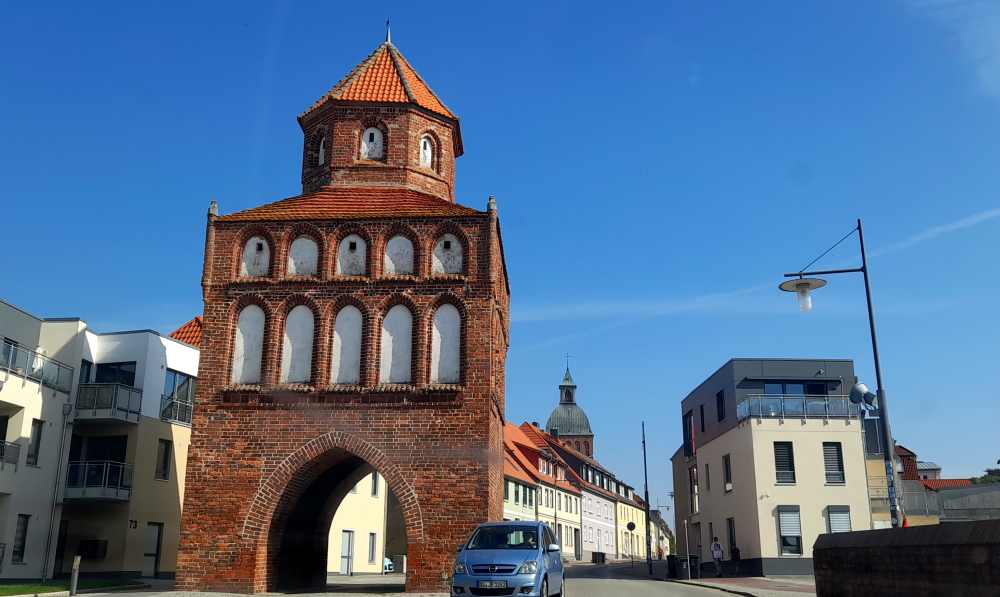
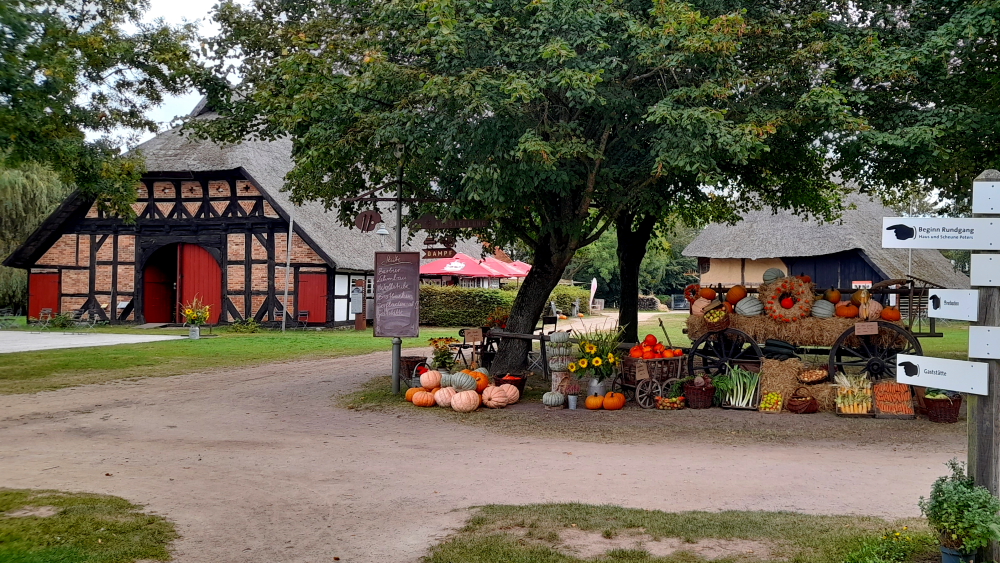
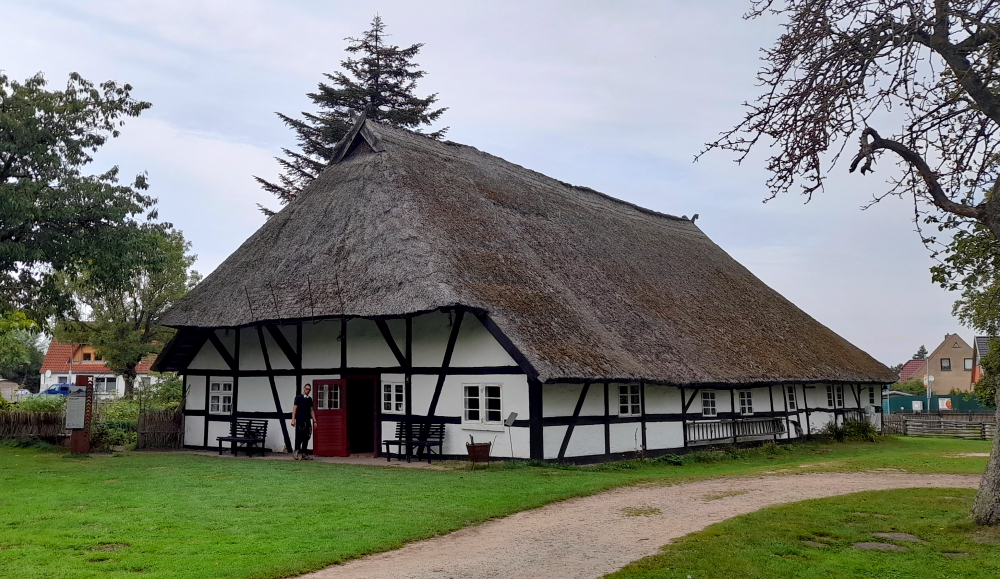
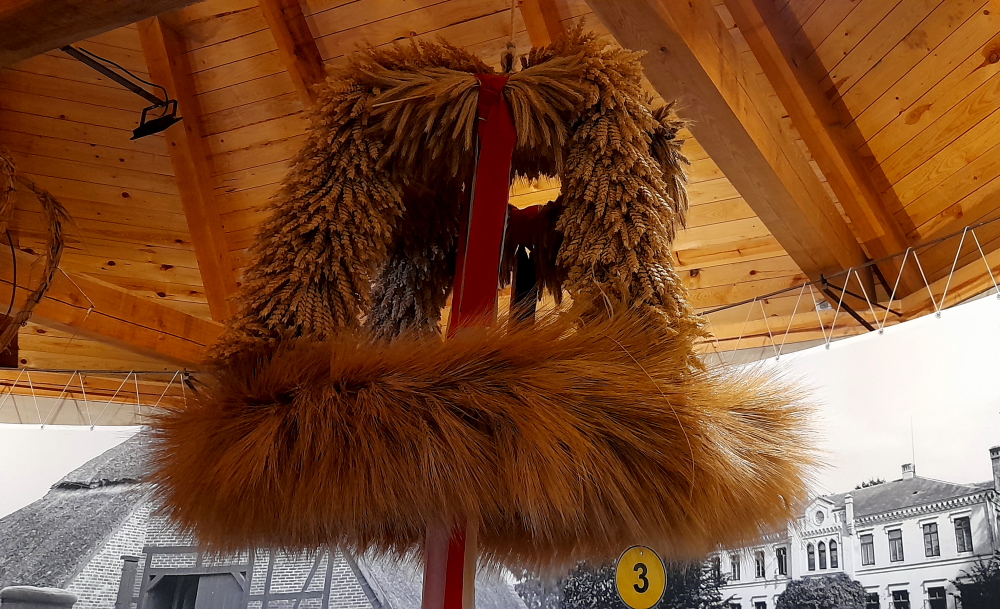
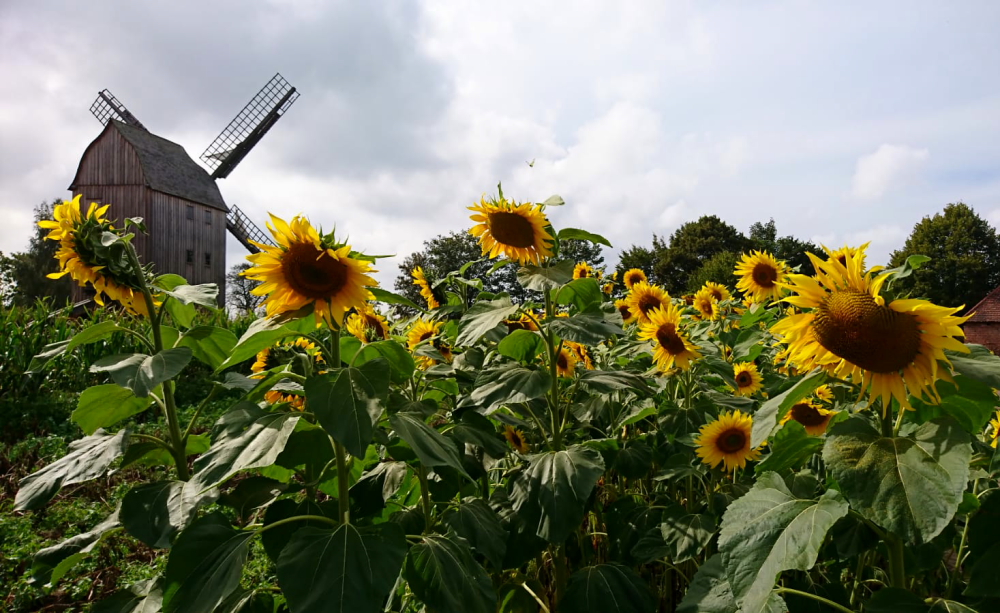
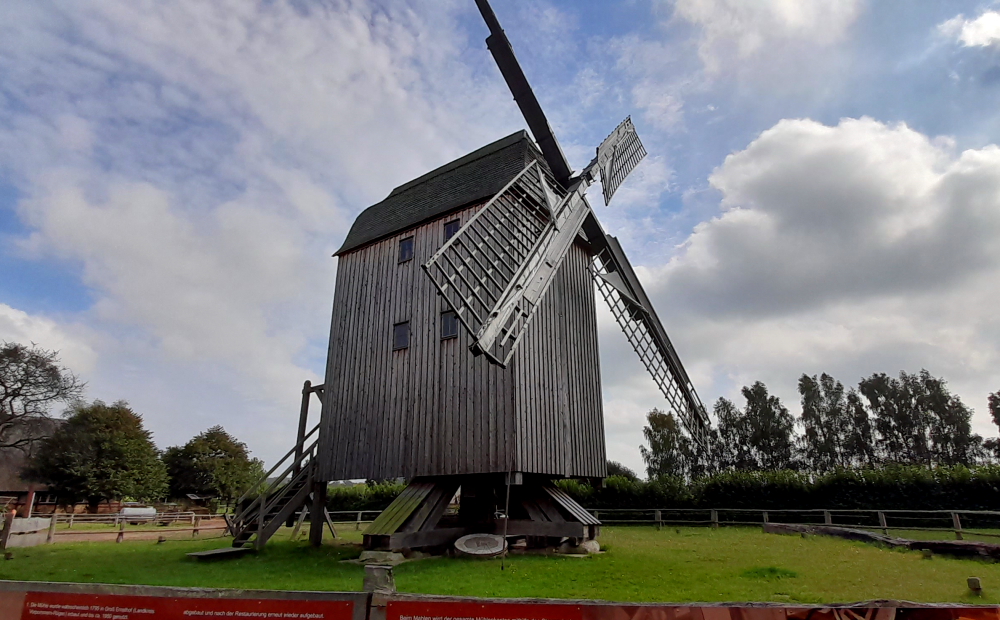
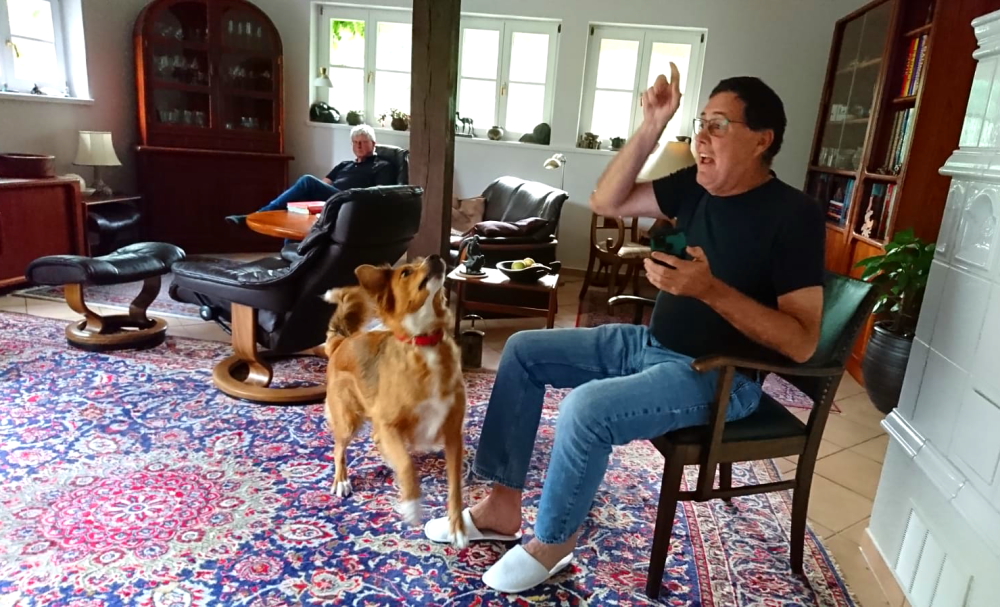
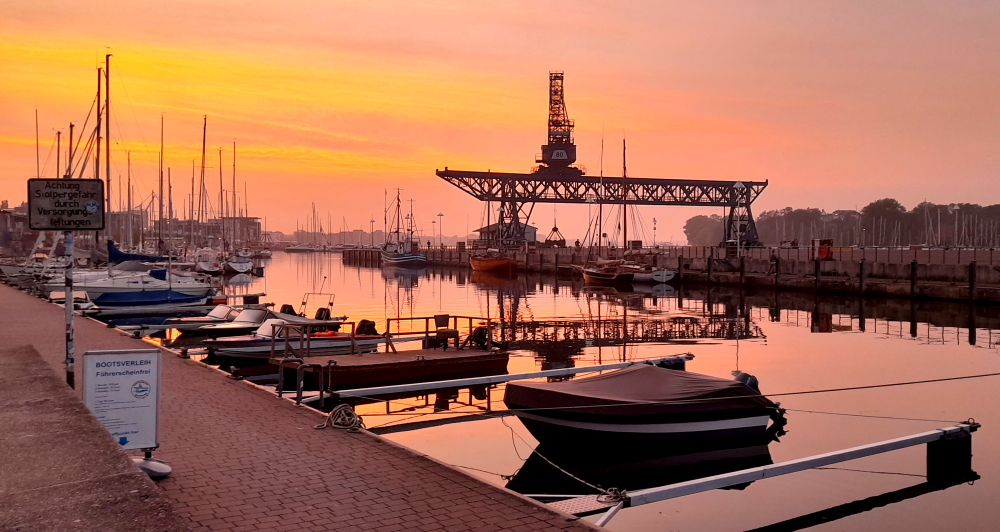
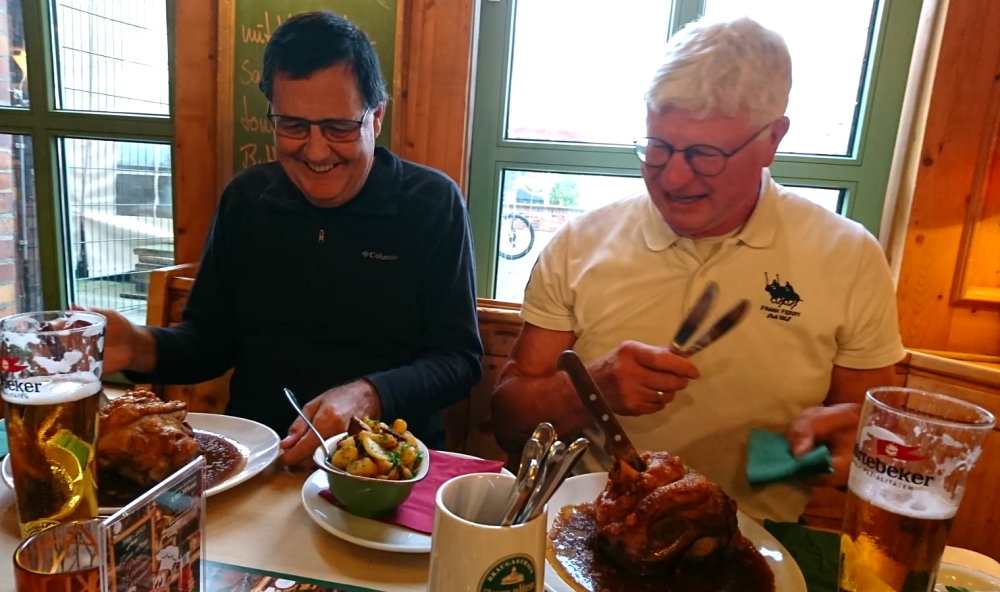
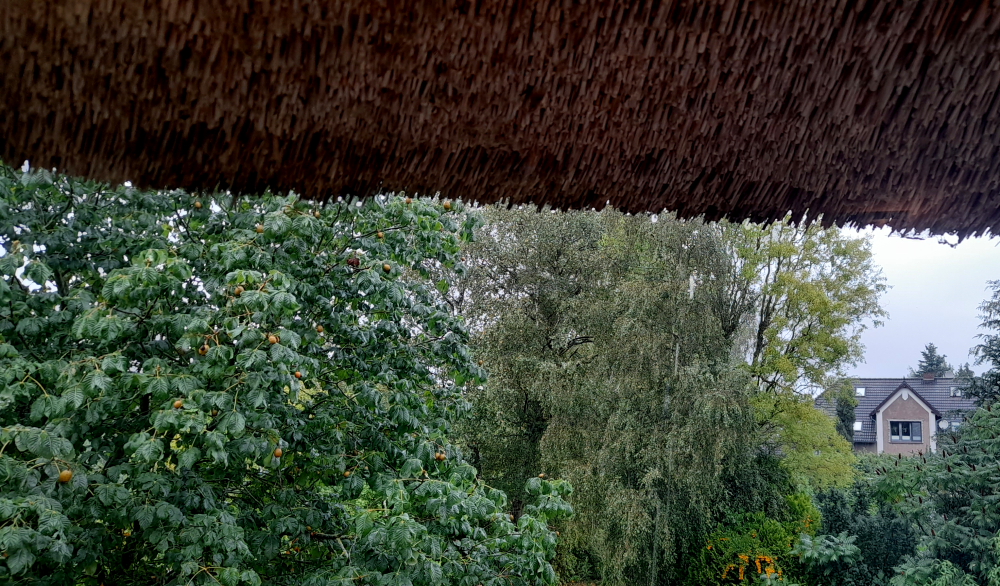
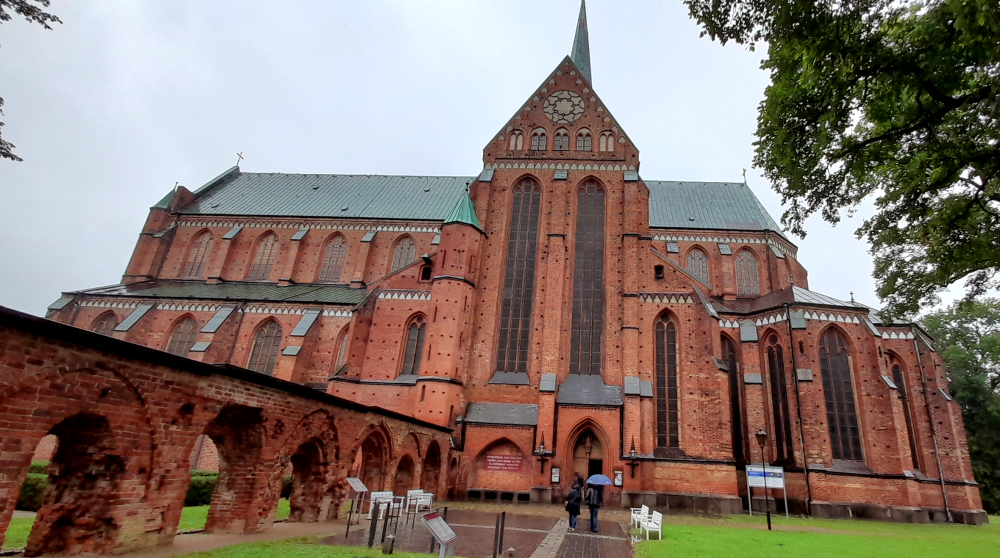
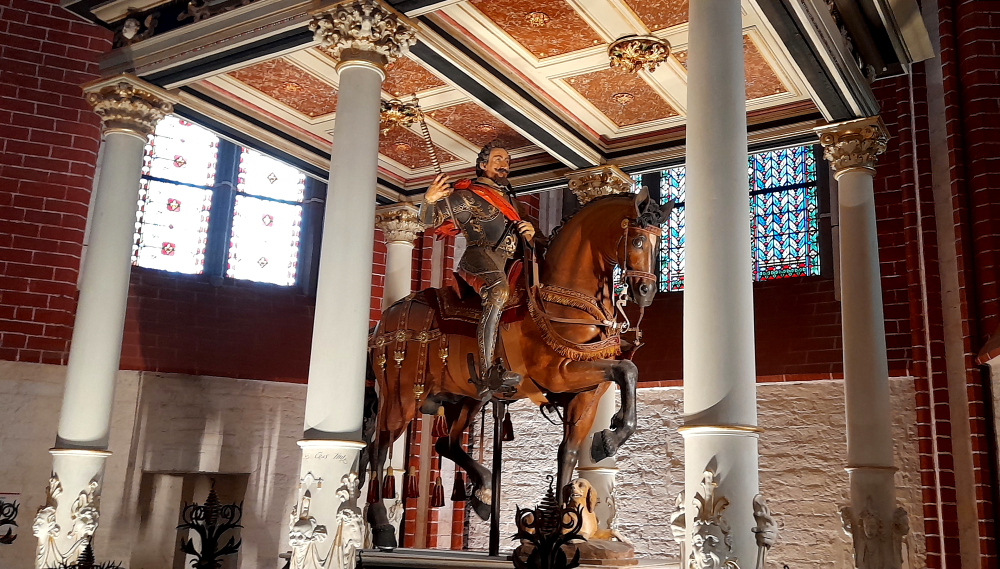
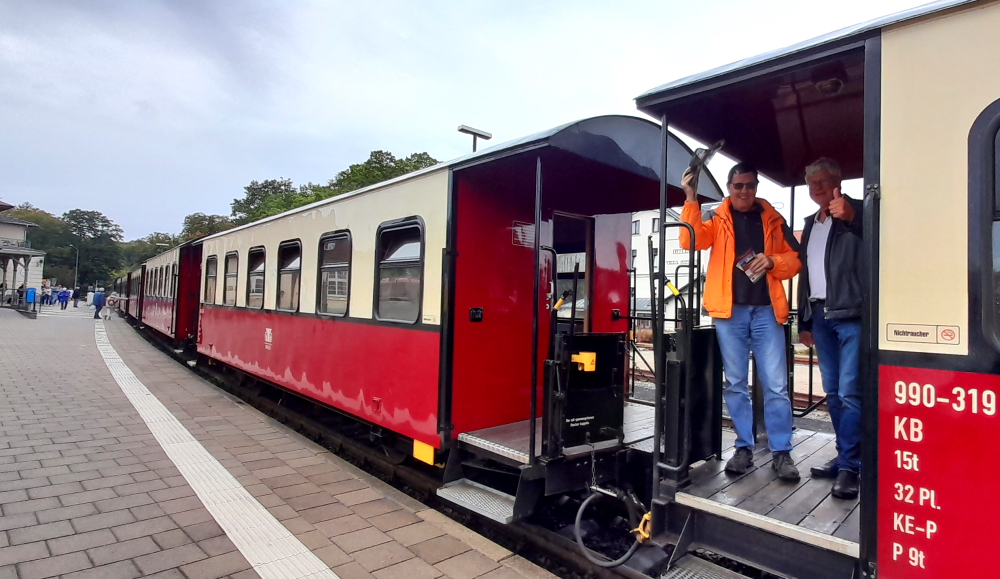
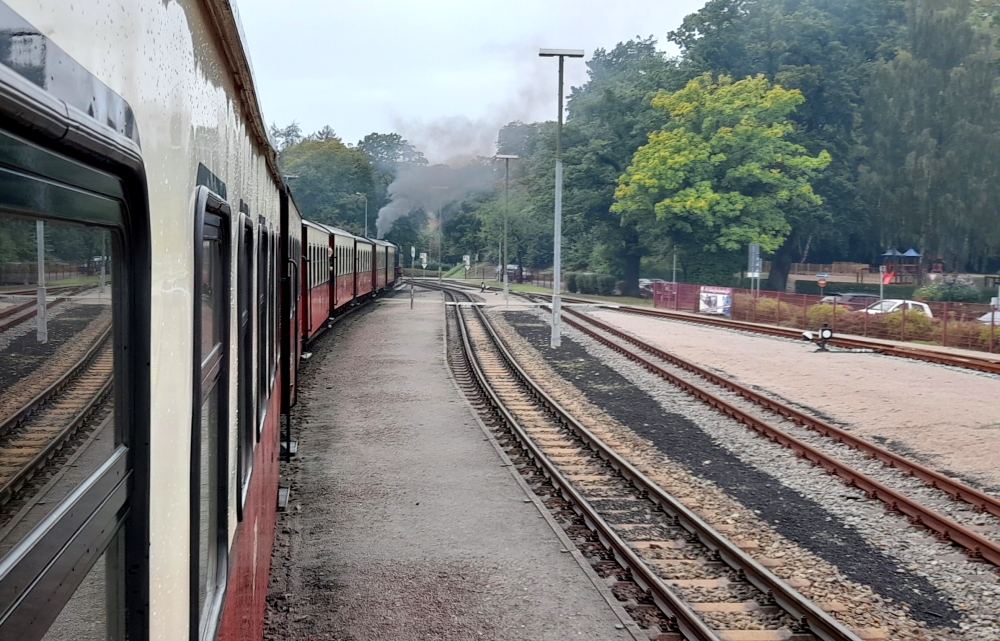
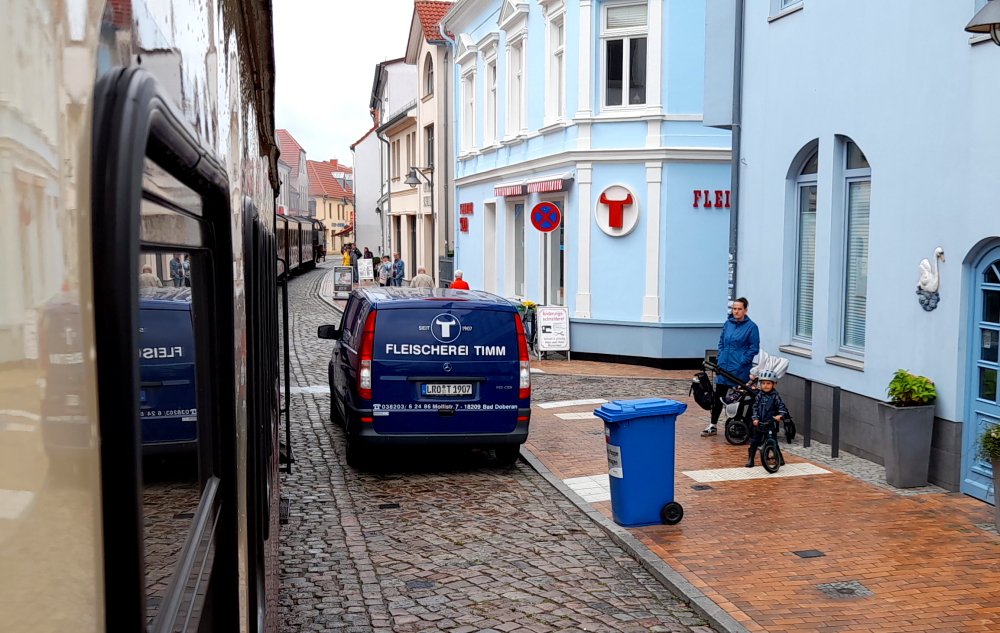
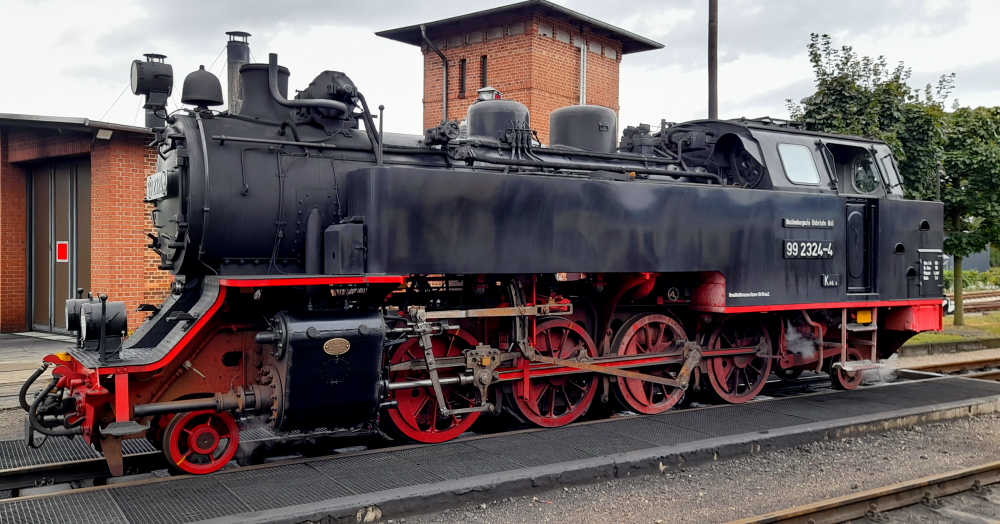
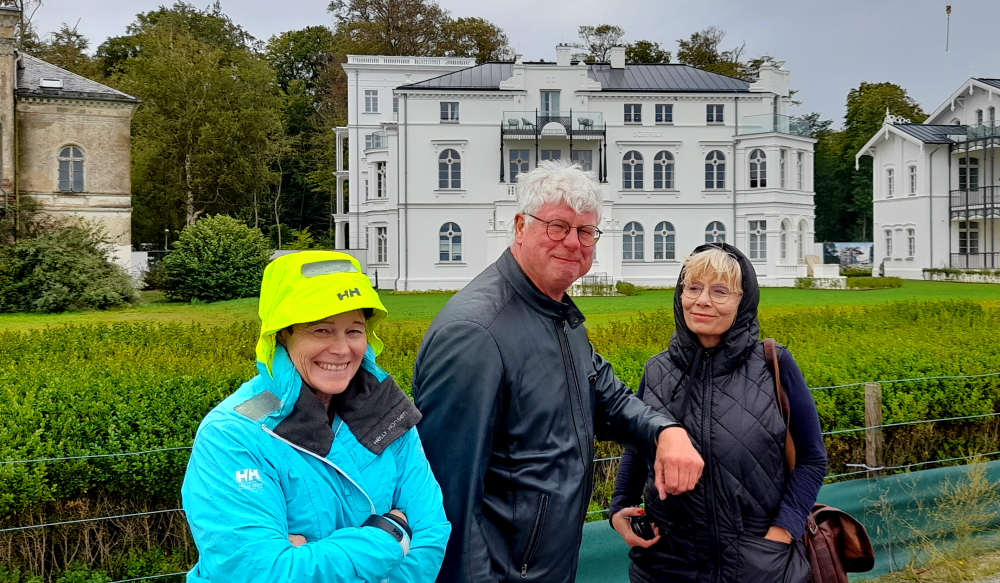
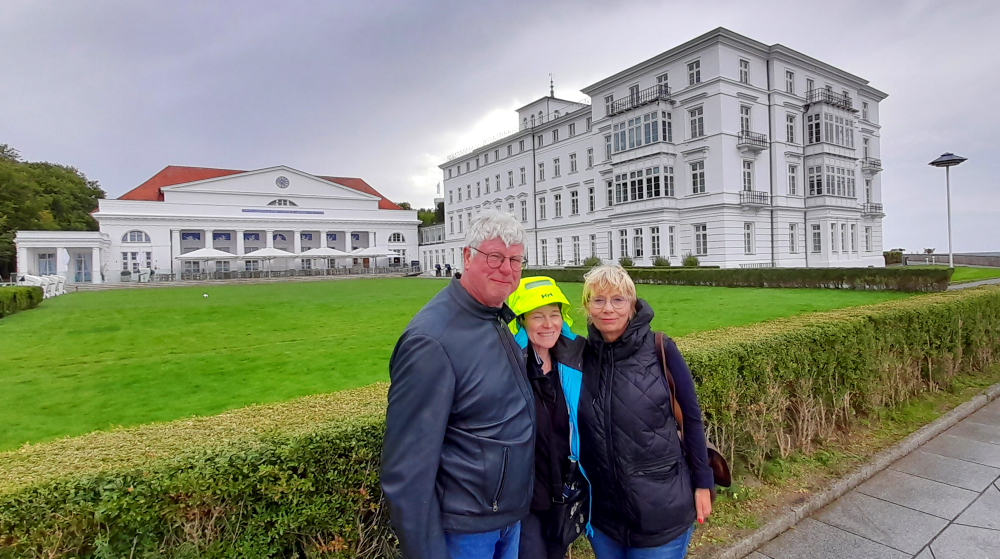
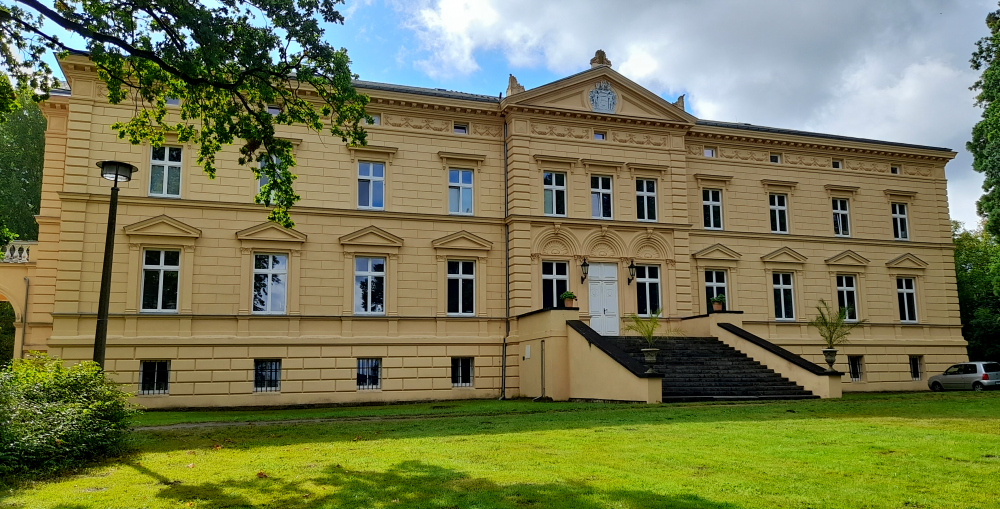
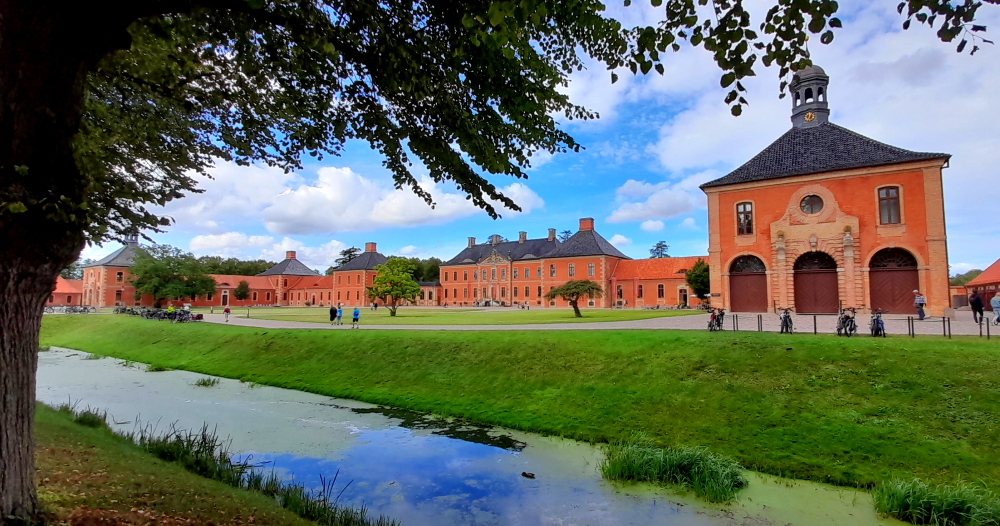
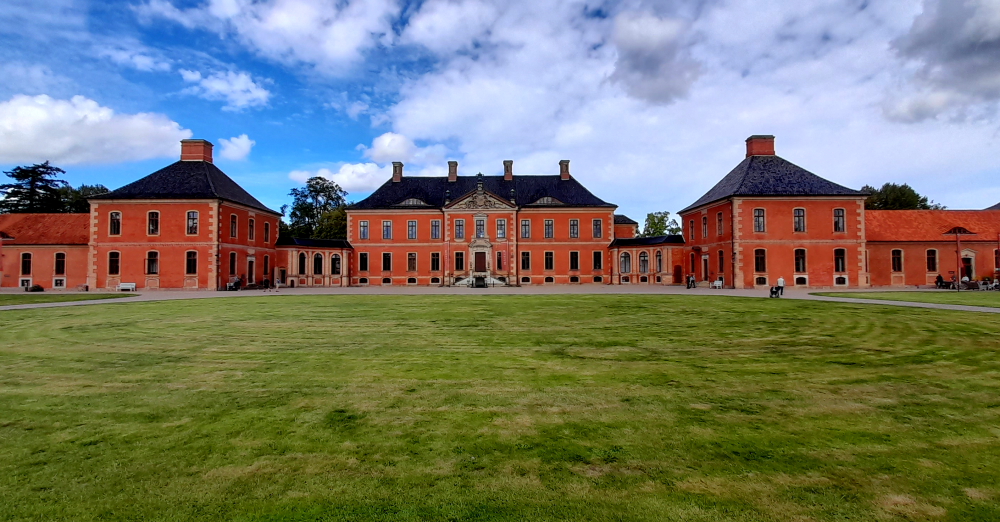
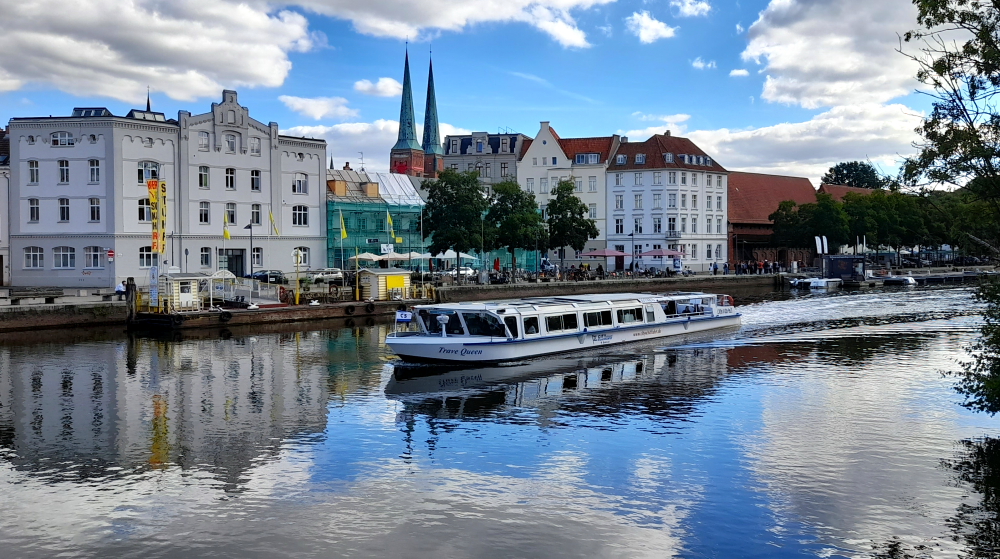
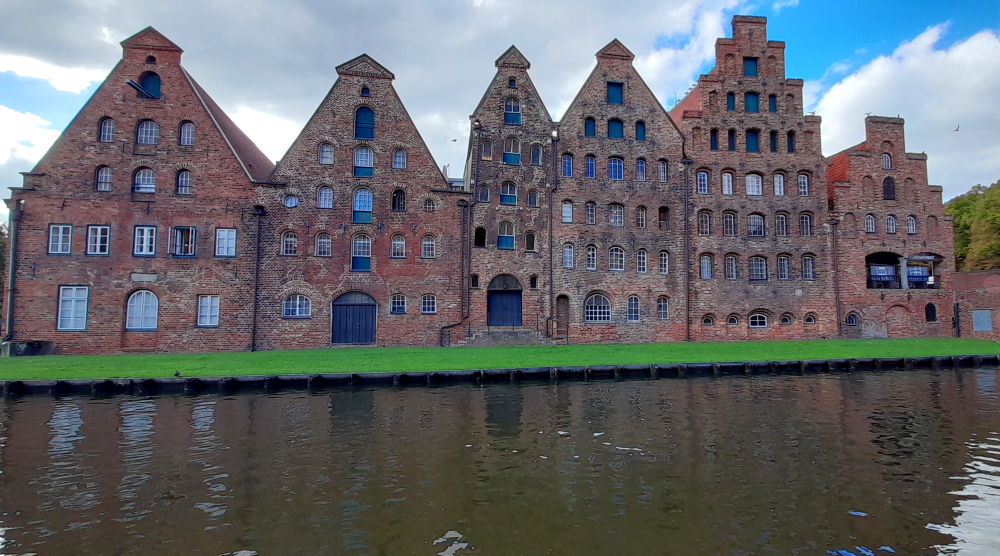
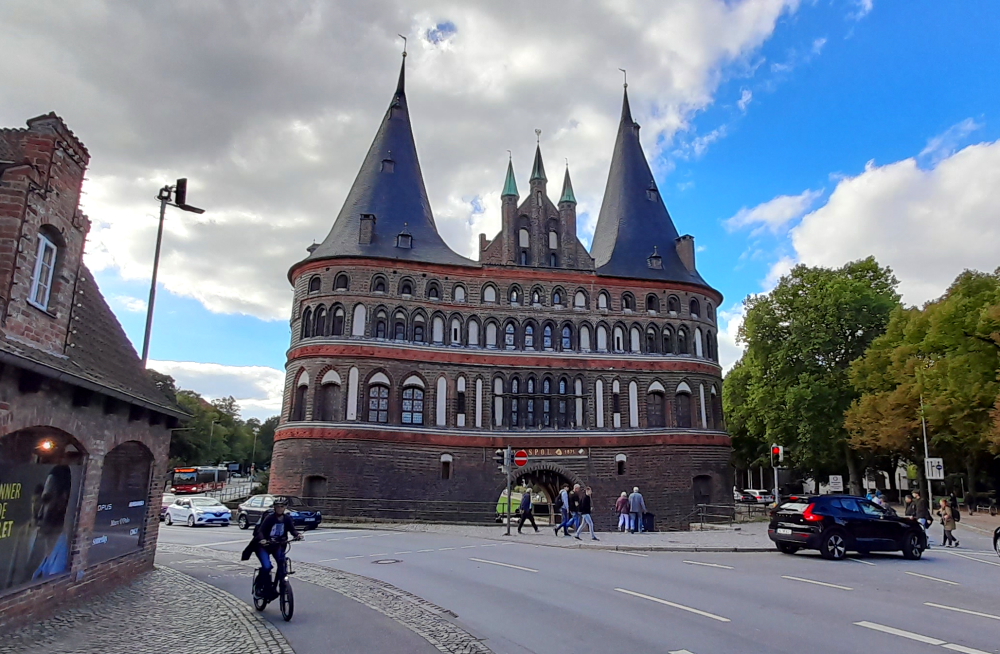
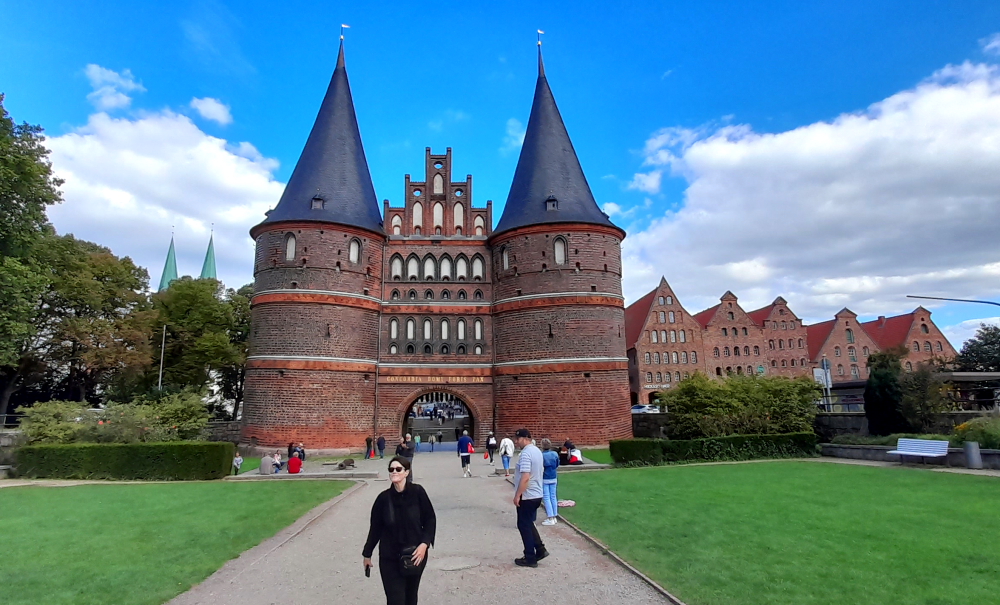
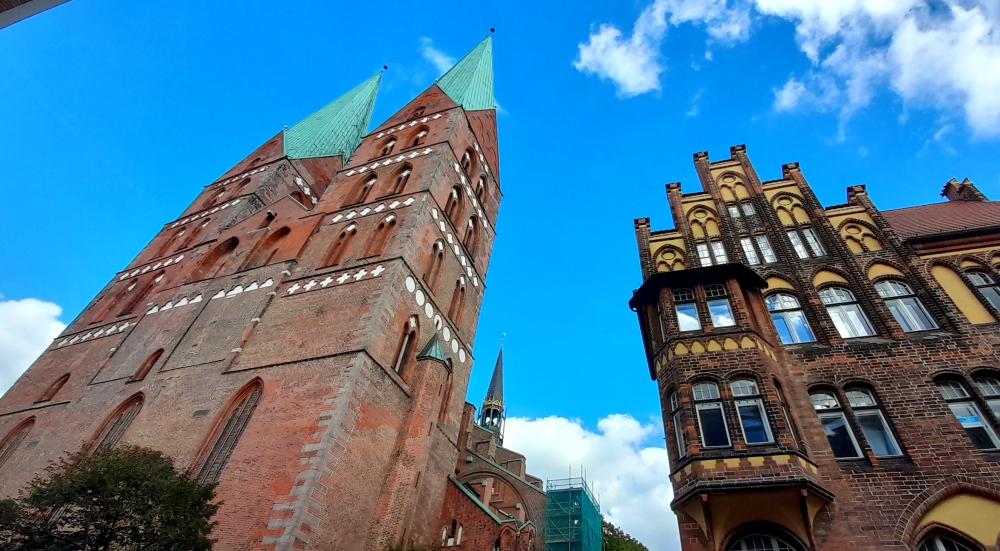
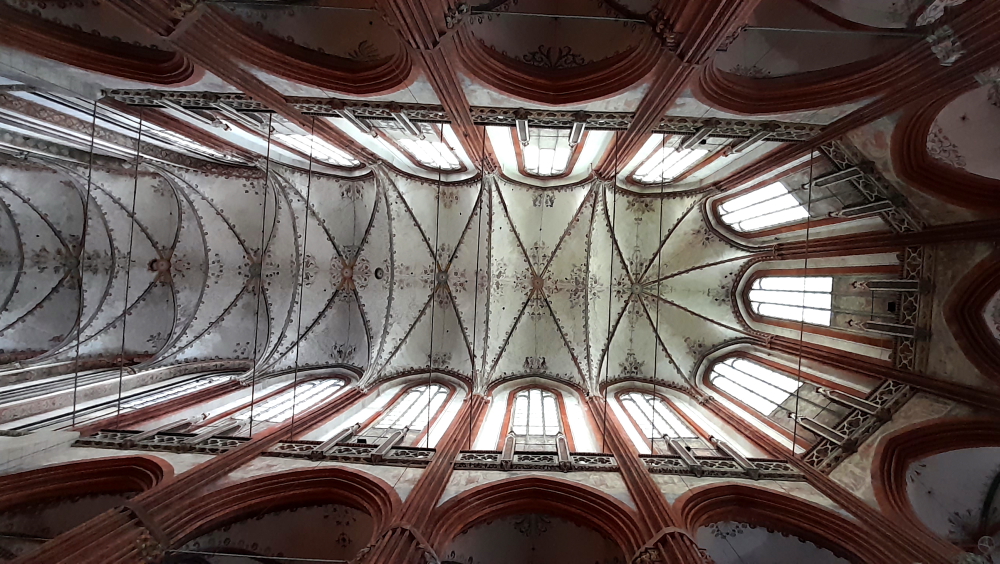
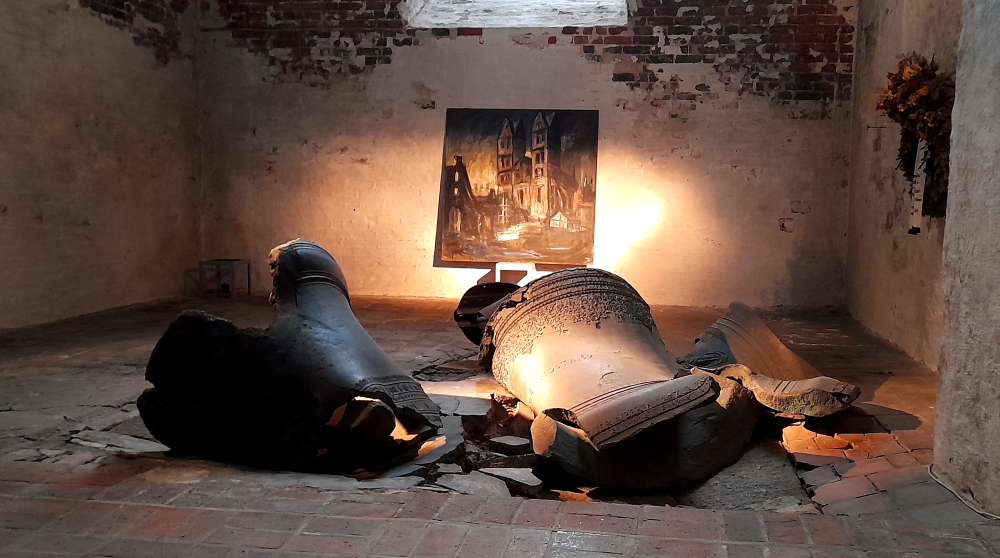
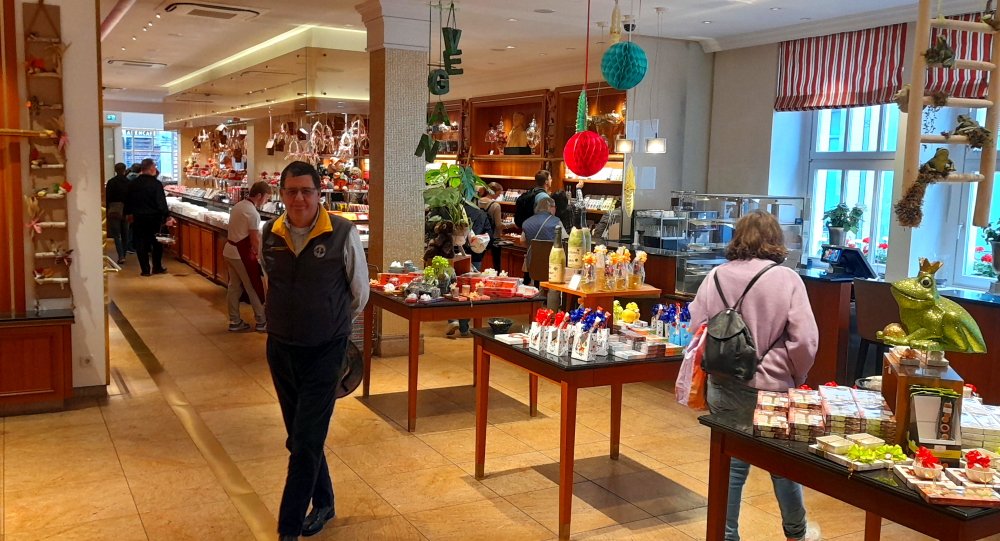
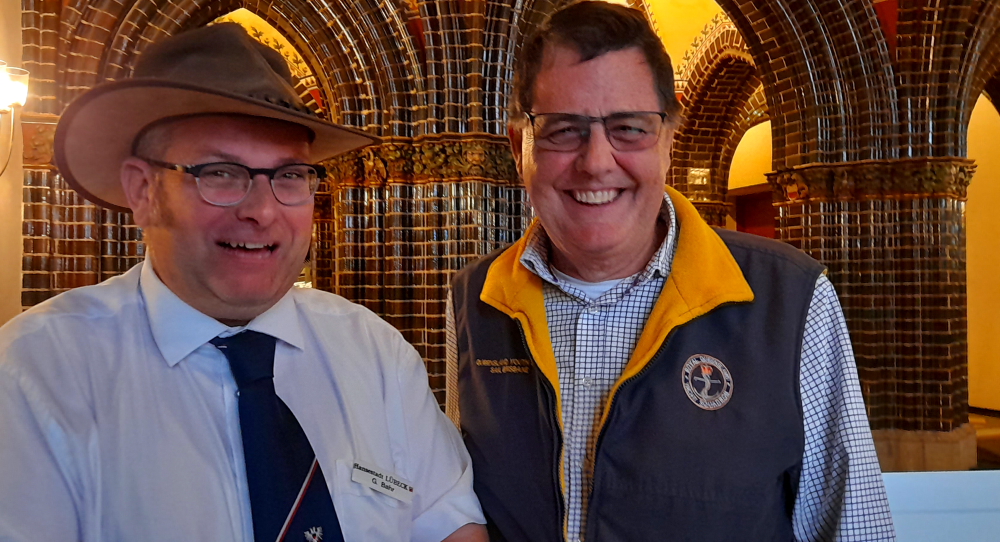
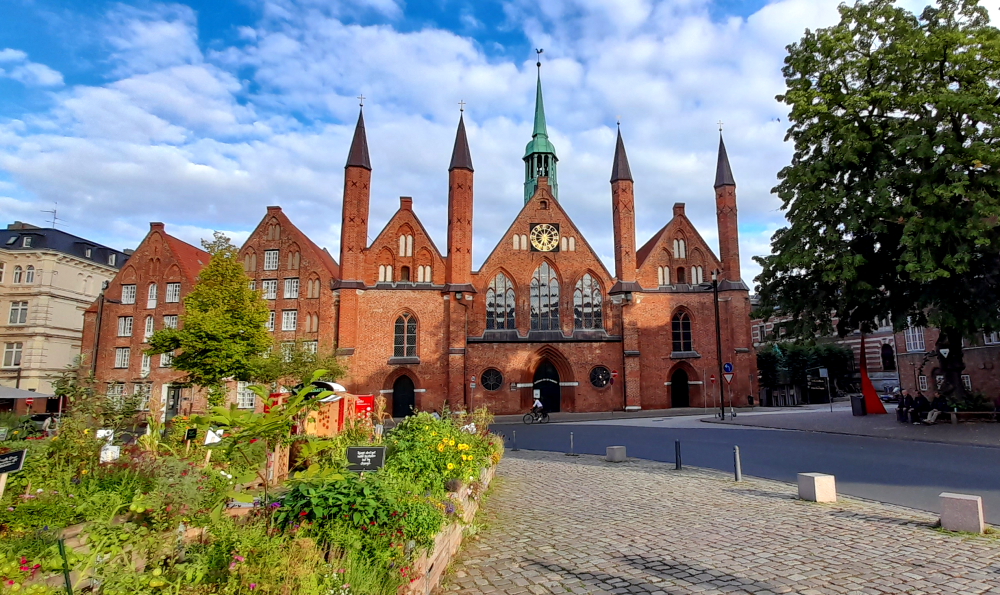
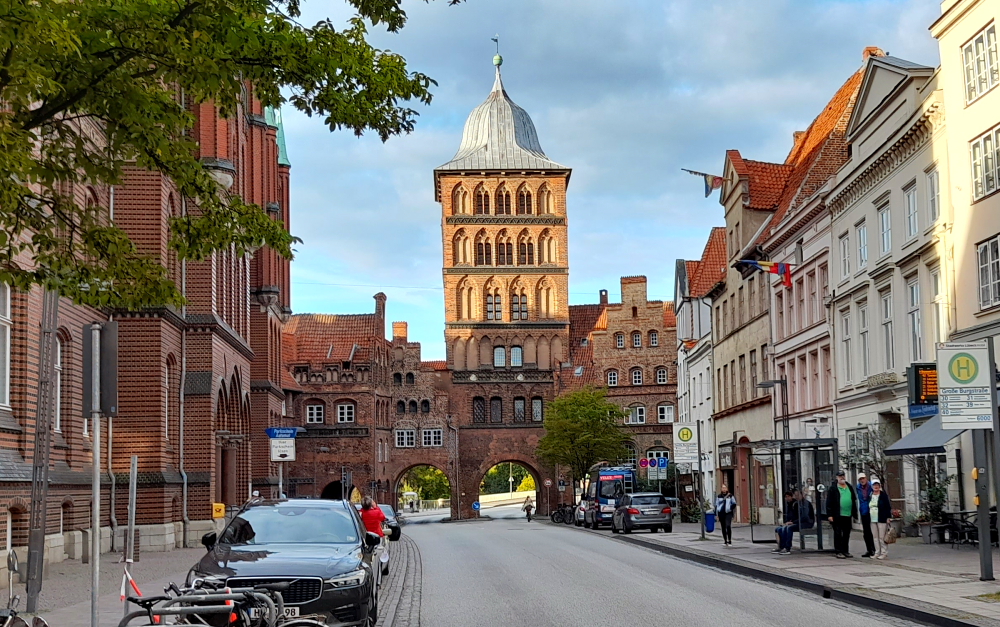
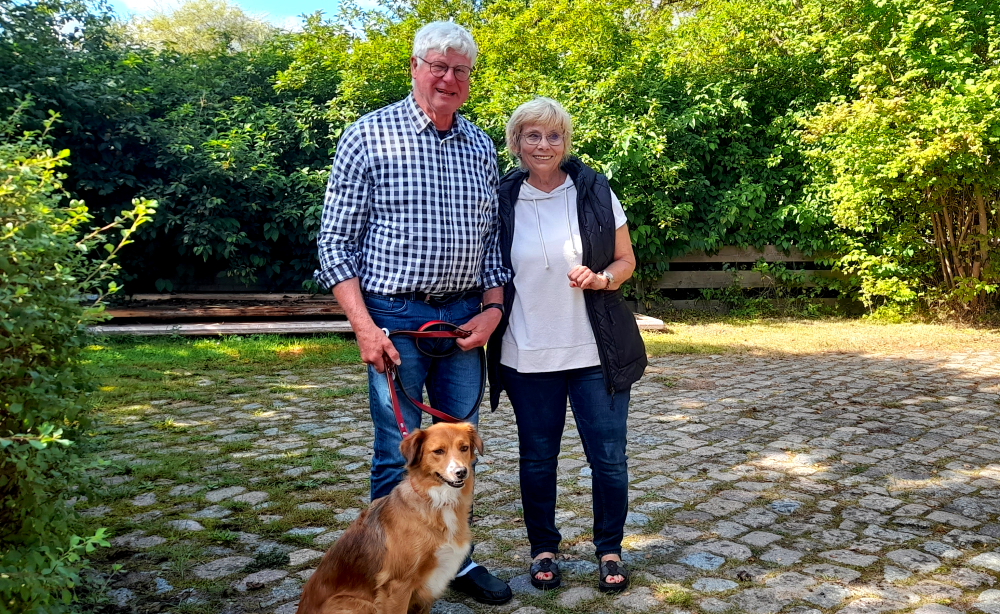
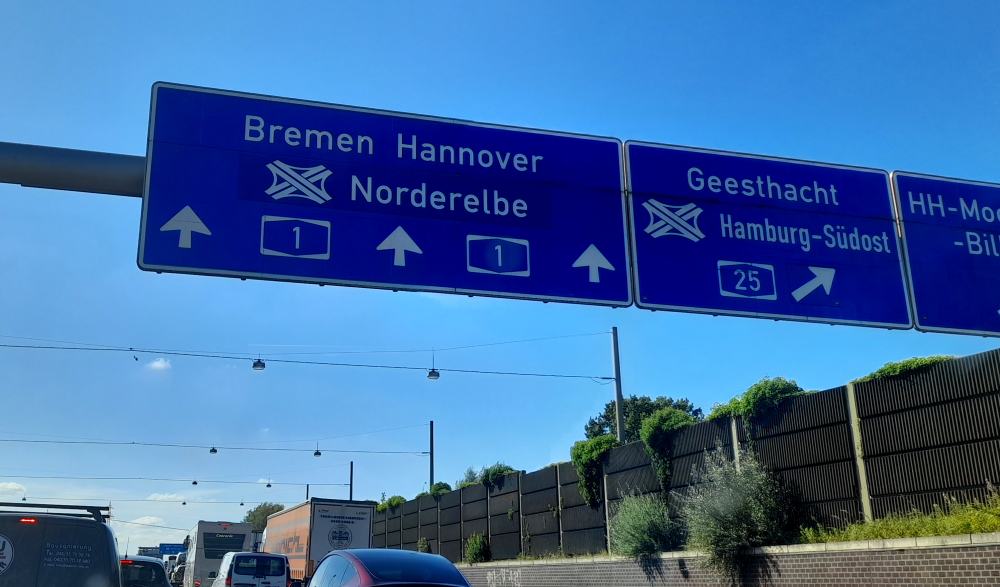
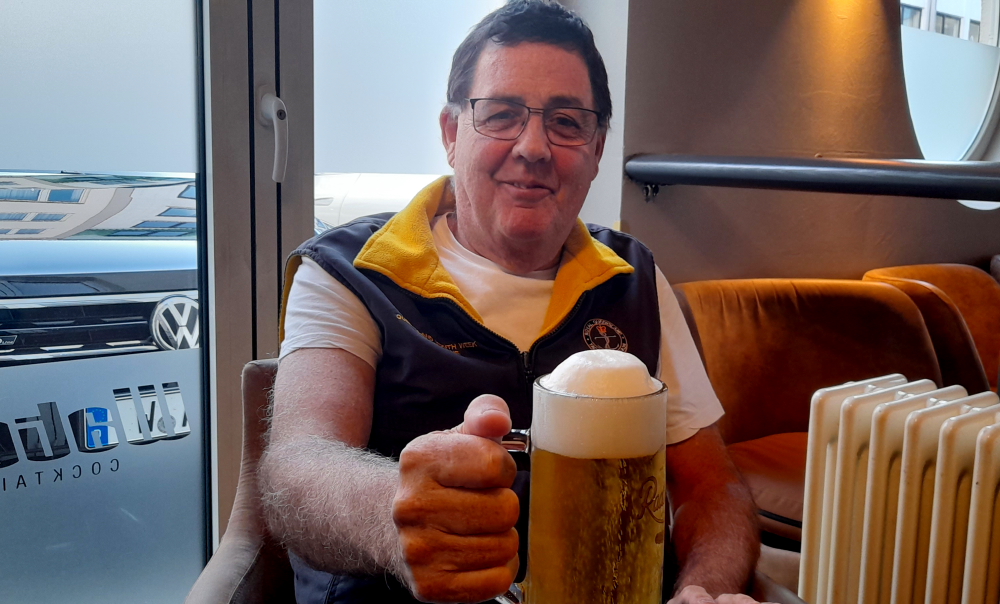
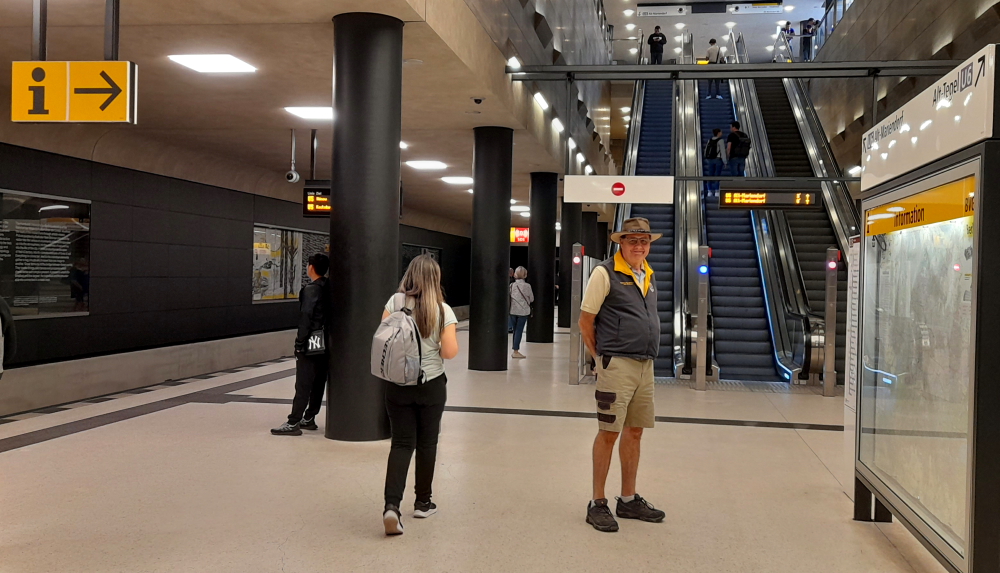
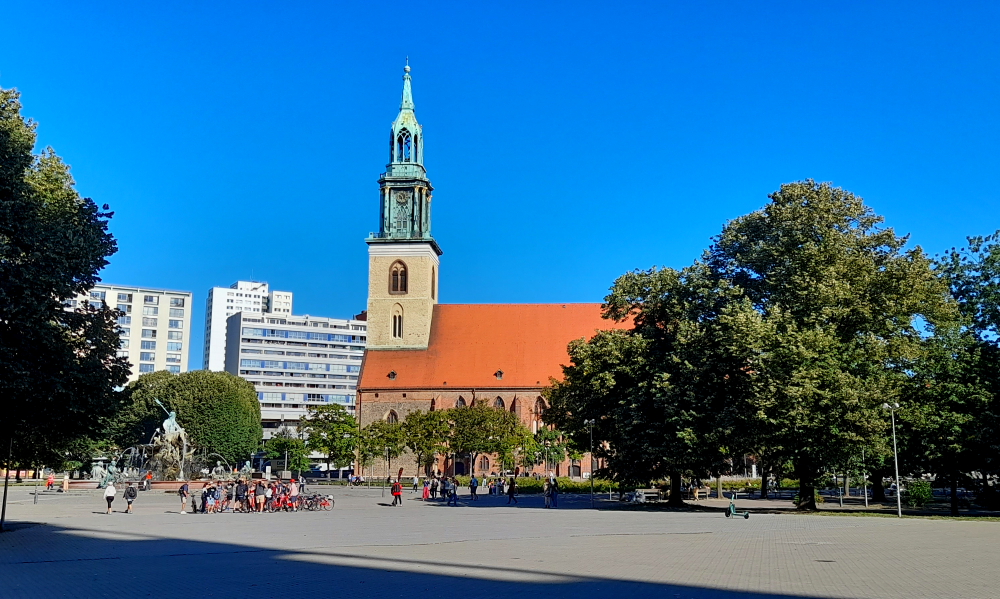
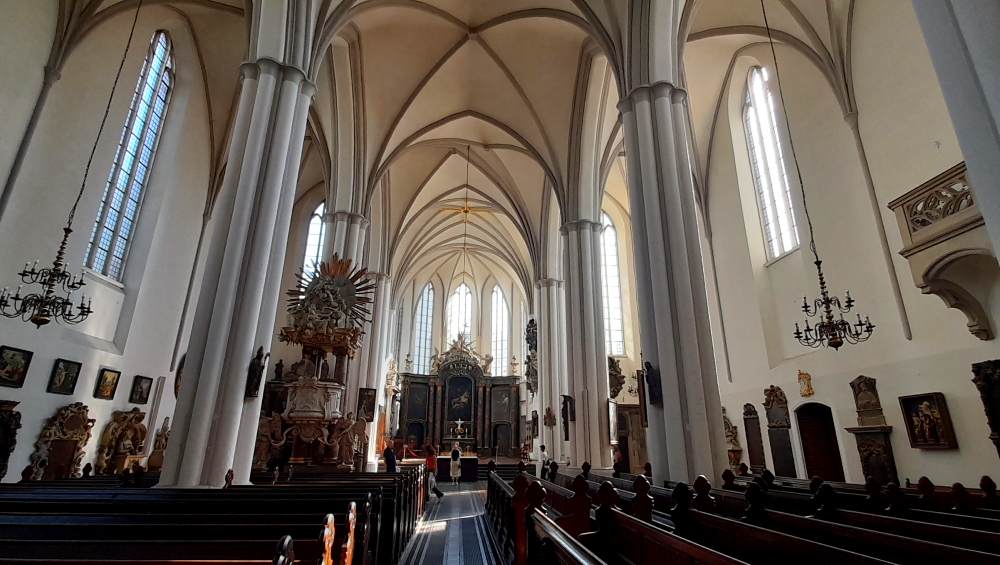
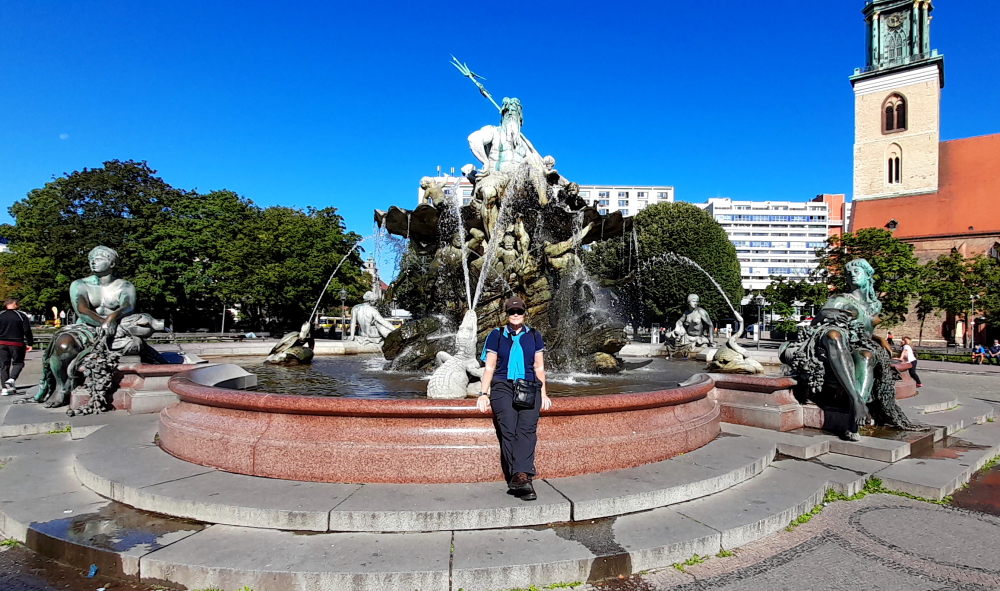
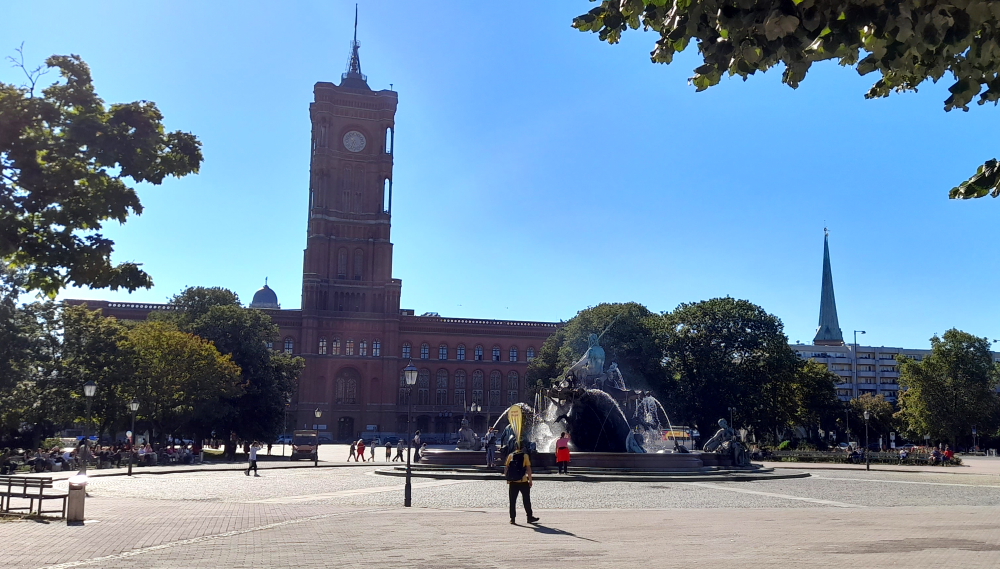
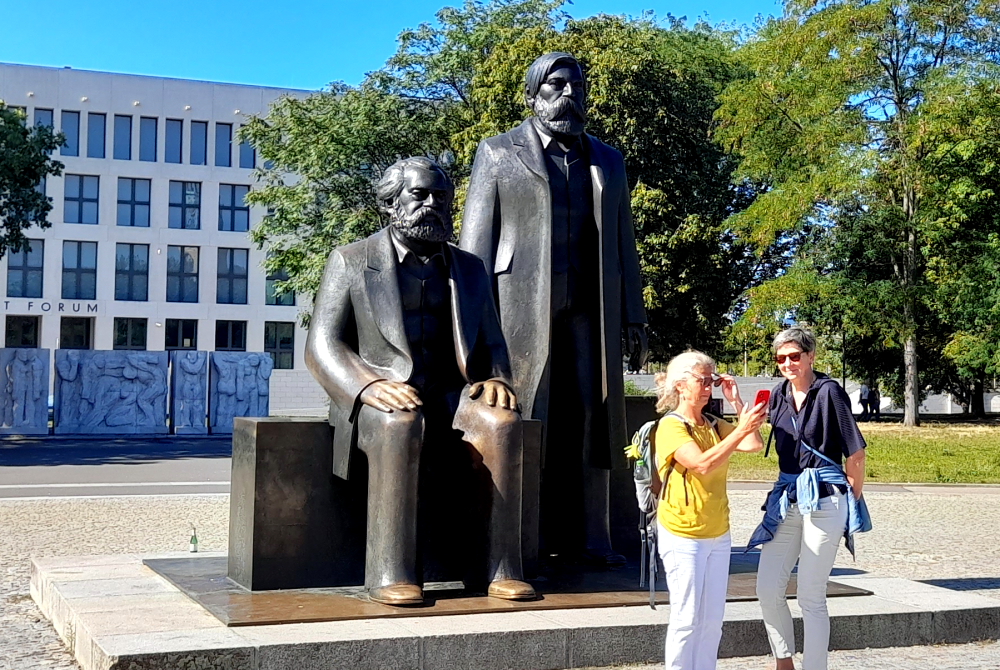
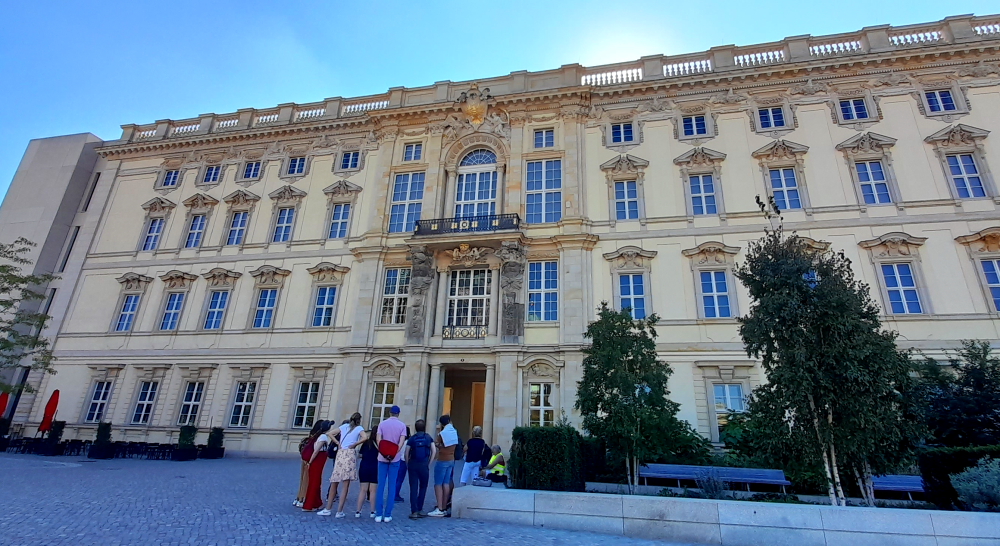
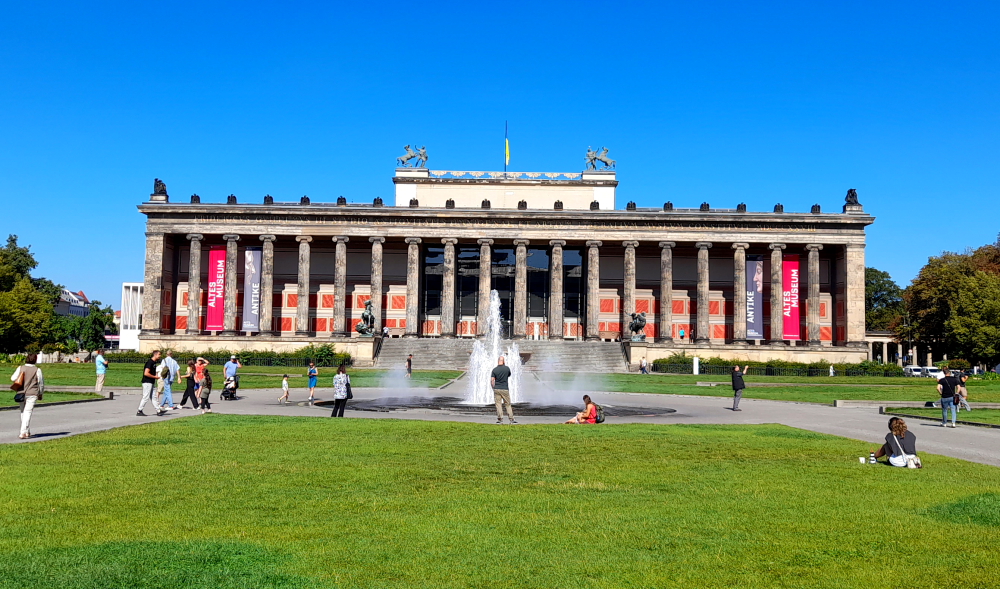
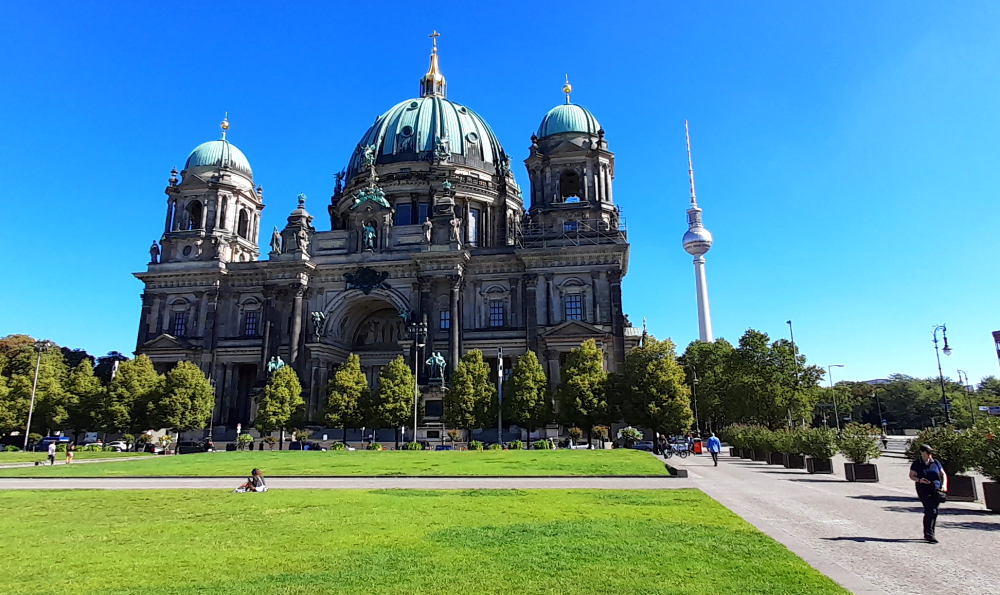
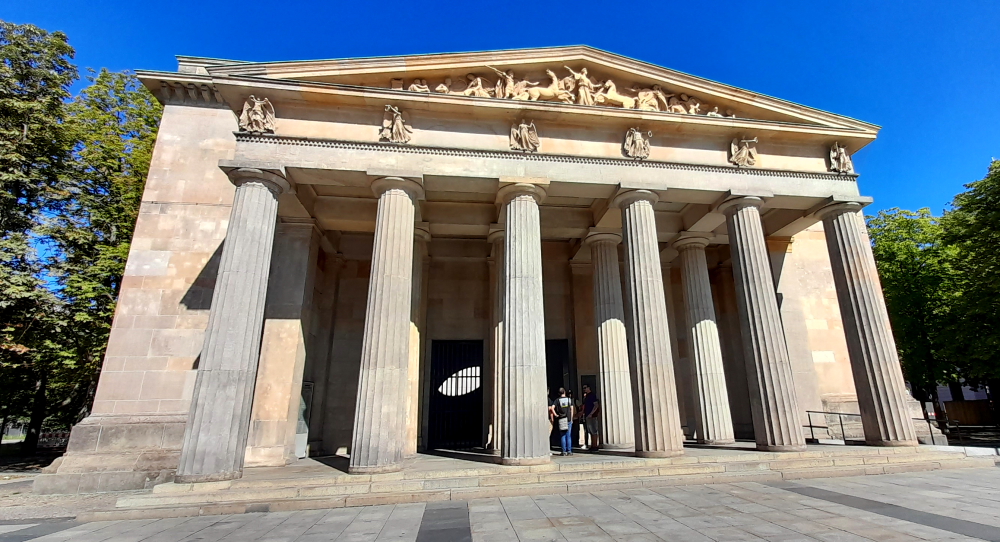
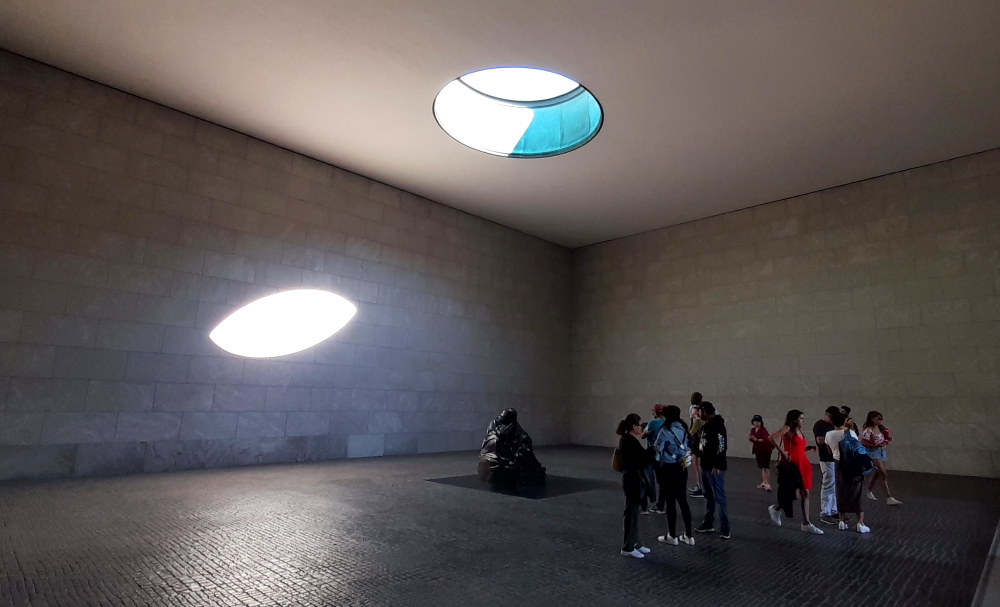
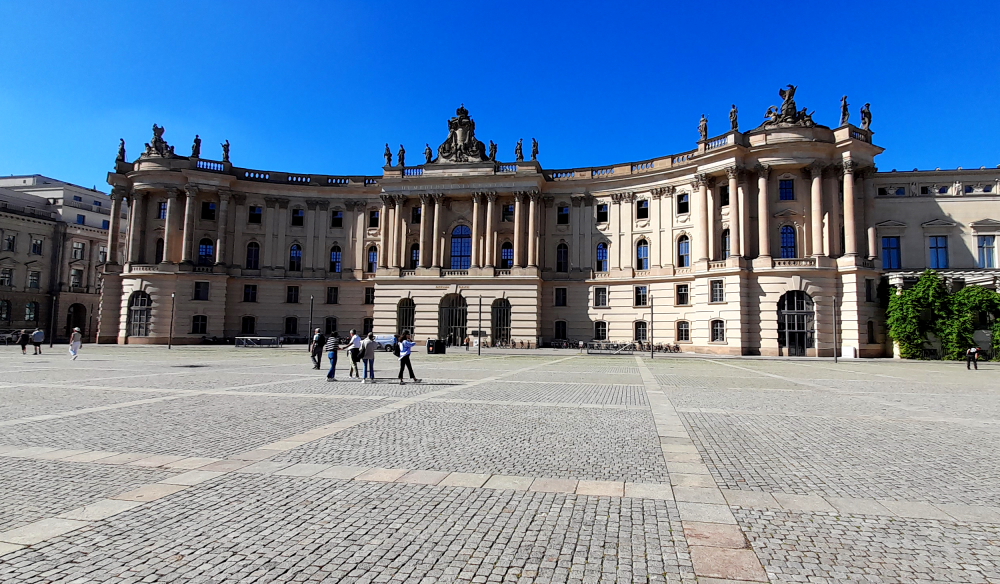
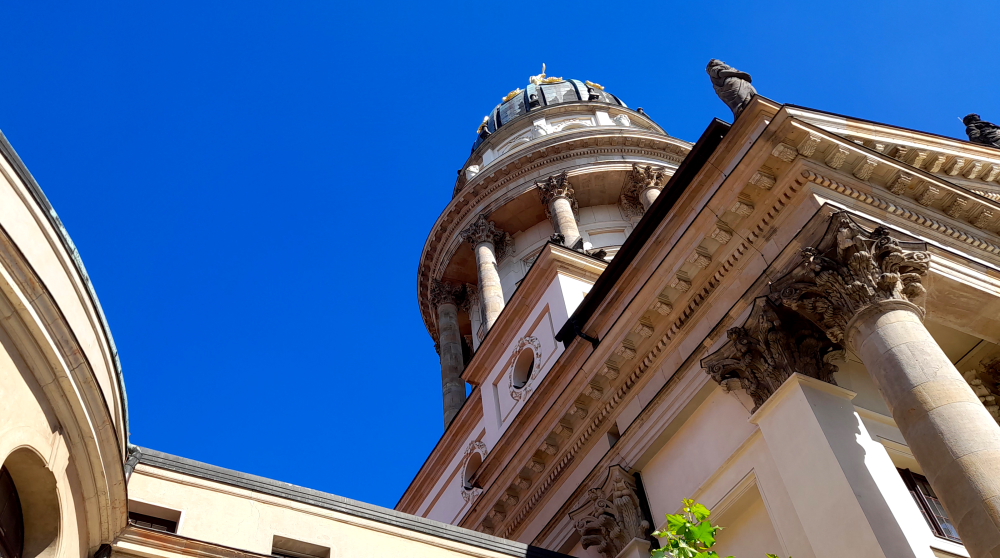
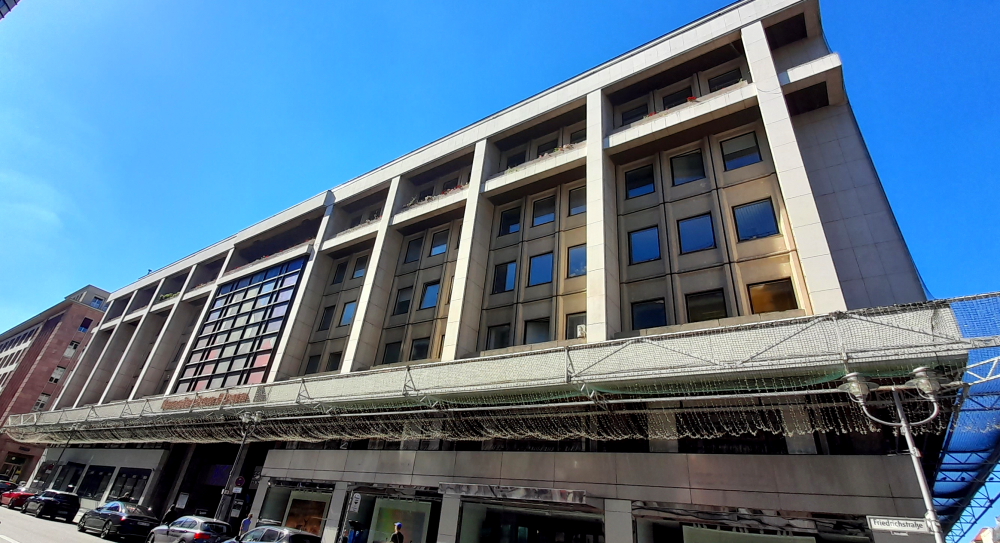
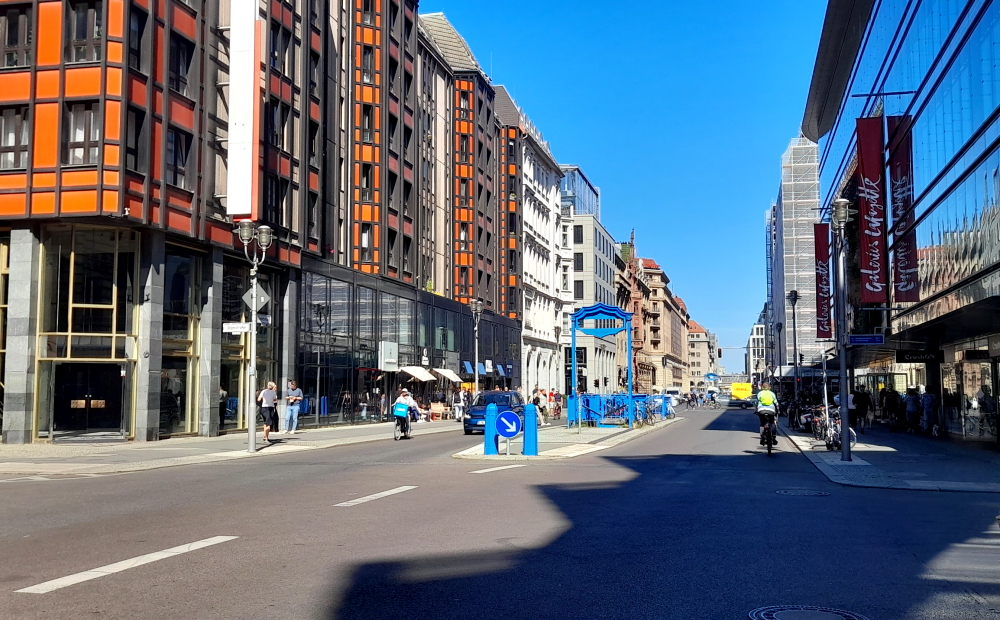
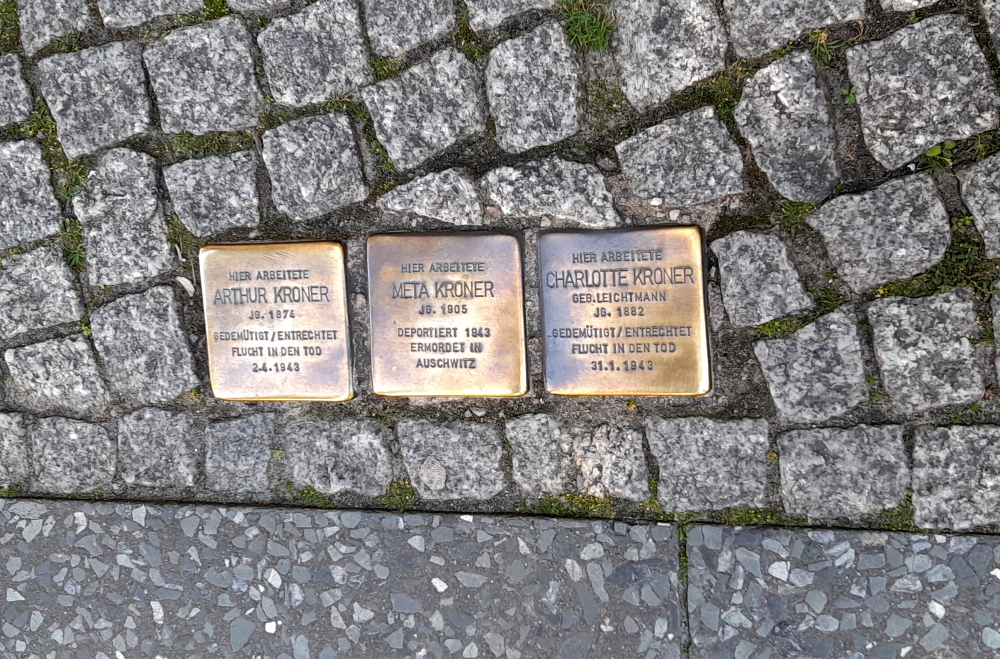
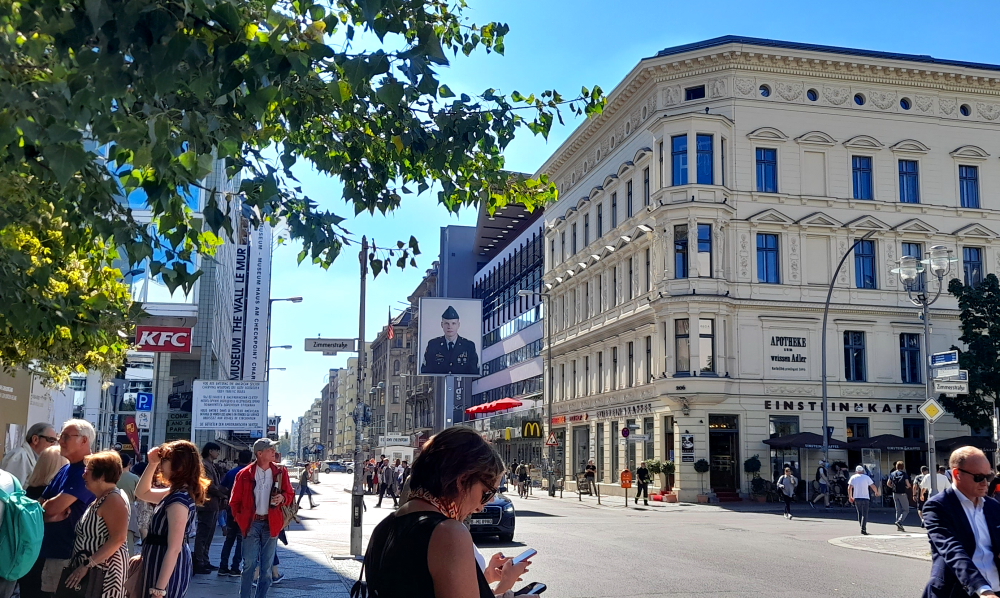
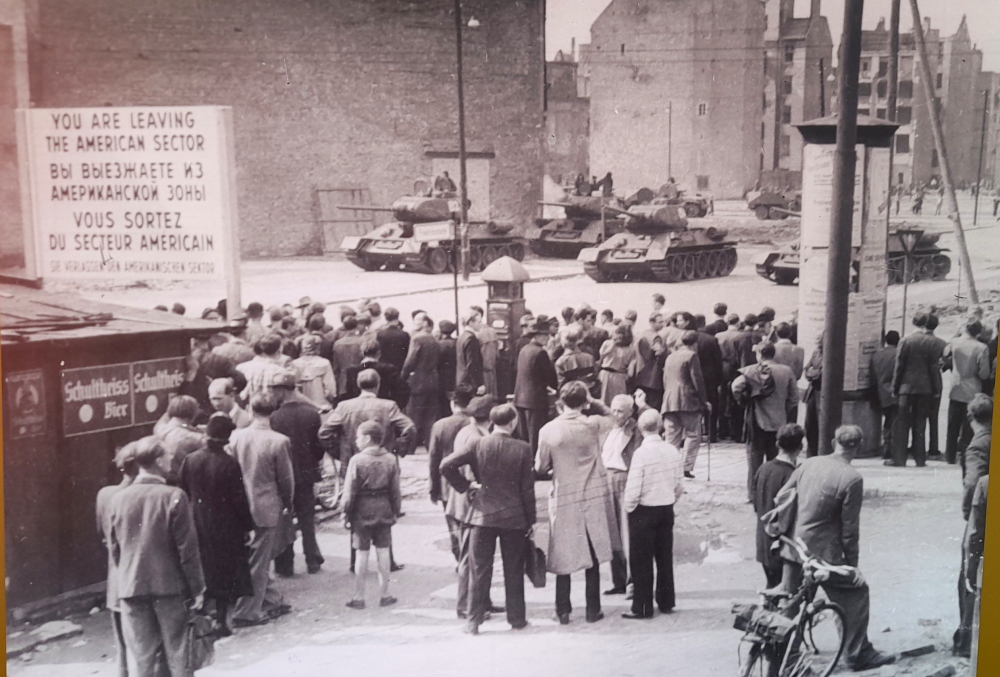
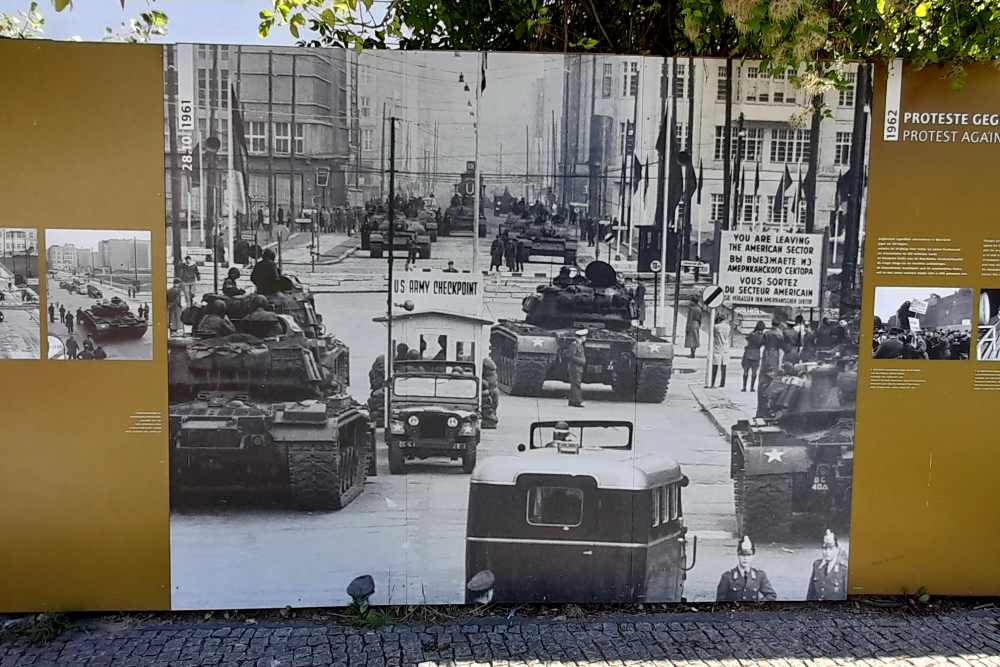
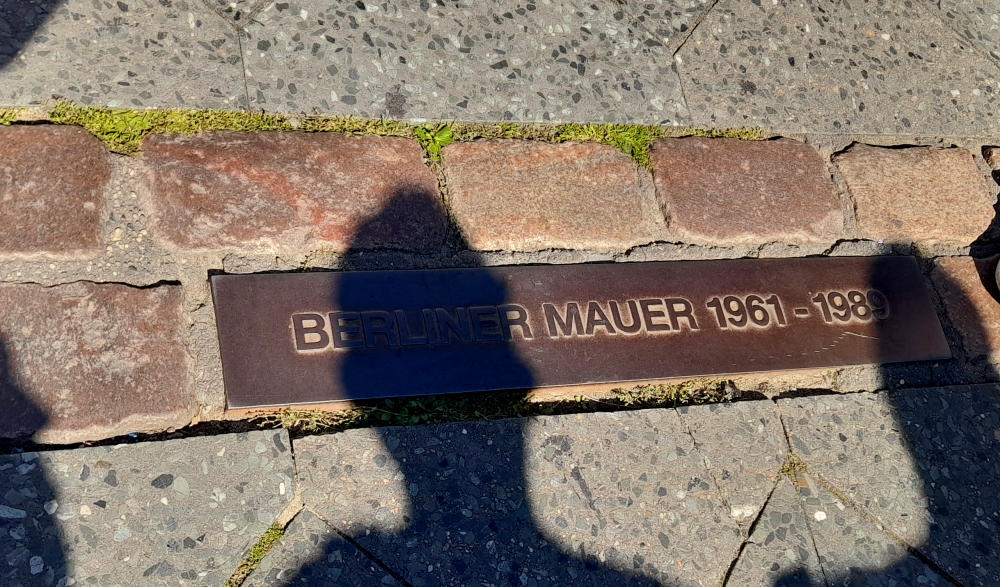
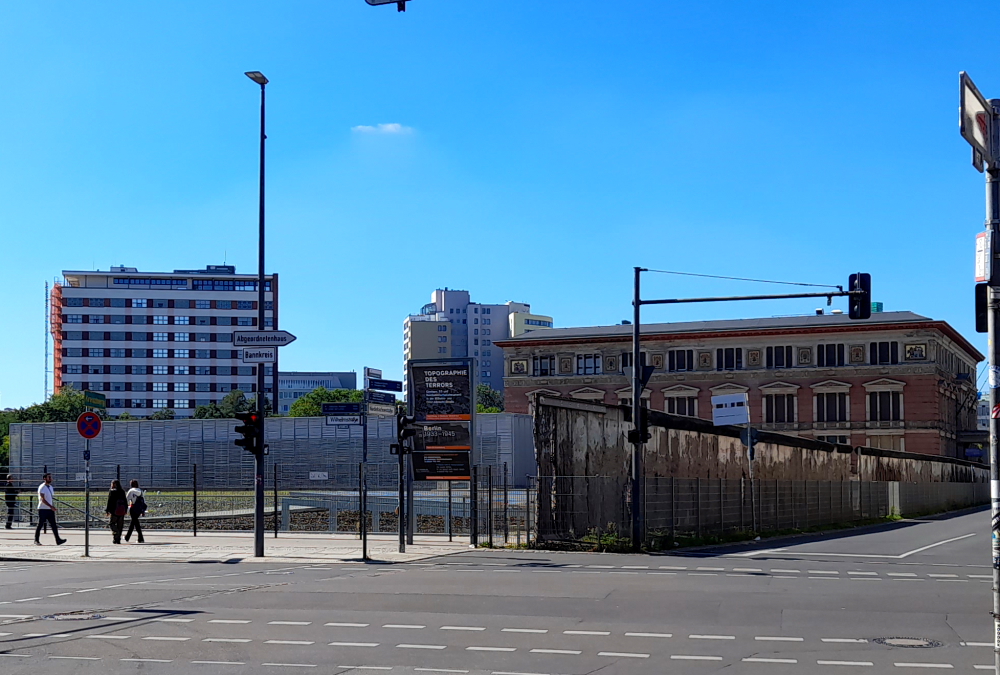
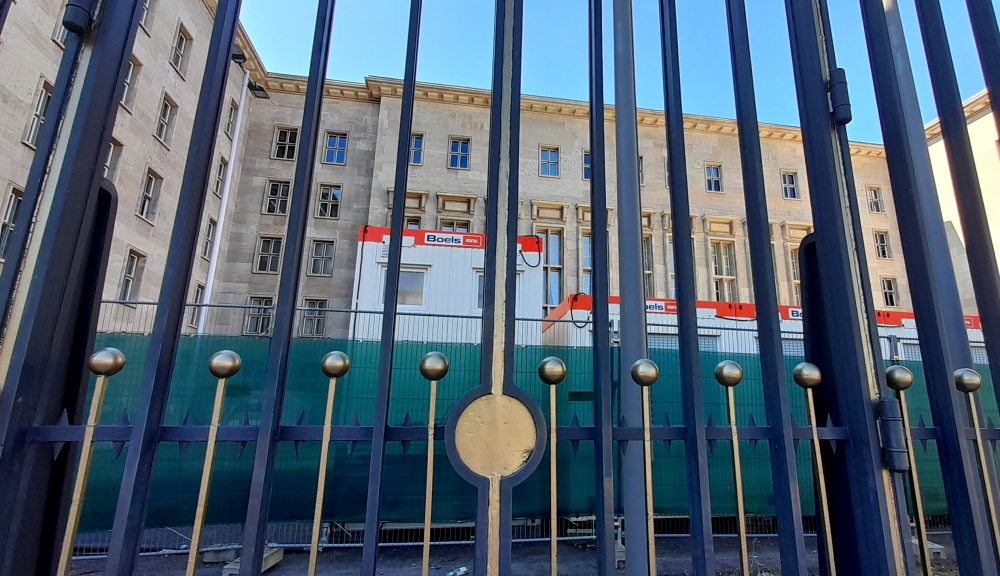
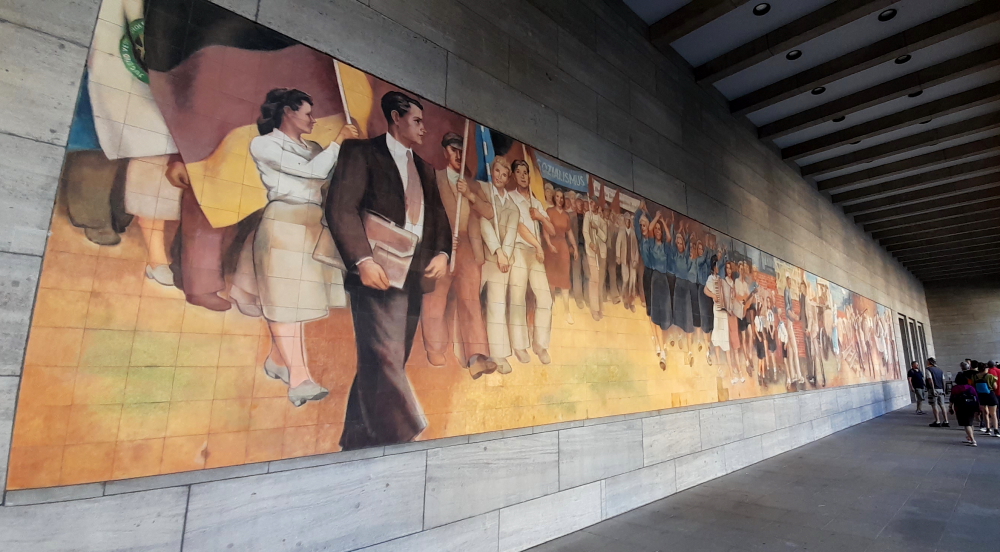
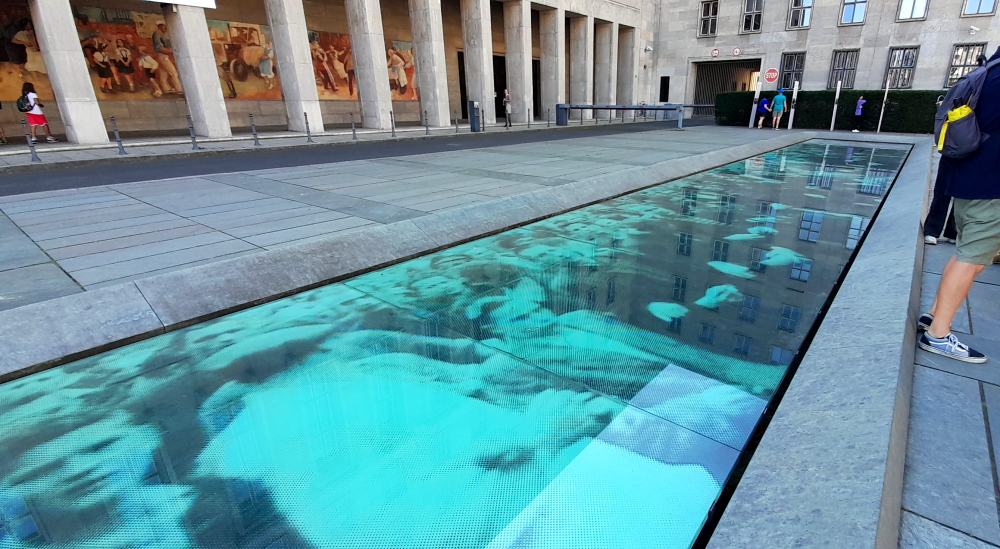
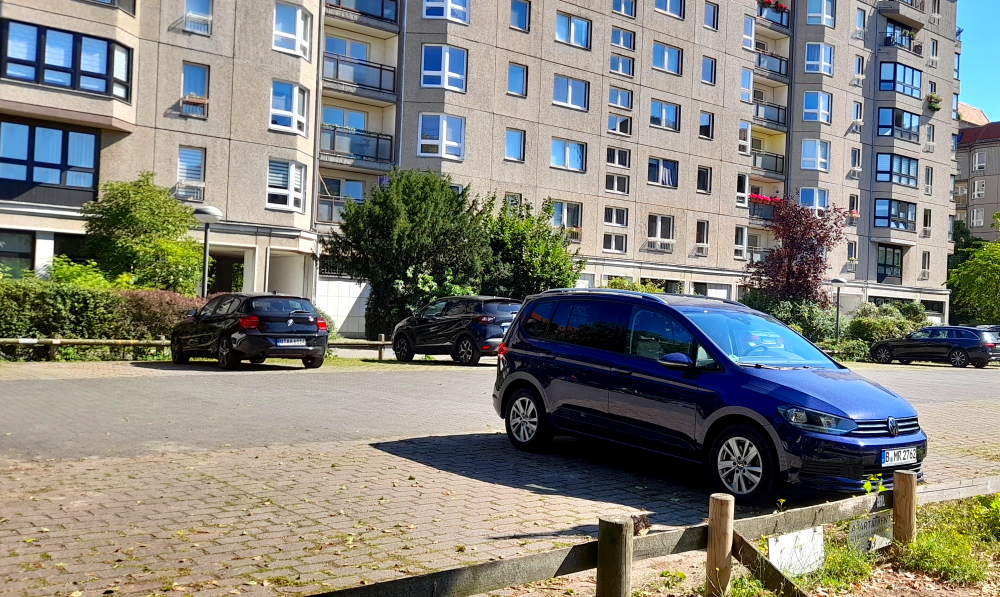
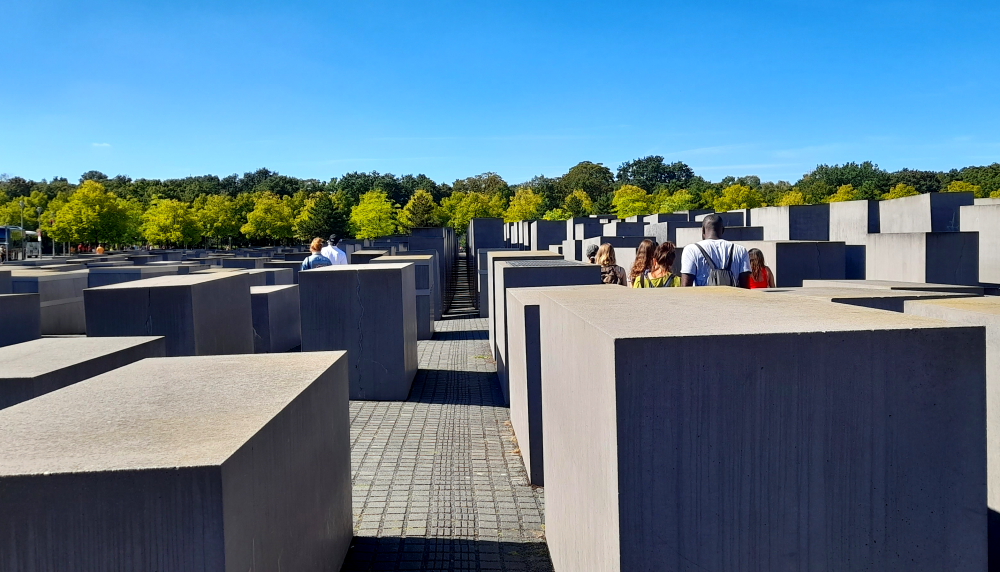
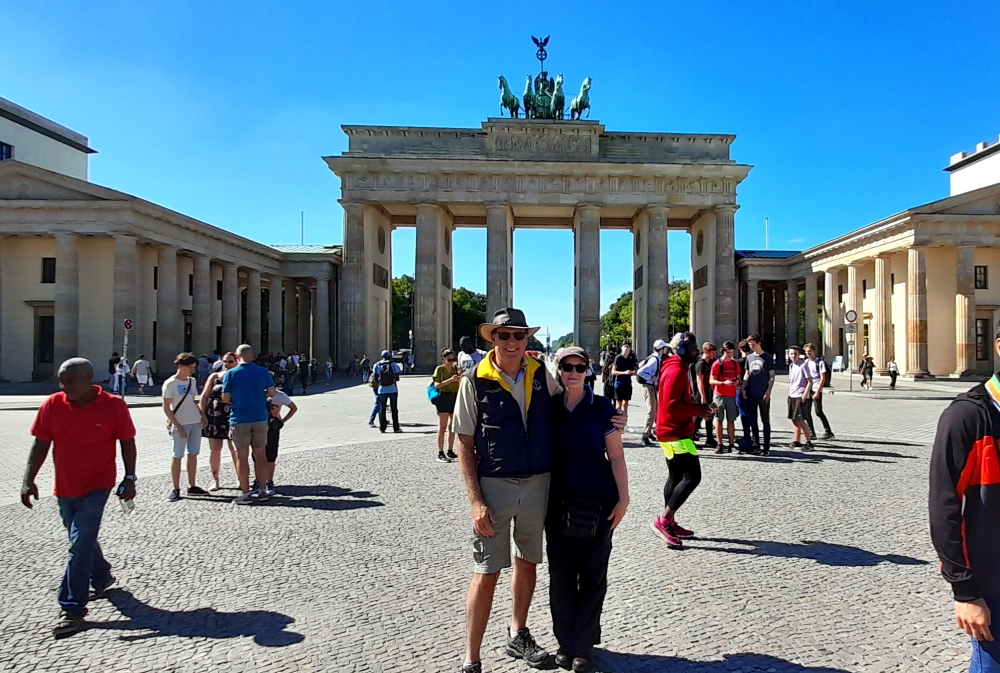
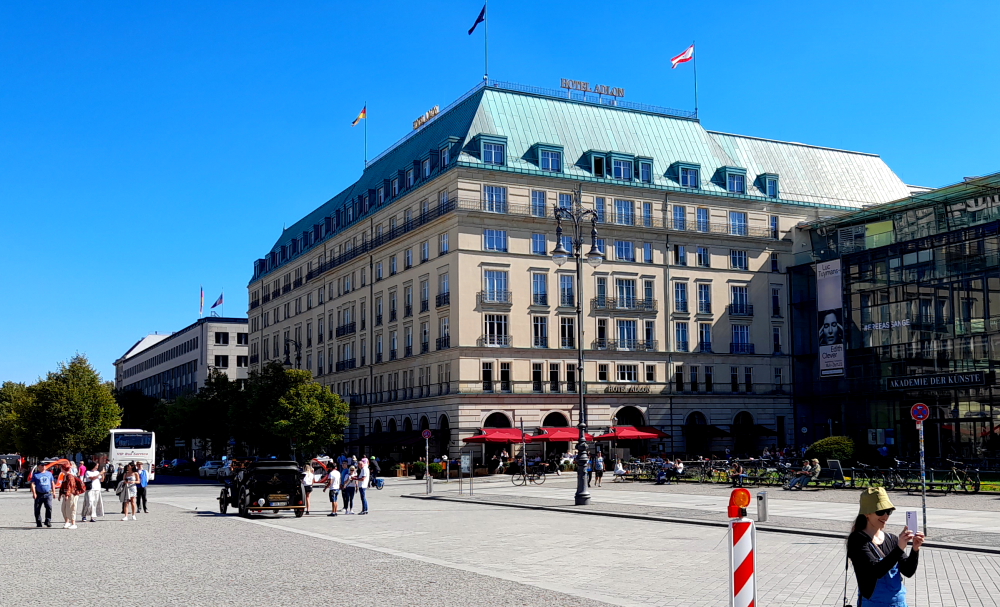
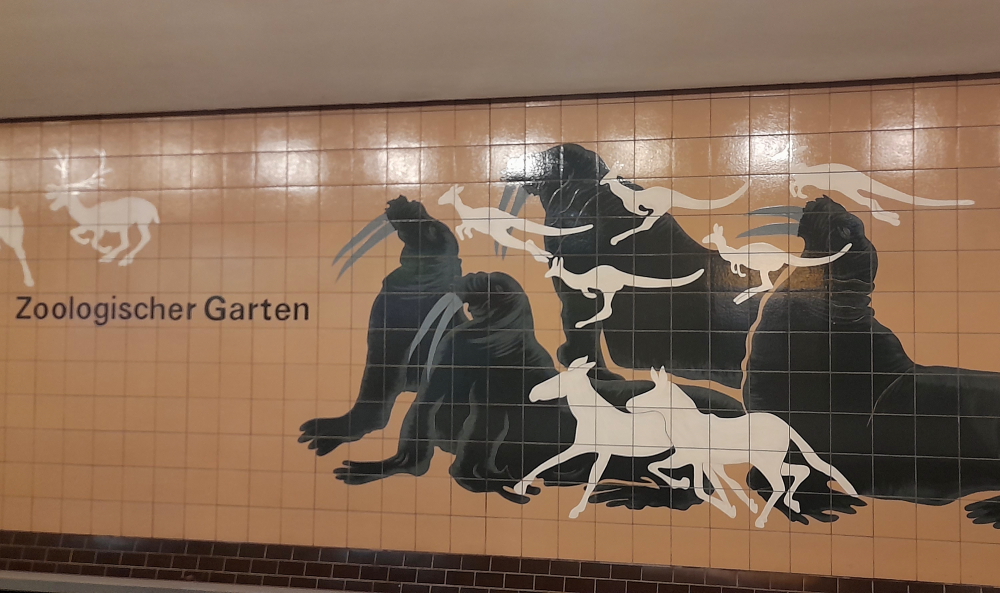
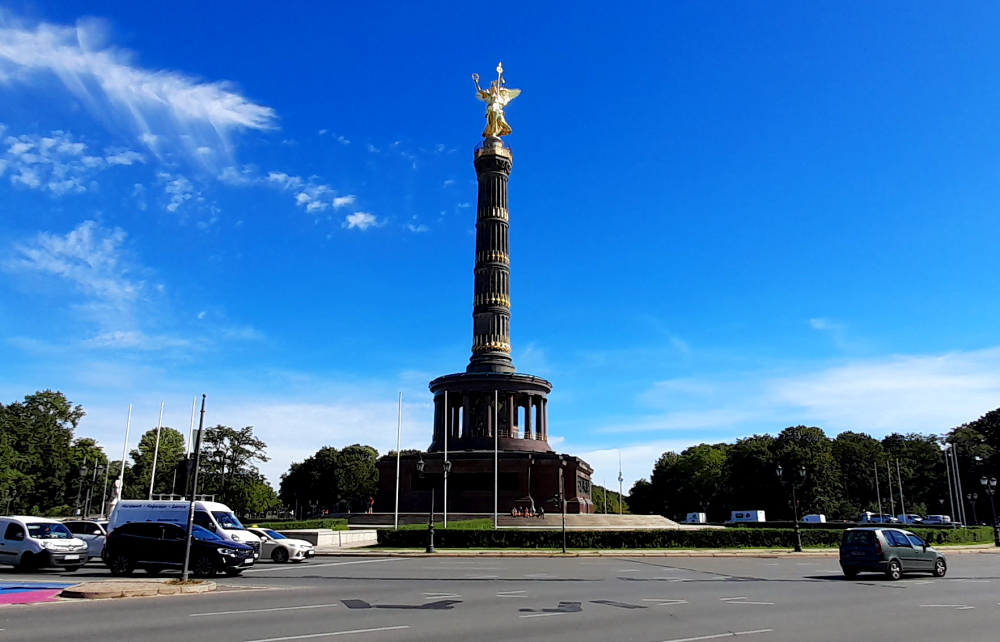
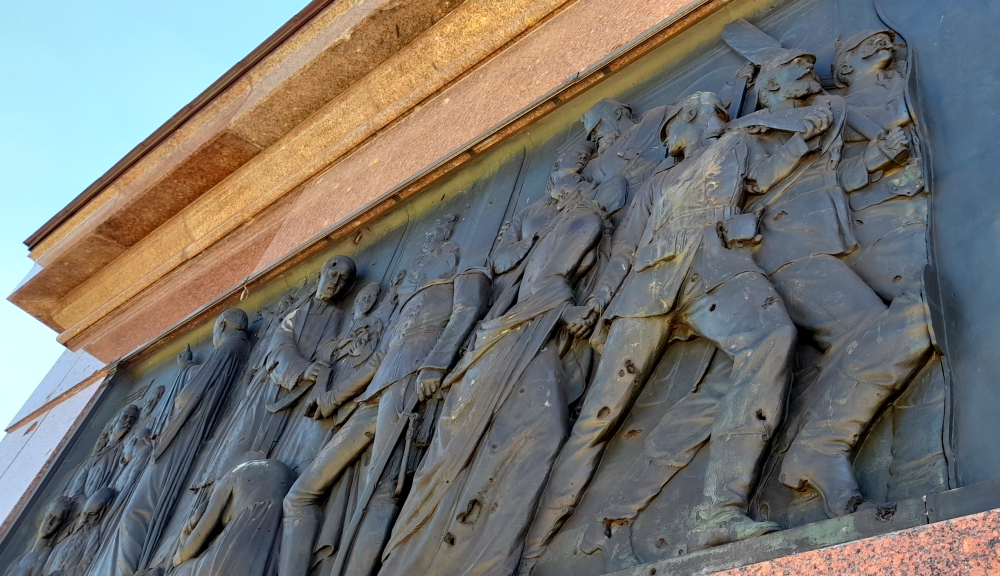
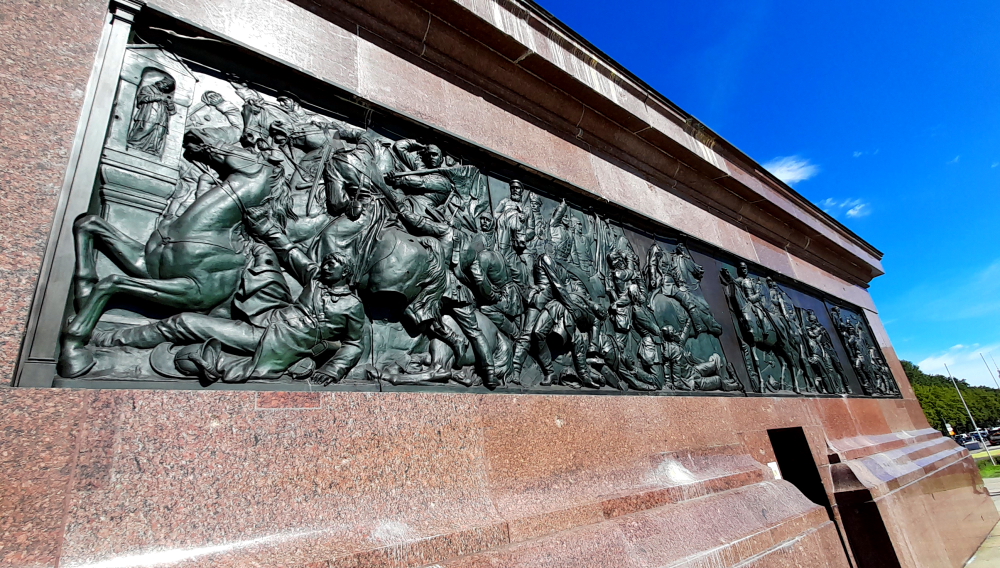
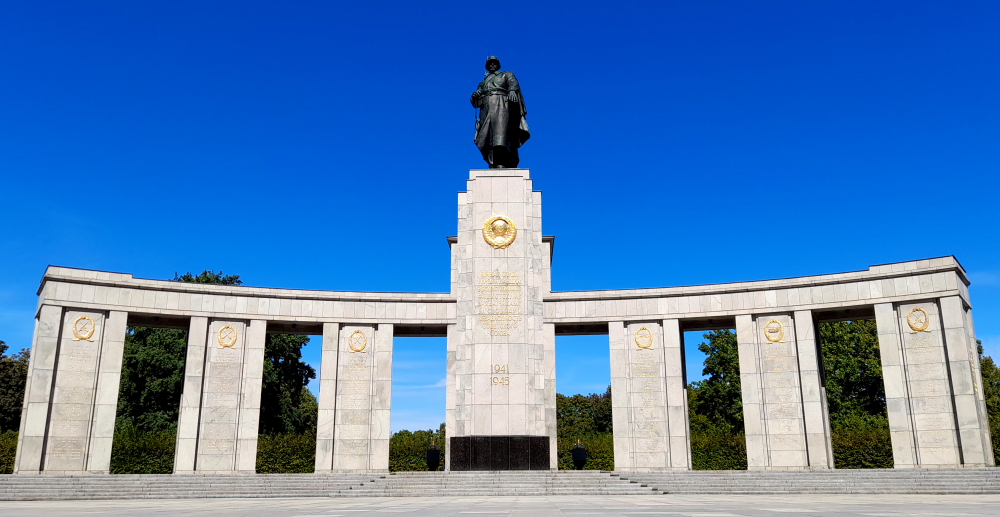
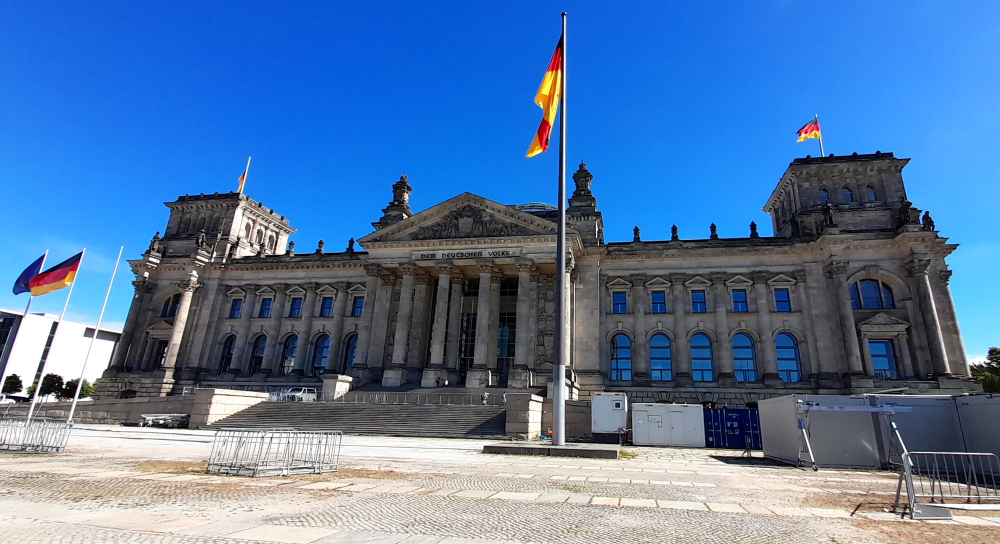
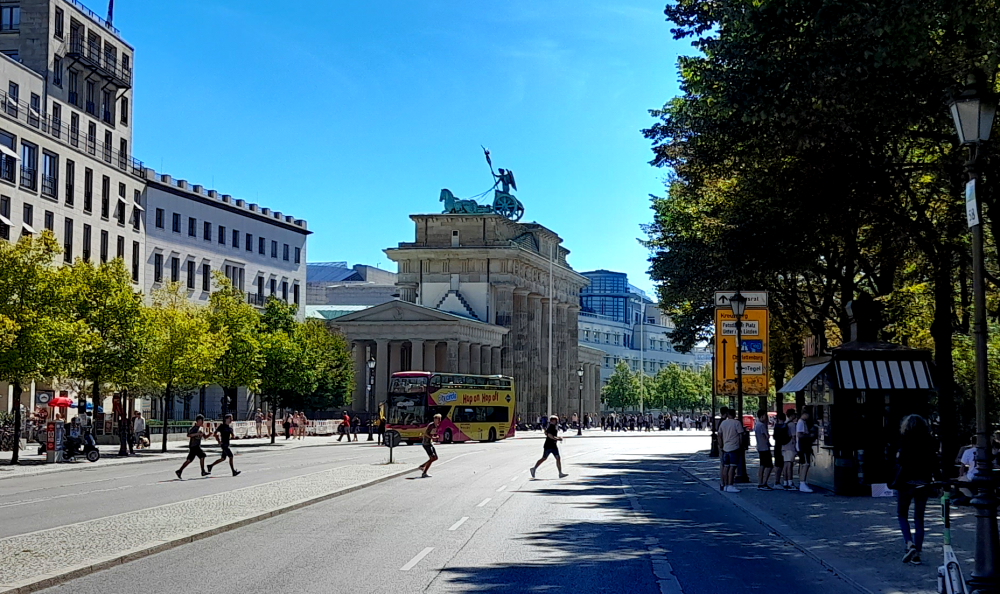
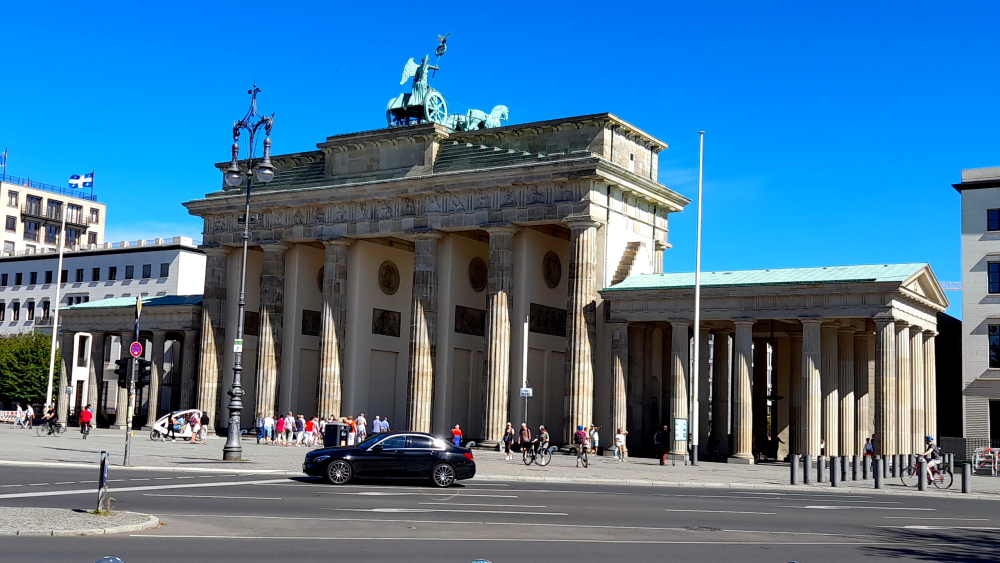
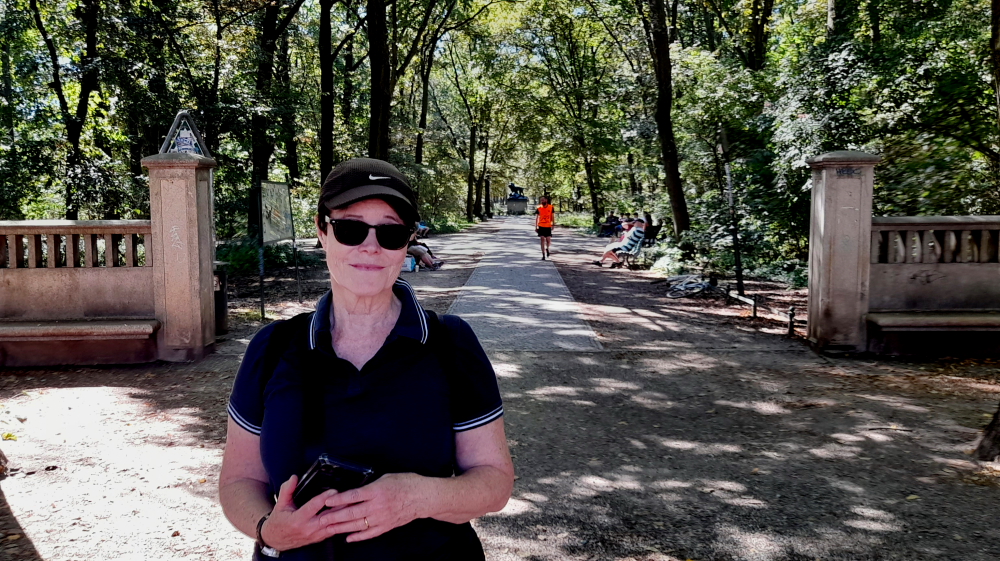
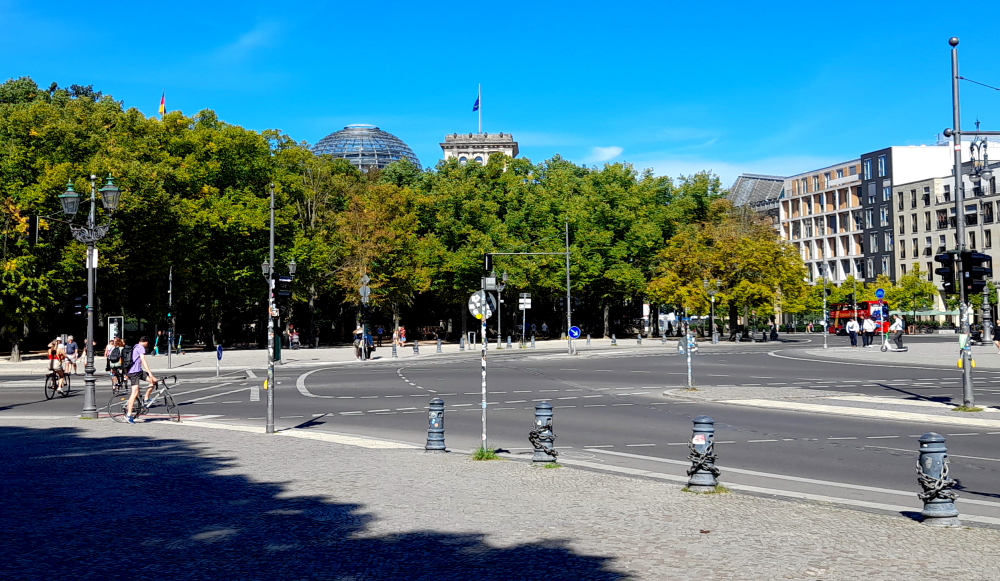
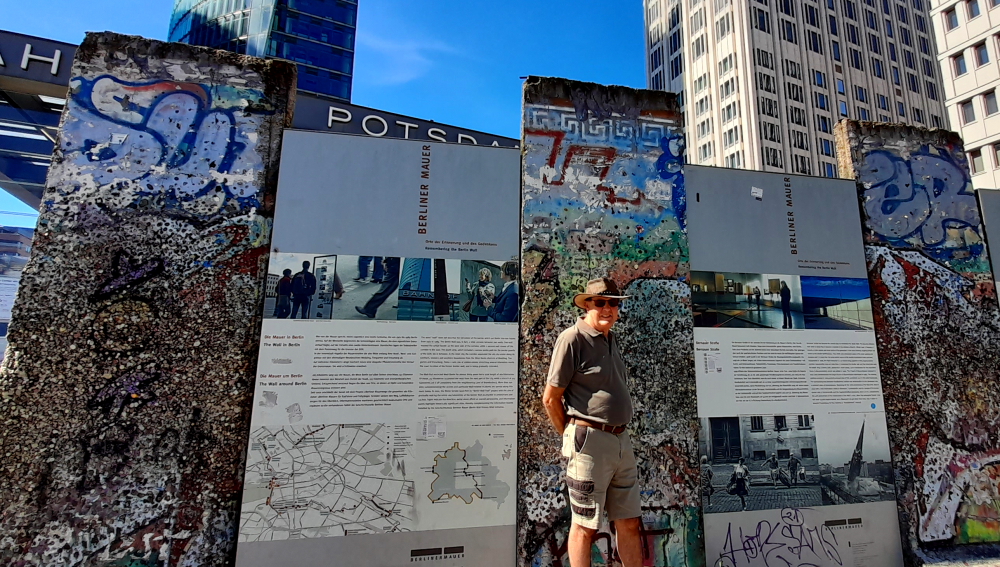
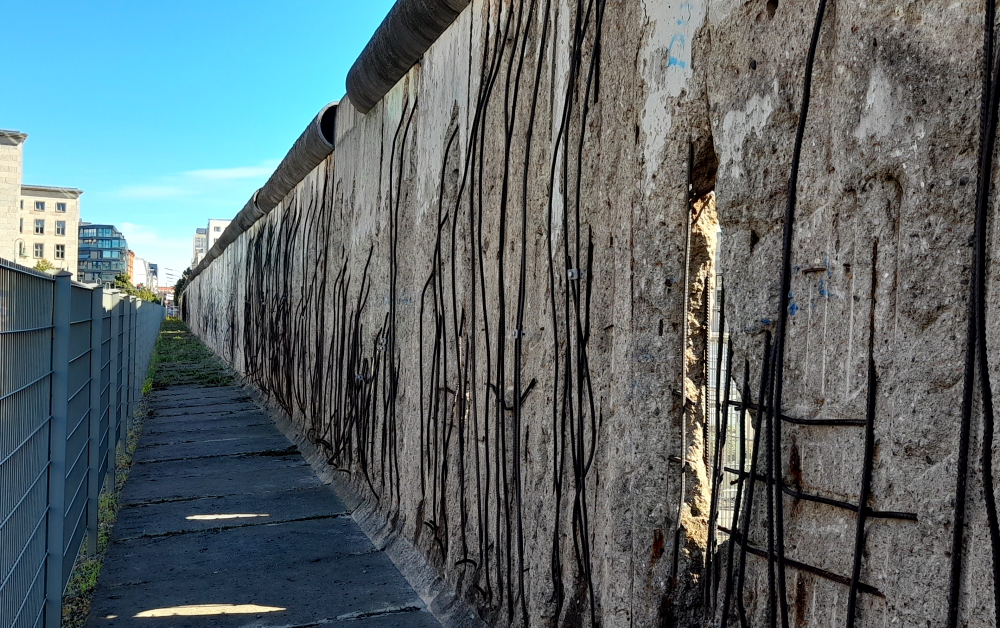
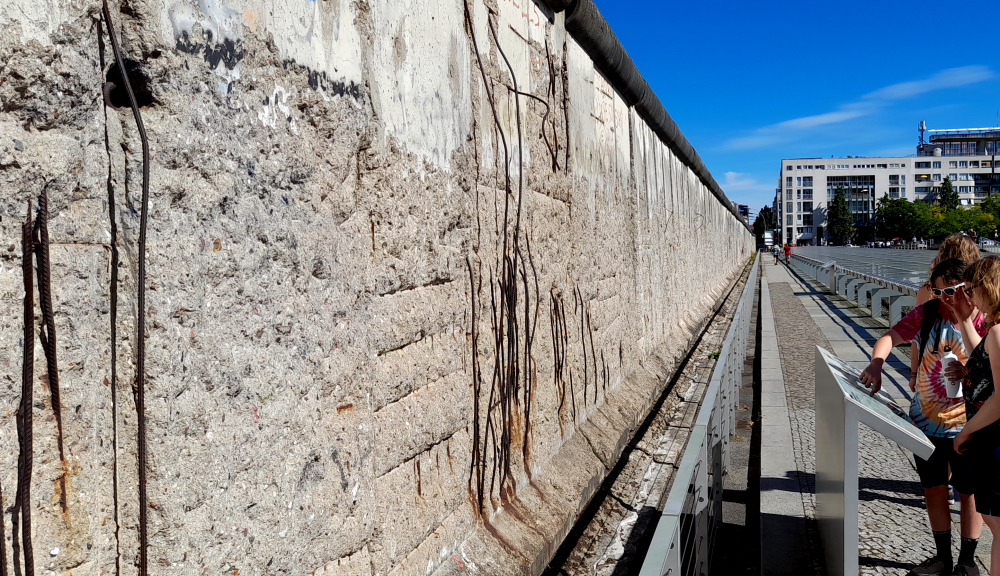
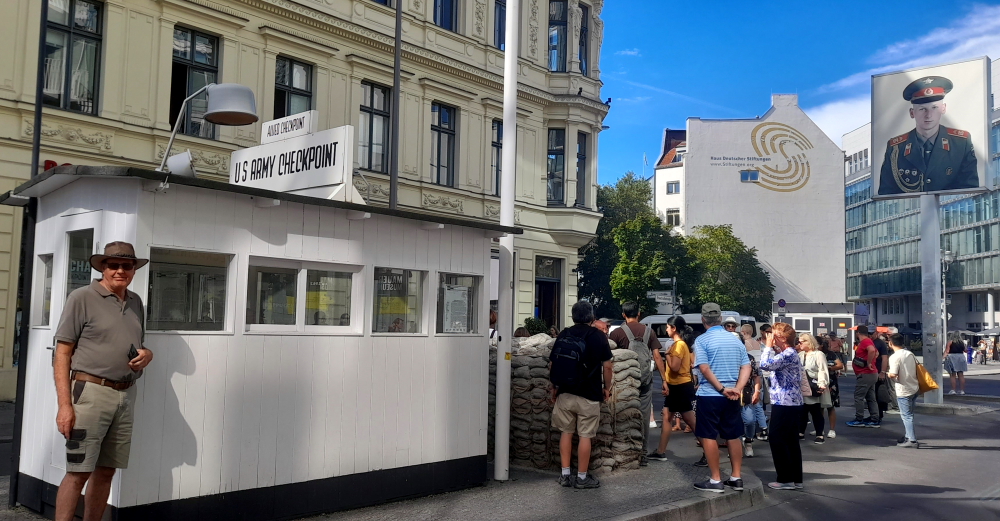
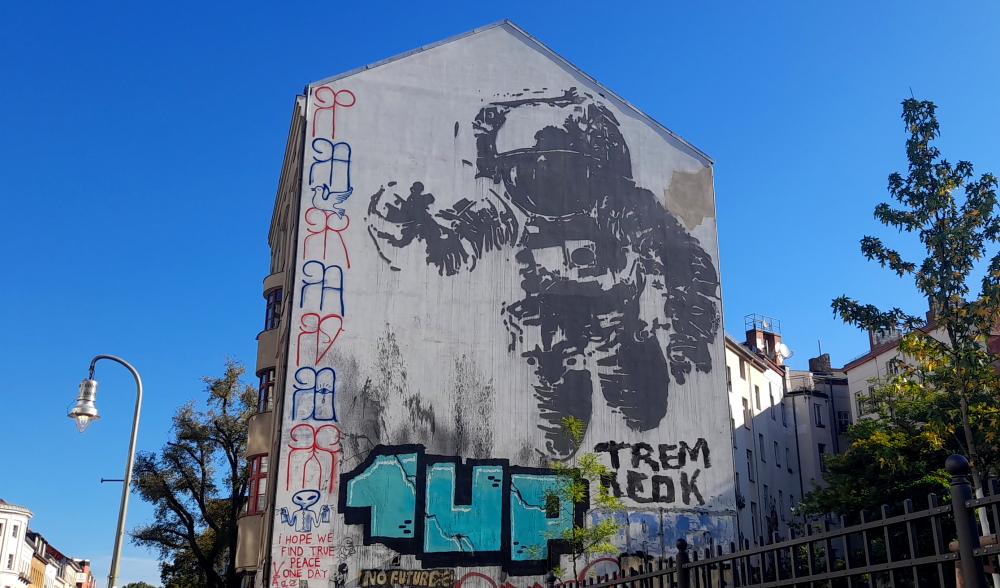
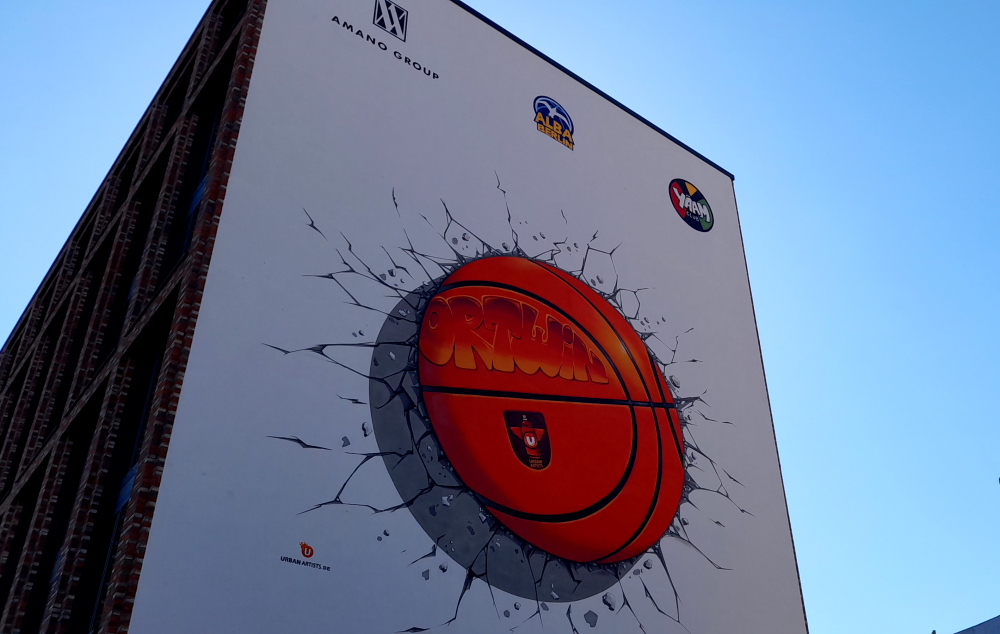
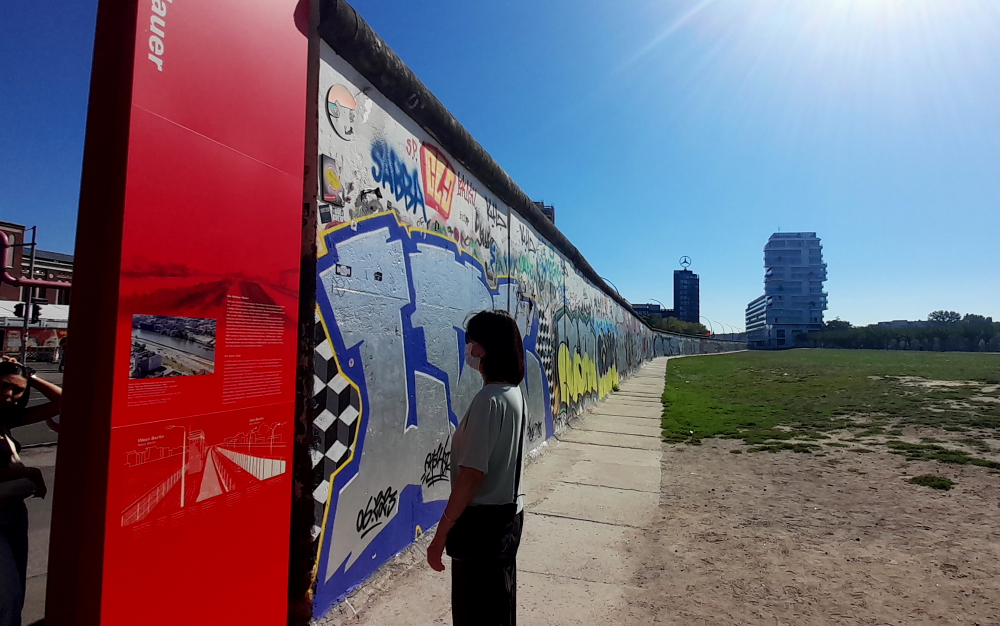
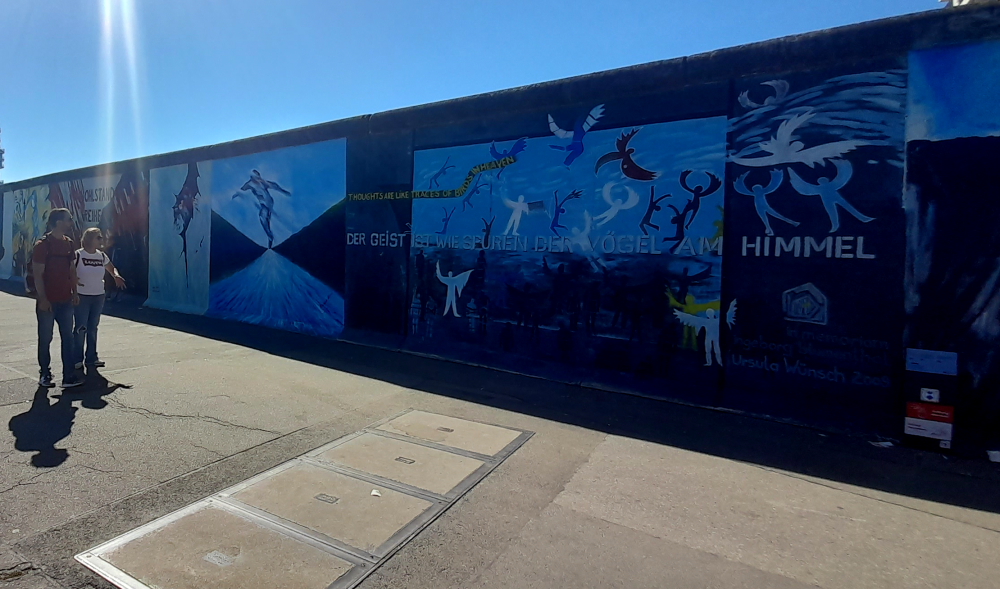
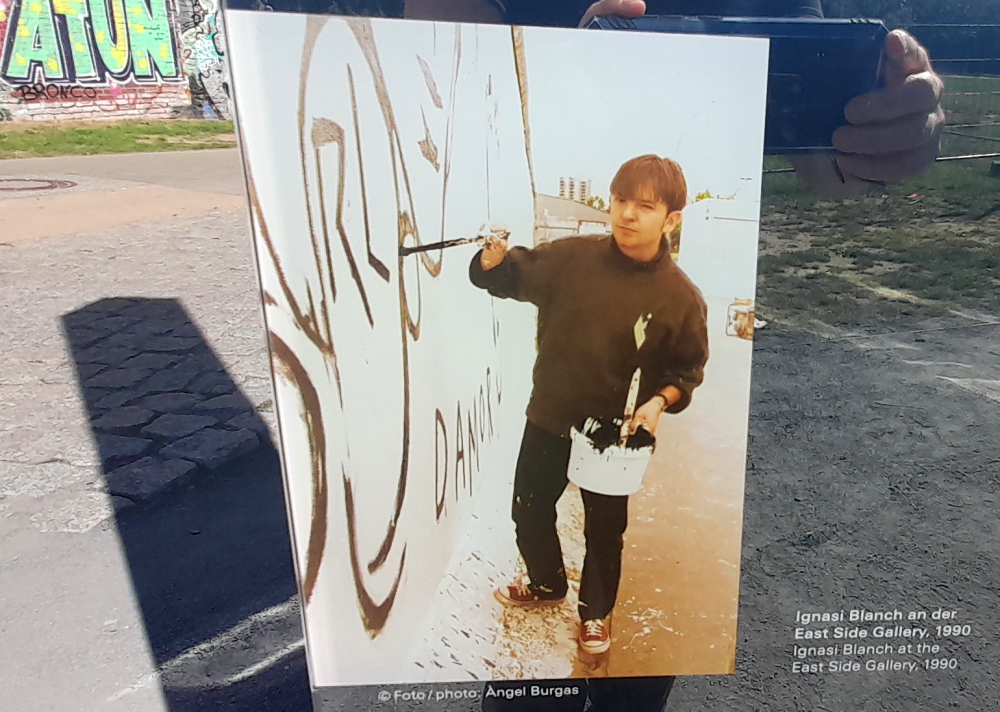
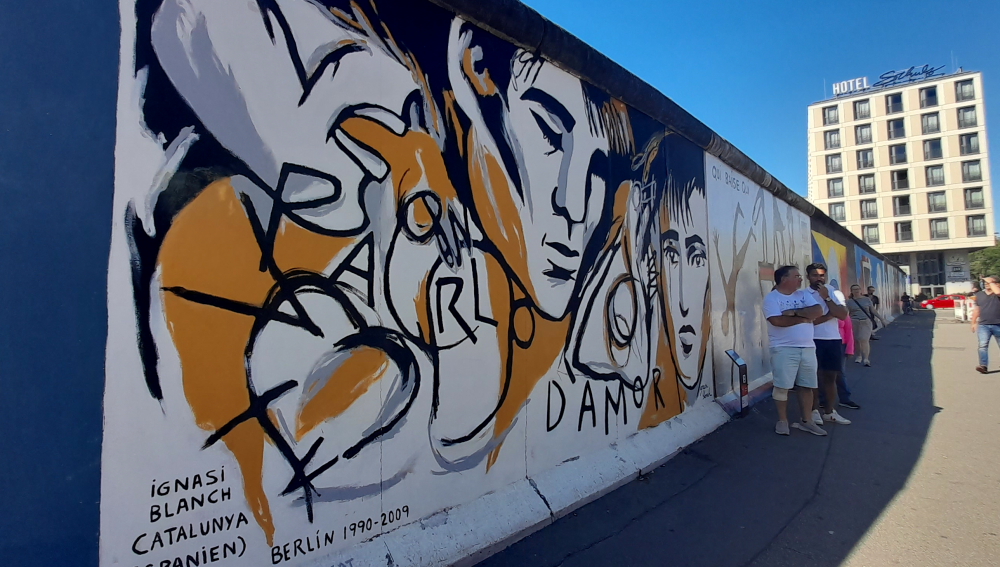
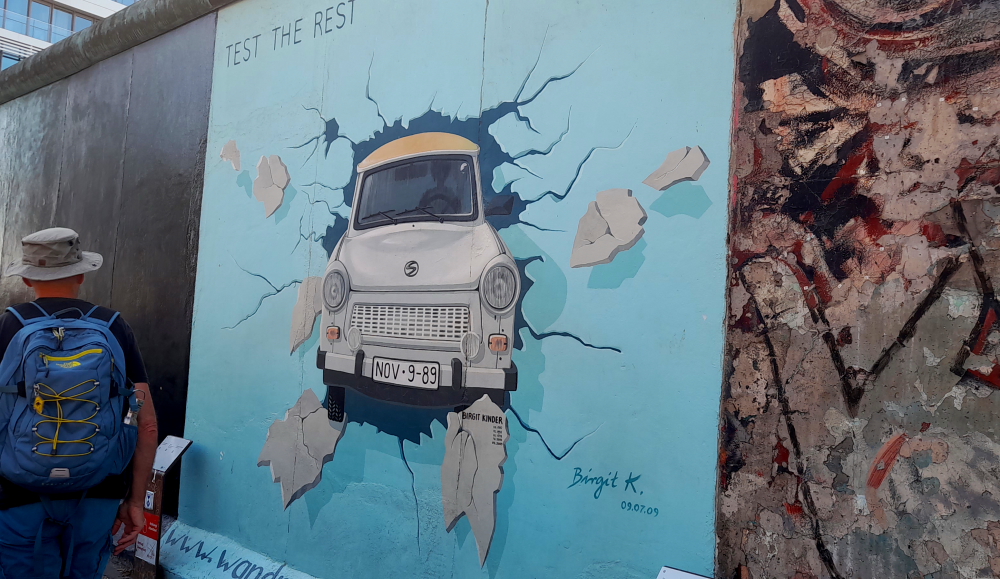
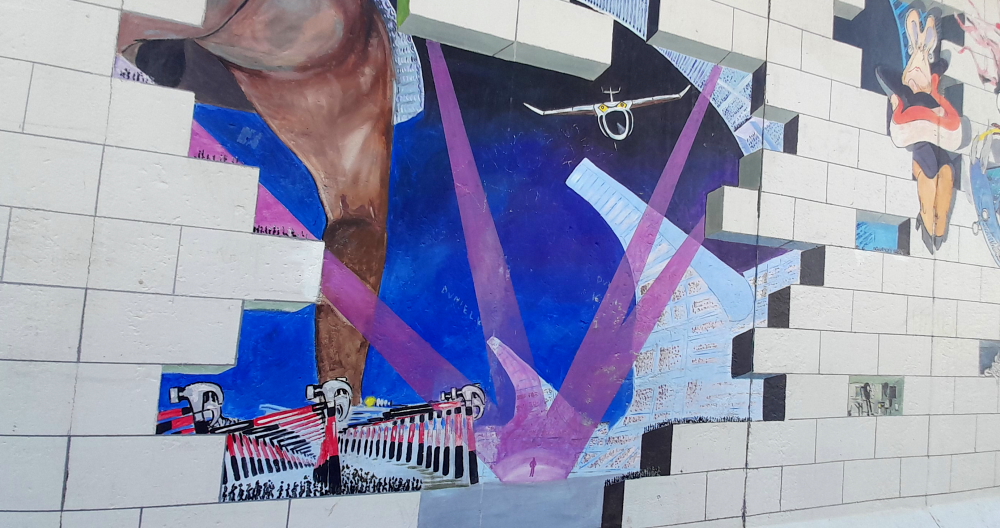
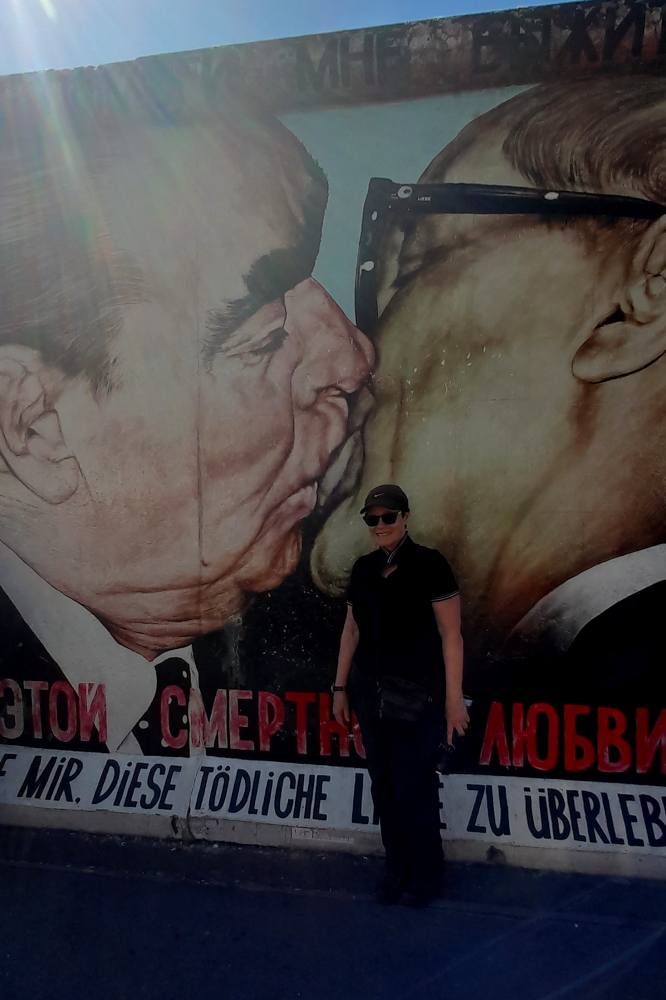
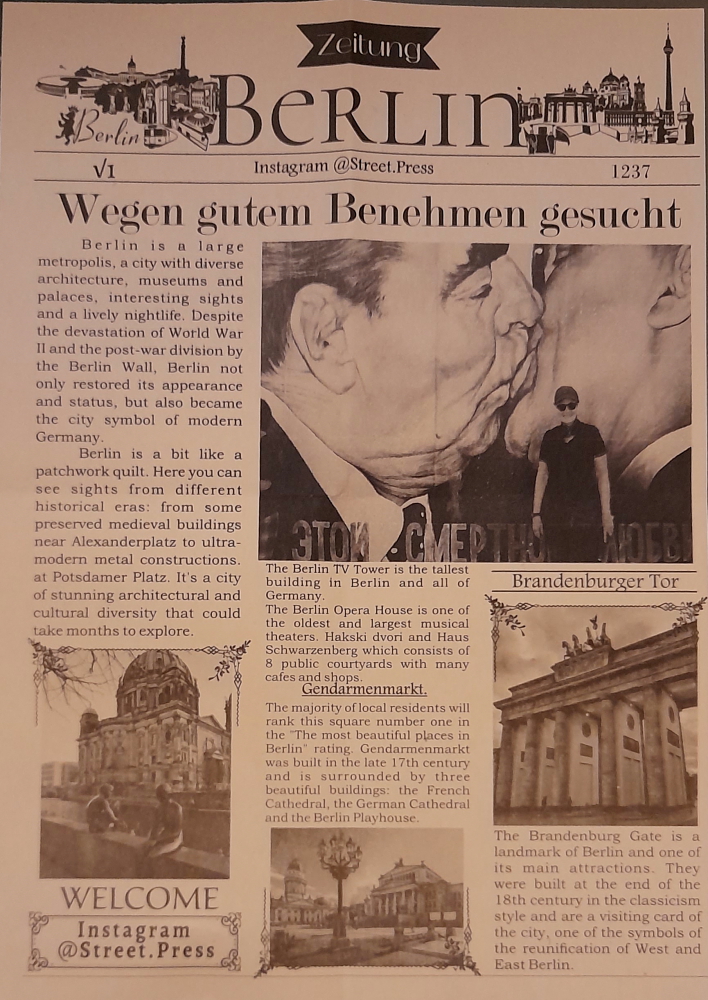
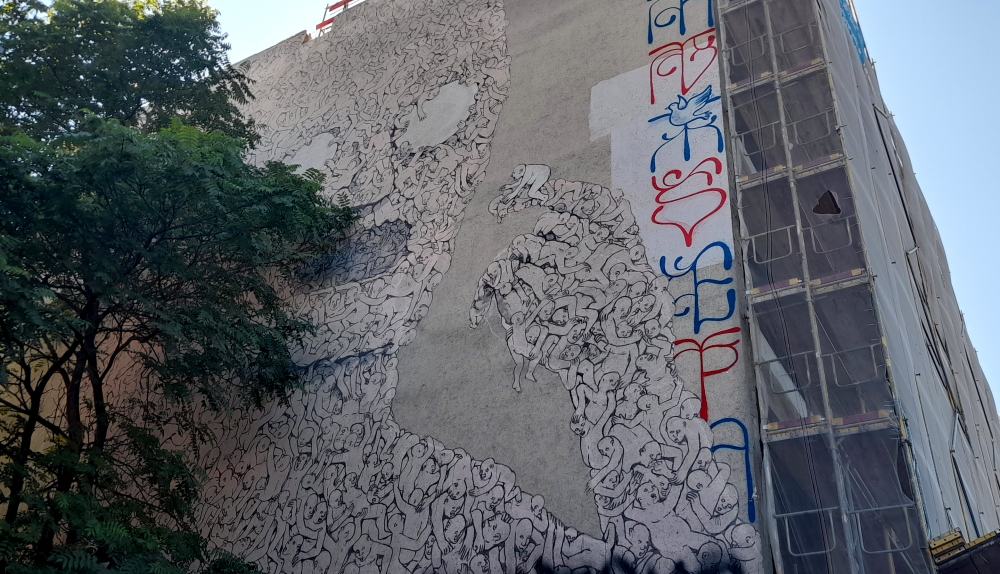
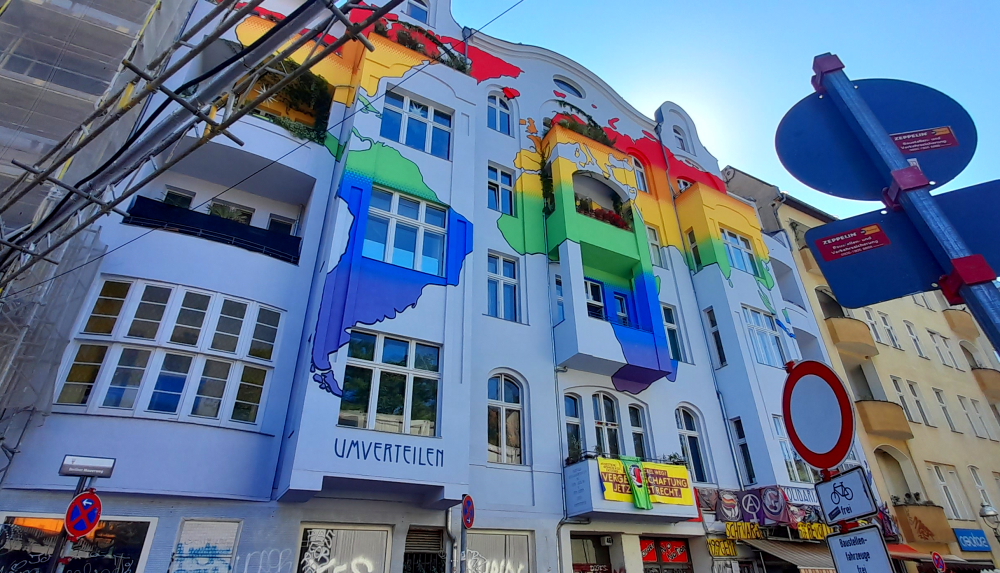
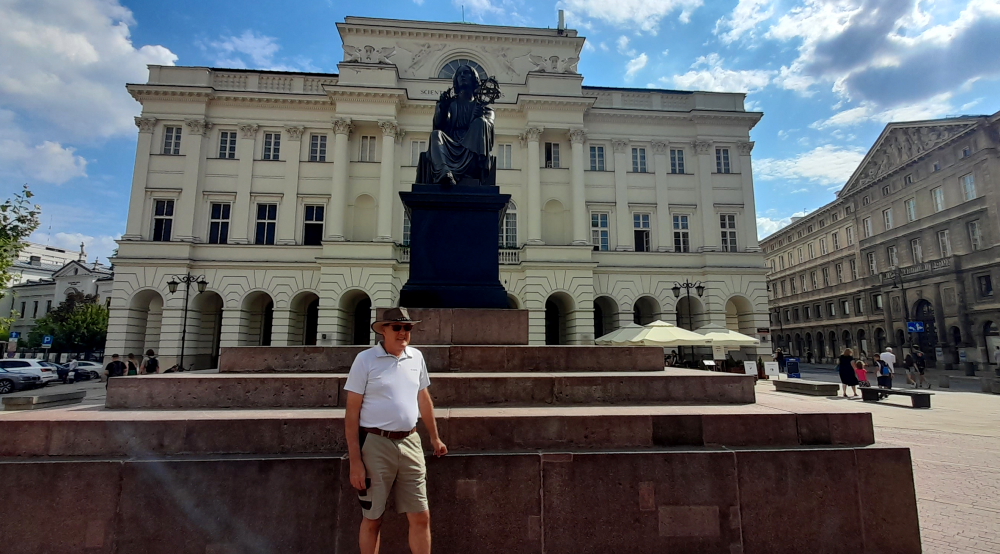
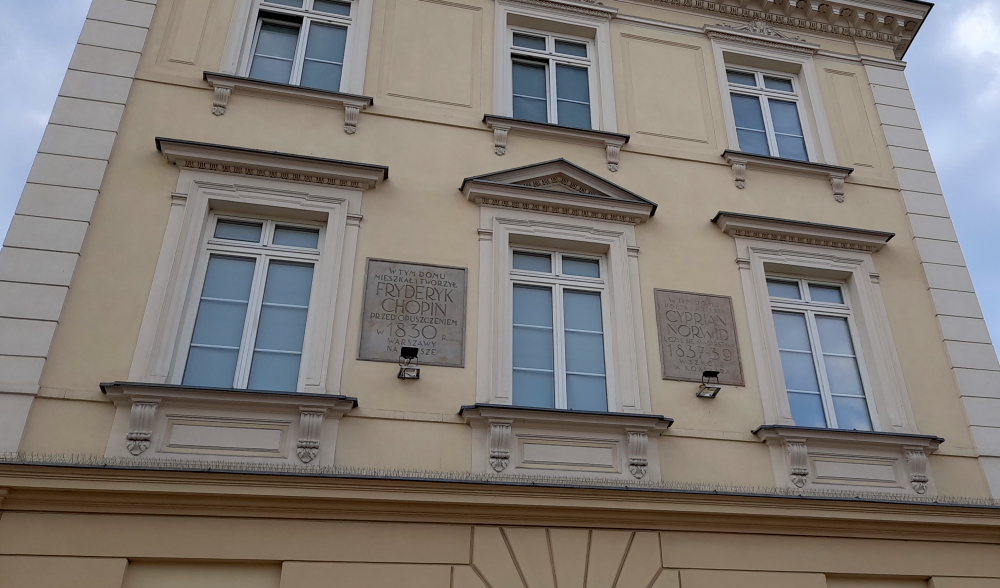
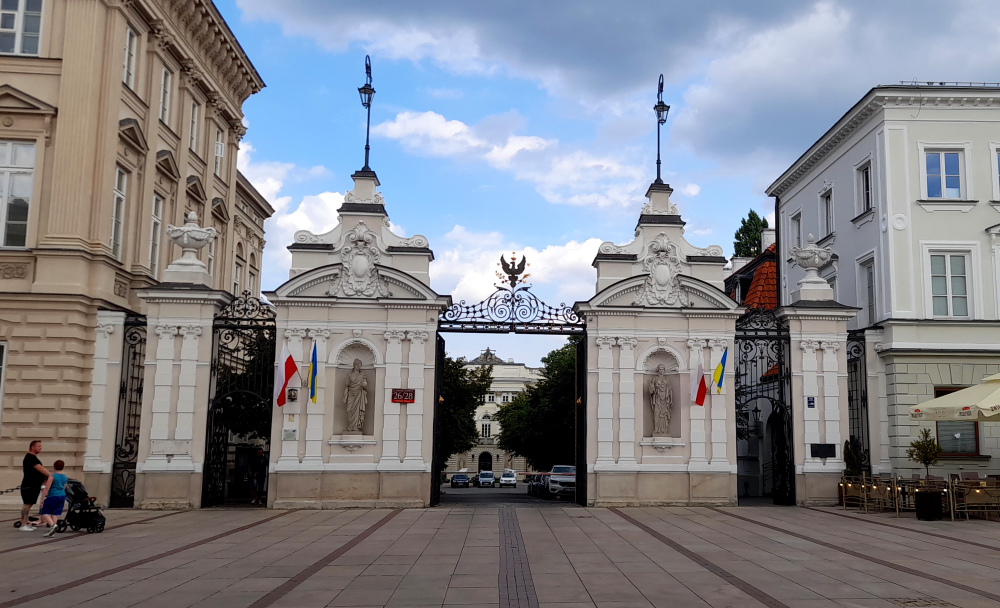
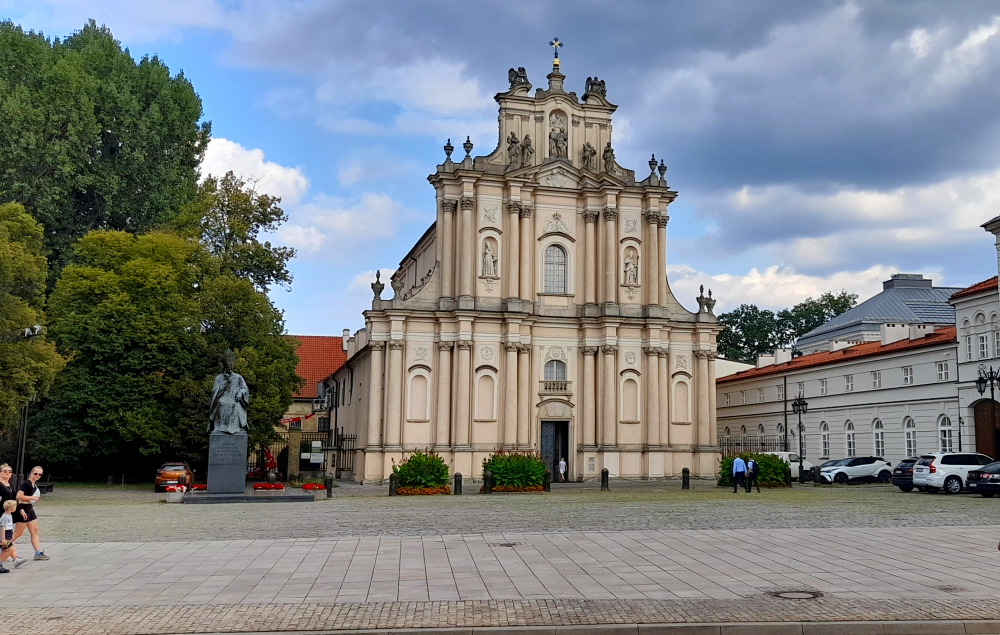
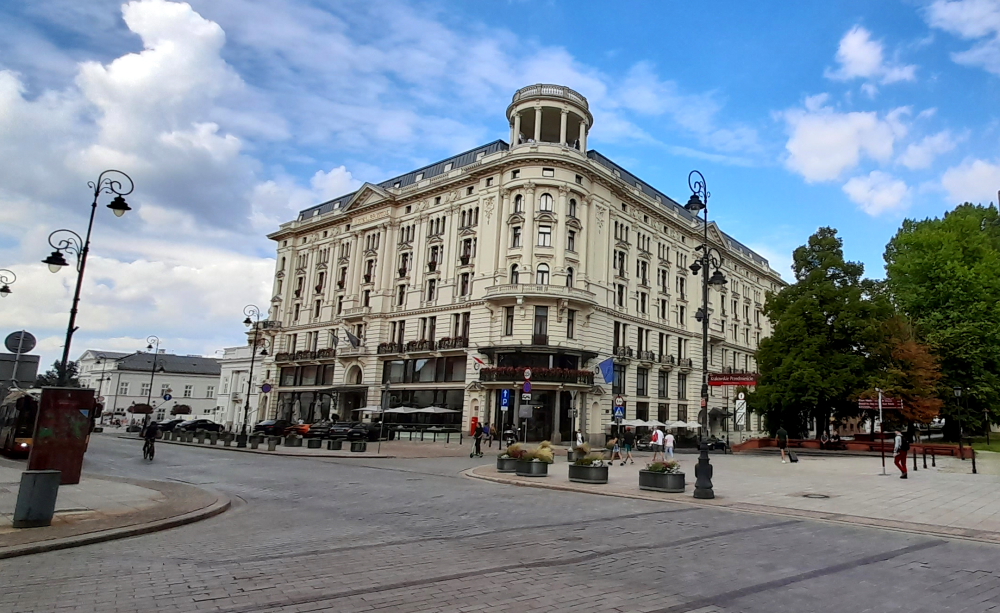
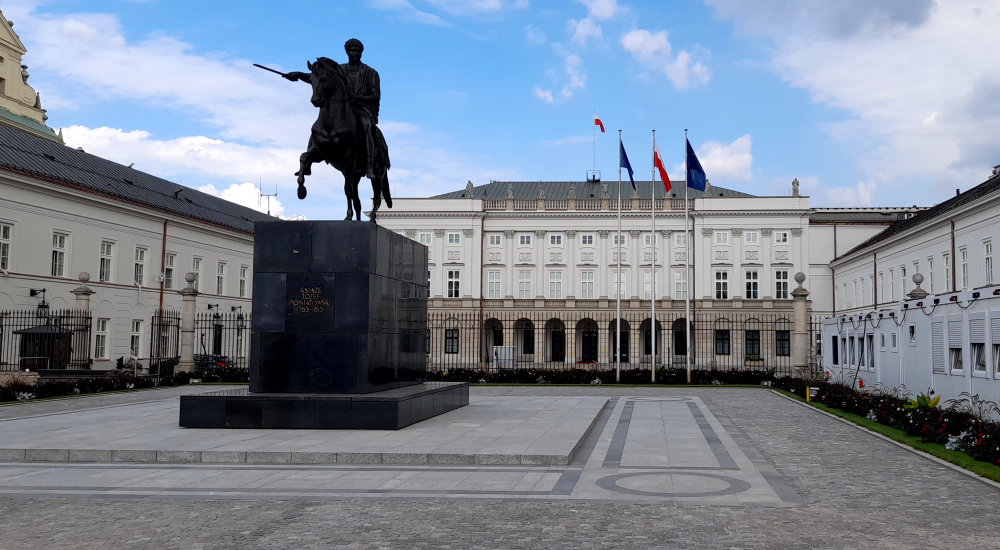
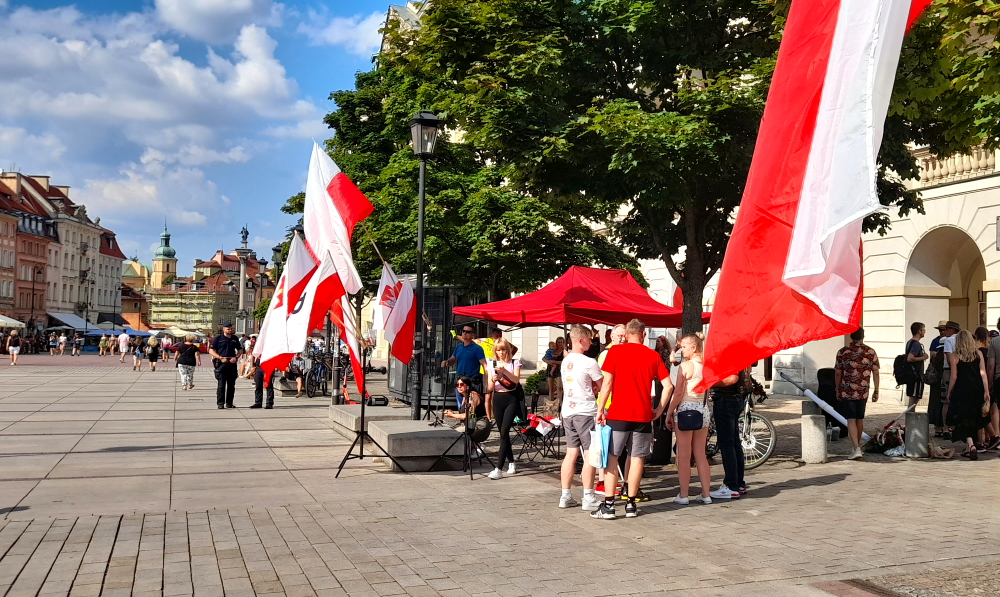
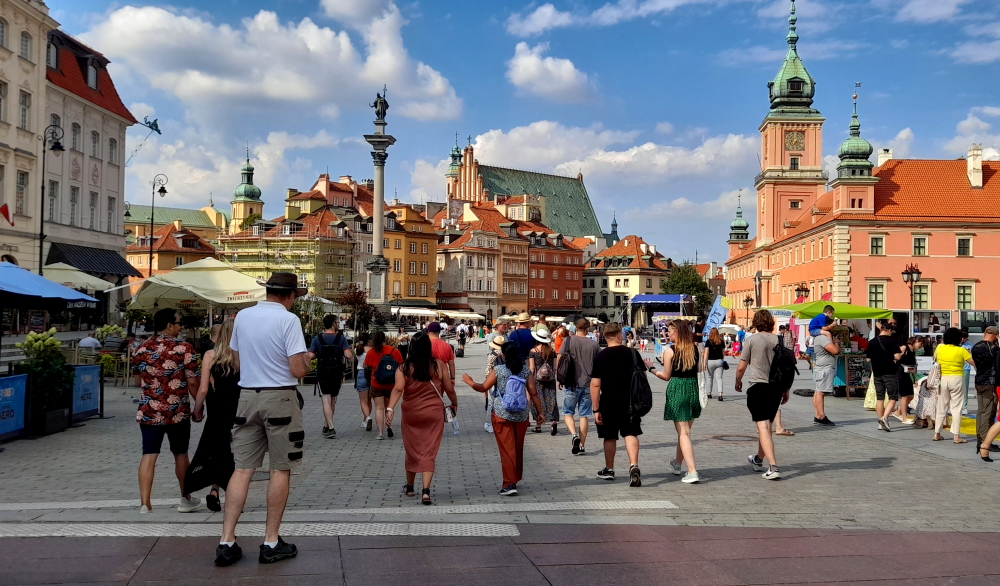
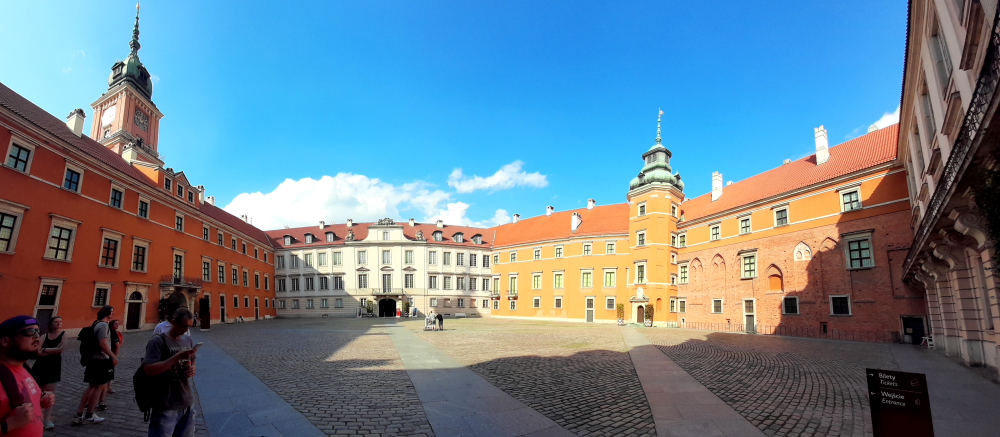
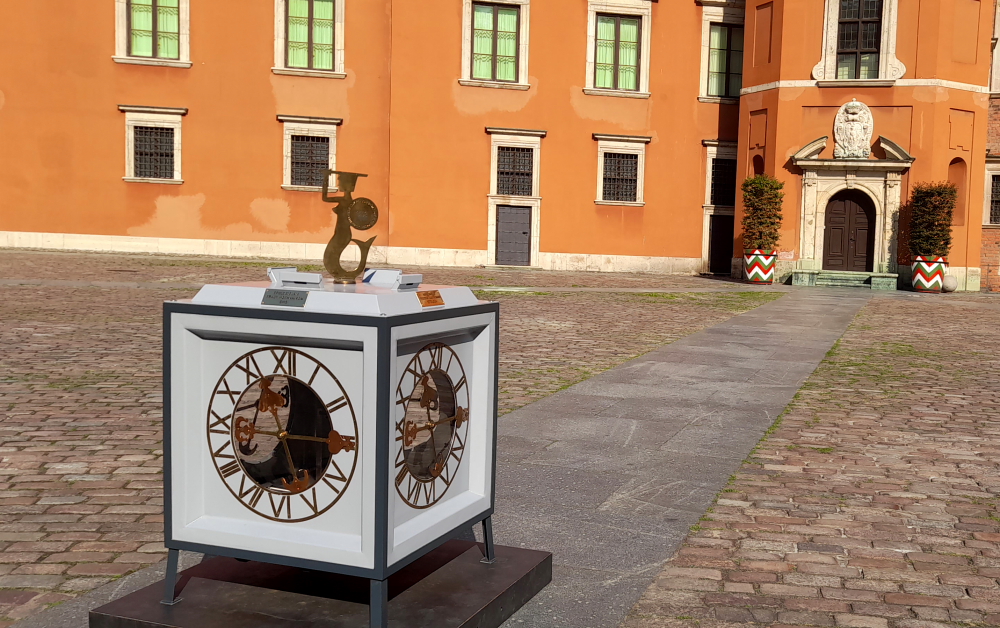
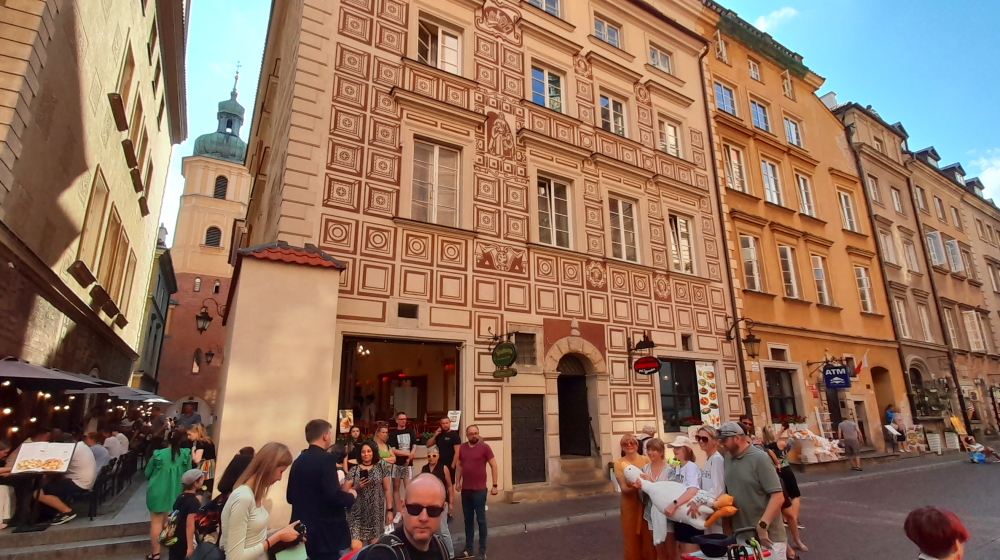
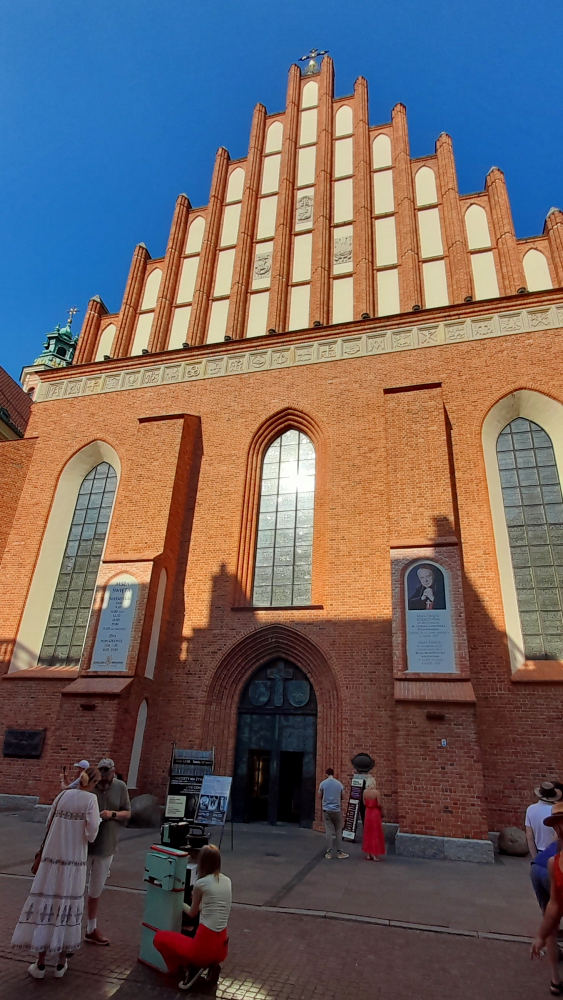
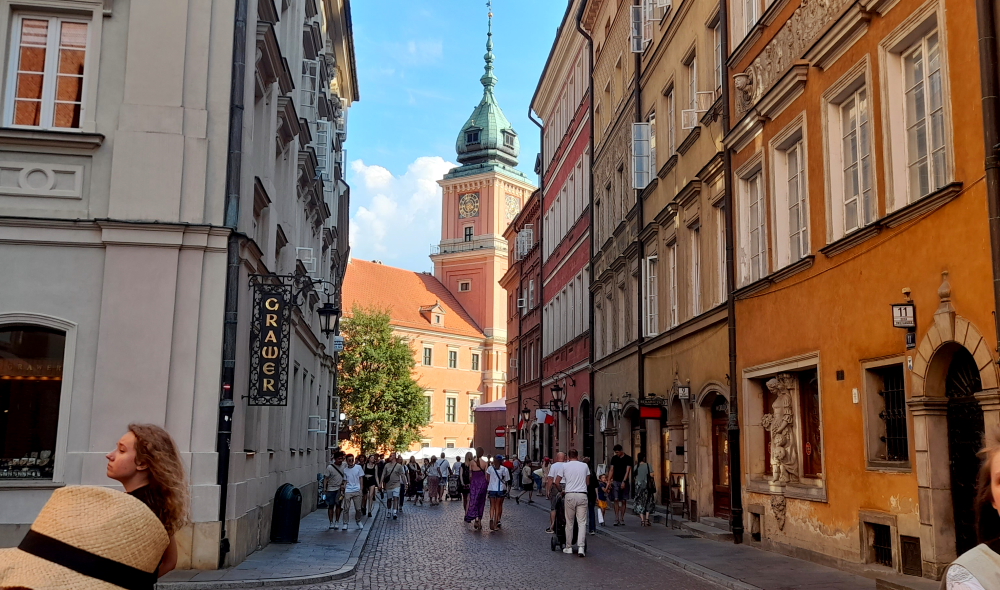
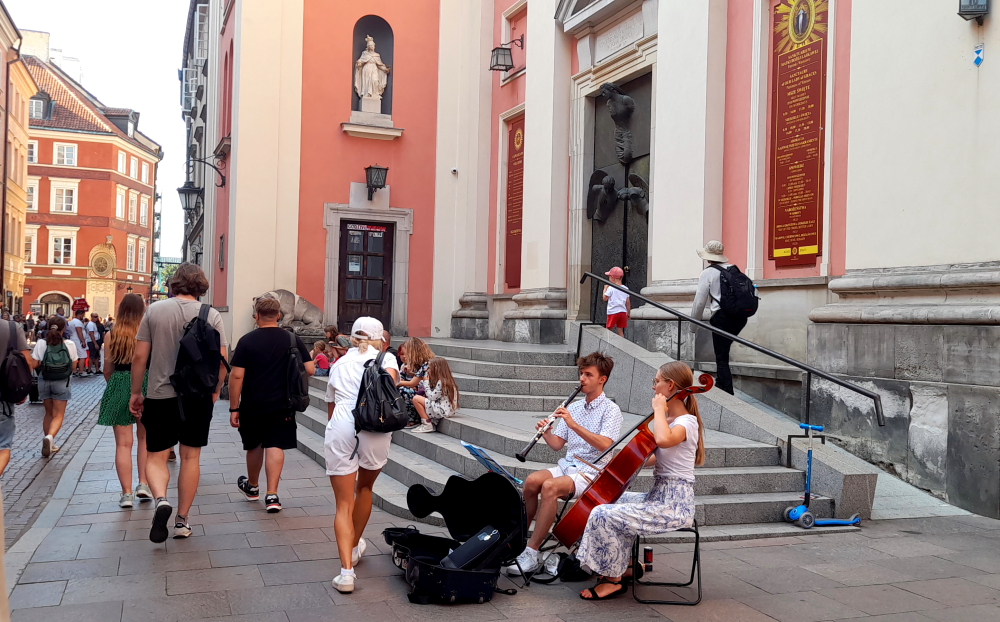
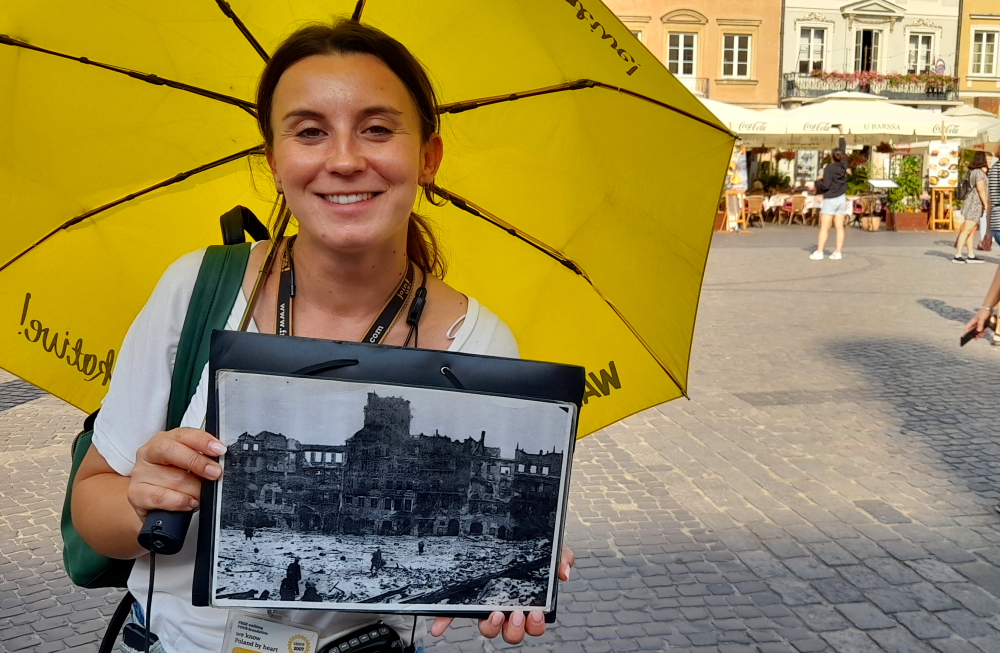
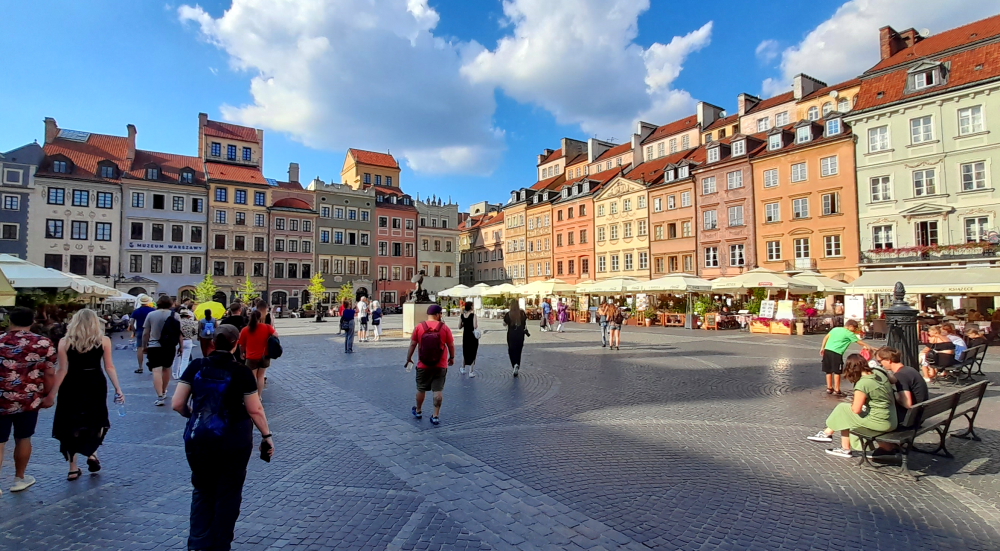
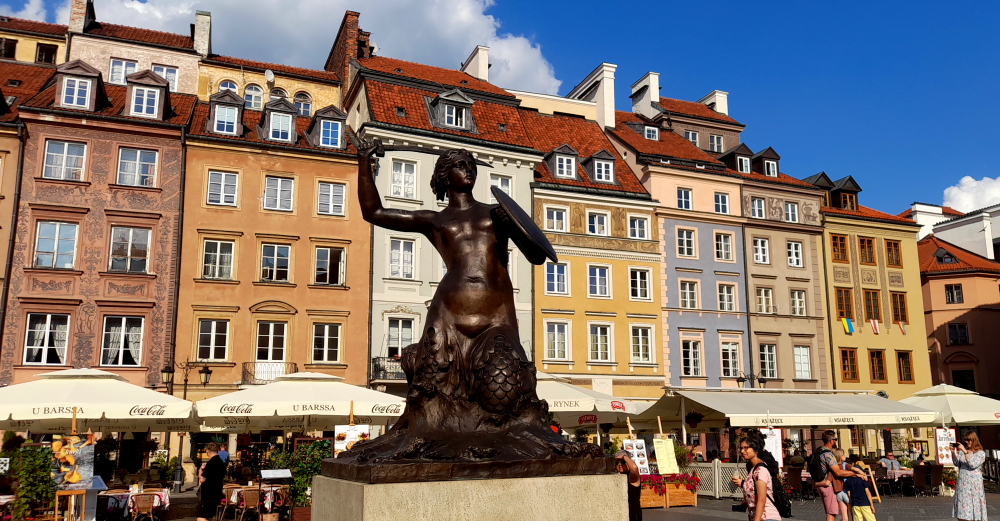
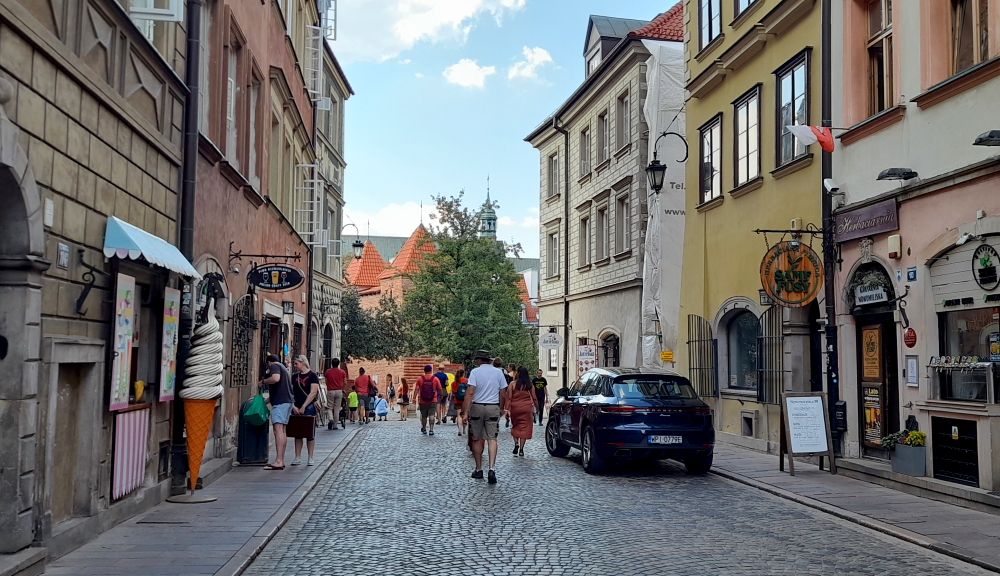
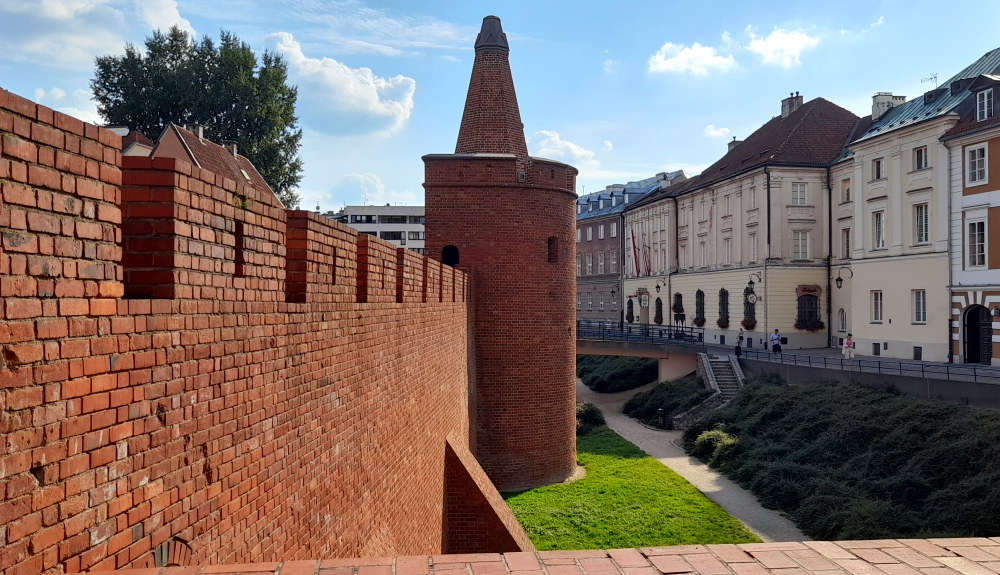
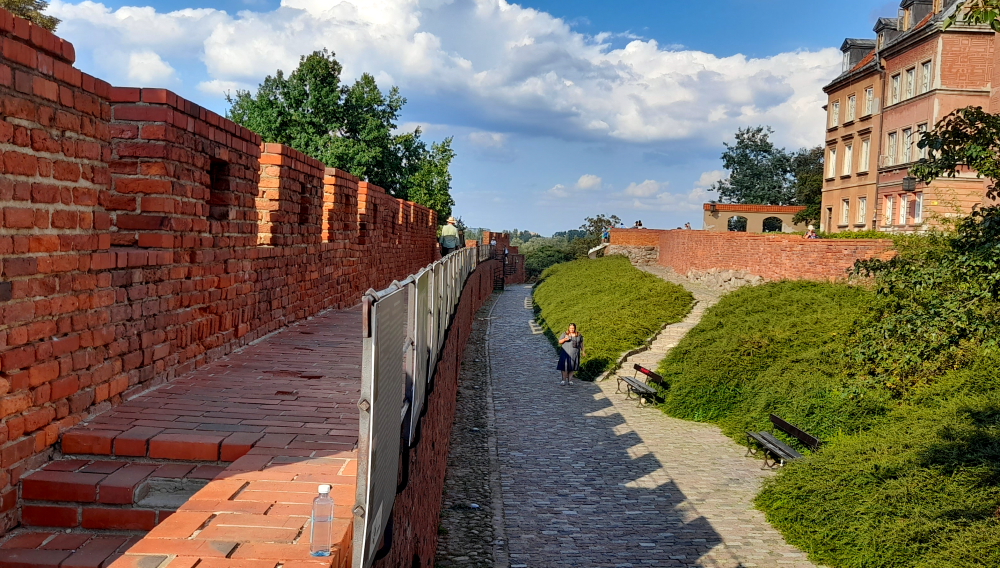
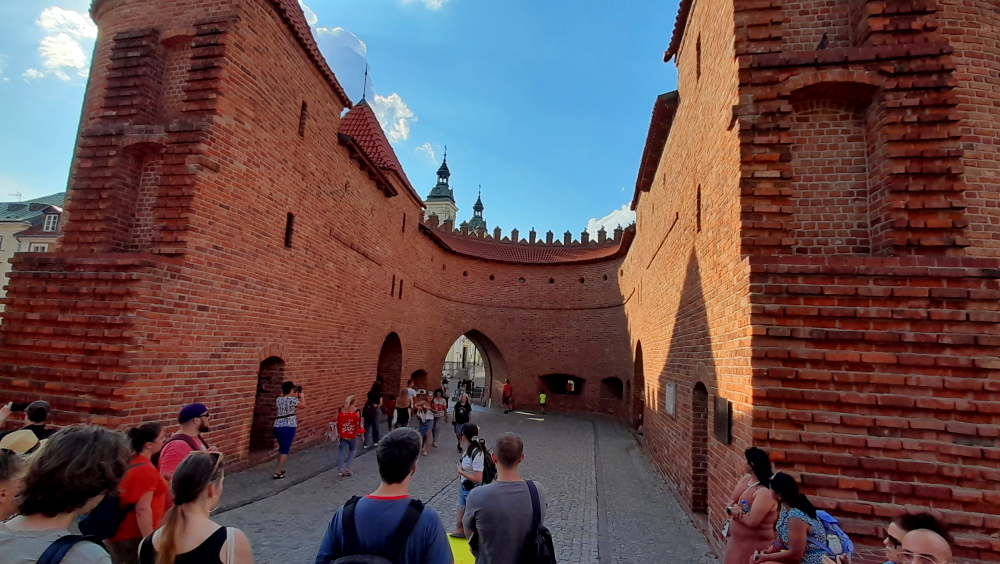
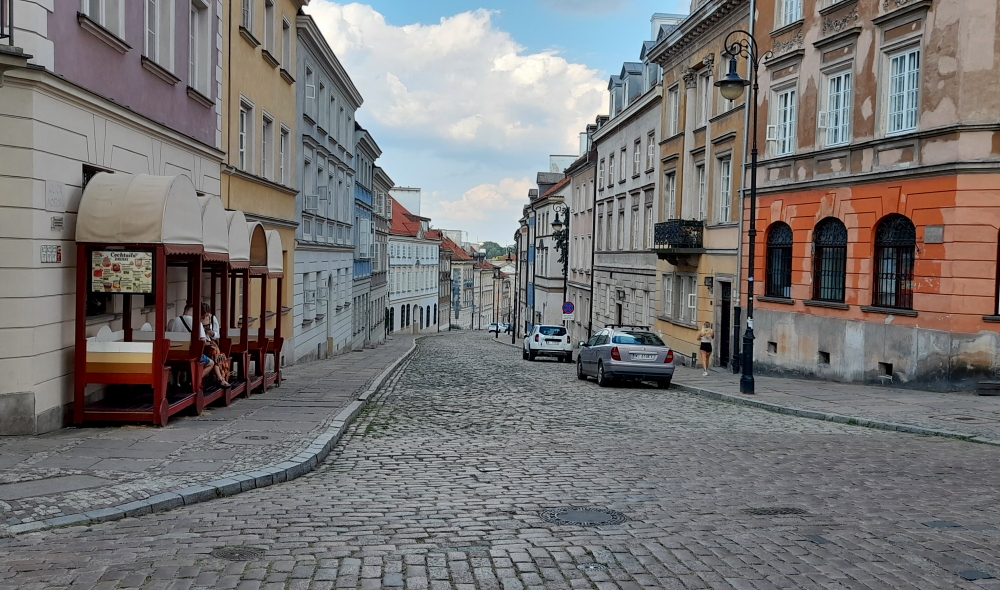
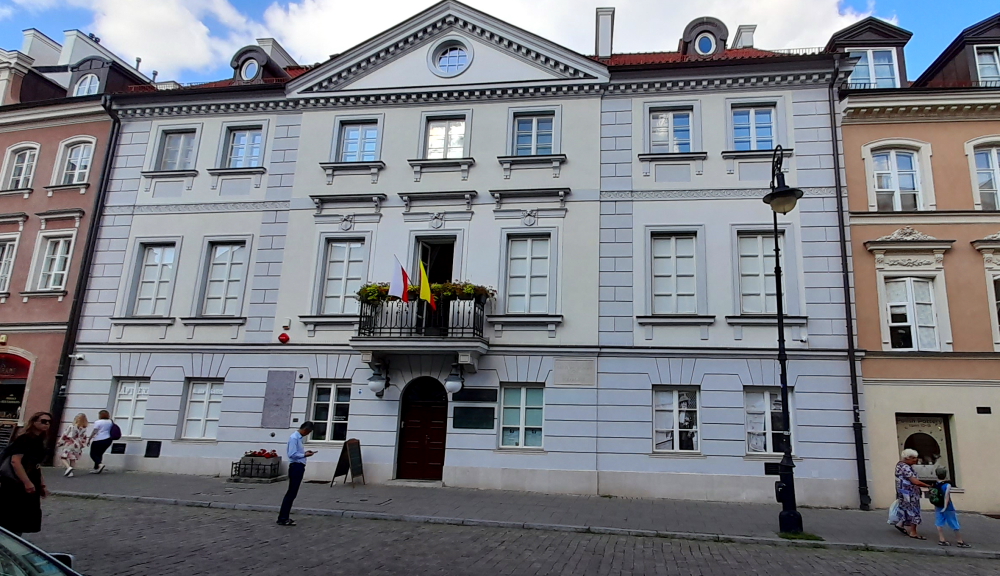
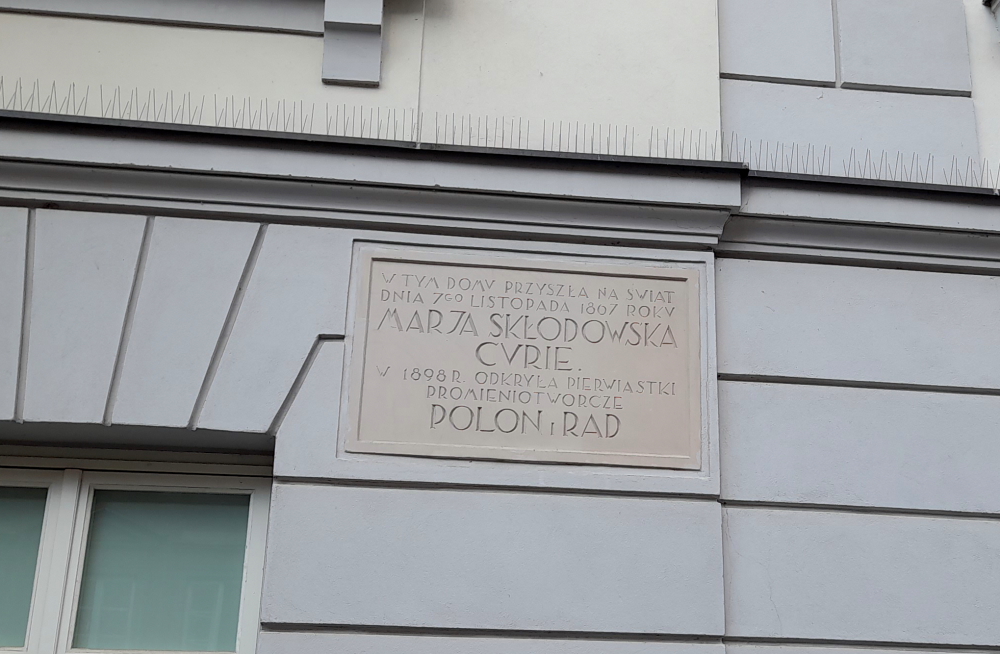
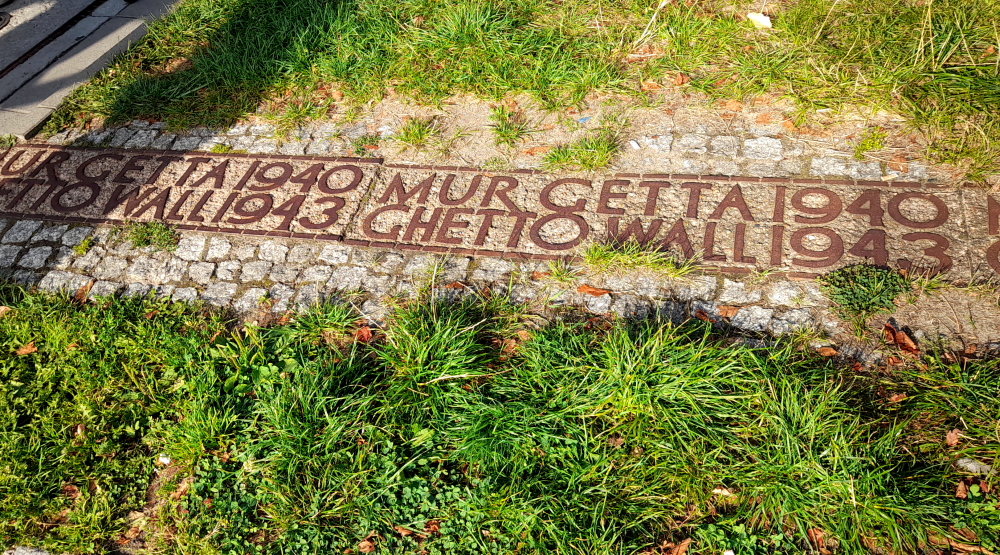
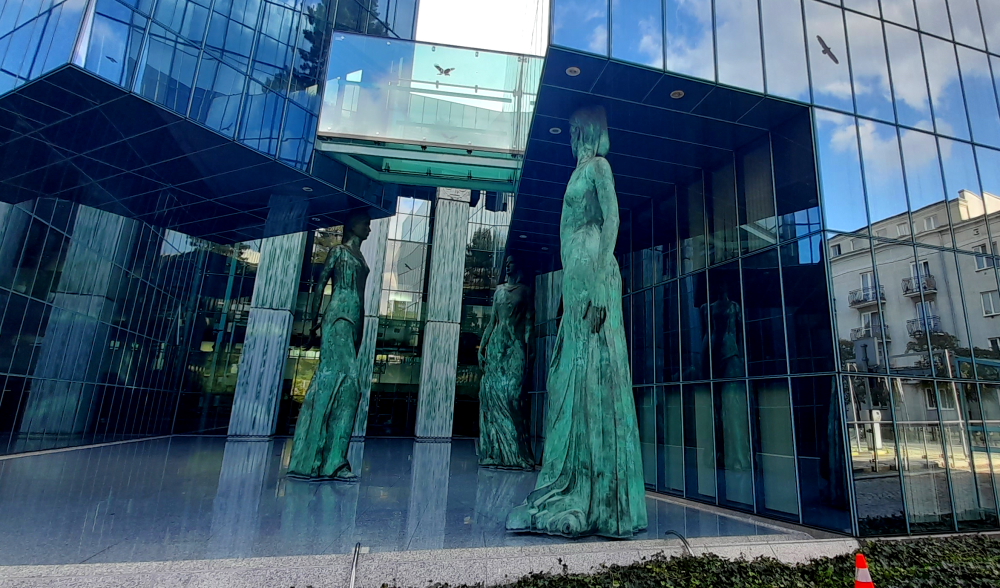
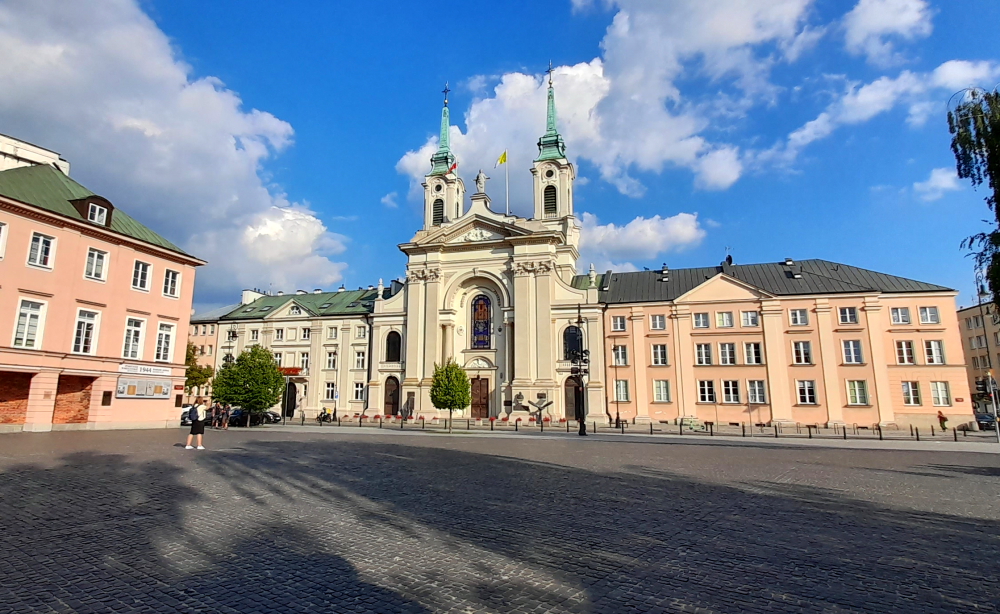
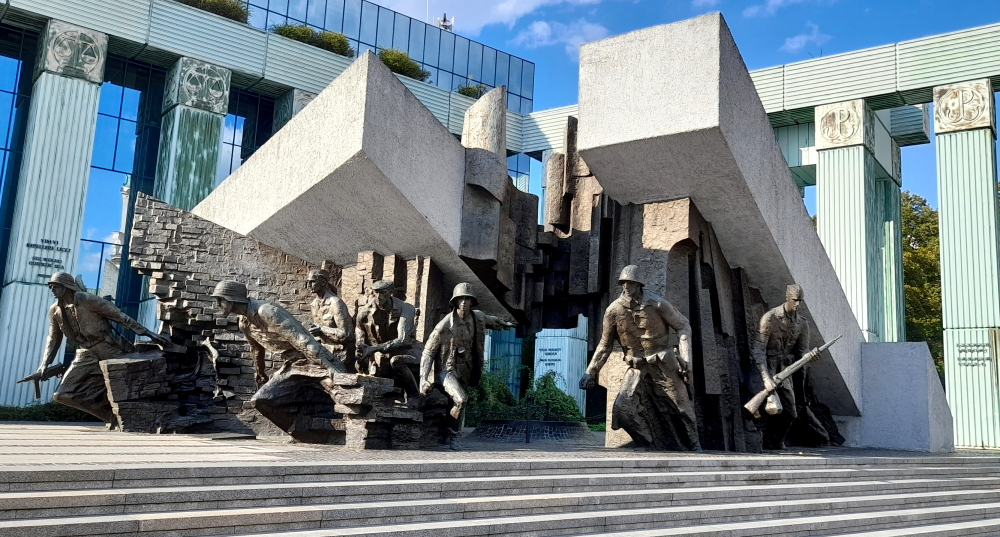
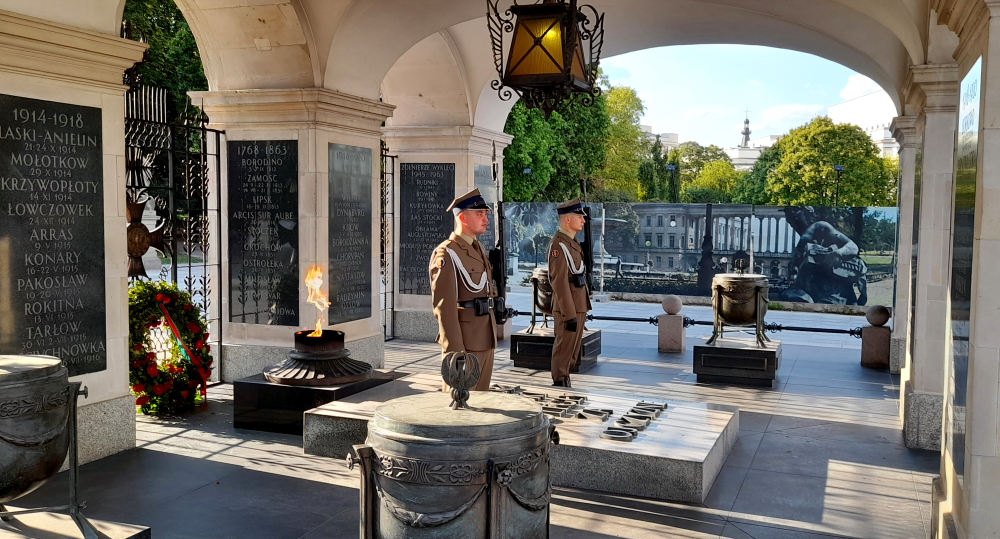
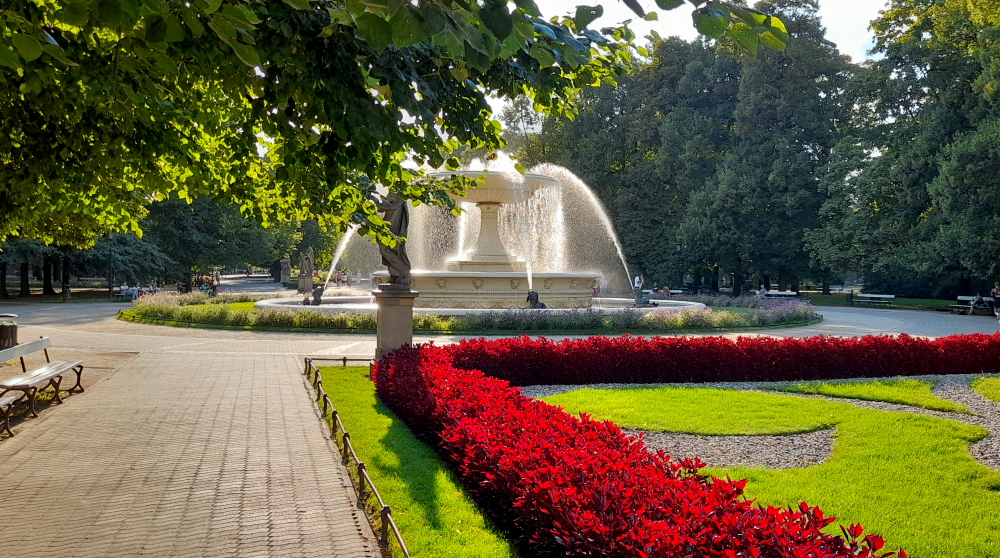
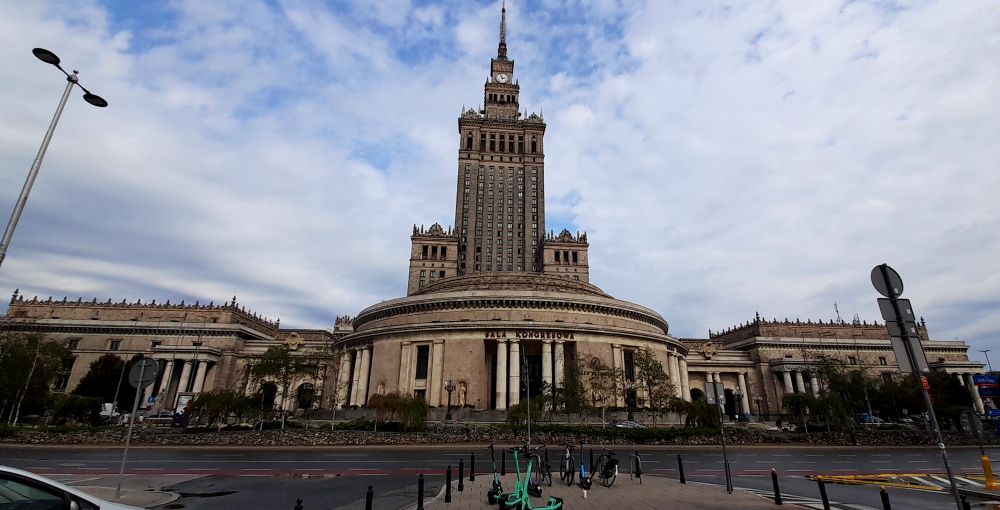
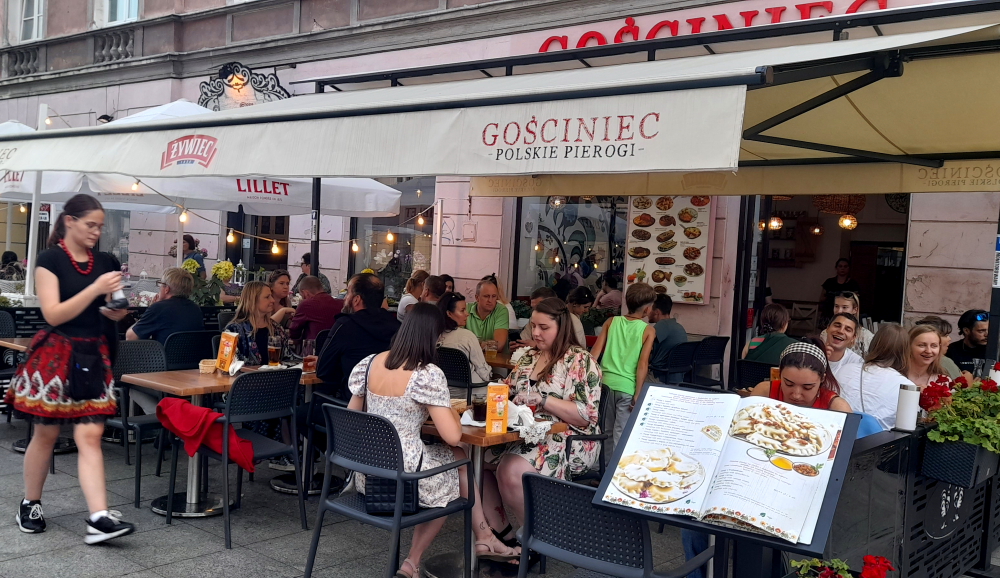
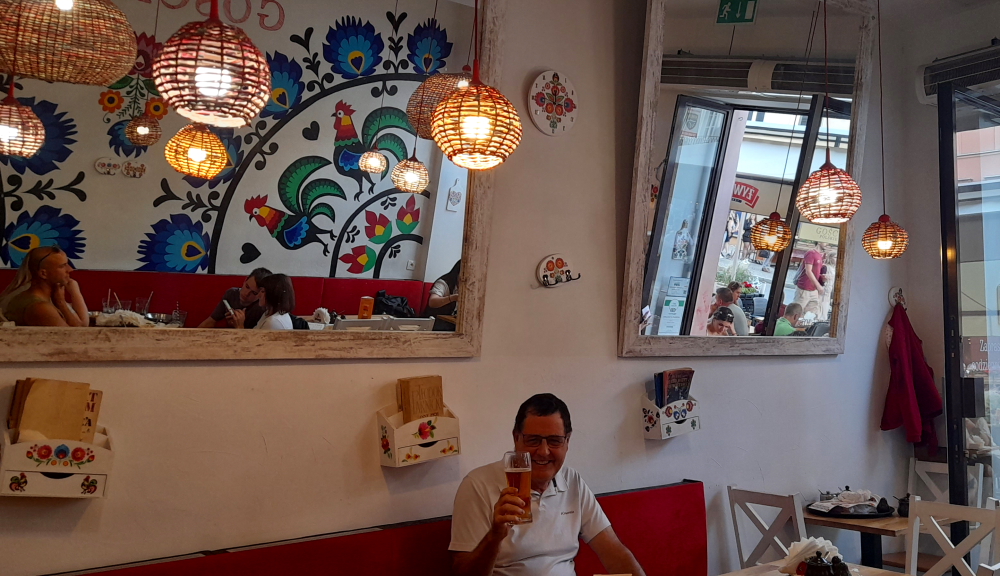
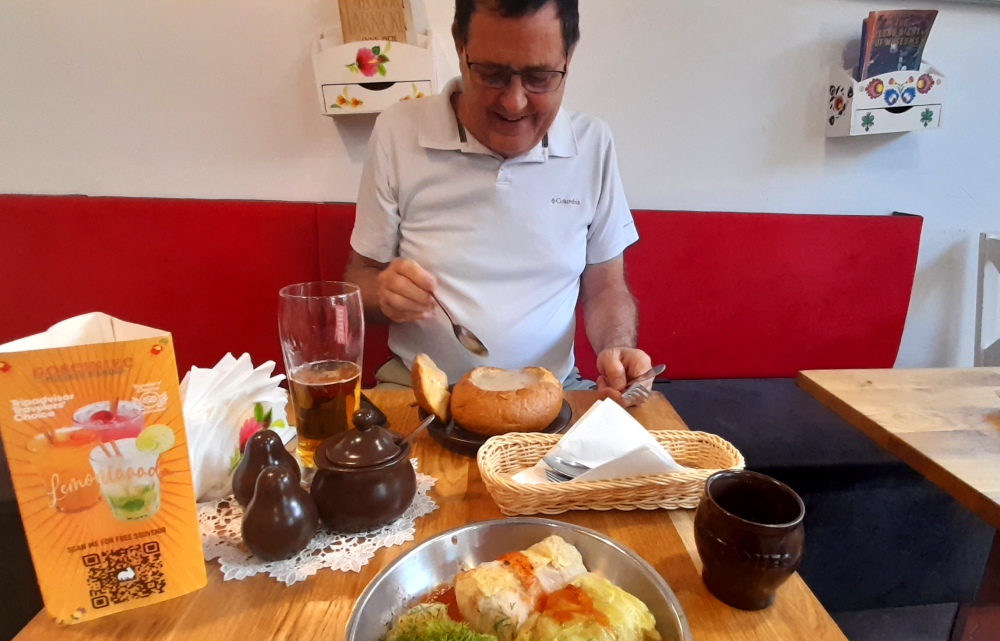
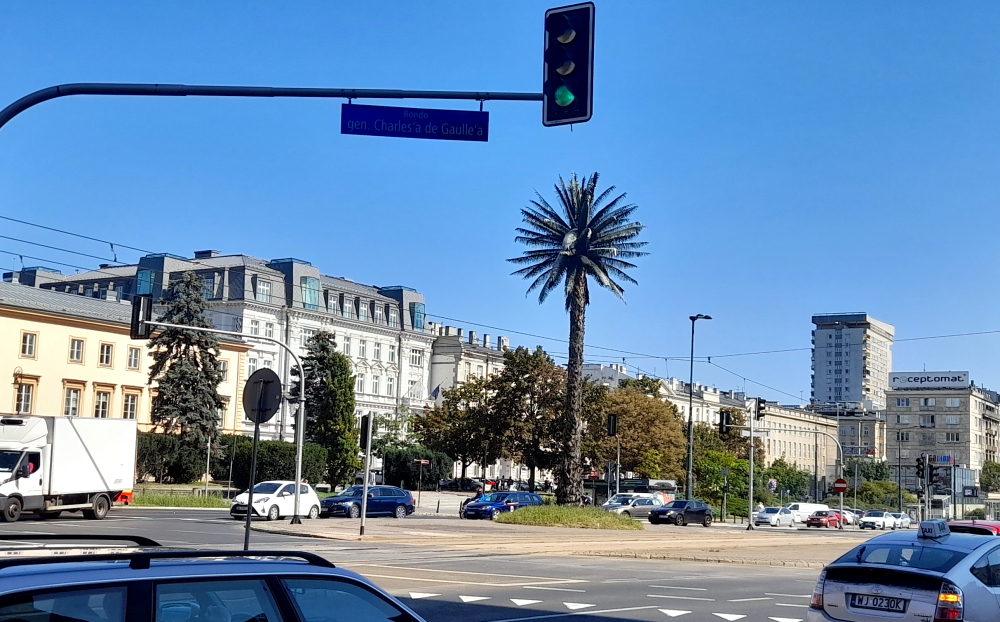
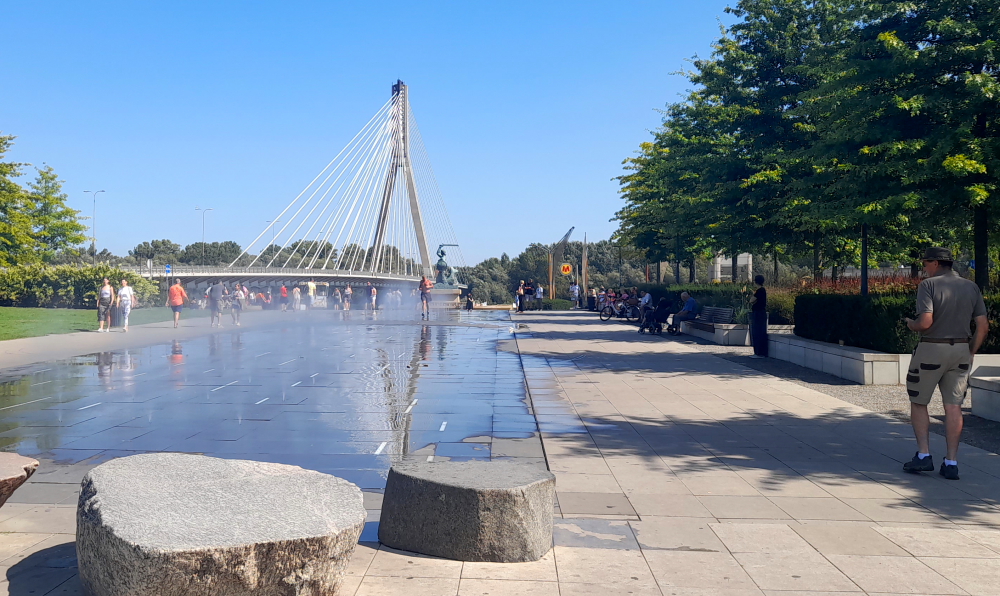
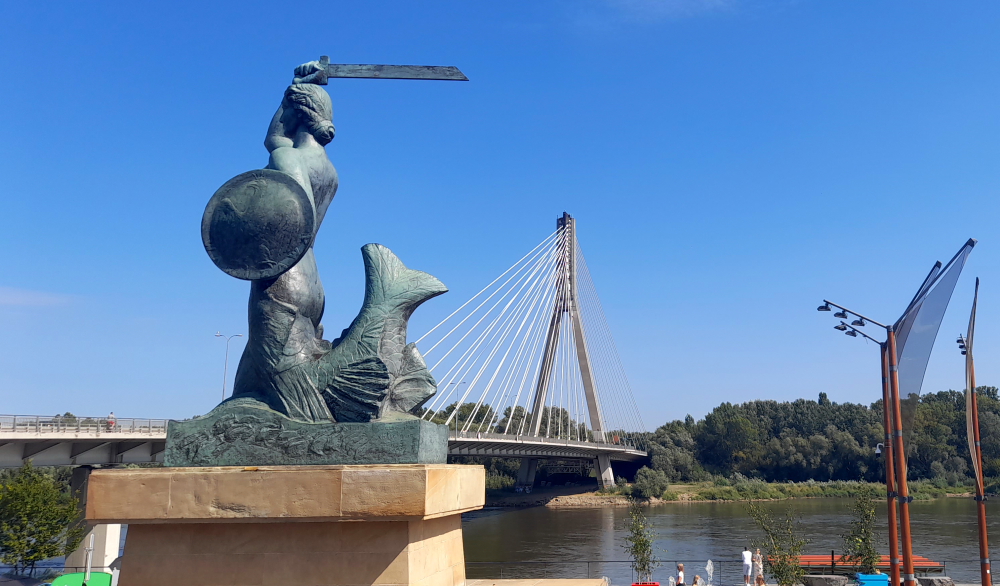
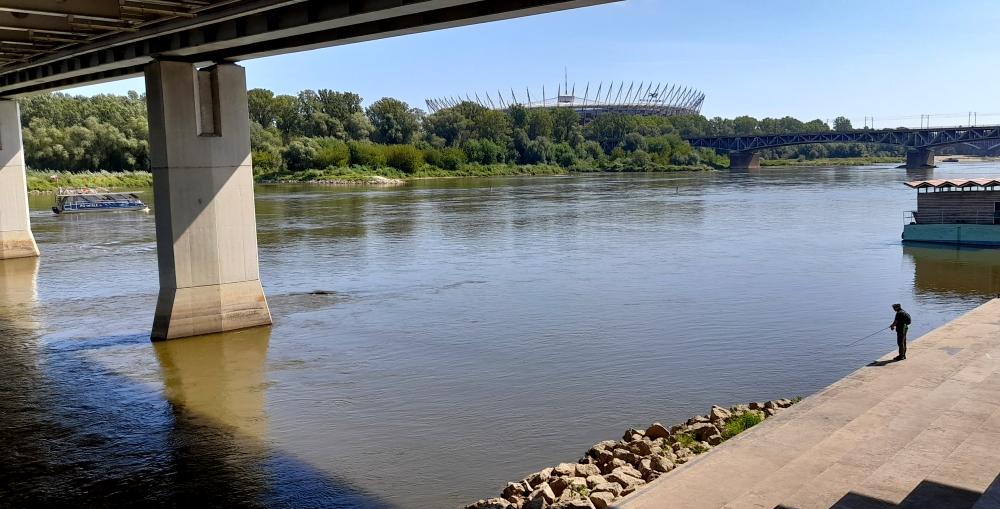
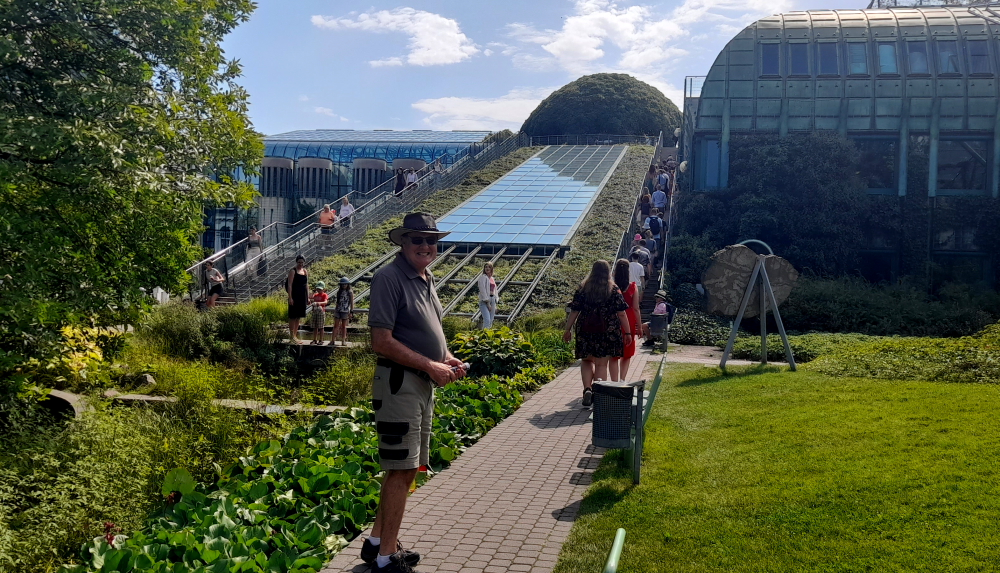
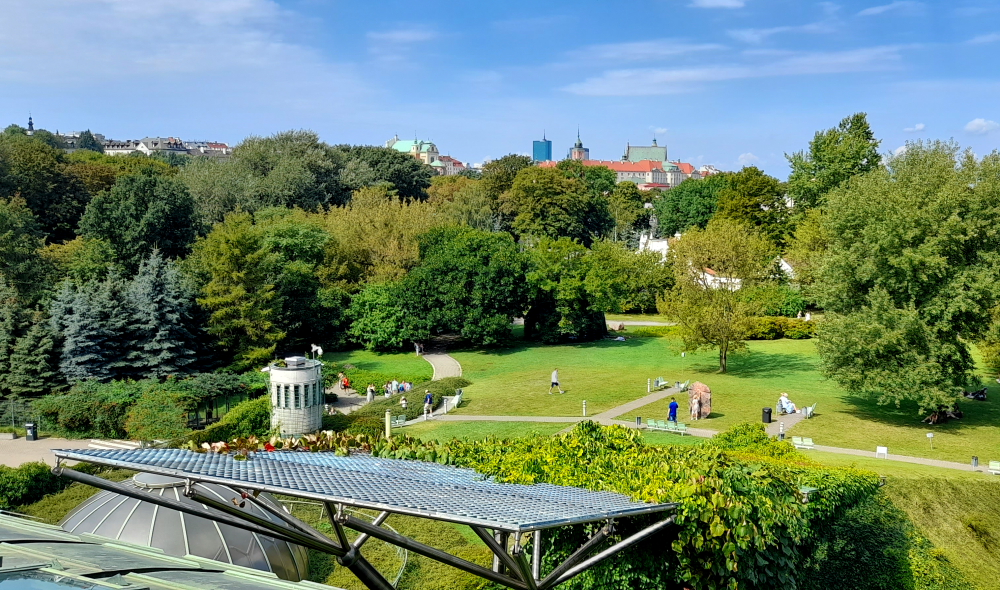
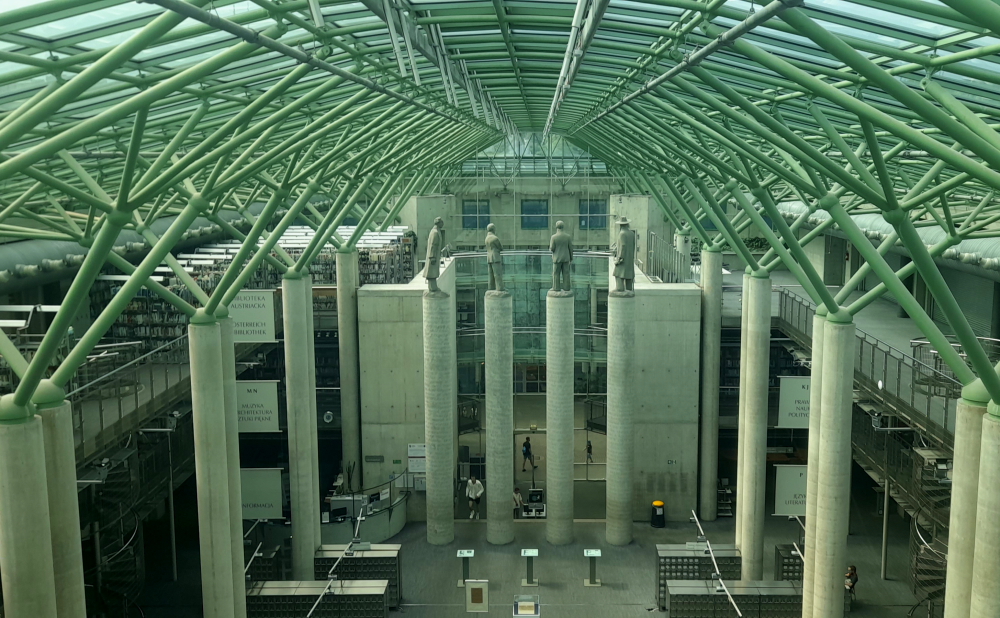
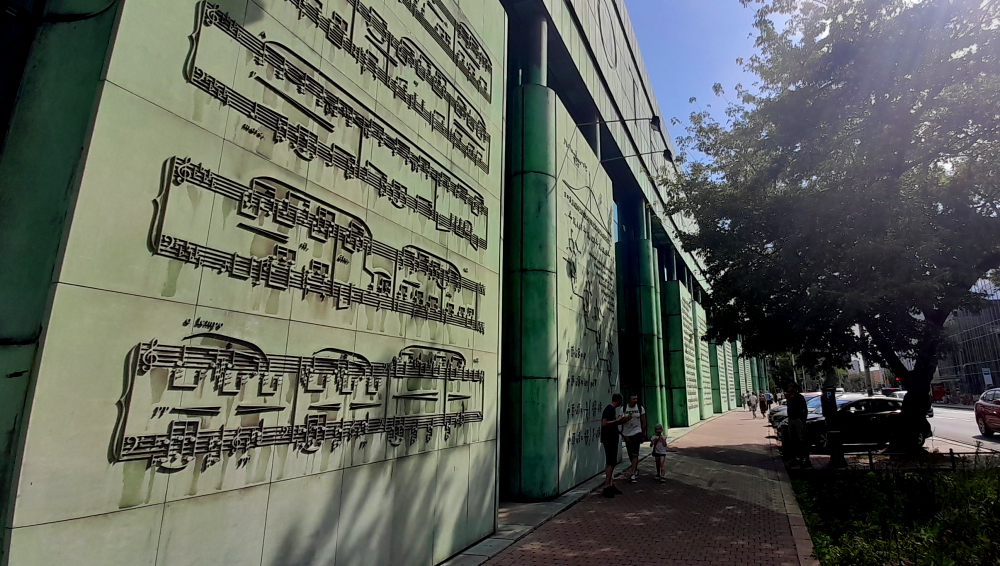
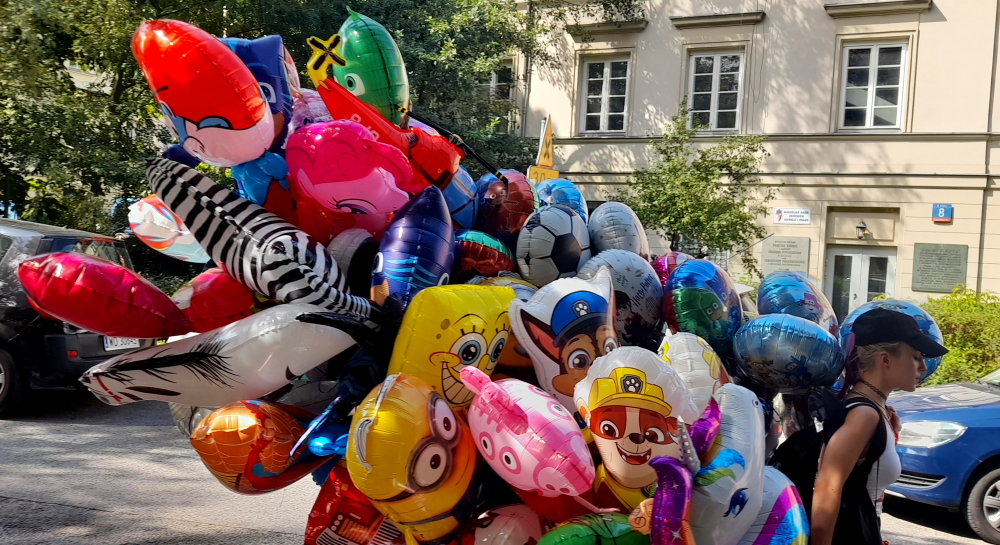
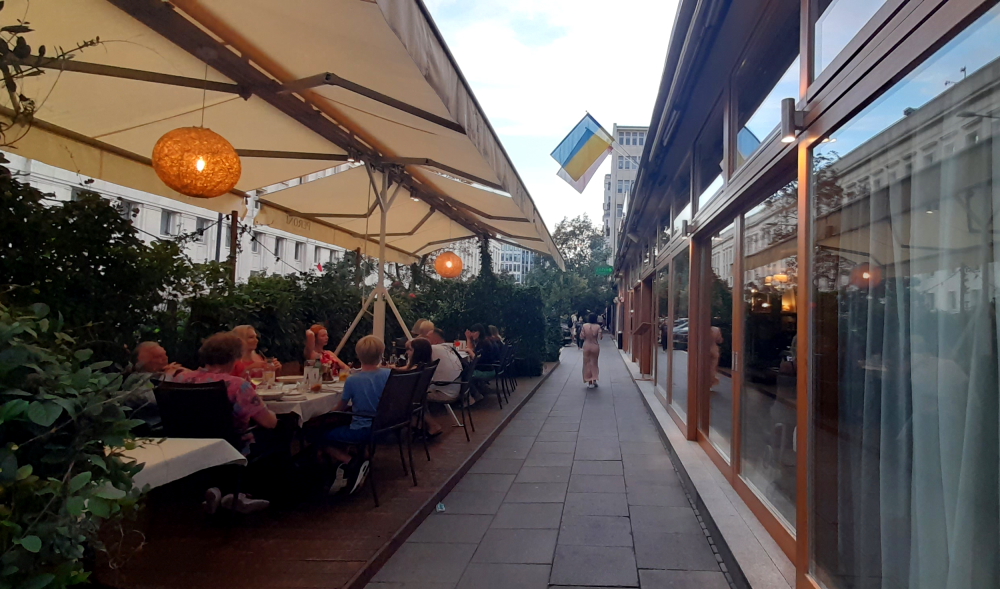
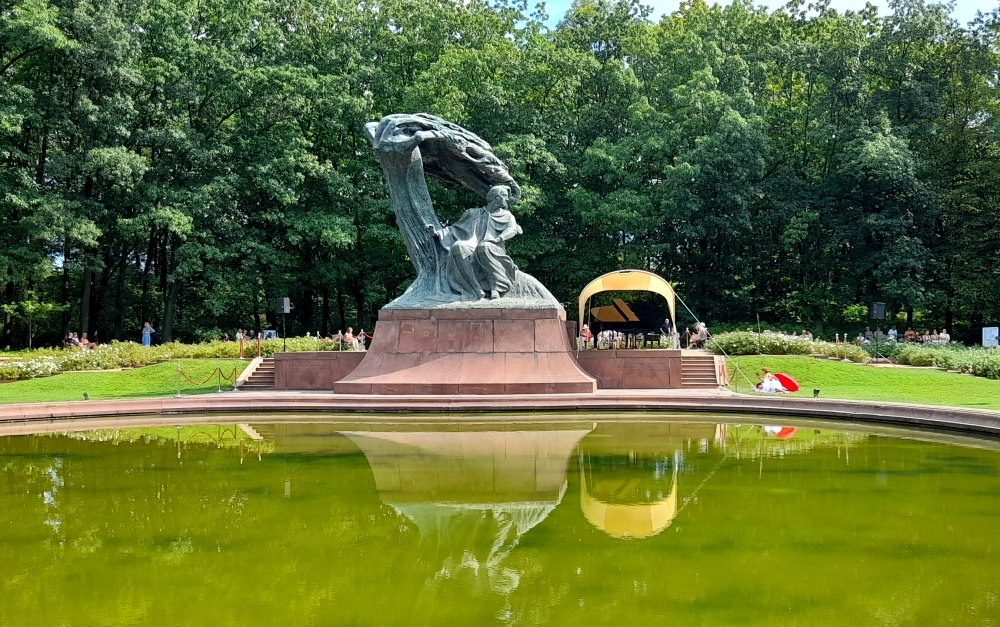
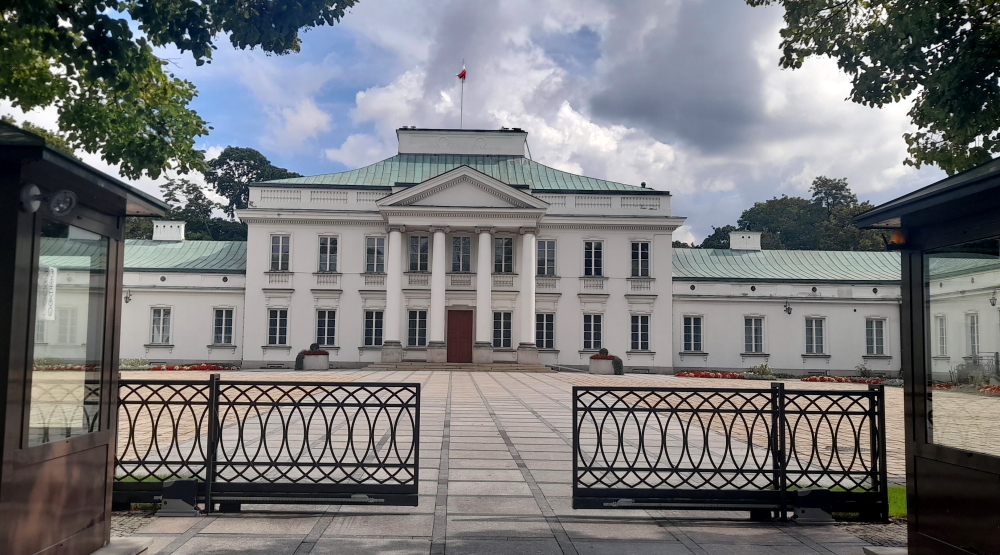
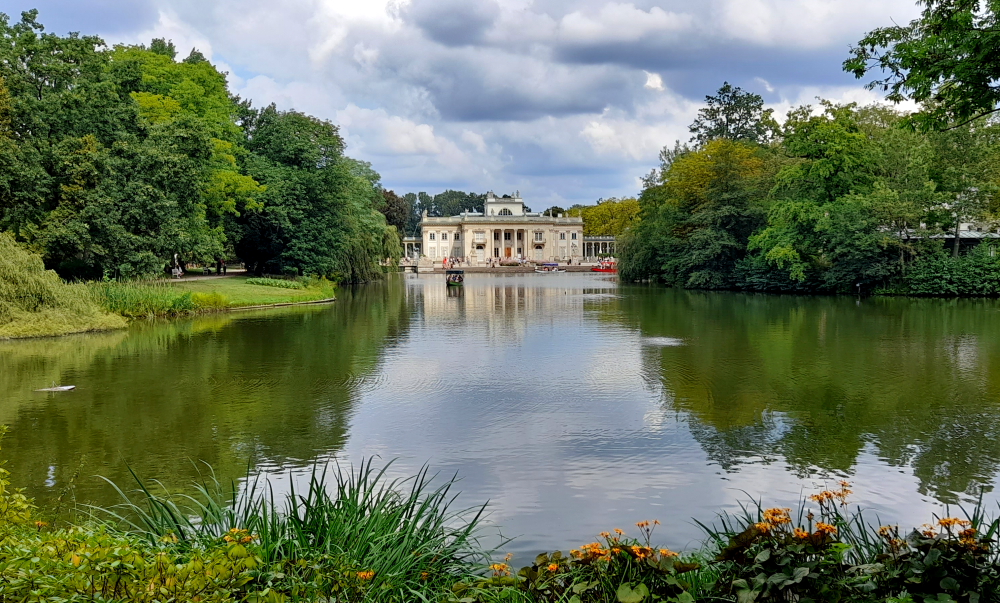
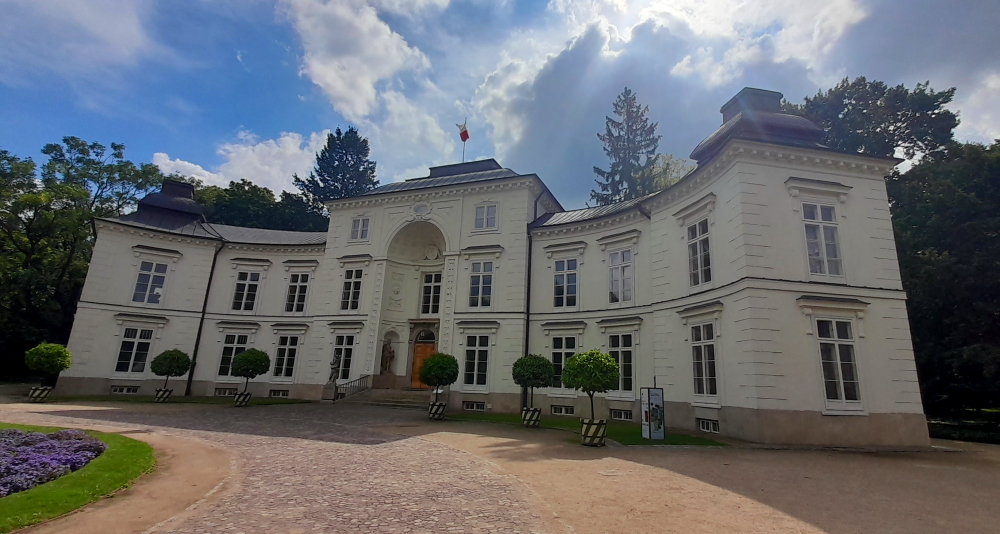
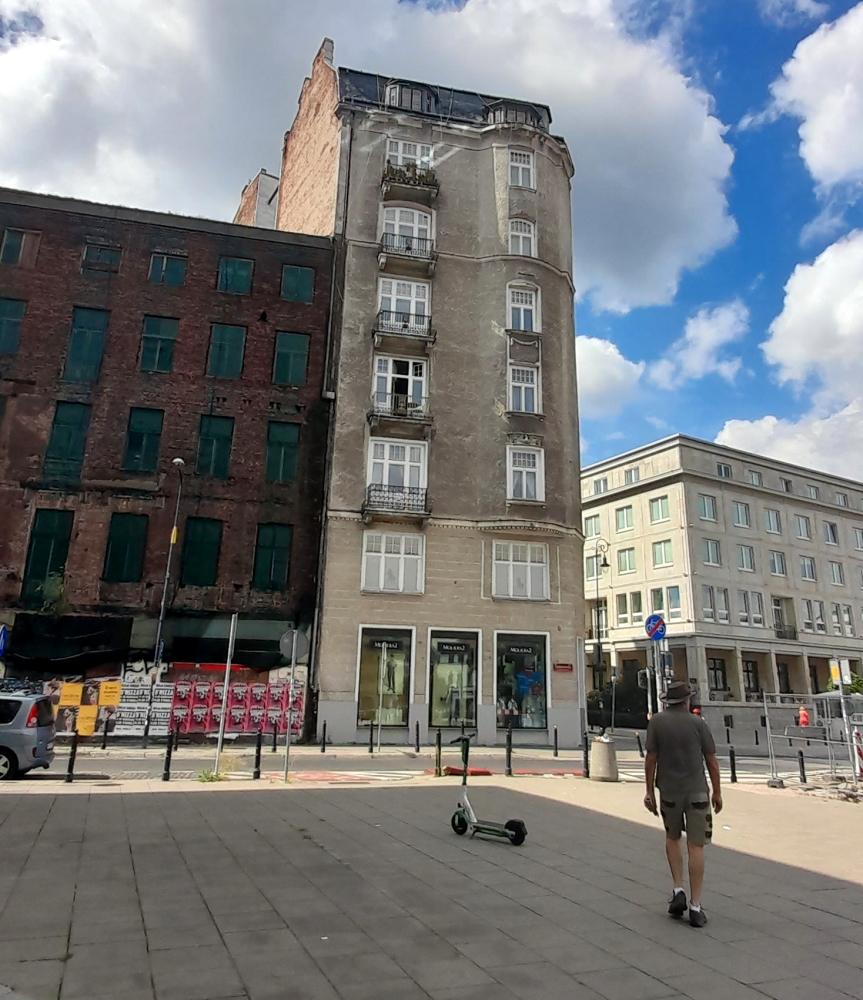

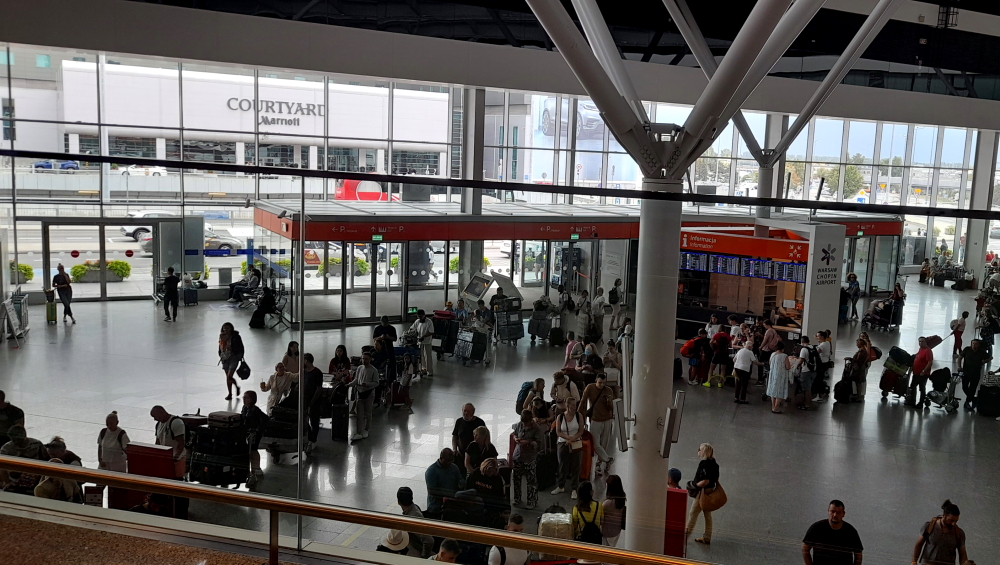
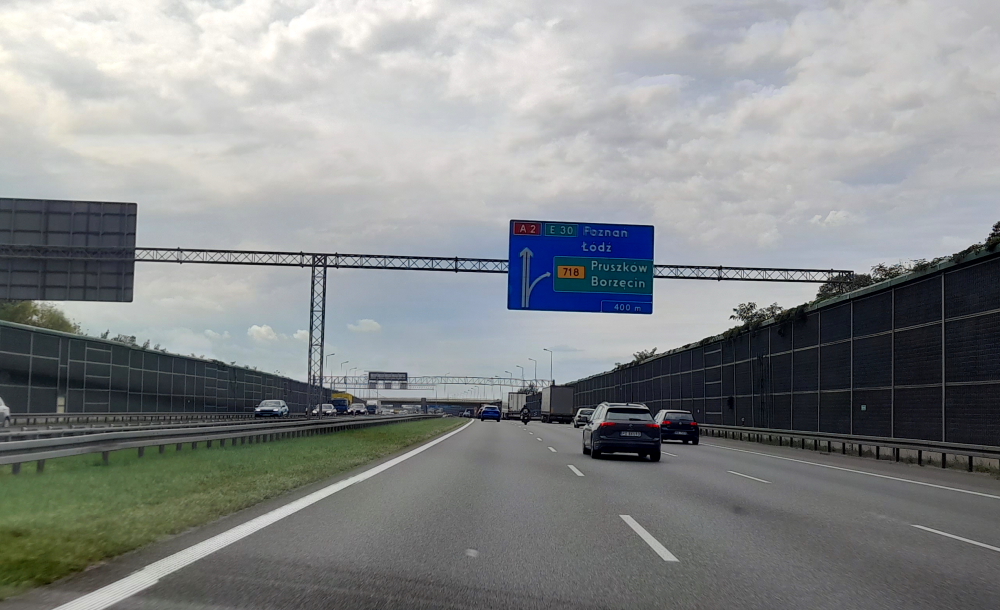
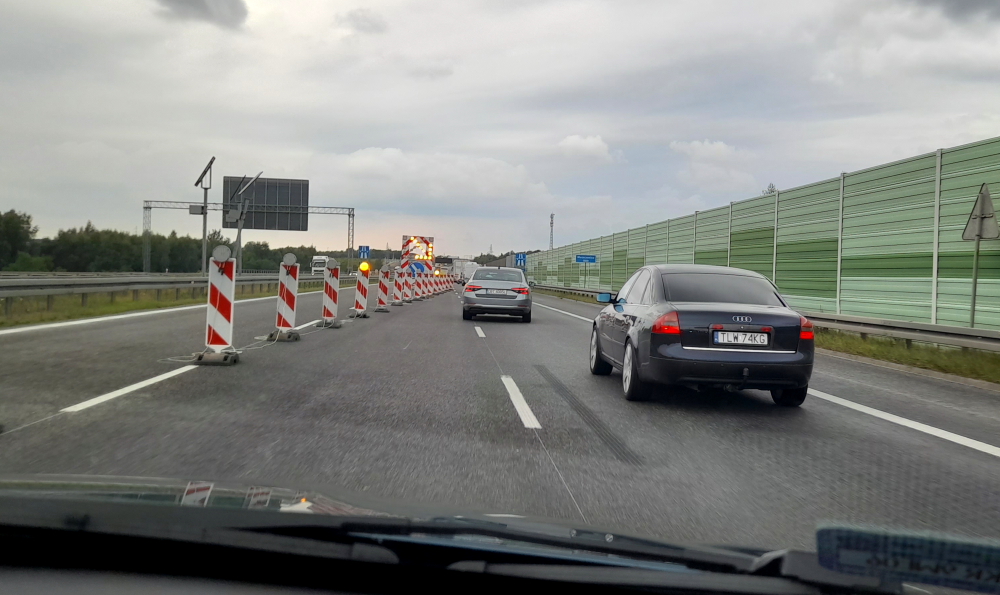
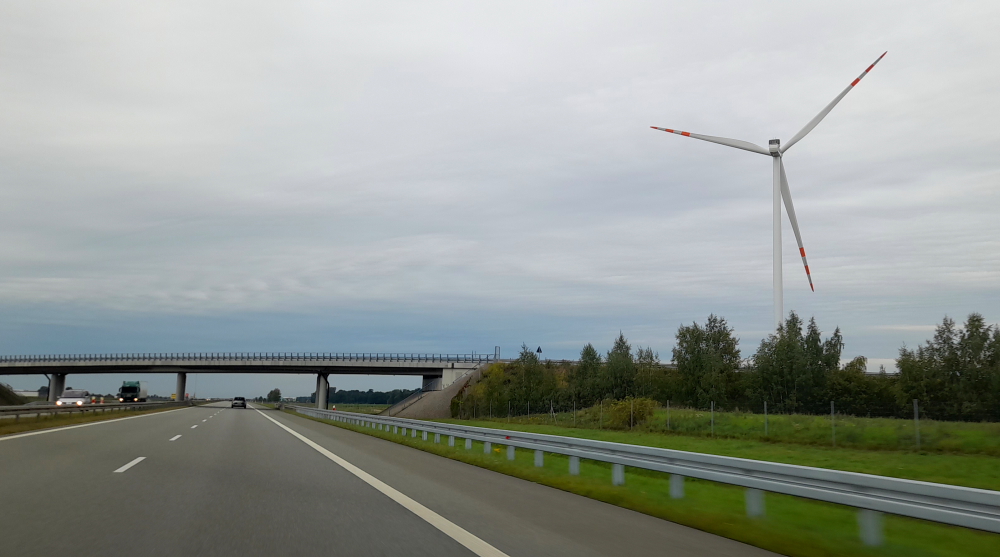
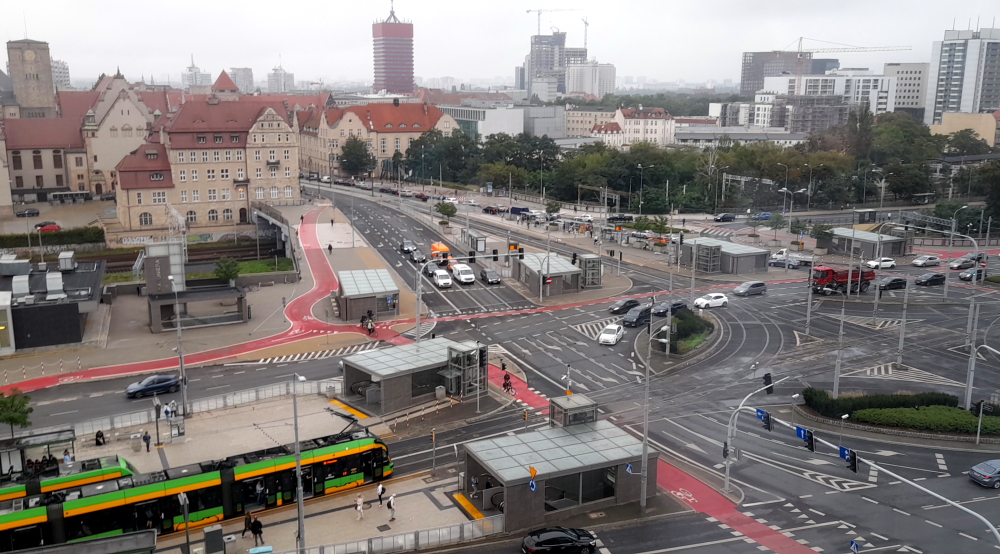
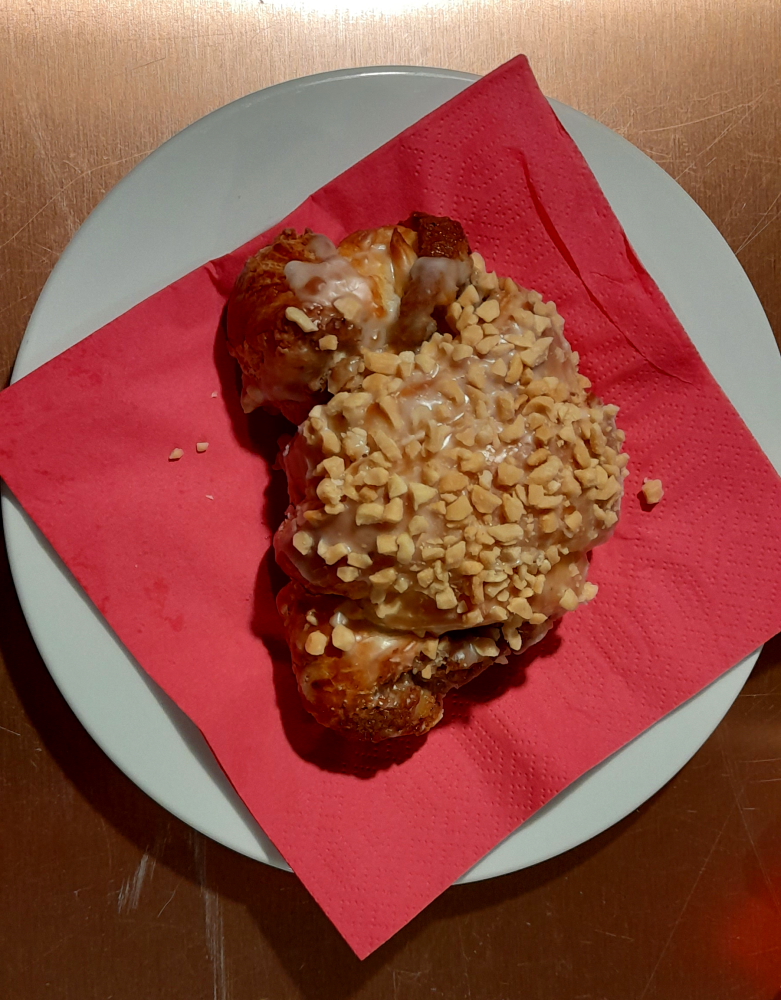

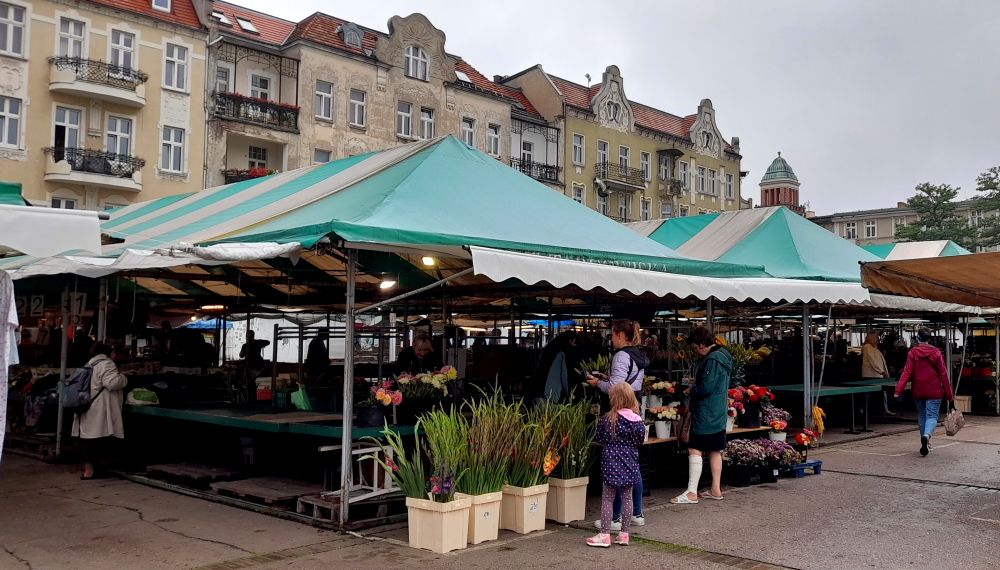
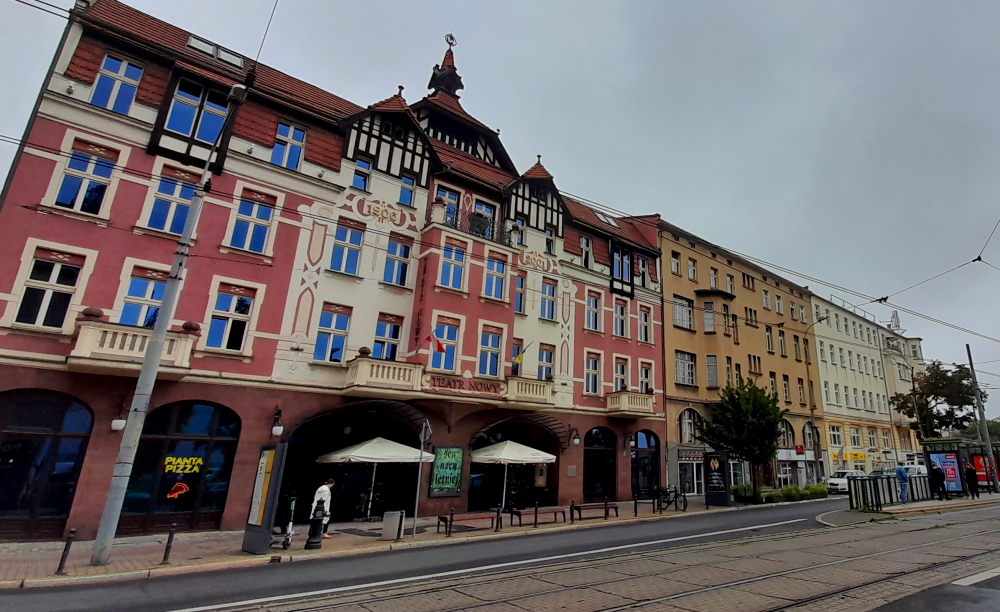
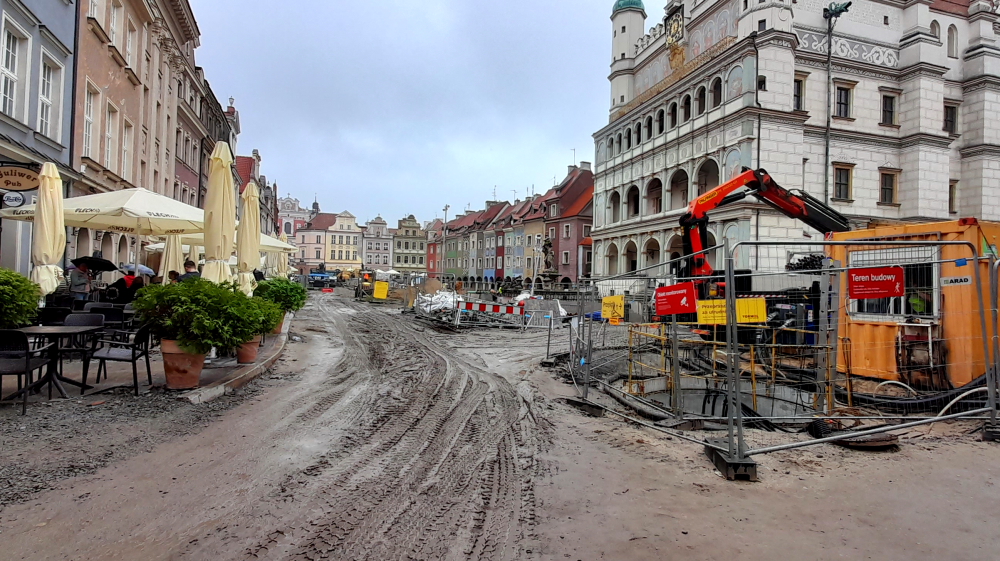
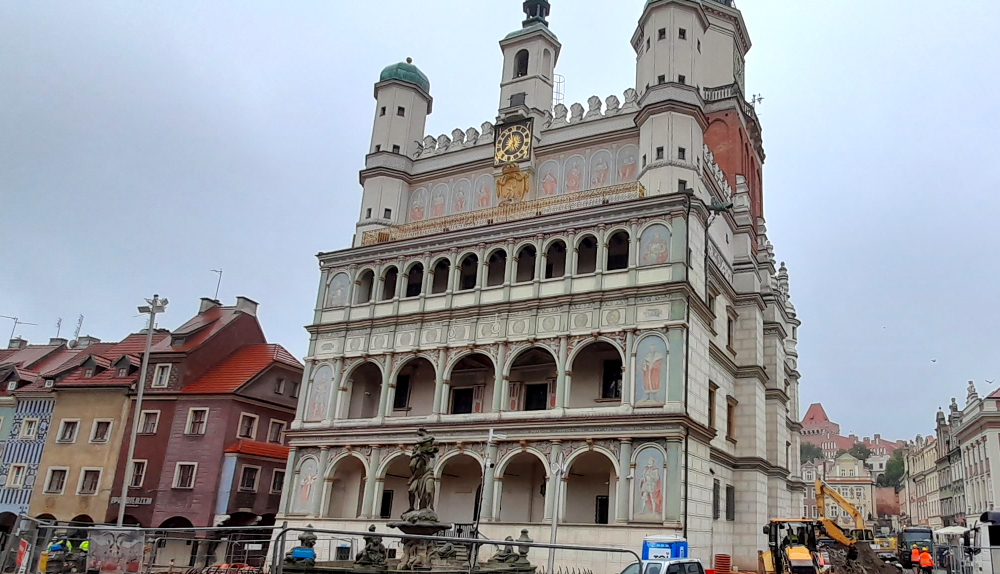
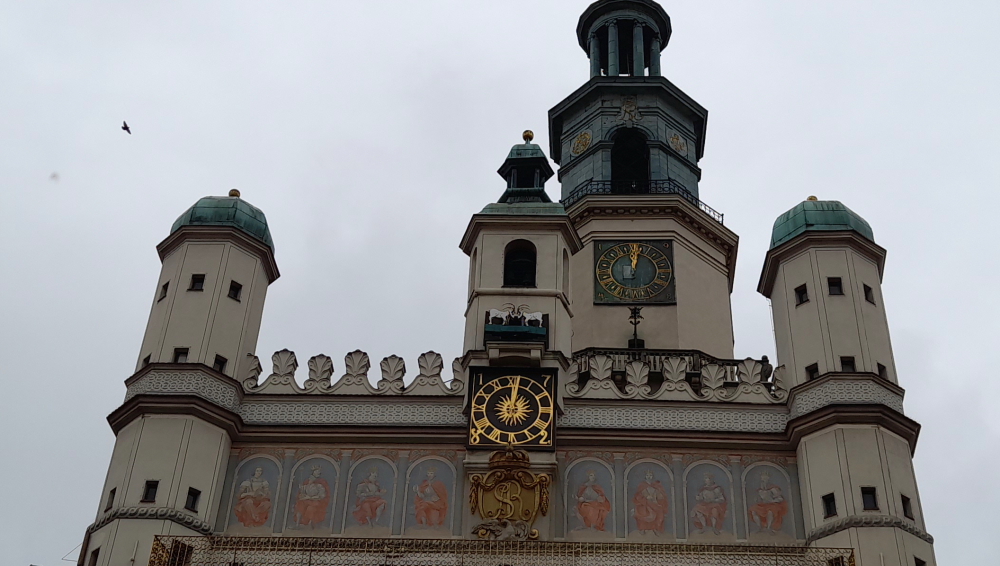
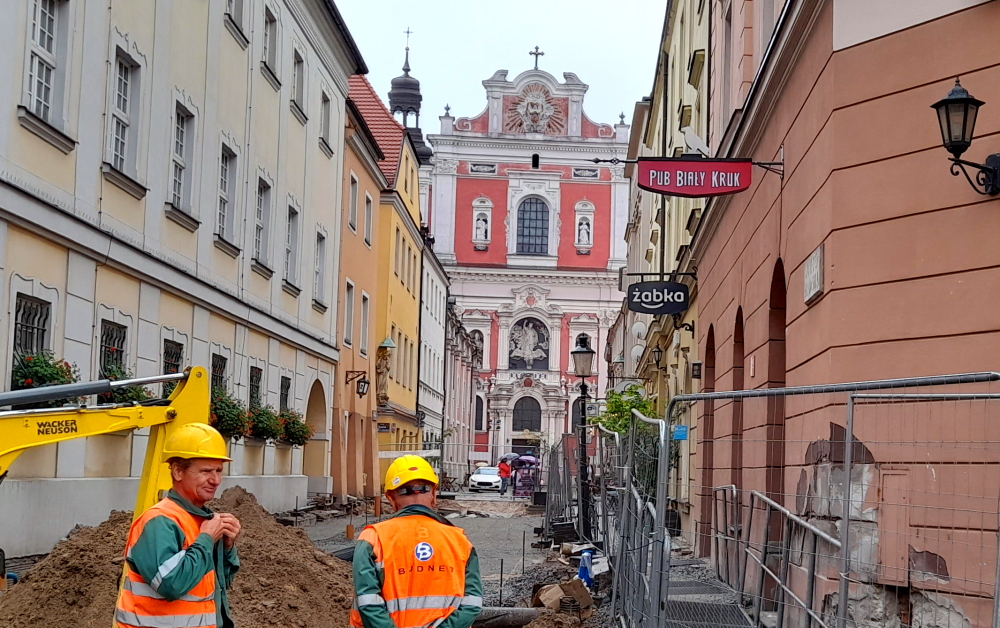
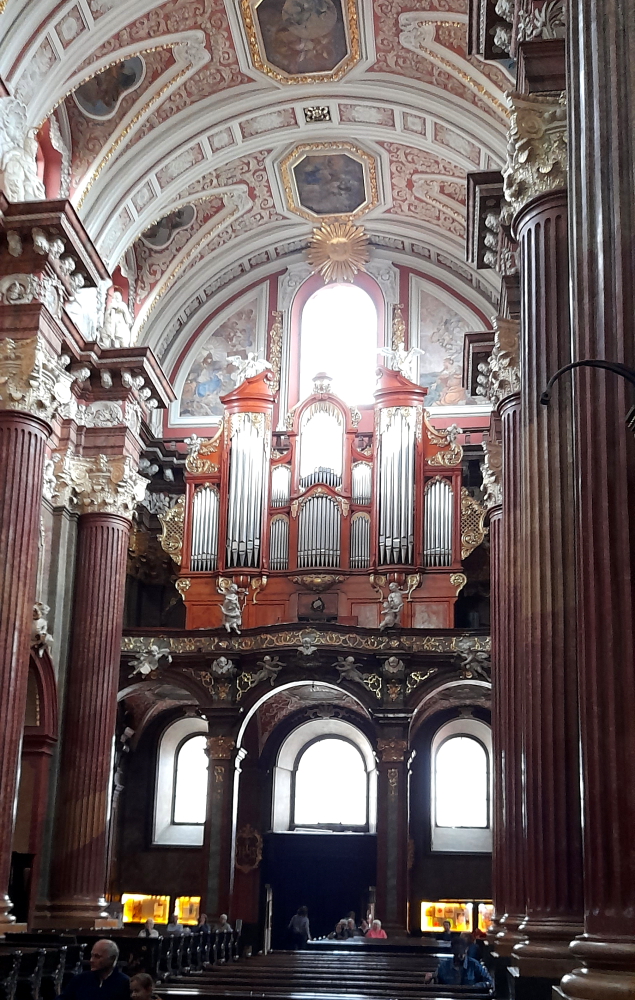
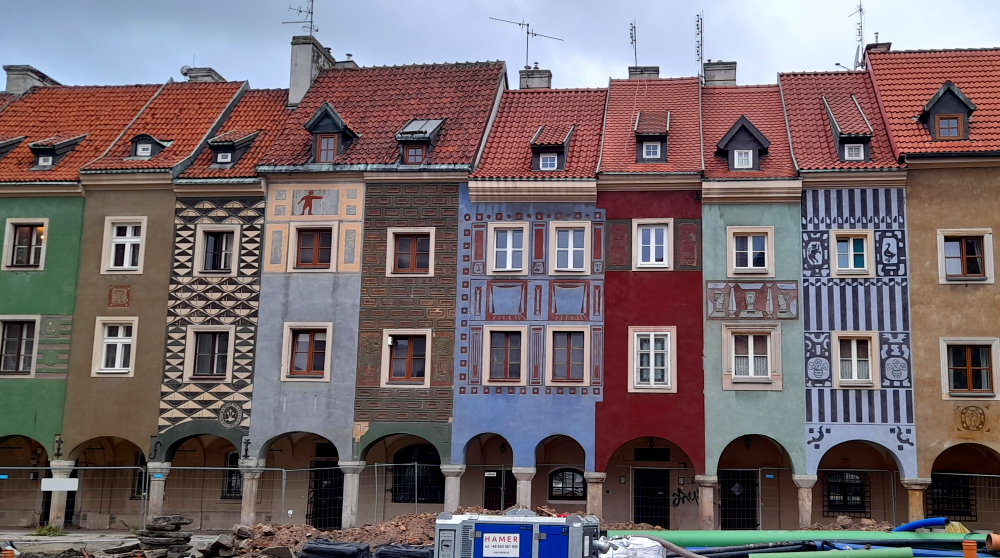
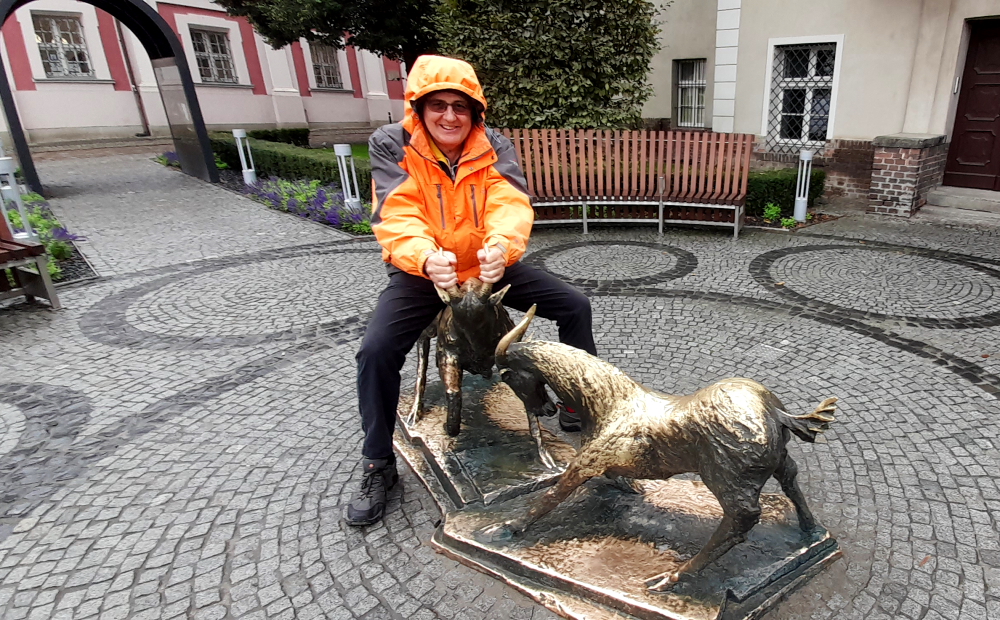
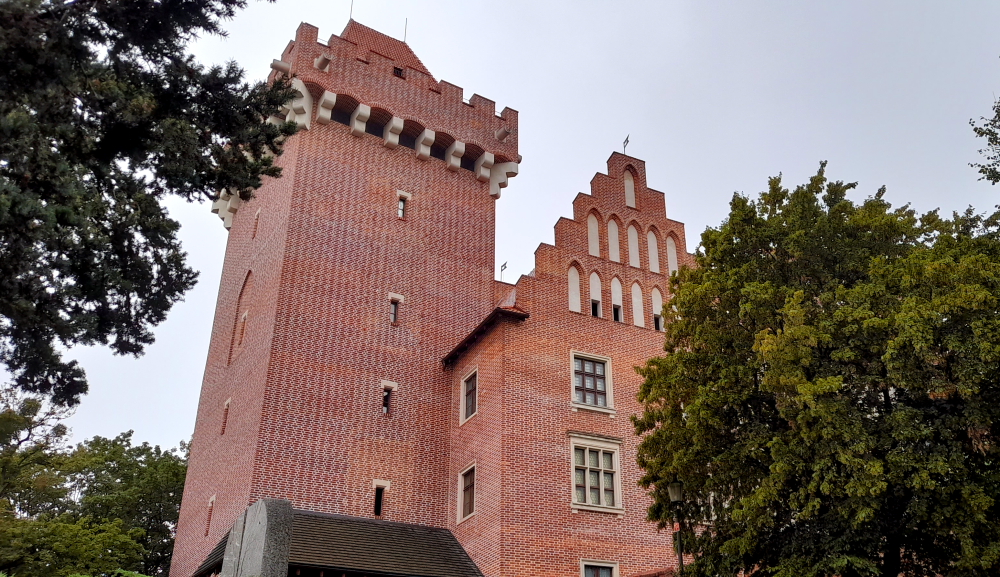
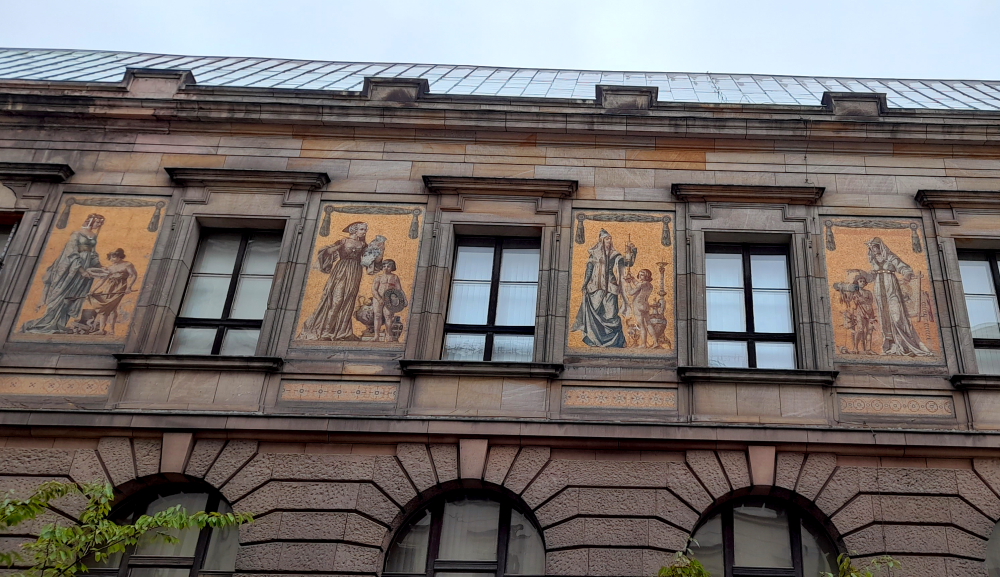
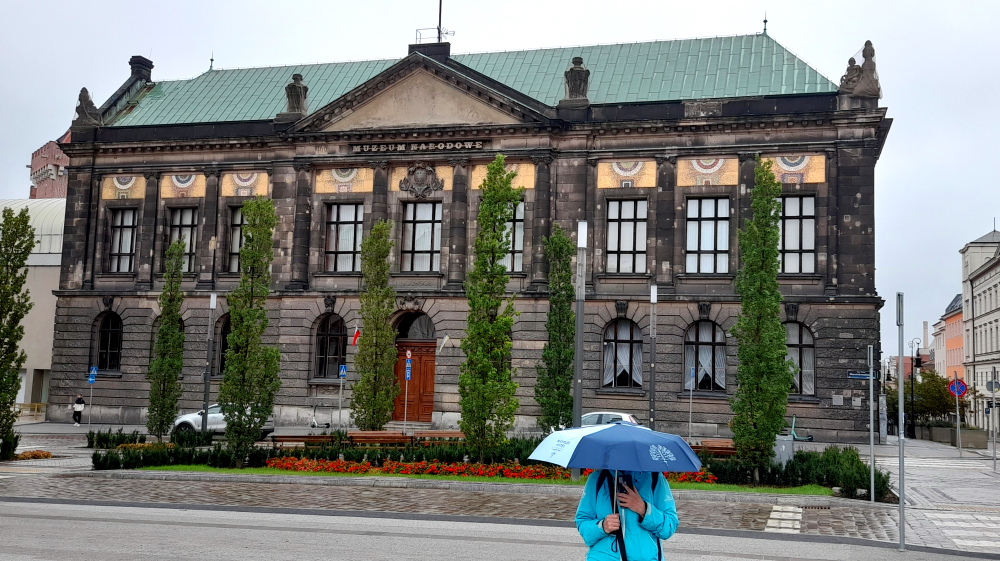
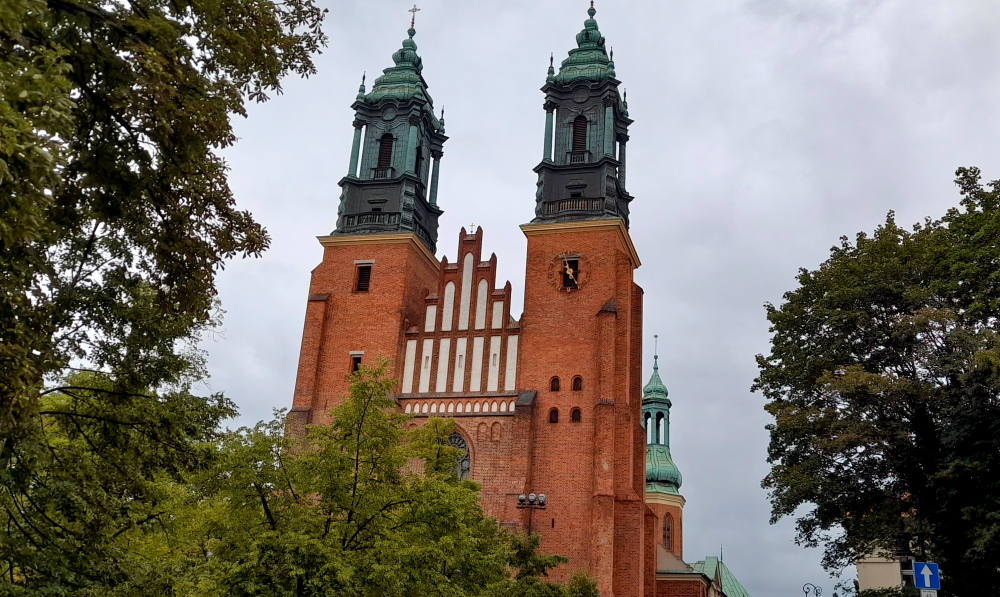
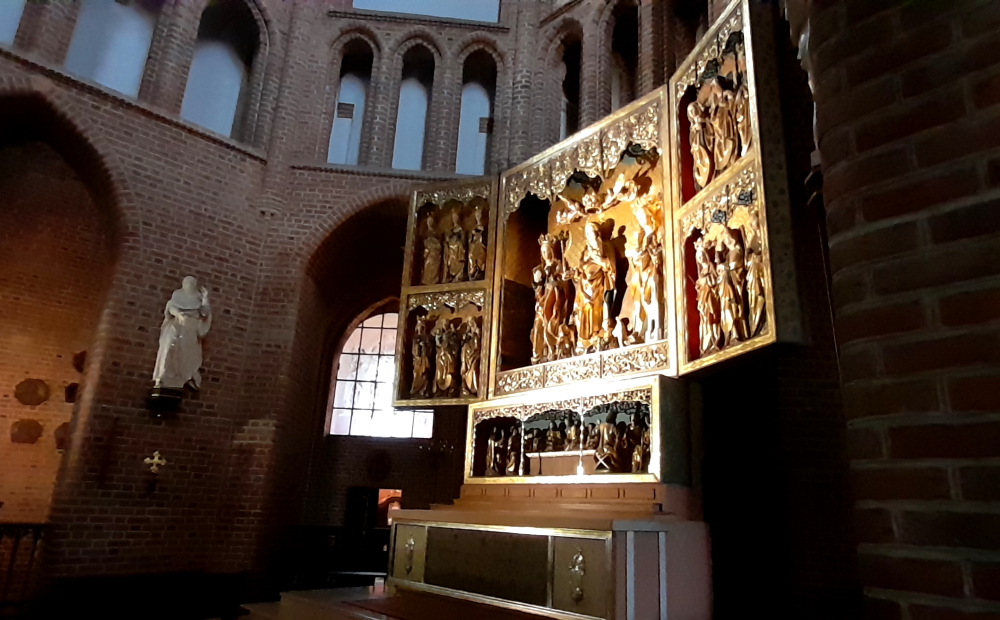
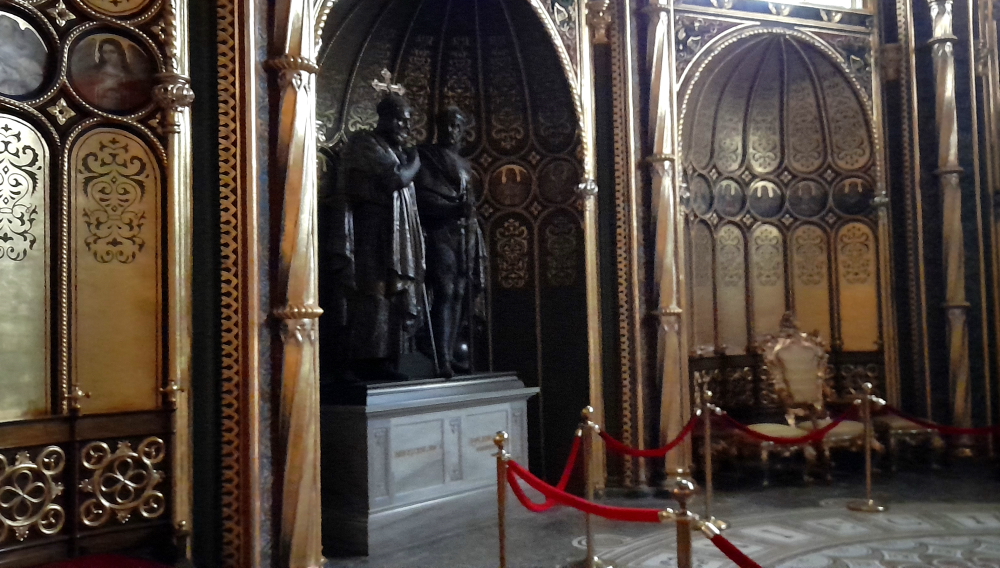
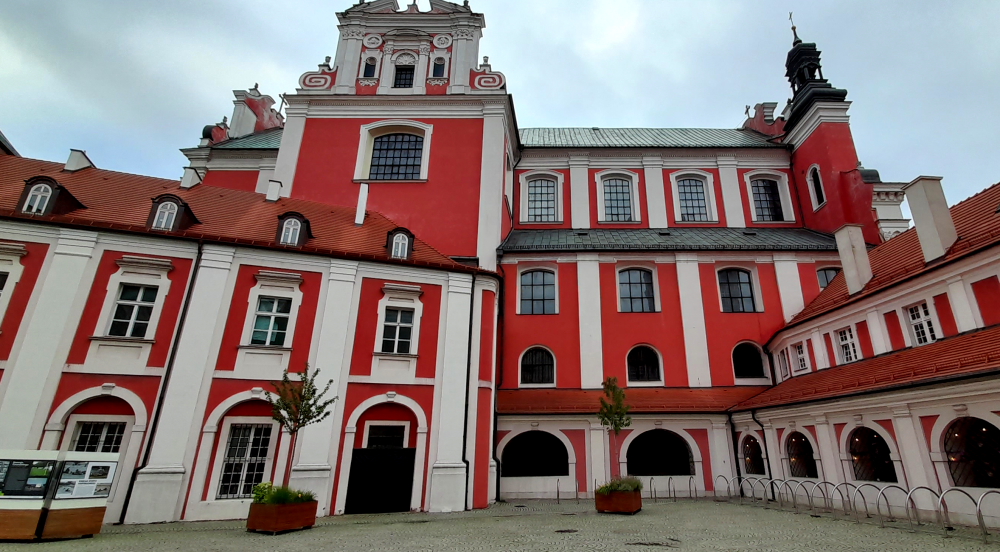
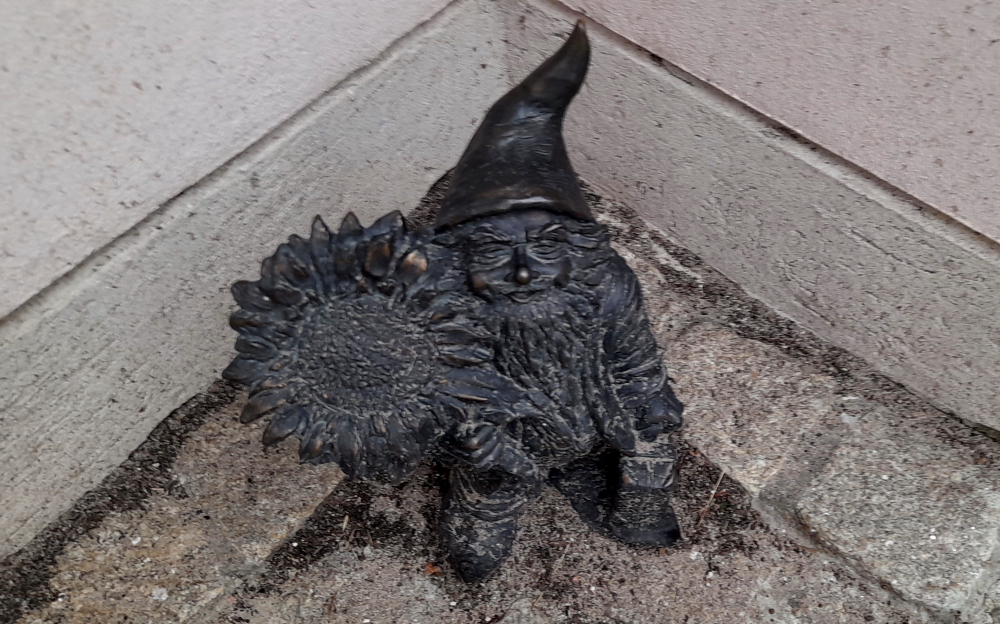
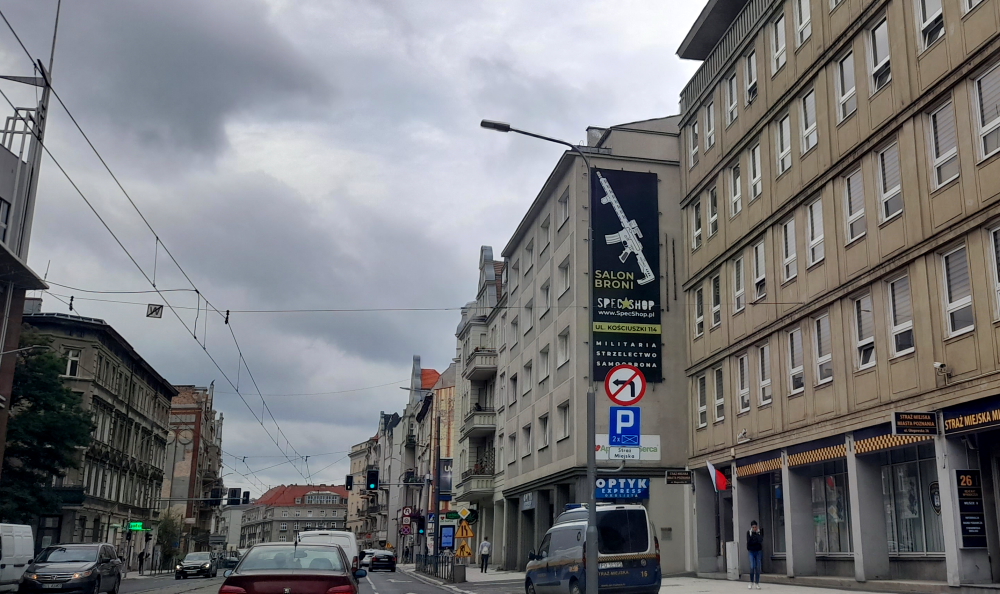
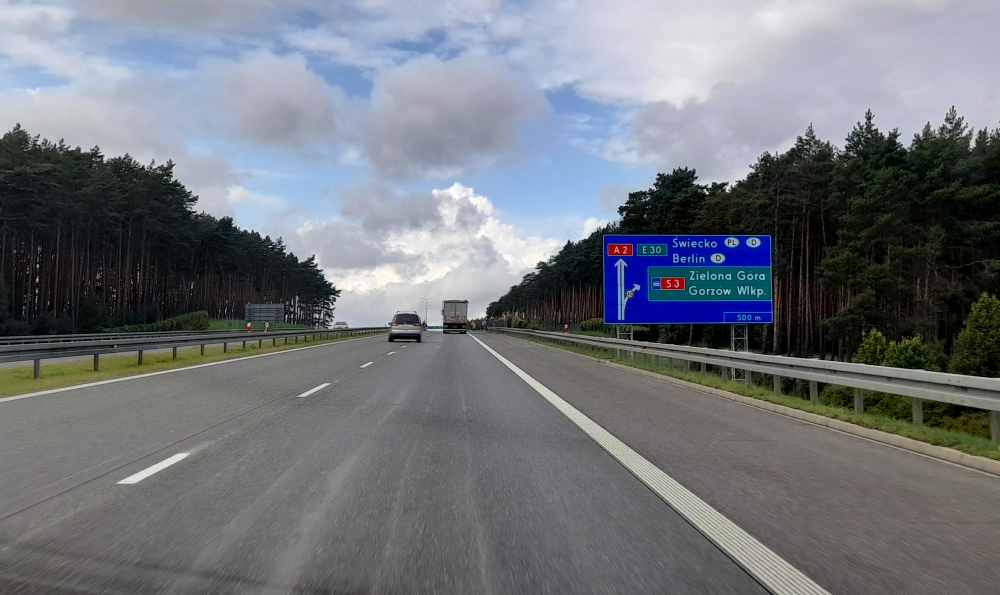
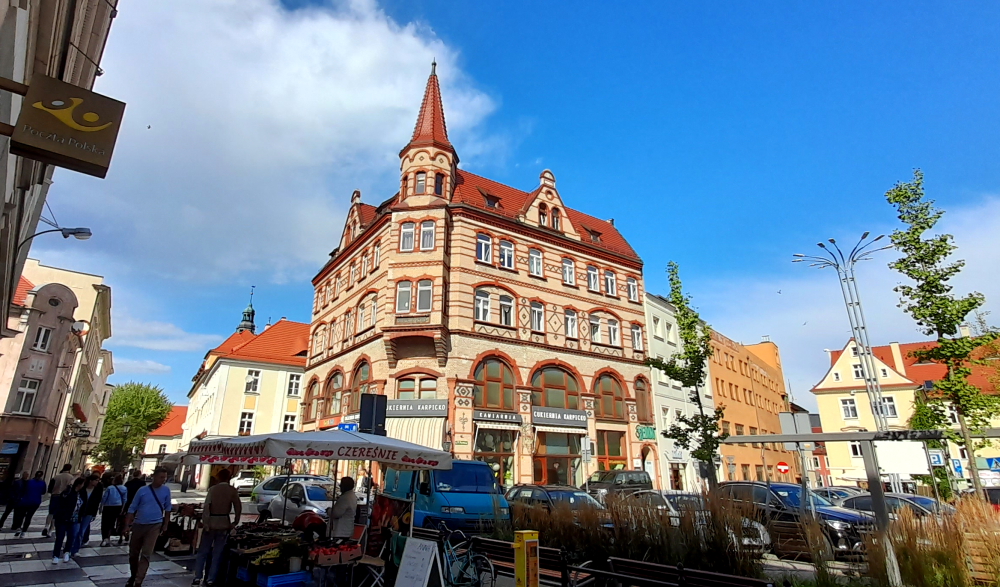
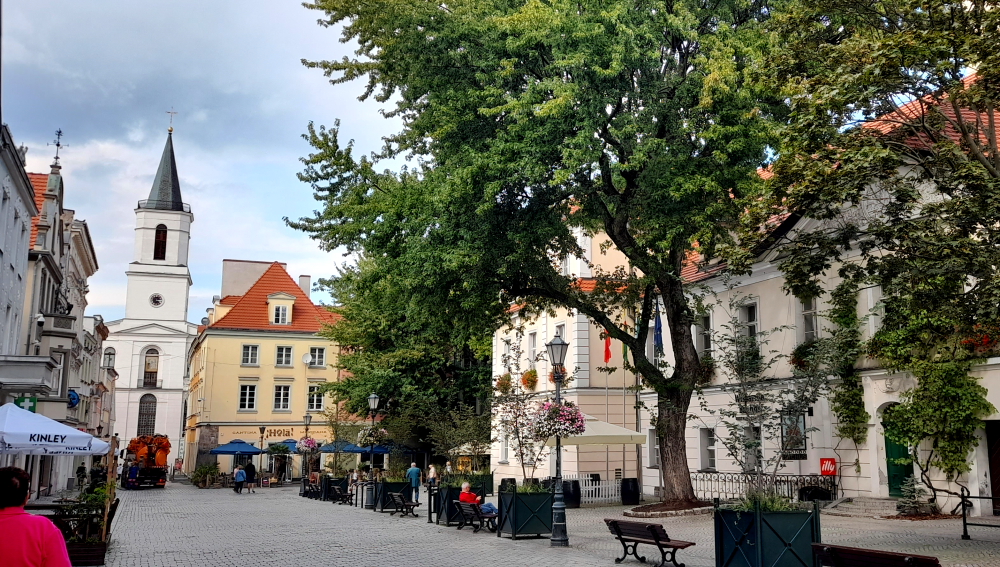
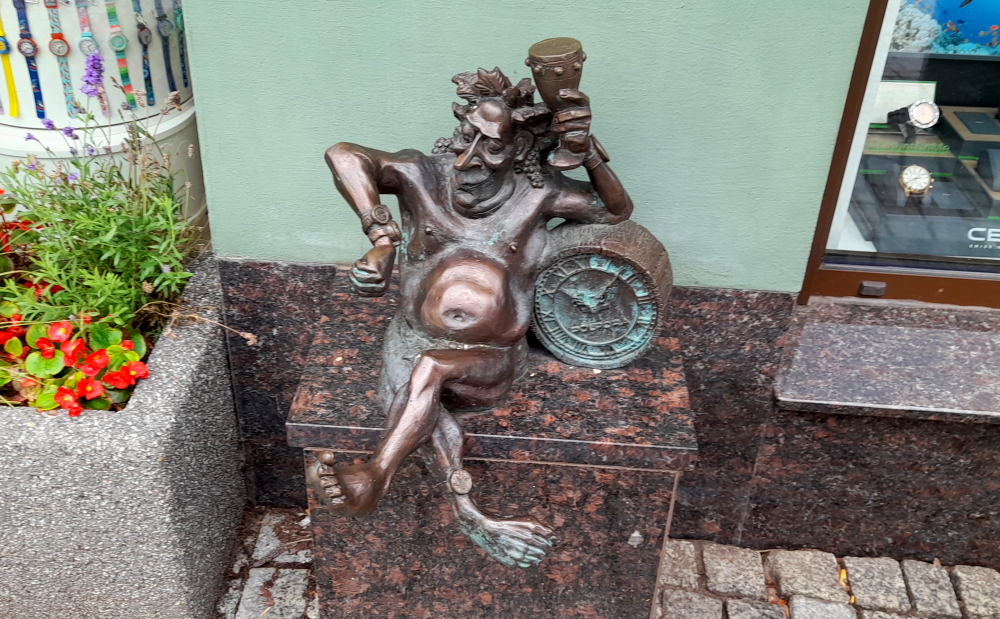
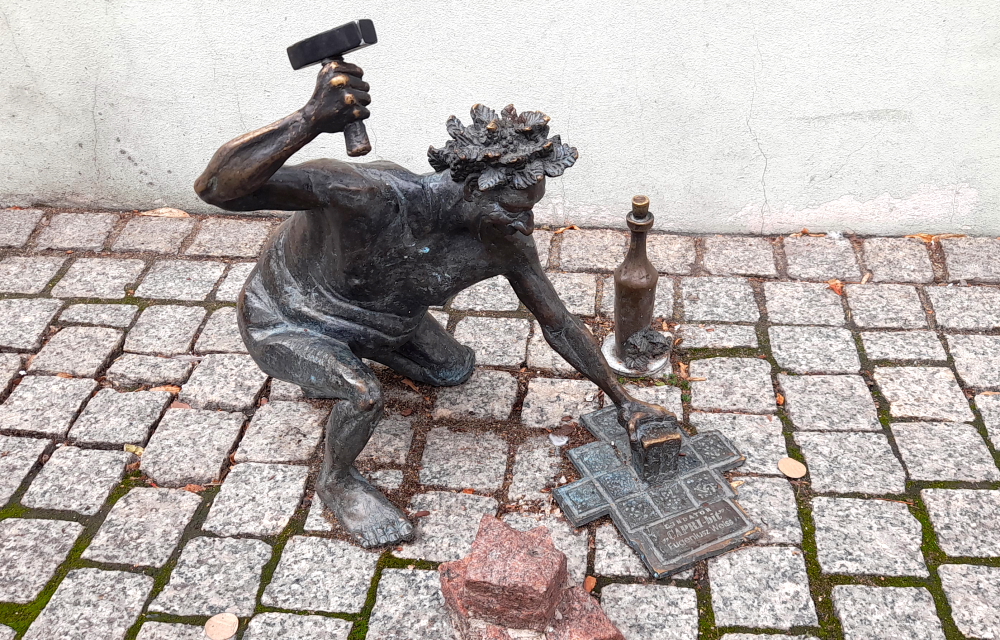
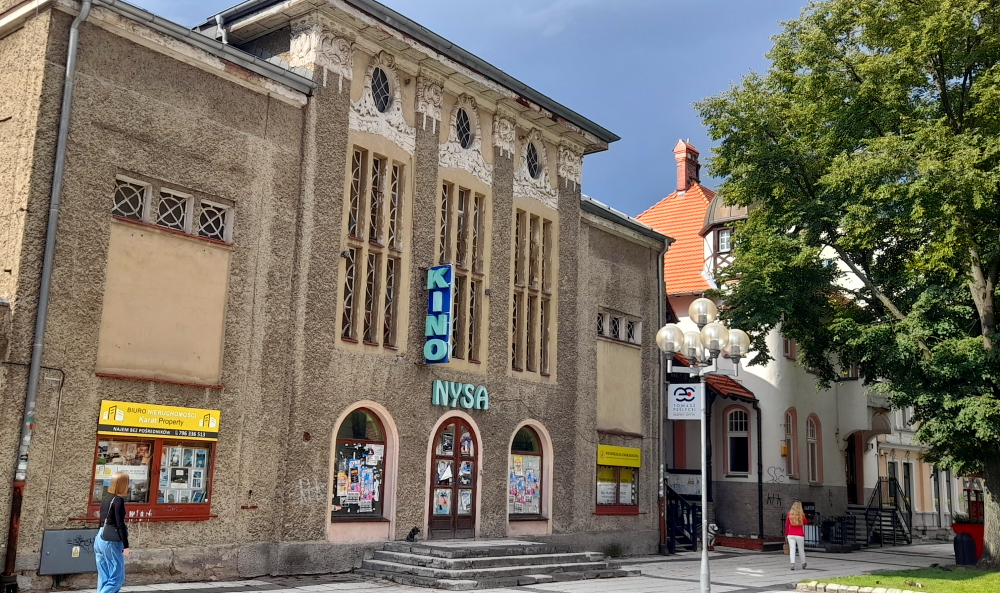
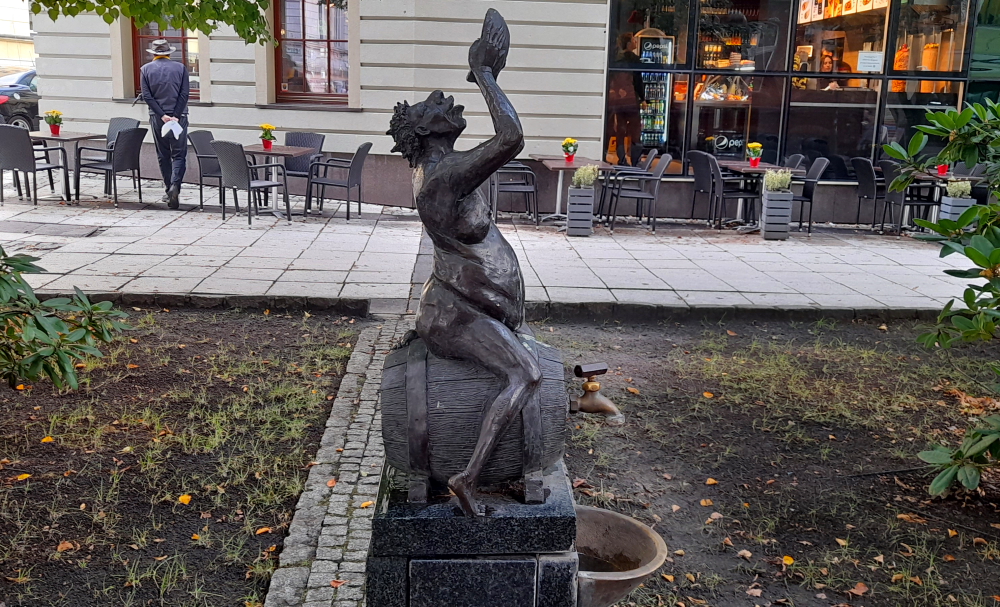
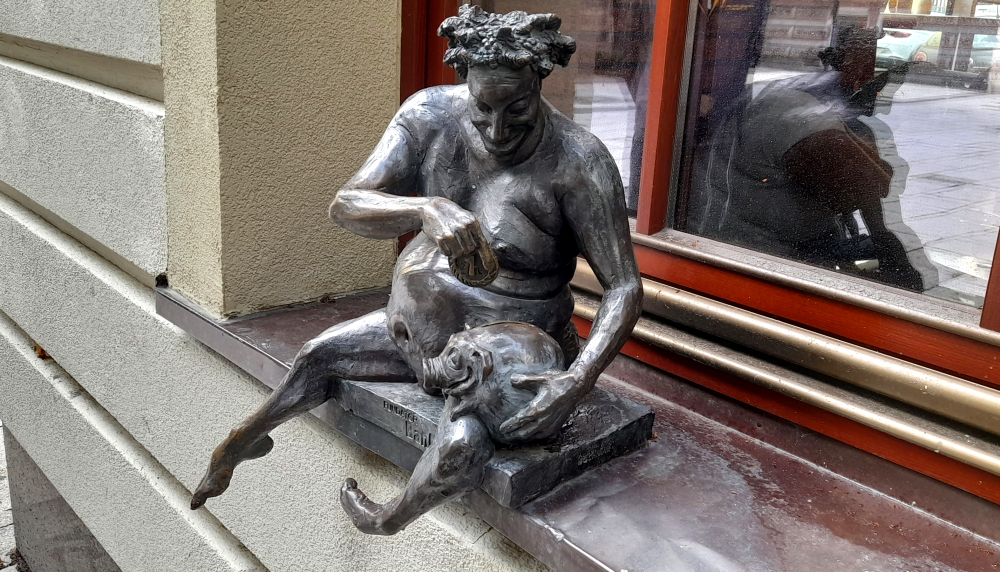
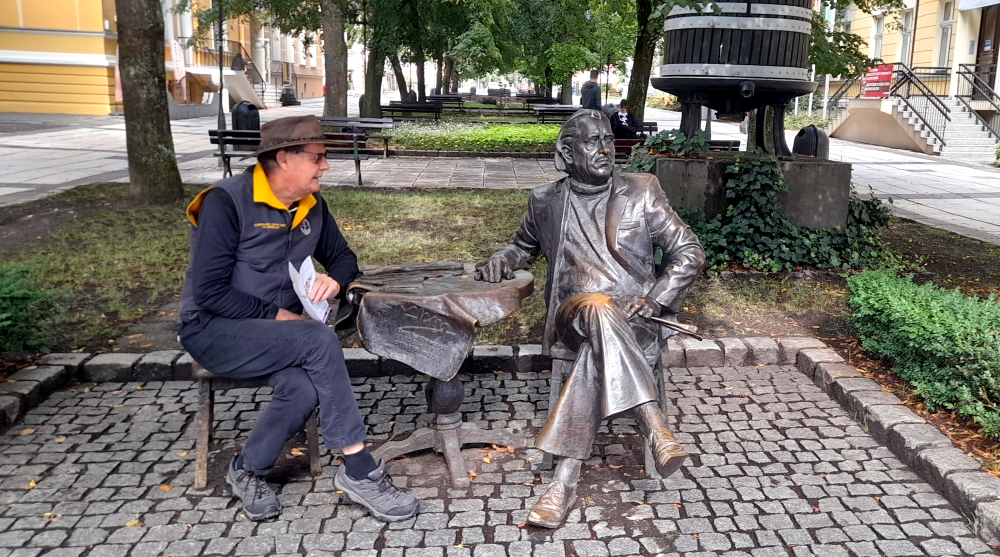
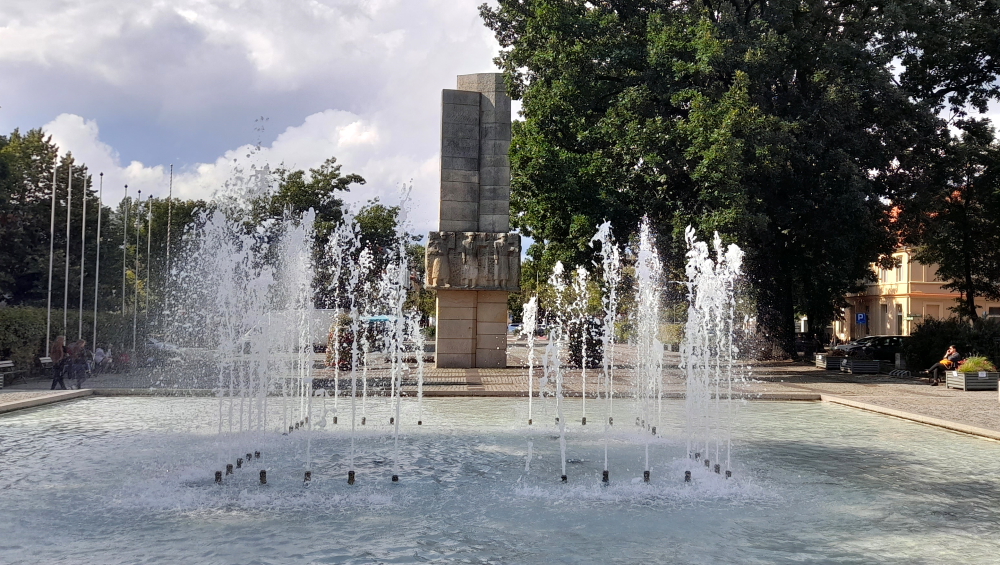
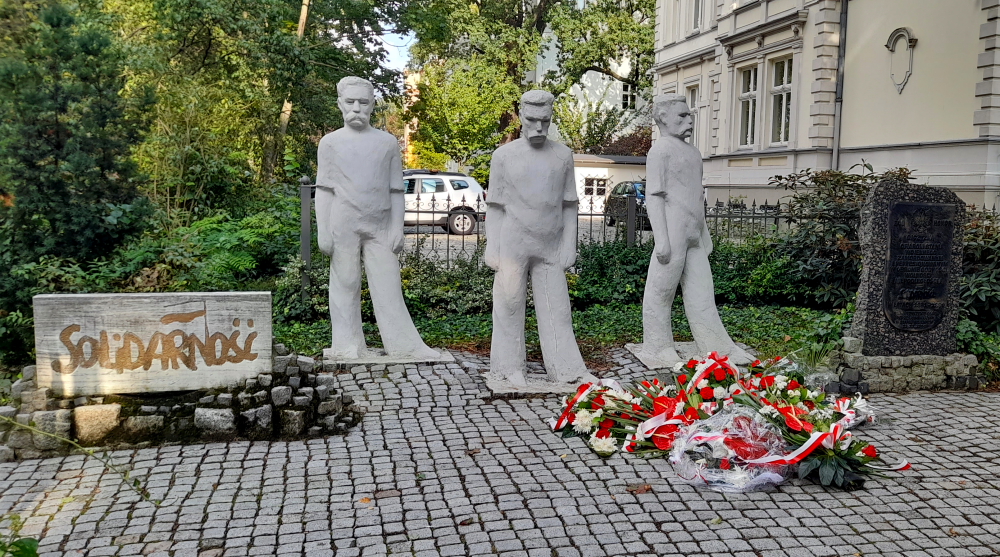
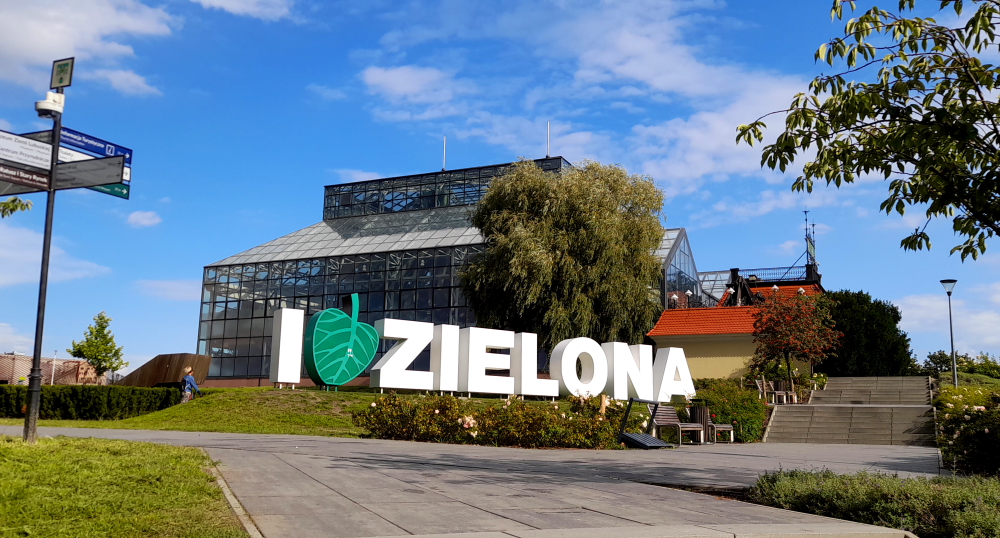
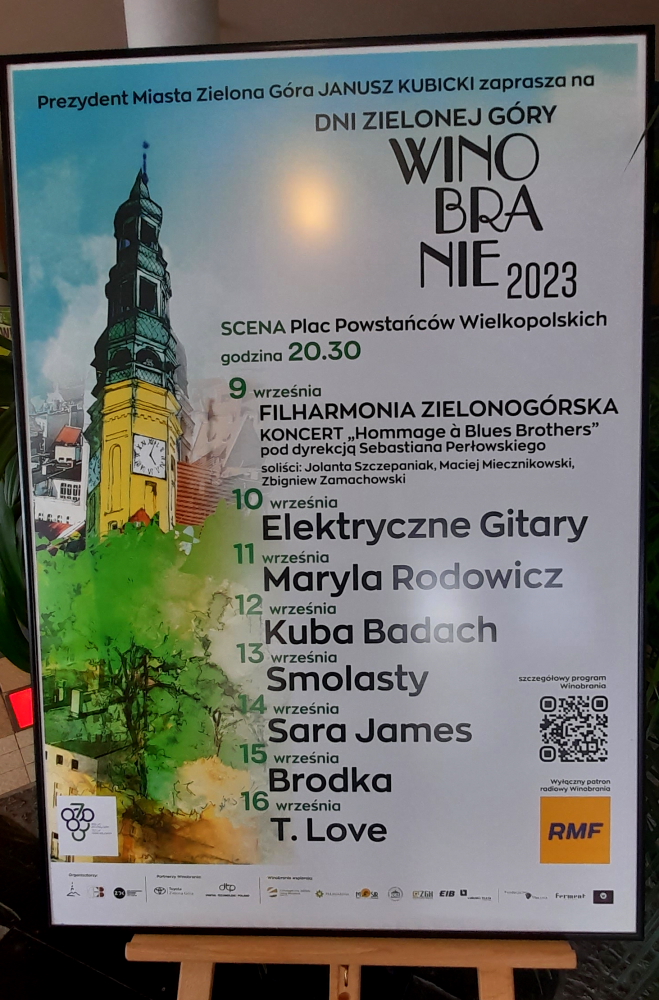
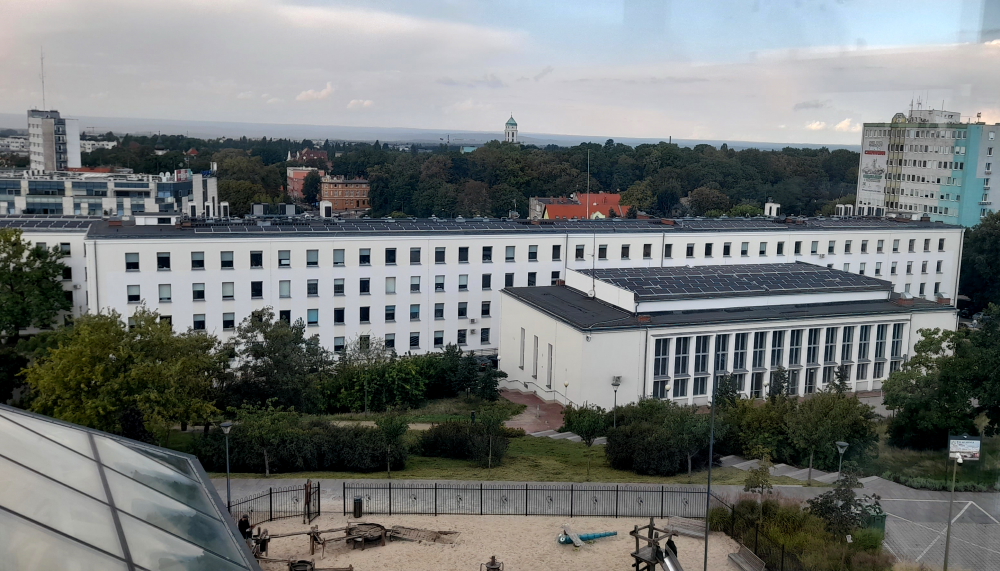
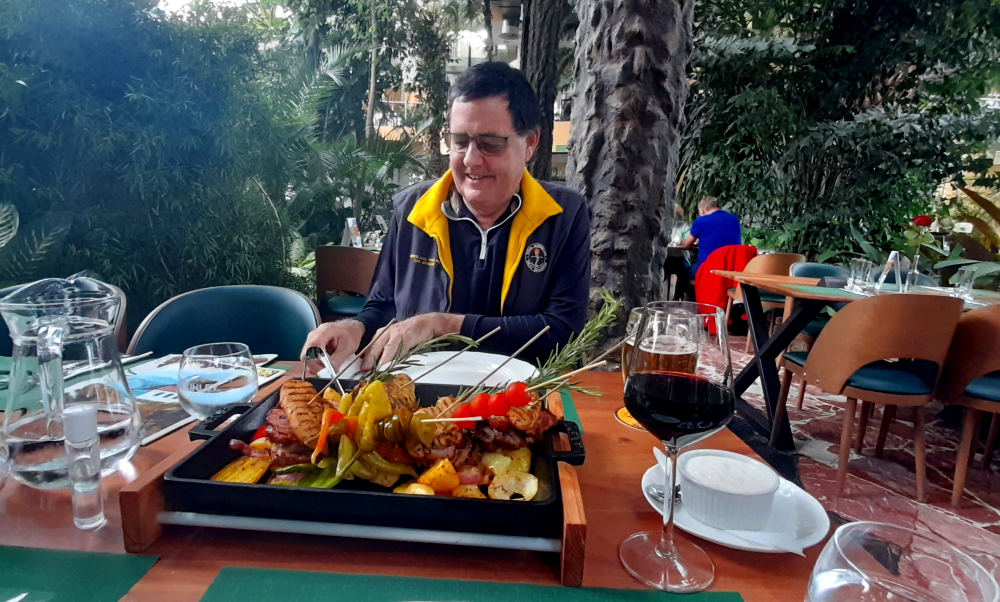
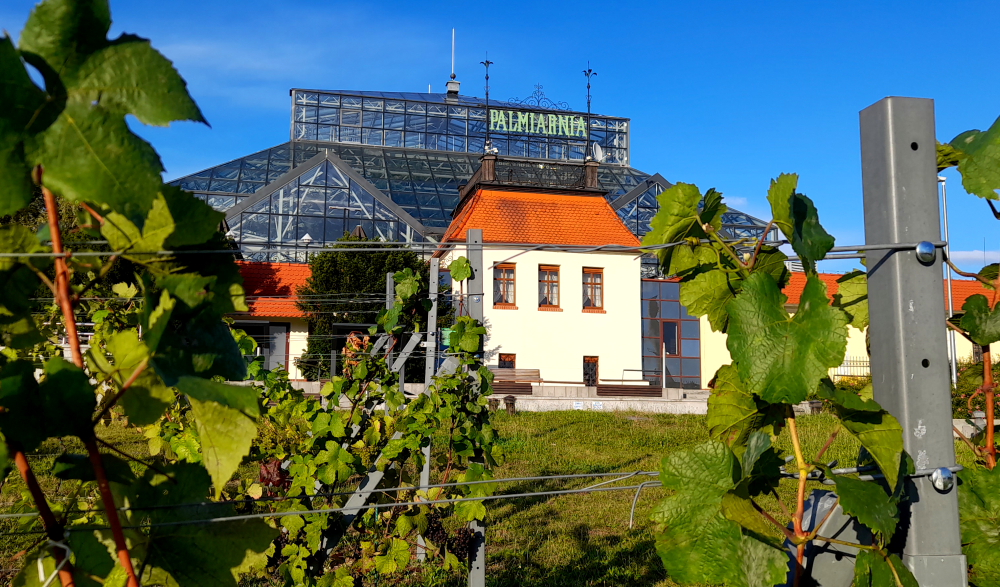
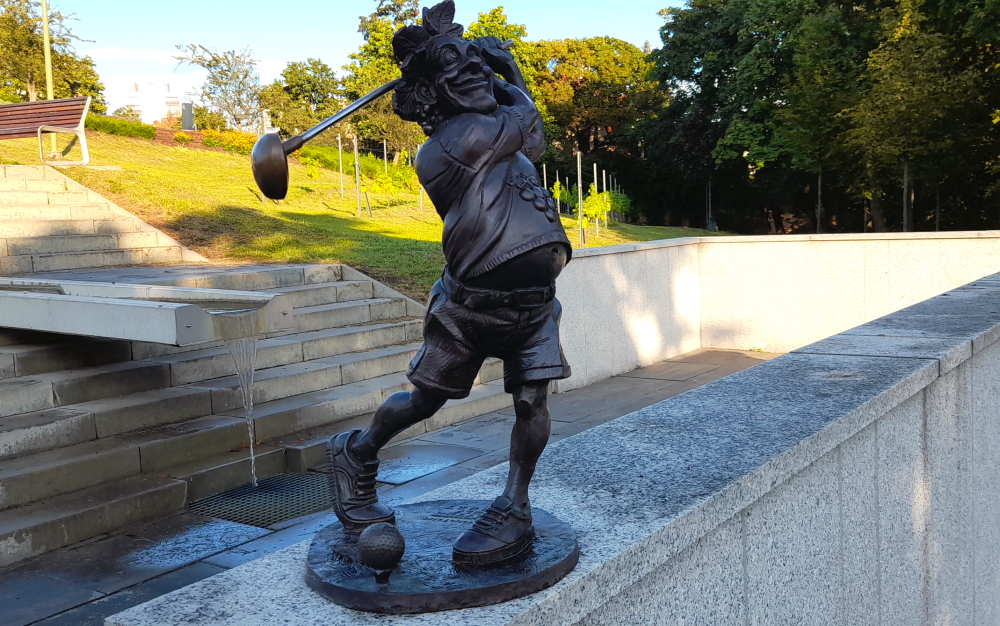
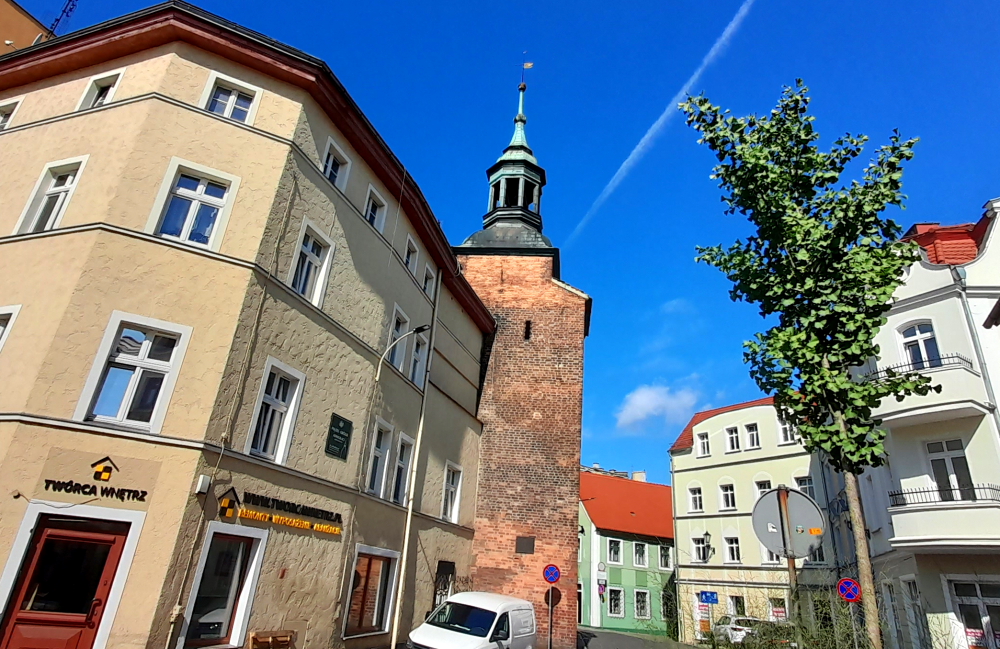
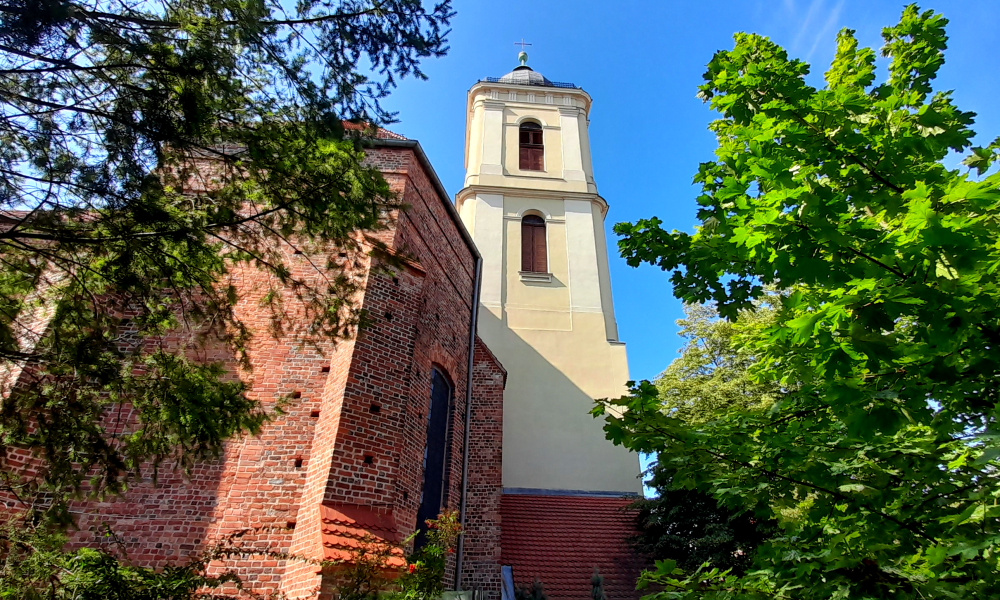
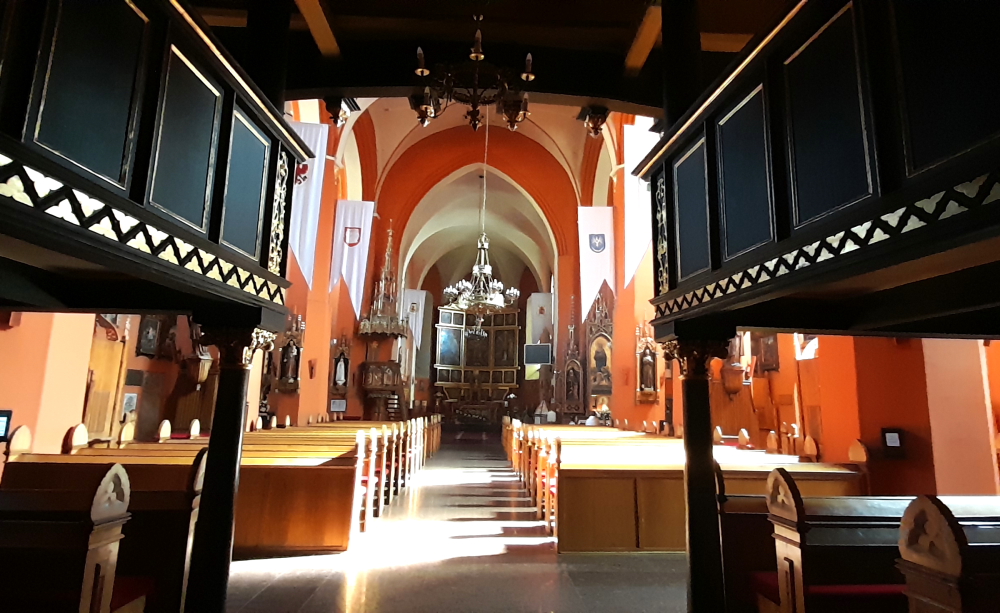
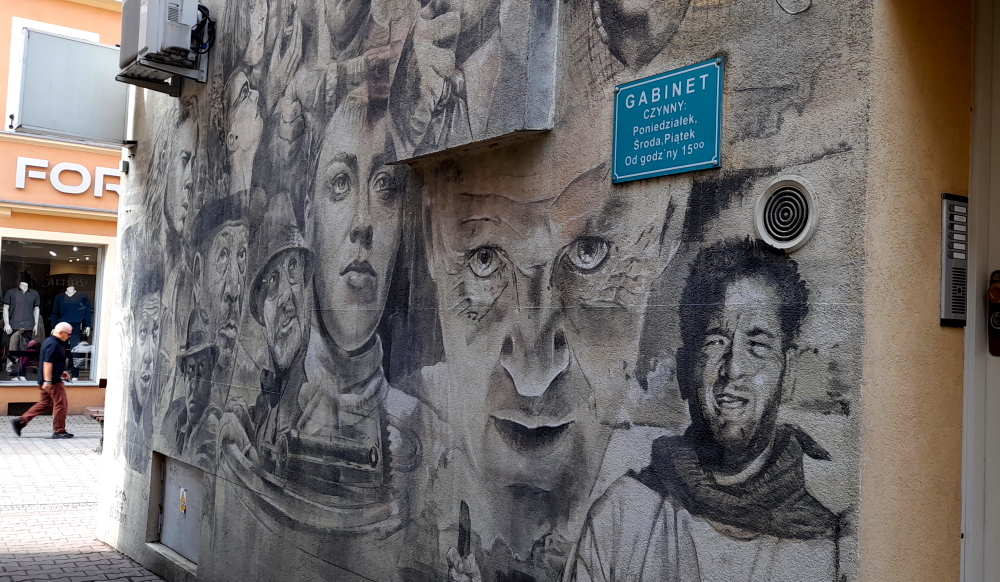
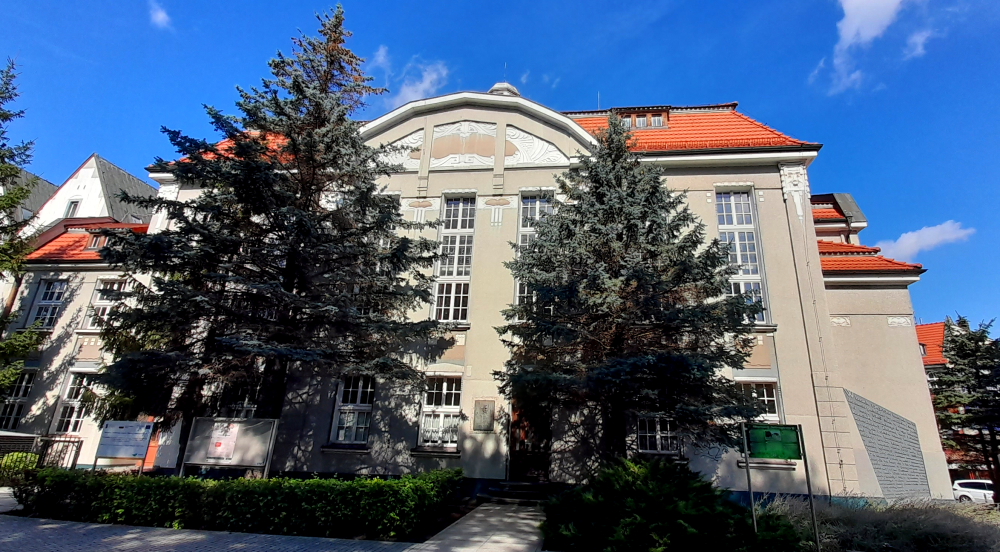
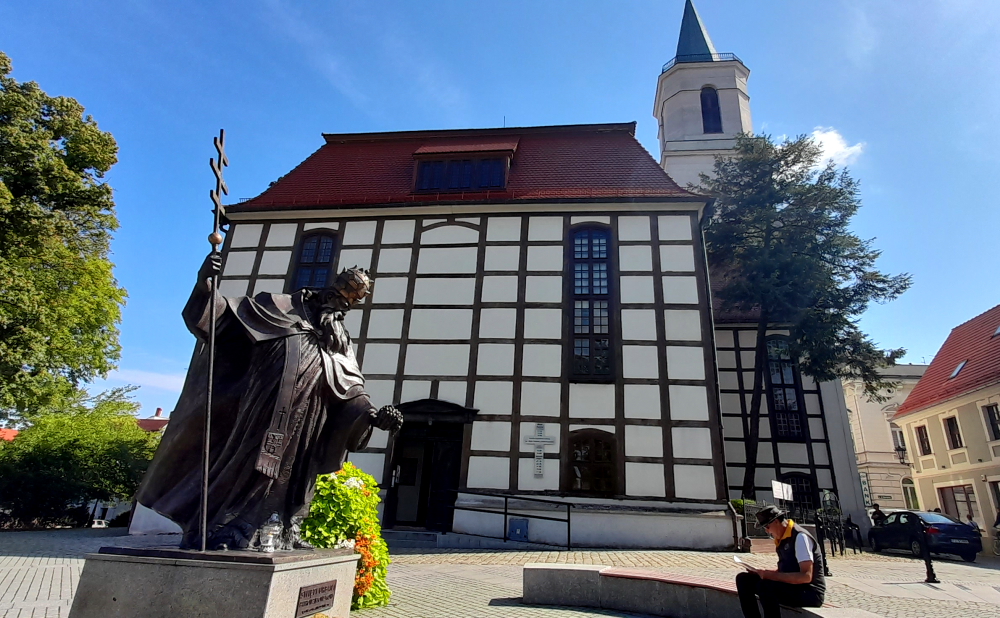
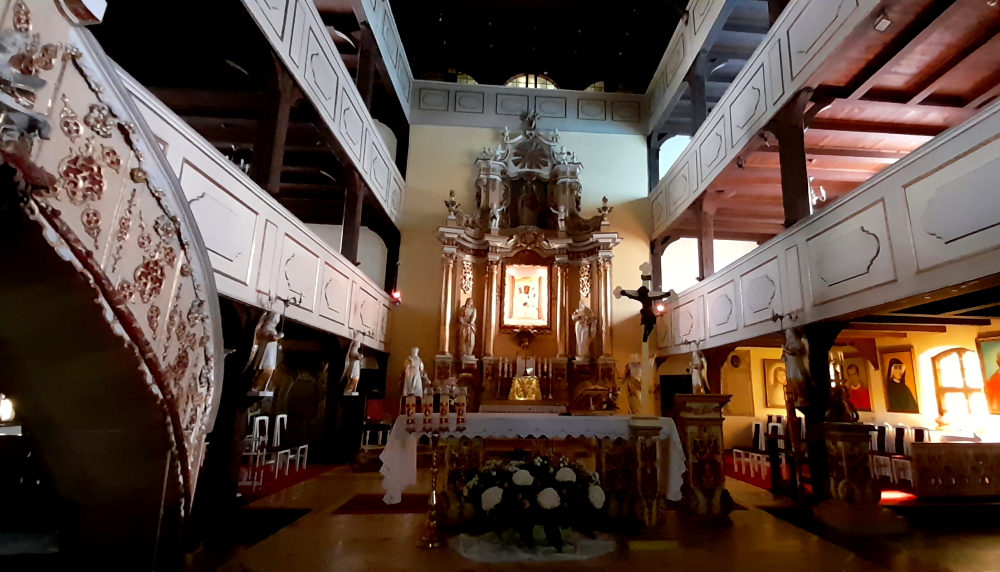
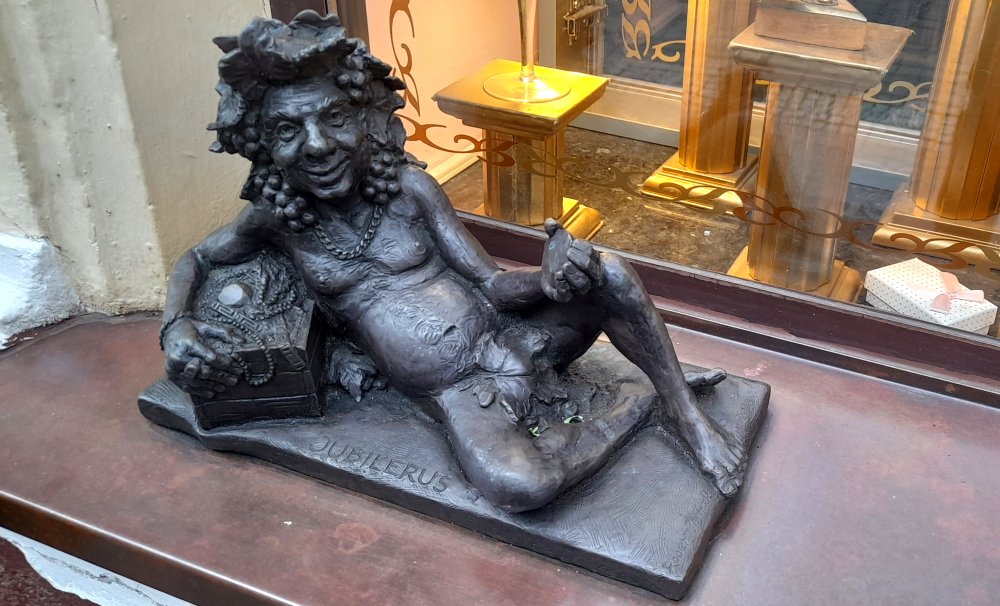
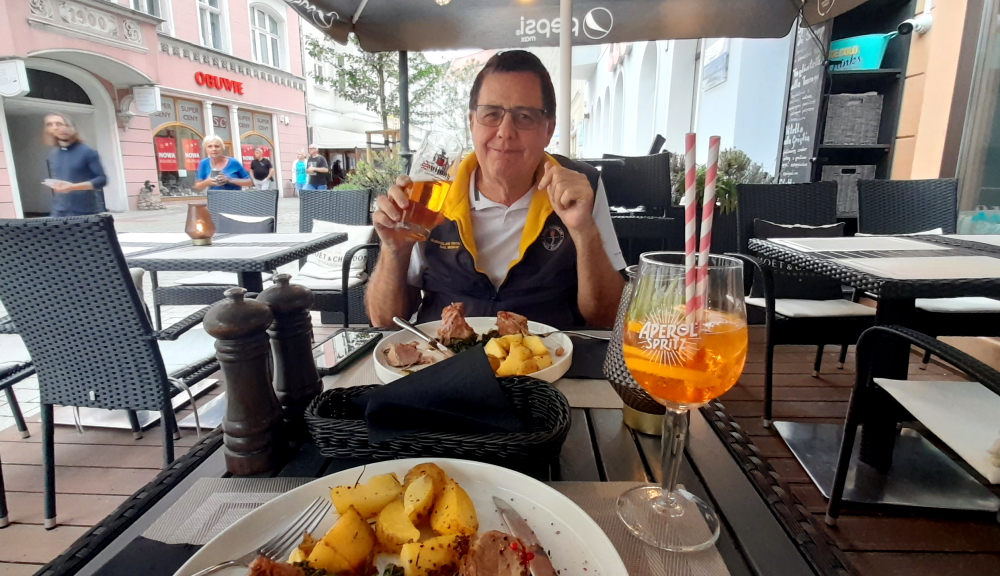
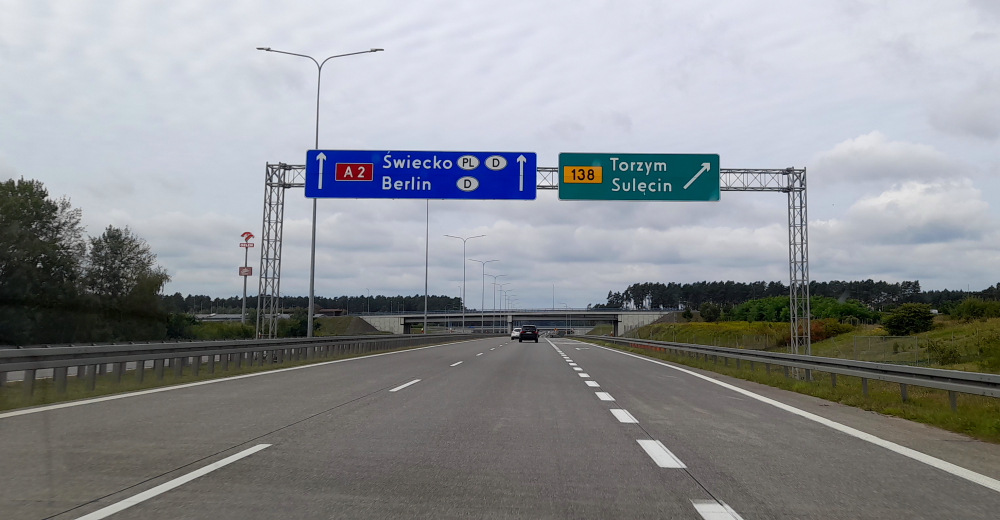
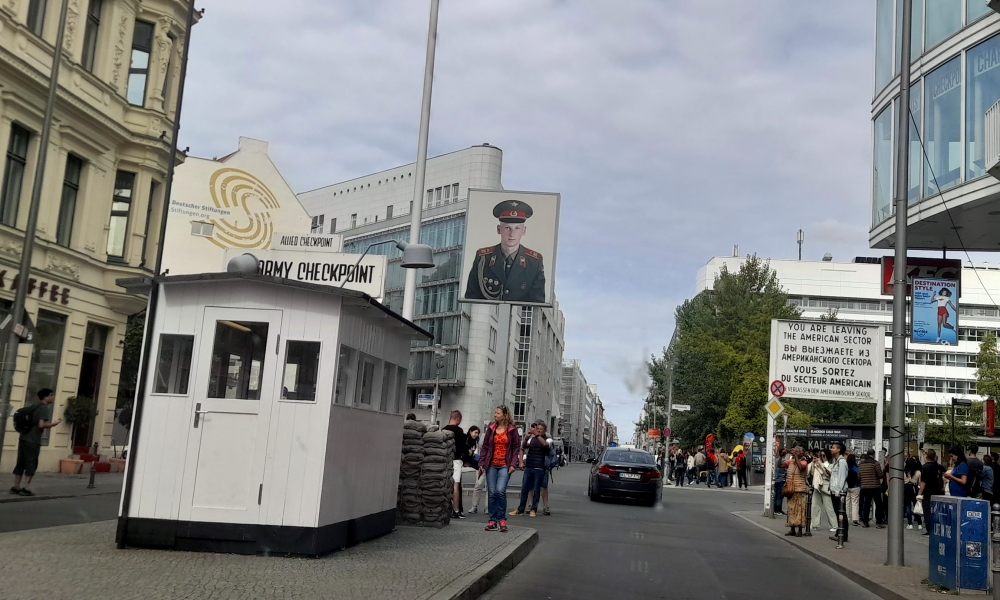
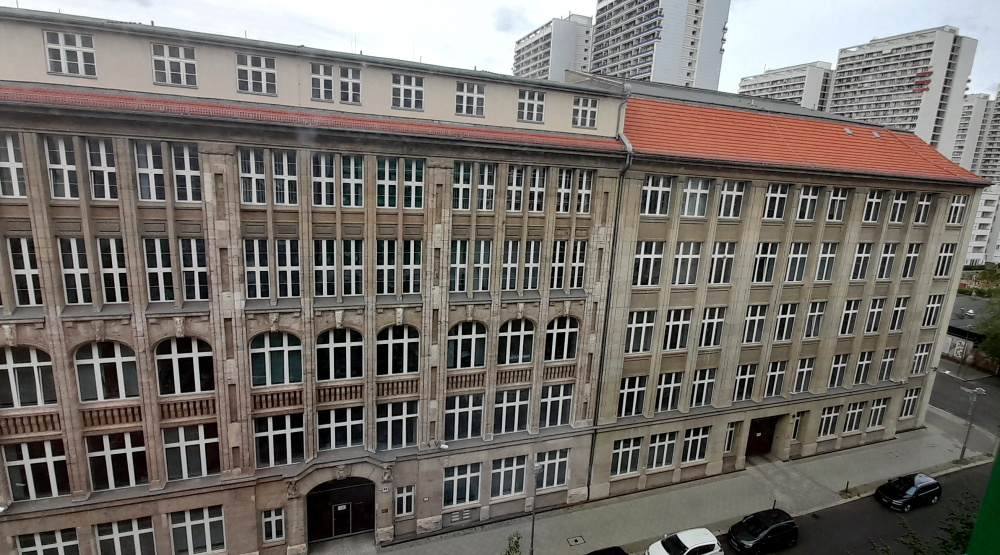
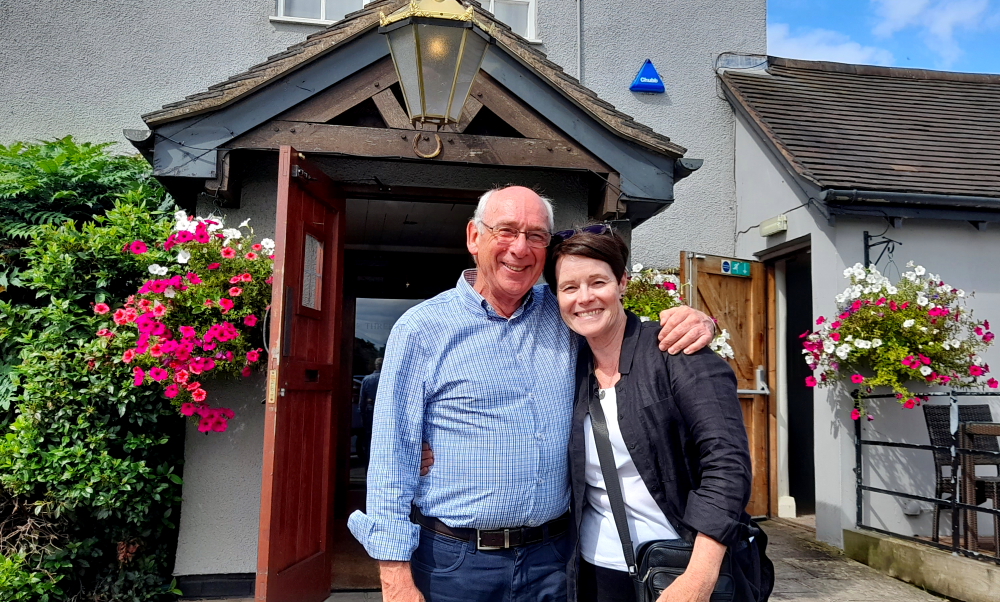

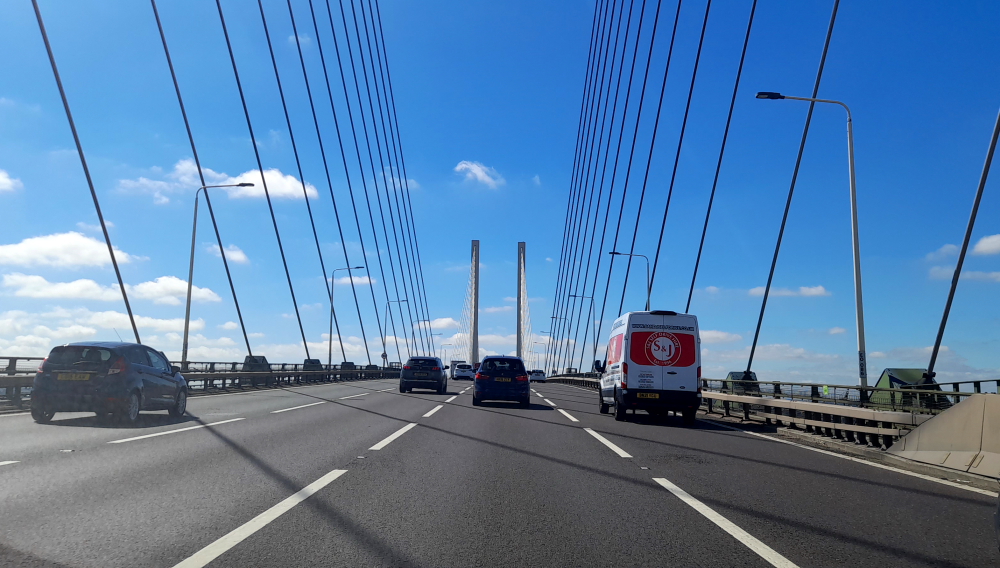
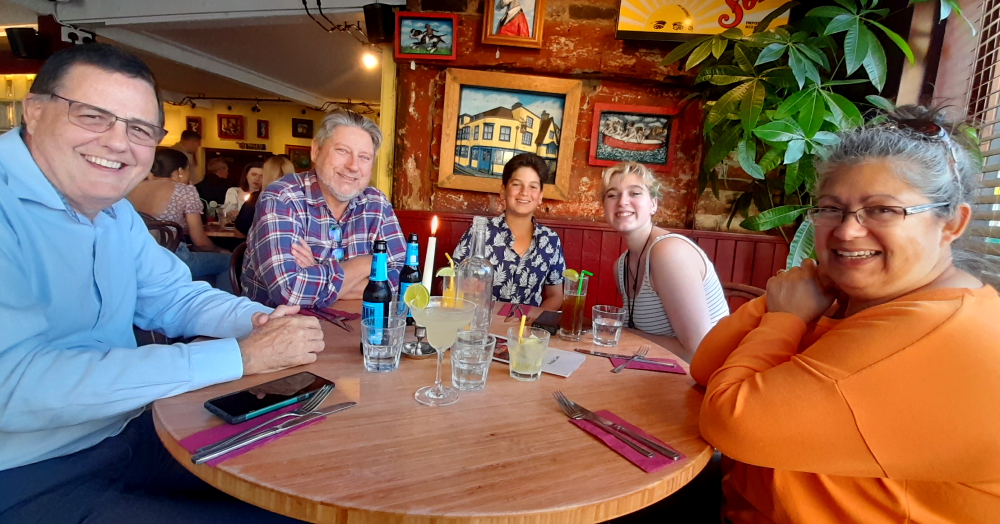
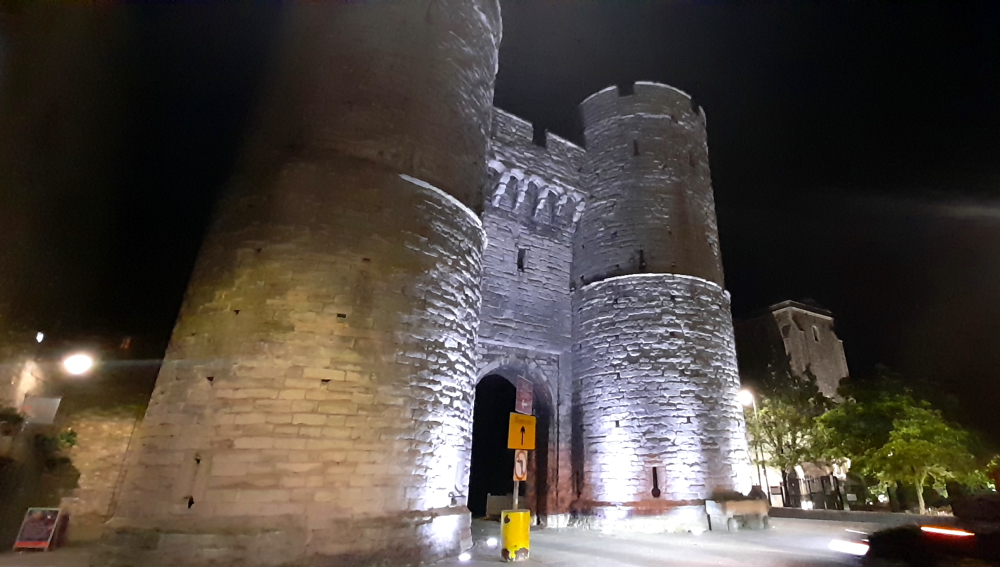
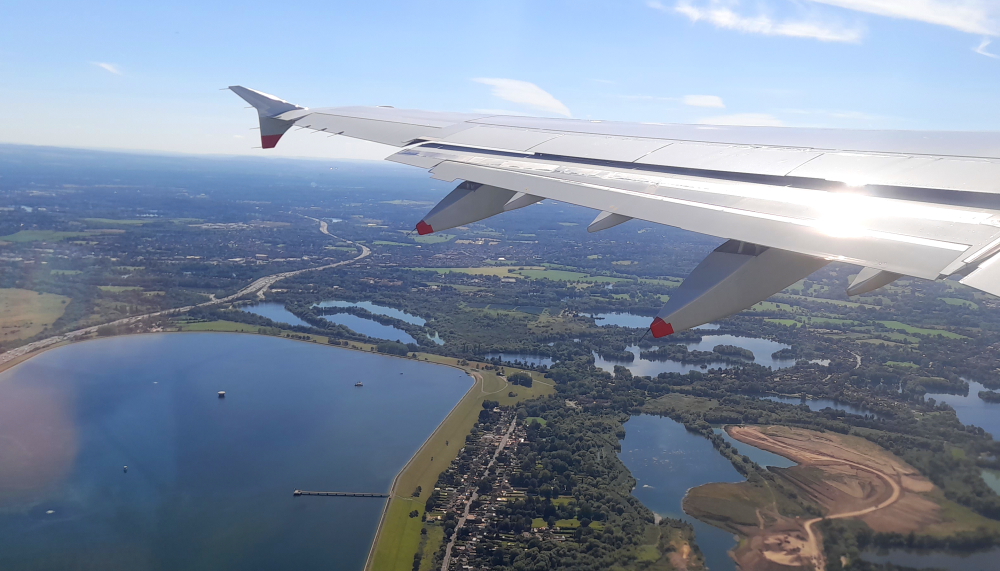
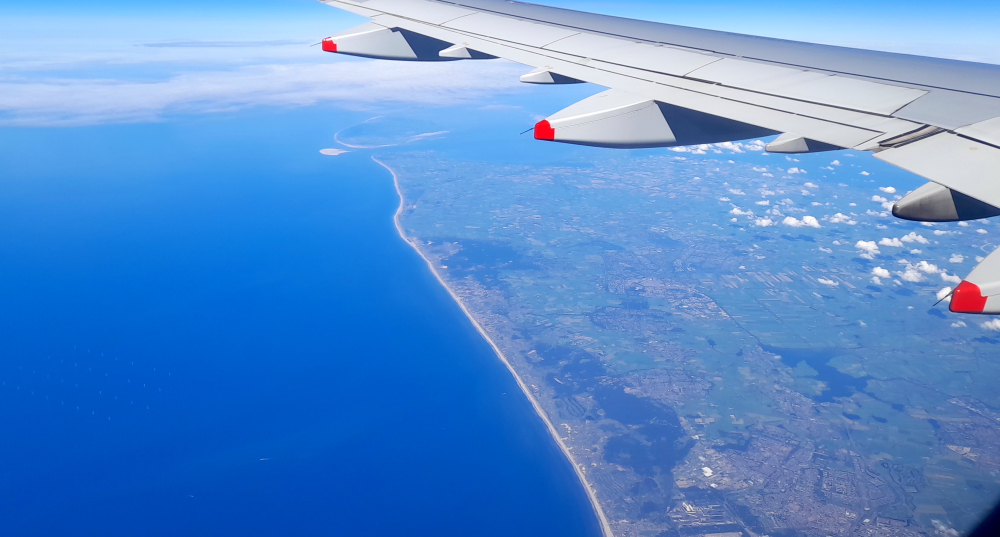
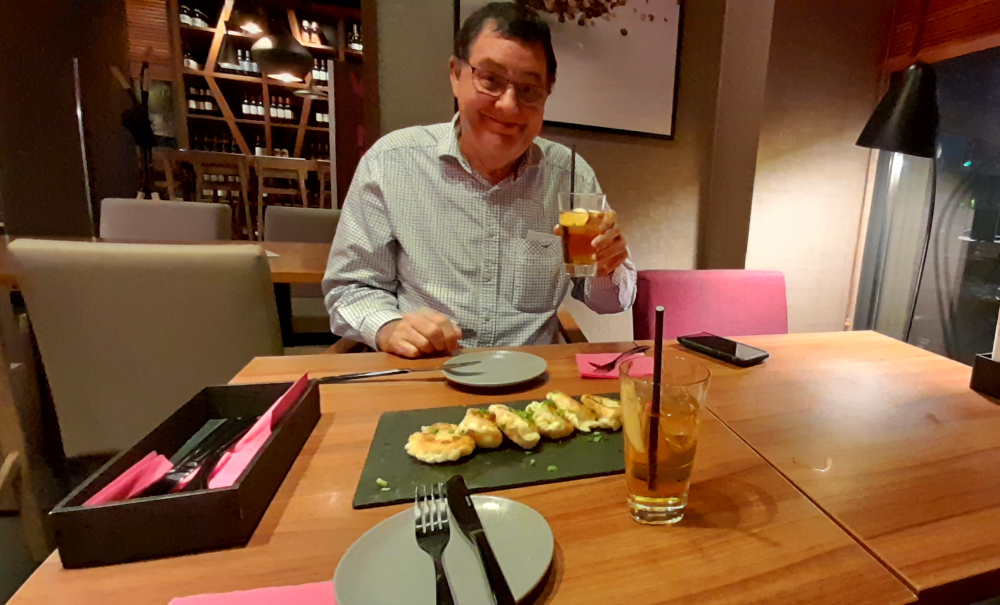
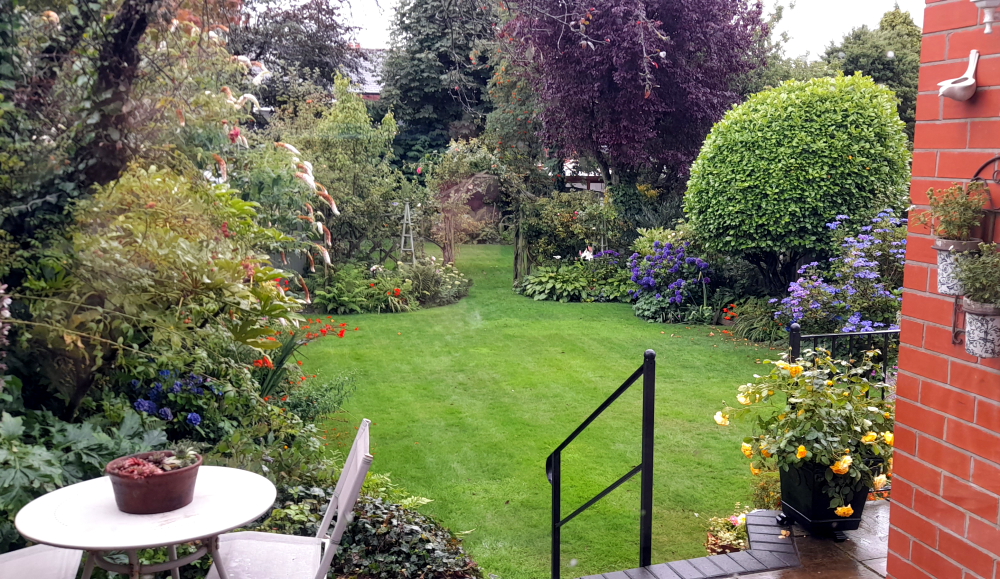
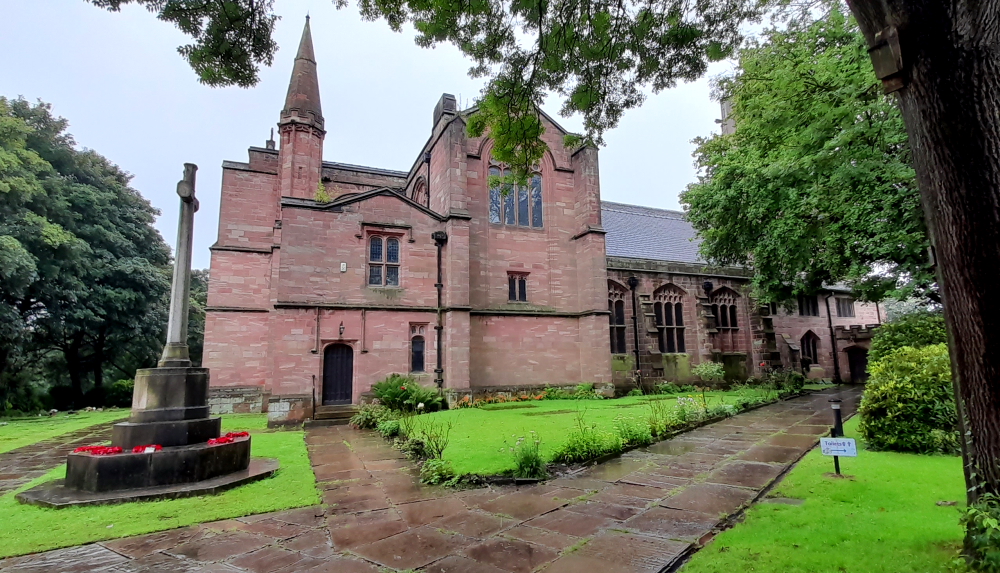
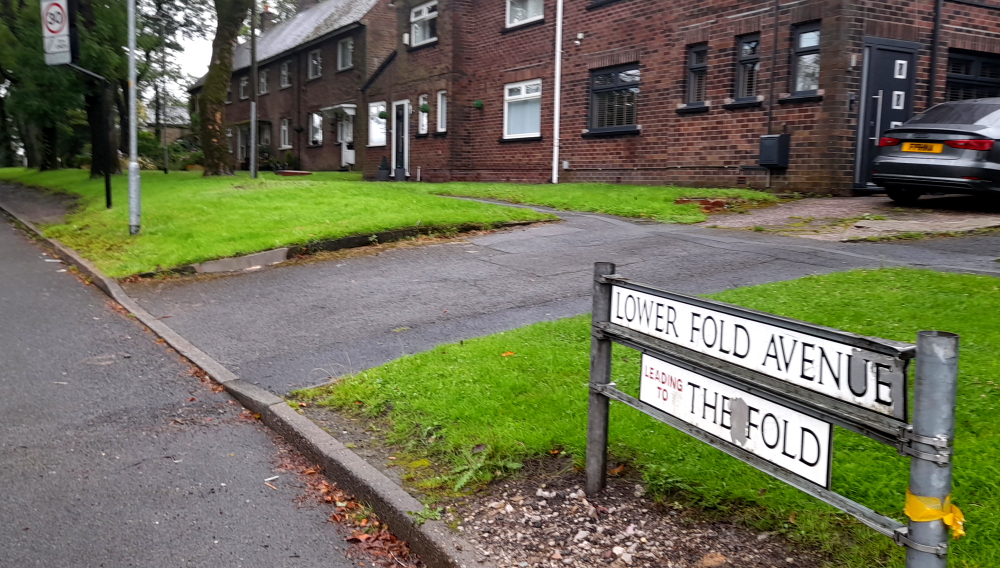
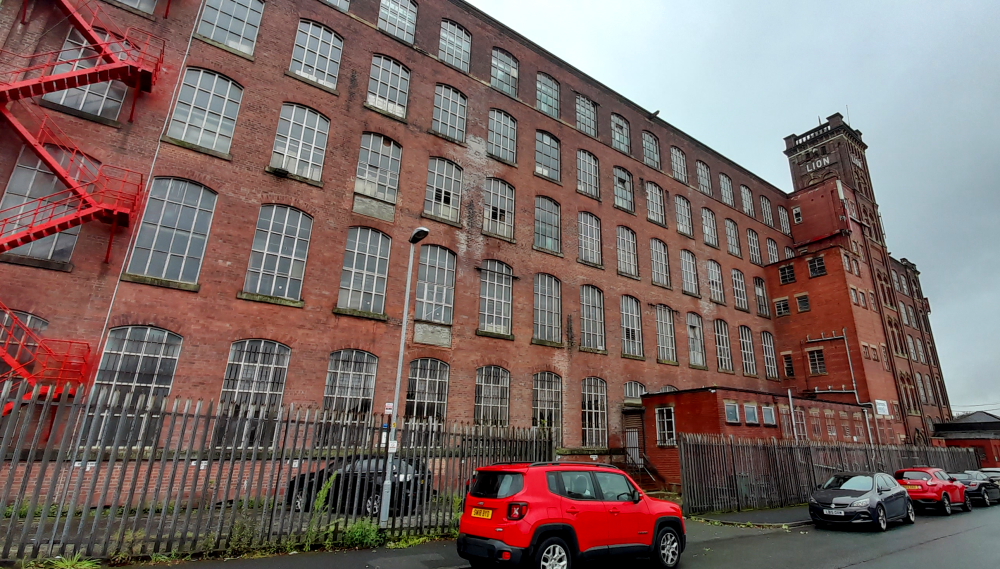
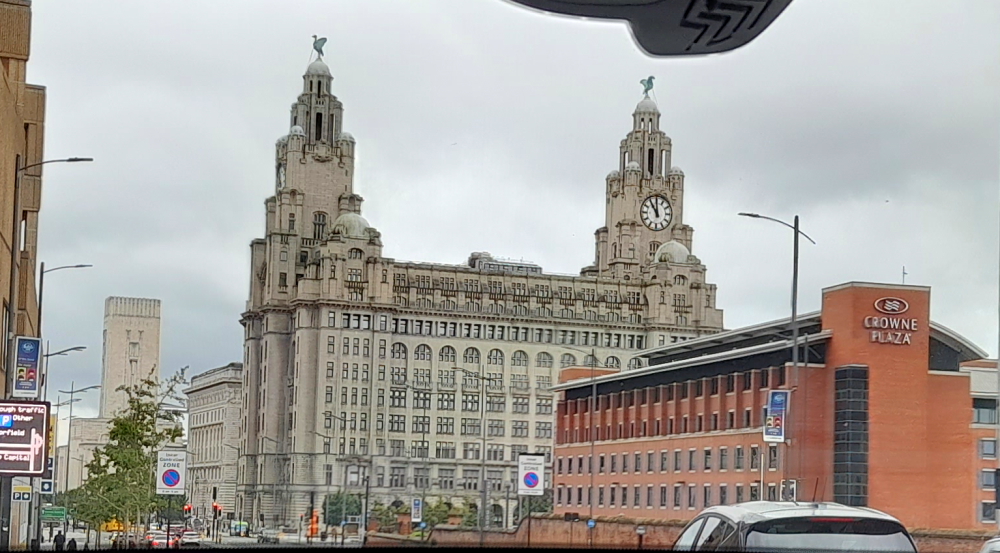
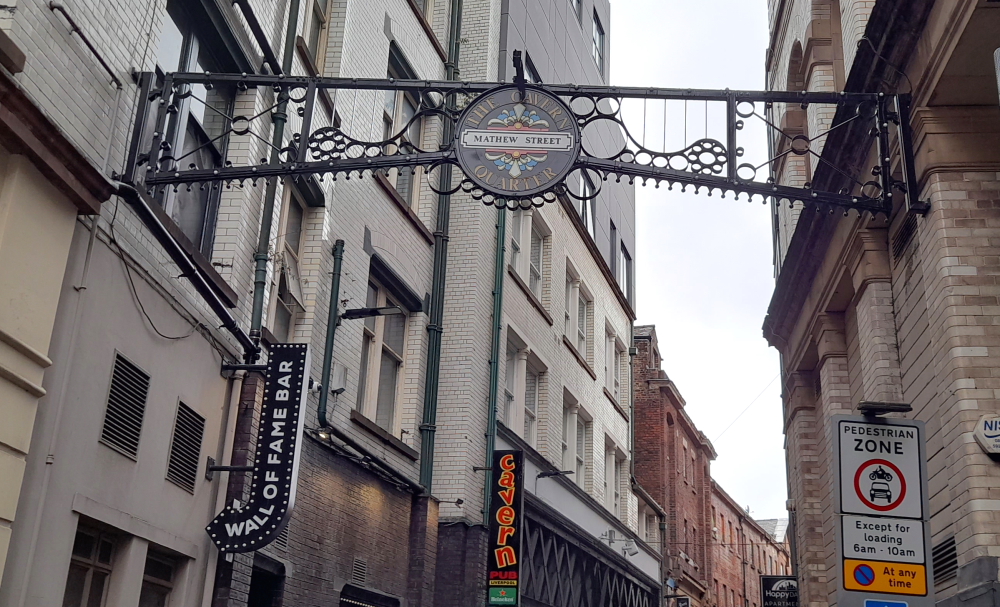
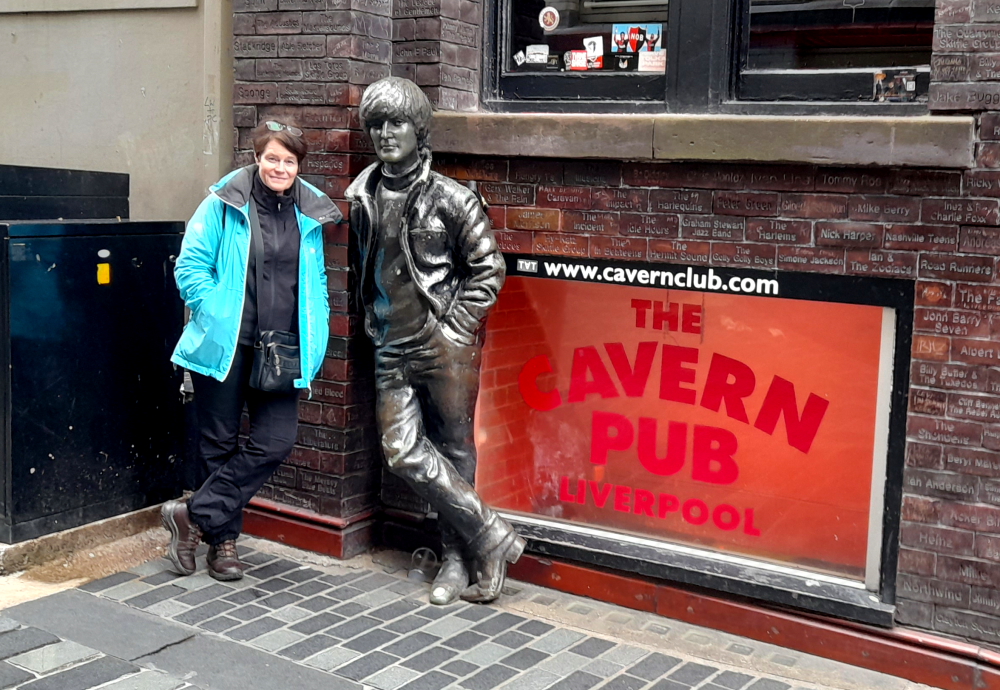
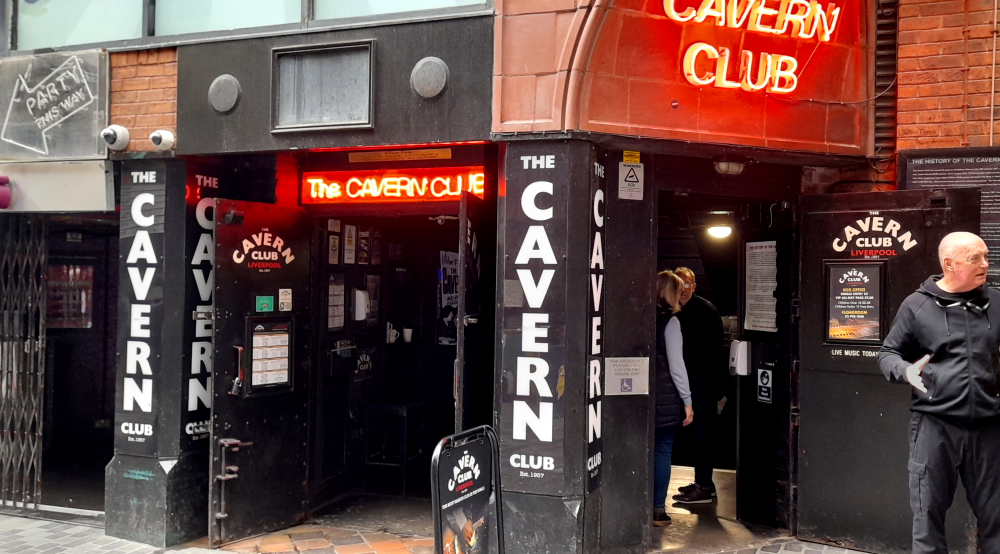
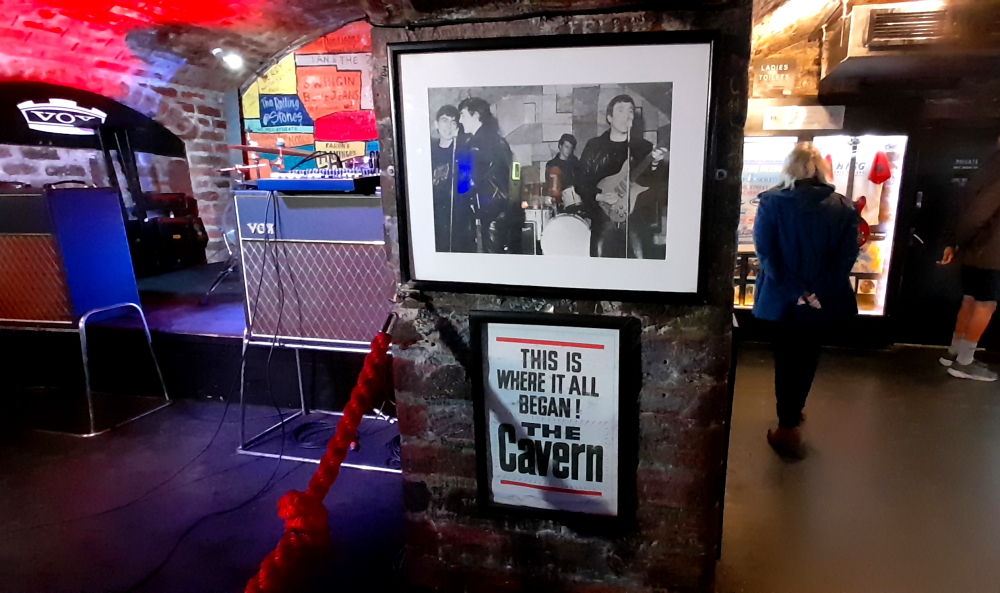
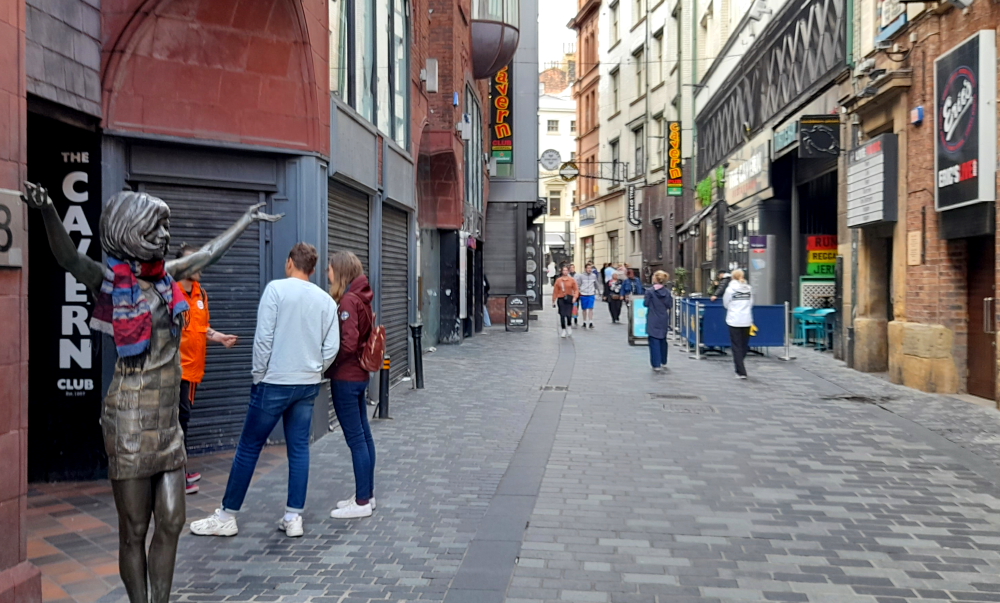
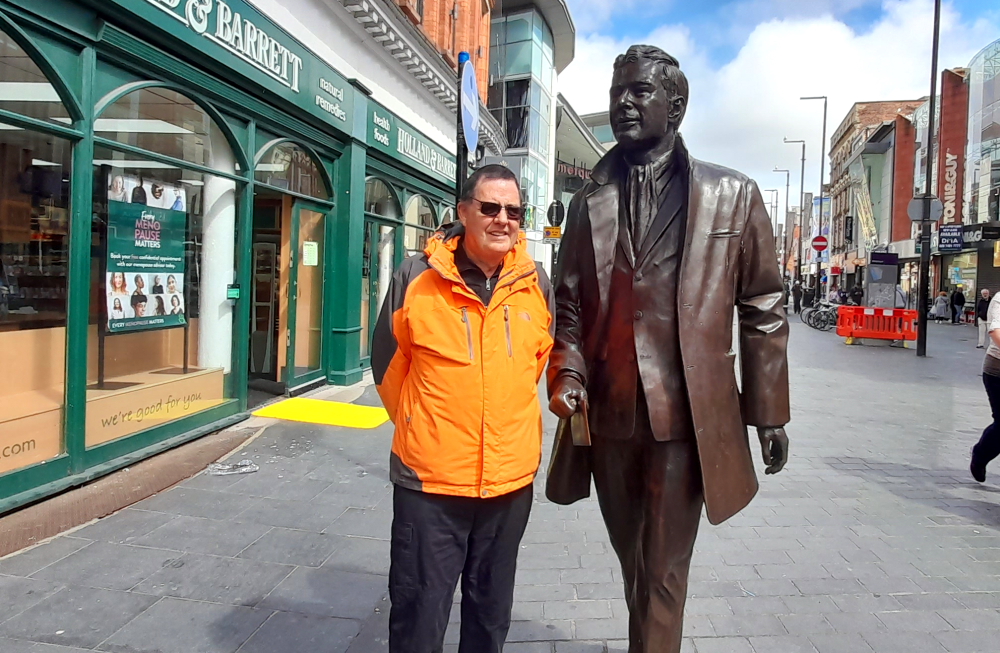
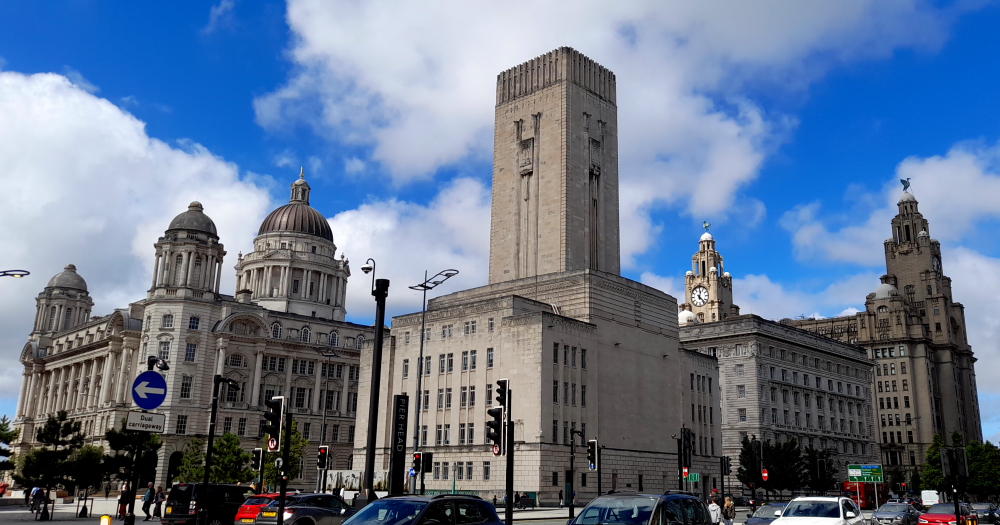
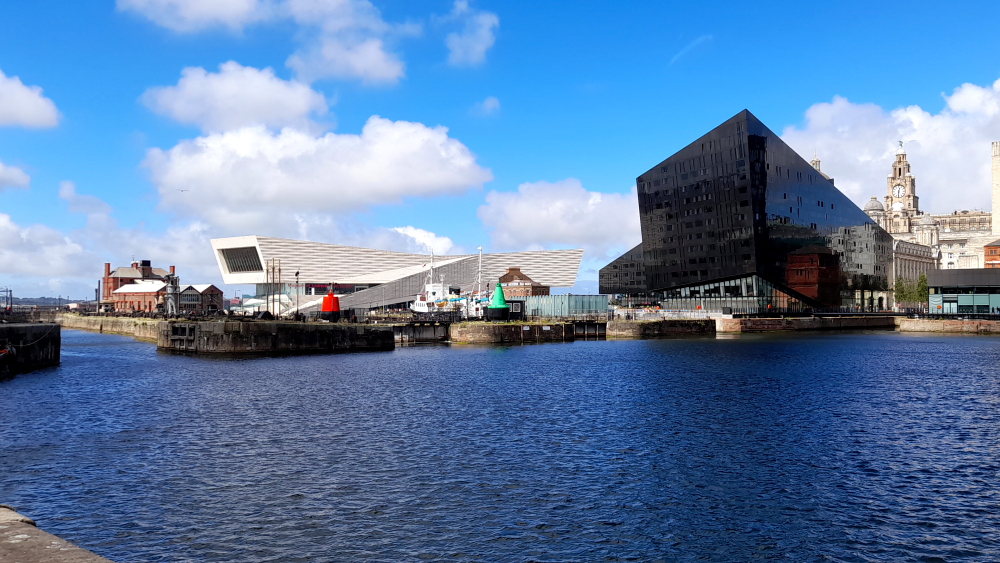
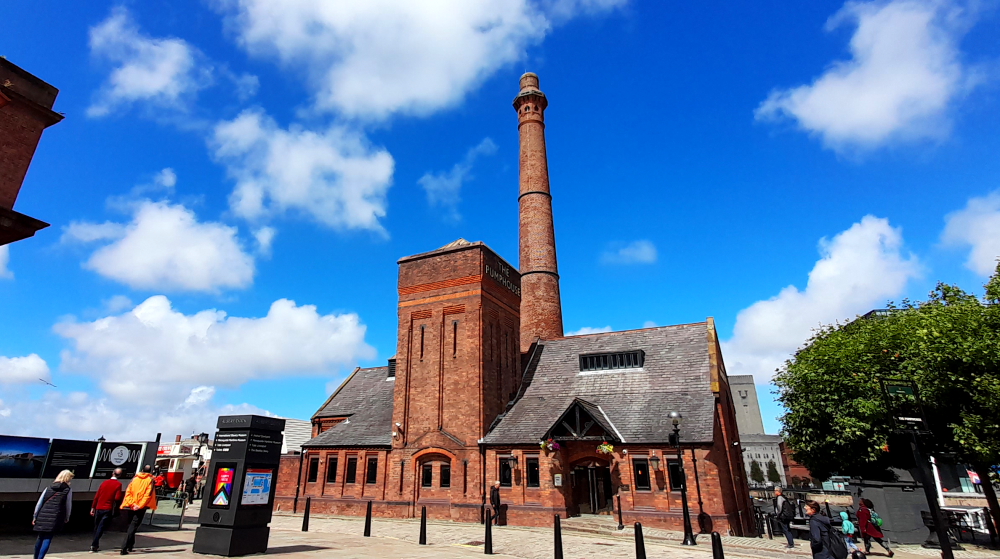
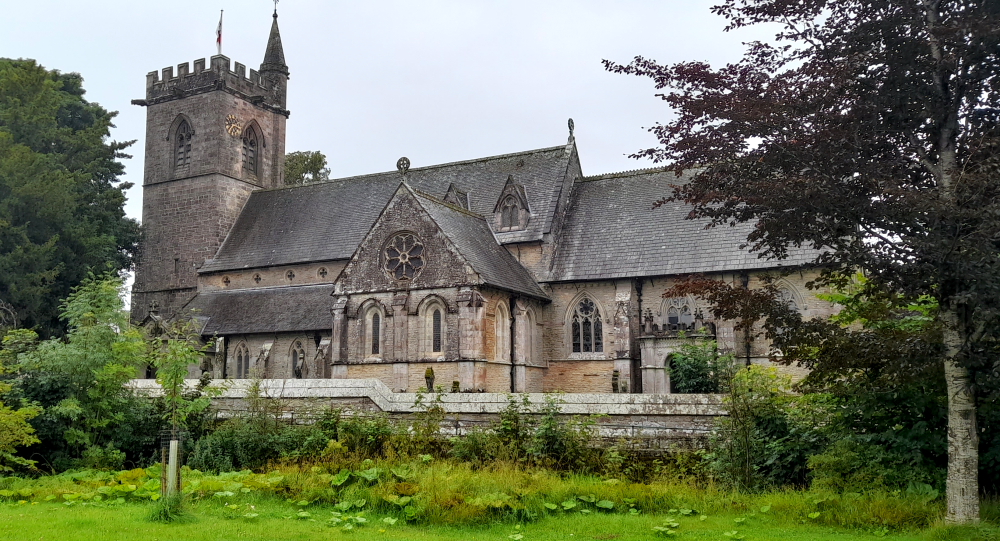
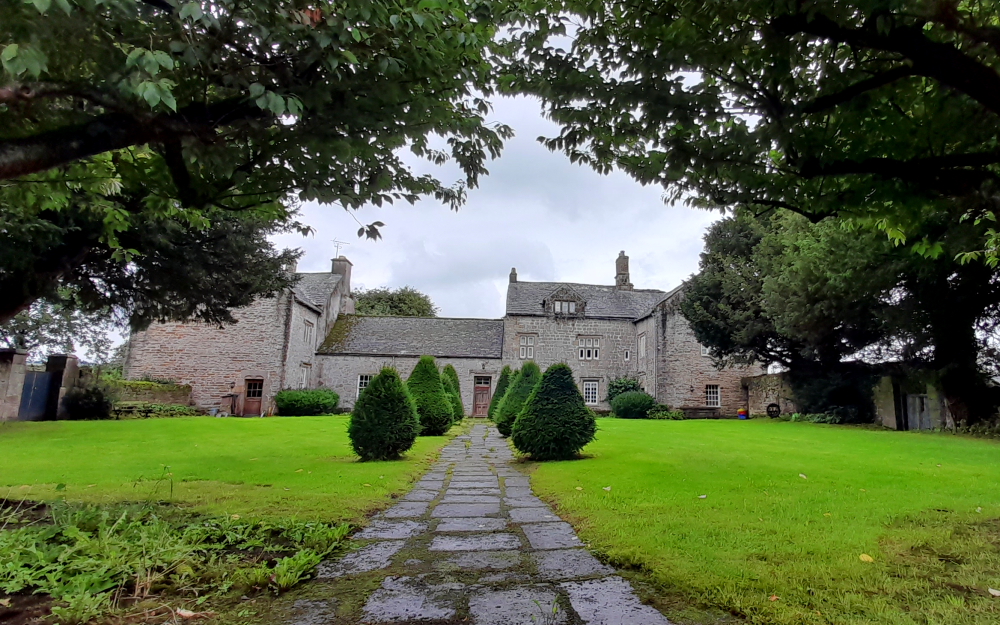
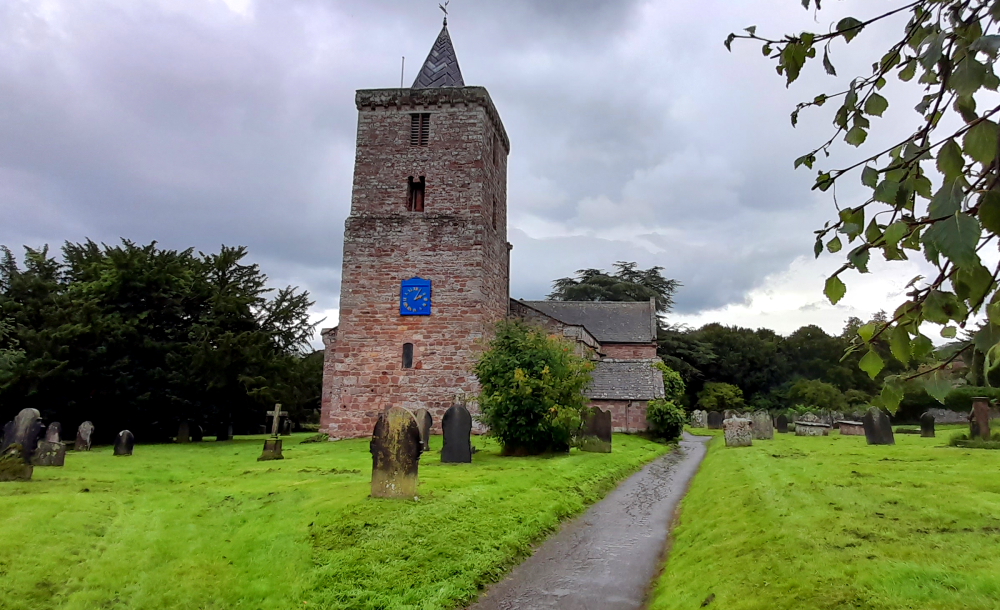
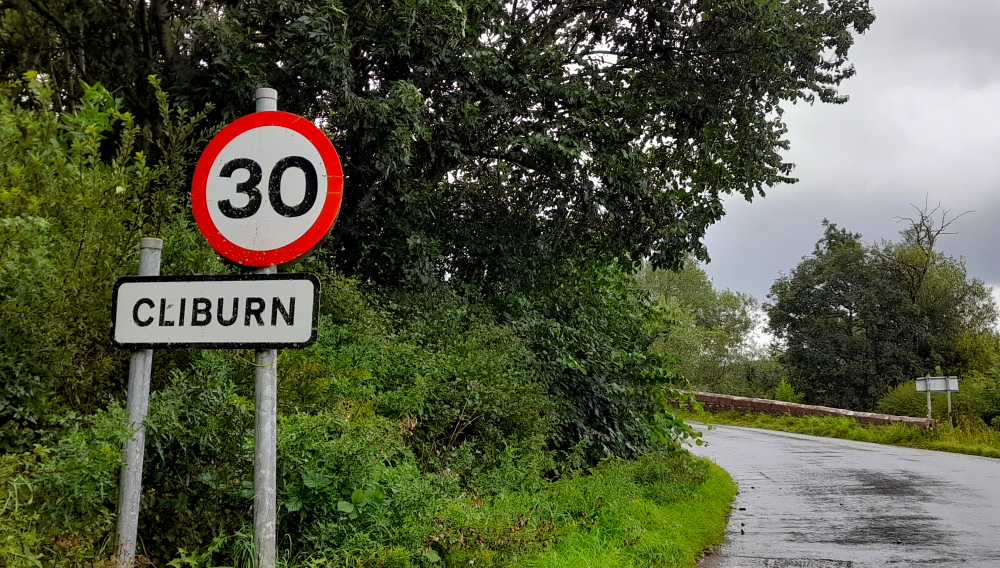
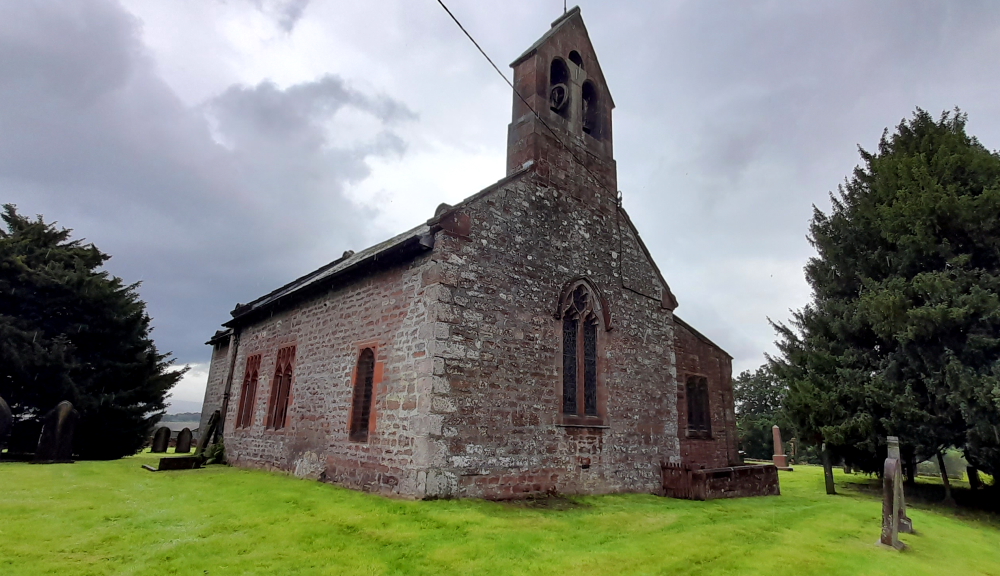
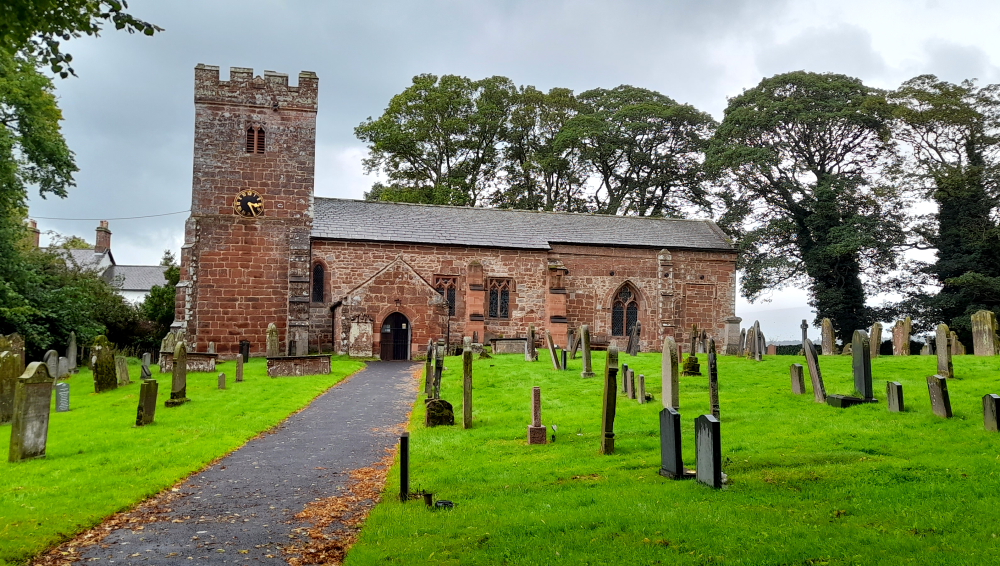
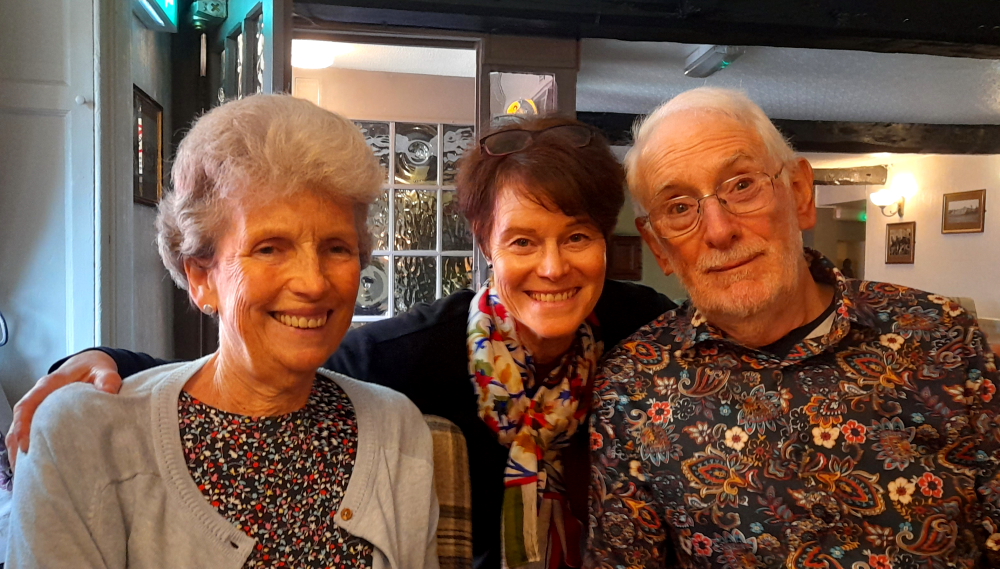
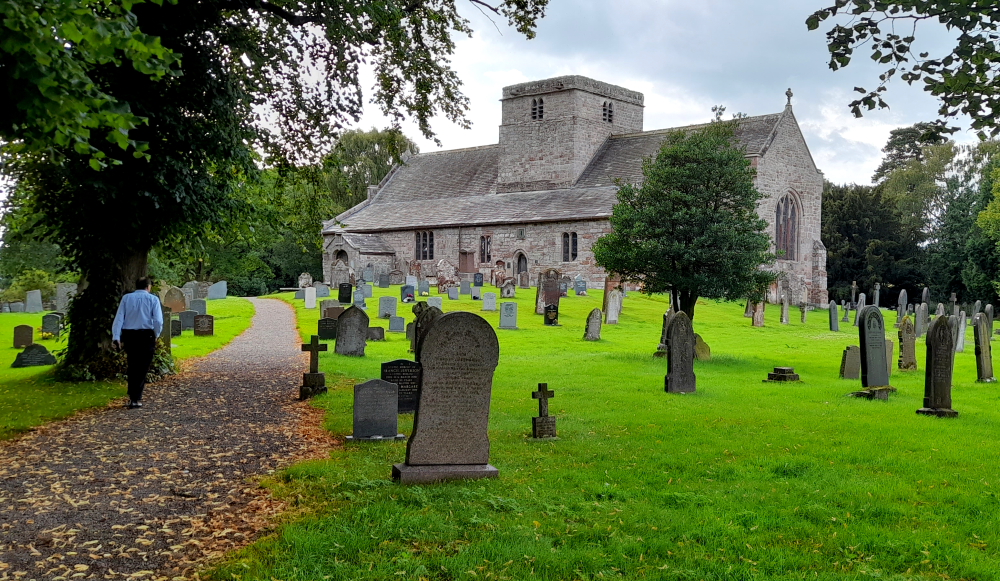
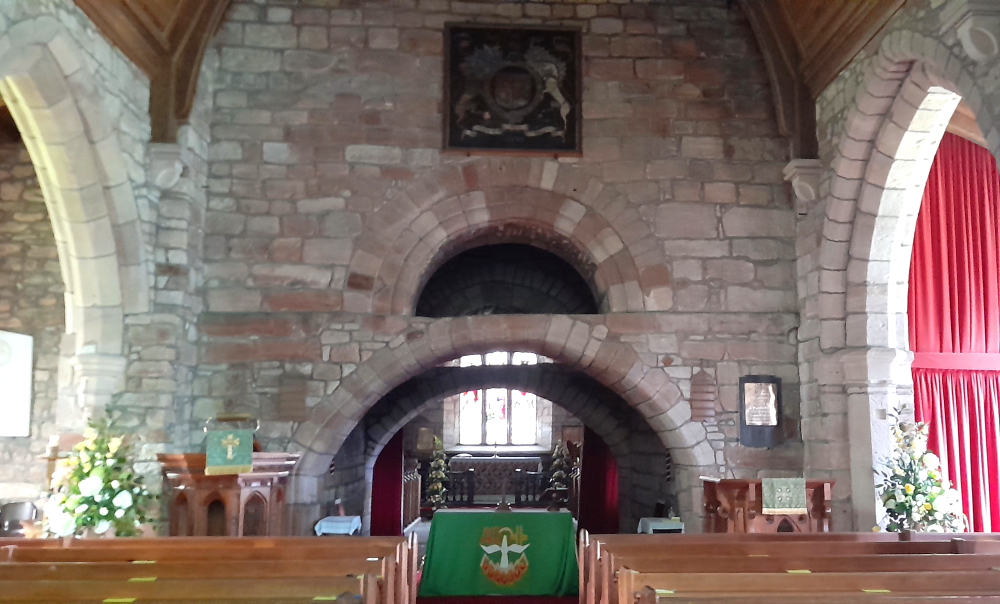
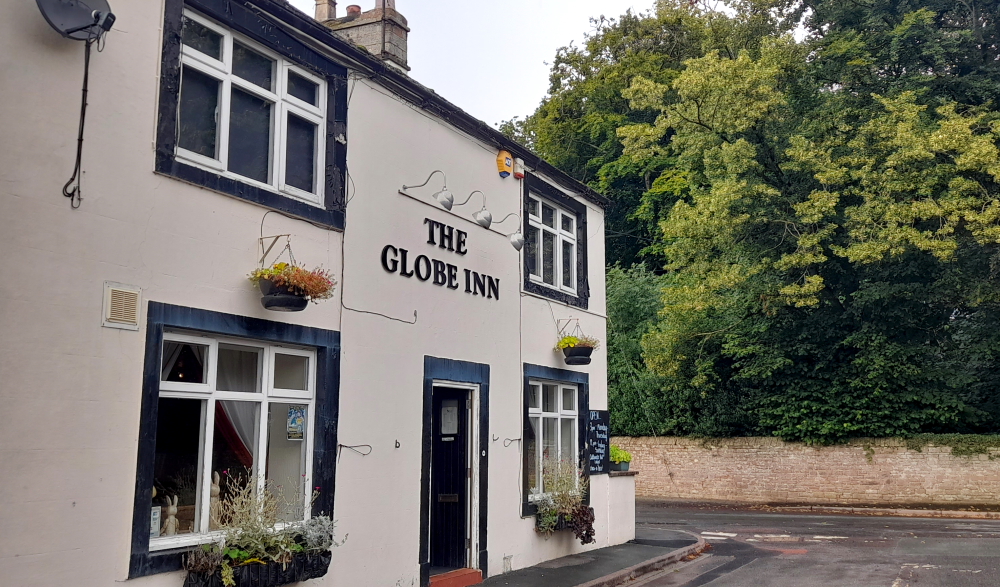
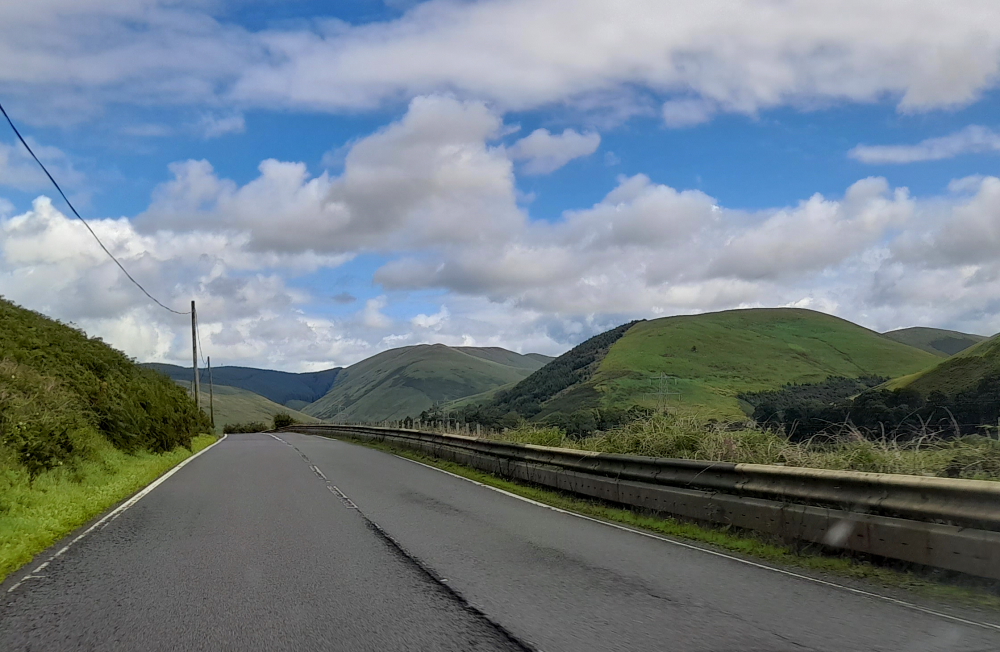
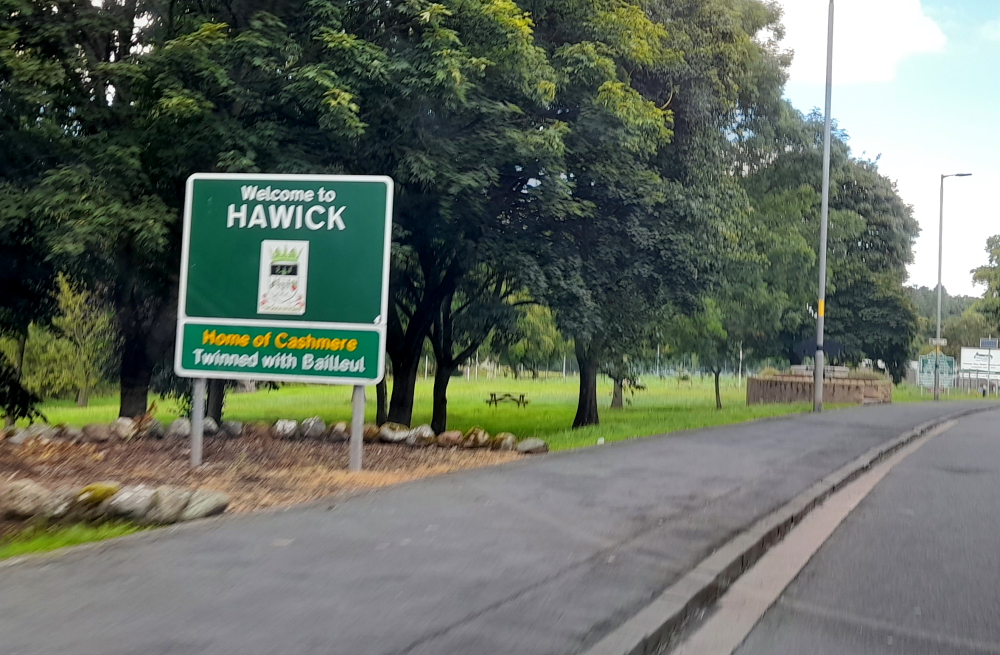
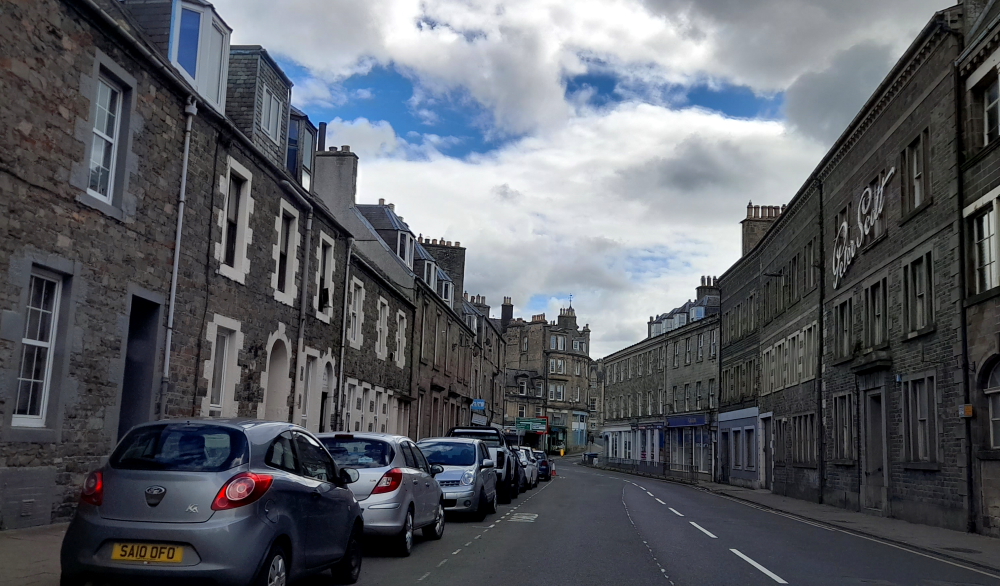
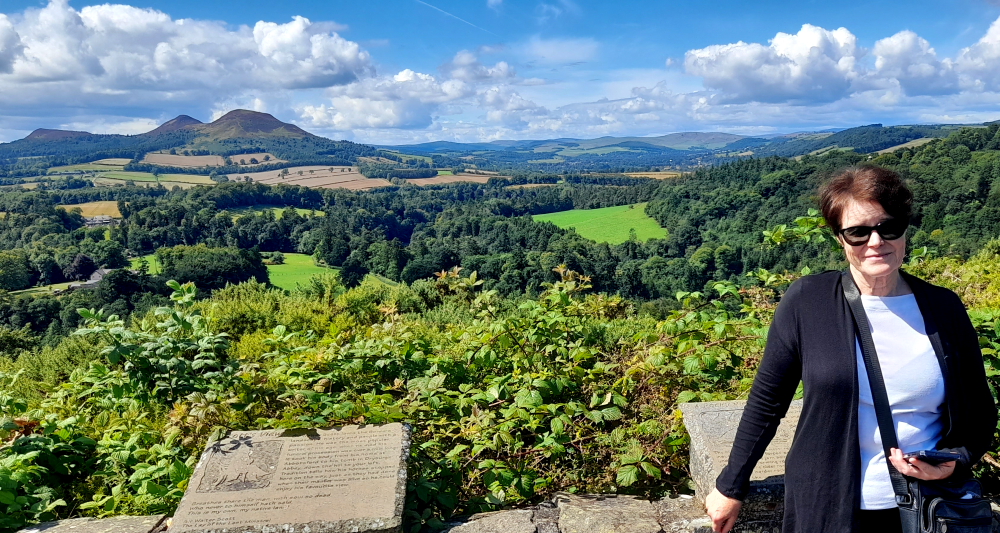
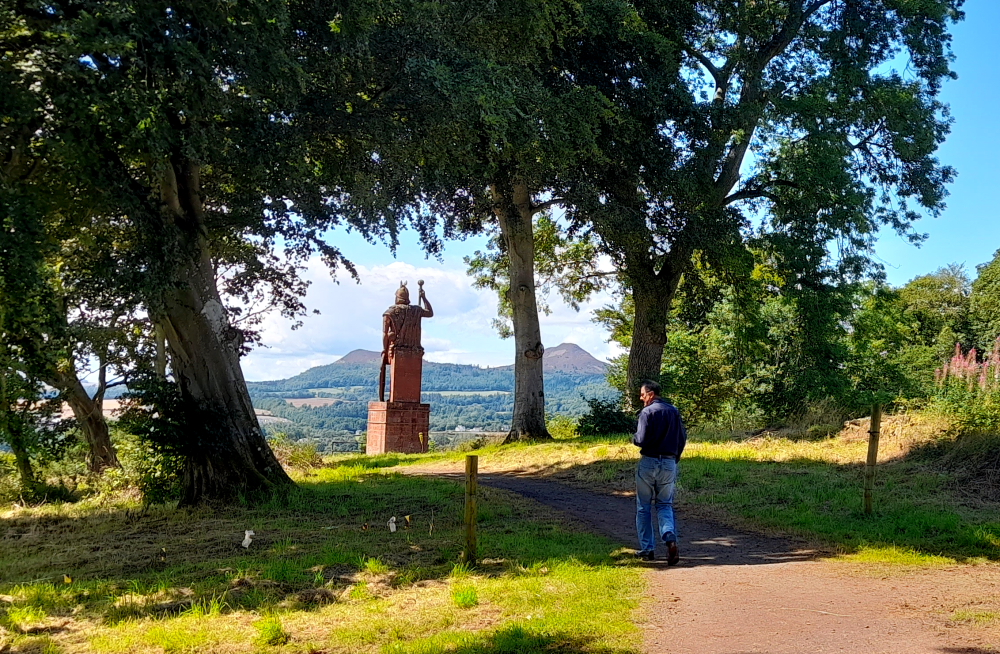
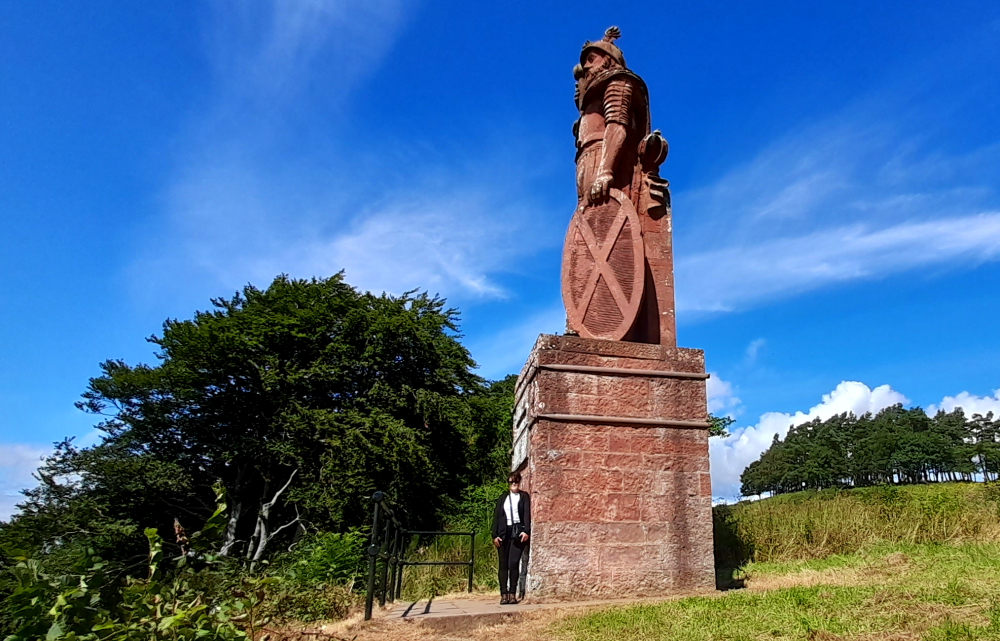
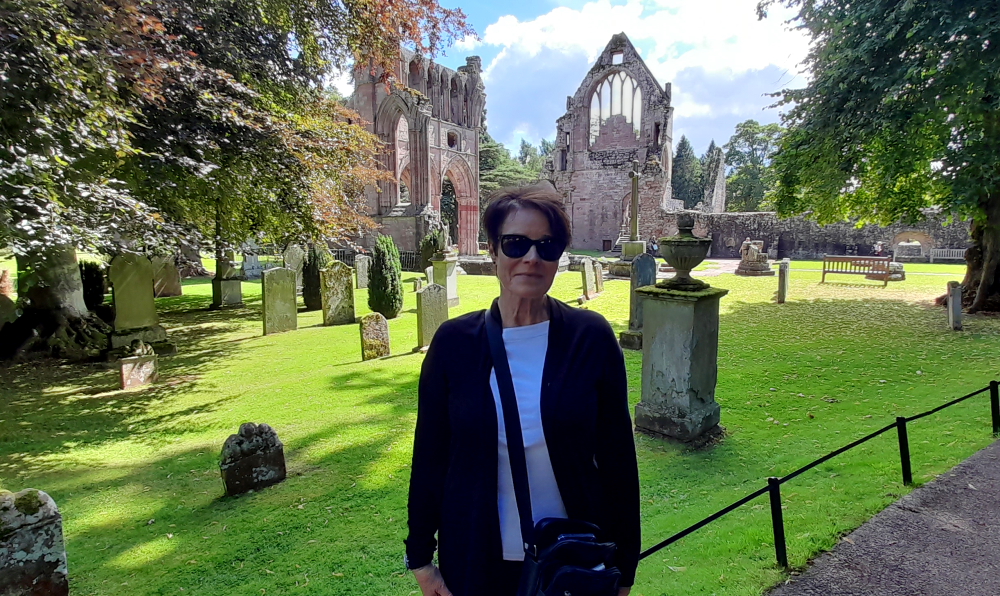
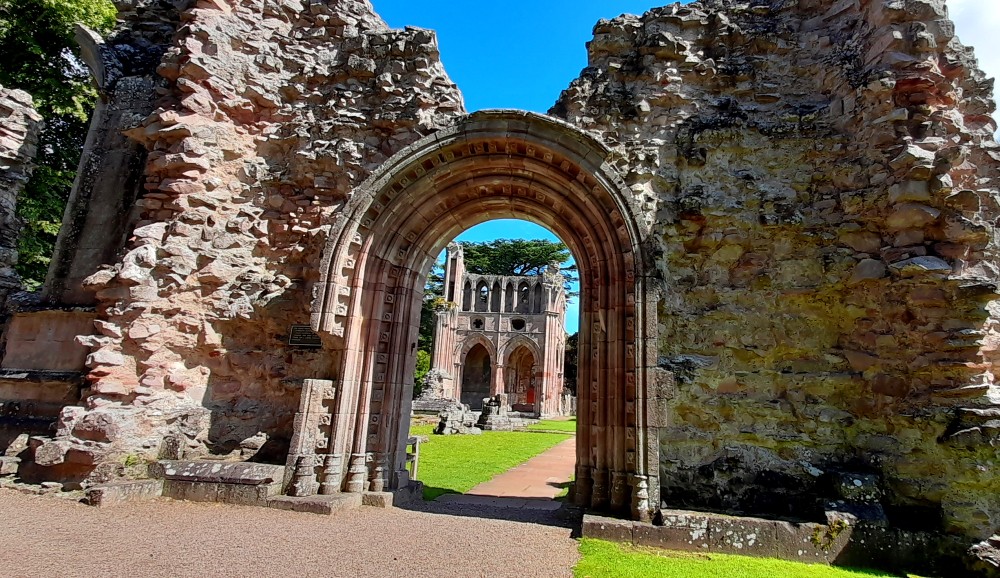
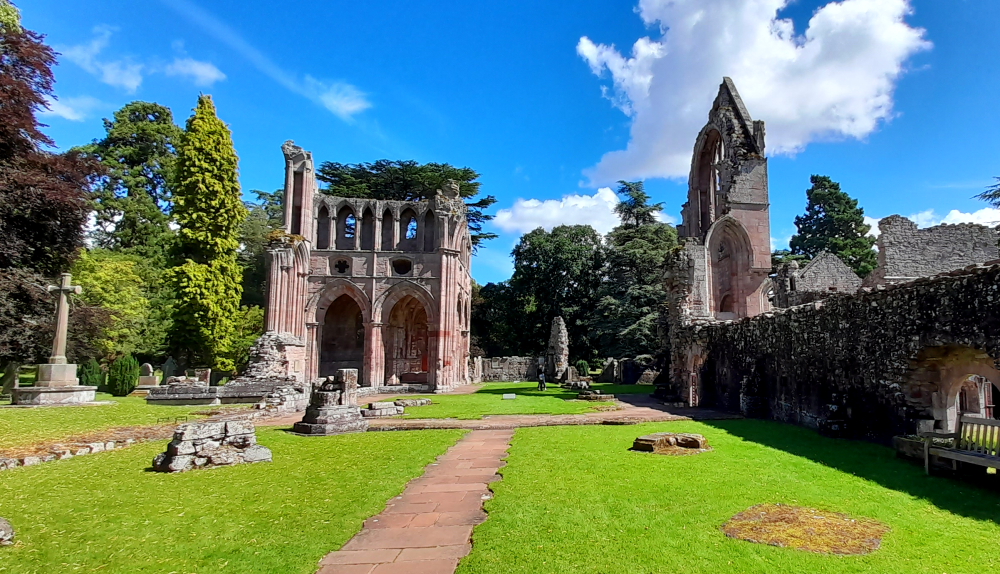
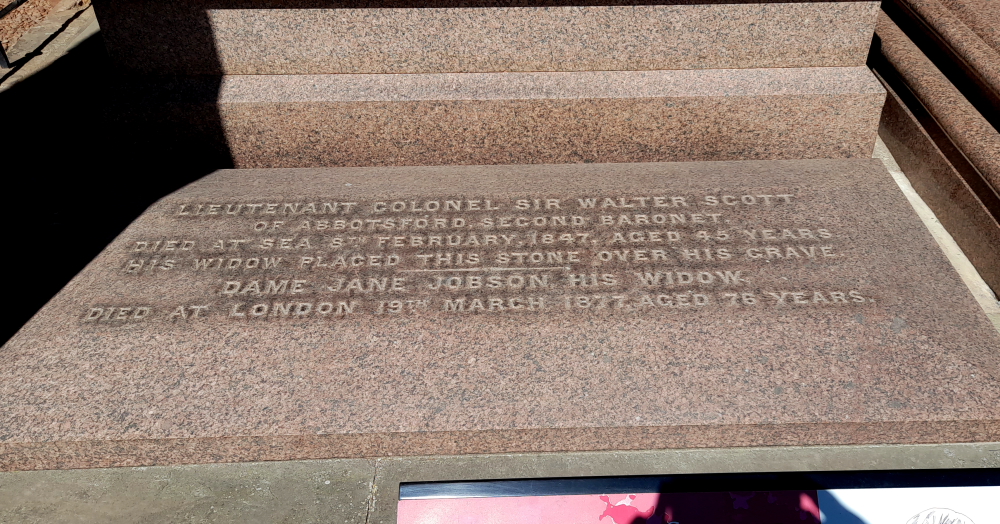
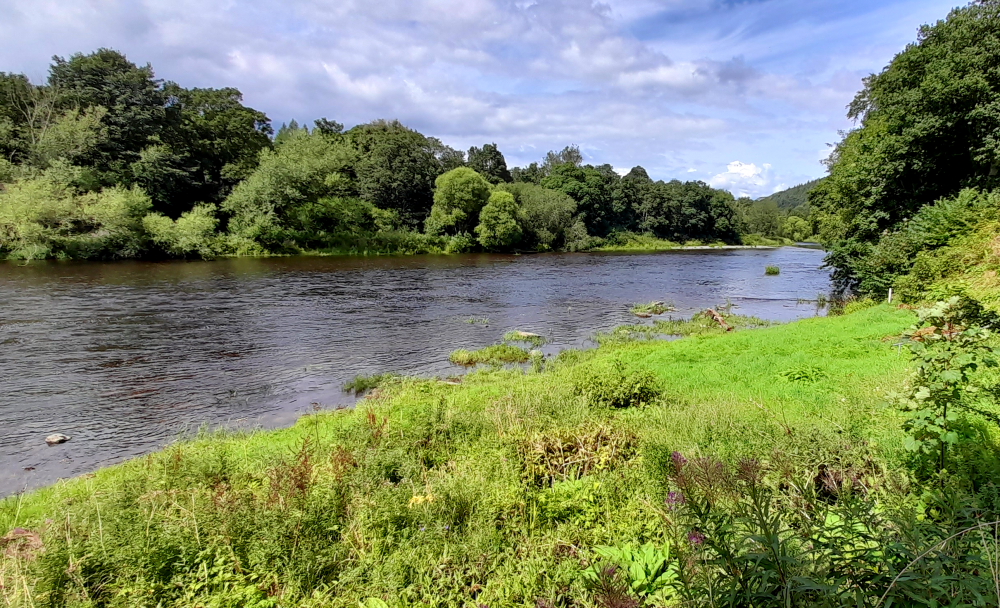
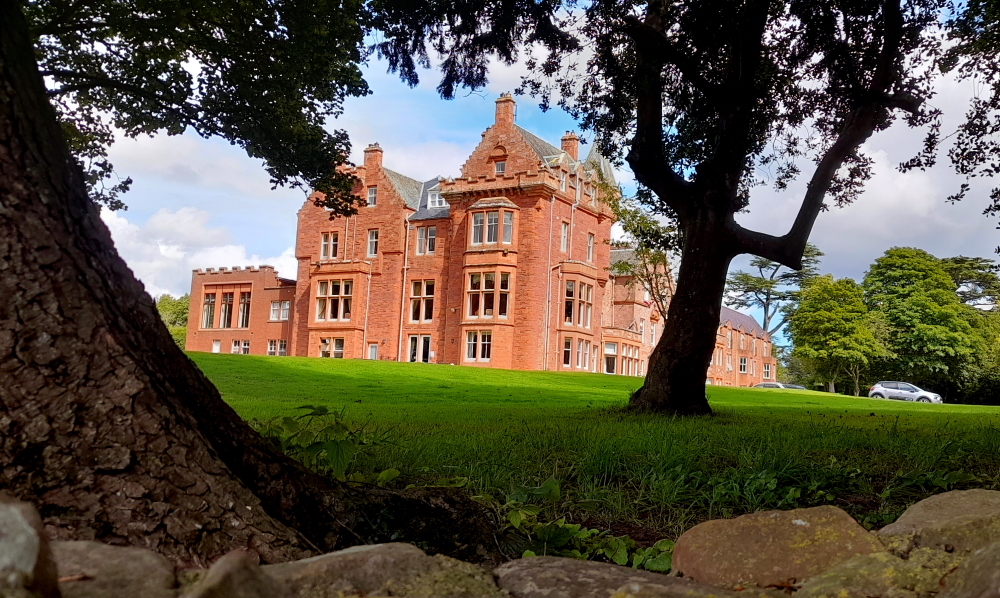
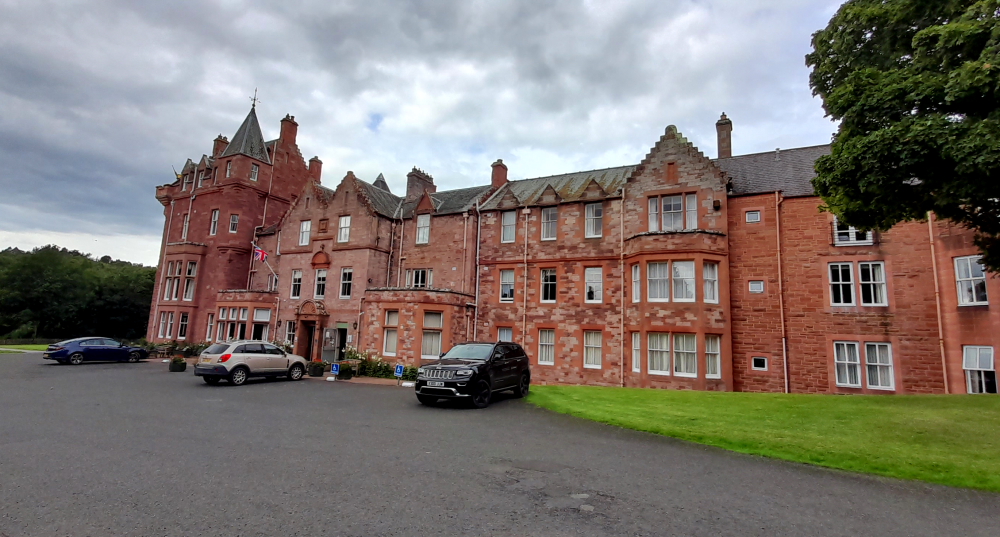
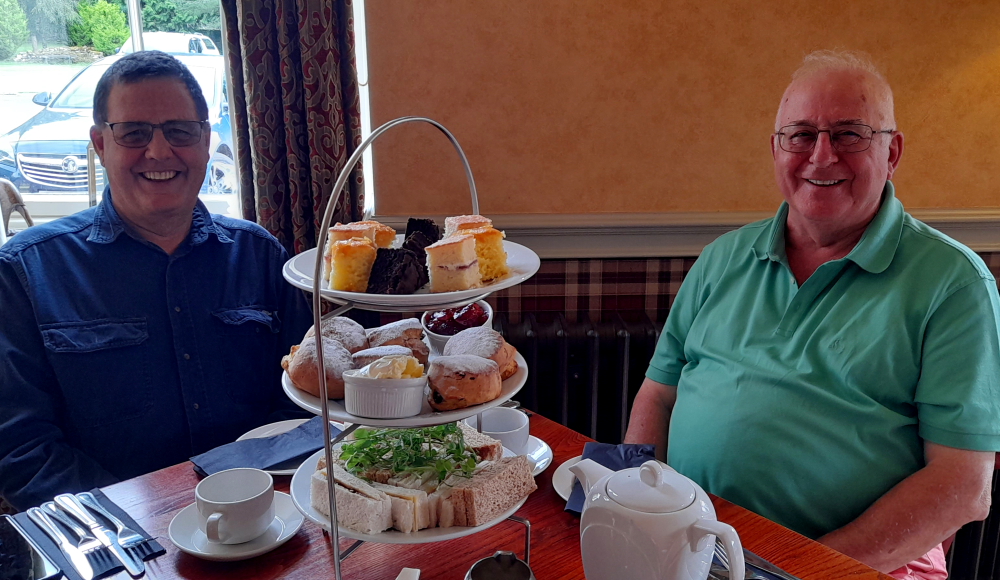
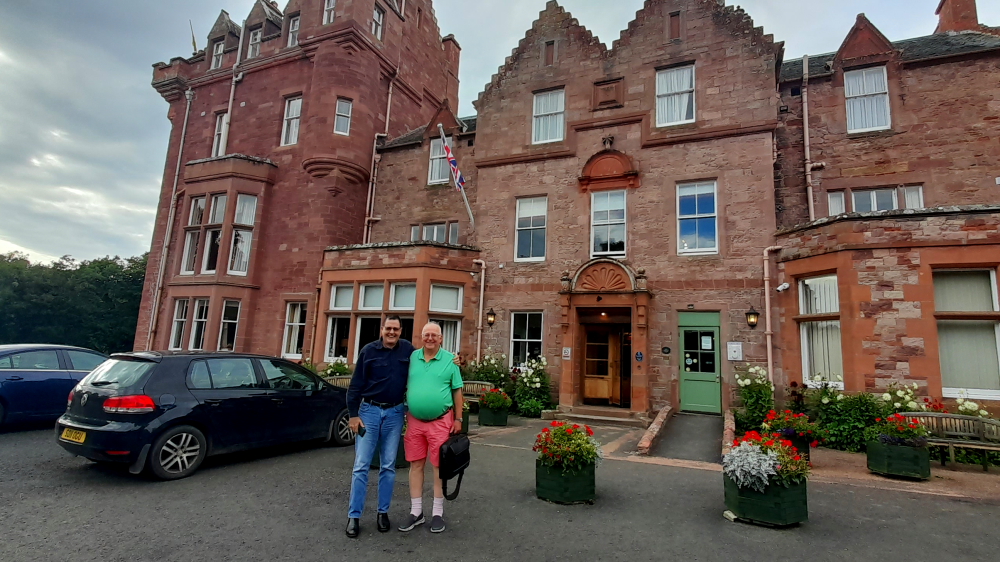
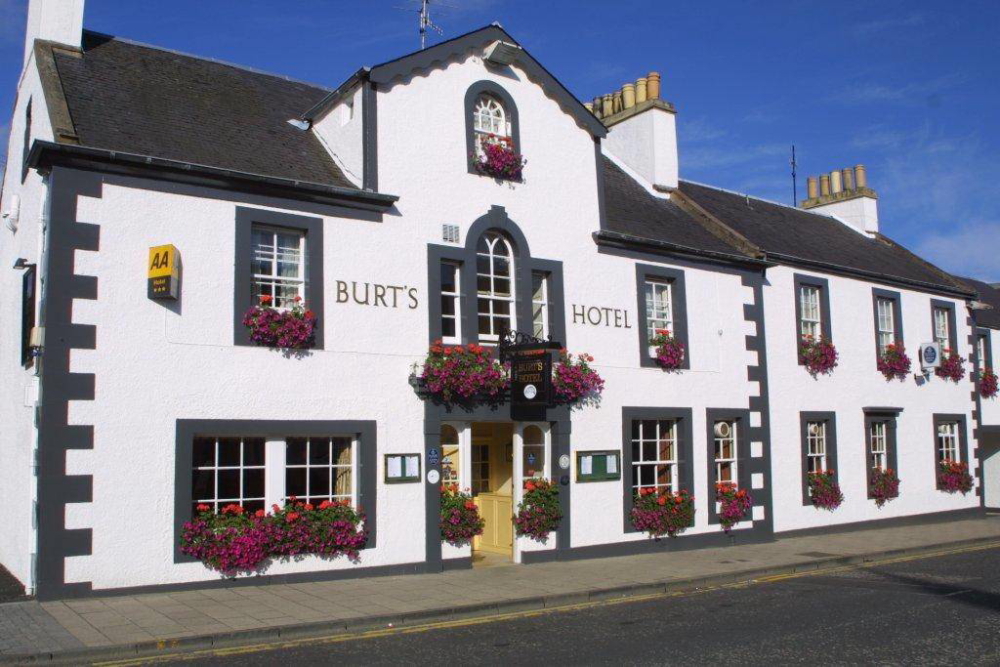
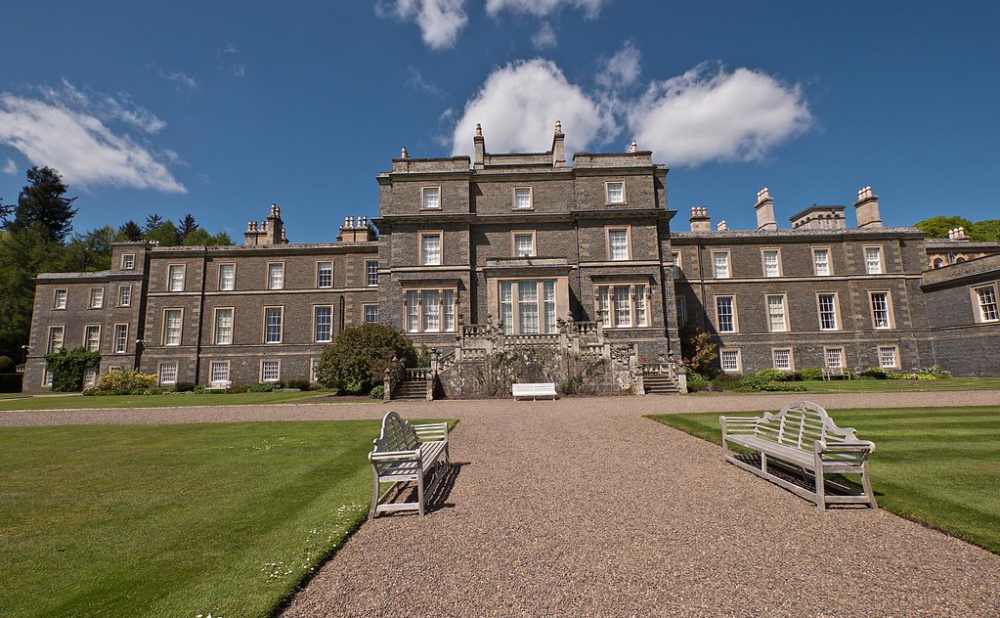
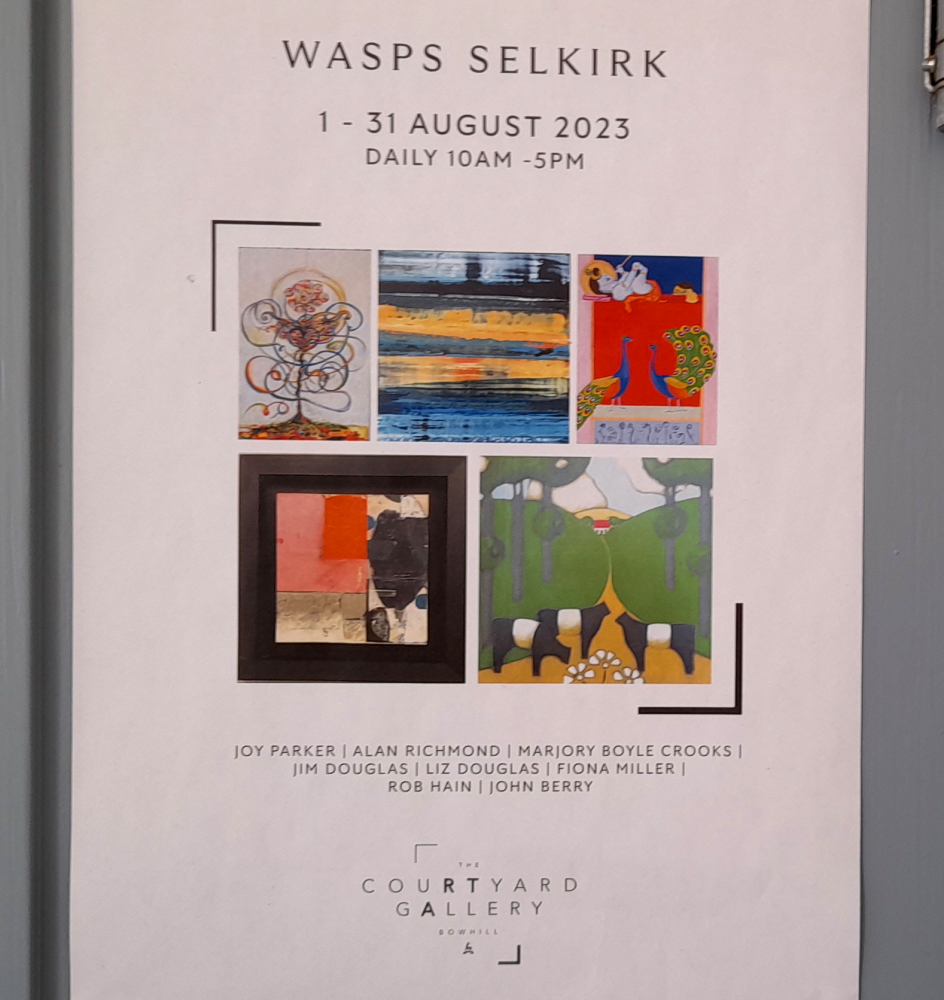
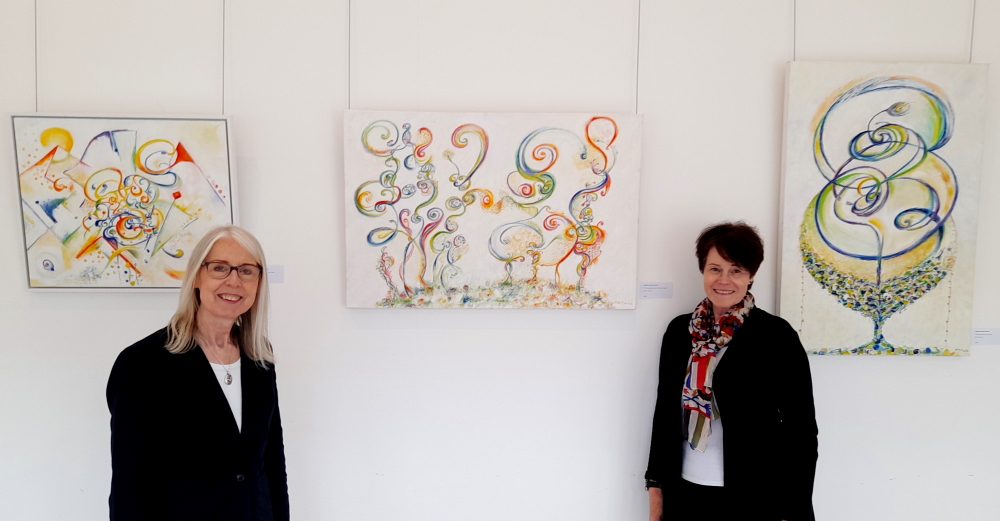
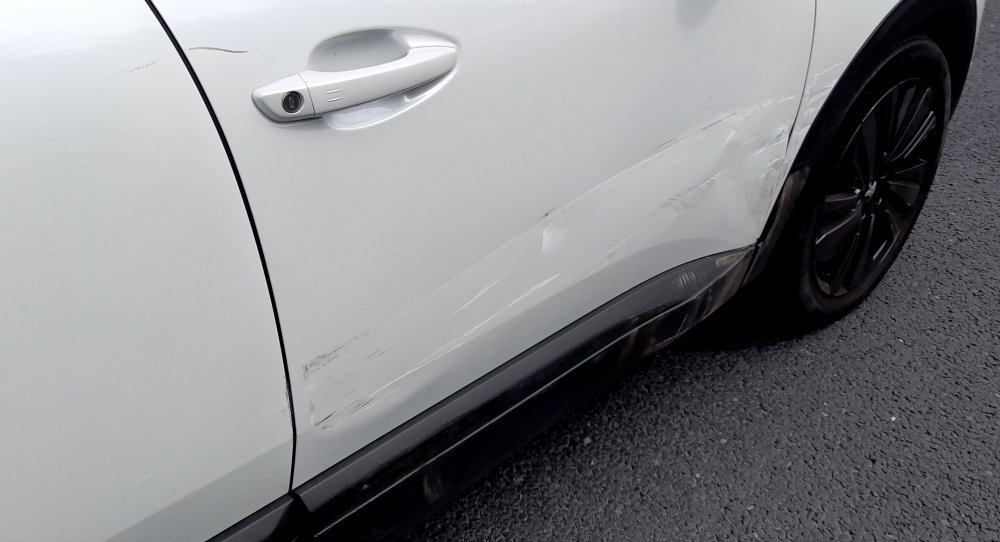
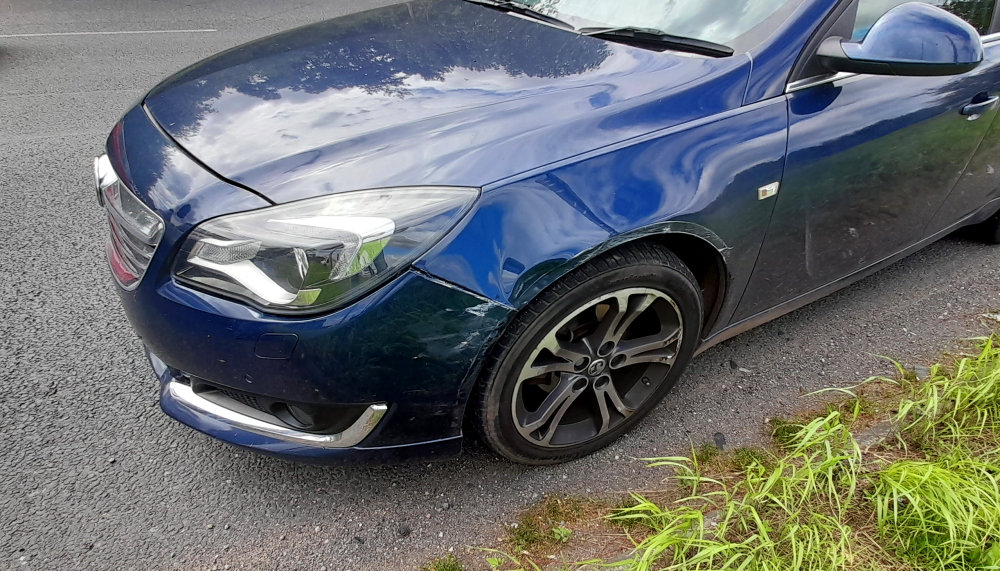
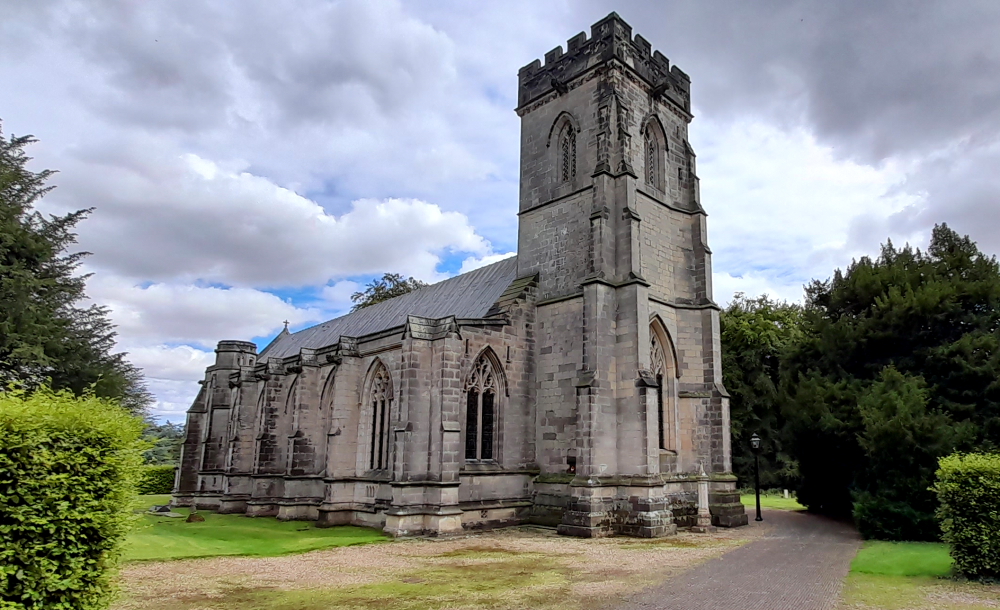
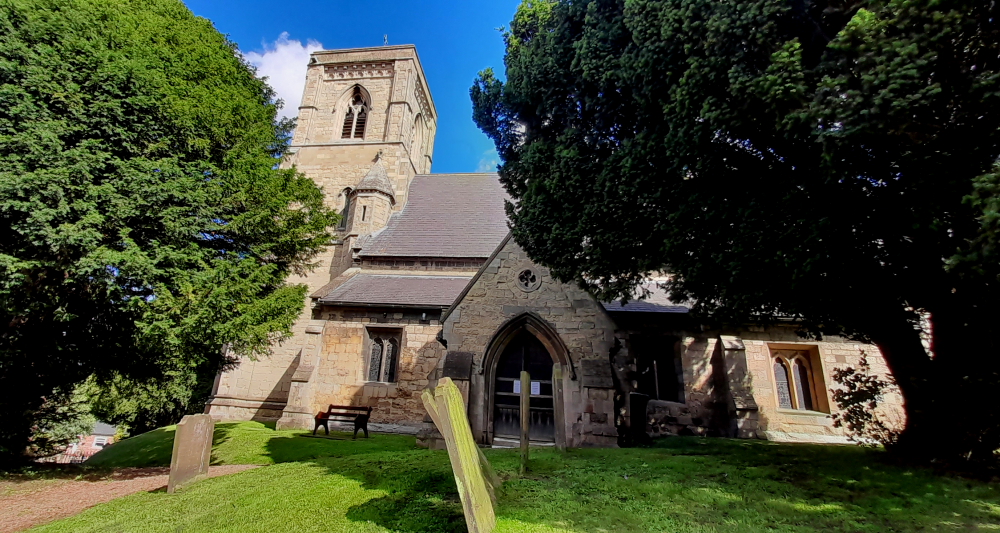
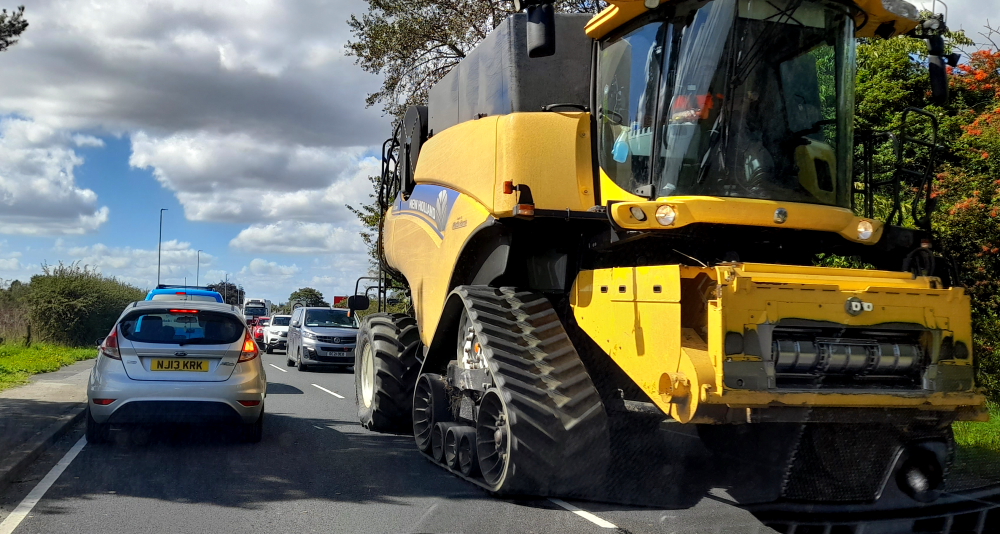
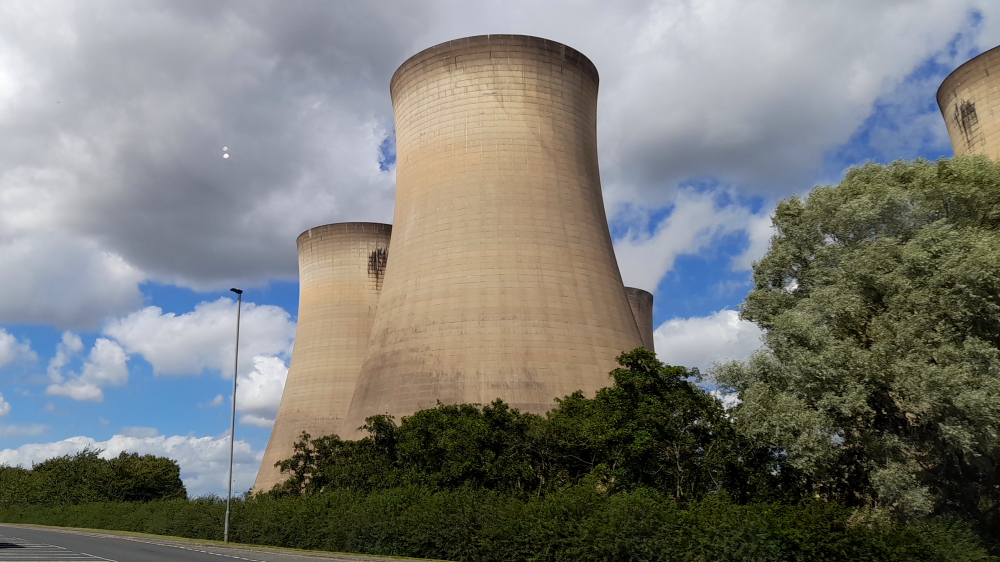
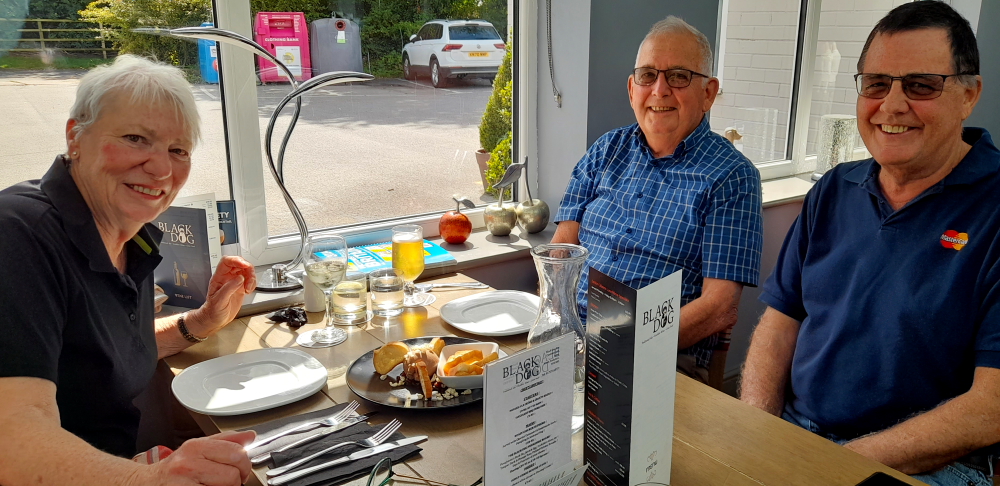
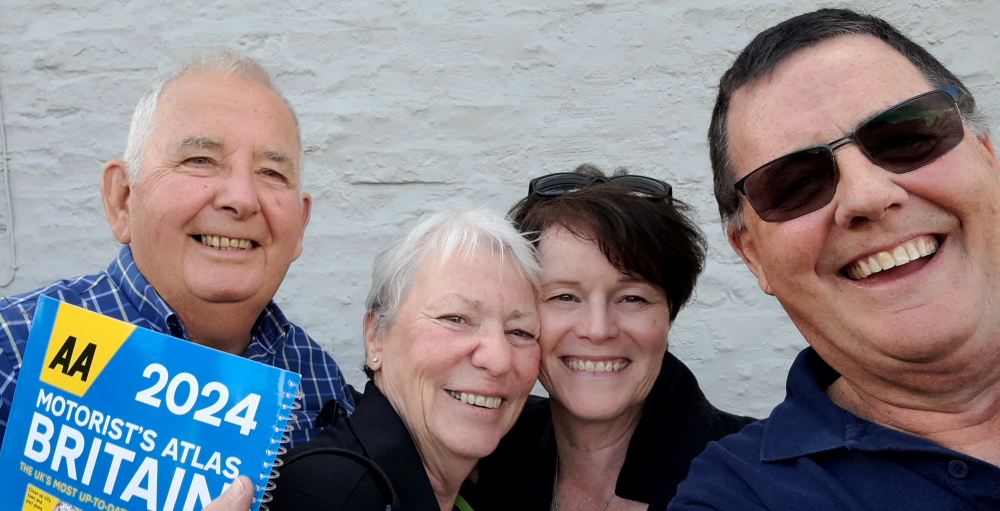
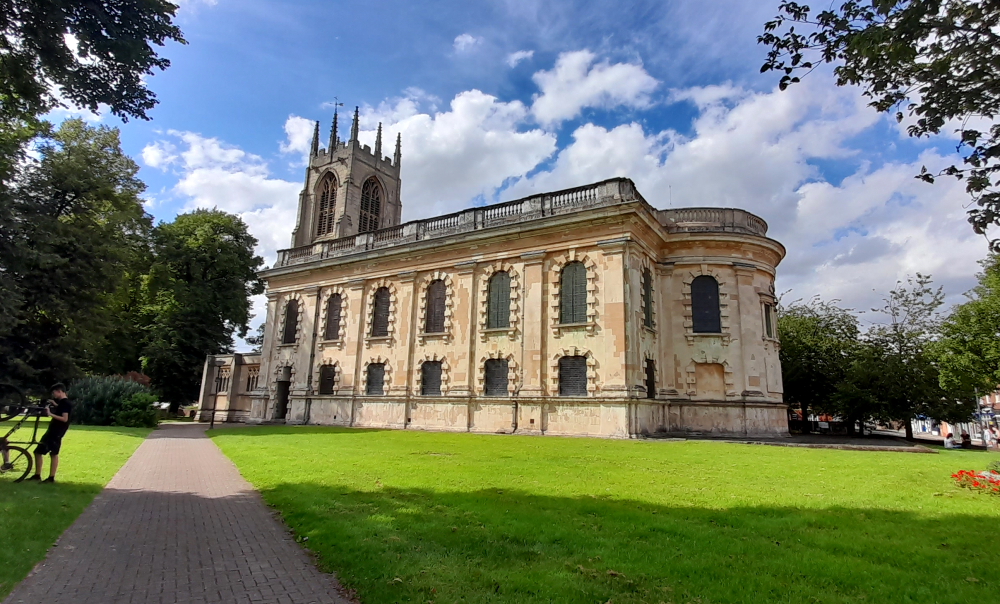
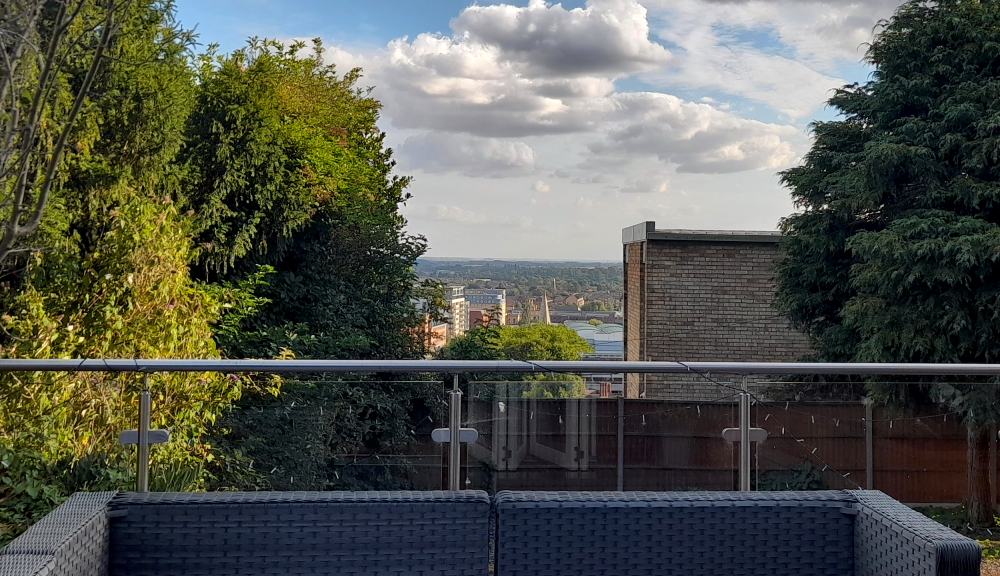
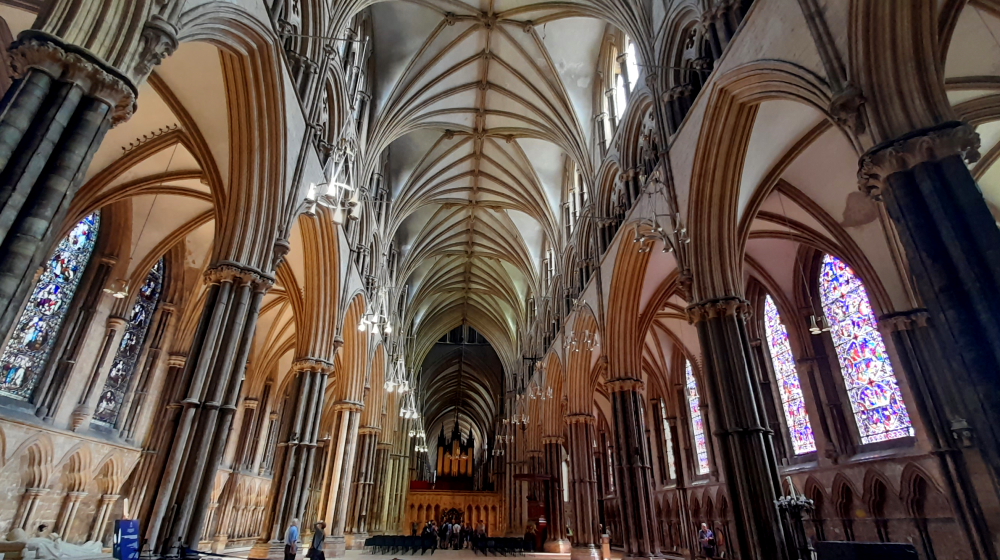
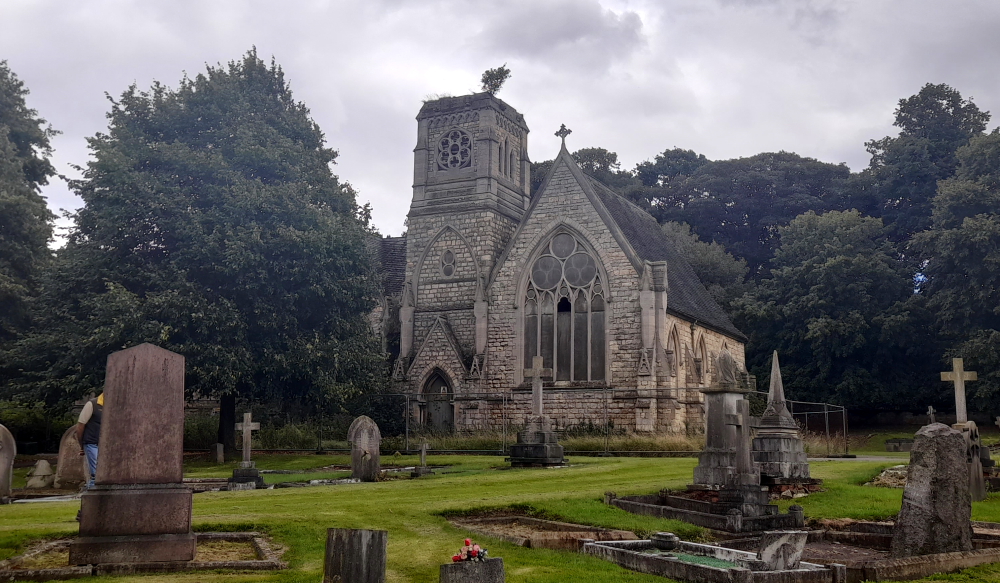
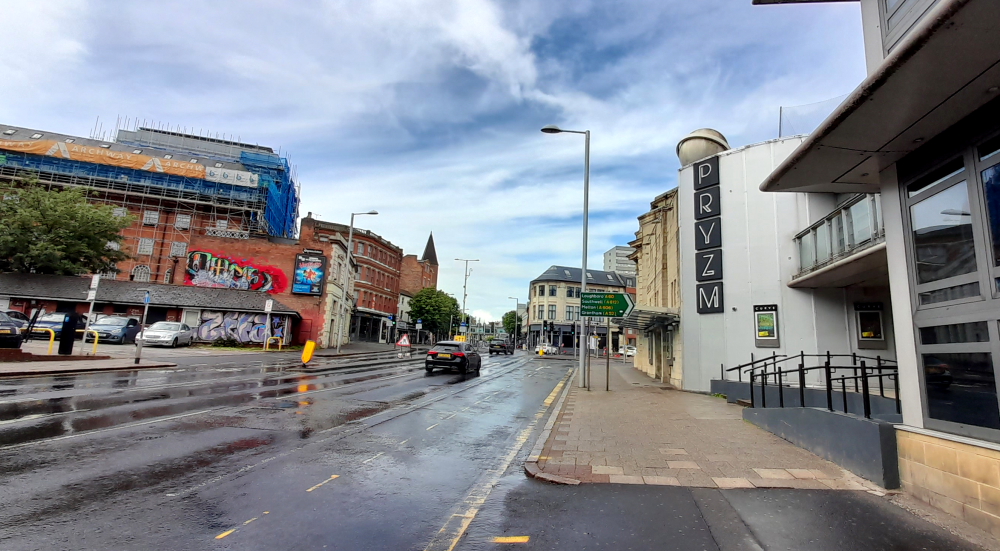
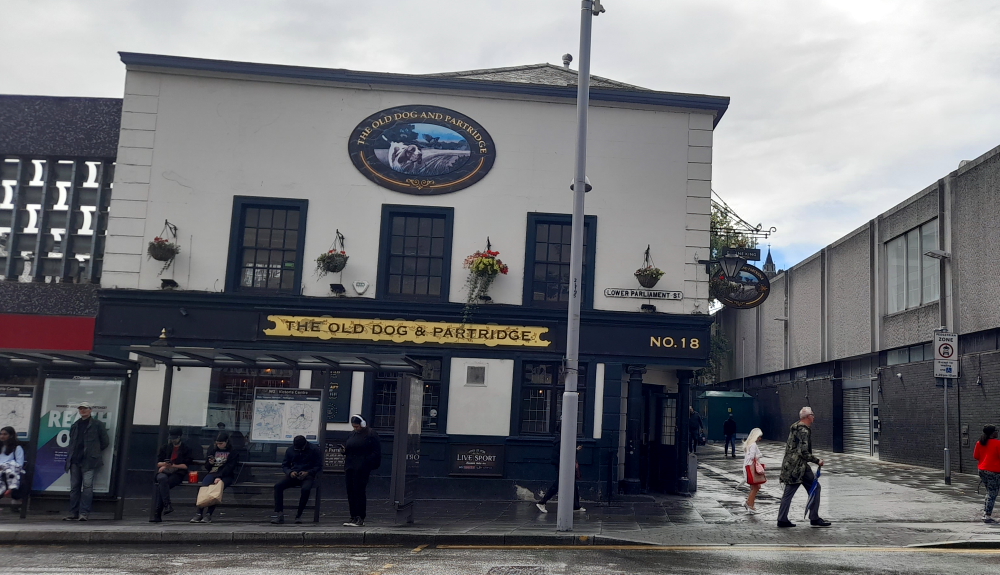
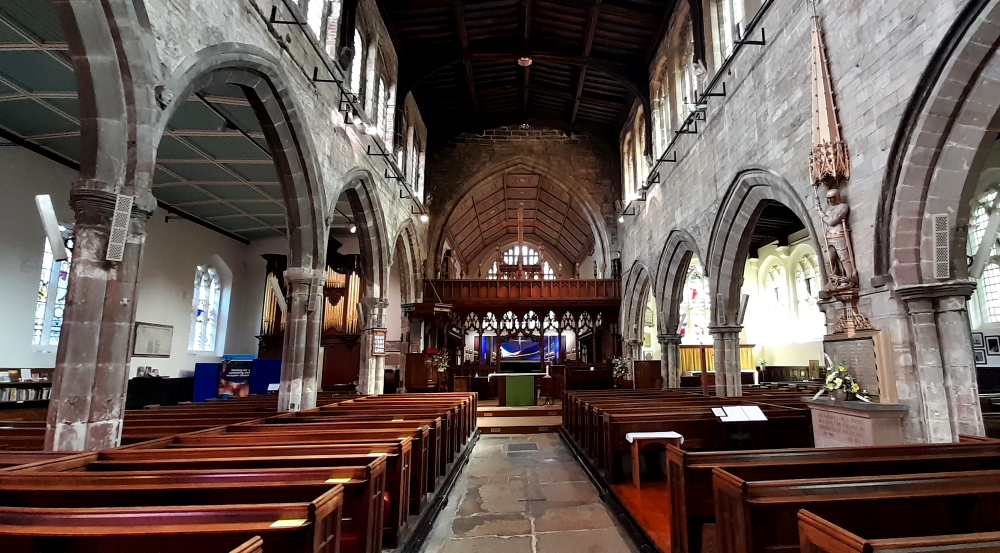
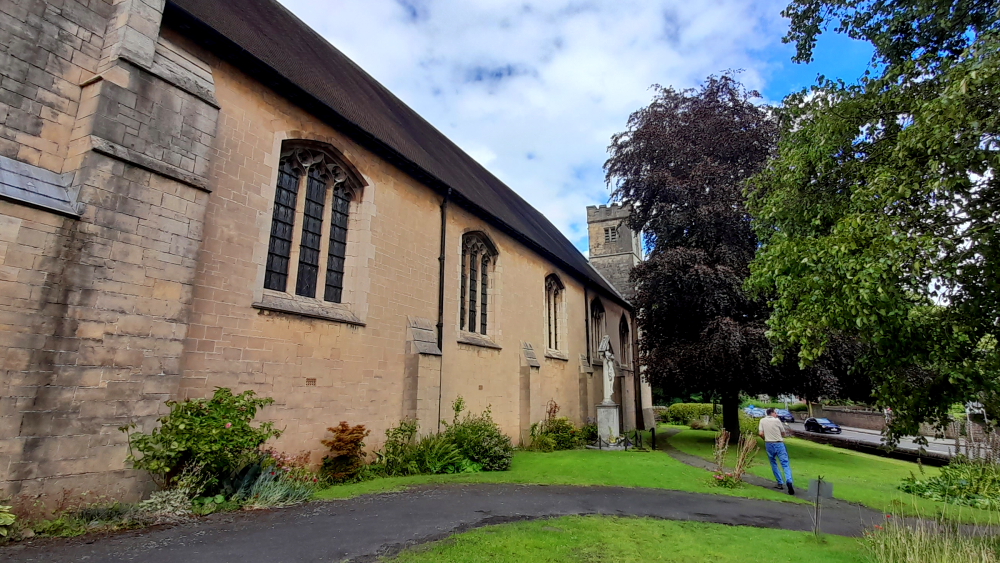
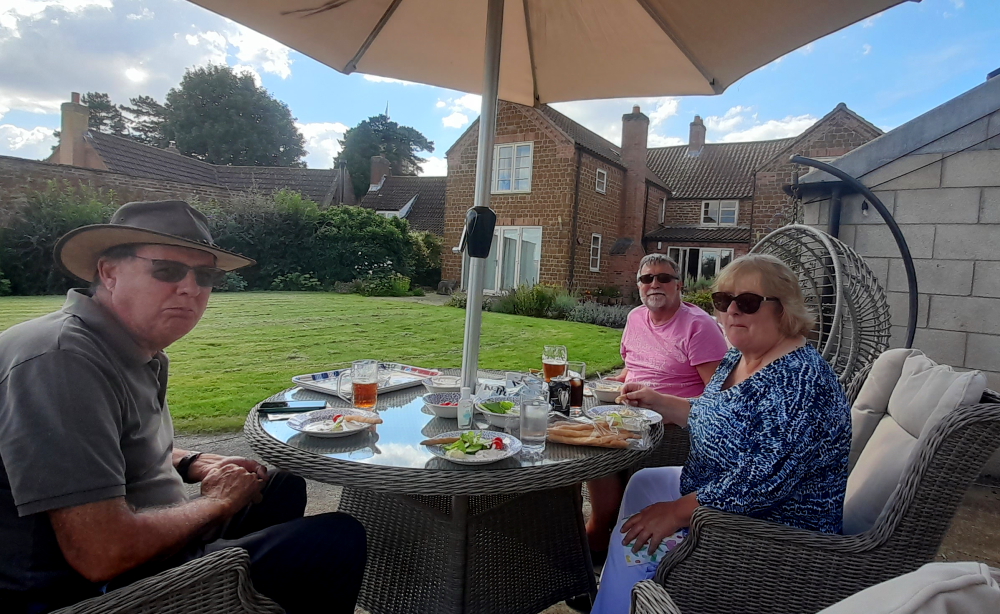
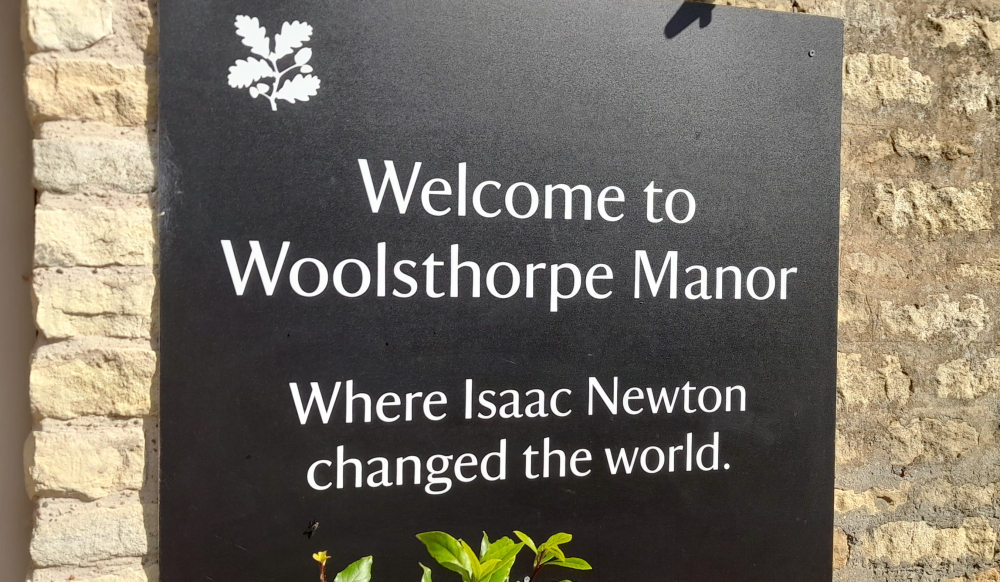
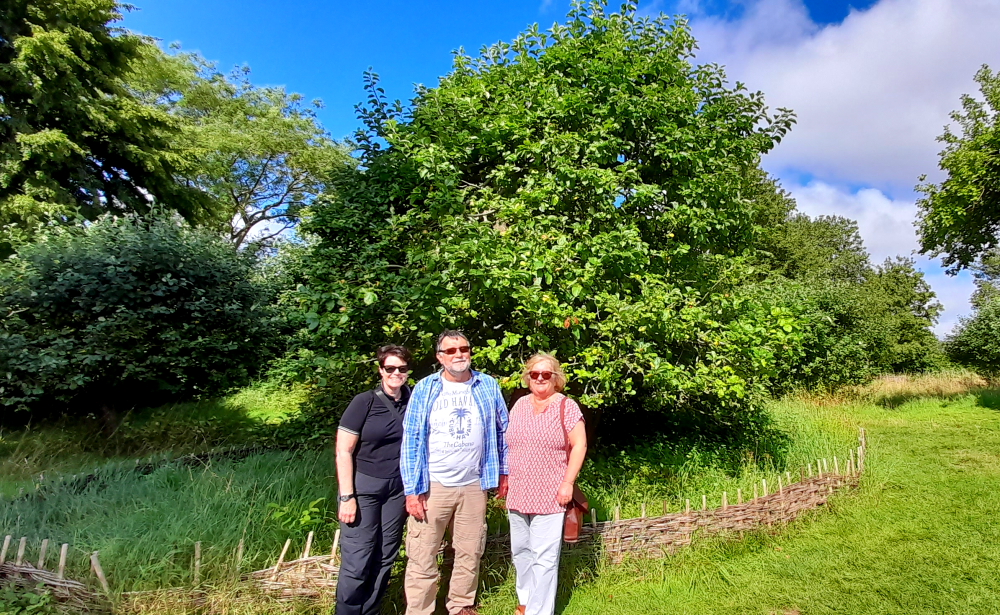
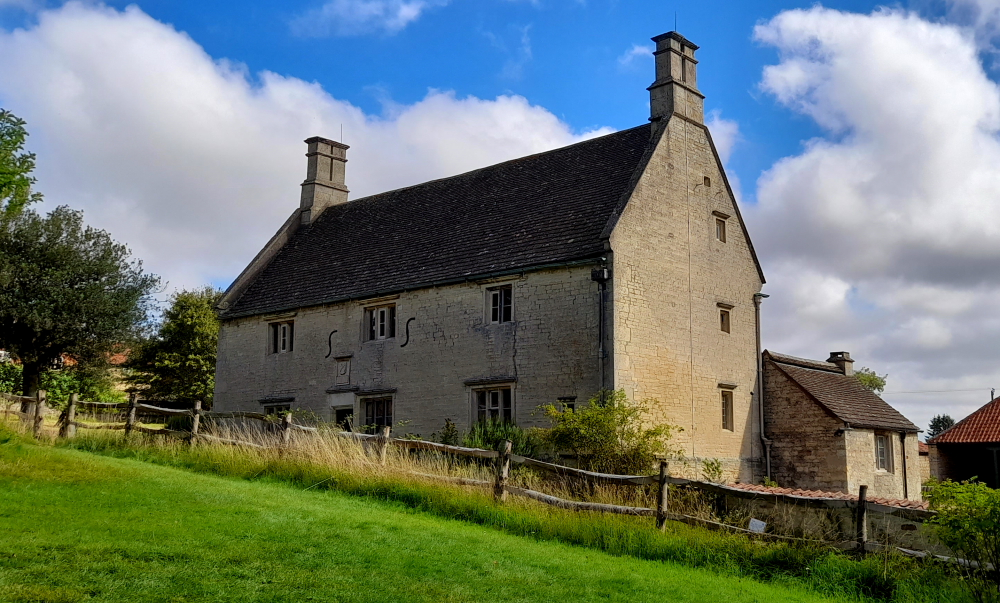
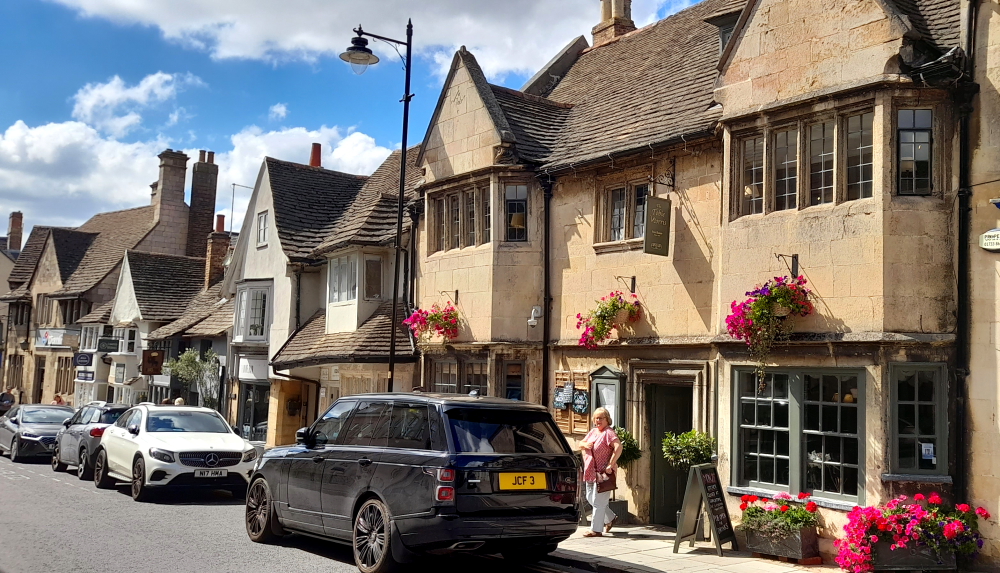
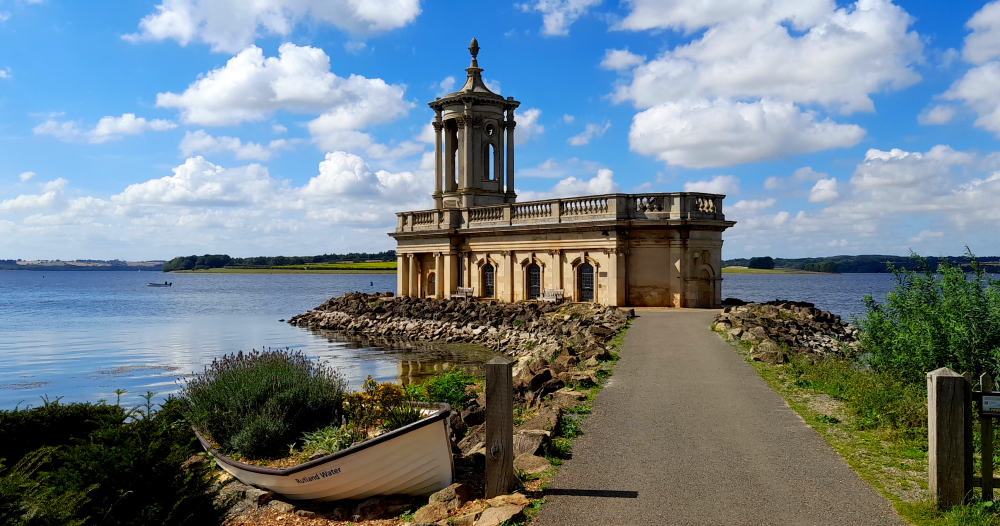
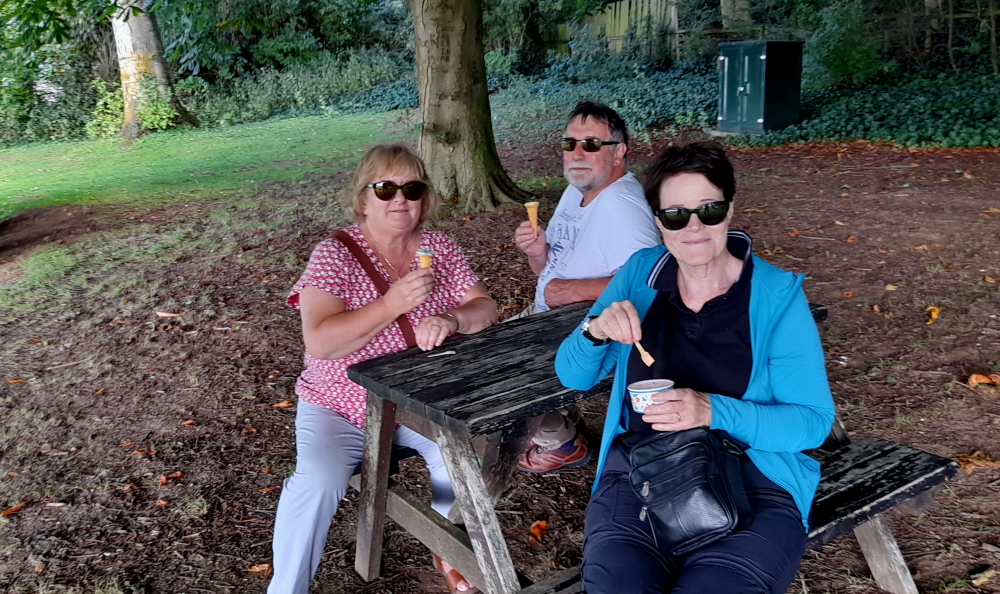
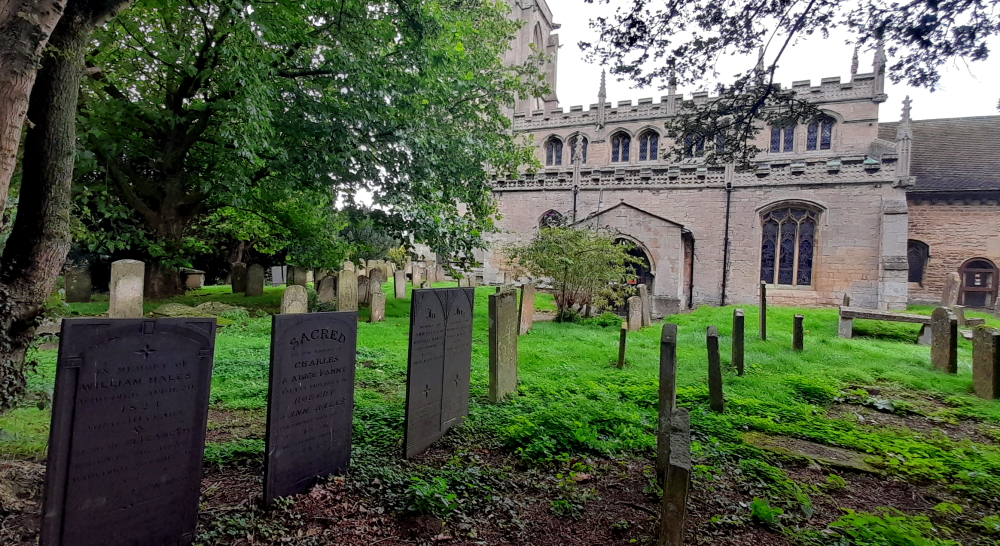
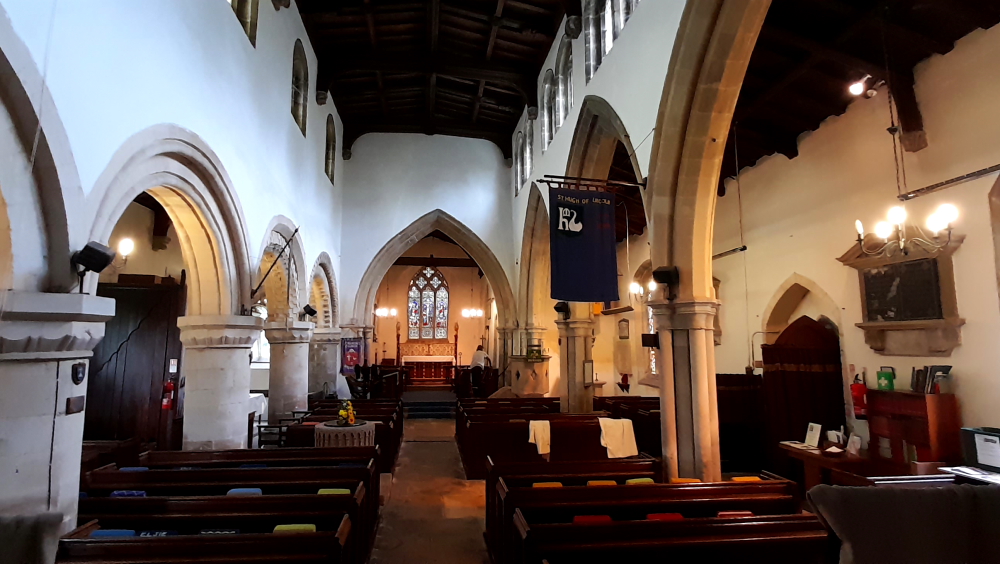
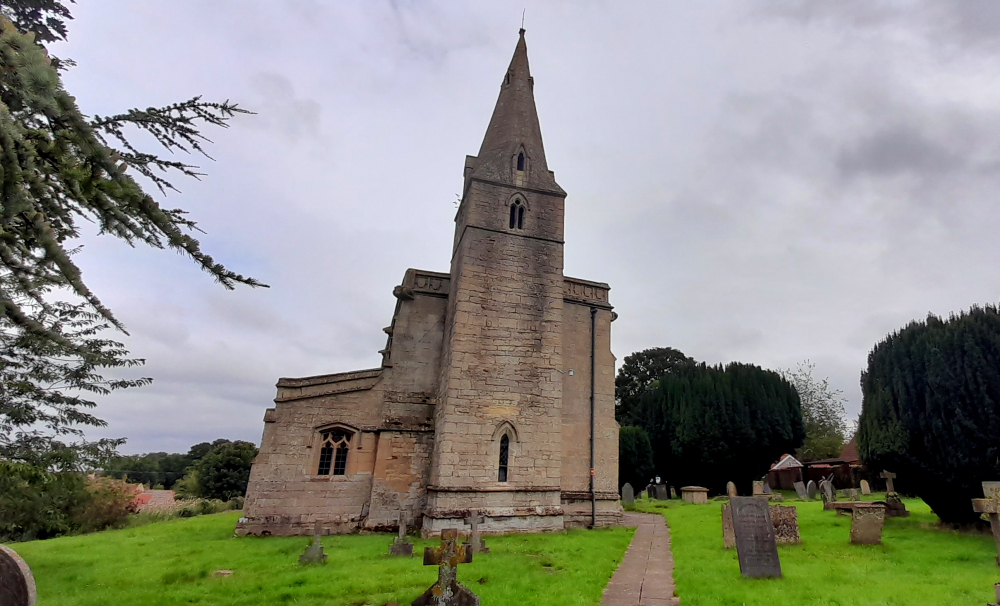
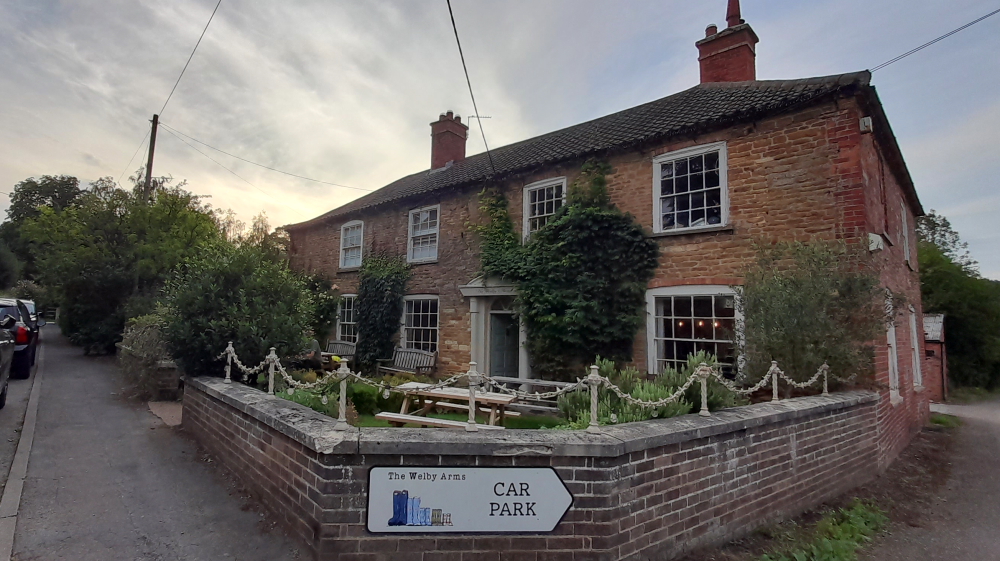
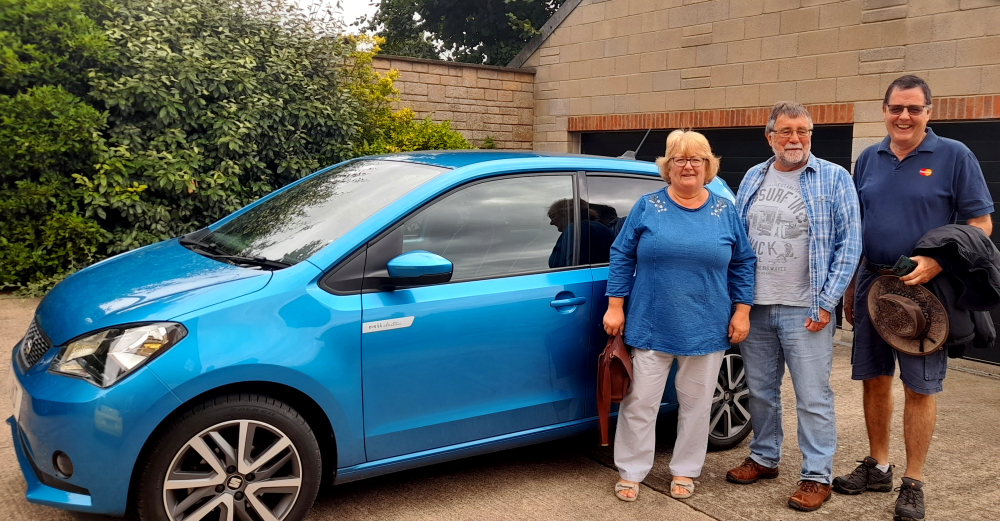
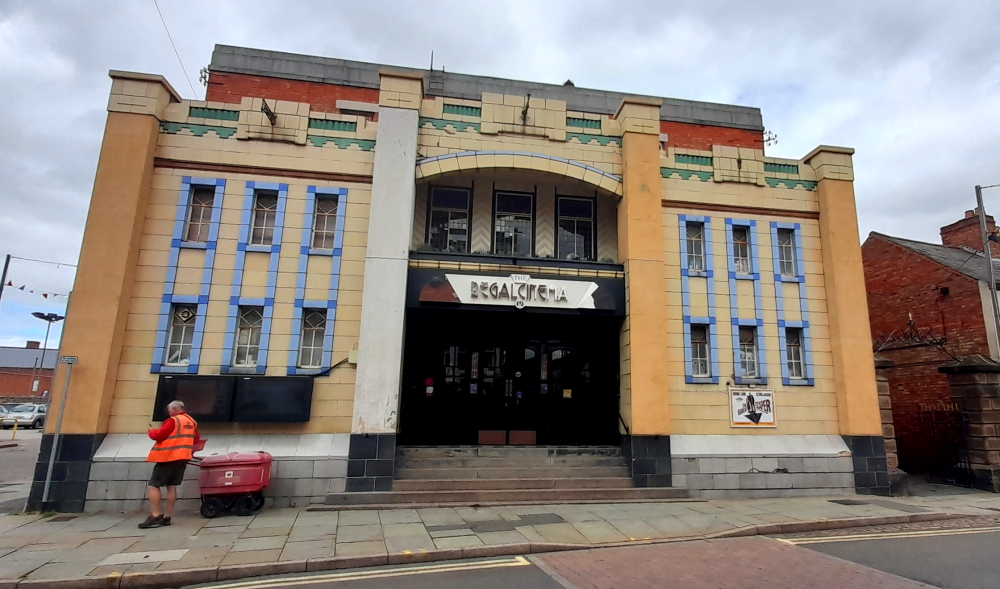
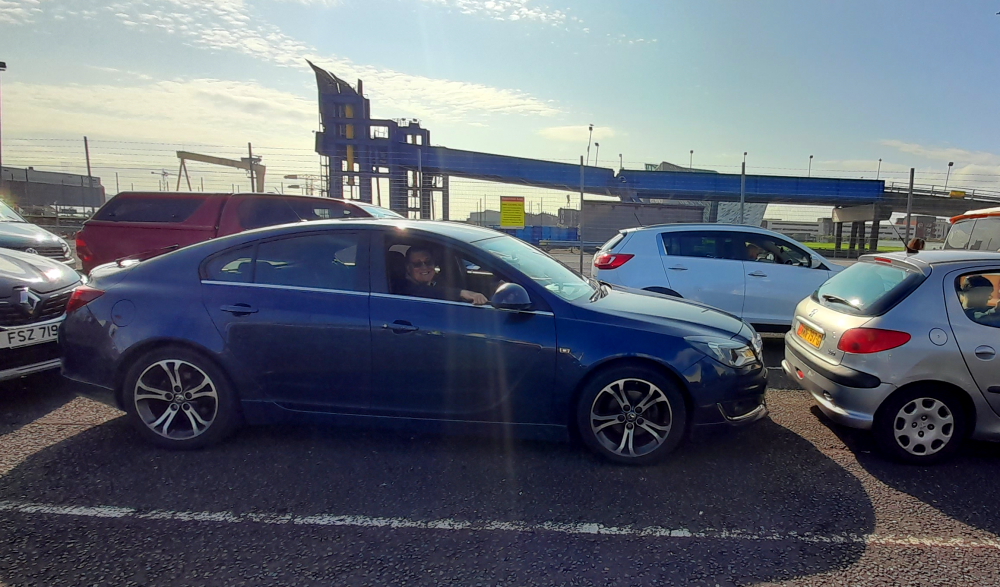
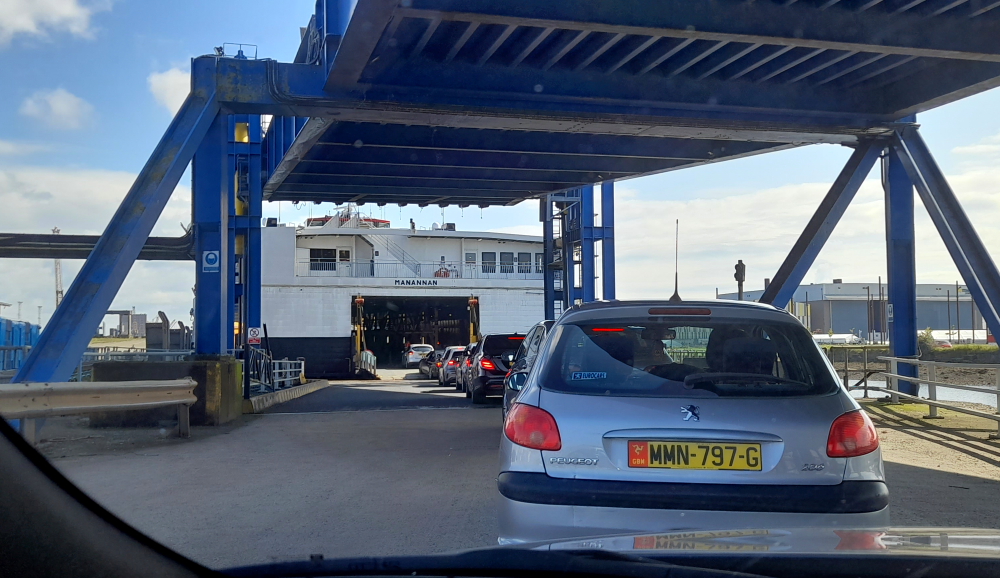
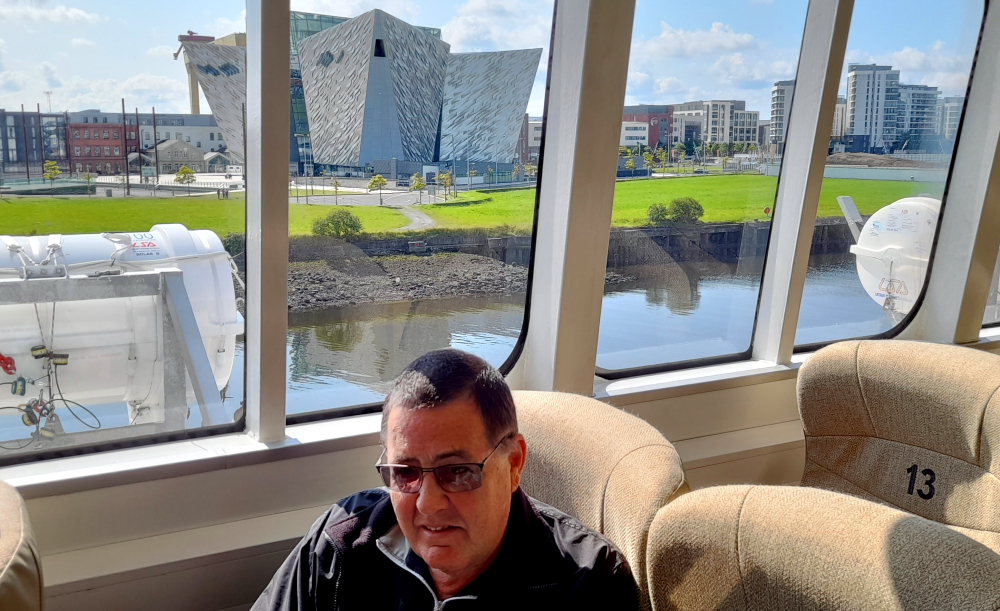
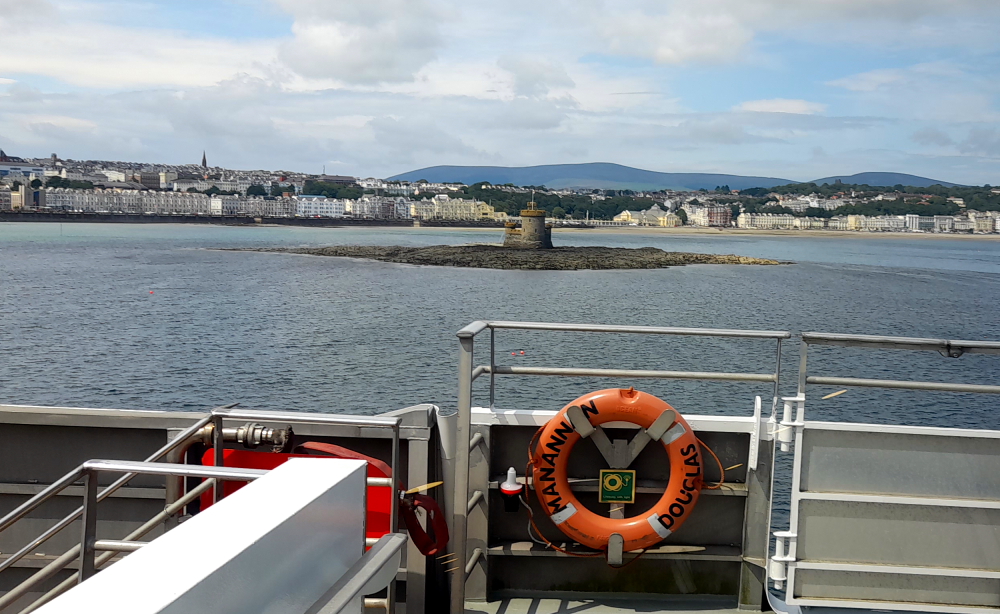
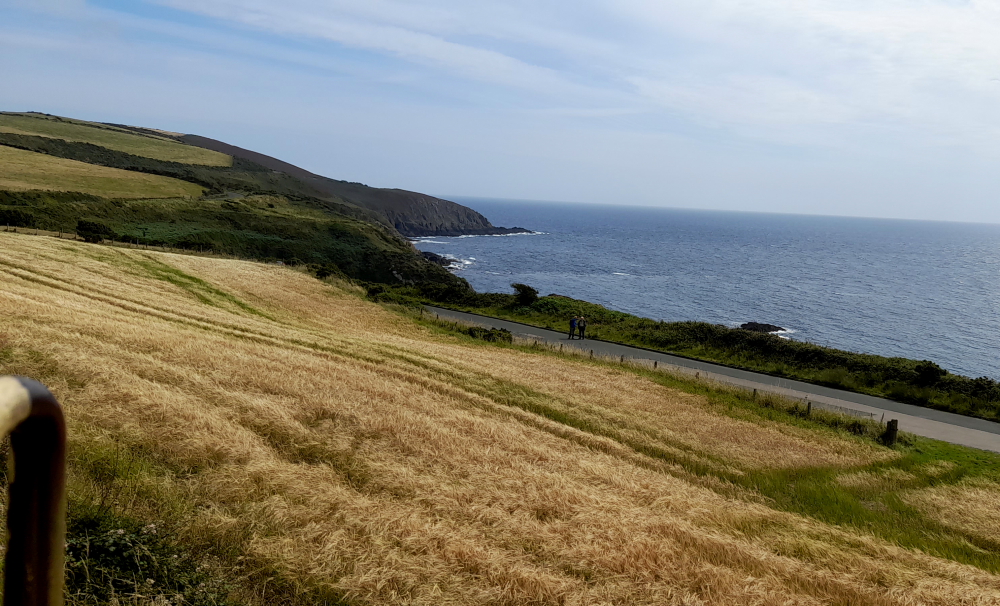
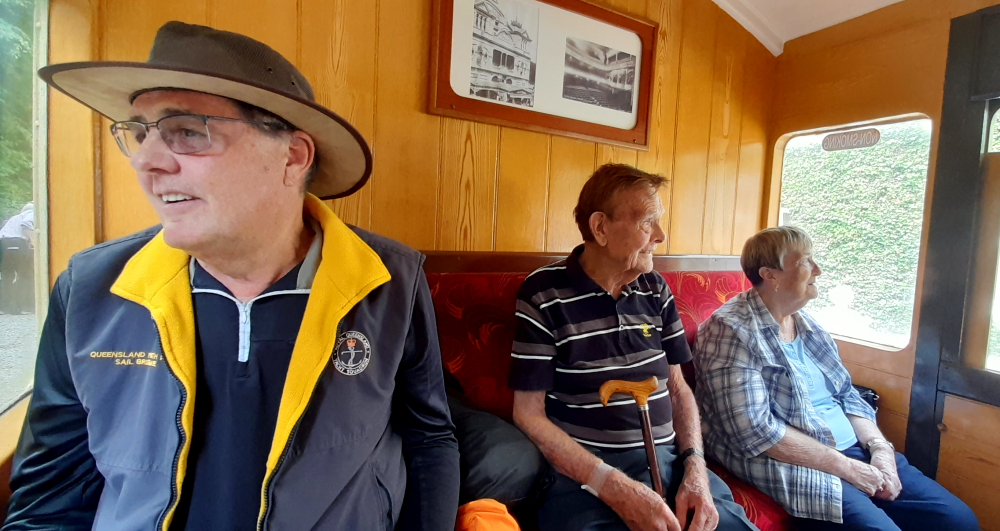
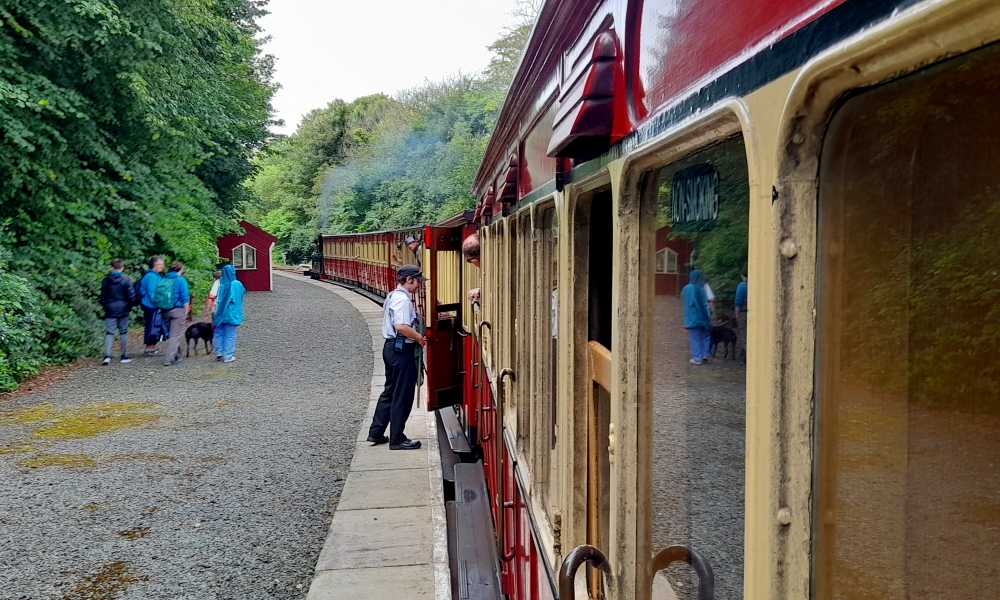
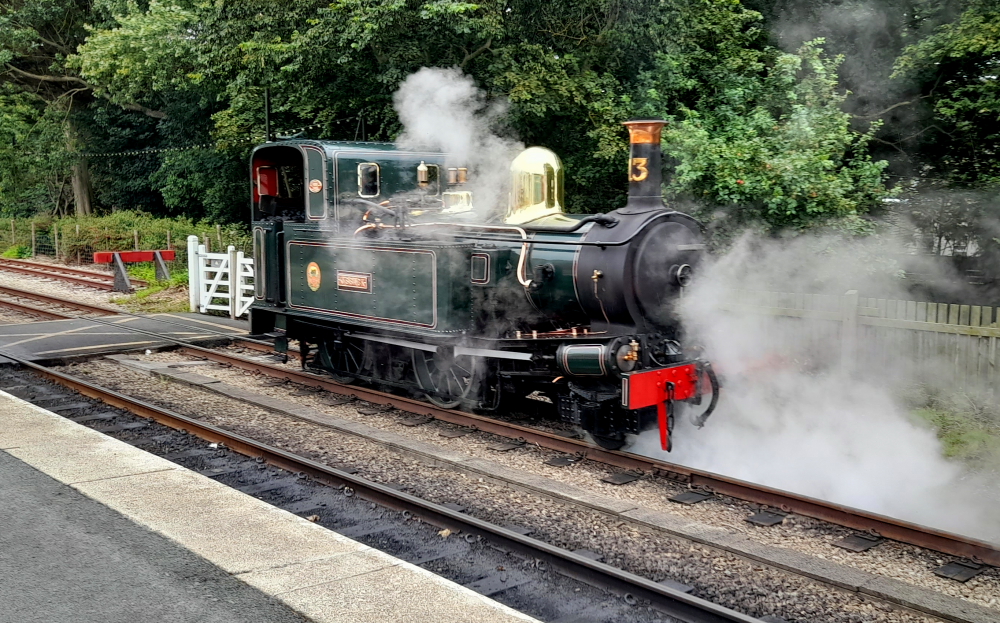
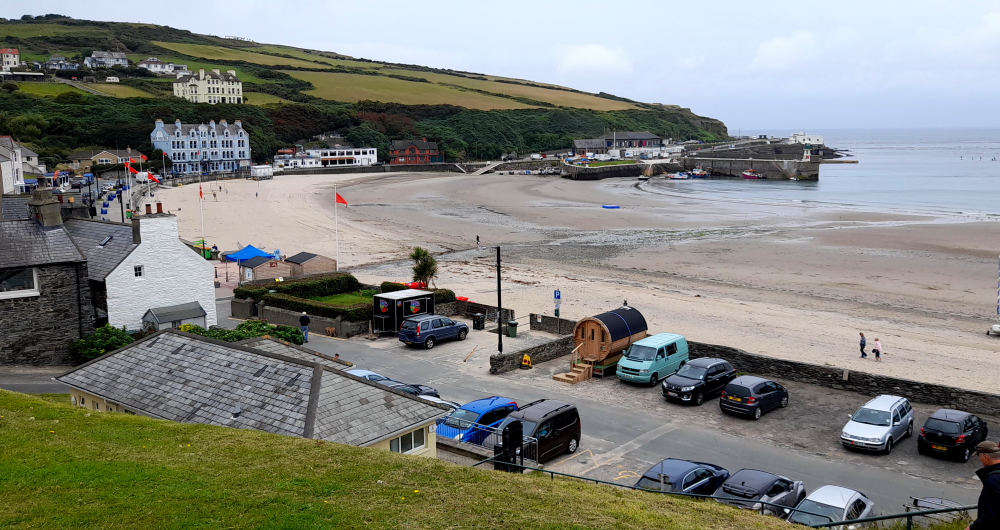
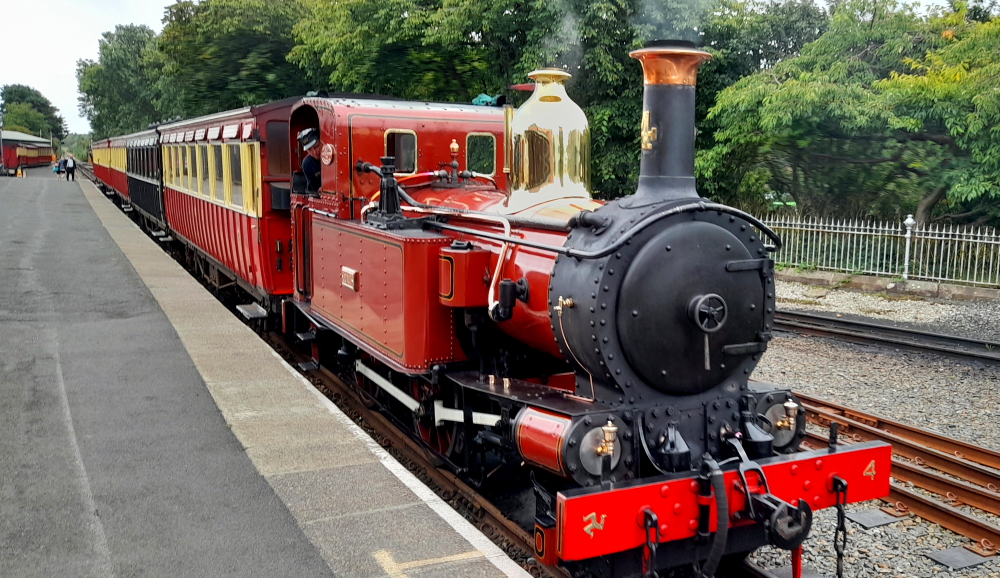
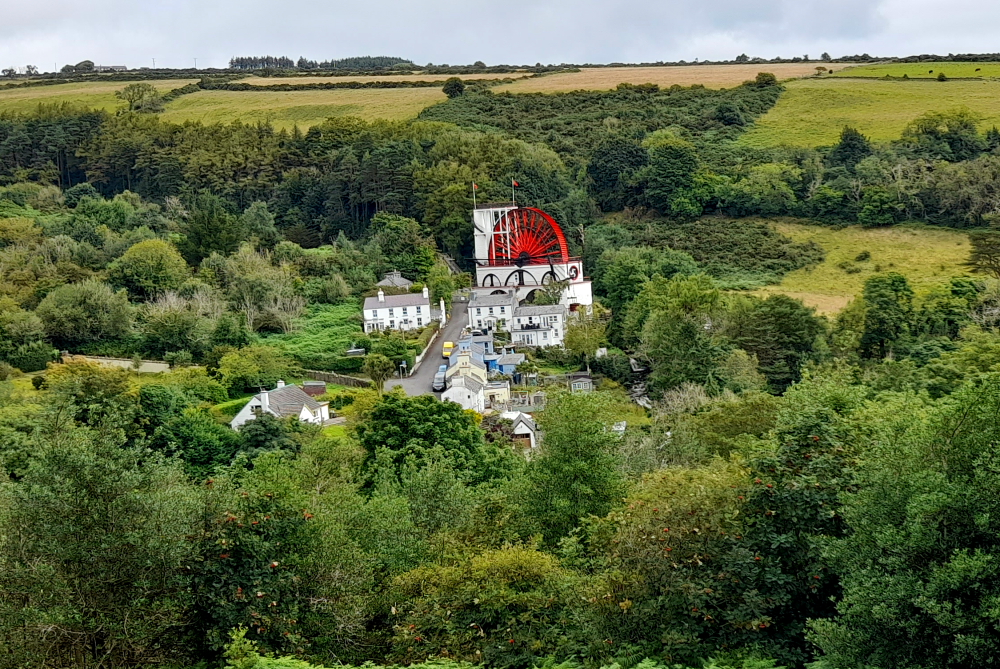
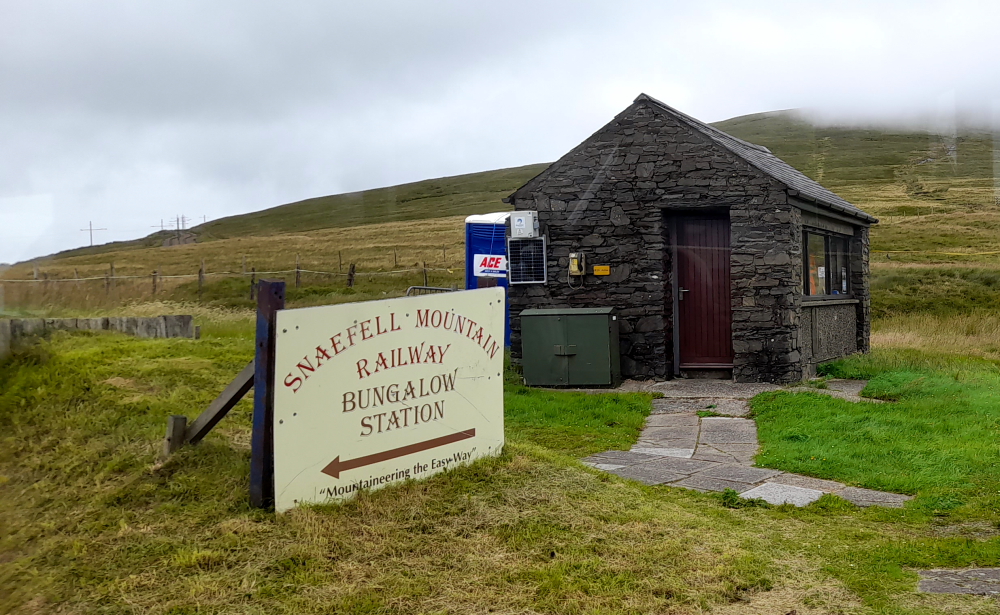
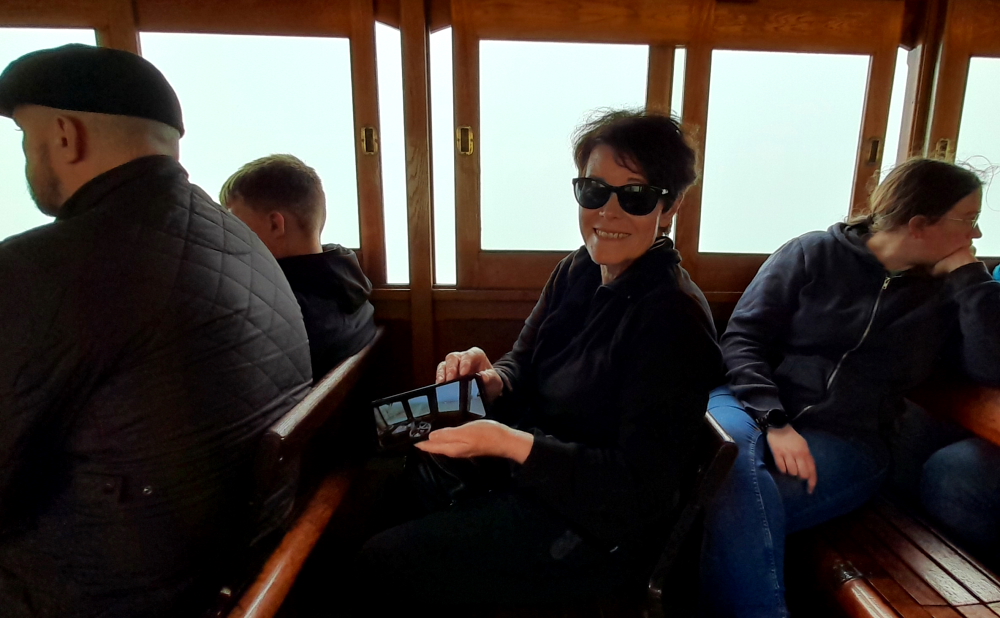
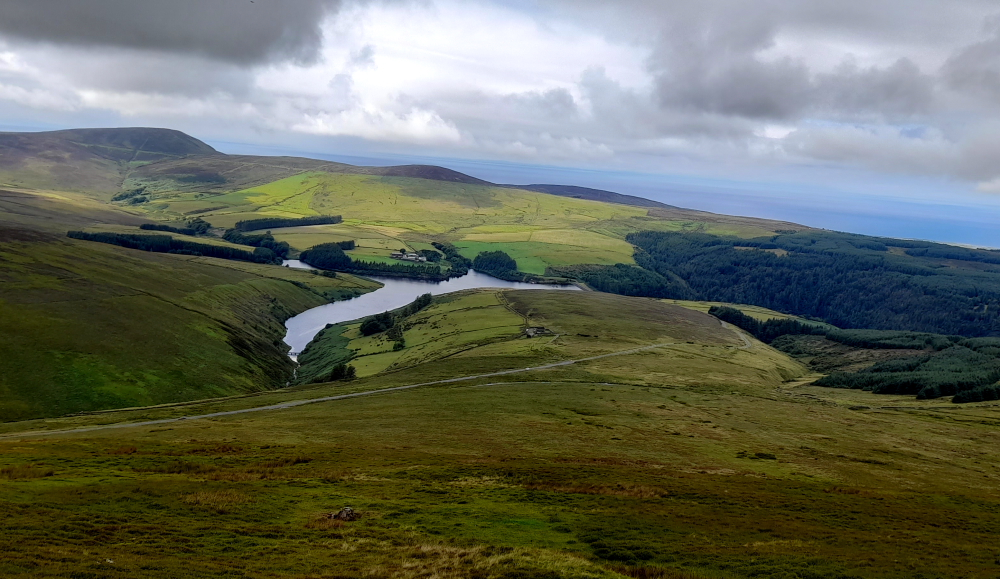
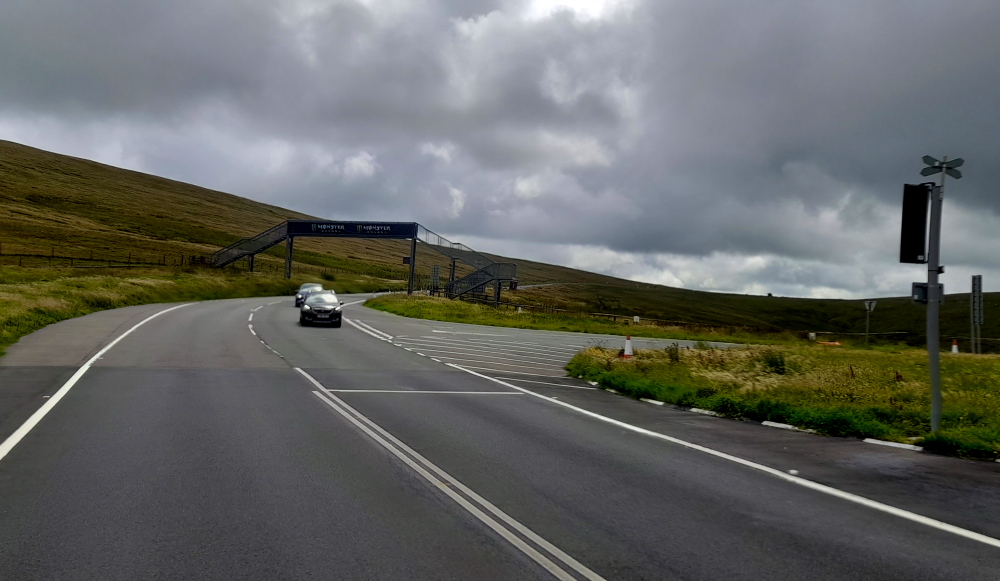
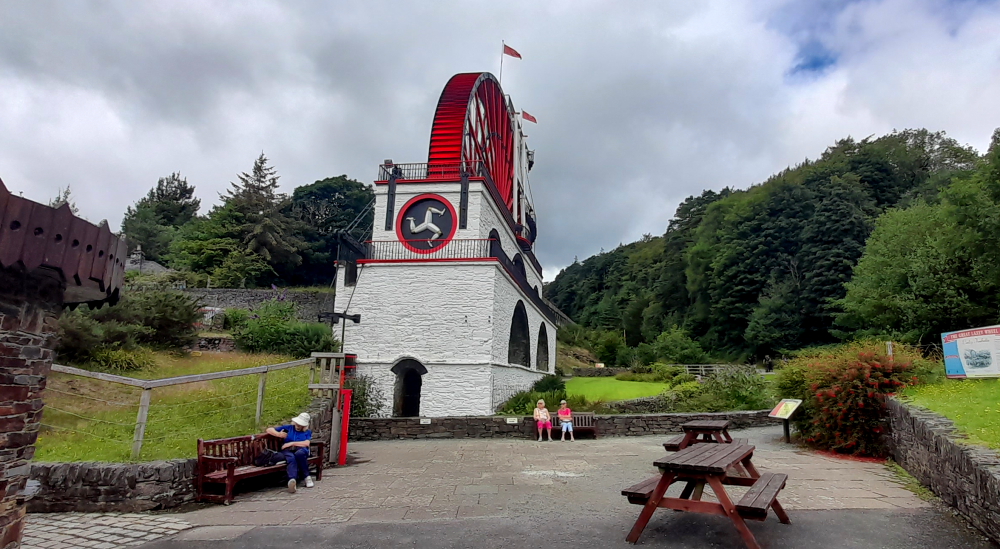
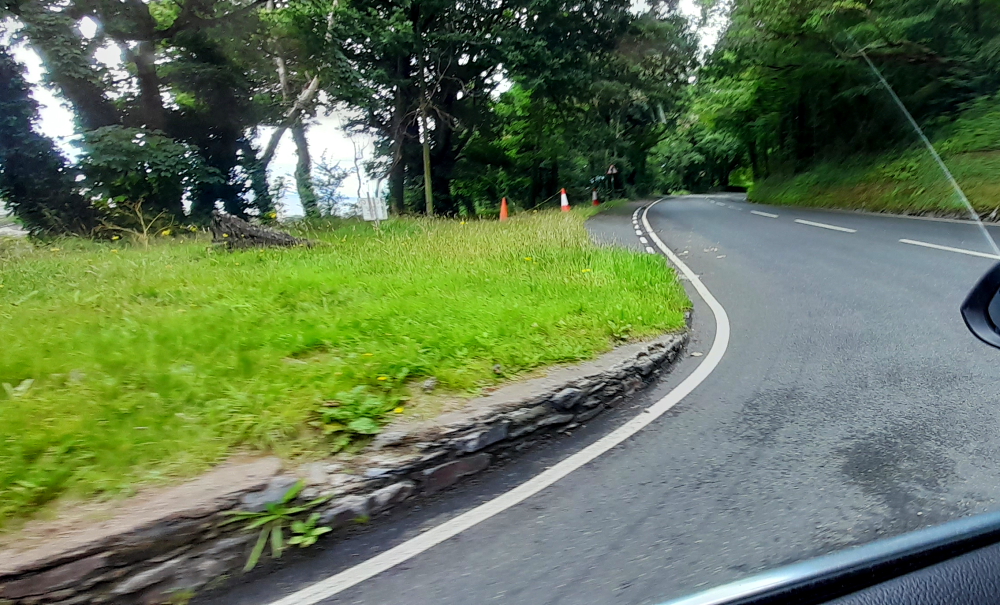
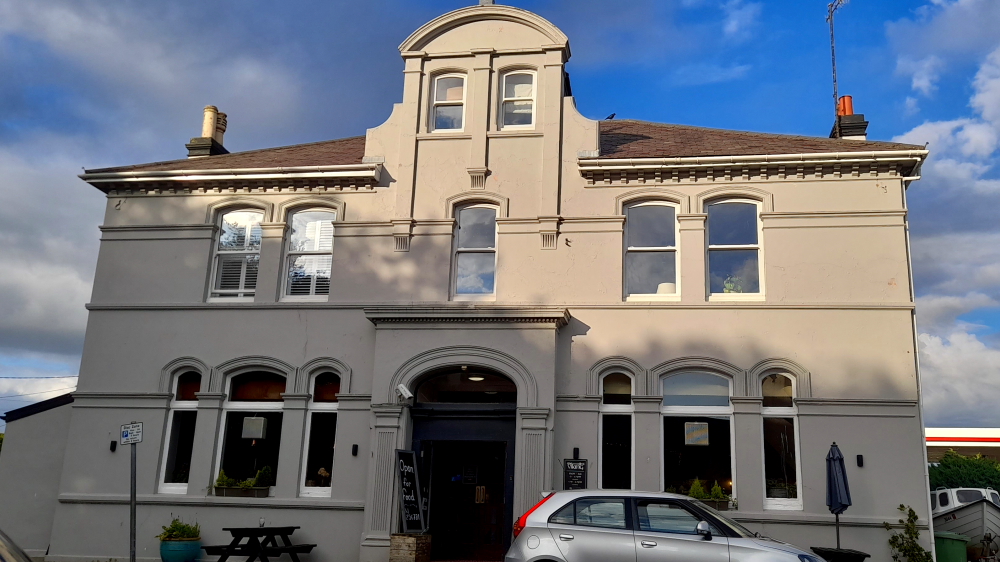
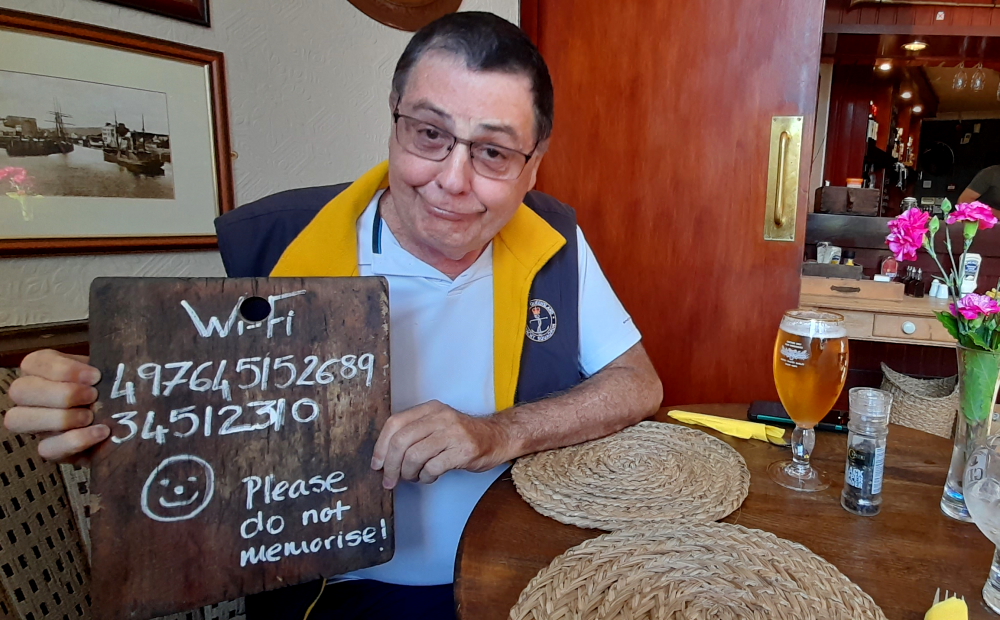
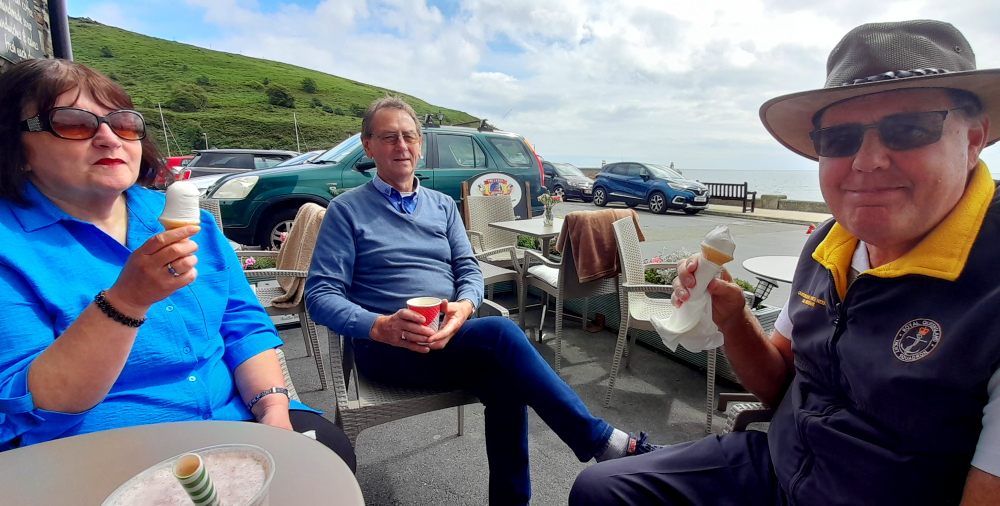
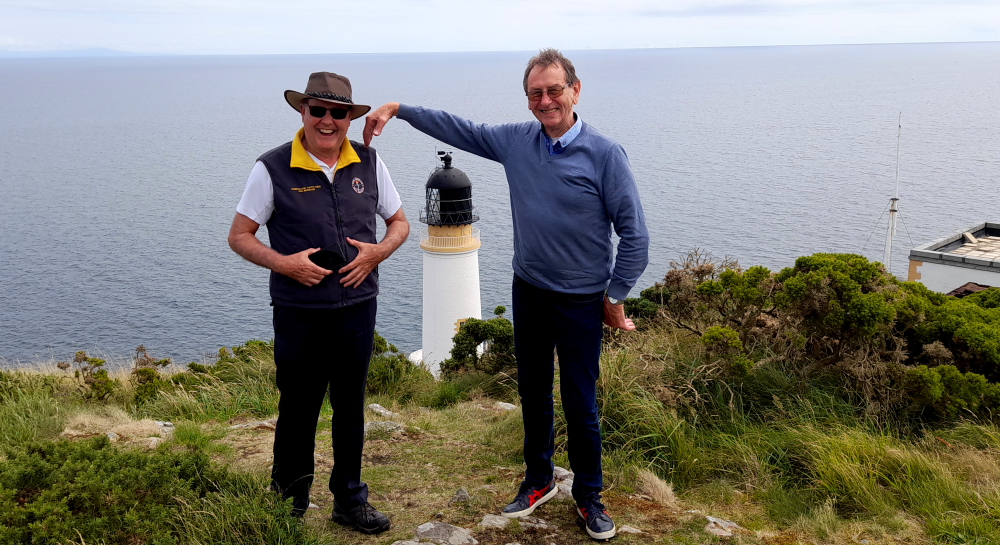
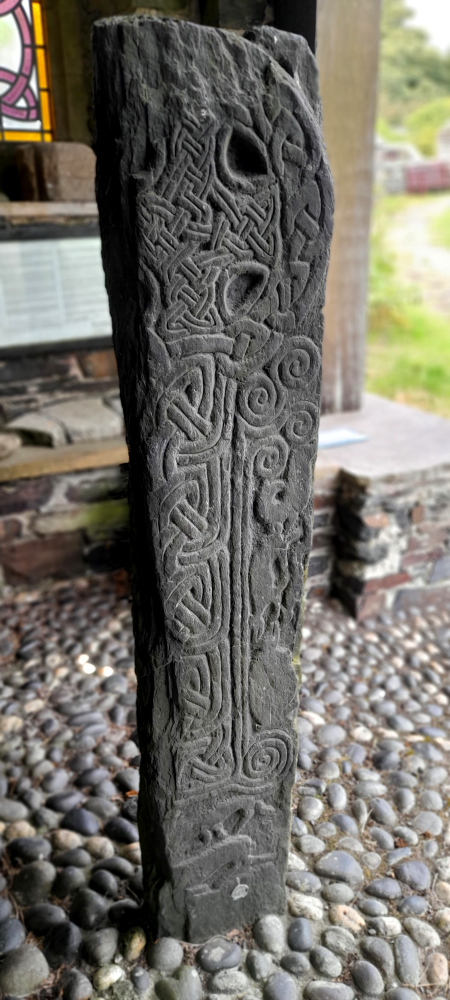
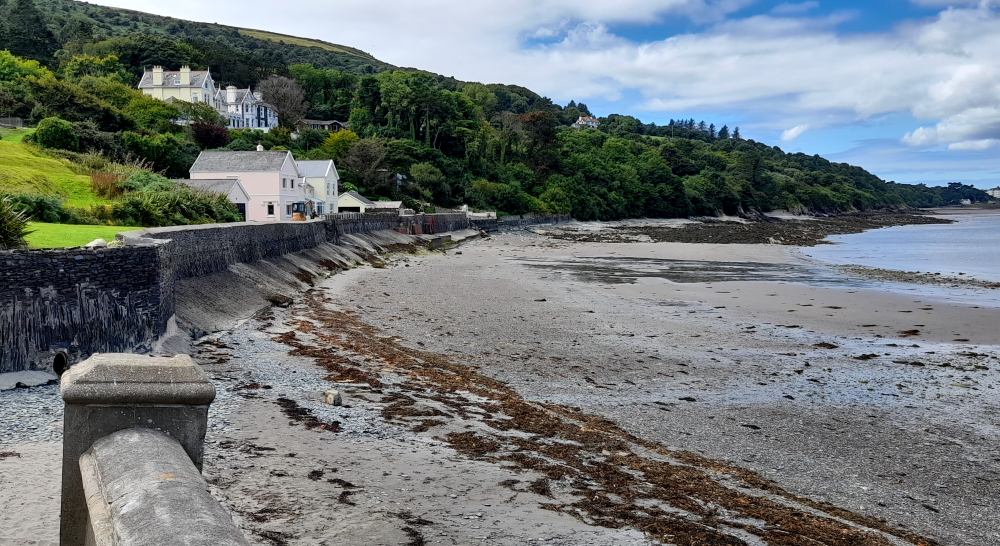
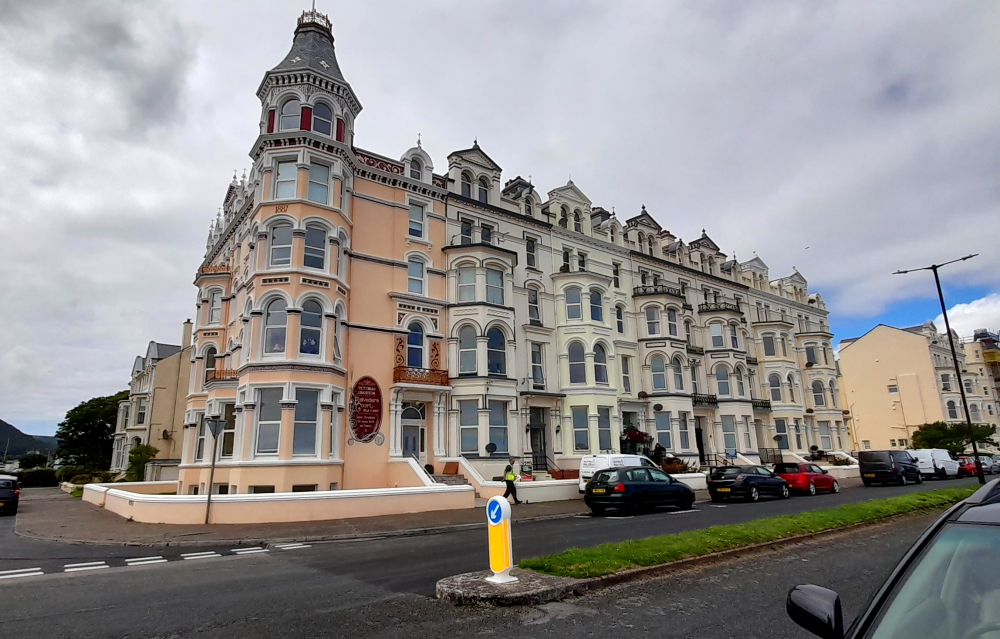
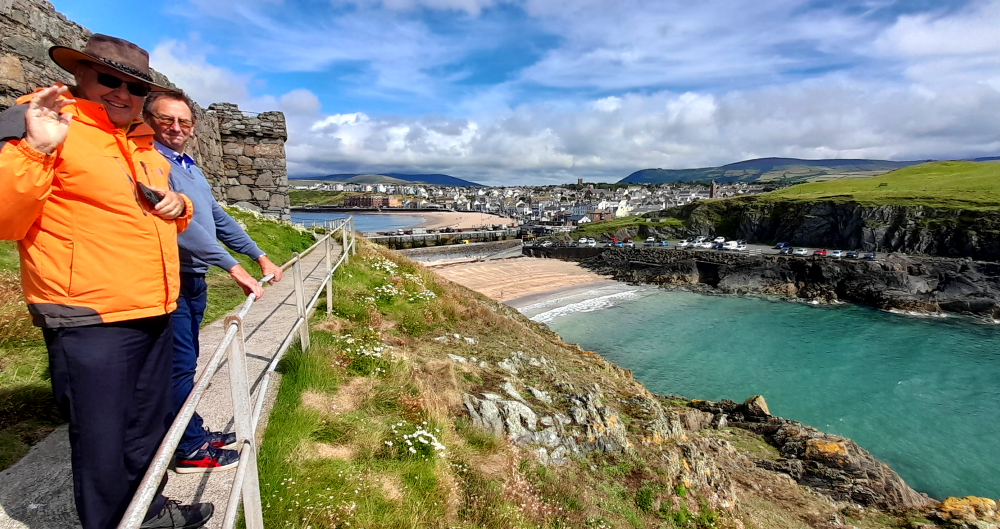
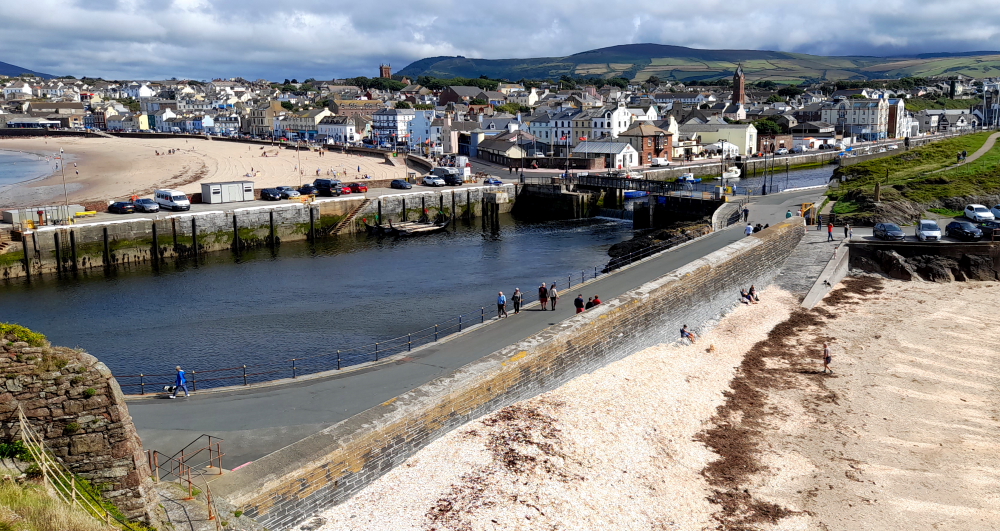
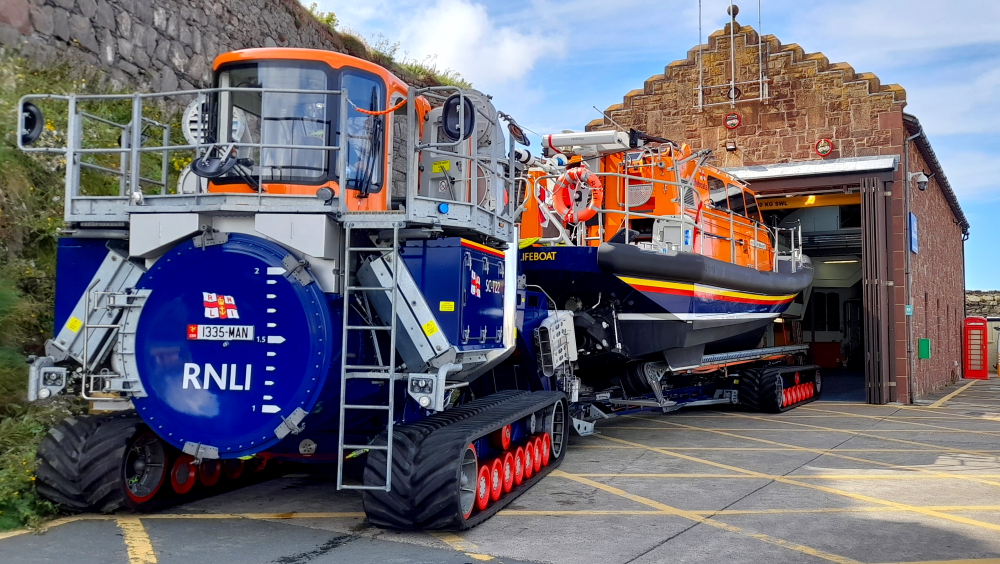
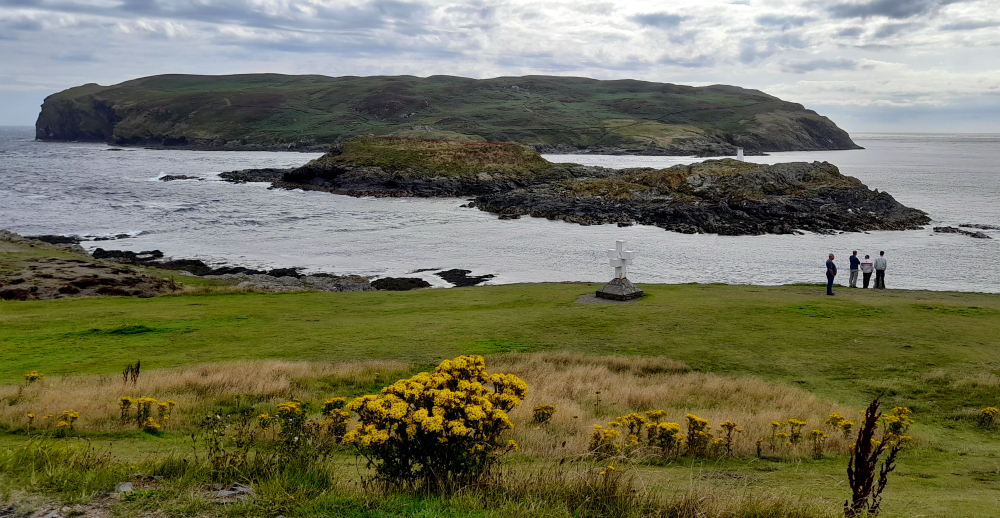
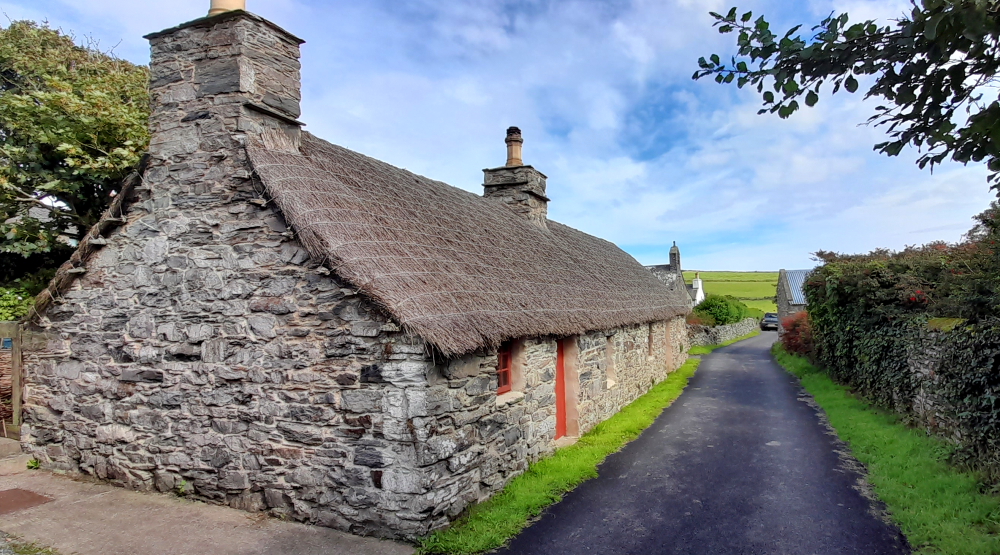
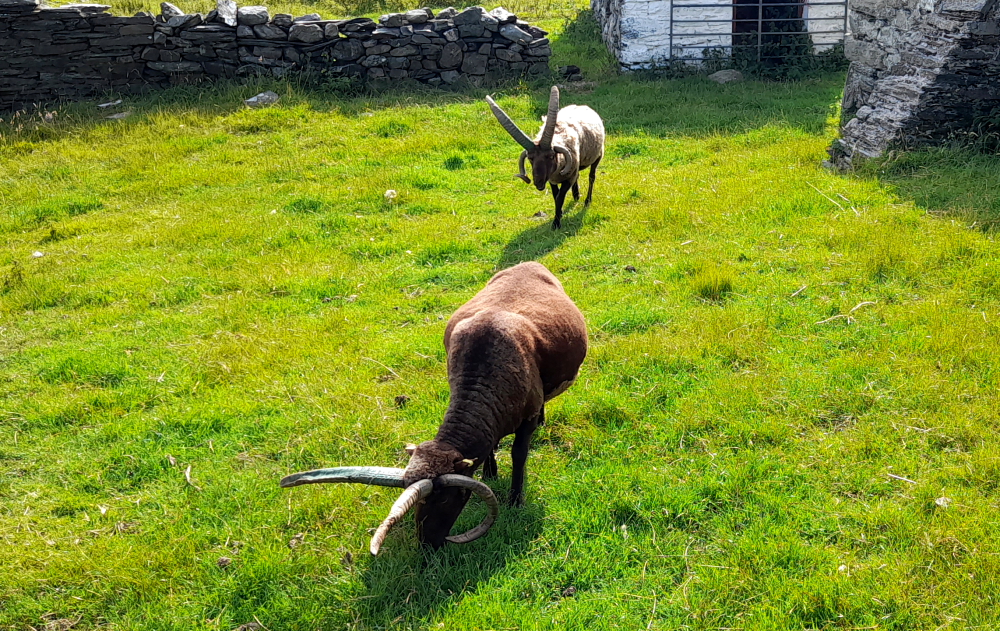
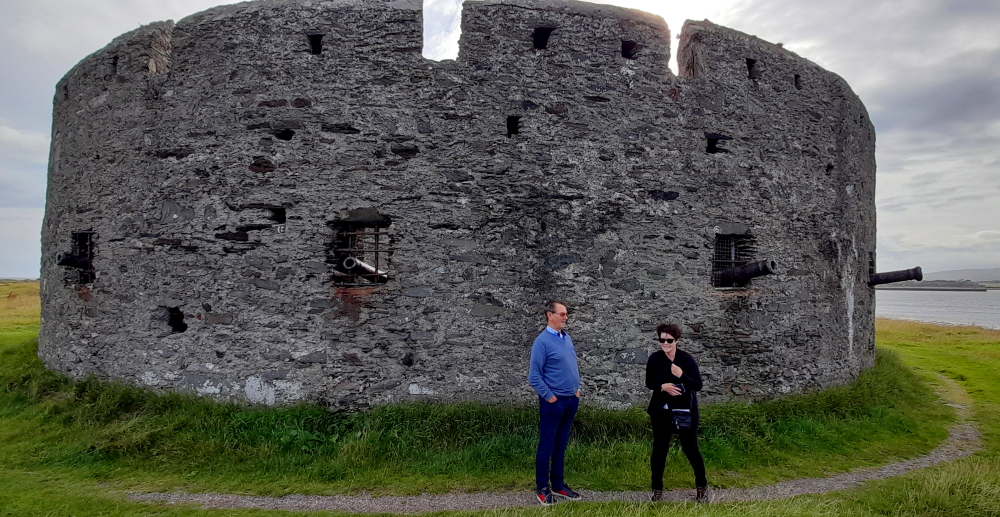
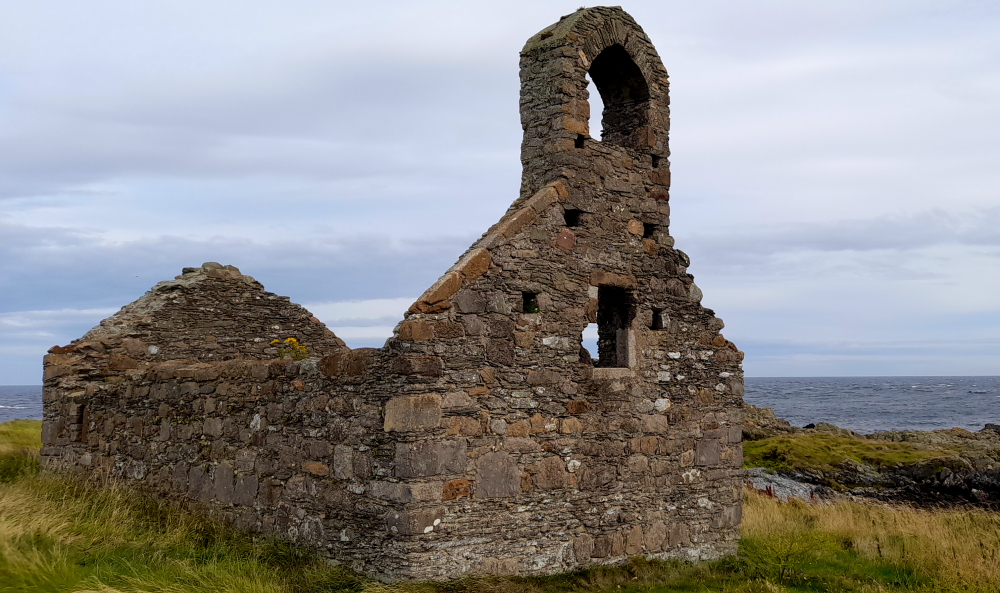
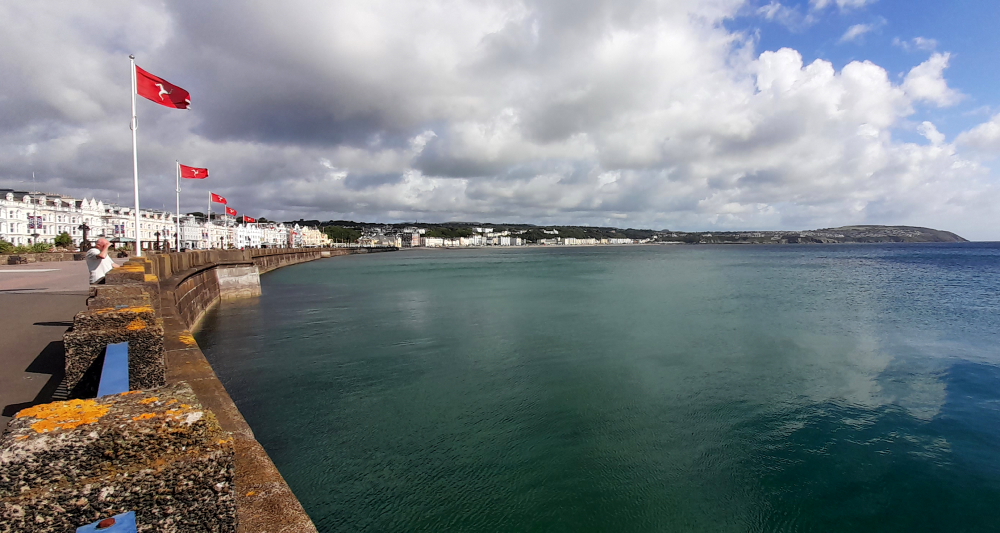
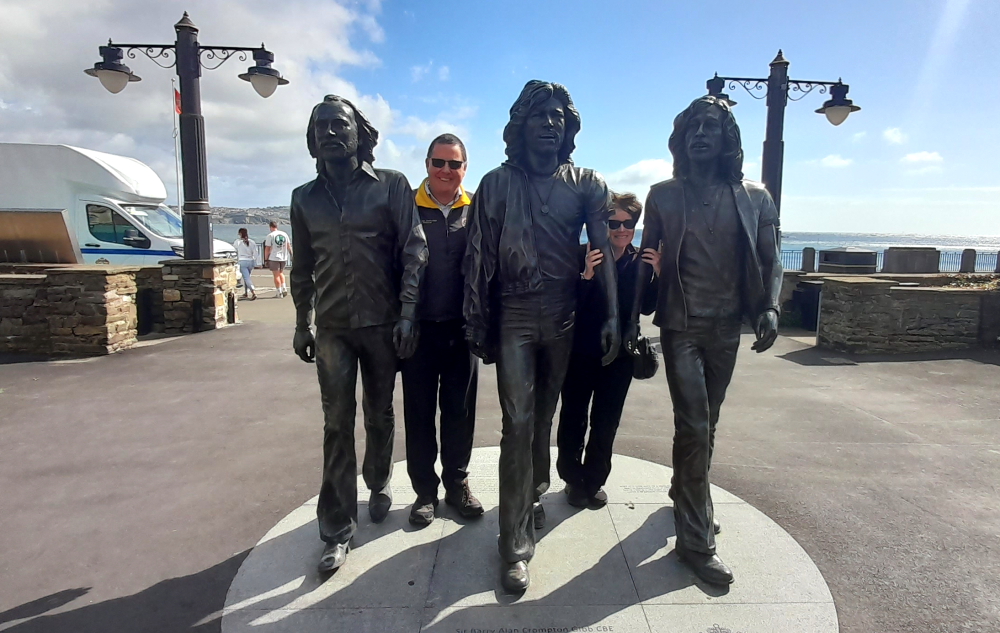
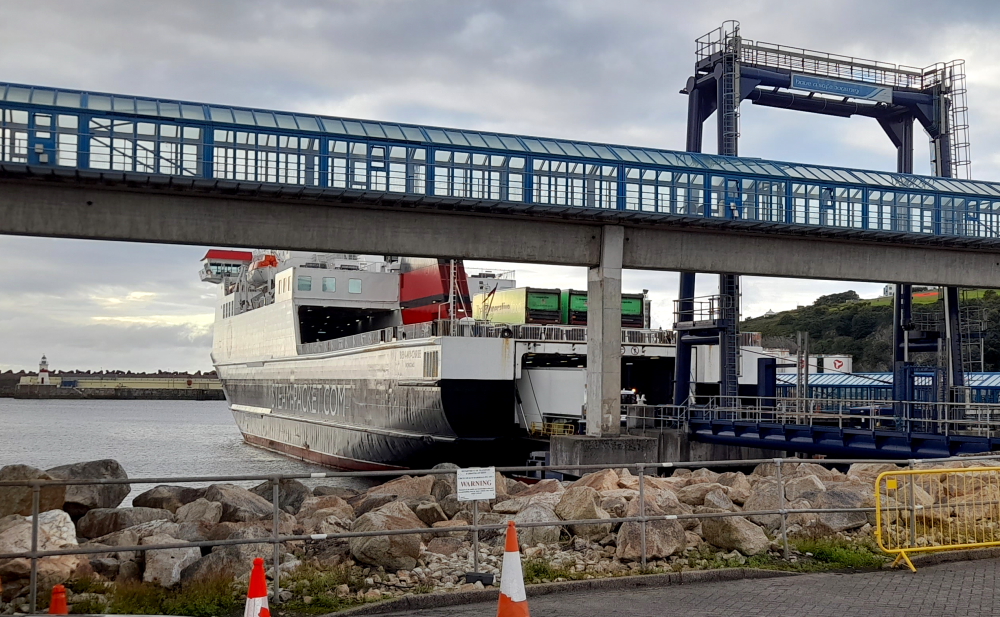
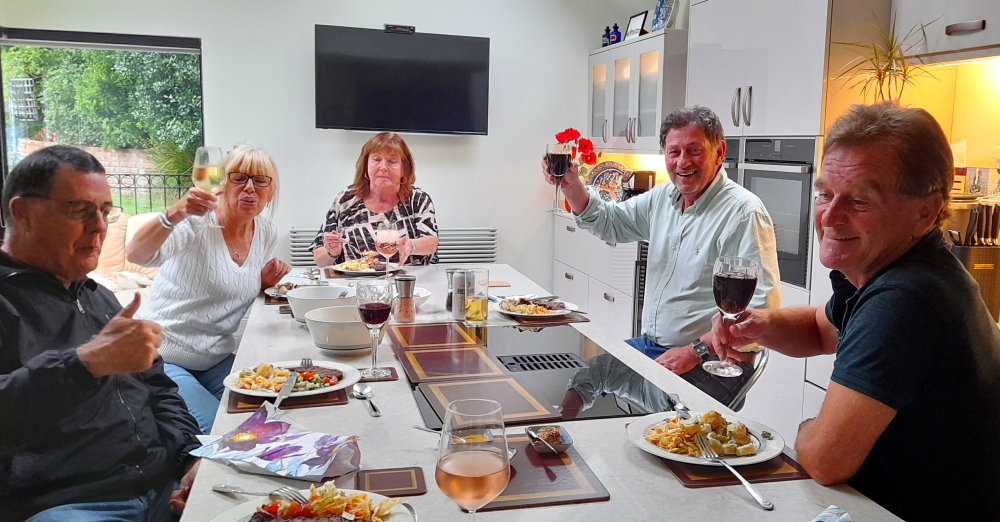
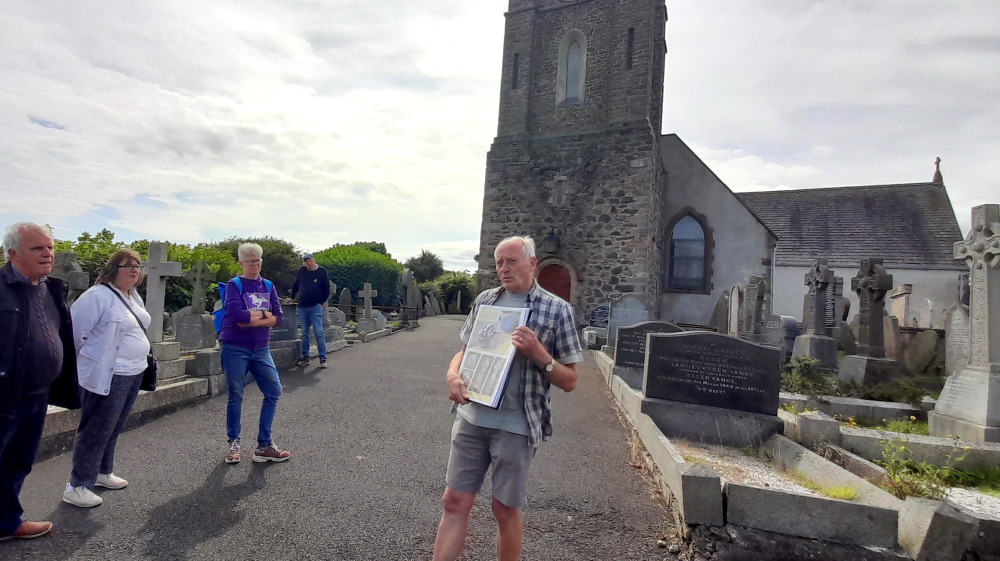
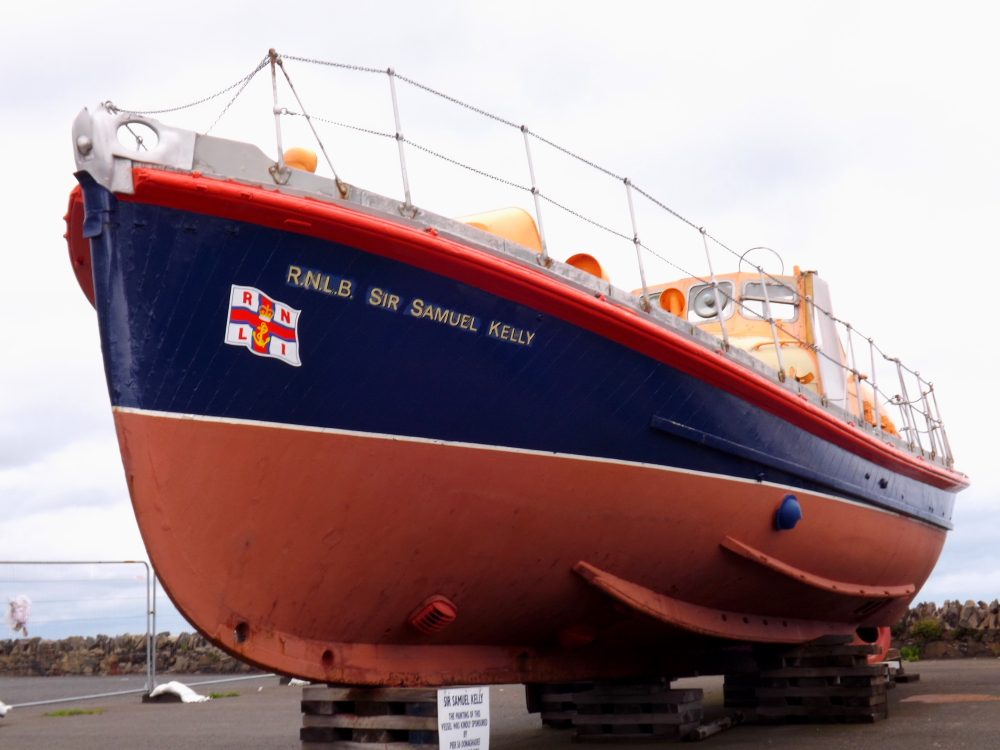
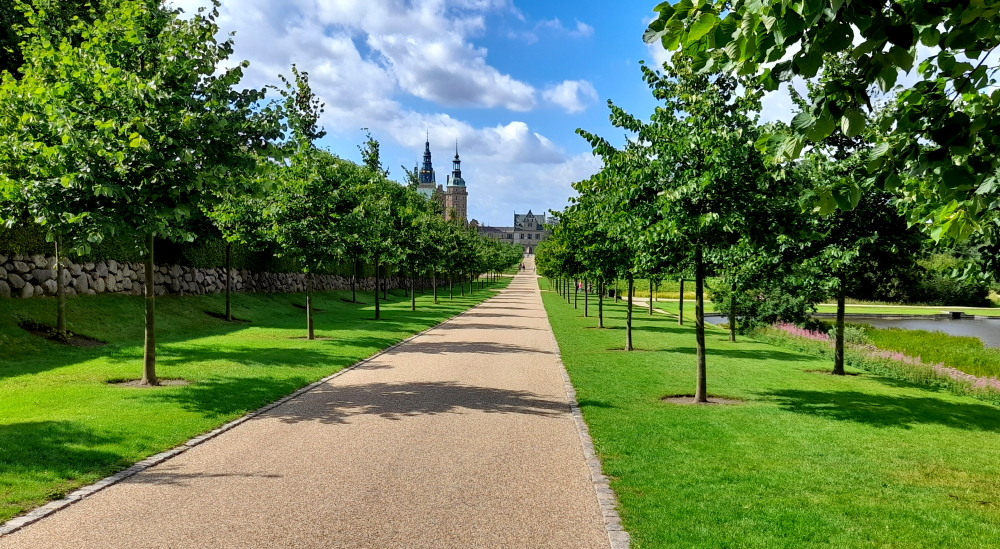
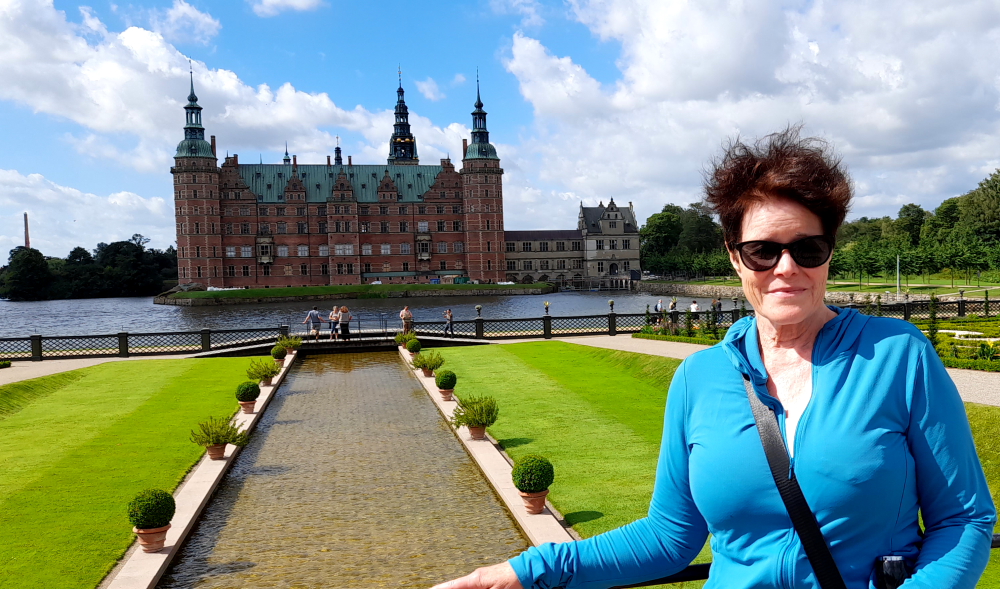
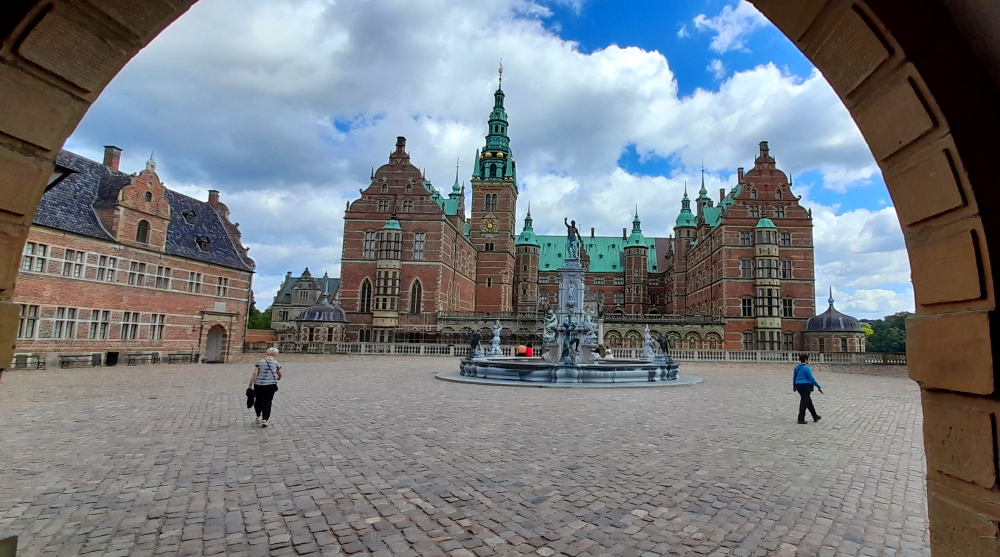
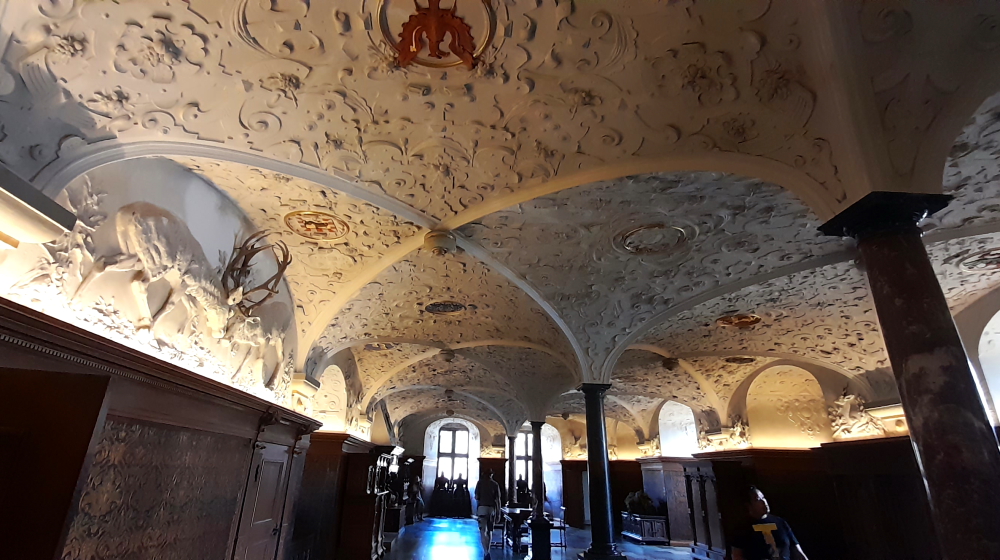
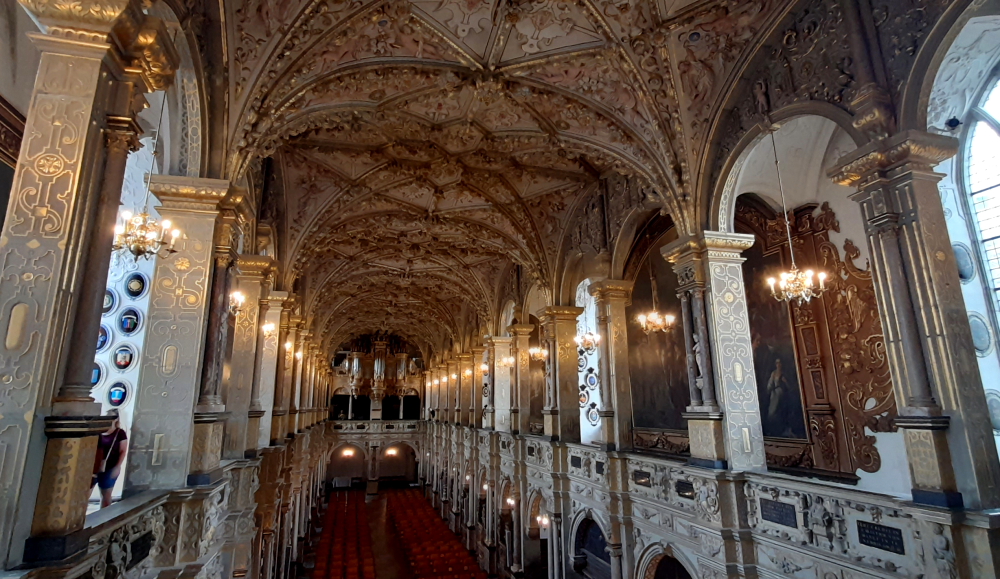
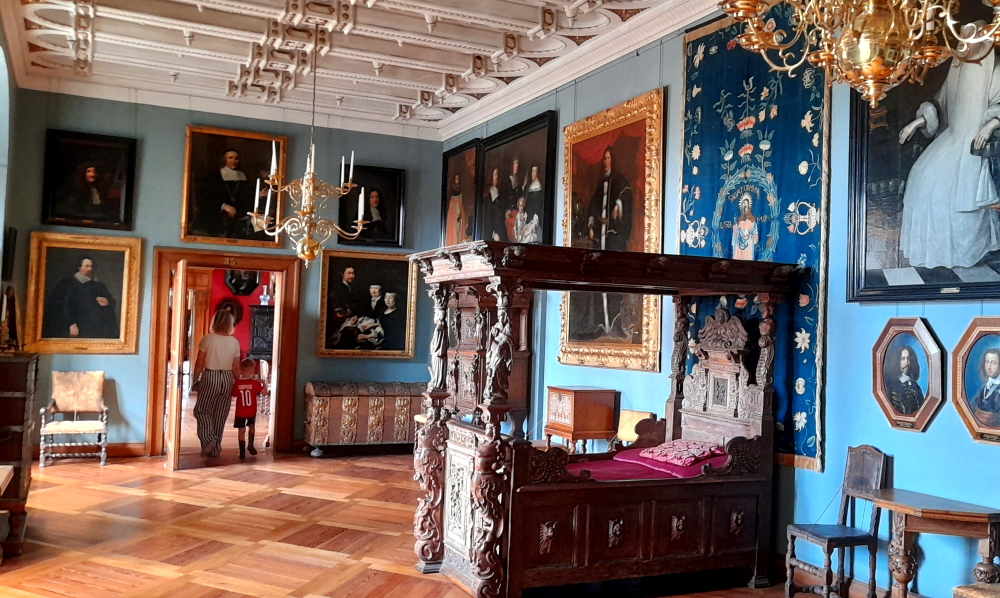
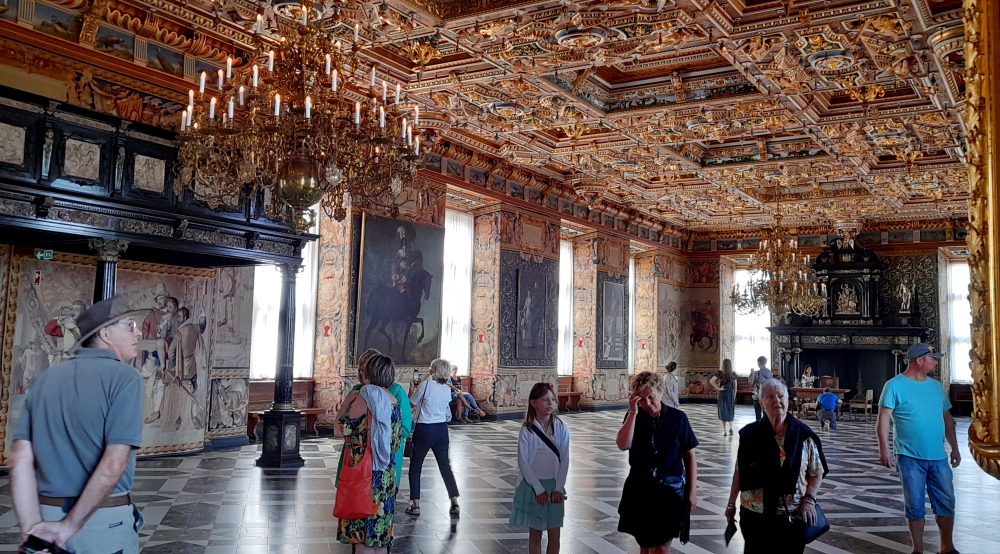
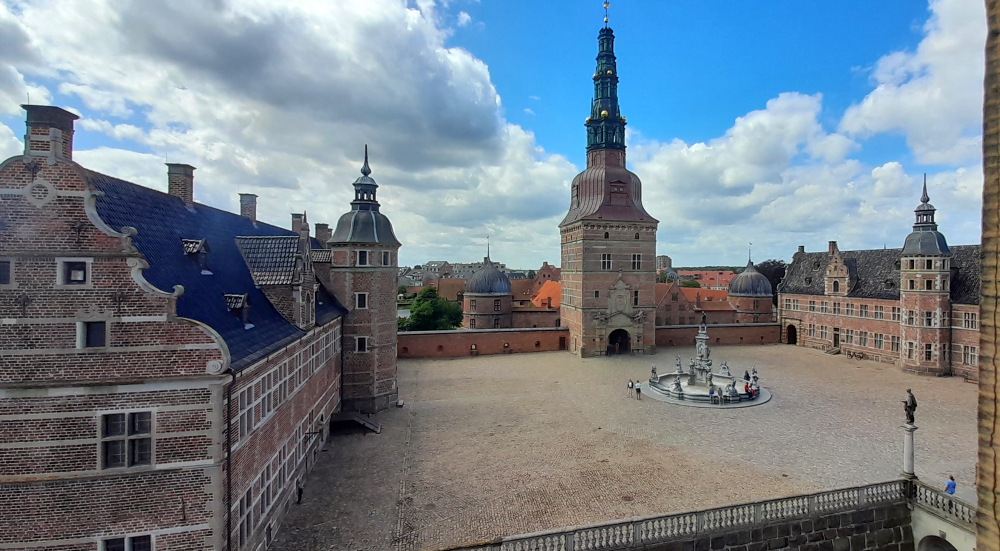

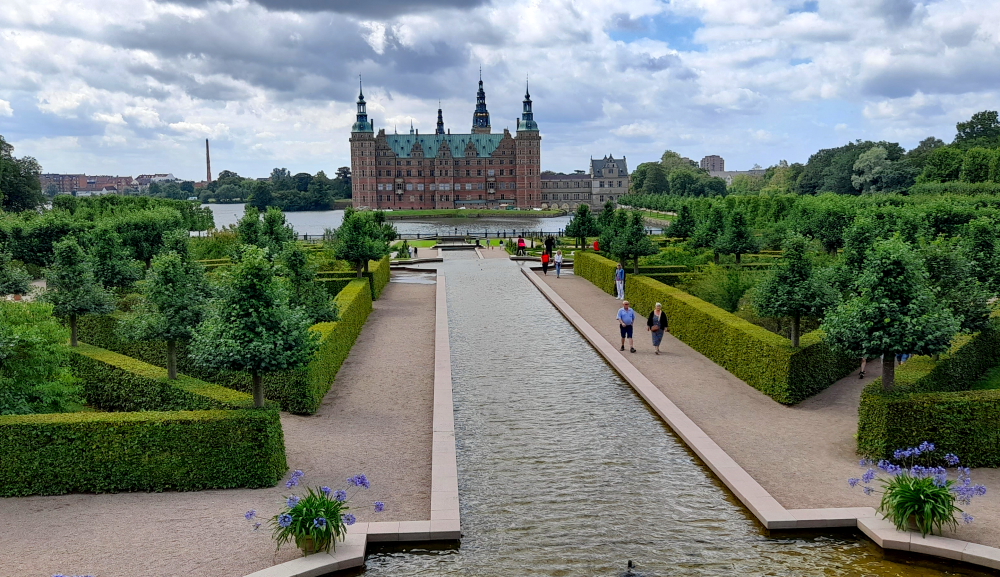
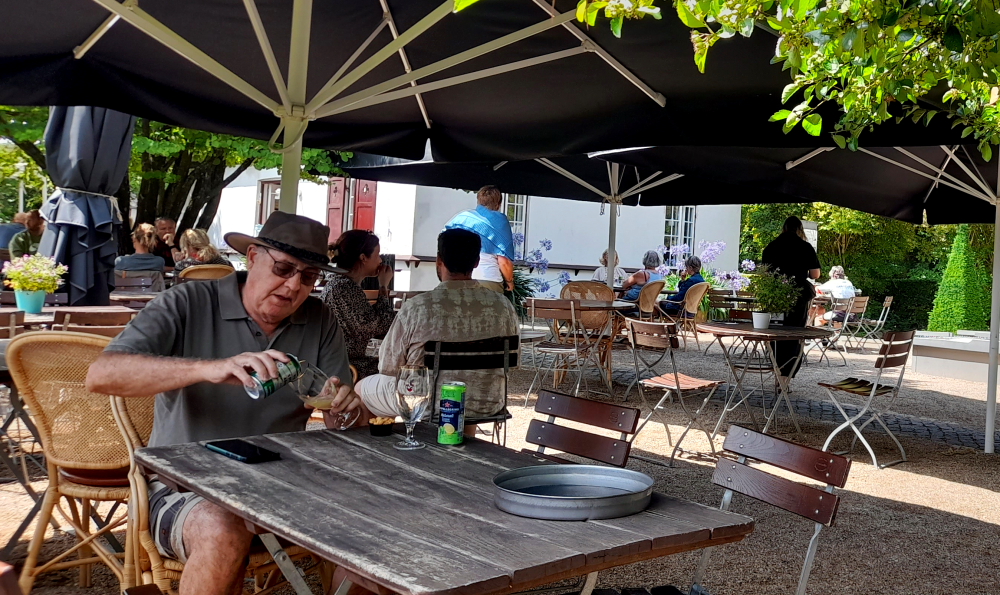
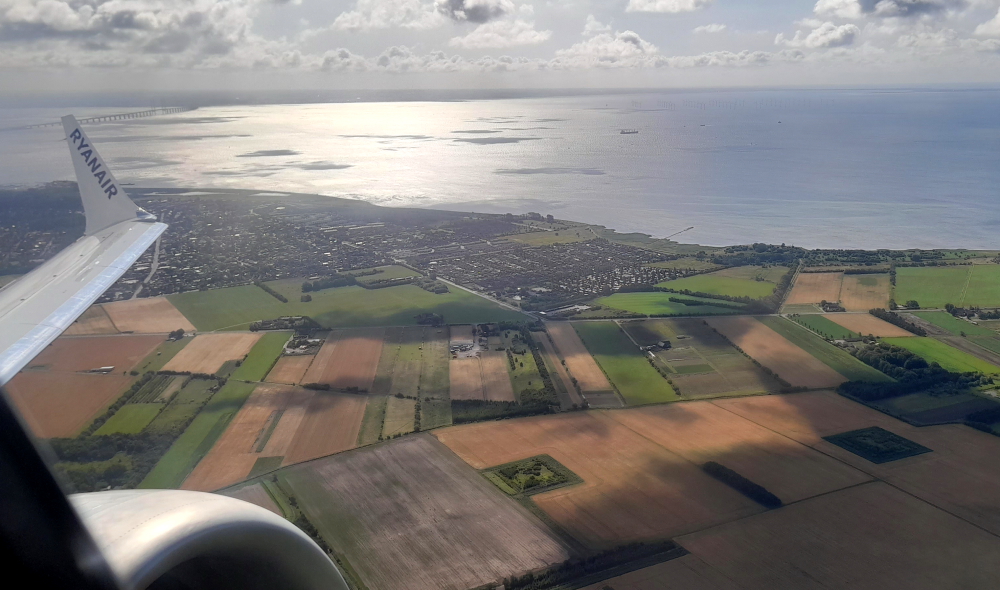
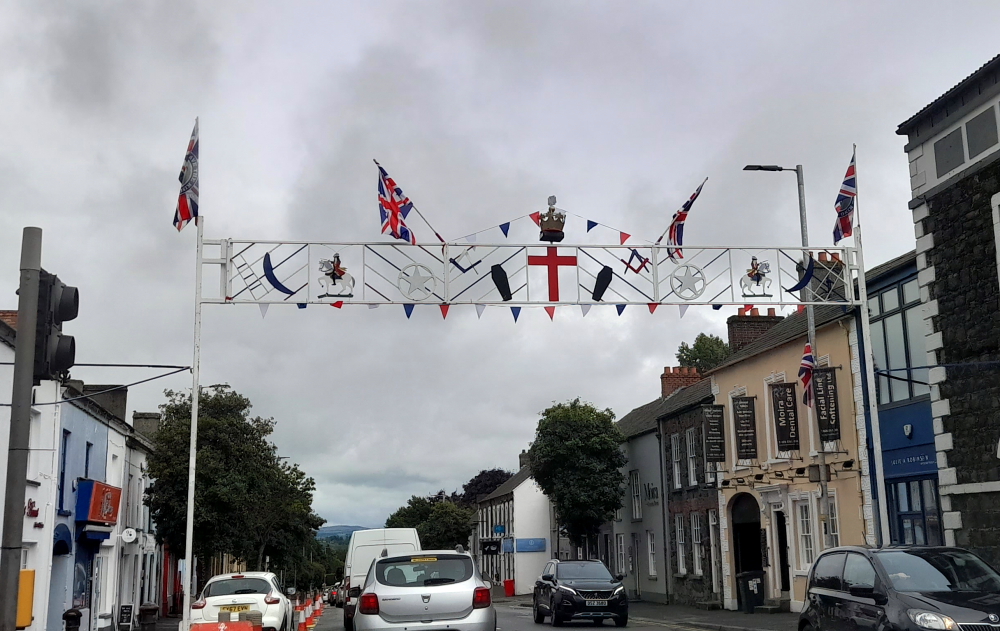
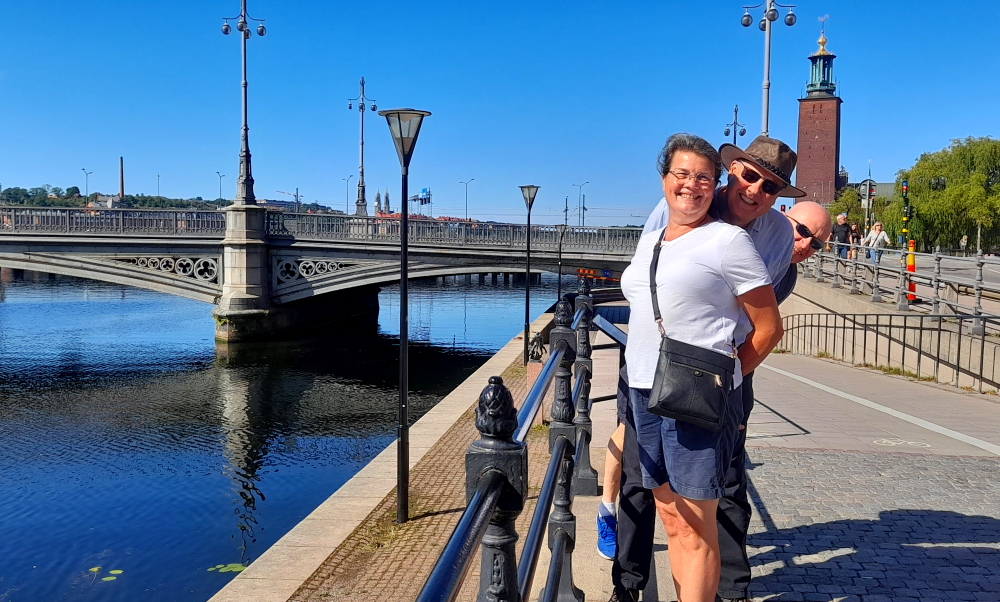
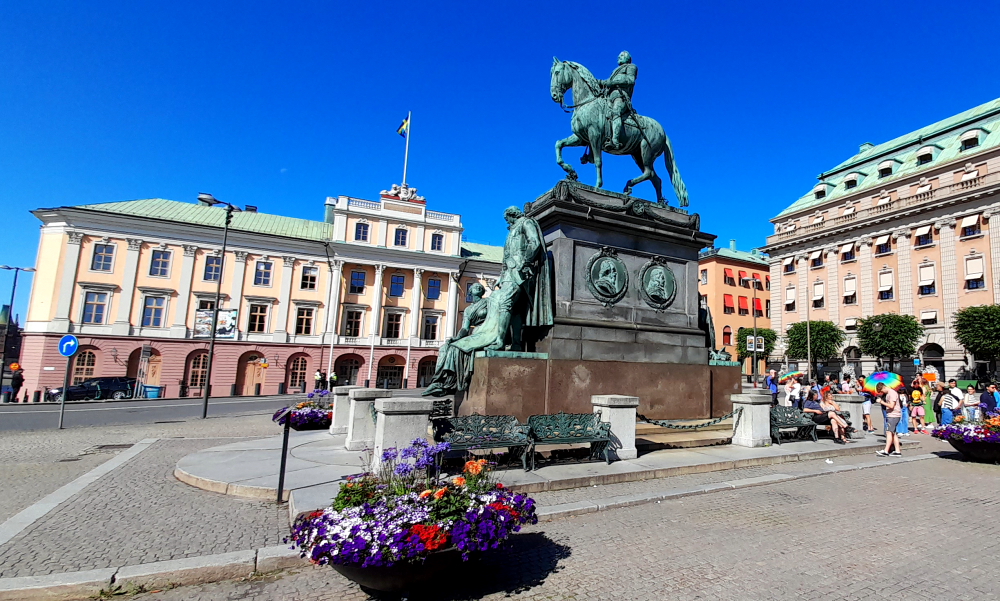
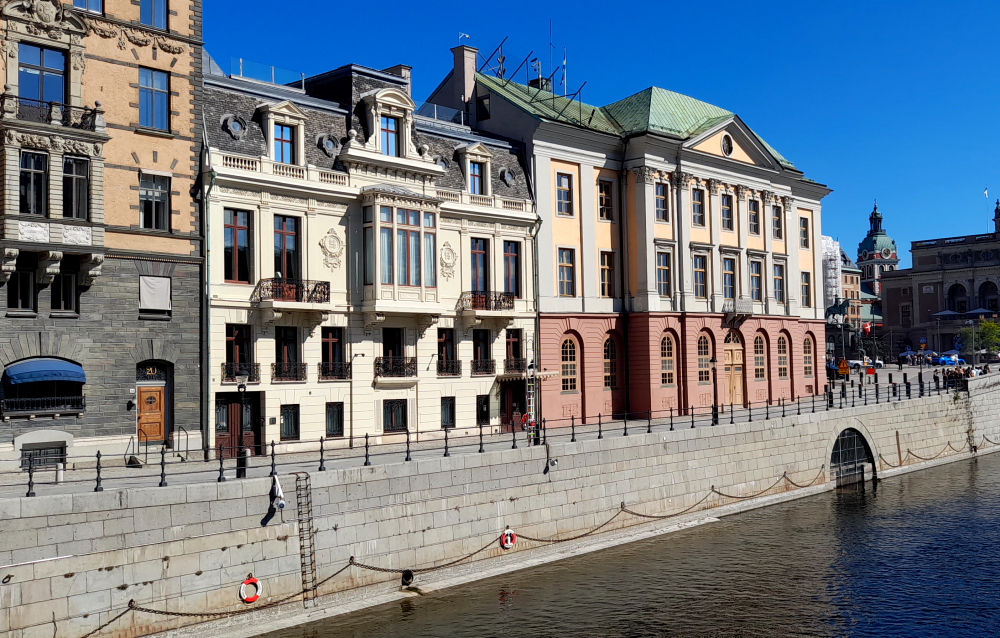
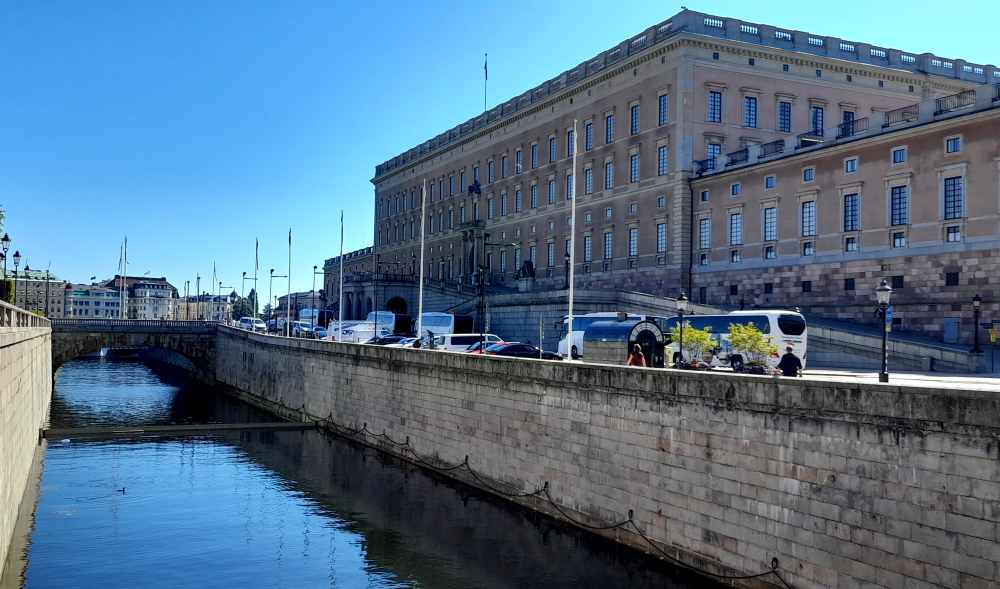
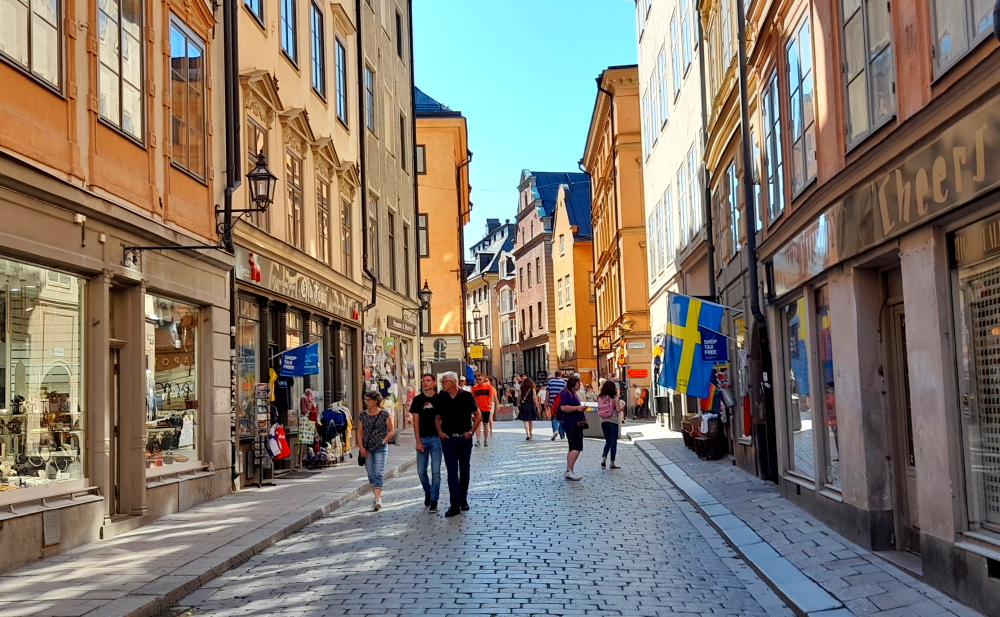
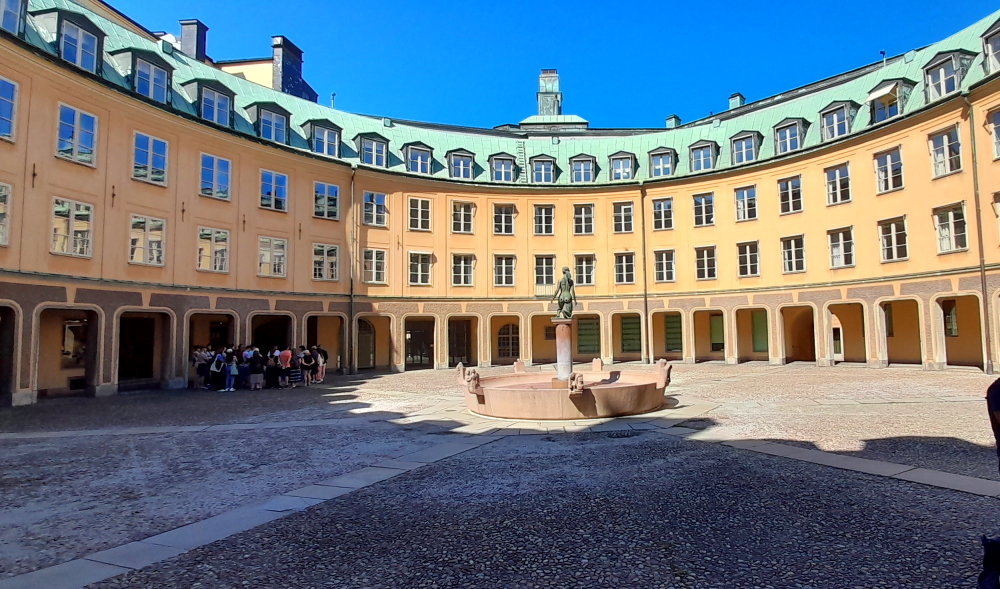
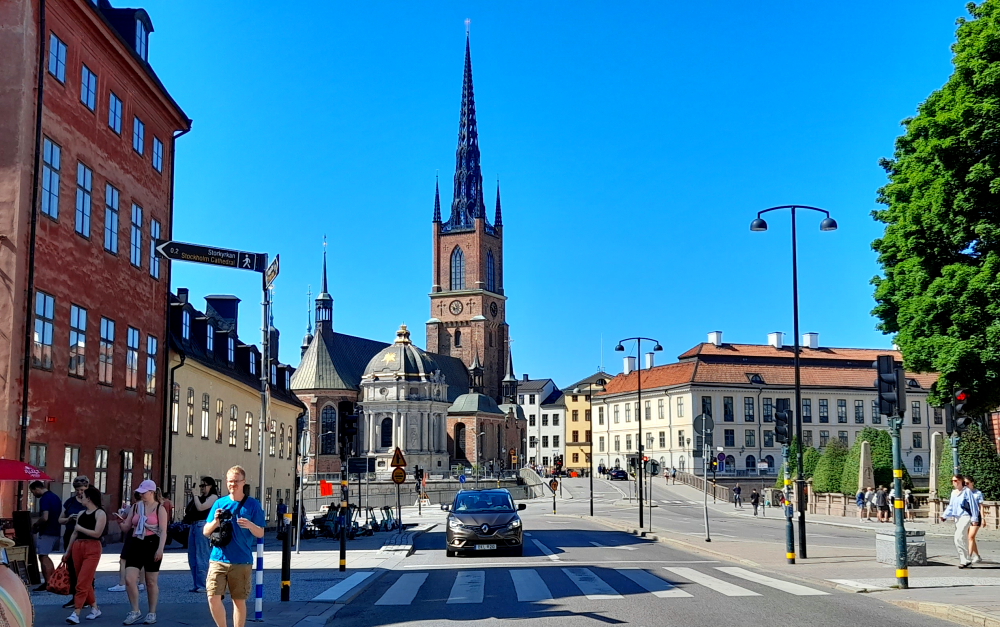
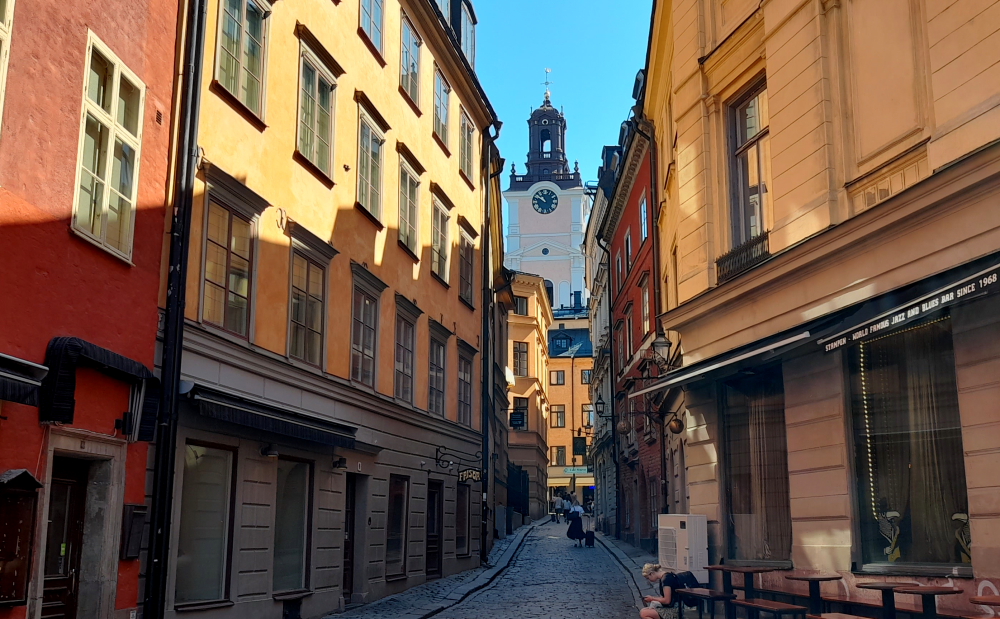
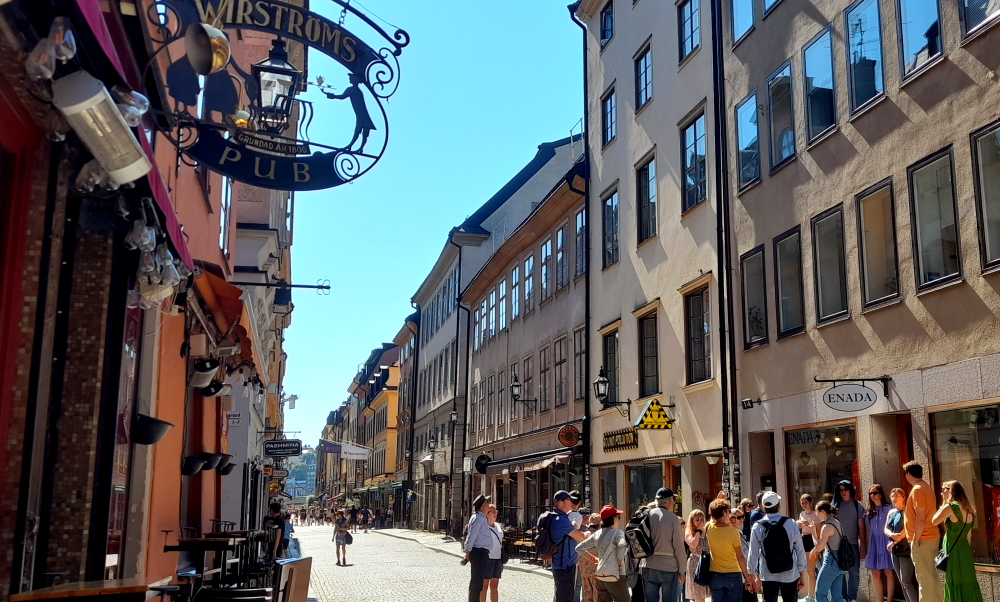
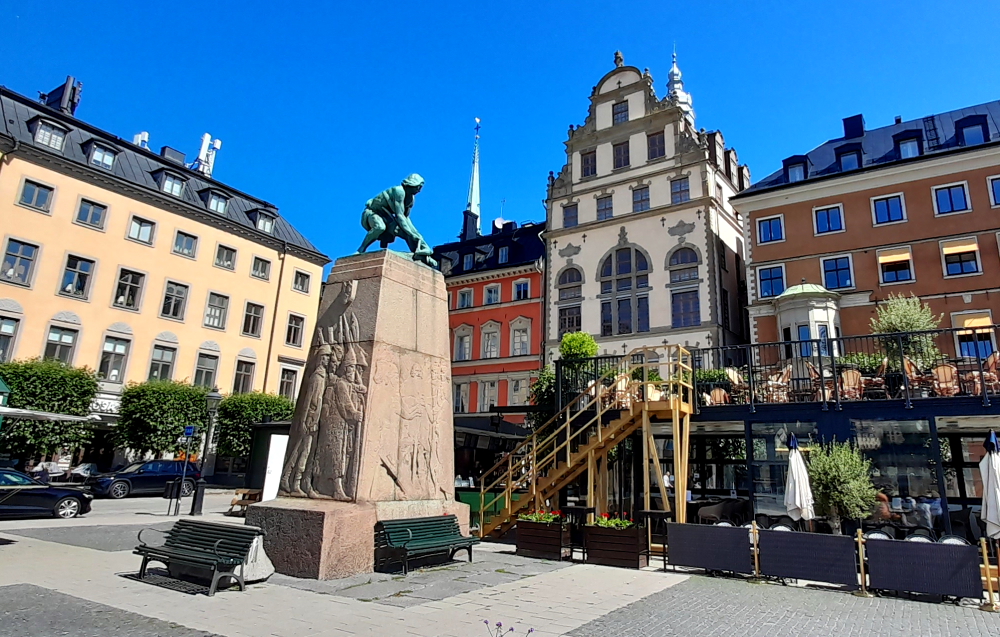
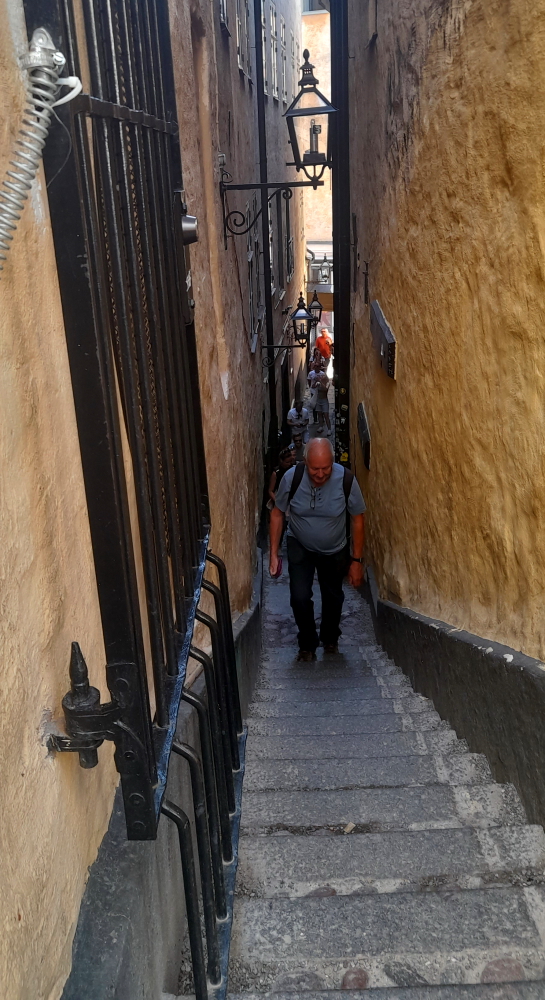
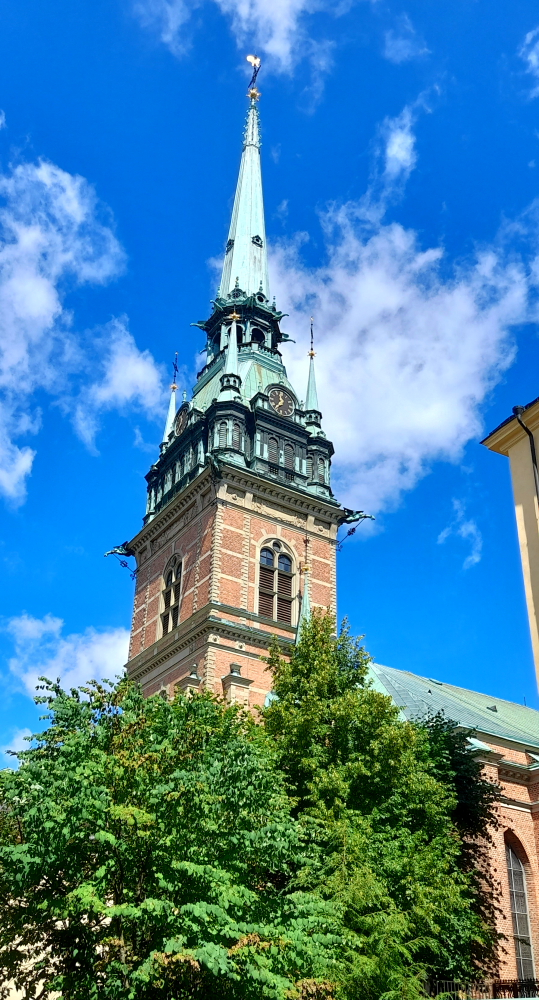
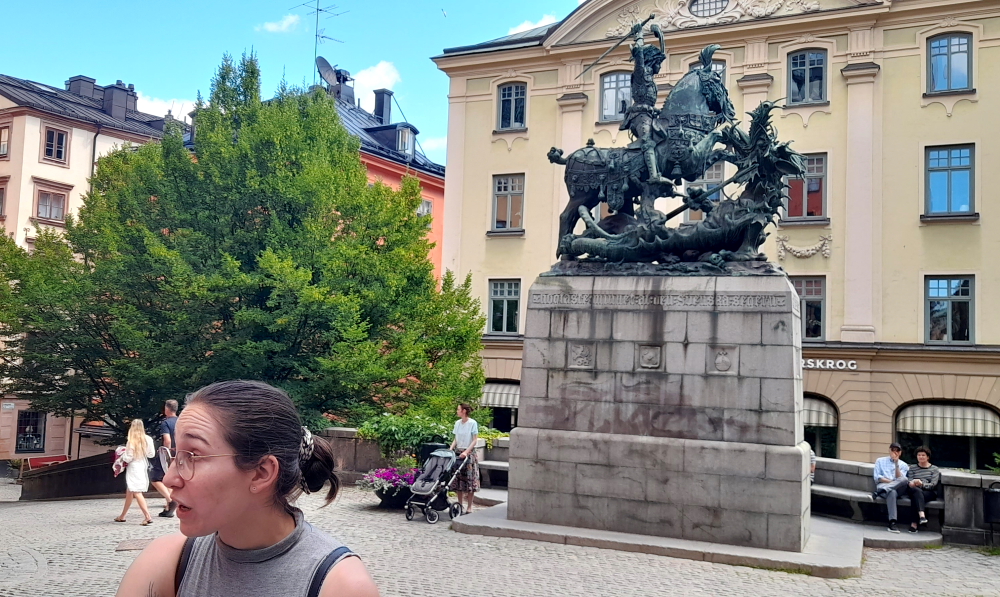
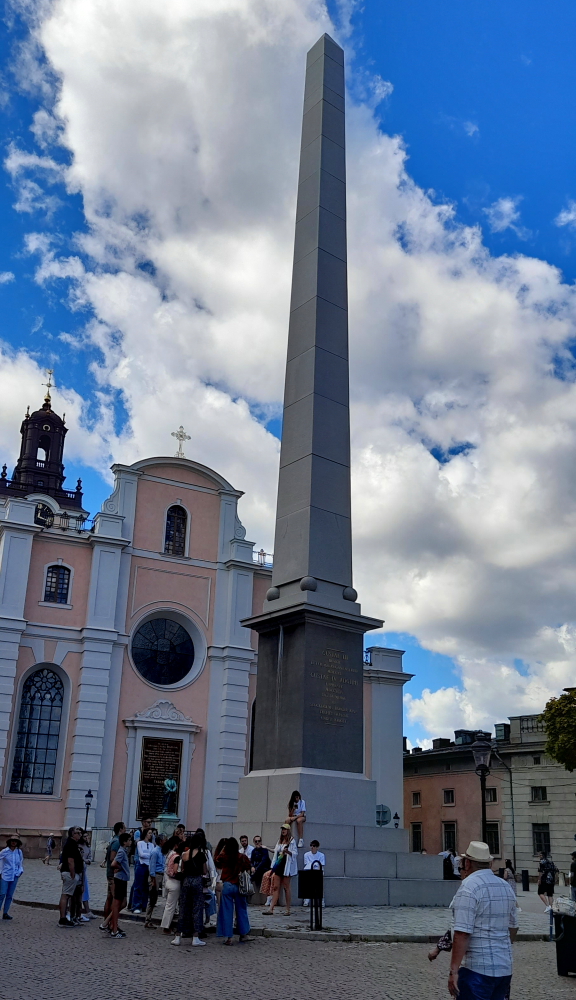
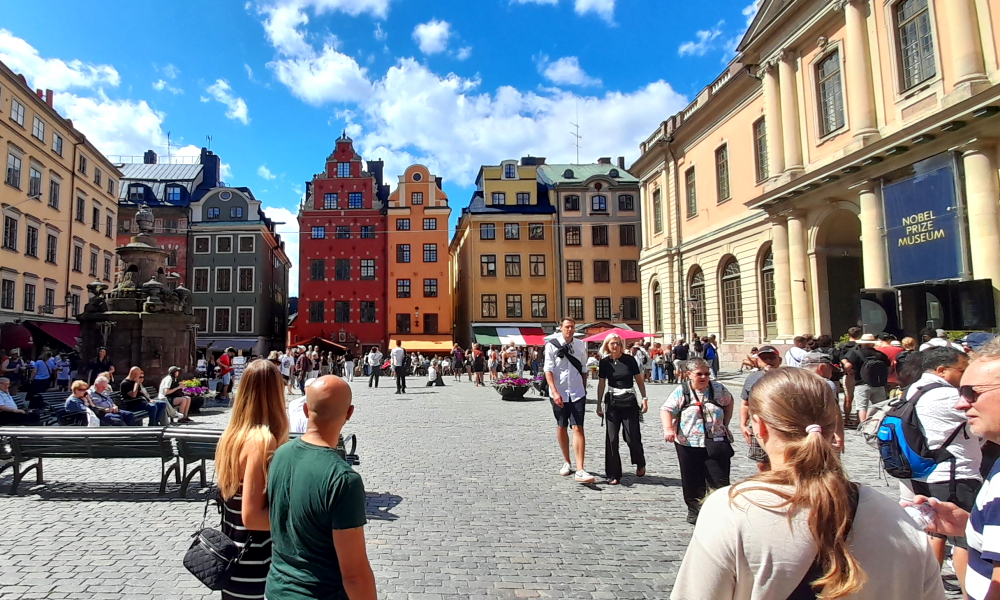
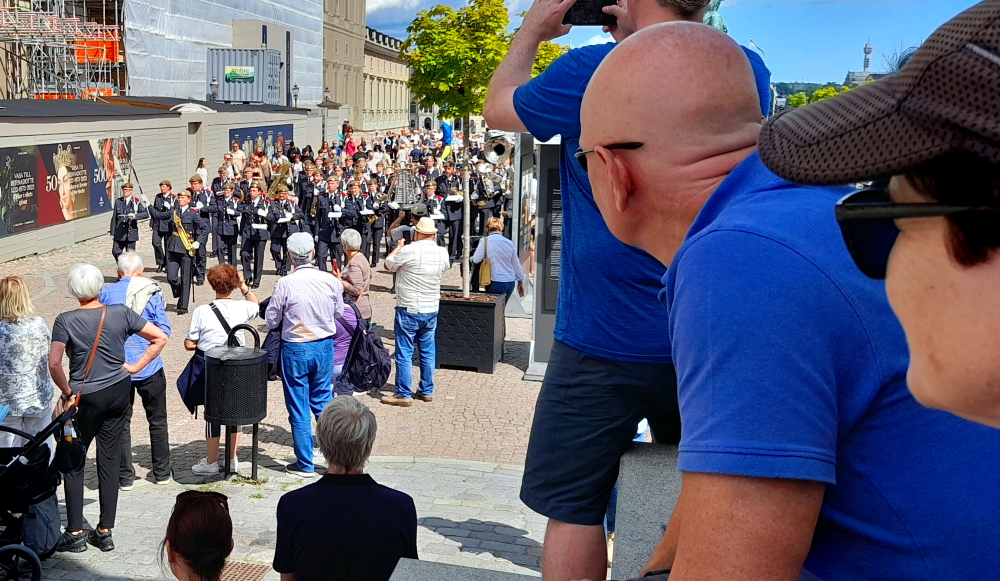
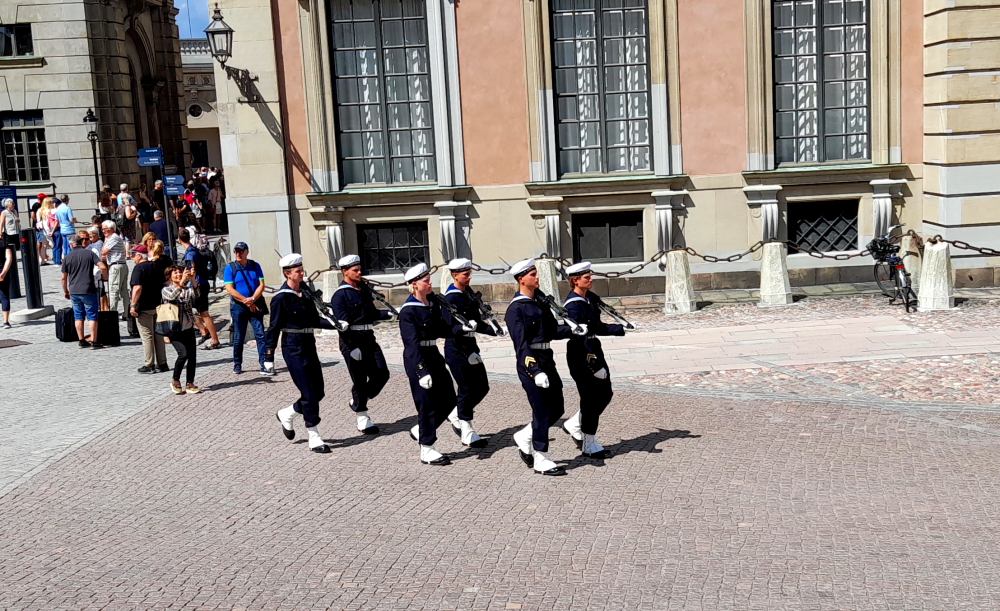
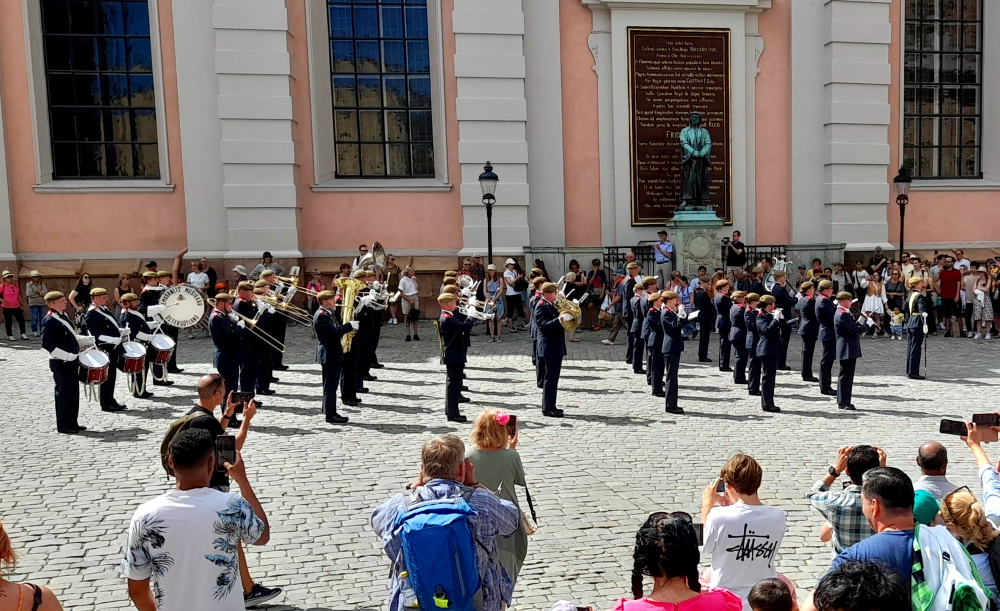
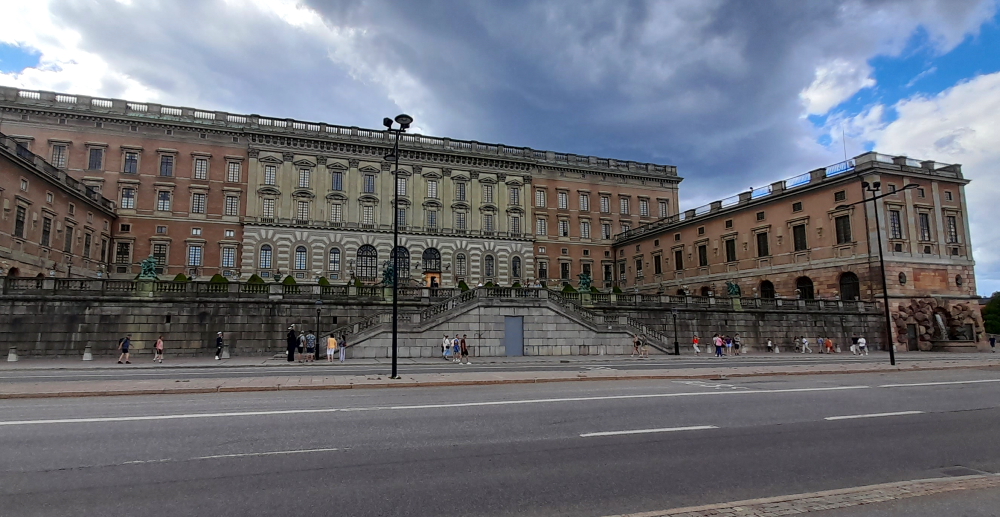
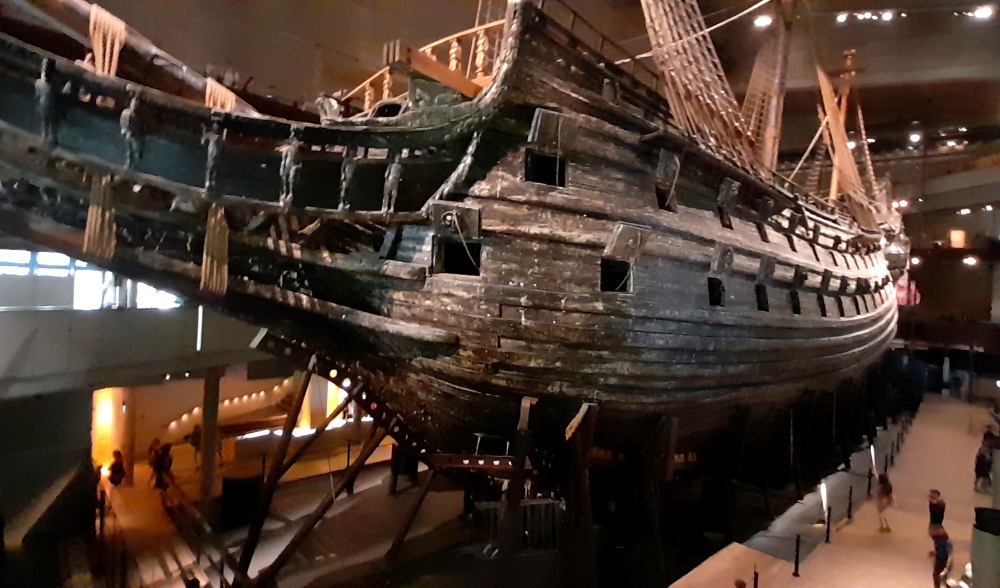
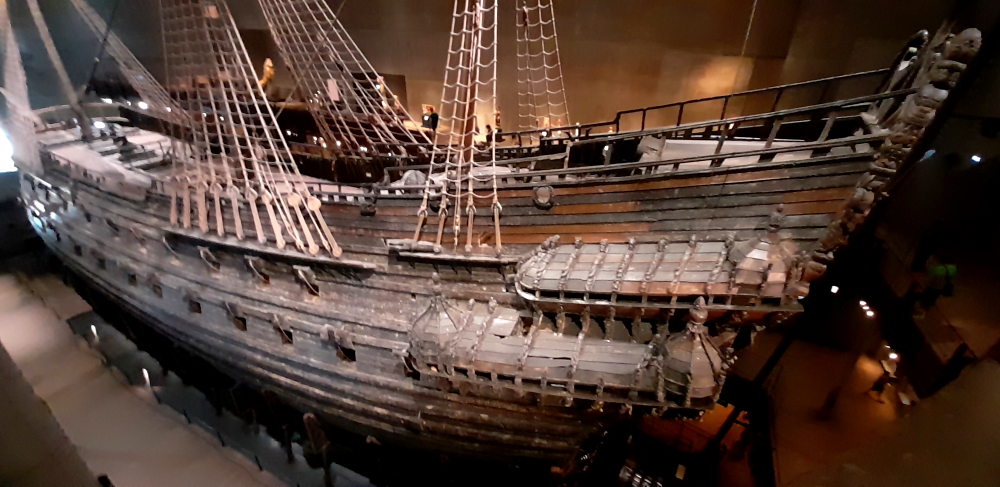
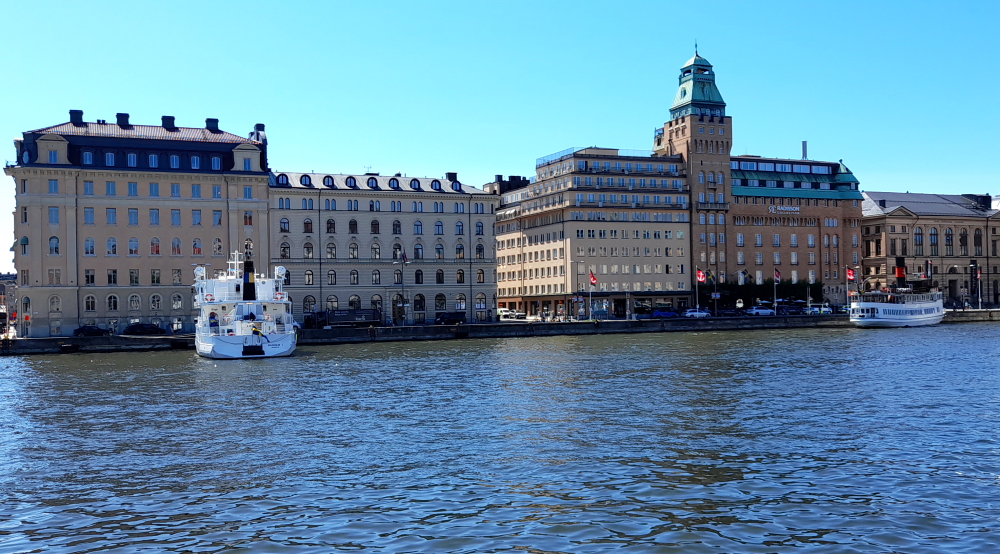
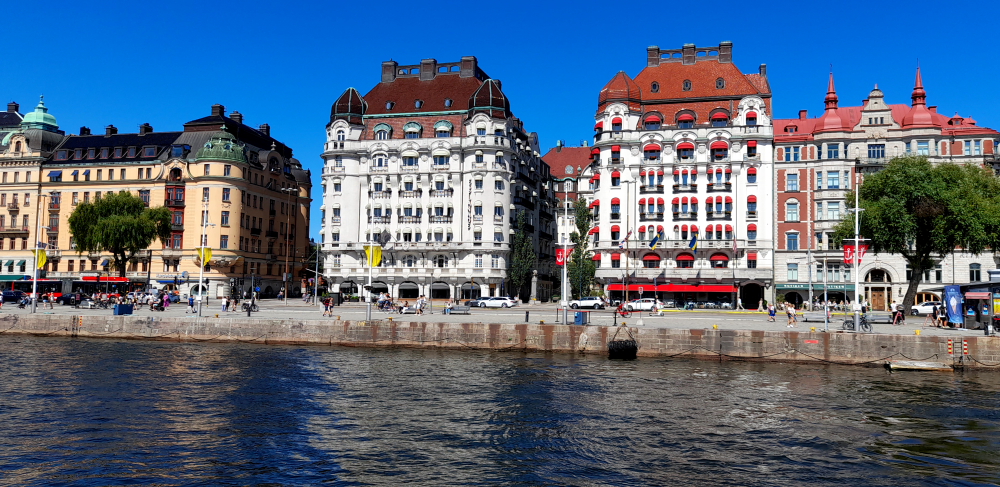
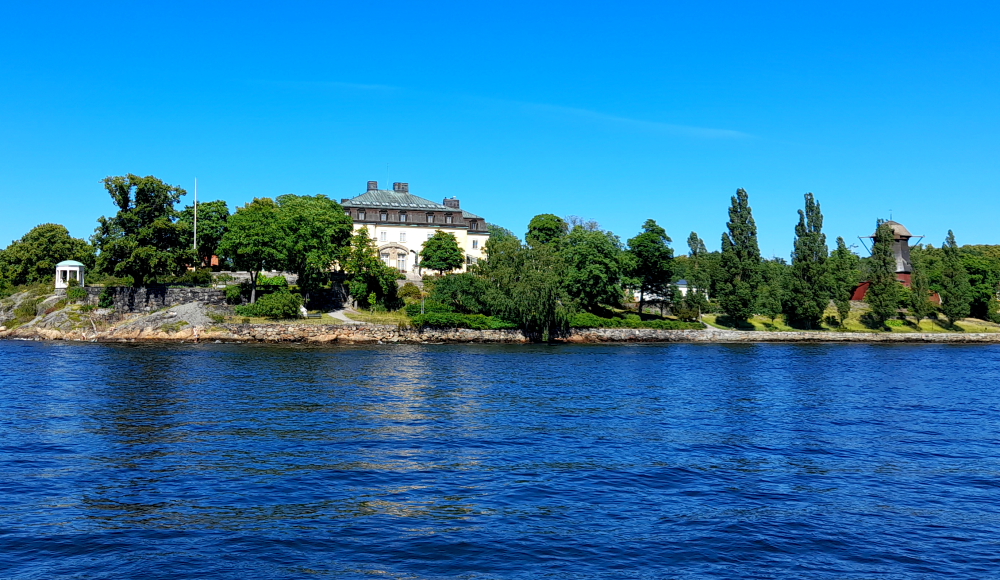
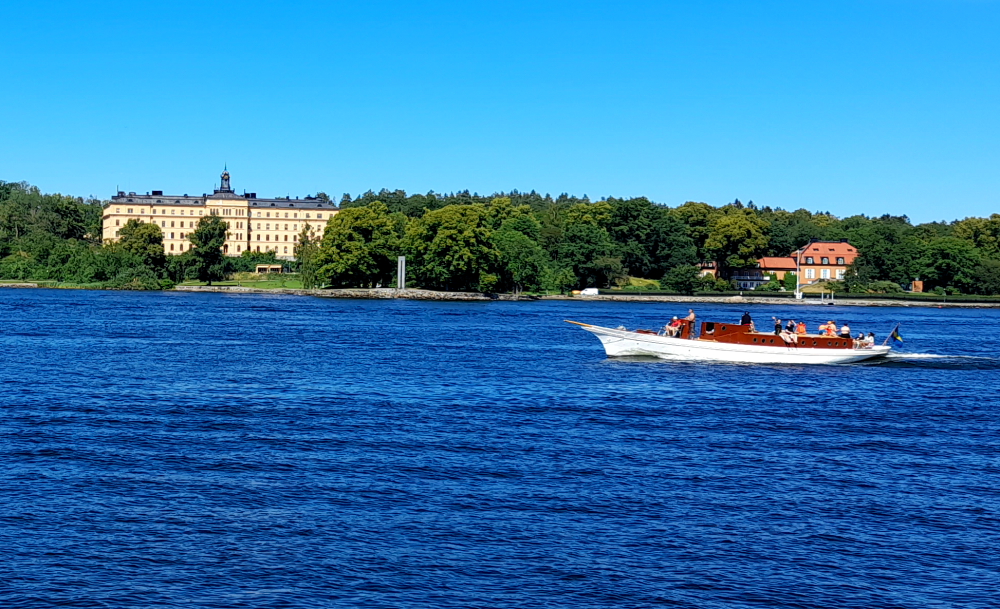
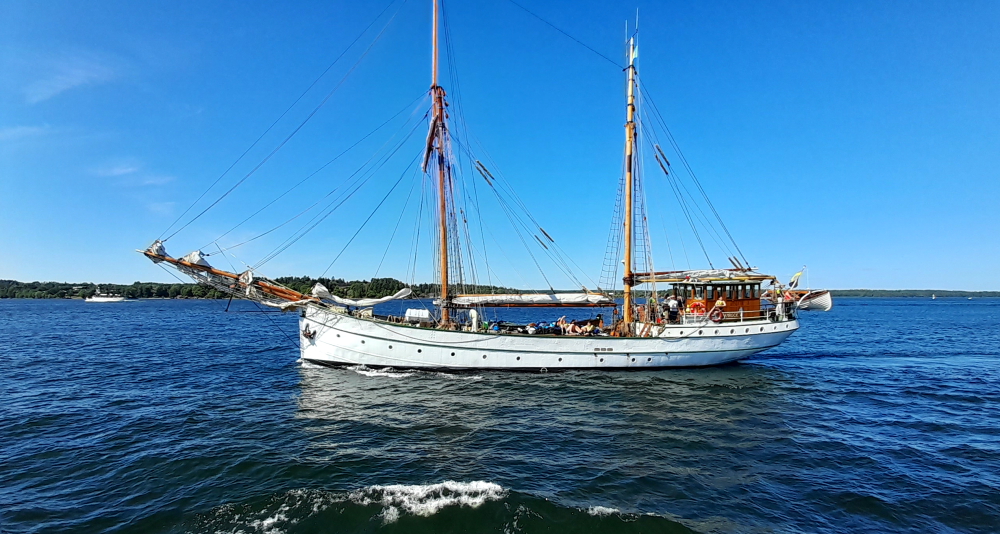
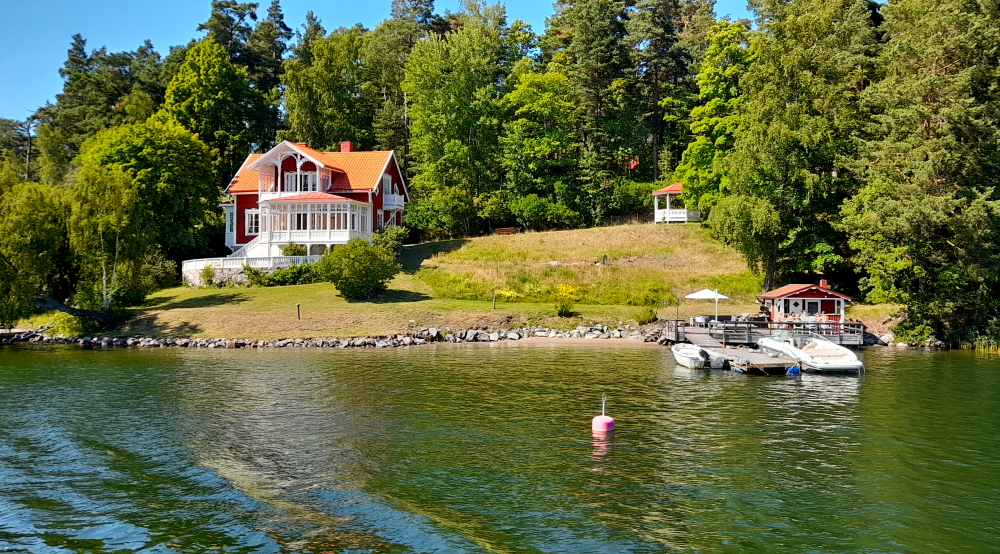
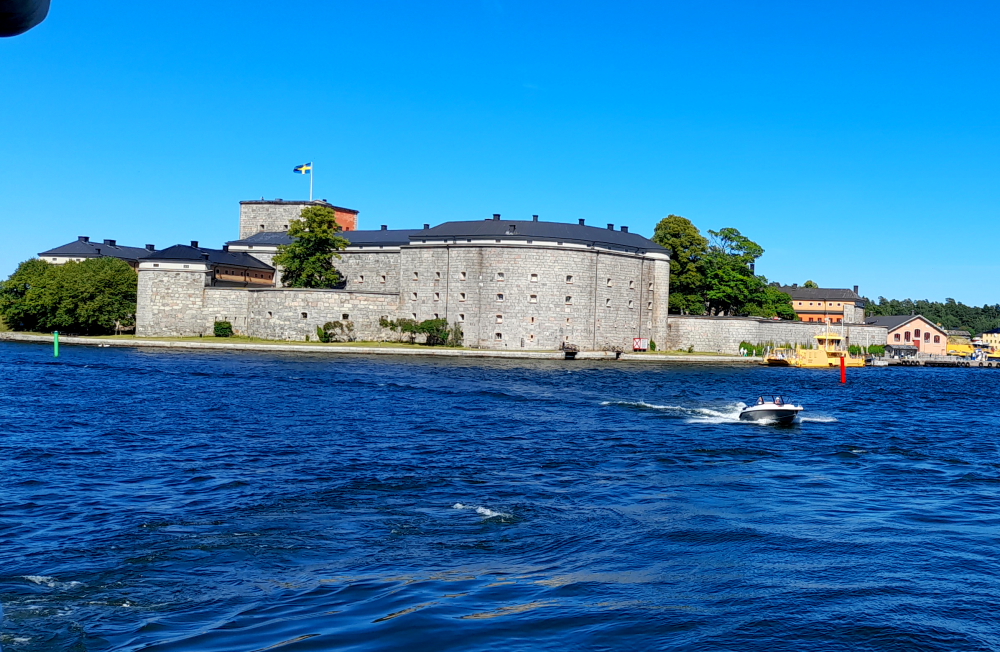
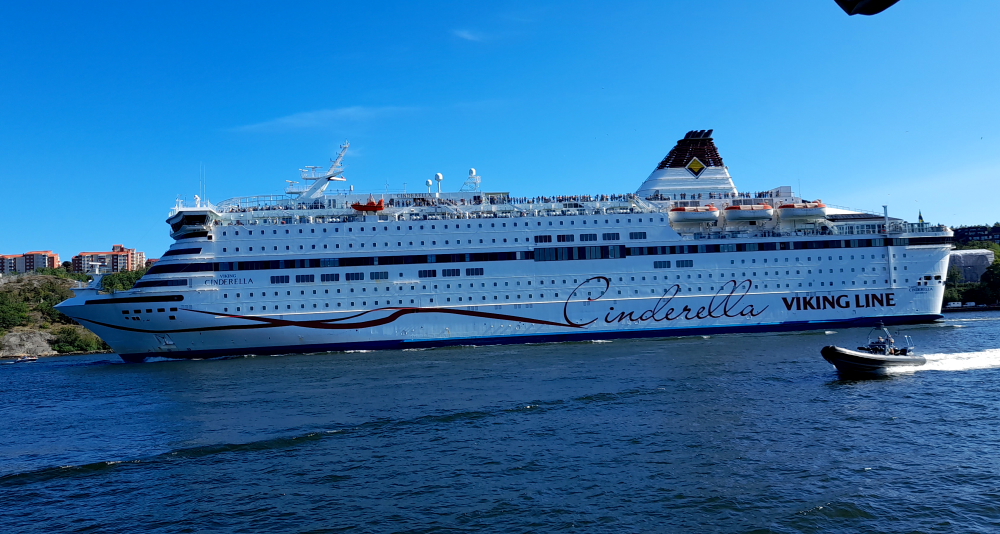
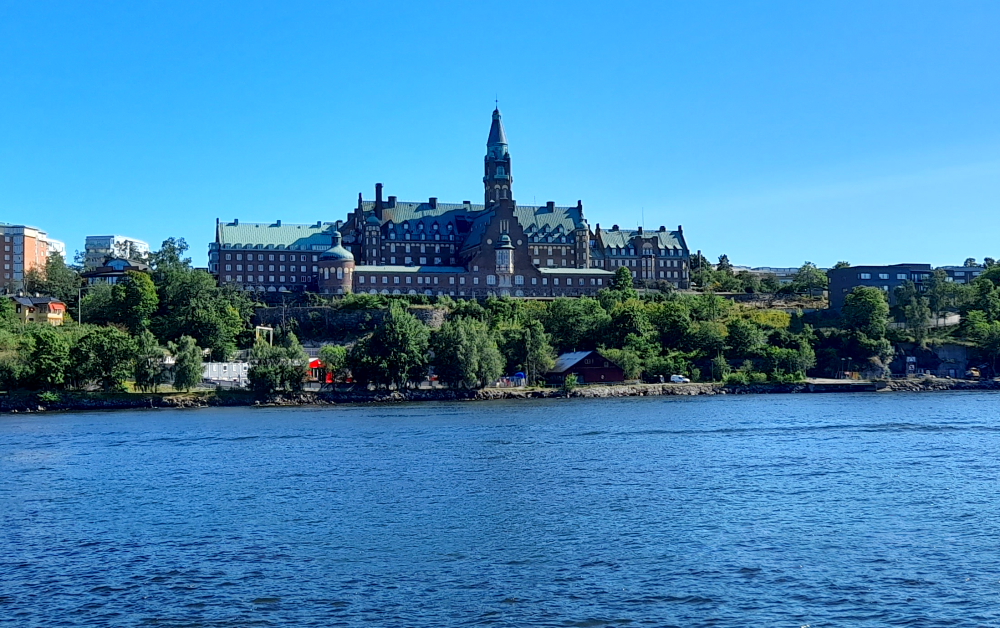
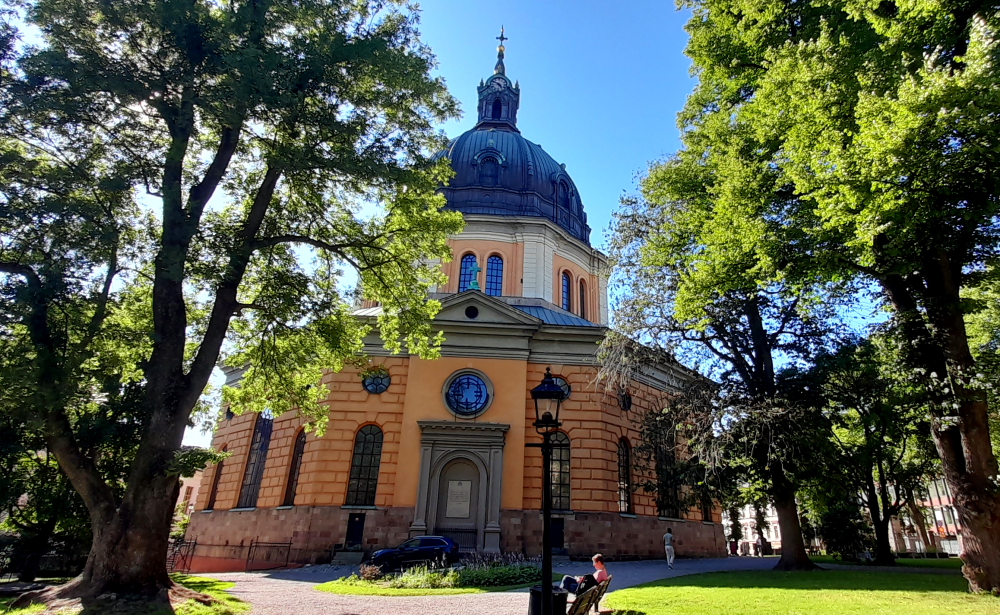
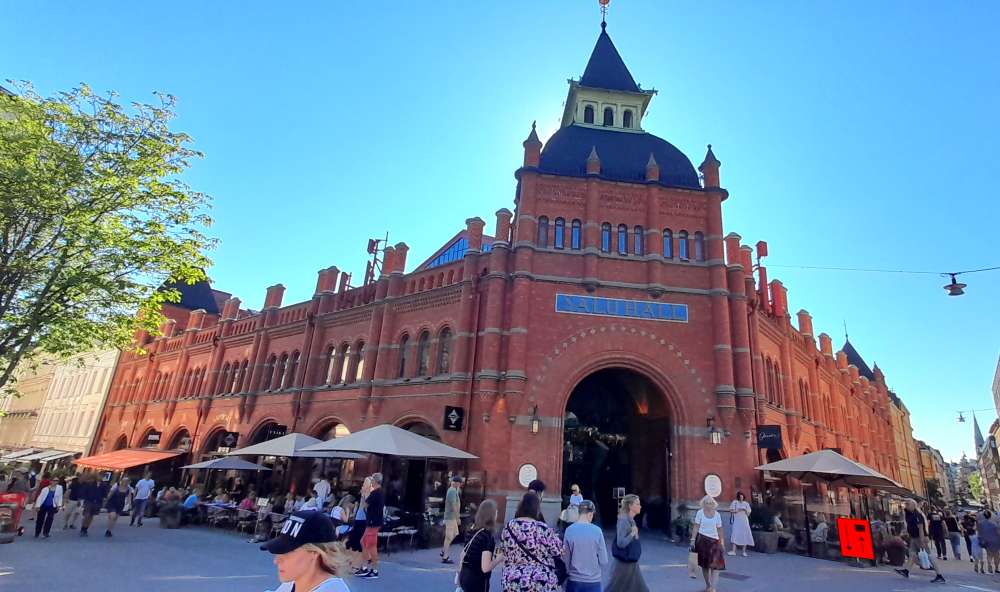
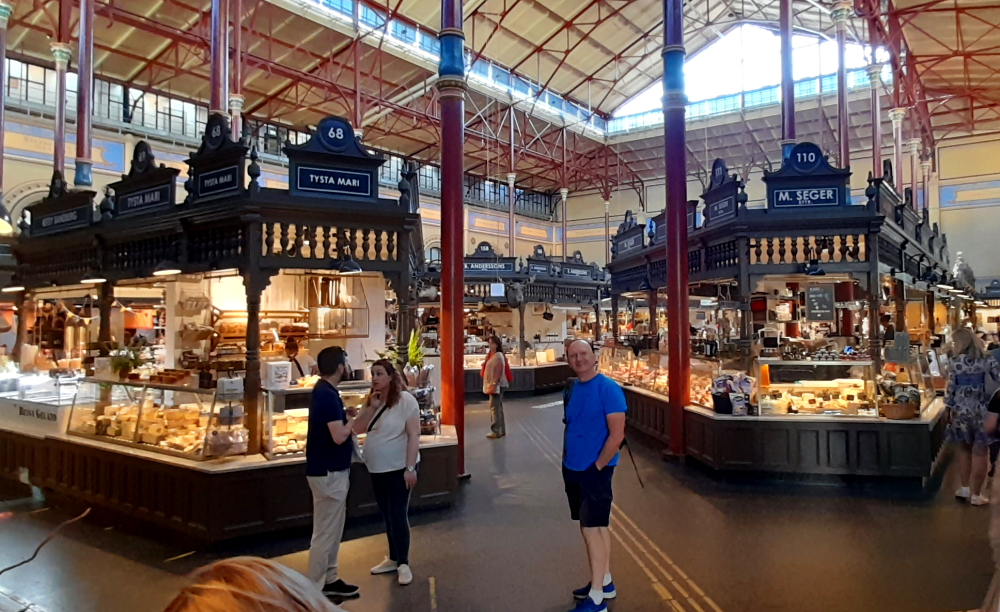
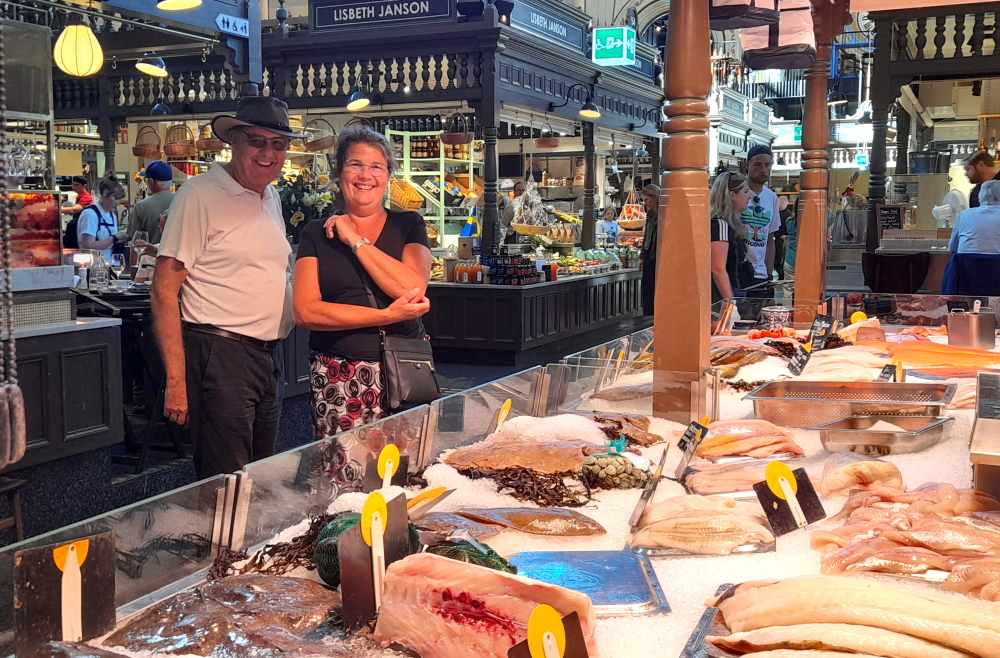
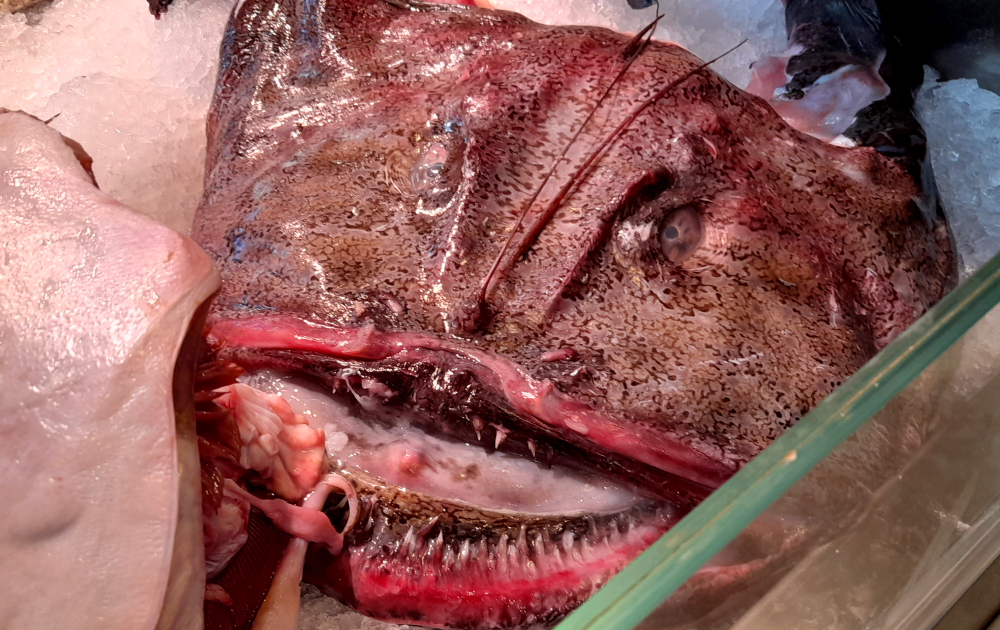
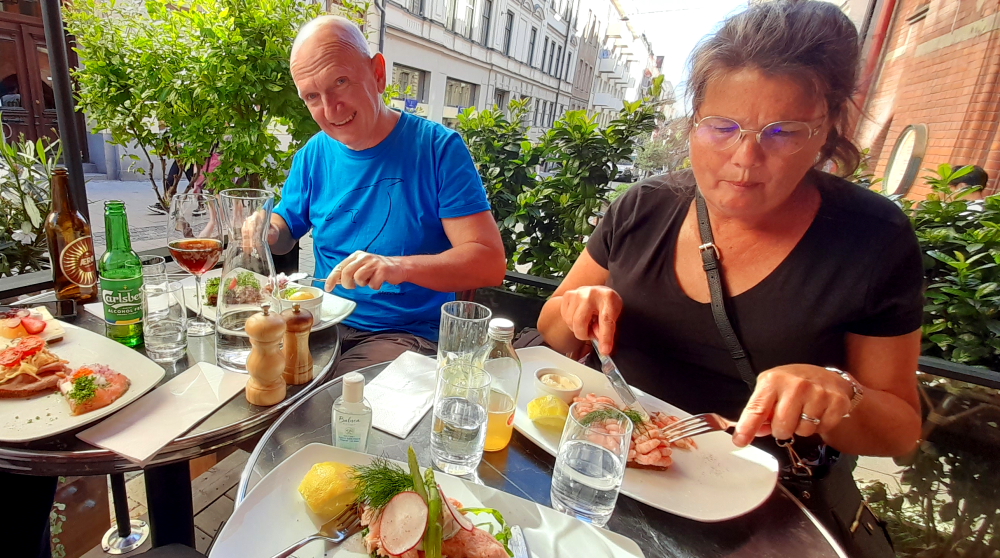
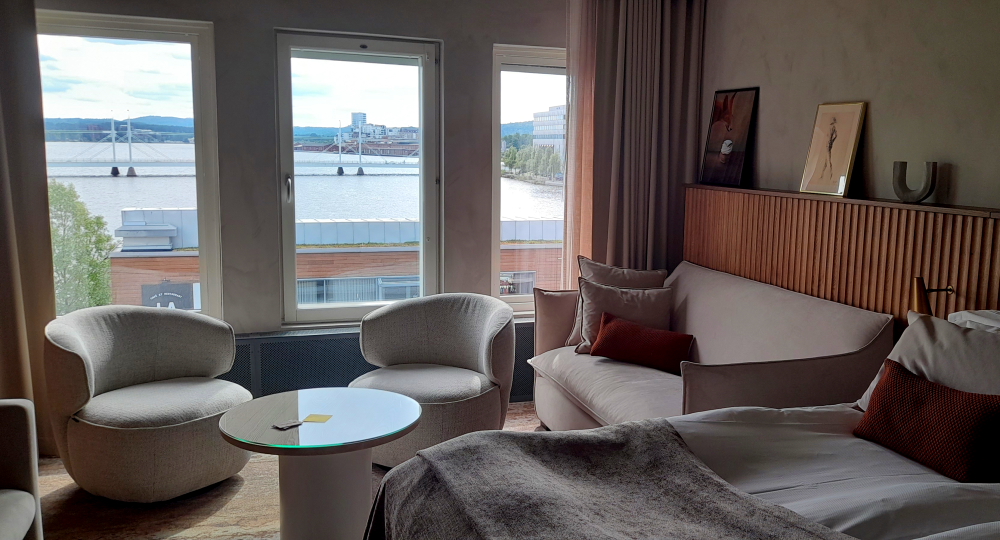
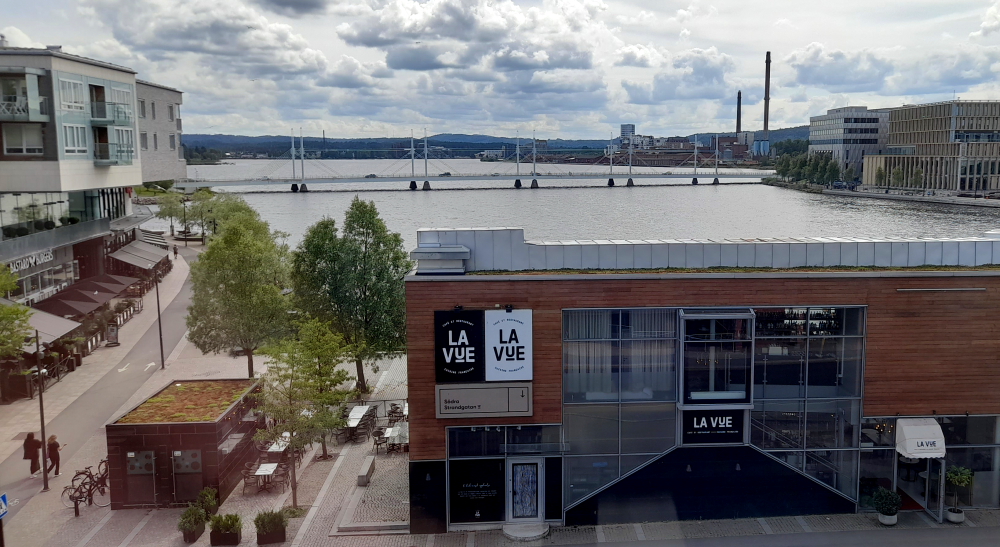
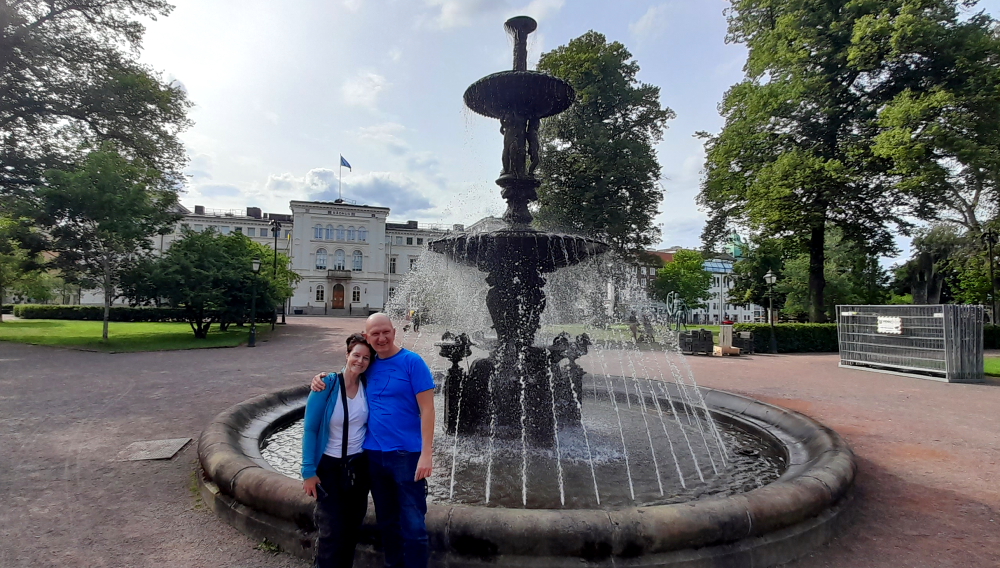
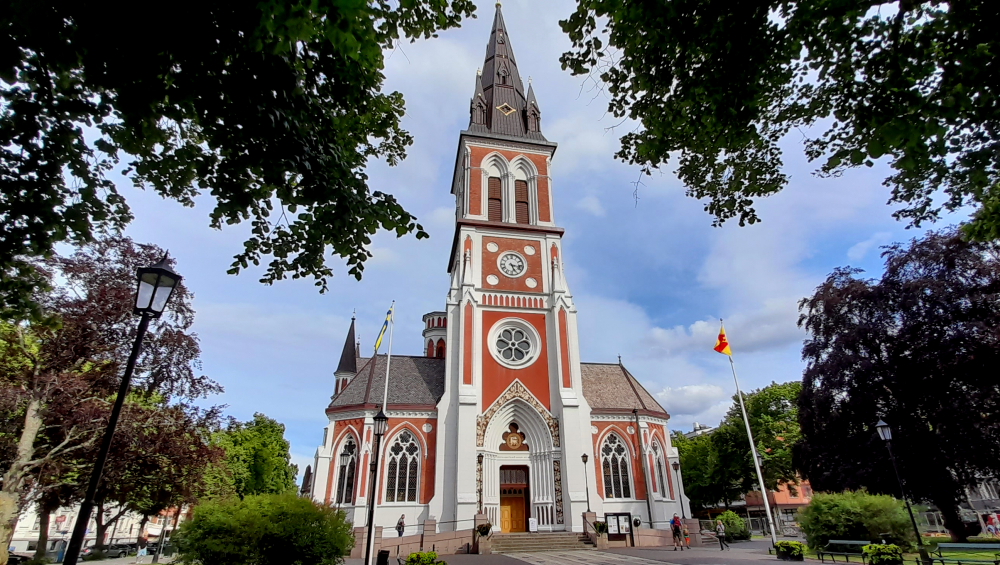
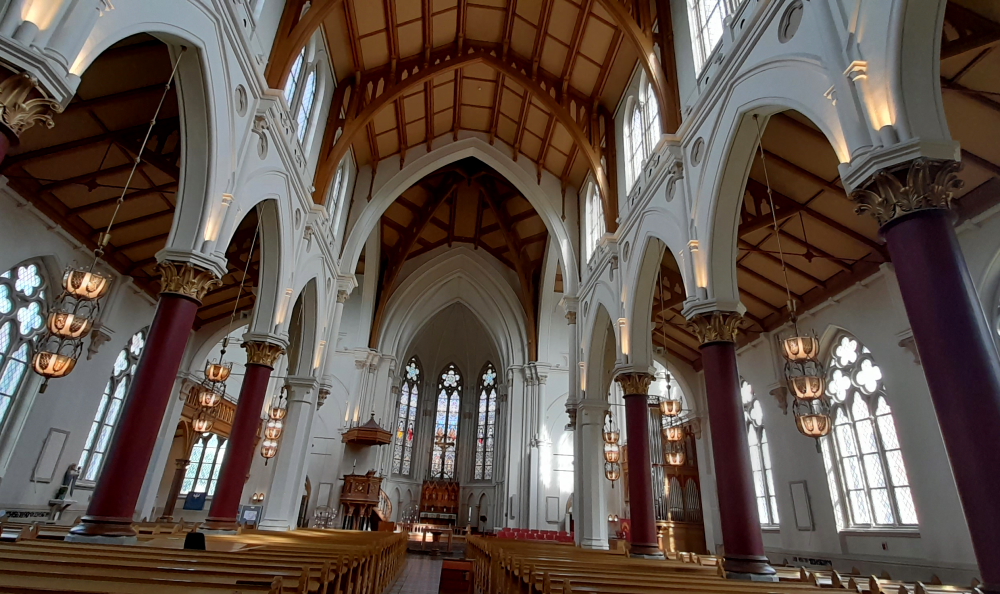
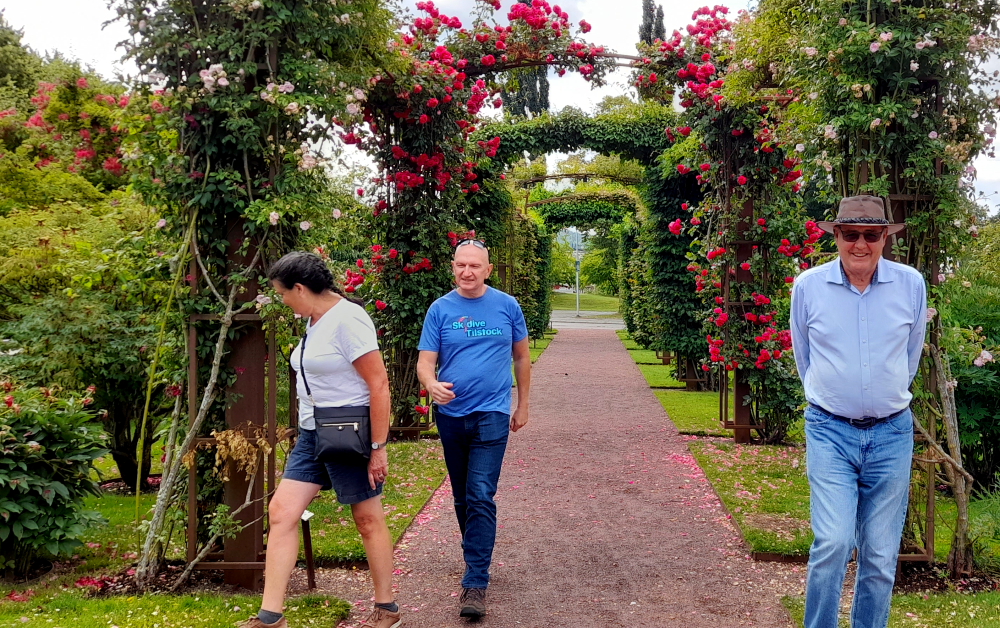
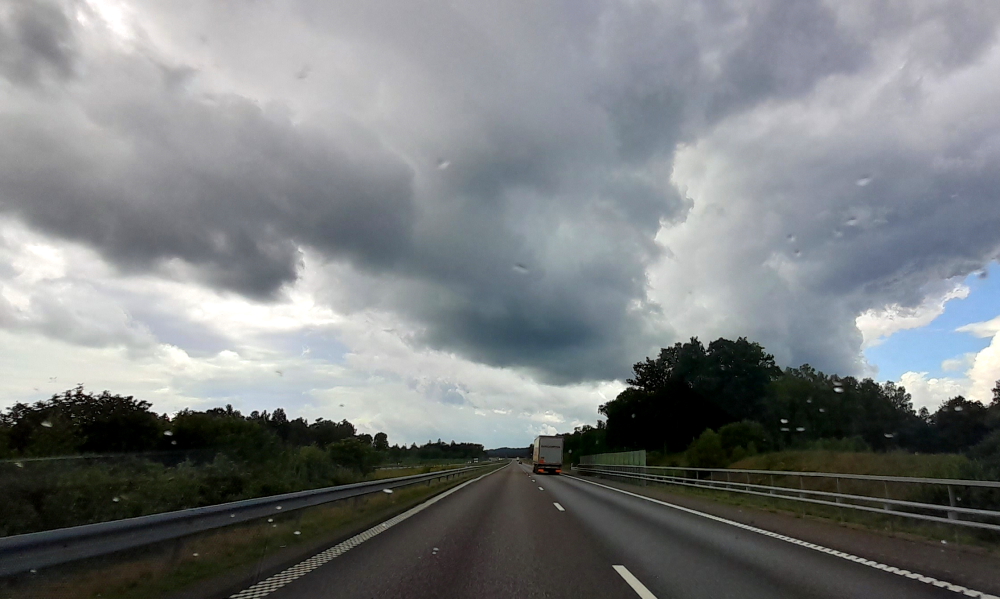
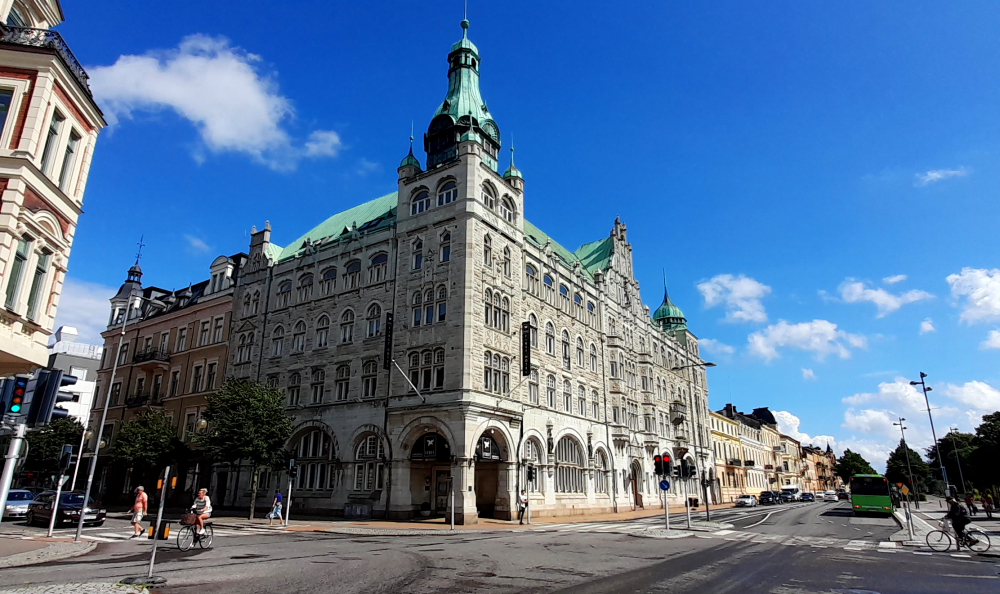
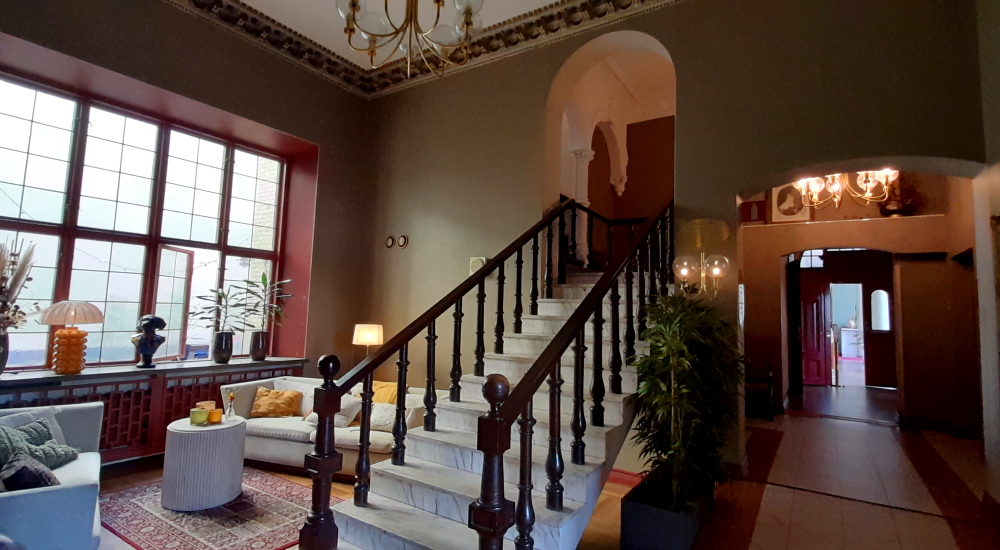
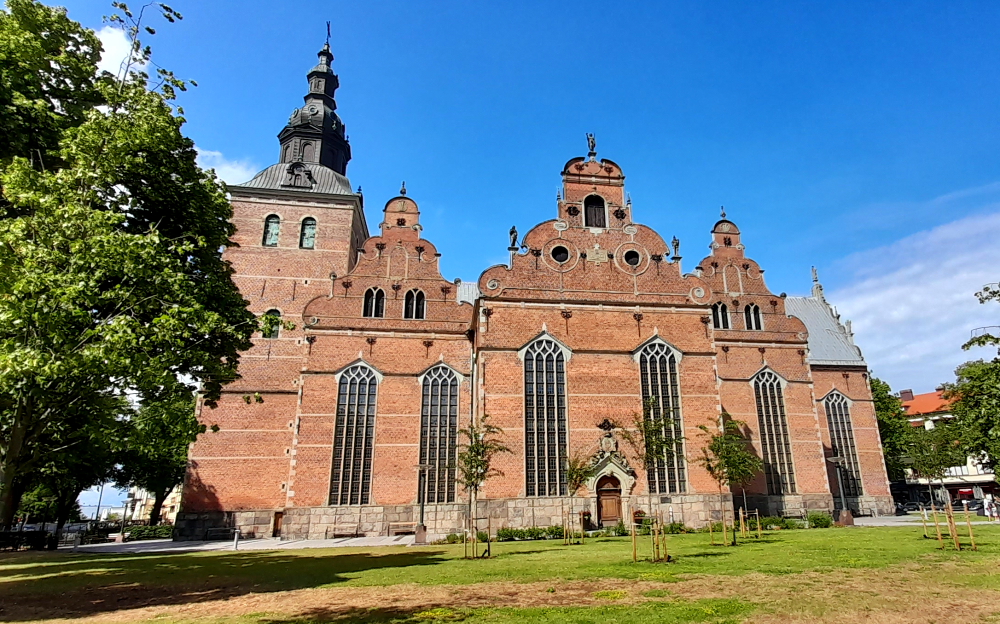
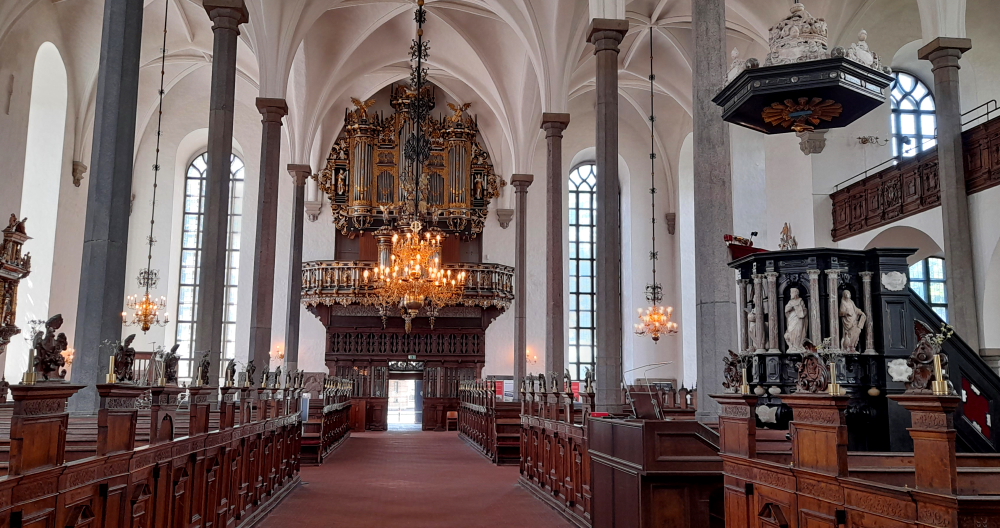
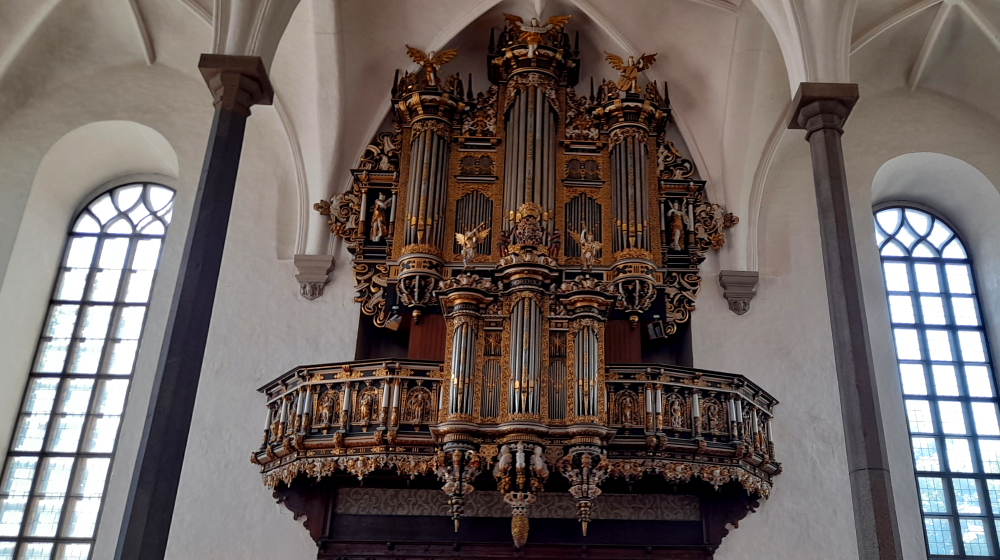
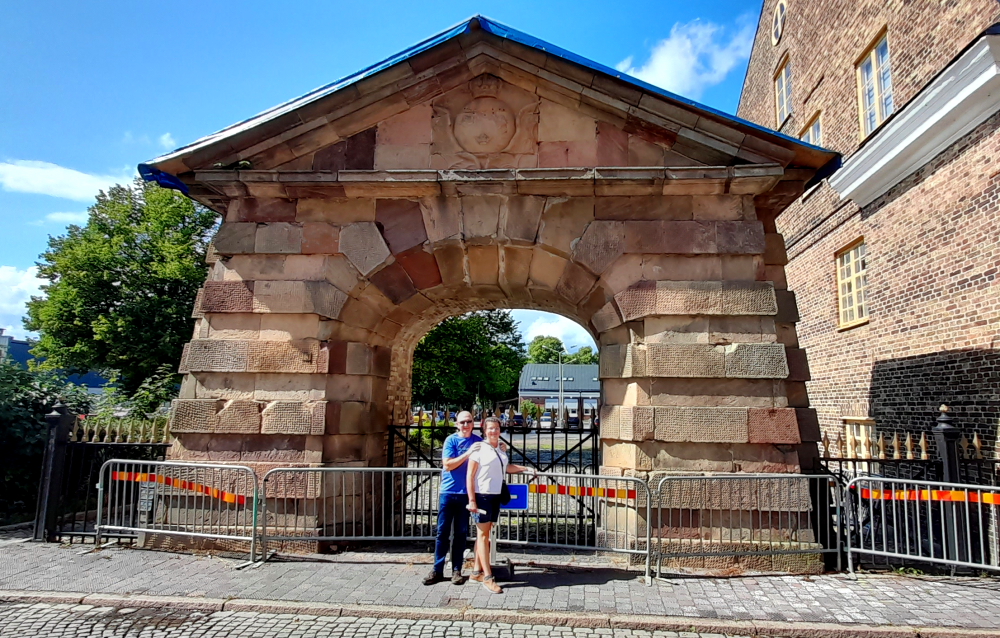
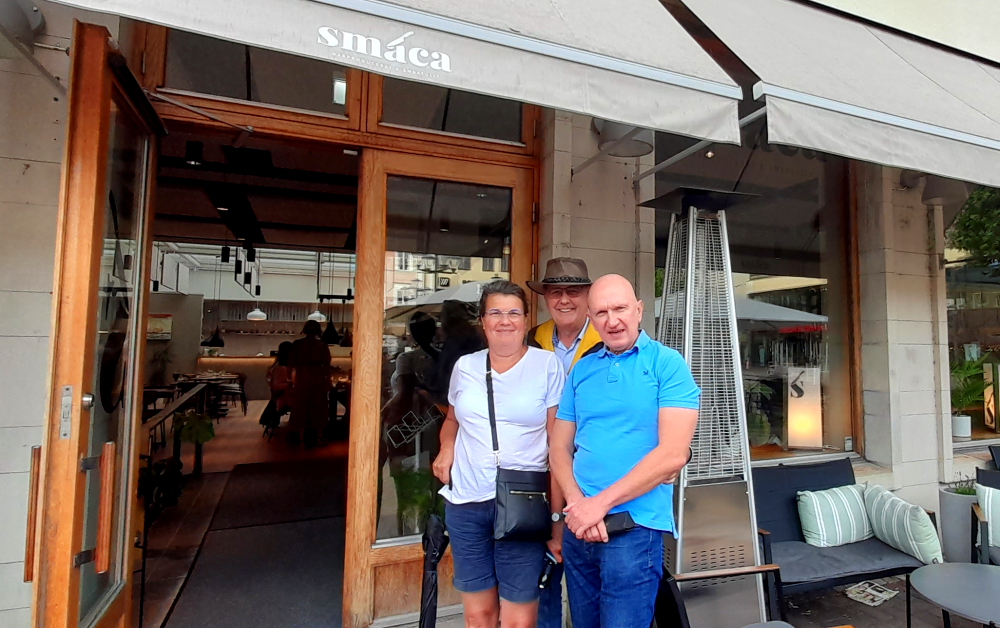
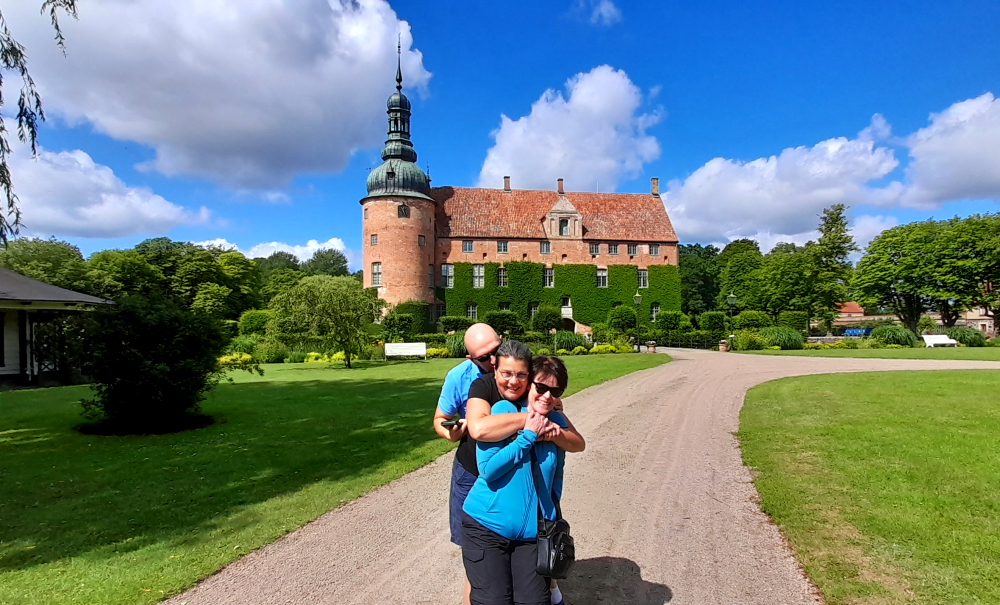
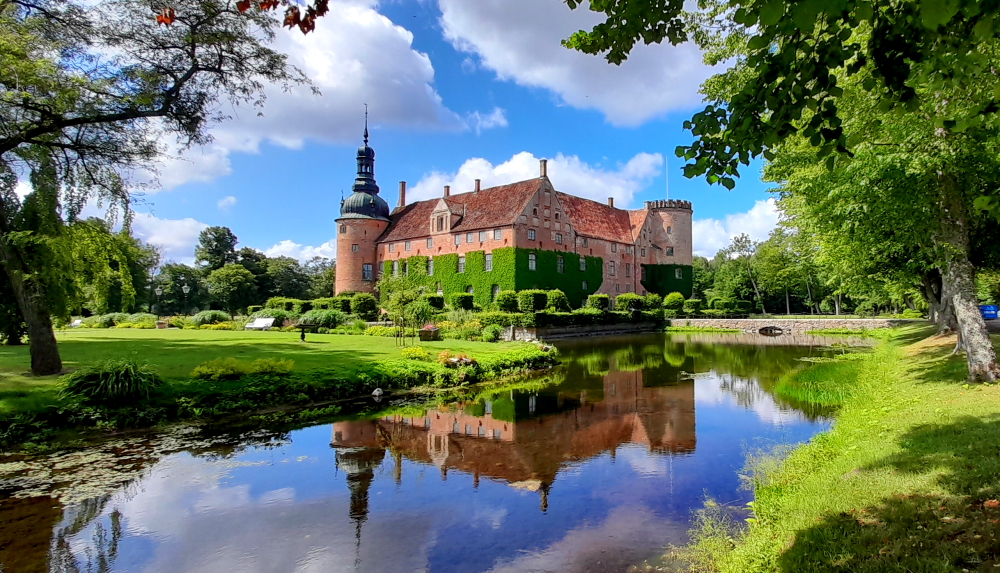
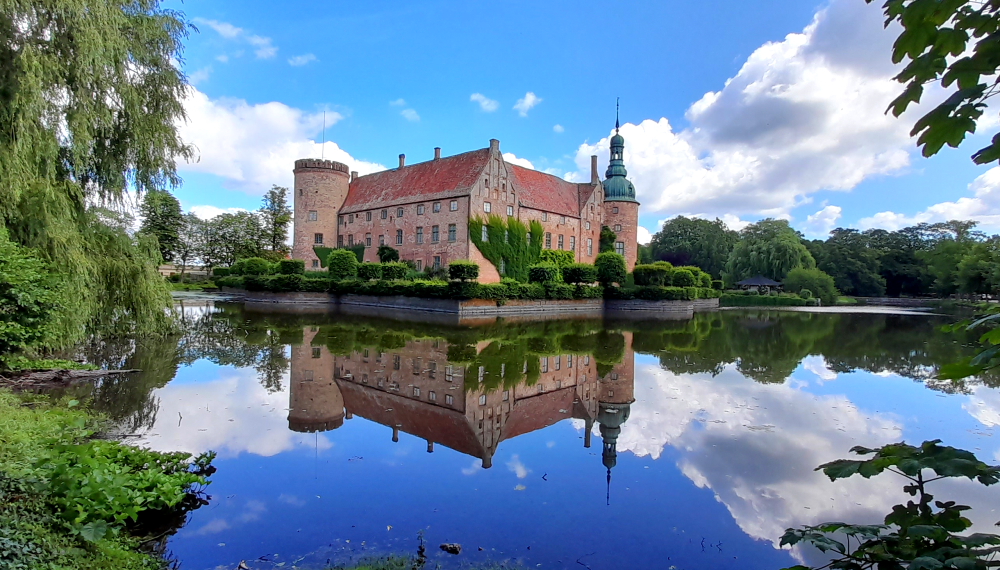
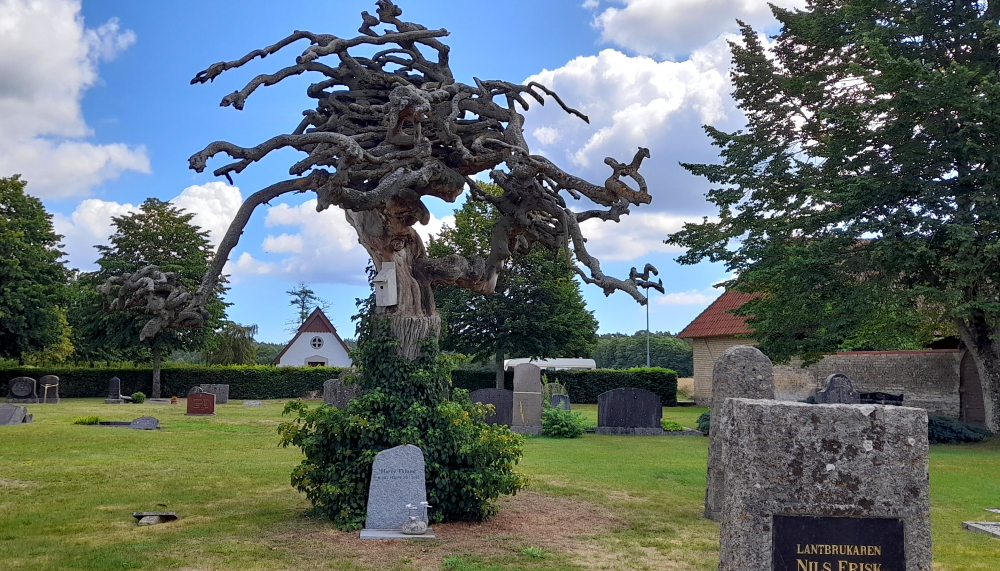
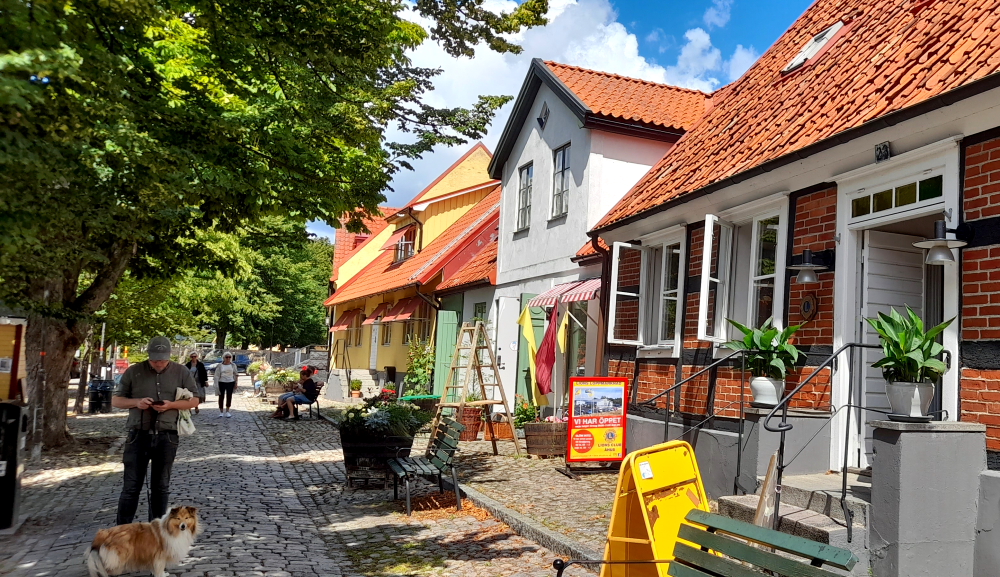
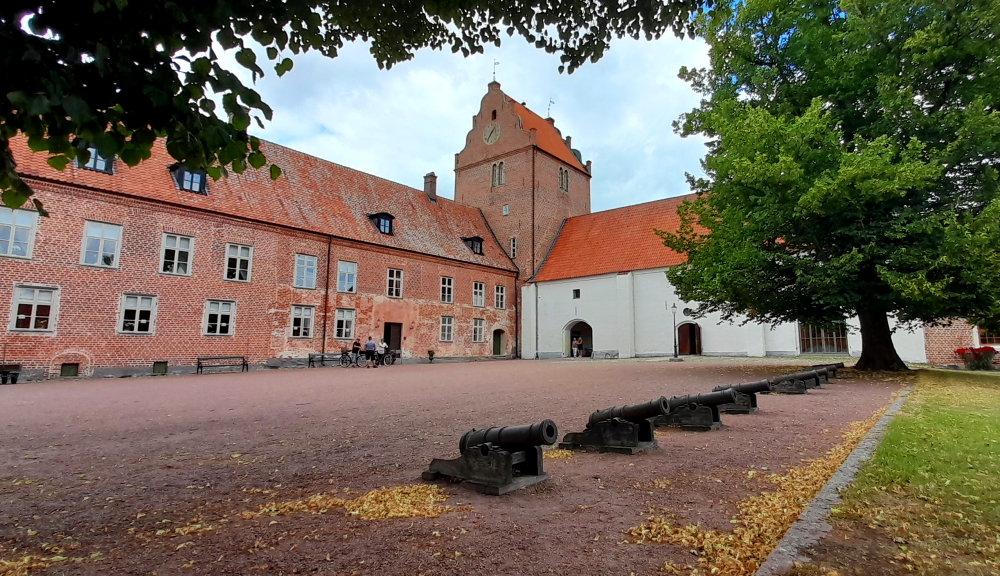
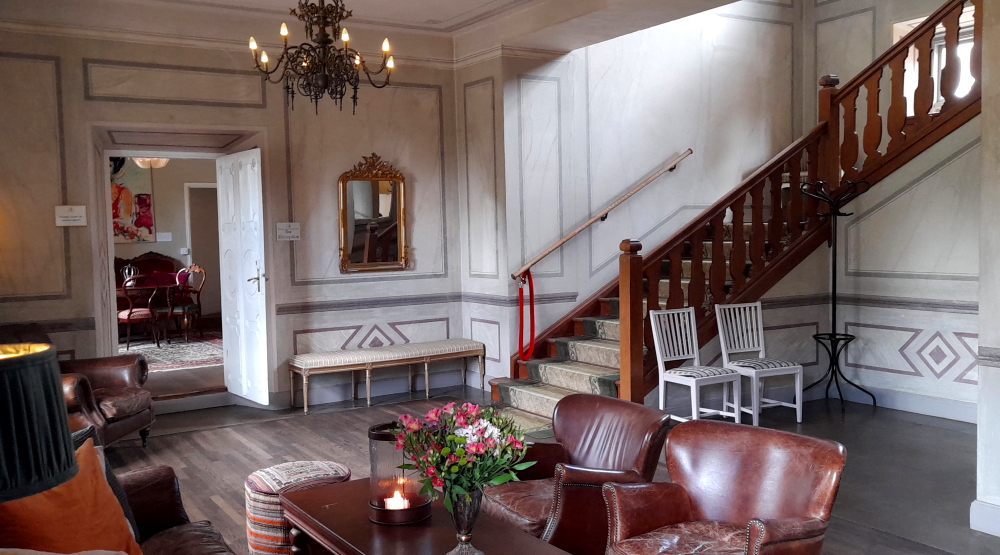
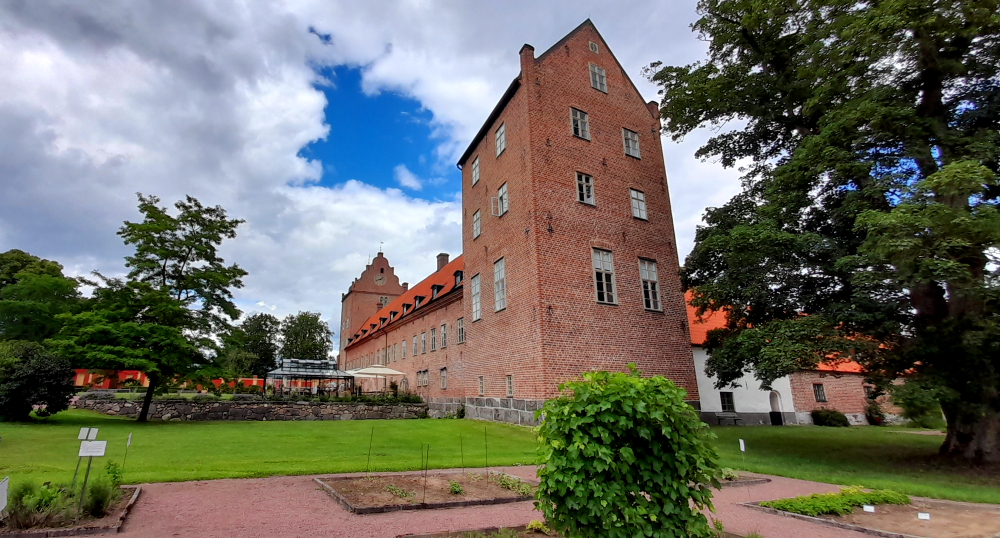
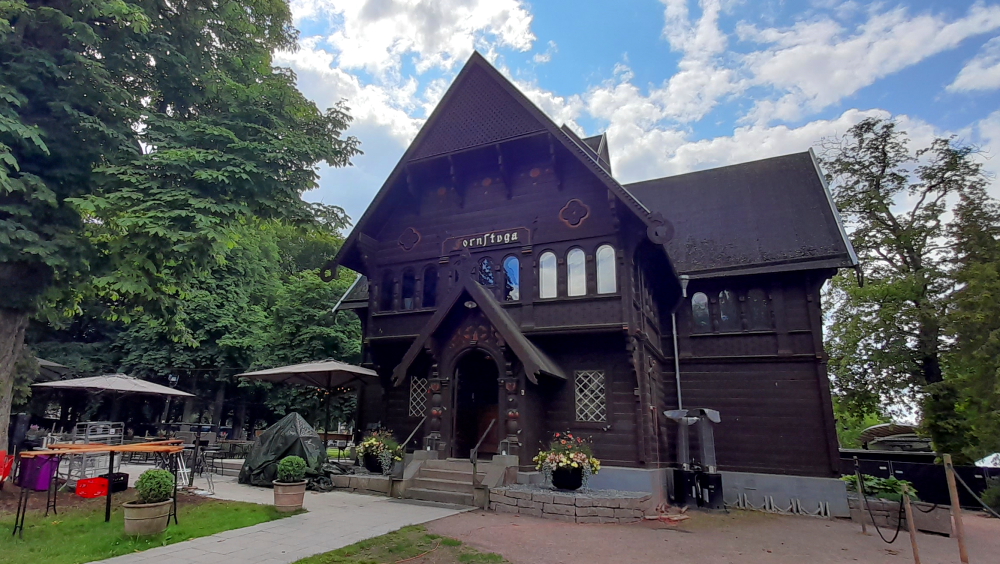
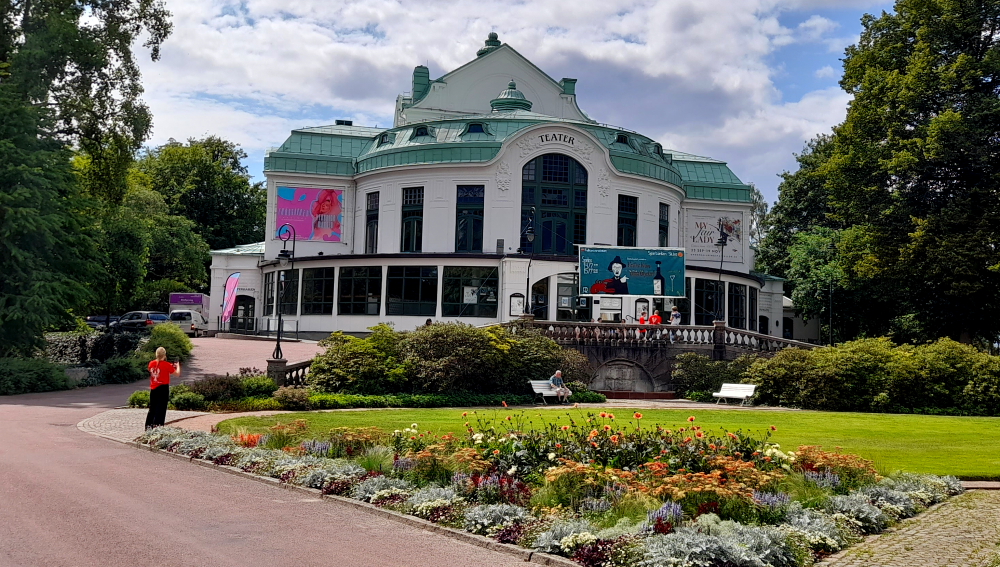
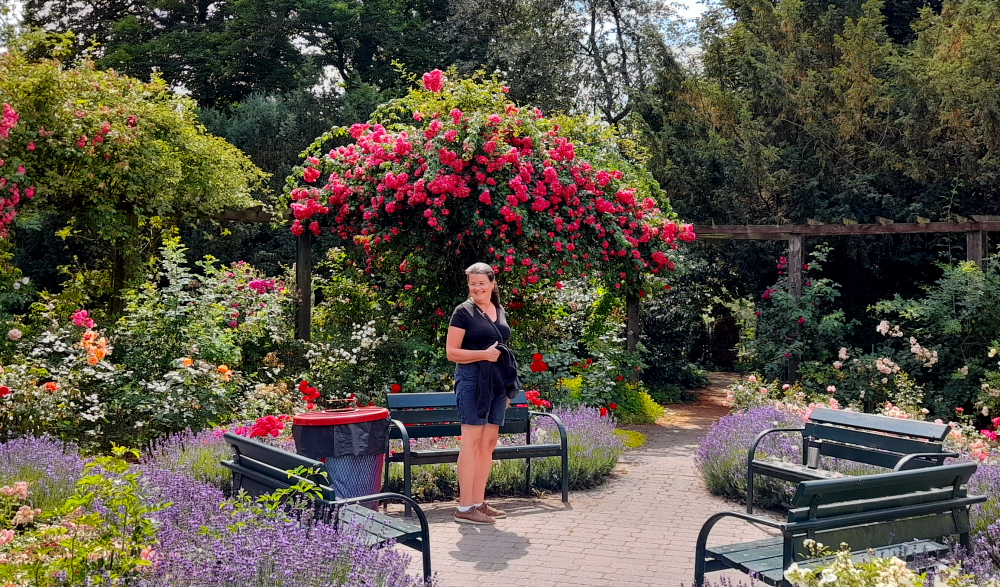
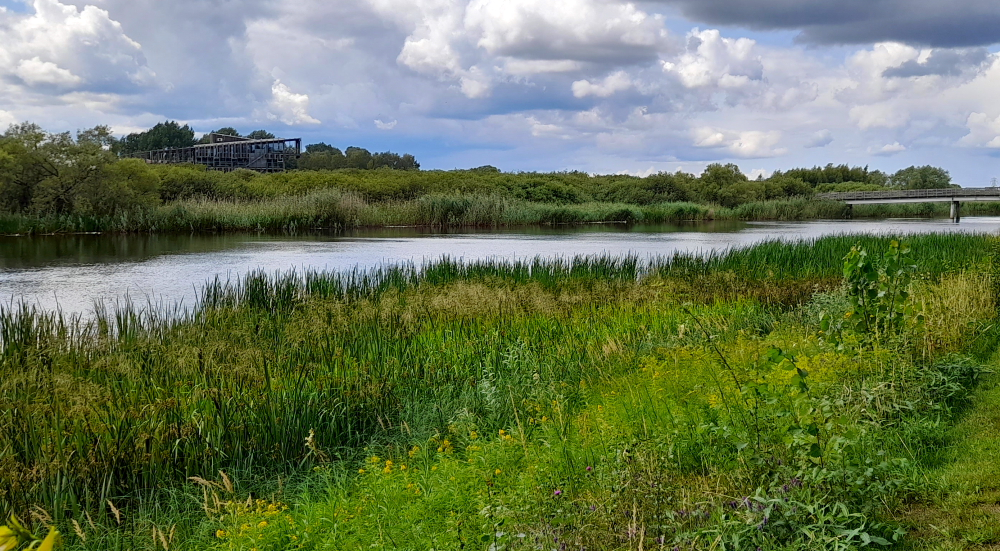
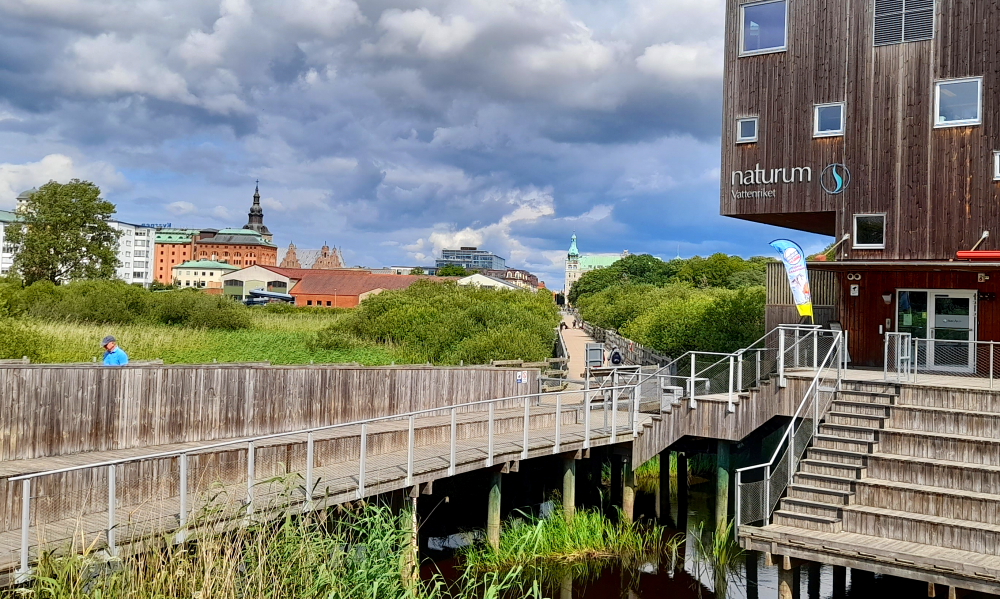
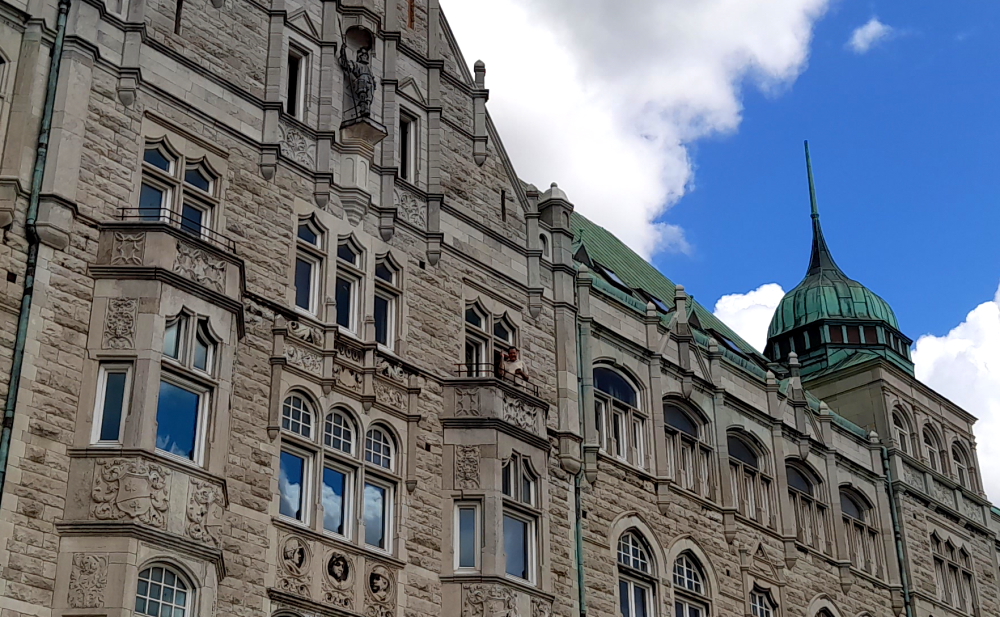
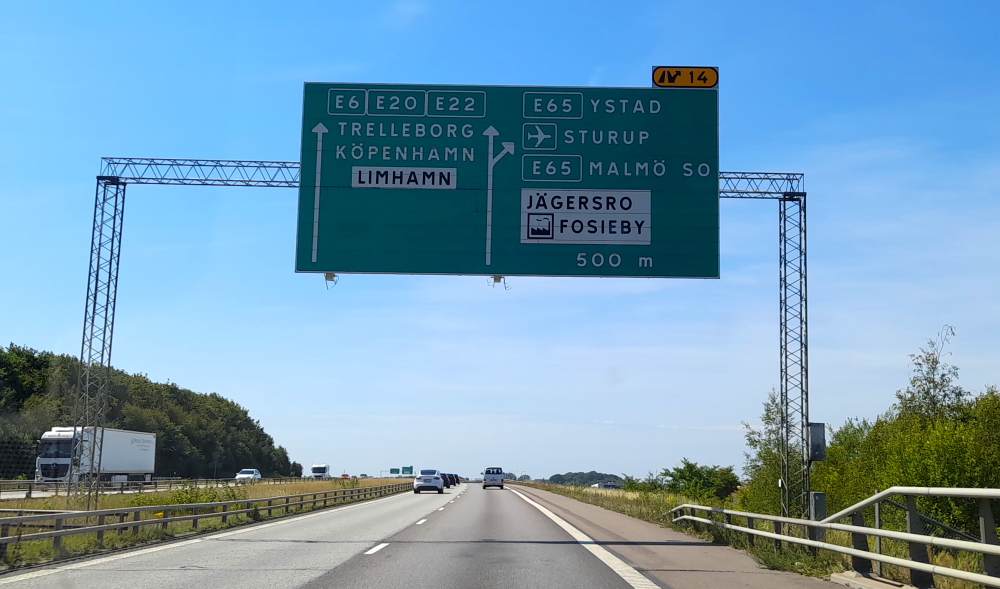
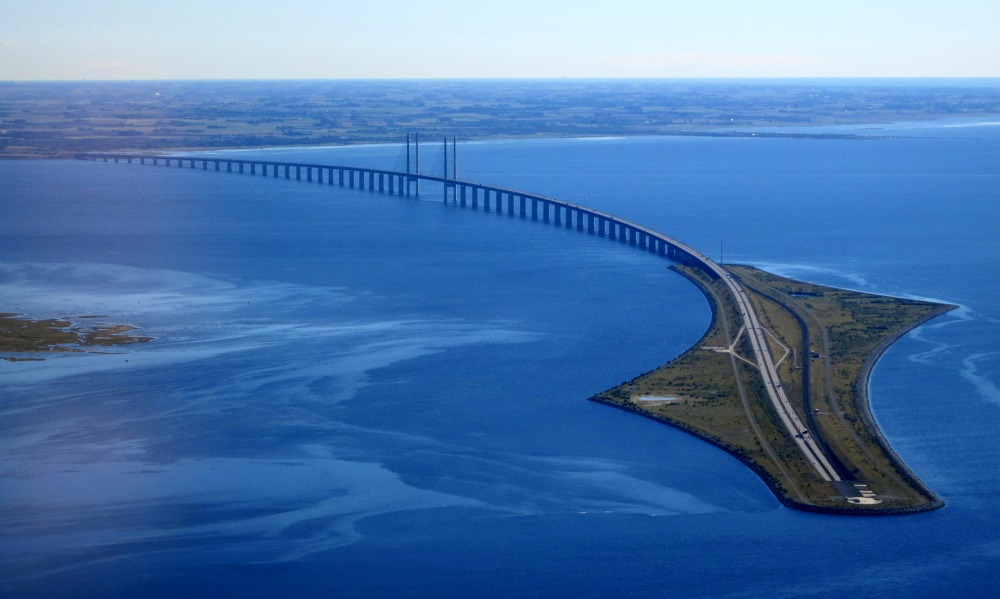
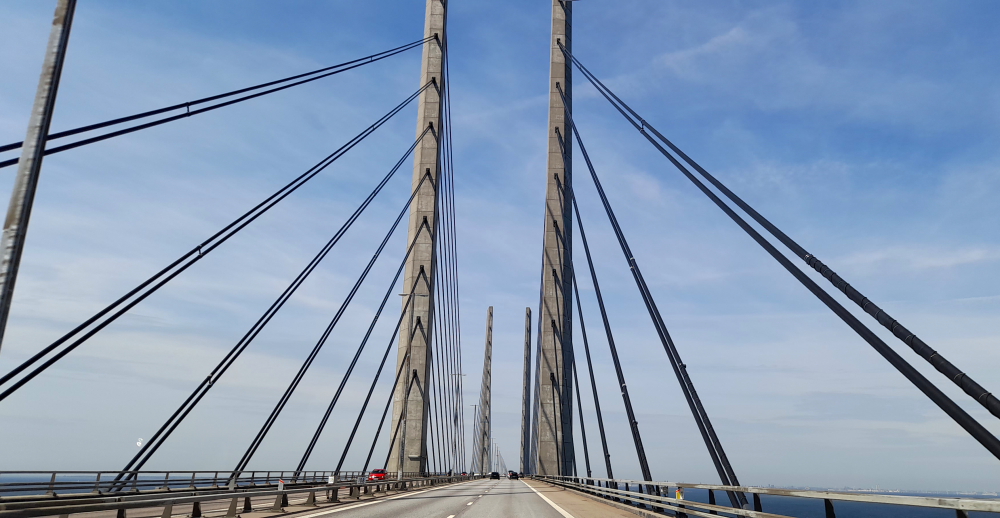
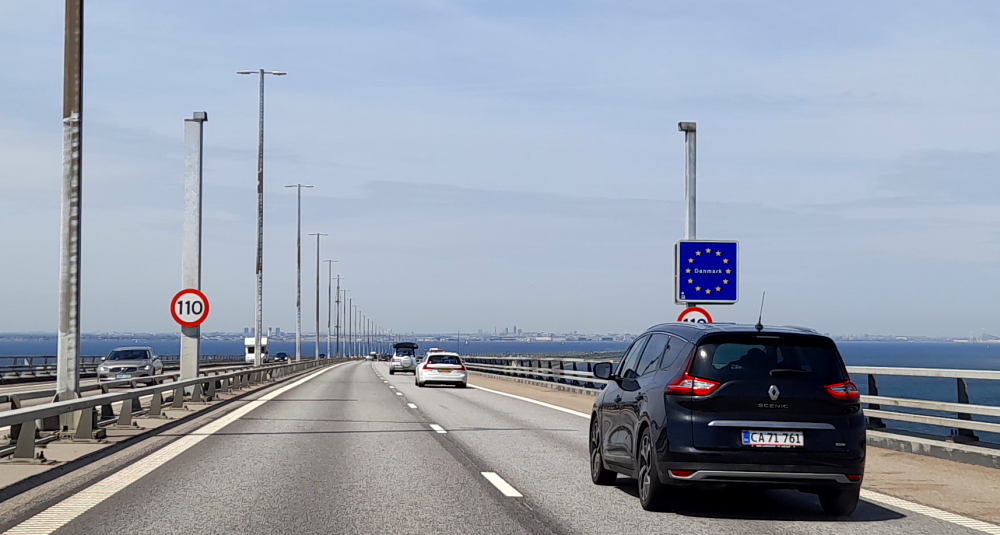
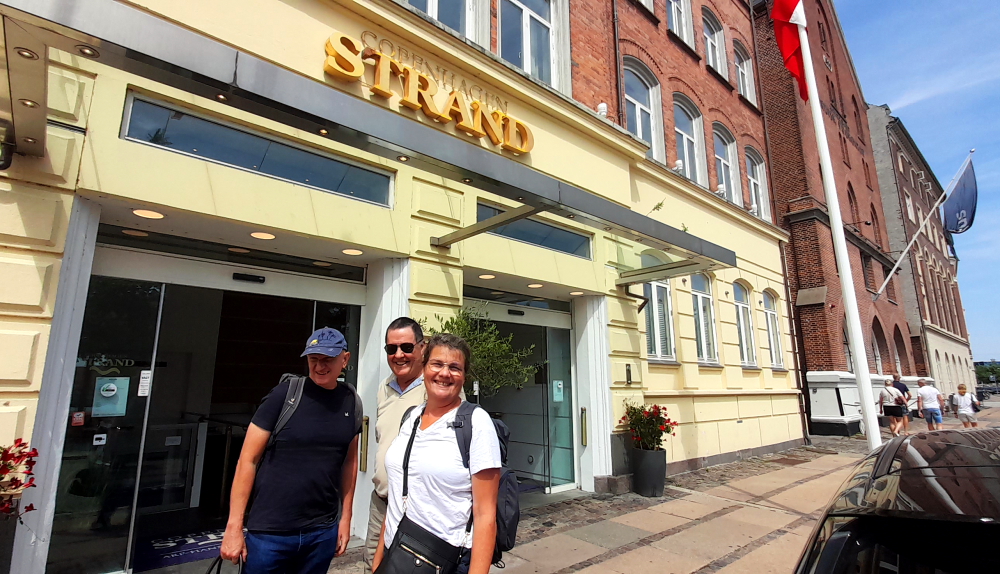
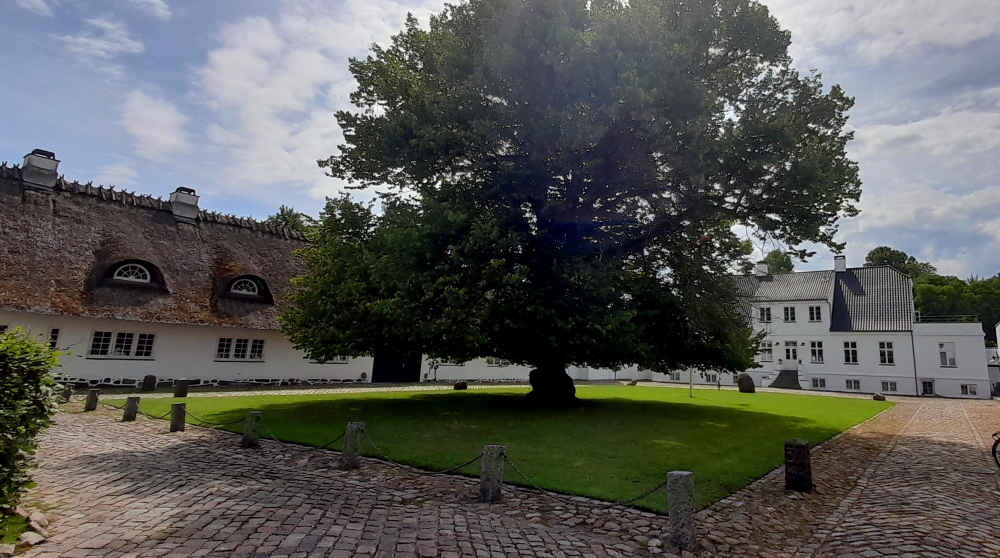
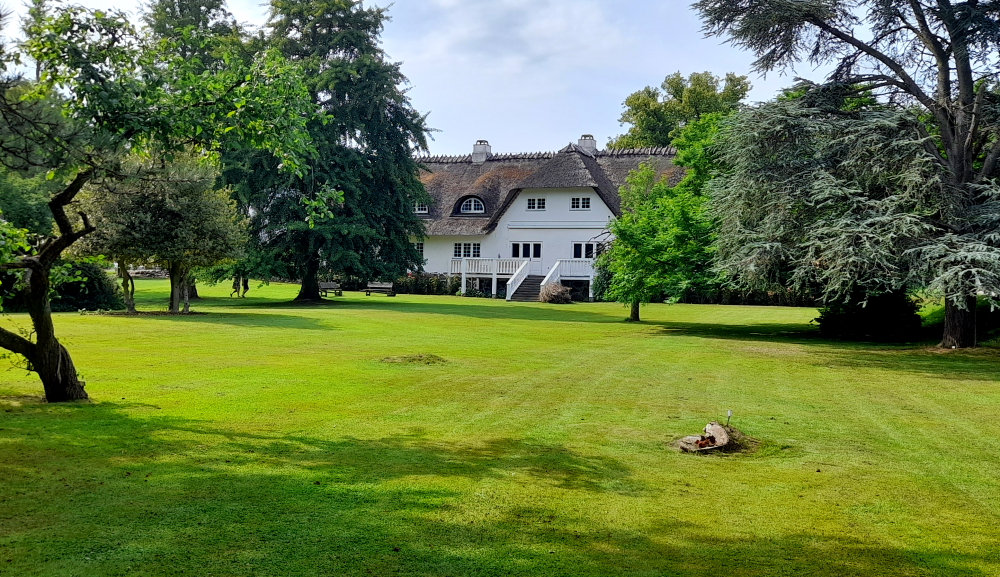
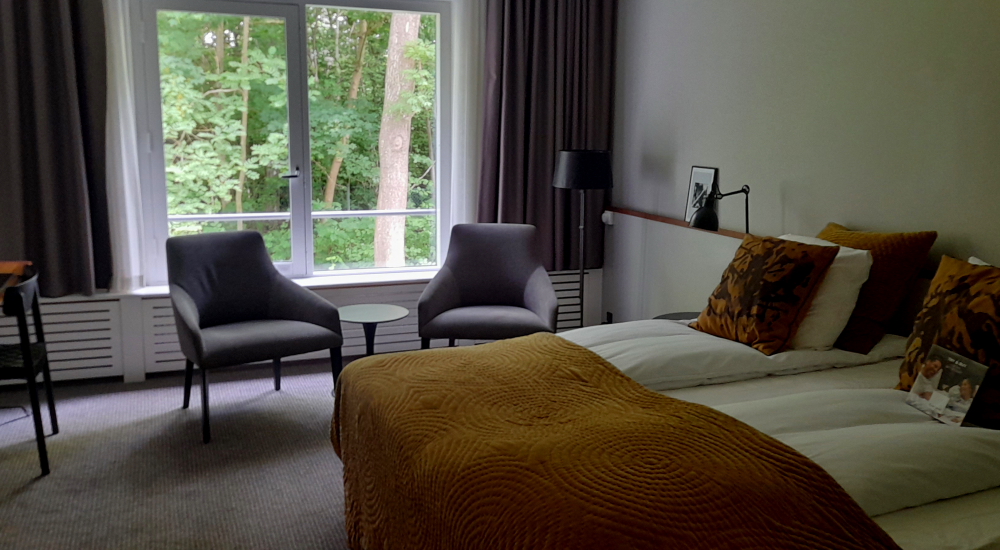
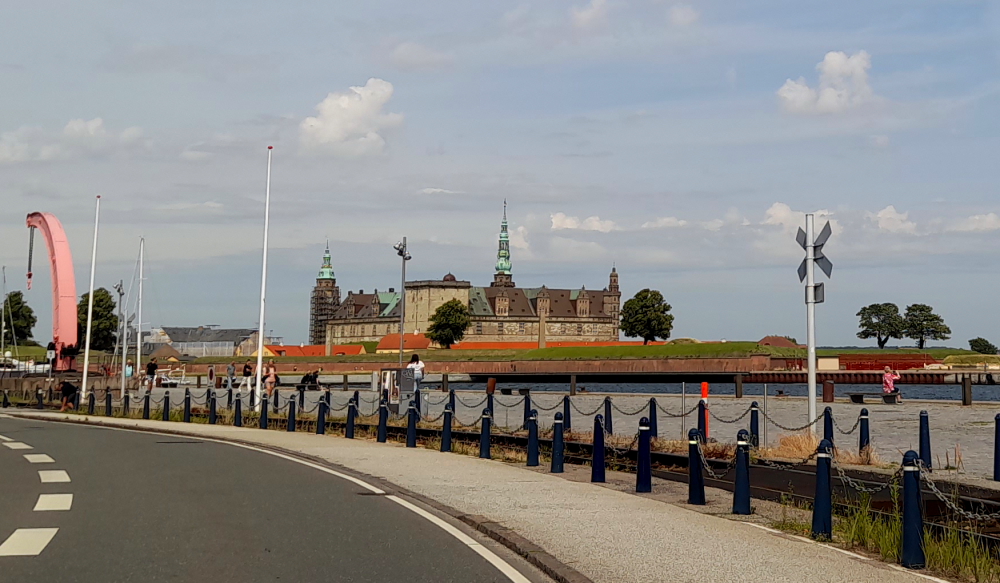
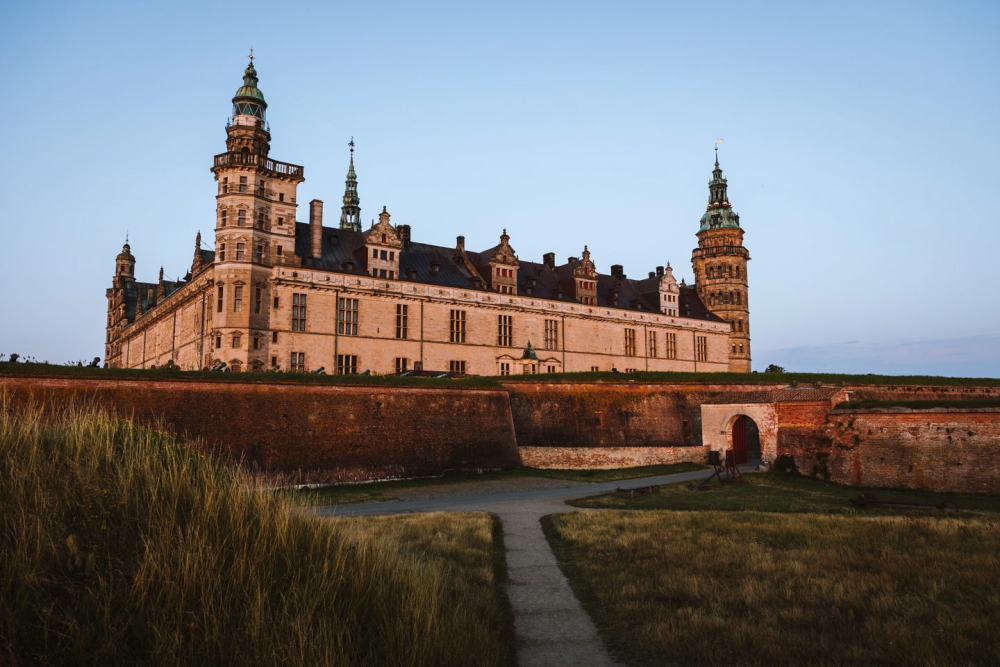
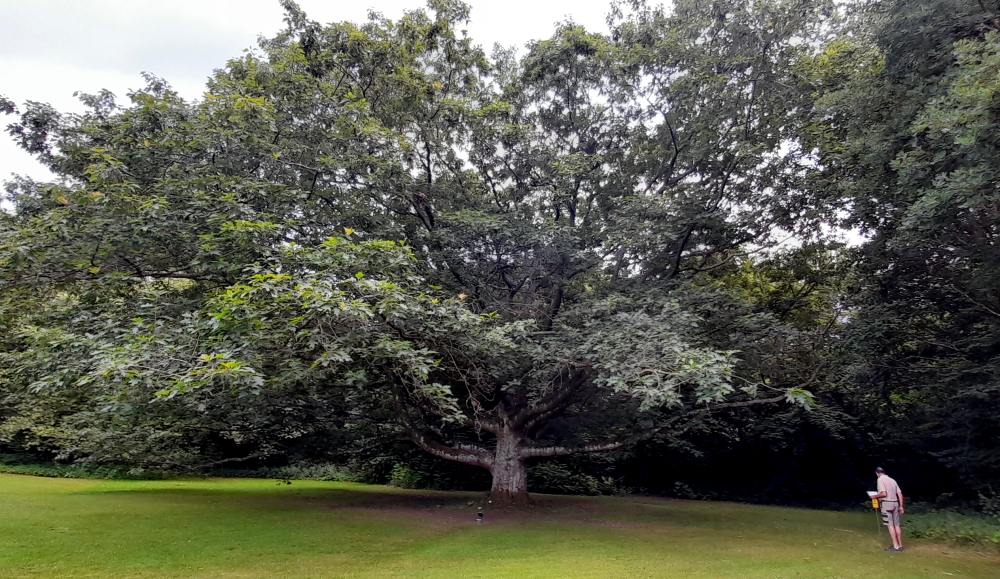
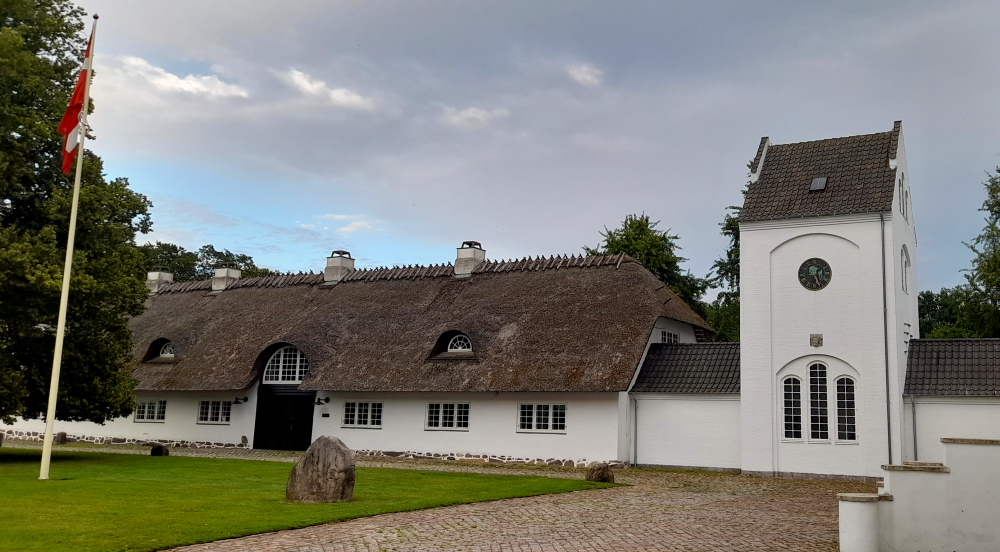
 THE CONTINUING TRAVELS OF YOGI & BOO BOO