
13 May, 2023
After a good night’s sleep and a reasonable breakfast (for Scandinavian-style breakfasts), we scurry out of the hotel at 9:40 am to be at the city square for our guided walking tour of Gothenburg City at 10:00 am.
It is going to be a bright sunny day today with a maximum temperature of 22 Deg C. Perfect weather to explore the city and surrounding areas.
We are meeting our guide and fellow walkers at the City Square under the statue of Gustav Adolf.
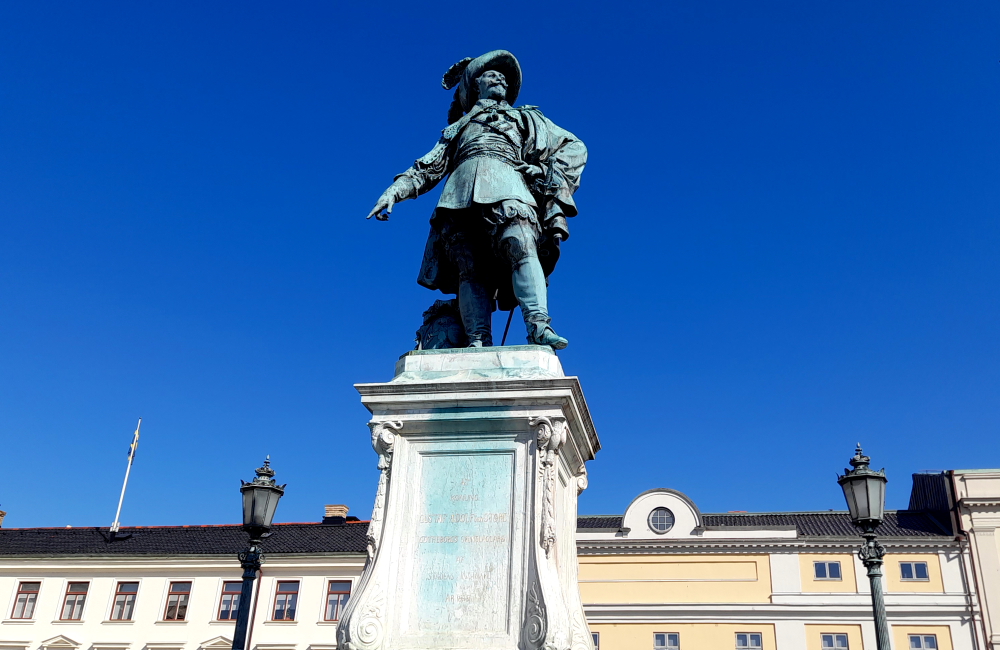
Gustavus Adolphus (9 December 1594 – 6 November 1632), also known in English as Gustav II Adolf or Gustav II Adolph, was King of Sweden from 1611 to 1632, and is credited with the rise of Sweden as a great European power. During his reign, Sweden became one of the primary military forces in Europe during the Thirty Years’ War, helping to determine the political and religious balance of power in Europe. He was formally and posthumously given the name Gustavus Adolphus the Great.
He is often regarded as one of the greatest military commanders in modern history, with use of an early form of combined arms. His most notable military victory was the Battle of Breitenfeld in 1631. With his resources, logistics, and support, Gustavus Adolphus was positioned to become a major European leader, but he was killed a year later at the Battle of Lützen.
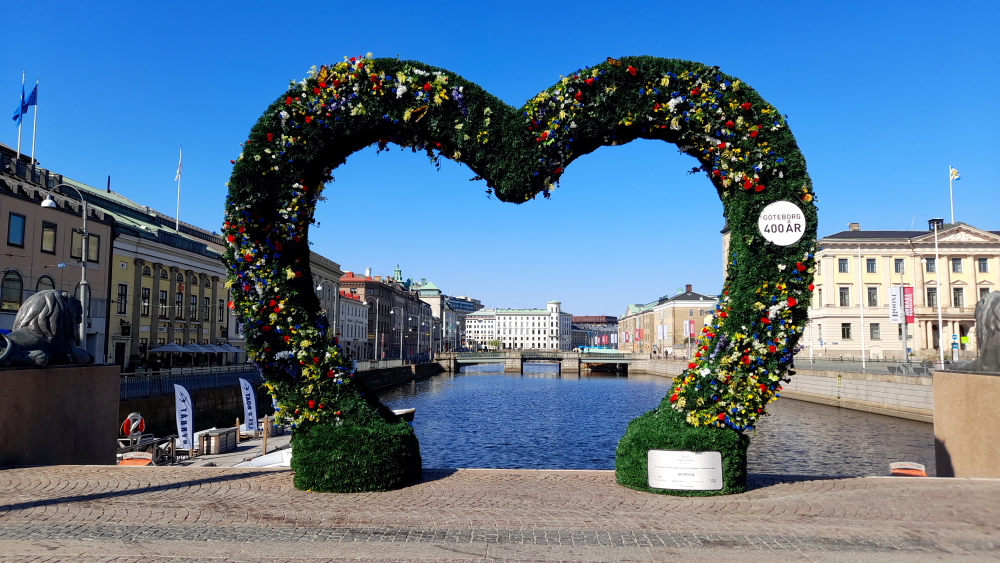
Gothenburg celebrates its anniversary on 4 June. It was established in 1621 so this year it will be 402 years old. This heart-shaped, floral wreath is on the bridge that crosses the Stora Hamnhanalen but its badge says ‘400’.
We’ve really enjoyed our ‘free’ walking tours since our first one in Helsinki, then Cordoba and Copenhagen. Unfortunately today’s tour guide isn’t as good as our previous ones. She’s Turkish and has only been in Sweden a year so she was either struggling with English not being her first language and/or not fully au fait with Gothenburg’s history, plus she had a very soft voice which had to compete with the noise of trams, church bells, buses, cars, crowds of people, etc.
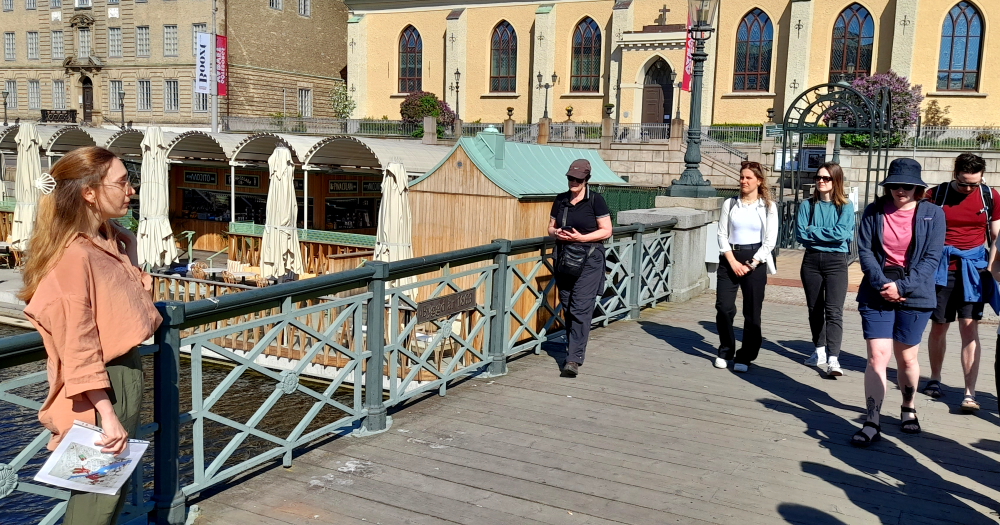
Nonetheless we had an enjoyable ramble around the old town.
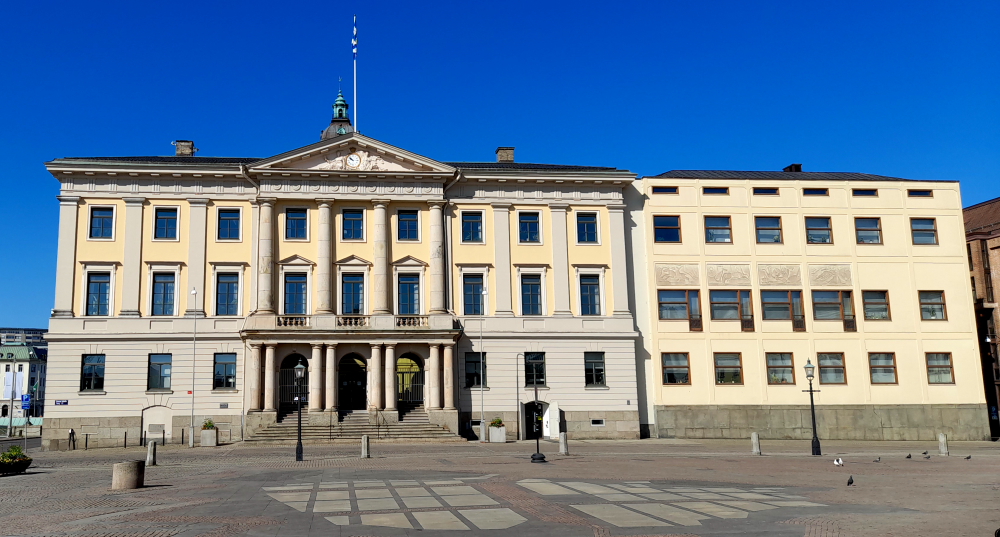
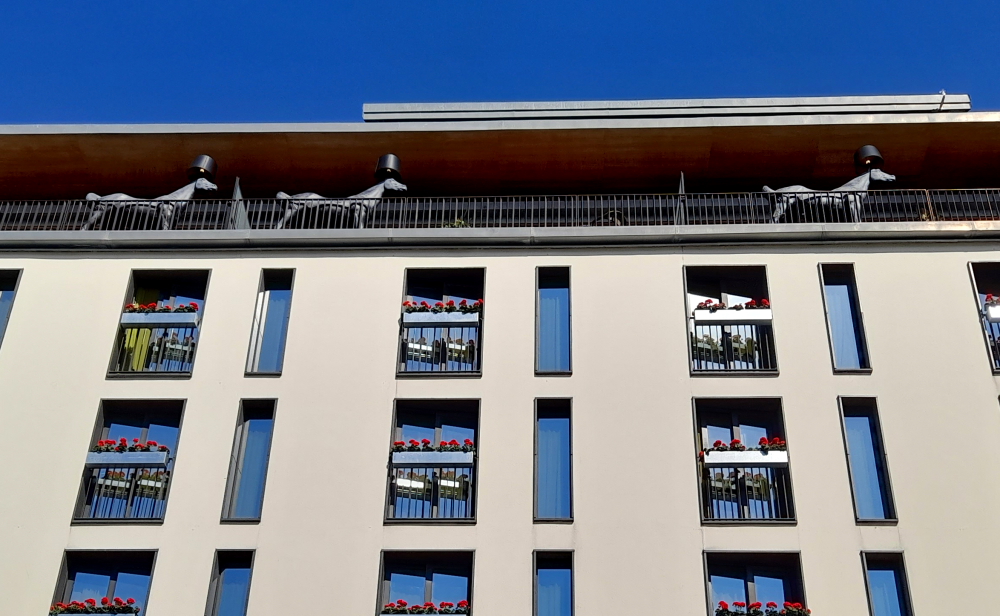
Our walk brings us to Kungstorget on which is located the oldest pub in Gothenburg and the Food Hall. Opposite the Food Hall is this apartment building with interesting lamp bases on the top floor balcony.
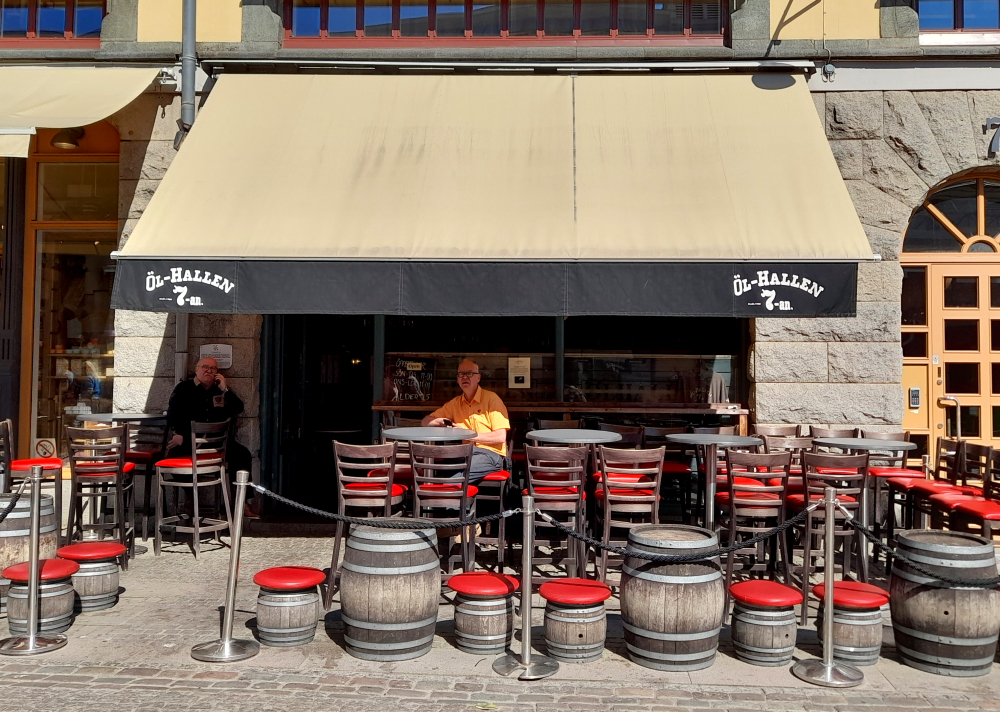
Ölhallen 7:an – the oldest beer pub in Gothenburg established in 1900. Former governor Kjell A Mattson gave Ölhallen 7:an special permission to serve beer without having to serve food, which makes it the one place in Gothenburg that only serves beer and nothing else.
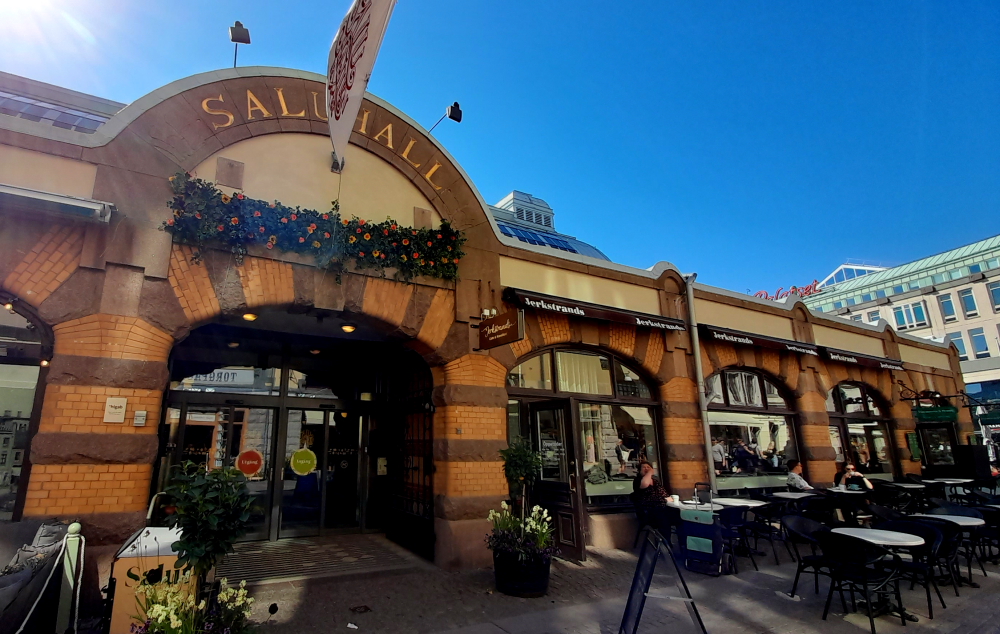
Stora Saluhall has been operating since 1888 selling meat, pork, flour, grits, butter, cheese and other “necessities of life and peasant goods” from its 92 stalls.
We take a U-turn and walk up Korsgatan to the Gothenburg Cathedral. Before the first cathedral was inaugurated in 1633, a temporary church known as the Gothenburg stave church stood on the site for c. 12 years. On the night of 15 April 1721 the cathedral, high school and 211 residential buildings in the vicinity of the cathedral burned down. A second cathedral was erected and it, too burned down in 1802 along with 179 houses. The present cathedral was designed in classical style and was larger than the two earlier buildings
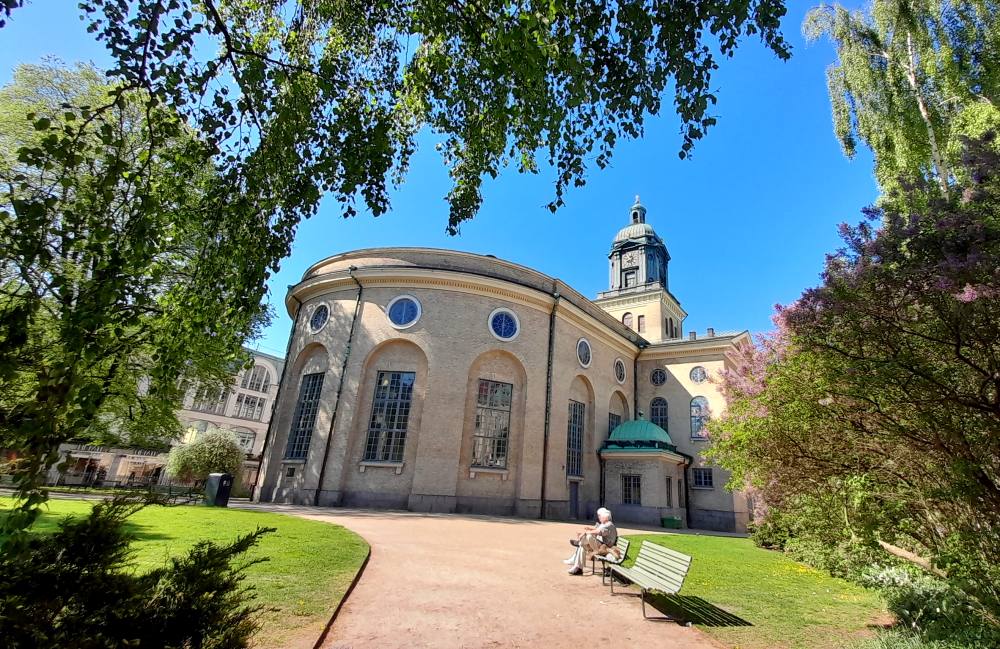
In January 1750, Superintendent Carl Harleman proposed a sculpted altarpiece to portray Christ, a cross and two kneeling angels. The altar was inaugurated in 1754 and is still used as the altar of the cathedral today.
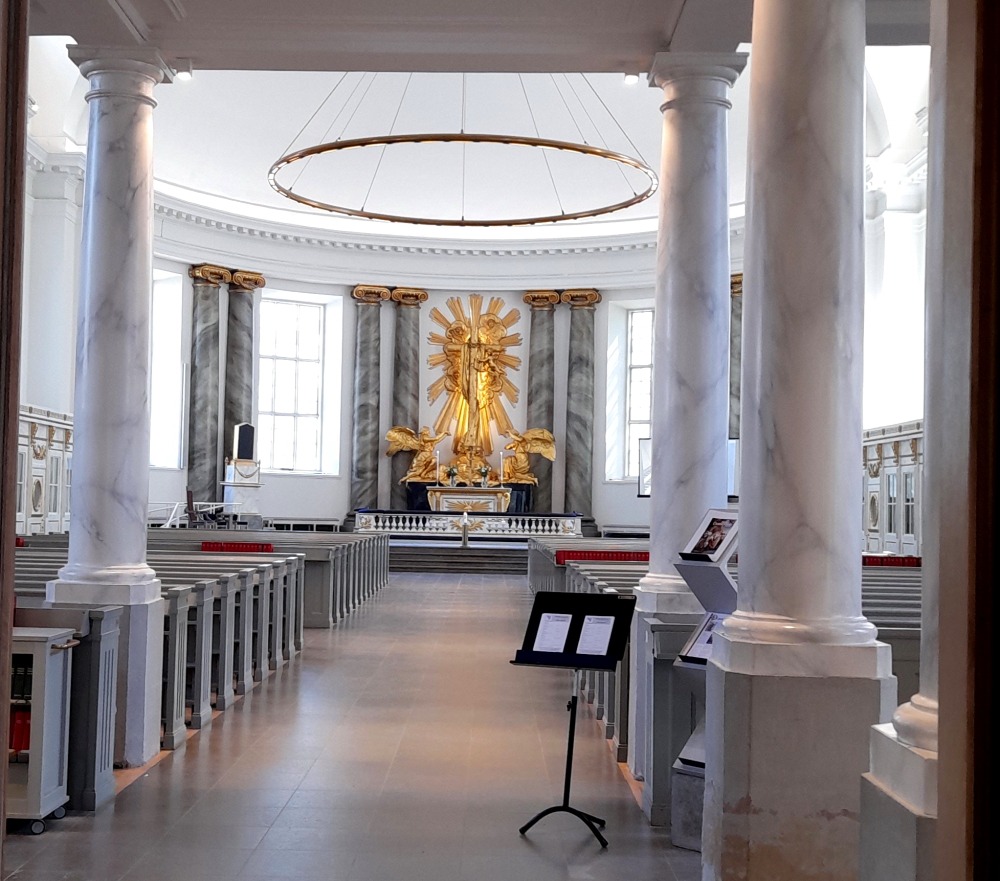
At the rear of the Cathedral is a bronze statue that wouldn’t look out of place in a Pirates of the Caribbean movie. Almost the entire “Oracle” is made up of animals and plants from the sea. In 2013, the city council decided to enrich Gothenburg with three new works of art. All would start from the children’s perspective. The Tilda Lovell sculpture was installed at the Korsgatan /Kyrkogatan intersection in December 2015.
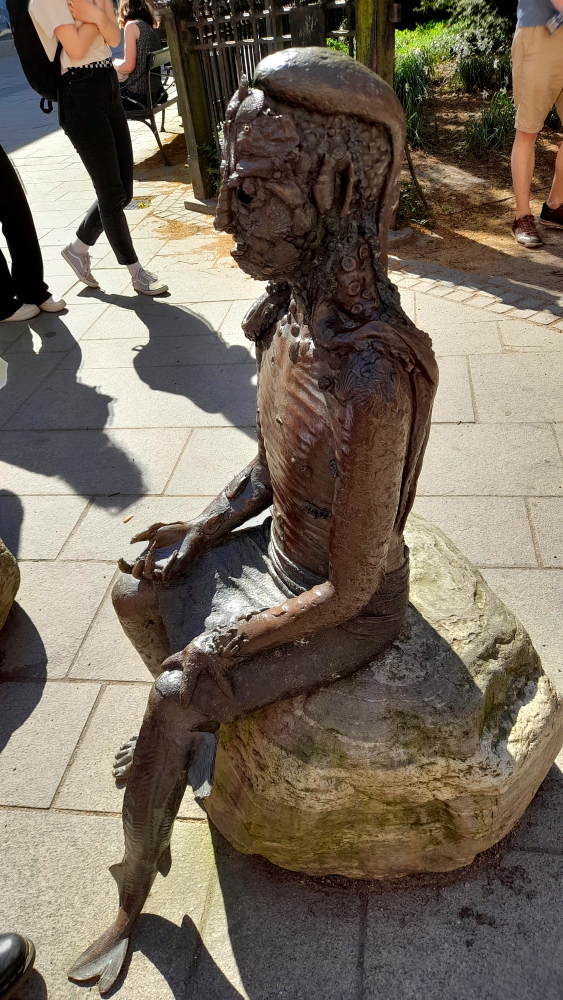
Next we walked down Magasinsgatan where shops and restaurants abound.
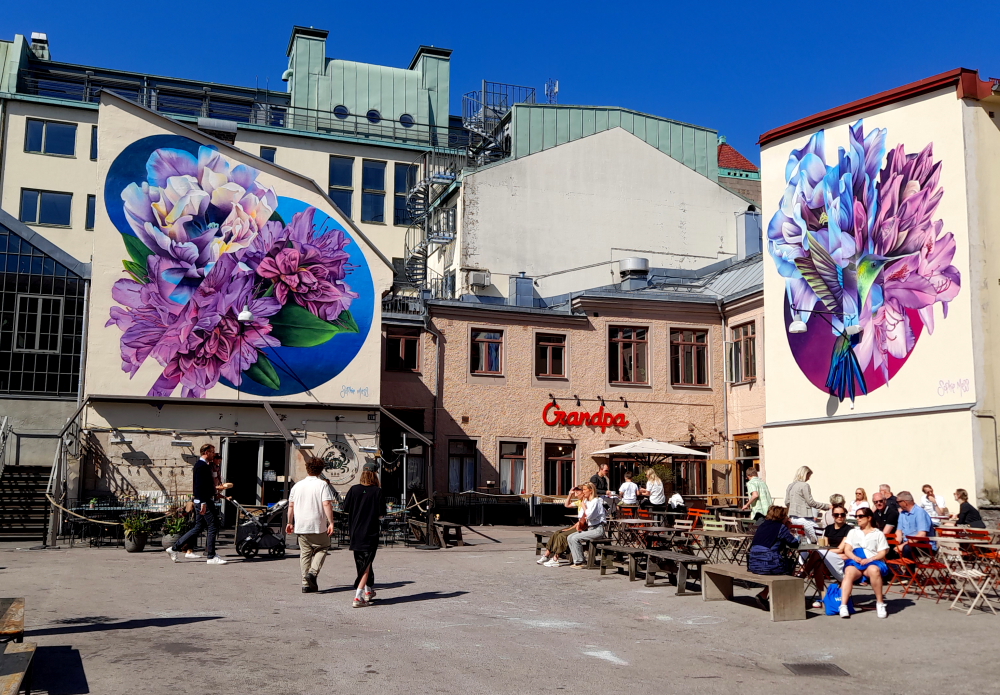
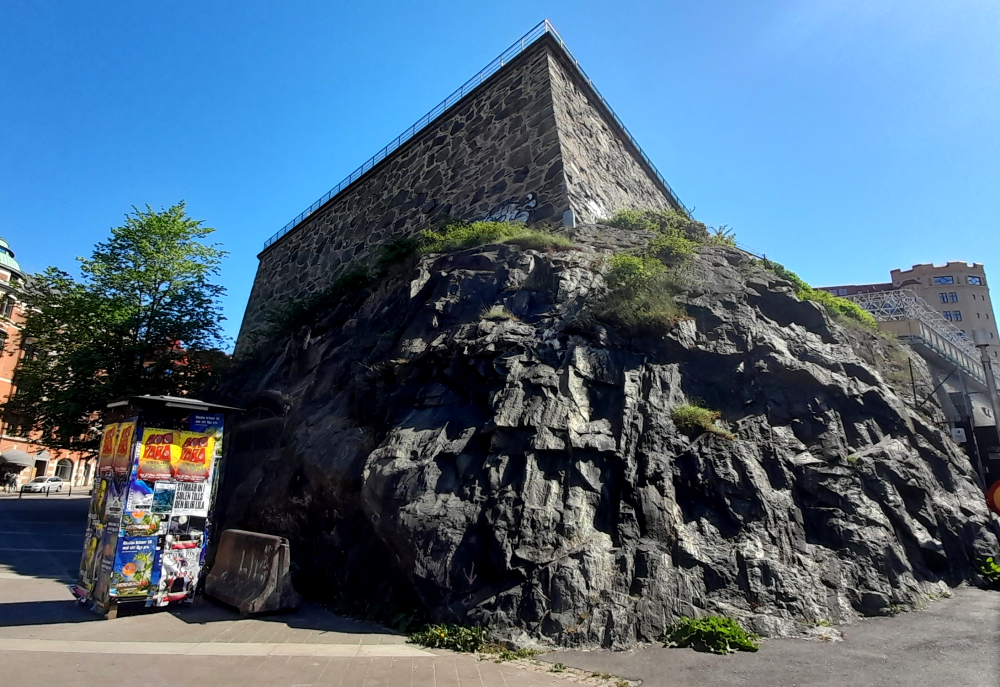
Thanks to the Metro construction in this area we needed to take a circuitous route to the Feskekora or ‘Fish Church’ which took us past a remnant of the old city wall on Esperantoplatsen.
Feskekörka or Fiskkyrkan, (‘fish church’) is an indoor fish market which got its name from the building’s resemblance to a Neo-gothic church. It opened on 1 November 1874 and was designed by the city architect, Victor von Gegerfelt. Feskekörka is an institution in Gothenburg as well as a tourist magnet, housing one of the city’s oldest trades, fishing.
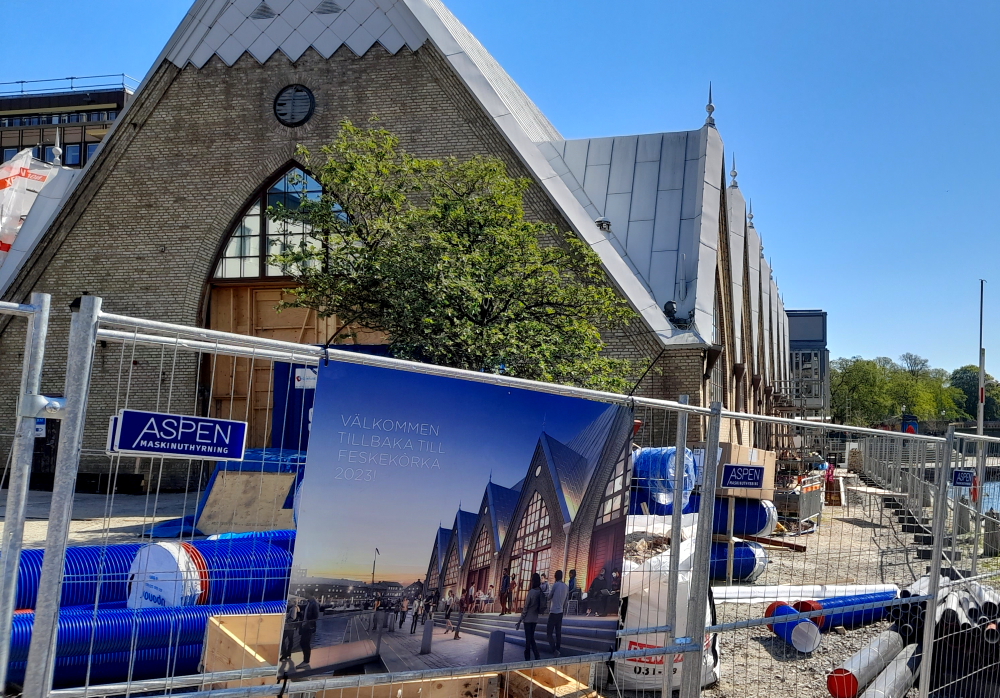
Apart from a fish market, there is also a fish and seafood restaurant in the building but it is currently closed while restoration and renovation work is being carried out.
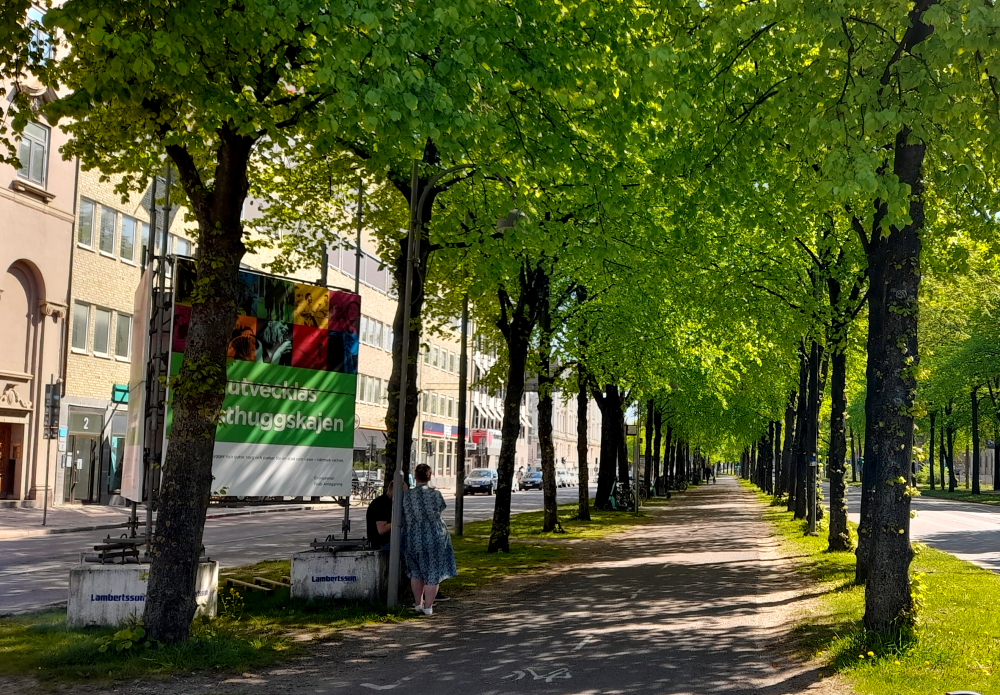
Walking towards Jarntorget we cross Nya Allen with its shady avenues.
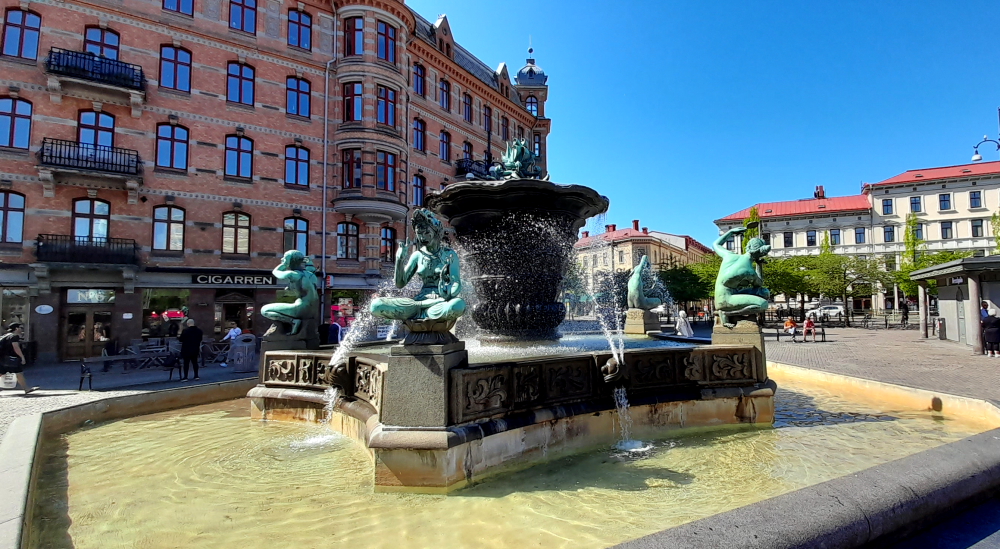
Jarntorgsbrunnen (Swedish for The Well of the Iron Square), or using the artists title, De fem varldsdelarna (The Five Continents), is a sculpture by Tore Strindberg inaugurated October 12, 1927 at Jarntorget. It consists of a granite fountain with five naked, female, bronze sculptures (by Tore Strindberg), representing five continents: Africa, America, Asia, Europe and Australia (Oceania). A ship at the top is seen sailing five streams, symbolizing the five oceans. Since the piece is to remind us of the old iron scale which used to be located on this spot (hence the square’s name, The Iron Square), 30 hallmarks from those ironworks who exported their goods via Goteborg can be seen throughout the sculpture.
A couple of blocks later we turn onto Haga Hygata.
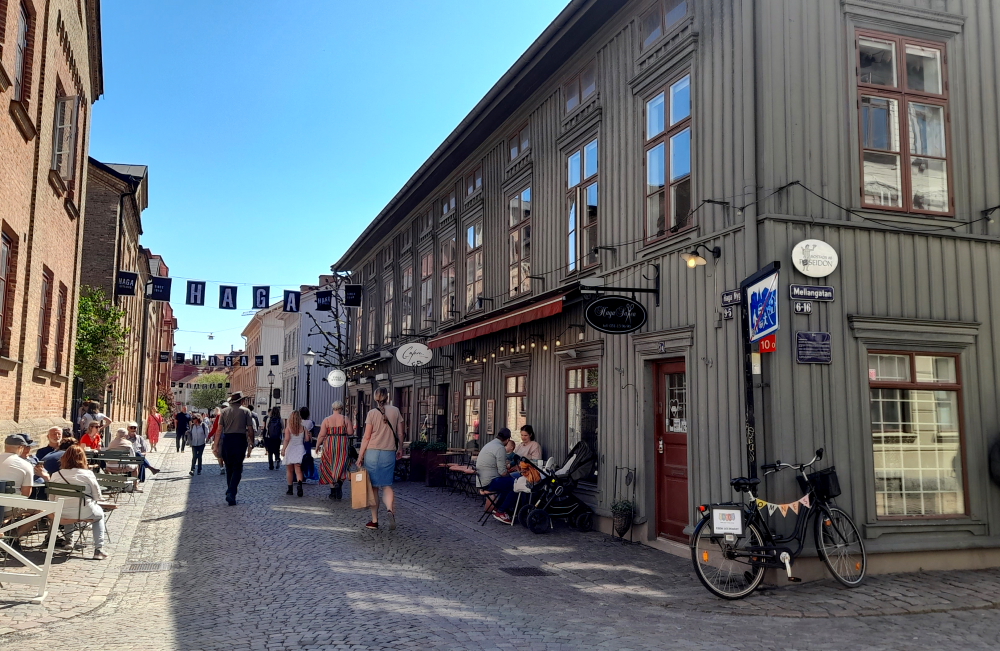
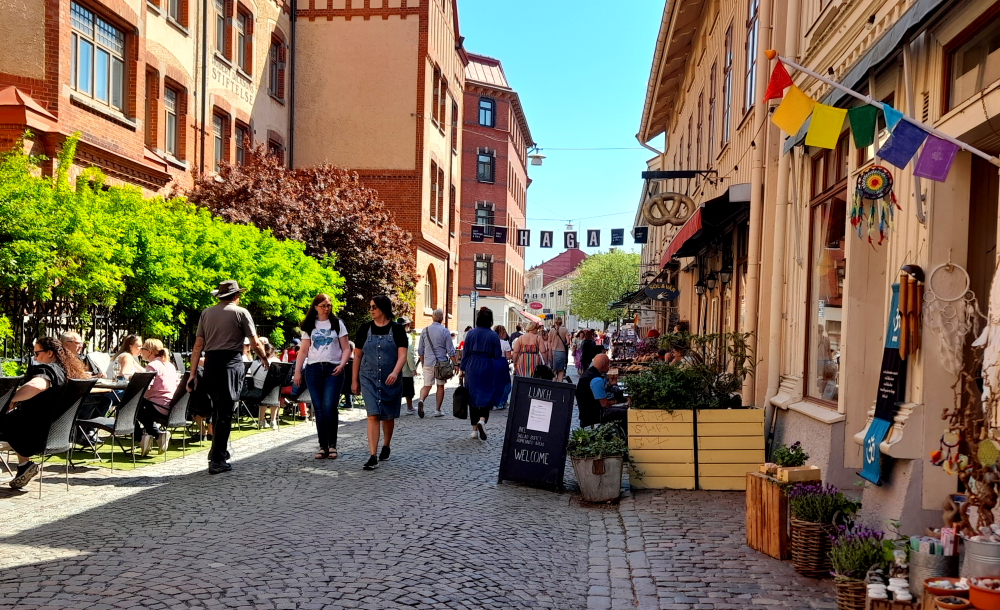
Haga is one of Gothenburg’s oldest districts. Its name comes from the pastures that existed here in the 17th century.
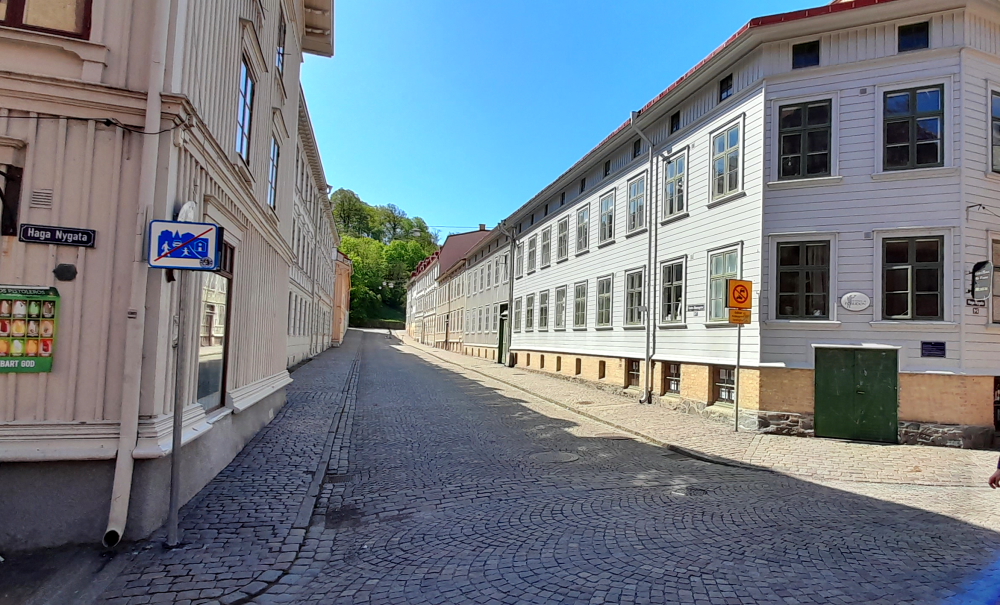
Nowadays, Haga’s car-free streets are lined with small cafes and shops interspersed with the Gothenburg-typical county governor’s houses. At this point the tour ends.
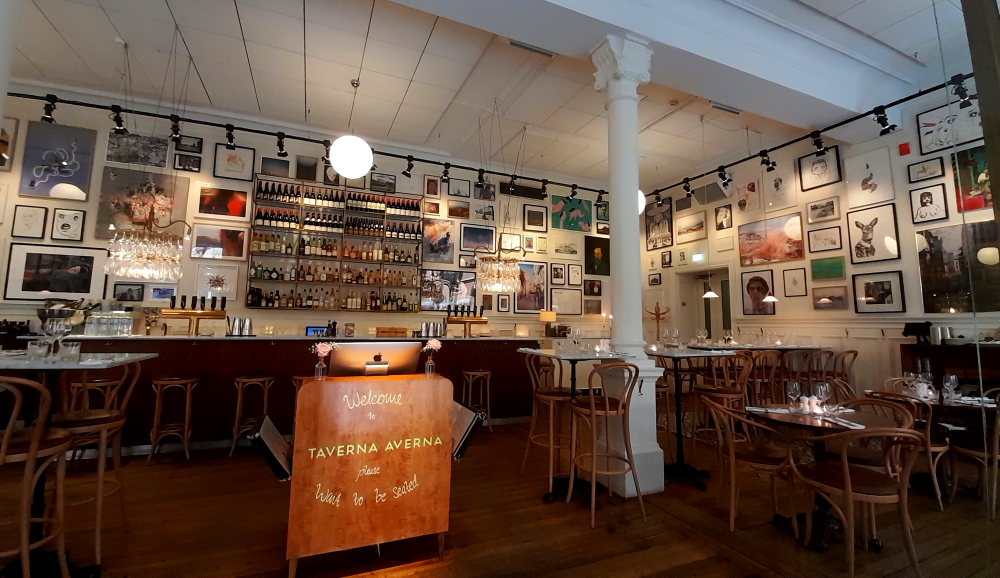
As we are nearby, we retrace our steps a short way and visit the building at Tredge Langgatan, 7-9 which used to be the old Auktionsverket (Auction House) building.
Goteborgs Auktionsverk is an auction house founded in 1681, when the magistrate in Gothenburg sought permission from the government to conduct the auction business. It is the world’s second-oldest auction house in operation after the Stockholm Auction House founded in 1674. The auctions relate to antiques, art, modern design, and crafts. The House’s new location is at Banehagsgatan, 20.
The building now houses an upscale New York-style bistro called ‘Taverna Averna’ whose front room has kept in touch with the building’s association with art and culture.
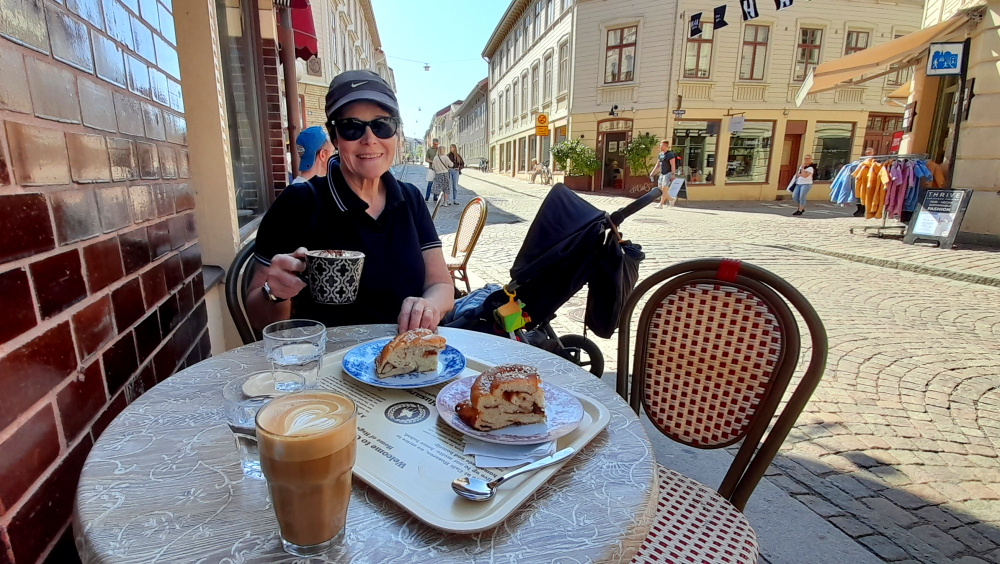
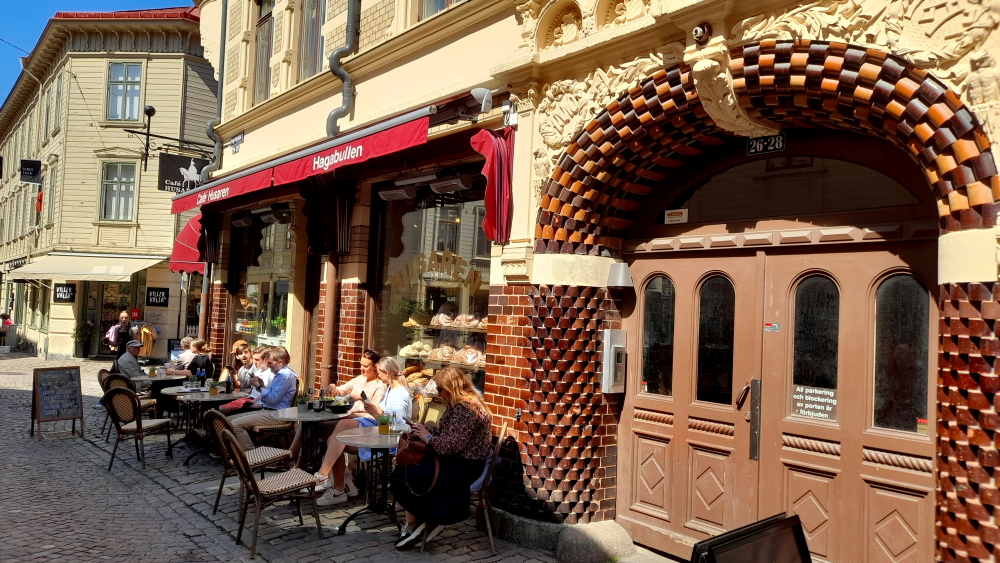
Time for coffee and some of that famous cinnamon bun at the equally famous Cafe Husaren back in Haga. Unique to this particular area of Gothenburg, hagabullen are this café’s world-renowned take on the classic Swedish cinnamon bun, infamous mainly due to their enormous size and crystals of sweet, crunchy sugar.
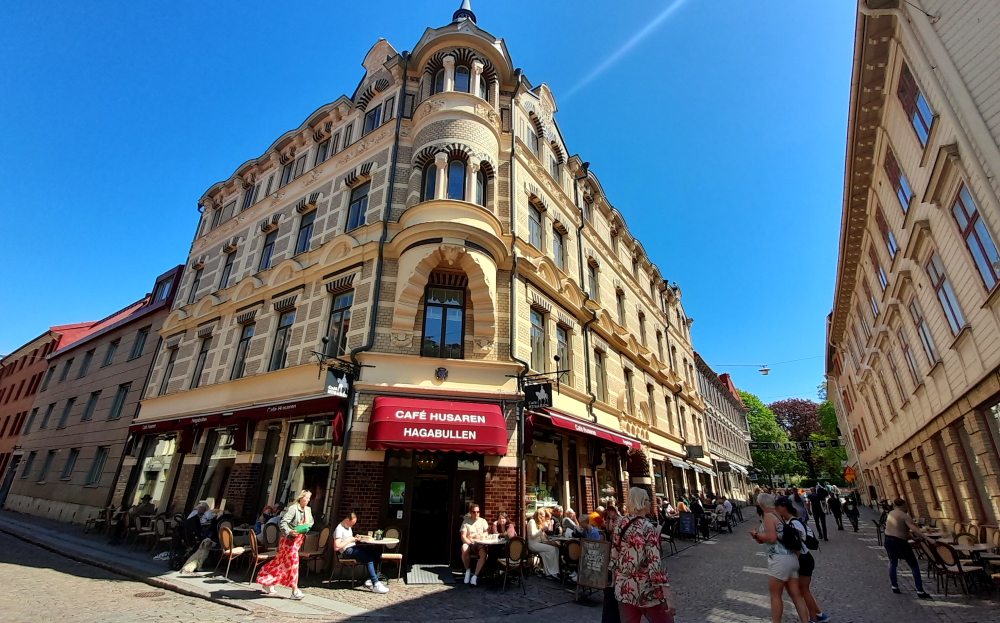
The elegant, old-fashioned feel of Café Husaren’s interior is reminiscent of Swedish coffee house culture, the idea of fika – a cosy coffee break with friends – intrinsic to the lives of its locals. The high ceilings, chandeliers, and dark wood furnishings transport you back to another time.
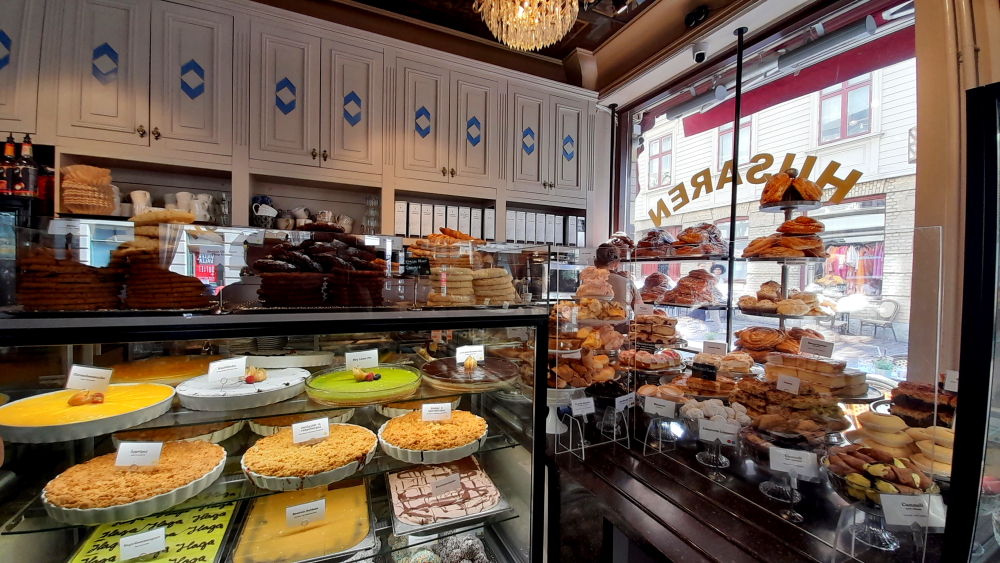
‘Husaren’ means mounted soldier. Cafe Husaren is named after the street that it is located on, Husargatan, which is named after the area’s historical meaning. When Sweden was at war with Denmark during the 17th century, the entire district of Haga was a military zone.
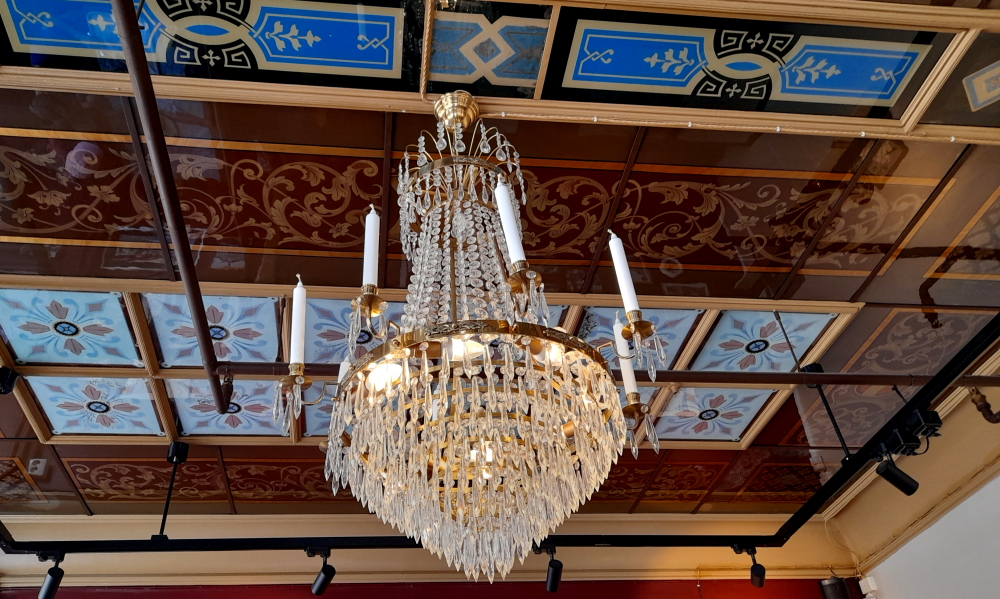
The Cafe has one of the very few preserved glass and stucco ceilings dated 1896 and is entirely preserved in its original condition.
The building is one of the oldest in the Haga district and dates back to the 1800’s.
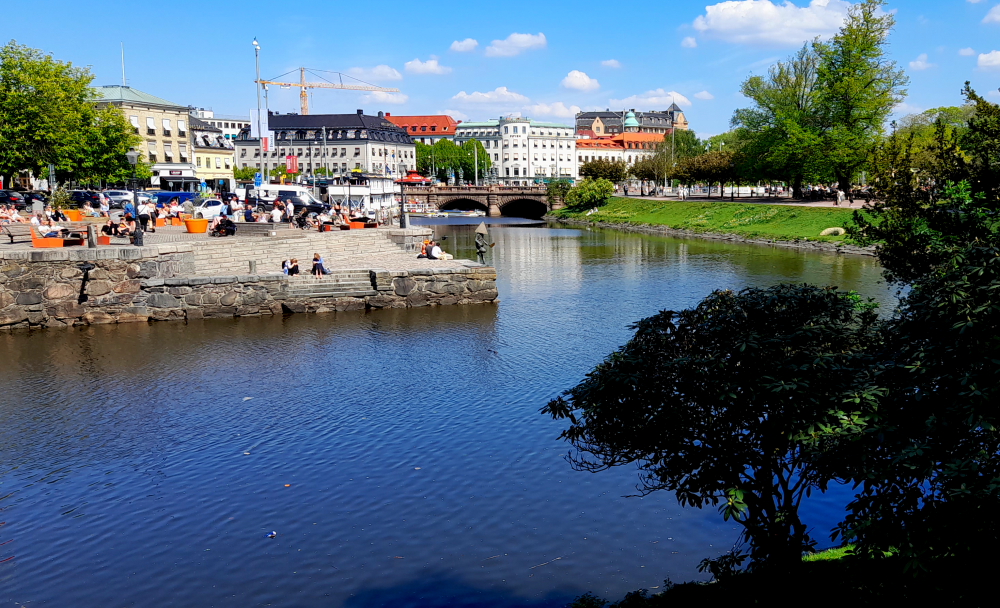
Time to head home so we cut through the nearby Hagaparken into Kungsparken taking the canal-side path.
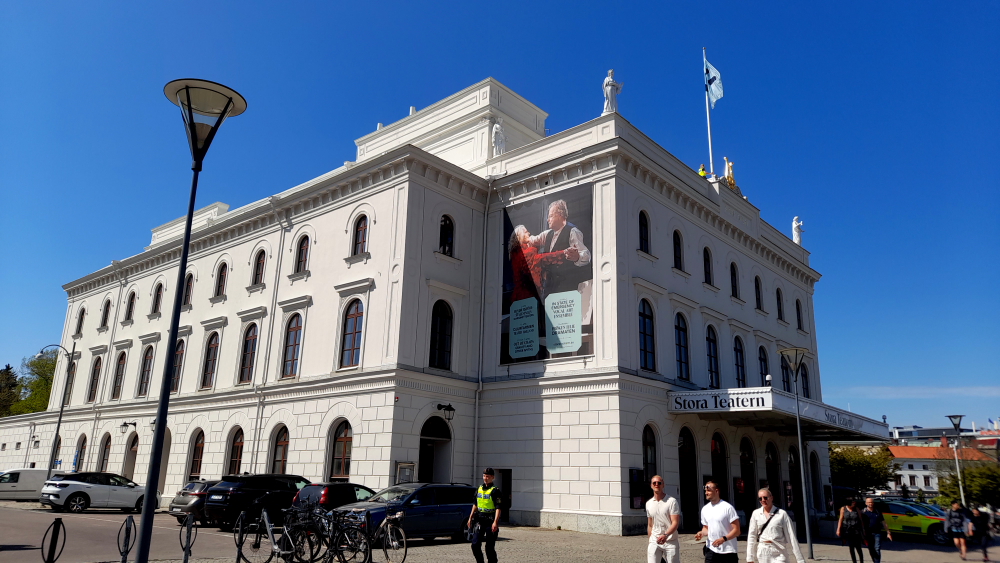
Stora Teatern (the Big Theatre), popularly known as ‘Storan’ (The Big One) is a musical theater in the Lorensberg district of Gothenburg. Inaugurated in 1859, it is situated in Kungsparken. In today’s nice sunny weather the other side of the theatre has been turned into a huge beer garden.
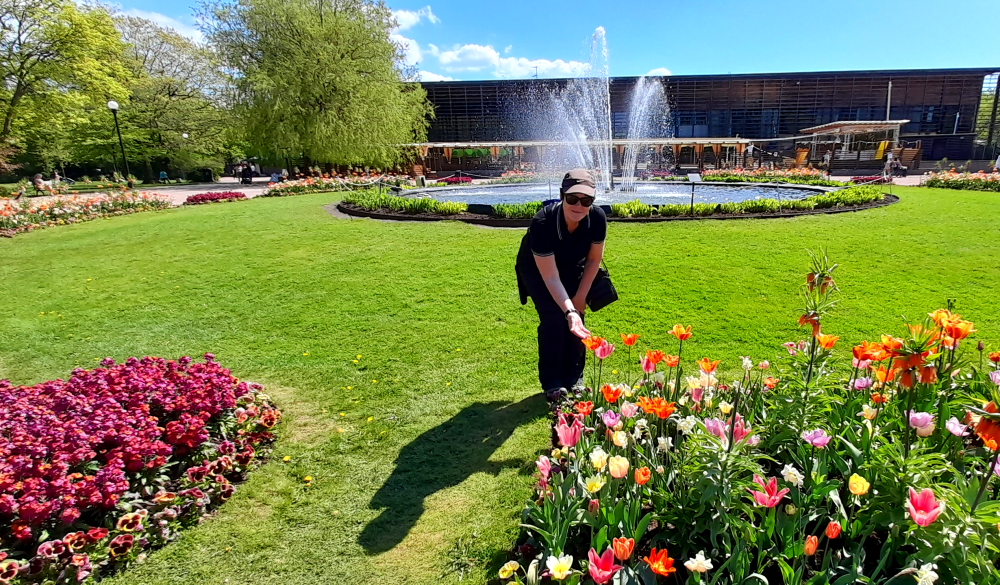
Across the road is the entrance to another park, the Garden Society which is one of the best-preserved 19th century parks in Europe.
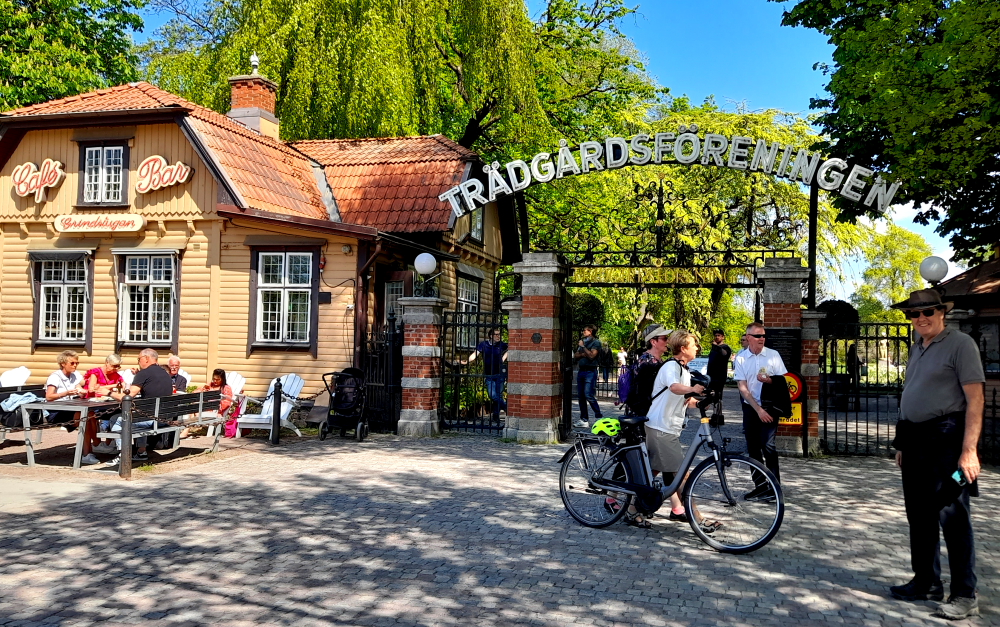
Undulating lawns and flower beds filled with native and exotic plants alongside historic buildings take you back to the golden age of horticulture.
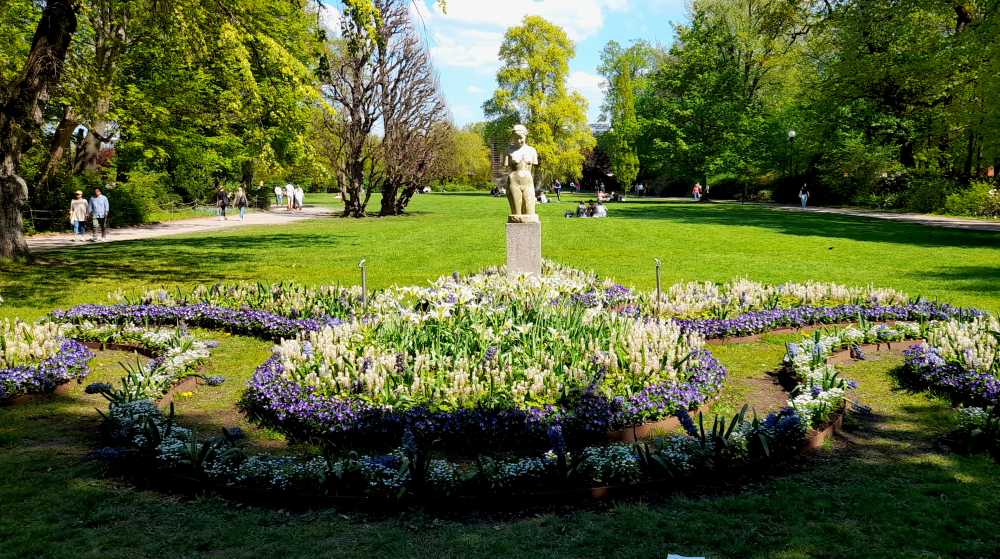
The park has a very distinct 19th century atmosphere with rose beds, a Palm House glasshouse and wooden cafes and a larger bar.
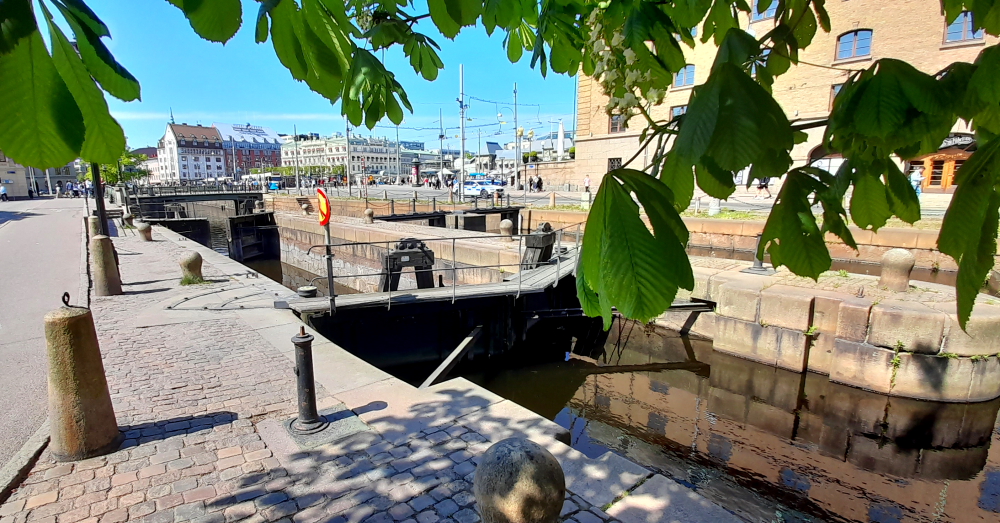
Across the road is the Stora Hamnkanalen with its locks.
Time for a Bex and a good lie down!
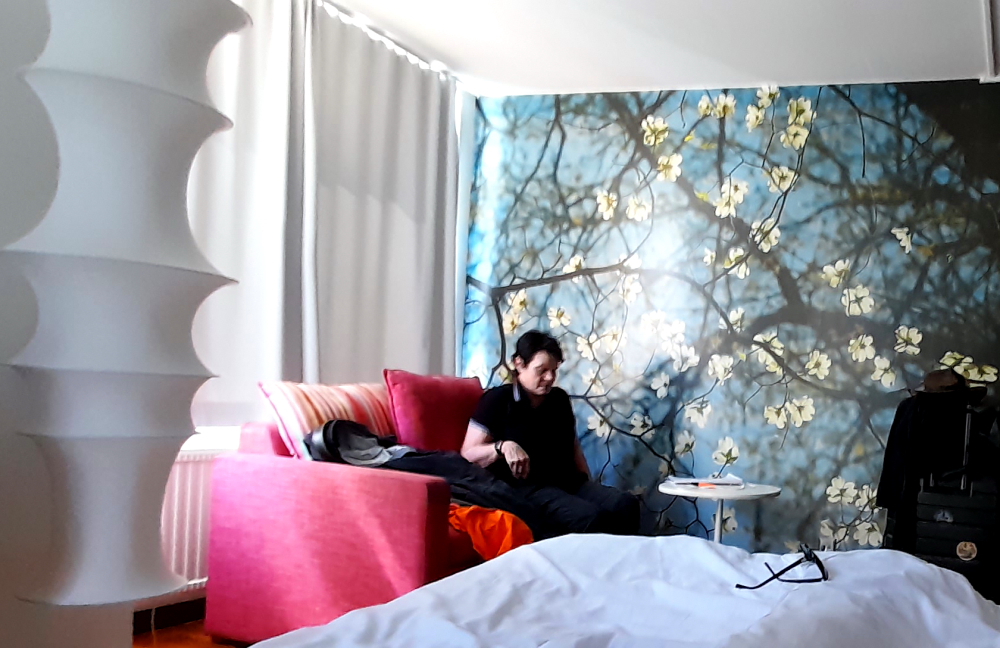
After a rest we head out to find a place for dinner. The whole city is very busy including our hotel. We knew that there is a half marathon being run today but we managed to miss the actually runners. We saw street barricades being set up and saw the odd runner in town but we missed the actual event – considering that Gothenburg’s annual half marathon is the WORLD’S LARGEST half marathon, that was quite a feat. And, that would explain why the streets have been crowded all day.
14 May, 2023
Breakfast is a lot quieter this morning and the streets seem almost deserted. Perhaps yesterday’s runners aren’t out of bed yet.
We spend the day planning more details for Northern Europe, Egypt and Wales trips so it was heads down all day. By dinner time we head out looking for somewhere to eat. The city feels completely deserted and most restaurants are closed. After walking the streets for a bit we finally came across a Vietnamese Restaurant that had some very nice meals at a very reasonable prices.
Tomorrow morning we are heading on to Oslo. After advising the Oslo Hotel that we require parking (they advertised free parking) we receive a message saying that parking is limited at the hotel and we may need to find paid parking nearby. Not Happy! Bloody Scandinavians can’t just do things the straight forward way. There is always an issue when you deal with them…..
15 May, 2023
We check out 2.5 hours early so that we can hit the E5 and hopefully arrive in time to snaffle a vacant car parking spot at our Oslo hotel some 296 km away.
About an hour later we cross over the Sunninge Bridge, still in Sweden.
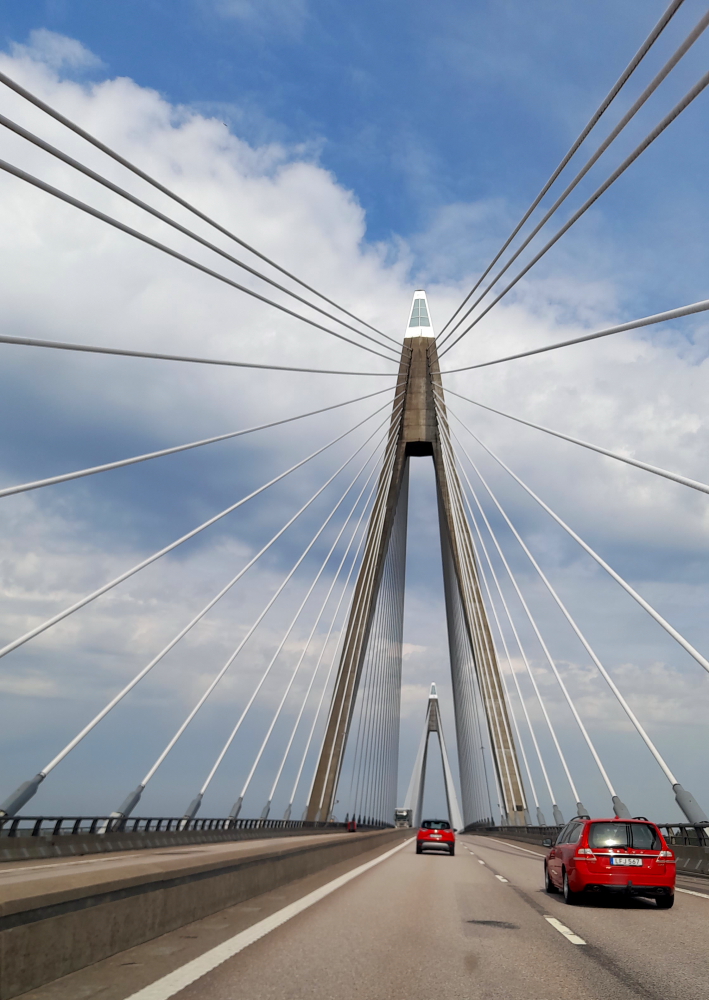
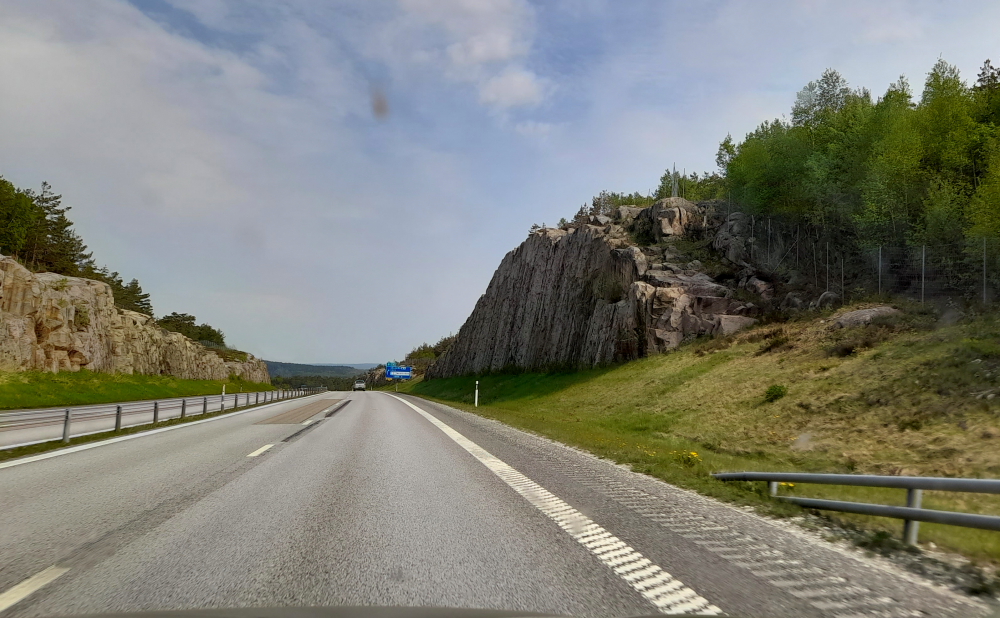
50 minutes later we see a sign about ‘Customs’ ahead, a small sign that says ‘Norge’ then we realise we are now in Norway. The first thing we notice is the change in the landscape. From the flat lands of Denmark and Sweden we are now driving through hills and a lot more rock.
The approach to Oslo is quite picturesque with a large harbour dotted with small wooded hills with houses. Then comes the industrial harbour with large cranes back dropped by a cityscape.
As usual, the GPS tells us to take a road several blocks from our hotel only to find that the road has been blocked by a mechanical barrier with no indication as to a diversion.
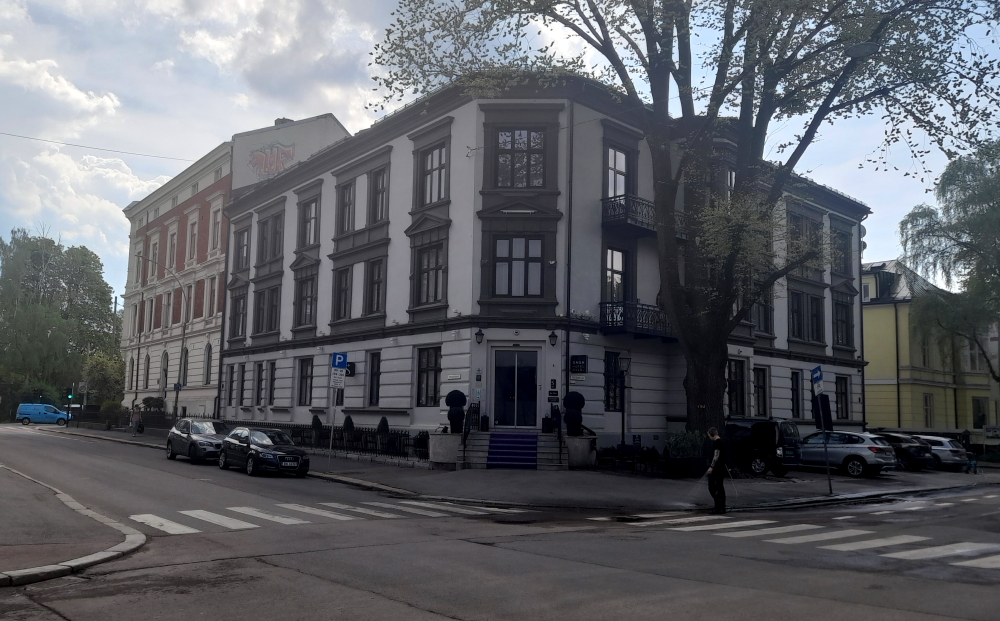
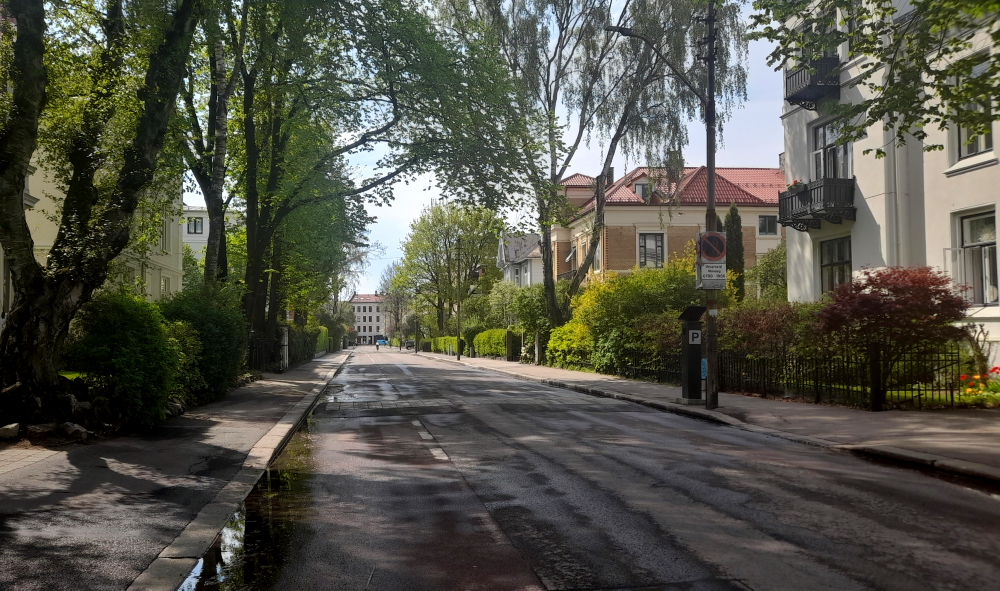
Thanks to Lynn using MapsMe she is able to guide me around the blockage and we soon arrive at the hotel which is located in a lovely leafy suburb with classical buildings a couple of blocks from the Royal Palace.
And, yes! there are not one, but two, vacant car parking spots out of 8 outside the hotel which we gratefully glide into.
As we are 2 hours early to check in we happily sit in the hotel’s lounge while our room is being readied and Marius, the receptionist, kindly organises coffees for us.
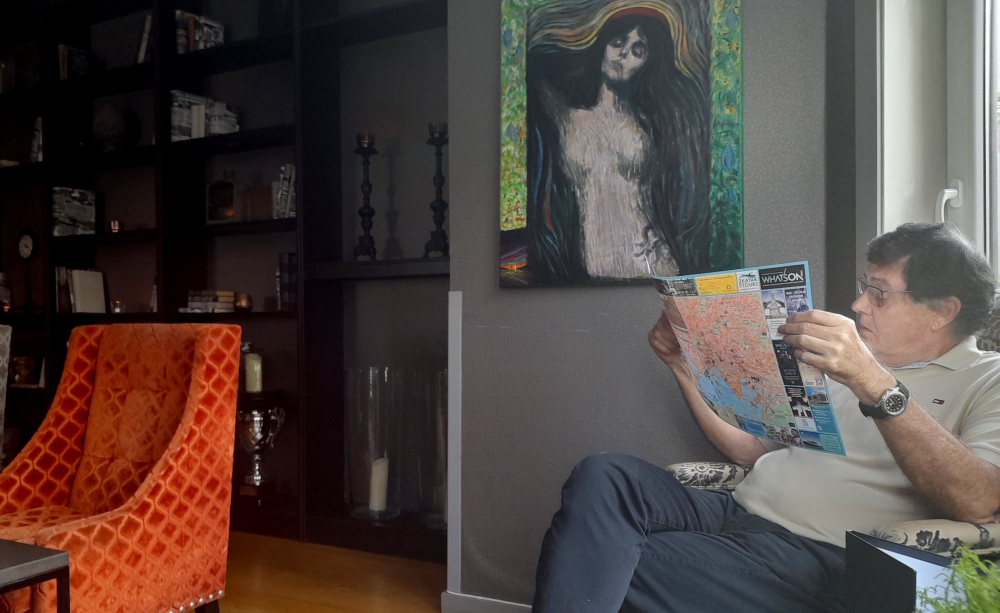
It’s a glorious sunny day today so Jakob, the other receptionist, suggests we might like to take a walk in the sculpture garden/park nearby, which we do.
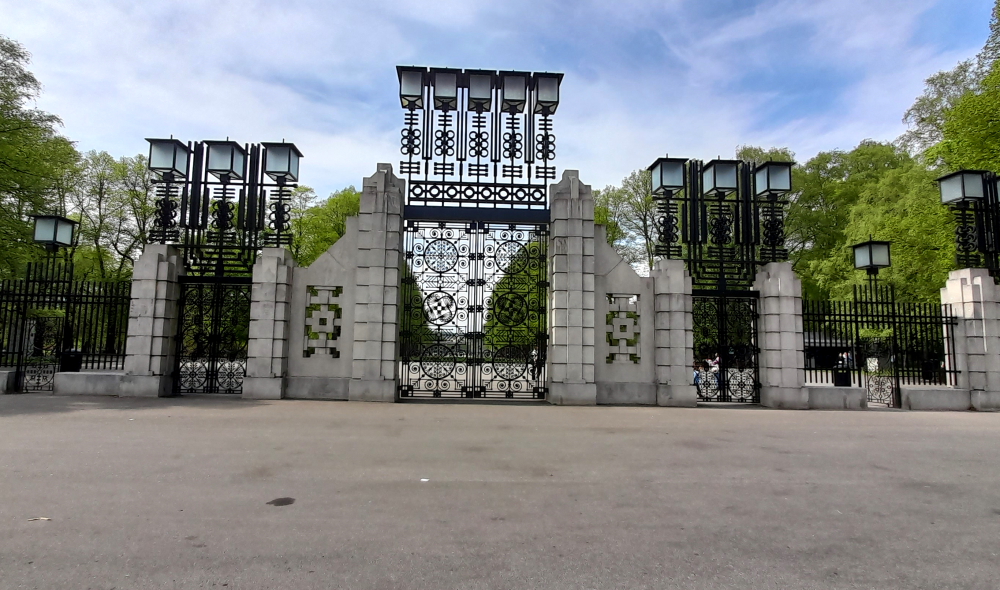
Frognerparken is not just one of Oslo’s, but one of Norway’s most visited attractions.
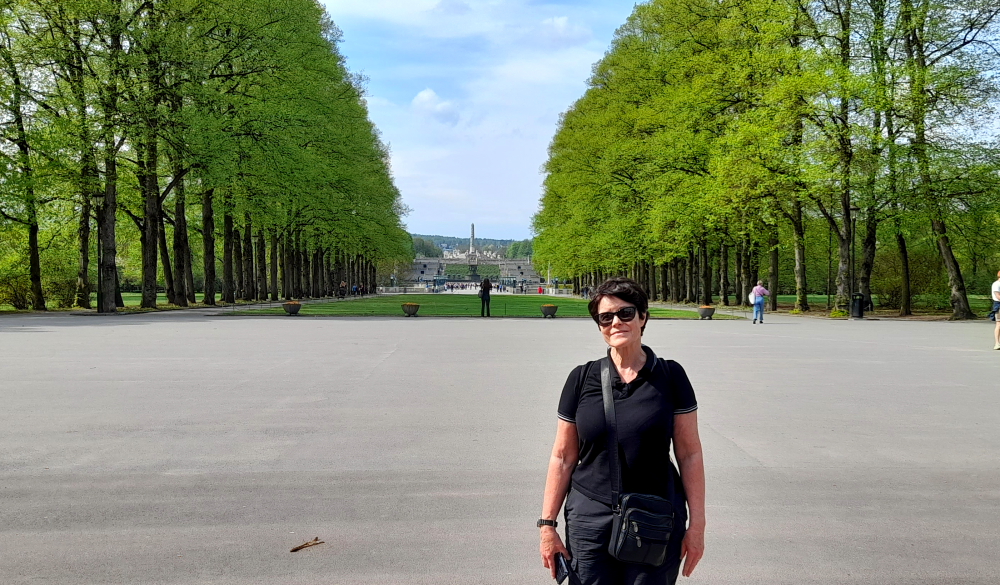
The park’s 214 granite, iron and bronze nude sculptures by Gustav Vigeland, as well as Norway’s largest rose collection with over 14,000 roses distributed over 150 rose species, attracts over a million people every year.
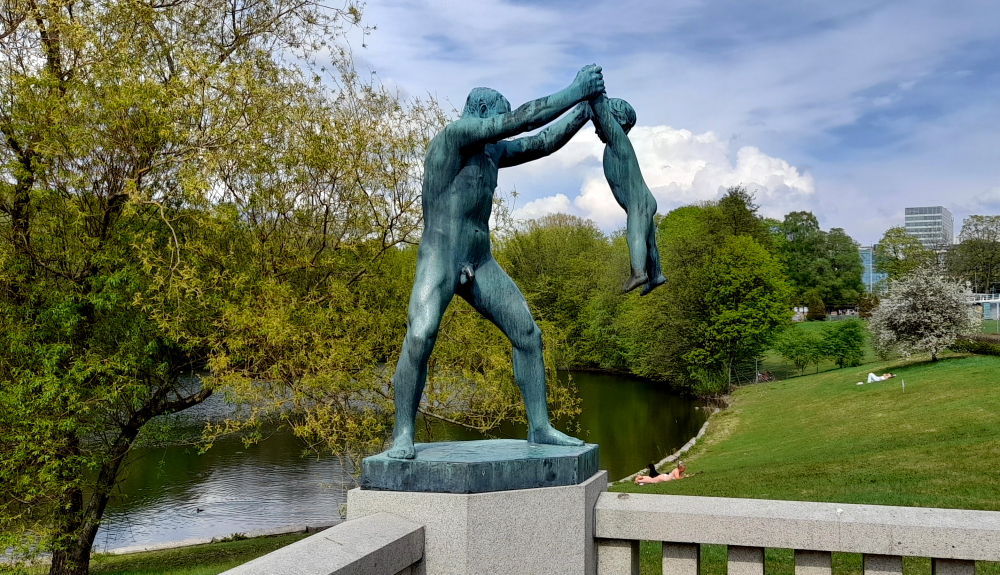
In the heart of the park, along an axis in the middle, is another park – Vigelandsparken – which exhibits the 214 sculptures by Gustav Vigeland (1869–1943). The most famous of the sculptures being “Sinnataggen” (the screaming boy); the Monolith and the Wheel of Life.
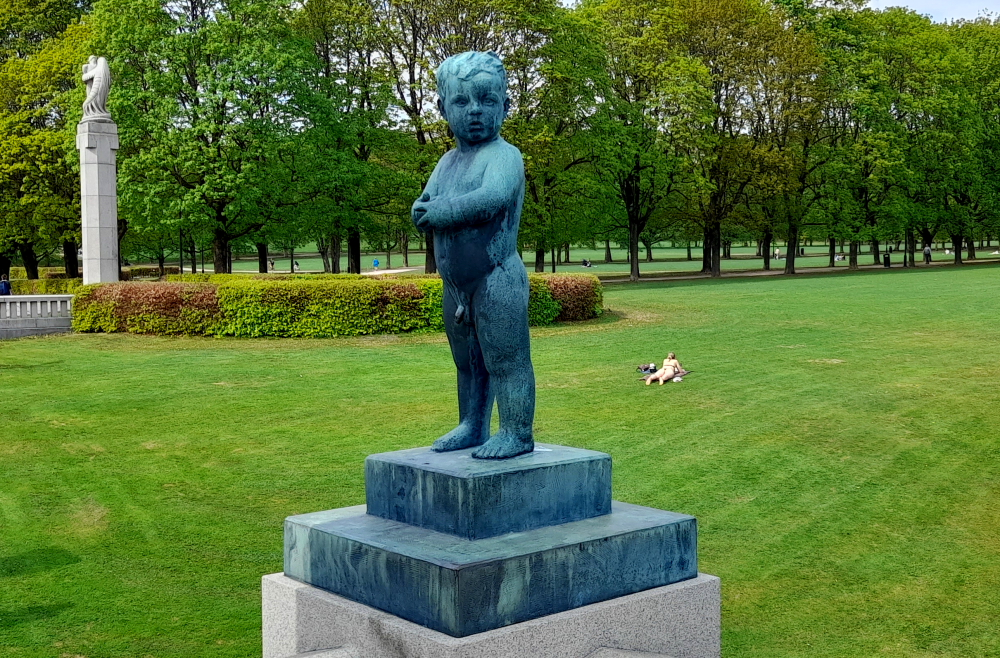
Frognerparken is surrounded by Oslo’s (by far) most expensive neighbourhood, and with its 467 square meters, it is the largest park in Oslo’s inner city.
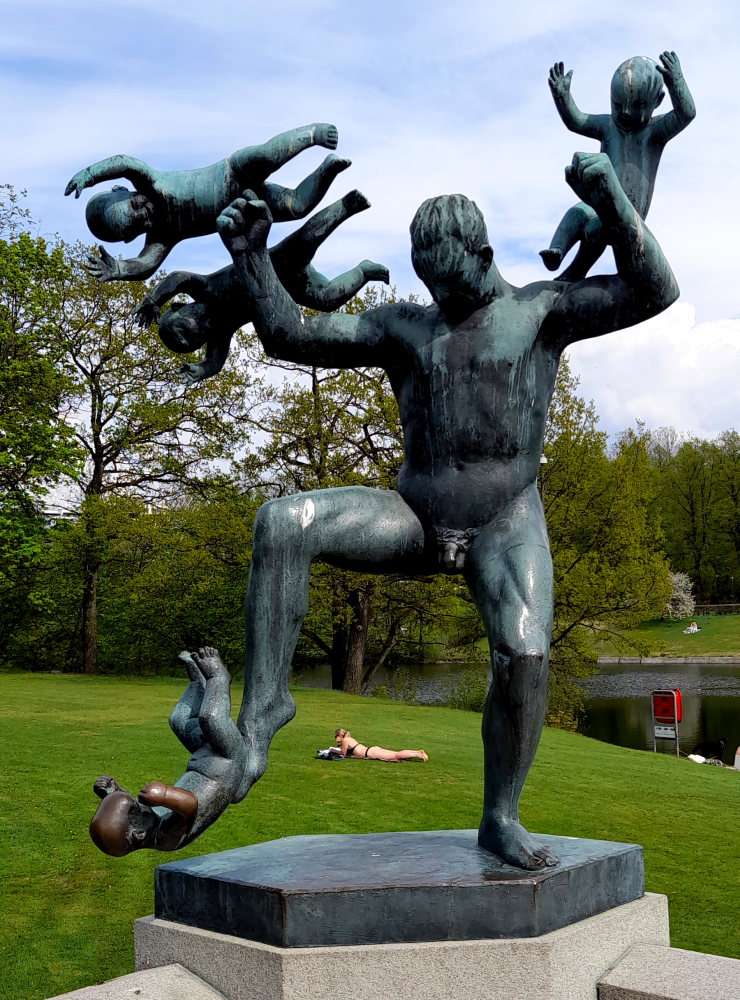
The park is mostly flat, so in winter it is perfect for beginners and for kids who want to learn to ski and sled.
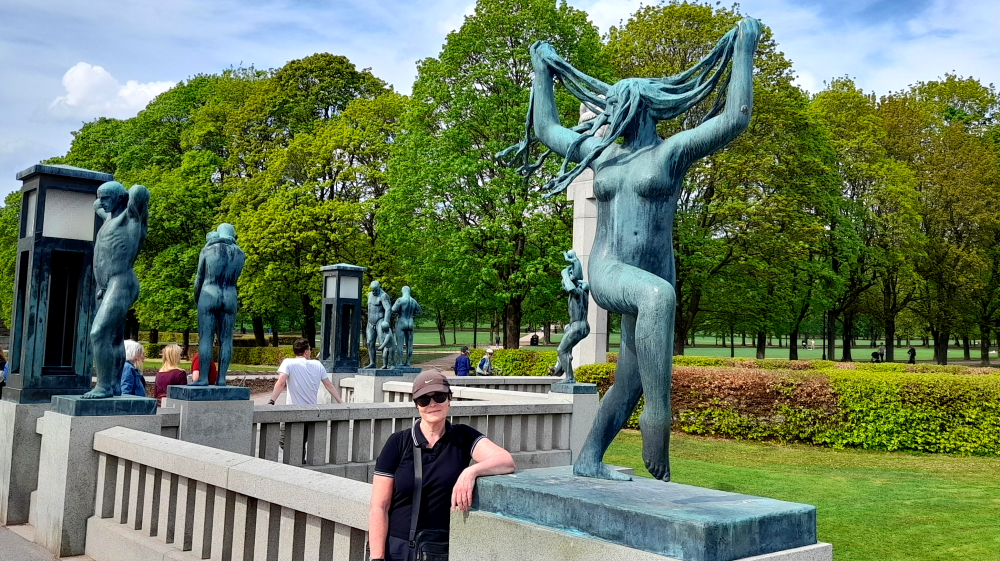
It was the first park facility in Norway, and so was protected by the National Heritage in 2009.
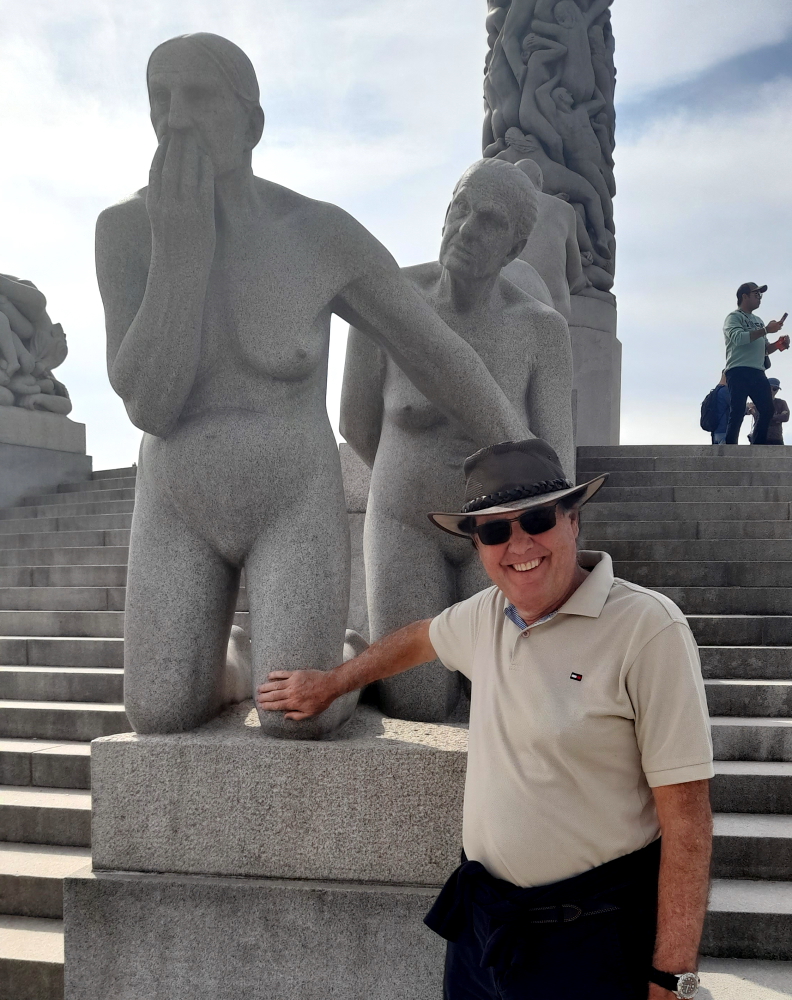
The Monolith is a stone pillar whose name suggests that the sculpture is carved out of a single block of granite.
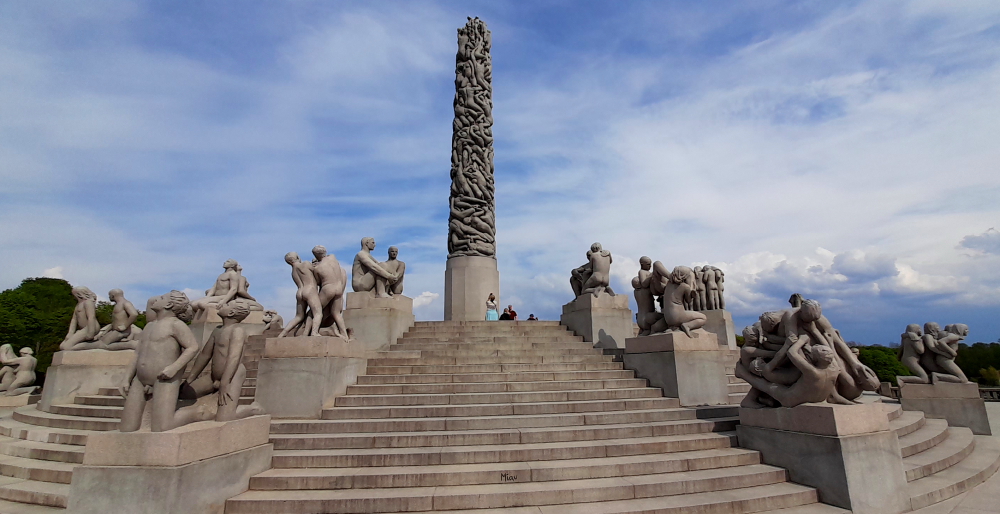
It is Frognerparken’s highest point, measures 17 meters and is surrounded by a spectacular circular staircase with 36 sculpture groups.
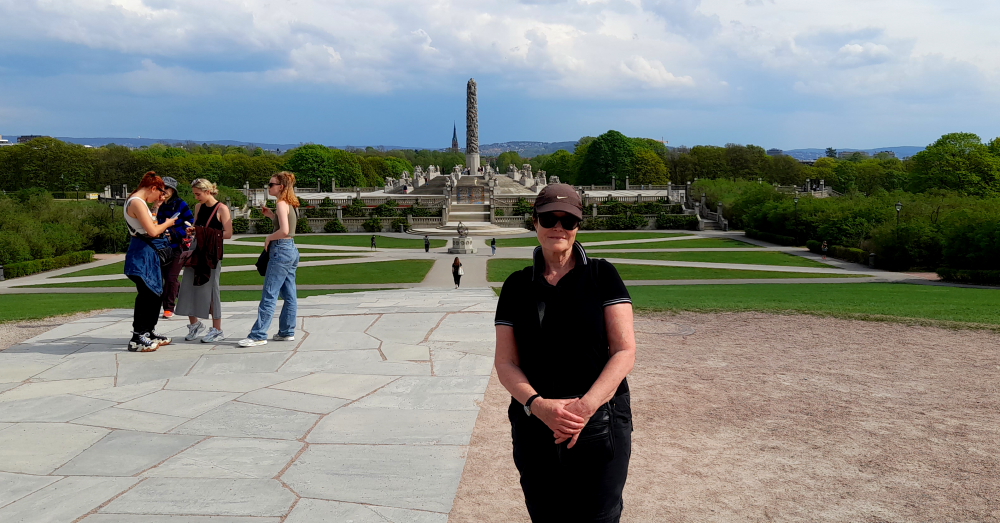
Vigeland also designed the park itself, which contains most of his art.
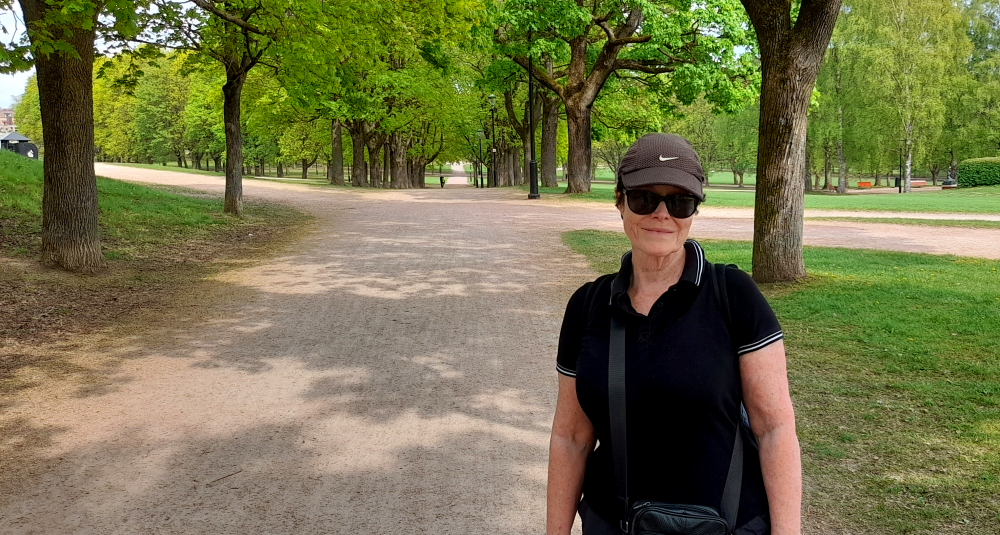
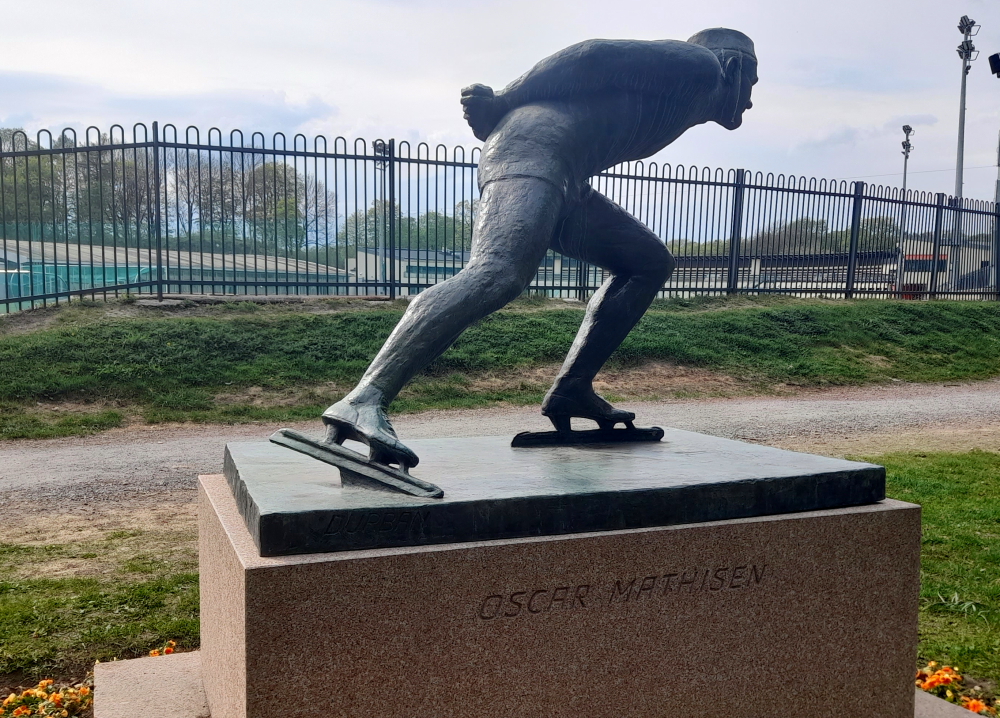
We walk out of the park and head back to the hotel via the suburb’s numerous streets. It looks like Vigelandparken isn’t the only place for bronze sculptures. Outside a stadium is one of Oscar Mathisen (1888-1954), Norwegian speed skater – clothed, I hasten to add!
Along the way we come across a Mexican Restaurant which we discover makes proper, classic Margaritas, so we return there for a simple, yet delicious dinner.
But that’s not before we hit the Hotel Bar for a beer and a Nordic vodka on ice.
 THE CONTINUING TRAVELS OF YOGI & BOO BOO