
1 July, 2023
This morning will be our last in Finland as we drive the 263 kms from Oulu, Finland to Lulea, Sweden. We depart at 10:55 am under an overcast sky, a cool 14 Deg. C and head north on the 4.
There are more wind farms here. Road construction chaos rules as the major highway is suddenly blocked off from time to time with diversions at right angles to obstructions and oncoming traffic left to its own devices. The usual moose fences and moose road signs but still a distinct lack of moose.
An hour into our journey it’s sunny and 19 Deg. C. At Kemi we start driving west.
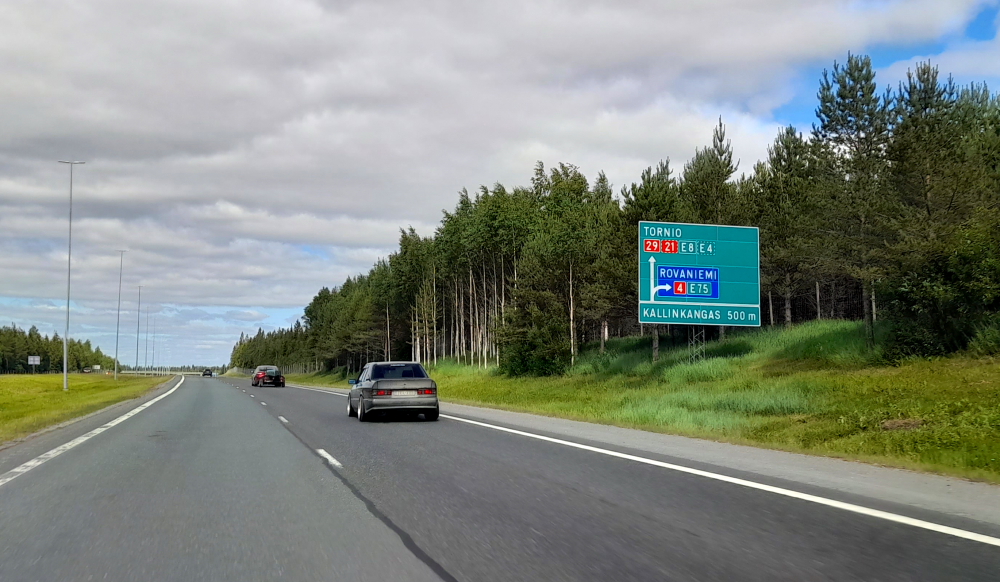
Soon a familiar name appears – Rovaniemi (of Santa Claus Village and Arctic Circle fame) – only 120 kms NE on the E75.
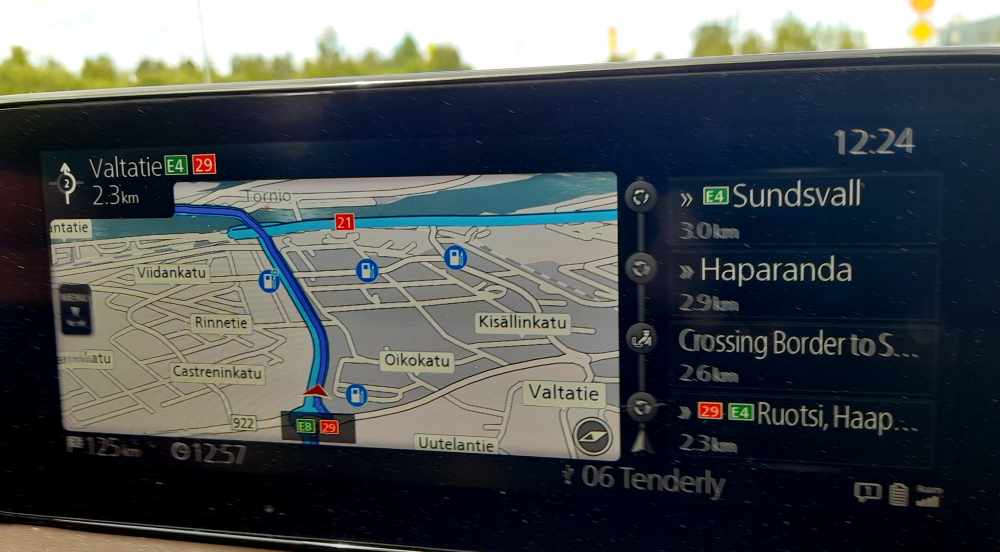
The Torne River at Haparanda is the Finland/Sweden border where we commence our drive in a southerly direction.
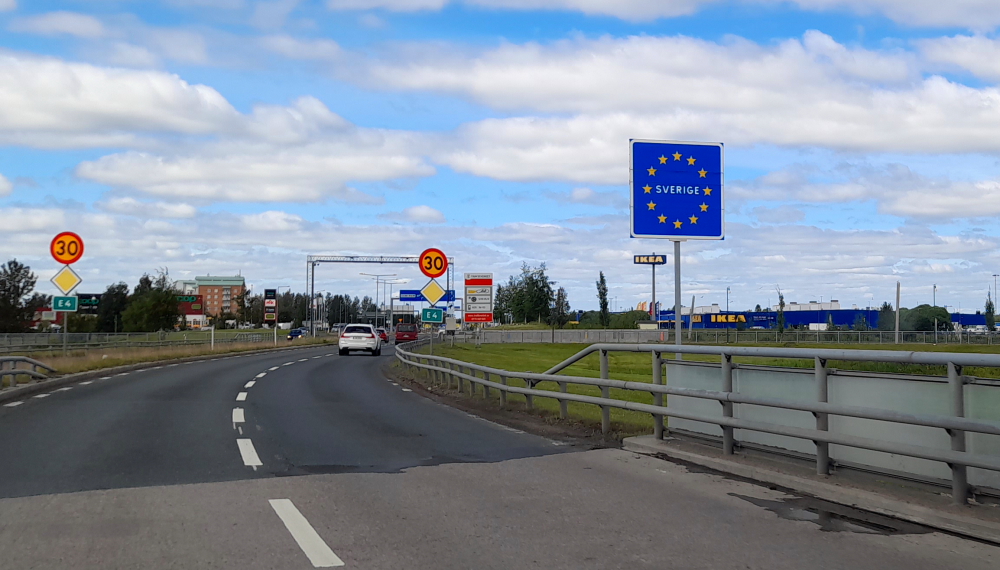
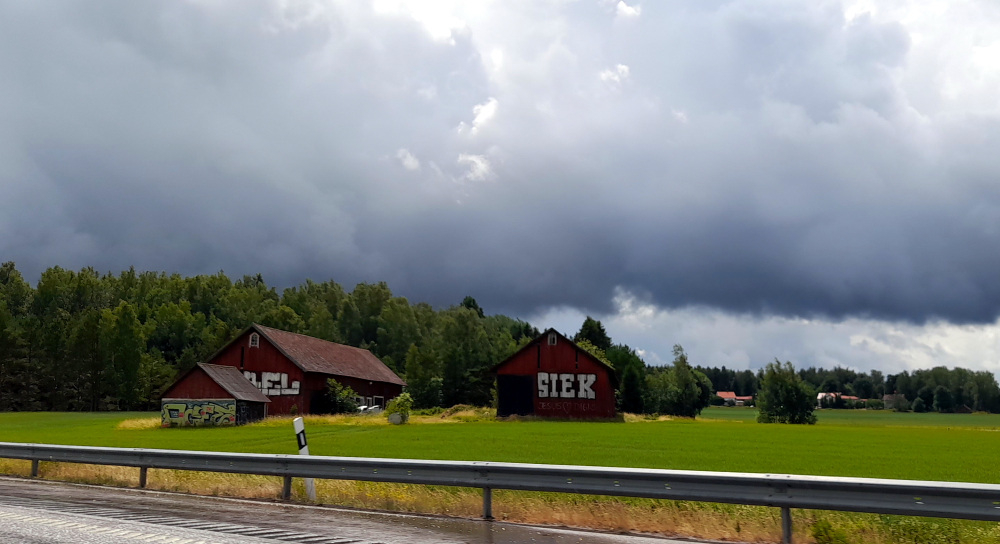
Where we are greeted by a sign welcoming us to Sweden – “Ikea” – oh, and the EU border sign, “Sverige”. And a different time zone – 1 hour behind.
One of the few “must things to see and do in Lulea” is Gammelstad which is 10 kms NW of Lulea and a short diversion.
Gammelstad, at the head of the Gulf of Bothnia, is the best-preserved example of a ‘church village’, a unique kind of village formerly found throughout northern Scandinavia. The earliest mention of Gammelstad Church Town is Christmas 1600. Of Sweden’s 71 original church towns, only 16 are left today, the majority have been reduced to remnants.
The church town was the obvious place for parishioners to meet. People converged here to attend High Mass and hours of devotion complying with their duty to attend church regularly, to attend markets, court sessions and parish meetings and to meet friends and acquaintances from other villages. Even today the church town custom survives. Three to four times a year parishioners are invited to a church weekend and during the traditional confirmation classes before mid-summer young people stay in the church cottages.
A thousand years ago Lulea district consisted of an archipelago where the sea level was ten times higher than today. The church hill of present-day Gammelstad was a small island at the mouth of the Lule river. During the 14th century the area became the centre of a parish stretching from the coast to the Norwegian mountains along the Kalix, Lule and Rane rivers.
After the treaty of Noteborg in 1323, Sweden and Russia disagreed about their northern border. To ensure the area the Swedish state entrusted the Lule river valley to burghers from Central Sweden. The church sent out priests to built simple wooden churches. 1339 was the first year church services were mentioned as having been held in Lulea Church.
In the 17th century the rule was applied more strictly that all trade should be centered on towns where it could be taxed. In 1621 the town of Lulea was founded on the site of the old marketplace. As early as 1649 it was noted that the harbour had become too shallow owing to land elevation after the ice age. The burghers of Lulea were forced to move their town nearer the coast establishing Lulea New Town (present-day Lulea) and Lulea Old Town (Gammelstad).
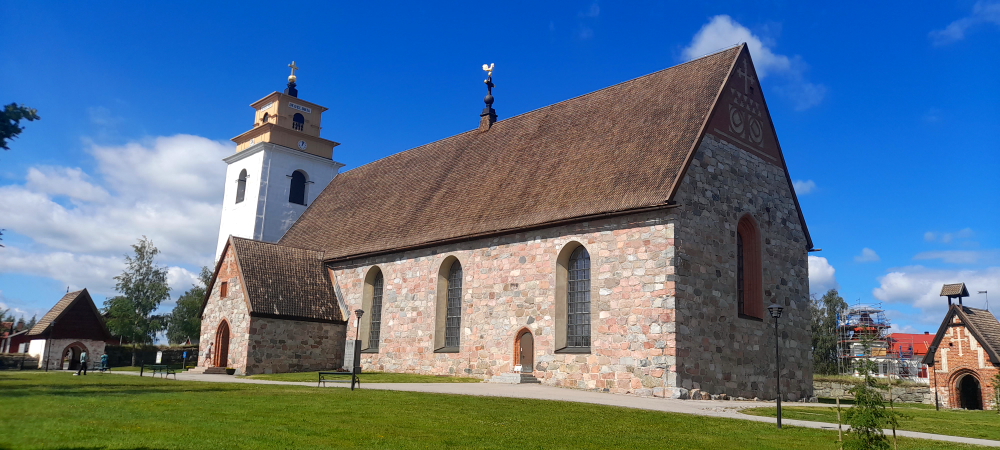
Nederlulea (Lower Lulea) church is the largest medieval church in Norrland. It was built during the 15th century and believed to be finished in 1492. The bell tower was built in1851 and replaced an older, wooden tower.
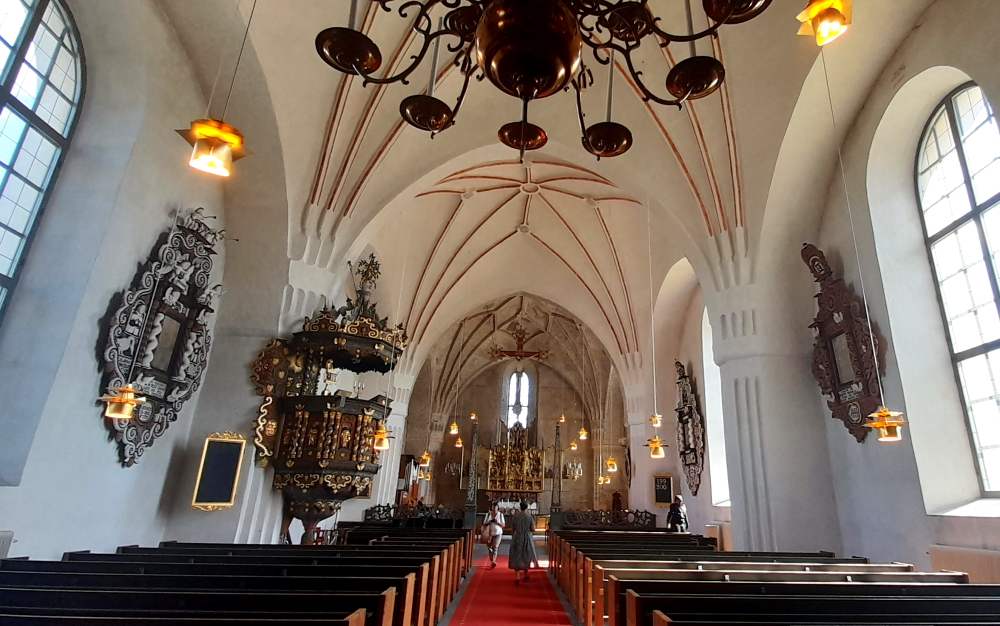
The church has a very rich interior and furnishings. The late-medieval frescos were by the school of Albertus Pictor. The altar screen, with wooden figures recounting the story of the Passion, is one of the country’s finest. Built in Antwerp c. 1520 and cost 900 silver marks, an enormous sum which the Lulea farmers were said to have paid in cash. The pulpit and commemorative plaques were made by Nils Jacobsson Fluur and date from the early 18th century.
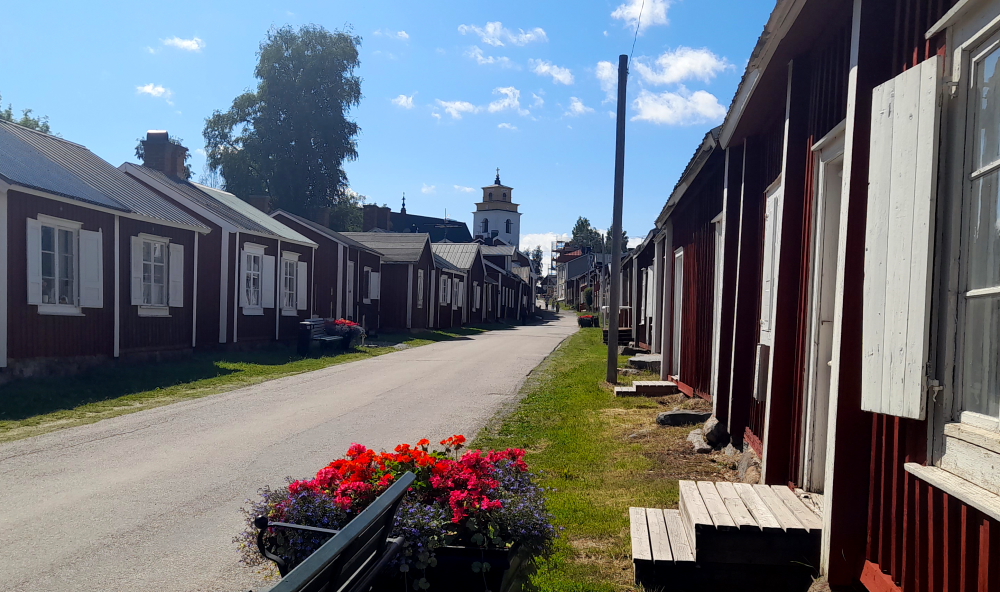
The 424 wooden houses, huddled round the early 15th-century stone church, were used only on Sundays and at religious festivals to house worshipers from the surrounding countryside who could not return home the same day because of the distance and difficult traveling conditions. It is now a UNESCO World Heritage Site.
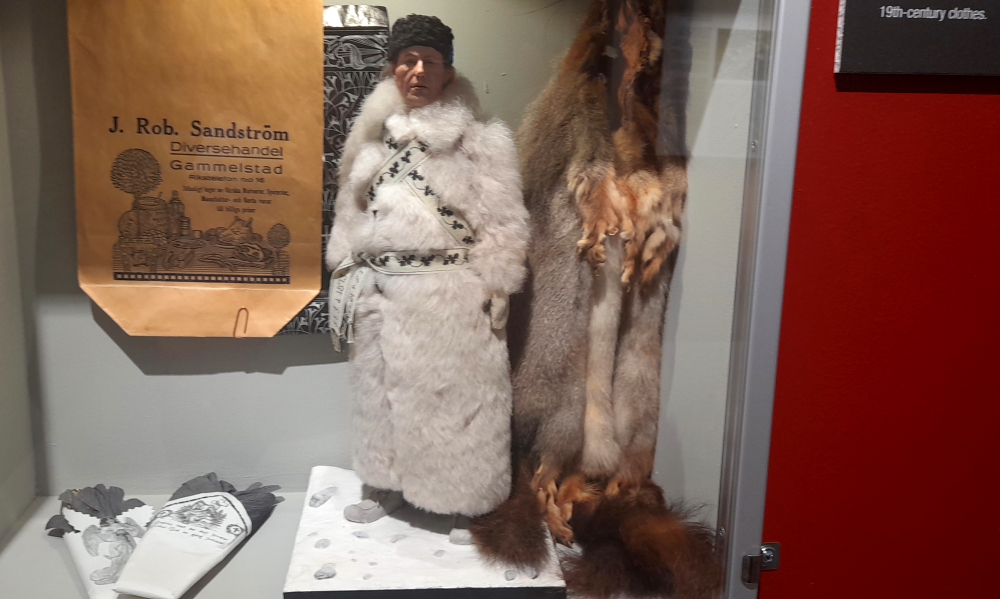
In the Visitors’ Centre is an exhibition about UNESCO sites in general and Gammelstad’s history in particular.
Gammelstad also has an open-air museum, Hagnan. which is down the main street from the church towards what was the harbour.
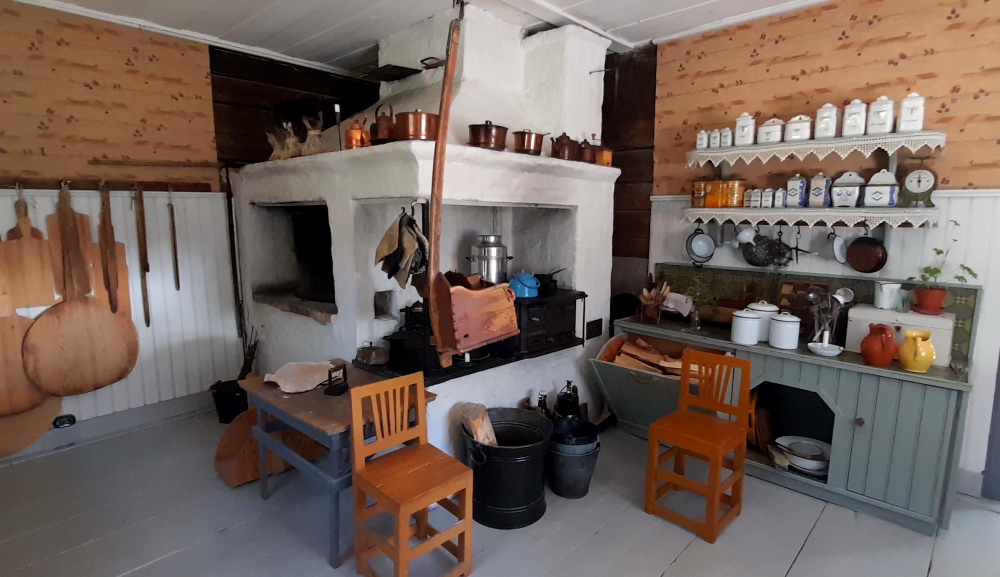
As it is a weekend and during school holidays the open-air museum has lots of families strolling around enjoying the sunshine.
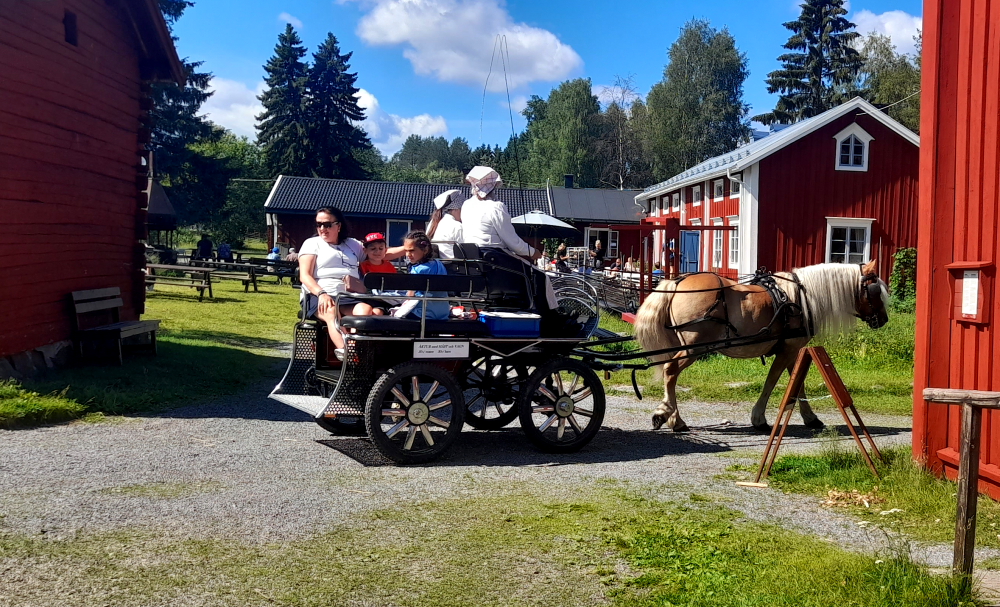
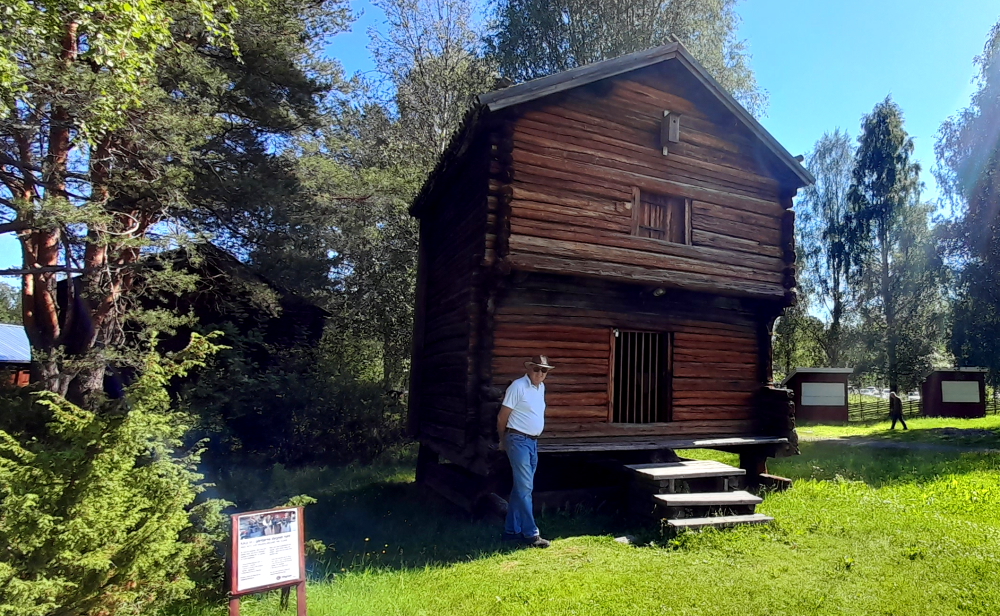
Various cottages, farm buildings and equipment comprise the museum.
We arrive at the hotel around 2:30 pm and make our way to our 3rd-floor room. So nice to have something of a water view instead of concrete and a cool breeze through the open windows.
After spending about half an hour fixing the hotel’s internet we walk next door-but-one to the “Bishops Arms” pub and, finally, some recognisable and edible food – Hunter’s Chicken.
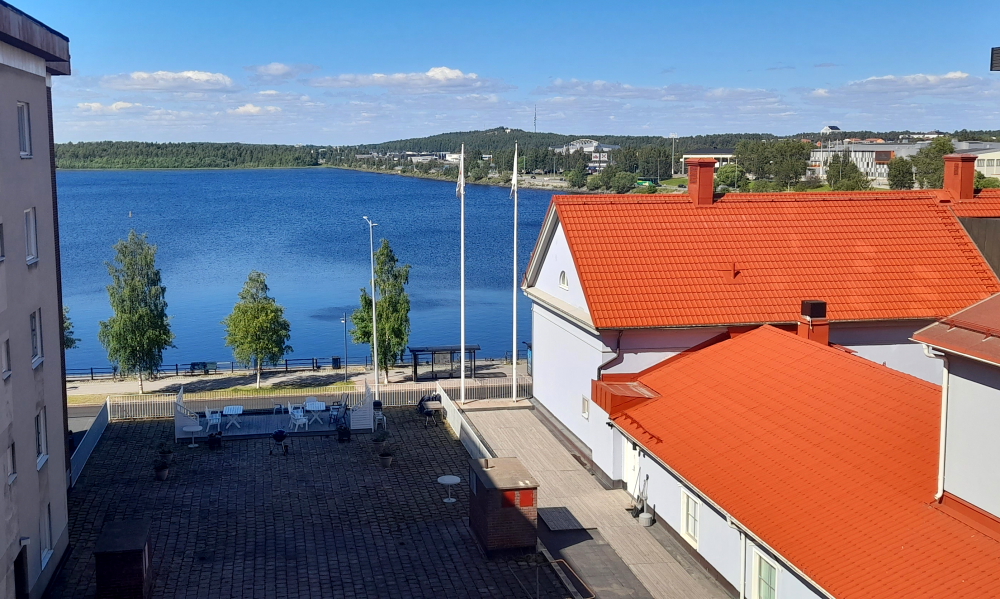
Time for a postprandial stroll along the waterfront in the sunshine.
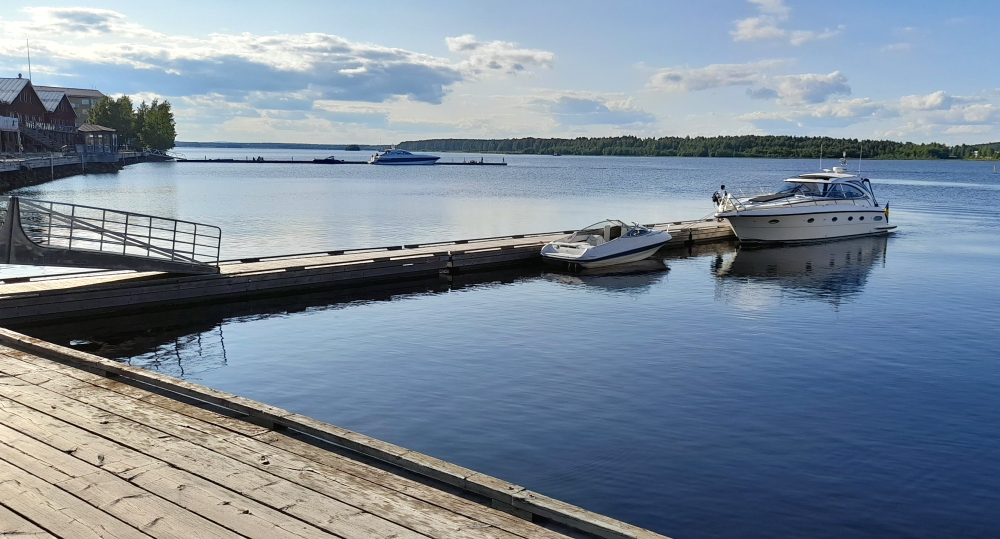
Although the waterway connects directly to the open sea the water has a tea colour that would indicate large quantities of snow melt water.
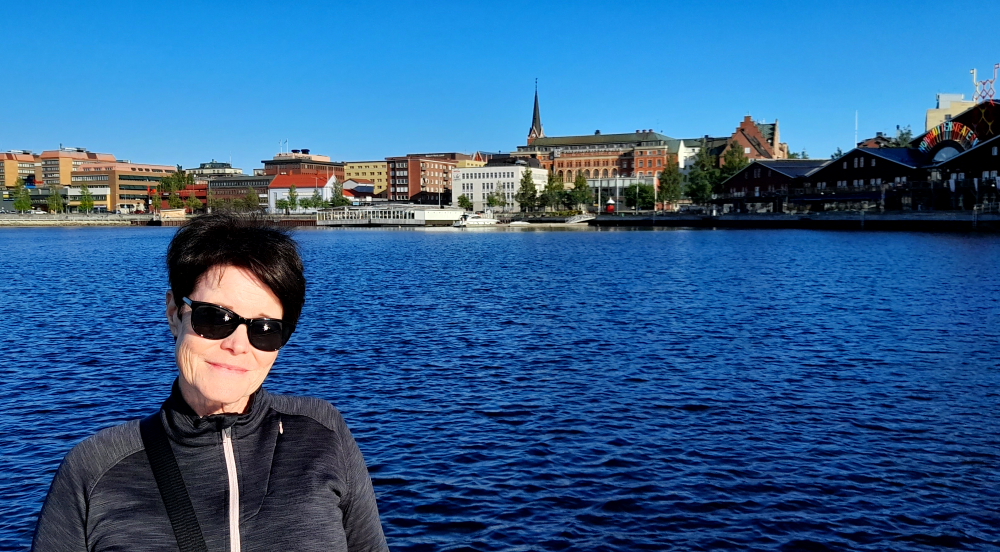
At 10:30 pm we hit the sack, only to be woken at 2:45 am by thumping music coming through the open window from the adjacent pub. Only another 15 minutes before they close… It appears that air conditioning hasn’t been invented in Sweden yet so closing the window is not an option.
2 July, 2023
Yesterday the weather forecast predicted rain for the next 2 days. Instead we wake to sunshine but a decidedly cooler day – 10 Deg C at 8:00 am. Which turns out to be 7:00 am as Lynn forgot to change the time back 1 hour last night when she set the alarm!
After a leisurely breakfast in a packed restaurant I take a stroll around the town while Lynn writes yesterday’s blog. We were thinking of driving to the other “must see/do” – Storforsen waterfall – but as it will be a 200 kms round-trip to see “Europe’s largest unregulated rapid…at 870 cu m/s…over a distance of 5 km dropping 82 meters 60meters of which are a single waterfall…” I decide I’d prefer to show Lynn the Schaffhausen waterfall when we get to Switzerland.
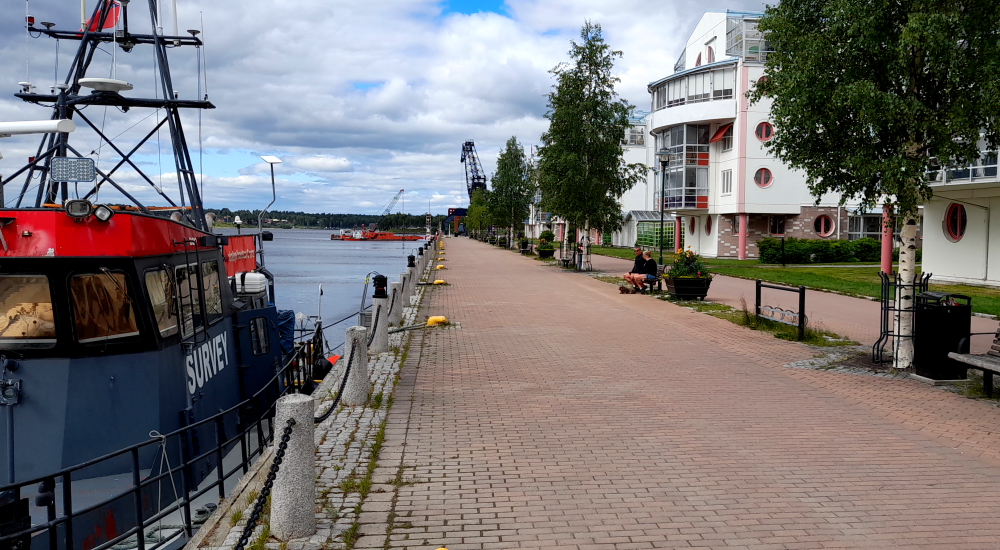
While out walking downtown Lulea I walk to the other waterfront. It is now converted to apartments but starting to look a little dated and in need of some serious maintenance.
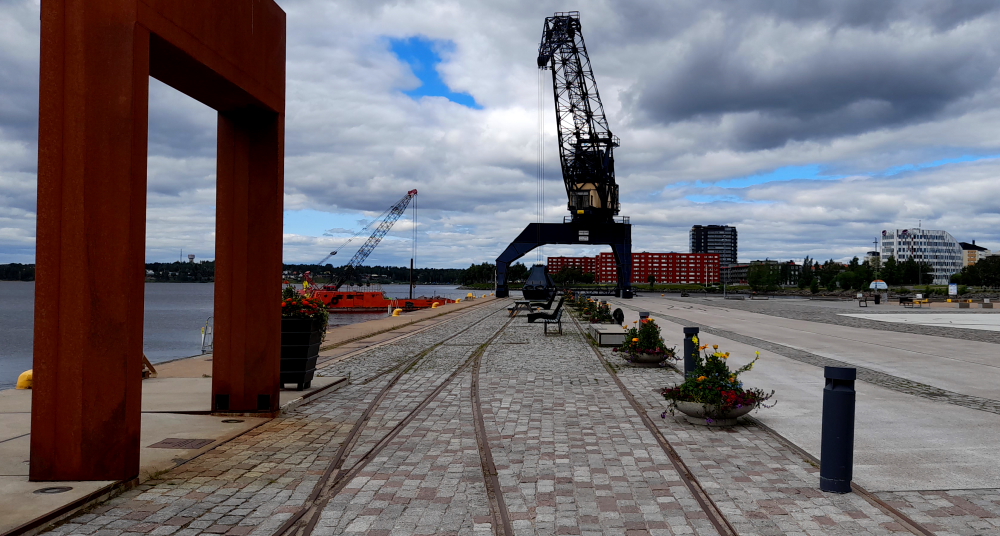
Most of the town is deserted and all the shops are closed. It’s probably because it’s Sunday but I walk up and down a number of streets and it appears that only the main pedestrian street on which our hotel is situated has any life.
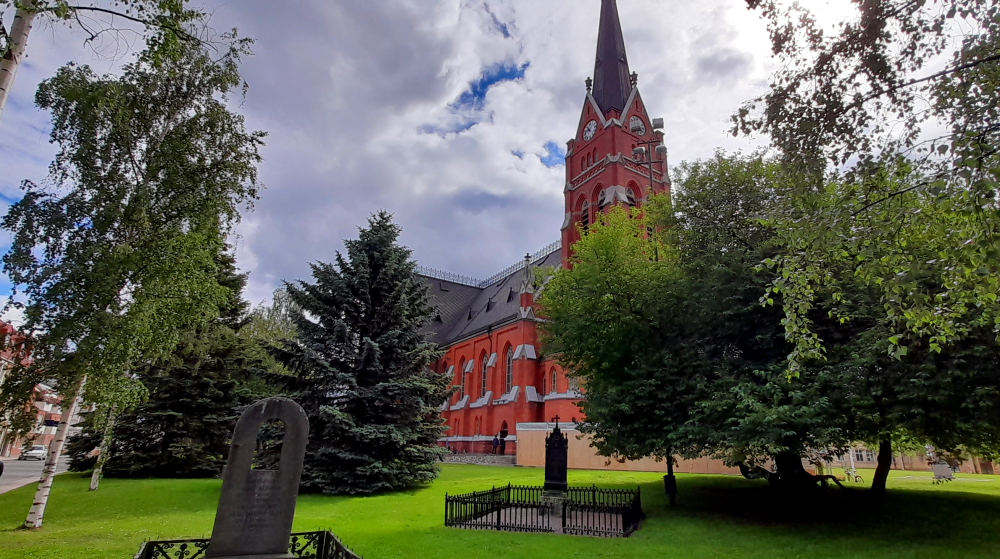
The buildings in the town streets are mostly cheaply-built apartment blocks all of which could use some form of maintenance. As per Lynn’s instructions I also walk to the highest point in the town to the local church to take a photo for her. The church is being restored and much of it is under scaffolding but I manage to get at least one reasonable photo.
We may struggle to find an open restaurant in downtown for dinner tonight but perhaps the Swedes don’t come out until late on a Sunday.
As there is little else to do in town today we’ll spend the increasingly overcast and windy day making more accommodation bookings for the new year.
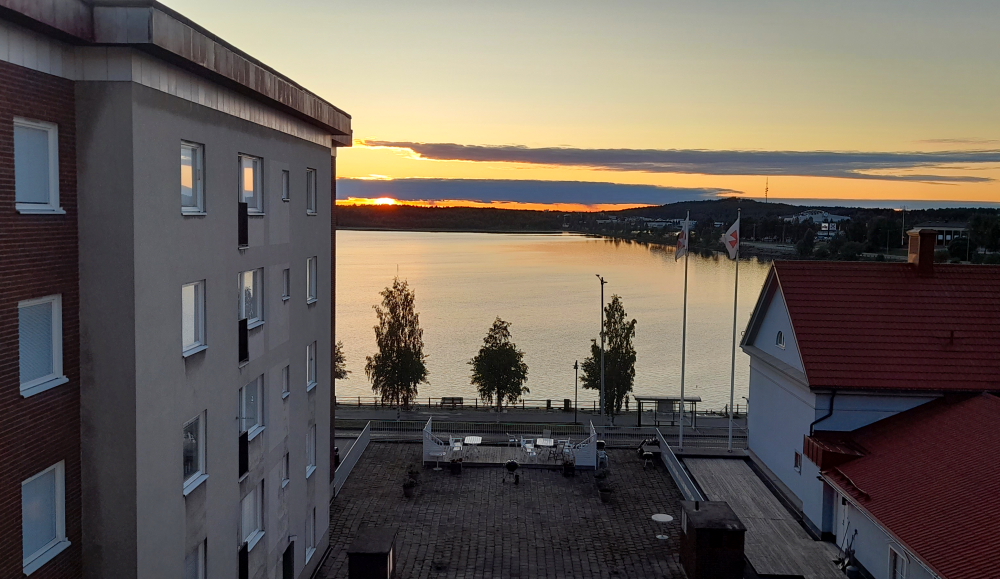
We are far enough south now that the sun actually sets for a couple of hours. At about 11:30 pm Lynn takes a photo of the nearly midnight sun. I just wanted to get to sleep before Lynn wakes me up at some ridiculous early hour (i.e. pre-8 am).
3 July, 2023
We are now officially heading south close to the Swedish east coast. We chose this road vs the mid-Sweden mountain road as we thought we might get some views of the Gulf of Bothnia vs more forests on the mountain road.
Wrong. Except for the occasional bridge and inlet view it is nothing but more forests and badly-designed intersections on the highway.
Driving on the main country highways in Sweden is a very frustrating exercise. The highway is a total of three lanes. Two in one direction and one in the other (usually divided by a steel guard rail). The lanes swap regularly from a one/two-lane combinations in each direction that moves OK but the swaps are too short for truly meaningful overtaking without speeding to get the job done before the two lanes revert back to one. To make things worse the highway speed limits suddenly change from 110 kph to 80 kph (with speed cameras within 100 meters of the speed change) for minor road intersections. Cruise control usage is almost impossible. The design of the intersections don’t allow for entry or exit without the highway coming to an almost complete stop if a vehicle wants to exit or enter the freeway.
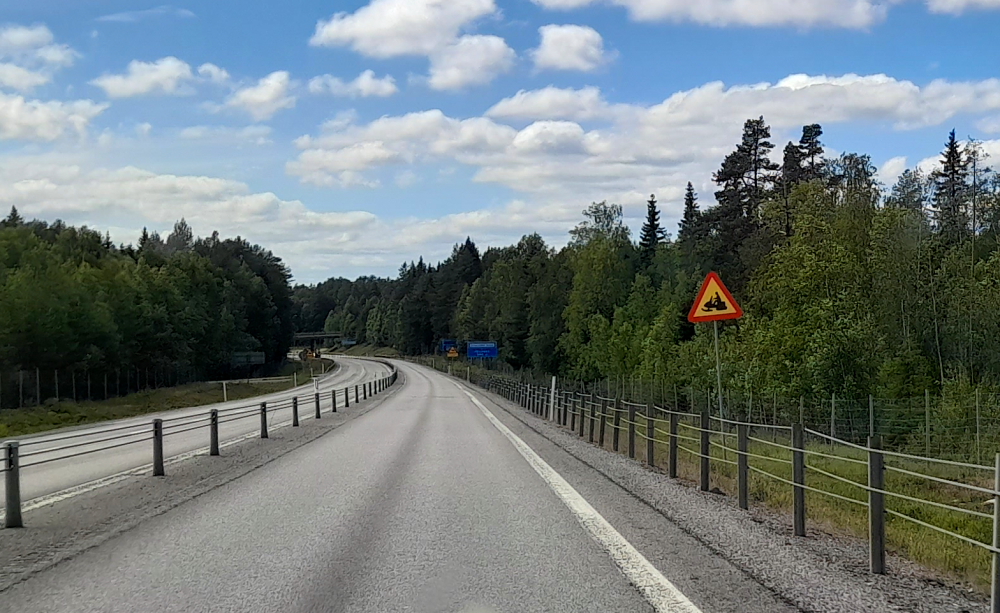
It is impossible to drive efficiently as you are always accelerating hard to get up to 110 kph or getting overtaking done or braking hard to slow for the speed cameras from 110 kph down to 80 or 60 kph within 100 meters or less.
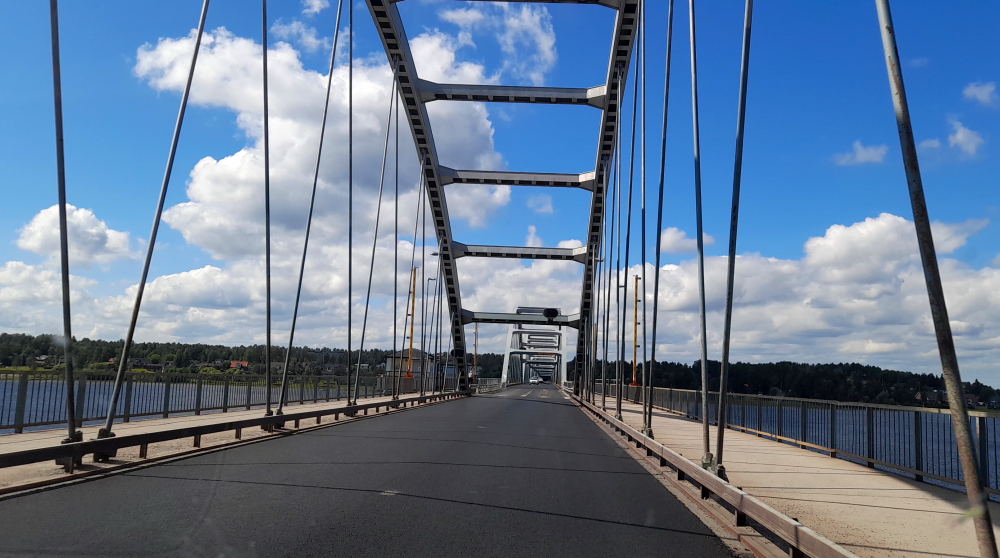
The water views that we do get are usually blocked by bridge guard rails so Lynn has some very good photos of guard rails, if anyone is interested :).
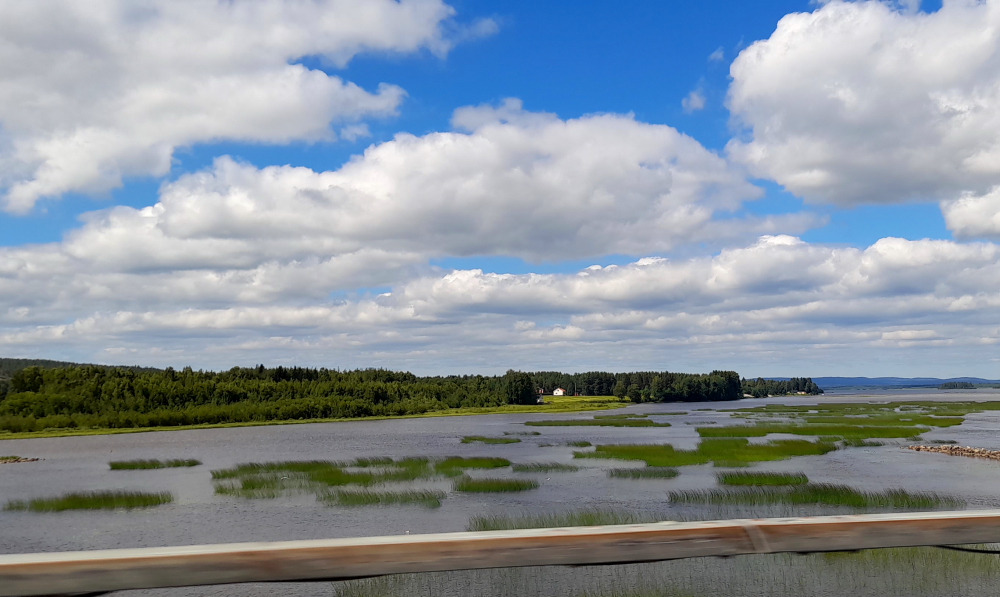
We also witness the ultimate mobile chicane – a tractor towing a caravan!
About 68 kms (Gumboda) from our next stop at Umea the highway grinds to a complete stop. We sit in stop/start traffic for about 15 minutes traveling at a rate of about 3 kph on average. Obviously there is a major issue somewhere between us and Umea.
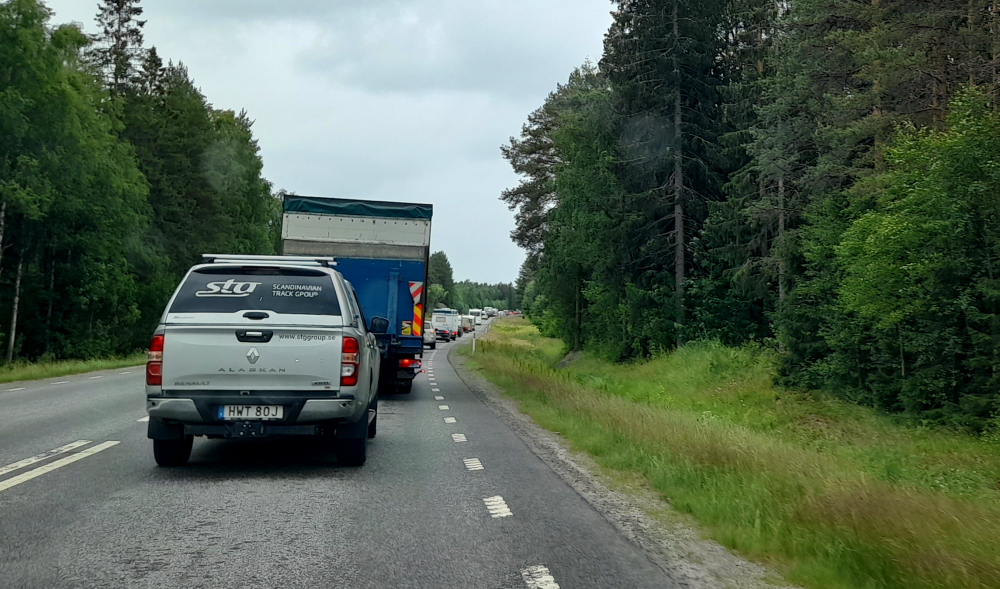
Lynn checks her MapsMe and finds a possible side road that may get us around the traffic jam. It is a dirt road but in reasonable condition even though it is now starting to rain. It seems that a few drivers either know of the bypass or also have a GPS map so about 5 of us take the side road (including one of the vast numbers of caravans). The side road is a good call. The dirt road brings us out right at the cause of the issue. Highway road works have cut the main highway and small columns of vehicles are being escorted in one direction at a time along the highway and a major bypass is in place that takes us about 8kms around the back roads. Luckily our short cut brings us to the start of the un-escorted bypass so we have avoided the 10 km-long traffic jam.
We arrive at our hotel about 15 minutes later than planned but far sooner than if we had sat in the traffic jam. It is now raining quite heavily as we check in and locate our parking space for the next two days. After driving in Sweden we seriously need a drink. We unpack, don our wet weather gear and head out to find a supermarket for chocolate and wine.
The supermarket doesn’t sell wine (just beer) and it seems that, like Norway, the Government controls the sale of wine and spirits but the supermarket checkout guy tells us that a Government bottle shop is in the next block.
We find the bottle shop and discover that wine prices are very reasonable. We can buy a good, 1 litre bottle of Italian DOCG Chianti for about A$14. Why have we been buying a small glass of shit red wine with dinner for over A$16? Are the pubs and restaurants ripping their customers off or is there additional tax for serving wine at restaurants? Either way we will be drinking water at restaurants for the remainder of our Scandinavian trip and having a big glass or two before we go to dinner.
Even Australian wine at the bottle shop is reasonably priced but we are taken aback by some of the strange Australian wine offerings. None of which would ever be found or considered in Oz.
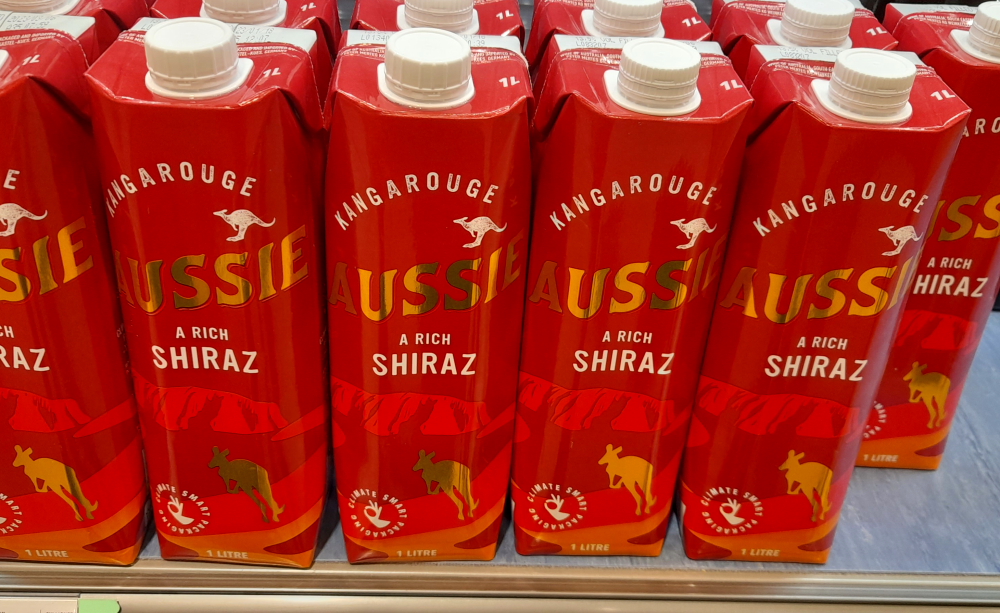
What marketing idiot would degrade good Australian wine by calling it Kangarouge? There is no way that we would be seen buying or drinking what must be described as Kangaroo piss!
4 July, 2023
It’s about 11 Deg C and raining outside today so after a slow breakfast I catch up on the blog. The sound of fireworks punctuate the sound of the rain and cars driving through puddles on the street below. Ah, yes. It’s American Independence Day and there must be a few Yanks in town. I don’t understand why they would let off their fireworks during the daylight but then I remember that there is only a couple of hours of darkness here and they are very early in the morning (what would then be 5 July).
We are hoping that the rain eases off this afternoon so that we can go for a walk to check out the town. Our walk to the supermarket and bottle shop yesterday didn’t unearth any must-see parts of the town nor did the drive into town. Perhaps things might be prettier down by the river?
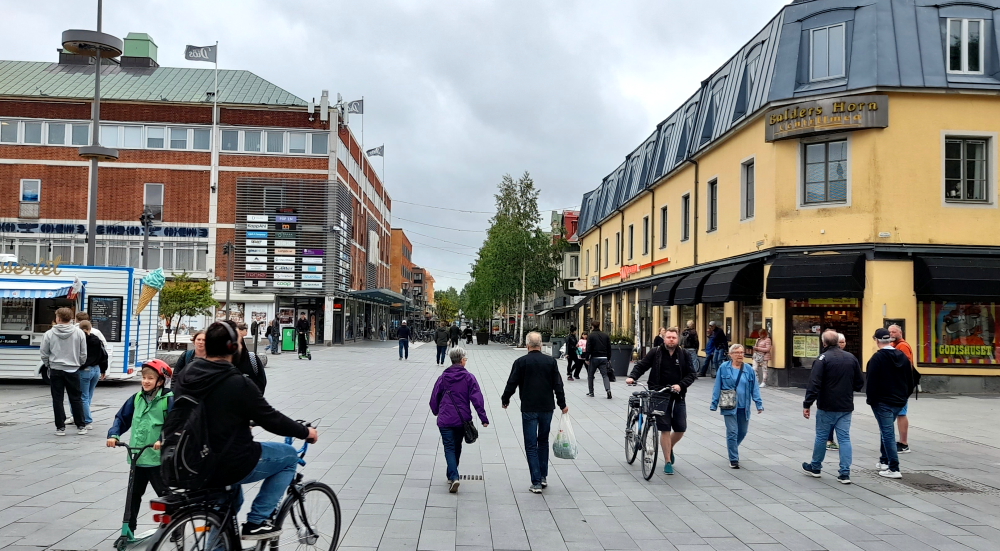
We meander through the streets heading towards the river and Vaven – a new build that straddles the street of Vastra Strandgatan and is the centre of culture for Umea.
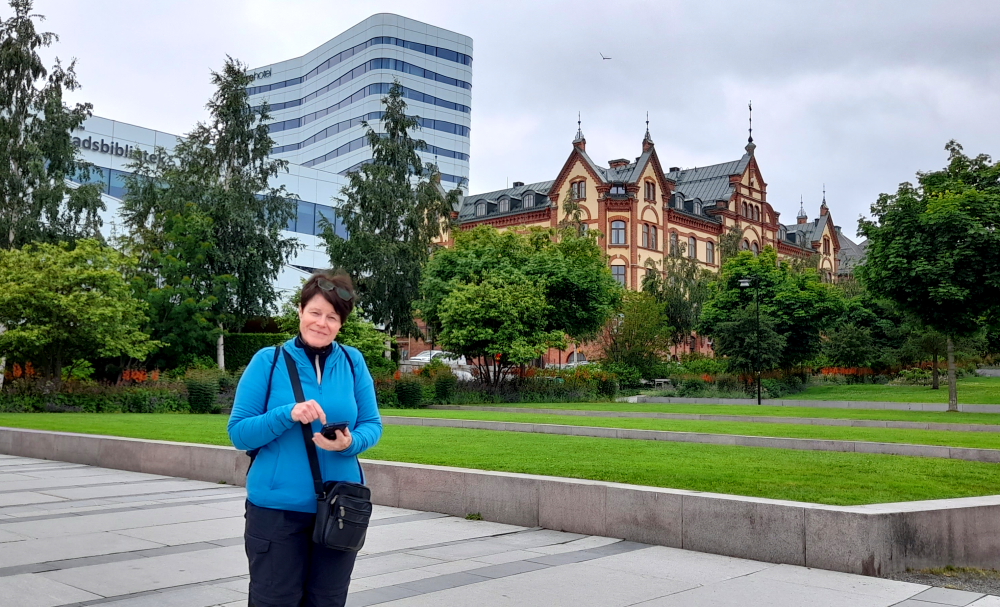
Vaven overlooks the Ume River that has parkland and bike/walking paths along its foreshore.
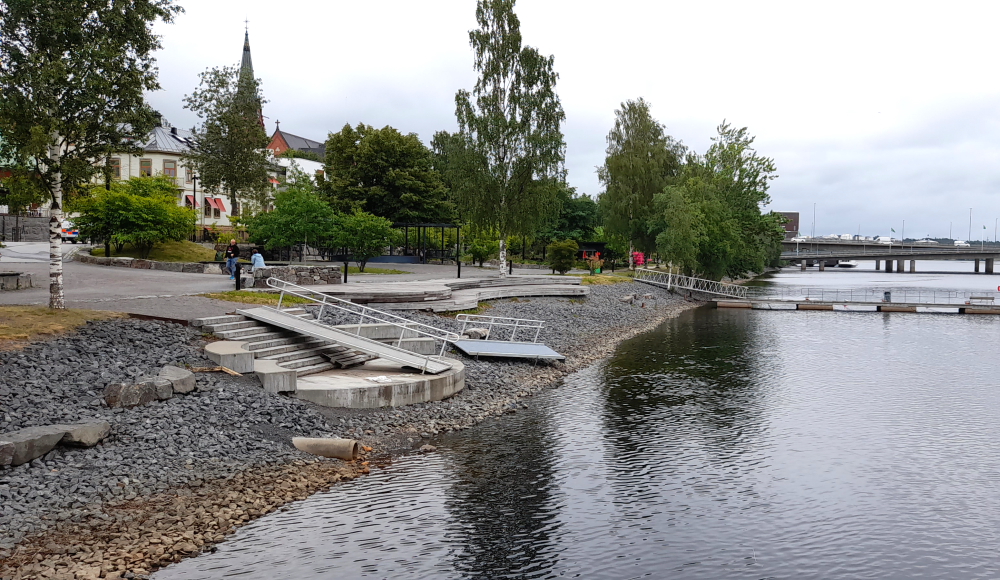
Across the river are some nice wooden residences in stark contrast to some of the concrete monstrosities/blocks of units this side which are interspersed with some charming period buildings. I comment that Swedish Architects have the design tastes of 1970s Architects.
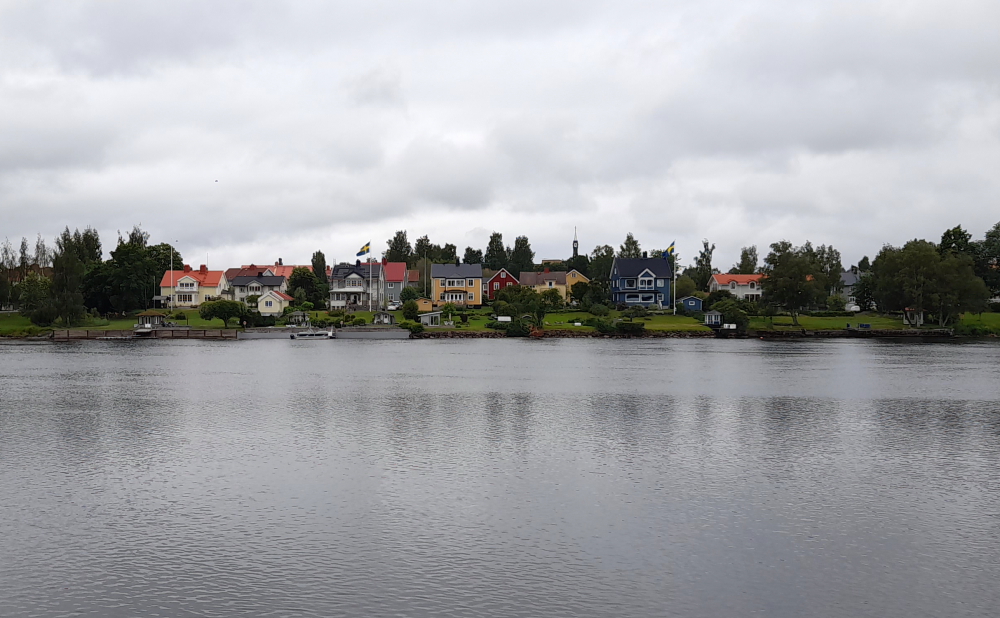
Some interesting city planning decisions – like this random, chunky, wooden viewing platform which protrudes into the river.
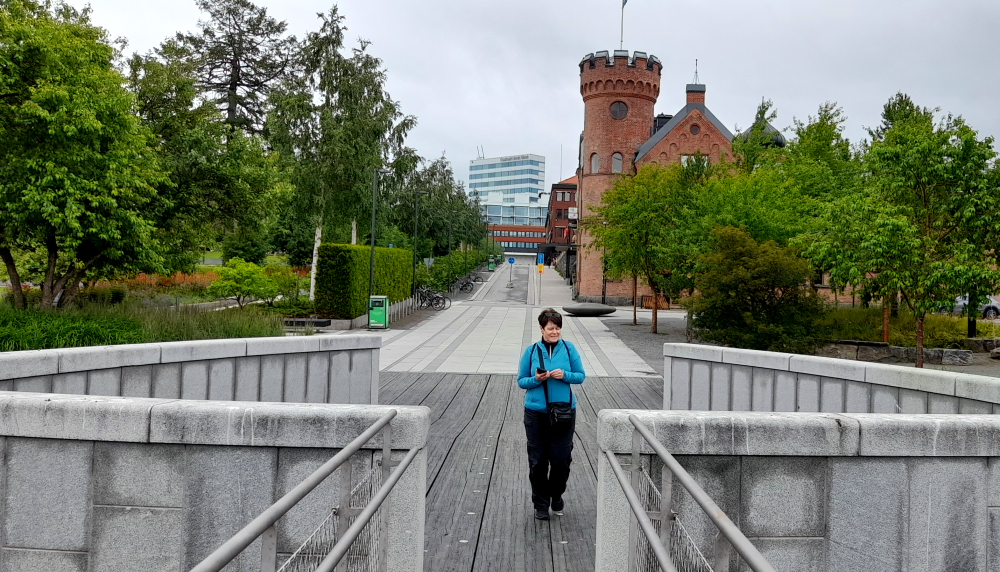
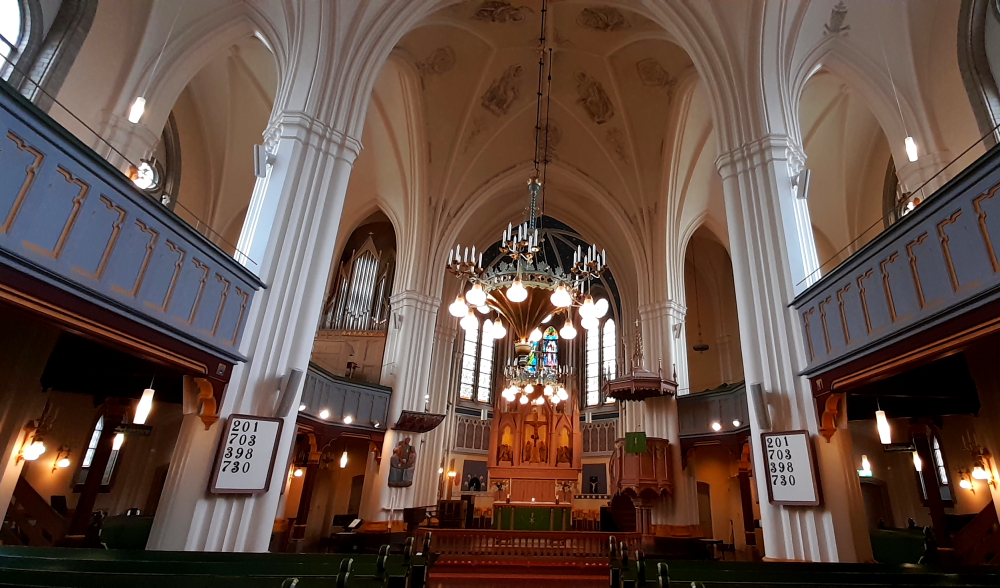
Umea City Church – naturally, Lynn wants a quick peek at the interior but she’s collared by a volunteer guide and remains inside for longer than she intends. But, she did learn that the church was destroyed in 1770 by the Russian Army (typical!) and again following the Umea city fire of 1888 which destroyed most of the town (of course!).
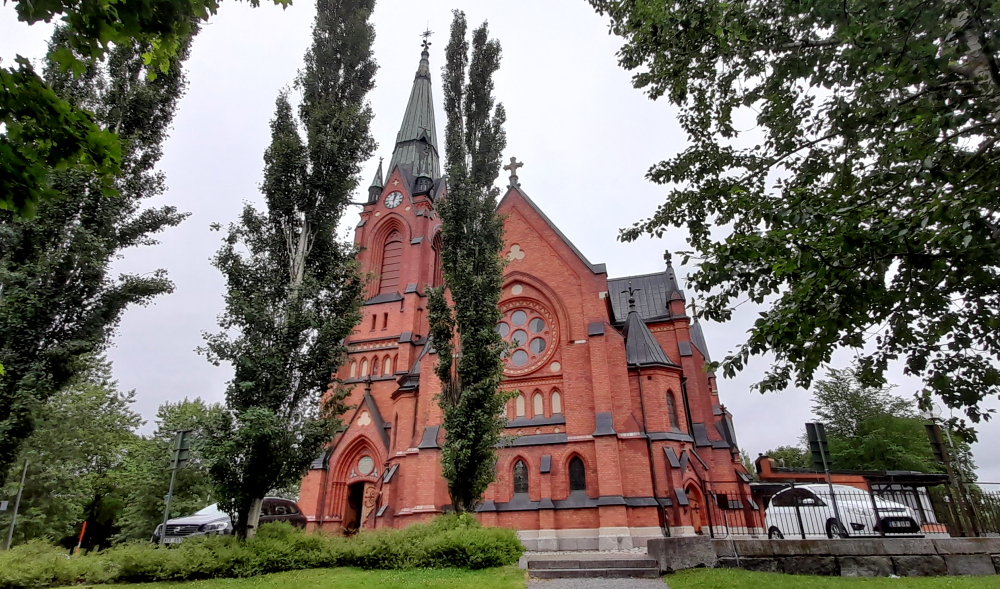
The existing new-gothic church was designed by the city architect Frederik Olaus Lindstrom and built in brick with a stone foundation. The church was constructed between 1892 and 1894, and it is the third of a series of churches on the same site, the first erected in the 1600’s.
The Radhuset – Town Hall – was built after the fire in 1888. It was erected on the site where the previous town hall (built in the 17th century) had been located and was completed in 1890. Again, the architect was Fredrik Olaus Lindstrom from Stockholm who was inspired by the Dutch Renaissance style.
It appears that no proper Architects have built anything here since.
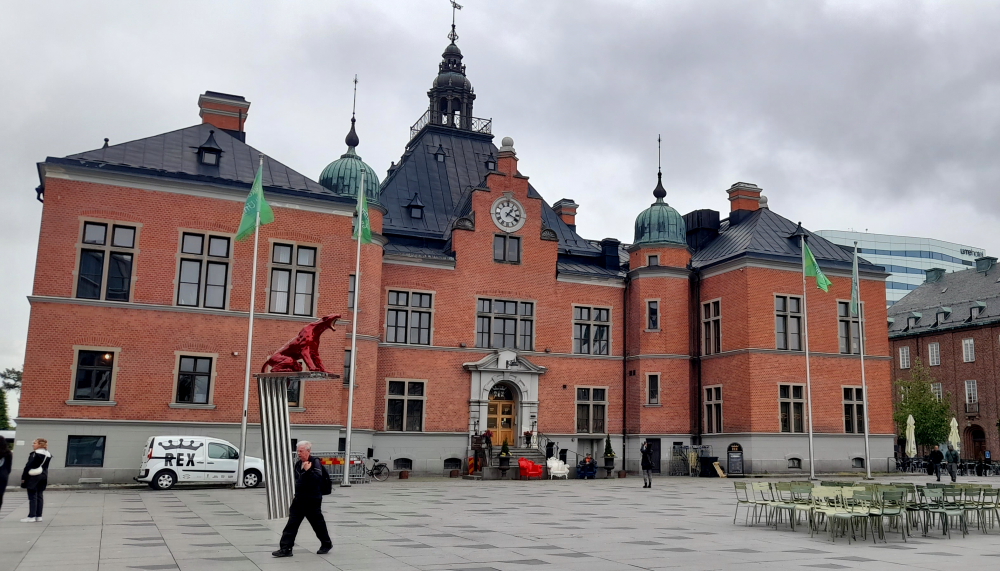
In the new urban area development plan Lindström gave the town hall a prominent location next to the river bank, with the main facade facing south over the harbour on the Ume River (which was still navigable at the time, providing the city’s main point of access) and an esplanade to the north. A park was also built to give the town hall a monumental position.
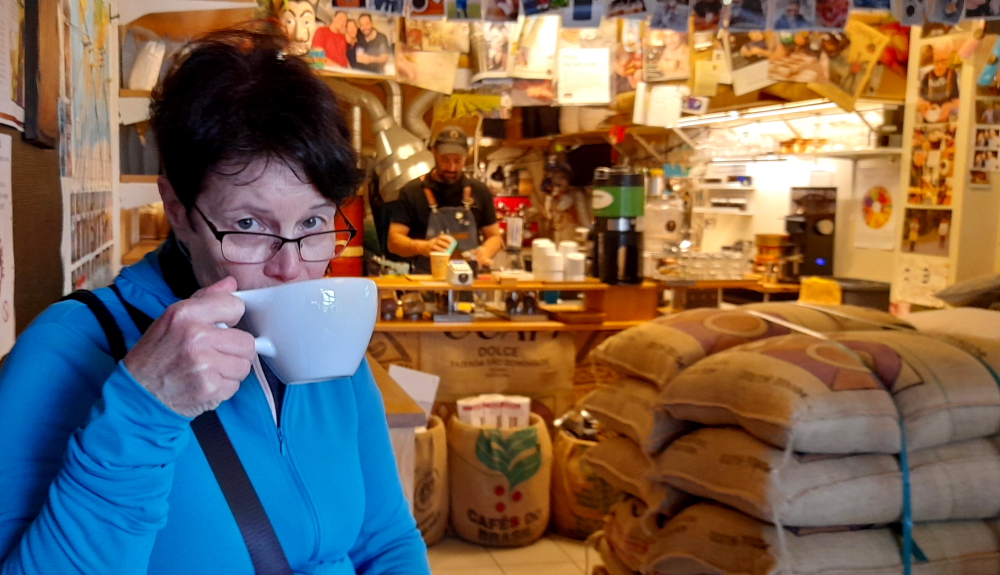
Given the cool weather and threatening rain we decide it’s time for a hot beverage and come across “Costas of Sweden” – not a cafe, but a roasterie, we are reminded by signs inside. Not sure the proprietor is too impressed with Lynn’s order for a hot chocolate, but it is on the board, and they don’t seem to offer “koffeinfri” coffee. I’m not too impressed with the AUD8 price tag per beverage.
5 July, 2023
An overcast day, threatening rain, as we depart Umea at 10:30 am for Sundsvall, some 265 kms SW and around a 3 hour drive. Half an hour later it’s 15 Deg. C with breaking sunshine. And Volvos are everywhere, even the tractors!
Hoga Kusten (High Coast) is a UNESCO Heritage site which starts at Ornskoldsvik and ends some 130 kms south at Hornoberget. It boasts the highest coastline, in granite, in the world at approx. 286m above sea level. Due to post-glacial land uplift, the land continues to rise at a rate of c. 8mm/year.
At Ornskoldsvik we take a left off the E4 at a roundabout to drive to Nyanget beach, in the hope of seeing some of these famous granite cliffs, and are somewhat amused by the Varvsberget ski jump which, in summer, appears to end in the Circle K forecourt.
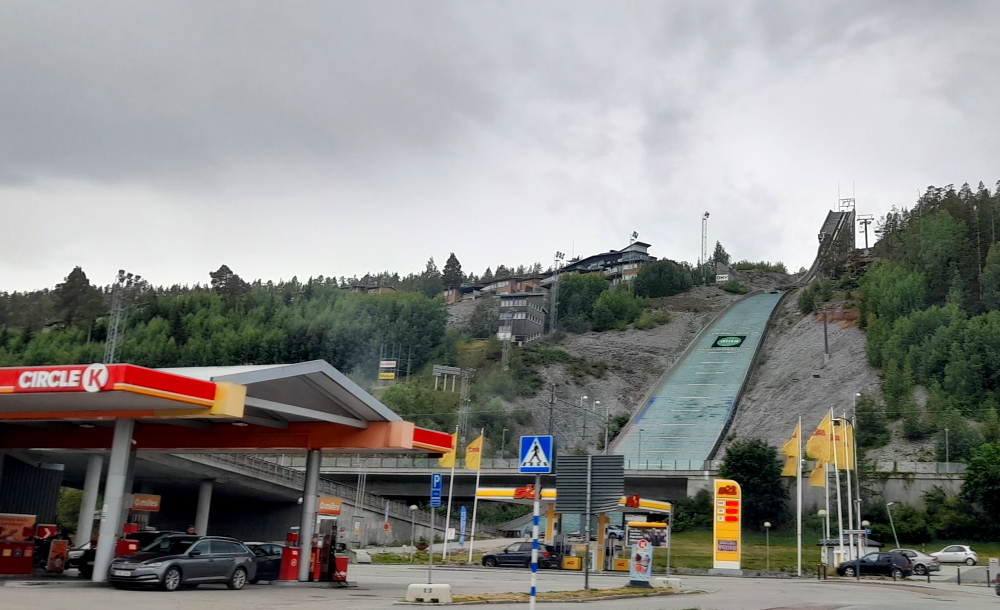
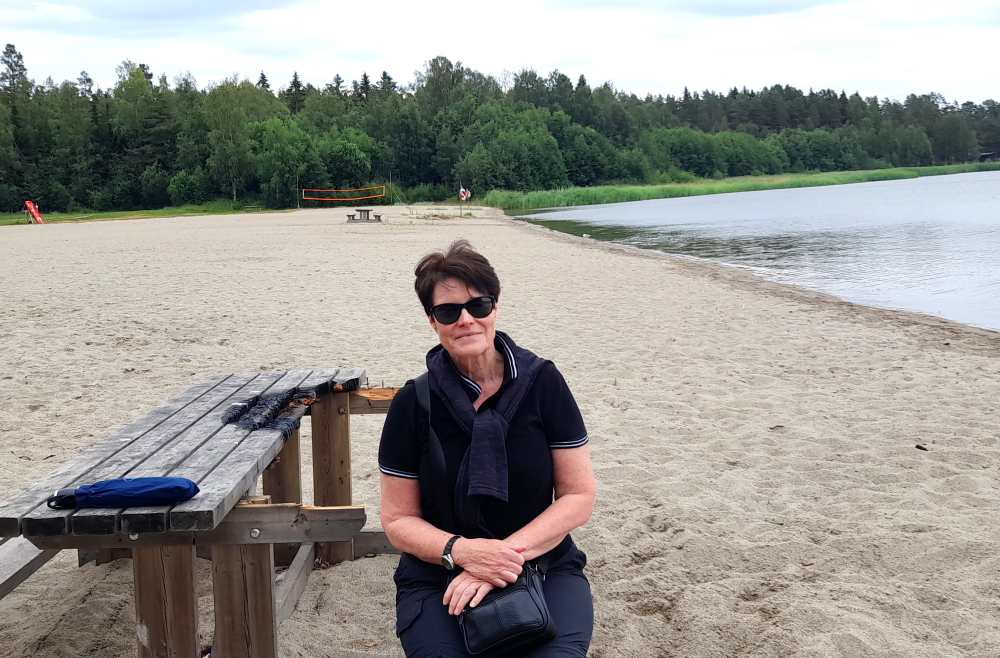
Rather than seeing any spectacular granite cliffs, we instead find a rather sad-looking and unloved ‘beach’ totally devoid of people on this ‘summer’s’ day. Someone has even tried to set fire to the picnic table!
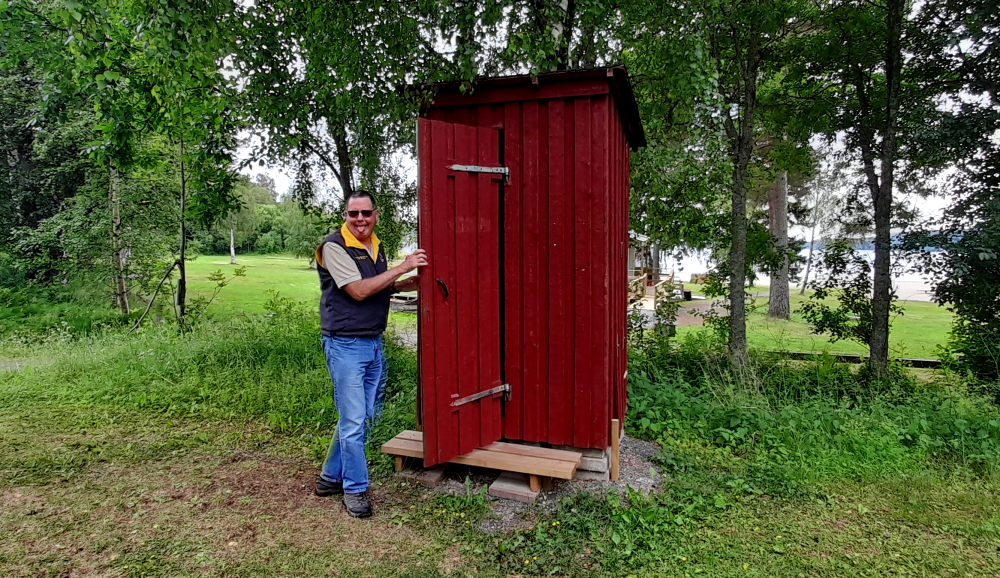
At least the loos ware being fixed up but means that we have to find somewhere else. Fortunately, near the car park, is a good, old-fashioned outdoor dunny.
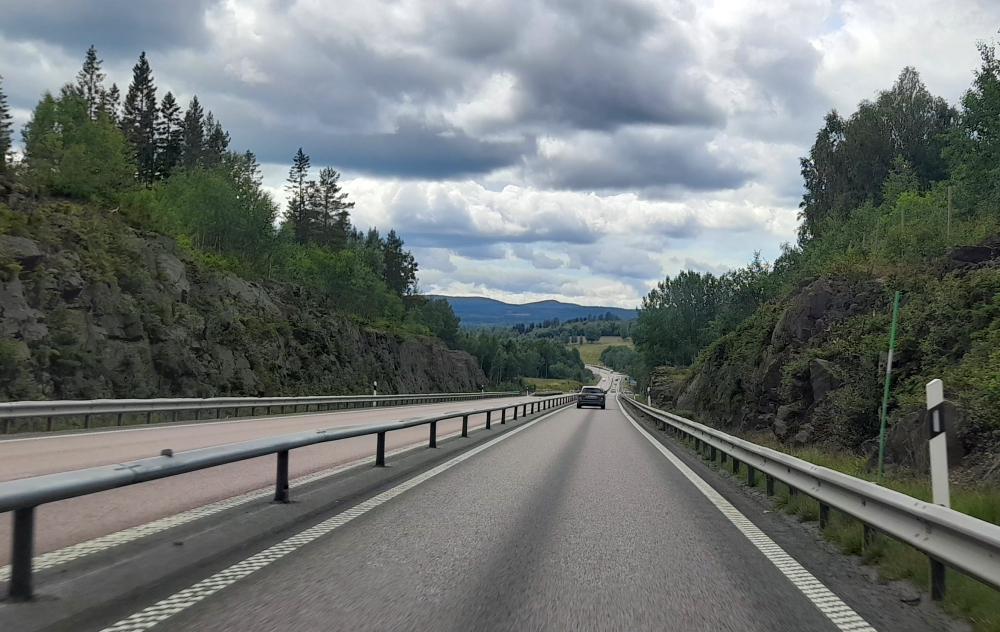
In a subtle way the landscape has been changing since we left Umea, then becomes more pronounced with hills and rocks replacing the flat, forest-clad land to date.
Then, some 40 kms from the start of the High Coast, we come across one of its granite cliffs, Skuleberget, on the edge of the E4.
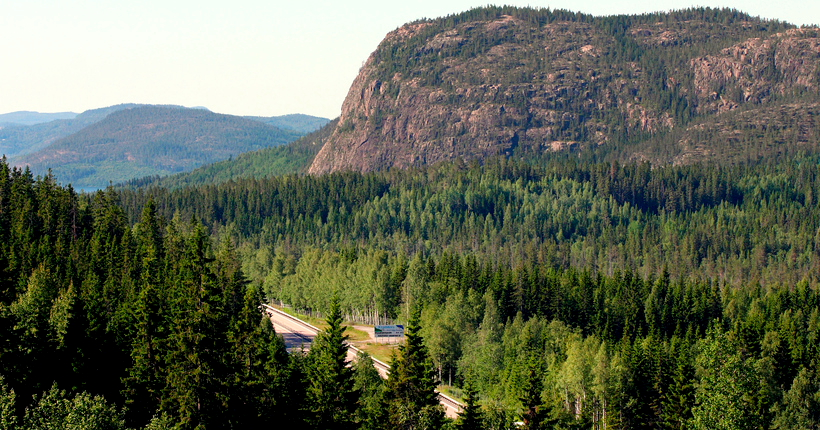
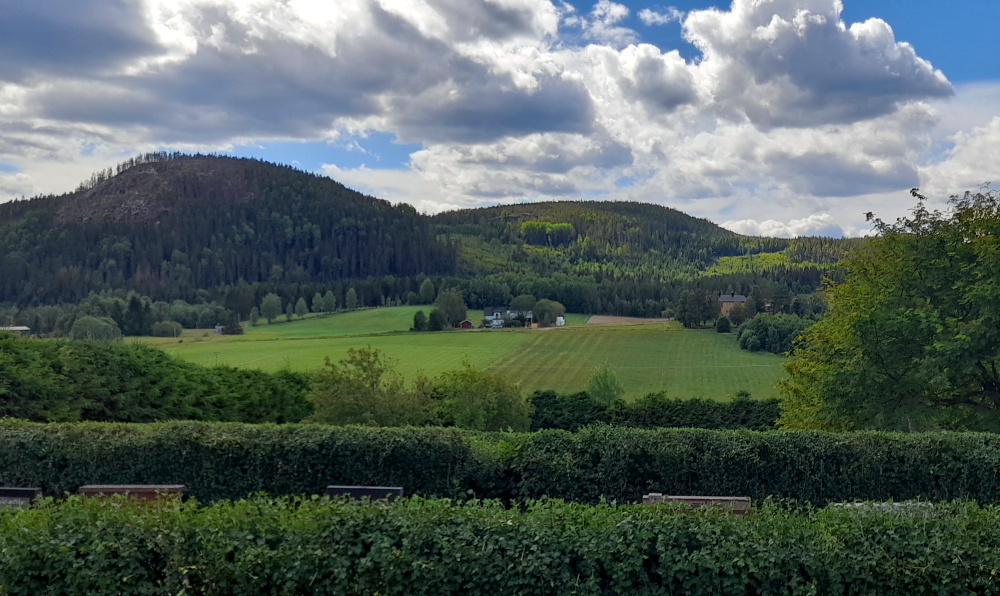
Before we drive to our accommodation in Sundsvall we take a small diversion to the village of Ljustorp, its valley described as being “idyllic” and is known for its “scenery”.
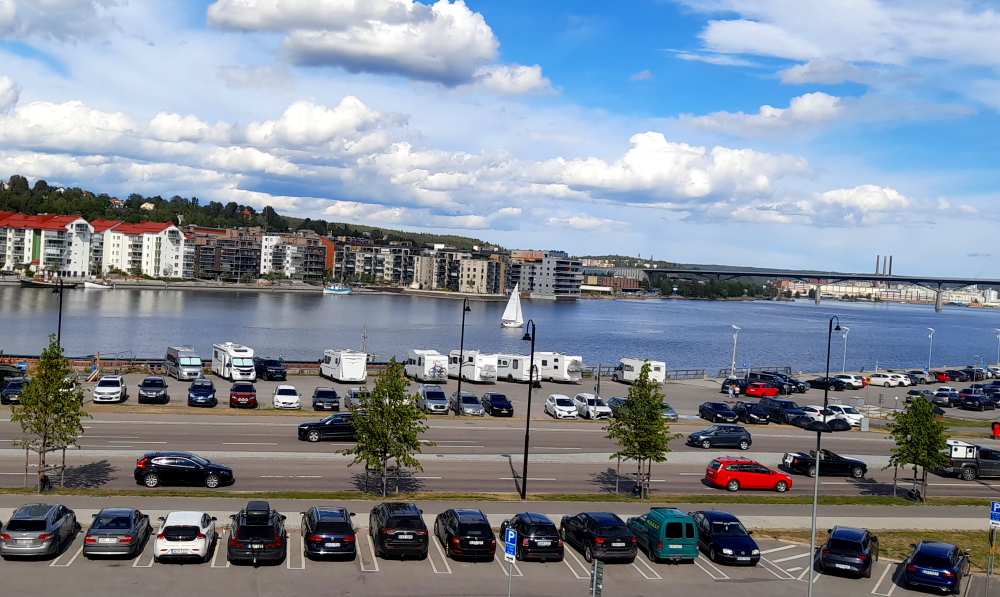
Right on 3:00 pm we arrive at the hotel, only to find that the adjacent car park is full. By the time we check in with our bags and go to move the car a space has become available so I park and pay till 9:30 am tomorrow.
After making enquiries at Reception we discover that this Best Western Hotel does, in fact, have a guest laundry room so we get a load on before we head to the hotel restaurant for dinner to take advantage of the SEK125 voucher they’ve given us.
Next load on then we venture out to explore the town which is behind us.
Lynn directs us to our first stop in the next block on Storgatan which is the Elite Hotel Knaust.
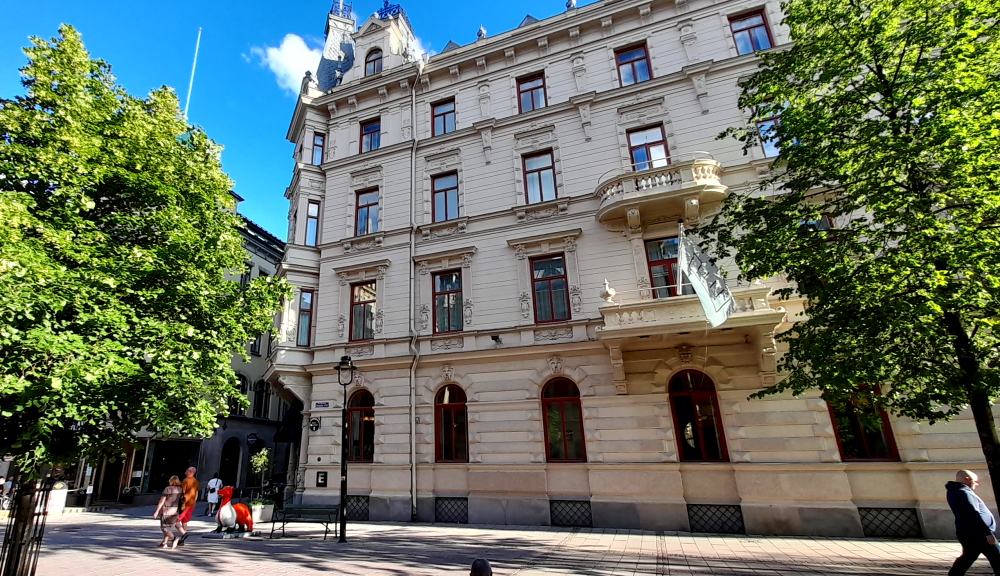
Housed in a building from 1891, this historic hotel is widely known for its beautiful marble staircase and magnificent hall of mirrors.
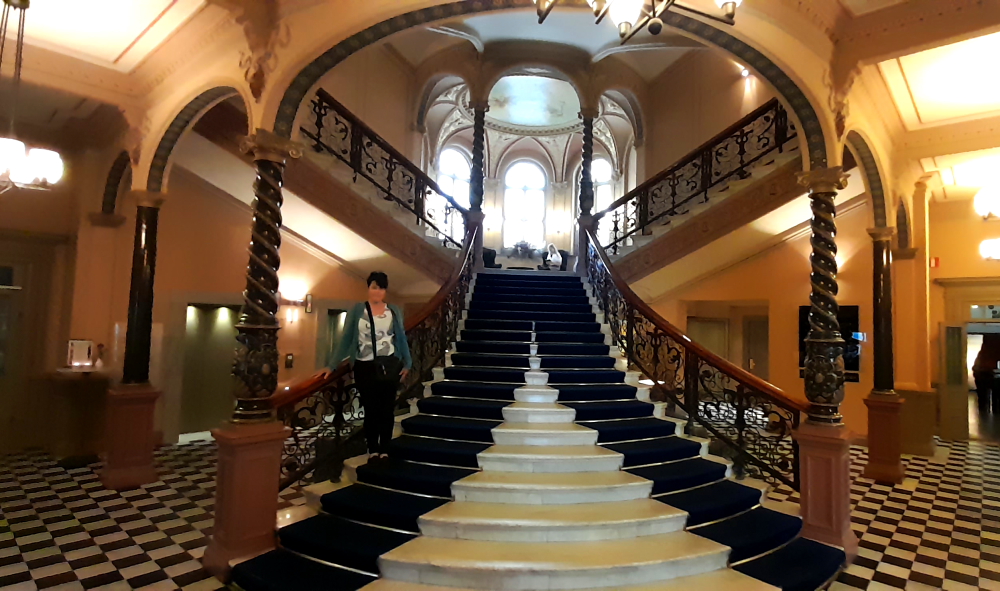
Found the staircase but not the hall of mirrors. Umm – why aren’t we staying here??
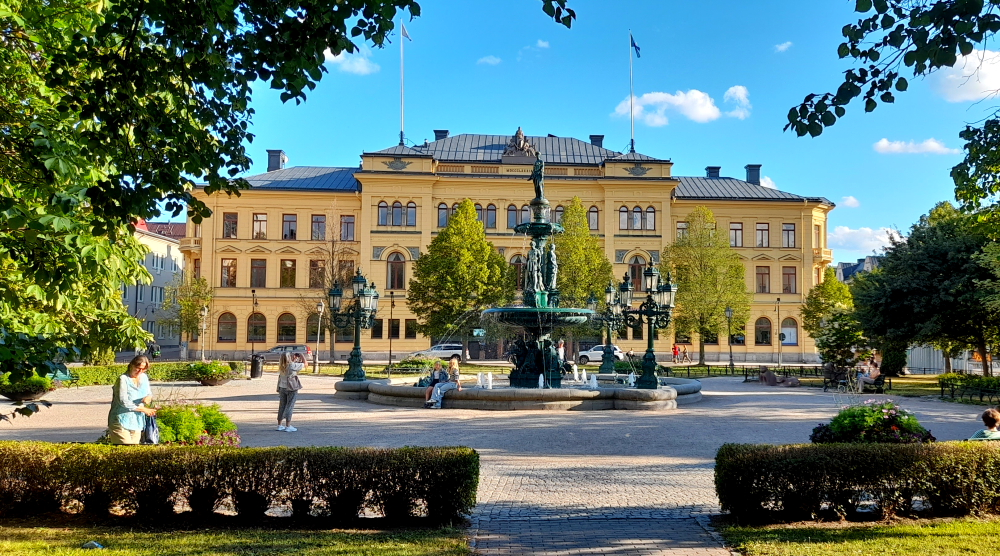
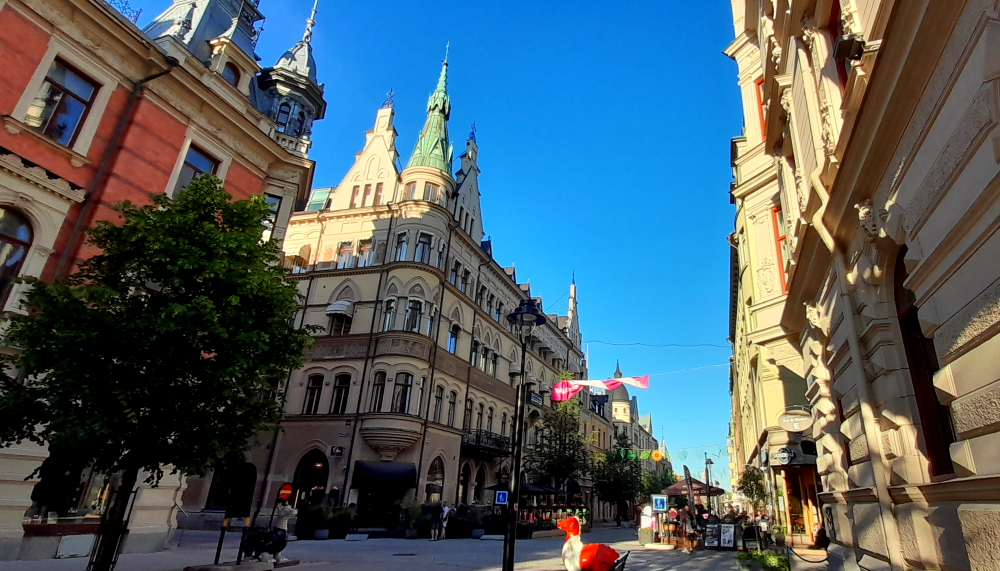
Next is the Vangavan square with its fountain which was laid out at the end of the 19th century. After the Sundsvall fire in 1888 the square was damaged and the surrounding buildings destroyed.
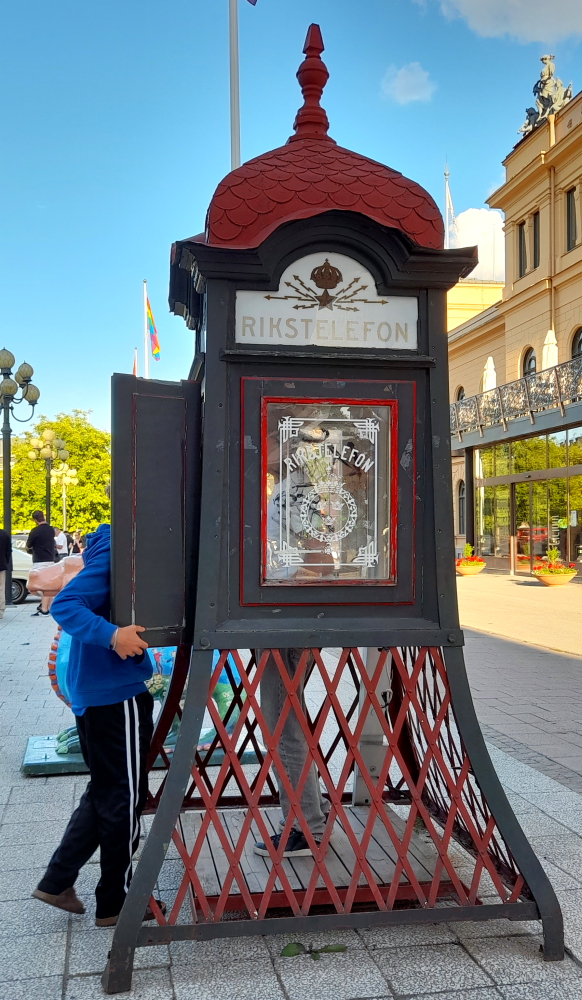
During Sundsvall’s rapid economic expansion the Vangavan area became one of Sweden’s more important financial centres with several banks.
Unlike the other Swedish towns we have stayed in, this one has a core of very nice classical buildings thanks to the town rebuilding in stone after the 1888 fire.
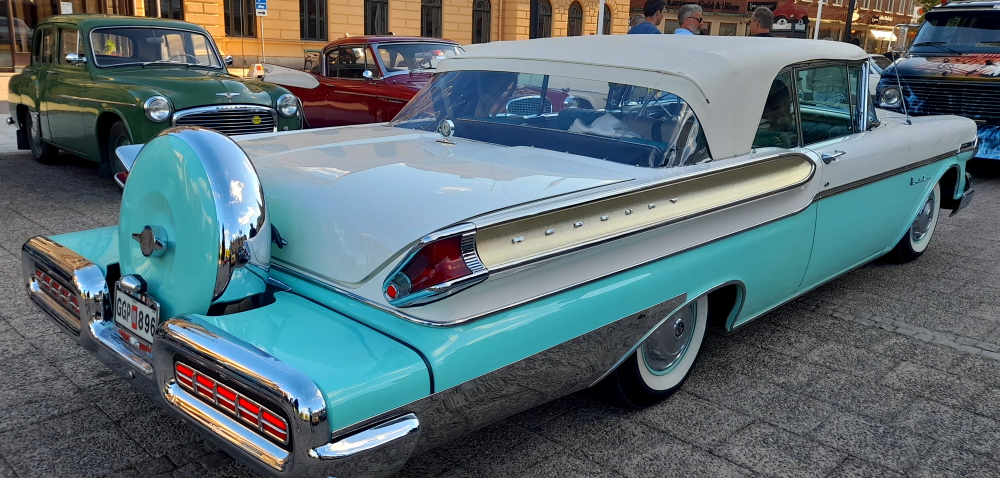
Next door to the Vangavan Square is the Stadshuset (Town Hall) and its square which today is being used to showcase various vintages of cars, a couple of trucks and a tractor.
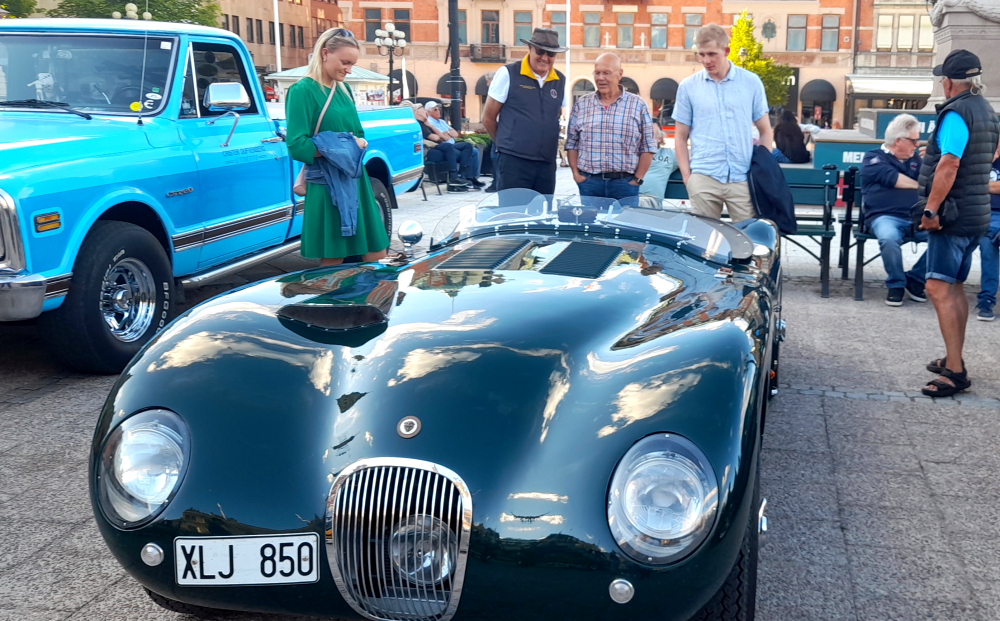
Sundsvall was chartered in 1621, and a first urban plan for the town was probably created by Olof Bure in 1642. It has a port by the Gulf of Bothnia, and is located 395 km north of Stockholm. The city has burned down and been rebuilt four times. The first time, in 1721, it was set on fire by the Russian army during the Russian Pillage of 1719-1721.
Swedish industrialism probably started in Sundsvall when the Tunadal sawmill bought a steam-engine driven saw in 1849. In the early 20th century Sundsvall was an even greater centre of forestry industry in Sweden than it is today.
The first large Swedish strike was the “Sundsvall strike” in 1879. The industrial heritage makes social democrat and socialist sympathies more prevalent in the Sundsvall region than in Sweden as a whole.
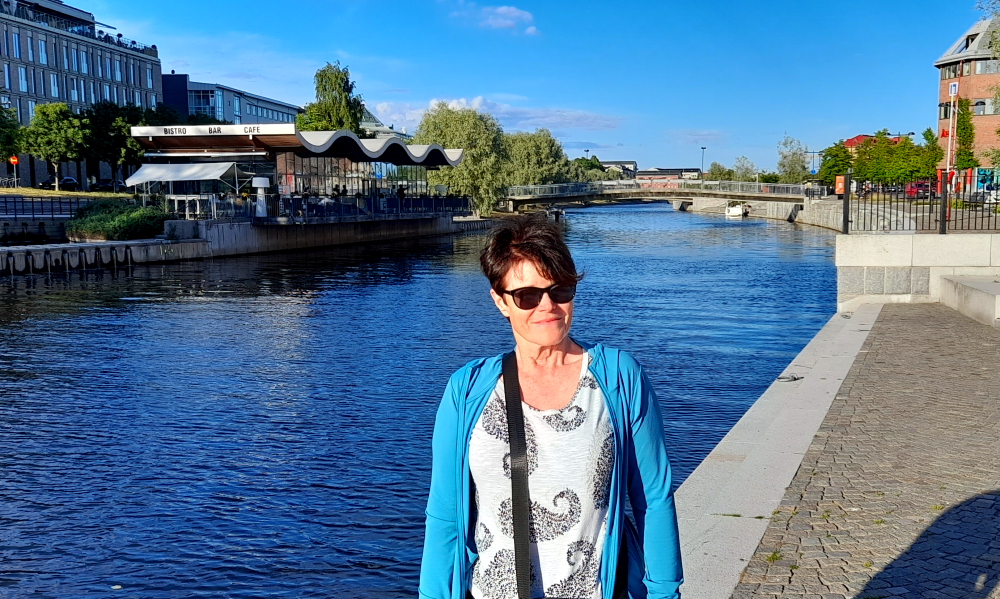
During 1987–2013, there was a summer music festival called Gatufesten. Starting in 2014 there’s a new one called Hamnyran. There are two theatres and various musical venues. There is also a small guitar festival and a larger heavy metal festival every autumn called Nordfest. Sundsvall is also home to the unique festival Musikschlaget which is a song contest for groups around Sweden with disabilities.
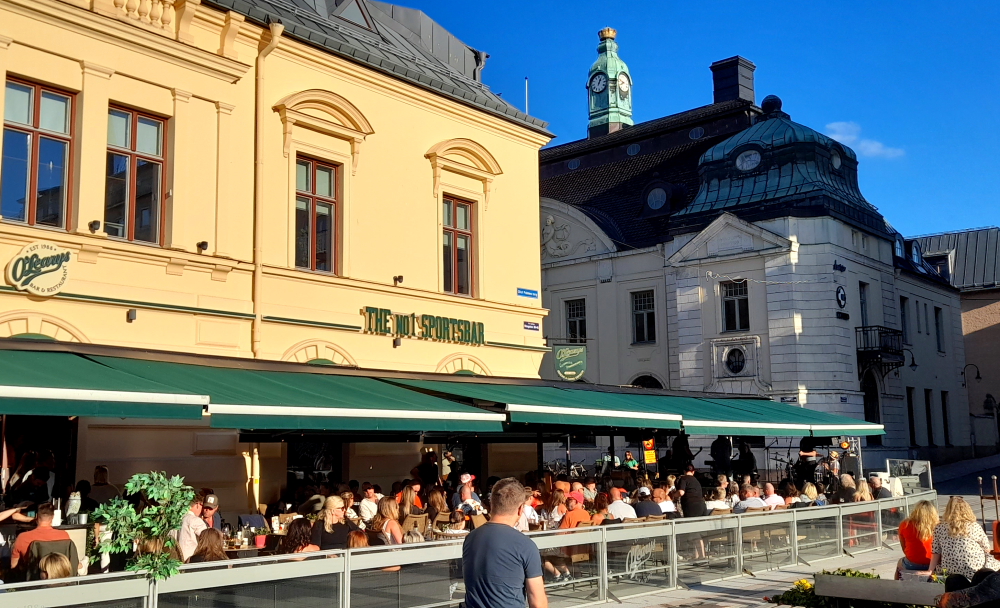
Today Sundsvall is not only dominated by the pulp and paper industry, and aluminium production but there are also banks, insurance companies, telecommunications administration and a number of large public data-processing centres such as the national social insurance board.
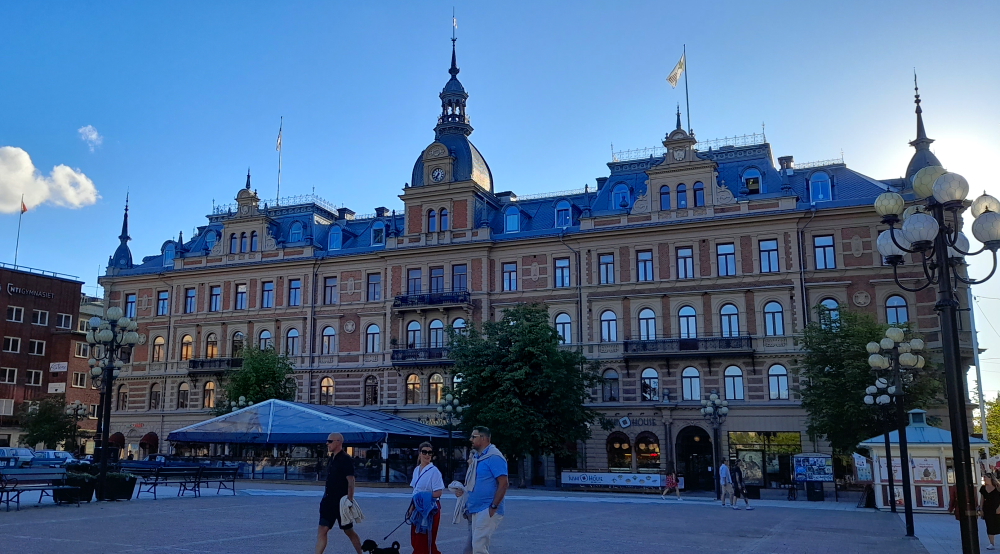
The main campus of the newly-established Mid Sweden University (Mittuniversitetet) is also located in the city. The university is a collaboration between Östersund, Sundsvall and Härnösand.
6 July, 2023
After yesterday’s glorious warm and sunny day the forecast for today is rain, specifically starting at 8:00 am. Pretty much on target, it starts while we are at breakfast. There’s nothing worse than driving and trying to sight see in pouring rain so we’ll get the blog up to date and take the brolly for a stroll to the nearest cafe.
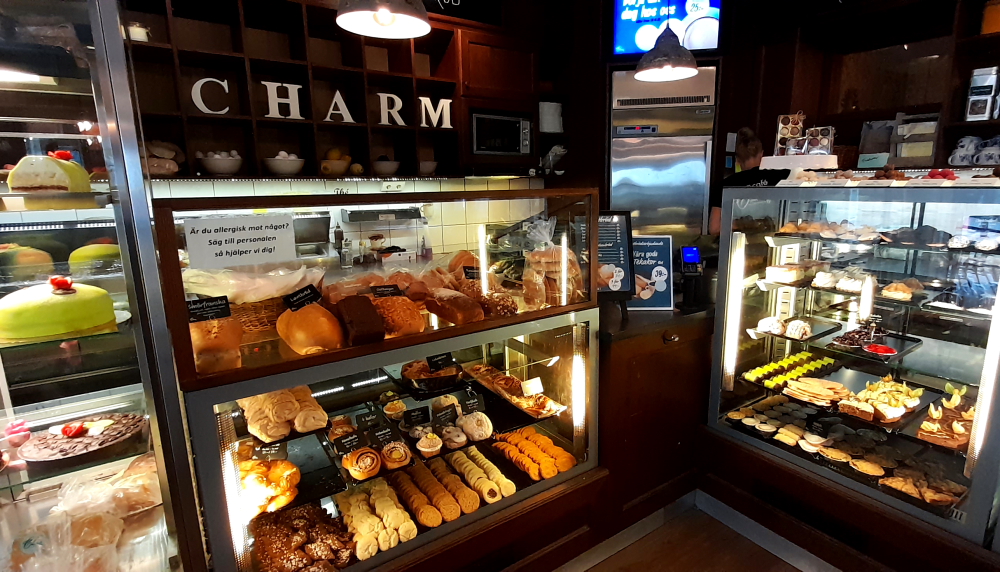
Our walk takes us as far as Wayne’s Coffee but Lynn decides that she wants a hot chocolate and chooses the Cafe Charm as our destination. Her hot chocolate is good but my Cafe Latte is undrinkable.
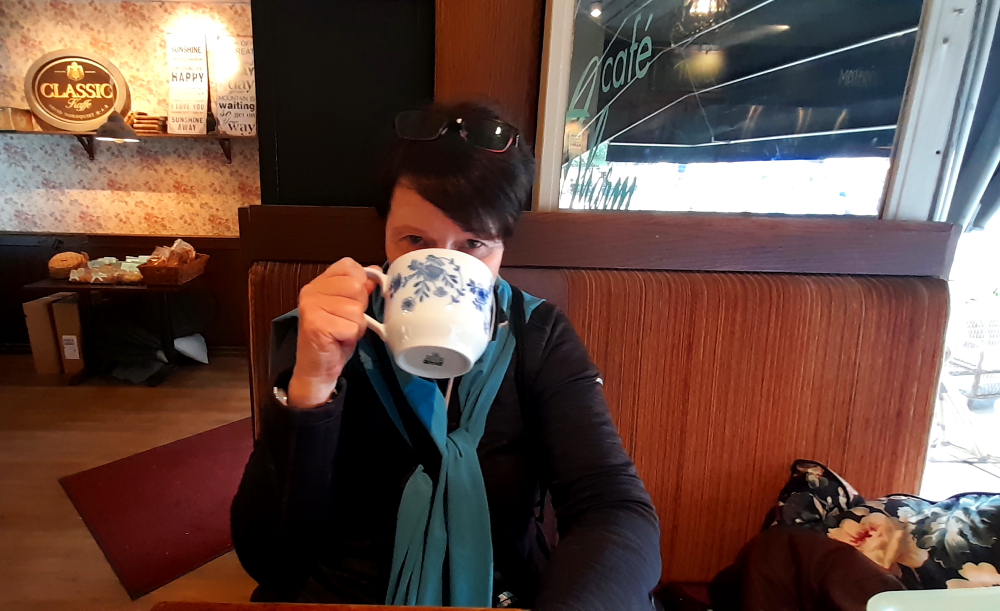
It must have been boiled coffee with a dribble of milk. Very bitter and worse than straight black boiled coffee. Worst coffee so far in Scandinavia and that is saying something. I had to rush back to the hotel to flush out my mouth. Now I am not a coffee snob by any means but that coffee was criminal!
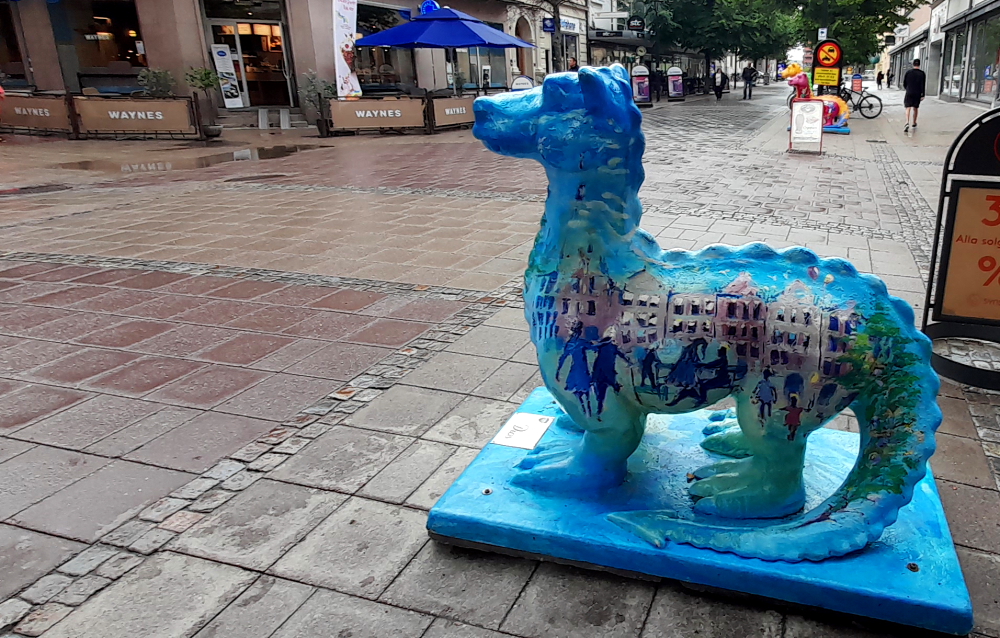
Yesterday we noticed that Storgatan, where we are now at the cafe, had what could be described as a ‘guard of honour’ of differently-decorated dragon statues along the length of the pedestrian street.
Apparently, the dragon from the House of Hirsch became the symbol of Sundsvall municipality and is the inspiration for an annual dragon parade since 2003. The Parade starts in May and the dragon statues are on show in the center of Sundsvall for the summer with the best dragon being elected at the Dragon Festival at summer’s end.
While I head back to the hotel to wash my mouth out, Lynn visits the Kulturmagasinet which is opposite the hotel.
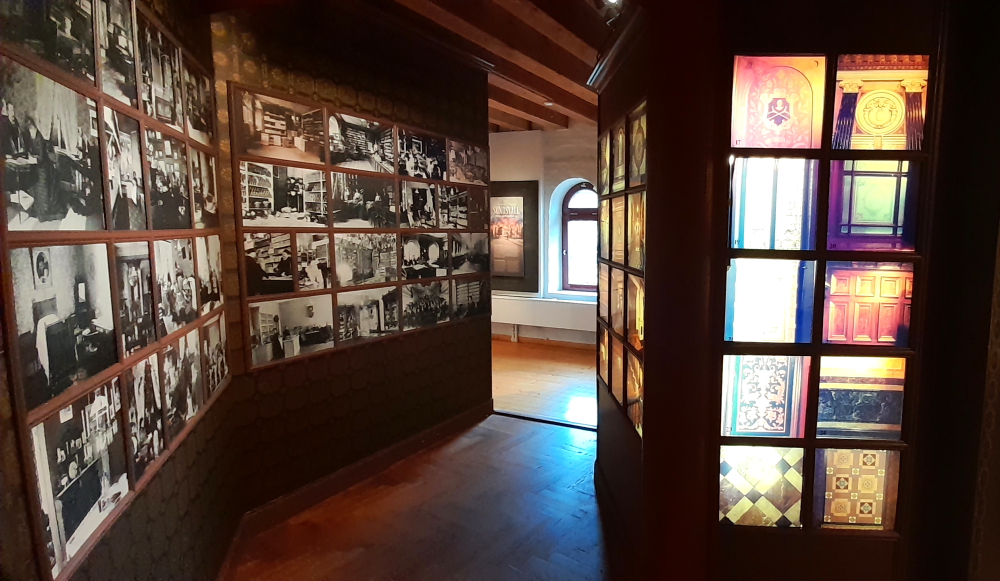
Stately colonial storage facilities fell into ruin in the 1970s. Four warehouses were demolished but the remaining 10 were rescued.
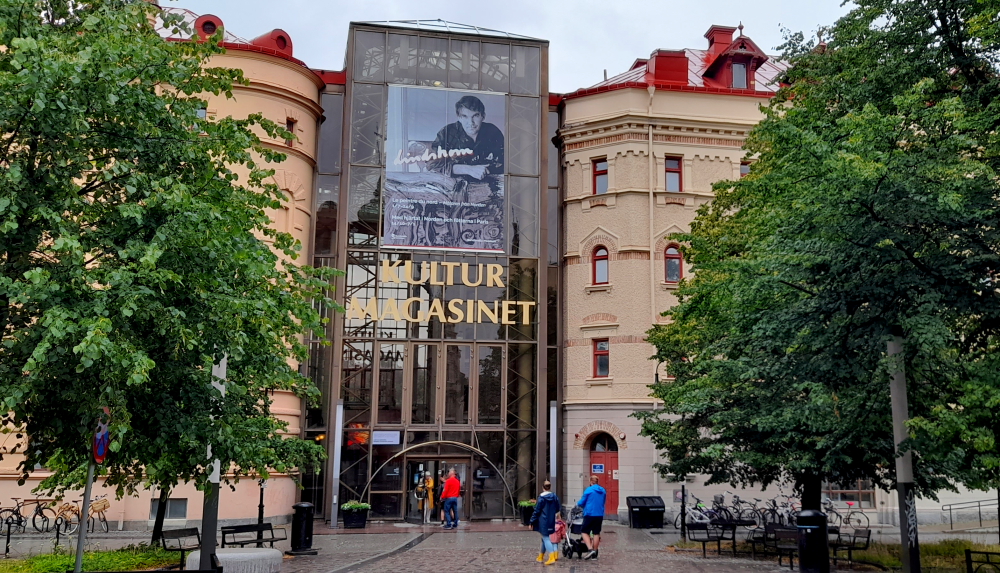
By glazing in 2 streets between the warehouses, 8 of these were brought together into a single building – the Kulturmagasinet – with a museum, library, archives and exhibition spaces launched in 1986.
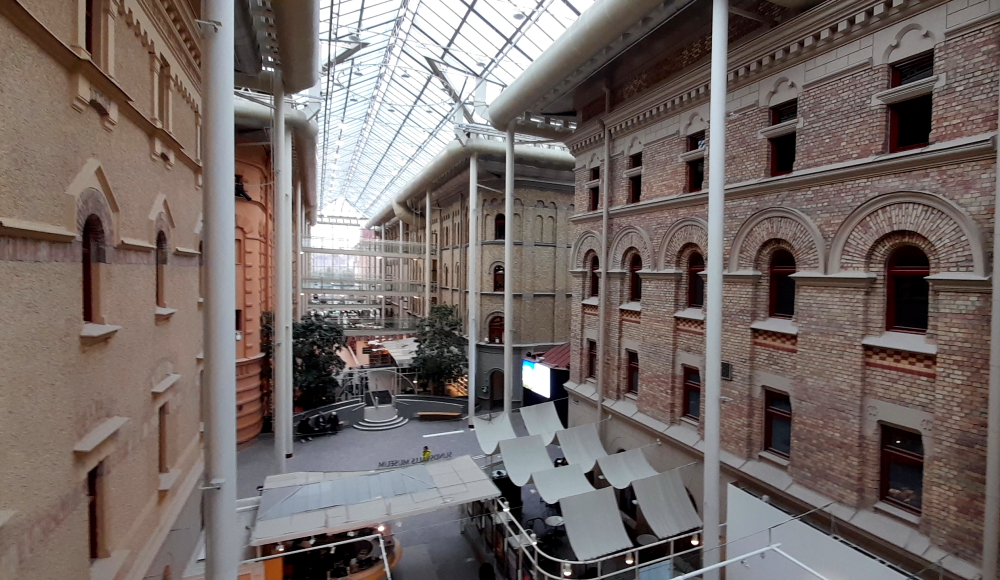
A year later the structure was awarded the Europa Nostra Prize – the European Heritage Award.
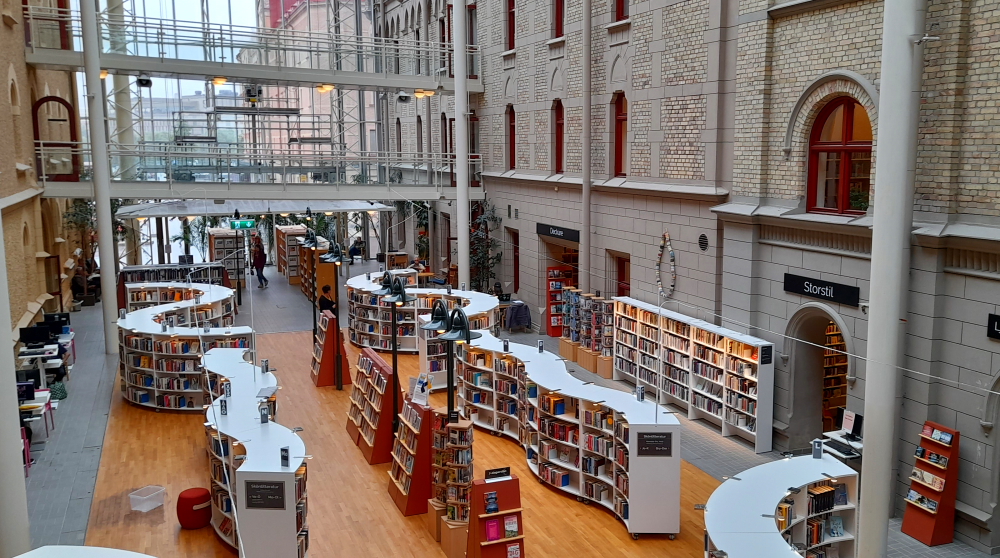
Half of the first floor is dedicated to the museum which features Sundsvall from the 1888 fire and its development to the 1960s.
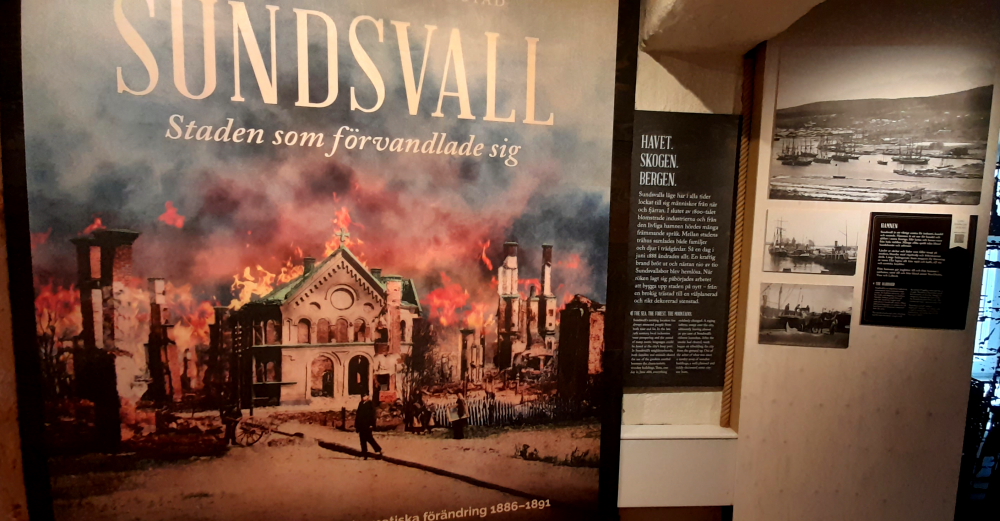
Artifacts including equipment, clothing, furniture, books, musical instruments and cookware plus photographs, audio and videos are used to illustrate the town’s development over time.
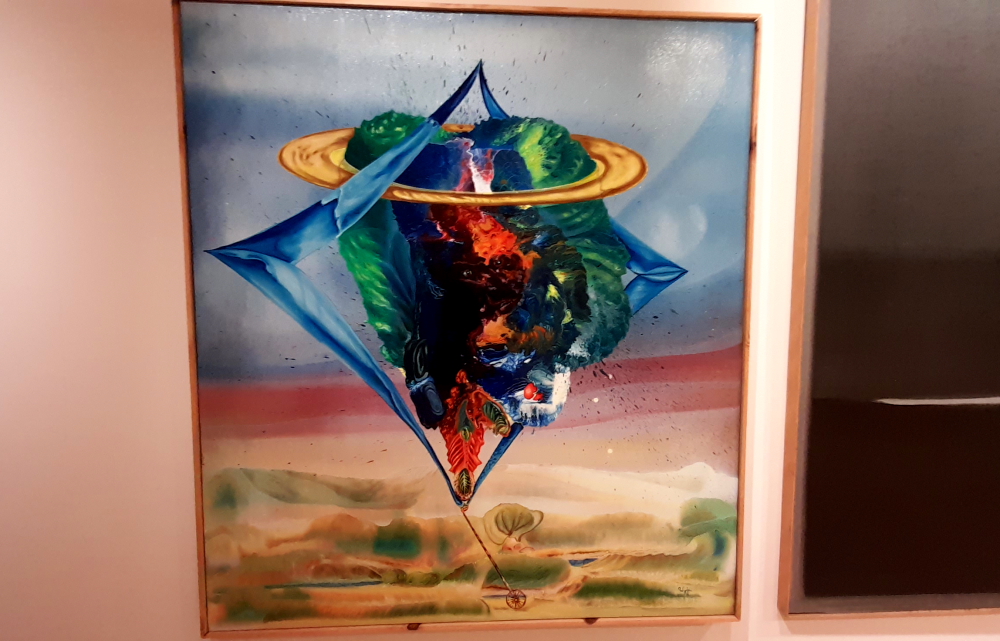
The other half of the floor is currently dedicated to KONST22 (Art22) which shows a selection of art purchases that is placed in municipal workplaces and in public environments around Sundsvall reflecting local, regional and national artists.
7 July, 2023
At 10:15 am we drive in heavy rain across the toll bridge over the river and onto the E4 heading south to Stockholm, our next destination.
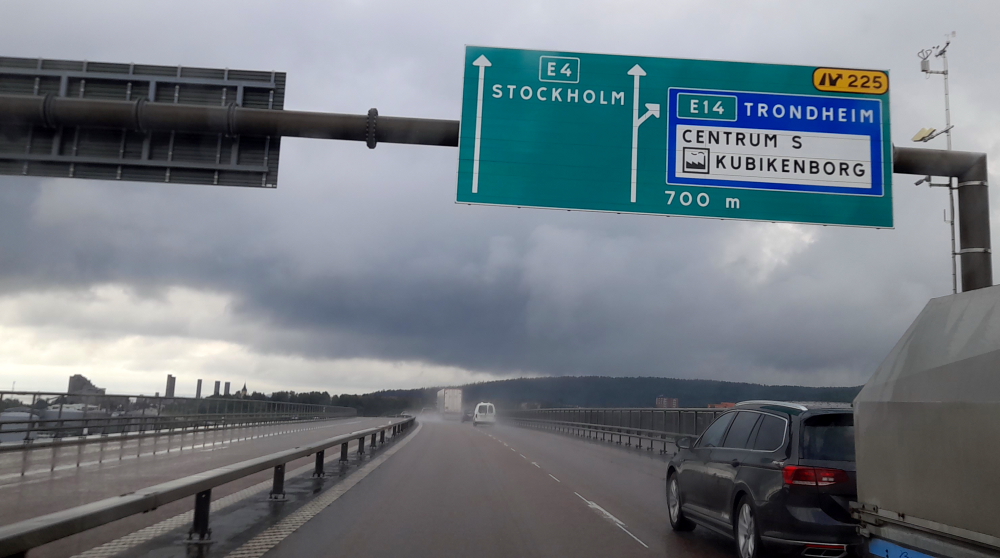
15 minutes later it’s brilliant sunshine but from 11:00 am to noon it is persistently heavy rain.
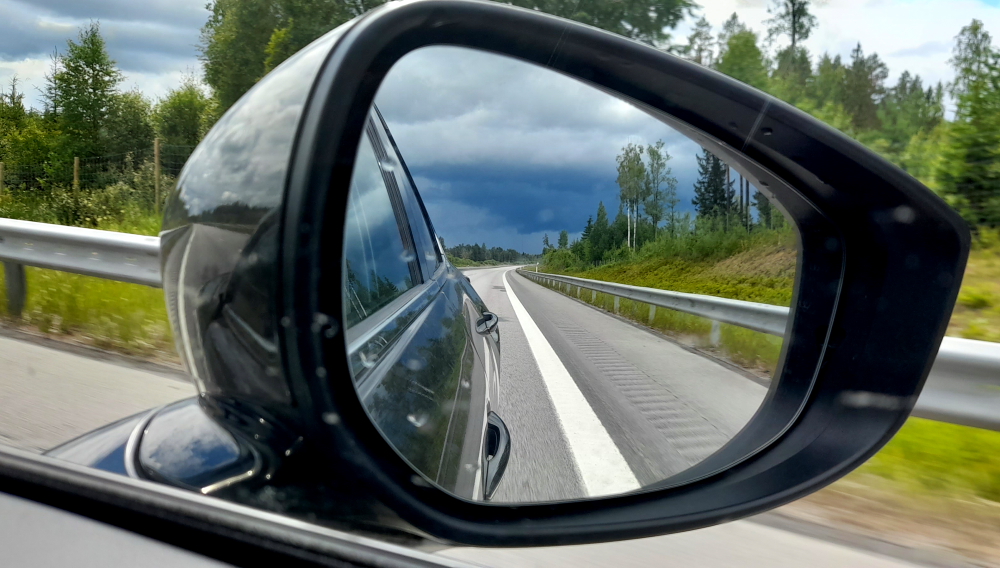
And it seems that every 5 minutes we have to slow down for a speed camera!
Finally, with clearing skies, we phone the hotel about a parking space (first come first served!) and are directed to its garage at the rear of the hotel. A room upgrade later we unpack and head out to explore the ‘hood.
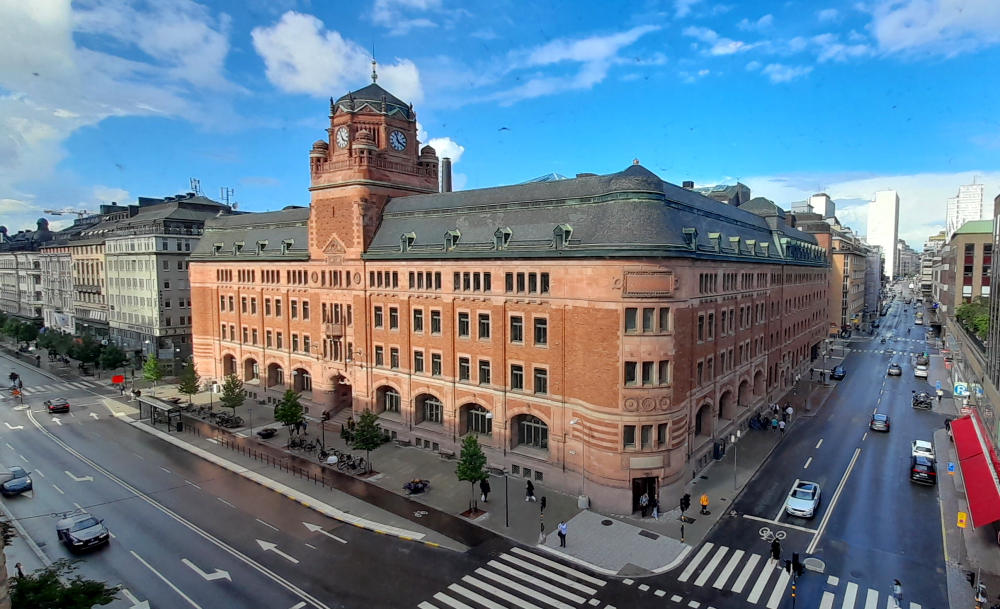
We stroll along Vasagatan then up an interesting alleyway, Gamla Brogatan.
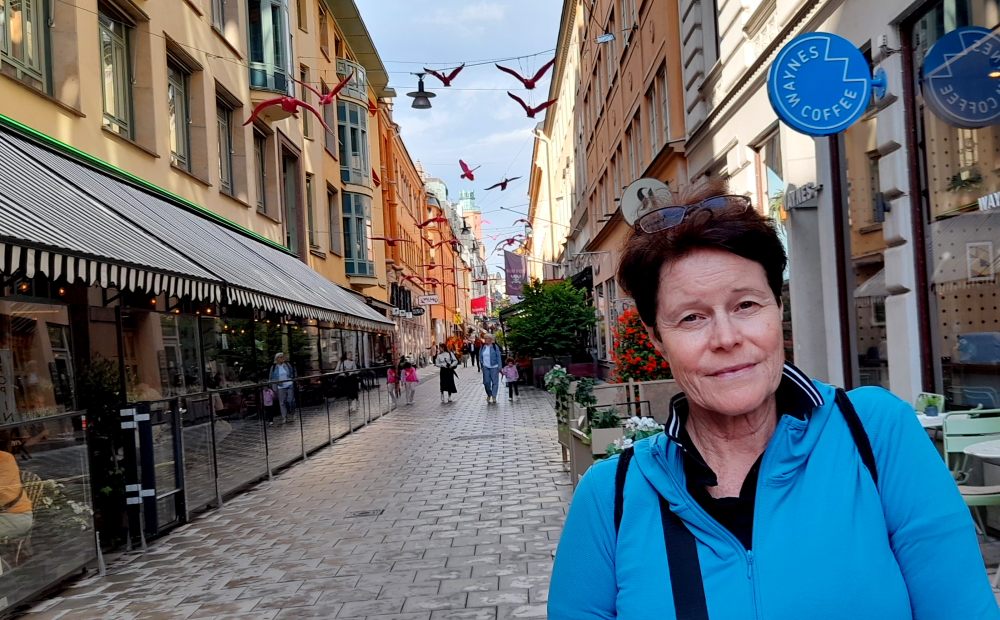
This alleyway ends next to the blue Konserthuset building outside of which is the Orfeusgruppen, a fountain sculpture executed in 1926-1936 by Carl Milles. Orpheus is the one who is allowed to represent the art of music and the lyre in Greek mythology .
Apparently, the Orfeus group, like so many other works by Milles, had a long and problematic history behind it and the final result differed considerably from both of Milles’ proposals that he submitted as his competition contribution to the Danelius Foundation in 1925. Mille’s proposal “The Music” was chosen. However, Stockholm’s city council had difficulty making up its mind and it would take nine years before a decision was made.
The first sketch for Orpheus showed a lone, slender male figure on a gigantic scale to be placed in front of the high columns of the Concert Hall. According to vicious tongues, the undercarriage resembled a bunch of bananas or an artichoke!
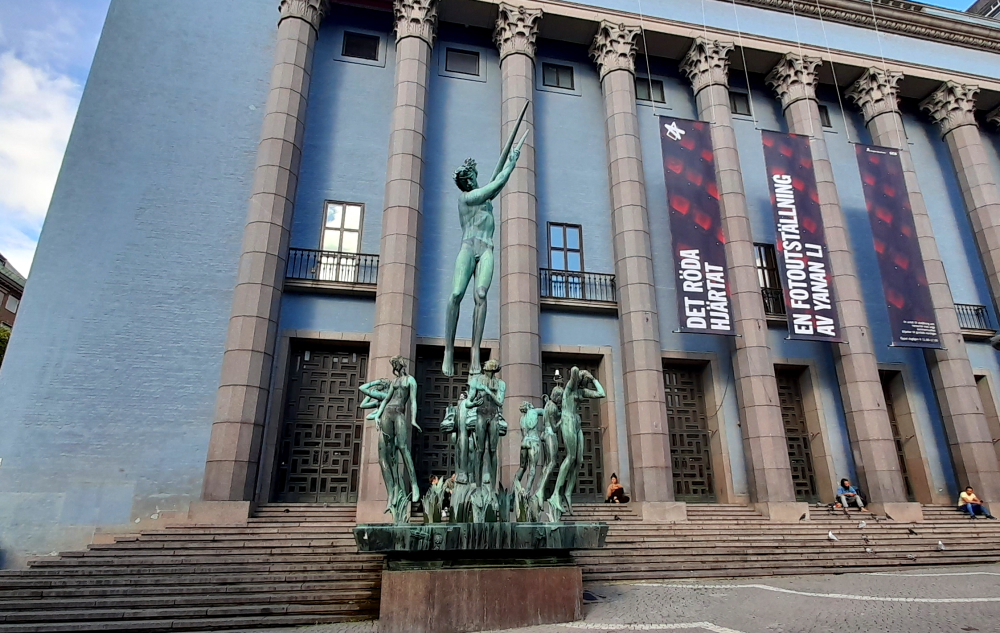
The whole composition was changed by the addition of eight female and male figures floating in the water around Orpheus. The male figure who despairingly raises his hands to the sky bears Beethoven’s facial features. This was no coincidence, Beethoven was for Milles the symbol of the great, suffering artistic genius, which he himself wanted to be. When the nine figures with Orpheus in the middle were likened to “a sculptural equivalent” to Beethoven’s Ninth Symphony , Milles must have been delighted.
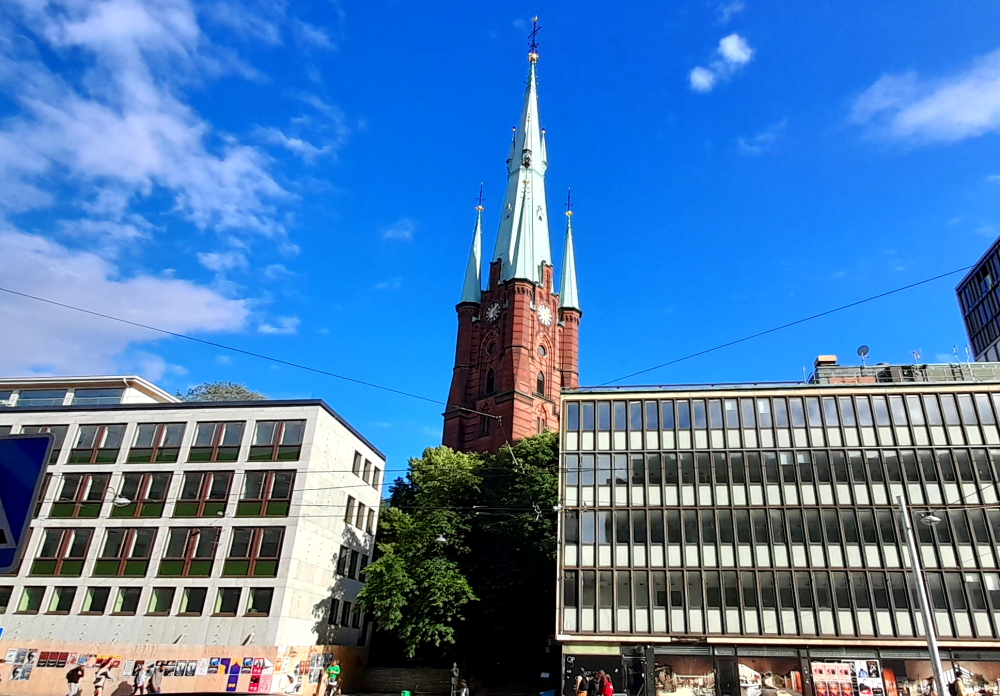
Walking around the block we pass by the spire of Klara Kyrka. The church’s name comes from the monastery that used to be on the site, Sankta Klara monastery.
The church building began to be built in the second half of the 16th century by the Dutch master builder Hendrik van Huwen and since then many architects have been involved in the further design of the building. With its 116 meter high tower, Klara Church is Sweden’s and Scandinavia’s second tallest church, after Uppsala Cathedral.
8 July, 2023
Breakfast is chaotic this morning with only one place where the many guests can access the buffet. We’re booked on a 10:00 am walking tour tomorrow so we’ll have to be down here at sparrow’s *art to make sure we’re not late.
By the time I get a few things done this morning it’s 11:30 am before we walk out the door. We make a last-minute decision to walk to the ABBA Museum before we need to get back to drive out to Arlanda Airport to collect our Richmond, London friends, Susie and Paul, who are joining us for the next 8 days.
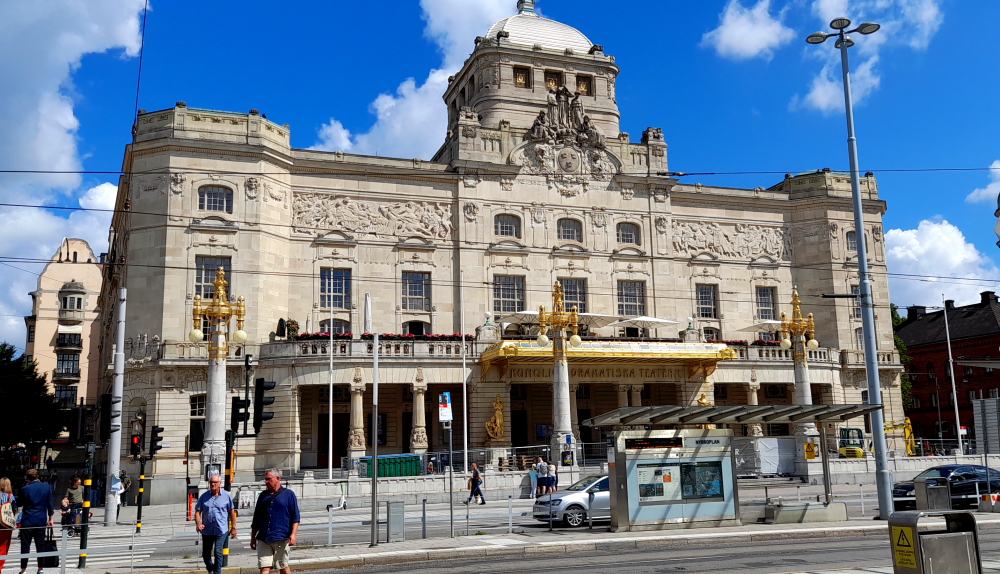
It is a very pleasant stroll in the sunshine along the waterfront.
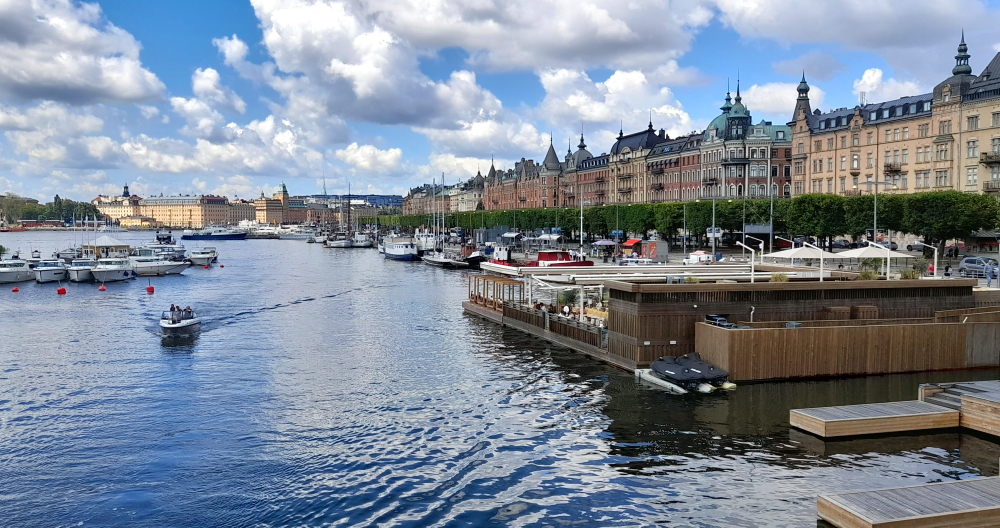
Summer must be here as the town is heaving with people, mostly tourists. Then we see that 3 cruise ships are berthed in the harbour.
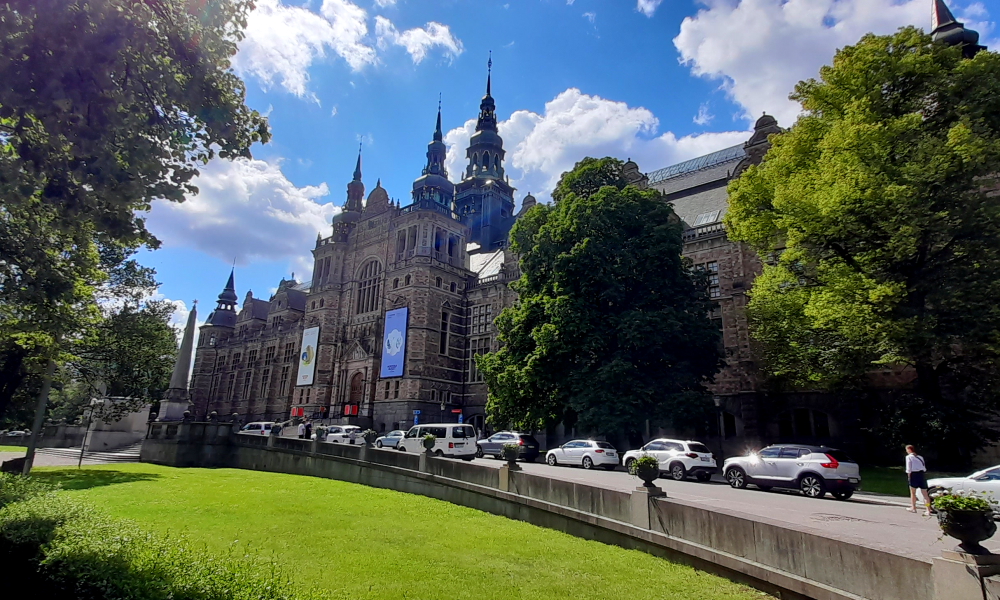
40 minutes later we join the queue to buy tickets. We don’t have mobile WiFi so unless the venue has free WiFi we can’t show a QR code for an online purchase on Lynn’s phone.
We’re beckoned inside, only to find that we are now in another queue. Lynn asks whether our purchase will allow us immediate entry or will we be given a timed ticket. Sure enough, once we purchase the ticket we have to go back outside and wait in another queue. We promptly leave. ABBA wasn’t all that good to start with let alone warrant a AUD40 ticket each and a long wait in a long queue for the experience.
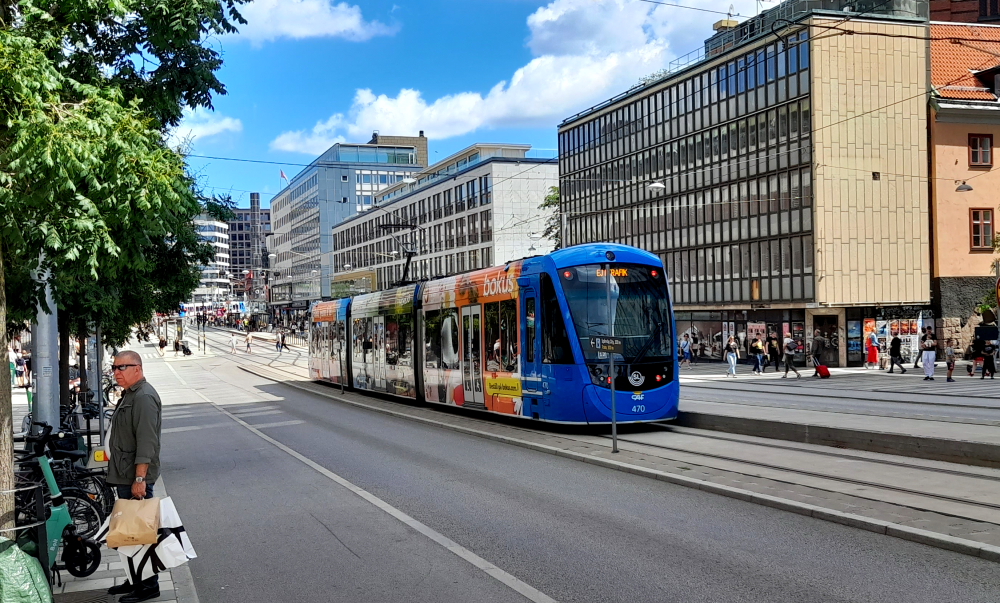
Rather than spend the next 40 minutes walking back to town we decide to take the tram. We try to buy a couple of tickets at the tram stop but the vending machine doesn’t work. We then walk to the next stop only to find the same issue. Apparently you can buy tickets on the tram (not tap on and tap off) from the conductor (how very 1960s quaint).
When the conductor arrives we try to buy two tickets with our only SEK debit card only to be told that you can only buy one ticket per debit card. WTF! I ask how a family with children buy tram tickets and the conductor has no idea other than to buy them online. Not what I would call tourist or family friendly. Perhaps it’s the same public servant that designed the Swedish Highways who designed the ticketing process. No wonder they had to sell Volvo cars to the Indian company, Tata. All the Swedish brains have frozen over these days. Perhaps Greta should spend more time improving Swedish processes than trying to get the world down to Swedish levels.
At 5:00 pm we arrange to retrieve the car from the parking area in the hotel and head out to Stockholm”s Arlanda airport to pick up Susie and Paul who will join us for the next 7 days in Sweden.
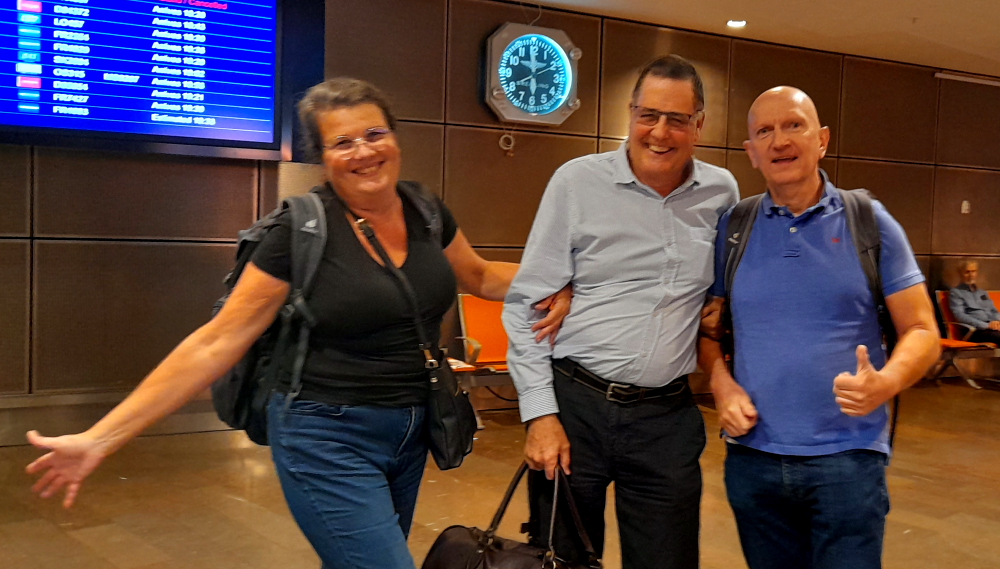
Back to the hotel with them and while they unpack we have some time to catch up on the blog before go to their room and offer them a relaxing drink of Finland’s Original Long Drink before dinner in the hotel’s seafood restaurant.
A fun evening but Lynn has a big day planned for tomorrow so straight to bed after dinner for an early morning breakfast tomorrow.
 THE CONTINUING TRAVELS OF YOGI & BOO BOO