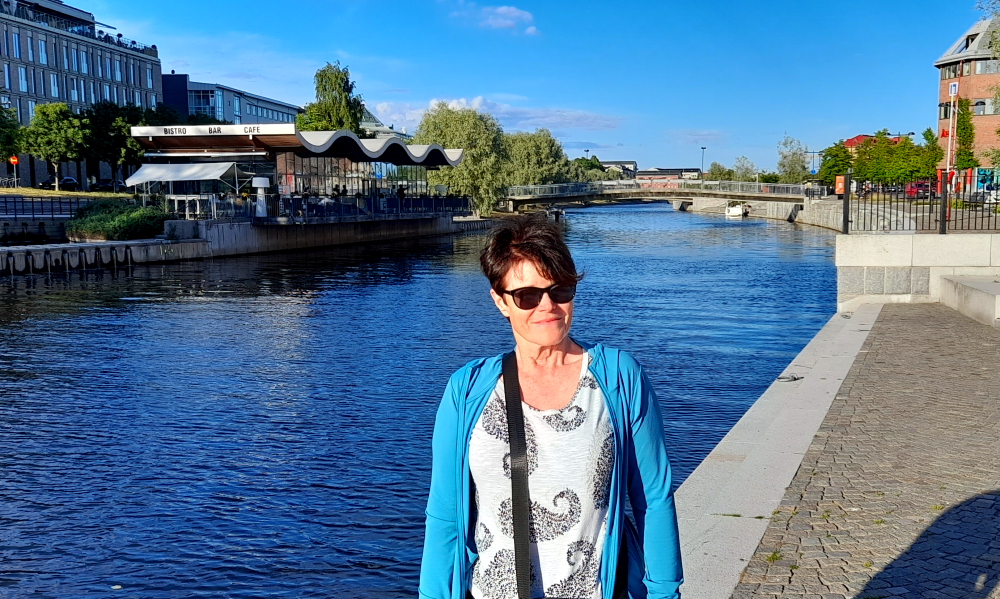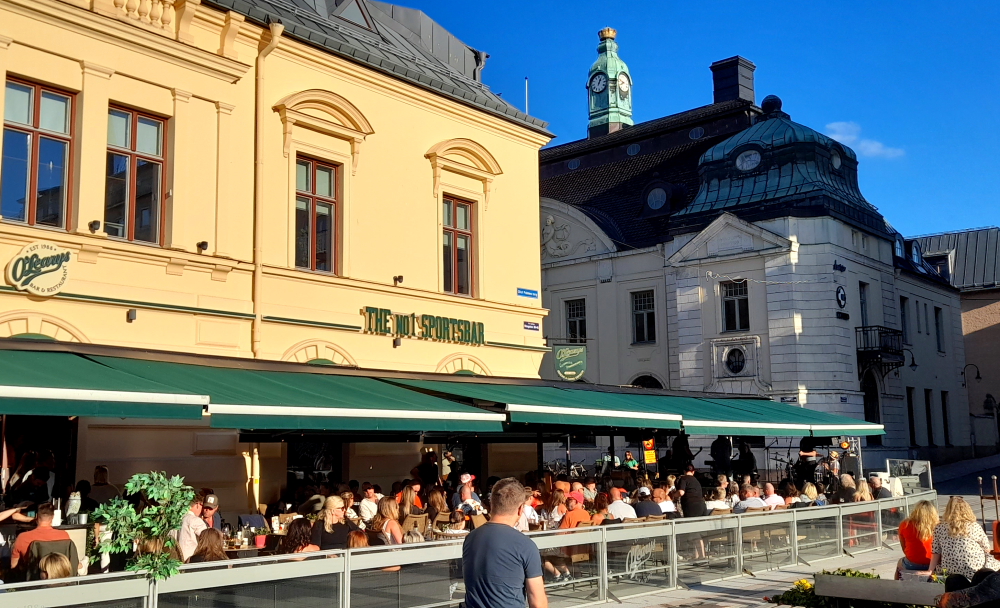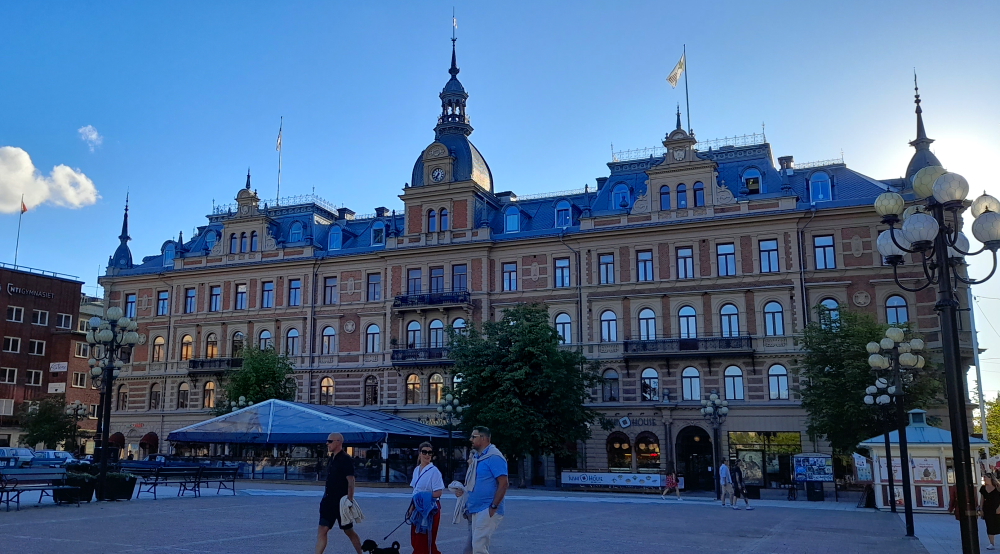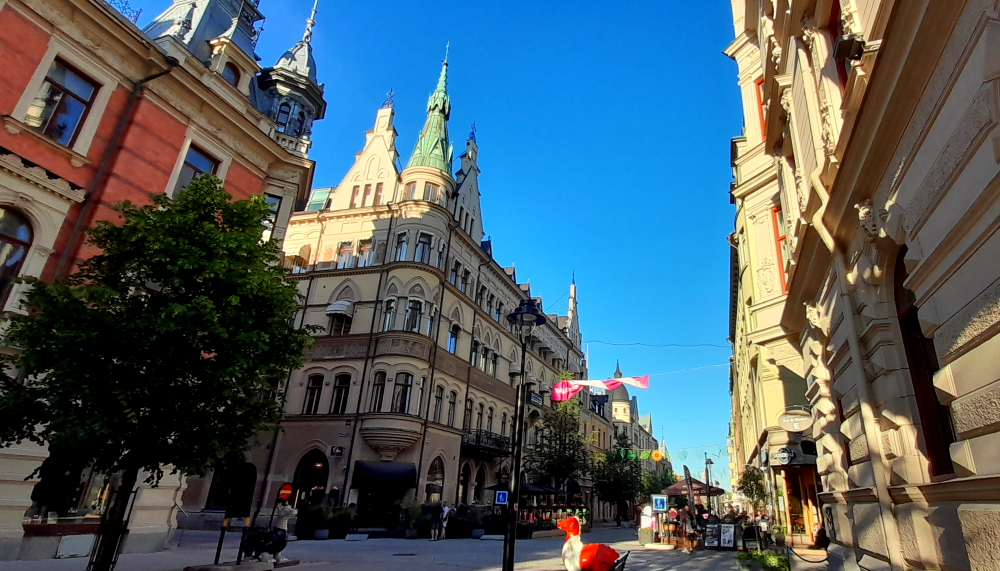
Category Archives: Sweden

A week with Susie & Paul in Sweden

9 July, 2023

Must be time for another free walking tour. It is! We leave the hotel at 9:30 am to walk to the meeting point at Gustav II Adolf torg via Vasagatan and the Nordstrom (North Stream).
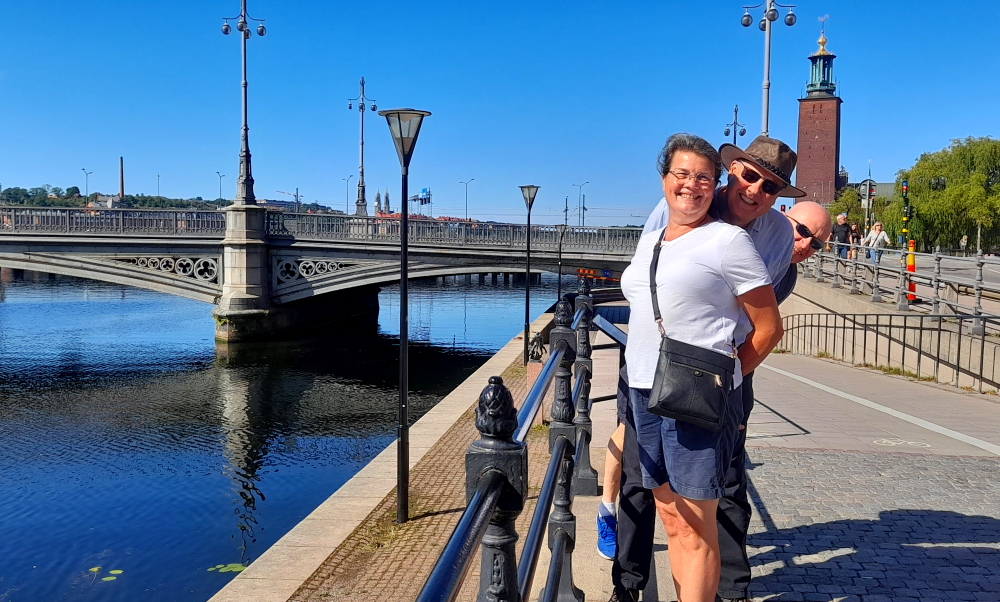
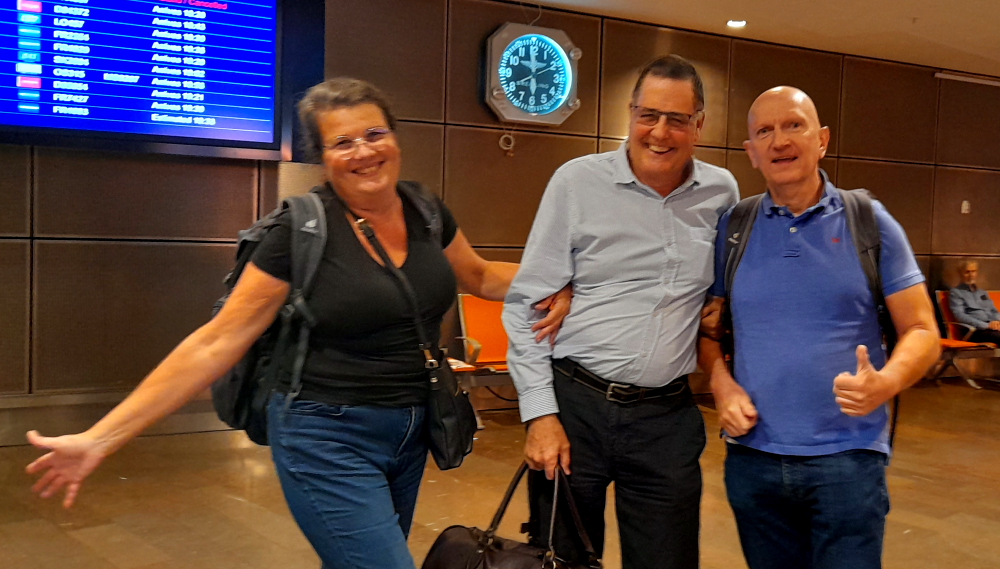
Moe, Larry & Curly?

We’re booked on a 2.5 hour walk through Gamla Stan, the Old Town, one of the largest and best preserved medieval city centers in Europe where Stockholm was founded in 1252.

All of Gamla Stan and the adjacent island of Riddarholmen are like a pedestrian-friendly museum full of sights, attractions, restaurants, cafés, bars, and places to shop. The narrow winding cobblestone streets, with their buildings in so many different shades of gold, give Gamla Stan its unique character.
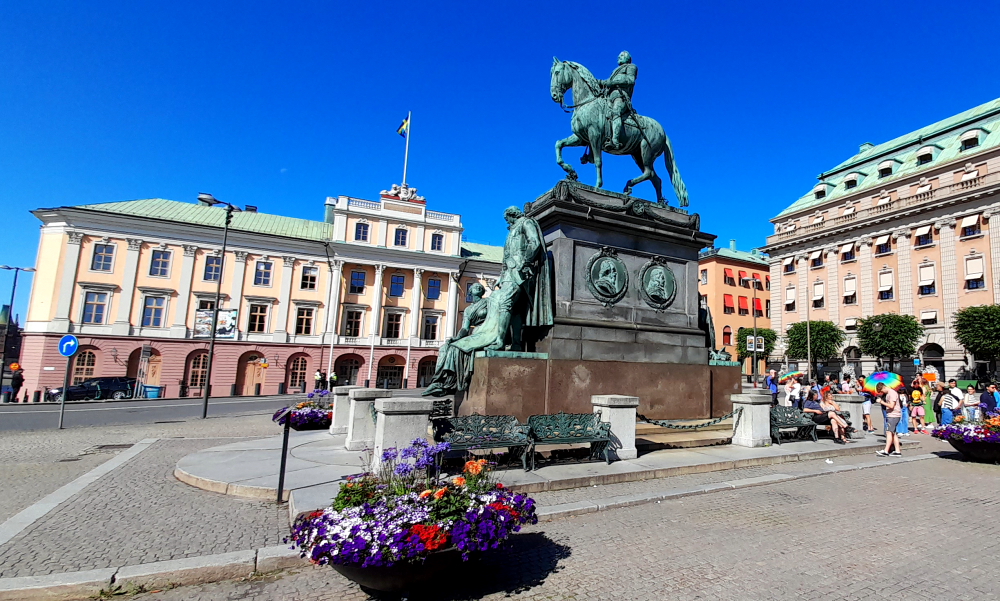
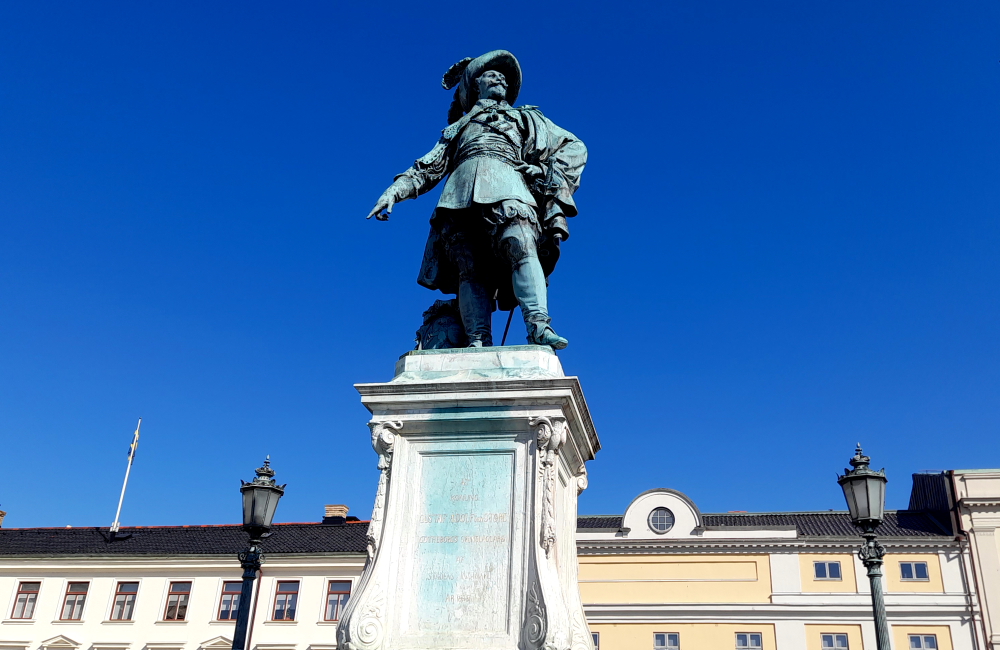
Our meeting point – Gustav II Adolf statue.

Sager House is the prime minister’s official residence in Stockholm. The first historical records of a building on the site are from the 1640s. In 1880 the property was purchased by the Sager brothers. The Sager Palace was owned by the Sager family from 1880 to 1986. In 1893 Robert Sager had the palace remodeled, including the addition of a new floor within a Mansard roof and a French Baroque Revival style facade with Neo-Rococo details, that are still seen.

The Swedish State bought the house in 1988 specifically for the PM’s residence. After extensive renovation the first PM to be housed in this building was Göran Persson (1996–2006).

It lies across from the Parliament House (Riksdag) building (on the island Helgeandsholmen), and the Royal Palace (on the island Stadsholmen), and is connected with them over the Norrström River through the Riksbron and Norrbro bridges, respectively.
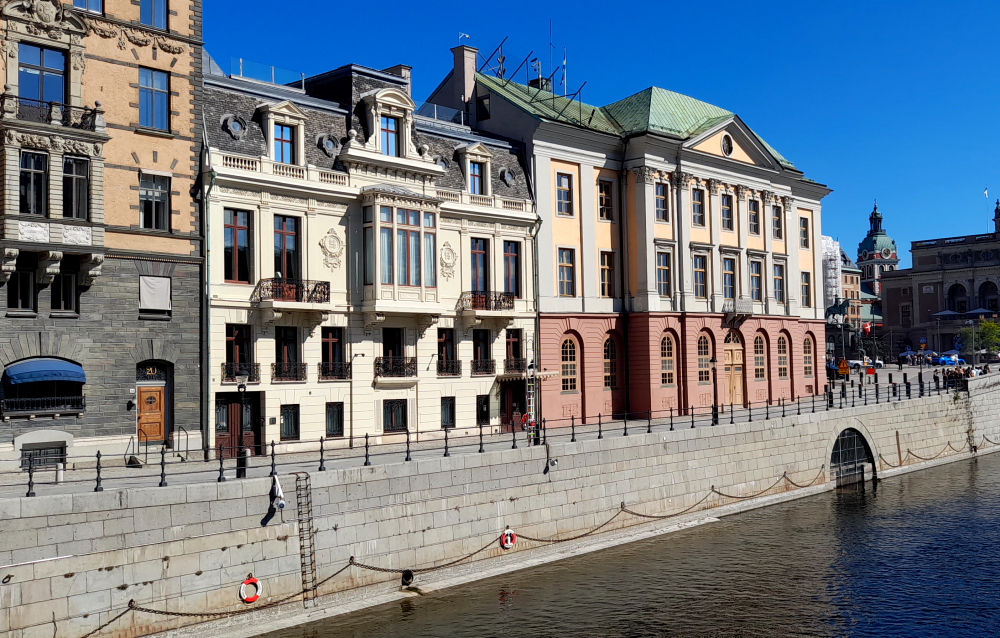
The Prime Minister’s House.

Stockholm Palace (Royal Palace) is the official residence and major royal palace of the Swedish monarch (King Carl XVI Gustaf and Queen Silvia use Drottningholm Palace as their usual residence). The offices of the King, the other members of the Swedish royal family, and the Royal Court of Sweden are here. The palace is used for representative purposes by the King whilst performing his duties as the head of state.

This royal residence has been in the same location by Norrström since the middle of the 13th century when the Tre Kronor Castle was built. In modern times the name relates to the building called Kungliga Slottet. The palace was designed by Nicodemus Tessin the Younger and erected on the same place as the medieval Tre Kronor Castle which was destroyed in a fire on 7 May 1697. Due to the costly Great Northern War which started in 1700, construction of the palace was halted in 1709, and not recommenced until 1727—six years after the end of the war. When Tessin the Younger died in 1728, the palace was completed by Carl Hårleman who also designed a large part of its Rococo interior. The palace was not ready to use until 1754, when King Adolf Frederick and Queen Louisa Ulrika moved in.
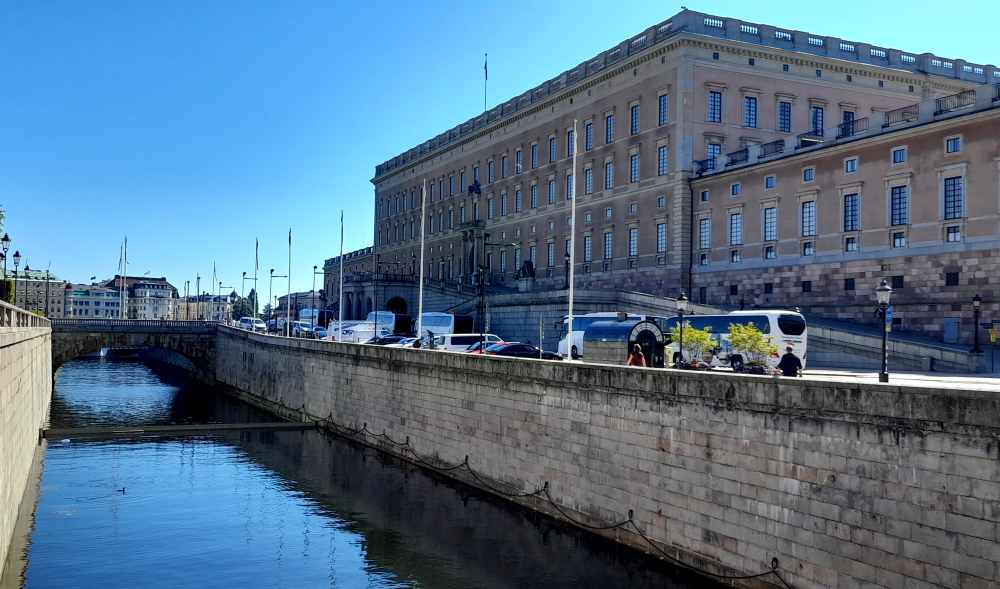
The rear of the Royal Palace.

The Palace photo was taken from the bridge (Stallbron) that separates the Kvarteret Luna Island from Stockholm City. This Island is the Old Town where Stockholm (meaning log island) was established over a thousand years ago. A bridge leading over to the Royal Stables is first mentioned in 1288. The present bridge was opened in 1904. It was widened in 1987 and an enclosed passage was added beneath the bridge to link parliament with its offices.
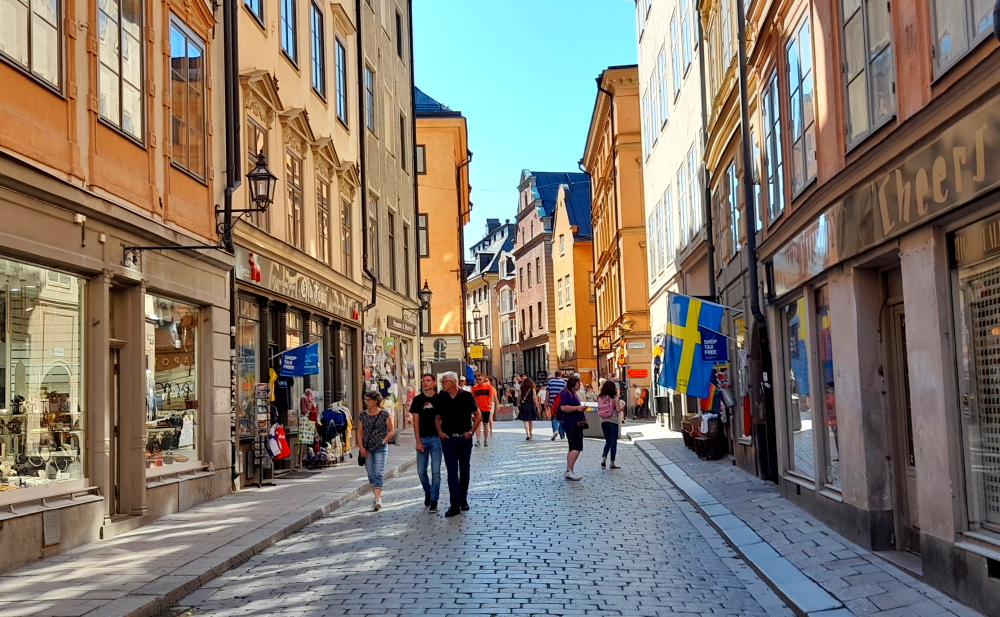
Vasterlanggatan, Gamla Stan.

Västerlånggatan and Österlånggatan are the district’s main streets. The city wall that once surrounded the city ran inside these streets along what is now Prästgatan.
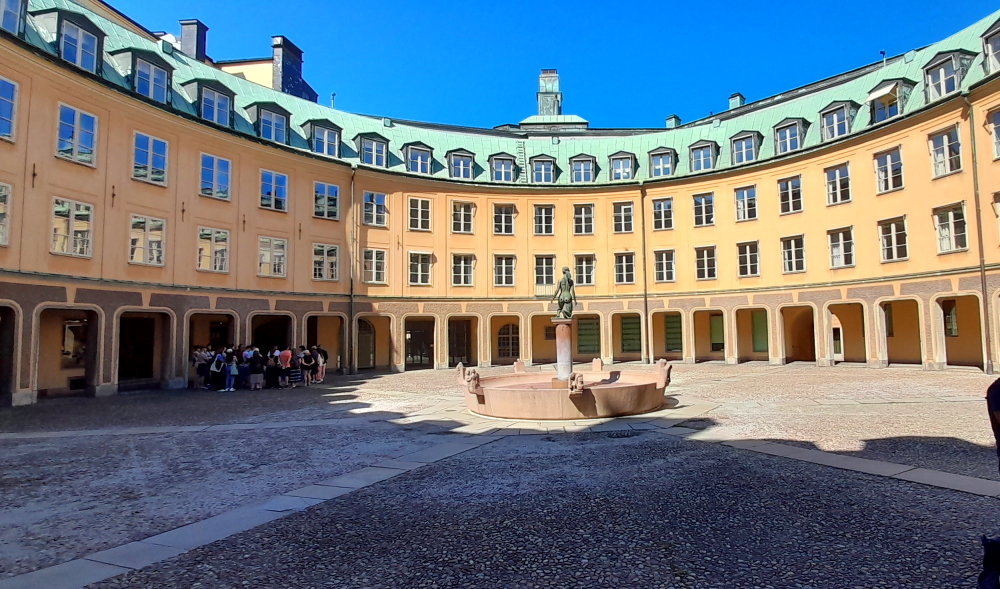
Politician’s apartments in Förvaltninghuset surrounding Brantingtorget & its statue “Morning”.

There are several beautiful churches in Gamla Stan, including Sweden’s national cathedral Stockholm Cathedral. But, across a narrow channel on Riddarholmen Island is Riddarholmen Church, the church of the former medieval Greyfriars Monastery in Stockholm.
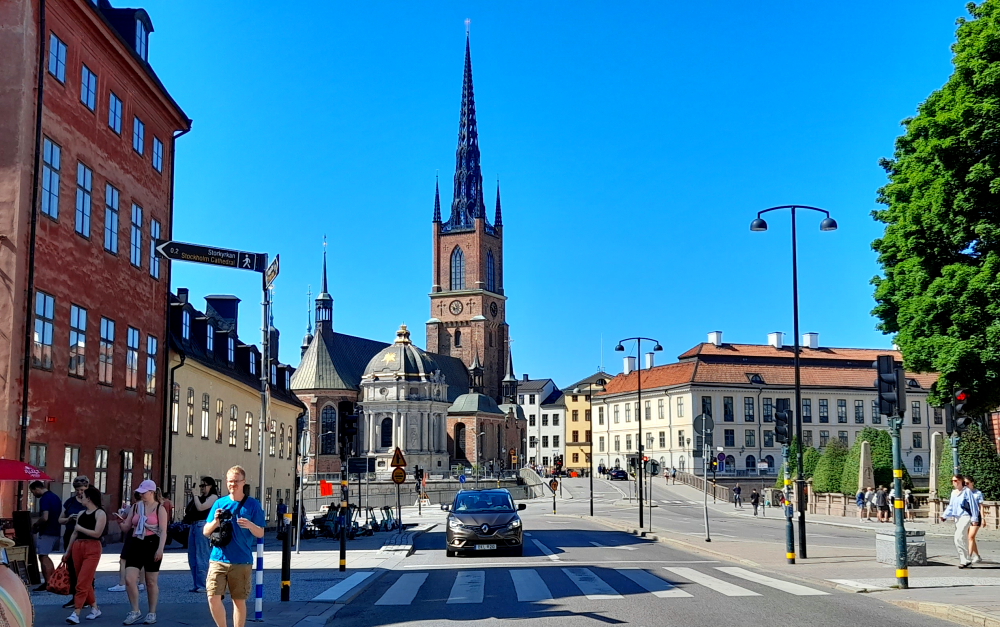
Riddarholmen Church.

The church serves as the final resting place of most Swedish monarchs including Magnus III (d. 1290) and Charles VIII (d. 1470) and from 1632 to 1950. Today the church is used only for burial and commemorative purposes.
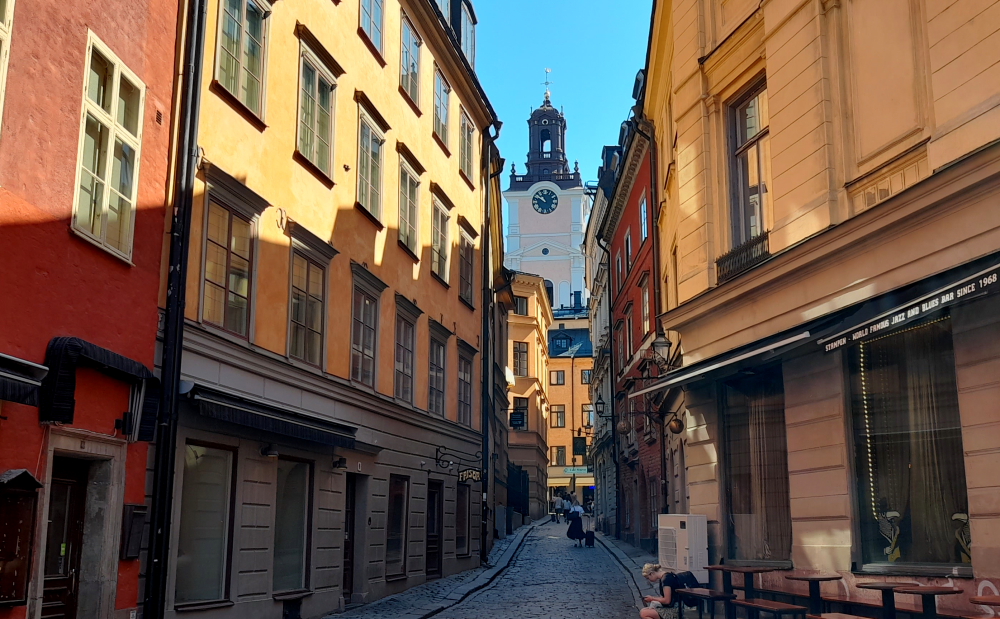
A view from Stora Nygatan.

In the middle of Gamla Stan is Stortorget, Make sure not to miss Riddarholmen and the Riddarholmen Church. The church is a royal burial church and was built as a Franciscan monastery for the so-called Grey Brother monks in the thirteenth century.
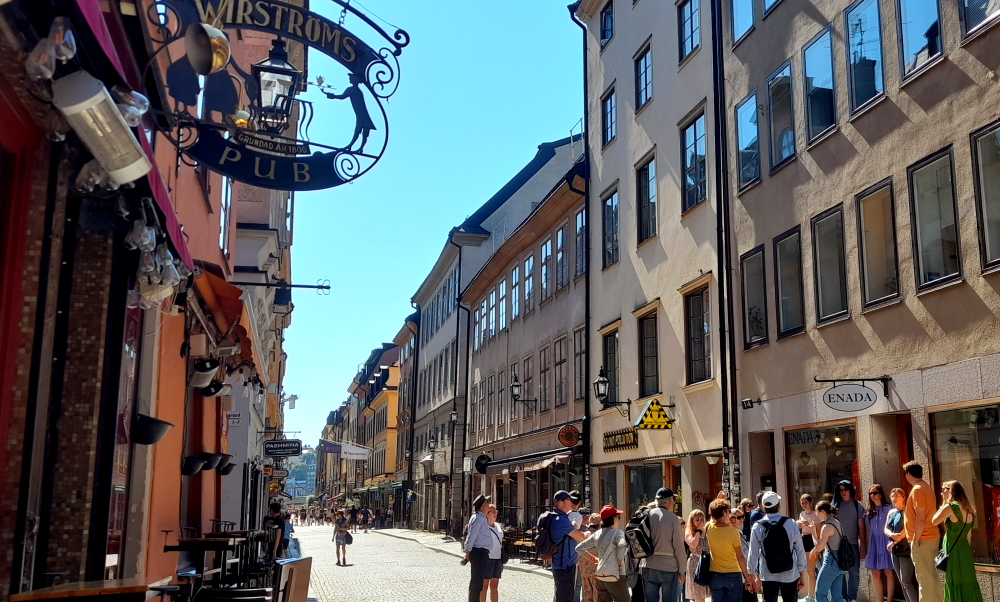
Wirstroms Pub on Stora Nygatan.

At the end of Stora Nygatan is a square featuring a statue called “The Bow Tensioner” by Engelbrekt Engelbrektsson erected in 1916 with funds from the Association for the Decoration of Stockholm with Works of Art and was the first work of art that the association gave to the city of Stockholm. Here we stop to look at the next island behind us, Sodermalm, currently festooned with construction cranes.
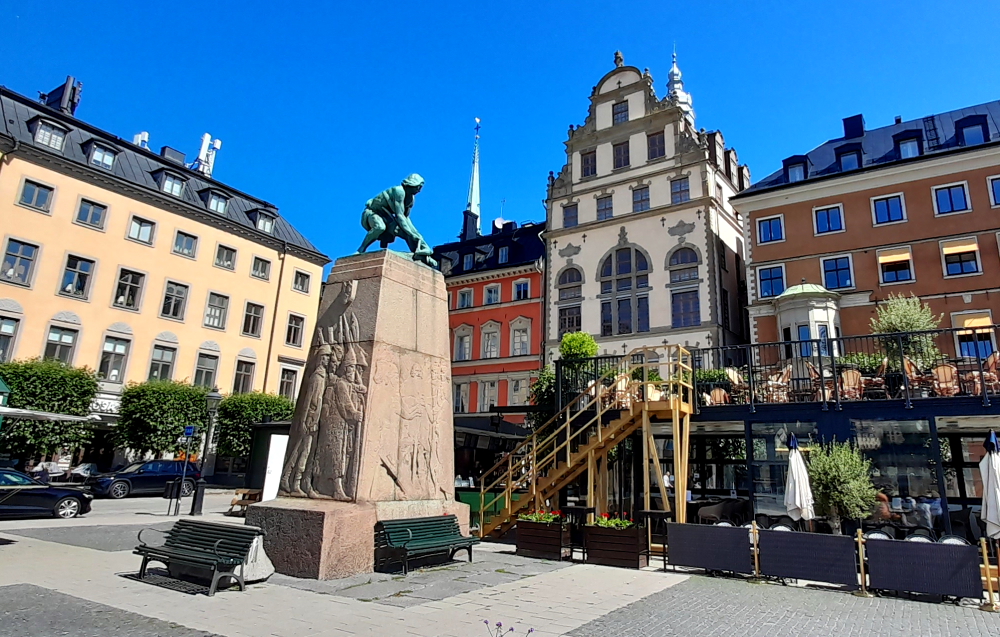
The Bow Tensioner.

Also in this square is a food truck selling nystekt stromming – freshly fried herring – and seems to be a permanent fixture here…
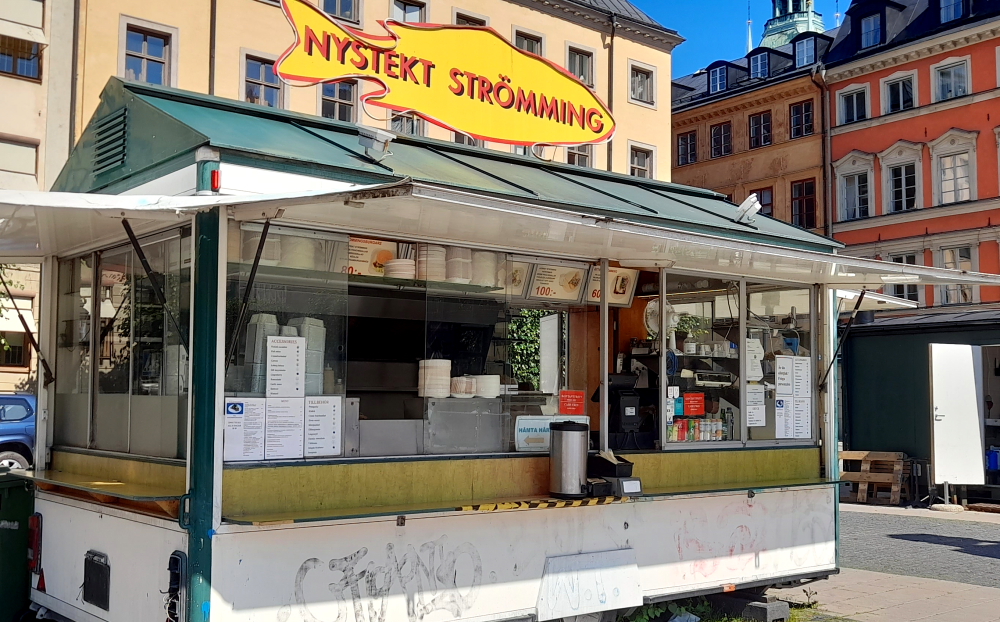
Freshly fried herring.

… as are these 2 vintage telephone boxes.
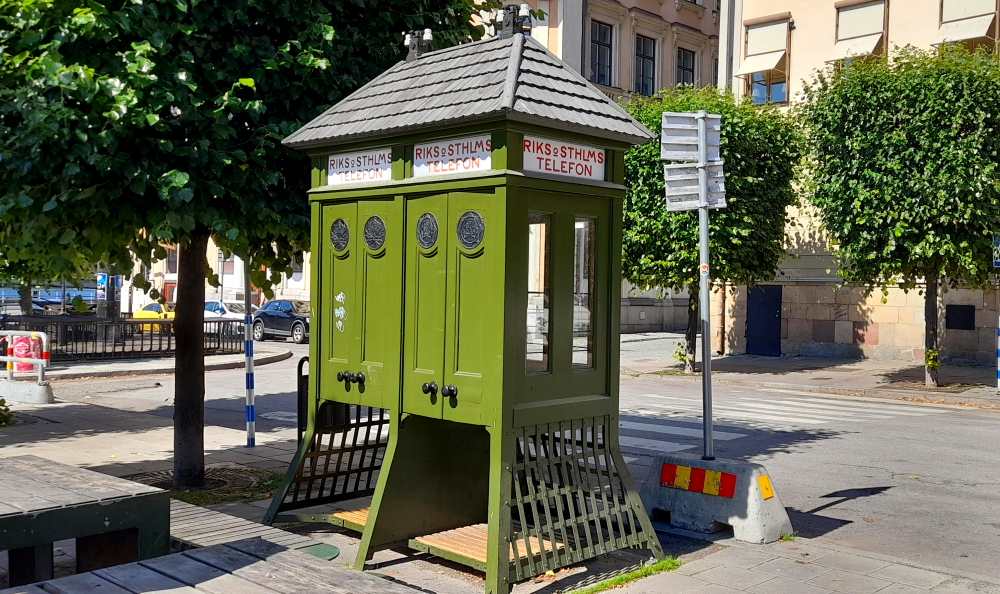
More telephone boxes.

Next stop is Järntorget (‘The Iron Square’), a small public square. located in the southernmost corner of the old town. The second oldest square in Stockholm, slightly younger than Stortorget, Järntorget dates back to around 1300 and remained the city’s most important trade centre for centuries with several streets accessing the Baltic Sea and other leading into Gamla Stan and the mainland.

Just off this square is Mårten Trotzigs gränd (Mårten Trotzigs alley). It’s the narrowest alley in Gamla Stan, only 90 centimeters wide at its narrowest point.
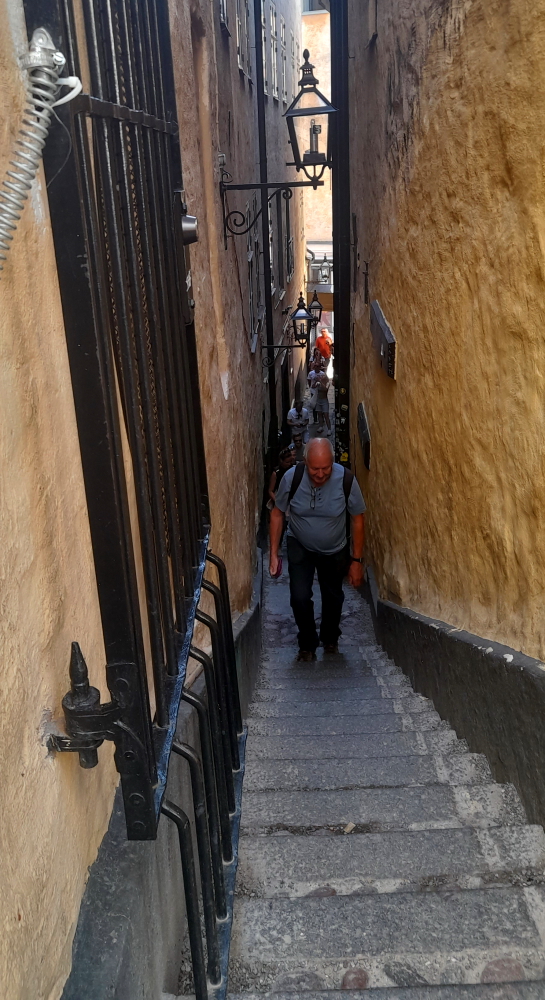
Very narrow lane.

From here we walk past the German Church. It is named for standing in the centre of a neighbourhood that in the Middle Ages was dominated by Germans. Officially named Sankta Gertrud, the church is dedicated to Saint Gertrude (626-659), abbess of the Benedictine monastery of Nivelles, in present-day Belgium, and patron saint of travelers.
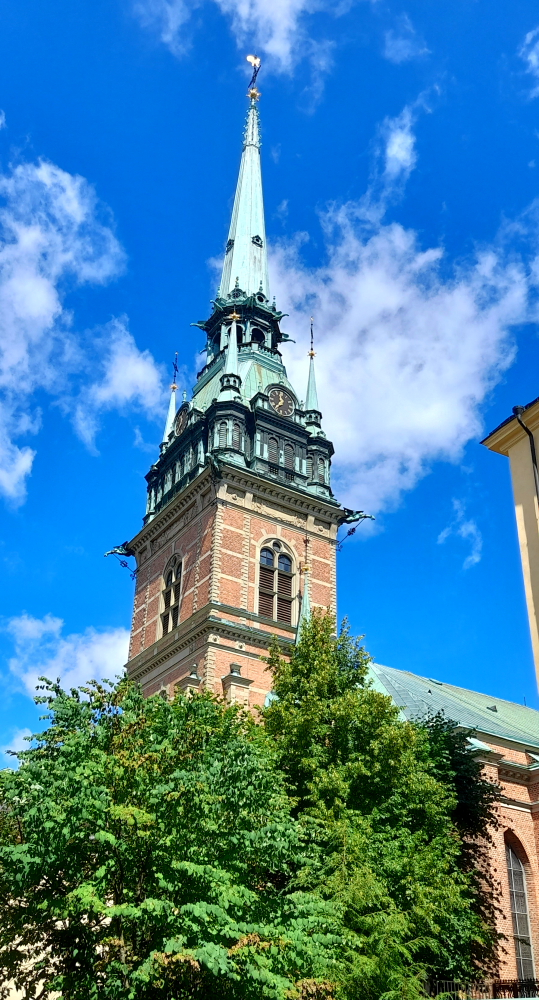
Another church – The German Church.

We stop by a small square and the restaurant “Under Kastanjen” (Under the Chestnut Tree) a tree which provides a leafy canopy on this warm, sunny day.

A few steps further on, in Köpmantorget (Merchants’ Street), is another small square where a statue of St George and the Dragon is located which was molded by Otto Meyer. Unveiled on 10 October 1912, marking the anniversary of the Battle of Brunkeberg, it is a bronze replica of Bernt Notke’s wooden Saint George and the Dragon, which is in Stockholm’s Storkyrkan (Cathedral).
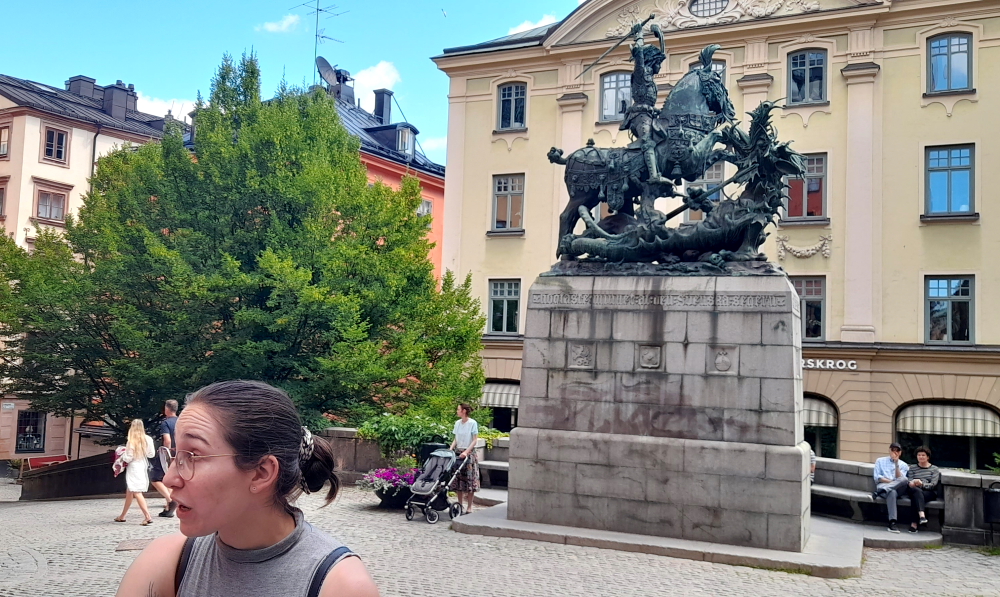
St George, the Dragon & our guide, Sanchia.

Next we visit Stockholm’s smallest statue (15 cm high) in the backyard of the Finnish Church. The sculpture of the Swedish artist Liss Eriksson (1919 – 2000) is actually named “Little boy looking at the moon”. However, it is usually just called “Järnpojke”, the “Iron Boy”.

From there we enter Slottsbacken and walk past Gustav III’s Obelisk into Stortorget the oldest square in Stockholm. Stortorget is the central point from which runs Köpmangatan, the oldest street in Stockholm, which was mentioned as early as the fourteenth century.
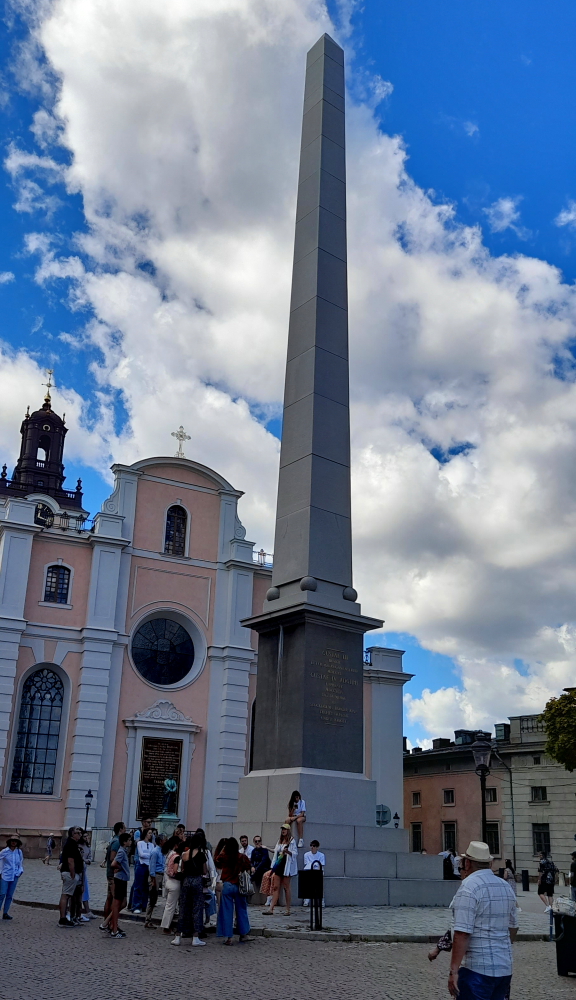
Our resting place to watch the Changing of the Guard.

It was from the beginning the central point around which the city grew. Stortorget was also the site of Stockholm’s bloodbath in 1520 (represented by the red building). The events occurred after the coronation of Christian II as the new king of Sweden when guests in the crowning party were invited to a meeting at Tre Kronor castle. (Christian II was a Scandinavian monarch under the Kalmar Union who reigned as King of Denmark and Norway, from 1513 until 1523, and Sweden from 1520 until 1521).

.Archbishop Gustav Trolle, demanding economic compensation for things such as the demolition of Almarestäket’s fortress, questioned whether the former Swedish regent Sten Sture the Younger and his supporters had been guilty of heresy. Supported by canon law, nearly 100 people were executed in the days following the meeting despite promises of amnesty. Among those killed were many people from the aristocracy who had been supporting the Sture Party in the previous years. Thereafter King Christian II became known in Sweden as Kristian Tyrann (‘Christian the Tyrant’).
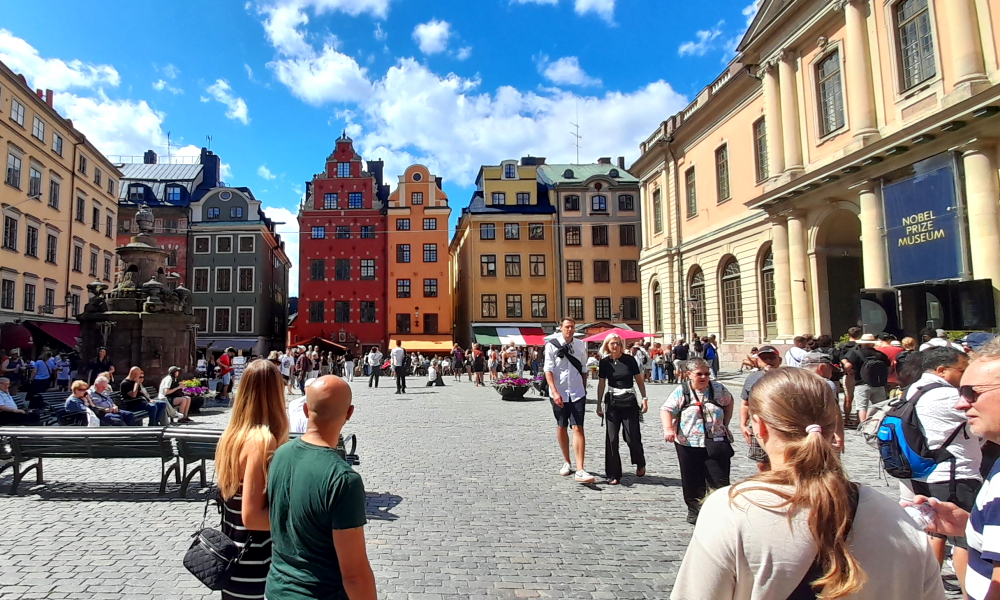
Stortorget.

Our tour ended at 12:30 pm so we sat in the shade on the steps of the Obelisk awaiting the arrival of the Army Band which is part of the daily Changing of the Guard at the Royal Palace.
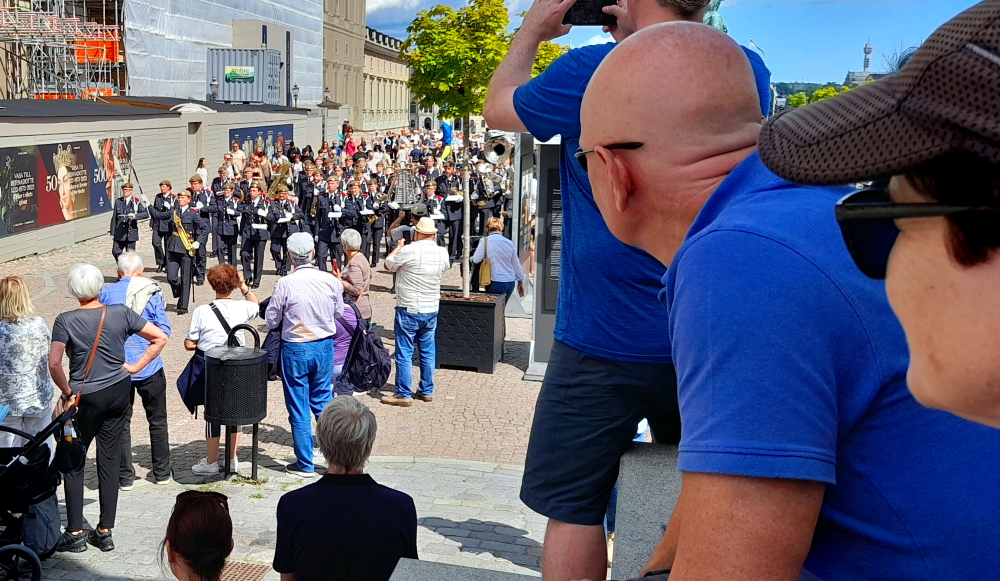
The arrival of the Army Band.

Unlike the Changing of the Guard in Oslo, this ceremony lasts 40 minutes and features several pieces of music played by the Band, along with maneuvers, in the Palace Outer Courtyard.
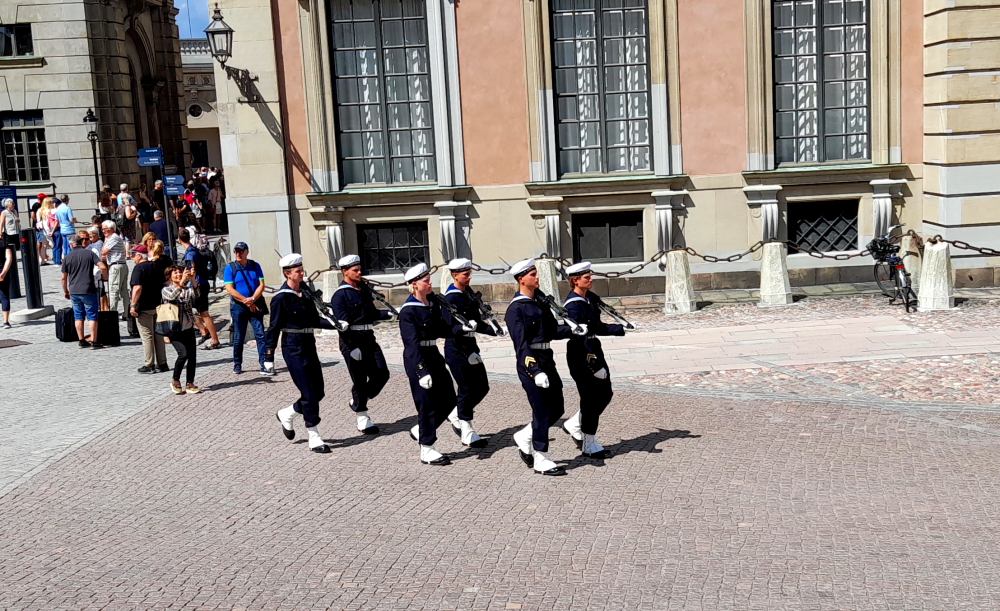
The changed guards exiting the Outer Courtyard.

The Band then marches to the space between the Stockholm Cathedral and the Obelisk to play their final number.
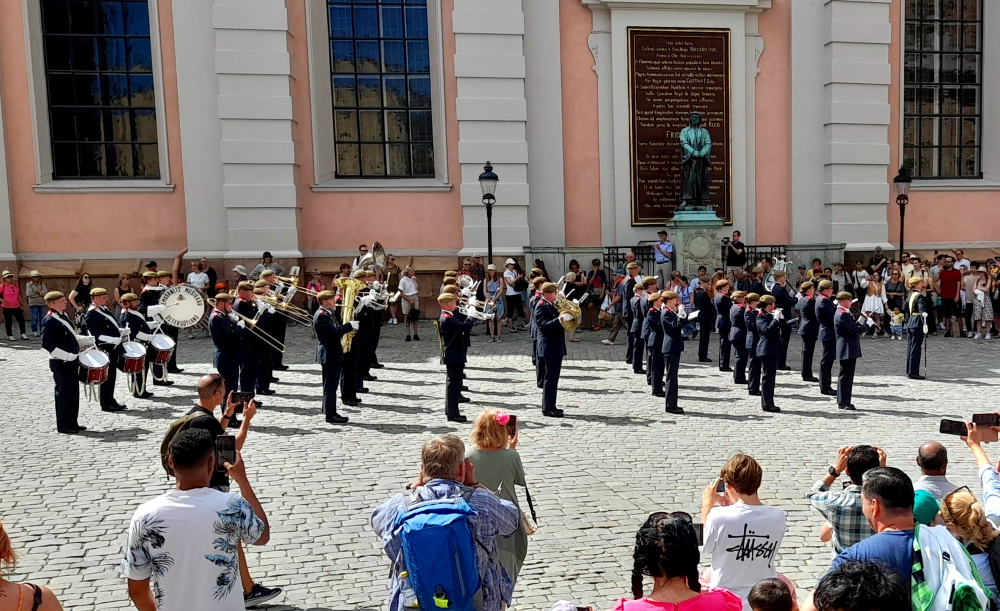
The Finale in the square in front of the Stockholm Cathedral.

It’s now around 1:00 pm and time to start our 30 minute walk to the Vasa Museum located on another island called Djurgården.
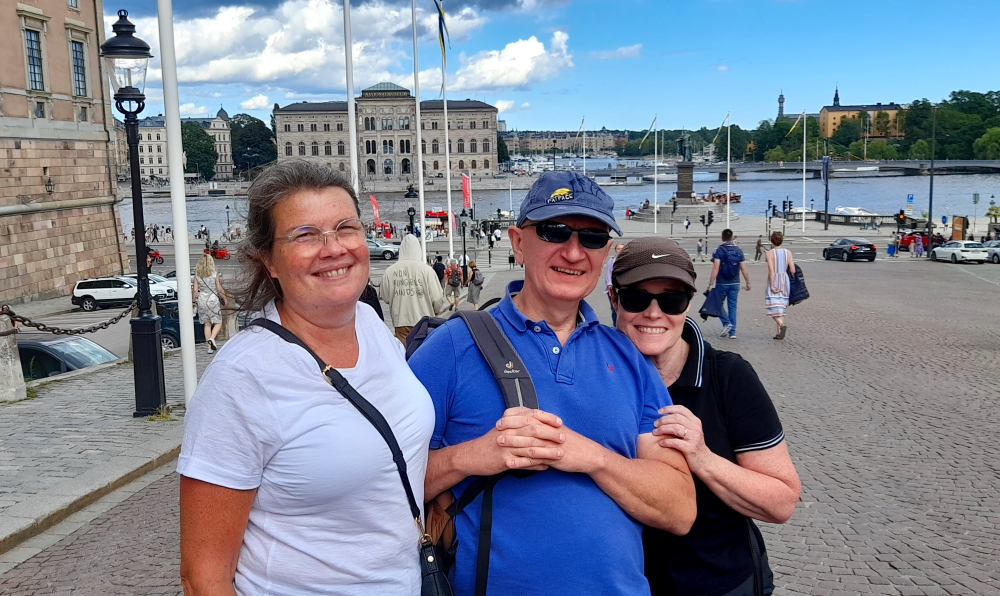
Miny, miney, moe.

The weather has managed to stay dry so far and even at 24 Deg C it feels quite hot. We will certainly rack up the kilometers walking around today.
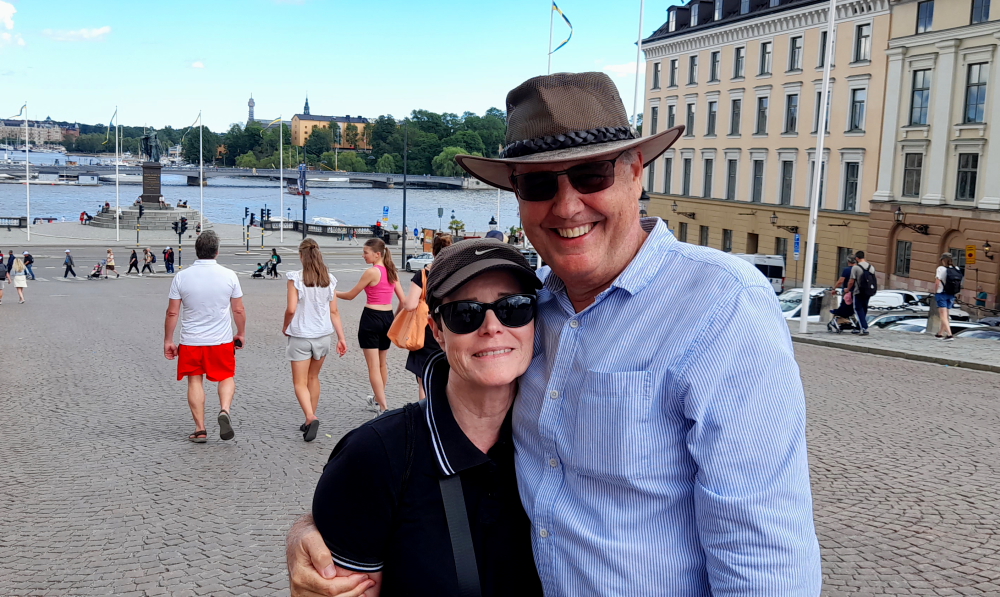
Still short.

We hardly take 10 steps when we realise Susie and Paul are no longer with us. Being the proud parents of ‘Colin’, their miniature dachshund, they couldn’t resist saying hello to another dachshund and its owners.
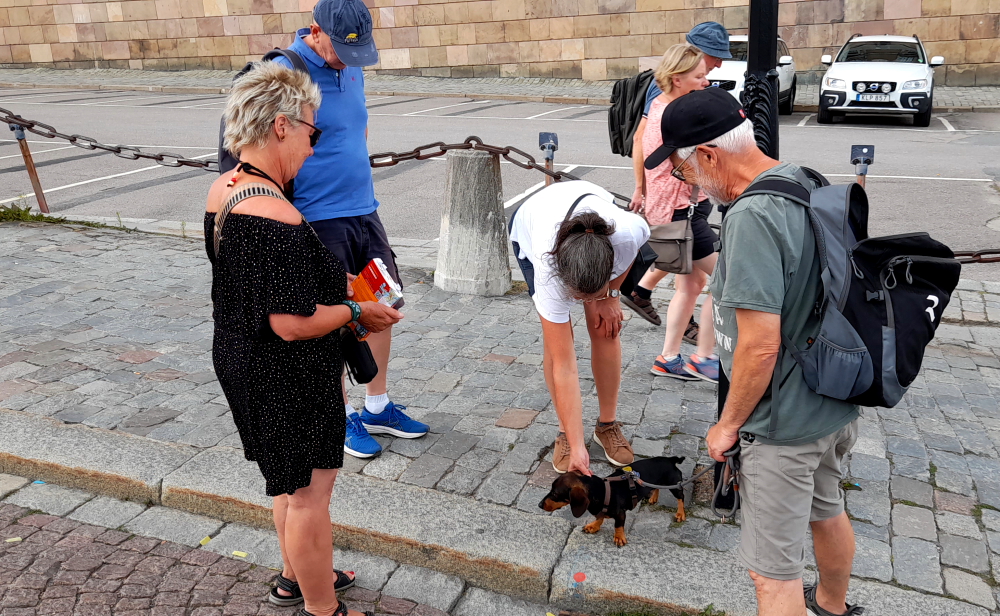
Couldn’t resist a Colin clone.

Our route takes us past the front of the Royal Palace, across Skeppsbron, along Stallgatan onto Nybrokajen which skirts the harbour where most of the ferries dock onto Strandvagskajen.
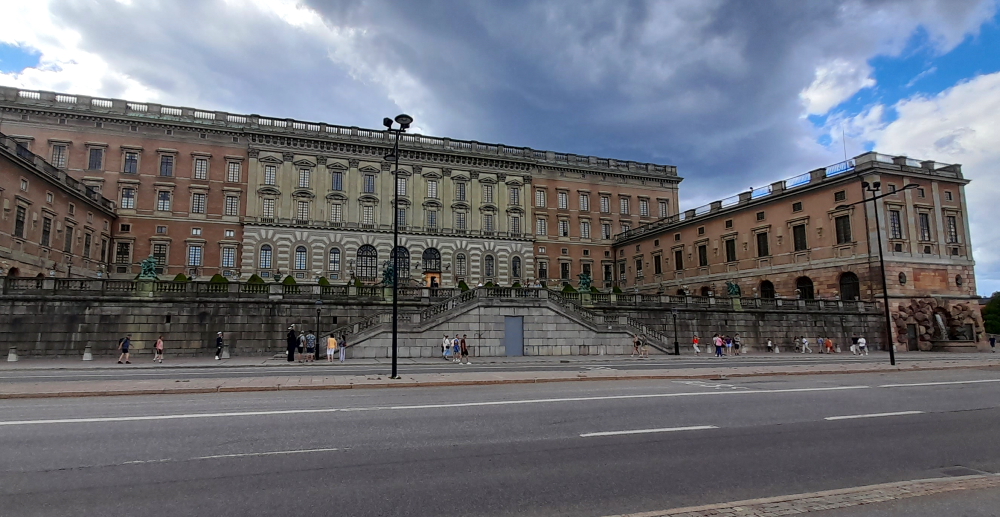
Front of the Royal Palace.

Paul, Susie and I enter the museum after a cool drink in the shade of the outdoor museum cafe. Lynn stays to mind our bags as she had already visited the museum years ago.

A maritime museum, the museum displays the only almost fully intact 17th-century ship that has ever been salvaged, the 64-gun warship Vasa that sank on her maiden voyage in 1628. She sailed a total of 1km before she sank. The Vasa Museum opened in 1990 and, according to the official website, is the most visited museum in Scandinavia.
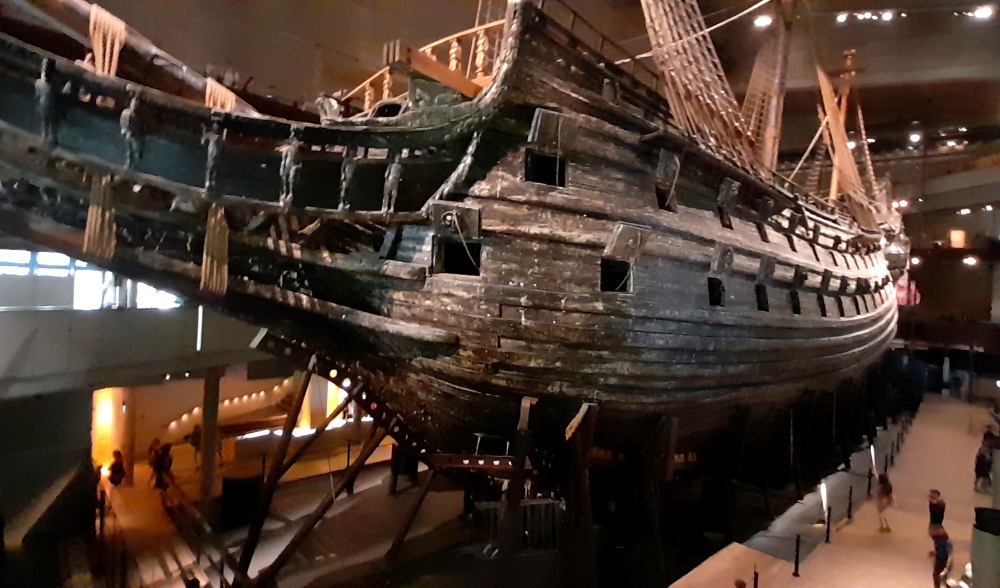
The 1628 Vasa Warship.

Inside the museum the ship can be seen from six levels, from her keel to the very top of the sterncastle. Around the ship are numerous exhibits and models portraying the construction, sinking, location, and recovery of the ship. There are also exhibits that expand on the history of Sweden in the 17th century, providing background information for why the ship was built.
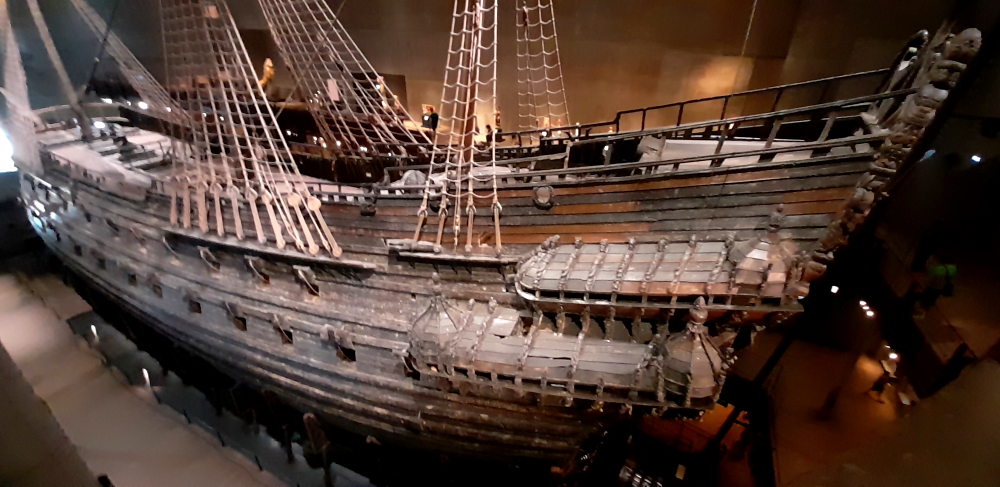
Impressive museum.

1.5 hours later we emerge and walk the 30 minutes back to the hotel.
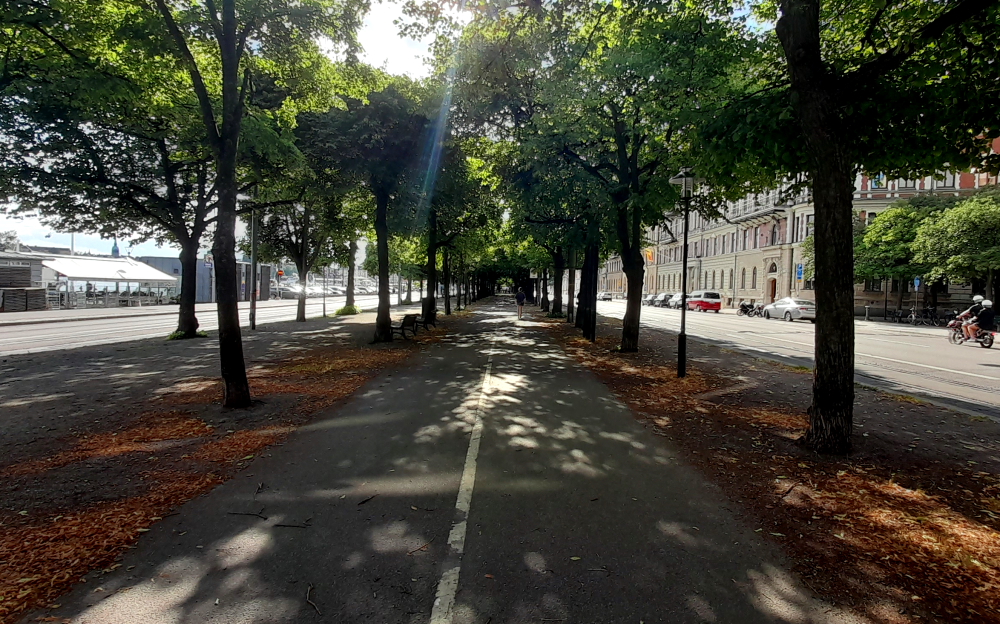
Shaded stroll home.

After a long day on our feet we need a rest in our rooms then dinner just two doors down at a very nice Asian restaurant. It’s Sunday so the restaurant can’t sell wine or beer but Chinese Tea is just the shot after a day in the sun.

Total steps today: 15,078. Total km:- 9.8. Total calories burned: 588.1. This is starting to read like Bridget Jones’ Diary!

10 July, 2023

After a day of walking yesterday we’ve decided we want to see a lot more of Stockholm but sitting on our bums instead. Enter stage right – a 2.5 hour Stromma cruise through Stockholm’s archipelago – from Stockholm to Vaxholm return. Perfect day for it with sunshine and 24 Deg. C.

Before breakfast Lynn and I go online to book the tickets. Worryingly, the instructions were that we needed to be at the dock 20 minutes before departure otherwise we might lose our seats to people who hadn’t booked tickets.

Lynn, being her usual cautious self, has us leave the hotel at 1:00 pm for the 20-minute walk to the boat. While we go and sit in the shade of a nearby park she ventures to the dock to check out the situation. Just as well as a queue has already started to form in the ‘pre-booked’ queue. So she waits in the queue, in the sun, and has us join her at 1:40 pm. By the time we get there the pre-booked queue is huge with only a couple of people in the other queue.
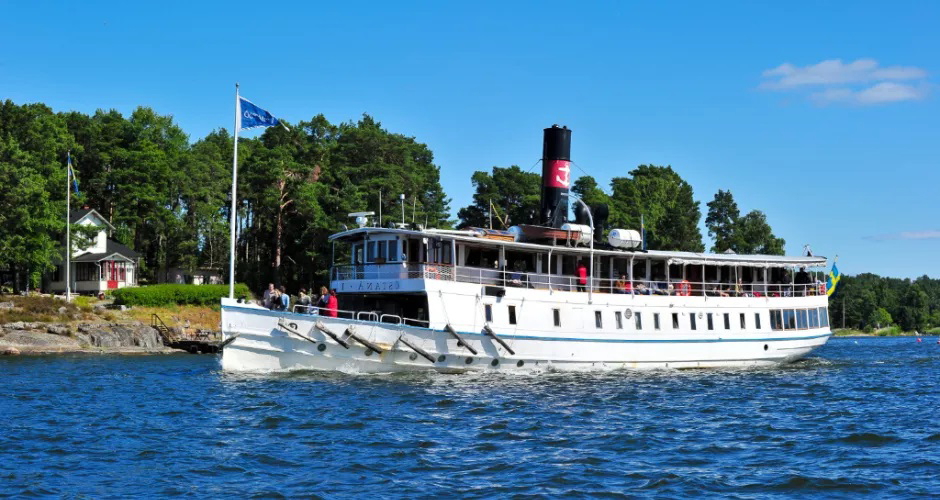
The M/S Ostana.

The M/S Östanå I, was built in 1906.
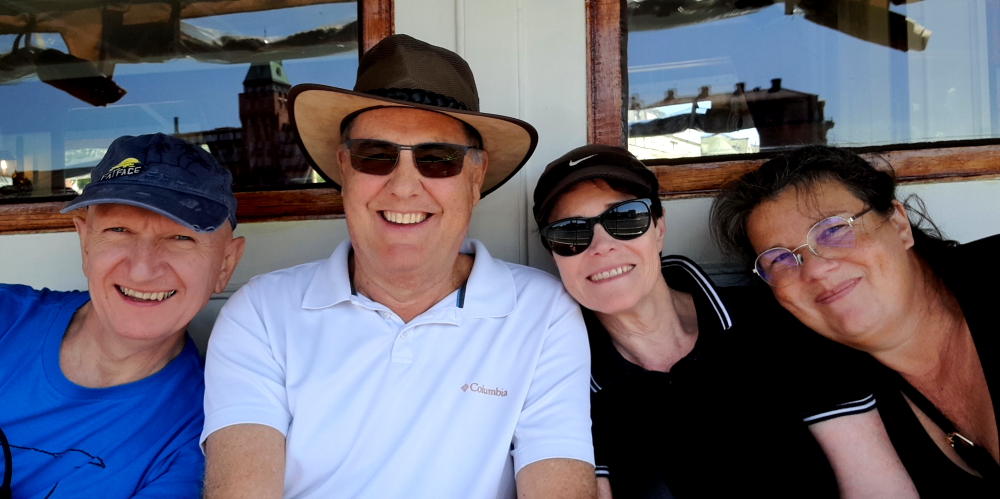
All seated on the boat.

Lynn and Susie scamper onto the boat and up the stairs to the outside, covered deck and snag some bench space for the 4 of us. Right on time the capacity-filled boat departs for Vaxholm.
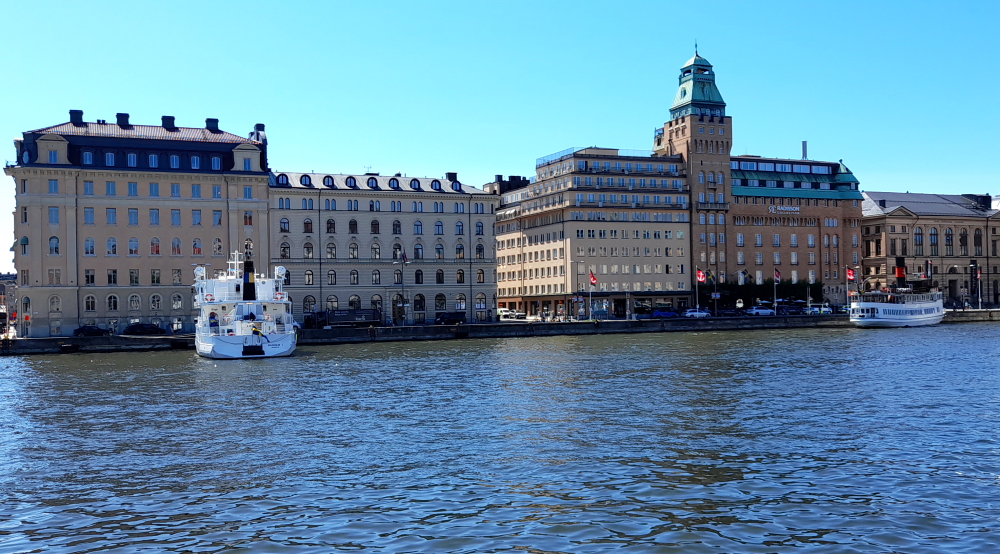
Docked in the harbour facing the Radisson Collection Strand Hotel.

Had we known, we would have gone to the other side of the boat as the guide’s commentary on the way out and back tends to refer to historical, cultural and natural features on the other side of the boat.
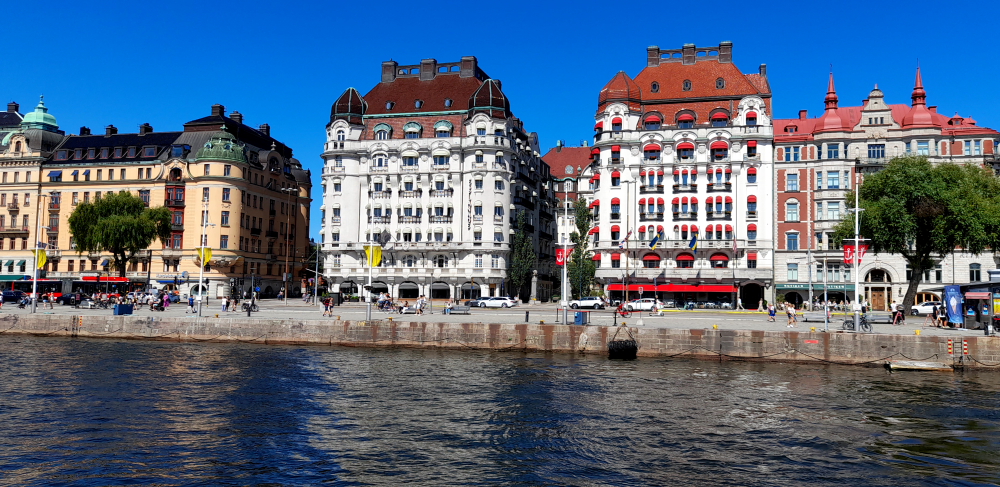
Departing the dock in front of the red awnings of the Hotel Diplomat.

The boat’s outward route goes to the right of Djurgarden and up the channel, around the island of Tegelon and into the port of Vaxholm.

The first island we pass is Djurgården (technically Kungliga Djurgården Swedish for ‘The Royal Game Park’), home to historical buildings and monuments, museums, galleries, the amusement park Gröna Lund, the open-air museum Skansen, the small residential area Djurgårdsstaden, yacht marinas, and extensive stretches of forest and meadows.
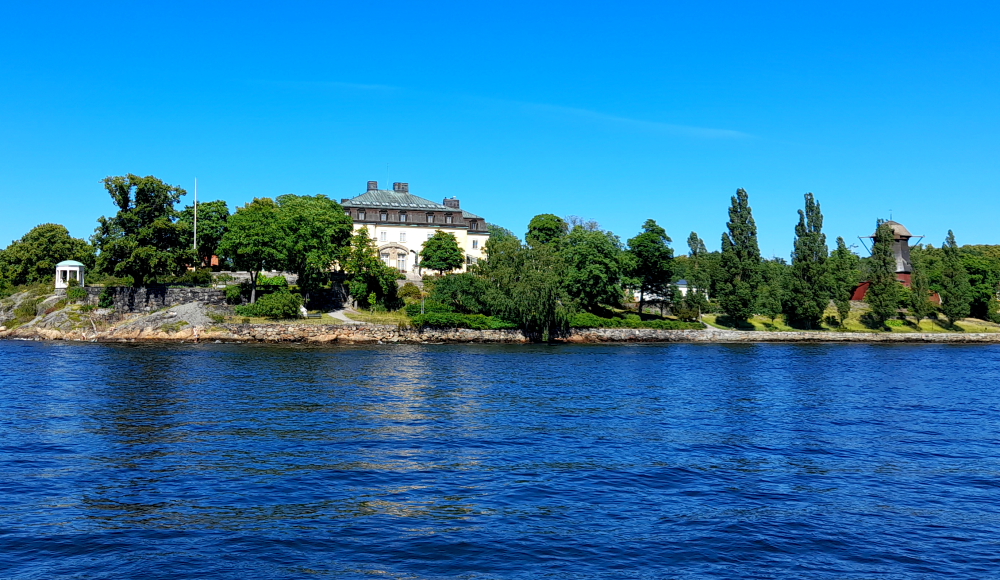
Prins Eugens Waldemarsudde & windmill on Djurgarden.

Since the 15th century the Swedish monarch has owned or held the right of disposition of Royal Djurgården. Today, this right is exercised by the Royal Djurgården Administration which is a part of the Royal Court of Sweden.
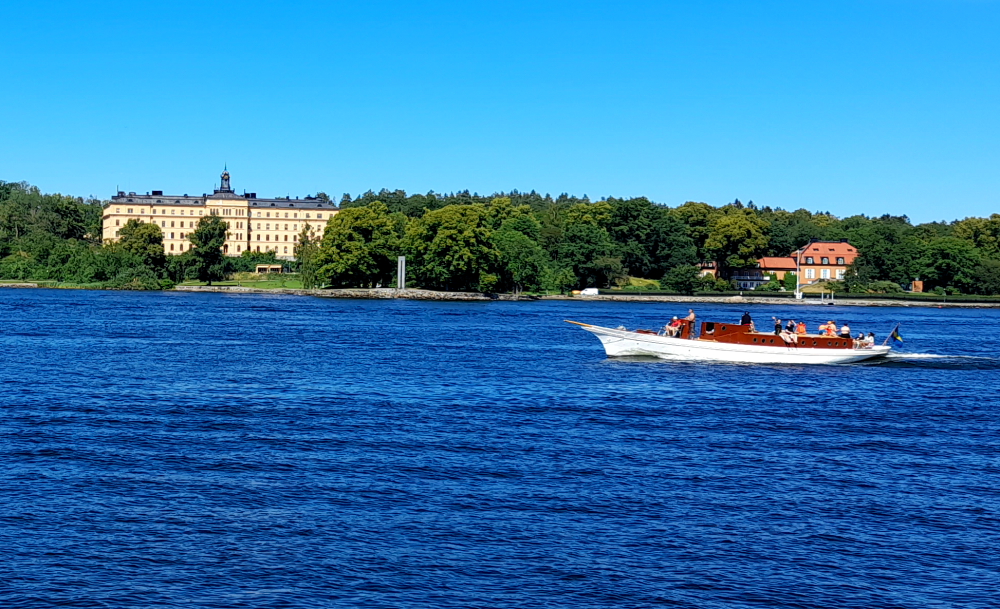
Campus Manilla school, Djurgarden.

Unlike other lakes and bodies of water that we’ve driven past in Sweden, the Stockholm waterways are busy with a variety of watercraft (at least in the summer months or weeks).
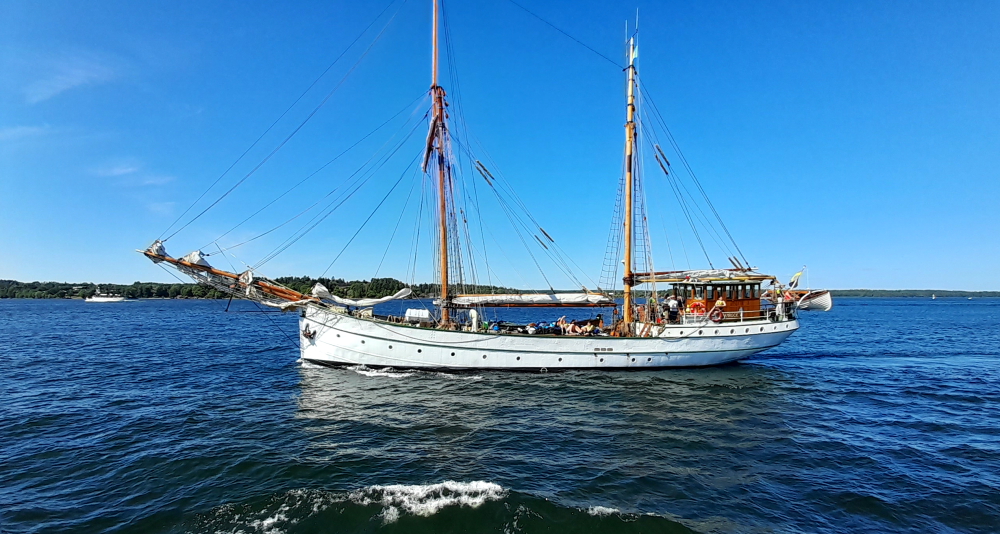
“The Shamrock” – definitely a party boat.

The boat deviates from the channel and takes a detour around the small island of Tegelon (Brick Island). In 2005, Tegelön had 24 permanent residents and also has many holiday homes. In the past, the island has belonged to Velamsund’s manor. Its current name is linked to a brickworks that existed on the island during the 17th and 18th centuries.
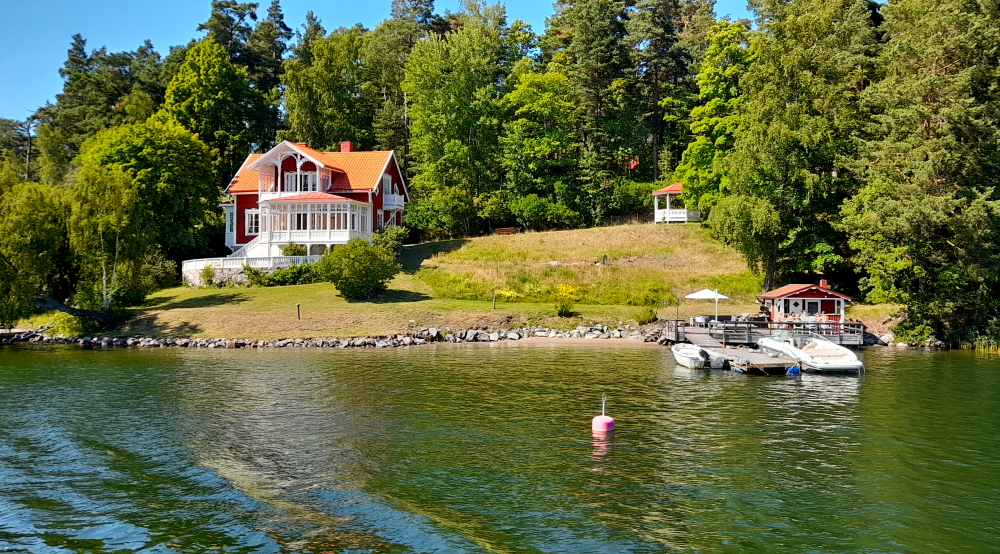
Summer house on the island of Tegelon.

Around 3:15 pm we arrive at Vaxholm where we stop for 5 minutes to drop off and collect some passengers.

Vaxholm Fortress was originally constructed by Gustav Vasa in 1548 to defend Stockholm against shipborne attacks from the east. The fortress lies in the middle of the Kodjupet strait, one of two main routes into Stockholm from the open sea.

The town of Vaxholm, which lies adjacent to the fortress but on the western side of the Kodjupet strait, was established in 1558, when King Gustav Vasa bought some farms from Count Per Brahe the Elder. It later received rights as a merchant town (köping) and in 1652 was granted the Royal Charter.
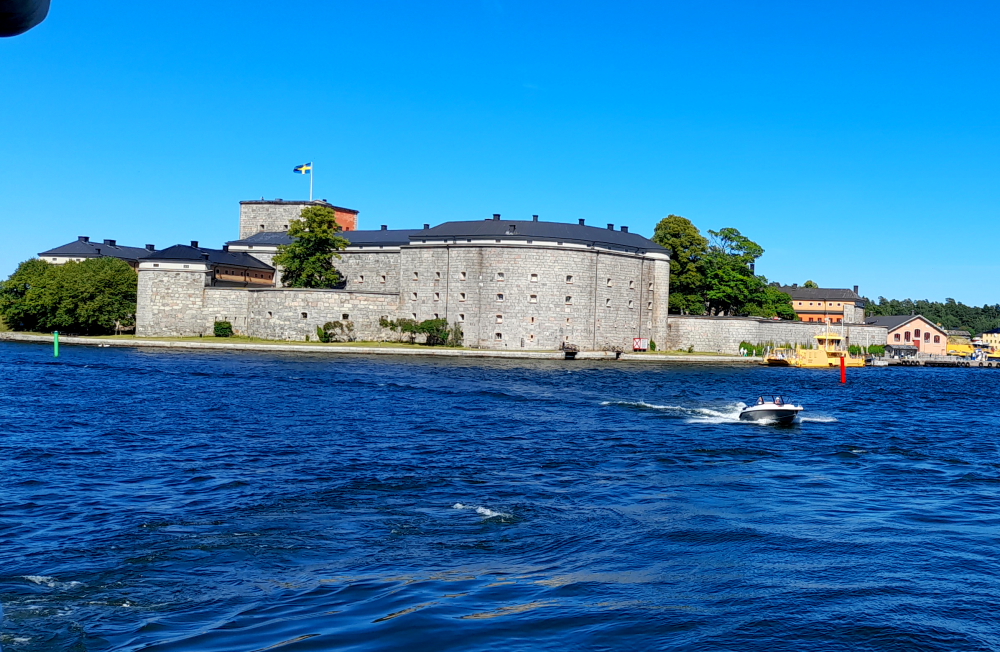
Fortress at Vaxholm.

In 1849, the Djurgårdens Ångbåts-Aktie-Bolag introduced a steamboat service from Stockholm to Vaxholm. Through a number of acquisitions and mergers, this company became that known today as Waxholmsbolaget. As a consequence and in the 1860s, Vaxholm became a popular resort town, especially for bathers, and many wooden summer houses were built by people from Stockholm.
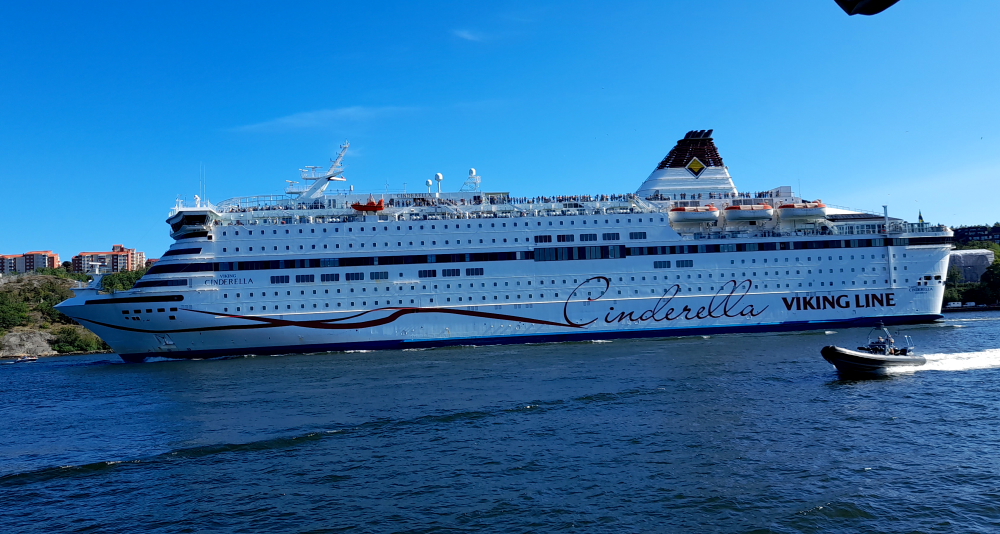
The Ferry to Gothenburg.

Our return route from Vaxholm skirt the righthand side of the islands of Ostra and Vastra Granholmen, Stora Hoggarn and Saltsjon before rejoining the main channel back to the Stromma mooring site in front of the Hotel Diplomat.
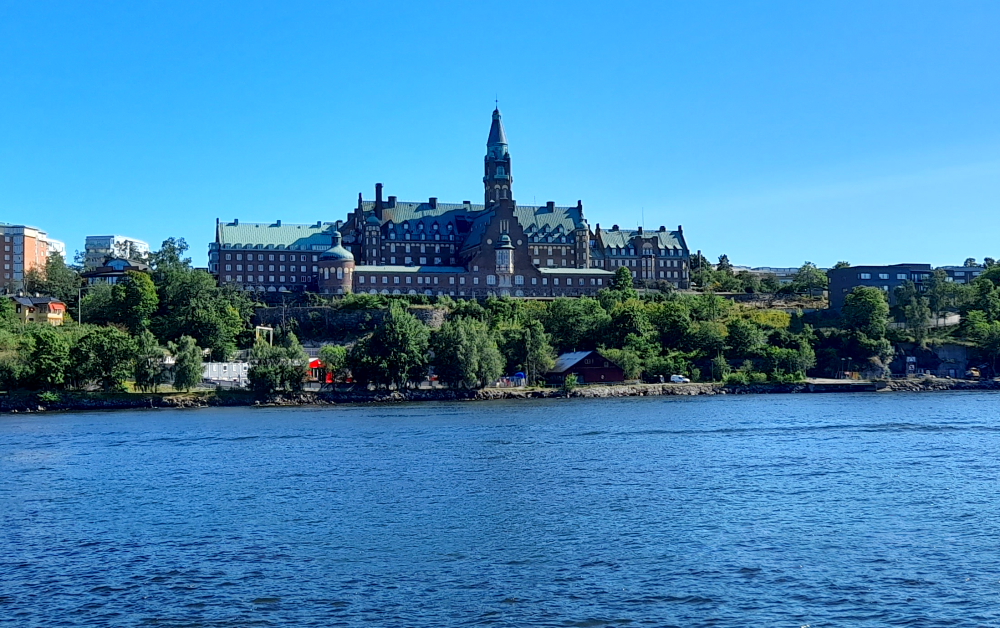
Danvikshem Retirement Home

Originally a hospital Danvikshem was converted to a retirement home a few years ago. We all smiled at the though of older folk trying to climb the stairs to the penthouse rooms in the eves. Hopefully they have installed elevators since the original 1801 building was built.

As soon as we disembark at 4:30 pm we walk up Artillerigatan to the Hedvig Eleonora kyrka where we cut through the church yard onto Storgatan and the square that faces the Ostermalms Saluhall (Ostermalm’s Sales Hall or in this instance, Food Hall).

The idea being to stroll around the various food stalls then choose one restaurant from the many nearby for dinner.

The approximately 3,000 m² hall was inaugurated on 30 November 1888 in the presence of King Oscar II. At that time, only six months had passed from the start of construction to completion. In part, 300 to 500 men were employed in the record building. On December 1, Östermalm’s Saluhall opened its doors to the public and Stockholm had its own temple for the culture and preservation of good food.
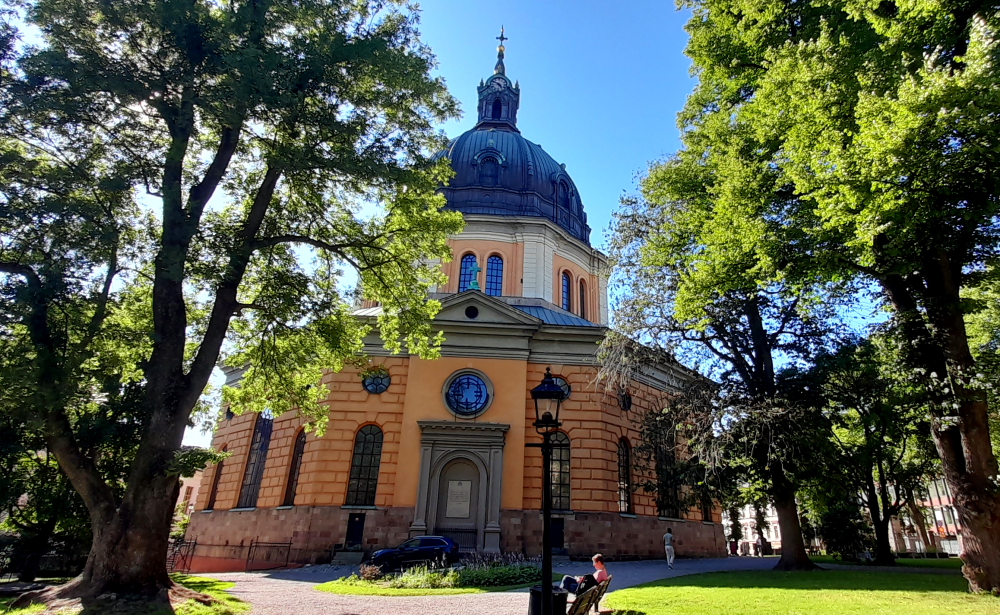
Hedvig Eleonora Church.

The architects were Isak Gustaf Clason and Kasper Salin , who were also responsible for the complicated inner cast iron construction . Prior to the work on Östermalm’s Saluhall, Clason and Salin had gained inspiration during a scholarship trip in 1883-1886, when they studied many new examples of brick architecture in Northern Germany, Italy and France. Particularly in France, there were several monumental cast iron constructions of this advanced type that would become the framework of Östermalmshallen’s brick cathedral, the facades of which were built in Börringitegel. Construction was a novelty in Sweden. Right from the beginning, the hall had electric lighting with arc lamps and light bulbs.
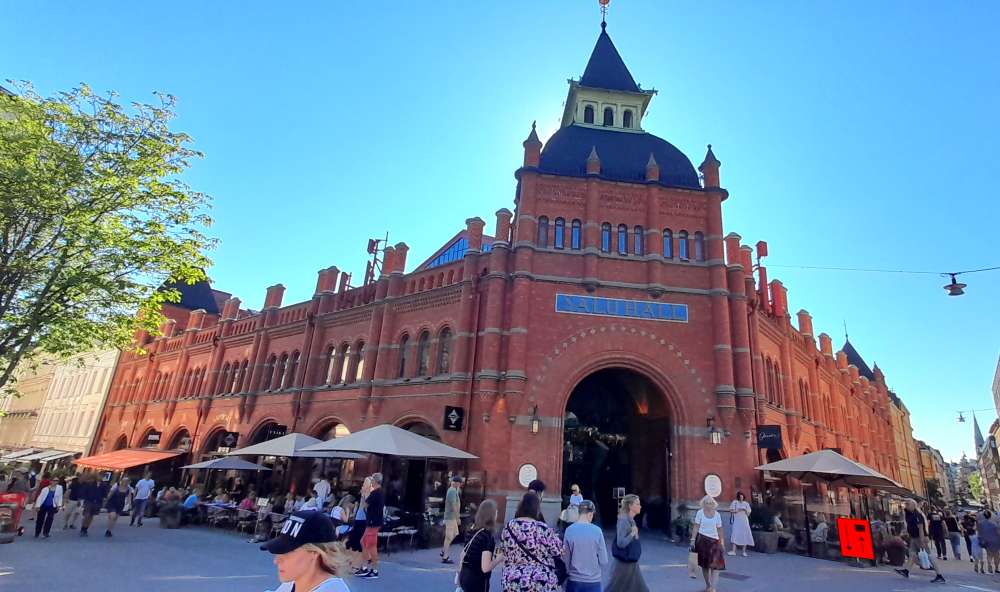
The Stockholm Food Hall.

The building is dominated by a corner tower with a slate-clad roof surmounted by a lantern with the winged hermes hat (the symbol of commerce) on top. The building is one of Sweden’s finest in brick from the late 19th century.
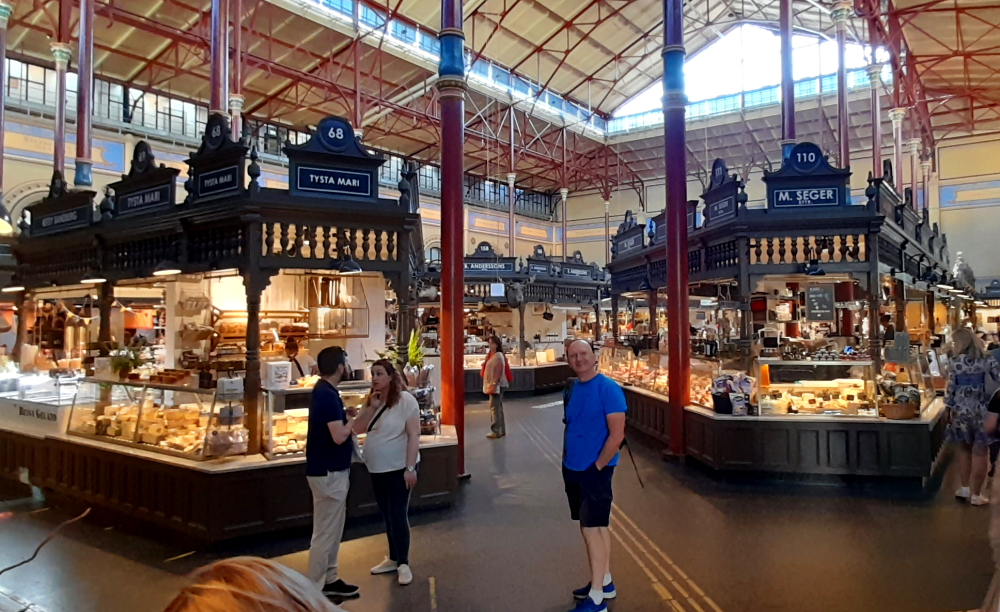
Inside the Food Hall.

During 2016-2020 the hall was closed for renovation which was based on the building’s period character and cultural-historical values. The hall retained its warm and convivial atmosphere while the building’s original star-shaped layout from 1888 was recreated as were original details such as colours, friezes, paintings and carpentry.
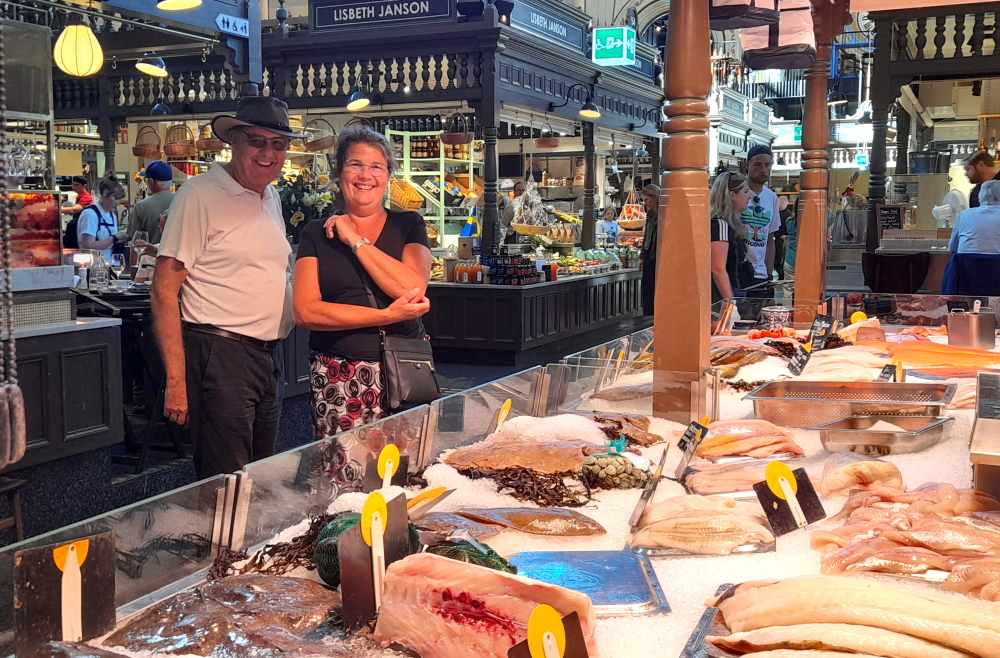
Fish for dinner?

Today there are 18 traders, many of whom run family businesses that have been here for several generations.
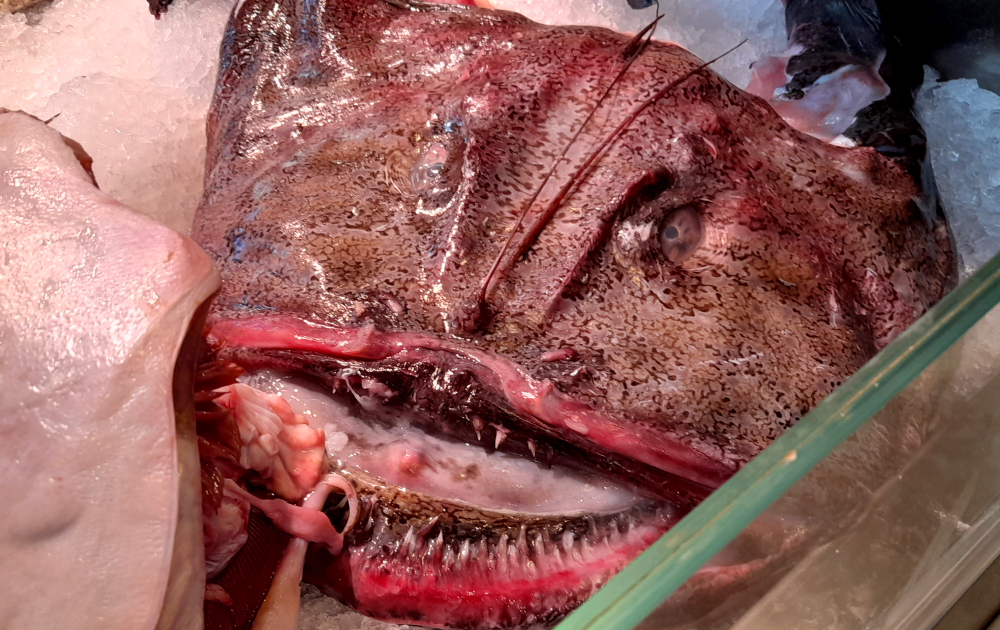
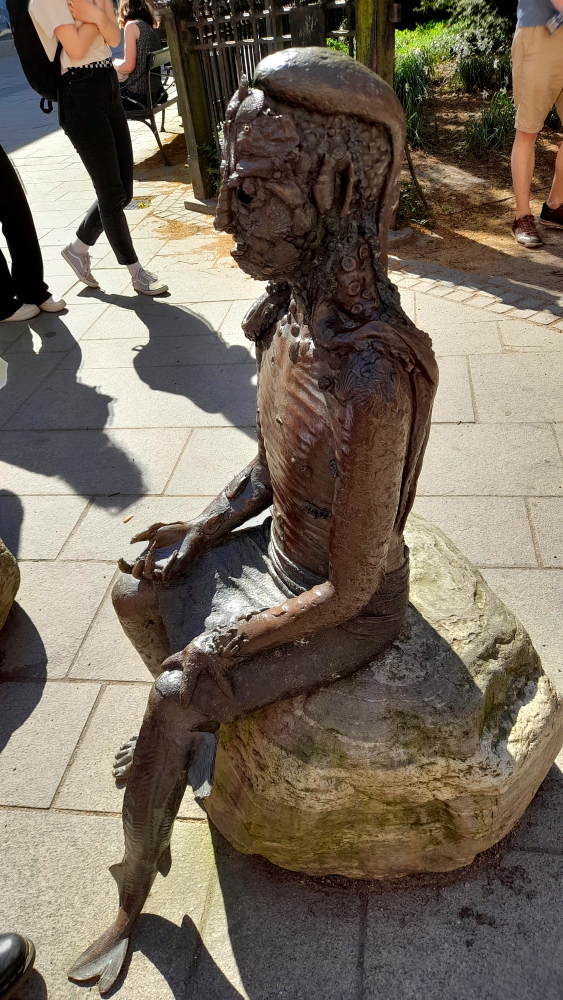
Now, that’s one ugly fish.

As it’s such a nice evening we choose to eat outside and to have something light – each of us choosing a different smorrebrod. Smørrebrød, “butter bread”, is a traditional open-faced sandwich in the cuisines of Denmark, Norway and Sweden that usually consists of a piece of buttered rye bread, topped with commercial or homemade cold cuts, pieces of meat or fish, cheese or spreads, and garnishes.
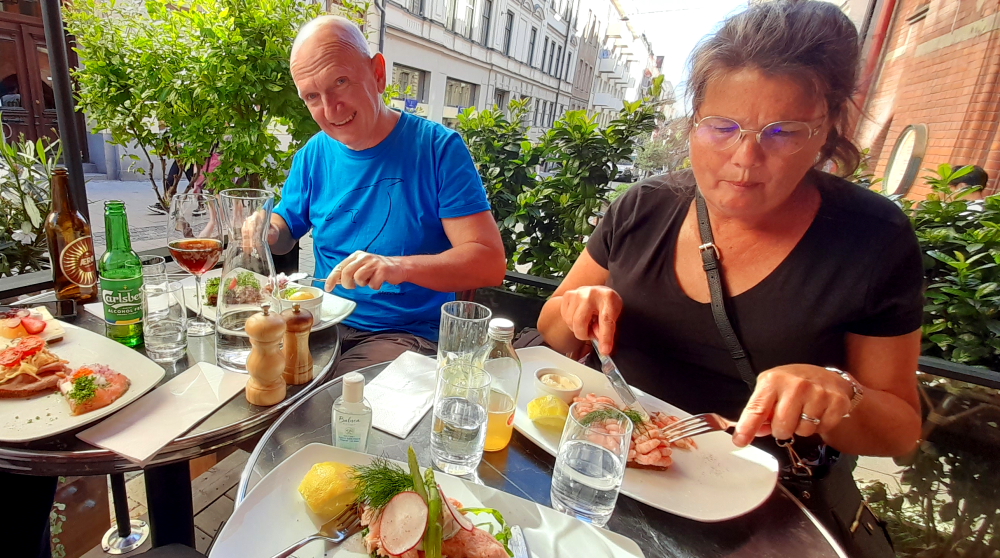
Early dinner at the Food Hall.

For dessert we purchase ice cream cones from a stall inside the Hall which we eat while walking back to the hotel where we all convene in Susie and Paul’s larger room over a glass of DOCG Chianti.

11 July, 2023

Our route today takes us South West from Stockholm to Jonkoping via Granna on the Vattern Lake. About a 300 kms trip under sunny skies where we should arrive in Jonkoping at around 3:00 pm after a short stop in Granna.

Back on the E4 we drive through extensive farmland and rarely pass a caravan driving south – most are heading north. We also come across our first extensive solar farm covering a couple of fields. But the gathering dark clouds that we are driving towards and the corresponding weather forecast are likely to make the panels redundant for at least the next week.

At around 1:15 pm we drive into Granna along with every other tourist in Sweden, it seems. The long, main street is heaving with cars, caravans, motor homes and pedestrians.

Gränna is an idyllic (when tourist-free!) small town with painted wooden houses, cobbled streets, candy bakeries and a lively harbour area. It was founded in 1652 and planned following a certain symmetry and spaciousness in its design.
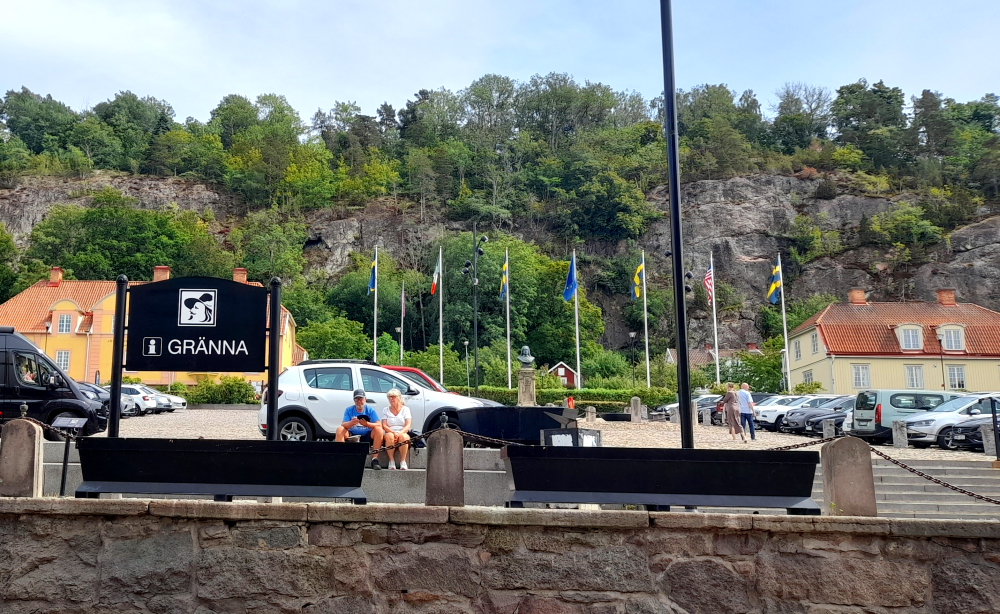
The granite cliffs behind Granna.

Since the 1850s, the small town has been renowned for its red-and-white candy canes. Today, there are around a dozen bakeries in the town centre making “polkagrisar”.
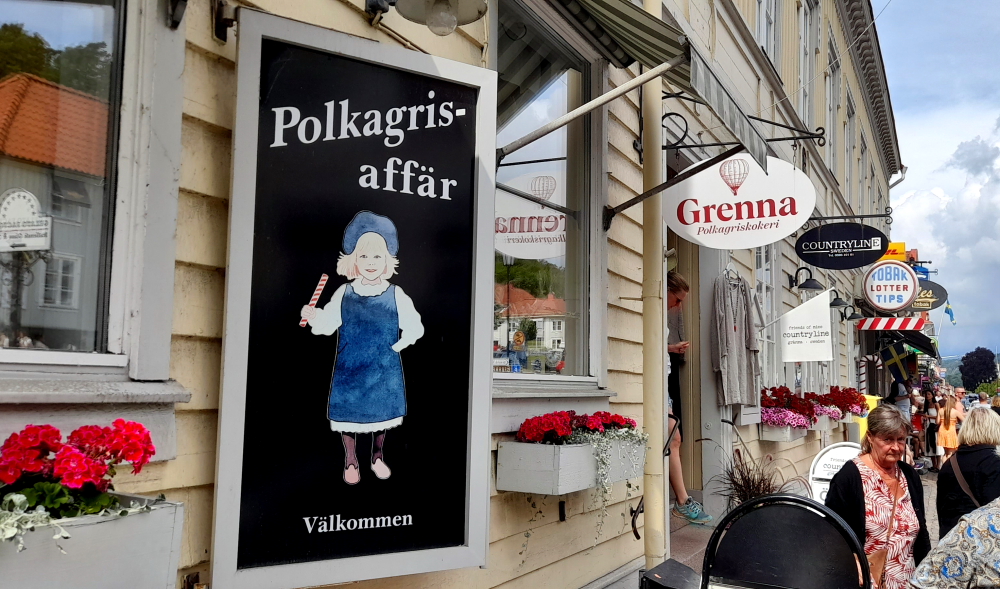
Crowded village to buy sweets.

Almost all of them offer visitors the chance to watch the manufacturing process. The shapes, colours, sizes and flavours of the sweet are varied and the candy canes are a popular souvenir.
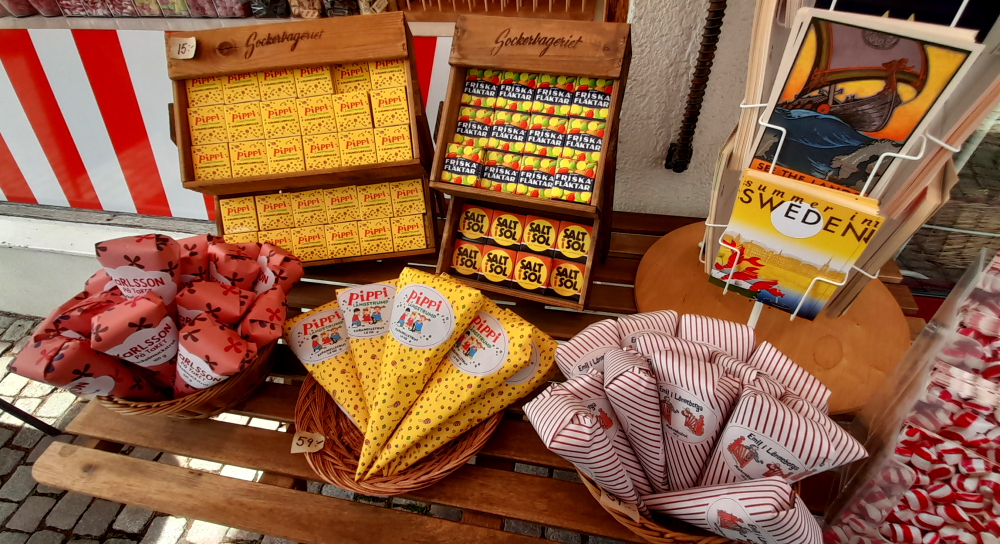
Sweeties.

15 minutes is more than enough time walking in this crush so we jump in the car to drive the 30 minutes to our hotel in Jonkoping. 15 minutes later it starts to rain.

Thanks to the GPS we easily negotiate the complicated exits off the E4 and drive into the hotel’s parking garage. We are staying at the Best Western Plus John Bauer Hotel for the next 2 nights on the edge of Lake Munksjon which, via a narrow channel, feeds into Lake Vattern.

The hotel’s interior is very “arty” and has reproductions of Bauer’s work throughout. John Albert Bauer (1882-1918) was a Swedish painter and illustrator. His work is concerned with landscape and mythology, but he also composed portraits. He is best known for his illustrations of early editions of Bland tomtar och troll, an anthology of Swedish folklore and fairy tales. Bauer was born and raised in Jönköping.
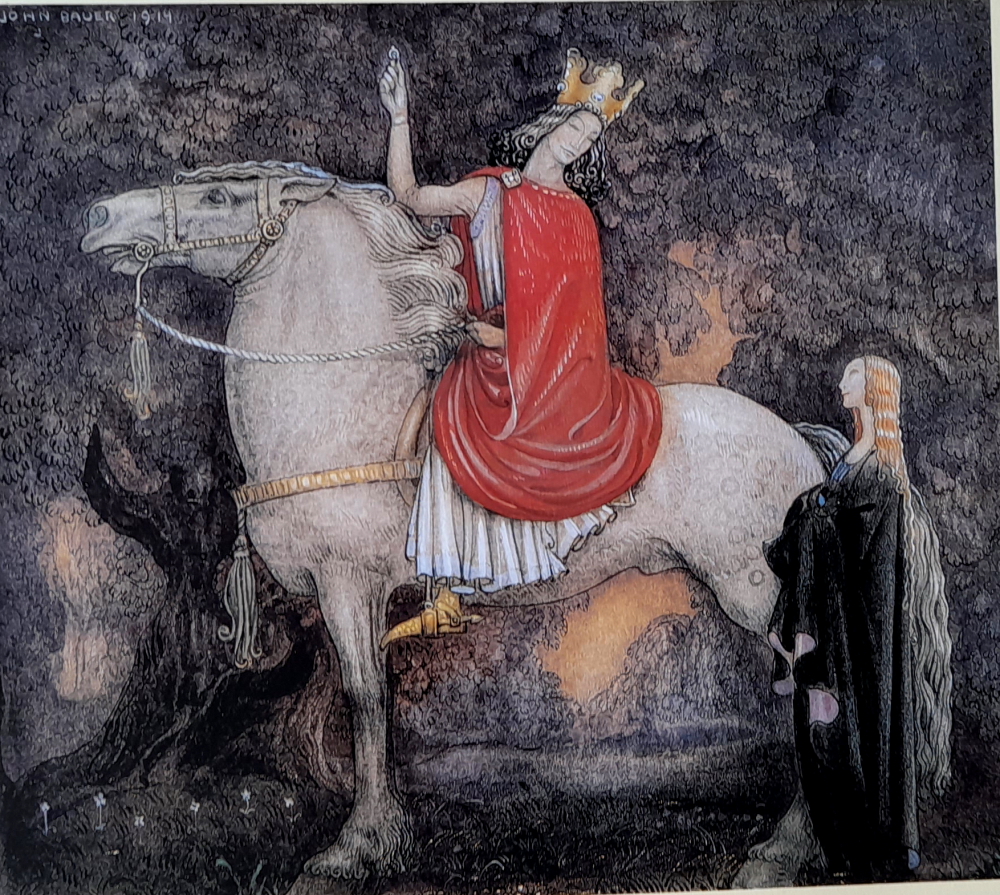
Nordic Myth by John Bauer

Our room is very tastefully decorated including books and artwork.
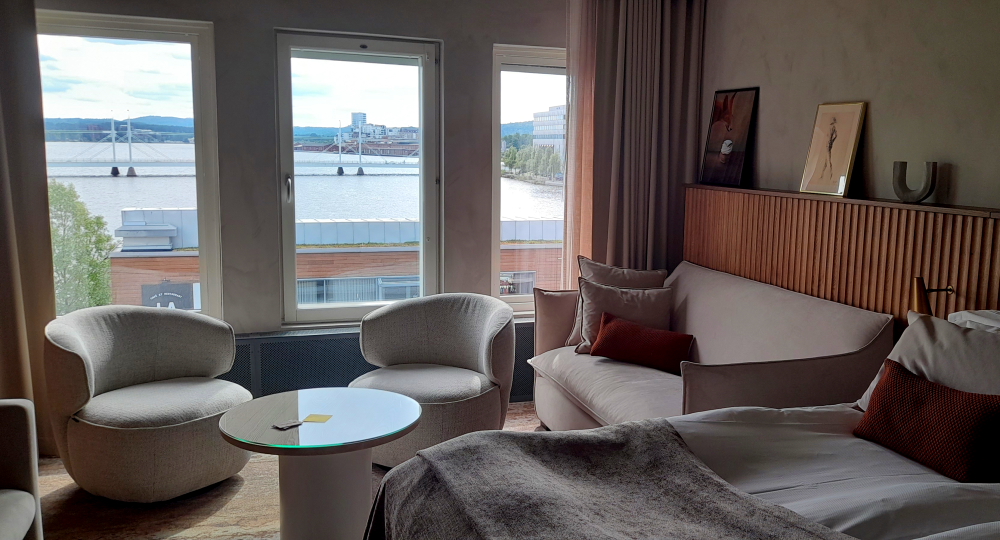
Hotel room with a view & artwork.

Jönköping’s old city area consists of a sandy area with two smaller lakes (Munksjön and Rocksjön ) on the southern shore of Lake Vättern, surrounded by hilly slopes. The urban area also includes the former urban areas Huskvarna and Norrahammar. The city received city privileges as early as 1284. Jönköping’s charters are the oldest in Sweden.
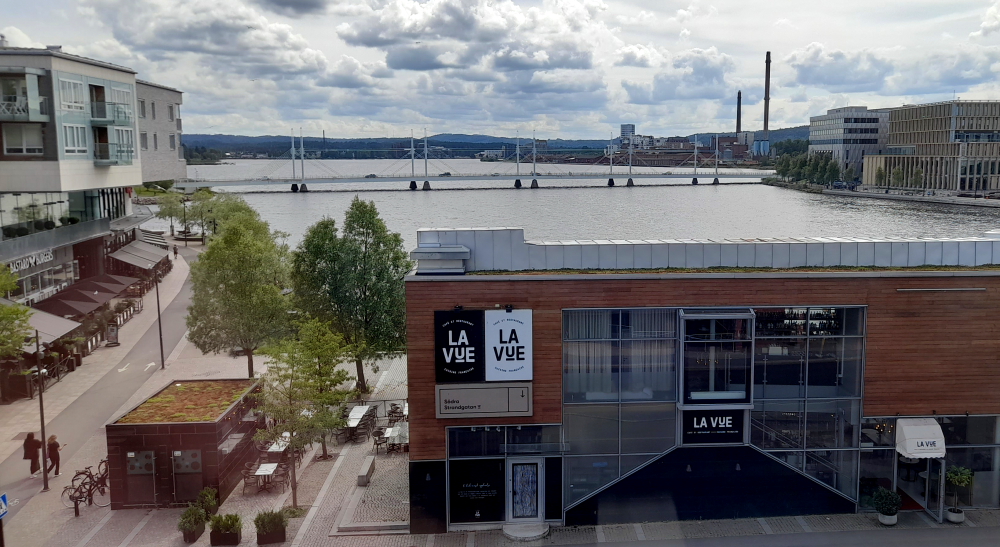
View from our room of the Munksjo Bridge over Lake Munksjon.

Jönköping is called the city of matches, which is based on the success that the Jönköping Tändsticksfabrik from the end of the 19th century had with its safety matches. No less than five match factories were active in the city for a period.
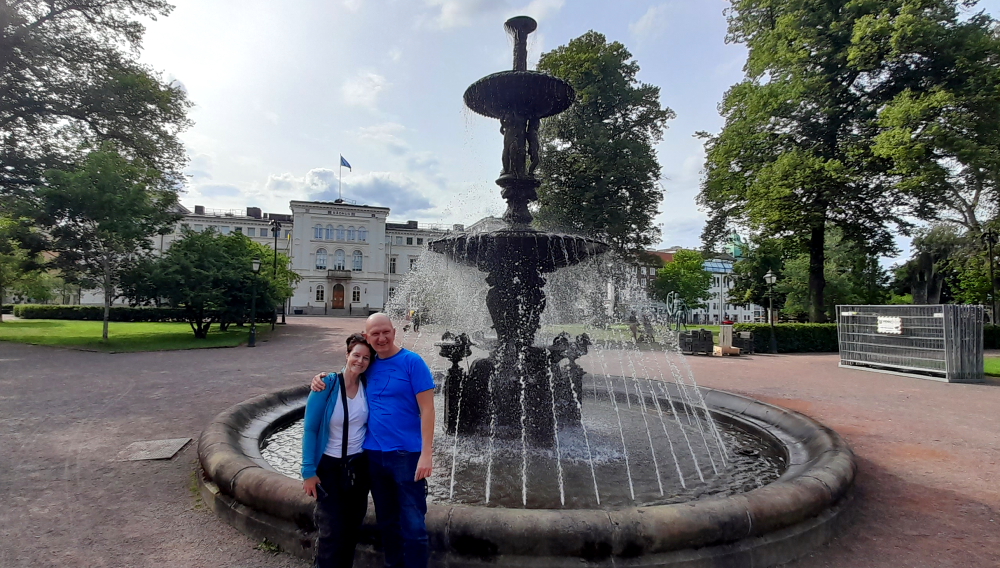
Walking around the town – Radhuset & Radhusparken.

Paul, Lynn and I venture out for a quick recce of nearby streets. After visiting the pier that juts into Lake Vattern we walk into the old town.
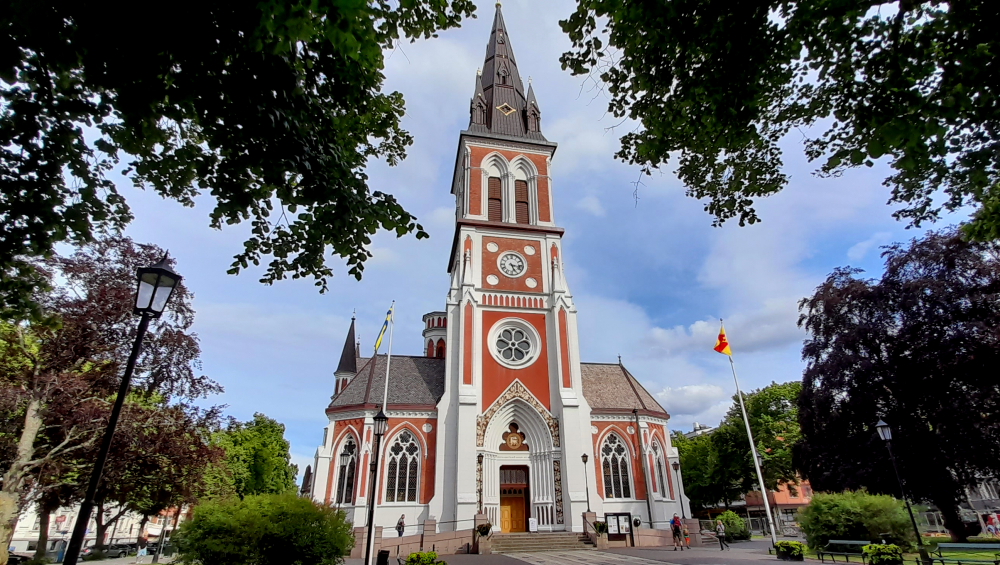
Sofiakyrkan.

The Sofia Church is built in neo-Gothic style and designed by the architect and professor GF Dahl, who also designed the Royal Library in Stockholm. The church is named after Queen Sofia, Oscar II’s wife.
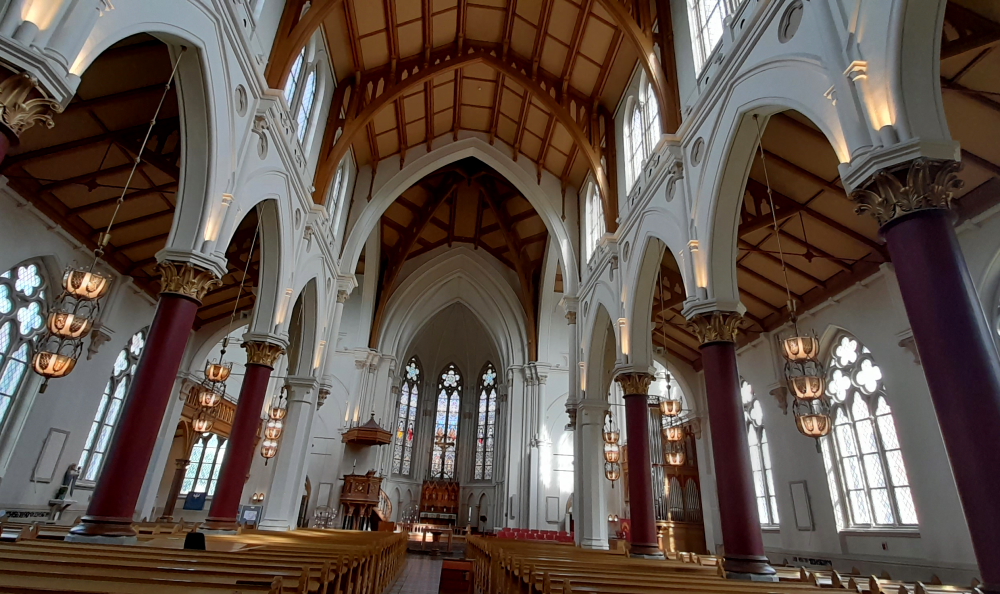
Inside the church.

The town’s streets feature both traditional wooden houses and shops as well as modern civic buildings, shops and units.
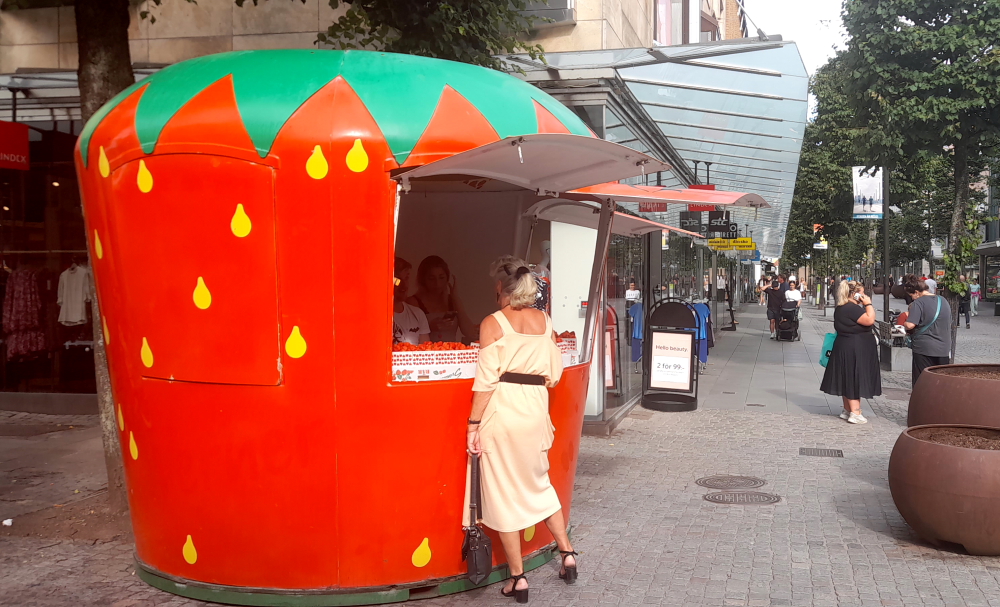
Punnet of strawberries, anyone?

Around the hotel are numerous restaurants taking advantage of the boardwalk along the waterfront.
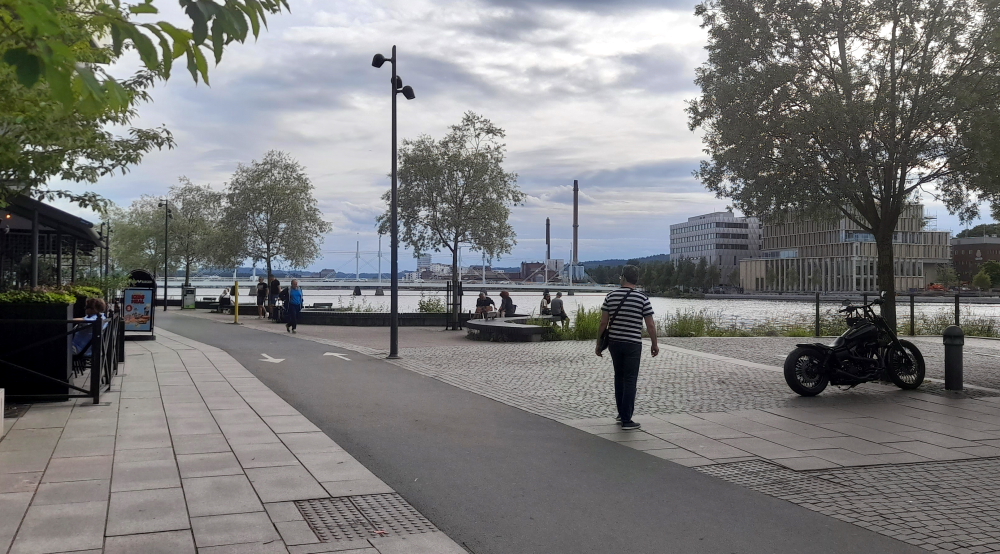
Beginning of the boardwalk by the lakeside.

While having dinner in La Vue restaurant we notice a flotilla of swimmers crossing the lake.
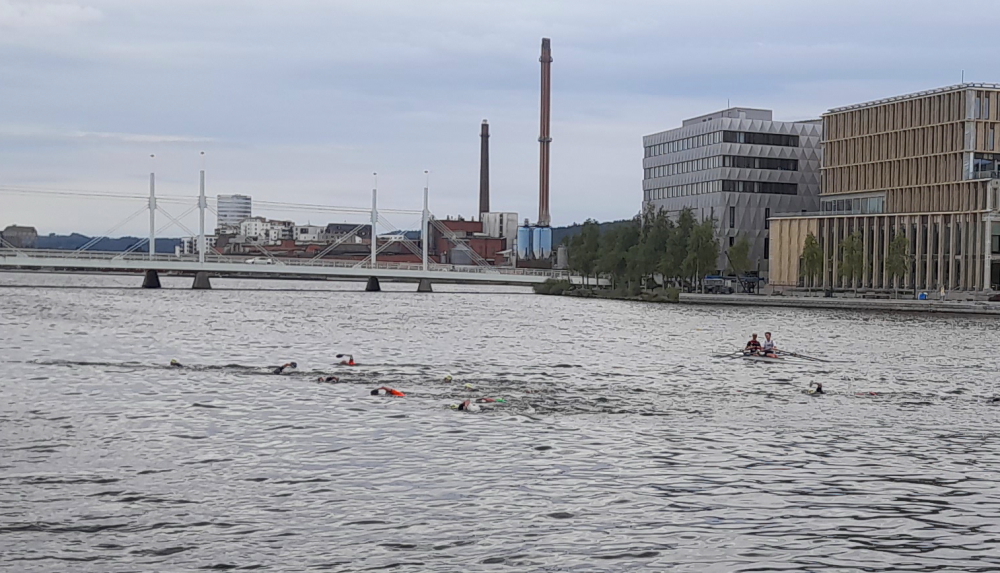
Swimming training in the cold lake.

Time for dessert – ice cream, naturally – and a walk around the other side of town.
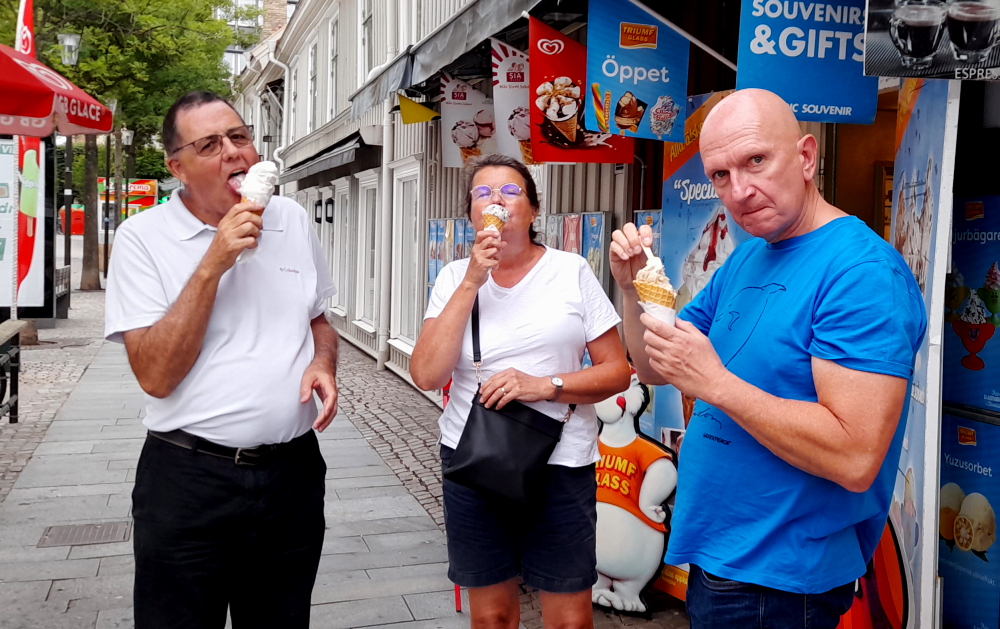
Ice cream for dessert.

We made pigs of ourselves on rather large ice creams so after Susie and Paul go home we are back on a diet.
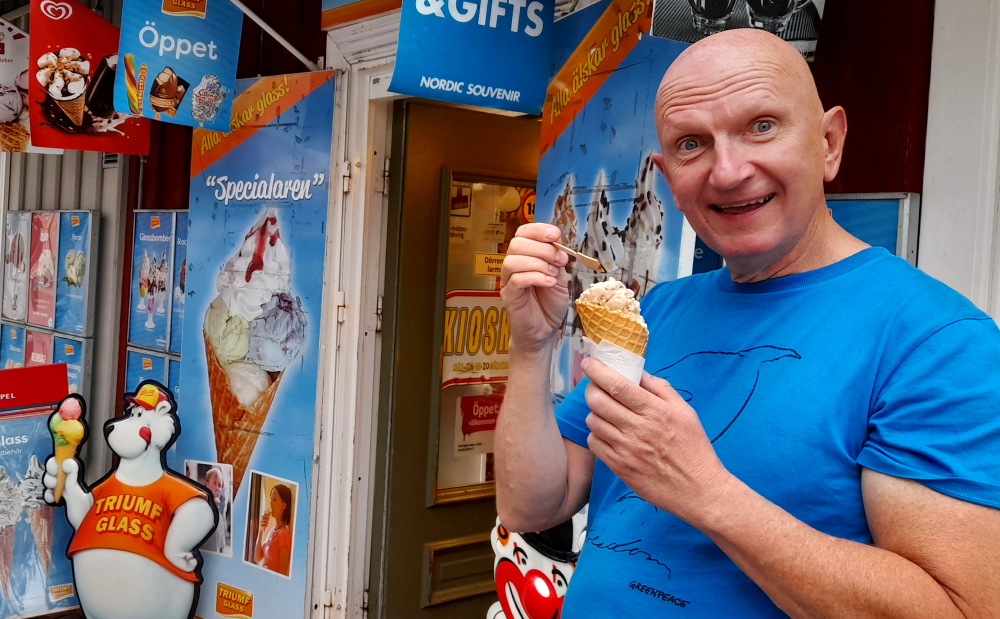
What’s your favourite dessert, Paul?

We get as far as the Göta Court of Appeal which is one of the six appellate courts in the Swedish legal system. The court was established in 1634 during the regency of Queen Christina. It is the second oldest of the Swedish courts of appeal.
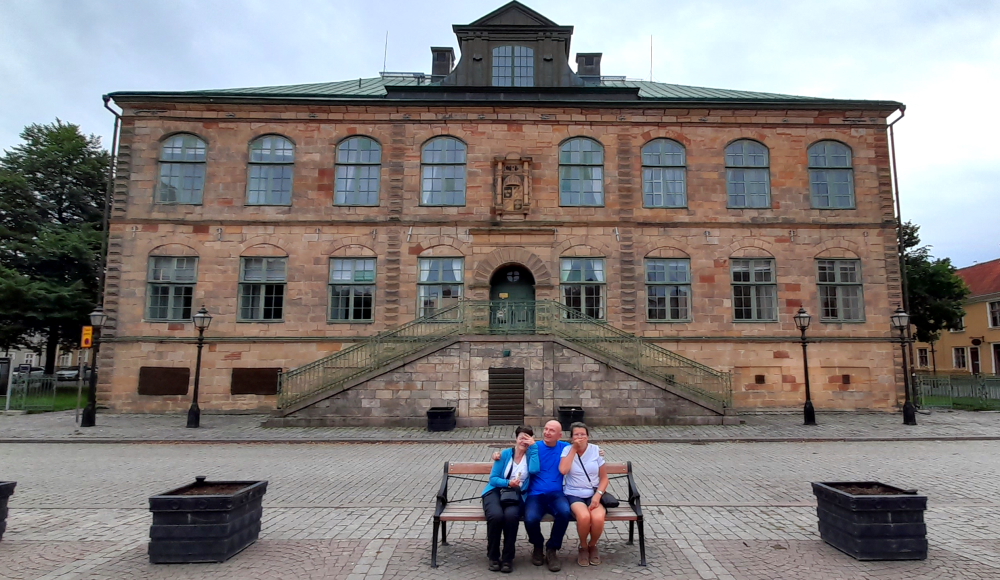
Monkeying around outside the old Court of Appeal.

Time to head home!

12 July, 2023

The Swedes seem to have some very strange engineering. It seems OK with them to almost get things right but it seems that they just can’t be bothered making things perfect. In the shower this morning I found that although our room is one of the best so far in the past three months the shower is about 30 cms too low so I can’t stand upright under it. It seems that close enough is good enough in Sweden.
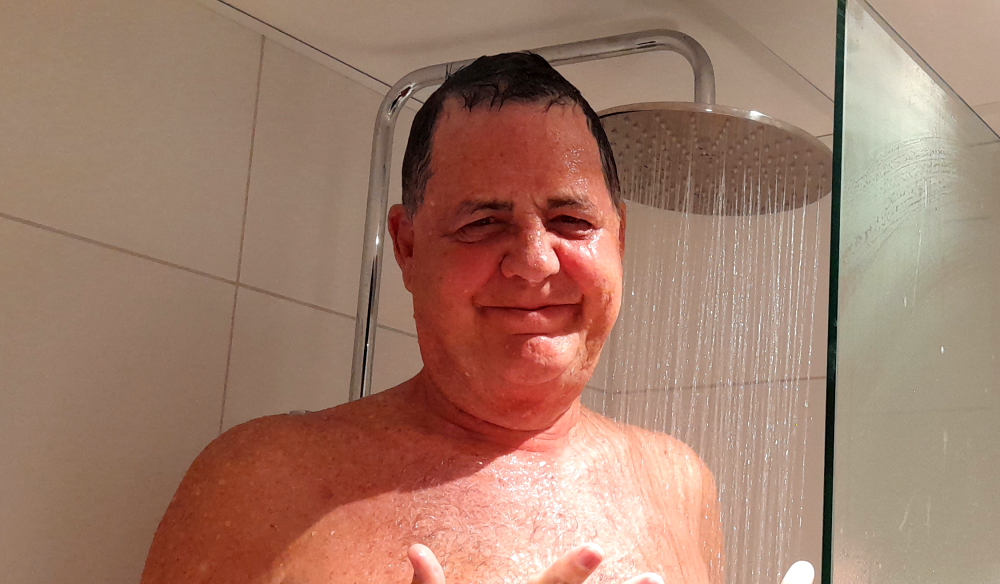
No head room in this shower.

As predicted, the 100% chance of rain today has come true. We decide that today is a ‘day in’ day, except for a quick sprint across the road to ‘La Vue’ for elevenses.

While Lynn catches up the blog for the past couple of days, Susie and Paul visit the Jonkoping County Museum which features John Bauer’s fairy-tale art, Småland cultural history and collections of Swedish 20th century art.

Just as we are about to head out to dinner the rain stops and the sun breaks through at last. We can’t guarantee that we won’t get wet later so we take our wets and head out to ‘Hemma’ for a very nice dinner.
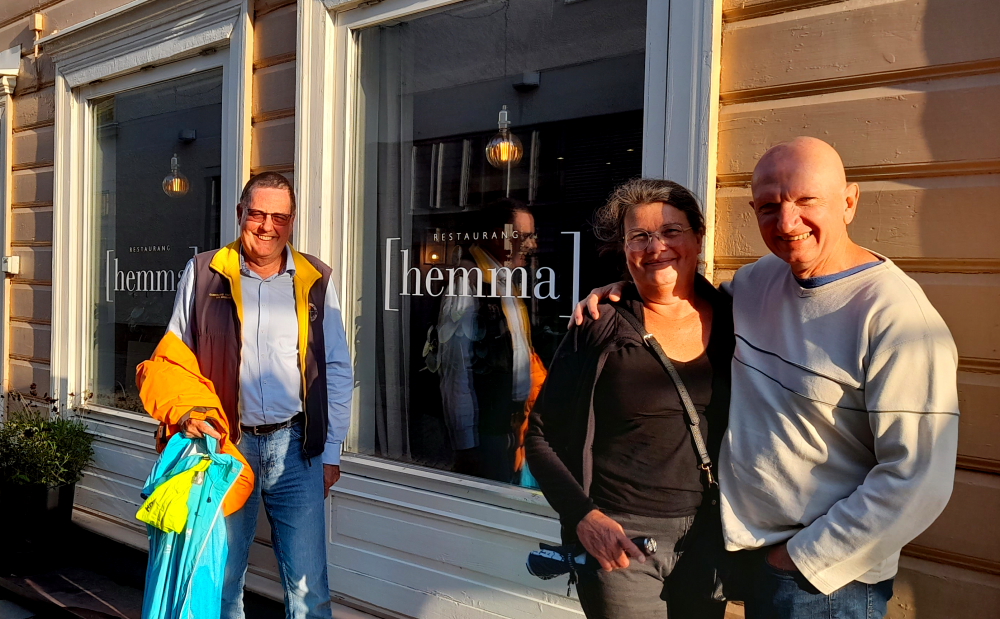
Still sunny as we leave the restaurant.

We didn’t get to visit the Jonkoping Rose Gardens today due to the weather but the plan is to head there in the morning on our way to Kristianstad as there seems to be a two-hour dry window in the morning according to the forecast. The plan is to be on the road by 10:30 am tomorrow.

13 July, 2023

Bang on 10:30 am we are driving out of the hotel parking garage on our way to Rosenlunds Rosarium, a 6-minute drive away. Rosenlund Rose Garden is beautifully situated in the grounds of Rosenlund Manor, just a stone’s throw from Vätterstranden beach. The Manor was built in 1788 by Gustaf Posse.

In the late 1970s, the Rose Garden was added to the east of the Manor, followed in 1993 by a perennial garden lined with an assortment of shrubs and perennials. Between 1997 and 1999, the Rose Garden was given a complete makeover by the Jönköping municipal landscape architect Björn Kalin. In 2007 and 2008, the park was enhanced even further with the addition of more rose beds and trellises.
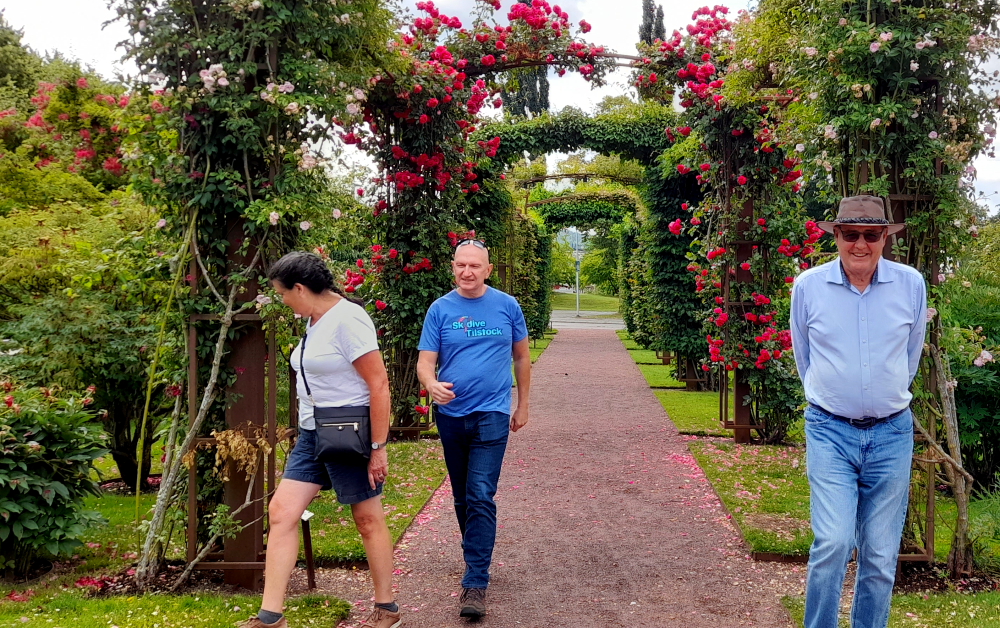
A short visit to the Rose Gardens in Jonkoping.

The Rose Garden boasts around 600 varieties of roses, both old-fashioned and newer shrub roses, climbing roses, groundcover roses, wild roses, and polyantha roses, all enclosed by low box hedges. Checks are made continuously and any sub-standard plants are removed and replaced.
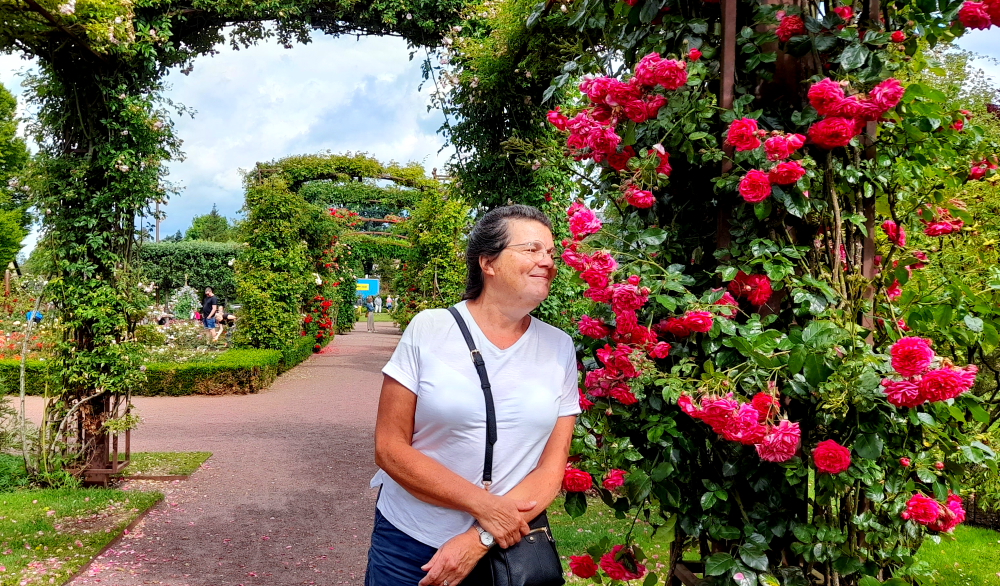
Taking time to smell the roses.

Peonies run along both sides of one of the footpaths, mainly common garden peonies, but also a few varieties of tree peonies.

A clematis area with custom-made trellises was laid in 2005. More clematis were planted in 2013 to climb among the roses lining the rose arch.
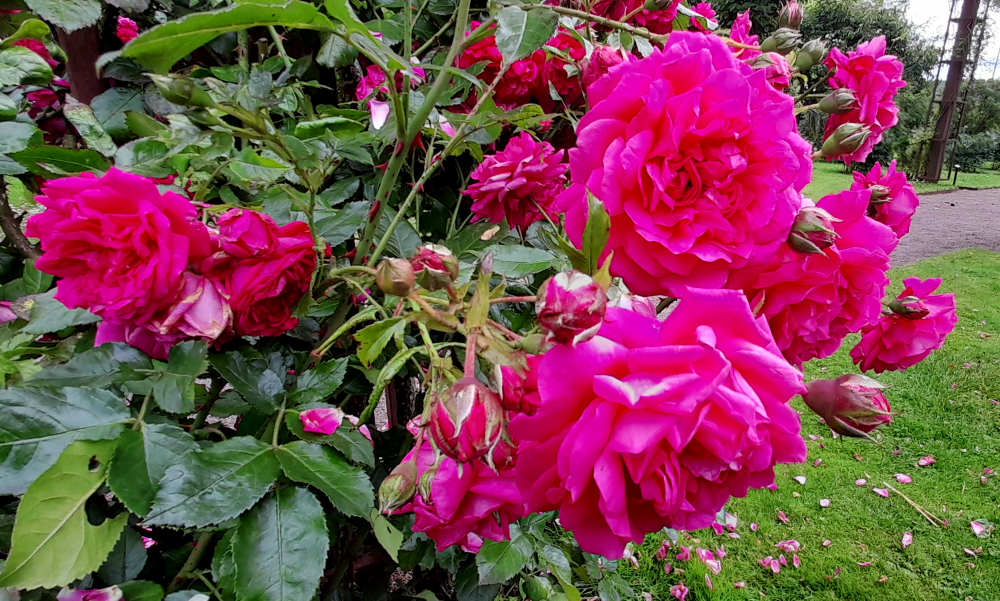
Sweet smelling roses.

Every year, around 30 different dahlia varieties are planted in the flower beds at the southern end of the park
Heading back to the car before it rains.

The clone archive for 36 selected varieties of Småland cultivated roses has been established. The work took place in collaboration with POM, Sweden’s National Program for Cultivated Plant Diversity.
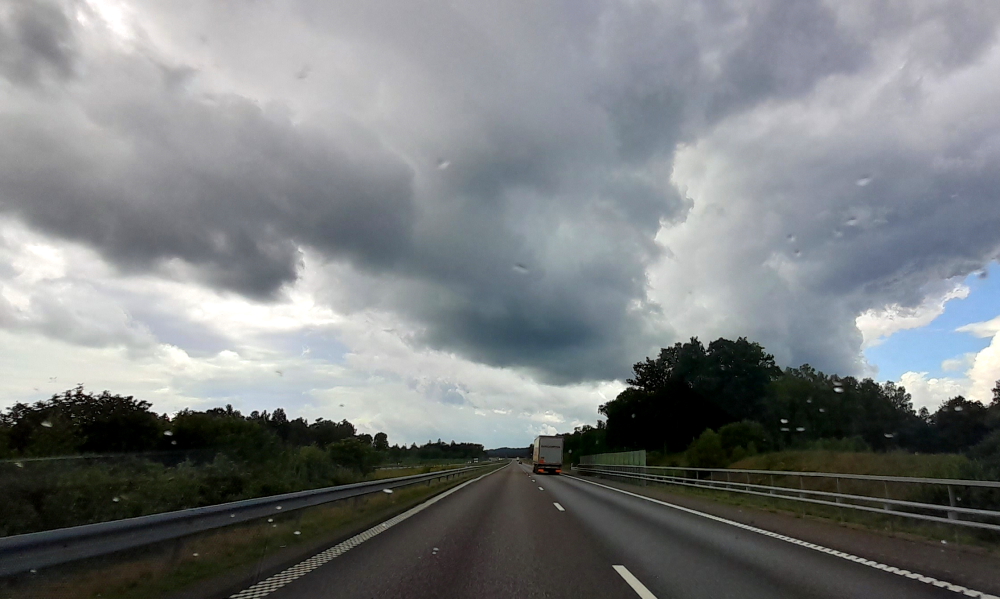
Rain as usual on the way south.

We drive through intermittent rain the entire trip along the E4, 15 and 19. The odd moose sign along the road, then one for wild boar. 1.5 hours into the trip Lynn says, “We haven’t had any speed cameras today.” 8 minutes later, 2 speed cameras!

And, true to form, 1 km from our hotel there are road works which have closed our designated route which means we have to find another as no diversion has been set up.
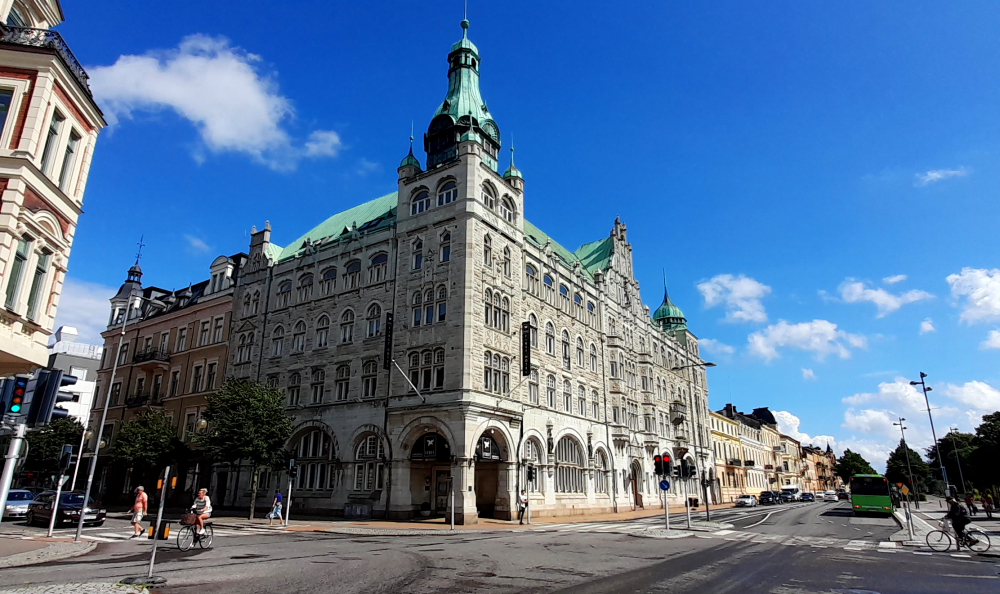
Our hotel in Kristianstad.

But our hotel – First Hotel Christian IV – is very grand, having previously been a Sparebank building. The hotel is located in the “new” savings bank’s building from 1901.
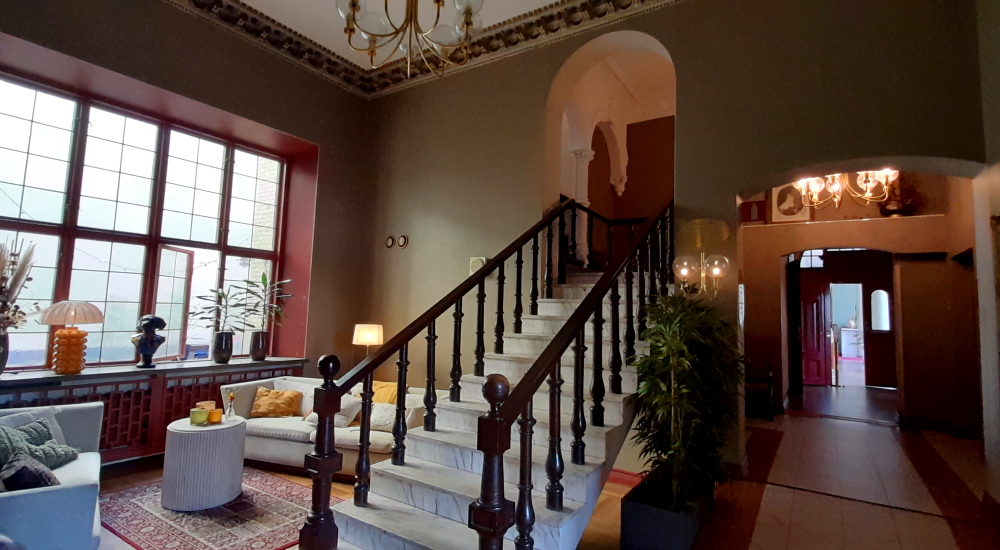
Former Bank building transformed into The First Hotel.

It was chosen as Kristianstad’s most beautiful building in connection with the Year of Architecture 2002. Today, the wine cellar is fittingly located in what used to be the bank’s spacious vault.
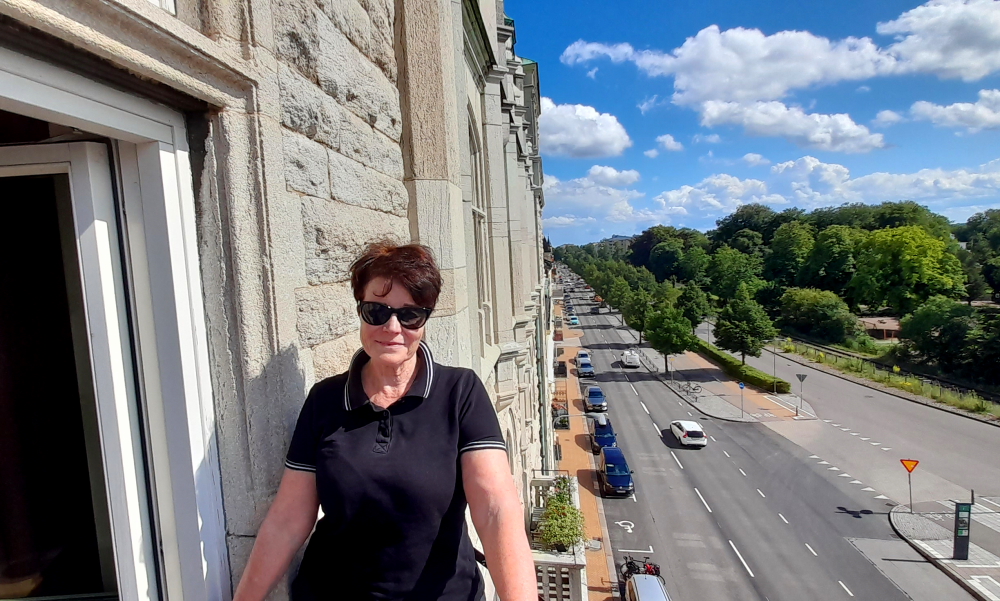
Room with a balcony and a view.

Of course, there are lots of references to Christian IV (1577 – 1648) in the hotel including numerous portraits. Christian was King of Denmark and Norway and Duke of Holstein and Schleswig from 1588 until his death in 1648. His reign of 59 years, 330 days is the longest of Danish monarchs and Scandinavian monarchies.
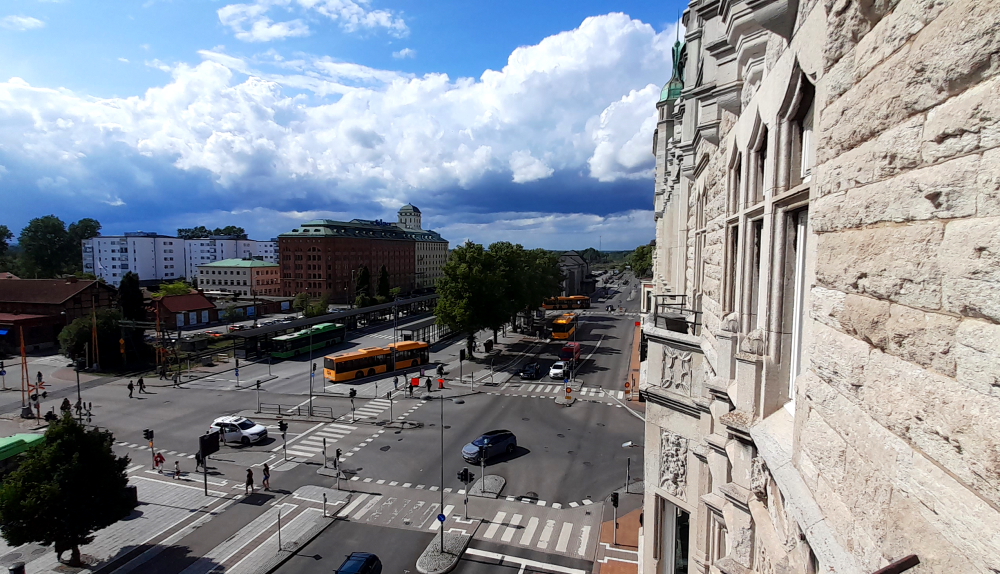
A view in both directions from the balcony.

After we check in we head out to find a cafe. The neighbourhood is a mixture of modern and historic buildings with the ubiquitous cobble streets.
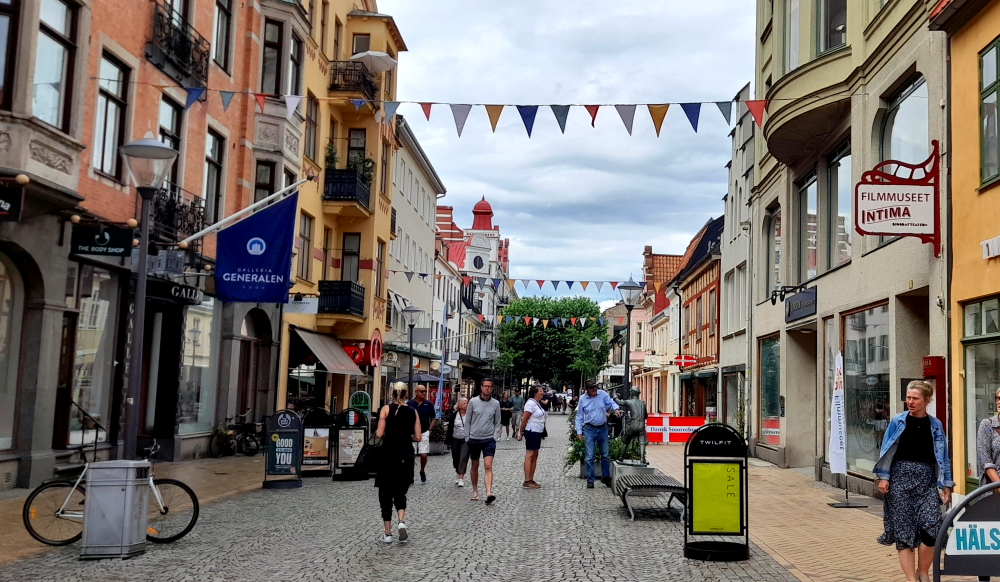
Pedestrian Mall in Kristianstad.

Not to mention the occasional piece of street art.
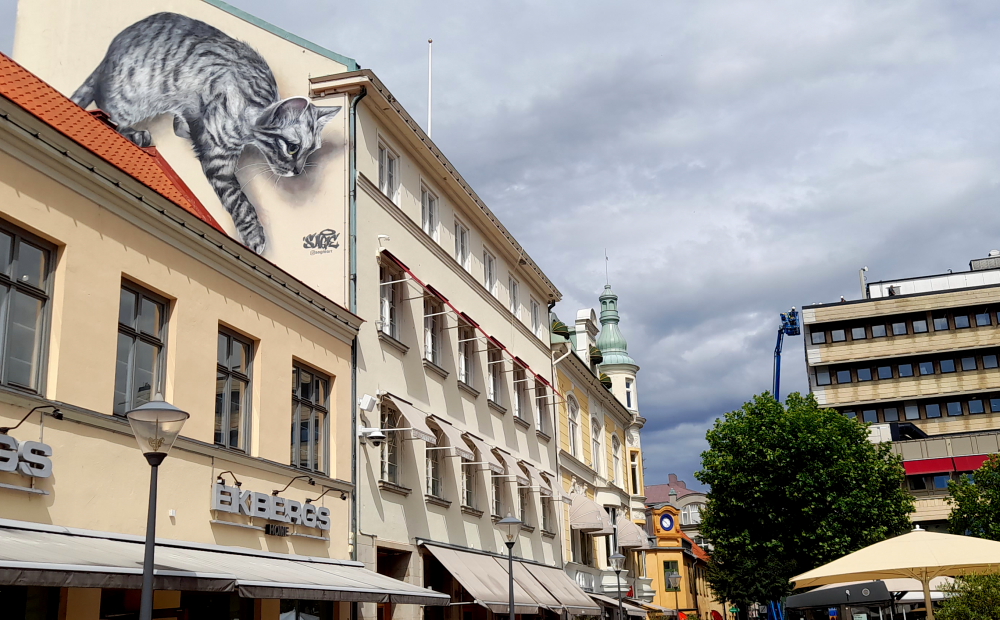
Big cats in this town.

Near to the hotel is the Heliga Trefaldighetskyrkan (Holy Trinity Church) built between 1617 and 1628 by Christian IV of Denmark. He had founded the city of Kristianstad in 1614 at a time when Scania was part of the Kingdom of Denmark. The church’s large size and style reveal the king’s ambitions for his new city.

Designed by the Flemish-Danish architect, Lorenz van Steenwinckel, the grand building is widely considered by many to be Scandinavia’s finest Renaissance church. Like many Danish churches of the times, it is built of red brick. But this church is decorated with many sandstone statues and ornaments, including several monograms of Christian IV, testifying to his involvement.
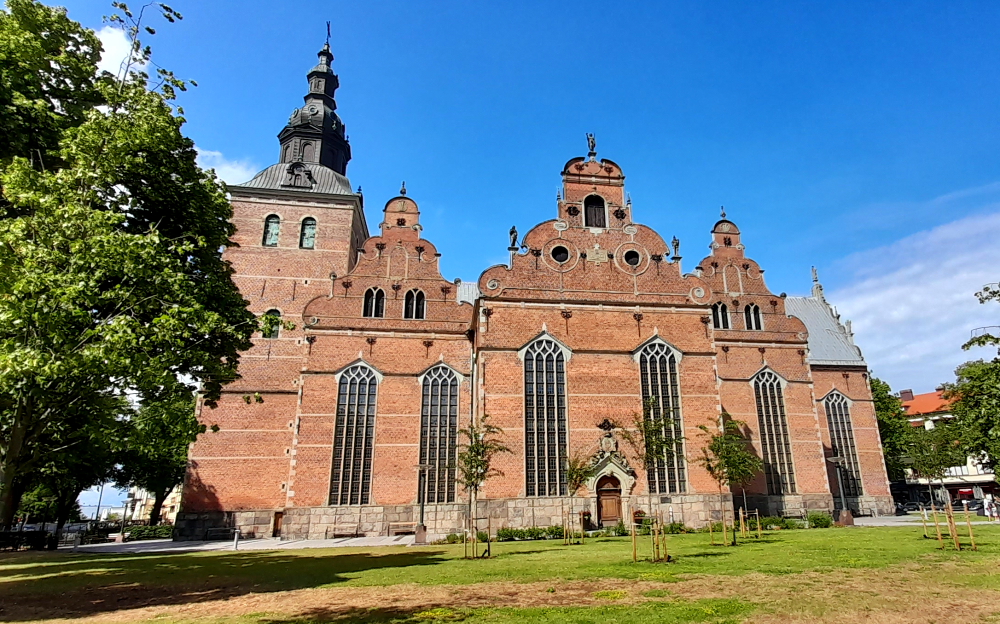
Holy Trinity Church.

Trinity Church has been little altered since it was built. The carved benches are as old as the church itself. The main addition is its 59 metre-tall tower constructed in 1865. The church is abundantly illuminated due to its 26 tall windows.

The pulpit, which is carved in Belgian and Italian marble, shows Christ and the four evangelists. The impressive canopy hanging above the pulpit weighs almost a ton.
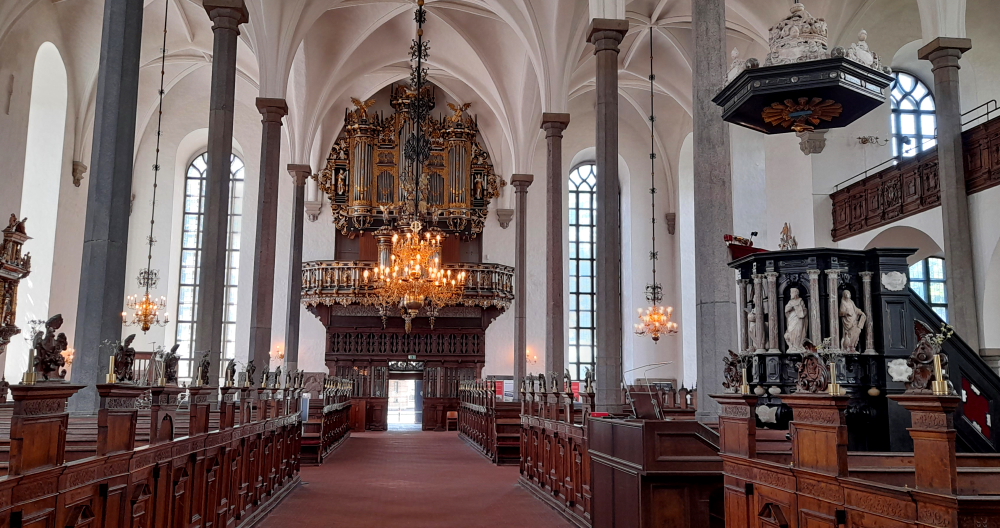
Inside the church.

The Baroque organ case survives, including the case pipes, from German-born Johan Lorentz’s 1630 organ, but the organ itself has been replaced.
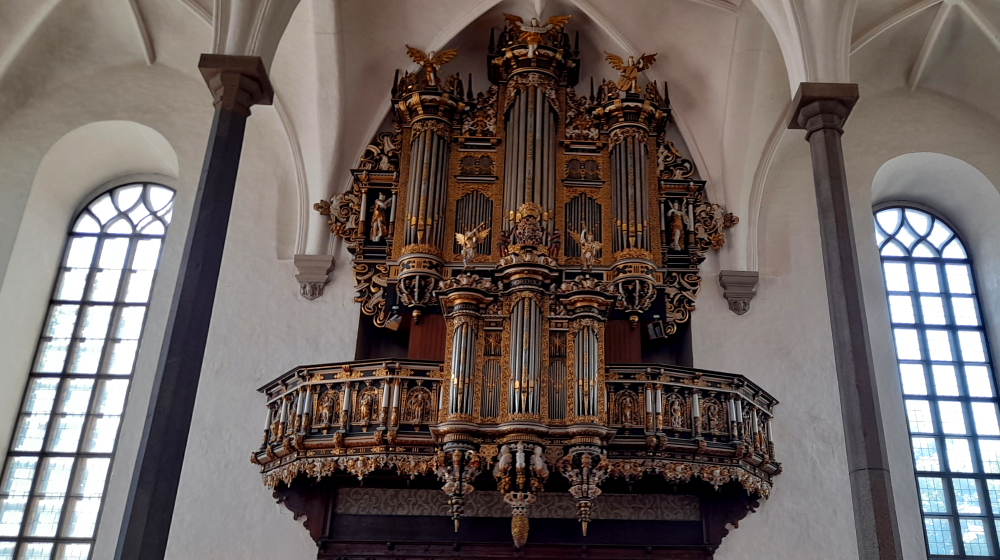
Impressive organ.

While Lynn was doing some window shopping Susie, Paul and I checked out what was left of the old town fortress. The star-shaped fort base and some of the old moat still exist and some replica cannon have been posted around the moat. One of the old town fort gates is still standing and seems to be under restoration.
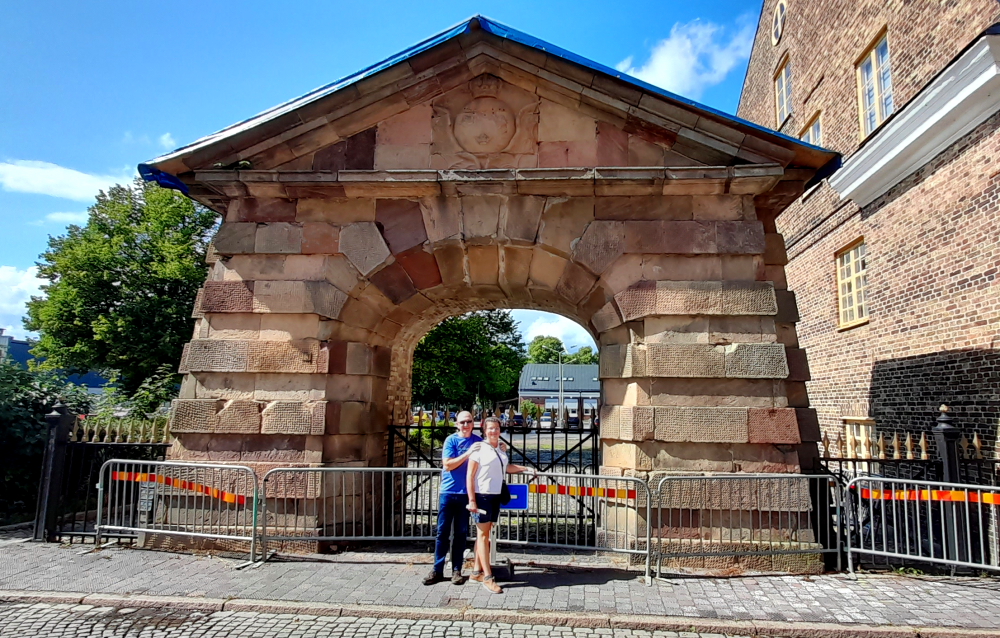
The fort gate.

We meet up with Lynn at the church then head back into the mall area for a coffee as storm clouds are starting to form overhead. We find an Italian Cafe just as it starts to bucket down and by the time we down our coffees with a slice of cake the storm has passed. We stroll back to the hotel to unpack and rest before heading out again for dinner at the Swedish restaurant, ‘Smaca’. And the food was lip-smackingly good, too.
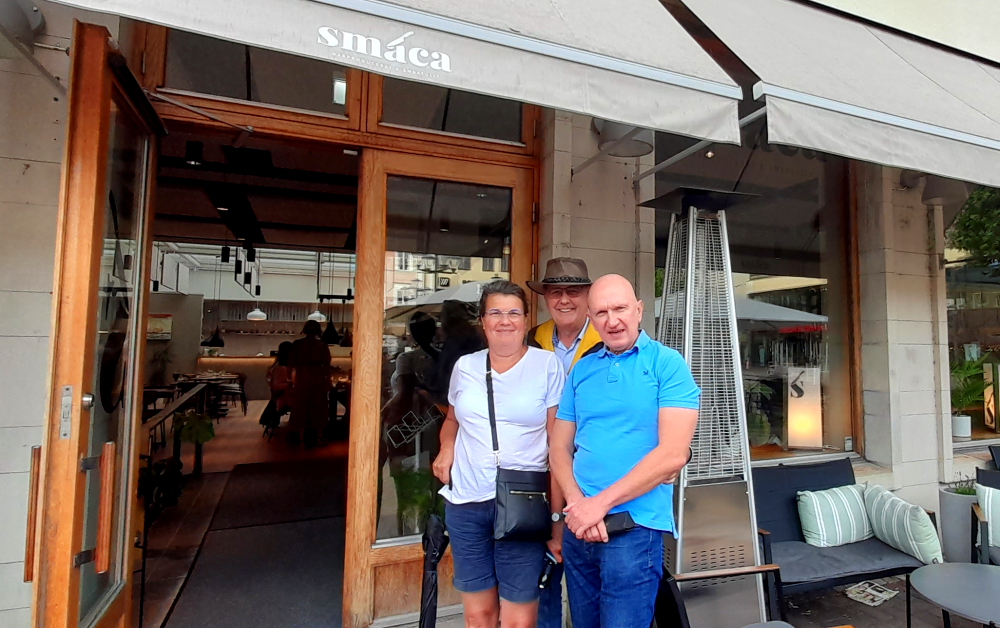
At the Smaca Restaurant, Kristianstad.

14 July, 2023

Hoorah! The weather forecast has improved from rain during the day to sunshine with 2% probability. This means we can head out of town today to visit a couple of sites/sights.
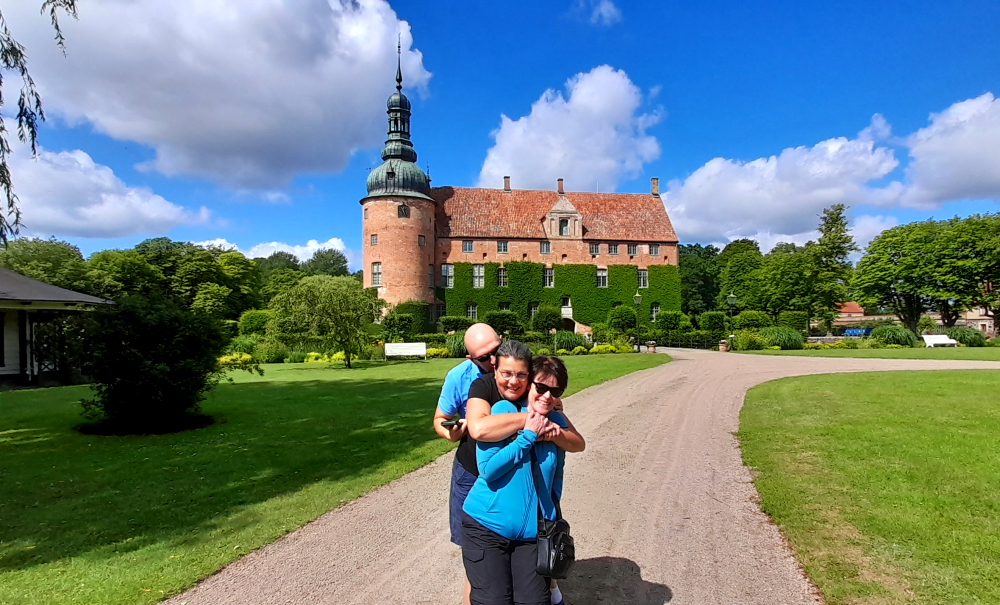
Vittskovle Slott.

The first stop is Vittskovle Slott, about 30 minutes’ drive south of Kristianstad. The building is one of the best preserved Renaissance castles in Sweden and it is Scania’s largest castle building with over 100 rooms. The castle is today a private residence owned by the Stjernswärd family.
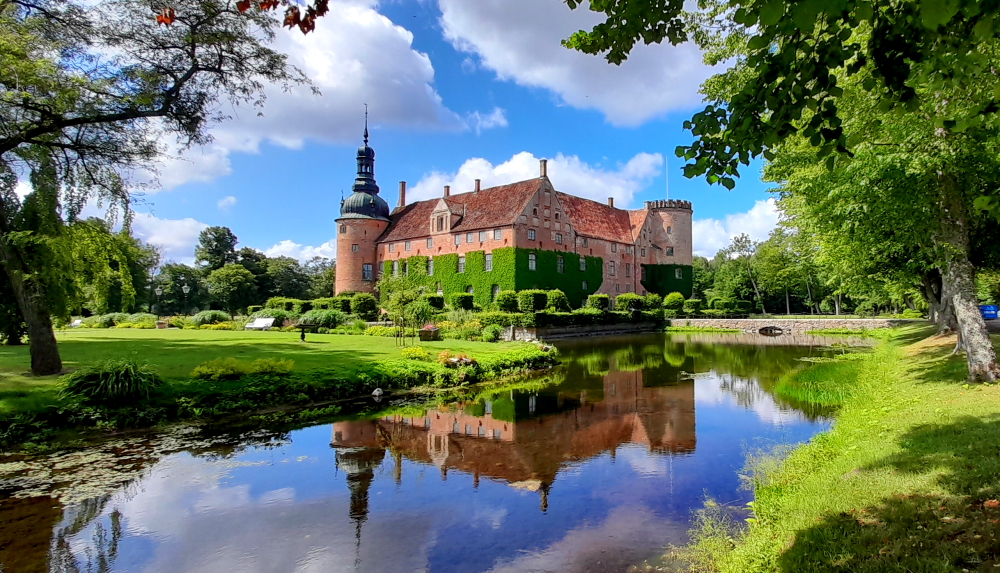
NE corner view of the Slott

During the last years of the Middle Ages, the estate belonged to the Archbishop of Lund. The main house was erected by Jens Brahe (ca 1500–1560) in the 16th century as a defense structure. It was completed in 1577. In the 18th century, the northwest tower burned and the spire was built in a romantic medieval style. The park and gardens were mainly built by Adolf Fredrik Barnekow (1744–87).

At the beginning of the 19th century, the castle was newly decorated with murals and ceiling paintings by Swedish painter Christian Laurentius Gernandt (1765-1825). Vittskövle has belonged to members of the Stjernswärd family since 1837. East of the Slott is the village of Vittskovle and its church.
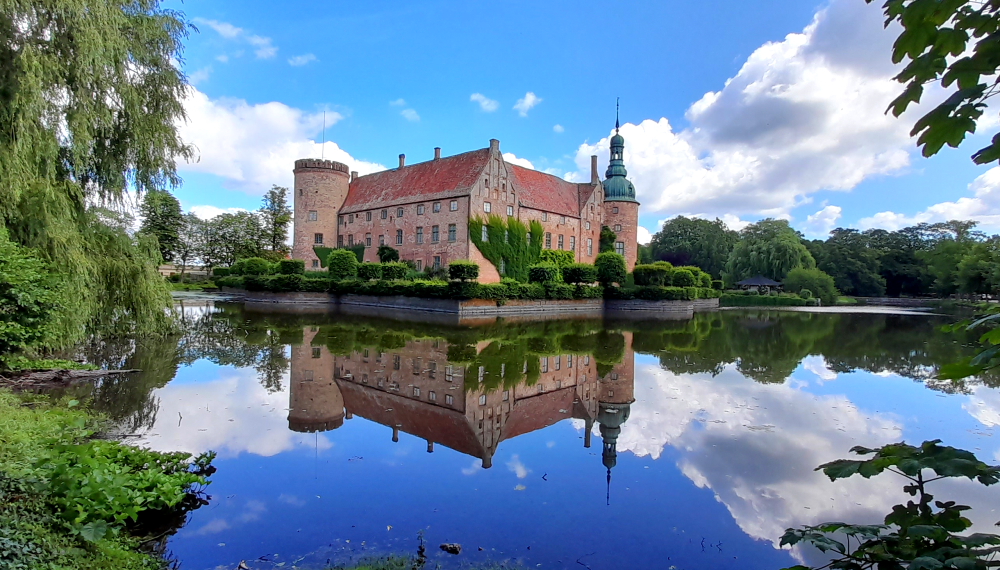
SW corner view of the Slott.

The oldest parts of the church are built in Romanesque style during the late 12th century or early 13th century. In the 15th century a chapel was built in the north and dedicated to Saint Anne. In this chapel there are the symbols of the evangelists, as well as the four female medieval saints: Saint Barbara, Saint Ursula, Saint Gertrude and Saint Catherine. The tower was built in the 16th century.

Sadly, the church is closed today but Wikipedia reveals that the vaults were built in the 15th century with murals from the 1480s, showing stories from Genesis. In the chancel, the legend of Saint Nicholas has been depicted. The pulpit is made in oak 1704–1705. The baptismal font is from the Middle Ages and made of sandstone. In the 17th century a grave chapel was built to the south for the members of the Barnekow family.
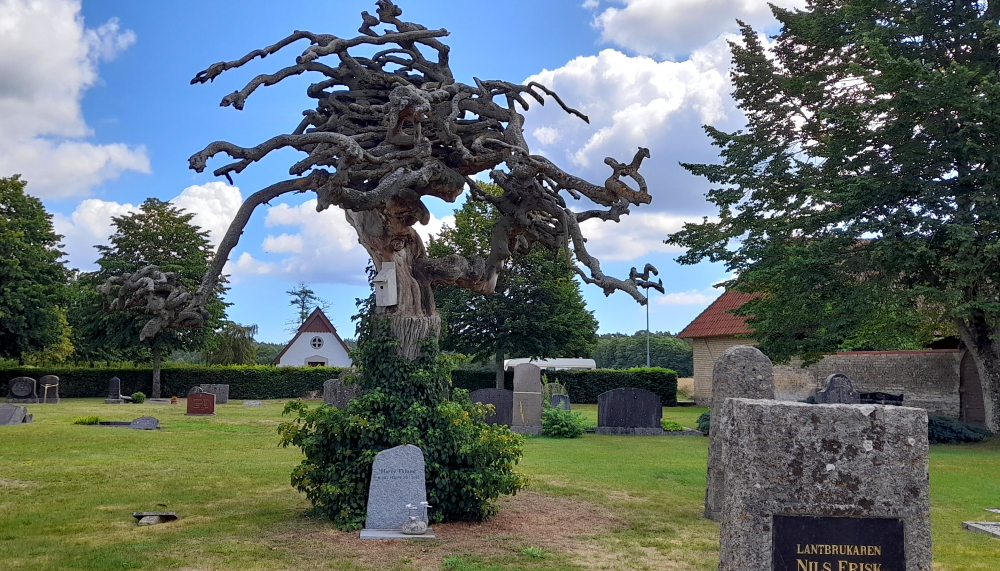
Weird tree within the church graveyard at the village of Vittskovle.

13 kms NE is the town of Ahus. We were planning on visiting its famous beach but it seems that there is a summer festival happening at the beach today and the car parks are full. So we turn around and park in the Torget next to the Ahus Museum and after a quick walk to the Kloster Bageriet we sit in the shade for cold drinks and buns.
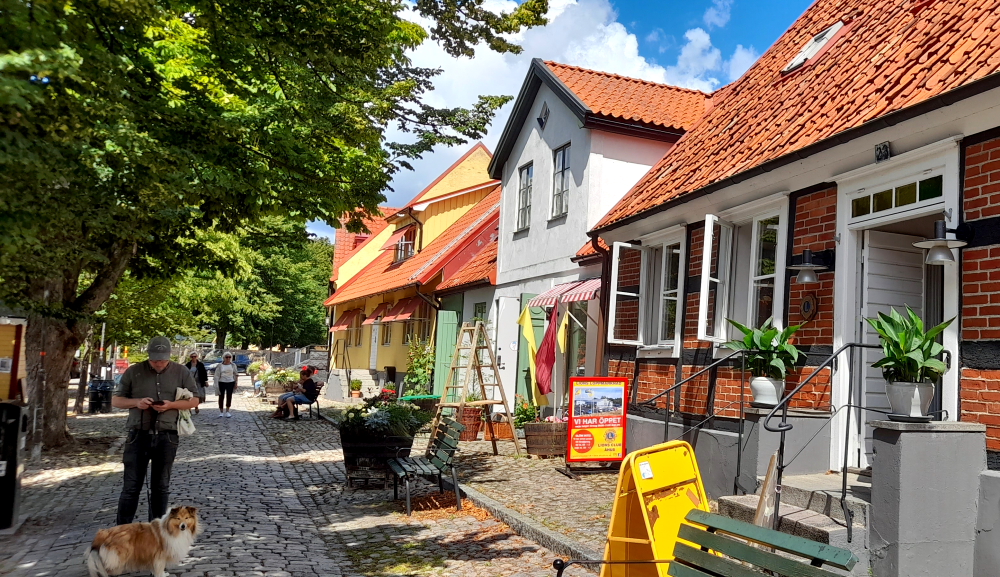
Shops bordering the town square in Ahus.

Our 3rd stop today is Backaskog Slott, a 30-minute drive NNE of Ahus. We drive through vast fields of crops where workers are busy hand harvesting.
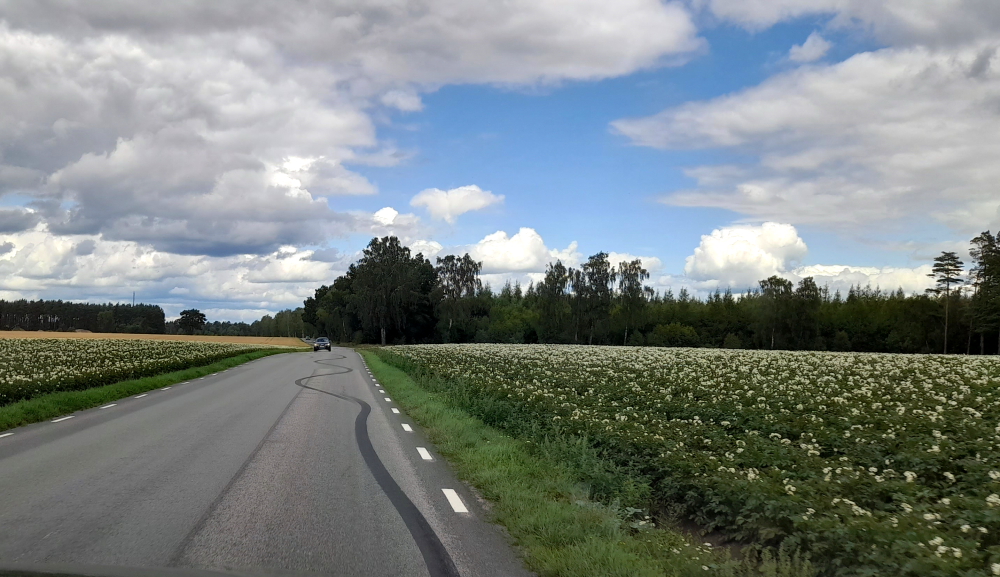
Fields of potatoes.

Built on an isthmus between Lakes Oppmannasjon and Ivoleden, Bäckaskog was founded as a monastery in the 13th century but ceased at the Reformation in 1537 when Bäckaskog was taken over by the Danish state. In 1640 it was converted to a castle. It was granted to the Ulfstand, Brahe , Bille and Parsberg families. Finally, it was left with ownership to the Ramel family.
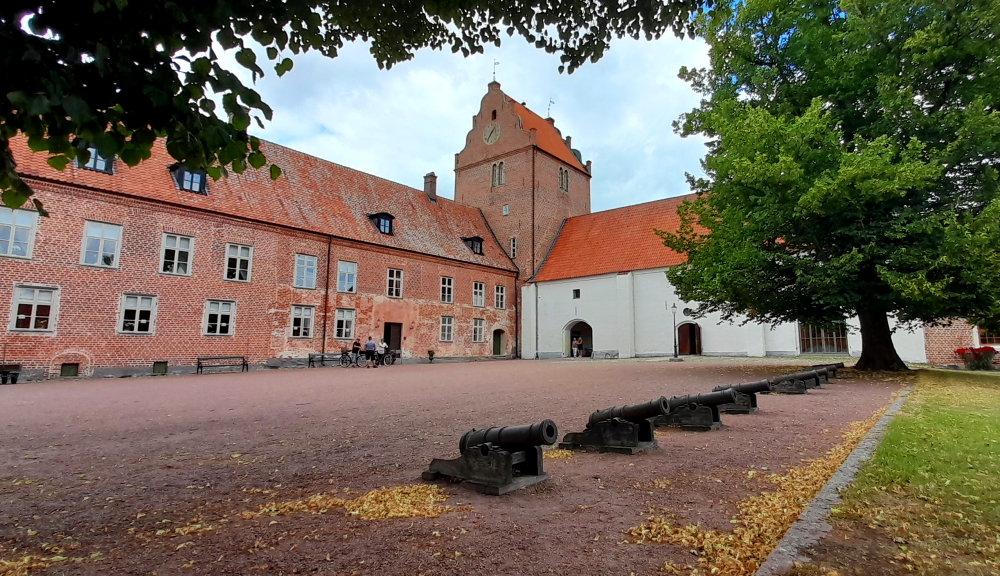
Backaskog Slott from its courtyard.

In 1684 it was withdrawn to the Swedish crown by Charles XI. It then became the residence of the colonel of the Södra Skåne cavalry regiment. Among the owners, it is in particular field marshal Johan Christopher Toll and Karl XV who beautified the castle and its surroundings. Oscar I leased the property in 1845 and in 1853 transferred the contract to Crown Prince Karl, later Karl XV. He was the owner of Bäckaskog until his death in 1872. Crown Prince Fredrik of Denmark, later Fredrik VIII, took over the property in 1885, but in 1900 handed over the contract to chamberlain Filip Stjernswärd.
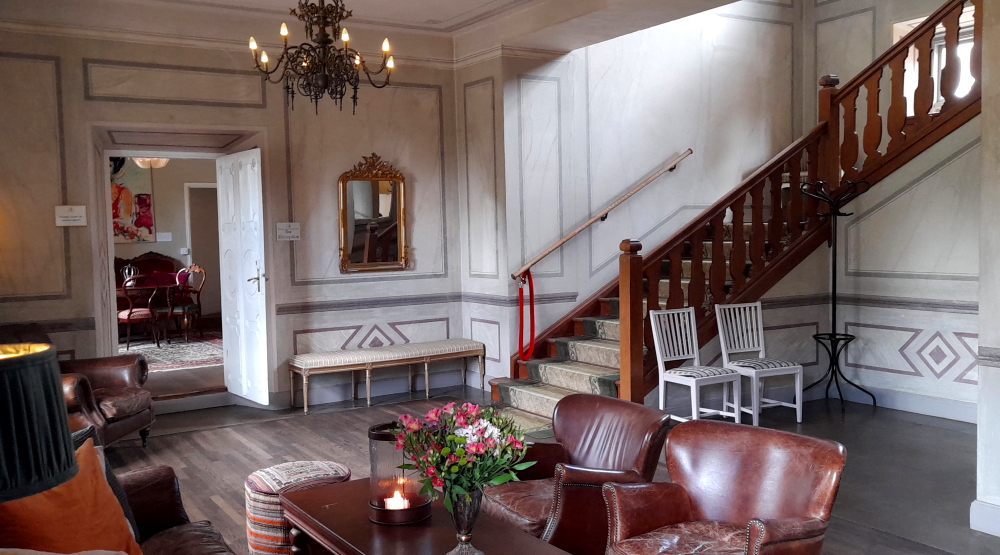
Inside the hotel.

Around 1924, Bäckaskog was leased by Per Åkers (Nilsson), who was director of the Swedish-owned telephone company in Poland. In 1956, the castle was separated from agriculture. The castle was leased by Gustav Ferlenius , who made Bäckaskog a popular tourist destination. Since then, Bäckaskog has been used for conferences and courses and is open to the public. In 1996, the castle was bought by the Statens Fastighetsverk and is now a hotel.
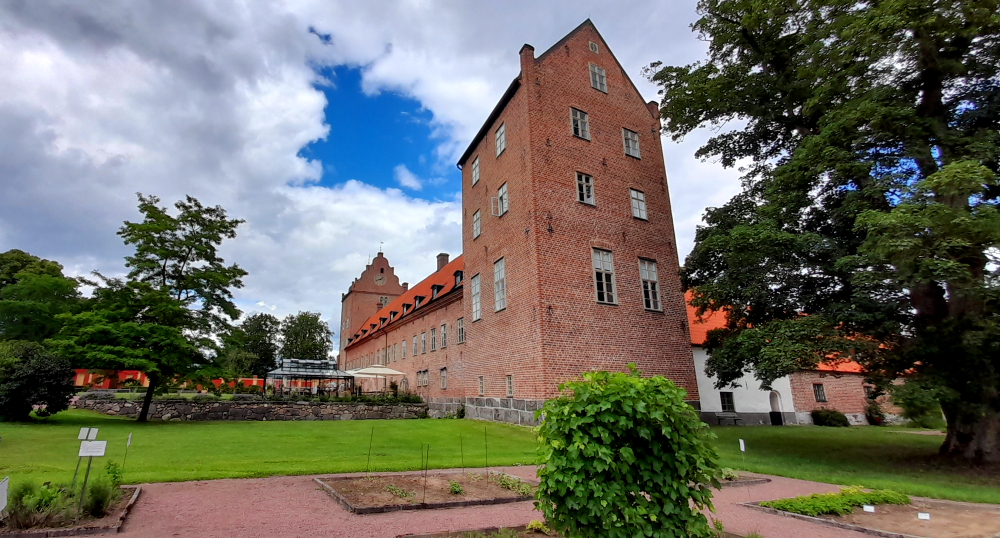
The SW corner of the Slott.

It’s now 1:30 pm as as there is a Rock Concert being held in town this weekend I’m keen to get back and reclaim our free hotel car parking spot – which we do.

Tivoli Park is next to the car park so we decide to check it out. ‘Flabben’ (like flabbergasted) is a quaint, wooden restaurant and bar. According to its website: ‘As a tribute to Bengt Österman, Flabben was named exactly Flabben. Come as you are, eat and drink, and go home.’
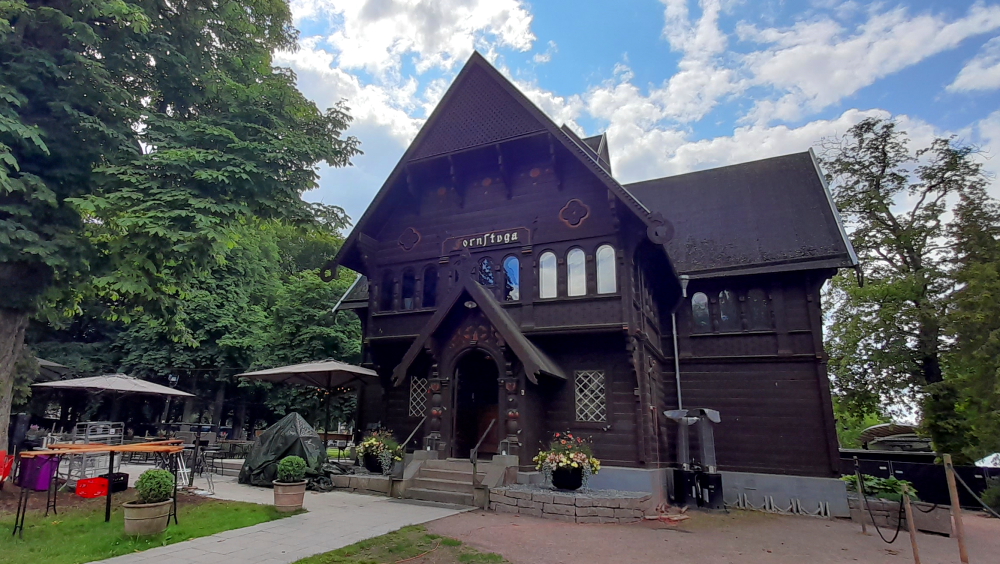
Flabben Restaurant & Bar, Tivoli Park, Kristianstad.

Nearby is the Teater. Kristianstad’s theater is one of the country’s oldest still in use. Kristianstad’s Axel Anderberg (1860-1937) was the architect of this white wooden building in Art Nouveau style, who also designed the Royal Theater and the Oscar Theater in Stockholm, among other things.
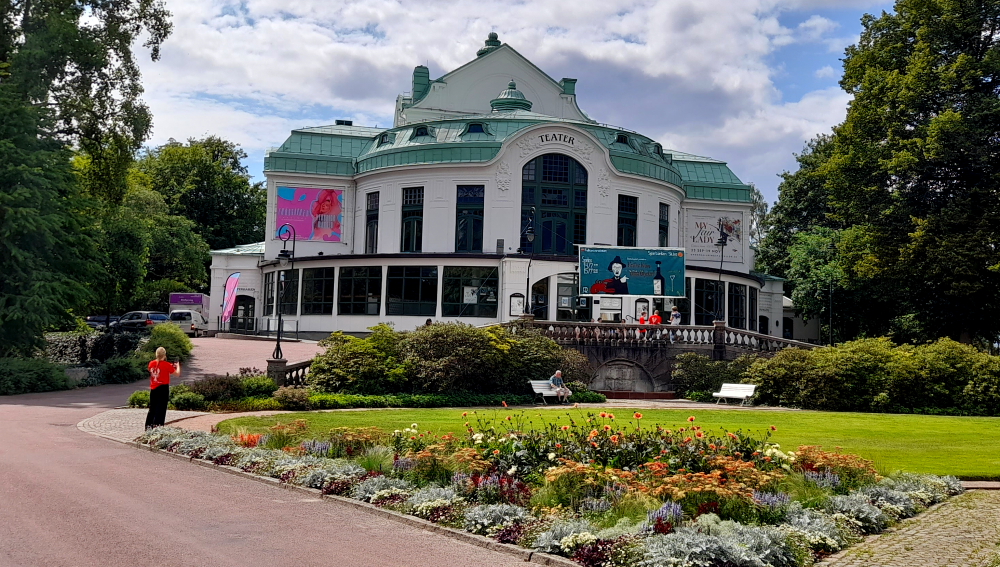
The Teater building across the road from our hotel.

The salon is in red, green and gold with two balconies, 362 seats and ceiling paintings with mythological motifs by Nils Asplund. The theater functions as a guest theater with, among other things, yearly recurring musical productions, by, among others, Emil Sigfridsson’s company, the Riksteatern, concerts and more.

Tivoli Park also boasts a small rose garden to which Susie is drawn.
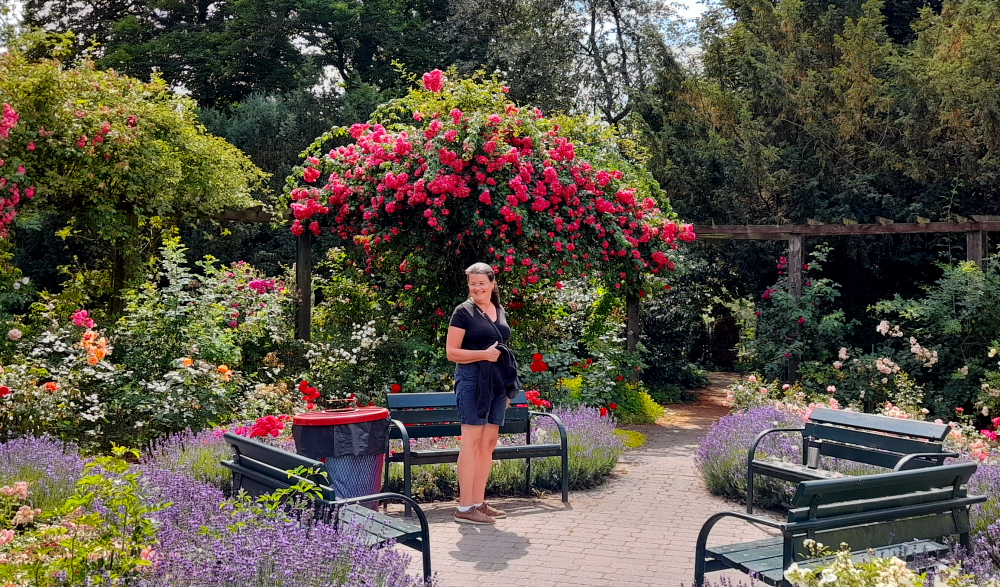
A visit to the rose garden in Tivoli Park.

Across the Helge A River is ‘Naturum Vattenriket’ (Water Kingdom) – a visitor center that is located in the middle of Kristianstad’s Water Kingdom Biosphere Reserve. On stilts in the middle of the water, entirely made of wood with unusual angles and nooks and crannies, the naturum is a node between city and nature.
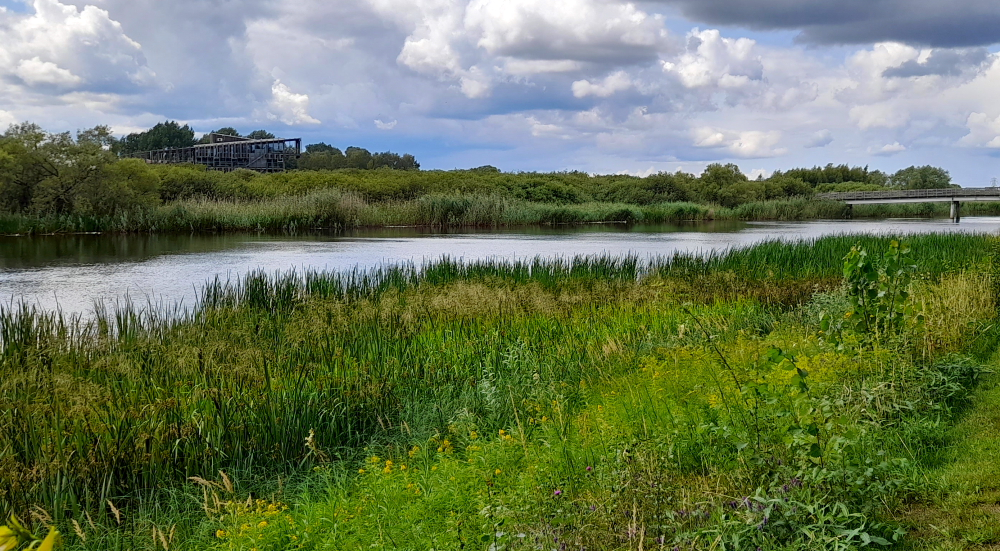
The Biosphere Reserve & Visitor Centre.

Kristianstad’s Vattenrike is Sweden’s first biosphere reserve and was inaugurated in 2005. The area is three by three miles, from the forest in the north along Helgeån and further out to Hanö Bay. Within the biosphere area, farmers, entrepreneurs in ecotourism, associations and authorities cooperate to preserve and develop the landscape.

Vattenriket works actively to ensure that community and cooperation lead to sustainable development. Through appointed biosphere ambassadors money is collected and supports various projects in the biosphere area. There is also a biosphere camp where young people and children have the opportunity to learn more about Vattenrike and become young ambassadors during the summer holidays.
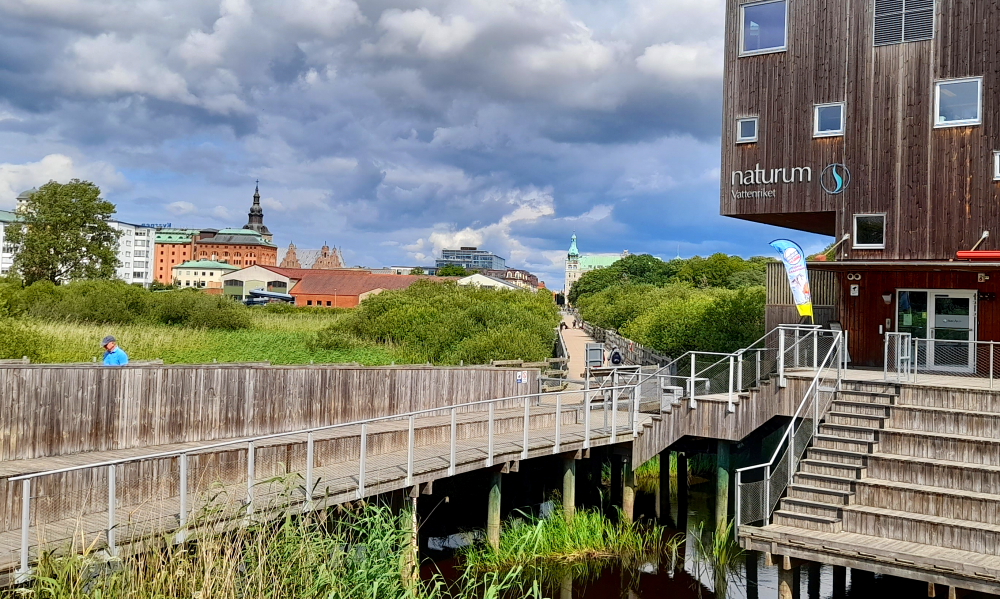
The view back across the swamp to our hotel.

We even hear a cuckoo just as we turn to walk back over the bridge to the hotel.
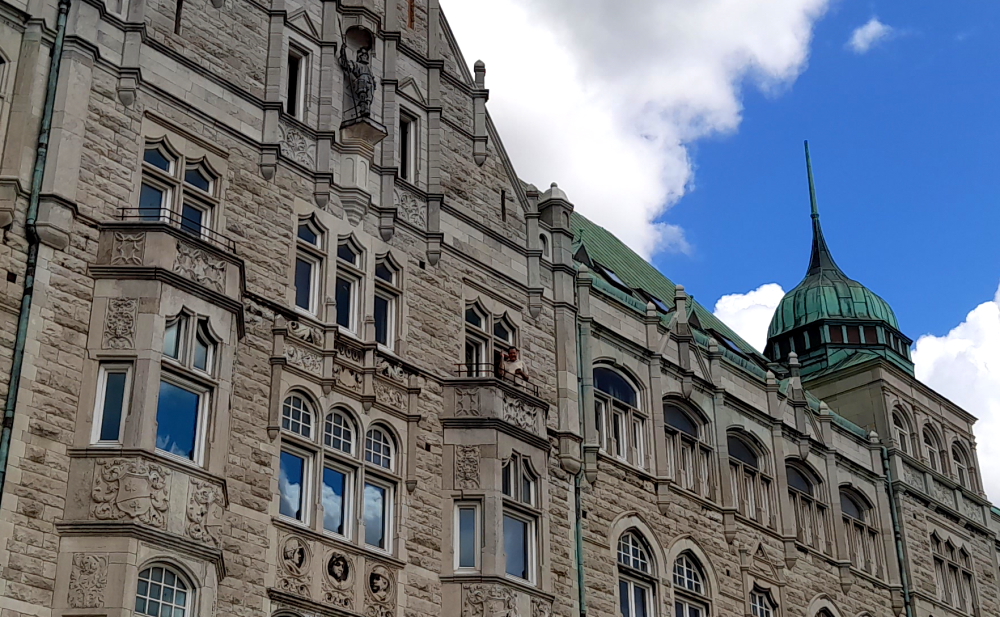
A royal wave from our balcony.

We have been dreading the thought of the noise that a concert this evening will generate. Crew have been setting up 2 concert stages in Tivoli Park across the road from our hotel. Tommy Korberg’s Grand Finale concert was due to happen tonight but then we see a notice in the hotel lobby that it has been cancelled due to his ill health.

Tomorrow night is a rock concert but we’ll be miles away in Snekkersten, Denmark. Whew!!

15 July, 2023

After breakfast we are heading SW to Denmark and will be leaving Sweden and its half-finished engineering behind.
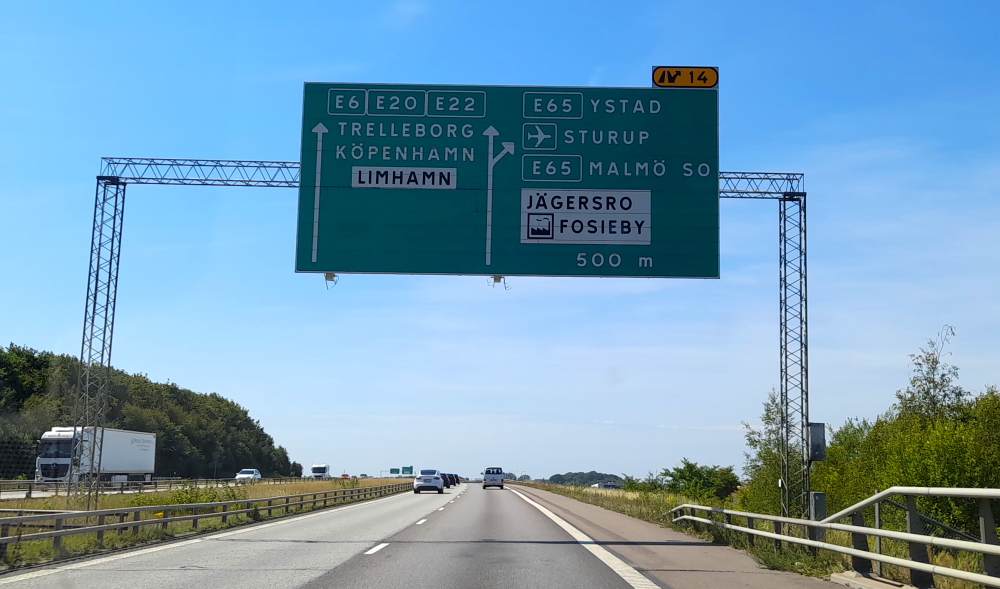
Departing Kristianstad and on to Denmark.

However, we cross the incredible Oresund Bridge that joins Sweden to Denmark near Malmo. Perhaps the good engineers spent all their time designing the bridge so had no time to work on Swedish highways, hotels or buildings.
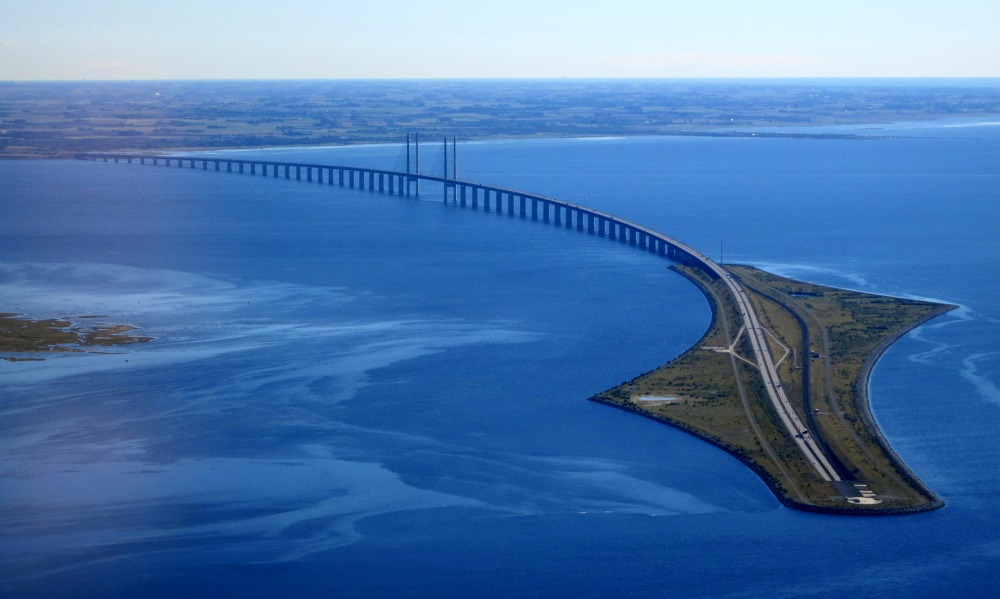
The Oresund Bridge.

The Øresund or Öresund Bridge is a combined railway and motorway bridge across the Øresund strait between Denmark and Sweden.
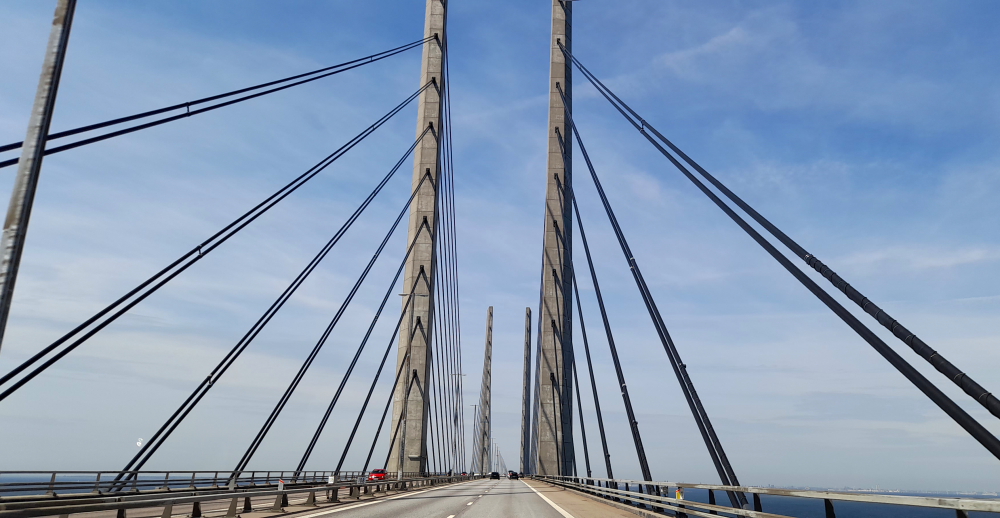
Half way across the bridge section.

It is the longest in Europe with both roadway and railway combined in a single structure, running nearly 8 kms from the Swedish coast to the artificial island Peberholm in the middle of the strait.
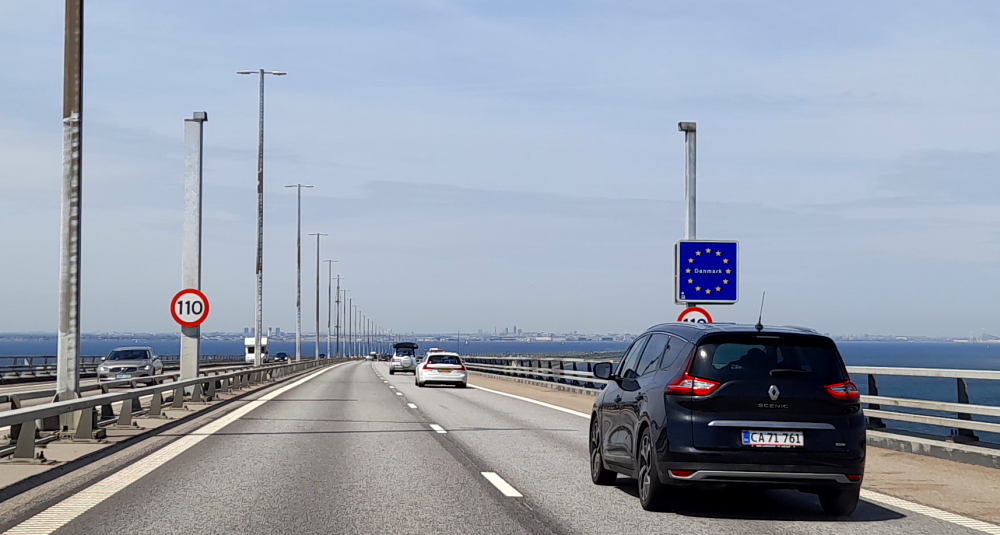
Leaving Sweden and entering Denmark.

The crossing is completed by the 4 km Drogden Tunnel from Peberholm to the Danish island of Amager.

The bridge connects the road and rail networks of the Scandinavian Peninsula with those of Central and Western Europe. A data cable also makes the bridge the backbone of Internet data transmission between central Europe and Sweden. The international European route E20 crosses via road, the Øresund Line via railway. The construction of the Great Belt Fixed Link (1988–1998), connecting Zealand to Funen and thence to the Jutland Peninsula, and the Øresund Bridge have connected Central and Western Europe to Sweden by road and rail.

The bridge was designed by Jørgen Nissen and Klaus Falbe Hansen from Ove Arup and Partners, and Niels Gimsing and Georg Rotne.

The bridge toll is a whopping A$104 each way. I would hate to commute across this everyday. Makes Sydney NW tolls look cheap.

The justification for the additional expenditure and complexity related to digging a tunnel for part of the way, rather than raising that section of the bridge, was to avoid interfering with air traffic from the nearby Copenhagen Airport, to provide a clear channel for ships in good weather or bad, and to prevent ice floes from blocking the strait. Construction began in 1995, with the bridge opening to traffic on 1 July 2000. The bridge received the 2002 IABSE Outstanding Structure Award.

When we were planning our trip we were going to finish our drive in Sweden in Helsingborg and take the ferry across to Helsingor in Denmark. Turned out that it was cheaper to drive to Malmo, cross the Oresund Bridge and pay the toll and drive up to Snekkersten.

We drop Susie and Paul at their hotel in Copenhagen then continue on to Snekkersten for our last 2 full days in Denmark. Before we drive away I notice that we have passed the 10,000 km mark on the odometer. That means that we will have driven about 10,250 km in the past 3 months in the Scandinavian countries. My original estimate was just over 7,500 km for the trip and my fuel budget.
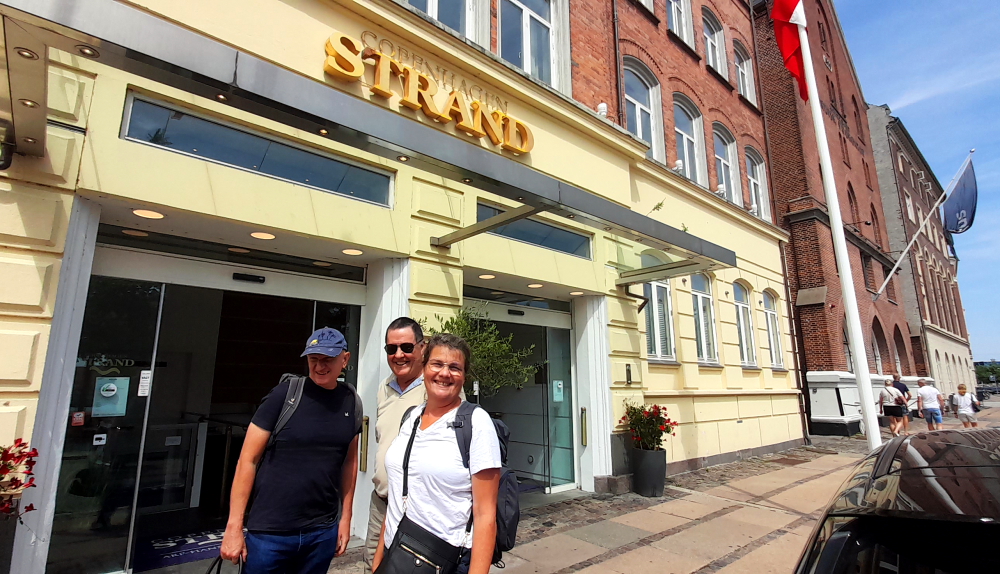
Dropping Susie & Paul at the Strand Hotel, Copenhagen.

En route we pass the sign for Karen Blixen’s house – she of ‘Out of Africa’ fame. About 30 minutes later we arrive at our mixed traditional/modern-style Danish hotel, the Comwell Borupgaard.

Borupgård is an estate (originally a manor) with a long history. It is now the Comwell Hotel Borupgaard .
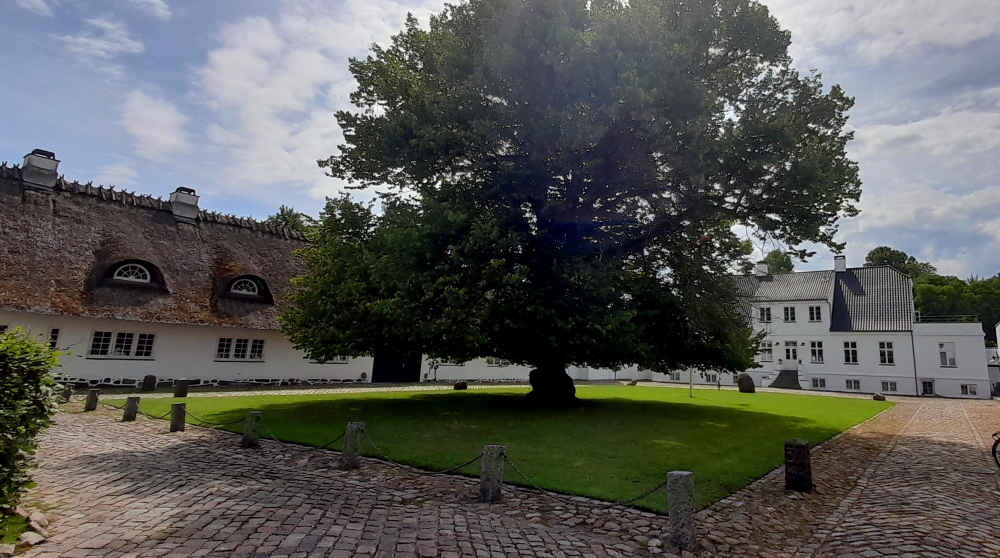
The Comwell Hotel grounds.

Borupgaard by Snekkersten belongs to the country’s oldest settlements. From the time of Valdemar Sejr, the name form Bothorp 1211 has been handed down. The farm belongs to the torp group of Danish place names and has its origins perhaps as far back as around the year 1000, when the great new cultivation began.
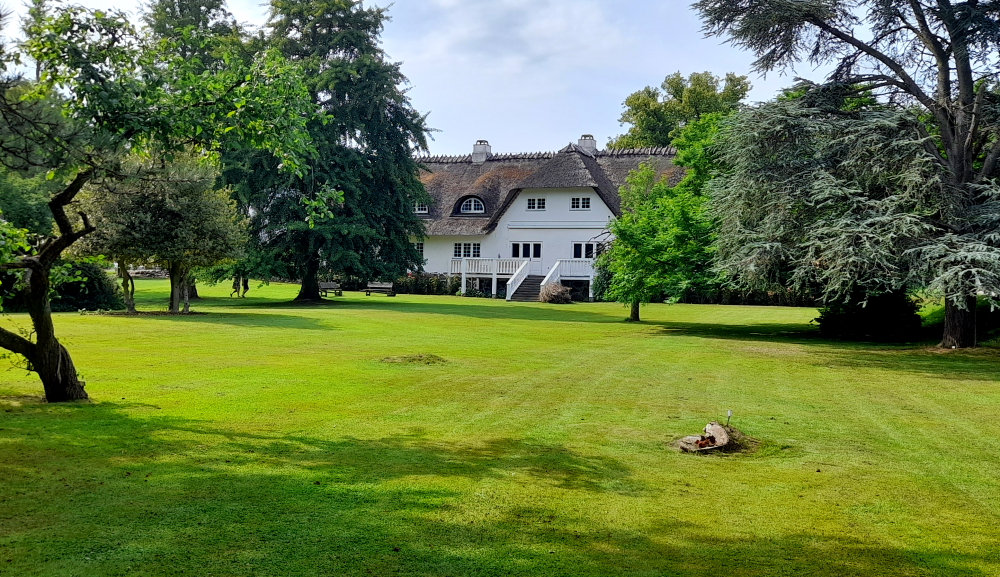
The hotel grounds.

In the 12th century, Borup and its land belonged to Esrom Kloster. Later it is mentioned in privileges to the bishops of Roskilde such as Absalon and Peder Sunesen. From the later part of the Middle Ages, nothing is heard of the farm. It is not until the middle of the 16th century that the farm reappears in documents, and from then on it is mentioned regularly until approx. 1800. In 1898 , the farm was 27 3/4 acres of hartkorn , 338 acres of land, of which 8 acres were forest, the rest arable.
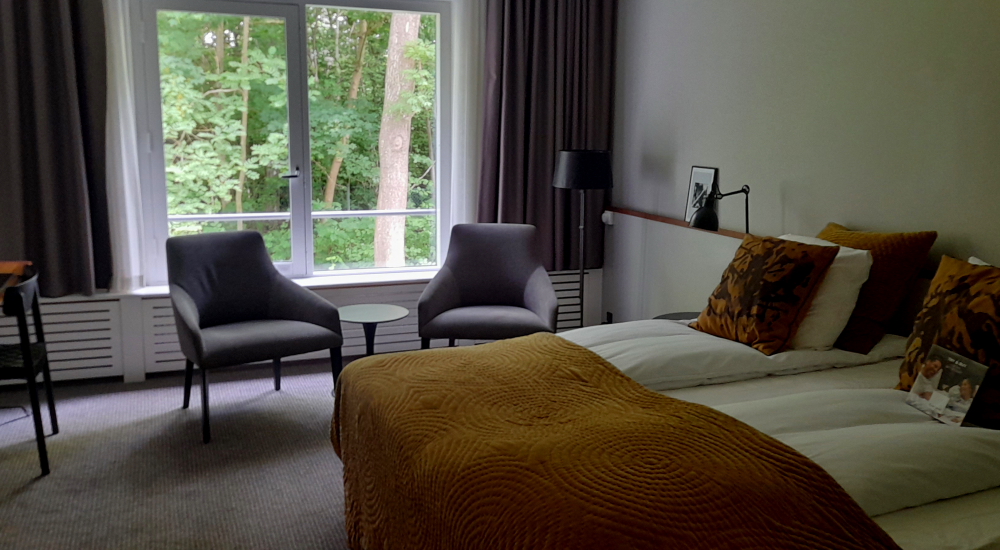
Our room with woodland views.

While it’s still sunny we drive the 4.5 kms to see Kronborg Castle, otherwise known as Hamlet’s castle which is heavily defended by a couple of moats landside and the sea on its far side.

Kronborg is a castle and stronghold in the town of Helsingør, Denmark. Immortalized as Elsinore in William Shakespeare’s play Hamlet, Kronborg is one of the most important Renaissance castles in Northern Europe and was inscribed on the UNESCO’s World Heritage List in 2000.

The castle is situated on the extreme northeastern tip of the island of Zealand at the narrowest point of the Øresund, the sound between present Denmark and the provinces of present Sweden that were also Danish at the time the castle was built. In this part, the sound is only 4 kms (2.5 mi) wide, hence the strategic importance of maintaining a coastal fortification at this location commanding one of the few outlets of the Baltic Sea.
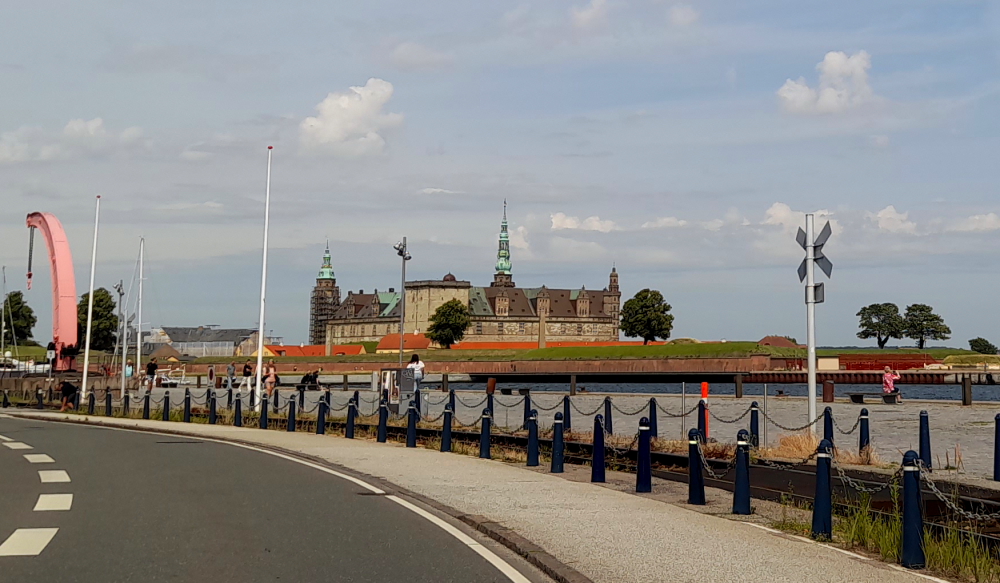
Kronborg Slot aka Hamlet’s Castle.

The castle’s story dates back to a stronghold, Krogen, built by King Eric VII in the 1420s. Along with the fortress Kärnan in Helsingborg on the opposite coast of Øresund, it controlled the entrance way to the Baltic Sea. From 1574 to 1585, King Frederick II had the medieval fortress radically transformed into a magnificent Renaissance castle. The main architects were the Flemings Hans Hendrik van Paesschen and Anthonis van Obbergen, whereas the sculptural work was coordinated by Gert van Groningen.

In 1629, a fire destroyed much of the castle, but King Christian IV subsequently had it rebuilt. The castle also has a church within its walls. In 1658, Kronborg was besieged and captured by the Swedes who took many of its valuable art treasures as war booty. In 1785 the castle ceased to be a royal residence and was converted into barracks for the Army. The Army left the castle in 1923, and after a thorough renovation it was opened to the public.
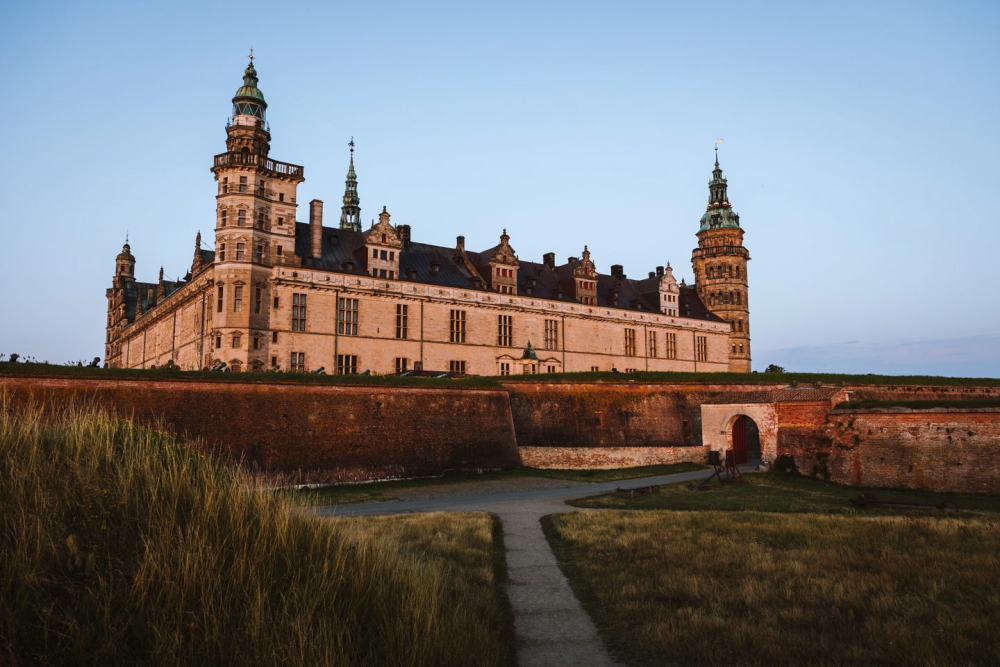
Kronborg Castle.

While we are here we decide to drive part of the northern coast. The north coast is nicknamed ‘The Danish Riviera’. Along the almost 70 km stretch between Lynæs and Nivå, there are golden sandy beaches, classic promenades and cosy seaside resorts.

We drive along Nordre Strandvej to Julebaek Strand, 4 kms from Helsingor.
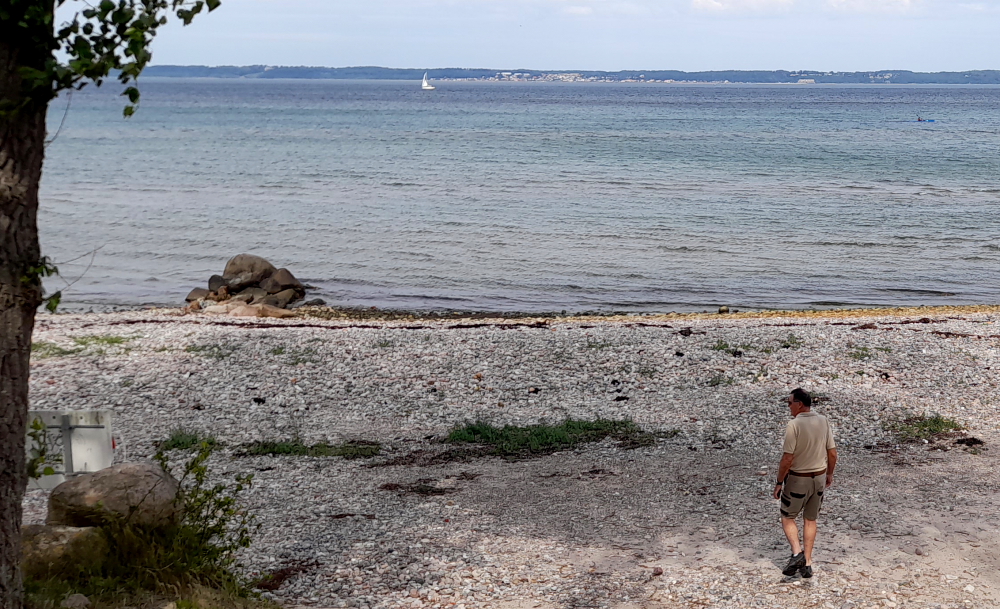
Checking out a North Coast beach – Julebaek Strand.

Hmmm – not our idea of a beach, but then again French Riviera beaches are known for their pebbles (rocks), too!
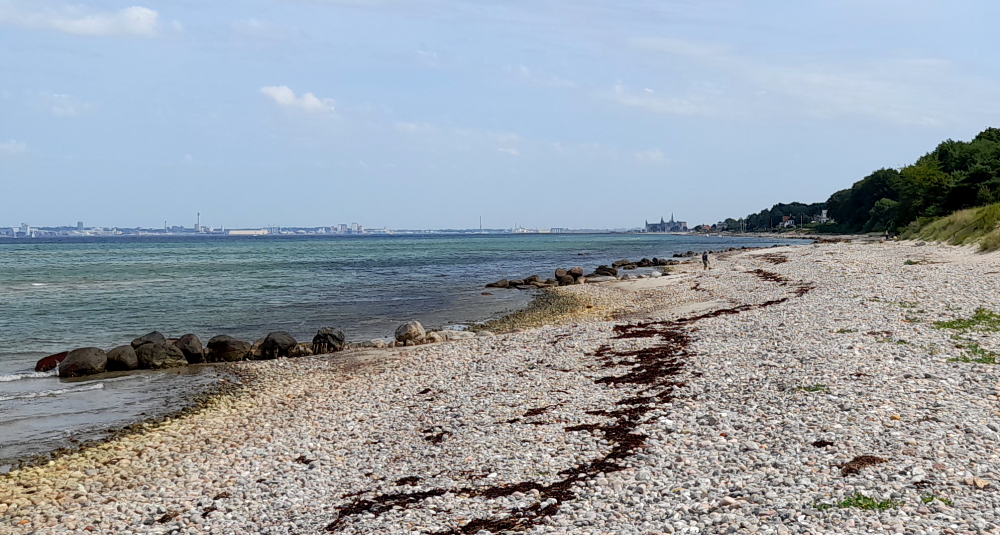
Looking back to the Castle and over to Sweden.

On our way back to the hotel we stop for a quick car wash and our last full tank of petrol for Scandinavia.

Dinner tonight is a quick Burrito and Pizza at Omo’s next door to the hotel. For fast food it was very good and the place was very busy. It seems that the locals really like this place.

Walking back to the hotel we take a stroll around the hotel gardens to enjoy the very pleasant summer evening in the quiet gardens.
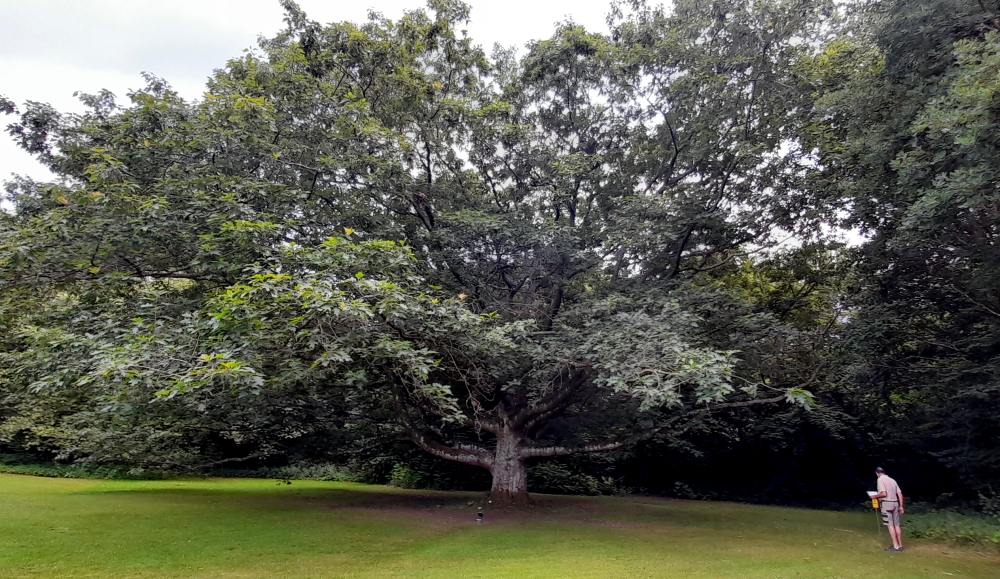
100 year old tree.

Lynn also takes a photo of one of the traditional buildings that is part of the hotel.
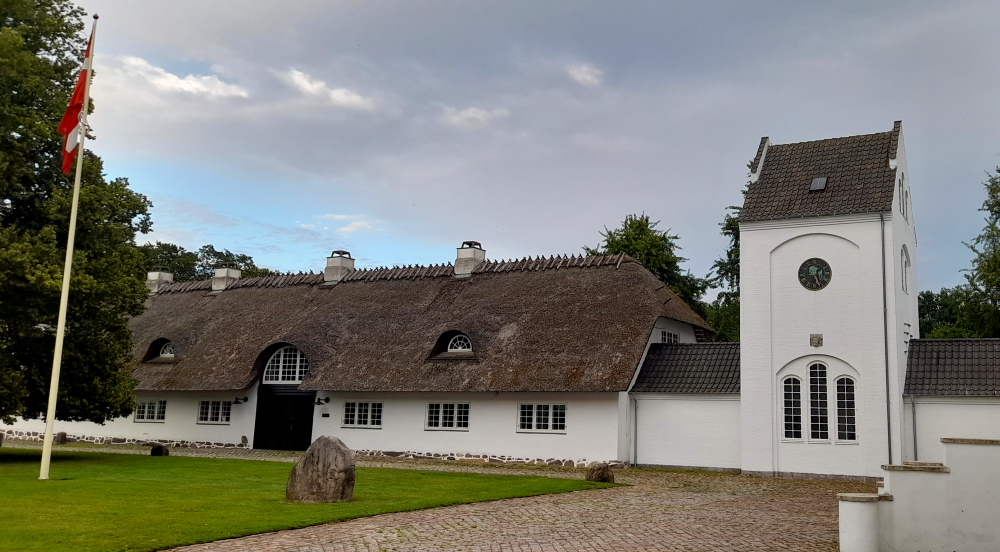
Hotel wing with clock tower.

Tomorrow is our last day of being a tourist in Denmark so Lynn has planned for us to visit the Frederiksborg Castle.
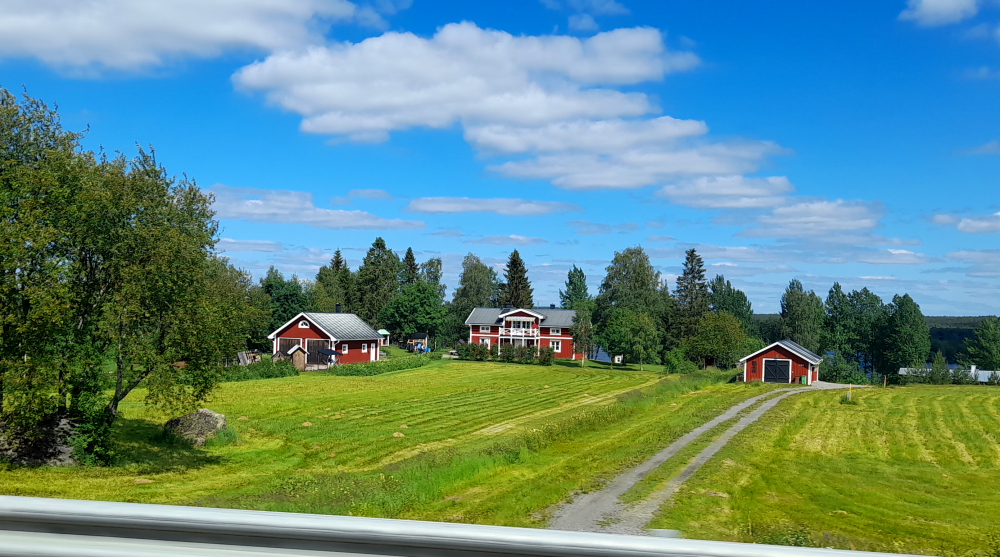
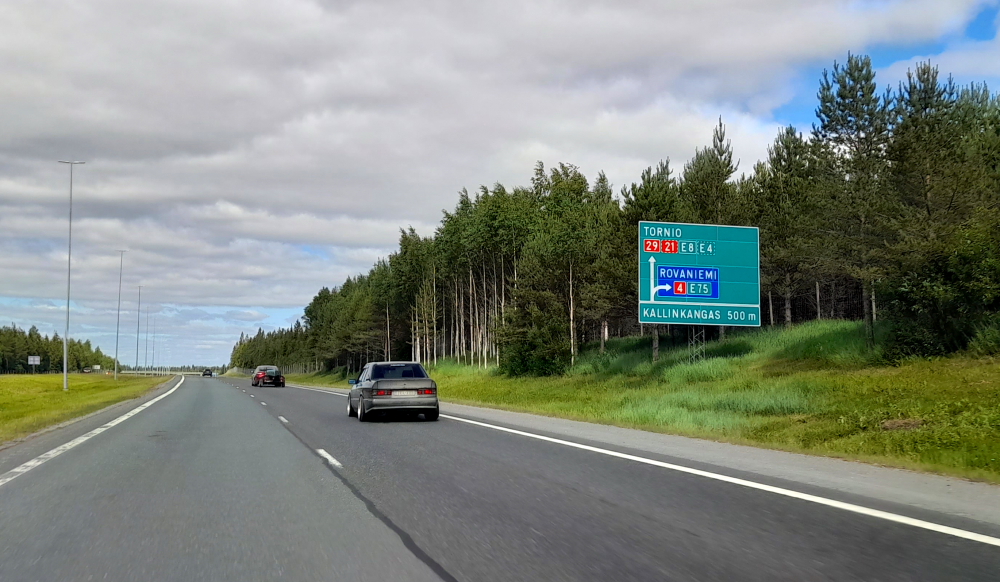
Going south along the Swedish east coast.

1 July, 2023

This morning will be our last in Finland as we drive the 263 kms from Oulu, Finland to Lulea, Sweden. We depart at 10:55 am under an overcast sky, a cool 14 Deg. C and head north on the 4.

There are more wind farms here. Road construction chaos rules as the major highway is suddenly blocked off from time to time with diversions at right angles to obstructions and oncoming traffic left to its own devices. The usual moose fences and moose road signs but still a distinct lack of moose.

An hour into our journey it’s sunny and 19 Deg. C. At Kemi we start driving west.

Farmland near Kemi.

Soon a familiar name appears – Rovaniemi (of Santa Claus Village and Arctic Circle fame) – only 120 kms NE on the E75.

Almost back to the Arctic Circle.
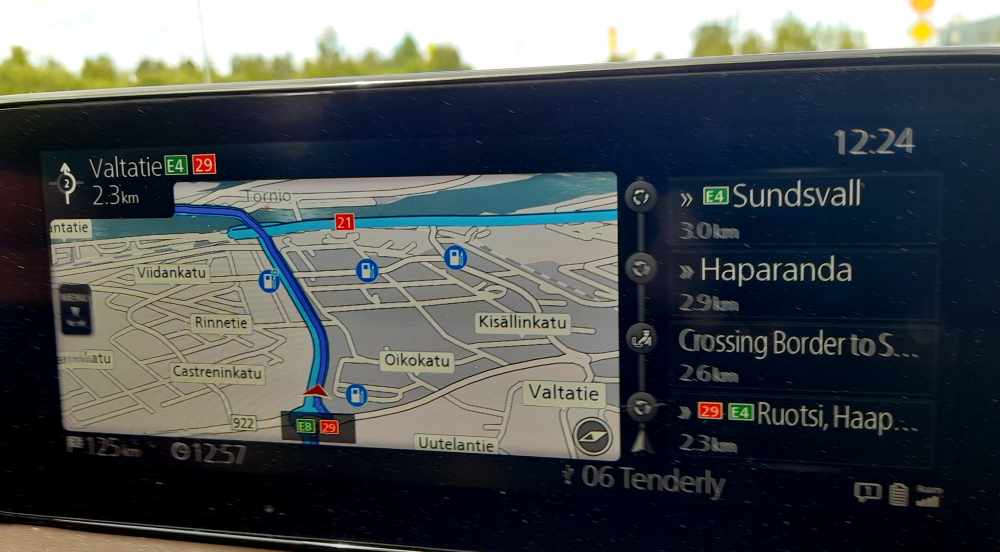
The Torne River at Haparanda is the Finland/Sweden border where we commence our drive in a southerly direction.

Approaching the Swedish border.

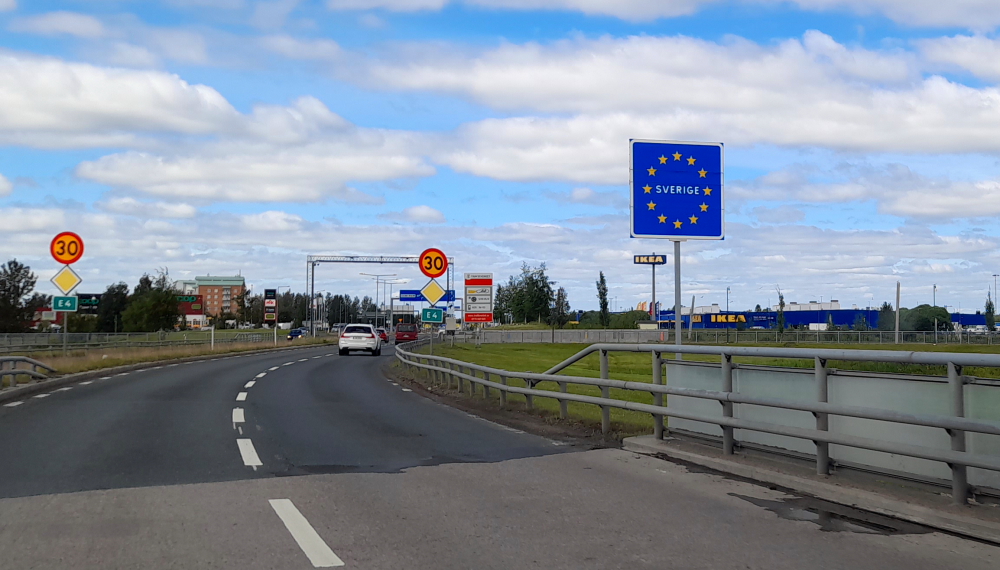
Where we are greeted by a sign welcoming us to Sweden – “Ikea” – oh, and the EU border sign, “Sverige”. And a different time zone – 1 hour behind.

Swedish border and Ikea.

One of the few “must things to see and do in Lulea” is Gammelstad which is 10 kms NW of Lulea and a short diversion.

Gammelstad, at the head of the Gulf of Bothnia, is the best-preserved example of a ‘church village’, a unique kind of village formerly found throughout northern Scandinavia. The earliest mention of Gammelstad Church Town is Christmas 1600. Of Sweden’s 71 original church towns, only 16 are left today, the majority have been reduced to remnants.

The church town was the obvious place for parishioners to meet. People converged here to attend High Mass and hours of devotion complying with their duty to attend church regularly, to attend markets, court sessions and parish meetings and to meet friends and acquaintances from other villages. Even today the church town custom survives. Three to four times a year parishioners are invited to a church weekend and during the traditional confirmation classes before mid-summer young people stay in the church cottages.

A thousand years ago Lulea district consisted of an archipelago where the sea level was ten times higher than today. The church hill of present-day Gammelstad was a small island at the mouth of the Lule river. During the 14th century the area became the centre of a parish stretching from the coast to the Norwegian mountains along the Kalix, Lule and Rane rivers.

After the treaty of Noteborg in 1323, Sweden and Russia disagreed about their northern border. To ensure the area the Swedish state entrusted the Lule river valley to burghers from Central Sweden. The church sent out priests to built simple wooden churches. 1339 was the first year church services were mentioned as having been held in Lulea Church.

In the 17th century the rule was applied more strictly that all trade should be centered on towns where it could be taxed. In 1621 the town of Lulea was founded on the site of the old marketplace. As early as 1649 it was noted that the harbour had become too shallow owing to land elevation after the ice age. The burghers of Lulea were forced to move their town nearer the coast establishing Lulea New Town (present-day Lulea) and Lulea Old Town (Gammelstad).
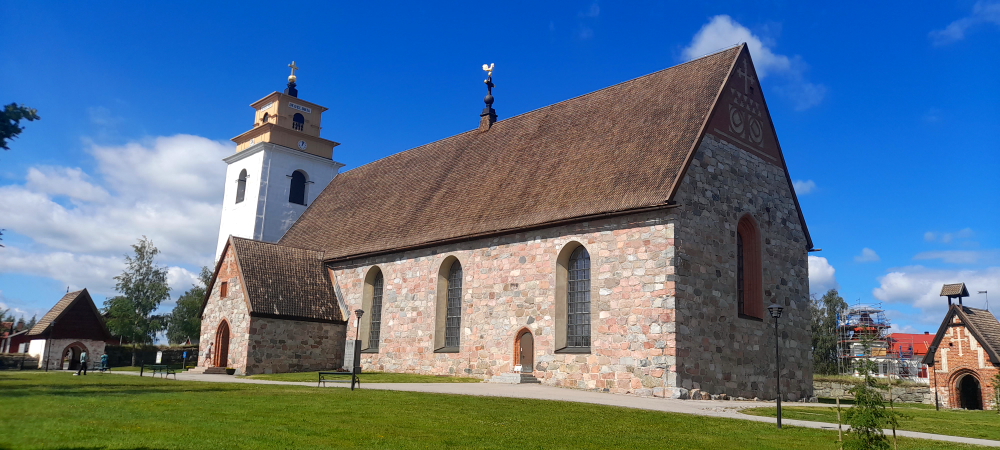
Nederlulea Church.

Nederlulea (Lower Lulea) church is the largest medieval church in Norrland. It was built during the 15th century and believed to be finished in 1492. The bell tower was built in1851 and replaced an older, wooden tower.

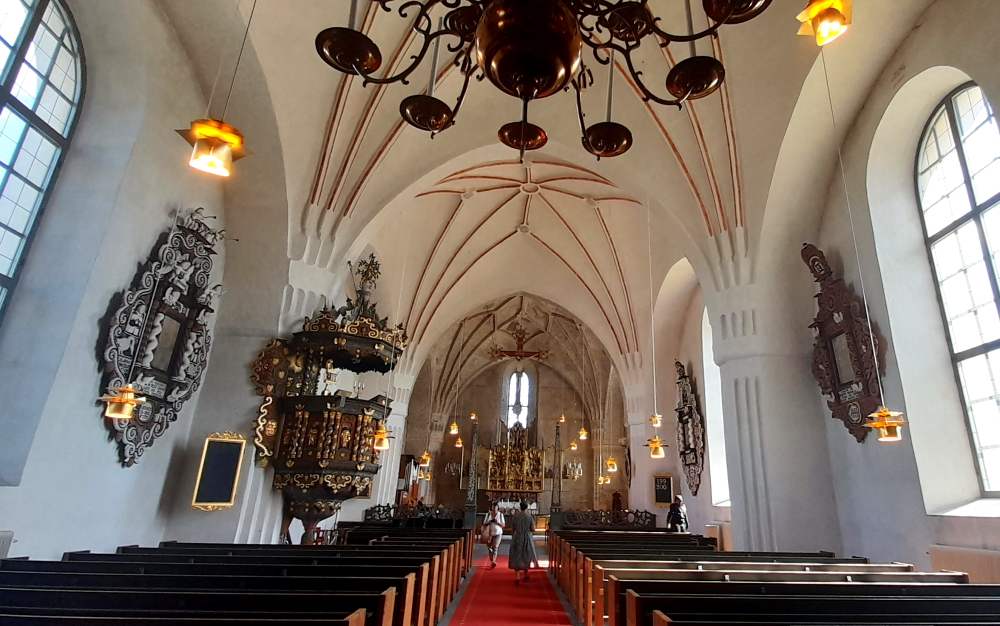
The church has a very rich interior and furnishings. The late-medieval frescos were by the school of Albertus Pictor. The altar screen, with wooden figures recounting the story of the Passion, is one of the country’s finest. Built in Antwerp c. 1520 and cost 900 silver marks, an enormous sum which the Lulea farmers were said to have paid in cash. The pulpit and commemorative plaques were made by Nils Jacobsson Fluur and date from the early 18th century.

Inside the Nederlulea Church.

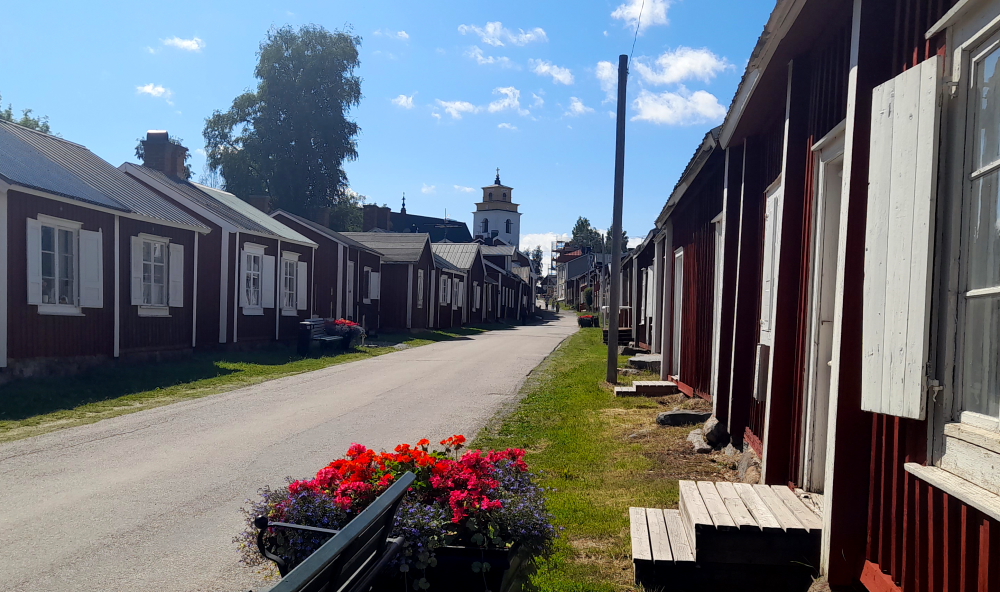
The 424 wooden houses, huddled round the early 15th-century stone church, were used only on Sundays and at religious festivals to house worshipers from the surrounding countryside who could not return home the same day because of the distance and difficult traveling conditions. It is now a UNESCO World Heritage Site.

Gamla Hamngatan – the main street.

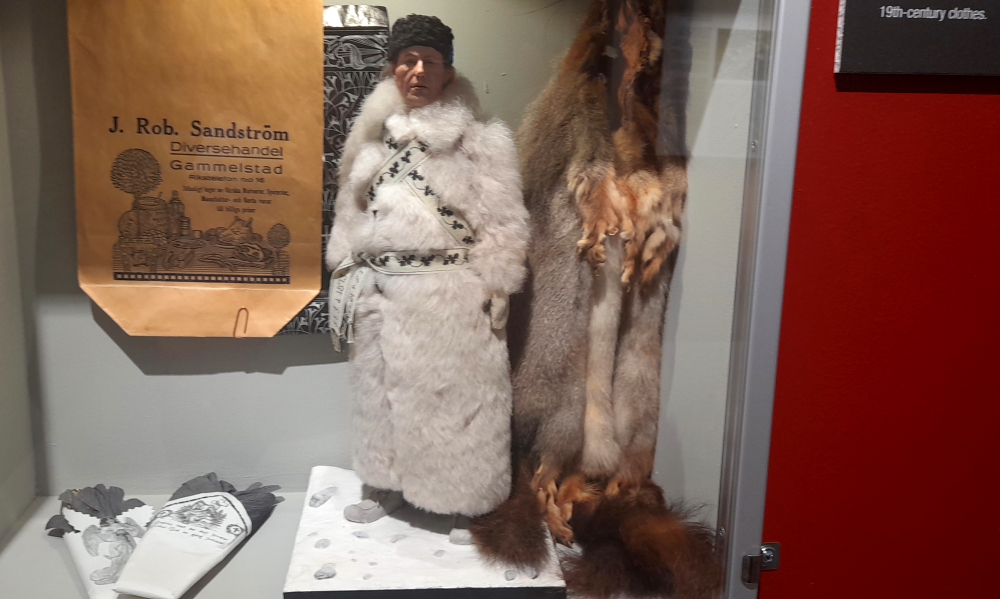
In the Visitors’ Centre is an exhibition about UNESCO sites in general and Gammelstad’s history in particular.

Visitor Centre Exhibition showing 19th century clothing of the area.

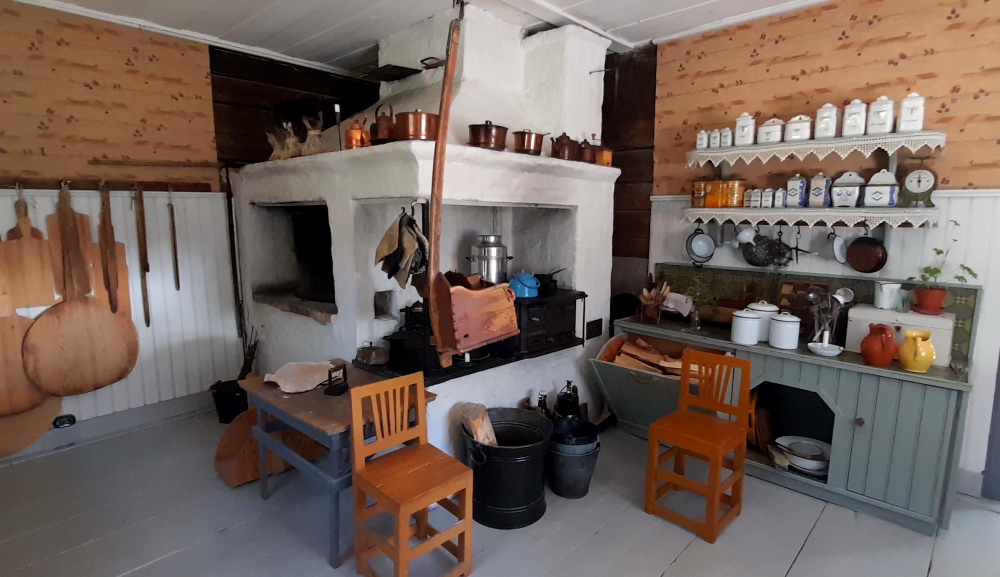
Gammelstad also has an open-air museum, Hagnan. which is down the main street from the church towards what was the harbour.

Kitchen inside No. 253 Framlanningsvagen.

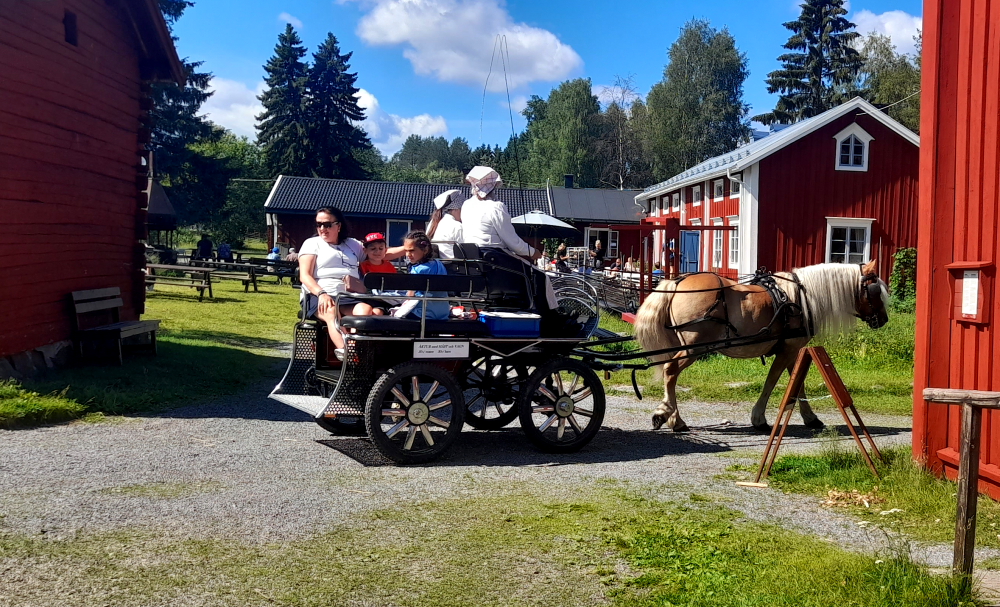
As it is a weekend and during school holidays the open-air museum has lots of families strolling around enjoying the sunshine.

Rides around the village.

Various cottages, farm buildings and equipment comprise the museum.

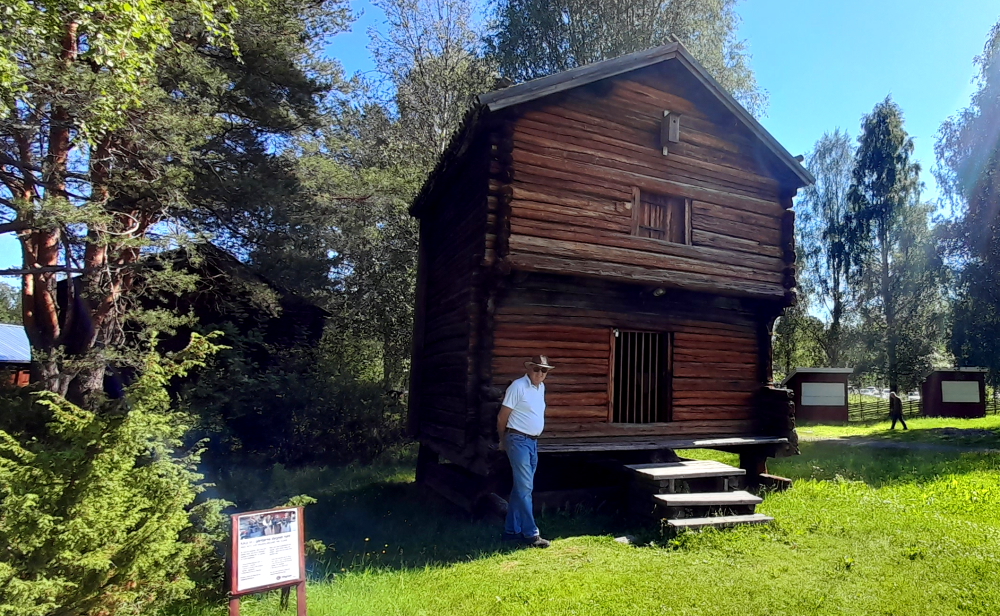
Traditional granary.

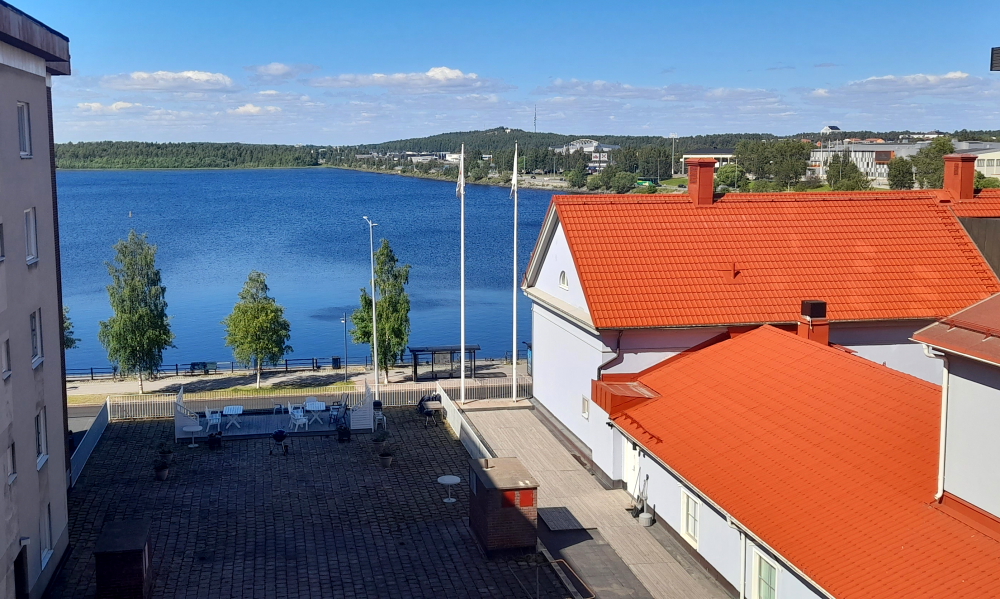
We arrive at the hotel around 2:30 pm and make our way to our 3rd-floor room. So nice to have something of a water view instead of concrete and a cool breeze through the open windows.

After spending about half an hour fixing the hotel’s internet we walk next door-but-one to the “Bishops Arms” pub and, finally, some recognisable and edible food – Hunter’s Chicken.

Room with a sort of view.

Time for a postprandial stroll along the waterfront in the sunshine.

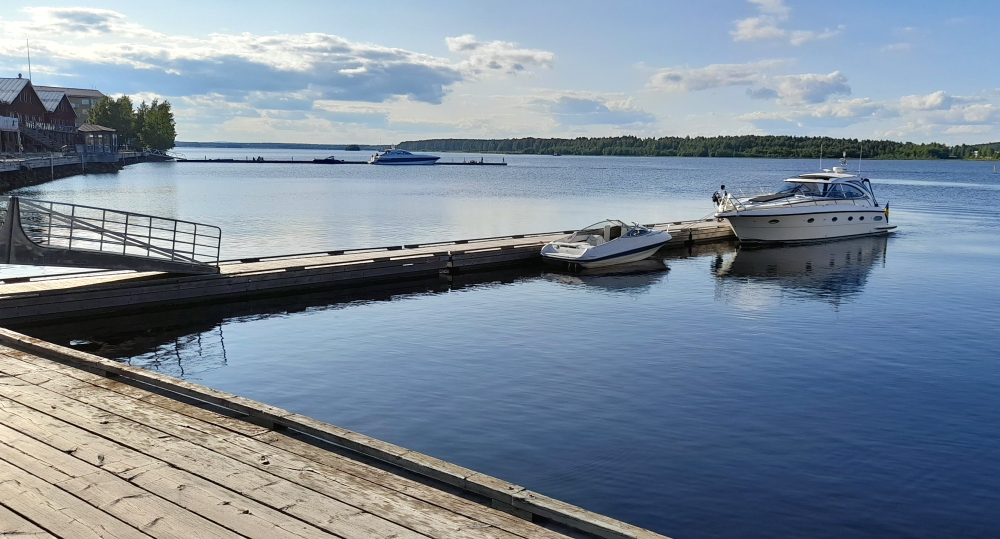
Warm afternoon stroll along the harbourside.

Although the waterway connects directly to the open sea the water has a tea colour that would indicate large quantities of snow melt water.

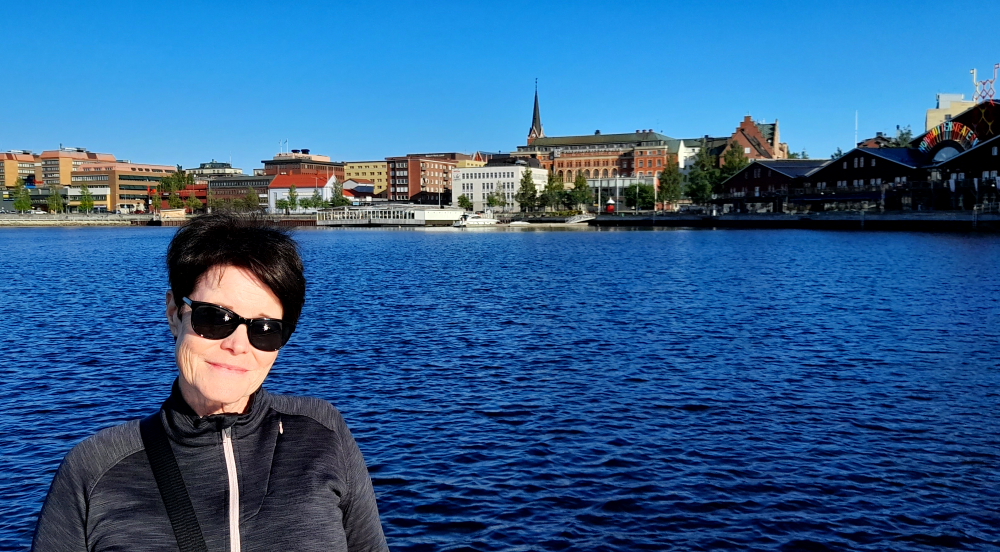
View back to the hotel and town centre.

At 10:30 pm we hit the sack, only to be woken at 2:45 am by thumping music coming through the open window from the adjacent pub. Only another 15 minutes before they close… It appears that air conditioning hasn’t been invented in Sweden yet so closing the window is not an option.

2 July, 2023

Yesterday the weather forecast predicted rain for the next 2 days. Instead we wake to sunshine but a decidedly cooler day – 10 Deg C at 8:00 am. Which turns out to be 7:00 am as Lynn forgot to change the time back 1 hour last night when she set the alarm!

After a leisurely breakfast in a packed restaurant I take a stroll around the town while Lynn writes yesterday’s blog. We were thinking of driving to the other “must see/do” – Storforsen waterfall – but as it will be a 200 kms round-trip to see “Europe’s largest unregulated rapid…at 870 cu m/s…over a distance of 5 km dropping 82 meters 60meters of which are a single waterfall…” I decide I’d prefer to show Lynn the Schaffhausen waterfall when we get to Switzerland.

The converted industrial waterfront of the southern side of Lulea.

While out walking downtown Lulea I walk to the other waterfront. It is now converted to apartments but starting to look a little dated and in need of some serious maintenance.

Converted docks.

Most of the town is deserted and all the shops are closed. It’s probably because it’s Sunday but I walk up and down a number of streets and it appears that only the main pedestrian street on which our hotel is situated has any life.

The buildings in the town streets are mostly cheaply-built apartment blocks all of which could use some form of maintenance. As per Lynn’s instructions I also walk to the highest point in the town to the local church to take a photo for her. The church is being restored and much of it is under scaffolding but I manage to get at least one reasonable photo.

Lulea Church.

We may struggle to find an open restaurant in downtown for dinner tonight but perhaps the Swedes don’t come out until late on a Sunday.

As there is little else to do in town today we’ll spend the increasingly overcast and windy day making more accommodation bookings for the new year.

We are far enough south now that the sun actually sets for a couple of hours. At about 11:30 pm Lynn takes a photo of the nearly midnight sun. I just wanted to get to sleep before Lynn wakes me up at some ridiculous early hour (i.e. pre-8 am).

The nearly midnight sun!

3 July, 2023

We are now officially heading south close to the Swedish east coast. We chose this road vs the mid-Sweden mountain road as we thought we might get some views of the Gulf of Bothnia vs more forests on the mountain road.

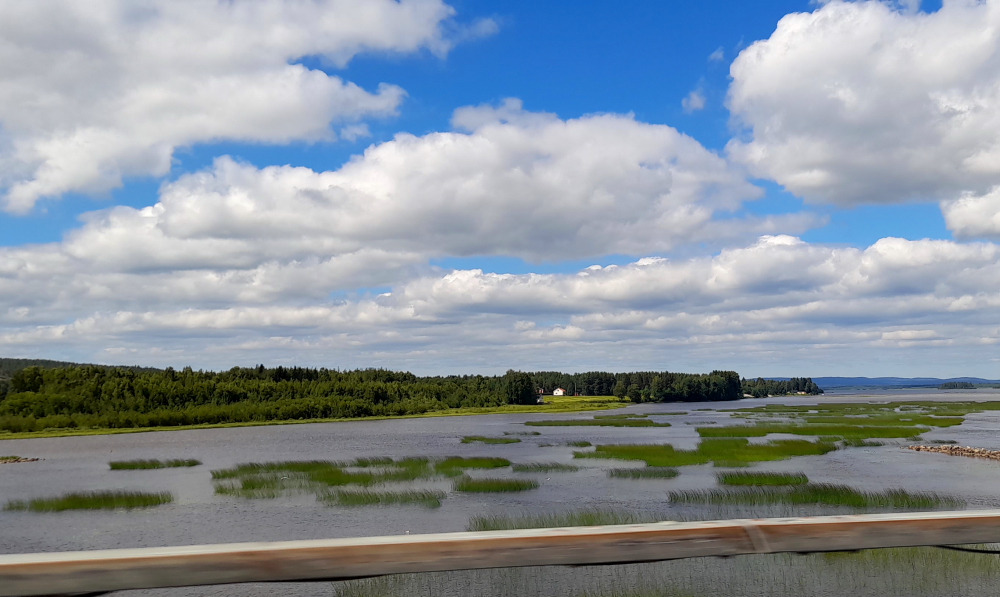
Wrong. Except for the occasional bridge and inlet view it is nothing but more forests and badly-designed intersections on the highway.

Leaving Lulea.

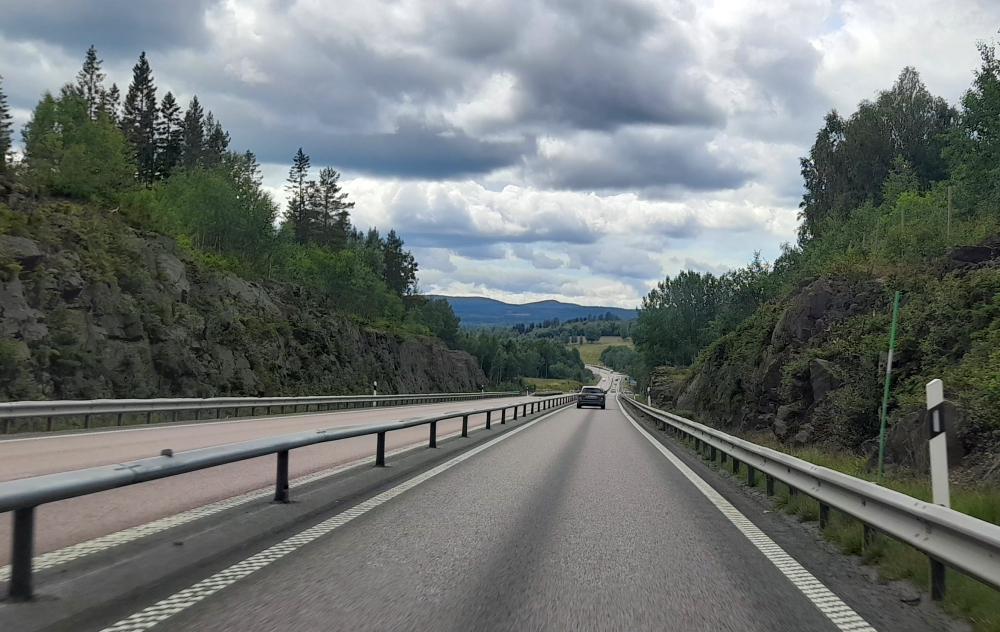
Driving on the main country highways in Sweden is a very frustrating exercise. The highway is a total of three lanes. Two in one direction and one in the other (usually divided by a steel guard rail). The lanes swap regularly from a one/two-lane combinations in each direction that moves OK but the swaps are too short for truly meaningful overtaking without speeding to get the job done before the two lanes revert back to one. To make things worse the highway speed limits suddenly change from 110 kph to 80 kph (with speed cameras within 100 meters of the speed change) for minor road intersections. Cruise control usage is almost impossible. The design of the intersections don’t allow for entry or exit without the highway coming to an almost complete stop if a vehicle wants to exit or enter the freeway.
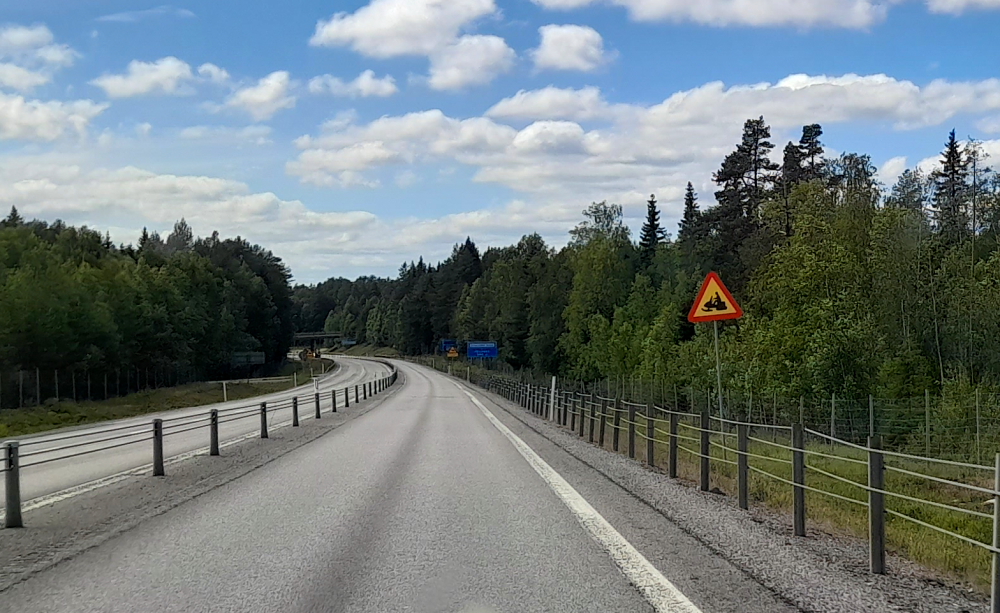
Skidoos replace moose as the road hazard.

It is impossible to drive efficiently as you are always accelerating hard to get up to 110 kph or getting overtaking done or braking hard to slow for the speed cameras from 110 kph down to 80 or 60 kph within 100 meters or less.

The water views that we do get are usually blocked by bridge guard rails so Lynn has some very good photos of guard rails, if anyone is interested :).

One of Lynn’s smaller guard rail photos.

We also witness the ultimate mobile chicane – a tractor towing a caravan!

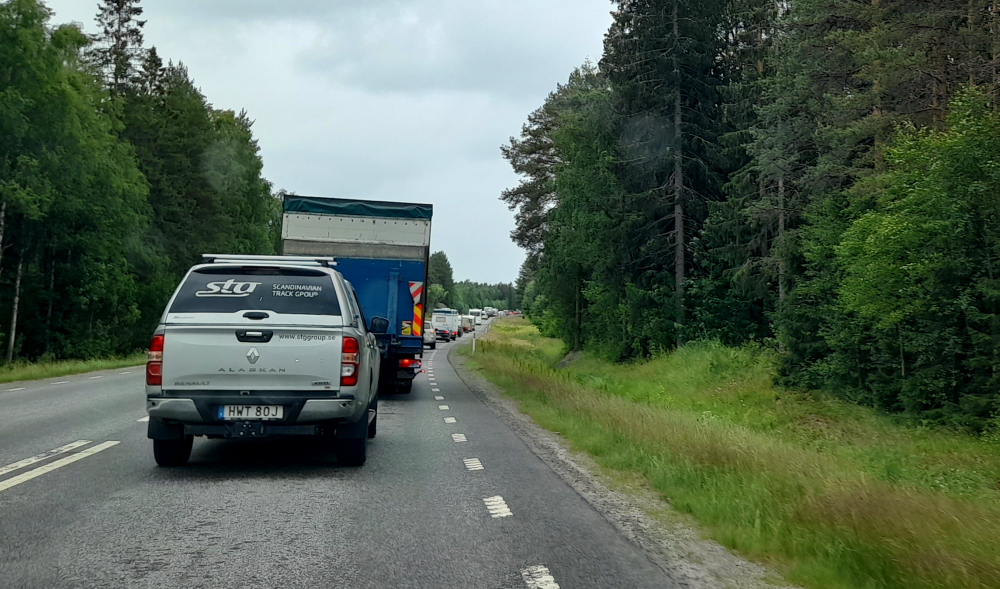
About 68 kms (Gumboda) from our next stop at Umea the highway grinds to a complete stop. We sit in stop/start traffic for about 15 minutes traveling at a rate of about 3 kph on average. Obviously there is a major issue somewhere between us and Umea.
Very long and slow-moving traffic jam in the middle of nowhere.

Lynn checks her MapsMe and finds a possible side road that may get us around the traffic jam. It is a dirt road but in reasonable condition even though it is now starting to rain. It seems that a few drivers either know of the bypass or also have a GPS map so about 5 of us take the side road (including one of the vast numbers of caravans). The side road is a good call. The dirt road brings us out right at the cause of the issue. Highway road works have cut the main highway and small columns of vehicles are being escorted in one direction at a time along the highway and a major bypass is in place that takes us about 8kms around the back roads. Luckily our short cut brings us to the start of the un-escorted bypass so we have avoided the 10 km-long traffic jam.

We arrive at our hotel about 15 minutes later than planned but far sooner than if we had sat in the traffic jam. It is now raining quite heavily as we check in and locate our parking space for the next two days. After driving in Sweden we seriously need a drink. We unpack, don our wet weather gear and head out to find a supermarket for chocolate and wine.

The supermarket doesn’t sell wine (just beer) and it seems that, like Norway, the Government controls the sale of wine and spirits but the supermarket checkout guy tells us that a Government bottle shop is in the next block.

We find the bottle shop and discover that wine prices are very reasonable. We can buy a good, 1 litre bottle of Italian DOCG Chianti for about A$14. Why have we been buying a small glass of shit red wine with dinner for over A$16? Are the pubs and restaurants ripping their customers off or is there additional tax for serving wine at restaurants? Either way we will be drinking water at restaurants for the remainder of our Scandinavian trip and having a big glass or two before we go to dinner.

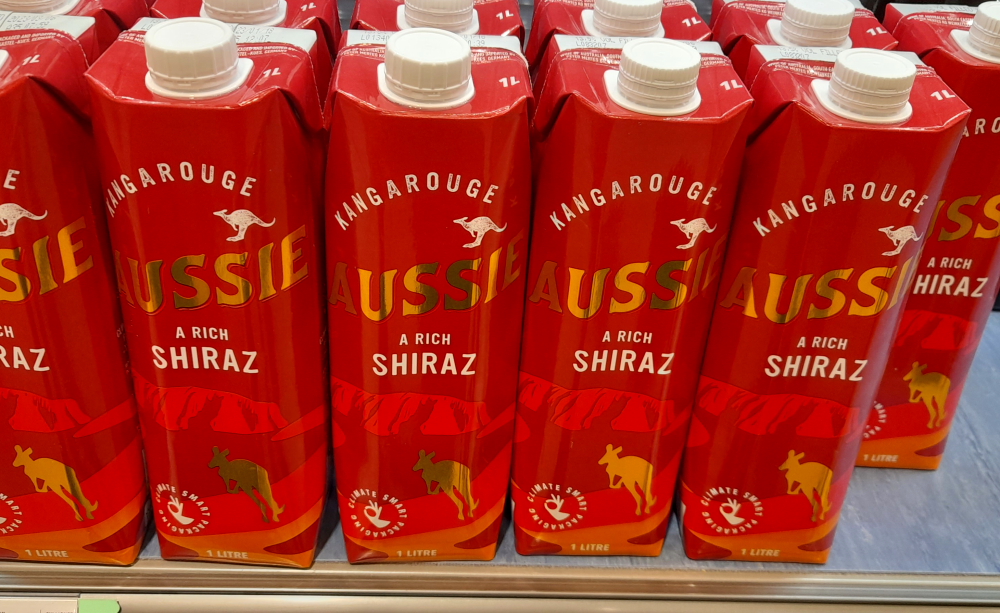
Even Australian wine at the bottle shop is reasonably priced but we are taken aback by some of the strange Australian wine offerings. None of which would ever be found or considered in Oz.

Kangarouge? In a milk carton? How embarrassing.

What marketing idiot would degrade good Australian wine by calling it Kangarouge? There is no way that we would be seen buying or drinking what must be described as Kangaroo piss!

4 July, 2023

It’s about 11 Deg C and raining outside today so after a slow breakfast I catch up on the blog. The sound of fireworks punctuate the sound of the rain and cars driving through puddles on the street below. Ah, yes. It’s American Independence Day and there must be a few Yanks in town. I don’t understand why they would let off their fireworks during the daylight but then I remember that there is only a couple of hours of darkness here and they are very early in the morning (what would then be 5 July).

We are hoping that the rain eases off this afternoon so that we can go for a walk to check out the town. Our walk to the supermarket and bottle shop yesterday didn’t unearth any must-see parts of the town nor did the drive into town. Perhaps things might be prettier down by the river?

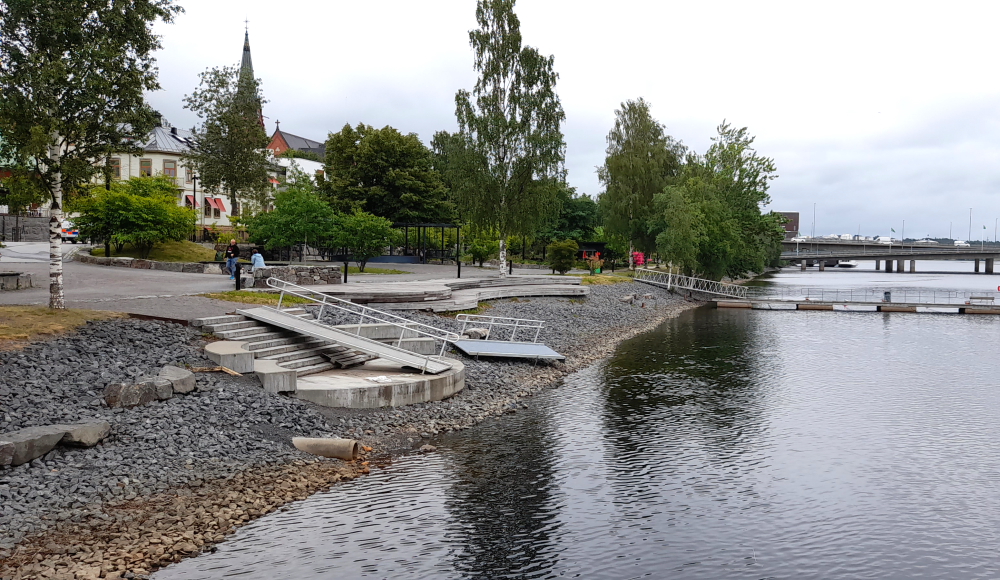
We meander through the streets heading towards the river and Vaven – a new build that straddles the street of Vastra Strandgatan and is the centre of culture for Umea.

Part of Vaven at the river’s edge.

Vaven overlooks the Ume River that has parkland and bike/walking paths along its foreshore.

Nice park except for the drain.

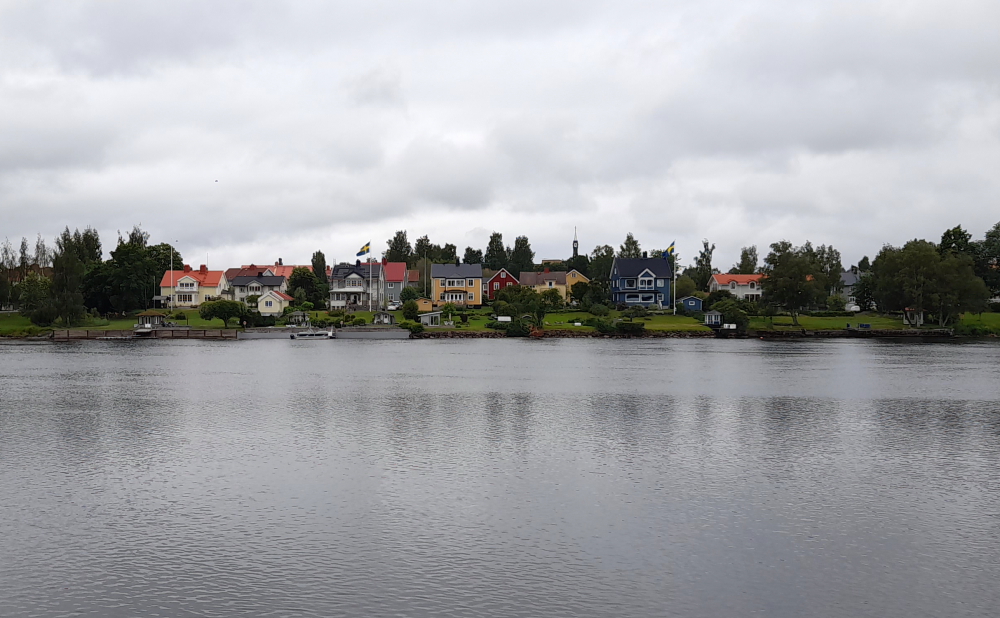
Across the river are some nice wooden residences in stark contrast to some of the concrete monstrosities/blocks of units this side which are interspersed with some charming period buildings. I comment that Swedish Architects have the design tastes of 1970s Architects.

Its always greener on the other side.

Some interesting city planning decisions – like this random, chunky, wooden viewing platform which protrudes into the river.

Nicer part of town.

Umea City Church – naturally, Lynn wants a quick peek at the interior but she’s collared by a volunteer guide and remains inside for longer than she intends. But, she did learn that the church was destroyed in 1770 by the Russian Army (typical!) and again following the Umea city fire of 1888 which destroyed most of the town (of course!).

Umea City Church.

The existing new-gothic church was designed by the city architect Frederik Olaus Lindstrom and built in brick with a stone foundation. The church was constructed between 1892 and 1894, and it is the third of a series of churches on the same site, the first erected in the 1600’s.

Inside the church.

The Radhuset – Town Hall – was built after the fire in 1888. It was erected on the site where the previous town hall (built in the 17th century) had been located and was completed in 1890. Again, the architect was Fredrik Olaus Lindstrom from Stockholm who was inspired by the Dutch Renaissance style.

It appears that no proper Architects have built anything here since.

Umea Town Hall.

In the new urban area development plan Lindström gave the town hall a prominent location next to the river bank, with the main facade facing south over the harbour on the Ume River (which was still navigable at the time, providing the city’s main point of access) and an esplanade to the north. A park was also built to give the town hall a monumental position.

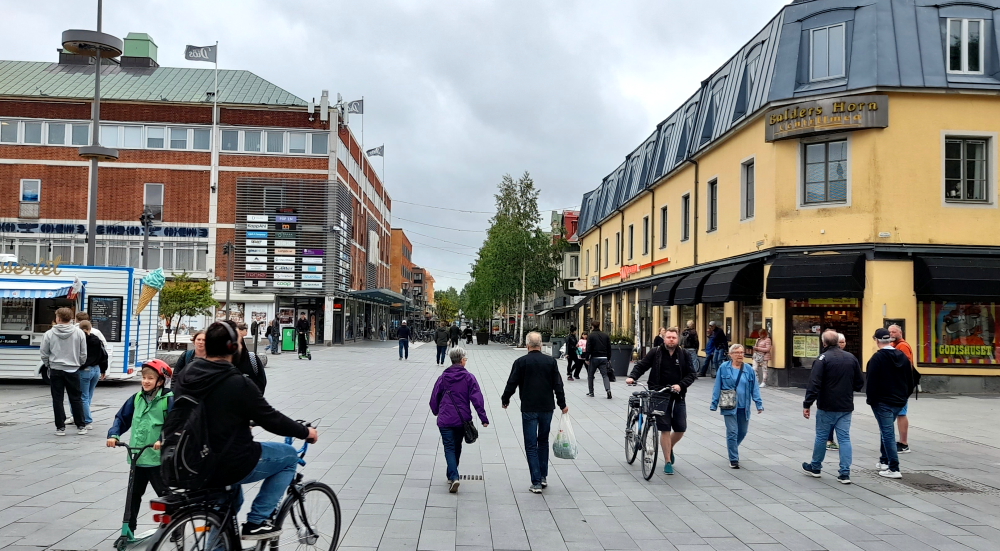
Skolgatan Mall.

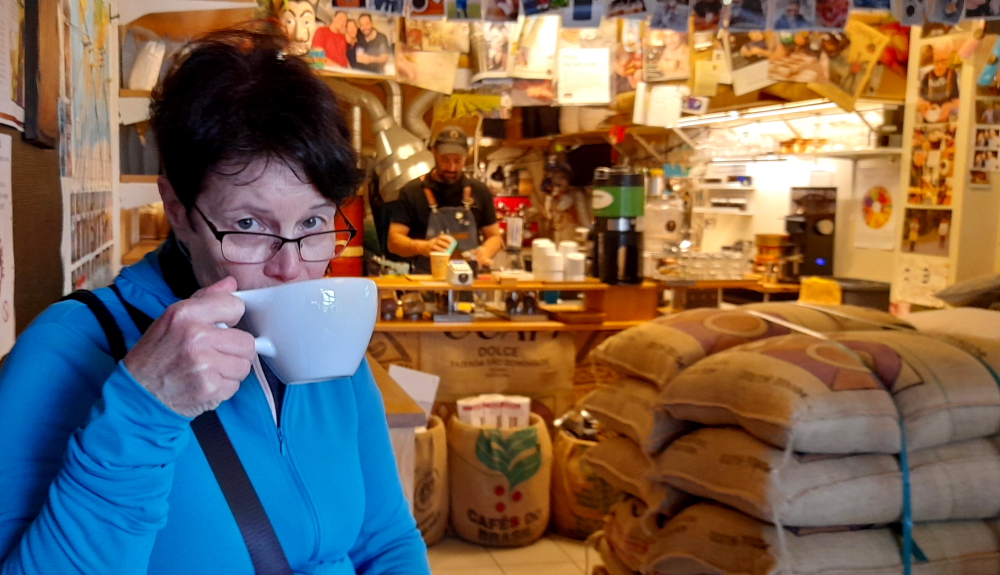
Given the cool weather and threatening rain we decide it’s time for a hot beverage and come across “Costas of Sweden” – not a cafe, but a roasterie, we are reminded by signs inside. Not sure the proprietor is too impressed with Lynn’s order for a hot chocolate, but it is on the board, and they don’t seem to offer “koffeinfri” coffee. I’m not too impressed with the AUD8 price tag per beverage.

Drinking hot chocolate in a coffee house.

5 July, 2023

An overcast day, threatening rain, as we depart Umea at 10:30 am for Sundsvall, some 265 kms SW and around a 3 hour drive. Half an hour later it’s 15 Deg. C with breaking sunshine. And Volvos are everywhere, even the tractors!

Hoga Kusten (High Coast) is a UNESCO Heritage site which starts at Ornskoldsvik and ends some 130 kms south at Hornoberget. It boasts the highest coastline, in granite, in the world at approx. 286m above sea level. Due to post-glacial land uplift, the land continues to rise at a rate of c. 8mm/year.

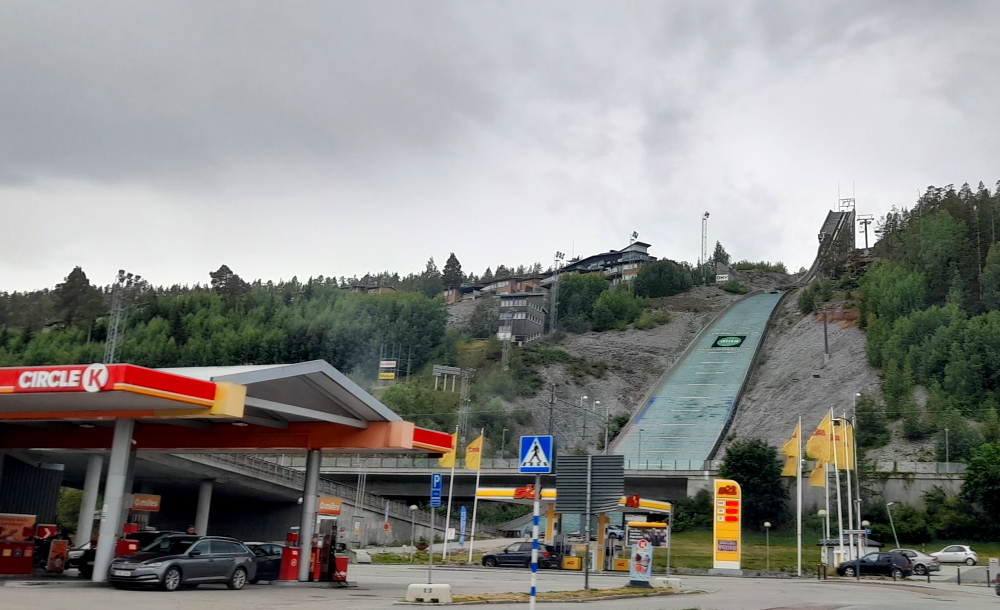
At Ornskoldsvik we take a left off the E4 at a roundabout to drive to Nyanget beach, in the hope of seeing some of these famous granite cliffs, and are somewhat amused by the Varvsberget ski jump which, in summer, appears to end in the Circle K forecourt.

Ski jump into a petrol station?

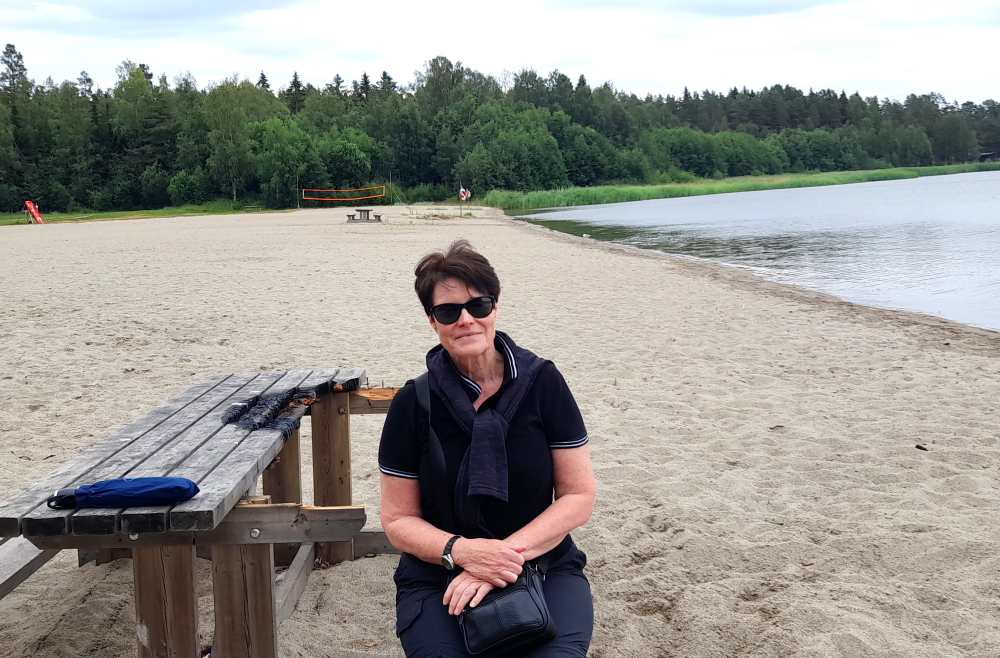
Rather than seeing any spectacular granite cliffs, we instead find a rather sad-looking and unloved ‘beach’ totally devoid of people on this ‘summer’s’ day. Someone has even tried to set fire to the picnic table!

Summer and nobody at the beach.

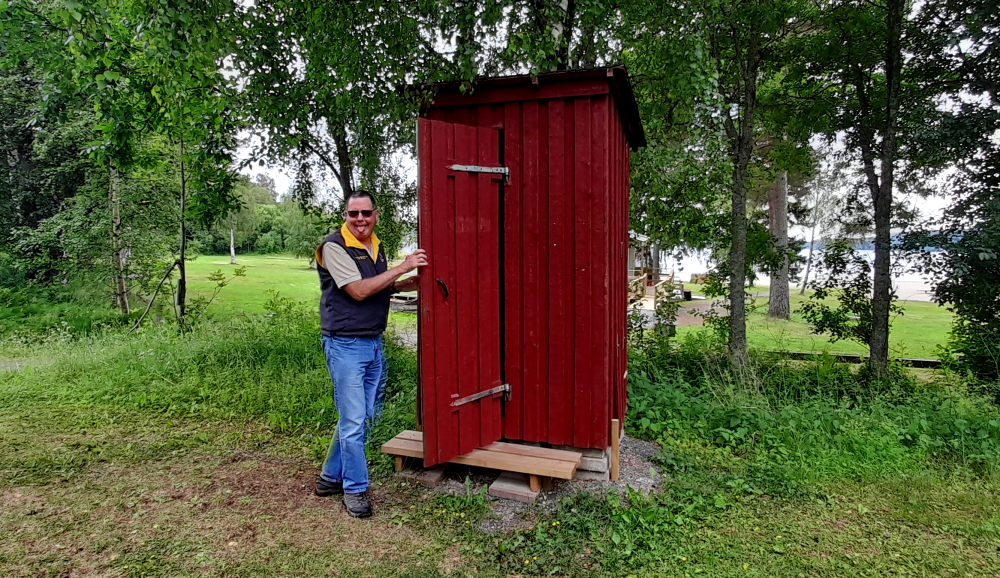
At least the loos ware being fixed up but means that we have to find somewhere else. Fortunately, near the car park, is a good, old-fashioned outdoor dunny.

Just pissed off….

In a subtle way the landscape has been changing since we left Umea, then becomes more pronounced with hills and rocks replacing the flat, forest-clad land to date.

Starting to get into hilly & rocky countryside.

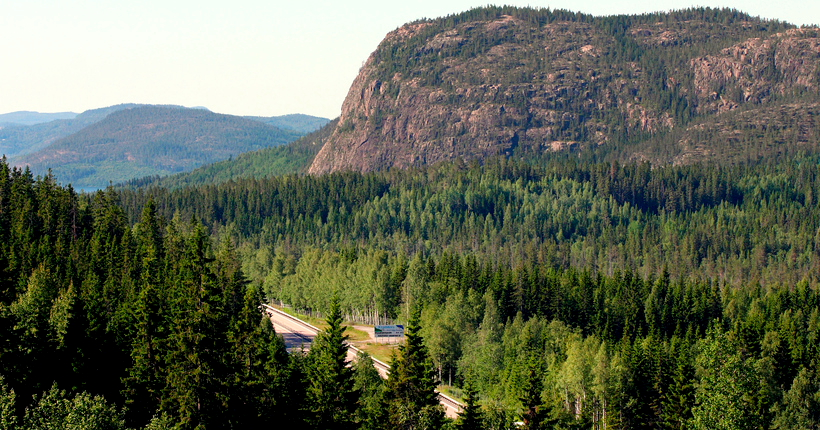
Then, some 40 kms from the start of the High Coast, we come across one of its granite cliffs, Skuleberget, on the edge of the E4.

Skuleberget Mountain.

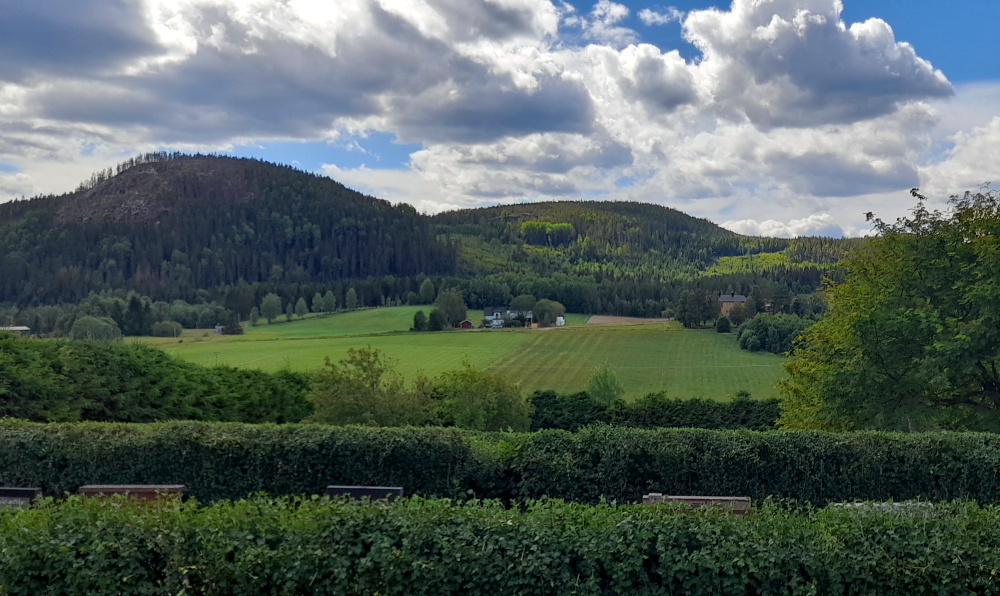
Before we drive to our accommodation in Sundsvall we take a small diversion to the village of Ljustorp, its valley described as being “idyllic” and is known for its “scenery”.

How green is my valley?

Right on 3:00 pm we arrive at the hotel, only to find that the adjacent car park is full. By the time we check in with our bags and go to move the car a space has become available so I park and pay till 9:30 am tomorrow.

After making enquiries at Reception we discover that this Best Western Hotel does, in fact, have a guest laundry room so we get a load on before we head to the hotel restaurant for dinner to take advantage of the SEK125 voucher they’ve given us.

Next load on then we venture out to explore the town which is behind us.

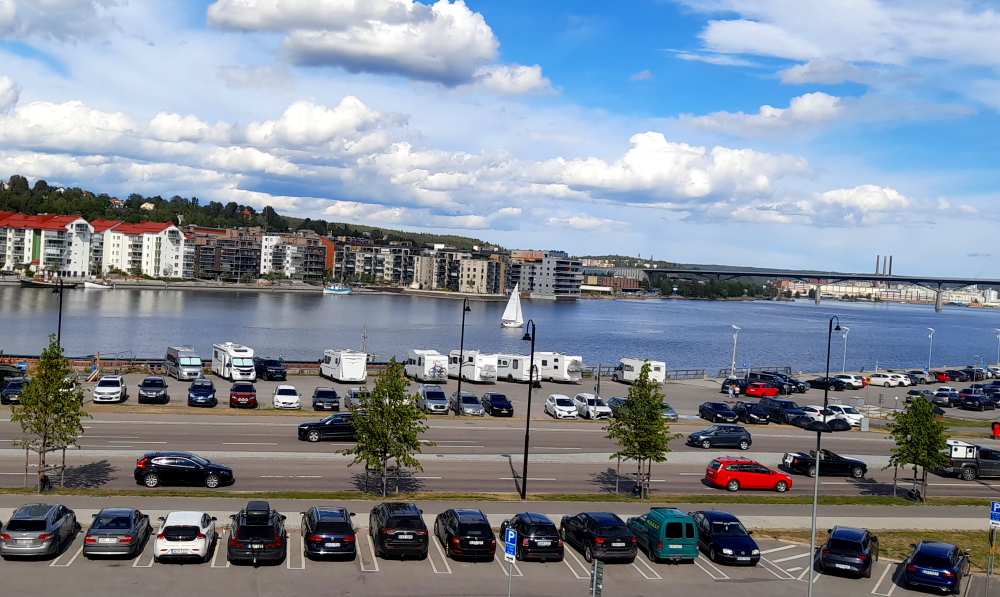
View from our hotel window in Sundsvall.

Lynn directs us to our first stop in the next block on Storgatan which is the Elite Hotel Knaust.

Elite Hotel Knaust.

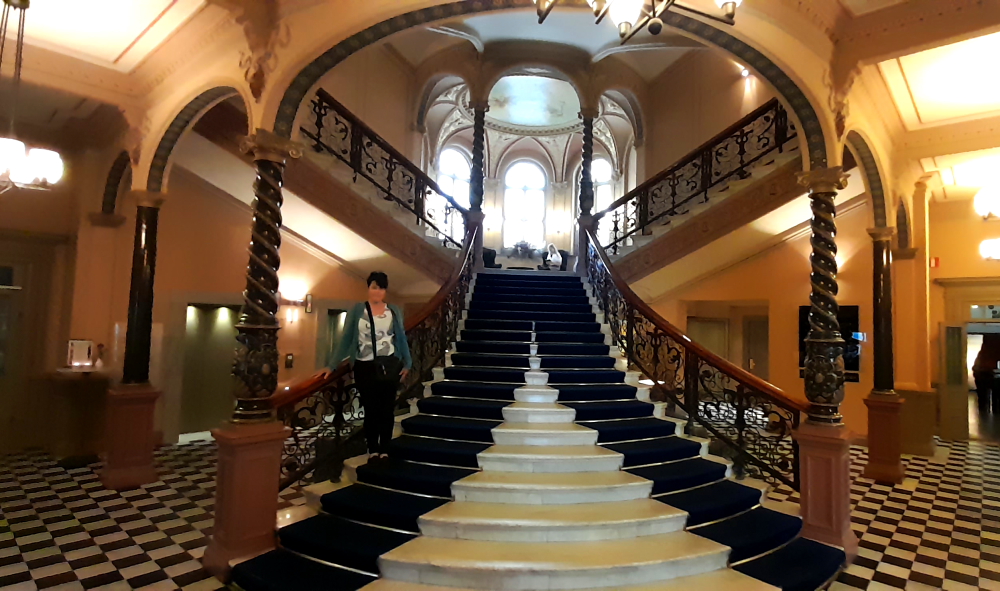
Housed in a building from 1891, this historic hotel is widely known for its beautiful marble staircase and magnificent hall of mirrors.

Three-story marble staircase in the Knaust Hotel.

Found the staircase but not the hall of mirrors. Umm – why aren’t we staying here??

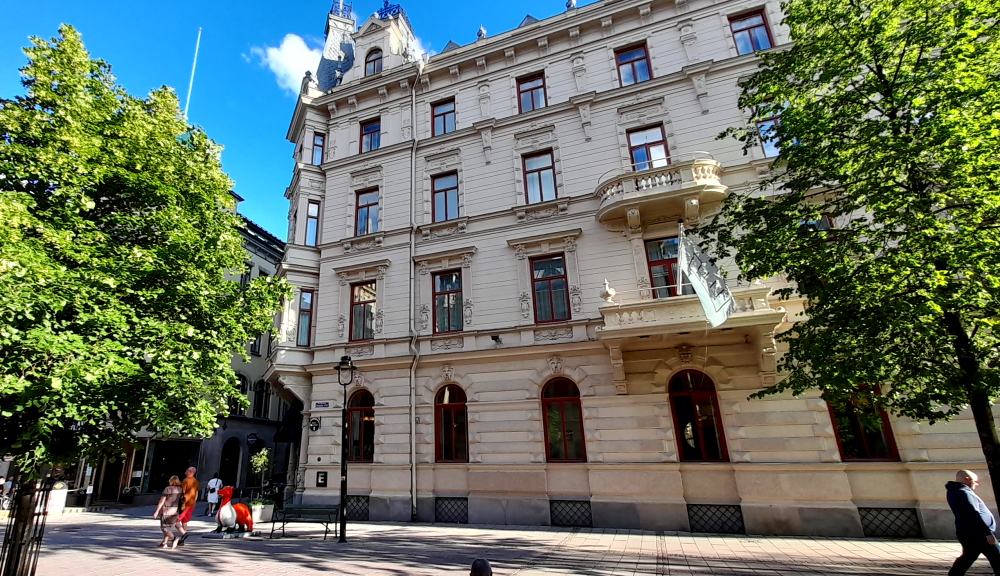
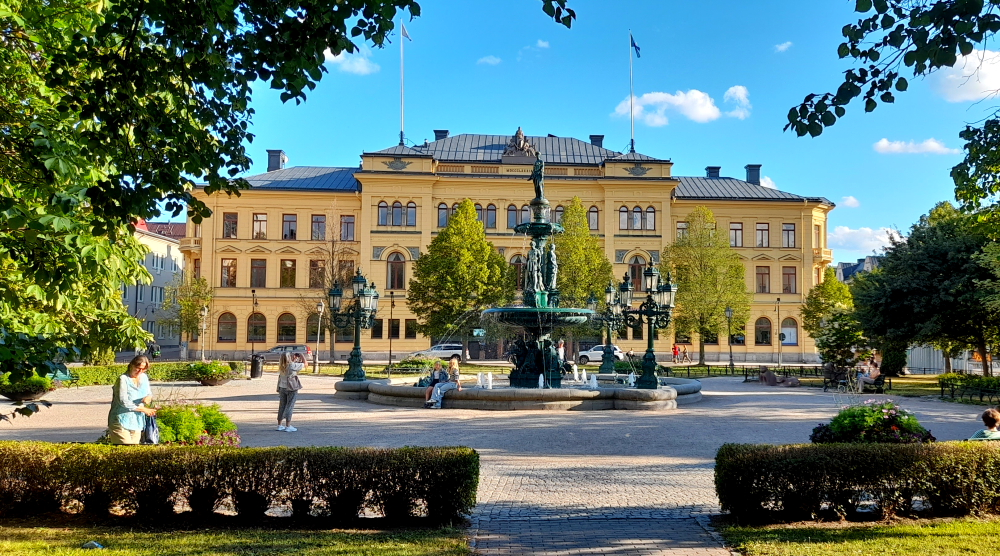
Vangavan Square with Sundsvallsbankens hus building.

Next is the Vangavan square with its fountain which was laid out at the end of the 19th century. After the Sundsvall fire in 1888 the square was damaged and the surrounding buildings destroyed.

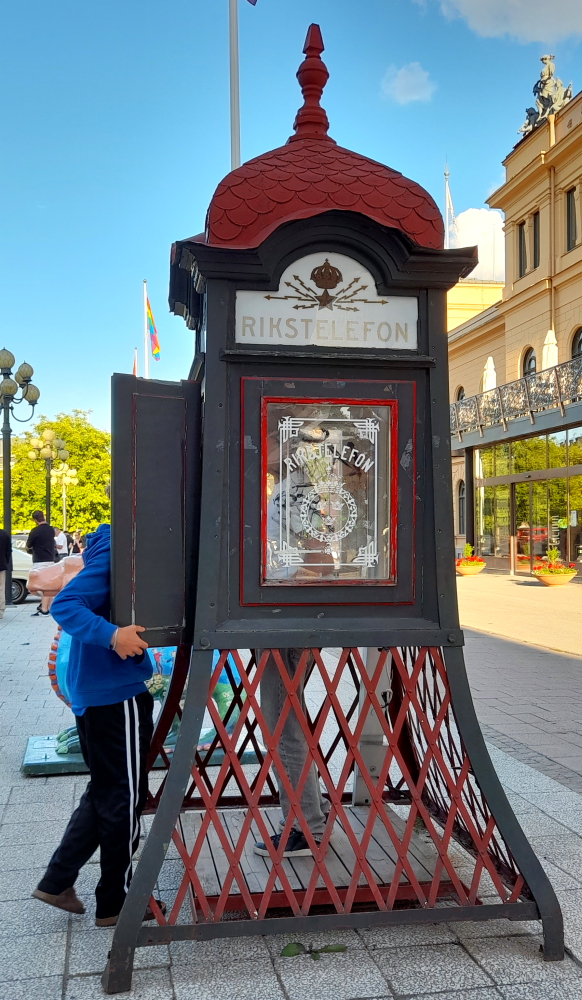
Try changing in this phone box.

During Sundsvall’s rapid economic expansion the Vangavan area became one of Sweden’s more important financial centres with several banks.

Unlike the other Swedish towns we have stayed in, this one has a core of very nice classical buildings thanks to the town rebuilding in stone after the 1888 fire.

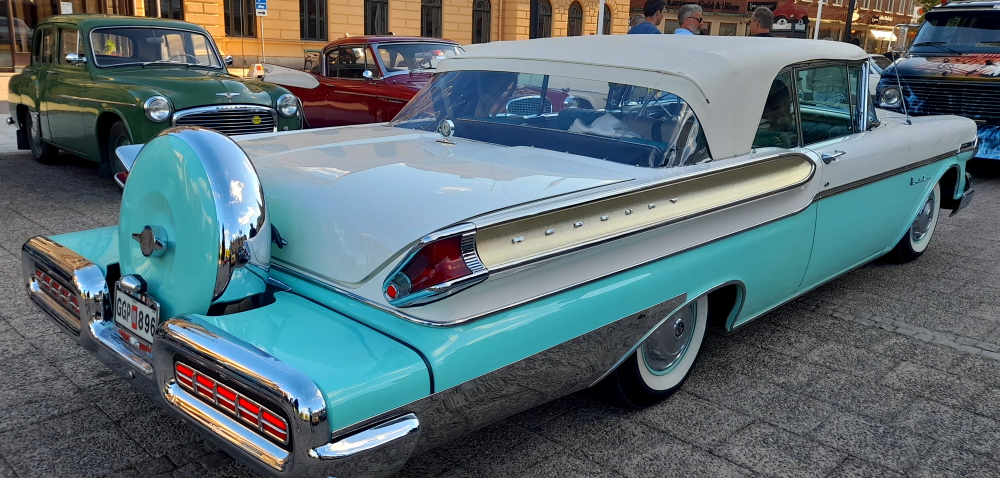
Vintage car show in the town square.

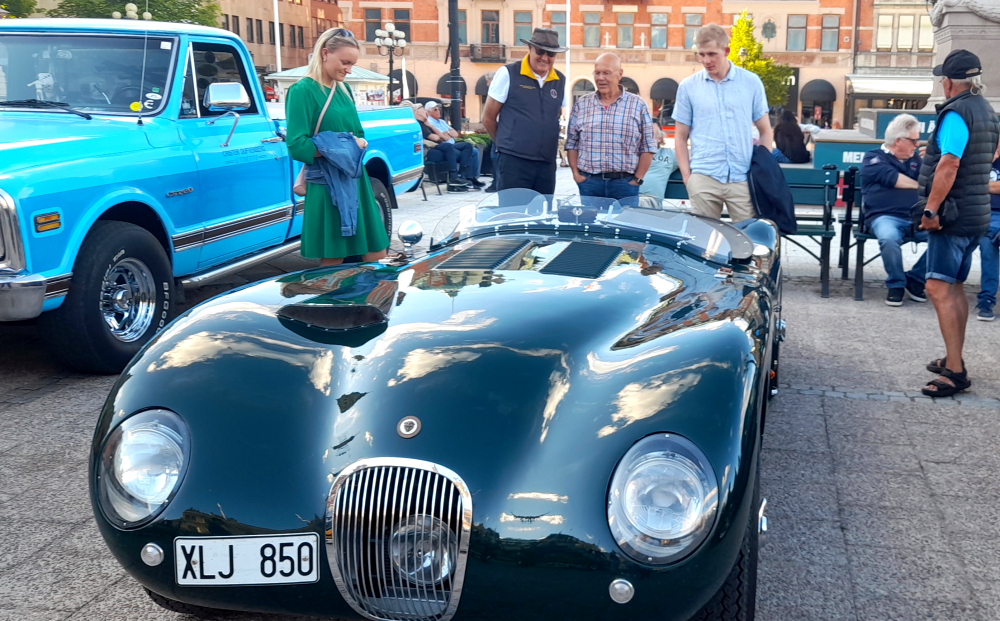
Next door to the Vangavan Square is the Stadshuset (Town Hall) and its square which today is being used to showcase various vintages of cars, a couple of trucks and a tractor.

A replica Jaguar XJ Le Mons.

Sundsvall was chartered in 1621, and a first urban plan for the town was probably created by Olof Bure in 1642. It has a port by the Gulf of Bothnia, and is located 395 km north of Stockholm. The city has burned down and been rebuilt four times. The first time, in 1721, it was set on fire by the Russian army during the Russian Pillage of 1719-1721.

Swedish industrialism probably started in Sundsvall when the Tunadal sawmill bought a steam-engine driven saw in 1849. In the early 20th century Sundsvall was an even greater centre of forestry industry in Sweden than it is today.

The first large Swedish strike was the “Sundsvall strike” in 1879. The industrial heritage makes social democrat and socialist sympathies more prevalent in the Sundsvall region than in Sweden as a whole.

Walk by the Selangersan River in town.

During 1987–2013, there was a summer music festival called Gatufesten. Starting in 2014 there’s a new one called Hamnyran. There are two theatres and various musical venues. There is also a small guitar festival and a larger heavy metal festival every autumn called Nordfest. Sundsvall is also home to the unique festival Musikschlaget which is a song contest for groups around Sweden with disabilities.

Live band at the pub.

Today Sundsvall is not only dominated by the pulp and paper industry, and aluminium production but there are also banks, insurance companies, telecommunications administration and a number of large public data-processing centres such as the national social insurance board.

Hirsch House bordering Town Hall Square.

The main campus of the newly-established Mid Sweden University (Mittuniversitetet) is also located in the city. The university is a collaboration between Östersund, Sundsvall and Härnösand.

Storgatan, the pedestrian mall.

6 July, 2023

After yesterday’s glorious warm and sunny day the forecast for today is rain, specifically starting at 8:00 am. Pretty much on target, it starts while we are at breakfast. There’s nothing worse than driving and trying to sight see in pouring rain so we’ll get the blog up to date and take the brolly for a stroll to the nearest cafe.

Our walk takes us as far as Wayne’s Coffee but Lynn decides that she wants a hot chocolate and chooses the Cafe Charm as our destination. Her hot chocolate is good but my Cafe Latte is undrinkable.

Hot chocolate good, cafe latte not!

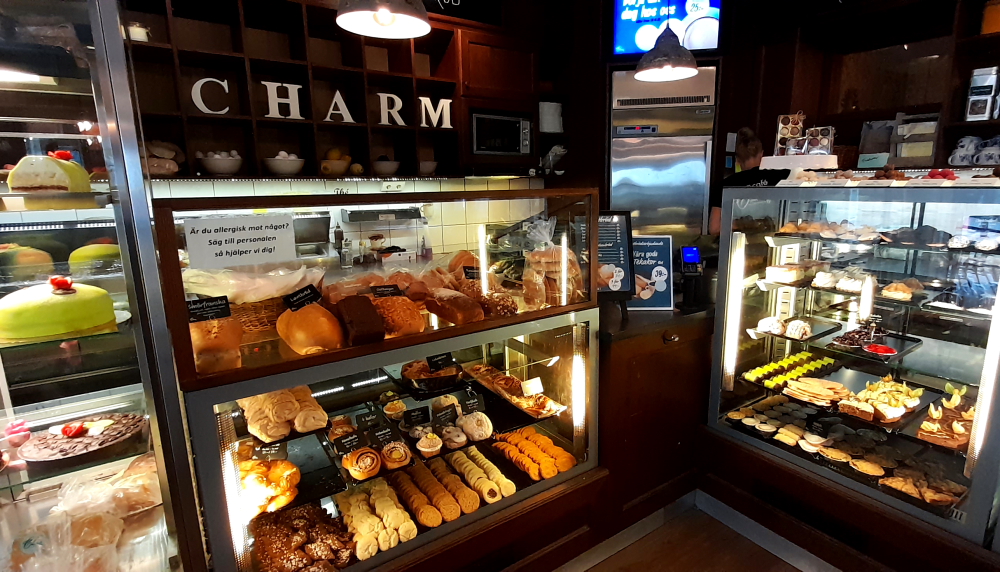
It must have been boiled coffee with a dribble of milk. Very bitter and worse than straight black boiled coffee. Worst coffee so far in Scandinavia and that is saying something. I had to rush back to the hotel to flush out my mouth. Now I am not a coffee snob by any means but that coffee was criminal!

Might be a charming patisserie but forget the coffee.

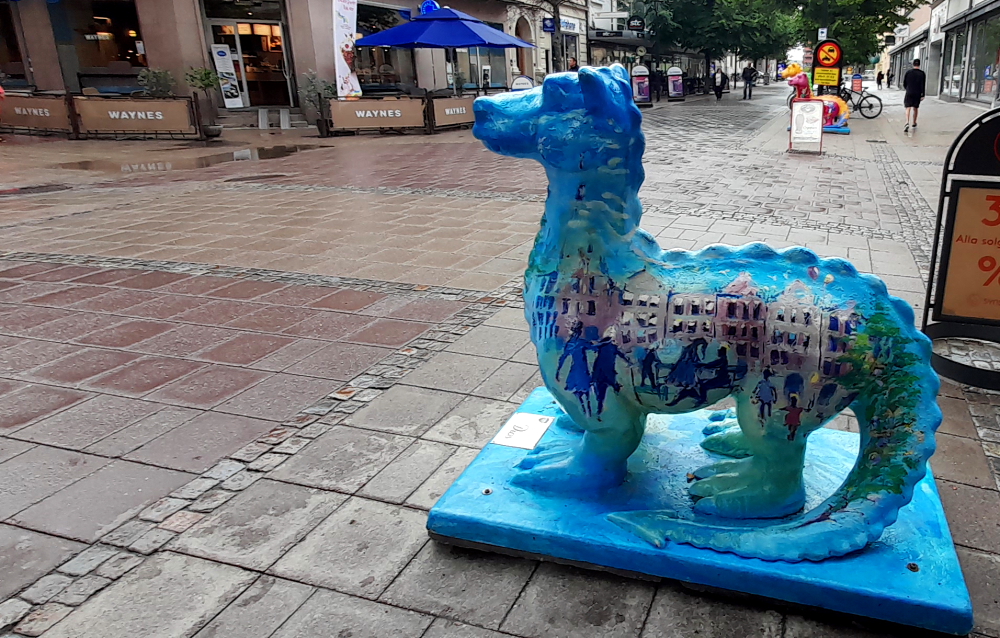
Yesterday we noticed that Storgatan, where we are now at the cafe, had what could be described as a ‘guard of honour’ of differently-decorated dragon statues along the length of the pedestrian street.

Apparently, the dragon from the House of Hirsch became the symbol of Sundsvall municipality and is the inspiration for an annual dragon parade since 2003. The Parade starts in May and the dragon statues are on show in the center of Sundsvall for the summer with the best dragon being elected at the Dragon Festival at summer’s end.

Beware! Thar be dragons…

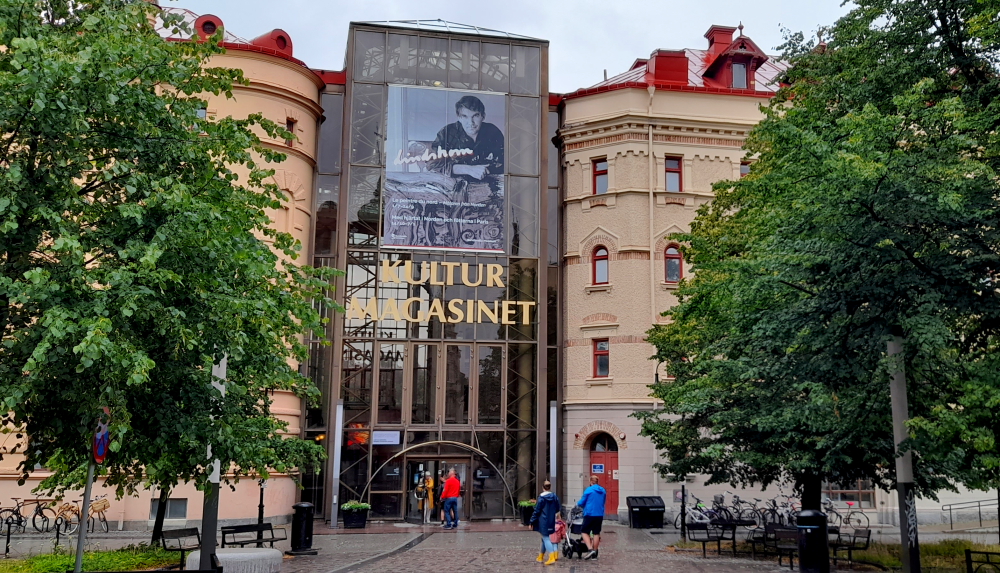
While I head back to the hotel to wash my mouth out, Lynn visits the Kulturmagasinet which is opposite the hotel.

Stately colonial storage facilities fell into ruin in the 1970s. Four warehouses were demolished but the remaining 10 were rescued.

Kulturmagasinet

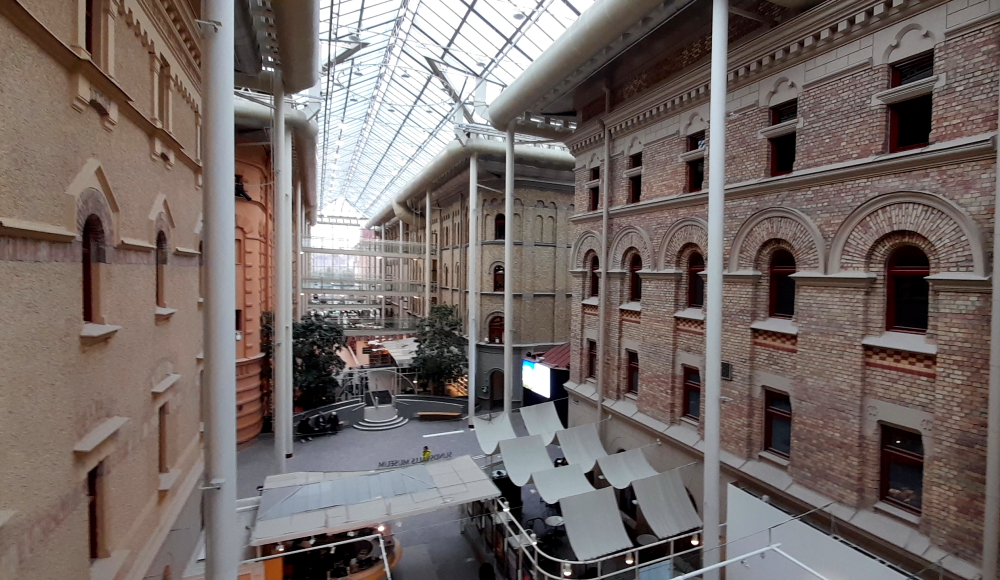
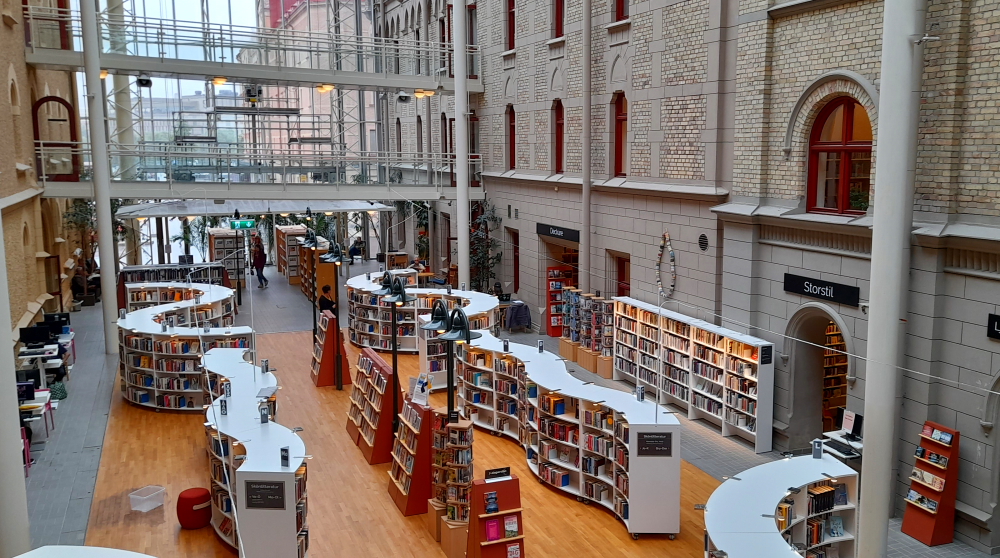
By glazing in 2 streets between the warehouses, 8 of these were brought together into a single building – the Kulturmagasinet – with a museum, library, archives and exhibition spaces launched in 1986.

Museum cafe & exhibition space under glass.

A year later the structure was awarded the Europa Nostra Prize – the European Heritage Award.

And part of the library.

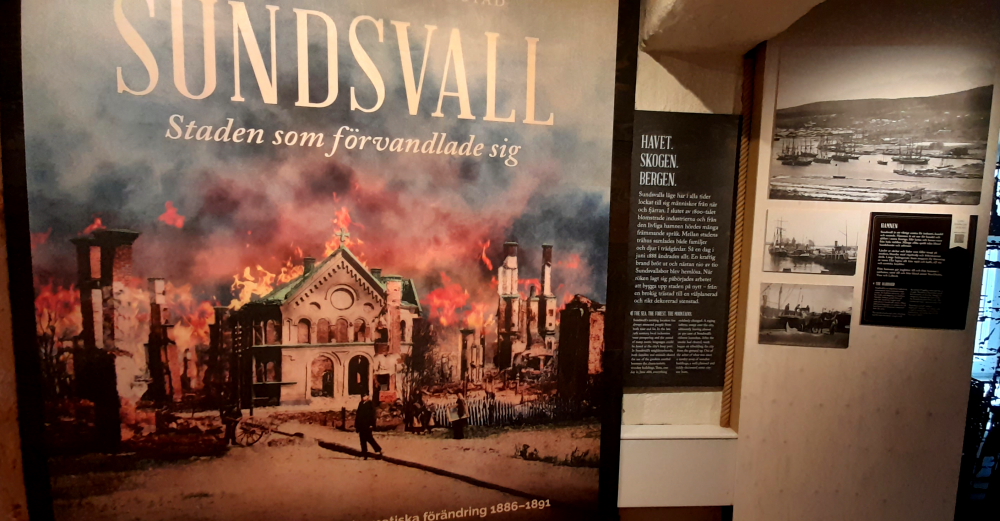
Half of the first floor is dedicated to the museum which features Sundsvall from the 1888 fire and its development to the 1960s.

The history of Sundsvall from 1888.

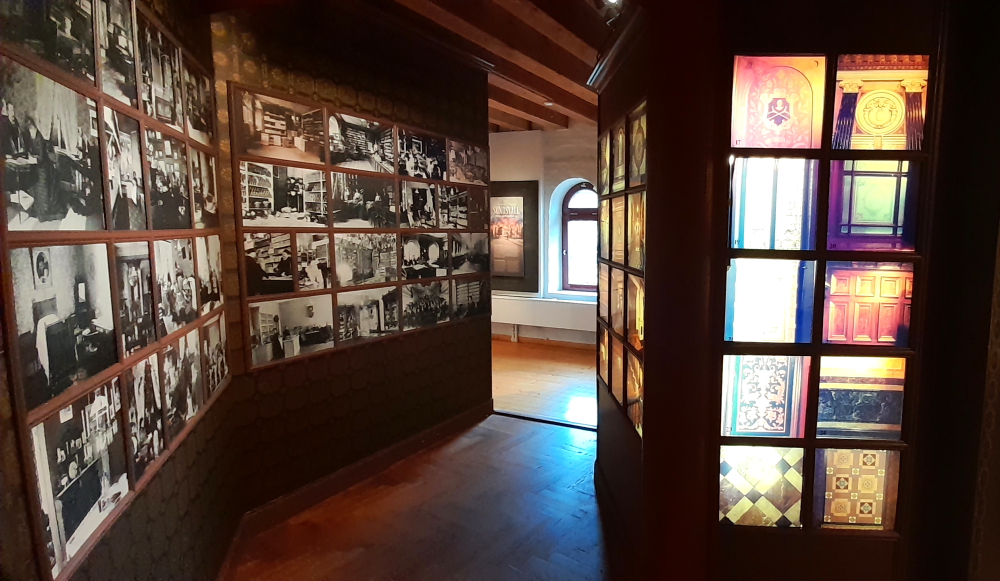
Artifacts including equipment, clothing, furniture, books, musical instruments and cookware plus photographs, audio and videos are used to illustrate the town’s development over time.

Historical photographs.

The other half of the floor is currently dedicated to KONST22 (Art22) which shows a selection of art purchases that is placed in municipal workplaces and in public environments around Sundsvall reflecting local, regional and national artists.

Public art work.

7 July, 2023

At 10:15 am we drive in heavy rain across the toll bridge over the river and onto the E4 heading south to Stockholm, our next destination.

Moving south to Stockholm.

15 minutes later it’s brilliant sunshine but from 11:00 am to noon it is persistently heavy rain.

Just driven through heavy rain for an hour.

And it seems that every 5 minutes we have to slow down for a speed camera!

More rain in front of us.

Finally, with clearing skies, we phone the hotel about a parking space (first come first served!) and are directed to its garage at the rear of the hotel. A room upgrade later we unpack and head out to explore the ‘hood.

View from our room in Stockholm.

We stroll along Vasagatan then up an interesting alleyway, Gamla Brogatan.

Where’s Wally? More like Where’s Wayne?? He’s everywhere.

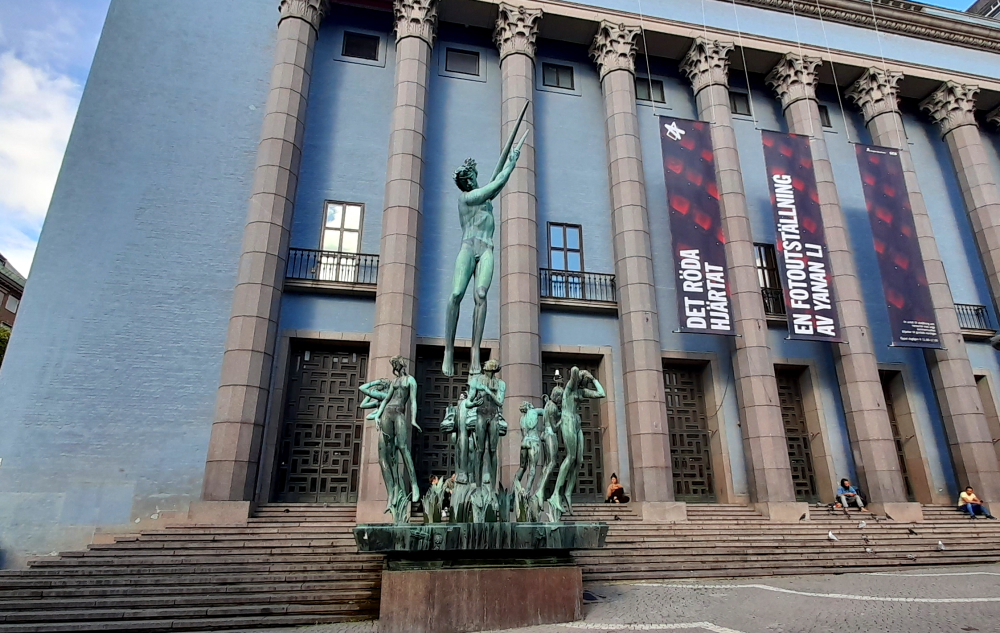
This alleyway ends next to the blue Konserthuset building outside of which is the Orfeusgruppen, a fountain sculpture executed in 1926-1936 by Carl Milles. Orpheus is the one who is allowed to represent the art of music and the lyre in Greek mythology .

Apparently, the Orfeus group, like so many other works by Milles, had a long and problematic history behind it and the final result differed considerably from both of Milles’ proposals that he submitted as his competition contribution to the Danelius Foundation in 1925. Mille’s proposal “The Music” was chosen. However, Stockholm’s city council had difficulty making up its mind and it would take nine years before a decision was made.

The first sketch for Orpheus showed a lone, slender male figure on a gigantic scale to be placed in front of the high columns of the Concert Hall. According to vicious tongues, the undercarriage resembled a bunch of bananas or an artichoke!

Statue?

The whole composition was changed by the addition of eight female and male figures floating in the water around Orpheus. The male figure who despairingly raises his hands to the sky bears Beethoven’s facial features. This was no coincidence, Beethoven was for Milles the symbol of the great, suffering artistic genius, which he himself wanted to be. When the nine figures with Orpheus in the middle were likened to “a sculptural equivalent” to Beethoven’s Ninth Symphony , Milles must have been delighted.

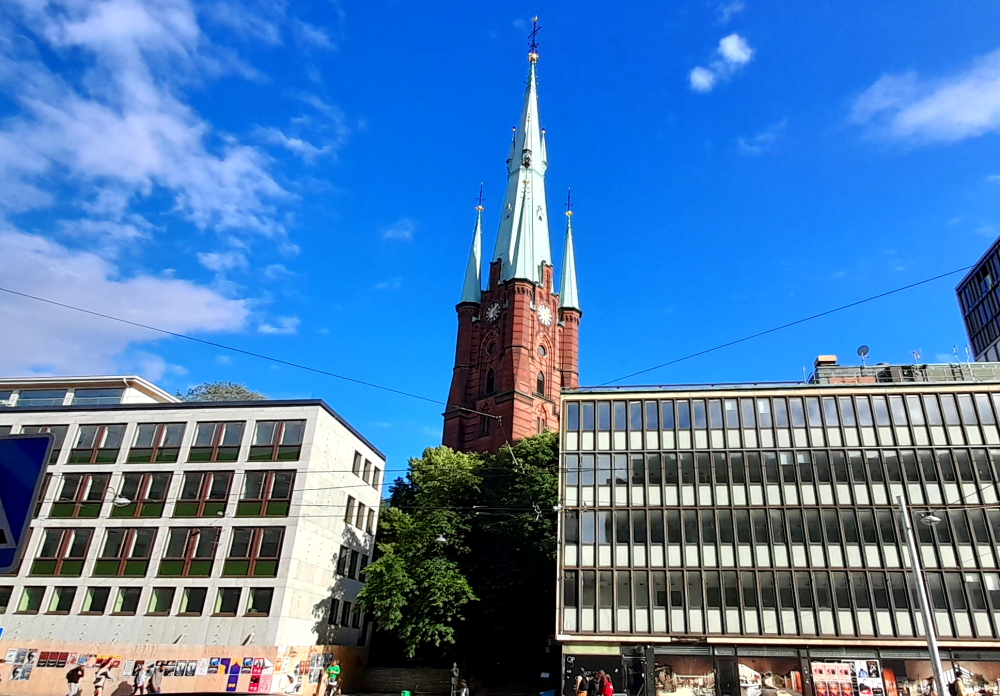
Klara Kyrka.

Walking around the block we pass by the spire of Klara Kyrka. The church’s name comes from the monastery that used to be on the site, Sankta Klara monastery.

The church building began to be built in the second half of the 16th century by the Dutch master builder Hendrik van Huwen and since then many architects have been involved in the further design of the building. With its 116 meter high tower, Klara Church is Sweden’s and Scandinavia’s second tallest church, after Uppsala Cathedral.

8 July, 2023

Breakfast is chaotic this morning with only one place where the many guests can access the buffet. We’re booked on a 10:00 am walking tour tomorrow so we’ll have to be down here at sparrow’s *art to make sure we’re not late.

By the time I get a few things done this morning it’s 11:30 am before we walk out the door. We make a last-minute decision to walk to the ABBA Museum before we need to get back to drive out to Arlanda Airport to collect our Richmond, London friends, Susie and Paul, who are joining us for the next 8 days.

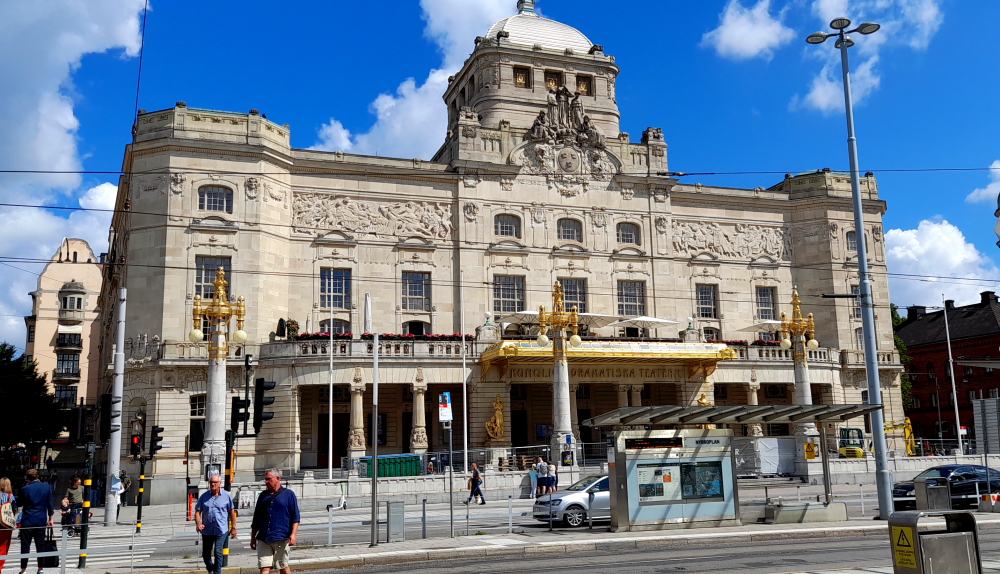
The National Theatre building.

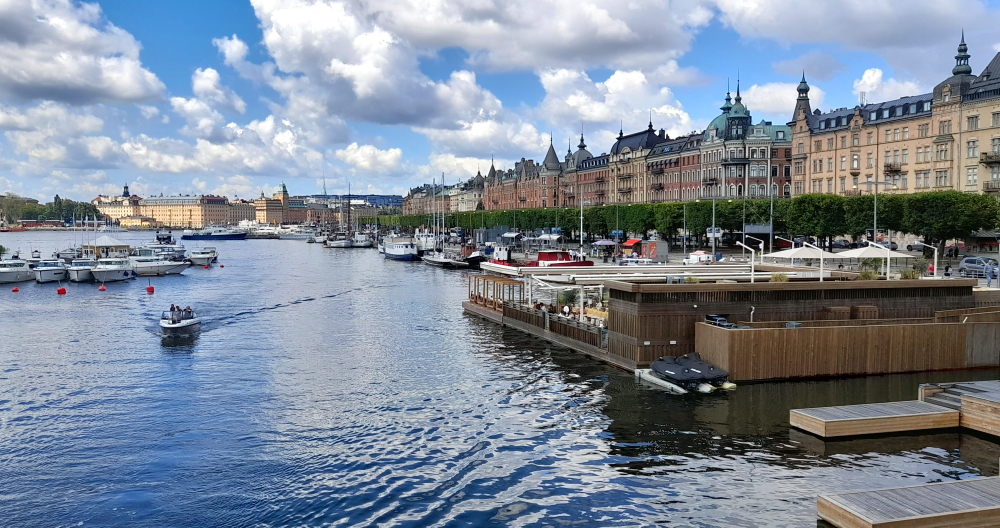
It is a very pleasant stroll in the sunshine along the waterfront.

Stockholm by the water.

Summer must be here as the town is heaving with people, mostly tourists. Then we see that 3 cruise ships are berthed in the harbour.

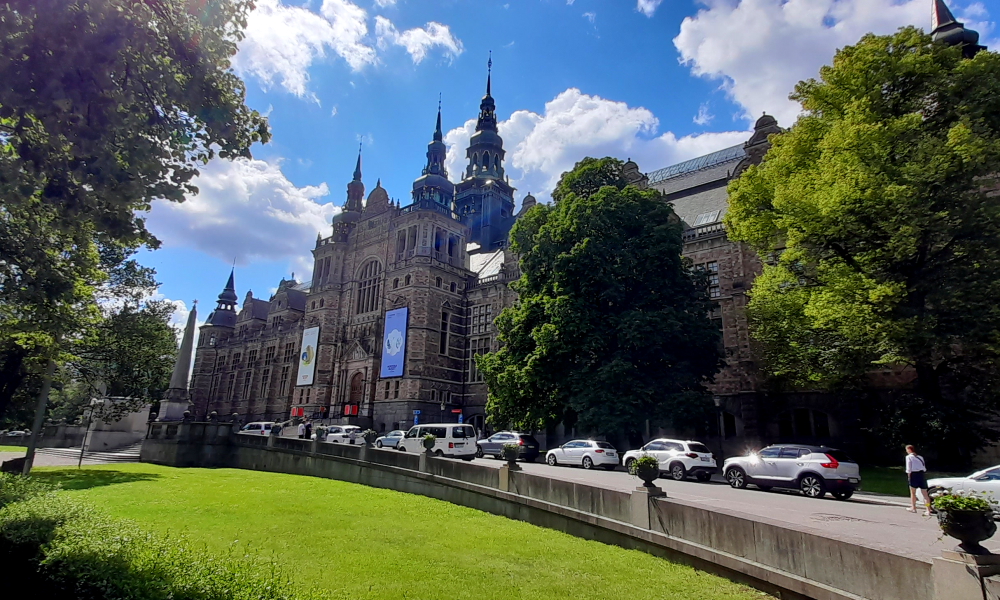
The Nordic Museum.

40 minutes later we join the queue to buy tickets. We don’t have mobile WiFi so unless the venue has free WiFi we can’t show a QR code for an online purchase on Lynn’s phone.

We’re beckoned inside, only to find that we are now in another queue. Lynn asks whether our purchase will allow us immediate entry or will we be given a timed ticket. Sure enough, once we purchase the ticket we have to go back outside and wait in another queue. We promptly leave. ABBA wasn’t all that good to start with let alone warrant a AUD40 ticket each and a long wait in a long queue for the experience.

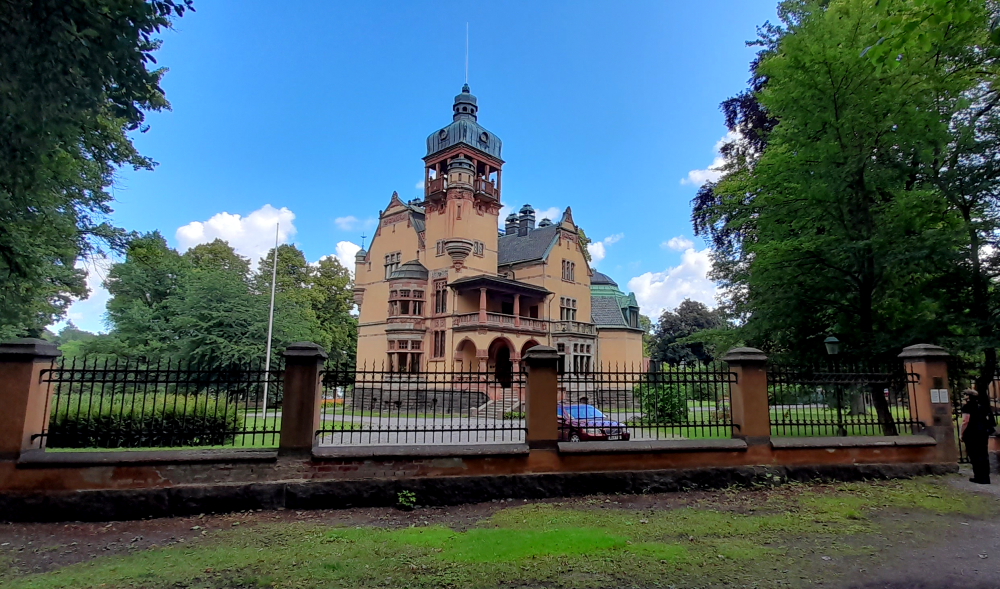
Villa Lusthusporten.

Rather than spend the next 40 minutes walking back to town we decide to take the tram. We try to buy a couple of tickets at the tram stop but the vending machine doesn’t work. We then walk to the next stop only to find the same issue. Apparently you can buy tickets on the tram (not tap on and tap off) from the conductor (how very 1960s quaint).

When the conductor arrives we try to buy two tickets with our only SEK debit card only to be told that you can only buy one ticket per debit card. WTF! I ask how a family with children buy tram tickets and the conductor has no idea other than to buy them online. Not what I would call tourist or family friendly. Perhaps it’s the same public servant that designed the Swedish Highways who designed the ticketing process. No wonder they had to sell Volvo cars to the Indian company, Tata. All the Swedish brains have frozen over these days. Perhaps Greta should spend more time improving Swedish processes than trying to get the world down to Swedish levels.

Can only buy tickets the hard way.

At 5:00 pm we arrange to retrieve the car from the parking area in the hotel and head out to Stockholm”s Arlanda airport to pick up Susie and Paul who will join us for the next 7 days in Sweden.

Collecting Susie & Paul from the airport.

Back to the hotel with them and while they unpack we have some time to catch up on the blog before go to their room and offer them a relaxing drink of Finland’s Original Long Drink before dinner in the hotel’s seafood restaurant.

A fun evening but Lynn has a big day planned for tomorrow so straight to bed after dinner for an early morning breakfast tomorrow.

Three days in Gothenburg

13 May, 2023

After a good night’s sleep and a reasonable breakfast (for Scandinavian-style breakfasts), we scurry out of the hotel at 9:40 am to be at the city square for our guided walking tour of Gothenburg City at 10:00 am.

It is going to be a bright sunny day today with a maximum temperature of 22 Deg C. Perfect weather to explore the city and surrounding areas.

We are meeting our guide and fellow walkers at the City Square under the statue of Gustav Adolf.

Gustav Adolfs Torg.

Gustavus Adolphus (9 December 1594 – 6 November 1632), also known in English as Gustav II Adolf or Gustav II Adolph, was King of Sweden from 1611 to 1632, and is credited with the rise of Sweden as a great European power. During his reign, Sweden became one of the primary military forces in Europe during the Thirty Years’ War, helping to determine the political and religious balance of power in Europe. He was formally and posthumously given the name Gustavus Adolphus the Great.

He is often regarded as one of the greatest military commanders in modern history, with use of an early form of combined arms. His most notable military victory was the Battle of Breitenfeld in 1631. With his resources, logistics, and support, Gustavus Adolphus was positioned to become a major European leader, but he was killed a year later at the Battle of Lützen.

Gothenburg’s law courts.

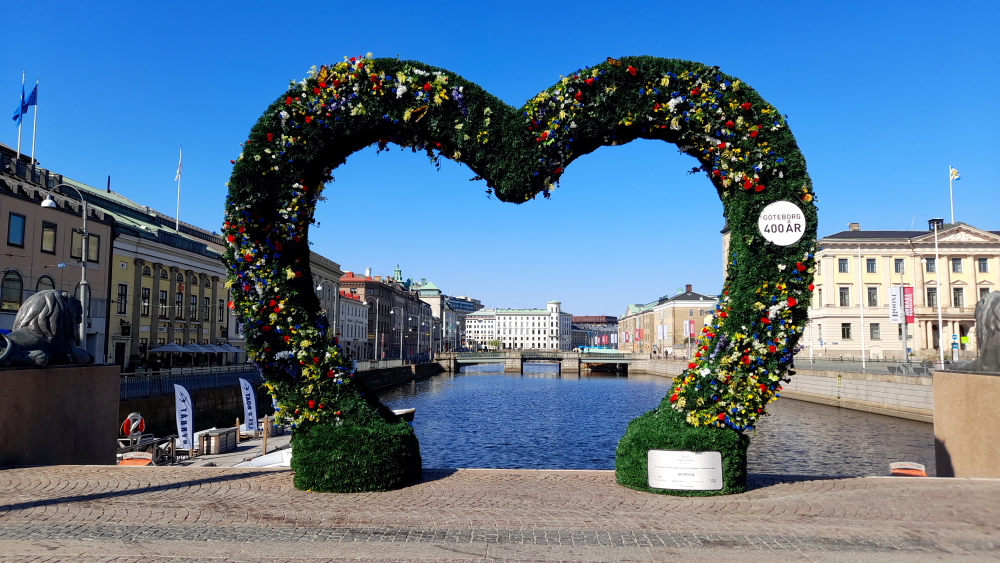
Gothenburg celebrates its anniversary on 4 June. It was established in 1621 so this year it will be 402 years old. This heart-shaped, floral wreath is on the bridge that crosses the Stora Hamnhanalen but its badge says ‘400’.

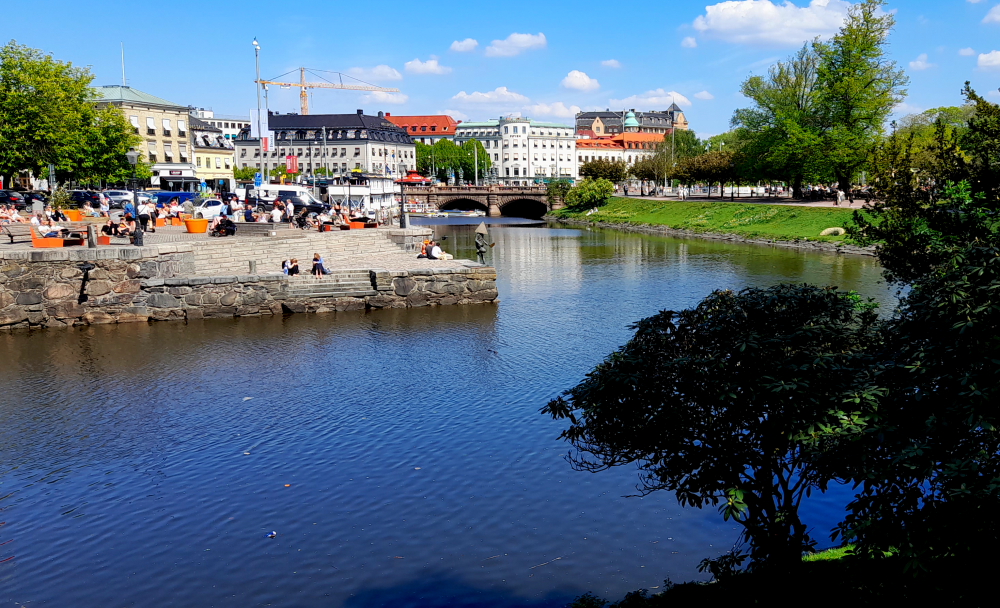
Looking west along the canal from Fontanbron.

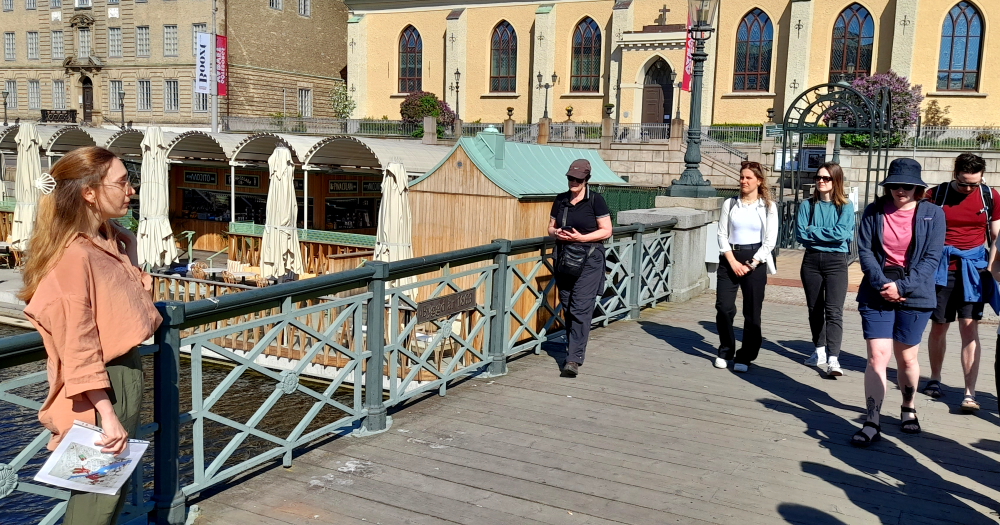
We’ve really enjoyed our ‘free’ walking tours since our first one in Helsinki, then Cordoba and Copenhagen. Unfortunately today’s tour guide isn’t as good as our previous ones. She’s Turkish and has only been in Sweden a year so she was either struggling with English not being her first language and/or not fully au fait with Gothenburg’s history, plus she had a very soft voice which had to compete with the noise of trams, church bells, buses, cars, crowds of people, etc.

Our Turkish Tour guide.

Nonetheless we had an enjoyable ramble around the old town.

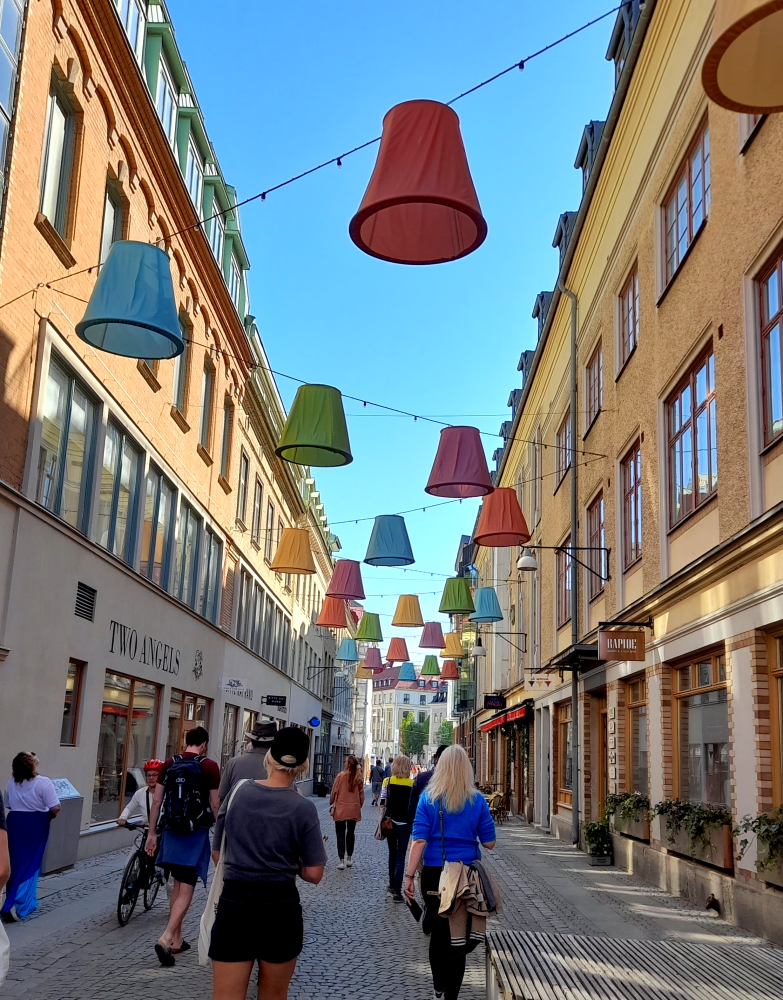
Walking along one of the many narrow streets in town.

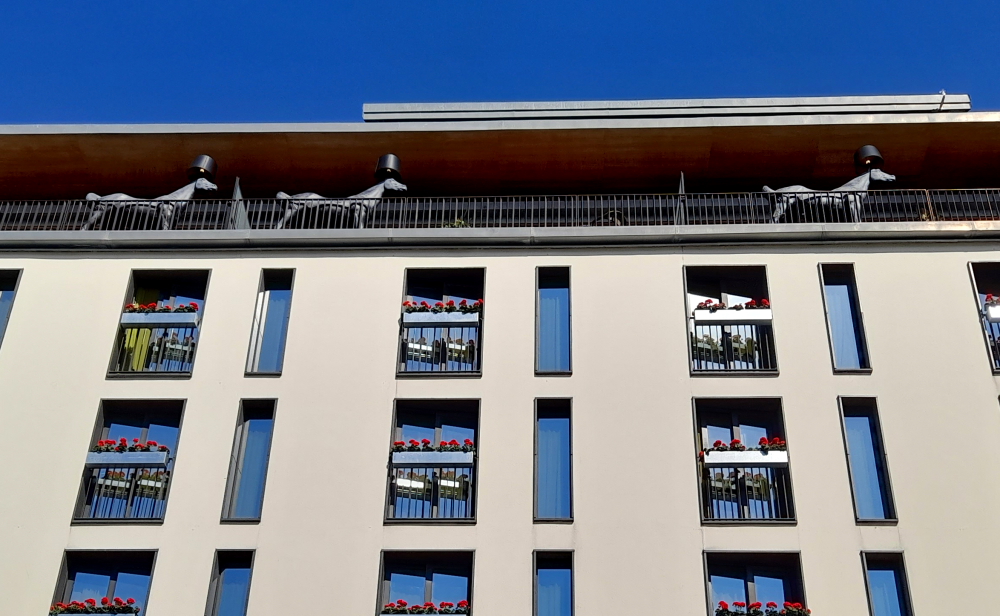
Our walk brings us to Kungstorget on which is located the oldest pub in Gothenburg and the Food Hall. Opposite the Food Hall is this apartment building with interesting lamp bases on the top floor balcony.

Weird penthouse ornaments.

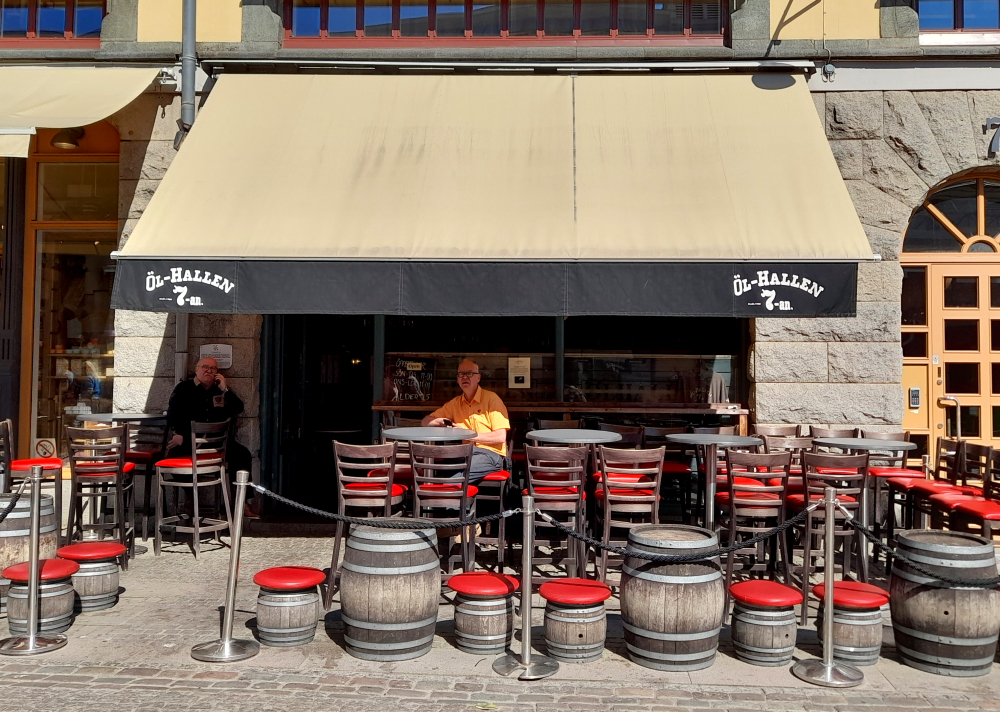
Ölhallen 7:an – the oldest beer pub in Gothenburg established in 1900. Former governor Kjell A Mattson gave Ölhallen 7:an special permission to serve beer without having to serve food, which makes it the one place in Gothenburg that only serves beer and nothing else.

The oldest beer pub in Gothenburg.

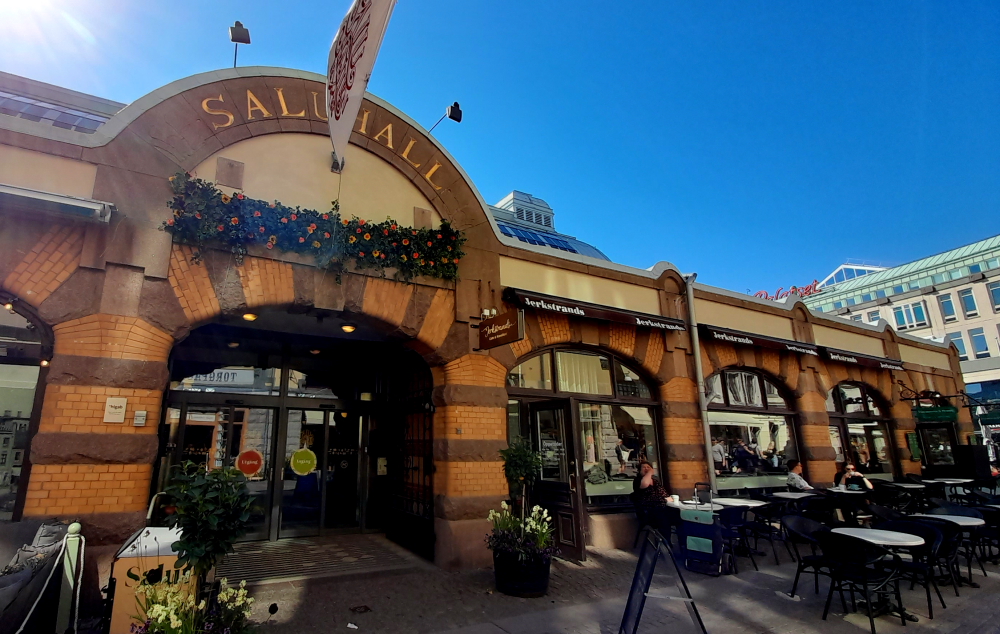
Stora Saluhall has been operating since 1888 selling meat, pork, flour, grits, butter, cheese and other “necessities of life and peasant goods” from its 92 stalls.

The Saluhall Food Hall.

We take a U-turn and walk up Korsgatan to the Gothenburg Cathedral. Before the first cathedral was inaugurated in 1633, a temporary church known as the Gothenburg stave church stood on the site for c. 12 years. On the night of 15 April 1721 the cathedral, high school and 211 residential buildings in the vicinity of the cathedral burned down. A second cathedral was erected and it, too burned down in 1802 along with 179 houses. The present cathedral was designed in classical style and was larger than the two earlier buildings

Gothenburg Cathedral.

In January 1750, Superintendent Carl Harleman proposed a sculpted altarpiece to portray Christ, a cross and two kneeling angels. The altar was inaugurated in 1754 and is still used as the altar of the cathedral today.

Inside the Gothenburg Cathedral.

At the rear of the Cathedral is a bronze statue that wouldn’t look out of place in a Pirates of the Caribbean movie. Almost the entire “Oracle” is made up of animals and plants from the sea. In 2013, the city council decided to enrich Gothenburg with three new works of art. All would start from the children’s perspective. The Tilda Lovell sculpture was installed at the Korsgatan /Kyrkogatan intersection in December 2015.

The Oraklet (The Oracle).

Next we walked down Magasinsgatan where shops and restaurants abound.

Colourful murals on Magasinsgatan.

Thanks to the Metro construction in this area we needed to take a circuitous route to the Feskekora or ‘Fish Church’ which took us past a remnant of the old city wall on Esperantoplatsen.

The remaining section of the old city wall.

Feskekörka or Fiskkyrkan, (‘fish church’) is an indoor fish market which got its name from the building’s resemblance to a Neo-gothic church. It opened on 1 November 1874 and was designed by the city architect, Victor von Gegerfelt. Feskekörka is an institution in Gothenburg as well as a tourist magnet, housing one of the city’s oldest trades, fishing.

The Fish Church under renovation.

Apart from a fish market, there is also a fish and seafood restaurant in the building but it is currently closed while restoration and renovation work is being carried out.

Walking towards Jarntorget we cross Nya Allen with its shady avenues.

Spring leaves are all out at last.

Jarntorgsbrunnen (Swedish for The Well of the Iron Square), or using the artists title, De fem varldsdelarna (The Five Continents), is a sculpture by Tore Strindberg inaugurated October 12, 1927 at Jarntorget. It consists of a granite fountain with five naked, female, bronze sculptures (by Tore Strindberg), representing five continents: Africa, America, Asia, Europe and Australia (Oceania). A ship at the top is seen sailing five streams, symbolizing the five oceans. Since the piece is to remind us of the old iron scale which used to be located on this spot (hence the square’s name, The Iron Square), 30 hallmarks from those ironworks who exported their goods via Goteborg can be seen throughout the sculpture.

Järntorgsbrunnen Fountain near Haga.

A couple of blocks later we turn onto Haga Hygata.

Haga Nygata.

Haga is one of Gothenburg’s oldest districts. Its name comes from the pastures that existed here in the 17th century.

Wooden buildings in Haga.

Nowadays, Haga’s car-free streets are lined with small cafes and shops interspersed with the Gothenburg-typical county governor’s houses. At this point the tour ends.

As we are nearby, we retrace our steps a short way and visit the building at Tredge Langgatan, 7-9 which used to be the old Auktionsverket (Auction House) building.

Cafes and shops in Haga.

Goteborgs Auktionsverk is an auction house founded in 1681, when the magistrate in Gothenburg sought permission from the government to conduct the auction business. It is the world’s second-oldest auction house in operation after the Stockholm Auction House founded in 1674. The auctions relate to antiques, art, modern design, and crafts. The House’s new location is at Banehagsgatan, 20.

The building now houses an upscale New York-style bistro called ‘Taverna Averna’ whose front room has kept in touch with the building’s association with art and culture.

Restaurant within the original Auction House building.

Time for coffee and some of that famous cinnamon bun at the equally famous Cafe Husaren back in Haga. Unique to this particular area of Gothenburg, hagabullen are this café’s world-renowned take on the classic Swedish cinnamon bun, infamous mainly due to their enormous size and crystals of sweet, crunchy sugar.

Stopping for coffee and half a ginormous cinnamon bun.

The elegant, old-fashioned feel of Café Husaren’s interior is reminiscent of Swedish coffee house culture, the idea of fika – a cosy coffee break with friends – intrinsic to the lives of its locals. The high ceilings, chandeliers, and dark wood furnishings transport you back to another time.

Yummy shop.

‘Husaren’ means mounted soldier. Cafe Husaren is named after the street that it is located on, Husargatan, which is named after the area’s historical meaning. When Sweden was at war with Denmark during the 17th century, the entire district of Haga was a military zone.

Not bad coffee either.

The Cafe has one of the very few preserved glass and stucco ceilings dated 1896 and is entirely preserved in its original condition.

Original ceiling of the shop.

The building is one of the oldest in the Haga district and dates back to the 1800’s.

A popular bun shop.

Time to head home so we cut through the nearby Hagaparken into Kungsparken taking the canal-side path.

Walking back alongside the old city canal.

Stora Teatern (the Big Theatre), popularly known as ‘Storan’ (The Big One) is a musical theater in the Lorensberg district of Gothenburg. Inaugurated in 1859, it is situated in Kungsparken. In today’s nice sunny weather the other side of the theatre has been turned into a huge beer garden.

Past the Stora Teatern (State Theatre).

Across the road is the entrance to another park, the Garden Society which is one of the best-preserved 19th century parks in Europe.

Through the Garden Society park.

Undulating lawns and flower beds filled with native and exotic plants alongside historic buildings take you back to the golden age of horticulture.

Sunlit Garden.

The park has a very distinct 19th century atmosphere with rose beds, a Palm House glasshouse and wooden cafes and a larger bar.

Tulips in full bloom.

Across the road is the Stora Hamnkanalen with its locks.

Out the other side at the old locks.

Time for a Bex and a good lie down!

Ahhh, getting the boots off back at the hotel.

After a rest we head out to find a place for dinner. The whole city is very busy including our hotel. We knew that there is a half marathon being run today but we managed to miss the actually runners. We saw street barricades being set up and saw the odd runner in town but we missed the actual event – considering that Gothenburg’s annual half marathon is the WORLD’S LARGEST half marathon, that was quite a feat. And, that would explain why the streets have been crowded all day.

14 May, 2023

Breakfast is a lot quieter this morning and the streets seem almost deserted. Perhaps yesterday’s runners aren’t out of bed yet.

We spend the day planning more details for Northern Europe, Egypt and Wales trips so it was heads down all day. By dinner time we head out looking for somewhere to eat. The city feels completely deserted and most restaurants are closed. After walking the streets for a bit we finally came across a Vietnamese Restaurant that had some very nice meals at a very reasonable prices.

Tomorrow morning we are heading on to Oslo. After advising the Oslo Hotel that we require parking (they advertised free parking) we receive a message saying that parking is limited at the hotel and we may need to find paid parking nearby. Not Happy! Bloody Scandinavians can’t just do things the straight forward way. There is always an issue when you deal with them…..

15 May, 2023

We check out 2.5 hours early so that we can hit the E5 and hopefully arrive in time to snaffle a vacant car parking spot at our Oslo hotel some 296 km away.

About an hour later we cross over the Sunninge Bridge, still in Sweden.

Sunningebron, Sweden.

50 minutes later we see a sign about ‘Customs’ ahead, a small sign that says ‘Norge’ then we realise we are now in Norway. The first thing we notice is the change in the landscape. From the flat lands of Denmark and Sweden we are now driving through hills and a lot more rock.

Norwegian Hills differ from the flat lands of Denmark.

The approach to Oslo is quite picturesque with a large harbour dotted with small wooded hills with houses. Then comes the industrial harbour with large cranes back dropped by a cityscape.

As usual, the GPS tells us to take a road several blocks from our hotel only to find that the road has been blocked by a mechanical barrier with no indication as to a diversion.

The Saga Hotel in Oslo.

Thanks to Lynn using MapsMe she is able to guide me around the blockage and we soon arrive at the hotel which is located in a lovely leafy suburb with classical buildings a couple of blocks from the Royal Palace.

And, yes! there are not one, but two, vacant car parking spots out of 8 outside the hotel which we gratefully glide into.

Eilert Sundts gate – the street on which our hotel is located.

As we are 2 hours early to check in we happily sit in the hotel’s lounge while our room is being readied and Marius, the receptionist, kindly organises coffees for us.

Waiting to check in.

It’s a glorious sunny day today so Jakob, the other receptionist, suggests we might like to take a walk in the sculpture garden/park nearby, which we do.

The gates to Frognerparken.

Frognerparken is not just one of Oslo’s, but one of Norway’s most visited attractions.

Nearly summer leaves on the trees.

The park’s 214 granite, iron and bronze nude sculptures by Gustav Vigeland, as well as Norway’s largest rose collection with over 14,000 roses distributed over 150 rose species, attracts over a million people every year.

Sculptures along the avenue.

In the heart of the park, along an axis in the middle, is another park – Vigelandsparken – which exhibits the 214 sculptures by Gustav Vigeland (1869–1943). The most famous of the sculptures being “Sinnataggen” (the screaming boy); the Monolith and the Wheel of Life.

No shame here.

Frognerparken is surrounded by Oslo’s (by far) most expensive neighbourhood, and with its 467 square meters, it is the largest park in Oslo’s inner city.

Entertainment for all the family.

The park is mostly flat, so in winter it is perfect for beginners and for kids who want to learn to ski and sled.

Pulling her hair out?

It was the first park facility in Norway, and so was protected by the National Heritage in 2009.

Good ‘ol girl.

The Monolith is a stone pillar whose name suggests that the sculpture is carved out of a single block of granite.

The Monolith – Ages of Life.

It is Frognerparken’s highest point, measures 17 meters and is surrounded by a spectacular circular staircase with 36 sculpture groups.

Great view of Oslo from”The Wheel of Life” sculpture.

Vigeland also designed the park itself, which contains most of his art.

Walking back through the parklands.

We walk out of the park and head back to the hotel via the suburb’s numerous streets. It looks like Vigelandparken isn’t the only place for bronze sculptures. Outside a stadium is one of Oscar Mathisen (1888-1954), Norwegian speed skater – clothed, I hasten to add!

At the ice rink / soccer stadium.

Along the way we come across a Mexican Restaurant which we discover makes proper, classic Margaritas, so we return there for a simple, yet delicious dinner.

Nice to have a Spare Bank.

But that’s not before we hit the Hotel Bar for a beer and a Nordic vodka on ice.