
4 November, 2023
It’s a sunny but chilly 10 Deg. C. when we leave the Riegerbauer to drive the 200-odd kms to Bratislava.
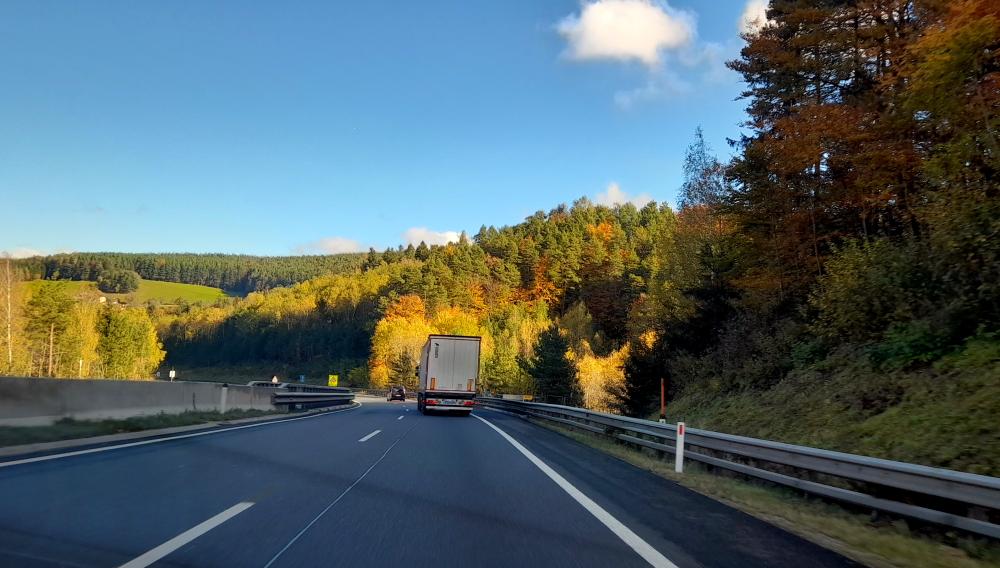
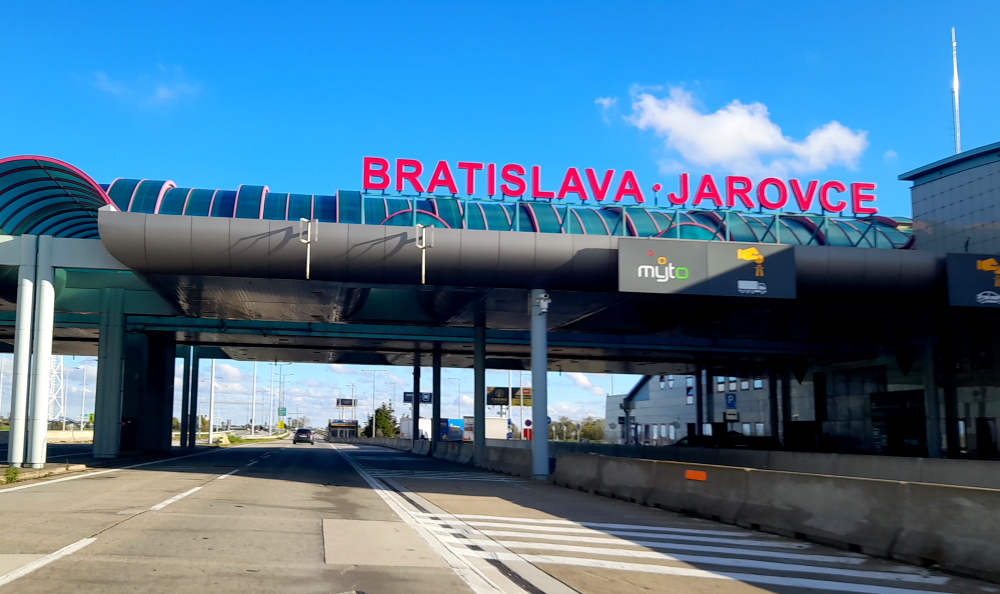
We have already purchased our eVignette online for our transit through Slovakia so we don’t need to stop at the border to purchase a hard-copy one.
While driving through Austria we didn’t come across many wind turbines. Now we know where they are all located, along the border with Slovakia!
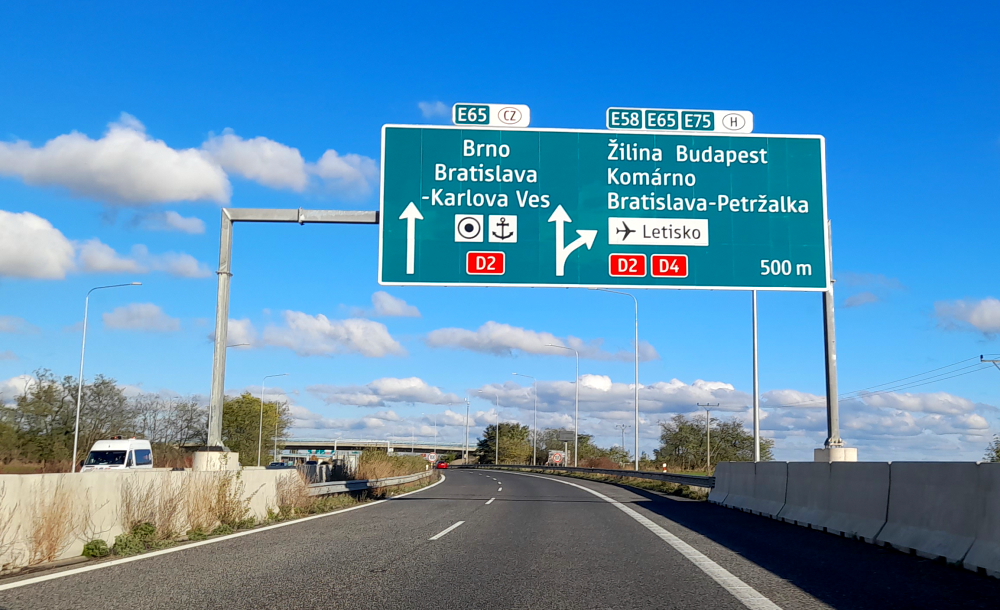
As we enter the outskirts of the city we see a vast suburb of Soviet-era residential tower blocks – soul destroying.
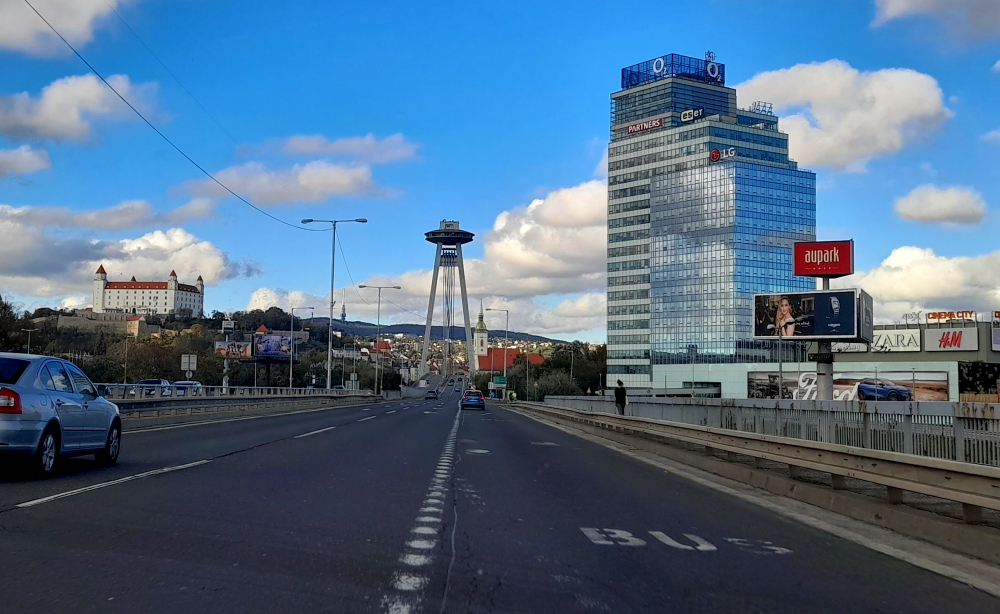
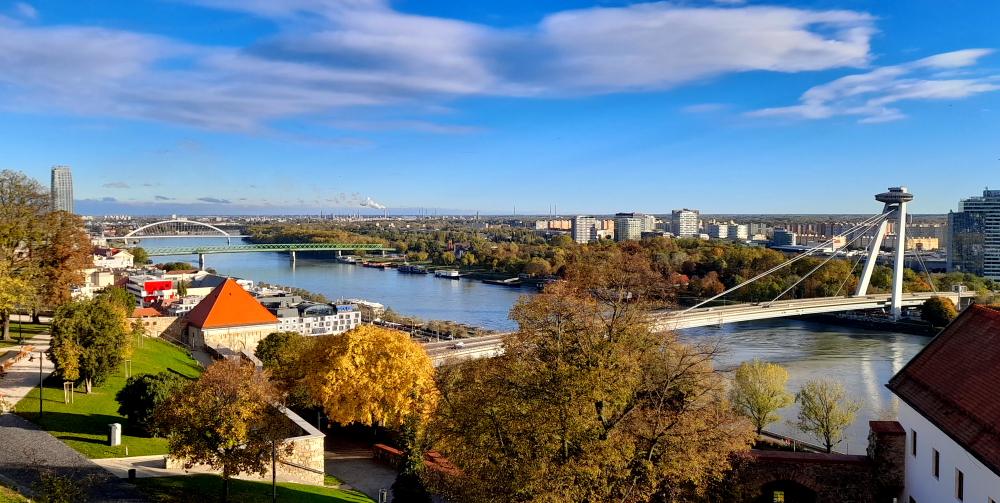
Past that, we see a mixture of old and new architecture from glass office blocks to a UFO-topped structure on the bridge to the old castle on the hill.
We arrive at our hotel at 2:30 pm and find that the executive suite that we had booked is as advertised – very spacious including our very own ‘Eva Peron’ balcony.
Bratislava, historically known as Preßburg (Pressburg), is the capital and largest city of Slovakia. It’s in southwestern Slovakia at the foot of the Little Carpathians, occupying both banks of the River Danube and the left bank of the River Morava. Bordering Austria and Hungary, it is the only national capital to border two sovereign states.
The city’s history has been influenced by people of many nations and religions, including Austrians, Bulgarians, Croats, Czechs, Germans, Hungarians, Jews and Slovaks. It was the coronation site and legislative center and capital of the Kingdom of Hungary from 1563 to 1783. Most Hungarian parliament assemblies were held here from the 17th century until the Hungarian Reform Era, and the city has been home to many Hungarian, German and Slovak historical figures.
Today Bratislava is the political, cultural and economic centre of Slovakia. It is the seat of the Slovak president, the parliament and the Slovak Executive. It has several universities, and many museums, theatres, galleries and other cultural and educational institutions. Many of Slovakia’s large businesses and financial institutions have headquarters there.
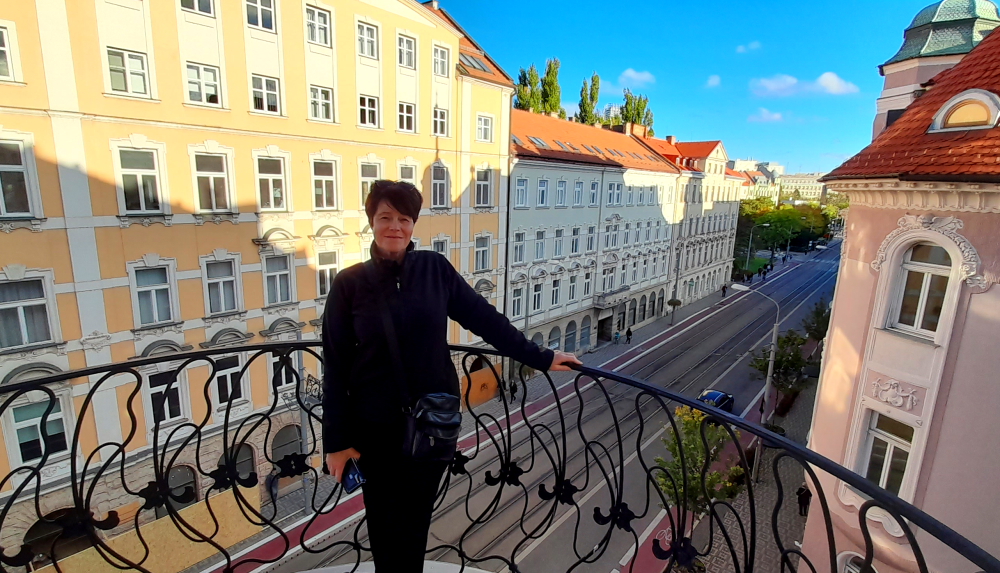
While Lynn is doing my ironing, I venture out and about. Our hotel is just on the edge of the old town so it’s only 5-minutes before I’m walking along cobblestone streets and squares.
The pedestrian-only, 18th-century old town is known for its lively bars and cafes. Perched atop a hill, the reconstructed Bratislava Castle overlooks old town and the Danube.
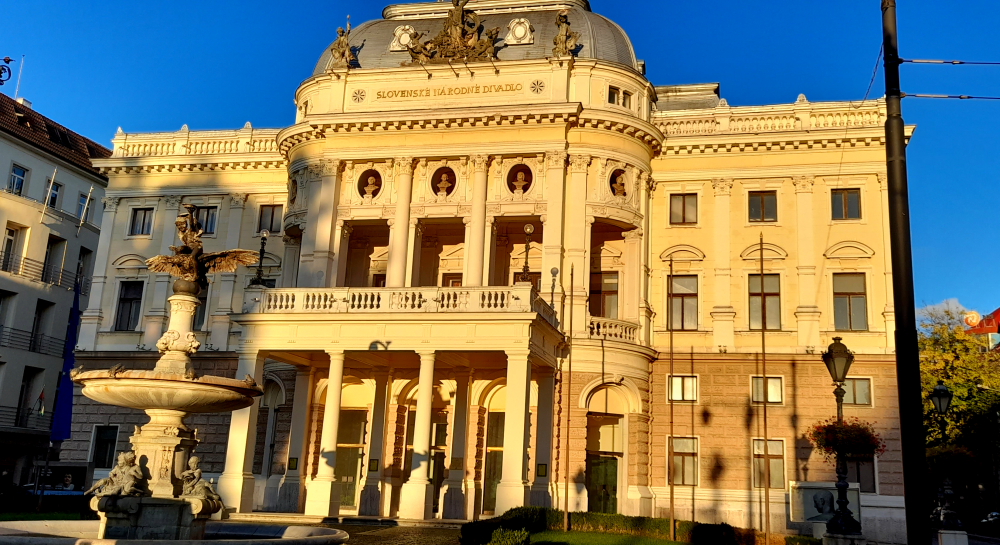
My ramble takes me down Jesenskeho to the National Theatre where plays, ballet and opera are performed.
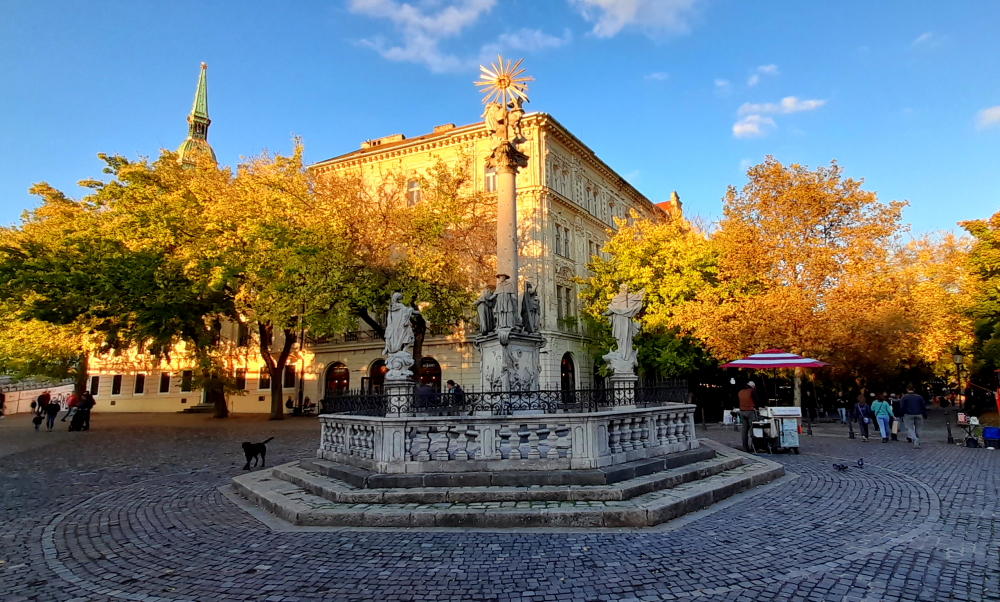
At this point is a long, narrow parkland which culminates in Rybne namestie.
Cutting up Venturska I enter Michalska where I can see the St Michael’s Gate tower.
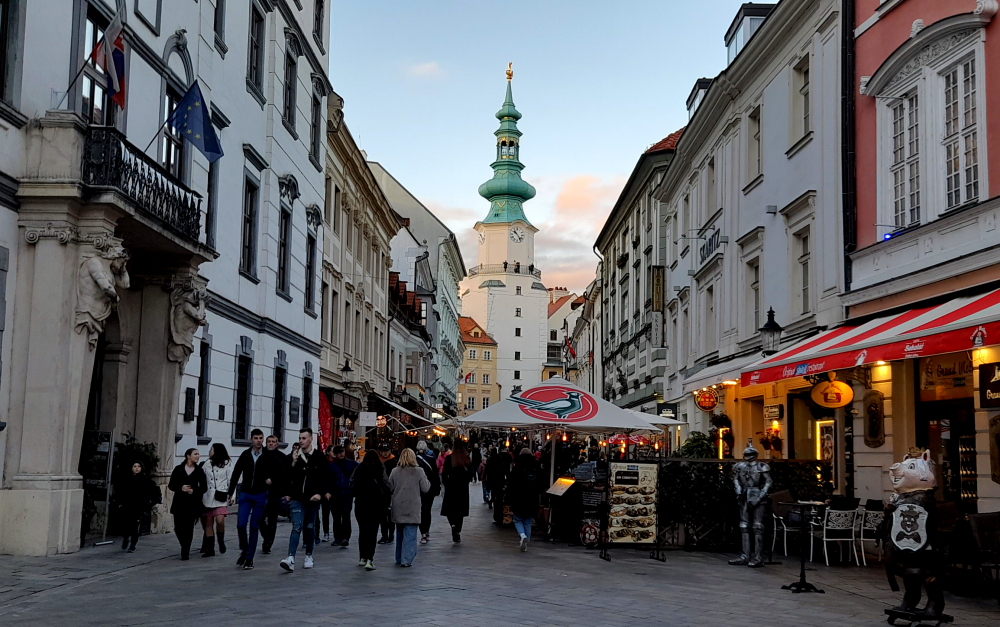
A short time after I return to the hotel we walk to Hlavne namestie to Le Papillon Restaurant (billed as Slovak Fusion) which I had espied earlier where we enjoyed a very simple yet tasty meal.
5 November, 2023
Today we were booked into a GuruWalk tour at 10:00 am, but last night Lynn moved our booking to a different GuruWalk at 11:30 am to avoid the rain which worked as although it is overcast when we leave the hotel by the end of the day we have brilliant sunshine.
Our meeting point is only 10 minutes away. Enroute we pass by Namestie SNP which features a dramatic statue ensemble.
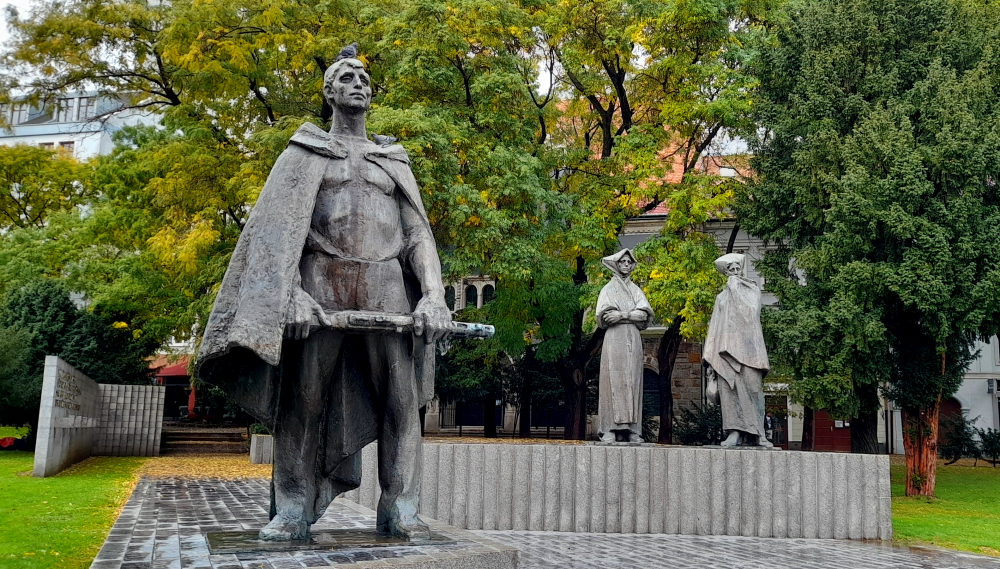
We meet up with our guide Guga and although Georgian has lived in Slovakia for some time. Our tour group is made up of 4 fellow walkers in addition to us who hail from Chile, Germany, the UK and the USA.
Our first stop is to view a plaque commemorating the first witch burning in Bratislava in 1602. The site is just outside what would have been the town walls at the time.
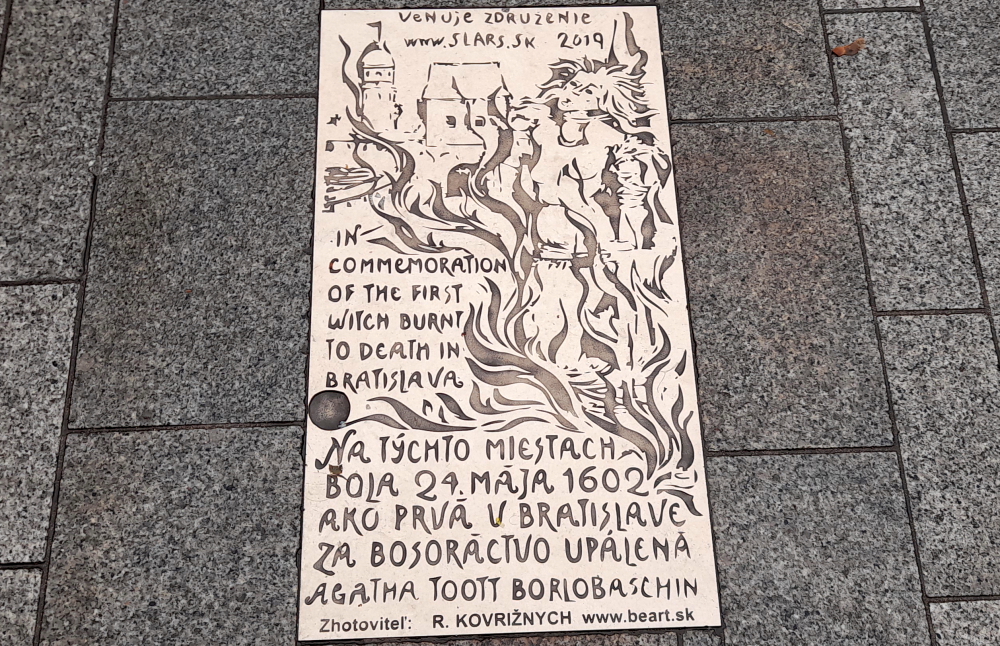
We then cross over a permanent bridge that has replaced the former drawbridge over the now dry moat and enter the town through a barbican then under the St Michael’s Gate tower.
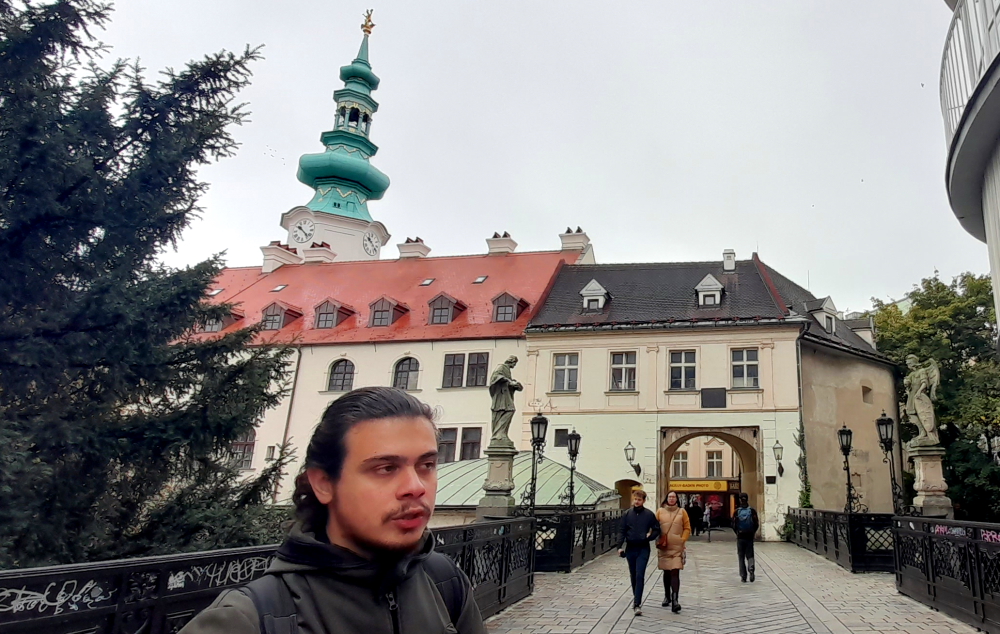
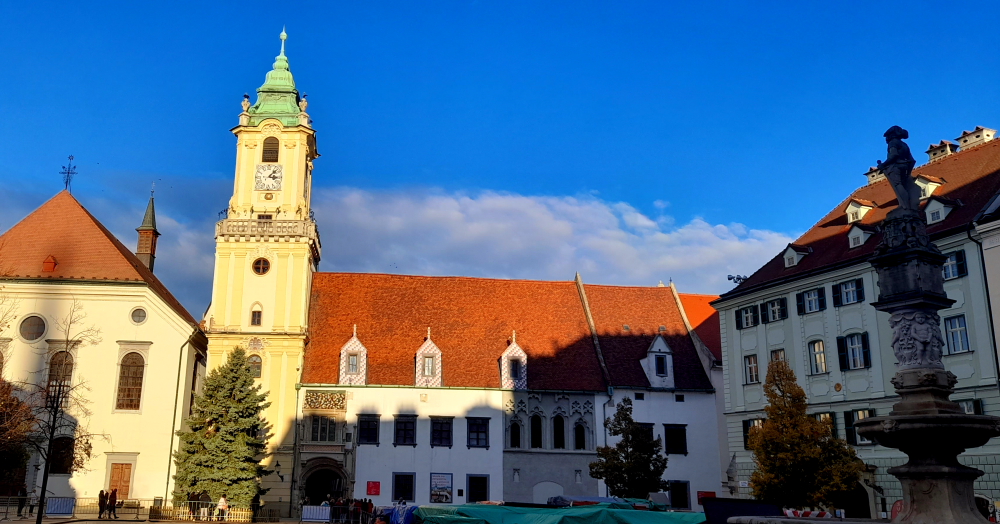
From here we walk down Michalska, turn at Sedlarska where we enter Hlavne Square which is bordered by several embassies and the Old Town Hall.
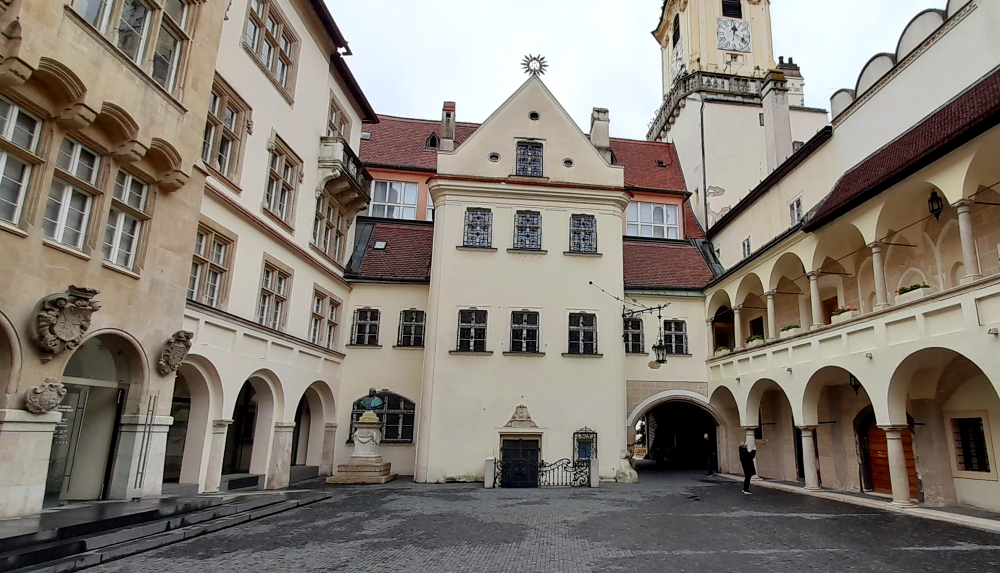
We walk through an archway into the courtyard…
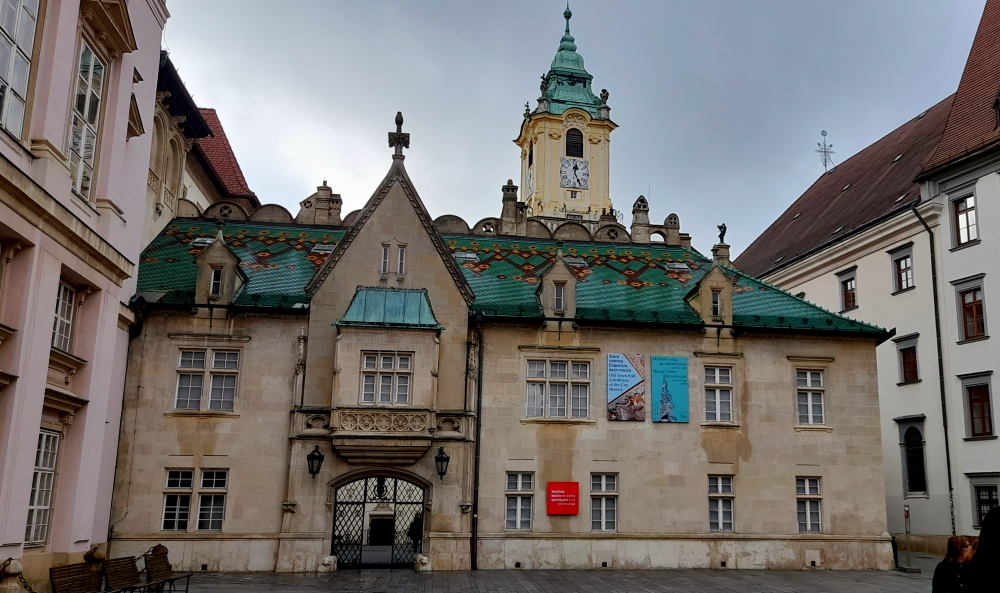
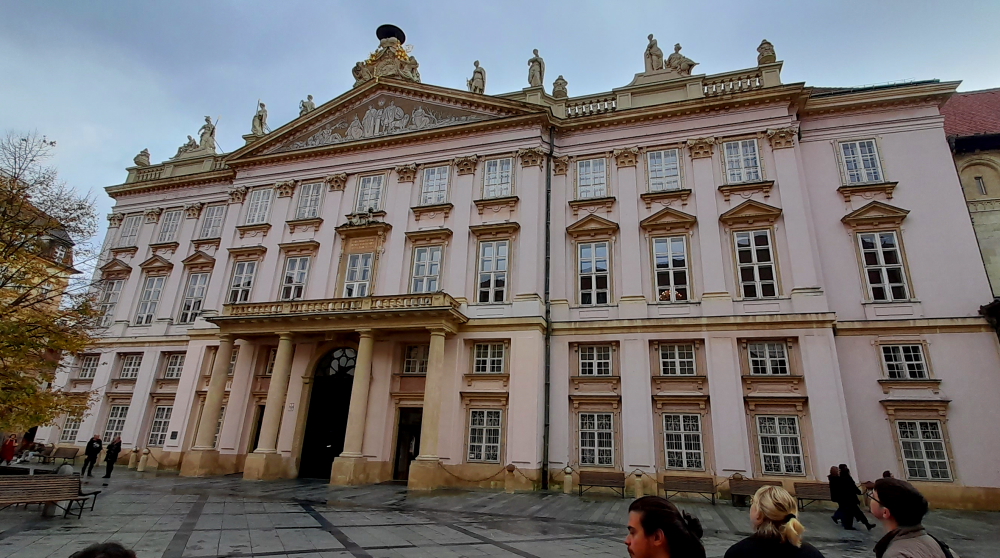
…then out another to the Primate’s Palace – as in pontiff, not our distant monkey forebears.
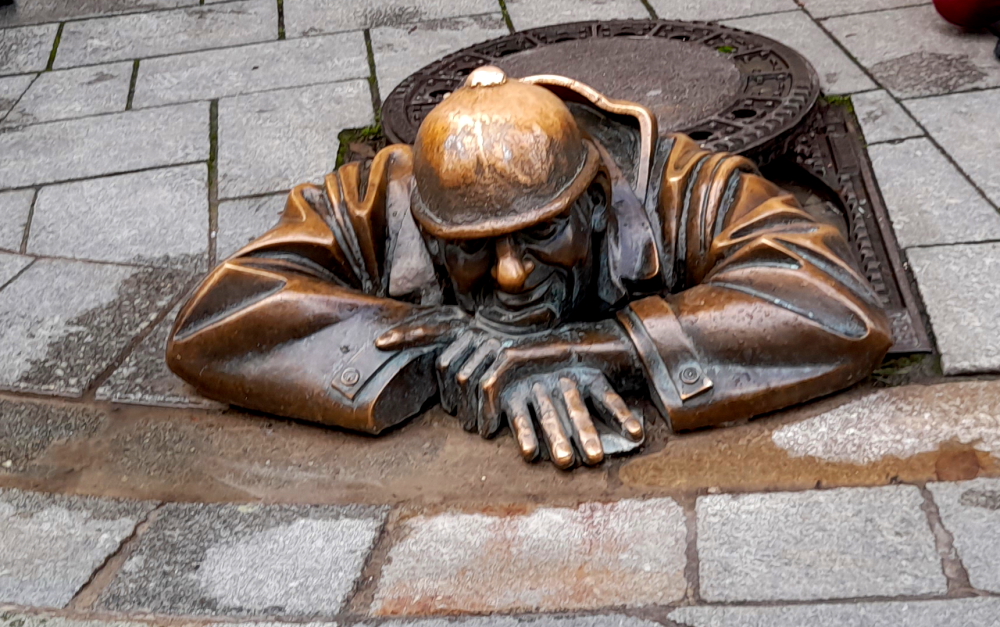
From here we walk to the junction of Laurinska with Panska where one of the numerous city sculptures is located – supposedly a workman taking a breather from working in the town’s sewers.
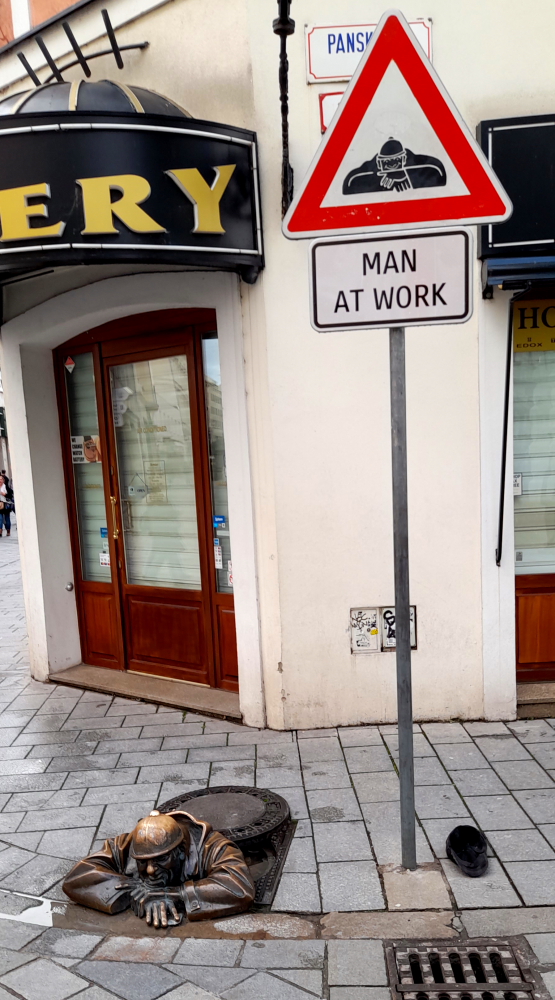
Rumour has it he adopted this pose as it was easier for him to peek up women’s skirts at this angle!
Rybna brana is also at this junction which takes us to the National Theatre and the beginning of the long parkland called Hviezdoslavovo namestie, named after Pavol Országh (Hviezdoslav), (1849-1921), a Slovak poet, dramatist, translator, and for a short time, member of the Czechoslovak parliament. Hviezdoslav (a Slavic name, meaning approximately “celebrating the stars” and/or “Slav of the stars”) was his pseudonym from 1875.
Born Hungarian, he worked in Slovakia as a lawyer. An awakened national pride caused him to write in Slovak from the mid-1870s, but his radical poetry was met with aversion by the older generation. However, during his era, he was the poet laureate of the Slovak nation.
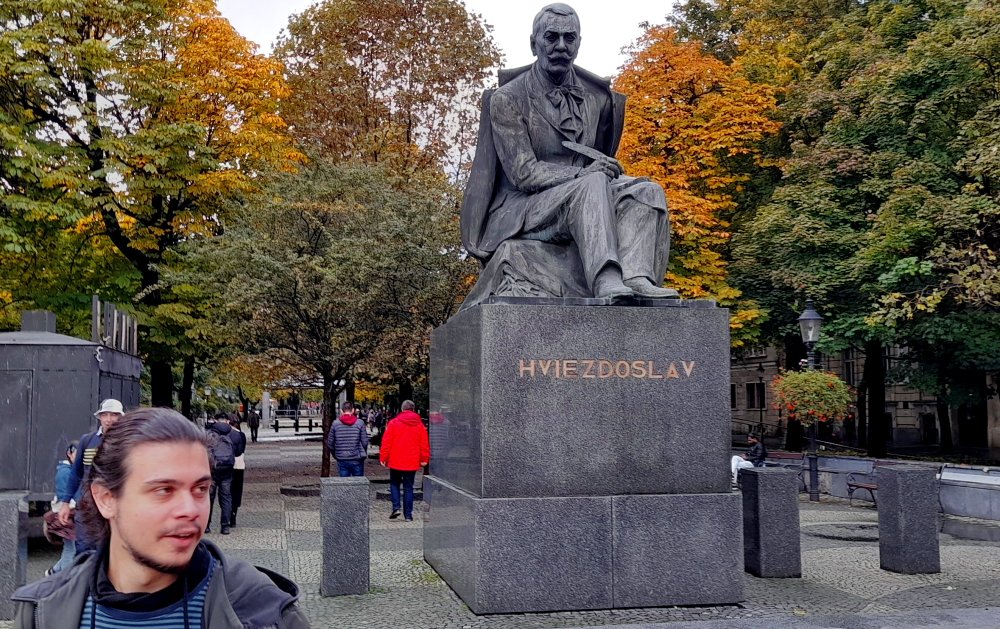
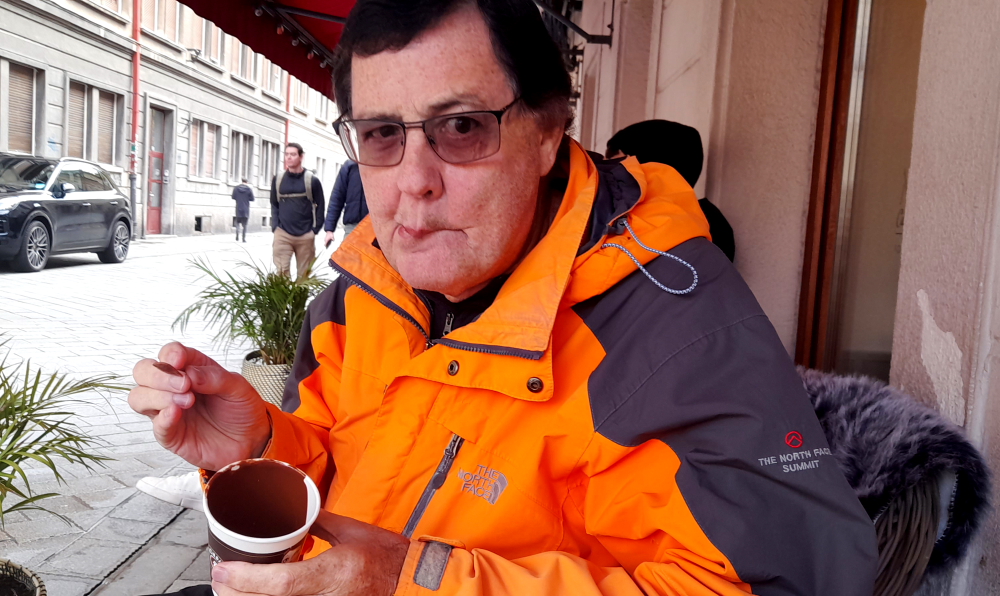
At this point we take a 10-minute break. As it’s chilly we order 2 hot chocolates to go – but discover that they are hot chocolates ‘but not as we know them’. Not the milky beverages we are expecting but rather a cup full of warm, melted chocolate!
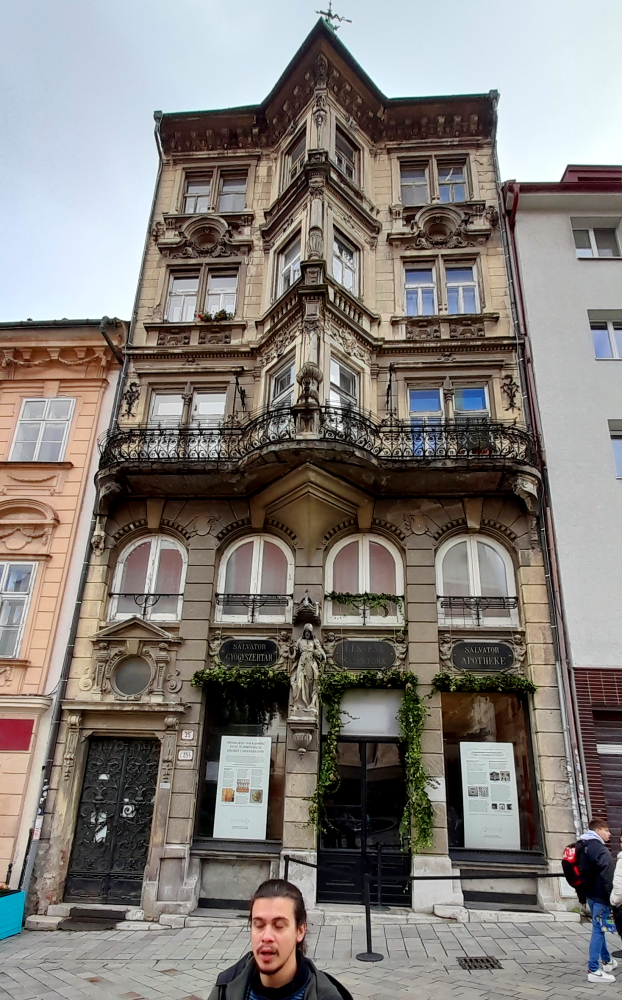
Our next stop is outside the Pharmacy Salvator on Panska, a neo-renaissance building and former pharmacy constructed by pharmacist Rudolf Adler in 1904. The building’s facade features a stone statue of Christ the Saviour by sculptor Alojz Rigele.
In the period from 1904 to 1995, the building housed a baroque cabinet of the rarest Jesuit pharmacy dating from 1727. These objects included a huge marble pharmaceutical desk supported by six lions, an antique cash register, gas chandelier, a set of pharmaceutical containers and various other furniture. In 2018, the Museum of Pharmacy at St. Salvator’s was established.
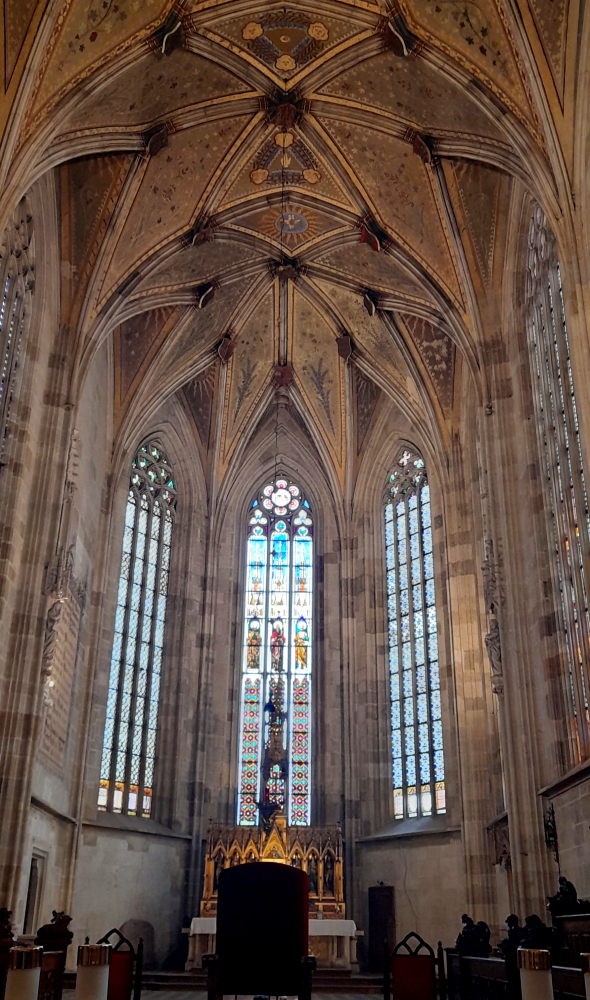
Across the road is the St Martin’s Cathedral which is situated at the western border of the historical city center below Bratislava Castle. It is the largest and one of the oldest churches in Bratislava, known especially for being the coronation church of the Kingdom of Hungary between 1563 and 1830; eleven Hungarian kings and eight queens were crowned here.
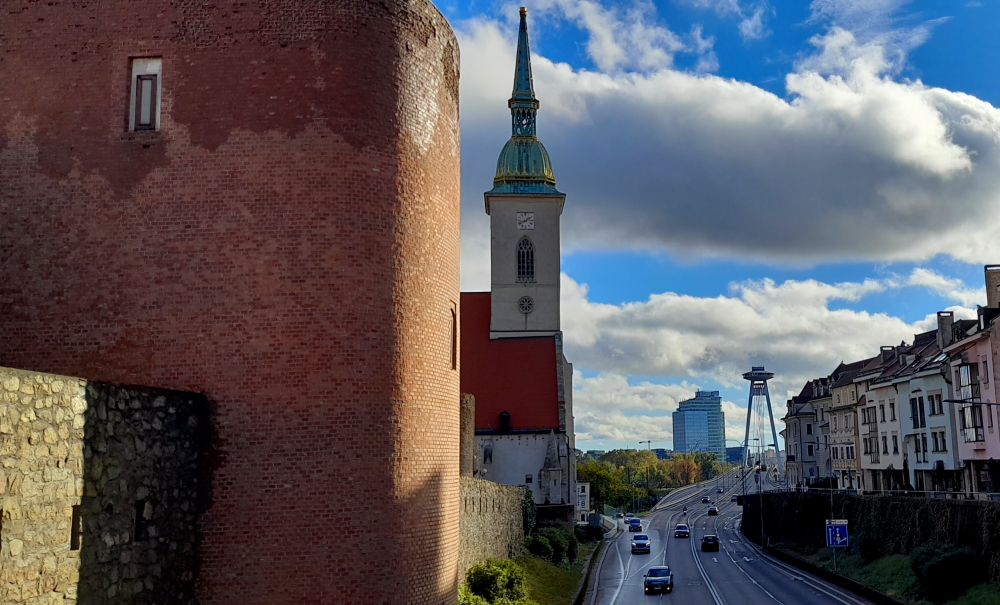
Together with the castle on the adjacent hill and somewhat similar in its striking, but fairly stark Gothic lines and colouring, St Martin’s 85 m (279 ft) spire dominates the Old Town’s skyline. The tower virtually formed a part of the town’s fortifications, built as it was into the city’s defensive walls.
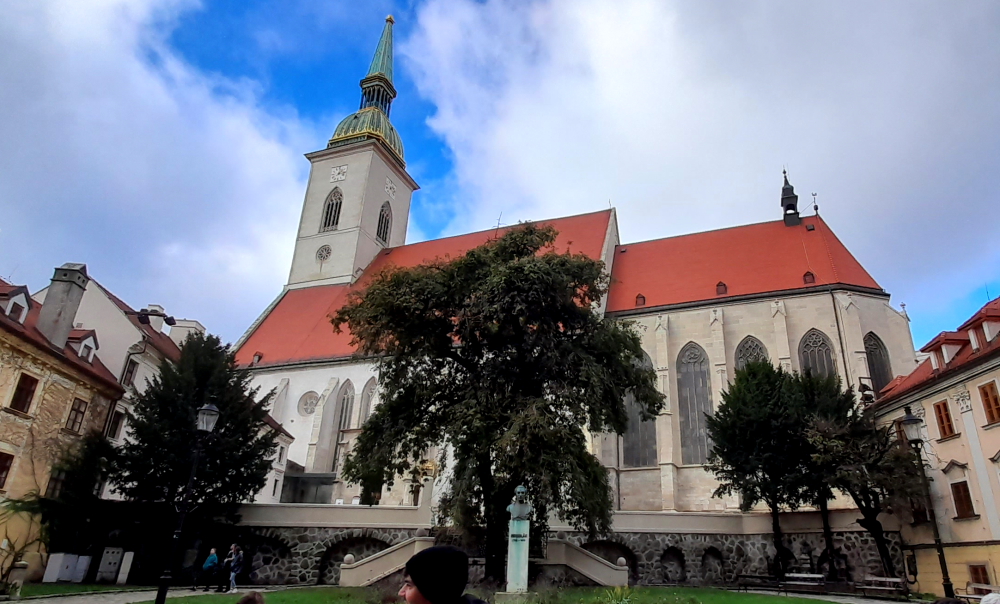
A small but significant neighbour of the cathedral is a monument to the synagogue, which stood next door for centuries until the Communist government demolished it around 1970 to make room for a new Nový Most bridge. The cathedral contains the remains of Saint John the Merciful who died in the early 7th century.
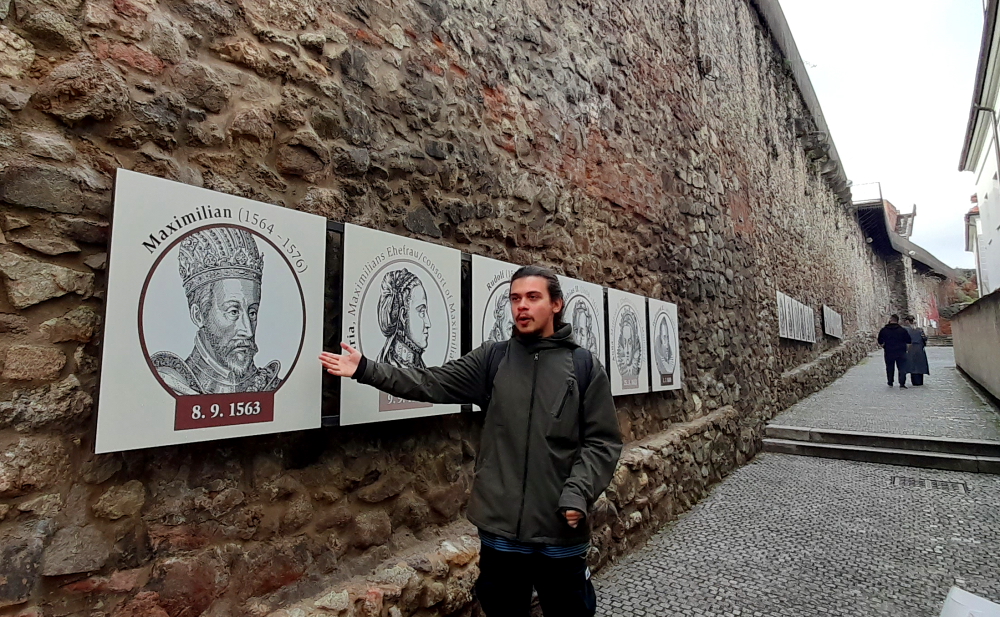
Leaving the cathedral we walk inside the remaining remnant of the old city walls where pictures of former monarchs are displayed.
We then cross a bridge over the Staromestska roadway, climb a series of steep stairs where we reach a park.
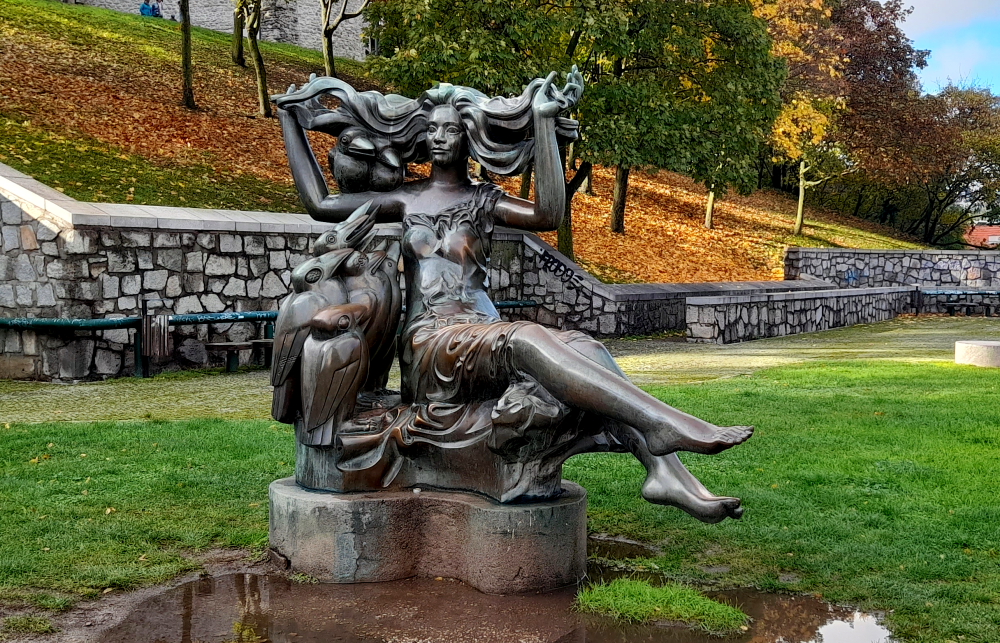
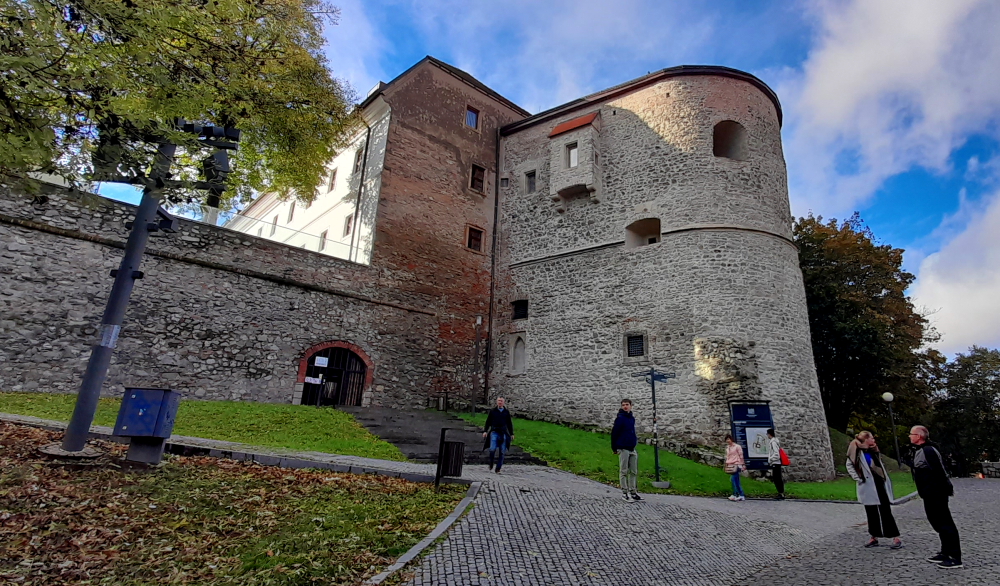
Here we come face to face with a statue of Agatha, the aforementioned witch who was burnt in 1602.
It’s also here where we take another short break to appreciate a view of the city skyline…
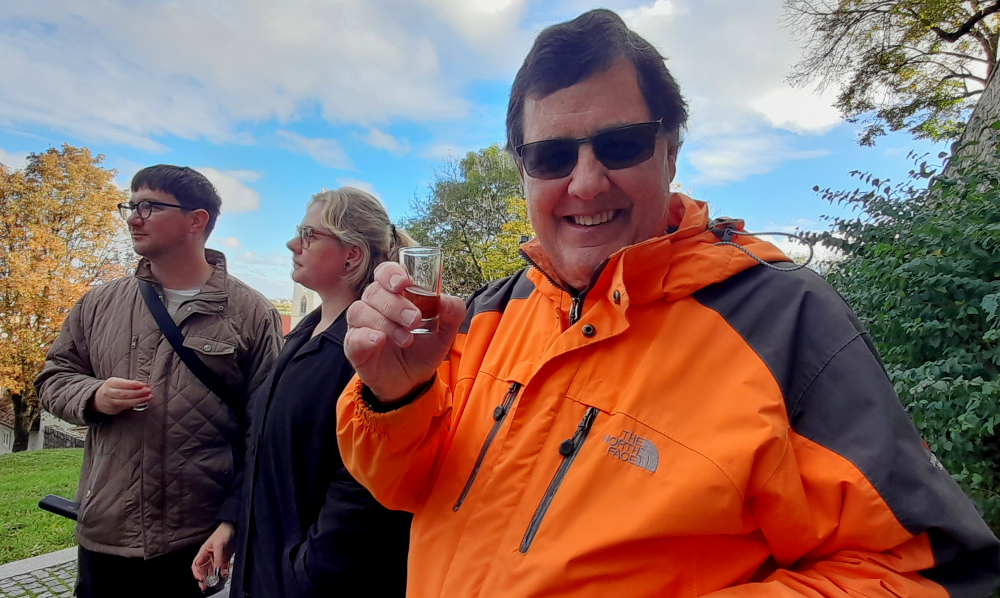
…and, unexpectedly, to sample a drop of the local rum which our guide provides.
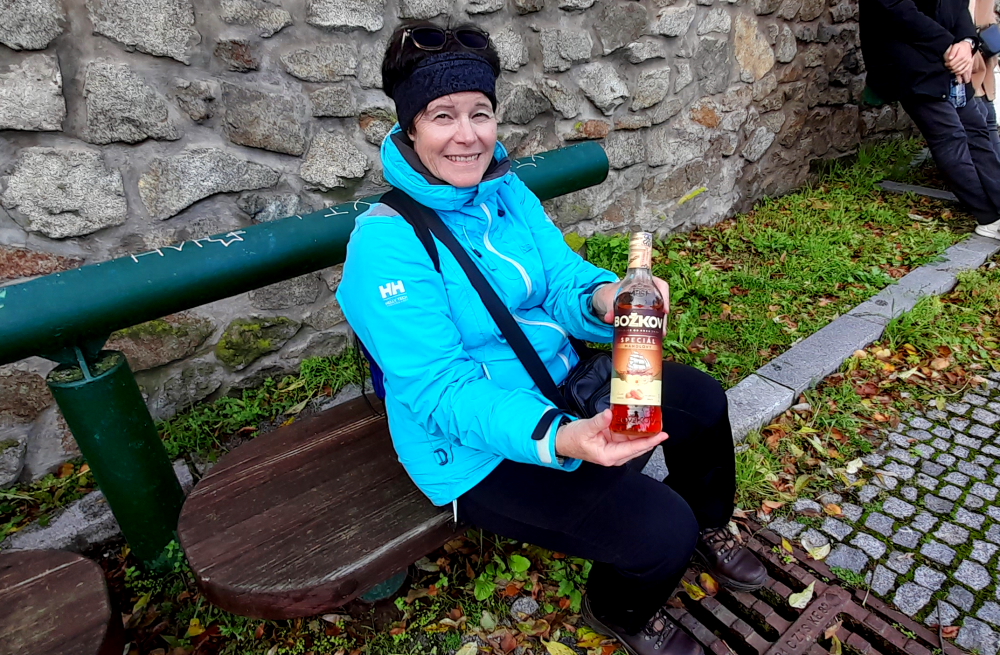
Dobré zdravie! Good health!
A few more stairs and we walk through a wall and into the Baroque gardens of Bratislava Castle.
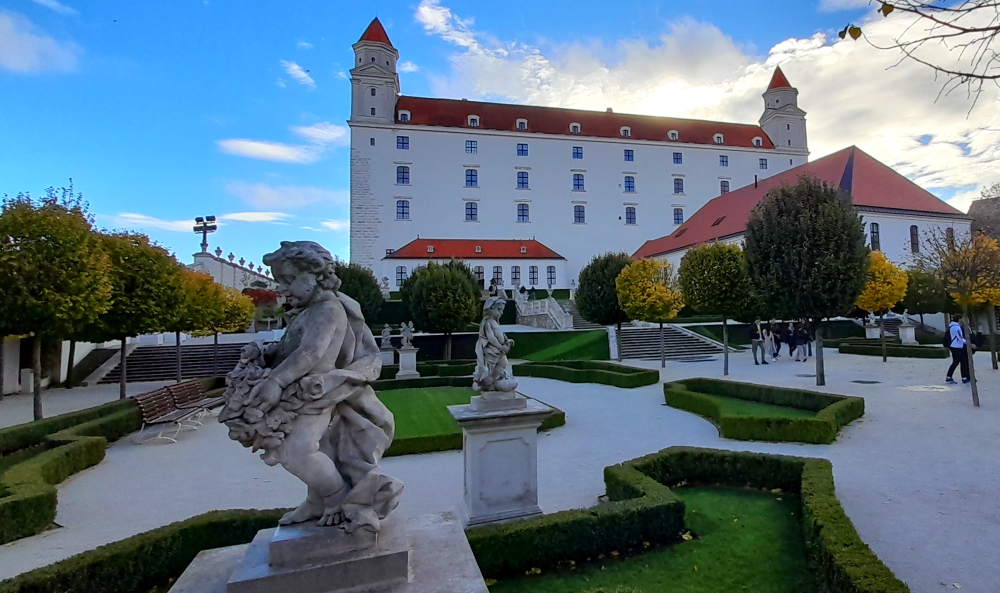
The massive rectangular building with four corner towers stands on an isolated rocky hill of the Little Carpathians directly above the Danube river in the middle of Bratislava. Because of its size and location, it has been a dominant feature of the city for centuries.
The largest and tallest tower is the Crown Tower on the southwest corner. The 47 m (154 ft) tower dates from the 13th century and for approximately 200 years beginning in the mid-1500s housed the crown jewels of Hungary.
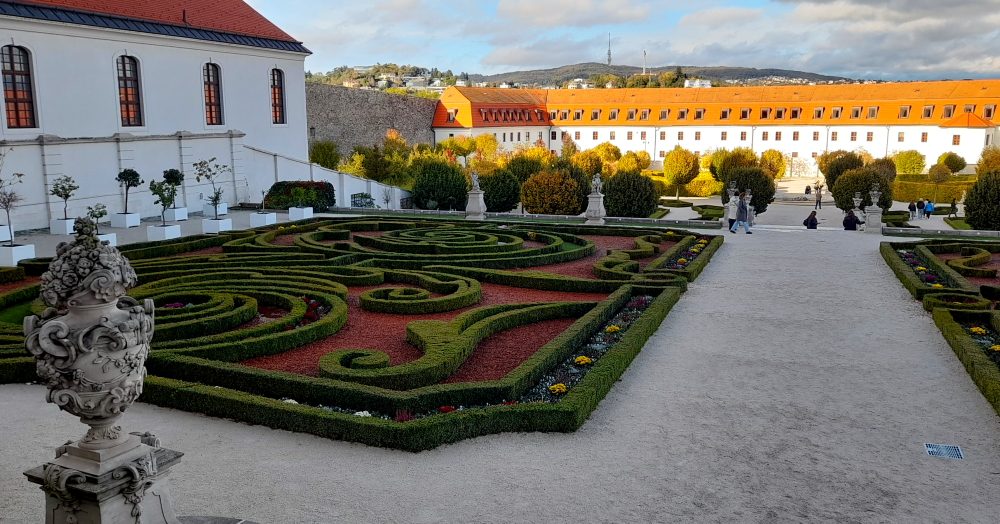
The castle’s site, like today’s city, has been inhabited for thousands of years, because it is strategically located in the center of Europe at a passage between the Carpathians and the Alps, at an important ford used to cross the Danube river, and at an important crossing of central European ancient (trade) routes running from the Balkans or the Adriatic Sea to the Rhine river or the Baltic Sea, the most important route being the Amber Route
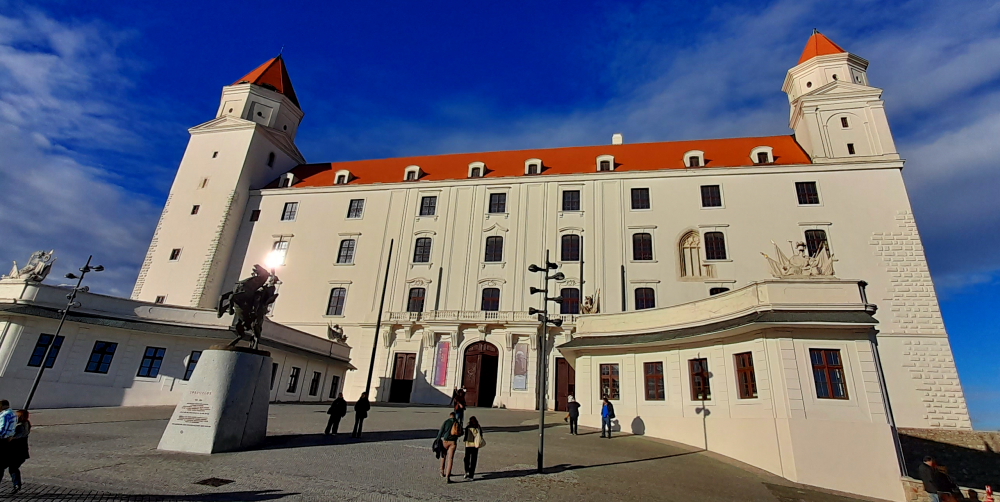
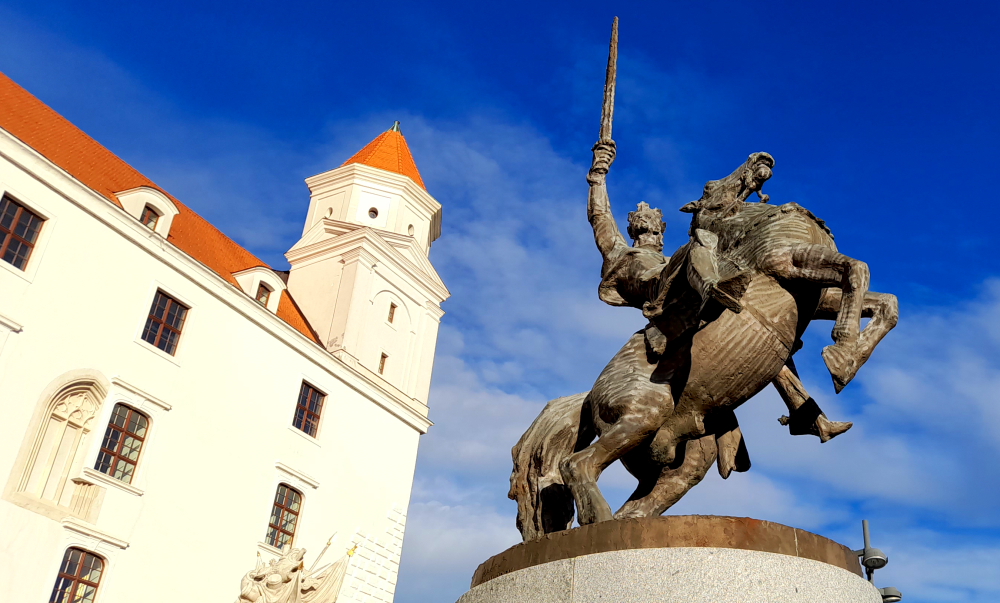
From the Boleraz inhabitants in around 3500 BC to the Celts, Romans, Slavs, the Kingdom of Hungary, all have built on this site. The castle itself was in ruins from 1811-1953 culminating in the reconstruction of the courtyard in 2010 with the unveiling ceremony of an equestrian statue of King Svätopluk I by Slovak sculptor Ján Kulich.
The location provides excellent views of Bratislava, Austria (and all those wind turbines along the border) and, in clear weather, parts of Hungary.
Today the complex houses the Slovak National Museum, the Treasure Chamber (opened in 1988) with a collection of the most precious archaeological finds and other objects of Slovakia, the exhibition on the History of Slovakia and the rooms of the Slovak parliament — the National Council of the Slovak Republic.
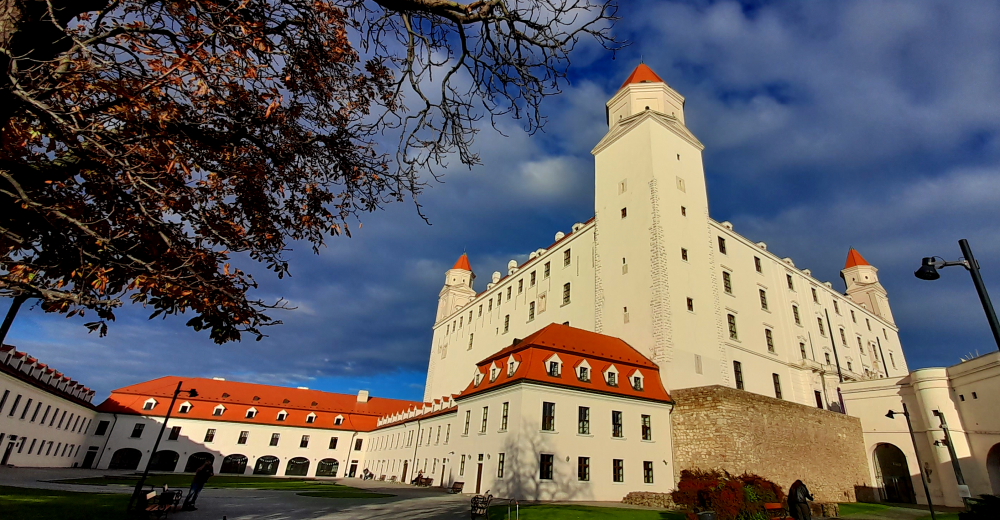
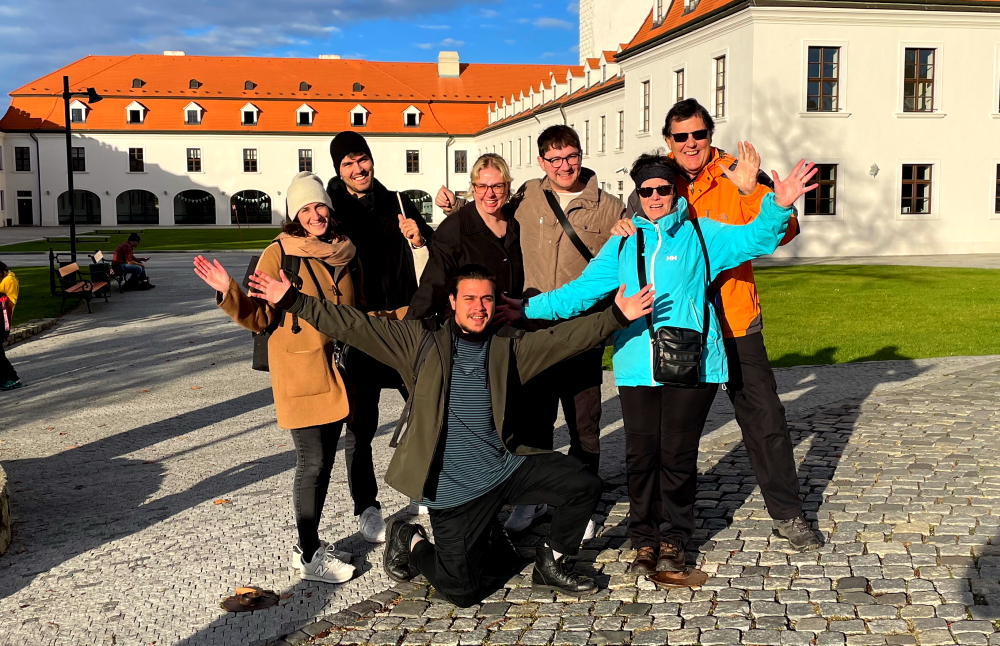
Our tour was supposed to have been 2.5 hours long. Just over 3 hours later we pose for the mandatory group photo then go our separate ways.
For us it is down Kapucinska then through the old town and Hlavne Square where the Old Town Hall is bathed in late afternoon sunshine.
One of Guga’s dining recommendations is the Flagship Restaurant, one of the largest in Europe and offers local Bratislava cuisine and beers and various Slovak dishes which is where we dine tonight. The restaurant is in a historical building of the Merciful Brothers of St. John of God. Its spacious hall has been used as a cinema during socialism which is where we sit in front of the former stage.
6 November, 2023
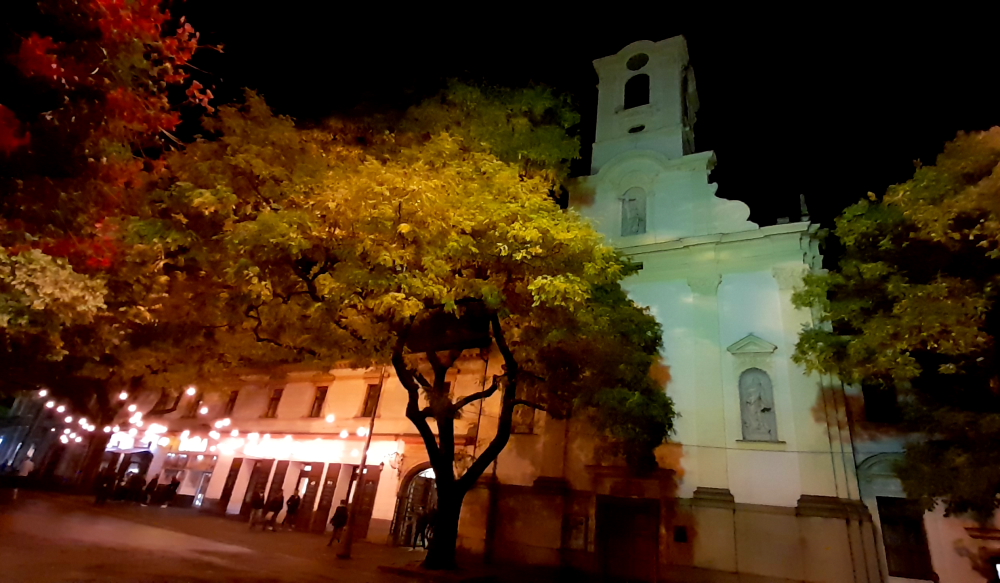
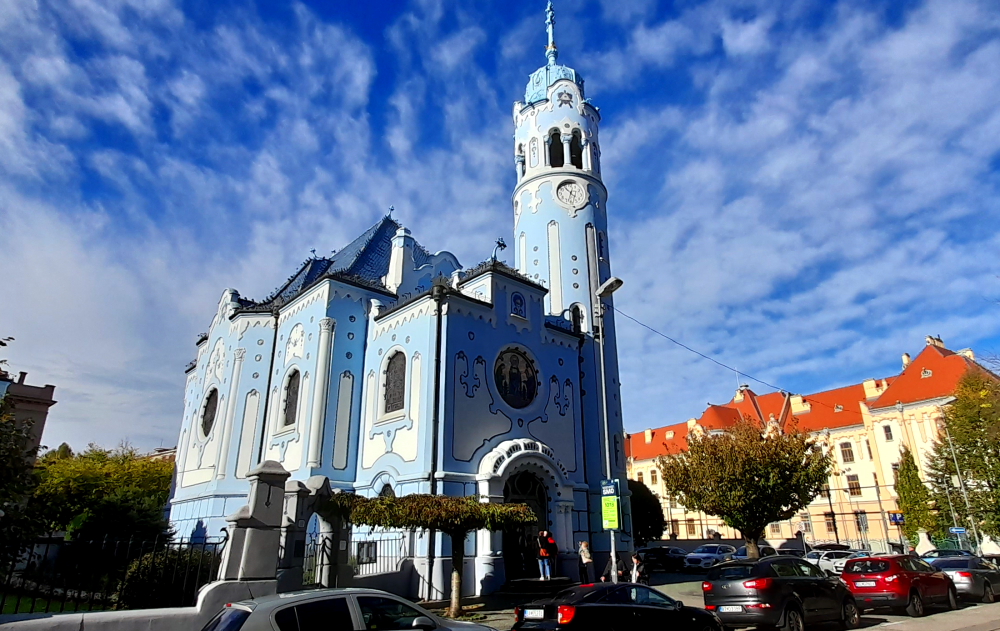
The sunshine continues today with a forecast top of 14 Deg. C. After breakfast we walk the 5 minutes to the nearby ‘Blue Church’ otherwise known as the Church of St Elizabeth.
It is consecrated to Elisabeth of Hungary, daughter of Andrew II, who grew up in the Pressburg Castle. It is referred to as the ‘Blue Church’ because of the colour of its façade, mosaics, blue-glazed roof and blue accents in its interior. The one-nave church was built in 1908-1913 in the Hungarian Art Nouveau style.
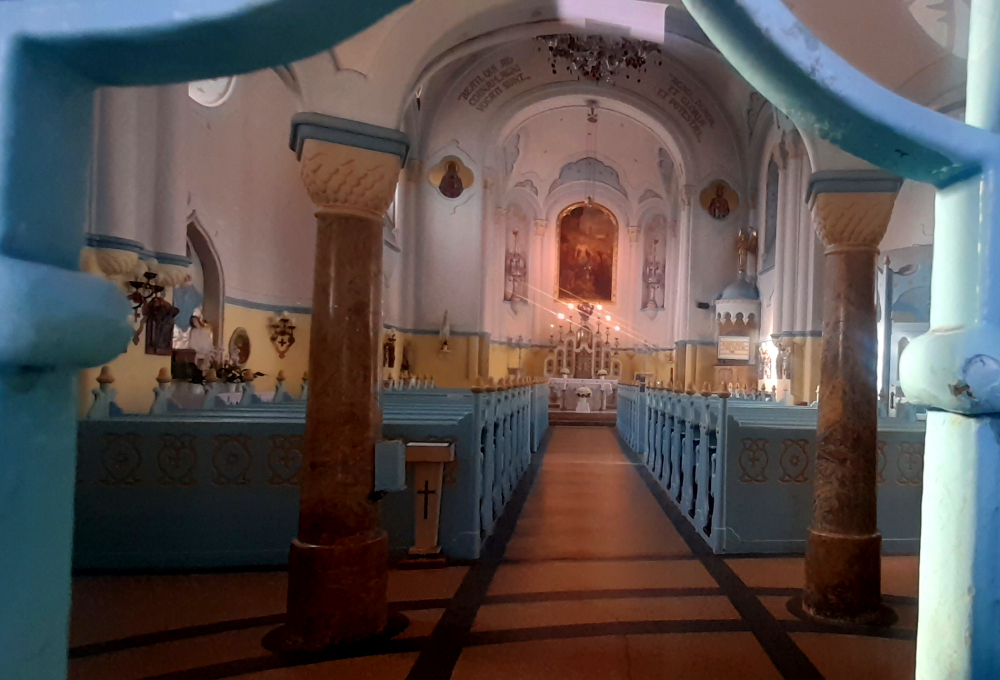
The interior is richly decorated with altarpieces. On the altar there is an illustration of St Elizabeth, depicted giving alms to the poor.
Tonight we planned to dine next door at the Arabic Restaurant but, typical Europe, the restaurant is closed on a Monday. Most of the good restaurants are also closed in the old town so in frustration (and due to the chilly night air) we settle for Burger King. Actually it is the best salad and beef that we have had in a while. Tomorrow we drive to Kosice, 400 kms away at almost the other end of the country which will take us around 4.5 hours to drive.
7 November, 2023
Around 10:00 am we load up the car and drive out of town – another sunny, 13 Deg. C. day.
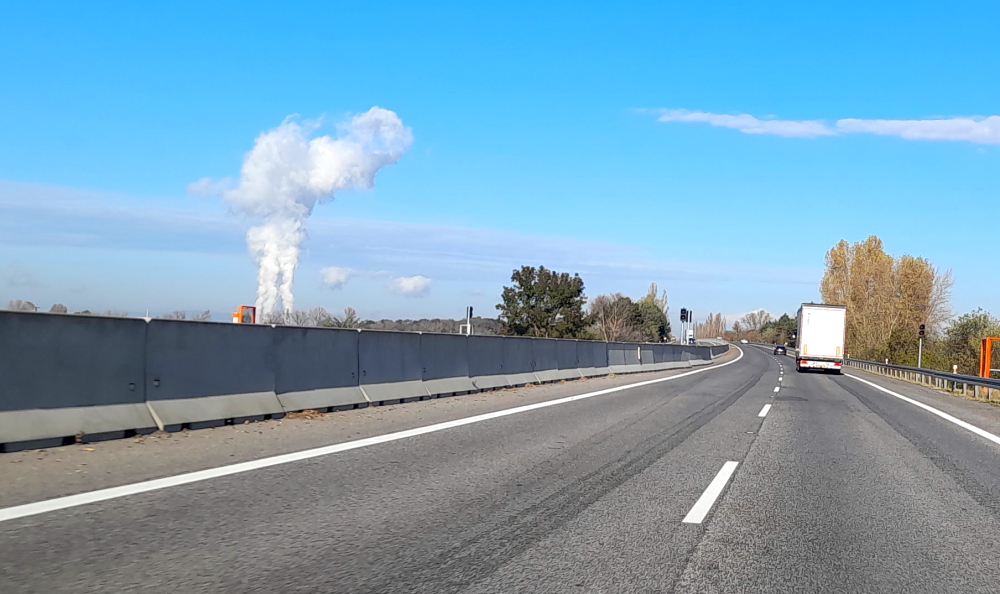
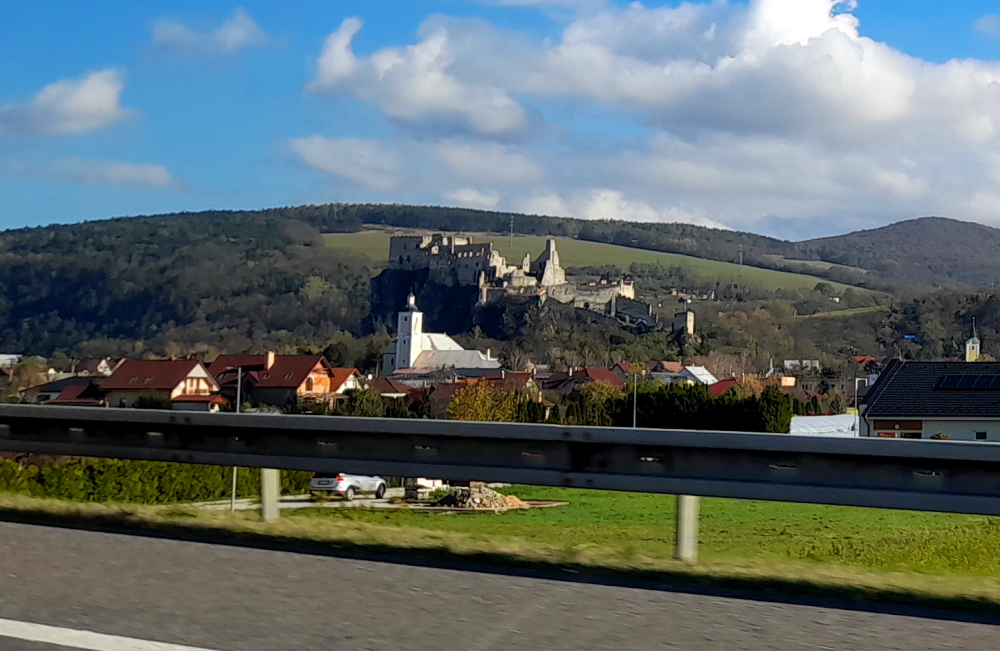
Our route takes us via the D1, across the northern part of the country, past the towns of Trencin, Zilina, Poprad, Presov then south to Kosice. What is notable along the way are the number of impressive castle ruins on hilltops.
The Beckov Cliff is a rocky outcrop exposed by the Váh River. The castle is situated on the cliff near the river, and was used as a strategic outpost in Great Moravia. A stone castle was built here to protect the borders of the Kingdom of Hungary, probably in the middle of the 13th century.
As we approach the large, industrial town of Zilinia the D1 ‘ceases to be’ so we find ourselves on the E50 and 18 instead for a spell as we follow the meandering Vah River through a steep-sided river valley.
Beyond Zilinia we come across Považský Hrad, a medieval castle ruin on the river Váh, near Považská Bystrica. It is built on a cliff 497m above sea level and was one of the most important castles guarding the valley of the river Váh. At the peak of its fame it was home to around 400 people. It is famously known as an “eagles nest” of the important Hungarian noble family of Podmanitzky.
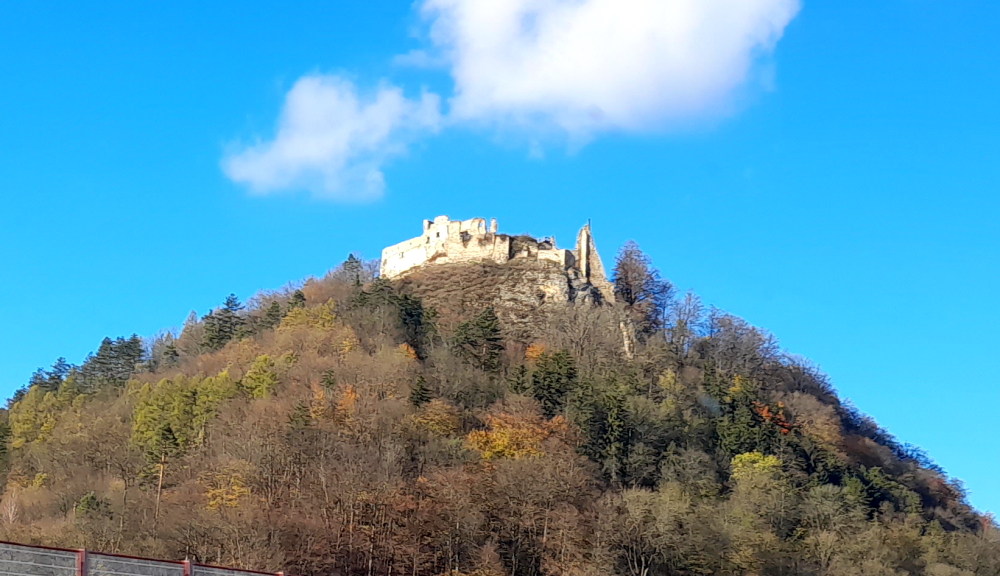
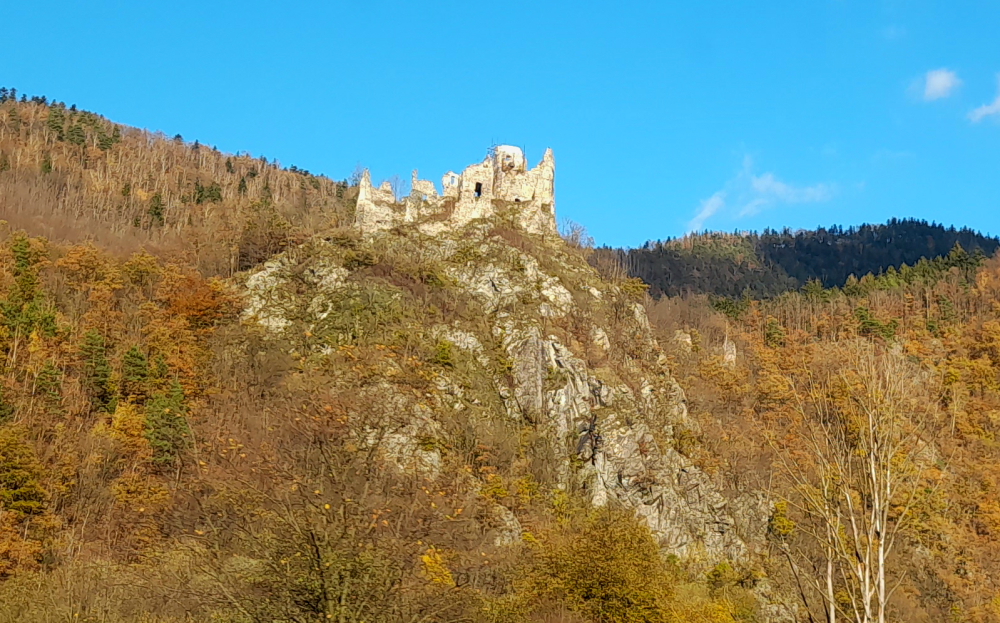
Another castle ruin, Stary Hrad, was built to protect the old road leading to Považím, near the ford, where the old road crossed from the right bank to the left. It belonged to the Varín estate and was initially called Varín. Historians estimate its creation before 1235 , i.e. during the reign of Ondrej II, and it is mentioned in writing for the first time in 1241 in the charter of King Bela IV. The name Starý hrad was given only after the construction of Strečna, which took over its original function. The Pongrács lived here until the 16th century, when they built a comfortable Renaissance mansion in Krasňany and abandoned the uncomfortable castle.
During WWII, it became the site of battles when it was occupied by a German battalion on August 31, 1944. The Germans were able to shell the positions of the French partisans from the heights around Starhrad, who as a result suffered significant losses and were later forced to retreat under the pressure of other German units attacking the Váha valley.
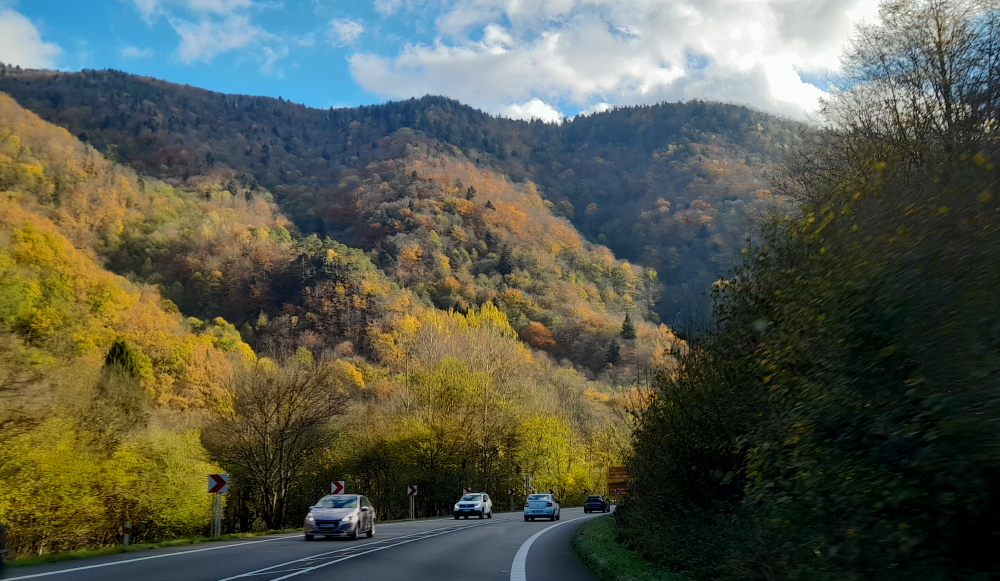
This missing D1 lasts for around 50 kms. Current roadworks show us where it is intended to be – where we rejoin it there is a massive 2-way tunnel being drilled through the hillside that we’ve been skirting around.
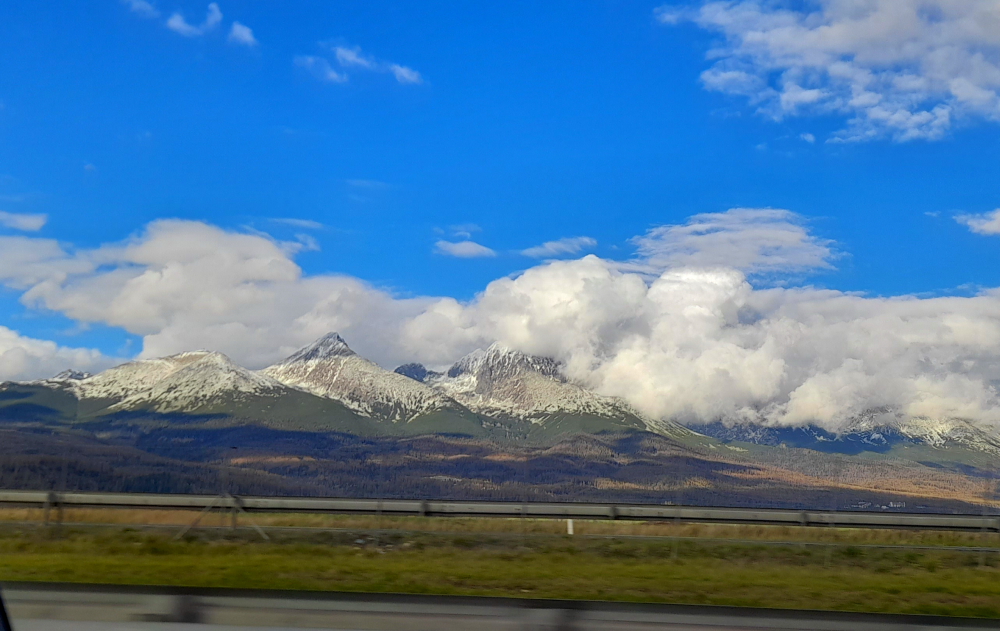
Half an hour beyond the town of Ruzomberok we sight snow on the distant Tatra Mountains.
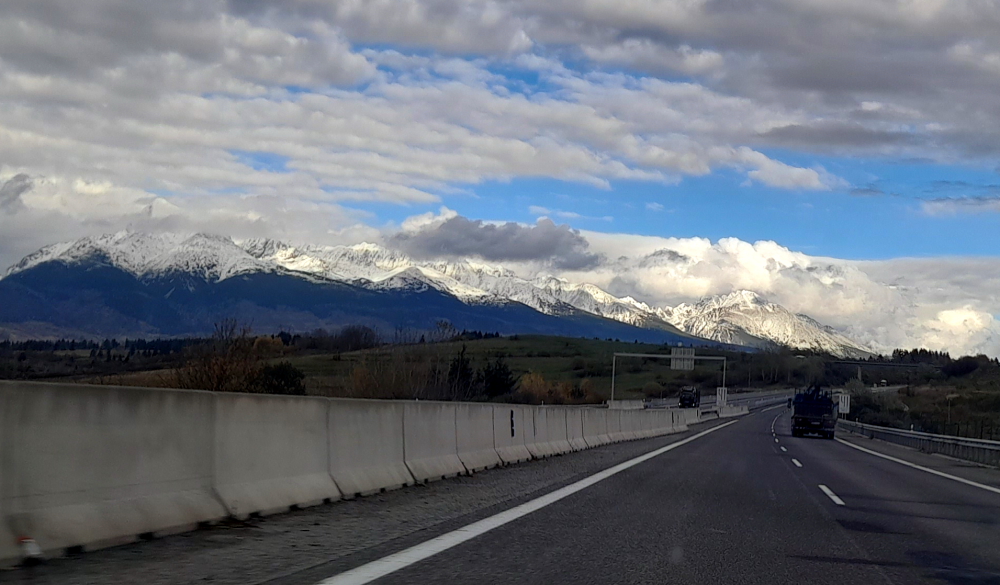
At the Strba slip road we only have another 128 kms to go!
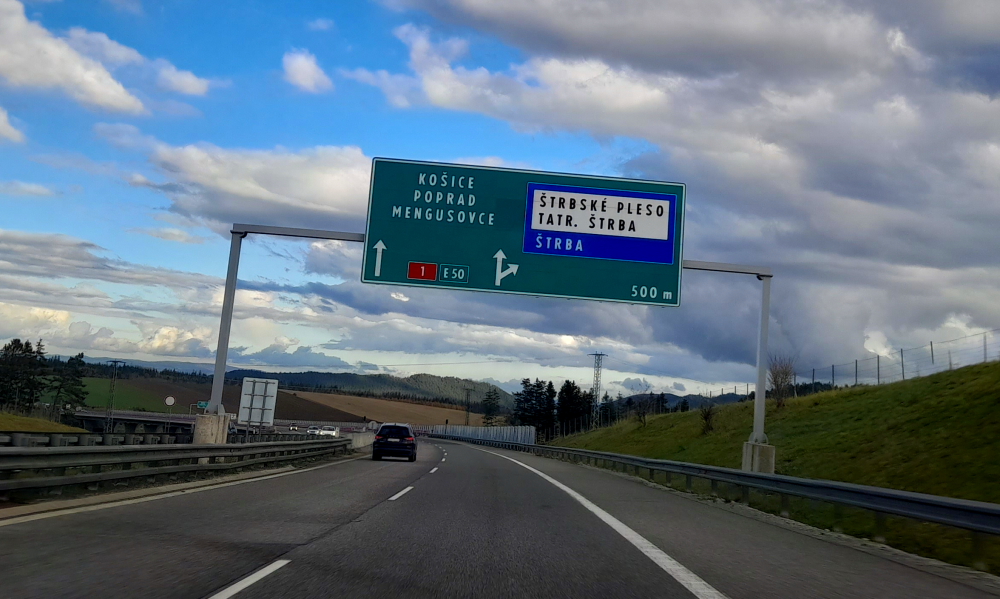
And it’s where we see the last of the Tatra Mountains.
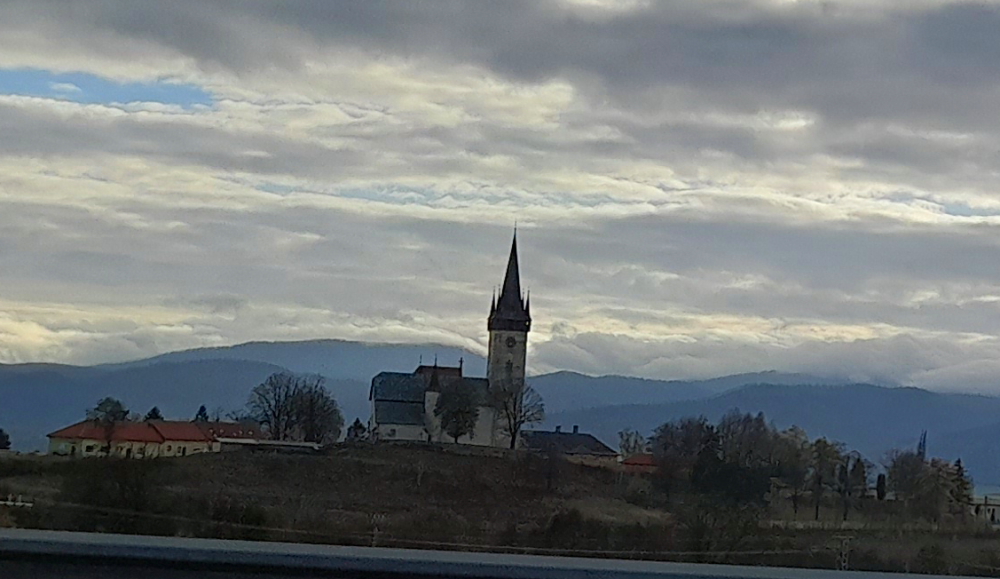
We continue to pass by traditional towns, such as Spissky, with its church dominating the skyline.
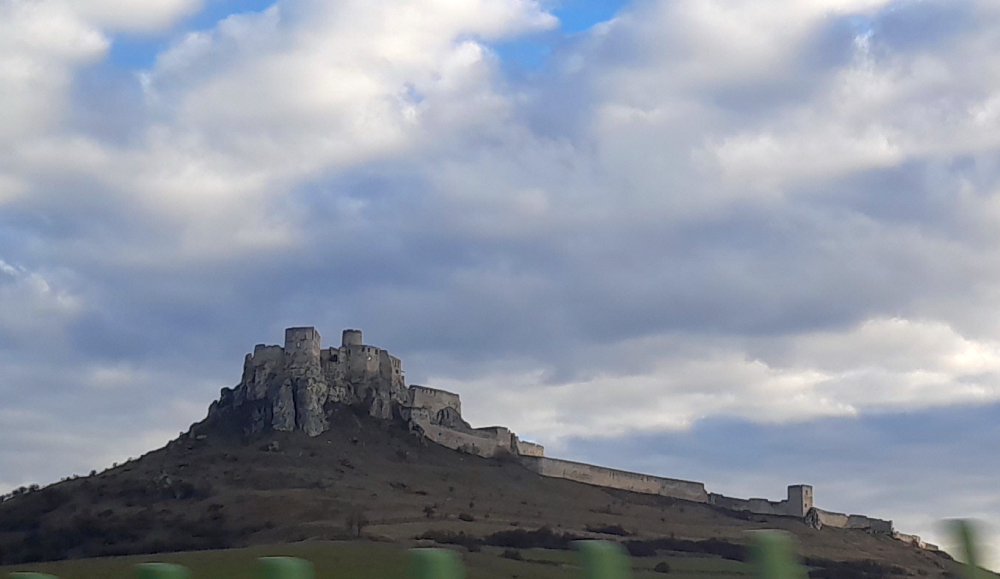
10 minutes later we pass by a truly complex castle ruin, Spis Castle, above the town of Spisske Podhradie. The castle was built in the twelfth century on the site of an earlier castle. It was the political, administrative, economic and cultural center of Szepes County of the Kingdom of Hungary. Before 1464, it was owned by the kings of Hungary, until the time of King Matthias Corvinus, then (until 1528) by the Zápolya family, the Thurzó family (1531–1635), the Csáky family (1638–1945), the state of Czechoslovakia and then Slovakia.
4 minutes later we are about to enter Tunel Branisko. The hint of wispy cloud draped over the hill should have given us a clue as to what to expect at the other end of the tunnel, 5 kms later.
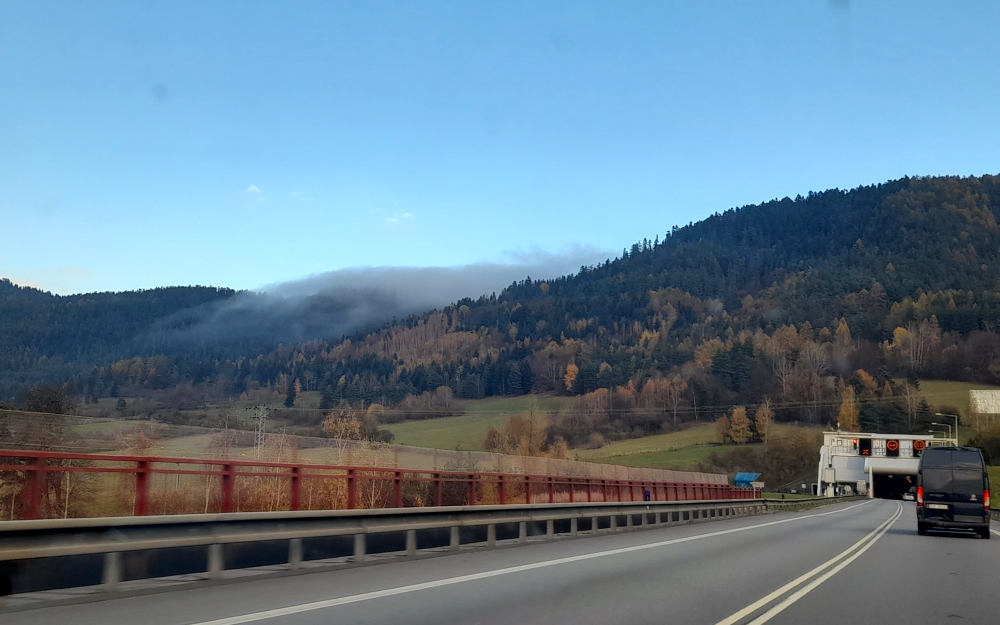
Fog and 9 Deg. C! Which pretty much continues for the next 55 minutes while we drive to Kosice, 75 kms away.
Košice is the largest city in eastern Slovakia. It is situated on the river Hornád near the border with Hungary. It’s home to the Slovak Constitutional Court, three universities, various dioceses, and many museums, galleries, and theatres.
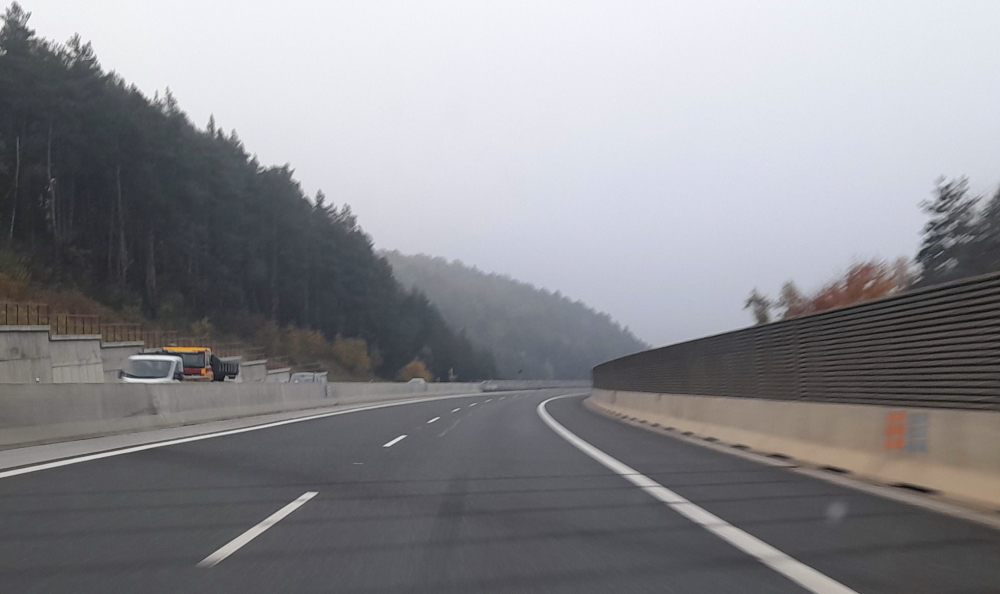
At 3:00 pm we pull into the hotel’s car park at the rear of the building and check in. Again we are booked into an executive suite in this boutique hotel which is located on Hlavna, a pedestrian zone in the centre of town.
As it gets dark around 4:30 pm we decide to unpack later and instead take a quick walk around the town centre.
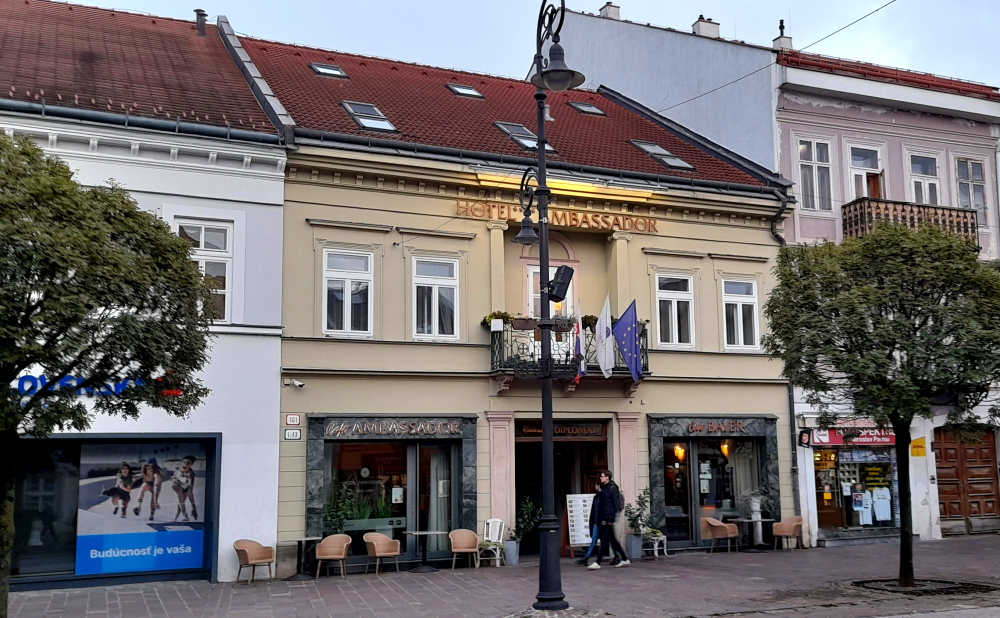
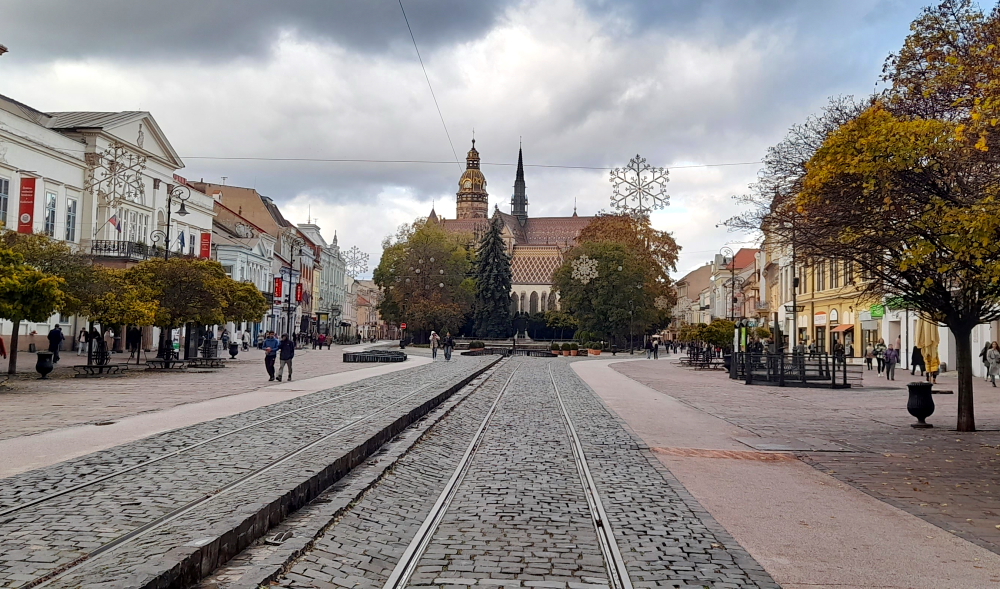
The city has a preserved historical centre which is the largest among Slovak towns. There are heritage protected buildings in Gothic, Renaissance, Baroque, and Art Nouveau styles with Slovakia’s largest church: the Cathedral of St. Elizabeth. The long main street, rimmed with aristocratic palaces, Catholic churches, and townsfolk’s houses, is a thriving pedestrian zone with boutiques, cafés, and restaurants. The city is known as the first settlement in Europe to be granted its own coat-of-arms.
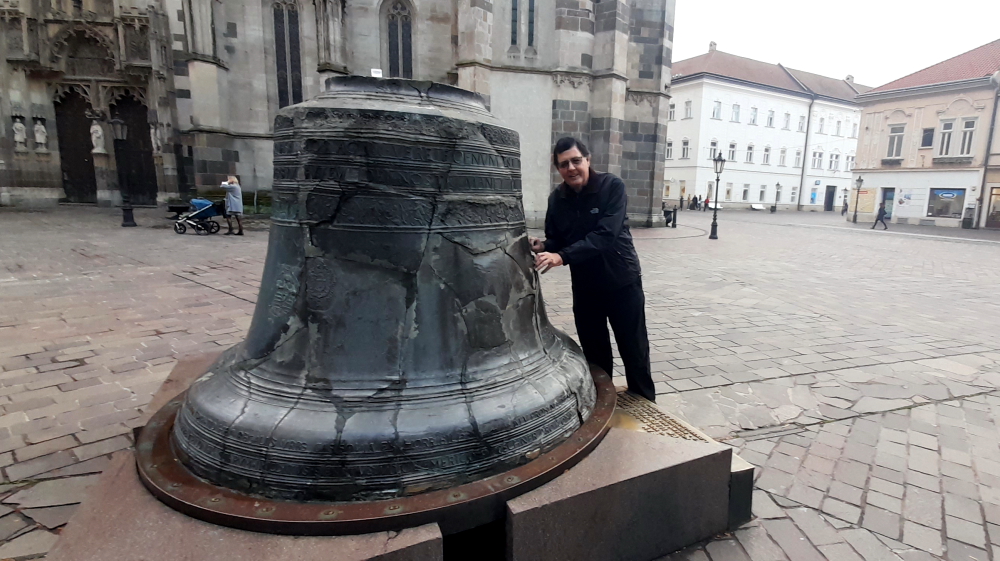
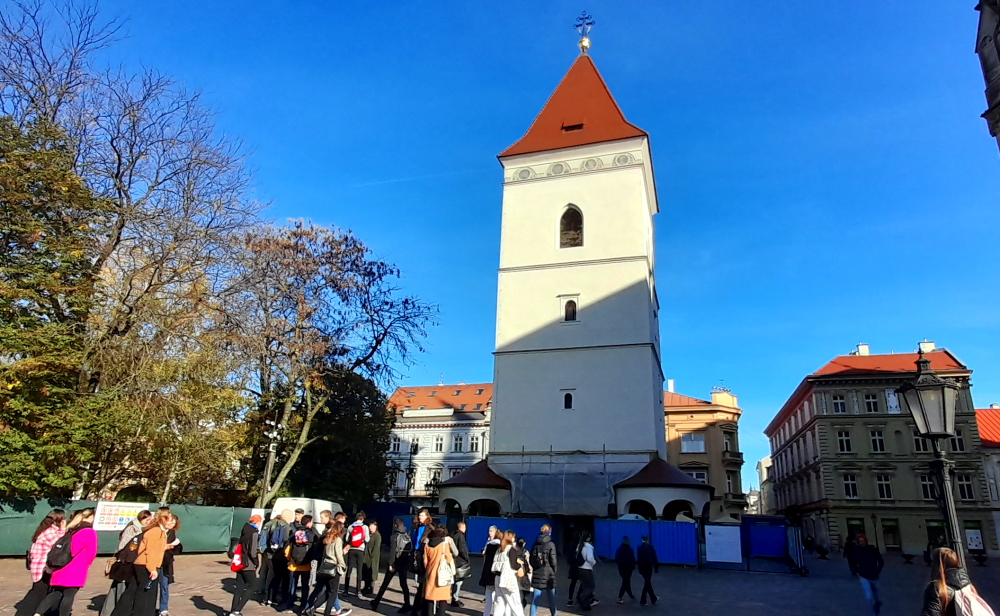
To one end of the pedestrian zone is the Saint Elizabeth Cathedral with the St Urban Tower (a campanile) erected in the 16th century next door.
In 1966 the tower was damaged by fire and the St. Urban Bell was destroyed as well. The reconstructed tower was reopened in 1971. The renovated bell was located in the front of the tower and a copy of the bell (made by employees of VSŽ Steel Works Košice in 1996) was installed in the campanile. The original bell was cast in a mould by the bell-founder Franciscus Illenfeld of Olomouc in 1557, weighing 7 tonnes.
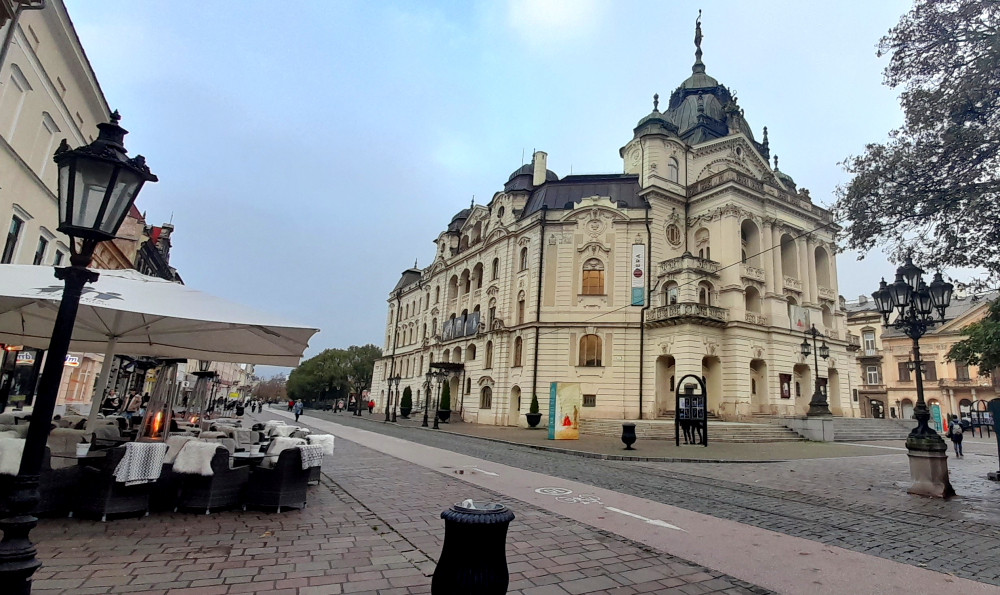
Walking back down the other side of the street we pass by the National Theatre – there seems to be some confusion as to whether it is the State or National Theatre. Surely the National Theatre would be located in Bratislava? Regardless, it is the venue for plays, ballet and opera.
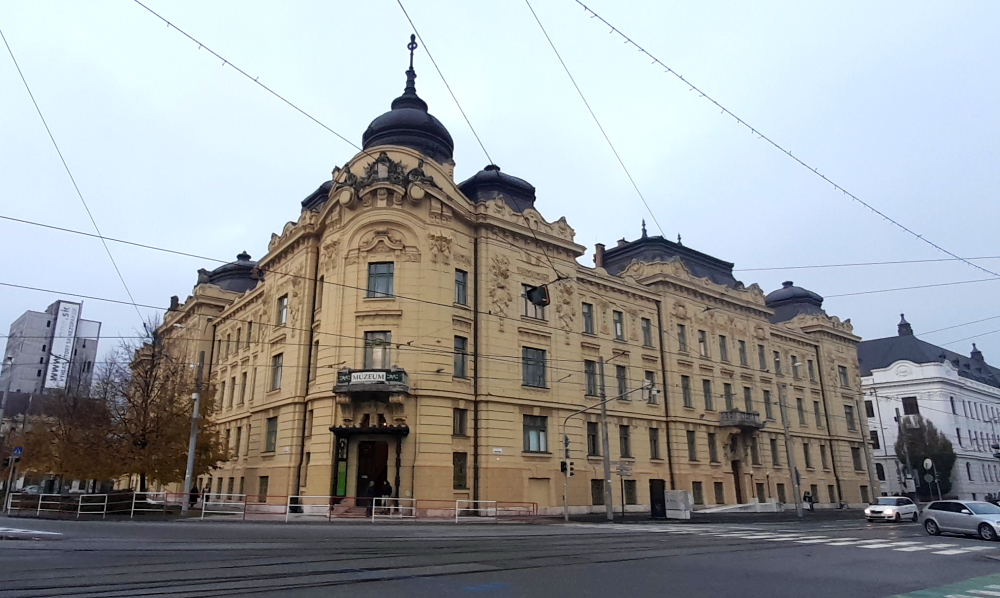
At the other end of the zone, not far from our hotel, is the East Slovakian Museum. The building on Hviezdoslavova Street houses the permanent fine art and the Carpathians exhibitions.
In 2013 Košice was the European Capital of Culture, together with Marseille, France. An important industrial centre, the U.S. Steel Košice steel mill is the largest employer in the city.
Kosice is only 20 kms from the Hungarian border; 80 kms from Ukraine and 90 kms from the Polish border.
After the 2022 Russian invasion of Ukraine, Košice, as a regional metropolitan area, became a major hub for administration, transfer and housing of refugees fleeing from Ukraine.
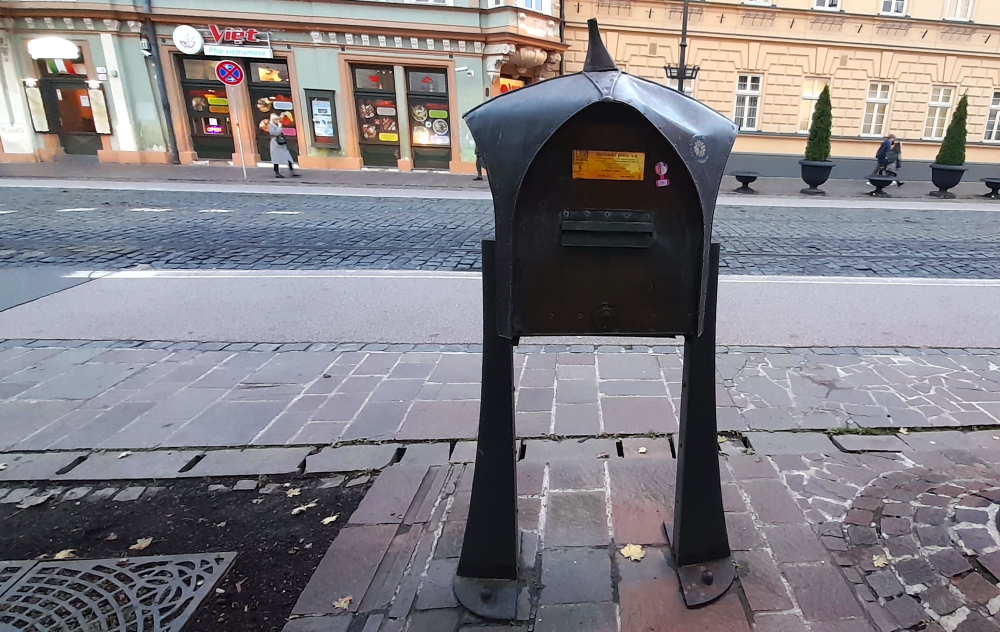
After unpacking we return to an Italian restaurant we passed by earlier then hit the sack.
8 November, 2023
Ahhhh! Never underestimate the therapeutic qualities of a soft mattress. A blissful night’s sleep after the 4 nights we spent on a rock-hard mattress in Bratislava.
Nothing is planned for today other than a quick circuit around the nearby streets.
We are booked on a GuruWalk tomorrow but it won’t start until 4:30 pm which means this will be the first time we do a town walking tour in the dark! So we thought we’d visit a couple of places in advance, in daylight.
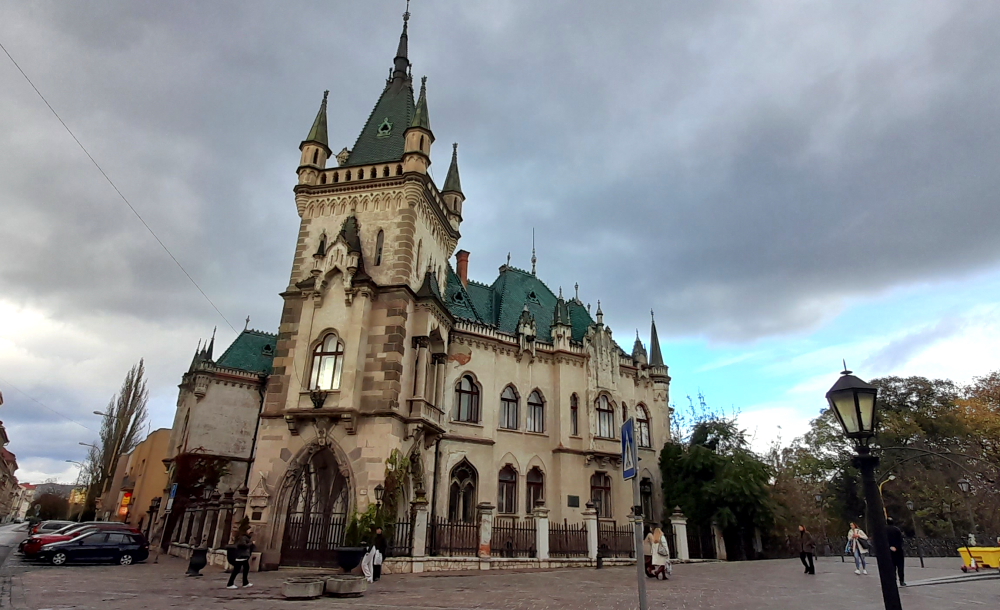
Tomorrow’s meeting point for the walk is Jakab’s Palace. The building was erected in 1899 in the pseudo-Gothic style constructed from discarded stones from the Kosice St. Elizabeth’s Cathedral. It was named after the first owner of the building Arpad Jakab. In 1945 (April – May) the palace was the seat of the president of Czechoslovakia. In 1992 – 2000 the British Council had its seat in the building. Later the building was used for important social events. At the present time the palace is closed due to a lawsuit regarding proprietary rights.
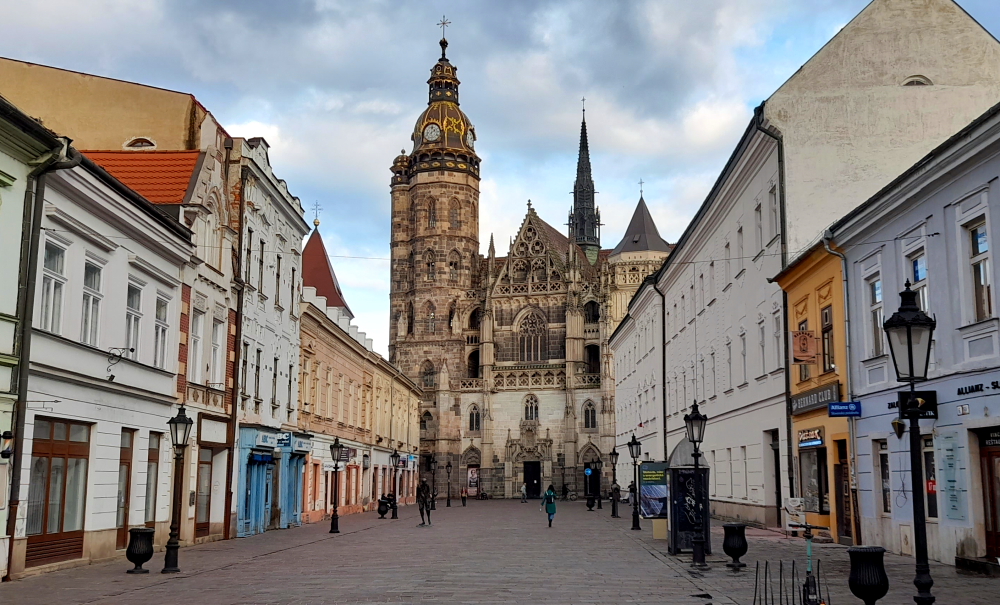
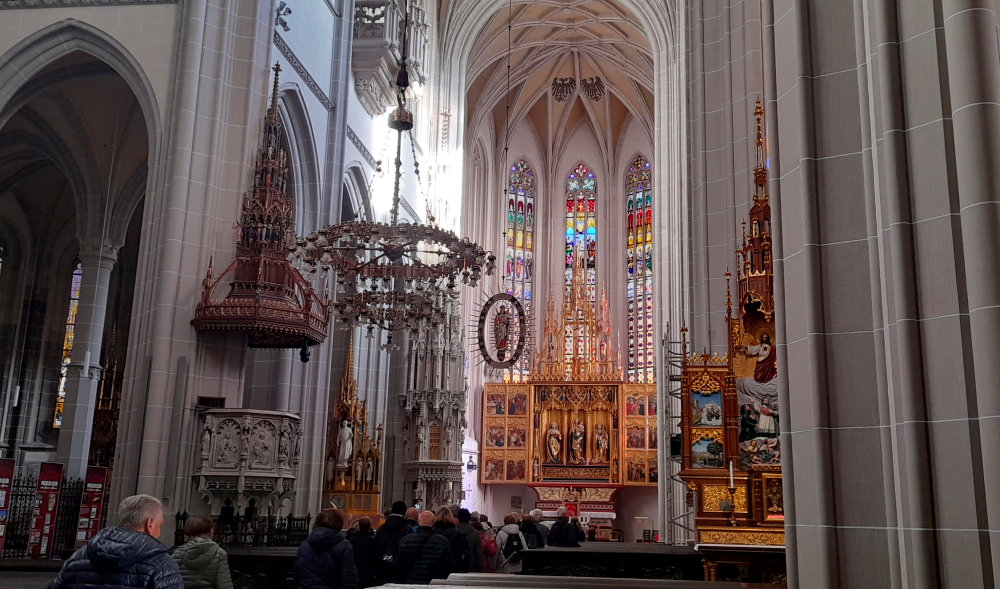
We walk down Bocna and come to the intersection with Alzbetina which gives us a view of St Elizabeth’s Cathedral. A Gothic cathedral which is also the largest church in Slovakia and one of the easternmost Gothic cathedrals in Europe.
According to historical and archaeological sources, the present-day cathedral was built on the place of an earlier church also consecrated to Saint Elizabeth of Hungary. It was referred to in documents from 1283 and 1290, in which the Bishop of Eger Andrew II spoke about the jurisdiction of the church. The complex of the cathedral and adjacent buildings (St Michael Chapel and Urban Tower) were declared as Cultural Heritage Monuments in 1970.
After our old town walk we both end up finding separate establishments to have our hair cut. Mine will last another 5 months whereas Lynn’s more like 2.
9 November, 2023
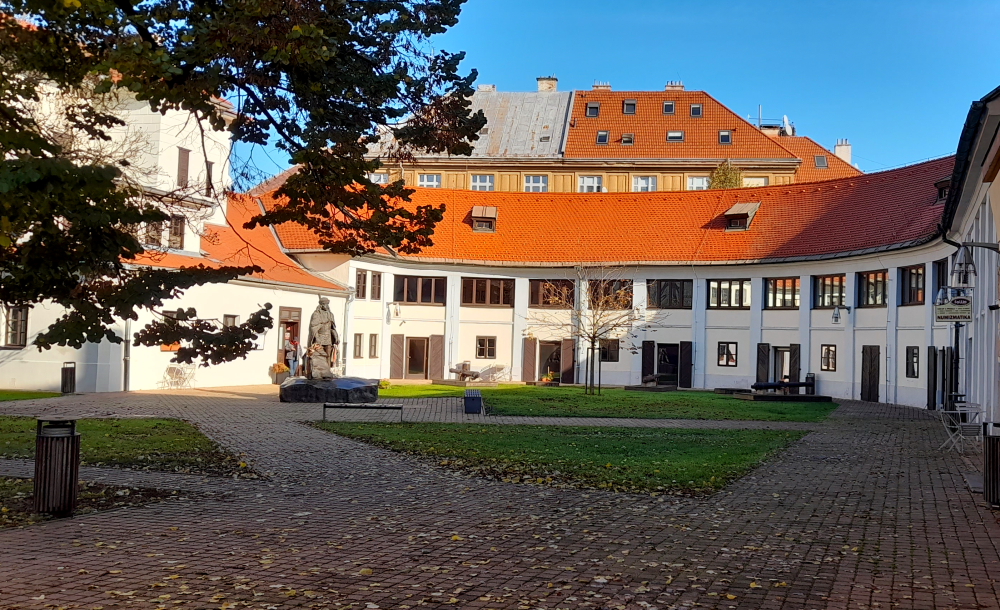
Lynn decides to venture out this morning to investigate nearby streets. Near Miklus’s Prison she comes across the Executioner’s Bastion which now one of the numerous buildings that make up the East Slovak Museum.
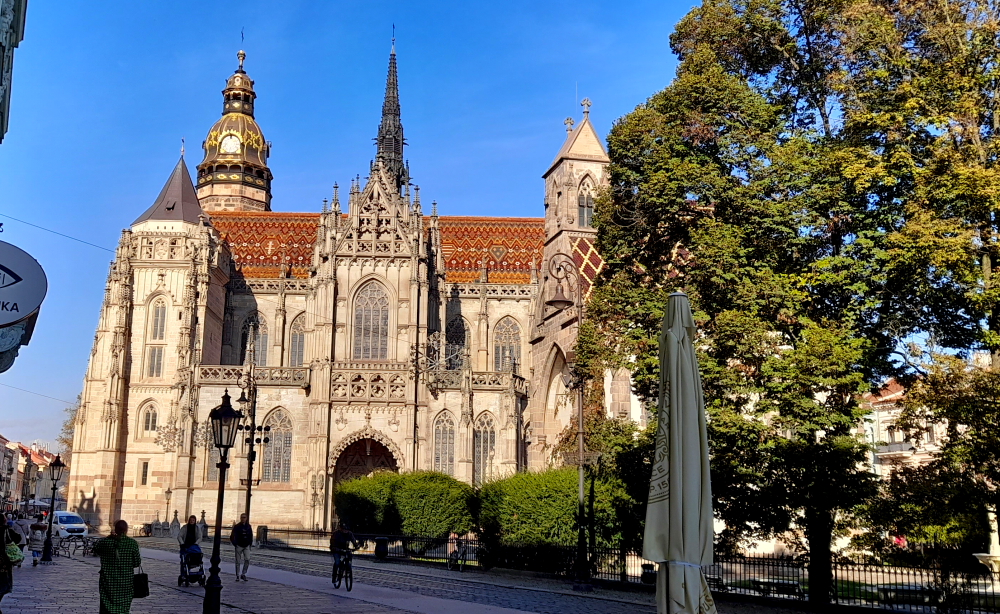
Cutting across the old town she approaches the cathedral and chapel from the south along Hlavna which shows the intricately patterned tiles on the roofs of each.
The main altar of St Elizabeth was built between 1474-77 and is ranked among the most remarkable pieces of Medieval art in Slovakia. It consists of 2 pairs of decorated wings with a heavily decorated centrepiece. As a whole, it is a set of 48 paintings in 3 themed cycles – Elizabethan, the Passion and the Advent. This style of altar is unique across Europe.
Next door to the cathedral is St Urban Tower (a campanile) erected in the 16th century and currently undergoing refurbishment.
At 4:10 pm we leave the hotel and walk the 10 minutes to the meeting place for our historical city centre walking tour in front of Jakab’s Palace. The temperature is about 8 Deg. C so we have rugged up for the 2.5 hour tour. Thank goodness Lynn packed her bright blue fleece hat as, since I’ve lost my brown suede flat cap and I’ve just had a No. 2 razor hair cut, I’ve had to press her hat into service to cover my now almost shaved head.
When we arrive it is just about dark and we meet up with Ester, our guide, who was born and lives in the town.
She reveals to us that the Palace’s current law suit is about ownership. Apparently it was owned by a Jewish family but taken over by the town and the daughter is now claiming ownership rights.
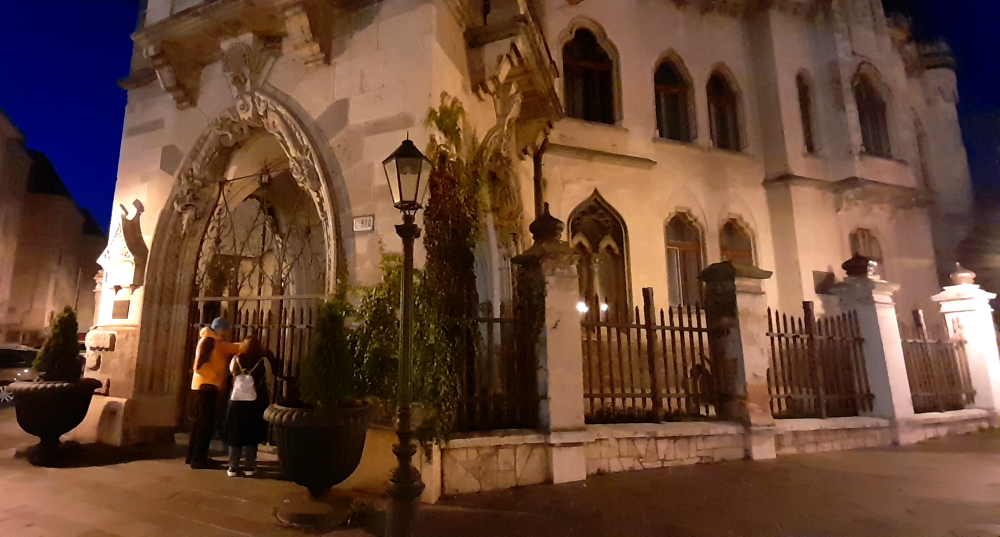
As it’s now dark, we only take a couple of photos as tomorrow Lynn will retrace our steps to document those places we visit tonight.
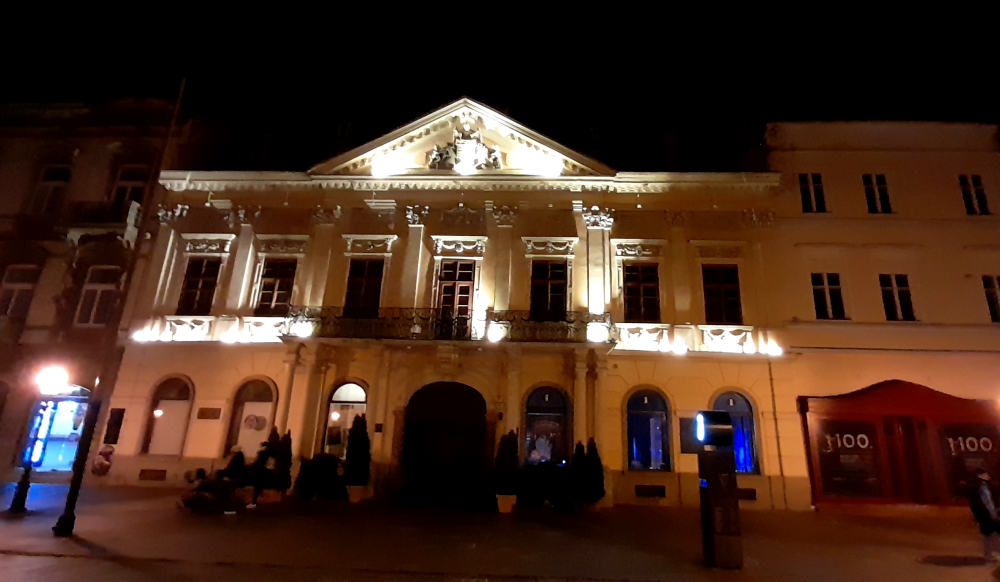
During the tour we visit: New Orthodox Synagogue, City Coat of Arms, St Michael Chapel, St Elizabeth Cathedral, Urban’s Tower, Singing Fountain, State Theatre, Miklus Prison, Craft street, Immaculata (Plague Pillar) and the memorial of the Peace Marathon.
10 November, 2023
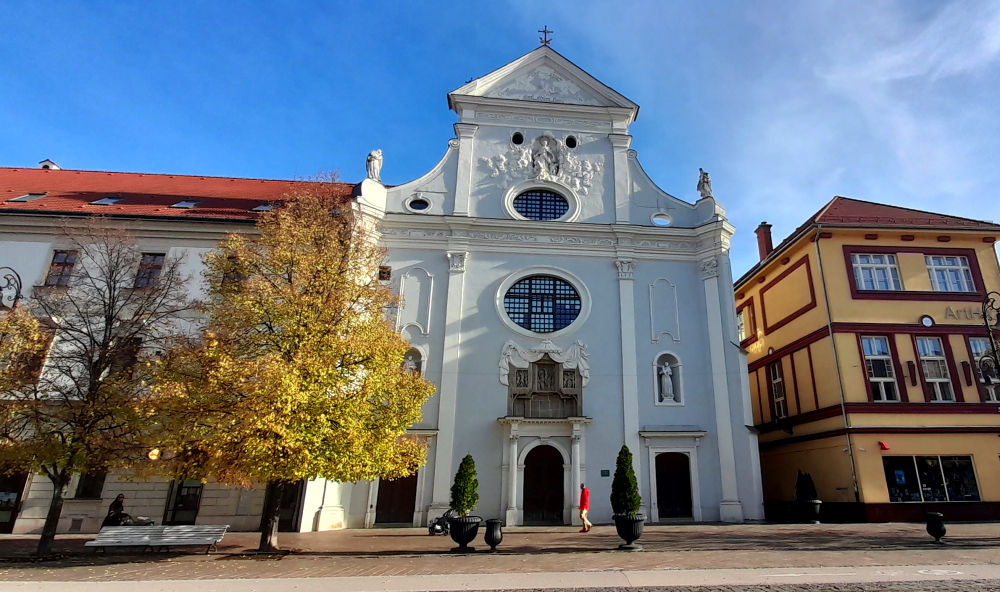
Another bright sunny day with a top of 10 Deg. C. as Lynn retraces our steps from last night’s tour. Not far from our hotel is the Franciscan Church, the 2nd oldest church in Kosice. Built during 1333-1405, destroyed by fire in 1556 and reconstructed during 1718-1724.
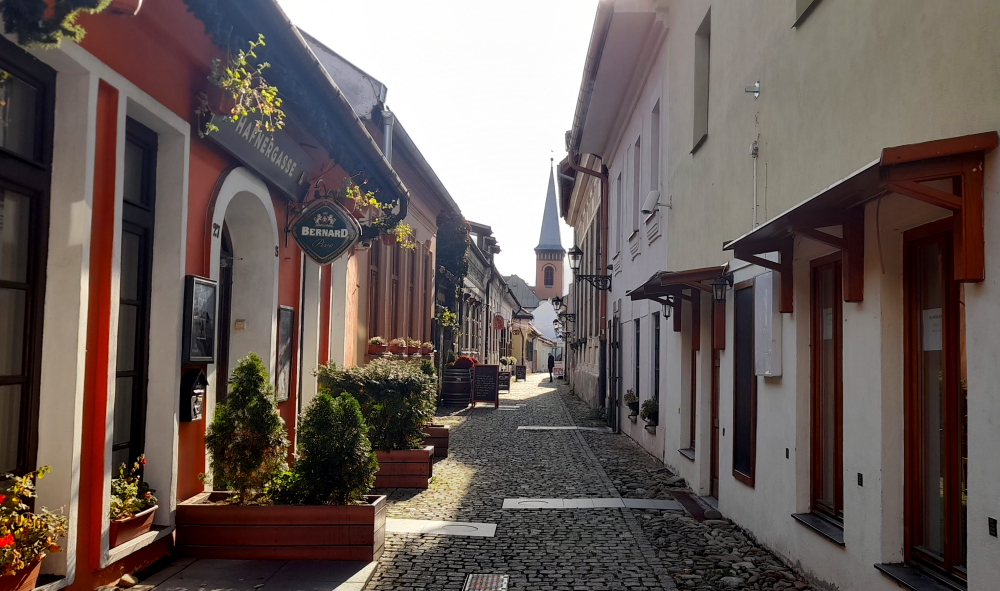
Hrnciarska Street used to be an alleyway that housed the gypsy community. After they were removed the street was turned into a street with low-rent shops to encourage artisans. When that lease expired the Mayor at the time removed the low rents which has resulted in there only being 3 shops that have retained their original purpose.
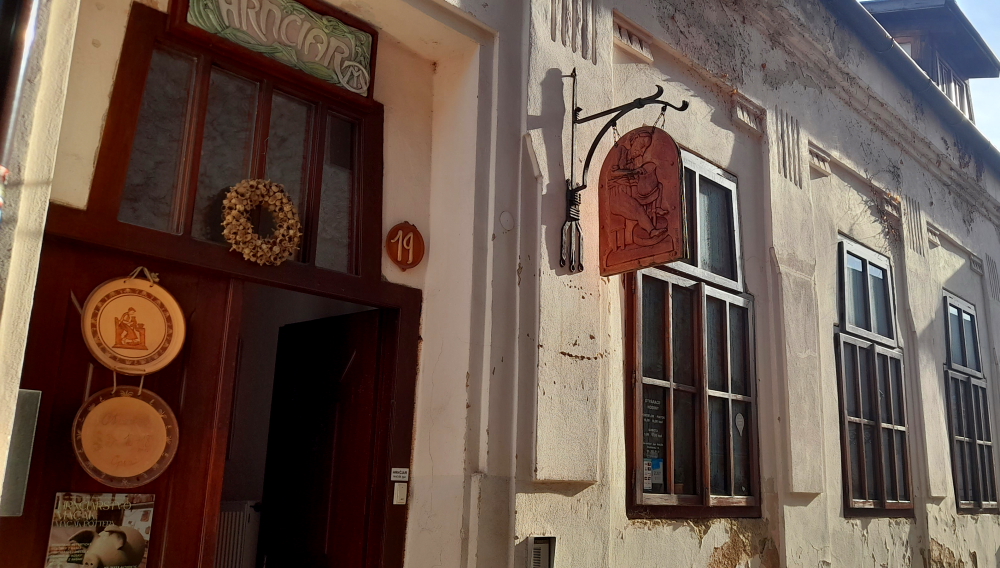
The potter’s shop with plates and shingle outside.
The Bakery, currently a cafe.
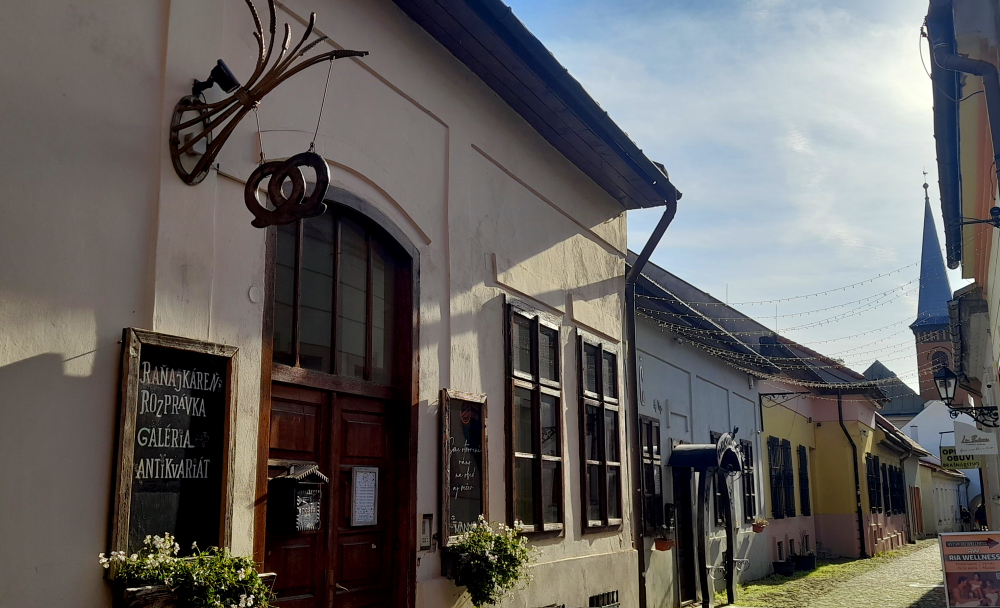
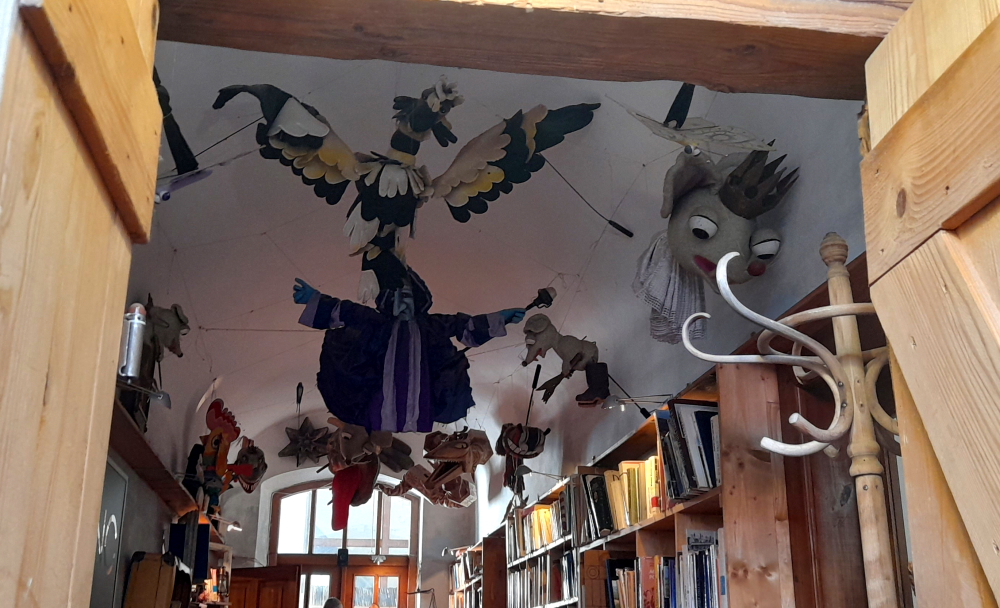
Which, when you open the front door you are greeted with a corridor filled with puppets hanging from the ceiling.
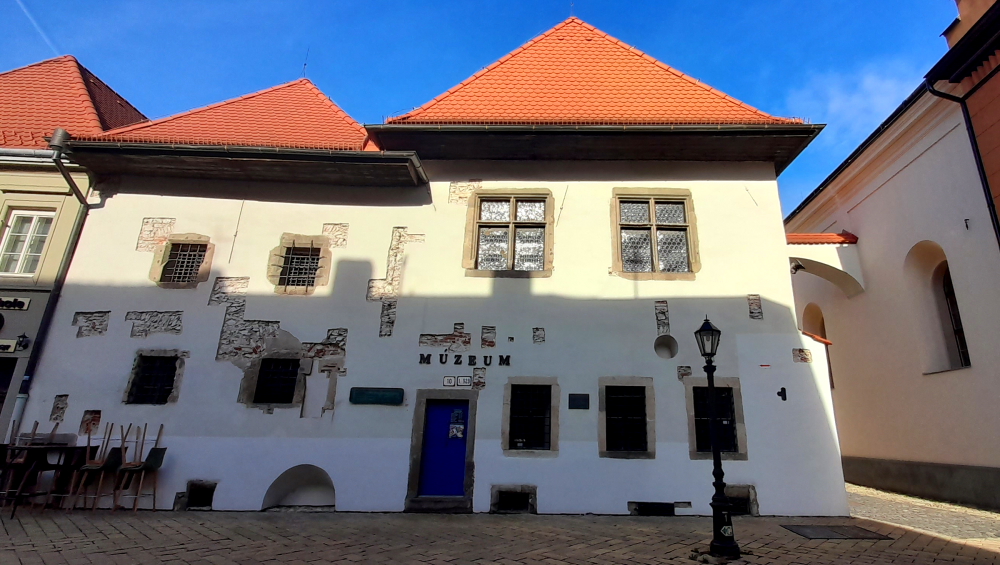
At the southern end of Craft Street is the Miklus’s Prison, part of the East Slovak Museum complex. The Executioner’s Bastian is across the street, to the right.
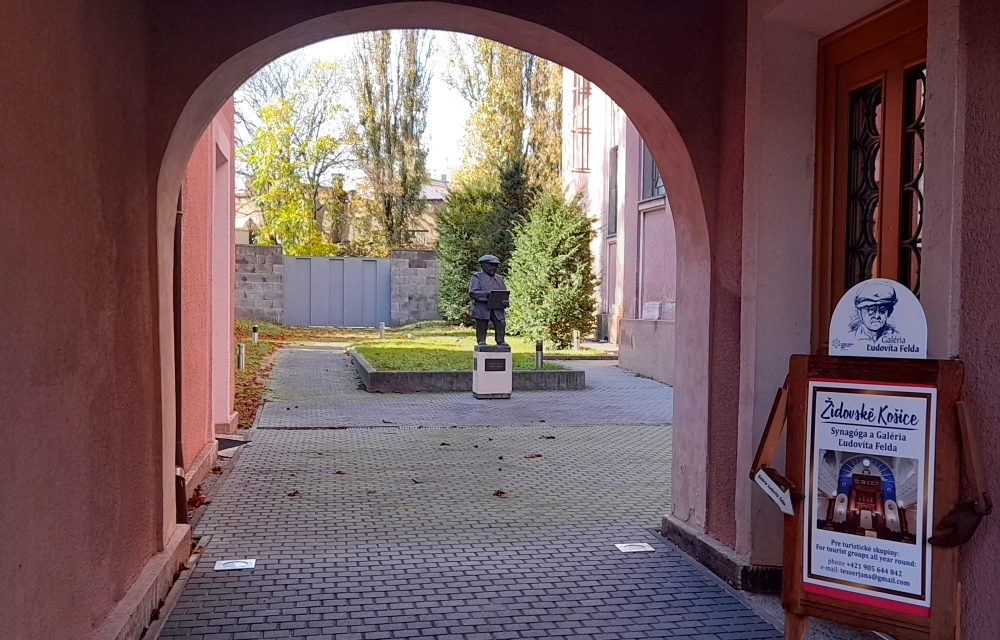
On Puskinova Street is the New Orthodox Synagogue, now non-functioning. Before WWII there were 12,000 Jews living in Kosice, about a quarter of the population. Today there are about 250.
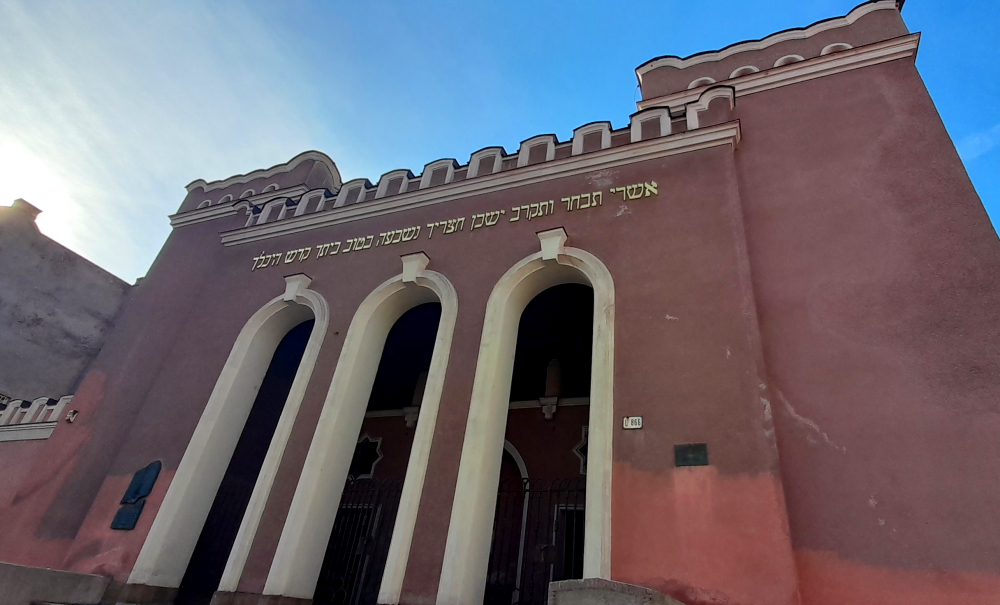
The synagogue building now houses ‘Galeria L’udovita Felda’, in honour of the man who is represented by the statue in the courtyard.
L’udovita Feld (born and died Kosice 1904-1991) was a Slovak artist. Aged 8, he was diagnosed with pituitary dwarfism. He trained in drawing and during 1925-1933 he studied graphics at the Academy of Fine Arts in Budapest. In 1933 he returned to Kosive and in 1935 founded a private art school.
In 1944 he was deported to Auschwitz where he came to the attention of Dr Mengele, both because of his dwarfism and also due to his artistic talent which was put to recording Mengele’s victims, pre and post his experiments.
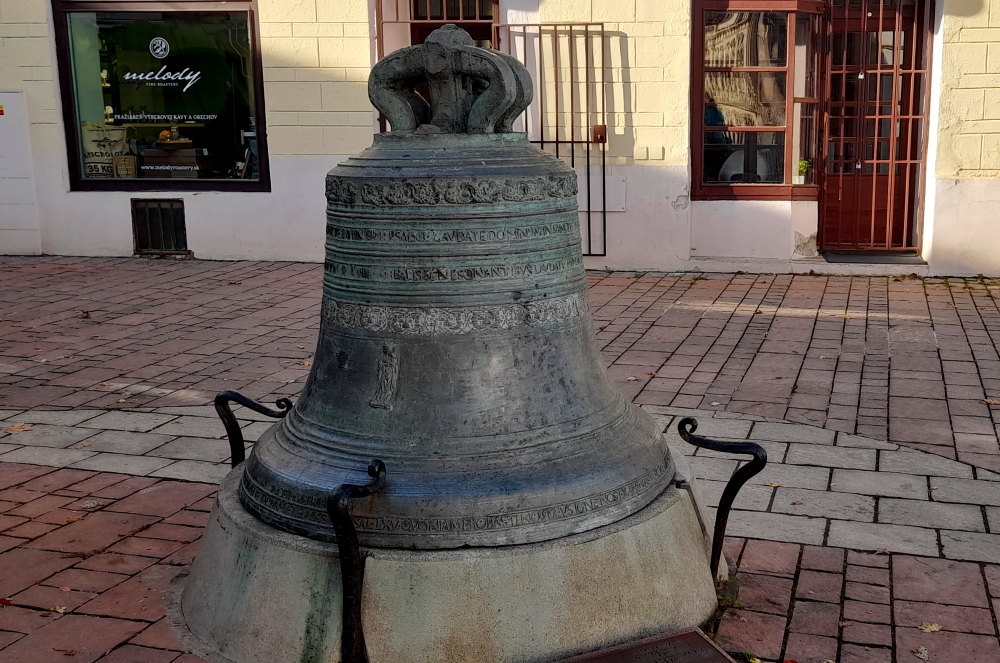
On Zvonarska Street is another disused bell lying on the pavement. This time it’s the Bell of St John.
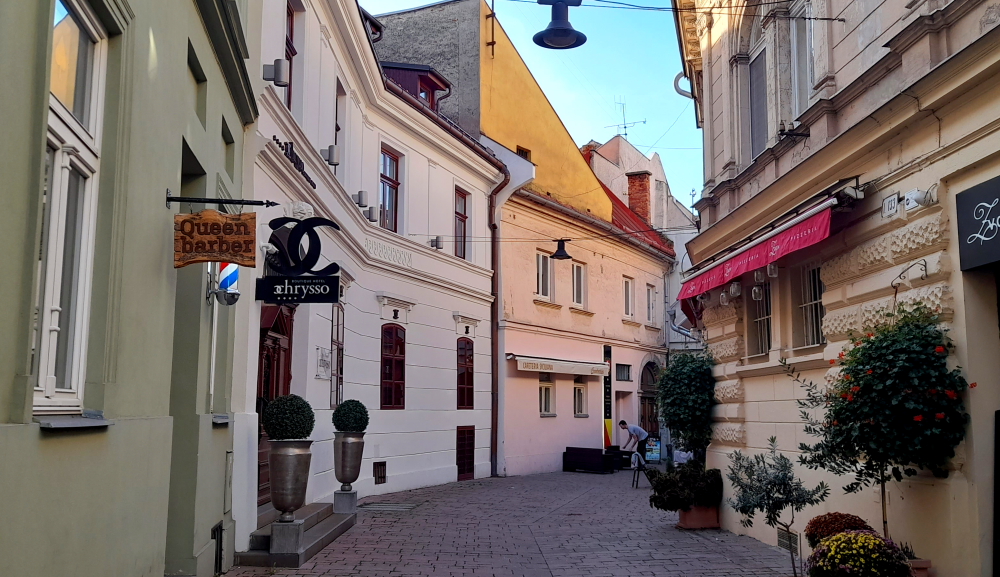
Zvonarska Street curves around following what were the town’s original fortification walls. This continues on the other side of Hlavna Street by Vratna Street.
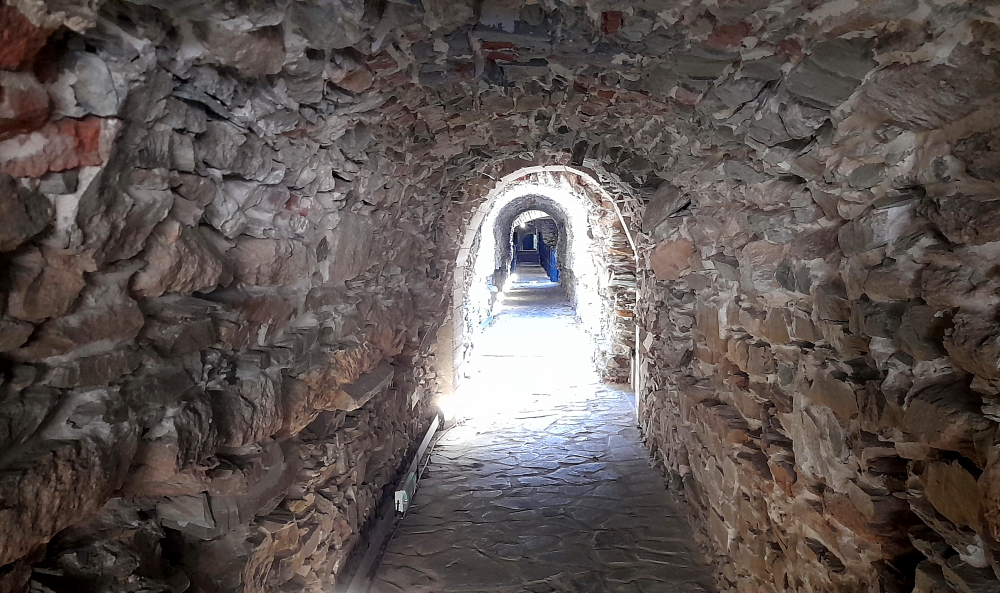
Near to where Zvonarska Street meets the main street of Hlavna Street, there is grating which reveals a tunnel below from medieval times.
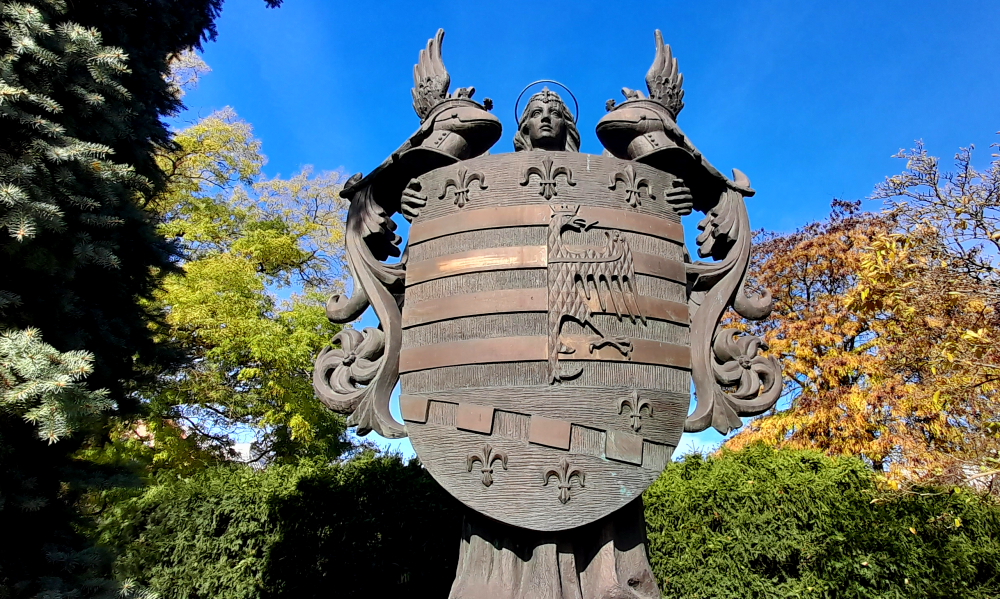
Above ground is a statue of the town’s coat of arms. Kosice was the first town in Europe to be granted its own coat of arms. It was granted by King Louis I the Great at the Castle of Diosgyor near present-day Miskoic in 1369 in recognition of the townsfolks’ loyalty. By 1502 the town had obtained four heraldic warrants from 4 monarchs.
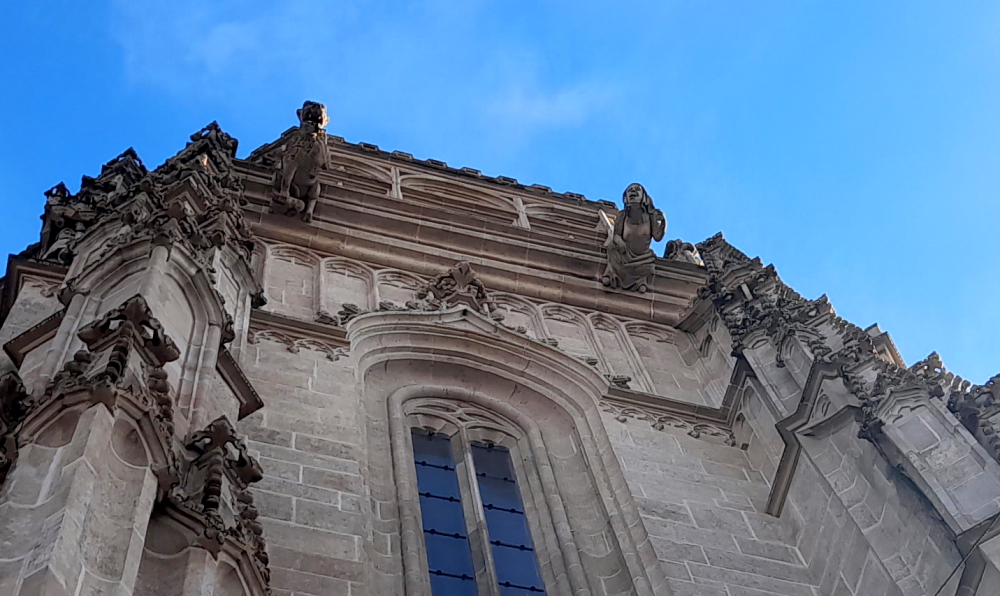
Next is the cathedral once again. Last night Ester regaled us with a legend that one of the architects had a wife who was a bit of a drunk. To try to persuade her to stop drinking he said that he would have a grotesque created in her image that would adorn the southern tower of the cathedral. Sure enough, high up on that tower on the right hand side is a grotesque in the shape of a woman with a jug of wine behind her. But, did she stop drinking??
Further along the main street is the Old Town Hall, a 2-storey building in the Baroque and Classic styles dated from 1779-80 with a facade richly decorated with pilasters.
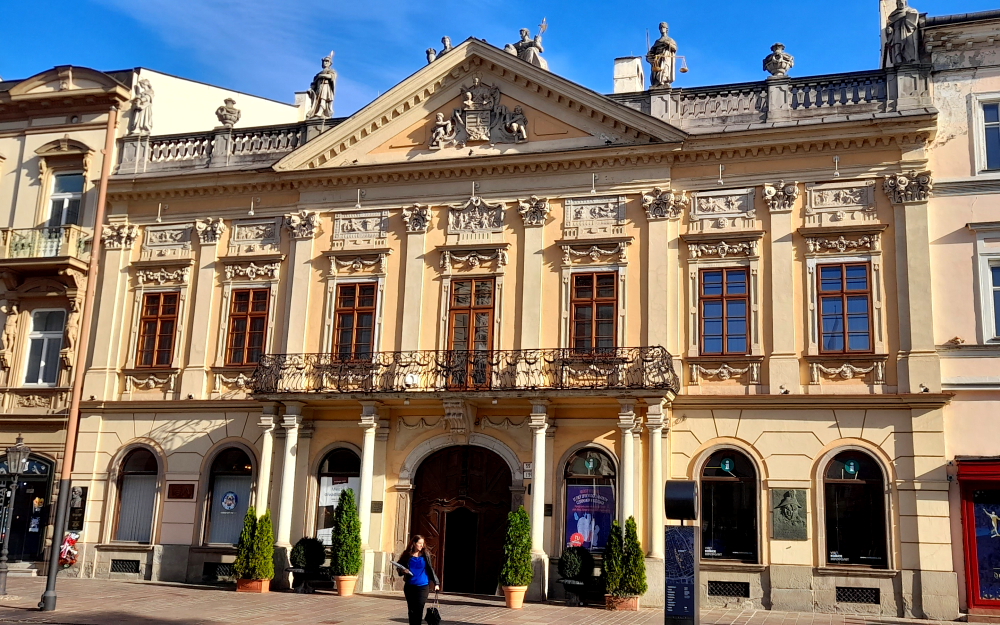
Through the massive wooden door is a vaulted corridor that opens into a courtyard. Inside this courtyard are some display cases showing the history of the town’s coat of arms plus a rather large, ugly shoe, in recognition of Andy Warhol. Apparently some of his original works are displayed in the Mihal Gallery in the Muza Hotel, a 5-minute drive away.
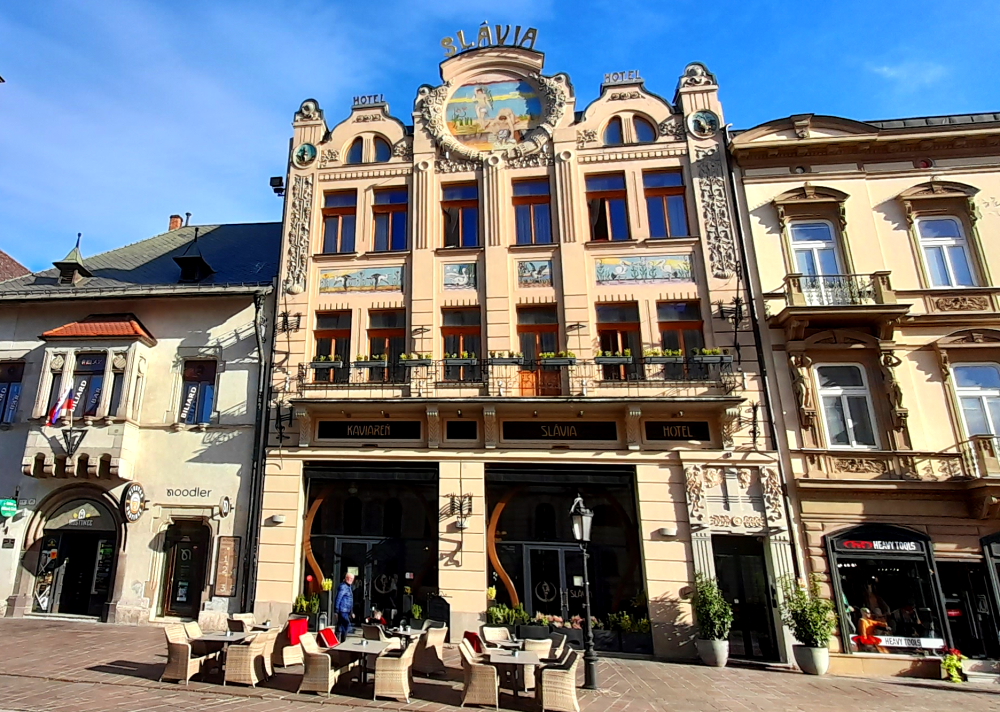
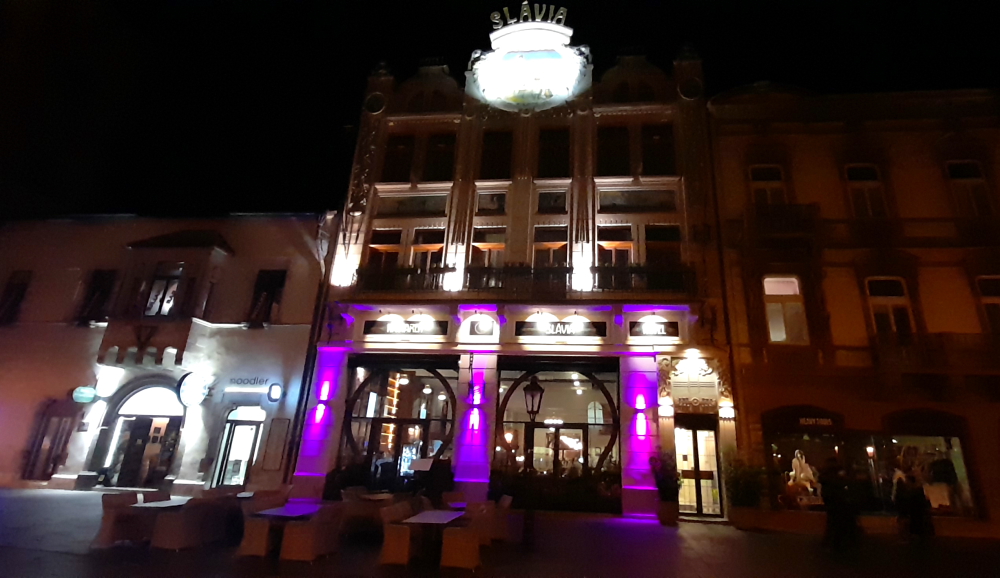
The Slavia Hotel and Cafe is an Art Nouveau building opposite the State/National Theatre and was built in 1900 with a luxurious cafe on the ground floor and 2 floors of apartments above. The building’s facade is characterised by a number of ornaments and paintings – mainly brewing scenes. In the 1980s the building was declared a national cultural monument.
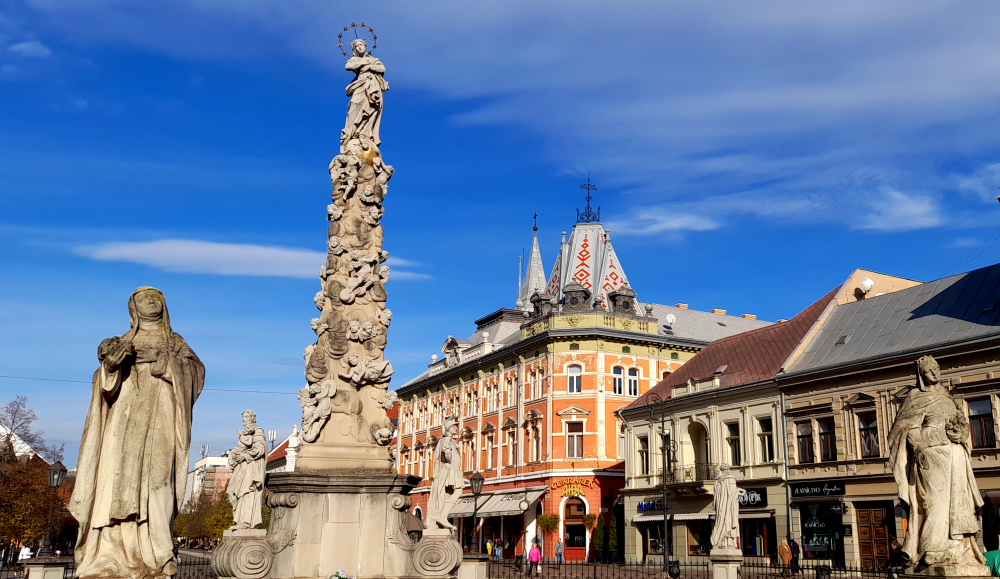
Further along Hlavna Street is Immaculata (Plague Column) – the 14m high stone baroque Statue of the Immaculate Virgin Mary built in 1723, another national cultural monument of the Slovak Republic. Out of gratitude the 1709-10 plague survivors built this column while the goldsmith Juraj Immerwohl created the reliefs with the allegory of Plague, War and Famine from gilded copper sheets which were placed on the lower part of the statue. The Virgin Mary symbolises fidelity, love and goodness and is to protect the city from poverty and suffering.
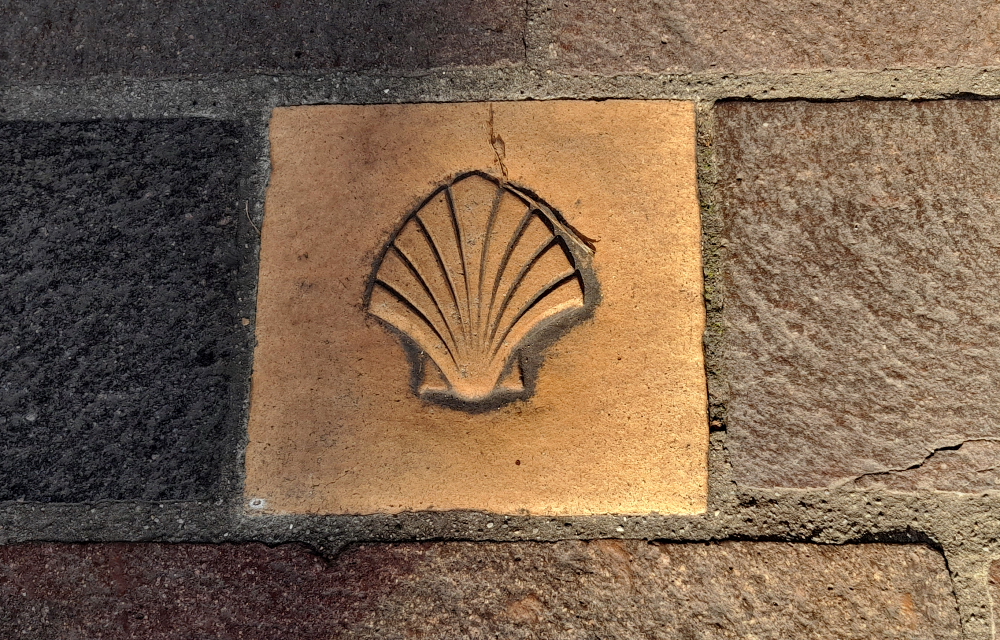
Unbelievably, we come across a series of a familiar symbol embedded in the footpath which seem to be a long way from their usual location. Apparently the Way of St James begins at the Cathedral in Kosice and continues westwards to Bratislava and all the way to Santiago de Compostela in Galicia, Spain – i.e. the Camino.
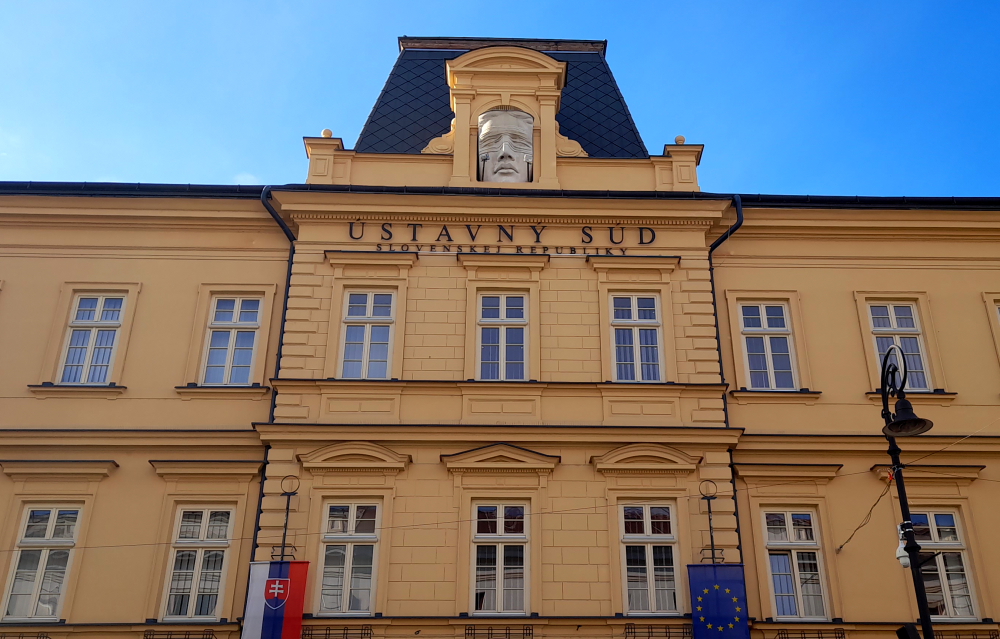
The ‘Big Giant Head’ of Justice crowning this building provides a rather large cue as to the building’s purpose – the Constitutional Court of the Slovak Republic. Since 2006 the official premises of the Court have been here at Hlavna 110, the former Jiskra Barracks. It moved here from the historical building of the Csaky-Dessewffy Palace at Hlavna 72 where it had operated since the beginning of its work in 1993.
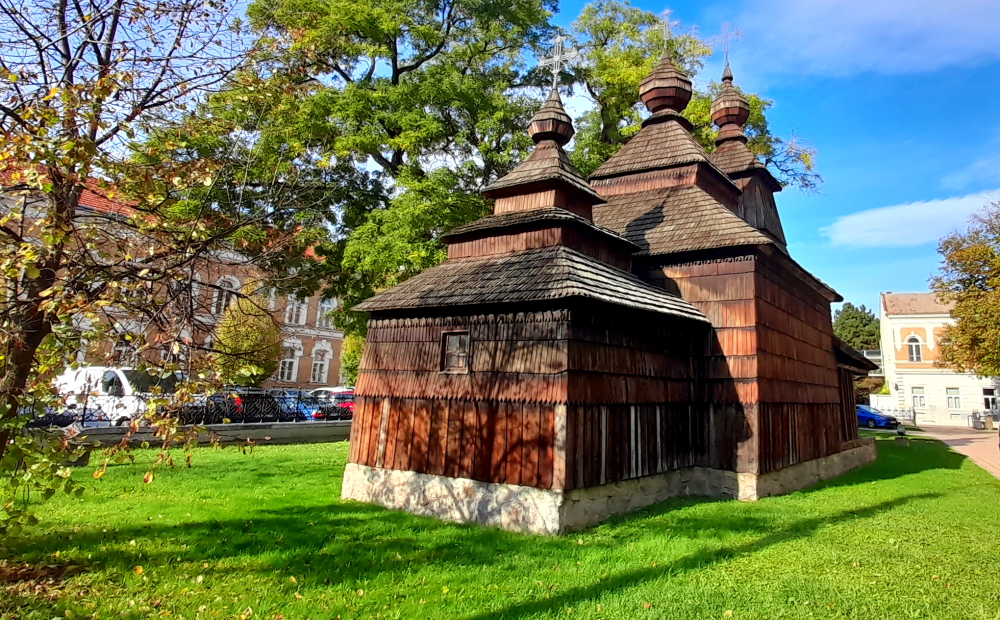
By now we are at the northern end of Hlavna, at one of the buildings of the East Slovak Museum. Behind that building is a former wooden church which had been relocated to the Museum as the object of the first open-air museum of folk architecture in Slovakia and to preserve it. Built in 1741 and dedicated to St Nicholas, the bishop, it had originally stood behind the village of Kozuchovce in the district of Svidnik. The Museum acquired it in 1927 by purchasing it in an agreement with the Greek Catholic parish office and the municipality of Kozuchovce. It has the classic architecture of wooden churches of the Eastern Rite, the so-called baroque-Lemko churches from the NE Slovakian region – and reminiscent of the Stave churches we saw in Scandinavia.
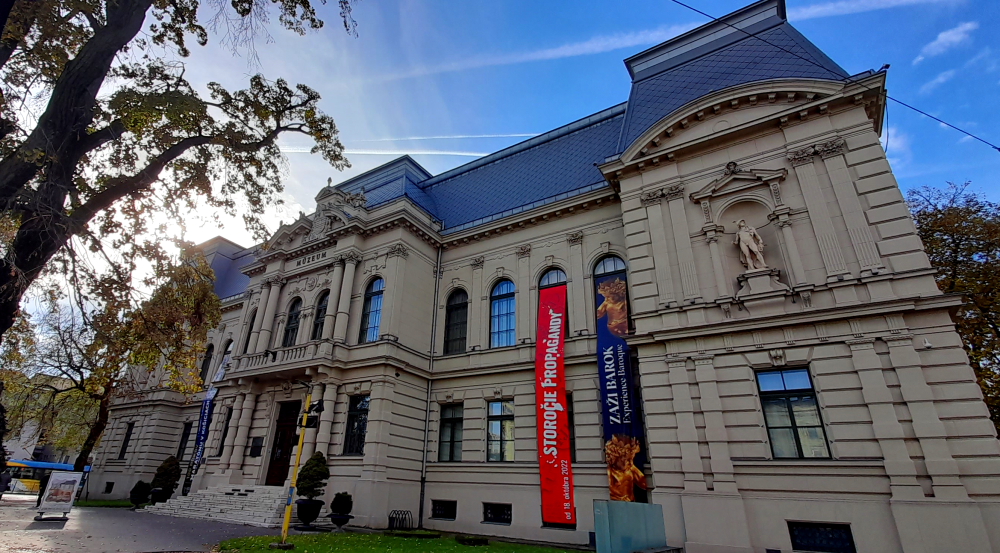
The museum was founded in 1872 and belongs to the oldest Slovak museums. A Neo-Renaissance building erected in the early 20th century it was the first building in the town designed to be a museum. Today it houses the Museum’s various expositions including the Stone Age and Middle Age period in the region, Kosice’s Gold Treasure, jewellery and numismatic expositions.
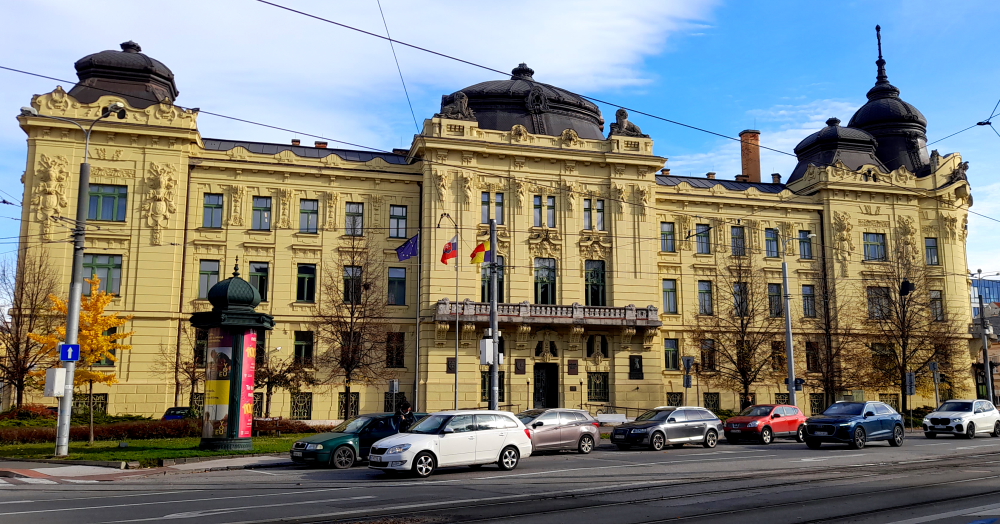
Across the road is another building belonging to the Museum which we photographed on our first day in town. It houses the permanent fine art and the Carpathians exhibitions.
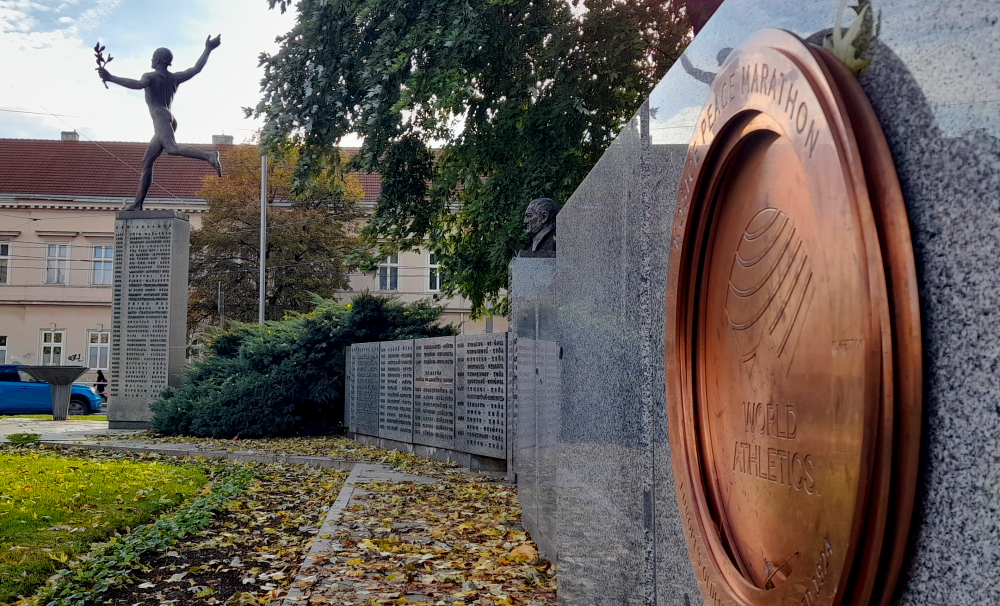
Finally, in front of the main Museum building is the Memorial of the International Peace Marathon. The statue, by sculptor Arpad Racko from Kosice, was unveiled in 1959 on the 30th jubilee of the marathon. The marathon is the oldest in Europe (1924) and the 3rd oldest in the world (after Yonkers 1907, Boston 1897 and the original, of course, in 490 BC) and has the longest uninterrupted history of any marathon in Europe.
The most recent race was last month on 1/10/2023. Naturally, Kenyans won (Men: Philemon Rono – 2:06:55 and Women: Jackline Cherono 2:24:43). There are usually in excess of 8,000 spectators and over a 1,000 finishers (even in the COVID year of 2020, 179 managed to finish!)
After hearing about the luxurious Cafe in the Hotel Slavia last night we decide to try it out this afternoon by ordering a cafe latte for myself and for Lynn a hot cherry wine – think gluwein with a hint of cherry.
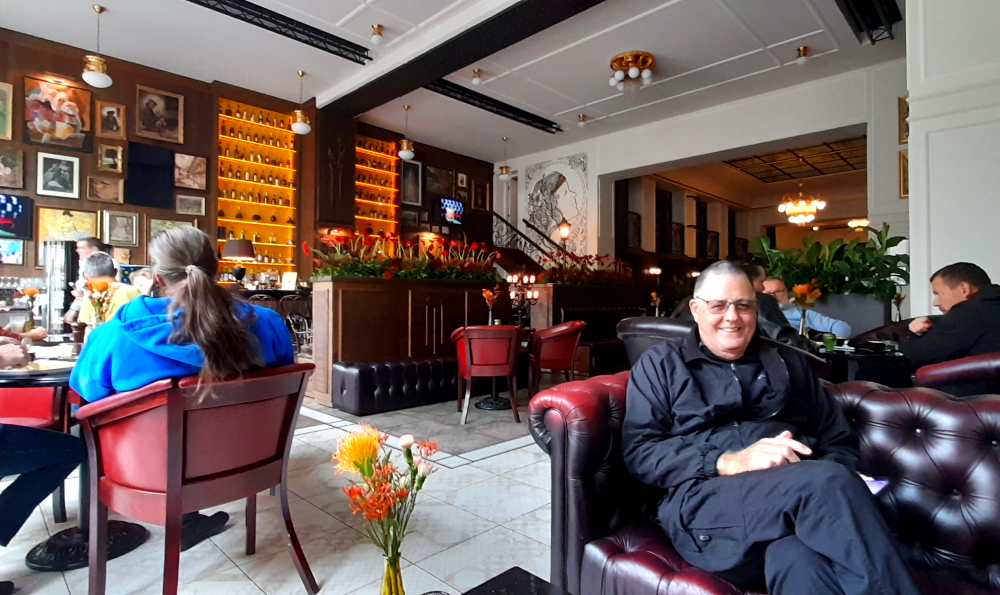
And, yes, it is a rather nice cafe with reasonable prices given the decor and ambience.
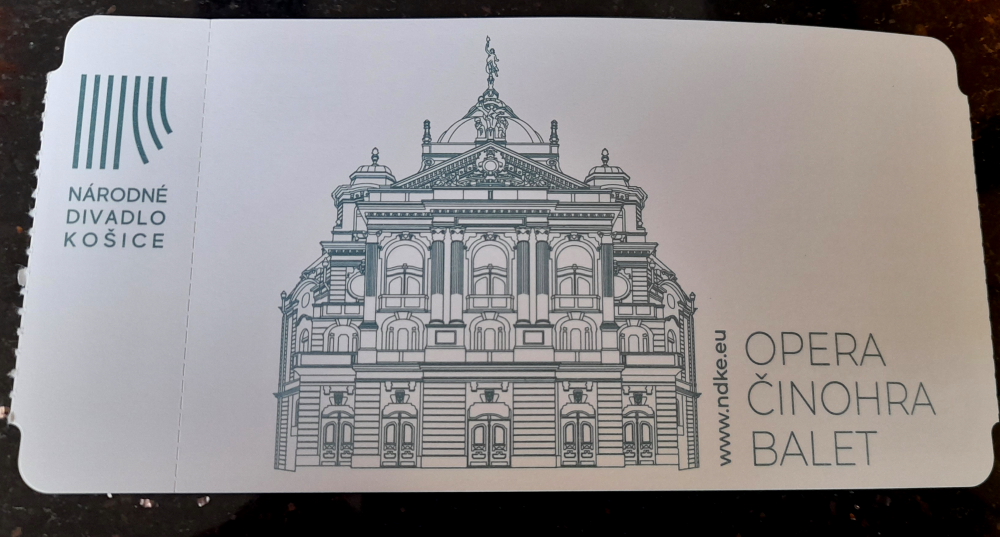
Last night when we stopped outside the National Theatre with Ester she confirmed that Donizetti’s opera “Anna Bolena” (Anne Boleyn) would be performed tonight so we visit the Box Office and purchase 2x seniors’ tickets which cost us the princely sum of Eur21.00. The middle-aged cashier even asks to check our ID to make sure we are both over 62 years of age. First time ever these past 14 months on the road – which I take to be a bit of a compliment!
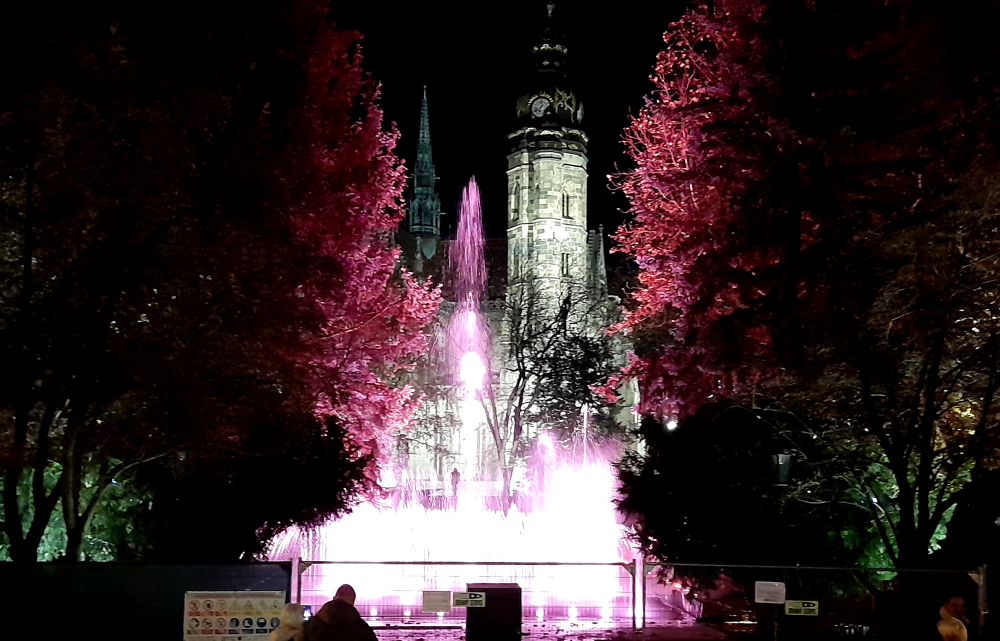
We leave the hotel at 6:30 pm for the 5-minute walk to the theatre. To our surprise, the “Singing Fountain” in front of the theatre’s main entrance, that has been undergoing refurbishment behind cyclone fencing, seems to be getting a bit of a trial run to make sure that its music, changing lighting and waterworks are in sync. So we are treated to a brief performance.
The National Theatre was built in a Neo-baroque style by Adolf Lang during the years 1879–1899.
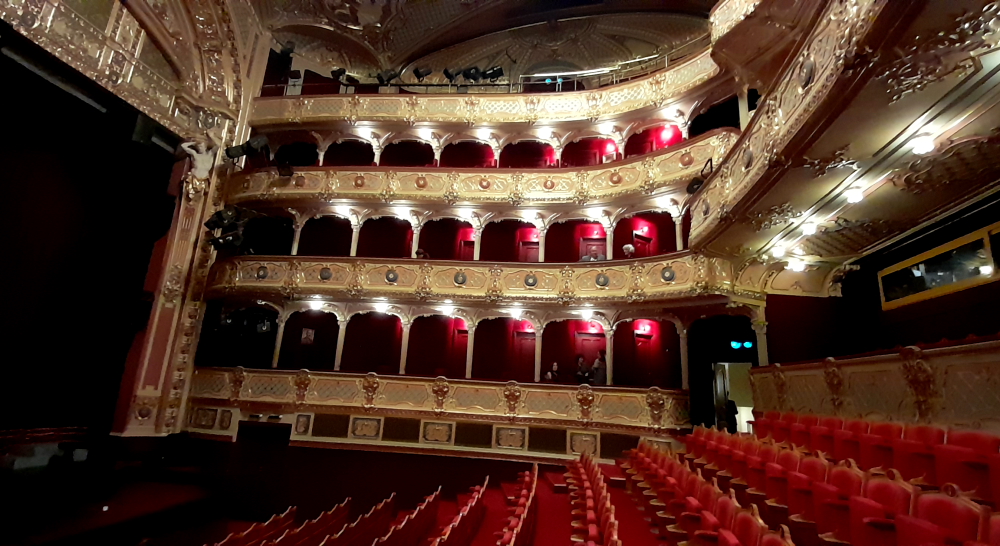
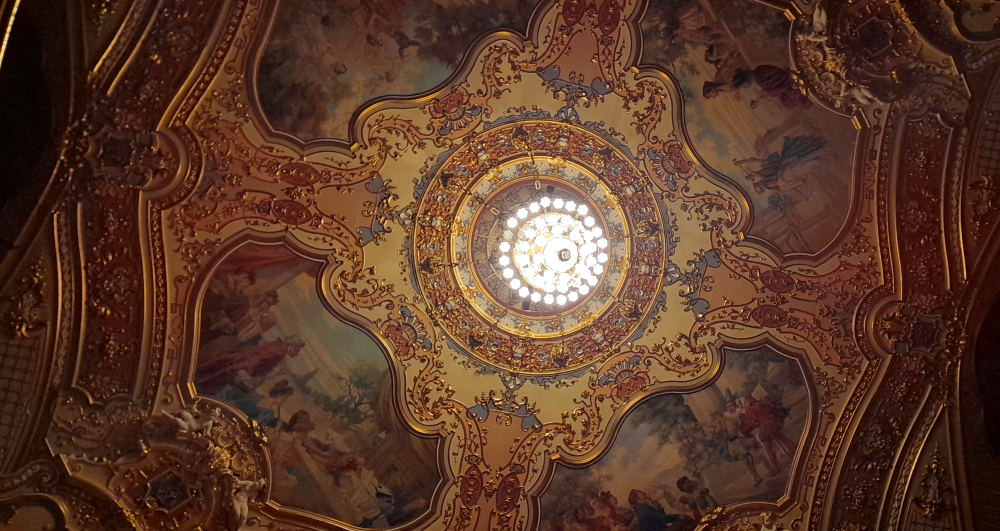
The theatre’s interior is richly decorated with plaster ornaments. The stage is lyre-shaped.
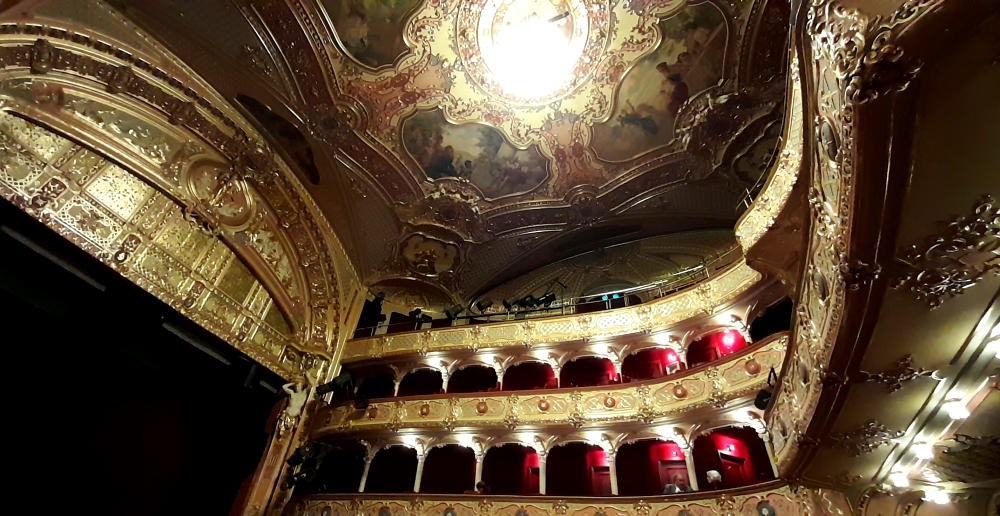
The ceiling is decorated with scenes from William Shakespeare’s plays – Othello, Romeo and Juliet, King Lear and A Midsummer Night’s Dream.
“Anna Bolena” is a tragic opera in two acts composed by Gaetano Donizetti based on the last part of the life of Anne Boleyn, the second wife of England’s King Henry VIII.
Anna Bolena premiered on 26 December 1830 at the Teatro Carcano in Milan, to “overwhelming success” where the composer had begun to emerge as one of three most luminous names in the world of Italian opera alongside Bellini and Rossini.
In April 1957, the opera was revived at La Scala for Maria Callas (one of the seven performances was recorded) in a lavish production directed by Luchino Visconti, with Giulietta Simionato as Jane Seymour. It proved to be one of Callas’ greatest triumphs. “Anna” was one of the last new roles performed by Dame Joan Sutherland, at San Francisco Opera in 1984.
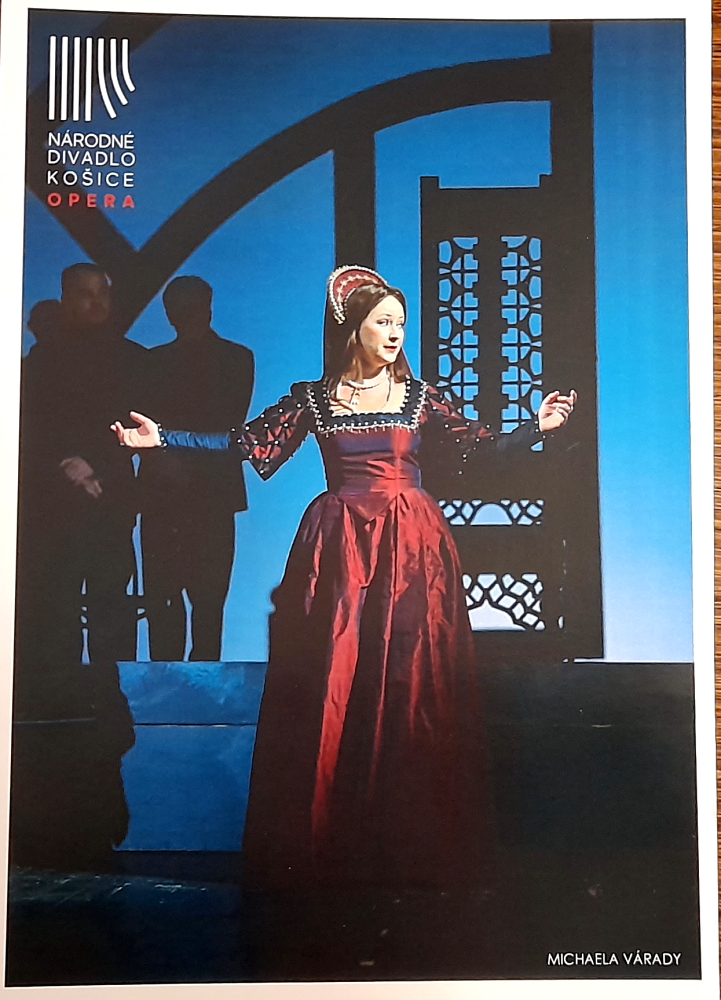
Tonight’s performance is a mix of old and new – Anne and Jane’s costumes in the style of the 1500s whereas the male leads wore Victorian-era tuxedos, the male chorus dark suits with black t-shirts and the female chorus long black dresses with long sleeves, black gloves and padded black velvet headbands with pearls.
The stage piece is circular which rotates and stops at various angles with large wooden beams in 1 sector, bentwood chairs for the chorus and a large wooden throne for Anne and Henry, back-dropped by changing coloured lights often projecting silhouettes of the players. Simple yet effective.
Overall the experience is very enjoyable given our view just above stage height and close to the stage and regardless of the rock hard seats and the opera being sung in Italian with Slavik subtitles.
11 November, 2023
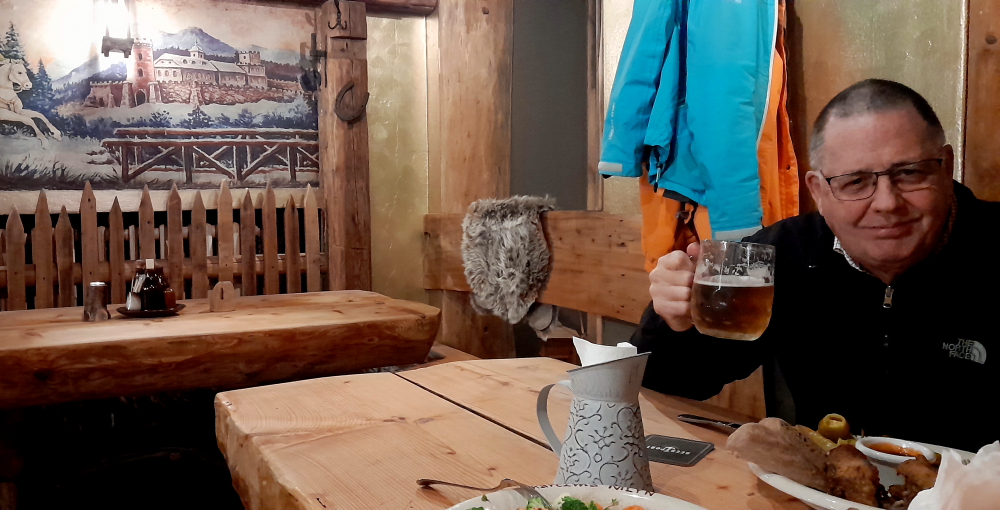
A catch up day today with dinner across the road at a newly-reopened restaurant. Apparently it was gutted by fire recently but quickly refitted and reopened yesterday, decked out in wood (wise choice?) with traditional Slavic decor, fare and beverages.
Tomorrow morning we are heading back over the border to Poland and staying in Krakow for three days then on to Warsaw to complete this 3-month tour of Central Europe.
 THE CONTINUING TRAVELS OF YOGI & BOO BOO