
26 May, 2023
Kristiansund is 9 Deg. C and under cloud and rain as we depart at 10:15 am for our 199 km, 3 hour 45 minute drive to Trondheim on the 70.
Our journey meanders via roads, bridges, tunnels and a ferry that make us island/mainland hop our way NE to Trondheim.
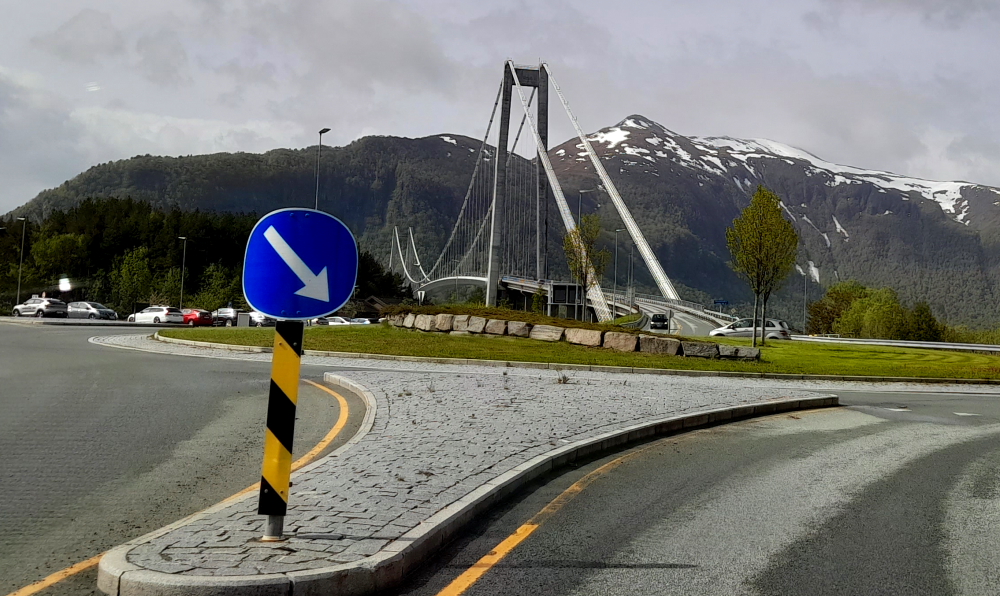
45 minutes into our journey we arrive at the Kanestraum Ferry with just 2 minutes to go before she leaves. This is becoming a habit!
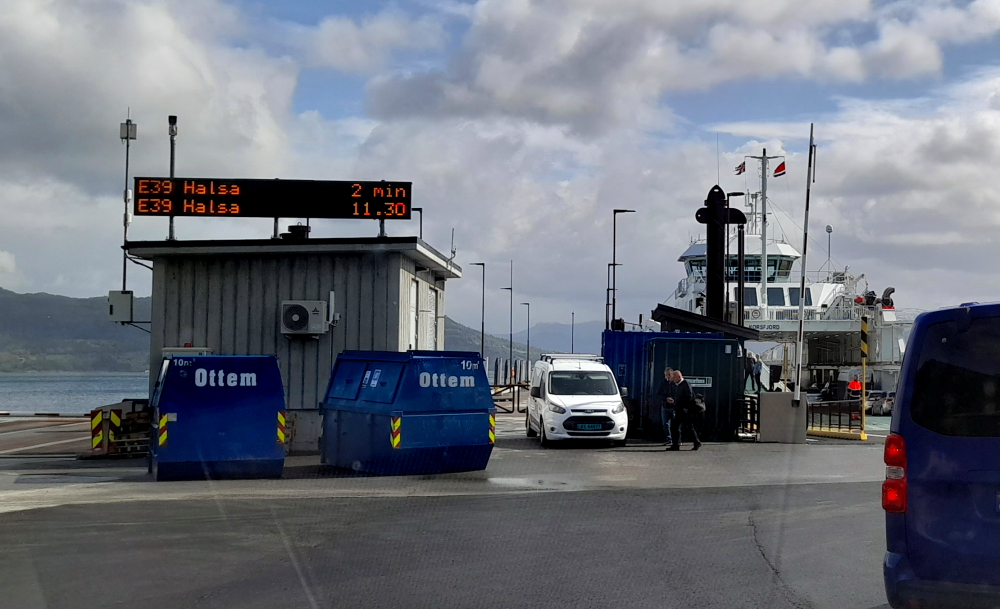
The crossing takes about 25 minutes where we disembark at Halsa.
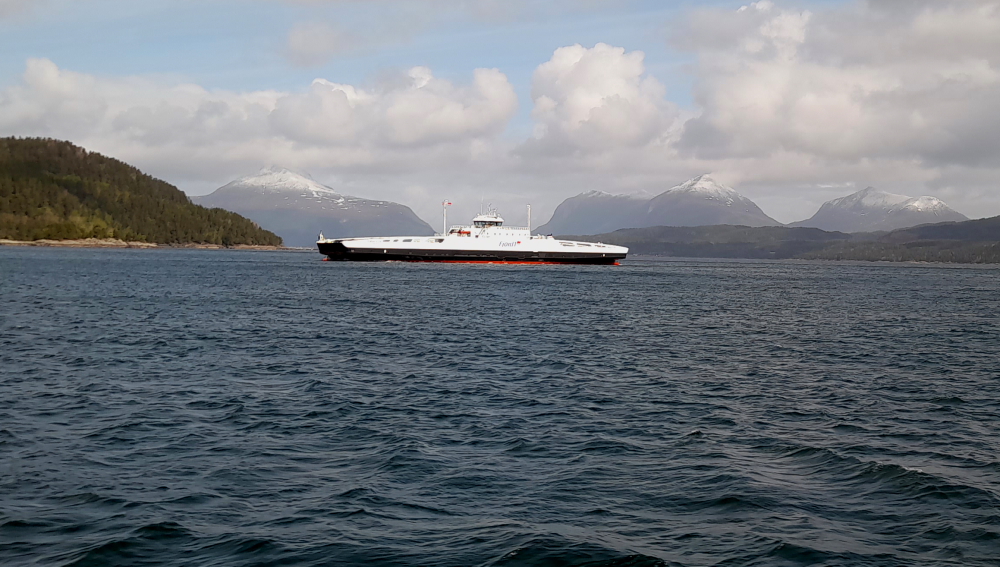
Once again snow-capped peaks appear as we journey along the E39.
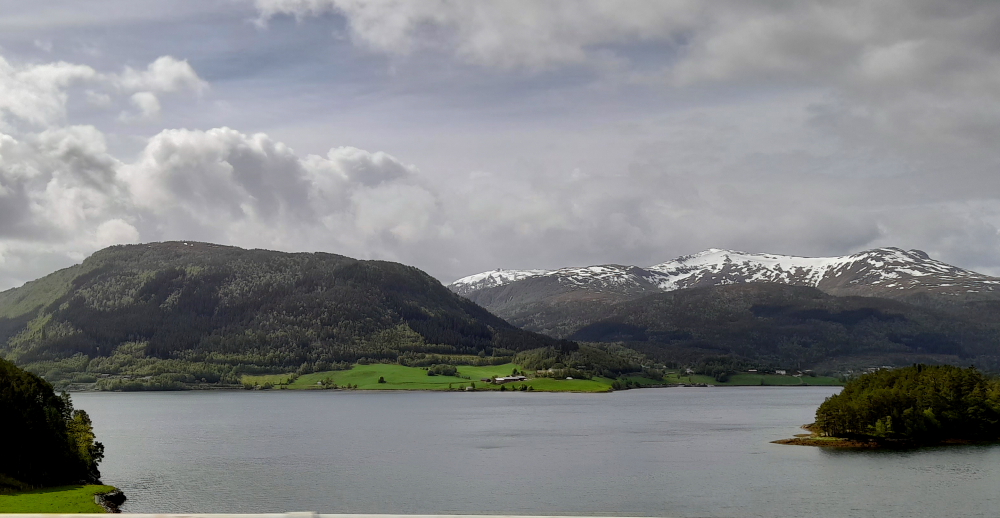
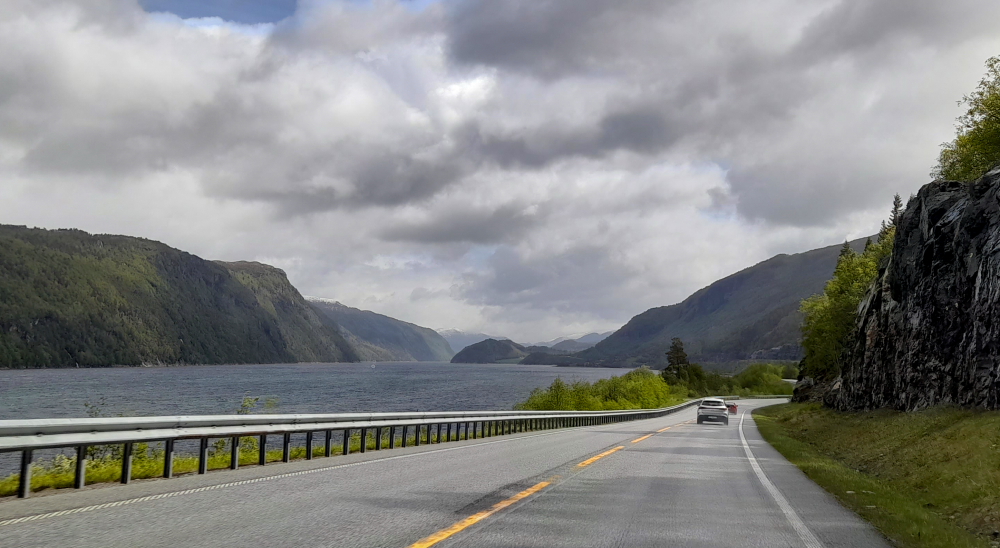
The E39 takes us through landscape that ranges from rolling green farmland; narrow, fast-moving streams; waterfalls; fjords; lakes; road construction works; snow-capped mountains to an ice-covered lake and roadside snow.
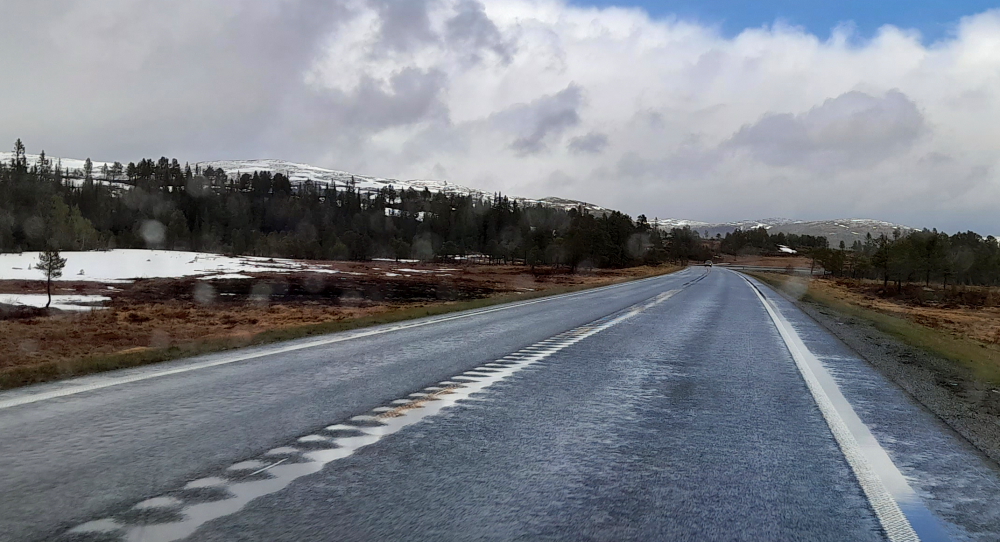
Around 12.30 pm the temperature has dropped to 3 Deg. C which explains the roadside snow drifts and Lake Sovatnet below us sporting sections of ice on its surface.
20 minutes before we are due to arrive at the hotel we phone ahead to check that there is a free car parking space for when we arrive. Yay – there is! Some free, underground parking for the next couple of days. We check-in at 1:45 pm and quickly unpack as the rain has ceased and for the first time today, the sun is shining.
We’re staying in what was a commercial bakery back in the early 1900s. The hotel has some interesting artifacts, such as the original ovens in the courtyard, and original photos of the bakery in operation in 1901.
Time to get out the door and see as much of the town before the next shower arrives. Too late! As we walk out the front door the rain starts again. May as well keep going.
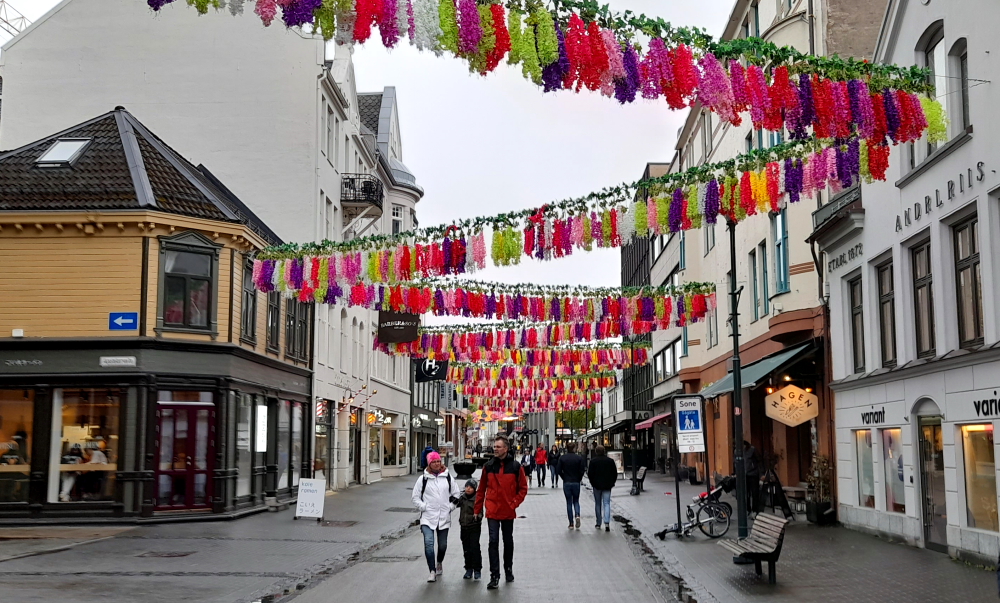
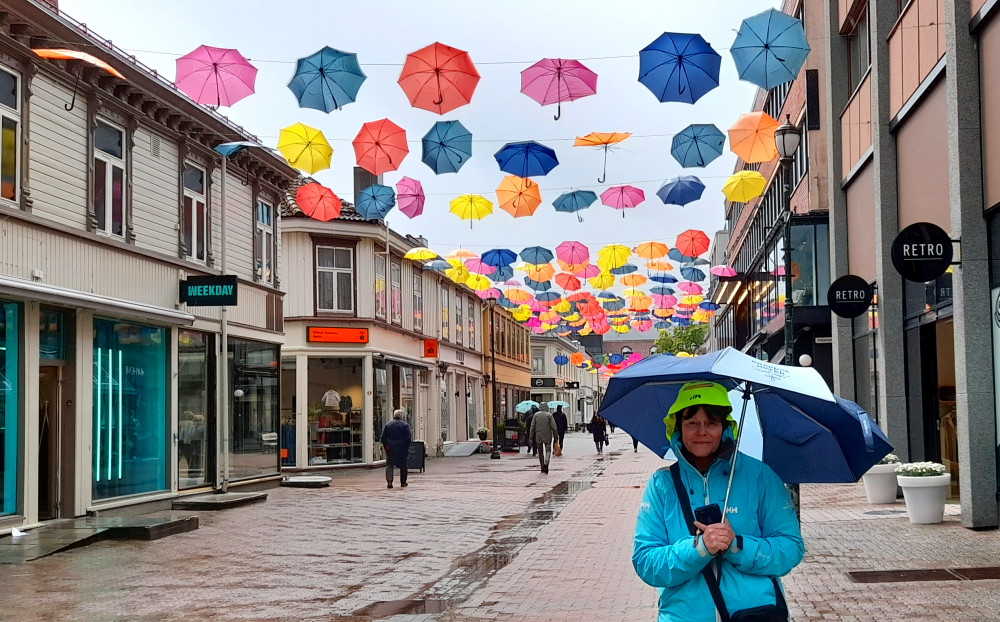
We walk down Thomas Angells Gate which is festooned overhead with colourful bunches of fabric wisteria followed by colourful umbrellas.
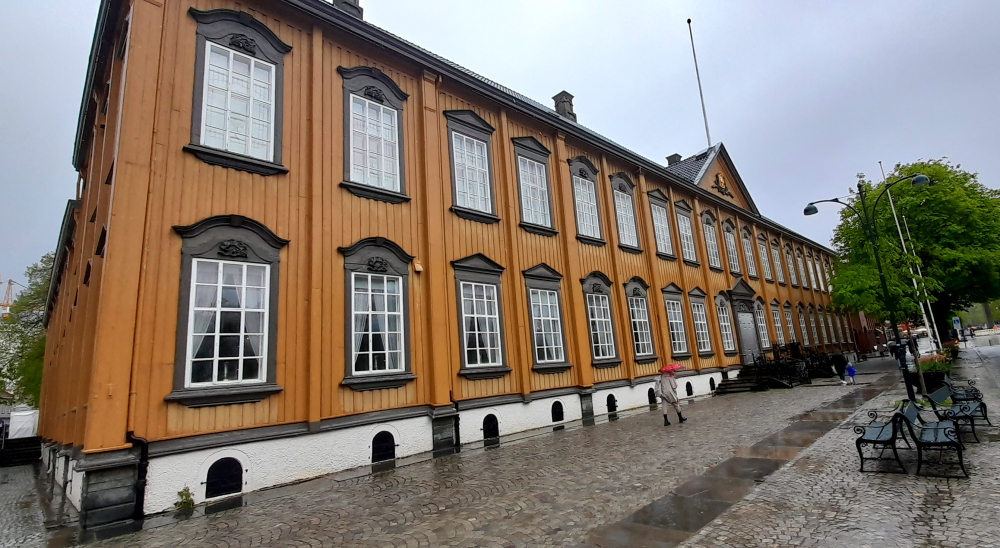
At the intersection of Dronningens Gate and Munkegata is the Stiftsgarden. Originally built in 1774–1778 it has been the Residence of the Royal Family when they visit Trondheim since 1804.
In the next block is the Town Square (Torvet) which has an 18-metre high statue of King Olav Tryggvason, the city’s founder, mounted on top of an obelisk, which also acts as a sundial. In the square’s centre is a compass rose.
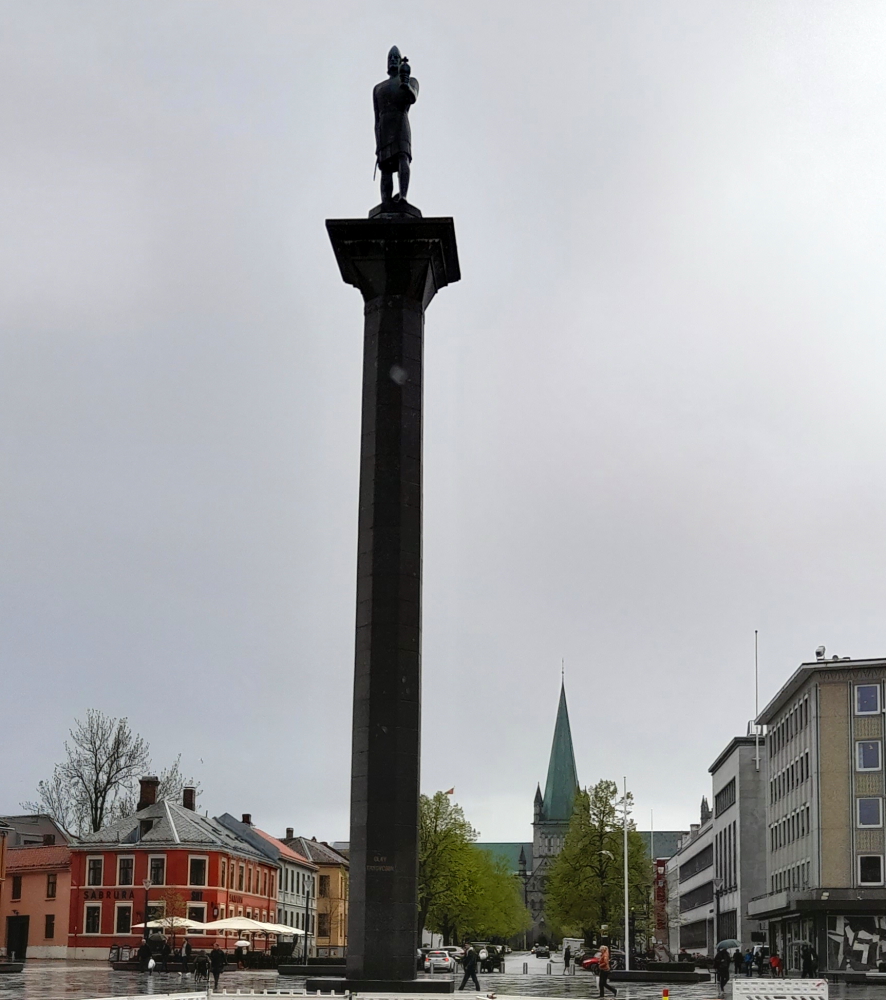
It is starting to rain even heavier and I am starting to get wet through. Not my kind of weather to go sightseeing.
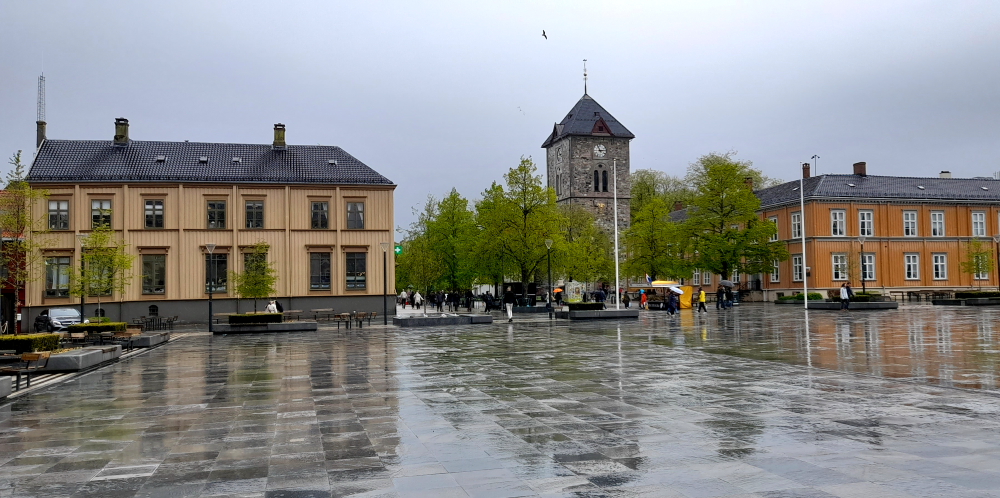
The Torvet was set up as a place for commerce and events. The city was almost destroyed by fire in 1681. Johan Caspar de Cicignon, a renowned general and military engineer, drew up a new Baroque layout for the city. The boundaries of the Town Square were set and have remained so to this day.
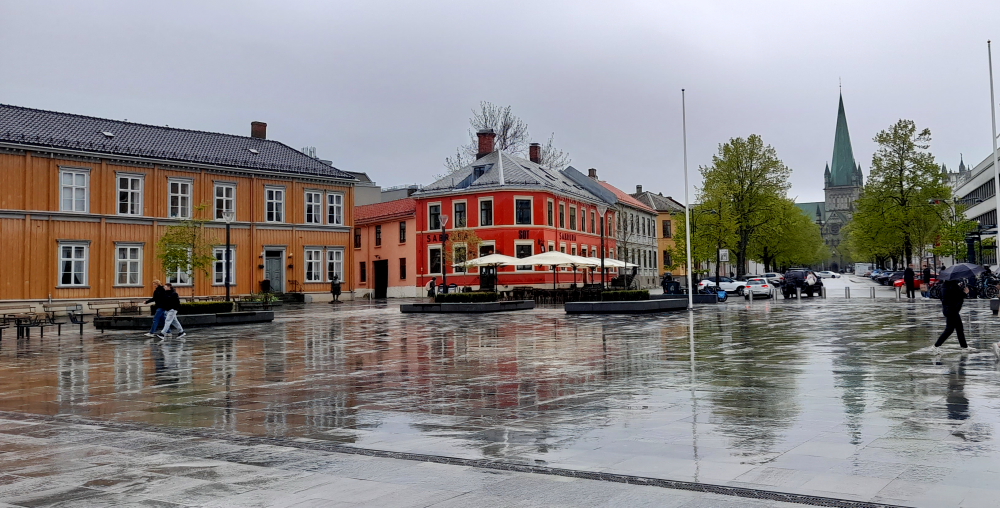
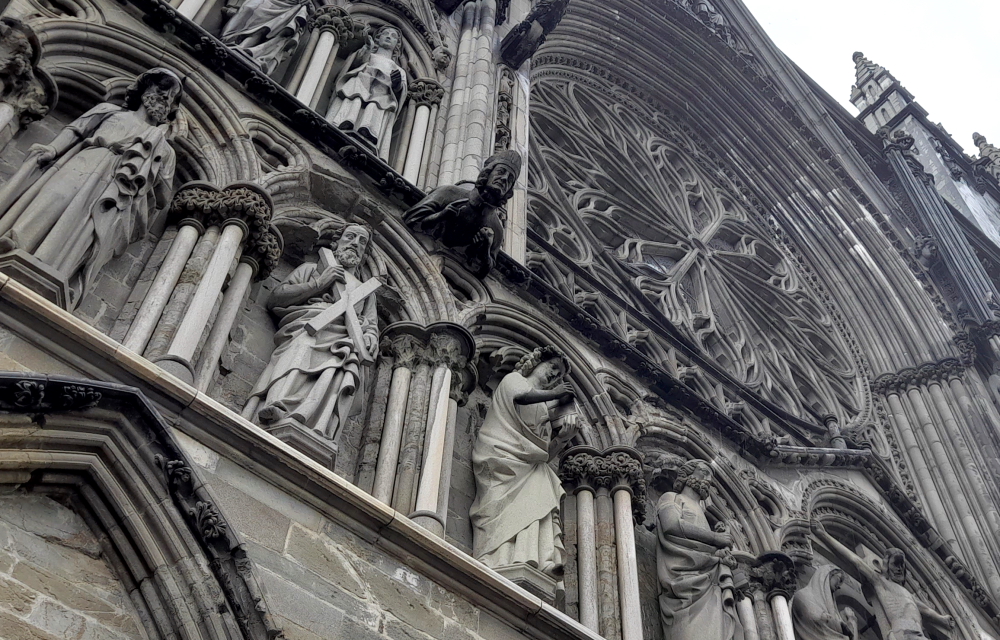
Munkegata continues from the Square to the Nidaros Cathedral on the River Nidelva. It is the world’s northernmost gothic cathedral and an important historical pilgrim destination.
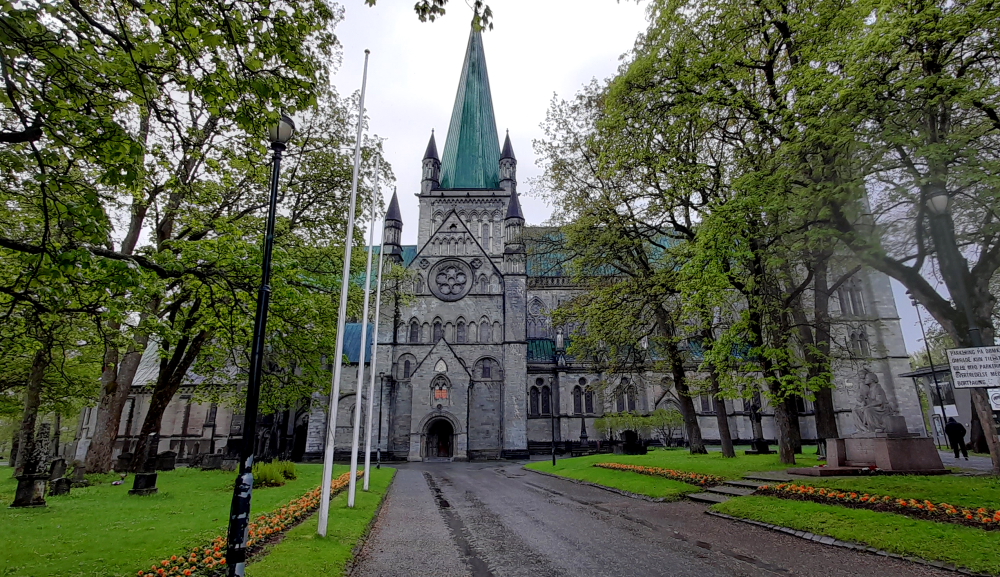
It is built over the tomb of King Olav II (c. 995–1030, reigned 1015–1028), the Viking King who brought Christianity to Norway. He also became St Olav, Norway’s patron saint. The cathedral is the traditional location for the consecration of new kings in Norway.
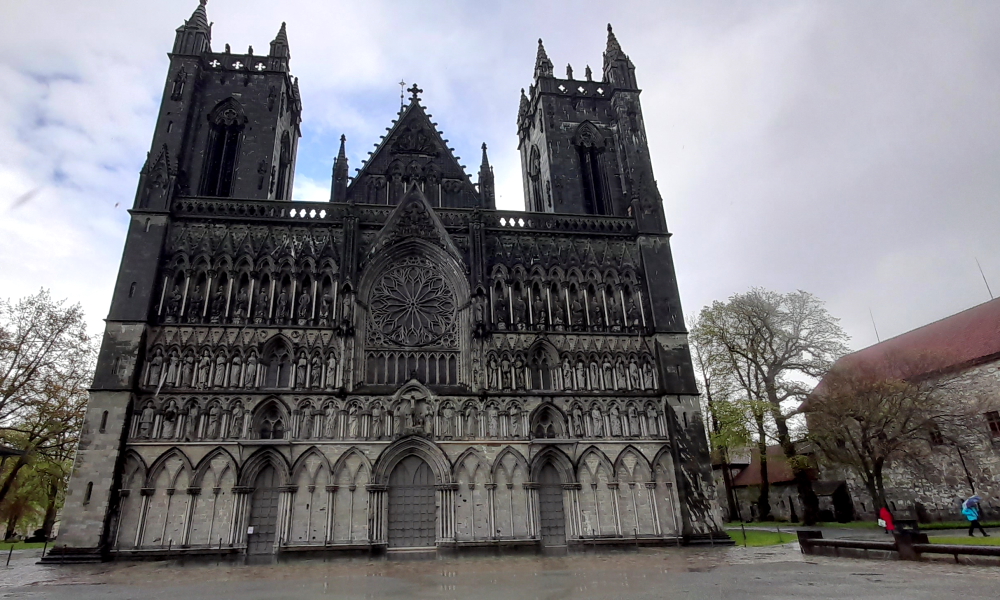
The cathedral was built over a 230-year period, from 1070 to 1300 when it was substantially completed. Additional work and renovations have continued intermittently since then, including a major reconstruction starting in 1869 and completed in 2001.
Nearby is a red bridge known as ‘The Old Town Bridge’.
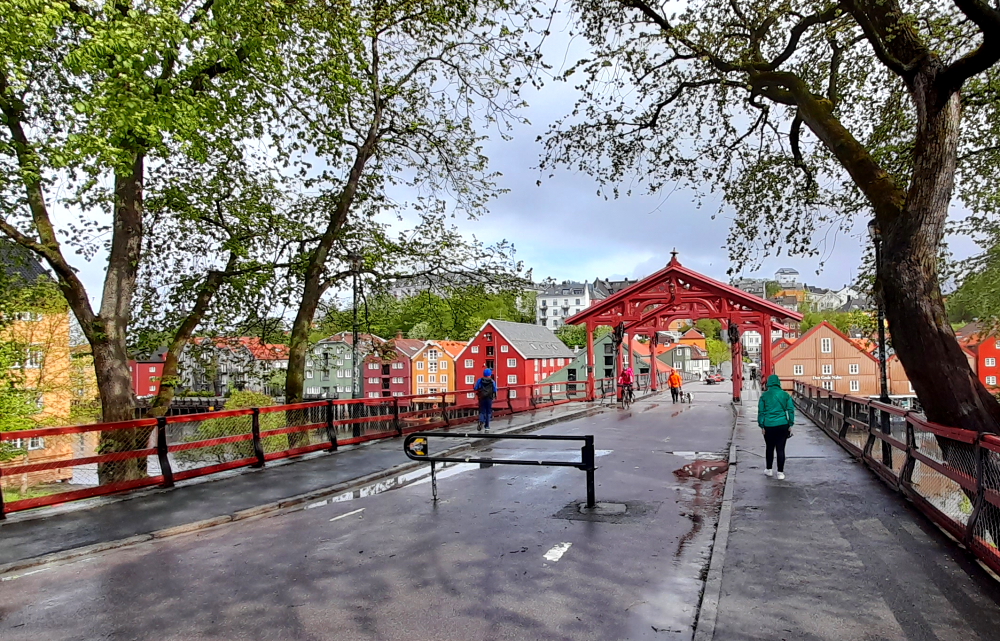
The first bridge here was built in 1681 to provide access from the city to the Kristiansten Fortress on the hill. Today’s bridge was designed by Carl Adolf Dahl, erected in 1861.
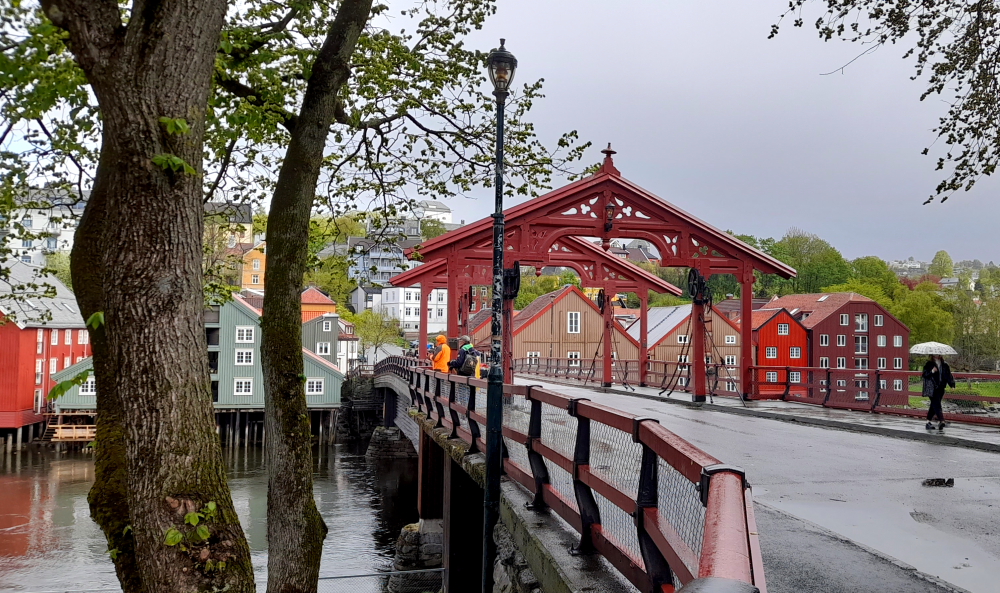
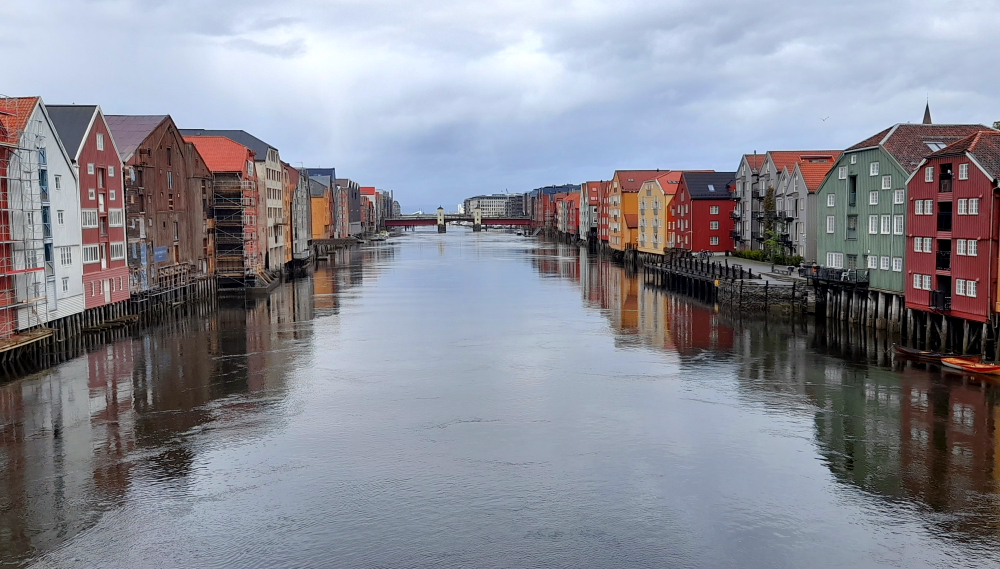
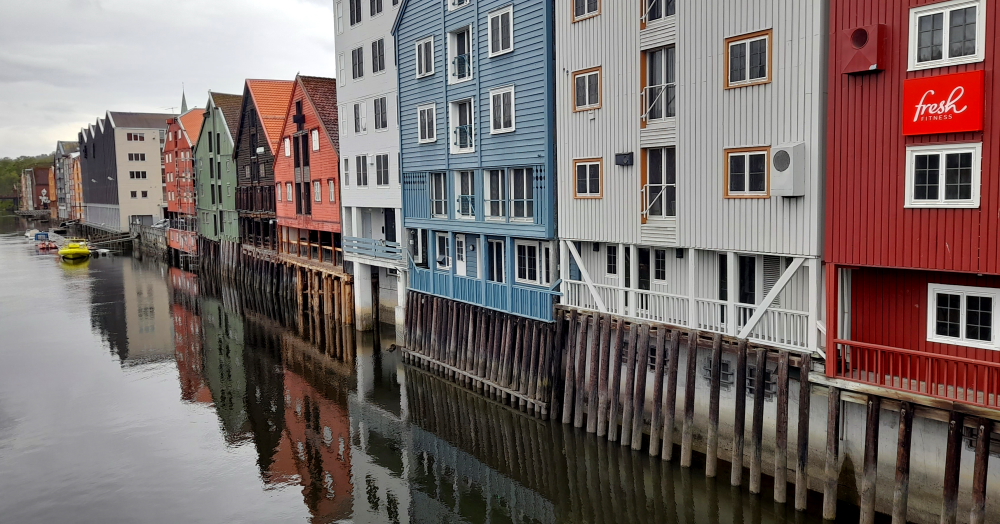
From the bridge are several views. One up the river towards the Bakke Bridge lined by wharves and storehouses built during the 1700s-1900s.
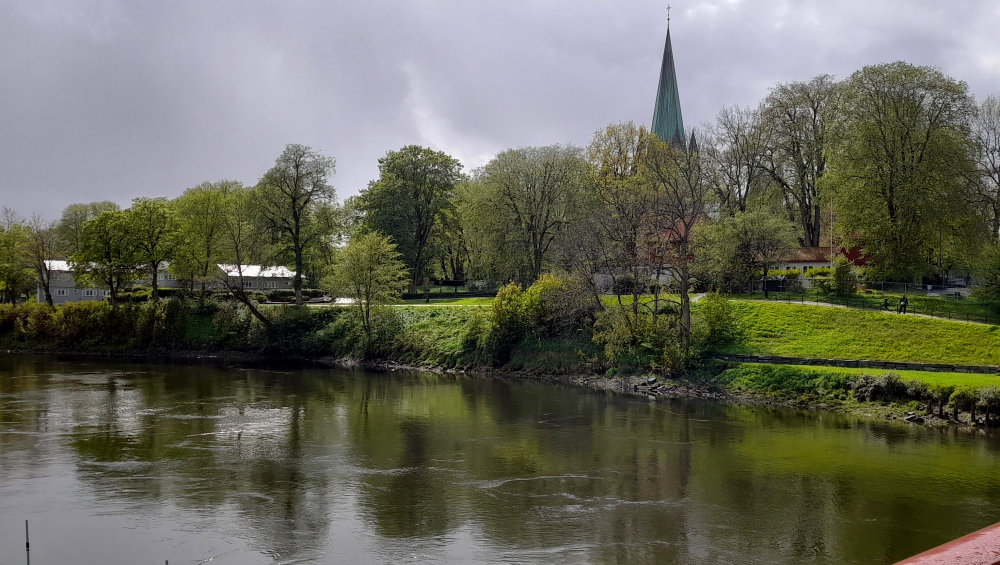
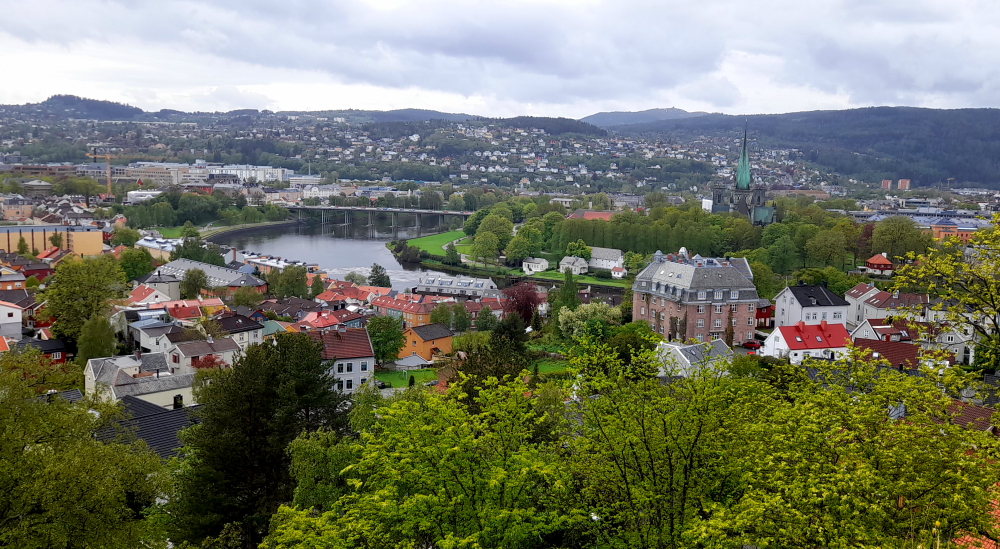
Another back towards the Cathedral on the river bank.
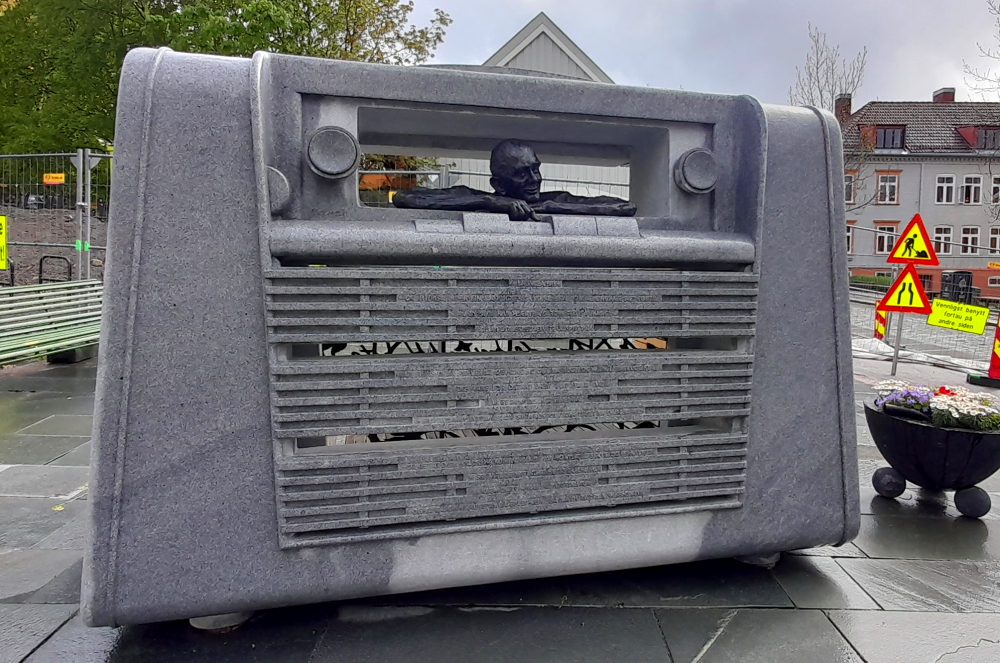
At the end of the bridge at the junction of Ovre Bakklandet and Brubakken in the Bakklandet neighbourhood, is an unusual sculpture entitled “Radio Otto” – a memorial to Otto Nielsen, former composer, author, singer and program director at NRK by artists Runi Langum and Hans Martin Øien.
Bakklandet is known for its picturesque wooden houses and cafes, just across the river from the historic city centre. This neighbourhood was first inhabited in the 17th century and has since changed greatly with industry and later workers’ homes. It has quirky shops and a busy cafe life.
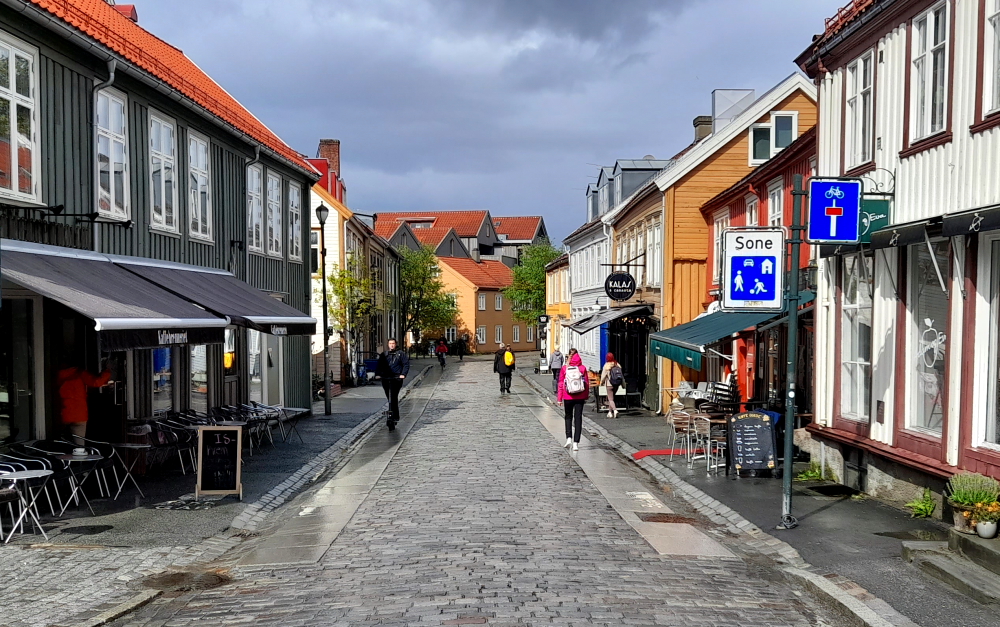
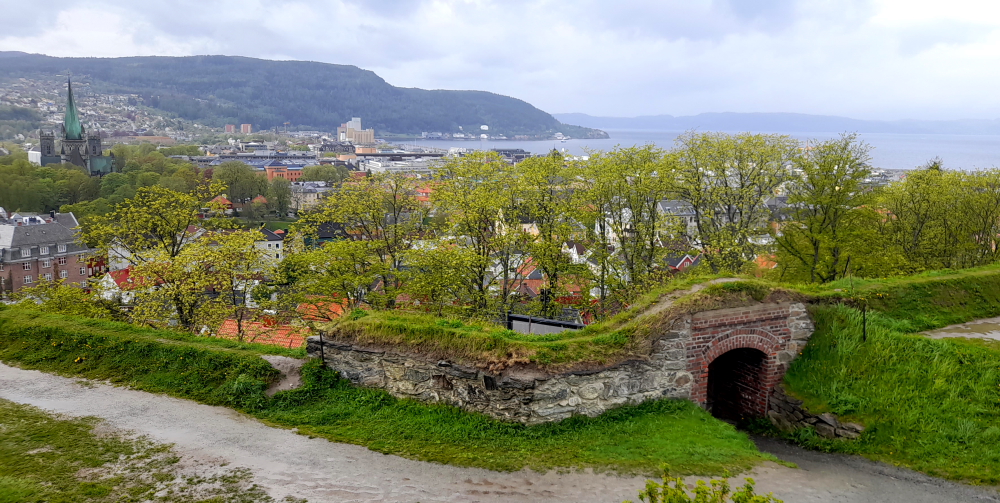
At this point I notice the threatening clouds coming in from the sea. I opt to return to the hotel while Lynn soldiers on. Walking up the steep Brubakken Street she comes to the Kristiansten Fortress and parkland on the hill.
Trondheim burned to the ground in 1681. Major General Caspar von Cicignon from Luxembourg, who came to Norway in 1662, was given the task of building the city as a citadel. He laid out a detailed plan for a fortress upon a hill east of the city centre.
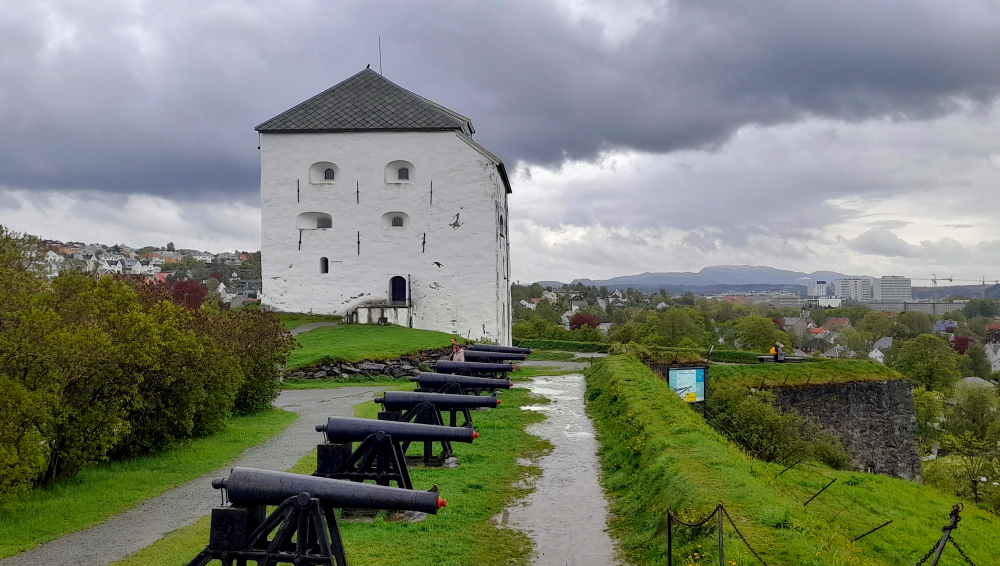
Kristiansten Fortress was built in 1682-1684 in accordance with the new European principles for defensive buildings and to withstand all types of artillery. Its purpose was to secure the city from attacks from the east.
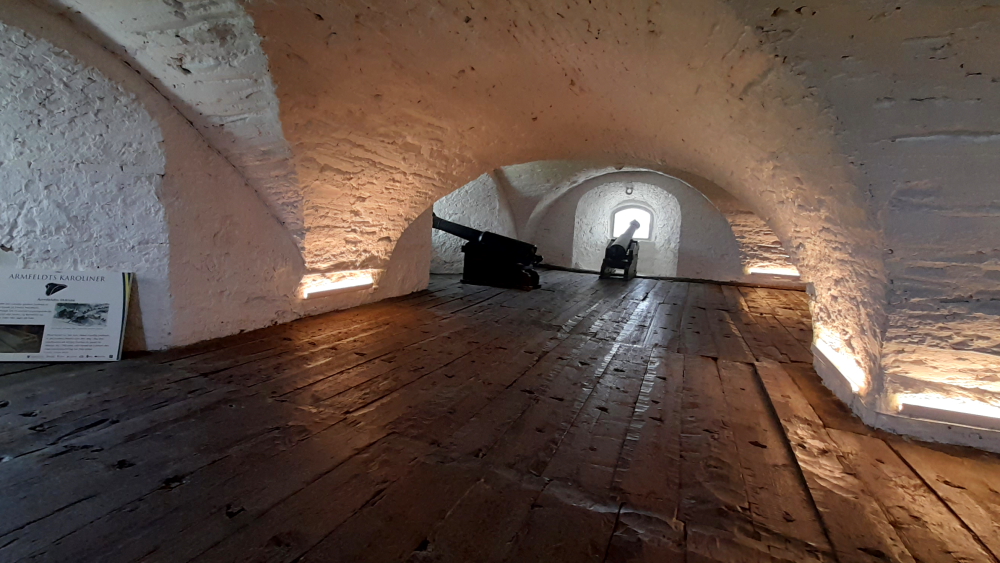
The fortress is dominated by a square tower in the middle, with a nine star-shaped wall around it.
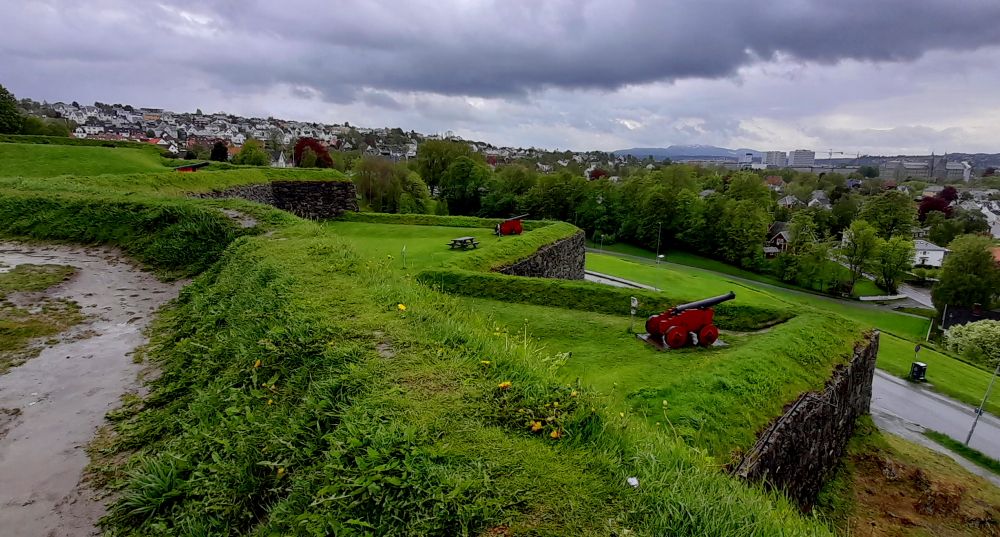
Its hill-top location gives commanding views of the city, river and harbour.
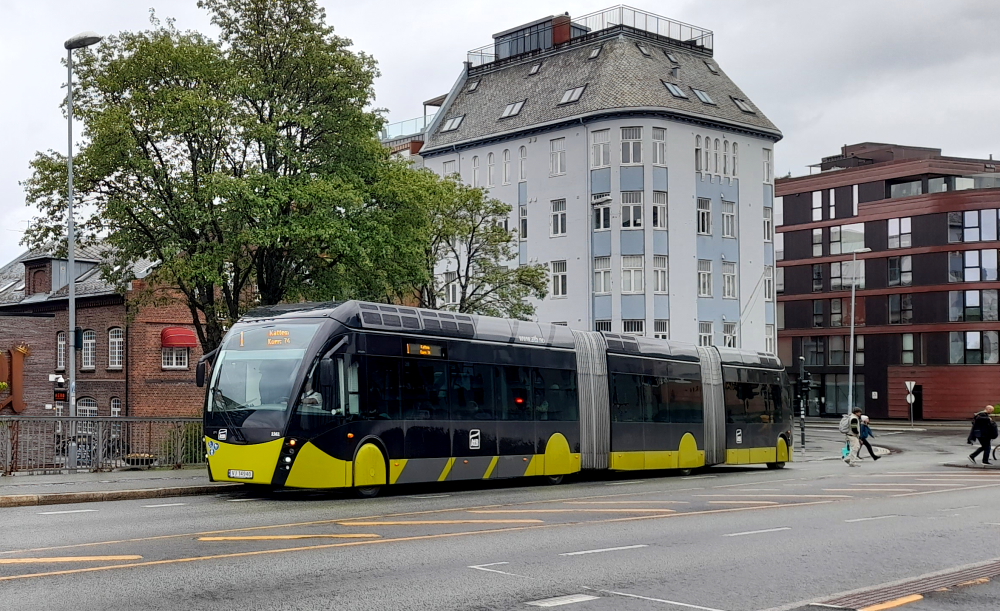
Crossing the Bakke Bridge back into town, one of the double bendy buses goes by. Apparently the Brisbane City Council is proposing to introduce these buses to our streets, too.
Our hotel is located on Brattorgata, Trondheim’s oldest shopping street. The building was constructed in the mid-1800s and was home to one of the most modern bakeries in Europe. Originally it was only a small business that sold groceries and ice cream but it soon developed into a machine bakery, pastry bakery, shipsbread- and biscuit factory, dairy and macaroni factory. It also turned into a wholesale and retail business of flour and wine. Baker Adolf Halseth also built his own railway that went to the storage under the building.
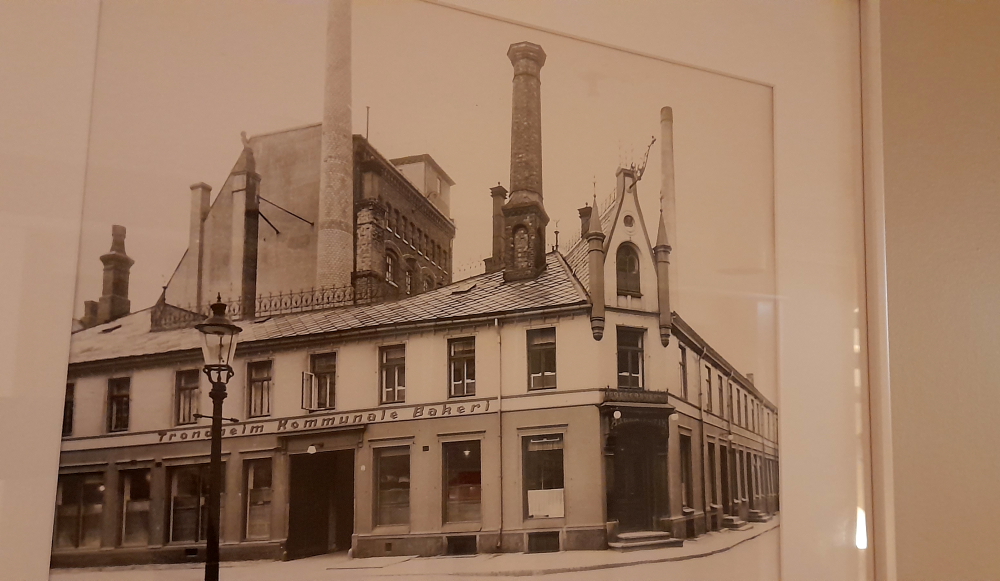
The 100 employees all lived on-site with Mrs Halseth serving them all meals throughout the day. She was also the Company’s Head Accountant.
The bakery produced 4,000 loaves daily and 15,000 cakes. The 12 stabled horses took fresh baked goods to customers. Every year the bakery delivered bread to the German Emperor when he visited Norway.
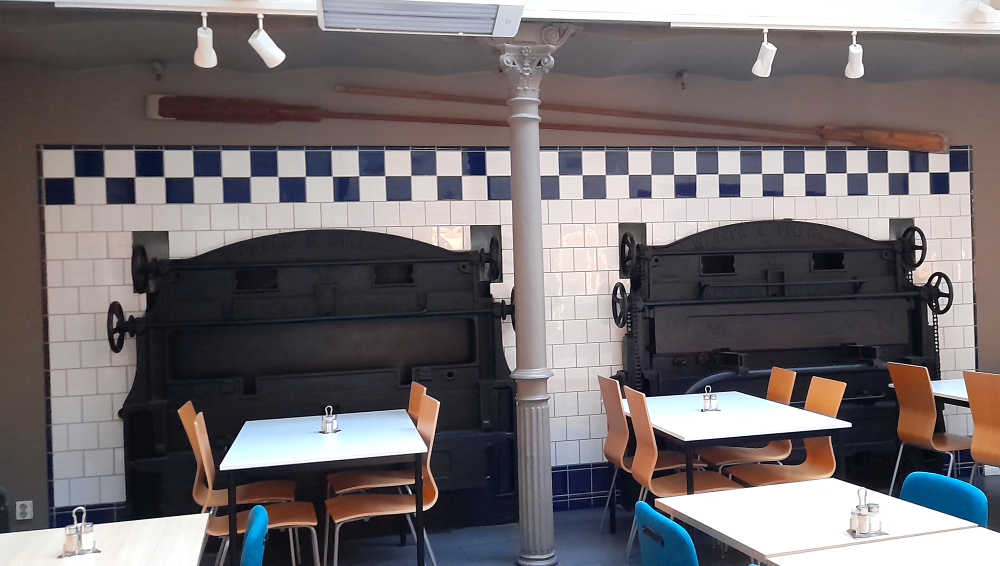
The Norwegian army and Norwegian and foreign battle ships that visited Trondheim got their bread from this bakery, too. During WWI the bakery was sold to the local council to ensure that city bakers would not take advantage of rationing. The hotel opened in 1991.
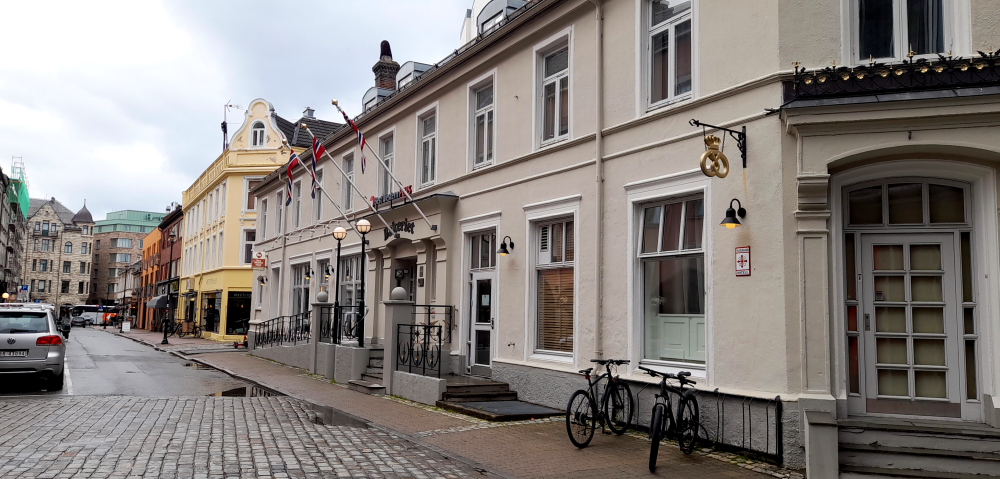
Looks like Lynn made the right decision to continue with the sightseeing tour. I got absolutely soaked walking back to the hotel while she managed to shelter in the fortress tower!
27 May, 2023
As we don’t have any pressing engagements today we have a much-appreciated lie-in. After breakfast Lynn does my ironing (I finished the washing last night at 11:00 pm) while I pay our first invoice from Flyt for our Norway road tolls from 15 May to date.
We then knuckle down and finalise 3 more Northern Europe hotel bookings before we head out for a short walk around town.
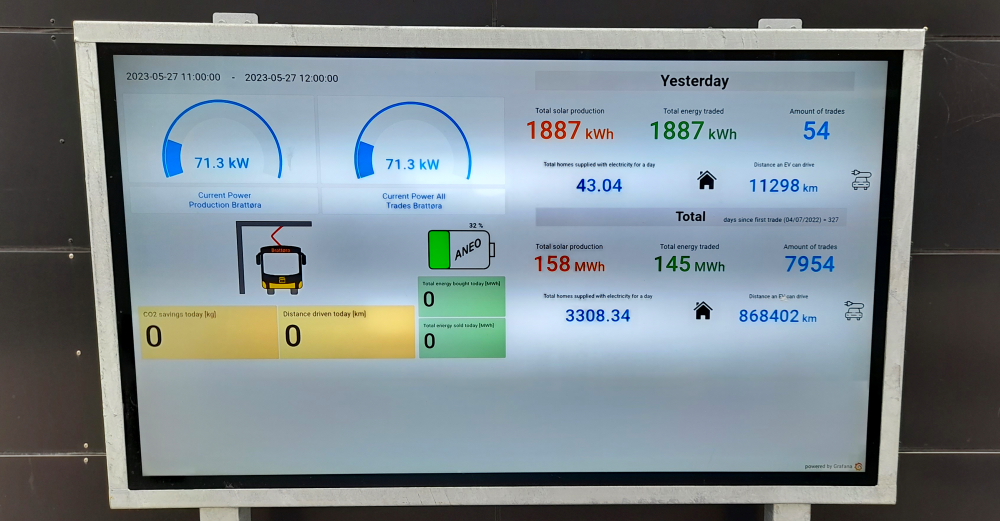
When we first arrived at our hotel we have been intrigued by a building that we can see out of our hotel window so we walk towards the train station and harbour to discover that it is called ‘Powerhouse Brattorkaia’ and that its sloping roof is composed totally of solar panels.
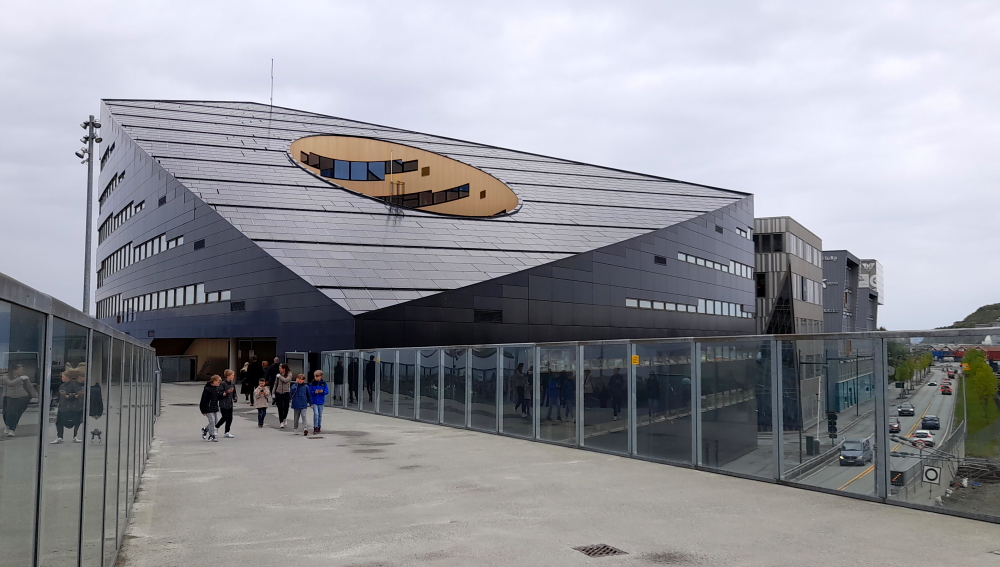
On the footpath adjacent to the buildings is an electronic display screen showing the performance of those solar panels.
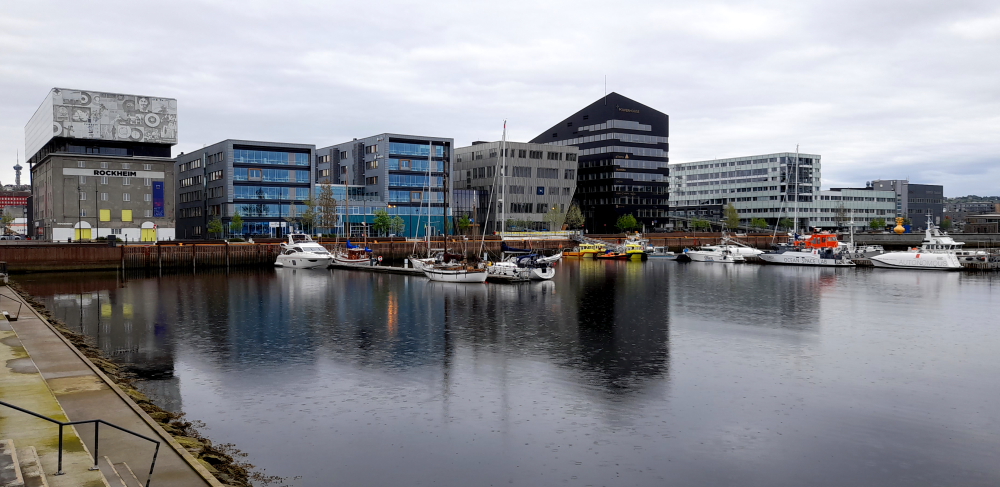
We then walk along the harbour past the Rockheim Museum to the end of the pier.
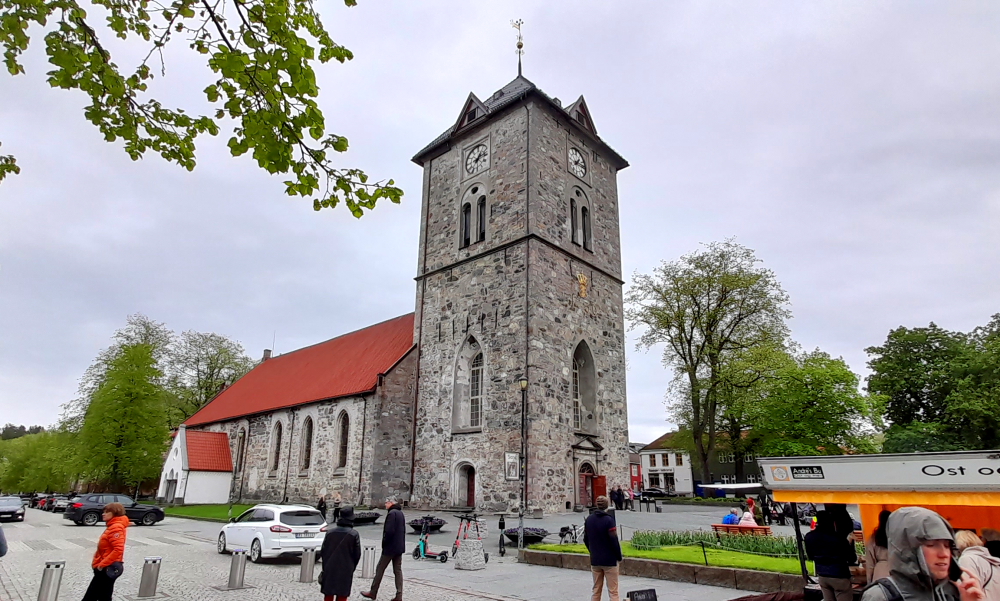
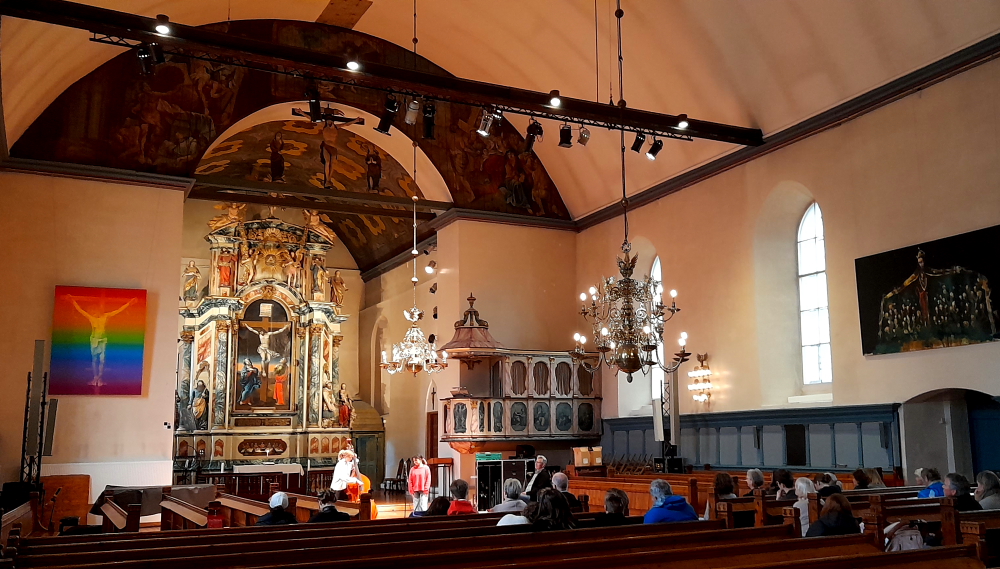
Walking back into town we visit the Church of our Lady off the Town Square. Built in 1207 this stone and brick church is one of Trondheim’s oldest buildings. It was devoted to the Virgin Mary in the Middle Ages. Inside, today, it appears to be hosting a cafe and soup kitchen.
Further inside a free concert is underway.
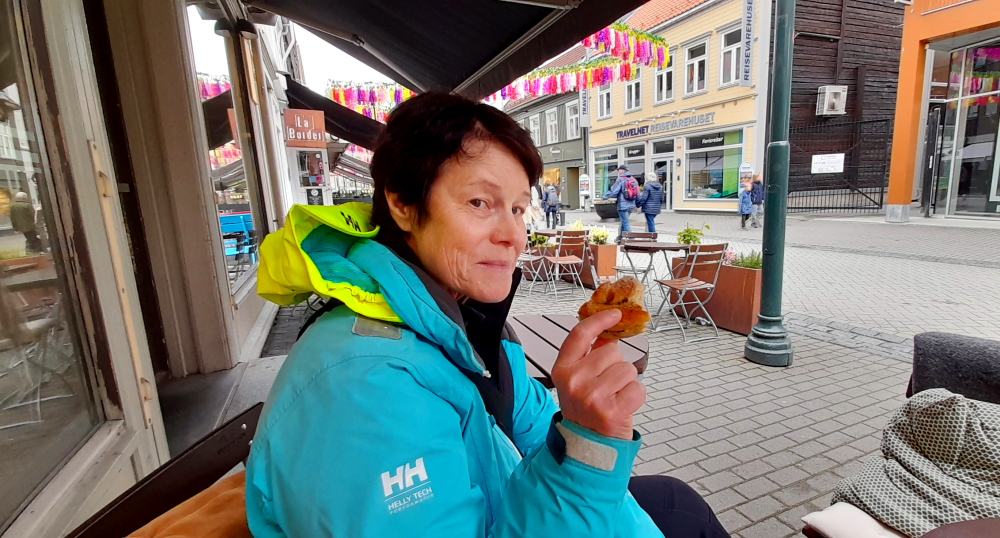
As the rain continues to spit Lynn decides it’s time to find a cafe for a hot beverage and a local delicacy.
Time to finalise our hotel booking for Dresden before we walk across the street to our dinner venue, the Krambua pub on Krambugata. We order a pork schnitzel each which comes with fries, a small salad and mushroom sauce – A$50 each! To drink – a chilled glass of tap water – $0 each.
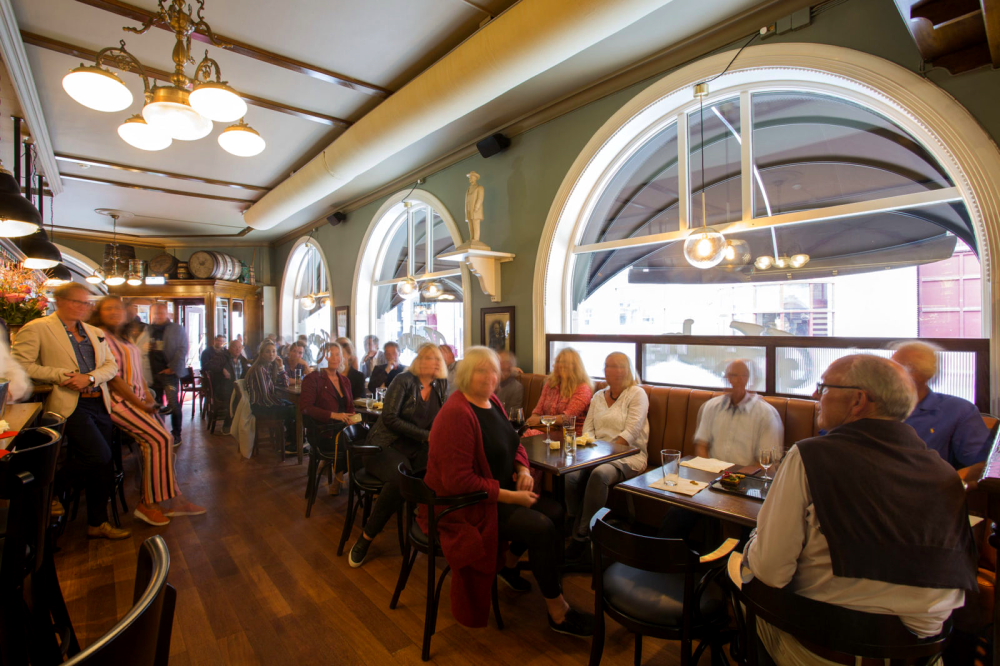
Dinner done we research and finalise our bookings for Prague, Pilsen and Ceske Budjovice. Only one more to do tomorrow morning before we check out.
Tomorrow we are driving to Namsos, a 3-hour, 194 kms ferry-free trip with at least 4 tolls.
28 May, 2023
After breakfast we finalise our last Northern Europe hotel booking for Steyr, Austria. All done and dusted.
At 11:30 am we hit the E6 and drive North East once again. It’s 8 Deg. C and a dull, misty and drizzly day.
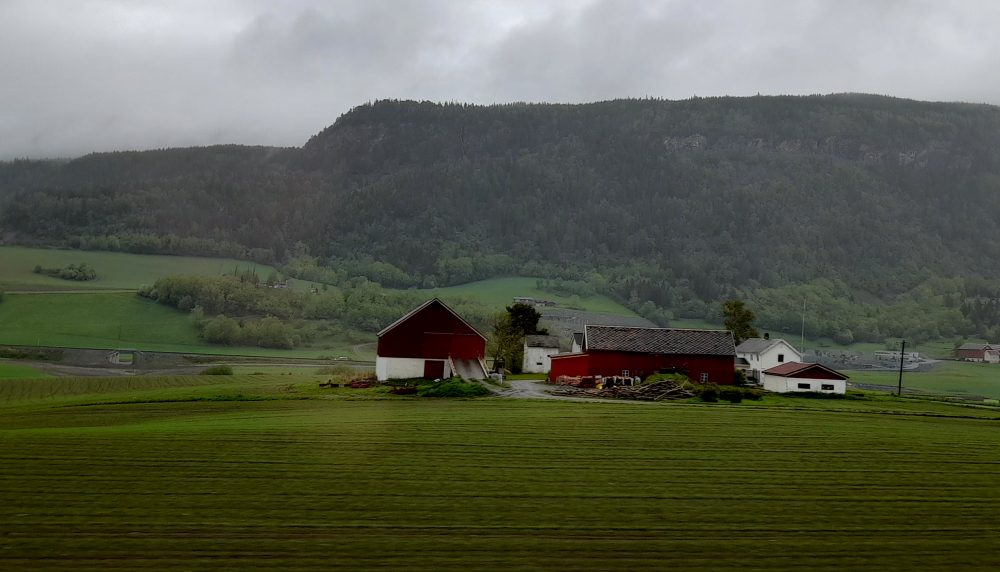
The landscape is less dramatic here with rolling green pastures and brown ploughed fields, populated here and there by either white, maroon, mustard or grey wooden farm houses and the occasional road construction and fjord – all drenched in relentless rain.
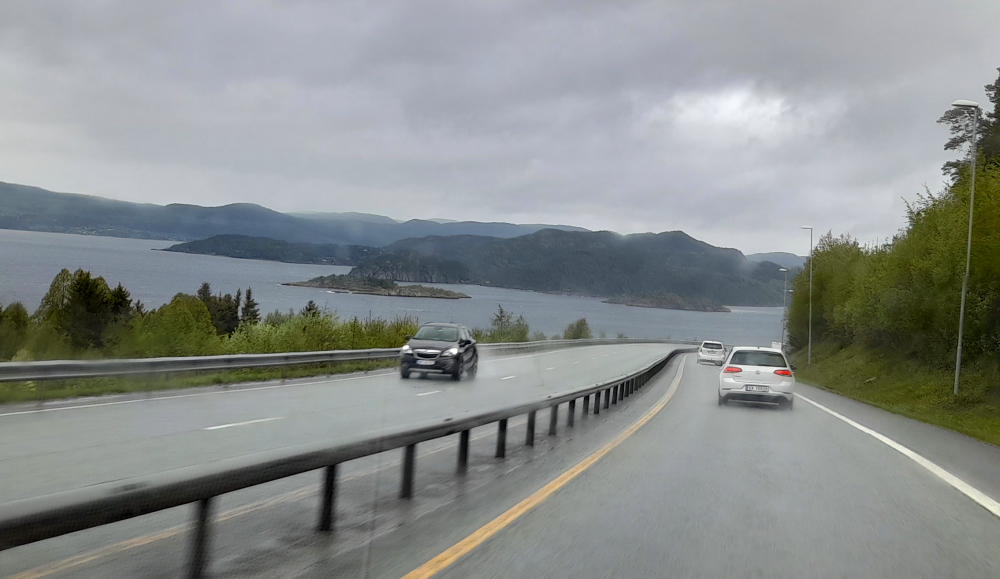
As we leave the E6 and turn NW onto the 17 the scenery becomes more hilly. Just before Korsen we briefly see some hills with patches of snow.
At 2:30 pm we arrive at the modern Scandic Rock City Hotel. Rock as in the music, not the solid mineral material. It’s 5 Deg. C and still raining.
Namsos is located on the north side of the mouth of the river Namsen, where it flows into Namsenfjorden and is the capital of the forest-rich Namdalen region.
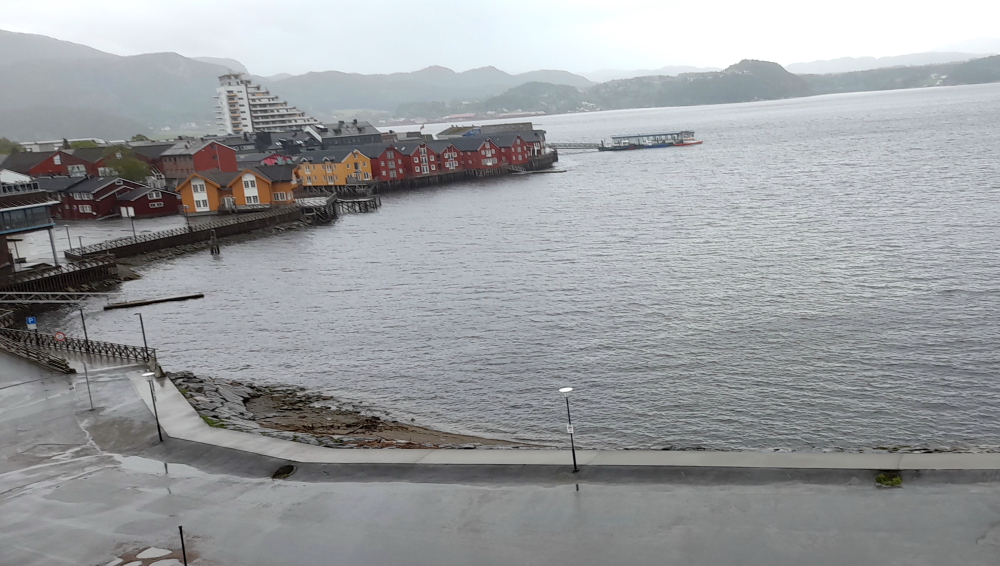
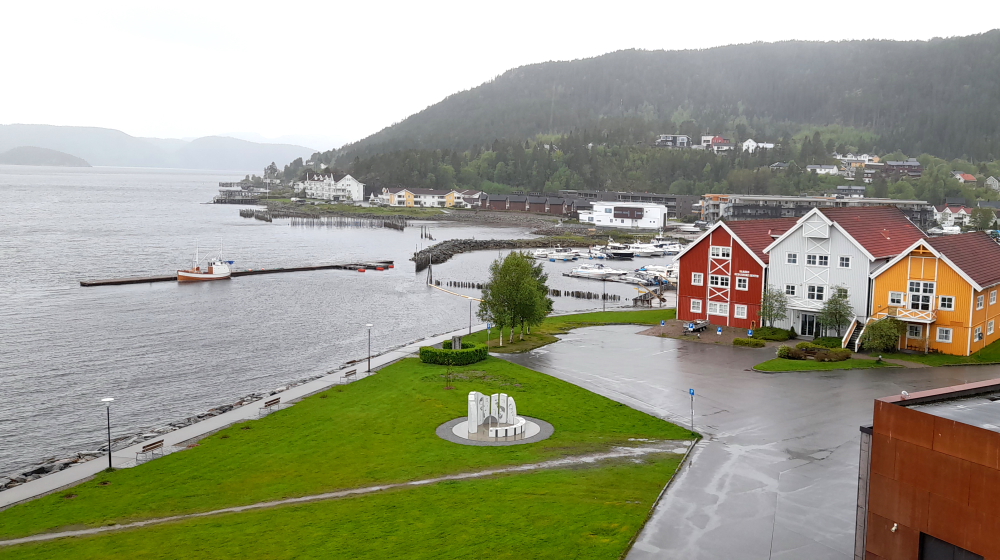
We have a rather nice hotel room on the 5th floor with wonderful views of the water. It would be so much nicer if it wasn’t raining.
Hence, the one and only thing listed to see in Namsos is to visit the Norwegian Sawmill Museum, the country’s only major listed steam sawmill from the 1800s.
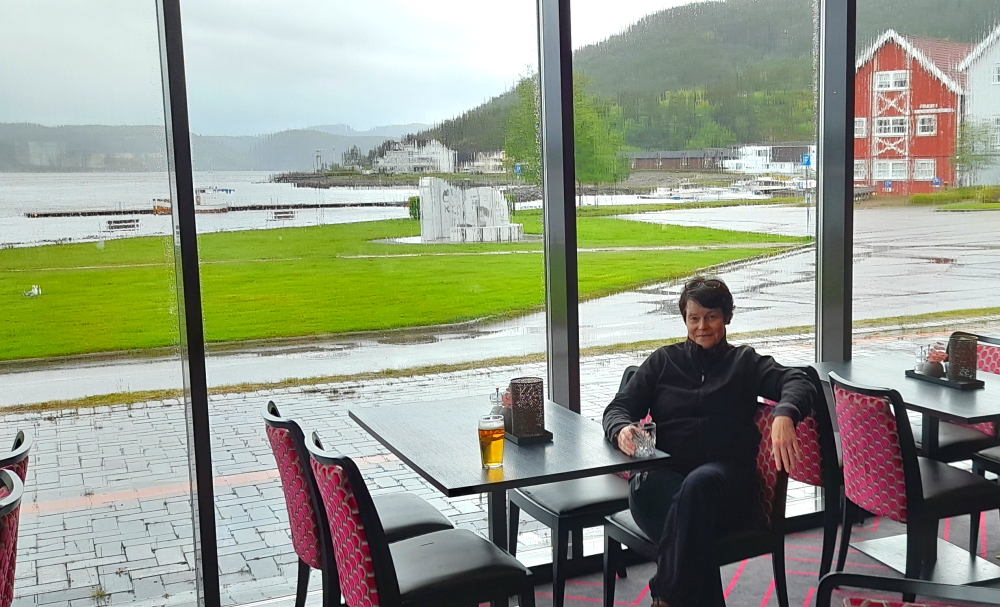
The hotel has lots of rock memorabilia and artifacts scattered throughout the building.
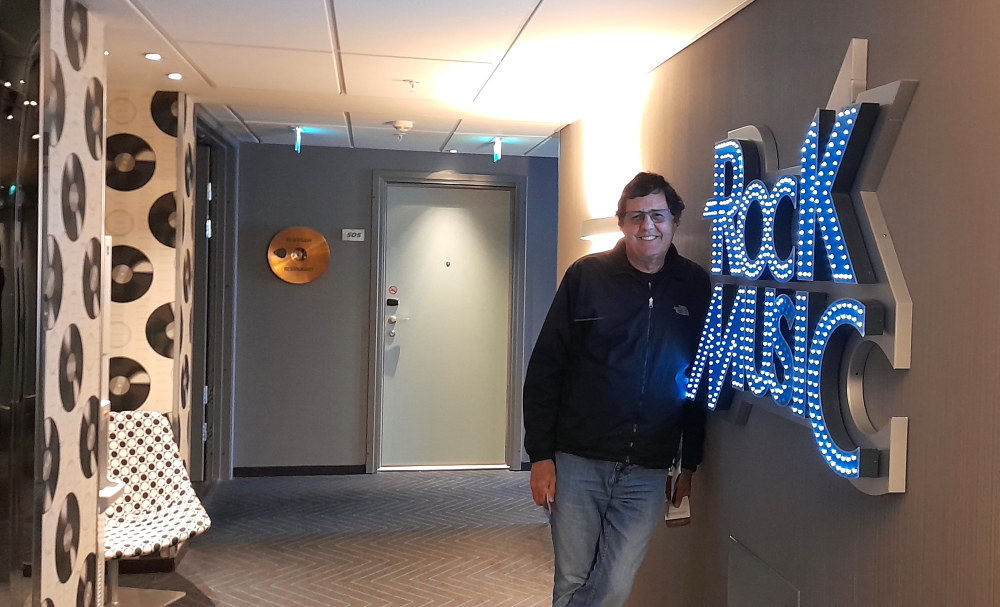
Featured in our room is a graphic of ‘D.D.E.’, a chart-topping, award-winning Norwegian rock band best known for its lively concert performances.
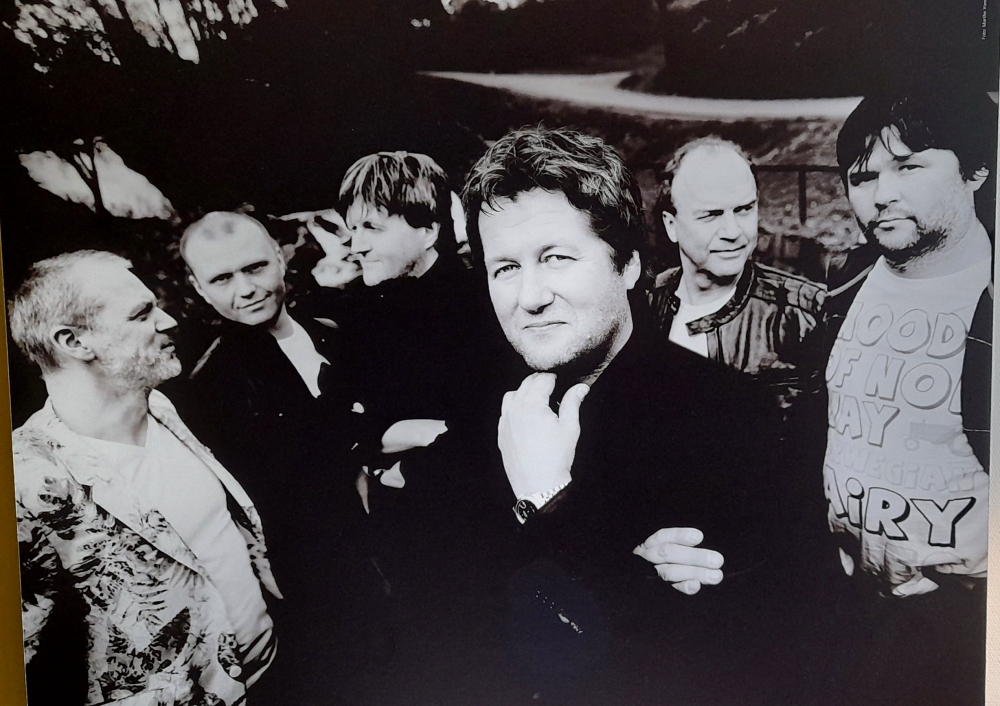
Founded in 1992 in Namsos they made their album debut in 1993 and broke through to mainstream success in 1995 with their third album, the live recording Det e D.D.E. Acknowledging their breakout success in 1995-1996 the band was awarded a Spellemannprisen in 1996.
The Rock Museum is next door and there are banners and posters advertising the Namsos Festival happening 2-3 June.
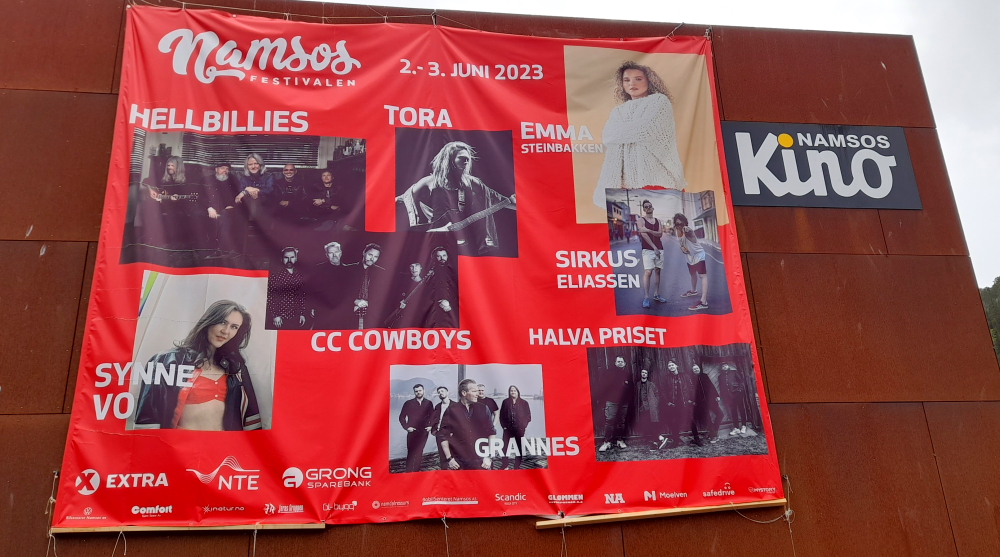
2 days, 8 artists, and last year’s attendance was 6,500. Already the day pass for 2 June is sold out at NOK995 ($144).
.
 THE CONTINUING TRAVELS OF YOGI & BOO BOO