
23 May, 2023
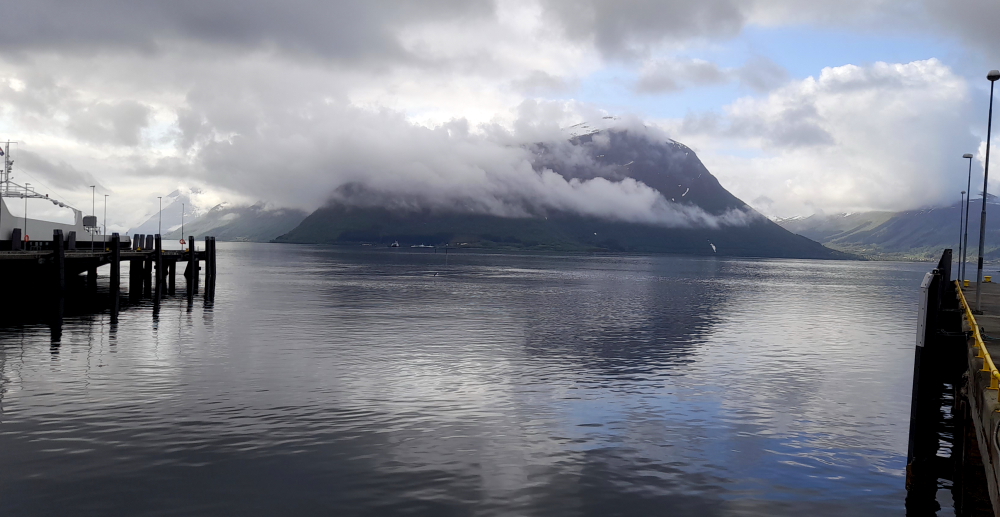
Overnight it rained so at 7:00 am when Lynn looks out the window it’s a white out from the balcony and beyond. Fortunately by 9:45 am the cloud is starting to clear and the sun peeks through. Just as well as we plan on seeing the sights within Alesand and its surrounds.
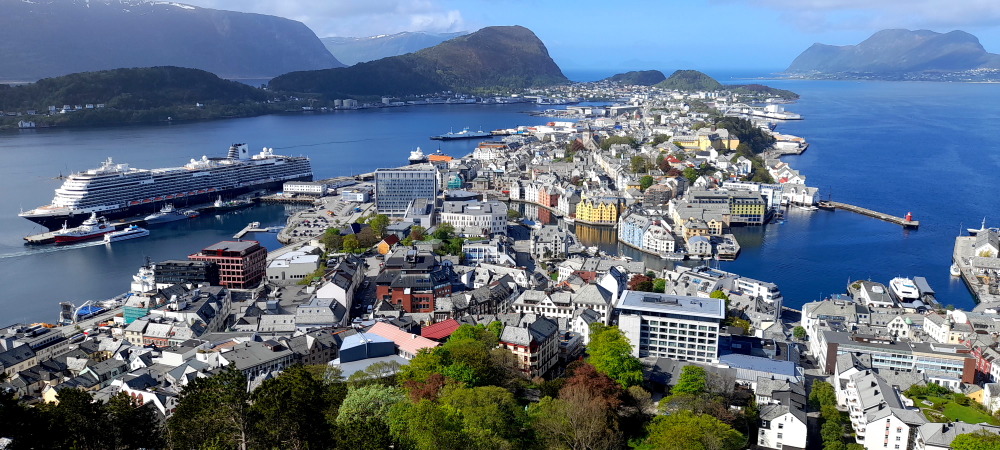
The town is a sea port and is noted for its concentration of Art Nouveau architecture. According to local legend, Ålesund was founded by Gangerolf (outside of Norway better known as Rollo), in the 9th century. Rollo, the founder of the dynasty of the dukes of Normandy, hailed from the community of Giske, North West of Ålesund.
First stop is the Aksla Lookout which shows how densely Alesund packs itself on the island of Aspoya. We also see that the Holland America Line cruise ship Rotterdam is also in port.
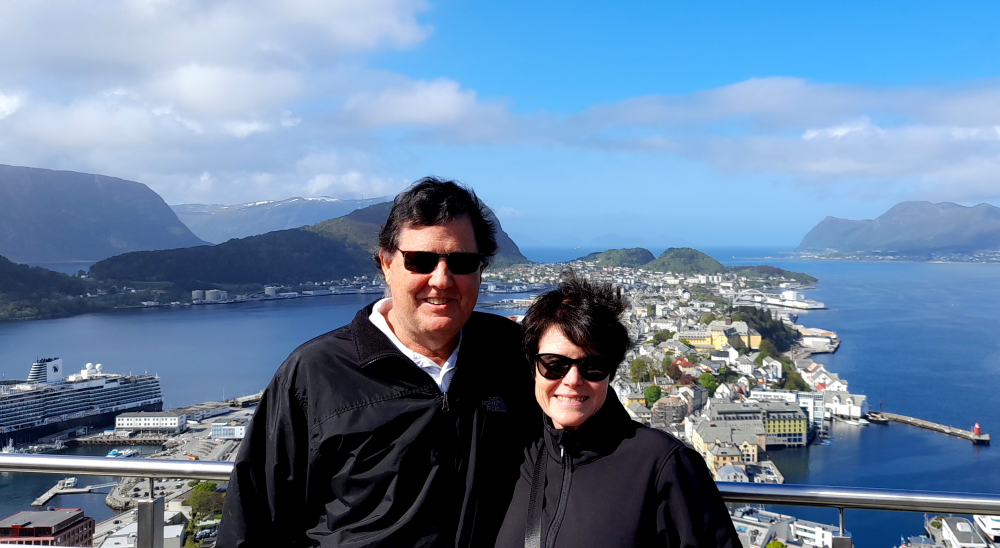
The hill behind me in the photo below is where we will drive to shortly, the island of Hessa.
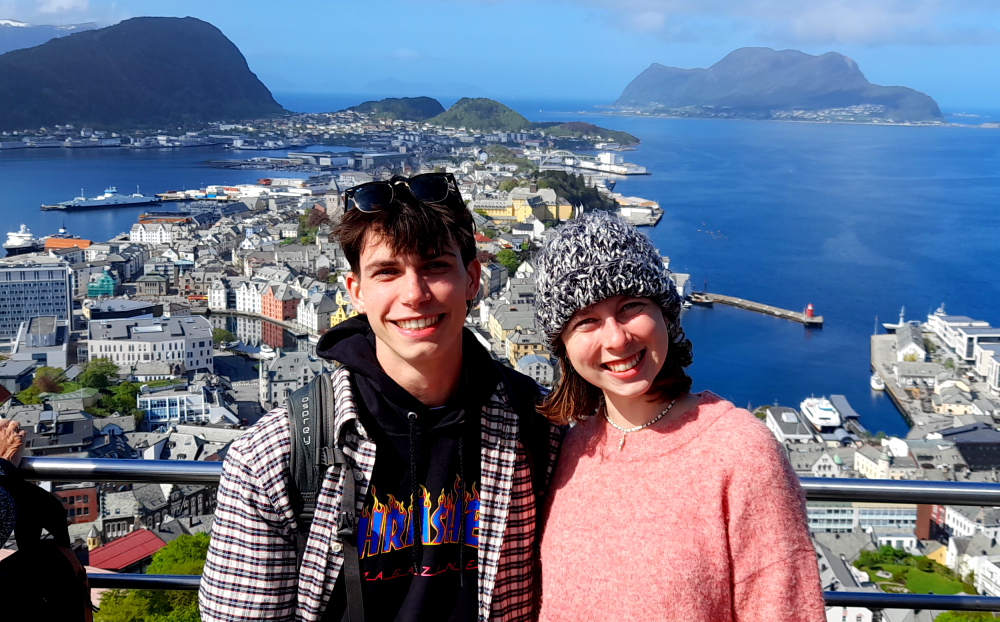
While we are at the lookout I overhear a young couple and discover they are not only Aussies but also from Brissie. Ben has a degree in marine biology and geology and Eliza is here in Norway for a semester also studying marine biology. They kindly take our ‘selfie’.
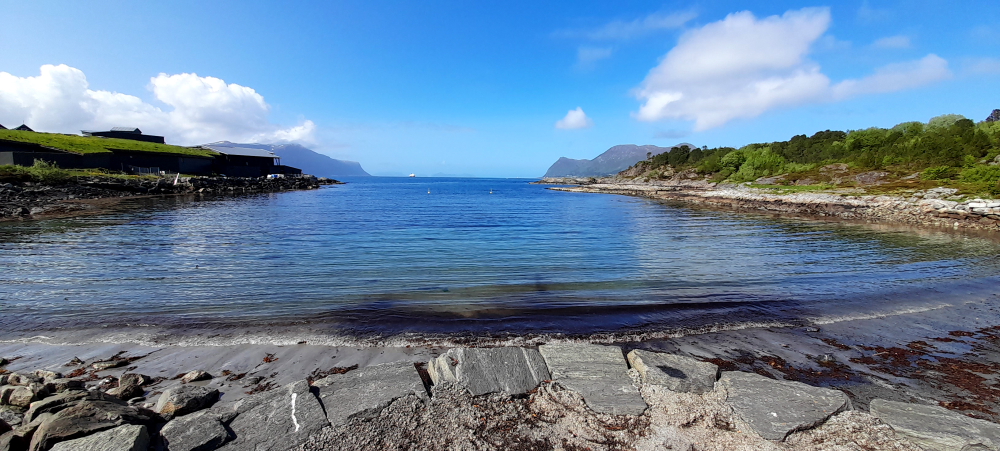
Wanting to see what the view is like on the other side of Hessa we take a quick 12 minute drive to a small beach which is overlooked by the Atlantic Ocean Sea Park building on the left. Like a lot of buildings in Norway it has a grass roof.
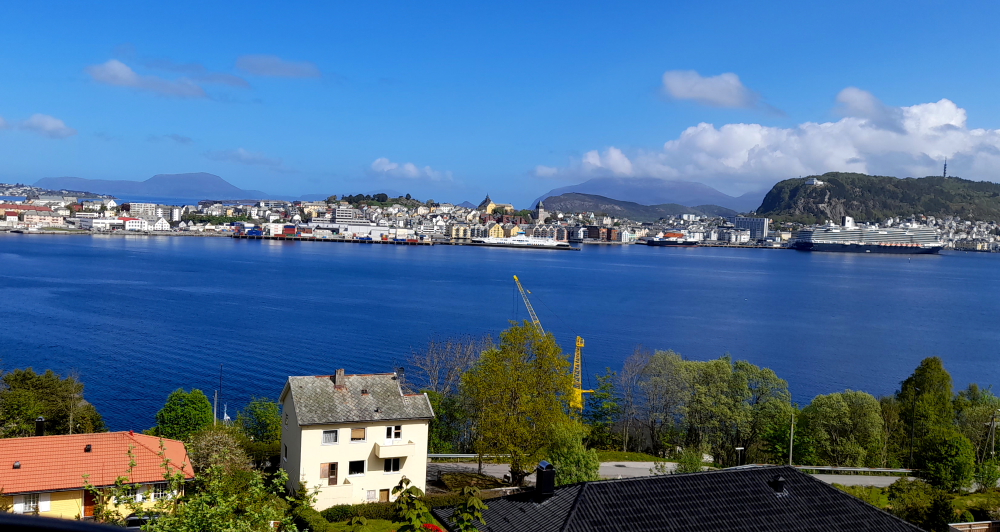
Driving back to town we get a different view of Alesund from across the bay where we can clearly see the spire of the school (yellow building), the Alesund Church spire and the white Aksla Lookout building.
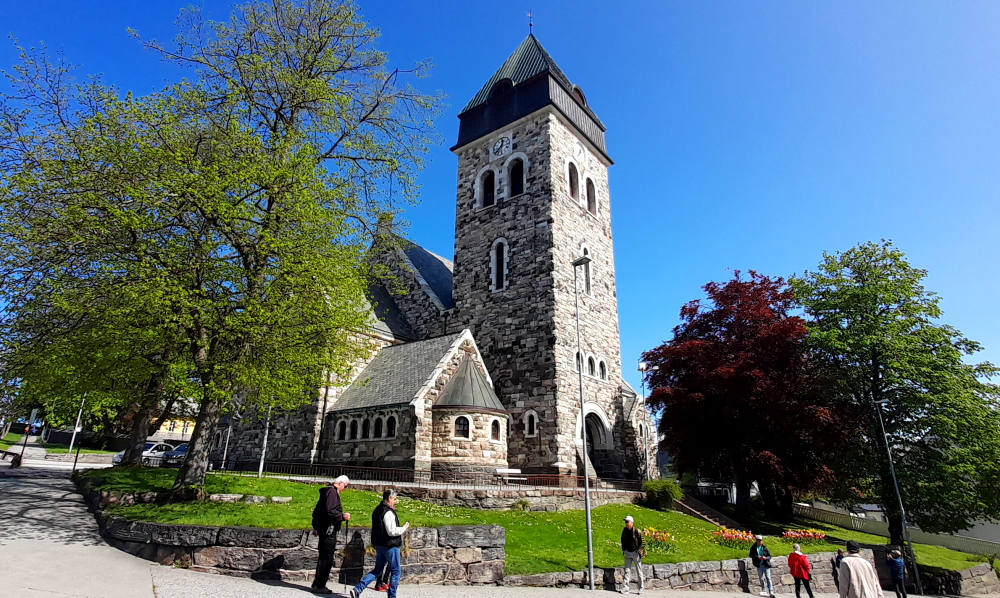
We park in a local Rema 1000 supermarket car park and walk 10 minutes into the town centre going via the Church. The large, stone church was built in a long church design and in the Art Nouveau style in 1909 using plans drawn up by the architect Sverre Knudsen.
In January 1904, practically the entire town of wooden buildings was destroyed by fire with more than 10,000 left without shelter.
Kaiser Wilhelm of Germany had often been on vacation to Sunnmore. After the fire, he sent four warships with materials to build temporary shelters and barracks.
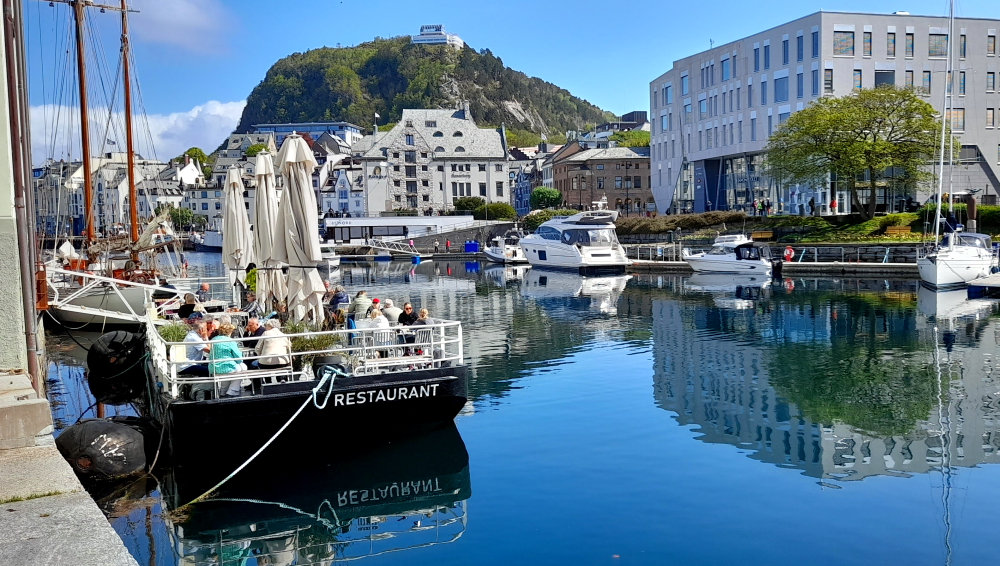
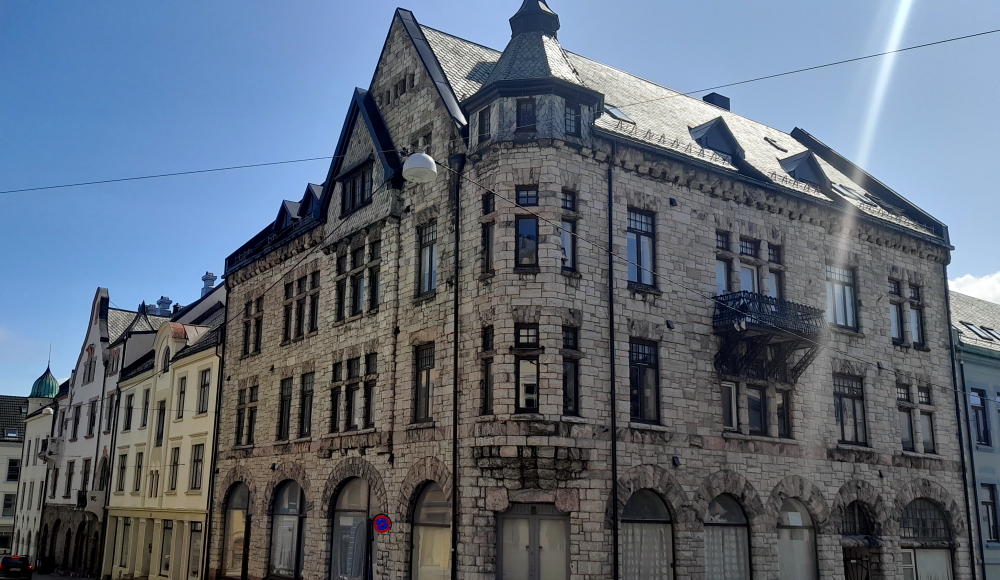
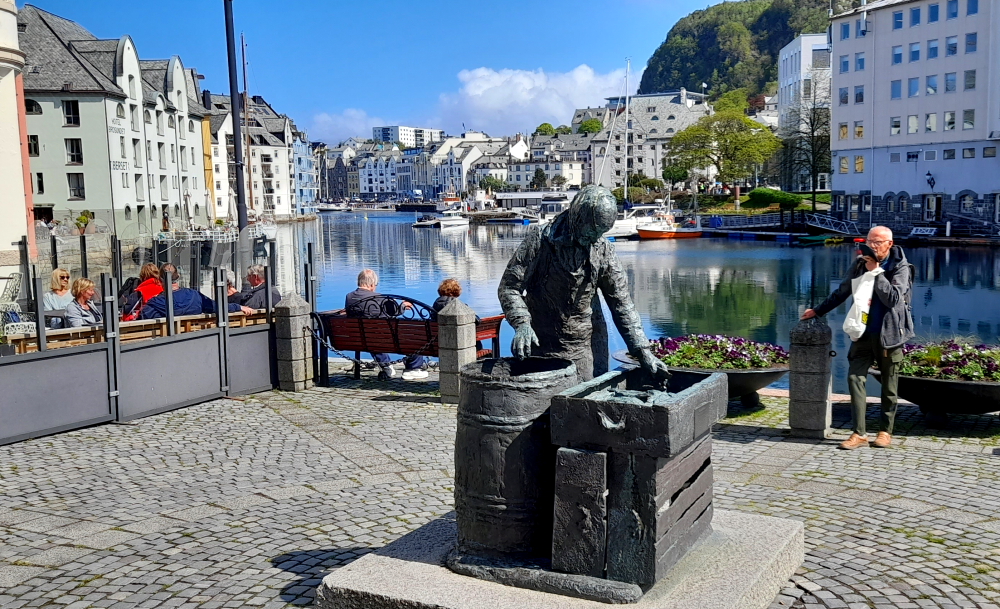
After a period of planning, the town was rebuilt in stone, brick, and mortar in Jugendstil, the architectural style of the time between 1904 and 1907.
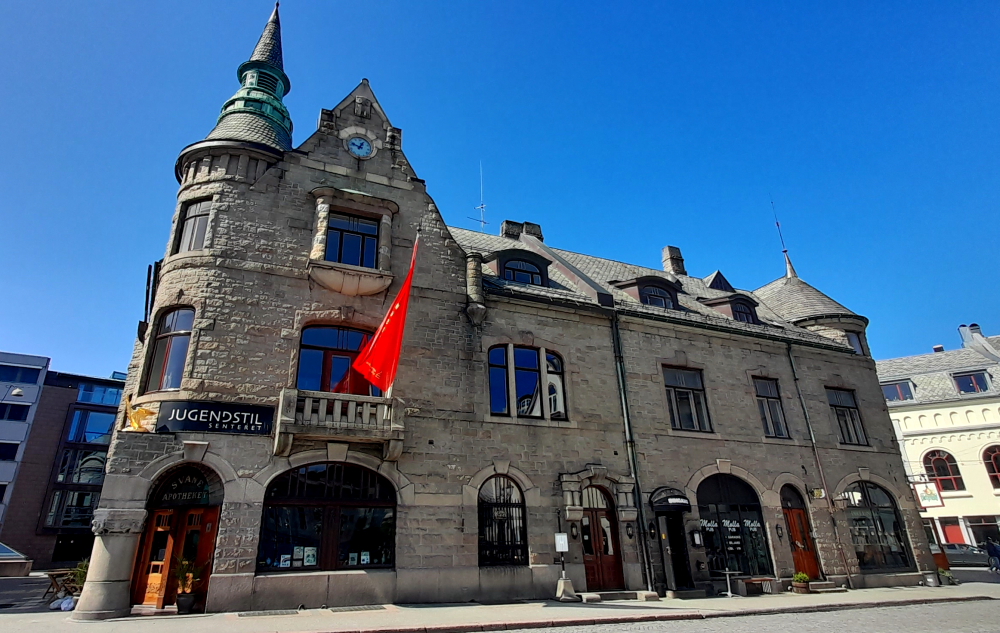
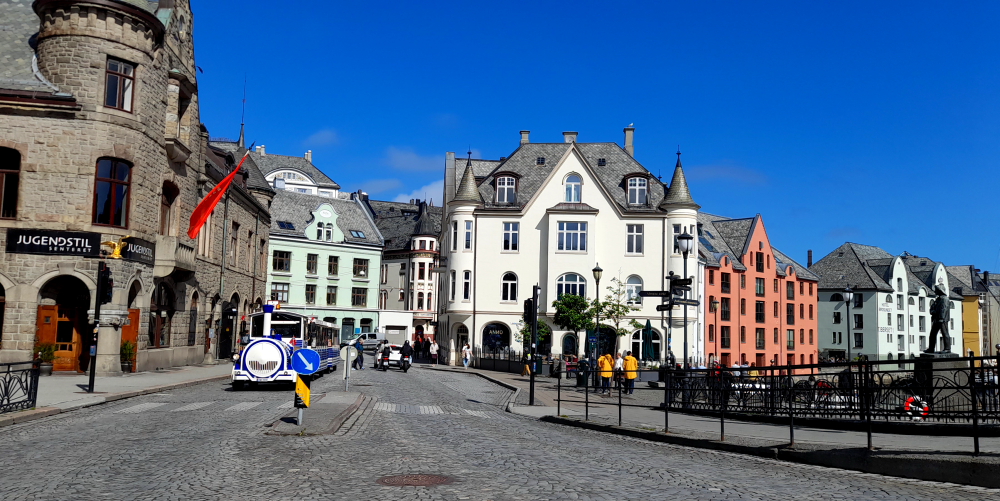
Jugendstilsenteret, the building below, is a national interpretation centre where visitors can learn more about the town fire, the rebuilding of the town and the Art Nouveau style.
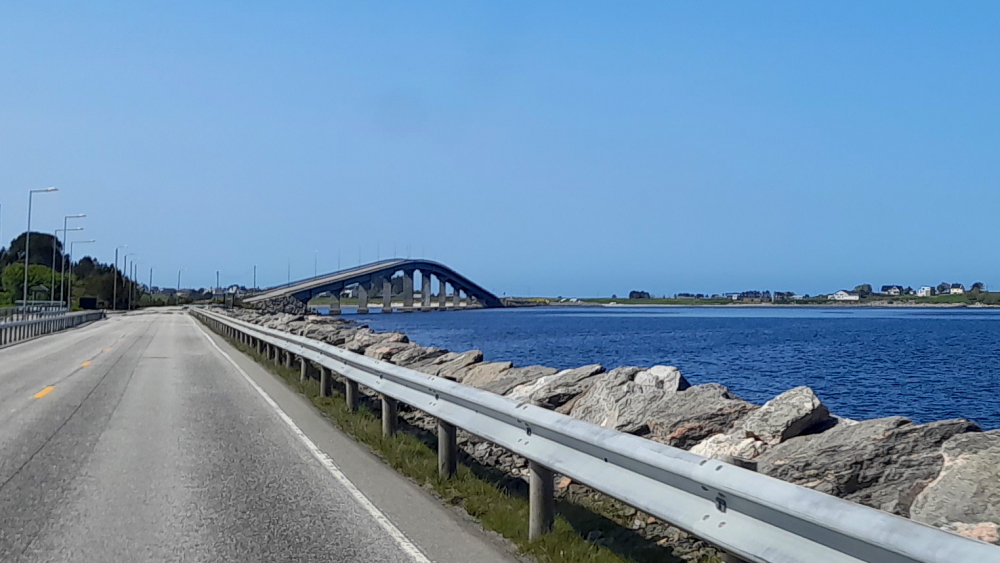
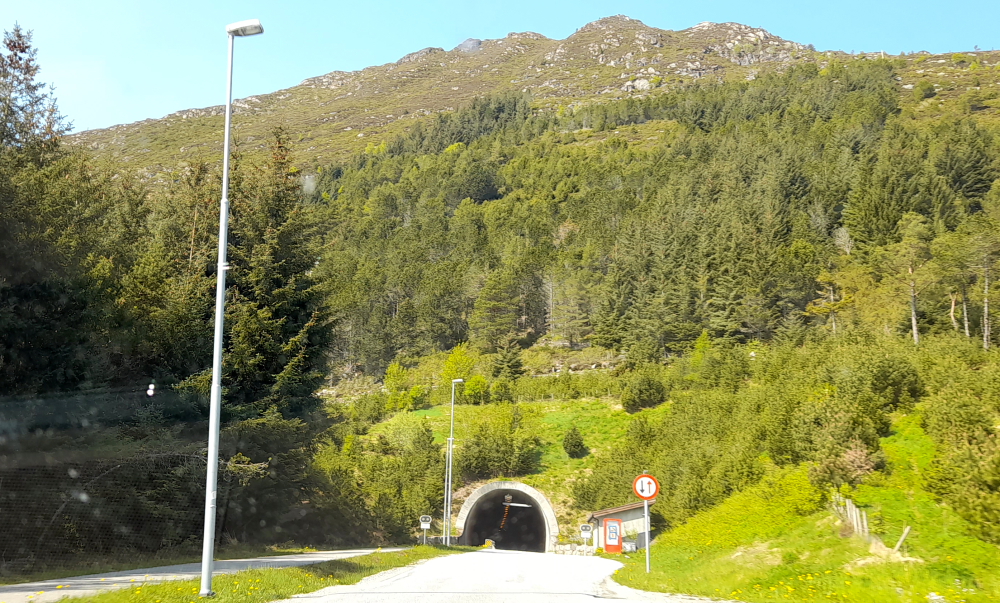
Next is our 25-minute drive to the Alnes Lighthouse on Godoya Island. This involves 3, steep, 4 km-long under water tunnels and at least 1 toll to get there via the islands of Ellingsoy, Valderoya and Giske.
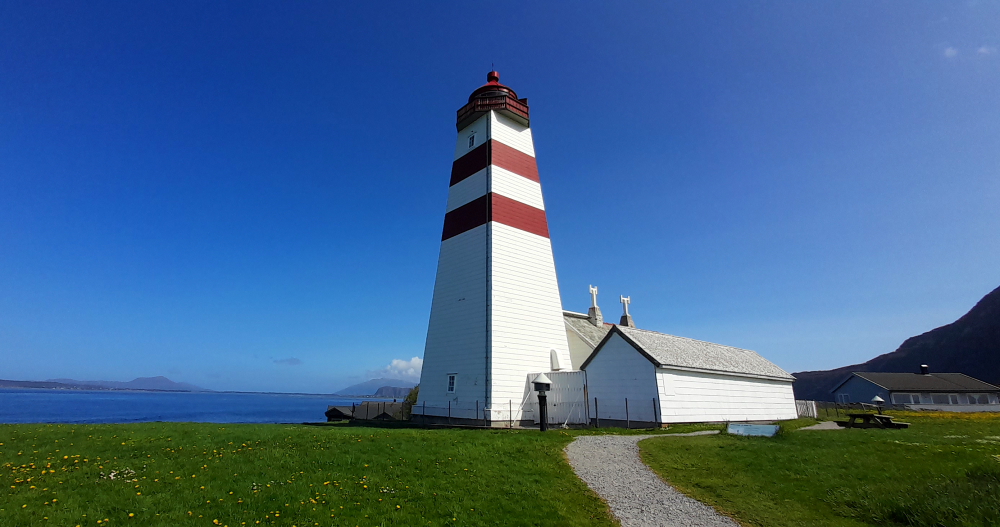
Alnes lighthouse was established in 1852 to guide fishing boats safely to the harbor of the small fishing community of Alnes on Godoy island. The current lighthouse was built in 1876 and was automated in 1982.
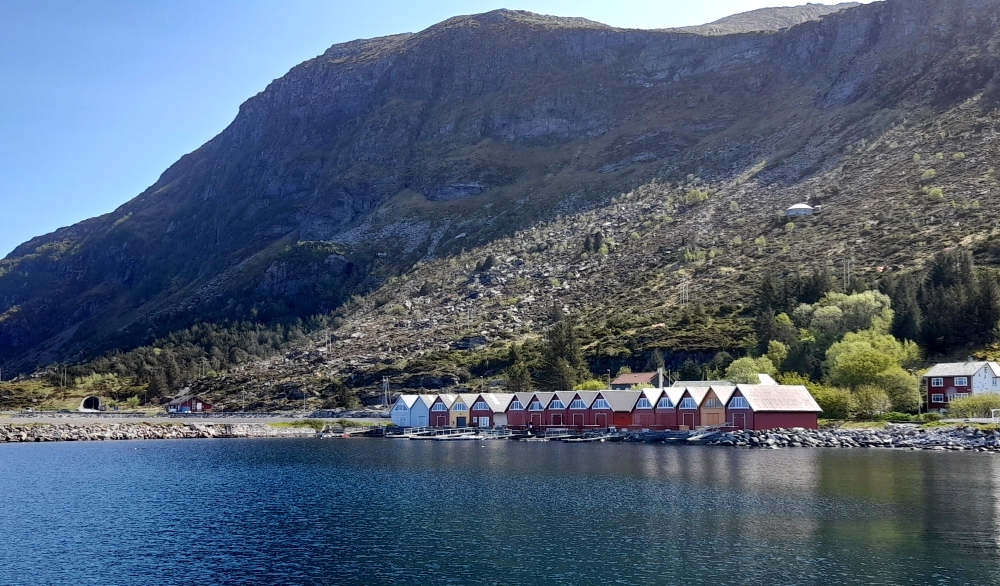
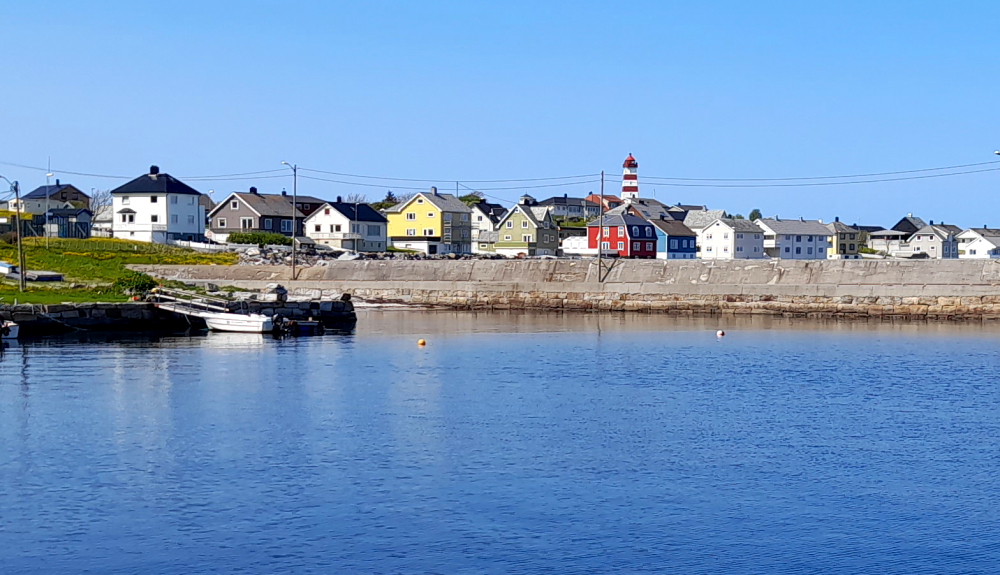
Returning home we stop by the Ales Harbour to check out its view of the village and its boat sheds.
After having dinner in the hotel restaurant last night we are heading out to find a restaurant for tonight. Unfortunately there are no restaurants anywhere near our hotel so we have a 20 minute drive each way this evening. Tomorrow night we will probably eat at the hotel restaurant again as the BBQ Ribs were reasonable and at an unusually reasonable price (for Scandinavia).
24 May, 2023
It is wild and windy outside this morning. We don’t plan to go anywhere today as we have lots of hotel bookings to do for our northern Europe trip in August through to November.
We run across a number of issues when trying to book a hotel in Amsterdam where IHG give a best price guarantee but when we find the same room for a lower price on Booking.com it becomes obvious that IHG won’t honour their guarantee. We have now scrubbed that hotel group from our list of hotel chains but the process wasted precious hours.
By late afternoon it starts to rain heavily and despite it being nearly summer here Lynn turns on the room heaters. We still have another eight bookings to do but by 8:00 pm it is time for dinner and a brain rest.
Tomorrow we are heading further north along the Atlantic Ocean drive to Kristiansund. The coast in that area is rugged and with more rain predicted tomorrow it may take all day to get there. At least it will be a break from desk duties sorting bad hotels and over-priced hotel parking costs. There are so many nasty hidden traps when booking hotel rooms. A value price at first glance can turn very expensive very quickly when some seemingly good hotels try to rip you off with hidden costs and shonky rooms.
I am looking forward to the interesting drive tomorrow.
25 May, 2023
10:15 am and 10 Deg C. as we depart Sunde. A very wet and misty drive this morning.
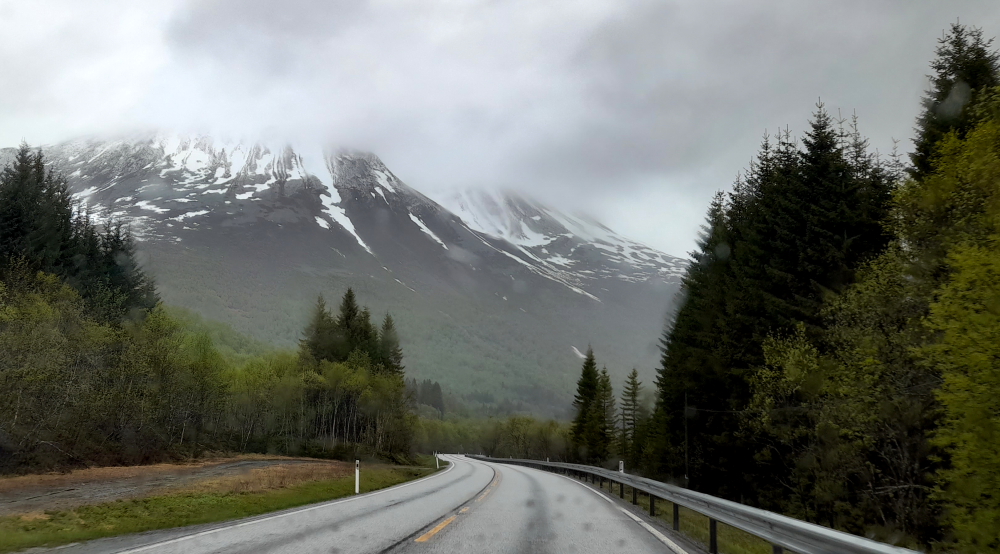
We retrace our steps along the E39 until the E136 bridge then drive straight on to Furneset to catch the ferry to Molde – with 2 minutes to spare!
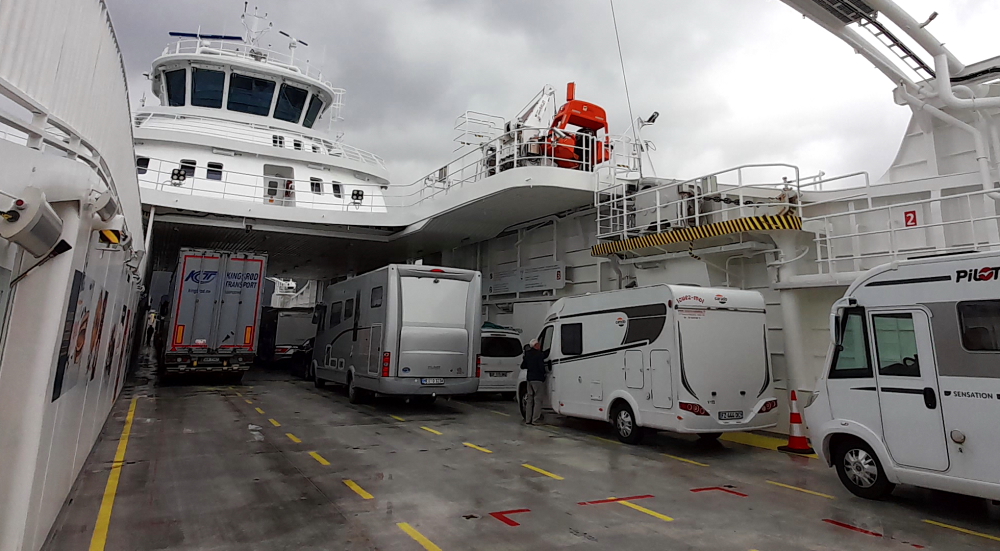
The ferry is very modern and along the port side there is passenger access to a commodious cafe and lounge with large windows for viewing the transit.
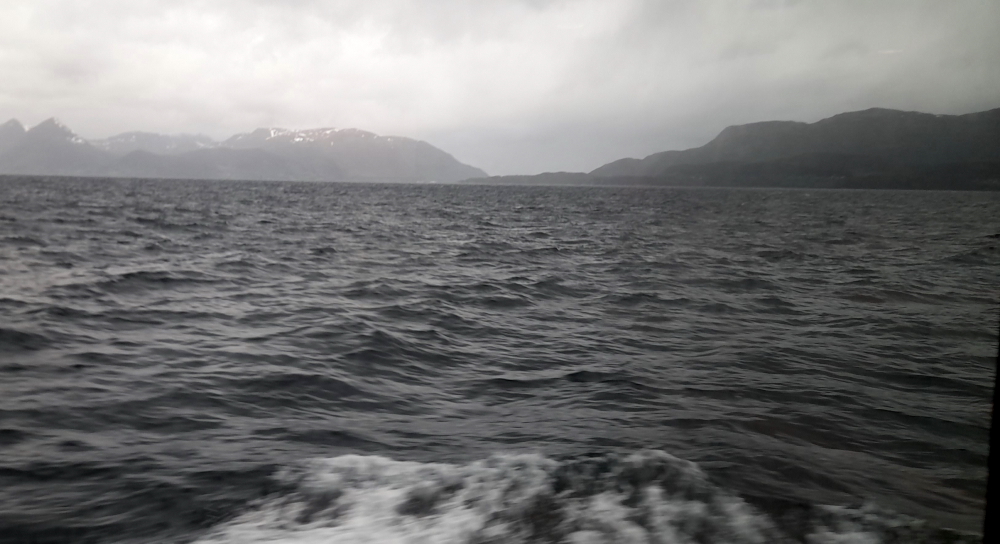
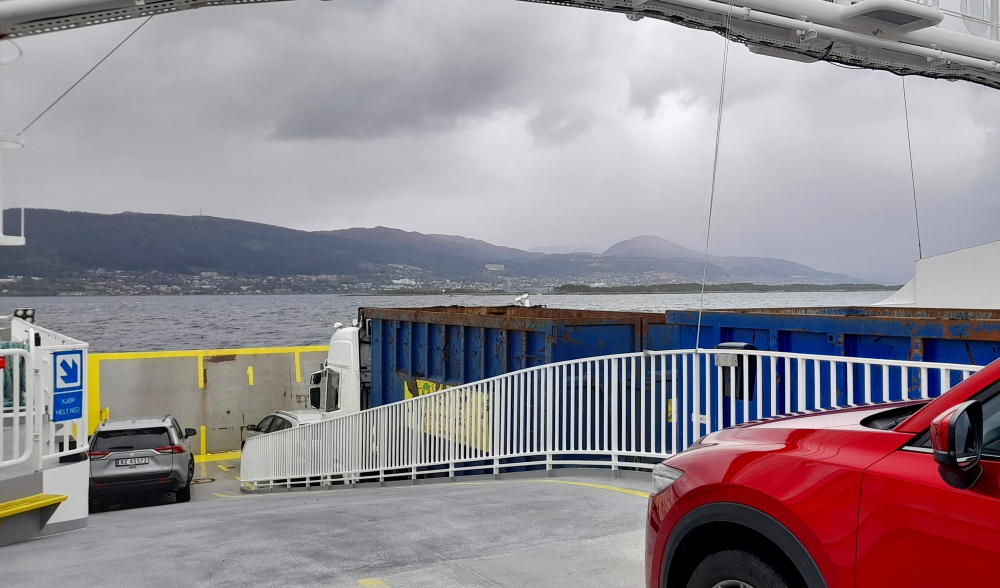
45 minutes later travelling on the 663 we arrive at this junction and turn right onto the 64 for Kristiansund and the ‘Atlanterhavsvegen’ – the Atlantic Road.
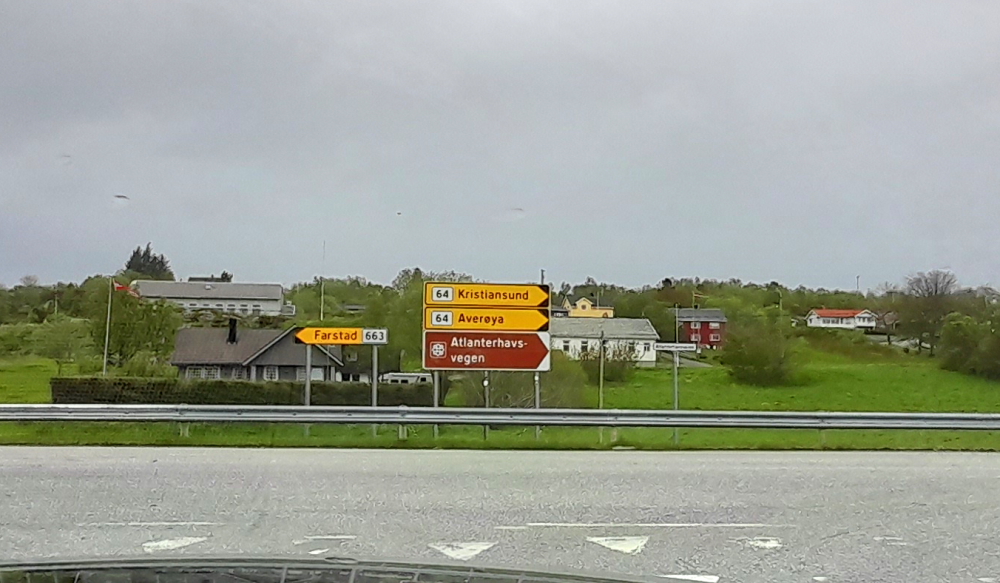
“The road across the sea” is the iconic experience with bridges that arch between the islets and reefs along the rough Hustadvika Bay.
Atlanterhavsvegen – the Atlantic Road – is a visual delight as it curves elegantly from islet to islet over its seven bridges. Nature and modern engineering meet and create this highly unique driving experience.
The trip takes us from the fertile cultural landscape of the coast across moorland to bare crags (just like Donegal) along the weather-beaten, open bay of Hustadvika. Atlanterhavsvegen has been described as the world’s most beautiful drive.
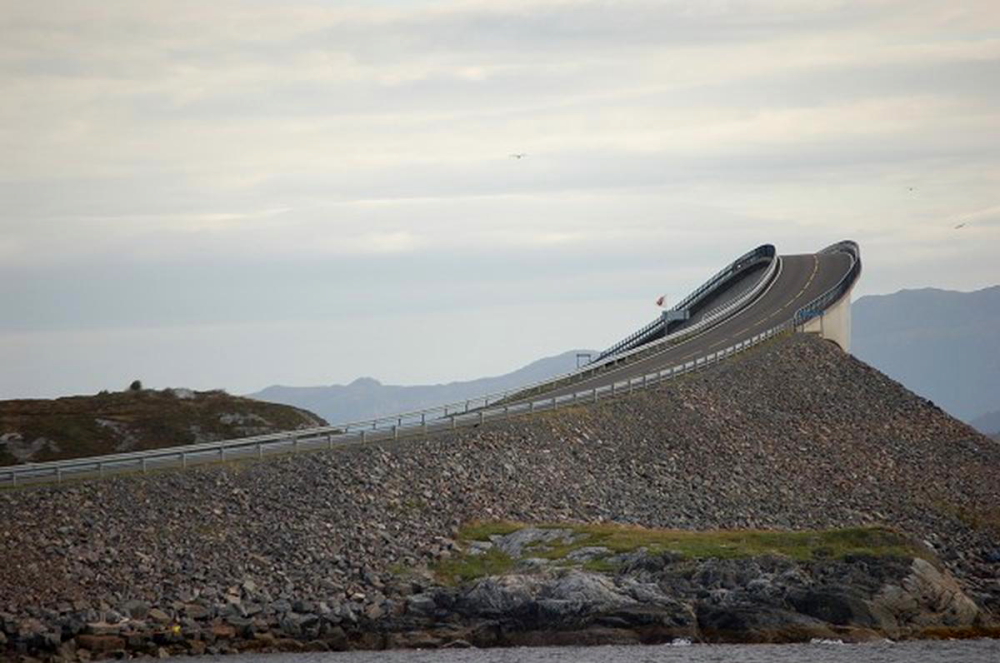
One of the most popular spots on the route is its iconic Storseisundet Bridge, known locally as ‘the drunk bridge’ due to its unusual appearance. It has been featured in advertisements and lures thousands of tourists each year to a route that has been hailed as one of the world’s best for a holiday road trip.
With a curve that protrudes over the Norwegian Sea, the 850-ft bridge plays a visual trick on approaching motorists. It appears that the ‘bridge to nowhere’ drops off into the sea, but it’s just an optical illusion given the angle of the span. Offering a series of exhilarating twists and turns, the Atlantic Ocean Road is unsheltered from the North Atlantic Ocean, putting it at the mercy of the elements.
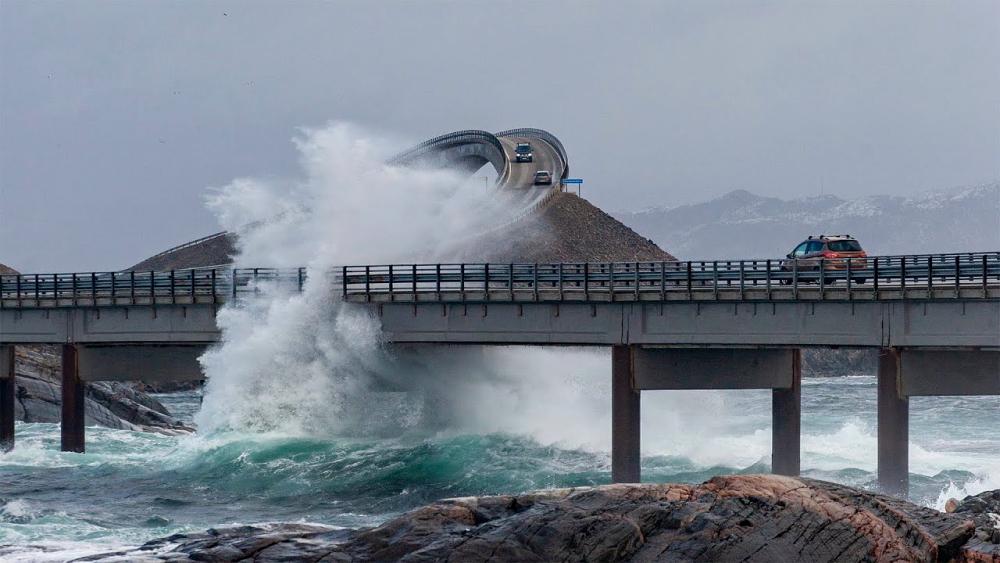
Now 25 years old, Atlantic Ocean Road passes through an archipelago as it links mainland Norway with the island of Averoy, and is one of the country’s official national tourist routes. Over the six years that it took to construct, workers struggled with the region’s wild weather and were interrupted by 12 hurricanes, according to the country’s tourist bureau.
There are several tourist stops along the way, including the Kvernes Stave Church, the Bremsnes Cave and popular fishing spots, although the road and its rocky shore have a dangerous reputation.
In 2013, an Israeli tourist was swept away after he fell into the sea while admiring the view from the roadside. Lynn can well relate to this as she made the brief walk back to the car from photographing the bridge. A brief squall occurred. She could barely breathe or make headway into the wind with icy pellets striking her face. Her clothes were wet and her hair looked like it had just been through a washing machine spin.
40 minutes later, after driving through the 6 km semi-circular Atlantic Road tunnel, we arrive at the port of Kristiansund.
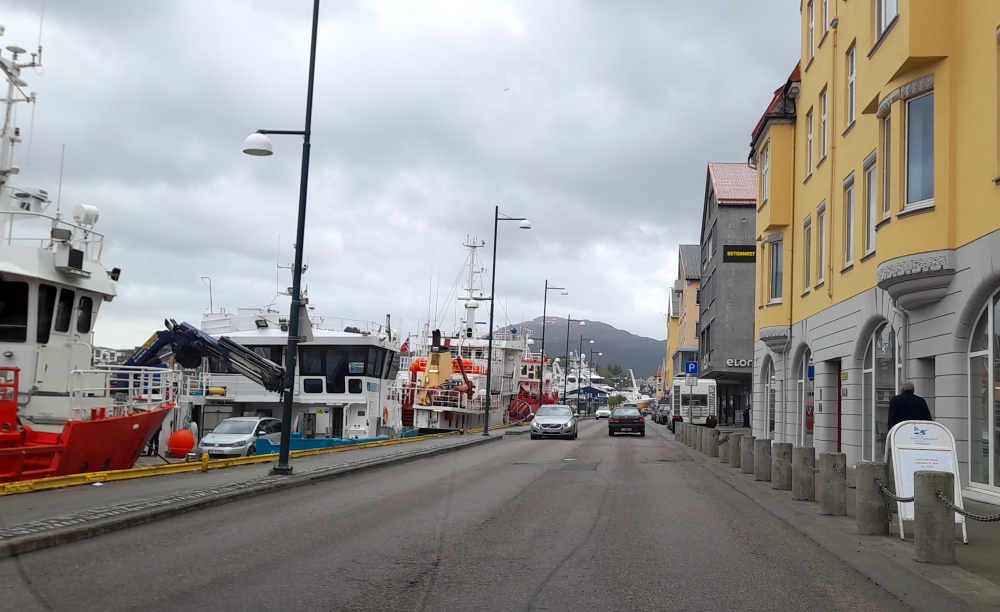
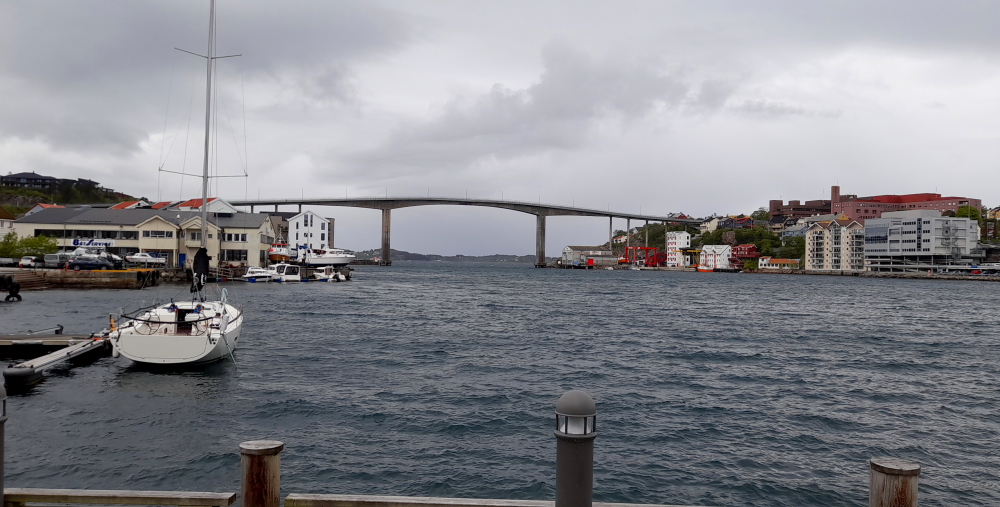
At the far end of the town we cross over the Sorsundbrua bridge to a small island called Innlandt and arrive at our hotel for the night. We are staying at the Thon Hotel and because this place is so isolated we didn’t expect much of a small town hotel but this place is amazing. With the wind howling around and since the Thon Hotel seems to have a nice restaurant we plan to stay in tonight.
.
 THE CONTINUING TRAVELS OF YOGI & BOO BOO