
29 May, 2023
It is cold, wet and windy today and going outside to look around the town of Namsos this morning is the last thing on our minds.
Lynn wants to do some sorting of data for our Northern European trip which means she wants access to my laptop all day. There is not much to see in this little town except the sawmill museum but I am not that interested.
So while Lynn does who knows what on my laptop I decide to brave the elements and take a walk around town. Although today is Monday it is another public holiday because yesterday was Whitsunday and the entire town is deserted except the current sawmill which seems to be the only reason that this town exists. Nothing to see here…..
By 4:00 pm the rain has eased so I drag Lynn away from the computer and we take a short drive up to the lookout which is on top of a large rocky outcrop above the town.
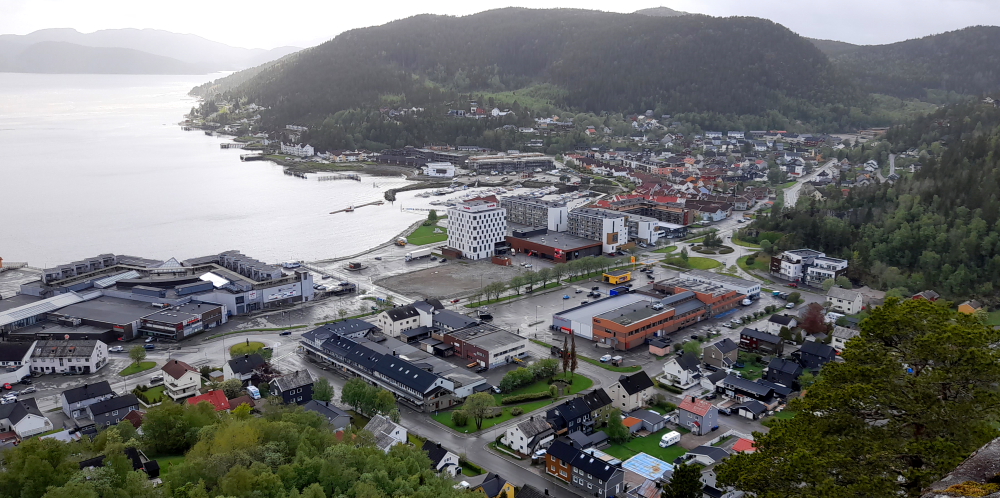
From the lookout we can see our hotel on the western side of town and the sawmill on the eastern side.
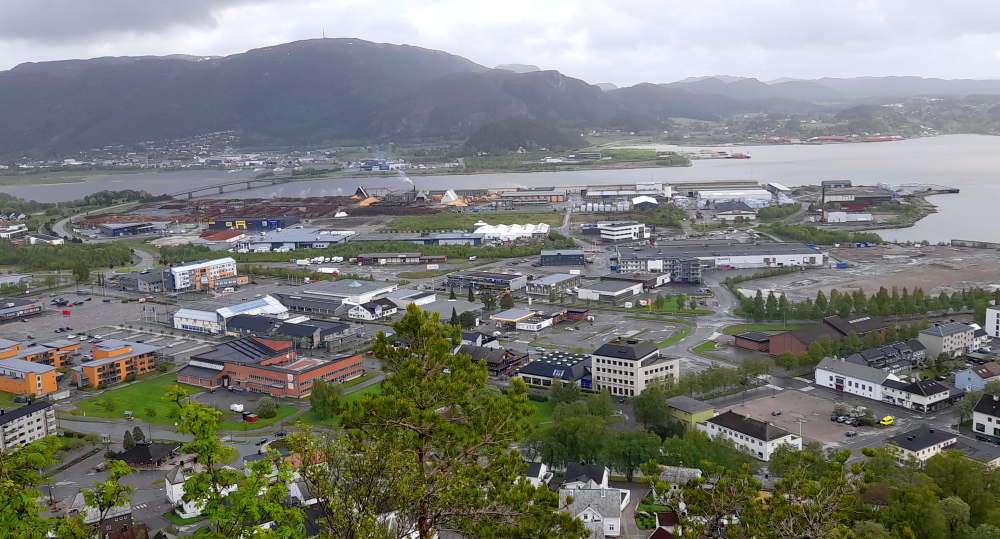
The Namsos sawmill is the biggest building in town and seems to employ most of the town. Even the shopping centres are closed today.
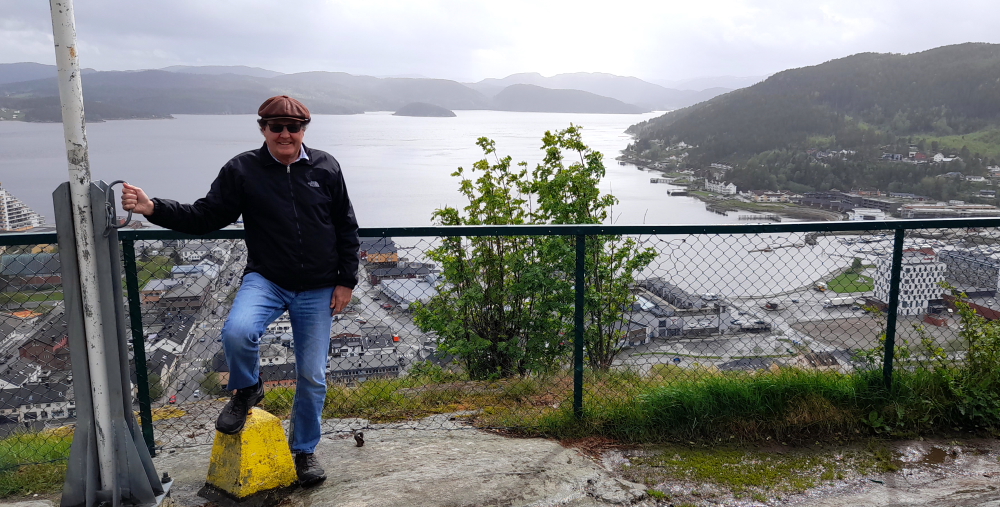
We may struggle to find a restaurant open tonight but we plan to go to the Tinos Hotel about 200 metres away which is supposed to have the best restaurant in town. At least our hotel restaurant is open tonight as a backup but the menu is very limited.
Just after 5:00 pm we head over to the Tinos Hotel and yes, it is open. Surprisingly it is quite busy considering that the streets are still deserted. The food is typically Norweigan expensive – a glass of red wine is almost the same price as a main meal (about A$16 for a small glass).
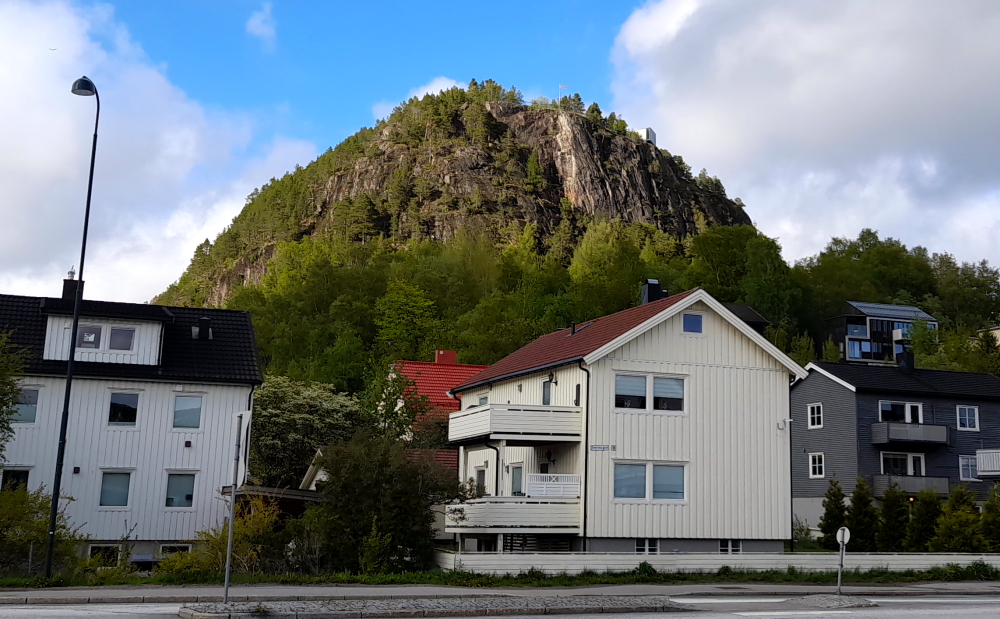
As we walk back to the hotel the skies are starting to show signs of blue patches and as we pass below the lookout the sun is shining through.
30 May, 2023
Sunshine at 7:00 am but by the time we depart for Mosjoen at 10:50 am it’s mizzling once again and is 9 Deg. C. But, the town is absolutely heaving with people and cars everywhere. Such a contrast to the past couple of days.
Initially, our route takes us along the 17 which becomes the 760 at Skogmo then we turn left onto the E6 at Grong.
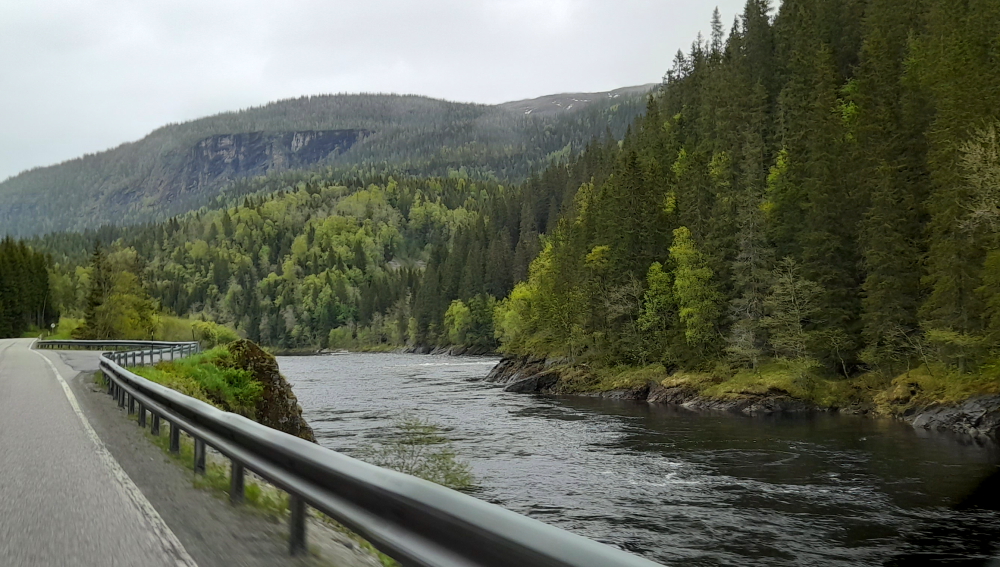
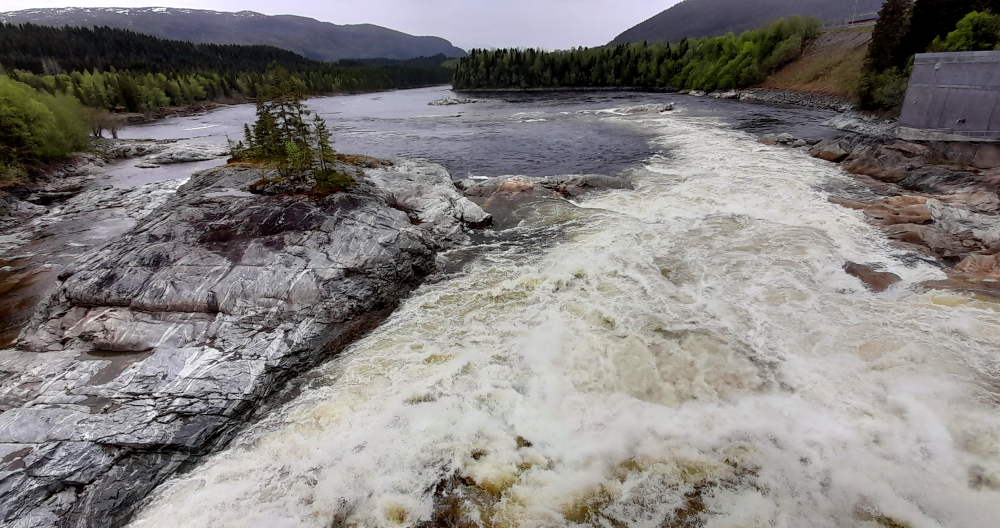
Just north of Grong, on the opposite river cliffs, is a fast-flowing waterfall.
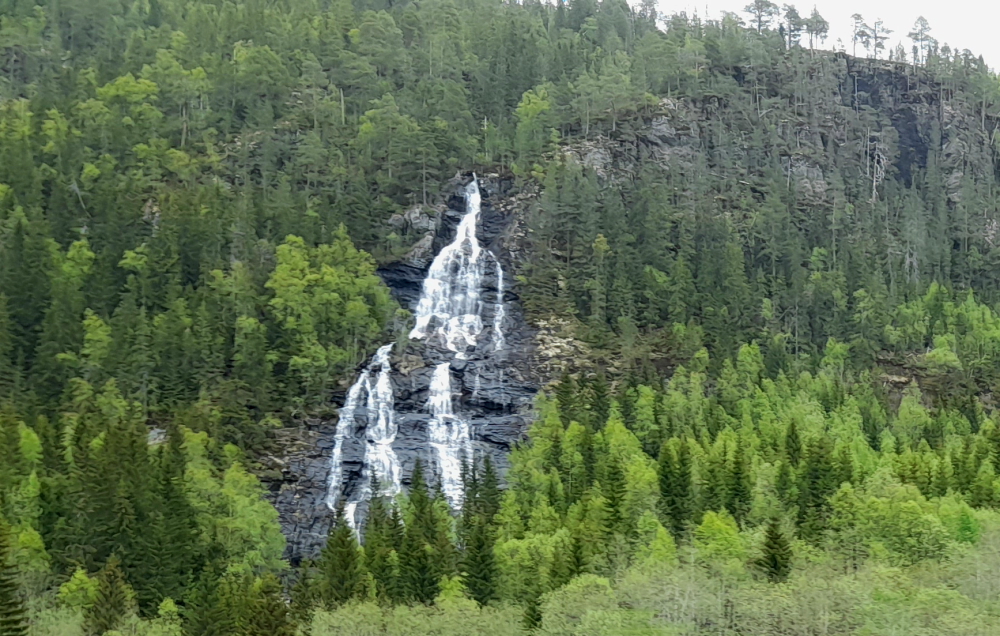
At Sagmoen we stop at the bridge to check out the semi-circular dam wall.
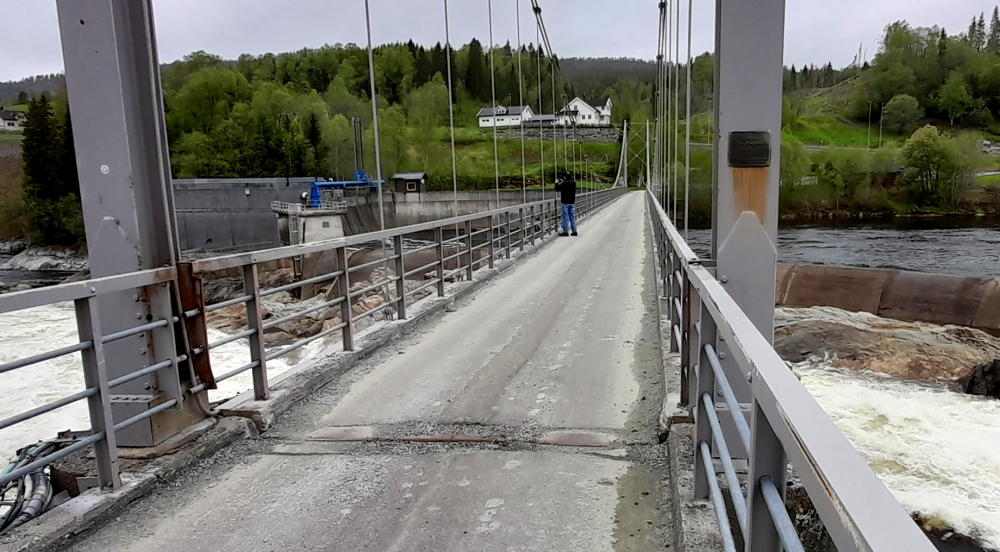
The rapids cause a loud din so we can hardly hear each other above the roar.
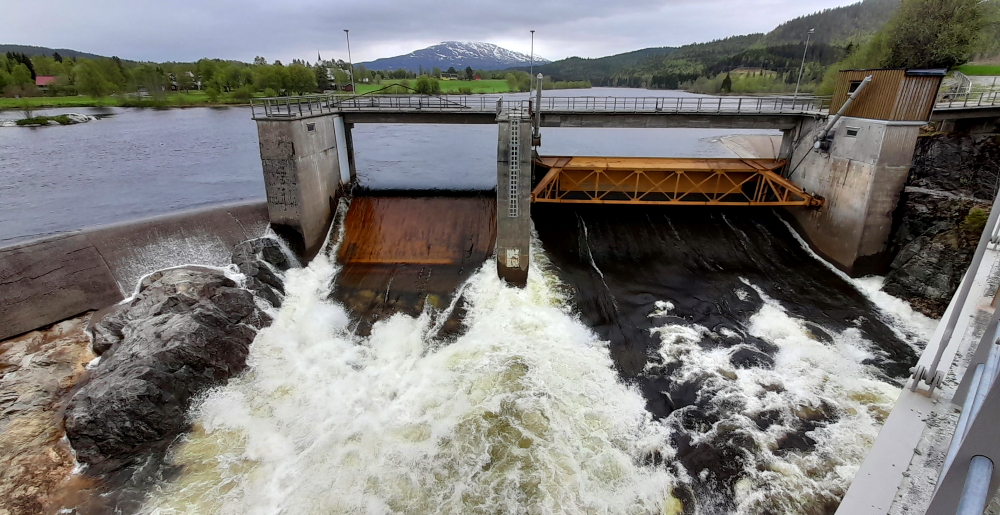
Surely a large amount of electrical power could be generated with all this water flow.
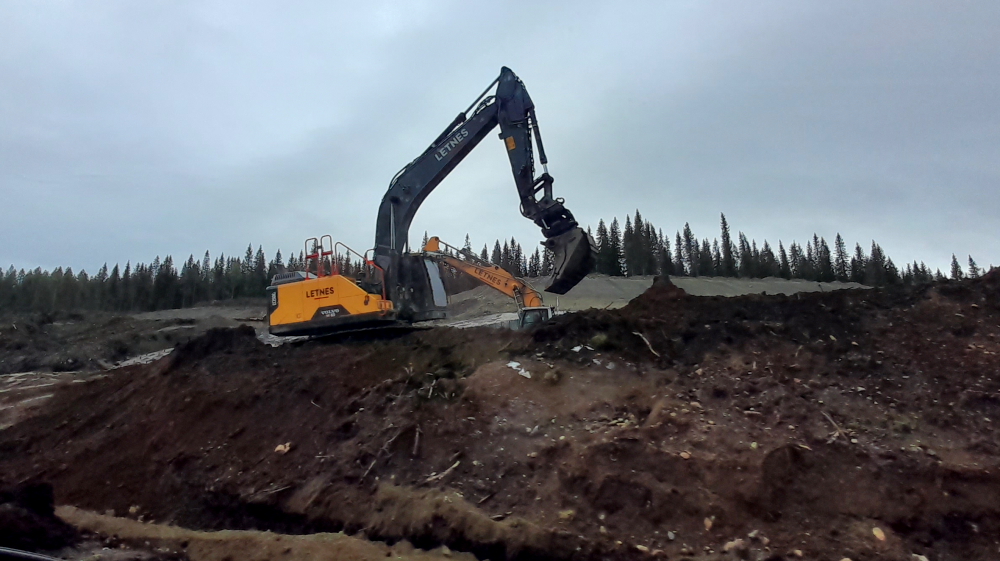
Since we started driving on the E6 just before Lillehammer we’ve been confronted by extensive road and bridge works running parallel to the current road. For most of the trip today we witness massive earthmoving works.
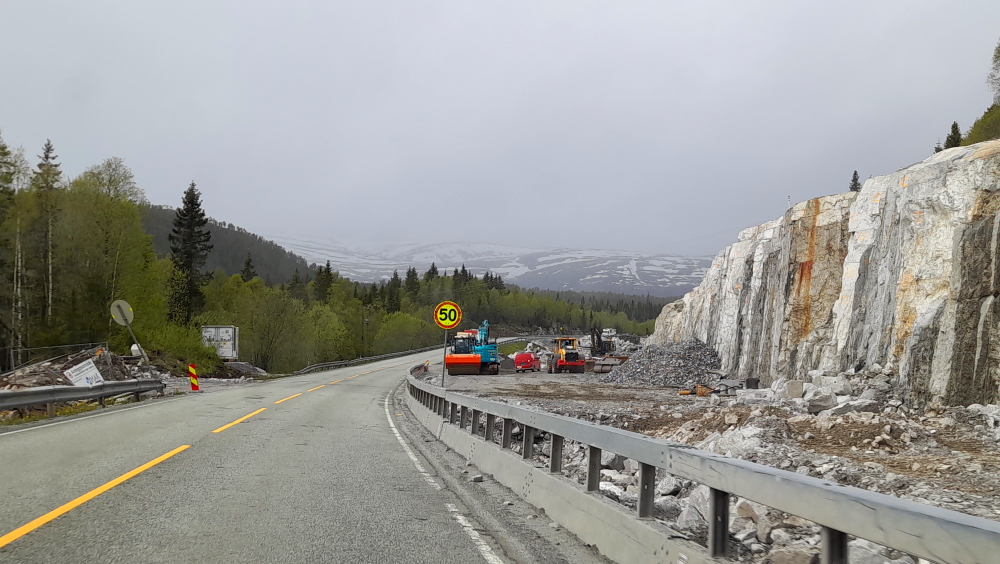
While the new roads are being built the old highway is very narrow at times and it is a tight squeeze when large semis are coming the other way.
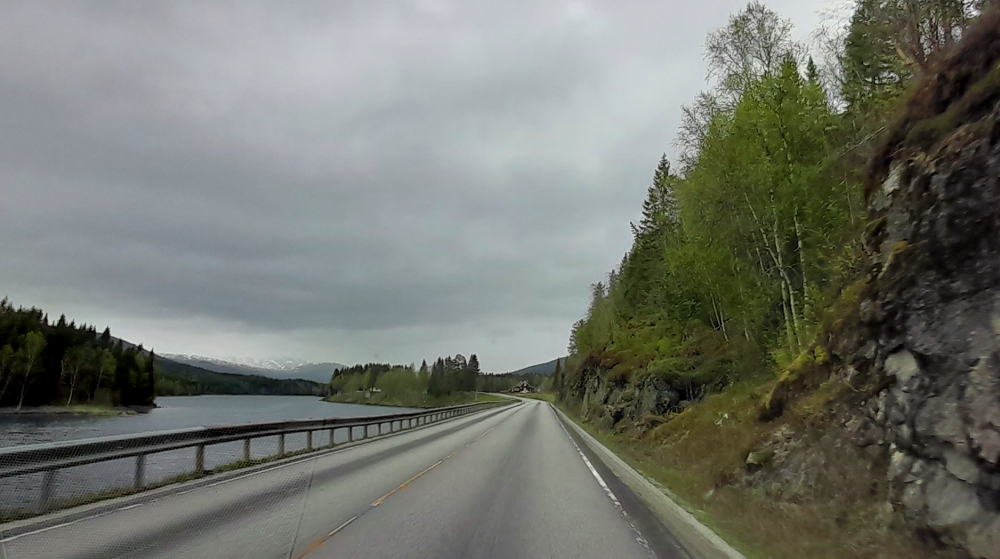
After Trones Lynn comments that it looks and feels like we are driving through a part of Canada – single road alongside a parallel railway line and fast-flowing river, and a narrow valley covered with pine trees and snow up top.
Near the Borgefjell National Park and between the villages of Smalasen and Majavatn is the county border between Trøndelag and Nordland marked by an overhead road sign – Norde Norge – North Norway.
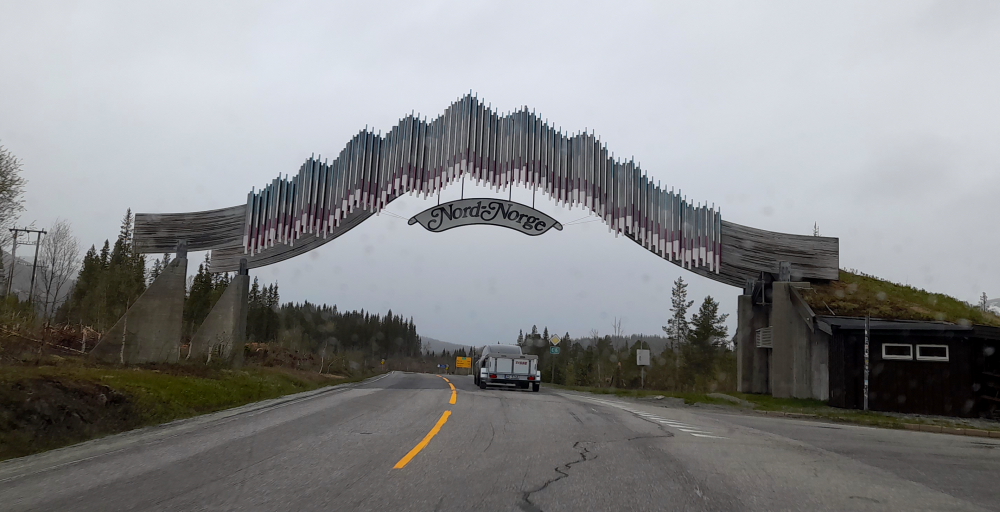
The further north we drive snow appears along the roadside and on the hills. The temperature outside is now 5 Deg. C, but 20 Deg. C inside the car and Lynn has her car seat heater on low.
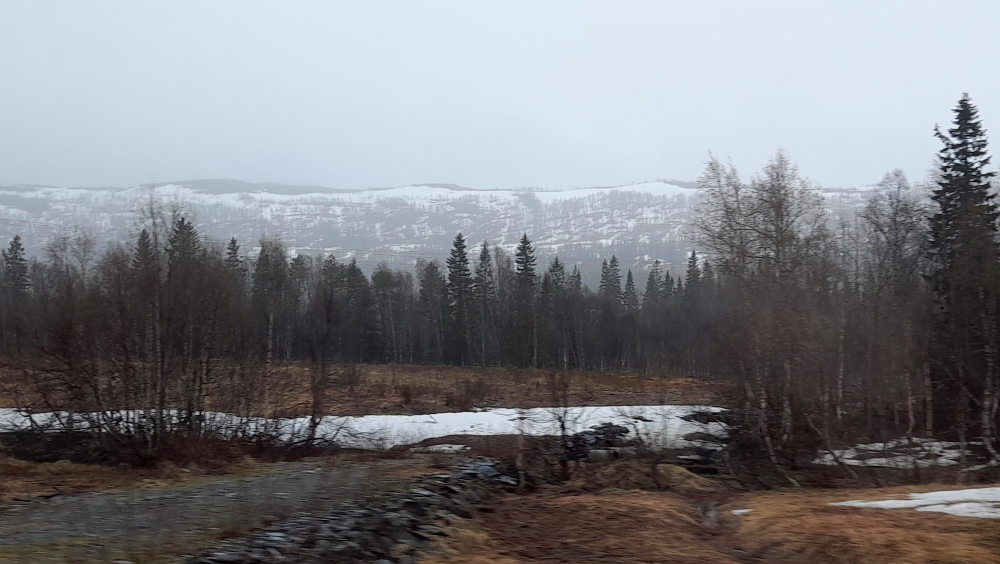
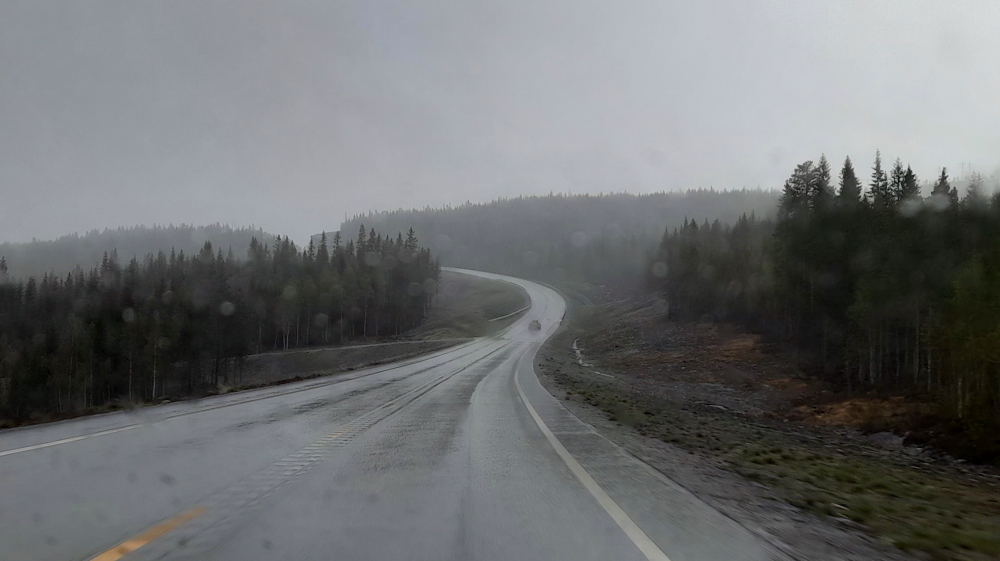
And the mizzle continues but at times the rain is quite heavy making visibility a little difficult.
Considering we are only about 200 metres above sea level the snow is a good covering despite summer being only 2 days away.
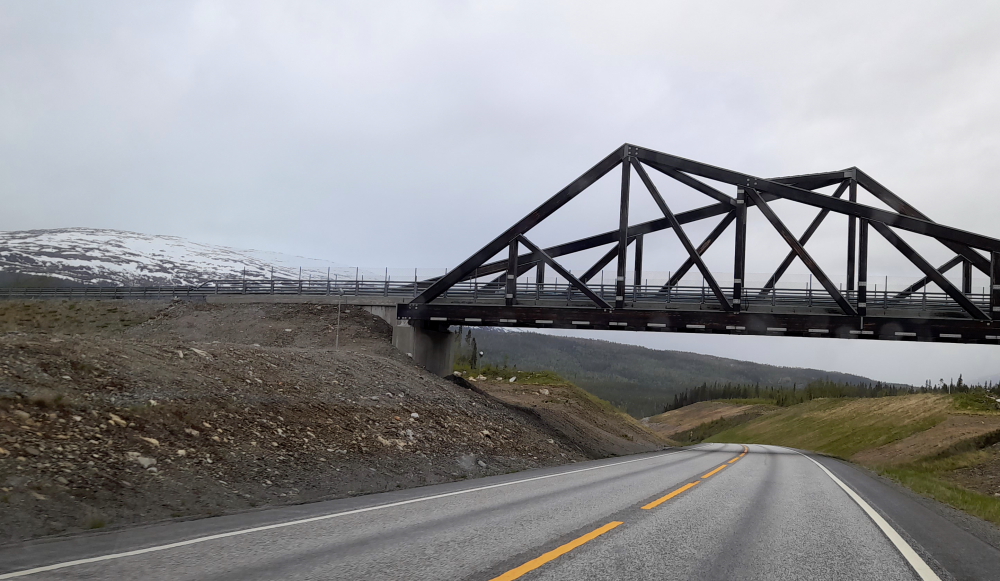
On three occasions we see reindeer near the road.
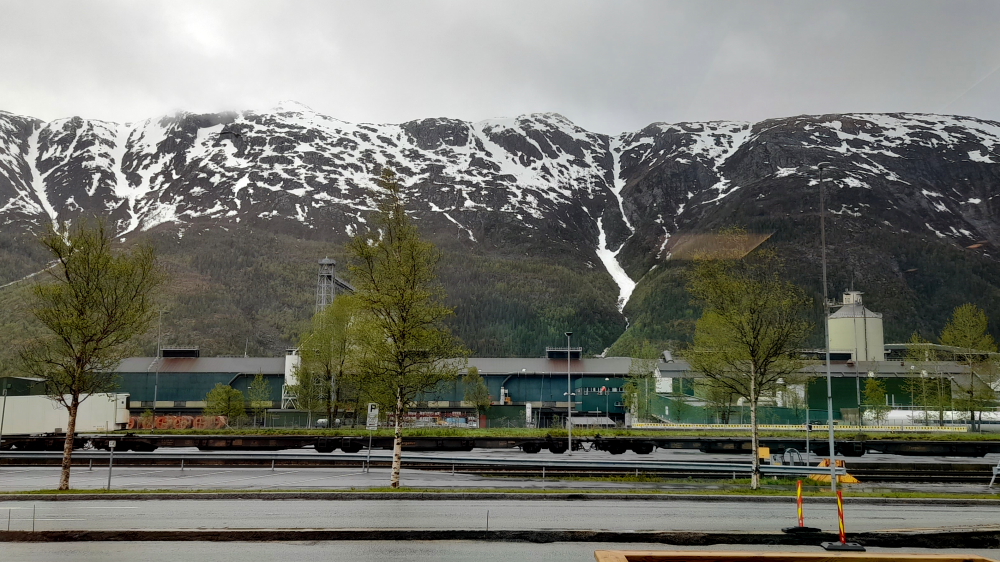
3 hours and 15 minutes after departing Namsos we roll into Mosjoen on the Vefsna River and which faces Oyfjellet, a mountain peak.
Apparently there is controversy surrounding a wind turbine project located at Oyfjellet which powers the Alcoa factory in Mosjoen. The local Saami population petitioned the government to stop the project as it would affect their way of life (reindeer frightened off by the wind turbines) – but lost. All a bit woke really as we have stood directly under large wind turbines and there is hardly a sound.
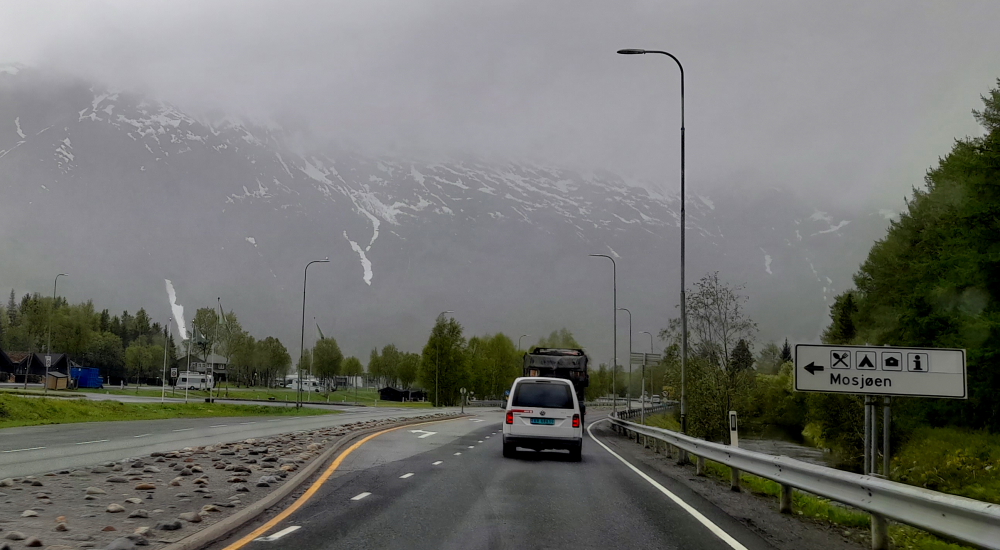
While we wait for the hotel washing machine to become available we drive into town to find the main shopping street – which appears to be just one-block long and is a pedestrian-only area. Just as well our accommodation offers half board. The question is… is it edible?
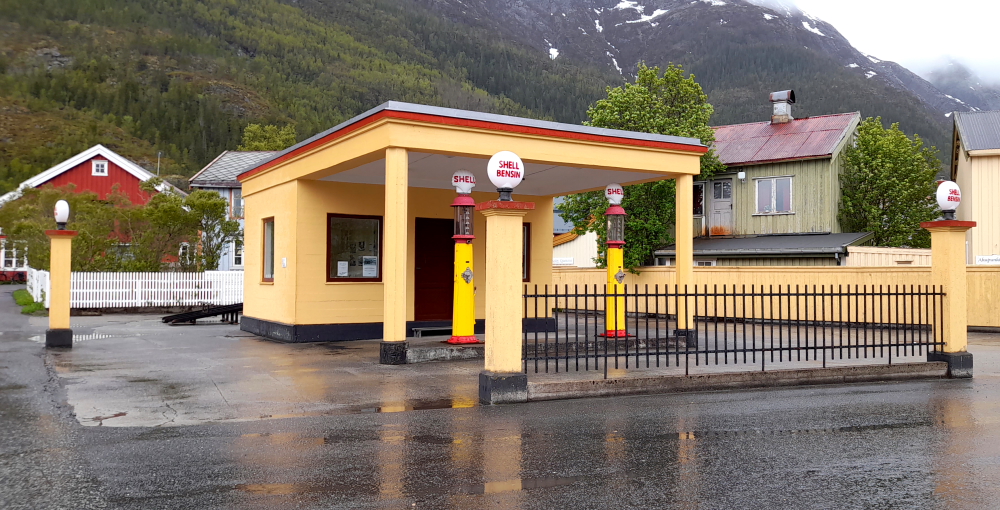
Just after 7:00 pm we go down to dinner. Dinner is a bit ordinary but no worse than most of the expensive restaurants in Norway. The food will do as it is blowing a gale outside and the rain is nearly horizontal. With very few restaurants in town and with this weather, dinner could be baked beans on toast and it would still be preferable to going out.
31 May, 2023
It is still raining this morning as we head down to breakfast. As we suspected, the further north we go in Norway the more local the food becomes. There is just enough edible options to get us by but not what we would call a good breakfast. I do need to drop a few kilos anyway. At least the coffee is drinkable.
While we sit at our window seat having breakfast the clouds start to lift on the hills opposite the hotel. We can at last see the top of the hills.
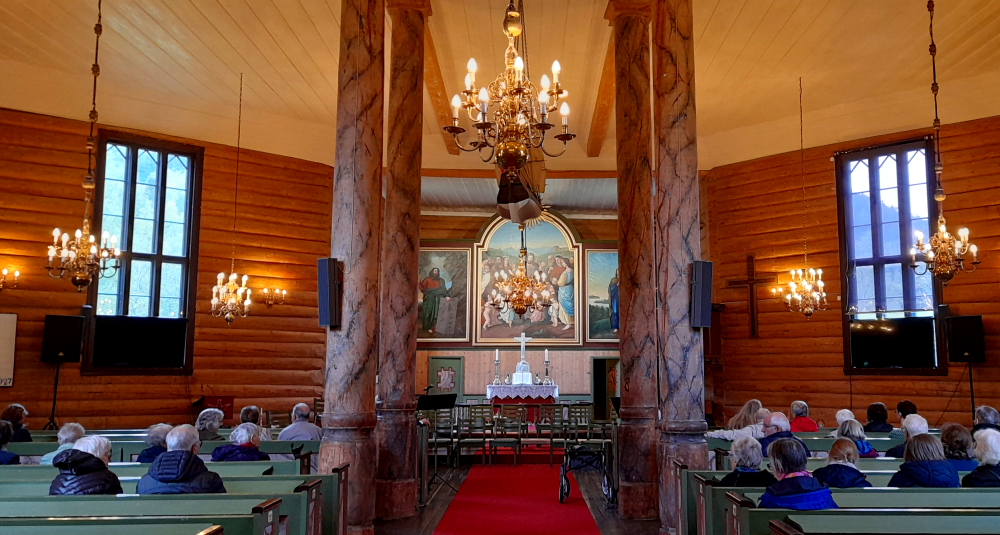
Near to our hotel is Dolstad Church which has intrigued Lynn so she wanders out in the rain to investigate. The red, wooden church was built in an octagonal style in 1734 by the architect Nils Pedersen Beck. The church seats about 500 people.
The earliest existing historical records of the church date back to the year 1544, but the church was likely founded in the 12th century. In the 1640s, the church building was either renovated or completely rebuilt. The altar piece is dated to 1644, so that may have been the year of construction.
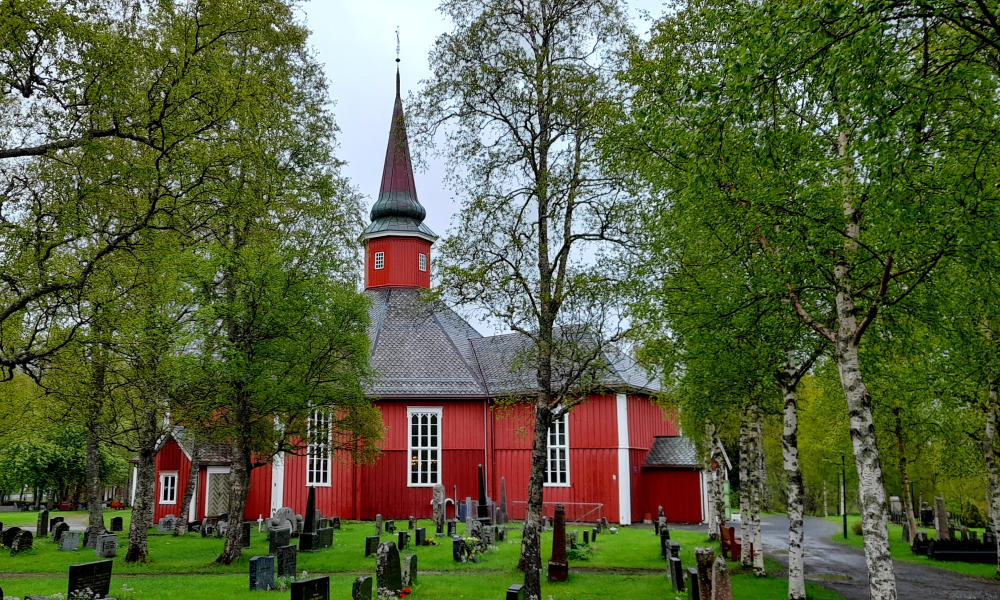
In 1814, this church served as an election church. Together with more than 300 other parish churches across Norway, it was a polling station for elections to the 1814 Norwegian Constituent Assembly which wrote the Constitution of Norway. This was Norway’s first national elections.
Besides the four wooden columns in the centre of the church and the two galleries either side, other notable features are a wooden sailing ship and a gilt angel – both suspended from the ceiling just in front of the altar.
At 7:00 pm we head downstairs to dinner. The food is worse tonight than last night. If only there was a Maccas in town. We are not fans of fast food but a tiny Big Mac would beat this lot easily. Unfortunately we have a light dinner included again the next two nights at our hotel in Bodo. Glad we don’t have any more lined up after our next stay.
1 June, 2023
This morning’s breakfast is probably the worst that we have experienced since we left Brisbane last September. Even the yogurt is missing this morning. I managed some baked beans on bread (yes, there is not even a toaster in sight). I just can’t manage cold meat and pickled herring for breakfast.
We are all packed up and on the road by about 10:00 am. The pillows in the hotel were so bad that I now have a crick in my neck that makes turning my head very painful.
We have about a 4.5-hour drive to our next stop at Bodo which is inside the Arctic Circle. The plan is to drive via Saltstraumen Bridge to see the Straits. Saltstraumen is a small strait with one of the strongest tidal currents in the world.
Last night the weather forecast for both Mosjoen and Bodo was for snow but when we opened the curtains this morning there was none of the white stuff. Did it snow en route, though?
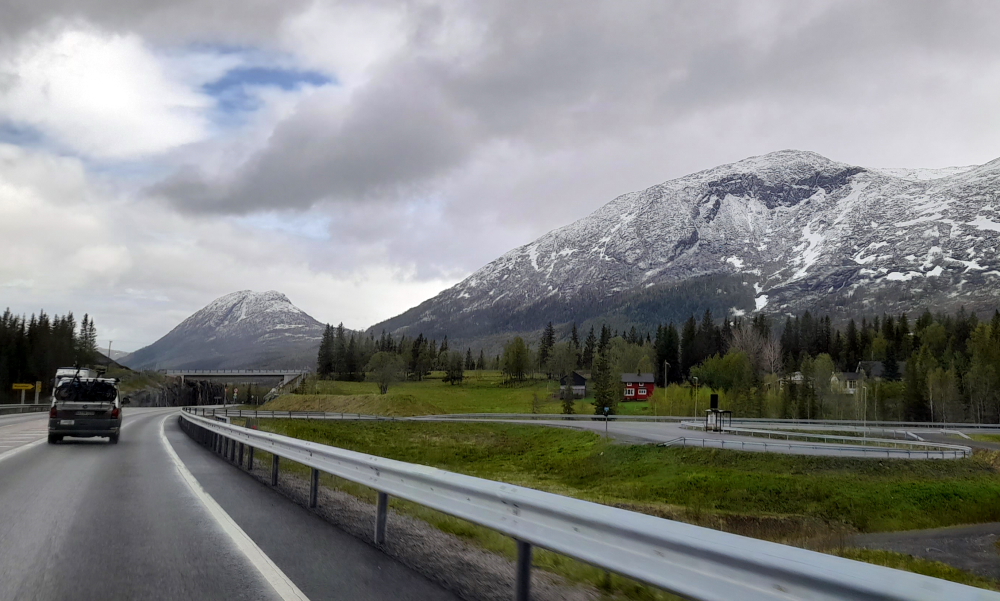
Once again we are on the E6 but we seem to have left the massive earthworks behind.
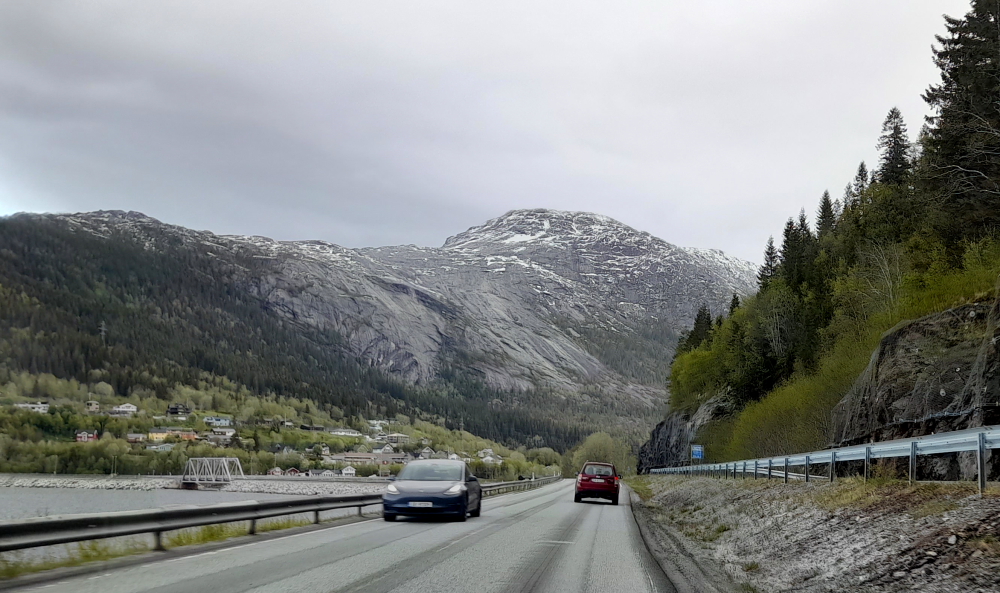
Instead the road meanders alongside several lakes: Fustvatnet, Mjavatn, Ommervatn, Luktvatn and alongside Ranfjorden where the town of Mo i Rana is located which featured in the Allied retreat in May 1940 during the Norwegian Campaign of WWII.
As we proceed, it appears that the higher hills did receive a dusting of snow last night.
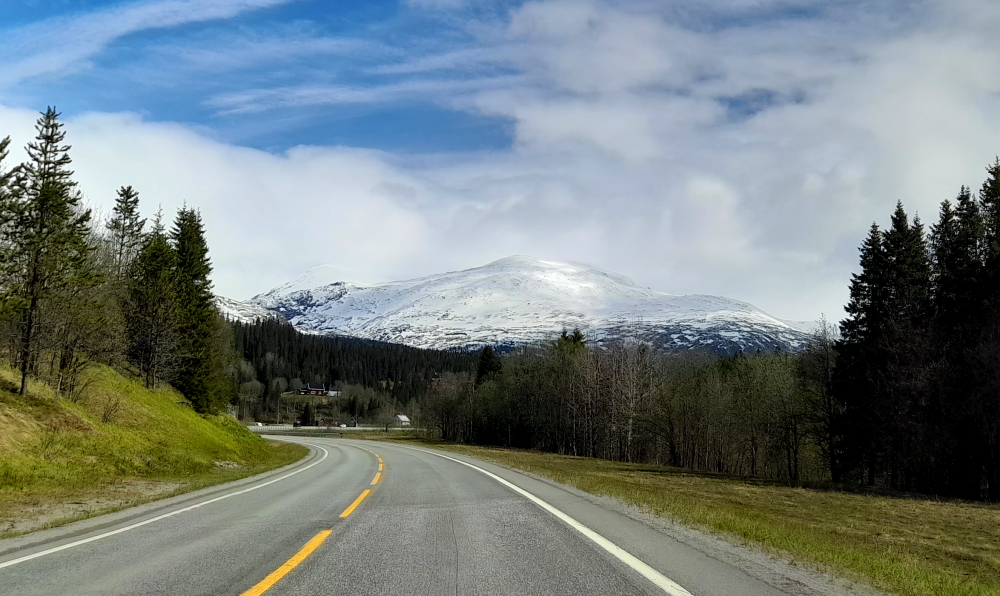
Time for a pit stop. Unlike the other tin or timber ‘dunnies’ along Norwegian roadsides with the mandatory outdoor wooden picnic bench and seats, this is part of a cabin affair where both loos and picnic tables are indoors within a heated cabin. Just as well as there is snow at the door.
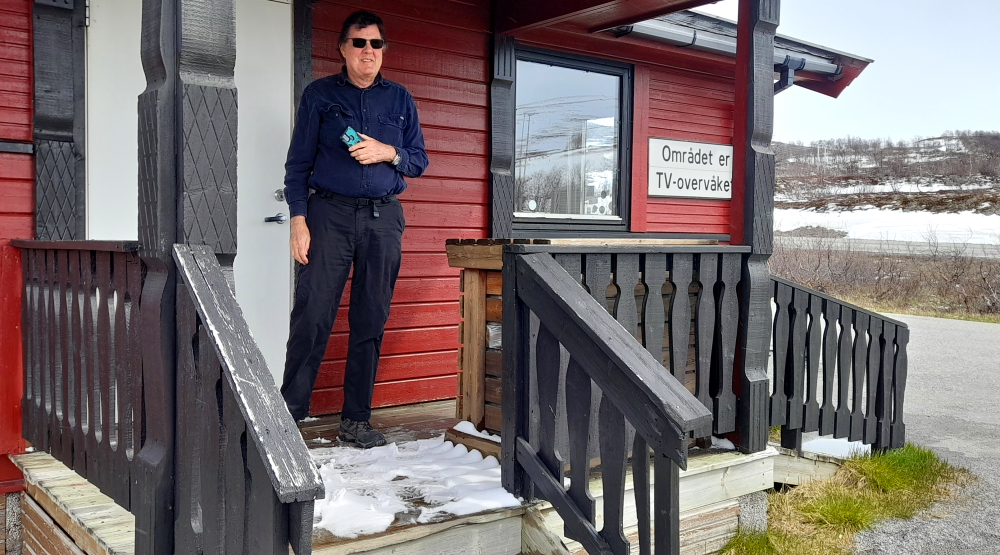
And surrounded by a snowy landscape.
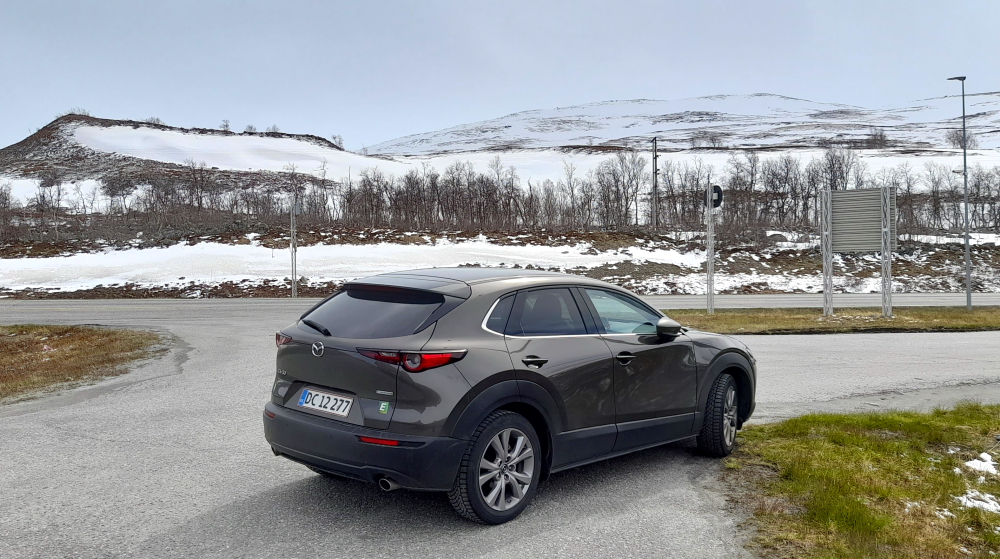
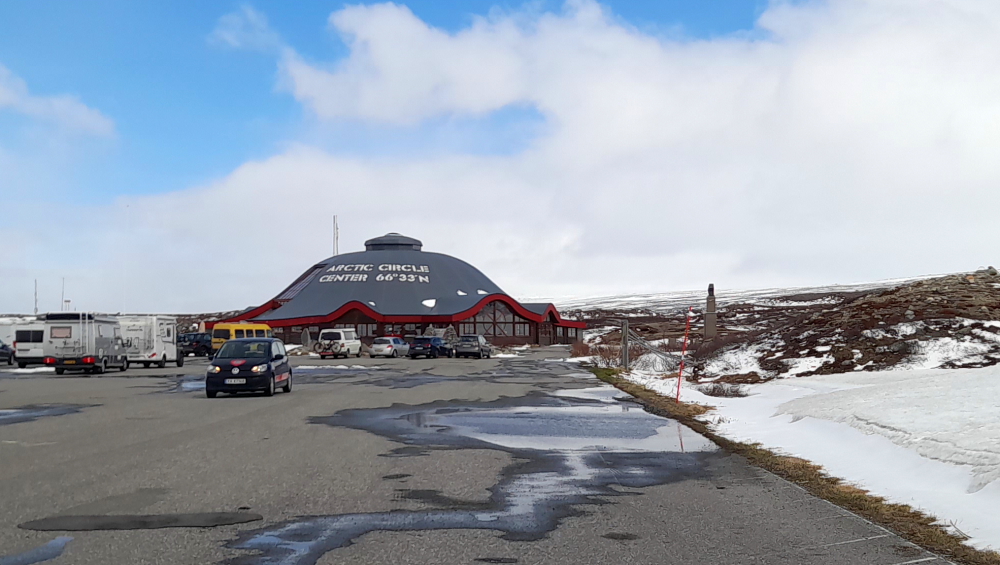
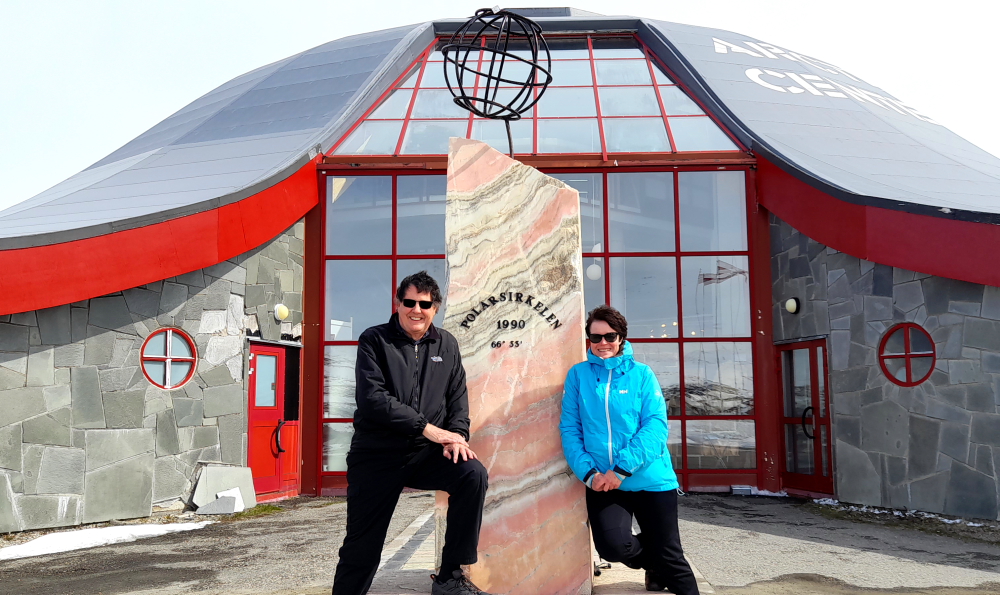
5 km further up the road we arrive at 66.55 deg. N – the Arctic Circle – and the Polarsirkelen 1990 – the Arctic Circle Centre located on Saltfjellet (approx. 680 m above sea level) which has approx. 160,000 visitors annually.
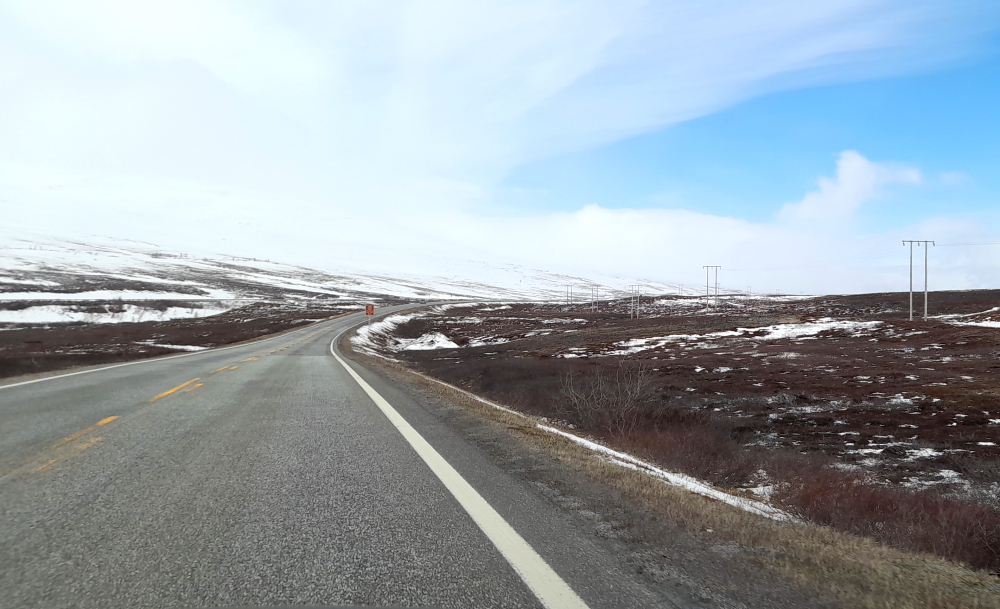
The centre was opened on 13 July 1990, at the same time as the new E6 was opened over Saltfjellet. A path of marble marks the Arctic Circle through the centre. In the summer of 2009, the Arctic Circle was actually 1039 m further north, and it moves approx. 14.25 m northwards per year.
In the area around the centre there are Russian and Yugoslav war memorials from WWII.
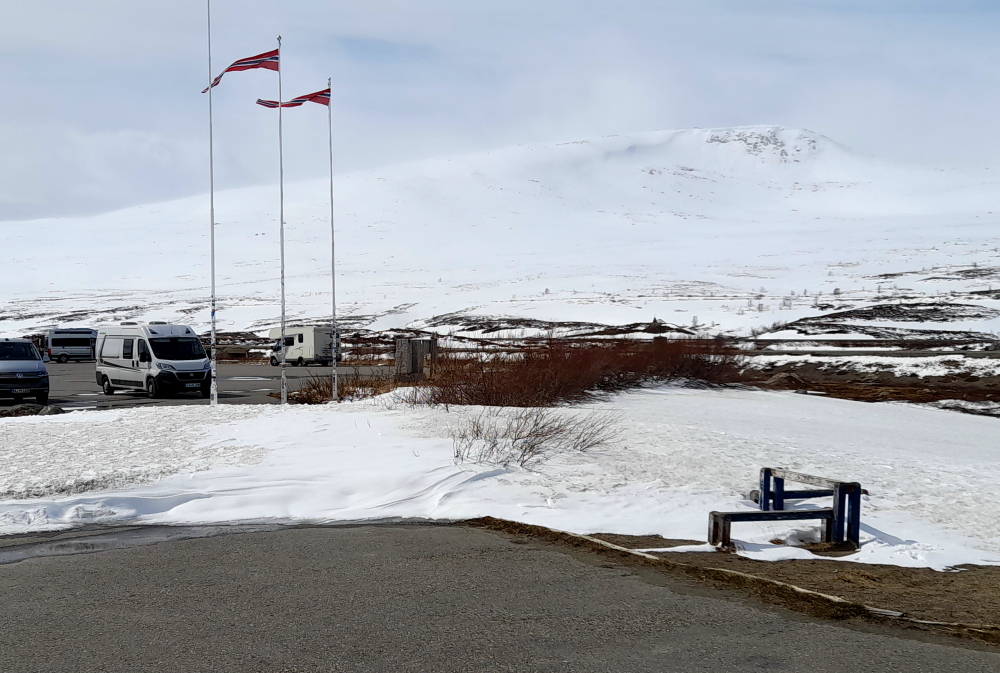
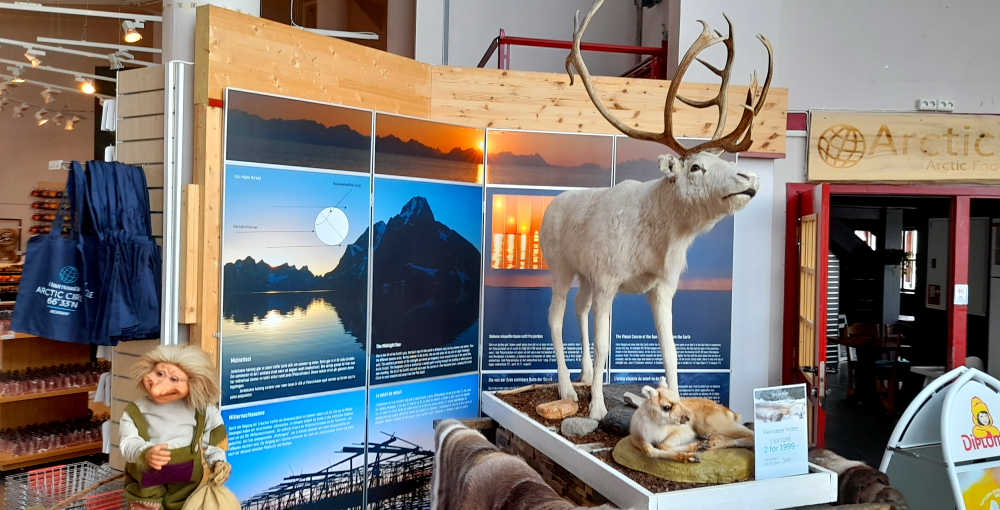
Dashing through the snow we hit the souvenir shop and while I choose some trolls for my grandsons Lynn selects some post cards which we will post from here as they will be stamped with a special Arctic Circle stamp.
The shop has WiFi so while we are there I call my eldest daughter on WhatsApp to show her that it is snowing in summer in the Arctic Circle. We have a long chat and she informs me that I am going to be a grandfather again in October.
By the time we are back on the road we figure that we will have to defer our trip to the straits on the way to Bodo but will do them tomorrow instead.
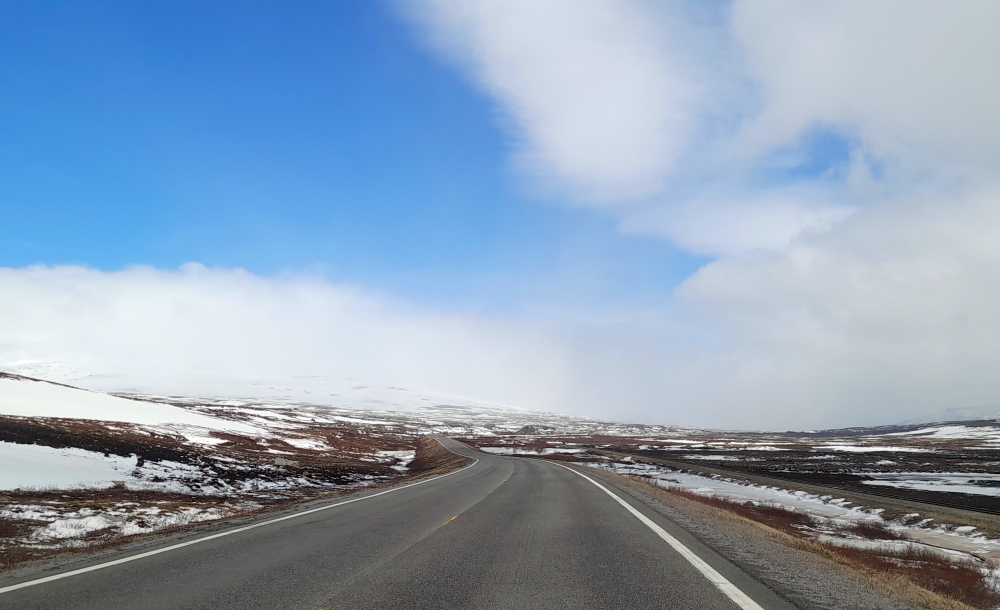
The outside temperature is now down to 1 Deg C and we experience some snow flurries. If this is summer I don’t think that we want to be here in mid-winter.
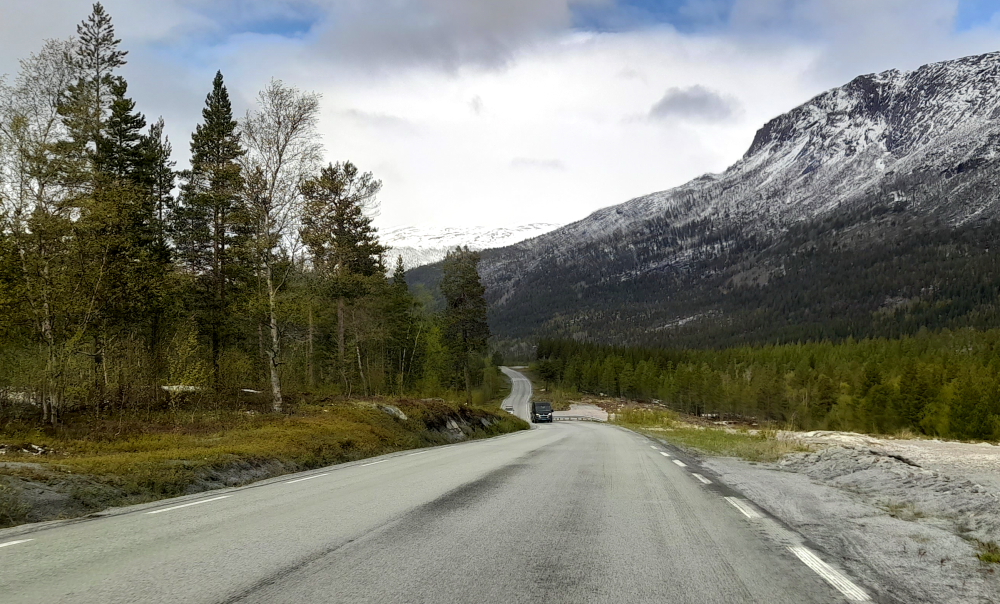
Soon the E6 starts to descend towards Skjerstad Fjord at sea level where we leave the E6 at Fauske and drive on the 80 until we arrive at Bodo at 3:30 pm.
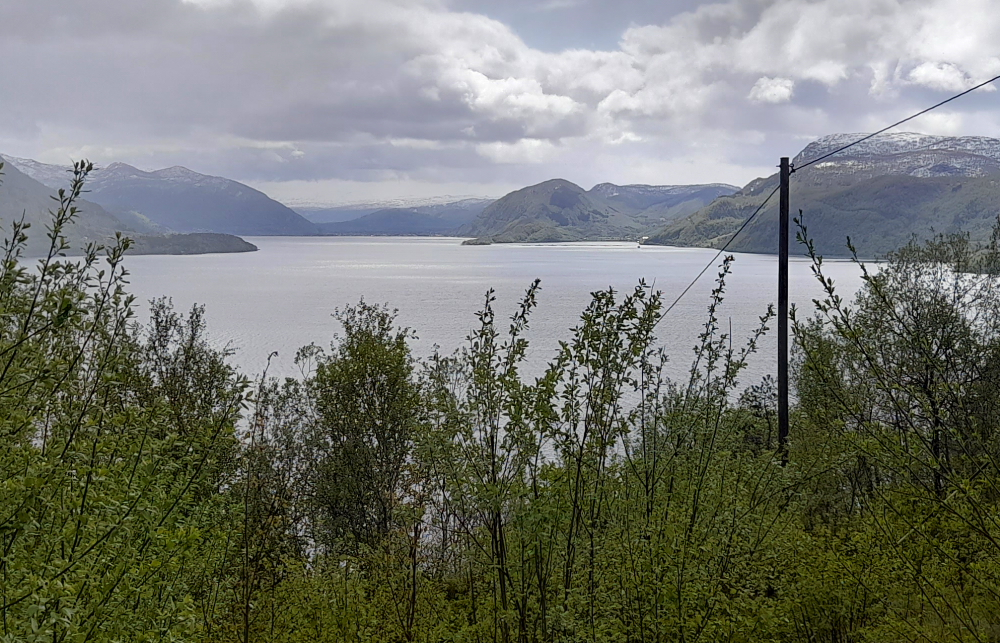
Typical of Norwegian towns, Bodo is also in the process of having some of its streets cordoned off and ripped up.
Bodø is the capital of Nordland County and lies just north of the Arctic Circle where the midnight sun is visible from 1 June to 14 July.
We stand at the back of the check-in queue and then discover that our ‘free onsite parking’ is actually across the road in a public parking lot which is free from 15:00 to 09:00.
While I settle in, Lynn decides to check out the local Cathedral and the harbour area.
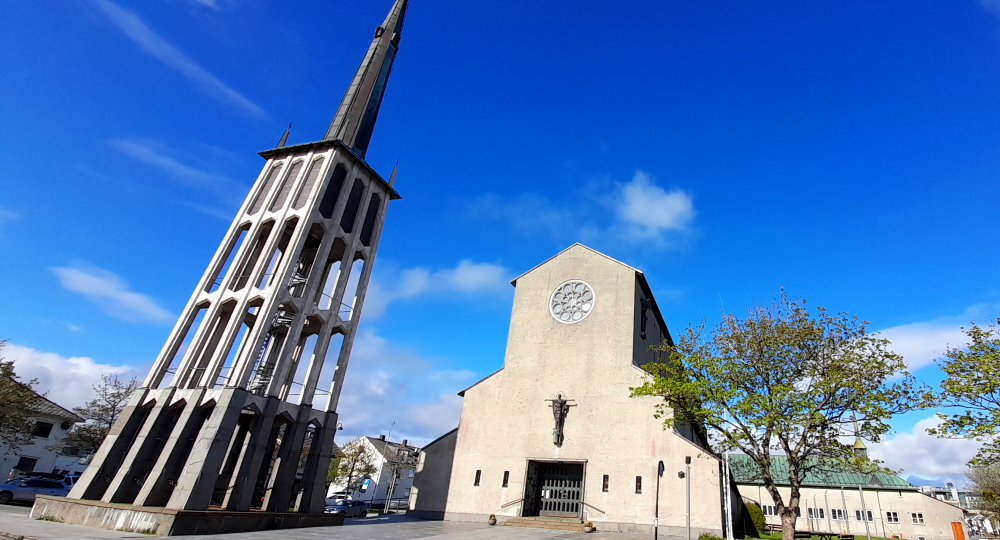
Bodo Cathedral, a concrete church, was built in a long church basilica style in 1956. The town of Bodo was established in 1816, but it did not receive its own church for quite some time. The Nordan-designed yellow, wooden neo-Gothic church built in 1887 was destroyed on 27 May 1940 when the whole city center of Bodo was bombed by the Germans during WWII. In 1946, an architectural competition was held for the design of a new church which was won by Blakstad and Munthe-Kaas.
The church has a 36-metre (118 ft) tall free-standing clock tower that contains three bells. There is also a memorial to those who died from Bodø during the War.
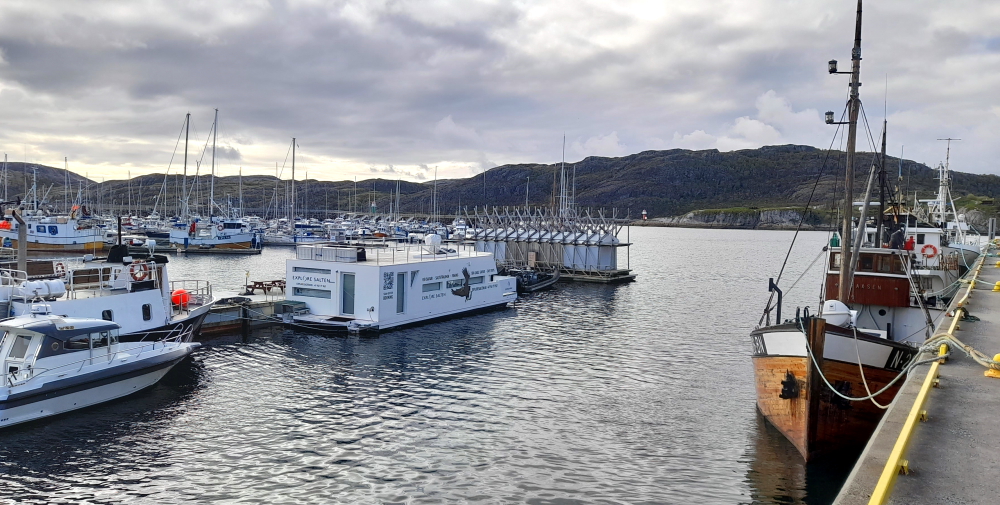
The earliest settlers came to the Bodo area almost 10,000 years ago, at the end of the last ice age, attracted by the unusually abundant stocks of fish and seabirds of the Saltenfjord. The burial mounds found at Saltstraumen highlight the importance of travel through the strait during the Iron Age.
As a town, Bodø is not very old. Established in 1816, it had only 200 inhabitants for its first 20-30 years. The arrival of herring off the coast in 1860, and its presence for the next 20 years caused the town to grow rapidly and extensive industry developed. By the time the herring stocks were exhausted, the town had established itself and had developed more independent industries.
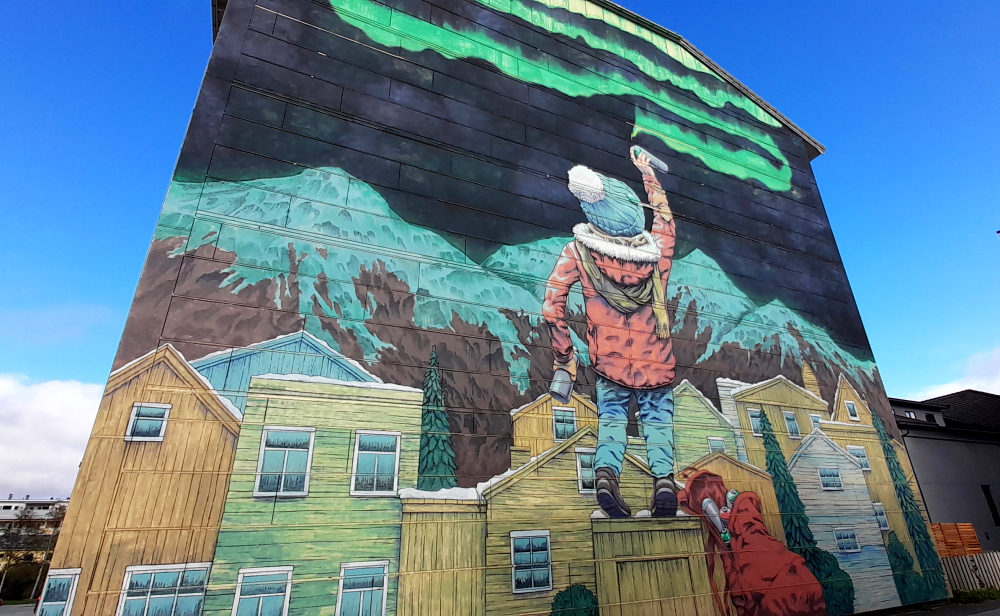
Another supper included deal tonight which actually wasn’t too bad. Much tastier and varied than Mojoen Hoel’s offerings.
It’s now 9:30 pm and time to hit the sack. Lynn informs me that there is no sunset tonight, and won’t be until 14 July – we will have 24 hours’ sunshine! We don’t drop below the Arctic Circle again until well in to Finland on June 16th.
.
 THE CONTINUING TRAVELS OF YOGI & BOO BOO