
14 January, 2024
Today Lynn has booked us on a 2.5 hour GuruWalk of the Nice Old Town and Castle Hill. We are due to meet at 11:00am at the Fontaine du Soleil in Place Massena.
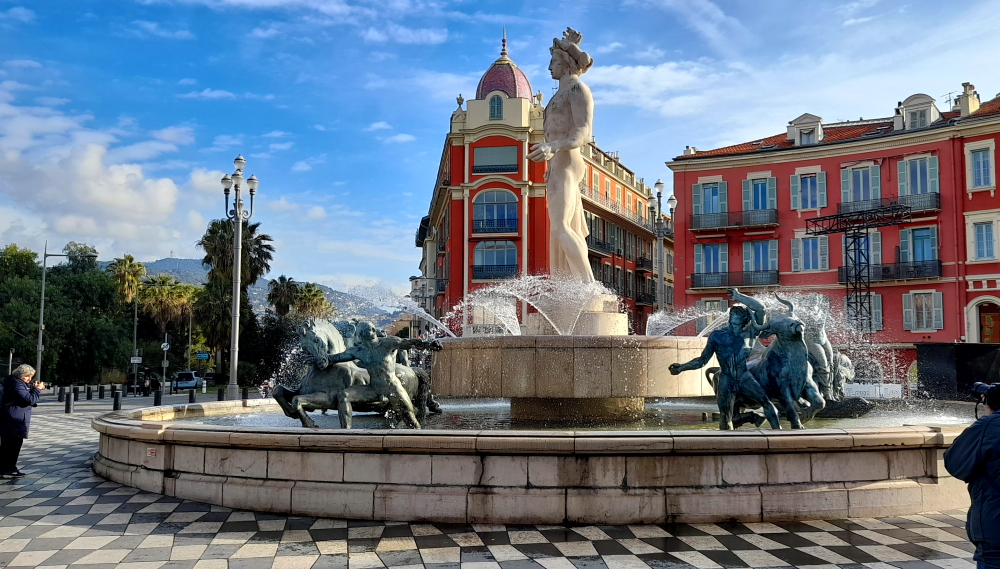
On the dot of 11:00 our guide, Sergio, turns up and our small group of 5 introduce ourselves. One of the 3 women is an Australian lawyer, originally from Townsville, who worked in Sydney with FIFA but is now on a belated gap year working in Paris. In order to get the most out of her 2 days off, she travelled on the overnight train from Paris.
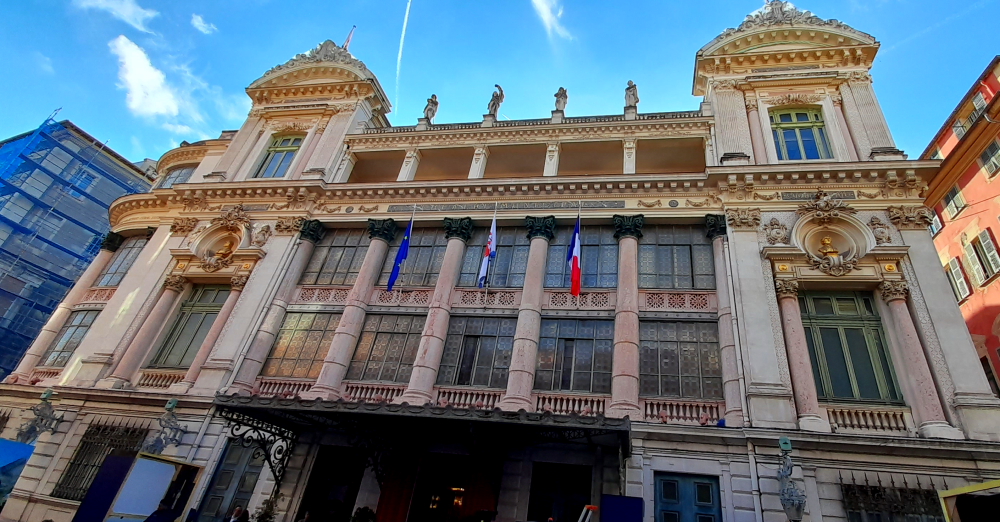
We enter the Vieille Ville and walk along Rue Saint Francois de Paule to the Nice Opera Theatre. In the distance we can see Castle Hill.
The Opéra de Nice is the principal opera venue in Nice offering operas, ballets and classical music concerts and also houses the Ballet Nice Méditerrannée and the Nice Philharmonic Orchestra.
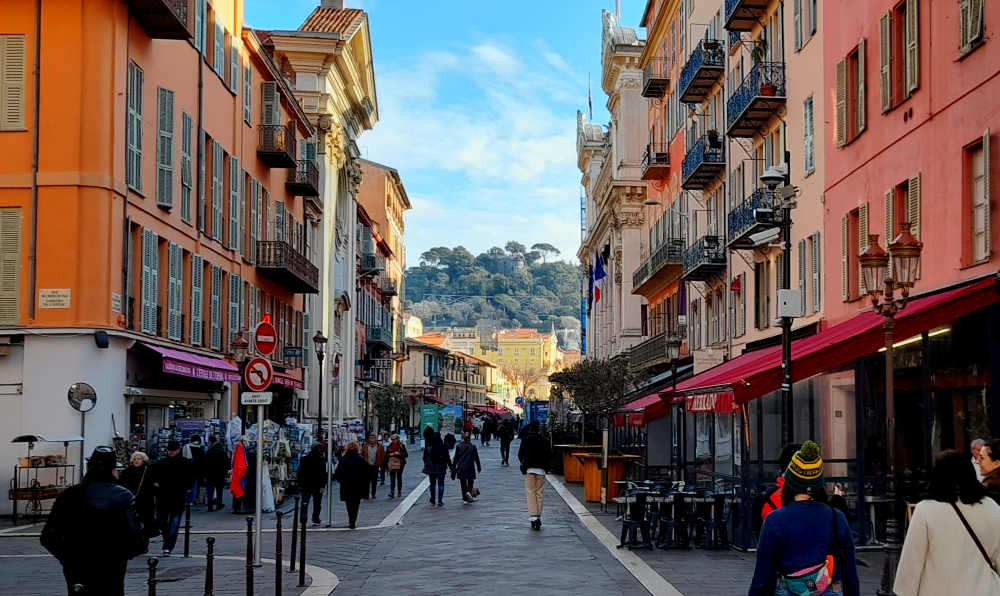
A wooden theatre in 1776 it reopened in 1790 under the name “Théâtre Royal”. In 1826, the city of Nice had it demolished, rebuilt and inaugurated in 1828. In 1856, a great ball was organized in the honour of King Victor Emmanuel II.
In 1860, Napoleon III was invited to attend an evening at the Théâtre Royal. For this special occasion, Johann Strauss led the orchestra. The same year, the theatre became the “Théâtre Impérial”. In 1864, Napoleon III returned, accompanied by Tsar Alexander II of Russia. In 1868, Louis II, Duke of Bavaria attended a performance of Cendrillon. The Théâtre Royal was renamed “Théâtre Municipal” in 1870.
1881 saw the theatre reduced to ashes. The city of Nice immediately decided to rebuild another theatre on the same site. It was designed by architect François Aune with the apparent approval of Charles Garnier, the architect of the Paris Opera. In 1885, the Théâtre Municipal re-opened with Verdi’s Aida. Over the following years it hosted the French stage premieres of operas such as A Life for the Tsar and Eugene Onegin. In 1902, it was named Opéra de Nice and is today referred to as Opéra Nice Côte d’Azur.
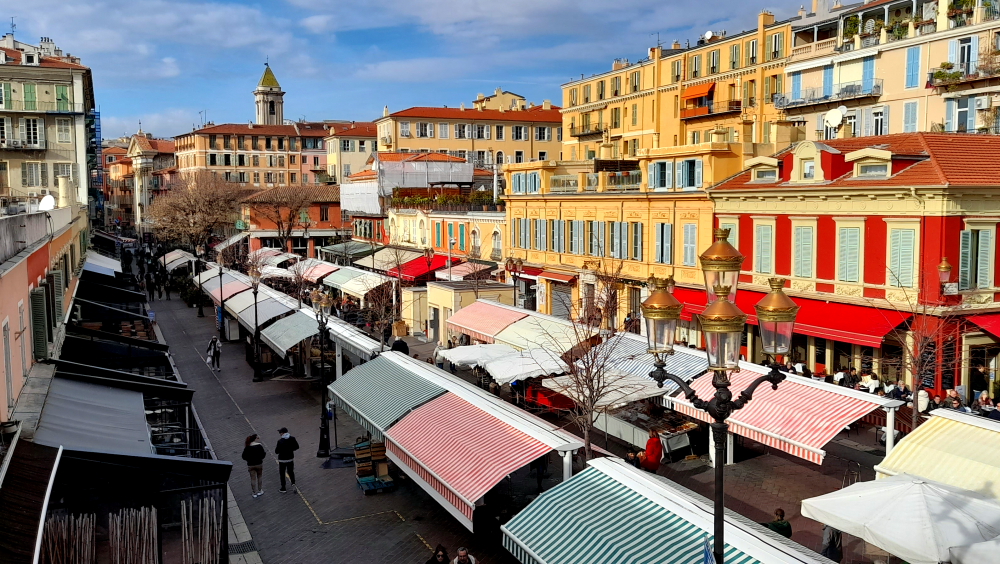
Further along the street in Cours Saleya we come across this morning’s Sunday flower market.
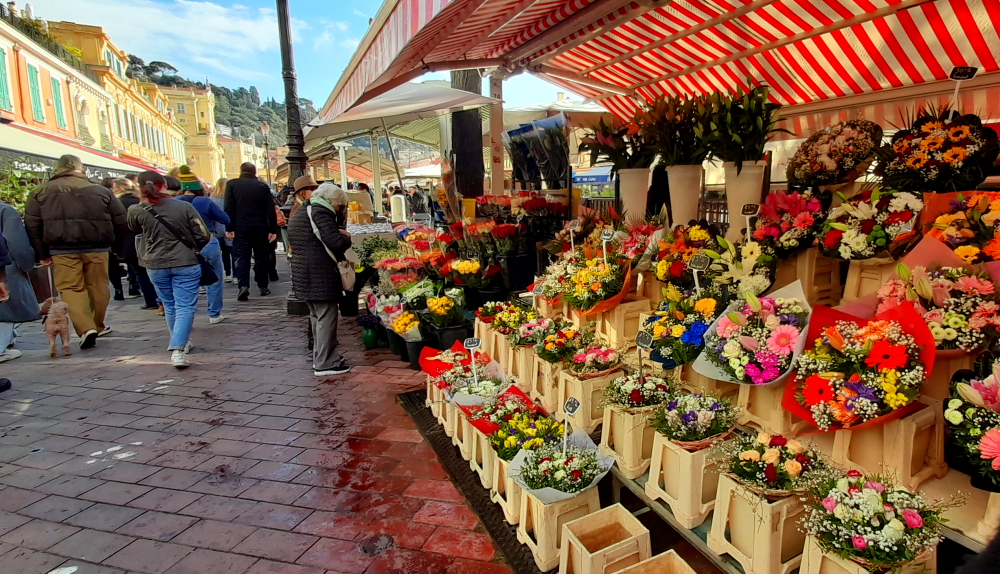
The market stalls stretch the length of Cours Saleya and into the adjoining Place Pierre Gautier. We have 10 minutes to look around the market on our own and need to return to the guide in Place Pierre Gautier, which we do a couple of minutes early.
While we are chatting to Sergio an almighty ‘BANG’ is heard which sets off all the dogs in the area and flocks of pigeons take to the sky, not to mention making Lynn jump a foot in the air, as she does whenever she hears an unexpected loud noise. A daily, noon gun (cannon). How quaint.
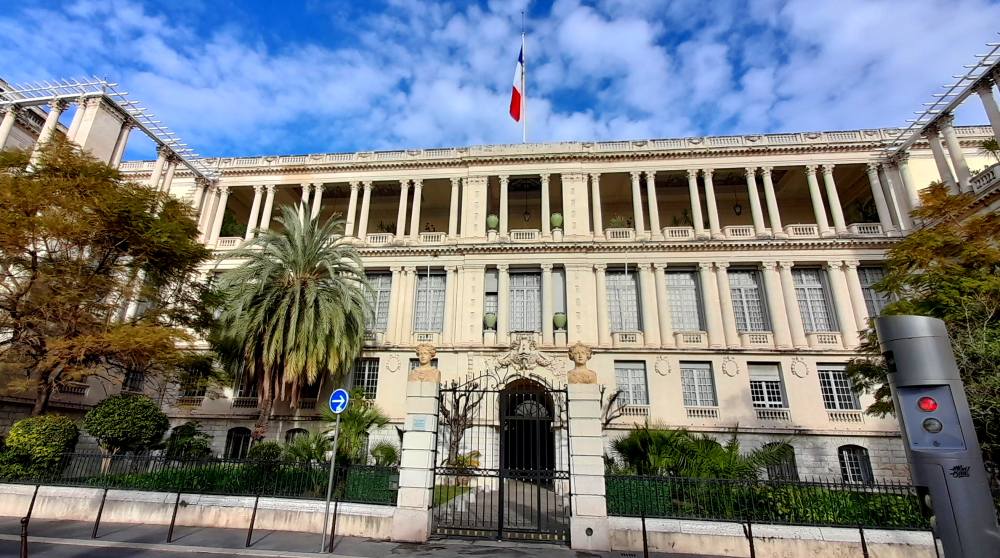
Also in Place Pierre Gautier is the former palace of the King of Savoy, who used to own this part of France back in the day. Today it is the Palais de la Prefecture.
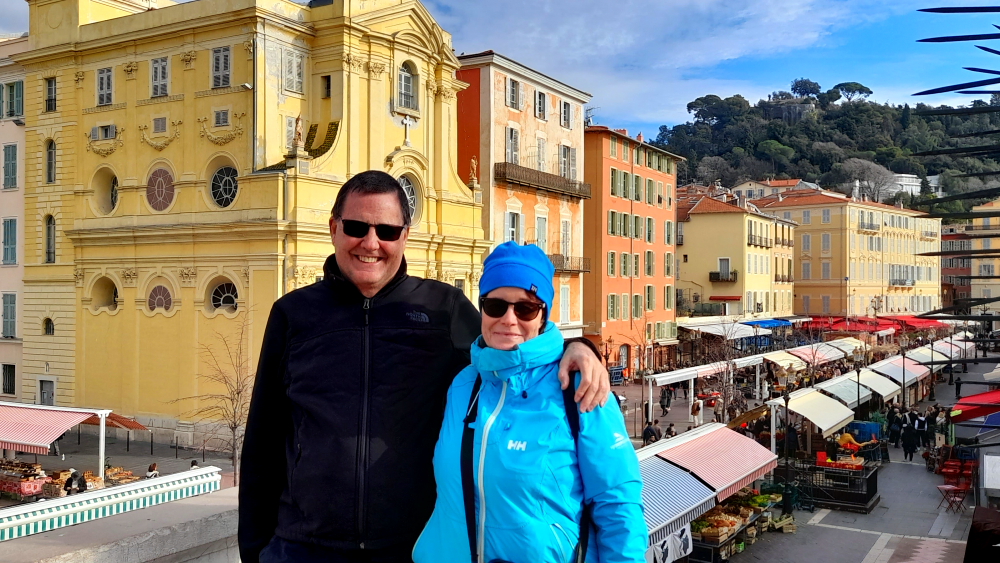
From here we walk around the corner until we arrive at the Cathedrale Sainte-Reparate de Nice. Reparata was, according to tradition, a 3rd-century virgin, who was martyred for her Christian faith in her hometown of Caesarea, Roman Province of Palestine, and later canonised by the Catholic Church.
At age 15 she was arrested for her faith and tortured during the persecution of Roman emperor Decius (r. 249–251). Her persecutors tried to burn her alive, but she was saved by a shower of rain. She was then compelled to drink boiling pitch. When she again refused to apostatize, she was decapitated. Her legend states that immediately upon dying a dove appeared to symbolize the departure of her spirit to Heaven.
Later elaborations of her legend state that her body was laid in a boat and blown by the breath of angels to the bay presently named the “Baie des Anges” in Nice.
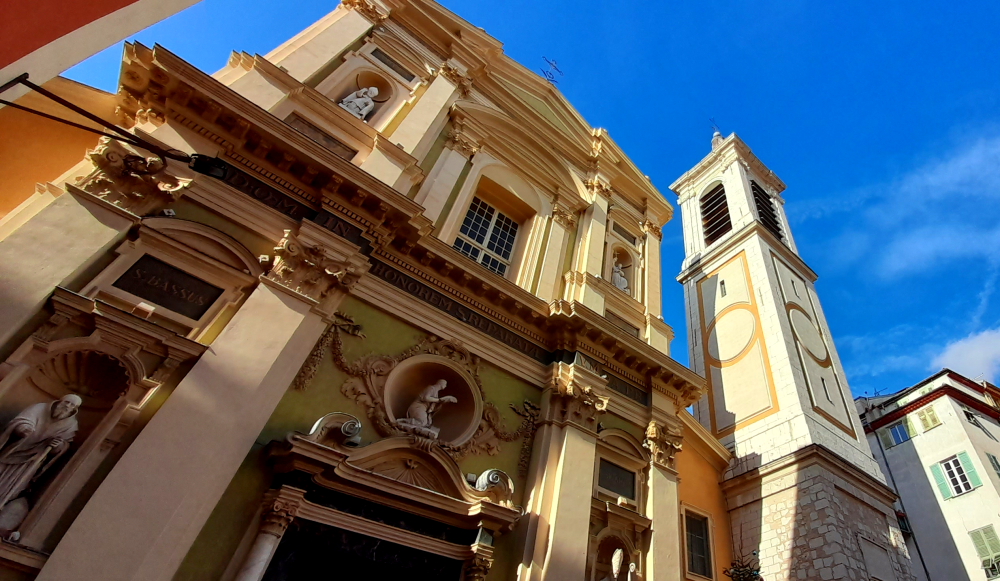
The original cathedral on the site, called St Mary of the Castle, was consecrated in 1049. In 1060, relics belonging to Saint Reparata (for whom the current cathedral is named) arrived in Nice. By 1075, a chapel dedicated to St Reparata was constructed at the foot of the castle.6.
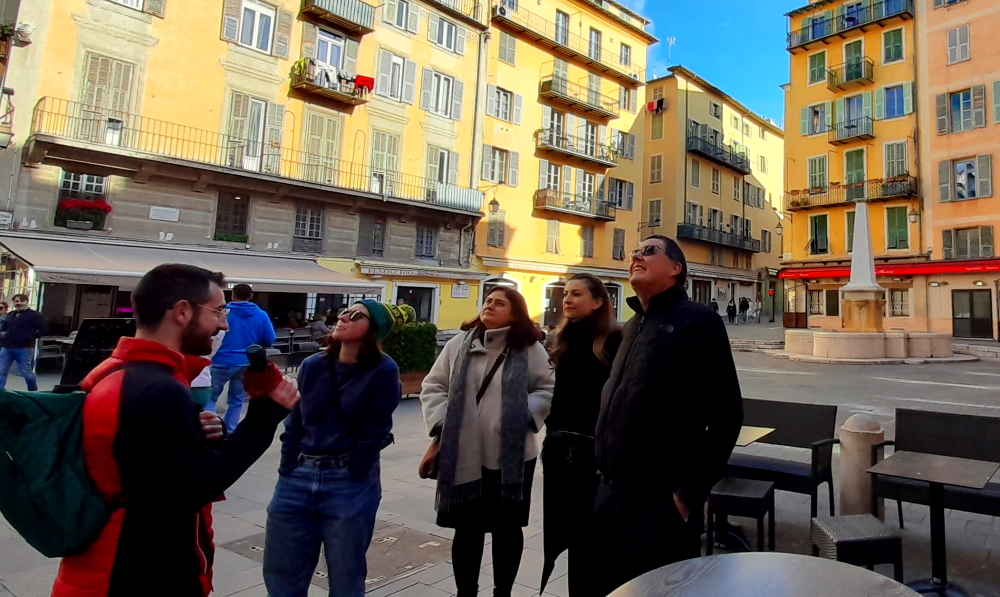
During the first half of the 16th century, the seat of the bishops of Nice from Cimiez Cathedral, which sits on the hill of the castle overlooking the city, was gradually transferred to the church of St Reparata in 1590. After an official ceremony presided over by the bishop Luigi Pallavicini, and in the presence of Charles Emmanuel I, Duke of Savoy, the church was recognized as a chiesa-cattedrale.
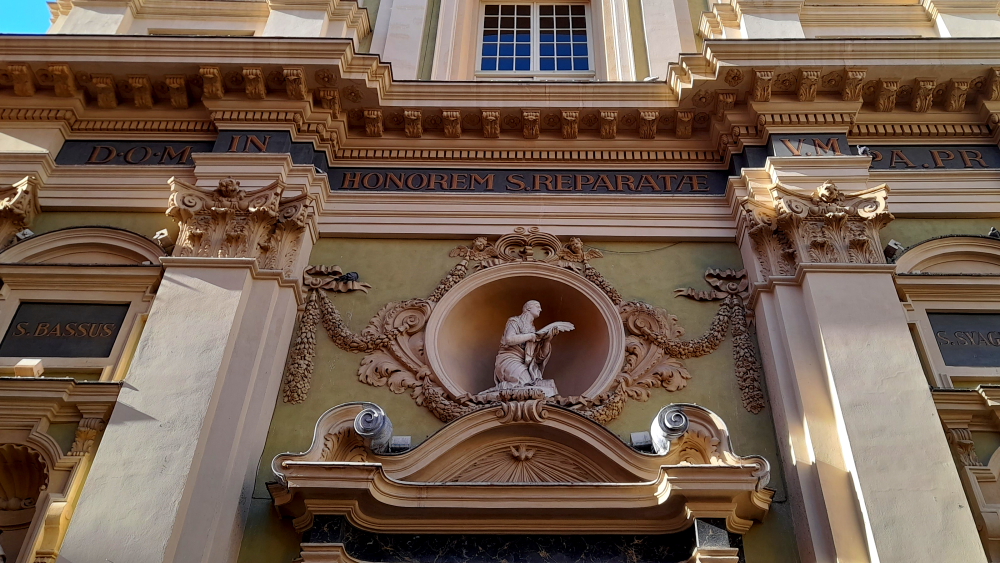
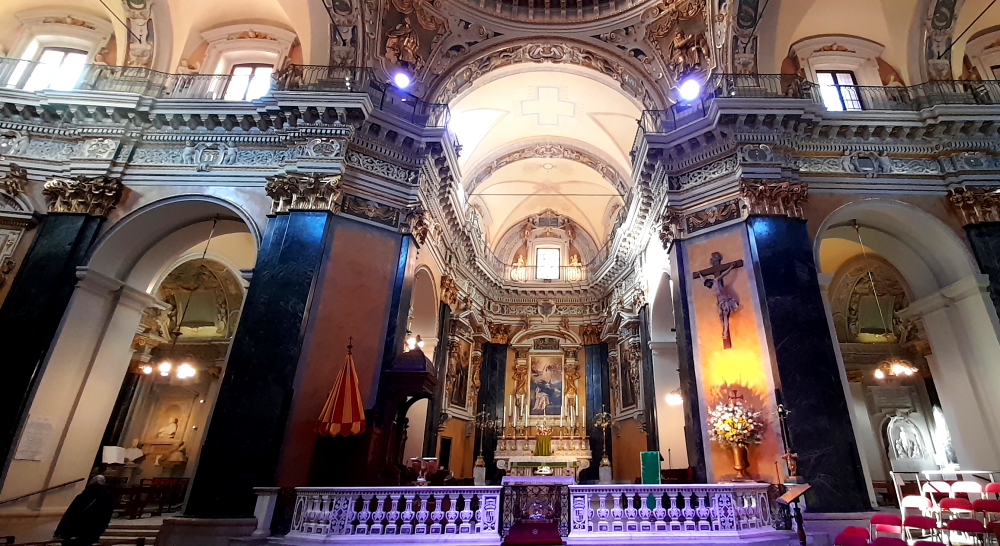
In 1649, judging the building to be too small, Bishop Didier Palletis commissioned the architect Jean-André Guibert to produce a structure more in keeping with the importance of the city. The construction of a new cathedral (the current main building) took place between 1650 and 1865. In 1699, the new cathedral was officially consecrated. The prominent bell tower was built next to it between 1731 and 1757.
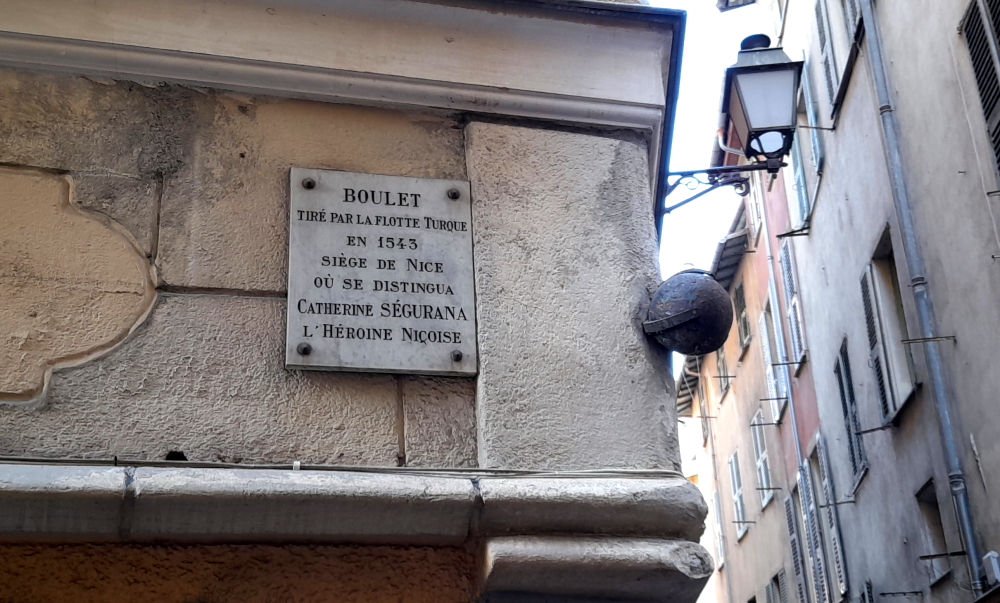
A block NE away we arrive on a cross street with Rue de la Loge where we see a plaque that translates as: “Cannonball fired by the Turkish fleet in 1543 siege of Nice where Catherine Segurana, the heroine of Nice, distinguished herself.” Apparently she was washing clothes when we saw the Turks coming so she picked up her laundry beating stick (like a club), killed the flag bearer with it, destroyed the flag then all the soldiers dispersed.
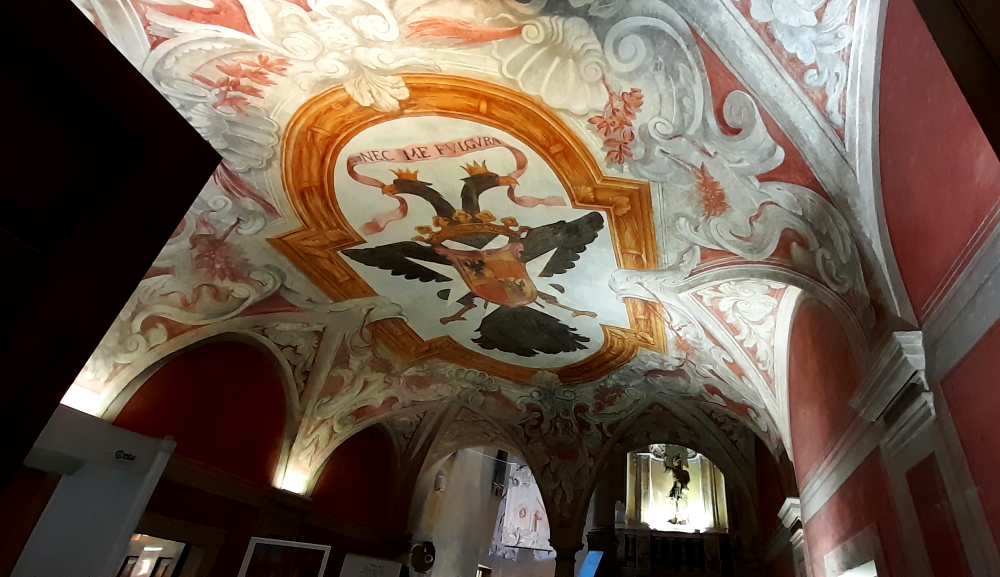
Around the corner is the Palais Lascaris museum, a 17th-century aristocratic building. Currently, it is a musical instrument museum housing a collection of over 500 instruments, which makes it France’s second most important collection after the Musée de la Musique de la Philharmonie in Paris.
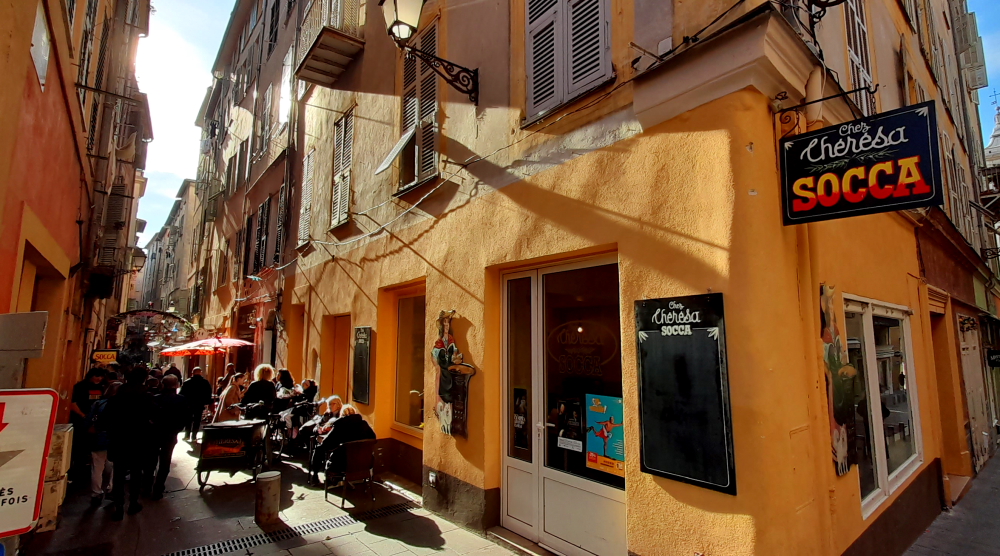
A No. 28 Rue Droite we come across Chez Theresa that is renown for its traditional street food, Socca, chick peas sprinkled with pepper, baked in a large pan and looks a bit like a tortilla espagnola. There’s a very long queue in the street waiting to be served take-away from a small window.
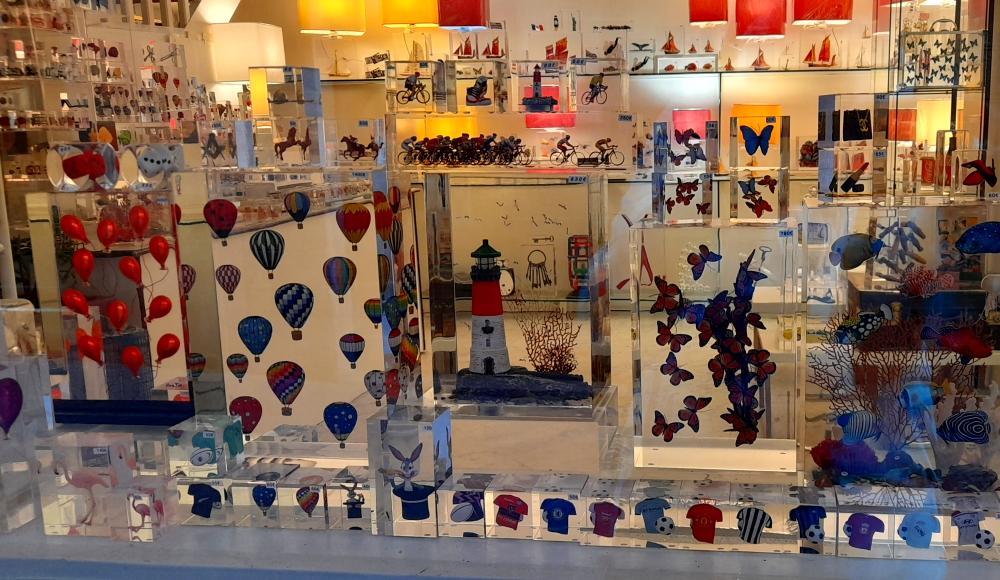
Walking towards the Med we pass by a shop which features small objects – butterflies, fish, balloons – encased in transparent blocks which captures Lynn’s attention.
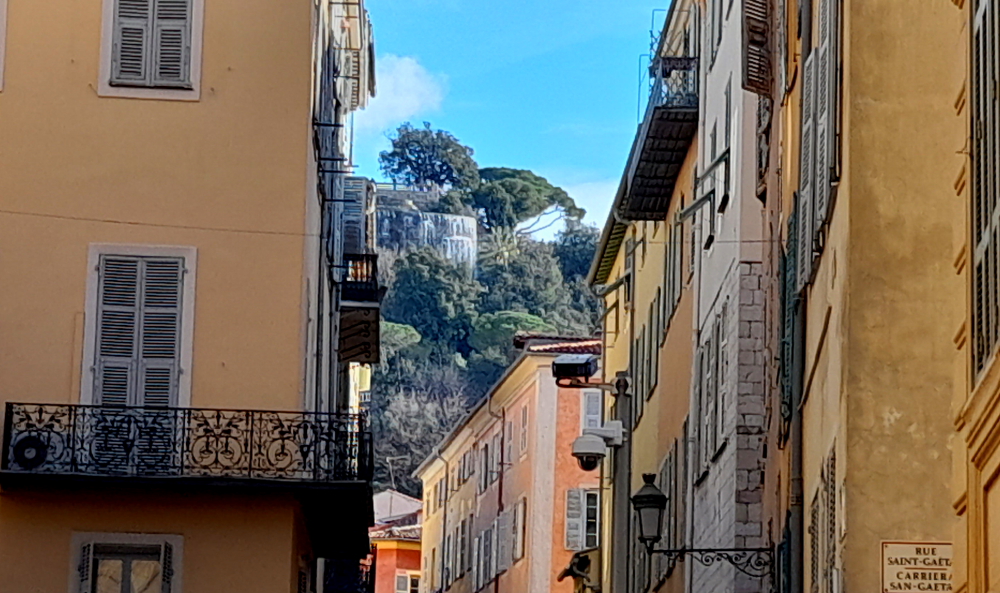
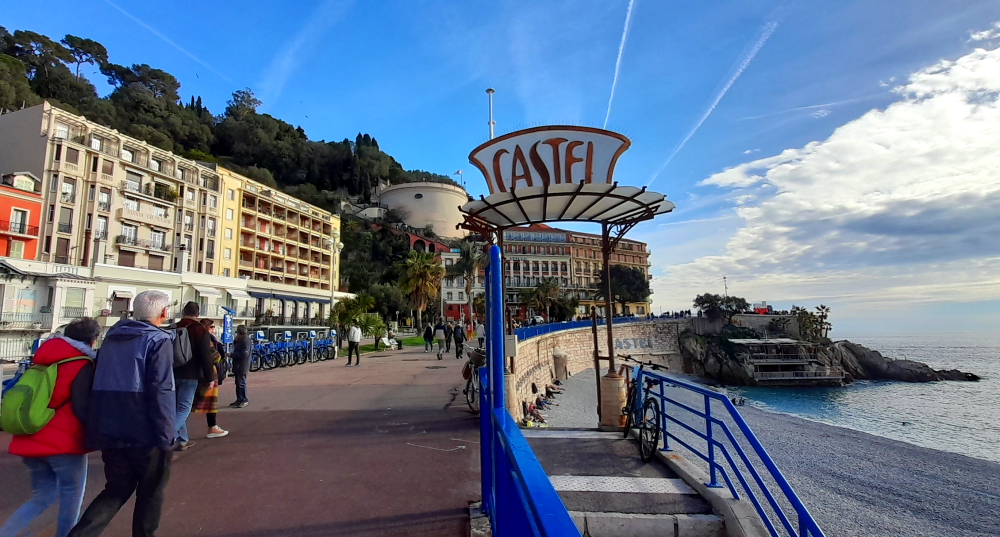
Soon we are standing at the steps to the Castel Beach for a group photo, then we 3 Australians accompany Sergio to Castle Hill via the lift.
A short walk up a broad path brings us to the Belvedere.
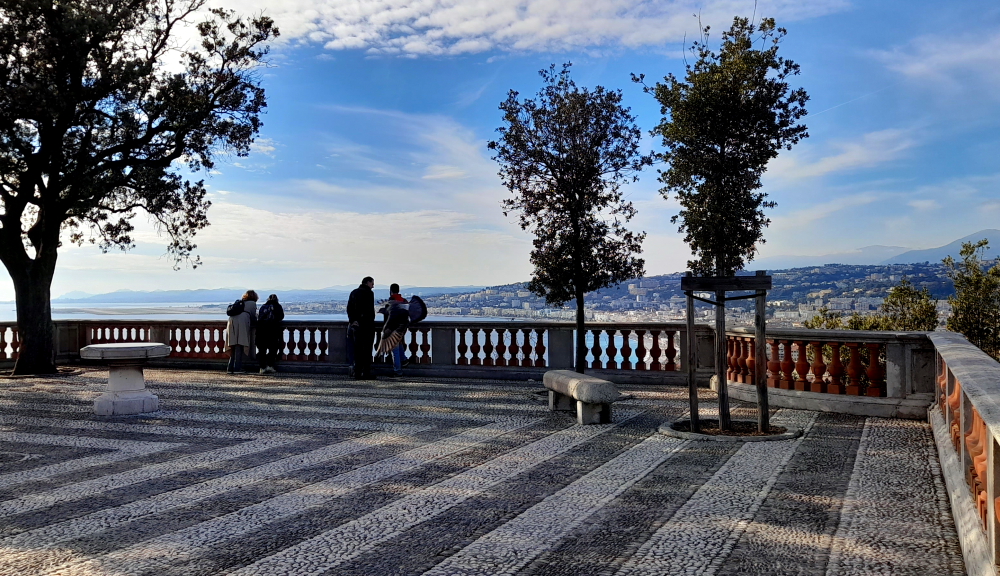
This platform gives a commanding view of the sea, the bay …
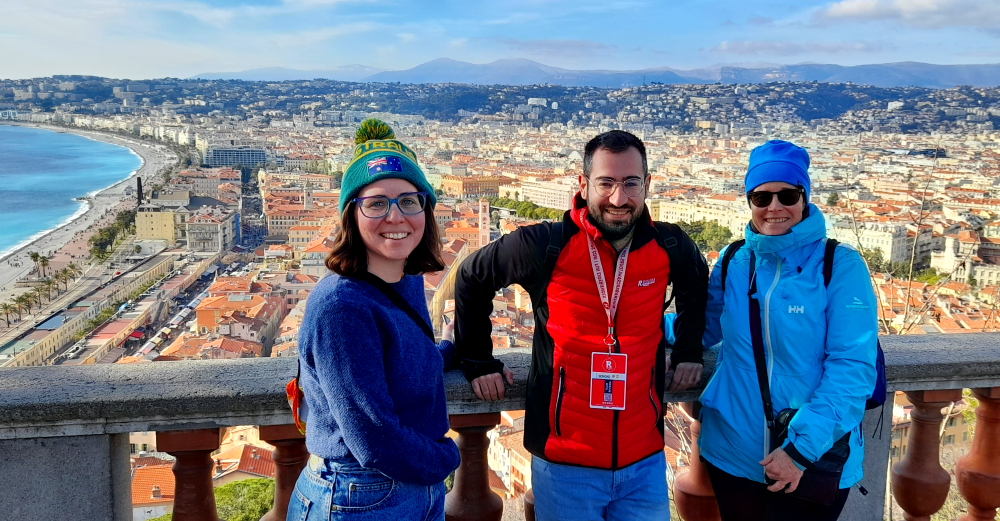
… the town, the hills and, to the rear …
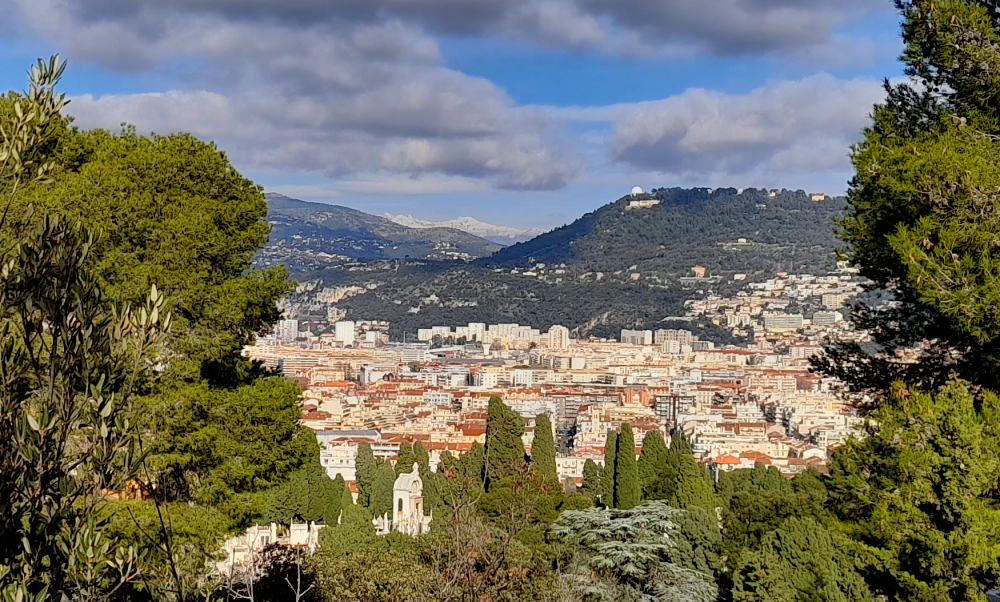
… the snow-covered alps.
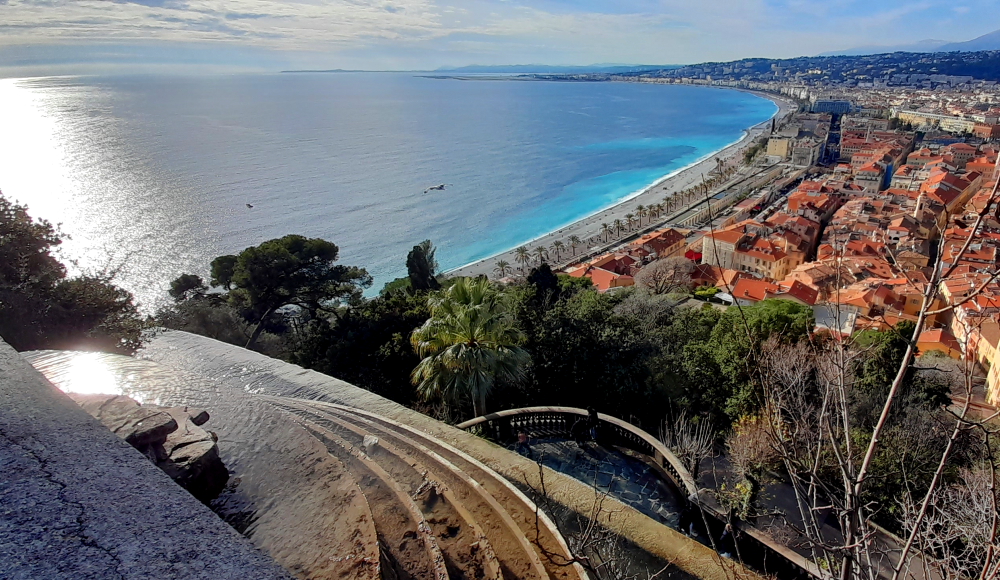
Directly below the Belvedere is the top of the Cascades with the semi-circular balustrade path around the base of the falls below.
After Sergio heads off we order a couple of drinks and sit in the sun at one of the tables for a couple of hours to enjoy the view of the Alps.
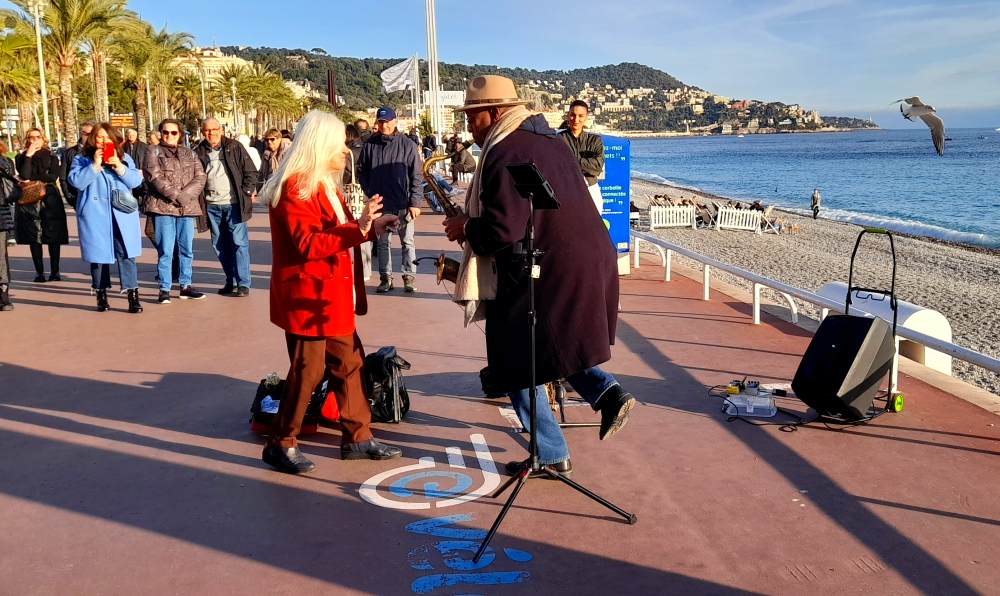
Walking back along the Promenade the foot traffic has increased substantially. Along the way are a couple of buskers. This guy is a very good saxophonist.
We head back into the Old Town for dinner tonight at yet another Italian.
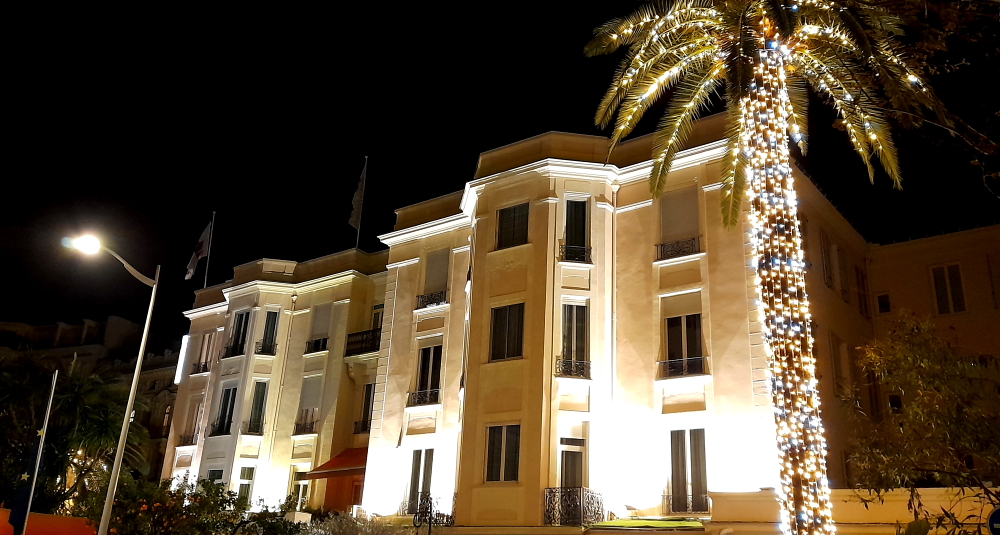
At least the French seem to do a reasonable Italian, unlike their French cuisine!
15 January, 2024
Sunshine, again! And a promised 17 Deg. C. today. After a quick breakfast we head for the Promenade once again to walk most of its length to the Monday morning markets, this time an extensive flea market has replaced the flower stalls.
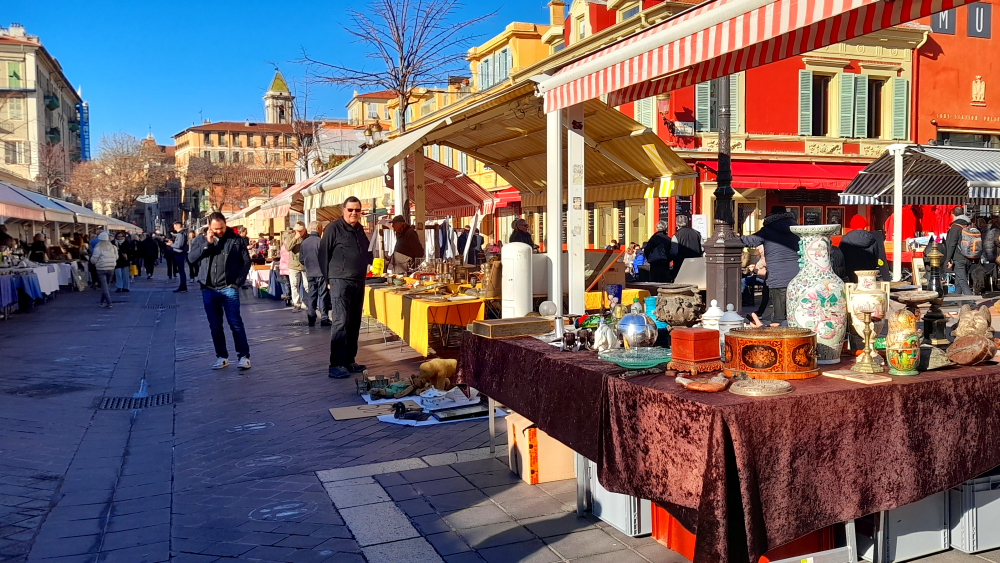
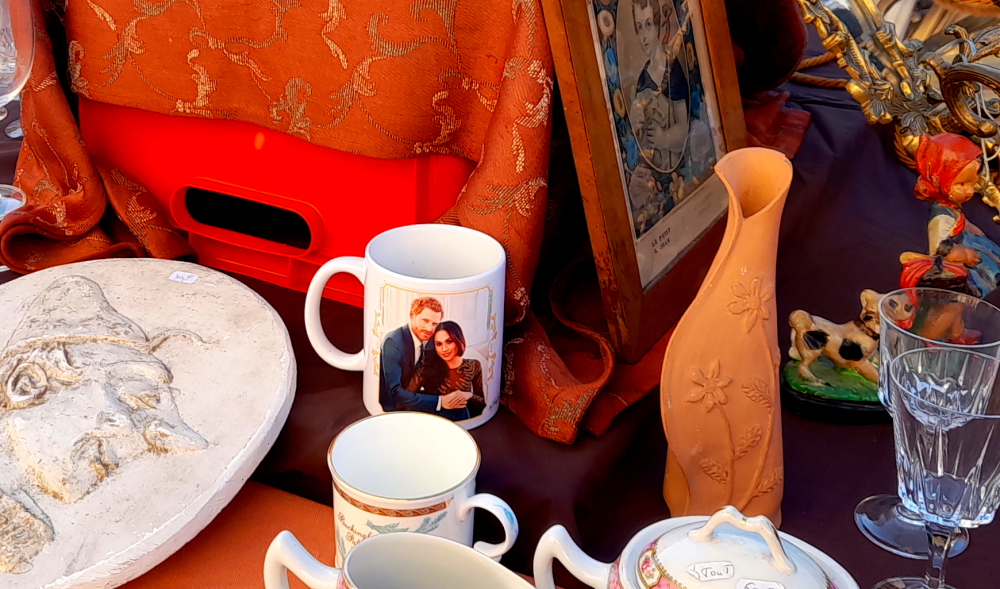
The usual suspects are on sale – antiques, retro and junk. Clothing, carpets, drapery, nappery, embroidery, jewellery, fur coats, silverware, crockery (Limoges), cutlery, glassware, paintings, vases, posters, bric-a-brac, cameras, fur coats, trinkets, baubles, gewgaws, Royal mugs, curios, sunglasses, handbags (Louis Vuitton), scarves (Hermes), shoes, vinyl, mirrors, picture frames, medals, wooden boxes, religious icons. Did I mention fur coats?
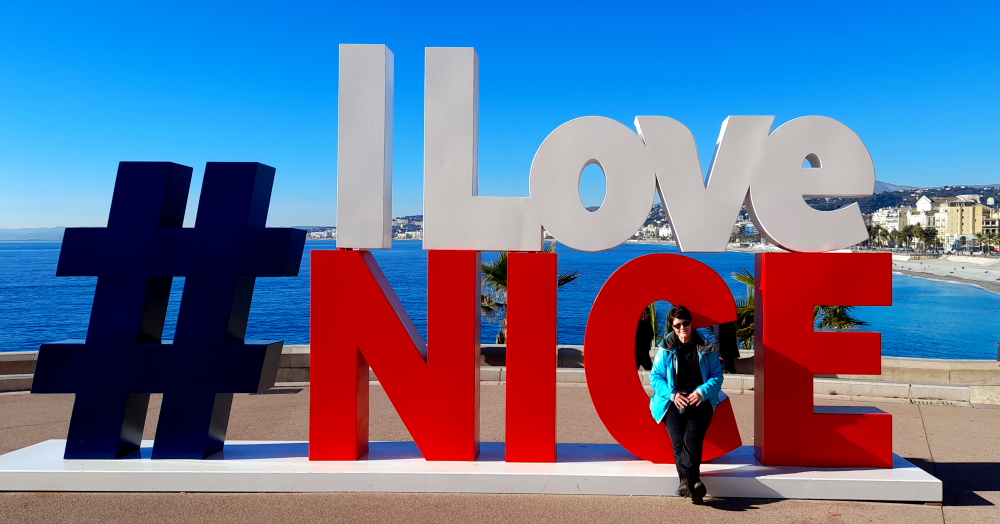
Exiting the market we walk past the Castel Beach steps from yesterday to a flat area at the tip of the headland and find the “I Love Nice” sign. Would you believe there are some people actually swimming in the bay? And even sunbathing, but it’s only 13 Deg. C.!
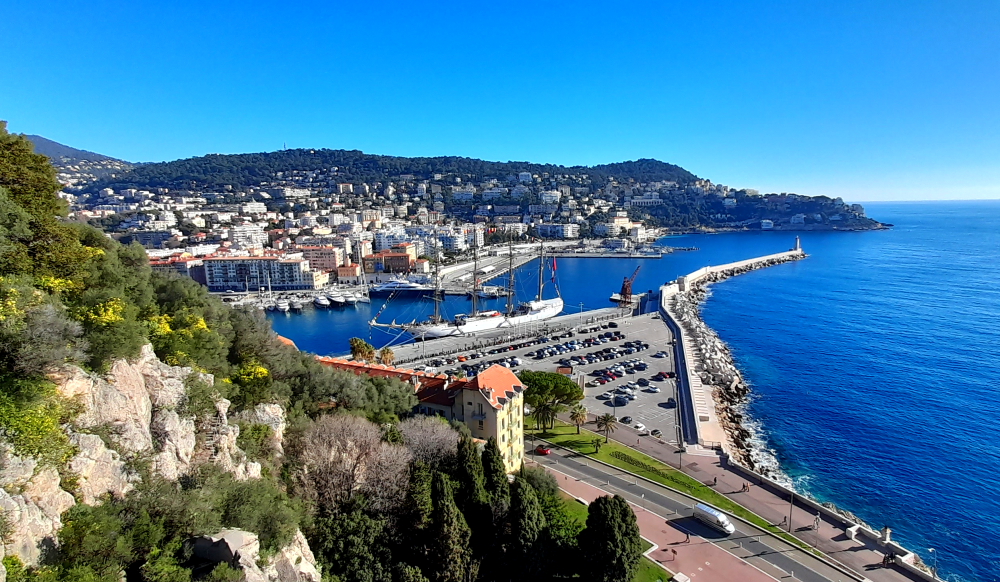
Close by is the lift to Castle Hill which we take but this time we turn right to see the view of the Quartier du Port where there is a tall ship docked.
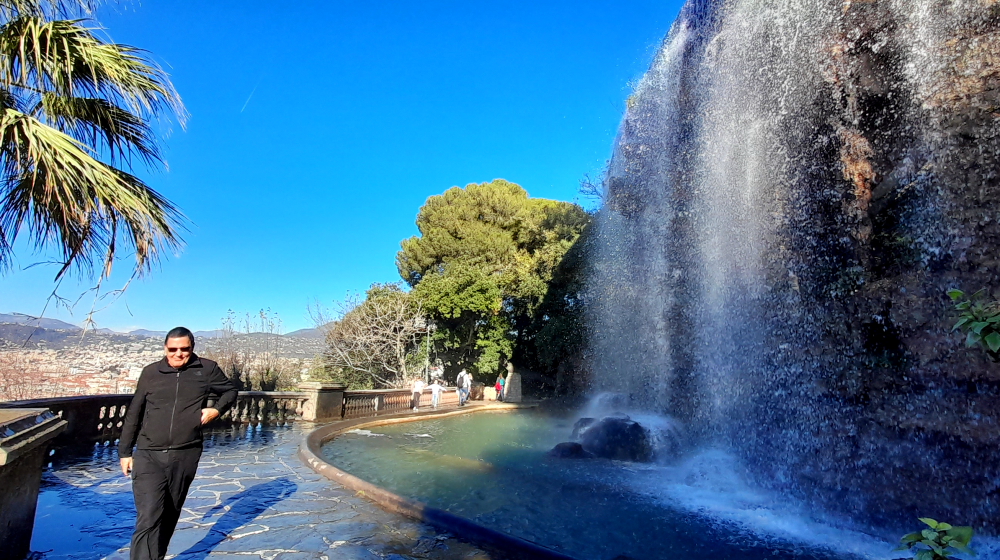
Next we take a lower path to the one we took yesterday and arrive at the curved balustraded path at the base of the Cascades.
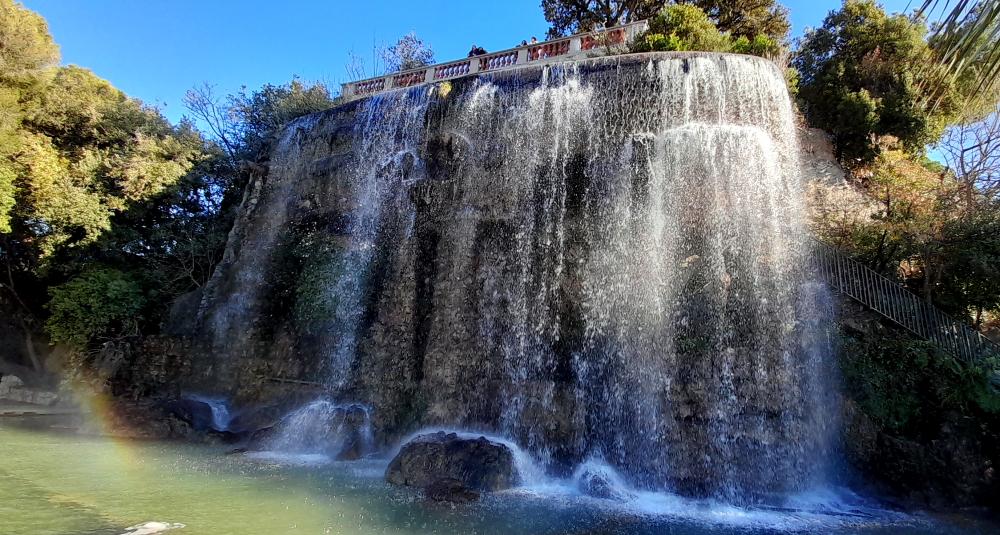
With a little breeze it would be very easy to get very wet at the base of the cascades.
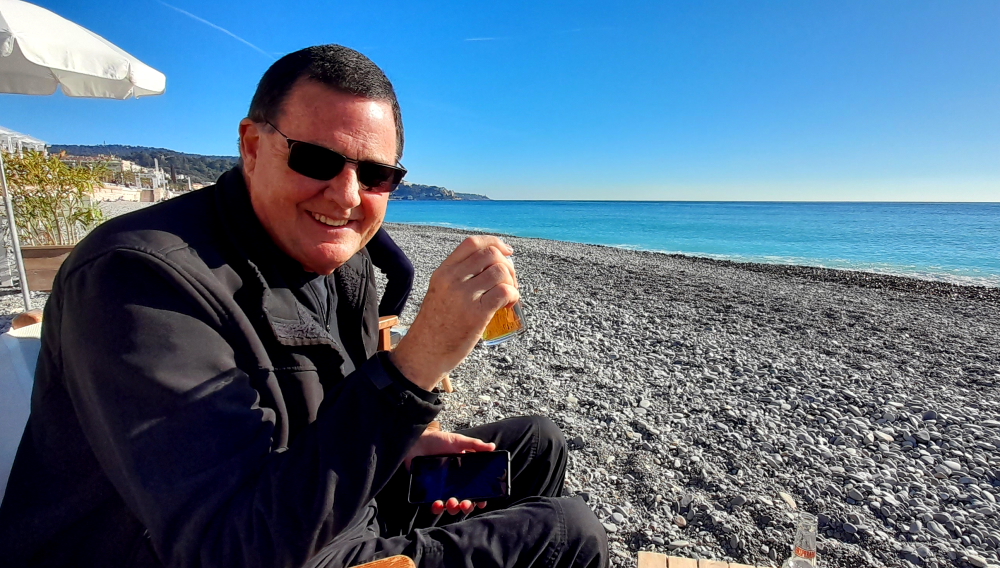
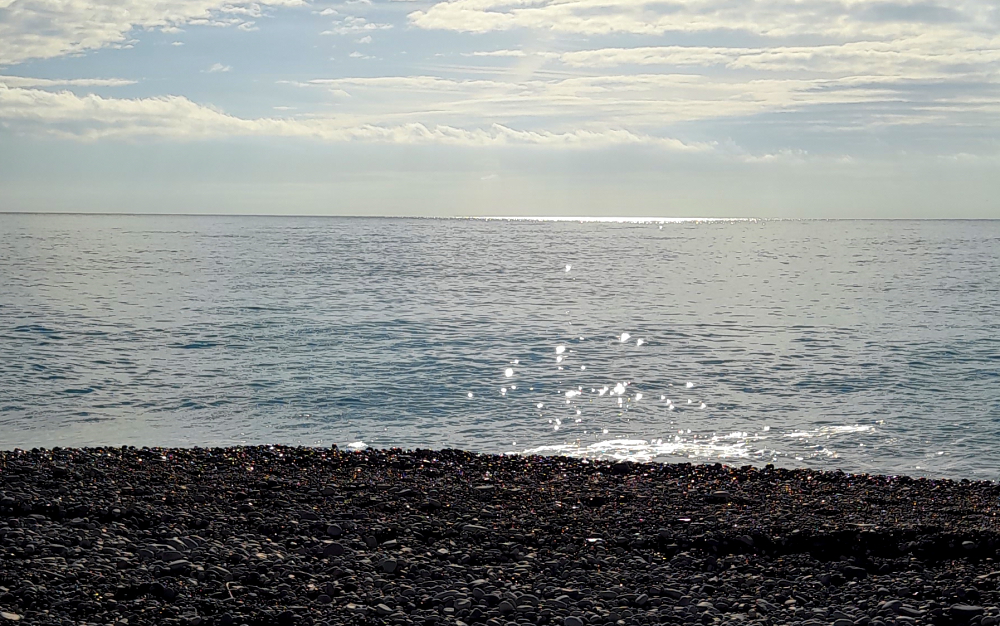
Time to head home, again along the Promenade, where we stop at the beachside cafe/restaurant, ‘Bocca Mar’, for a beer and a spritz while sitting in the sun and watching small waves crash onto the pebble beach only a couple of metres away.
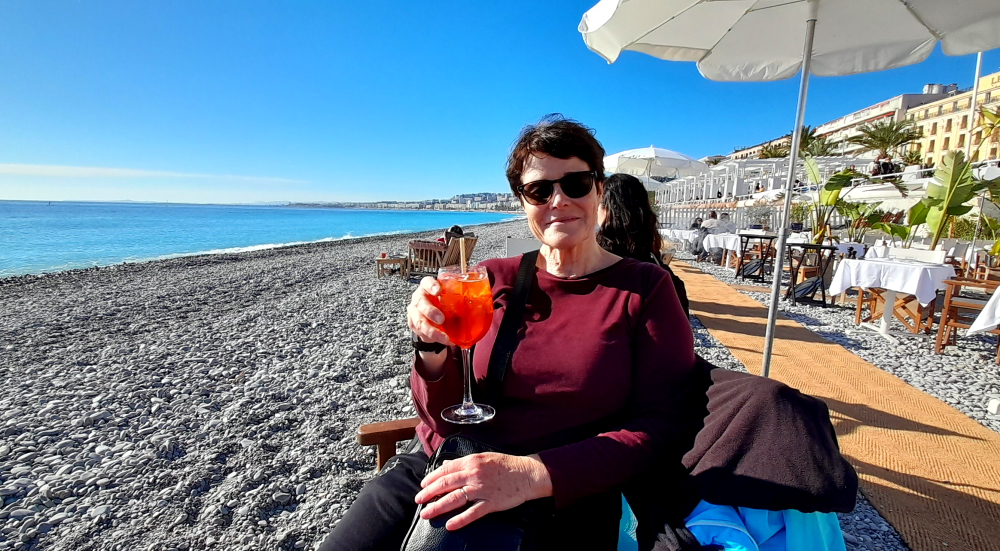
The sun is very warming as the temperature rises to a balmy 13 Deg C. We need all the vitamin D that we can get this winter.
Back at the hotel, after I’ve loaded the photos Lynn catches up 3 days of blog and I sort out some credit card issues with CommBank that turn out to be issues with our Firefox browser.
At 7:00 pm we walk the 2 minutes to a nearby Corsican Pizzeria – why not – and call it a night around 10:30pm.
16 January, 2024
Sunshine, again, and a promised 15 Deg. C. today with rain overnight and tomorrow.
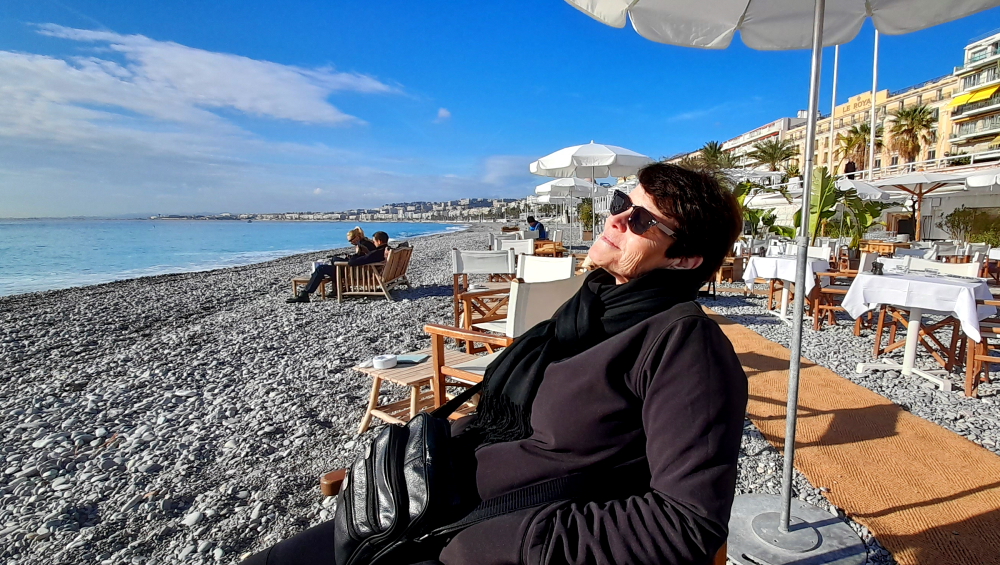
Yesterday we promised ourselves we would return to Bocca Mar for a coffee by the sea this morning before we walk into the Old Town.
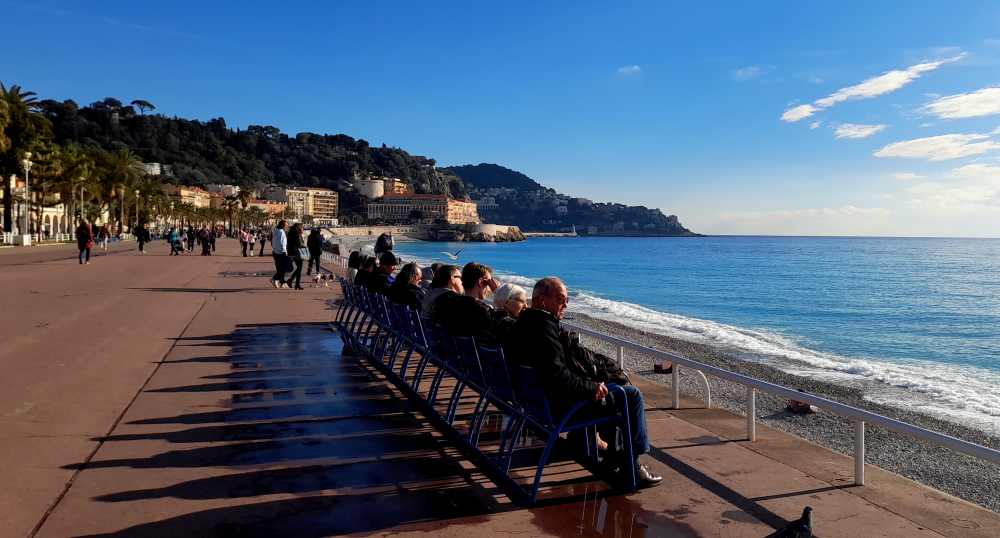
Looks like everyone is a Lounge Lizard, sitting in the sun, soaking up the rays. There are a number of seating areas along the Promenade, facing the sea, that are filled with like-minded people. What’s the collective noun for sunbathers? A bask of sunbathers; a glow; a lounge; a ray, or a fritter of sunbathers??
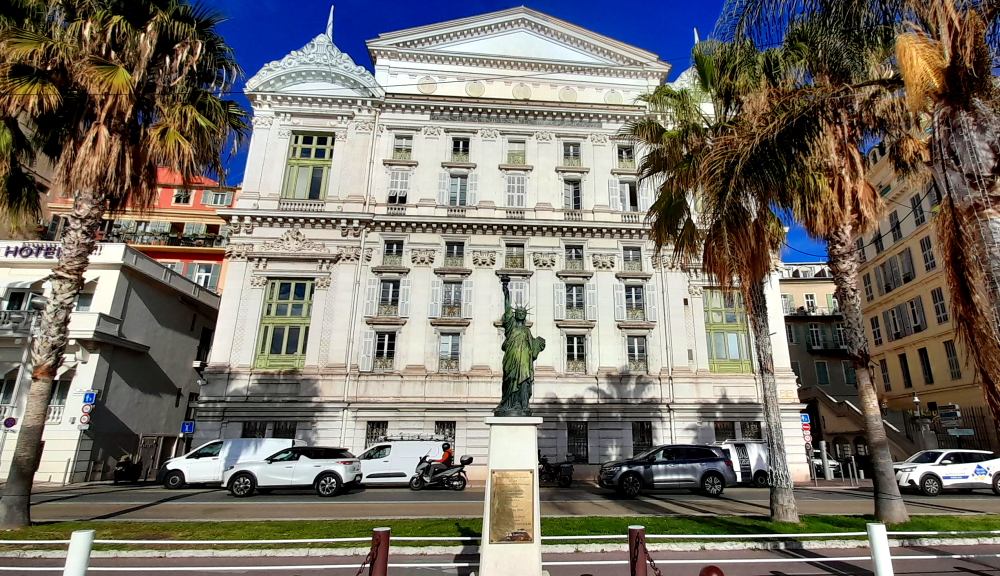
On the opposite side of the Promenade is the back of the Nice Opera House and in front of that a small Statue of Liberty – at 1.30m tall on a 2m high plinth – a replica of the original by Auguste Bartholdi and the last one to be held by the Coubertin foundry, it was bought by the city of Nice in 2011. It was inaugurated in 2014 to commemorate the centenary of the First World War in keeping with the history of the Quai des Etats Unis (USA Quay), which itself was renamed in 1917 to mark America’s entry into the war.
In the words of Chrisitan Estrosi, the Mayor of Nice at the time, “we wanted it to be modest in order not to rival New York!”
In front of the Nice Opera House is Henri Auer’s – a confiserie since 1820. Then, a young Swiss confectioner, Henri Auer, attracted by the abundance of Mediterranean fruit production, came to the Côte d’Azur and settled in Nice where his business prospered.
In 1890, his son Henri-Chrétien took over the establishment and made his candied fruits famous throughout the world. In 1931, Henri-Joseph and his son Jean-Jacques took over the business adding a patisserie and chocolatier. Today, Thierry Auer represents the fifth generation of confectioners.
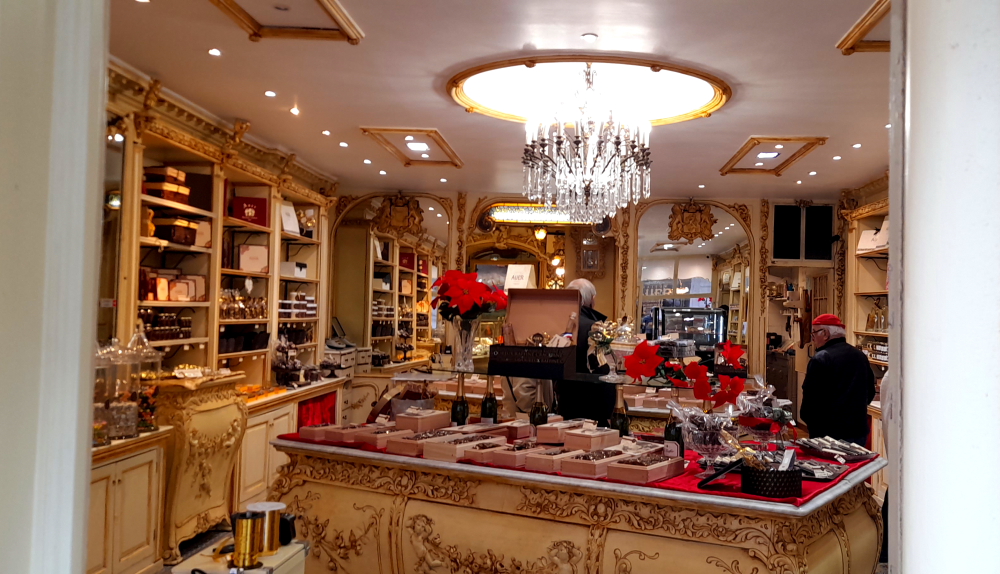
Apparently, back in the day, Opera patrons would visit this boutique during performance intervals.
We stroll back to the hotel where we need to pack and work out our trip tomorrow. It’s only about an hour’s drive to Cannes from Nice so we might take a detour up the coast to Monte-Carlo in Monaco then back down the coast to Cannes.
At 6.30pm we stroll around the corner to a restaurant we found last night. Then the owner was most welcoming when we made enquiries about the menu and opening times and he is just as welcoming tonight. After we are seated Fata, the Algerian owner of Restaurant La Vague in Rue Dalpozzo, serves us with kir royales and a delicious black olive tapenade and crostinis, compliments of the house.
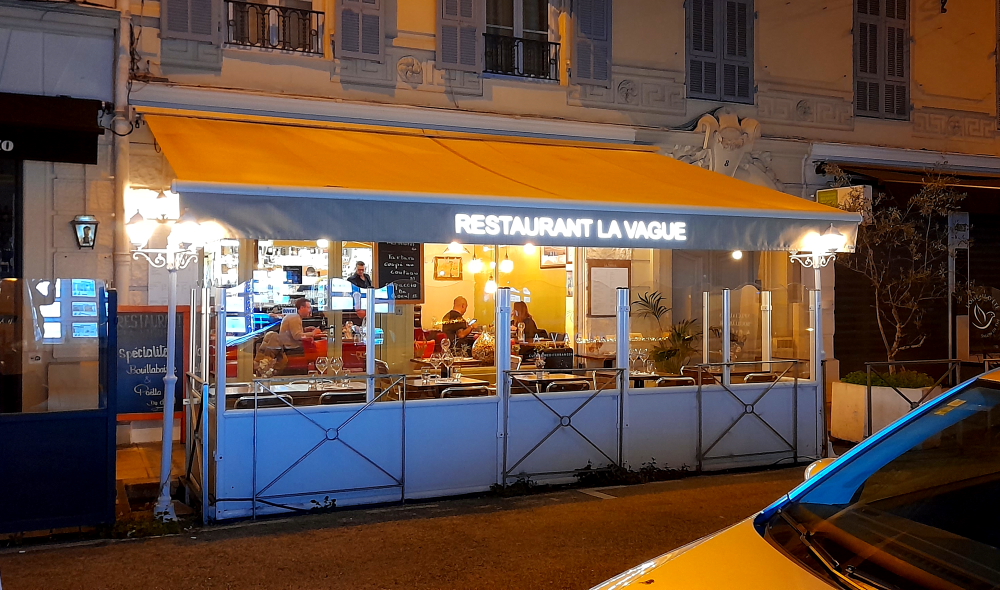
The menu is uncomplicated and is what is ‘says on the tin’. I order lamb chops and Lynn grilled salmon both served with fresh vegetables. My dish is accompanied by a glass of very pleasant house red. The crusty bread is fresh, the meals are perfectly cooked, particularly the vegetables. Why can’t all restaurants do this? We even like his taste in music – a soothing Blues sound track.
17 January, 2024
As it’s only an hour’s drive to our next accommodation in Cannes, we decide to take a quick drive to Monaco so I can add it to my list of countries visited. Lynn had already visited Monaco in 1985 and again in 2009 for work.
It’s a miserable, raining, grey day and 13 Deg. C.
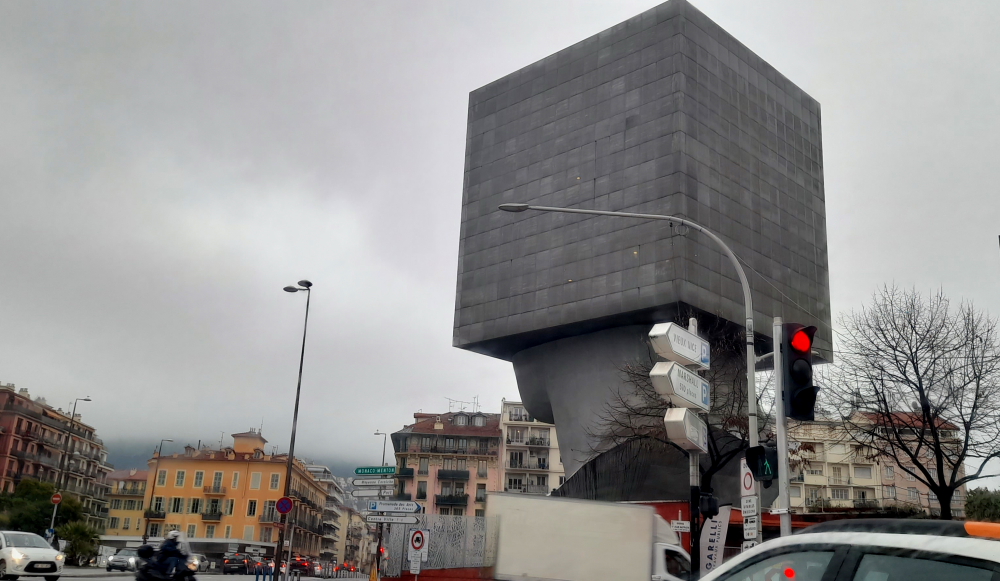
Apparently you get gorgeous views of the coastline and the Med from the village of Eze (supposedly one of the most beautiful villages in France if we could see it) which is about 12 minutes’ drive up the hill from Nice. Not today. Thanks to the rain we are soon immersed in thick mist.
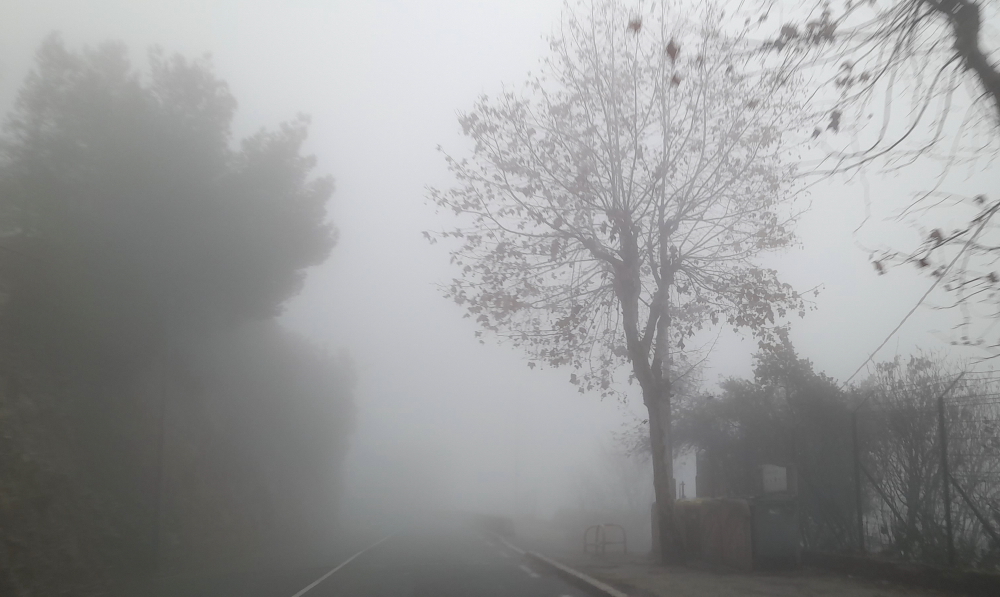
As soon as we descend the mist clears but it is still a grey day. Shortly after we see a road sign to Monaco.
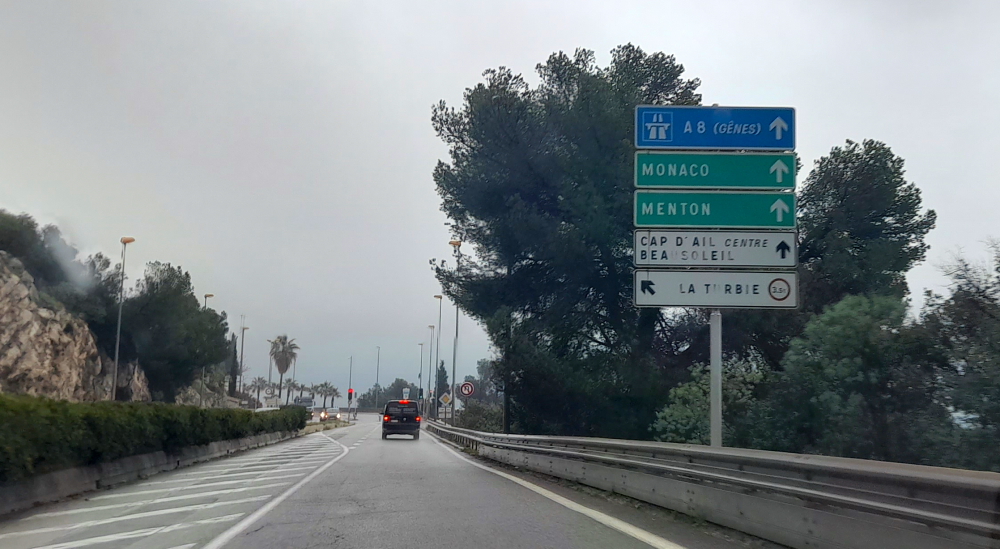
I have to say that Monte Carlo is a real disappointment. Nothing but ugly 70s high-rise apartment buildings and a multitude of high-rise cranes constructing more high-rise buildings, with only the odd classical French apartment building in sight.
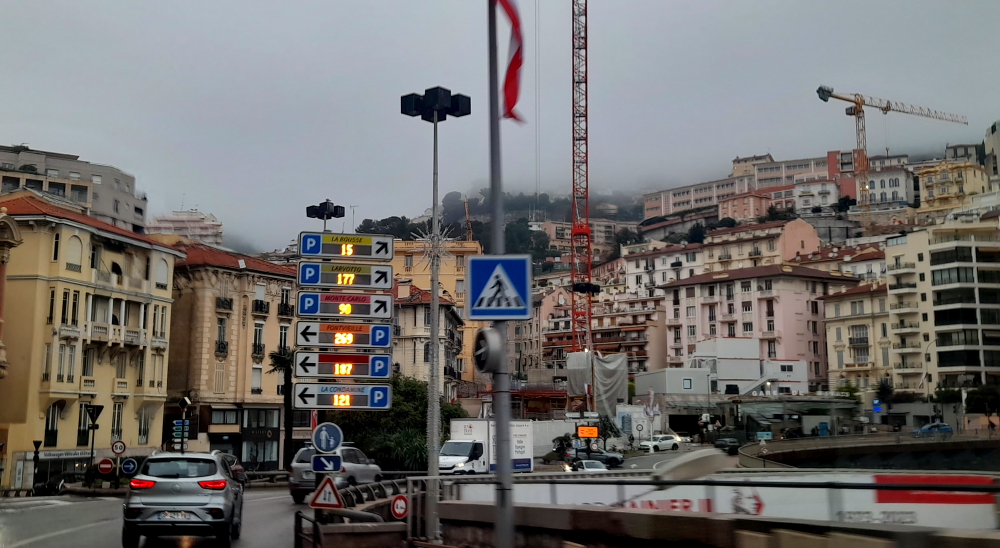
The plan is to drive to the Casino for a photo but as we drive around the back of it, the road leading to nearby parking is- closed – so we drive on by and head back out of town past the Port Hercule marina.
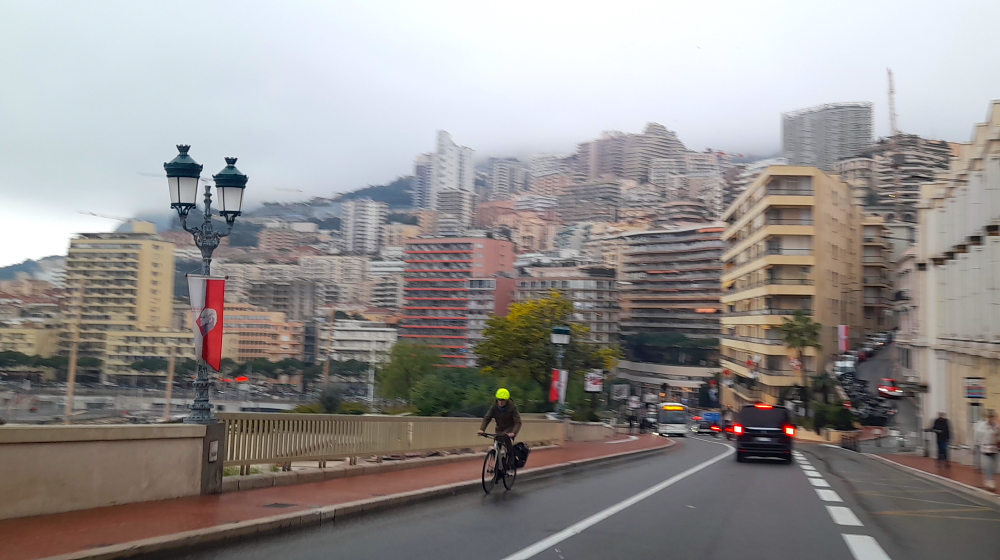
We retrace our route back to Nice then onto Antibes. Originally we had booked the beautiful Art Deco 1932 Hotel and Spa Cap d’Antibes – MGallery for this next stay to celebrate our anniversary but they decided to close the hotel for the week we had booked which is why we are now driving along Golfe Juan to Cannes then to the Pullman Mandelieu-La Napoule Royal Casino which is the other side of Cannes.
Antibes, itself, looks quite pretty with a large square and views of the sea, marinas, fortifications and the Chateau Grimaldi.
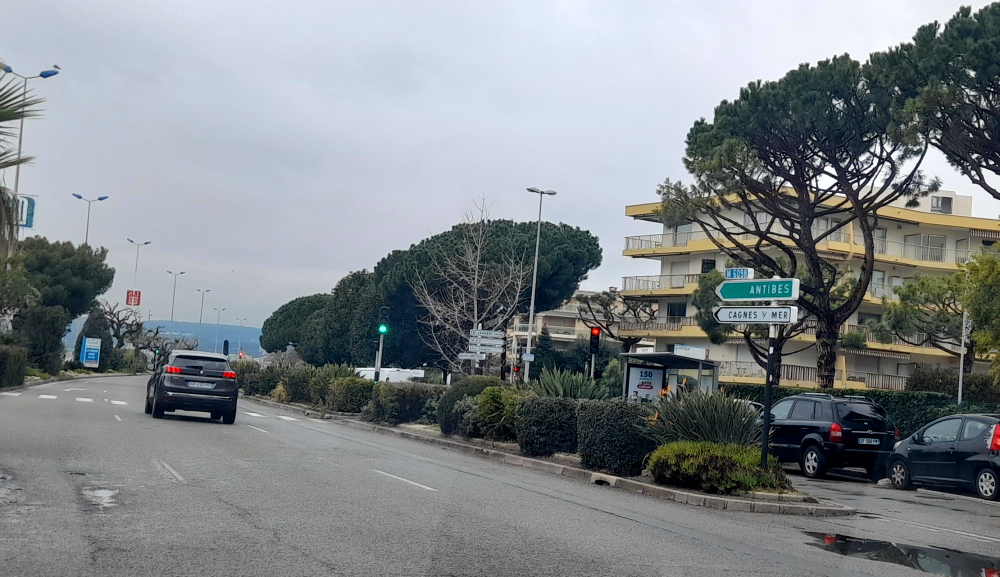
Like Monte Carlo, Cannes seems to be another old, seedy, overcrowded town. It’s a bit difficult to see the old town as just beyond the Hotel Carlton the Boulevard de la Croisette is – closed! We are trying to drive to see the venue where the Cannes Film Festival is hosted each year but give up and drive to our destination.
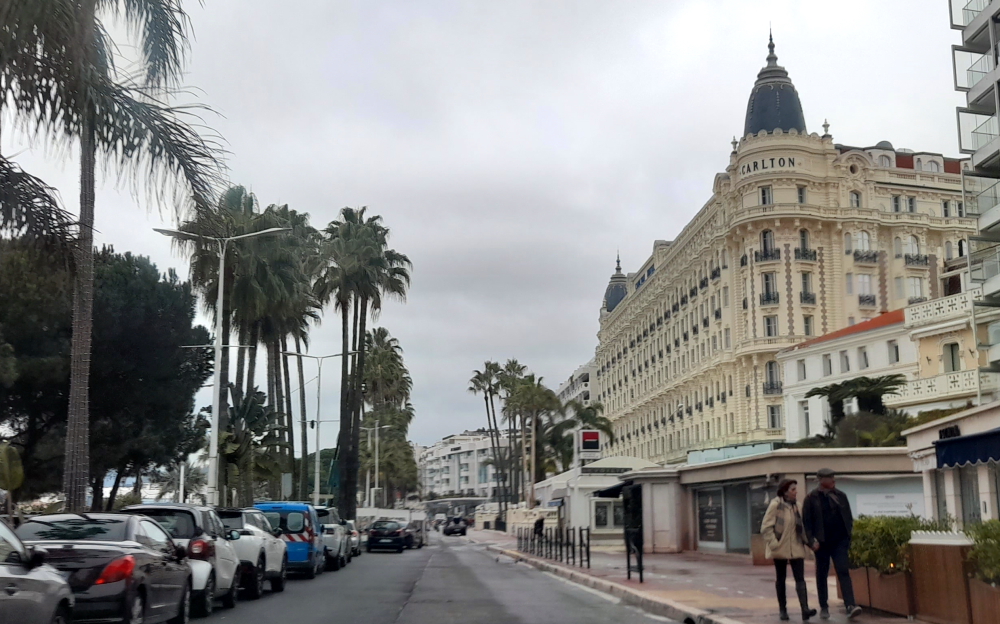
Taking the diversion we rejoin the Croisette at the Old Port and drive past, would you believe, Plage Waikiki!
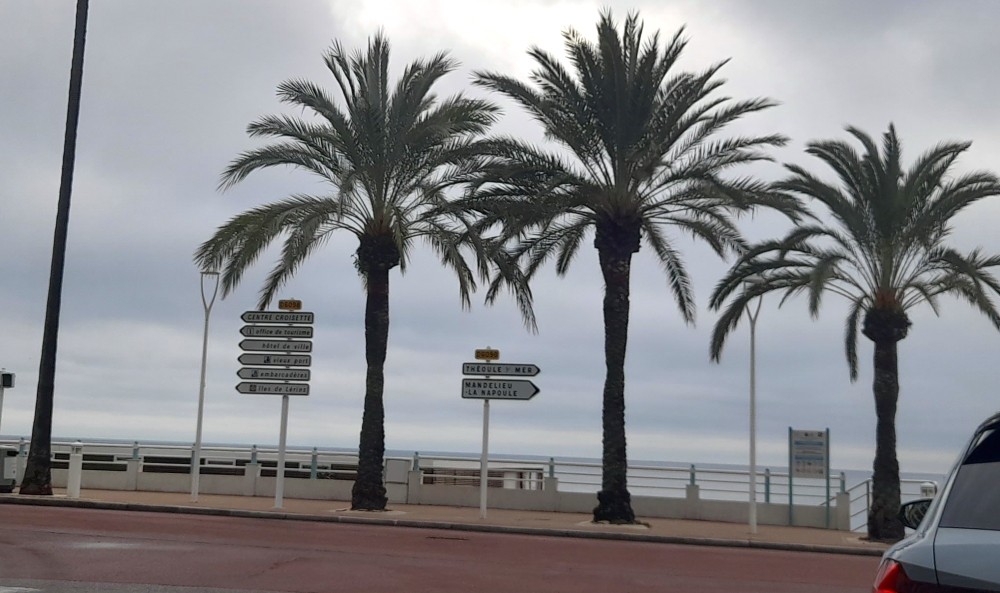
The D6098, the Boulevard du Midi, skirts the Golfe de la Napoule which delivers us to the Pullman after we cross the bridge over the Siagne River.
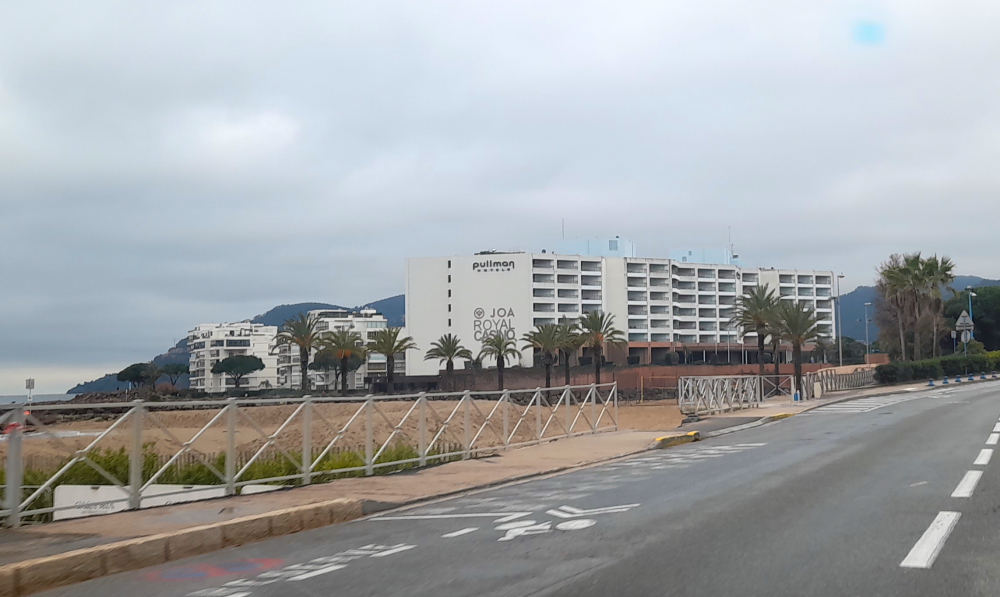
After such a grey, and frustrating, day our welcome at the hotel is a ray of sunshine.
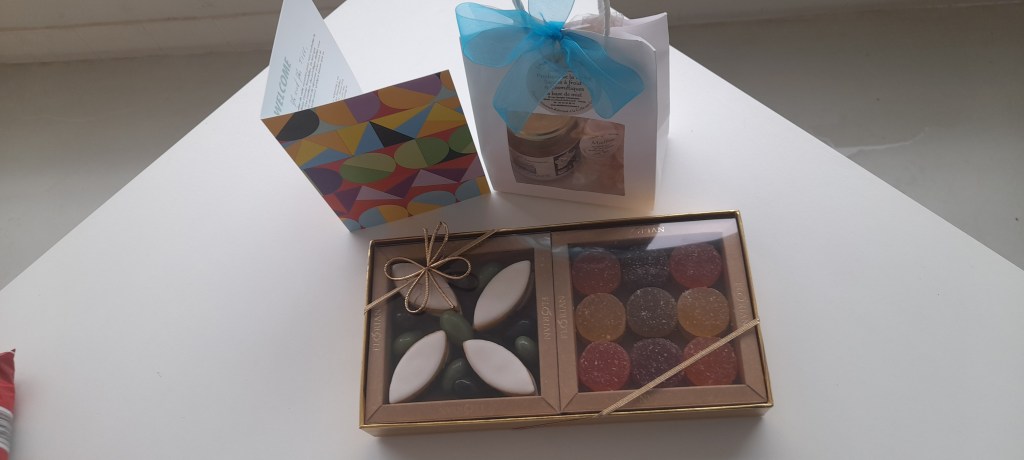
The staff had noted our 50th anniversary and give us a room upgrade, welcome drinks and a gift of local produce.
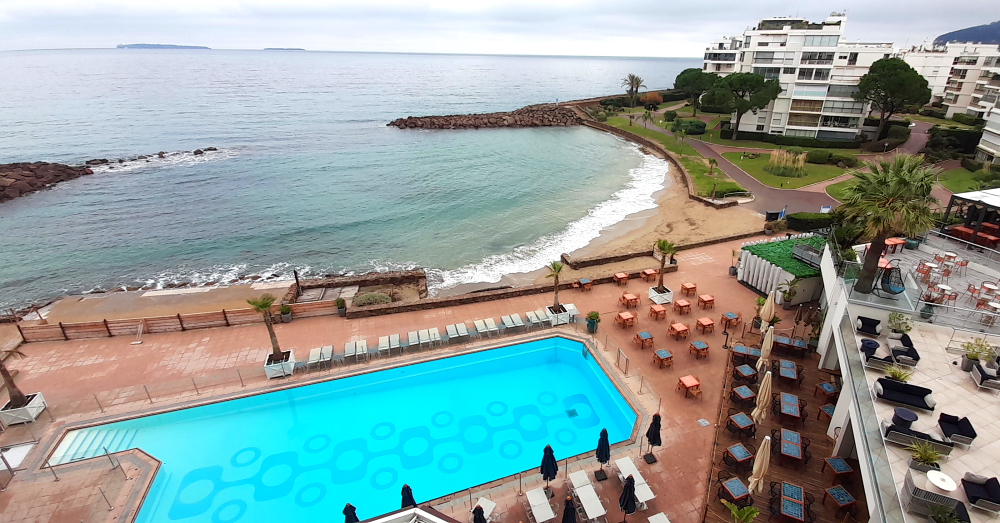
Too tired to check out the local area for restaurants tonight we opt for the hotel’s and have an early night, falling asleep to the sound of small waves breaking on the small, sandy beach below.
18 January, 2024
Today’s top promises to be 18 Deg. C. (turns out it gets to 20!).
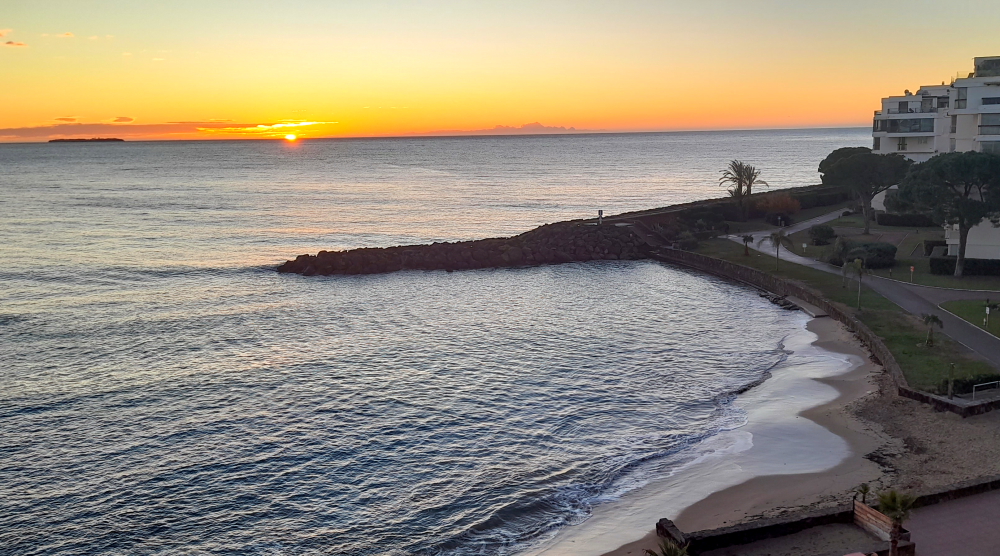
While having a late breakfast we are greeted by the hotel’s Customer Relations Manager, Marie, who also welcomes us to the hotel. She mentions that a local flower is currently in bloom should we wish to view it in the countryside.
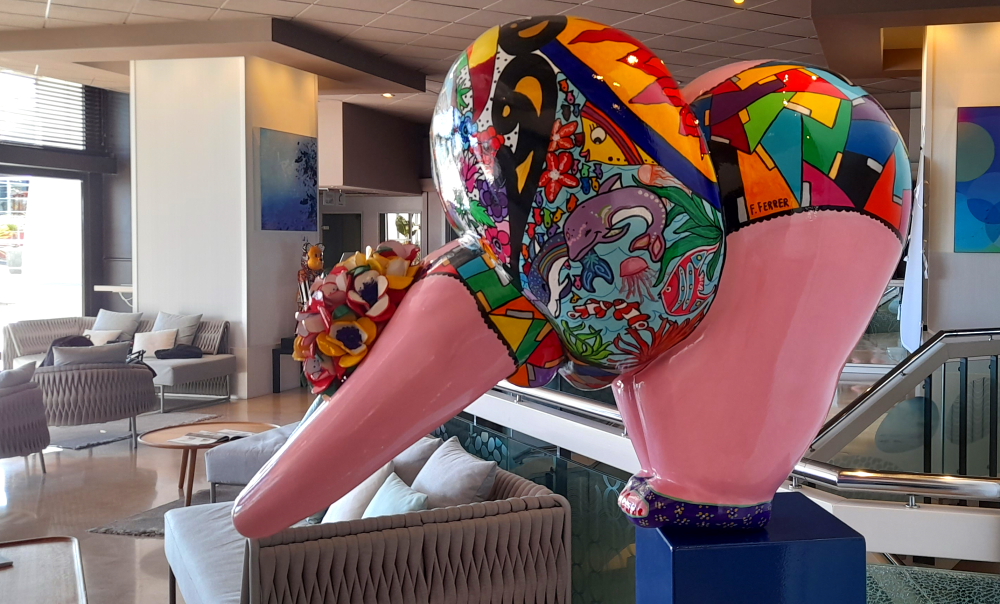
Turns out that the flower, local to this area only, is mimosa or, as we know it, wattle. Must admit that the name of the cocktail is more suited to Mimosa than Wattle!
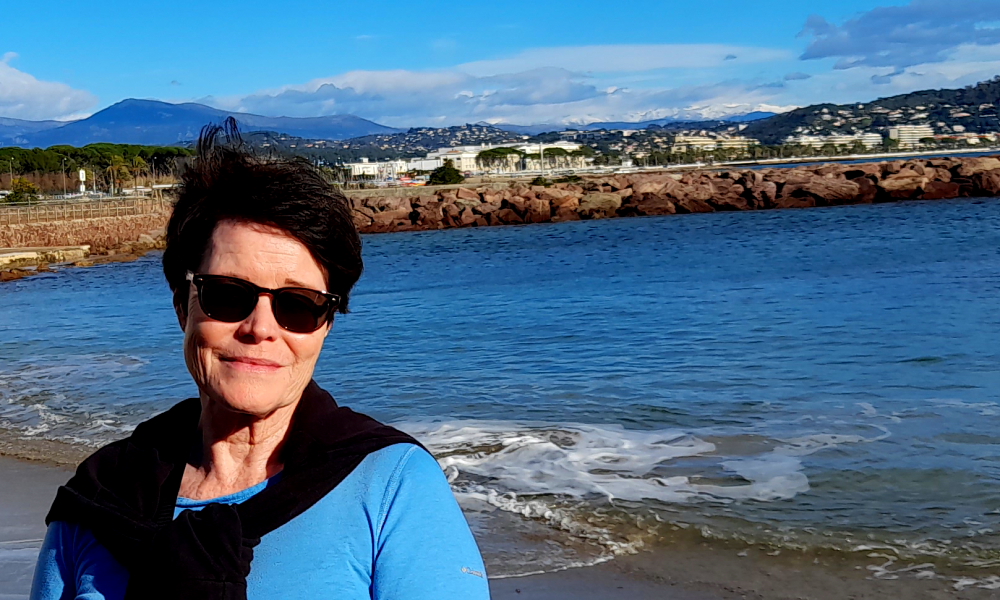
Such a contrast to yesterday and previous weeks where we have been swaddled in at least 4 layers under a waterproof jacket as we wander about outdoors. Just a long-sleeved t-shirt today, even with the brisk wind we encounter when we walk past the point.
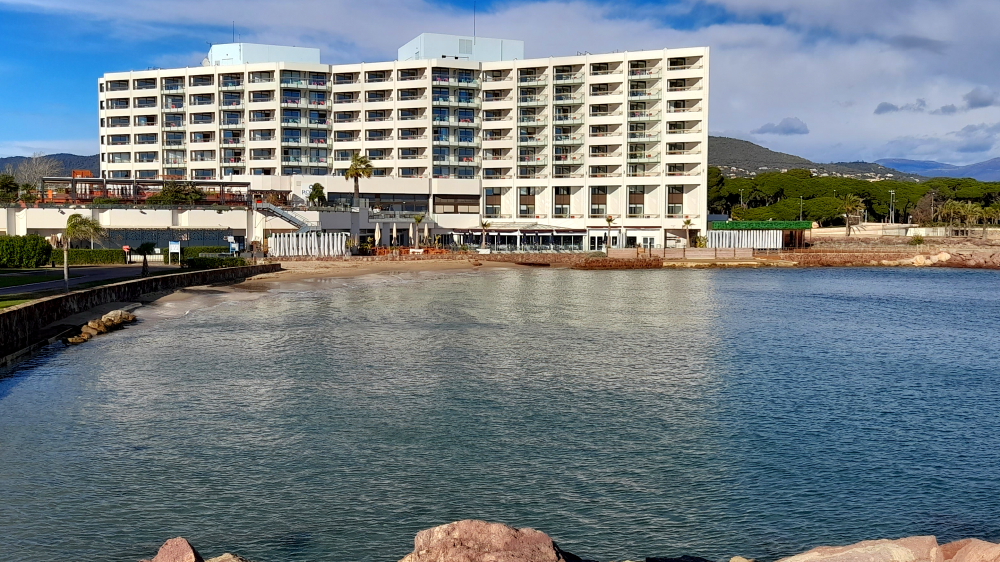
Rather than walk along the road to La Napoule we take the path along the sea wall and by its port.
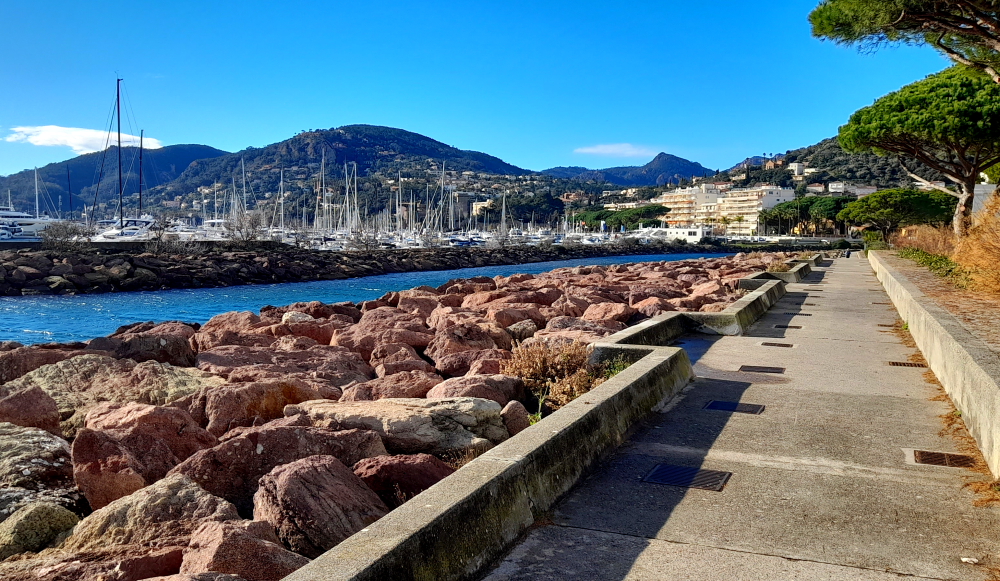
Lots of expensive boats in the marina and, surprisingly, quite a few restaurants are open so we pop into one and book a table for dinner this evening.
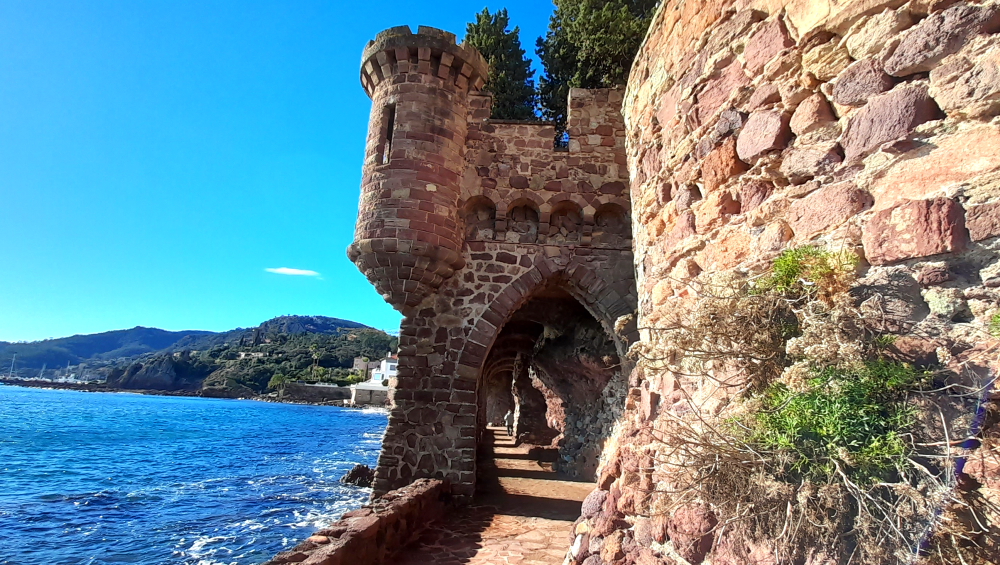
A dominating feature of the town is Chateau de la Napoule. Built in the 14th century by the counts of Villeneuve on the seaside road, the castle and its gardens were listed as historic monuments in 1947. Who would have thought that a rich American’s fantasy hid such an amazing history.
Originally a castrum (old Roman fort), in 1284, the abbey of Lérins exchanged its share of the land and church on this site to a local lord, Raymond de Fayence, who belonged to the Villeneuve-Tourettes family. This family will own the lordship of La Napoule until the 17th century.
The village of La Napoule served as a retreat for land and sea pirates which is why Antoine de Villeneuve-Tourettes brought inhabitants from the Oneille valley, in 1459, to form a town.
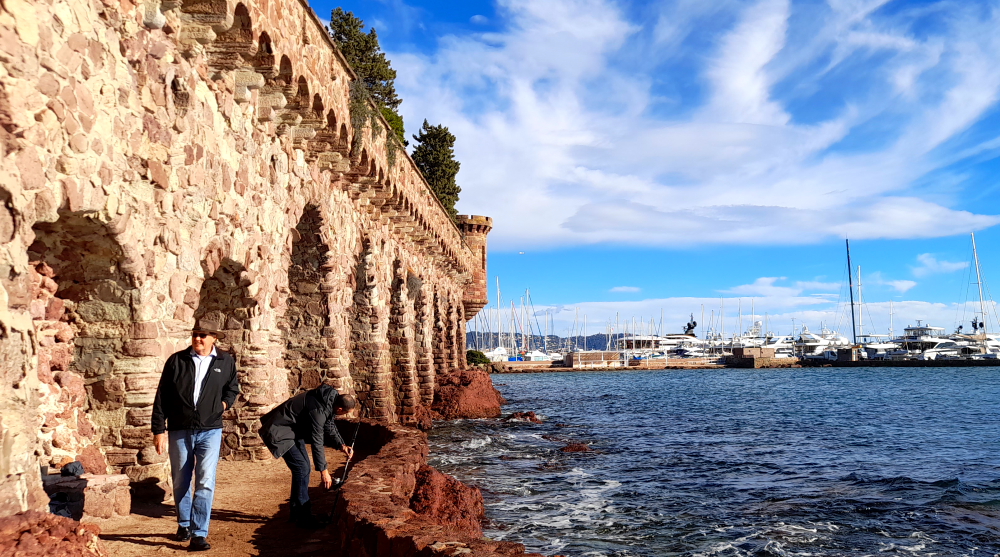
In 1501, Louis XII confirmed to Honoré de Villeneuve-Tourettes, married to Blanche Grimaldi of Monaco, the possession of the lordship of La Napoule. It was in 1521 that the existence of a port in La Napoule was first mentioned. In 1530 , the corsair Kheir-ed-Din, known as Barberousse, attacked and sacked La Napoule. Repeatedly throughout history the castle and the village of La Napoule succumb to attack, the plague and demolition, only to rise again.
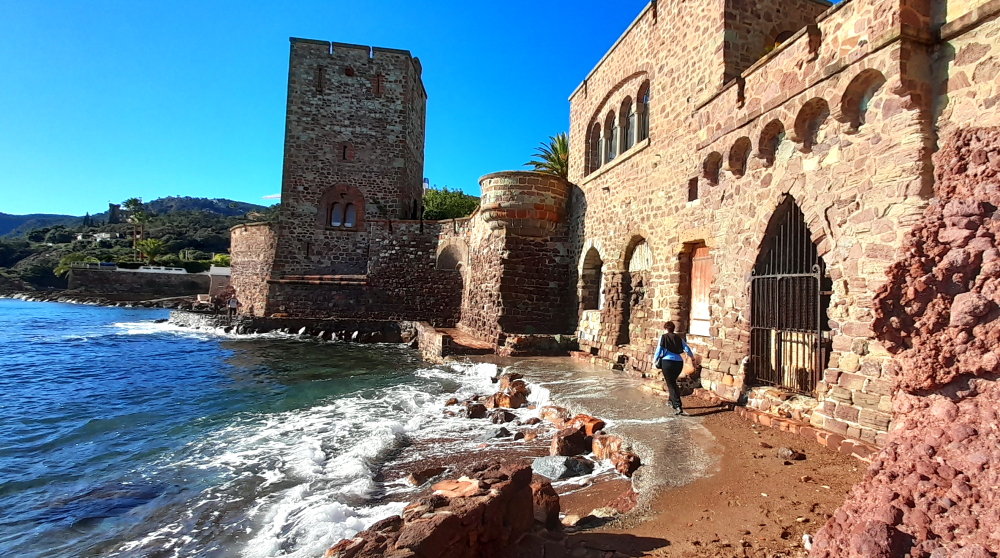
In 1918, two Americans, Henry Clews (1876-1937) and Elsie Whelen, known as Marie Clews (1880-1959), settled in the remains of the medieval residence that they acquired to rebuild it. Henry Clews was the son of a New York banker and had inherited a large fortune enabling the couple to restore the buildings and create others adding their personal touch as Henry was a sculptor and his wife an architect.
They resided in their castle between 1919 and 1930 and were both the owners and designers of their castle and garden where they designed a neo-medieval work without any archaeological research. In 1930 the lower courtyard was transformed into an Anglo-Provençal garden with a monumental entrance gate. The northwest wing remained as it was in 1880. In 1943, the castle was incorporated into the Südwall marine battery network built by the German army.
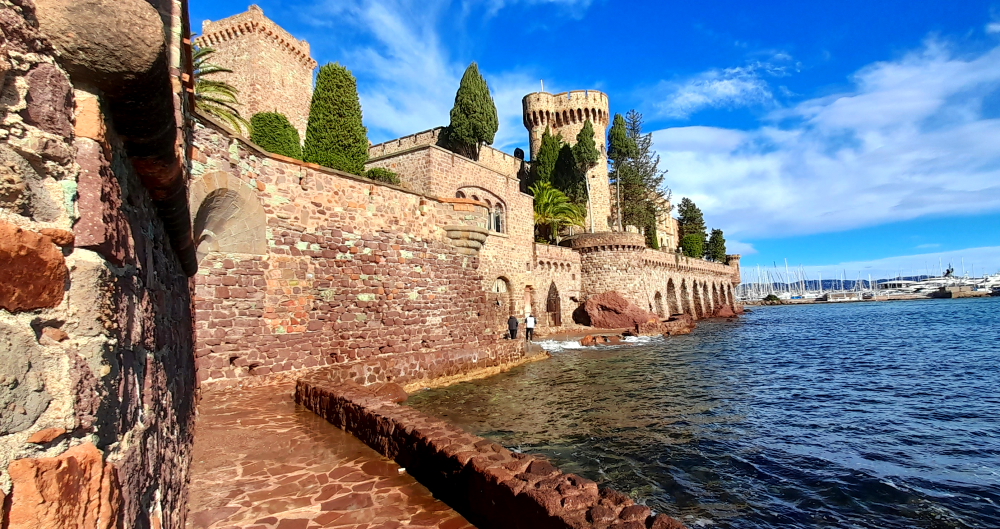
Founded in 1951 by Marie Clews, the La Napoule Henry Clews Memorial Art Association has made the castle a place of international cultural exchange including the organization of conferences, exhibitions, concerts and shows to which is added an artist residency program.
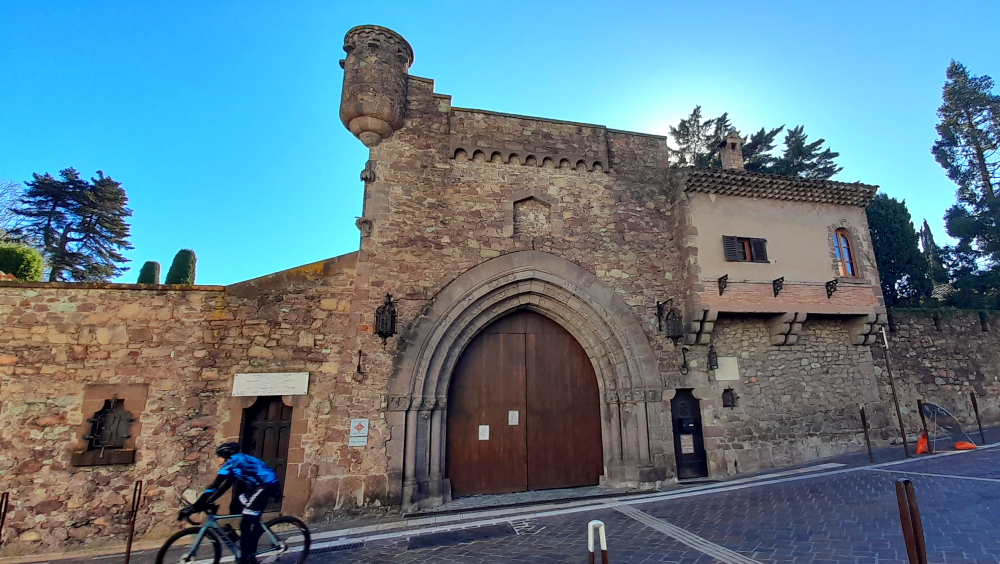
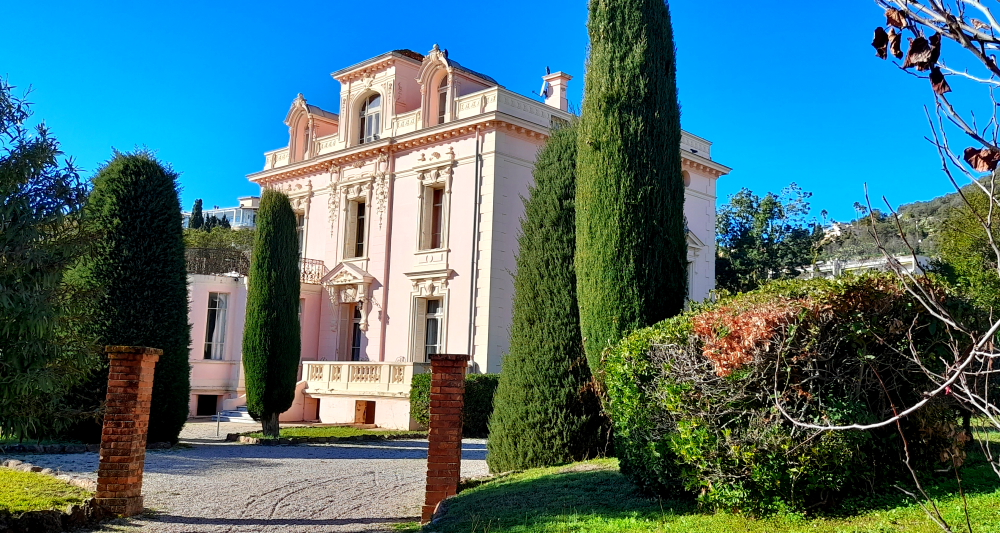
Nearby are some elegant residences. Unfortunately, their original ocean views now obscured by more modern constructions.
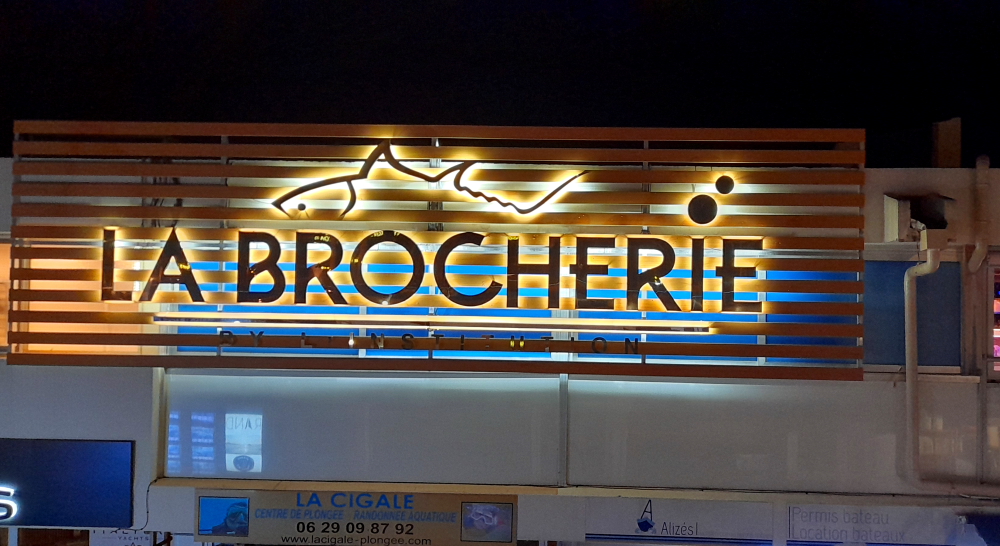
Tonight we are booked in at La Brocherie Restaurant overlooking the harbour. The restaurant logo is a shark so that should have been a bit of a hint to us.
Before trying to make out what is on the menu we are shown a basket of today’s catch of the day. Little did we know that we were actually the catch of the day.
The fish are very fresh but we go for the smallest option of a shared John Dory at 1.5kg whole and uncooked which will be oven baked.
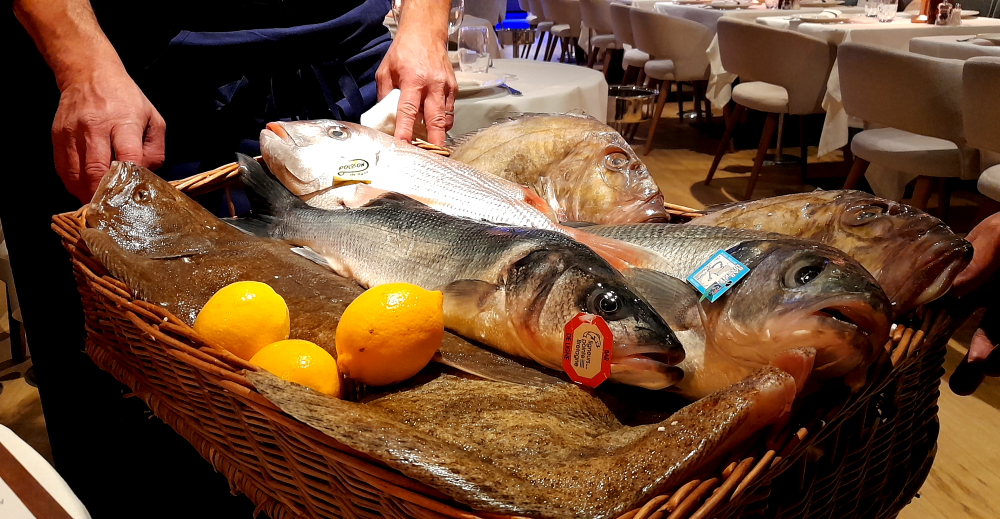
The fish arrives cooked and filleted in a very watery sauce. It tastes more like steamed fish and a bit flavourless but the meal is not bad and comes with some freshly steamed vegetables, some whitebait and mashed potatoes.
It is not as good as our meal in Nice at La Vague but certainly fresh and edible. The bill however for one piece of fish and vegies comes to an eye watering A$263.00. That’s what happens when you dine with the sharks. Lynn only had a glass of tap water and I had a small glass of white wine.
It will be back to the Pullman Hotel for dinner tonight.
19 January, 2024
Today is the 50th anniversary of our meeting way back in 1974 at the Coffs Harbour Ex-Serviceman’s Club.
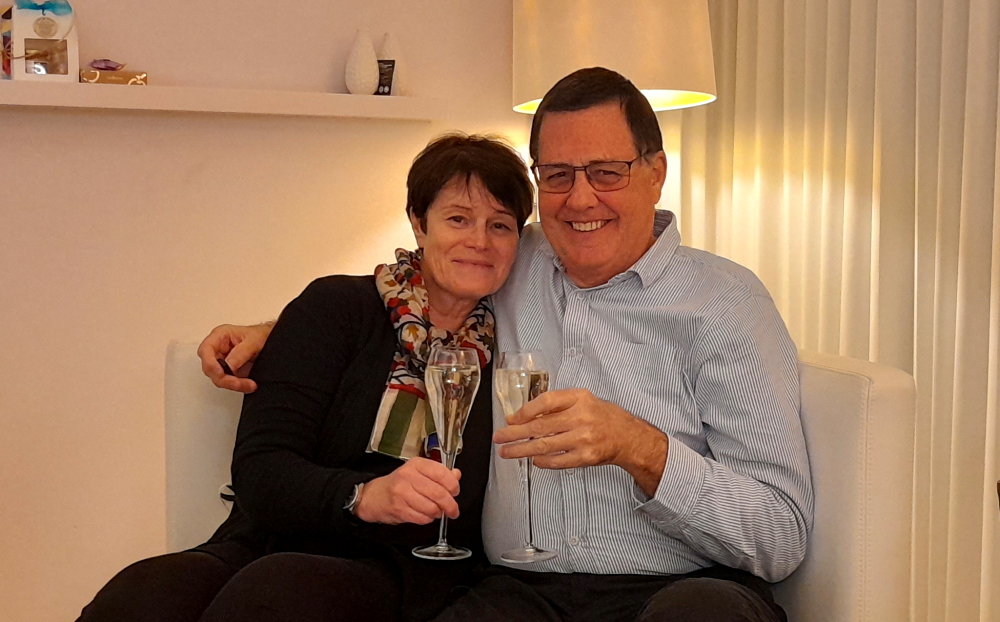
The plan is to laze around the hotel, have dinner in the hotel’s restaurant tonight and to crack a bottle of celebratory bubbles – which is exactly what we do.
20 January, 2024
Although it’s only 10 Deg. C. it’s warm in the sun.
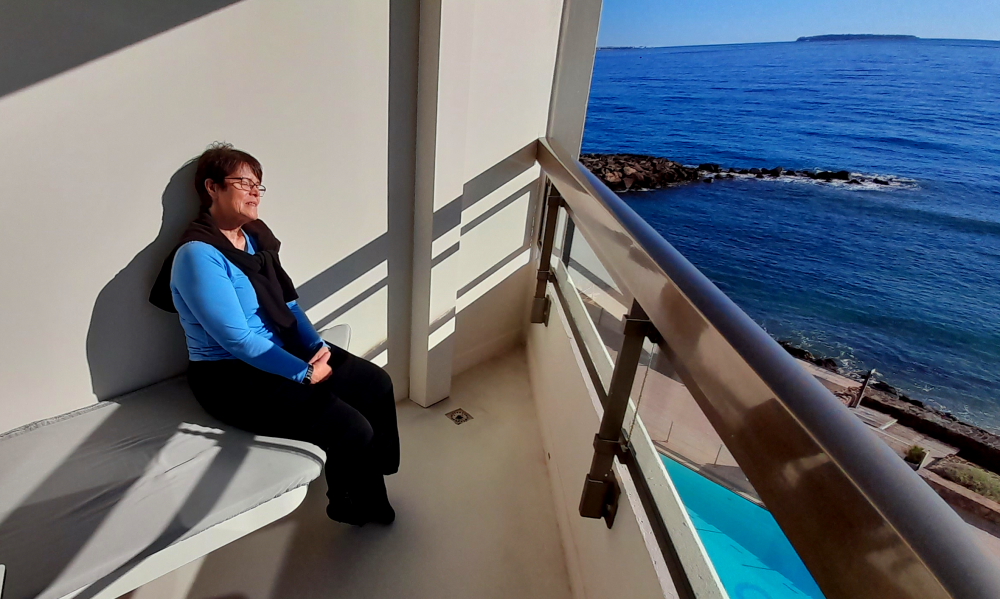
After such a lazy day yesterday we take a walk back into the village of La Napoule via the sea wall.
Wandering along the other side of the road we come to a railway underpass.
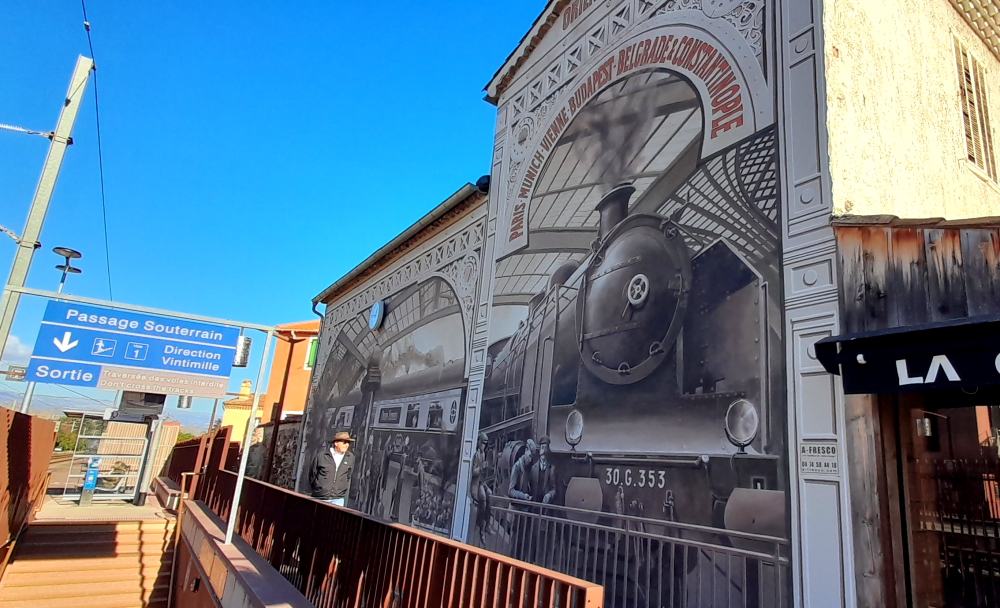
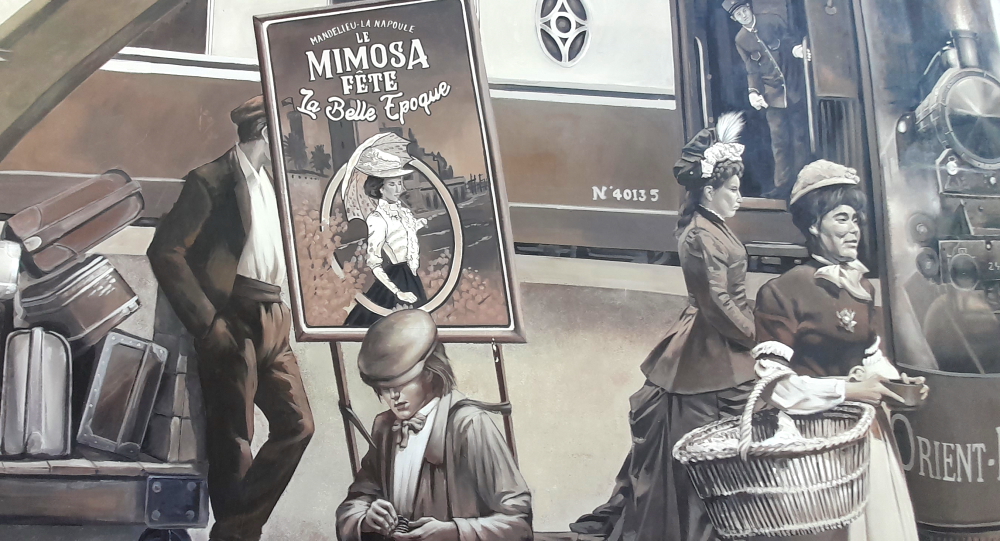
Alongside the underpass is some detailed street art that shows the Orient Express stopping at this train station in a bygone era.
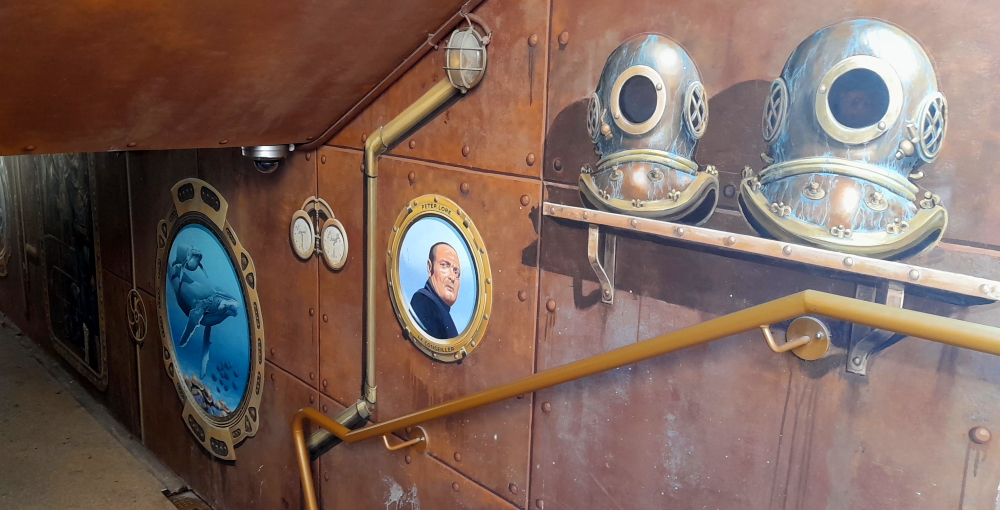
As well, the underpass has been cleverly painted also to look like the inside of the Nautilus, Captain Nemo’s underwater ship, as portrayed in the 1954 movie “20,000 Leagues under the Sea” (based on the 1870’s novel by Frenchman, Jules Verne) and starring Kirk Douglas, James Mason and Peter Lorre.
We get back to the hotel in time for Lynn’s massage then, after catching up on some chores, we head back out into the night to find a restaurant for dinner.
Tomorrow we start our journey back to the UK via Valance (South of Lyon), Dijon, the Champagne region then Calais before we take Le Shuttle back across the channel.
 THE CONTINUING TRAVELS OF YOGI & BOO BOO