
25 July, 2023
Our ferry to Douglas, Isle of Man, departs at 10:45 am today from Belfast, we need to be there before the 10:00 am cut off for check-in and it’s a 40-minute drive. So, we decide to leave at 8:30 am which should have us in the queue at 9:10 am.
All goes well for the first 15 minutes of our journey, until we start to take the ramp down onto the Belfast Road, to be confronted by its traffic at a standstill. Lynn consults MapsMe and finds a route to the east which rejoins the A2 closer to Belfast. We dive down those 2 roads, along with a bunch of other cars, and when we rejoin the A2 at the traffic light intersection, are relieved to see that the traffic is running smoothly. Shortly after an ambulance is heading in the opposite direction.
We follow the small, road signs to the Isle of Man Ferry and come to a dead end, the roadway barred by cyclone fencing, a heavy, padlocked gate that secures derelict, industrial wasteland and a young, skinny guy in a high viz jacket sitting on a concrete block.
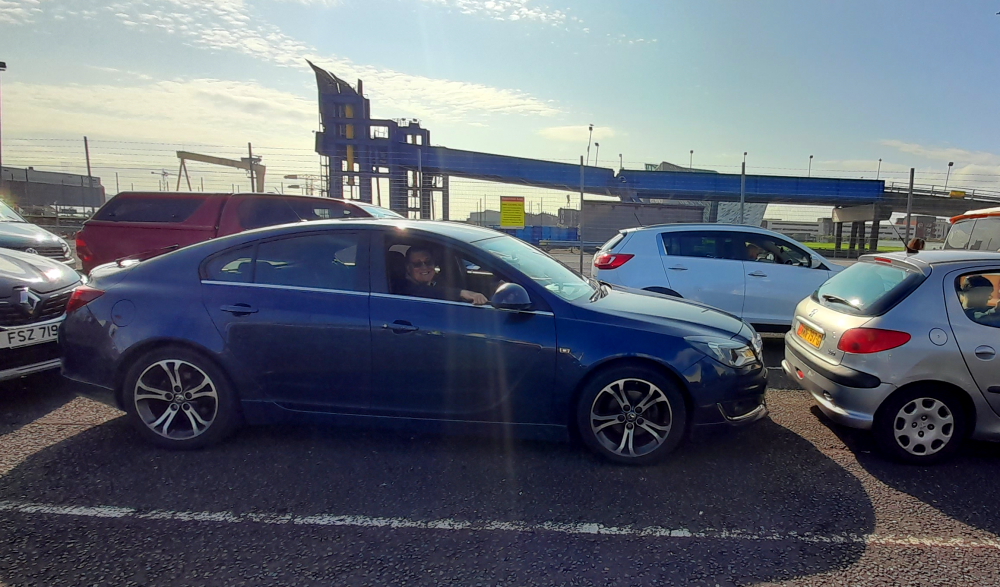
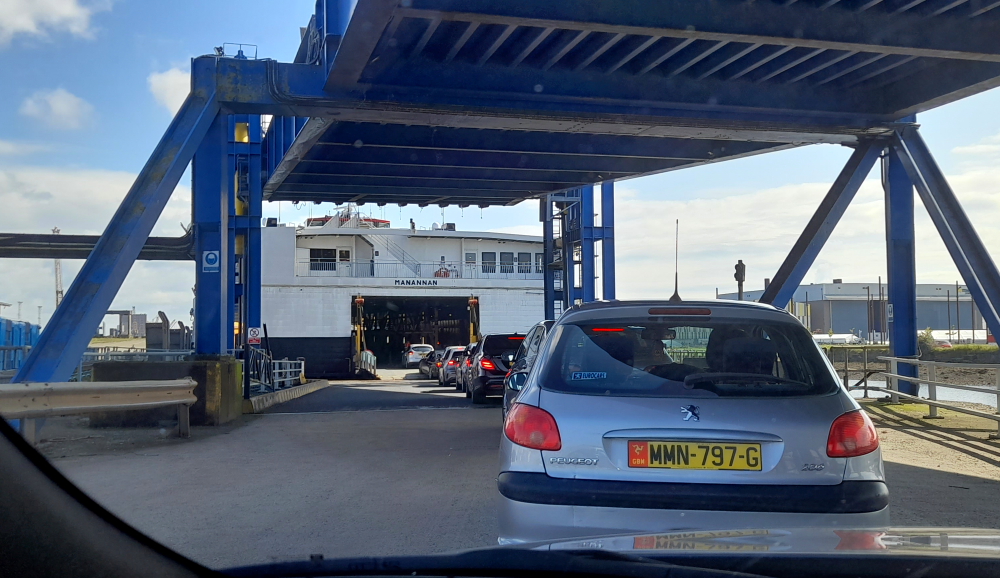
“Yes, you are at the right place,” he says. “Just turn left and keep driving until you’re told to stop.” So, at 9:20 am we are sitting in the queue and around 9:30 am we drive onto the ferry, where we have to drive up spiral ramps with some cars in front of us having to drive then reverse several times in order to fit into the tight ramps. Quite a bizarre configuration, but the ship is a twin hulled high speed cat.
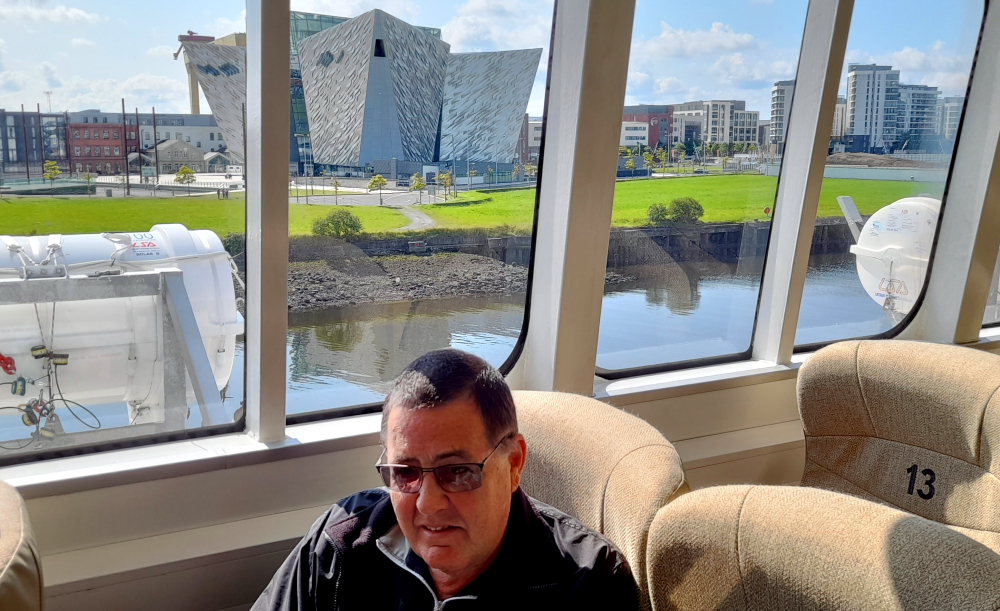
I had booked reserved seating in the Niarbyl Lounge on the ferry for the 3-hour crossing. As a bonus, the Lounge has a very nice view of the Titanic Museum across the way.
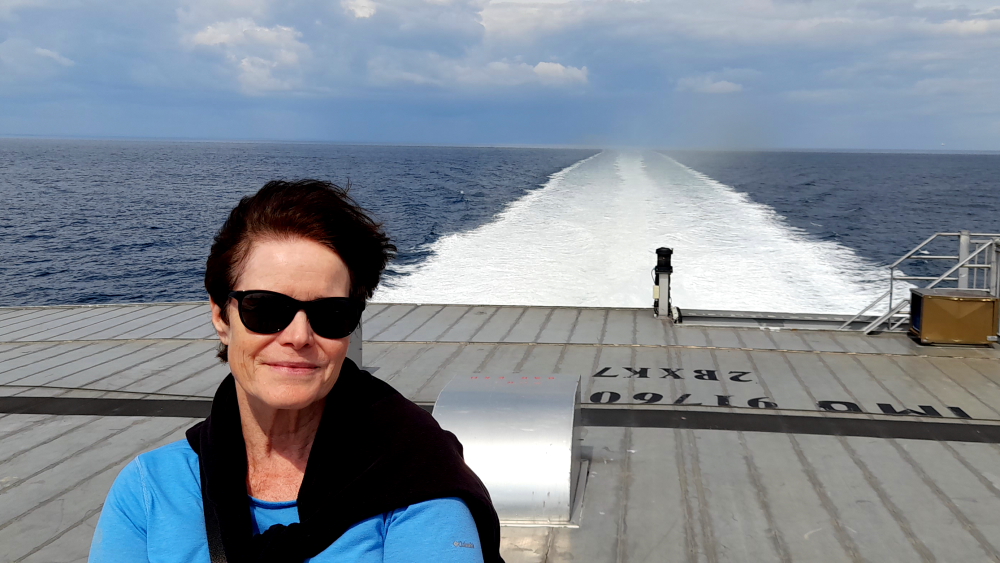
It’s so nice being on a vessel once again and out on deck enjoying the sea air.
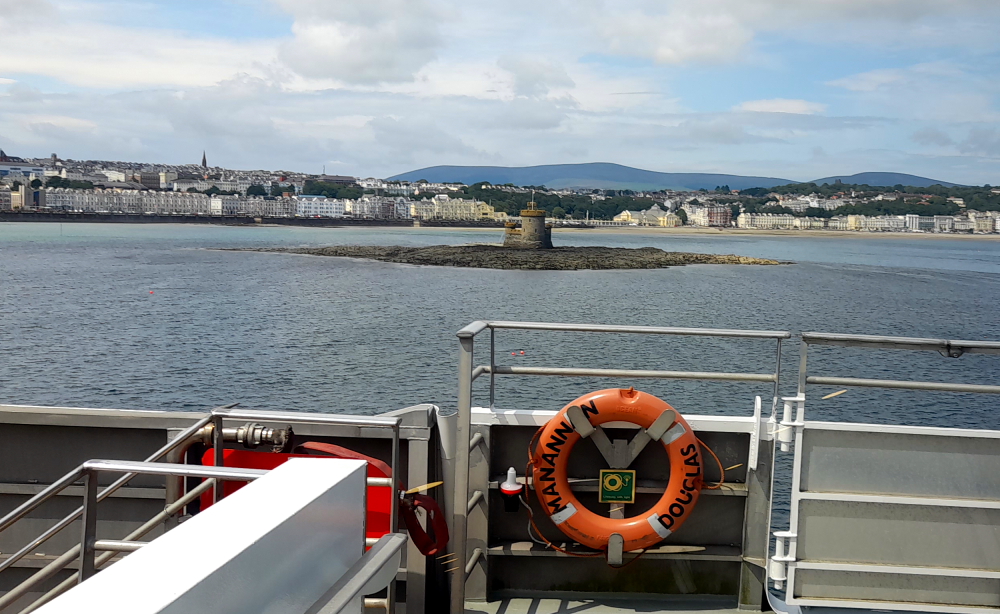
3 hours later we are heading into port at Douglas, cruising by the ‘Tower of Refuge’ in the bay.
A short 10-minute drive later we arrive at our home for the next 5 days: the Comis Hotel & Golf Resort.
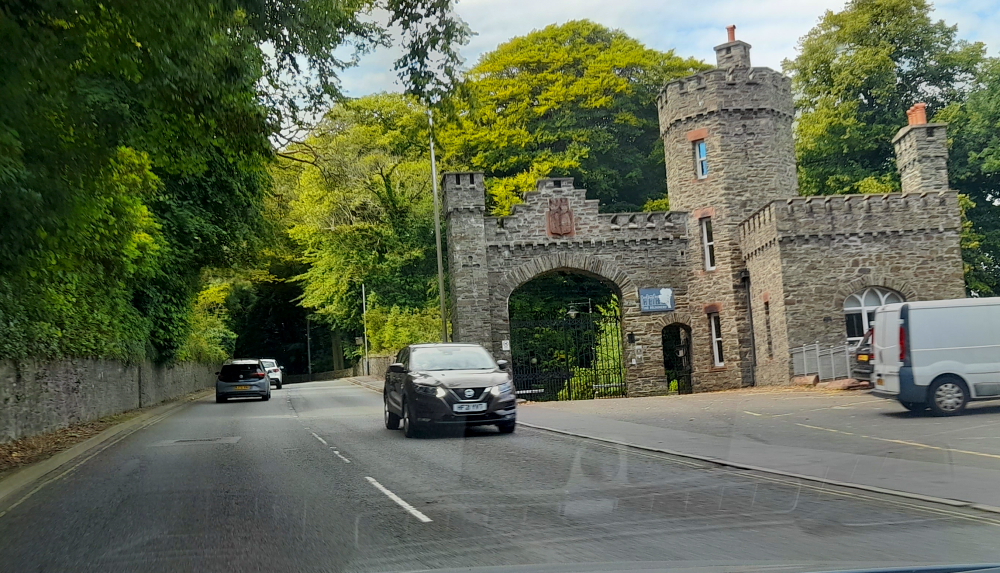
As the weather forecast is for sunshine today and rain tomorrow we decide to drop the bags in our room and drive the southern third of the island.
We take the A6 SW past Ballasalla, the A5 West past Castletown, Port Saint Mary to Port Erin then the A36 /A27 up the coast through Dalby, Glen Maye, Patrick to Peel. There are some great views of coastline, farmland and purple, heather-clad moors.
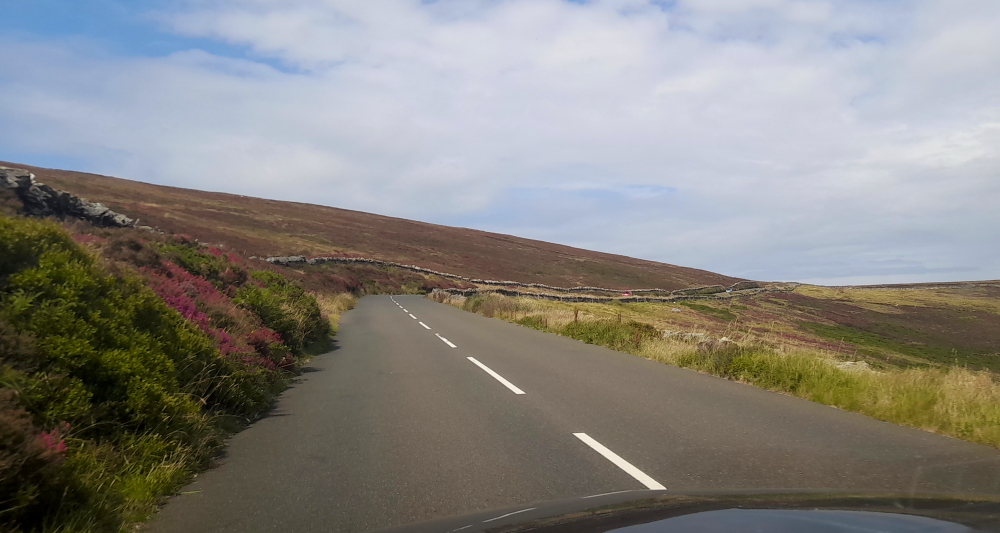
The plan was to take the A1 SE to St Johns, Crosby and Glen Vine to the A5 just outside of Douglas, but we are thwarted by a no entry sign. Instead we need to take a diversion on the A20 and in order to cross back to reconnect with the A1 at St Johns, Lynn directs me to take a right onto the Brack-a-Broom Lane (the D1) at Poortown.
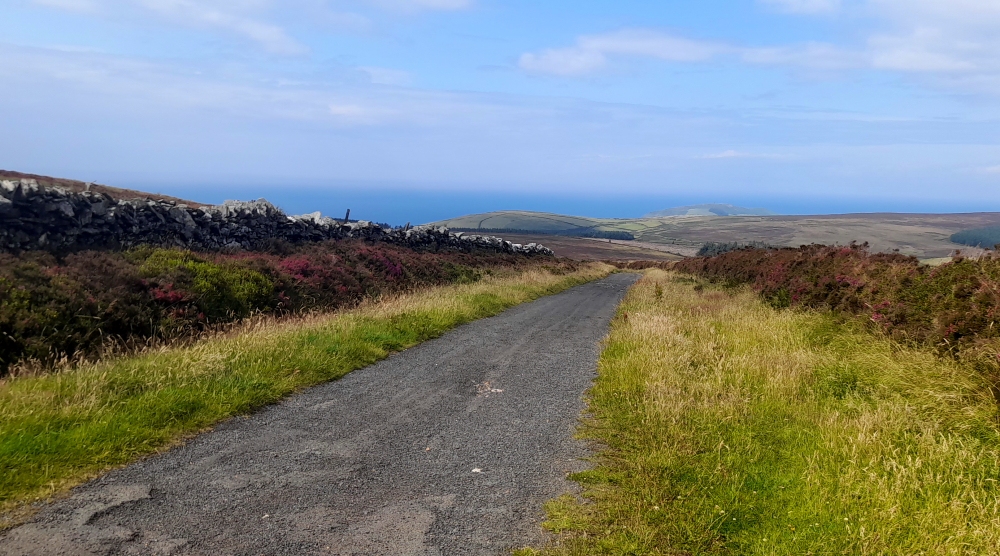
Well, apparently a ‘lane’ in Manx means a single-lane, pot-holed goat track only suited to tractors…
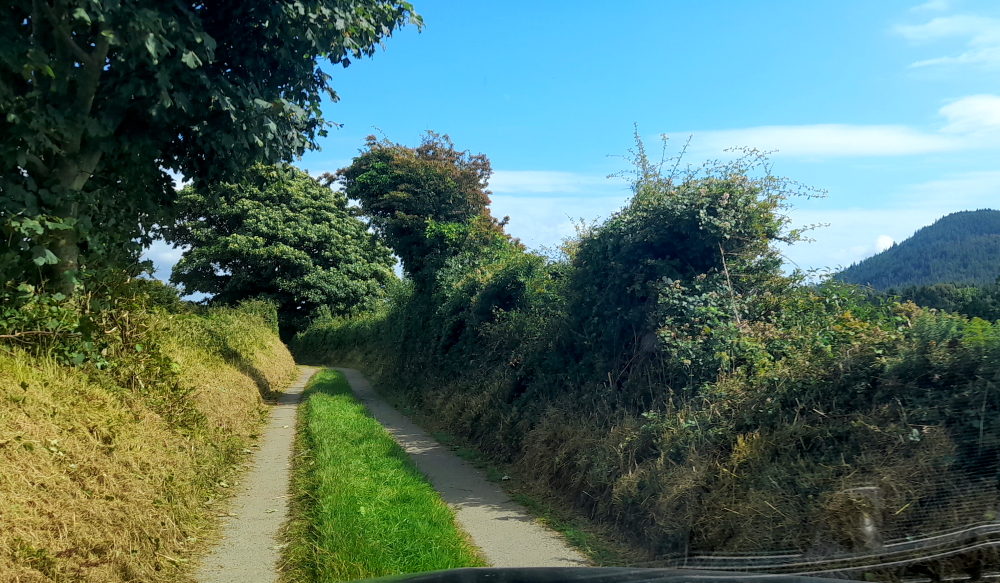
…not to mention that we’d have to cross a fast-flowing creek via a ford!
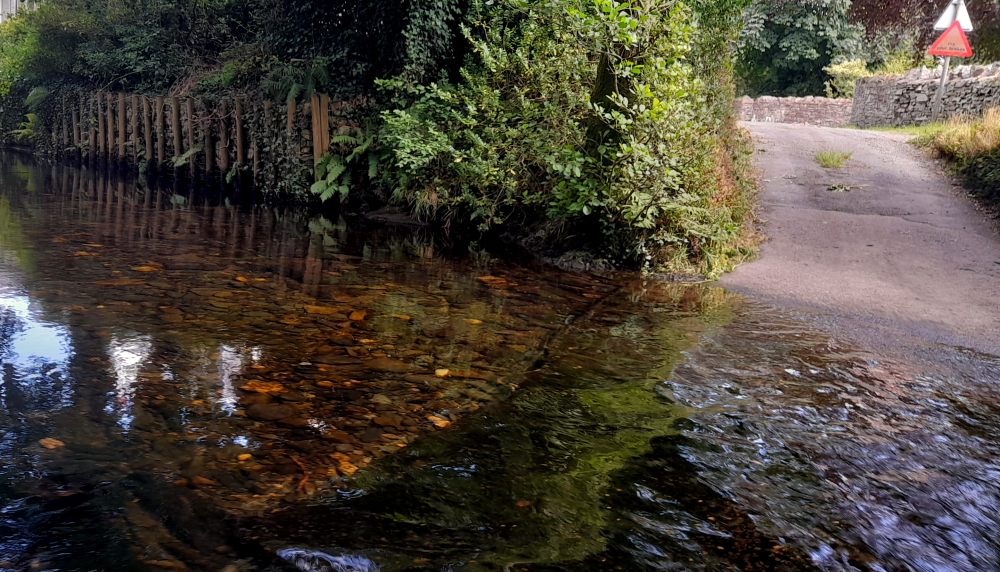
We survive the plunge and return to the hotel and after unpacking enjoy a relaxing dinner in the restaurant with a view of the golf course.
26 July, 2023
Yesterday, the hotel receptionist gave us some recommendations, one of which was that as it is forecast to rain today that we take the steam train from Douglas down to Port Erin.
Which we duly do. We find the Tongue Car Park where we can pay either GBP3.00 for 4 hours’ parking or GBP5.50 for 24 hours. However, actually paying the GBP5.50 is an entirely different proposition. The parking ticket vending machine’s instructions are totally incomprehensible to the point where I end up paying for 4 hours which is insufficient.
Lynn spies a guy parking his car and approaches him, asking if he could assist. Which he does very graciously, not only instructing us in the black art of the ticket machine, but also buying a GBP5.50 ticket and swapping our GBP3.00 for it.
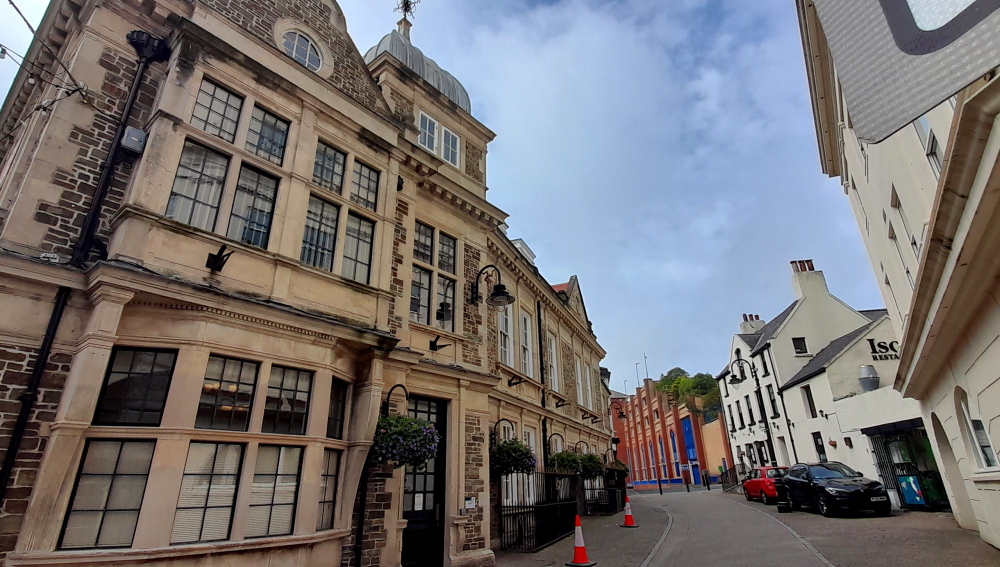
A short distance away is the Steam Railway Station where we purchase 2 return tickets for GBP38.00 to Port Erin on the 11:50 am train. At this point we have an hour before departure, so Lynn heads into town to run some banking errands and instructs me to have a coffee at the station while she does this.
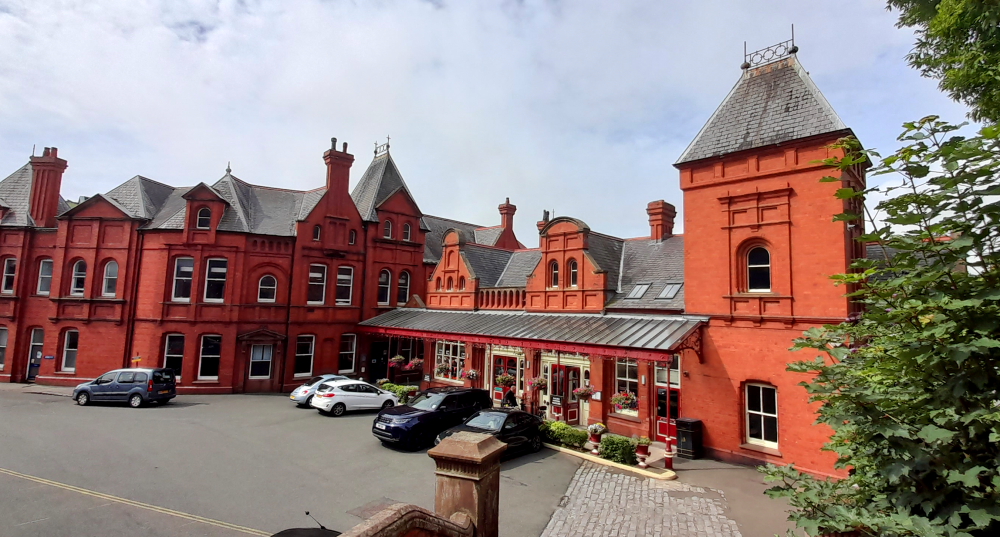
Seating is first-come-first-served so embarkation commences 25-minutes earlier and the train departs on time in warm sunshine.
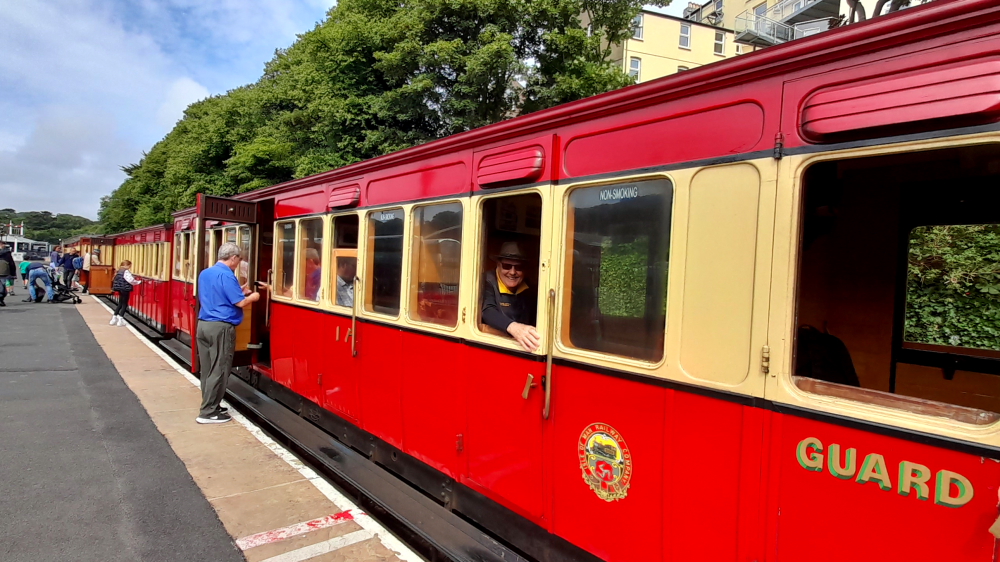
However, before the train departs we are joined in our cabin by 3 elderly women then, at the last minute, an elderly couple, the man with a walking stick…
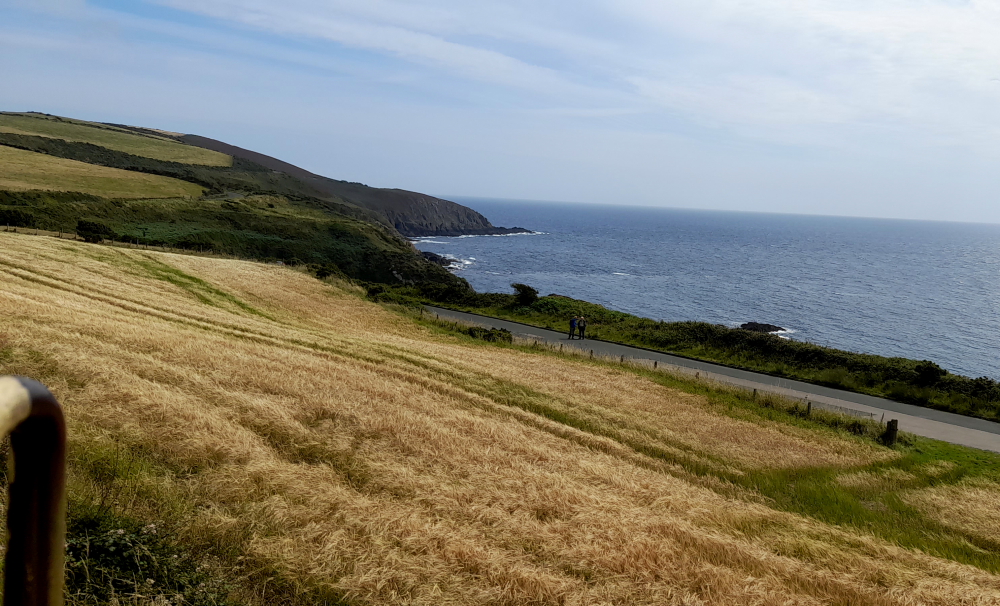
…who regales us with his life experiences the entire hour’s journey in his load, monotonous, Yorkshire accent. I tried to ignore him but he keeps jabbing me in the ribs to ensure that I am paying him attention. He reminds me of the Monty Python skit about the most boring man in the world talking about shovels.
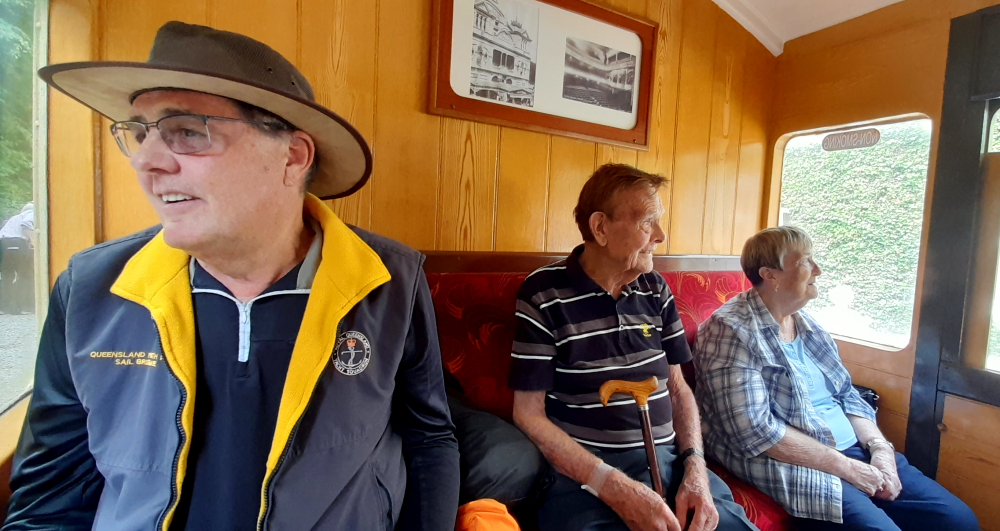
The Isle of Man Steam Railway is the longest narrow gauge steam line in Britain that still uses its original locomotives and carriages.
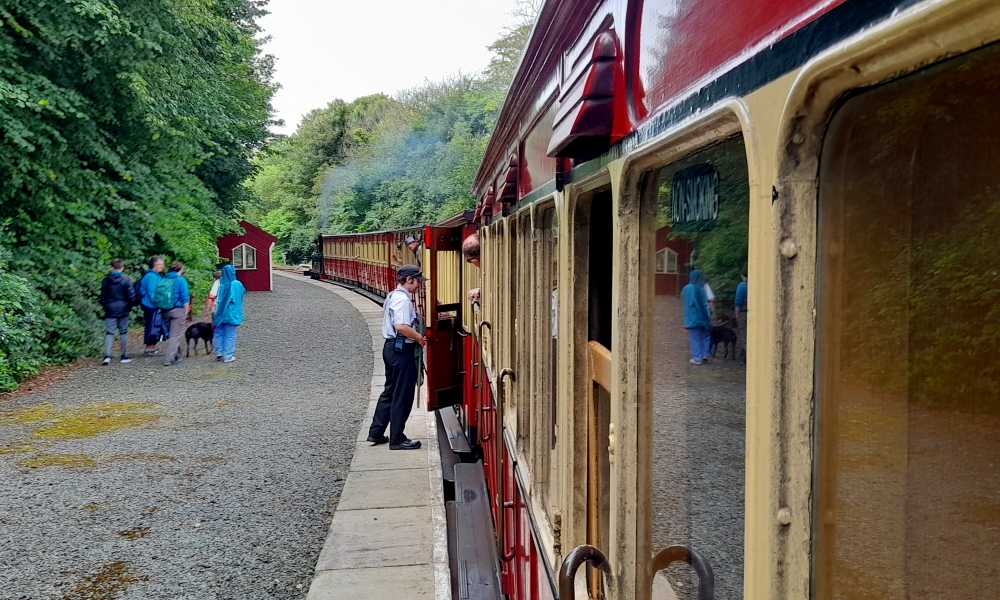
The 3′ narrow-gauge railway was opened in 1873 and runs through the Island’s countryside between Douglas, the island’s capital, terminating at Port Erin some 15.5 miles away, with stops at Port Soderick, Santon, Ballasalla, Castletown, Colby and Port St Mary.
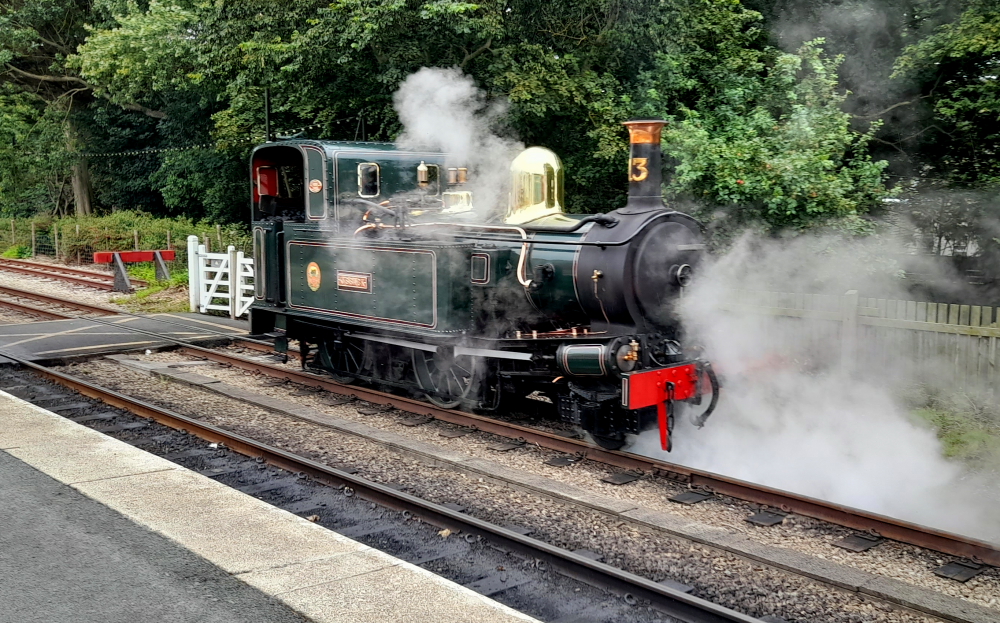
Naturally, the weather deteriorates the closer we get to Port Erin with a light rain falling when we disembark. We only have 30 minutes to wander around Port Erin – involving the purchase of a bottle of red wine at the Coop – before we need to return to the station.
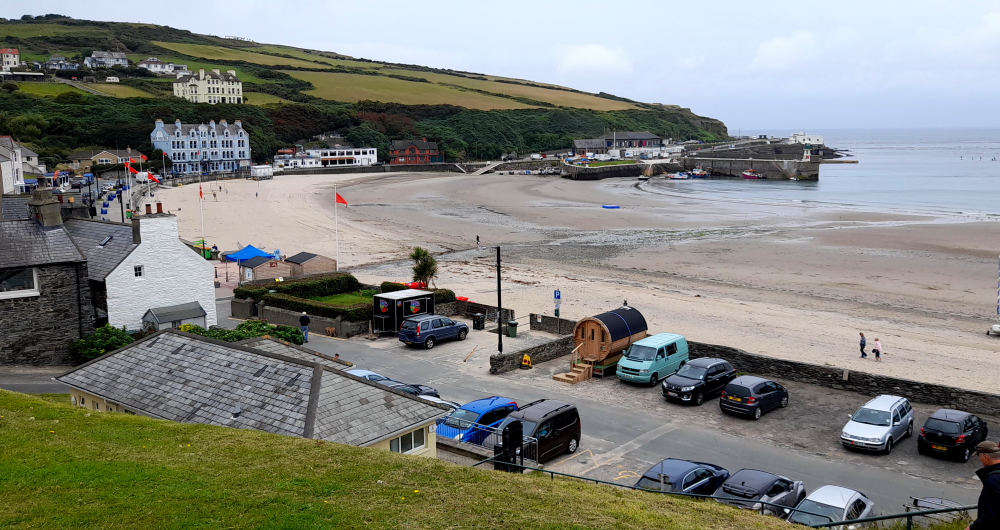
By the time we’re ready to clamber aboard it’s raining quite heavily. Luckily we manage to avoid the Yorkshireman who gets on the carriage in front of us. And, once again, a bunch of people pile into our cabin just before departure.
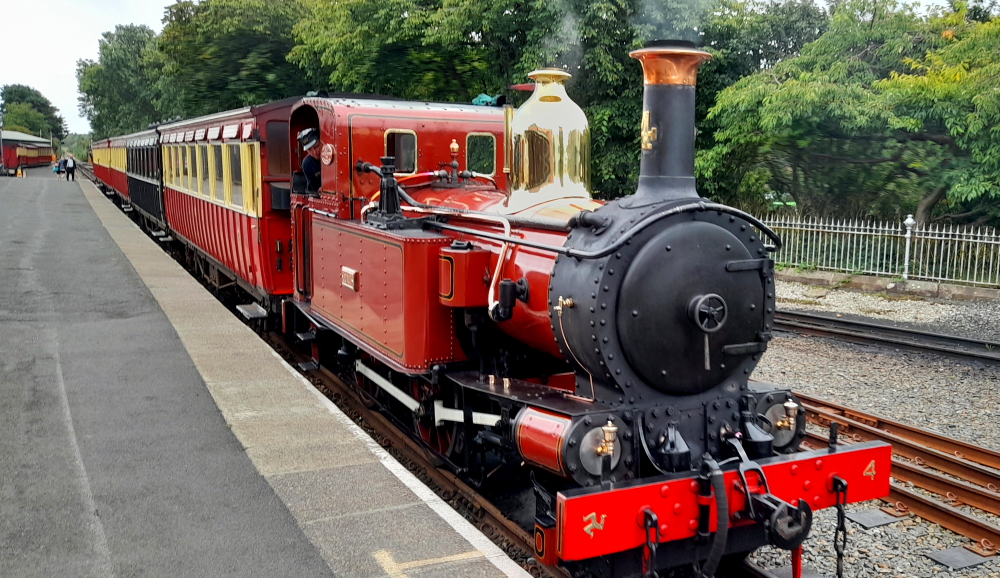
Thankfully our foggy return trip is quiet except for the drone of the Yorkshireman next door which we can hear through the thin walls.
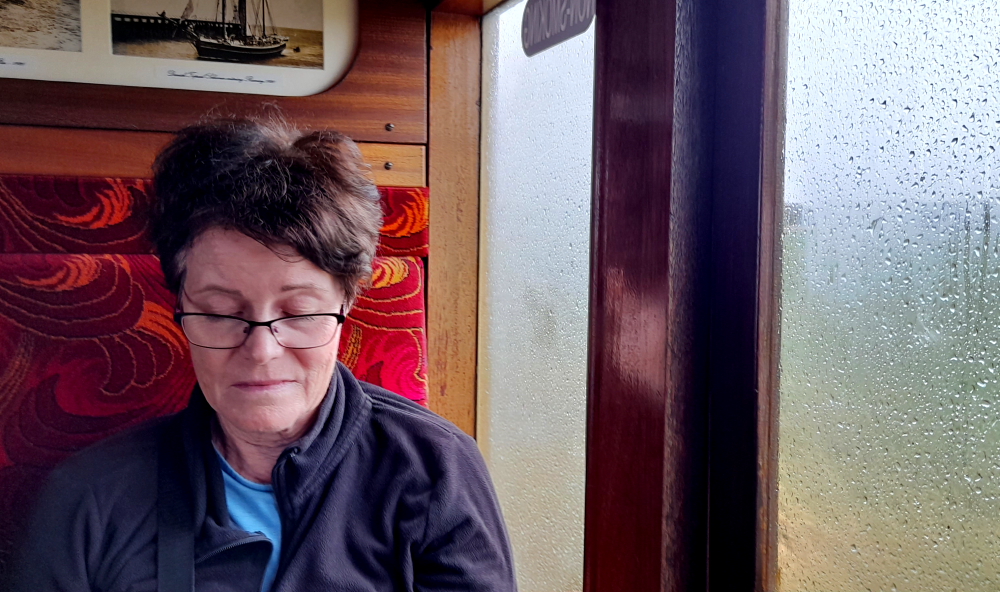
Back at the hotel we crack the bottle of red, update the blog and head out into the now very heavy rain to a nearby restaurant for dinner. Ever since we returned to our hotel it has been raining heavily.
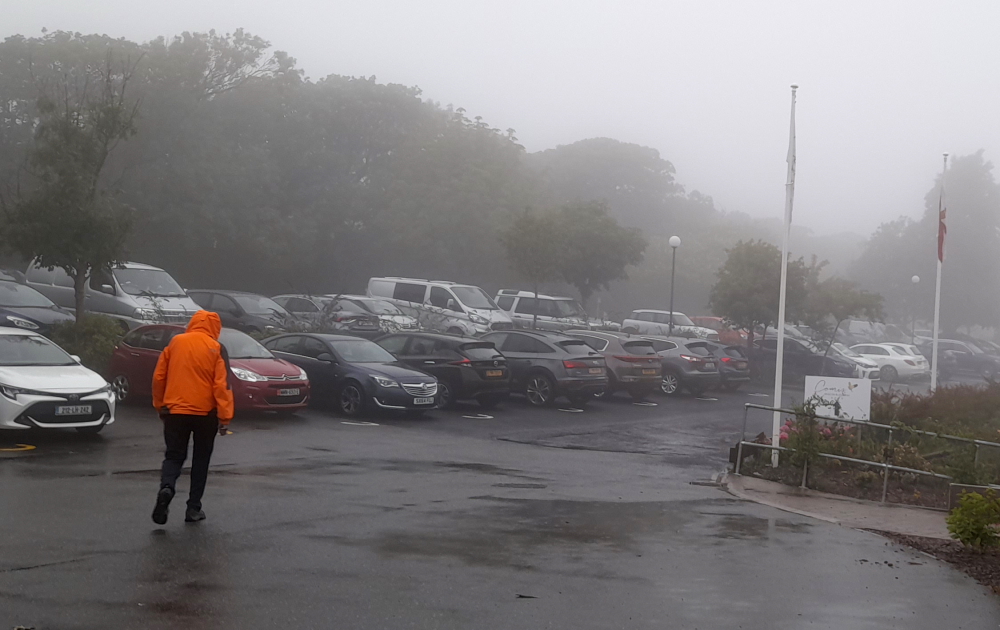
We struggle to find parking at the ‘Forge Tavern’ but no problem getting a table. I plan to order ribs but again the Poms think that two bones of ribs is a rack. No thanks, I could buy the whole pig for what you want to charge for two rib bones. I order half a chicken and chips for A$35. It comes with a pepper sauce and that’s it! I also order a beer which is typical British larger (almost undrinkable) at A$12.
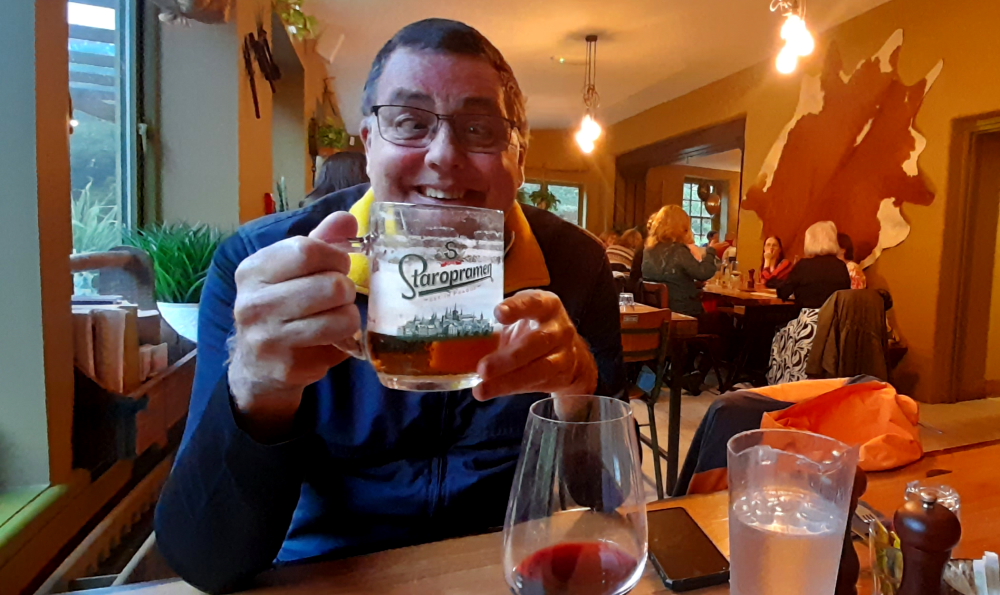
Even our hotel has better quality dinner. Yet again, KFC would be a better alternative.
27 July, 2023
It’s 19 Deg. C at 10:30 am when we decide to hell with the rain, we’re going out exploring anyway. I check the car boot and guess what, it’s still leaking. I’ll have to buy some silicone sealant today and seal the other 2 plugs at the top of the hatch back.
Cindy, the very helpful receptionist at the hotel, decided to set us a mission: (1) to find the Magnetic Hill stone on the Ronague Road, Ronague (A27), and (2) to drive the hill to experience its magnetic qualities. Mission accepted!
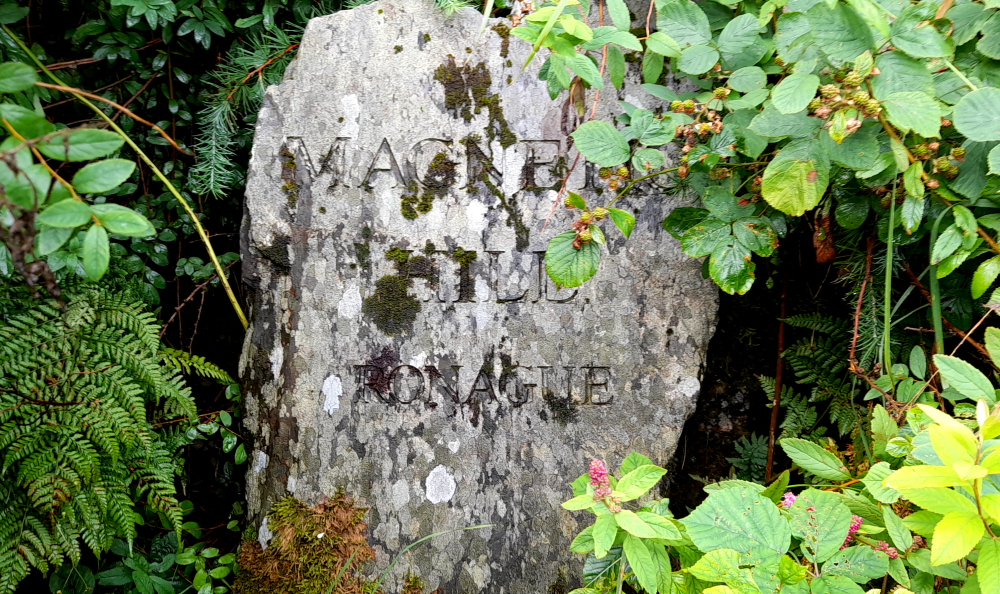
We arrive at its GPS co-ordinates (54.129350, -4.691440) but see nothing. Then, considering how myopic Lynn is, she manages to see the stone amongst the dense vegetation as we drive past.
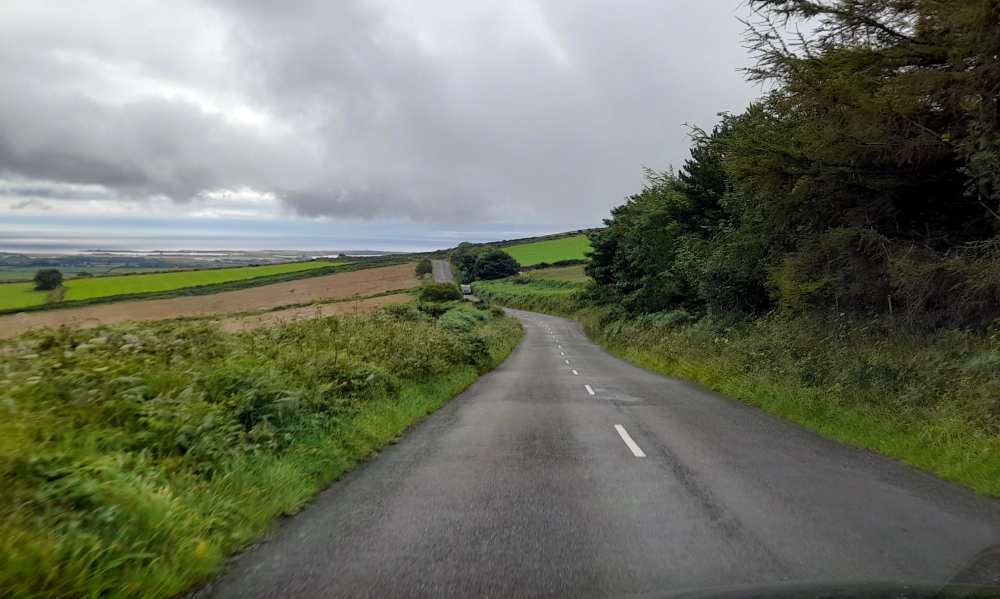
We put Cindy’s theory to the test: put the car in neutral and watch in amazement as the car ‘drives’ itself up the hill without any powered assistance – i.e. by the force of magnetism.
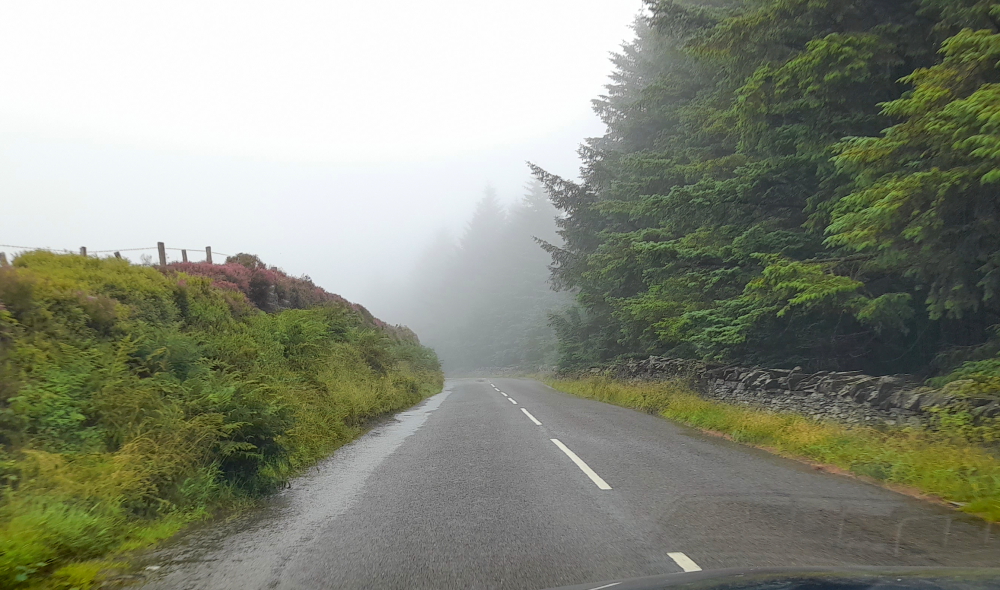
Balderdash! Maybe we just have a better idea of which way is up. Or perhaps we don’t drink as much as the Manx folk. Either way the only way that this car is rolling is down hill.
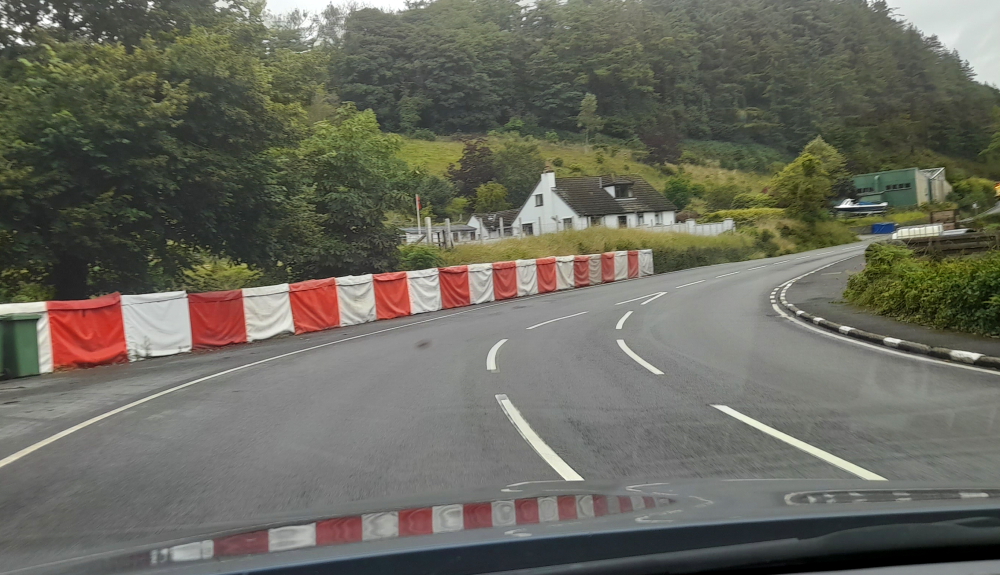
We drive on up to St Johns and join the A3 north which is part of the TT circuit. Corners, bridges, fences and poles are padded and orange, white and black signs appear as mile markers.
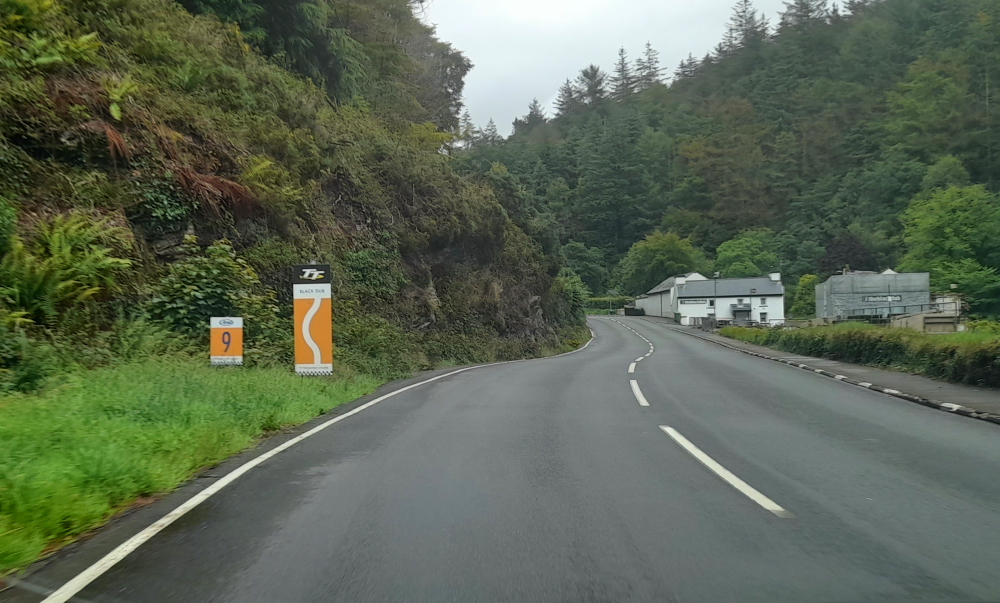
At Ballaugh we turn left onto the A10 and drive through Jurby to Bride where we turn left onto the A16 and drive to the northern most point of the Isle of Man, the Point of Ayre.
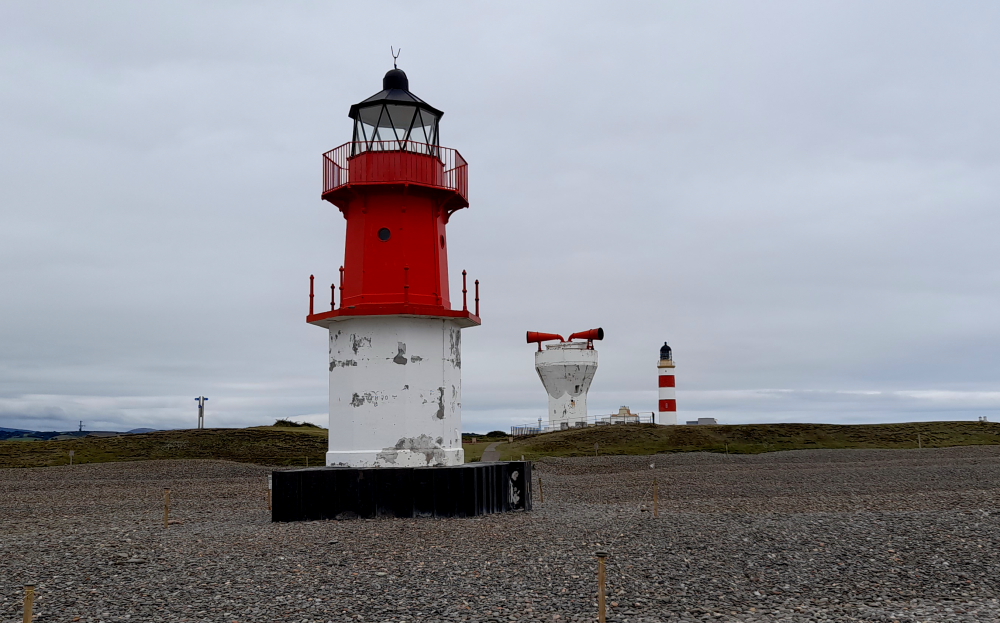
Here we find several light houses and a humongous fog horn. The Arctic Turns are nesting in the pebbles on the beach so most of the area is roped off to protect the tourists from the aggressive turns.
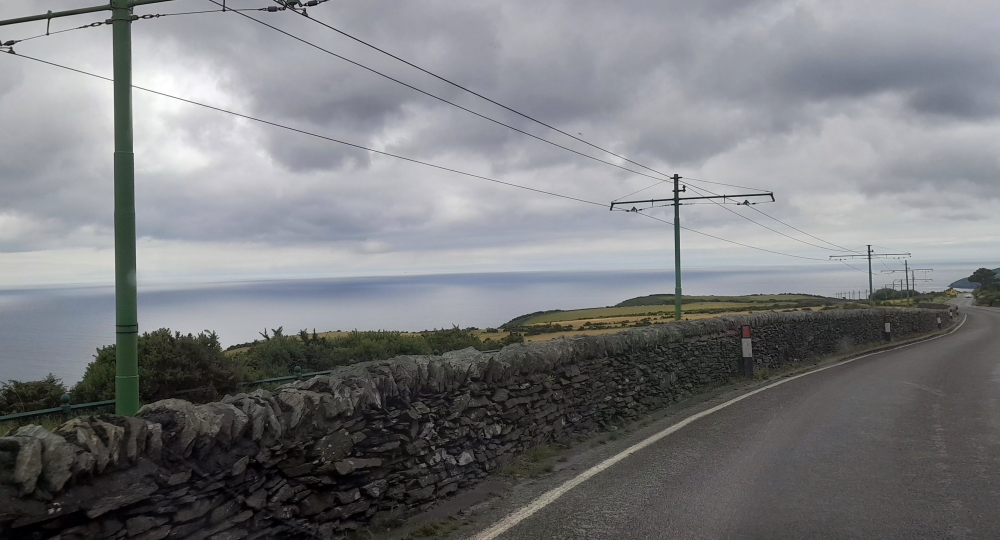
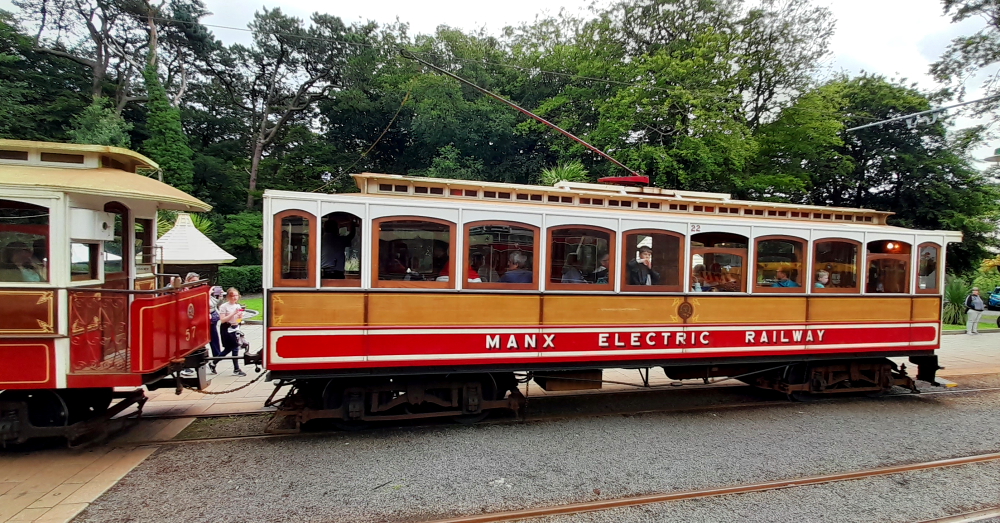
Driving south past Ramsey we follow the electric train line to Laxey where we plan to park and catch the electric train to the Snaefell summit which is only accessible by either railway or by hiking up. All Aboard! Train it is then.
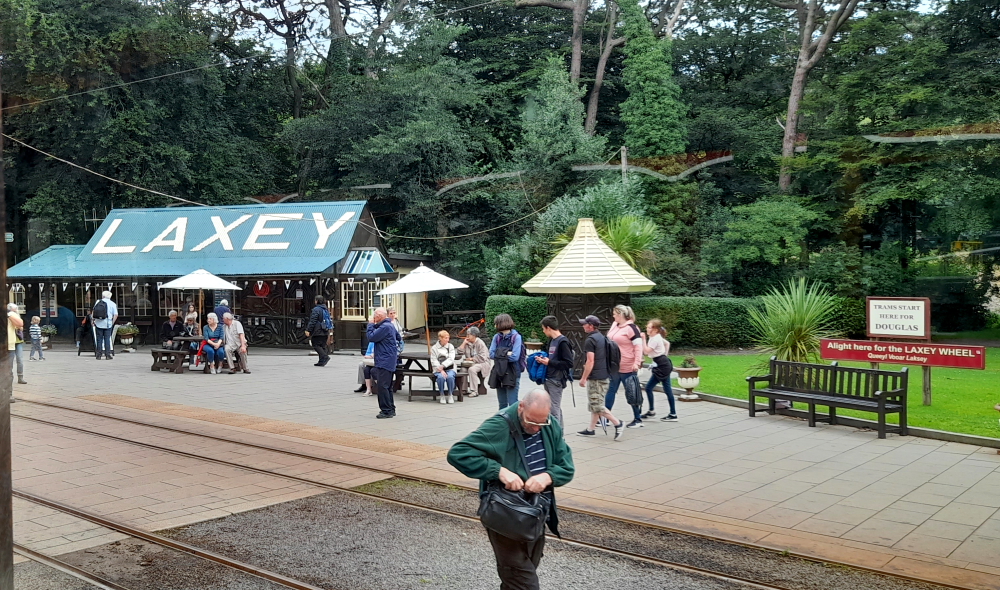
Although the car park is packed we find a spot and walk the short way to the Laxey Manx Electric Rail Station.
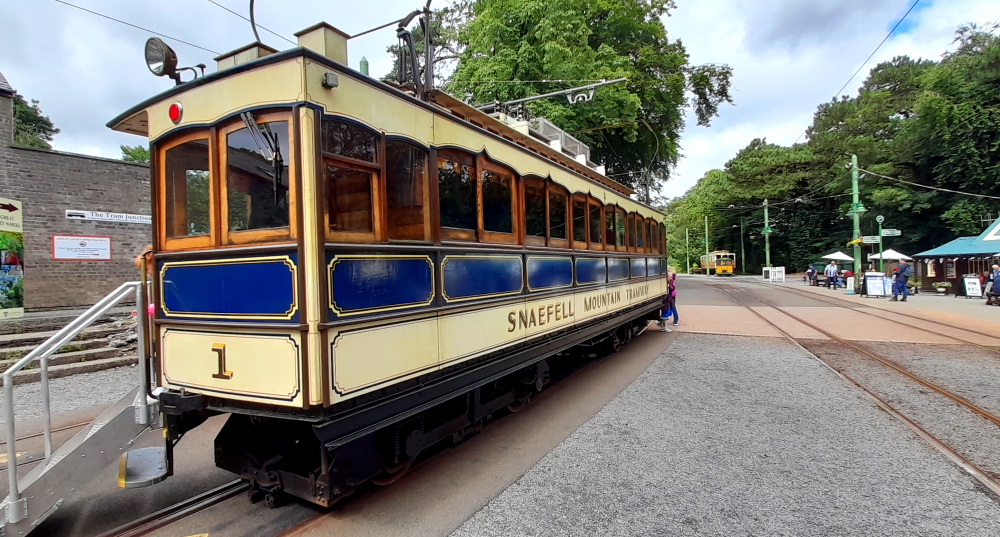
As it’s now 1:12 pm we doubt we’ll get on the 1:15 pm train to the summit. Lucky for us the connecting train from Douglas hasn’t arrived yet so we get to scamper onboard.
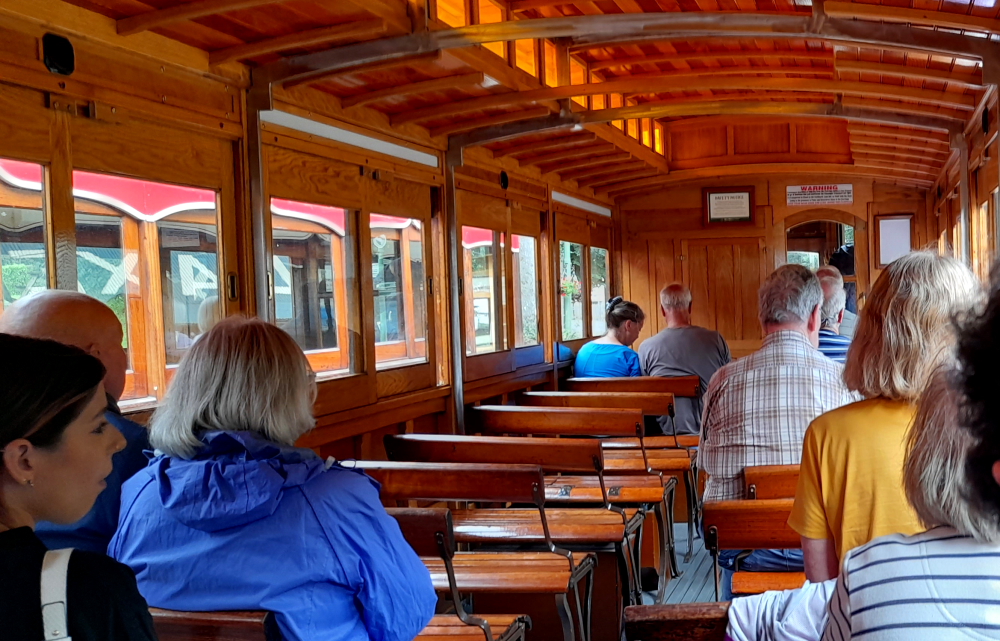
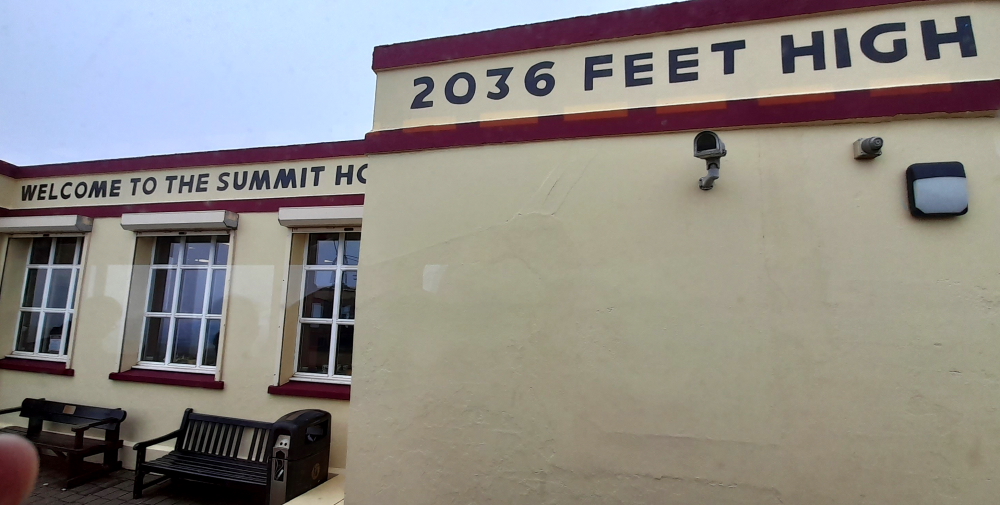
The Snaefell Mountain Railway (Manx: Raad Yiarn Sniaull) is an electric mountain railway and is the only electric mountain railway in the British Isles. It joins the village of Laxey with the summit of Snaefell, at 2,036 feet (621 m) above sea level the highest point on the island. The Railway has been running for 128 years, since 1895, with the majority of Victorian era infrastructure and rolling stock still in use.
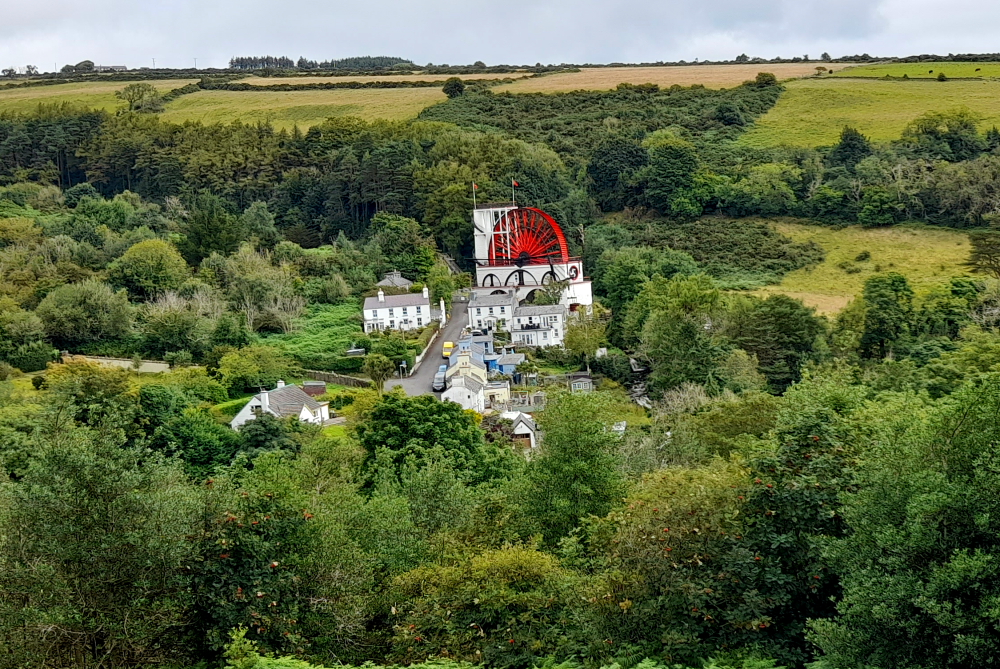
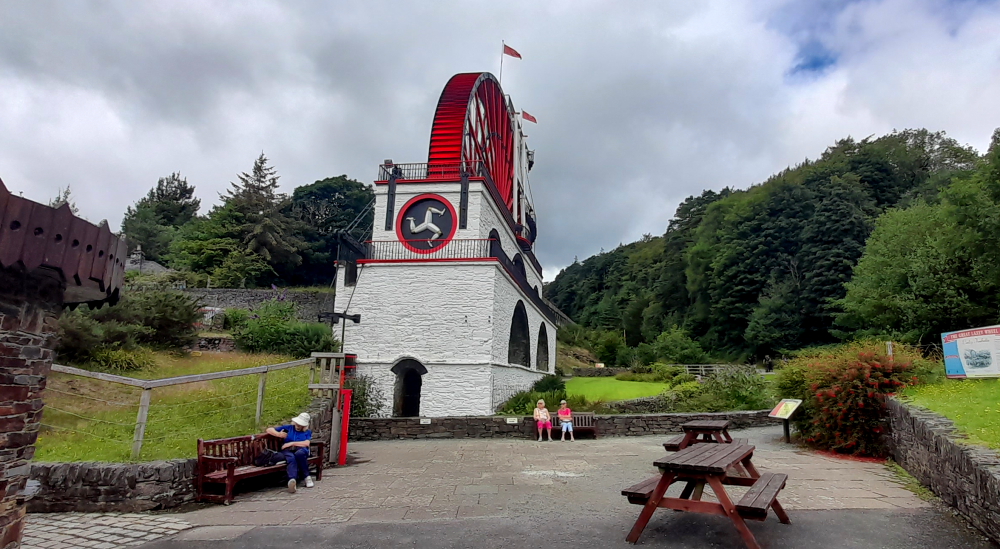
During the height of prosperity of the Great Laxey Mine, the Laxey Wheel was erected. The wheel was named the Lady Isabella, after the wife of Sir Charles Hope, who at the time was the Lieutenant Governor of the Isle of Man. During its working life the wheel was capable of pumping 250 gallons (1100 litres) of water a minute from a depth of 200 fathoms (370 metres).
The Great Laxey Mine was a silver, lead ore and zinc mine which reached a depth in excess of 2,200 ft (670 m) and consisted primarily of three shafts. From 1823 the mine was served by the Great Laxey Mine Railway and by 1833 over 200 men were employed in the mine.
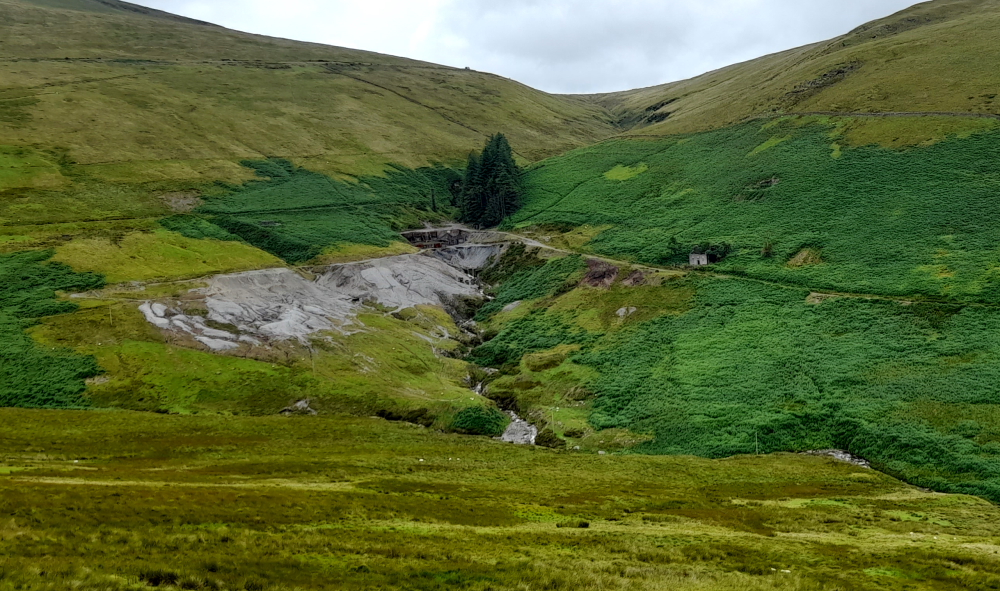
By the beginning of the 20th century the mine’s yield had begun to decline dramatically. In March 1904 a fire broke out and in December, 4 miners were killed.
In 1924 at age 84, Robert Williamson – creator of Laxey Glen gardens and also Susie’s great-great grandfather – purchased the properties of the Great Laxey Mines which had closed 2 years previously, concerned that the village would be decimated if its main industry was to cease. The mines were reopened and, despite a world-wide depression in the mining industry, managed to continue working until their final closure in 1929. He died in 1927.
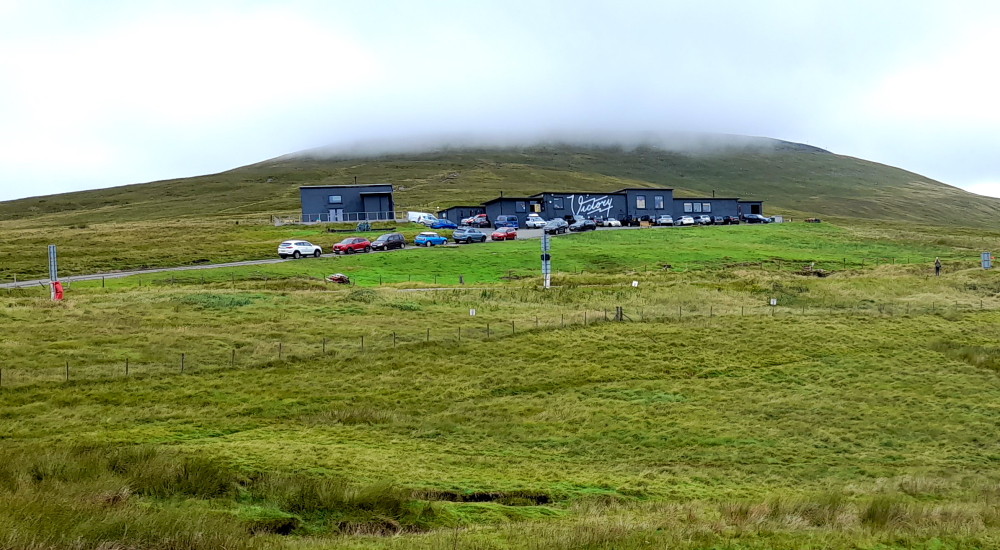
Bungalow Station (more commonly The Bungalow) is the only intermediate station on the Isle of Man’s Snaefell Mountain Railway and is located where the main mountain road intersects the line. The area was so called because until 1958 there was a large hotel here of that name.
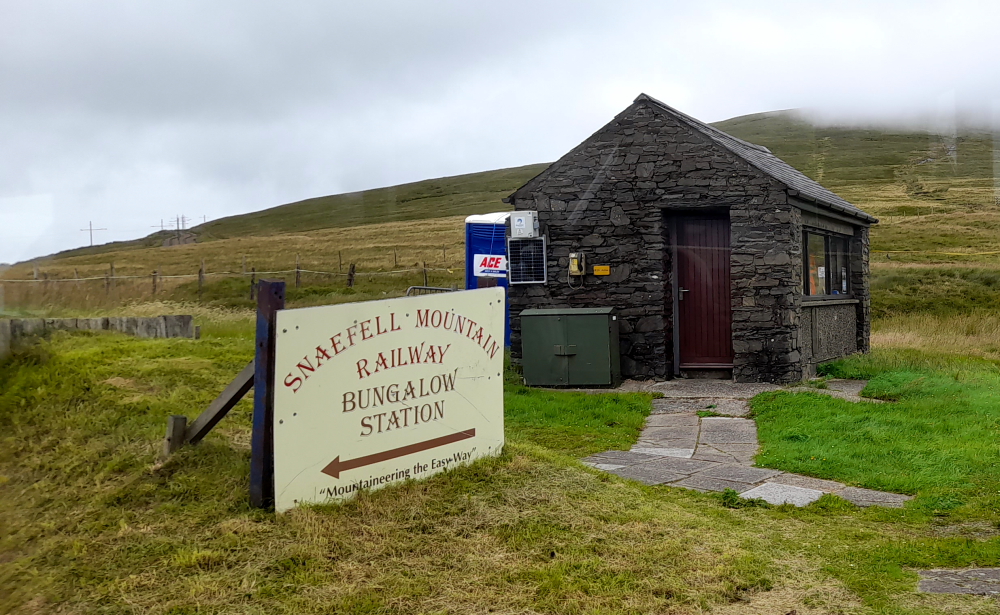
When the line originally opened in 1895, a wooden “chalet” type building was erected, but due to increased popularity with Victorian holidaymakers, a replacement stone structure was installed in 1902 and featured castellated turrets and was more Gothic in appearance.
It is the replacement building that serves the railway today but in a much-simplified format.
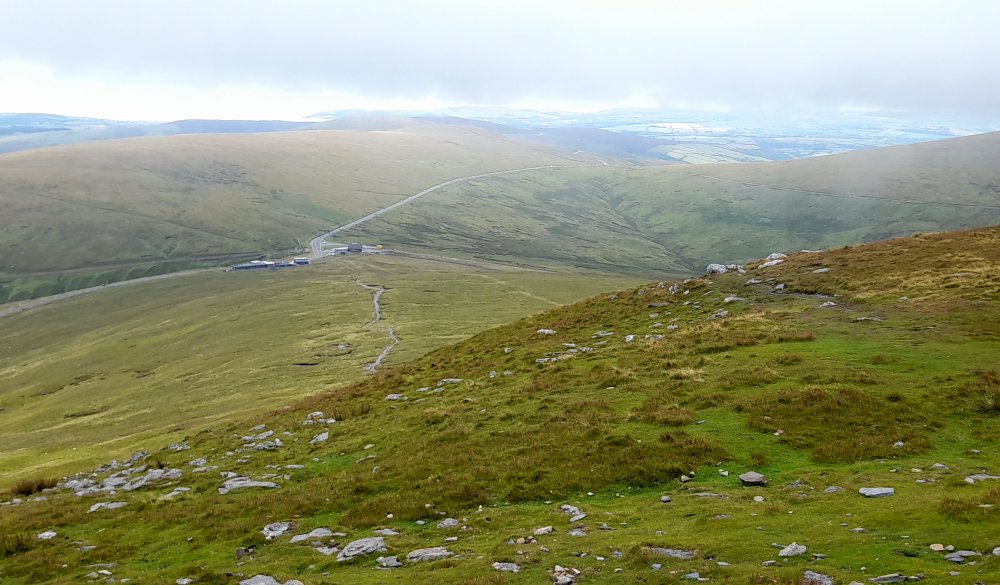
Peaked at 2,036 feet above sea level, on a clear day it is said that you can see some, or all, of the Seven Kingdoms – England, Ireland, Wales, Scotland, the Isle of Man and the kingdoms of heaven and the sea.
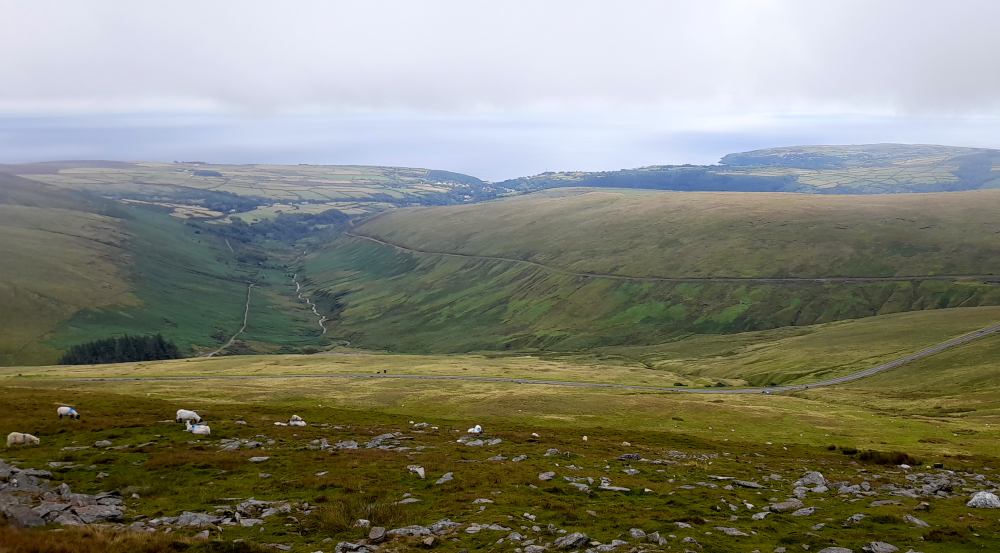
Due to the drifting mist, we saw the last three.
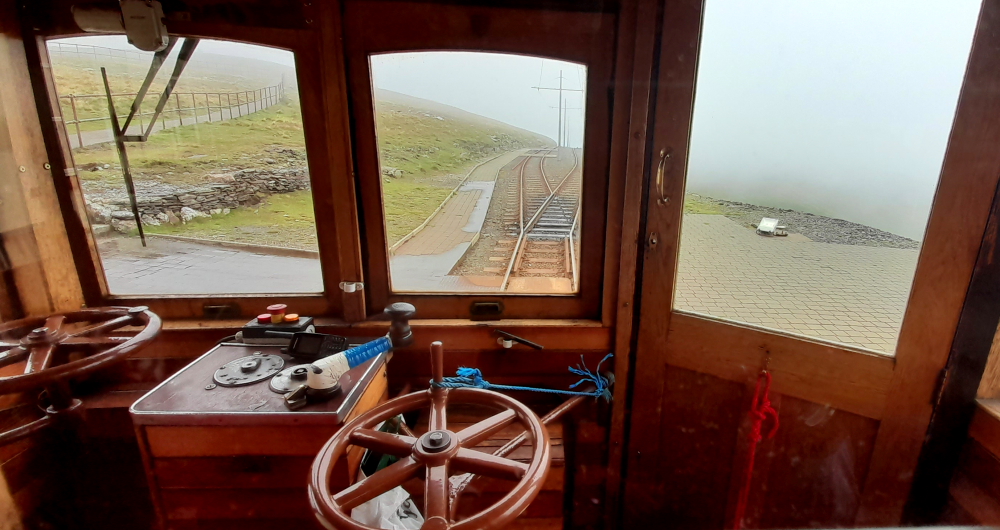
The Railway is 5 miles (8 km) long, built to 3 ft 6 in (1,067 mm) gauge and uses a Fell Incline Railway System centre rail for braking on the steep gradients.
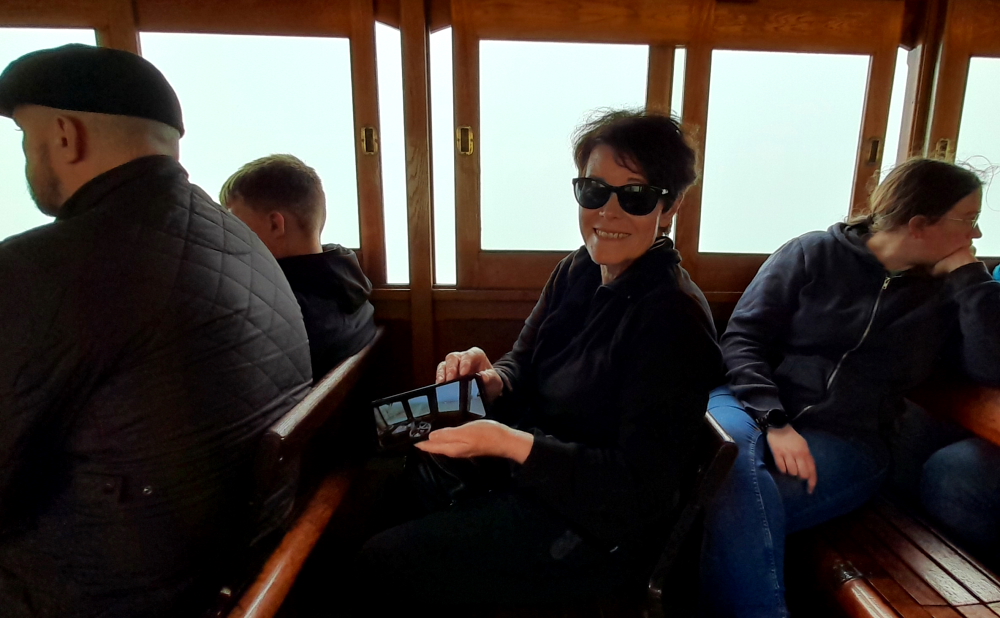
It is electrified using overhead wires at 550 volts direct current, with bow collectors.
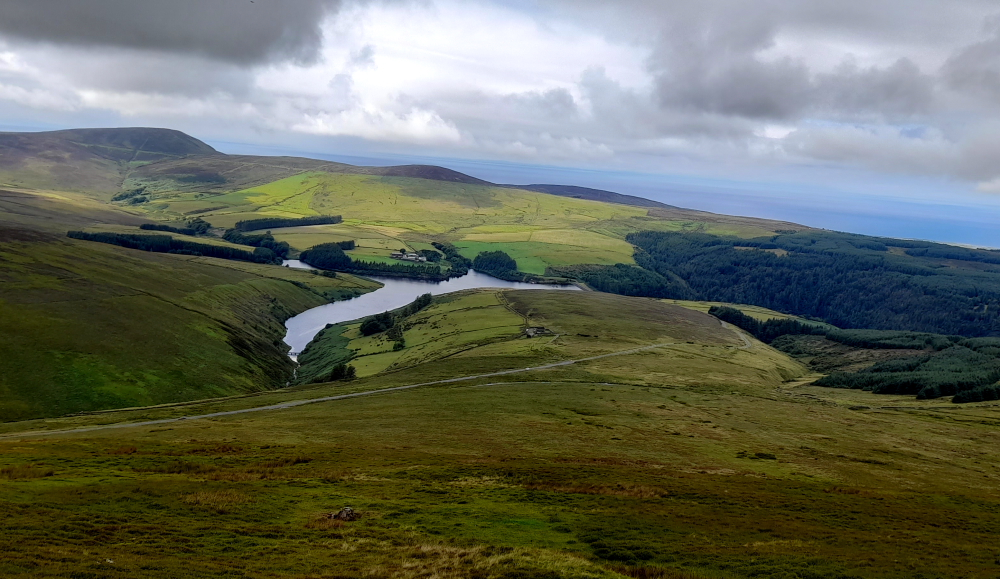
We catch glimpses of the sea and the Irish coast on the way down, including the Sulby Reservoir.
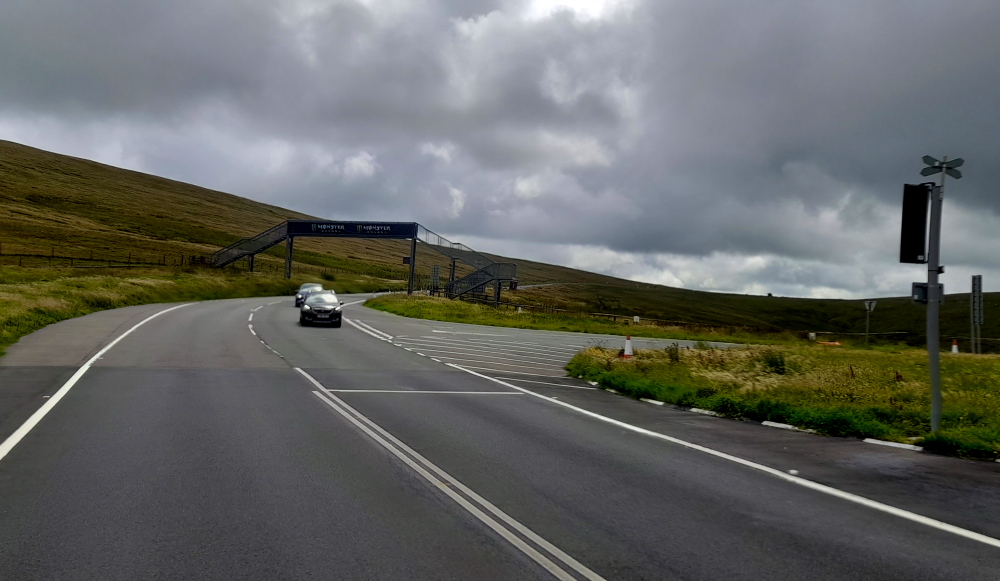
An hour later we tumble off the carriage and walk past our car for a closer view of the Laxey Wheel.
The Laxey Wheel (also known as Lady Isabella) is built into the hillside above the village of Laxey in the Isle of Man. It is the largest surviving original working waterwheel in the world. Designed by Robert Casement, the wheel has a 72-foot-6-inch (22.1 m) diameter, is 6 feet (1.8 m) wide and revolves at approximately three revolutions per minute.
Back in the car Lynn decides that we need to retrace our route north to Ramsey so that we can drive that part of the TT circuit that we just crossed in the train, underneath Snaefell, the A18.
Just after driving under the TT gantry at Ramsey we encounter the circuit’s infamous Hairpin Bend.
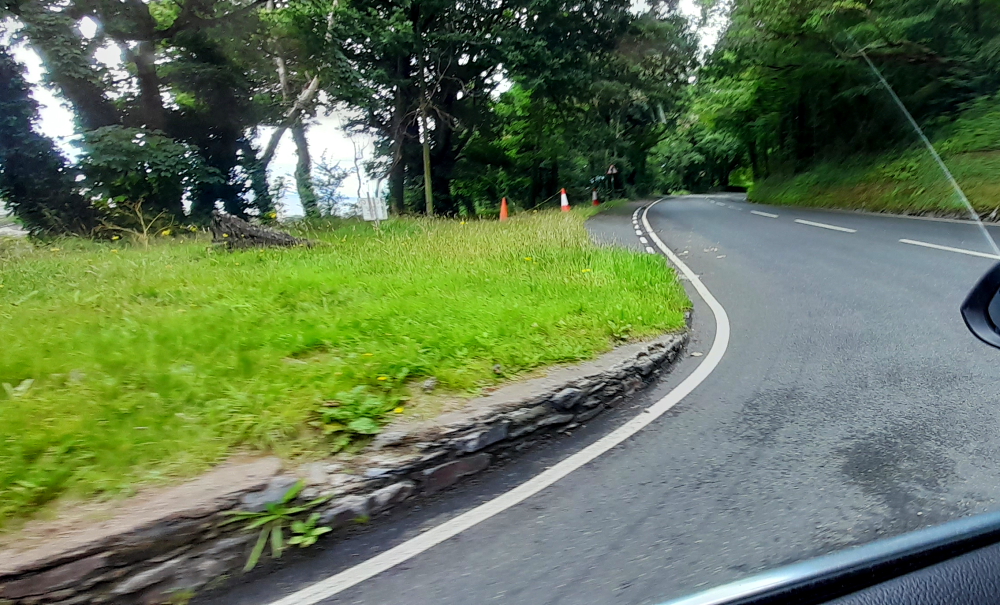
The A18 takes us south into Douglas. Near to our hotel is a B&Q hardware store where I buy some silicon sealant and apply to the offending plugs. Hopefully this will seal the leaks.
For dinner this evening we venture south to the outskirts of Castletown and sup at the Viking Hotel.
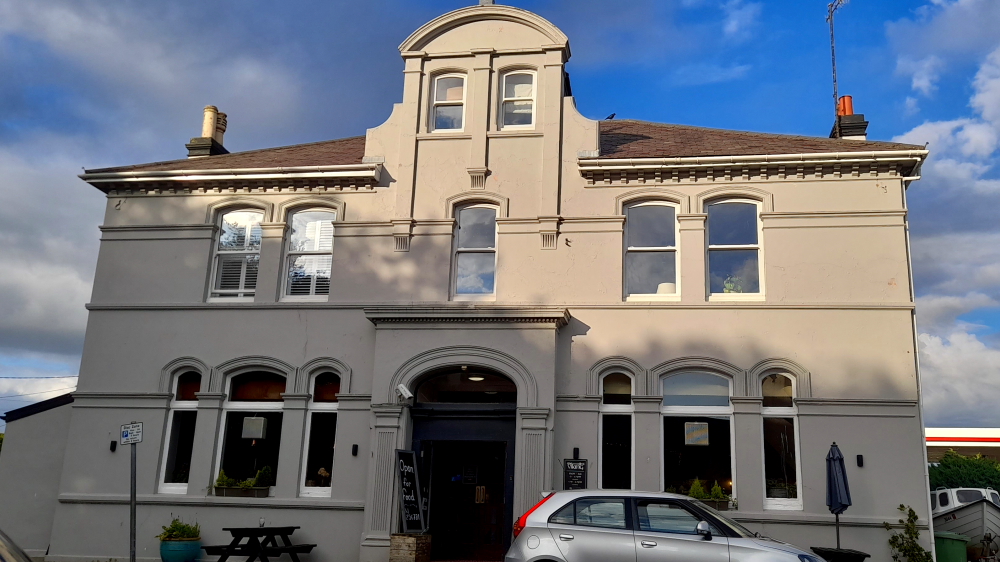
Where we find an old-style dining room and a bar tender with a very dry sense of humour.
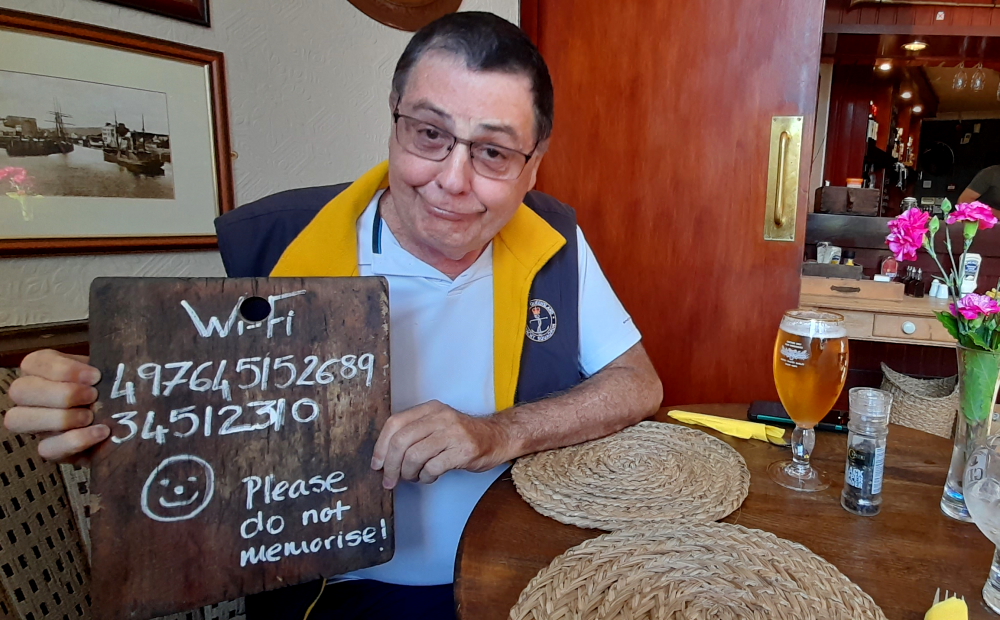
The food was very good. I had a lasagna and Lynn had a goats’s cheese salad. The apple pie looked excellent but neither of us could fit one in.
We found a hardware store near the Hotel and after dinner I added some silicone sealant around the two other panel clips. Hopefully this will fix the leak.
28 July, 2023
Today we’ve arranged to meet up with Dave, the dad of Richo, a mate from my Commbank Brisbane days, and his partner Lyn.
What was an offer to buy him a beer has turned into them offering to drive us around the Island and to experience it like a local.
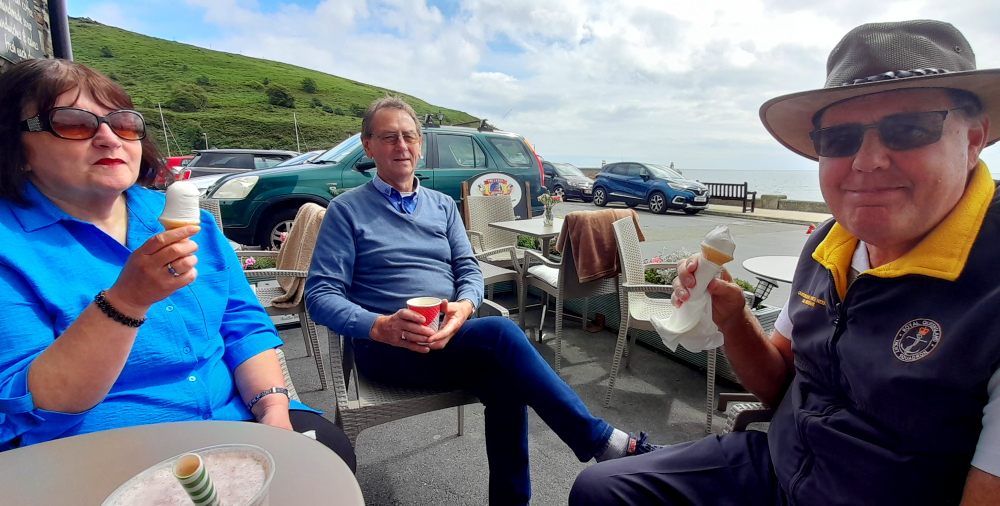
So, first stop Laxey Village and Promenade for a ‘Whippy’.
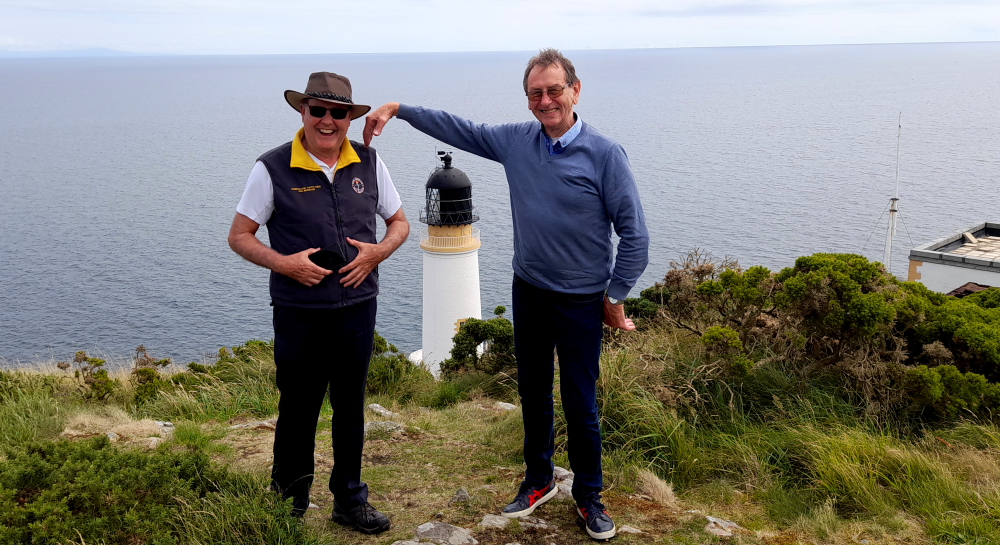
Next, Maughold Broogs and lighthouse.
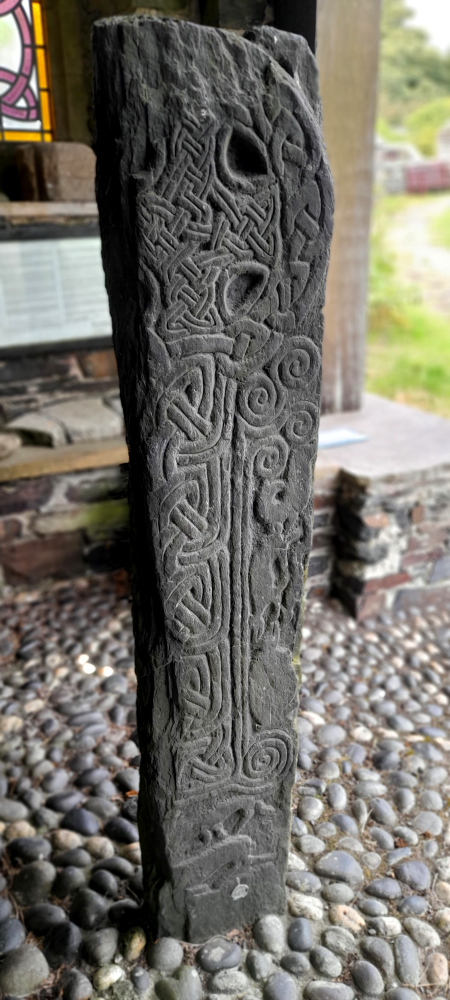
And the Kirk Maughold Parish Church where there is a collection of medieval Manx crosses from across the island.
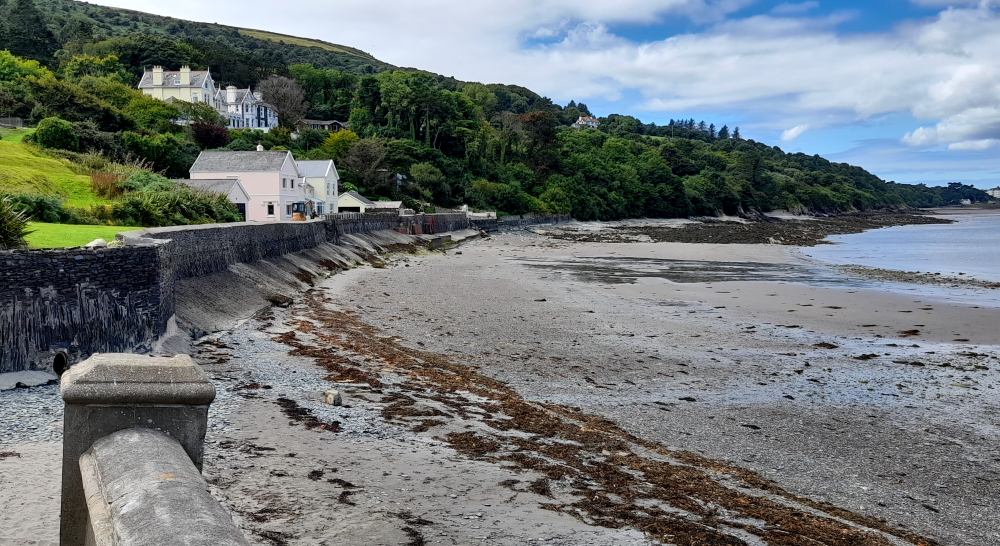
A stop at Port Lewaigue where you can see the pier at Ramsey. Apparently the 2 houses by the wall below can sometimes be inundated by waves if the wind blows onshore.
In Ramsey we drive across the Swing Bridge at low tide, past the old shipbuilding yards, and onto Mooragh Promenade.
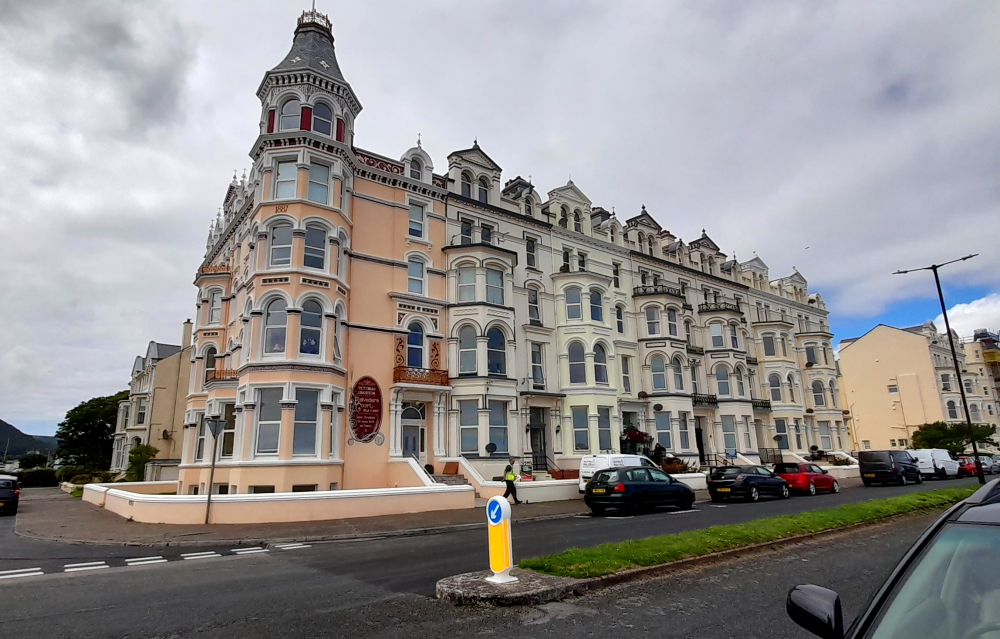
On the Promenade are some beautifully restored Victorian mansions.
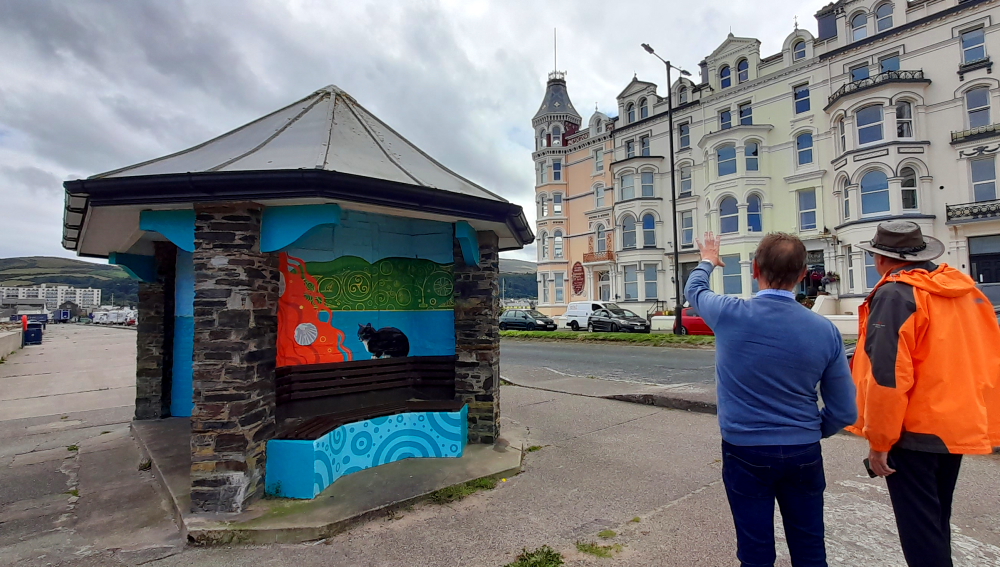
Together with some shelters decorated by local artists.
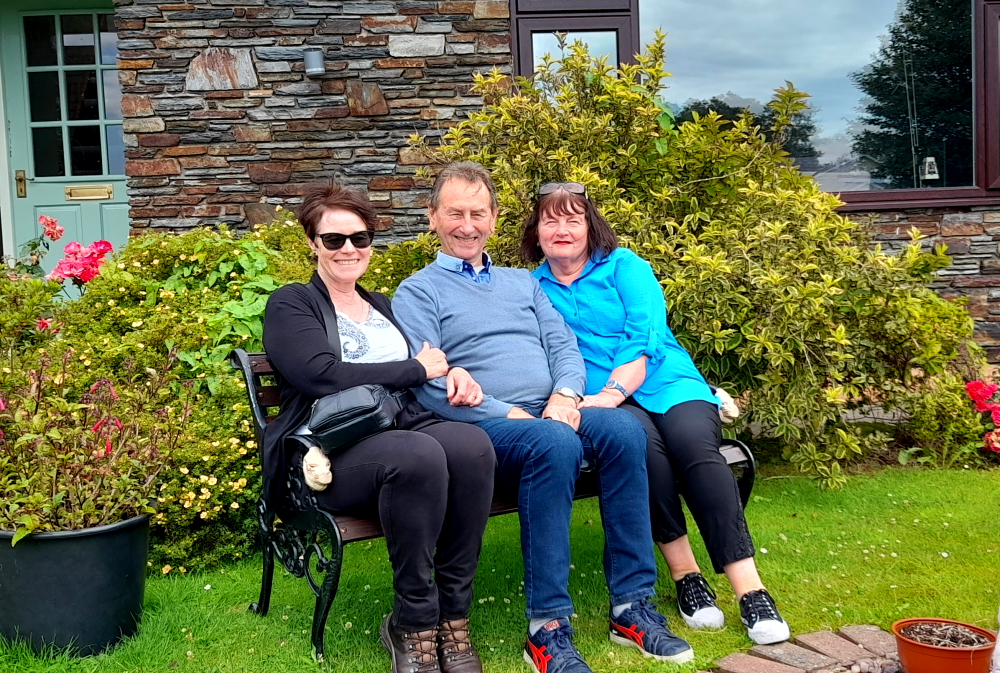
A quick stop at Chez Richardson in the village of Andreas. Dave, a joiner by trade, built this fine bungalow as his home when he first arrived on the Island in 1975. Motorbike enthusiasts themselves, Dave and Lyn also host 9 guests here during the TT in late May/early June each year.
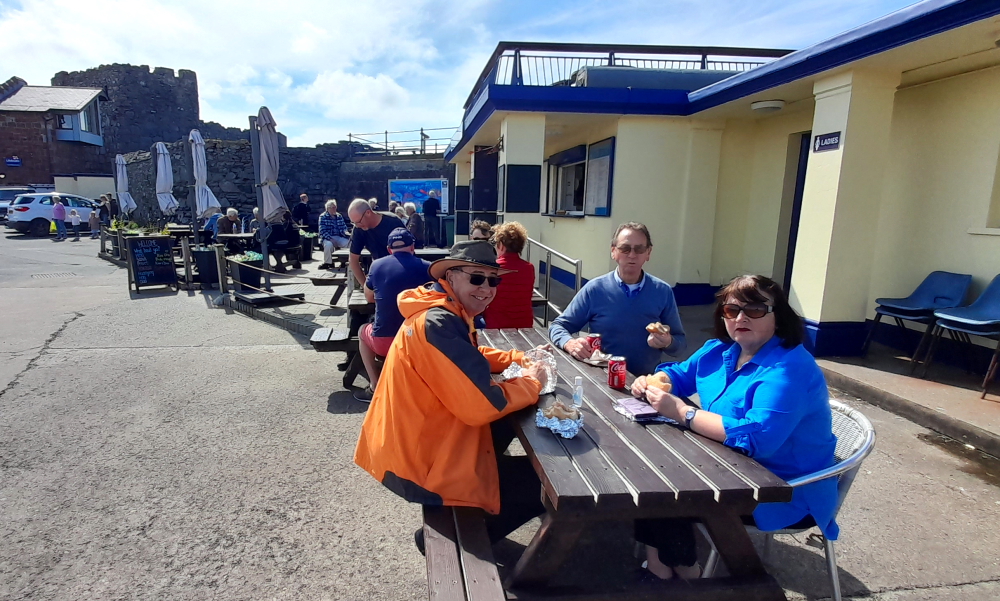
Driving anti-clockwise around the Island we stop at Peel and Saint Patrick’s Isle. By this time it’s 3:00 pm and time for a bite at the Peel Breakwater Kiosk – a favourite haunt of motorbike riders. “That’ll be 4 crab baps, please.”
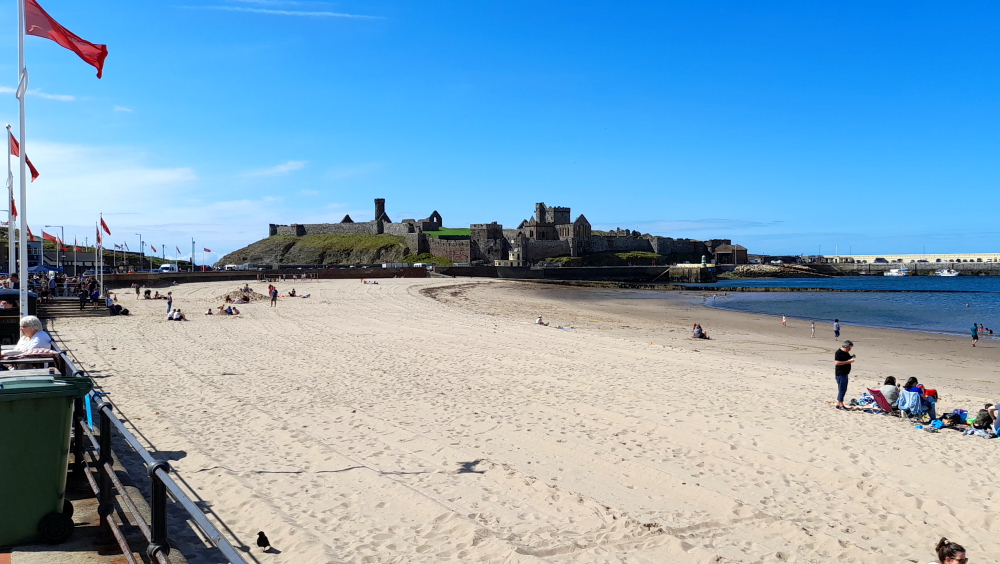
The Kiosk is adjacent to Peel Castle and the Old Cathedral on St Patrick’s Isle. Until the building of a causeway in the 18th century, St Patrick’s Isle was separated from the mainland by a narrow channel of water. It has been both a religious site and a fortress during its long history.
It’s been inhabited for at least 7000 years. The Isle began as a religious settlement when Irish monks arrived here around 500AD and founded a Monastery. The earliest remains are the Round Tower and St Patrick’s Church which date from the 10th century.
The Vikings arrived around 900AD. Seven pagan Viking graves have been found including that of the ‘Pagan Lady’ which was one of the richest female graves found outside Scandinavia. The Norwegian King, Magnus Barelegs, who arrived in Peel in 1098 built the first recorded fortifications, realising its strategic importance.
When Castle Rushen was completed in 1242, it became the main seat of the Kings of Mann. The Isle was no longer needed as a fortress and Magnus II gave it to the church in 1257. At the end of the Viking rule in 1266, the Isle of Man changed hands several times between Scotland and England, until finally coming under English control in 1346. The remainder of the curtain wall was completed in the late 15th century, possibly as a response to a Scottish attack in 1456.
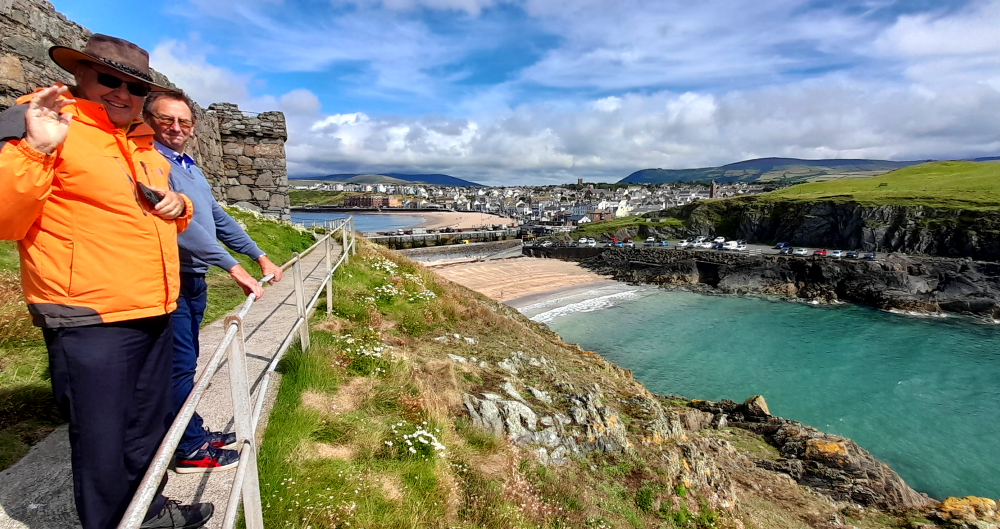
In 1785, the Duke of Atholl ordered that the castle, apart from the armoury and storehouses, be demolished. A causeway was built to connect it to the mainland.
During the American War of Independence, the Commodore of the US Navy, John Paul Jones attacked British vessels in the Irish Sea, and Peel Castle was once again occupied an important military position. The defences were further strengthened in response to the threat of the Napoleonic Wars. With growing reputation as a holiday destination in the 19th century, Governor Loch decided to develop St Patrick’s Isle as a tourist attraction.
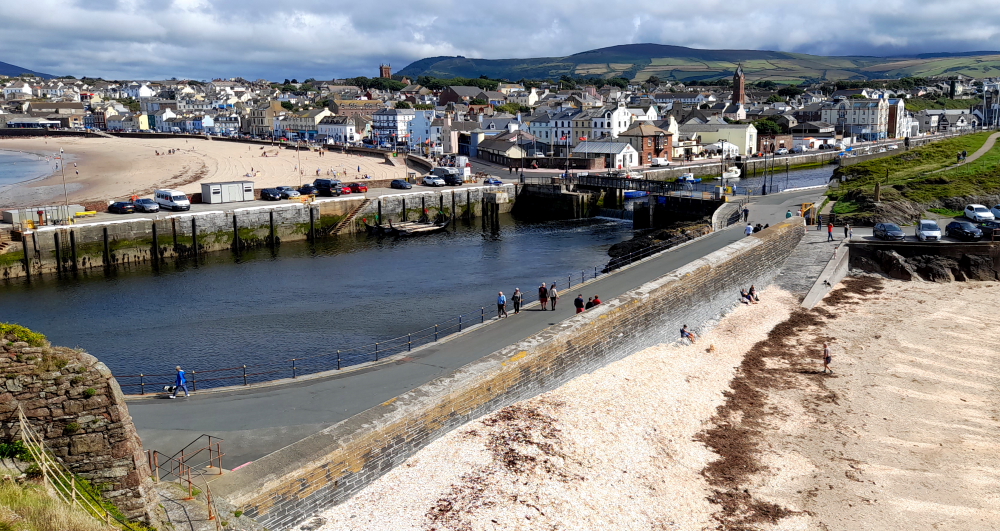
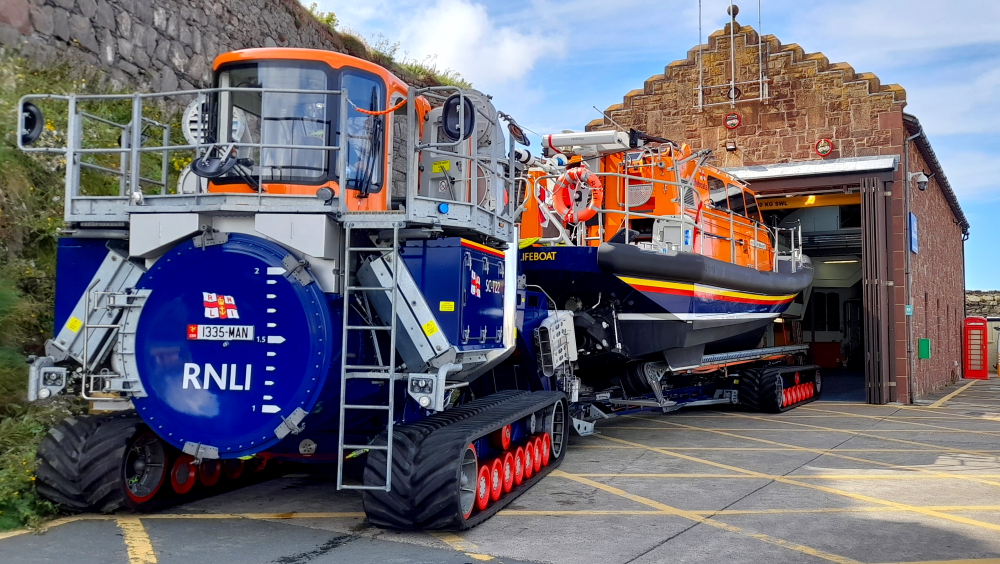
As we walk back to the car, the Peel RNLI boat is being maneuvered into its station by a purpose-built tractor.
At the southern end of the Isle is The Sound and the Calf of Man, between Port Erin and Port St Mary. On the rocks in front of us is a small colony of seals.
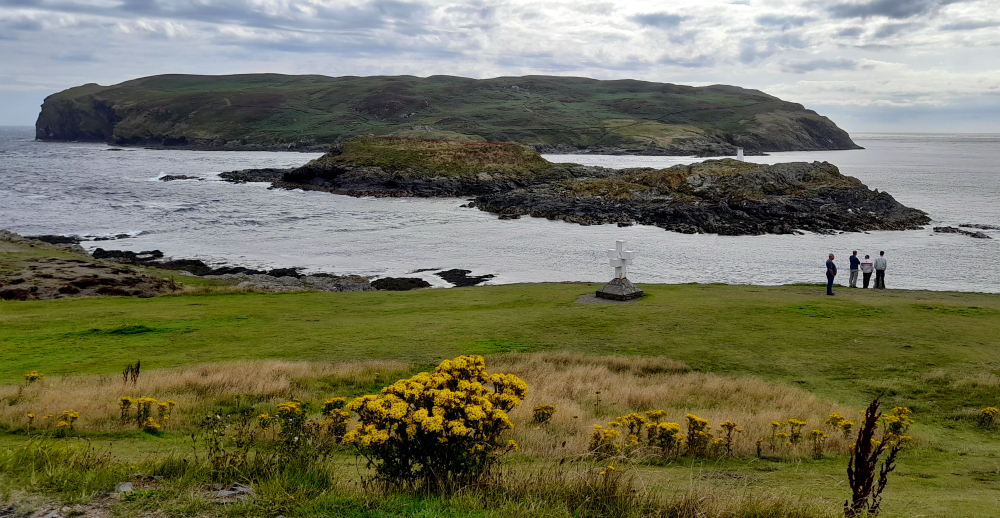
On the way to Port St Mary is Cregneash, a living illustration of a farming and crofting community in the 19th and early 20th centuries…
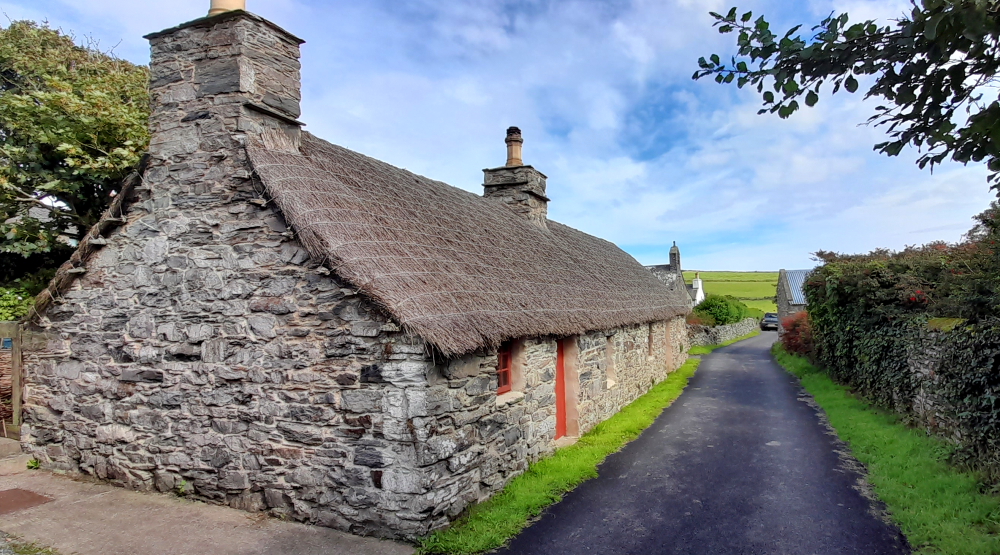
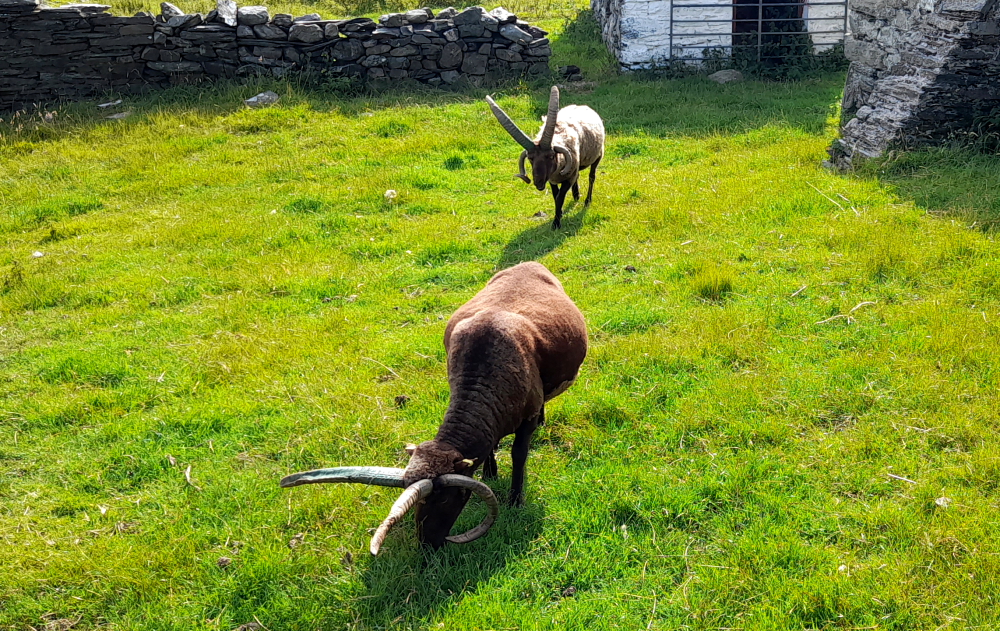
… hosting several Manx Loaghtan sheep, a rare breed of sheep (Ovis aries) native to the Isle of Man. The sheep have dark brown wool and usually four or occasionally six horns. The Manx Loaghtan is one of the Northern European short-tailed sheep breeds, and descends from the primitive sheep once found throughout Scotland, the Hebrides, and Shetland Islands. The word Loaghtan comes from the Manx words lugh dhoan, which mean mouse-brown and describe the colour of the sheep.
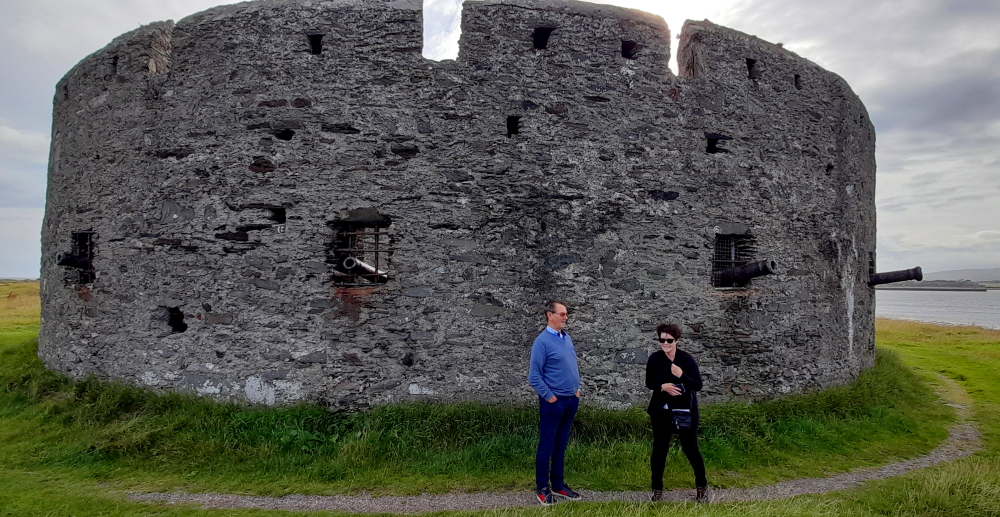
Past the seaward side of the airport we arrive at Saint Michael’s Isle.
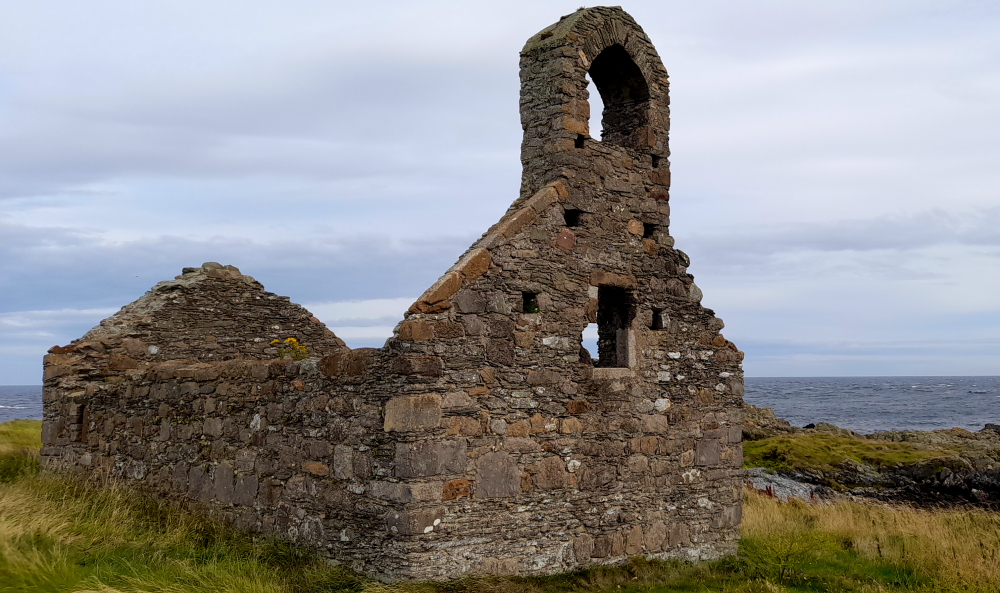
The island commands the entrance to what was the vital strategic port of Derbyhaven. This was something which necessitated the construction of a fort in order to safeguard the entrance to the bay and which gave rise to the name of Fort Island. Work was initially carried out by Edward Stanley, 3rd Earl of Derby on the order of King Henry VIII with subsequent upgrading taking place in 1645 on the instructions of the 7th Earl.
Following the ending of the Napoleonic Wars the forts around the Isle of Man fell into decline and their strategic importance to the defence of the Island became irrelevant and this fort is thought to have fallen into disuse by the early 1820s.
St Michael’s Chapel, a 12th-century chapel, is on the south side of the island. This Celtic-Norse chapel was built on the site of an older Celtic keeill.
At 6:00 pm we are delivered back to our hotel with the promise that we will catch up with Dave and Lyn when they plan to be in Brisbane to spend Christmas 2024 with Richo.
29 July, 2023
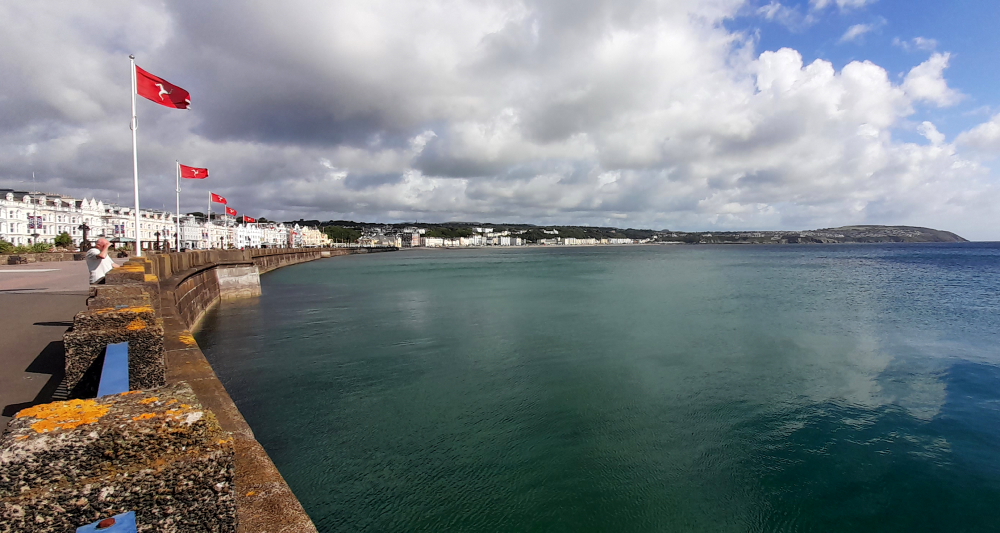
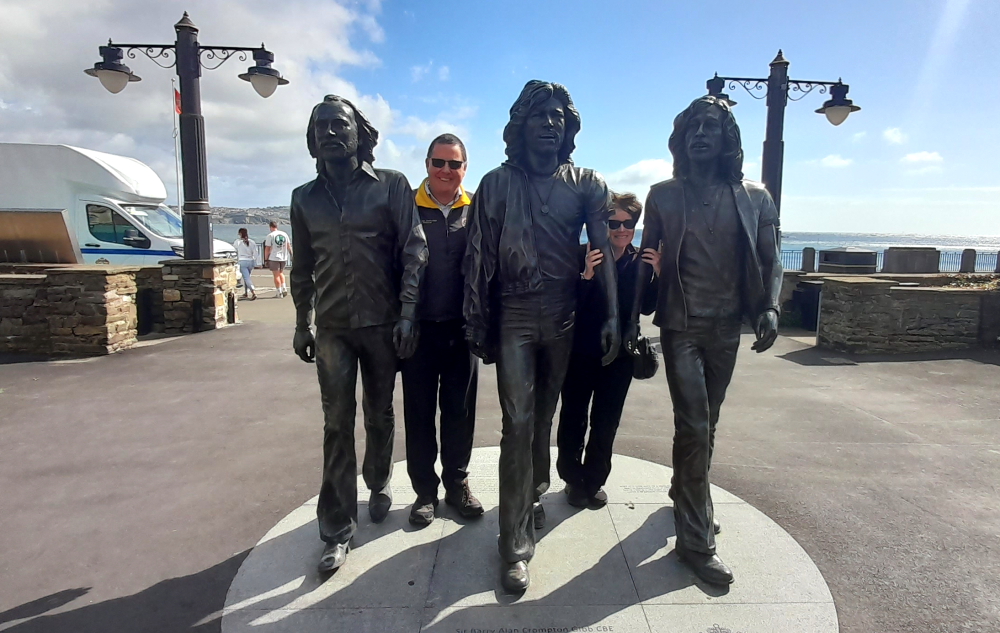
Yesterday, when we were driven along the very long Douglas Promenade, we noticed a familiar-looking statue which we decided we needed to visit this morning.
The Bee Gees Statue by sculptor Andy Edwards was unveiled in Douglas in 2021. It is located on Loch Promenade. The 7-foot (2.1 m) bronze sculptures depict Barry, Maurice, and Robin Gibb, inspired by the group’s music video for “Stayin’ Alive” and to commemorate their birth in Douglas. The £170,000 project was commissioned in 2019. Another statue of the Bee Gees is located in Redcliffe, Queensland.
Time to get back to the hotel to tidy up loose ends as we have an early start tomorrow in order to catch the 8:45 am ferry to Heysham, near Lancaster, England for our 3.5 week tour around the Midlands on another family tree quest for the 2 of us.
It hasn’t rained since I sealed the panel plugs near the boot but while Lynn edits the blog I check out some online chat about leaking boots in Insignias. It seems that I may have sealed the wrong plugs as there are apparently two plastic grommets under the trim that I sealed and it is these grommets that tend to leak. Looks like I have more work to do in the next couple of weeks to resolve the issue.
30 July, 2023
We are up by 5:15 am to make sure that we depart the hotel by 7:15 am as the ferry check in closes at 8:00 am promptly. We manage to have a very quick breakfast as the hotel breakfast doesn’t open until 7:00 am.
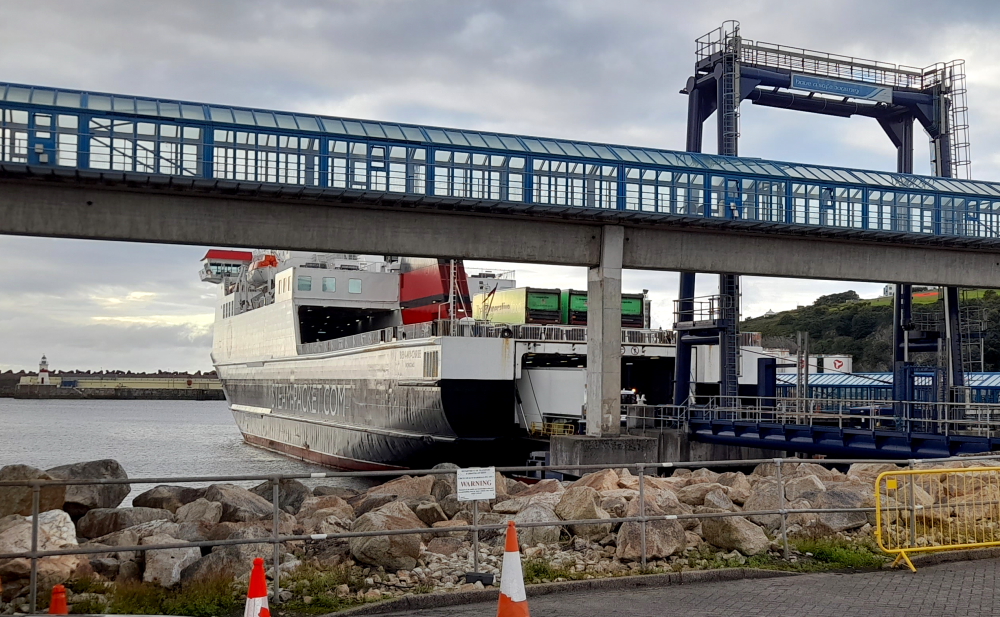
The crossing is initially a bit rough with a strong wind behind us but once we are clear of the Isle of Man the Captain puts out the stabilisers and the remainder of the crossing is quite smooth.
We disembark the ferry at the port of Heysham and just as we start out for our destination of Wigan it starts to rain heavily. Apparently we have a busy evening tonight as we have been invited to a family 40th birthday party.
 THE CONTINUING TRAVELS OF YOGI & BOO BOO