
30 July, 2023
After travelling down the M6, an hour later we arrive at Mike and Janet’s lovely home in Wigan. The last time we saw them was in San Francisco in September 2010, in a hotel bar, when Lynn and Mike converged there to attend an ARMA conference with me and Janet as +1s.
Yesterday Lynn received an email from Mike letting us know that, as soon as we arrive, we would be attending a family birthday celebration with them. Turns out it is their daughter-in-law’s 40th birthday and is being held at the ‘Neon Jambon’ restaurant a couple of blocks from ‘Penny Lane’ in Liverpool where we see the barber shop and the bank.
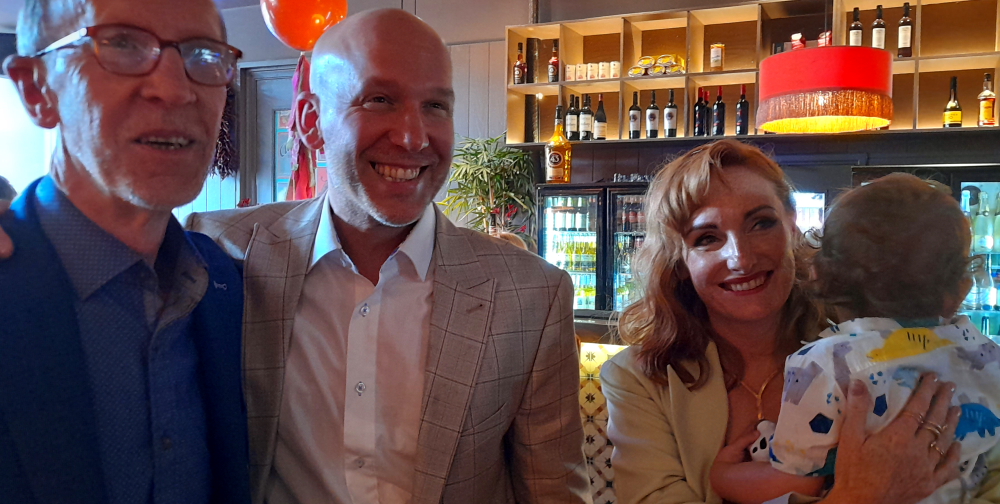
We are warmly welcomed by their son, Stephen, plus Lauren and are quickly introduced to their 2 boys plus other friends, relatives and assorted kids.
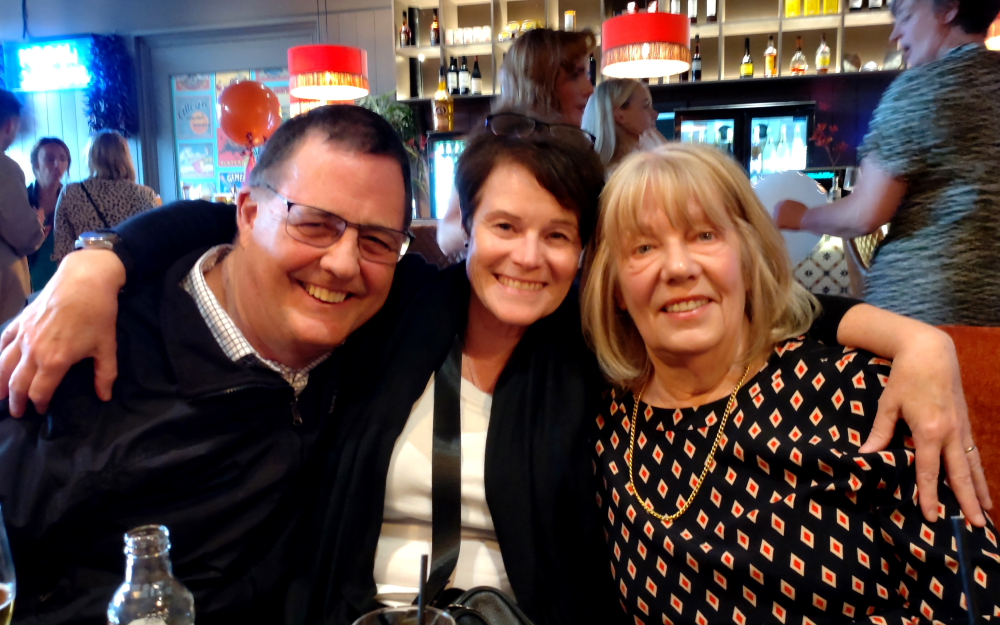
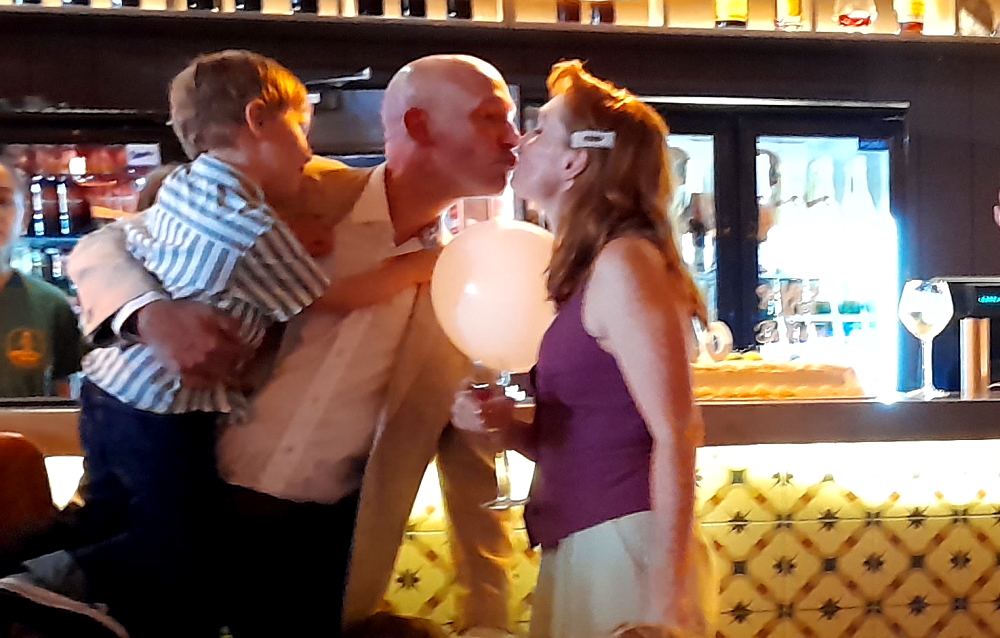
It is a big, loud, vibrant family affair with kids, young and old, enjoying the festivities. We sit – or should I say, fall about – with Janet most of the time. That woman is a hoot! She should do standup.
Our return route is via Queens Drive where we see Brian Epstein’s former residence. We’re home by 7:00 pm, have a cuppa then retire upstairs to our suite, unpack and fall into bed.
31 July, 2023
Some of today is dedicated to family tree research so after breakfast we brave the mizzle and drive east-ish on the M61/60 to Prestwich, north of Manchester.
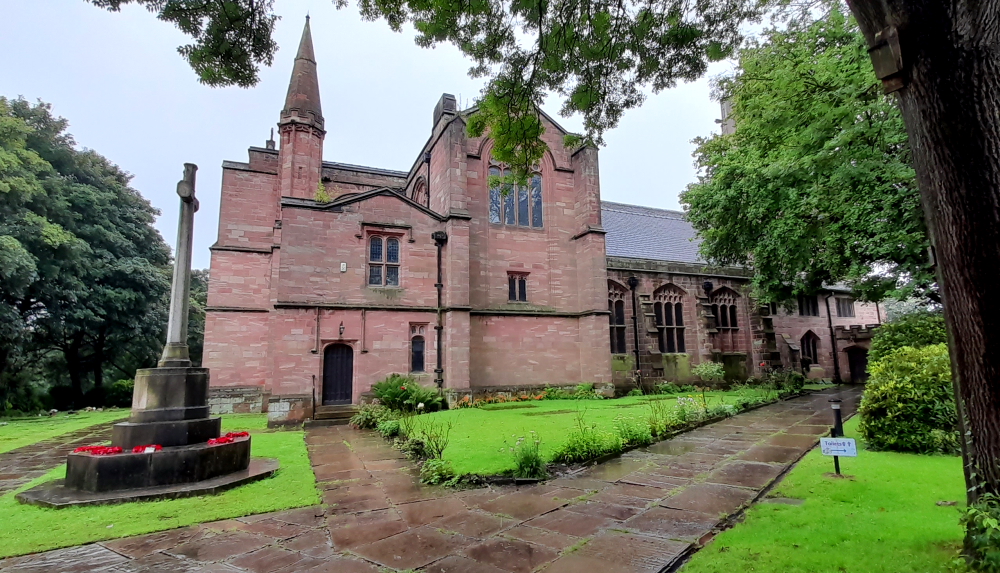
The Parish Church of St Mary the Virgin is our destination. It’s recorded that here on 10 February 1841, Lynn’s maternal 3 times great grandparents, Henry Lord and Sally Howard, were wed. (The original ‘When Harry met Sally’??)
Half-an-hour later we arrive further east at Lower Fold Avenue in Royton which is north of Oldham. Here on 1 April 1842 William Lord, son of Henry and Sally, was born. His future wife, Sarah Halkyard, was also born in Royton.
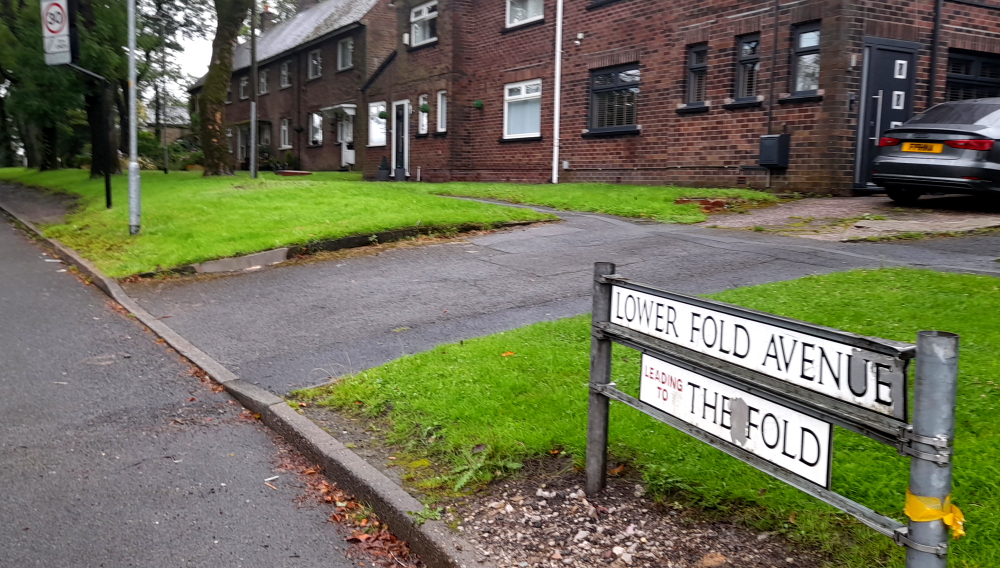
Presumably Henry and Sally moved from Prestwich to Royton (12 miles away) after they were married in order to work in the local cotton mill. Records show that in 1861 William was an Overlooker and Sarah a Frame Tenter, both cotton mill occupations at that time.
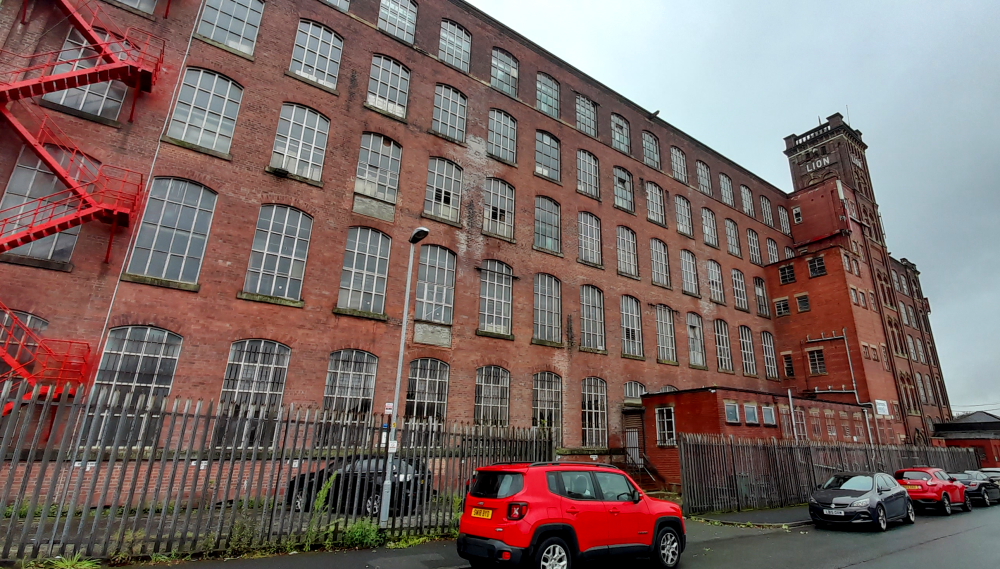
A 10-minute walk from Lower Fold Avenue is the derelict ‘Lion’ mill in Fitton Street. Currently a Grade II listed building, it is a former cotton spinning mill, steam powered and built in 1890 to the designs of Wild, Collins and Wild, for the King Spinning Company Ltd. This is an example of the type of mills in Royton but due to its construction date, not one that the Lords would have worked in. A list of Royton mills is here: https://en.wikipedia.org/wiki/List_of_mills_in_Royton
At its peak, there were 40 cotton mills in Royton—some of the largest in the United Kingdom—employing 80% of the local population. Imports of foreign cotton goods began the decline in Royton’s textile industry during the mid-20th century, with its last mill closing in 1998.
Originally, Lynn thought that just William and Sarah Lord had emigrated to Australia in August 1863. Further research revealed that Henry left the UK for the Australian goldfields in 1856 on the “Royal Charter”. Apparently he did rather well and sent for his family who arrived in early 1863 on the “Great Tasmania”. William and Sarah had already married but by the time they arrived Henry had purchased land at Mitta Mitta, Victoria. William then purchased a farm on neighbouring land.
Interestingly, a 3-minute walk from Lower Fold Avenue is the ‘Bulls Head Hotel’. It’s now an Indian restaurant but 30-odd years ago when Lynn first visited Royton, it was still operating as the pub. Co-incidentally, the grand daughter of William, Myra Lord, ended up living on a diary farm at Bullhead, near Tallangatta, Victoria.
By the time we finish our research it is bucketing down again so we head back to Wigan just in time for a hot cuppa.
1 August, 2023
As neither of us has been to Liverpool before Mike and Janet kindly offer to take us there for a few hours today.
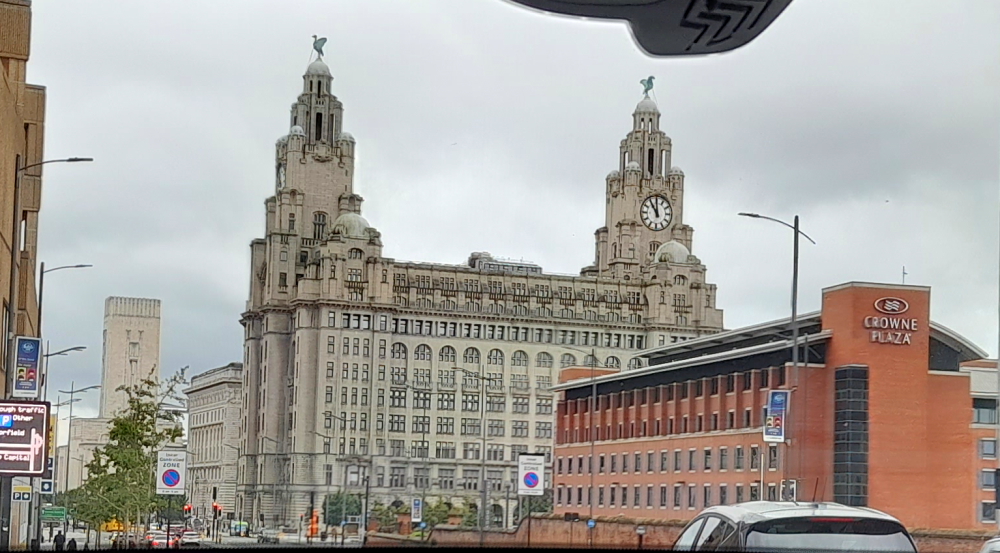
We drive by the Liver Building and docks before we park nearby then walk to The Cavern Quarter where the famous Cavern Club was/is located. The doorway was originally where the Cilla Black statue now stands.
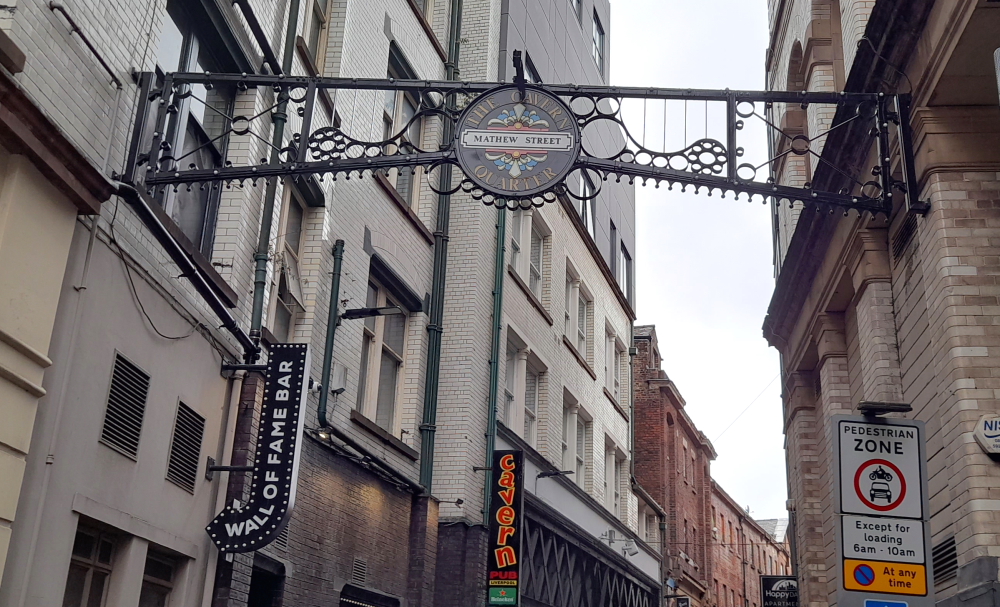
Through seven eventful decades, before, during, and after The Beatles, this legendary cellar has seen its share of setbacks yet has played a role in each epoch of music, from 1950s jazz to 21st century indie rock.
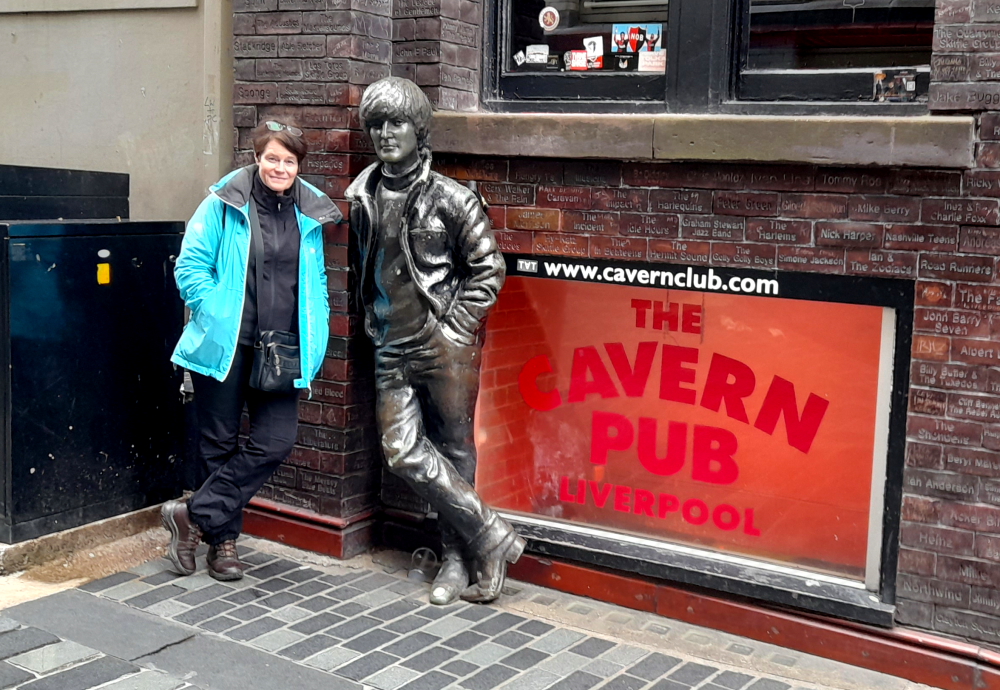
16/01/1957 – The Cavern Club opened in a warehouse cellar at 10, Mathew Street, Liverpool. Owner Alan Sytner named the club after the Paris jazz club, Le Caveau De La Huchette and planned for it to become the top jazz venue outside London. Top of the bill on the opening night was the Merseysippi Jazz Band. 600 jazz fans crammed inside and hundreds more queued in Mathew Street, hoping to get into the club.
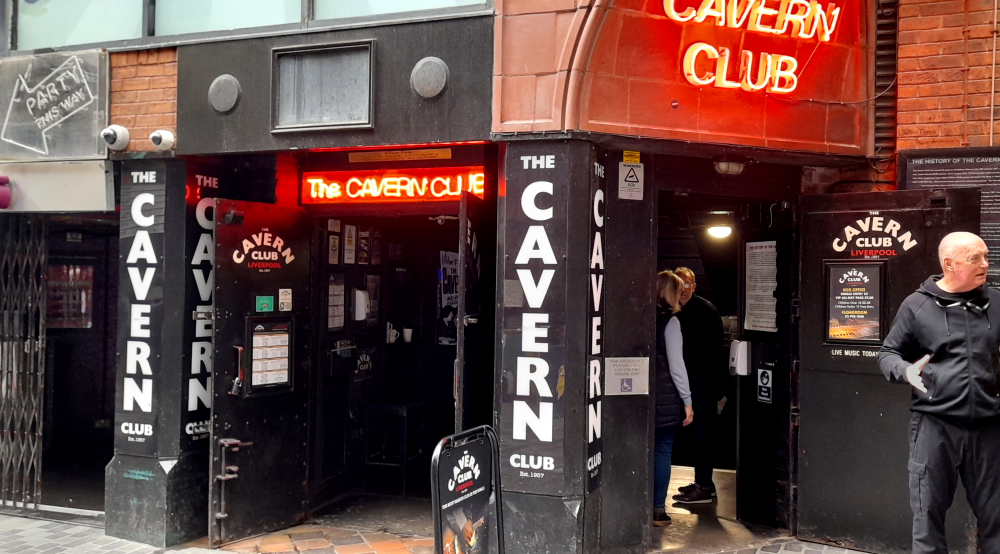
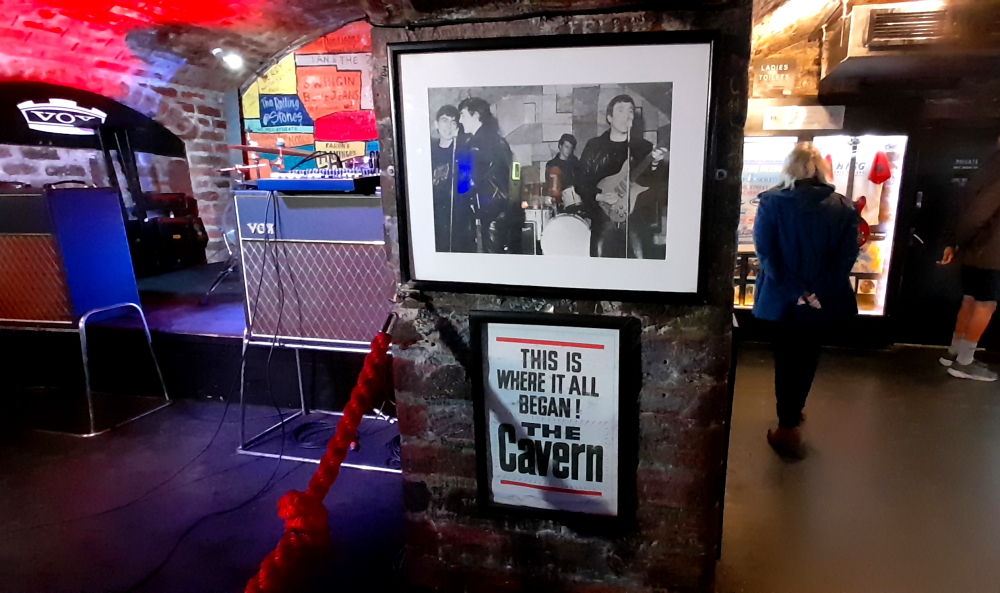
09/02/1961 – the Beatles first performance at the Cavern Club featured John Lennon, Paul McCartney, George Harrison, Stuart Sutcliffe with Pete Best on drums. They soon established themselves as the Cavern Club’s signature act.
19/08/1962 – Ringo Starr appeared at the Cavern Club as the Beatles drummer for the first time.
Cilla Black knew she wanted to work as an entertainer so she took a job as a cloakroom attendant at the Cavern Club and was often able to sing there to help start her career. Today a statue of her graces Mathew Street.
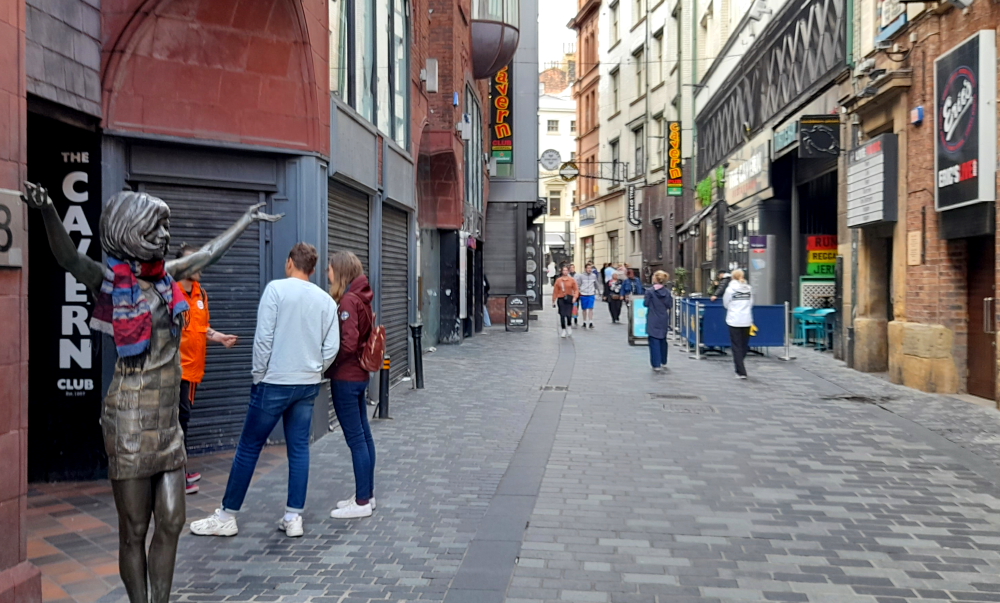
09/11/1961 – Liverpool businessman Brian Epstein, whose family owned the nearby record store NEMS, visited the Cavern Club for a lunchtime session and saw his first performance by The Beatles. Brian Epstein offered to become the band’s manager and by June 1962 had secured a recording contract for them with Parlophone Records.
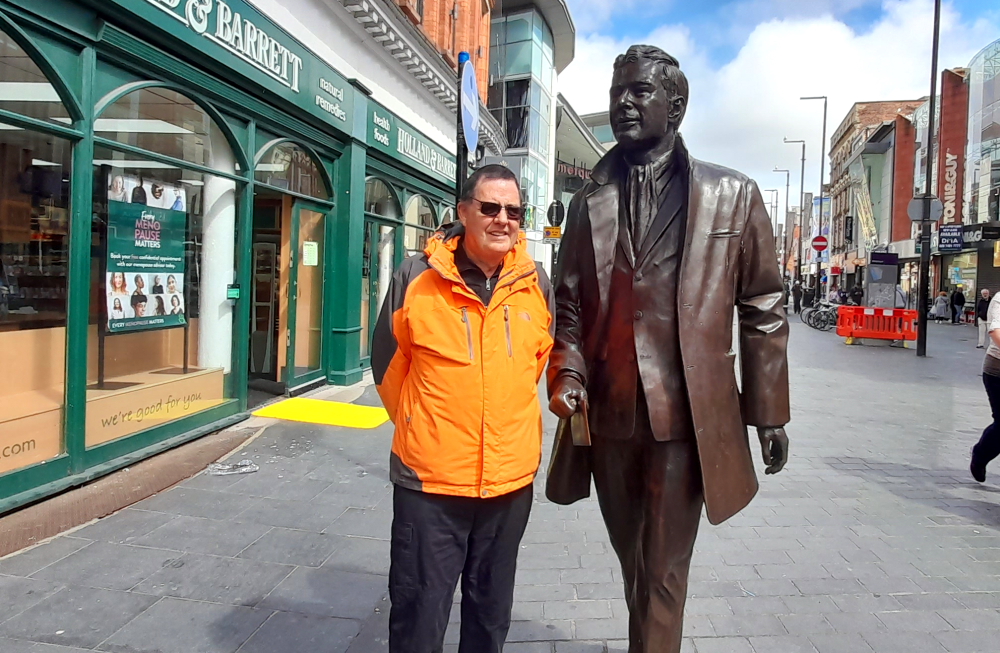
Liverpool’s docks dominated global trade by the early 19th century. When it opened in 1846, Albert Dock changed the way the docks worked here forever.
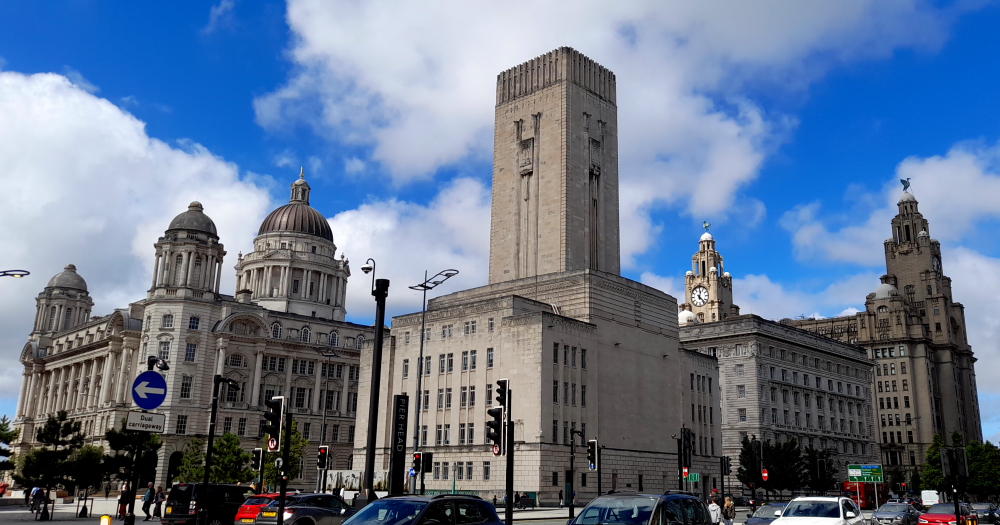
Its warehouses were fireproof and secure; traders could do deals before their import taxes were due; hydraulic cranes hauled heavy cargoes across the flagstones. The speed with which ships unloaded and turned around was cut in half. Construction cost the equivalent of £41 million today.
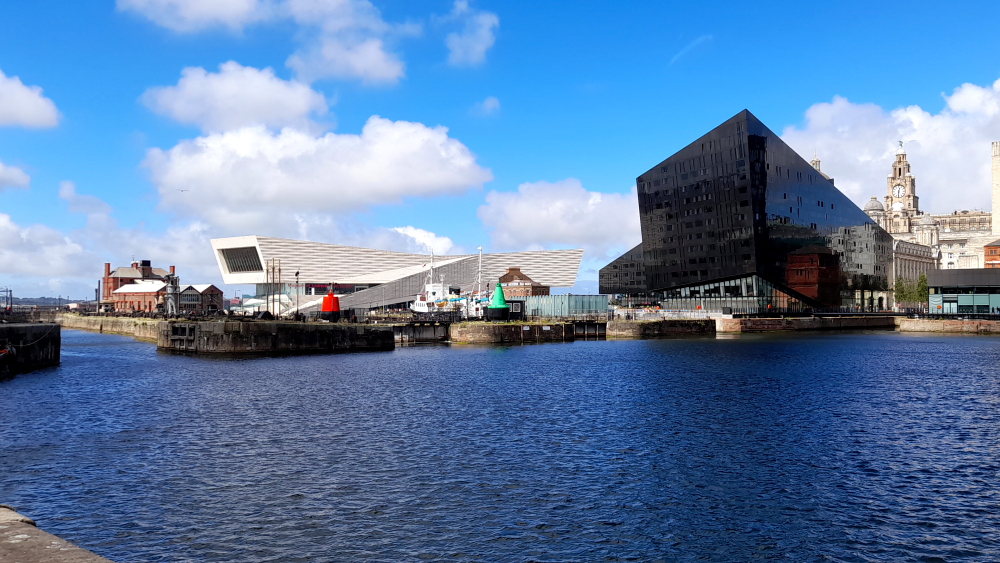
Post-war, the Dock was awarded Grade I listed status, and is now the largest single collection of Grade I listed buildings anywhere in the country. In the 1970s containerisation moved the city’s dock focus north towards Seaforth and the City Council decrees the docks a conservation area.
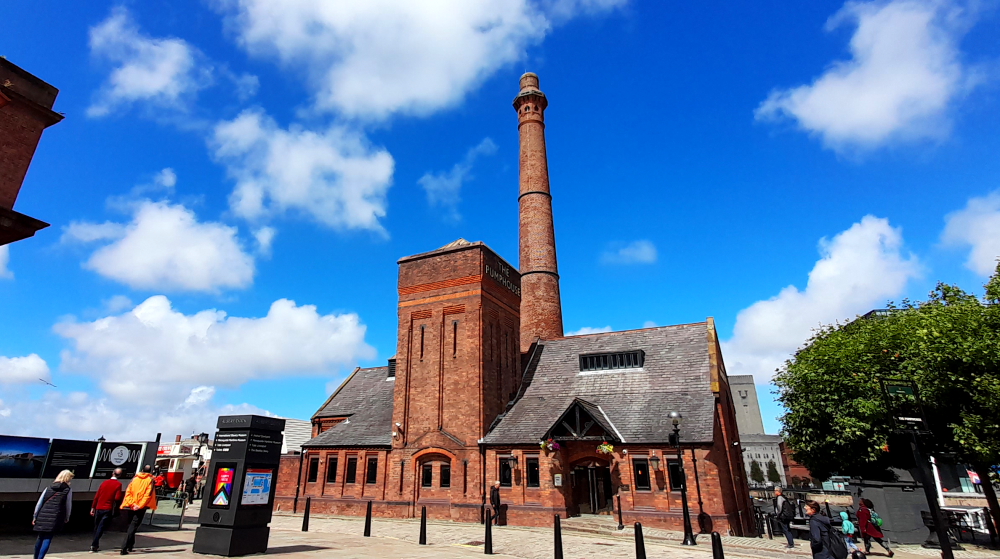
By 1981, the entire Albert Dock complex is abandoned. The Merseyside Development Corporation was established to regenerate Liverpool’s waterfront and docks. In 2004 it was awarded World Heritage status and Royal status in 2018 .
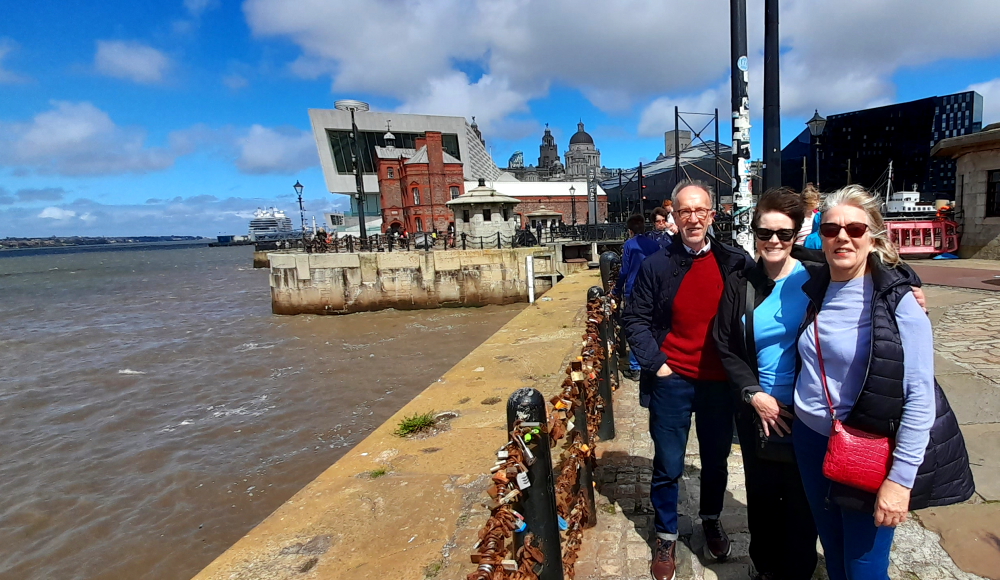
Today, the Docks house the Tate Liverpool, The Beatles Story, Merseyside Maritime Museum and International Slavery Museum, alongside a vast array of shops, bars and restaurants.
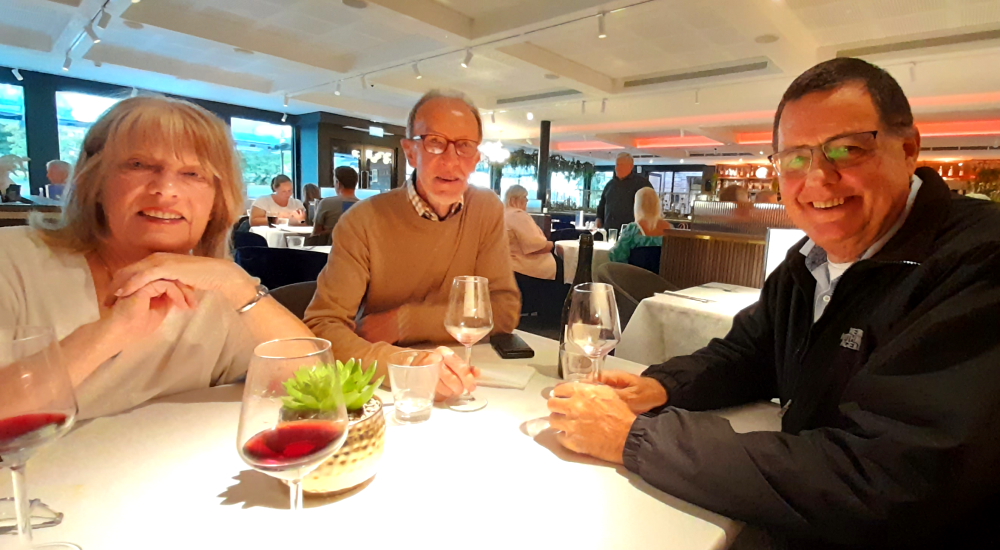
As our ‘thank you’ to Mike and Janet for their hospitality we treat them to dinner at Albert’s, a stylish nearby restaurant in Standish which now includes a modern extension attached to the former Beeches Hotel, originally built in the late 1800s as the family home of the Almond family who ran the brewery and chain of pubs.
2 August, 2023
Today we continue with our family tree research. Calthwaite, where our next accommodation is located, is about 2 hours’ drive north, but en route we will be stopping at several villages in Cumbria from where Lynn’s paternal grandmother’s ancestors hailed. Naturally, is it bucketing down with rain throughout our journey.
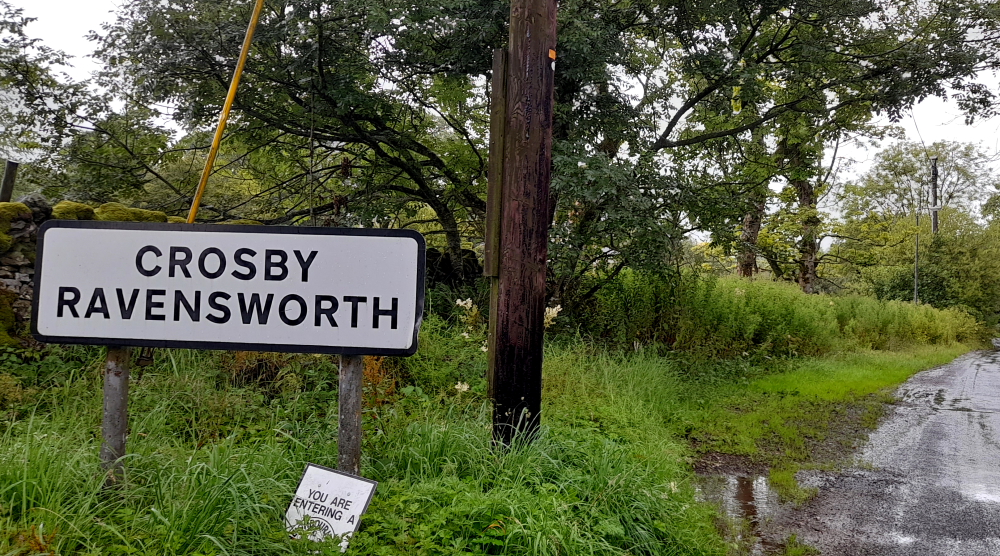
Crosby Ravensworth is where John Park (Lynn’s 3 times great grandfather) was born in 1792 and where his son, John Bartholomew, was listed to have lived in 1841, aged 4, and later worked here as a blacksmith.
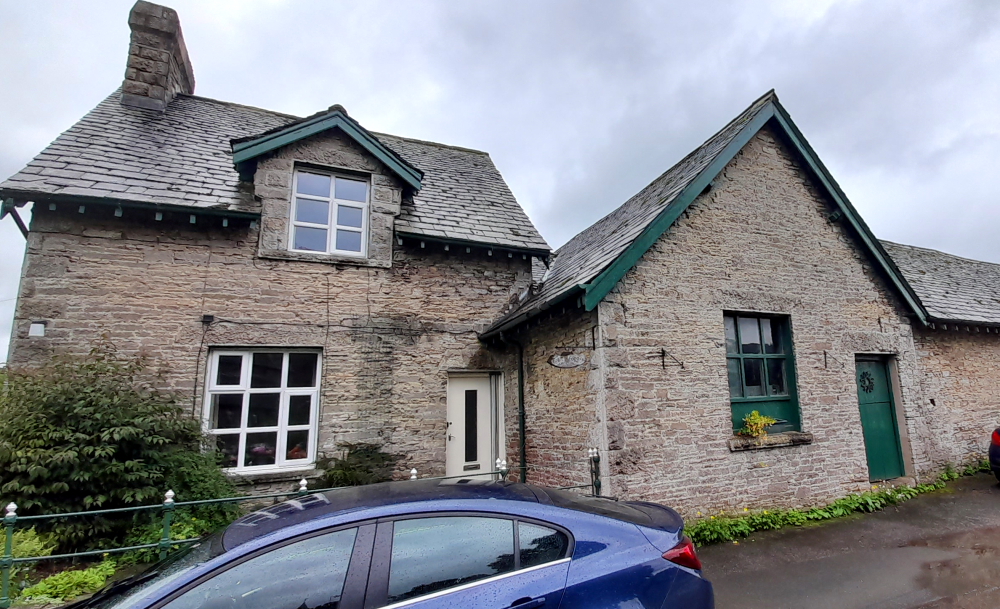
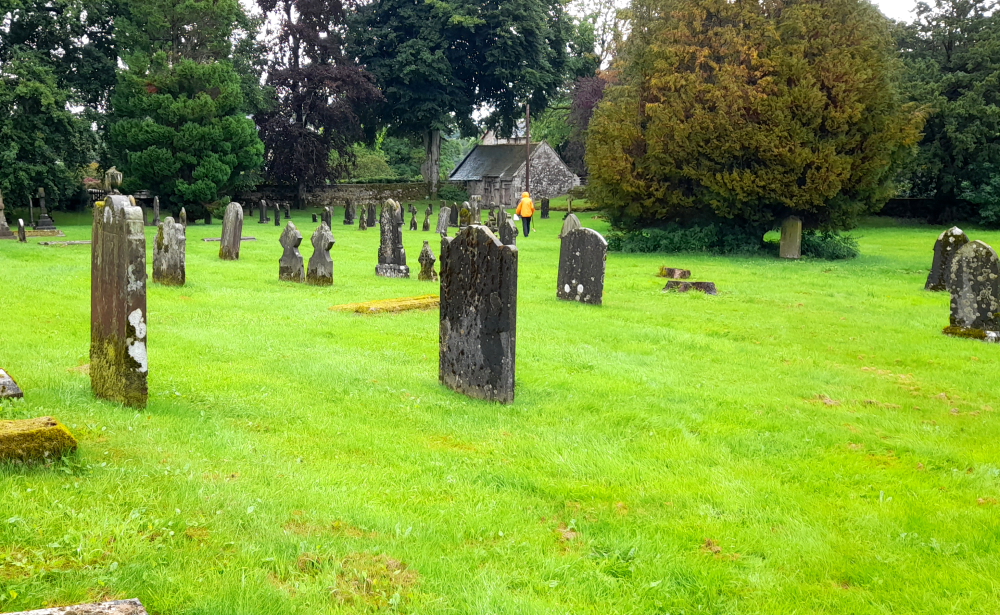
We had no other information about this village, but when we find the parish church we come across a wealth of information about the headstones in the surrounding graveyard and collect burial data about the Park and related Ellwood and Salkeld families.
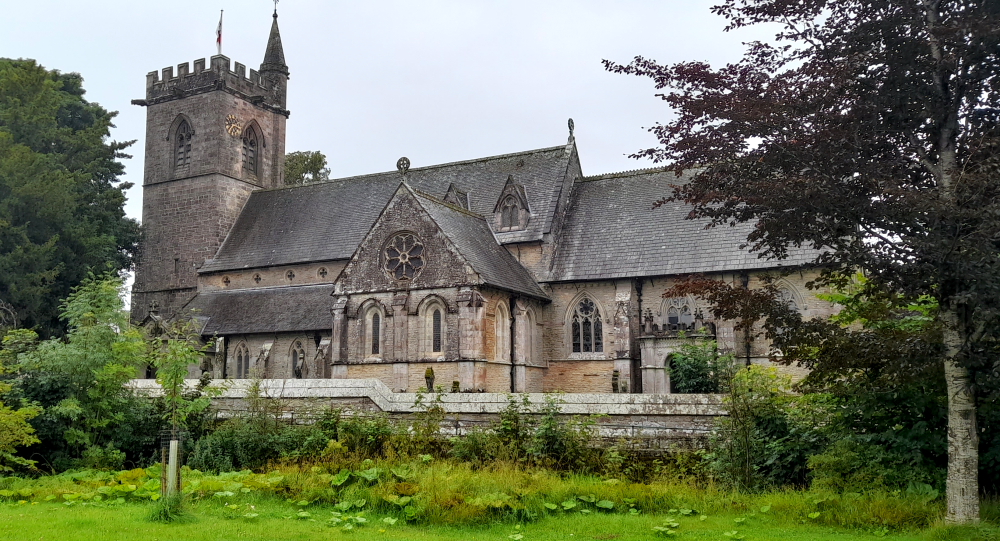
The name ‘Crossebi’ links to the existence of a cross in the dale in the late 7th century, with a Saxo-Danish wooden church developed by the end of the 10th. The early church was replaced by a stone-built Norman Church in the possession of Whitby Abbey from the year 1109. During Henry II’s time in the 1200s the church was rebuilt and in 1487 it was re-modeled by Sir Lancelot Threlkeld.
Between 1809 and 1816 the church underwent major reconstruction and re-modelling with funding from wealthy benefactors. Construction materials – 2,566 cart loads of limestone, lime, state, etc – were all brought to the site by local inhabitants with the large timbers coming from Melkinthorpe Wood on hired wagons and by Lord Lonsdale’s own team and carriages. Another restoration in the mid-1800s used the services of JS Crowther, the famous Manchester Architect.
Today, the original 1190 Norman entrance door archway still stands as does the remains of the early Saxon (7th century) stone cross, which stands on the south side of the church.
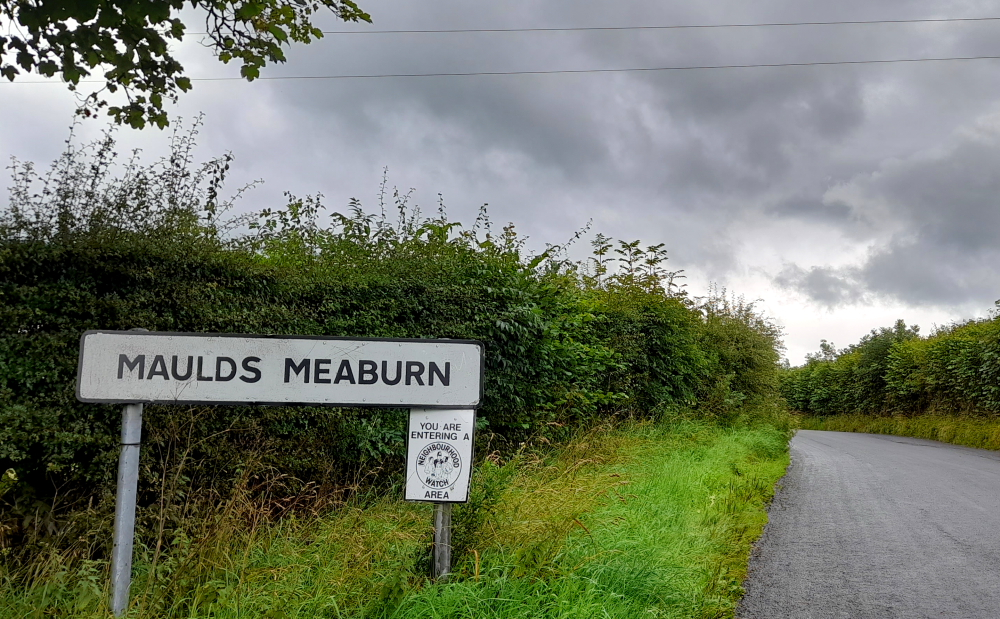
A mile north is Maulds Meaburn. According to records Mary Salkeld, wife of John Park, was born in Maulds Meaburn in 1803 and Mary Bailey Ellwood (Lynn’s 3 times great grandmother), wife of Mark Coulston, was born here in 1815.
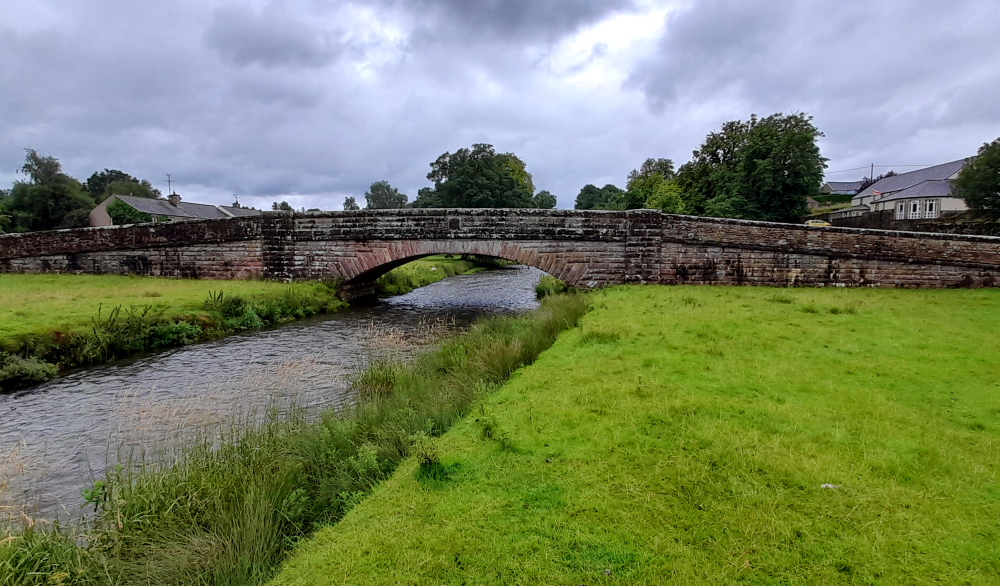
From the inscription on one of the headstones in the St Lawrence Church in nearby Crosby Ravensworth, we learn that Annie Park of Meaburn Hall died January 11th, 1955 aged 89 years.
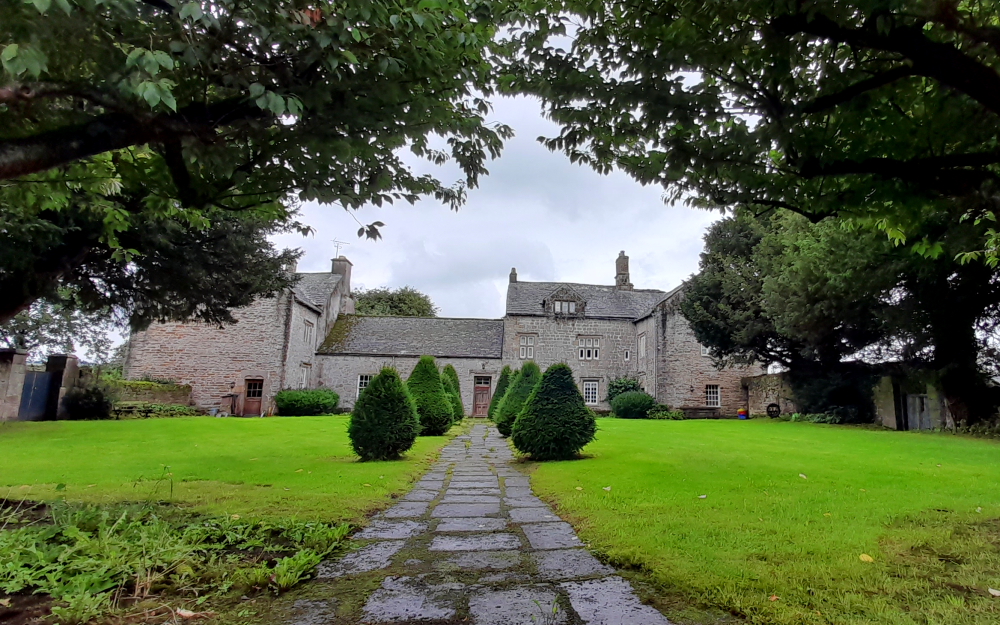
The Historic England Register has Meaburn Hall as a Grade II Listed building (No. 1326730). The Gatehouse Gazetteer describes it as: ‘Site of medieval hall house, fortified house and tower house, demolished in 1610 and replaced by the present hall house. The south wing of the present house contains foundations of the old tower. The property belonged to the Vernon family in the later middle ages and passed from them to Sir John Lowther in 1602. It ceased to be a residence of that family c. 1750. ‘
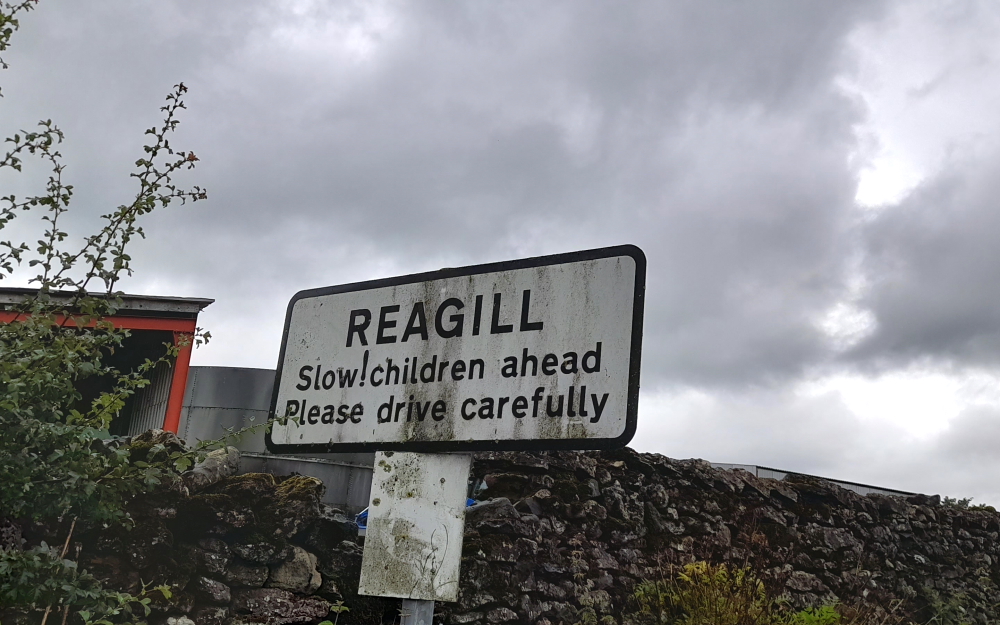
3.2 miles NW is Reagill where John Park lived in 1872 (aged 80) and where his son, John Bartholomew Park, was born in 1837. Today there are just a couple of farms here.
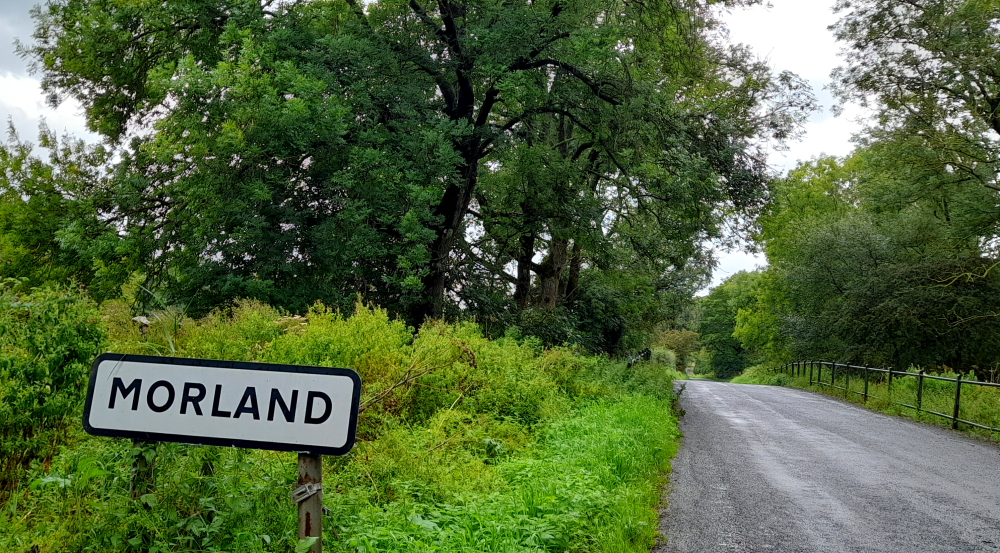
3.6 miles further north is Morland where Thomas Thompson and Margaret Robinson (Lynn’s 6 times great grandparents) were married in 1741. We have no record as to where so assume it was in the local parish church of St Lawrence.
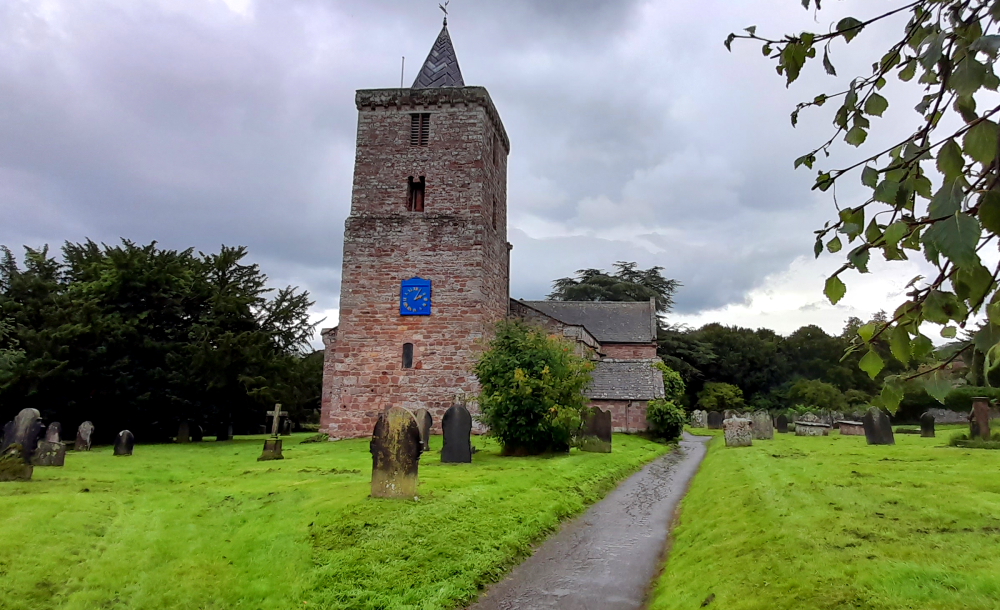
St. Lawrence Church in Morland, a Grade I listed building, has the only Anglo-Saxon Tower in the North West of England. Although the top story was added in the 17th century, the rest retains many original features. The tower contains a 17th century bell-chamber housing three bells, dated 1696, 1727 and 1764.
Although nothing is known of the original building that went with the tower, the present 12th century nave and 12th and 13th century chancel and transepts are well documented. The chancel was largely rebuilt in the 16th century, but some original features were retained.
The interior was restored in the 1896, with the woodwork being influenced by the ‘Arts and Crafts’ movement. Luckily some of the earlier woodwork was kept, including two medieval screens, a 17th century communion rail and font cover (1662 stone font), and and early 18th century pulpit.
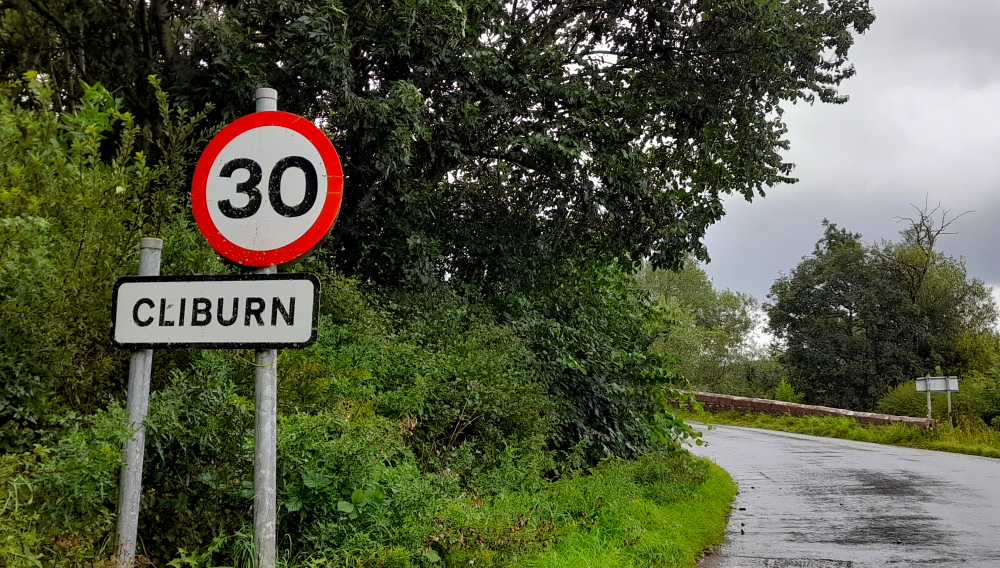
1.9 miles NNW from Morland is Cliburn where the majority of the ancestors are located. We were going to visit this village in 2 days’ time, but as it is so close we decide to check it out now.
12 relatives are listed for this village:
Mary Dalton (Lynn’s 7 times great grandmother) was born in 1667 and married Thomas Crosby here in 1691. The Crosby family originated from Crosby Ravensworth. One of their daughters was Ann Crosby.
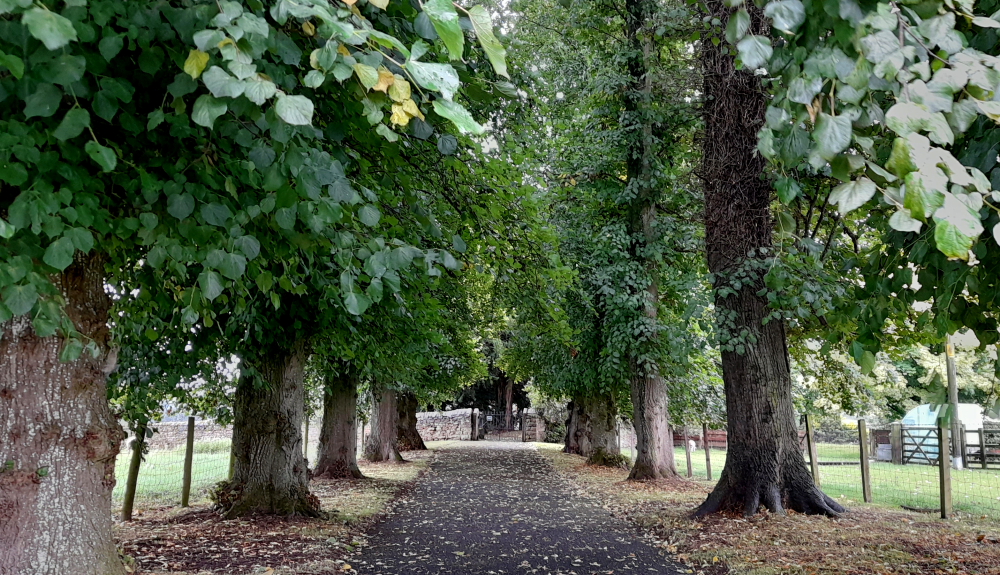
Henry Coulston was born (1692), married Ann Crosby (Lynn’s 6 times great grandparents) in St Cuthbert’s Church, Cliburn (1722) and died (1781). Ann Crosby was born (1693), married (1722) and died (1766).
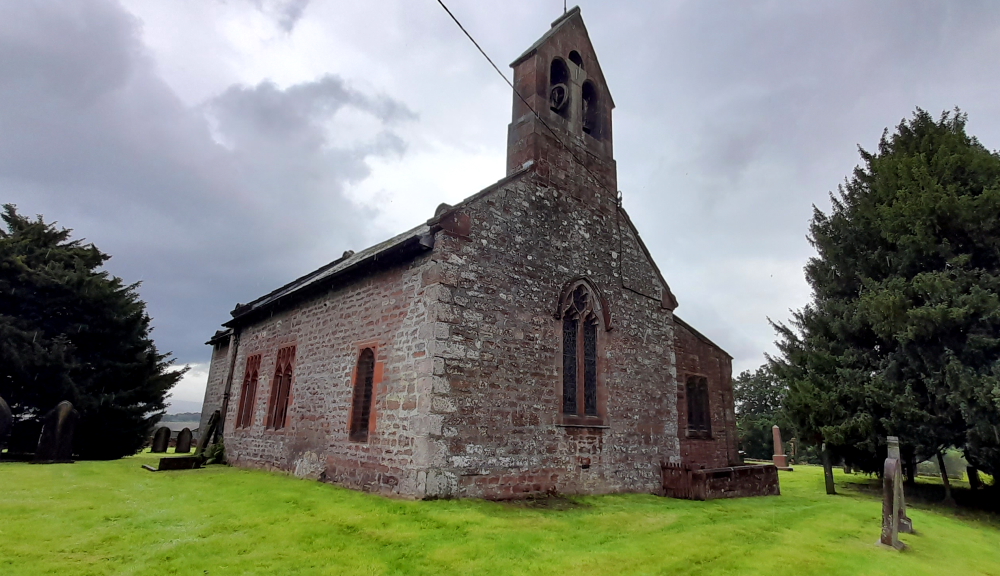
Thomas Coulston (son of Henry Jr) was born (1764), married Mary Thompson (1795) and died (1838). Mary Thompson was born (1767), died (1852) and assumed to be buried with Thomas in Westmorland.
Mark Coulston (son of Thomas) was born (1803) and lived here as a farmer (1841) after he married Mary Bailey Ellwood in Lowther (1835). They are both buried in Yackandandah, Victoria.
John Bartholomew Park married Ann Coulston here in 1862 and were living here in 1871. They died in Bethanga, Victoria.
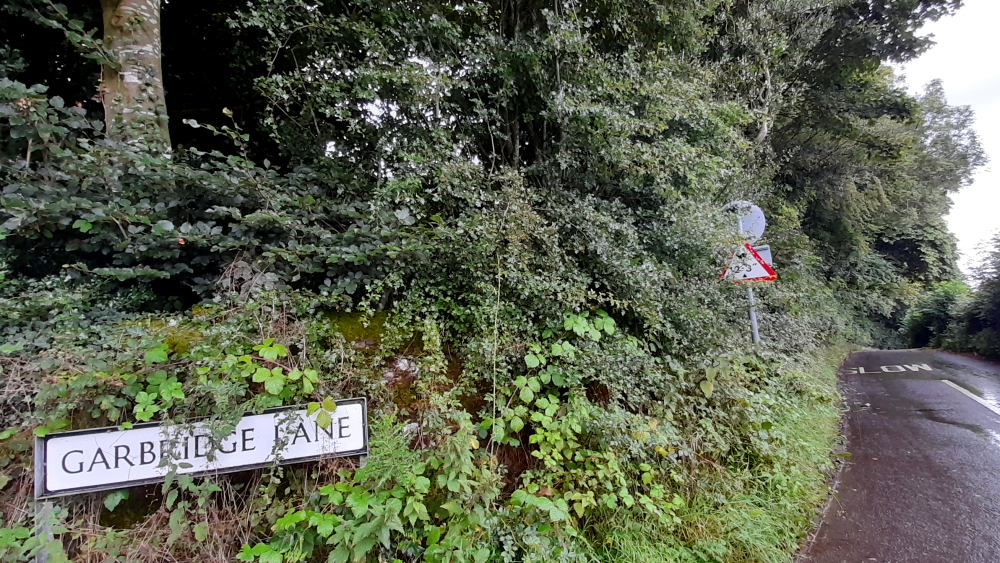
Mary Baily Ellwood lived in Garbridge Lane, Appleby-in-Westmorland, 7.6 miles SE of Cliburn, in 1851.
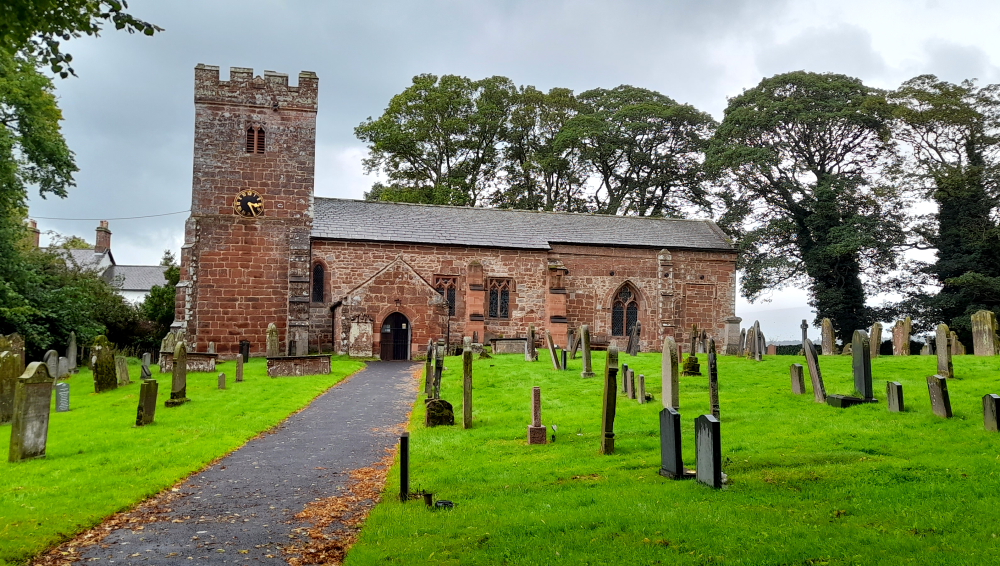
Kirkby Thore is 4.9 miles NW of Appleby and 4.7 miles E of Cliburn. Here Thomas Crosby (father of Ann) was born (1670) and died (1724) presumably buried in St Michael’s Parish Church. He had married Mary Dalton in Cliburn in 1691.
St Michael’s stands to the NE of the earlier Roman cavalry fort of Bravoniacum. Founded in c. 80 AD, the fort was rebuilt in stone in the 2nd century, had a garrison of c. 500, and protected the junction of the York-Carlisle road and the Maiden Way over the Pennines to Whitley Castle and Hadrian’s Wall. Thus the village of Kirkby Thore marked an important link in the Roman communications network in the north.
The first mention of St Michael’s is in 1179 with the grant of land by the Lord of the Manor (the Whelp family) to build the church. The 12th century church, using stone from the Roman fort, followed a simple Norman plan of nave and chancel with a tower at the west supported by stepped buttresses. Almost all of this church was destroyed 200 years later in a Scottish raid into Westmorland, probably in 1388. Some lower parts of the tower and western nave remain, including a 13th century single lancet window.
In 1540, when Shap Abbey was closed by King Henry VIII, the Abbot ‘arranged’ to become Rector of St Michel’s and brought with him the bell, Big Tom, raising the height of the tower to accommodate it.
Mid-afternoon we arrive at our ‘penthouse’ accommodation on a redeveloped farm, unpack, put on a load of washing and drive the 11 miles NE to Carlisle to shop for groceries.
3 August, 2023
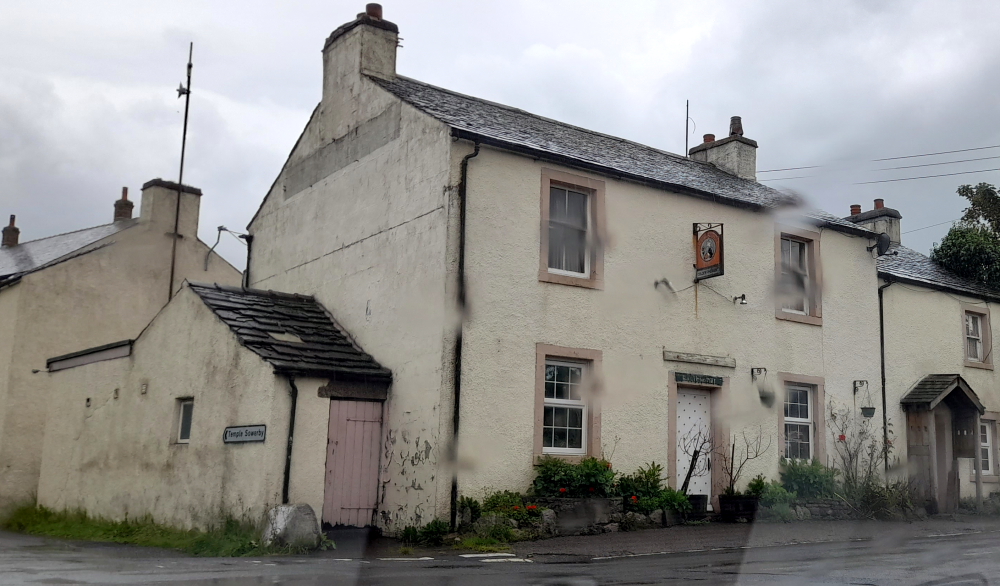
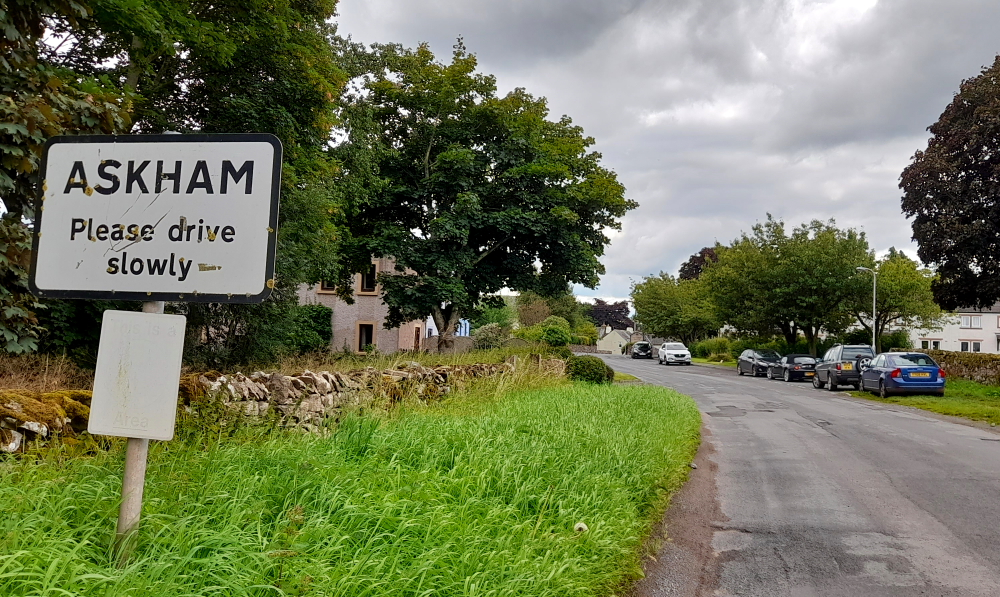
Lynn has arranged to have lunch with a former colleague of hers from her Trust days in London, so we are meeting up with Frank and his wife Margaret at The Punchbowl Inn, Askham today. After that we will visit the church in Askham, and the nearby villages of Lowther and Barton to finish off the family tree research here in Cumbria.
Lynn met Frank while she worked at the International Records Management Trust, Russell Square in London during 1992-1995. Frank was one of numerous Public Record Office (National Archives) staff that volunteered as consultants for the numerous in-country projects the Trust ran in conjunction with the UK’s then Overseas Development Agency and the governments of The Gambia, Ghana, Uganda and other developing Commonwealth countries.
Lynn and Frank first worked as part of a 10-member team that visited Ghana to help overhaul its National Archives, records legislation, staffing, resourcing and training. Subsequently they worked together on numerous occasions as a 2-man team in The Gambia.
Margaret had also been employed by the PRO including running its Family Records Centre but this is the first time we’ve met her.
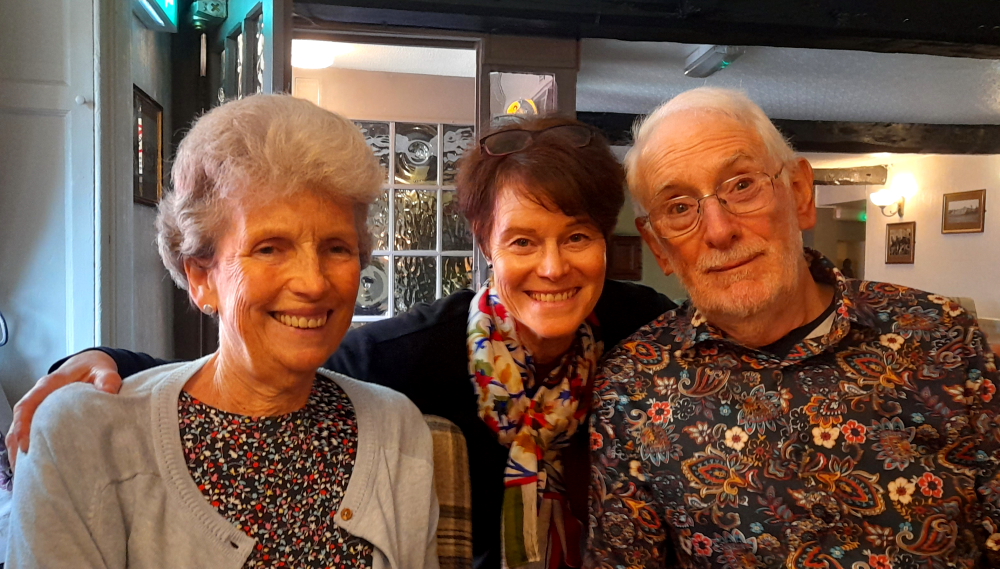
As usual, although it’s been some 27 years since Lynn and Frank last met, as Frank and Margaret left London and moved to the Lake District c. 2004 and Lynn left London in 2010, conversations just seemed to be picked up and continued.
After a very pleasant lunch and lots of reminiscing and catching up we part company and drive just down the road to the parish church. It’s recorded that John Thompson (Lynn’s 5 times great grandfather) was married to Elizabeth Harrison in Askham in 1766.
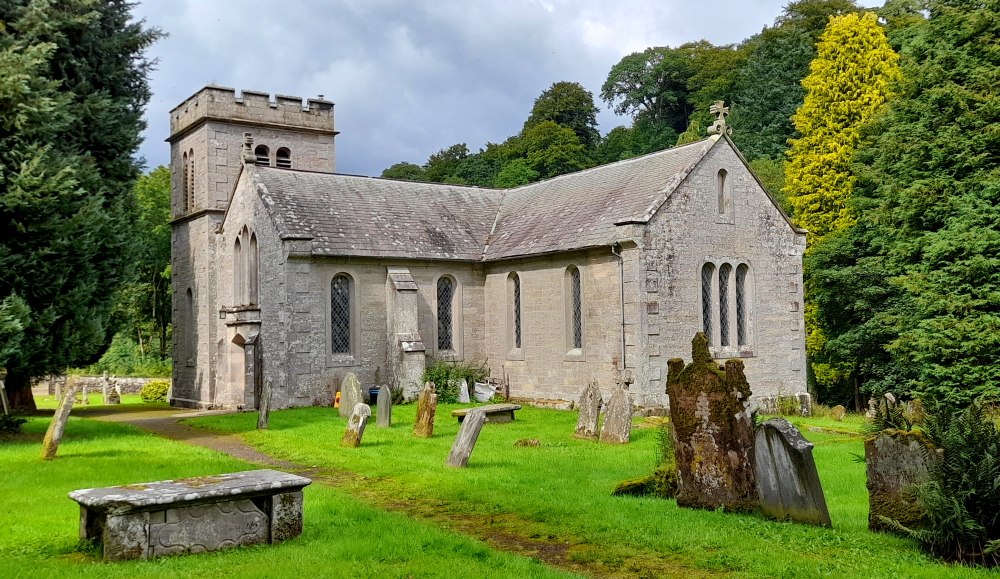
Records show that a Church dedicated to St Kentigern existed in 1240, and as far as is known stood until 1832. Sir Robert Smirke who was at the time working on the design for Lowther Castle, also designed the present church building – the foundation stone of which was laid on 28th June 1832.
Internally the grade II listed Church is simple and unadorned whilst being light and airy. The quality of light is achieved by the uniquely curious design of the windows. These are made of individual leaded diamond panes in blown glass, each being set at an angle so that the available light from outside is ‘caught’ at any daylight hour.
The South Transept, which was originally the Sandford family burial chapel (1225), was rebuilt on the ground plan of the old church. In 1950 the Sandford Chapel was dedicated as a Baptistry, containing the 17th Century font from the old church.
A third of a mile up the hill from St Peter’s Church is St Michael’s Church and Mausoleum of the 2nd Earl of Lonsdale which is a mile’s drive from Lowther Castle, Gardens and Estates. In 1835 Mark Coulston and Mary Ellwood married in Lowther.
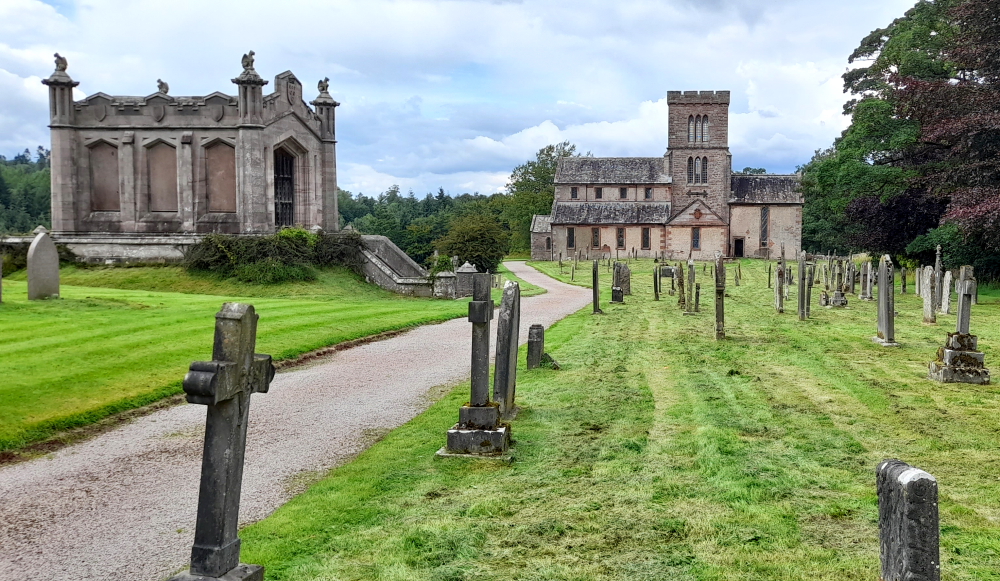
Lowther Castle is a country house in the historic county of Westmorland, which now forms part of the modern county of Cumbria, England. The estate has belonged to the Lowther family, latterly the Earls of Lonsdale, since the Middle Ages. It is a fully-managed ruin, open to visits by the public to the shell of the castle and some of the gardens since 2011. Additional work was completed since that time, most recently on the extensive gardens.
Francis Knollys escorted Mary, Queen of Scots to Lowther Hall (as the house was then known) on 13 July 1568 on her way to Wharton and Bolton Castle.
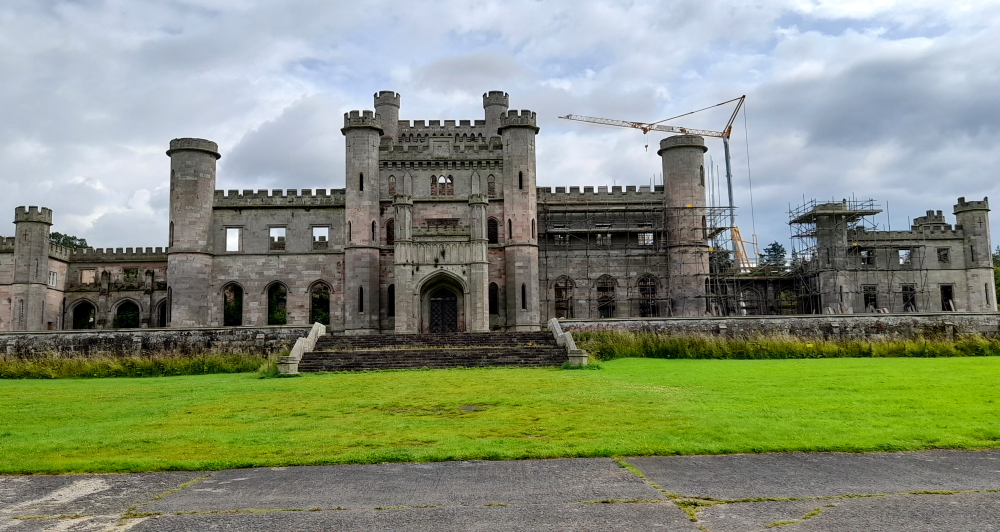
In the late 17th century John Lowther, 1st Viscount Lonsdale rebuilt the family home on a grand scale. The current building is a castellated mansion which was built by Robert Smirke for William Lowther, 1st Earl of Lonsdale between 1806 and 1814, and it was only at that time that the site was designated a “castle”. The family fortune was undermined by the extravagance of the 5th Earl of Lonsdale, a famous socialite, and the castle was closed in 1937. During the Second World War, it was used by a tank regiment. Its contents were removed in the late 1940s and the roof was removed in 1957. The shell is still owned by the Lowther Estate Trust.
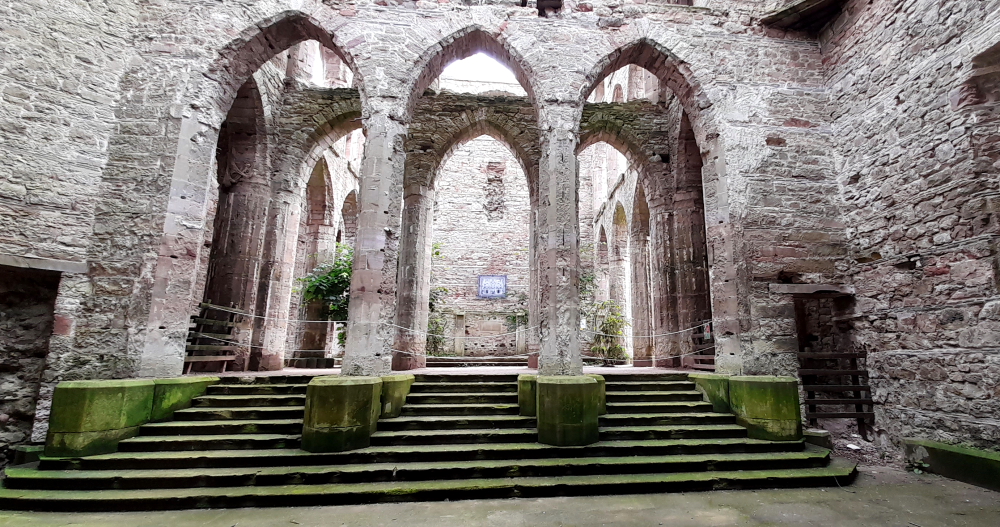
Barton is the last location to visit where the only building in the surrounding farmland, besides the Rectory, is St Michael’s Church. The Grade I listed building stands in a circular churchyard, and possesses the only central Norman tower on a medieval church in Cumbria.
In 1716 Thomas Thompson was born in Barton and lived here, presumably with his wife, Margaret Robinson, although they married in Morland in 1741. In 1813 his son, John, died in Pooley, Barton – burial details unknown. There is no information about his wife, Elizabeth Harrison, other than they married in Askham in 1766.
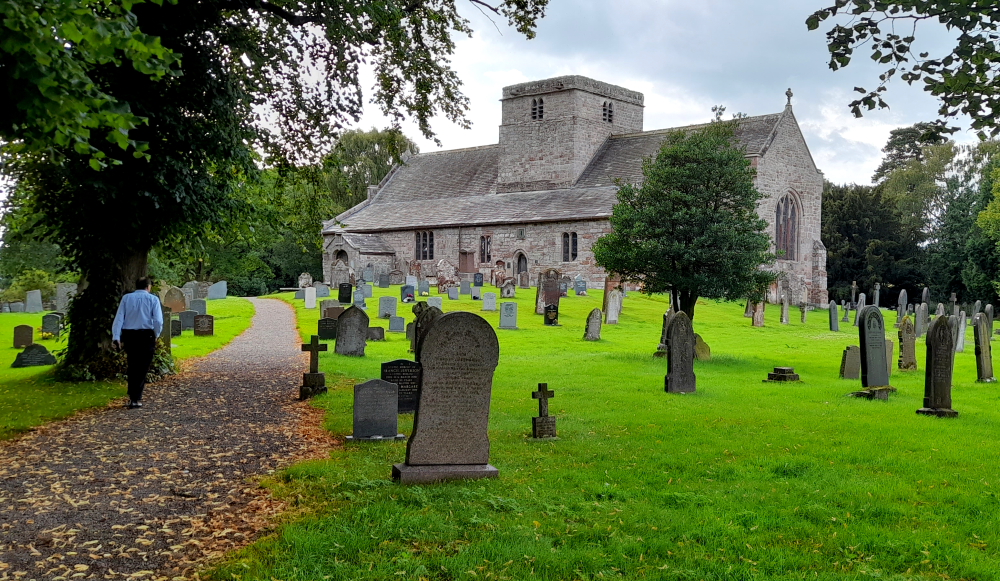
The ancient parish of Barton covered the entire Ullswater valley. The church’s plan is dominated by a squat 12th century central tower, whose narrow windows show that it may have been used for defence during the border raids. The original narrow arches connecting the chancel to the nave were widened in the 14th century to give the church a double arch feature which is thought to be unique in this country.
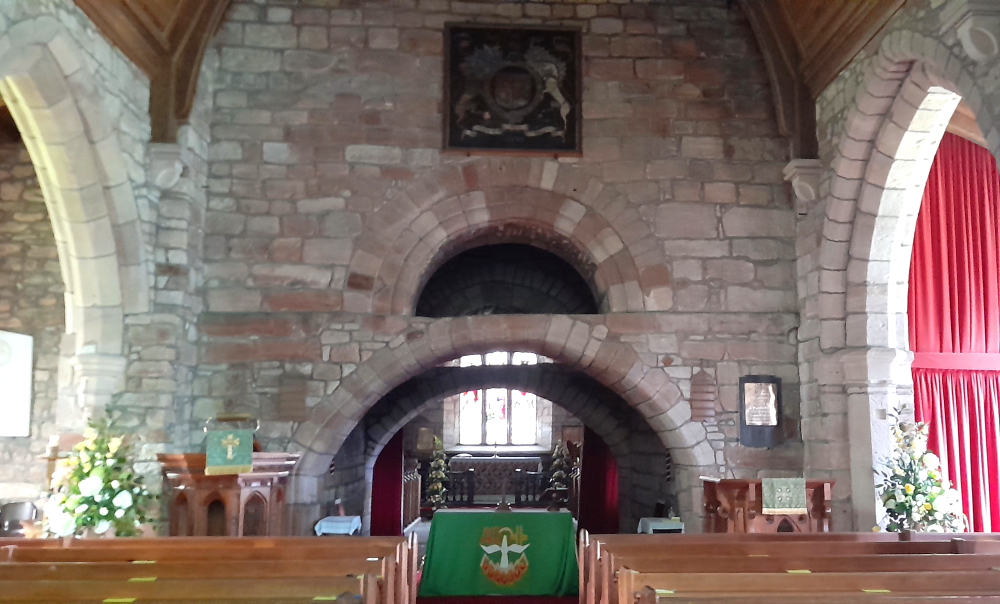
All four corners of the Norman nave survive, and the north and south aisles were added in the 13th and early 14th centuries. The nave and chancel have striking wagon roofs. The west window, dated 1912, is by the prominent Victorian designer Charles Kempe.
St Michael is the Wordsworth family church. The poet’s grandfather, aunt and cousin are buried here, his father grew up in the parish and his nephew owned the Queen’s Head in nearby Tirril. I tried the Tirril Pilsener a few nights ago but really not to my taste.
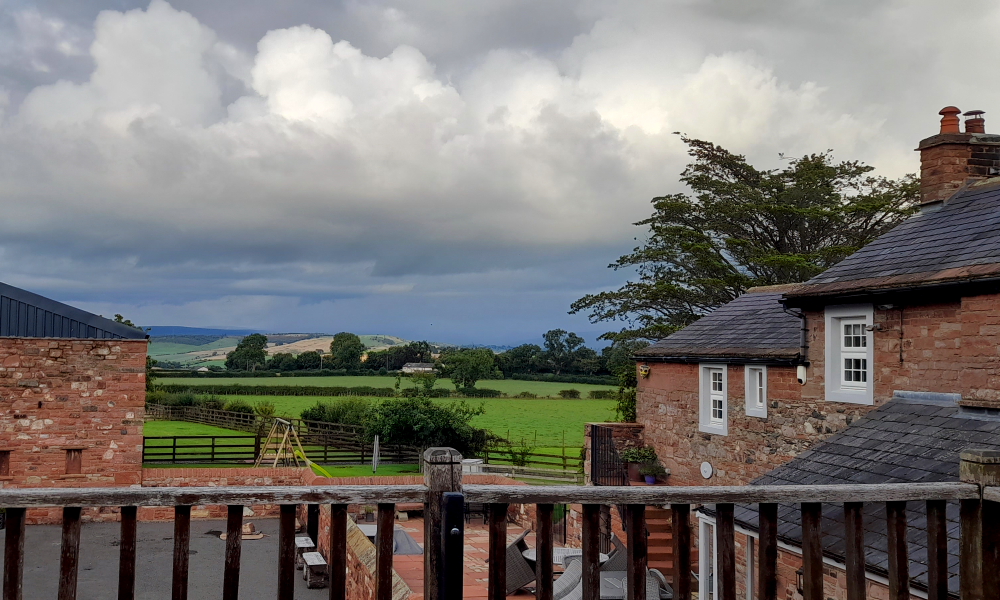
By 5.30 pm we are back at the apartment. The tumble dryer has only lived up to half of its name – all tumble, no drying. Time to call the property manager to get it fixed before we leave in a couple of days’ time. We end up drying the clothes on a drying rack but the property owner has promised to replace the dryer tomorrow.
4 August, 2023
Typical, just when we are due for several days ‘in’ to catch up on ancestry.com and the blog, the rain has stopped and the sun is shining! As promised, a tradesman turns up this afternoon with a new tumble dryer. I’ll give it a whirl the day before we leave.
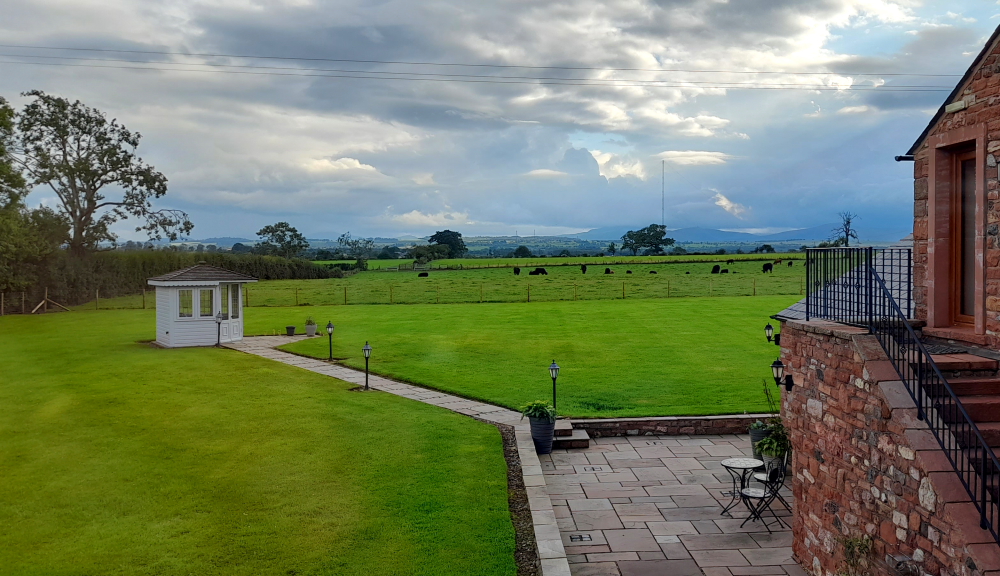
While Lynn continues doing catch up all day I head over to Lazonby 10 kms away to buy some cream for the apple pie that we bought at Tesco. Apple pie is just not right without cream or custard or ice cream or all of these things. We are definitely remote here as the closest shop is over 15 minutes’ drive away. At least there is a local pub just 2 kms away for dinner tomorrow night.
5 August, 2023
Ahhh, a long lie-in this morning listening to the pitter-patter of raindrops on the windows. More work updating ancestry.com and dinner tonight at the local pub, The Globe Inn.
We are well overdue for a few quiet days in to relax and do some catch ups.
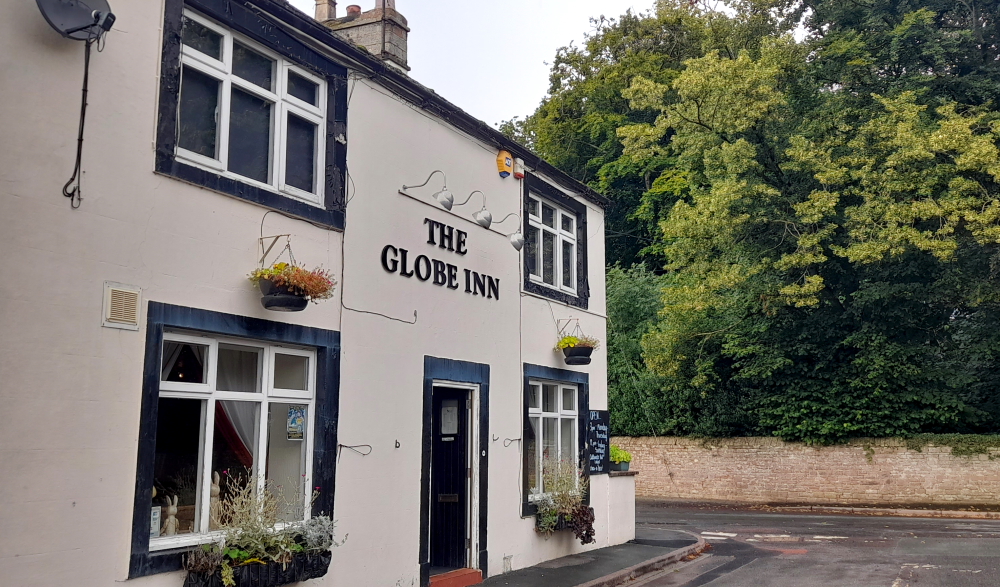
The Globe Inn food is typical pub grub but it is only a 3-minute drive away and has a good atmosphere.
6 August, 2023
There is still more rain about today so yet another rest day. This may be the last rest day for some time as we have a full schedule for the next two weeks then we are off to Poland, northern Germany, Netherlands, Belgium, Czechia, Slovakia, mid-Germany and Austria for three months.
7 August, 2023
A sunny day, a cool 16 Deg. C, and a 10:00 am departure for our trip into Scotland visiting Hawick (pronounced Hoyk), Galashiels and our hotel located near St Boswells in the Scottish Borders. We drive along the A7, the Borders’ Historic Route.
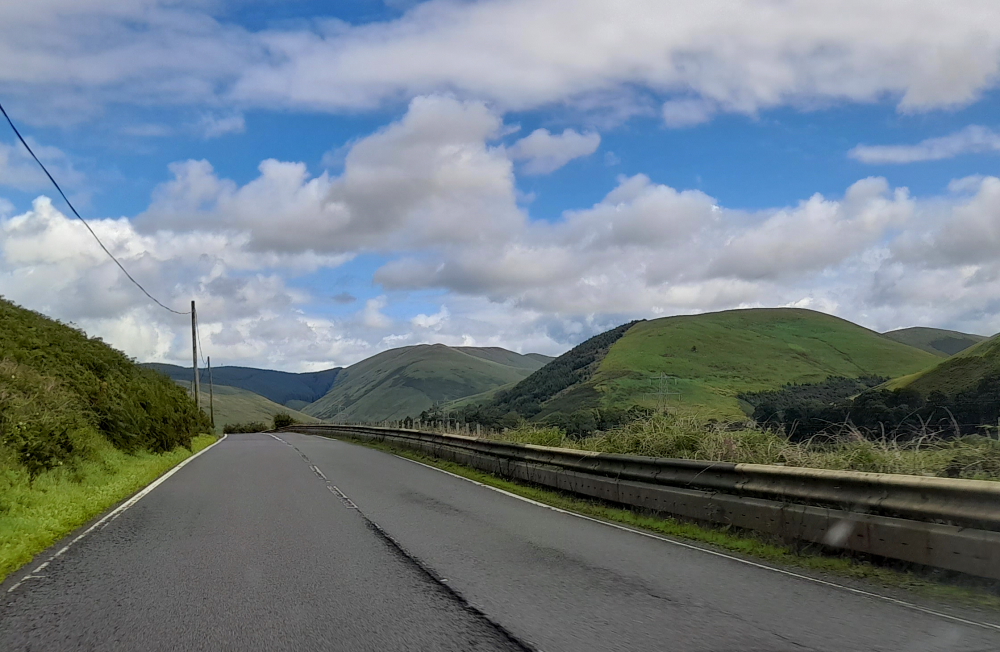
About an hour and 20 minutes later we arrive in Hawick, the largest of the Border towns and internationally famous for fine quality knitwear, including the now-closed Pringle factory.
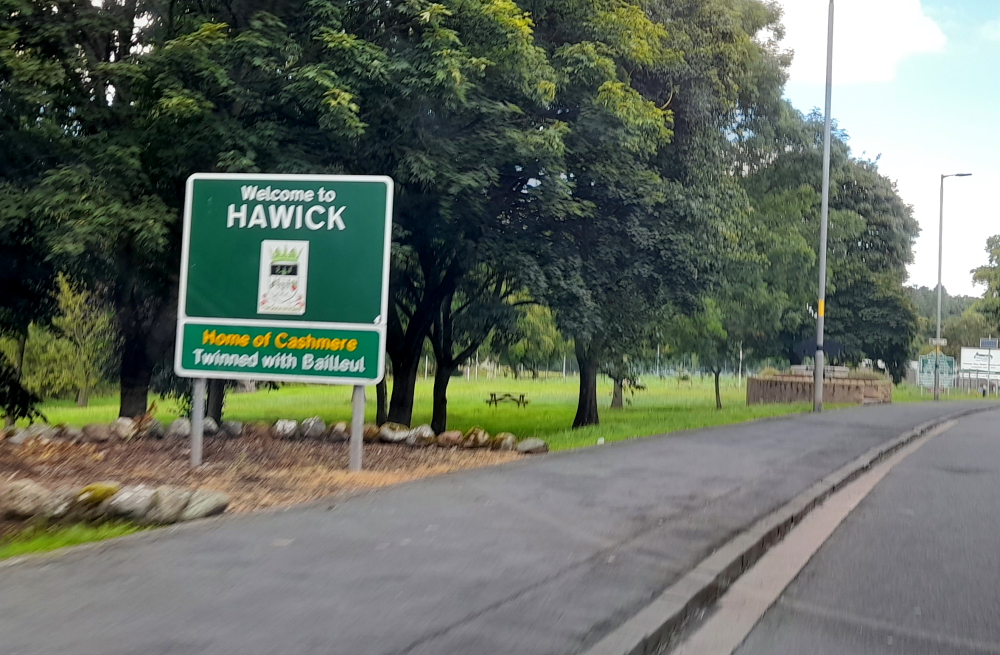
The town was formally established in the 16th century, but was previously the site of historic settlement going back hundreds of years. By the late 17th century, the town began to grow significantly, especially during the Industrial Revolution and Victorian era as a centre for the production of textiles, with a focus on knitting and weaving, involving materials such as tweed and cashmere. In fact, the term ‘Tweed’ originated here as a result of a miscommunication of twill for the River Tweed upon which the town is located.
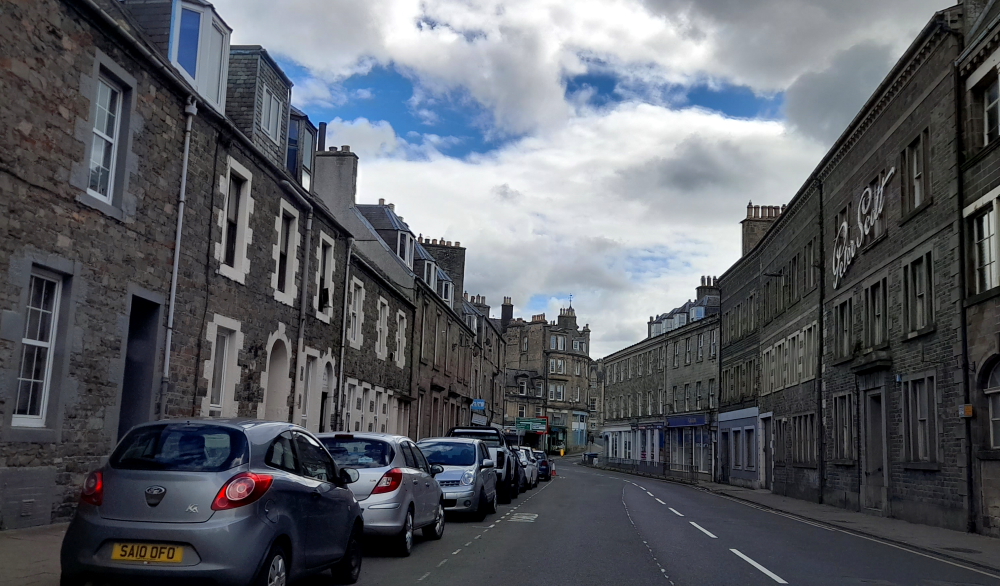
By the late 20th century, textile production had declined but the town remains an important regional centre for shopping, tourism and services. Hawick’s architecture is distinctive in that it has many sandstone buildings with slate roofs.
My 2 times great grandmother, Agnes Henderson, was born in Hawick in 1848. Unfortunately, 4 Back Row where she was born must have been renamed as we’ve been unable to find it. (Subsequently we discover it is now called Drumlanrig Square.)
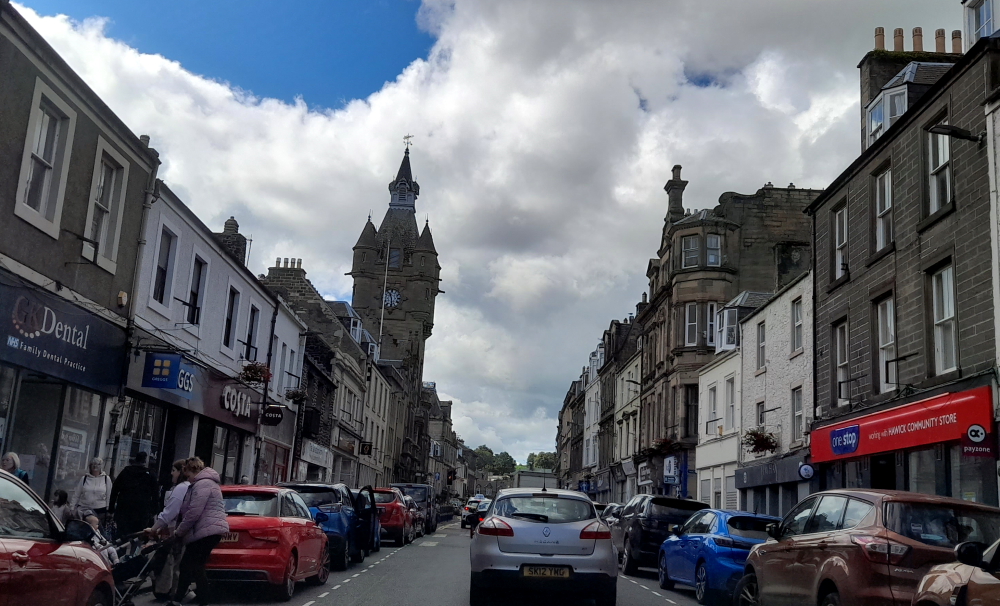
17 miles north and 50 minutes later we arrive in Galashiels, known locally as ‘Gala’. The town is a major commercial centre for the Borders region with extensive history in the textile industry including the present day. Galashiels is the location of Heriot-Watt University’s School of Textiles and Design. And in 2021 a new £6.7m Great Tapestry of Scotland Centre opened in Galashiels to house one of the world’s largest tapestries and community arts projects.
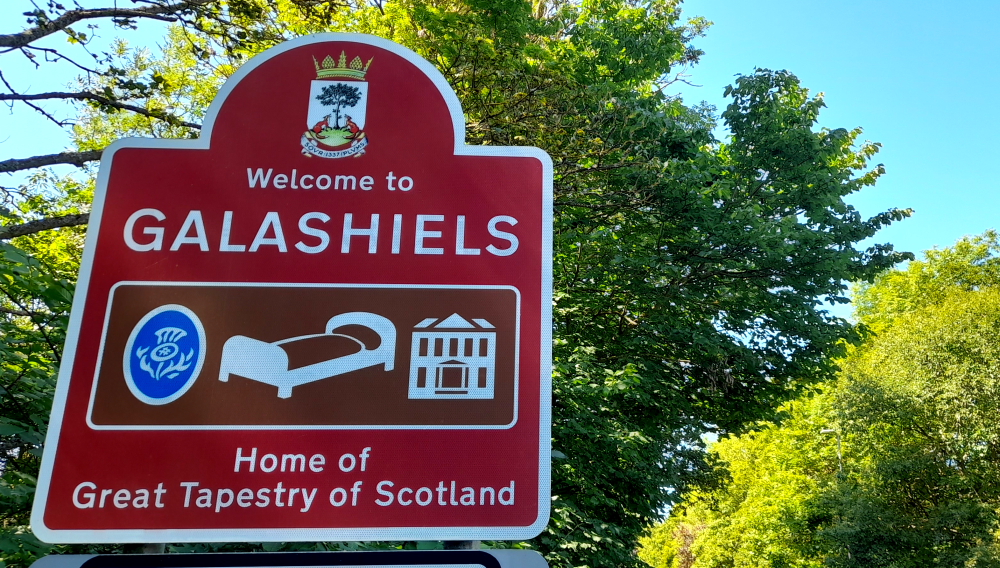
The Great Tapestry of Scotland was hand stitched by over 1,000 people across Scotland and had been taken for display around the country throughout its six-years’ creation, the original brainchild of Edinburgh-born author Alexander McCall Smith, whose vision it was to create a tapestry telling the history of Scotland.
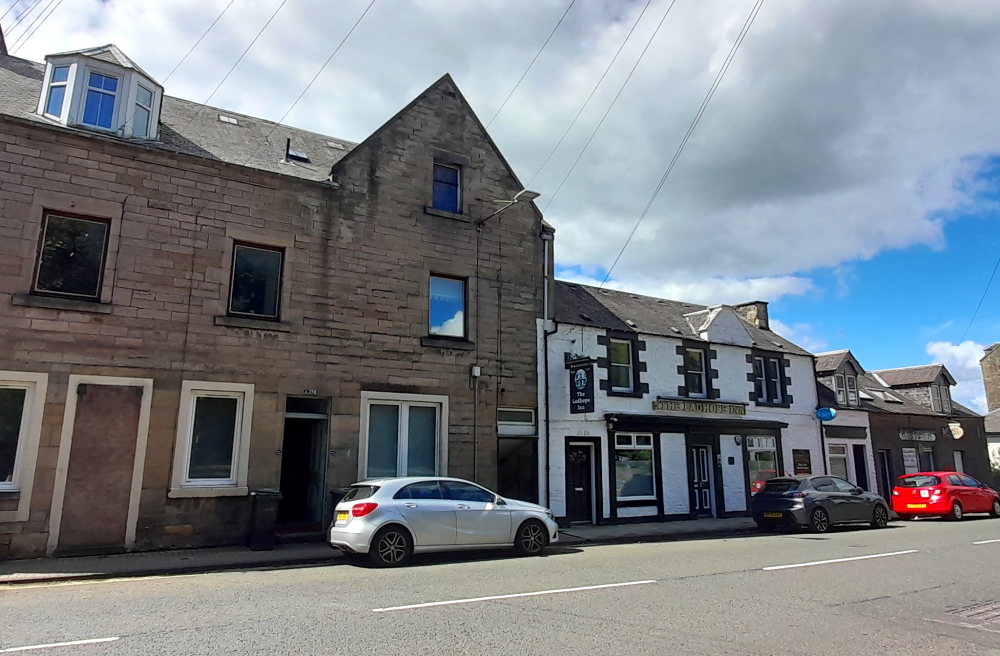
Galashiels is where my 2 times great grandmother, Agnes Henderson, lived at 27 High Buckholmside after she married John King Watson.
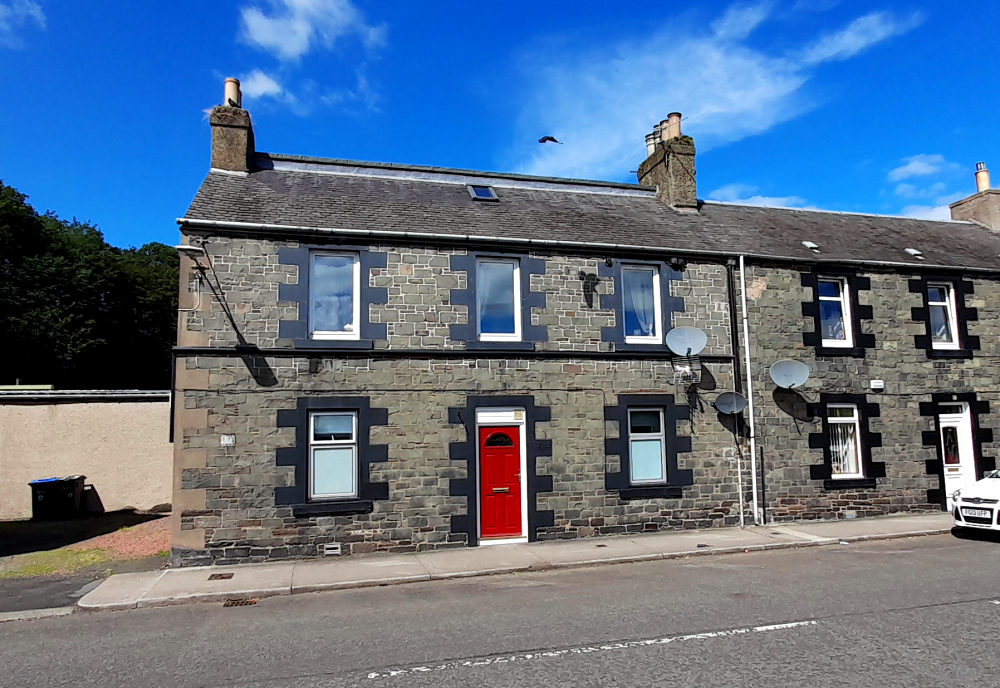
And died at 11 Hall Street, in 1882. Interestingly, she married at 4 Back Row, Hawick on 27 February 1866, next door to where Agnes Murdie Watson was born on 4 October 1866.
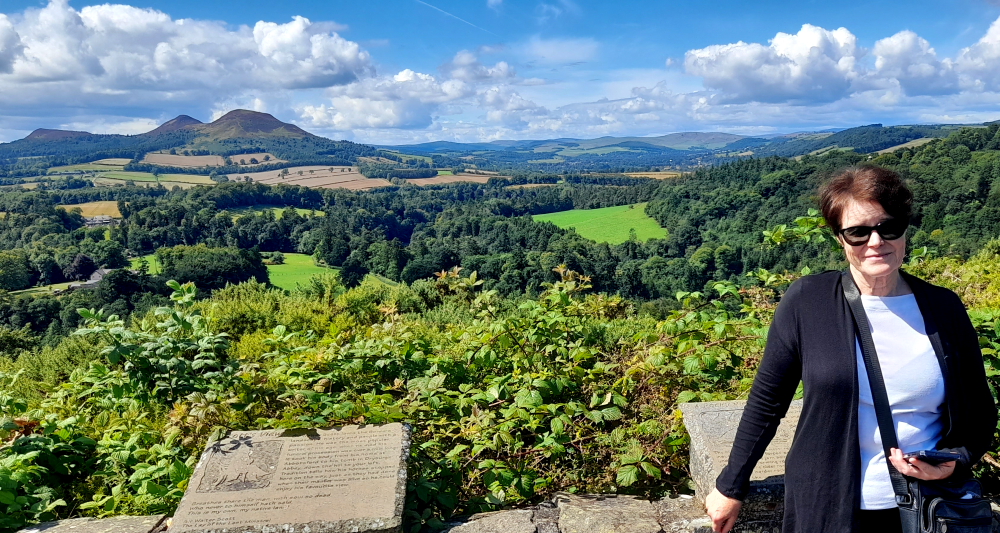
We drive 9.5 miles SE of Galashiels towards the Dryburgh (pronounced like Edinburgh) Abbey Hotel via the B6360/B6356 and stumble across 2 gems: Scott’s View and the William Wallace statue.
Scott’s View provides a stunning vista of the River Tweed, the Eildon Hills and the ancient Gledswood to the right. The hills serve as a reminder of the volcanic activity that once took place in the area. The lookout was known to be one of Sir Walter Scott’s favourite places to come and reflect.
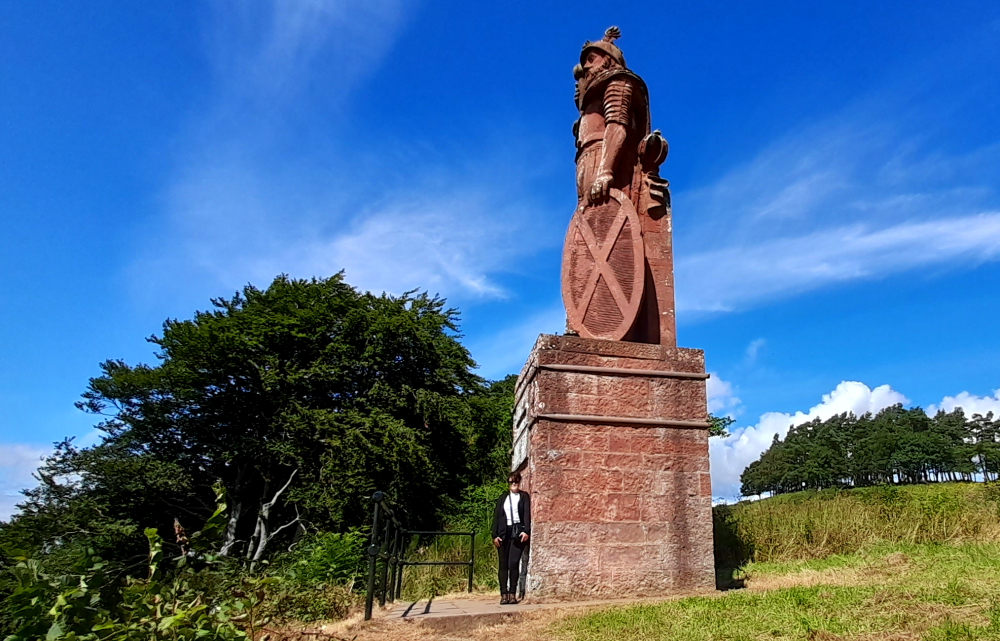
3 minutes’ drive south is a statue commemorating William Wallace statue near the grounds of the Bemersyde estate, near Melrose.
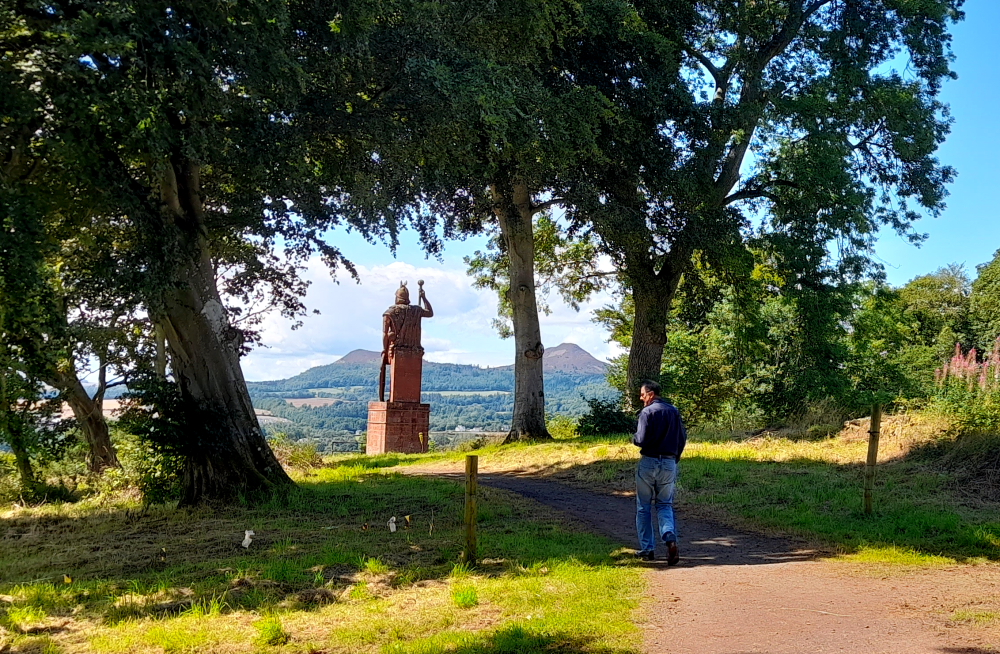
It was commissioned by David Stuart Erskine, 11th Earl of Buchan. Made of red sandstone by John Smith of Darnick it was erected in 1814. It stands 31 feet (9.4 m) high and depicts Wallace looking over the River Tweed.
As we are an hour too early to check in, we visit the structure that gives its name to our hotel, namely Dryburgh Abbey, which is conveniently located over the fence from the Hotel.
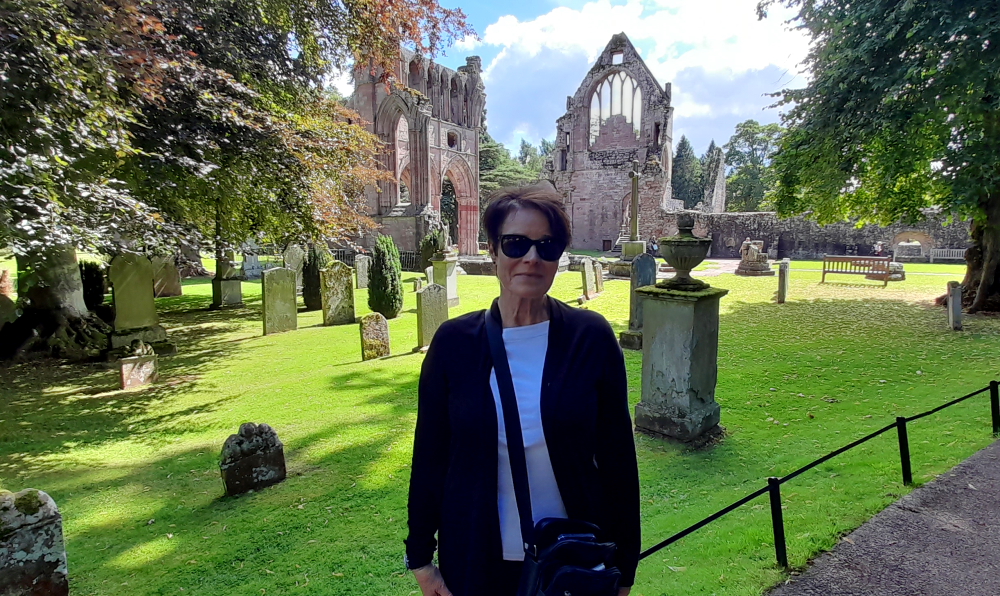
The abbey was established by Premonstratensian canons in 1150. Hugh de Moreville, Constable of Scotland and Lord of Lauderdale, had invited them to this idyllic spot from Alnwick Priory, Northumberland. Dryburgh became the premier house in Scotland of the French order, which was established by St Norbert of Xanten in 1121 at Prémontré. Its six Scottish houses also included Whithorn Priory.
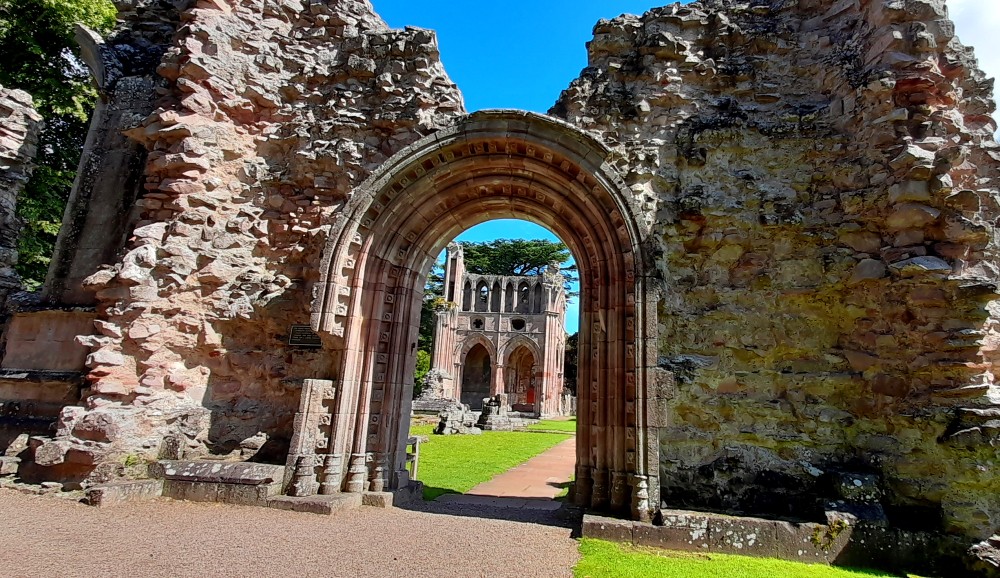
Dryburgh was never as wealthy or influential as the abbeys at Kelso, Jedburgh and Melrose, and monastic life was on the whole pretty quiet. However, the abbey did suffer four savage attacks – the most famous in 1322 – when Edward II’s soldiers turned back to set fire to Dryburgh having heard its bells ringing out as the English army retreated. The Protestant Reformation of 1560 effectively ended monastic life at the Abbey. By 1584, just two brethren remained alive.
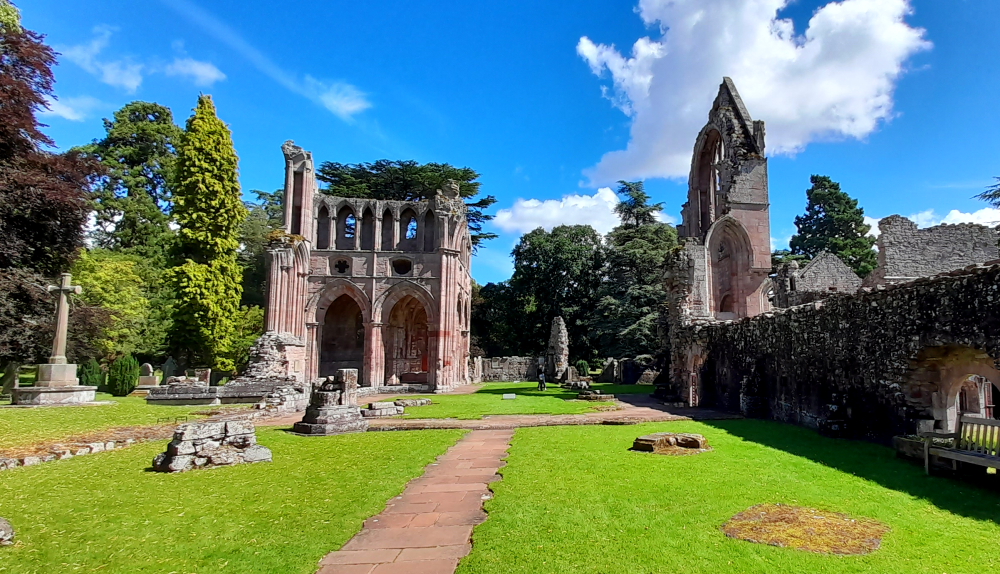
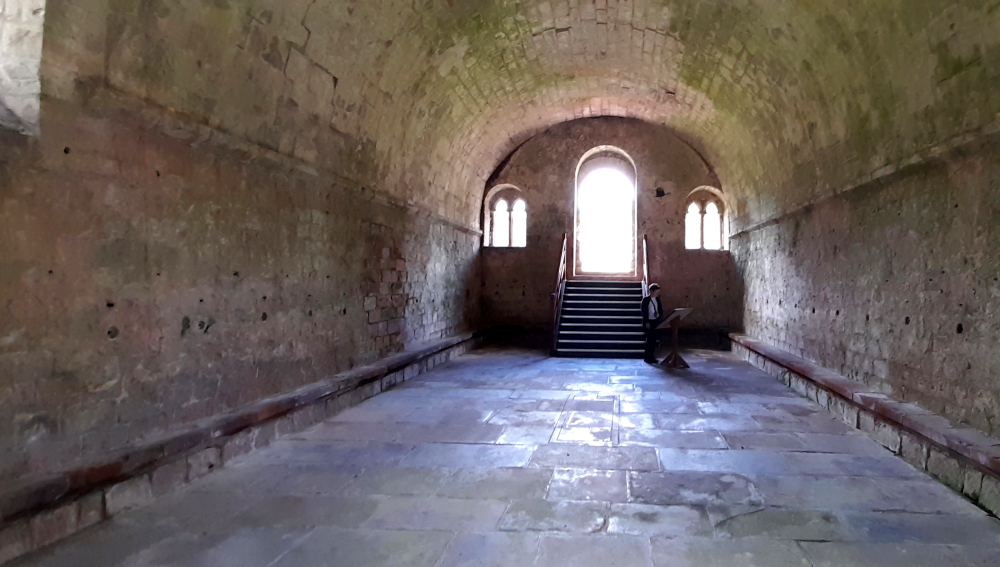
The church is a fine relic of Gothic architecture. The cloister’s highlight is the 13th-century chapter house with its faintly-visible painted wall plaster.
In the 1700s, the ivy-clad ruin attracted the attention of David Erskine, 11th Earl of Buchan and chief founder of the Society of Antiquaries of Scotland. Buchan bought Dryburgh House and set about creating a charming landscape in which the ancient abbey figured prominently. When he died in 1829, he was laid to rest in its sacristy.
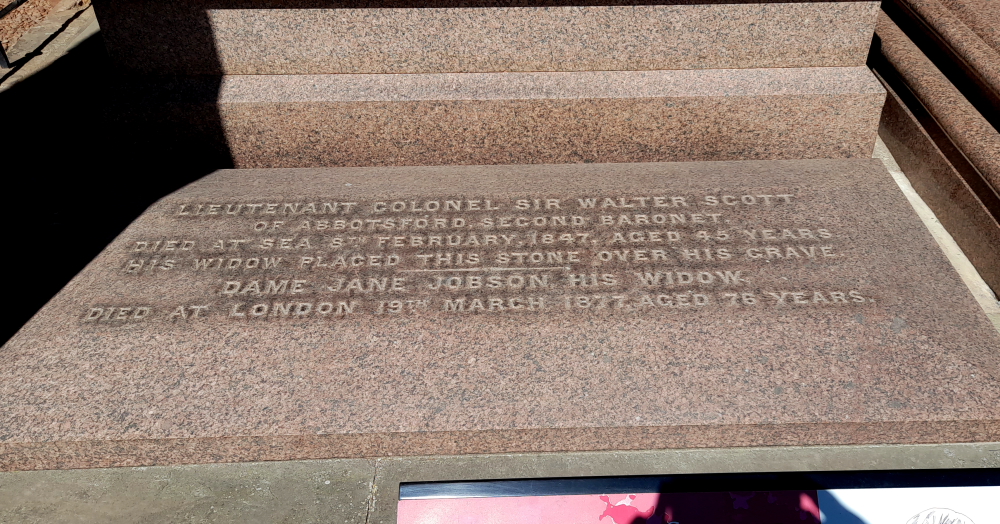
Sir Walter Scott, antiquarian and novelist, and Buchan’s close friend, was buried here three years later, on 26 September 1832. His tomb is in the north transept. A third great Scot, Field-Marshal Earl Haig, was interred beside Scott in 1928.
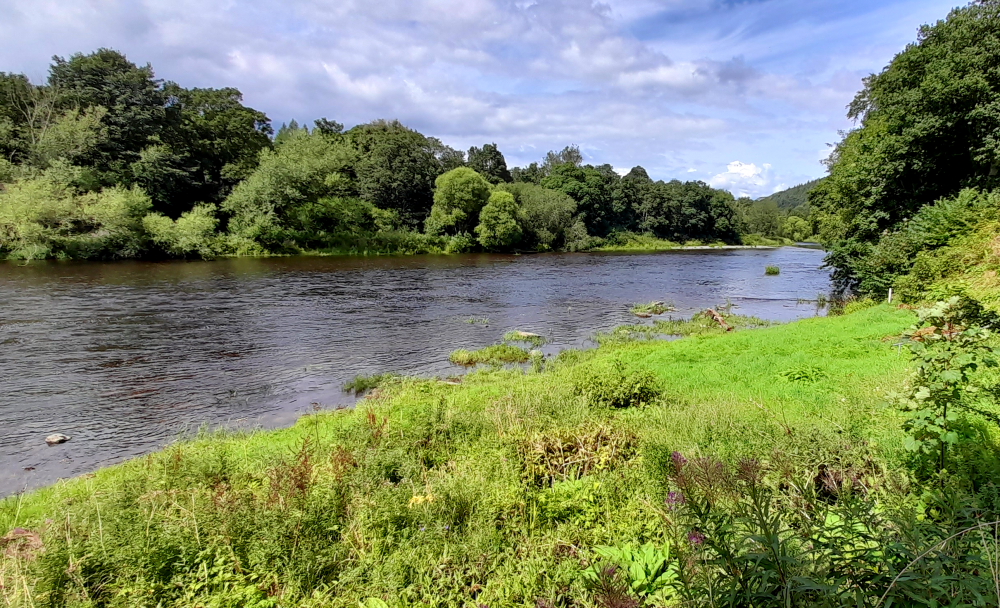
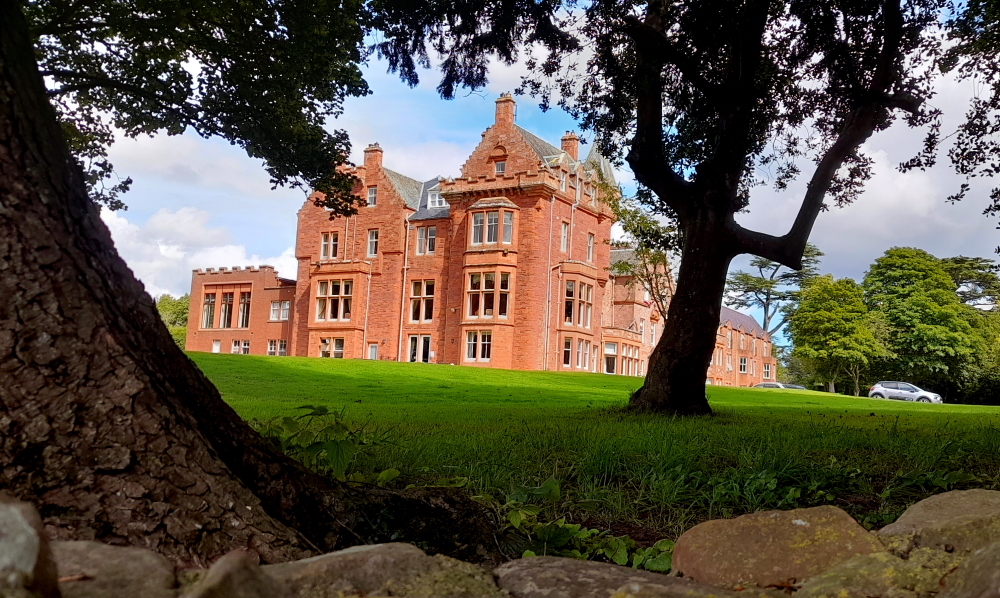
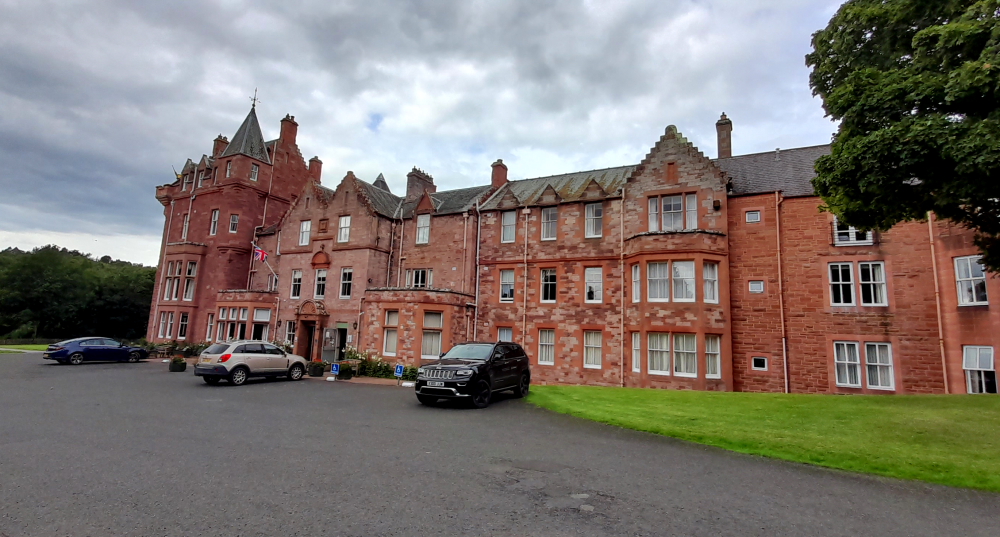
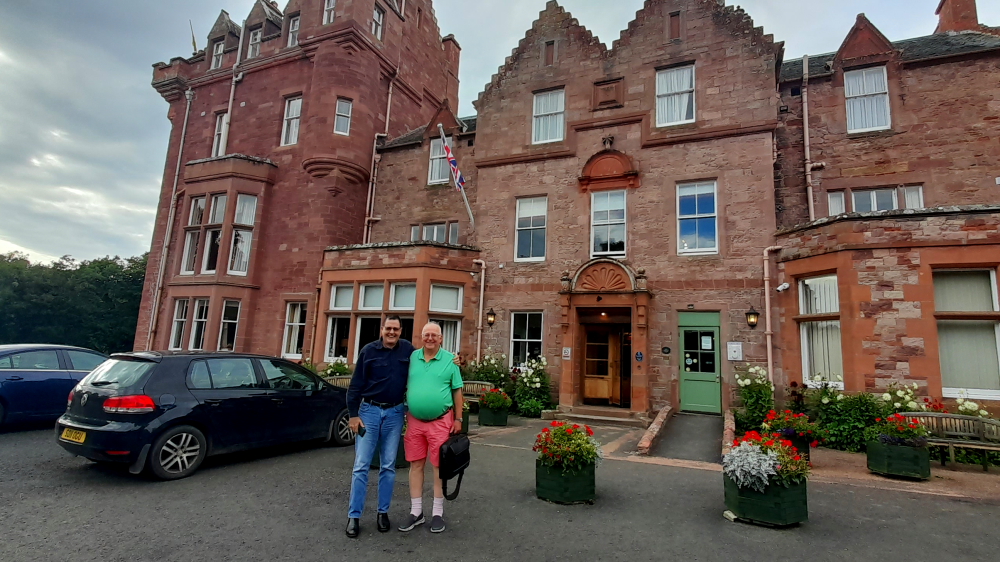
Located in 101 acres of fine wooded grounds by the River Tweed, Dryburgh Abbey Hotel, a castellated mansion formerly known as Dryburgh House (formerly Mantle House), dates from 1845 and was remodeled in 1892, but probably stands on or near the site of a much older building. This site does not appear to be marked on maps until Armstrong’s map of Berwickshire on 1771, although this certainly predates the present house.
This property (and not the abbey) appears to have been held by the Haliburtons of Dryburgh in the 16th, 17th and 18th centuries. The house was home to Lady Grisell Baillie in the 19th century, and the Baillie Lords Jerviswood held the property until 1929 until it was sold and was then used as a hotel.
The house is said to be haunted, although we haven’t had any ‘close encounters of the astral kind’. A young lady of the house fell in love with a monk, but on hearing of the monk’s earthly love, the abbot had the poor man killed. When the young lady found out she threw herself into the Tweed and was drowned. Her apparition, a ‘Grey Lady’, has reputedly been seen on the suspension bridge and in outbuildings of the hotel.
Fortunately we are able to check in at 2:30 pm as at 3:00 pm, the usual check-in time, we are booked for afternoon tea where we will be meeting, for the first time, a distant cousin of mine, Bill, with whom we share great, great, great grandparents. We made our connection through ancestry.com DNA.
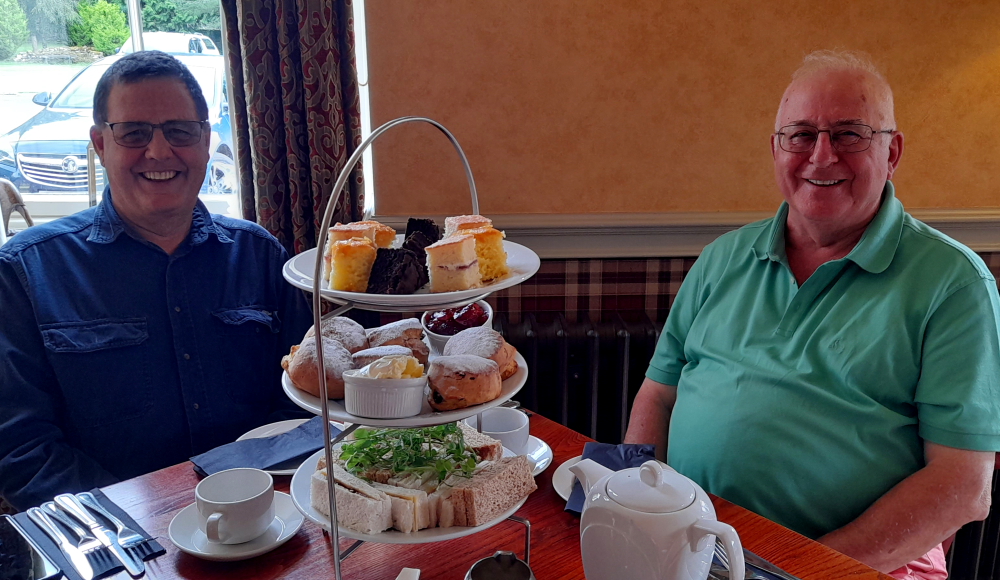
We spend a very pleasant couple of hours in Bill’s delightful company sharing family details and stories and an invitation to Bill and his wife to visit when they are next in Australia.
8 August, 2023
A light breakfast this morning as we need to be in Melrose, 15 minutes’ drive NW, at 12:30 pm to meet another distant cousin John, and his wife Marjory, for lunch at ‘Burt’s Hotel’.
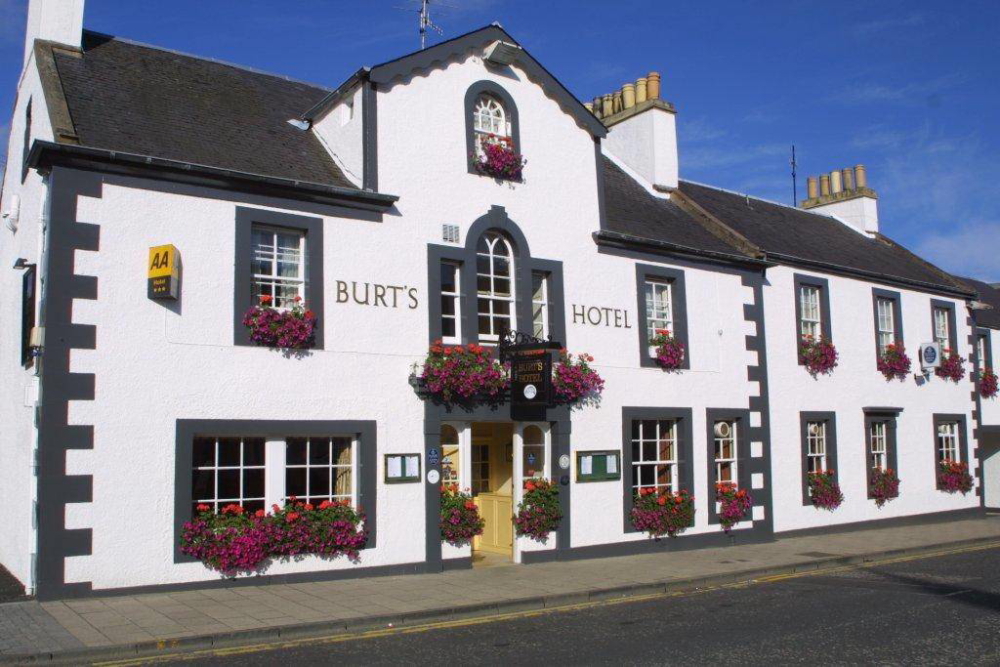
After a tasty lunch we clear the table so that I can compare notes with John via laptops, phones and paper records for several hours.
As it happens, Marjory, an artist, has a showing at the Courtyard Gallery, Bowhill House, Selkirk this afternoon so we invite ourselves along.
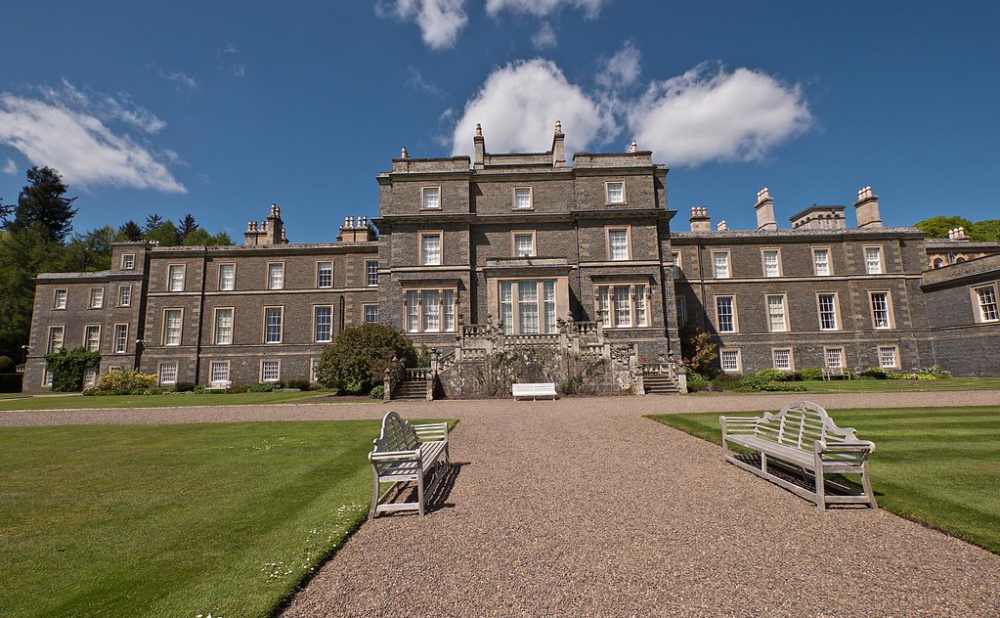
The exhibition is called ‘WASPS SELKIRK’ which stands for Workshop & Artists Studio Provision Scotland (not White Anglo-Saxon Protestants!).
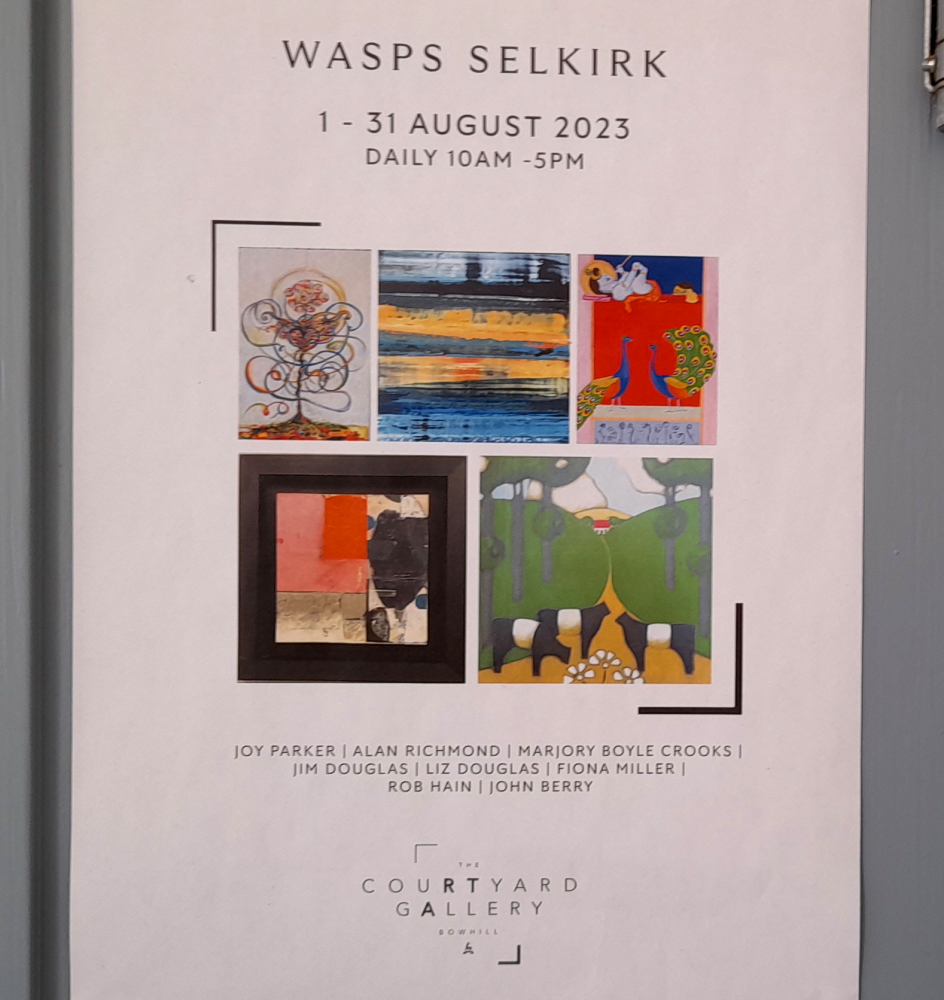
The 12 studios and their artists are located at St Mary’s Mill, Selkirk. 8 artists are being exhibited: Joy Parker, Alan Richmond, Marjory Boyle Crooks, Jim Douglas, Liz Douglas, Fiona Miller, Rob Hain and John Berry.
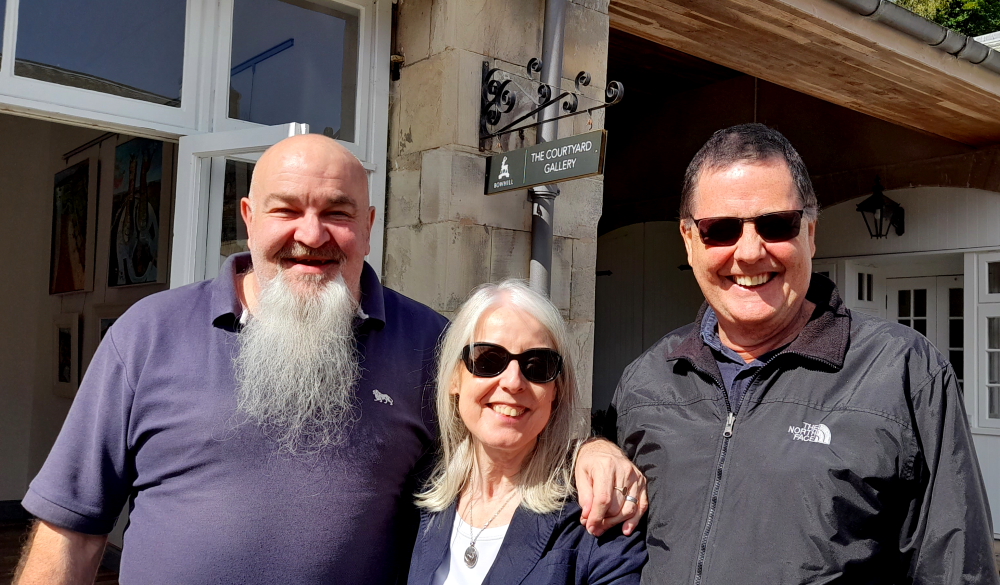
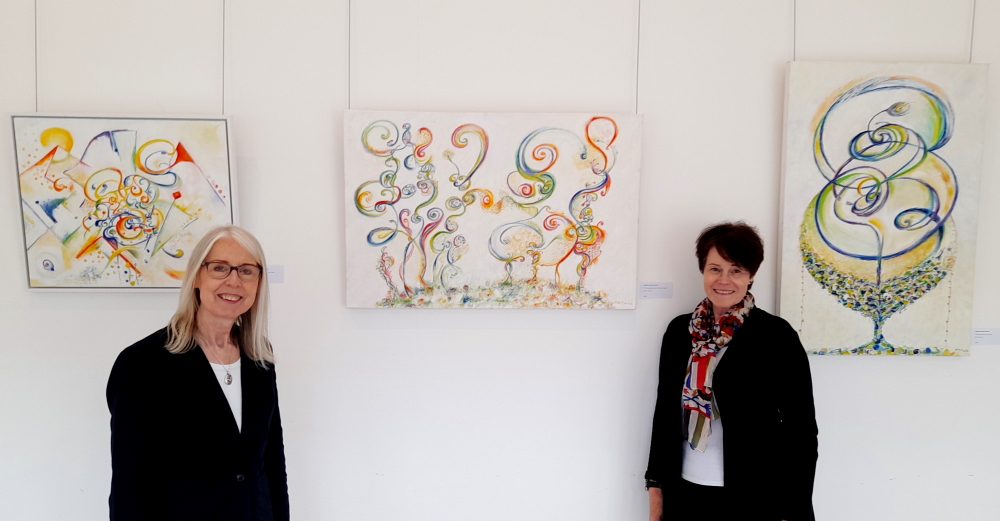
Marjory has ventured into oils recently. Her 4 paintings represent the movement of energy, growth and the connection to earth.
After a large lunch at Burt’s Hotel and a long day driving around Selkirk we are back at the Abbey Hotel for a very light dinner of a starter followed by apple crumble – but not as we know it! We have a long drive tomorrow so we pre-pack the suitcases so that we can be on the road by 10:00 am.
9 August, 2023
We only have one stop on the way to Driffield today. We plan to stop at Sledmere to see the church where Lynn’s 5 times great grandparents (John and Allis King) lived and died.
We have a 4-hour drive south today and the Garmin is taking us around the York bypass. We are mainly driving on A roads today and the trek takes us through some very nice rolling hills on the Scottish border.
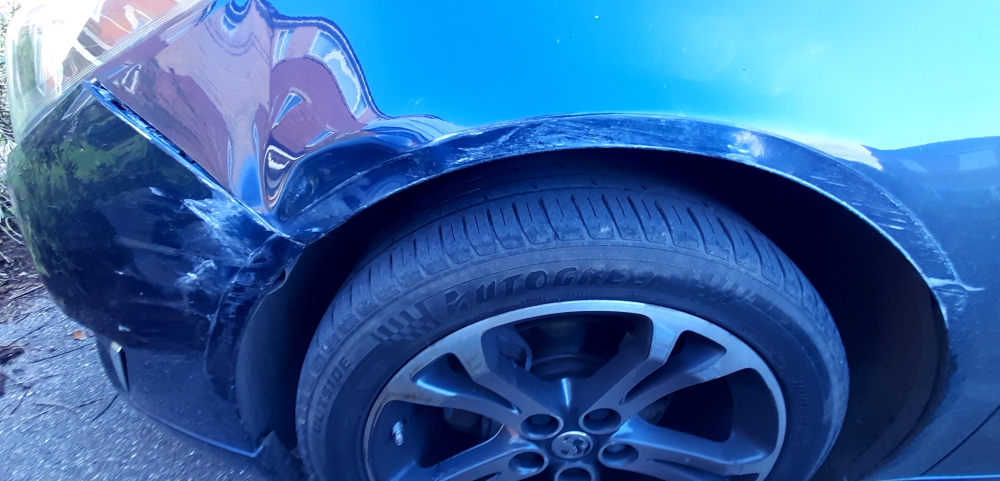
The York bypass takes us onto the A64 and the GPS then takes us around the double roundabout near the University of York Campus East. Almost through the last set of lights on the roundabout and, as we are about to exit, an impatient driver decides that he wants to speed past a lorry and try to cut around us on our left hand side. He didn’t quite make it and hit us on our front, near-side guard (or ‘wing’ using UK speak).
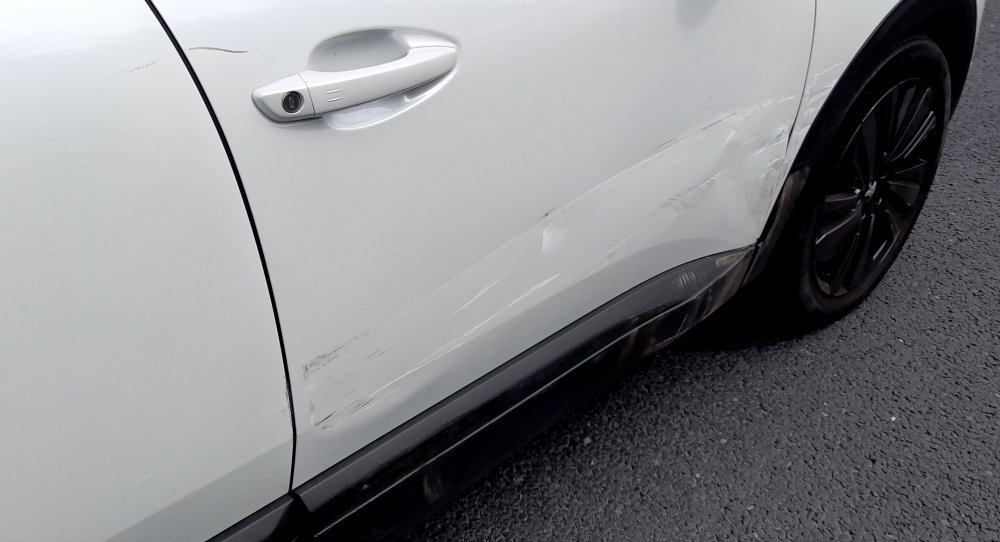
As you expect from today’s technology our dash cam decides that today is a good day to stop working. I can understand how the other driver chose the wrong lane. The road lane markings have worn away so he didn’t see that his lane wasn’t meant to continue right.
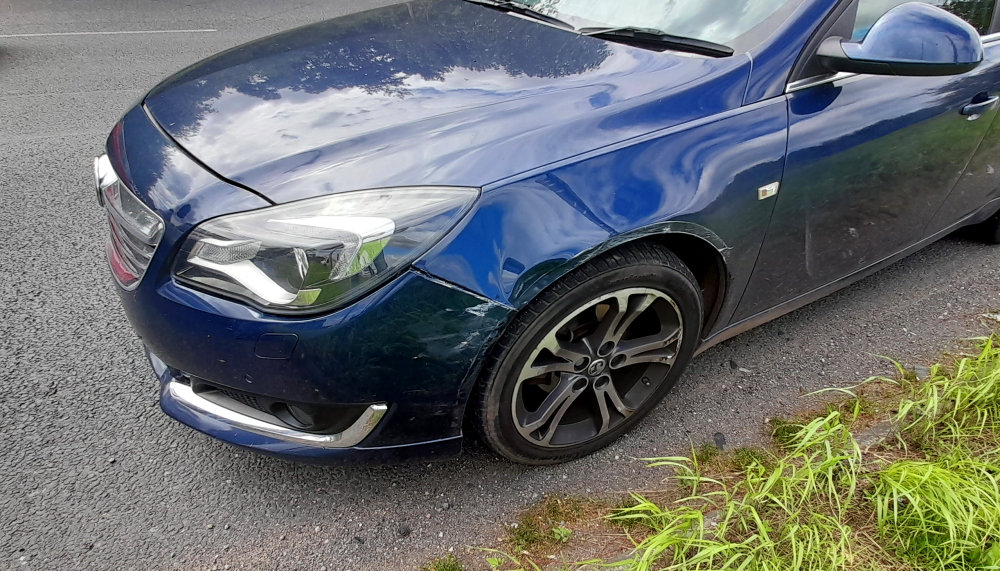
Unfortunately, without dash cam evidence, this incident is going to cost us an excess plus an increased premium on renewal as we will lose our no claim bonus.
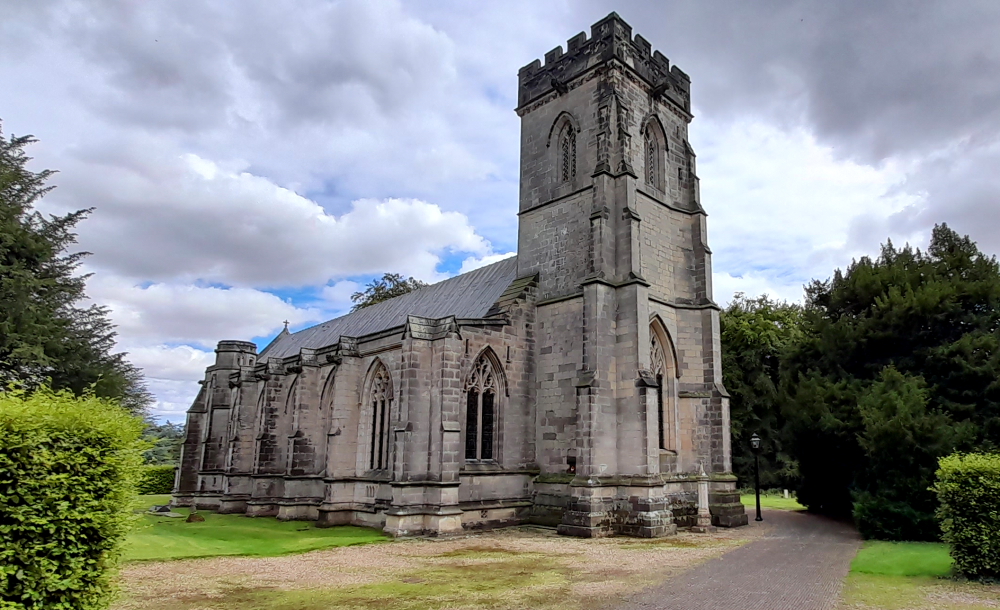
After exchanging details we continue on to Sledmere. We easily find St. Mary’s Church and stop in to see what we could find. We don’t expect to find any family graves as the people for whom we are looking died in the 18th Century and very few headstones still exist from that era.
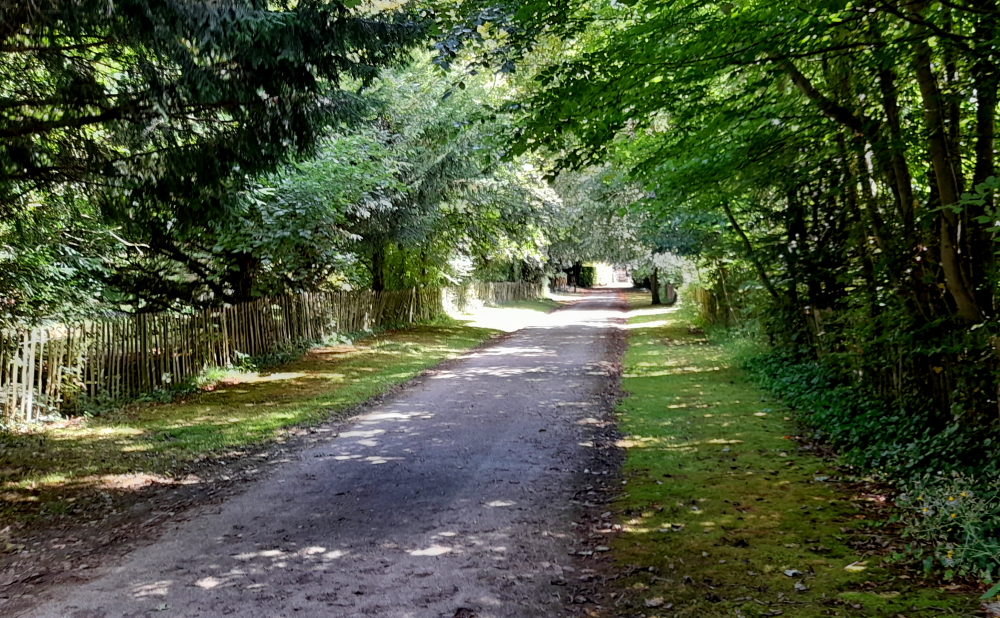
While Lynn checks out the inside of the church I walk around the graveyard but as expected nothing is evident from earlier than the 1920s.
We head on to Driffield and check in at our holiday let for the next two nights and unpack the car. Since we have no provisions we are then back in the car and in to Tesco for supplies including two bottles of red wine. After today’s events that may not be enough.
Back at the house we unpack and I try to download the dash cam videos without success. I swap over the SD card in the hope that I may be able to recover the video over the next few days. In the meantime I call the insurance company to start the claims process. Thankfully they are very good to deal with and the car is now booked in for assessment and repairs while we will be away on our Northern European trip from late August.
At least the car is drive-able despite the fact that the insurance premium which is due in a few weeks will be even more expensive than last year.
Time for red wine!
10 August, 2023
We noticed that there is a car hand wash business in town. We had originally planned to have the car cleaned inside and out while we were in Driffield as it is covered in mud after the last few weeks of driving around country lanes. The car is also booked in for an MOT inspection next week so I have to remove excess mud from the car. The car has also not been washed since Northern Ireland in April so the inside really needs a good clean out. After the car is washed most of the Peugeot paint has washed off. Cheap French cars!
While the car is being washed we stroll along Market Street to check out market day and we stop in for a quick coffee. We also take the opportunity to drop off some of our old clothes and glasses at the opp shop.
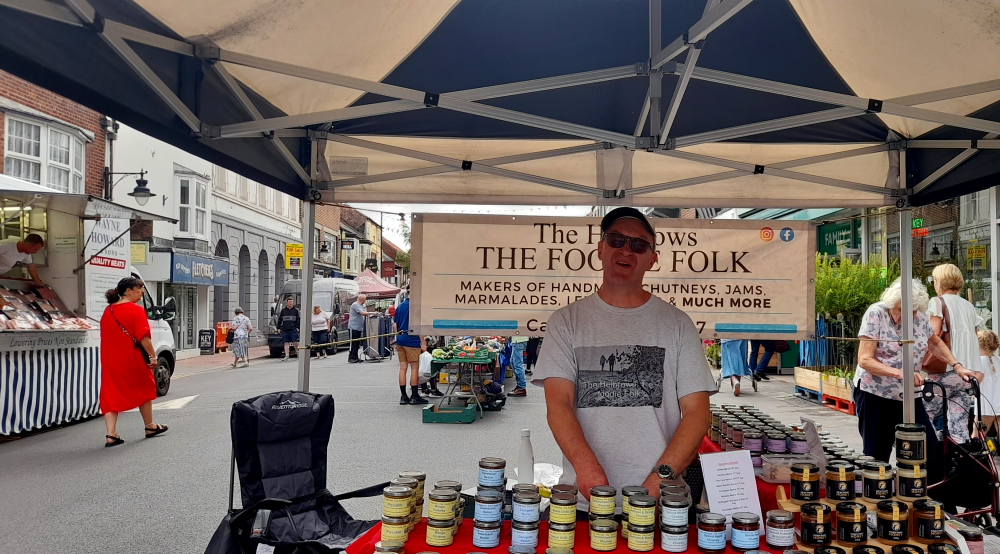
Lynn has spent most of the remainder of the day dealing with her Schengen issues so that she has the facts when we fly into Poland in a couple of weeks. I may well be traveling alone in Northern Europe for the next three months. I hope that she has a Plan B in place.
11 August, 2023
It’s 22 Deg C. at 10:20 am when we depart Driffield for Camblesforth where we are due to catch up with Jan and Bill (Lynn’s sister and her husband) from Nagambie, Victoria, over lunch at noon.
En route we need to stop 15 minutes’ drive SW from Driffield at Middleton-on-the Wolds which is where Hannah Witty (Lynn’s 4x great grandmother) was born c. 1776.
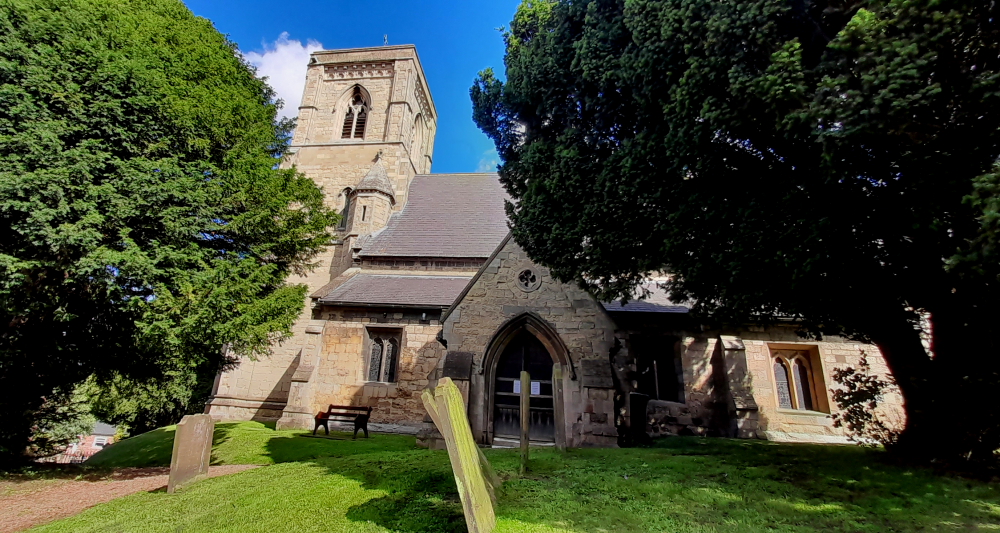
Although we had no records in relation to the local parish church, St Andrews, for her, we call in anyway and find a number of Wittys’ headstones in the church yard. It looks like a bonanza of information that will need to be added to the family tree.
Job done. Now a 45-minute drive to Camblesforth where we are due to arrive at 11:40 am.
Typical – the road we are due to take is closed for bridge repairs so we need to turn back onto the A614 which is fine for 30 minutes when we find ourselves at the end of a slow-moving traffic jam at 11:36 am.
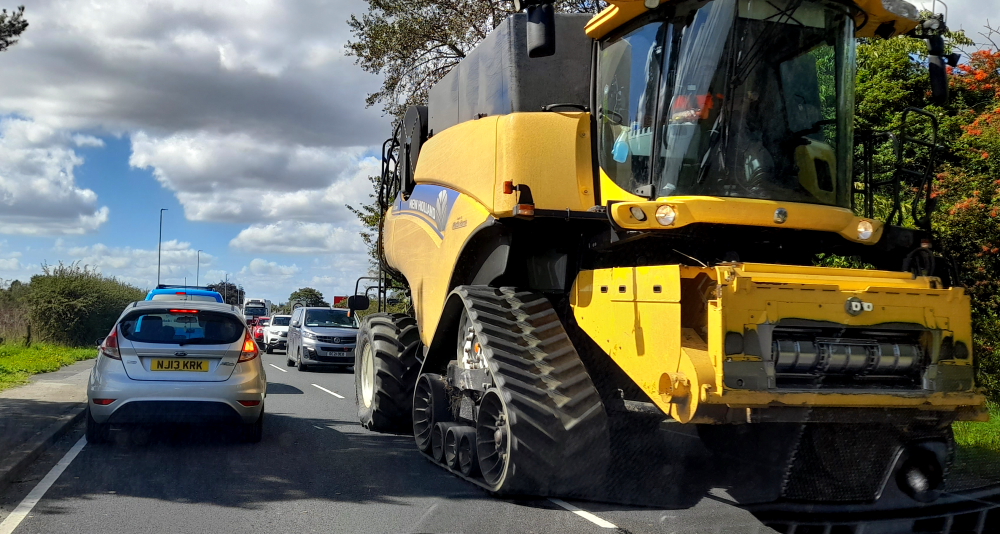
We finally break free by taking a diversion through Howden rather than via the M62 tailback and past the monstrous Drax Power Station to Camblesforth.
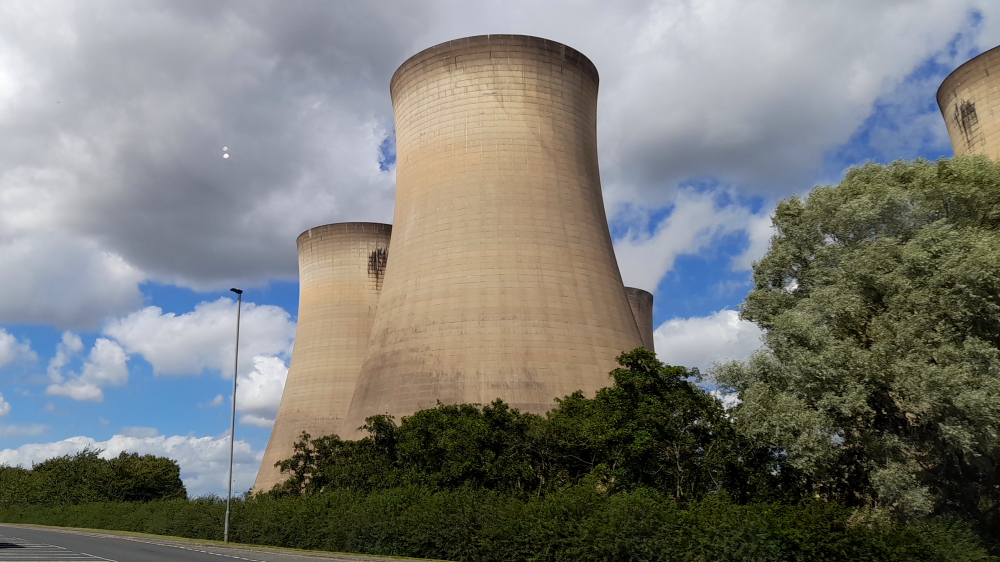
Where we arrive at the Black Dog Inn at 12:20 pm. Fortunately Jan & Bill, driving from Halifax, had no such issues and have been patiently awaiting our arrival for over half an hour.
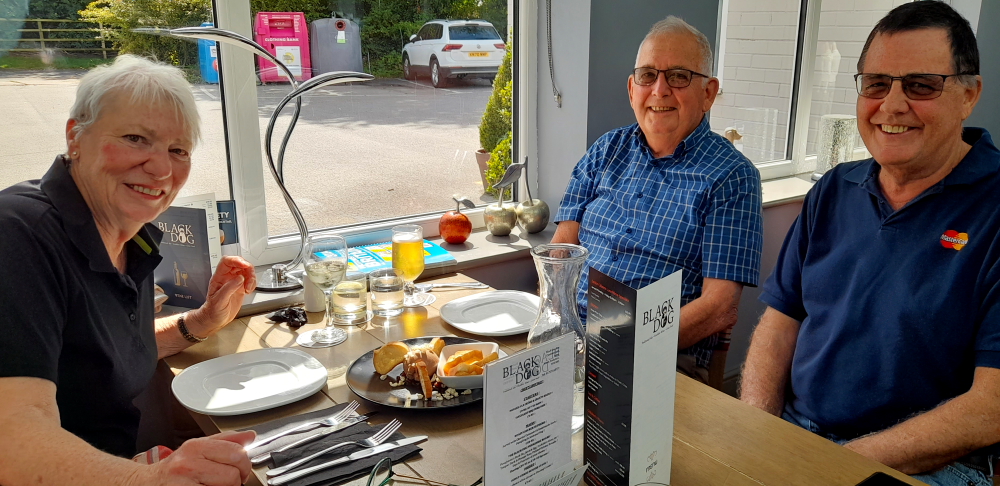
Not to worry. We tuck into an excellent pub lunch while catching up on what’s been happening since we stayed with them in Nagambie in May 2022 plus their travel experiences in Greenland, Lofoten Islands and Iceland last month and Scotland and England plans until the end of August when they return home.
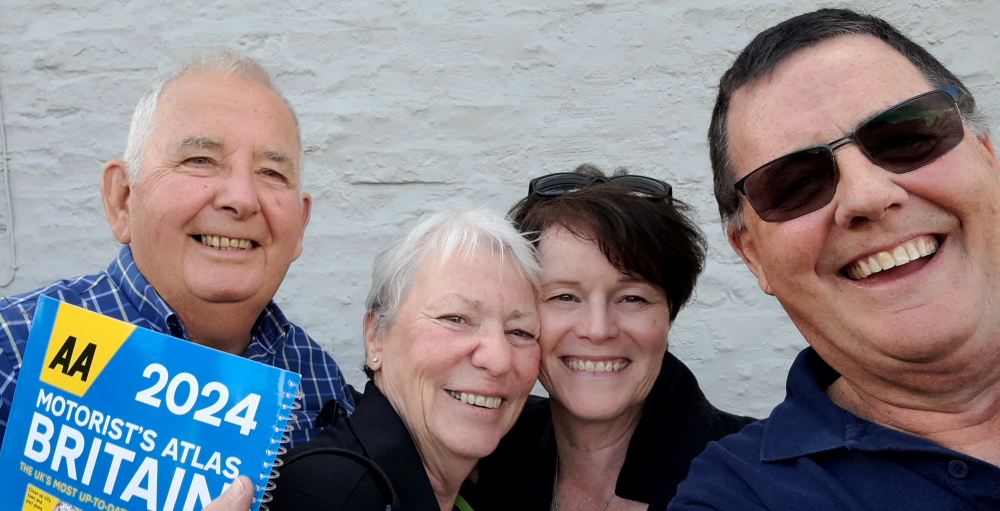
It’s now 2:45 pm (and a warm 26 Deg. C) so we need to part company and drive via the M62 (no traffic jam to be seen!), M180 and A161 to Gainsborough.
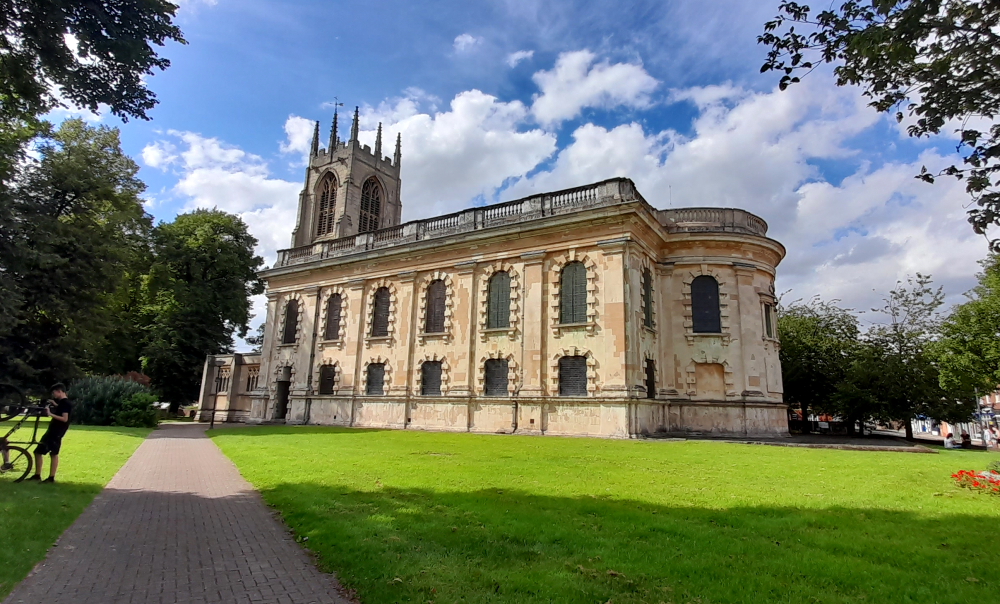
Roger Hiley (Lynn’s 4 x great grandfather) lived in Gainsborough and was buried at All Saint’s Church in 1835. The church is shut and there are no headstones in the church yard. Also in Gainsborough, his son, Roger Hiley, was born in 1794 and in 1837 Ann Gurnill, his daughter-in-law (married to Roger Hiley), died.
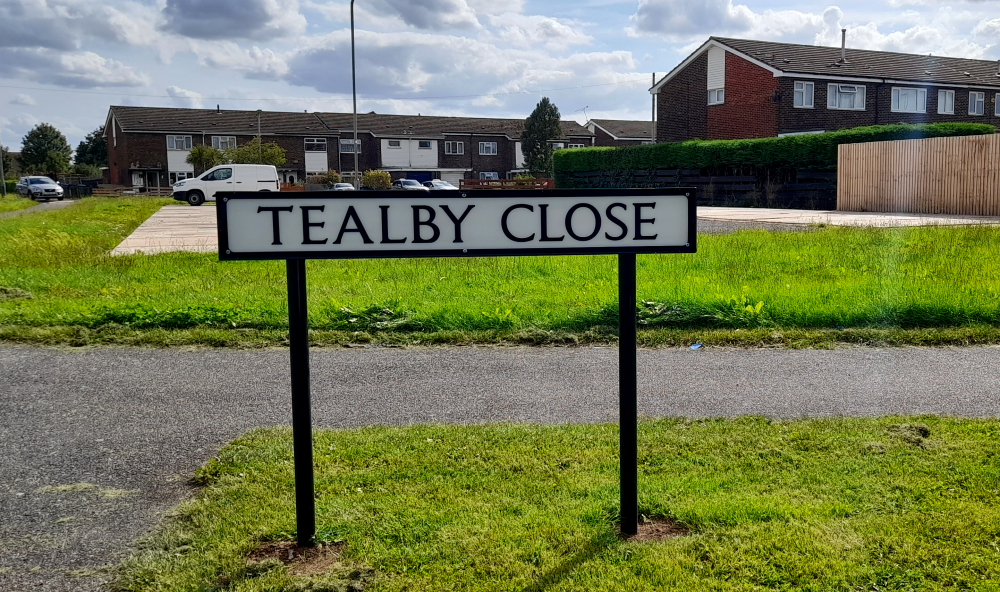
1.6 miles away is Tealby Close where the Lynn’s 5 x great grandfather, Roger Hiley lived, once farmland but now a housing estate.
Half an hour later we arrive at our stylish accommodation in Gibraltar Hill, Lincoln, where we’ll spend the next 5 nights.
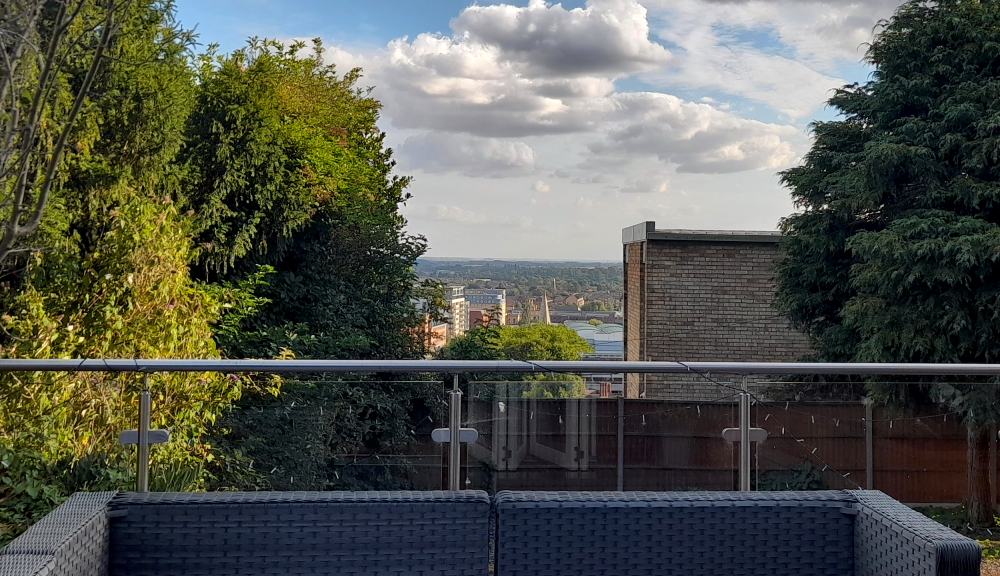
The apartment is small but comfortable and has everything that we will need for the next 5 days.
12 August, 2023
Lynn has some chores to do downtown so heads out while I update ancestry.com.
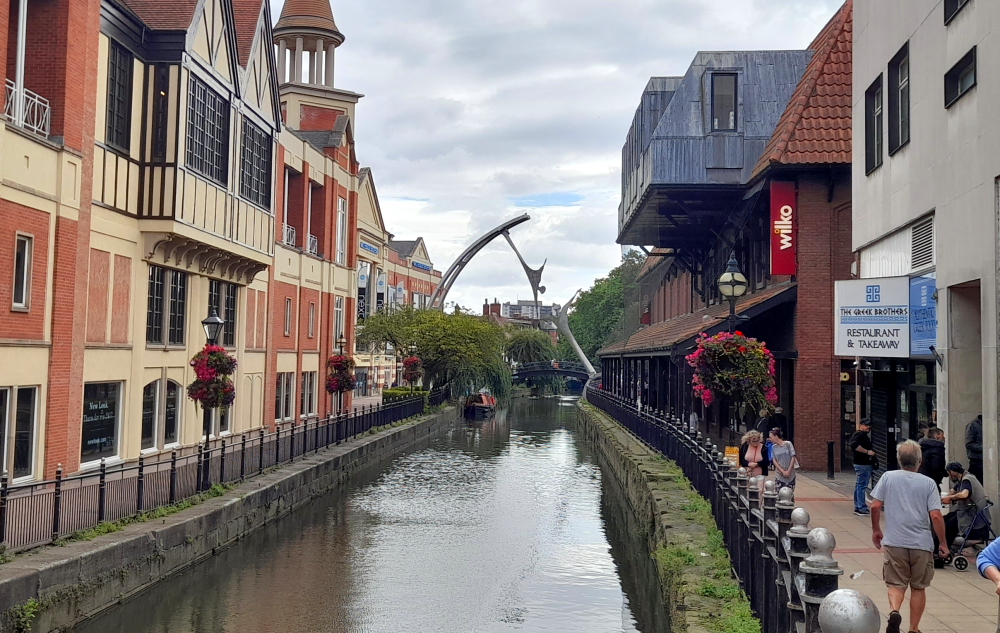
Bisecting High Street is the River Witham that looks a lot like a canal.
At the top end of High Street it splits in two: St Martin’s Square and The Strait.
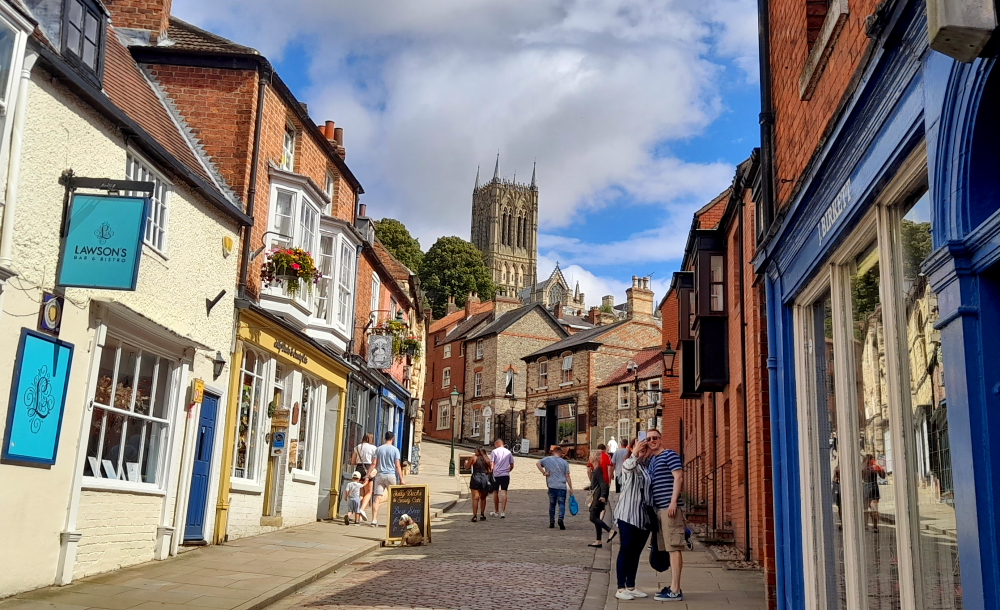
The Strait becomes Steep Hill at the Jews House – 0.2 miles of puffing before it becomes Bailgate at the top of the hill.
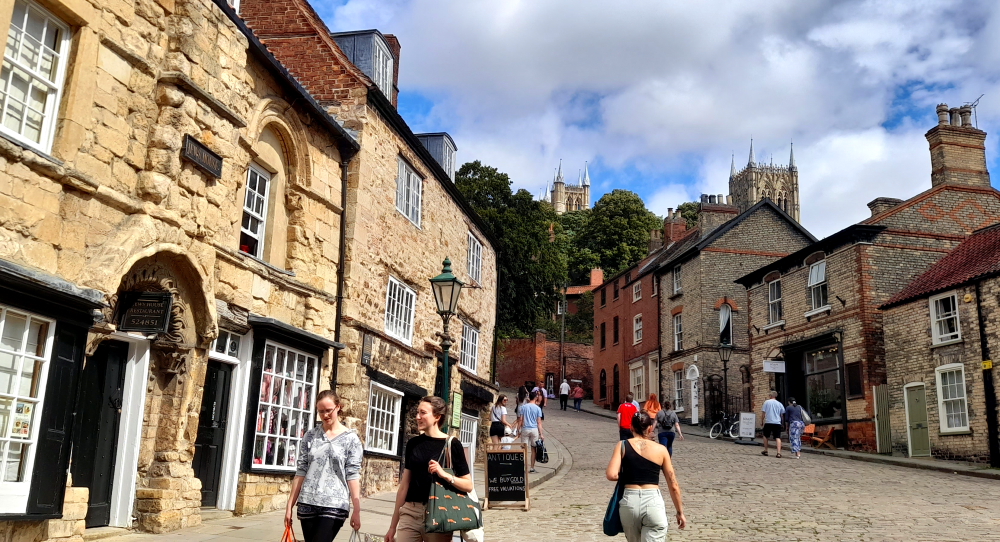
At least there are lots of good restaurants within a steep but short walk.
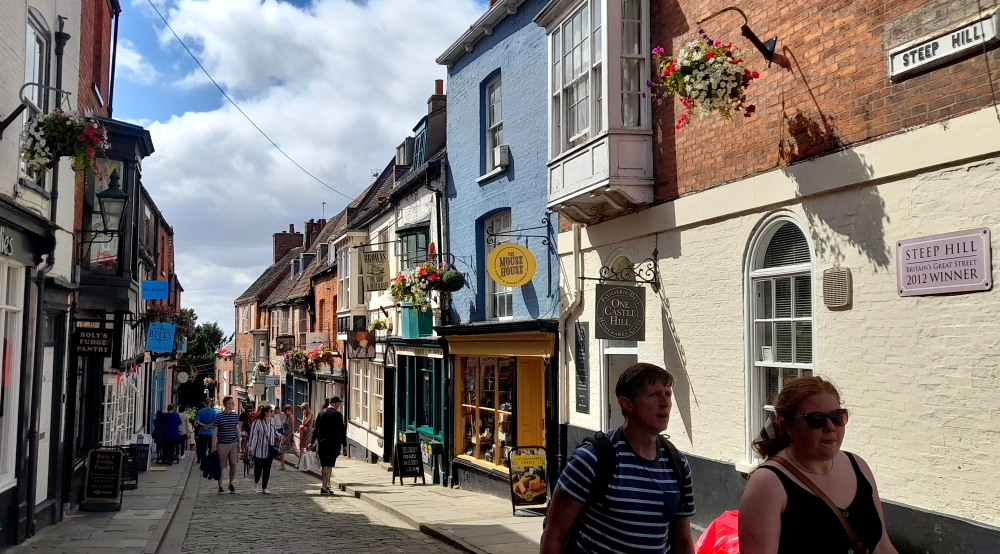
Lynn has managed to walk 12 kms today and mostly up and down steep streets.
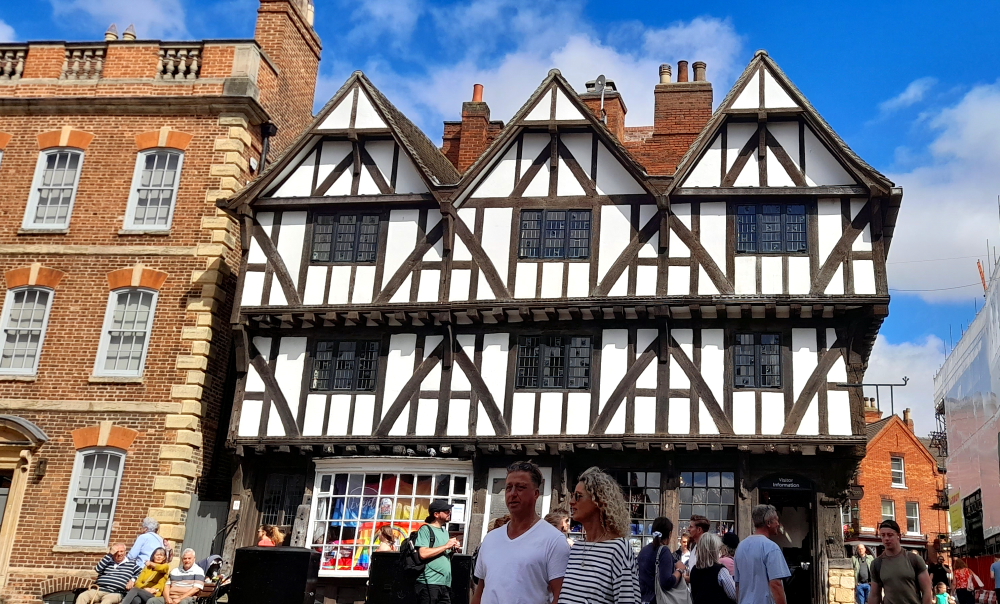
After Lynn returns we head out to find 4 of her ancestor sites in Lincoln.

Firstly, Water Lane where the grandson, Richard Hiley, lived at No. 6 according to the 1861 census and No. 5 where his wife, Elizabeth Keep lived according to the 1851 census.
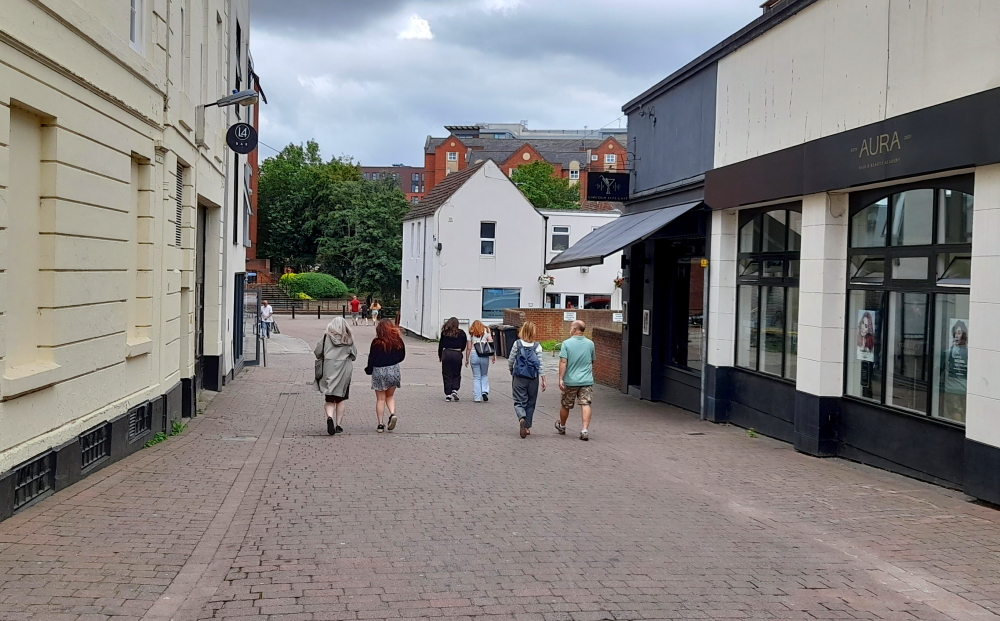
Today it is a spare block wedged between commercial buildings close to North Witham Bank and the river.
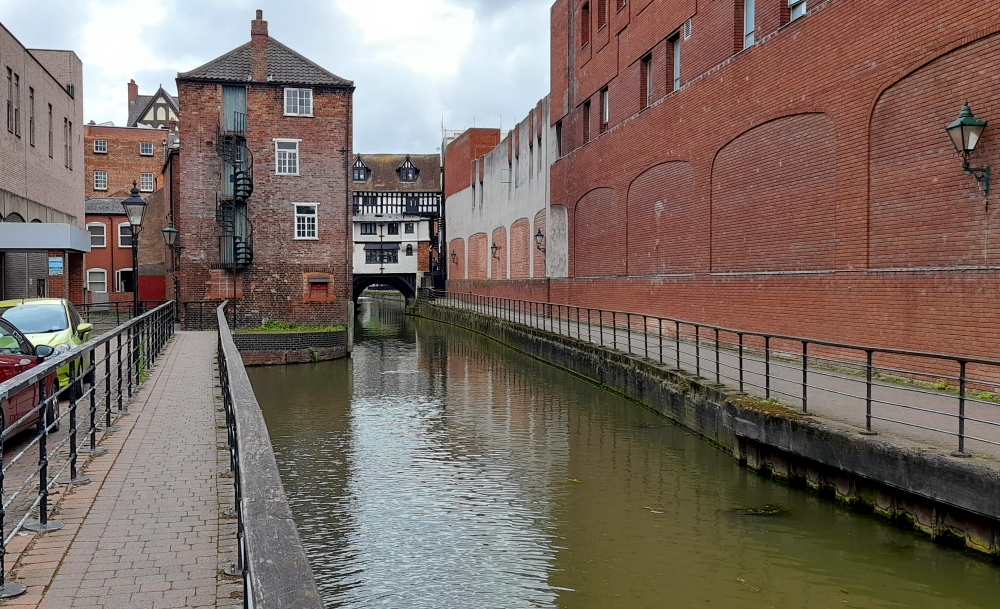
As we walk back up High Street we come to an archway through a stone wall. The Guildhall and Stonebow has been the meeting place of Lincoln City Council from Medieval times to the present. The term Stonebow, which is derived from the Danish word stennibogi, indicates a stone archway that visitors entering the city from the south, along the High Street, would have passed through.
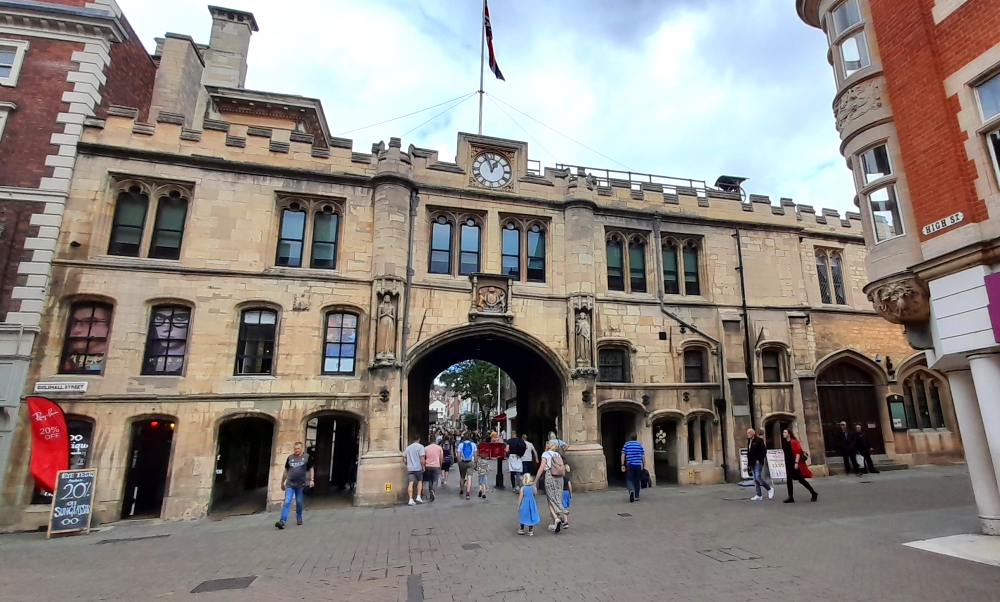
Lynn retraces her steps from this morning and leads me up High Street, the Strait and Steep Hill until we arrive at the junction of Castle Hill, Bailgate and Exchequer Gate where St Mary Magdalene church is located. Here Elizabeth Keep and Roger Hiley, her 3 x great grandparents, were married in 10 November, 1825.
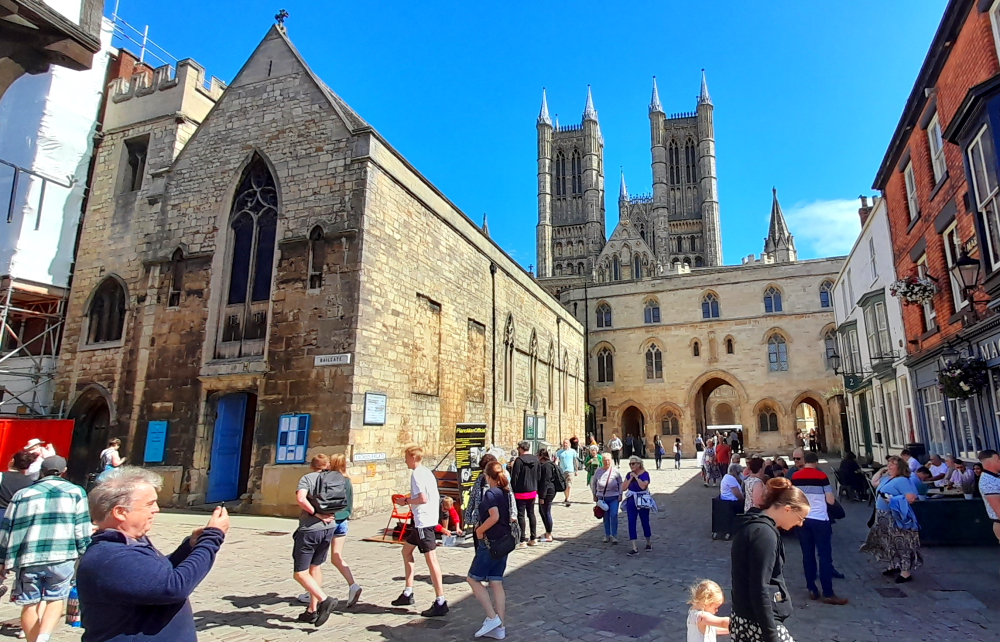
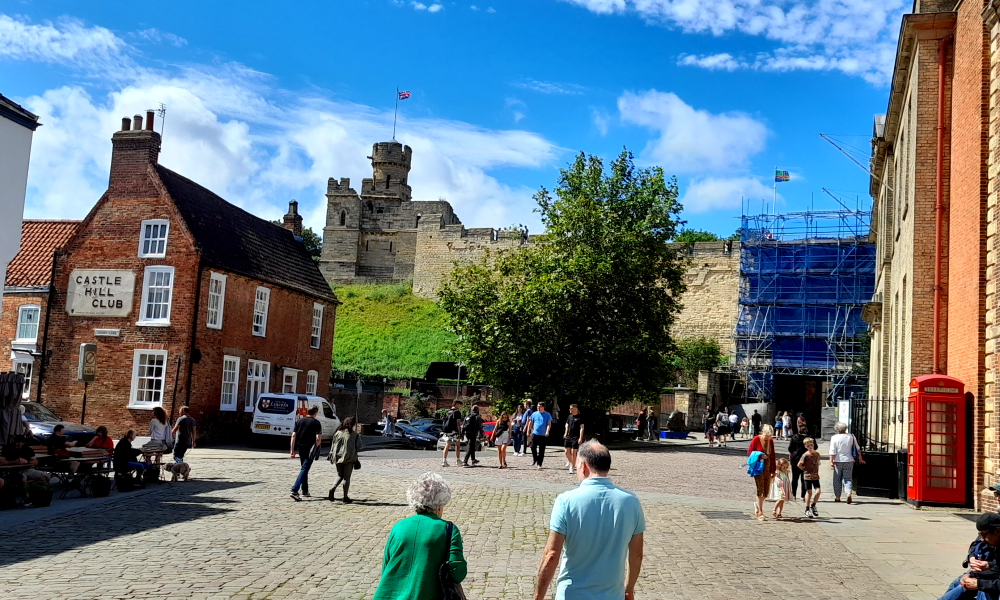
As expected, the view up Castle Hill is Lincoln Castle, a major medieval castle constructed during the late 11th century by William the Conqueror on the site of a pre-existing Roman fortress. The castle is unusual in that it has two mottes. There are only two such castles in the country, the other being at Lewes in East Sussex.
Through Exchequer Gate the full magnificence of Lincoln Cathedral is revealed. Also known as Lincoln Minster, the Cathedral Church of the Blessed Virgin Mary of Lincoln and sometimes St Mary’s Cathedral. Construction commenced in 1072 and continued in several phases throughout the High Middle Ages. Like many of the medieval cathedrals of England, it was built in the Early Gothic style.
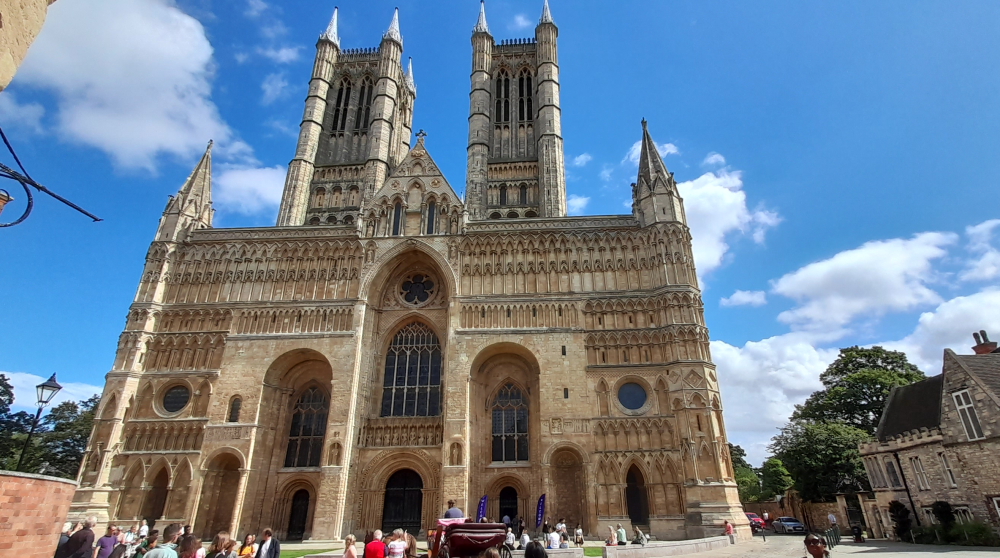
It became the tallest building in the world upon the completion of its 160 metres (525 ft) high central spire in 1311. It was the first building to hold that title since the Great Pyramid of Giza, and held it for 238 years until the spire collapsed in 1548 and was not rebuilt. Had the central spire remained intact, Lincoln Cathedral would have remained the world’s tallest structure until the completion of the Washington Monument in 1884. For hundreds of years the cathedral held one of the four remaining copies of the original Magna Carta, now securely displayed in Lincoln Castle.
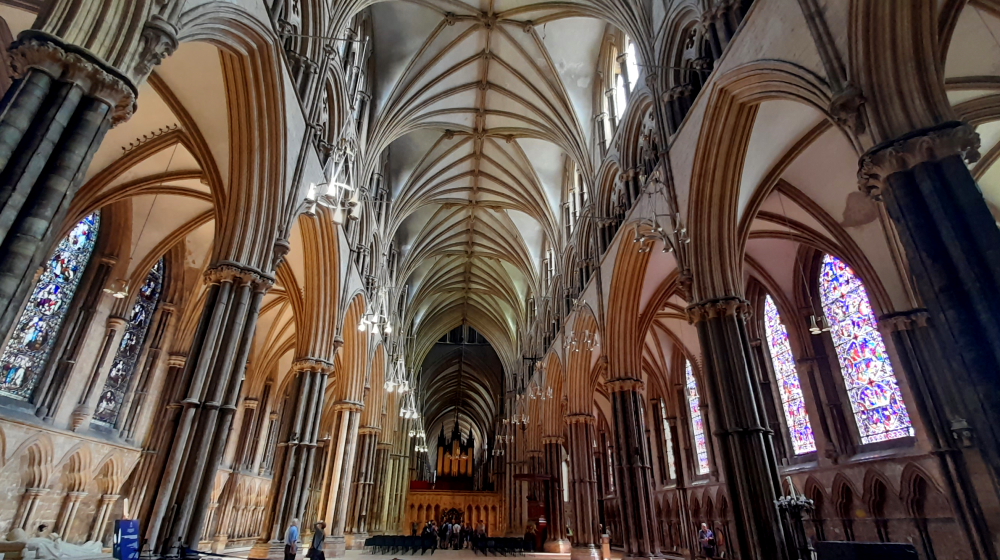
Our last stop is the Canwick Road Old Cemetery. Originally we were going to drive the 1.7 miles but we decided we need the exercise so off we trot to the river valley on the other side of town.
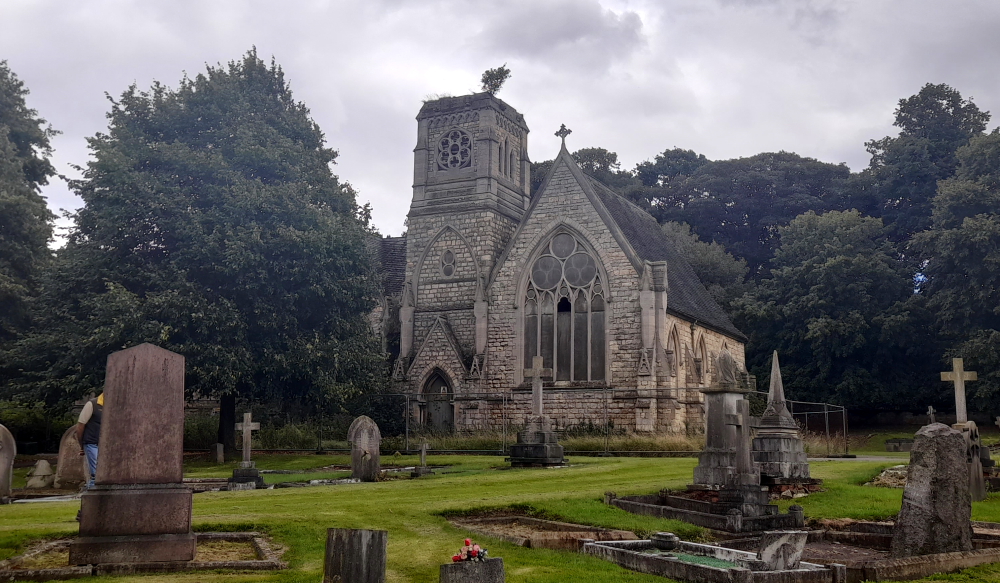
The cemetery is extensive and without a map it will take us forever to find the headstone of Roger Hiley buried here in 1865 and possibly his wife Elizabeth who died in 1872. Fortunately, the cemetery is managed by Lincoln City Hall which has a website and phone number that we can consult.
After a couple hours to rest the feet and after a rain storm we walk the 4 minutes back to The Strait to Lawson’s Bar & Bistro for dinner and paid a reasonable price for 2 courses each of some very good food.
Plans are to drive to Mansfield and Nottingham tomorrow on the ancestry trail.
13 August, 2023
Leaving Lincoln on an overcast day with 18 Deg C. we drive via the A45/52, due to arrive in Nottingham at 11:11 am. That goes well for 20 minutes until we hit a long tail back – at another blood roundabout – where we drive at 6 kph in a 113 kph zone! We eventually arrive at the Victoria Centre car park at 11:20 am only to be held up by an old codger who becomes confused at the barrier as to which machine he needs to use and when he needs to pay for parking.
We exit the car park on the ground floor of the Centre’s mall and decide on a precautionary pee before we head out. But, where are the loos? None to be found until we spot a sign for loos in the House of Fraser store where they are tucked away on the 2nd floor. Come on, people! Who designed this shopping mall??
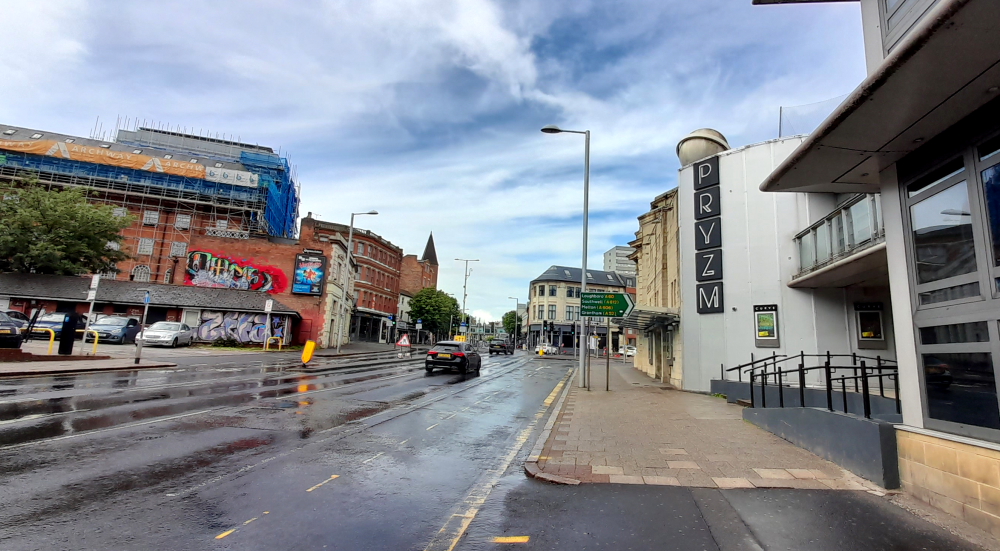
The Centre exits onto Lower Parliament Street, which is one of the streets that we are interested in – No. 45 to be precise. This is where Lynn’s 3 times great grandfather, James Franks, lived during the 1871 census as an inn keeper. No inn is in evidence today at that location which is near today’s Pryzm building. Originally named the Palais de Danse when it opened as a dance hall in 1925, it later became the popular nightclub Ritzy in the late 1980s, then the Palais, Oceana and currently Pryzm.
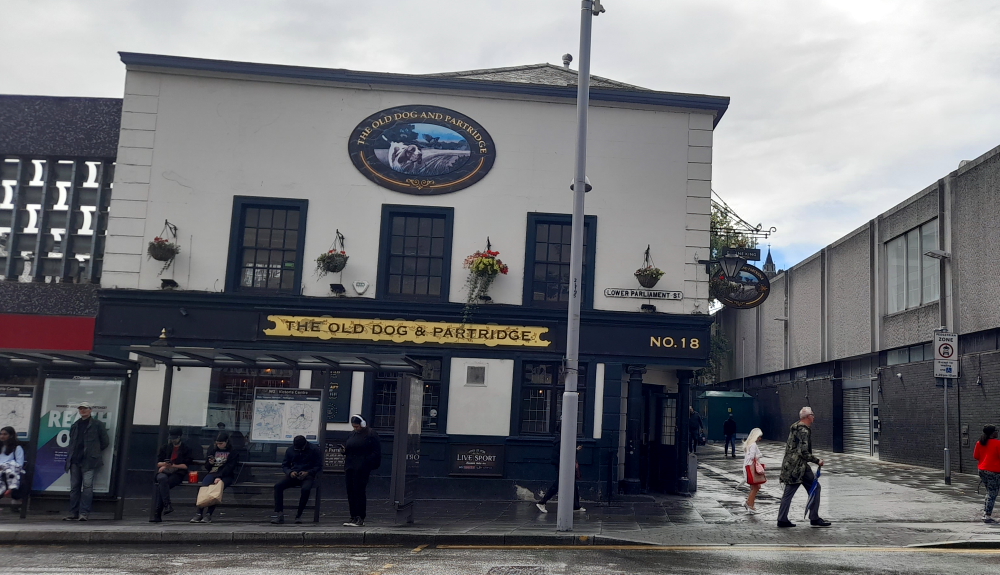
Next we walk down Clumber Street which runs along the side of The Old Dog & Partridge pub, past the very impressive Exchange building to Peck Lane which runs between Poultry and St Peter’s Gate. Here at the lower end of Peck Lane at St Peter’s Gate, in the 8 Bells Inn, James’ widow, Lucy Adlington, died in 1885 aged 73.
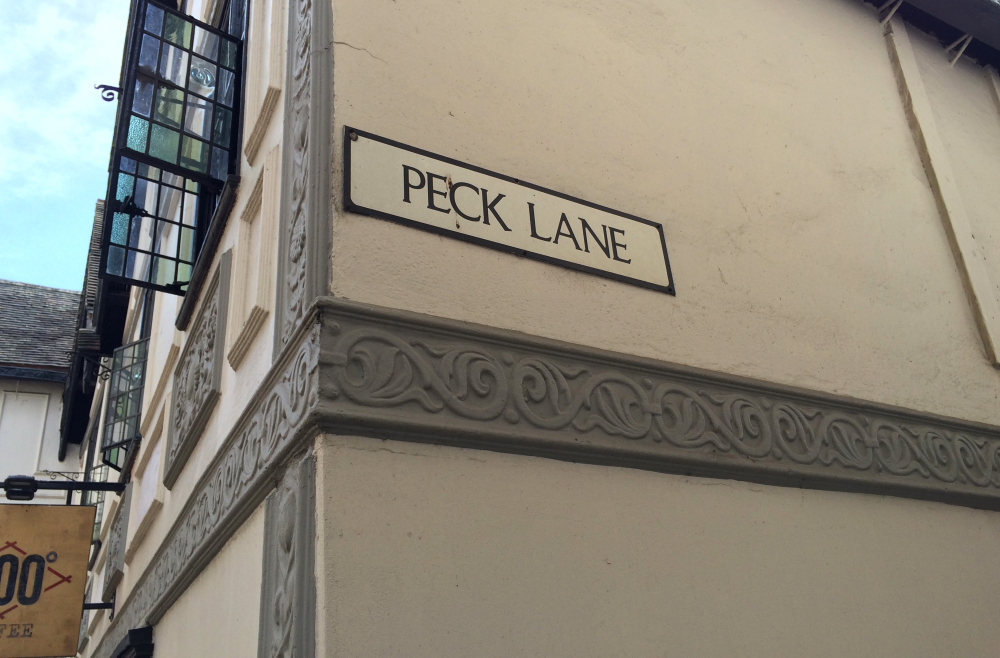
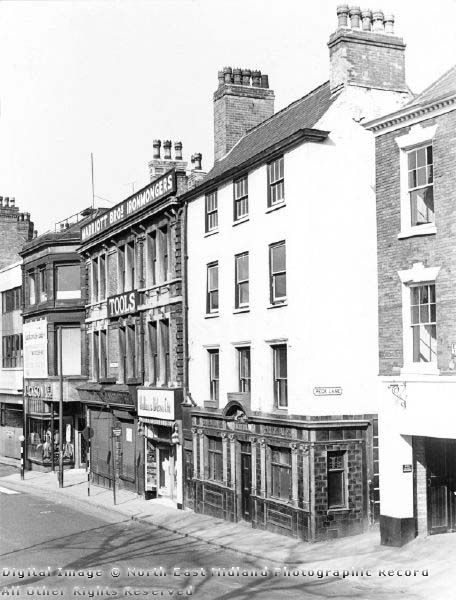
The 8 Bells Inn was located at the lower end of Peck Lane across the street from St. Peter’s Church. The Inn was replaced in the early 1970s by a typically ugly 1970s architecture shop.
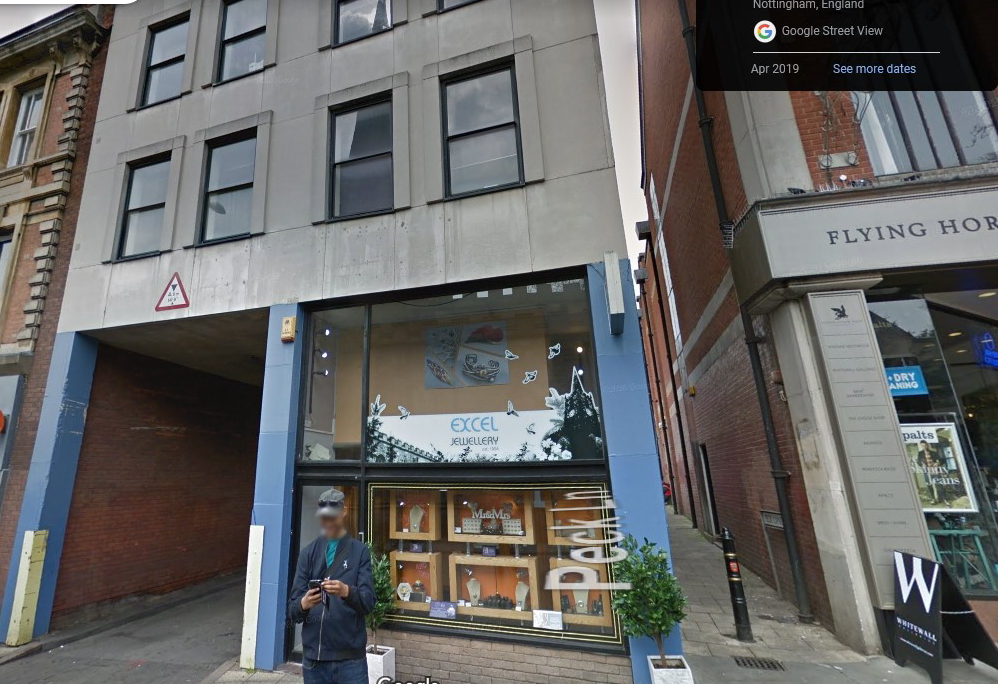
The original building would have been much better than a 1970s concrete block.
There are no records as to where either James Franks (d. 1875) nor Lucy Adlington were buried upon their deaths in Nottingham.
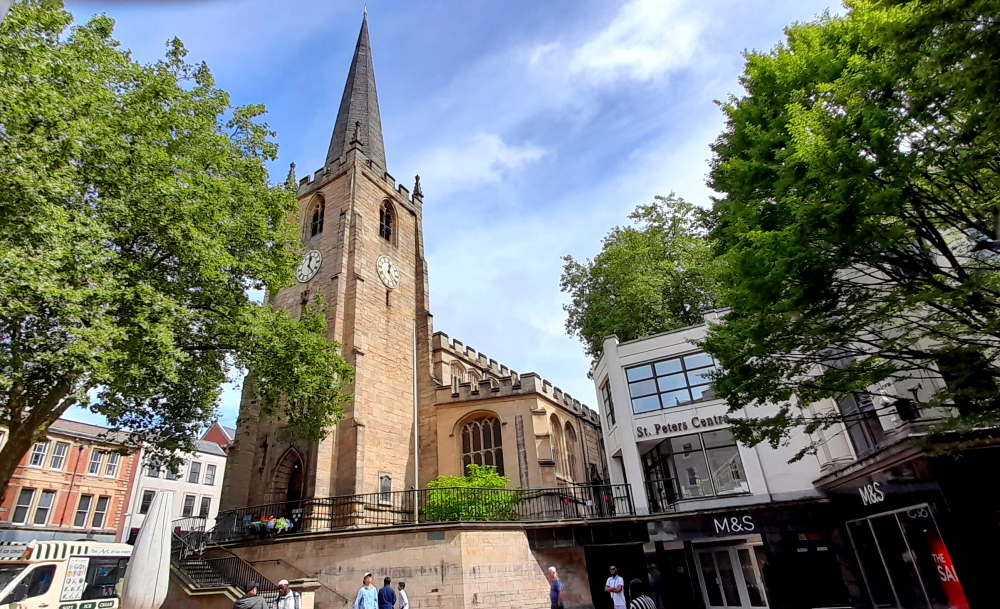
However, St Peter’s Church is across the road from where the 8 Bells Inn was located on St Peters Gate, so perhaps here?
Lynn’s paternal step-grandfather came from Nottingham, but as we are only researching blood relatives we won’t be investigating the Smith family.
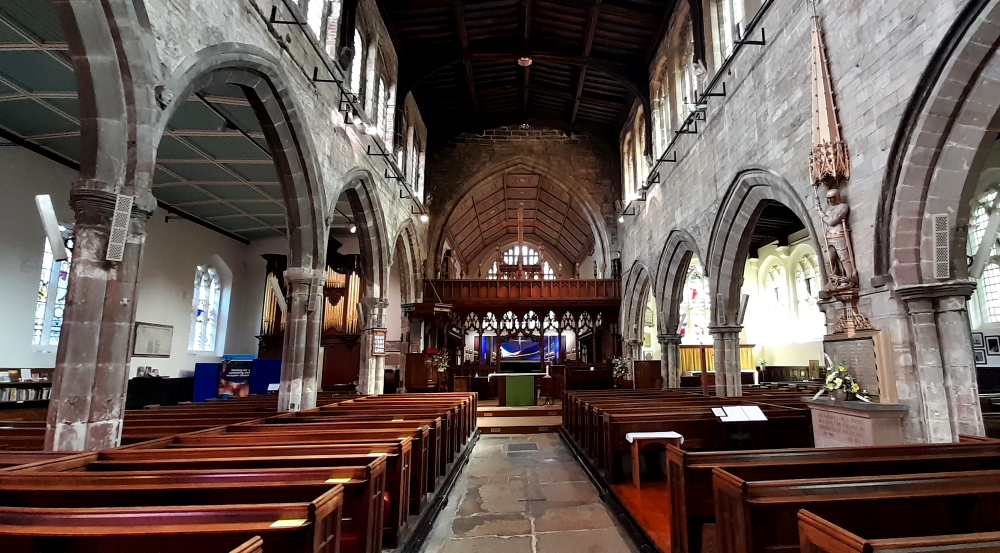
It’s now 24 Deg. C. when we leave Nottingham to drive 25 minutes up the A614 north to Mansfield. Here, Lucy Adlington was born in 1812 and her son, James Franks, in 1831; where Lucy and James Franks married in 1827 and where James (Jnr) lived at 154 Bull’s Head Lane during the 1851 census. This lane no longer exists but is now Portland Street on which St Mark’s Church is located.
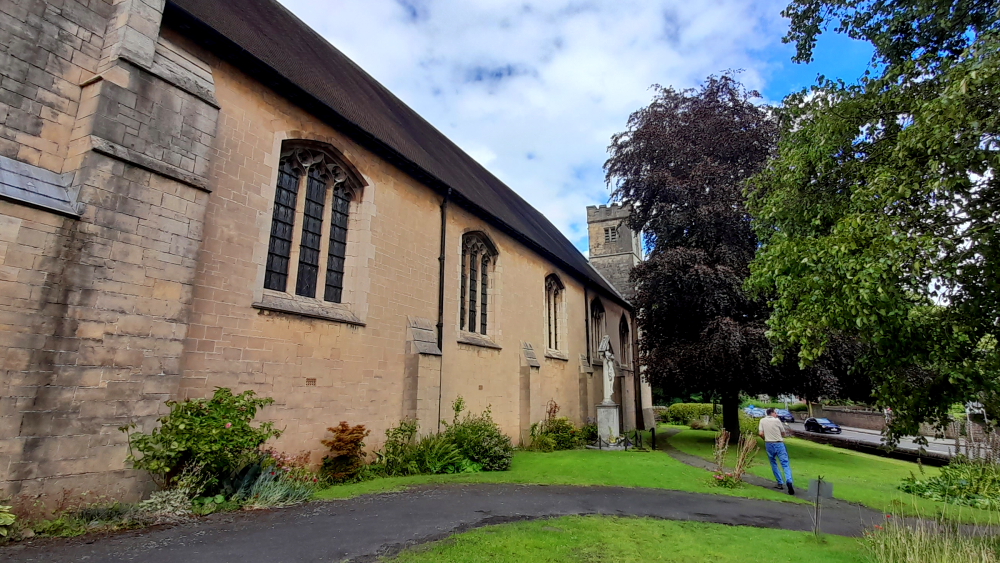
We have no details as to where James and Lucy were married in Mansfield, but perhaps St Mark’s Church given its proximity to the former Bull’s Head Lane?
After being out and about and driving these past 5 hours we’re both keen on something quick for dinner so we walk 4 minutes down the hill to the nearest restaurant which is a hole-in-the-wall pizzeria, ‘Slow Rise’, that has seating capacity for about 15 people.
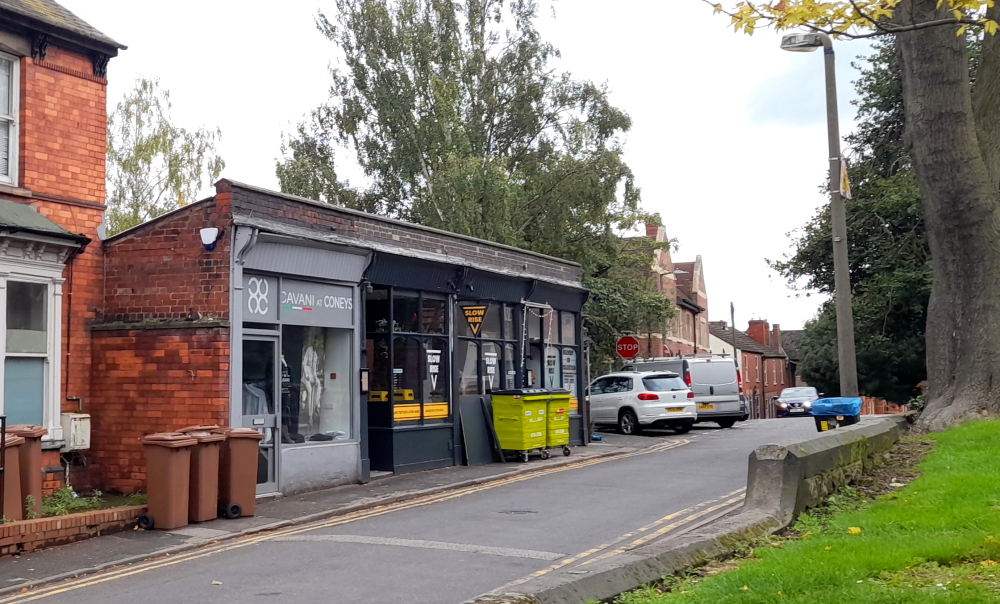
For a vegetarian pizzeria (which we discover once seated) the food is delicious and reasonably priced, the booze cold and refreshing and the service fast and friendly. Later we discover it has a 4.9 rating. No wonder!
14 August, 2023
It is back to winter weather again this morning. It is bucketing down outside and since we have lots to do adding the data that we have recently collected to Ancestry we are happy to have a day in.
By late afternoon the rain has eased and we need to go to Tesco to buy some wine for our 3-day stay with Karen and Chris at Scalford. The original plan was to find a good restaurant for dinner tonight but while we are at the supermarket we just source enough supplies to eat in for the next 2 nights. There is nothing better than a couple of rest days after some hectic travel.
The apartment has Netflix and Amazon available so we treat ourselves to a movie after dinner. ‘Living’ starring Bill Nighy is available to watch. We had planned to see this movie when we were in Anvil Green with the Burns clan last November but didn’t see it due to scheduling times. We both enjoy the movie and Bill Nighy did a great job. He seems to get better with age and he does have lots of age.
15 August, 2023
The sun is finally shining this morning by the time we drag ourselves out of bed. Lynn has a hair appointment this morning and it is washing day for me.
All a bit domestic but these things have to be done and very soon we will be repacking for northern Europe.
16 August, 2023
A sunny 20 Deg. C. when we depart Lincoln at 10:25 am for an hour’s drive to Scalford to stay with Karen and Chris for a couple of days. Lynn was last here in 2006 when she met Chris and it was at Lynn’s leaving bash at the Royal Exchange, London, in April 2010 when Lynn last saw Karen.
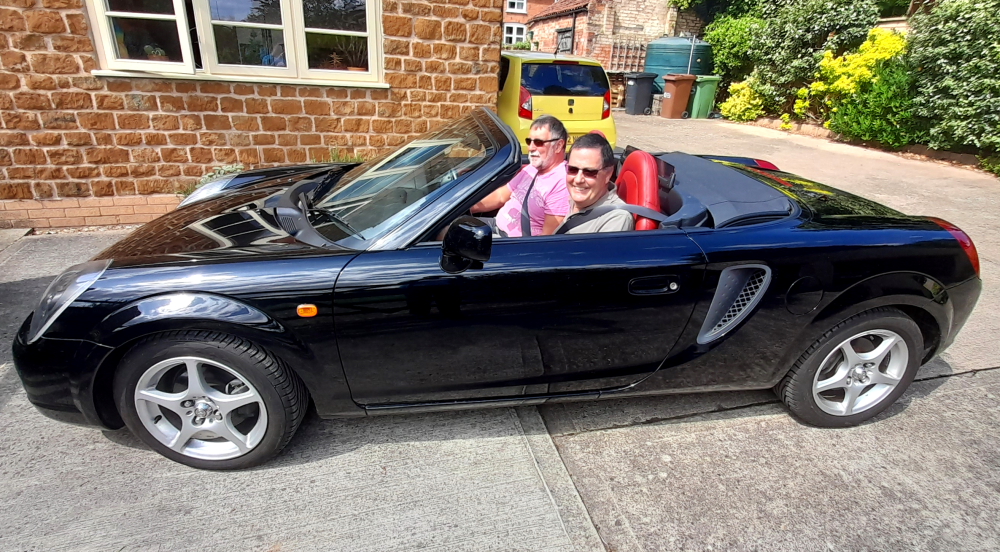
Before we can settle down for a catch up, the first order of business is for me to follow Chris to his local garage to drop off the Insignia for its pre-check, any subsequent repairs and get its MOT done for another year of car registration. It is great to get a lift back in his 2001 model MR2 as it reminded me of the days when I owned my British Racing Green MR2.
Hopefully the garage will also be able to finish the boot water ingress issue. I suspect that the car will also need some work done on the exhaust in addition to its annual service.
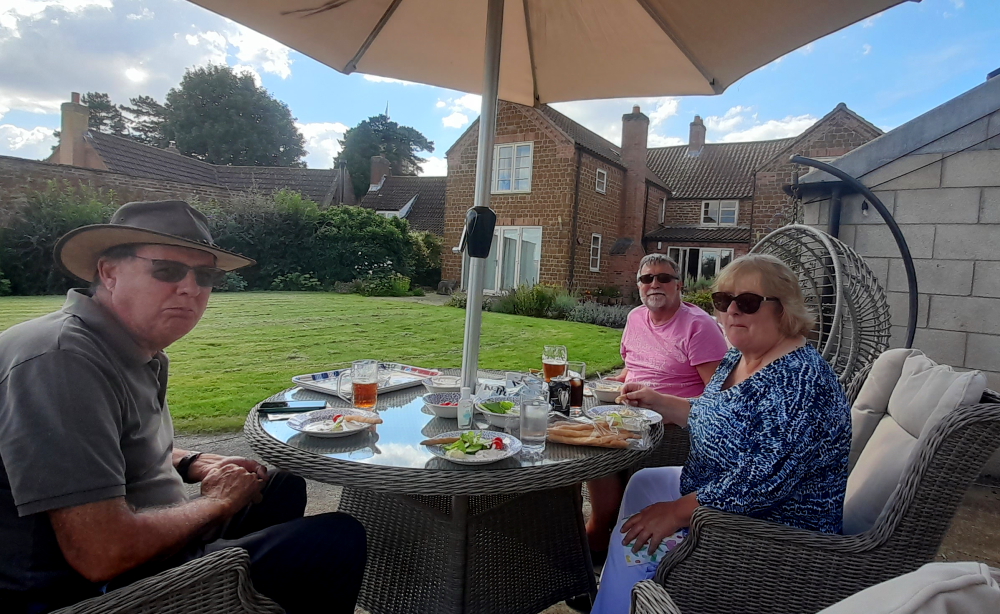
Car delivered we settle in for a long lunch and chat in the garden enjoying some rare British sunshine.
17 August, 2023
Today Chris and Karen are treating us to a bit of a drive around the local countryside including a visit to Woolsthorpe Manor, Isaac Newton’s birthplace, ancestral home and apple orchard.
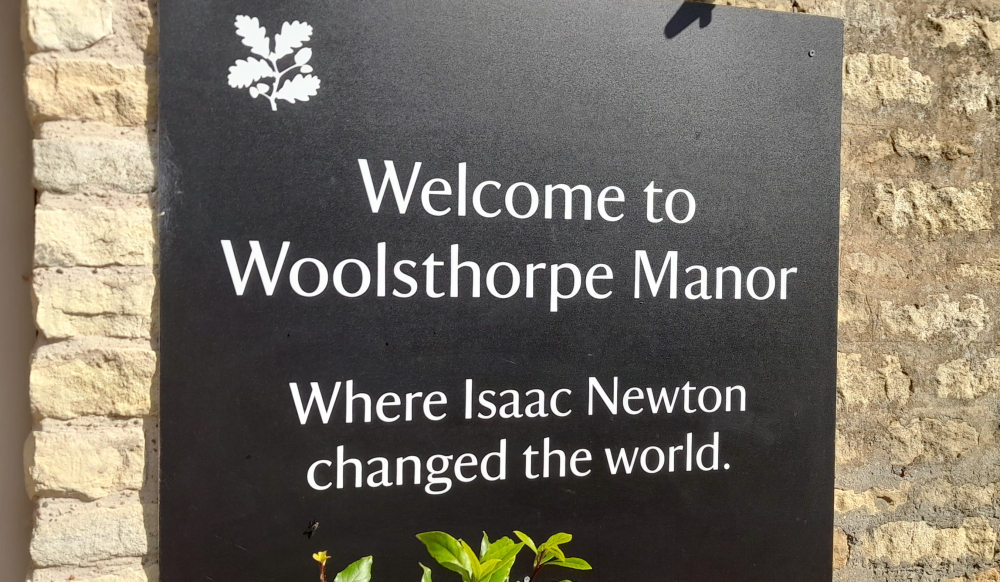
Before our allocated time slot to enter the house, we inspect “the” tree – ancient and gnarled – which had been blown down and damaged centuries ago but had regrown and still produces apples.
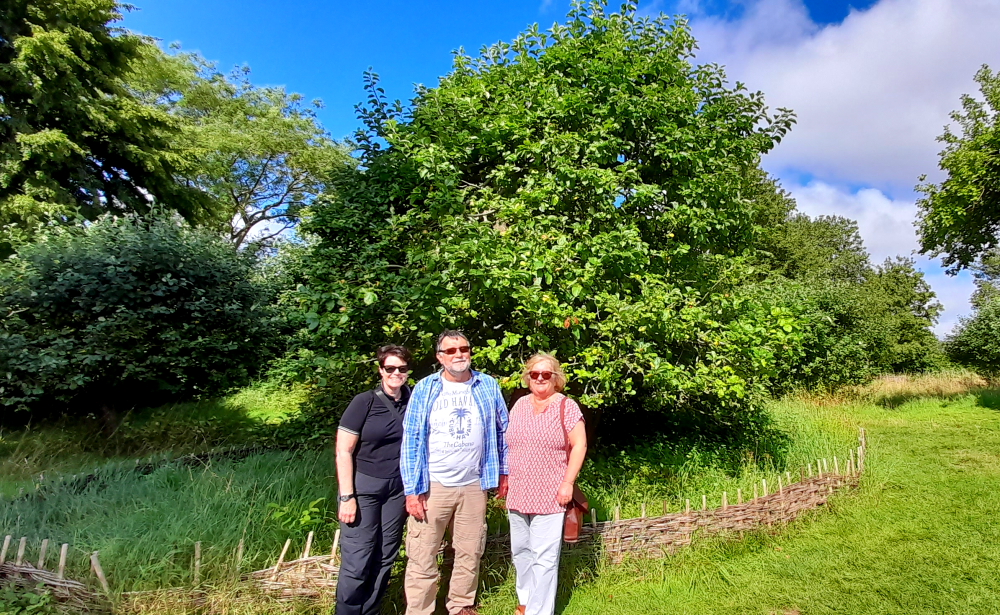
A genetically identical tree is growing at Newton’s alma mater, Trinity College, Cambridge. Several more grow at Parkes Observatory in Australia, and another at the Massachusetts Institute of Technology. Descendants and clones of the Woolsthorpe Manor tree dot college campuses and research centers on every continent, except Antarctica.
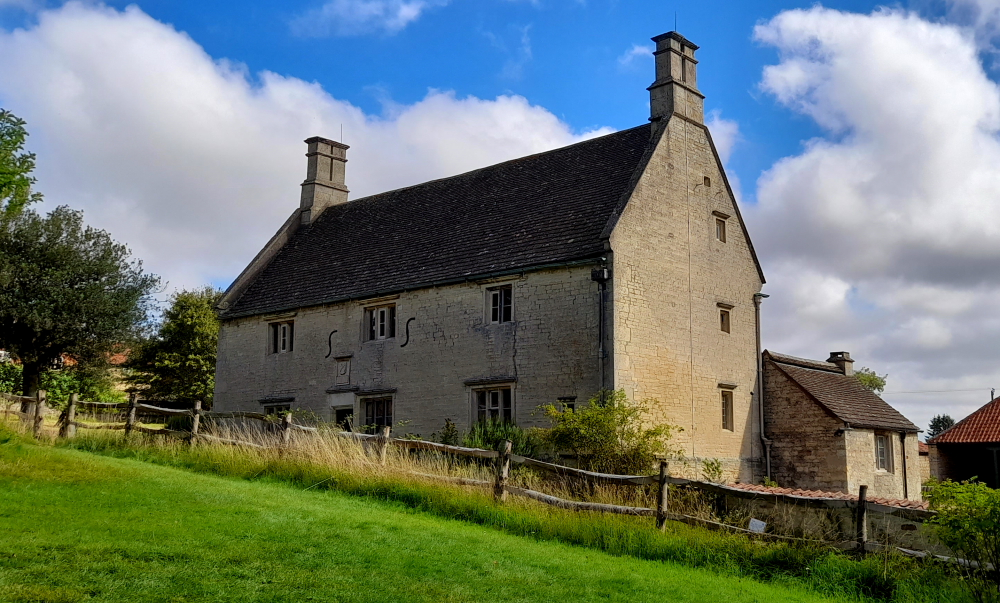
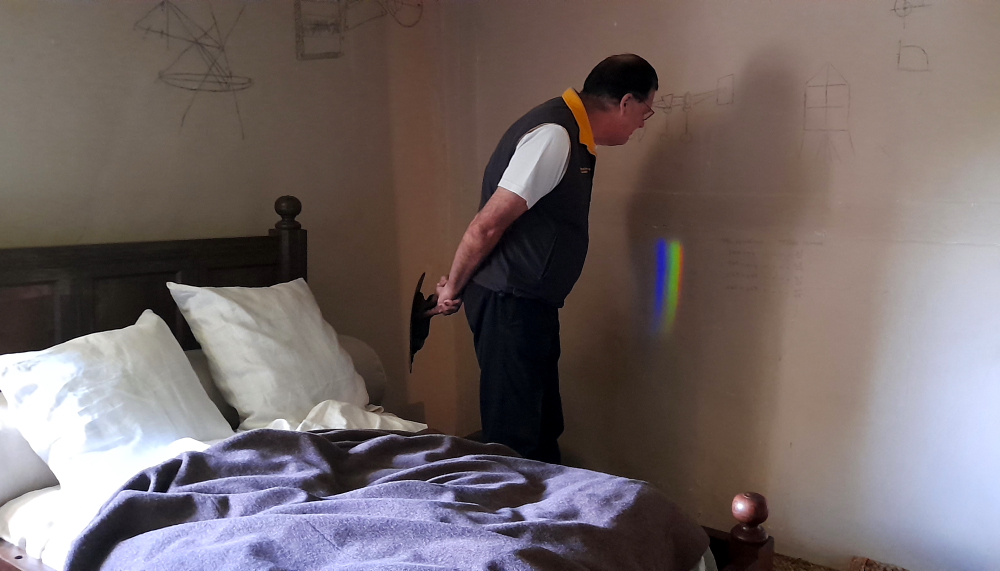
Inside, sketches drawn by the revolutionary physicist, mathematician, and astronomer still adorn the house’s walls and in his bedroom is a glass prism placed in front of a slit in a wooden partition producing a spectrum on the opposite wall.
Time for lunch so we drive to the town of Stamford, Lincolnshire, 15 minutes’ drive SE. The town has 17th- and 18th-century stone buildings, older timber-framed buildings and five medieval parish churches.
It is a frequent film location including Middlemarch (1994); Pride & Prejudice (2005); Bleak House (2005) and Elizabeth: The Golden Age (2007). Its name has been passed on to Stamford, Connecticut, founded in 1641.
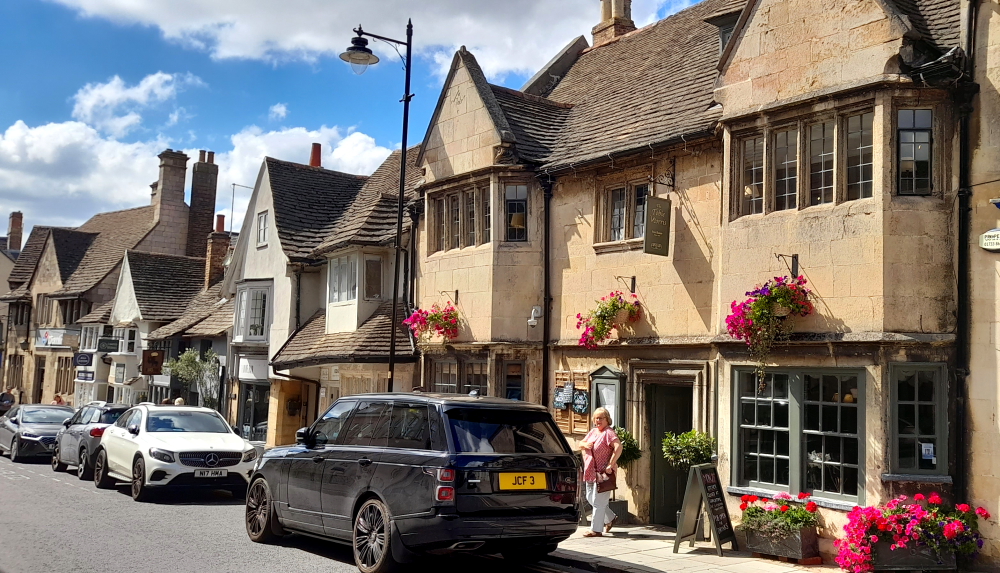
Lunch is in The Tobie Norris pub. Dating back to 1280, the building was once owned by the Tobie Norris family who were bell founders and made their smaller bells in this building which features cracked oak beams, wonky walls and vertiginous staircases.
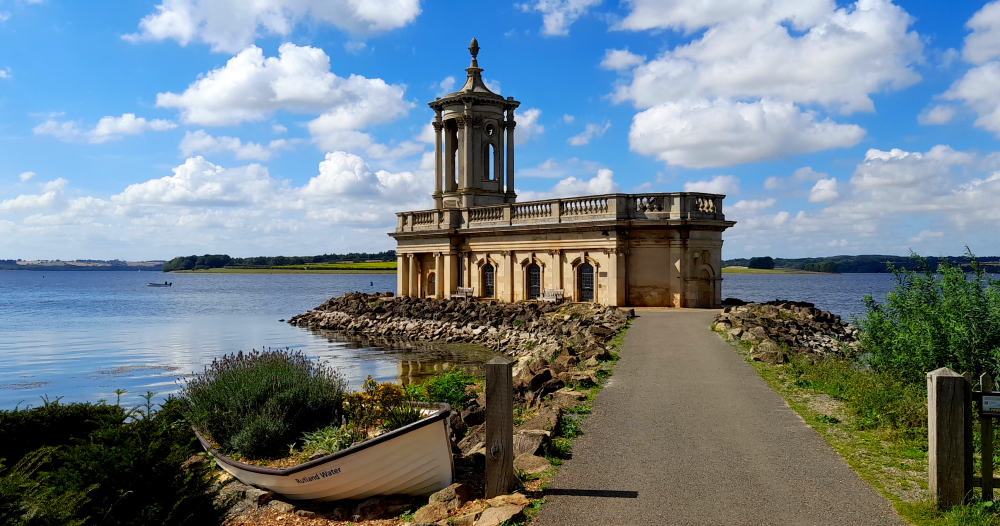
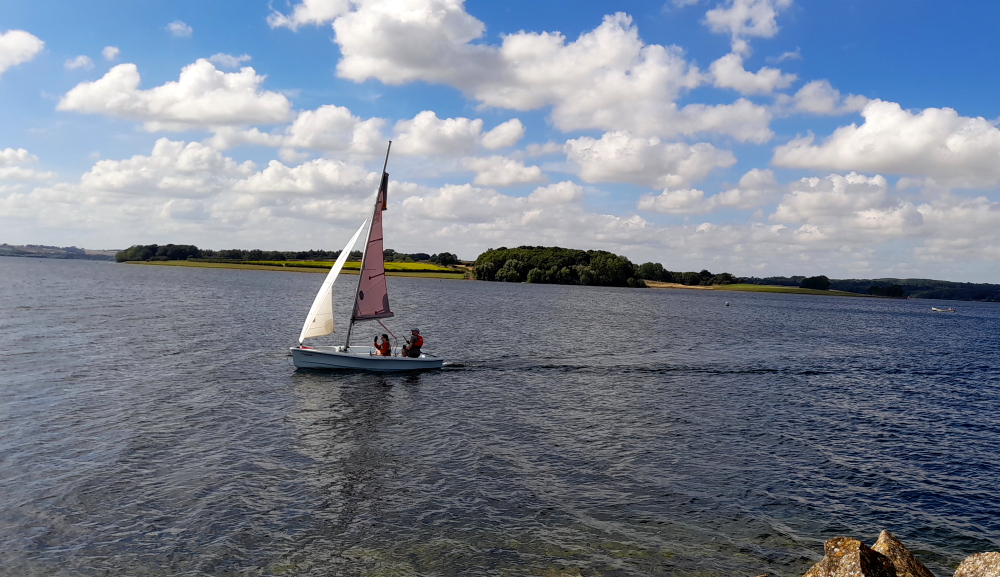
On the drive back home we travel via Rutland, the smallest county in the country, to visit its reservoir and unusual structure that appears to float on the lake when the reservoir is full. Normanton Church – originally St. Matthews Church – served as a parish church until the early 1700s when a large part of the village was demolished to create an estate for the Heathcote Baronets. These wealthy aristocrats used the church as their private chapel and mausoleum.
However, in 1920, the Heathcote family relocated and their estate was divided up. St. Matthews Church remained as a lonely, isolated mausoleum, unloved, unwanted and without purpose until the creation of Rutland Water.
A suitable site for a much-needed new reservoir was required and the Gwash valley in Rutland was chosen c. 1970. The valley had to be cleared of several villages and so Normanton Church was deconsecrated and scheduled for demolition, but the general public protested and were successful.
When it came time to flood the area, it became obvious that the church would be partially submerged once the high-water level was reached so a causeway was built connecting it to the nearby shore of the lake and an embankment constructed around the building.
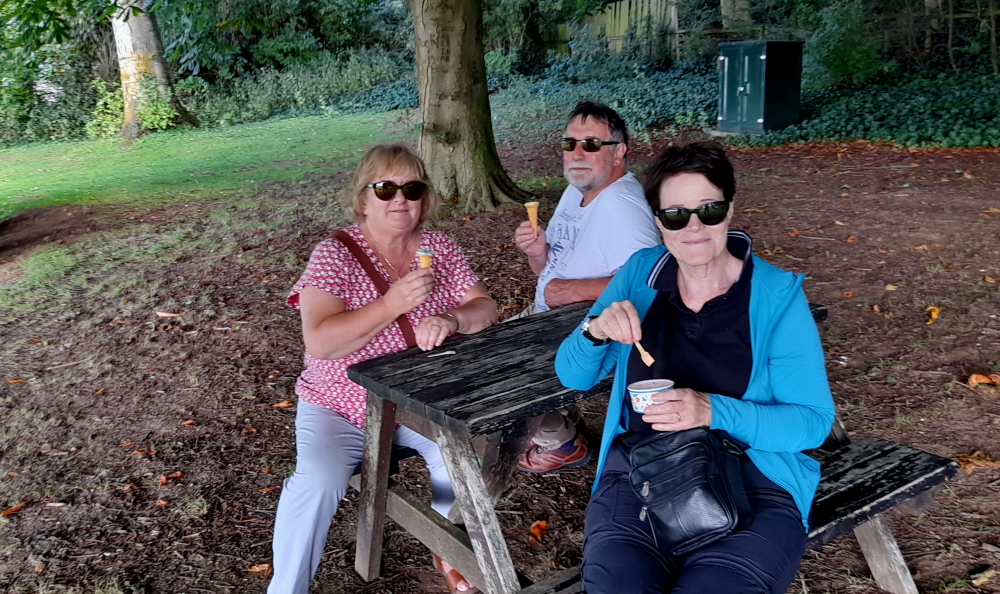
After a walk around the church in beautiful sunshine we treat ourselves to ice cream.
18 August, 2023
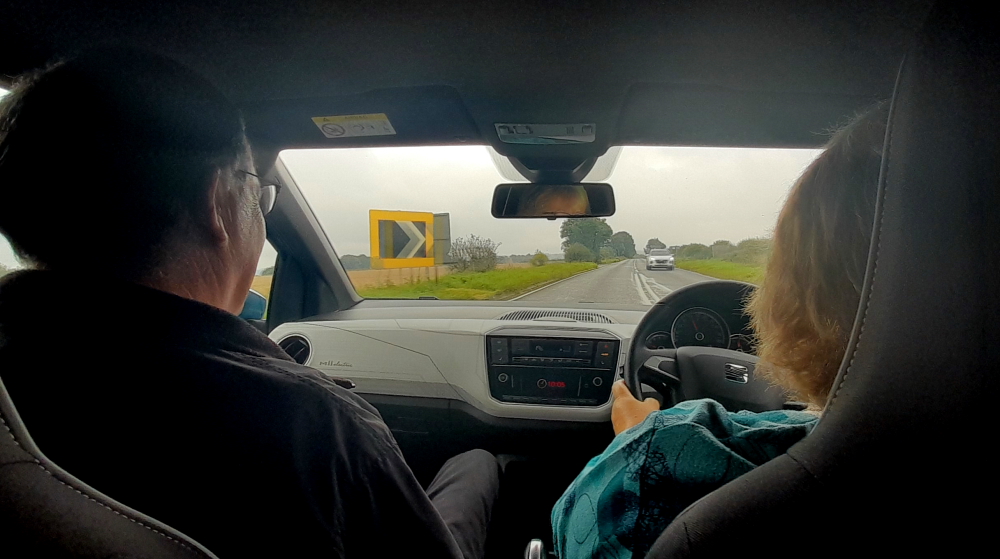
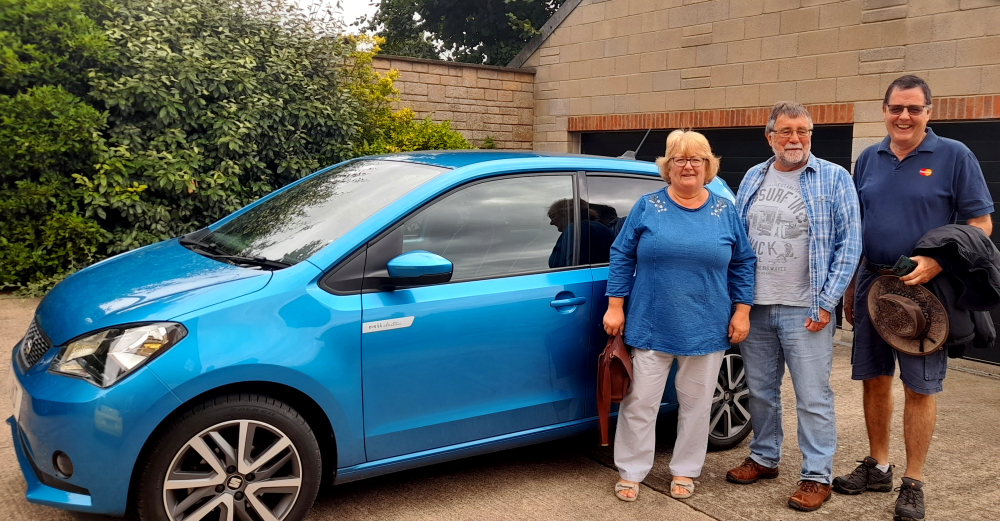
A cool and misty start to the day after some overnight rain. We are driving to several villages in search of more of Lynn’s paternal ancestors but today we are taking the little blue car – the electric one – rather than the SUV as it will be easier to navigate the villages’ narrow streets and lane ways.
Ancaster is a 35 kms NE drive away. Here we stop at St Martin’s Church where I immediately find the 2 headstones we are looking for. They are in front of the church and are legible as they are made of engraved black slate which doesn’t erode and are lichen-free.
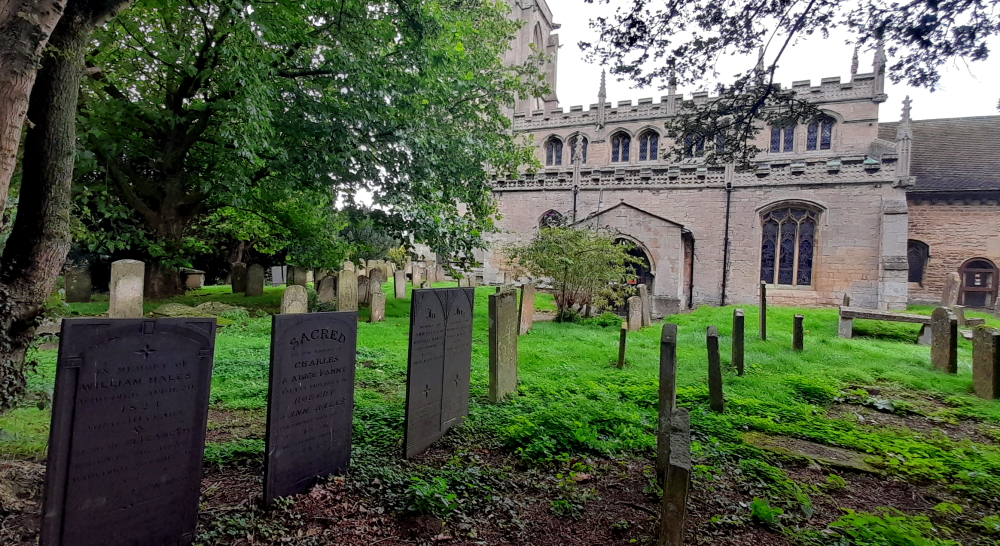
Robert Lister Hales and his wife Ann King – Lynn’s 3 times grandparents – were buried here at St Martin’s Church in 1849 and 1859 respectively.
Karen also has an MA in Local History and is able to use several additional resources to provide us with information about the church and its graves.
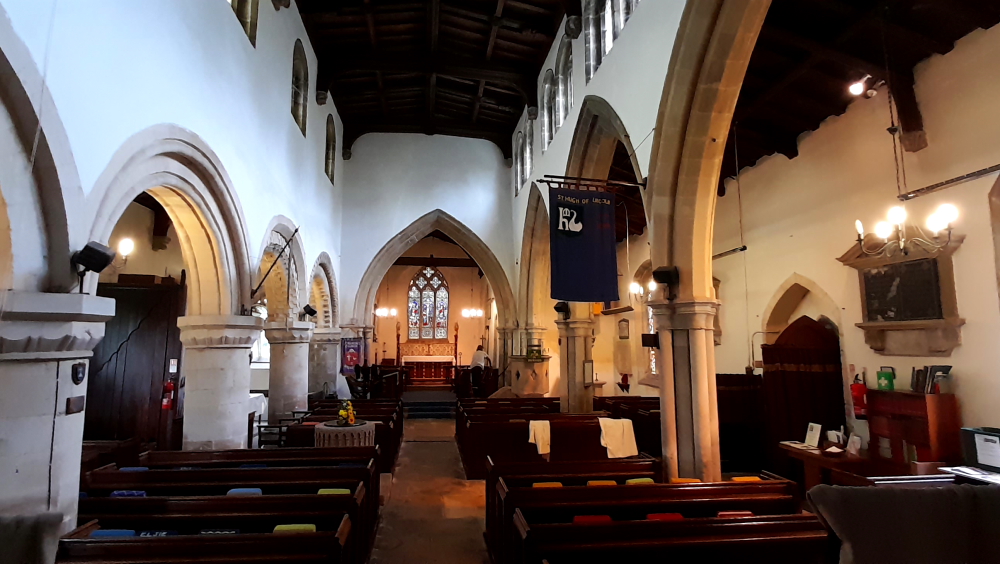
According to the 1841 and 1851 censuses, Robert (merchant) and Ann (draper) lived at 11 Ermine Street, Ancaster, close to the church, and Louisa Hales, their daughter, was born in Ancaster in 1831.
3 kms E is the hamlet of Wilsford where Robert Lister Hales was born in 1797.
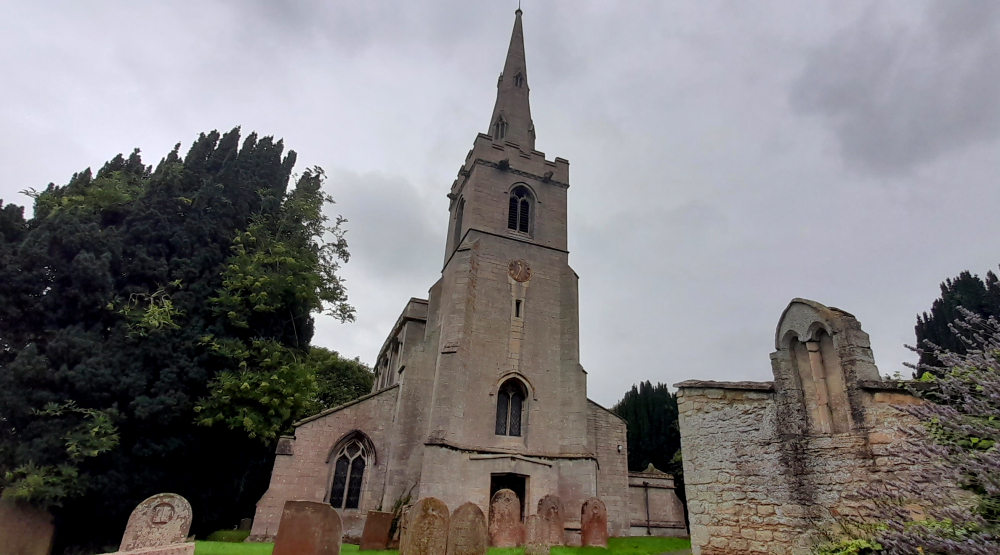
Perhaps he was baptised in this church?
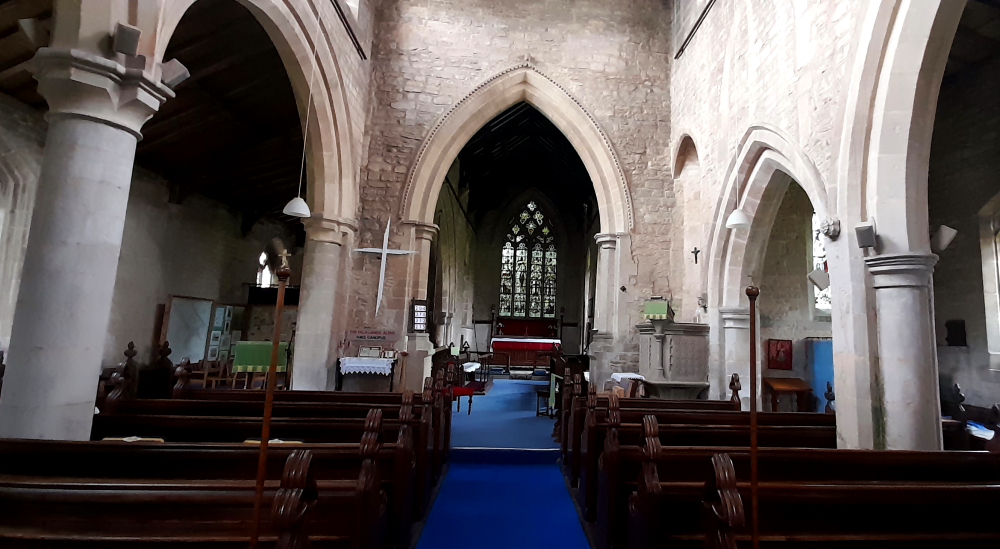
2 kms S is the village of Kelby, where John King, farmer, lived and presumably also his wife, Allis Frankes.
Their son, Stephen King, and his wife, Hannah Witty, were buried at St Andrew’s Church, Kelby, respectively in 1835 (aged 71) and in 1861 (aged 87) underneath an obelisk-shaped monument.
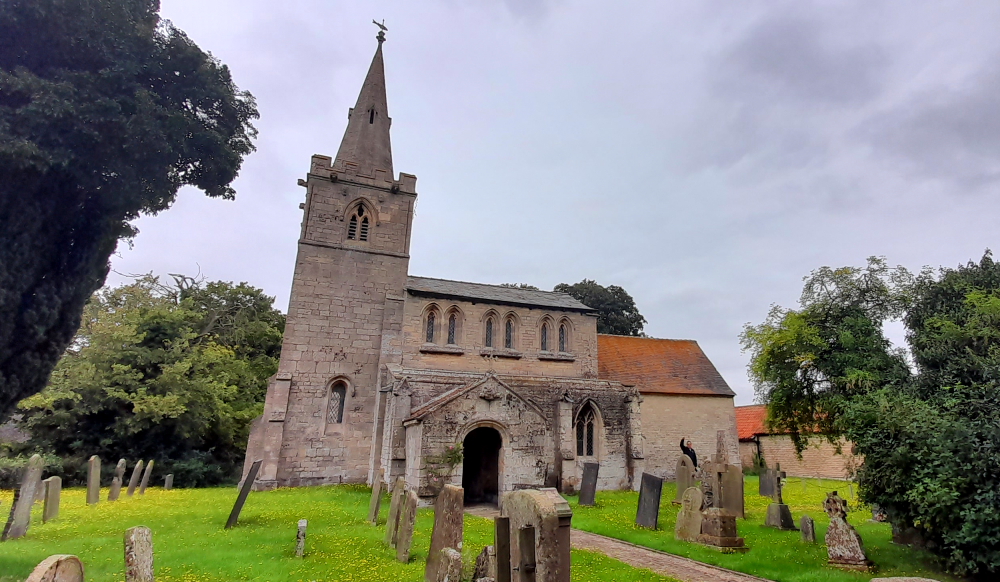
Also inscribed on the sides of the monument are the death details of their son John, who died in 1814 (aged 10) and their daughter Emily Louisa who died 1836 (aged c. 1).
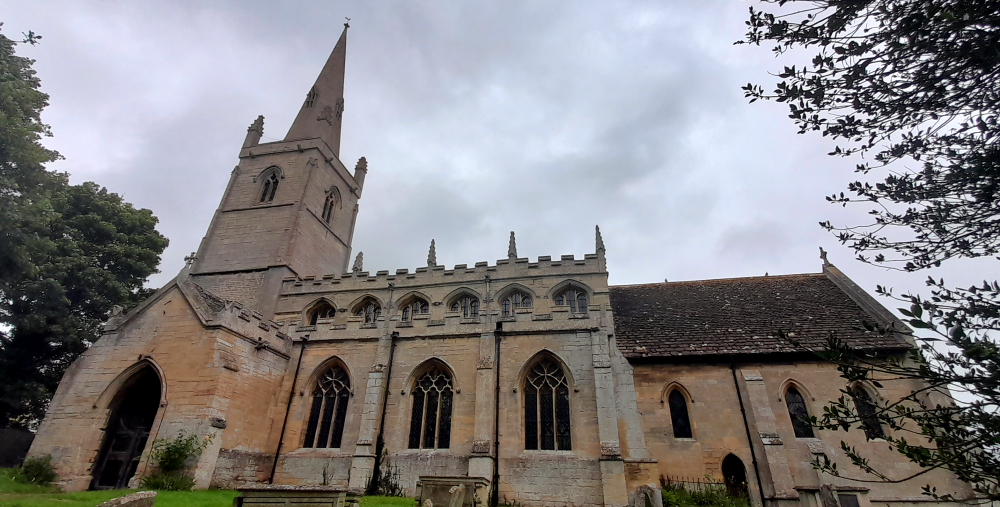
In Heydour, 2.5 kms further South, we stop at St Michael & All Angels Church where we find the graves of possible relatives, George King, died 1886 (aged 78) and his wife Ann who died 1892 (aged 78). Adjacent is the grave of Alice King who died 1845 (aged 3 months).
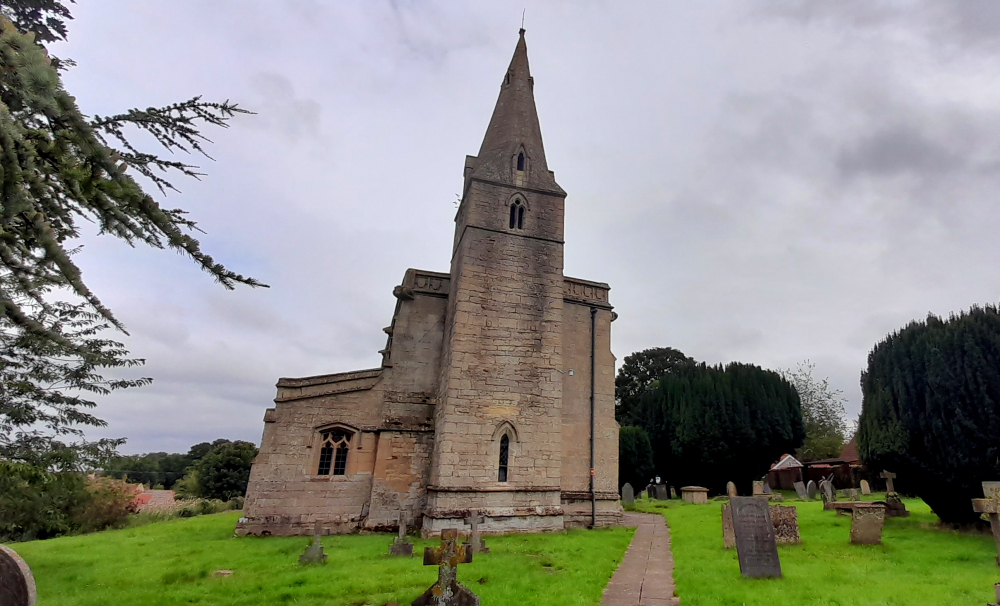
Lastly we visit St Bartholomew’s Church in Welby, 4.5 kms drive SW. Hannah Witty lived in Welby at 33 Main Street in 1851 but although there are numerous cottages bordering this long street, we couldn’t find a No. 33, nor any family graves in the church yard.
On our way back to the house we call into the garage in Melton Mowbray to collect the Insignia. The cost is an eye-watering GBP678.00 but they did a full service, found a cracked rear coil spring (both rears replaced), sorted out a seized rear brake caliper and hopefully resolved the leaking boot. This is the first time that we have had the car seriously checked over so it is worth the money if everything is sorted.
Tonight, Karen and Chris have another village pub in mind for dinner so we drive 17 kms NE to the village of Denton to visit another Welby, this time The Welby Arms pub.
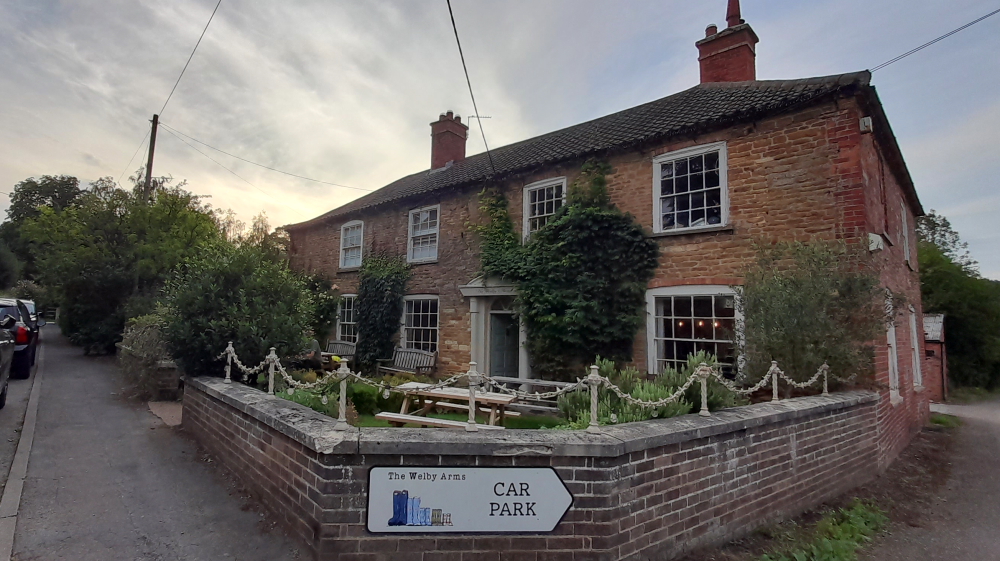
The food is excellent and the beer is cold. What more do you need?
19 August, 2023
As it’s our last full day, after putting on a load of washing we drive to Melton Mowbray, 6.3 kms S of Scalford to wander about the town. Mowbray is the Norman family name of early Lords of the Manor – namely Robert de Mowbray. The town is also the home of the Melton Mowbray pork pie and is the location of one of six licensed makers of Stilton cheese.
Windmill sites and signs of ironstone working and smelting suggest that the town site was densely populated in the Bronze and Iron Ages. In Roman times, Melton benefited from proximity to the Fosse Way and other major Roman roads.
Melton has been a market town for over 1,000 years. Recorded as Leicestershire’s only market in the 1086 Domesday Survey, it is the third oldest market in England. Tuesday has been market day since royal approval was given in 1324. The market was founded with tolls before 1077.
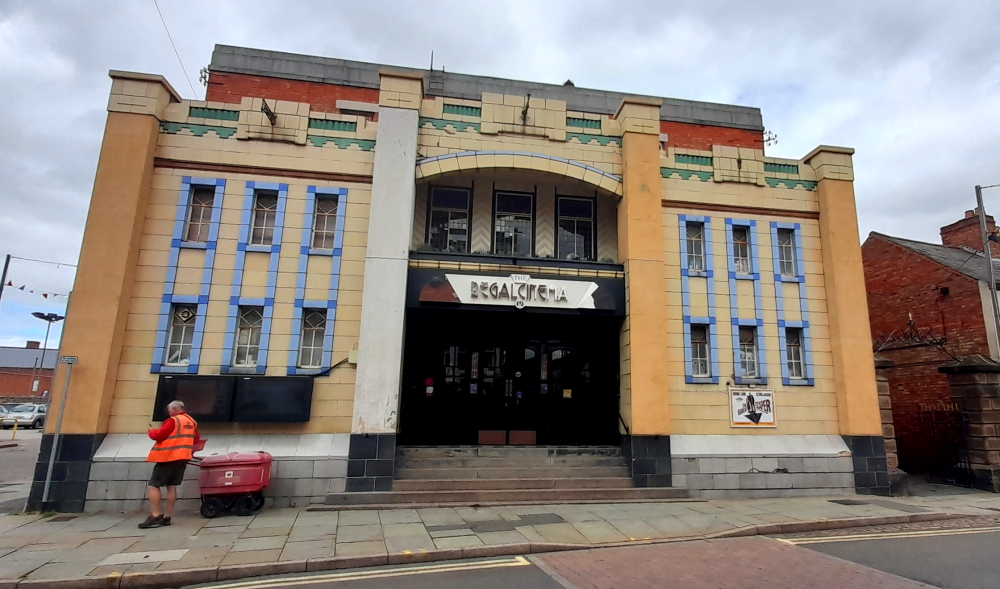
In addition to medieval buildings, Melton has a variety of architecture including an Art Deco cinema with a colourful facade formed with faience tiling.
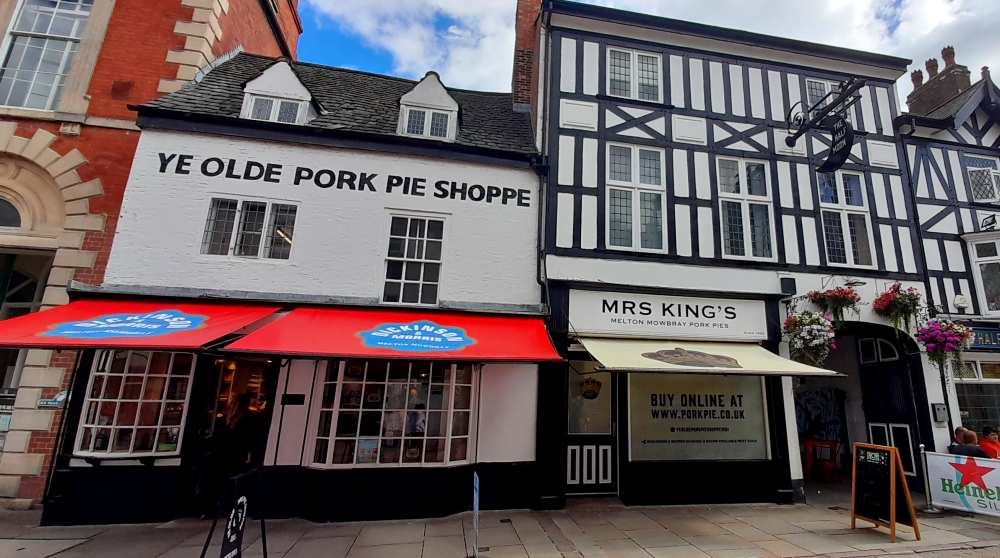
Melton Mowbray pork pies are made by a specific “hand-raising” process and recipe. In 2008 the European Union awarded the Melton Mowbray pork pie Protected Geographical Indication status.
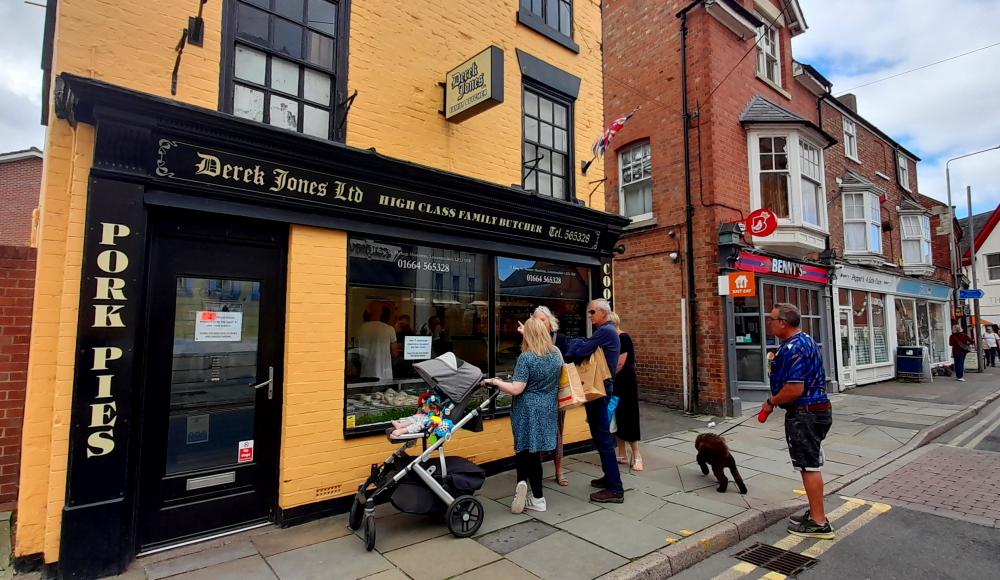
Only pies made in a designated zone round Melton using uncured pork may bear the Melton Mowbray name. The pork was originally a by-product of cheese making as the whey was fed to pigs. Karen buys 2 types that we sample at lunch.
Stilton cheese was and is only made in the Leicestershire, Nottinghamshire and Derbyshire border area. The makers took it to Stilton, Cambridgeshire, to sell it to travellers on the Great North Road (now the A1). So they called it Stilton, as in it’s the cheese sold at Stilton. Today the cheese is still made in Melton at the Tuxford & Tebbutt creamery, one of only six dairies licensed to do so.
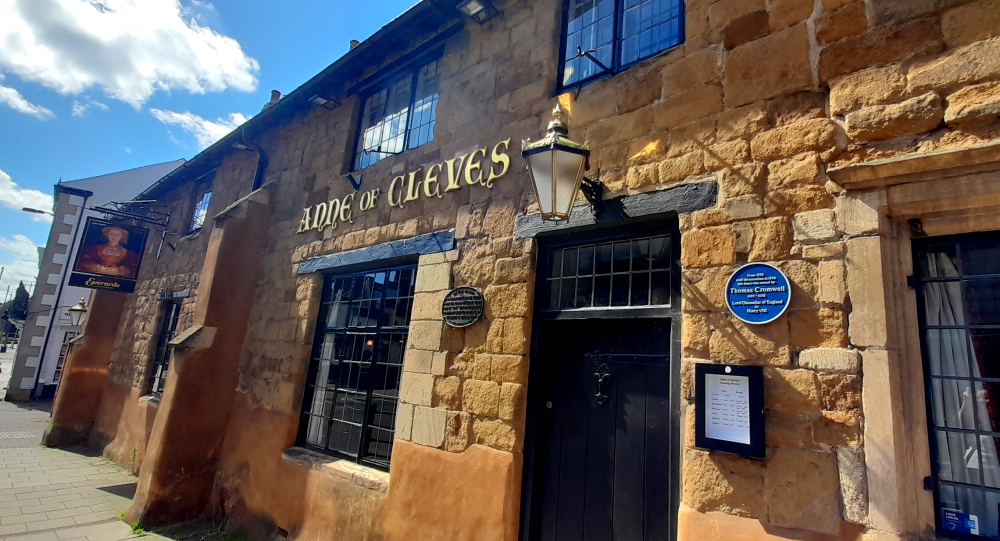
One of the town’s ancient buildings is Anne of Cleves House. This was built in 1384 and housed chantry priests until the Dissolution. It was then included in the estates of Anne of Cleves by Henry VIII, as a divorce settlement in the 16th century, although there is local debate about whether she ever stayed there.
The town is also famous for the saying … “Painting the Town Red”. I will leave that up to you to research.
As a last hurrah, we are back in Melton tonight for a slap-up Italian. Tomorrow we are heading to Lutterworth via Stone. At Stone we have a lunch planned with another of Lynn’s UK work associates.
This is the last of our Midlands trip as we head south in the morning and start our move to Europe for three months.
 THE CONTINUING TRAVELS OF YOGI & BOO BOO