
8 September, 2023
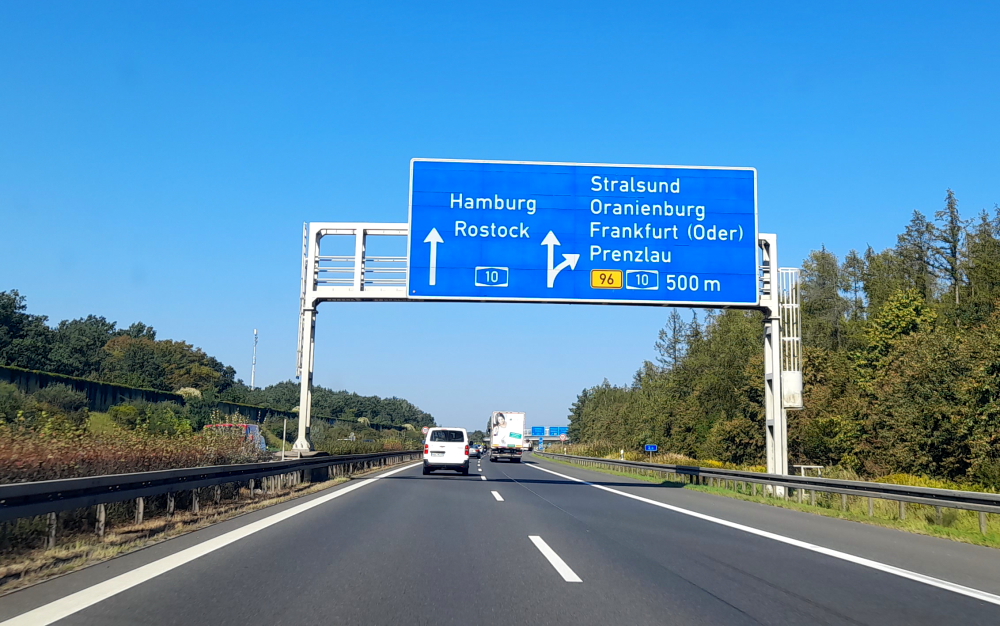
Time to leave Berlin for our trip to Neu Thulendorf near Rostock to stay with our friends, Anne and Jurgen, whom we met in 2017 on a Halong Bay cruise in Vietnam.
It should take us 2.15 hours to drive the 229 kms there. At 11:25 am it’s 21 Deg. C and by the time we arrive the mercury has climbed to 29 Deg. C.
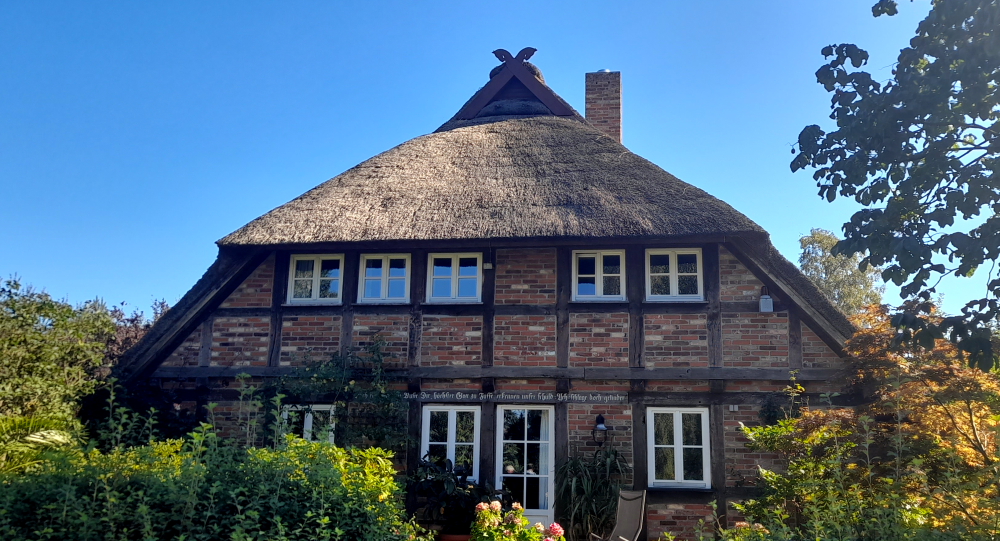
Thanks to Anne’s excellent directions we easily find their gorgeous home in a semi-rural setting surrounded by a luxurious garden complete with pond, turtles, carp, apple trees and a veggie patch. And a very friendly dog named Twiggy.
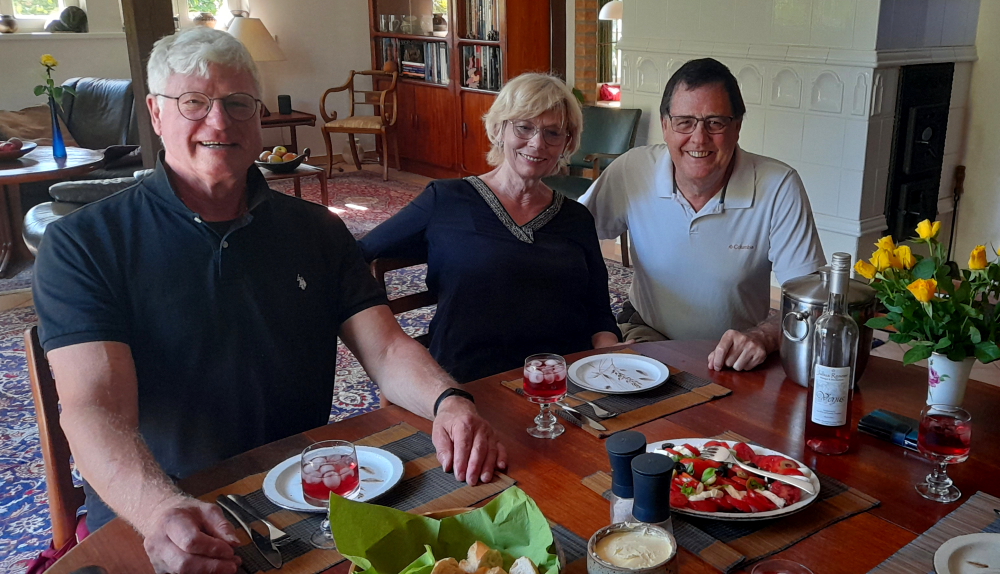
After a very warm welcome by Anne and Jurgen (and Twiggy) we unpack and tuck into a light lunch and a local beverage – the first of many!
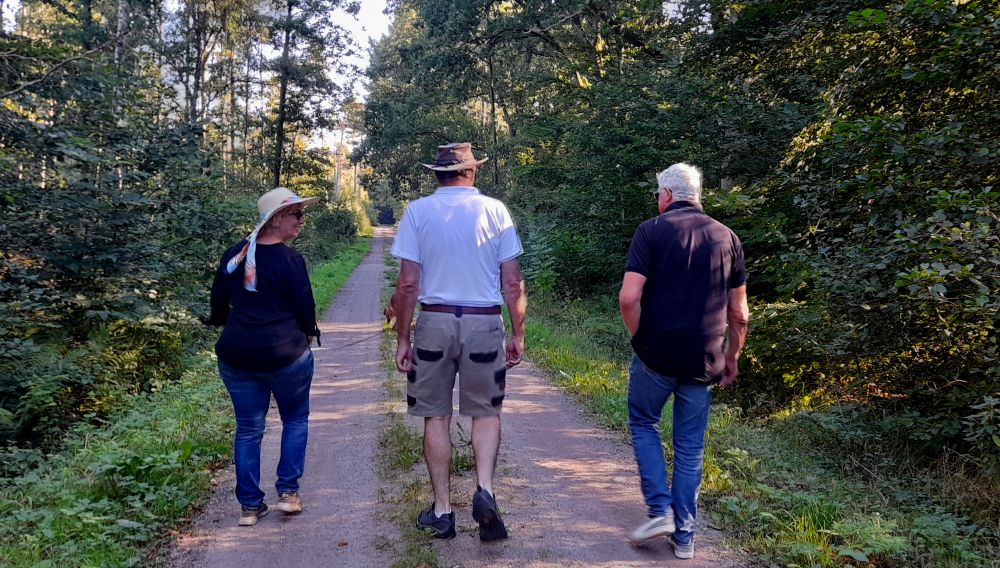
Later we drive to a nearby forest to take Twiggy for a walk.
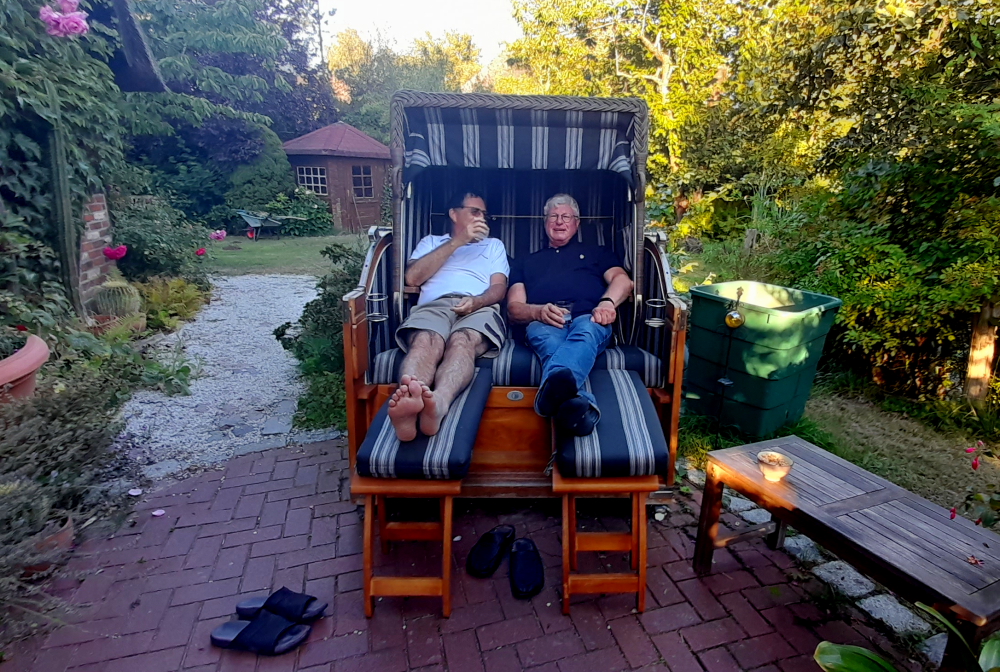
As it’s such a hot day, we welcome a cool al fresco drink in the shade. A feature of the garden is this amazing wicker, double-seater lounge with canopy and inbuilt foot stools and drink holders that the guys commandeer. Later, we enjoy a twilight dinner under the stars.
9 September, 2023
Another hot day is forecast today with rain later in the week so while Jurgen works in the garden Anne drives us to Graal-Muritz to view the Baltic Sea, its beaches and how Germans spend their beach-side leisure time.
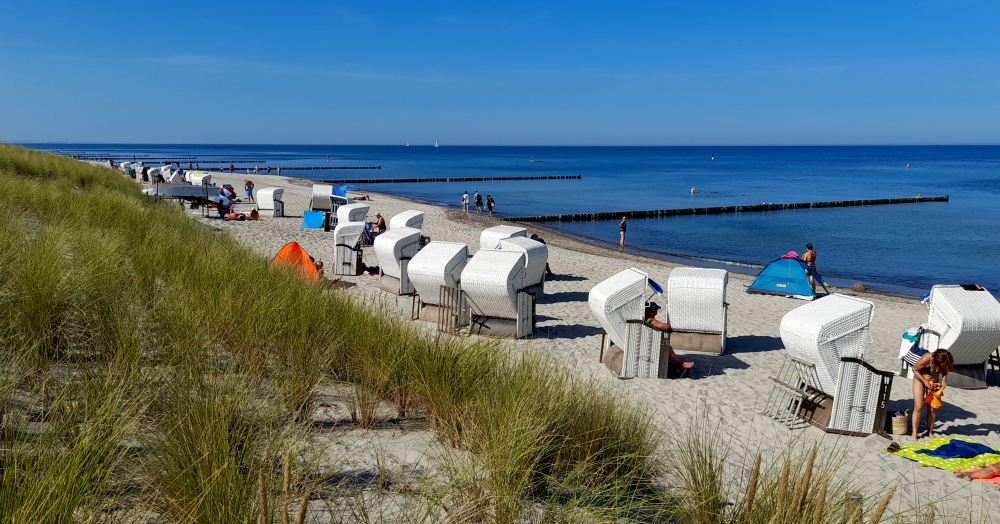
We find that the double-seater, canopied, wicker lounges are also very popular along all the beaches that we visit. In fact, the “Strandkorb” beach chair was invented in 1882 in the beach resort of Warnemunde (see below). Apparently it provides comfortable and healthy seating while taking in the sea air and now enjoys a world-wide reputation – including the Garbe Family’s garden.
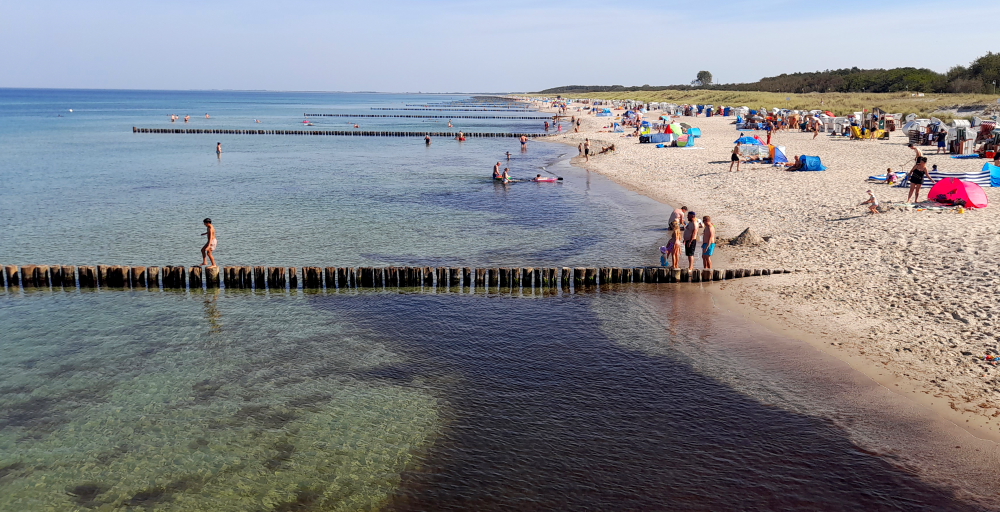
Today, the Baltic Sea is flat, blue with clear water and the beaches a combination of white sand and pebbles.
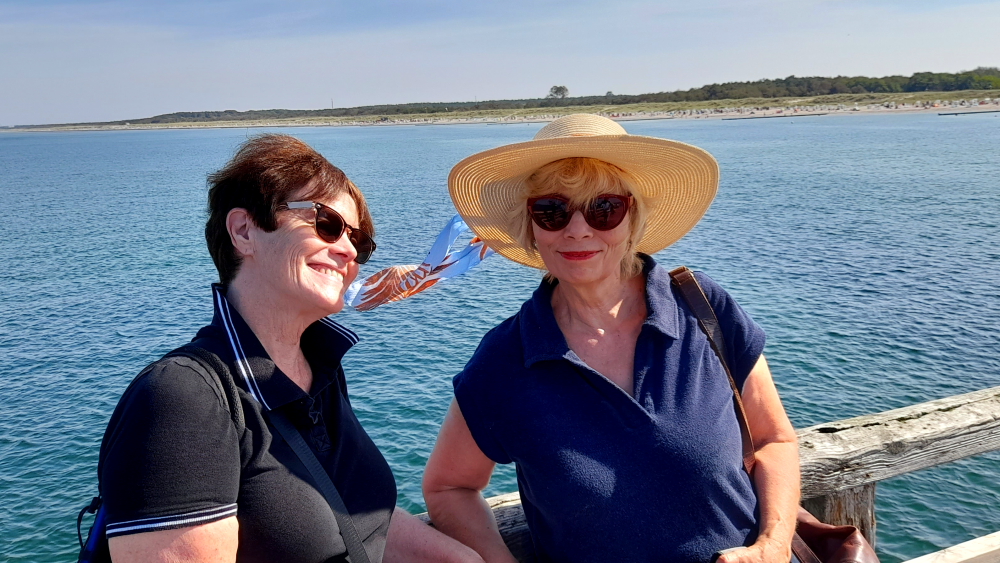
One of the features of this area is its long pier.
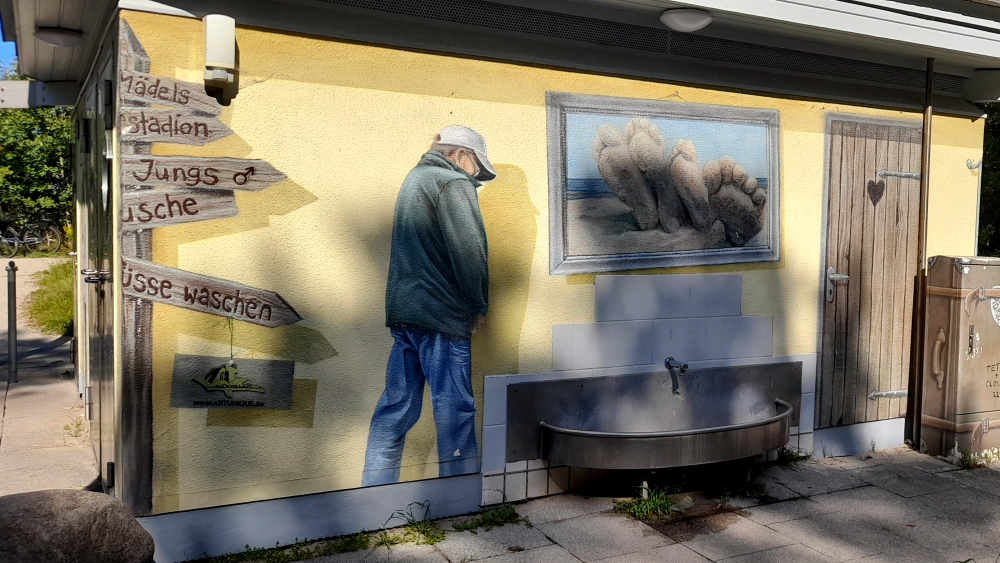
Even here there is artwork – this time advertising exactly what this building’s function is.
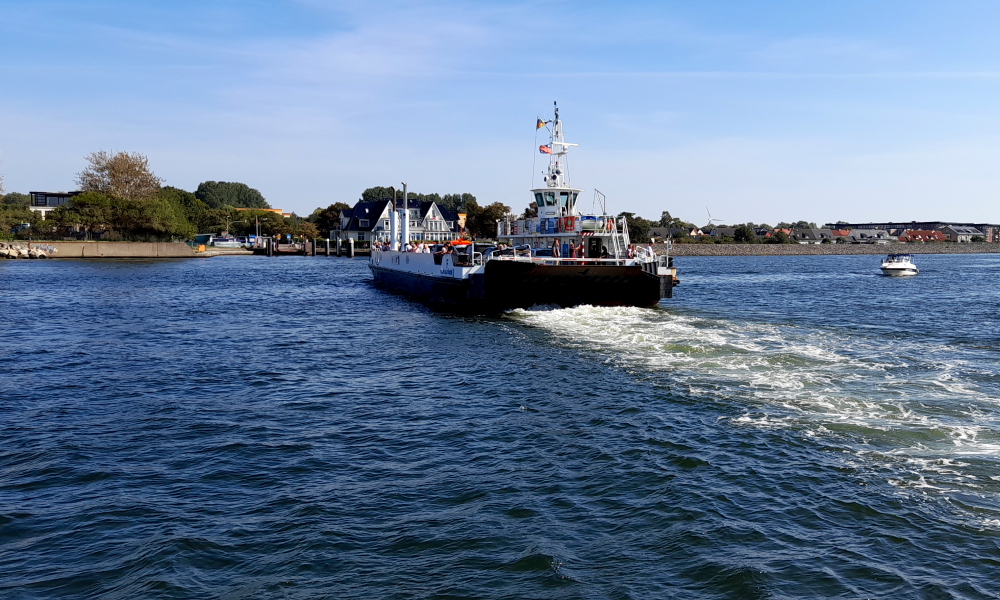
20 kms away, on the coast, is Hohe Dune, where we park the car and catch the ferry with other passengers, cyclists and some cars – a 5-minute ride – across the river mouth to Warnemunde, a Baltic seaside resort town.
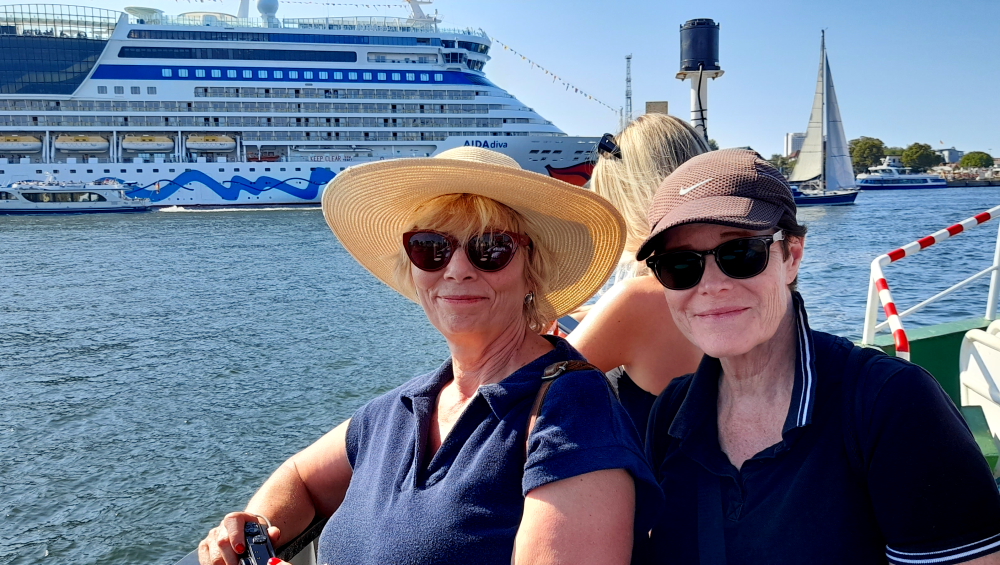
This is another harbour associated with Rostock which is about 12 kms further upstream. Here in Warnemunde the AIDA cruise line office is located and today the AIDA Diva ship is moored.
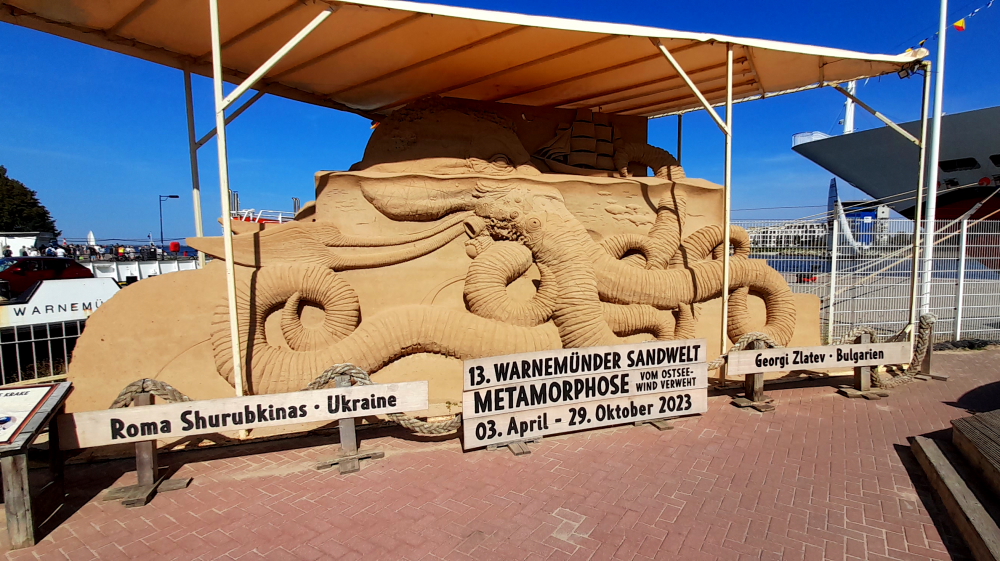
When we disembark we come across an elaborate sand sculpture with hints of Kraken constructed for the Summer Festival. In fact, the whole town is packed and everyone is in a festive mood with live music and even a brass band marching along the streets.
Walking past the train station we cross the Alter Strom canal/harbour and arrive at the old town.
The Rostock council archives reveal that the “Alter Strom” was excavated as early as 1423 and fortified with bulwarks. Until 1903 it was the only and therefore most important shipping access from the Baltic Sea to the port of Rostock. As early as 1288, the Hanseatic city of Rostock took care of the maintenance of the Warnemünde harbor.
The first inhabitants of today’s Warnemünde were Slavs. They were followed by the Frisians and finally Lower Saxony, who founded the village of “Warnemünde” west of the “Alter Strom” around 1100 and settled there. The architectural style of the historic houses south of the station bridge has been preserved to this day.
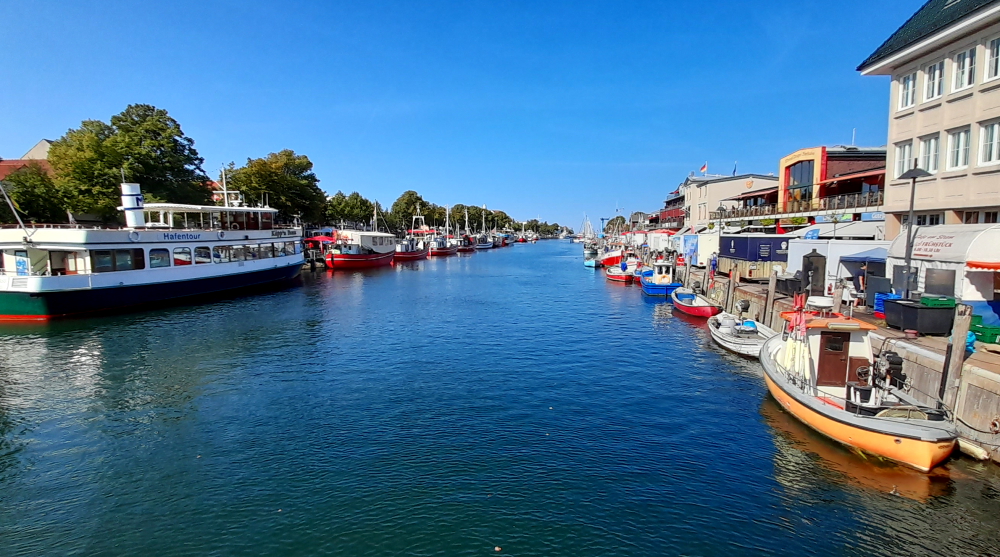
Until the 19th century, only the streets “Vörreeg” (today “Am Strom” ) and “Achterreeg” (today “Alexandrinenstraße” ) existed. Both streets were built parallel to the Alter Strom.
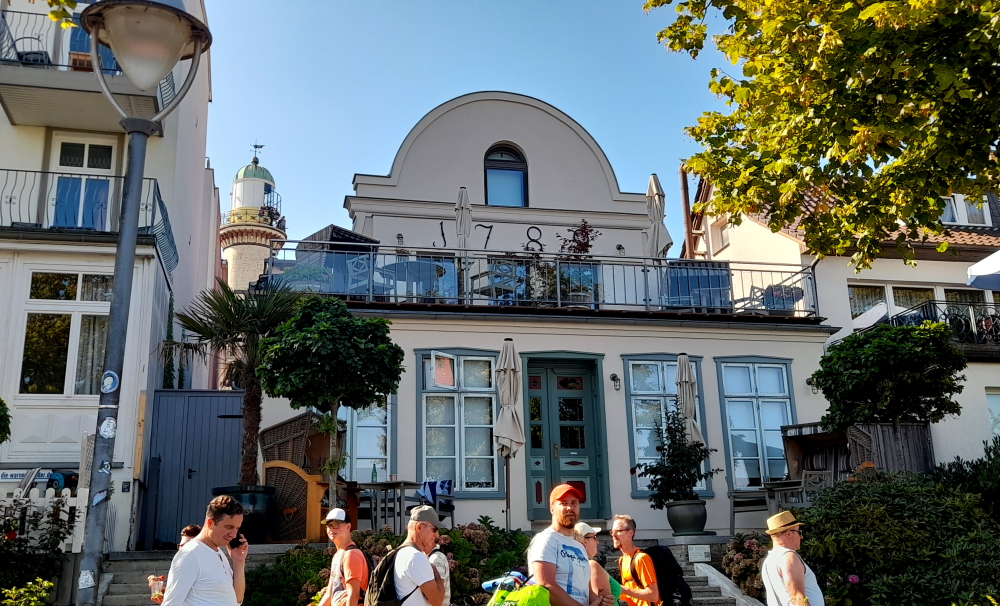
We join everyone else walking along Warnemünde’s promenade in the direction of the west pier and lighthouse and pass by many lovingly renovated captain’s houses with shops and restaurants. Groups of people are relaxing at outdoor restaurants and cafes watching fishing boats, excursion boats and yachts sailing by or watch other people strolling through boutiques and small shops along the Alter Strom.
At the end of the pier we retrace our steps to the 36.90m tall lighthouse which was put into operation in 1898.
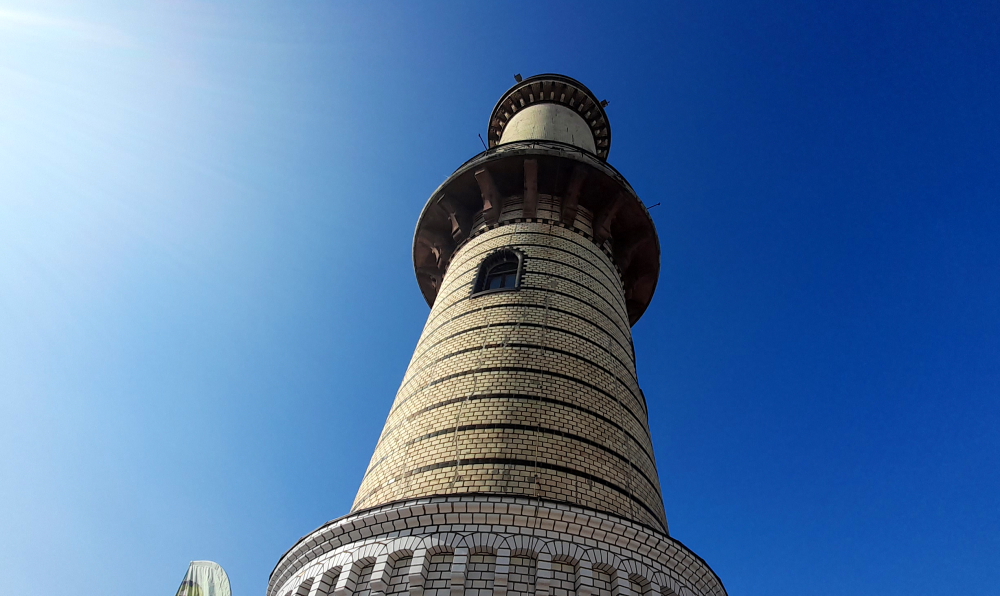
At the base of the lighthouse is a restaurant called the “Teepott” where we gladly rest in the shade of its outdoor terrace with a view of the beach and the sea beyond while sipping on homemade lavender lemonade.
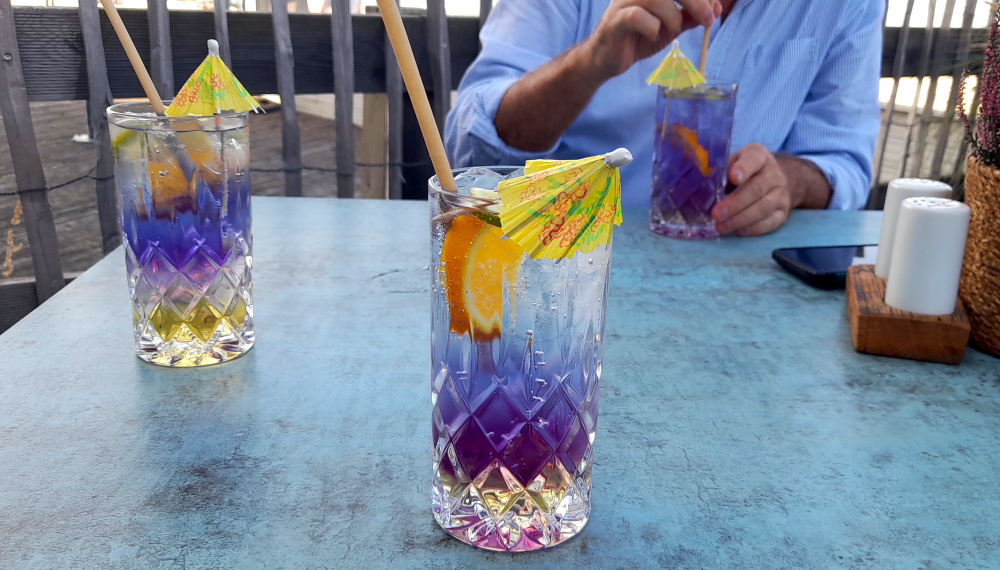
We arrive back at the house at the same time that a hot and sweaty Jurgen is finishing off mowing the lawns. After a shower, cocktail and another delicious al fresco dinner we head inside, enticed by Anne and Jurgen’s invitation to play a new game: Tiominoes.
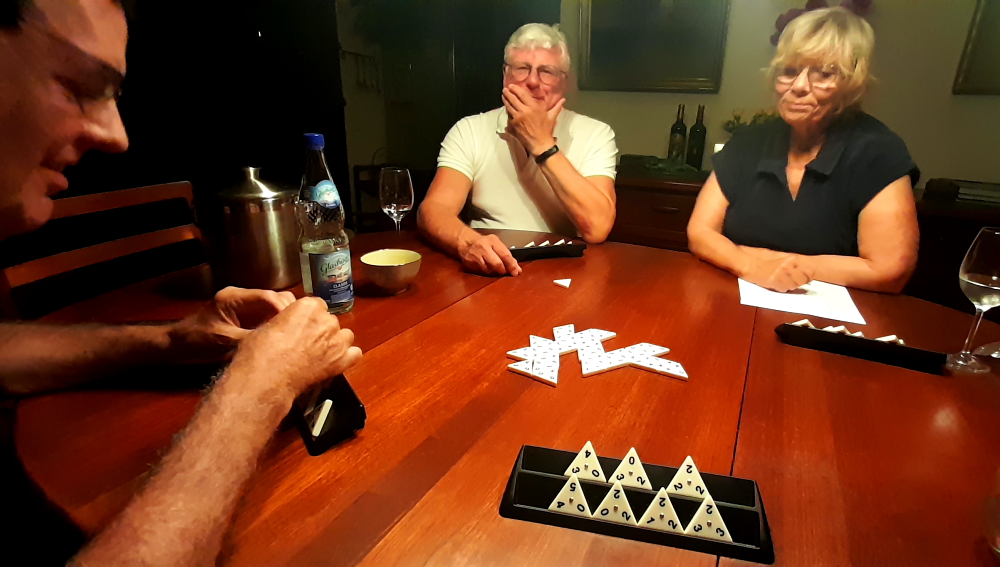
5 nights later it appears I have somewhat mastered the game as I come out on top of the leader board of 11 games with 1,701 points followed by Lynn (1,520), Anne (1,512),then Jurgen (1,121). Definitely a game we’ll purchase when we get home to Brisvegas.
10 September, 2023
Today Anne and Jurgen are taking us on a guided tour of historic Rostock.
Throughout the eight centuries of its history, the university, shipyard and port city of Rostock has always been the most powerful and progressive municipality in Mecklenburg, though never its capital (Schwerin).
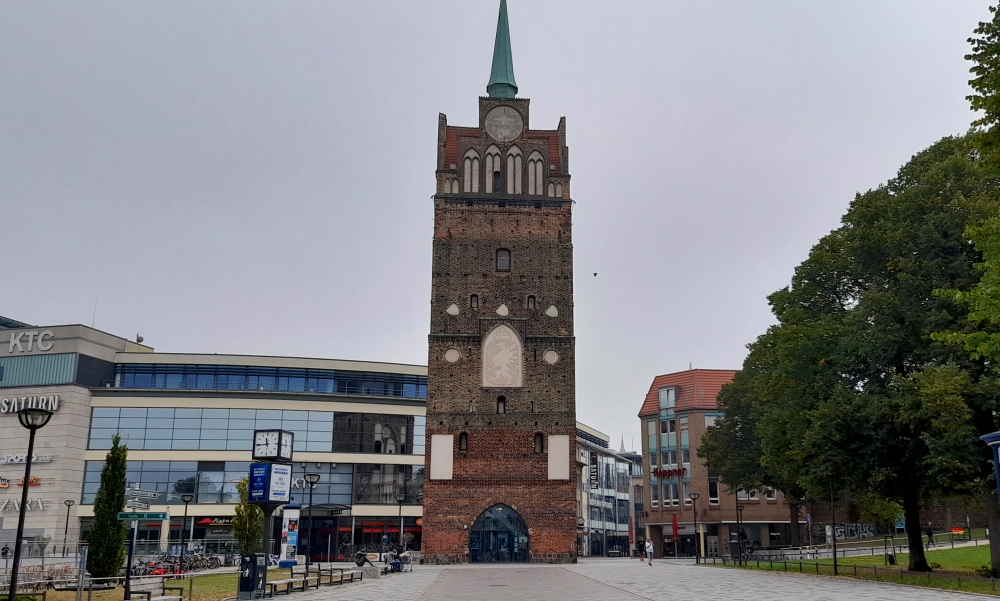
600 AD – the Slavs, who lived in patriarchic clans, form the largest ethnic group in Europe and settled at the Warnow river. In the 7th century these Slavic tribes named their settlement “Roztoc” which means “River that widens”.
In 1218 Rostock’s town privileges (town charter of Lübeck) were acknowledged. Rostock became one of the most important cities of the Hanseatic League – a medieval commercial and defensive confederation of merchant guilds and market towns in Central and Northern Europe. The other German cities were Bremen, Hamburg, Lubreck and Luneburg. Evidence is still visible today in Rostock in its typical merchant houses.
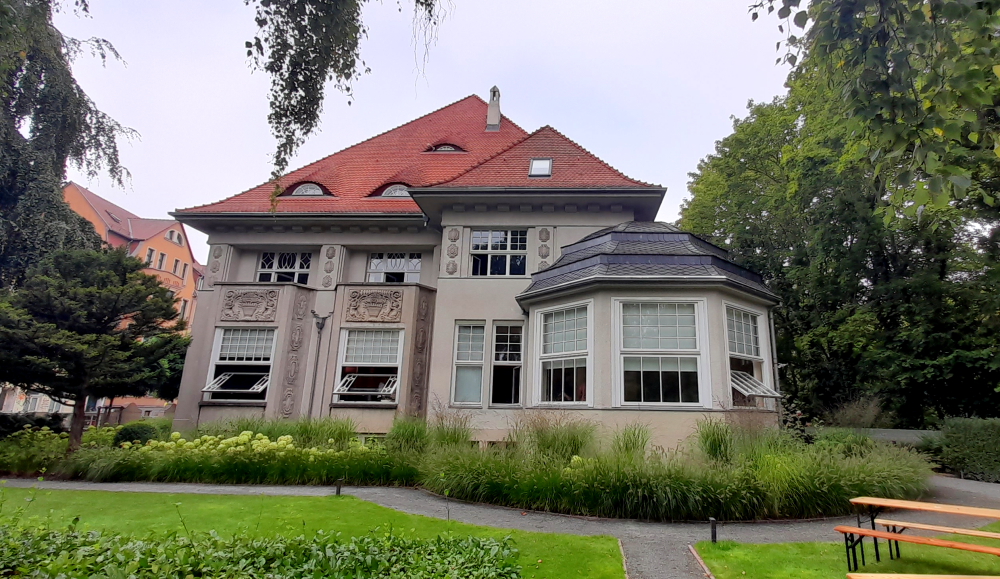
We walk past the old town gate to the fortress – its previous existence evidenced by a moat, bastion walls and a lake which was once a water supply. At the other side of the moat on August-Bebel-Strasse is the Zeecksche Villa.
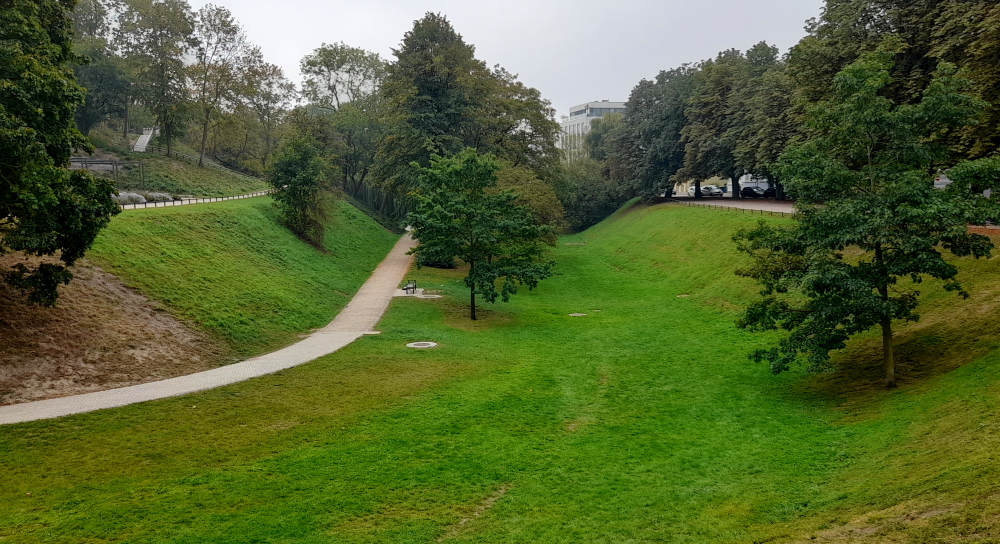
One day a year there is an Open Day of buildings in Rostock that aren’t usually open to the public. Today is that day! And the Zeecksche Villa is one of those buildings.
The Zeecksche Villa was designed in the style of a baroque country house and was the residential and commercial building for the family of department store owner Gustav Zeeck who had lived in Rostock since 1896. The house was built in 1909 by Heinrich Quade based on designs by architect Paul Korff.
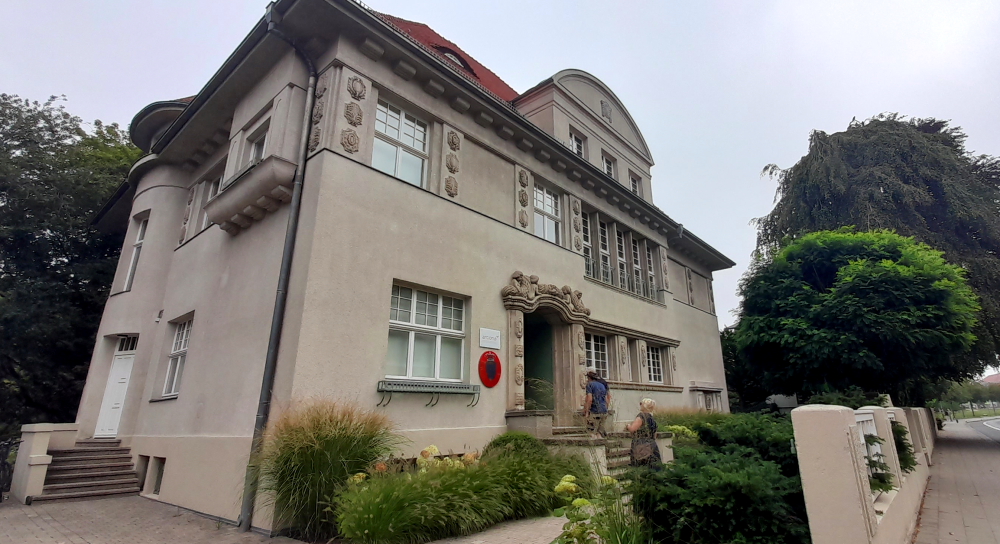
After WWII Russian officers were quartered in the villa. The Rostock district court was based here in 1949. In 1953 the Zeeck family was expropriated and moved away. Then the University used this buillding until 1996 when the Zeeck family got their villa back and sold it to a building contractor who began renovations in 1998. Until 2015 the Institute of Physics used the building which was then purchased by the Arcona hotel group at the end of 2017 and extensively renovated. It’s now the hotel group’s Rostock HQ.
Through a gate in the town wall we come to the Monastery Church of the Holy Cross (University Church) where we make a quick visit to its Kulturhistorisches Museum and view a collection of medieval art and religious artifacts.
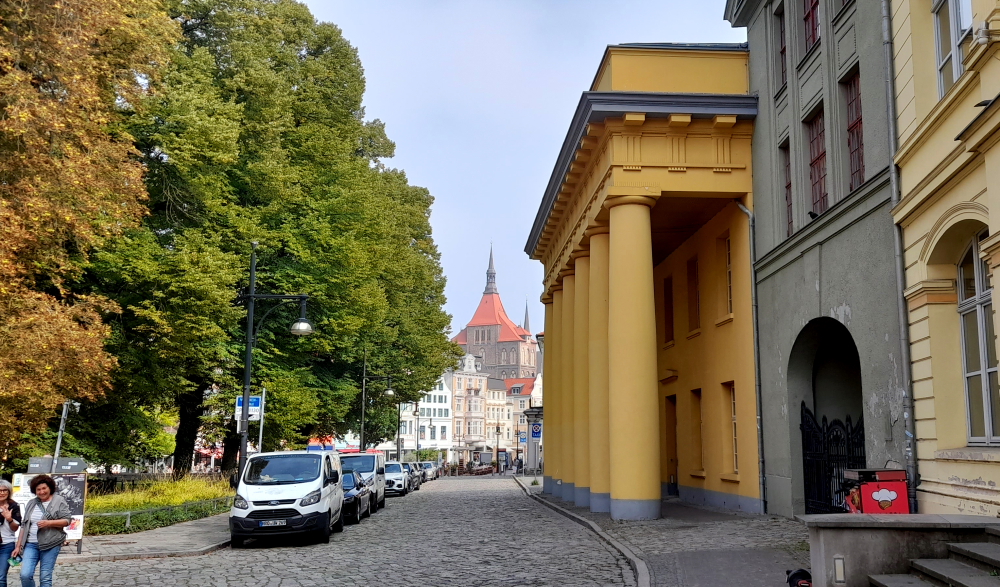
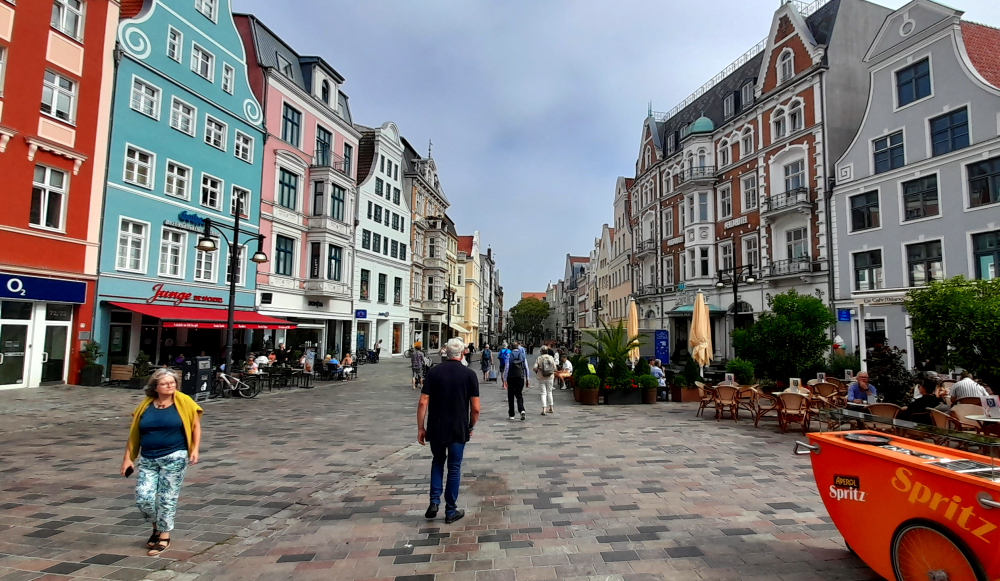
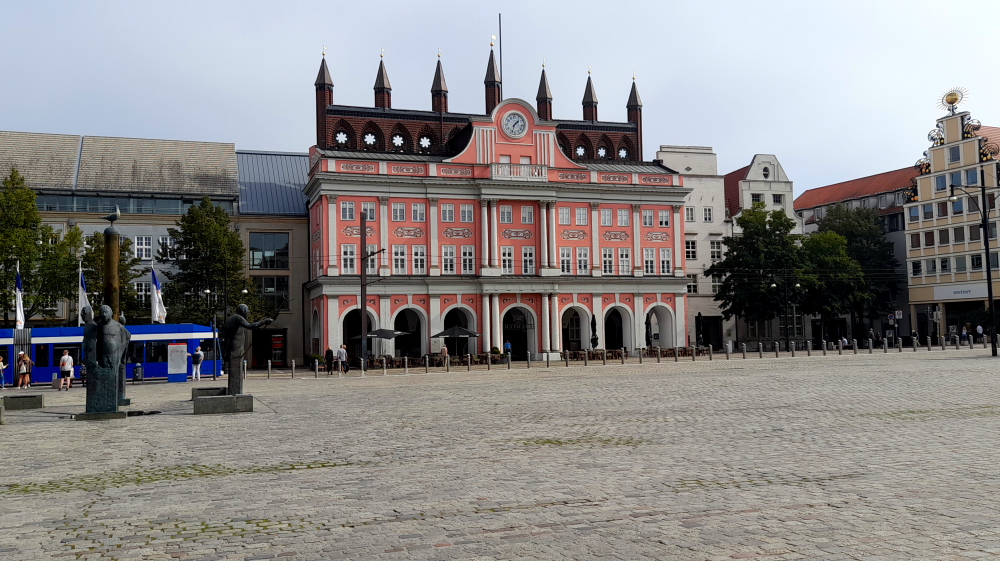
Through the museum gates we walk along the Universitatsplatz to Kropeliner Strasse until we reach Neuer Markt and the Rathaus.
The historic town hall building – the Rathaus – was originally a group of three houses, dating back to the 13th century. It is the oldest preserved secular building in the city and is considered – like the Lubeck town hall – to be one of the most important secular brick Gothic buildings in the Baltic region.
After a lunch of a huge half pizza each at the nearby L’Osteria restaurant we retrace our steps to the St-Marien-Kirche.
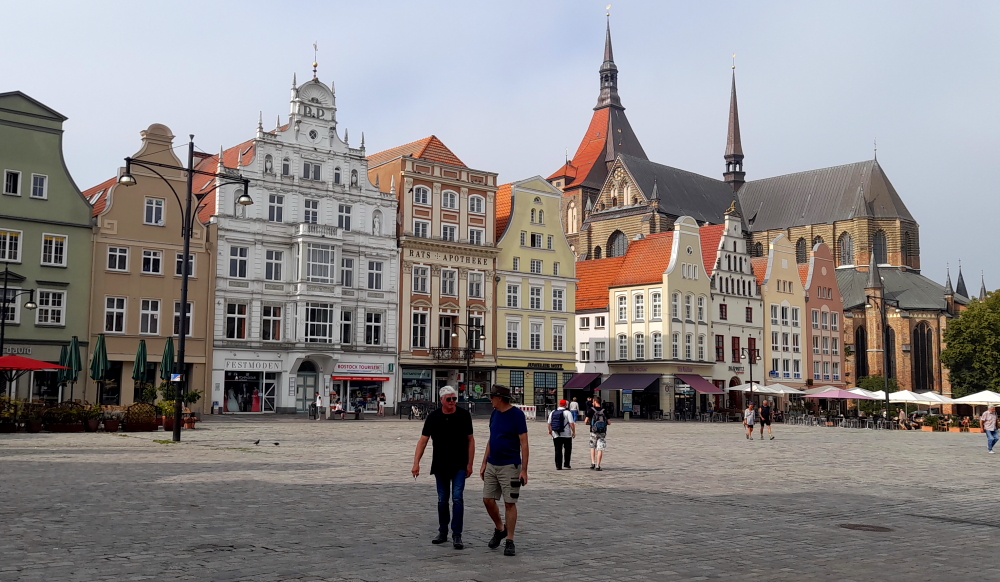
Built in the 13th century the triple-nave cross-shaped basilica is in Brick Gothic, a building style typical of the Hanseatic port cities of northern Germany. The huge tower was not completed until the end of the 18th century.
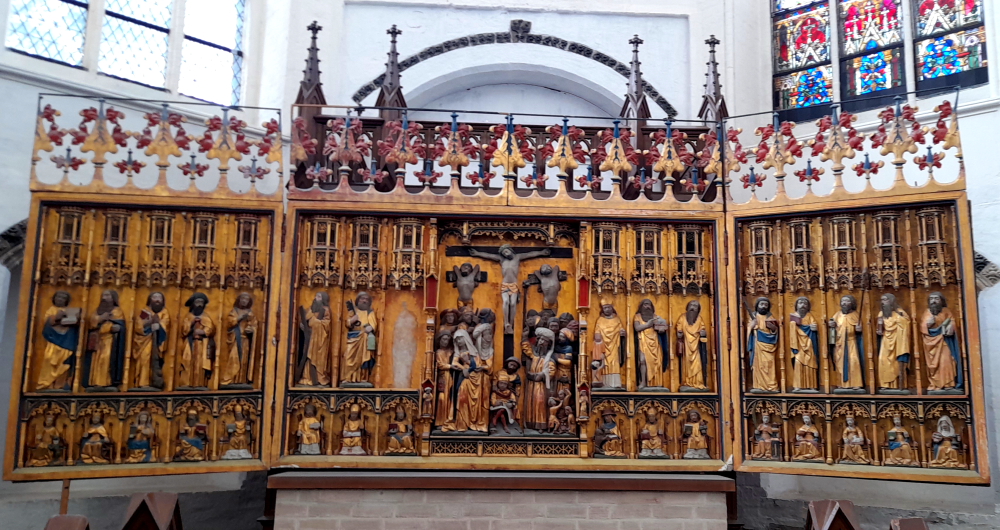
Besides its 1290 bronze font, the Renaissance pulpit in 1574 and the striking high altar built in 1721, a stunning feature is its astronomical clock built in 1472 by Hans Duringer, a clockmaker from Nuremberg.
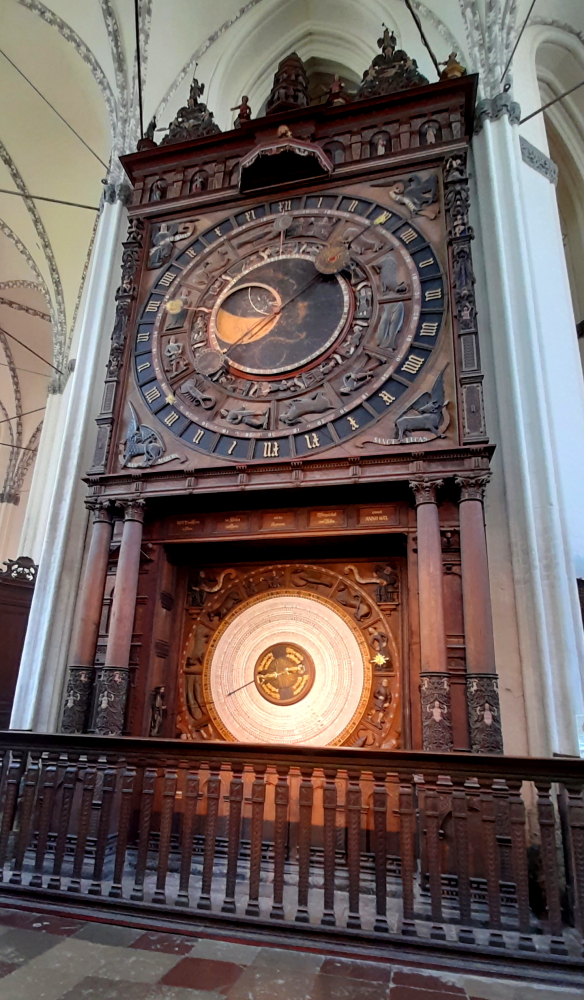
It comprises 3 partitions: Top – an ‘apostle-go-round’. Middle – a clock with daily time, zodiac, moon phases and month. Bottom – a calendar which is valid until 2150 (in 2018 this table replaced the 4th, which lasted from 1885 to 2017). The medieval clock is the only one of its kind still in working condition with its original clockworks.
Photo of organ
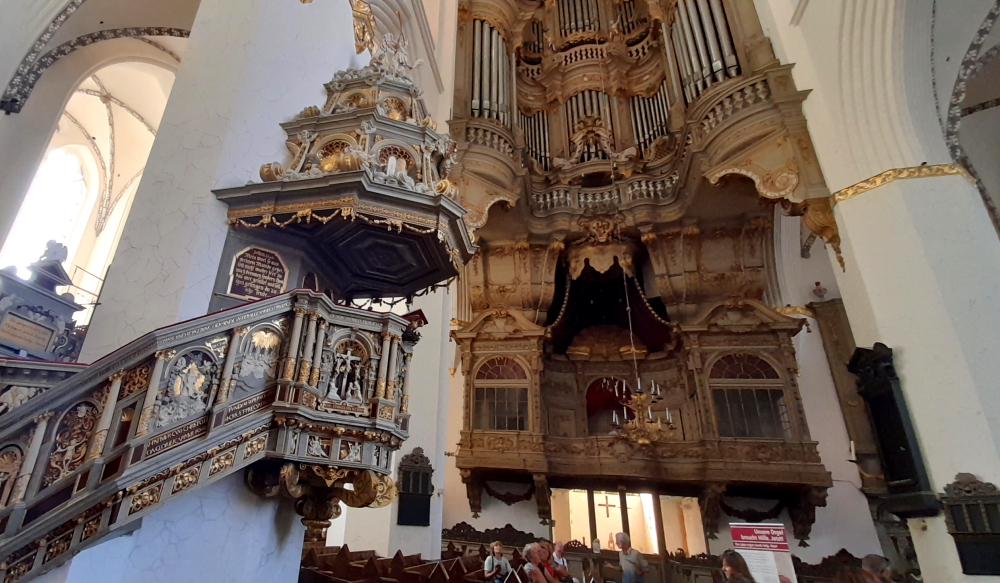
Another striking feature is the huge baroque façade of the “Marienorgel’, designed and built in 1770 by Paul Schmidt, a Rostock organ builde. While Jurgen, Lynn and I take the Church Tower tour, Anne does the organ tour including being able to actually walk into the organ mechanism itself.
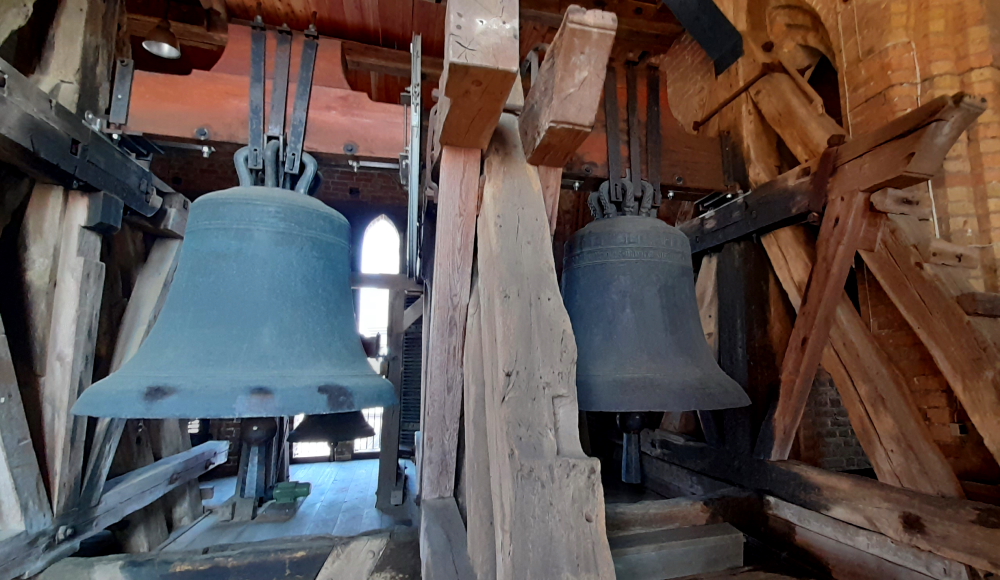
To get to the top of the tower requires walking up some 200 brick steps of a tight, spiral staircase. Unfortunately I only get half way thanks to an excruciating pain in my knee so I hobble back down.
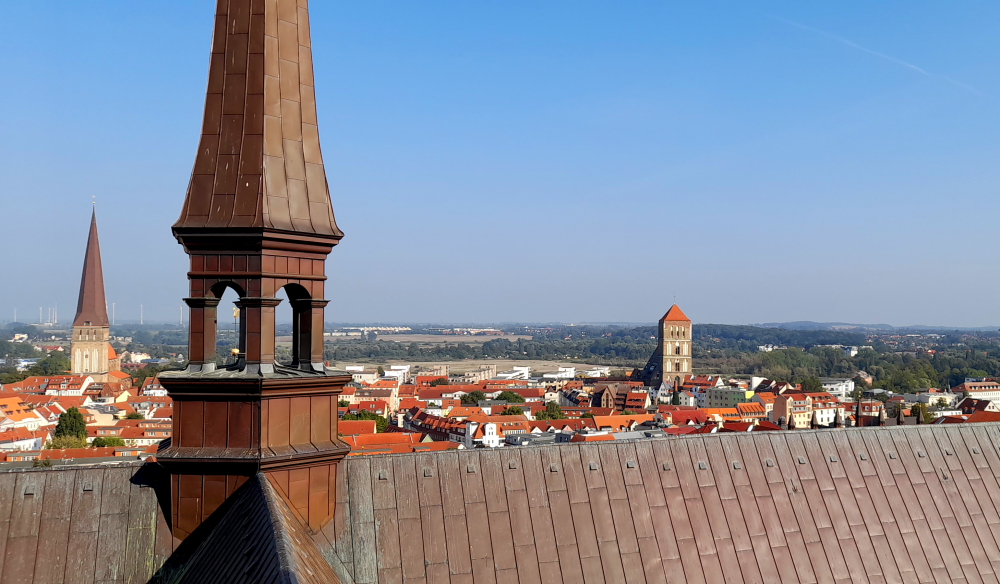
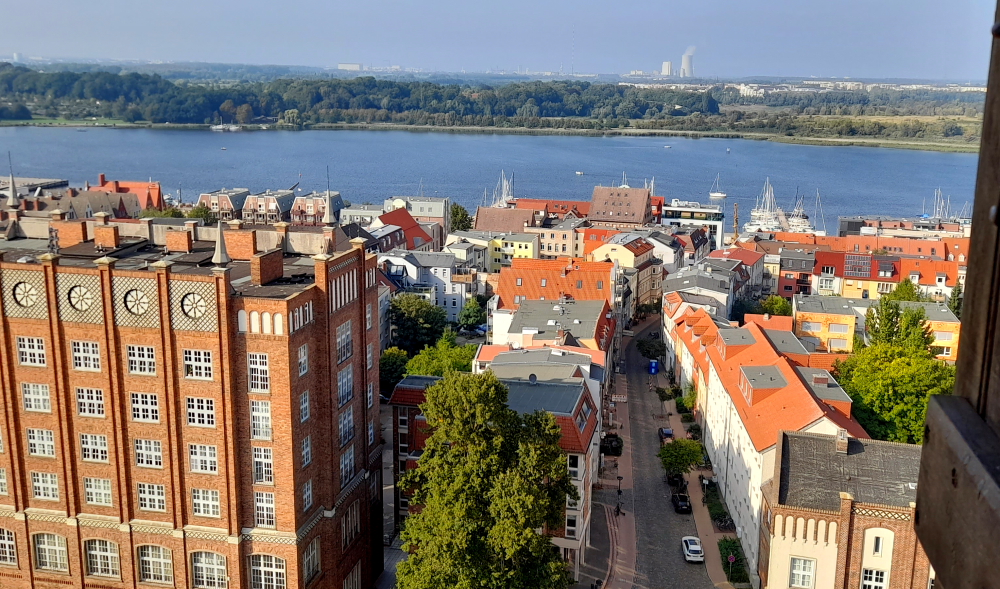
So it’s thanks to Lynn being 3 years younger than me and my skiing and squash knee injuries trumping her basketball knee injuries that she is able to capture these cityscapes from the top of the church tower.
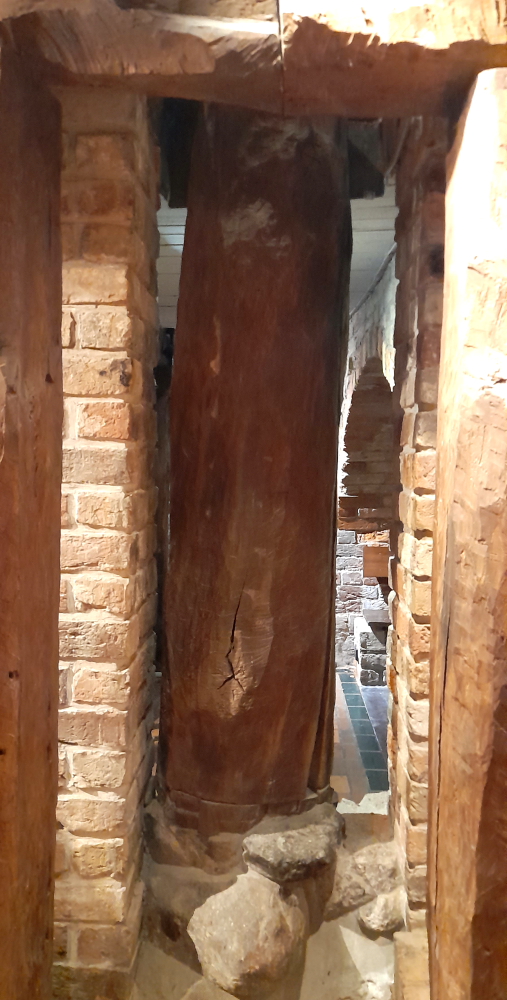
Lastly we visit another Open Day building, Hausbaumhaus (House Tree House).
Built in 1490 it is one of the oldest merchants’ houses in Rostock and a wonderful example of a late Gothic gabled house from the 15th century. The support for the house is one, large tree trunk supporting several levels.
11 September, 2023
As today is Monday and there aren’t any museums open today, we have a bit of a catch up day. This morning is a video conference call with our financial advisor. This afternoon Lynn and Anne head off to Ribnitz-Damgarten to get their hair cut.
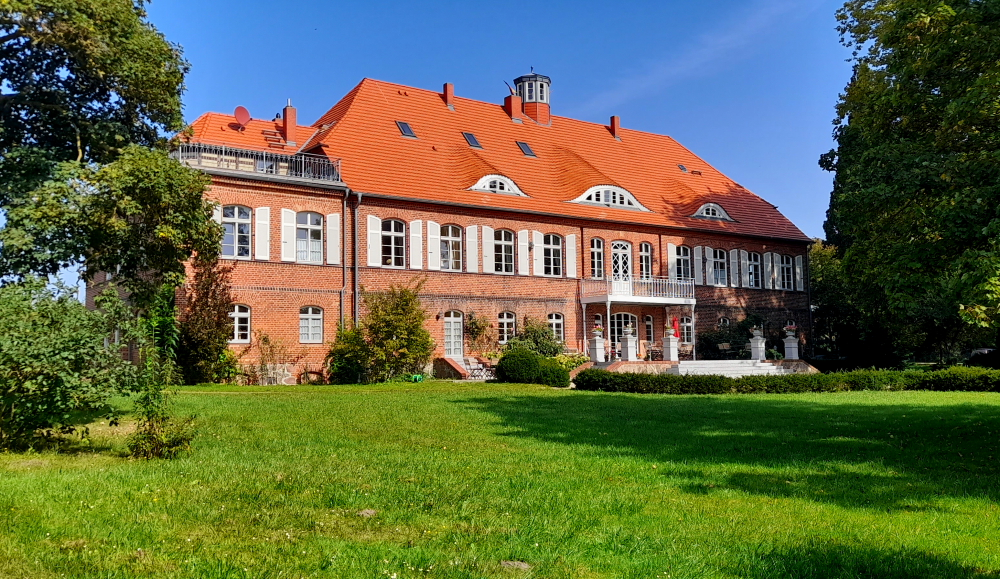
But firstly they drive to Putnitz where they walk a short way along the River Recknitz to view the Gutshaus Putnitz where one can rent large, comfortable and stately-furnished holiday apartments in this former manor house.
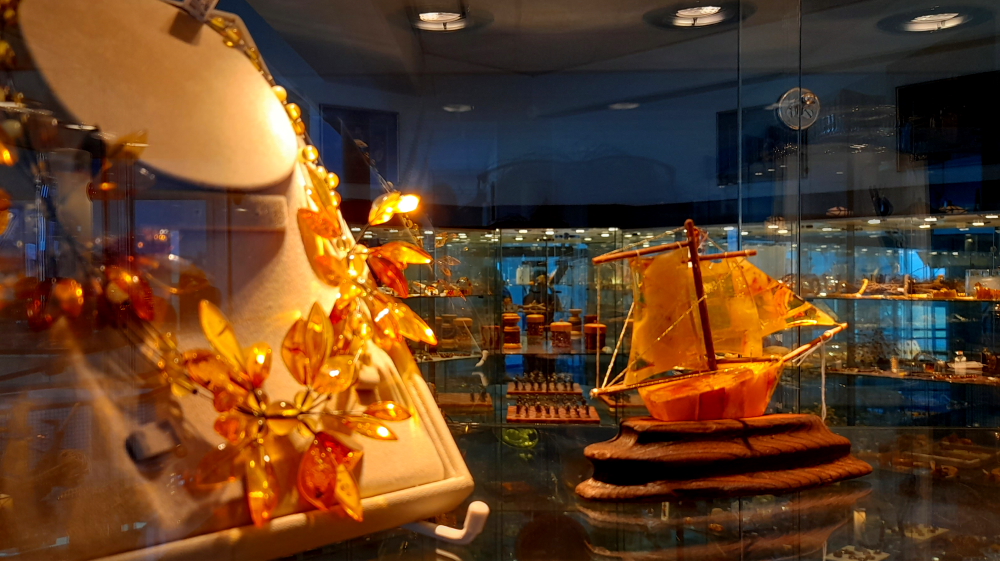
Next they drive to Damgarten where they visit a factory which produces jewellery and other items using amber. There is also an Amber Museum in Ribnitz-Damgarten which outlines amber findings on the coast of Mecklenburg-Vorpommern, the history of amber hunting, the amber turning trade in the Middle Ages and the large-scale amber extraction in the 19th century.
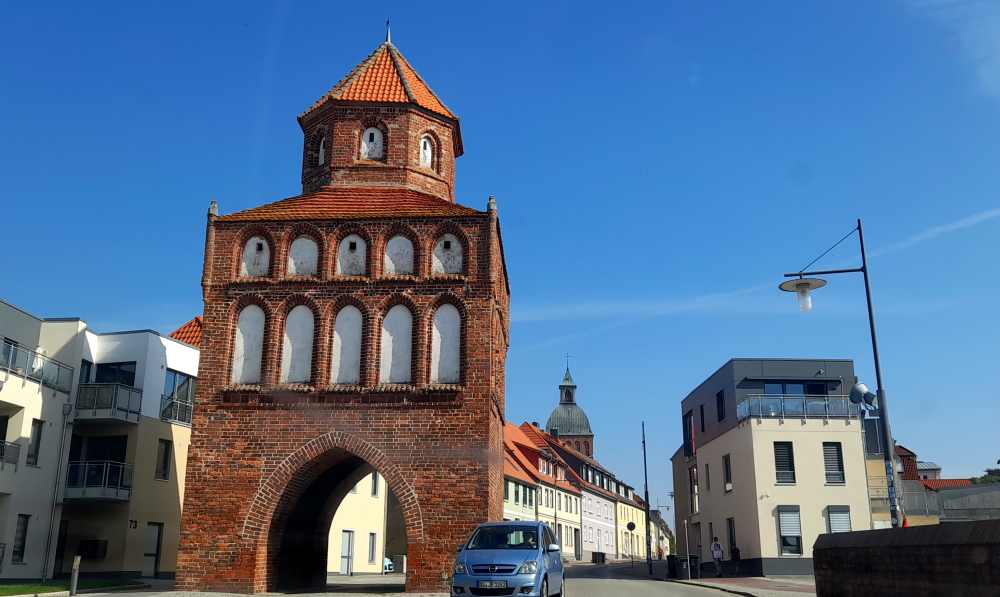
Finally, after being coiffed, they call into the fishmongers to buy herring for a future evening meal.
12 September, 2023
Our historical education continues today with a trip to the Freilichtmuseum (open air museum) at Klockenhagen, between Ribnitz and Graal-Muritz. The museum represents a 6 hectare “village within a village” where historical buildings from 18 villages in Mecklenburg-Western Pomerania were dismantled, rebuilt and renovated here showing what village life looked like over the past 300 years.
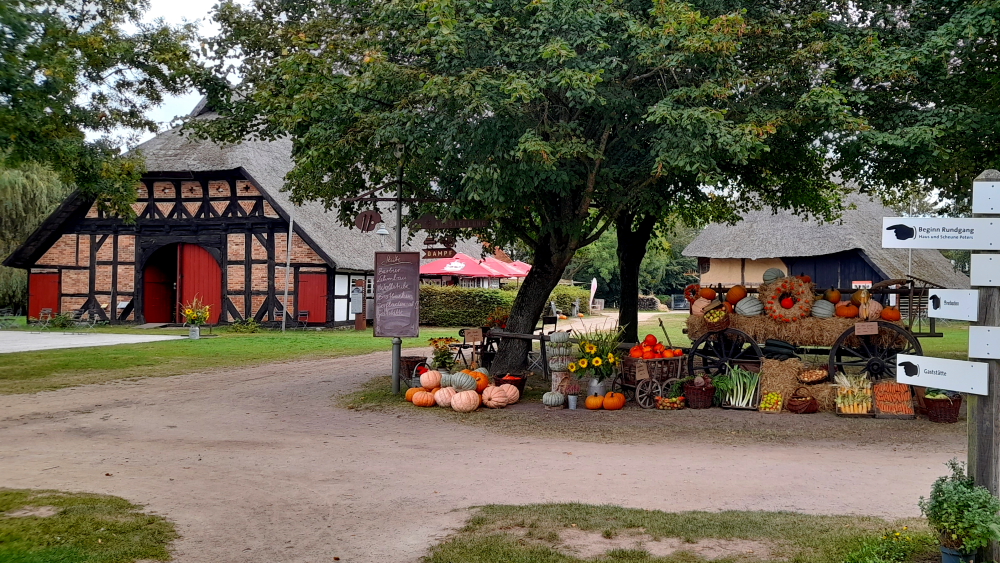
Various farm/smoke houses with a central corridor which usually housed several families – the smoke leaking through the ceiling rather than via a dedicated chimney.
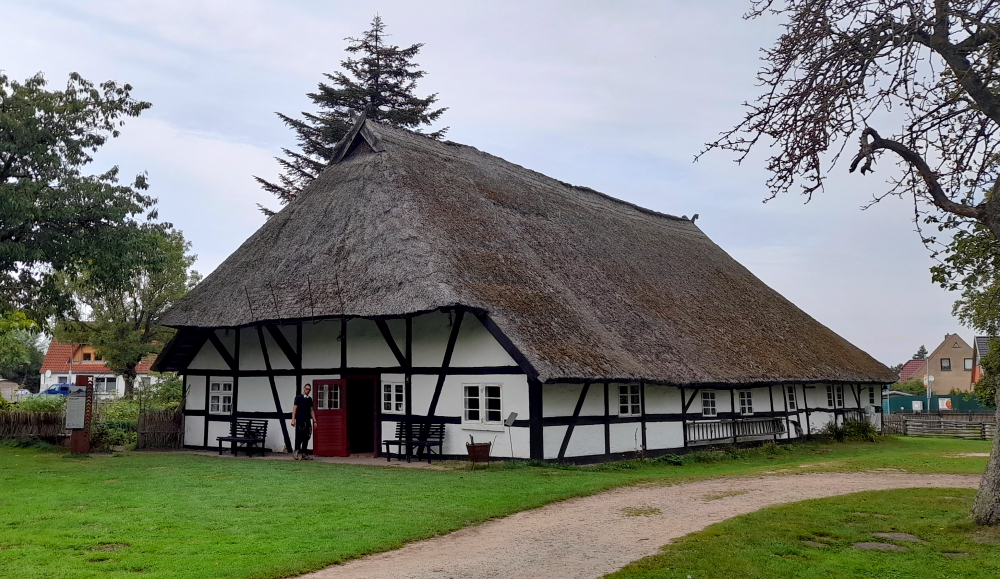
Outbuildings for grain or machinery, a windmill, a structure surrounding a large oven, an innumerable examples of progressive farming technology.
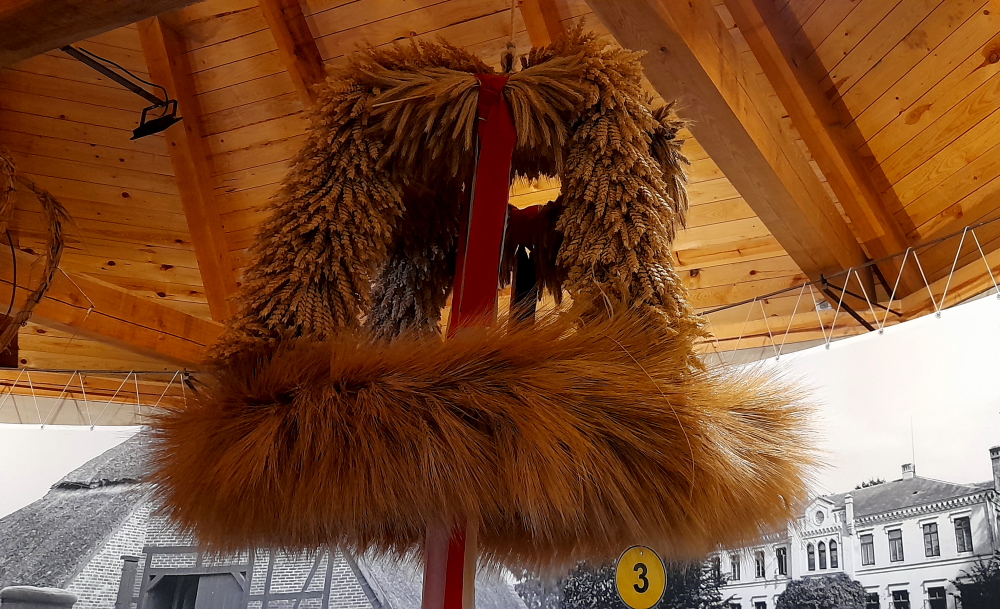
One of the buildings has the collection of this year’s Harvest Corn Crowns accompanied by the judges’ placements in the competition.
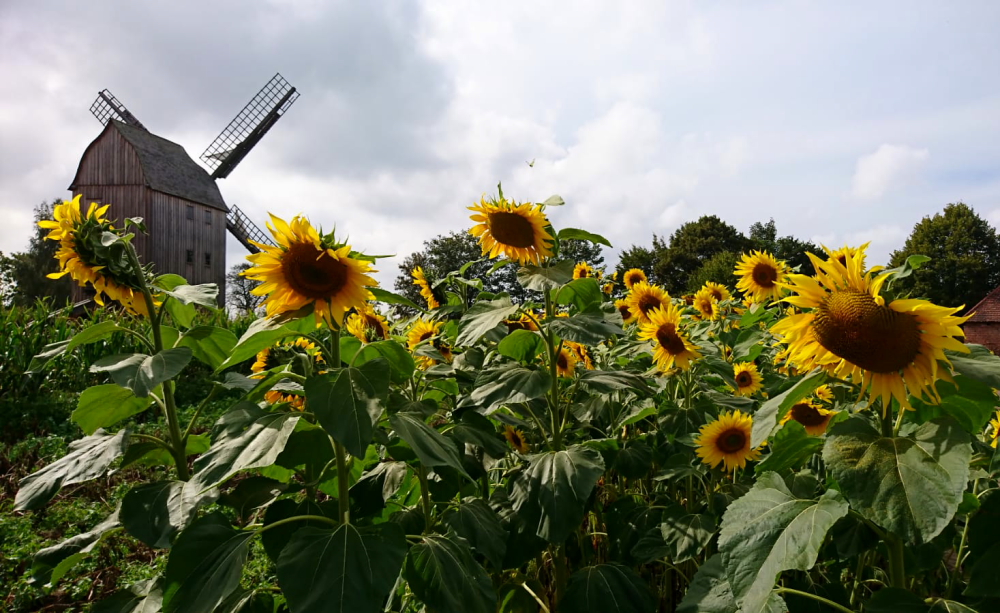
Various crops are in the fields including sunflowers, an orchard and several flower gardens including medicinal herbs.
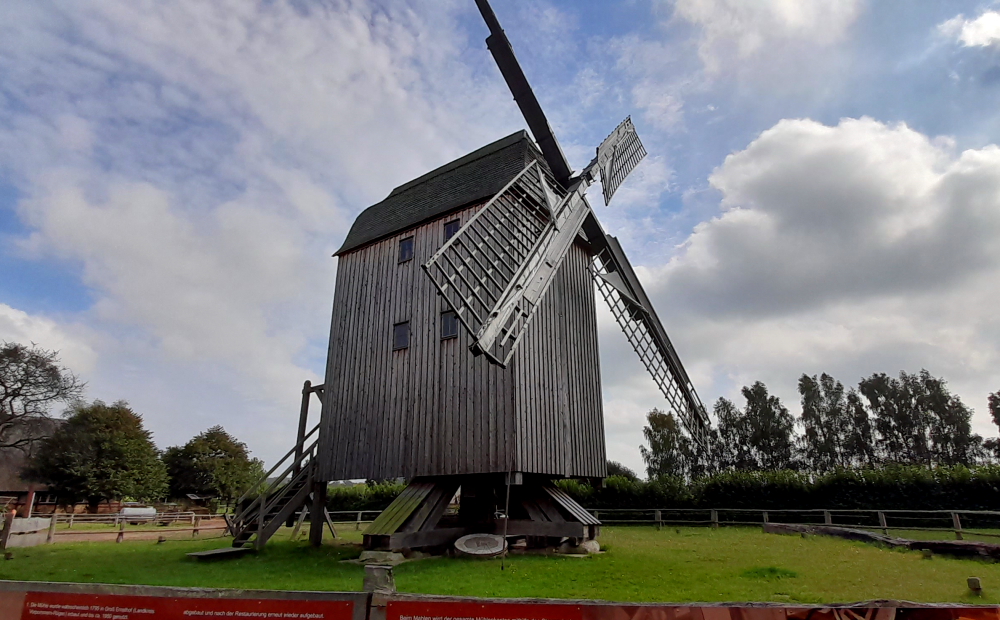
This restored windmill demonstrates how windmills worked originally – where the entire housing swiveled in response to the wind, rather than just the roof.
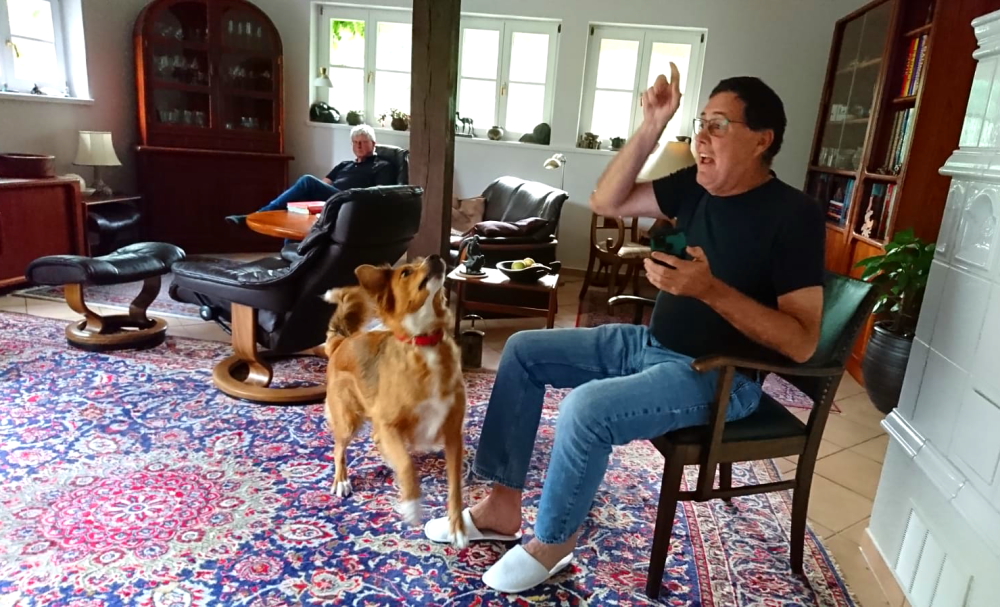
Always on our return to the house we are individually greeted by an eager Twiggy. She had already demolished one of her toys so we bought her another. But no sooner she gets her fangs around it, she manages to remove the “squeaker” in it and then promptly dismantles it, too.
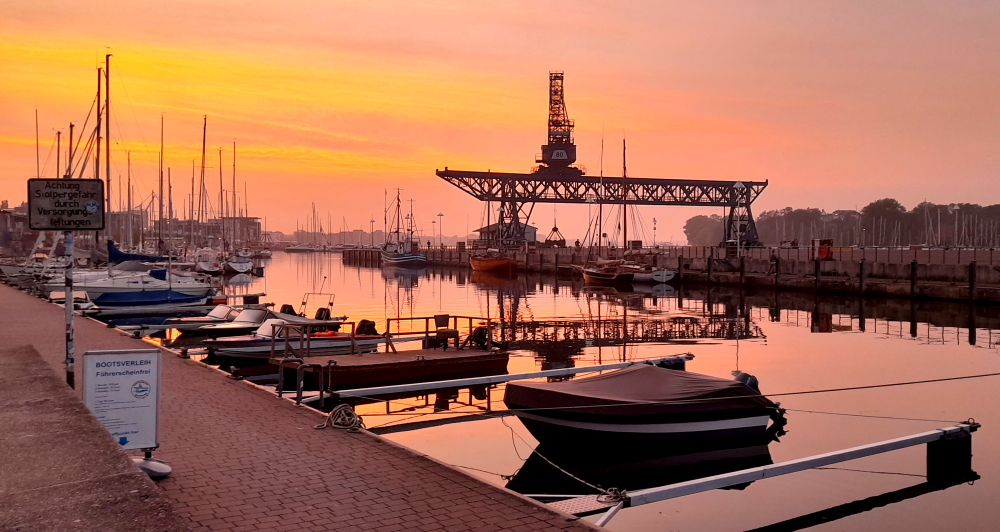
Tonight we drive back into Rostock down by the harbour.
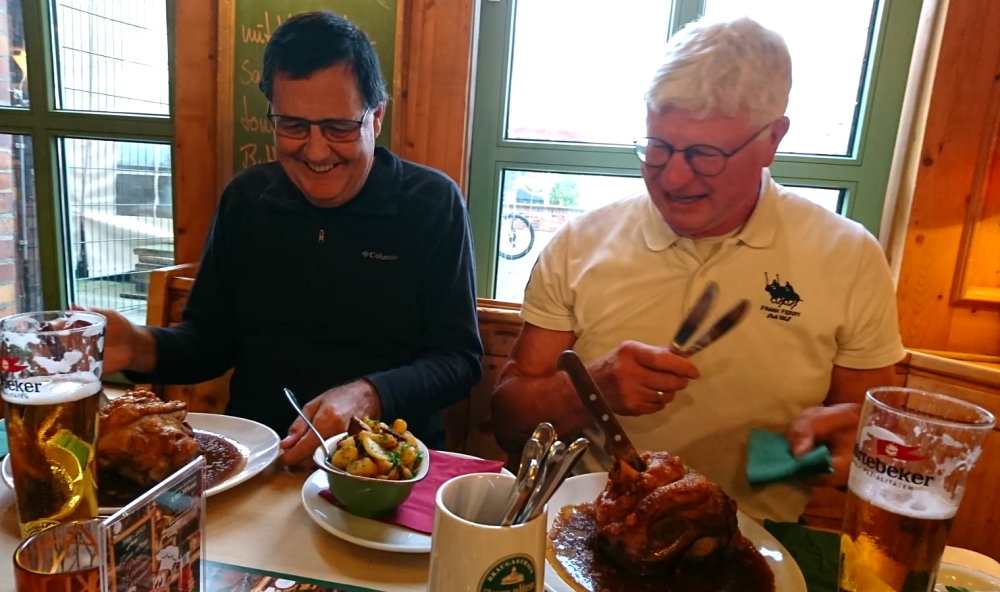
I expressed my desire to consume a truly traditional German meal – pork knuckle. Jurgen knows of an excellent restaurant that serves such traditional fare. I’m not disappointed. Both of us order the 1 kg pork knuckle dish with a side of sauerkraut and fried potatoes and a half litre of Pilsen. I manage to finish ¾ of it while Jurgen polishes off the lot!
13 September, 2023
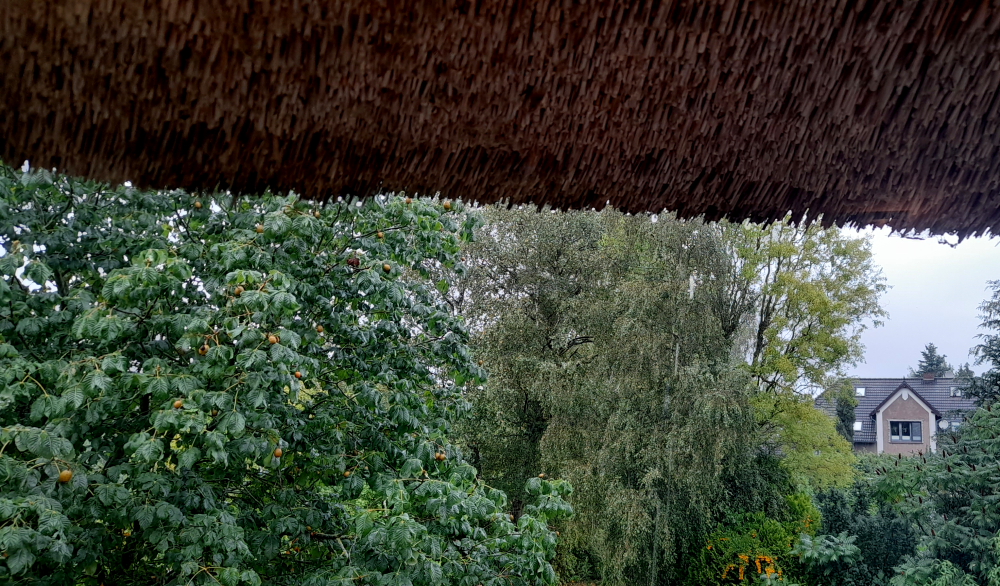
As predicted, when we wake this morning it’s raining, with rain dripping off the cut edges of the roof thatch.
Not to be deterred, we drive to Bad Doberan to see its Minster – a 13th century ex-Cistercian abbey-church dedicated in 1368 with rich medieval furnishings.
The first abbey in Mecklenburg, founded in 1171 was also used as the burial site for the regional rulers which continued after the dissolution of the abbey in 1552. Of special importance are the architecture and furnishings in the Minster. The interior was mostly spared the ravages of war. No other European Cistercian abbey can lay claim to such a large amount of original interior still intact. Among the treasures are the main altar which is the oldest wing-altar in art history, the monumental cross altar and the sculpted tomb of Danish Queen Margarete Sambiria.
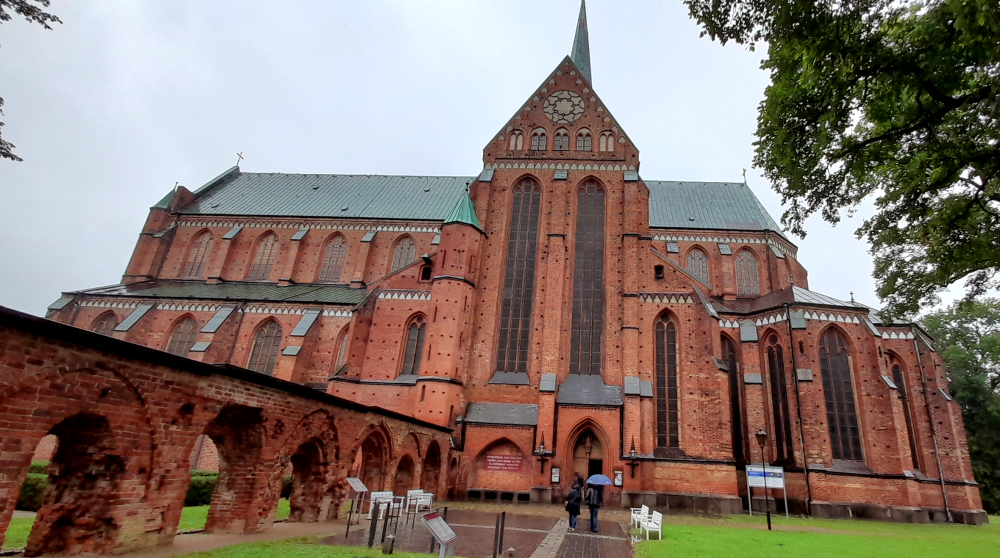
What is also significant about this building is that it was built on a swamp, with timber piles driven into the bog. There is also a circular charnel house located next to the Minster.
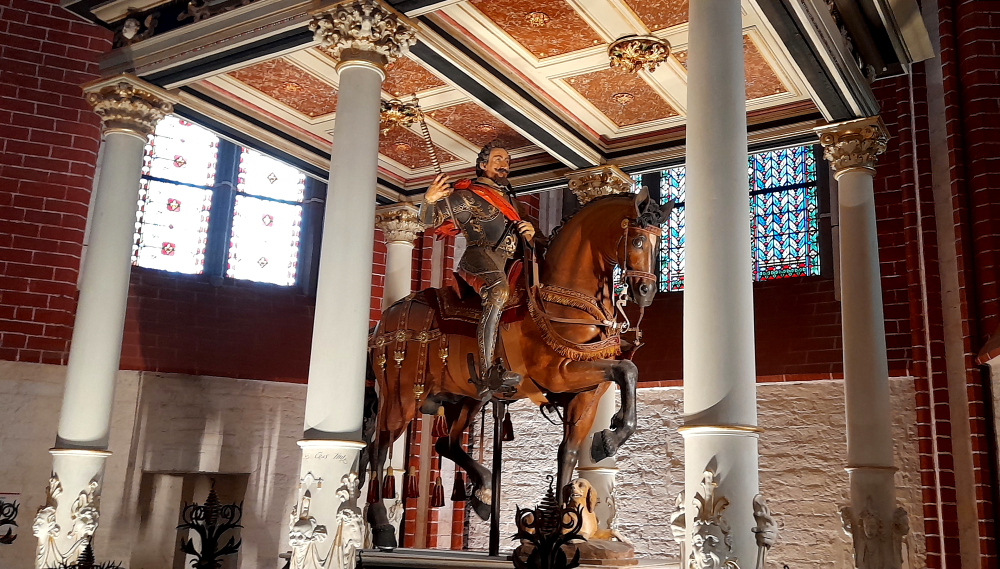
Besides the royal tombs, the most stunning item is the monumental double-sided cross (1360-1370). Photo of leafy cross
The cross is shown as the tree of life, per the words of Christ: “I am the vine and you are the branches – John 15:5. Decorated with what looks like green enameled metal in the shape of leaves with gold flashes and diamante orbs, presumably representing grapes.
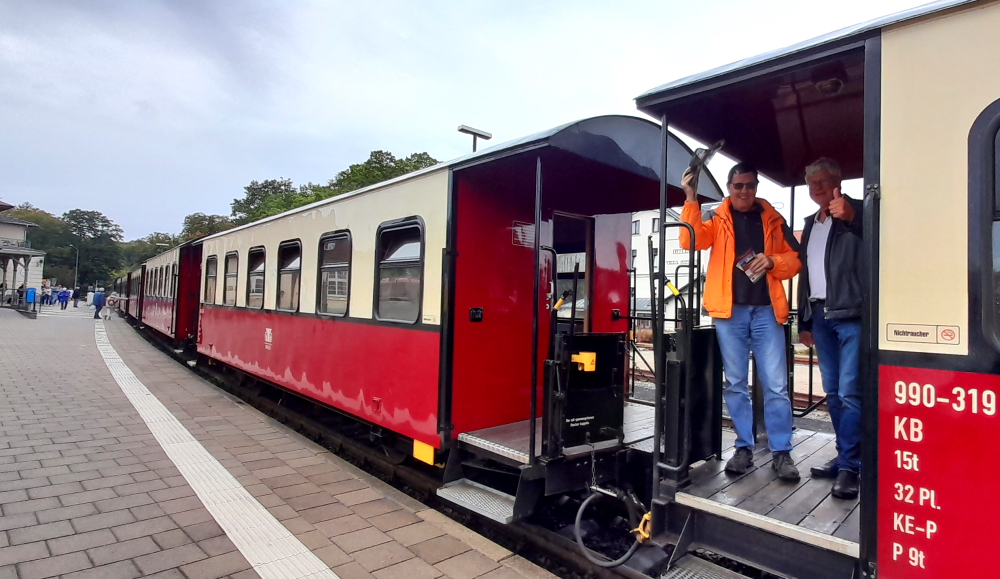
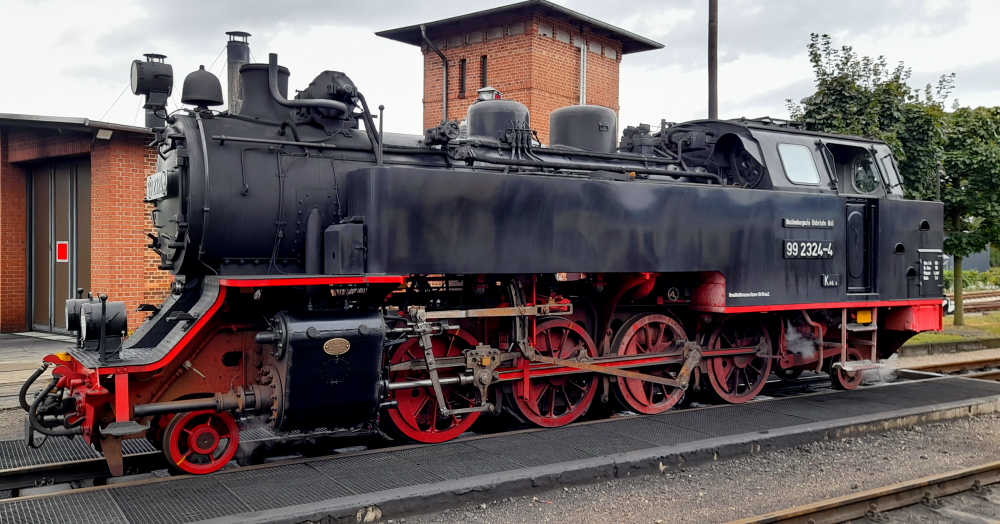
We drive to Bad Doberan Bahnhof where Jurgen, Lynn and I jump on the Molli – the Mecklenburgische Baderbahn Molli GmbH – for the 30-minute, 15.4 km journey to Kuhlungsborn West where the Molli Museum is located.
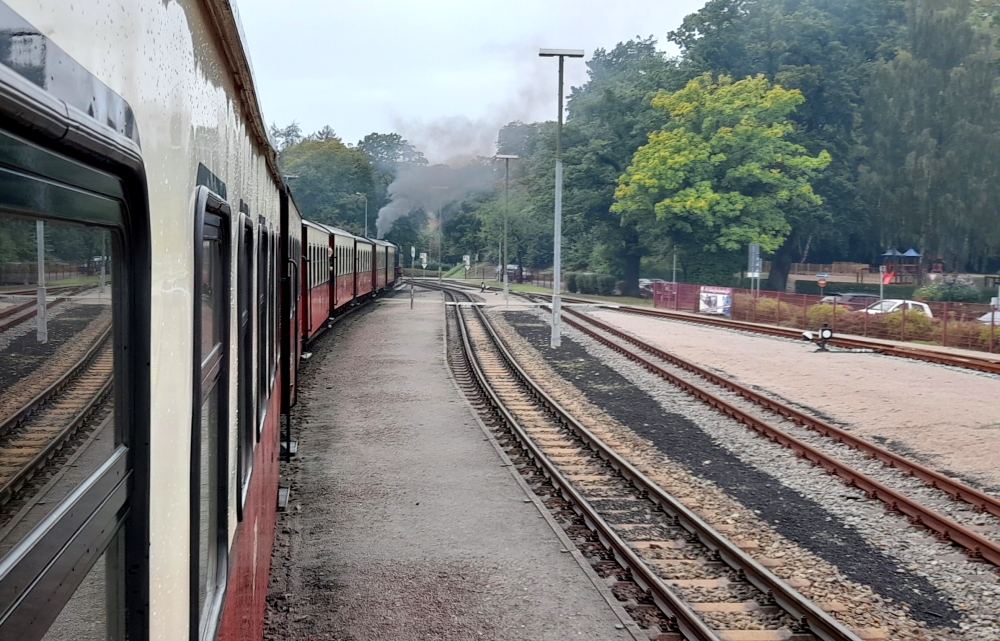
The steam engine is one of 3 built by Orenstein & Koppel (99.321-23) that were delivered in 1932 and train carriages delivered during 1910-1930.
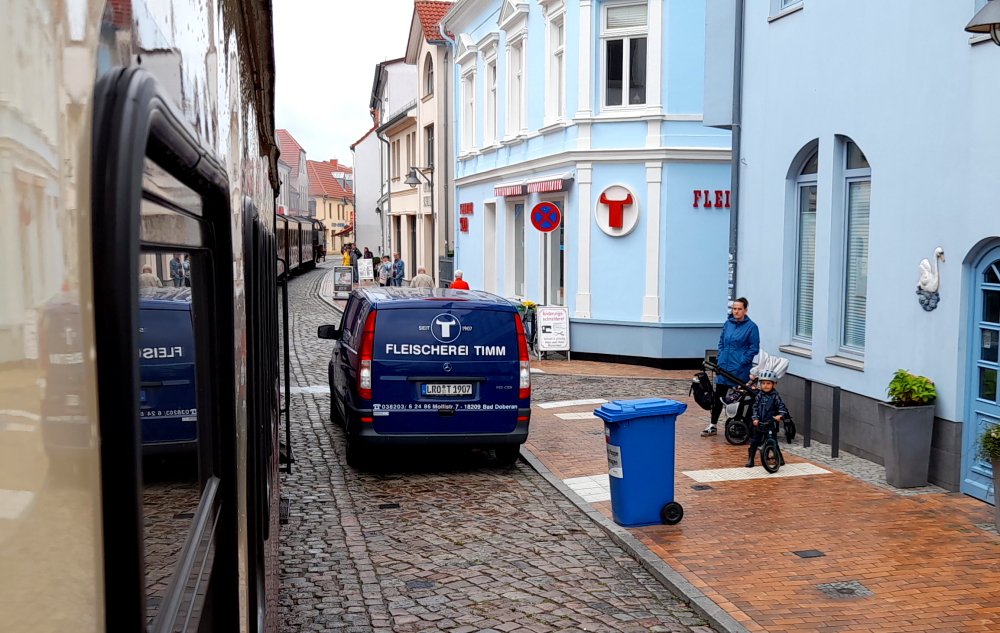
Anne meets us as the terminus then takes us on a drive around the sea resort that was known as Arendsee in 1910 – still a luxurious resort town full of regal hotels and guest houses reminiscent of a former era.
Nearby is Heiligendamm with its beach-side gated community and the luxury Grand Hotel Heiligendamm on the Mecklenburg Baltic coast. The hotel was the first seaside resort in Germany and was founded in 1793 by the then ruler Friedrich Franz I. Guests included Felix Mendelssohn Bartholdy, Queen Luise of Prussia, Nicholas I of Russia, later Adolf Hitler and Bemito Mussolini.
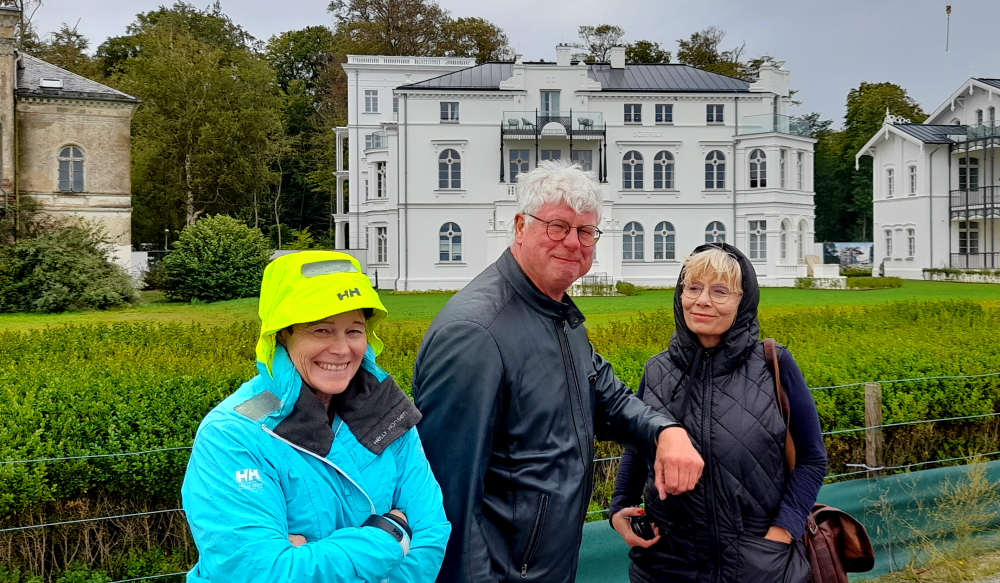
The complex consists of 6 buildings which were all built as a seaside resort between 1793 and 1870 and is renowned to be the first example of resort architecture. The main building (Haus Grandhotel) was built in 1814 and reopened in 2003 after 3 years of revitalisation work.
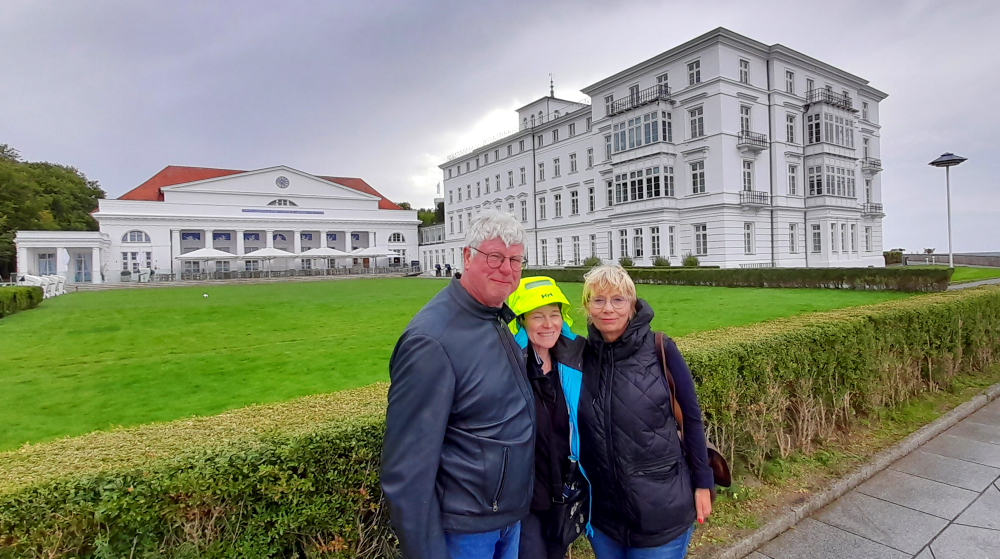
The G8 summit was held here in 2007 when thousands of anti-capitalist activists blocked the roads to Heiligendamm and a further 25,000 anti-globalization protesters demonstrated in Rostock.
14 September, 2023
Today is our last full day here. Happily, the sun is shining and we are off to another of the Hanseatic cities, Lubeck, which is about a 1.5 hour drive west but first we stop at Tressow so that Anne can show us an example of a schloss.
Werner von derschulenburg (1832-1880) inherited the estate in 1847 and greatly reduced its debts. During 1862-65 he had the late classicist mansion, Tressow Castle, built on a hill south of Lake Tressow by a student of Schinkel. Next to the manor house a stately stable was built based on the model of the Scherwin Grand Ducal Stables.
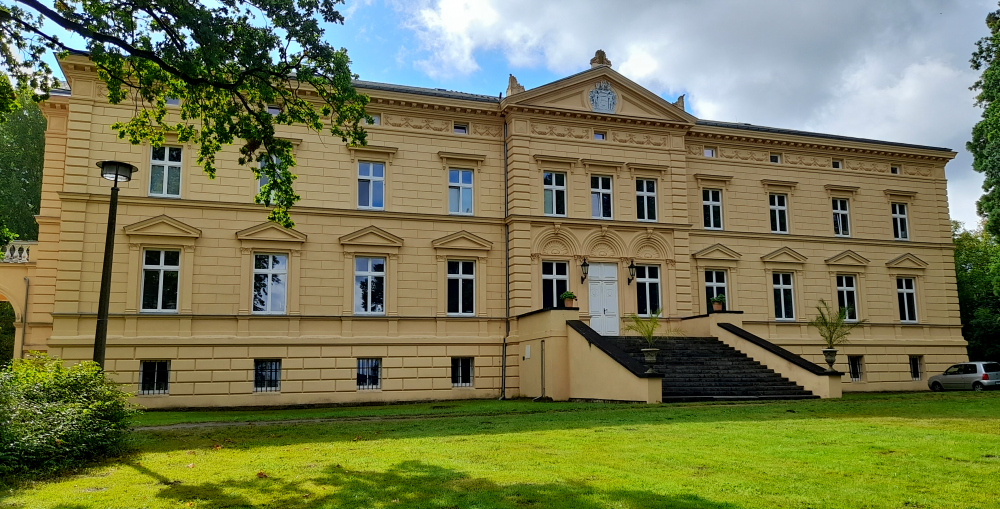
One of its inheritors, Fritz Dietlof von derschulenburg (1902-1944) was hanged as one of the group responsible for the failed assassination attempt on Hitler.
In the 1980s the building fell into disrepair. In 2000 the new owners began renovations and now offer holiday apartments in the Castle and wedding opportunities.
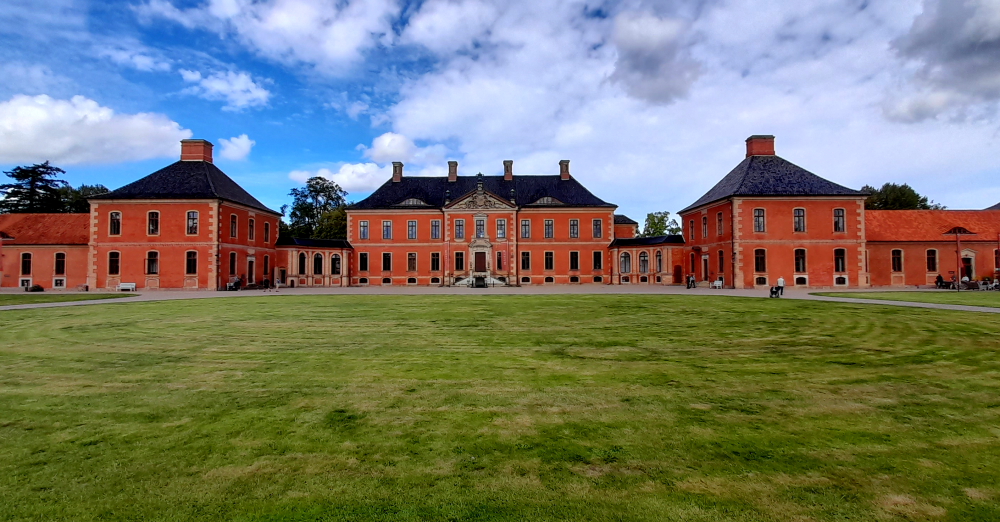
Next we drive to Klutz to visit another castle in an idyllic park, Schloss Bothmer – billed as ‘A piece of England in Mecklenburg’. At the peak of his career, Count Hans Caspar von Bothmer lived in London – in the legendary 10 Downing Street. From there he had the magnificent complex built in the Klutzer Winkel starting in 1726.
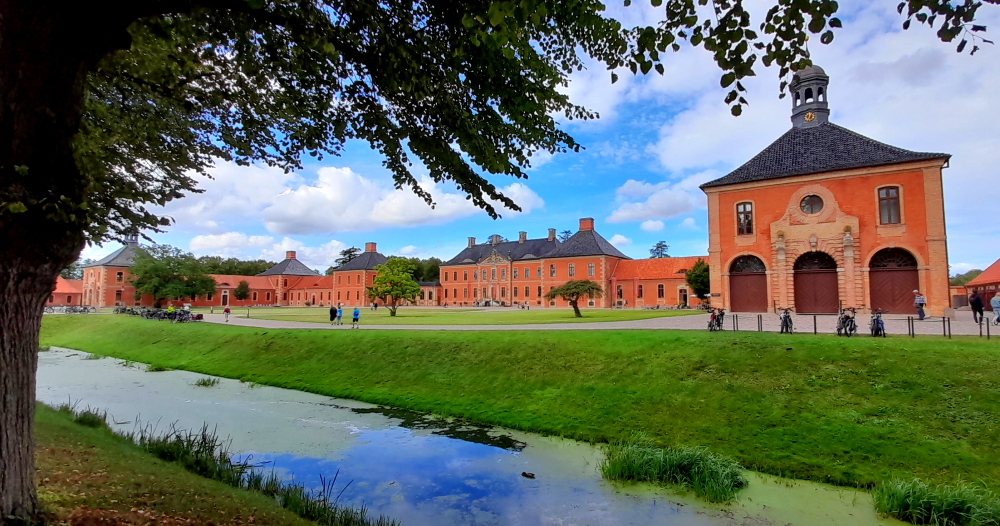
He was the first Prime Minister to live at 10 Downing Street, which was then called Bothmer House which meant that his castle in Mecklenburgh actually became a true English country house. The Counts of Bothmer lived here until 1945.
Before we stroll around the grounds we make a bee-line for the Orangerie Schloss Bothmer café for refreshments, including a plate of ice cream for Jurgen which he promptly wears on his nice, white shirt.
It’s mid-afternoon by the time we drive into Lubeck, or should I say sit in a traffic jam on the edge of the island where the old town of Lubeck is located.
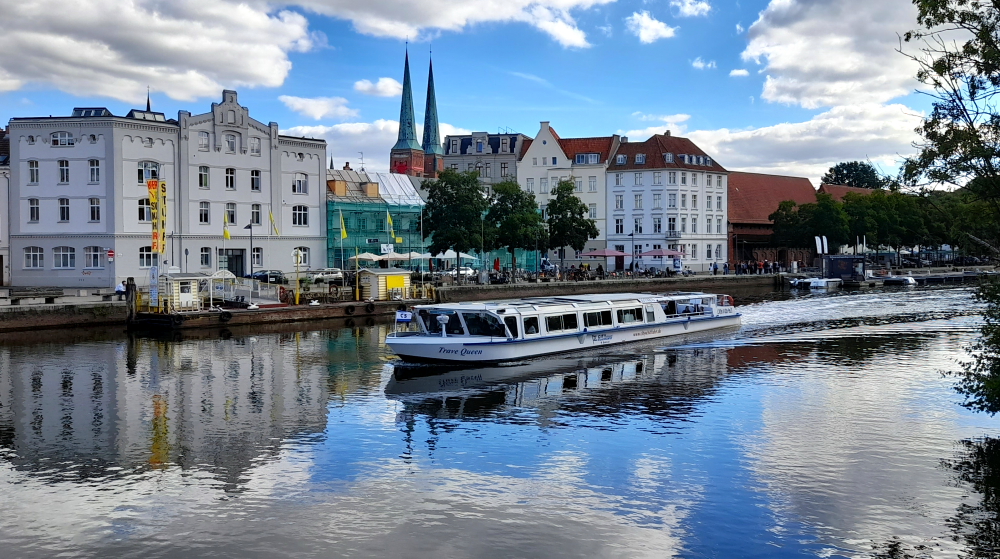
After parking the car we cross the Stadttrave onto the island. It seems that a number of structures here would give Pisa a run for its money.
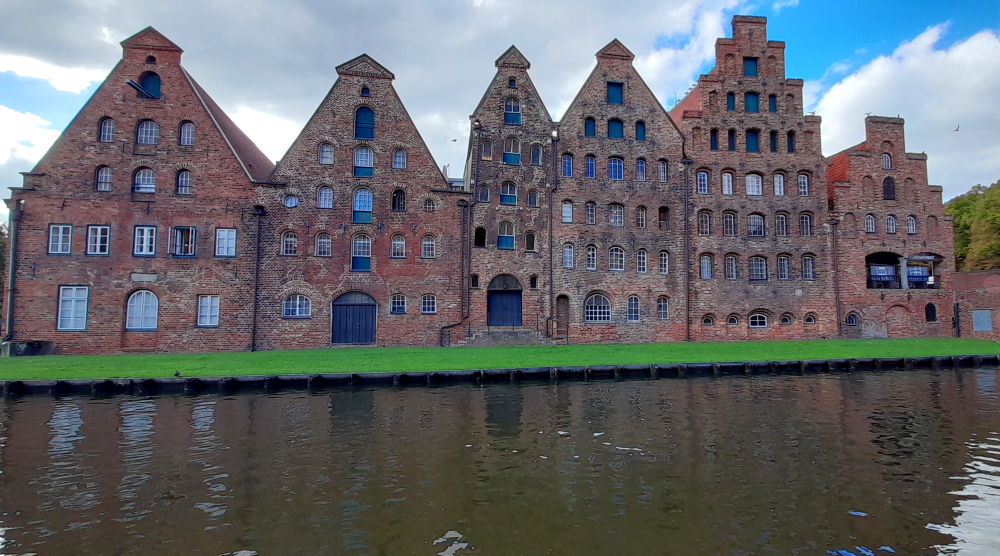
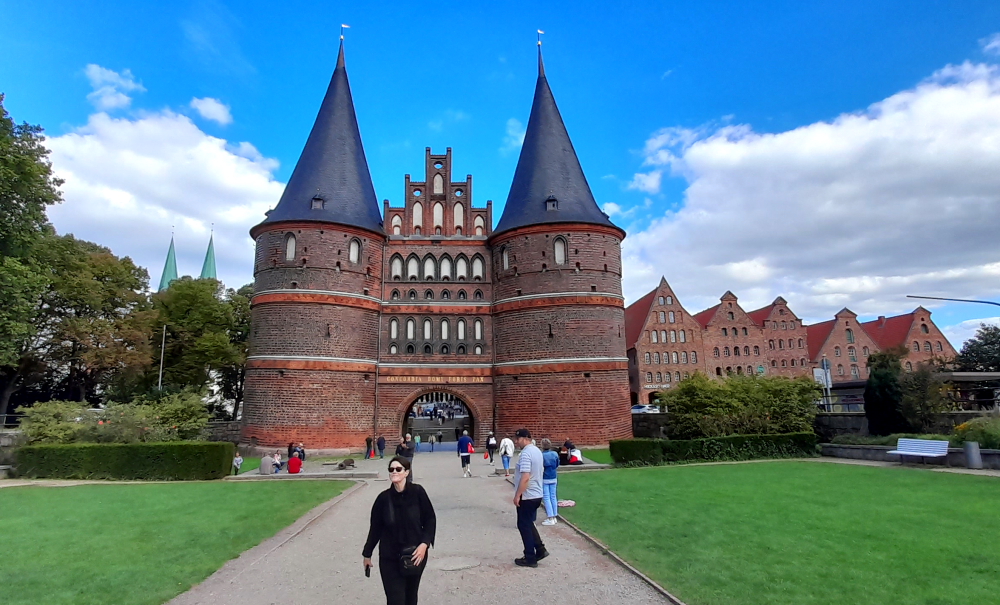
A row of warehouses by the river lean alarmingly. Even the stunning grand town gate with its fairy tale turrets has wonky walls.
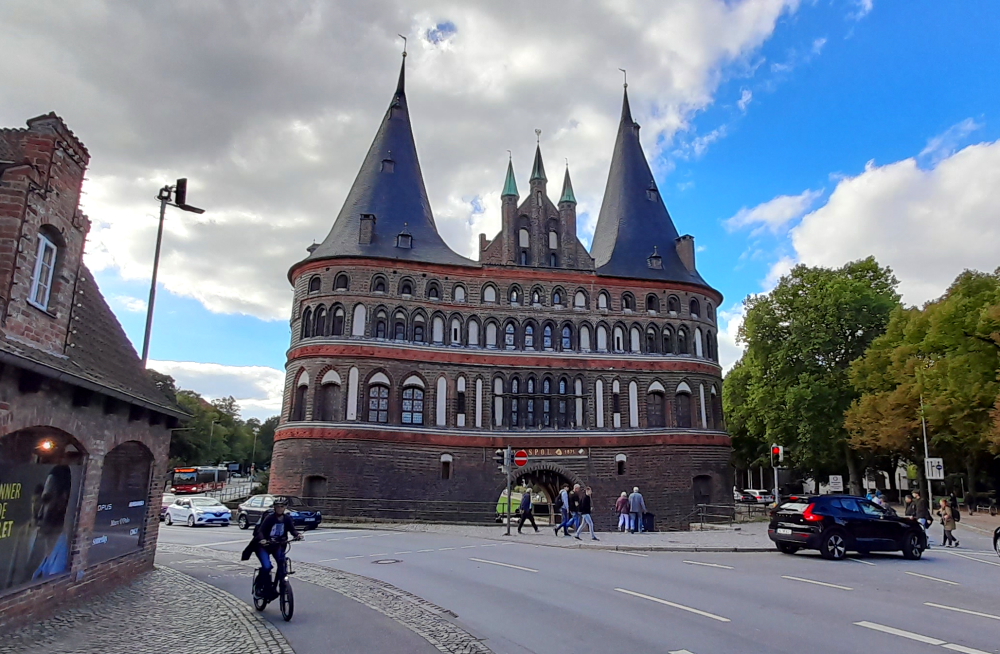
The considerable inclination and sag of the Holstentor’s south tower is clear to see. This is caused by insufficient foundation during the construction period in the 15th century. As the gate was built on marshy subsoil, close-set piles were driven into the ground onto which two layers of beams were laid, forming a so-called raft foundation. However, only the towers where built on top of this construction, while the heavy middle wing is unsupported. The towers therefore sank unevenly into the ground, tilting toward each other as a result of the immense pressure from the massive middle section.
These movements were not stopped until the restoration of 1933/34.
Soon we arrive at St Marien zu Lubeck. Massive in height it isn’t a patch on the other churches we have seen so far.
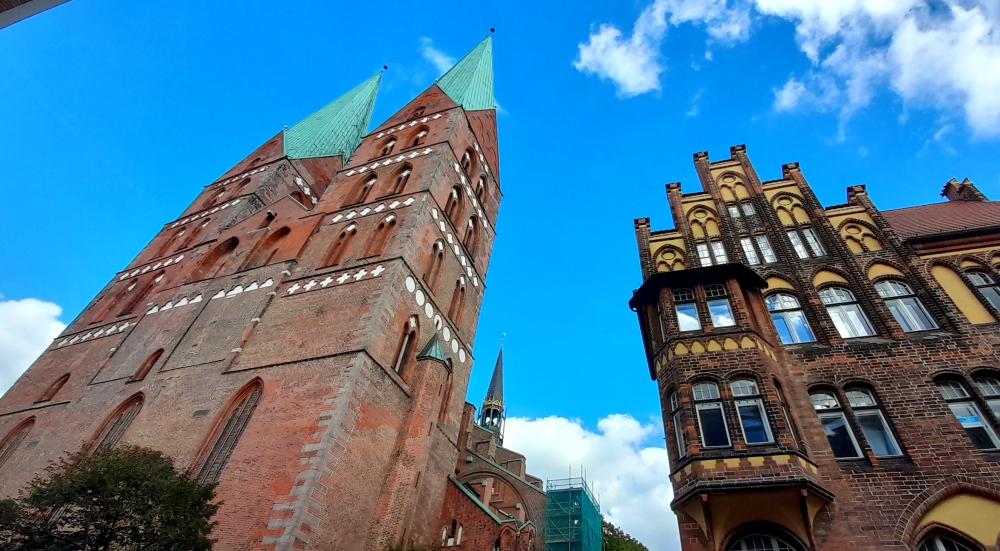
It also has an astronomical clock but not a patch on the one in St Mary’s in Rostock.
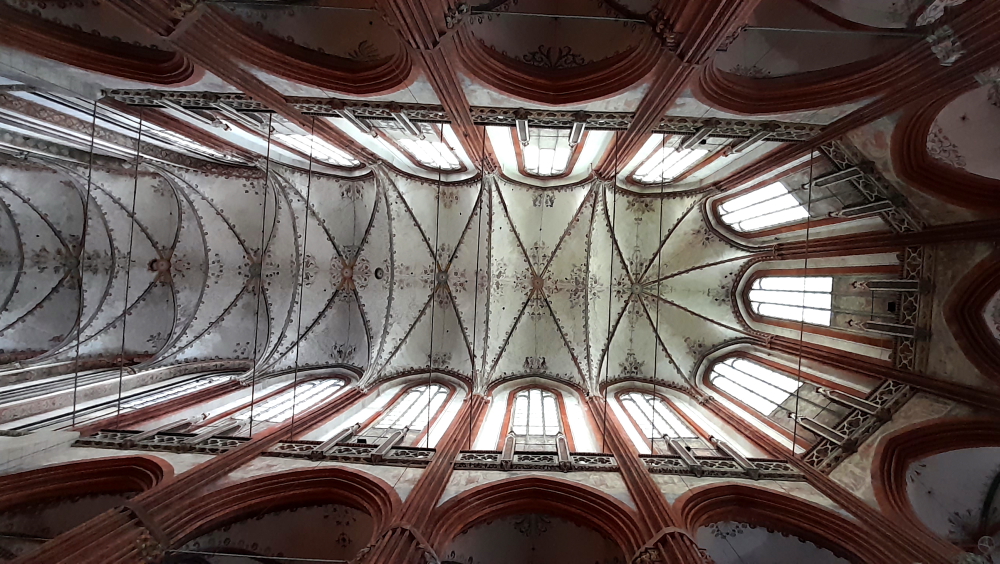
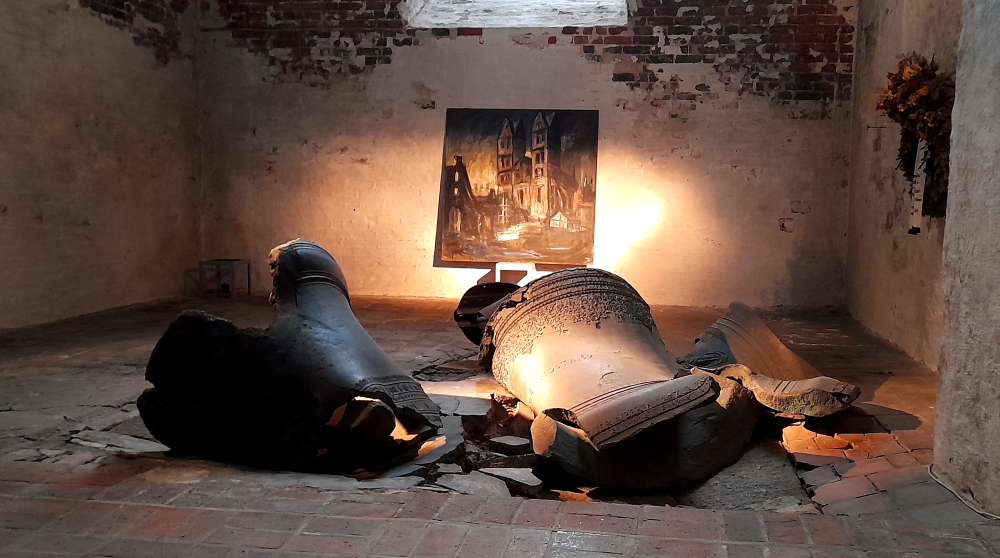
Photos in the church show how it was destroyed during WWII, including the felling of the bells and how it was restored. Of interest is the “Dance of Death” chapel which shows a modern frieze of traditional ones featuring skeletons dancing with people used in churches to convince congregation members to repent.
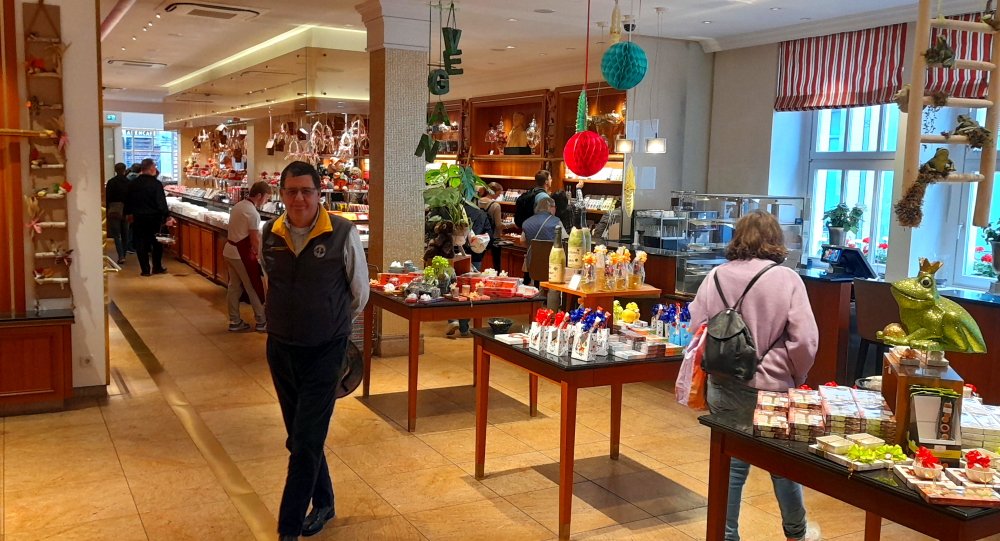
After that macabre note we walk around the corner to Das Café Niederegger, this famous café known for the creation of marzipan. After viewing the array of cakes in the circular display case we all opt for cups of hot chocolate only.
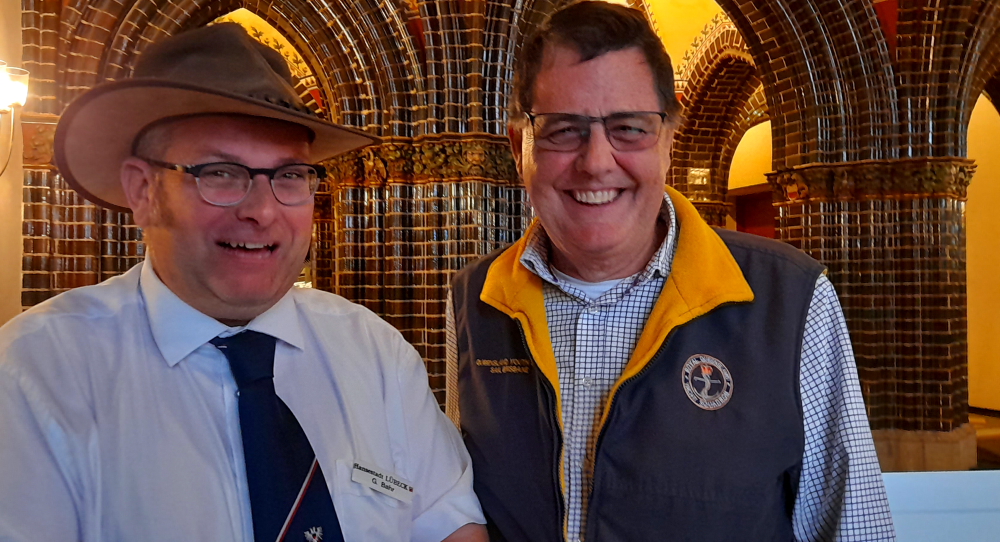
Across the way is the extensive Rathaus. When we enter we are greeted by the porter who, it turns out, has visited Australia including Brisbane and the Gold Coast. After a chat with us he kindly agrees to a photo op.
We had planned to dine at a famous fish restaurant here in Lubeck but after we visit it we discover that it is booked out until after 8 pm.
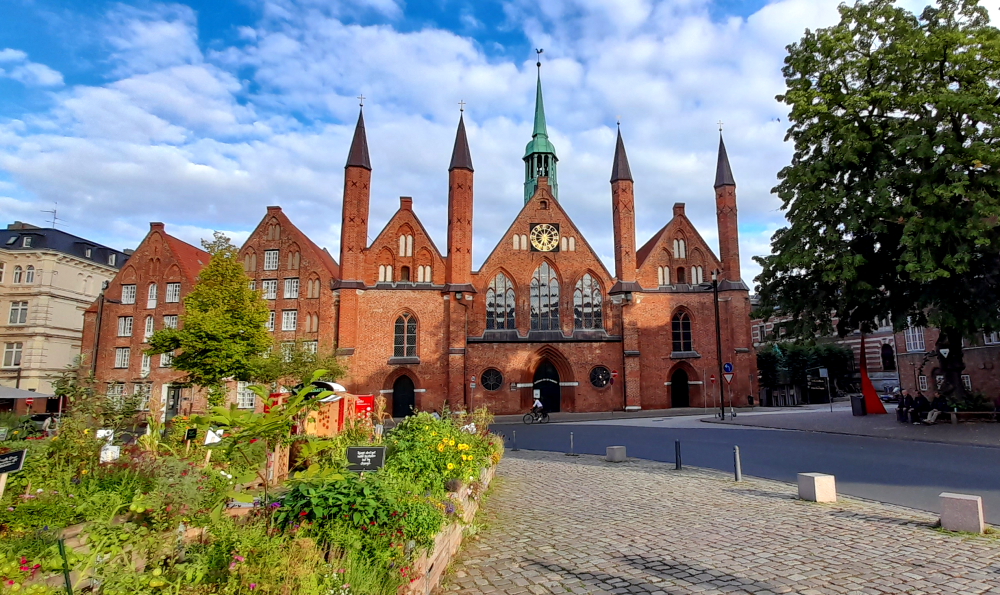
So Anne calls another of her favourite restaurants, Schlumachers with an Italian-inspired menu, where we arrive at 6.30 pm, taking a circuitous route via the other town gate.
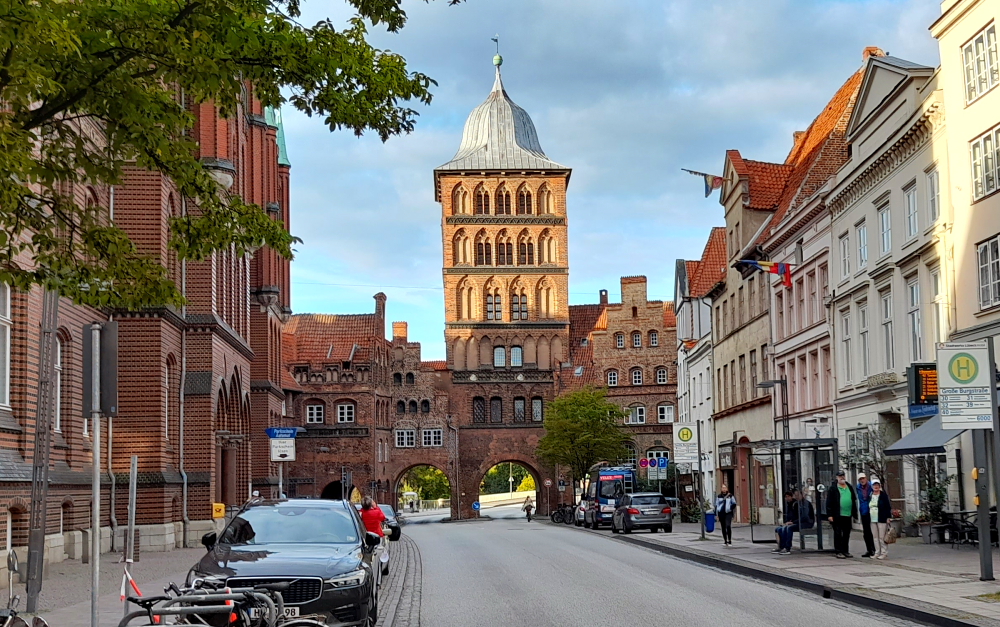
After an excellent meal we leave around 8.30 pm for the 1.5 hour drive home in the dark.
Poor Twiggy. She’s been cooped up in the house since we departed this morning so was she glad to see us – and the garden! Even though it is now 10:00 pm we opt for another 2 games of Triominoes over a bottle of champers.
15 September, 2023
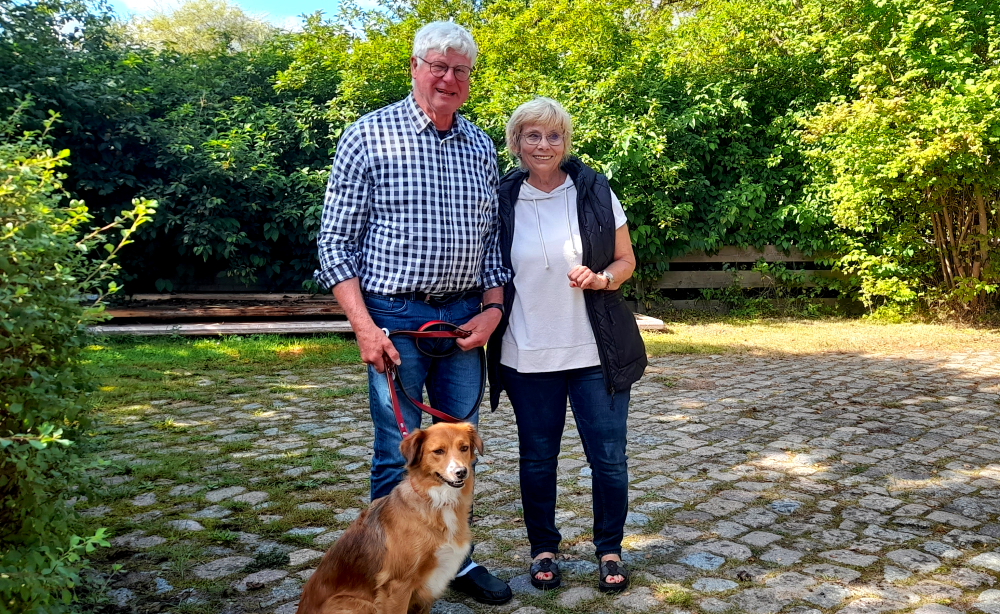
After a leisurely breakfast and booking and printing out train tickets to Hamburg from Bremen for Sunday, we bid Anne, Jurgen and Twiggy a sad but fond farewell. What an amazing week they’ve shared with us. Such a high bar for when they come to visit us in Brisbane. Challenge accepted!
It’s 12.15 pm, 21 Deg. C, and 3.15 hours’ drive to cover the 312 kms to Bremen.
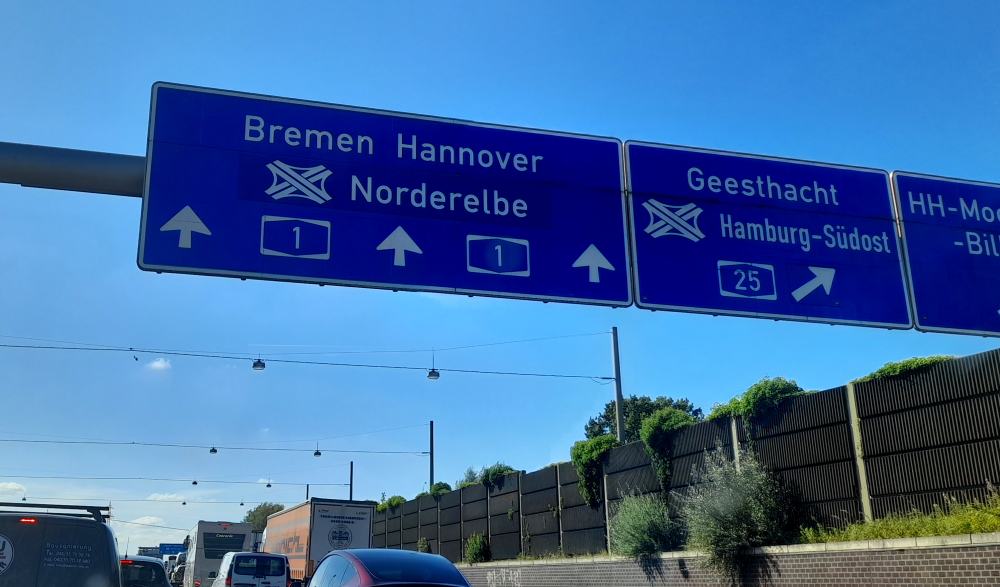
We have to contend with the usual reduced lanes on freeways and congestion tail backs which delays us a further 30 minutes. Around 4:00 pm we arrive at the Best Western near the railway station in Bremen. Contrary to its somewhat modern exterior, it turns out to have a rather dated interior, with an even more dated internet.
As we are now 7 days behind on the blog we were planning on catching up while we are here but not if the internet isn’t fast enough. We try 2 other rooms to see if they have a better connection but it appears that the internet coverage is strong in reception and the corridors but as soon as you go into a room, including the ‘business centre’ absolute nada. What is even worse is the receptionist’s attitude. She gives us the keys to view the 2nd room and says, “Last chance!”
After I ask to see the manager she quickly changes her tune. We come to the conclusion that we’ll stay in our original room and see just how bad the internet connection is while using the laptop. For our trouble we are allowed to order what we like to eat and drink at the bar for free.
Needless to say we are in bed, asleep by 9:00 pm.
 THE CONTINUING TRAVELS OF YOGI & BOO BOO