
4 December, 2023
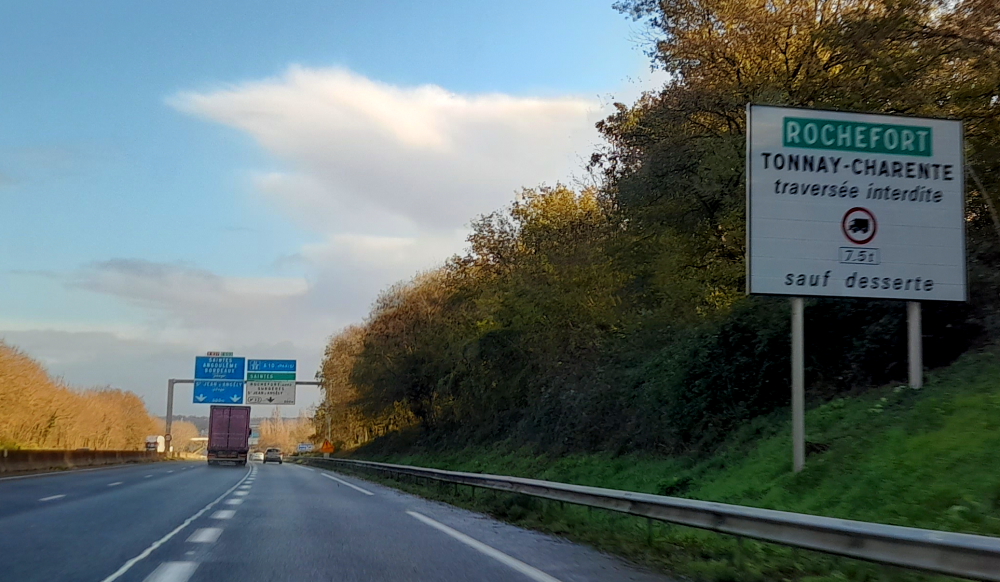
Today will be one of our longer drives – about 400km from Quimper to Rochefort. We leave about 9:45 am for the 4.5 hour drive. It’s 10 Deg. C and raining.
About half way we bypass Nantes and cross the Loire River. It is bordered on both sides by a large industrial area.
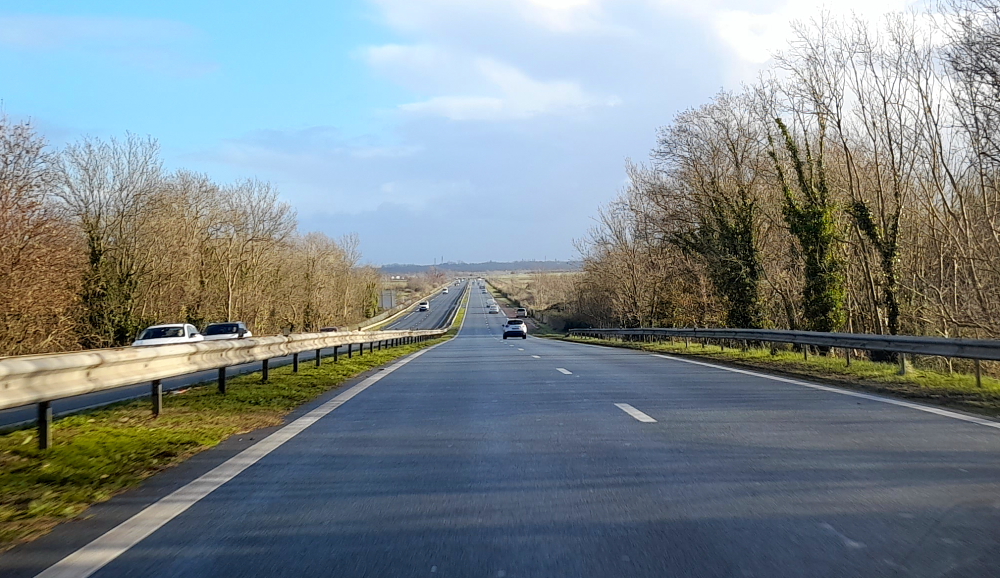
As we get closer to our destination the sun breaks through and it’s now 14 Deg. C. Outside of Rochefort the land flattens – this is canal and marshland country and sections of fields are flooded.
Rochefort is built on the Charente estuary, a “new town” created in 1666 at the initiative of Minister Colbert to establish a construction site for the navy with a maritime and military arsenal which will become the main one in the kingdom. The site offered, in addition to being a committed royal domain which could be taken back, the advantage of being set back from the coast and English attacks, easily supplied with foodstuffs and materials by navigation on the Charente River with the river port of Tonnay.
In the 18th century, the French monarchy organized the supply of the Atlantic colonies (Antilles, Guyana, Canada, African trading posts) and the Indian Ocean (Mauritius and Reunion) from Rochefort. During this century it was also the departure point for 27 slave trade expeditions.
Since the departure in 1927 of the National Navy, Rochefort has retained several military and industrial activities relating to armaments, and has become a seaside and tourist town, the 7th spa town in France with 15,000 spa guests per year. From this prestigious past, Rochefort inherits an urban heritage which has earned it the status of city of art and history.
We arrive around 2:30 pm and check in. Our apartment is part of the refurbished Royal Arsenal rectangular compound which overlooks the Bassin de Plaissance Laperouse on one side which connects to the Charent River. As the sun is still shining we decide to drop the bags and check out the ‘hood.
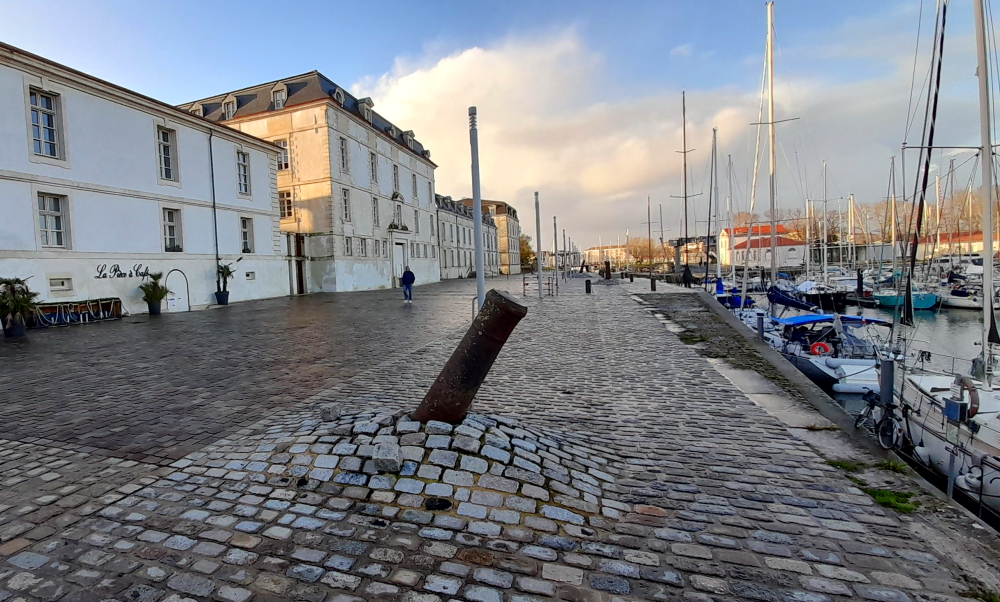
The old town of Rochefort and its suburbs were built on a Jurassic limestone island which is evident in the large number of historic buildings constructed from limestone.
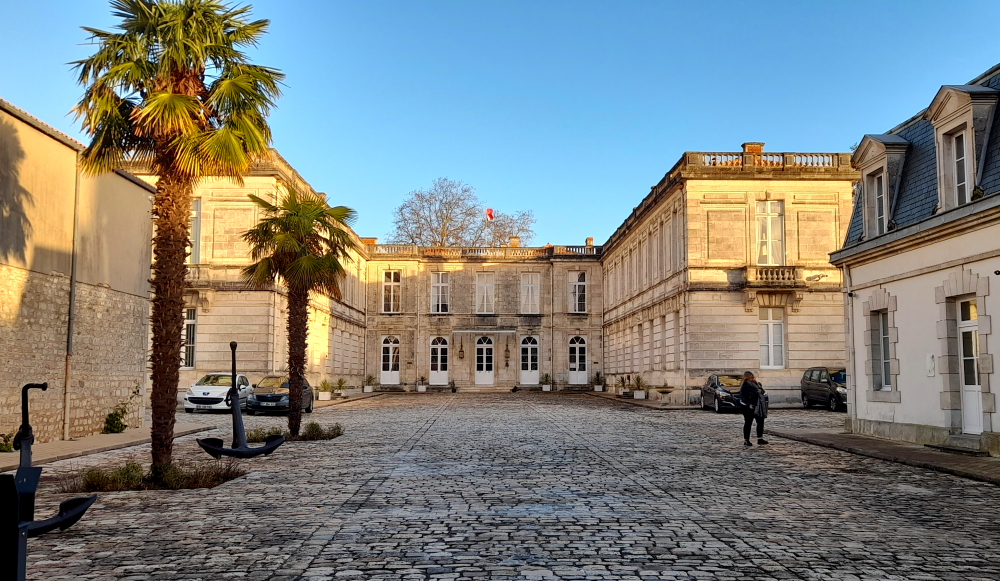
In particular, the compound where Napoleon stayed during 4-6 August 1808 and 3-8 July 1815.
As it’s a Monday, there probably won’t be m/any restaurants open tonight so we walk to the local Carrefours on the other side of the old town for supplies.
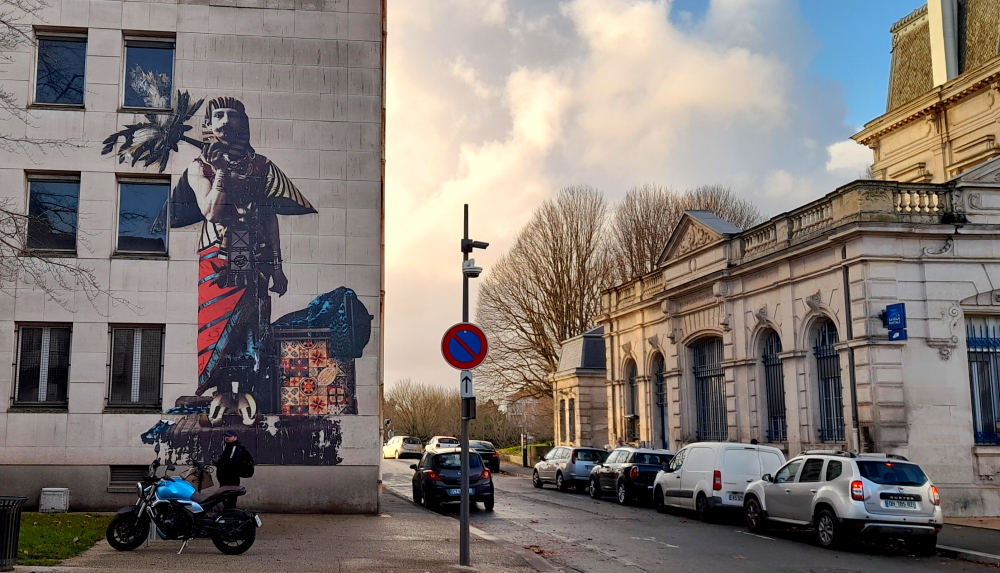
Returning to the hotel we walk past Place Colbert which this time of year has an ice rink set up.
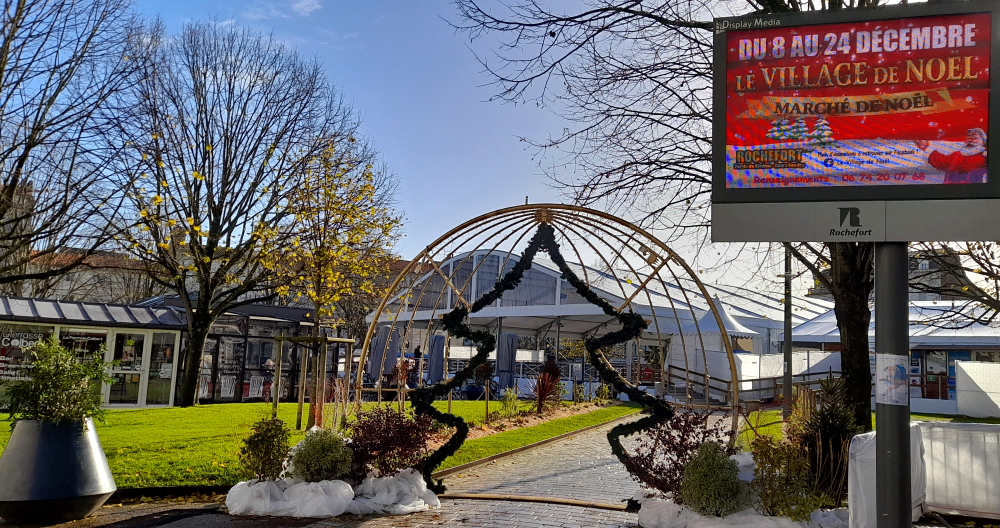
Along one side of the Place is the impressive, flag-bedecked Hotel de Ville.
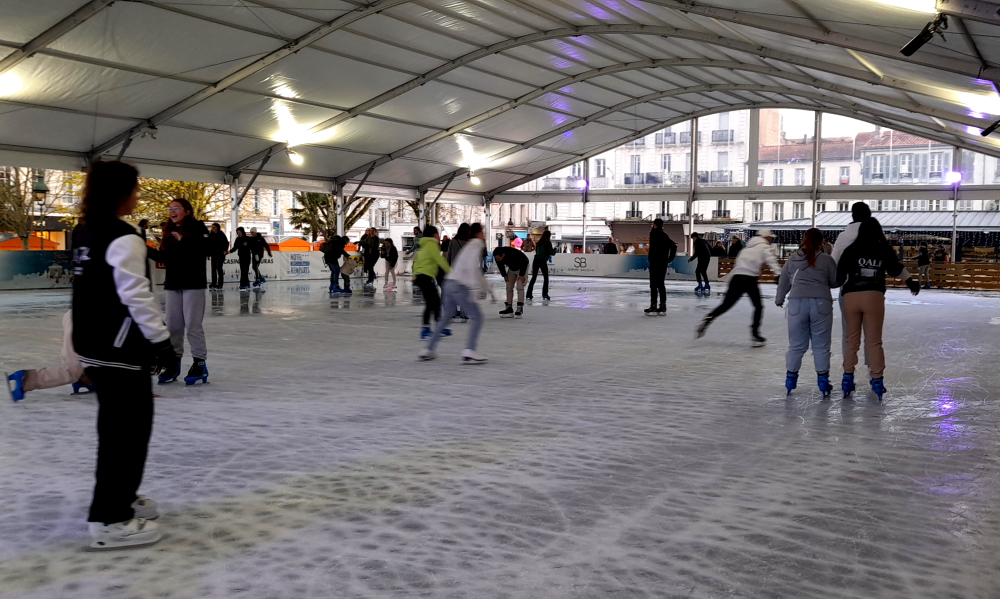
We come across some more street art, in this instance elegantly advertising an optician’s shop.
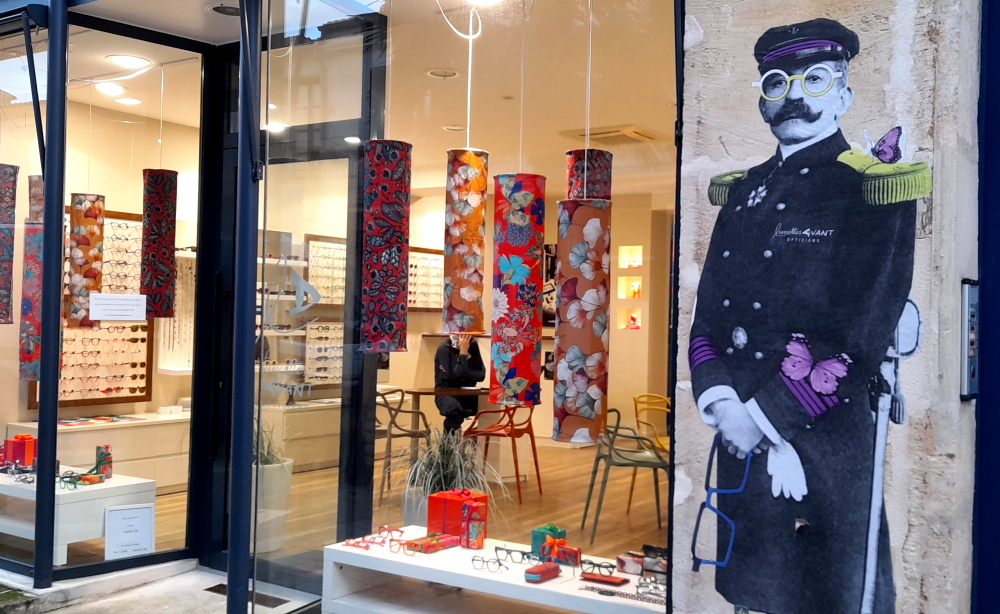
When we get back to the apartment we are relieved to feel that the heating has made it very cosy and even the washer/dryer has finished its load as expected.
After an entree of pate toasts, a main of chicken and mushroom risotto accompanied by a glass of red and a dessert of mango sorbet we’re ready for an early night.
5 December, 2023
Opening the shutters at 9:00 am reveals a sunny morning with a forecast top of 11 Deg. C. Breakfast is served in a Cafe attached to the Apartment complex in the vaulted basement of limestone blocks.
Unfortunately, it’s rather disappointing. Just juice, yoghurt tubs, no fruit, no savoury dishes, some bread, butter, jams and pastries plus strong, stewed coffee in a large pump pot. When we go out for a walk we’ll have to find a cafe for some decent coffee!
Our town map reveals a couple of walking trails so we walk to the basin and the river beyond.
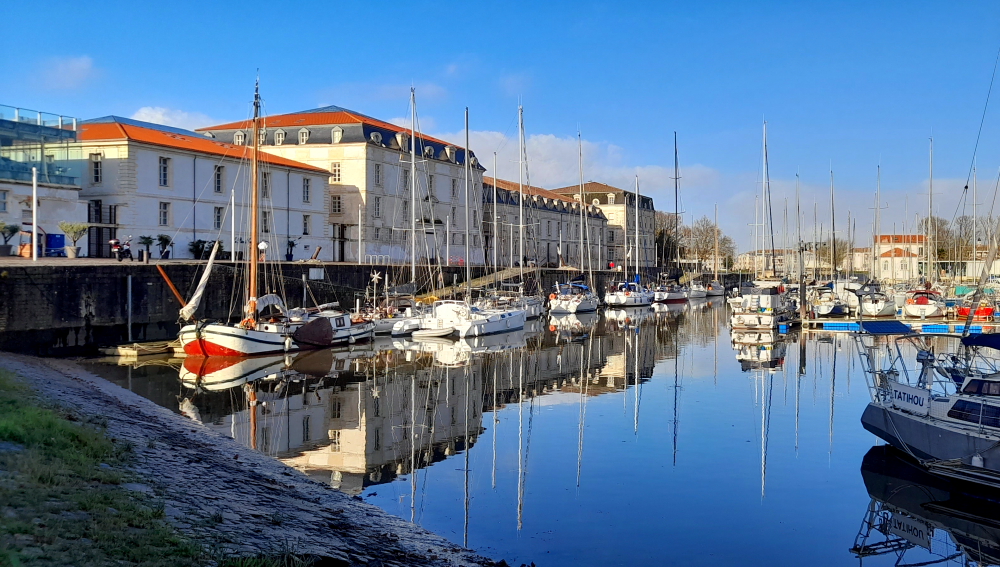
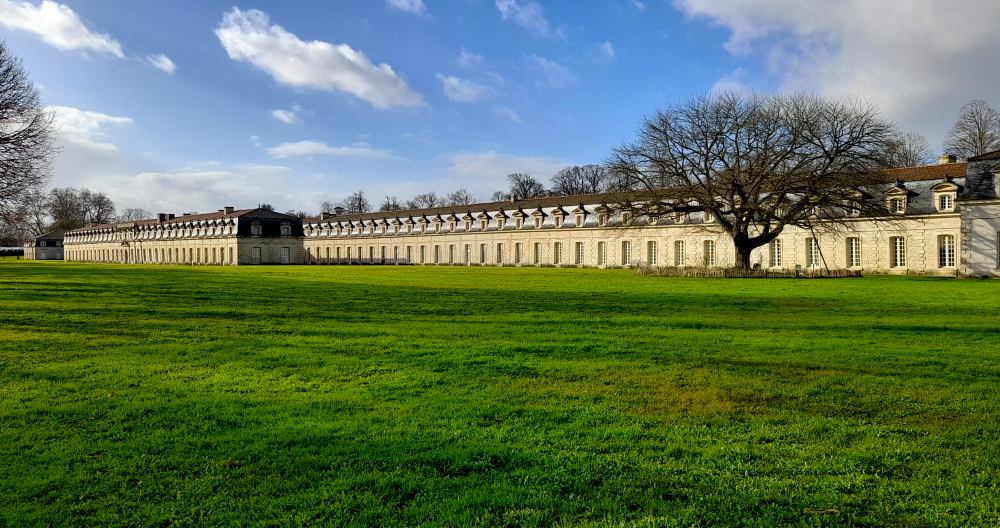
Walking along the river bank we pass the Corderie Royale, now the rope-making museum.
At L’Arsenal des Mers we walk from the harbour front under the Porte de l’Arsenal and up Avenue Charles de Gaulle.
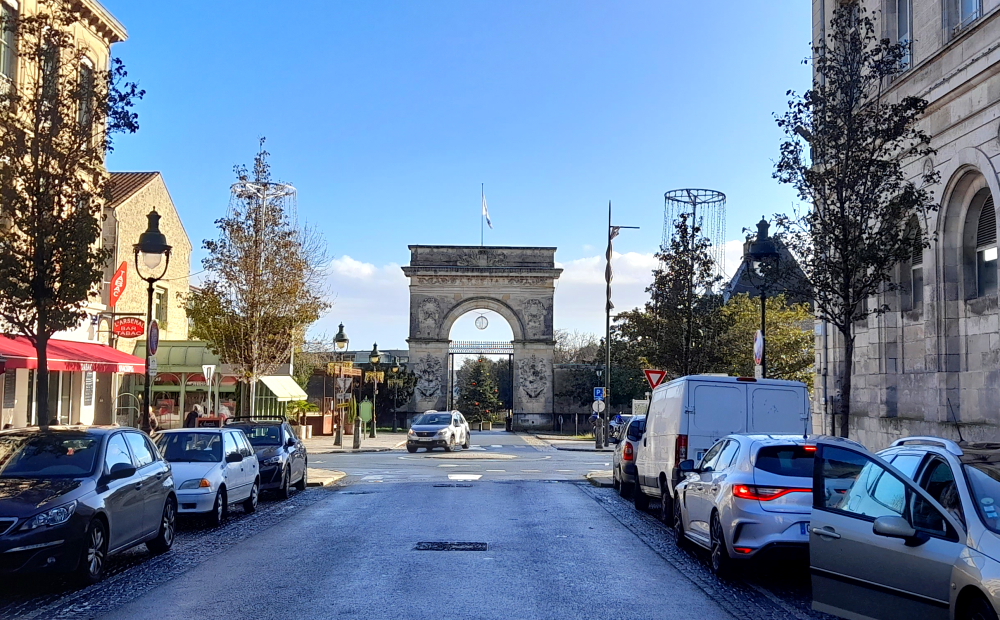
Today there are open-air market stalls set up on both sides of the avenue – fruit, vegetable, roast chook and cheese stalls.
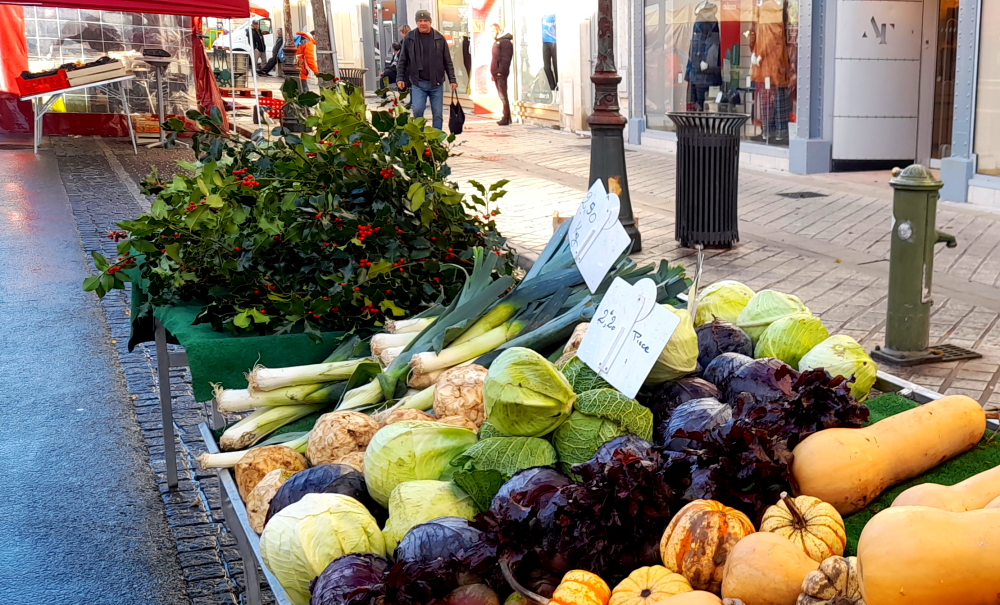
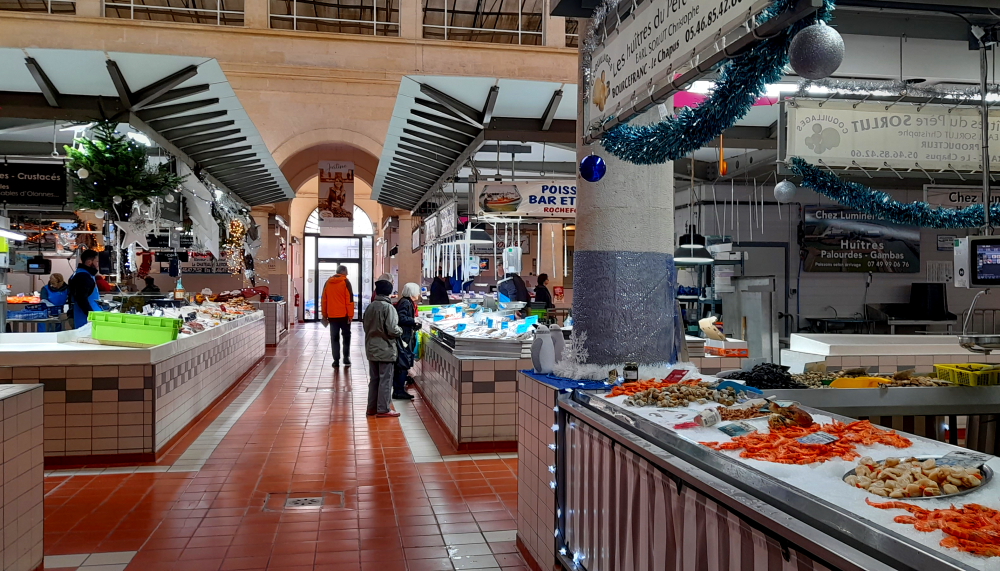
On the street corner is the Les Halles building, for indoor markets. Interestingly, there are several fish stalls open today with one or two meat stalls and a cheese one.
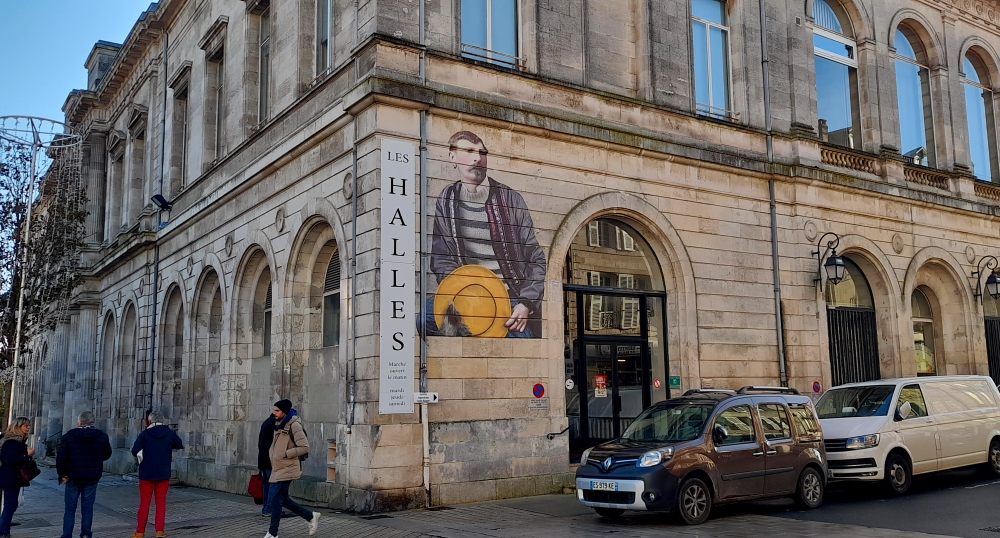
The majority of the stalls are closed. It must be an amazing atmosphere here when all the stalls are open at the same time.
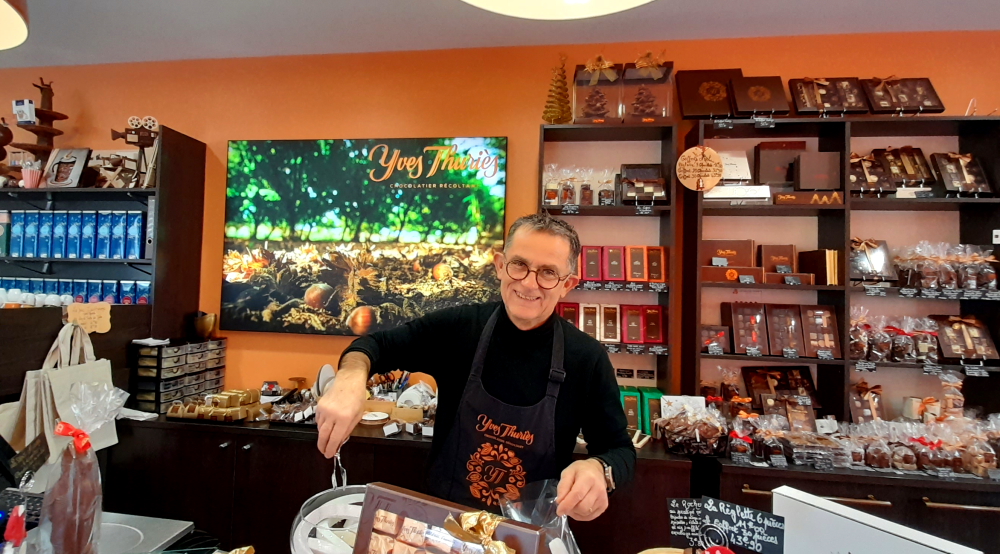
Turning the corner we are at Place Colbert and in search of a cafe where we can sit outside in the sun, which we find at ‘Yves Thuries’, the chocolatier/salon de the. While we are waiting for our hot beverages, Lynn crosses the road to check out the Saint-Louis Church.
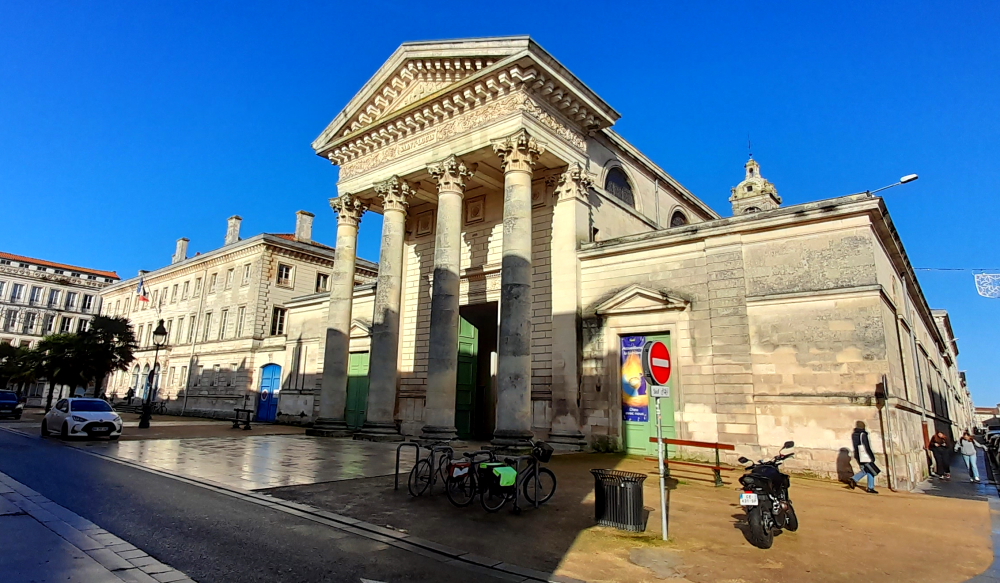
The Saint-Louis Church is one of the main parish churches in the town of Rochefort and one of the rare examples of neoclassical architecture in the area.
One of the side chapels houses the tomb of the intendant of the navy and the general of La Rochelle, Michel Bégon, who contributed to the beautification of the city at the end of the 17th century.
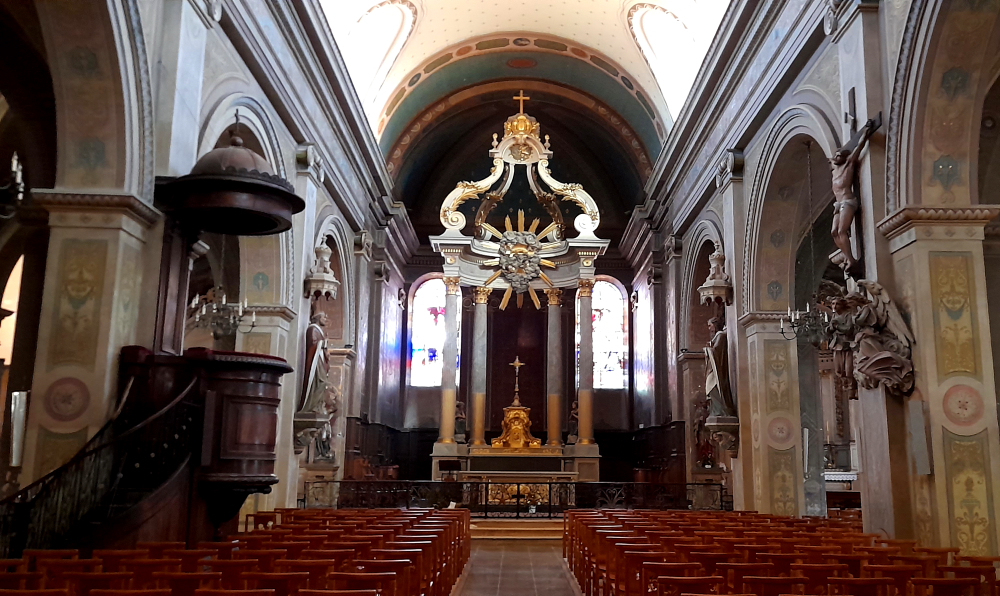
The current Saint-Louis church was built in 1768 on the site of the former chapel of the Capuchin convent, in the immediate vicinity of Place Colbert. It was rebuilt in 1835 to the plans of the architect Félix Garde, retaining only the bell tower of the former Notre-Dame church established in 1686 and demolished shortly after the Revolution.
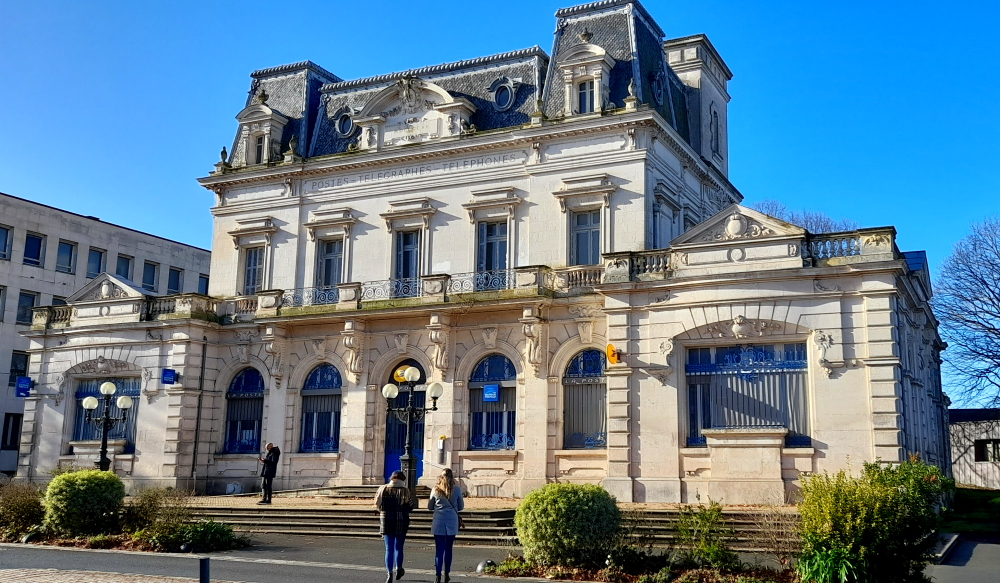
From Place Colbert we walk west to the Post Office (Hôtel des Postes de Rochefort) which was designed in 1911 by the architect Léon Lavoine. With an imposing appearance and academic style, this monument consists of a large two-story central body flanked by two single-level pavilions. It’s also opposite the Place des Martyrs de la Resistance.
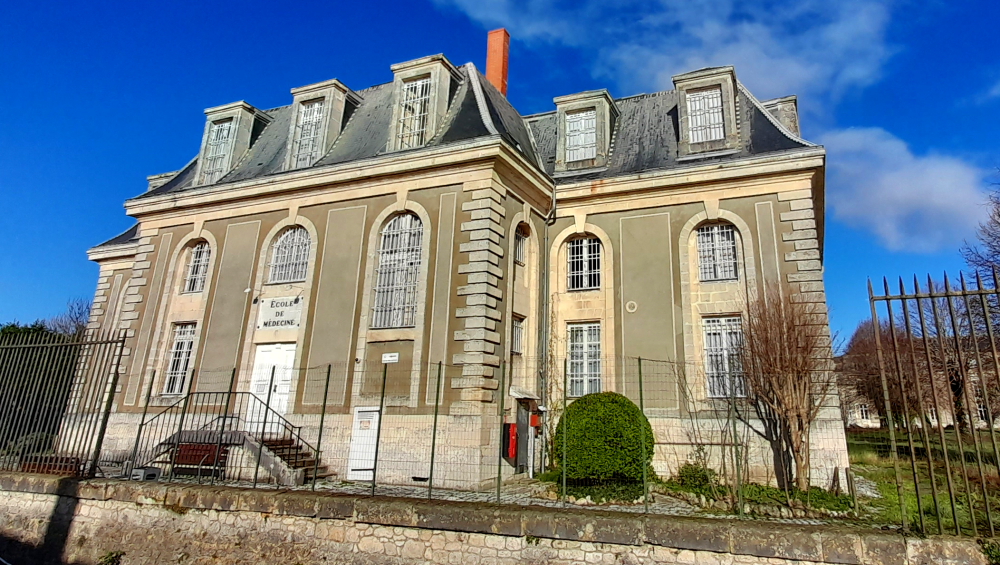
Next to the Martyrs’ monument is Square Herriot which leads to a long, but unkempt, public garden that ends at the former Naval Medical School and Library.
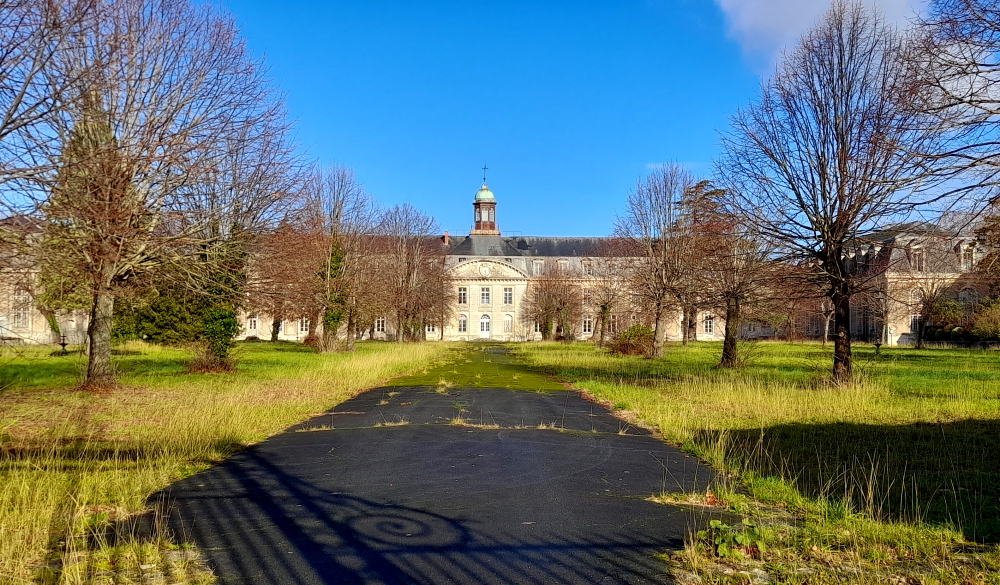
Like no other in France, the Naval Medical School was founded in 1722. At the time, it was the first in the world. For more than 240 years, the Naval Medical School trained surgeons for duty on warships. They also
actively participated in exploration trips around the world. Then, the collections of human anatomy, ethnography and natural history, as well as the library, grew.
The garden boasts a multitude of medicinal plants, as well as aromatic and dyeing plants that echo the voyages of exploration that brought some of them back to Rochefort.
In front of the Naval College is an elegant building which now houses the Marine Museum.
After walking past the Bassin de Plaissance Bougainville, now a heavily populated marina, and booking a table for dinner tonight at the O’Gabier seafood restaurant, we wander past the remaining town ramparts and past some more striking street art, this time adorning a Ministry of Justice building for the Prison and Probation Service.
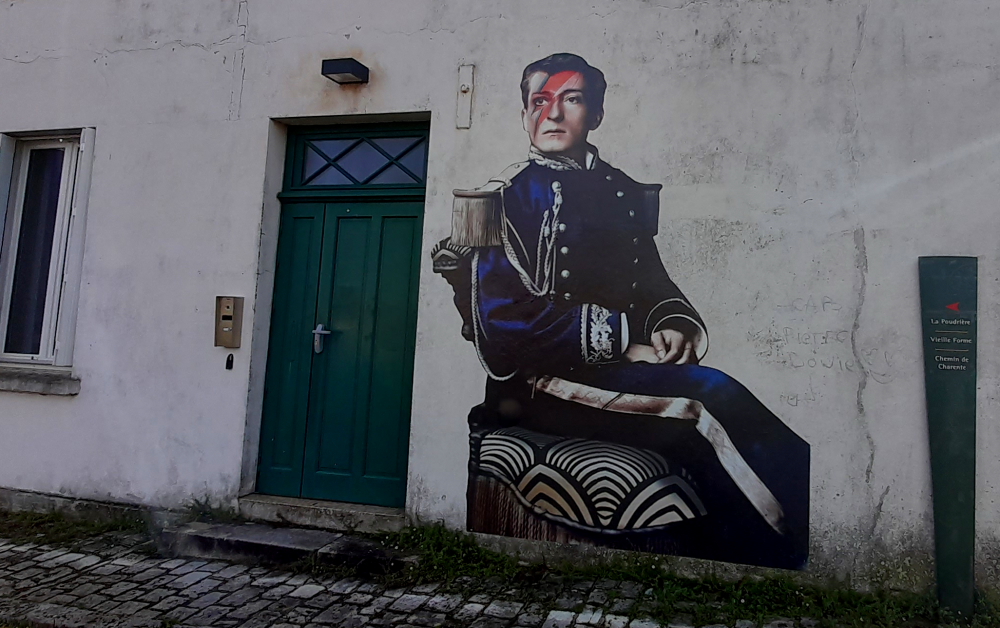
On our return to the apartment we realise we have completed an appropriate naval maneuver – we’ve circumnavigated the old town!
6 December, 2023
Another chilly but sunny day so our first task after another inadequate breakfast is a walk into the old town for a coffee.
Yesterday we remembered seeing a tabac across the road from Les Halles with tables outside in the sun so we head there. Surprisingly, we are told that cappuccino is available, rather than the ubiquitous cafe au lait, so we order one each. Turns out that the cappuccino is ‘not as we know it’, just a black coffee with a bit of light foam on top which soon disappears. Still, sitting in the sun is nice, and free!
Although the cafe where we have breakfast is open this evening (drinks and snacks) we decide we’ll get some provisions from the supermarket and dine in instead.
We spend the rest of the day in the apartment emailing Christmas postcards.
7 December, 2023
Rain is forecast today with a top of 12. It’s definitely a cold and grey day when we go to breakfast. So, another day in sending out the rest of the Christmas postcards, several loads of washing and ironing, and dinner across the quay at Le Cap Nell seafood restaurant at 7:00 pm.
Tomorrow we’ll drive about 2 hours to our accommodation at Chateau Valandraud, a winery about 6.5km E of Saint-Emilion which in turn is 45km E of Bordeaux.
8 December, 2023
It’s 11 Deg. C. and sunny as we depart Rochefort for Saint-Emilion. During the trip it rains from time to time which means we end up driving in to a blinding ribbon of silver as the sun reflects off the tarmac.
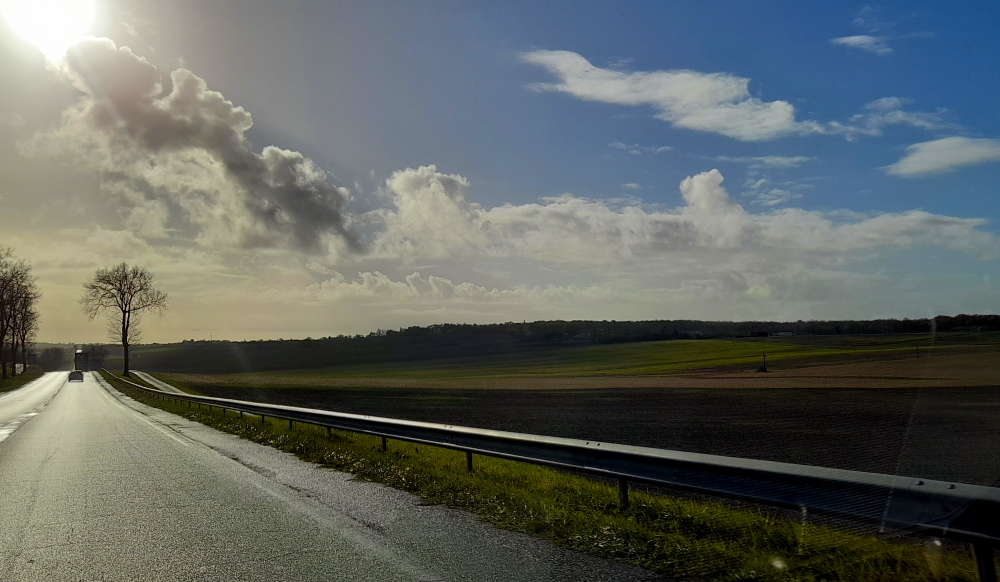
As it’s a relatively short drive we opt for toll-free roads which takes us through countryside and occasionally on motorways.
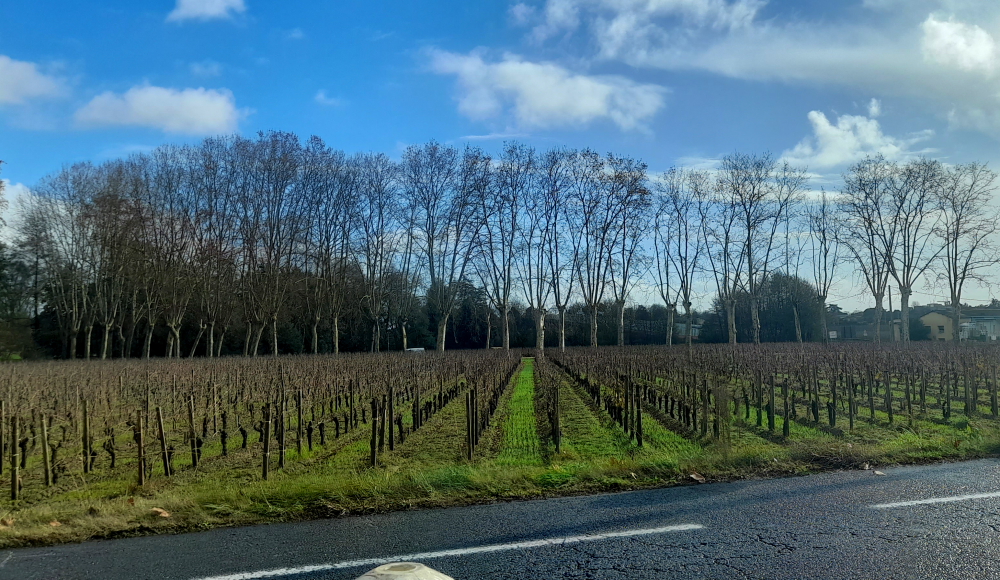
Again, water is lying on parts of fields and in some low-lying areas there is local flooding. I wonder how prevalent ‘root rot’ is in these wine growing areas.
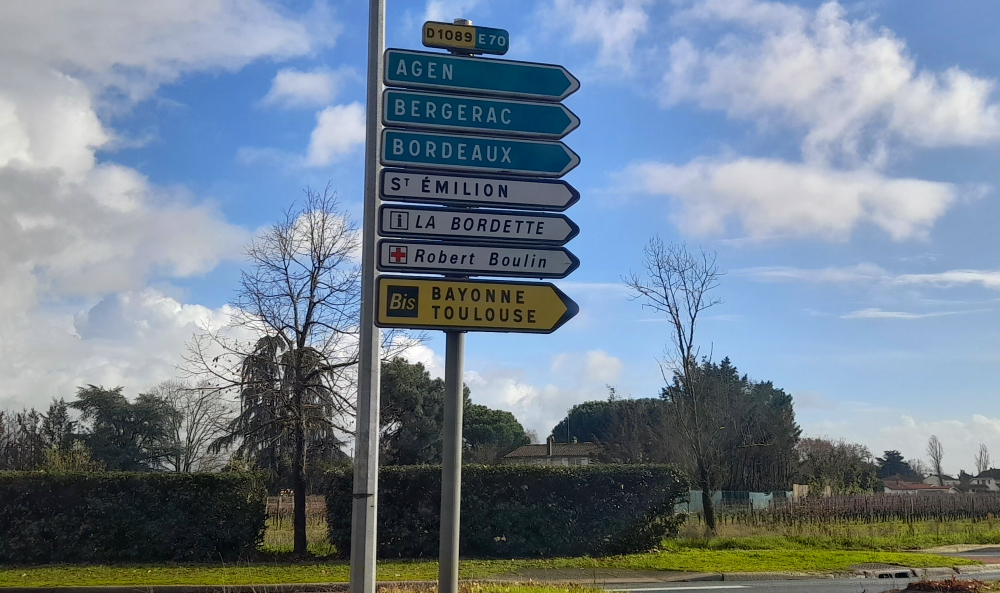
Our route bypasses Saintes, Jonzac, Libourne and Saint-Emilion where we arrive at the Chateau around 1:30 pm.
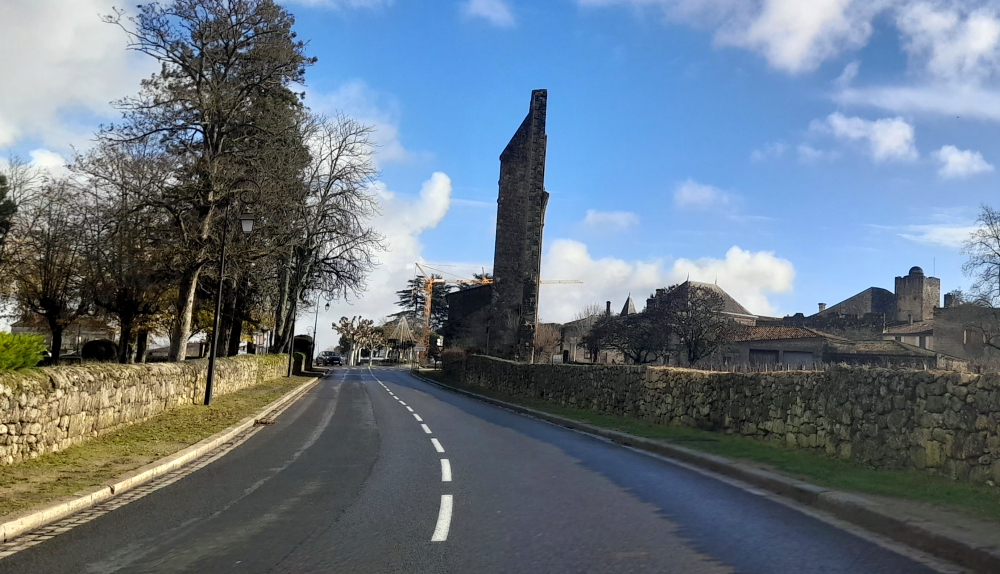
Driving from Saint-Emiliion to the Chateau, both sides of the road are covered in vineyards as far as the eye can see, interspersed with limestone buildings each with the name of a particular chateau, surrounded by rows and rows of staked and leafless vines. Chateau Valandraud seems to have extensive fields of vines surrounding it.
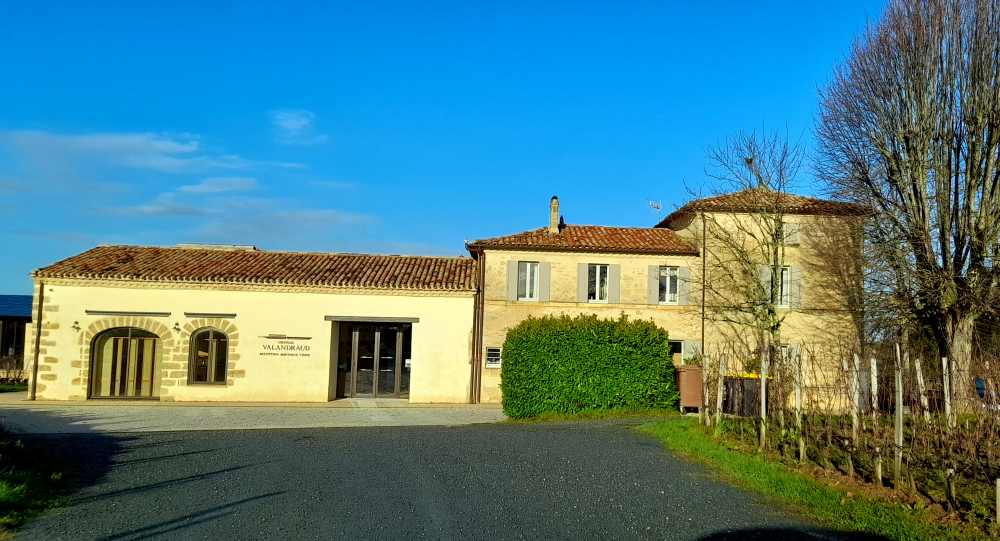
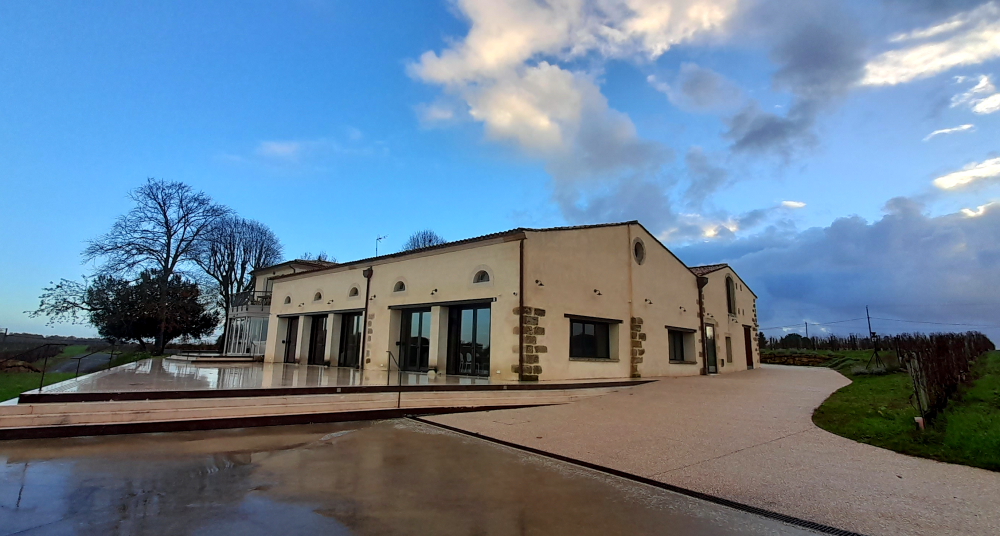
The Chateau combines a modern extension which houses the cellar door/tasting room. Separately there is a modern building which houses the stainless steel vats. An older house comprises the accommodation. It has been extensively renovated with mod cons and a modern extension at the rear which overlooks the terrace and a small valley of vineyards below.
Apparently the vineyard started in 1991 on a plot of 0.6 ha whose production was vinified in a garage transformed into a cellar. Today Château Valandraud has grown significantly and its now 10.70 ha on the clay-limestone plateau of Saint Etienne de Lisse with a diversified grape variety: 70 % Merlot, 25% Cabernet Franc, 5% Cabernet Sauvignon.
The Chateau is described both as a Saint-Emilion Grand Cru and a Premier Grand Cru Classe.
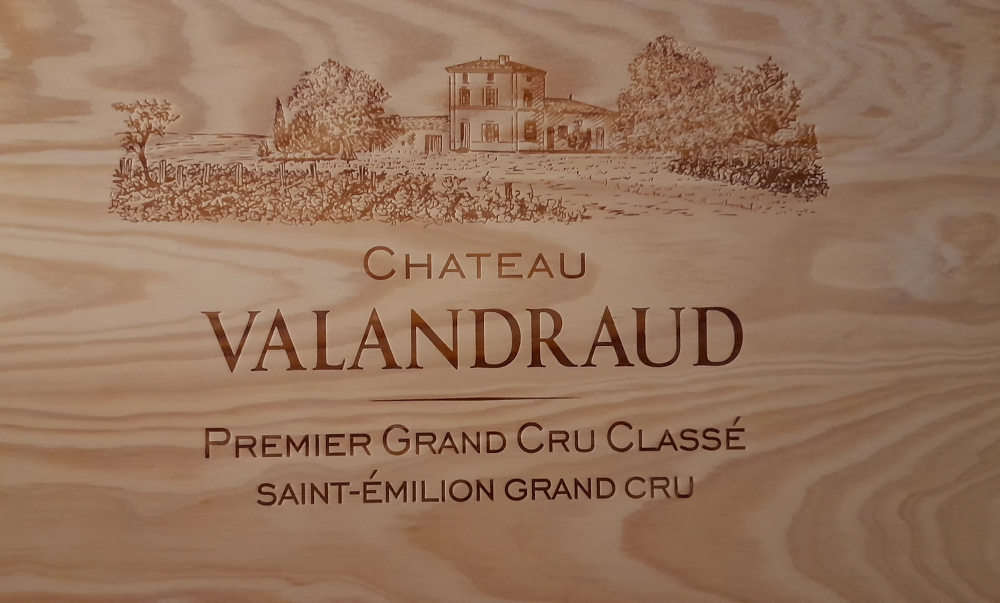
The Saint-Émilion Grand Cru Classé classification is for major grapes of Merlot and Cabernet Franc whose blends are of high-quality. A dynamic classification established in 1955 that gets revised every 10 years. According to the Wine Folly website: “Expect these wines to deliver ripe plum and blackcurrant aromas, with fresh violet, leather, chocolate, smoke, and earthy undertones.”
Within this classification there are 2 main tiers: Grands Crus Classes – 64 wineries and Premier Grands Crus Classés – 18 Wineries.
‘Grand Cru Classé’ on a label – a really good wine, and ‘Premier Grand Cru Classé’ – some of the highest quality red Bordeaux. Expect to pay high prices, ranging from $40-$4000/bottle. Most of these wines are meant to age for at least 10 years before opening, but many benefit from 10+ years of cellaring.
To be honest they are overpriced compared to similar Australian wines and they don’t seem to have the quality or depth of flavours of our home- grown varieties.
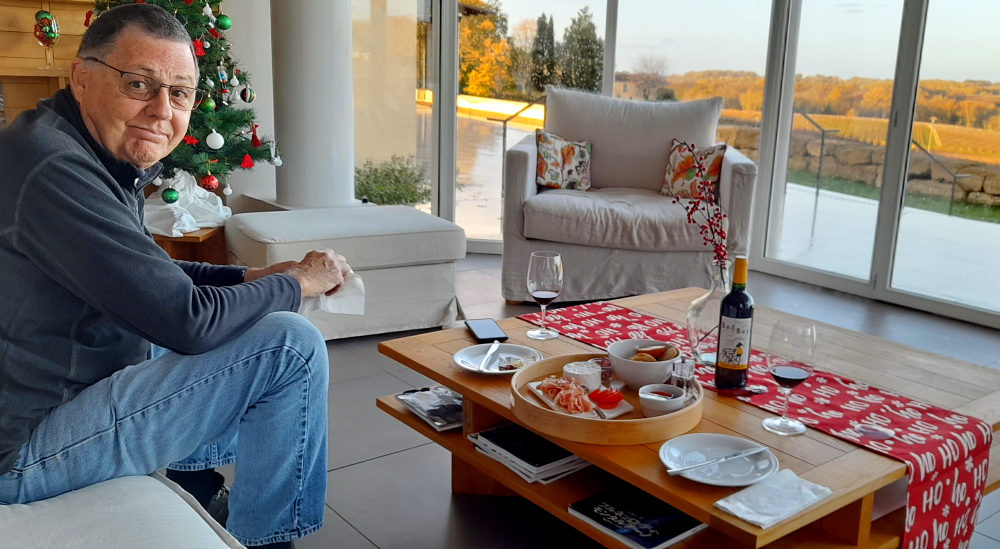
After checking in we unpack then drive into nearby Castillon-la-Bataille to get supplies for dinner.
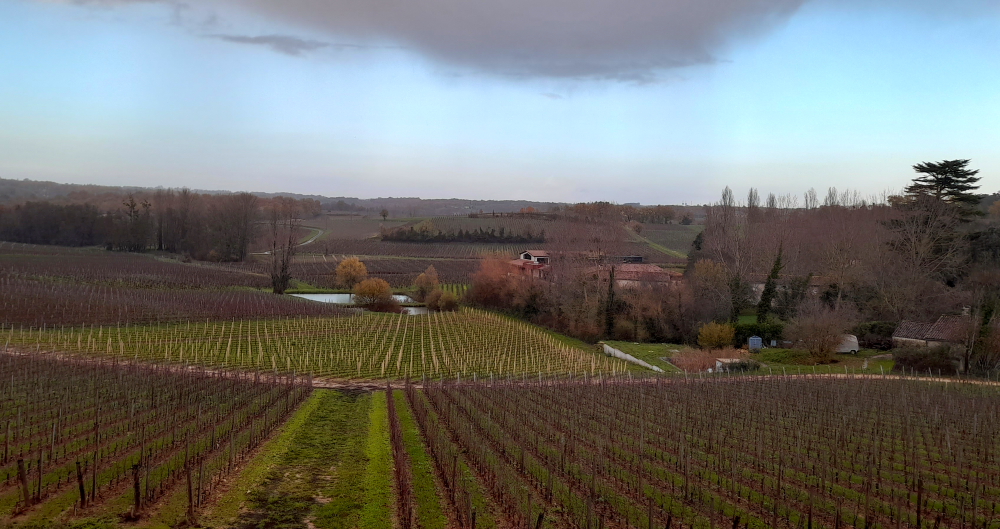
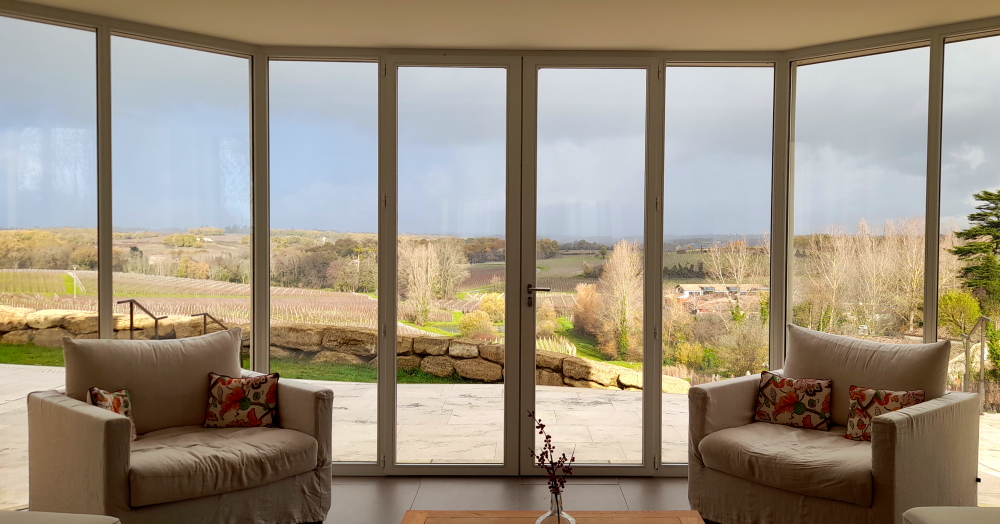
We’ve decided we’ll sit in the lounge this afternoon and gaze out over the lovely view until sunset while indulging in an early supper of local produce accompanied by a bottle of red – Bad Boy – from the Chateau.
Tomorrow we will visit the medieval town of Saint-Emilion located at the crossroads of Bordeaux, Saintonge and Périgord. The town and surrounding vineyards was made a UNESCO World Heritage Site in 1999, owing to its long, living history of wine-making. Romanesque churches and ruins stretch all along steep and narrow cobblestone streets.
Saint-Émilion’s history goes back at least 35,000 years ago, to the Upper Paleolithic period. An oppidum (a large, fortified Iron Age settlement) was built on the hill overlooking the present-day city in Gaulish times, before the region was annexed by Augustus in 27 BC. The Romans planted vineyards in what was to become Saint-Émilion as early as the 2nd century.
Saint-Émilion, previously called Ascumbas, was renamed after the Breton monk Émilion. He created the Hermitage of Saint-Émilion, carved from a rock shelter in a deserted forest. He lived in the oratory until his death in 767. The monks who followed him started up the commercial wine production in the area.
9 December, 2023
After a great night’s sleep in this rural setting we head downstairs for breakfast. Here we chat with a delightful couple who are staying for a couple of nights and whom we briefly saw last night. They are French and between Ghislaine’s English and Google Translate we actually manage a reasonable conversation. I might have to change my view of the French. Perhaps it is just the Parisians I have an issue with. So far this trip, ‘provincial’ French people we have encountered have been very pleasant, accommodating and extremely tolerant of our crap attempts at speaking French!
Unfortunately, the weather for the rest of our stay in this area is rain. So we don our ‘wets’ and drive into Saint-Emilion and park at the NW corner of the town next to the wall. On the way we see small gatherings of people on grass verges to vineyards donning long rain coats and gum boots ready to put in a day’s work pruning the vines.
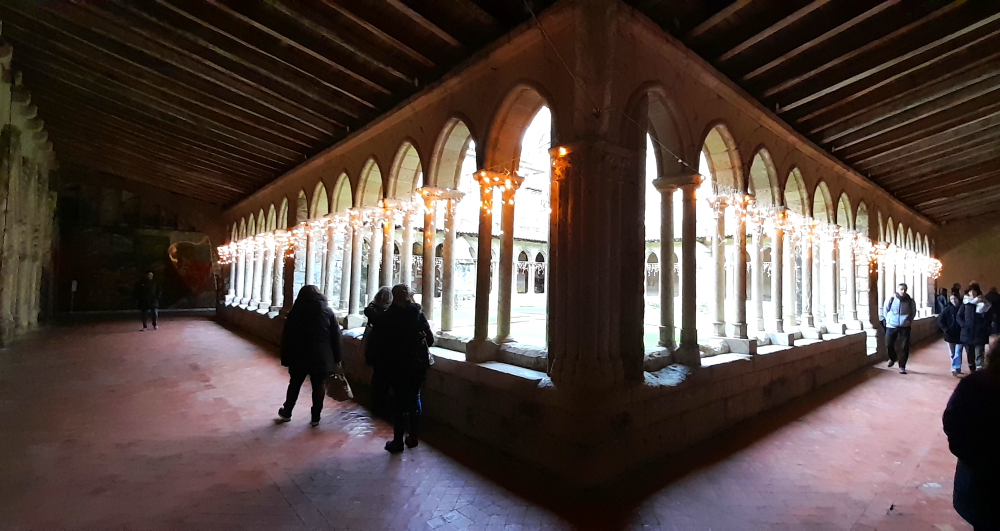
Our first stop in the upper town is the imposing Collegiate Church of Saint-Emilion and its cloister. The religious community installed within the church between the 12th and 18th centuries was a college of canons following the rule of Saint Augustine. The size of the site is a reflection of the importance of this community and its desire to mark its dominance in the town. Most of the architectural elements visible today are Gothic. The church houses a statue of St. Valery, a local saint and protector of the wine growers.
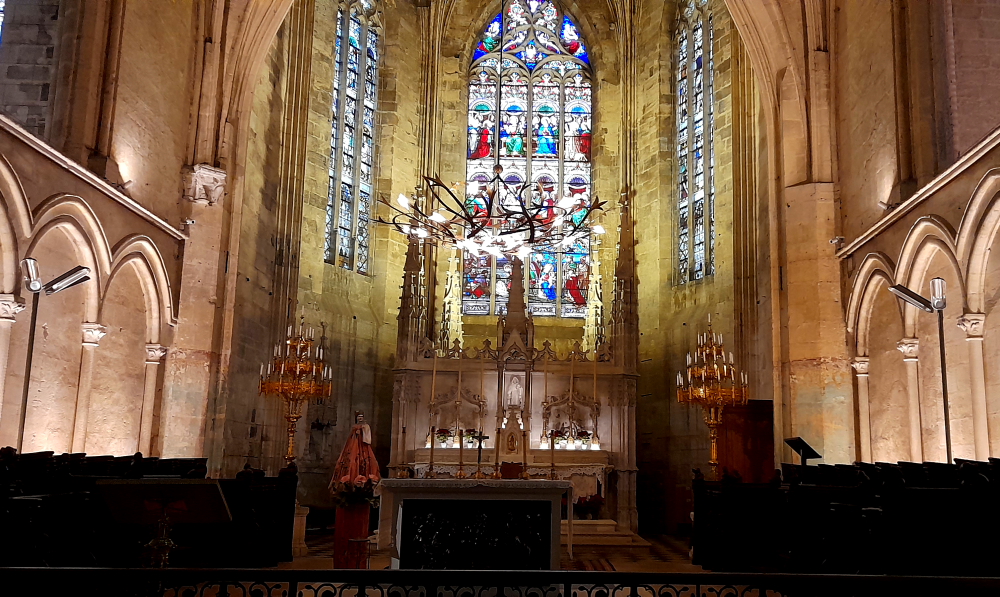
The cloister of the 14th century forms a space thirty metres square and whose galleries are covered with a wooden frame. The groups of columns at the four corners of the gallery are topped by decorated capitals. Of the first cloister, built in the Romanesque period, only the east and south walls and openings remain, the rest of the monument was rebuilt in the Gothic period.
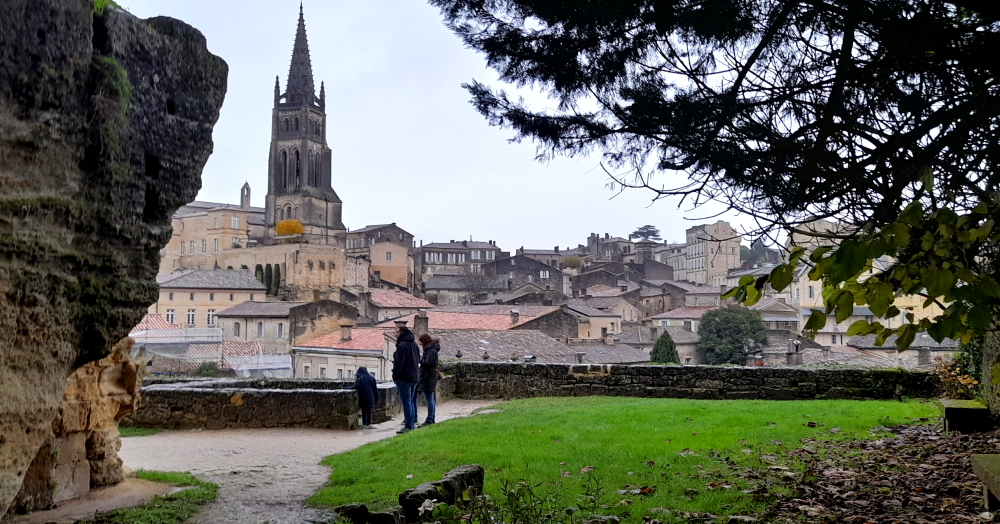
Outside the church there is a viewpoint of the town adjacent to the bell tower of the next imposing church in Saint-Emilion, the Monolithic Church.
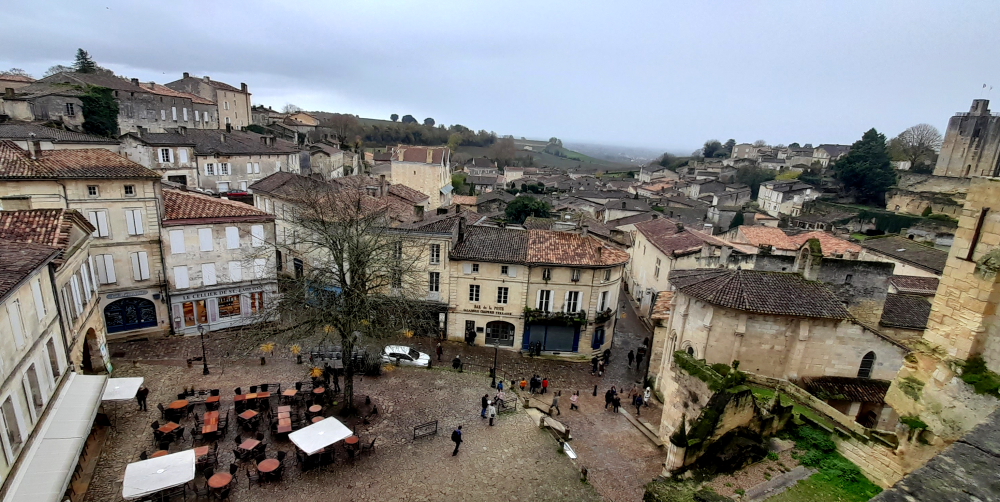
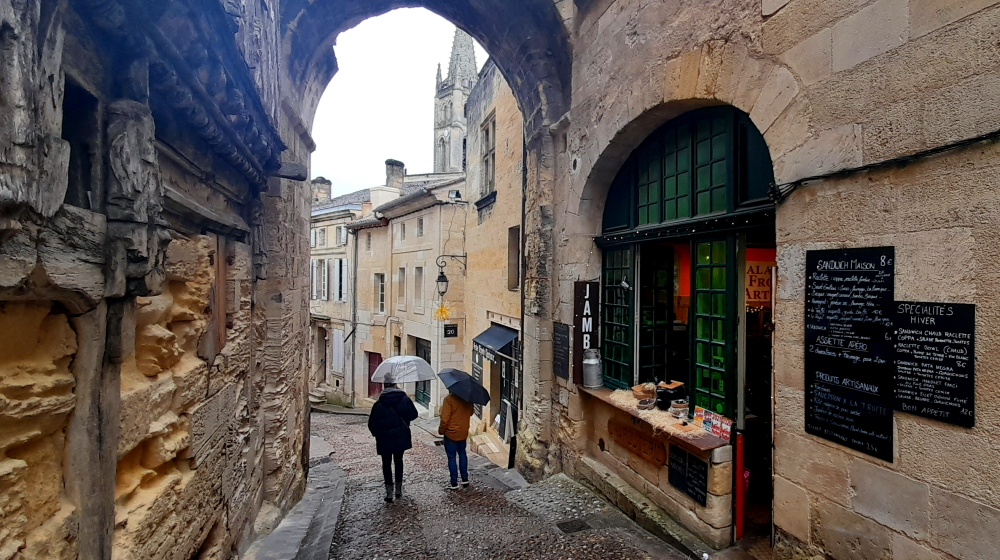
To get to the Monolithic Church we walk down Rue Guadet turn right through the Porte de La Cadene and down Rue de la Cadene to the square.
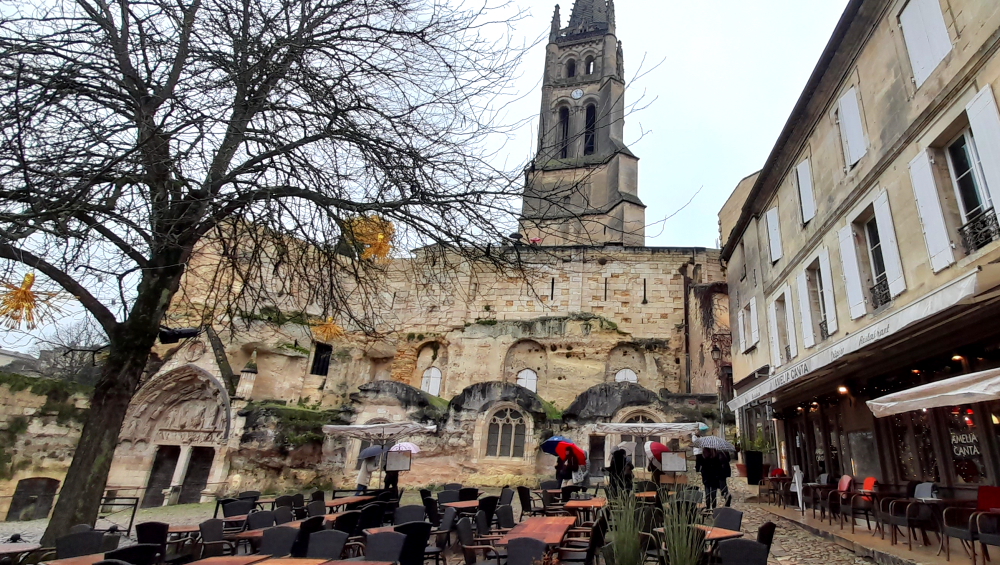
The church, sited in the higher part of Saint-Emilion town, is an incredible underground feat, carved out of the rock over three centuries. As large as a cathedral, it was built by Benedictine monks between the 11th and 12th centuries, and is the largest of its kind in Europe. It has a maze of tunnels that include vast catacombs. The bell tower sits an amazing 53m above the town and offers fantastic views over the area.
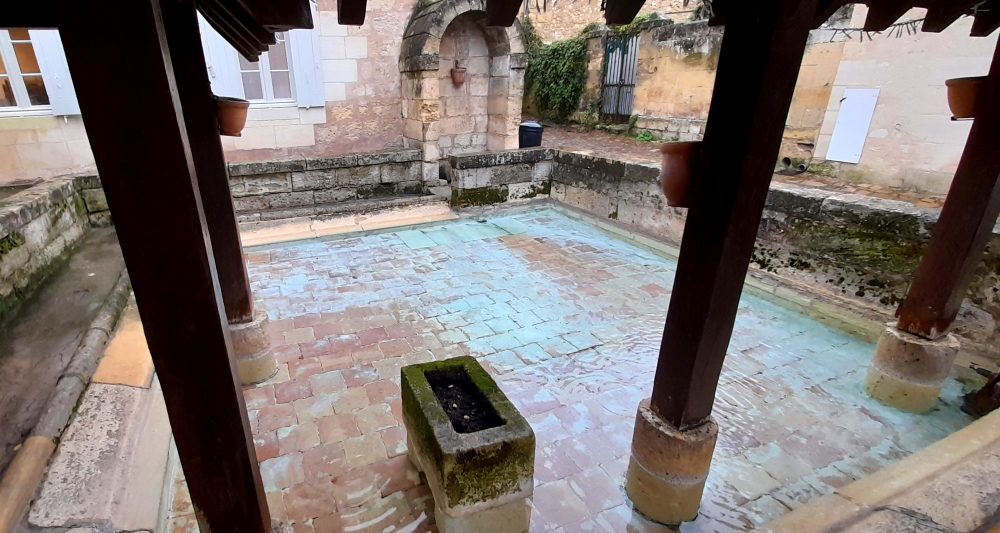
From here we walk down Rue de la Petite Fontaine and, sure enough, there is one here. The sources of the water for the wells and fountains which supply the upper and lower parts of the town come from the forest where Emilion lived. This water hollowed out the limestone rock and gave an amphitheater shape to the town.
Two of these water sources were converted into the town’s 2 wash houses – the King’s Fountain and the Place Fountain. The wash houses were public basins, supplied with large quantities of water diverted from a source, where the washerwomen rinsed clothes after they had been washed.
From here we make our way to the Tower of the King (Le Tour du Roy) which entails walking up some steep roads and steps to the town’s wall.
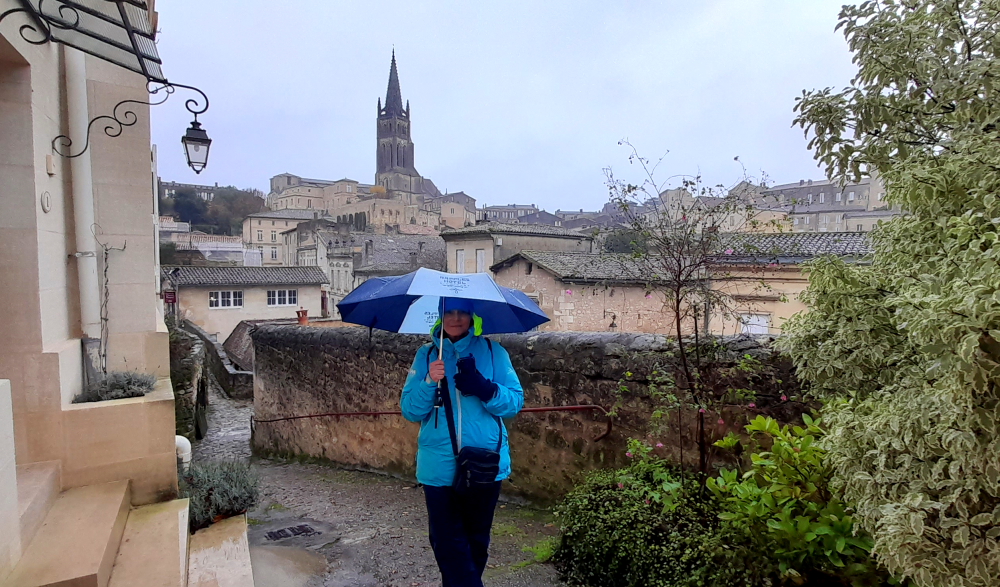
Standing high above the lower town, the King’s Tower was built on the edge of the plateau from which it is separated by a deep moat hewn out of the rock.
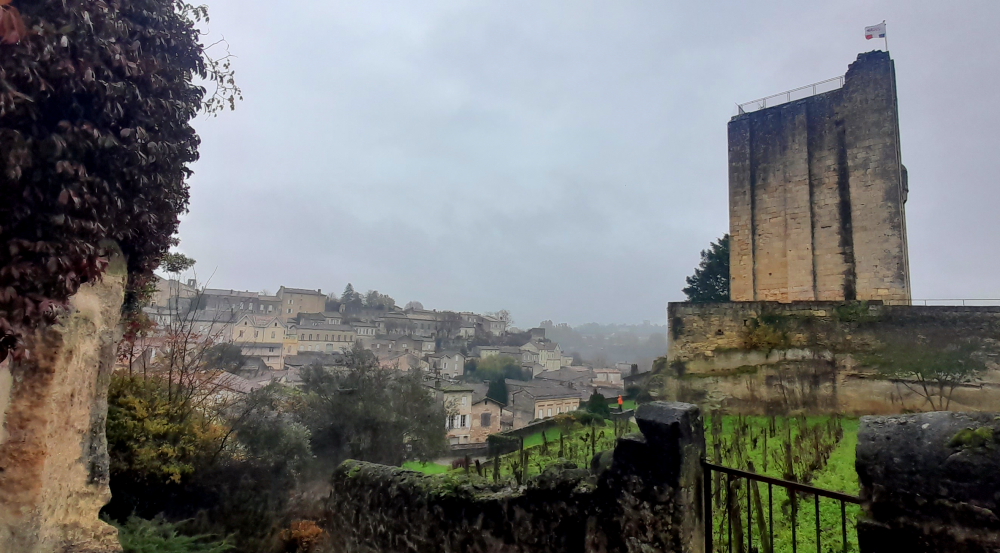
Despite its name, there is nothing royal about the tower. On the contrary, it is a symbol of the town because it is in fact the town’s old bell tower, built c. 1230, at the foot of which stood the medieval town hall of Saint-Emilion until 1720.
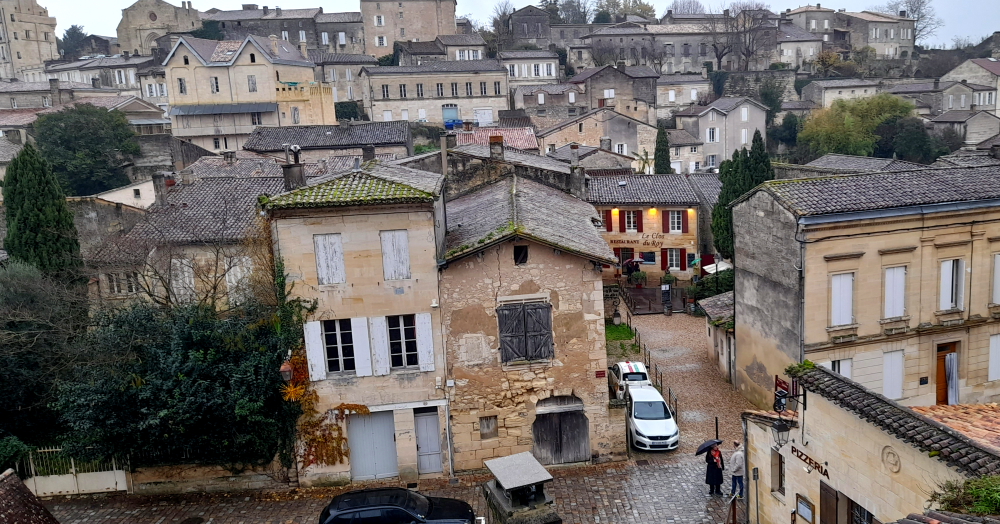
When part of this building collapsed it was demolished and the other town hall, located on the market square, enlarged. So Saint-Emilion had two town halls for over 250 years!
From here we walk to the opposite side of town, past the Cloitre des Cordeliers to the Porte Brunet.
The ramparts of Saint-Emilion were allegedly commissioned by England in the 12th century with the aim of protecting the prosperous village of Saint-Emilion. This fortification wall can also be considered as a ceremonial and prestigious wall whose primary purpose would have been to show the power of the village rather than to protect it.
The inhabitants began by digging deep ditches all around the village. With the extracted stones, they built a surrounding wall encompassing more than 18 hectares and running approximately 1.5 km around the village. This wall was probably flanked by seven gates and small defensive towers with a walkway linking these gates together.
With the exception of the Brunet gate to the east the other gates, as well as a majority of the old fortification, were destroyed during the wars of religion in the 16th century and then again in the 19th century with the opening of rue Guadet and the desire to open the city to ‘modern’ traffic.
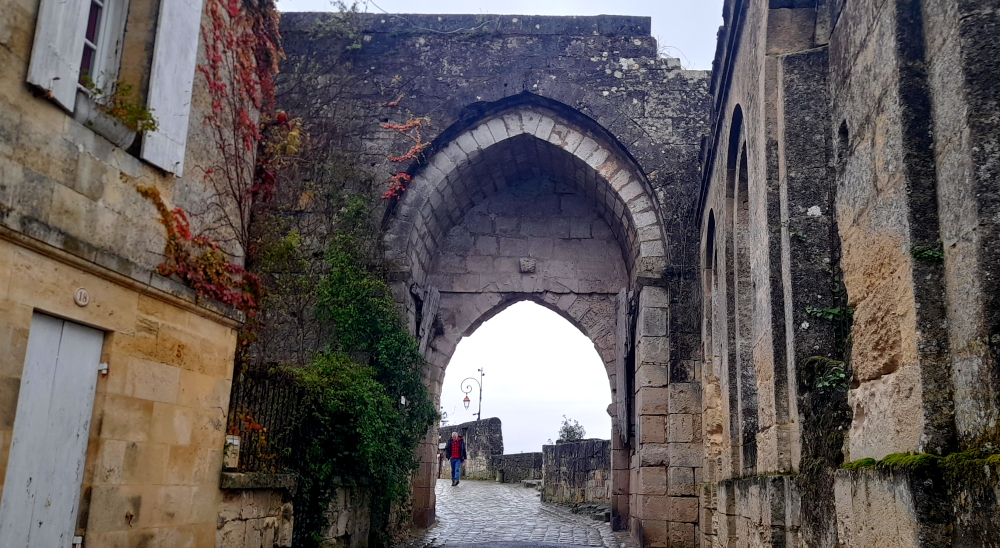
The Brunet gate takes its name from the Gascon “Branet” meaning moors, heather, clearing . This door opened onto the countryside. With a length of 9.50 m and a width of 3.90 m, between its two arches is a ‘stunner’ through which the defendants threw stones and boiling water at attackers.
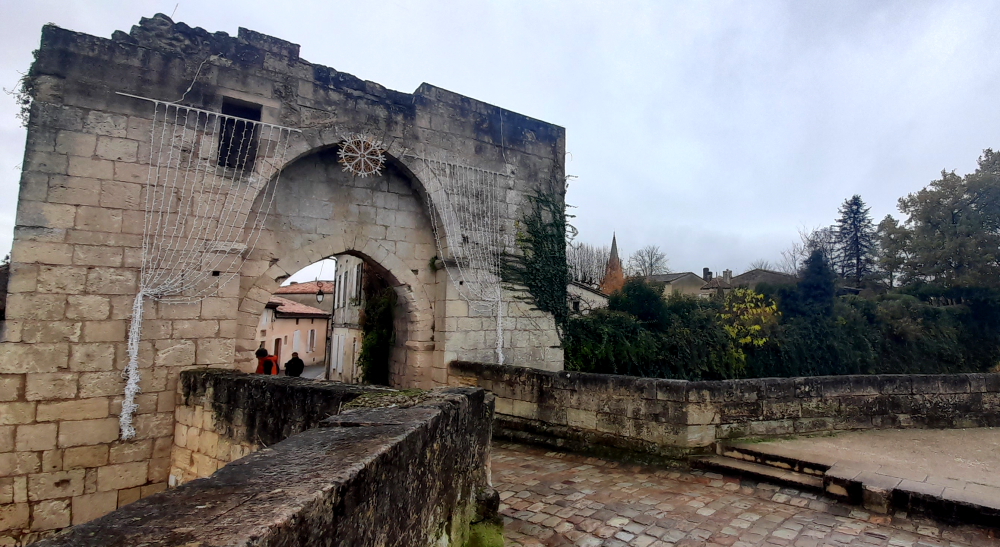
In the 17th century the sides were widened so that carts could pass each other. The passage was closed with wooden doors on hinges still visible today.
Despite the rain we head back into Saint-Emilion at 6:30 pm for dinner. The roads are dark, wet and narrow and our car headlights are definitely inadequate for the job.
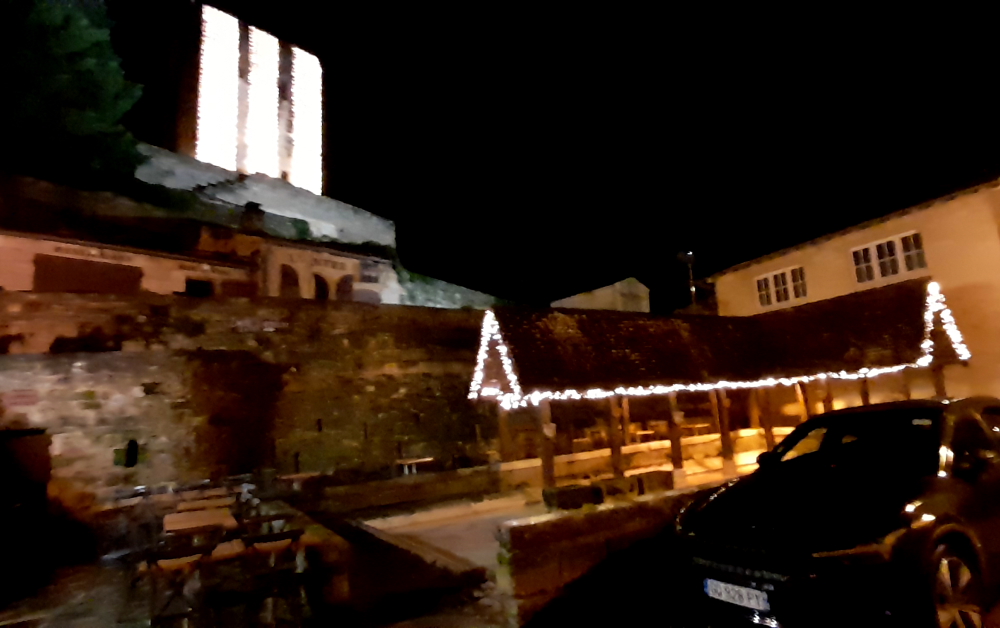
The King’s Tower is all lit up with cascades of Christmas lights but unfortunately our phone camera is not up to the task of showing the true pale golden colours of the lighting.
Dinner tonight is better than most restaurant meals that we have experienced in France so far but way over priced for what we eat. We try a Grand Cru local red but again a bit underwhelming.
Since continued rain is forecast and since many restaurants will be closed tomorrow night we decide to head back to the supermarket in the morning to buy a meal to eat in. The Chateau has streaming services so we will enjoy a warm, dry evening watching a movie or two tomorrow night.
10 December, 2023
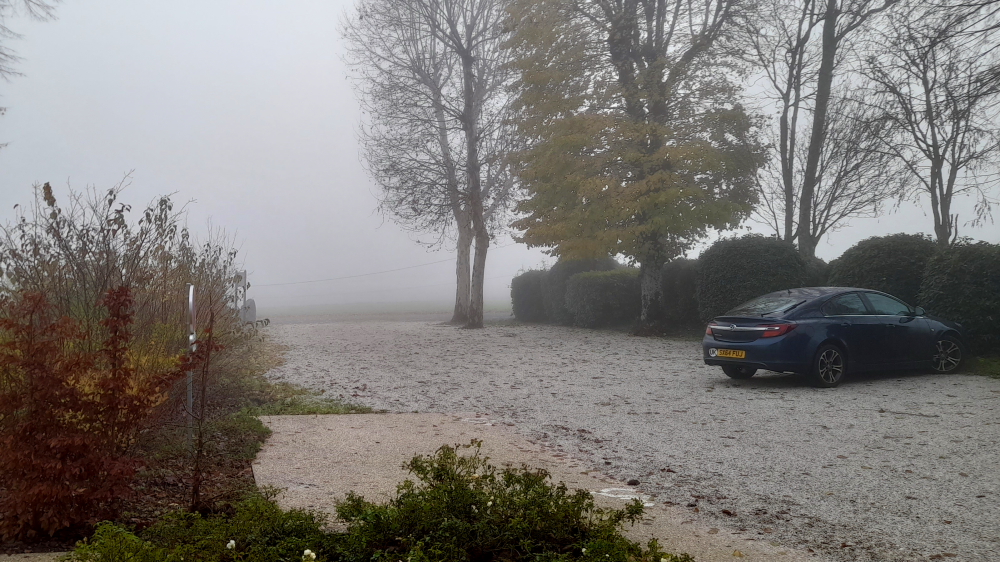
We wake to a foggy morning – a white out – as we take in the view this morning at breakfast time.
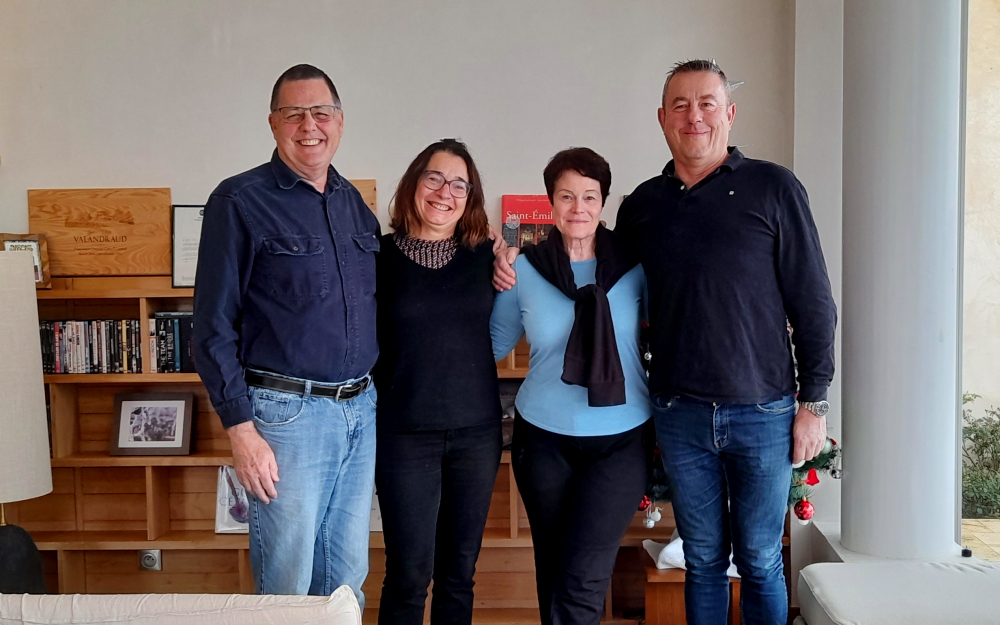
Again we have a ‘conversation’ with Ghislaine and Jean-Claude at breakfast then, after a photo, bid them farewell and safe travels for their onward journey. But, I feel sorry for them …. they’re back to work tomorrow!
As we are driving to the supermarket at Castillon-la-Bataille we see a startling silhouette at the grass verge between the road and a vineyard – a man dressed in camo with a shot gun – not something we see everyday, thank goodness!
It is a cold and very wet day so we spend it relaxing and I catch up on some outstanding items on my to do list.
11 December, 2023
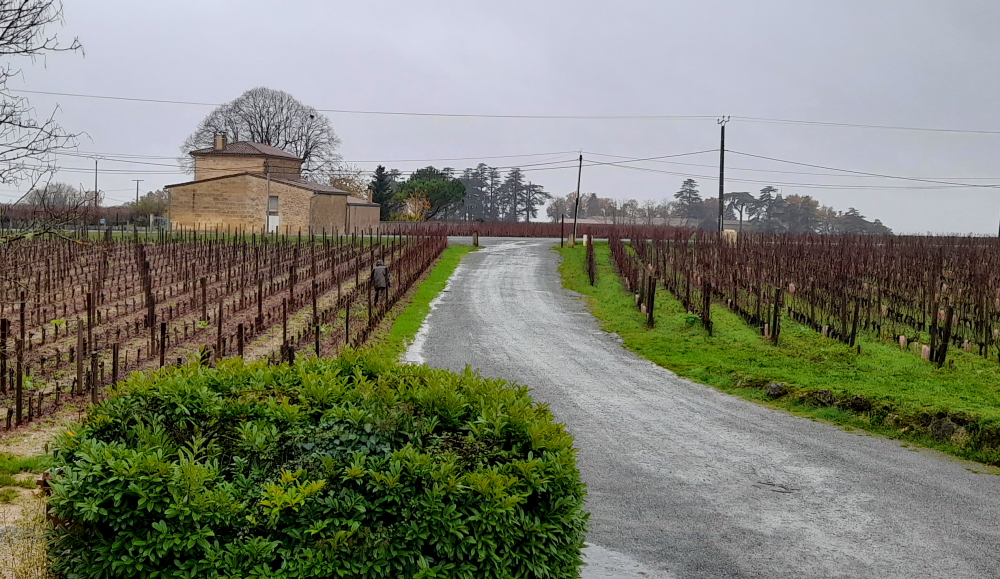
Ground hog day! Another grey day raining cats and dogs – or should I say ‘il pleut des chats et des chiens’. So, I think another night in. But, we notice that the seasonal cycle of wine production doesn’t grind to a halt because of bad weather. A hardy soul is out in the vineyard adjacent to the house, in the pouring rain in his ‘wets’, pruning row upon row of vines. Like the saying goes: “It’s not bad weather, just bad clothing.”
Tomorrow we leave France for 18 days when we drive to our next stop just inside the Spanish border near Oiartzun. Looks like it will be ‘same old, same old’ with rain forecast for our 4 days there. But, looks like we’ll be driving to Zaragoza in sunshine and will have a sunny day for our next walking tour. Yay!
12 December, 2023
Only 16km difference between taking the toll roads or toll-free roads today but an hour longer. Given the constant rain we opt for the toll roads. Would you believe that in the 276km journey we have 5 French tolls totaling Eur18 and one Spanish toll of Eur1.09 – and that was as soon as we cross the border!
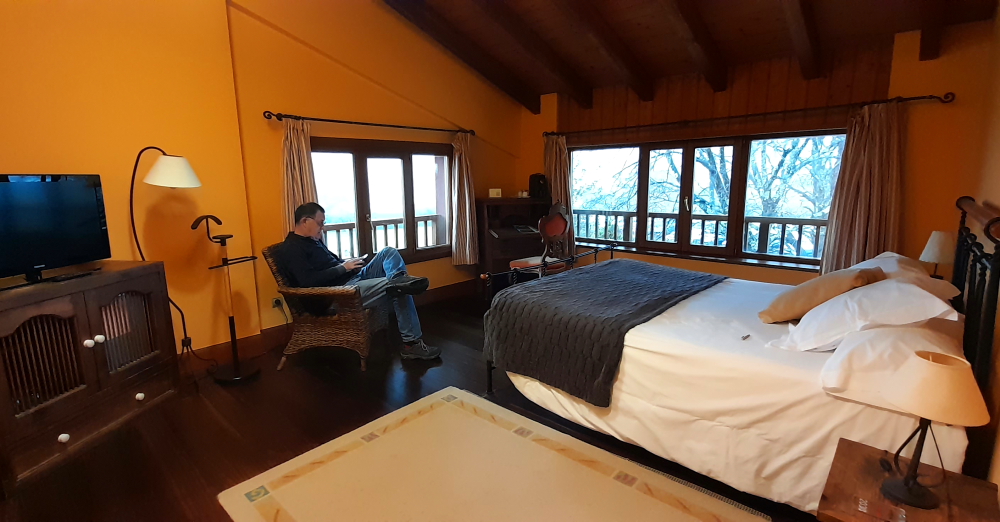
After driving up a narrow, winding and bumpy road we arrive just before 2:00pm in torrential rain at our rustic, chalet-style hotel and are made feel very welcome by the receptionist.
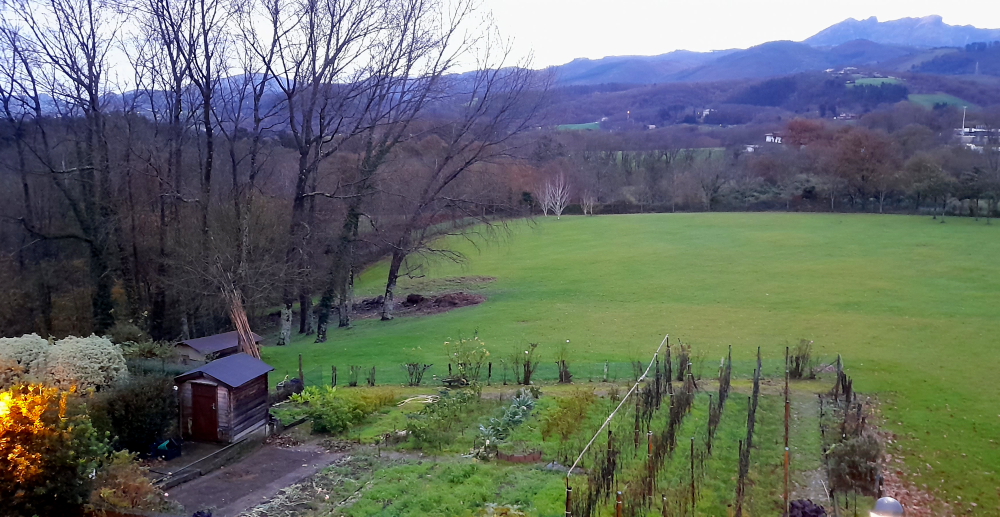
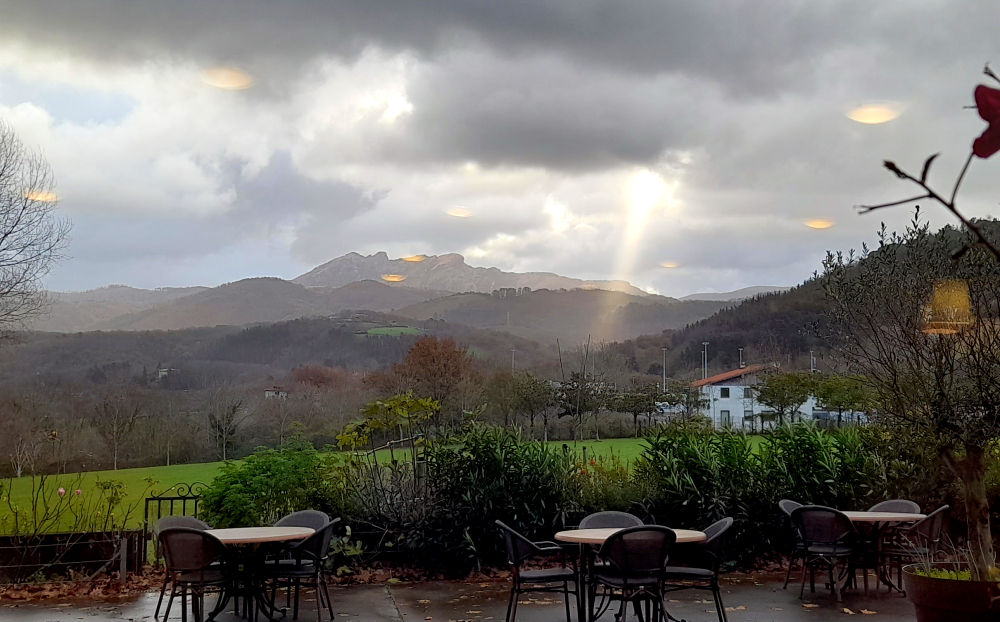
We have a corner room which gives us dual aspect views – a mountainous view …
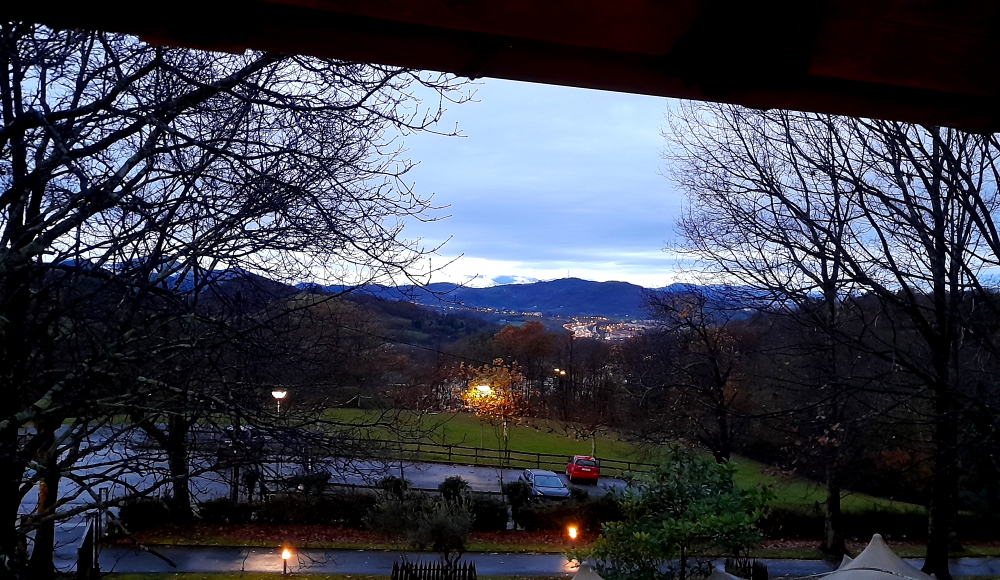
… and a valley view.
Although the hotel description on booking.com says that the hotel’s restaurant will be closed for dinner in winter Monday-Wednesday, we are informed that, in fact, it is open. Thank goodness, as we really don’t want to have to go out in the darkness and rain in search of a decent restaurant.
Dinner is served at 7:30pm at which time we promptly arrive to find we have the place to ourselves.
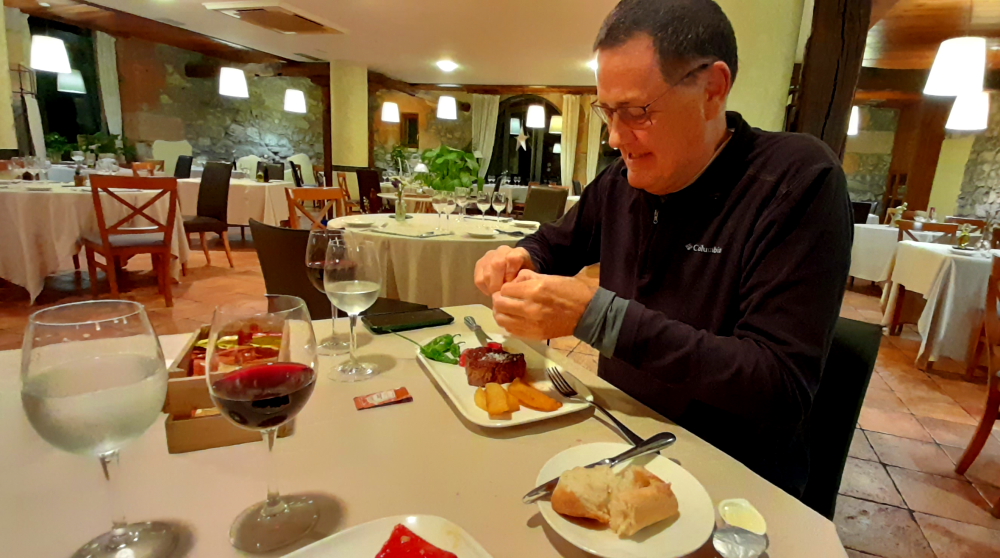
Our waitress is also very welcoming and soon we are served not only a delicious Rioja but also a delicious steak, superbly cooked, and veal and scrumptious bread. Absolute bliss after weeks of mediocre French fare.
13 December, 2023
As breakfast doesn’t close until 11:00am we sleep in until 9:00am. A quick look out the window shows that the rain has cleared, but this doesn’t last for long.
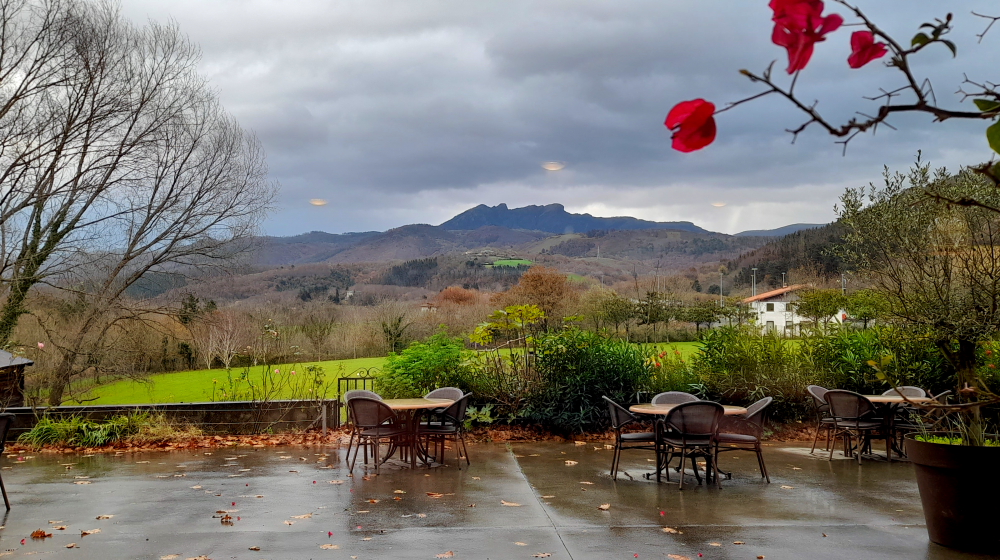
Soon there is torrential rain once again. We were contemplating going for a bit of a drive but decide instead to drive 7 minutes to a local Mercadona supermarket for supplies, then purchase a bottle of Rioja from downstairs.
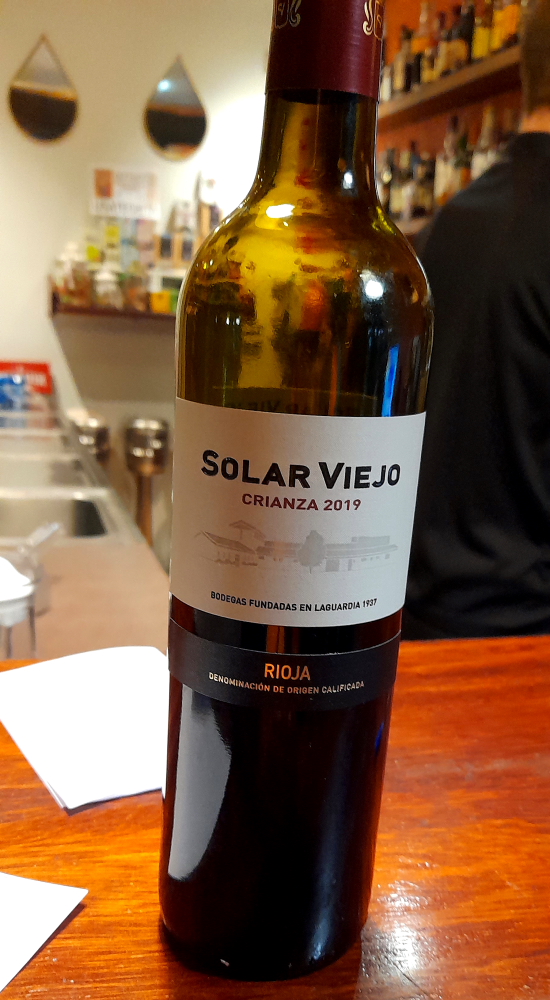
We’ll stay in for the next 2 days and watch the curtains of rain gust past our windows and watch the landscape fade in and out of low cloud. Instead we’ll venture out on Friday when rain is predicted to reduce from 94% today to 62% and the temperature rise from 11 today to 13.
Plus, we have an excellent restaurant on site and an extensive wine cellar at our disposal …
14 December, 2023
Actually, the rain seems to have stopped for the moment so we think, ‘carpe diem’ and jump in the car to go for that ‘bit of a drive’.
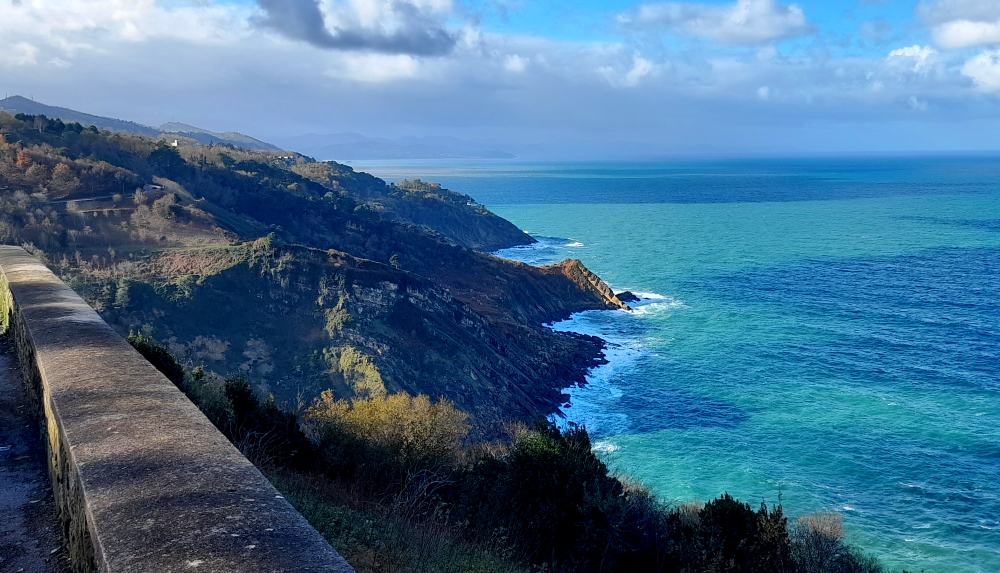
San Sebastian (known as Donostia in Basque) is the largest town nearby on the coast so we make a bee-line for Monte Igueldo to get a panoramic view of the city.
Driving through town it’s the usual circuitous route thanks to one-way and blocked-off streets, but it gives us a chance to view the many elegant buildings that make up this, essentially, seaside town.
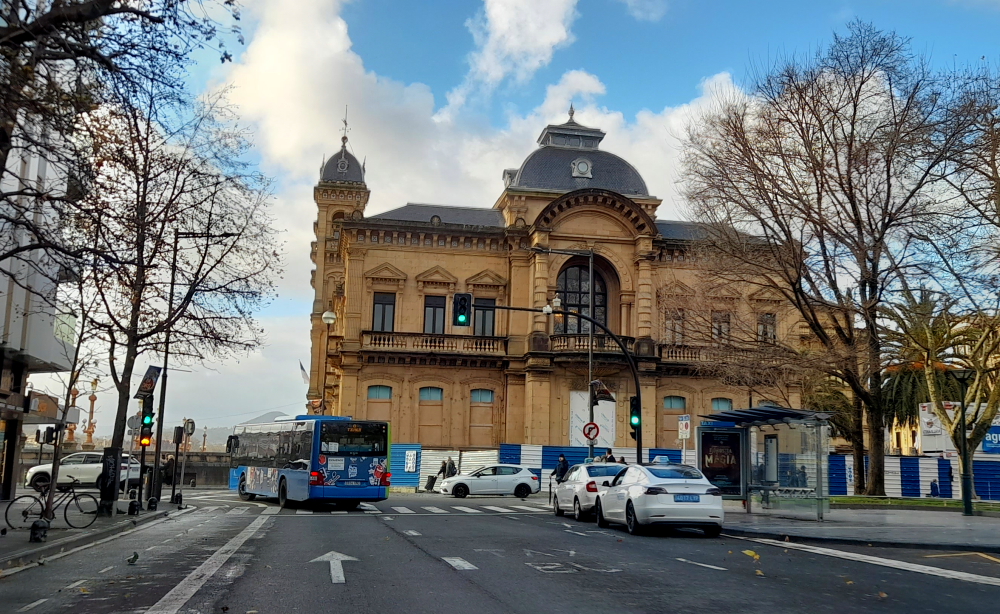
Over the centuries the city has had its moments in history including being beseiged, razed and rebuilt a number of times; the summer retreat for King Alfonso XIII and then his widow; a seaside resort with casino. Following the outbreak of World War I, San Sebastian became a destination for renowned international figures of culture and politics including Mata Hari, Leon Trotsky and Maurice Ravel.
The city was one of the early towns affected by the 1918 Spanish Flu epidemic. In 1930, Spanish republican forces signed up to the Pact of San Sebastián, leading to the Second Spanish Republic. Unrest and repression did not stop with the new political regime, and large-scale industrial action was called several times by the growing anarchist, communist and socialist unions.
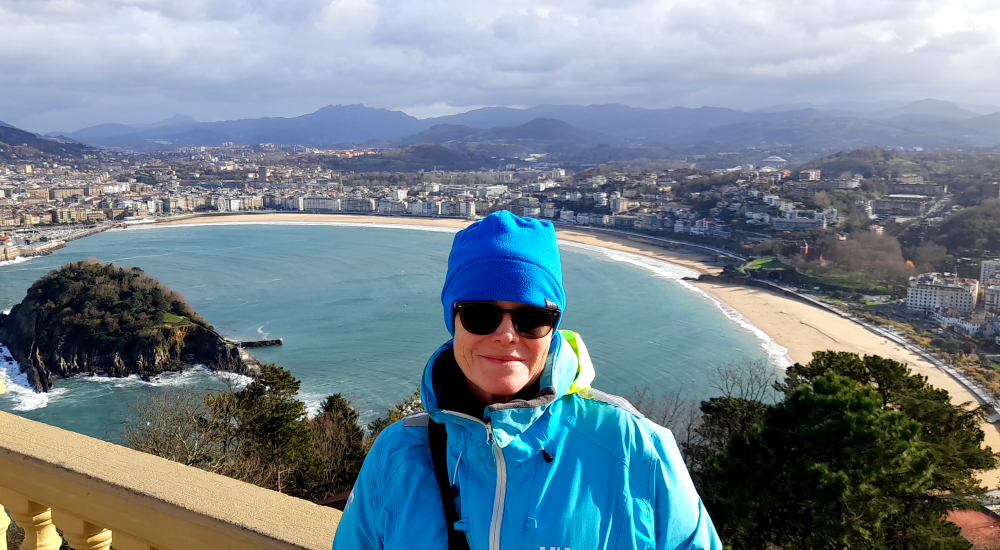
The 1936 military coup was initially defeated by the resistance, led by the Basque Nationalists, anarchists and communists, but later that same year the province fell to Spanish Nationalist forces during the Northern Campaign resulting in many executions in the city.
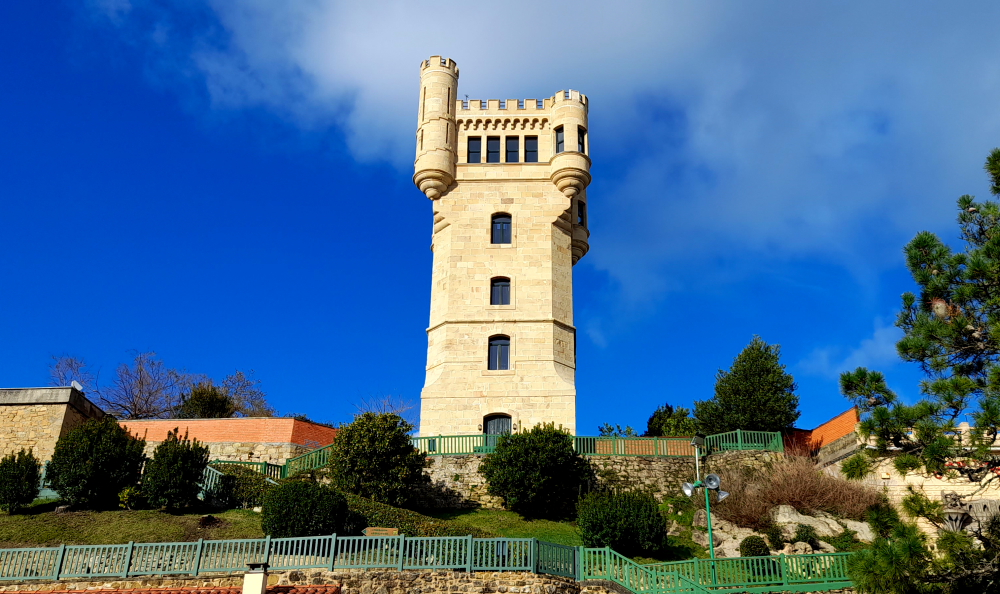
At the top of Monte Igueldo is not only a Mercure Hotel but an aging, 1970s concrete theme park – closed as it is winter. This theme park is dominated by the Igueldo Tower which began as a lighthouse (La Farola) in the mid-18th century. Once a new lighthouse was built in 1854 the old tower was abandoned but given a new lease of life in 1912 when it was refurbished as an observation tower.
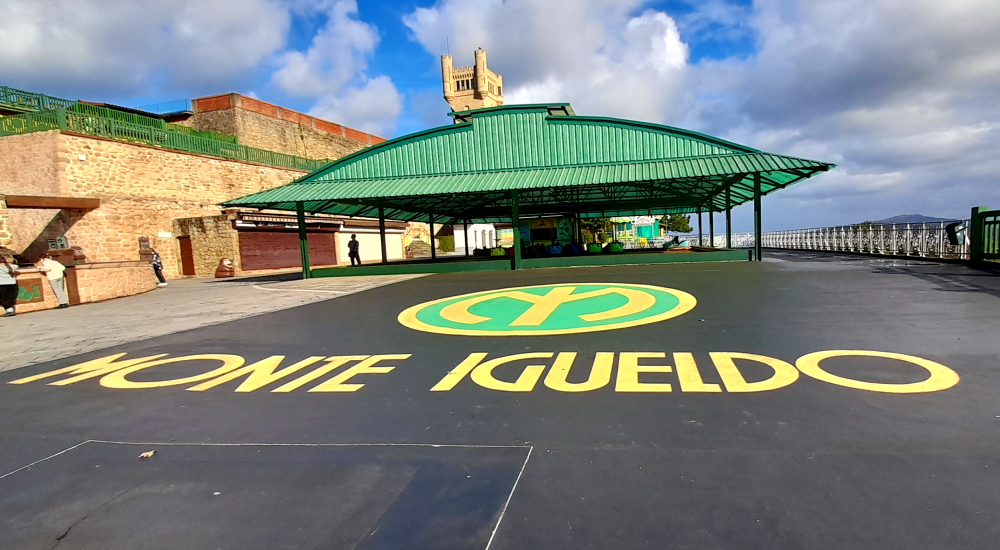
Monte Igueldo is also the destination of a funicular railway from the beach.
From here we drive up the coast to Cape Higuer considered the westernmost land strip of the Pyrenees. Here there is another disused lighthouse on this promontory on the Spanish-French border.
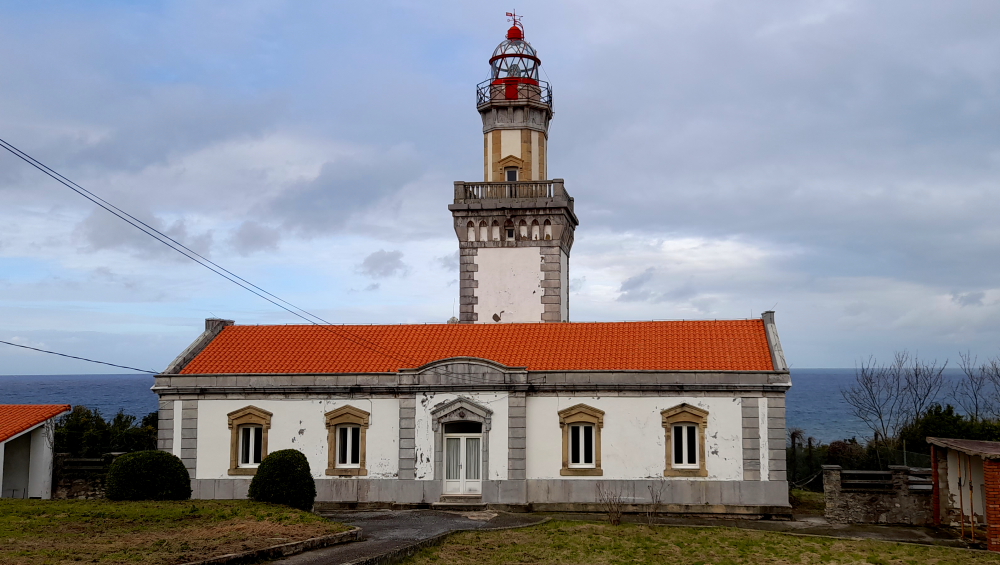
The cape is near Hondarribia and Irun – identified as the Roman port town of Oiasso.
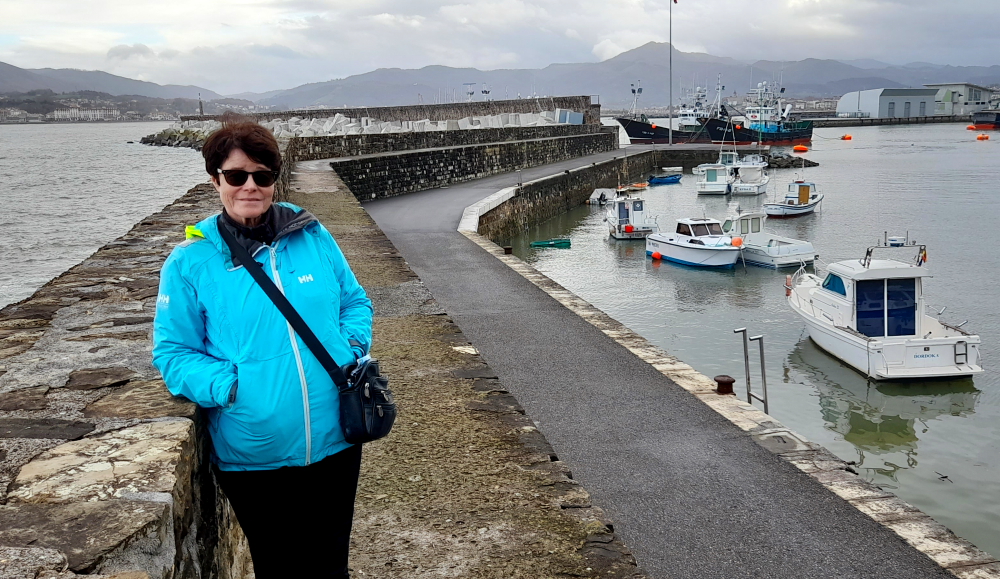
Below the cape has been built a sheltered harbour for some fishing boats. Interestingly, part of its harbour walls has been built out into the Bidasoa River which so that part of the wall is in Spain and the other part has been built across the borderline in the river as shown on the map, in France. I wonder how they got planning permission for that?
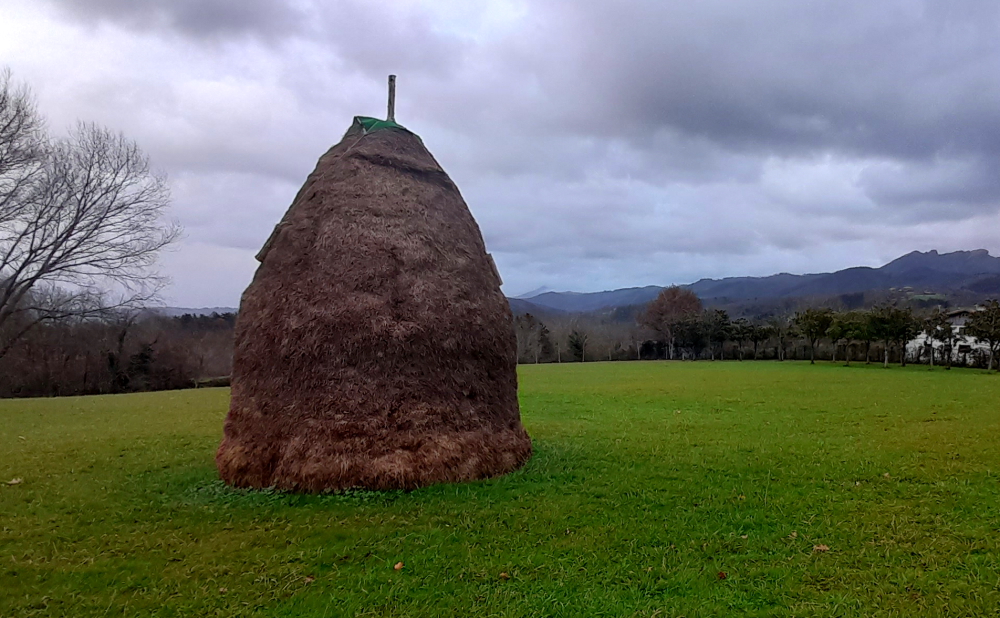
When we get back to the hotel we notice a traditional haystack in the field. We saw these ‘stacks during our trip through Spain and Bosnia in 2014/15.
15 December 2023
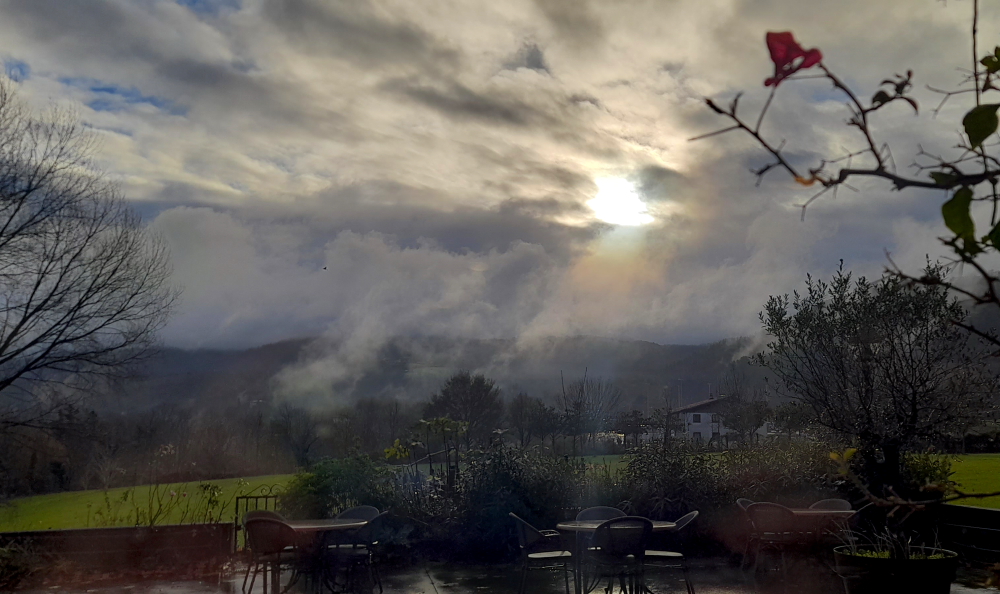
Torrential rain during part of the night but overcast with intermittent sunshine upon waking. As we did our sightseeing yesterday it’s a day in to enjoy the view.
Tomorrow we drive to Zaragoza, 273 km away which will take about 3 ¼ hours on toll-free roads.
 THE CONTINUING TRAVELS OF YOGI & BOO BOO