17 July, 2024
Our 350km drive today from Zarasai in Lithuania to Taagepera in Estonia – driving straight through Latvia – should take about 5 hours. It’s 21 degrees as we depart at 9:50 am and threatening rain.
Initially we were going to take the major ‘A’ roads that would take us right across Latvia into Riga before heading back out but, at 11:30 am and half way to Riga, we decide to give the smaller but unknown ‘P’ and ‘V’ roads ‘a crack’ which take us northwards and saves us half an hour. Thank goodness we’ve left behind the bone-shaking, patched and pot-holed roads of Lithuania.
The P37, 30, 33, 27 and 24 take us through a picturesque landscape of Latvia, in particular the gentle slalom course that is the P33 between Vecpiebalga and Smiltene where we join the P27. Even the single section of roadworks we come across on the P27 only delays us by 5 minutes.
En route we see more storks, this time at least a dozen, rather than 1 or 2, grazing together or a flock flying low over fields. More tractors and workers are out and about as grass is being cut.
We enter Estonia after a convoluted crossing over the Pedele River at Valga then, for the next 8km, the road continues right next to the Latvin border with not a barrier in sight.
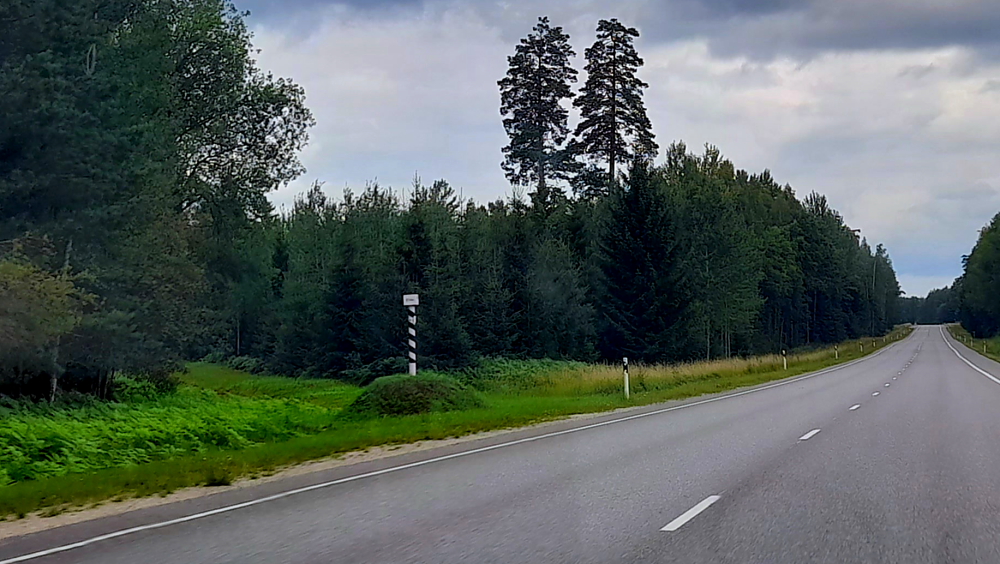
Latvia (L), Estonia (R) – the Latvian border markers from Estonia.
The ‘6’ then takes us through the pretty towns of Torva, Helme and Ala where we turn left onto a road through beautifully-kept wooden dwellings and manicured lawns and gardens to arrive at the archway of what was once, in the 1900s, Taagepera Castle now known as Castle Spa Wagenkull, our destination.
In 1907, Baltic German Hugo von Stryk (1827–1912) began building a castle on top of Taagepera (then Wagenkull) hill. Under his guidance and based on the design by Riga-based German architect Otto Wildau, an Art Nouveau fairy-tale castle was completed in 1912, with the 42m tower offering a view of the surroundings.
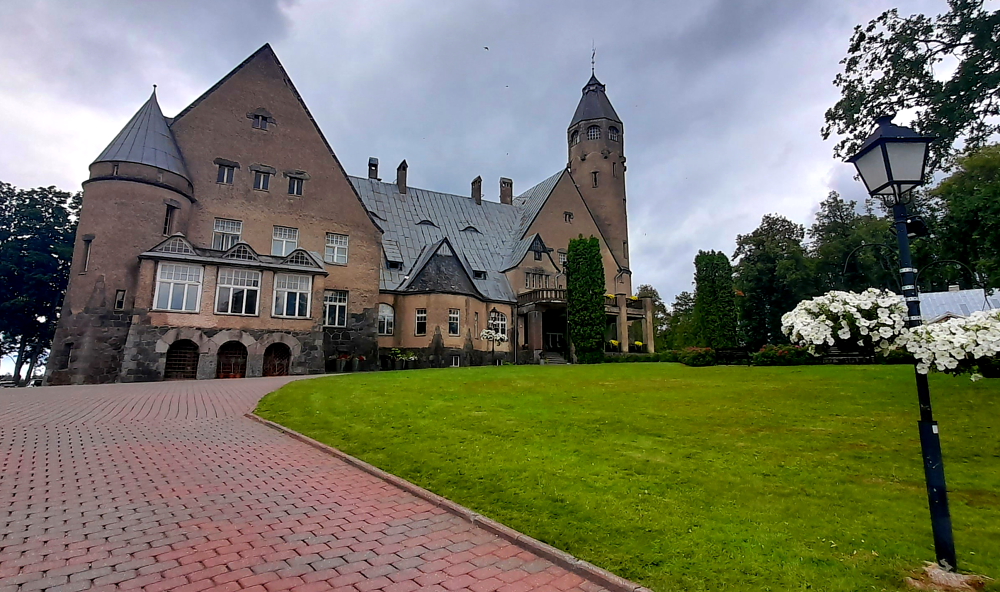
Driveway to Castle Spa Wagenkull, Taagepera, Estonia.
Back in January when we booked this hotel we chose it as, although more expensive, it would be something different and it offered full spa facilities with unlimited access to hotel guests so we were looking forward to 3 days of relaxation. The Castle is very remote so even finding a local restaurant would mean a drive of at least 15 minutes each way.
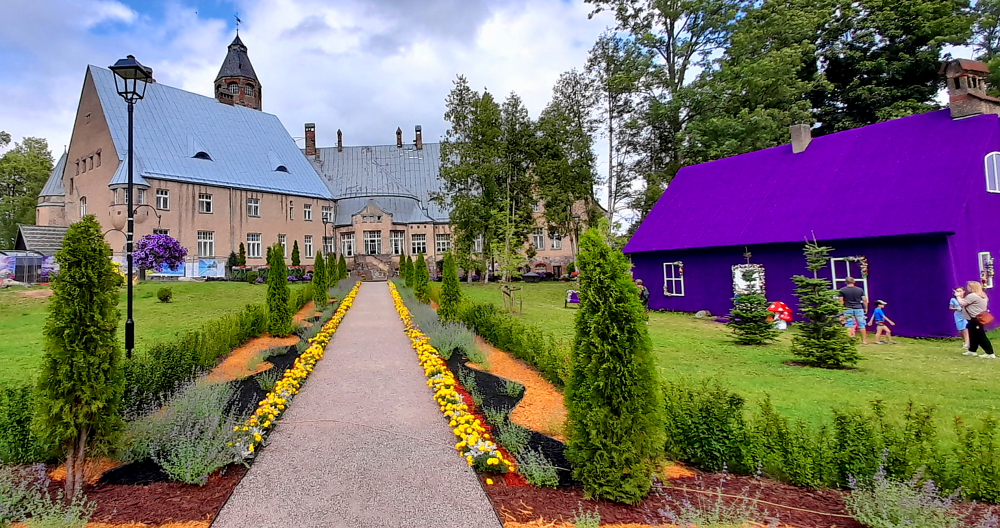
Rear garden, Floral Festival, Castle Spa Wagenkull, Taagepera, Estonia.
Little did we realise that during our stay the hotel would be hosting an 11-week ‘Alice in Wonderland’ floral festival, 7 days a week from 11 am – 8 pm.
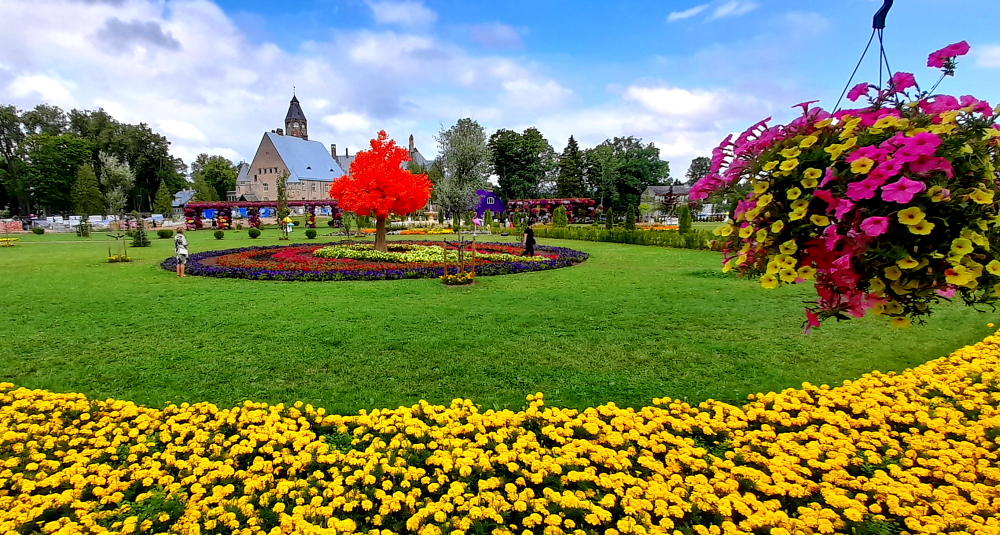
Flame tree, but not as we know it (paper leaves & plastic trunk), Floral Festival, Castle Spa Wagenkull, Taagepera, Estonia.
When we pull up to the barrier at the archway to the property we are surrounded by queues at the gate ticket office, then throngs of people on the front lawns, in the cafe, in the car parks, in front of the hotel and in the hotel. People, people everywhere! Considering that it is mid-week and this place is at least an hour’s drive from the nearest big town the place is heaving with families.
Luckily we snag a parking spot to the left of the hotel and we are the only ones at the tiny check-in desk in the small lobby at 2:40 pm. 15 minutes later as we are bringing our luggage through the lobby to our ground-floor room the check-in queue is out the door!
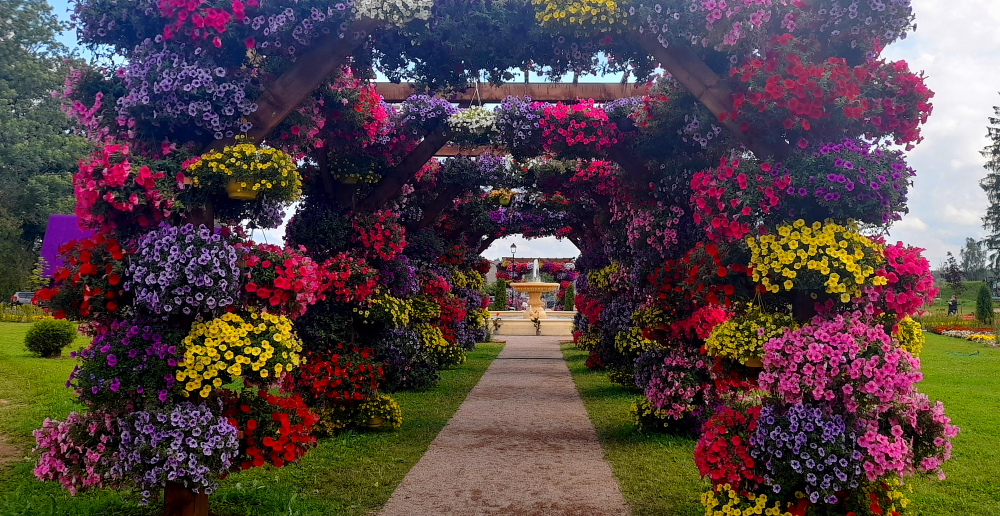
Look what you can do with a couple of hanging baskets! Floral Festival, Castle Spa Wagenkull, Taagepera, Estonia.
So, to the rallying cry of “if you can’t beat ’em, join ’em” we venture outside. The rear garden centres around a fountain which has 2 pergolas bedecked with a multitude of hanging baskets of petunias either side plus some beds of flowers around colourful trees and a purple ‘Wendy House’.
The theme is ‘Alice in Wonderland’ so around the grounds are large posters of scenes from the story in floral frames. The reason being that the story depicts a mystery taking place in a castle belonging to the Queen of Hearts so what better setting than a former castle.
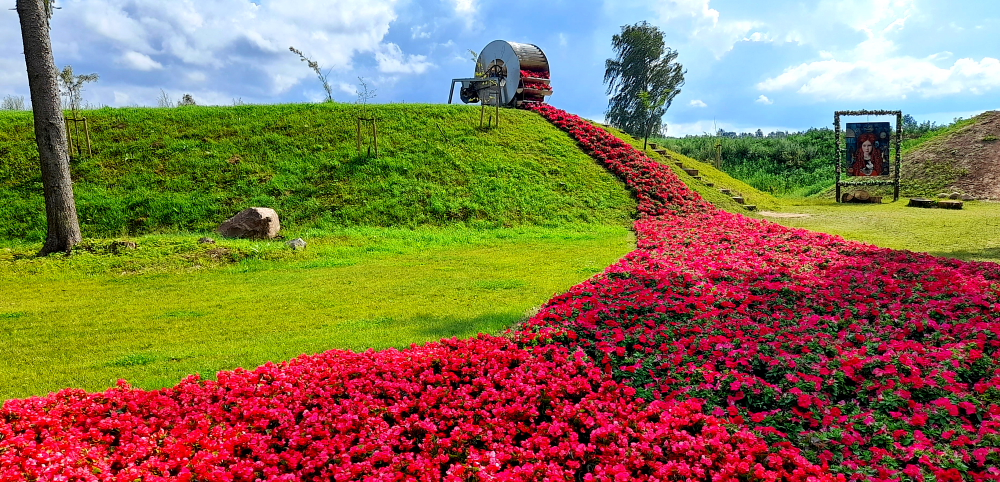
Torrent of blooms, Floral Festival, Castle Spa Wagenkull, Taagepera, Estonia.
Likewise in the grounds at the front of the hotel. This time with a large, artificial, wisteria tree.
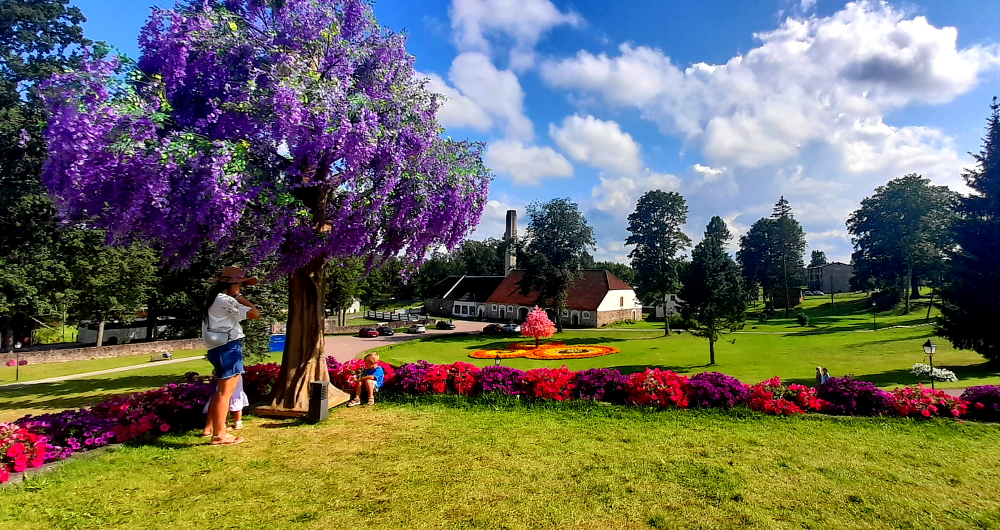
Fake wisteria, Floral Festival, Castle Spa Wagenkull, Taagepera, Estonia.
And a large white, floral heart in front of the Cafe and Park House, a residential wing of the hotel.
Although a nice enhancement to the otherwise unadorned grounds the festival is largely made up of a huge number of baskets of multi-coloured petunias hanging from lamp posts, pergolas and trees. At least as hotel guests we forego the entrance fee of Eu15/adult.
Back inside, we check out the Spa which is in the basement. Again, the small, enclosed area is heaving, especially in the pool which has been taken over by a bunch of unruly and noisy kids.
Lynn’s brief enquiry about the facilities and services is met by a terse response from the 2 reception staff, even when she reveals that we are hotel guests. Upshot, we won’t darken their door again. Obviously the service standards are a left over from their Soviet era.
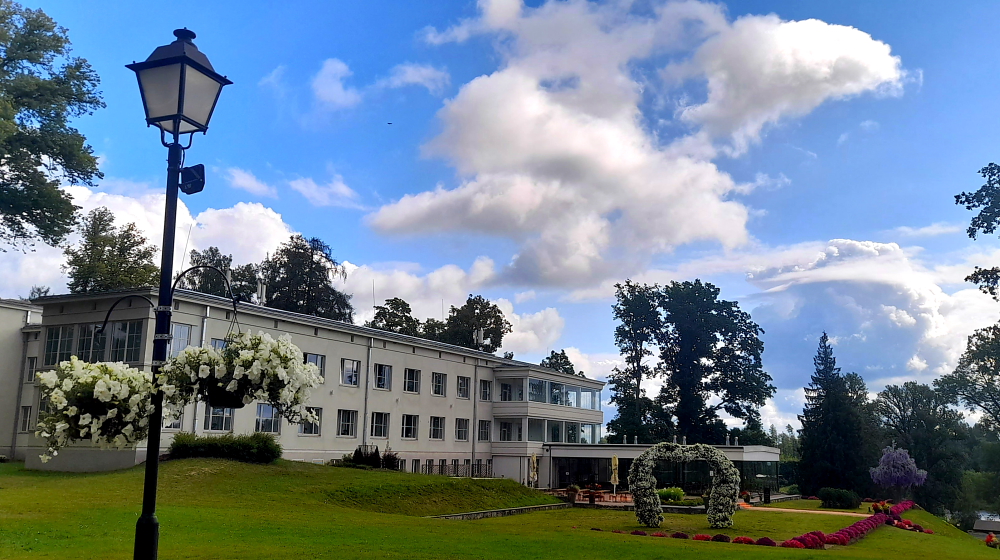
Park House & Cafe, Floral Festival, Castle Spa Wagenkull, Taagepera, Estonia.
Fortuitously, we had booked a table in the restaurant for dinner this evening. There aren’t that many tables so the place is booked out. My duck breast with risotto is nice as is Lynn’s roast salmon with teriyaki sauce, salad and glass of Cava, but not so my glass of Spanish red. Normally we would expect to pay about Eu55 for this meal, not the Eu71 we are charged.
But, we’ll be back tomorrow night as the restaurant options outside the hotel aren’t that numerous. The hotel prices reflect the captive market.
18 July, 2024
Up at 8 am as breakfast closes at 10. Thanks to a bed made up of 2 doubles, a comfortable night’s sleep although I had to wear my eye mask again with outside light framing the curtains all night.
Our bathroom takes up one wall of the room, dominated by an old fashioned roll-top bath with clawed feet in the centre, a poky, wet-room shower to the left, a narrow cupboard and sink with very little light to the right and a small cubicle with loo and basin next to that. 2 large curtains can be drawn shut for privacy and as a shower curtain. Takes me forever to get wet under the shower.
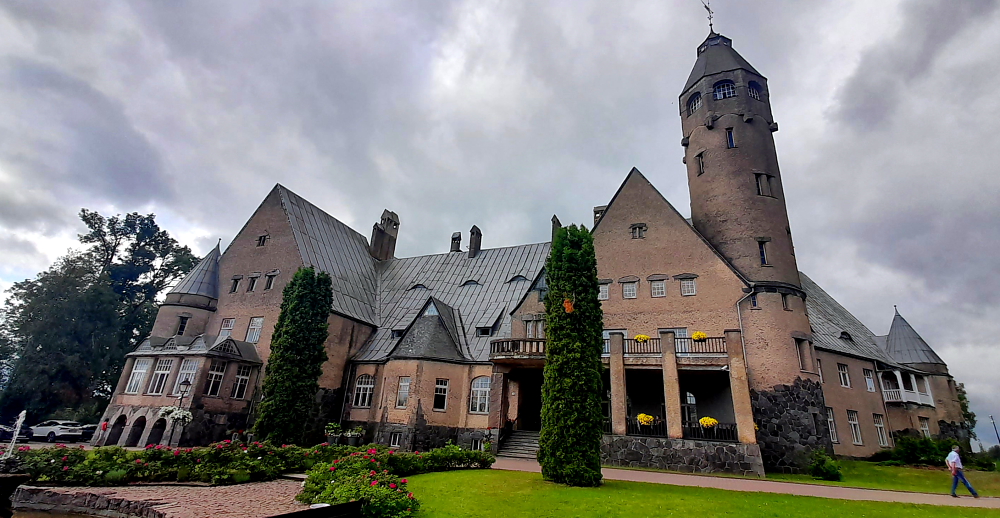
Gathering storm clouds this morning. Castle Spa Wagenkull, Taagepera, Estonia.
The buffet breakfast is busy at 9 am with not that much in the way of quantity or quality to entice me. One would have thought that for such an expensive hotel that breakfast would be a la carte with table service. I am so looking forward to the Pullman Hotel in Bangkok.
It’s now 1:30 pm, the sun is out and the crowds are growing.
Dinner is back in the hotel restaurant. Chicken caesar salad for both of us and served by Taavi who seems to be more Finnish than ex-Soviet, with a smile and lovely demeanour to go with it. The salads are surprisingly tasty and a Goldilocks’ portion size – just right.
19 July, 2024
World news today is that there has been a massive, global IT outage due to a flawed software upgrade by Crowdstrike (how aptly named!) with Microsoft which has affected, amongst other things, some airports resulting in cancelled flights. Hopefully things will be back to normal in 10 days’ time when we are due to fly from Helsinki to Bangkok.
A slightly cooler day today at 20 degrees max. and a chance of rain. Sadly, this morning Lynn watches a funeral service recording that took place in Canberra a couple of days ago – a small blessing from Covid with live streaming and recordings made available to those who can’t be present physically. Tony, (Captain, retired) who died last month aged 89, together with his wife Elaine (who died in 2019) became close friends of the Coleman family from 1975 after Elaine became one of Lynn’s university lecturers. In 1982 Lynn visited them in Jakarta when Tony was the Australian Naval Attache there and later Elaine was instrumental in Lynn’s employment with BP Oil in the UK in 1990. We last saw Tony in Canberra in 2022 when we had lunch with himself, his nephew Duncan and Duncan’s wife, Ilse.
Early afternoon we venture out for a 45-minute walk down the road to the local museum and back for the exercise – occasionally attacked by more stinging horseflies – and just make it back before the heavens open which puts a bit of a dampener on the crowds. Lynn indulges herself with a bubble bath in the roll-top tub before we go to dinner.
Tomorrow we drive 86km NE to Tartu which will take us about an hour 15 minutes where we’re staying in an apartment for 4 nights. Tartu is our penultimate destination in Estonia before we drive to Tallinn on 24 July.
20 July, 2024
It’s overcast and 19 degrees when we depart at 10:40 am. We retrace our route along the 6 to Torva then take the 73 and 52 to Rongu where the 3 takes us into Tartu. En route it’s encouraging to see that Europe’s stork population is thriving in the Baltic states.
We drive to a supermarket near the apartment for supplies around noon and phone to arrange to meet our host, a jovial Martin, at 12:30.
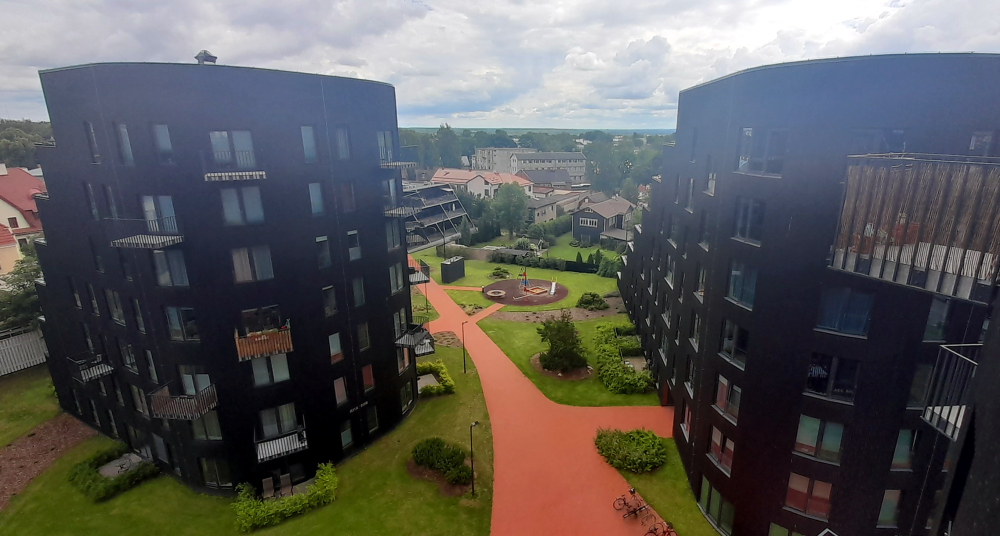
View NE from our balcony in a similar building (L), Tartu, Estonia.
After being shown where to park in the underground garage Martin accompanies us in the lift to the apartment on L7. Here he shows us where everything is and how everything works.
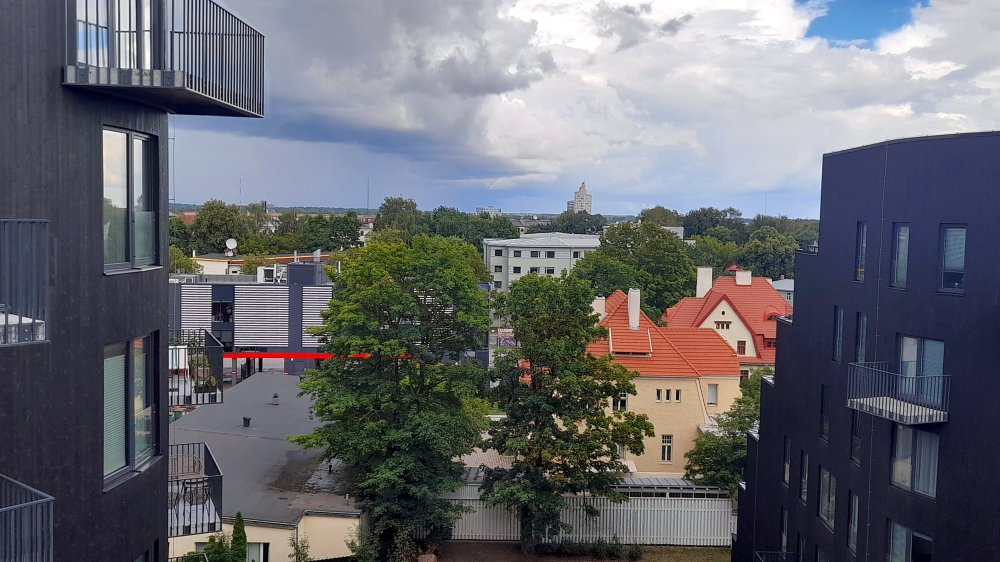
View NNW to the “Snail Tower”, Tartu, Estonia.
Finally! It’s only taken us 2 years on the road to find an apartment that is modern, clean, functional, in working order, nicely decorated with quality fittings and furnishings, stocked with essentials, has welcome gifts of cold drinks, chocolate and fruit, well located, has secure undercover parking and is managed by a friendly host who is also the owner. The Brits and French in particular should take a leaf out of his book!
5 minutes’ walk away is a former industrial complex that has been converted into shops and several restaurants and bars so I book us a table online at the “Kolm Tilli” restaurant.
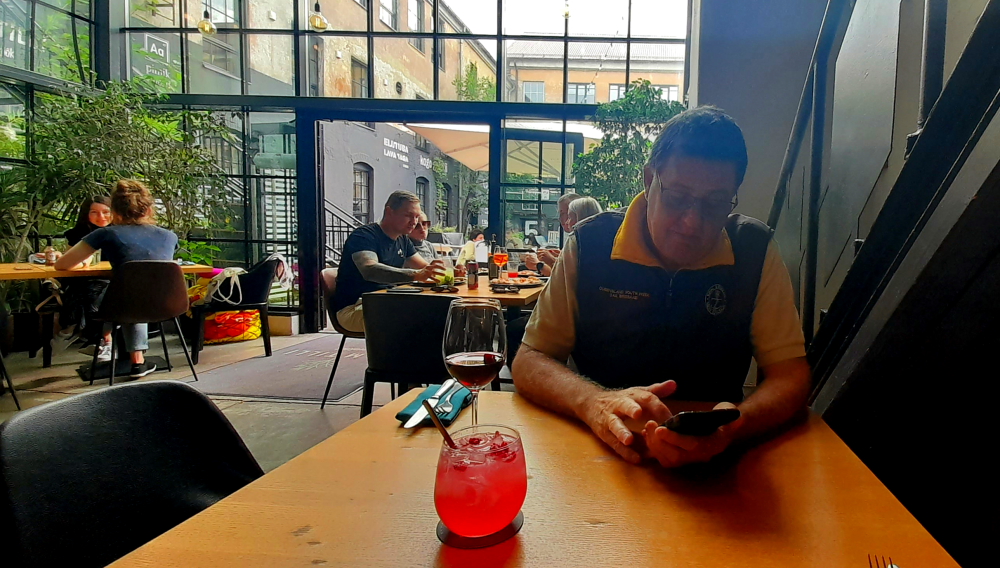
Kolm Tilli, Tartu, Estonia.
Must be something to do with the name as the young staff members are great as are the food and booze.
21 July, 2024
Unbelievably, this morning we wake to a blanket of fog which starts to recede so that by the time we are due to meet up with our final GuruWalks tour at 11 am, the day has become sunny and a cool 18 degrees – perfect walking weather.
And today is my youngest grandson’s birthday. Happy 3rd Birthday, Hamish!
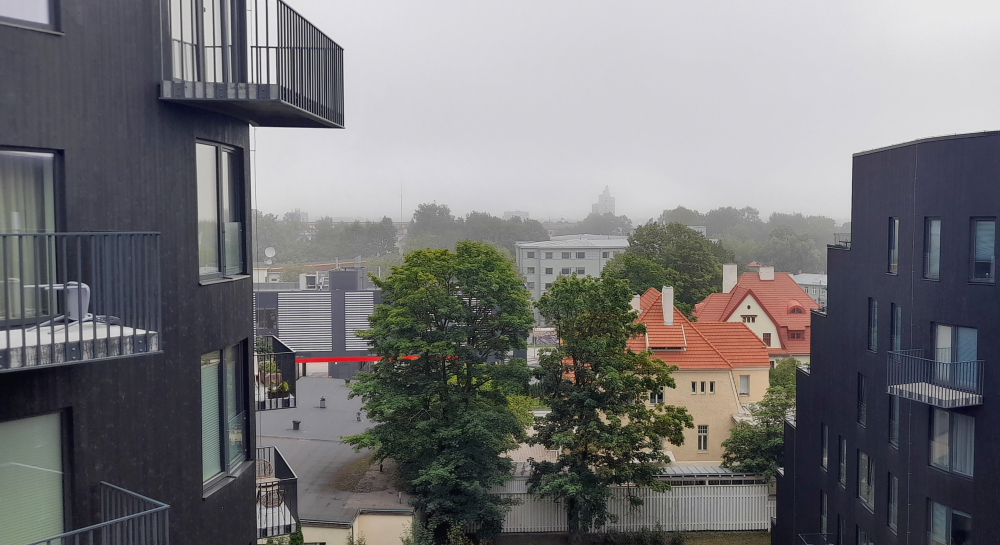
A blanket of fog this morning.
It’s a 20 minute walk to the river and while we wait for our guide, Stas, to arrive we wander about.
Which is where we encounter some of Tartu’s sense of humour expressed in its street art …
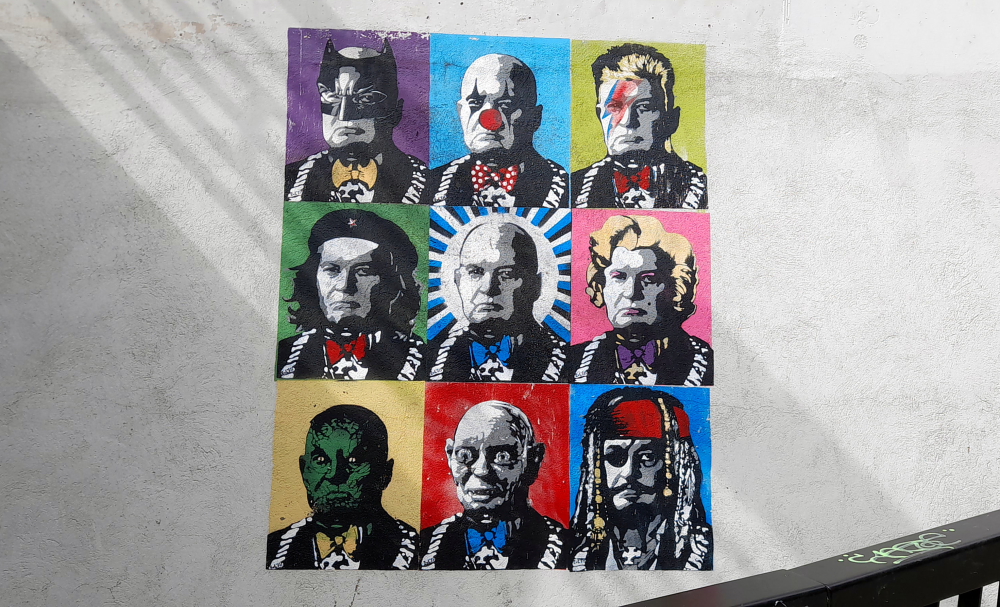
Warhol gone awry, Tartu, Estonia.
… such as “The Many Faces of President Pats”, depicting the 1st president of the Republic of Estonia by Edward von von Longus.
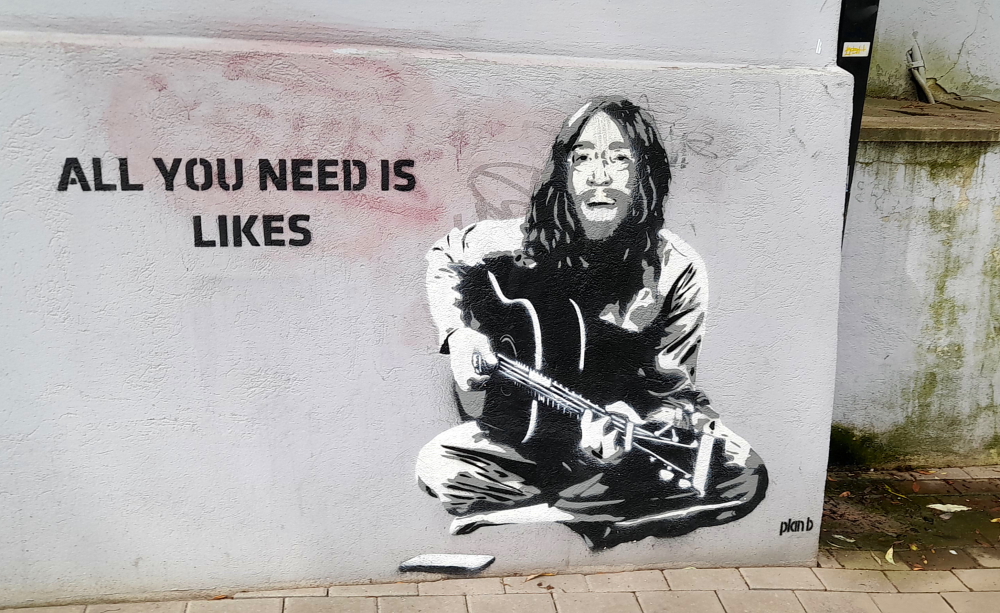
Perennial Lennon, Tartu, Estonia.
We meet up with about 14 other walkers on the other side of the Emajogi River on the edge of Ülejõe Park at a statue in the Lydia Koidula & Johann Voldemar Jannsen Memorial Square which was opened in 2018.
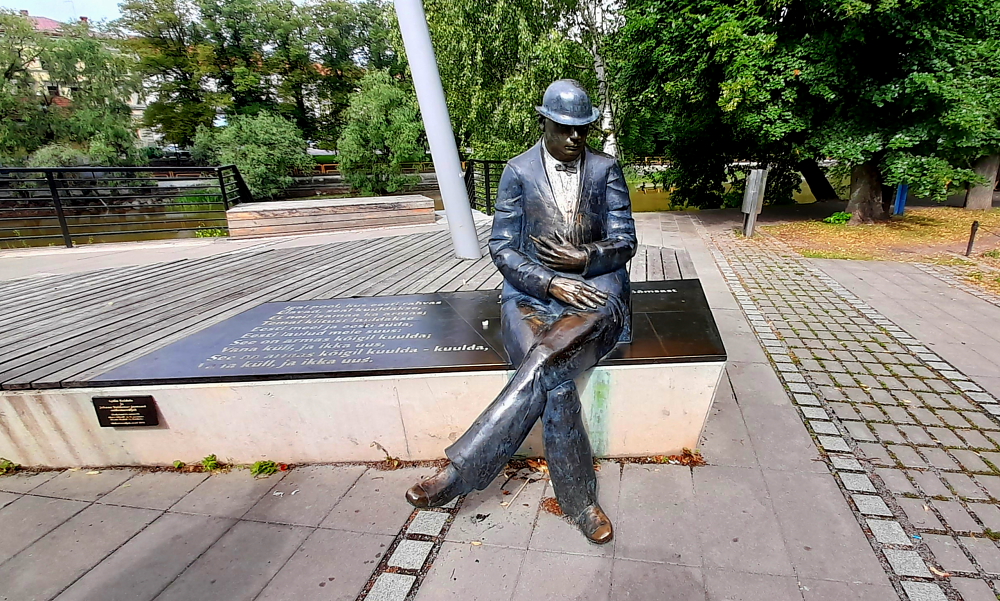
Statue of JV Jannsen, Ülejõe Park, Tartu, Estonia.
In 1863, their family moved to Tartu, where the father and daughter issued the Estonian newspaper Eesti Postimees, founded the theatre company Vanemuine, and in 1869, organised the first song festival in Estonia. Both were promoters of the Estonian national movement and cultivators of Estonian-language culture [visitestonia.com].
From here we walk back across the river over the single-arched pedestrian bridge, Kaarslid, which connects the city centre with the Ulejoe district. The bridge was built in 1957-1959 on the site of the former Stone Bridge (Kivisild).
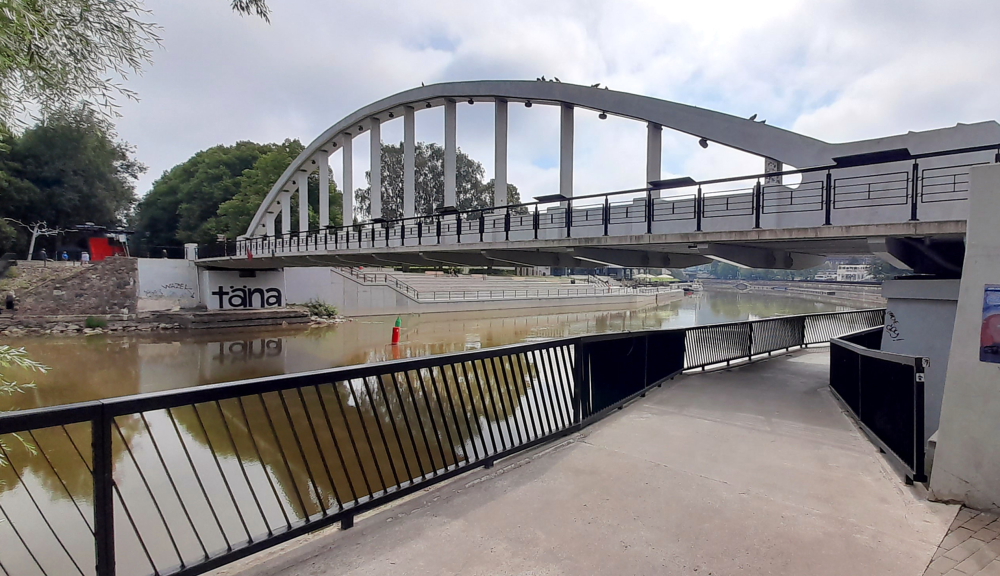
Kaarsild, Tartu, Estonia.
Which is a far cry from what the bridge looked like in the 18th century, built with the funds requested from Catherine II the Great.
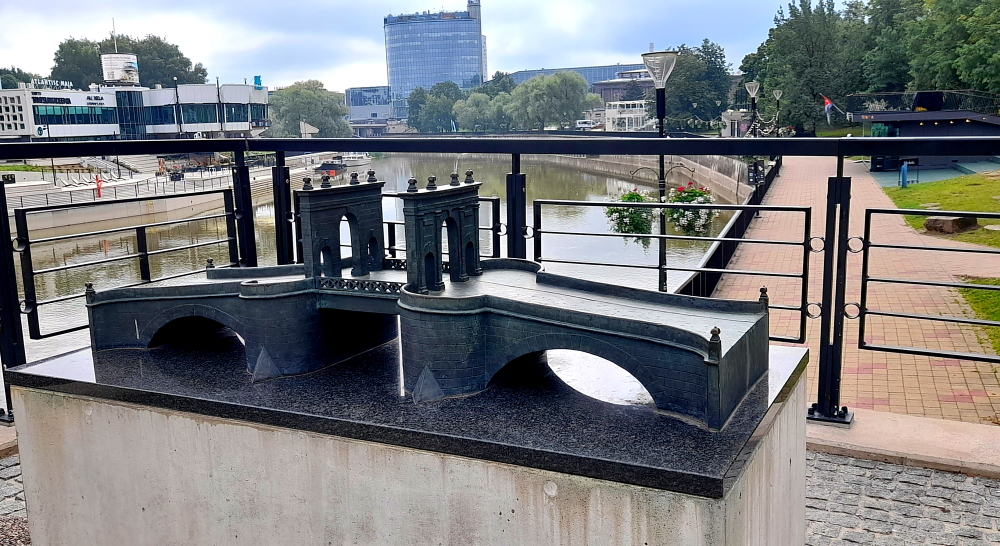
Model of Kivisild, the former stone bridge over the Emajogi River, Tartu, Estonia.
Tartu is Estonia’s 2nd city and as the home to its oldest university, it is often considered the country’s intellectual capital. This year it holds the title of European Capital of Culture.
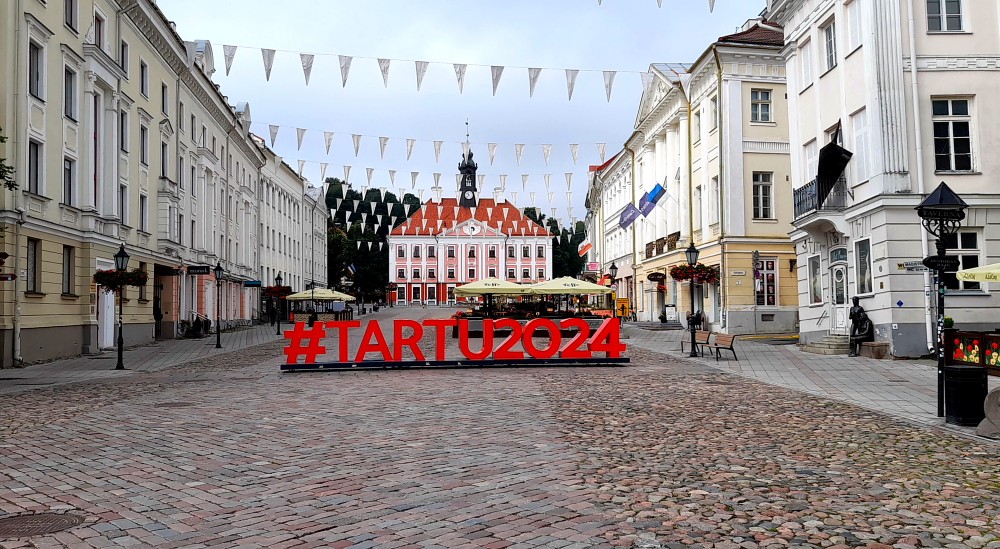
Tartu – 2024 European Capital of Culture.
Tartu was first mentioned in 1030 as a fortress built by the Grand Duke Yaroslav of Kiev which would make it the oldest city in the Baltics. Since then the city has been destroyed several times – by Estonians in 1061, by Germans in 1224, by the Great Northern War in 1708 and by fires in 1708, 1763 and 1775. Most of the classical buildings in the old town date back to the 18th century. [Brief history https://tartu.ee/en/history-of-tartu ].
For centuries, the centre of the City of Tartu has been the Town Hall Square, the history of which dates back to ancient times. Even then, the Square was the main trading place which connected the stronghold, located on Toome Hill, and the ports along the Emajogi River.
On Town Hall Square there are 3 notable structures. The Art Museum (Tartmus), founded in 1940 to collect, preserve, and promote contemporary art. Tartmus is located in a crooked house built in 1793. Slanted by 5.8 degrees due to the marshy banks of the Emajõgi River, means that the house has more of a tilt than the Pisa Tower [visitestonia.com].
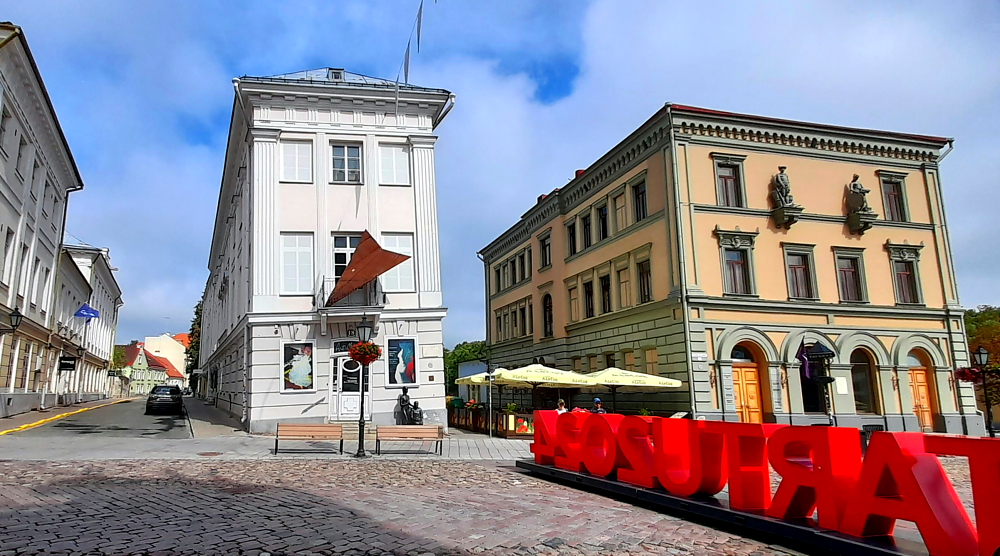
Cobbled streets & a wonky Art Museum (C), Town Hall Square, Tartu, Estonia.
The current town hall is the 3rd building that has been erected on this spot. In the 18th century, the square was the location of the most important market in the city – der Grosse Markt, or the Great Market.
Every day, bells ring out from the Town Hall’s tower. Its 18 bells were forged in the bell foundry in Karlsruhe, Germany, and 16 bells were cast for the 15th anniversary of bell-ringing at the Royal Eijsbouts Belfry in the Netherlands.
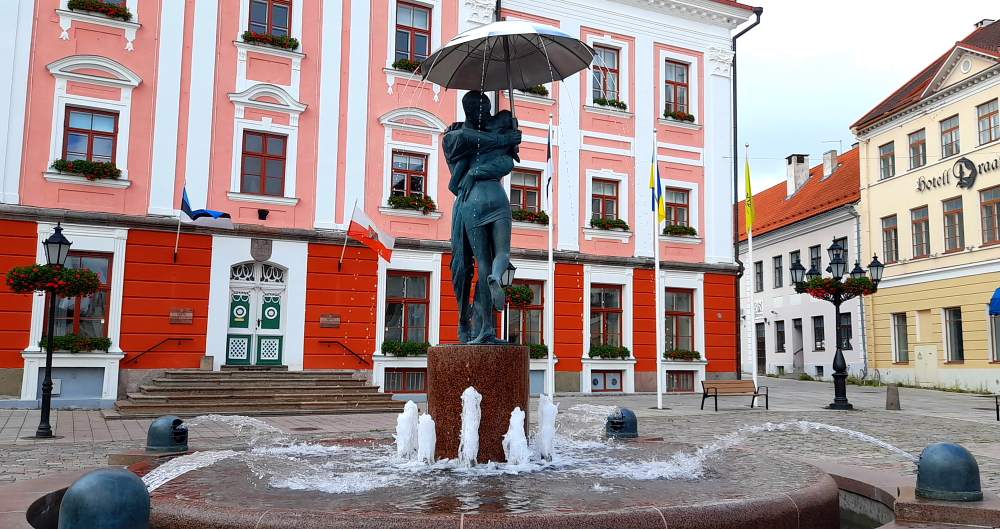
Town Hall behind the Kissing Statue, Town Hall Square, Tartu, Estonia.
The fountain has stood in the same place since 1951 and the sculpture, Kissing Students was added to the fountain in 1998 [visitestonia.com].
Next we walk along 4 blocks of the paved street, Ruutli, until we arrive at St John’s Church (Jaani kirik) of the Estonian Evangelical Lutheran Church.
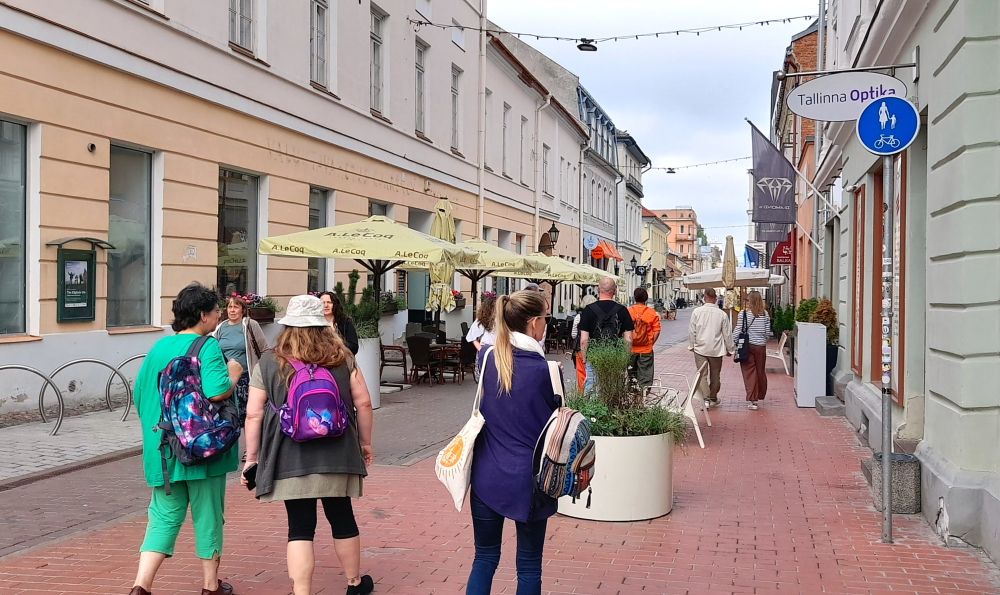
Ruutli, Tartu, Estonia.
The Church, which was built in the 14th century in the Gothic style, is 1 of the oldest in Estonia.
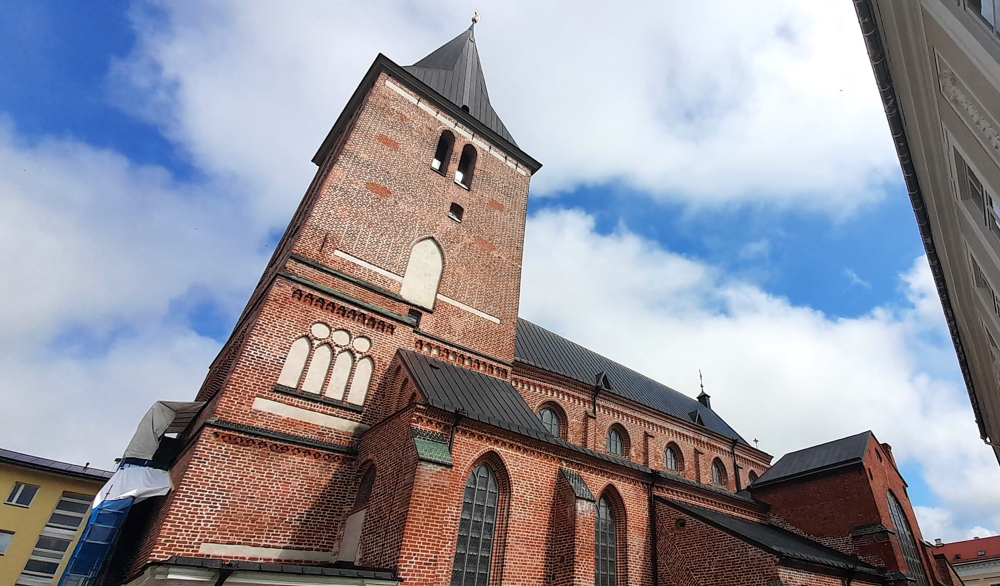
St John’s Church & spire, Tartu, Estonia.
Moreover, it is unique in Europe due to its many original terracotta sculptures. Today, almost 1,000 terracotta sculptures survive, their age reaching nearly 700 years [visitestonia.com].
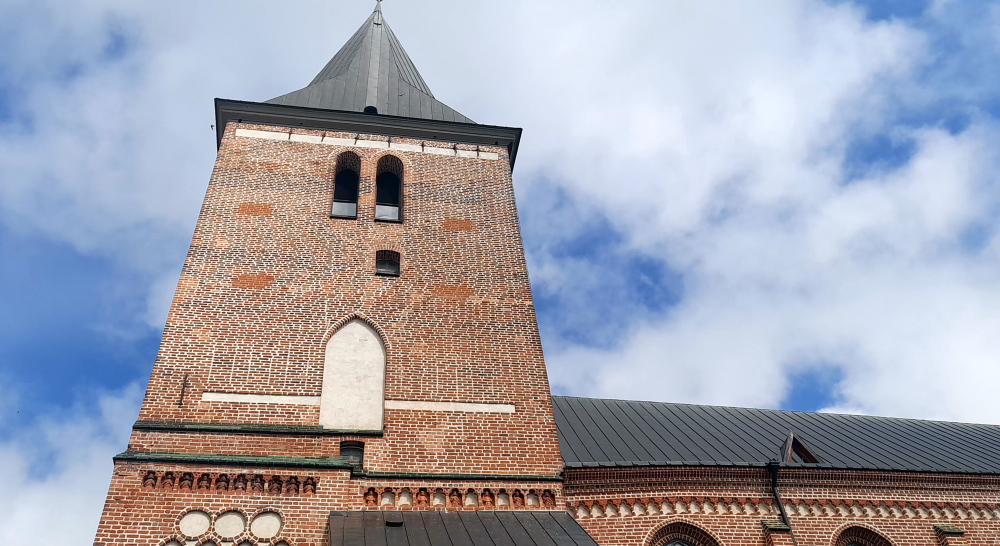
Terracotta figures in niches along the spire wall, St John’s Church, Tartu, Estonia.
Around the corner is the University of Tartu (Tartu Ülikool); founded under the name of Academia Gustaviana in the Swedish province of Livonia in 1632 and ratified by King Gustavus Adolphus, shortly before the his death in the November in the Battle of Lützen. It taught philosophy, law, theology, and medical faculties enjoying the privileges of the University of Uppsala.
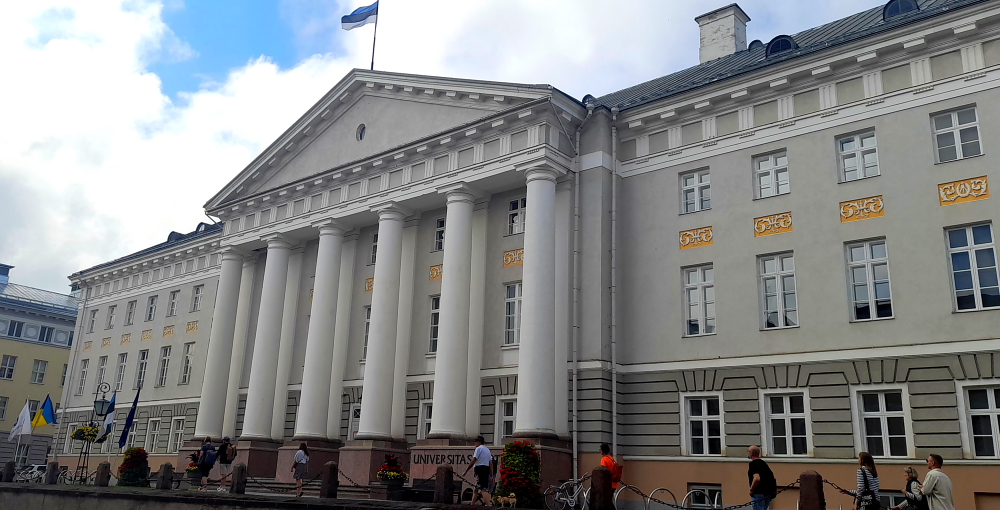
Main Building, Tartu University, Estonia.
Due to wars and occupations over the years University of Tartu moved to Tallinn and Parnu in the 1650s and 1690s. Reopened in 1802 the university educated the local Baltic German leadership and professional classes, as well as staff, especially for the administration and health system of the entire Russian Empire.
The Main building of the University is 1 of the most notable examples of classical style in Estonia. Built between 1804 and 1809, it was designed by the architect Johann Wilhelm Krause. In scholarship, it was an international university; the time between 1860 and 1880 was its “golden age”.
In 1898 both the town and the university were renamed Yuryev, and this university existed until 1918. Named Ostland-Universität in Dorpat during the German occupation of Estonia in 1941–1944 and Tartu State University in 1940–1941 and 1944–1989, during the Soviet occupation. Finally, the University of Tartu since 1992 [wikipedia].
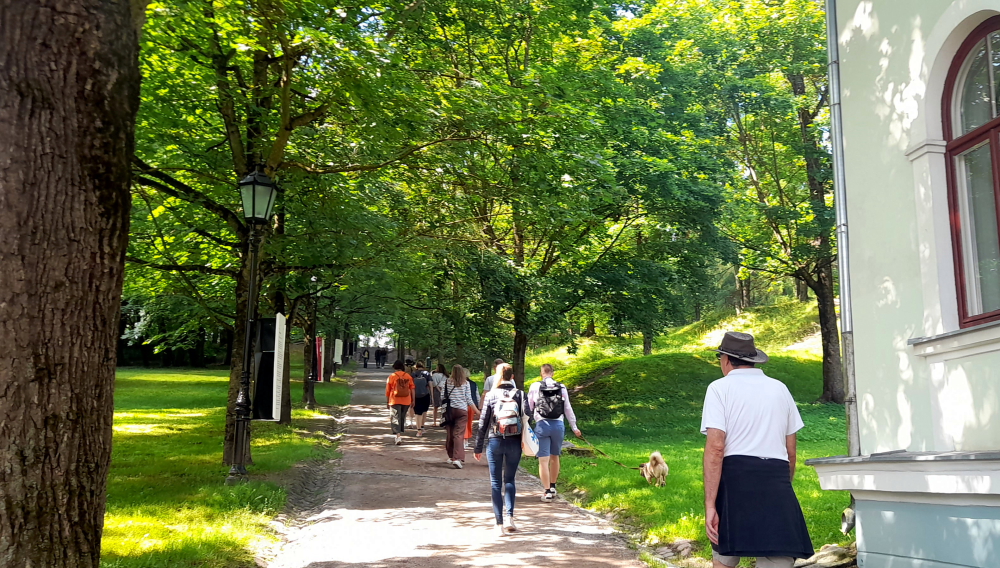
Path from Jacobi through the Park to Toome Hill, Tartu, Estonia.
Next we walk around the corner along Jacobi then take the long, climbing footpath that crosses Toome Hill Park until we reach Toome Hill where today are located several University of Tartu buildings including its Museum and the ruins of a cathedral.
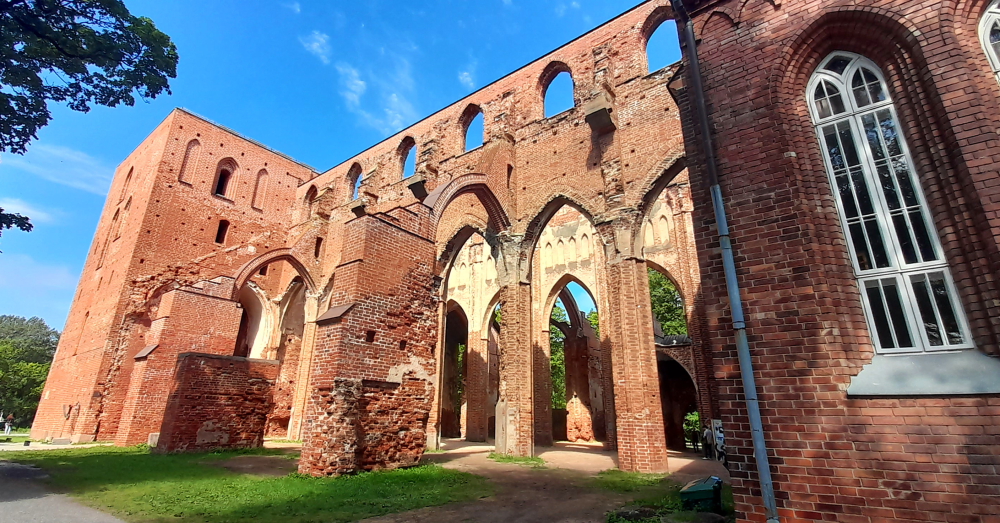
Cathedral ruins, tower base (L), Toome Hill, Tartu, Estonia.
Toome Hill (Toomemagi) was home to the ancient Estonian stronghold/hillfort, Tarbatu. In the Middle Ages, Tartu began on Toome Hill. The medieval castle stood on 2 hilltops and the rest of Toome on an escarpment cut off by a moat and fortified with the town wall. The cathedral was surrounded by the Episcopal town (upper town) that was destroyed during the Livonian War.
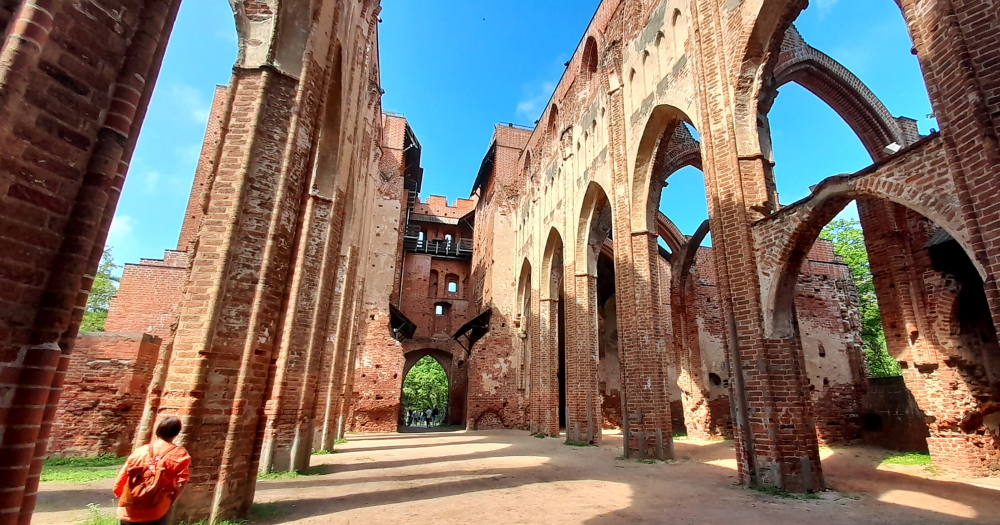
Interior, Cathedral ruins, Toome Hill, Tartu, Estonia.
The construction of the largest medieval church in Estonia began after the establishment of the Tartu diocese in 1224. Over the centuries the look of the cathedral changed many times and was only finished at the turn of the 15th/16th century – a 3-nave basilica with a choir and 2, monumental towers of unknown height. As an indicator, today only the original 22m high tower base survives.
En route to the nearby Estonian Supreme Court we pass by more street art, this time in the form of a decorated electricity box which this particular artist targets in Tartu.
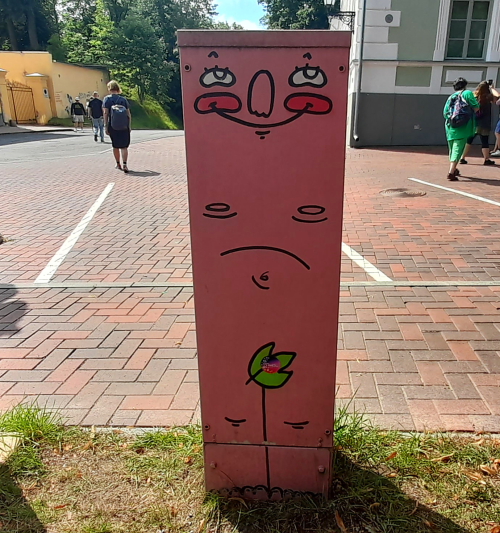
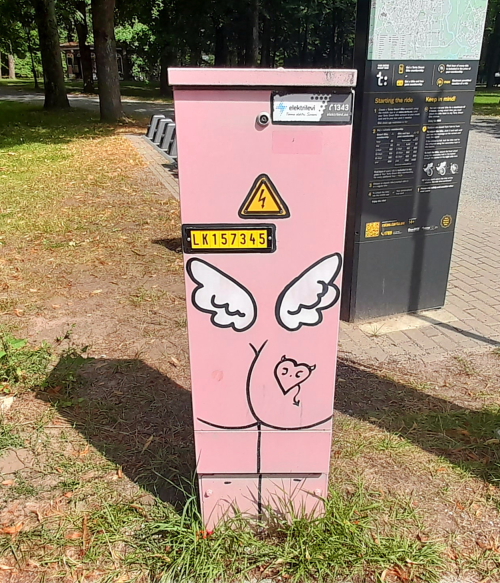
More significantly than the modern Supremem Court building is the street art opposite it. The figure in the large hat is an Estonian folklore character symbolising the forest but in this image the moss that usually entwines his beard has been replaced by cannabis leaves.
A Banksy-style policeman is handcuffing this character and the message, to the lawmakers over the road, is something along the lines of cease stopping and searching individuals for small amounts of pot, focus on gangs who are responsible for hard-core drugs.
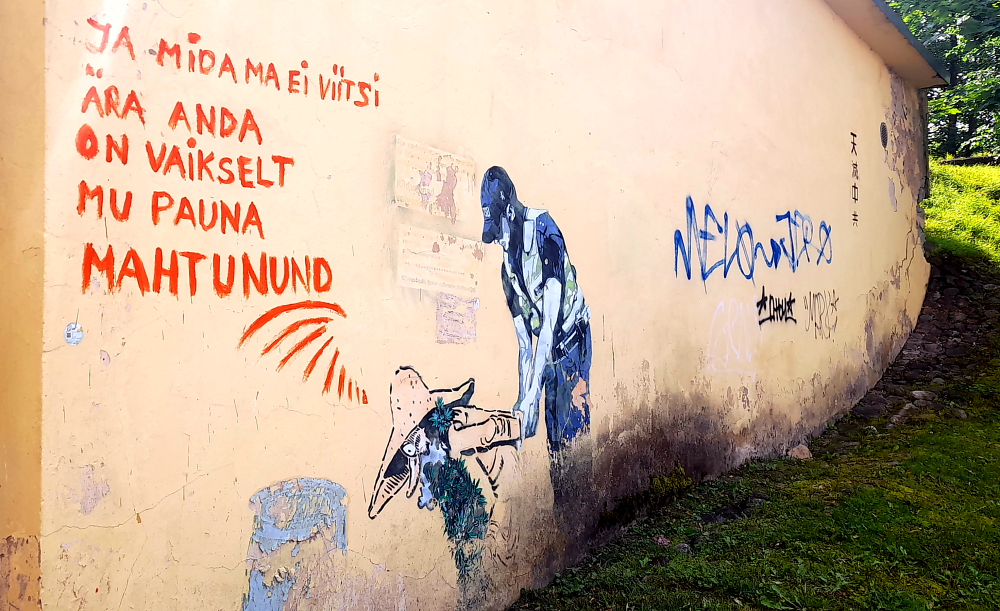
Street art opposite the Estonian Supreme Court, Tartu, Estonia.
Traversing the hill we walk past a domed building in the classicist style, part of the University, that is the Old Anatomical Theatre that was built in 1805 as a teaching building for the university’s Faculty of Medicine. Nearby is the former maternity hospital. In accordance with Estonian practice, the most clinical environment in which to give birth is in a sauna and, back in the day, this hospital followed that practice.
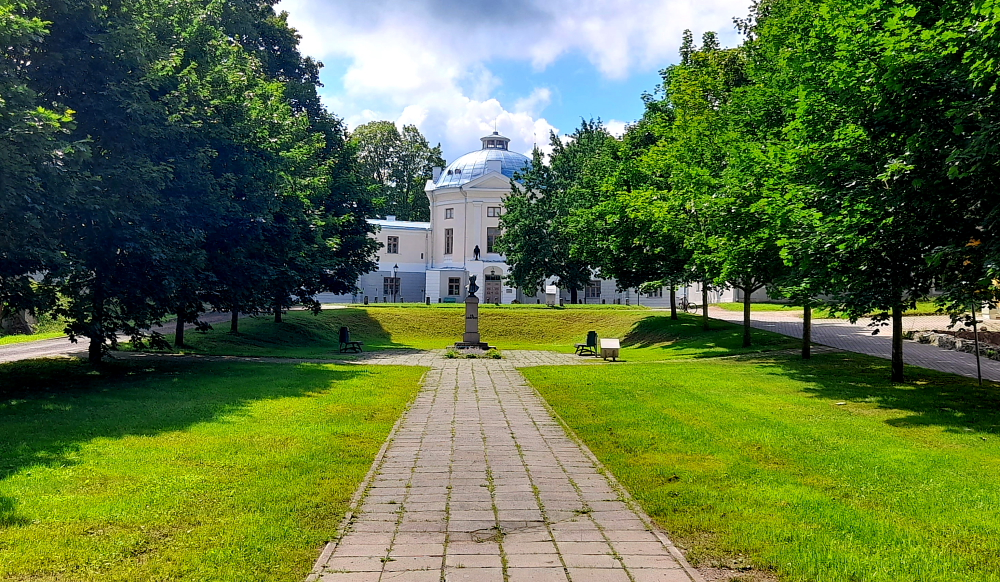
The Old Anatomical Theatre, Tartu University Museum, Toome Hill Park, Tartu, Estonia.
Next is the Tartu Old Observatory, Tartu Tahehorn (Horn of Will), Estonia’s first observatory. It was constructed between 1808-1810 to the designs of university architect Johann Wilhelm Krause on the site of a former medieval castle on Toome Hill. Restoration works were finished in April 2011, when it was reopened as a museum to mark its 200th anniversary. Exhibitions focus on the history of astronomy and present-day science. In 2005, Struve’s Geodetic Arc, 1 measurement point of which is located in the Tartu Observatory, was included in the UNESCO World Heritage List.
Allegedly, the flag pole atop the tower was where the Soviet flag was replaced defiantly by the Estonian national flag for several hours during the Soviet occupation.
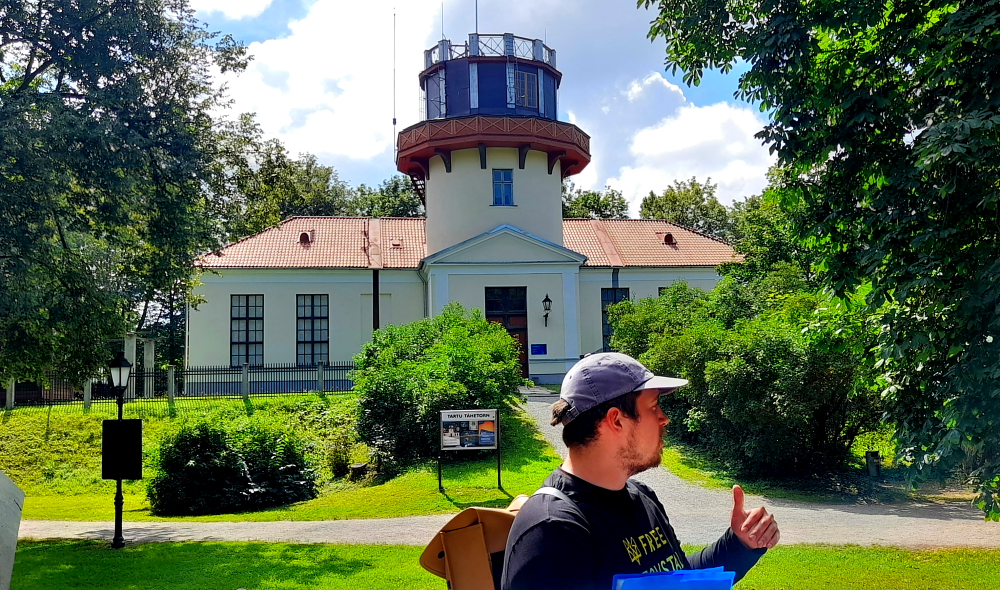
Tahehorn, Toome Hill Park, Tartu, Estonia.
Notably, the tricolour is connected to Tartu’s University. The flag’s exact colour combination of blue, black and white was used for the 1st time at the“Vironia” Society’s foundation (now the Estonian Students’ Society) at the University of Tartu on 29 September 1881. The 1st flag was handmade in 1884 by Paula Hermann, wife of Dr Karl August Hermann, an honorary member of the society. The flag was made in Tartu, in the kitchen of the Hermanns’ house on Veski Street. Flag Day is celebrated on 4 June since 1884 [estonianworld.com].
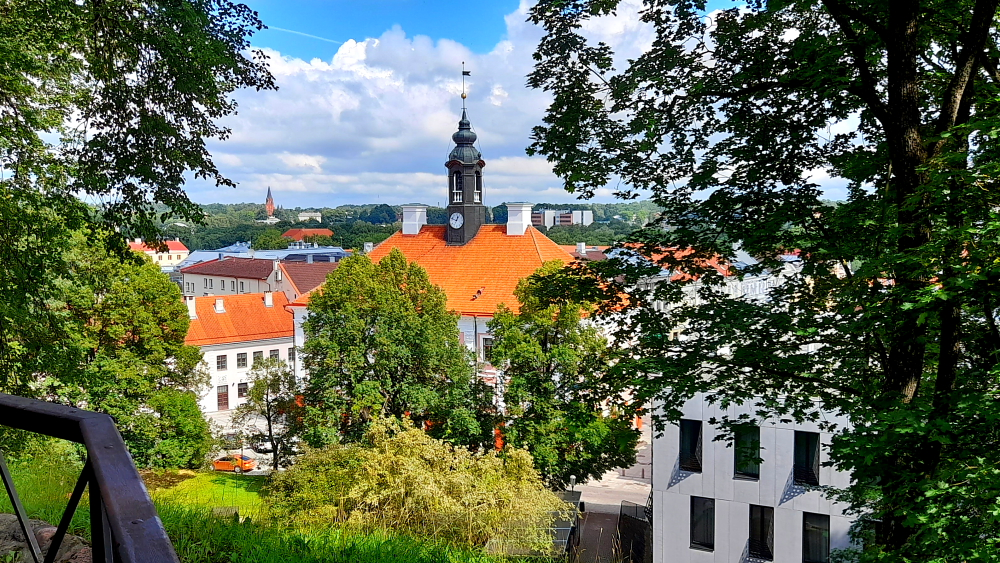
View of the Old Town from top of stairs to Vallikraavi St, Tartu, Estonia.
Down the stairs from the Park to Vallikraavi Street we come to the statue “Vile ja Vine” (1999) in front of Wine and Art restaurant. It’s a fun speculation about literary history.
It features the Irish writer Oscar Wilde (1854-1900), who was born in Ireland, and the Estonian writer Eduard Vilde (1856-1933), both of whom belonged to the same generation, sitting on a bench together. Sculptor Tiiu Kirsipuu, who modelled the writers according to photos, has noted that the year she had in mind when she created the sculpture was 1890, when the 2 Wildes could have met for a witty chat.
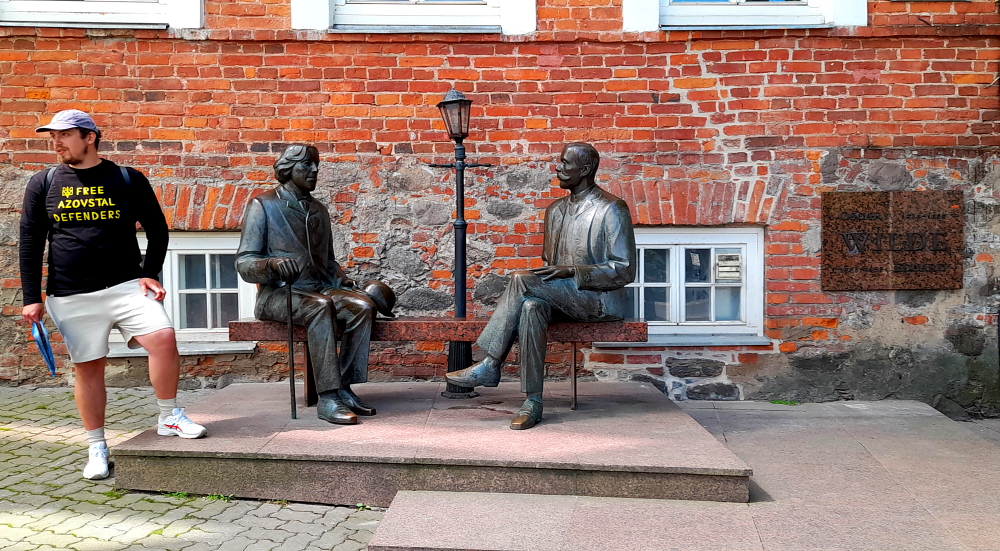
Wilde & Vilde statue (1990), Tartu, Estonia.
Here our 2-hour walk ends at which point I ask Stas, a Ukrainian who has lived in Tartu for the past 5 years, about the war in Ukraine.
According to Stas, the battle lines are holding but they are awaiting the F16 fighter jets from the USA which are expected to make a difference. He advises that the best thing to come out of the war so far is that the Ukraine has been cleaning up corruption and gradually replacing politicians who are self power focused vs the country focus. I didn’t make any comments about Australian Labor leftists or King Trump at this point.
Following the maxim, “If it ain’t broke, don’t fix it”, we dine at the “Tilli” restaurant again tonight, looked after by our lovely waitress, Elisabeth. Then we watch “Find Me Falling” starring Harry Connick Jr and “Love is in the Air” featuring Delta Goodrem on the tube.
Tonight we learn that Joe Biden has withdrawn from his presidential campaign. That may be a better solution than a missed bullet.
22 July, 2024
A lazy day today with a lie-in, Lynn doing my ironing and while she catches up 2 days of blog I take the car for a wash to get rid of the bugs and the gravel from the wheels still lingering after the 30km of road works. The gravel’s gone but not so the bugs … I try to buy more wash time but suddenly my HSBC Debit Card won’t authorise further payments. The wash will have to do so I abandon the wash and head back to the apartment.
Dinner tonight will be at … Tilli’s. I tried to pay the bill but it looks like HSBC have blocked my card. Luckily Lynn’s is still working. Not happy!
23 July, 2024
Another 27 degree day is promised today so after I get off the laptop to HSBC in order to get my multi-currency debit card reinstated (HSBC locked it yesterday for a suspicious transaction after I paid Eu5 yesterday at the car wash and despite having used this card extensively throughout Estonia, Latvia and Lithuania these past 8 weeks for far greater amounts without a peep!) we walk into town.
The idea is to check out a couple of places that are listed on the map that we didn’t see on the walking tour.
First stop is the Tartu Market Hall down near the river that was built in 1937.
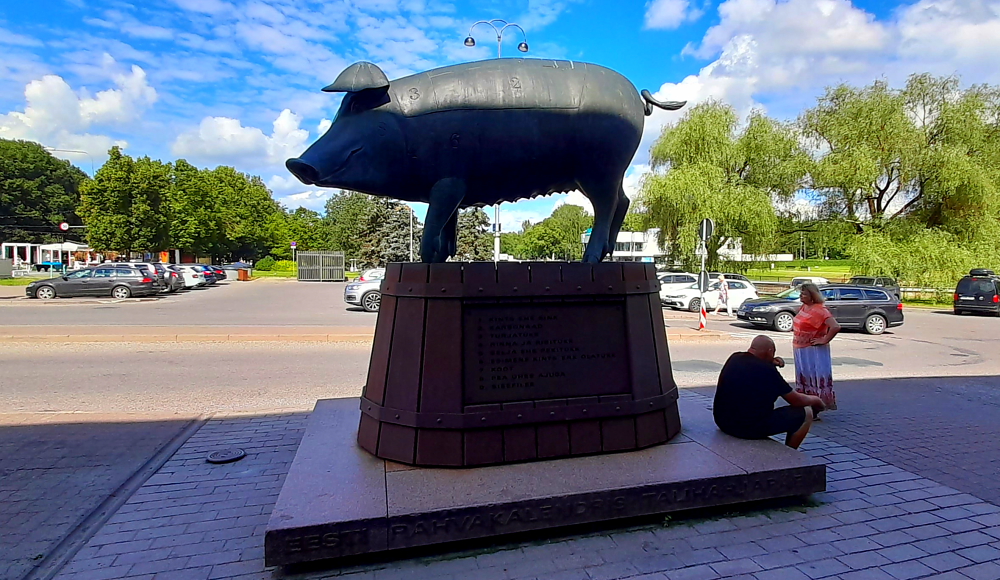
Bronze Pig, Market Hall, Tartu, Estonia.
For the market’s 70th birthday, the sculpture ‘Bronze Pig’ by Mati Karmin was installed in front of the building to symbolise wealth and trading
Inside the hall is cool, very clean and orderly with mainly meat products, a stall of biscuits/pastries and 1 of fruit and veg. Down a couple of steps is located the fish stalls.
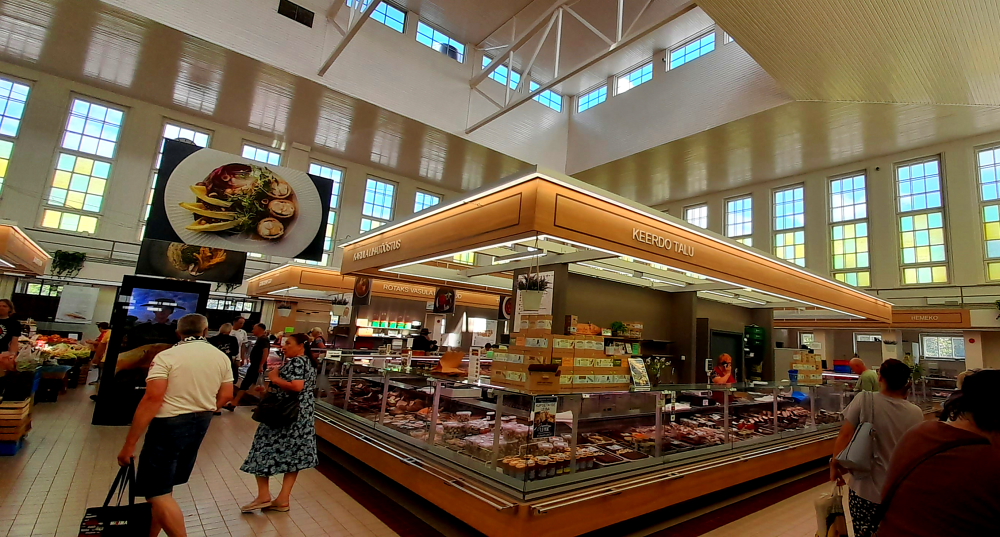
Interior, Market Hall, Tartu, Estonia.
From here we walk along the Emajoe Riviera promenade, under the Arch Bridge to Freedom Park.
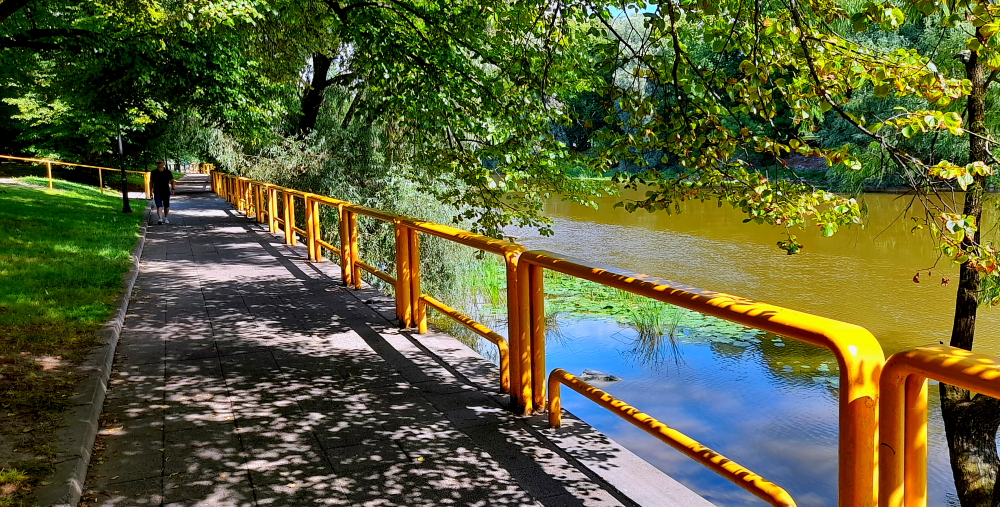
Emajoe Riviera promenade, Tartu, Estonia.
Here there is an imposing statue entitled Tartu’s “Statue of Liberty”. It commemorates the heroes who fell in the War of Independence (1918-1920). It was unveiled on 17 September 1933. Sculptor Amandus Adamson chose Kalevipoeg, hero of the Estonian national epic, as the symbol of liberty.
It was destroyed by the Soviet authorities in 1950 and was replaced in 1952 with the monument of F R Kreuzwald (now 20m away in the same park), author of the national epic “Kalevipoeg”. The restored statue by sculptor Ekke Vali was unveiled on 22 June 2003.
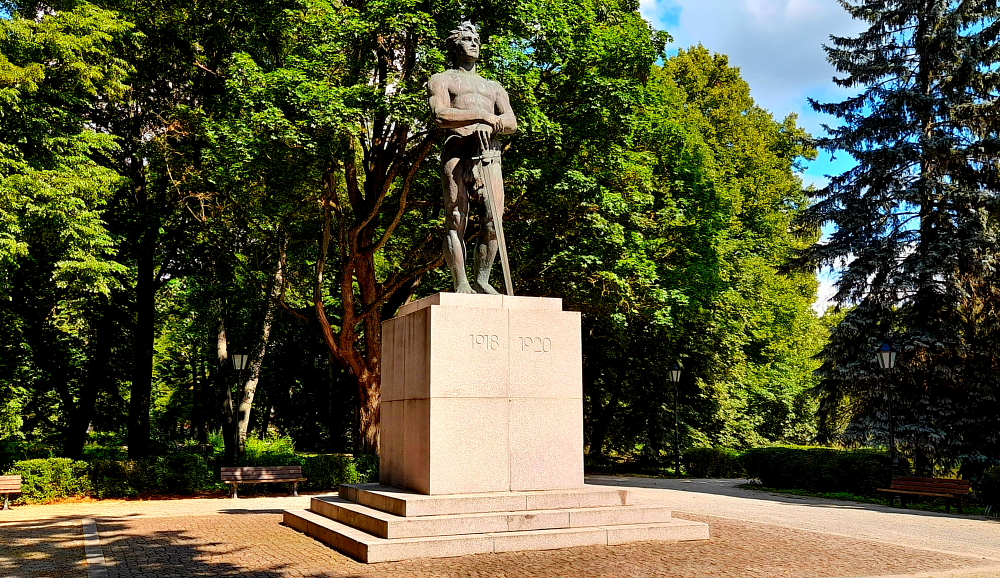
Kalevipoeg, Statue of Liberty, Freedom Park, Tartu, Estonia.
Next we revisit St John’s Church but this time we enter to view the other terracotta figurines that make up the 1,000-odd that grace this church.
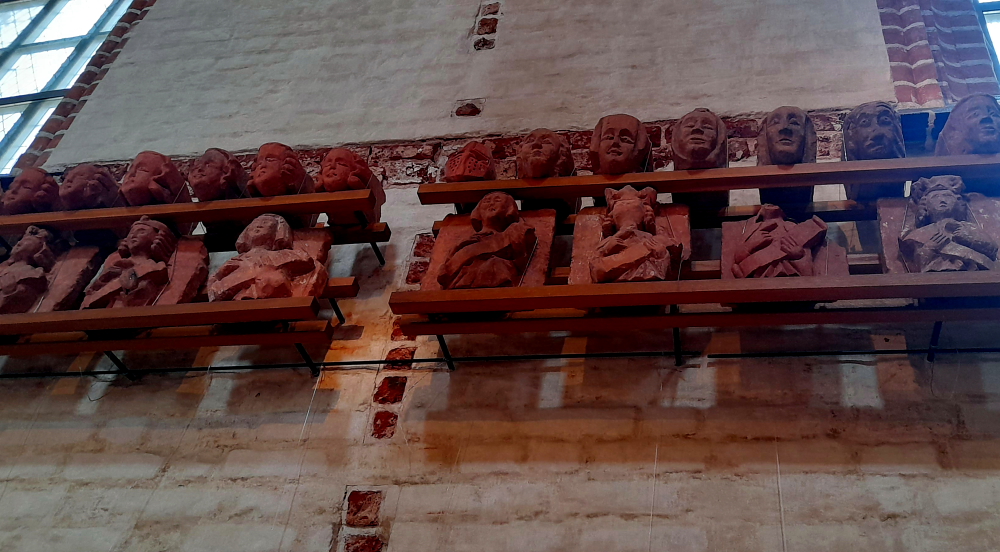
Terracotta figurines decorating the church’s interior, St John’s Church, Tartu, Estonia.
Also inside the church we find the lavishly-decorated coffin of Anna Elisabeth von Münnich, built in Lübeck in 1747 and buried in the Lübeck chapel in St John’s Church, Tartu. In addition to draping the coffin with textile it was also adorned with rich metal ornaments, had 6 clawed feet and a crucifix. The coffin was found during excavations of the tower’s floor in 2022 [researchgate.net; news.postimees.ee].
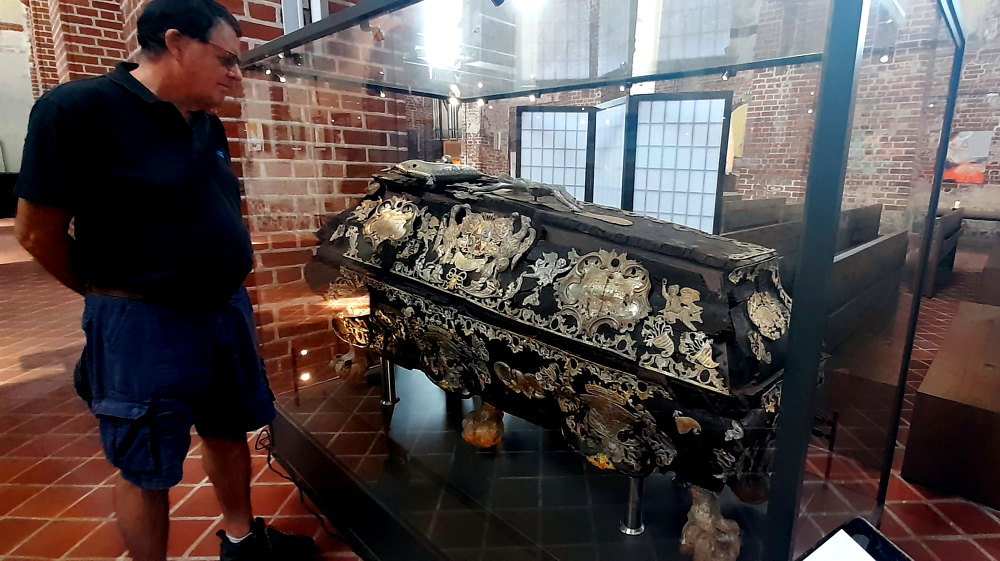
Coffin of Anna Elisabeth von Münnich (1747), St John’s Church, Tartu, Estonia.
The Munnich family line begins with Hermann Mönnich of Oldenburg (died before 1617), a settler at Neuen Weg near Blankenburg Abbey. His great-grandsons Johann Dietrich (1638−1718) and Anton Günther (1650−1721) rose to Danish nobility in 1697 and 1688, respectively. Burchard Christoph von Münnich received the title of count of Russia in 1741 and also the title of state count in Dresden. In the register of chivalry, the lineage was matriculated in the Knights of Estonia (No. 253) and Livimaa (No. 127) [wikipedia].
Around the corner from the Church is the 1755 dwelling house of Pastor T. Plasching. Now the most outstanding wooden structure of baroque period in town, it was built on the plot unused since the Great Northern War. The baroque portal located in the end wall is unique in Tartu. In the great town fire of 1775 the building was the only one to survive among the structures of the type. The building was restored in 2009-10.
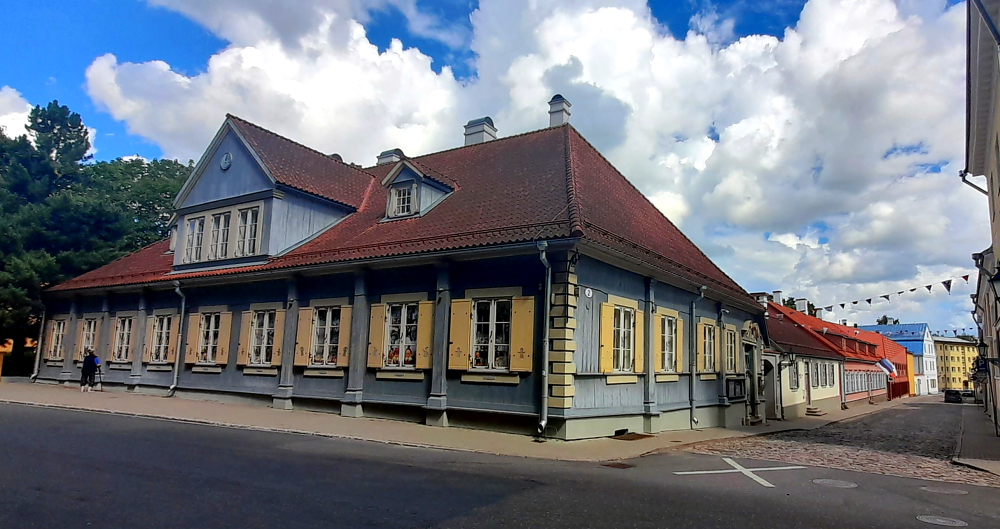
1755 dwelling house of Pastor T. Plasching, cnr Jakobi & Lutsu Streets, Tartu, Estonia.
Along the street from here is a small park at the back of the University of Tartu’s Main Building. Here stands the statue of Gustav II Adolf, the former King of Sweden and founder of the University whose original monument stood here from 1928-1950. The restored monument was unveiled in April 1992 by the Swedish King Carl XVI Gustaf and Queen Silvia.
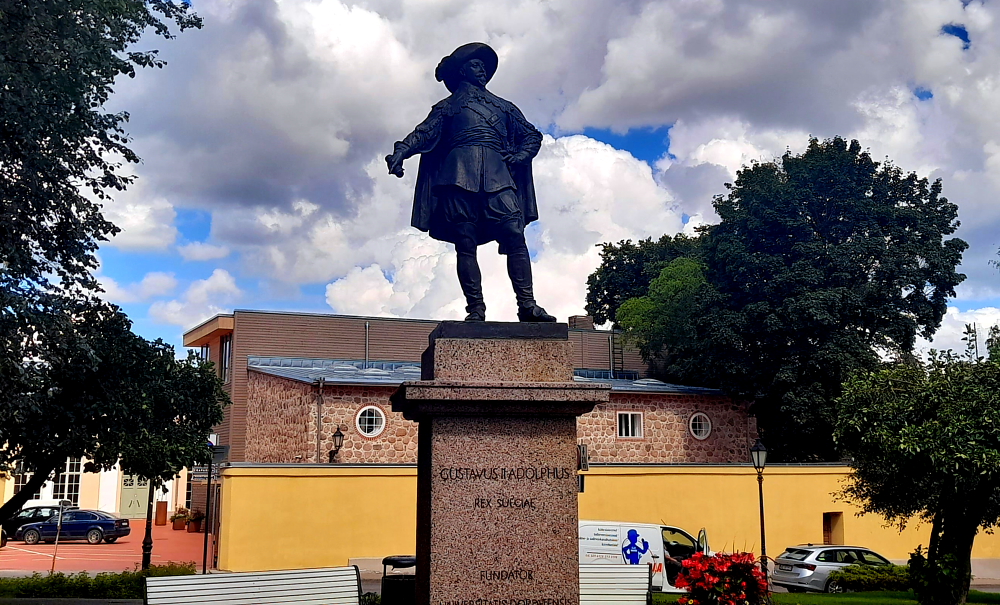
Restored monument of King Gustav II Adolf, former King of Sweden & University founder, Tartu, Estonia.
That just about does it for sightseeing in Tartu. It’s quite hot walking back to the apartment under the sun as there are storm clouds building.
Tomorrow we plan to depart around 9:30 am for the 2-hour, 178km journey to the car rental place near Tallinn airport, via the nearby petrol station and car wash. Then we’ll call a cab to take us into the Old Town back to the Rixwell Collection Savoy Boutique Hotel. Hope they’ve fixed their bloody AC like they said they had!
At least my HSBC Debit card worked at dinner tonight.
24 July, 2024
We depart this very lovely apartment in Tartu around 9:30 this morning for the 2-hour drive back to the car rental office at Tallinn Airport via the car wash.
It’s an easy drive back to Tallinn with some good highway and some stretches of freeway. All of the roads are littered with speed cameras but luckily our GPS has them marked and Lynn is a secondary spotter with her MapsMe App. Half way back to Tallinn we pass through some heavy rain and it may persist all the way to Tallinn so we decide to take a risk of not having the car washed again as the rental agreement states that the car has to be returned “reasonably” clean. The term “reasonably” is not definable so since I removed most of the bugs and mud yesterday the car is still reasonably clean despite the rain so we will take a punt and avoid the additional car wash.
Returning the rental car is easy (as long as we don’t get hit with additional fees in a few months’ time) and Julia orders us a taxi to take us to the hotel in Tallinn.
Despite receiving a message a few weeks ago advising that the Rixwell Hotel’s air conditioning is now working, when we check in we are told that we have been lied to and it is still not operational. If we had known while we were at the airport we would have insisted that we were refunded in full and would have walked from the car rental desk across the road to the Mercure Hotel. REALLY NOT HAPPY. They offer to move us to another hotel but we just can’t be bothered since we already paid for a taxi to the hotel. My annoyance will be reflected in their Booking.com review.
At least we are only here for 2 nights.
We head out to dinner relatively early at about 4:30 pm as Lynn wants to go back to the Lido canteen and she is hungry since we had an early breakfast this morning. We also need a few supplies so we stop in at the supermarket on the way to the Lido.
Much to my annoyance my HSBC card is again blocked by the pathetic HSBC fraud security system or the idiot Chat line person screwed up the unblocking process so Lynn had to again use her card to pay for our groceries and dinner. The world is full of incompetent people. That is what happens when idiots are over protected and the human race doesn’t let Darwinism occur so that the gene pool is cleaned out regularly. Centuries ago the Trumps, Putins and wokes would have been sacrificed by the smarter majority so that the human race evolved. Now the stupid breed and the human race will descend into a world of dependents.
25 July, 2024
I am on to the HSBC Chat line again early this morning and manage to get the same idiot that supposedly unblocked my card 2 days ago. I vented my disappointment that it has taken 2 attempts to get this simple HSBC-induced issue resolved and that I expected it to be permanently resolved this time or I would would be escalating my frustrations if it happens again. If we could get this product from another bank we would have closed our HSBC accounts years ago.
This day doesn’t get any better. Breakfast at this bad hotel is the worst that I have experienced in Europe so far. The bacon is cold, the powdered, scrambled egg is cold and there is nothing but luncheon meats and boiled vegetables available. Only another 24 hours to go before we escape back to Helsinki.
 THE CONTINUING TRAVELS OF YOGI & BOO BOO