
16 July, 2023
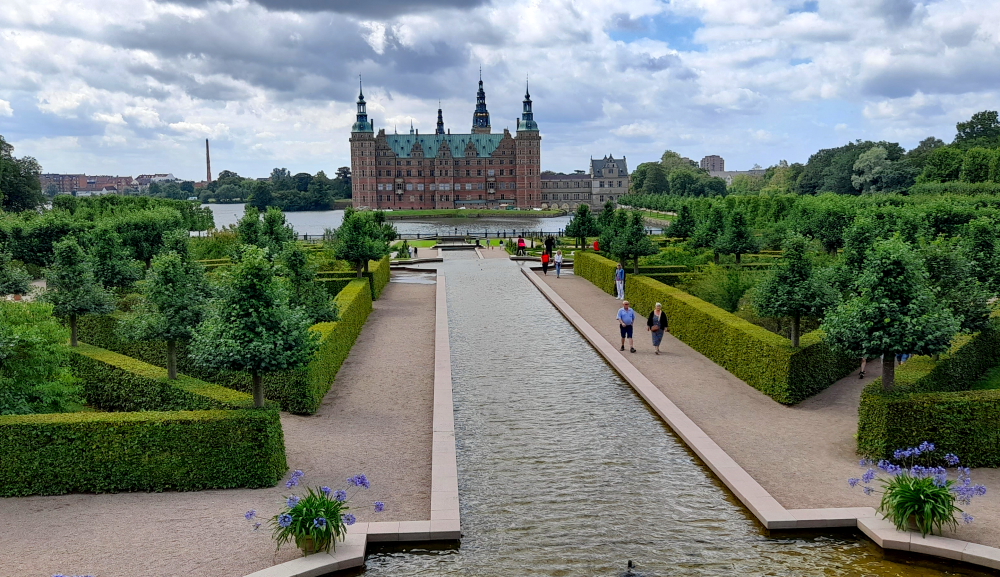
One of the reasons we decided to spend the last couple of days in this part of Denmark is to visit Frederiksborg Slot which is located in the centre of North Sealand.
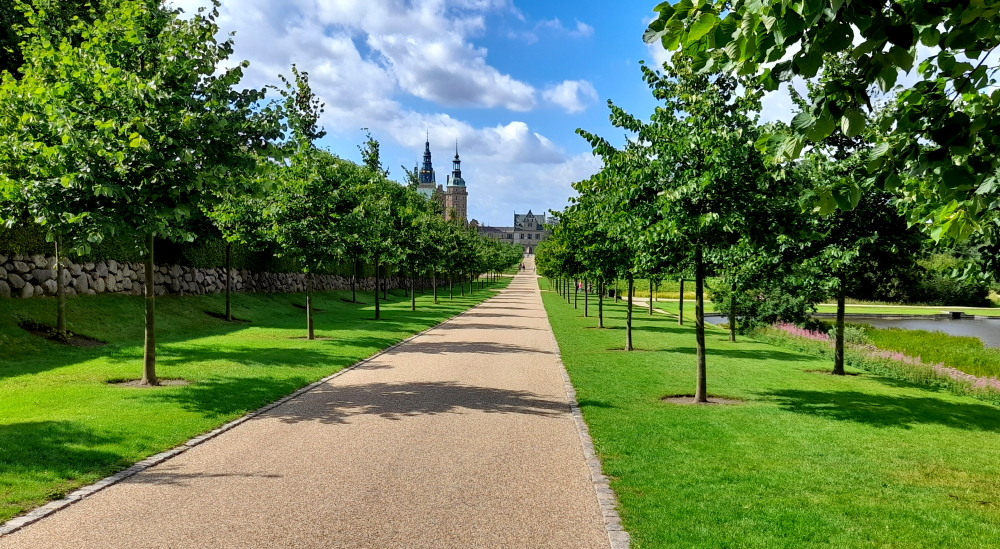
Frederiksborg Castle is a palatial complex in Hillerød, Denmark. It was built as a royal residence for King Christian IV of Denmark-Norway in the early 17th century, replacing an older castle acquired by Frederick II and becoming the largest Renaissance residence in Scandinavia. The aim of the building was to show off and enhance Christian IV’s status as a powerful European monarch. On three islets in the Slotssøen (castle lake), it is adjoined by a large formal garden in the Baroque style.
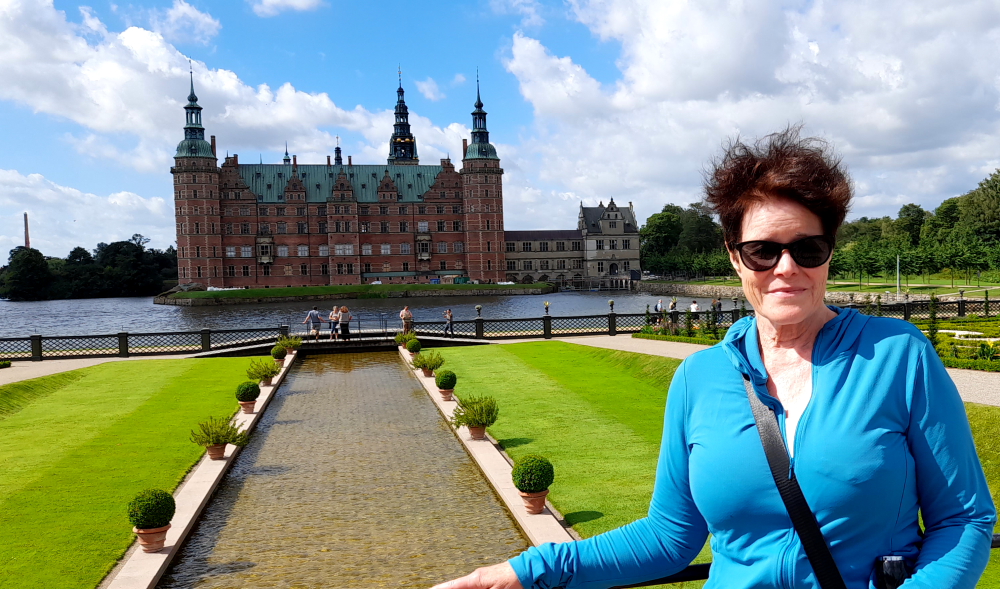
After a serious fire in 1859, the castle was rebuilt on the basis of old plans and paintings. Thanks to public support and the brewer J. C. Jacobsen, its apartments were fully restored and reopened to the public as the Danish Museum of National History in 1882. Open throughout the year, the museum contains the largest collection of portrait paintings in Denmark – the National Portrait Gallery.
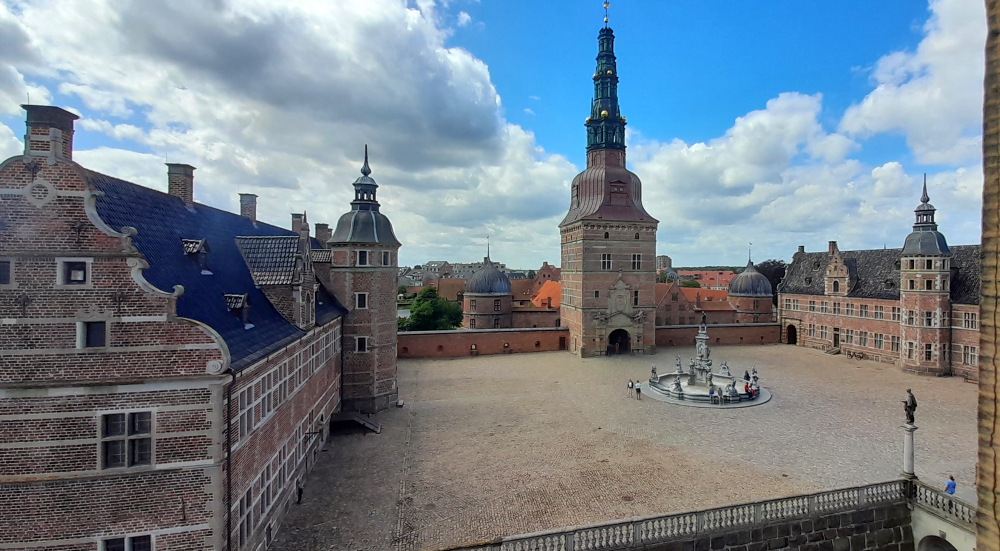
Designed in the classic Dutch Renaissance tradition, Frederiksborg is shaped in a quadrangular structure. Dutch Renaissance architecture used red bricks for the exterior and the buildings were topped with stepped gables and towering copper spires.
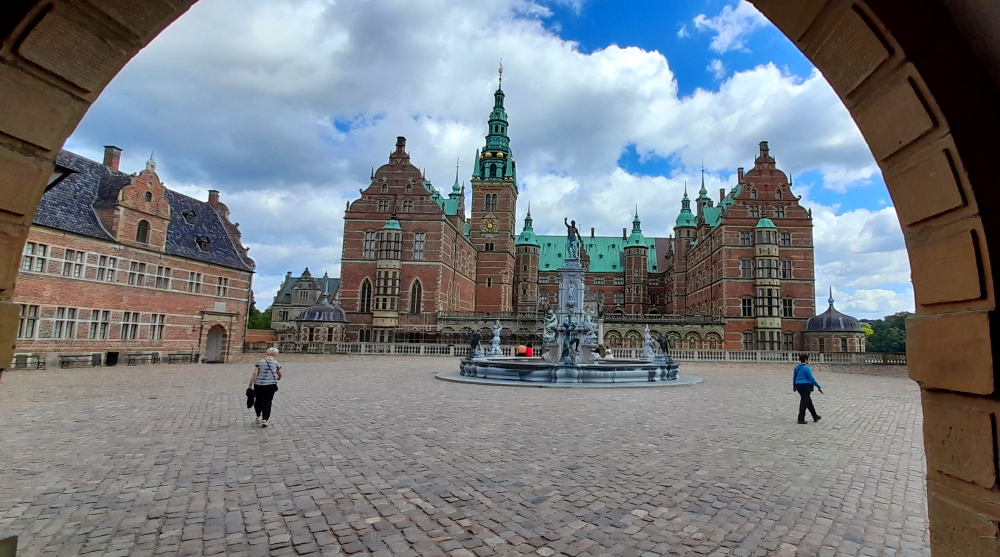
There are four main structures, which make up the quadrangular castle. To the west, is the Chapel Wing built in 1606. Centre is the main wing, the King’s Wing, built in 1604. To the east, the Princess Wing built in 1608. The fourth structure is the clock tower built in 1617 after nine years of construction. The Terrace Wing joins all these buildings together to form the great Frederiksborg Castle.
The first room we enter is the Rose Dining Room (also known as the Knight’s Room). This room on the lower level is a recreation of the great Dining Room of King Christian IV. The naming of this room as the “Rose Room” is a hint at the true nature of the goings-on at royal dinner parties. The Latin phrase sub rosa means “under the rose”, and is used in English to denote secrecy or confidentiality. This dining room was where the court could come and be themselves, away from the eyes of the public.
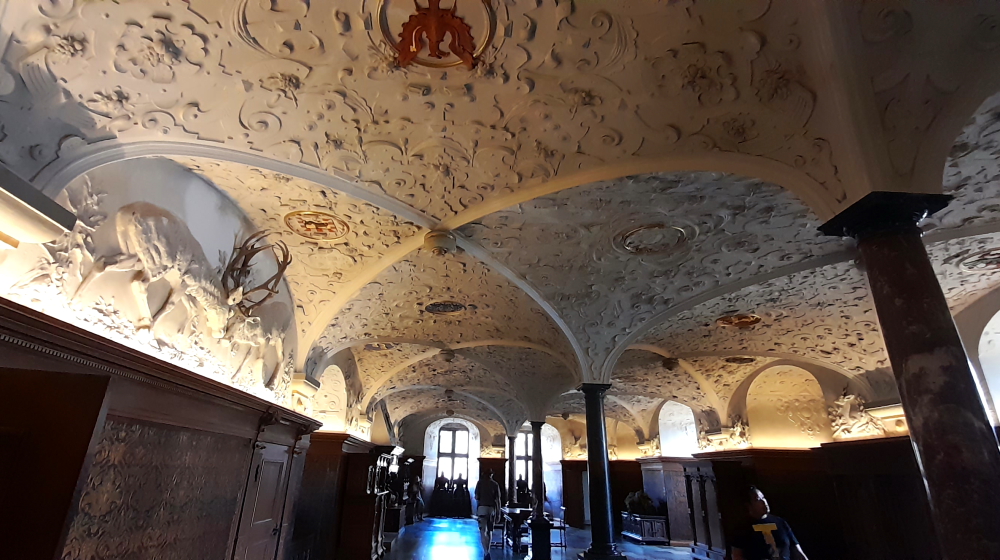
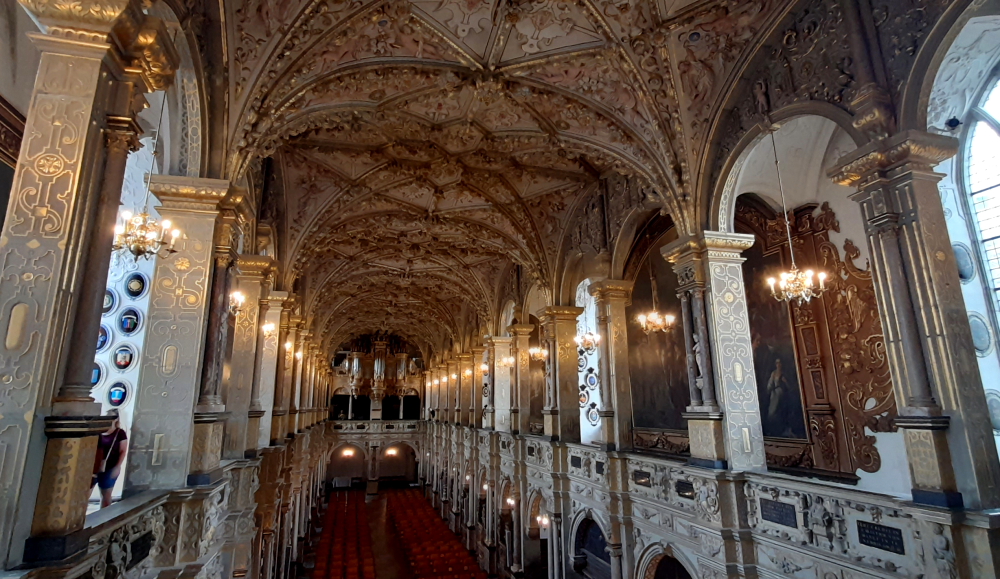
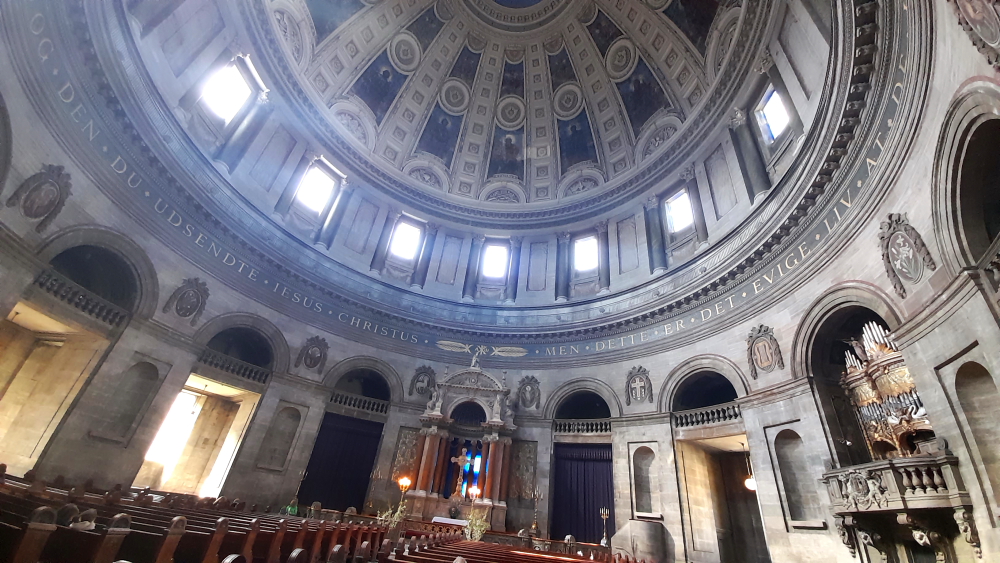
The chapel, consecrated in 1617, is also part of the museum. It is the best-preserved part of the Renaissance complex, having largely escaped damage in the 1859 fire. The chapel extends along the entire length of the west wing with a long nave and a two-storey gallery. The richly decorated six-vaulted stucco ceiling is borne by pillars rising from the galleries. The pillars bear grisaille frescos of Biblical figures, painted in the 1690s. Grisaille is a painting technique that uses only shades of grey to imitate the looks of sculptures. It was a method of achieving a more luxurious look at half the cost.
The Chapel’s most significant artifact is the organ, built by Esajas Compenius in 1610. It was installed by Compenius himself shortly before his death in Hillerød in 1617. The oldest organ in Denmark, it has 1,001 wooden pipes. Its original manually-driven blower has been preserved. The instrument is richly decorated with ebony, ivory and silver.
The altarpiece and pulpit from the early 17th century are the work of the silversmith Jacob Mores from Hamburg. In the king’s prayer chamber adjoining the Chapel, there is a small silver altar crafted by the goldsmith Matthäus Wallbaum from Augsburg in 1600.
The Chapel inside Frederiksborg Castle was for more than just the king’s private prayer room. After 1648, the chapel was the place where the future kings and queens of Denmark were crowned and anointed.
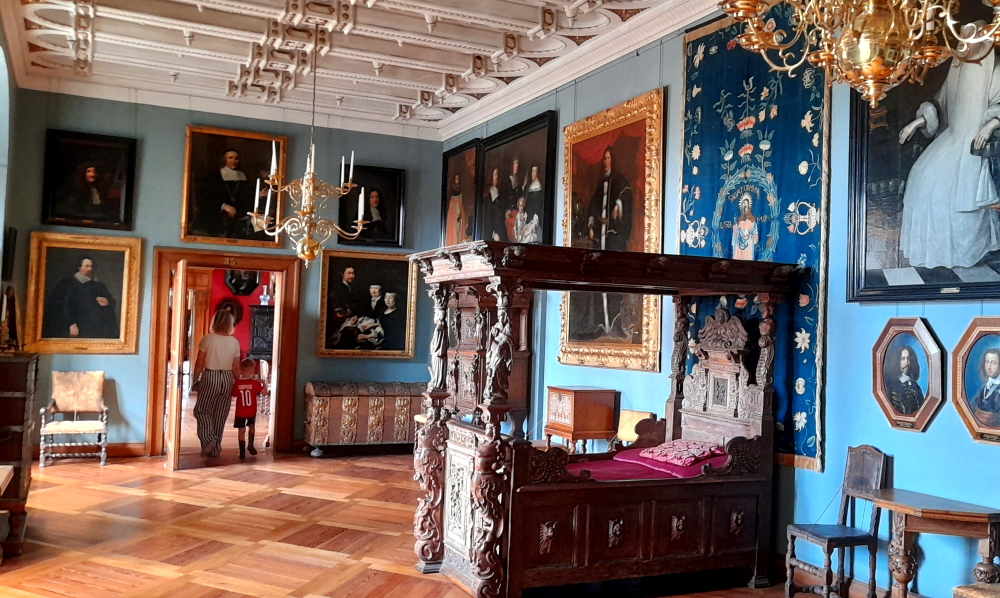
A pale blue room with a star vaulted ceiling is dedicated to the reign of Frederik II. Hanging above the main wood dresser are two portraits, facing each other. This is King Frederik and Queen Sofia, who would have made this room their bedchamber.
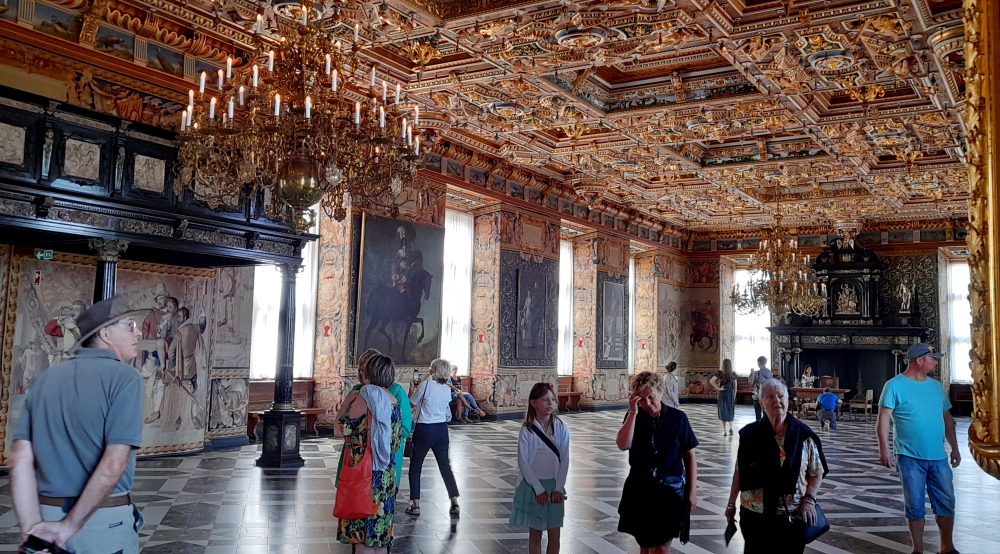
The Great Hall was built for King Christian IV (ruled Denmark 1588-1648) but was destroyed in the great fire. It was almost fully restored thanks to architectural paintings made by Heinrich Hansen and F.C. Lund. The restoration work, completed in 1880, was carried out by Ferdinand Meldahl who made use of preserved segments of the ornate gilded ceiling.
This room was used for balls throughout Christians’ reign and is set directly above the Chapel so has the same dimensions as it as well. The Hall is also known as the ‘Hall of Knights‘ as the king would often host galas for members of his royal order here.
Since 1878 Frederiksborg Castle has housed The Museum of National History, which presents 500 years of Danish history with a collection of portraits, history paintings, furniture and applied art. The Museum was established by the founder of Carlsberg, brewer J. C. Jacobsen, and ever since has been an independent department of the Carlsberg Foundation.
In the National Portrait Gallery, one of the current Special Exhibitions is “Marie Hald: Exposed” where body activism, taboos and vulnerability are featured. Hald is one of the most trend-setting female photographers in Denmark.
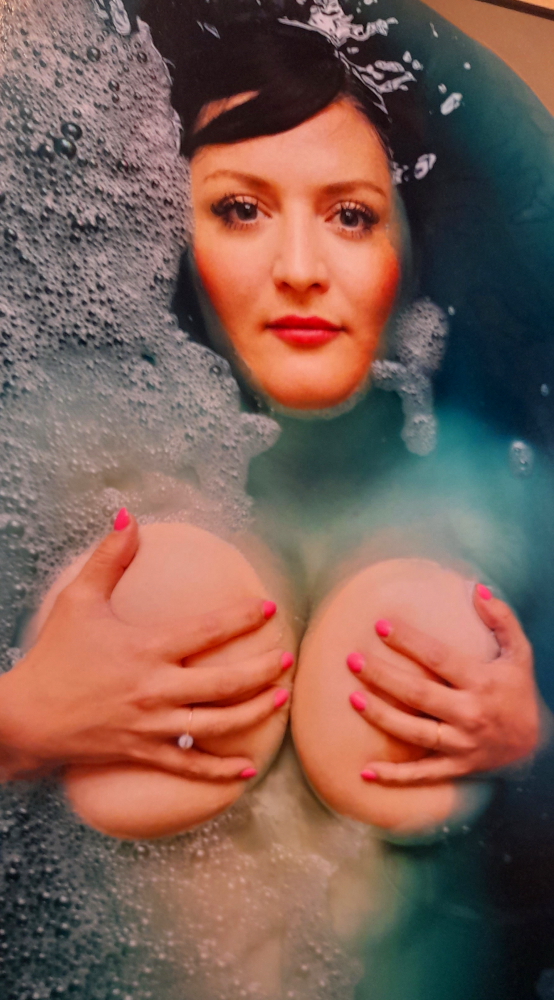
Photojournalist Marie Hald does away with stigmatizing and unattainable beauty ideals. With a series of self-portraits, together with images of women of all ages and sizes, she shows her own vulnerability. Hald’s ‘Exposed’ is about having permission to exist and be who you are.
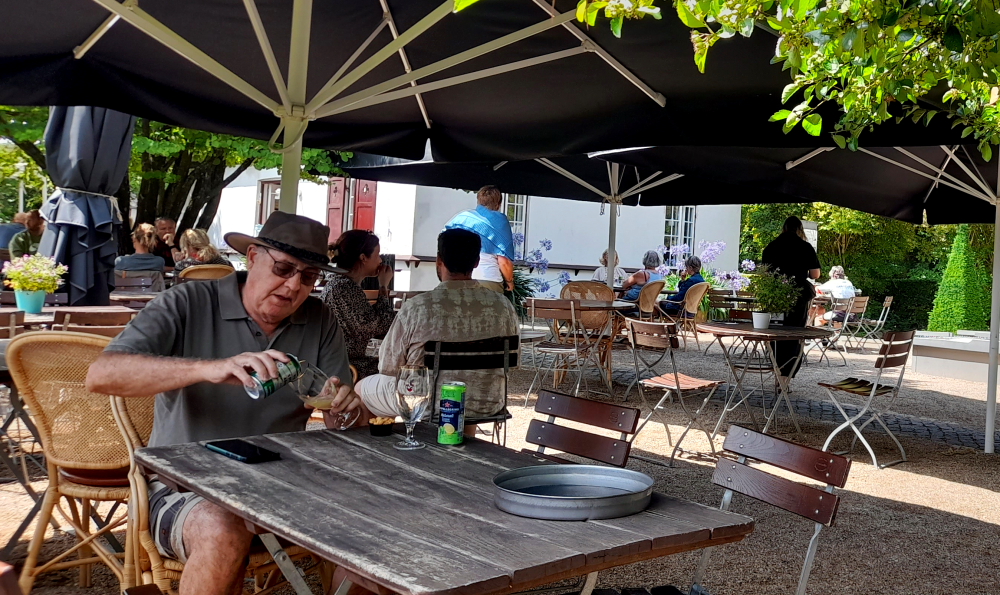
1.5 hours after entering the Slot we take a well-earned rest in the outdoor area of the Slot’s cafe for a cold beer.
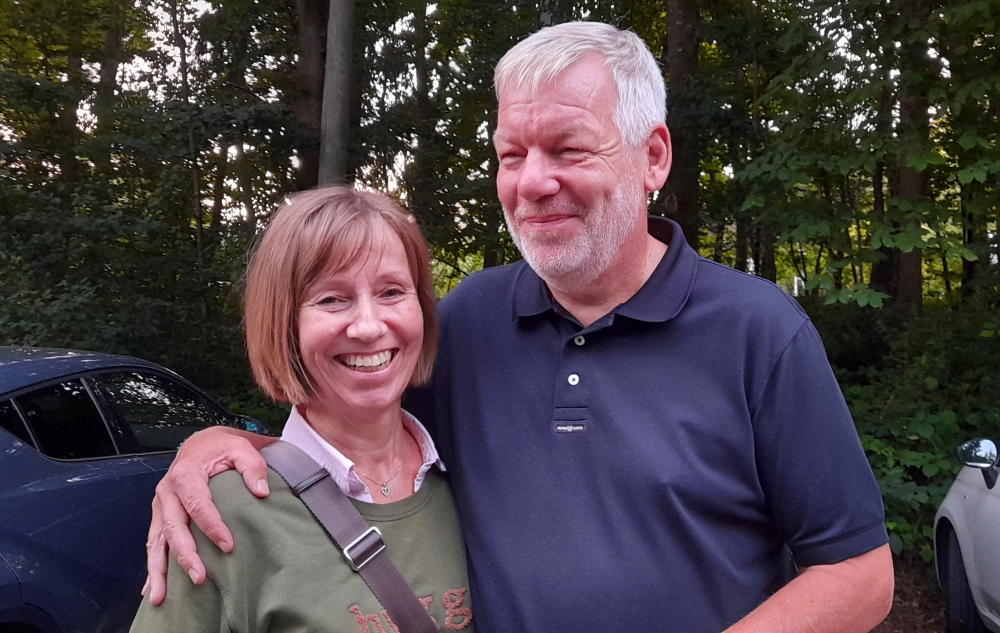
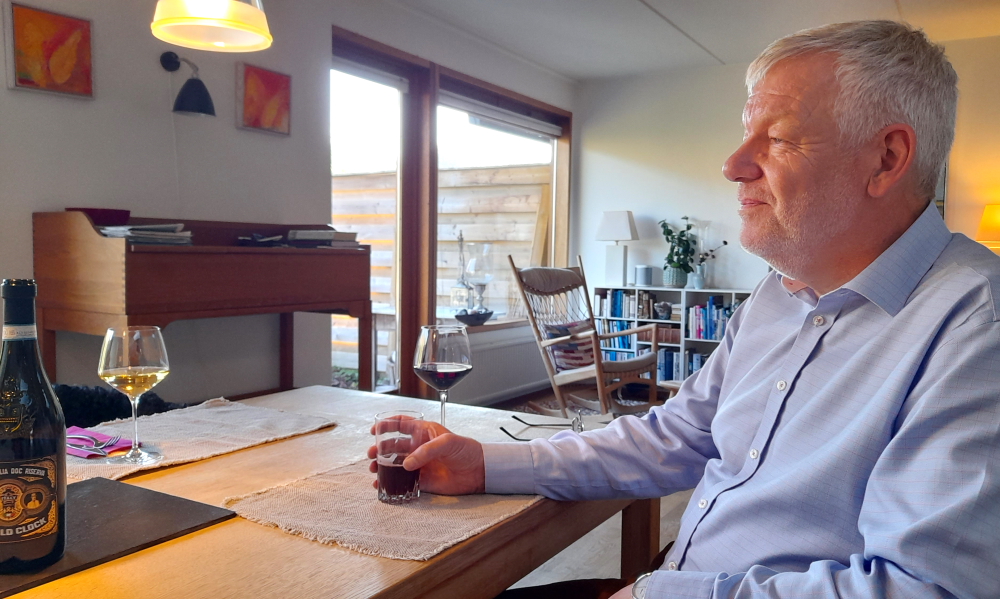
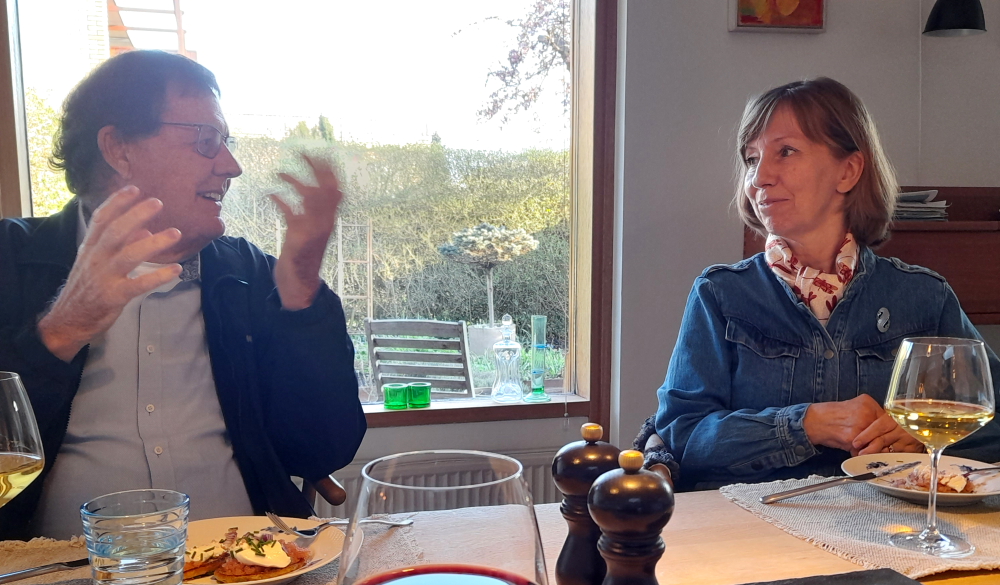
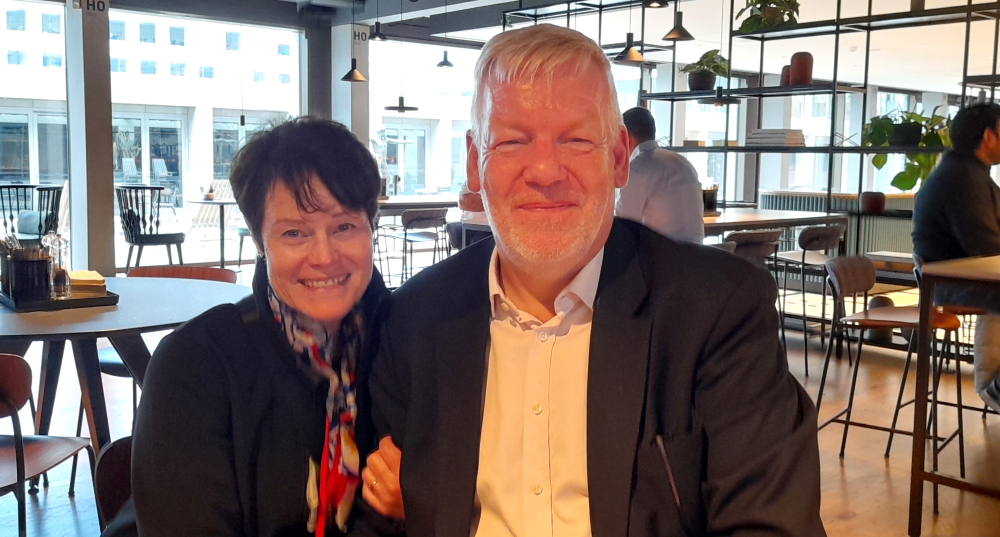
Tonight we are hosting Henning and his wife Vibeke for dinner at our hotel’s restaurant to reciprocate their hospitality at their home and for lunch at the Maersk offices in Copenhagen 3 months ago.
17 July, 2023
We need to return the hire car at Copenhagen Airport by noon so we check out at 9:35 am and drive the 45 minutes to firstly top up the tank, drop our bags at the hotel and drive a couple of km up the road to return the car. All good.
In the lift I notice a sign mentioning a laundry room. Enquiries at reception reveal that, yes, we can wash and dry our clothes for the price of DKK50 per load. 2 loads of washing are ready to be dried but for both dryers their automatic sensors aren’t working properly and after several paid loads I give up and Lynn has to iron my clothes dry. We are re-embursed DKK50. What should have taken 1.5 hours turns into 3. Even the maintenance guy who we had summoned couldn’t fix the dryers.
Thank goodness getting our boarding passes printed by Reception went without a hitch.
18 July, 2023
5:00 am alarm wakes us in time for an early breakfast and check out at 7:00 am. A cool but sunny start to our last day in the Scandies. A quick walk across the road and through Terminal 2 to the Ryanair check-in kiosk and bag drop then head to security.
A large queue of people plus us shuffles its way towards the various conveyor belts. Copenhagen has automated the process so that when you get to the head of the queue you have to wait until an automated sign tells you which belt to proceed to, even though that belt could be at the other end of the hall to where you are standing, so people are criss-crossing the space. Most inefficient!
We are separated and both of us end up behind families who proceed to remove articles from various bags at the belt rather than have them ready beforehand, plus have baby buggies and lots of liquids to be scanned. What should have taken 10 minutes turns into 25. We need COFFEE! It’s now about 8:40 am. Gate information is due at 8:55 am. Our flight is at 9:35 am with the gate closing at 9:05 am.
While I park myself at a table Lynn goes in search of a proper Italian coffee machine as she knows how much I detest the pre-selected ones. That turns into a 20-minute wait in a short queue for her as there are insufficient staff. When she leaves the queue is now 4x as long.
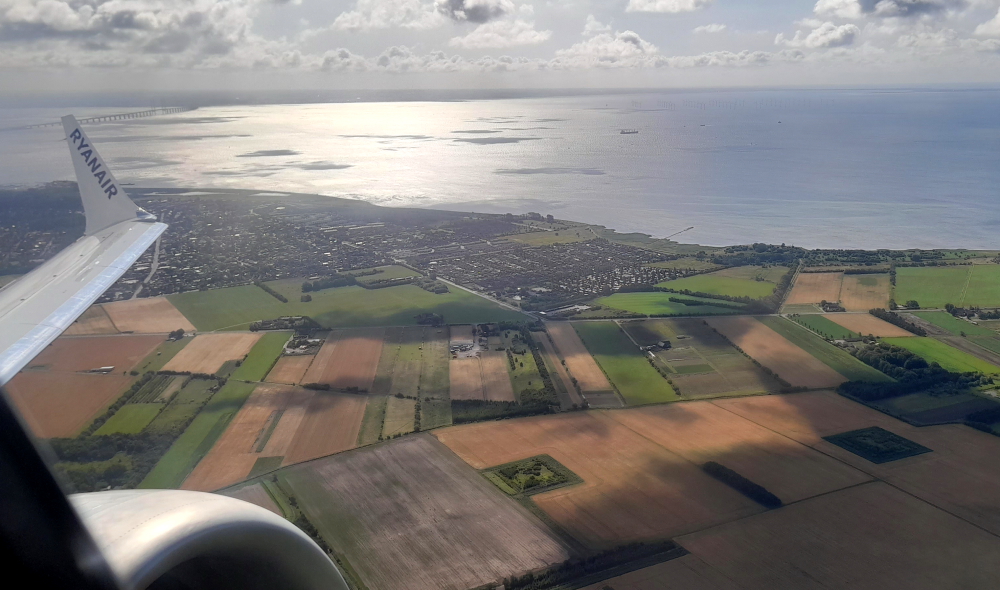
When Lynn gets up to go 35 minutes before the gate closes I say to her: “What’s the rush? We have priority boarding. There’s plenty of time.” To which she replies: “You don’t know that.”
Sure enough, although there is no queue at Passport Control, when we are processed together at the EU booth the Border Guard says to Lynn: “You have exceeded your time in the Schengen Area. Please wait here.” This came as a complete surprise to both of us as I’d used the official Schengen Calculator to plan our itinerary and we still had 2 days up our sleeves before we would have reached the 90 day limit for her.
That aside, she explains that she has official EU advice that the 90/180 day limitation doesn’t apply to her as a non-EU passport holder as long as she remains with me, her husband (an EU passport holder), the entire time we travel in the Area. He disputes this and calls for other Border Police to come and investigate further. It is now 20 minutes before the gate closes.
10 minutes later 2 Border Police arrive and state that according to their documentation she has exceeded the time limit and the scenario Lynn is describing doesn’t exist, unless she has a residency permit. They tell me that I can go but that they will hold Lynn’s passport and air ticket, she will be detained, she will miss the flight and she will need to pay a fine of EUR200. So, she hands me our onward bus tickets and the spare key to the car and I head off to the gate.
In the meantime Lynn forwards her EU email to one of the police officers and after multiple phone calls, in Danish, they tell her she is free to go and that she needs to sprint to the gate to catch the flight. Really??! Telling a pensioner that she has to sprint! It’s now 9.10 am, 5 minutes after the gate has closed.
Just as well she’s been released as our next 6 months’ itinerary and bookings (and plans to September 2024) are based on that EU advice. If that advice had been disputed we’d be screwed. Well, Lynn would be screwed, I’m all right, Jack. I’d just leave her behind and do Europe myself. Turns out my Irish passport is (Kerry) Gold!
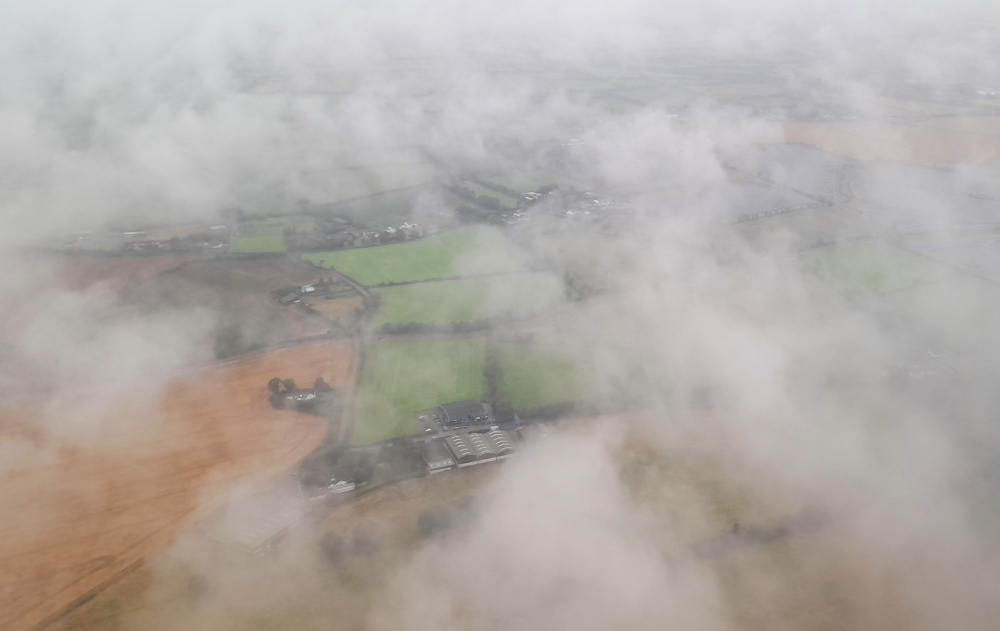
After that bit of drama, 2 hours 20 minutes later we land in a cold, dull, damp, and rainy Dublin. Our bags arrive after some delay and are covered in raindrops.
Although we are booked on the 1:20 pm Translink X1 bus service to Belfast, we scoot through the rain to get to the bus stop as we may be able to get on an earlier bus but arrive at 11:21 am, 1 minute too late and no bus in sight.
We hang around the seat-less bus shelter waiting for the next X1 at 12:20 pm and although Translink staff assure us we’ll get on it as it’s not usually busy, the crowd grows. Probably because I’m wearing an orange outdoor coat, people keep coming up to me asking for information and instructions about buses and destinations!
Of course, by the time the bus arrives there is a huge queue. So, all those with online bookings for this bus board first, then all those whose flight was delayed and had booked earlier buses, then all those who haven’t booked any seats but can pay cash are next to board. Thanks to Lynn’s tenacity, by sticking to the end of the cash payers’ line, she is able to secure the last 2 seats on the bus as we have pre-booked tickets for the next bus.
10 minutes late, the bus finally departs and 104 minutes later we arrive in Banbridge, our destination. Lucky for us, there are taxis at the bus station so we jump into one and 10 minutes later we are at Harry and Jenny’s.
Thanks to Harry’s diligence and charging the car battery previously, the car starts first go. Now, all I have to do is remember to drive on the left and that I have to change gears!
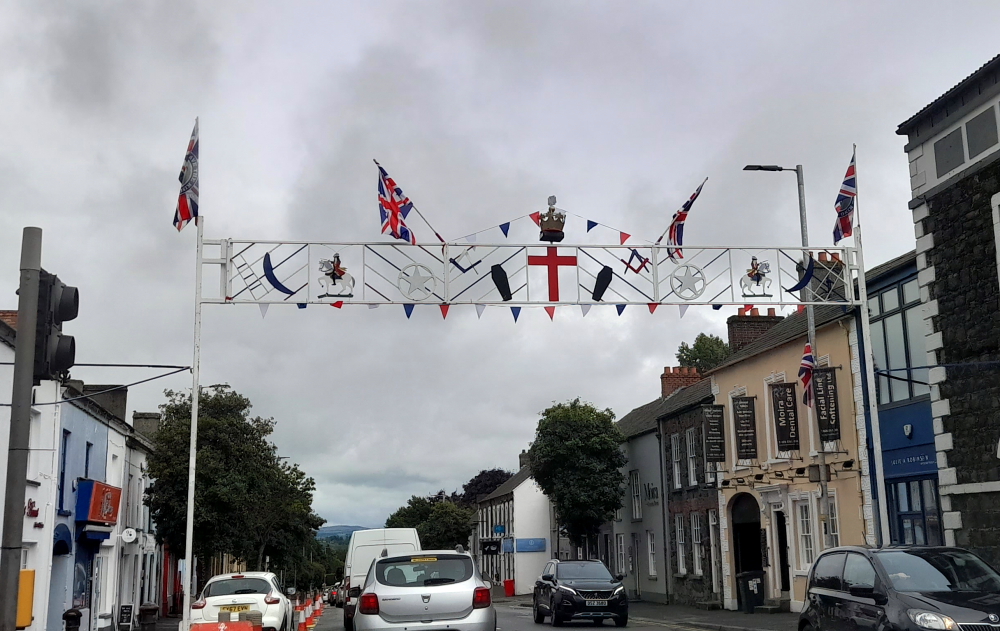
Flags and bunting in the streets remind us that we are now in Northern Ireland. These are left over from the Glorious 12th – William of Orange, the Battle of the Boyne and all that – marches and celebrations that happened on 12 July. Some of the Union Jack flags even have a picture of King Charles on them.
The car feels much better to drive than the hire car was in the Scandies. There is a lot better feel to the steering and brakes but I have to admit that some of the driving aids will be missed.
One thing is obvious when we collect the Insignia. It seems that there is a nasty water leak in the boot and the boot carpets are starting to get a bit mouldy. Once I catch up on a few things this week it looks like I have some cars issues that need attention. I can’t imagine how many car issues will be facing me when we get back to Oz after two years when we try to fire up the Calais at home.
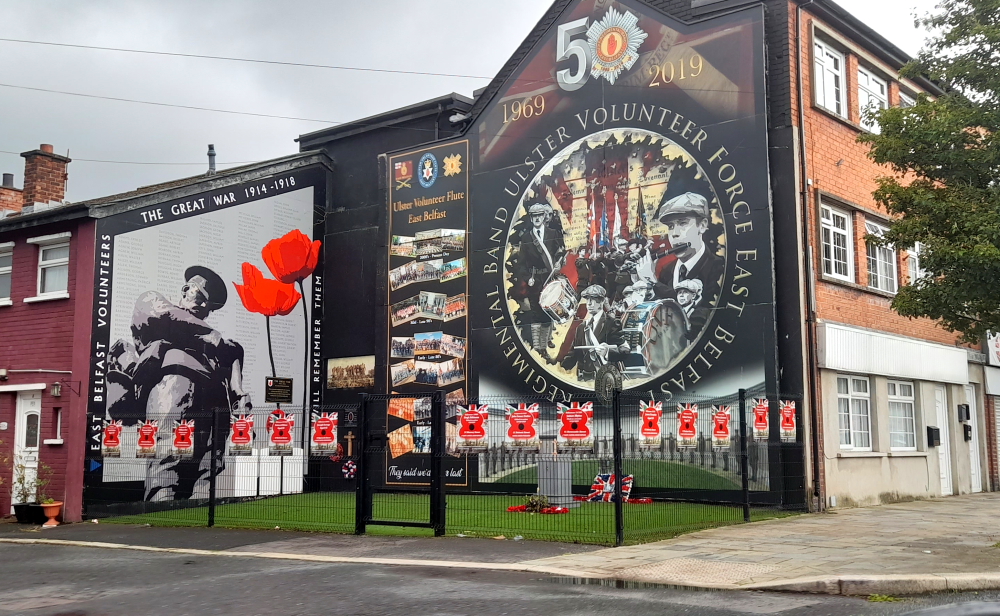
Driving on towards Donaghadee Lynn spots more street art on small, town buildings. Perhaps these are to antagonise the Republicans?
We arrive at Donaghadee by 4:10 pm and after we drag inside our luggage and all our extra items that had been left in the car for the past three months we do a quick unpack only to find that some of our clothes are damp as the rain has seeped through the zipper during baggage handling. Time to say hello to Patrick, Margaret and Benson (the old English Sheep dog).
Tonight we have been invited to a wedding celebration. Janice and Guy are friends of Margaret and Patrick and they very kindly invited us to their wedding dinner, too. We have a wonderful evening with lots of great food and booze. Typical Northern Irish hospitality. We feel like part of the family.
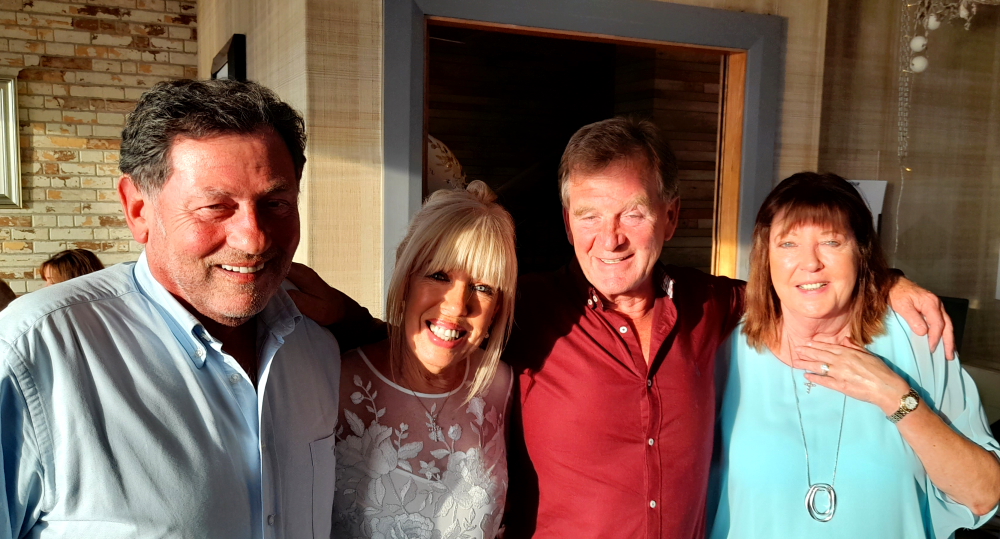
After a few drinks in great company the stress of dealing with the European border guards, Scandinavian idiosyncrasies and flying in the Ryanair sardine can fade and we start to relax and enjoy being back in our second home in Northern Ireland.
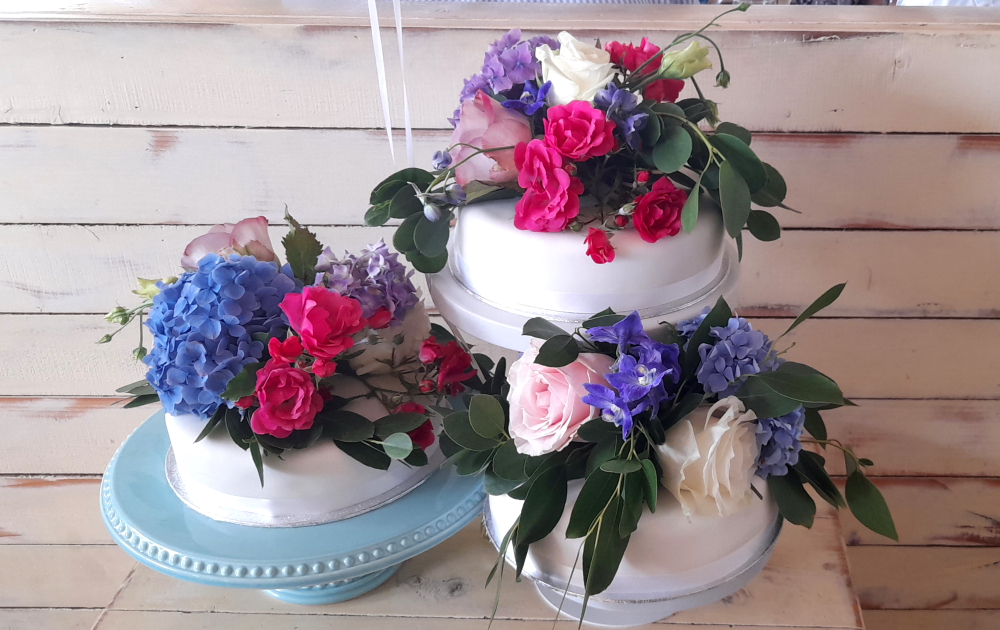
The wedding includes some brief but hilarious speeches, meeting new friends and great food and drink – and delicious wedding cake to boot.
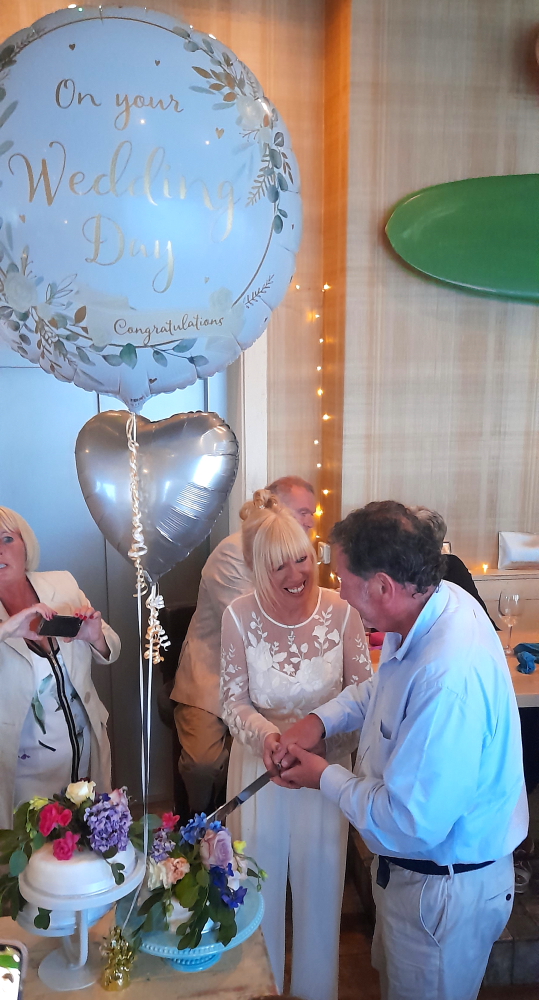
It seems that the whole town is here enjoying the festivities. We seem to be the first people to leave the wedding at 10:00 pm but by the time we scramble into bed at around 11:00 pm we quickly fall asleep after a very long, busy and dramatic day.
We will be in Donaghadee for the next week so it will be catch up time and Lynn has a couple of dentist appointments to fix 2 broken teeth.
 THE CONTINUING TRAVELS OF YOGI & BOO BOO