One of the reasons we decided to spend the last couple of days in this part of Denmark is to visit Frederiksborg Slot which is located in the centre of North Sealand.
View of Frederiksborg Slot from Rendelaeggerbakken.
Frederiksborg Castle is a palatial complex in Hillerød, Denmark. It was built as a royal residence for King Christian IV of Denmark-Norway in the early 17th century, replacing an older castle acquired by Frederick II and becoming the largest Renaissance residence in Scandinavia. The aim of the building was to show off and enhance Christian IV’s status as a powerful European monarch. On three islets in the Slotssøen (castle lake), it is adjoined by a large formal garden in the Baroque style.
Hair-raising day overlooking the Slot & its lake.
After a serious fire in 1859, the castle was rebuilt on the basis of old plans and paintings. Thanks to public support and the brewer J. C. Jacobsen, its apartments were fully restored and reopened to the public as the Danish Museum of National History in 1882. Open throughout the year, the museum contains the largest collection of portrait paintings in Denmark – the National Portrait Gallery.
Designed in the classic Dutch Renaissance tradition, Frederiksborg is shaped in a quadrangular structure. Dutch Renaissance architecture used red bricks for the exterior and the buildings were topped with stepped gables and towering copper spires.
View of courtyard from under the Fangetarnet (Prison Tower).
There are four main structures, which make up the quadrangular castle. To the west, is the Chapel Wing built in 1606. Centre is the main wing, the King’s Wing, built in 1604. To the east, the Princess Wing built in 1608. The fourth structure is the clock tower built in 1617 after nine years of construction. The Terrace Wing joins all these buildings together to form the great Frederiksborg Castle.
The first room we enter is the Rose Dining Room (also known as the Knight’s Room). This room on the lower level is a recreation of the great Dining Room of King Christian IV. The naming of this room as the “Rose Room” is a hint at the true nature of the goings-on at royal dinner parties. The Latin phrase sub rosa means “under the rose”, and is used in English to denote secrecy or confidentiality. This dining room was where the court could come and be themselves, away from the eyes of the public.
The Rose Dining Room also known as The Knight’s Room.
The chapel, consecrated in 1617, is also part of the museum. It is the best-preserved part of the Renaissance complex, having largely escaped damage in the 1859 fire. The chapel extends along the entire length of the west wing with a long nave and a two-storey gallery. The richly decorated six-vaulted stucco ceiling is borne by pillars rising from the galleries. The pillars bear grisaille frescos of Biblical figures, painted in the 1690s. Grisaille is a painting technique that uses only shades of grey to imitate the looks of sculptures. It was a method of achieving a more luxurious look at half the cost.
The Chapel’s most significant artifact is the organ, built by Esajas Compenius in 1610. It was installed by Compenius himself shortly before his death in Hillerød in 1617. The oldest organ in Denmark, it has 1,001 wooden pipes. Its original manually-driven blower has been preserved. The instrument is richly decorated with ebony, ivory and silver.
The altarpiece and pulpit from the early 17th century are the work of the silversmith Jacob Mores from Hamburg. In the king’s prayer chamber adjoining the Chapel, there is a small silver altar crafted by the goldsmith Matthäus Wallbaum from Augsburg in 1600.
The Chapel inside Frederiksborg Castle was for more than just the king’s private prayer room. After 1648, the chapel was the place where the future kings and queens of Denmark were crowned and anointed.
The Chapel.
A pale blue room with a star vaulted ceiling is dedicated to the reign of Frederik II. Hanging above the main wood dresser are two portraits, facing each other. This is King Frederik and Queen Sofia, who would have made this room their bedchamber.
Small bed for royalty.
The Great Hall was built for King Christian IV (ruled Denmark 1588-1648) but was destroyed in the great fire. It was almost fully restored thanks to architectural paintings made by Heinrich Hansen and F.C. Lund. The restoration work, completed in 1880, was carried out by Ferdinand Meldahl who made use of preserved segments of the ornate gilded ceiling.
This room was used for balls throughout Christians’ reign and is set directly above the Chapel so has the same dimensions as it as well. The Hall is also known as the ‘Hall of Knights‘ as the king would often host galas for members of his royal order here.
The Great Hall.
Since 1878 Frederiksborg Castle has housed The Museum of National History, which presents 500 years of Danish history with a collection of portraits, history paintings, furniture and applied art. The Museum was established by the founder of Carlsberg, brewer J. C. Jacobsen, and ever since has been an independent department of the Carlsberg Foundation.
View of the Prison Tower & courtyard from the Slot.
In the National Portrait Gallery, one of the current Special Exhibitions is “Marie Hald: Exposed” where body activism, taboos and vulnerability are featured. Hald is one of the most trend-setting female photographers in Denmark.
Titillating – the exhibition’s promotion poster.
Photojournalist Marie Hald does away with stigmatizing and unattainable beauty ideals. With a series of self-portraits, together with images of women of all ages and sizes, she shows her own vulnerability. Hald’s ‘Exposed’ is about having permission to exist and be who you are.
View of the Slot from its Baroque garden.
1.5 hours after entering the Slot we take a well-earned rest in the outdoor area of the Slot’s cafe for a cold beer.
Best part of the visit – a beer at Cafe Havehuset (Cafe Garden House).
Tonight we are hosting Henning and his wife Vibeke for dinner at our hotel’s restaurant to reciprocate their hospitality at their home and for lunch at the Maersk offices in Copenhagen 3 months ago.
Vibeke and Henning.
17 July, 2023
We need to return the hire car at Copenhagen Airport by noon so we check out at 9:35 am and drive the 45 minutes to firstly top up the tank, drop our bags at the hotel and drive a couple of km up the road to return the car. All good.
In the lift I notice a sign mentioning a laundry room. Enquiries at reception reveal that, yes, we can wash and dry our clothes for the price of DKK50 per load. 2 loads of washing are ready to be dried but for both dryers their automatic sensors aren’t working properly and after several paid loads I give up and Lynn has to iron my clothes dry. We are re-embursed DKK50. What should have taken 1.5 hours turns into 3. Even the maintenance guy who we had summoned couldn’t fix the dryers.
Thank goodness getting our boarding passes printed by Reception went without a hitch.
18 July, 2023
5:00 am alarm wakes us in time for an early breakfast and check out at 7:00 am. A cool but sunny start to our last day in the Scandies. A quick walk across the road and through Terminal 2 to the Ryanair check-in kiosk and bag drop then head to security.
A large queue of people plus us shuffles its way towards the various conveyor belts. Copenhagen has automated the process so that when you get to the head of the queue you have to wait until an automated sign tells you which belt to proceed to, even though that belt could be at the other end of the hall to where you are standing, so people are criss-crossing the space. Most inefficient!
We are separated and both of us end up behind families who proceed to remove articles from various bags at the belt rather than have them ready beforehand, plus have baby buggies and lots of liquids to be scanned. What should have taken 10 minutes turns into 25. We need COFFEE! It’s now about 8:40 am. Gate information is due at 8:55 am. Our flight is at 9:35 am with the gate closing at 9:05 am.
While I park myself at a table Lynn goes in search of a proper Italian coffee machine as she knows how much I detest the pre-selected ones. That turns into a 20-minute wait in a short queue for her as there are insufficient staff. When she leaves the queue is now 4x as long.
Departing Copenhagen.
When Lynn gets up to go 35 minutes before the gate closes I say to her: “What’s the rush? We have priority boarding. There’s plenty of time.” To which she replies: “You don’t know that.”
Sure enough, although there is no queue at Passport Control, when we are processed together at the EU booth the Border Guard says to Lynn: “You have exceeded your time in the Schengen Area. Please wait here.” This came as a complete surprise to both of us as I’d used the official Schengen Calculator to plan our itinerary and we still had 2 days up our sleeves before we would have reached the 90 day limit for her.
That aside, she explains that she has official EU advice that the 90/180 day limitation doesn’t apply to her as a non-EU passport holder as long as she remains with me, her husband (an EU passport holder), the entire time we travel in the Area. He disputes this and calls for other Border Police to come and investigate further. It is now 20 minutes before the gate closes.
10 minutes later 2 Border Police arrive and state that according to their documentation she has exceeded the time limit and the scenario Lynn is describing doesn’t exist, unless she has a residency permit. They tell me that I can go but that they will hold Lynn’s passport and air ticket, she will be detained, she will miss the flight and she will need to pay a fine of EUR200. So, she hands me our onward bus tickets and the spare key to the car and I head off to the gate.
In the meantime Lynn forwards her EU email to one of the police officers and after multiple phone calls, in Danish, they tell her she is free to go and that she needs to sprint to the gate to catch the flight. Really??! Telling a pensioner that she has to sprint! It’s now 9.10 am, 5 minutes after the gate has closed.
Just as well she’s been released as our next 6 months’ itinerary and bookings (and plans to September 2024) are based on that EU advice. If that advice had been disputed we’d be screwed. Well, Lynn would be screwed, I’m all right, Jack. I’d just leave her behind and do Europe myself. Turns out my Irish passport is (Kerry) Gold!
Arriving Dublin.
After that bit of drama, 2 hours 20 minutes later we land in a cold, dull, damp, and rainy Dublin. Our bags arrive after some delay and are covered in raindrops.
Although we are booked on the 1:20 pm Translink X1 bus service to Belfast, we scoot through the rain to get to the bus stop as we may be able to get on an earlier bus but arrive at 11:21 am, 1 minute too late and no bus in sight.
We hang around the seat-less bus shelter waiting for the next X1 at 12:20 pm and although Translink staff assure us we’ll get on it as it’s not usually busy, the crowd grows. Probably because I’m wearing an orange outdoor coat, people keep coming up to me asking for information and instructions about buses and destinations!
Of course, by the time the bus arrives there is a huge queue. So, all those with online bookings for this bus board first, then all those whose flight was delayed and had booked earlier buses, then all those who haven’t booked any seats but can pay cash are next to board. Thanks to Lynn’s tenacity, by sticking to the end of the cash payers’ line, she is able to secure the last 2 seats on the bus as we have pre-booked tickets for the next bus.
10 minutes late, the bus finally departs and 104 minutes later we arrive in Banbridge, our destination. Lucky for us, there are taxis at the bus station so we jump into one and 10 minutes later we are at Harry and Jenny’s.
Thanks to Harry’s diligence and charging the car battery previously, the car starts first go. Now, all I have to do is remember to drive on the left and that I have to change gears!
Flags and bunting in the streets remind us that we are now in Northern Ireland. These are left over from the Glorious 12th – William of Orange, the Battle of the Boyne and all that – marches and celebrations that happened on 12 July. Some of the Union Jack flags even have a picture of King Charles on them.
Driving to Dunaghadee.
The car feels much better to drive than the hire car was in the Scandies. There is a lot better feel to the steering and brakes but I have to admit that some of the driving aids will be missed.
One thing is obvious when we collect the Insignia. It seems that there is a nasty water leak in the boot and the boot carpets are starting to get a bit mouldy. Once I catch up on a few things this week it looks like I have some cars issues that need attention. I can’t imagine how many car issues will be facing me when we get back to Oz after two years when we try to fire up the Calais at home.
Belfast street art.
Driving on towards Donaghadee Lynn spots more street art on small, town buildings. Perhaps these are to antagonise the Republicans?
We arrive at Donaghadee by 4:10 pm and after we drag inside our luggage and all our extra items that had been left in the car for the past three months we do a quick unpack only to find that some of our clothes are damp as the rain has seeped through the zipper during baggage handling. Time to say hello to Patrick, Margaret and Benson (the old English Sheep dog).
Tonight we have been invited to a wedding celebration. Janice and Guy are friends of Margaret and Patrick and they very kindly invited us to their wedding dinner, too. We have a wonderful evening with lots of great food and booze. Typical Northern Irish hospitality. We feel like part of the family.
Guy, Janice, Patrick and Margaret.
After a few drinks in great company the stress of dealing with the European border guards, Scandinavian idiosyncrasies and flying in the Ryanair sardine can fade and we start to relax and enjoy being back in our second home in Northern Ireland.
The wedding cake.
The wedding includes some brief but hilarious speeches, meeting new friends and great food and drink – and delicious wedding cake to boot.
Cutting the cake.
It seems that the whole town is here enjoying the festivities. We seem to be the first people to leave the wedding at 10:00 pm but by the time we scramble into bed at around 11:00 pm we quickly fall asleep after a very long, busy and dramatic day.
We will be in Donaghadee for the next week so it will be catch up time and Lynn has a couple of dentist appointments to fix 2 broken teeth.
Must be time for another free walking tour. It is! We leave the hotel at 9:30 am to walk to the meeting point at Gustav II Adolf torg via Vasagatan and the Nordstrom (North Stream).
Moe, Larry & Curly?
We’re booked on a 2.5 hour walk through Gamla Stan, the Old Town, one of the largest and best preserved medieval city centers in Europe where Stockholm was founded in 1252.
All of Gamla Stan and the adjacent island of Riddarholmen are like a pedestrian-friendly museum full of sights, attractions, restaurants, cafés, bars, and places to shop. The narrow winding cobblestone streets, with their buildings in so many different shades of gold, give Gamla Stan its unique character.
Our meeting point – Gustav II Adolf statue.
Sager House is the prime minister’s official residence in Stockholm. The first historical records of a building on the site are from the 1640s. In 1880 the property was purchased by the Sager brothers. The Sager Palace was owned by the Sager family from 1880 to 1986. In 1893 Robert Sager had the palace remodeled, including the addition of a new floor within a Mansard roof and a French Baroque Revival style facade with Neo-Rococo details, that are still seen.
The Swedish State bought the house in 1988 specifically for the PM’s residence. After extensive renovation the first PM to be housed in this building was Göran Persson (1996–2006).
It lies across from the Parliament House (Riksdag) building (on the island Helgeandsholmen), and the Royal Palace (on the island Stadsholmen), and is connected with them over the Norrström River through the Riksbron and Norrbro bridges, respectively.
The Prime Minister’s House.
Stockholm Palace (Royal Palace) is the official residence and major royal palace of the Swedish monarch (King Carl XVI Gustaf and Queen Silvia use Drottningholm Palace as their usual residence). The offices of the King, the other members of the Swedish royal family, and the Royal Court of Sweden are here. The palace is used for representative purposes by the King whilst performing his duties as the head of state.
This royal residence has been in the same location by Norrström since the middle of the 13th century when the Tre Kronor Castle was built. In modern times the name relates to the building called Kungliga Slottet. The palace was designed by Nicodemus Tessin the Younger and erected on the same place as the medieval Tre Kronor Castle which was destroyed in a fire on 7 May 1697. Due to the costly Great Northern War which started in 1700, construction of the palace was halted in 1709, and not recommenced until 1727—six years after the end of the war. When Tessin the Younger died in 1728, the palace was completed by Carl Hårleman who also designed a large part of its Rococo interior. The palace was not ready to use until 1754, when King Adolf Frederick and Queen Louisa Ulrika moved in.
The rear of the Royal Palace.
The Palace photo was taken from the bridge (Stallbron) that separates the Kvarteret Luna Island from Stockholm City. This Island is the Old Town where Stockholm (meaning log island) was established over a thousand years ago. A bridge leading over to the Royal Stables is first mentioned in 1288. The present bridge was opened in 1904. It was widened in 1987 and an enclosed passage was added beneath the bridge to link parliament with its offices.
Vasterlanggatan, Gamla Stan.
Västerlånggatan and Österlånggatan are the district’s main streets. The city wall that once surrounded the city ran inside these streets along what is now Prästgatan.
Politician’s apartments in Förvaltninghuset surrounding Brantingtorget & its statue “Morning”.
There are several beautiful churches in Gamla Stan, including Sweden’s national cathedral Stockholm Cathedral. But, across a narrow channel on Riddarholmen Island is Riddarholmen Church, the church of the former medieval Greyfriars Monastery in Stockholm.
Riddarholmen Church.
The church serves as the final resting place of most Swedish monarchs including Magnus III (d. 1290) and Charles VIII (d. 1470) and from 1632 to 1950. Today the church is used only for burial and commemorative purposes.
A view from Stora Nygatan.
In the middle of Gamla Stan is Stortorget, Make sure not to miss Riddarholmen and the Riddarholmen Church. The church is a royal burial church and was built as a Franciscan monastery for the so-called Grey Brother monks in the thirteenth century.
Wirstroms Pub on Stora Nygatan.
At the end of Stora Nygatan is a square featuring a statue called “The Bow Tensioner” by Engelbrekt Engelbrektsson erected in 1916 with funds from the Association for the Decoration of Stockholm with Works of Art and was the first work of art that the association gave to the city of Stockholm. Here we stop to look at the next island behind us, Sodermalm, currently festooned with construction cranes.
The Bow Tensioner.
Also in this square is a food truck selling nystekt stromming – freshly fried herring – and seems to be a permanent fixture here…
Freshly fried herring.
… as are these 2 vintage telephone boxes.
More telephone boxes.
Next stop is Järntorget (‘The Iron Square’), a small public square. located in the southernmost corner of the old town. The second oldest square in Stockholm, slightly younger than Stortorget, Järntorget dates back to around 1300 and remained the city’s most important trade centre for centuries with several streets accessing the Baltic Sea and other leading into Gamla Stan and the mainland.
Just off this square is Mårten Trotzigs gränd (Mårten Trotzigs alley). It’s the narrowest alley in Gamla Stan, only 90 centimeters wide at its narrowest point.
Very narrow lane.
From here we walk past the German Church. It is named for standing in the centre of a neighbourhood that in the Middle Ages was dominated by Germans. Officially named Sankta Gertrud, the church is dedicated to Saint Gertrude (626-659), abbess of the Benedictine monastery of Nivelles, in present-day Belgium, and patron saint of travelers.
Another church – The German Church.
We stop by a small square and the restaurant “Under Kastanjen” (Under the Chestnut Tree) a tree which provides a leafy canopy on this warm, sunny day.
A few steps further on, in Köpmantorget (Merchants’ Street), is another small square where a statue of St George and the Dragon is located which was molded by Otto Meyer. Unveiled on 10 October 1912, marking the anniversary of the Battle of Brunkeberg, it is a bronze replica of Bernt Notke’s wooden Saint George and the Dragon, which is in Stockholm’s Storkyrkan (Cathedral).
St George, the Dragon & our guide, Sanchia.
Next we visit Stockholm’s smallest statue (15 cm high) in the backyard of the Finnish Church. The sculpture of the Swedish artist Liss Eriksson (1919 – 2000) is actually named “Little boy looking at the moon”. However, it is usually just called “Järnpojke”, the “Iron Boy”.
From there we enter Slottsbacken and walk past Gustav III’s Obelisk into Stortorget the oldest square in Stockholm. Stortorget is the central point from which runs Köpmangatan, the oldest street in Stockholm, which was mentioned as early as the fourteenth century.
Our resting place to watch the Changing of the Guard.
It was from the beginning the central point around which the city grew. Stortorget was also the site of Stockholm’s bloodbath in 1520 (represented by the red building). The events occurred after the coronation of Christian II as the new king of Sweden when guests in the crowning party were invited to a meeting at Tre Kronor castle. (Christian II was a Scandinavian monarch under the Kalmar Union who reigned as King of Denmark and Norway, from 1513 until 1523, and Sweden from 1520 until 1521).
.Archbishop Gustav Trolle, demanding economic compensation for things such as the demolition of Almarestäket’s fortress, questioned whether the former Swedish regent Sten Sture the Younger and his supporters had been guilty of heresy. Supported by canon law, nearly 100 people were executed in the days following the meeting despite promises of amnesty. Among those killed were many people from the aristocracy who had been supporting the Sture Party in the previous years. Thereafter King Christian II became known in Sweden as Kristian Tyrann (‘Christian the Tyrant’).
Stortorget.
Our tour ended at 12:30 pm so we sat in the shade on the steps of the Obelisk awaiting the arrival of the Army Band which is part of the daily Changing of the Guard at the Royal Palace.
The arrival of the Army Band.
Unlike the Changing of the Guard in Oslo, this ceremony lasts 40 minutes and features several pieces of music played by the Band, along with maneuvers, in the Palace Outer Courtyard.
The changed guards exiting the Outer Courtyard.
The Band then marches to the space between the Stockholm Cathedral and the Obelisk to play their final number.
The Finale in the square in front of the Stockholm Cathedral.
It’s now around 1:00 pm and time to start our 30 minute walk to the Vasa Museum located on another island called Djurgården.
Miny, miney, moe.
The weather has managed to stay dry so far and even at 24 Deg C it feels quite hot. We will certainly rack up the kilometers walking around today.
Still short.
We hardly take 10 steps when we realise Susie and Paul are no longer with us. Being the proud parents of ‘Colin’, their miniature dachshund, they couldn’t resist saying hello to another dachshund and its owners.
Couldn’t resist a Colin clone.
Our route takes us past the front of the Royal Palace, across Skeppsbron, along Stallgatan onto Nybrokajen which skirts the harbour where most of the ferries dock onto Strandvagskajen.
Front of the Royal Palace.
Paul, Susie and I enter the museum after a cool drink in the shade of the outdoor museum cafe. Lynn stays to mind our bags as she had already visited the museum years ago.
A maritime museum, the museum displays the only almost fully intact 17th-century ship that has ever been salvaged, the 64-gun warship Vasa that sank on her maiden voyage in 1628. She sailed a total of 1km before she sank. The Vasa Museum opened in 1990 and, according to the official website, is the most visited museum in Scandinavia.
The 1628 Vasa Warship.
Inside the museum the ship can be seen from six levels, from her keel to the very top of the sterncastle. Around the ship are numerous exhibits and models portraying the construction, sinking, location, and recovery of the ship. There are also exhibits that expand on the history of Sweden in the 17th century, providing background information for why the ship was built.
Impressive museum.
1.5 hours later we emerge and walk the 30 minutes back to the hotel.
Shaded stroll home.
After a long day on our feet we need a rest in our rooms then dinner just two doors down at a very nice Asian restaurant. It’s Sunday so the restaurant can’t sell wine or beer but Chinese Tea is just the shot after a day in the sun.
Total steps today: 15,078. Total km:- 9.8. Total calories burned: 588.1. This is starting to read like Bridget Jones’ Diary!
10 July, 2023
After a day of walking yesterday we’ve decided we want to see a lot more of Stockholm but sitting on our bums instead. Enter stage right – a 2.5 hour Stromma cruise through Stockholm’s archipelago – from Stockholm to Vaxholm return. Perfect day for it with sunshine and 24 Deg. C.
Before breakfast Lynn and I go online to book the tickets. Worryingly, the instructions were that we needed to be at the dock 20 minutes before departure otherwise we might lose our seats to people who hadn’t booked tickets.
Lynn, being her usual cautious self, has us leave the hotel at 1:00 pm for the 20-minute walk to the boat. While we go and sit in the shade of a nearby park she ventures to the dock to check out the situation. Just as well as a queue has already started to form in the ‘pre-booked’ queue. So she waits in the queue, in the sun, and has us join her at 1:40 pm. By the time we get there the pre-booked queue is huge with only a couple of people in the other queue.
The M/S Ostana.
The M/S Östanå I, was built in 1906.
All seated on the boat.
Lynn and Susie scamper onto the boat and up the stairs to the outside, covered deck and snag some bench space for the 4 of us. Right on time the capacity-filled boat departs for Vaxholm.
Docked in the harbour facing the Radisson Collection Strand Hotel.
Had we known, we would have gone to the other side of the boat as the guide’s commentary on the way out and back tends to refer to historical, cultural and natural features on the other side of the boat.
Departing the dock in front of the red awnings of the Hotel Diplomat.
The boat’s outward route goes to the right of Djurgarden and up the channel, around the island of Tegelon and into the port of Vaxholm.
The first island we pass is Djurgården (technically Kungliga Djurgården Swedish for ‘The Royal Game Park’), home to historical buildings and monuments, museums, galleries, the amusement park Gröna Lund, the open-air museum Skansen, the small residential area Djurgårdsstaden, yacht marinas, and extensive stretches of forest and meadows.
Prins Eugens Waldemarsudde & windmill on Djurgarden.
Since the 15th century the Swedish monarch has owned or held the right of disposition of Royal Djurgården. Today, this right is exercised by the Royal Djurgården Administration which is a part of the Royal Court of Sweden.
Campus Manilla school, Djurgarden.
Unlike other lakes and bodies of water that we’ve driven past in Sweden, the Stockholm waterways are busy with a variety of watercraft (at least in the summer months or weeks).
“The Shamrock” – definitely a party boat.
The boat deviates from the channel and takes a detour around the small island of Tegelon (Brick Island). In 2005, Tegelön had 24 permanent residents and also has many holiday homes. In the past, the island has belonged to Velamsund’s manor. Its current name is linked to a brickworks that existed on the island during the 17th and 18th centuries.
Summer house on the island of Tegelon.
Around 3:15 pm we arrive at Vaxholm where we stop for 5 minutes to drop off and collect some passengers.
Vaxholm Fortress was originally constructed by Gustav Vasa in 1548 to defend Stockholm against shipborne attacks from the east. The fortress lies in the middle of the Kodjupet strait, one of two main routes into Stockholm from the open sea.
The town of Vaxholm, which lies adjacent to the fortress but on the western side of the Kodjupet strait, was established in 1558, when King Gustav Vasa bought some farms from Count Per Brahe the Elder. It later received rights as a merchant town (köping) and in 1652 was granted the Royal Charter.
Fortress at Vaxholm.
In 1849, the Djurgårdens Ångbåts-Aktie-Bolag introduced a steamboat service from Stockholm to Vaxholm. Through a number of acquisitions and mergers, this company became that known today as Waxholmsbolaget. As a consequence and in the 1860s, Vaxholm became a popular resort town, especially for bathers, and many wooden summer houses were built by people from Stockholm.
The Ferry to Gothenburg.
Our return route from Vaxholm skirt the righthand side of the islands of Ostra and Vastra Granholmen, Stora Hoggarn and Saltsjon before rejoining the main channel back to the Stromma mooring site in front of the Hotel Diplomat.
Danvikshem Retirement Home
Originally a hospital Danvikshem was converted to a retirement home a few years ago. We all smiled at the though of older folk trying to climb the stairs to the penthouse rooms in the eves. Hopefully they have installed elevators since the original 1801 building was built.
As soon as we disembark at 4:30 pm we walk up Artillerigatan to the Hedvig Eleonora kyrka where we cut through the church yard onto Storgatan and the square that faces the Ostermalms Saluhall (Ostermalm’s Sales Hall or in this instance, Food Hall).
The idea being to stroll around the various food stalls then choose one restaurant from the many nearby for dinner.
The approximately 3,000 m² hall was inaugurated on 30 November 1888 in the presence of King Oscar II. At that time, only six months had passed from the start of construction to completion. In part, 300 to 500 men were employed in the record building. On December 1, Östermalm’s Saluhall opened its doors to the public and Stockholm had its own temple for the culture and preservation of good food.
Hedvig Eleonora Church.
The architects were Isak Gustaf Clason and Kasper Salin , who were also responsible for the complicated inner cast iron construction . Prior to the work on Östermalm’s Saluhall, Clason and Salin had gained inspiration during a scholarship trip in 1883-1886, when they studied many new examples of brick architecture in Northern Germany, Italy and France. Particularly in France, there were several monumental cast iron constructions of this advanced type that would become the framework of Östermalmshallen’s brick cathedral, the facades of which were built in Börringitegel. Construction was a novelty in Sweden. Right from the beginning, the hall had electric lighting with arc lamps and light bulbs.
The Stockholm Food Hall.
The building is dominated by a corner tower with a slate-clad roof surmounted by a lantern with the winged hermes hat (the symbol of commerce) on top. The building is one of Sweden’s finest in brick from the late 19th century.
Inside the Food Hall.
During 2016-2020 the hall was closed for renovation which was based on the building’s period character and cultural-historical values. The hall retained its warm and convivial atmosphere while the building’s original star-shaped layout from 1888 was recreated as were original details such as colours, friezes, paintings and carpentry.
Fish for dinner?
Today there are 18 traders, many of whom run family businesses that have been here for several generations.
Now, that’s one ugly fish.
As it’s such a nice evening we choose to eat outside and to have something light – each of us choosing a different smorrebrod. Smørrebrød, “butter bread”, is a traditional open-faced sandwich in the cuisines of Denmark, Norway and Sweden that usually consists of a piece of buttered rye bread, topped with commercial or homemade cold cuts, pieces of meat or fish, cheese or spreads, and garnishes.
Early dinner at the Food Hall.
For dessert we purchase ice cream cones from a stall inside the Hall which we eat while walking back to the hotel where we all convene in Susie and Paul’s larger room over a glass of DOCG Chianti.
11 July, 2023
Our route today takes us South West from Stockholm to Jonkoping via Granna on the Vattern Lake. About a 300 kms trip under sunny skies where we should arrive in Jonkoping at around 3:00 pm after a short stop in Granna.
Back on the E4 we drive through extensive farmland and rarely pass a caravan driving south – most are heading north. We also come across our first extensive solar farm covering a couple of fields. But the gathering dark clouds that we are driving towards and the corresponding weather forecast are likely to make the panels redundant for at least the next week.
At around 1:15 pm we drive into Granna along with every other tourist in Sweden, it seems. The long, main street is heaving with cars, caravans, motor homes and pedestrians.
Gränna is an idyllic (when tourist-free!) small town with painted wooden houses, cobbled streets, candy bakeries and a lively harbour area. It was founded in 1652 and planned following a certain symmetry and spaciousness in its design.
The granite cliffs behind Granna.
Since the 1850s, the small town has been renowned for its red-and-white candy canes. Today, there are around a dozen bakeries in the town centre making “polkagrisar”.
Crowded village to buy sweets.
Almost all of them offer visitors the chance to watch the manufacturing process. The shapes, colours, sizes and flavours of the sweet are varied and the candy canes are a popular souvenir.
Sweeties.
15 minutes is more than enough time walking in this crush so we jump in the car to drive the 30 minutes to our hotel in Jonkoping. 15 minutes later it starts to rain.
Thanks to the GPS we easily negotiate the complicated exits off the E4 and drive into the hotel’s parking garage. We are staying at the Best Western Plus John Bauer Hotel for the next 2 nights on the edge of Lake Munksjon which, via a narrow channel, feeds into Lake Vattern.
The hotel’s interior is very “arty” and has reproductions of Bauer’s work throughout. John Albert Bauer (1882-1918) was a Swedish painter and illustrator. His work is concerned with landscape and mythology, but he also composed portraits. He is best known for his illustrations of early editions of Bland tomtar och troll, an anthology of Swedish folklore and fairy tales. Bauer was born and raised in Jönköping.
Nordic Myth by John Bauer
Our room is very tastefully decorated including books and artwork.
Hotel room with a view & artwork.
Jönköping’s old city area consists of a sandy area with two smaller lakes (Munksjön and Rocksjön ) on the southern shore of Lake Vättern, surrounded by hilly slopes. The urban area also includes the former urban areas Huskvarna and Norrahammar. The city received city privileges as early as 1284. Jönköping’s charters are the oldest in Sweden.
View from our room of the Munksjo Bridge over Lake Munksjon.
Jönköping is called the city of matches, which is based on the success that the Jönköping Tändsticksfabrik from the end of the 19th century had with its safety matches. No less than five match factories were active in the city for a period.
Walking around the town – Radhuset & Radhusparken.
Paul, Lynn and I venture out for a quick recce of nearby streets. After visiting the pier that juts into Lake Vattern we walk into the old town.
Sofiakyrkan.
The Sofia Church is built in neo-Gothic style and designed by the architect and professor GF Dahl, who also designed the Royal Library in Stockholm. The church is named after Queen Sofia, Oscar II’s wife.
Inside the church.
The town’s streets feature both traditional wooden houses and shops as well as modern civic buildings, shops and units.
Punnet of strawberries, anyone?
Around the hotel are numerous restaurants taking advantage of the boardwalk along the waterfront.
Beginning of the boardwalk by the lakeside.
While having dinner in La Vue restaurant we notice a flotilla of swimmers crossing the lake.
Swimming training in the cold lake.
Time for dessert – ice cream, naturally – and a walk around the other side of town.
Ice cream for dessert.
We made pigs of ourselves on rather large ice creams so after Susie and Paul go home we are back on a diet.
What’s your favourite dessert, Paul?
We get as far as the Göta Court of Appeal which is one of the six appellate courts in the Swedish legal system. The court was established in 1634 during the regency of Queen Christina. It is the second oldest of the Swedish courts of appeal.
Monkeying around outside the old Court of Appeal.
Time to head home!
12 July, 2023
The Swedes seem to have some very strange engineering. It seems OK with them to almost get things right but it seems that they just can’t be bothered making things perfect. In the shower this morning I found that although our room is one of the best so far in the past three months the shower is about 30 cms too low so I can’t stand upright under it. It seems that close enough is good enough in Sweden.
No head room in this shower.
As predicted, the 100% chance of rain today has come true. We decide that today is a ‘day in’ day, except for a quick sprint across the road to ‘La Vue’ for elevenses.
While Lynn catches up the blog for the past couple of days, Susie and Paul visit the Jonkoping County Museum which features John Bauer’s fairy-tale art, Småland cultural history and collections of Swedish 20th century art.
Just as we are about to head out to dinner the rain stops and the sun breaks through at last. We can’t guarantee that we won’t get wet later so we take our wets and head out to ‘Hemma’ for a very nice dinner.
Still sunny as we leave the restaurant.
We didn’t get to visit the Jonkoping Rose Gardens today due to the weather but the plan is to head there in the morning on our way to Kristianstad as there seems to be a two-hour dry window in the morning according to the forecast. The plan is to be on the road by 10:30 am tomorrow.
13 July, 2023
Bang on 10:30 am we are driving out of the hotel parking garage on our way to Rosenlunds Rosarium, a 6-minute drive away. Rosenlund Rose Garden is beautifully situated in the grounds of Rosenlund Manor, just a stone’s throw from Vätterstranden beach. The Manor was built in 1788 by Gustaf Posse.
In the late 1970s, the Rose Garden was added to the east of the Manor, followed in 1993 by a perennial garden lined with an assortment of shrubs and perennials. Between 1997 and 1999, the Rose Garden was given a complete makeover by the Jönköping municipal landscape architect Björn Kalin. In 2007 and 2008, the park was enhanced even further with the addition of more rose beds and trellises.
A short visit to the Rose Gardens in Jonkoping.
The Rose Garden boasts around 600 varieties of roses, both old-fashioned and newer shrub roses, climbing roses, groundcover roses, wild roses, and polyantha roses, all enclosed by low box hedges. Checks are made continuously and any sub-standard plants are removed and replaced.
Taking time to smell the roses.
Peonies run along both sides of one of the footpaths, mainly common garden peonies, but also a few varieties of tree peonies.
A clematis area with custom-made trellises was laid in 2005. More clematis were planted in 2013 to climb among the roses lining the rose arch.
Sweet smelling roses.
Every year, around 30 different dahlia varieties are planted in the flower beds at the southern end of the park
Heading back to the car before it rains.
The clone archive for 36 selected varieties of Småland cultivated roses has been established. The work took place in collaboration with POM, Sweden’s National Program for Cultivated Plant Diversity.
Rain as usual on the way south.
We drive through intermittent rain the entire trip along the E4, 15 and 19. The odd moose sign along the road, then one for wild boar. 1.5 hours into the trip Lynn says, “We haven’t had any speed cameras today.” 8 minutes later, 2 speed cameras!
And, true to form, 1 km from our hotel there are road works which have closed our designated route which means we have to find another as no diversion has been set up.
Our hotel in Kristianstad.
But our hotel – First Hotel Christian IV – is very grand, having previously been a Sparebank building. The hotel is located in the “new” savings bank’s building from 1901.
Former Bank building transformed into The First Hotel.
It was chosen as Kristianstad’s most beautiful building in connection with the Year of Architecture 2002. Today, the wine cellar is fittingly located in what used to be the bank’s spacious vault.
Room with a balcony and a view.
Of course, there are lots of references to Christian IV (1577 – 1648) in the hotel including numerous portraits. Christian was King of Denmark and Norway and Duke of Holstein and Schleswig from 1588 until his death in 1648. His reign of 59 years, 330 days is the longest of Danish monarchs and Scandinavian monarchies.
A view in both directions from the balcony.
After we check in we head out to find a cafe. The neighbourhood is a mixture of modern and historic buildings with the ubiquitous cobble streets.
Pedestrian Mall in Kristianstad.
Not to mention the occasional piece of street art.
Big cats in this town.
Near to the hotel is the Heliga Trefaldighetskyrkan (Holy Trinity Church) built between 1617 and 1628 by Christian IV of Denmark. He had founded the city of Kristianstad in 1614 at a time when Scania was part of the Kingdom of Denmark. The church’s large size and style reveal the king’s ambitions for his new city.
Designed by the Flemish-Danish architect, Lorenz van Steenwinckel, the grand building is widely considered by many to be Scandinavia’s finest Renaissance church. Like many Danish churches of the times, it is built of red brick. But this church is decorated with many sandstone statues and ornaments, including several monograms of Christian IV, testifying to his involvement.
Holy Trinity Church.
Trinity Church has been little altered since it was built. The carved benches are as old as the church itself. The main addition is its 59 metre-tall tower constructed in 1865. The church is abundantly illuminated due to its 26 tall windows.
The pulpit, which is carved in Belgian and Italian marble, shows Christ and the four evangelists. The impressive canopy hanging above the pulpit weighs almost a ton.
Inside the church.
The Baroque organ case survives, including the case pipes, from German-born Johan Lorentz’s 1630 organ, but the organ itself has been replaced.
Impressive organ.
While Lynn was doing some window shopping Susie, Paul and I checked out what was left of the old town fortress. The star-shaped fort base and some of the old moat still exist and some replica cannon have been posted around the moat. One of the old town fort gates is still standing and seems to be under restoration.
The fort gate.
We meet up with Lynn at the church then head back into the mall area for a coffee as storm clouds are starting to form overhead. We find an Italian Cafe just as it starts to bucket down and by the time we down our coffees with a slice of cake the storm has passed. We stroll back to the hotel to unpack and rest before heading out again for dinner at the Swedish restaurant, ‘Smaca’. And the food was lip-smackingly good, too.
At the Smaca Restaurant, Kristianstad.
14 July, 2023
Hoorah! The weather forecast has improved from rain during the day to sunshine with 2% probability. This means we can head out of town today to visit a couple of sites/sights.
Vittskovle Slott.
The first stop is Vittskovle Slott, about 30 minutes’ drive south of Kristianstad. The building is one of the best preserved Renaissance castles in Sweden and it is Scania’s largest castle building with over 100 rooms. The castle is today a private residence owned by the Stjernswärd family.
NE corner view of the Slott
During the last years of the Middle Ages, the estate belonged to the Archbishop of Lund. The main house was erected by Jens Brahe (ca 1500–1560) in the 16th century as a defense structure. It was completed in 1577. In the 18th century, the northwest tower burned and the spire was built in a romantic medieval style. The park and gardens were mainly built by Adolf Fredrik Barnekow (1744–87).
At the beginning of the 19th century, the castle was newly decorated with murals and ceiling paintings by Swedish painter Christian Laurentius Gernandt (1765-1825). Vittskövle has belonged to members of the Stjernswärd family since 1837. East of the Slott is the village of Vittskovle and its church.
SW corner view of the Slott.
The oldest parts of the church are built in Romanesque style during the late 12th century or early 13th century. In the 15th century a chapel was built in the north and dedicated to Saint Anne. In this chapel there are the symbols of the evangelists, as well as the four female medieval saints: Saint Barbara, Saint Ursula, Saint Gertrude and Saint Catherine. The tower was built in the 16th century.
Sadly, the church is closed today but Wikipedia reveals that the vaults were built in the 15th century with murals from the 1480s, showing stories from Genesis. In the chancel, the legend of Saint Nicholas has been depicted. The pulpit is made in oak 1704–1705. The baptismal font is from the Middle Ages and made of sandstone. In the 17th century a grave chapel was built to the south for the members of the Barnekow family.
Weird tree within the church graveyard at the village of Vittskovle.
13 kms NE is the town of Ahus. We were planning on visiting its famous beach but it seems that there is a summer festival happening at the beach today and the car parks are full. So we turn around and park in the Torget next to the Ahus Museum and after a quick walk to the Kloster Bageriet we sit in the shade for cold drinks and buns.
Shops bordering the town square in Ahus.
Our 3rd stop today is Backaskog Slott, a 30-minute drive NNE of Ahus. We drive through vast fields of crops where workers are busy hand harvesting.
Fields of potatoes.
Built on an isthmus between Lakes Oppmannasjon and Ivoleden, Bäckaskog was founded as a monastery in the 13th century but ceased at the Reformation in 1537 when Bäckaskog was taken over by the Danish state. In 1640 it was converted to a castle. It was granted to the Ulfstand, Brahe , Bille and Parsberg families. Finally, it was left with ownership to the Ramel family.
Backaskog Slott from its courtyard.
In 1684 it was withdrawn to the Swedish crown by Charles XI. It then became the residence of the colonel of the Södra Skåne cavalry regiment. Among the owners, it is in particular field marshal Johan Christopher Toll and Karl XV who beautified the castle and its surroundings. Oscar I leased the property in 1845 and in 1853 transferred the contract to Crown Prince Karl, later Karl XV. He was the owner of Bäckaskog until his death in 1872. Crown Prince Fredrik of Denmark, later Fredrik VIII, took over the property in 1885, but in 1900 handed over the contract to chamberlain Filip Stjernswärd.
Inside the hotel.
Around 1924, Bäckaskog was leased by Per Åkers (Nilsson), who was director of the Swedish-owned telephone company in Poland. In 1956, the castle was separated from agriculture. The castle was leased by Gustav Ferlenius , who made Bäckaskog a popular tourist destination. Since then, Bäckaskog has been used for conferences and courses and is open to the public. In 1996, the castle was bought by the Statens Fastighetsverk and is now a hotel.
The SW corner of the Slott.
It’s now 1:30 pm as as there is a Rock Concert being held in town this weekend I’m keen to get back and reclaim our free hotel car parking spot – which we do.
Tivoli Park is next to the car park so we decide to check it out. ‘Flabben’ (like flabbergasted) is a quaint, wooden restaurant and bar. According to its website: ‘As a tribute to Bengt Österman, Flabben was named exactly Flabben. Come as you are, eat and drink, and go home.’
Flabben Restaurant & Bar, Tivoli Park, Kristianstad.
Nearby is the Teater. Kristianstad’s theater is one of the country’s oldest still in use. Kristianstad’s Axel Anderberg (1860-1937) was the architect of this white wooden building in Art Nouveau style, who also designed the Royal Theater and the Oscar Theater in Stockholm, among other things.
The Teater building across the road from our hotel.
The salon is in red, green and gold with two balconies, 362 seats and ceiling paintings with mythological motifs by Nils Asplund. The theater functions as a guest theater with, among other things, yearly recurring musical productions, by, among others, Emil Sigfridsson’s company, the Riksteatern, concerts and more.
Tivoli Park also boasts a small rose garden to which Susie is drawn.
A visit to the rose garden in Tivoli Park.
Across the Helge A River is ‘Naturum Vattenriket’ (Water Kingdom) – a visitor center that is located in the middle of Kristianstad’s Water Kingdom Biosphere Reserve. On stilts in the middle of the water, entirely made of wood with unusual angles and nooks and crannies, the naturum is a node between city and nature.
The Biosphere Reserve & Visitor Centre.
Kristianstad’s Vattenrike is Sweden’s first biosphere reserve and was inaugurated in 2005. The area is three by three miles, from the forest in the north along Helgeån and further out to Hanö Bay. Within the biosphere area, farmers, entrepreneurs in ecotourism, associations and authorities cooperate to preserve and develop the landscape.
Vattenriket works actively to ensure that community and cooperation lead to sustainable development. Through appointed biosphere ambassadors money is collected and supports various projects in the biosphere area. There is also a biosphere camp where young people and children have the opportunity to learn more about Vattenrike and become young ambassadors during the summer holidays.
The view back across the swamp to our hotel.
We even hear a cuckoo just as we turn to walk back over the bridge to the hotel.
A royal wave from our balcony.
We have been dreading the thought of the noise that a concert this evening will generate. Crew have been setting up 2 concert stages in Tivoli Park across the road from our hotel. Tommy Korberg’s Grand Finale concert was due to happen tonight but then we see a notice in the hotel lobby that it has been cancelled due to his ill health.
Tomorrow night is a rock concert but we’ll be miles away in Snekkersten, Denmark. Whew!!
15 July, 2023
After breakfast we are heading SW to Denmark and will be leaving Sweden and its half-finished engineering behind.
Departing Kristianstad and on to Denmark.
However, we cross the incredible Oresund Bridge that joins Sweden to Denmark near Malmo. Perhaps the good engineers spent all their time designing the bridge so had no time to work on Swedish highways, hotels or buildings.
The Oresund Bridge.
The Øresund or Öresund Bridge is a combined railway and motorway bridge across the Øresund strait between Denmark and Sweden.
Half way across the bridge section.
It is the longest in Europe with both roadway and railway combined in a single structure, running nearly 8 kms from the Swedish coast to the artificial island Peberholm in the middle of the strait.
Leaving Sweden and entering Denmark.
The crossing is completed by the 4 km Drogden Tunnel from Peberholm to the Danish island of Amager.
The bridge connects the road and rail networks of the Scandinavian Peninsula with those of Central and Western Europe. A data cable also makes the bridge the backbone of Internet data transmission between central Europe and Sweden. The international European route E20 crosses via road, the Øresund Line via railway. The construction of the Great Belt Fixed Link (1988–1998), connecting Zealand to Funen and thence to the Jutland Peninsula, and the Øresund Bridge have connected Central and Western Europe to Sweden by road and rail.
The bridge was designed by Jørgen Nissen and Klaus Falbe Hansen from Ove Arup and Partners, and Niels Gimsing and Georg Rotne.
The bridge toll is a whopping A$104 each way. I would hate to commute across this everyday. Makes Sydney NW tolls look cheap.
The justification for the additional expenditure and complexity related to digging a tunnel for part of the way, rather than raising that section of the bridge, was to avoid interfering with air traffic from the nearby Copenhagen Airport, to provide a clear channel for ships in good weather or bad, and to prevent ice floes from blocking the strait. Construction began in 1995, with the bridge opening to traffic on 1 July 2000. The bridge received the 2002 IABSE Outstanding Structure Award.
When we were planning our trip we were going to finish our drive in Sweden in Helsingborg and take the ferry across to Helsingor in Denmark. Turned out that it was cheaper to drive to Malmo, cross the Oresund Bridge and pay the toll and drive up to Snekkersten.
We drop Susie and Paul at their hotel in Copenhagen then continue on to Snekkersten for our last 2 full days in Denmark. Before we drive away I notice that we have passed the 10,000 km mark on the odometer. That means that we will have driven about 10,250 km in the past 3 months in the Scandinavian countries. My original estimate was just over 7,500 km for the trip and my fuel budget.
Dropping Susie & Paul at the Strand Hotel, Copenhagen.
En route we pass the sign for Karen Blixen’s house – she of ‘Out of Africa’ fame. About 30 minutes later we arrive at our mixed traditional/modern-style Danish hotel, the Comwell Borupgaard.
Borupgård is an estate (originally a manor) with a long history. It is now the Comwell Hotel Borupgaard .
The Comwell Hotel grounds.
Borupgaard by Snekkersten belongs to the country’s oldest settlements. From the time of Valdemar Sejr, the name form Bothorp 1211 has been handed down. The farm belongs to the torp group of Danish place names and has its origins perhaps as far back as around the year 1000, when the great new cultivation began.
The hotel grounds.
In the 12th century, Borup and its land belonged to Esrom Kloster. Later it is mentioned in privileges to the bishops of Roskilde such as Absalon and Peder Sunesen. From the later part of the Middle Ages, nothing is heard of the farm. It is not until the middle of the 16th century that the farm reappears in documents, and from then on it is mentioned regularly until approx. 1800. In 1898 , the farm was 27 3/4 acres of hartkorn , 338 acres of land, of which 8 acres were forest, the rest arable.
Our room with woodland views.
While it’s still sunny we drive the 4.5 kms to see Kronborg Castle, otherwise known as Hamlet’s castle which is heavily defended by a couple of moats landside and the sea on its far side.
Kronborg is a castle and stronghold in the town of Helsingør, Denmark. Immortalized as Elsinore in William Shakespeare’s play Hamlet, Kronborg is one of the most important Renaissance castles in Northern Europe and was inscribed on the UNESCO’s World Heritage List in 2000.
The castle is situated on the extreme northeastern tip of the island of Zealand at the narrowest point of the Øresund, the sound between present Denmark and the provinces of present Sweden that were also Danish at the time the castle was built. In this part, the sound is only 4 kms (2.5 mi) wide, hence the strategic importance of maintaining a coastal fortification at this location commanding one of the few outlets of the Baltic Sea.
Kronborg Slot aka Hamlet’s Castle.
The castle’s story dates back to a stronghold, Krogen, built by King Eric VII in the 1420s. Along with the fortress Kärnan in Helsingborg on the opposite coast of Øresund, it controlled the entrance way to the Baltic Sea. From 1574 to 1585, King Frederick II had the medieval fortress radically transformed into a magnificent Renaissance castle. The main architects were the Flemings Hans Hendrik van Paesschen and Anthonis van Obbergen, whereas the sculptural work was coordinated by Gert van Groningen.
In 1629, a fire destroyed much of the castle, but King Christian IV subsequently had it rebuilt. The castle also has a church within its walls. In 1658, Kronborg was besieged and captured by the Swedes who took many of its valuable art treasures as war booty. In 1785 the castle ceased to be a royal residence and was converted into barracks for the Army. The Army left the castle in 1923, and after a thorough renovation it was opened to the public.
Kronborg Castle.
While we are here we decide to drive part of the northern coast. The north coast is nicknamed ‘The Danish Riviera’. Along the almost 70 km stretch between Lynæs and Nivå, there are golden sandy beaches, classic promenades and cosy seaside resorts.
We drive along Nordre Strandvej to Julebaek Strand, 4 kms from Helsingor.
Checking out a North Coast beach – Julebaek Strand.
Hmmm – not our idea of a beach, but then again French Riviera beaches are known for their pebbles (rocks), too!
Looking back to the Castle and over to Sweden.
On our way back to the hotel we stop for a quick car wash and our last full tank of petrol for Scandinavia.
Dinner tonight is a quick Burrito and Pizza at Omo’s next door to the hotel. For fast food it was very good and the place was very busy. It seems that the locals really like this place.
Walking back to the hotel we take a stroll around the hotel gardens to enjoy the very pleasant summer evening in the quiet gardens.
100 year old tree.
Lynn also takes a photo of one of the traditional buildings that is part of the hotel.
Hotel wing with clock tower.
Tomorrow is our last day of being a tourist in Denmark so Lynn has planned for us to visit the Frederiksborg Castle.
After breakfast we go in search of a laundromat. There is one about 8 minutes’ walk from the hotel but when we get there, today is one of the days that it is closed. And it’s coin operated rather than tap and pay. A job for tomorrow, then.
The Pedestrian Mall in Frederikshavn.
Thanks to our extensive travels yesterday we can have a ‘free’ day today which we spend planning our itinerary around Northern Europe during August-November as well as booking our flights from LHR5 to Warsaw return and a hire car for the period.
While Lynn double checks my proposed Northern European route I head down the street to check for some suitable restaurants for dinner tonight. There are not many good restaurants but I found a couple that may just do.
The town square.
It has been mostly an “admin” day but we did accomplish a lot despite not getting the laundry done. There is not much excitement in this port town but it is nice to rest up a bit.
11 May, 2023
First priority this morning (after breakfast of course) is to get the laundry done, otherwise we may be spending our Gothenburg trip in smelly clothing. Not ideal.
The laundromat is open this time. I can’t understand why it isn’t open 24/7. It’s not like the place is manned. Lynn has a fist full of Danish coins as the stupid laundry doesn’t take cards or have a coin dispenser. We follow the instructions to the letter but can’t get the machines to work so Lynn calls the owner. Apparently you have to slam the machine door shut really hard. Our next attempt and the system swallows our coins so Lynn is back on the phone and while the owner is on the phone she goes next door to the cafe and the laundry owner negotiates with the cafe owner to refund our coins. It seems that the laundry owner is 2 hours away. Perhaps if he had better machines and proper instructions there may be less issues. Obviously the owner is Danish and like many others in this country haven’t heard of the KISS principle.
It doesn’t need to be that hard!
We finally get things working with a lot of heavy handedness and much swearing. At over A$10 per load plus drying costs you would think that the place should be gold plated.
We take a break and head back to the hotel for a soothing cup of A$10 per cup coffee and to acquire more coins, before returning to start the drying process. This works a bit better but at A$0.20 per minute to dry it bloody well had better work.
We wait out the process at the laundromat by flicking through some Danish magazines. They look like the equivalent of the old Australian Women’s Weekly with stories about the Danish and English Royal families, TV celebrities, recipes and a TV guide thrown in.
All done so back to the hotel again while Lynn does my ironing on a bench-top ironing board that it not much bigger than a laptop computer. Again, more swearing but it gets done.
Lynn has planned a couple of last-minute visits to do around Frederikshavn so back to the car but the first stop at the Frederikshavn Church is about 100 meters from the hotel. Why did we drive I asked? “Because we have a couple more sites to visit”, is the answer. Interesting, because the next stop at the Krudttarnet Magazine is only across the road from the first stop. Confused, I am.
Frederikshavn Church.
I didn’t bother to get out of the car at the church. It will probably be locked (it was) and we were illegally parked. The reason for the photo is because this is the first time we have seen a church like this in Denmark, rather than the traditional white ones with the large tower at one end with stepped roofline. Across the street is our next stop. It takes longer to drive there than walking. Just the driver today….
The Krudttarnet Magazine .
Krudttårnet (Danish for “gunpowder tower”) is a former gunpowder magazine and fortification in Frederikshavn, Denmark.
The tower was built in 1687, as a central component of Frederikshavn’s fortress. The fortress, originally called the Fladstrand fortress before the town was renamed in the early 19th century, was built to secure the northernmost useful anchorage on the eastern coast of Jutland. This anchorage was a strategically important site for ships sailing to Norway, and played a role in conflicts including the Great Northern War and the Gunboat War. The tower is now the only part of the citadel still standing, but is no longer in the original location: in 1974 it was moved by 270 meters to make room for an expansion of Frederikshavn’s shipyard, a move that took 13 months to carry out.
The last stop of the day is at Palm Beach. I just can’t imagine palms on a beach in sub -rctic Denmark but I will play along. At least this stop is about 6 km away so it justifies starting the car.
Pot Plant Palms at Palm Beach.
Close to Nordstrand Camping and Rønnerhavnen is the palm-lined beach of Palmestranden, which is Frederikshavn’s local and child-friendly beach with an exotic atmosphere and many activities.
There are about 100 palm trees on the beach from May to September. There are volleyball courts, petanque lanes and a barbecue area on the beach, and there is free use of the sun loungers.
Free sun lounges for the 3 weeks a year when it is warm enough to swim.
The well-kept city beach is the only beach in Denmark where you can see real palm trees. During the winter they are moved to huge greenhouses, and in May they return to the beach.
I think that the Danes are betting on global warming.
While still wearing our warm boots and socks we test the water temperature. It can’t be more than about 5 Deg C. Stick with Curling, guys!
12 May, 2023
This afternoon we are taking the ferry from Frederikshavn to Gothenburg across the Kattegat Strait. The ferry doesn’t depart until 13:50 so we have a late checkout at midday. As we mentioned earlier two of our nights at the Best Western in Frederikshavn were on points and the third was paid. At check out Best Western seems to have screwed up their accounting and we were told by reception that we didn’t have enough points for the two nights. After going online it seems that Best Western have debited and credited the points process a number of times and made a real mess of things. I emailed the account transactions to the receptionist and left it with them to deal with Best Western. Off to a great start today….
We arrived at the ferry about 20 minutes before check in started but they opened the process 10 minutes ahead of schedule so we were soon onboard.
We managed to find a couple of comfortable seats adjacent to power outlets and settled in to the 3-and-a-half hour crossing to Sweden. As everyone is aware, Lynn can get seasick in a bathtub and after witnessing the rough seas at Grenen a couple of days ago she was concerned about an unpleasant voyage.
Comfy seat on the ferry to Gothenburg.
Lynn didn’t need to worry. The sea is so calm today you could water ski across the straits. It was like a mill pond.
Smooth sailing all the way.
We checked out the different areas of the ferry from time to time and couldn’t believe the quantities of alcohol being purchased from the ferry shops. It almost seemed that people were taking the ferry crossing just to buy cheap booze.
Still, it is a beautiful day to be on deck but there was way too much cigarette smoke for us to spend time on the sun decks.
The Stena Danica creating more waves than there is on the sea.
As we head up the Gota Alv River to downtown Gothenburg we pass by a lot of small islands and shoals. It may be risky in the dark in stormy weather but no issues today.
Lots of tiny islands at the entrance to Gothenburg Harbour.
Disembarkation from the ferry at Gothenburg was straight forward and we headed for our hotel which was entered into our car GPS. All was going fine until we reached our freeway exit and find that it has been closed. Naturally there are no detour signs or alternate routes suggested. We took the next exit and our GPS adjusted the route but all that did was take us into a construction zone with no escape. It seems a common problem as we had a line of traffic behind us also trying to find a way through. After many dead ends at construction sites it seemed like Auckland all over again where Auckland City was putting in a new underground rail system but didn’t think to have cross city access points for cars.
After stopping in a deserted industrial site Lynn found some GPS coordinates that directed us away from the city and, like she did in Auckland, crossed to the other side of the city and approached our destination from the other side of the railway and river. The logic of some (un)civil engineers astounds me. People aren’t mind readers, set up alternate routes!
It gets better… we finally arrived at our hotel and we have parking booked for the next three days (at a price nearly as high as the actual cost of the hotel). There is no signs to the parking station so obviously the Swedes are all clairvoyants. We finally found the unmarked underground car park entrance and tried to enter our provided access codes. Naturally they didn’t work. In the end I pressed the call button for help – nobody answered but the gate just opened. Why have a bloody code sent with instructions (incorrect instructions) when all you need to do is press the intercom button? Things don’t get any better… Once in the car park there are no signs to the elevator up to reception. Again we should have become clairvoyants before we arrived in Sweden.
Once at reception we had to queue up to check in (and this is at a ridiculous 7:30 pm since we wasted so much time with closed roads and a lack of signs). The last straw is when the check in chick wanted us to use a QR code to book a breakfast time each morning. FU….K OFF! Just book us in for breakfast while we are in front of you checking in to the hotel!
I think that she got the message that I have had enough of inefficient processes and stupidity for one day. She just booked our breakfast slots. It just doesn’t need to be that hard! It is just like the Scandinavian duvets on our hotel beds. Why have two undersized duvets for a double bed when one big one works better. The same for the pillows. I have seen bigger pillows in a child’s cot. No wonder they had to sell Volvo cars to the Indians. They couldn’t work out how to make them any more convoluted.
Why make it simple when you can make it uncomfortable?
Why do people live in Sweden? It is cold, expensive, inefficient, has bad food and much more difficult than is humanly possible.
Once we had unpacked I was starting to cool down. We have a walking tour of the city booked for tomorrow morning so Lynn wants to walk down to the meeting point tonight to make sure we don’t have to jump through hoops to get there or wear red underwear on our heads to walk the streets.
I have to laugh when we walk downtown. We experienced footpaths that just end. Major street crossings without marked pedestrian crossings, crossing lights that aren’t synchronised to cross a street in one go so you either risk life and limb or wait in the middle of the street for the second half of your expedition just to get to the other side. But the biggest laugh that I had was when I noticed the large number of trams (tracks everywhere) but buses driving around the streets. F….k why? Trams or buses people. Make a damn decision.
Why run tram tracks if you use buses? It’s a Scandi thing.
I just hope Norway is better than Sweden. At least we are only here for three days before we head to Oslo, Norway. It is bad enough that we have to come back to Sweden in July after we finish with Finland. We didn’t have these issues when we were in Finland last October. Maybe it was their affiliation with the Germans during WWII that shook the Scandinavianess out of them.
Today is ‘Great Prayer Day’, a national holiday. As some of the museums and sights might be closed we were going to spend the day driving the north coast of Jutland. However, the weather forecast is 10 Deg C and for 65 kph winds so we opt for the ‘shelter’ of city building windbreaks instead.
First port of call is the fountain in front of the old Customs House – the Toldbod Plads Springvandet – Denmark’s first musical fountain erected in 2007. In summer, 4 times a day, the fountain is accompanied by an overture from Georg Friedrich Handel’s Water Music.
Toldbod Plads Springvandet.
Further along the harbour front we come to Aalborghus Slot, its Castle. It is a half-timbered castle built by King Christian III from 1539 to around 1555 initially as a fortification.
A building had existed at the site before Christian III’s castle. It stood south of the castle and is mentioned in the first documentation of Aalborghus, dating back to 1340. It was owned by Margrethe I and was the death place of King Hans in 1513 who died in a horse riding accident.
Aalborghus Slot.
Over the road is the main focus of our sightseeing today, the Utzon Centre. We front up to the main entrance only to find that the Centre is shut today. The bloody Danes are at it again! The website makes no mention that it is closed today. In fact, it gives the opening times for holidays!!!! Perhaps tomorrow?
Striding into a freezing cold wind we walk a couple of blocks further on to visit Kulturhuset Nordkraft, Aalborg’s Cultural Centre. Opened in 2009, it is located in a former electricity generating station close to the waterfront in an area designated for cultural development. Nordkraft is home to several cultural institutions including Skråen, a venue for jazz and rock concerts, Teater Nordkraft, the Biffen Art Cinema, the Kunsthal Nord art gallery and Dreamhouse, an innovative creation facility. Lynn visits the art gallery to view a free exhibition of work by Marie Thams entitled ‘person’ which is essentially a video of some of her creations.
Nordkraft’s Lobby.
Another “brisk” 20-minute walk we arrive at The Singing Trees Park of Music which is the back garden of the Aalborg Kongresog Kulturcenter (AKKC).
The Singing Trees Park.
Since the mid-80s, many celebrities have stopped by Kildeparken and planted a tree. In 1987, Sir Cliff Richard was the first to do this and the area was called Kunstnerparken.
Inauguration of the Singing Trees.
In 2011 the managing director of AKKC, Ernst Trillingsgaard, wanted stars to leave more than just a signature in the visitor’s book: rather a living reminder of their visit to Aalborg and performance at the AKKC. In 2012, the trees also started singing the songs of the celebrities, or at least the boxes next to the trees can do this. The musical initiative was inaugurated by Sir Cliff Richard on 6 June 2012.
Poignantly, we play the recording for Dame Edna dated 22/11/1994. RIP Barry Humphries, 22 April, 2023.
A tribute to Dame Edna.
While I head back to the warmth of the hotel room, Lynn soldiers on. She calls at the Budolfi Kirke only to find that it is shut – on a National Prayer Day???? Another one for tomorrow!
Next is Jens Bang’s Stenhus. Built in 1624 as a counterpart to the then mayor and Jens Bang’s half-brother Jørgen Olufsen’s farm and, together with the city’s church towers, formed Aalborg’s skyline. The house was thus the first sight that met the visitors when they came to the city. Jens Bang himself lived in the house until his death in 1644.
The Swan Pharmacy was located on the impressive ground floor of Jens Bang’s Stenhus in 1666-2014. Over the years, the pharmacies have filled the old attic with all kinds of jars, furniture and expired medicines. By agreement with the Aalborg Historical Museum, it is possible to experience the Apothecary Collection under the eaves.
Jens Bang’s Stenhus, Osteragade 9.
Cutting back through the Cathedral Square, a ubiquitous food van which you don’t even need to understand Danish to know what it’s selling.
Guess what standard dietary food is served in Denmark?
Also hanging around the Cathedral Square is a large group of bikies together with a pop-up bar selling beers and a stand selling leather bike saddle bags and vests. Just what you expect on a National Prayer Day – a bikie rally!
Danish Hell’s Angels (Hell’s Strudels?)
6 May, 2023
Today is King Charles III’s coronation. Originally we had planned to take a drive along the west coast but there is still a strong and very cold wind blowing from the north so Lynn asks me to check to see if the coronation is being telecast. Since Charles’s paternal grandfather was Danish it seems that the entire coronation is being broadcast in Danish on the local TV channel.
Parade down the Mall.
Denmark is an hour ahead of the UK so we end up indoors for a big chunk of the day glued to the TV watching the telecast – in Danish.
Leaving Buck House.
Thank goodness the service itself is in English!
The Oath.
These photos are taken from the Internet to remind us of how we spent most of today.
Behind closed doors.
Fitting the hat.
Don’t get too comfy – this will all be mine, soon.
I’m too old for this s**t.
It seems that the English weather is the usual drizzle all day. Why would these onlookers hang out for days to get a view?
Time to head back to the Palace and stand on the balcony in the rain.
All very ceremonial.
Back to the Palace for Kate & Wills for a stiff drink.
After all the speculation as to who would appear on the balcony, who would have thought that the page boys would get precedence over the heir apparent and other real Royals!
Keep paying your taxes!
A dining recommendation when in Aalborg is Duus Vinkjaelder (Duss Wine Cellar) which is located in the Jens Bangs Stenhouse. A genuine, Danish medieval atmosphere in a brick, vaulted cellar with homemade food highlighting local, fresh ingredients.
Brrrr. Warmer inside.
The restaurant is also home to Christian IV’s Guild where some 70-year-old traditions are maintained and is still a meeting place for guild members who visit Aalborg every year on an official occasion.
Who eats this many peas at a sitting?
Lynn was planning to have some snaps to warm up but got the giggles.
Lynn – Dwarf or Women-sized?
I went to bed early but Lynn sat up reading her book. At 10:00 pm it is still rather light. It is not yet mid-summer so sunset will be very late by the time 22 June comes around and we will be even further north.
10 pm and still light outside.
7 May, 2023
Sun up is bloody early so we are out of bed by 7:30 am. Lynn has a full day of tourist stuff planned so it is an early breakfast then out to the Utzon Centre.
The Utzon Centre for Architecture & Design.
Jørn Utzon, born April 9, 1918, Copenhagen, Denmark. Utzon was a Danish architect best known for his dynamic, imaginative, but problematic design for the Sydney Opera House in Australia.
Jorn Lutzon in front of the incomplete Opera House in 1965.
In 1957 Utzon won the design competition for a new opera house at Sydney with a dramatic design that brought him international fame. Construction, however, posed a variety of problems, many resulting from the innovative nature of the design, a series of sail-like shells. He resigned from the project in 1966, but construction continued until September 1973. The completed Opera House is now Sydney’s best-known landmark. In 1999 Utzon agreed to return as the building’s architect, overseeing an improvement project. He redesigned the reception hall—the only interior space that had been true to his plans—and it opened in 2004 as the Utzon Room. Two years later a new colonnade was completed, marking the first alteration to the Opera House’s exterior since 1973. In 2007 the Opera House was designated a UNESCO World Heritage site.
The finished product.
The Utzon Centre in Aalborg was the last building to be designed by Utzon. In collaboration with his son Kim, who provided the final construction drawings, he planned the centre not as a museum but as a place where students of architecture could meet and discuss their ideas for the future. Located on the Limfjord waterfront in the city where Utzon spent his childhood, the building was completed in 2008, the year Utzon died.
The centre has some features similar to our Opera House. It has unusual ceilings and impressive water views of Limfjord.
Did this builder also hate Utzon?
We spent an hour walking around the Centre. Architects must come from another planet. They seem to test the limits of shed design until the shed becomes ugly. How about considering function while dreaming up strange forms?
We checked out a design for a moon habitat but even Lynn noticed that the first thing that you have to squeeze past it a poorly-located toilet at the entrance to the structure. I don’t think that I want to climb over that every time I go for a moon walk.
A design for a moon habitat.
Out front of the centre we spot a Danish Navy patrol boat leaving the dock with a bunch of civilians on board. Perhaps public servants going for a river cruise compliments of the Government purse?
The Danish Navy out for a Sunday picnic.
On the way back to the hotel to collect the car Lynn notices a break in the weekend confirmation services at the Church and slips in to check out the interior.
Inside the Budolfi Church.
We picked up the car and drove to the coast to the Bunkermuseum Hanstholm. Hanstholm fortress was a large coastal fortification, built by Nazi Germany at Hanstholm in north-western Denmark during World War II. The remains of the fortress is now a World War II museum.
The raising and lowering mechanism still works.
The large battery gun has now been put on display separate to the gun housing which was dismantled after the war.
This had a range of over 55km.
The fortress is a large underground complex which is accessible via the museum. Lynn has no interest but she knew that I would be up for a visit – hence the trip here. Prior to heading down under into the fortress we took a stroll around the external park and checked out a small sighting bunker and the remains of the gun emplacement.
The Nazis must have been little chaps as I can’t stand up in here.
The view from the sighting bunker is a lot greener than in 1941. Just a wind turbine can be spotted.
Bloody big base for a gun.
I then headed underground to check out the fortress while Lynn sat patiently reading her book. I was down there for about 75 minutes checking out all the German military equipment and the shell-loading processes.
Shell carriage and loader.
Shell train track.
Ammunition (dummies naturally).
Quarters.
I emerged and we headed the 45 minutes along the coast to Bulbjerg Cliffs and beach. We drove past large fields of yellow flowering rape seed which have been prevalent since our arrival in Denmark.
Fields of hay fever just waiting to get out.
Yes, there was yet another German bunker at Bulbjerg Cliffs but more of a sighting bunker. Still, the views are impressive.
View from the sighting bunker.
We stood on the bunker and had a great view over the Bulbjerg Cliffs. Luckily the wind is just a gentle breeze today and it is about 15 Deg C. Not warm enough for a swim but nice to be out in the sunshine.
On top of the bunker.
The beach looks excellent from up here so after a few photos we plan to head down to the beach below.
View of the beach from the top of the bunker.
Rather than walk all the way down and up again we notice a parking area down at beach level so back to the car and two minutes later we walk from the parking spot to the beach. Unfortunately the sand is very soft so I think that we will be emptying sand from our boots tonight.
Sandy Shore.
The beach looks better from a distance. Up close there are lots of pebbles. The water is way too cold to even consider a swim.
That’s not surf!
Bulbjerg is a limestone cliff and is the only rock formation in Jutland. It is also the only bird cliff on the Danish mainland, and as such the only breeding place of the black-legged kittiwake on the Danish mainland.
The kittiwake are nesting on the cliff face.
Lynn headed back along the beach and back over the sand dune to the car but I noticed a wooden, stepped pathway which led back up the cliff but it also crossed the dunes without deep sand so I take an alternate path back to the car with less chance of filling my boots with more sand.
Looking for a non-sandy way back.
Back at the car and the outside temperature has risen to an amazing 18 Deg C. Once out of the sun trap however the temperature quickly returns to a cool 14 Deg C. It is time to head back to town. Lynn reminds me to make a note on the blog about the very nice country roads here in Denmark but they all have a ridiculously low speed limit of 80 kph in the countryside for single carriageways and it is only on dual carriageway road that speeds can climb to 110 kph or even 130 kph on expressways.
However the majority of the roads are country roads that would be 100 kph in Australia but are all 80 kph unless near an intersection when they drop to 70 kph until the intersection is passed and all tiny villages get a snail’s pace of 50 kph. This reminds Lynn of Japan so it takes forever to go short distances.
The problem in Denmark is that there are radar traps everywhere. It feels like a slow Queensland except that the road are wider, smoother, straighter and flatter here in Denmark. This is either being super conservative in Denmark or they can’t drive. I suspect that the issue is in winter when much of the country roads would have very dangerous ice patches. Perhaps they could have a summer and winter speed limit system?
Still, it has been a pleasant drive in the country in beautiful sunshine. On the way back to town Lynn notices yet another mural – “Old Fisherman” by Romanian street artist, Bogdan Scutaru, now resident in Horsens, Denmark.
Mural in Fjerritslev, Jutland.
8 May, 2023
Today is our last full day in Aalborg. Tomorrow we check out of this hotel and head to Frederikshavn where we will spend 3 days before taking the ferry to Sweden.
It is a beautiful day outside with an expected maximum of 17 Deg C but we have a few indoor things to catch up on so our outdoor activities will be limited to going out for coffee and dinner tonight at an Irish Pub in the old town area.
After some big crowds in the hotel over this past long weekend breakfast is very quiet this morning as most folk checked out yesterday.
By mid-morning it has warmed up to pleasant 14 Deg C so we head out for coffee at the rooftop cafe of Sallings which is a department store in Aalborg. They also have a rooftop bar and restaurant but it is a bit early for a cocktail.
On the way to Sallings we have to pass by the Budolfi Church and as we approach the church bells are ringing. There is a funeral on here this morning which probably should have been over the weekend but the church was undoubtedly booked out all weekend for confirmations.
Funeral on today.
Lynn notices that the bell tower has the mesh windows open to allow the bell to toll outside the actual tower structure. Is this poor planning? Perhaps the largest bell was added at a later date after the church was built? Or perhaps the bell is designed to chime outside for a louder toll?
For whom the bell tolls?
We continue on to Sallings and head to the rooftop cafe for a coffee / hot chocolate and find a nice table in the sun that is sheltered from the still quite chilly breeze.
The Budolfi Church in the background.
Most of the view from up here is of a car park and the building is only about 6 stories high but still one of the best views in town.
The view west from the cafe.
The restaurant and bar is another two levels higher so we head upstairs to check it out.
This would be cold up here in winter.
The bar would be very popular on a sunny summer afternoon but it is a bit blustery up here today.
Tonight we are off to an Irish Pub for dinner. Lynn was planning to have an Irish Stew but they had run out. Unfortunately the food was very disappointing and the place reminded us of the “unIrish” pub in Osaka, Japan. Maybe we should leave our Irish pub visits to Ireland, the UK and Australia.
The Irish Pub in Aalborg.
Still, the selection of cocktails amused Lynn even though she only drank a half of The Guinness.
Not sure we want to try the Irish Car Bomb.
Tomorrow we are on the road again and are heading to our last stop in Denmark before we take the ferry on Friday to Gothenborg, Sweden. We do however plan a couple of visits on the way to Frederikshavn from where the car ferry departs.
9 May, 2023
Another sunny day with temperatures due to rise to 18 Deg C. If we take the direct route on the E45 to our next accommodation in Frederikshavn it’s only a 38 minute drive. However, Lynn has managed to put together an itinerary that will have us arrive in Frederikshavn in 6.5 hours’ time!
We depart around 10:30 am and drive north to Bronderslev. The town name is derived from a local Norsemen chief, Brunder. We stop next to Hedelund – a parkland.
Rhododendrons in the garden at Brondeslev.
The reason we are here is because of its Rhododendron Gardens which are supposed to be in bloom during May-June. Only some bushes are in bloom – not the full-blown colour spectacle that it will be.
Robot lawnmowers in the Brondeslev Gardens.
In 1994, the Hedelund Rhododendron Park was established within the city on the site of a beech tree park which had been there since 1890.
Complete with water features…
The park covers an area of 7 hectares, making it one of the largest of its kind within the nordic countries.
… and a cranky resident swan.
It contains more than 10,000 individual plants from over 130 different species of Rhododendron.
I’ll protect you from the swan.
Next we drive NW to Lokken Beach – apparently one of Denmark’s best beaches.
White sands & beach huts at Lokken Beach.
Stretching for 10 km Løkken Strand is home to some of the best waves and softest sand in the whole of North Jutland. Adding to the distinctive quality of Løkken Strand are hundreds of white-washed beach huts which line the dunes.
Fishing boats winched up the beach.
During the summer months boats will dock at the beach and sell their catch direct from the boat.
At the beach is the North Shore Surf shop that not only offers surfing lessons but also the use of two saunas.
Saunas on the beach for chilly surfers.
30 minutes’ drive north is Hirtshals where we park at the lighthouse. It was opened in 1863 and was constructed in King Frederik VII’s time. The king’s monogram adorns the tower just above the entrance door. In cloudless weather the light can be seen 25 nautical miles from land.
Hirstshals Lighthouse…
Also at this site, the Bunker Museum Hirtshals is the only excavated, complete German defence-installation from World War II in Denmark. The Museum consisits of 54 excavated bunkers along with many gun, mortar and machine gun emplacements. There are also radar and searchlight installations. In all, the area consists of 70 different locations connected by 3.5 kilometres of trenches.
…and more WWII concrete bunkers.
So far we haven’t visited any art museums in Denmark, mainly due to the cost of the entrance fees, but Lynn tells me that we will be visiting the Skagens Museum – home to the artwork of Denmark’s impressionist painters – several of which are favourites of Lynn’s.
Skagens Museum is an art museum in Skagen, Denmark, that exhibits an extensive collection of works by members of the colony of Skagen Painters who lived and worked in the area in the late 19th and early 20th centuries and who were inspired by the area’s light and landscape.
Skagens Museum.
Initially formed by Karl Madsen and Michael Ancher in the summer of 1874, this group of painters started meeting at Brøndums Gastgiveri, a guesthouse in the fishing village of Skagen, on the northern tip of Jutland (Jylland), Denmark. The group was initially reacting to the fixed styles of Historicism and Neoclassicism being enforced by the Royal Danish Academy of Fine Arts (where Ancher, Madsen and Johansen studied) and the Royal Swedish Academy of Arts.
In 1875 they were joined by Johansen, and over the following two summers others joined too. Ancher married Anna Brøndum from the guesthouse in 1880, and Krøyer joined the group and became its unofficial leader in 1882. The Anchers lived in Skagen from 1880, Krøyer from 1894, and Tuxen from 1901. With the death of Krøyer in 1909, their traditional gatherings came to an end, but younger Danish and other Nordic painters continued to visit.
‘Anna Anchen returning from the field’ (L) – M Anchen, 1902 & ‘Summer Evening at Skagen’ (R) – P.S. Kroyer, 1892
‘Summer evening on Skagen Sønderstrand‘ – P.S. Kroyer, 1893.
Holger Henrik Herholdt Drachmann (9 October 1846 – 14 January 1908) was a Danish poet, dramatist and painter. He was a member of the Skagen artistic colony and became a figure of the Scandinavian Modern Breakthrough Movement.
Holger Drachmann – P.S. Kroyer, 1895.
Drachmann first visited Skagen in 1872 with the Norwegian painter Frits Thaulow. He frequently returned, associating with the growing colony of artists known as the Skagen Painters (Skagensmalerne) although his painting took second place to his writing. In 1903, he and his third wife Soffi settled in Skagen’s Vesterby in their Villa Pax. Later in life, Drachmann returned to art, often painting pictures of ships and the sea. He’s buried at Grenen (see below).
Since the 1870s, Brøndum’s hotel had been the meeting place of the Skagen painters. The artists gathered here to debate, to eat, and to party.
Brondums Hotel.
At the foundation of Skagens Museum in 1908, the decision was made to transplant the dining room in its entirety in the future museum building. The museum building was completed in 1928, but the dining room was only moved there in 1946, since Degn Brøndum wished to keep it at Brøndum’s Hotel for the duration of his sibling’s lifetime.
Brøndum’s dining room was designed by the architects Ulrik Plesner and Thorvald Bindesbøll in 1892 in connection with the first major expansion of Brøndum’s Hotel. Following the suggestion of PS Krøyer, hotelier Degn Brøndum’s collection of 81 paintings was integrated into the decorative scheme of the room. The artists, who had been Brøndum’s guests, had through the years given Brøndum portraits of other members of the artists’ colony. These portraits were fitted into a frieze below the ceiling of the dining room.
Brondum’s Dining Room relocated to the Skagens Museum.
North of Skagen is Grenen, the northern tip of Denmark where 2 seas meet – the North Sea and the Kattegat Sea.
As far as we can drive north in Denmark.
After viewing an empty sea along the western coast of Jutland it comes as a bit of a shock to view the Kattegat Sea with at least 6 large ships all in a row.
The lighthouse at Grenen.
Again, this area is riddled with concrete bunkers.
The meeting place of two seas.
And surprisingly it is the North Sea that is flat and calm and the Kattegat Sea between Jutland and Sweden that has white caps – and is the body of water that we will be sailing across for 3.5 hours on Friday!
Wild sea meets calm sea in a strong wind.
Another surprise is the grave of Holgar Drachmann. He was buried on 26 January 1908. The burial chamber is located on Grenen and was designed by the artist’s friend, PS Kroyer.
The beach grave of Holger Drachmann.
After being blasted with cold wind and sand we head back down the eastern side of the Skagen Peninsula to Frederikshavn to check in to our hotel for the next 3 days.
To our relief, the toll transponder that I ordered online 2 weeks ago has arrived. That will save us a bit of money on the countless number of expensive tolls we will be charged to use Norway’s roads, bridges and ferries.
We are staying at the Best Western Hotel Herman Bang (a Danish journalist and author (1857-1912)). There is not much accommodation in town and everything is booked out tonight. Our room is tiny and not much bigger than the hotel room we had in Seoul, South Korea. I remark to Lynn that we had bigger cabins on our Celebrity Cruises. Still, it will do for three nights considering that we have two of the nights free which we booked using points from our USA trip and the hotel is right in the centre of town.
We are getting lots of sunny weather lately and even experience a maximum of 16 Deg C yesterday. Today is sunny again but because of the chilly north wind our expected maximum is only 12 Deg C. Lynn struggled to sleep with our over-heated room last night so we plan to open one of the windows slightly tonight. She is a bit cranky this morning due to lack of sleep.
Originally we’d booked this hotel out of town as it was on a tram line direct into the city centre. However, the price of a return ticket of A$9 each is prohibitive compared to driving the 5km (A$1.5 for petrol at Denmark fuel prices) into a free 2-hour parking lot at the Botanical Gardens and walking the 20 minutes to the Cathedral.
Butterfly House dome and wooden windmill at the Botanical Gardens, Aarhus.
Walking down the path through the gardens we can see the back of Den Gamle By (The Old Town), an open-air town museum located in the Botanical Gardens. In 1914, the museum opened as the world’s first open-air museum of its kind, concentrating on town culture rather than village culture. Today the museum consists of 75 historical buildings collected from 20 townships in all parts of the country.
The museum buildings are organized into a small town of chiefly half-timbered structures originally erected between 1550 and the late 19th century in various parts of the country and later moved to Aarhus during the 20th century.
Old Town Museum, Aarhus.
Several times while we were walking around the town we had to walk on the road as al fresco dining tables and chairs had encroached upon footpaths. This is what happens when the cyclist lobby goes too far. The cyclists in Denmark can ride on the footpaths even when there are dedicated cycle paths. Add restaurant and cafe outdoor tables and suddenly there is nowhere for pedestrians to walk. We regularly had to risk walking on the road and dodging cars as well as cyclists. Luckily the dreaded electric scooters haven’t yet invaded Denmark or it would be a dangerous free for all.
This is what happens when pedestrians lose all rights.
20 minutes later we arrive in front of the Aarhus Cathedral/Domkirke.
Its building was started in the last decades of the 12th century. Peter Vognsen of a famous aristocratic family, Hviderne, from Zeeland, was the one who really got the building going. He was ordained as a Bishop in 1191. The Cathedral – a magnificent Romanesque basilica – was a gigantic project, not finished until about 1350. Red bricks were used, a kind of material not otherwise used in Denmark before approx. 1160. The outer walls of this Cathedral and the chapels along the eastern wall of the transept are the only surviving Romanesque elements today.
Aarhus Cathedral.
The Cathedral, as it stands today, is the result of radical rebuilding in the Gothic style, undertaken from 1449 till about 1500, transforming the heavy and sombre building into a Gothic cathedral, inspired by the great contemporary churches in the Hanseatic towns around the Baltic Sea.
With a length of 93 metres, Aarhus Cathedral is the longest church in Denmark, and it seats approx. 1200 people. From the beginning it was dedicated to St Clement, the patron saint of sailors.
King Christian X.
Nearby is a statue of Christian X (1888-1955) King of Denmark and Iceland. Christian was a popular king who took a daily ride on horseback through Copenhagen during the German occupation.
The Danish sculptor was Helen Schou (1905 –2006) who began the work in 1944. It was installed in 1955.
The Aarhus Theatre.
Across the square is the Aarhus Teater, the largest provincial theatre in Denmark.
The present theatre house was constructed in the late 19th century, as a replacement for the old theatre, nicknamed “Svedekassen” (The Sweat-box). Since Aarhus had grown to become Jutland’s biggest city during the 19th Century the old theatre had become too small to serve the public demand. A new building was designed by the Danish architect Hack Kampmann (1856–1920). Construction began on 12 August 1898. Only two years later, Aarhus Theatre stood completed and was inaugurated on 15 September 1900.
Crossing a couple of streets we arrive at the harbour front.
Dokk1, harbourside Aarhus.
At the southern end of the harbour is Dokk1, a public library and cultural centre.
Navitas, harbourside Aarhus.
At the northern end is a building called Navitas described as “a unique collaboration between education and business” involving the Aarhus Universitet and the Aarhus School of Marine and Technical Engineering.
Behind us is the Toldkammeret – the Aarhus Custom House. Completed in 1898, it is said to be Hack Kampmann’s finest work. Kampmann also designed other buildings in the city including Marselisborg Palace and the Aarhus Teater. The building was used by the tax authorities until the mid-1990s. After full renovation and being used in recent years by the architecture school and as a student hostel, the building currently houses a restaurant
The old Customs House.
We walk back through Pustervig Square where the annual, 9-day Aarhus Festuge takes place. It’s part of the Latin Quarter which surrounds the Cathedral and has a Parisian air to it along with its cobbled streets.
Pustervig Square.
In the 17th Century the city’s blacksmiths lived here and the district was known for its forges. Blacksmiths were known as coal blowers hence the name Puster vig – breathe away.
Walking back to the car park we come across a bicycle shop and gasp at the prices for a basic model push bike. We can buy similar quality bicycles in Big W for about A$250 versus these starting at A$1,000 for a basic bike with no gears.
Basic bicycles at over A$1,000 each.
As we head back to the car we drop in at a supermarket and buy a bottle of red wine and three 33cl bottles of beer. I am surprised that the beer is only about A$0.80 each (including a bottle deposit). Either this is a great bargain or the beer is undrinkable.
Back at the hotel I put a bottle of the beer in the freezer and half an hour later we open the wine and the beer for an afternoon tipple. The pilsner beer isn’t the best beer I have ever had but it is certainly a good drop. I might have to get more as we travel around. So far it is the only thing less than twice the price in Denmark. It doesn’t help when their GST is 25%. I guess it is only a matter of time until the Australian Labor Party plans to increase our GST. Their policy has always been…”If it moves – Tax it!”
Tonight we are attempting to find a Japanese Sushi Train restaurant nearby. In short, Danish food sucks so I need a change. I would even consider Chinese food as an alternative.
We manage to find a Sushi restaurant not far from the hotel. We originally planned to do the Sushi Train – or ‘Running Sushi’ as the Danes call it – but it is booked out so we eat in the restaurant section. The restaurant has added all sorts of electronic gadgetry to try to make the experience a bit funky – including the option of having a robot deliver your food to your table – but most of it doesn’t work and the staff have no idea how to use it. They should just give up and use the KISS principle – Keep It Simple Stupid. The technology is way too sophisticated for the Asian staff let alone non- Danish speaking tourists.
Pigging out on sushi, beer & warm sake.
Still, the food is acceptable if not quite as good as we get at home.
3 May, 2023
When we were in Copenhagen we were planning on watching the Changing of the Guard in front of the Amalienborg Palace but, as the Queen had absconded and was now resident in the Summer Palace, Marselisborg Slot in Aarhus, we were told that we could watch it there. So, that is the plan for today, to arrive there in time for the 12:00 noon guard change.
Mindeparken across the road from Marselisborg Slot, the Summer Palace.
As we walk down towards the courtyard in front of the palace gates Lynn stops a guy walking in the opposite direction with a group of school kids. He informs us that the guard change won’t be happening for another couple of weeks. Typical Danish lack of/incomplete info! The website distinctly said that the guard change would be on every day at 12 noon at this palace. Oh well, perhaps we’ll get to see one when we are in either Oslo or Stockholm??
Entrance to the Summer Palace.
As we walk past the palace gates back to the car park a huge garbage truck exits which makes us laugh. Even Royals need council services.
Our next stop is the Infinite Bridge just 2 minutes away. Again, the website said that it was ‘temporarily closed’ – but here it is, OPEN!
Just as we arrive we both receive a text message advising that they are about to test the national emergency warning system. Before we finish reading the message a number of sirens started wailing mournfully across the city. Perhaps they know more about what the Russians are planning than we do.
The Infinite Bridge (Den Uendelige Bro).
Located on Varna Beach on the outskirts of Aarhus is a bridge that leads to nowhere. Consisting of a wood-paneled deck raised on steel legs, the simple form of the Infinite Bridge seamlessly connects the land with the sea as it stretches out into the Bay of Aarhus.
Clear waters of the Bay.
The bridge forms a perfect circle overlapping the sand and sea. The height of the bridge decking above the water varies with the tide. The bridge spans 60 meters in diameter and provides a panoramic view across the bay and along the forest-lined stretch of beach.
White sands of Varna Beach.
The Infinite Bridge was designed by Danish architects Niels Povlsgaard and Johan Gjødes. It was constructed in 2015 for the biennial Sculpture by the Sea event.
No safety rails so watch where you walk.
The bridge is located on the site of a former historic pier. The bridge was one of 56 sculptures in the Aarhus area and was originally designed as a temporary display. However, the bridge was so popular, particularly with locals, that the bridge became a permanent piece of functional interactive artwork.
The Danes seem to have a thing for circular bridges. There is also a much larger elliptical bridge (Filso Ellipsen) at Filso Lake near Henne, Jutland.
The Varna Palaeet Mansion from the Bridge.
Overlooking the Bridge is Varna Palaeet (Vana Palace) or Odd Fellow Palace Varna situated in the Marselisbog Forests. It was built in 1908 by designs of the Danish architect Eggert Achen in Neoclassical style for the Danish National Exhibition of 1909. Today the building is owned by the Odd Fellows Society which uses it for activities within the organization. The building houses a restaurant on a lease basis and it is a well-known landmark in Aarhus and its southern forests.
Driving back to the hotel we call into an Ingo service station as we see that the Unleaded 95 price is DKK13.68/litre. We have been paying DKK14.19/litre in Zealand. However, by the time I pay at the machine then pump the fuel the price has changed to DKK13.69 which we see on the display board outside the service station when we exit. Talk about real time petrol prices!
I decide that it would be best to do a couple of loads of washing while we have the washing/drying machines here on site rather than trying to find a laundromat in Aalborg so that’s what we do this arvo. As usual, the Danes make it far more difficult than it needs to be to pay for the washing – i.e. you need to download an AirWallet app then jump through hoops to actually verify and confirm that you want to pay for the bloody washing instead of just installing a ‘tap and pay’ pad on the machine.
Lynn was planning on us attending a free trumpet concert at the Aarhus Concert Hall in town this evening at 7:30 pm (I used to play trumpet in high school) but by the time we get the washing dried and she irons it, then we find somewhere for dinner, I don’t think we’ll make it in time …
4 May, 2023
We check out of the funky Hotel GUESTapart at about 10:00 am as we are planning to take the long way around to Aalborg today. The plan is to go via Hobro whereas we had originally planned to drive via Viborg, Skive and Thisted but we may do a day trip across the Western peninsula while we are in Aalborg. Much of the Danish countryside and small villages are all similar so the saying “seen one, seen them all” seems to hold true.
However, Lynn wants to visit at least one Viking site which doesn’t cost an arm and a leg while we are in Denmark so we stop in at the Hobro Vikingemuseet Fyrkat and Ring Fortress.
The Hobro Viking Village.
The VIking Village – a reconstructed settlement based on previous finds at Vorbasse – is located at the chieftain’s estate approx. 1km before arriving at the fortress via Fyrkatvej. The estate has nine residential and workshop buildings, including a smithy made of oak timbers, mud-built walls and thatched roofs and gives an insight into everyday Viking life.
A shotgun may be more effective.
Staff are dressed in Viking gear. Today a small furnace is being heated to melt tin to make amulets in clay moulds.
The village Tin Smith.
I find the Viking Village thing a bit lame and even the local school children visitors prefer the attached playground more interesting. Still, at least one Viking Village had to be visited while we are in Denmark, I suppose.
A Viking row boat.
About 900 meters away is the remains of a Viking Ring Fortress – the mound at least – and next to it is an 18th century farm house which is now a museum of Viking Life. The fortress and house visit are included in the Viking Village entrance fee so we take the walk along the lake side for the exercise.
Walking next to lakes, reed beds and swans.
The ring fortress was built around 980 near Onsild River in the reign of Harold Bluetooth. Ships could sail right up to the fort via Mariager Fjord, Vestre Fjord and then the river.
The 18th Century farm house complete with waterwheel.
The long halls the archaeologists found inside the ramparts are marked out. A long hall like one of those inside Fyrkat has been reconstructed just outside the fortress. The hall is built of oak, is 28.5m long and 7.4m wide.
A reconstructed Viking longhouse.
There’s a burial site in the area between Fyrkat and the reconstructed long hall. About 30 men, women and children were buried here during the time the fort was in use.
Inside the longhouse.
Excavations in the 1950s showed that the original turf embankments and palisades of oak had been levelled due to agricultural activity. The ramparts have now been rebuilt and can be clearly seen in the landscape. The earthen embankments have a circumference of nearly 450 metres.
The fortress mound.
Lynn notices that the farmhouse roof is being repaired so wanders over and has a bit of a chat with the thatcher. Turns out the thatcher – Jeffrey – is actually Canadian and has been in Denmark for 8 years where he has learnt his craft.
The 18th Century farmhouse being re-thatched by a Canadian.
From Hobro we head west towards Ulbjerg so that we can follow the coastline of the Limfjord to Nibe.
Nibe Marina.
Nibe is a pleasant summer coastal holiday area with lots of summer cottages and a large marina with all forms of sailing vessels that undoubtedly exit the marina at the height of summer.
The power boat marina.
The sail boat marina and summer cottages.
During her research Lynn learnt that Aalborg is also noted for its street art. On the outskirts of Aalborg we sight our first mural capturing the artist Curtis Hylton created on 16 September, 2022 by Case Maclaim entitled “Heart is Aching”.
Better than plain brickwork?
Just about 1 km from our hotel in the centre of Aalborg we hit thick traffic – perhaps the purpose of the murals is to entertain drivers while they are stuck in traffic – and it takes about half an hour to travel the last km due to a very badly-designed double intersection.
I have come to the conclusion that the Danes prefer form over function. It is a timely epiphany as Aalborg is the home town of Jorn Utzon (born Copenhagen – 1918). Utzon is the famous or infamous architect who designed the Sydney Opera House. He was sacked during construction due to the fact that the design was spectacular but wasn’t buildable as he didn’t engage a construction engineer or an acoustics engineer to ensure that his design was functional.
Traffic jam in Aalborg due to a poorly-designed intersection.
We are planning to go to the Utzon Centre while we are in town (if we ever get there).
As we finally approach the hotel, Lynn spots another mural, this time in the hotel car park.
Art entertainment for traffic jams?
We are staying at the Helnan Phoenix Hotel which is adjacent to the old town centre so we will be able to walk to everything that we need to visit while here in Aalborg. The hotel is an old building but has been tastefully restored including a very old-style elevator that goes as far as the 4th floor. We are on the top level which happens to be the 5th floor so we have to lug our suitcases up the last flight of twisted stairs. Our room is large and comfortable and will do for the next 5 days.
The Helnan Phoenix Hotel, Aalborg, Denmark.
Our view only looks out over the old buildings of Aalborg but we get great light and can open the windows for fresh (read, very fresh) air without too much city noise.
View of the hotel courtyard below our room on the 5th floor.
After we unpack we head out for a recce of the town and streets around the hotel. We firstly head down our front street to the harbour foreshore then along the foreshore before walking the cobbled streets of the old town centre.
Looking across the harbour to Norresundby Havenfront.
Yet another mural appears across the water. Soren Elgaard’s “Silo”. The work represents a section of the railway bridge crossing the Limfjord.
Looking east down the harbour.
We stroll east along the harbour front and come across the fjord pool. The harbor bath, which is a floating bridge, provides space for both young and old – a children’s pool, a play pool, a splash pool and an exercise pool. The ‘grandstand’ is quite strange as it looks away from the pool. Apparently it faces that way to provide as much sun as possible for the bathers in summer (i.e. faces south).
Aalborg Havenbad.
After turning south to walk the old town streets we come across the Budolfi Church which is a restored gothic cathedral with a spire.
The existing Budolfi Cathedral was built in the last decades of the 14th century over and around the original St Budolfi Church and was listed for the first time in the Atlas of Denmark in 1399. The church was named after St Botolph, an Anglo-Saxon abbot and saint. His reputation as a learned and holy man in Anglo-Saxon England and as the patron saint of farmers and sailors made him a popular saint in pre-Reformation Denmark.
Budolfi Church.
Behind the Cathedral is the southern end of the Aalborg Kloster building, dated 1504.
Aalborg Kloster, Adelgade entrance.
Further along Adelgade we come to the C W Obels Plads which is obviously the afternoon suntrap of Aalborg with lots of patrons drinking and dining al fresco in the square. Apparently, in winter, this square becomes an ice rink.
A sun-drenched square adjacent to the Aalborg Kloster.
Around the corner we come across a small gathering of people in front of 6 flag bearers behind whom is a dais with a speaker and choir. Although the speech is in Danish we conclude that it has something to do with WWII. We later learn that 4 May 1945 was the date when Denmark was liberated from German occupation.
Commemorating Denmark’s liberation from German occupation in 1945.
Facing the square is a narrow entrance to the Aalborg Kloster, also known as the Monastery of the Holy Ghost. This part of the Kloster buildings is dated 1431.
Monastery of The Holy Ghost.
After wandering around for some time we head back towards our hotel with the plan to have dinner at San Giovanni Italian restaurant which is across the street. After eating very lightly for the past few days it is time for a proper dinner.
The food is fairly good for an Italian Restaurant in Denmark. Lynn even lashed out and had a Prosecco. However, the meal turned out to be more expensive than we thought with a fee added before she presented the tap and pay machine with the ‘final’ amount!
Finally – a sleep in! As we are staying in self-catering accommodation these next 3 days we don’t have to be up at a set time for breakfast. Which means that we don’t drive into Ribe until just after noon.
Ribe is Denmark’s oldest and best preserved town which still has a beautifully-preserved medieval town centre with old half-timbered houses, cobblestone streets and a cathedral.
It began as an open trading market on the north bank of the Ribe River where it runs into the North Sea. Danes, Norwegians, Swedes, Germans, Frisians, English and other cultures occasionally brought exchange goods here from all parts of northwestern Europe. The landscape around Ribe is flat, wind-blown and sandy, without any particular natural harbour, but in former times, boats could enter the river from the sea and reach the town. By the late Medieval period, the natural sedimentation processes of the Wadden Sea had closed that option. Ribe Market was sanctioned by either King Angantyr (Ongendus) or King Harald Hildetand as early as 705. In the Viking era, Ribe was a bustling international trade center.
After finding the 48-hour P-Nord car park we walk along Saltgarde towards the town’s centre. Just as we cross the Ribe A river the street becomes pedestrianised and the name changes to Nederdammen (the Lower Dam), then Melledammen (the Middle Dam) and then Overdammen (the Overdam) as the street crosses 2 islands. At each point the Ribe A river has been channeled into 3 sluices. The first at Nederdammen has the last water wheel, the other 2 at Melledammen and Overdammen are no longer there, only the sluices.
The last working water wheel in Ribe.
Today there are street stalls lining the pedestrian mall with lots of shoppers milling about.
Selling bric a brac in the pedestrian mall.
8 houses along these 3 streets are highlighted as being representative of their era and are listed buildings.
House originally built in 1640.
The Parmo Pedersen store has ceramic decorations on its exterior. It used to be a confectionery store – now a cafe/delicatessen.
The Parmo Pedersen building.
It has a door that leads out to the back garden so we decide it is time for a coffee while sitting in the sun in the back garden enjoying the river view.
Waiting for coffee on the sundeck.
There is also a paved courtyard at the back of the cafe.
Cafe Garden.
Skibbroen Street flanks the Ribe A as it flows between Overdammen and Mellemdammen. Lynn has booked a table for dinner tonight at the Restaurant Saelhunden on Skibbroen which is the white building about half way down on the left hand side of the river.
Ribe A.
More colourful buildings line the street as we progress into the town’s centre. Queden’s farm is a large, former merchant’s farm with roots in the 16th Century and 17th Century but with significant renovations later. On the land where Quedens Gard is now located, three properties were re-established in the years after a major town fire in 1580. Today it is Quedens Gaard Cafe.
Quedens Gaard Cafe.
On the corner of Overdammen and Cathedral Square is Weis Stue, the restaurant we have booked for dinner on Sunday.
Weis Stue.
Ribe Cathedral was founded in the Viking era as the first Christian church in Denmark by Ansgar, a missionary monk from Hamburg, under permission of the pagan King Horik I. The cathedral has experienced several damaging events throughout its long history and has been restored, expanded and decorated repeatedly. As it stands today, Ribe Cathedral is the best preserved Romanesque building in Denmark, but reflects a plethora of different architectural styles and artistic traditions.
There is a wedding on in the cathedral today so it is closed to the public. Perhaps tomorrow?
The Ribe Domkirke.
Nearby is St Catherine Church and Priory. It is one of the oldest and best-preserved monastic buildings in Scandinavia. It was an important early Dominican friary from 1228 until 1536. During the Reformation in 1536, a total of 14 Catholic churches, monastic buildings and chapels were demolished in Ribe and their property appropriated by the king. Only St. Catherine’s church and the Cathedral escaped demolition.
St Catherine’s Church and Cloister.
Typical of most Danish churches the interior is quite stark and again there are several ships hanging from the ceiling.
The Danish fascination with ships in the church.
The priory became the town’s first public hospital. The buildings still stand, although there is no monastic community here today.
St Catherine’s Priory.
St Catherine Plads leads to the river and several wooden bridges of the river.
Bridge behind the cafe.
Leading to the garden behind the Ribe Kunst (art) museum.
The folly in the Kunstmuseet garden.
After a couple of quick purchases at the local Lidl, we drive back to the apartment for a couple of hours.
At 4:30pm we drive back into town to dine at the Restaurant Saelhunden (Seal Dog). Just as I sit down at the table Lynn gets up and walks through the door again. When she comes back she says: “Thought so. I’ve dined here before, in the other room. There is a picture of a seal on the wall and I remember being photographed sitting at that table with the seal above me while I tucked into a local dish – rhubarb soup!”
Lynn’s seat from some 25 years ago.
Although the restaurant had won a RIbe award for best seafood in 2022 we both plump for a beef casserole served with beetroot, onion, chives, rye bread and butter washed down with a pilsner and a glass of Italian red. Lynn finished off with a schnapps shot.
Big beer with dinner.
Leaving the restaurant it is still light outside. The late sunshine says summer but the 6 Deg C with a chilly wind says winter. Crazy place, Denmark.
This place would be nice in a real summer.
30 April, 2023
Another sunny morning and another lie-in. Nothing is planned today except for dinner at 5:00 pm so we decide to take a walk to check out the local countryside.
Walking along the Kongea River.
After checking out the fishing spot at the river we notice that there is also a marked hiking trail. Kongeåstien is a 67 km long hiking trail that runs from Kongeåslusen in the west to Fårkrog south of Vejen in the east.
Lynn’s friends following behind.
The path is a so-called tramp path that goes along the stream and through meadows and is marked with red-topped poles. Amenities are provided along the trail such as loos, wooden shelters and fire pits.
A Danish outdoor BBQ.
Another path shares part of the Kongeåstien and it is called the Graensestien – the Border Path.
A pontoon on the fast-flowing Kongea River.
Following its defeat by Prussia in 1864, Denmark lost a third of its land. Southern Jutand became German and the new border ran south of Kolding, along the Kongea River to continue south of Ribe.
Danish-style trail gates that always close.
The Graensestien follows this border from the Danish Wadden Sea to Kongeaen. Its main path stretches for 48 kms.
The path takes a left turn and heads towards a 7-metre high burial mound – Storehoj. However, the electric fence runs out leaving no barrier between us and a herd of cows. As usual, Lynn refuses to walk any further. Her fear of domesticated dairy cows astounds me as she is the one born in a country town with grand-parents who owned a farm.
A country girl afraid of cows.
Storehoj – Great Barrow – is from the middle of the Early Bronze age (3,500-3,300 years ago). It was constructed over a single tomb and site close to where the waters of the Tobol Baek run into the Kongea meadows.
3,500 year old burial mound.
The barrow is quite steep but I just have to climb to the top. The view is excellent from up here and I can see that Lynn is still hiding from the cows.
It was there so it needed to be climbed.
After the barrow was completed it was used for yet another burial – probably for a woman.
She was placed in the hollowed trunk of an oak tree. Her garments were richly ornamented, bearing artifacts from central Europe and the British Isles. The most unusual artifact was a four-spoked bronze wheel. used as a belt ornament.
It is starting to get cold with a chilling wind from the north so we head back to the apartment to warm up and take a rest before dinner.
At 4:30pm we drive into town and walk to the Weis Stue Restaurant, one of Denmark’s oldest and most beautiful inns. The house is half-timbered and dates back to 1600. The interior is still the original from 1704 with decorated ceilings, Dutch tin-glazed earthenware, panel walls decorated with biblical subjects, a 400-year-old clock and a 700 year-old baptismal dish.
The Weis Stue Restaurant in Ribe.
We both order the crumbed and fried fish fillet with shrimp (Thailand frozen prawns), caviar and rye bread washed down with an Ozzie Chardie, followed by a shared Danish Apple Crumble. Oddly, served in a parfait glass with the breadcrumbs and smashed amaretti biscuits in the bottom, followed by stewed apples and topped with whipped cream and chopped nuts. Breadcrumbs and amaretti biscuits?? Not my idea of a proper Apple Crumble!
Not bad tucker.
Now that we’ve eaten way too much it is time for a stroll so Lynn suggests we visit the moat a couple of blocks away.
After dinner walk to the Riberhus Soltsbanke.
Riberhus is an 8-metre high castle bank surrounded by moats immediately northwest of Ribe.
On the bank stood a castle that was probably built by King Erik Klipping in the 1260s. The castle suffered badly during the Swedish Wars in the 17th Century and then fell into disrepair, after which the stones were reused during the 18th Century for church repairs and road construction in Ribe.
On the eastern corner of the bailey today are the remains of a cellar from the 14th Century. On the southern corner stands a statue of Queen Dagmar, made by Anne Marie Carl-Nielsen and erected on 24 August 1913.
Statue of the 13th Century Queen Dagmah.
The beloved Queen Dagmar was born a princess in Bohemia and became the wife of thirteenth-century ruler King Valdemar the Victorious.
In 1205, Dagmar sailed to Ribe from Meissen to marry the Danish King. According to tradition, the day after the wedding, Dagmar received a morning present from Valdemar, but she had not wanted jewelry or other riches. Instead she wanted all prisoners in Valdemar’s prisons released and the high taxes for farmers to be lowered. Valdemar granted both her wishes and Dagmar quickly became a beloved Queen of the people. Dagmar died seven years later during childbirth. She was just 23 years old. According to folk songs, Queen Dagmar died in the castle on 24 May, 1212.
The view back to Ribe Town Centre.
We walk back down Skibbroen and come across an ornately-decorated wooden post – a flood column. There are different dates listed on each metal band clamped to the post. 1634 at the top followed by 1825, 1911, 1909 and 1904. Difficult to imagine the town flooded at any of these depths.
Flood column on Skibbroen.
1 May, 2023
We are checking out of our pretty ordinary holiday rental this morning and heading to a funky aparthotel just outside of Aarhus. Lynn has an interesting drive planned for us on the way that will take us to a large seaside art sculpture at Esbjerg then across the Sonder Klitvej sand spit west of the Ringkobing Fjord (just a large saltwater inlet) through Hvide Sande to an arts centre at Herning then to the Himmelbjerget tower near Silkeborg.
Men at Sea statue (Mennesket ved Havet) – Esbjerg.
The statue is a 9-metre tall white monument of four seated males located west of Esbjerg next to Saedding Beach.
No waves but good sand.
It was designed by Svend Wiig Hansen and installed in October 1995 to celebrate the 100th anniversary of the municipality in 1994.
Still enough wind to generate electricity and mess with the hair.
The drive along the spit from Esbjerg consists of reed-covered sand dunes, summer beach houses and swamps. The sea is just over the dunes and it seems that a lot of Danes holiday here and walk to the beach. I just can’t image the sea being warm enough to swim in at any time of the year.
We see a large house in the process of being re-thatched and at several locations along the road at reed beds are stacks of cut and bundled reeds, ready for transportation to the next roof thatching job.
Just over half way along the spit we arrive at Hvide Sande and sit in a traffic jam for over half an hour. As we arrive at the bridge we find that they are resurfacing the bridge so the traffic is banked up both ways. Our side is particularly long as some of the locals take back roads and have right of way at the roundabout just before the bridge. This process just manages to reduce the number of north-bound cars that can cross the bridge between light changes.
Sitting in traffic while they resurface the only bridge across the spit.
We are further delayed along the route by the number of German drivers who don’t seem to be capable of using roundabouts. They stop at the roundabouts and won’t go until there are no other cars within sight then when they finally move off they drive at about 20 kph under the speed limit where nobody can pass. Bloody tourists!
We finally get past the German tourists.
To break up the 150 kms drive from the west to the east of Jutland we stop at Herning to see the colourful Carl-Henning Pedersen and Else Alfelts museum located in an art park.
The artist donated several thousand of his own and his wife Else Alfelt’s works to Herning in exchange for a suitable frame being built around the collection. It became the unusual, round museum building that was inaugurated in 1976 and then expanded with the underground exhibition hall in 1993.
Carl-Henning Pedersen & Else Alfelt Museum.
40 minutes later we arrive at the Himmelbjerg Tower near Silkeborg. The tower is a memorial to the Constitution and King Frederik VII who by signing the law abolished autocracy and introduced democracy. The tower was inaugurated in 1875 and designed by Danish architect Ludvig P Fenger at the request of the Tower Committee. This committee was founded by paper manufacturer Michael Drewsen in 1867.
Himmelbjerg Tower.
In Norse mythology, Himmelbjerget is the highest mountain in the world of the gods, Asgård. Himmelbjerget was perceived as Denmark’s highest point until the middle of the 19th Century.
A good view of the lake and forests in Sohojlandet but not sure that a tower was needed.
50 kms later we arrive at our accommodation on the outskirts of Aarhus.
Our room at the funky Hotel GUESTapart.
En route we receive an SMS to tell us that our room had been upgraded then we received another one to tell us that we had been checked in and our door code. How convenient!
We noted that there was a restaurant at the hotel where we decided we would dine as we were tired from the long day. However, it turned out to be that you purchased the ready-prepared ingredients and reheated them in the kitchen in your apartment. So, beef and pasta with homemade sourdough bread and a vanilla pudding washed down with a pilsner and red wine.
Funky food at the hotel.
As with all the Danish beds so far, our king bed has two very narrow duvets. Not the best to stay warm or cuddle up at night. It is a wonder that the Danes every have children.
It is Anzac Day back in Australia today but here in Copenhagen it is just another chilly day. After breakfast we are heading out to Copenhagen Airport by Metro to pick up our hire car which will transport us around the Scandinavian countries for the next 84 days.
After our short time in Copenhagen we have easily mastered the Metro and the station entrance is only about 400 meters (6 minutes’ walk) from our hotel. We are lucky that it is only a chilly wind blowing and not rain as we drag our luggage to the Metro. We have only one change of trains on the way to the airport and the exit of the Metro at the Airport is right at the transfer bus station that takes us to the Car Rental Desks.
The driver-less Metro trains.
The Metro trains turn up ever 2 minutes so the trip is stress free. Let’s hope the car rental process is also stress free. We have booked an intermediate-sized car (Ford Focus or equivalent). We know that we won’t be able to fit both suitcases in the boot so one will have to ride in the back seat between accommodation. The rental car was booked through Rentalcars.com for a total cost of A$2,560.00 for 84 days including full insurance cover and unlimited kms. The normal price for this deal at the moment is between A$7,500 and A$11,000 so I am expecting all sorts of hassles at the hire desk and a roughy car with lots of kms on the clock. The actual rental company is Europcar which we have used in the past with varying degrees of customer satisfaction.
The car is booked from 12 noon so that we have plenty of time to return the car in 84 days. We arrived at the Europcar desk at 11:00 am since it was faster and easier than expected to get from the hotel to the hire car centre. The guy behind the rental desk stated that it would be an hour before the car would be ready so my first thought is that we are going to be stuffed around due to the low cost of the rental.
We waited around for the hour and the paperwork was sorted in a few minutes. We have the car key and head to the allocated parking space where the car is located in the attached garage.
We are pleasantly surprised. Our hire car for the next 84 days is a near-new Mazda CX-30 Hybrid Automatic SUV. My first concern was that at A$3.20 per litre how expensive will the fuel cost be during our rental period.
We can’t quite fit the two suitcases in the boot without laying the back seats slightly down but this car has all the gadgets including GPS, auto lights and wipers, adaptive cruise control and key-less start. This is going to be a very comfortable drive. It was definitely worth the hour wait. Far better than any Ford.
Now to master the left hand drive…. and all the gadgets.
Lynn has planned for us to do a couple of touristy things on the way to our accommodation in Lyndelse this afternoon. Our first stop was going to be the Viking Ship Museum at Roskilde on the island of Zealand (the island where Copenhagen is located) but at A$35 per entry I would prefer to spend that amount of money on a good wine. Plan B was to visit Roskilde Cathedral. The entrance fee for the Cathedral was A$15 each and since I have no interest in Churches, Lynn did the visit while I educated myself on the use of the Mazda CX-30 features.
Roskilde was the original capital of Denmark so all the Kings and Queens of Denmark are buried in its Cathedral.
Former City Hall of Roskilde on Staendertorvet.
Included in the burials is King Harald “Bluetooth” Gormsson, who was well known for uniting Denmark and Norway in 958 and for his dead tooth, which was a dark blue/grey color, and earned him the nickname Bluetooth.
Harald Blåtann, the Viking and King of Denmark, and son of Gorm the Elder, was known to be a skilled communicator. During his reign, Denmark turned its back on pagan beliefs and Norse gods and gradually converted to Christianity. The inventors of the current Bluetooth comms process used this name for the process pending a name to be determined by the marketing department. It stuck.
The corridors around the Nave of the cathedral are surrounded by 9 chapels in which various coffins are displayed including the Chancel which has Bluetooth’s grave and the Canon’s Chancel where Queen Margrete I’s sarcophagus is displayed.
Queen Margrete I’s 1423 sarcophagus.
Most of the Royal coffins are spectacular including Sophie Frederikke’s coffin in the Frederik V’s Chapel.
Coffin of Marie Sophie Frederikke .
Christian IV’s coffin in his Chapel.
Black & silver coffin of Christian IV.
The sarcophagi of King Frederik VIII and Queen Louise in The Glucksburger Chapel.
Fred and Louise.
Our next stop is Odemark, Soro, where a relative of Lynn’s, Lars Christian Larsen, the father of one of her maternal great uncles, was born in 1840 before he moved to Australia via Germany and England in 1860.
Part way down Odemarksvej the road deviates around a large, walled estate at Odemark and in the road is a flock of 6 pheasants.
The small area of Odemark, Soro.
Peeking around the open gate revealed a huge courtyard with a large house at one end and extensive outbuildings along 3 sides.
The Odemark Gods or Main Farm.
We have no information about where in Odemark he was born or what occupation his father, Issac, had. Perhaps they worked at the Main Farm. The current estate has a website – http://www.oedemark.dk – which states that the current main building was built in 1880 in 2 half-timbered buildings with a side wing.
After our visit to Odemark we headed on towards our accommodation at Sandholt Lyndelse which is on the next island of Funen, west of Zealand, which means we have to cross the 18 km-long Great Belt Bridge. By this time the wind had picked up and it was very difficult to stay in our lane. I would hate to be driving across this bridge in a high truck in a strong wind. Way too scary.
The Great Belt Bridge.
We arrived at our accommodation just after 5:30 pm which is about 2 hours later than our intended arrival time due in part to our stops along the way. The B&B is impressive for a two room B&B. Our host Fraser met us and showed us around. Fraser in an Englishman who has lived here for the past 20 years with his Danish wife, Sally.
The Baekgaarden B&B.
We quickly unpacked as we have booked in to attend an Organ Recital at the St Canute Cathedral in Odense at 7:30 pm. We had a very quick “fast food” dinner at the McDonalds just around the corner from the Cathedral and made it to the Cathedral 5 minutes before the recital began with Johann Sebastian Bach’s Toccata Og Fugi i d-mol.
The Organ in the St Canute Cathedral.
The recital ran for just over an hour then we headed back to our accommodation for an early night. I was exhausted and fell asleep very quickly.
26 April, 2023
Breakfast is planned for 9:00 am and Fraser brings in our tray right on time. We have a reasonably easy day today so we are in no hurry.
Danish breakfast.
After we finished breakfast Fraser returns to clear away and we have a long chat about what to see and do on the island of Funen.
Chatting with Fraser.
It was a sunny morning while we had breakfast but the clouds are starting to build up. We need to get moving to visit Faldsled Harbour, Faaborg and Pipstorn Forest.
Faldsled Harbour is a small, pretty harbour and marina in Helnæs Bay.
Faldsled Harbour.
9 kms away is Faaborg, an old port town located on Faaborg Fjord. Faaborg is first mentioned as Foburgh in a document located in the French National Archives, Paris, dated 25 June 1229. It is a deed of gift that gives Faaborg and the south of Funen to Eleanor of Portugal from Valdemar II to his daughter-in-law. It is mentioned as a castle (Foburgh meaning Fox Castle), so it must have existed before this date. However, this date has been used as the birth date of Faaborg and thus the town celebrated its 775th anniversary in 2004.
Our hire car for the next 84 days.
It began to prosper as an important port in the 18th century. By the 1890s, ships from Faaborg sailed as far as the Mediterranean. In the 19th century, the United Kingdom replaced Norway as the main trading partner and, in the second half of the century, trade extended to China and Australia. Today the harbour, old streets, historic mansions and town houses all make Faaborg a pleasant city for visitors.
Clouds building over Faaborg & harbour.
6 kms SE of Faaborg is Pipstorn Forest known for being one of Denmark’s largest prehistoric burial sites – a place with a 4,000-year-old history.
Edge of Pipstorn Forest at Lucienhoj viewpoint overlooking Faaborg Fjord.
Today, Pipstorn is a mixture of ancient burial sites, forestry operations (at Holstenhuus Manor, which owns the woods), a recreational area and a habitat for wild animals and several rare plants, bisected by a railway line.
Railway through the Pipstorn Forest.
We walk one of the tracks towards a tuft grave – cremation pits covered by a low mound of earth and are often associated with the large burial grounds from the pre-Roman Iron Age (approx. 500-1. BC). It was difficult to make out the mounds amongst the vegetation. We backtracked to a sign towards a series of early Bronze Age long barrows but as there was no indication of how far away the barrows were and as it had started to rain with a touch of sleet we head back to the car.
Driving back through the forest.
Back at the B&B Lynn walks up a slight hill to the local church.
Sandholts Lyndelse Kirke.
Although the doors were locked we returned the next day and the verger (or Danish equivalent) was mowing the lawns so the church was open and Lynn snuck inside to take a few photos.
Inside the Sandholts Lyndelse Kirke.
After the church visit she strolled around the B&B and its garden and saw the resident pair of pheasants.
The rear garden of our B&B with the Church in the background.
The afternoon is very chilly so we spend the evening updating the blog and resting up. We even have to turn up the heat as the apartment is now getting quite cold. Dinner is in tonight and consists of the remainder of this morning’s breakfast.
We will be in bed early tonight.
27 April, 2023
We are out of bed a bit earlier this morning as we have ordered breakfast for 8:30 am so that we can get on the road to see the sights that Lynn has researched.
First stop this morning is the Egeskov Slot (Castle).
Egeskov was first mentioned in 1405. The castle structure was erected by Frands Brockenhuus in 1554.
Due to the troubles caused by the civil war known as the Count’s Feud (Danish: Grevens fejde), general civil unrest, and a civil war introducing the Protestant Reformation, most Danish noblemen built their homes as fortifications. The castle is constructed on oaken piles and located in a small lake with a maximum depth of 5 metres (16 ft). Originally, the only access was by means of a drawbridge. According to legend, it took an entire forest of oak trees to build the foundation, hence the name Egeskov (oak forest).
The estate has belonged to the Bille-Brahe family since 1784, when they acquired it from descendants of the Brockenhuus family. In 1882 it was inherited by the counts Ahlefeldt-Laurvig-Bille, who still own it.
The Egeskov Slot.
We had planned to go inside and visit the Slot but the entrance fee is prohibitive and we have seen much older and bolder castles in the UK.
We are headed to the two small islands of Tasinge and Langeland which are connect by long bridges via Sio island.
Low bridge connecting Langeland Island.
After crossing Sio island (part of the low bridges connecting the islands) we stopped in at a small town called Rudkobing as we enter Langeland Island.
We parked the car on the outskirts of town and wandered through the pedestrian streets.
The shops in Rudkobing.
We found a woolen wear shop that had some woolen socks on sale. My cotton socks from Brisbane are just not cutting the cold weather so I bought a pair and Lynn bought two pair of bamboo socks since she needed thinner socks for her walking boots. My socks are traditional, Danish patterned.
Bought some warm woolen Danish socks.
Up one of the alleyways behind the main street we spied an old windmill which seems to be in working condition.
The Windmill of Rudkobing.
We continued walking through the town centre to the Town Hall. The buildings sheltered the plaza from the chilly north-eastern winds so it was very nice in the sunny pocket.
The first mention of Rudkøbing was in 1287, when it was given market town privileges by Duke Valdemar IV of Schleswig, who held the title of rigsforstander (da) under King Eric VI Menved. The original Rudkøbing Church was built most likely in the late 12th century or early 13th century. During the Count’s Feud (1534–1536) and again during the Dano-Swedish War (1658–1660), Rudkøbing was under siege by Swedish troops. Both times, the town’s fortifications prevented Rudkøbing from immediately falling, but the town eventually had to give in to the Swedes. The town was hit by the Black Plague during the 16th and 17th centuries, and experienced fires in 1590 and 1610.
The Town Hall plaza of Rudkobing.
From the town centre we continued on to the harbour. Rudkøbing got its first proper harbour in 1826 (it had previously only had a pier). In 1898, in a town of about 3,500 people, there were 152 ships based in Rudkøbing. Every year, over 2,500 ships (carrying over 18,000 metric tons of cargo) came in and over 2,800 ships (carrying over 11,500 metric tons of cargo) went out, mostly to and from elsewhere in Denmark. The town was connected by steam ferry routes to Copenhagen, Korsør, Marstal, and Svendborg.
The Rudkobing Harbour.
There are some excellent refurbished old buildings down by the harbour including the old railway station which is now the city’s historic archives building. The old 24-hour railway clock still adorns the building.
The Rudkobing station.
From 1911 to 1962, Rudkøbing was the main station of the Langeland rail network, called Langelandsbanen (da). The network was connected to Svendborg in 1926, when a railway ferry route made it possible to move train wagons between Rudkøbing and the mainland of Funen.
Before the harbour was built there were a number of small houses along the then beach front where the usual seaman, fishermen and paupers lived. The street is called Ramsherred and the word Rams-herred means “inhabited by bad-uns”. This area is now a very gentrified with very expensive harbourside renovated cottages.
Ramsherred Street.
Back to the car and we then headed to the bottom of Langeland Island through a town called Humble. We couldn’t find the Humble Pie shop, unfortunately. The farmland around this area has lots of small hills and mounds. Some of these mounds are supposedly old viking burial mounds.
Hilly farms.
We are now close to the southern coast of the island and there is evidence of significant sea winds that must drive the local farmers crazy.
Wind-swept trees.
A little further along Lynn noticed a mound in a field so I stopped and she walked across the field to the stone-covered mound. It turned out to be a passage grave and apparently some 5,000 years ago there were 7-8 large stone tombs in this area.
Myrebjerg Jaettestuen passage grave.
Our next stop is at the base of the island, a small holiday harbour village of Bagenkop. It is very quiet here at the moment as it is way too cold for the summer holiday crowds. In another 6 weeks this place will be heaving.
Holiday houses at Bagenkop Harbour.
The adjacent beach looks way too cold today but looks like it could be a very nice swimming beach in summer.
There is just one cafe/souvenir shop open at the moment so we stop in for a hot chocolate for Lynn and a hot dog for me. The locals check us out and it seems that they are thinking “why are there tourists here in this cold weather?” Still, it is not raining and the sun is shining even though it is a chilly 8 Deg C and that’s without the wind chill factor.
On our way back to Lyndelse we check out Svendborg on the main island of Funen as this was where AP Moller-Maersk was established in April 1904. We parked near the harbour and walked the old town centre.
The Svendborg Town Centre.
There are some interesting shops, churches and buildings in the town so we walked quite a few blocks to check it out.
Other end of the town square.
As we walked back to the car we noticed an interesting street decoration.
I don’t think that this will keep you dry.
It is time to head back to Lyndelse but we will have one more try to walk to the top of the Trebjerg Hill for the view over the bay, archipelago and on to Jutland. This will be our third attempt as each other attempt was washed out with rain storms.
The trail to Trebjerg Hill lookout.
It is sunny but the wind is blowing a chill through our souls but we make it to the lookout.
Lynn struggles to reach the free telescope.
The view is pretty good but it is way too cold to linger here for very long. It must be nearing wine o’clock.
Not a bad view from up here. Can we go home now?
We stop in to buy a tank of petrol on the way back to the B&B as we are nearly down to a quarter of a tank. We fill up with 36 litres of petrol for an eye-watering A$115.00. Now I know why Europe is so small. They can’t afford a larger area at these prices!
28 April, 2023
After bidding Fraser farewell we depart Lyndelse just after 10:00 am for our first stop at the Wadden Sea National Park lookout near Juvre on the island of Romo which is 182 kms west on the Jutland peninsula. It should take us about 2 hours and 15 minutes.
The E20 takes us across the Den Nye Lillebaeltsbro Bridge between Funen and Jutland then we take the 25 then the 175 which takes us over mashland and the body of water known as the Danske Vadehavsoer to Romo Island.
Den Nye Lillebaeltsbro Bridge.
To our surprise, when we get to the look out, there is no water to be seen, just grassland which is not depicted on the map. Instead there are warning signs that the area that we are overlooking is, in fact, a live firing range! We’ll have to find somewhere else to lunch.
Live firing range.
There are several solid buildings in the neighbourhood. The local museum and a farm house.
Museum on Romo Island.
As we drive through Romo Kirkeby on our way south on the island we stop at St Clemens Church which is one of Lynn’s ‘must see’ spots.
The church was dedicated to Saint Clement, the sailors’ patron saint. One of the old tombstones lining the cemetery wall was inscribed with a ship.
The oldest part of the church was built sometime after 1250 and expanded four centuries later. Possibly in the latter half of the 15th century, the church tower was built in the Gothic style. The church was expanded in the 17th and 18th centuries.
St Clemens Church.
The date on the exterior of the church says 1737 while the highly-decorative pulpit is dated 1534.
Interestingly, inside there are several votive ships hanging from the ceiling – just like in some of the corridors of the Kykkos Monastery in Cyprus.
Ships in the church.
At the southern end of the island is Havneby where the ferry to List auf Sylt on the adjacent island of Westerland, Germany, arrives and departs.
Ferry going past the concrete block houses.
We find a bench in the park to eat our rolls overlooking some funky concrete blocks that are supposed to be apartments/houses.
Note my new Danish socks?
Our accommodation is 52 minutes away so we rejoin Jutland and take the 11 which bypasses the town of Ribe. 15 minutes later we arrive at our next accommodation, Lejlighed ved Kongeaen – a two-bedroom apartment which is located – wait for it – next to a camping ground! This is the closest to ‘glamping’ that I will ever get!
The quality of the accommodation doesn’t match the high price paid!
We booked the apartment as it had a washing machine. However, it is located in another building which the campers would use, too. And, to add insult to injury, I had to make my own bloody bed when we arrived!
The pictures look better than the reality.
After we returned from a short visit to the local supermarket to buy breakfast supplies I had to do the washing since it has been nearly 2 weeks since our last washing in Cyprus. I miss Kristia!
We have an easy day today. Just about flying from Dublin to Copenhagen. Our flight is due to take off at about 1:15 pm so we check out of the Radisson Hotel at Dublin airport at about 11:00 am and take the hotel shuttle bus to Terminal 1. The airport is significantly busier than Belfast International but checking in goes well and we just beat a large number of 20-somethings through bag drop.
Our gate is about as far away as you can get from security so we head down and find a seat before the 20-somethings crowd around and increase the noise significantly. The aircraft is 30 minutes late arriving at the gate so we know that we are going to be delayed today. Luckily it is only a 2-hour flight. We have priority boarding so we get on before the noisy mob and hope that we don’t have them sitting near us, or worse, between us.
Once everyone is loaded onto the aircraft the pilot announces that we may be delayed another hour as he has lost his slot into Copenhagen. Our 2-hour flight is quickly turning into an all-day affair.
At last we are in the air and departing a chilly Ireland. From one cold climate to the next.
Departing Dublin an hour late.
The 20-somethings are a bit rowdy but we have a vacant seat between us and they are far enough away not to be an issue to us.
Arriving in a sunny Copenhagen.
We take a taxi from the airport which is quite expensive but I just want to get checked in at the hotel before it gets late and we are not familiar with the rail transport from the airport to the city centre.
Our hotel is a bit funky but seems comfortable enough for the next 4 days. The hotel is located in the old meat packing area near central station which you would think is right in the city centre. It’s not far but a good 15-minute walk to the actual city centre. Still, it is close to a Metro station and the actual central station for medium- and long-distant trains. It will do.
It is a Friday night. The sun won’t set until about 8:30 pm and all the city workers seem to be out for dinner and drinks this evening. Why not? The sun is shining and the weather is relatively warm after a cold and wet winter in Copenhagen.
We are given directions to a number of restaurants near the hotel so we head out looking for a place to eat.
Eateries in the old Meat Packing District of Copenhagen.
There isn’t a free seat anywhere to be seen. Most people are just drinking so finding a place to eat is a bit of a challenge.
Eventually we manage to get two seats at the bar of a small, trendy restaurant/bar. It is all a bit Boho.
Bellied up to the bar for dinner.
We feel like we are the oldest people in Copenhagen. The menu is a choice of about 4 items. I have a pork dish and Lynn has arancini balls. It is expensive and takes a long time to get served. The food is OK but hopefully we can do better over the next few days.
The H15 Boho restaurant in Copenhagen.
It is rather late by the time we return to the hotel so we head straight to bed.
22 April, 2023
Lynn has booked us into a free walking tour of the city this morning so we are out of bed by 8:00 am and down to breakfast with the crowds by 9.
We don’t have time this morning to work out the Copenhagen Metro before our walking tour starts so we just walk the 15 minutes to the Town Hall where the tour commences.
Copenhagen Town Hall.
Our guide for our 2.5-hour walking tour was born in Argentina but his English is very good and he has been in Denmark for many years. He is a bit too much of a touchy-feely, political greenie for me but he seems pleasant enough.
I won’t add all the photos that we both took during the tour as they are mostly of historical buildings which get a bit boring after a while. Still, we have fantastic weather today. Not a cloud in the sky, a gentle breeze and a top of 17 Deg C. Great walking weather.
The 12th Century City marker at the Town Hall.
Radhuspladsen – the Town Hall Square.
From Radhuspladsen we walk down narrow streets like Farvergade and Radhusstraede past the Bastard Cafe.
Coffee in Copenhagen at A$10 per cup is a bit of a Bastard.
On Magstraede we are told about which houses survived numerous fires and the current price of Copenhagen real estate – 3-story townhouse, 147sqm, recently furbished, no garage – Euro1.8m.
One of the earliest city streets in Copenhagen.
We cross over the canal that surrounds Slotsholmen (Castle Island).
The City Canal.
And view a canal tour boat squeezing through one of the low arches of Stormbroen.
Wide canal boat through a narrow bridge.
It doesn’t look possible. Now a 90 Deg turn.
Before us is the Christiansborg Palace which houses the Danish Parliament. Surprisingly there are two, sand-covered enclosures which house a white horse in each.
Christiansborg Palace – aka the Parliament Building and horse stables.
To the right are the Royal Stables.
Christiansborg Palace courtyard.
We then walk to the adjacent gardens of the Royal Danish Library which feature emerging spring foliage and a beautiful, flowering magnolia tree.
The Royal Danish Library & gardens.
From there we pass by the other side of the Parliament Building and cross over the canal at Holmensbro.
Rear of the Parliament Building.
Next we stop by the Nikolaj Knusthal Church, one of the city’s oldest churches and most conspicuous landmarks. It is now a contemporary art centre.
Nikolaj Knusthal Church – now a cafe.
Nearby is Kongens Nytorv – King’s New Square.
The French Consulate building on Kongens Nytorv.
Where classical buildings such as the French Embassy and the Magasin du Nord are located.
Magasin du Nord – premier retail store.
We walk by the top end of Nyhavn – one of the most photographed canal sides in Copenhagen – then onto Amalienborg, the Royal Palace.
Queen Margrethe II’s residence in Christian IX’s Palace.
The Queen is not home today as she is now in residence at the Summer Palace in Aarhus.
But Ozzie Mary & Fred are home today in Frederik VIII’s Palace.
This is where the tour ends.
Mary & Frederick’s palace guards on duty.
In the centre of the 4 palaces is an equestrian statue of Frederick V by French sculptor Jacques Saly. It was commissioned in 1752 and completed in 1768.
Lynn is waiting for an invite to afternoon tea from Mary.
The statue faces Frederiksgade and Frederiks Kirke – the Marble Church.
The Marble Church.
Not all marble but limestone since the earlier King spent all the country’s money on lost wars.
At the end of the tour our guide mentions that this weekend is the Sakura Festival – Japanese Cherry Blossom Festival – in Langelinje Park.
The Maersk Building.
On our way there we walk past the head quarters of Maersk on the harbour where we will be lunching with Henning, a friend and colleague of Lynn’s, on Monday.
The Cherry Blossom’s are all out.
The park is next to the Kastellet, a grassy fort, and the park is heaving with people, some dressed in kimonos, all wanting to be photographed under the cherry blossom trees.
Another Blossom.
Retracing our steps we pass by the spectacular Gerfion Fountain. It features a large-scale group of oxen pulling a plow and being driven by the Norse goddess Gefjon. It is the largest monument in Copenhagen and is used as a wishing well. According to an ancient legend, Gefion was the goddess who ploughed the island of Zealand out of Sweden. The Swedish king Gylfe offered the goddess Gefion as much land as she was capable of ploughing in one day and one night. Like the Trevi Fountain in Rome, it is closed for maintenance.
The Gerfion Fountain.
Walking to the Marble Church Metro station we notice a shop across the road featuring signs such as ‘Enjoy Cocaine’ and ‘Murder King’ in the styles of their respective logos. We purchase a 1-day Metro ticket and get the subway back to Central Station then walk to the hotel.
Looking to be sued?
Lynn has been intrigued by a series of cute, playful sculptures that are in and around the building where we have breakfast.
one set of statues at our hotel.
After a couple of hours’ rest we get the Metro to Gammel Strand to catch a one-hour boat tour of Copenhagen’s numerous canals departing at 17.45.
Sightseeing cruise on the canals.
The old Naval dockyards.
The little mermaid statue from the canal side.
Residential area on the canals.
Gold and black spire of Our Saviour’s Church.
Stay seated for the many low, low bridgidas.
Round Bridge with the new library – the Black Diamond – in the background.
Marmorbroen Bridge.
More canals.
23 April, 2023
As predicted, the weather has gone from warm and sunny yesterday to cold and raining today. To make full use of our 24-hour Metro ticket we plan to see the views from the tower of the Parliament Building, visit the interior of the Marble Church and have a coffee by the Nyhavn canal.
Only a short wait at the head of the queue to clear the airport-standard security then take the lift to the 5th floor then a set of stairs to the 4 viewing platforms of the tower. Apparently, on a clear day, you can see Sweden.
View East from the Tower.
View North to the St Saviour’s Church spire.
View South West over the Parliament Building courtyard.
View North East towards the Marble Church dome.
We take the Metro to the Marble Church only to find that instead of it being open at noon today as advertised it won’t be open for sightseeing until 2.30 pm, so back to Nyhavn for a coffee.
Back at Nyhavn for coffee.
And a stroll along both sides of the canal.
Less crowds in the rain.
The rain has stopped but it is still overcast as we head back to the hotel before our Metro ticket expires at 2:10 pm. It is about 1:15 pm and a Ticket Inspector joins the train and inspects all the passengers’ tickets. Good thing that we are headed home early.
This evening we have been invited to dinner at the home of Henning (from Maersk) and his wife Vibeke who live in Horsholm, a town about halfway between Copenhagen and Helsingborg.
Trains run on time in Copenhagen.
We catch the 5.26 pm train to Helsingborg from Central Station in brilliant sunshine. En route we catch glimpses of Sweden across the water. We are met at the nearby Kokkedal train station platform by Henning who drives us to their delightful terraced home about 5 minutes away.
Pre-dinner drinks.
It’s been 13 years since Lynn and Henning last met and for the next 4 hours we are treated to amazing Danish hospitality and cuisine while catching up.
Vibeke being bored over entree.
Vibeke, in a previous life, spent time in Italy and was involved in Italian cuisine and turns her deft hands to producing 4 sublime and perfectly-formed courses: fish roe and chopped onions on blinis;
First Course.
cod and hollandaise sauce with asparagus spears;
Second Course.
Third Course.
pan-fried reindeer with broad beans, baked baby pesto potatoes and salad, and a home-grown rhubarb compote with cream and biscuit pieces for dessert.
Dessert.
Beverages included a cherry juice and tonic starter followed by a Californian white and a Sicilian red, reminiscent of a rioja, followed by tea and Danish chocolates.
To reciprocate their amazing hospitality, Lynn invites them to join us for dinner on 16 July when we will be staying in Snekkersten, 15 minutes’ drive north on our way back to Copenhagen at the end of our 3-month road trip.
At 10:00 pm Vibeke drive us all to the station so that we can purchase return tickets then Henning walks home with Dusty, their black Labrador who has been waiting patiently for his usual 9:00 pm walk.
Again our train tickets are inspected and we can’t believe that the Inspector, when speaking English, has a perfect Brummy (Birmingham) accent which even he doesn’t know how he acquired it!!
24 April, 2023
Today we take the Metro to Osterport and walk for 20 minutes past the Kastellet to the AP Moller Maersk building on the habour arriving at noon.
As we walk to the front door Henning emerges to take us next door to an older building which houses the Maersk Museum. Henning is the company’s Group Historian and next Monday will be celebrating 25 years working for Maersk.
The original office of the first MD of Maersk.
Unfortunately last week this building had a water pipe leak so the Museum is closed and under plastic but he is able to show us a schematic of AP Moller Holding and its numerous businesses, the 4 leaders of the family company from original owner to present-day and an office set up with AP Moller’s possessions at the time he died – a large wooden desk, chairs, a globe, photos and paintings and a large-scale model of a wooden ship.
Time for lunch so we head downstairs of the main building to the packed Bistro where the cuisine today is in celebration of the end of Ramadan. Apparently Maersk has the most diverse workforce in Denmark.
Lynn and Henning in the Company Bistro.
1.30 pm and it’s time to bid farewell and to walk to the Little Mermaid, this time to view her from the front.
Trying to ring the Maersk Bell.
The Little Mermaid and the statue.
20 minutes later we finally get to view the inside the Marble Church then take the Metro back to the hotel where we need to catch up on the blog and pack ready for our departure to the airport tomorrow to collect the hire car and to commence our Scandinavian road trip.
Inside the Marble Church.
After a big lunch today dinner will be a hot chocolate and a Snickers bar. It has been an interesting four days in Copenhagen. It has also been a busy visit but we have managed to see most of what we wanted to achieve in the four days despite the periods of rain.

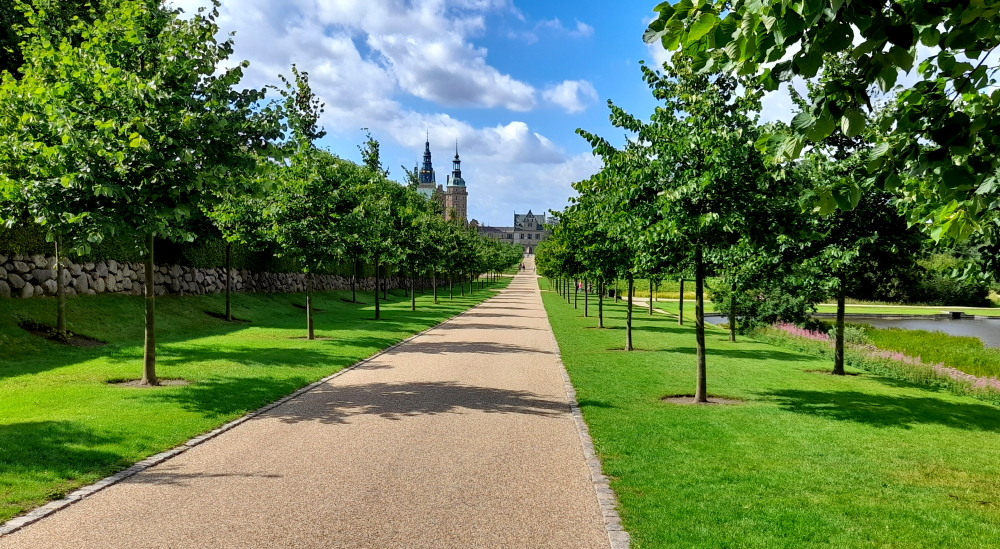
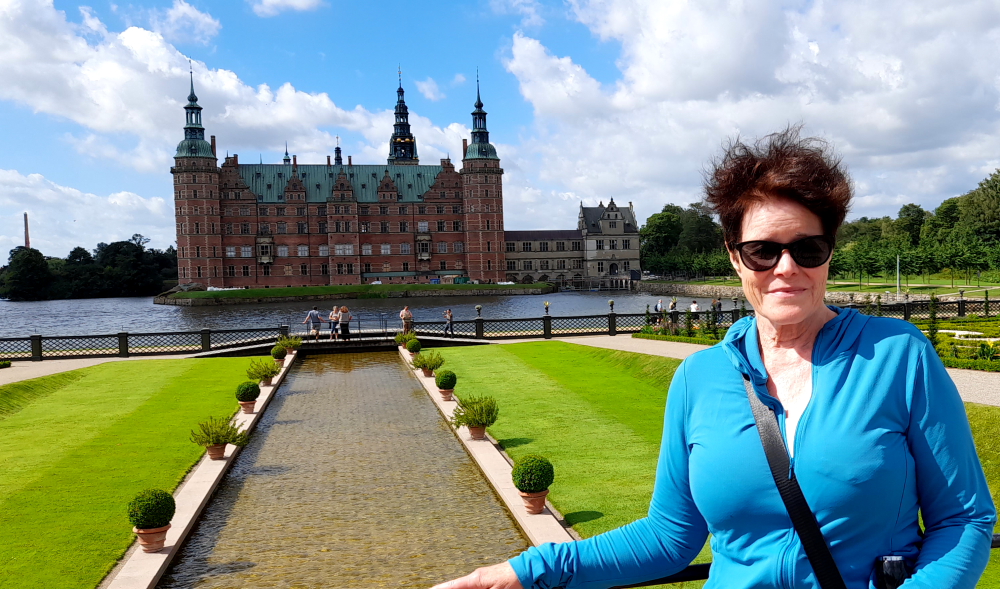
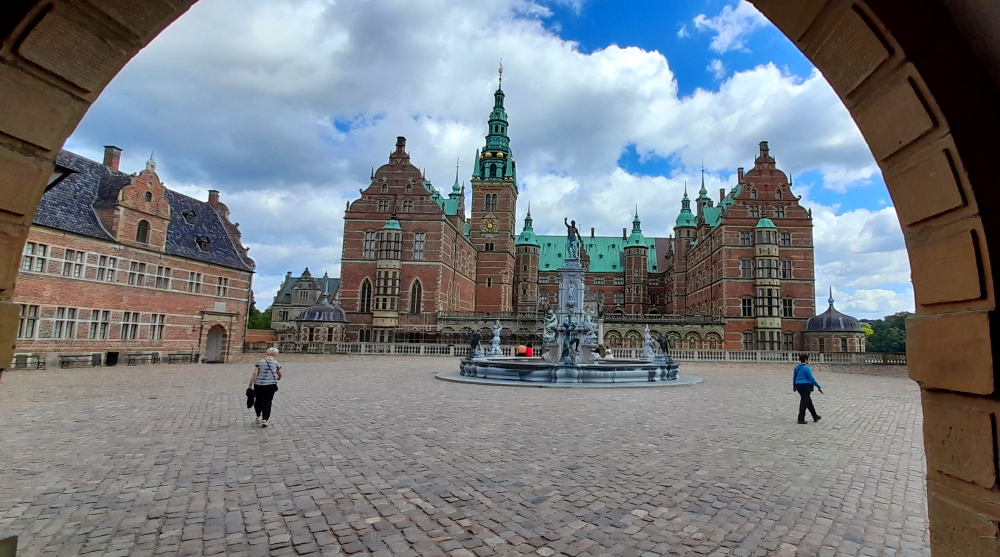
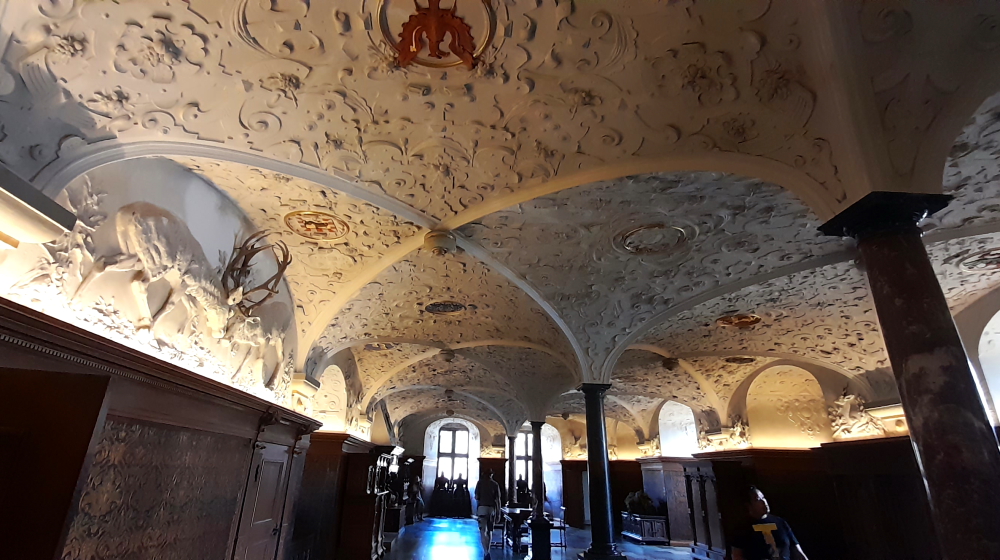
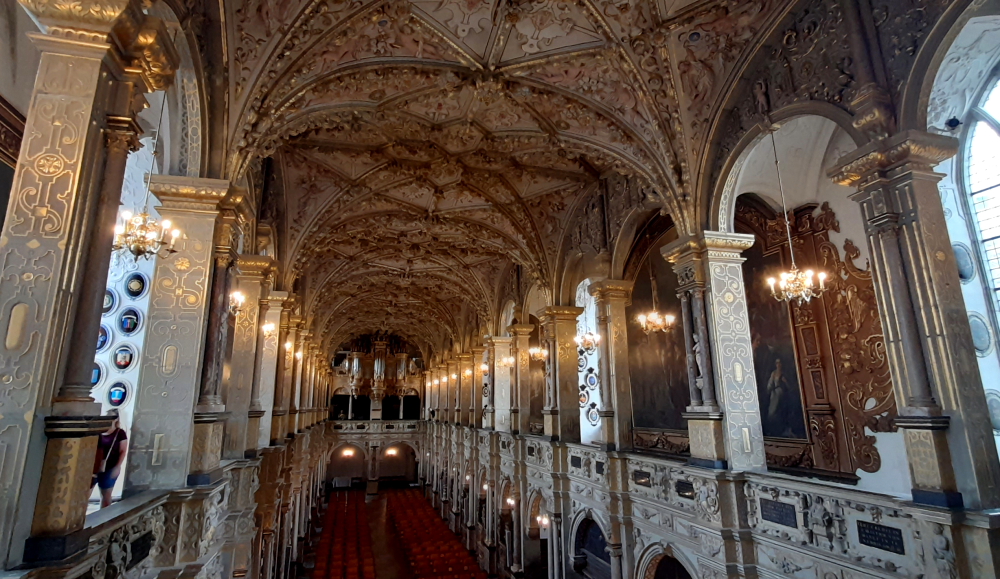
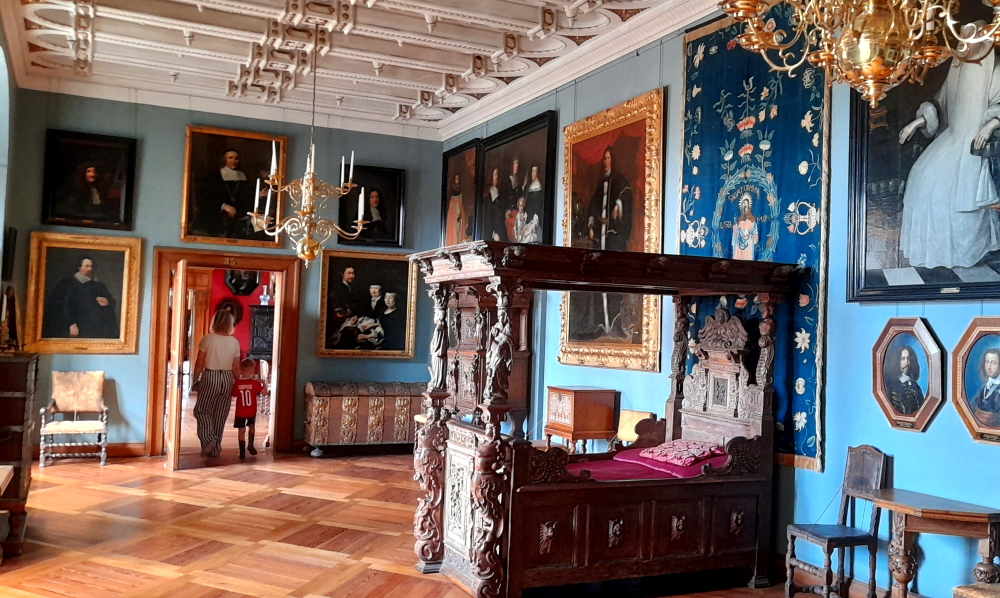
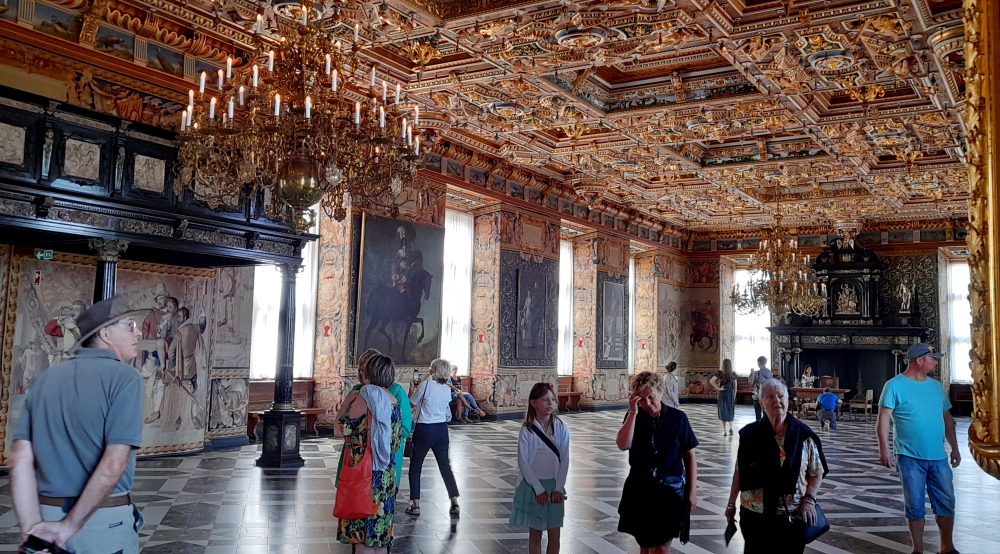
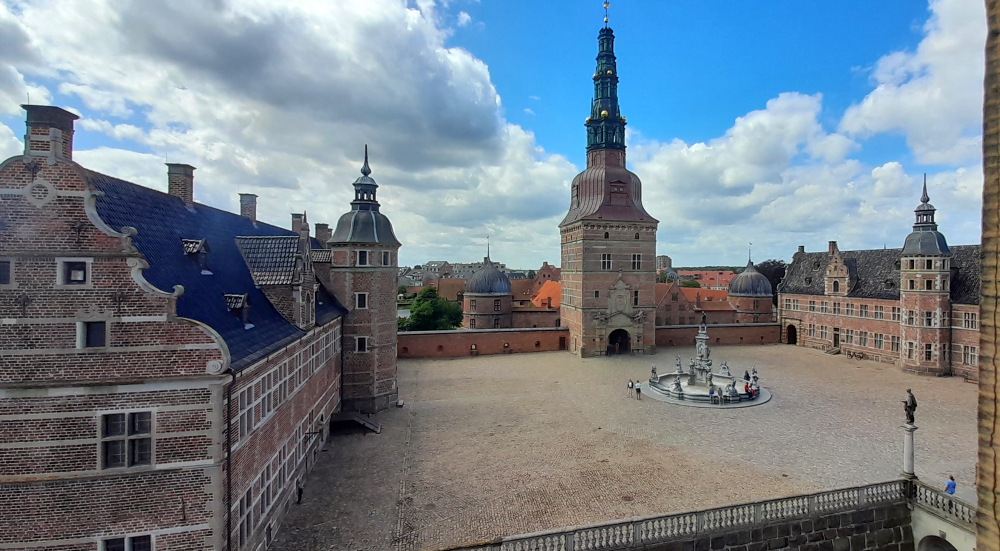

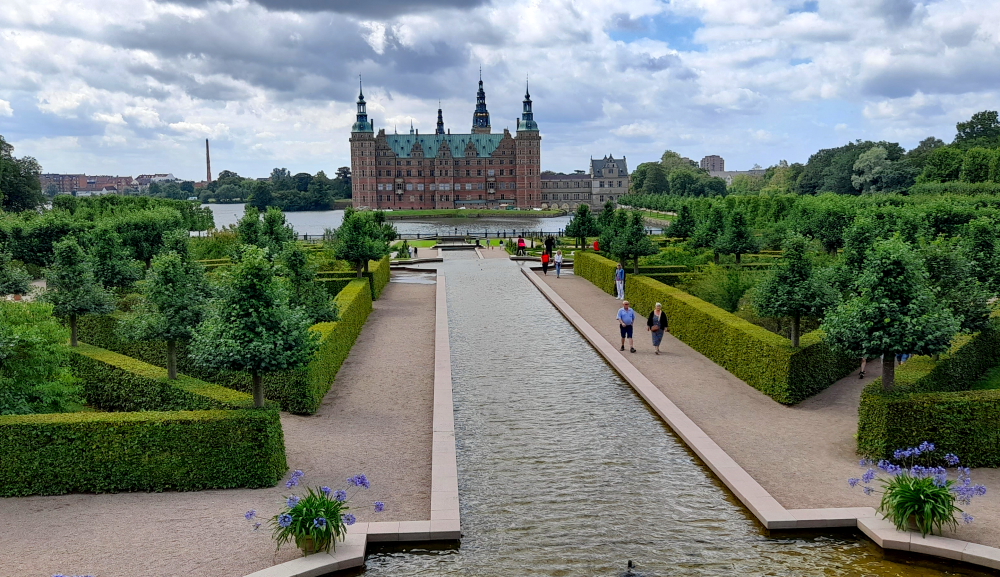
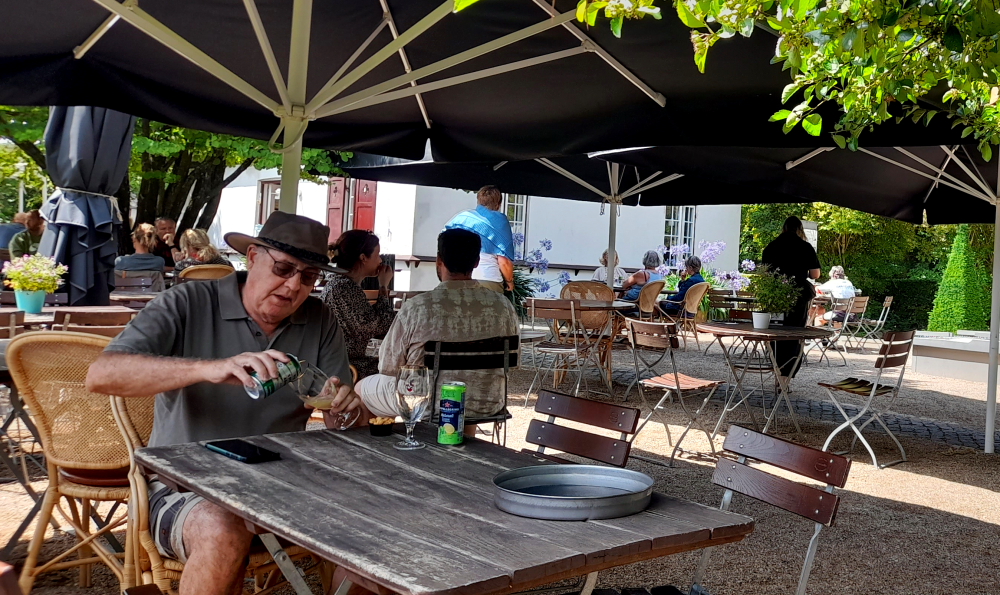
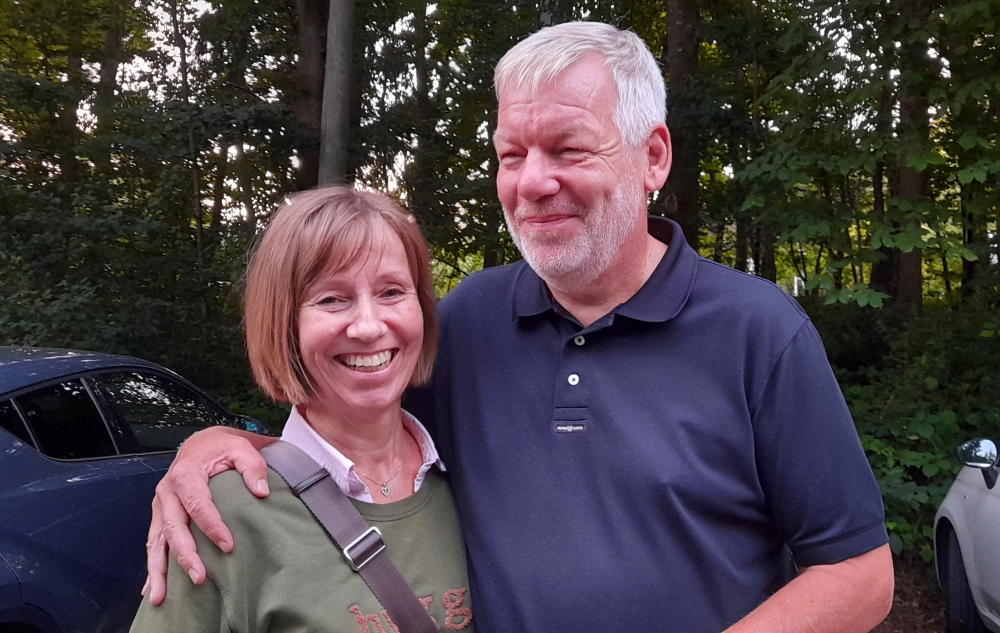
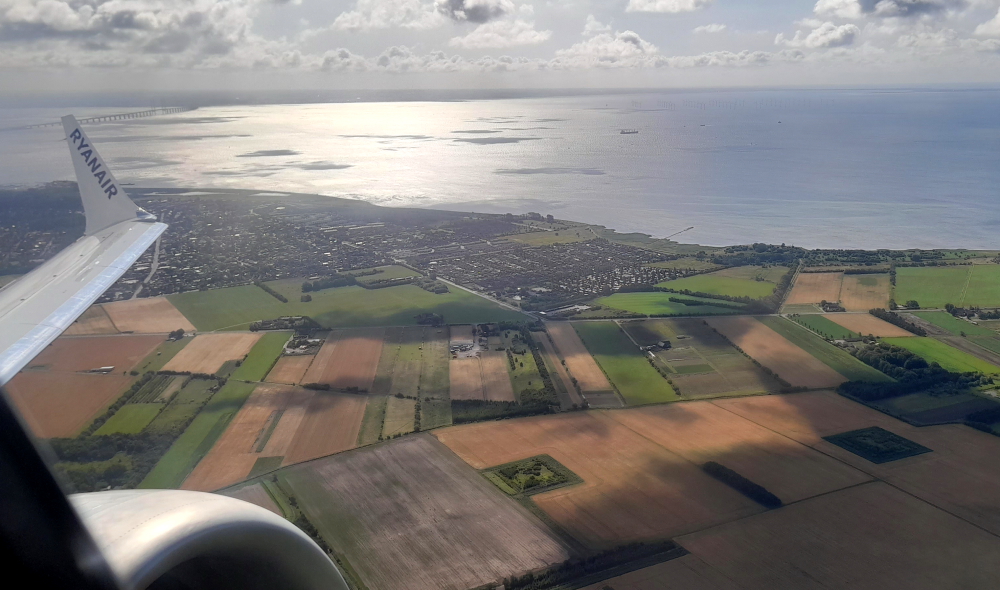
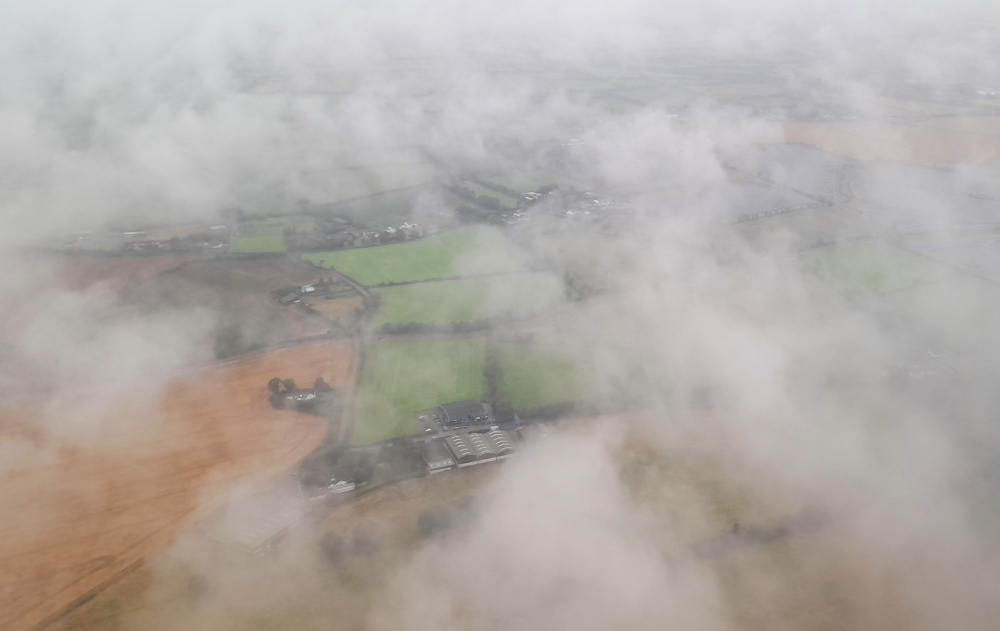
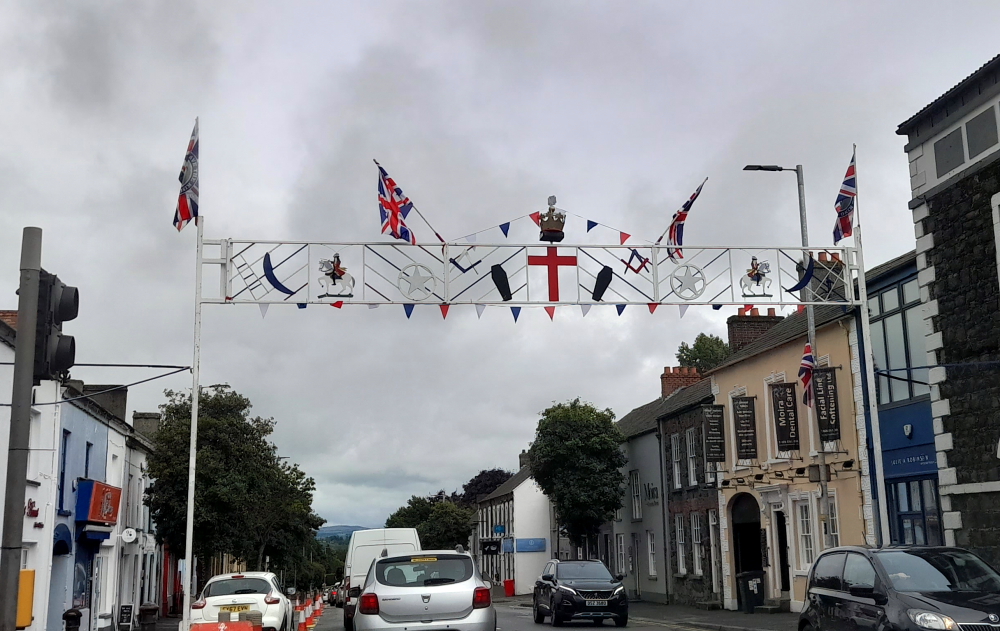
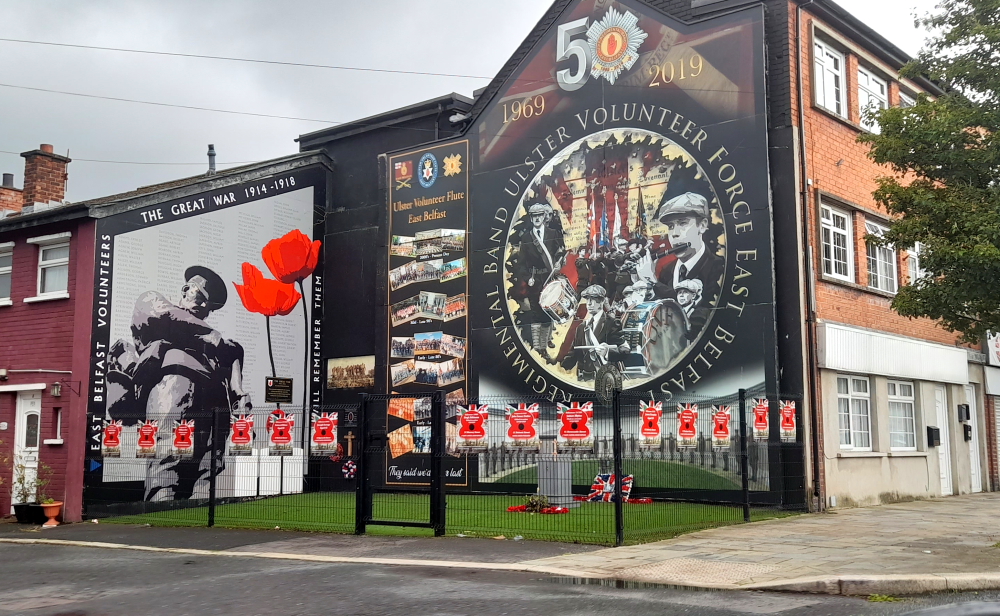
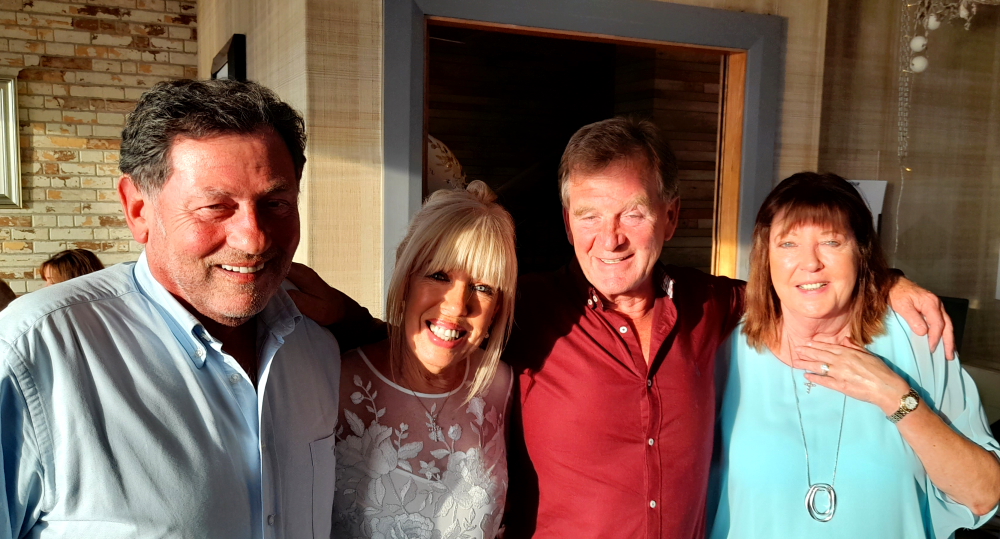
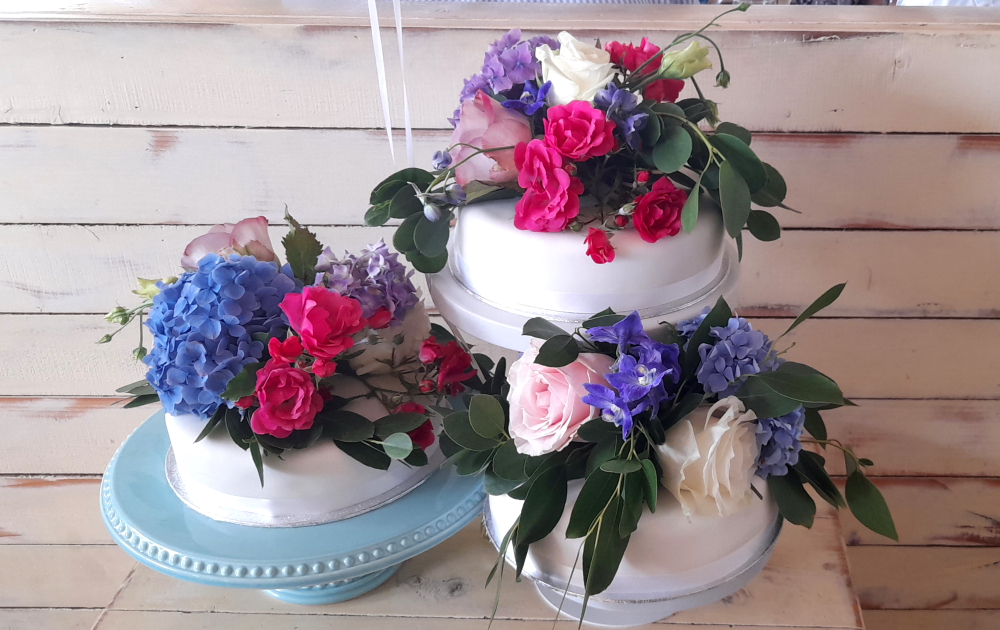
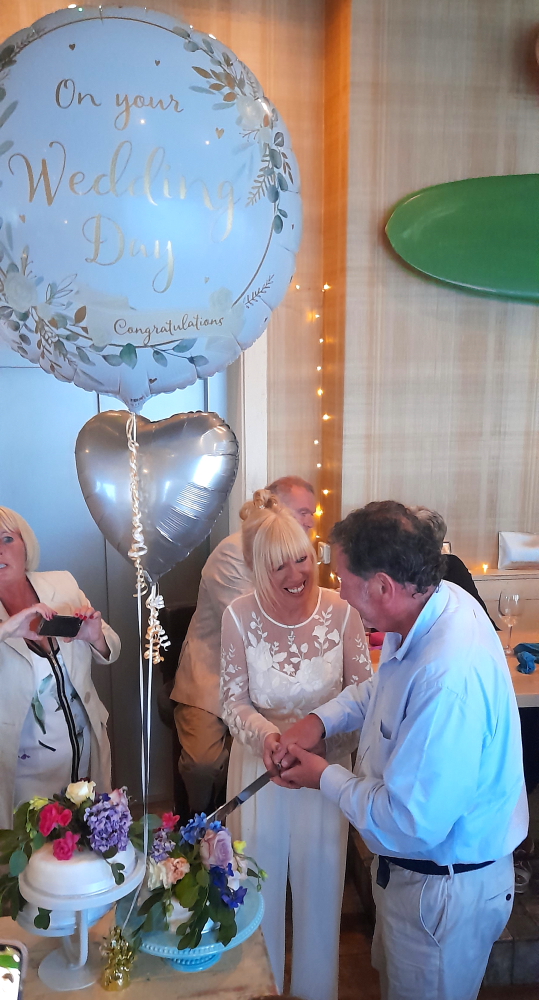
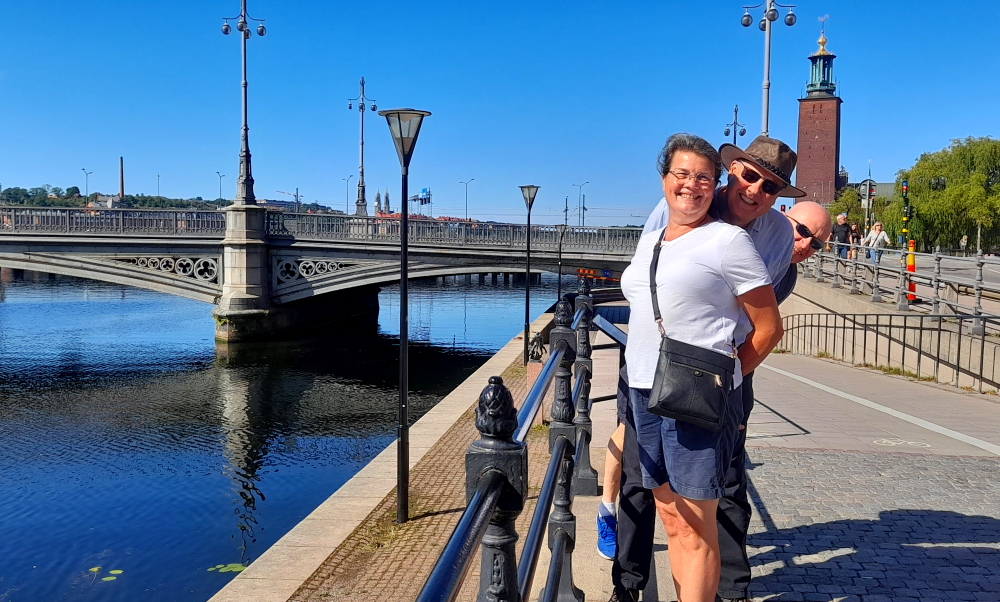
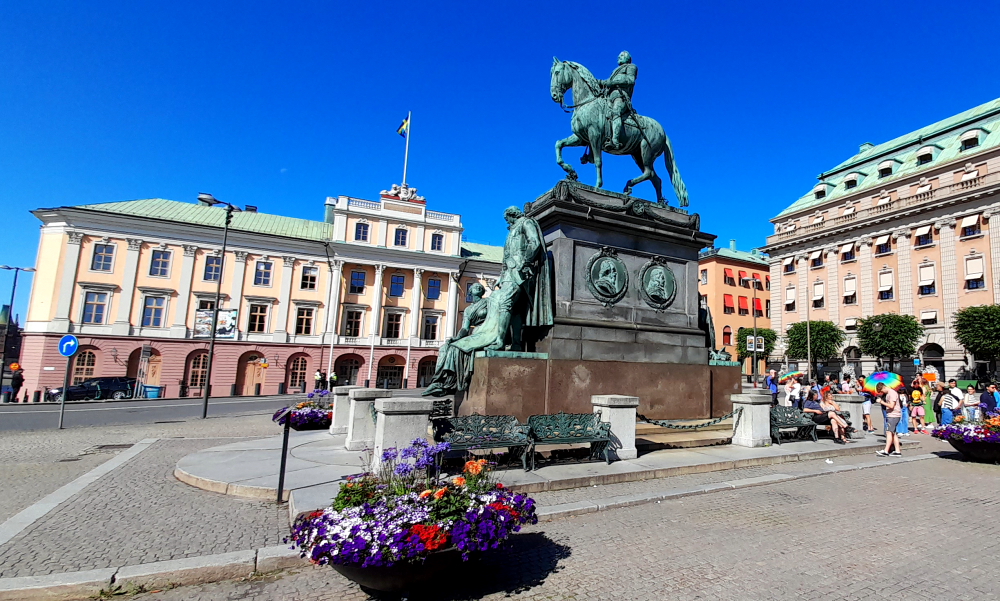
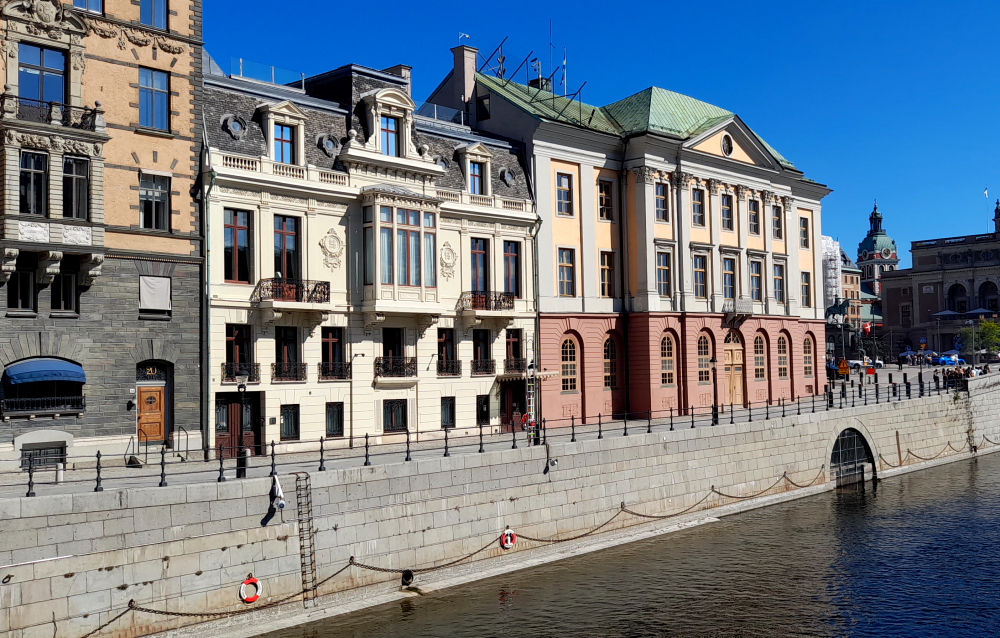
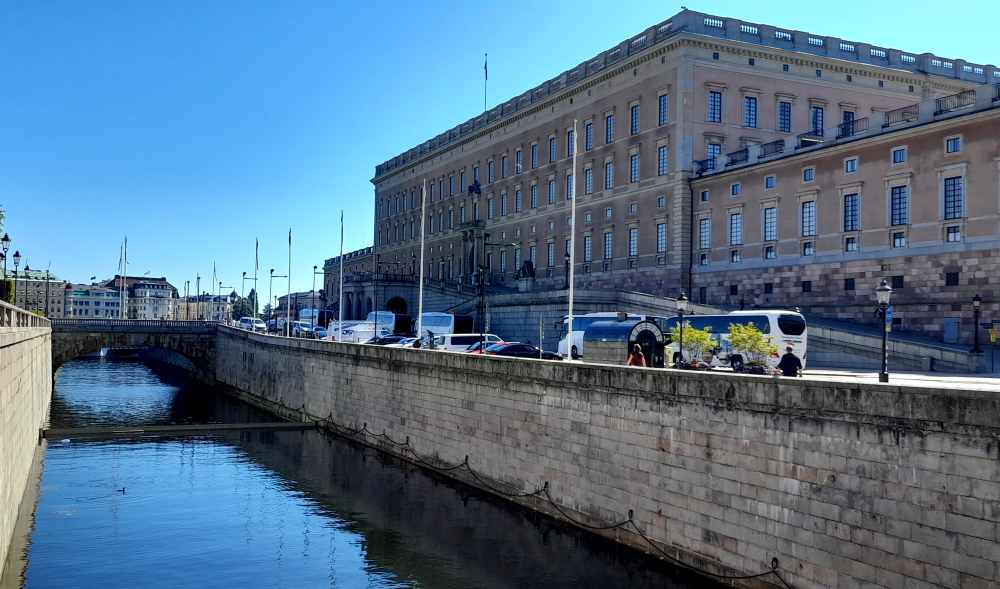
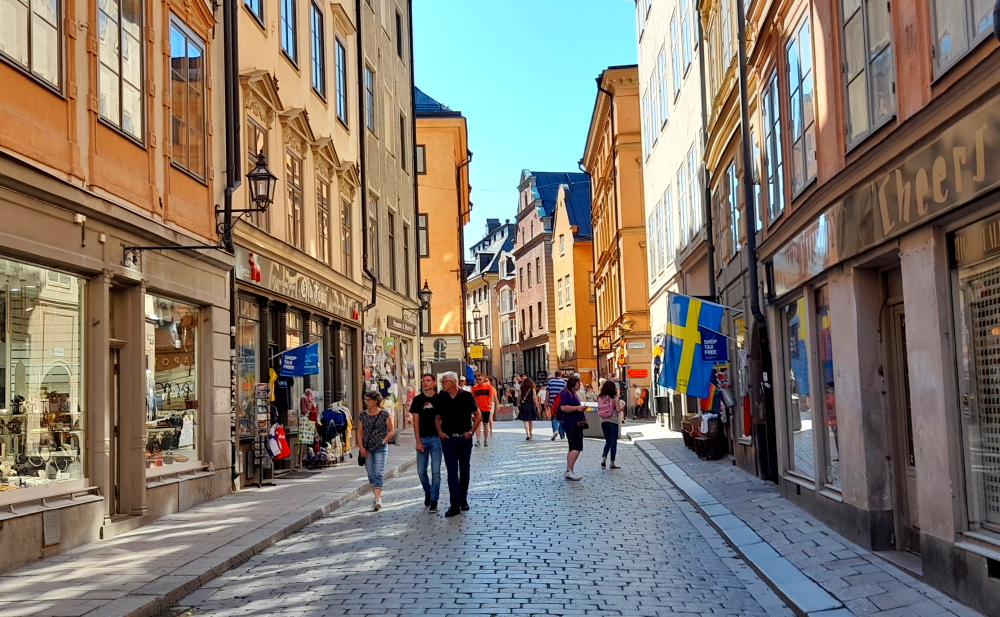
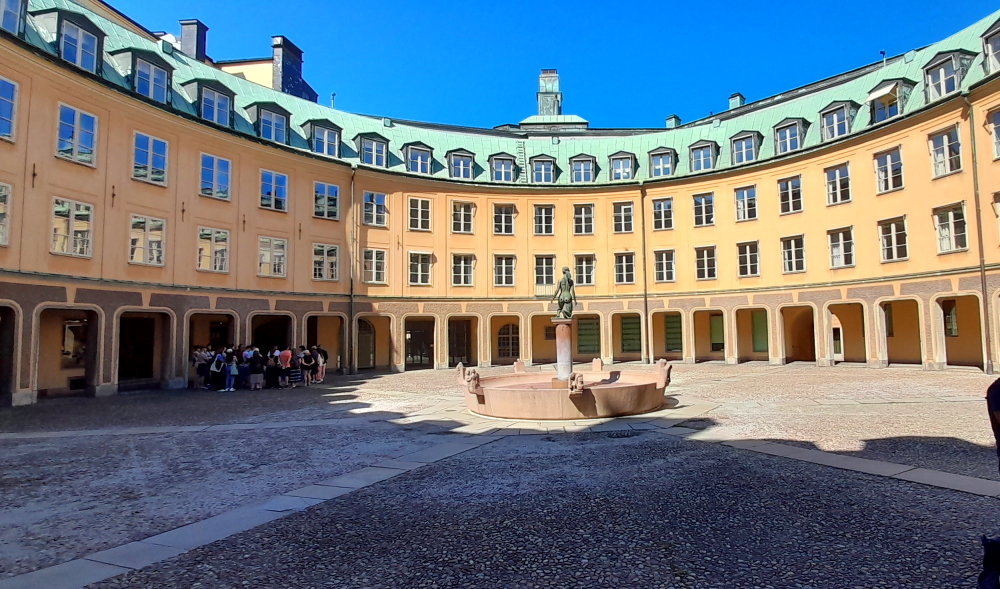
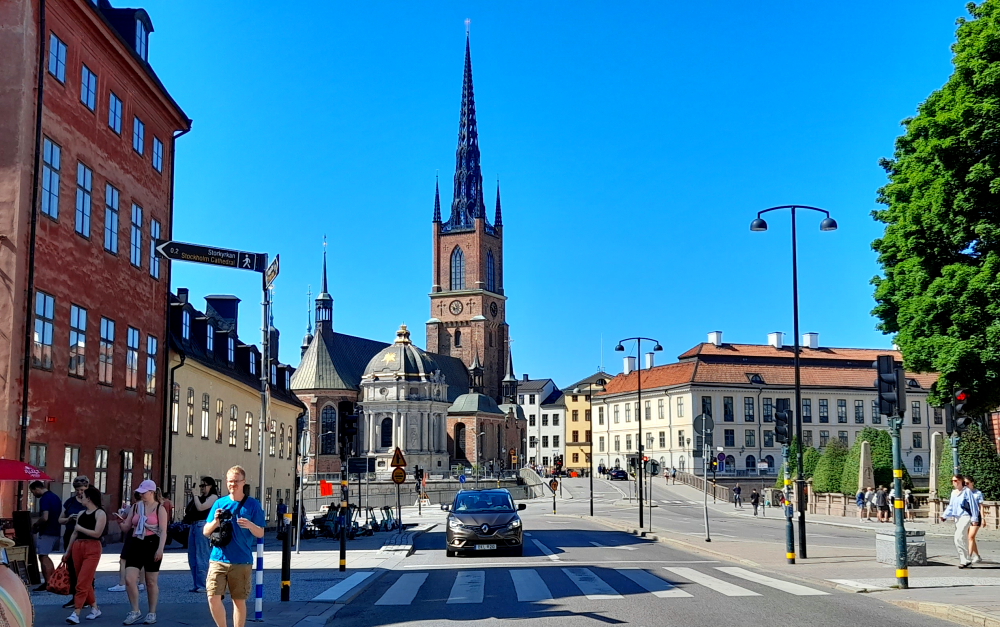
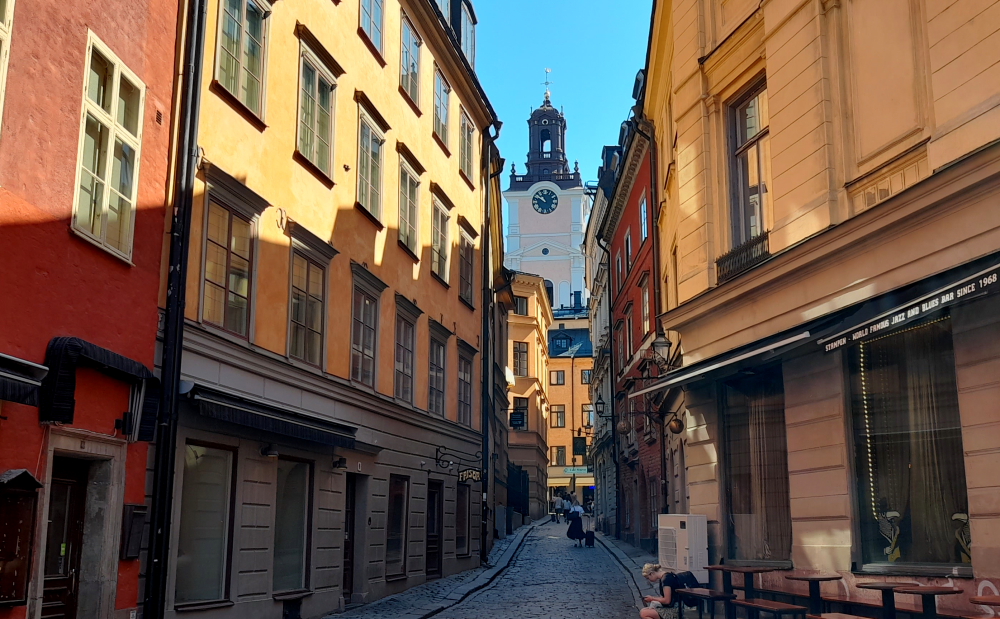
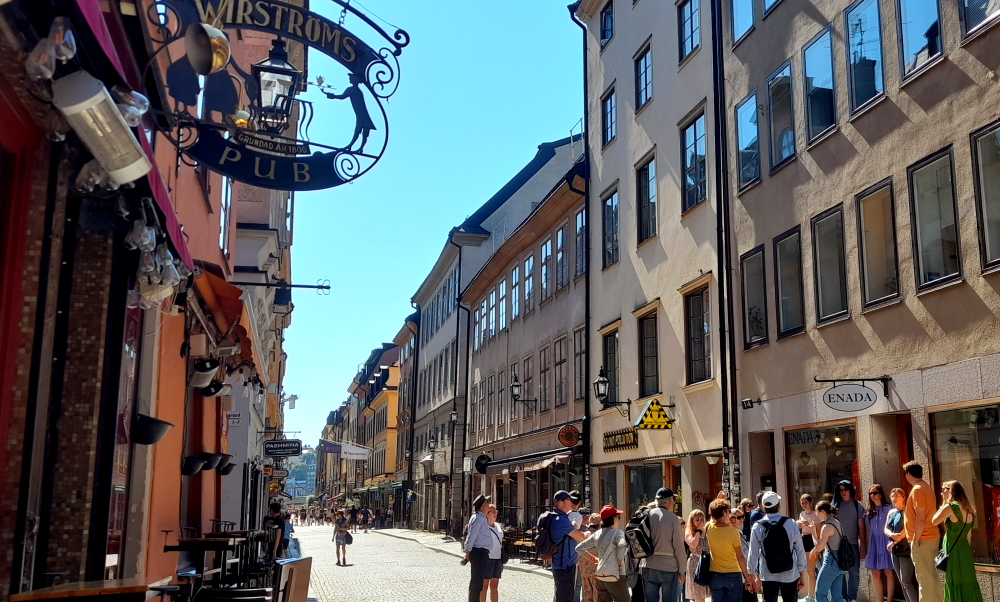
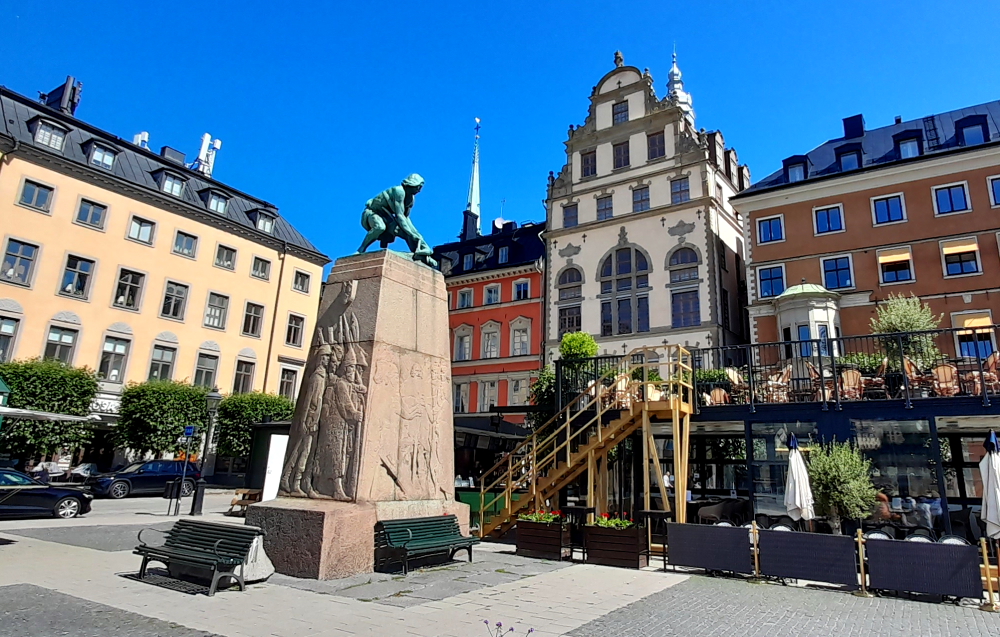
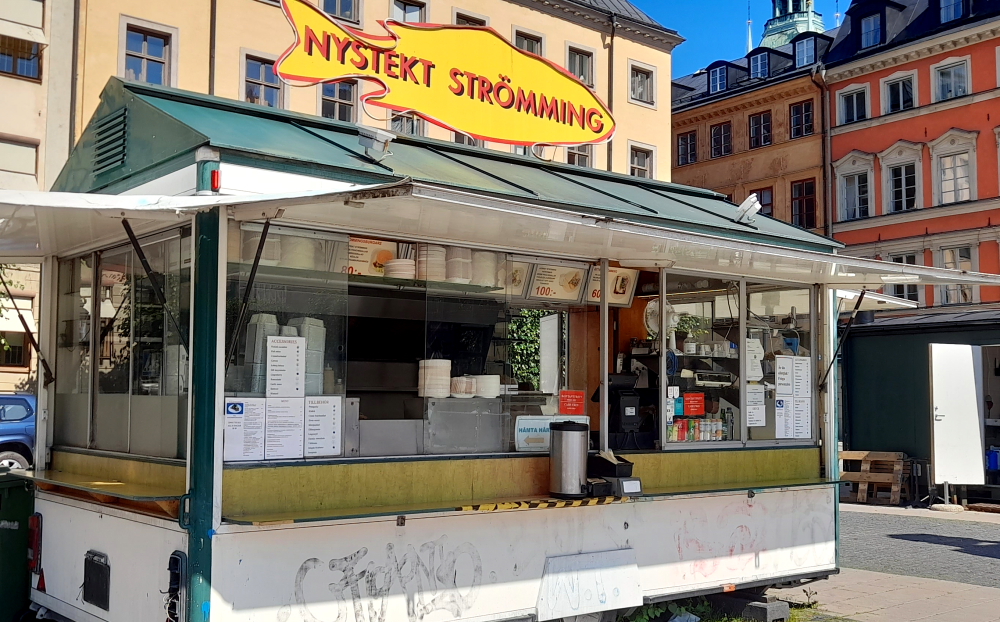
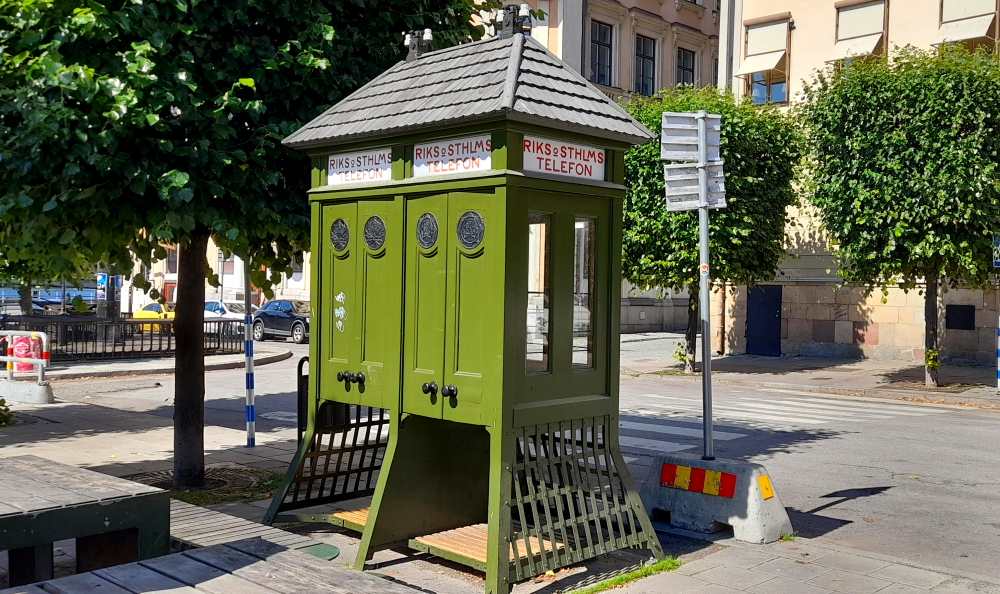
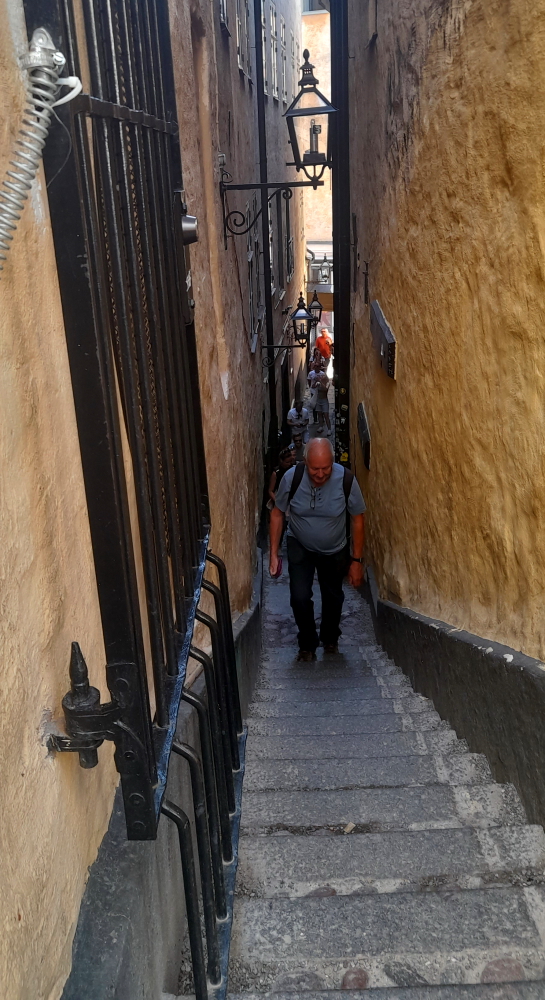
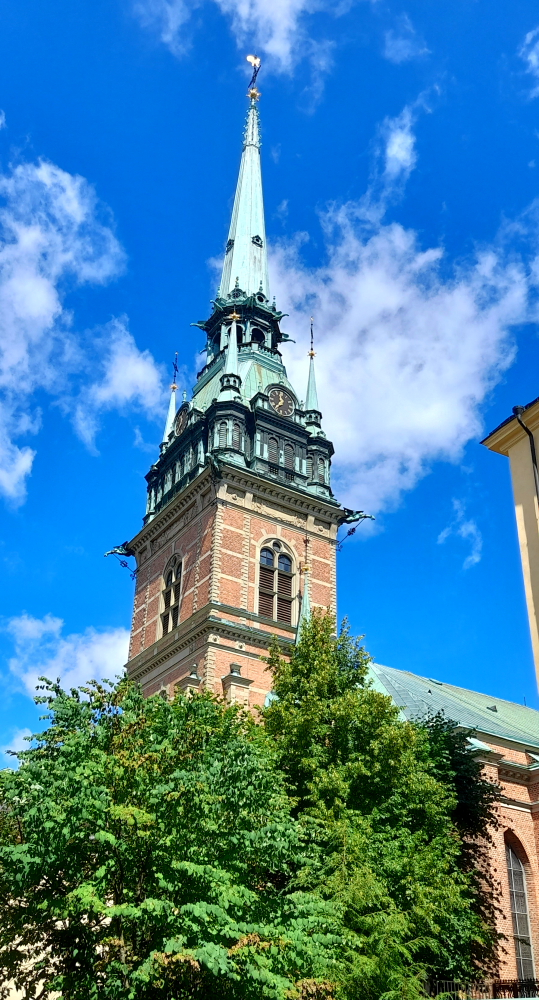
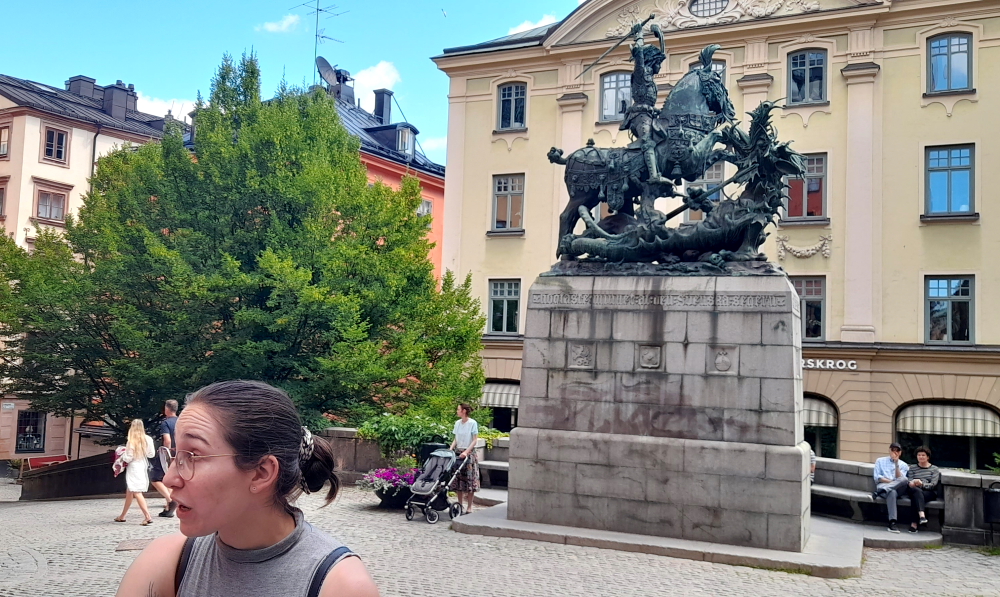
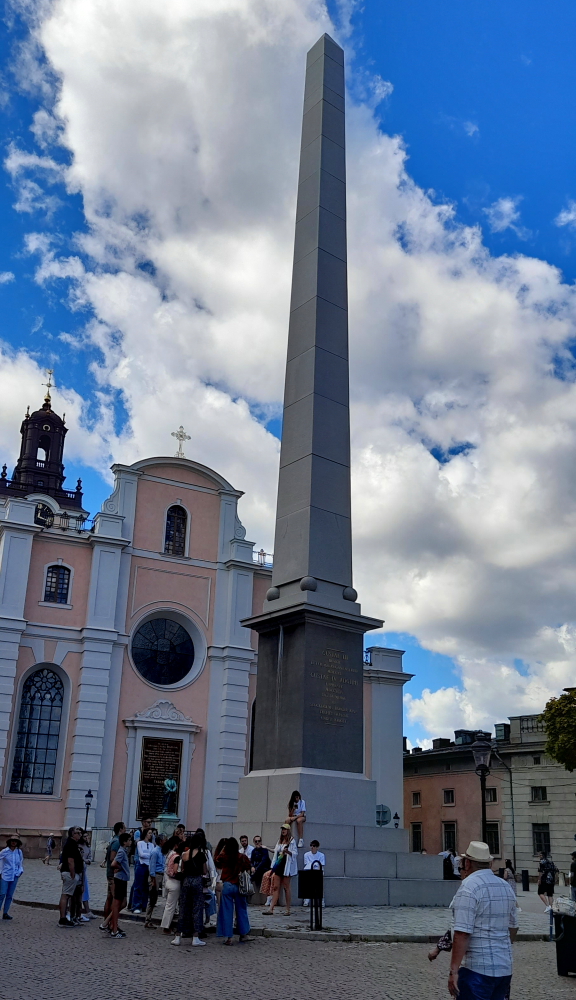
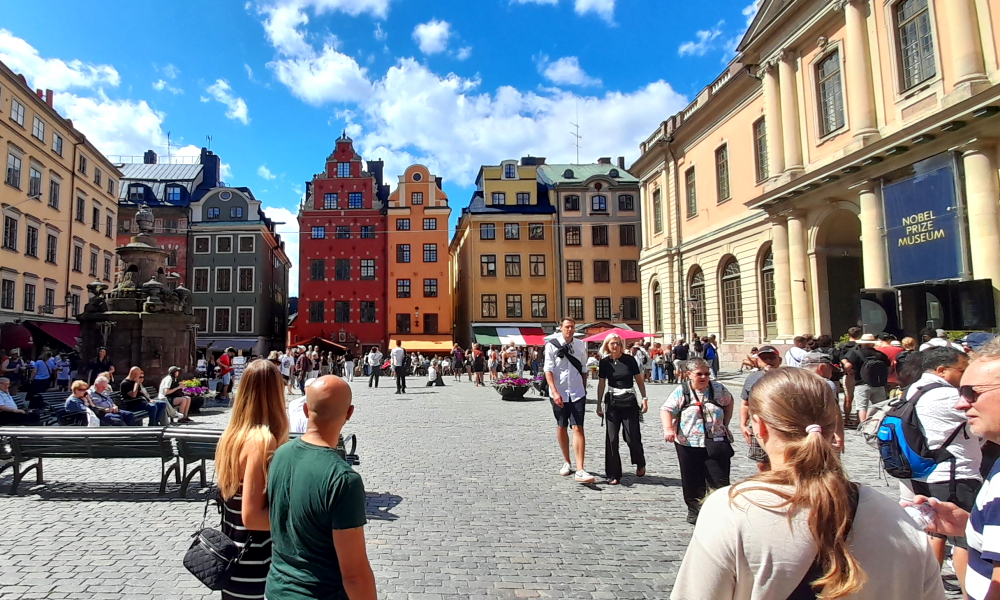
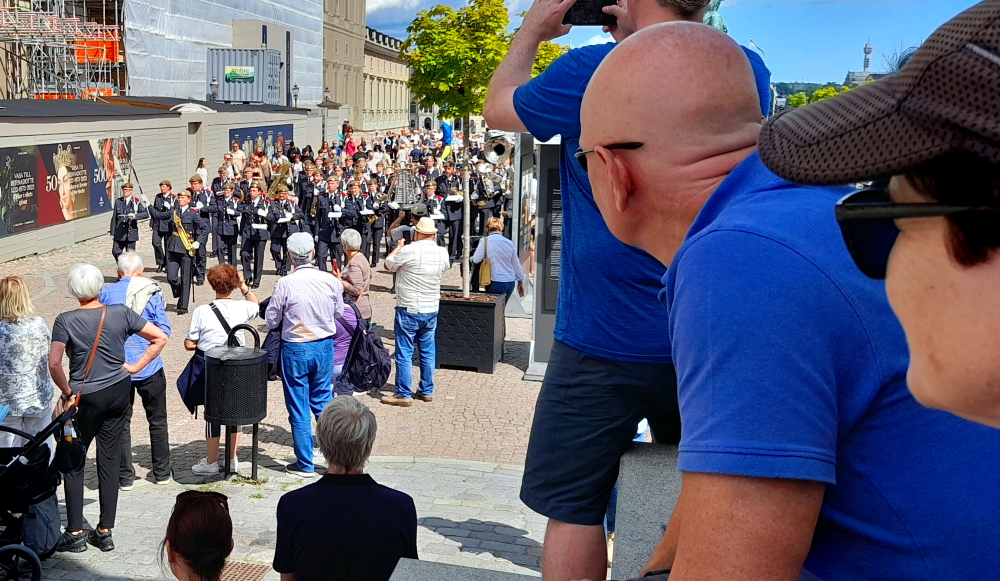
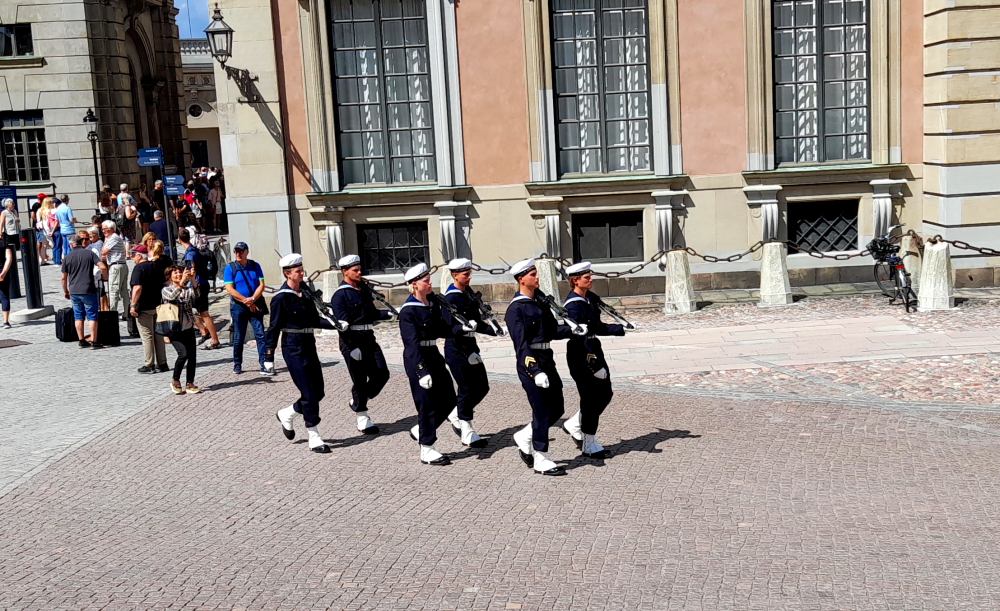
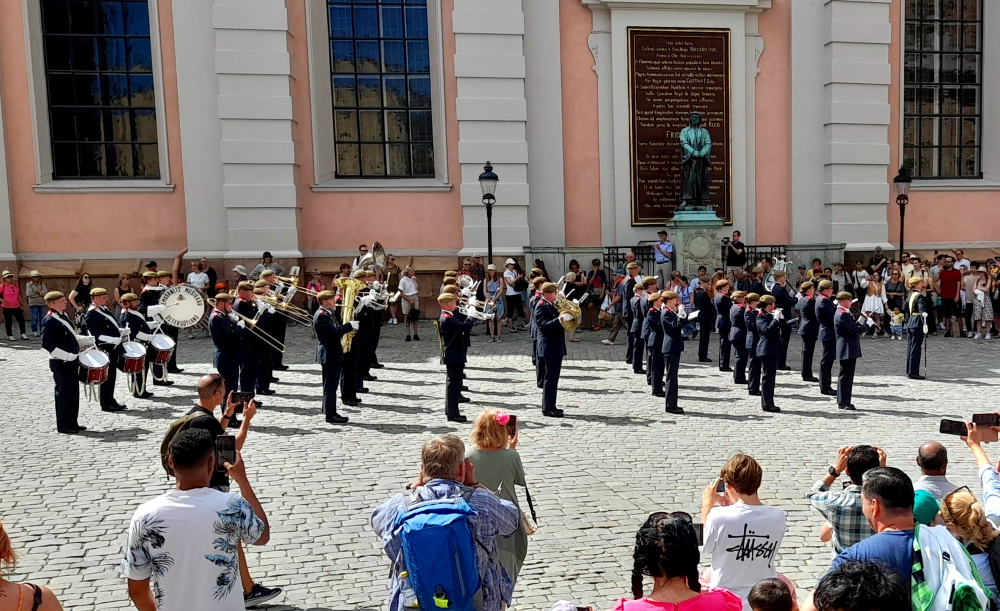
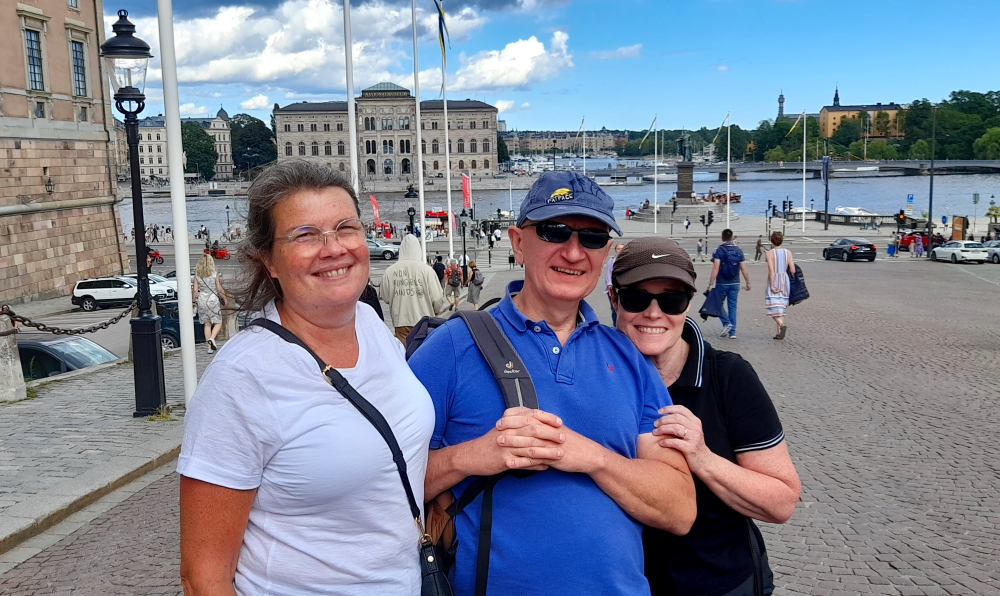
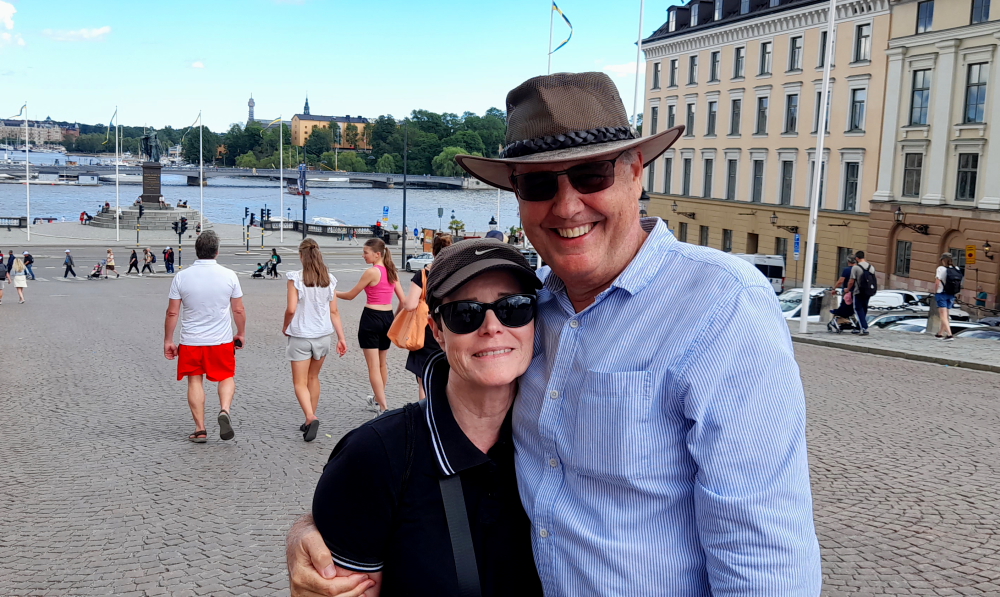
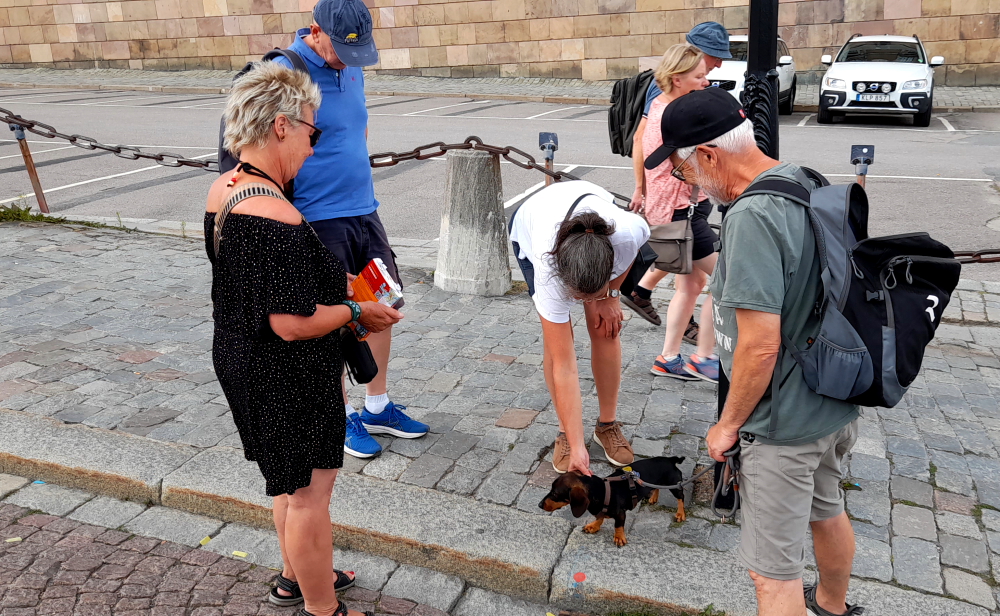
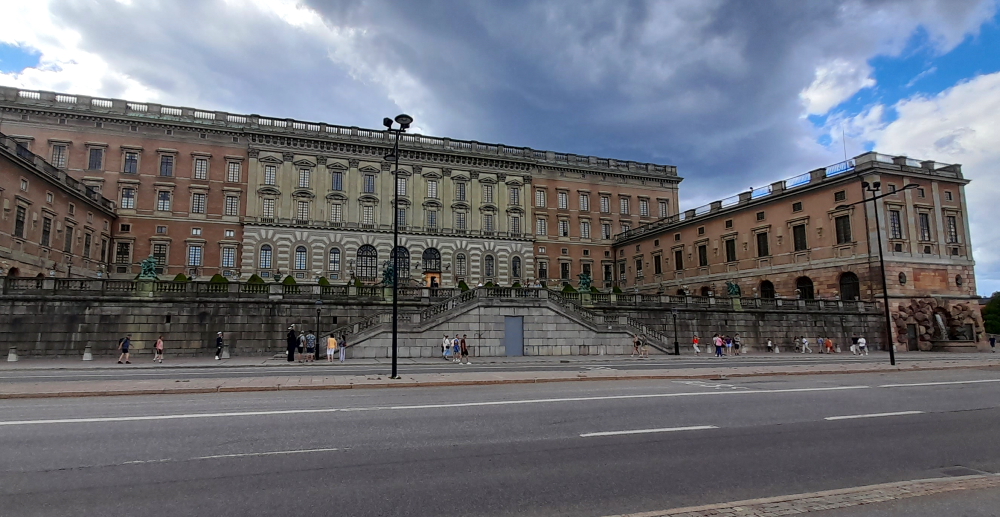
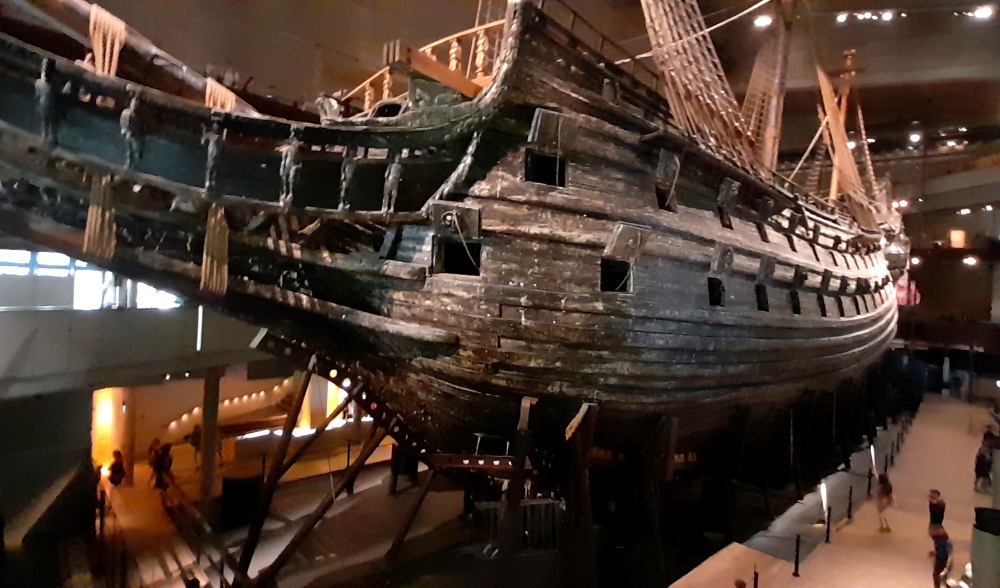
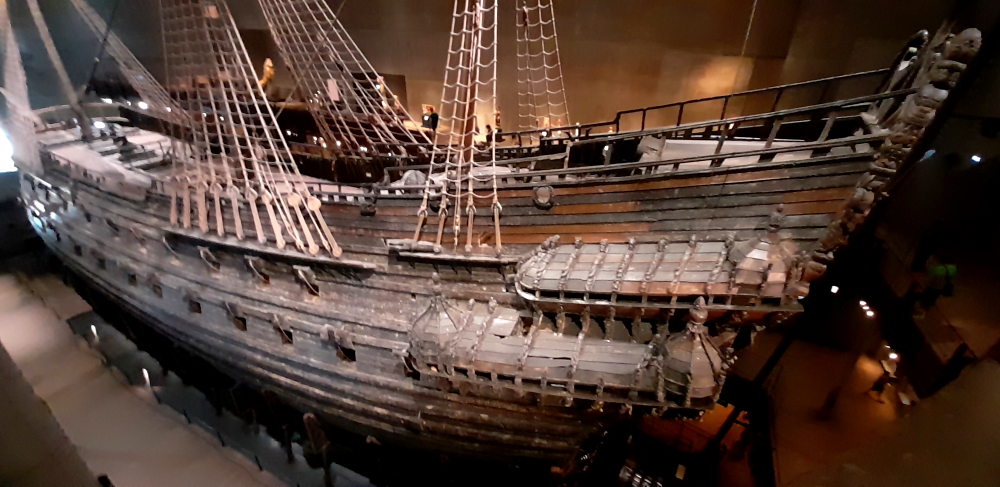
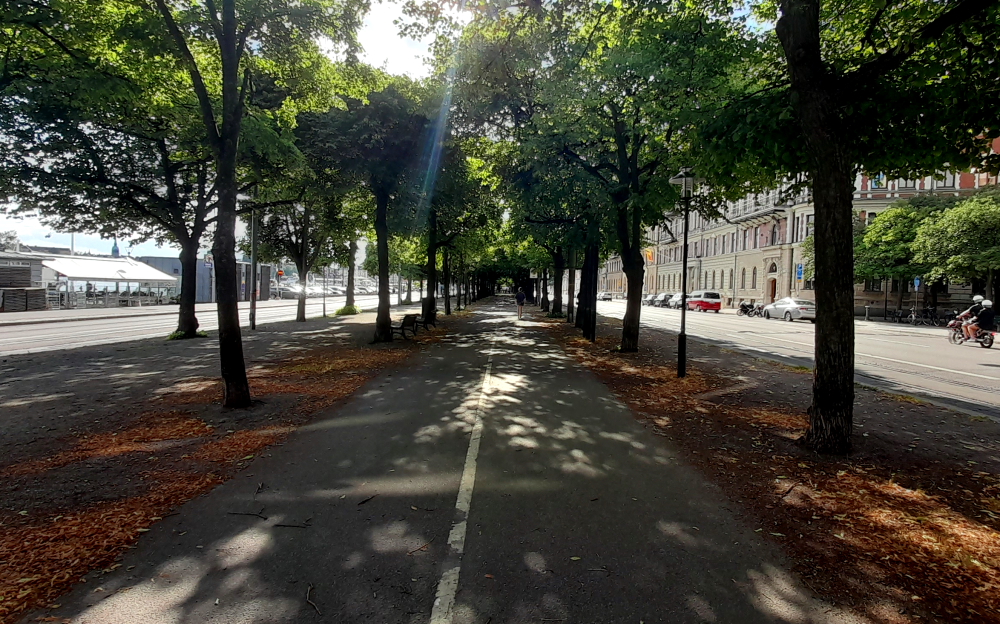
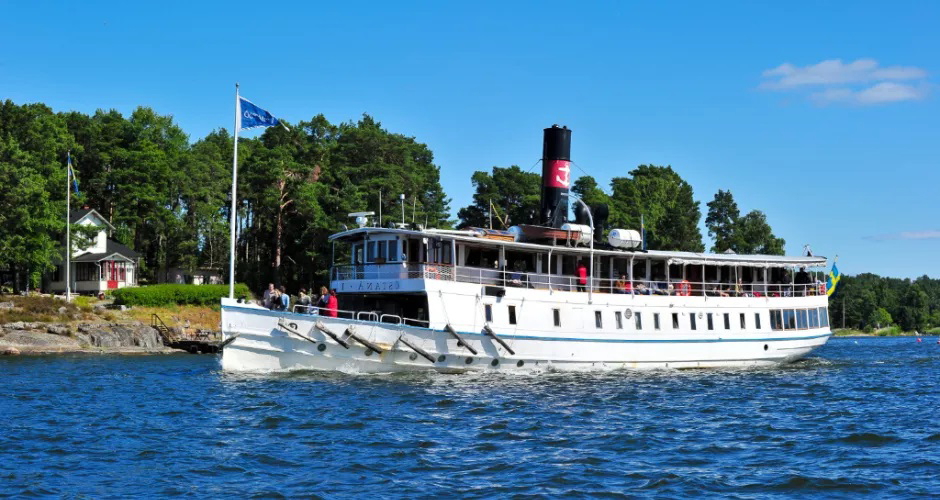
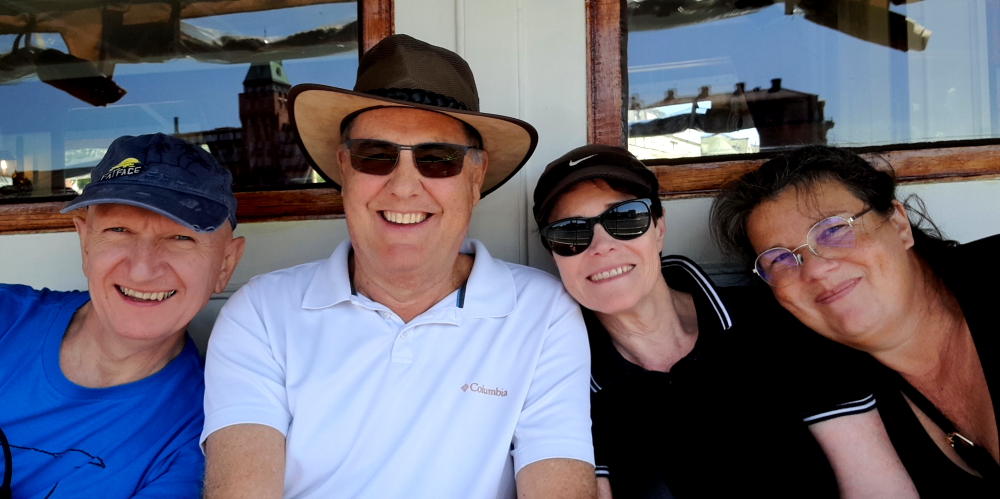
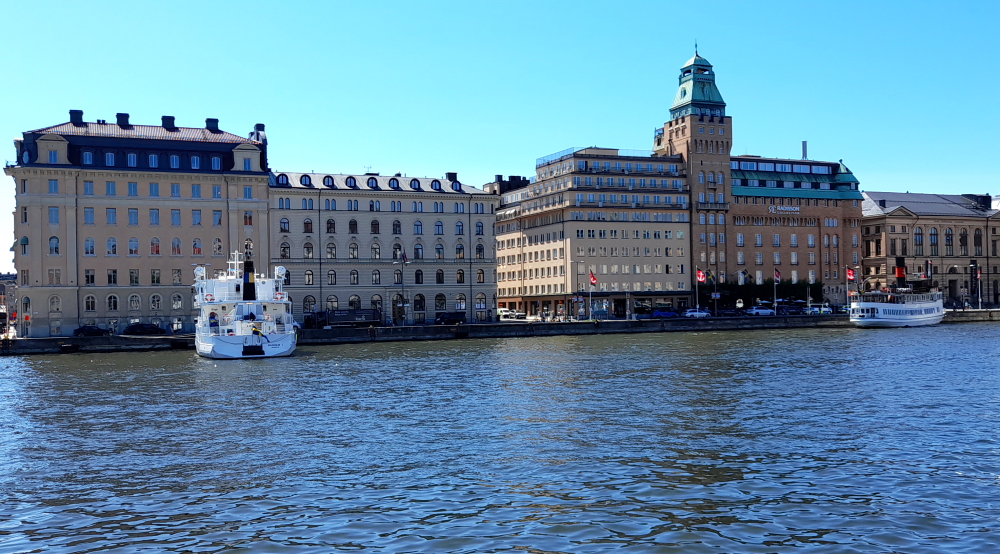
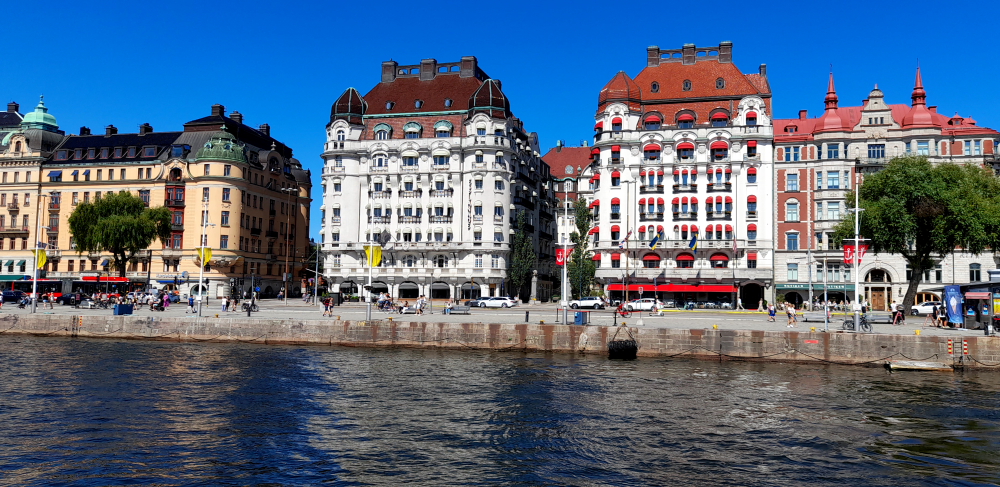
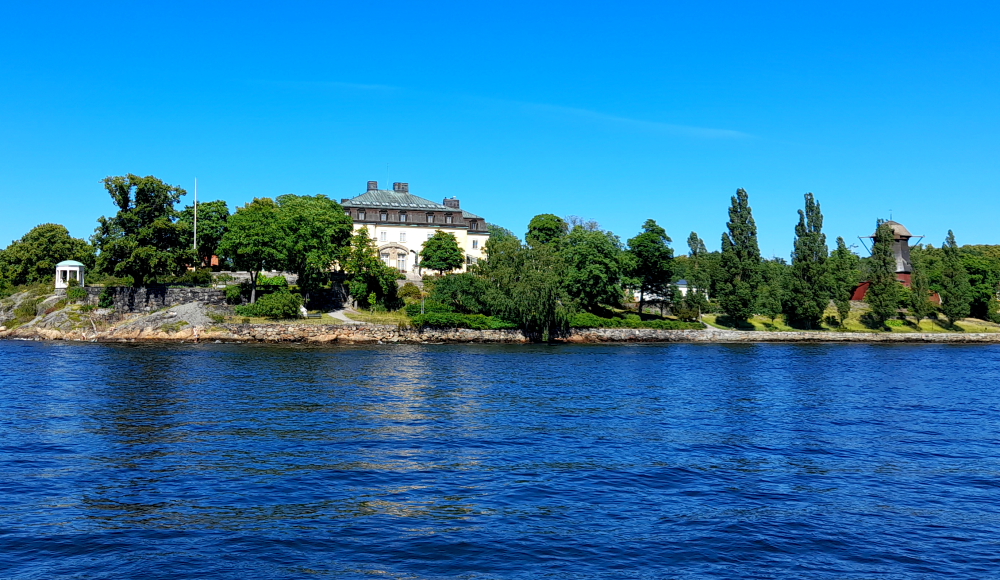
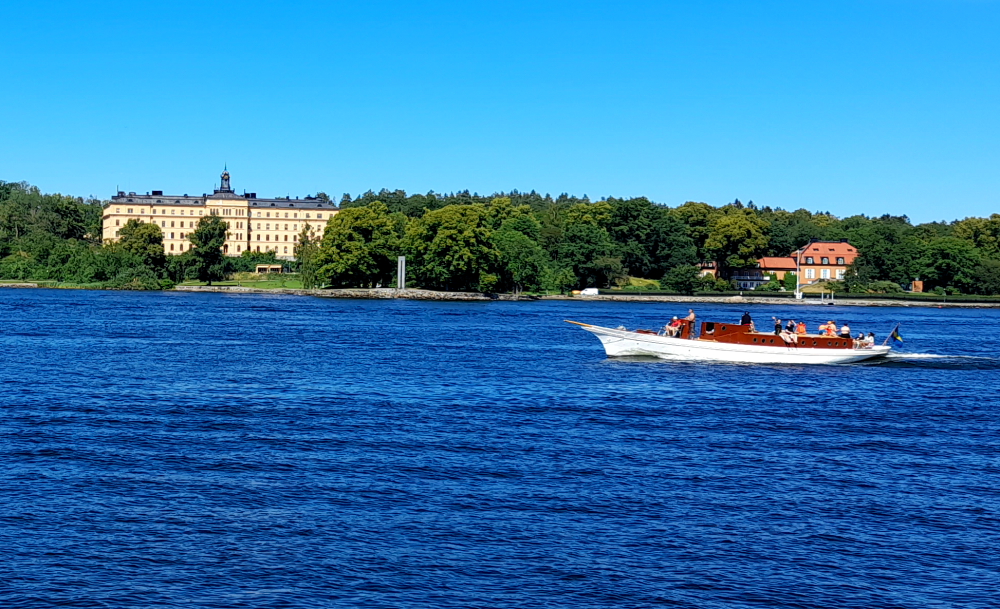
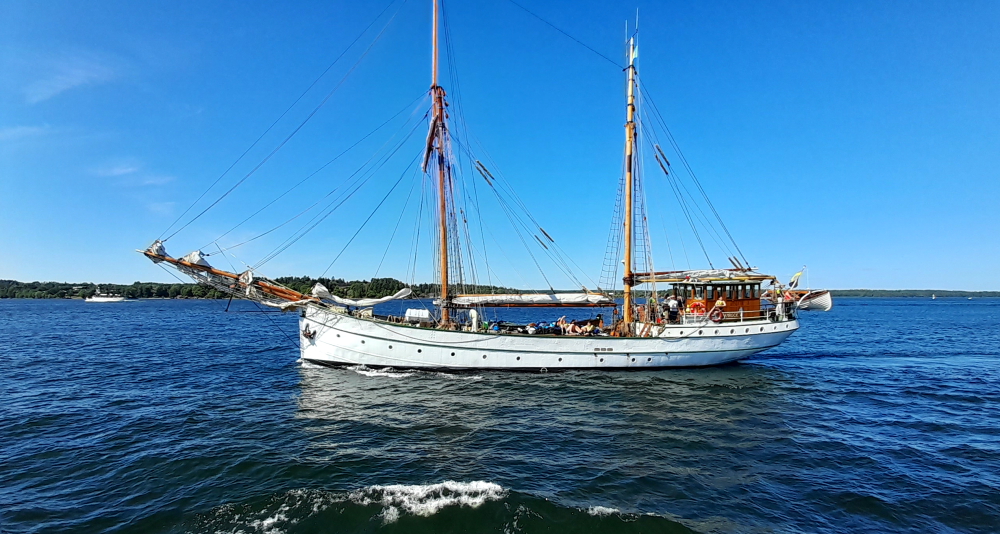
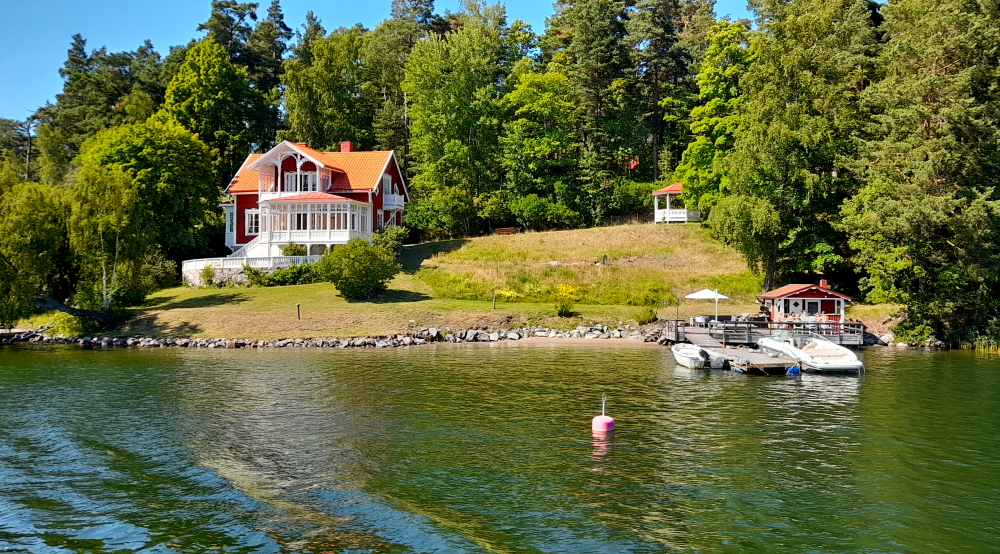
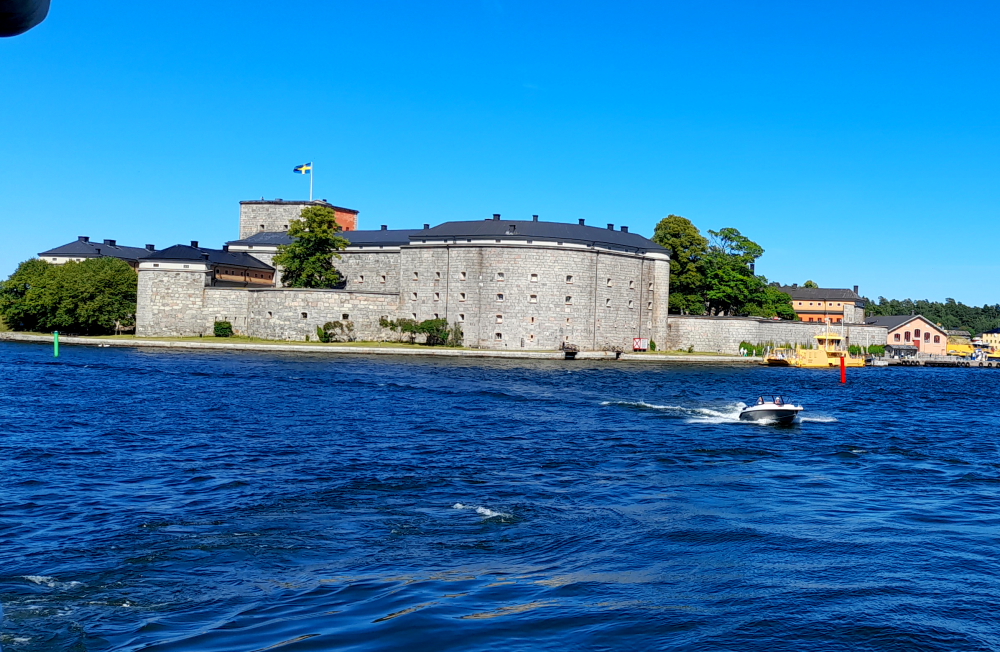
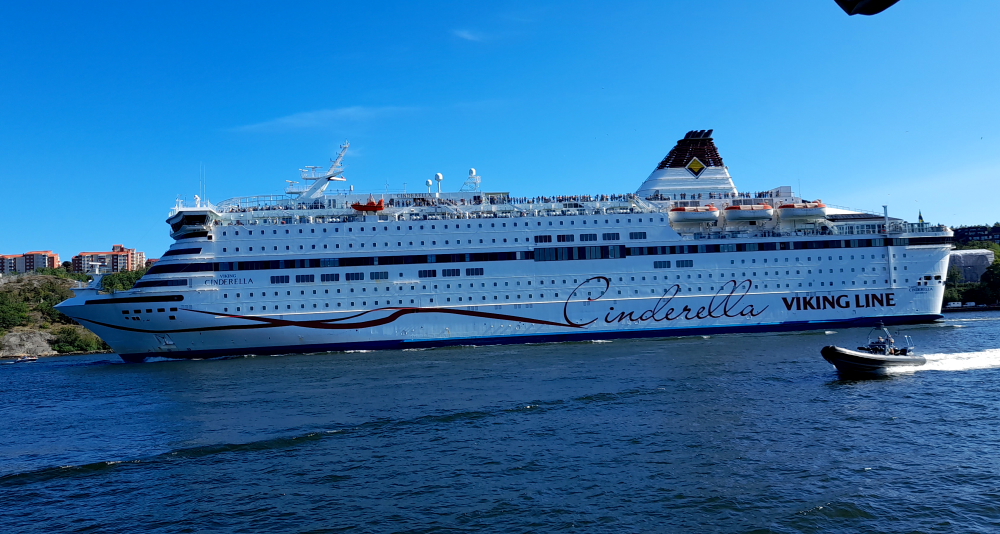
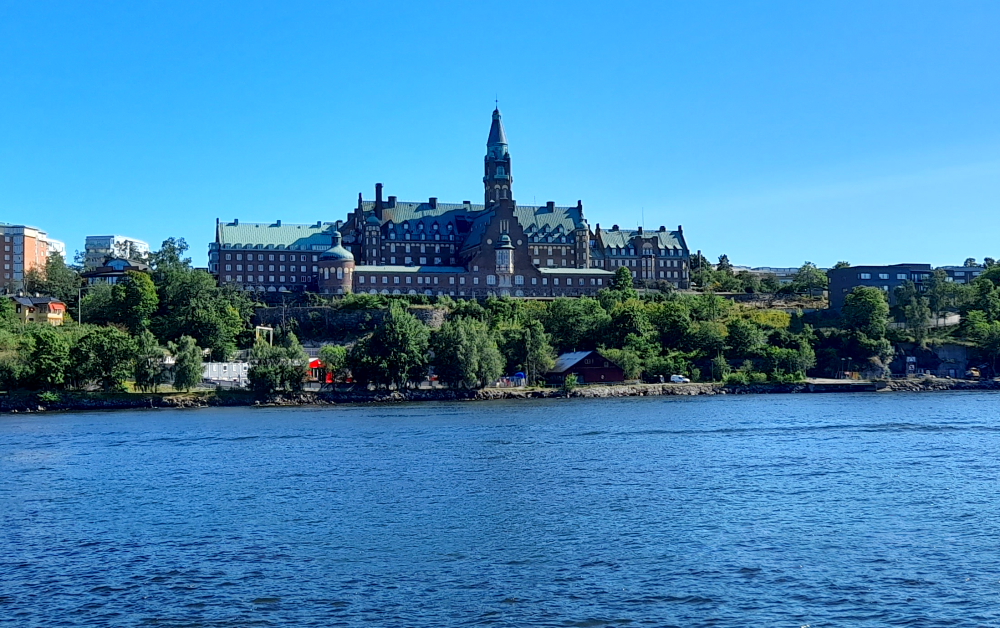
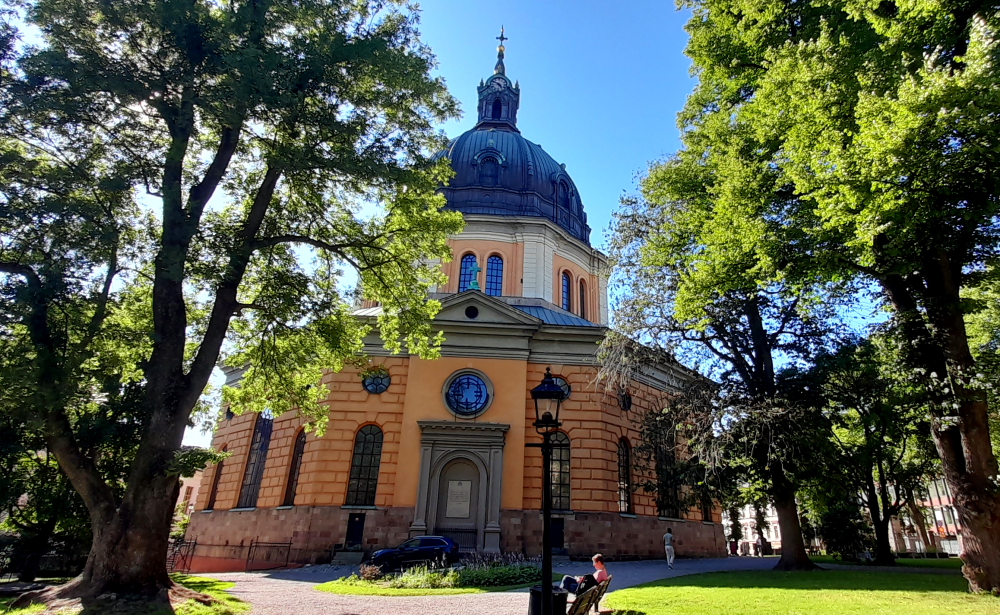
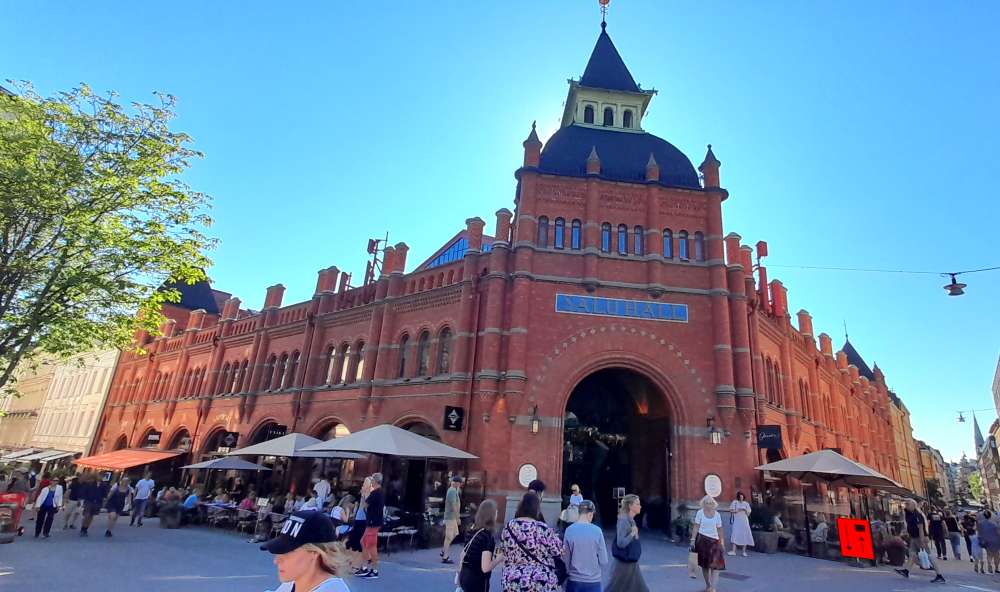
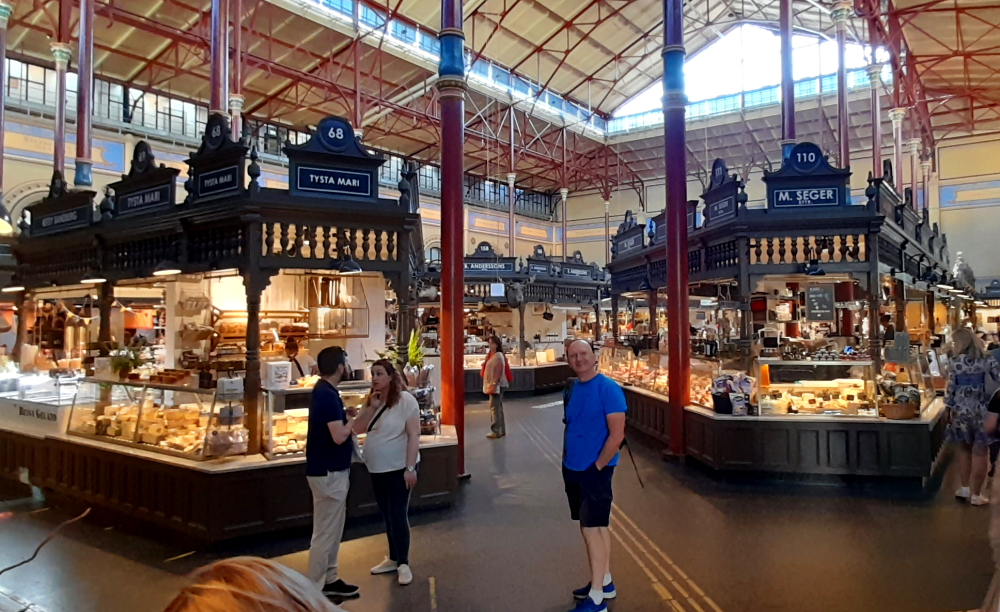
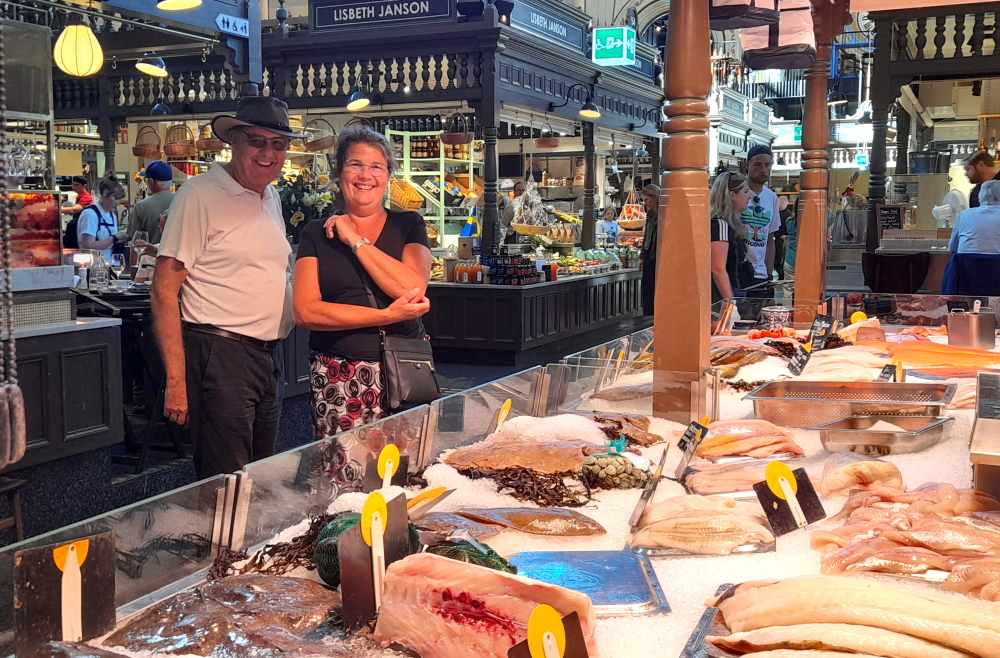
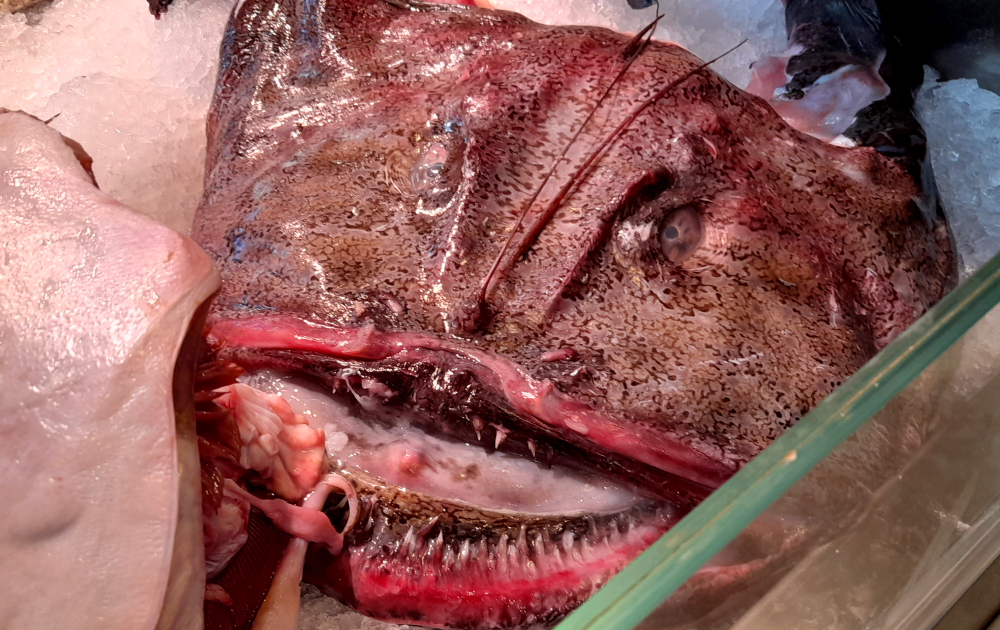
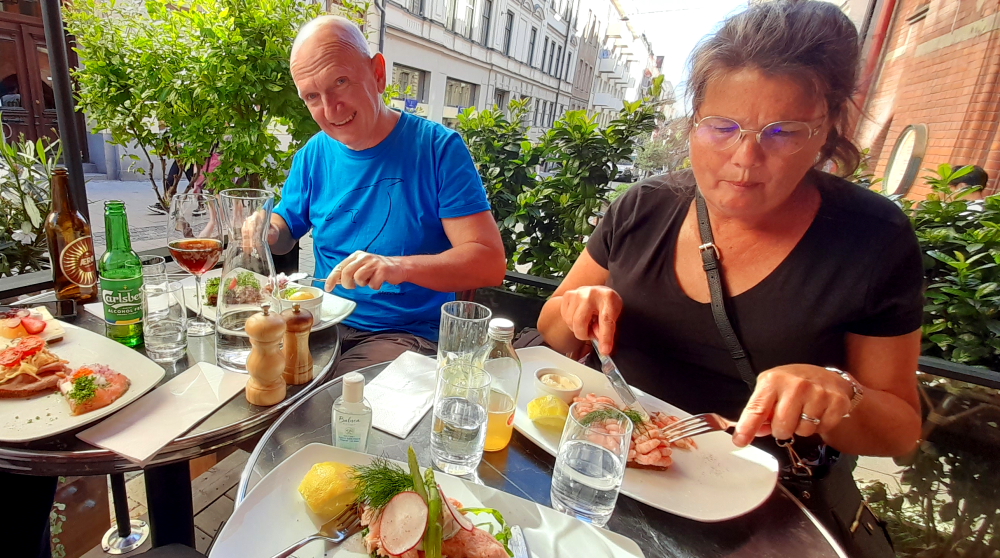
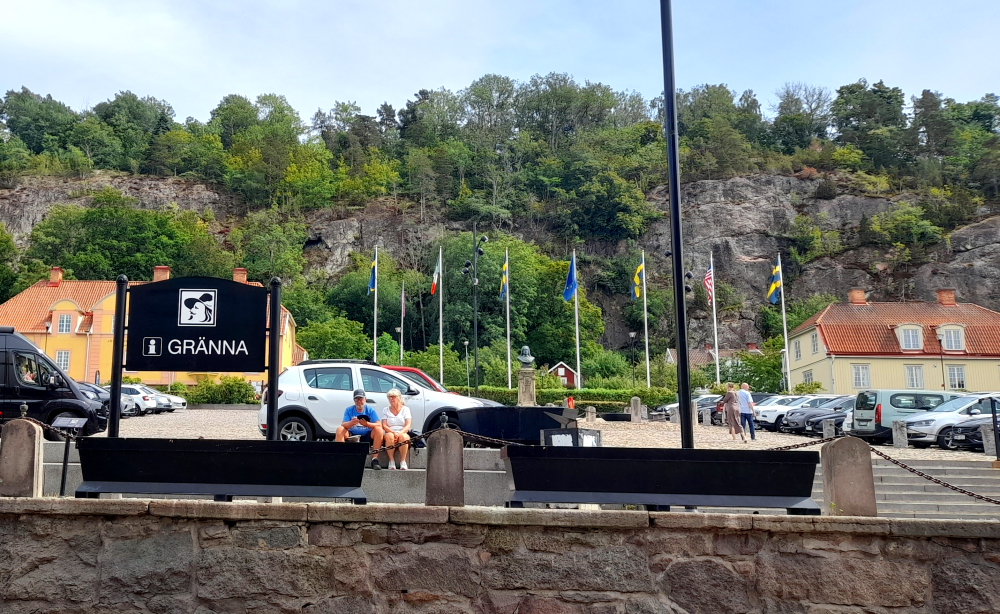
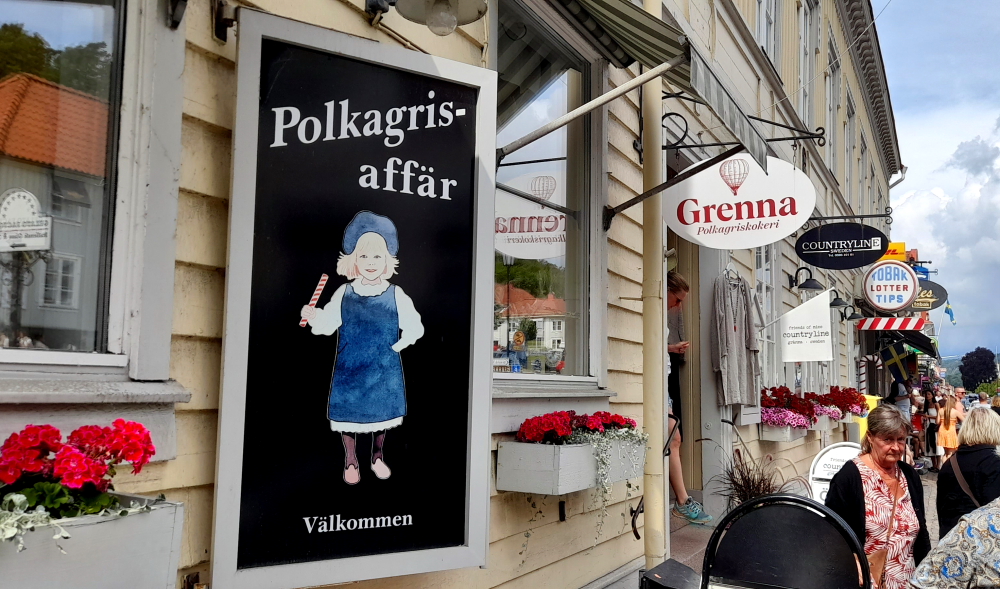
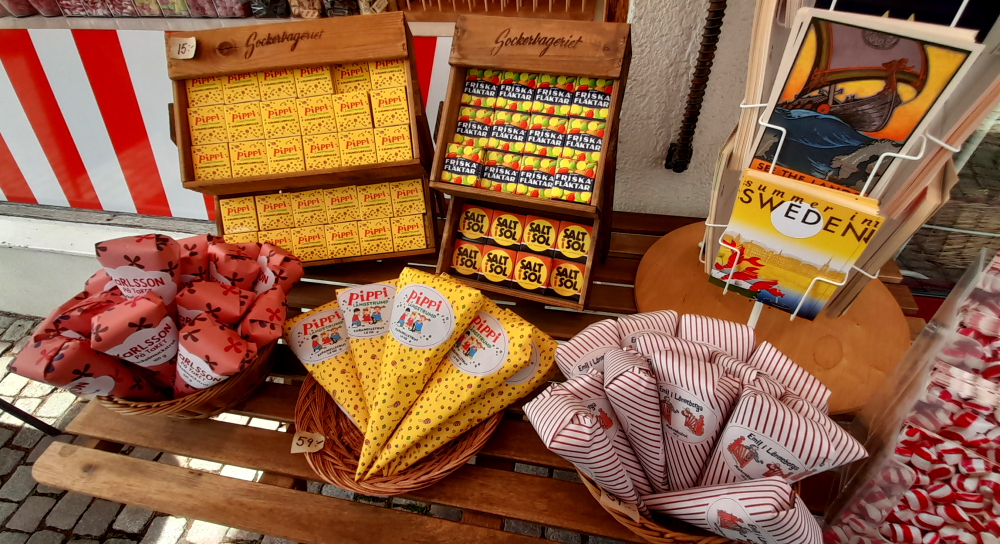
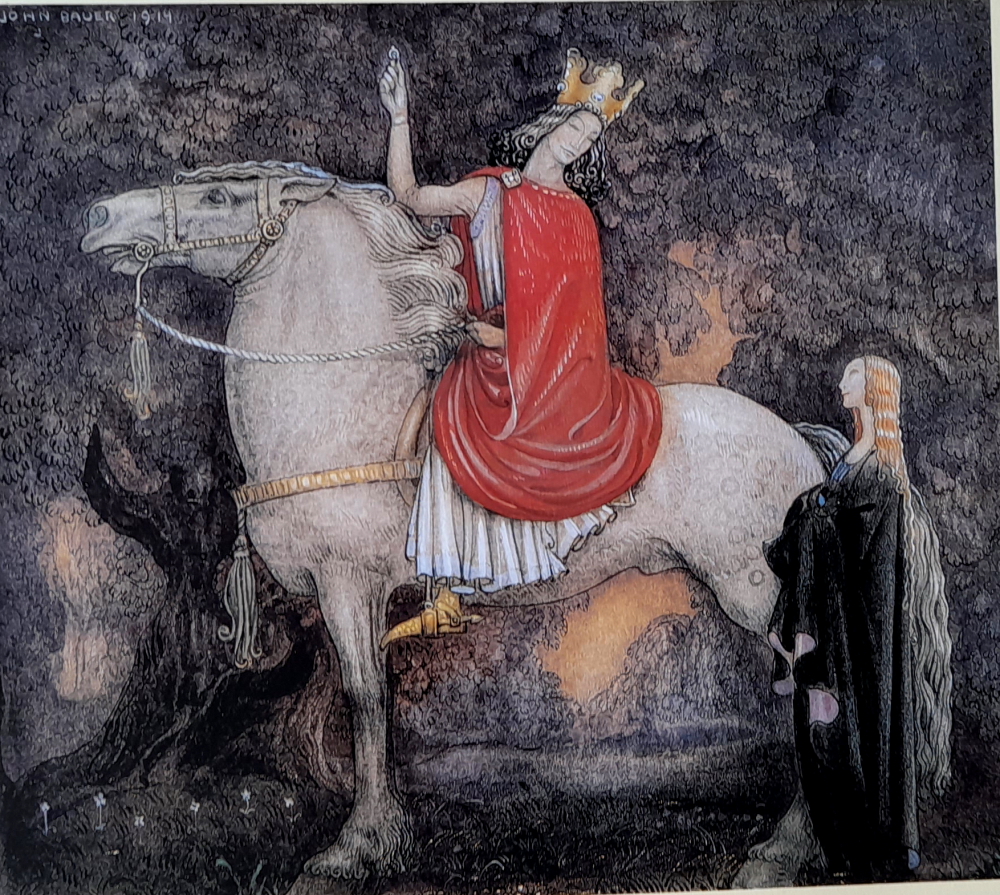
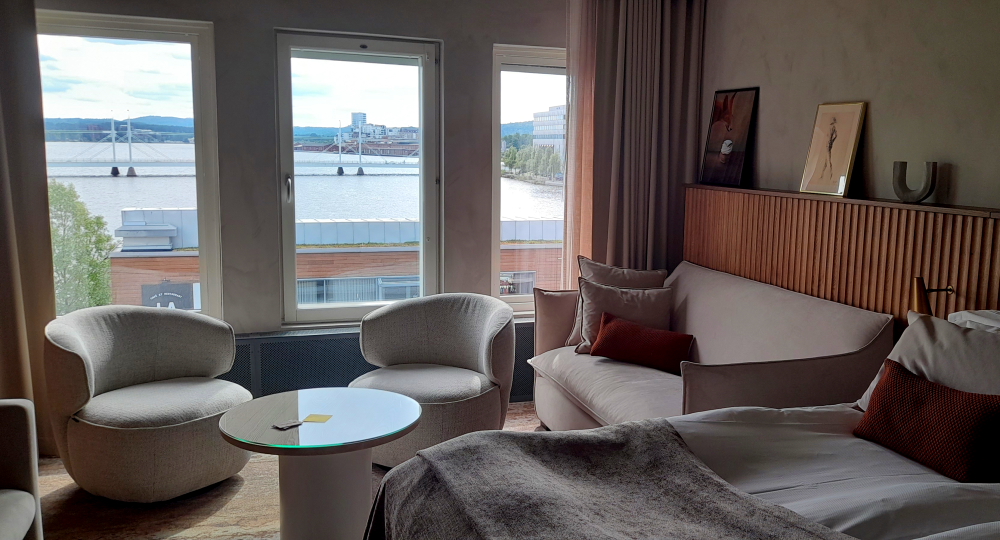
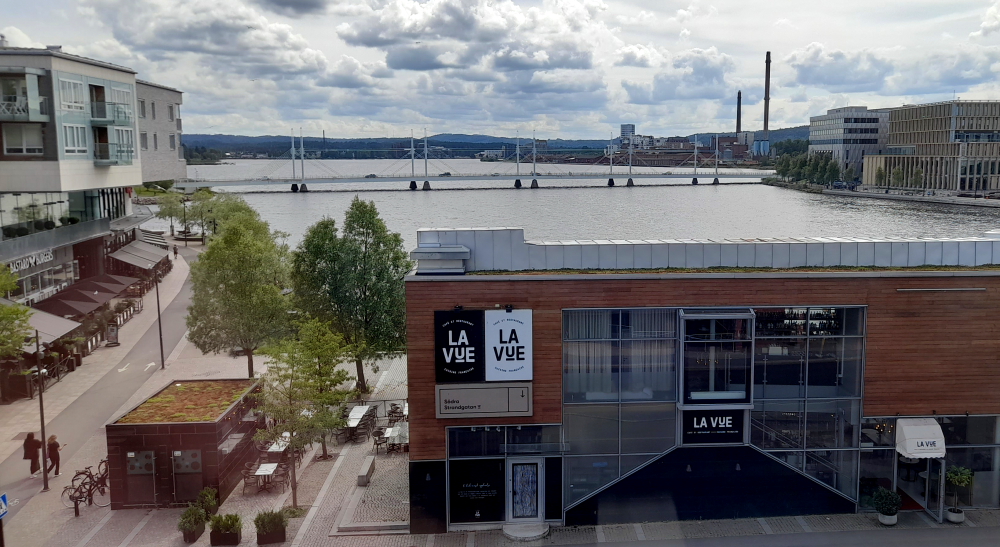
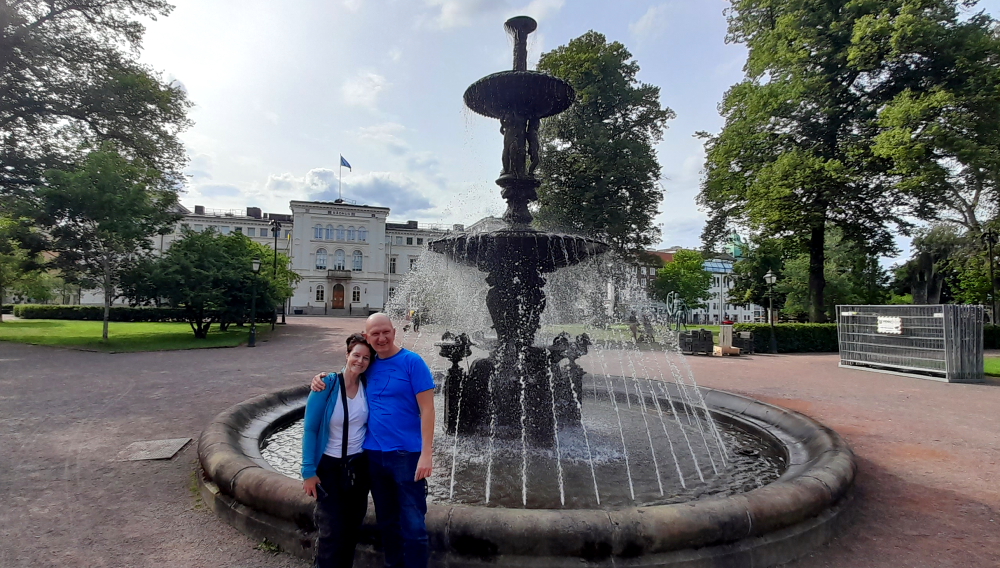
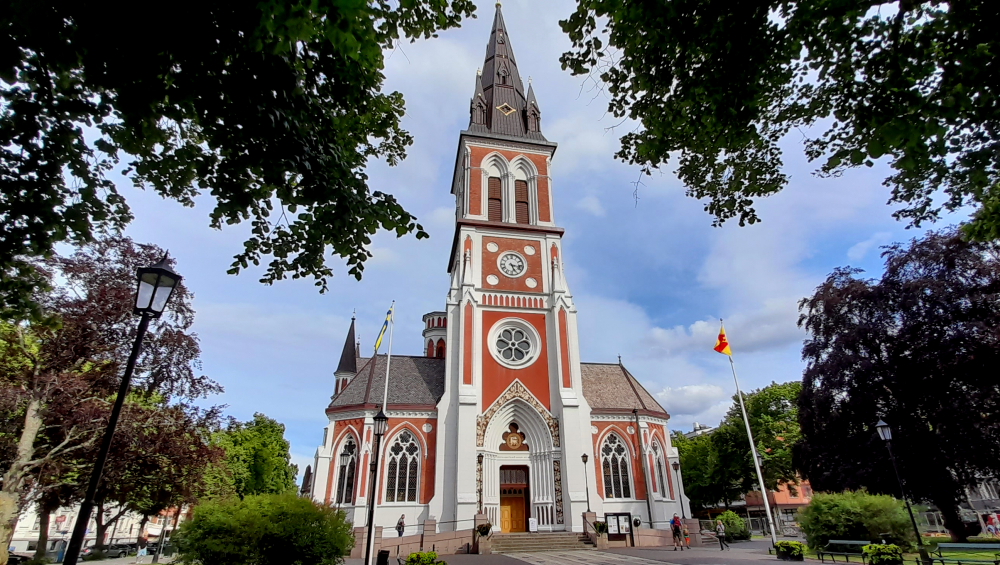
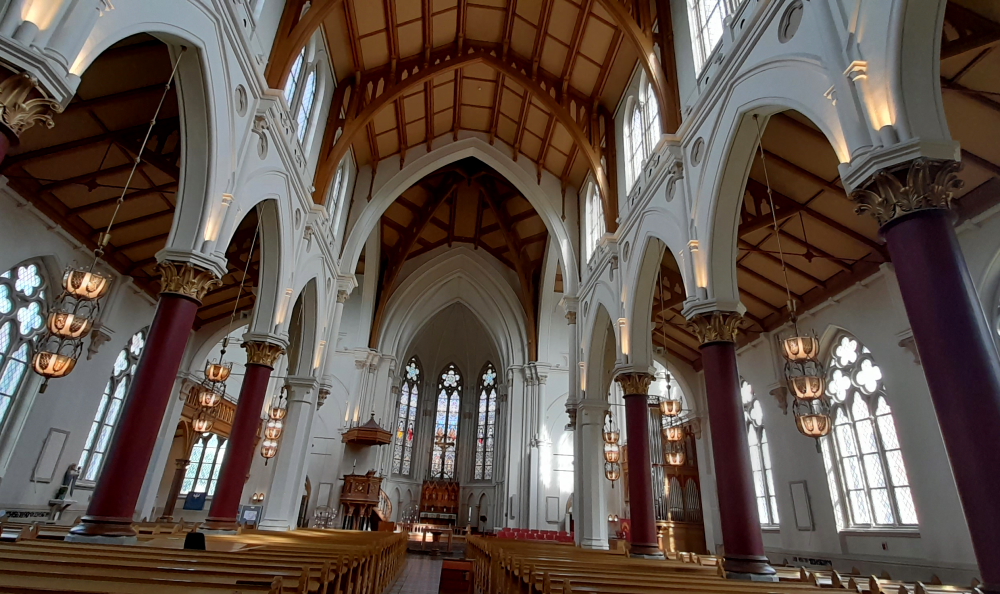
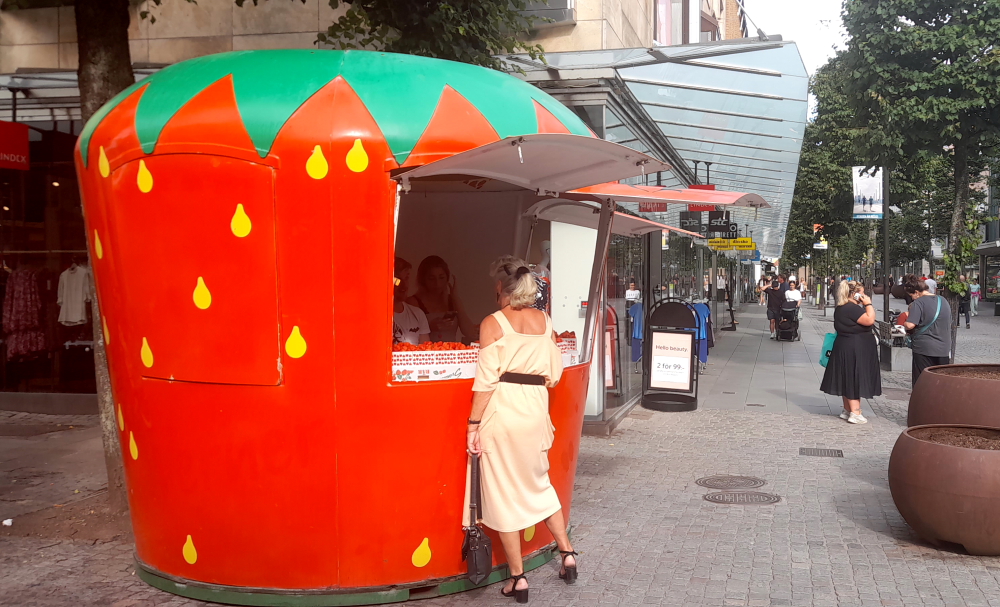
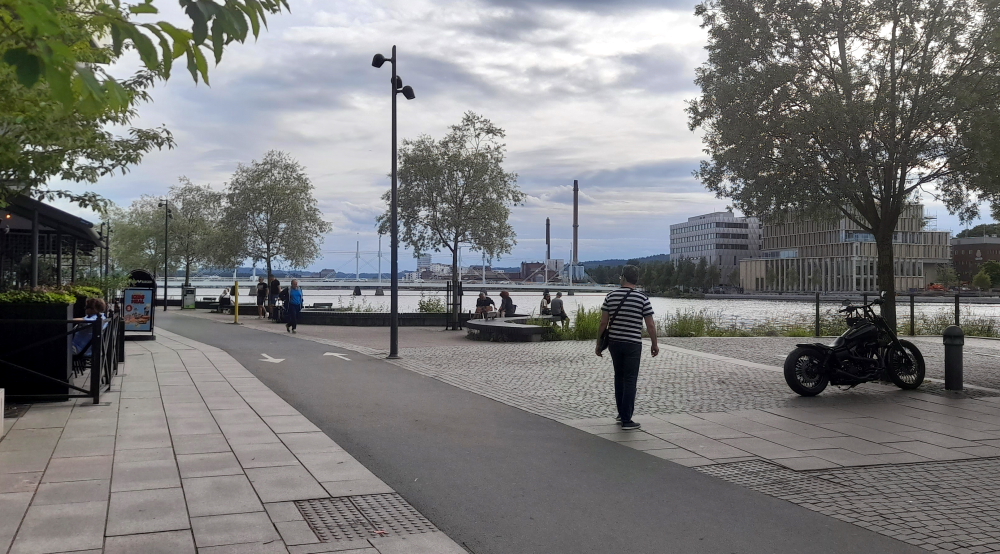
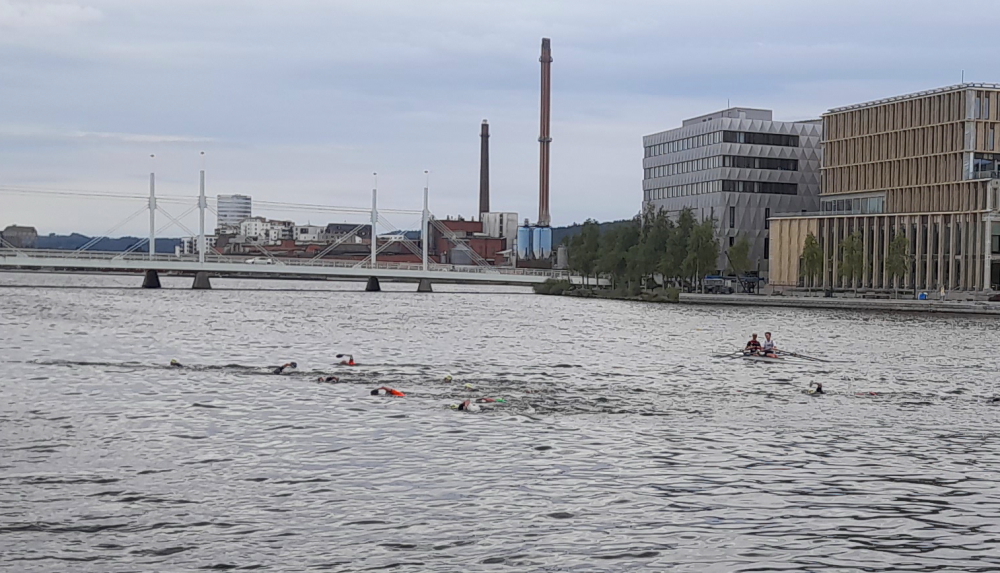
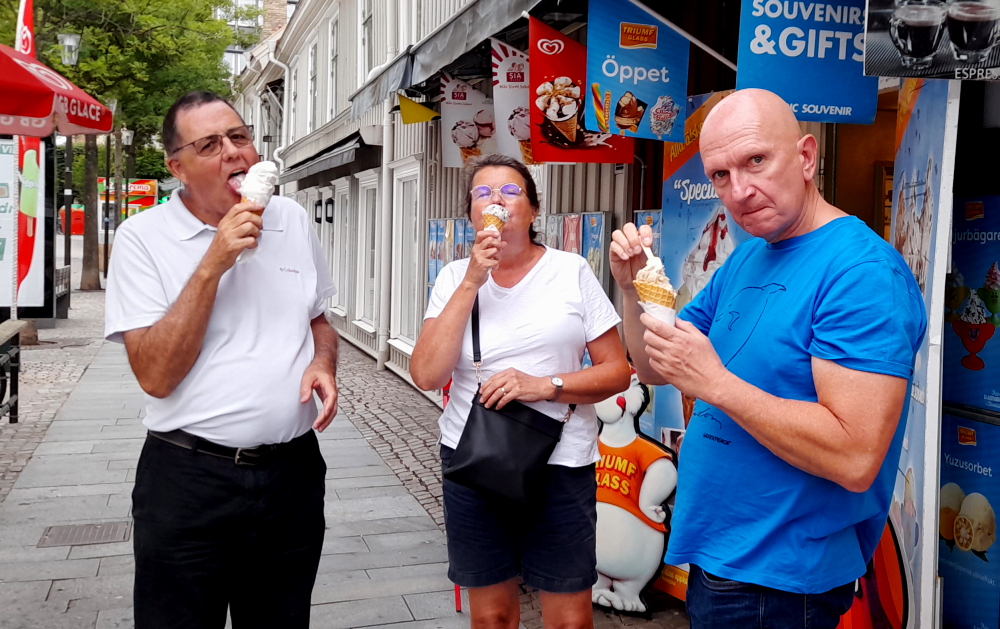
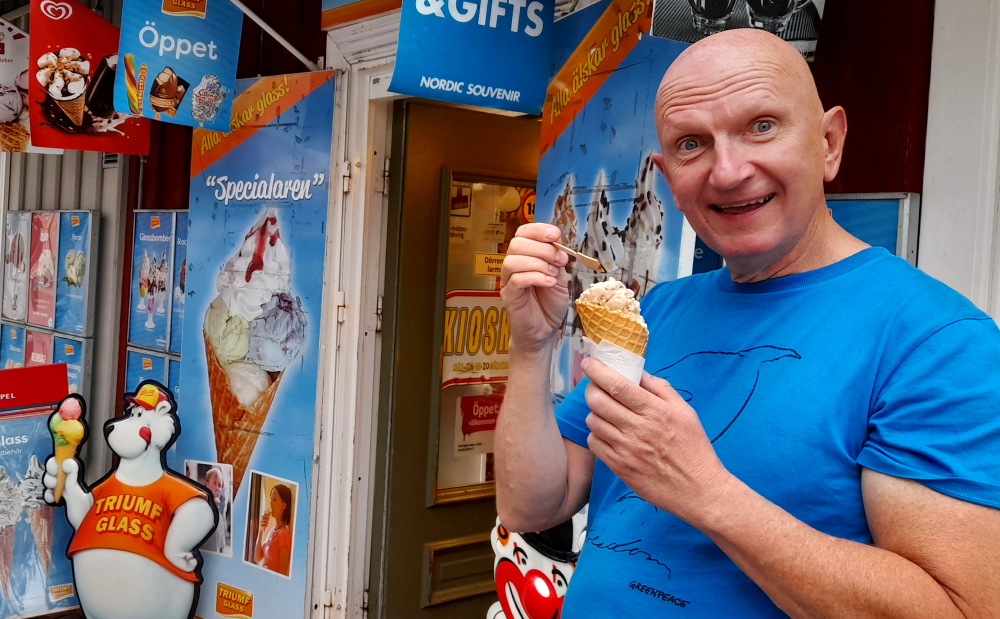
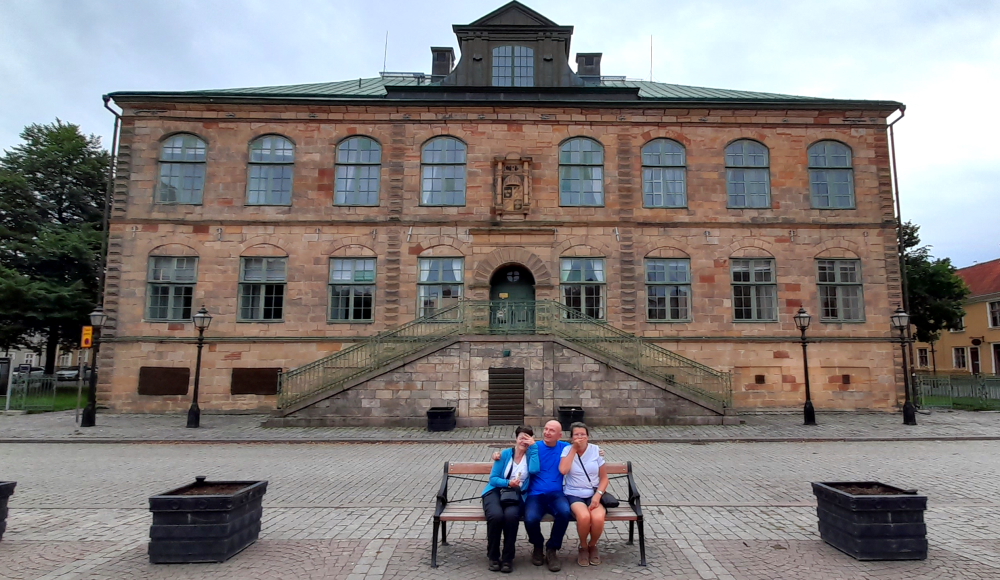
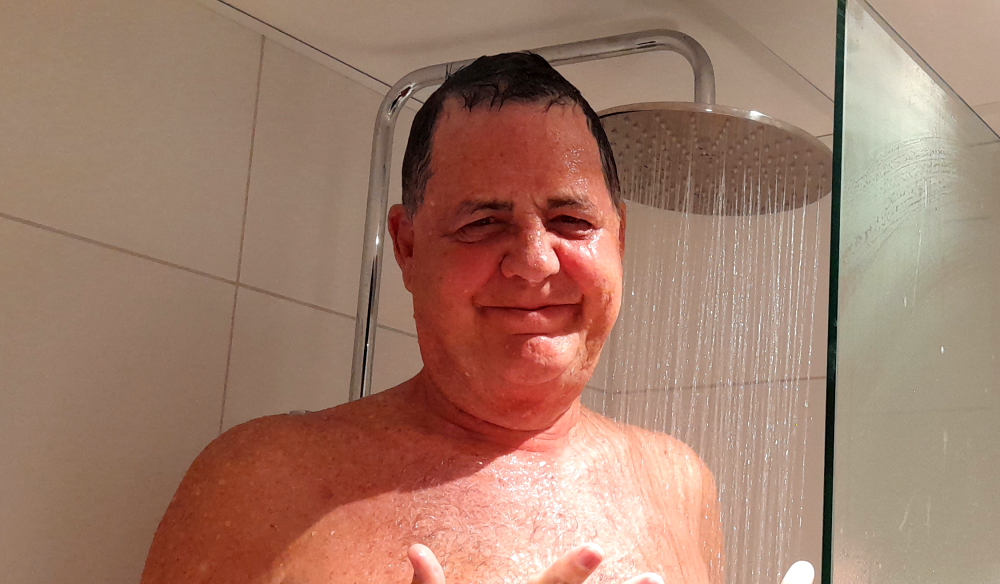
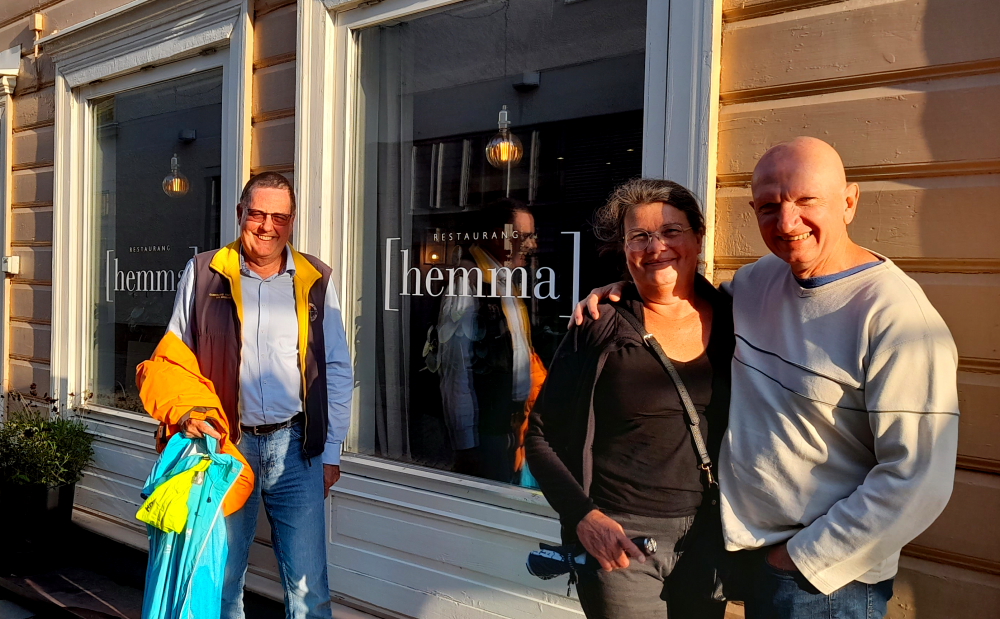
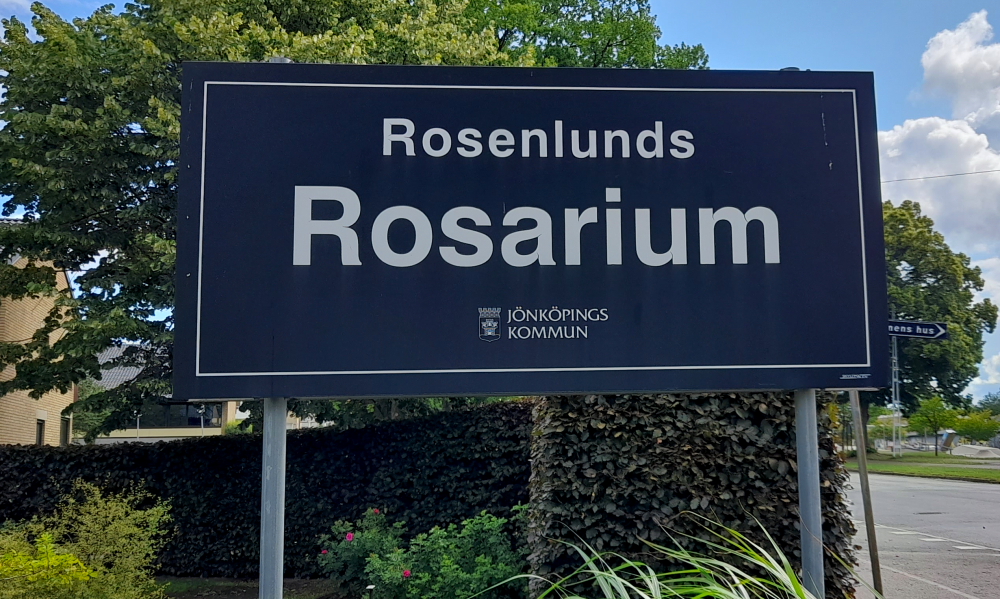
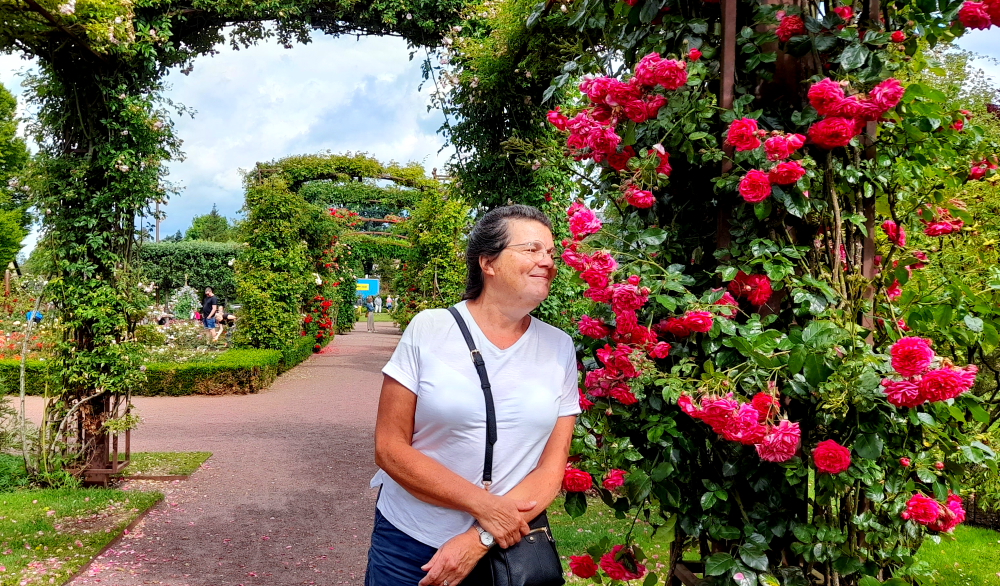
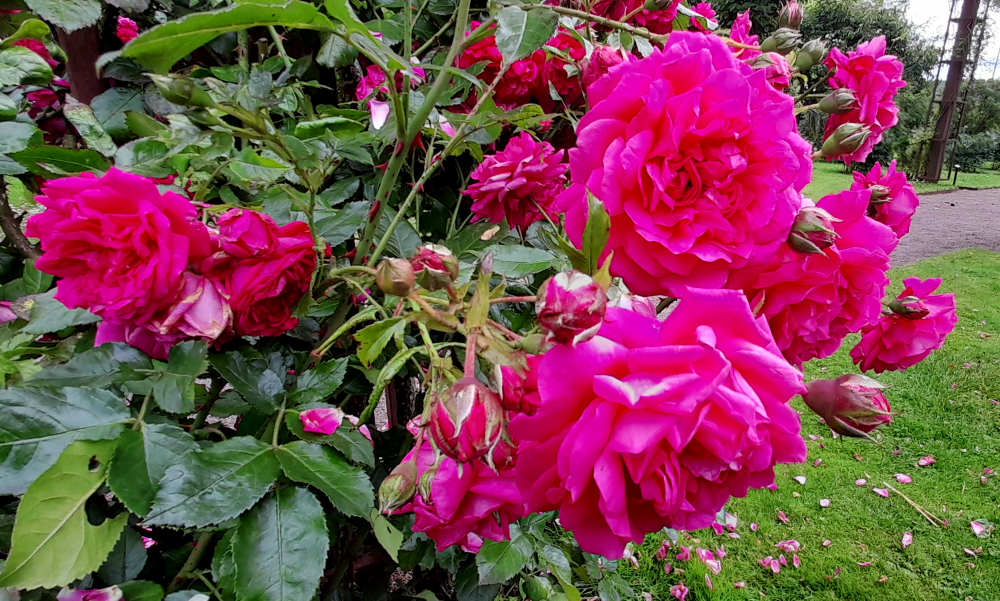
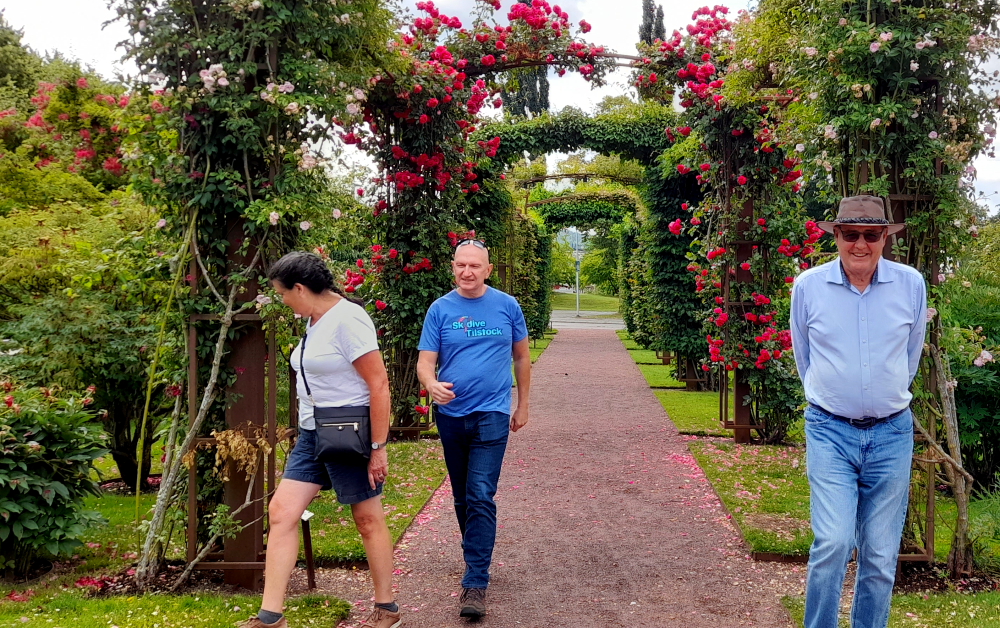
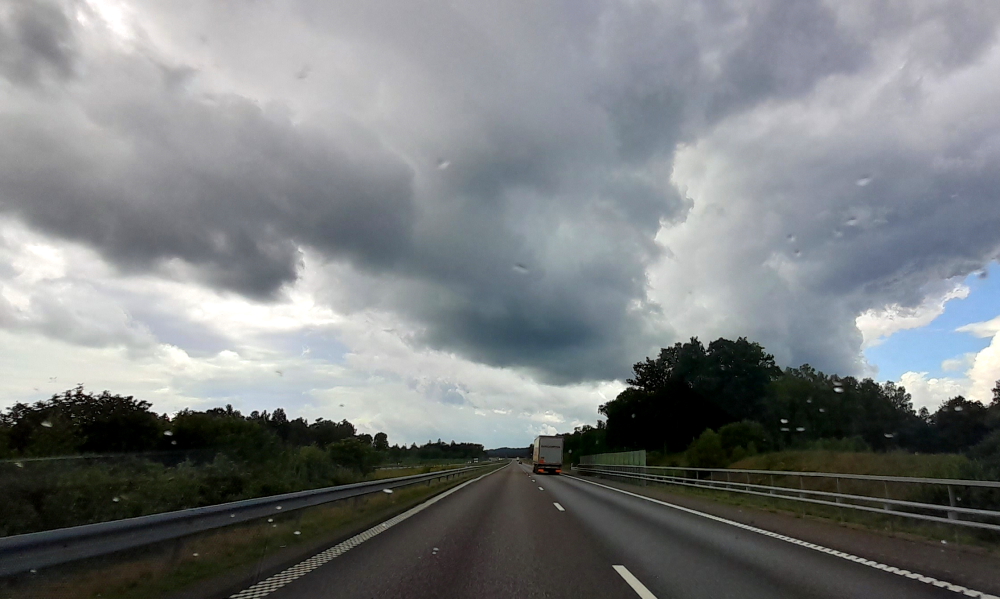
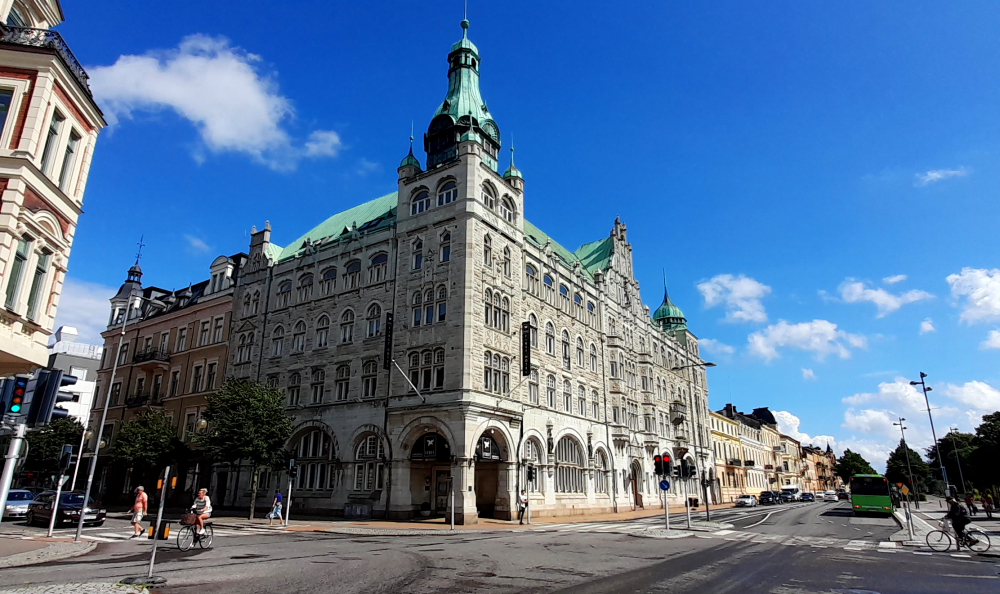
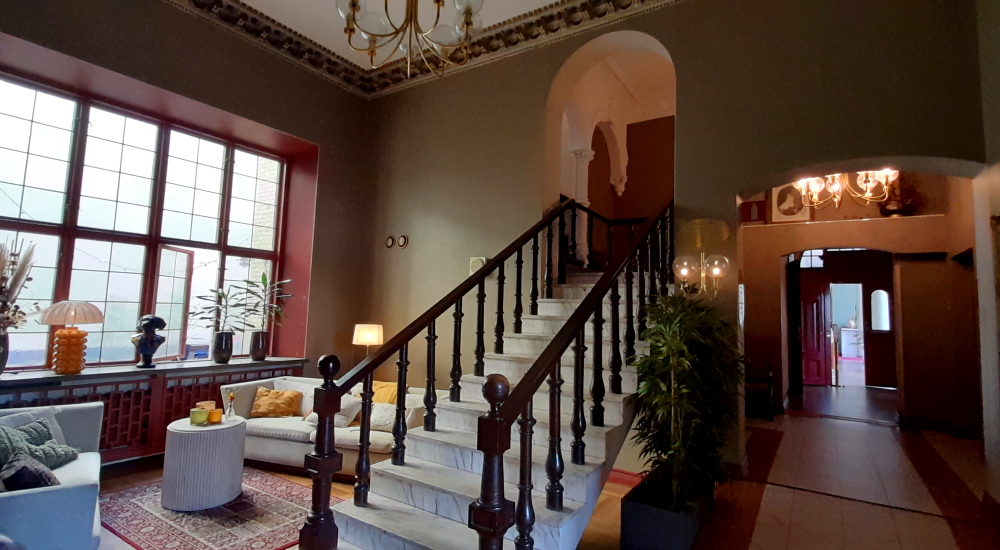
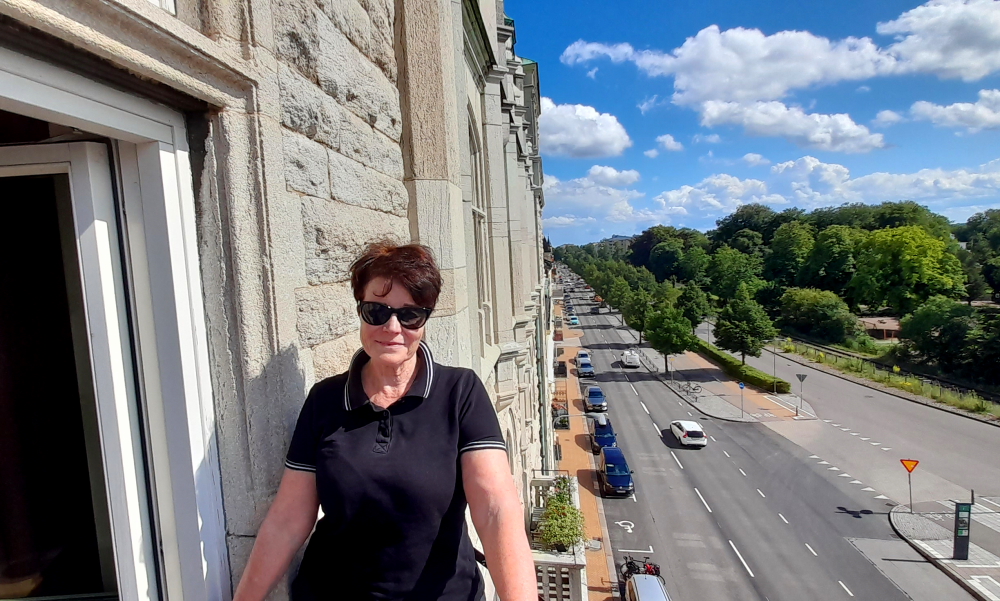
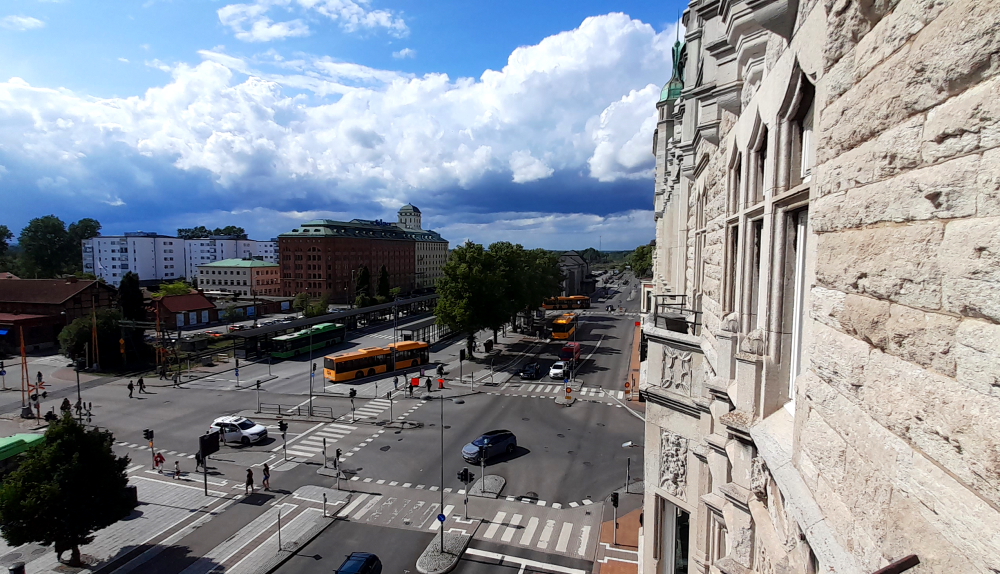
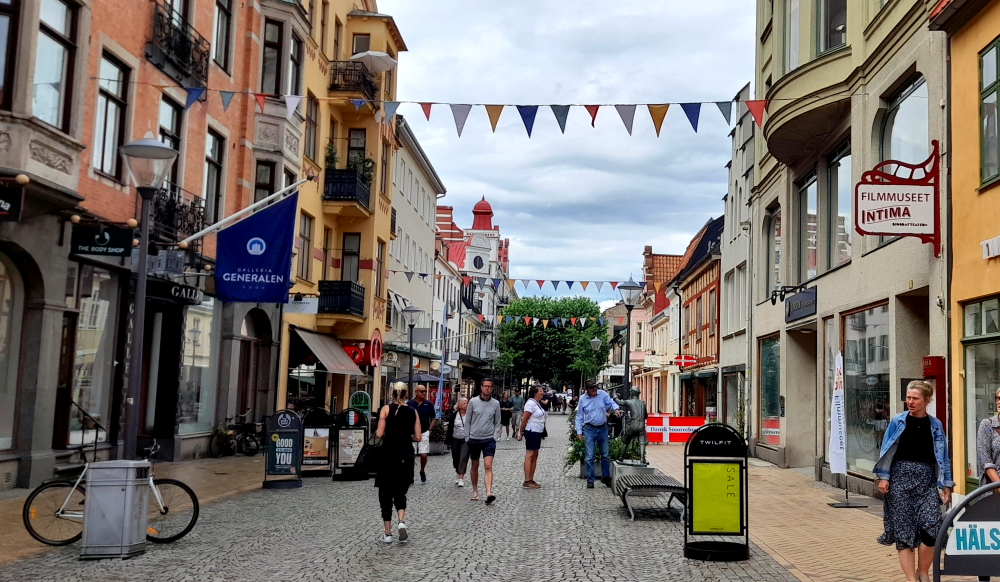
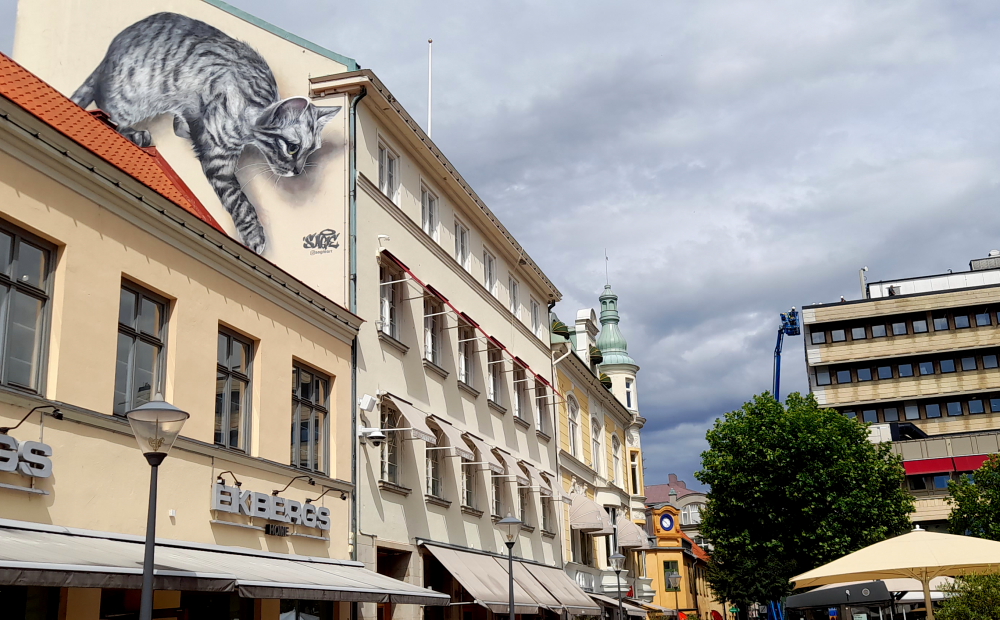
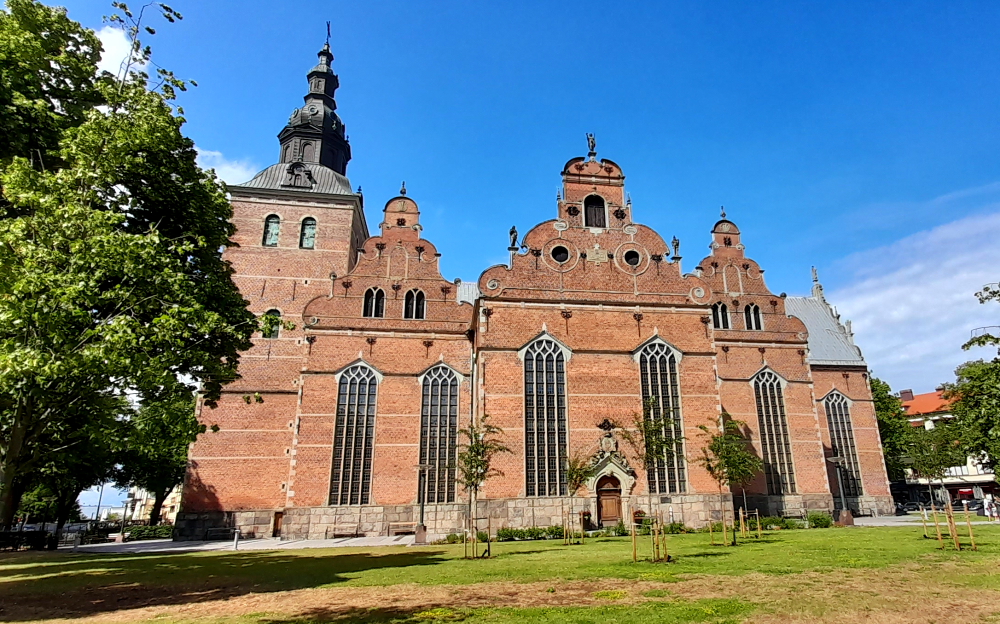
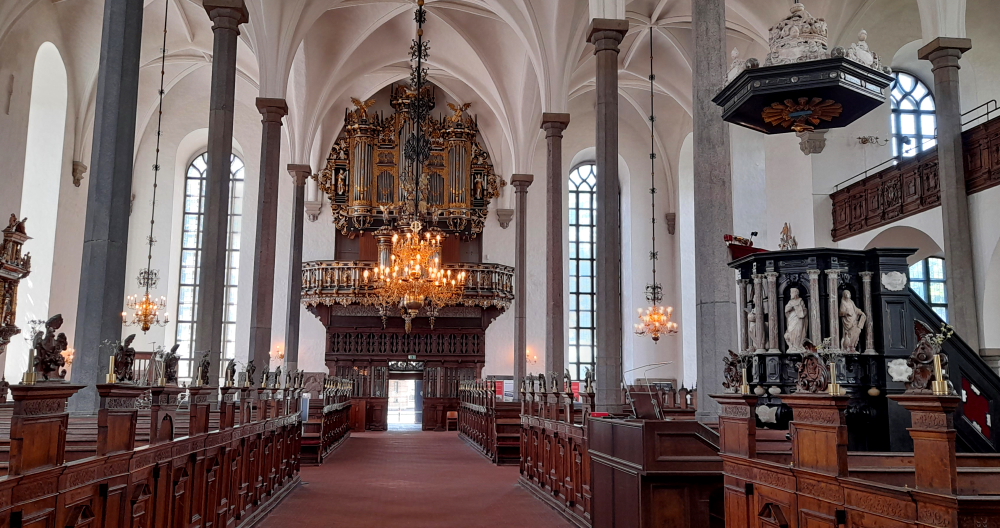
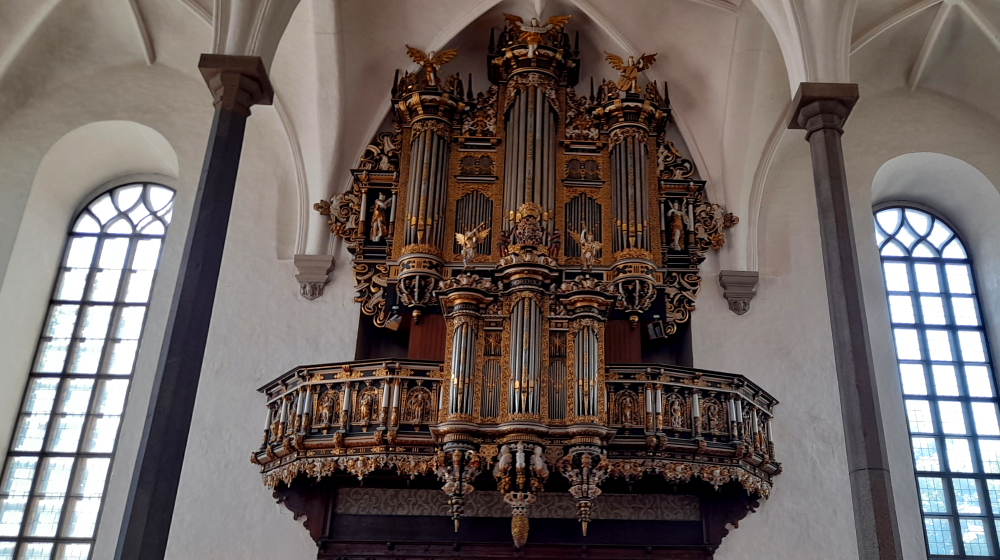
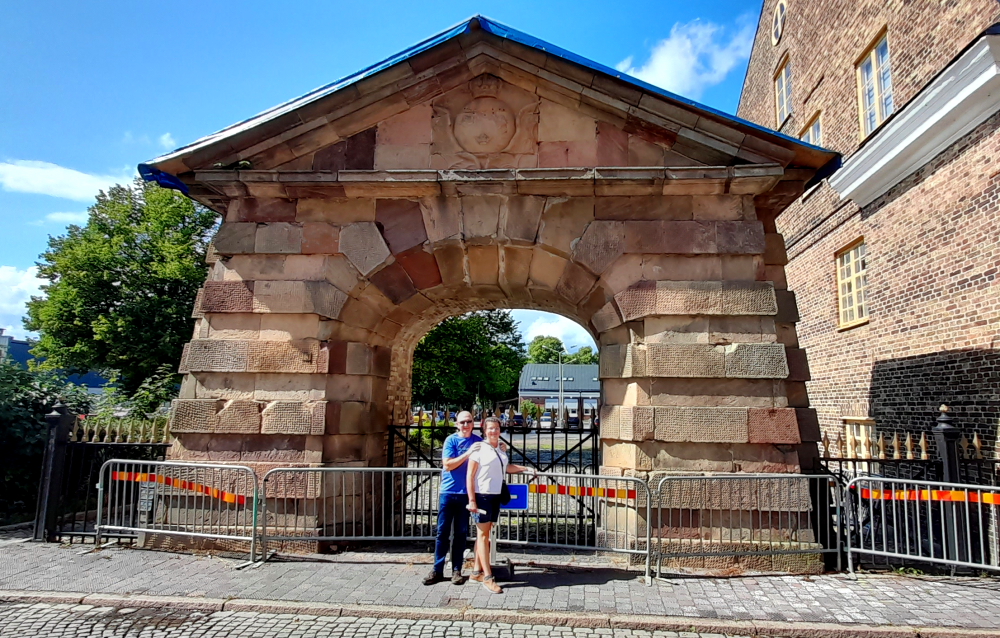
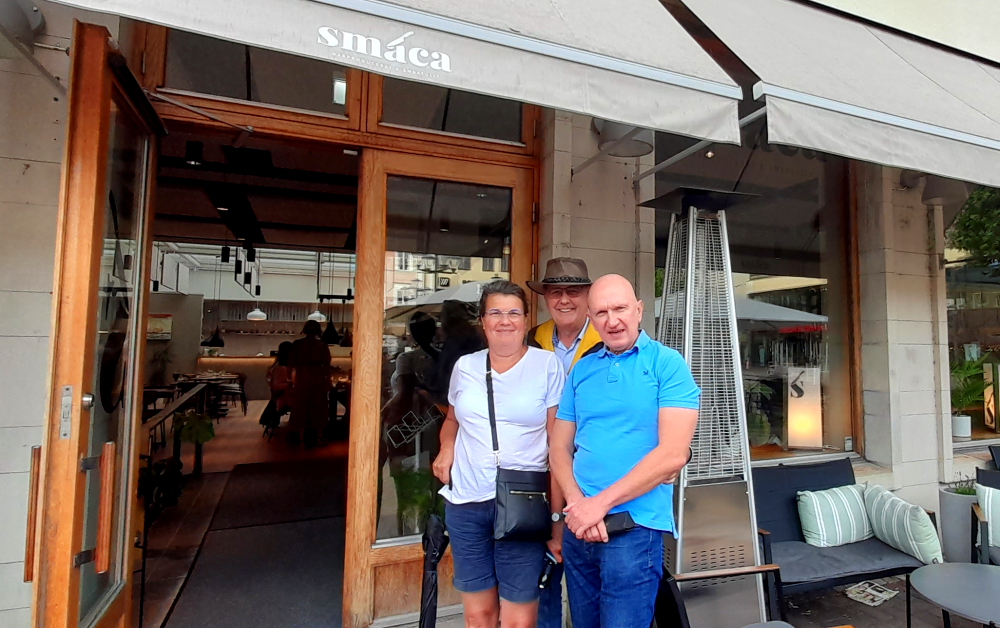
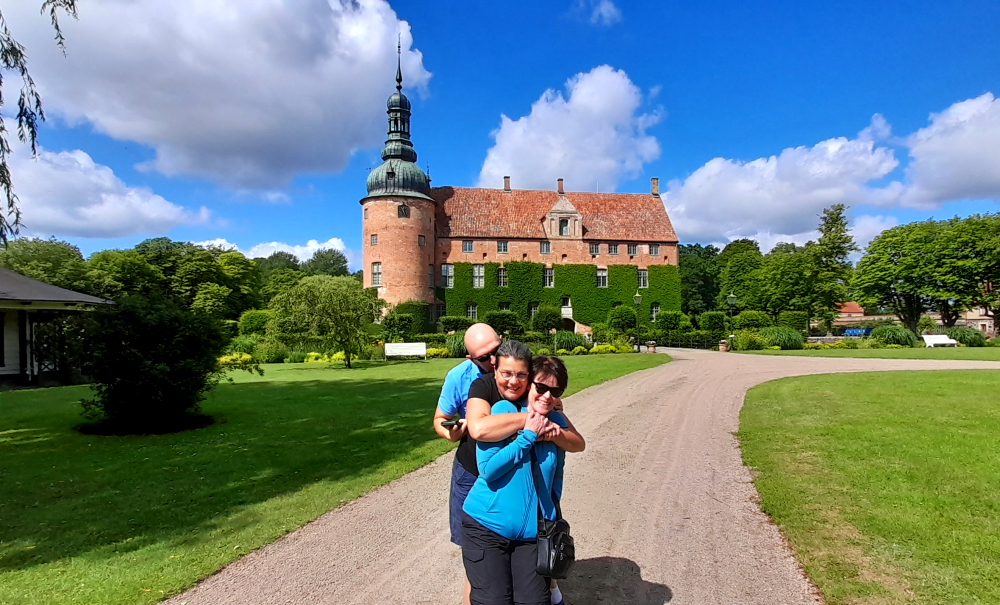
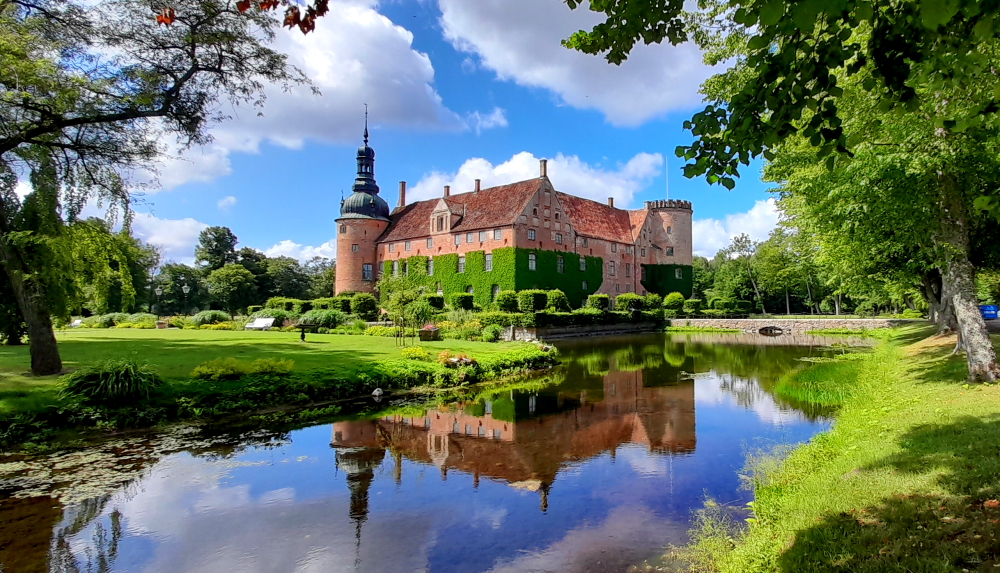
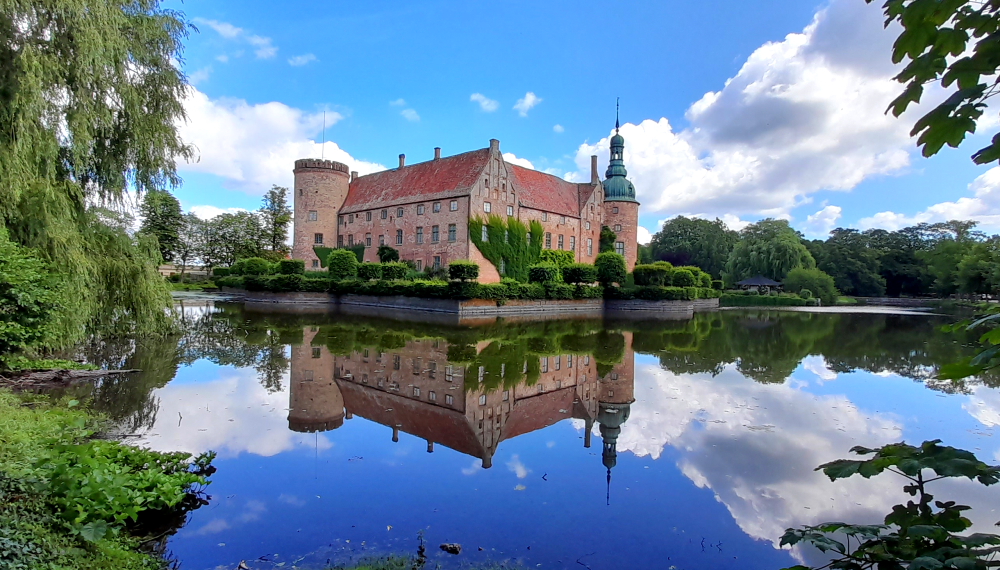
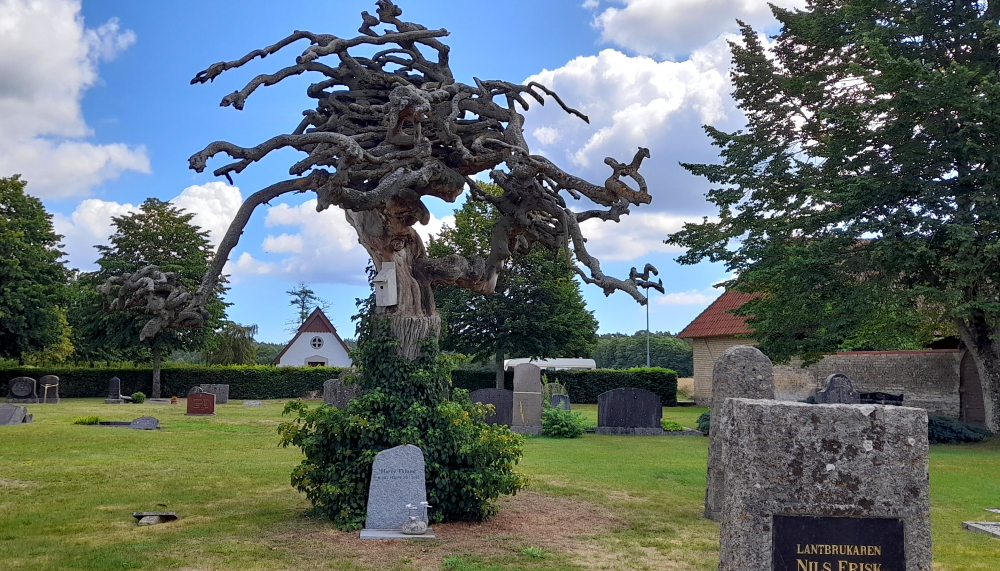
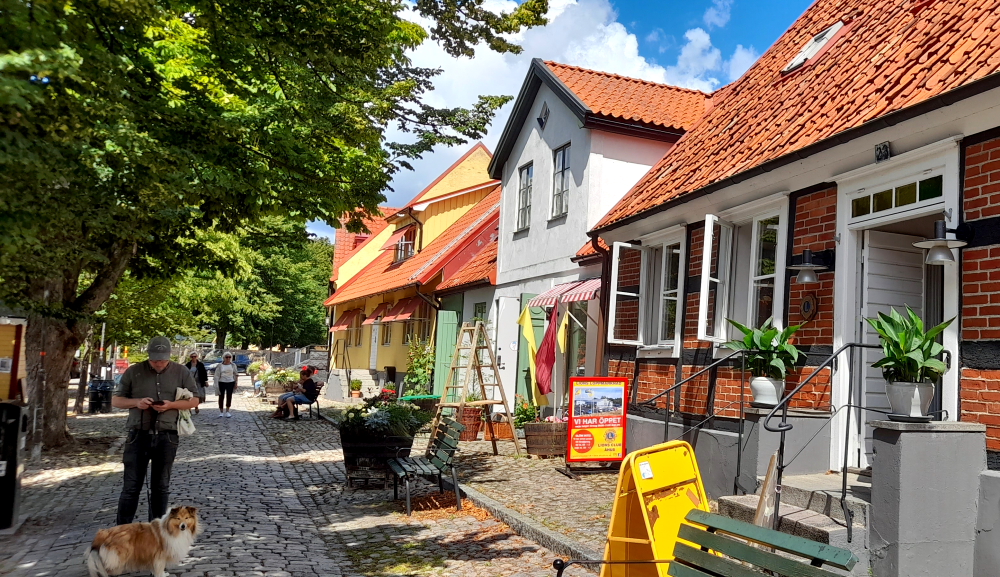
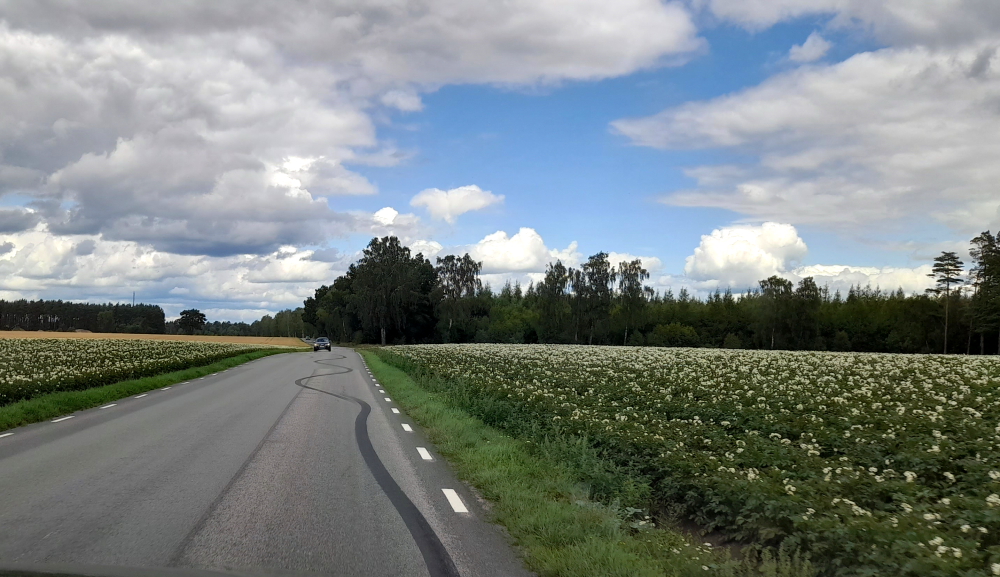
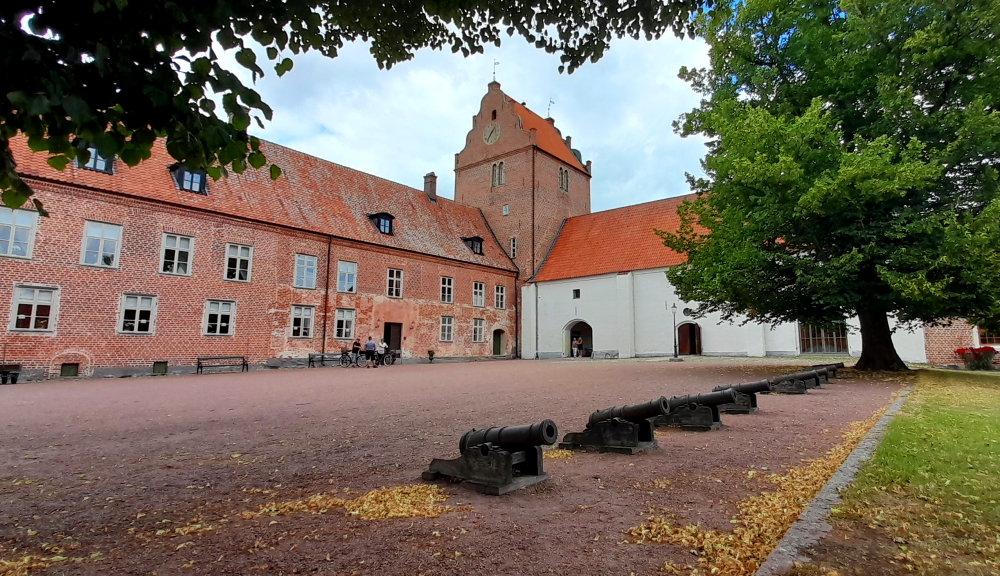
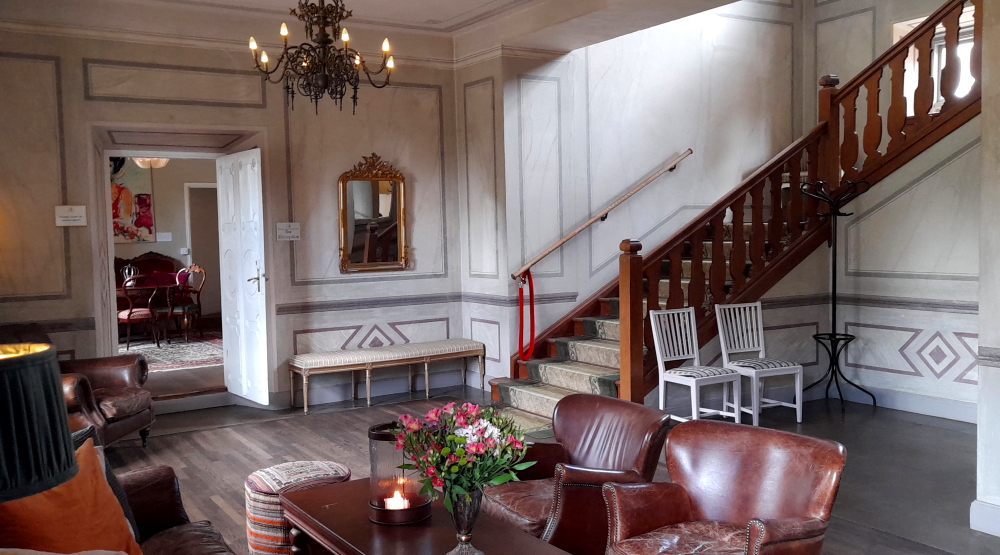
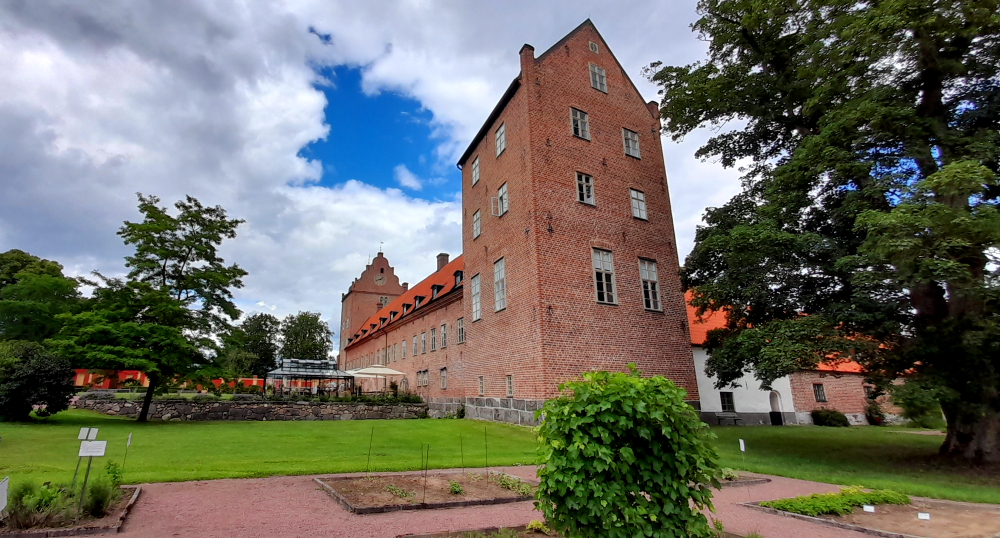
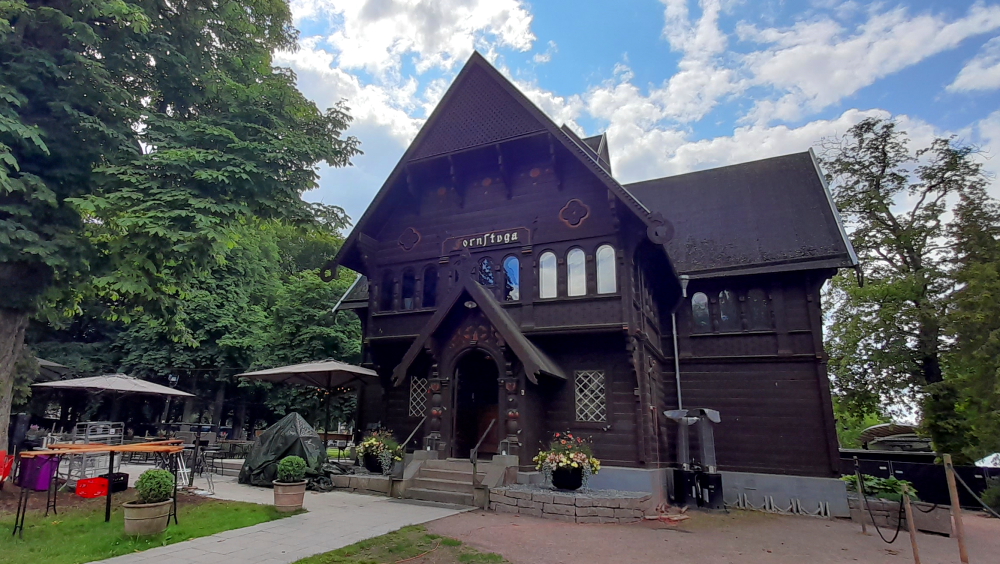
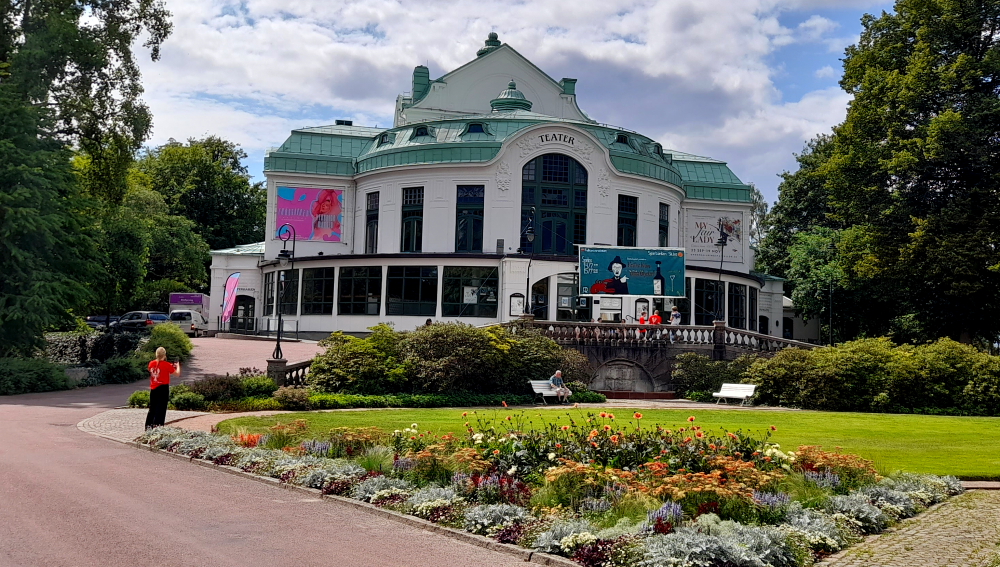
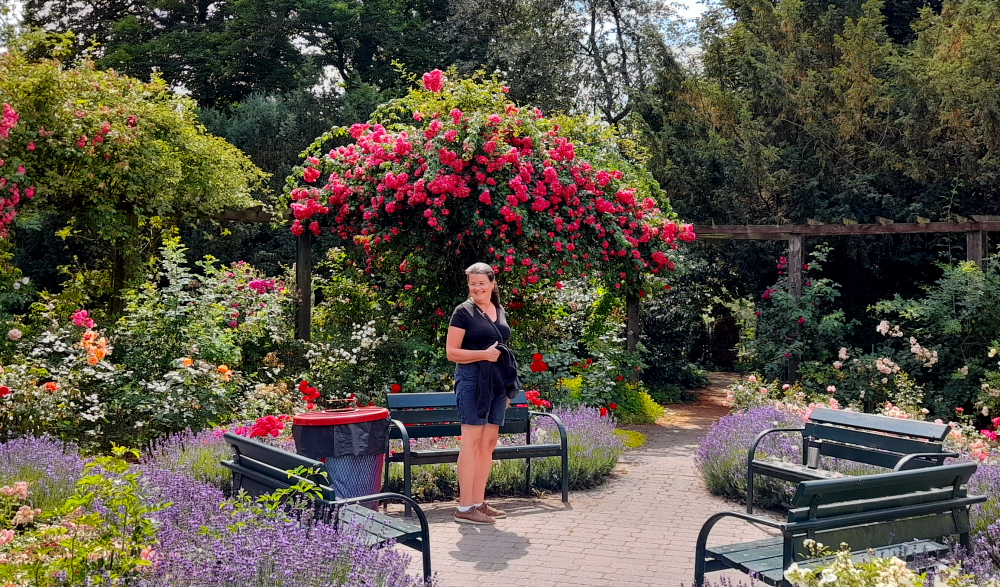
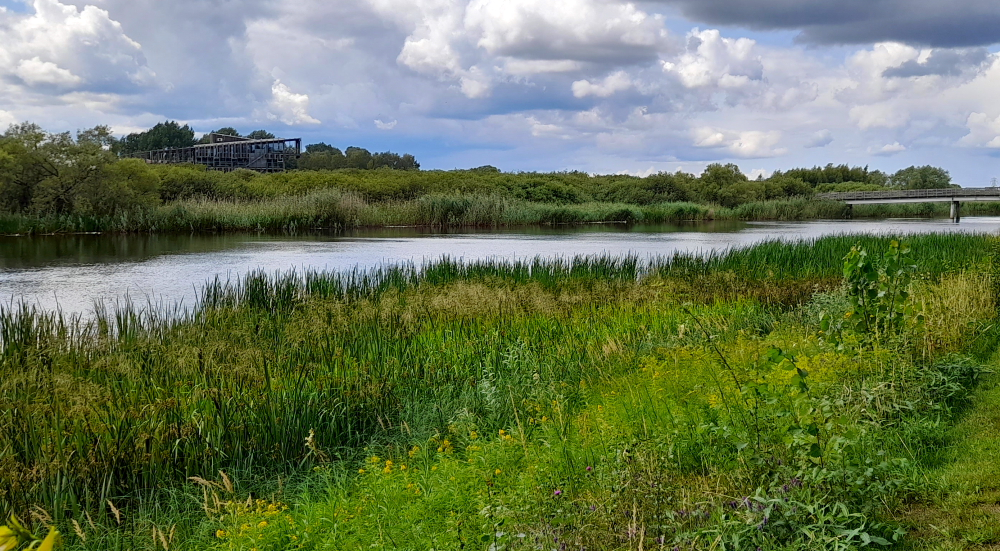
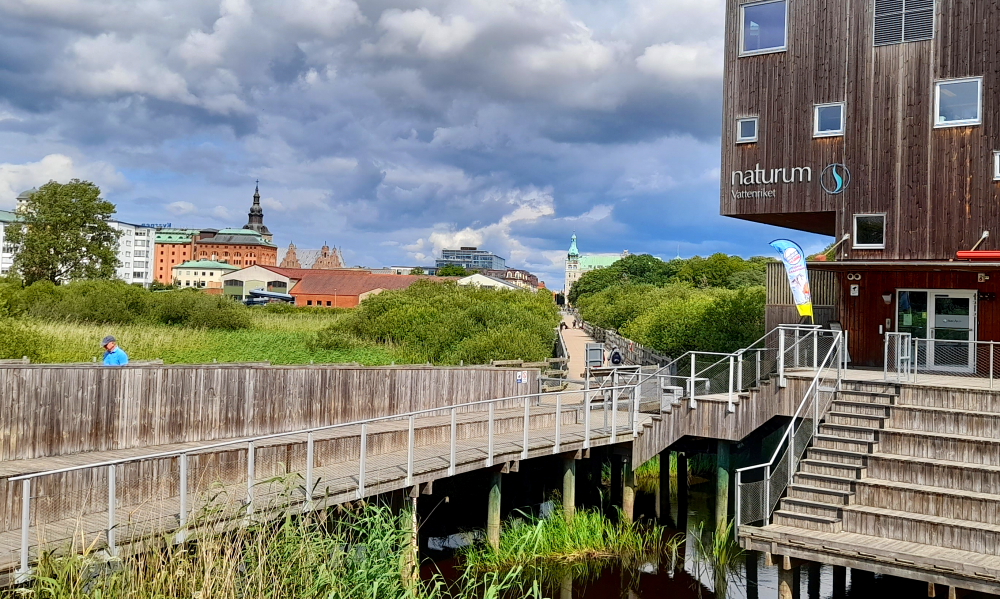
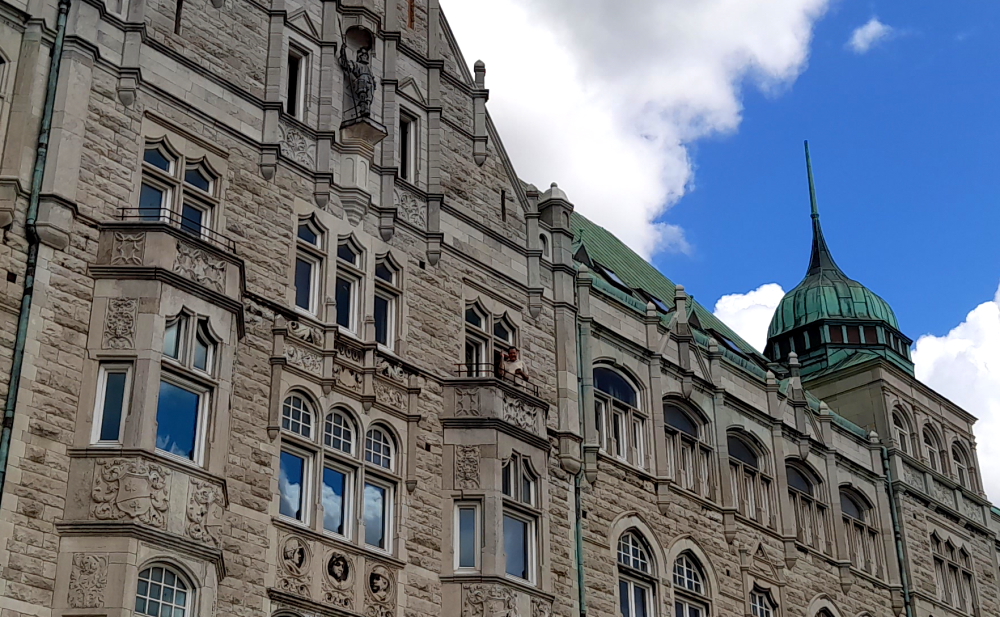
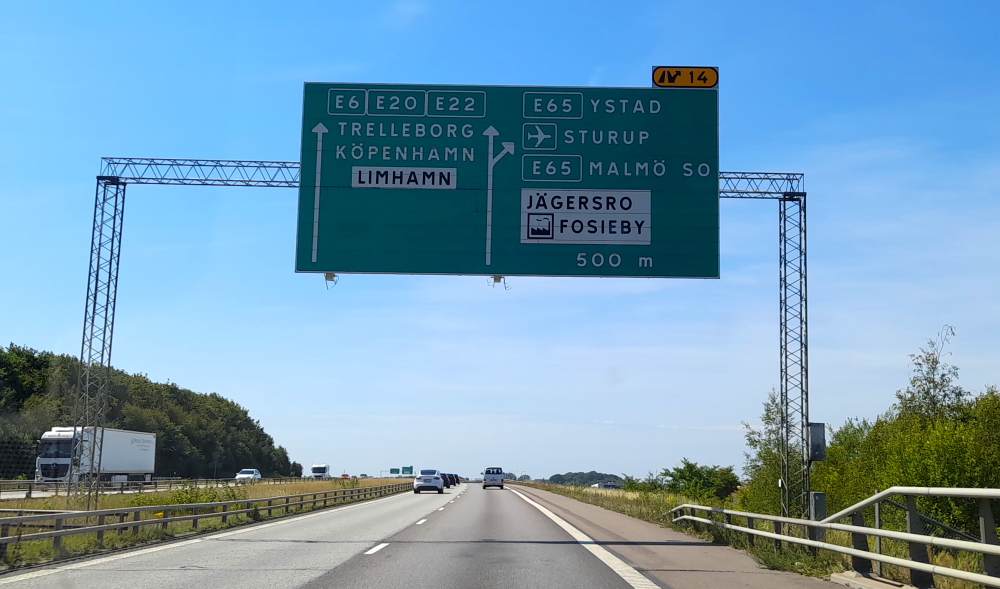
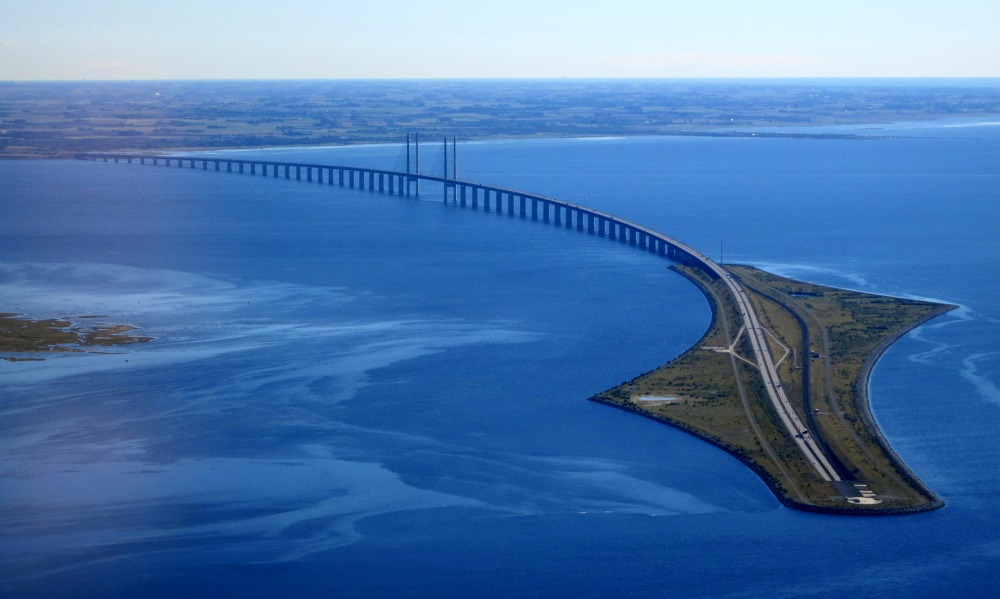
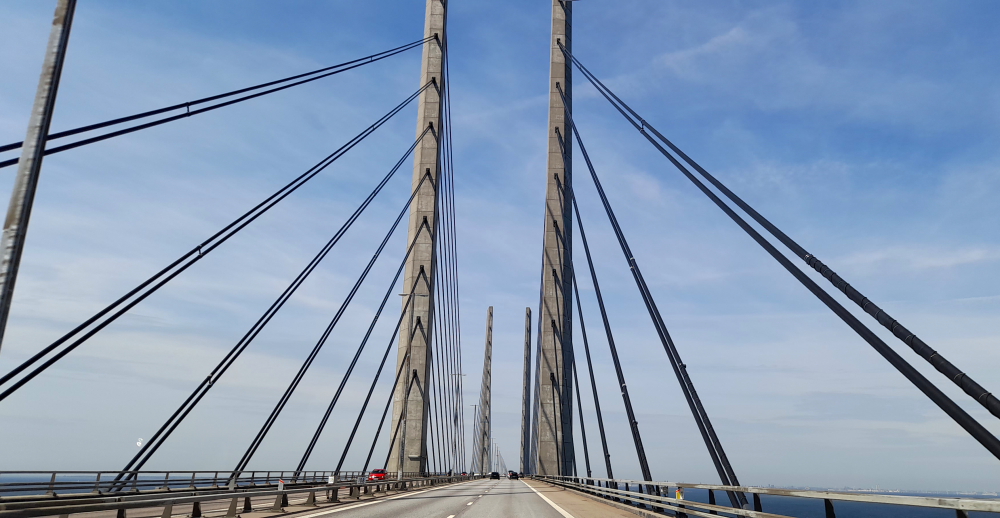
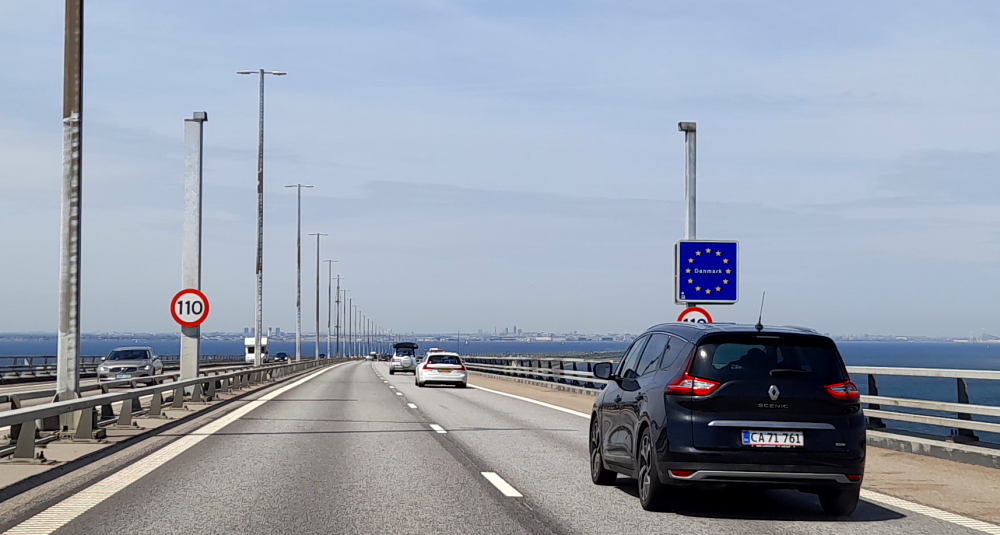
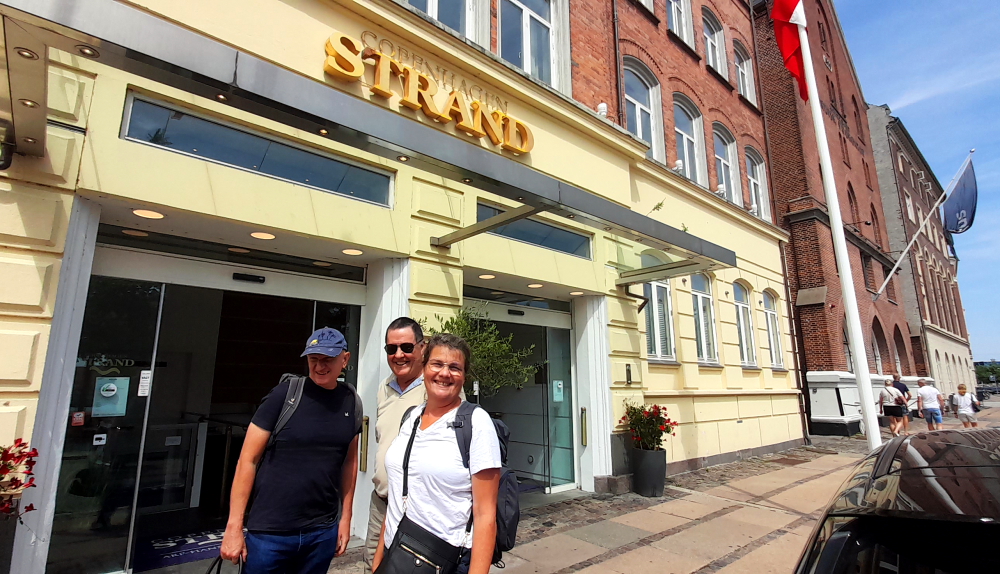
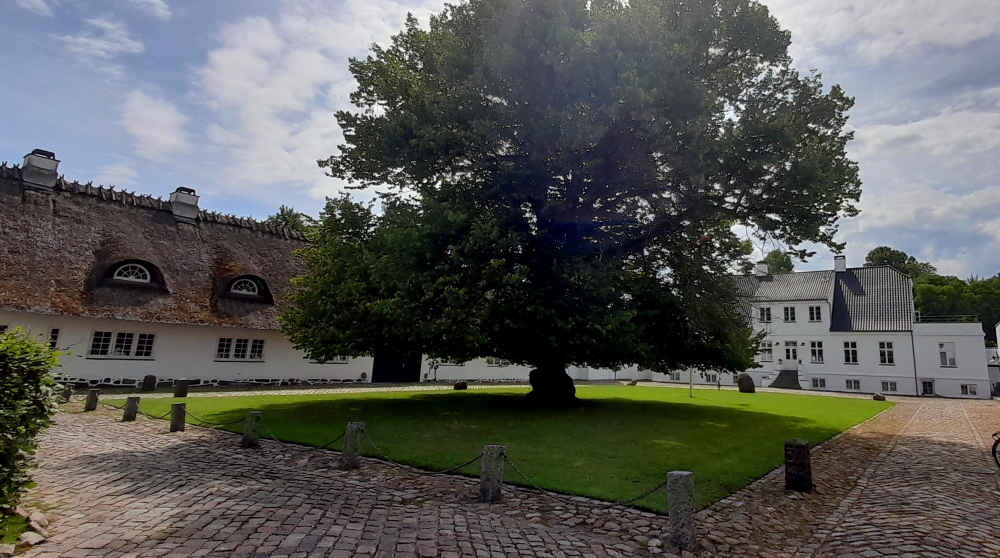
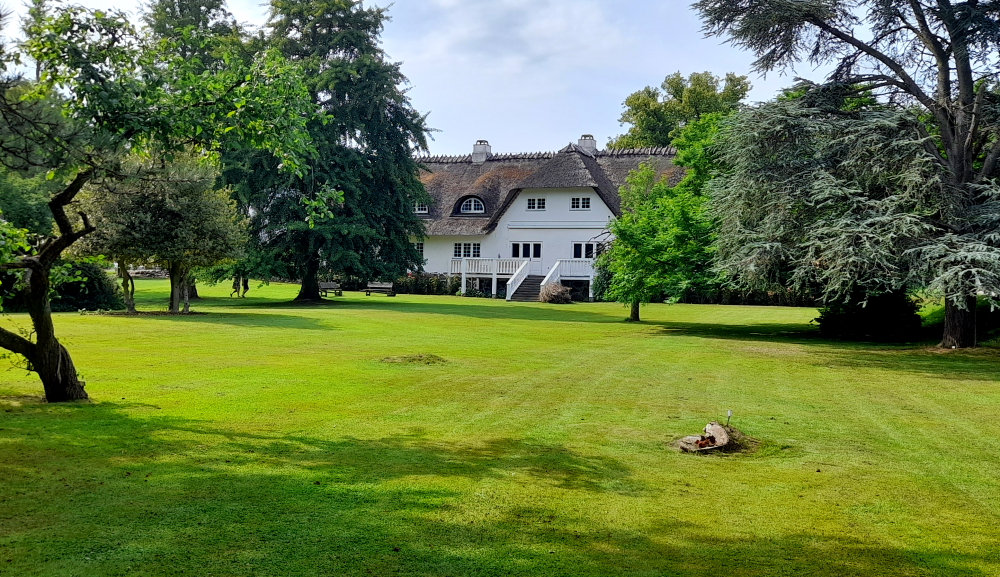
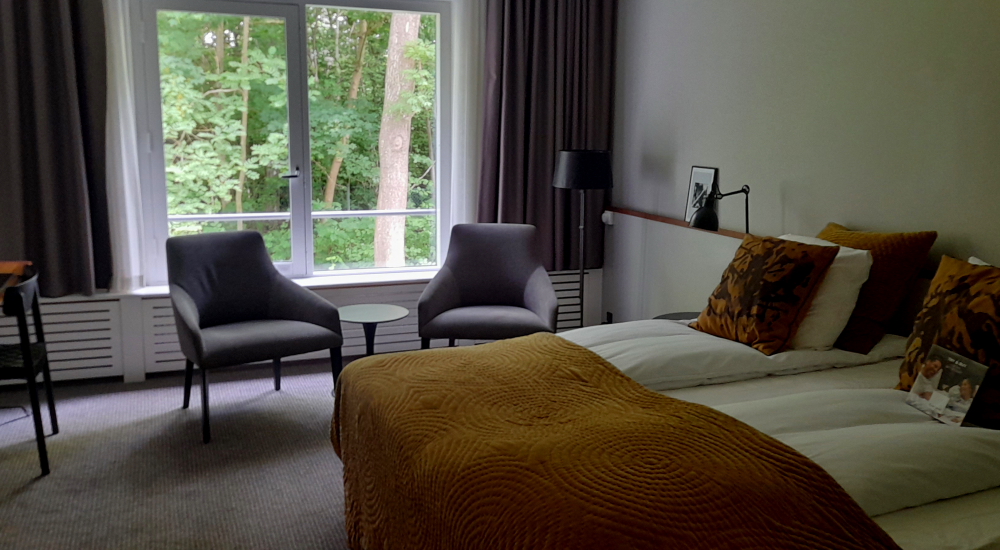
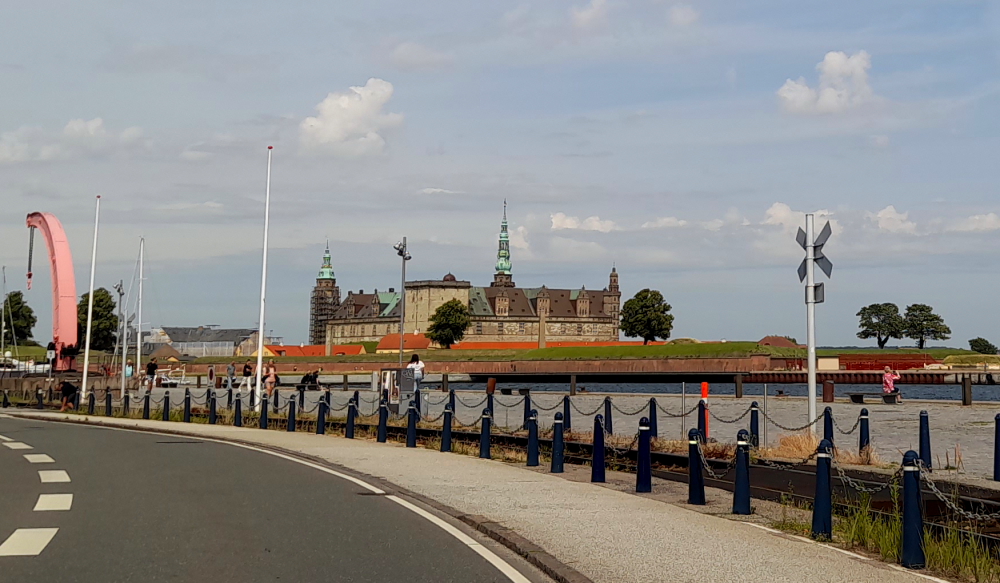
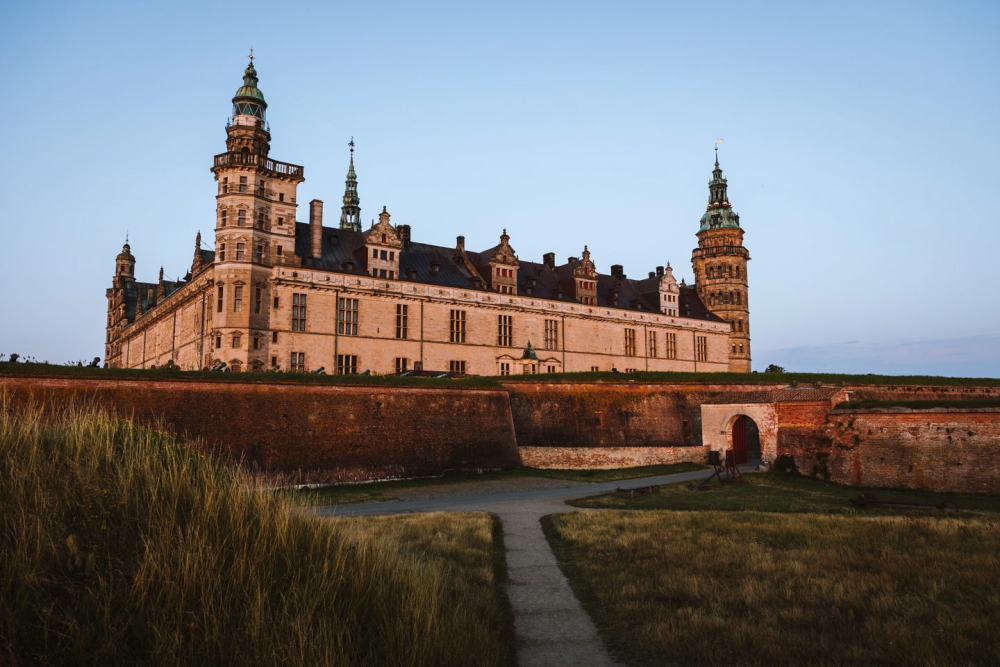
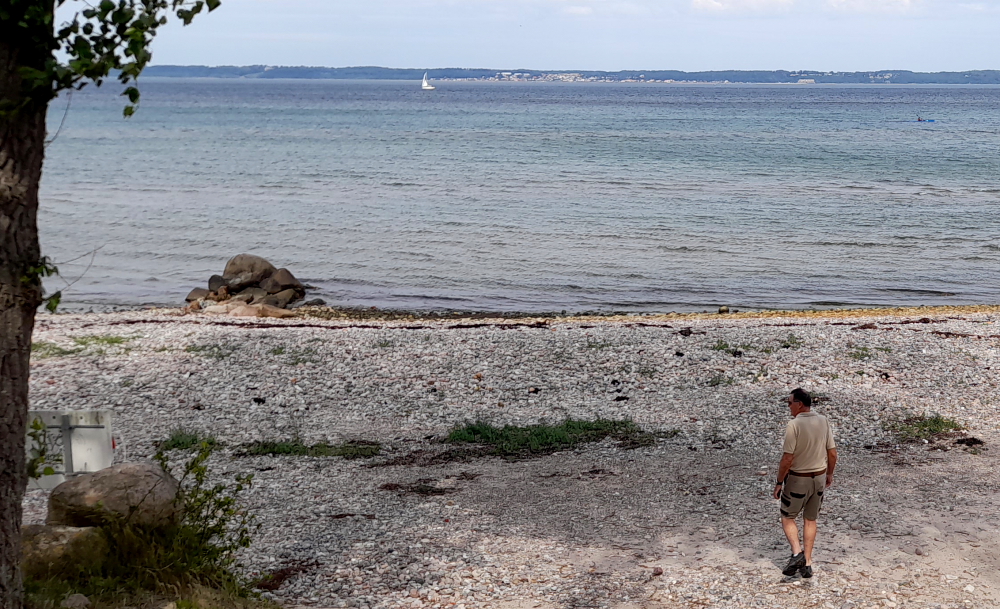
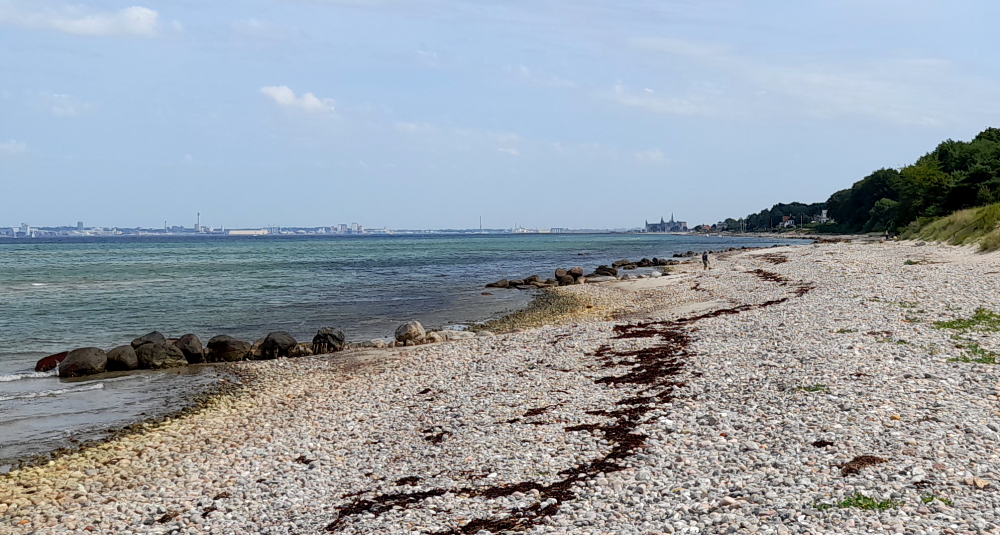
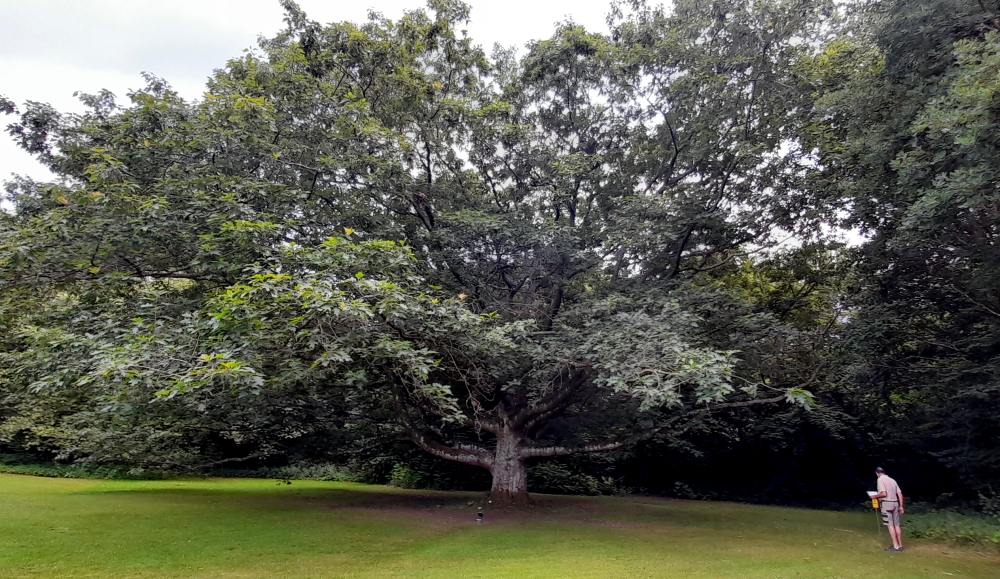
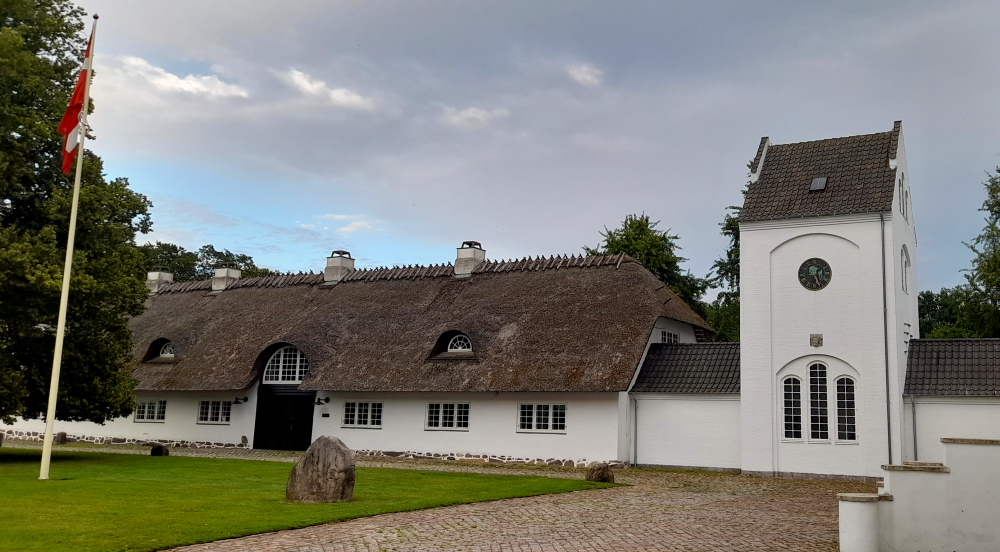
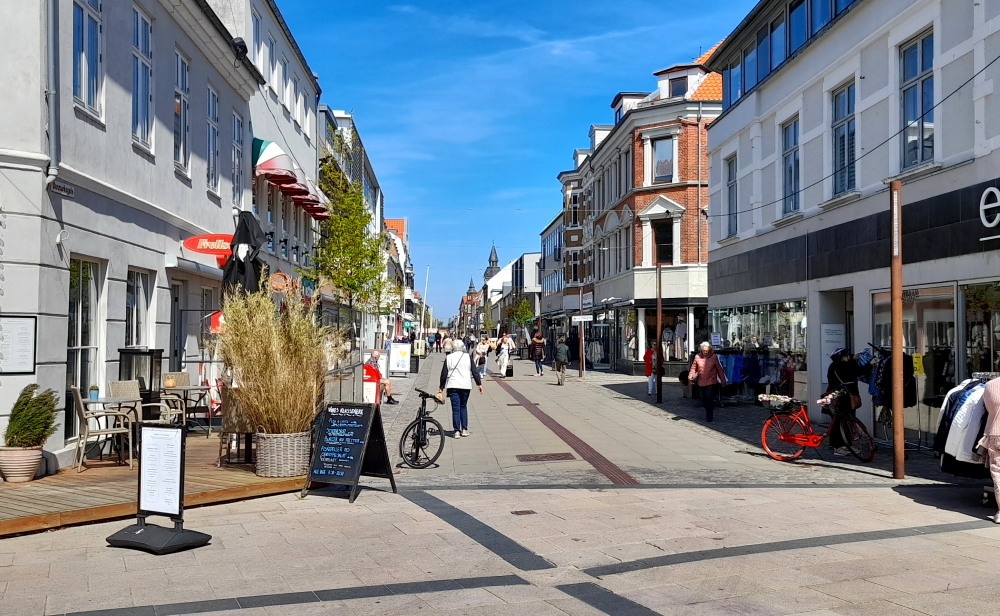
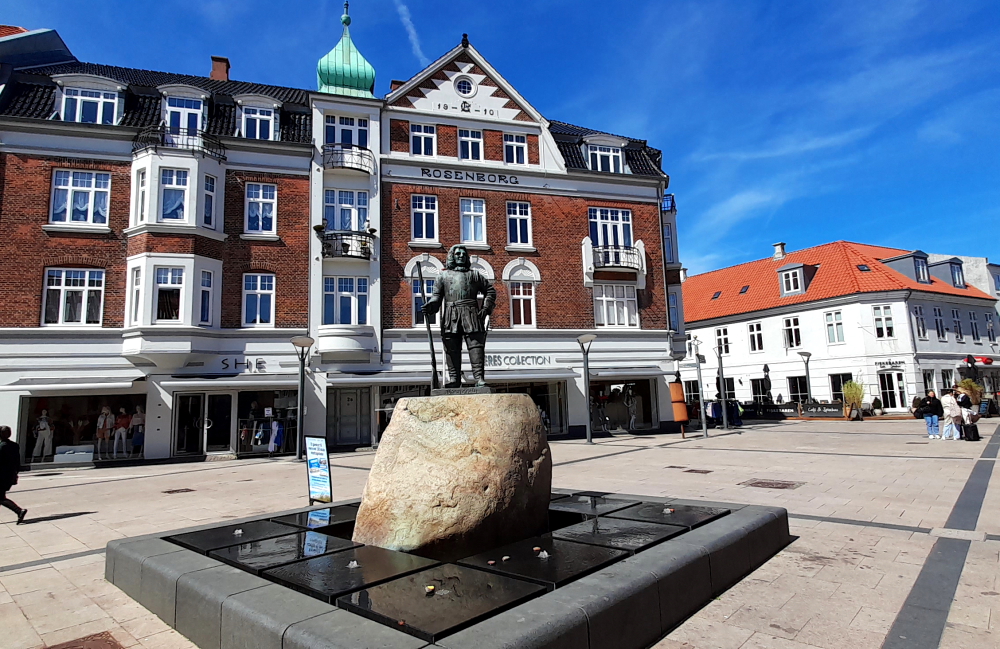
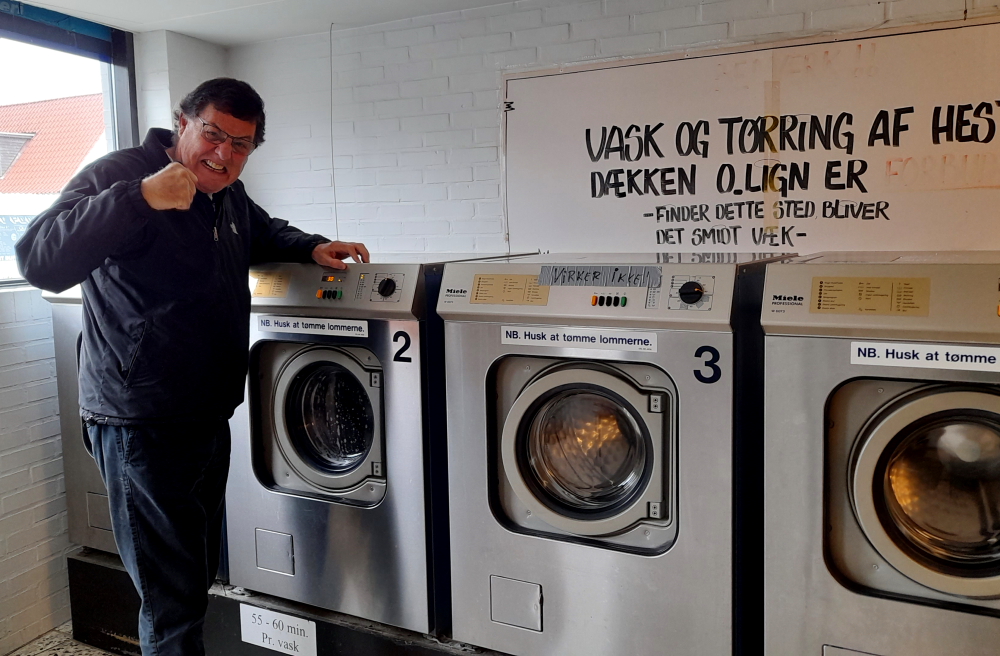
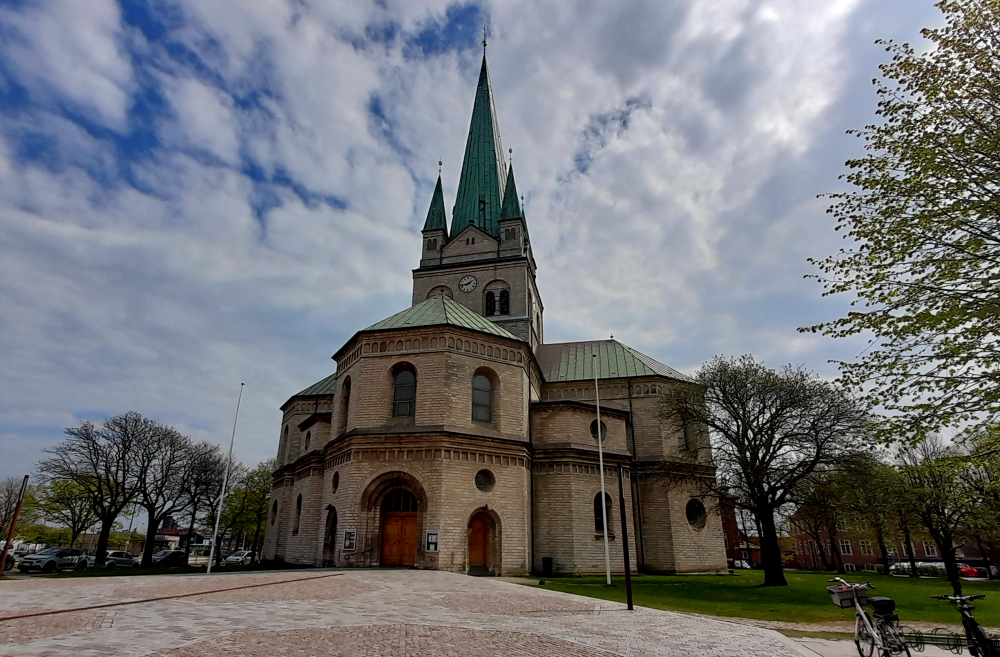
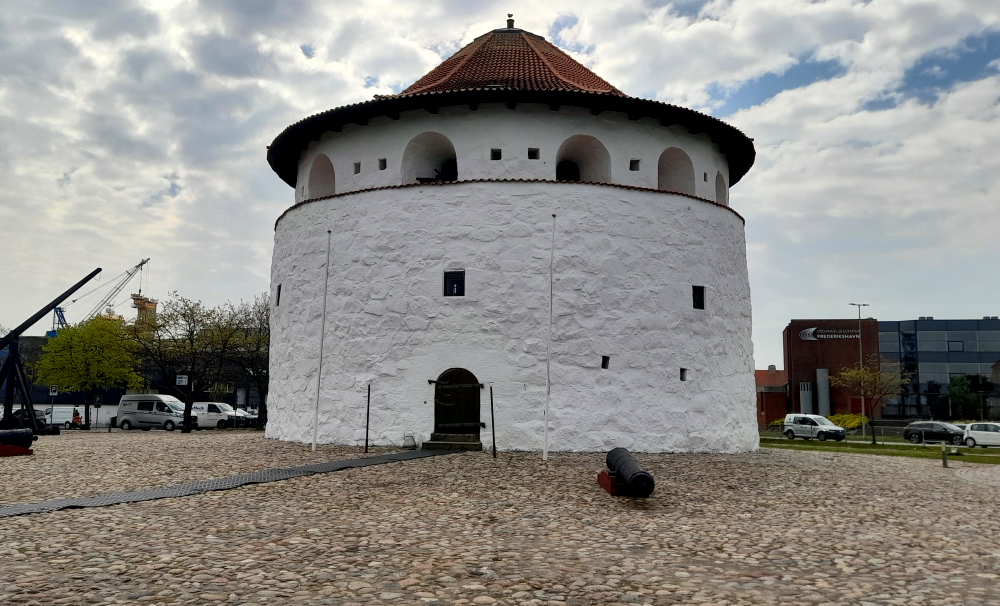
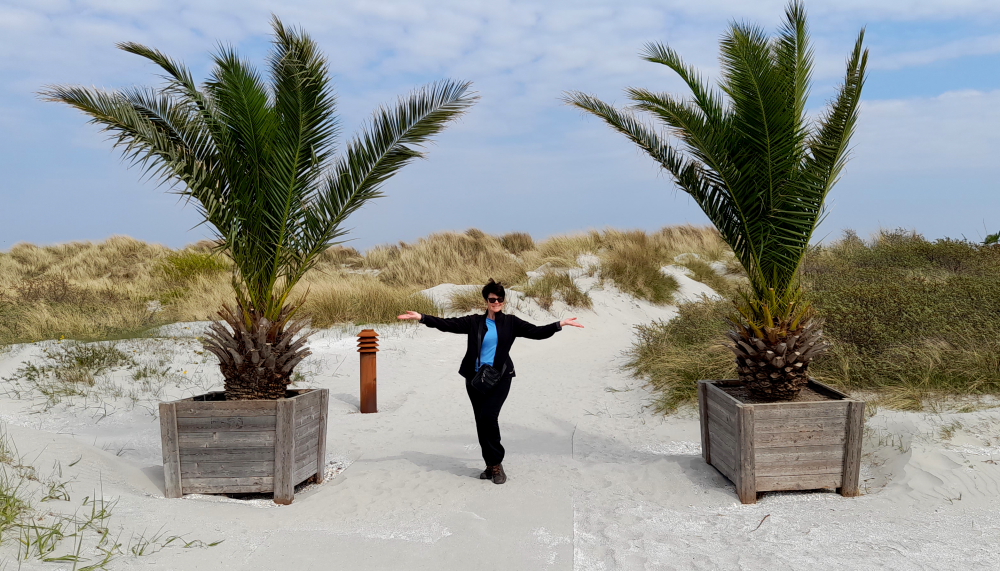
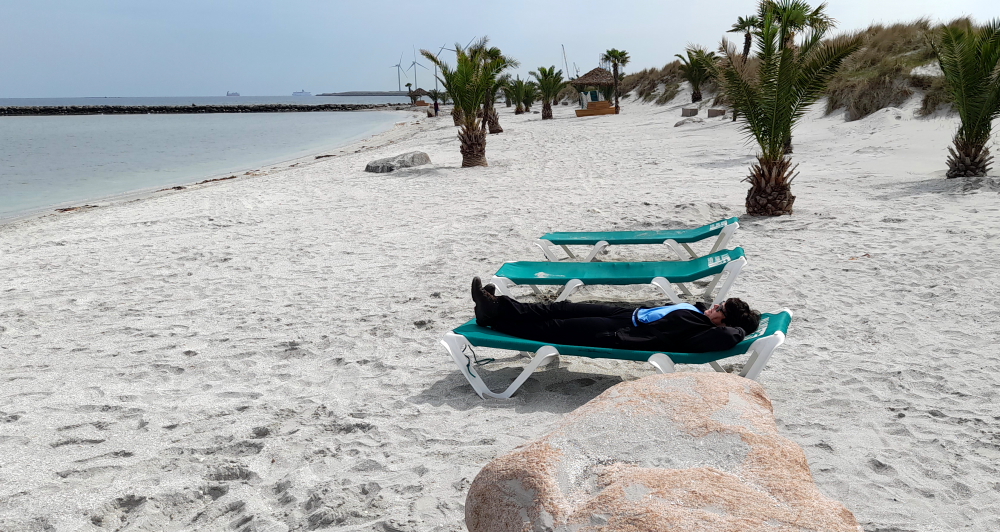
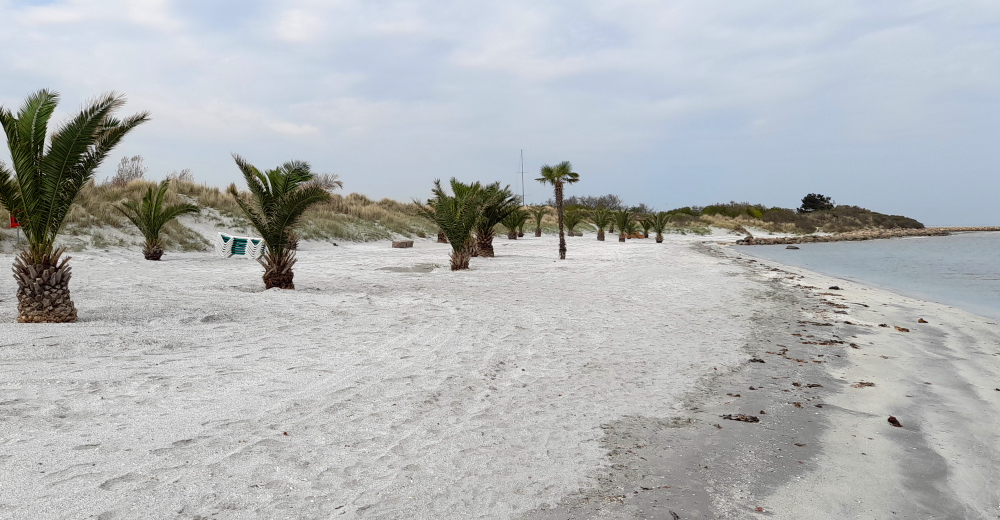
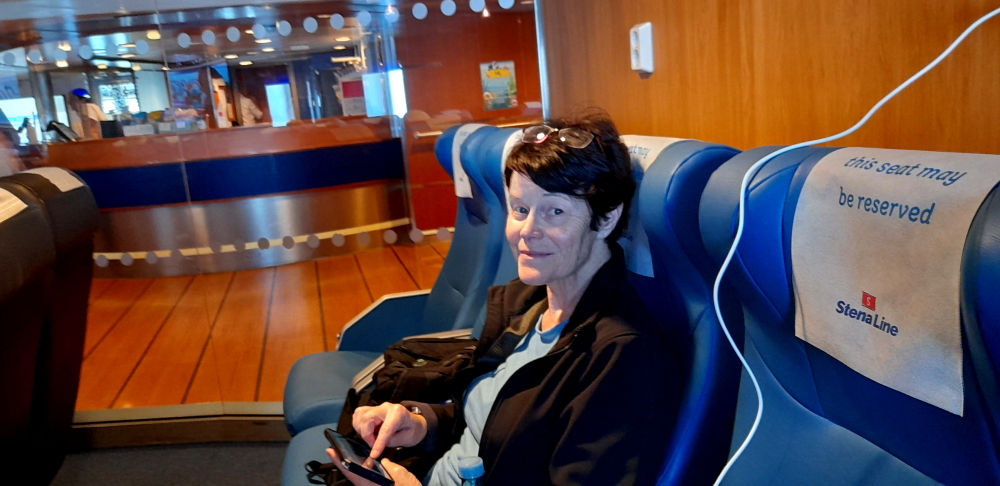
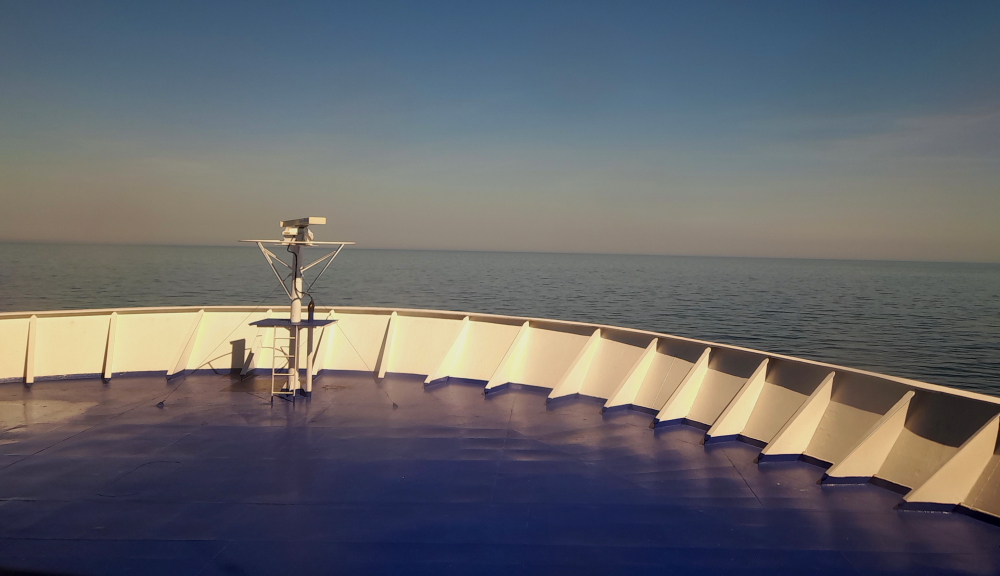
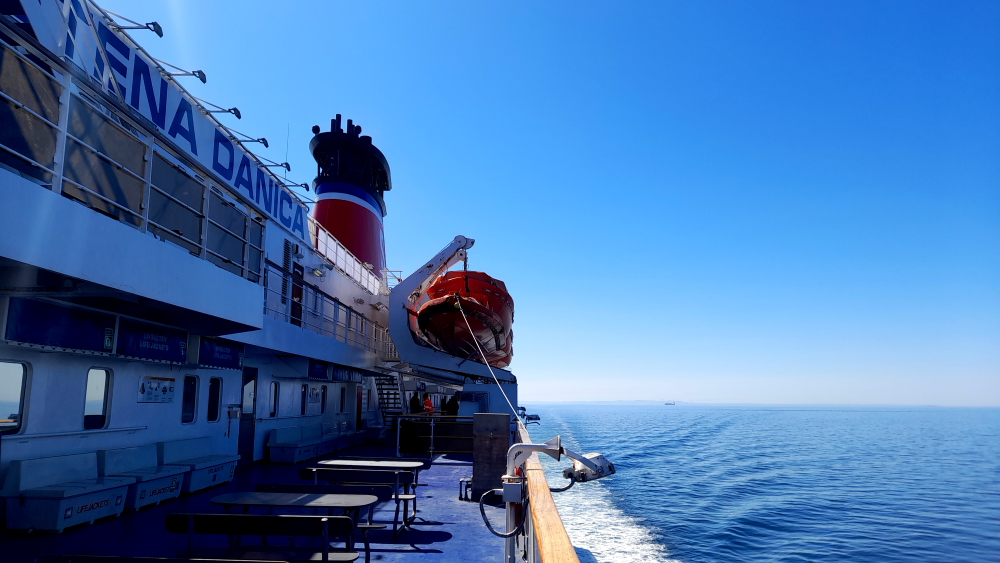
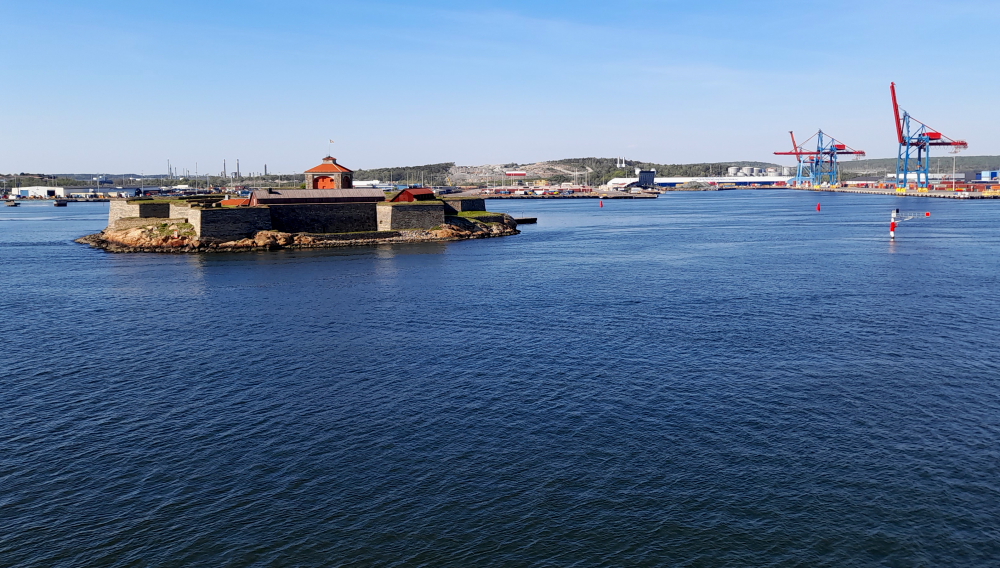
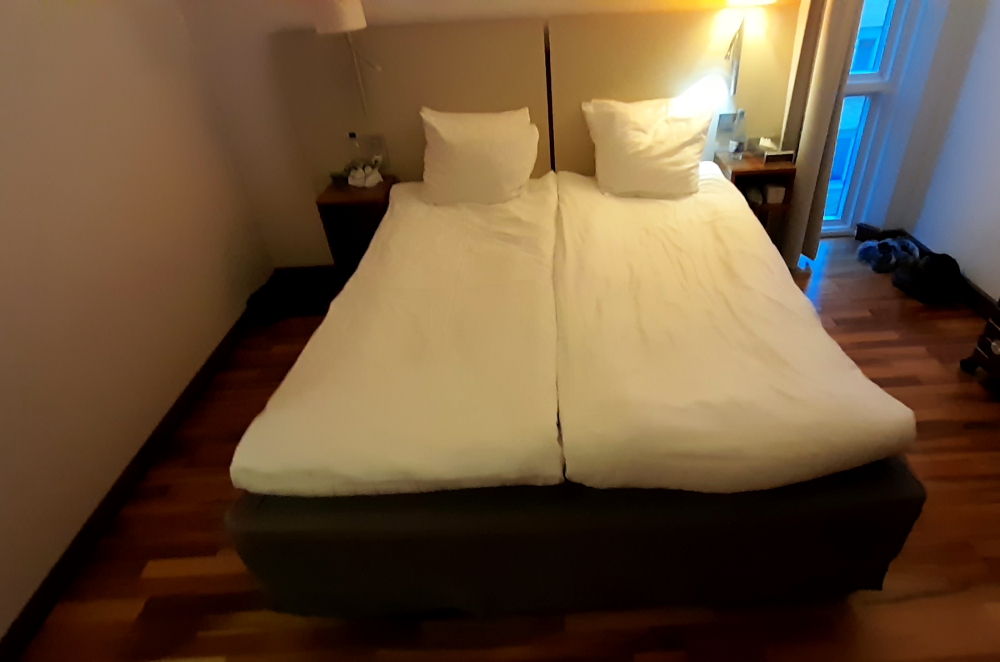
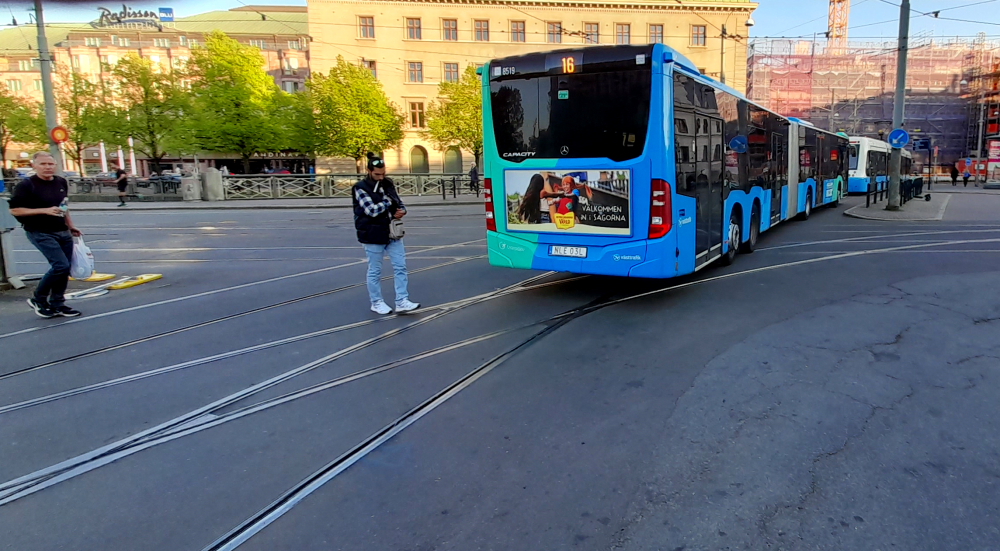
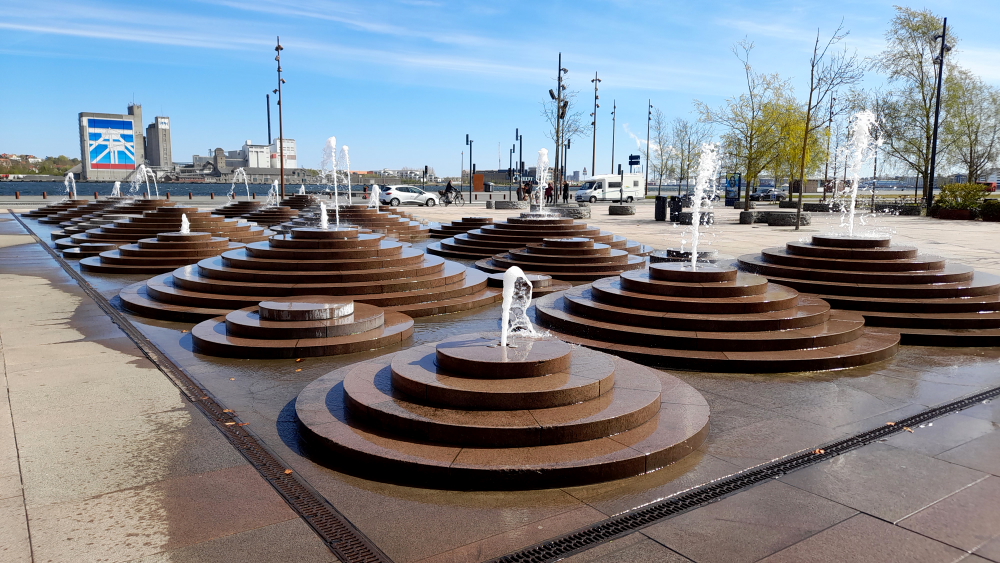
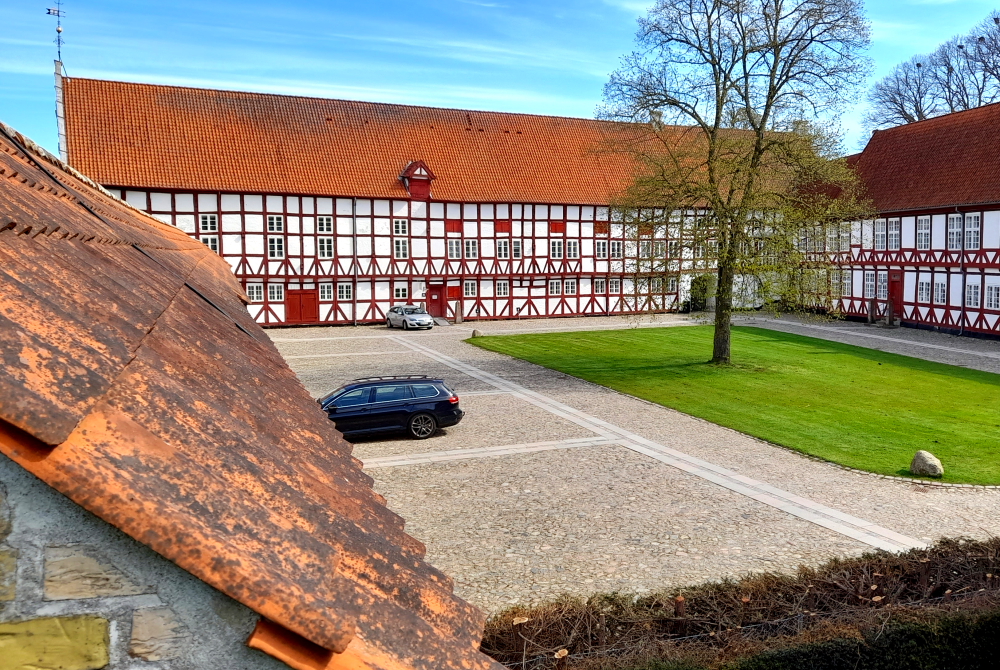
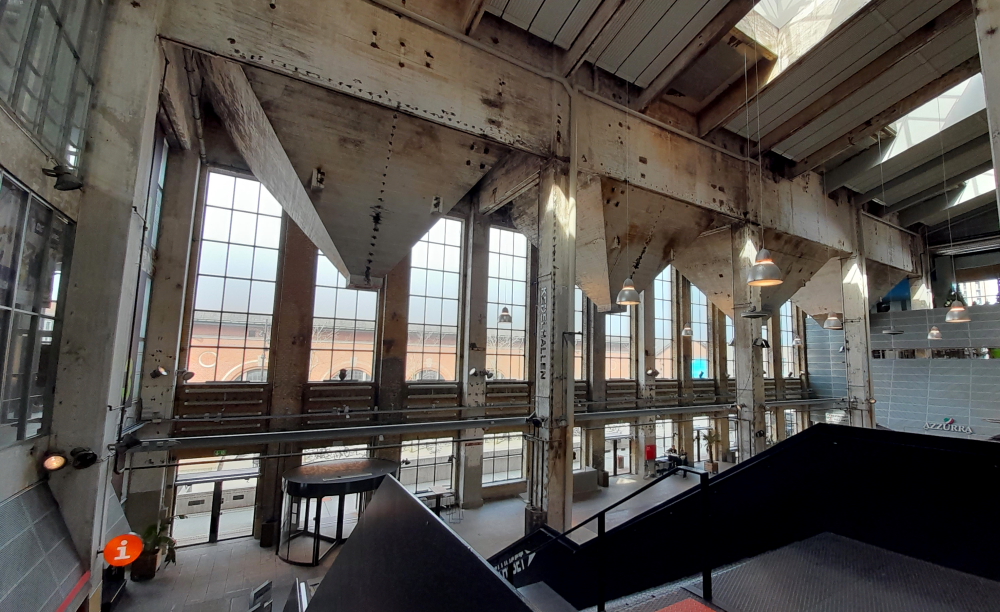
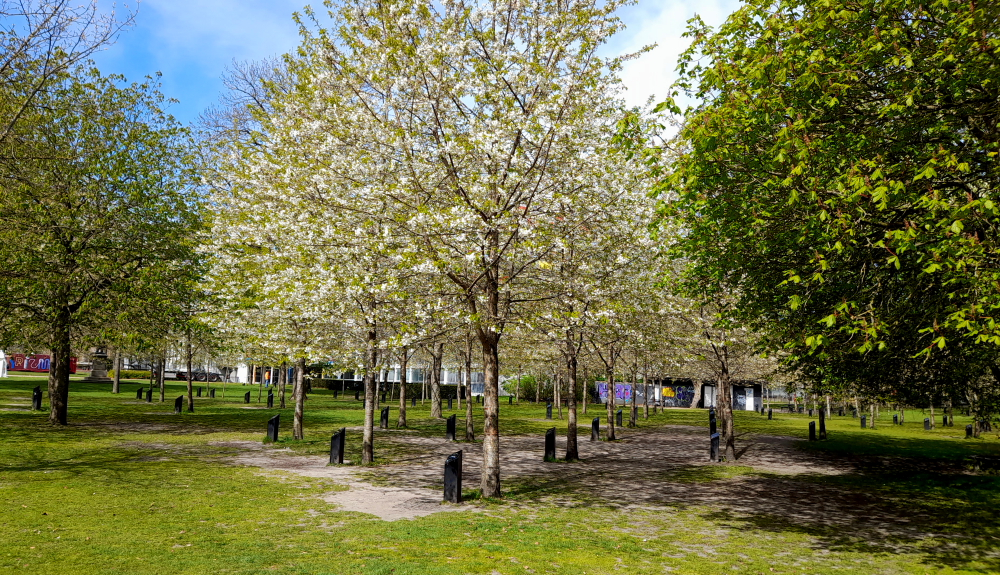
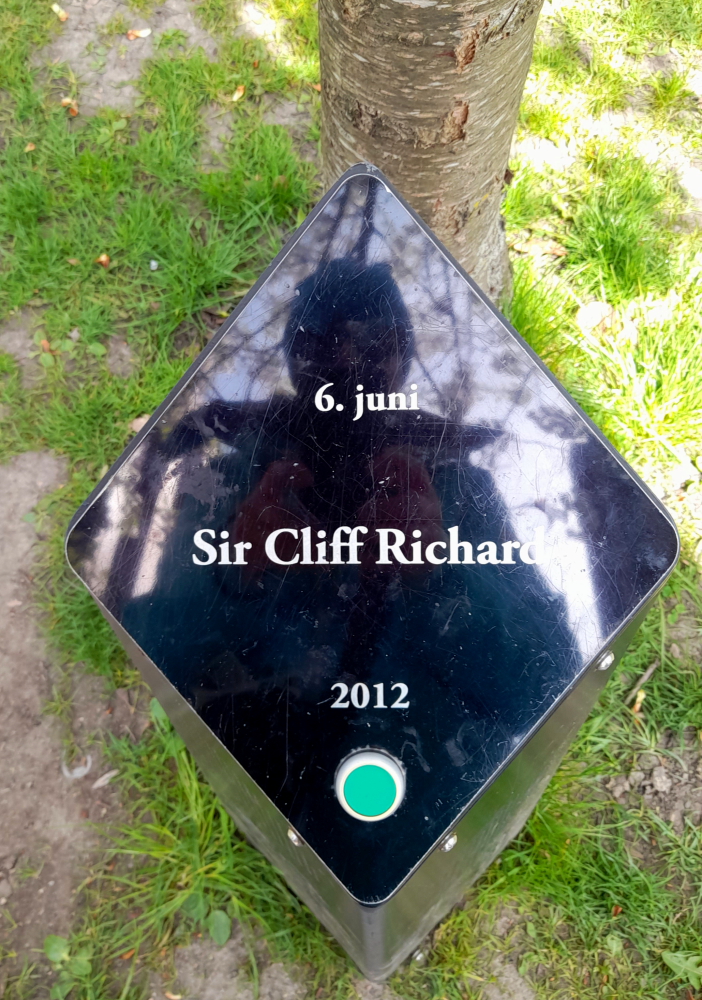
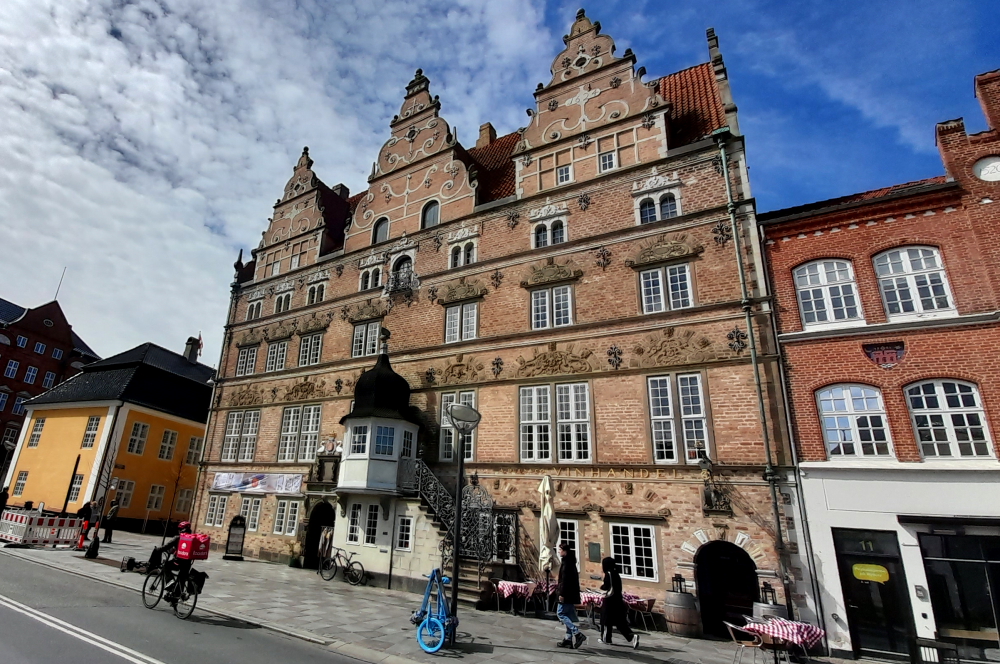
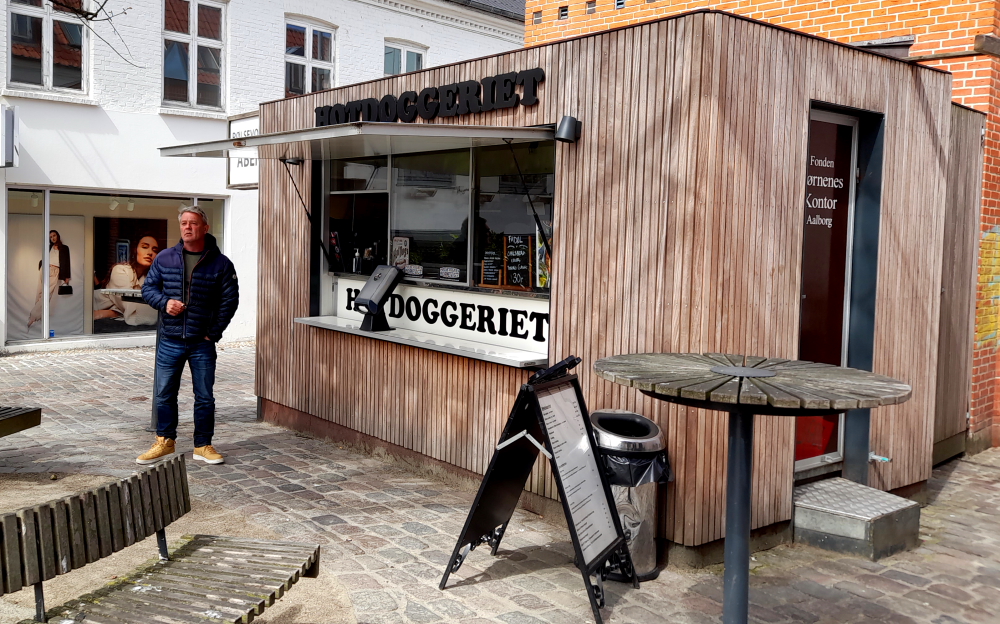
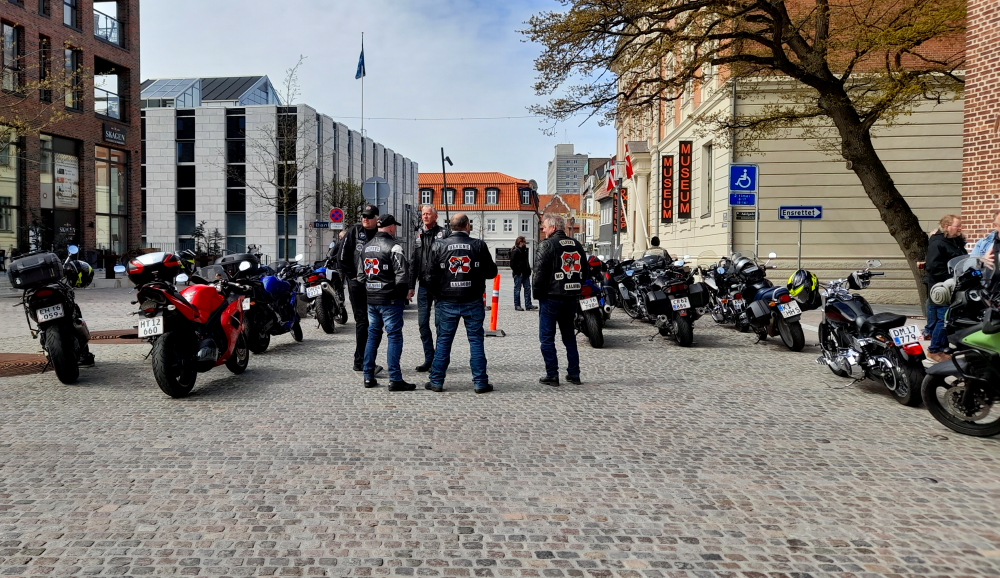
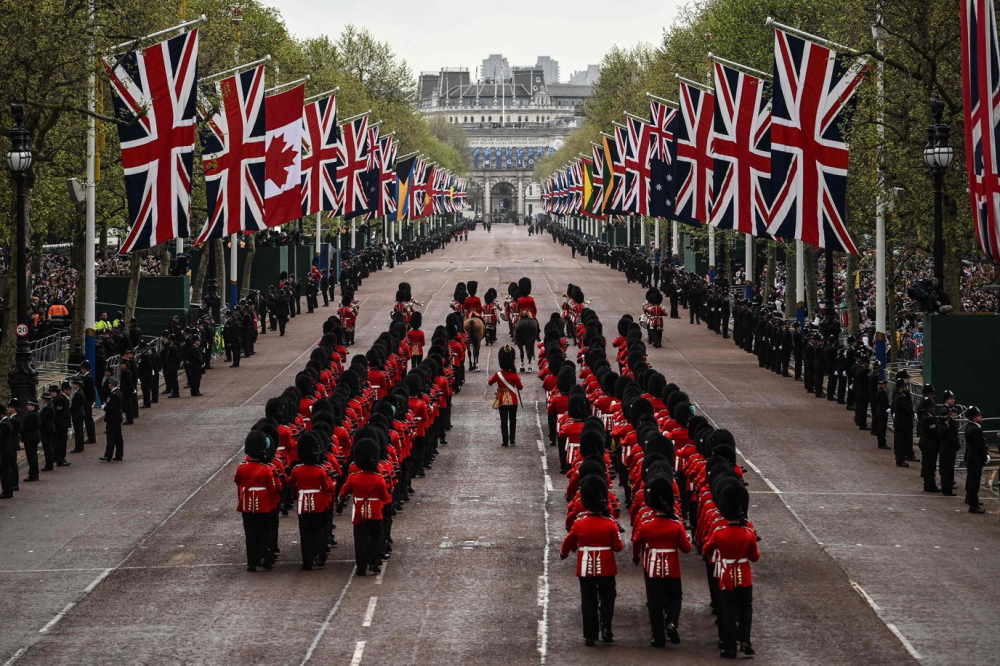
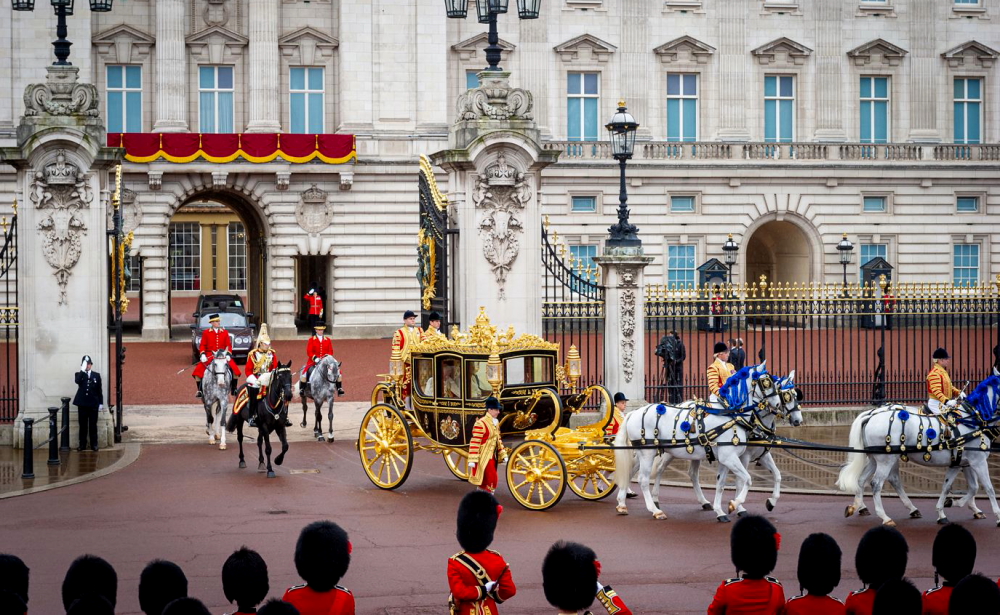
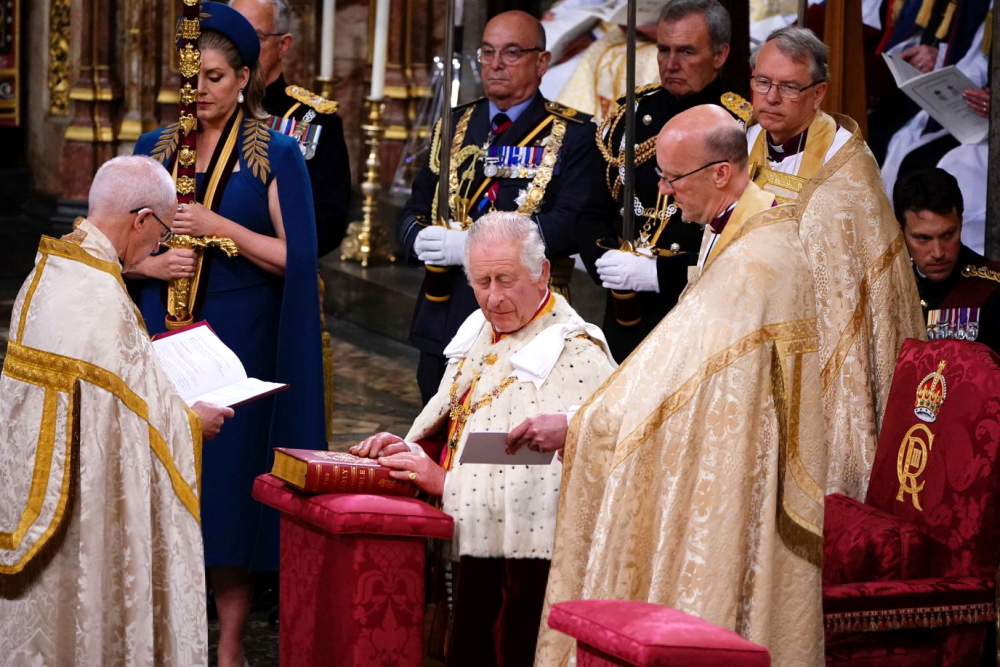
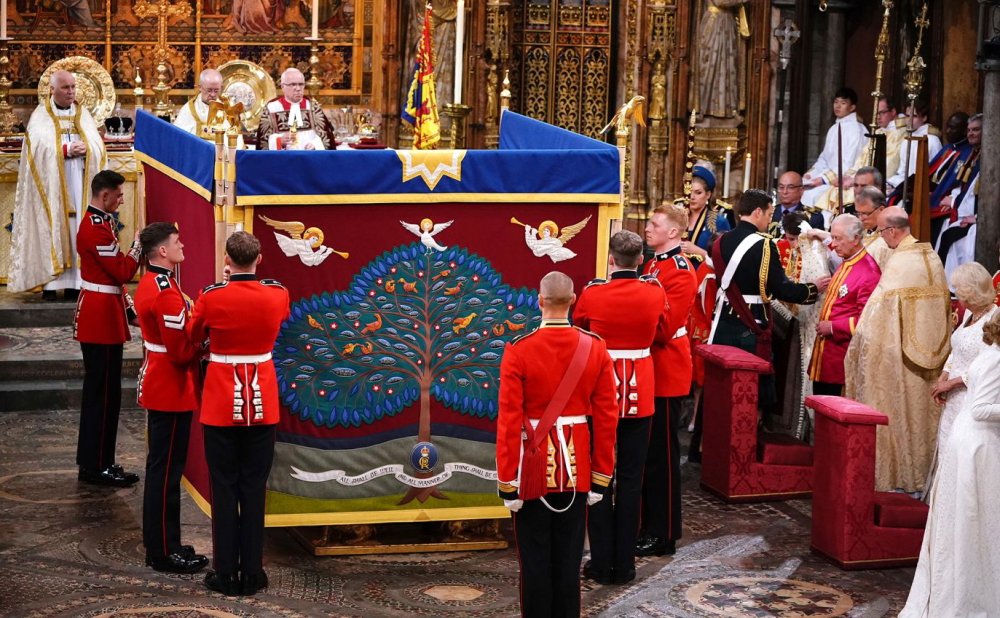
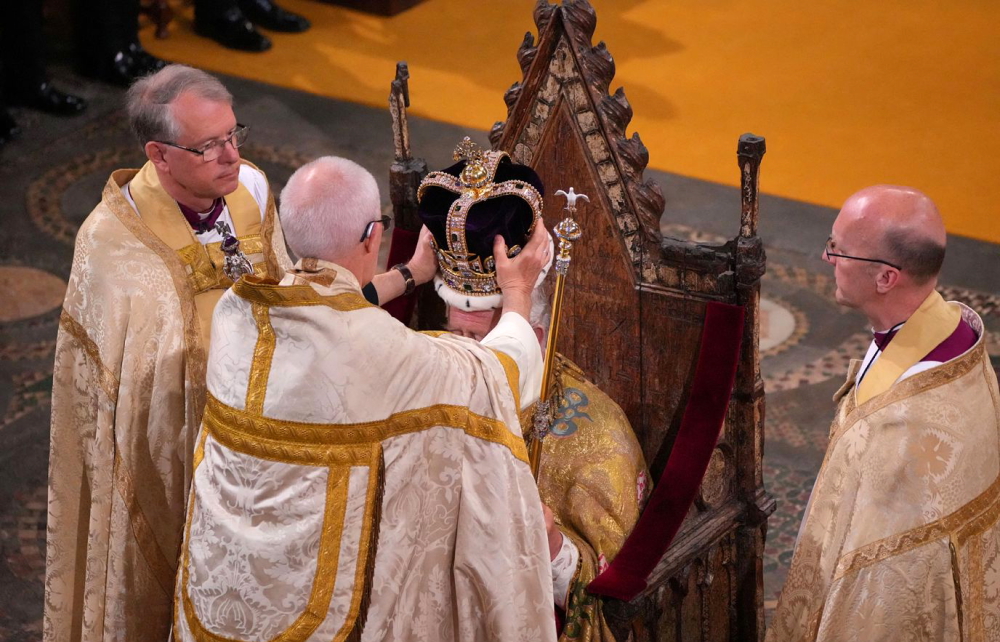
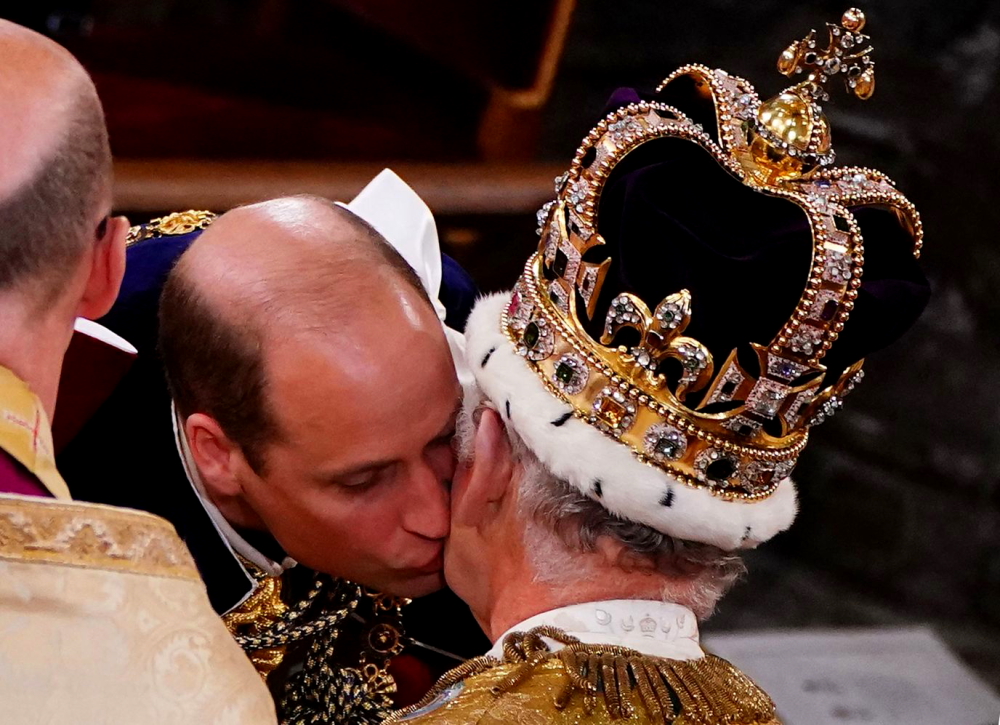
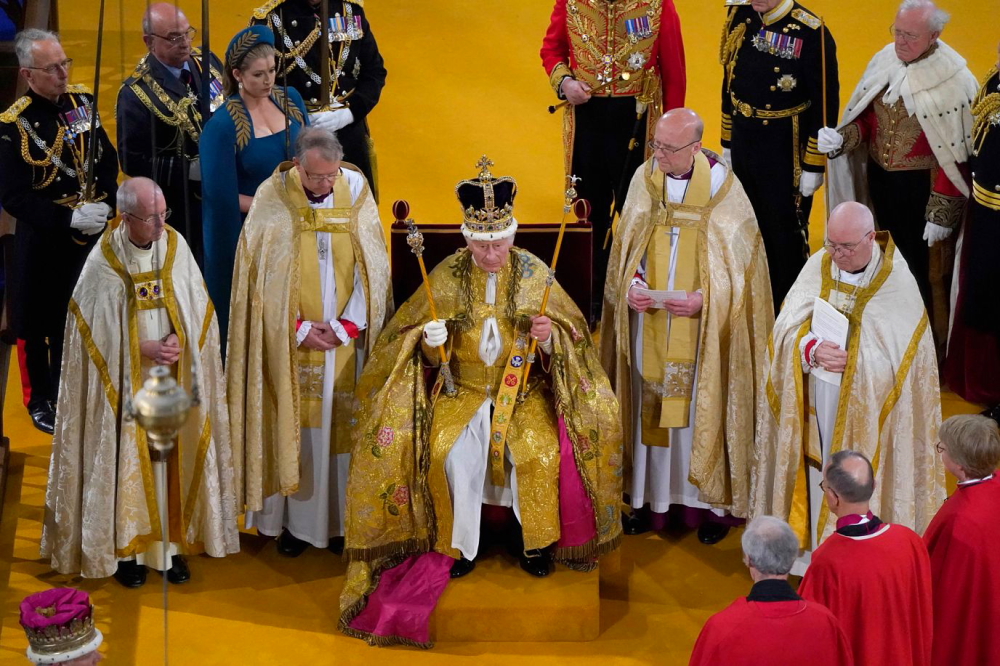
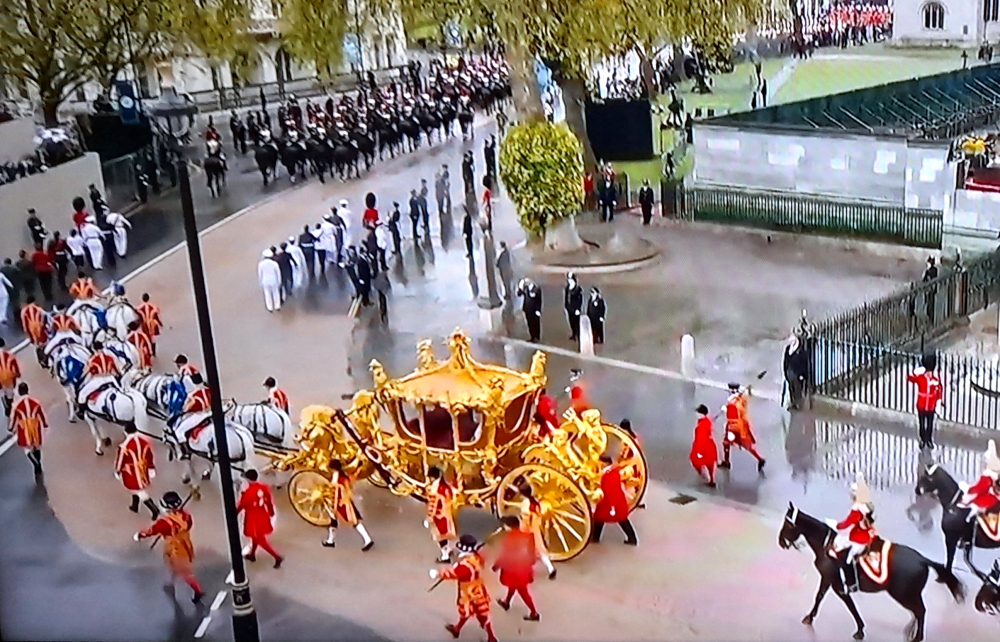
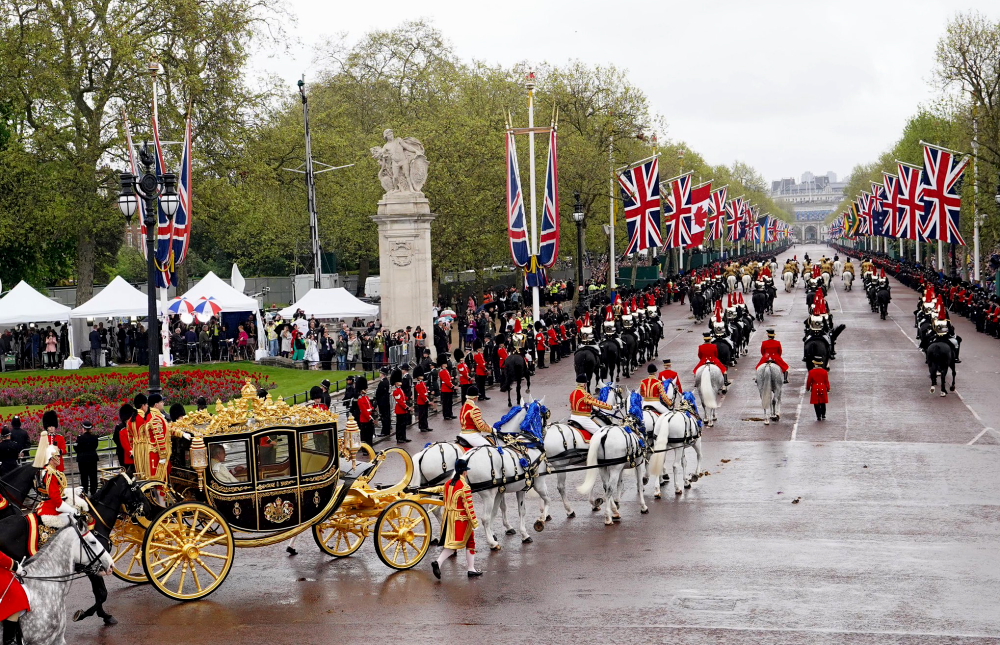
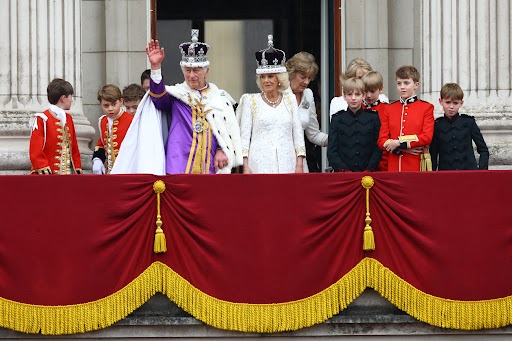
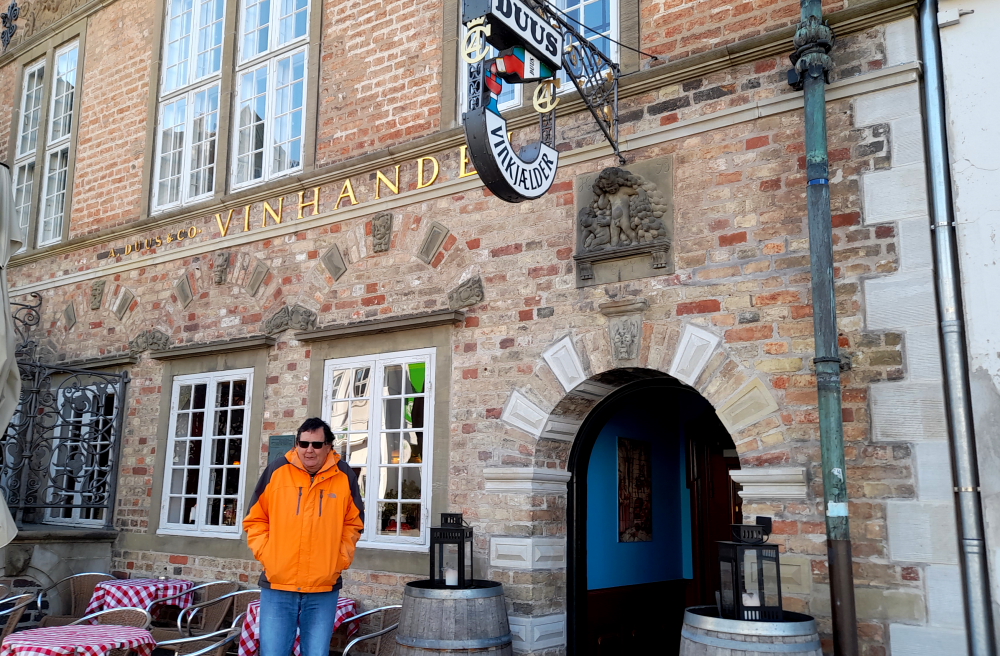
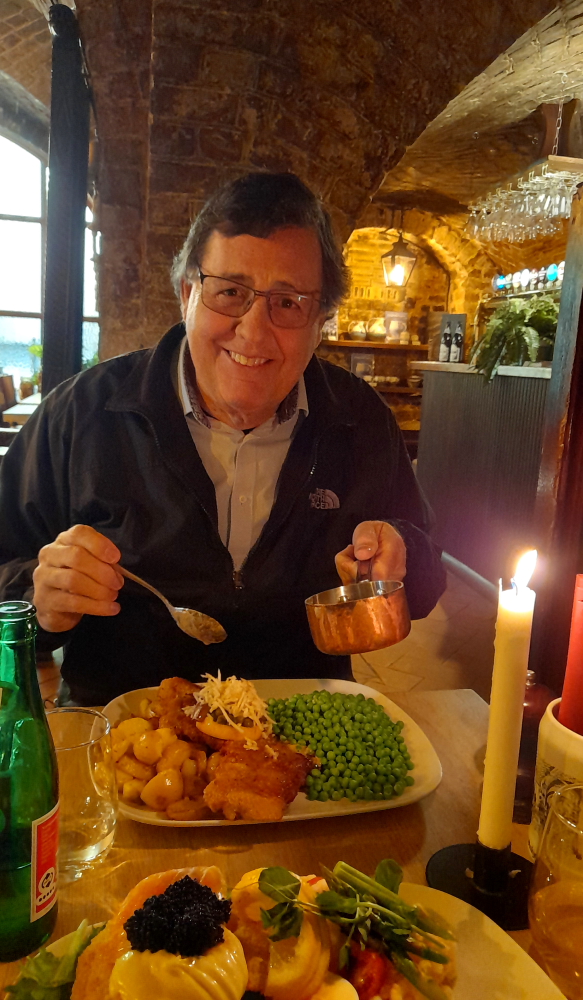
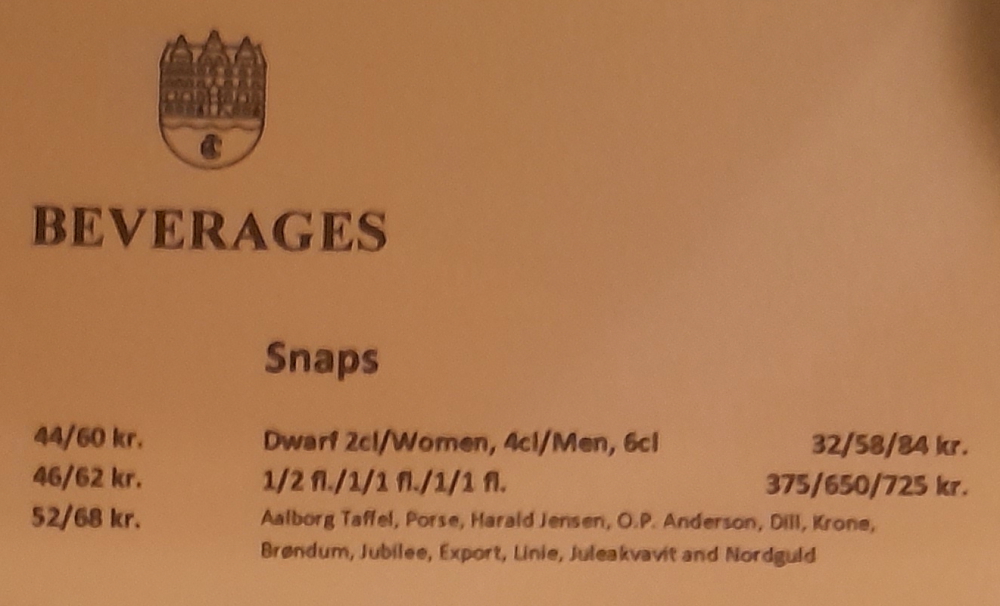
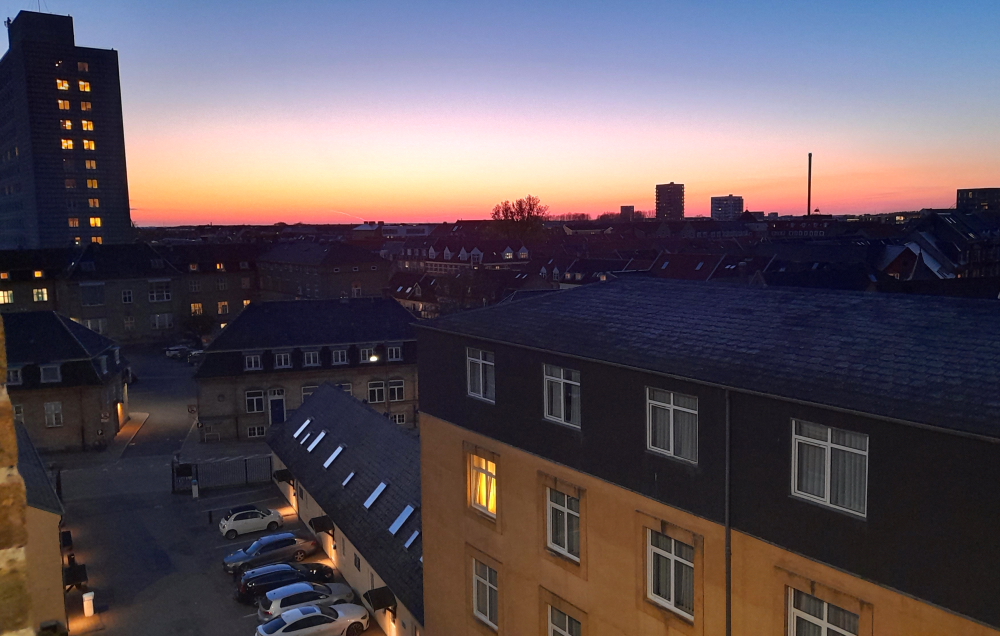
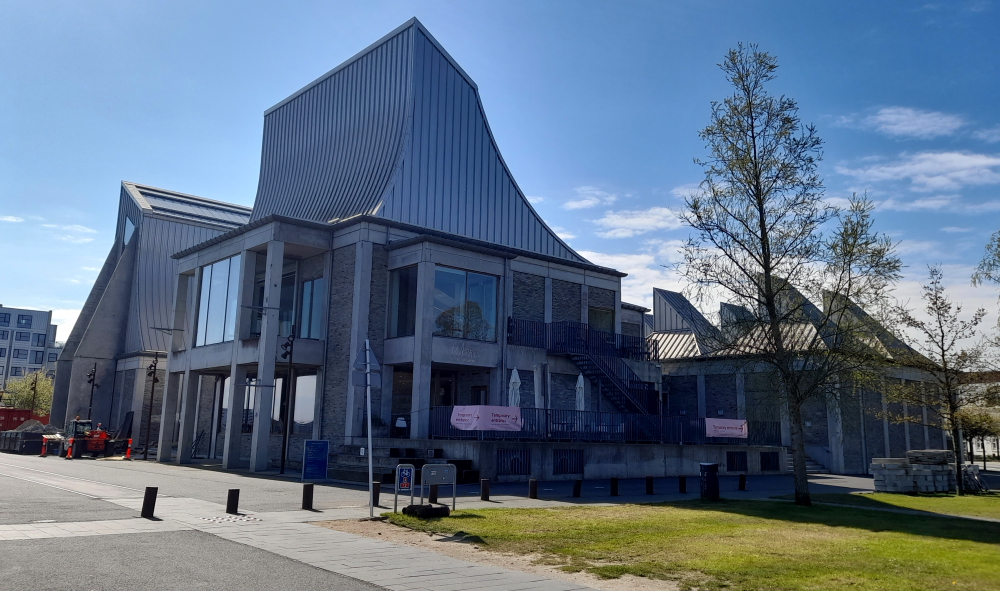
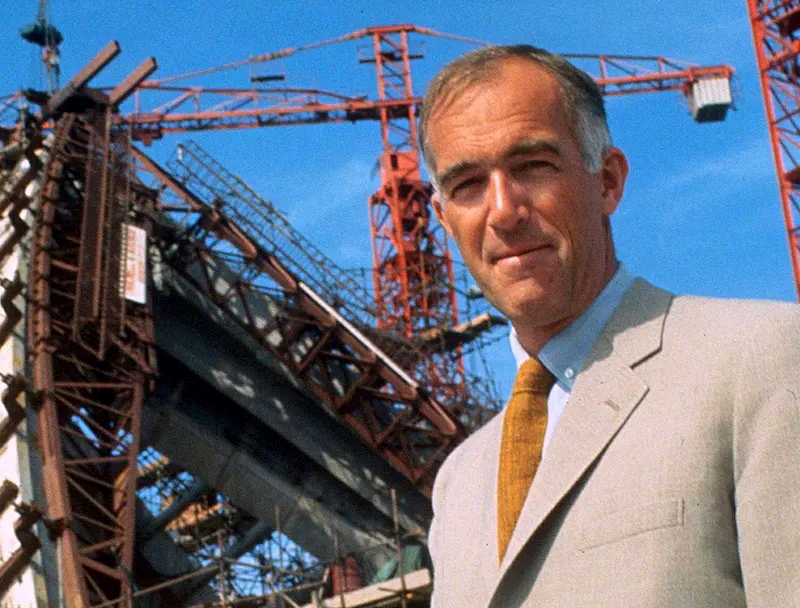
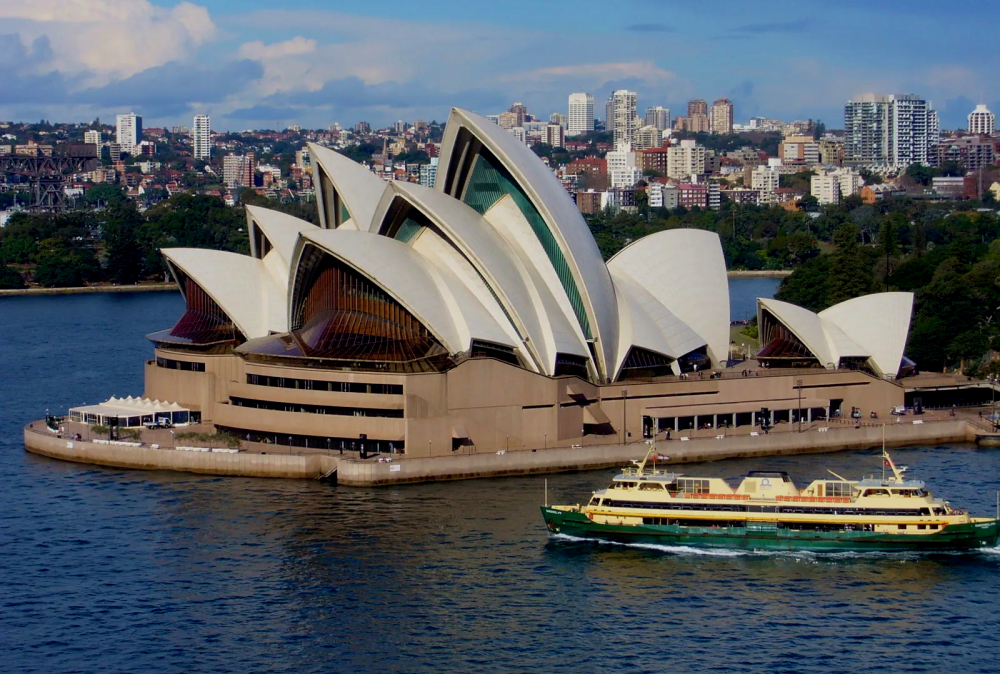
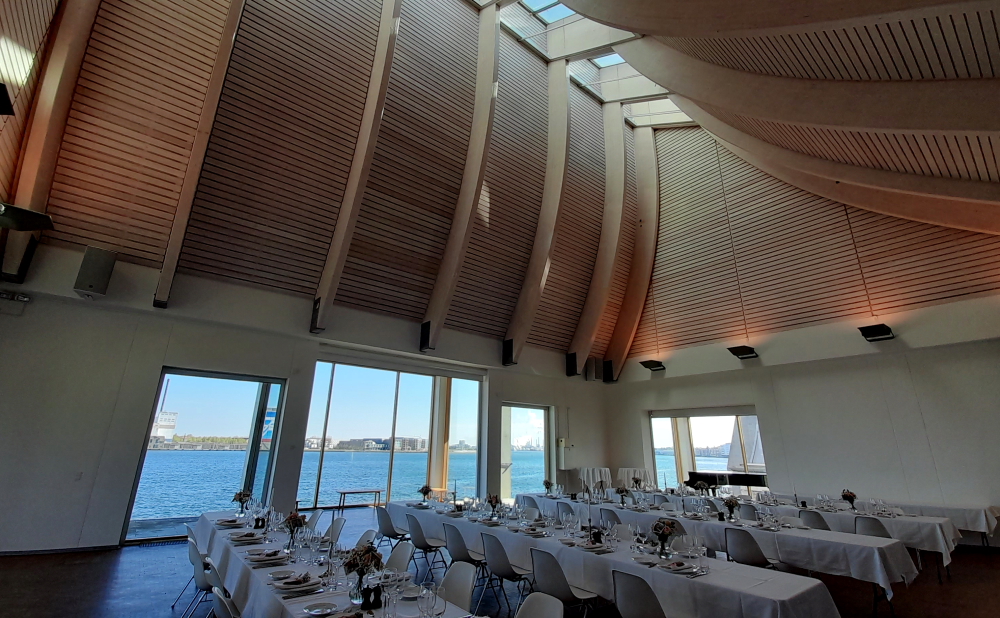
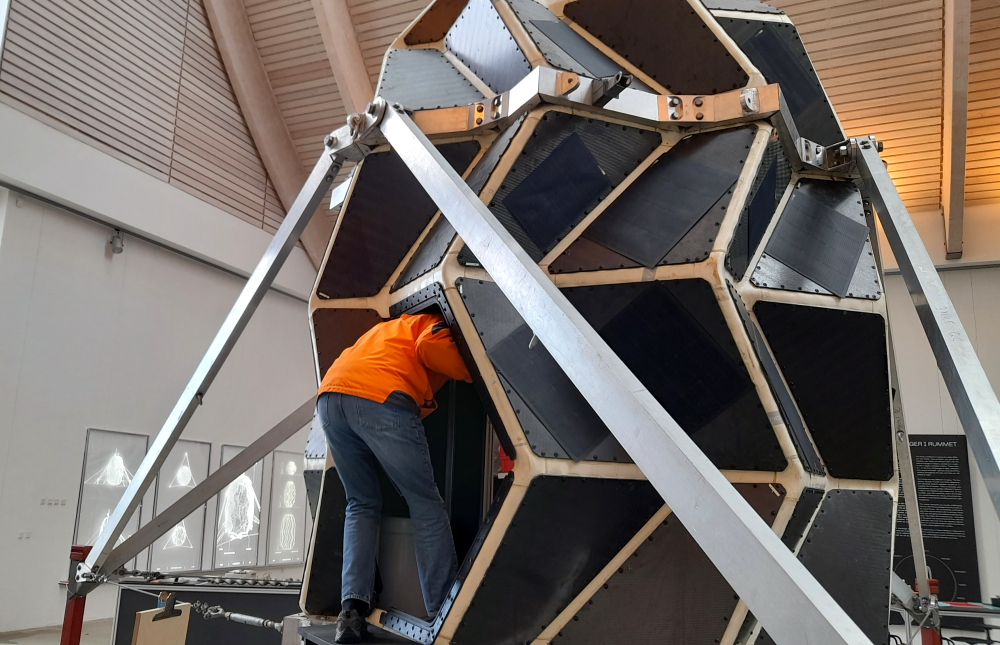
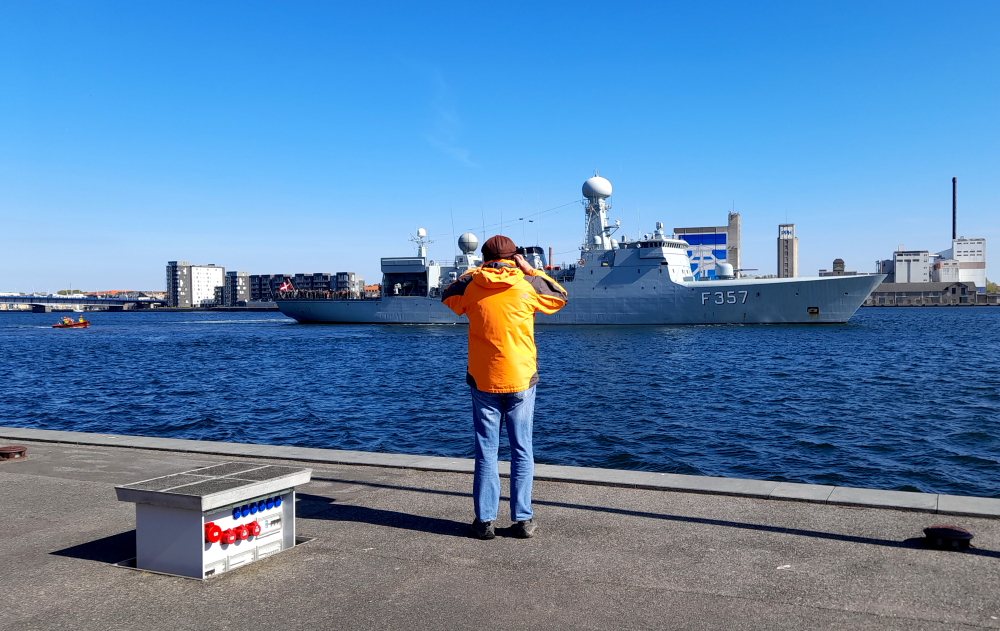
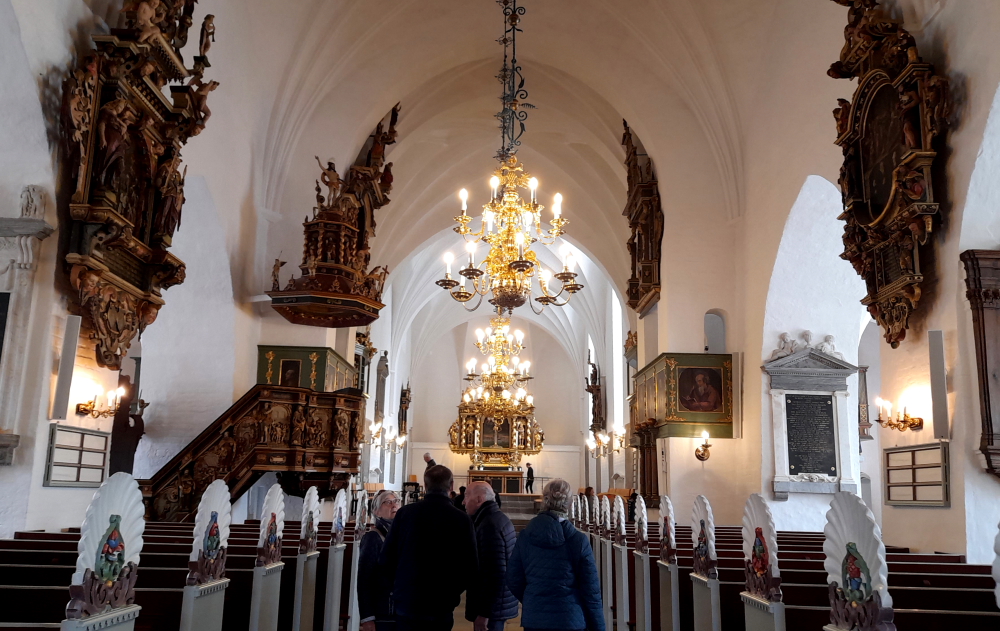
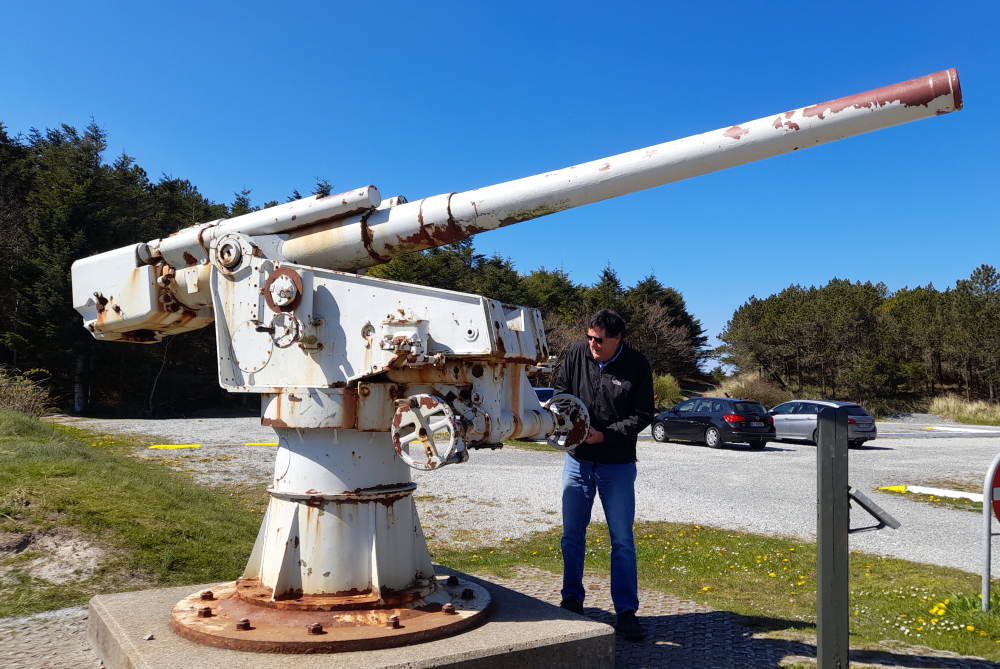
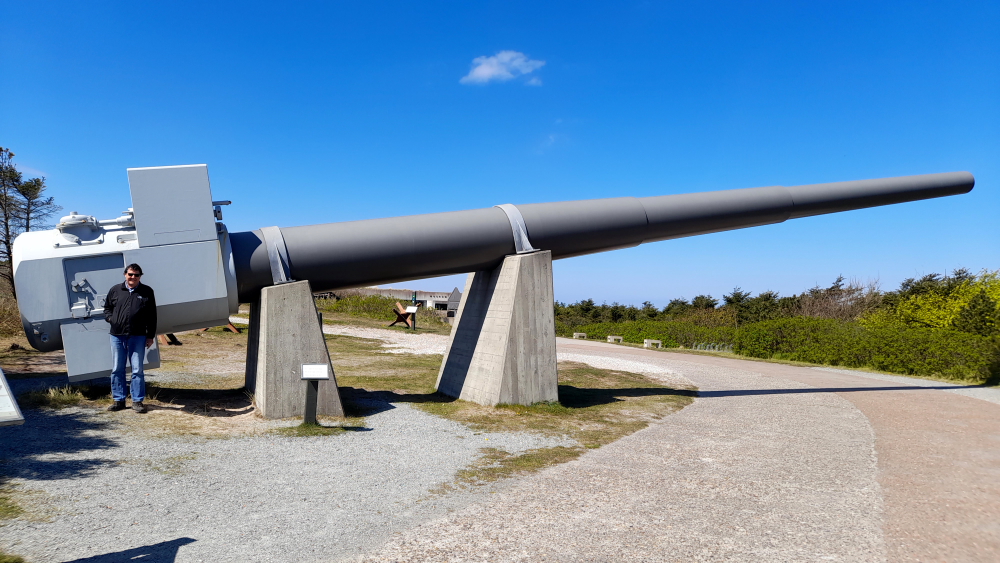
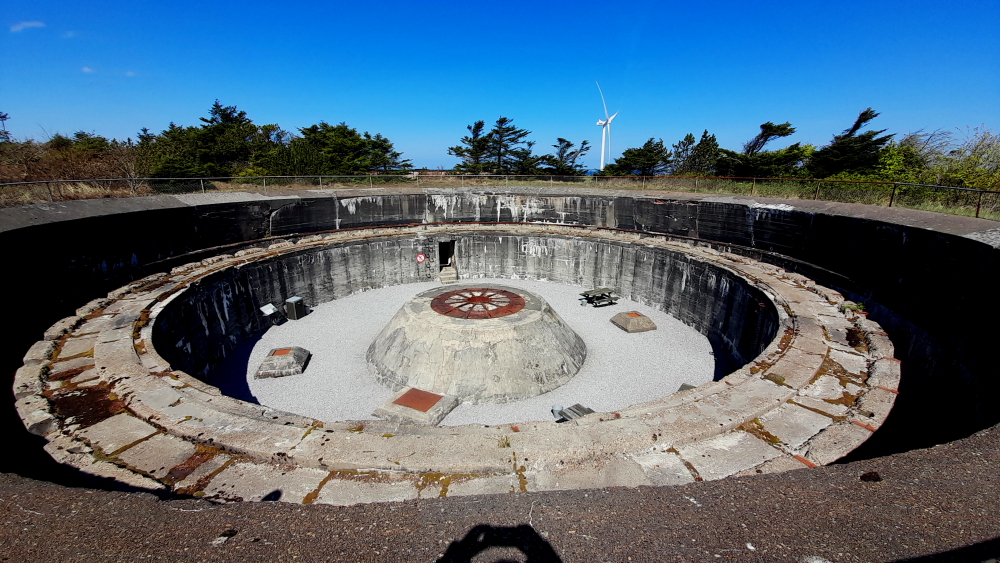
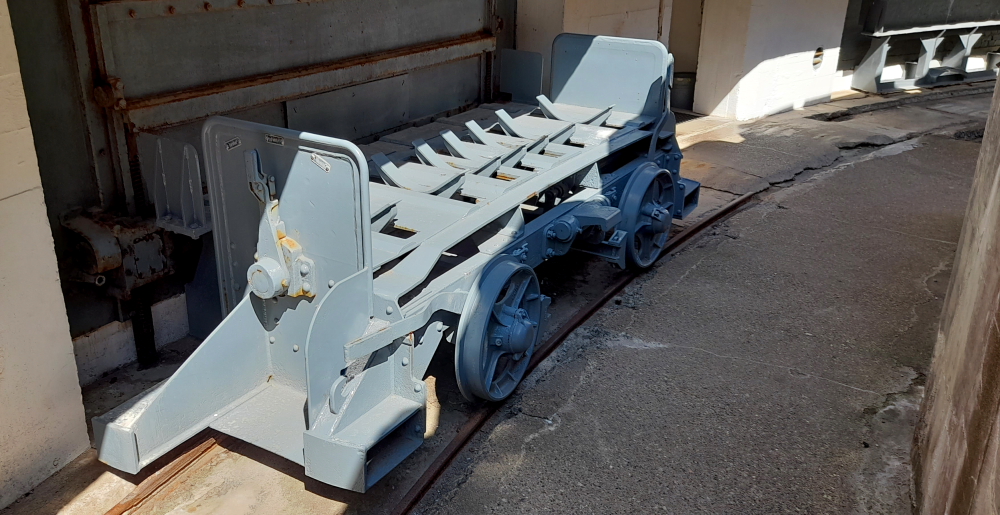
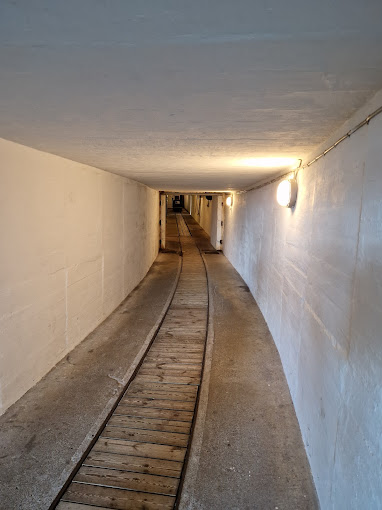
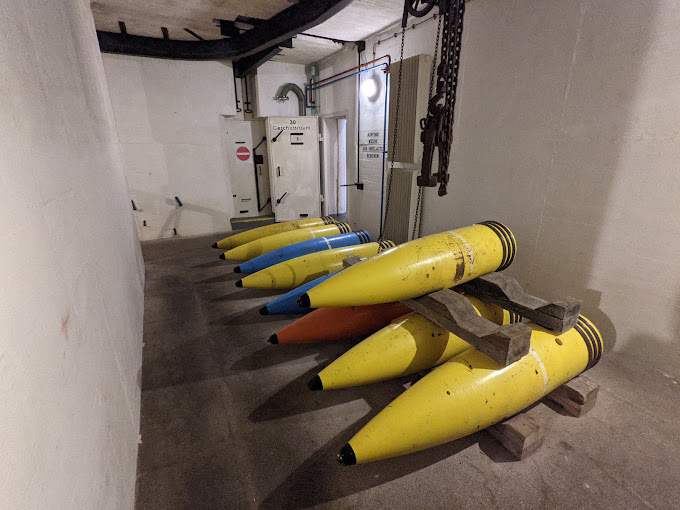
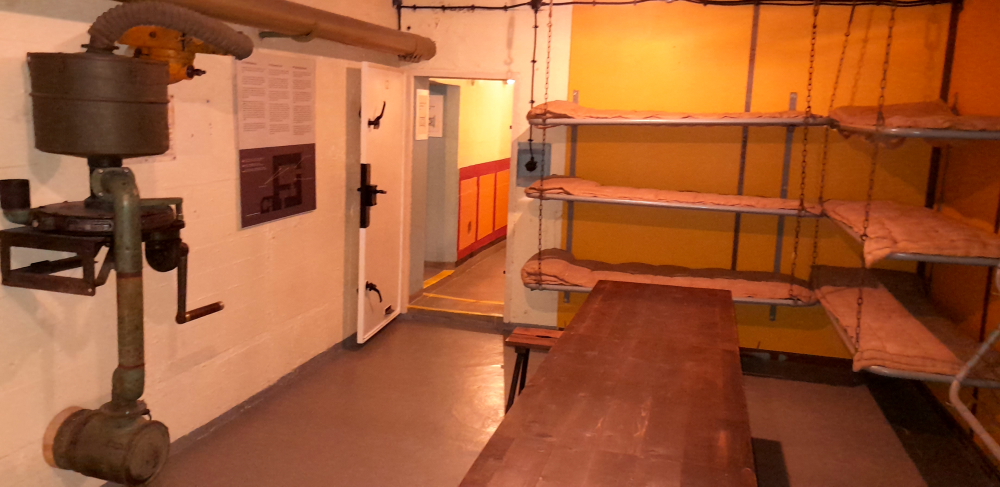
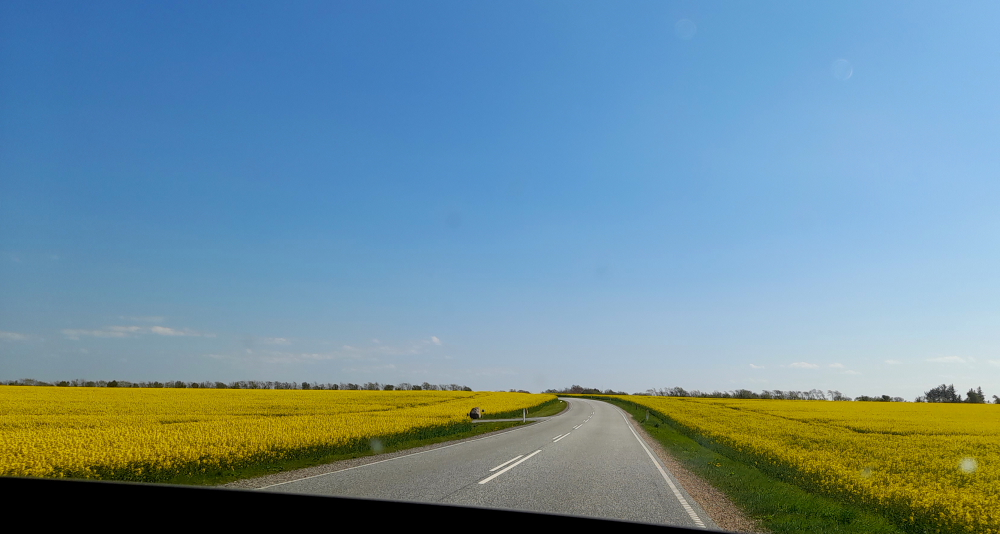
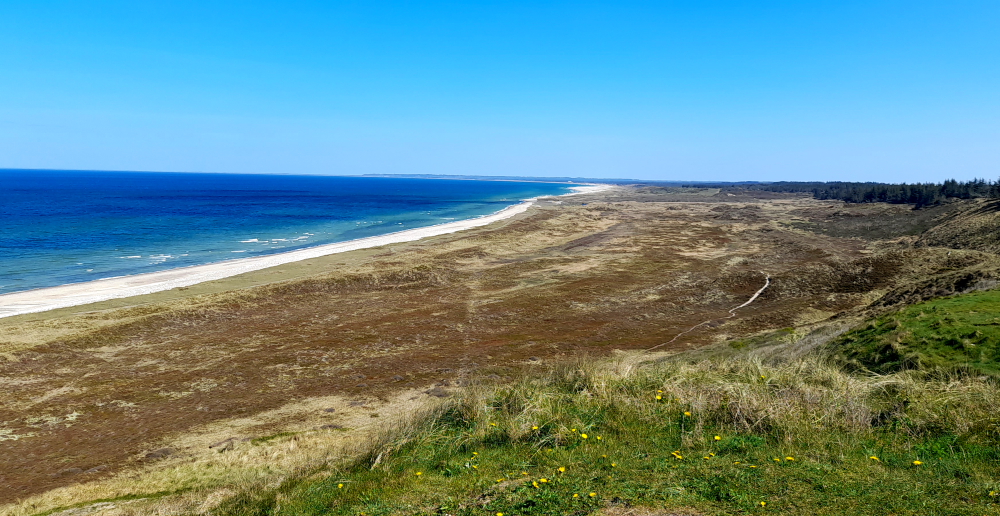
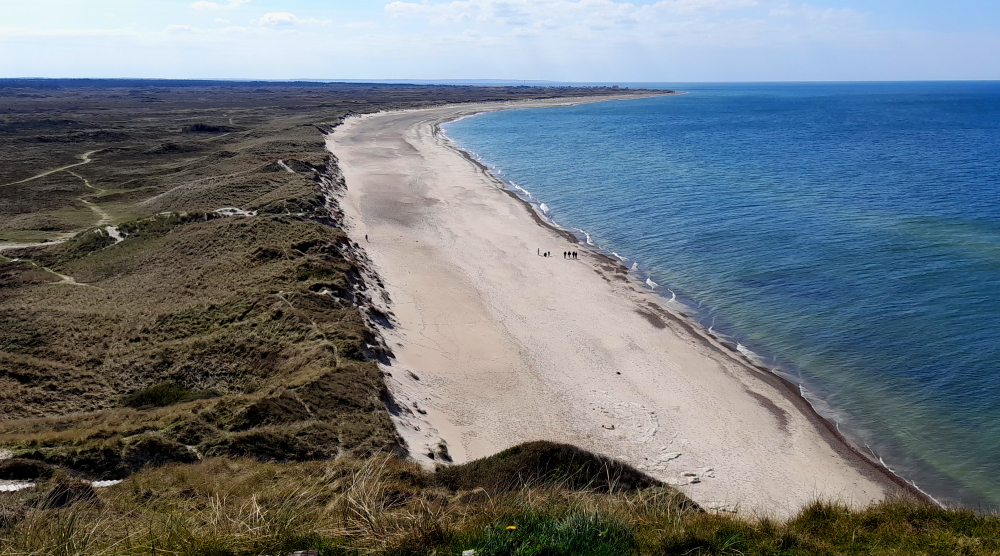
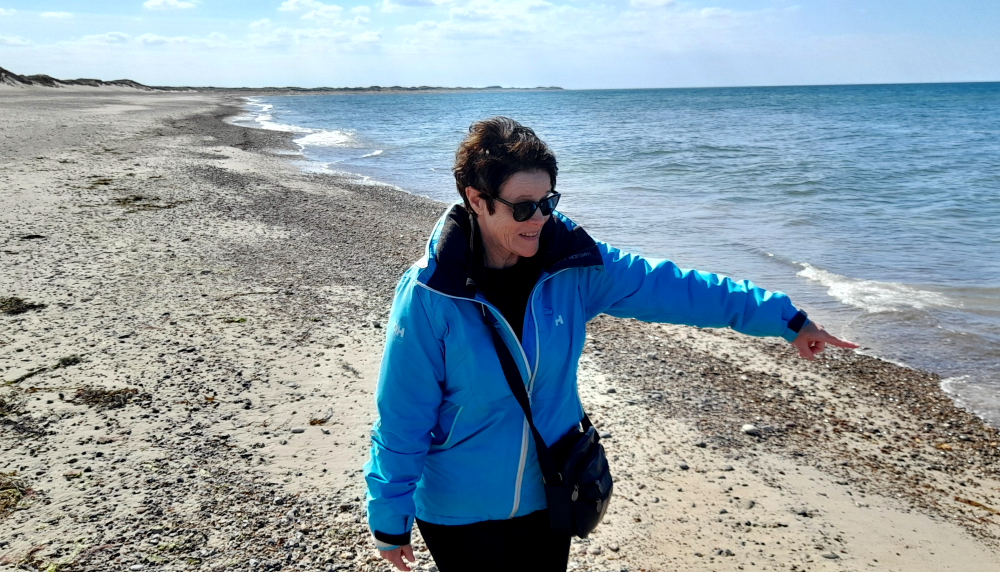
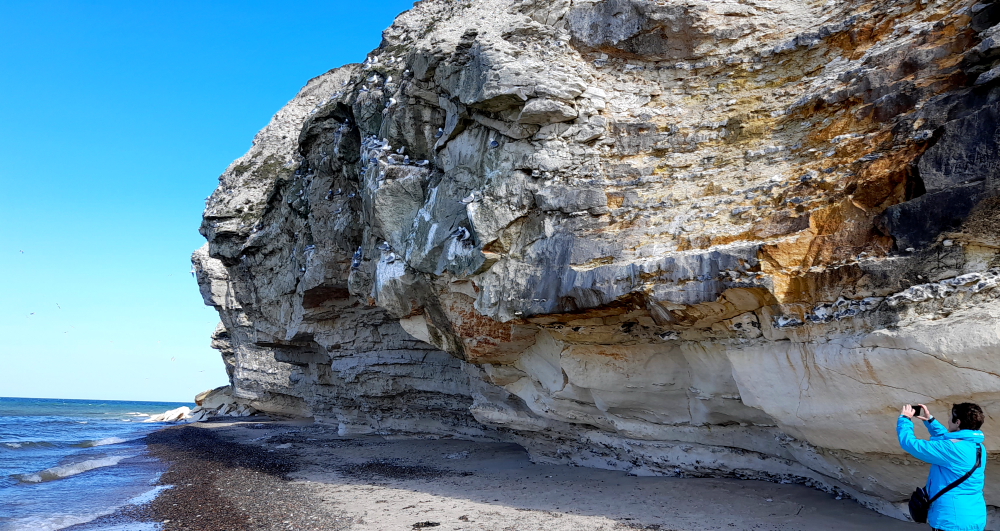
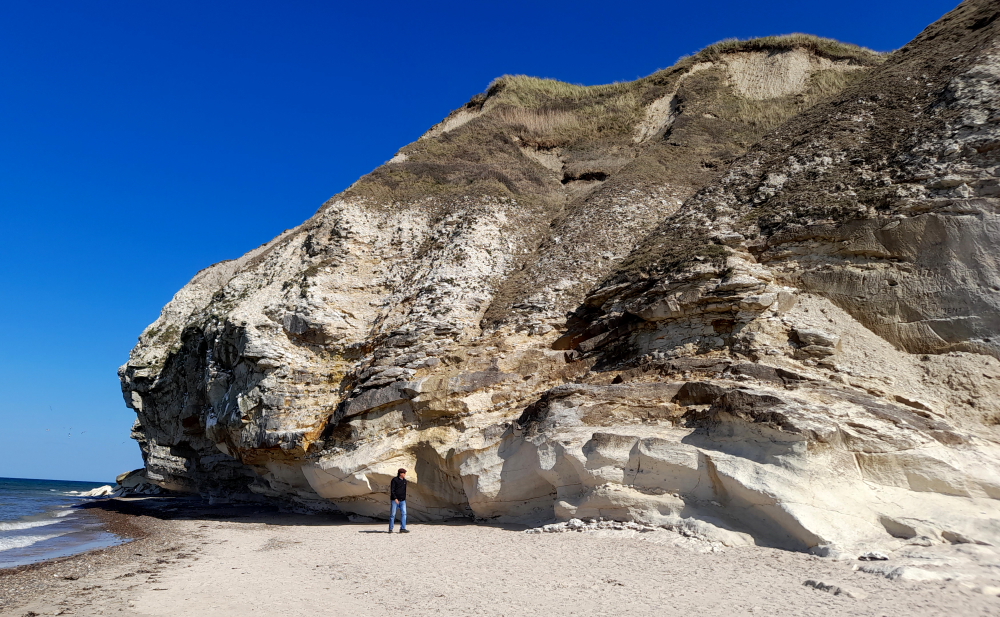
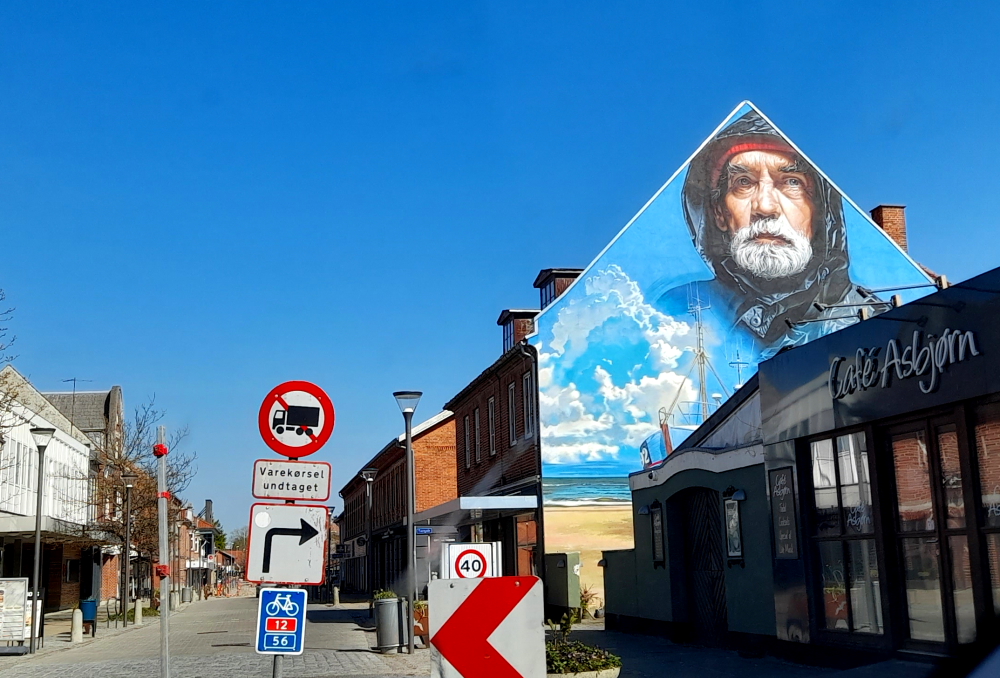
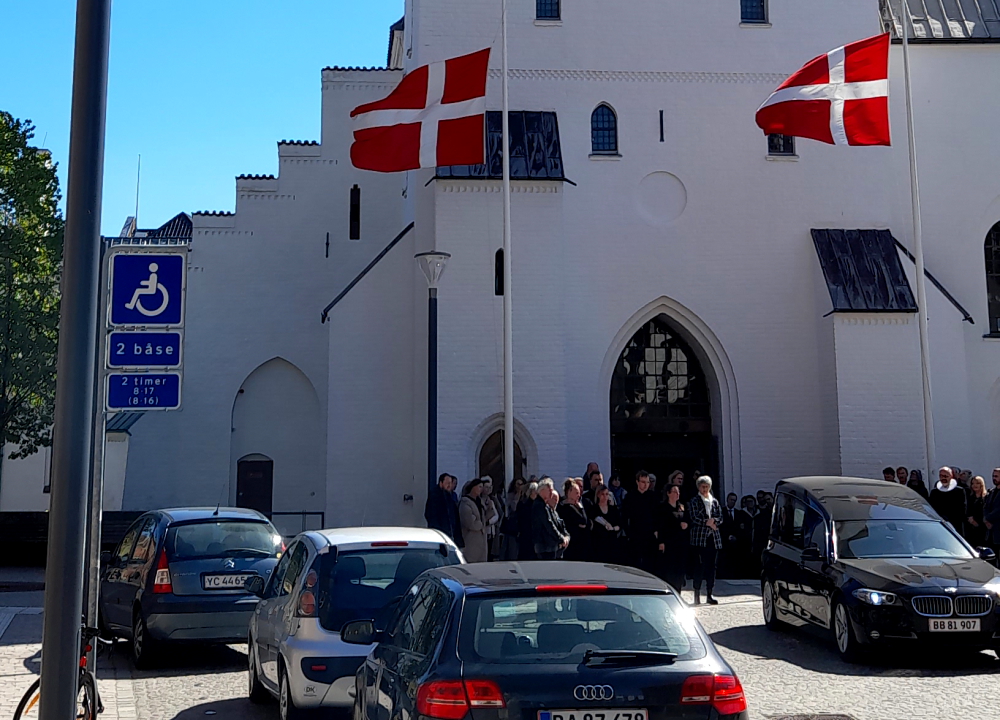
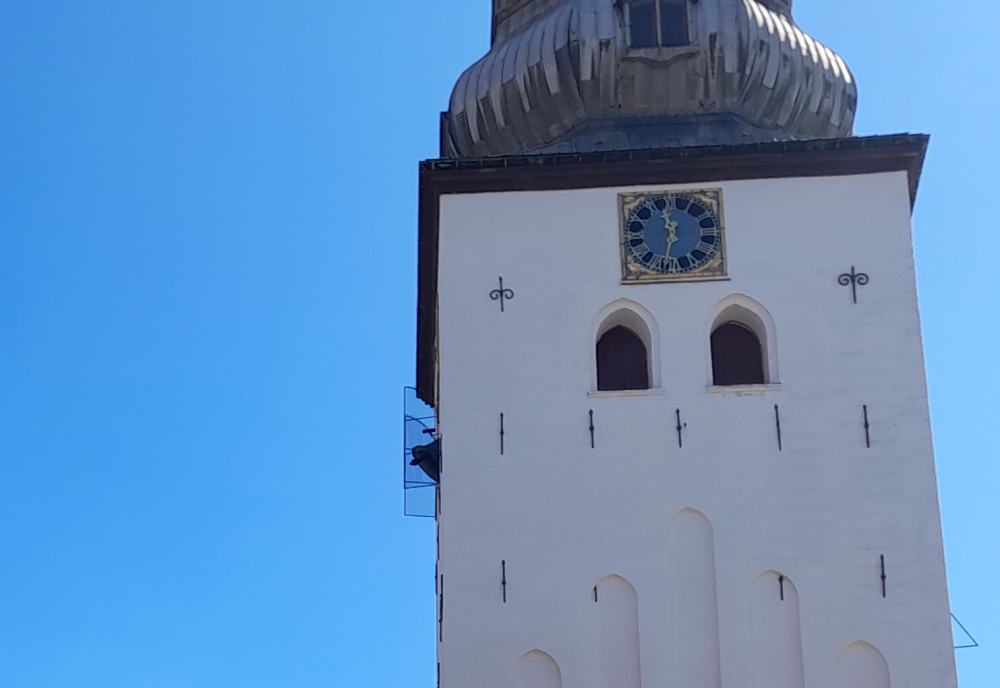
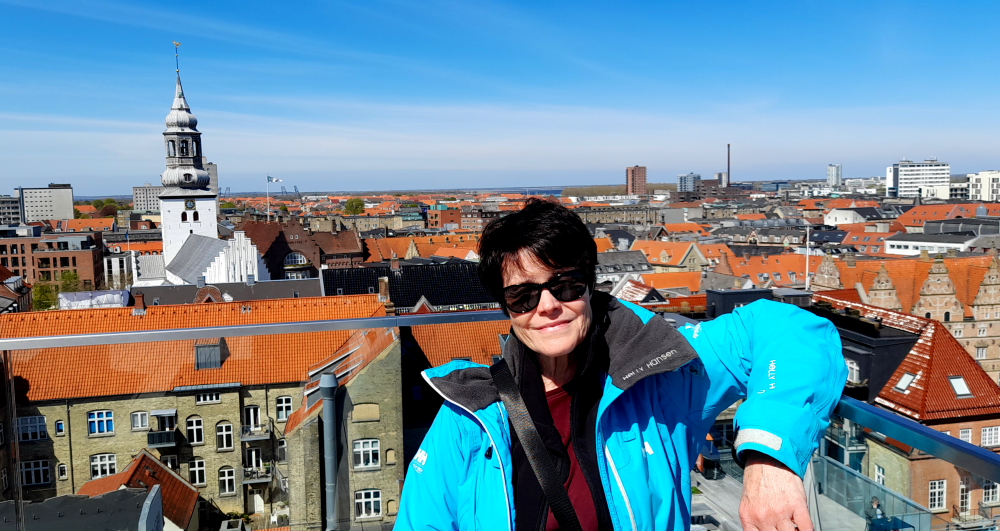
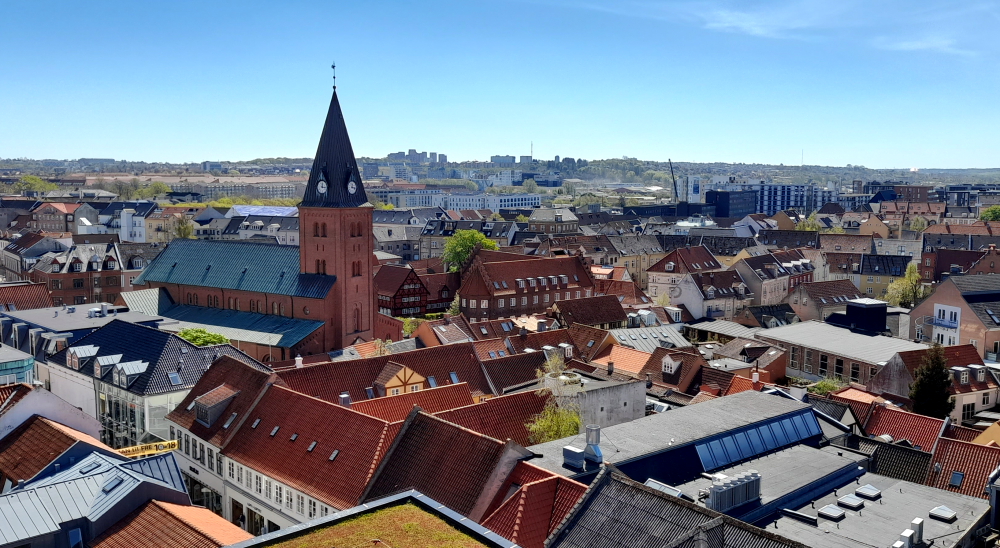
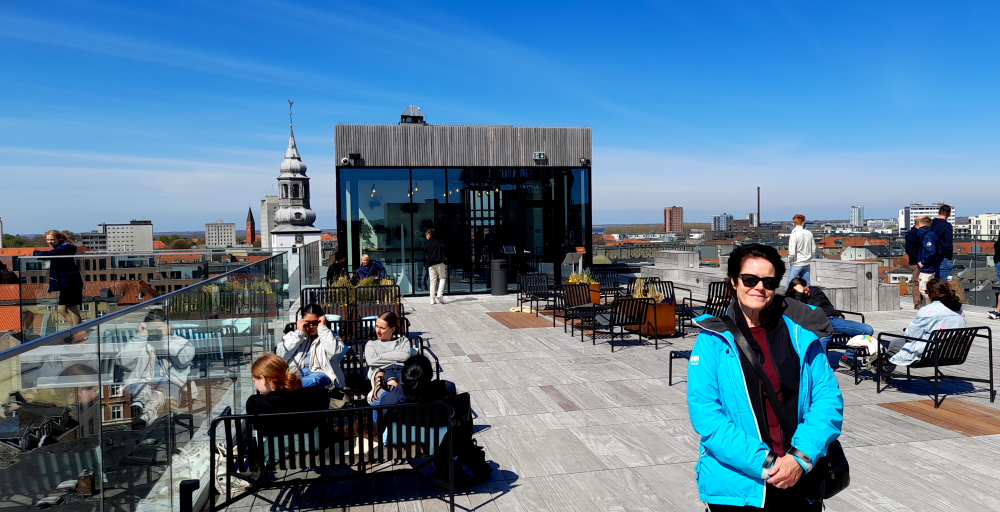
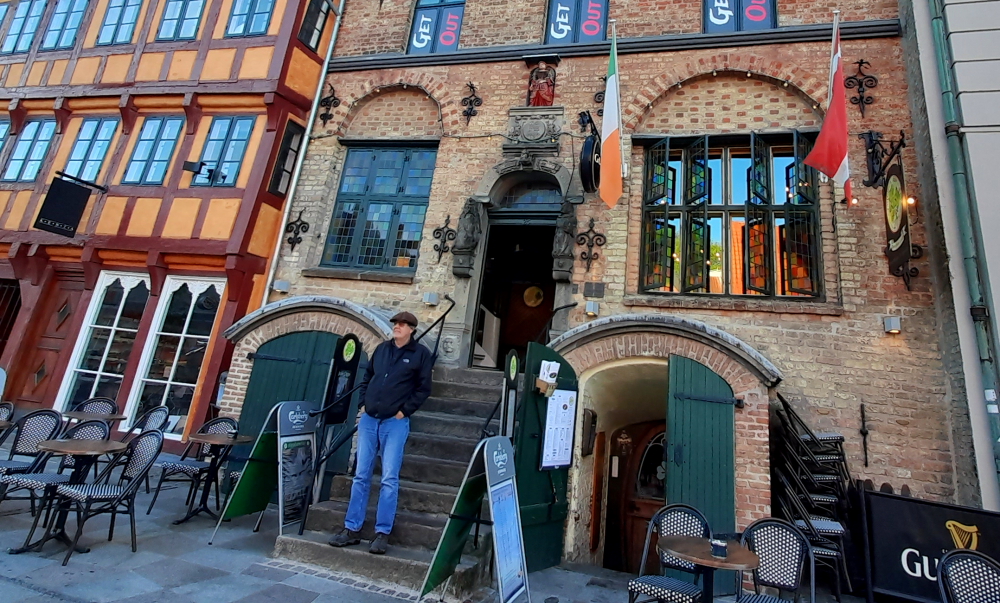
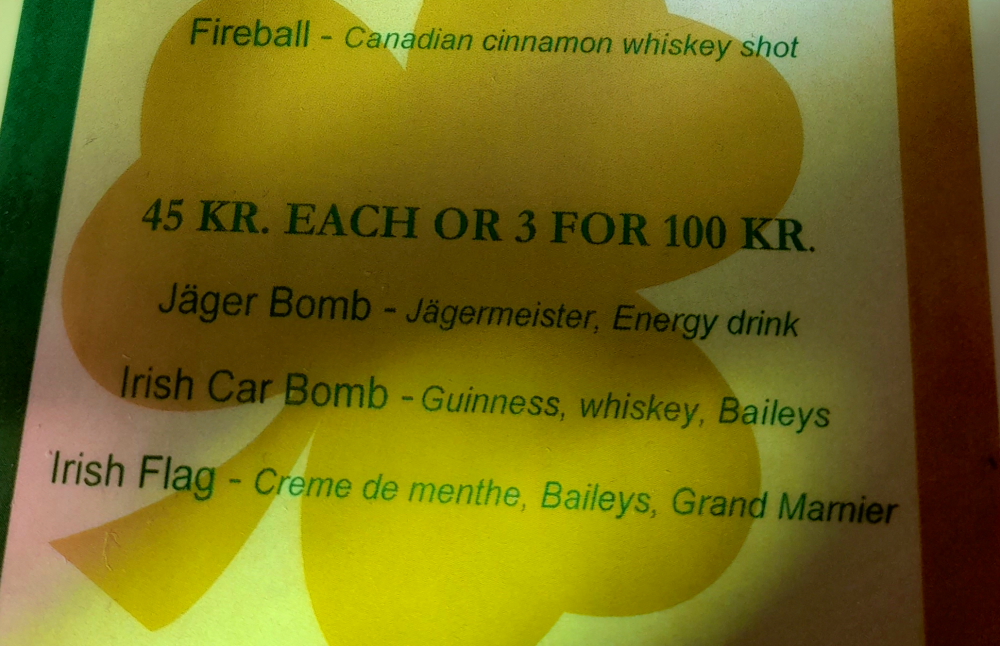
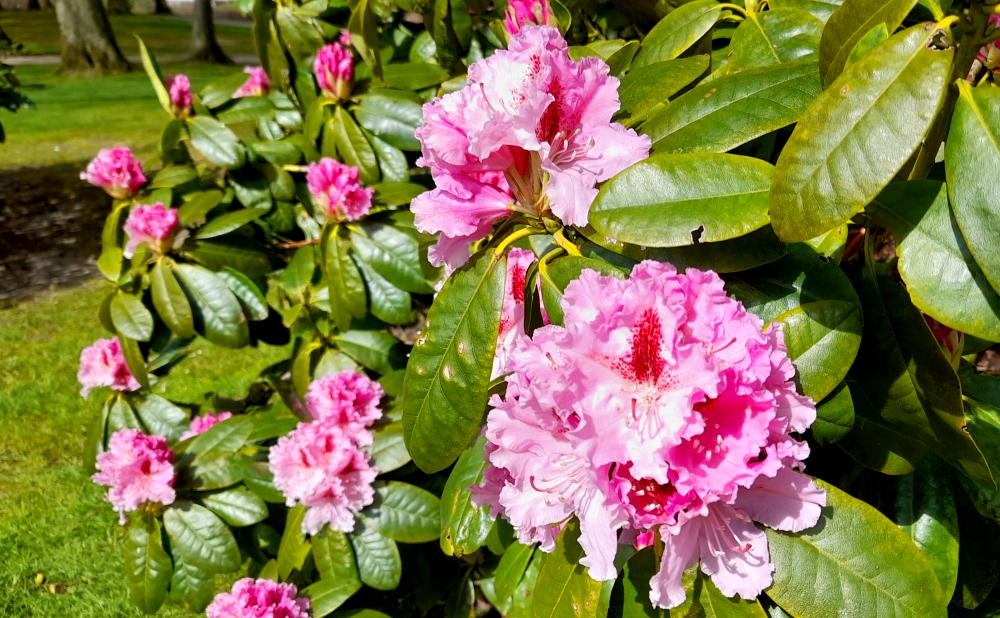
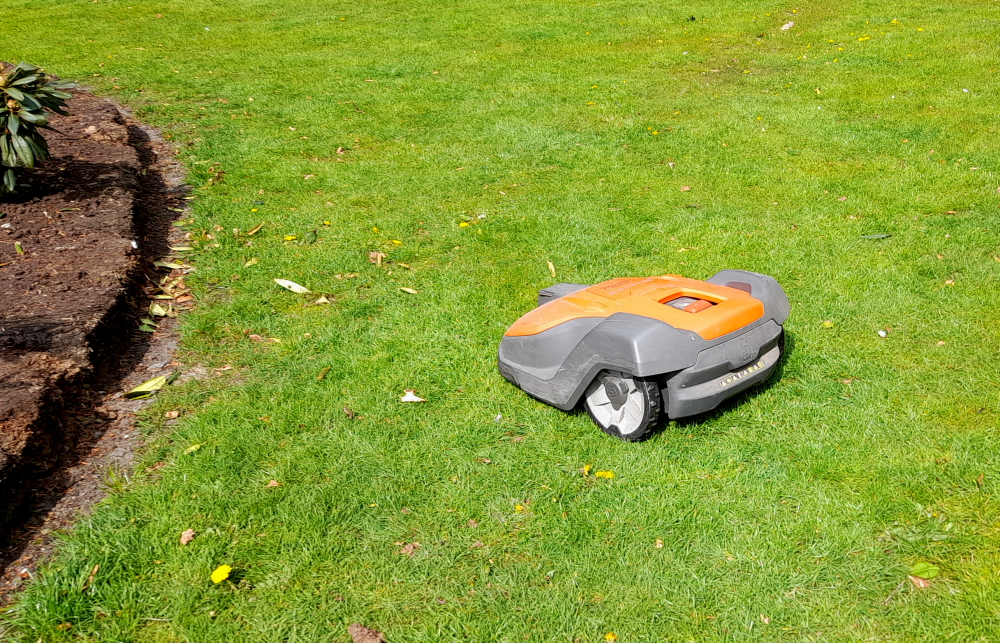
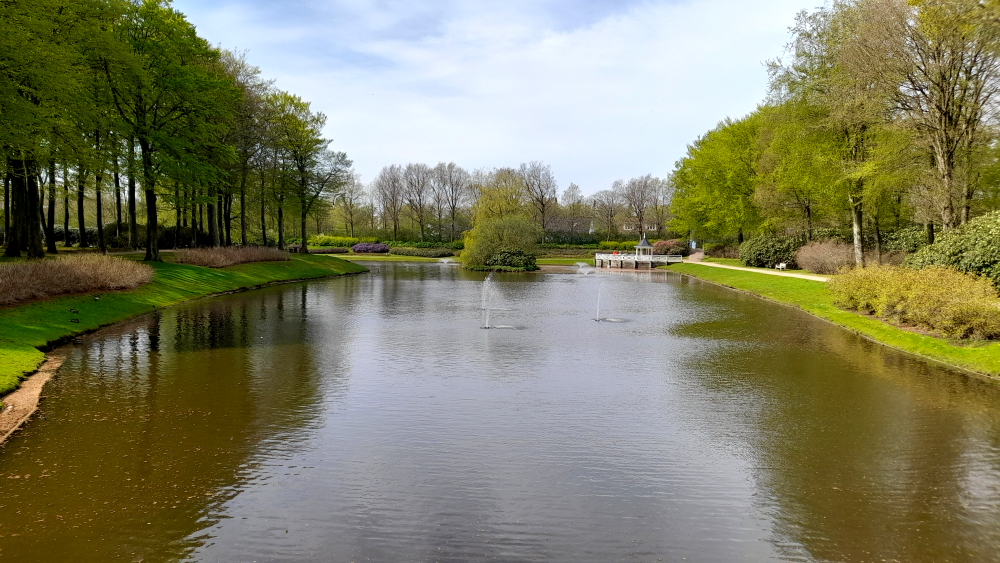
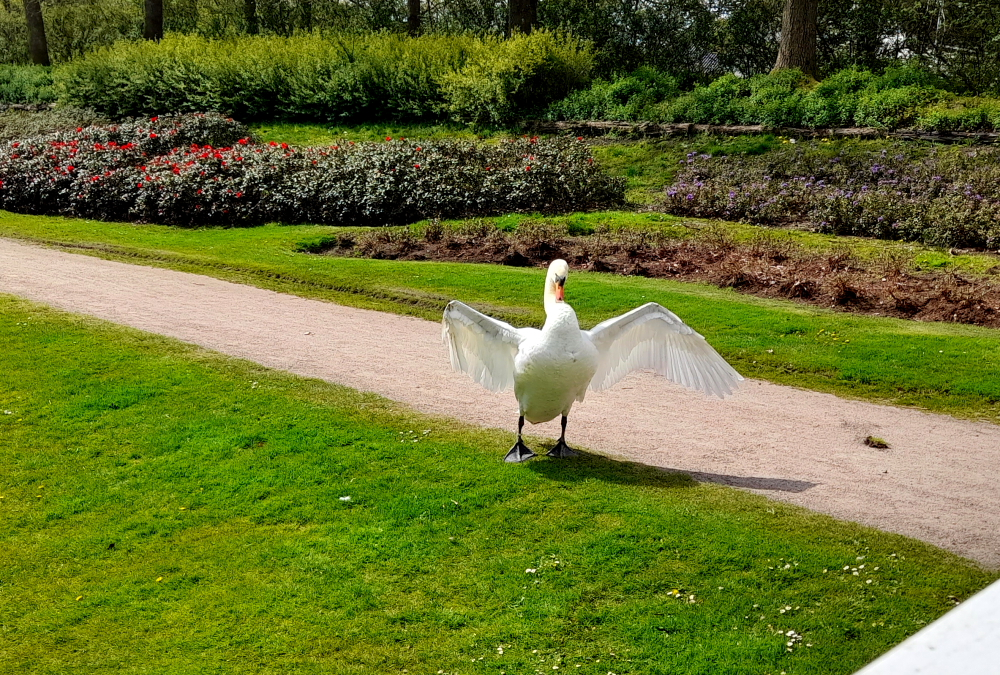
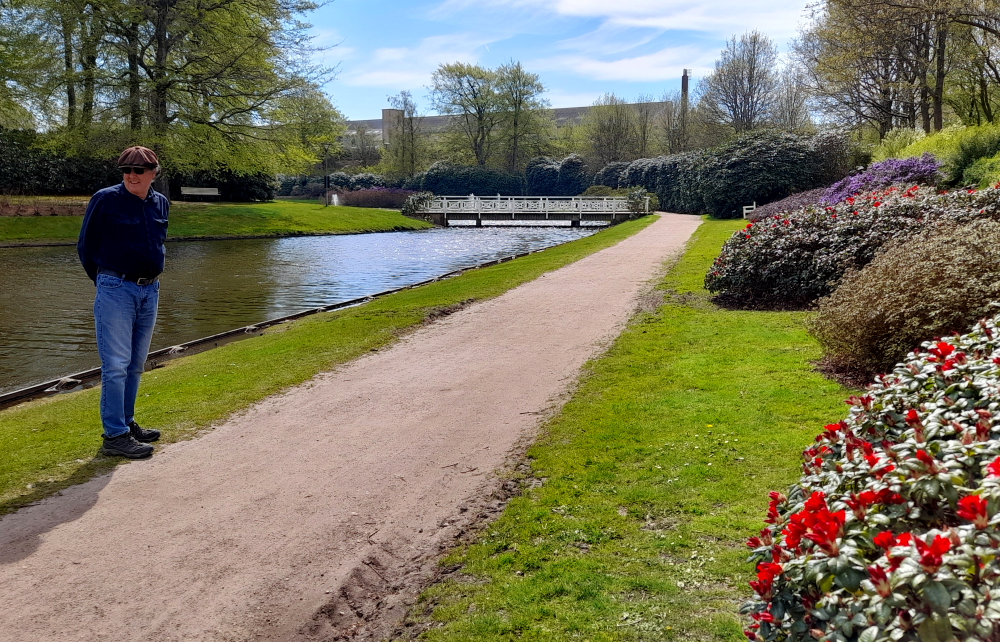
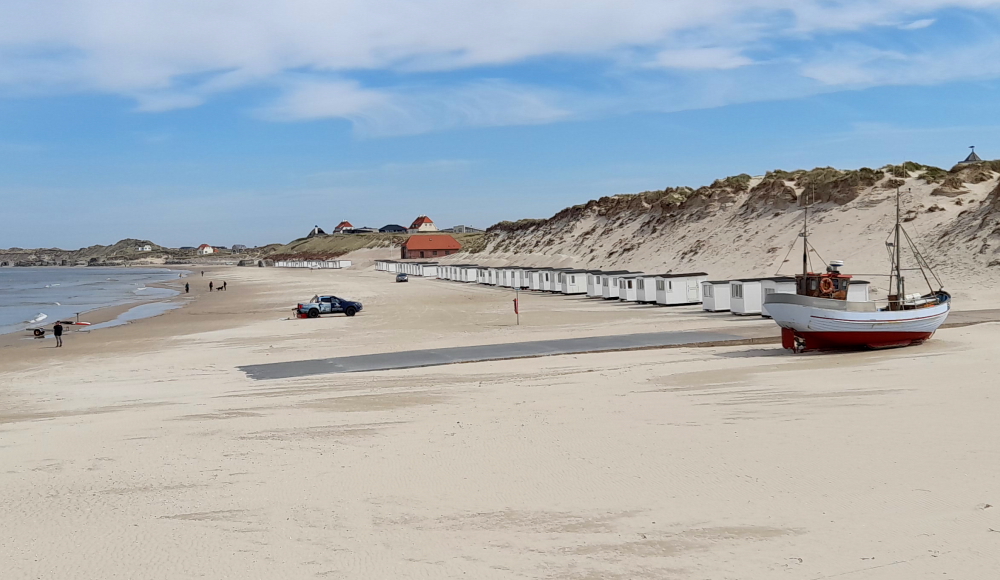
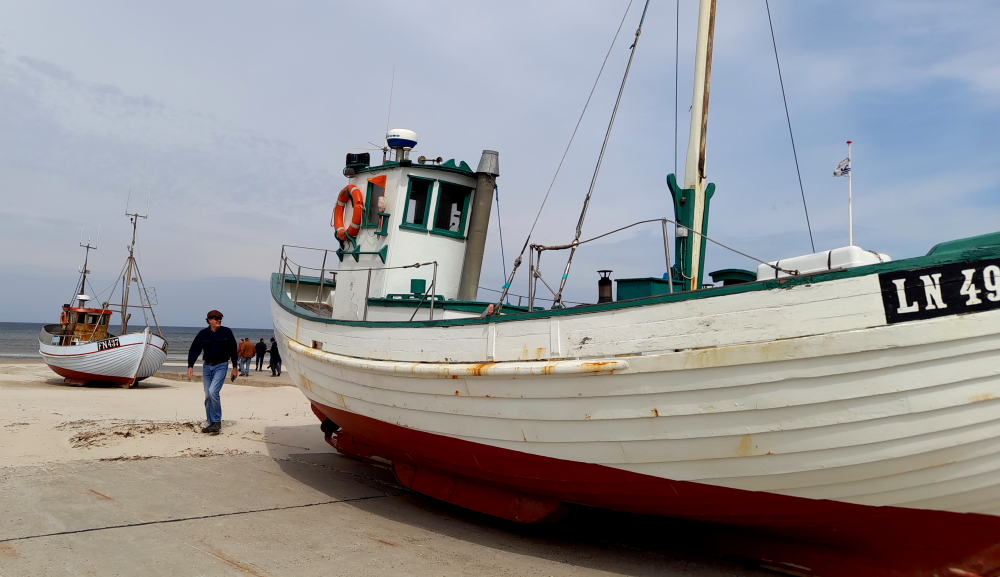
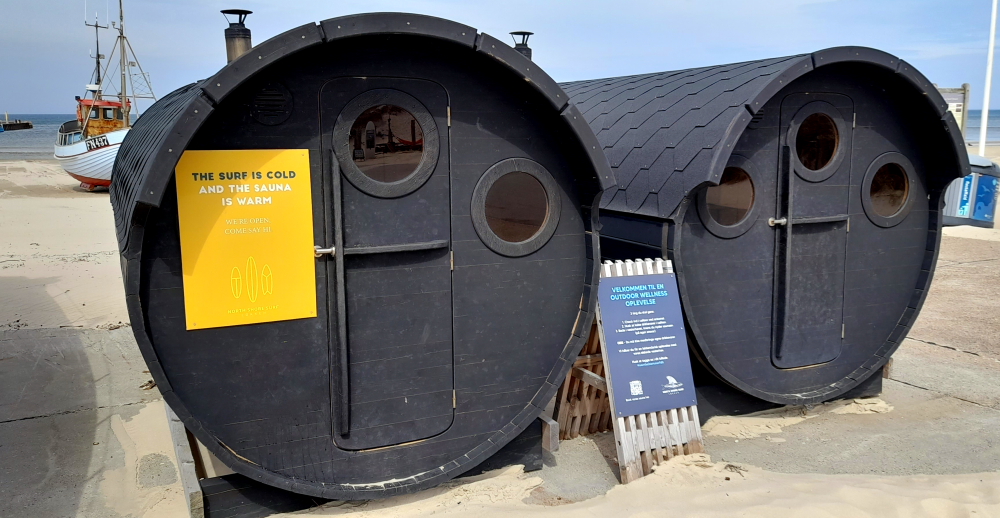
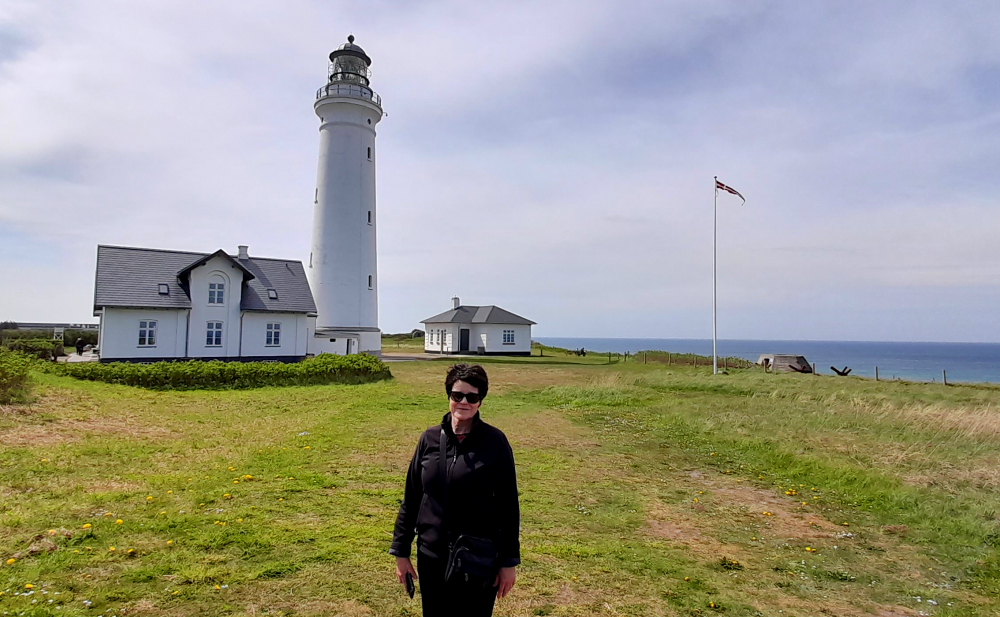
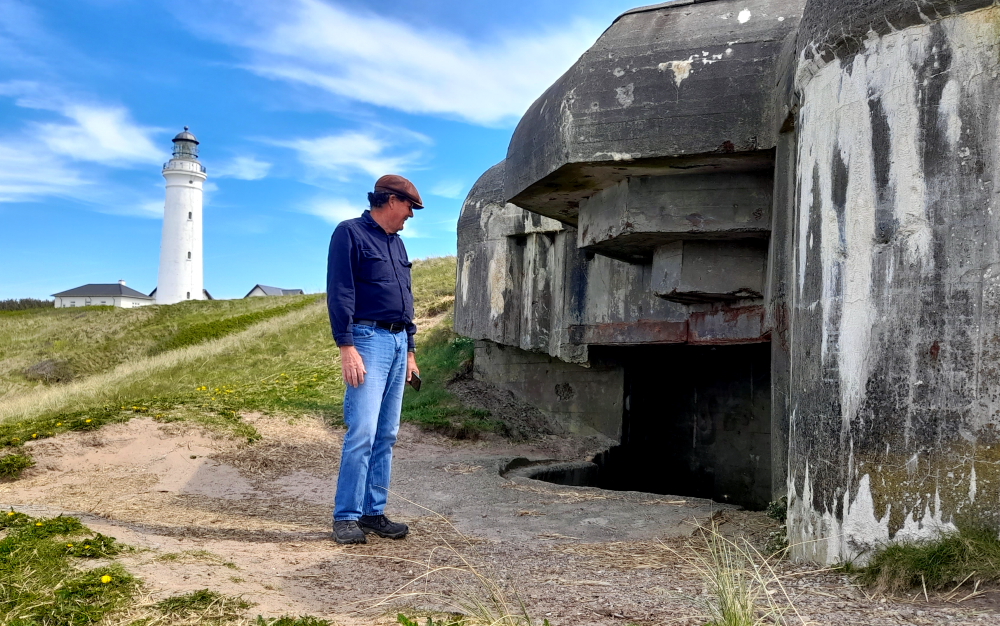
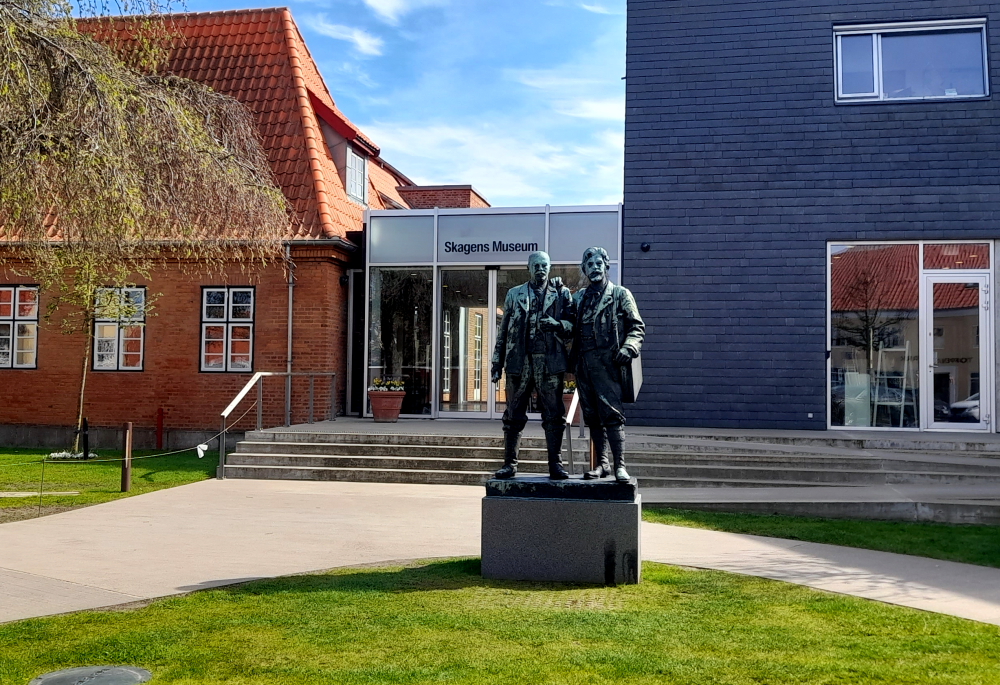
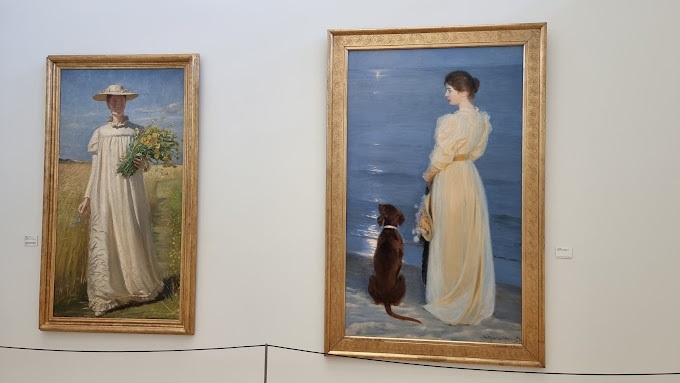
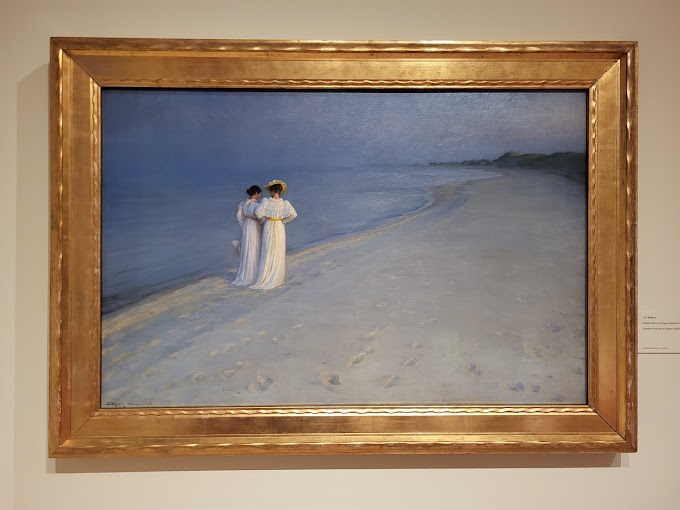
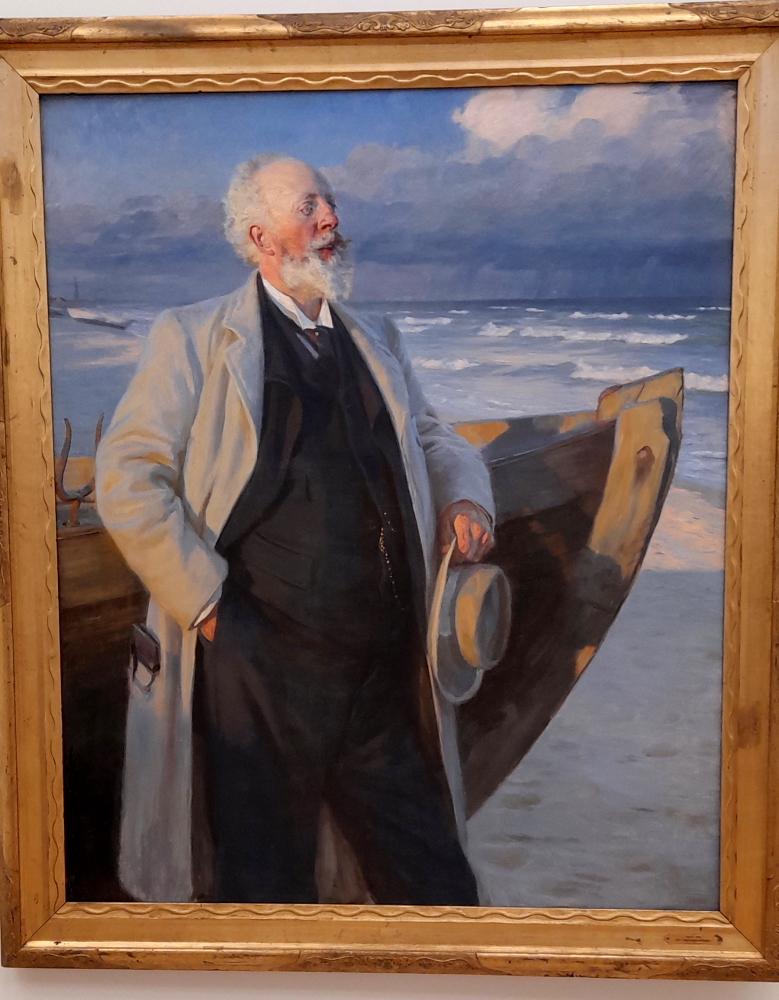
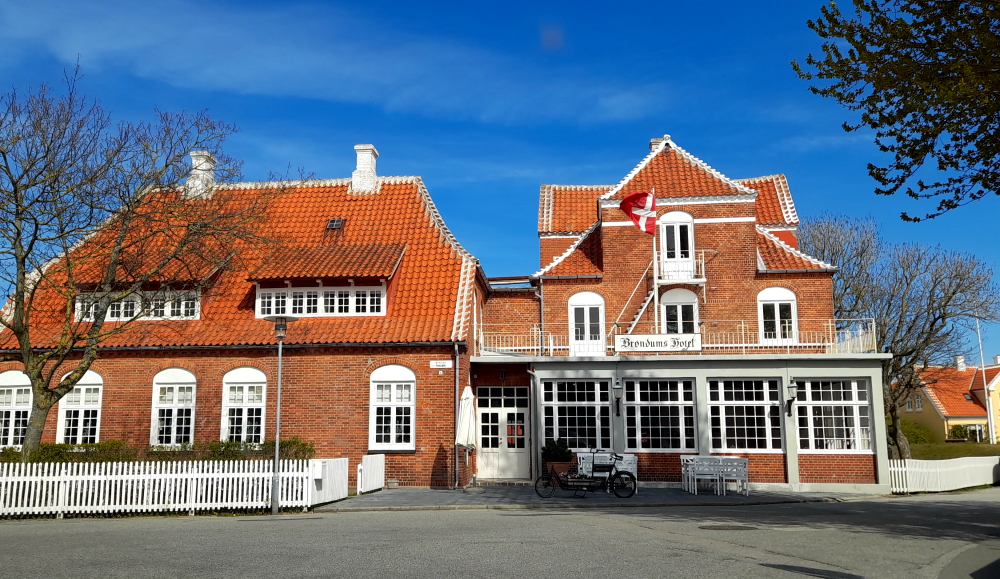
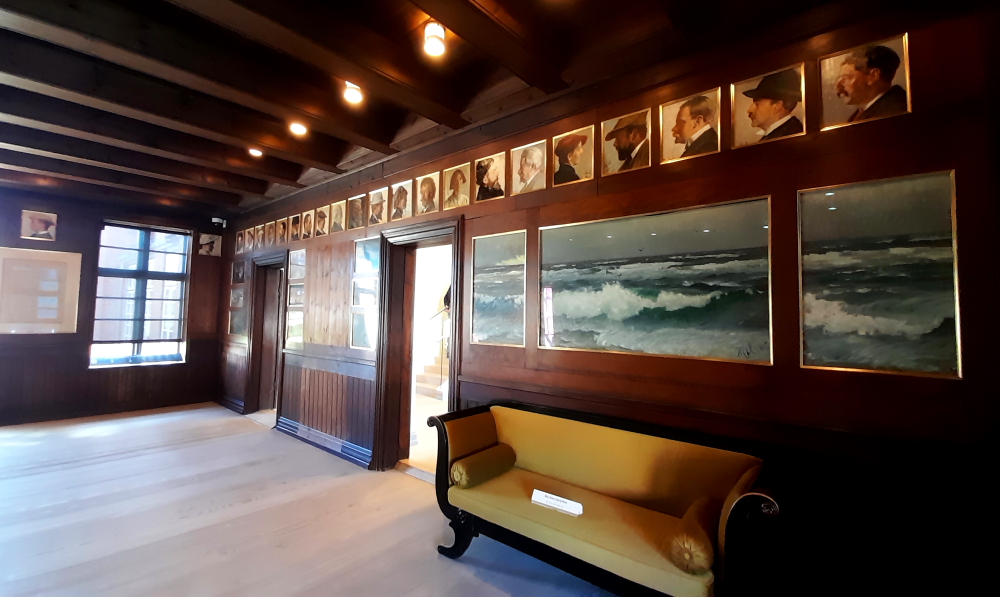
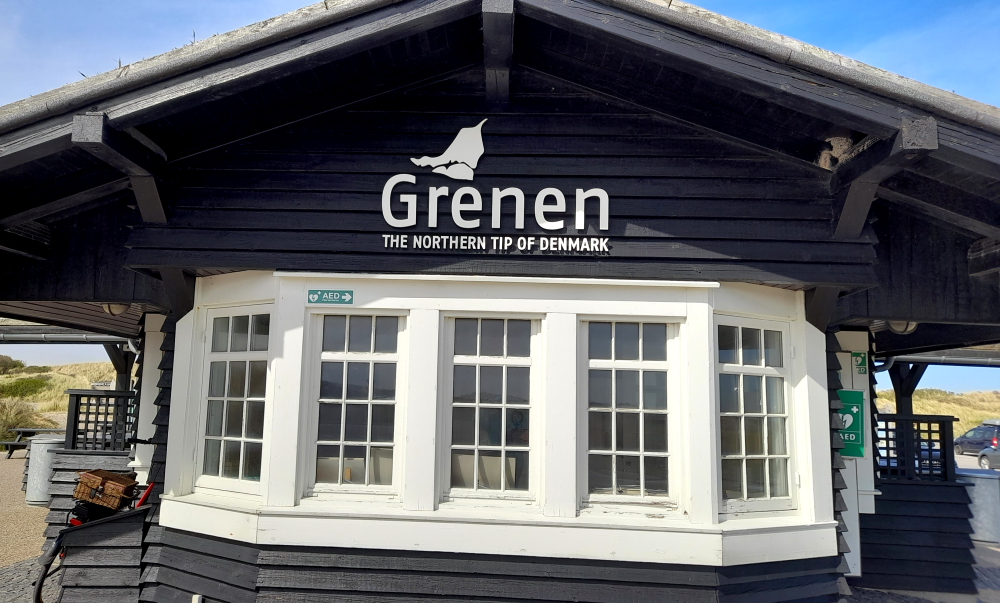
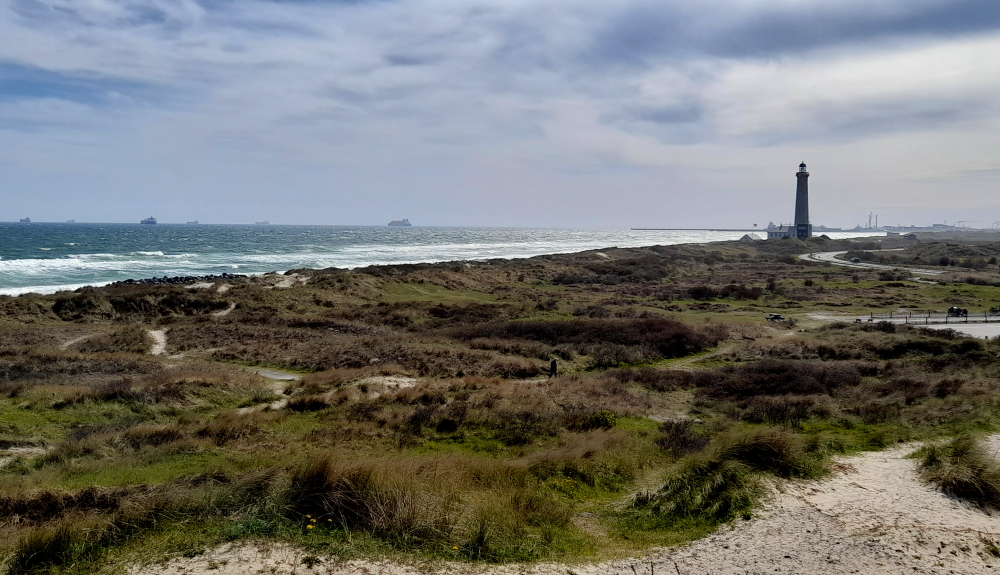
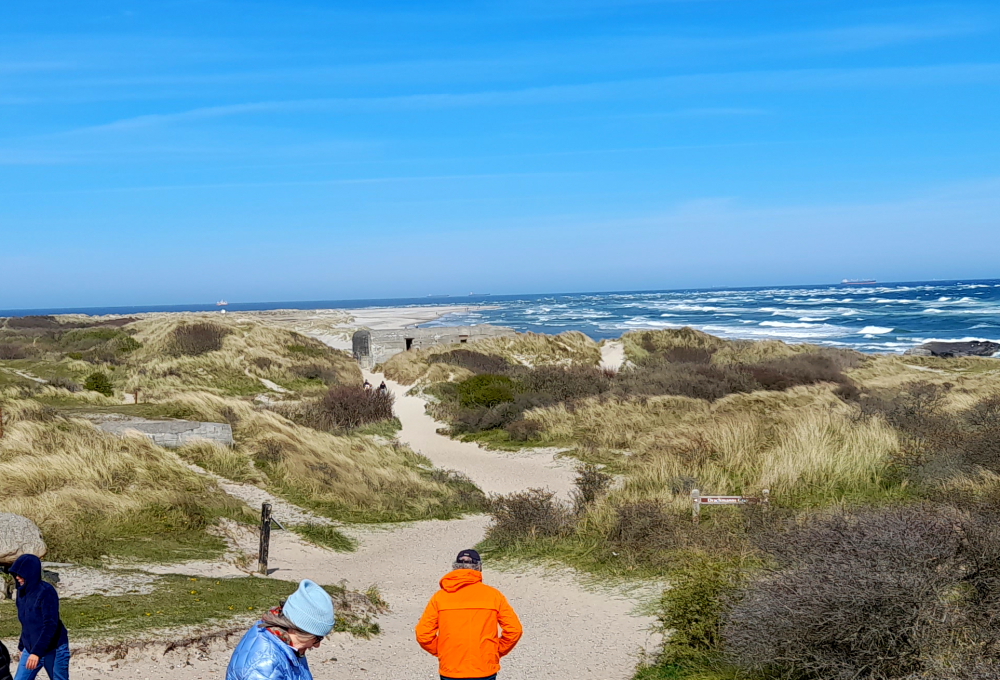
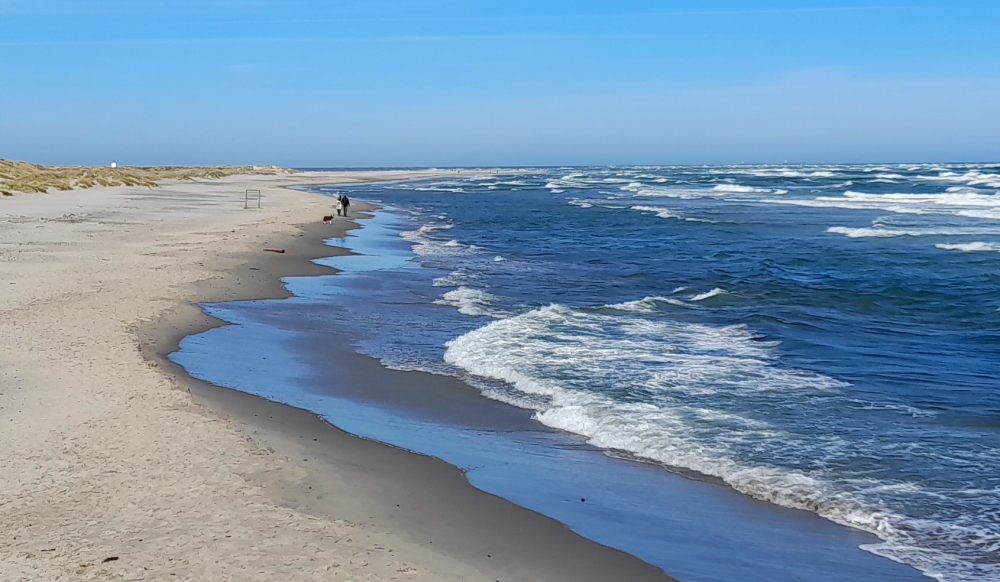
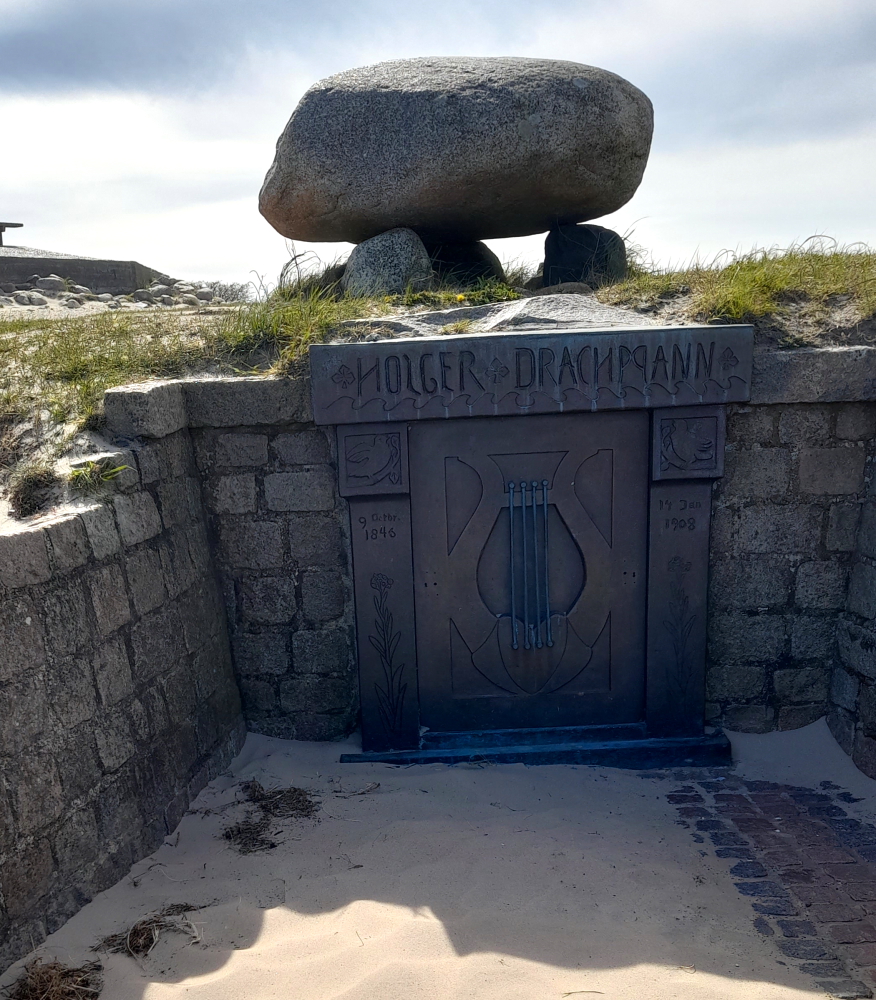
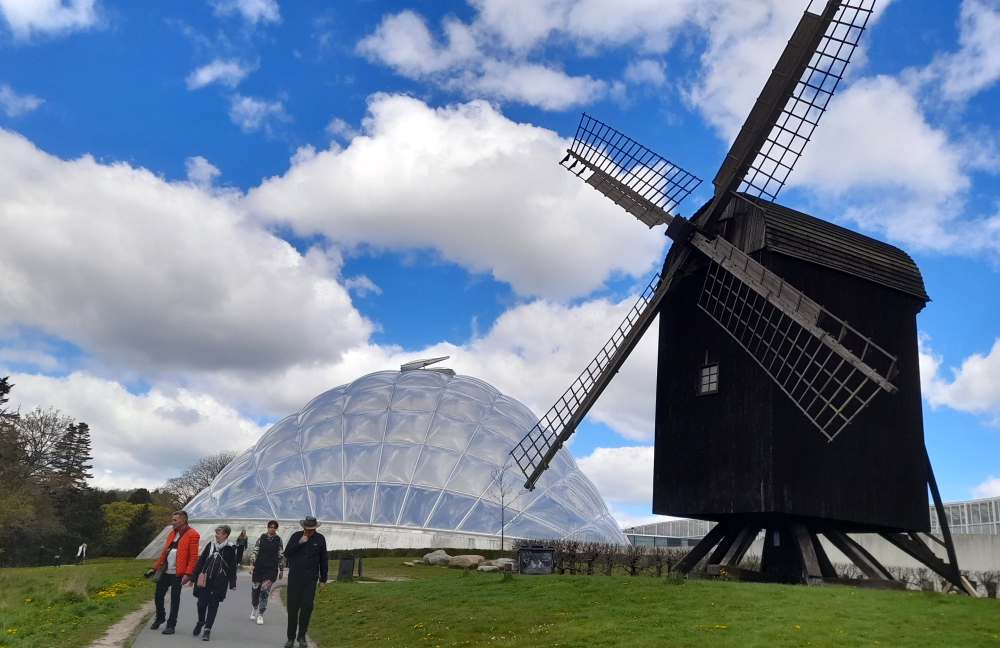
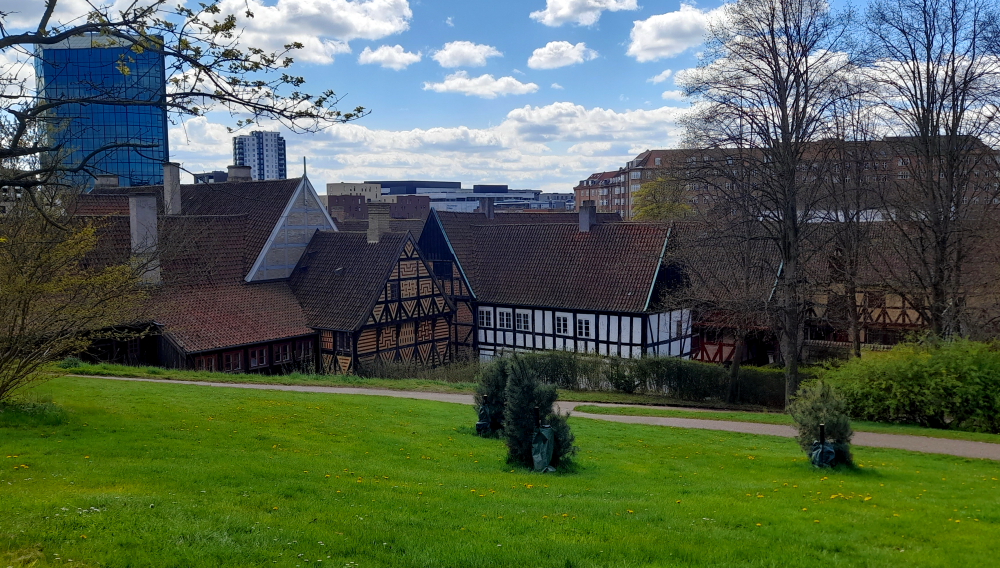
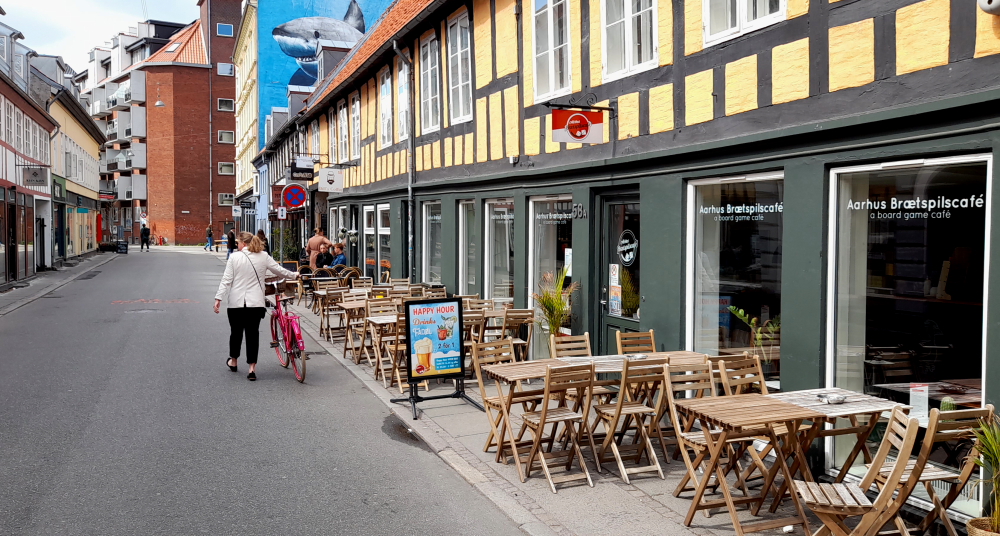
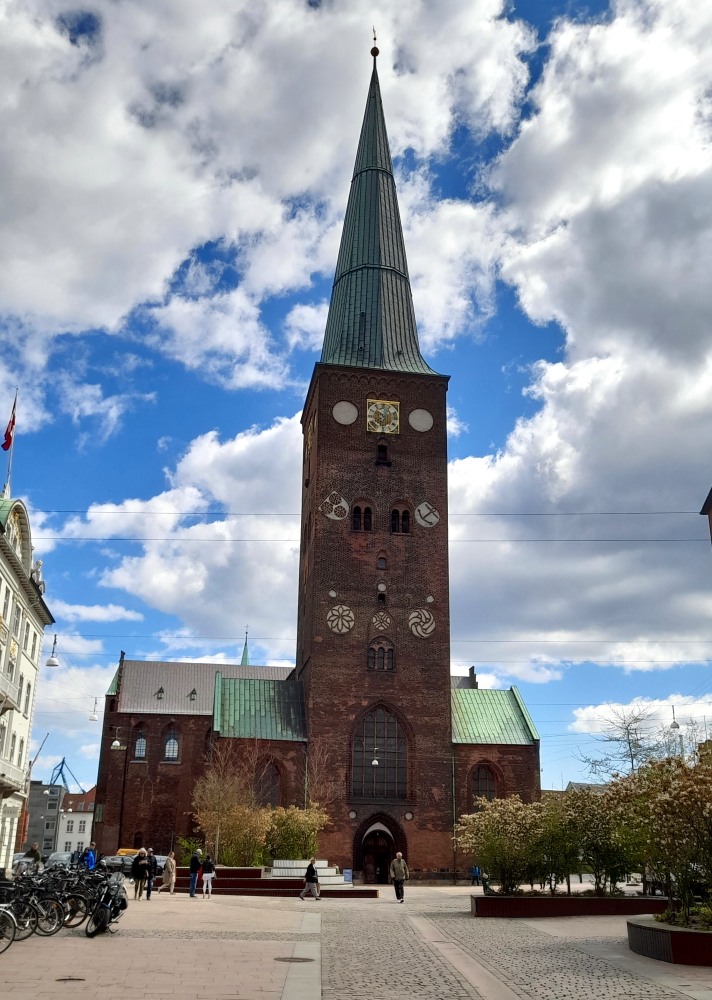
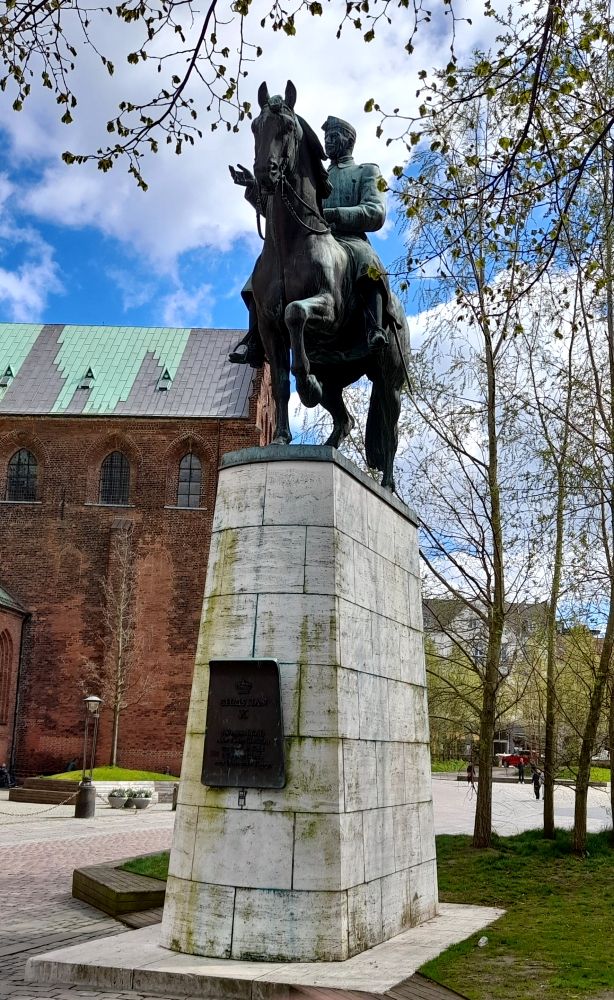
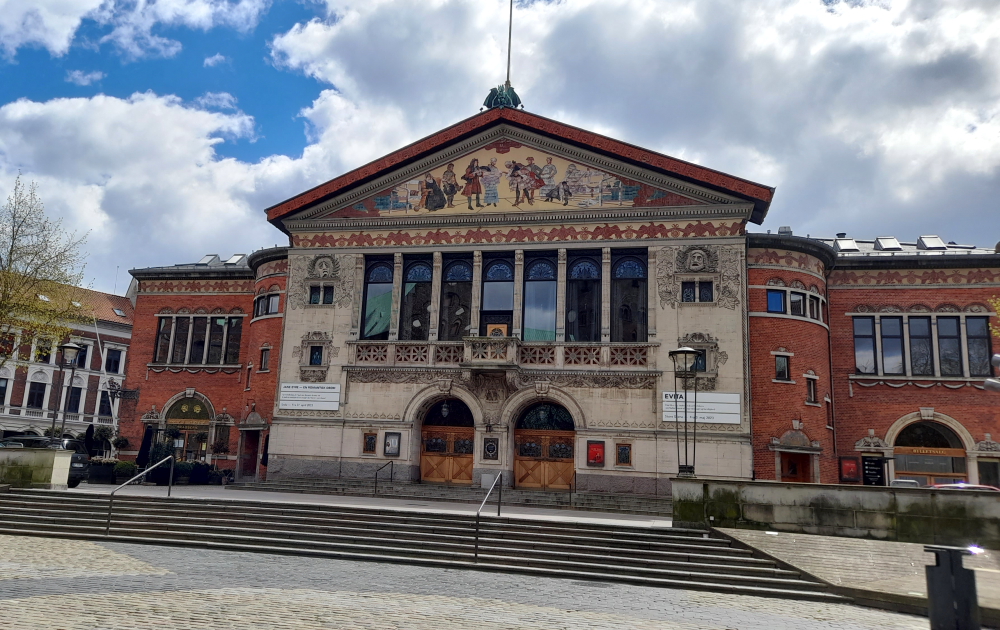
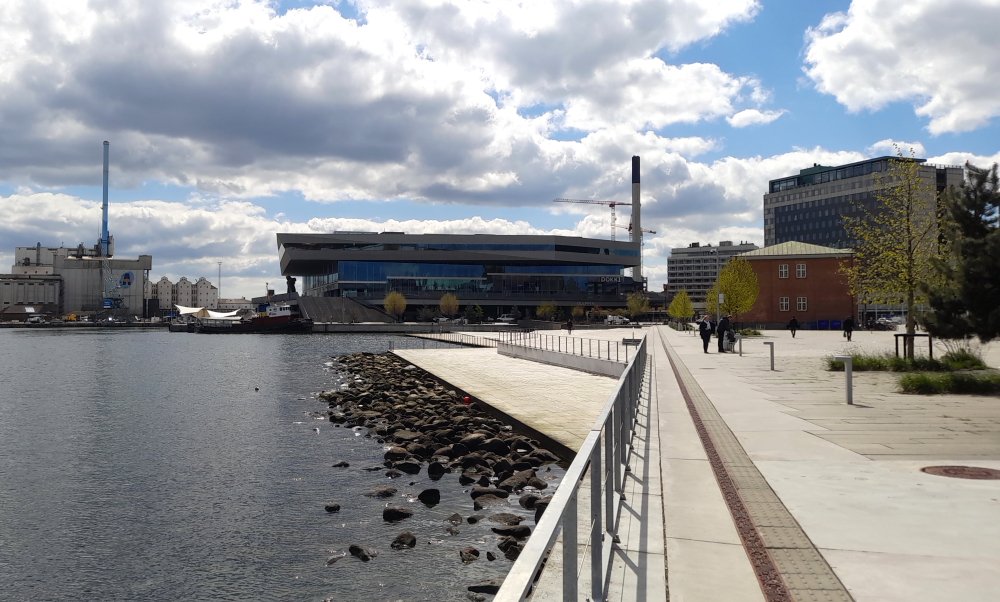
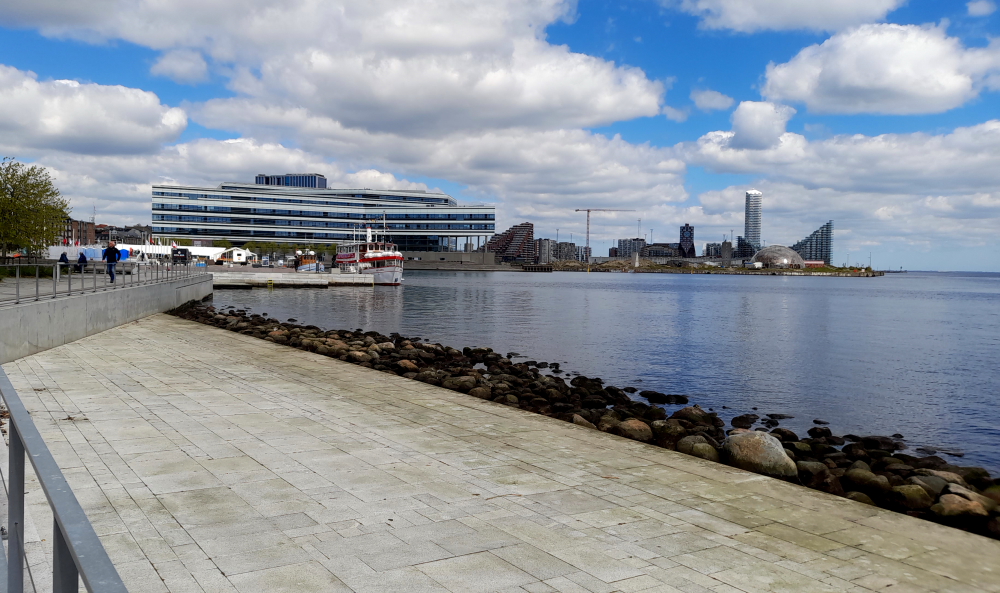
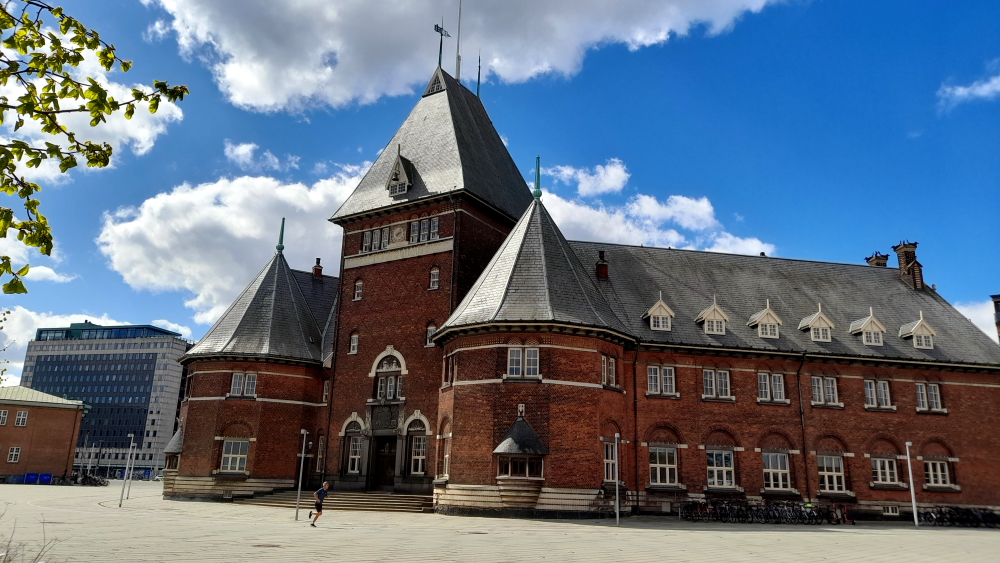
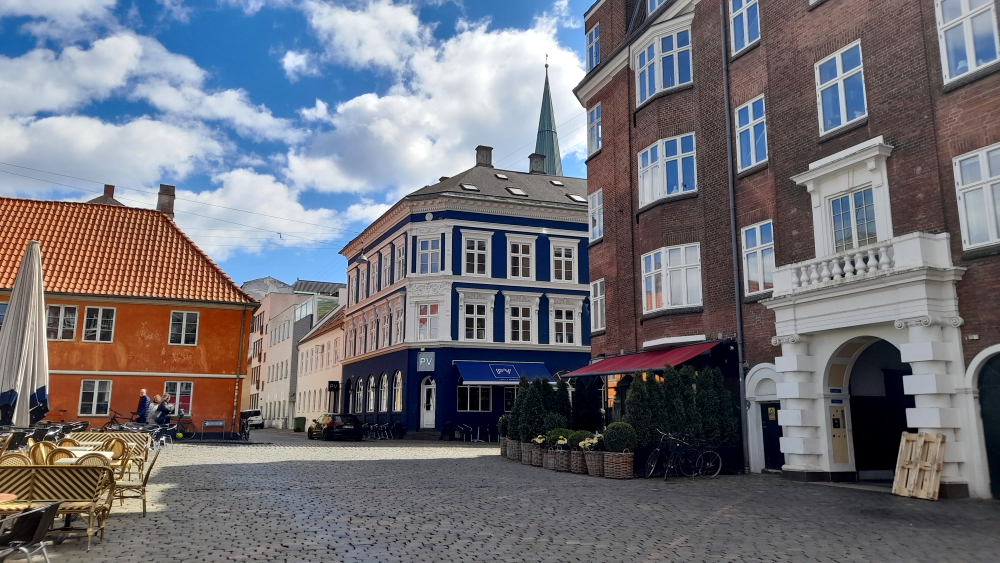
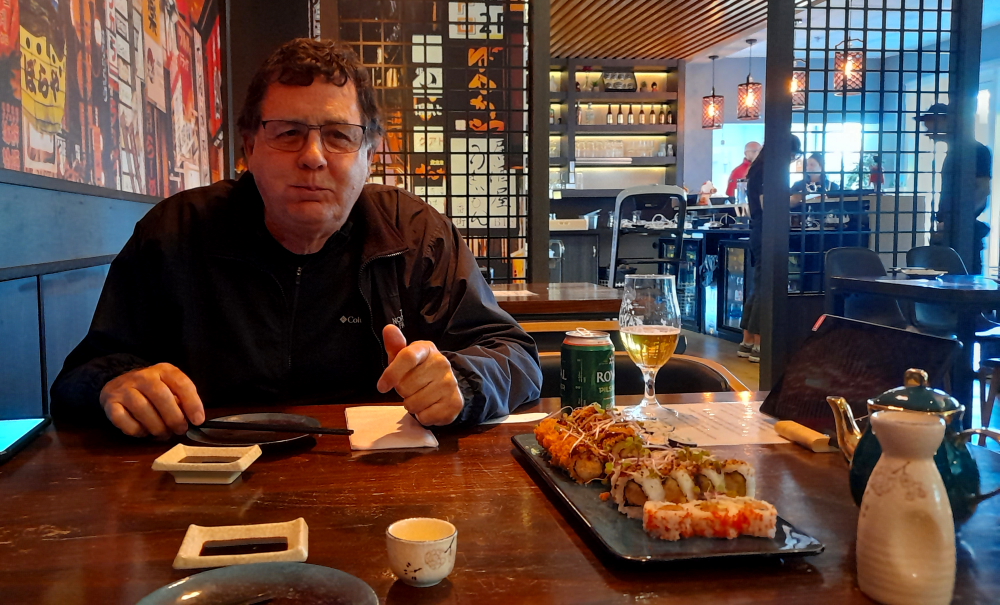
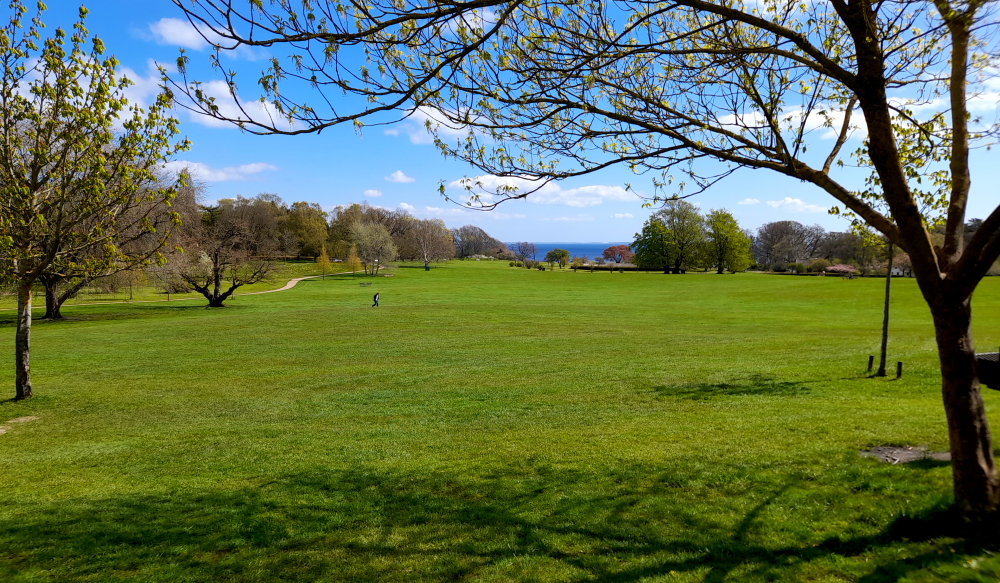
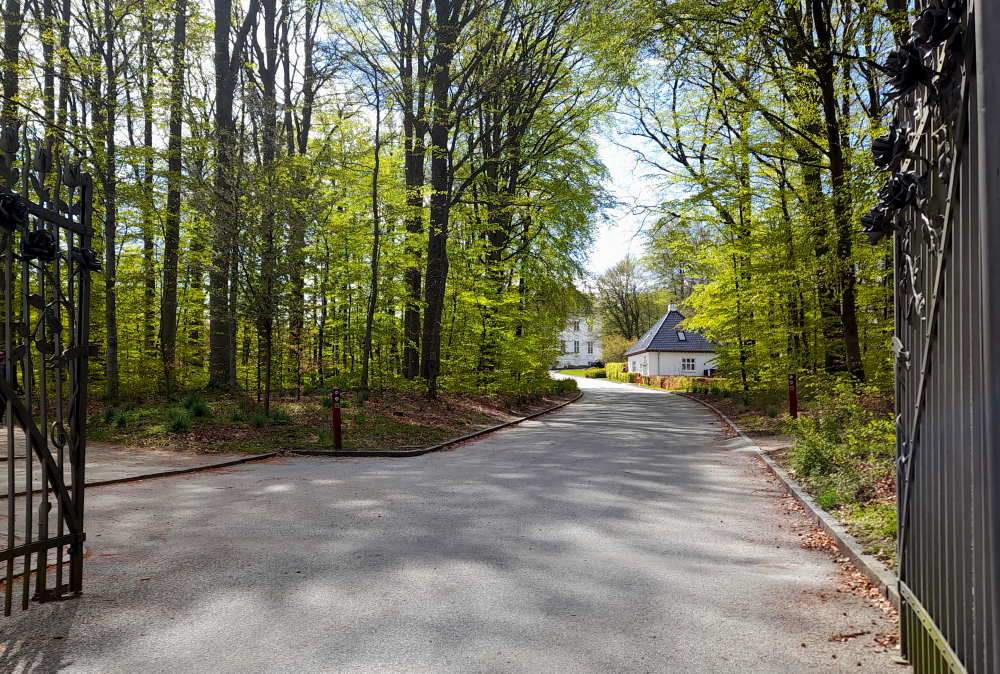
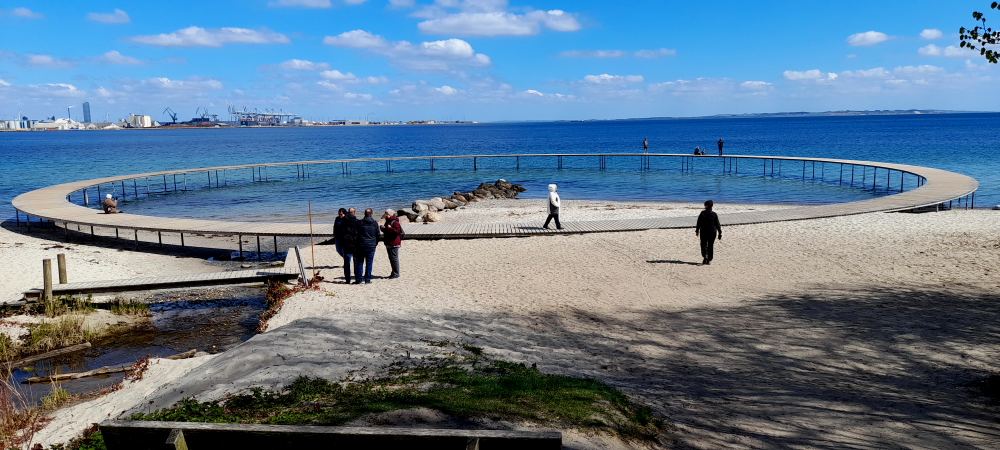
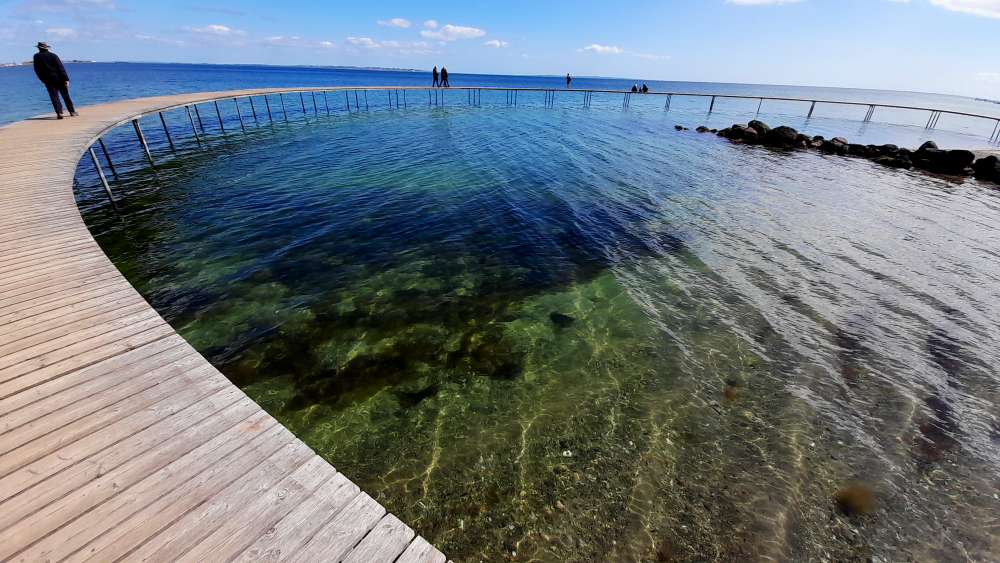
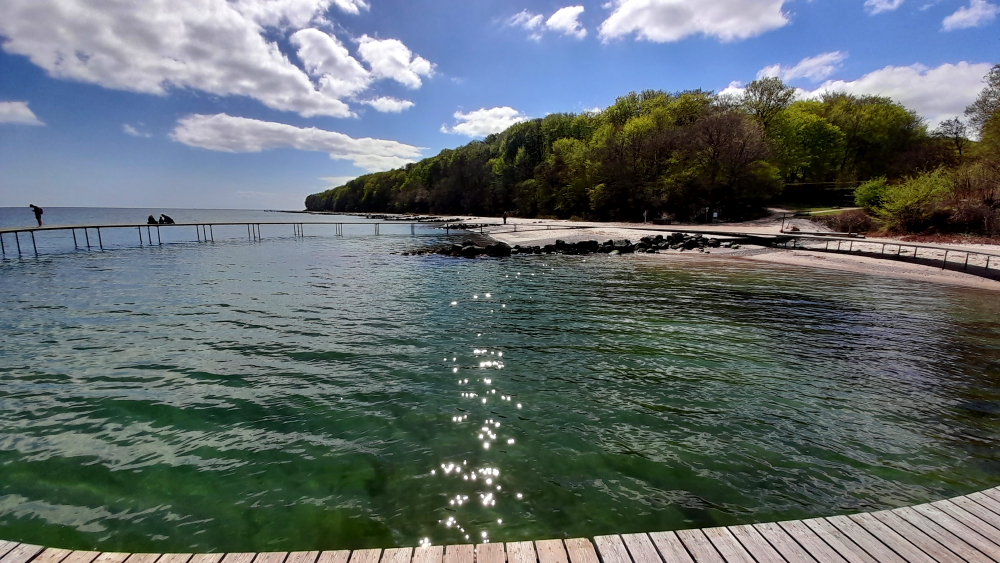
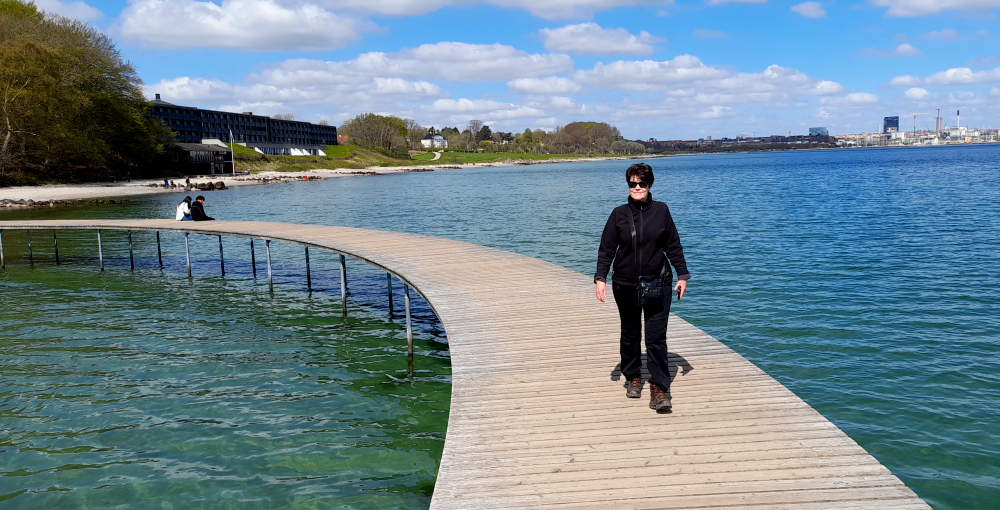
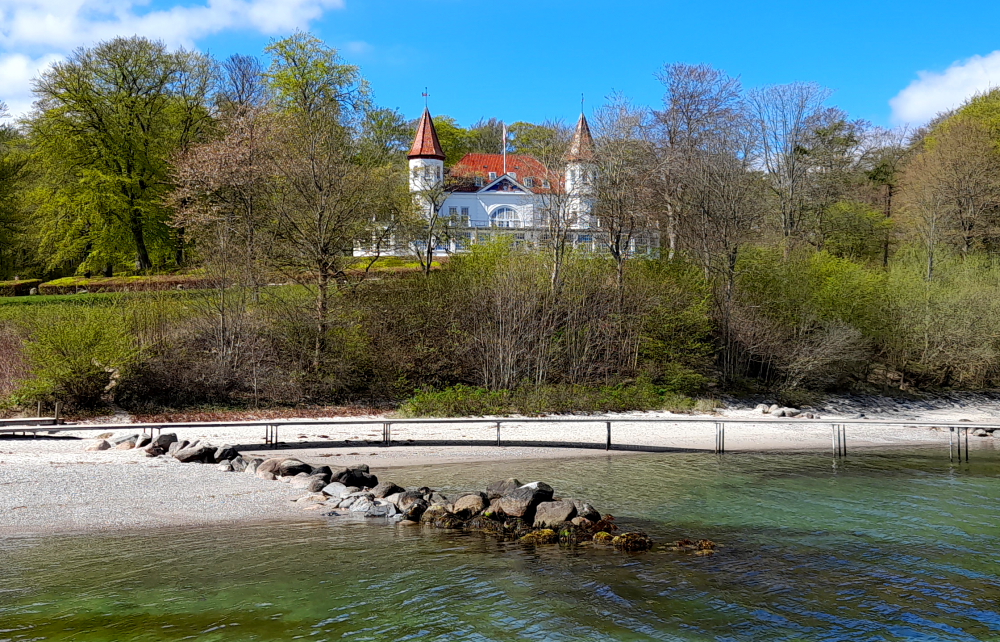
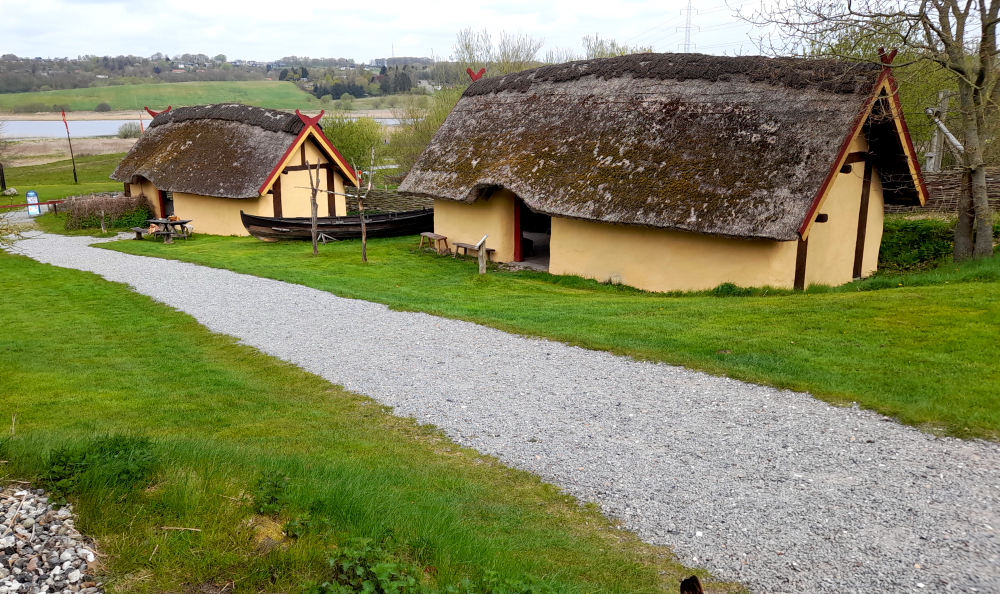
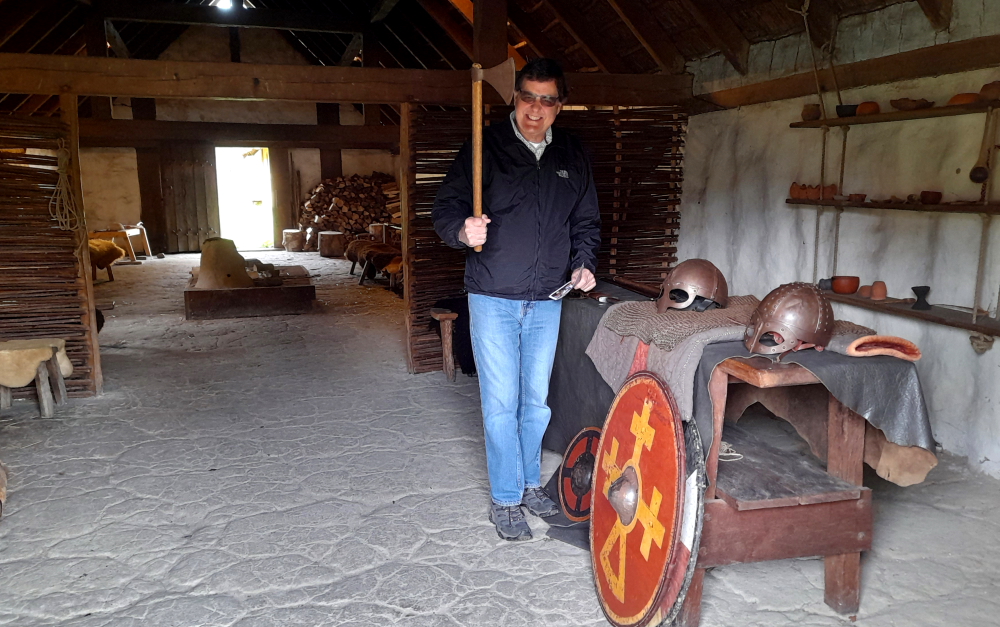
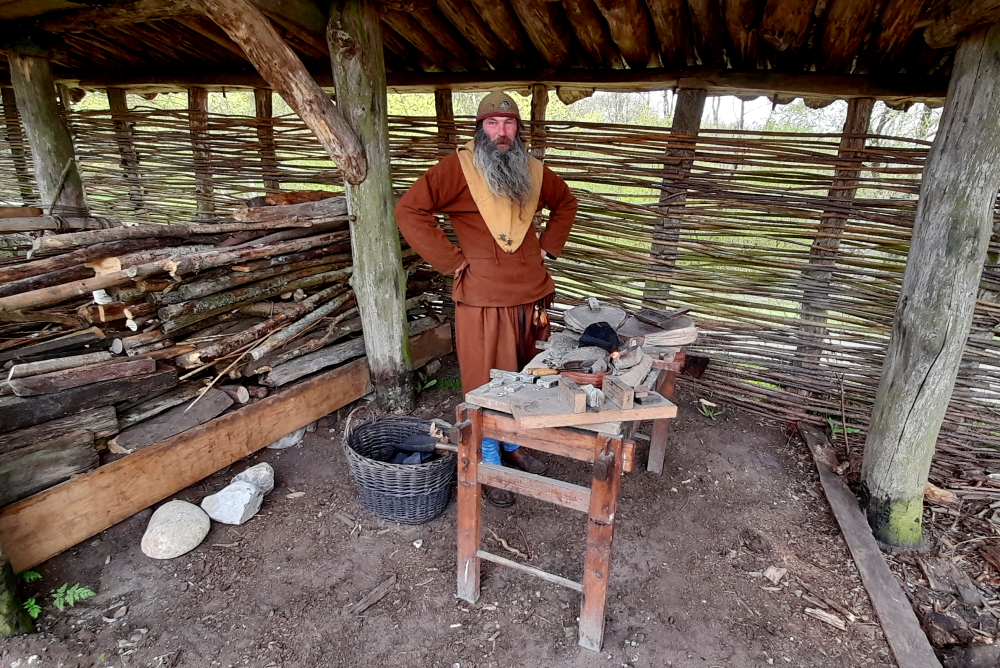
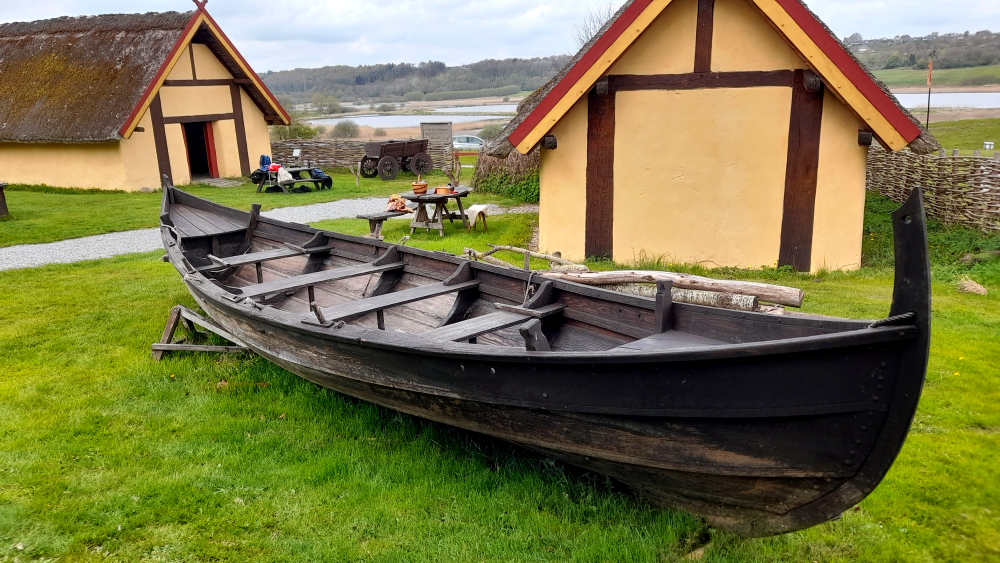
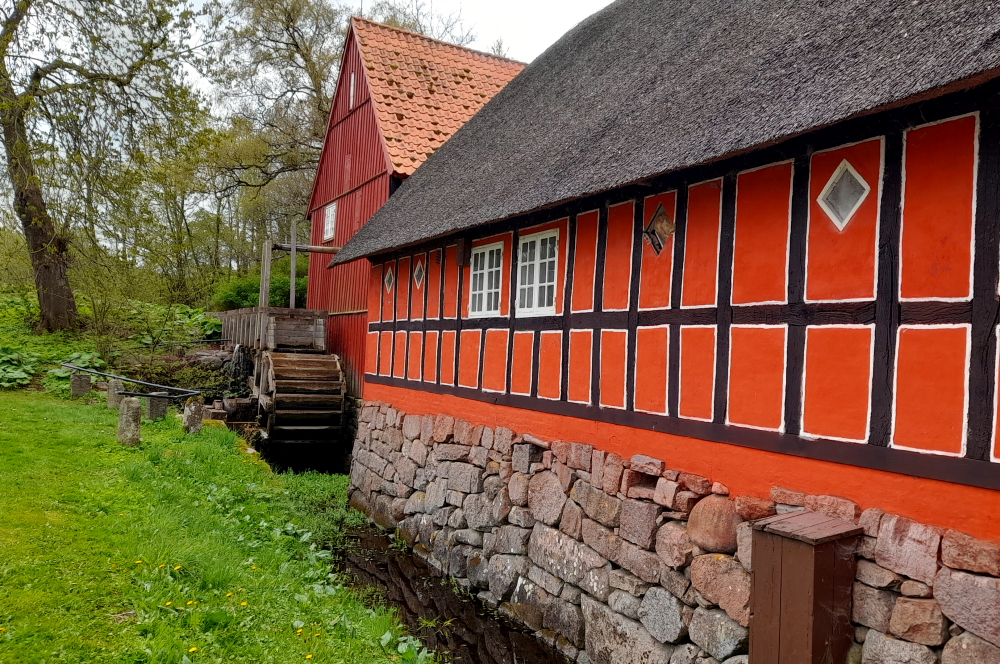
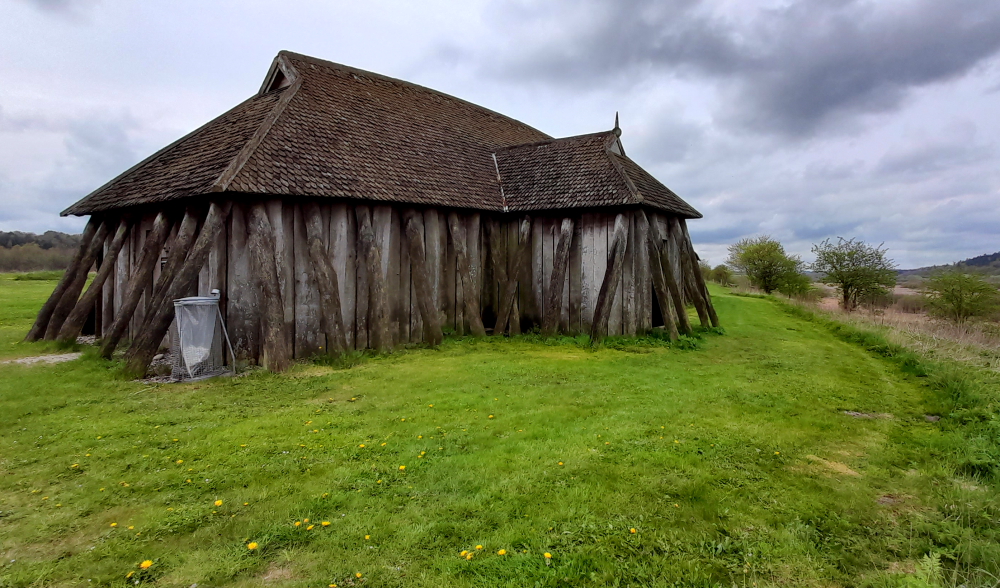
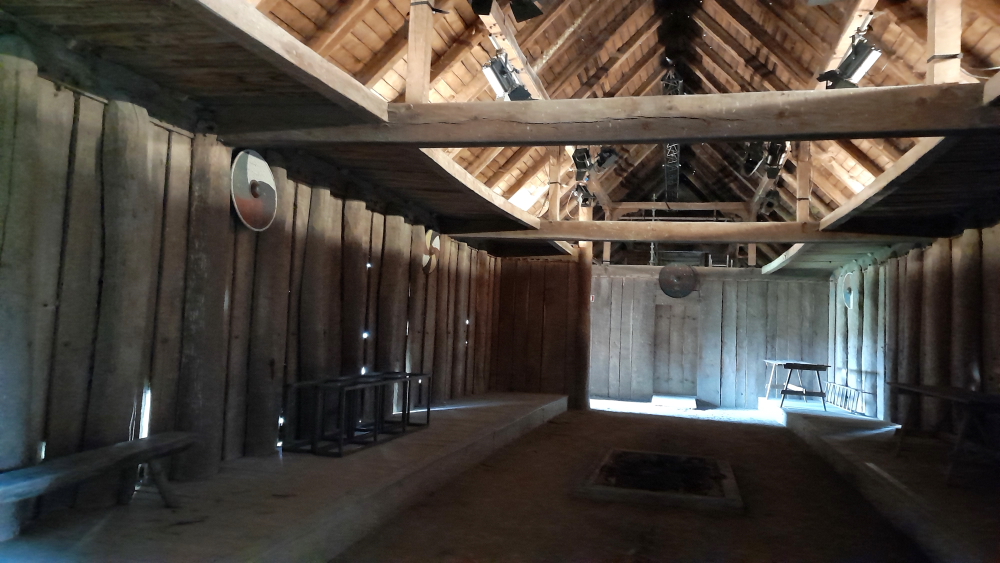
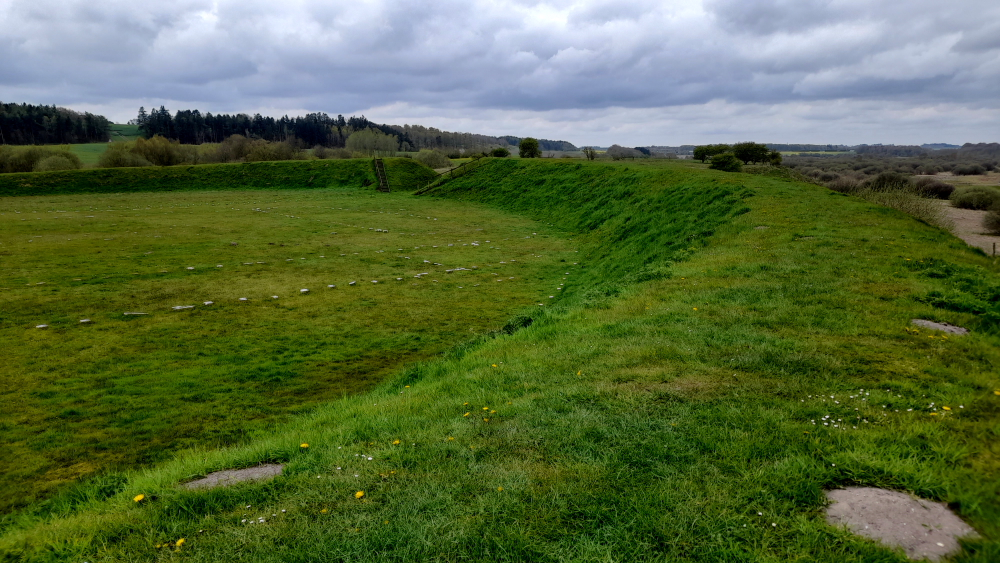
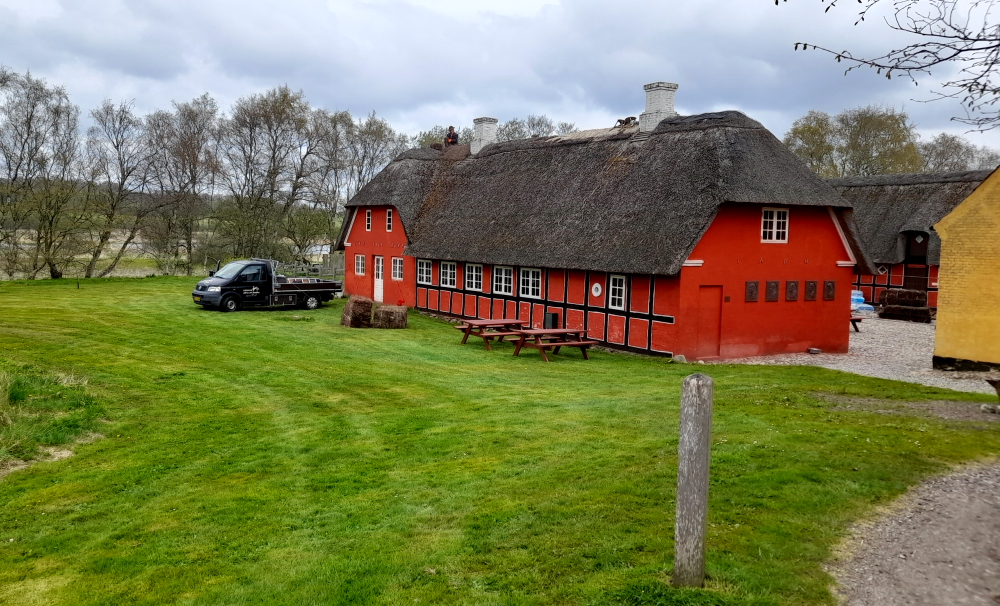
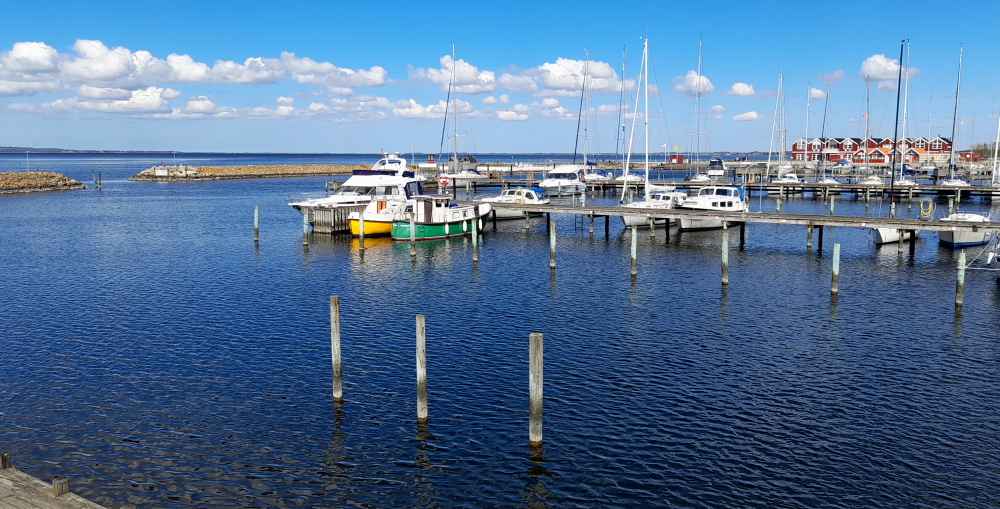
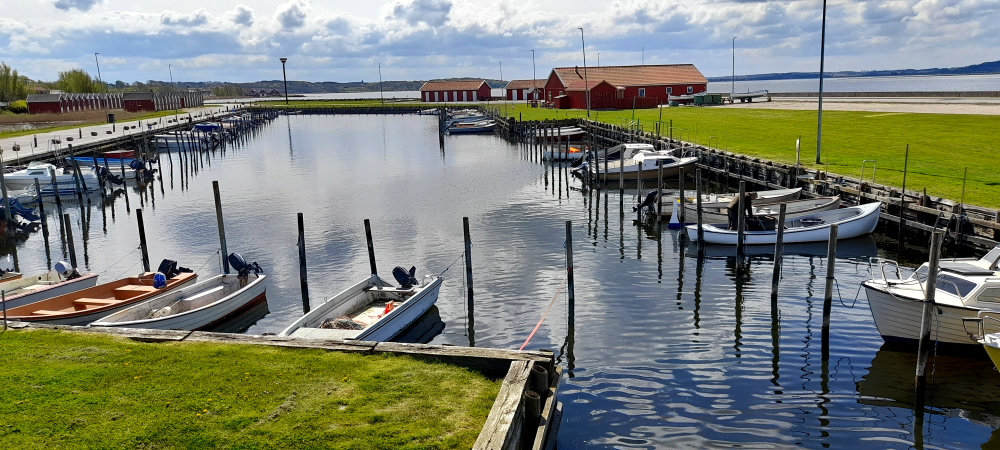
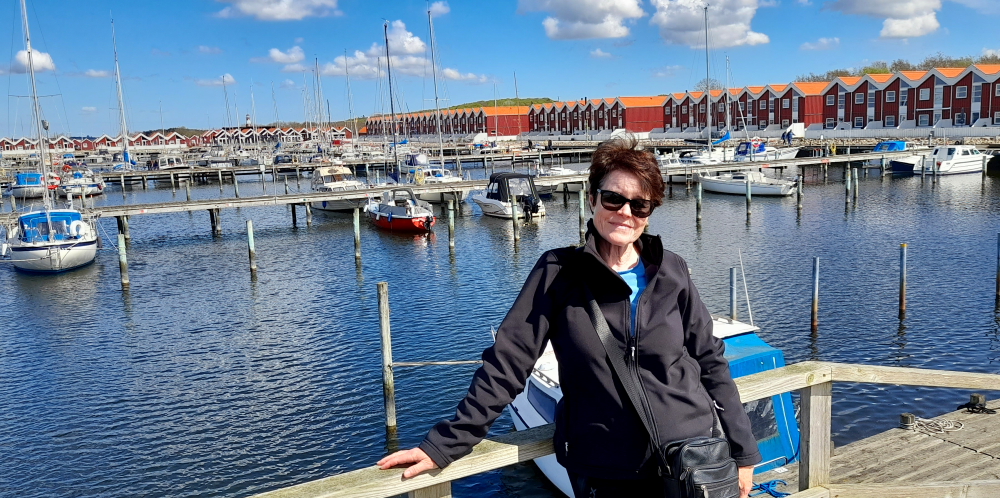
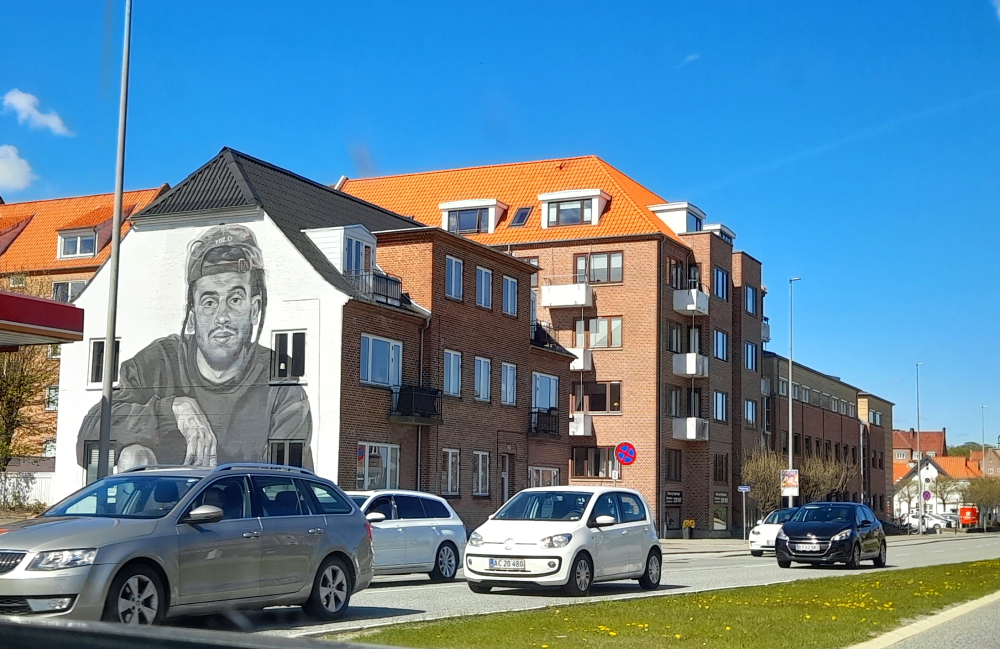
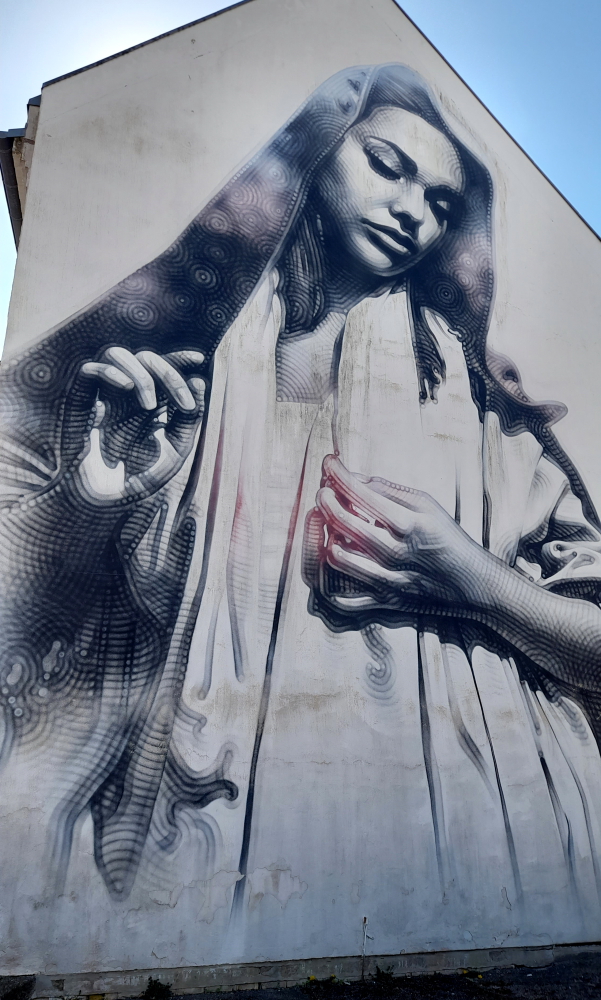
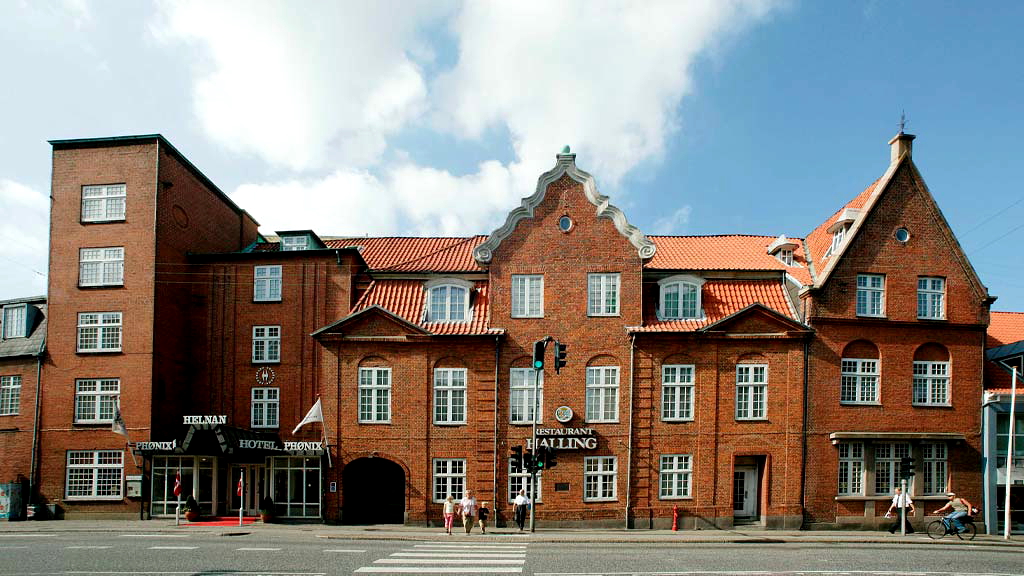
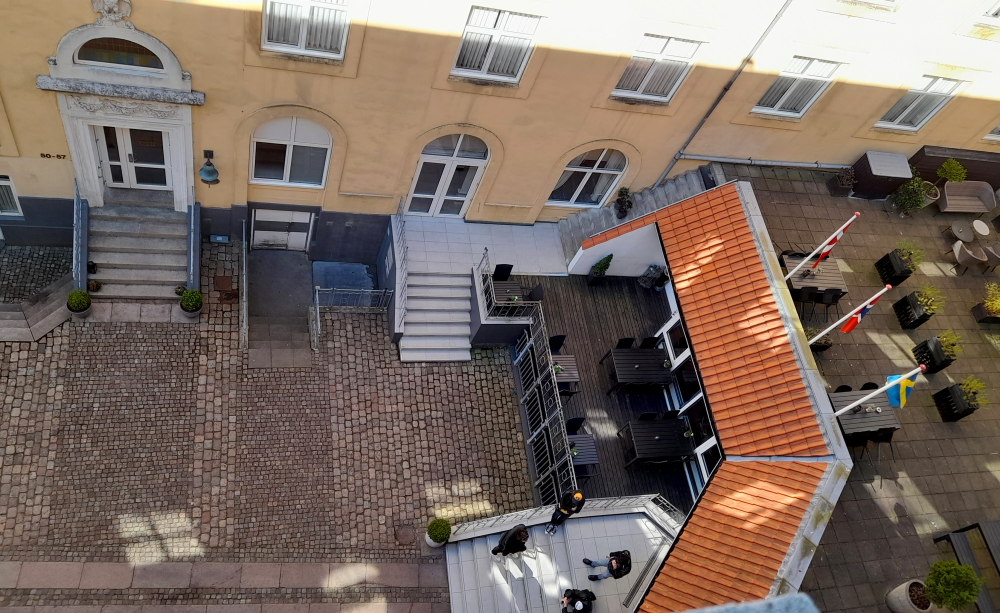
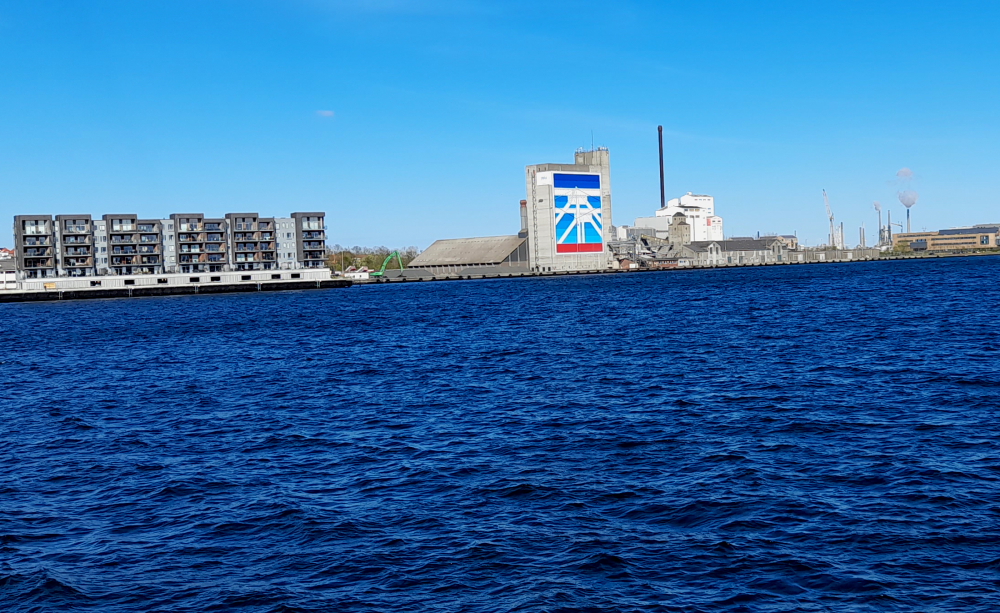
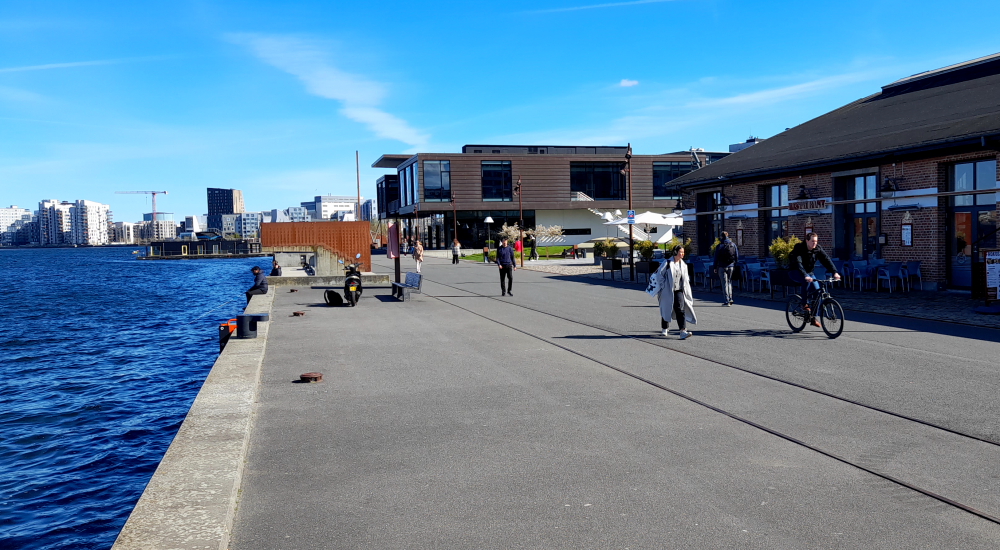
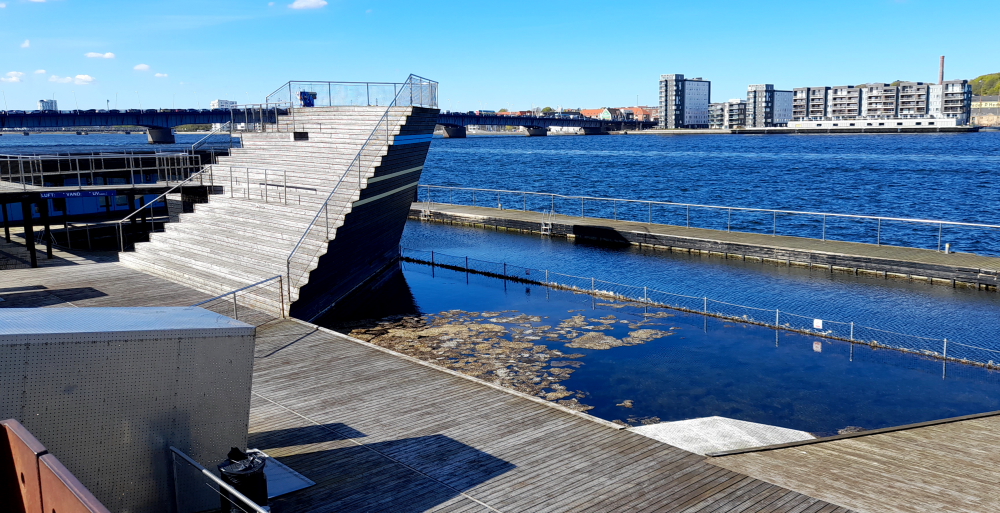
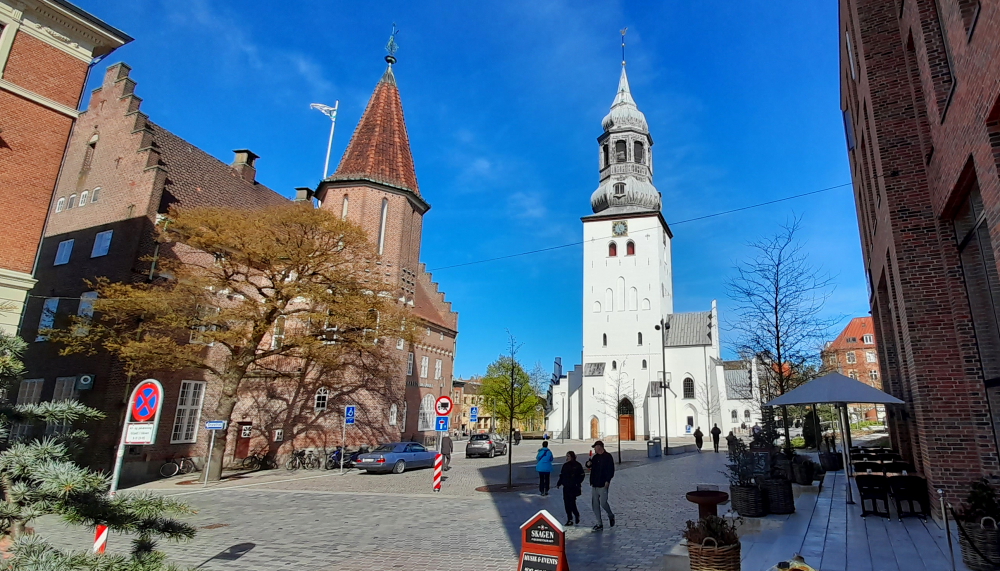
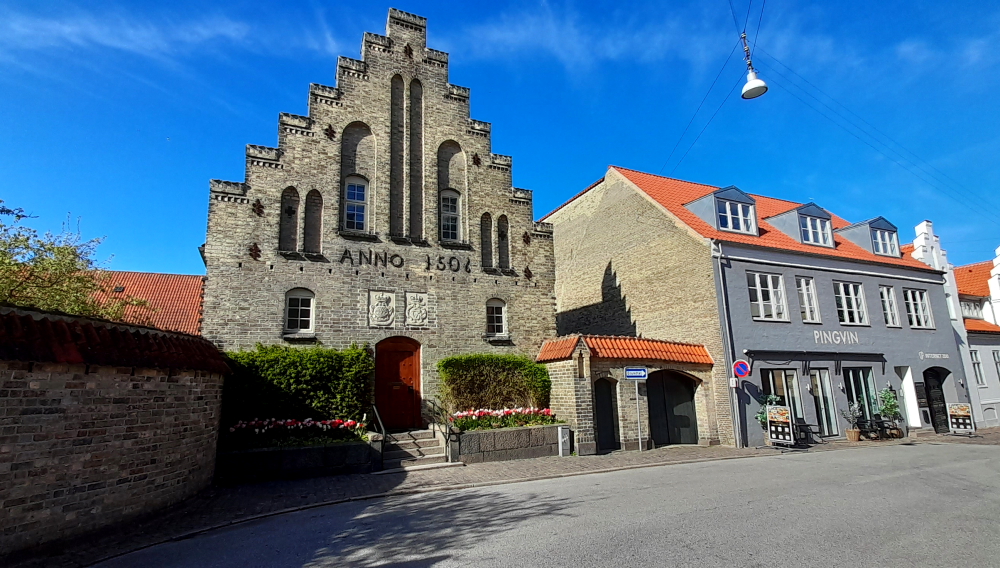
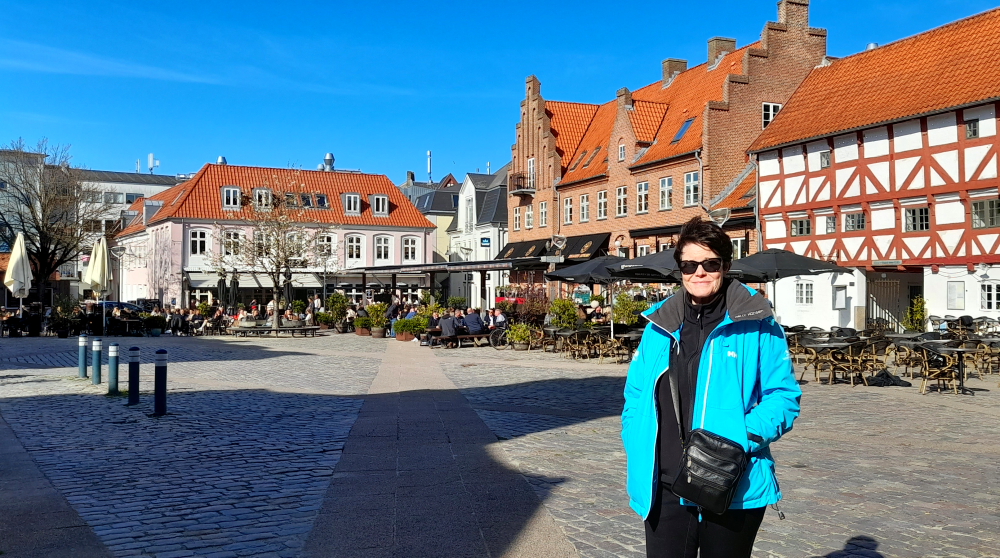
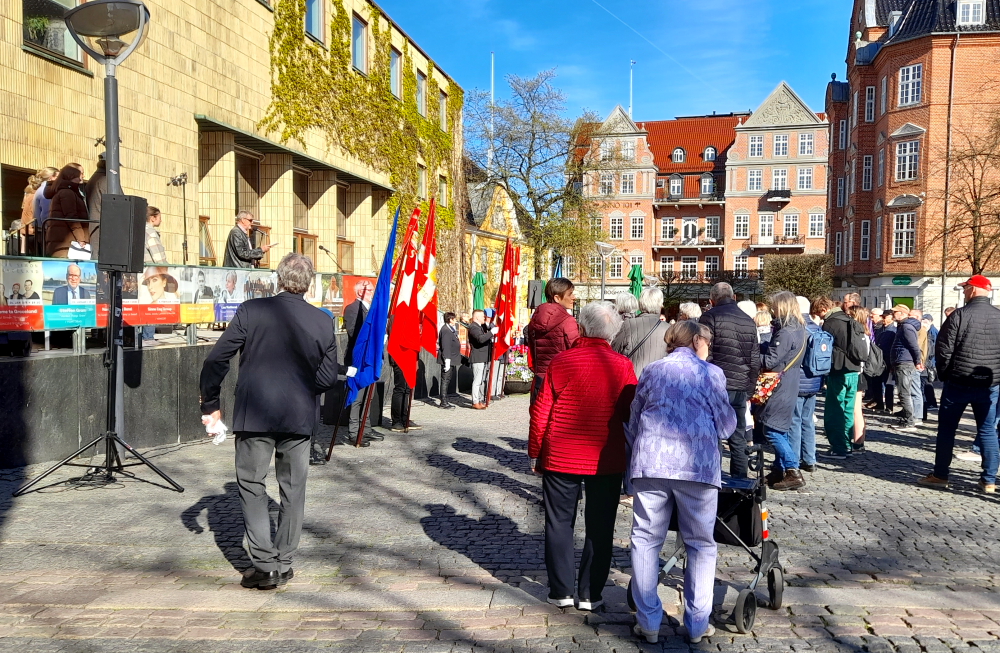
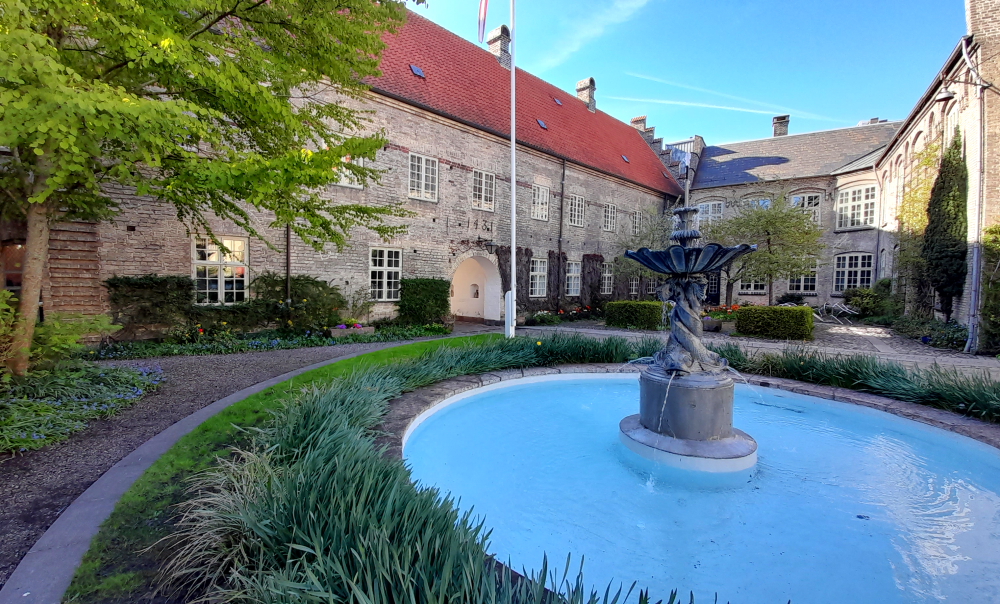
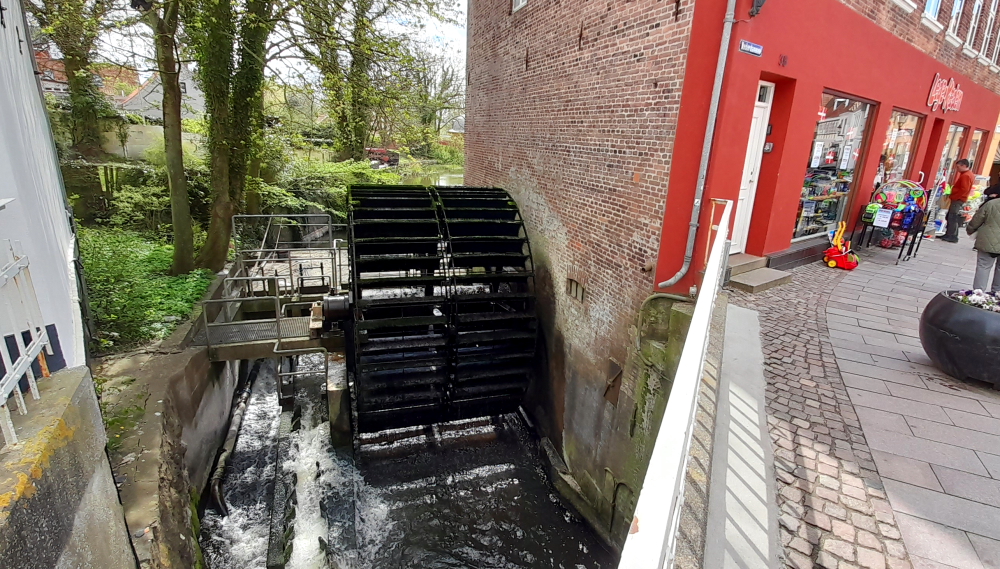
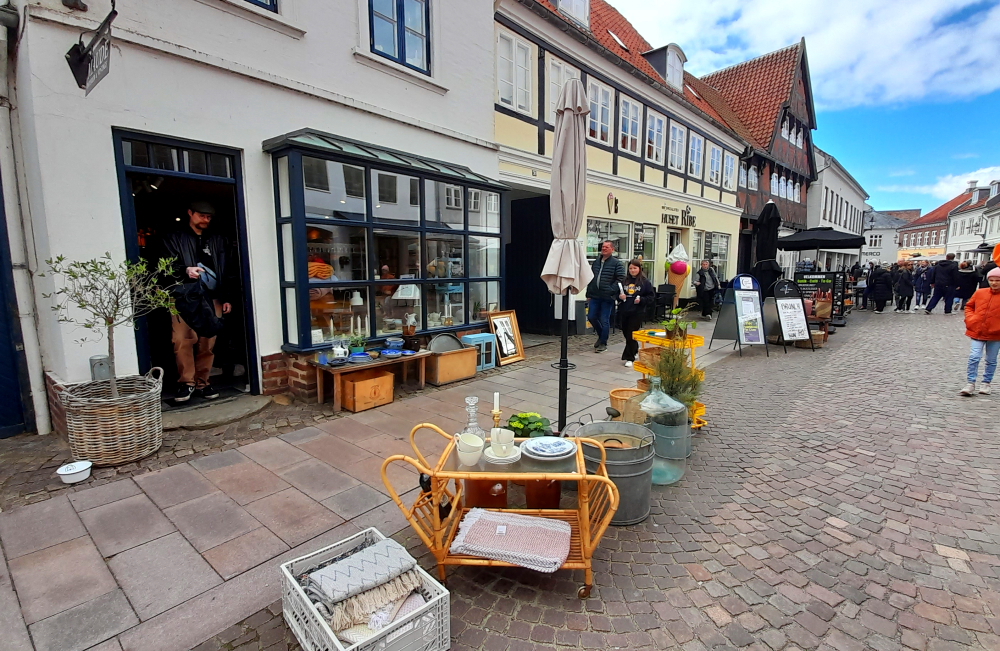
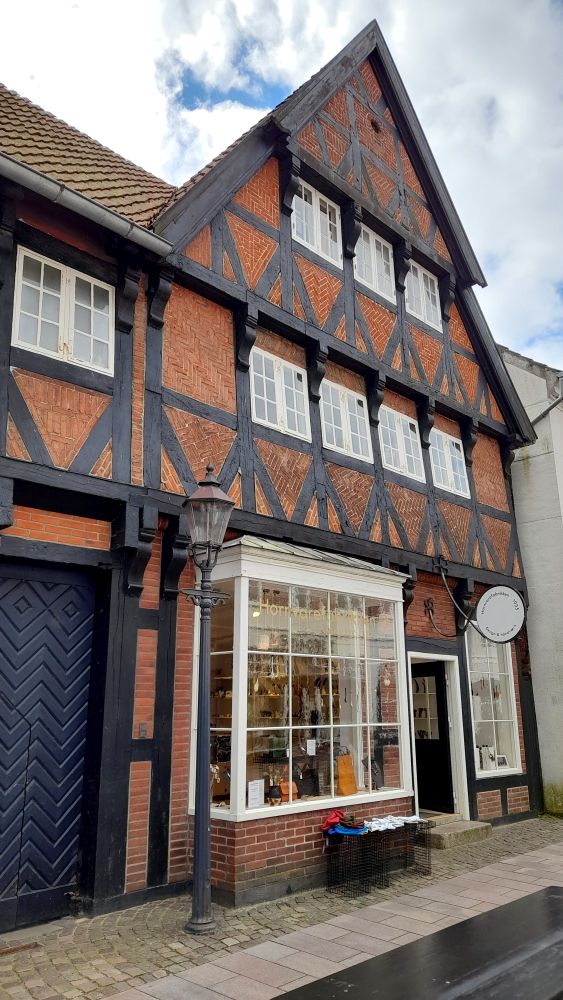
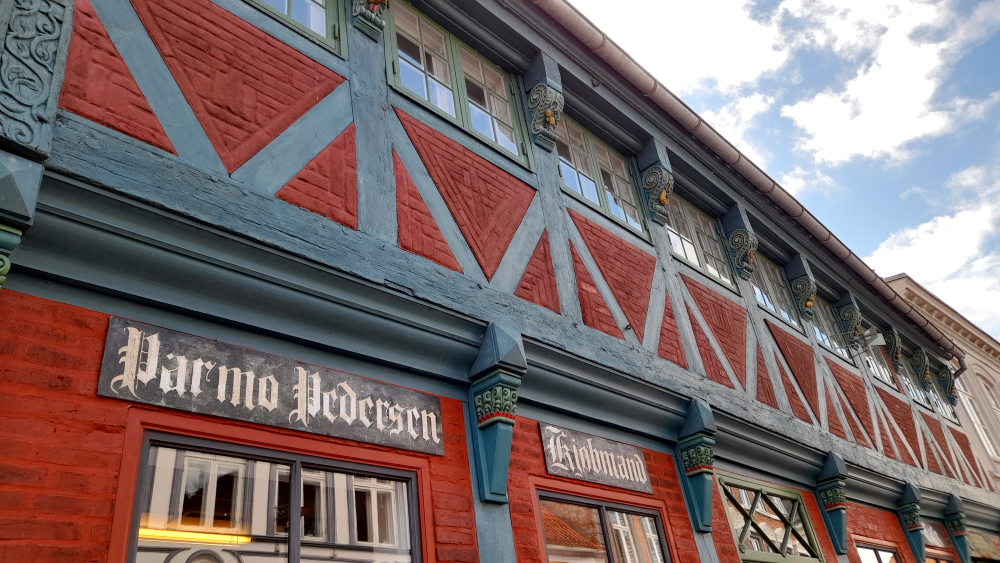
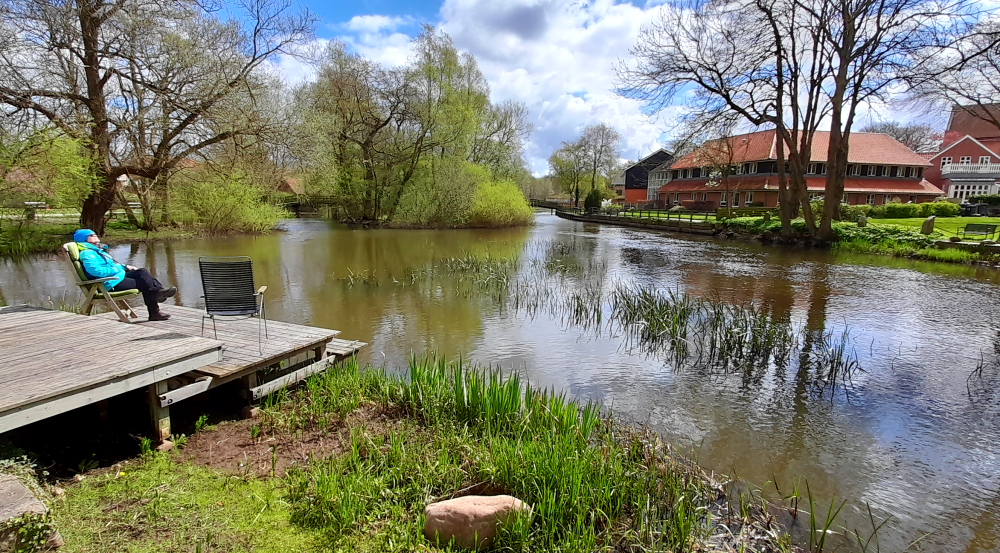
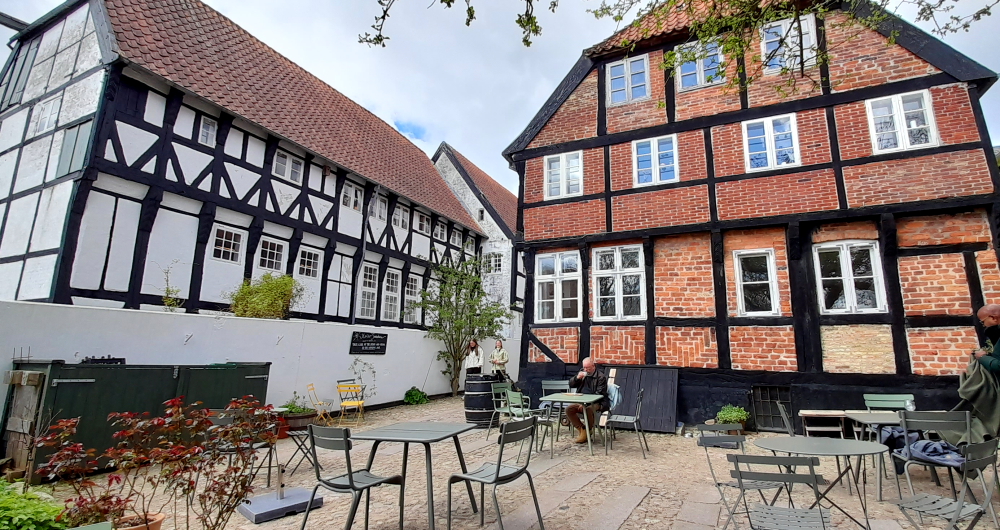
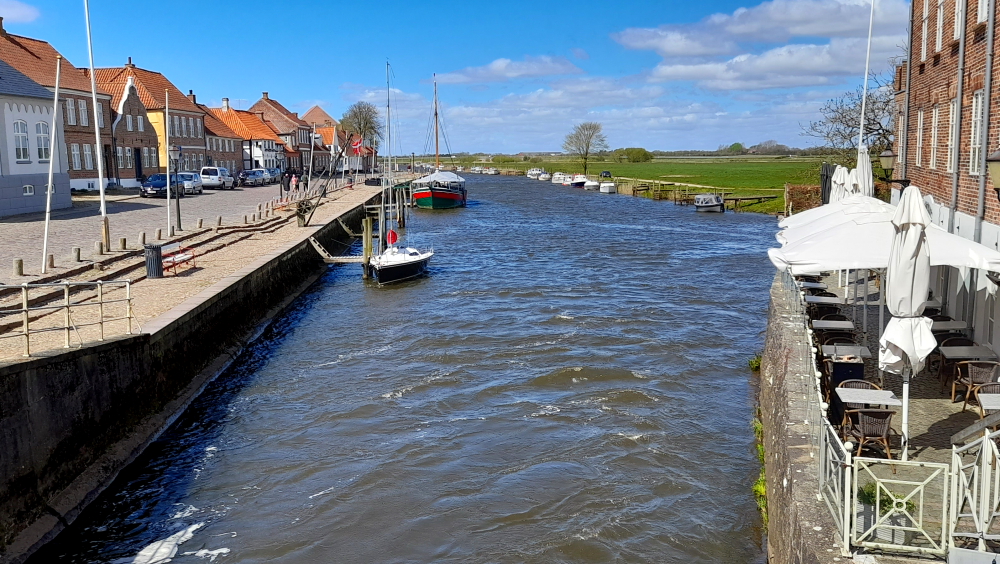
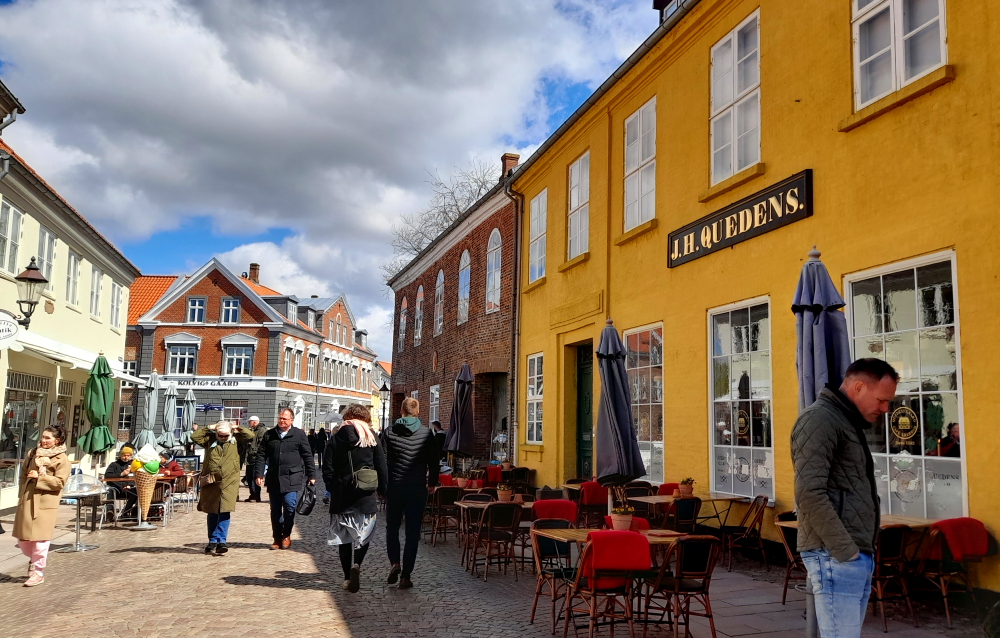
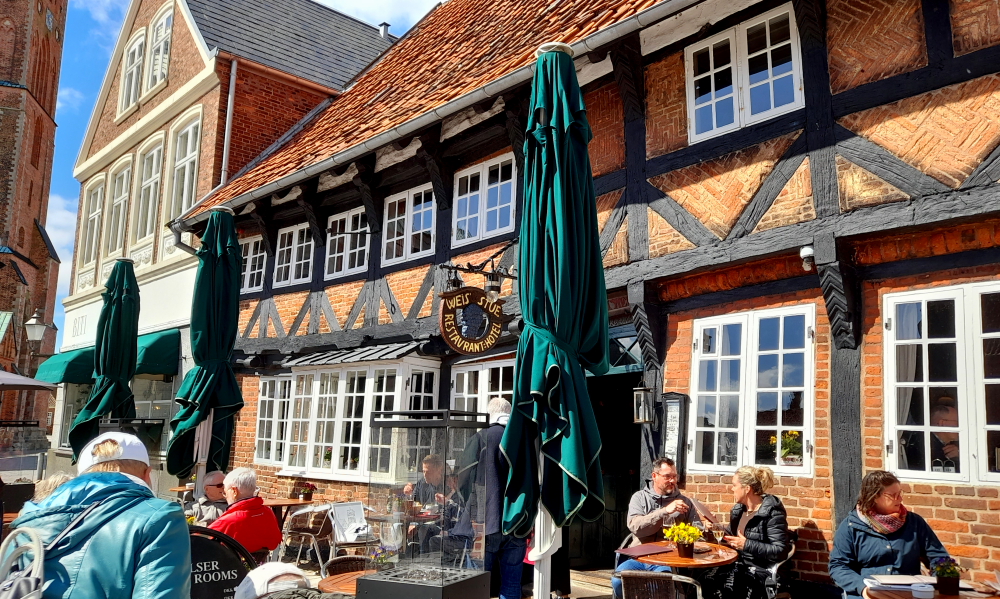
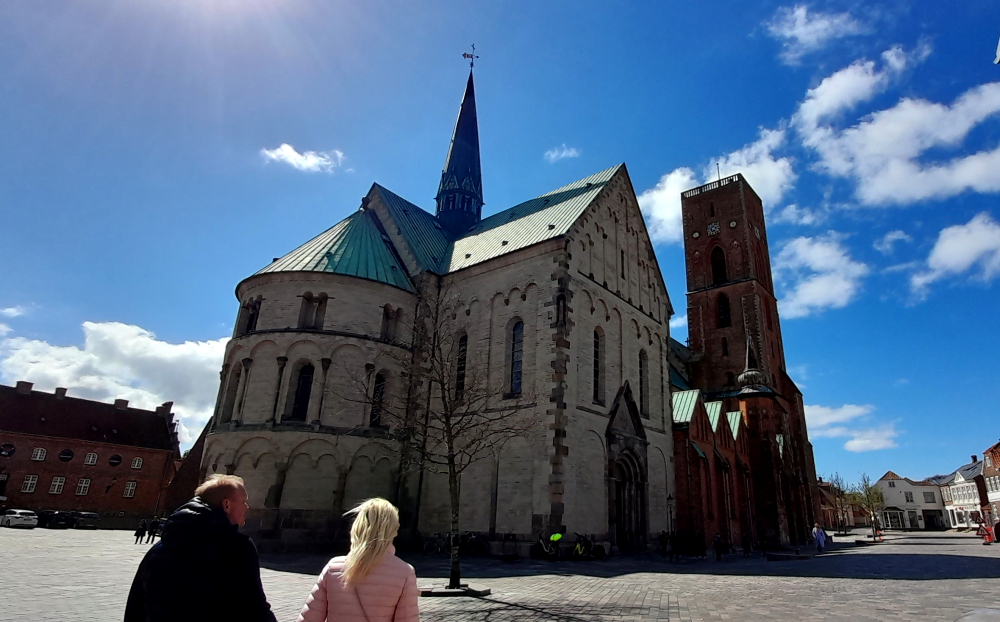
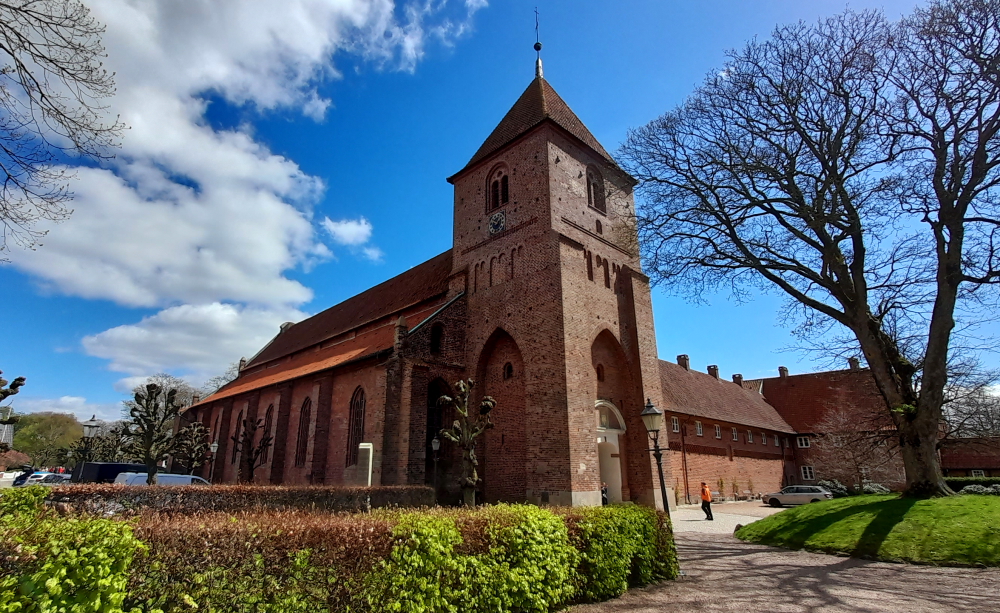
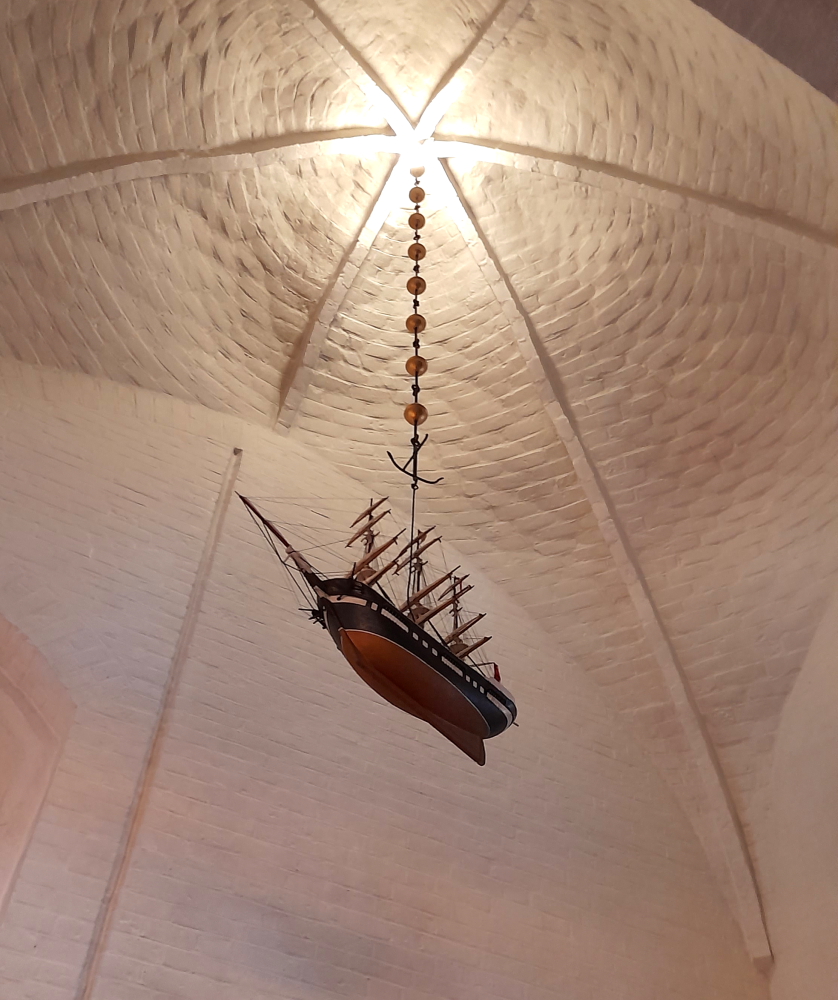
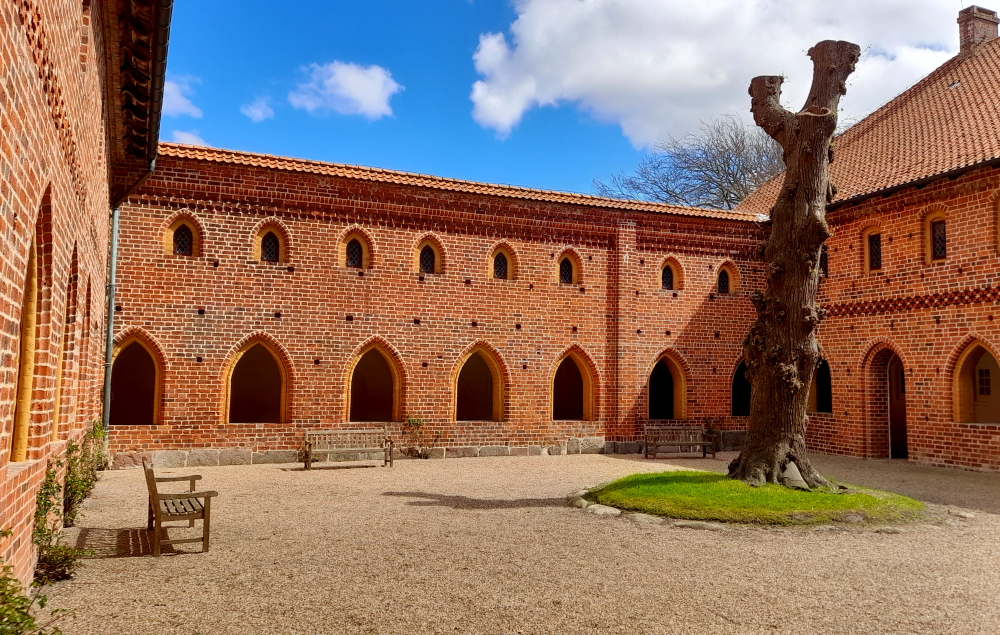
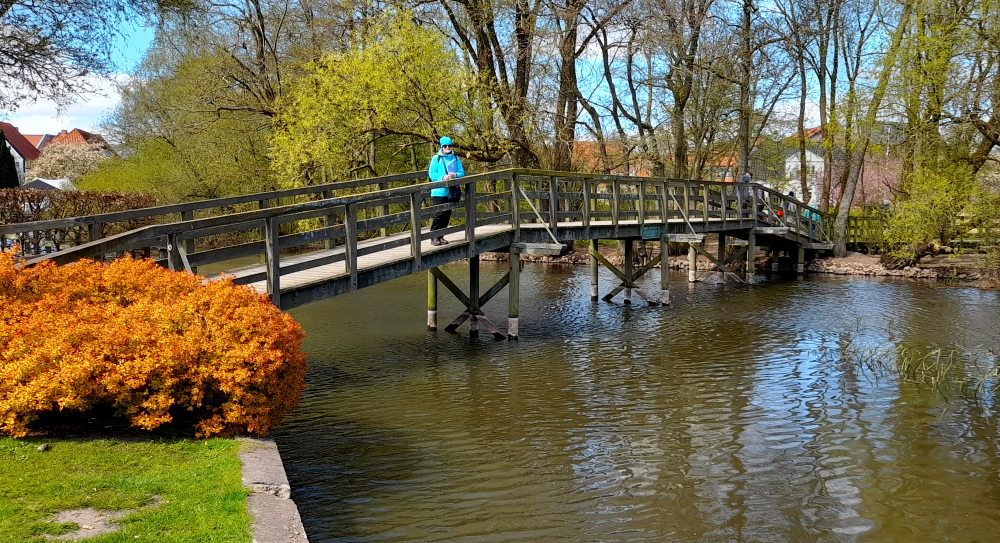
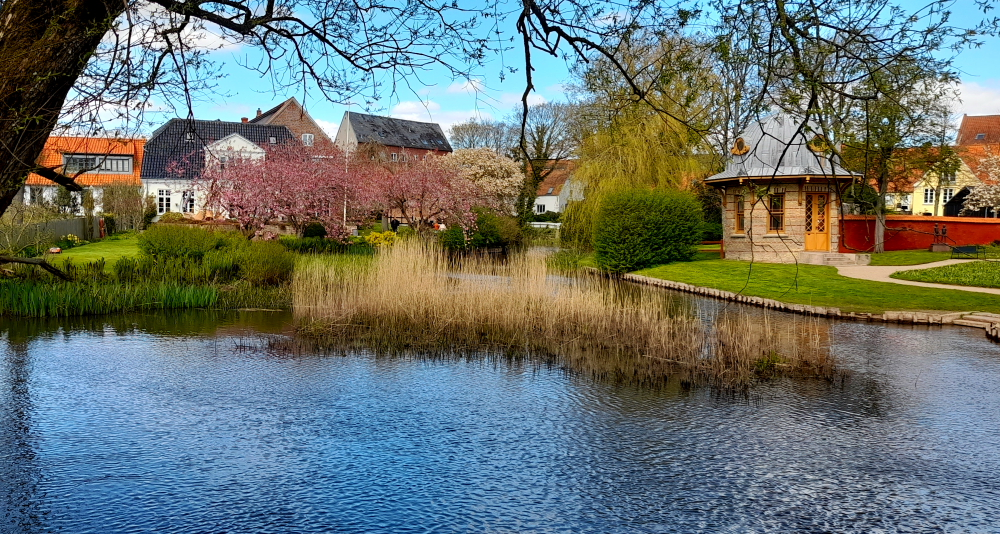
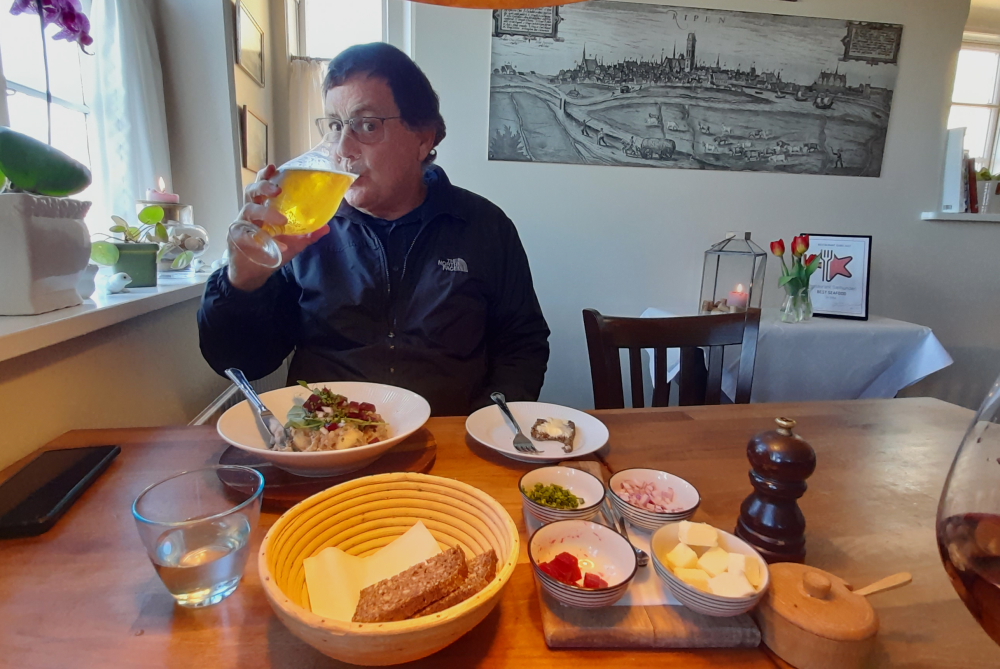
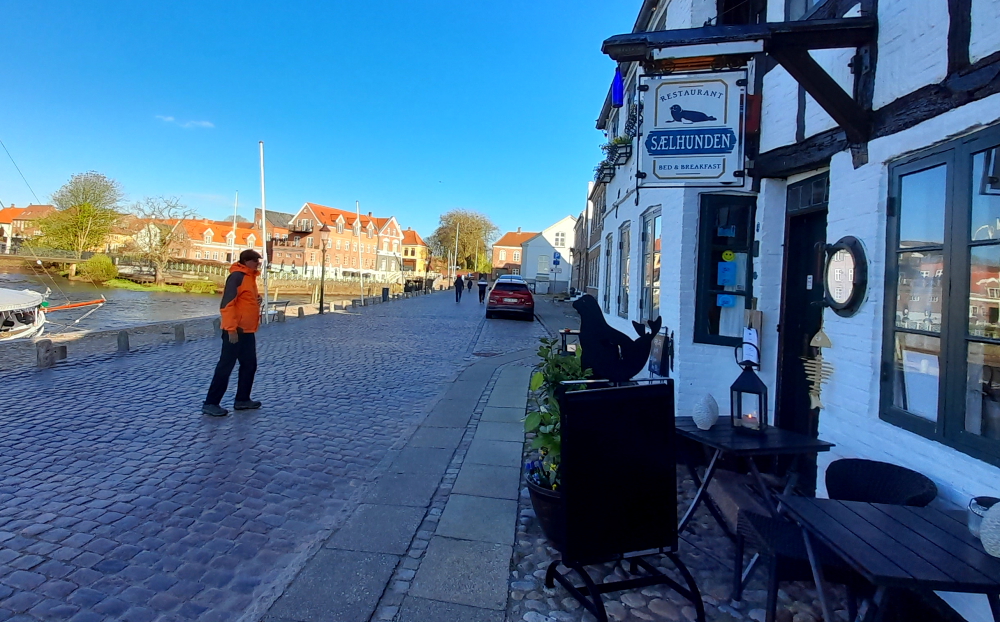
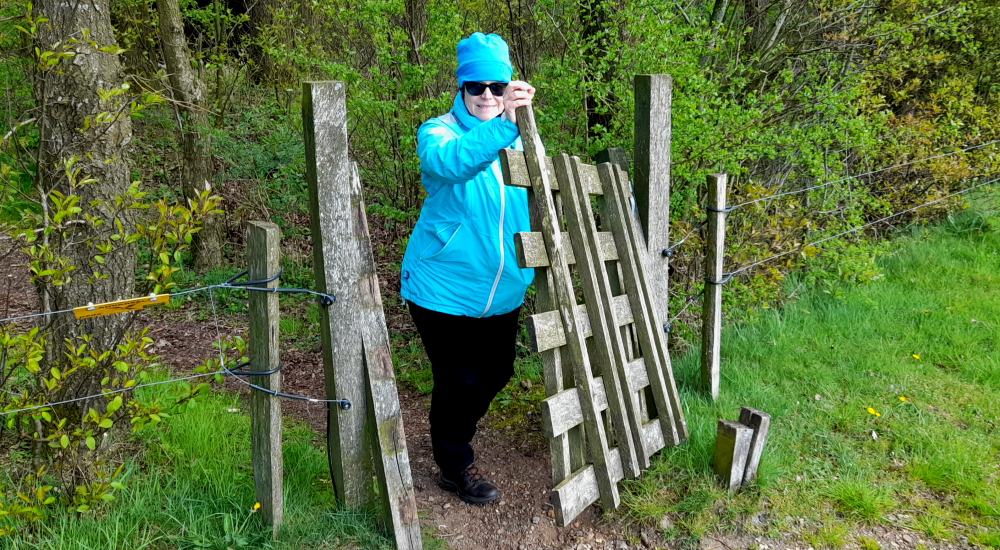
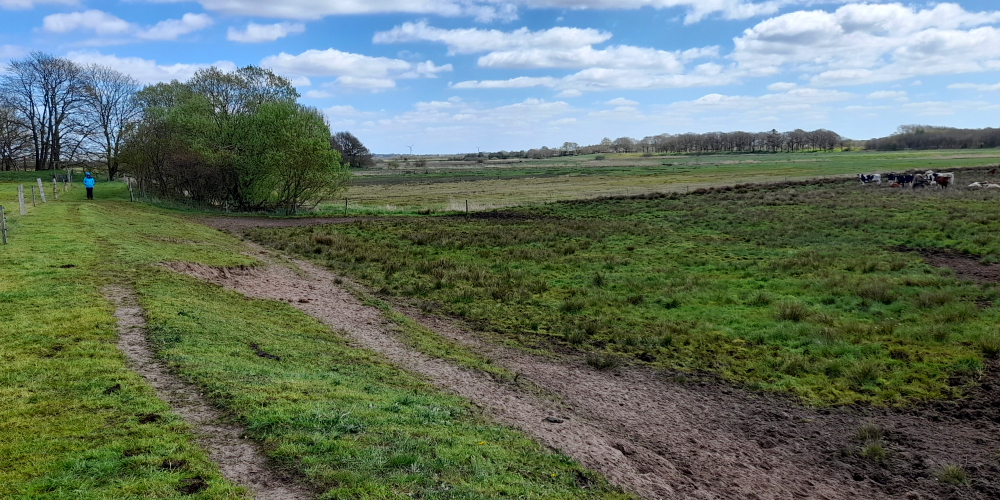
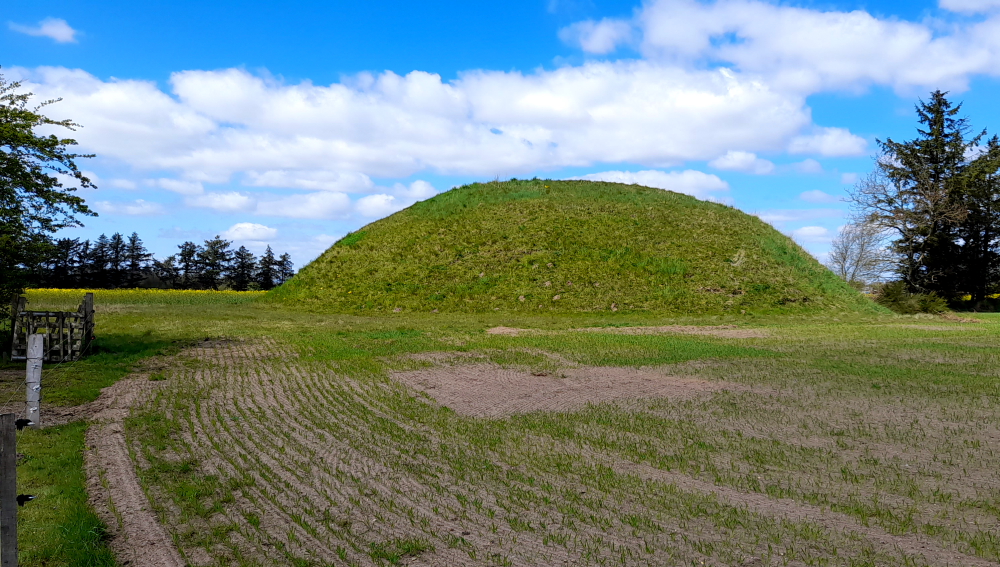
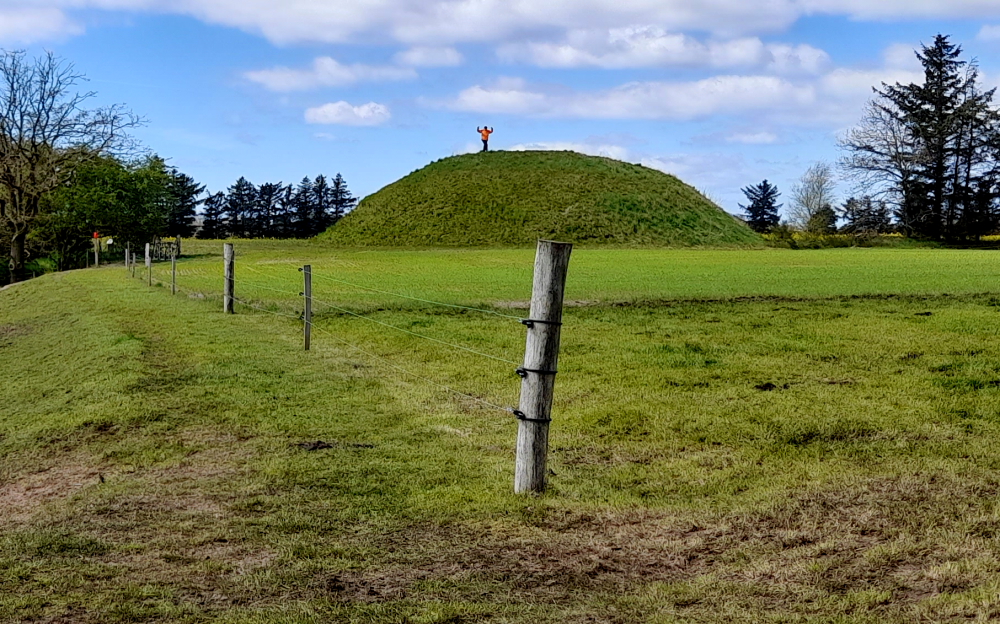
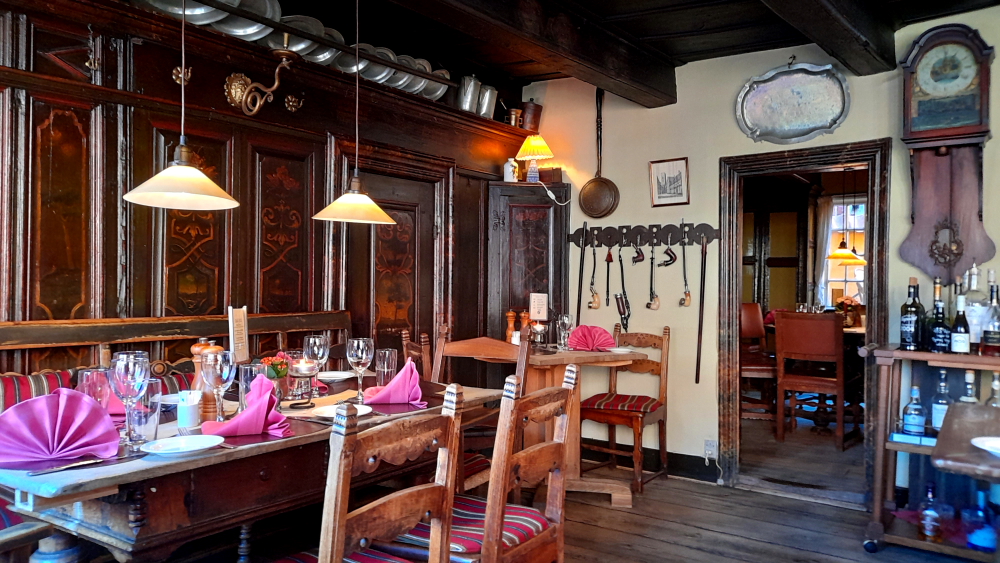
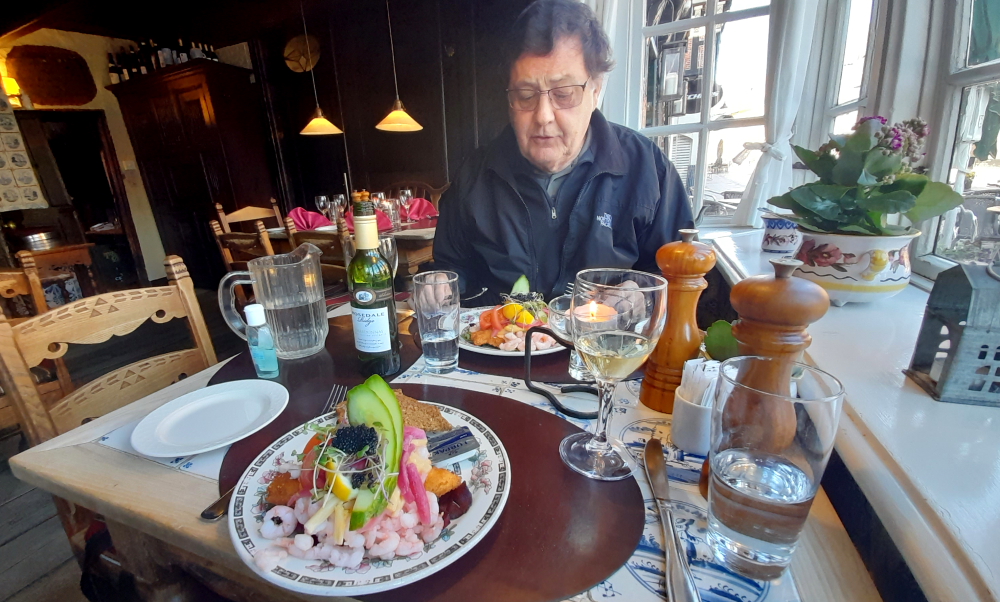
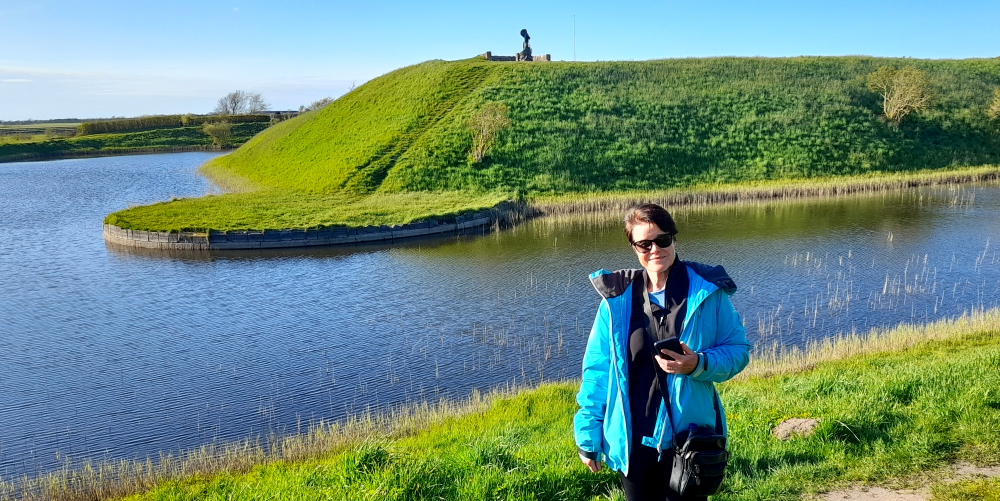
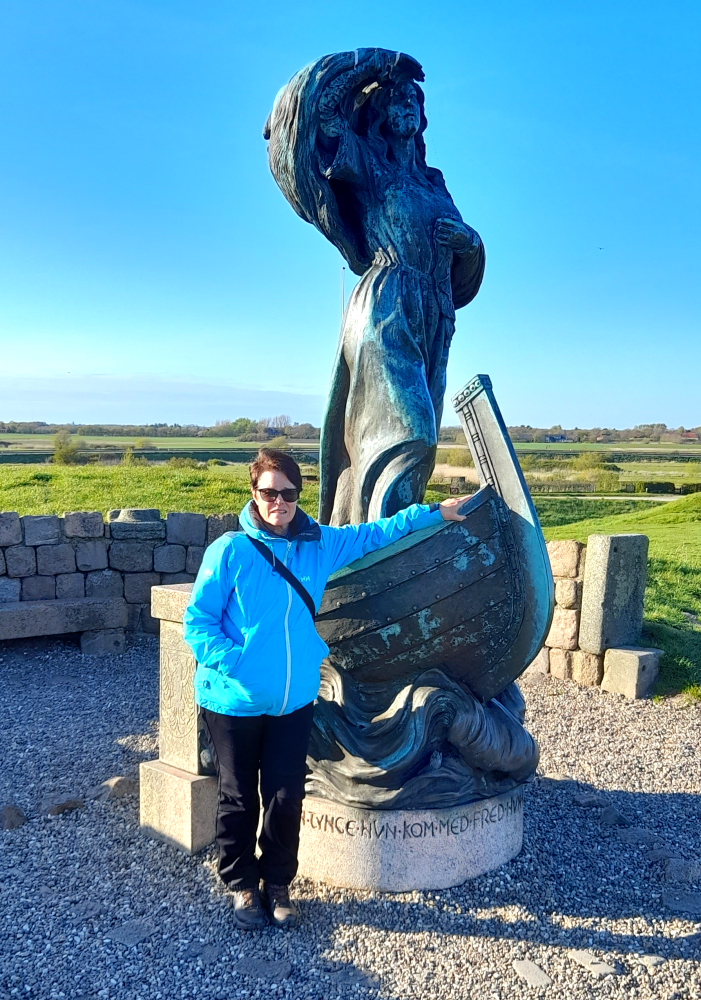
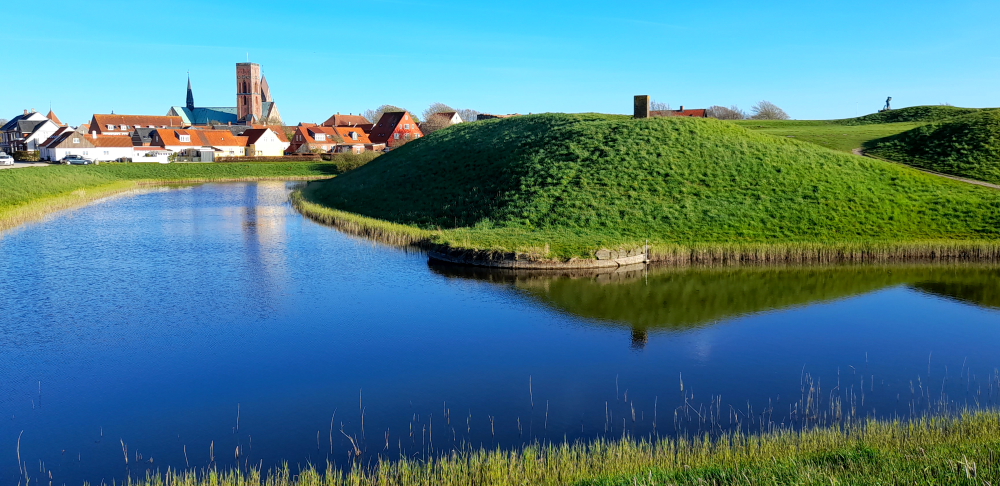
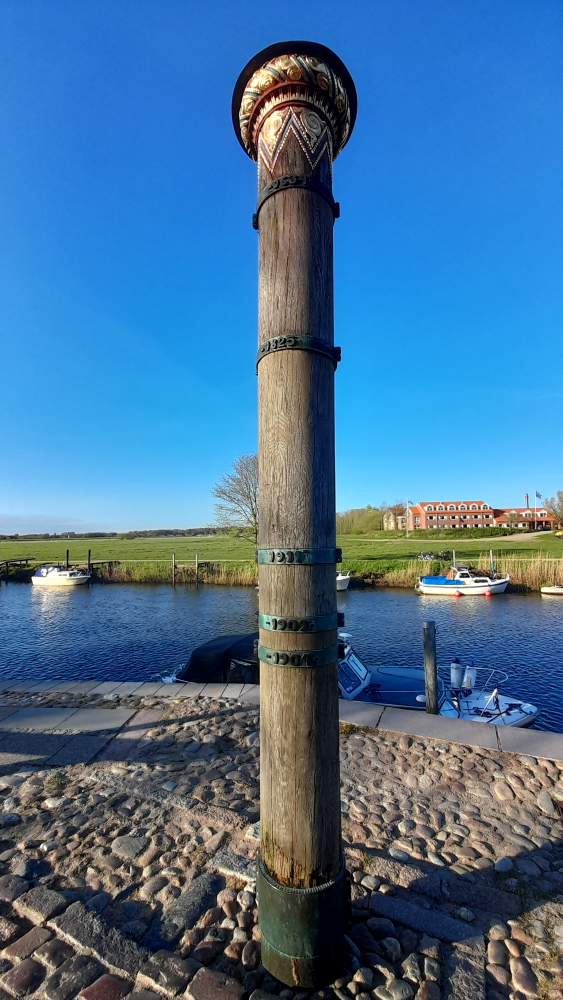
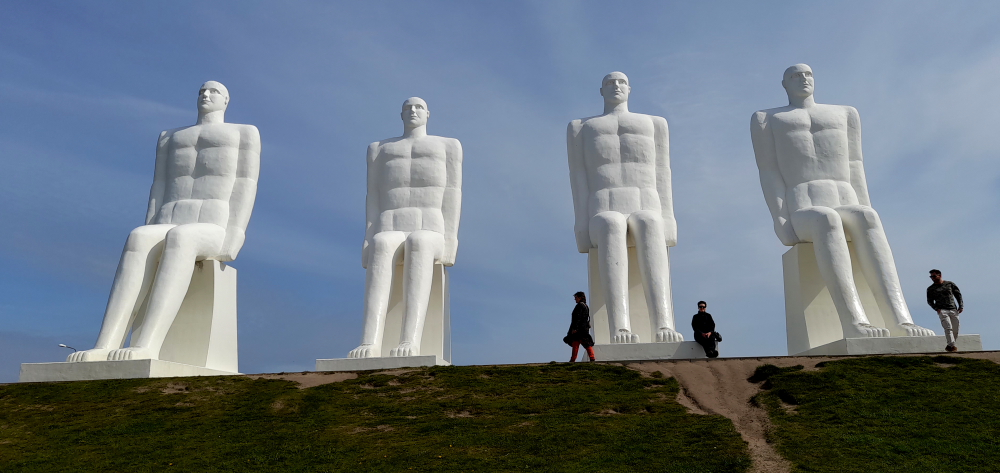
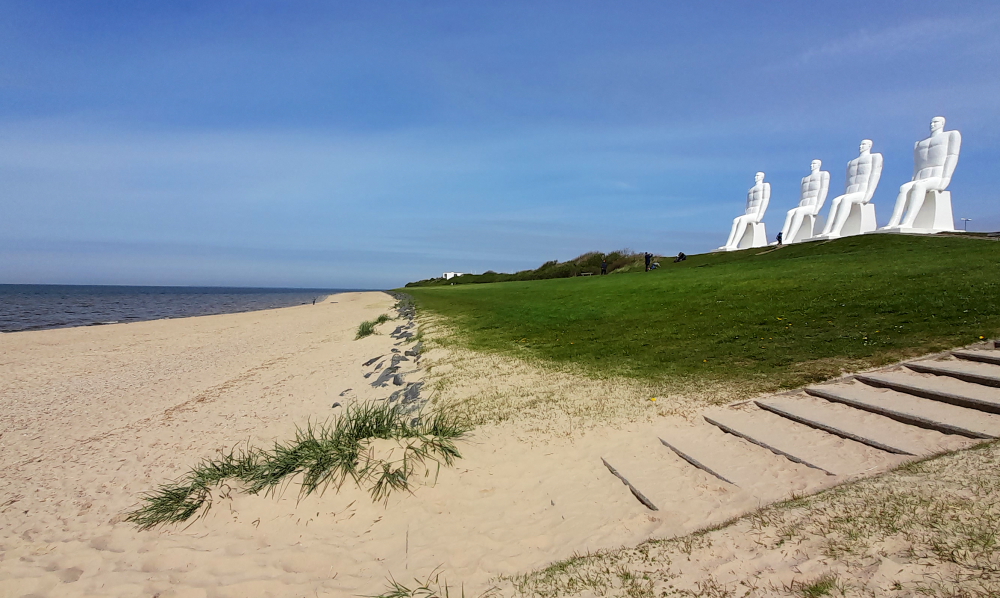
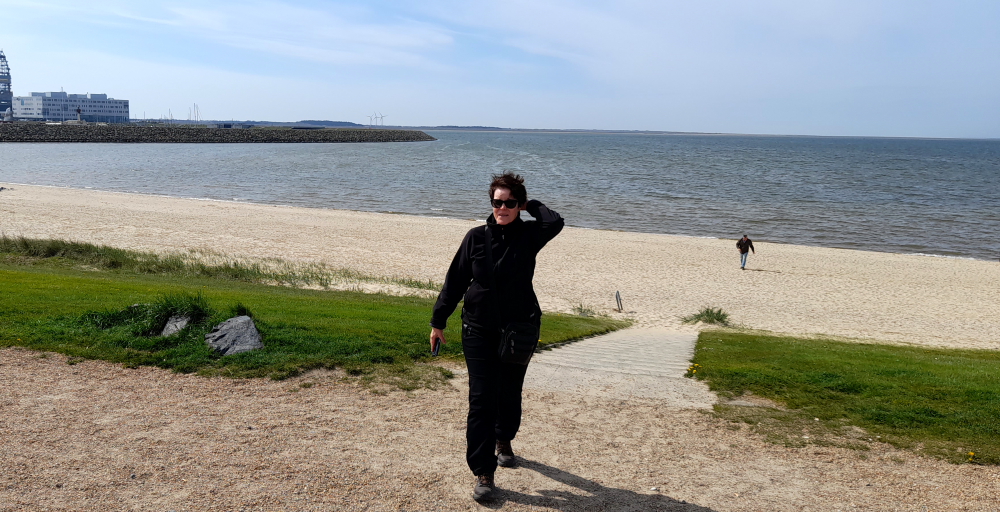
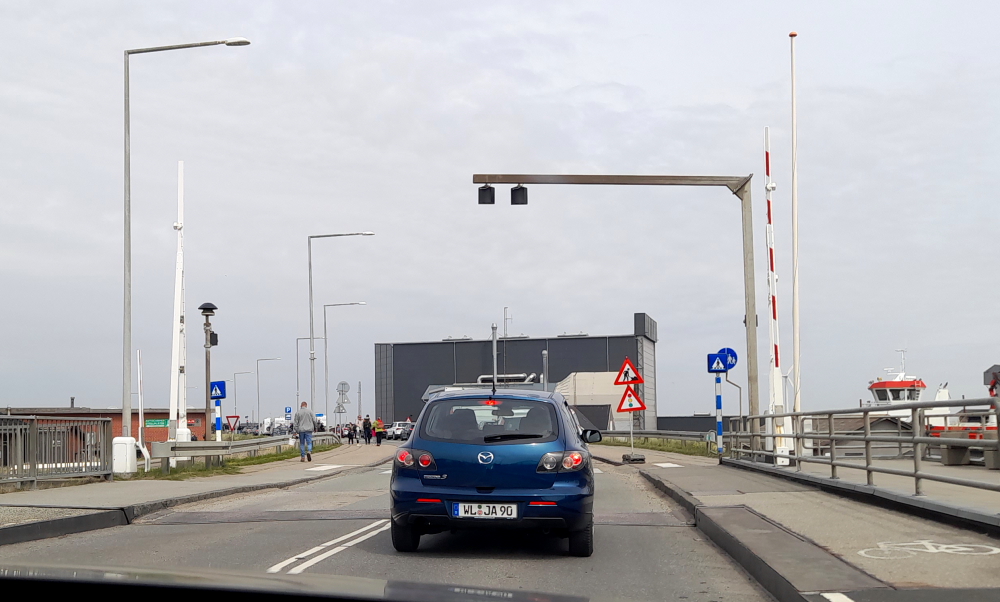
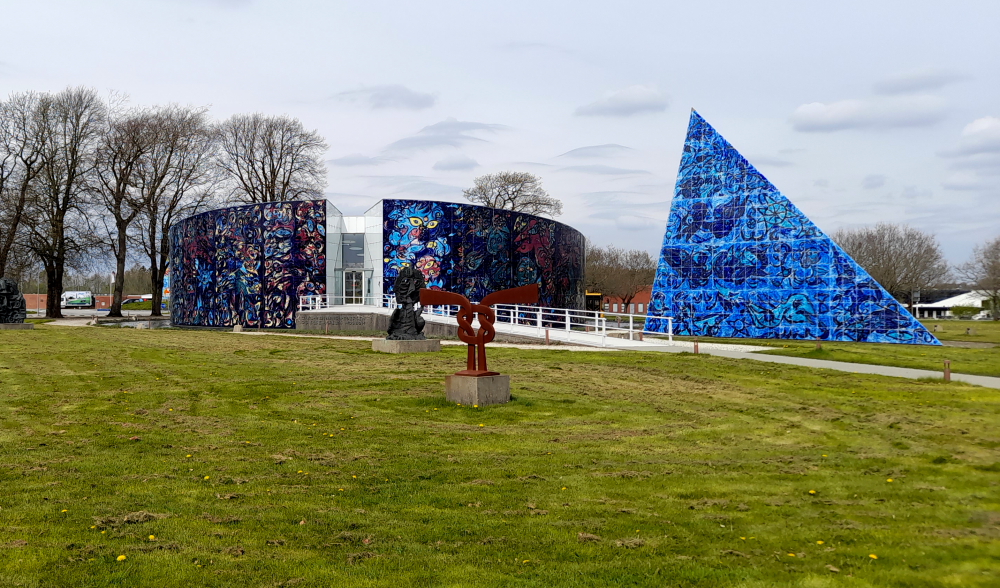
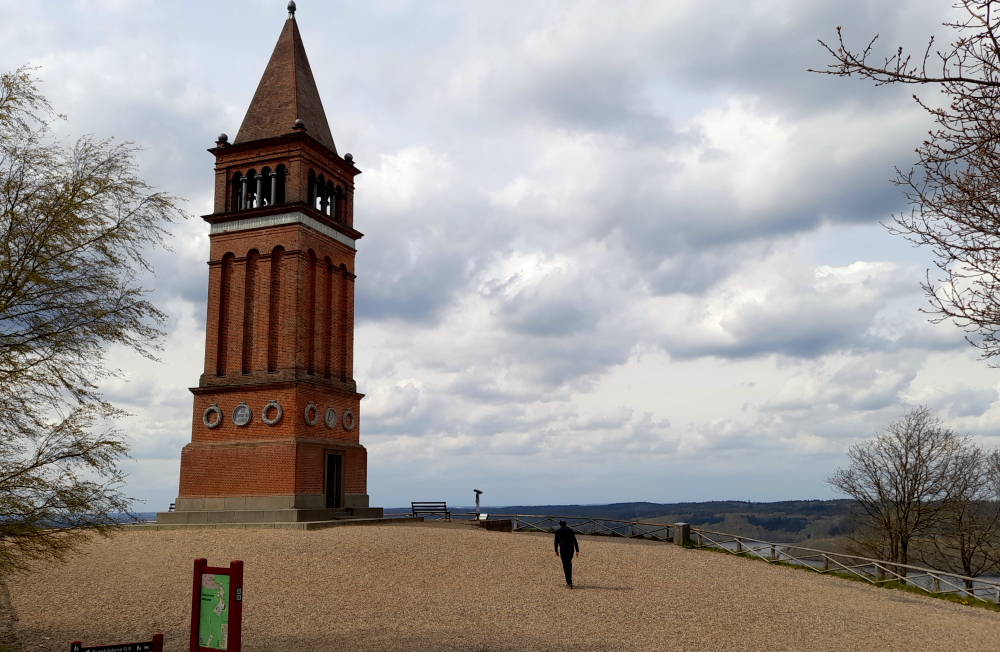
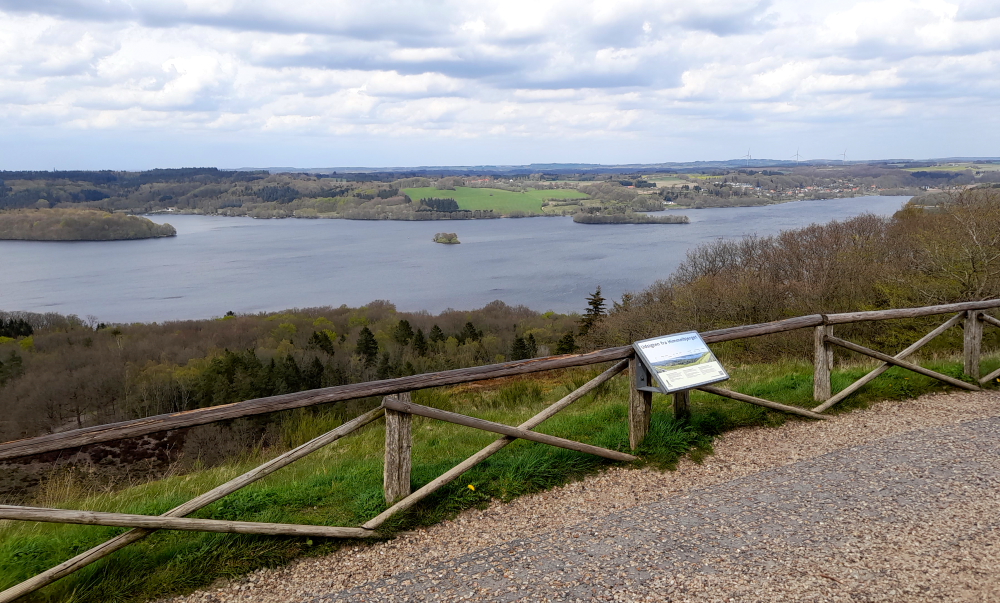
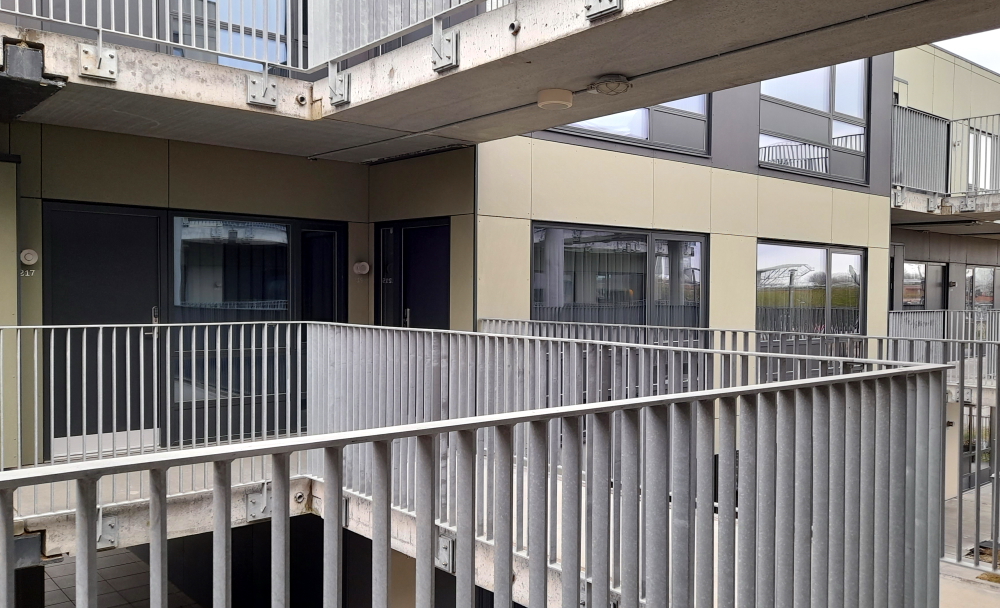
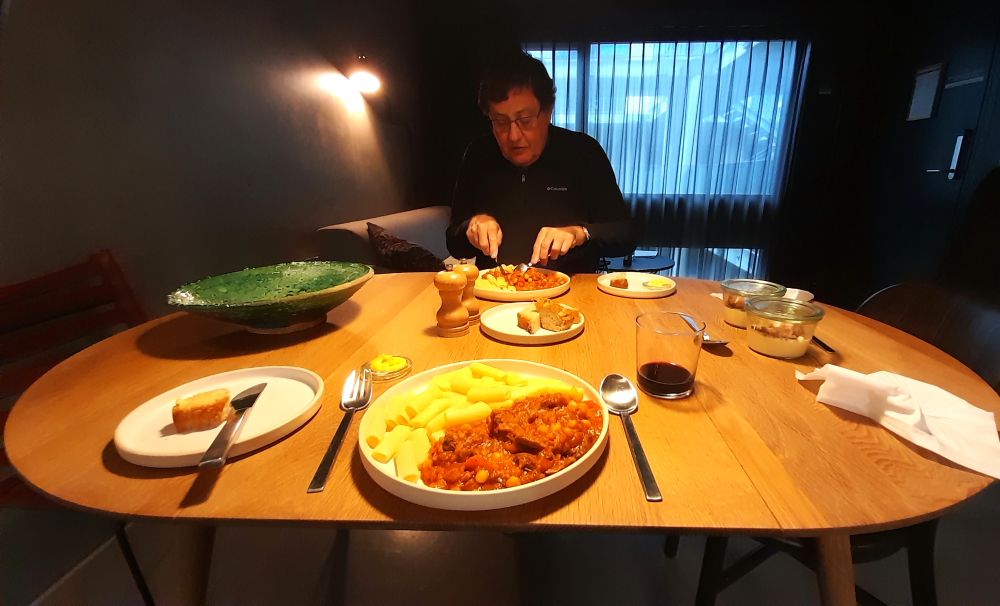
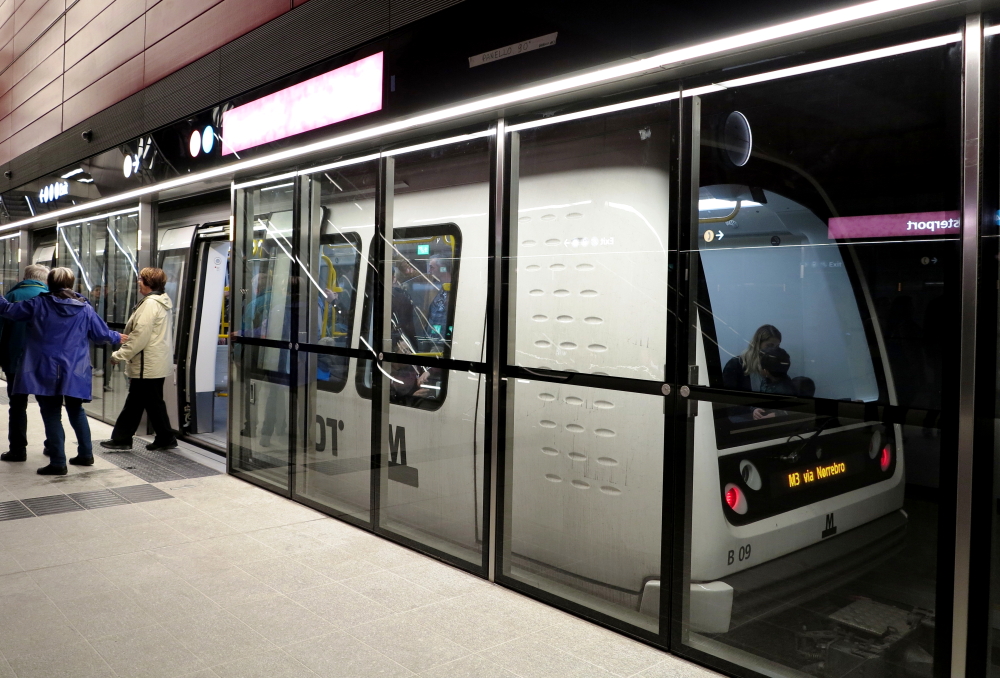
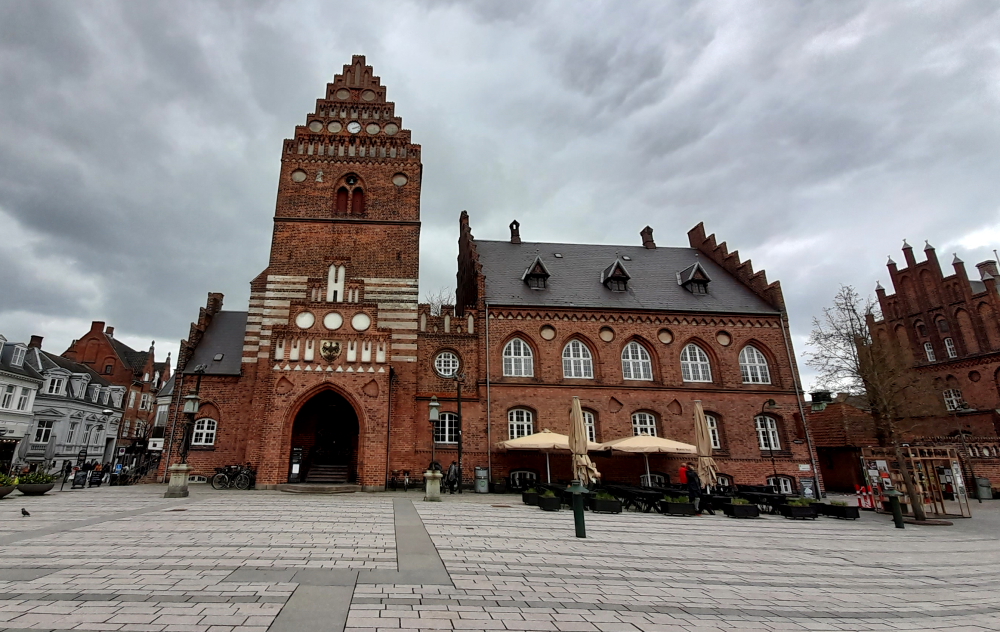
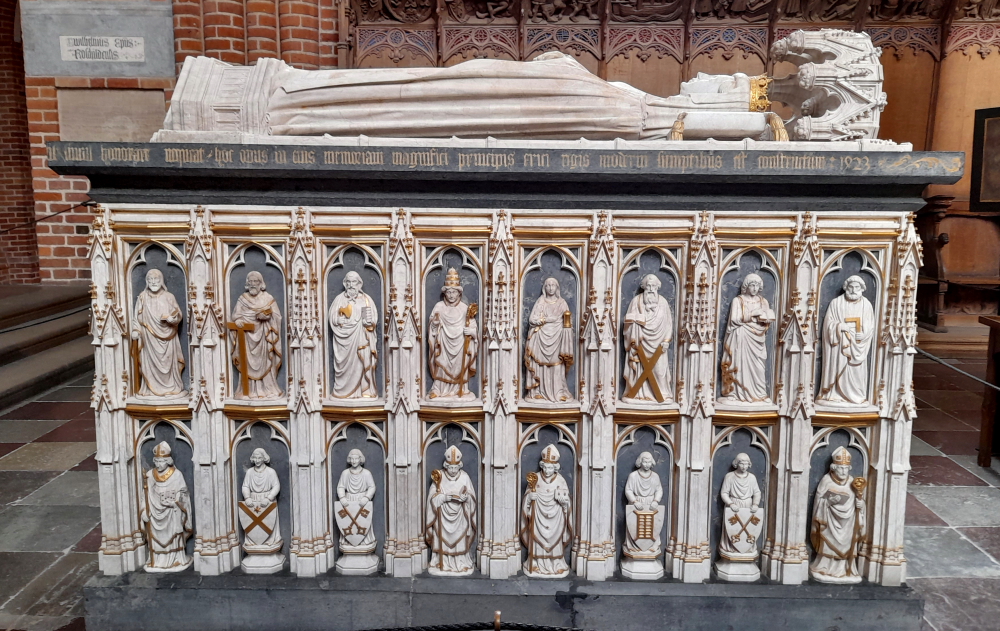
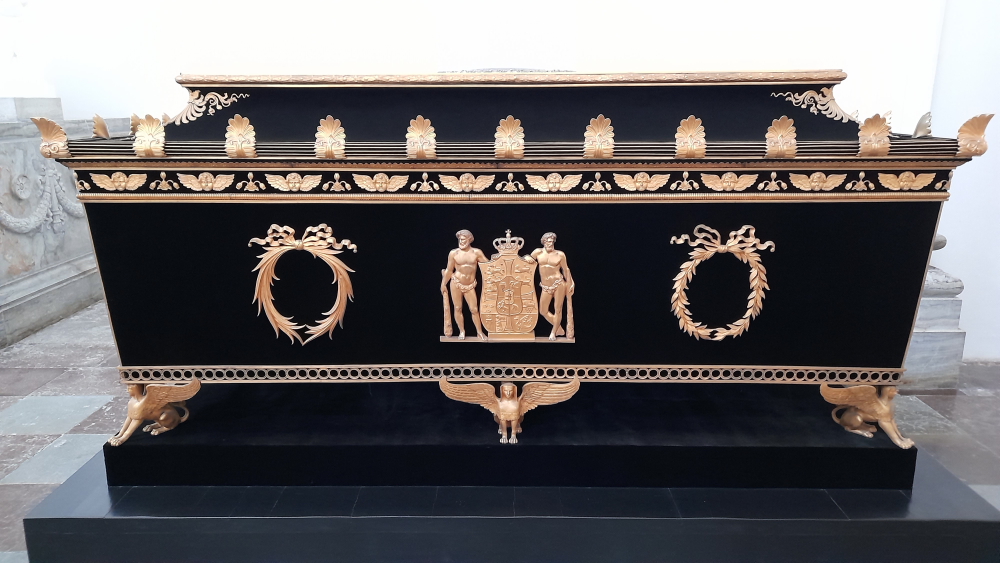
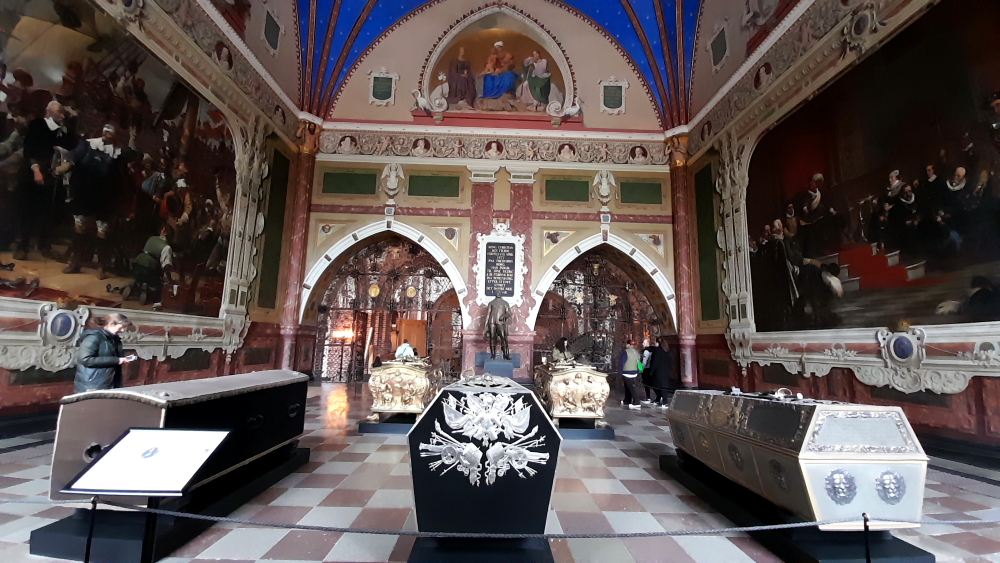
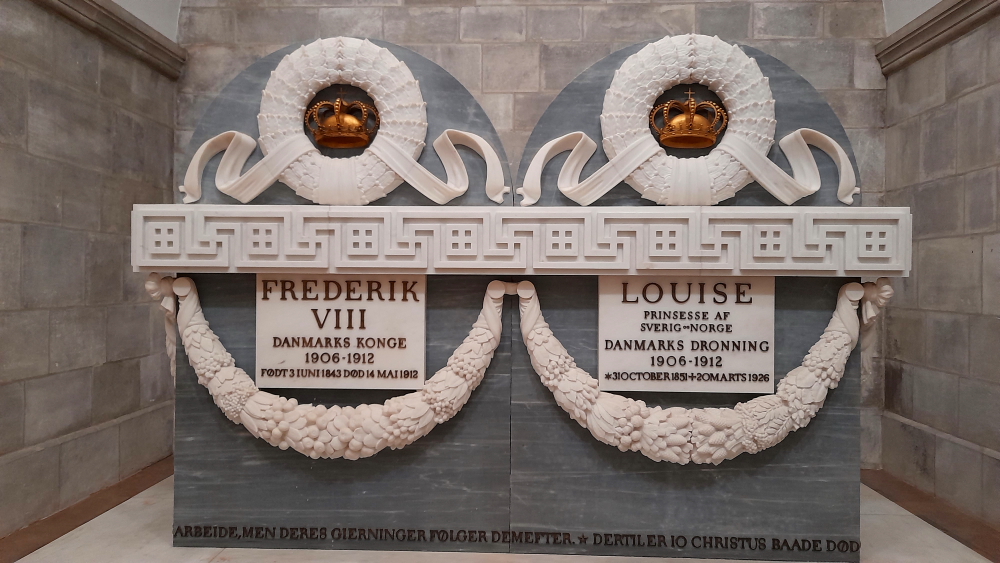
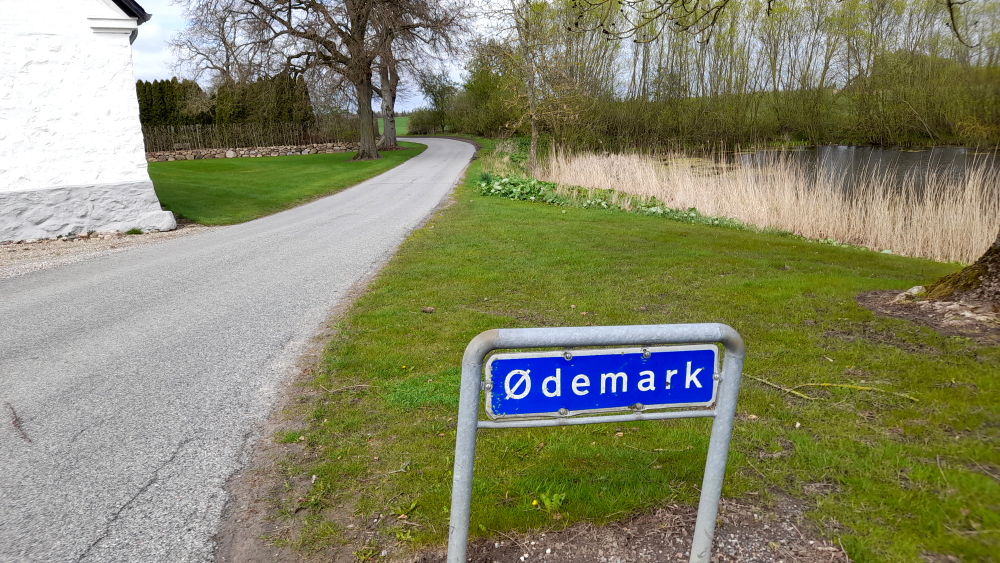
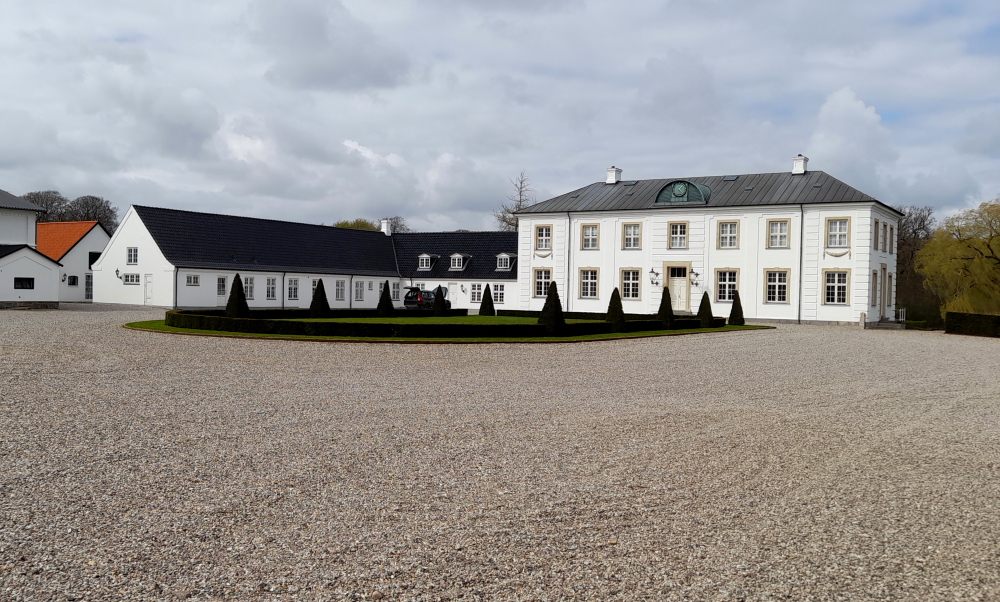
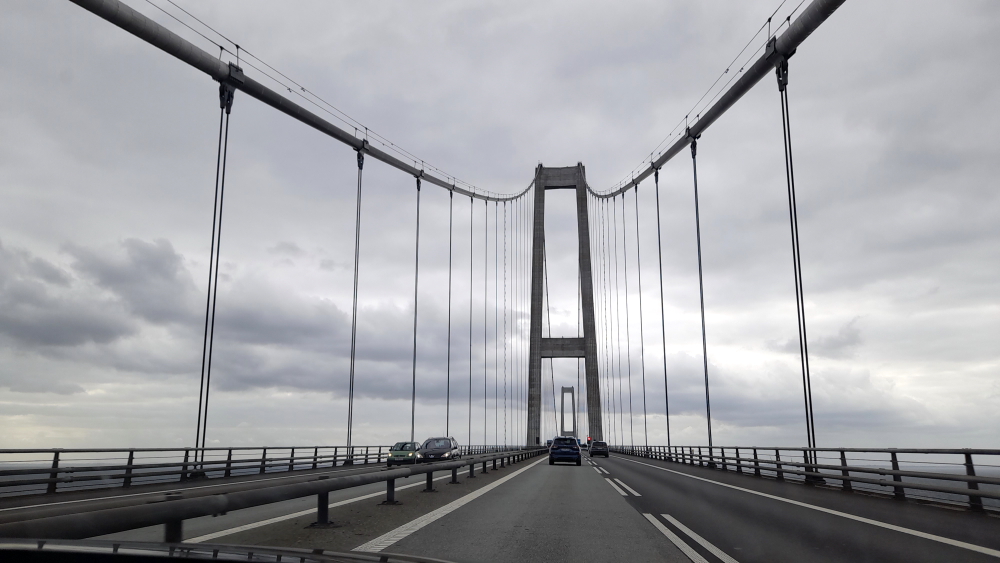
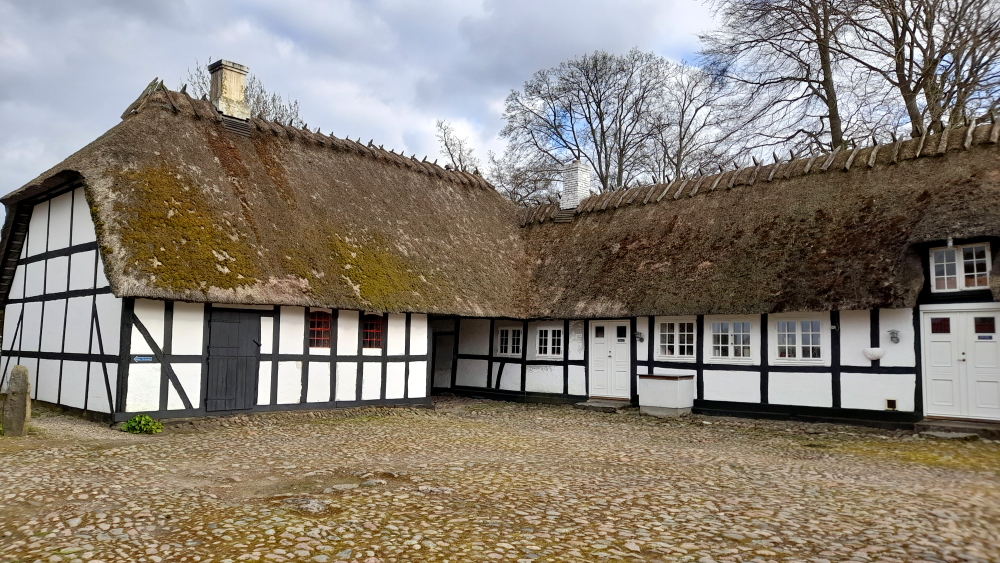
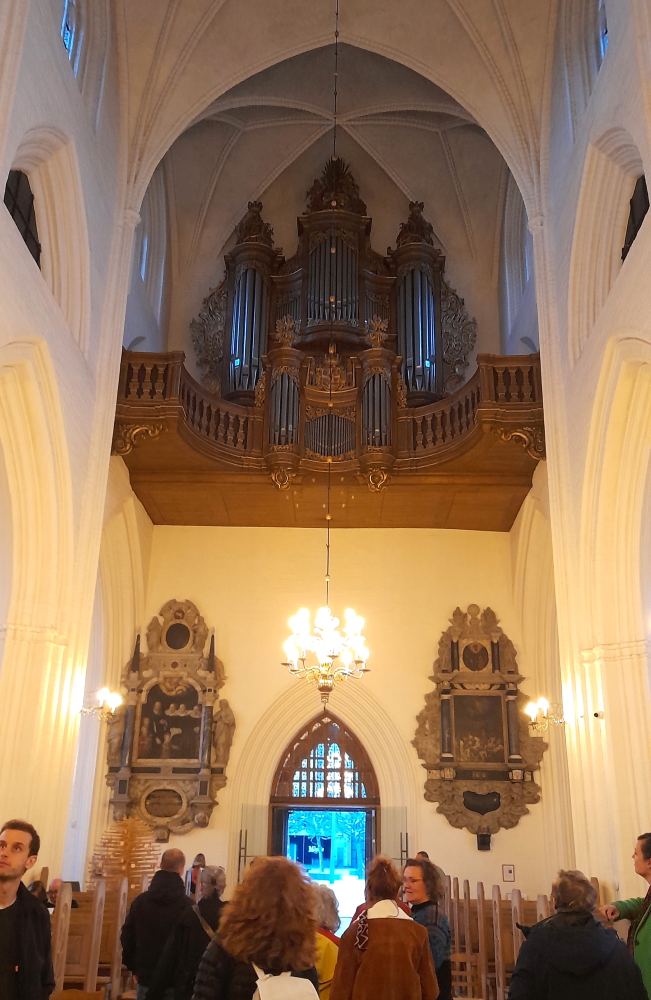
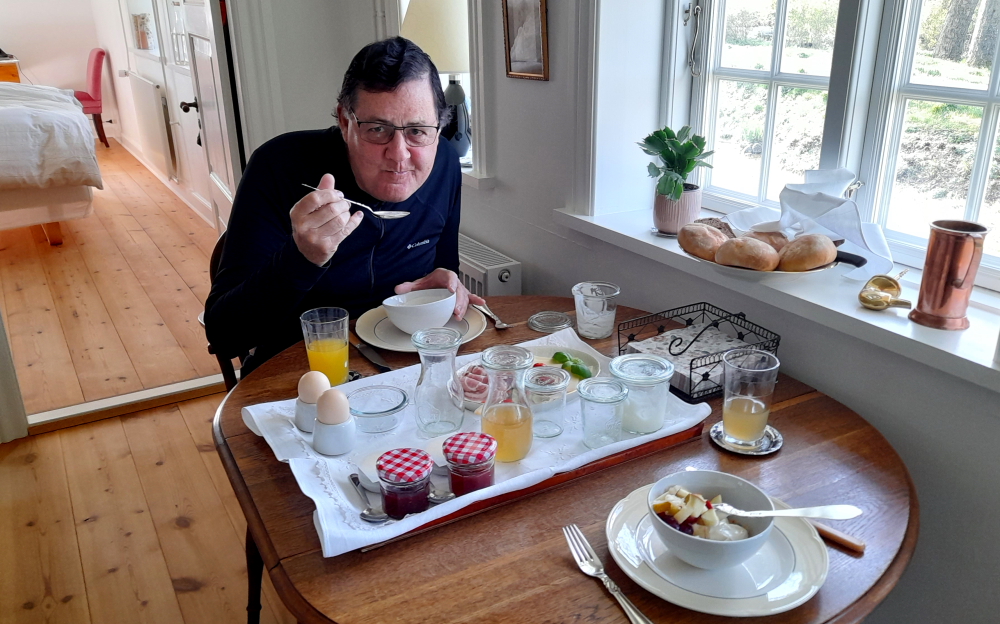
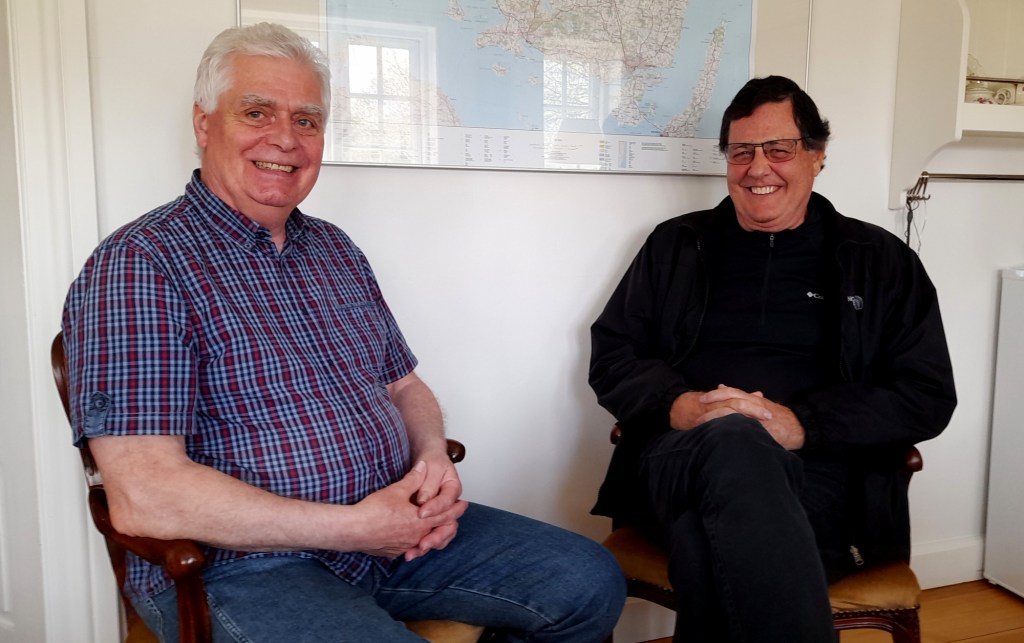
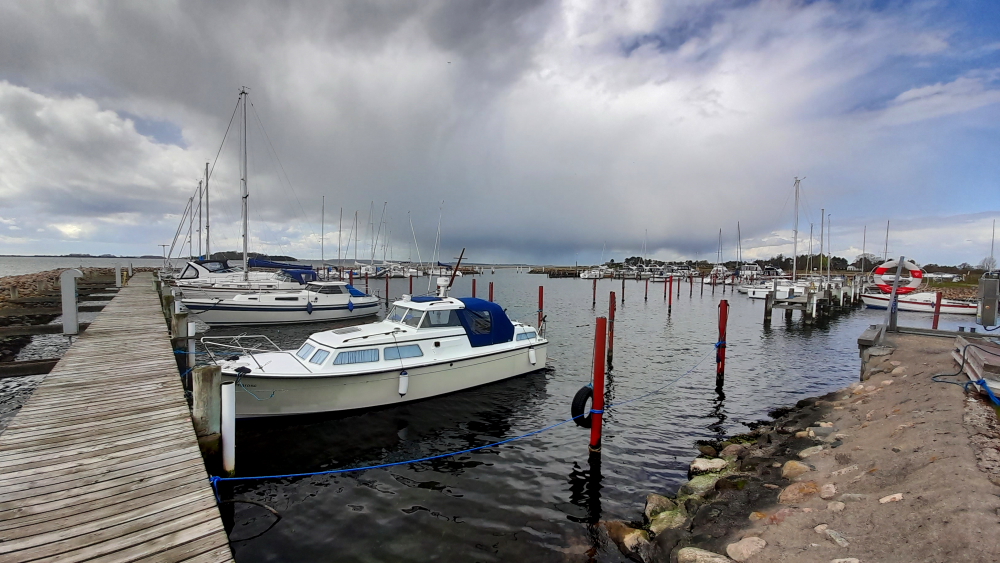
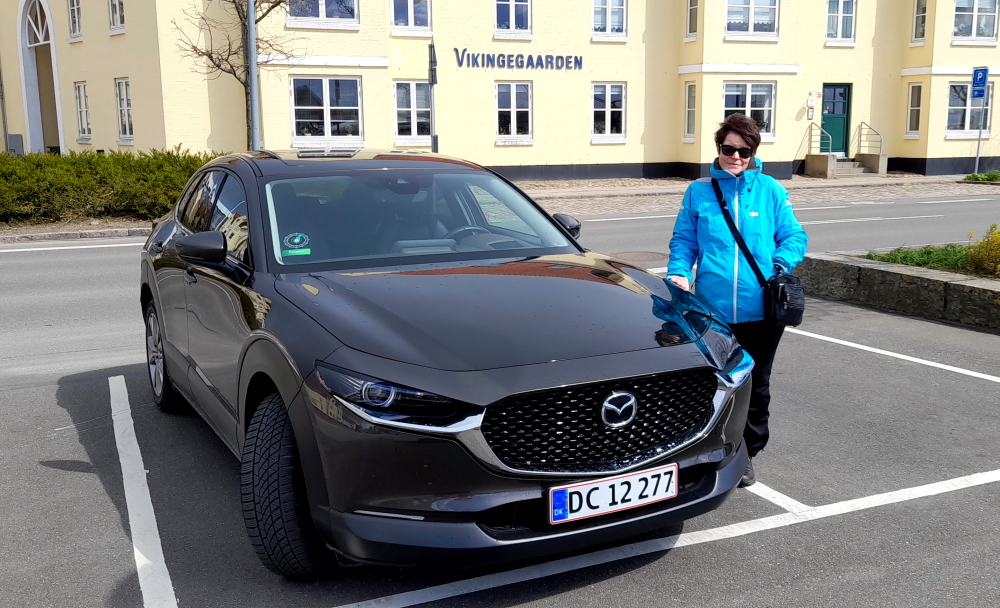
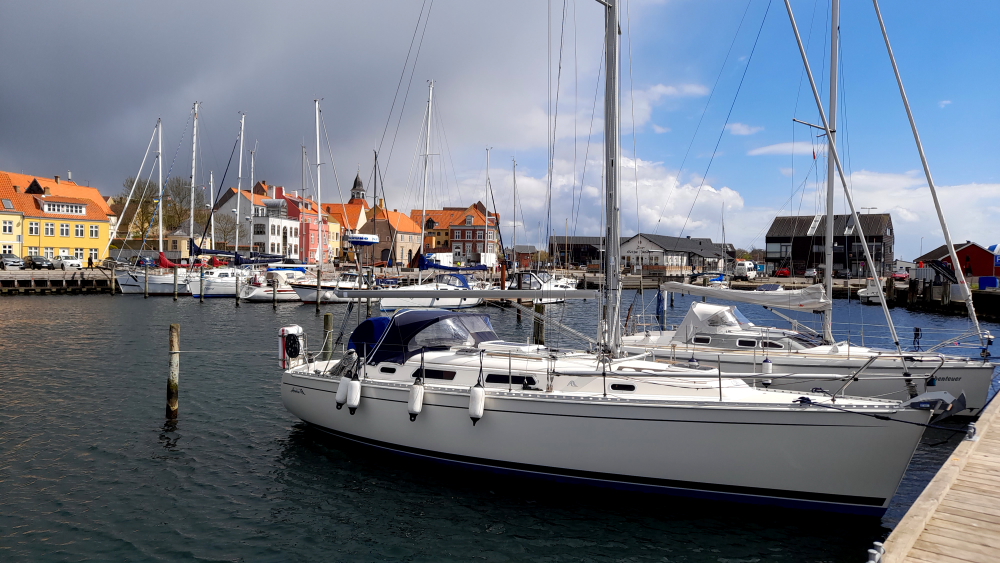
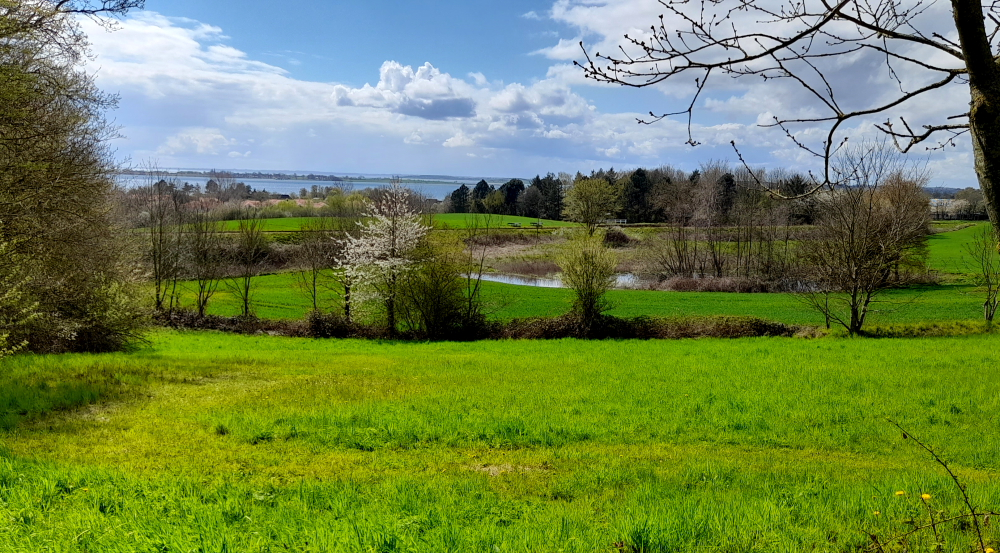
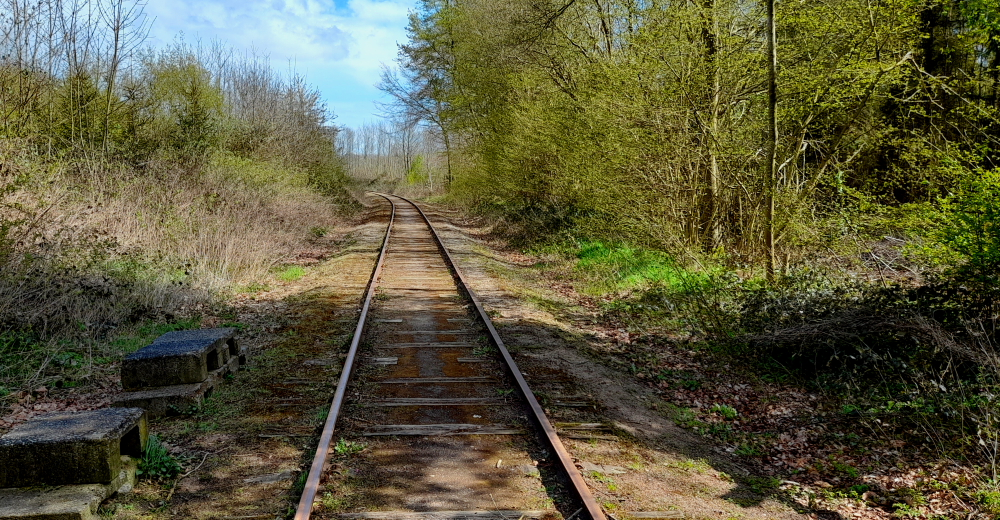
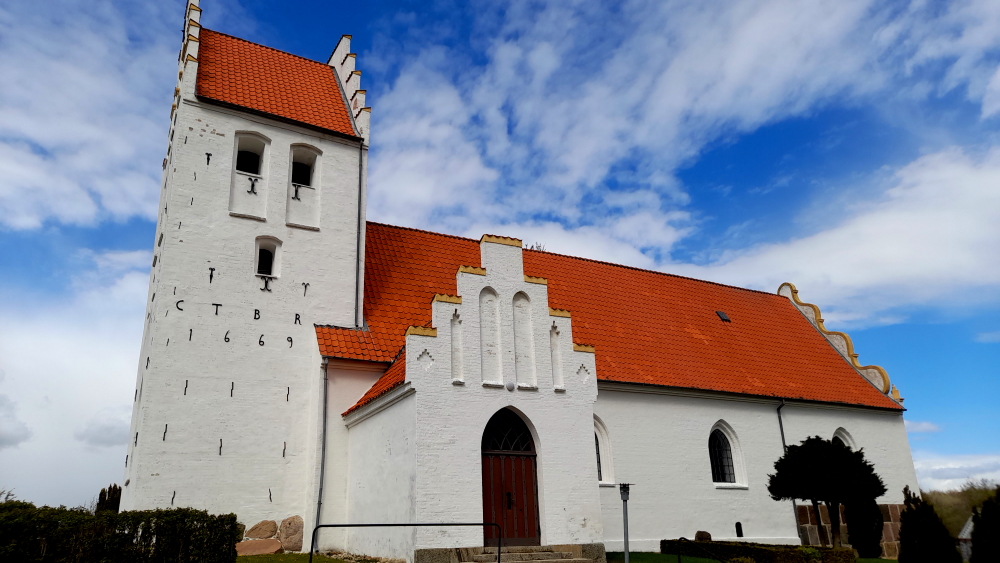
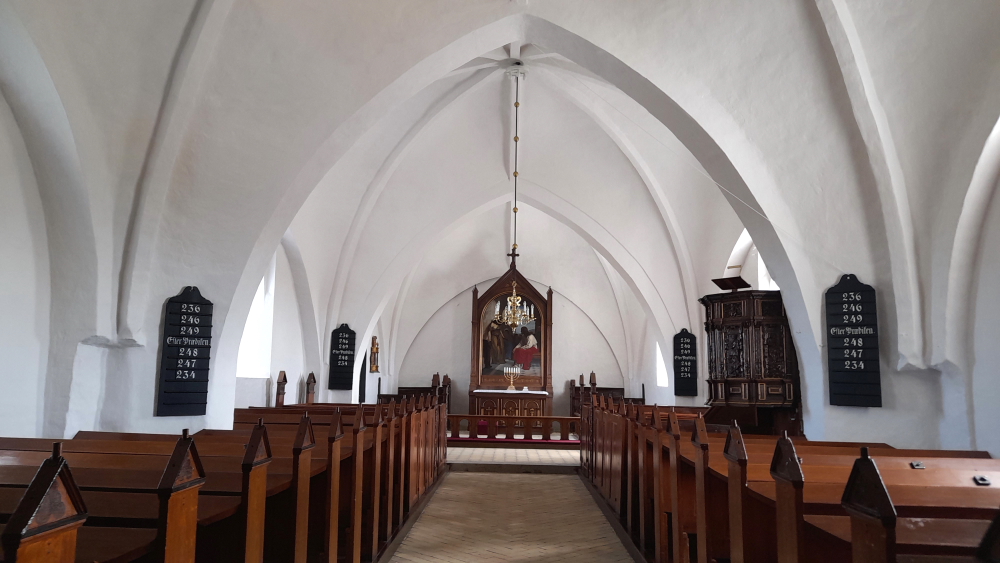
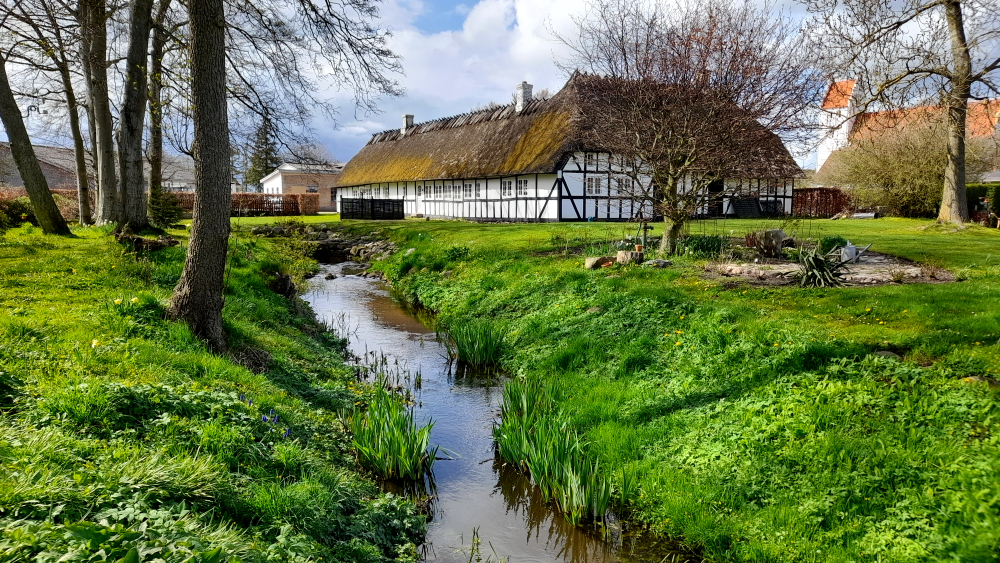
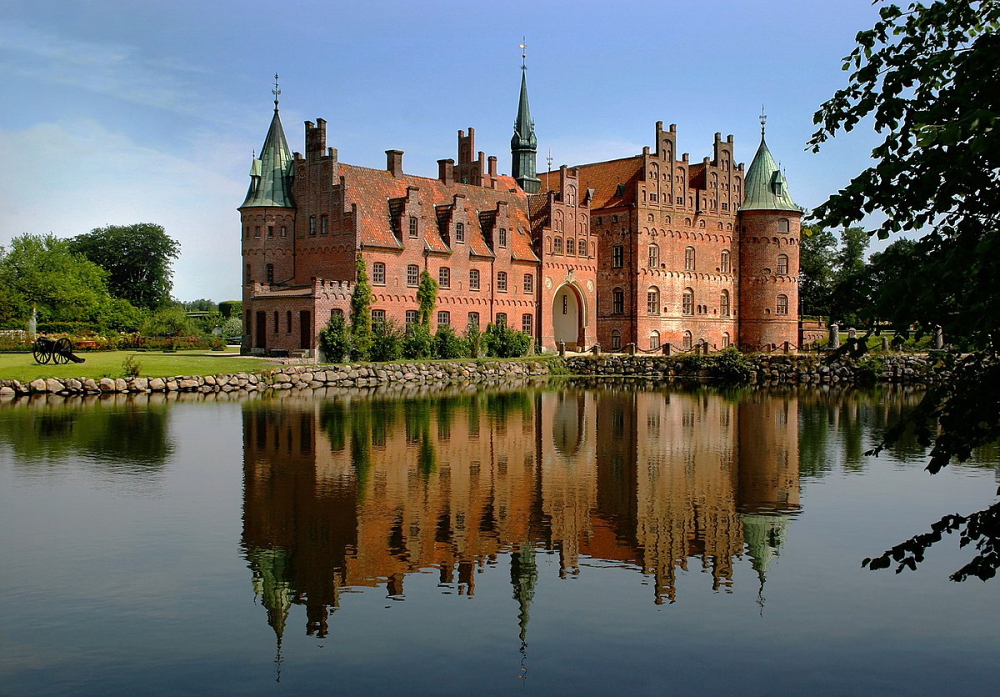
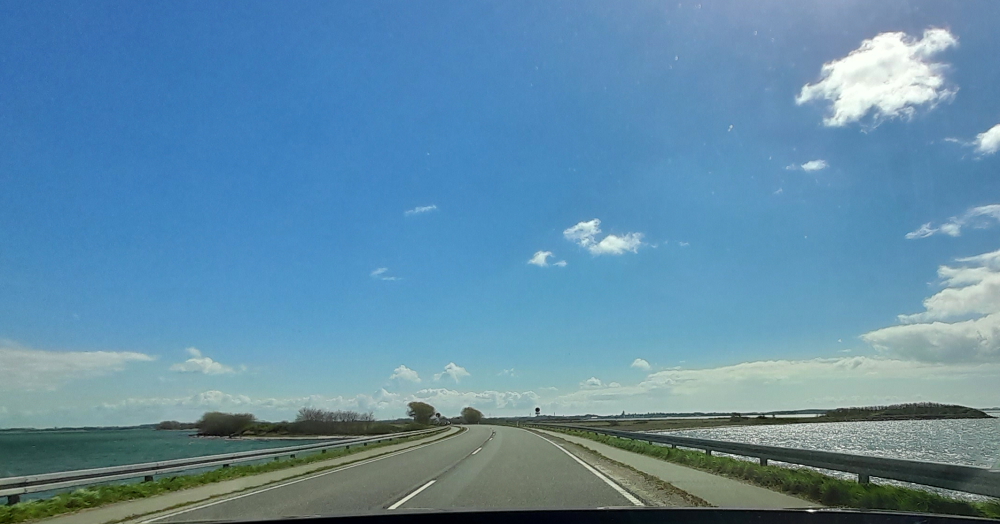
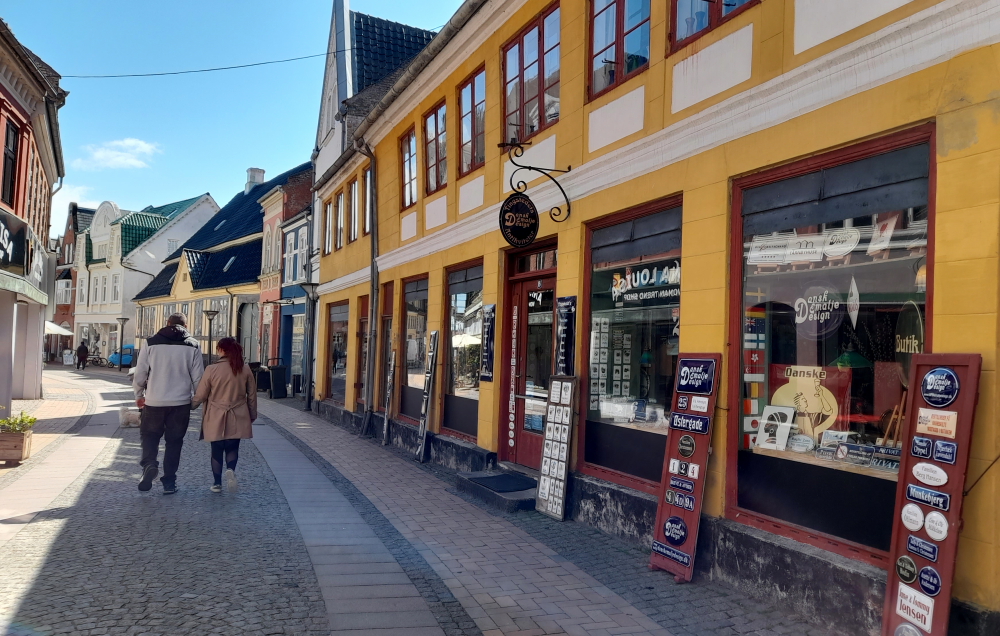
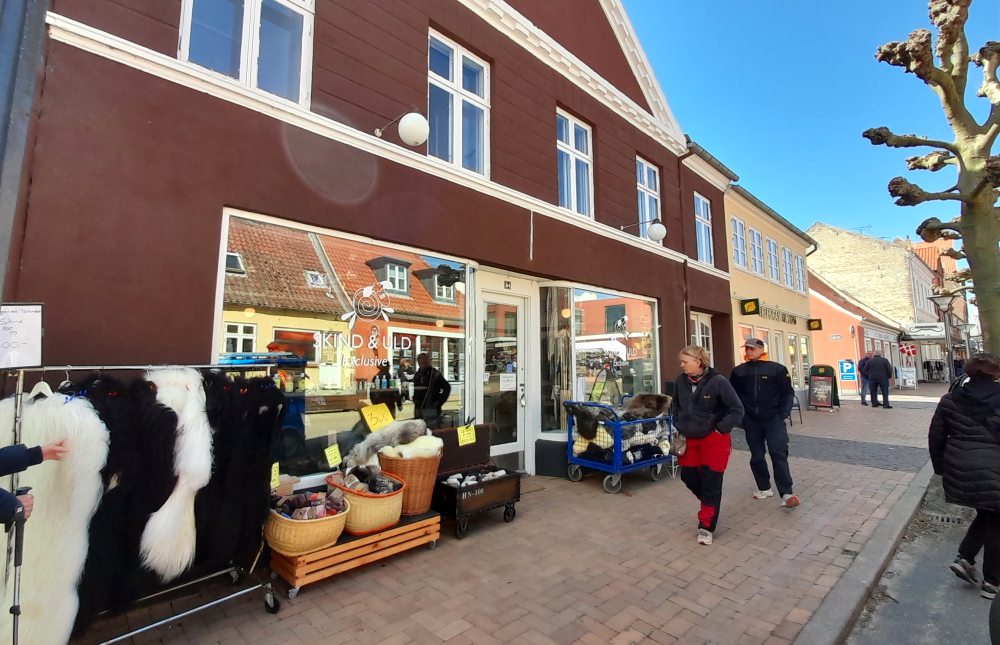
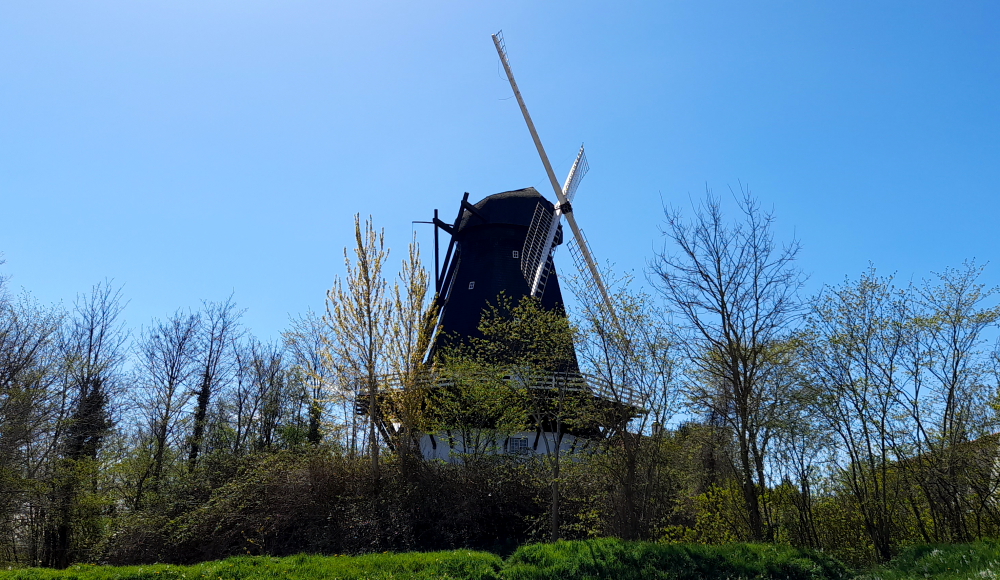
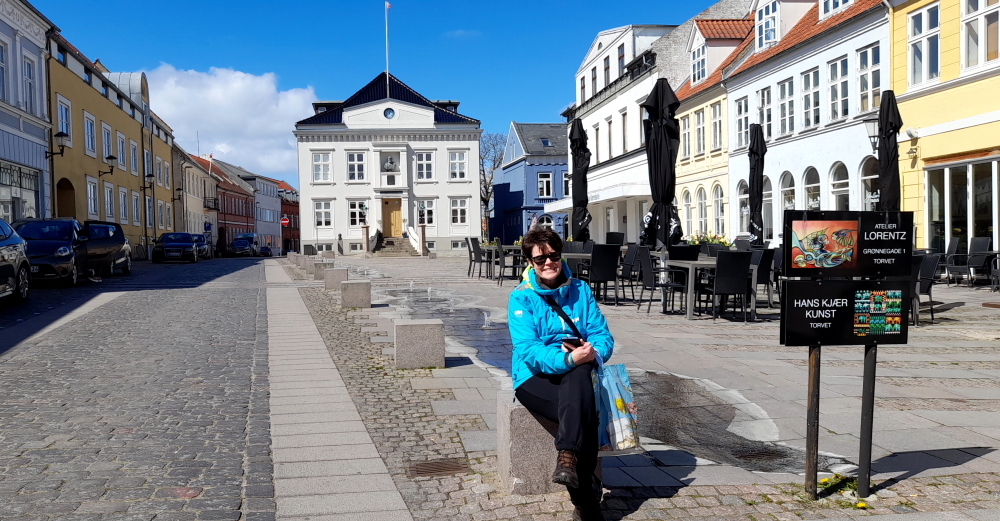
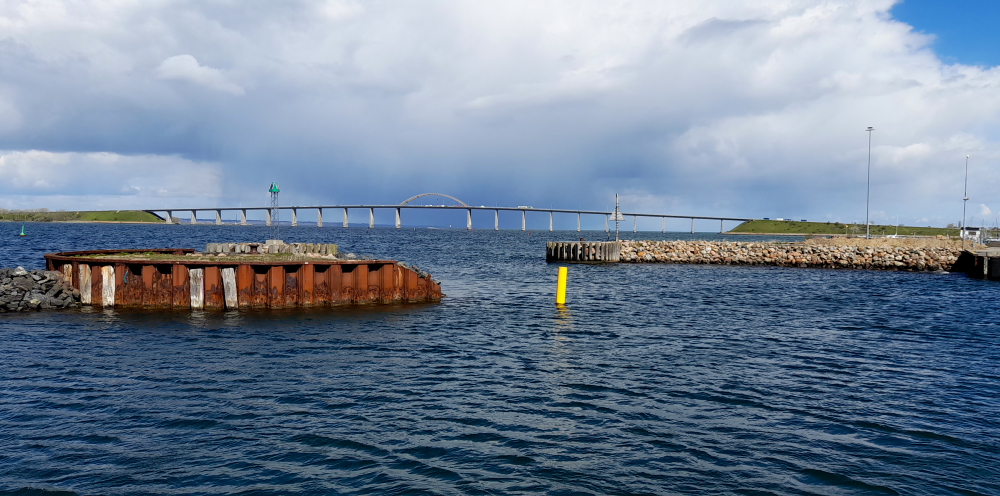
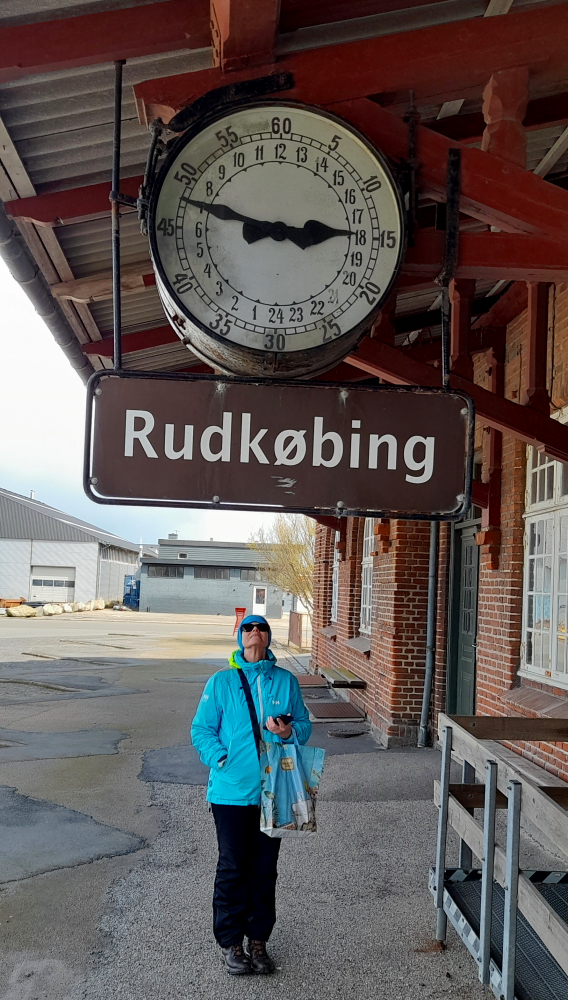
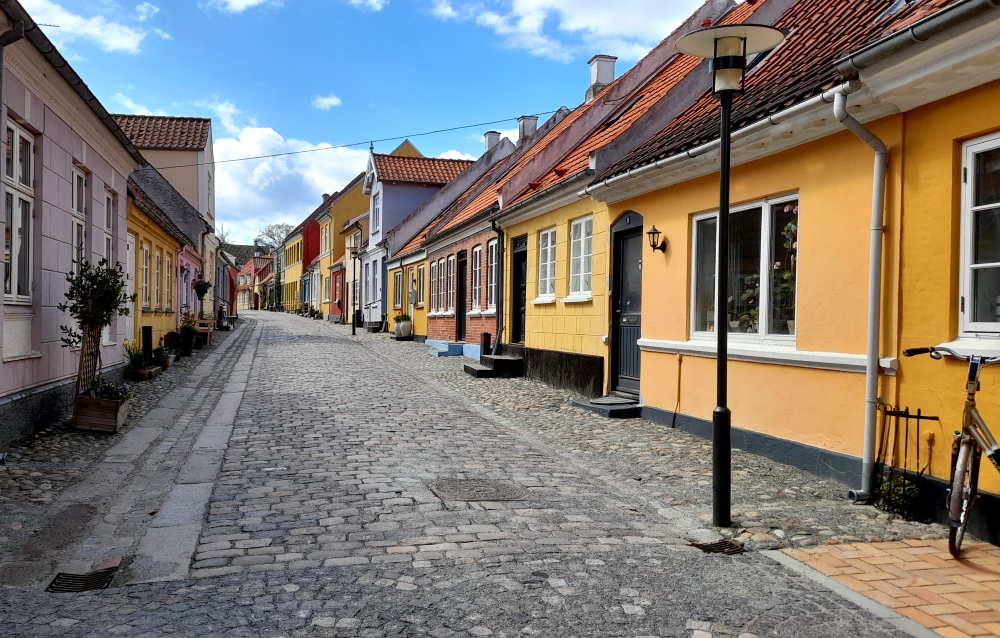
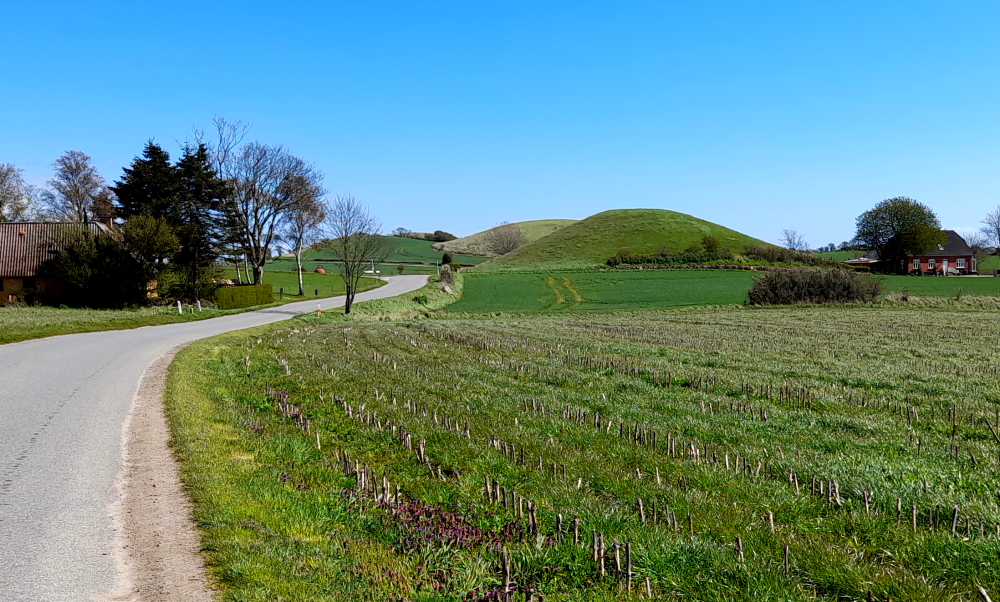
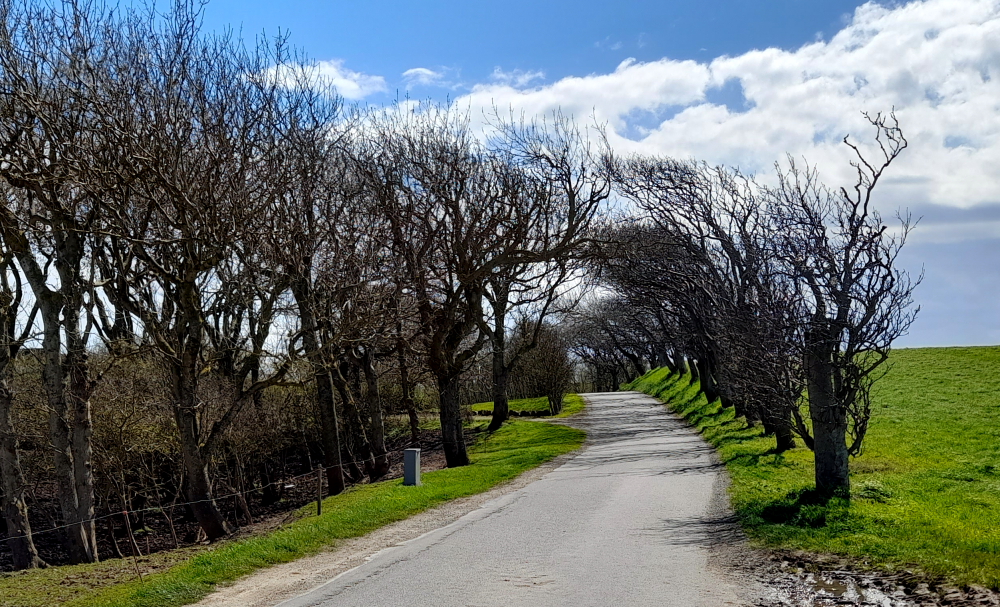
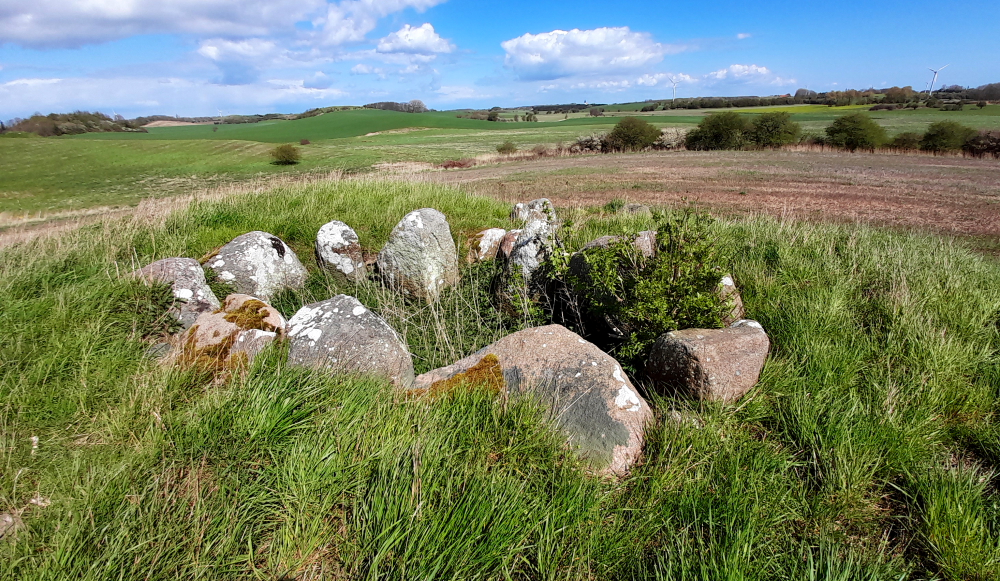
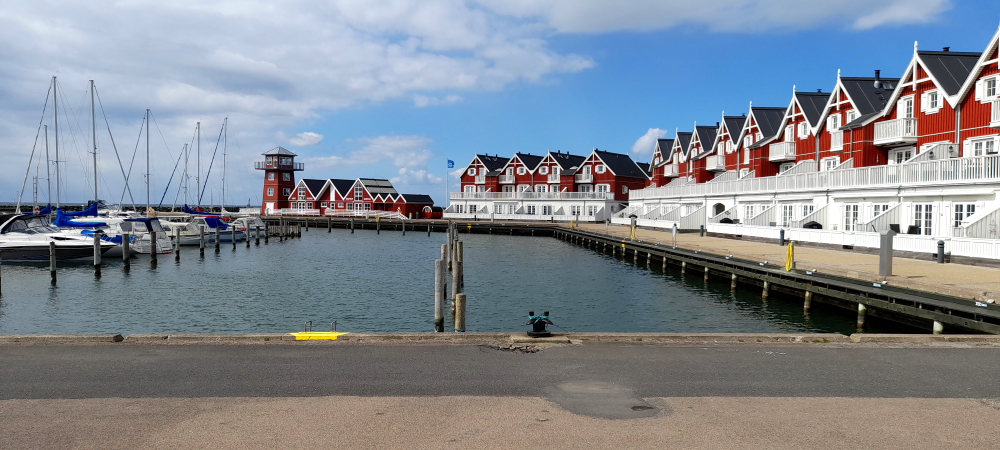
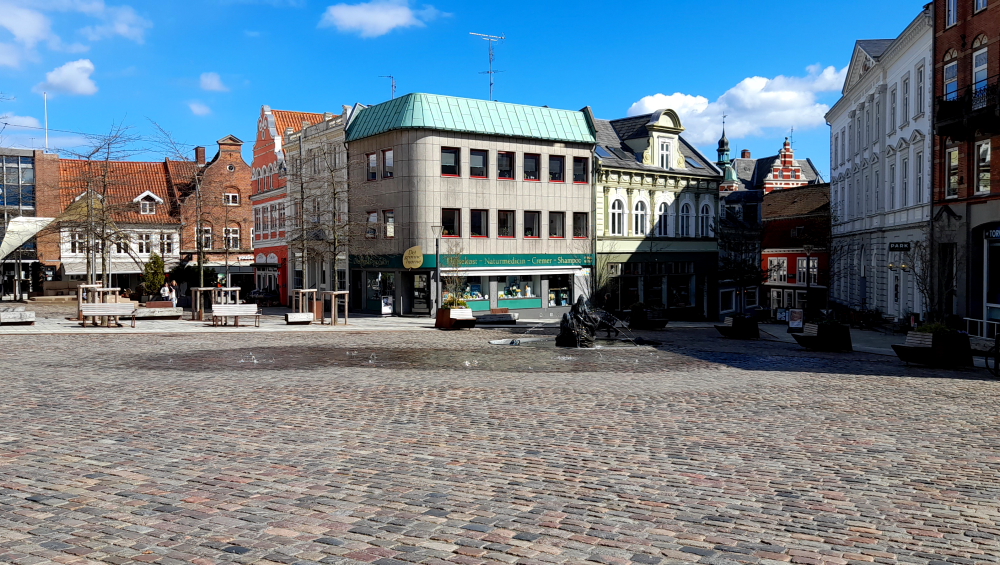
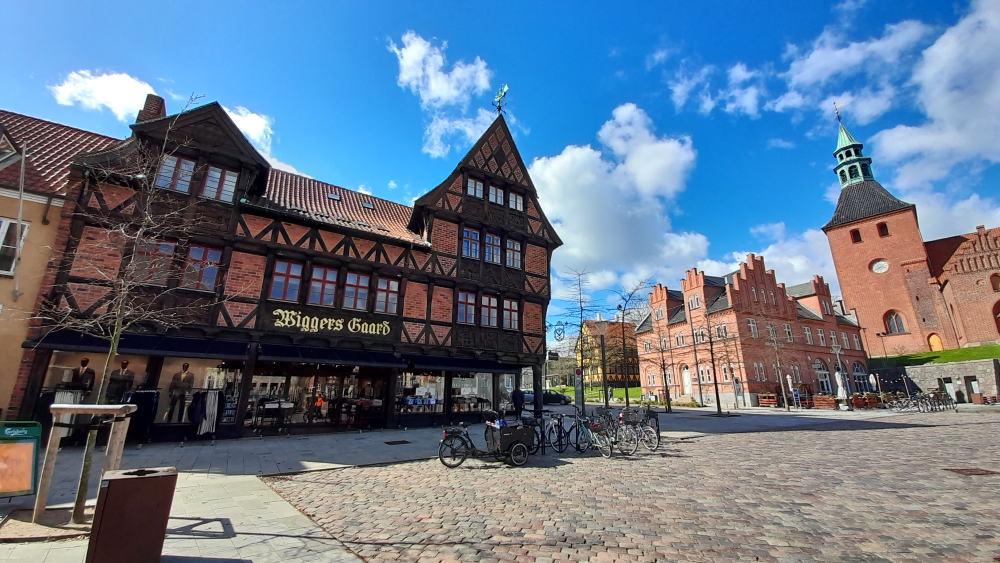
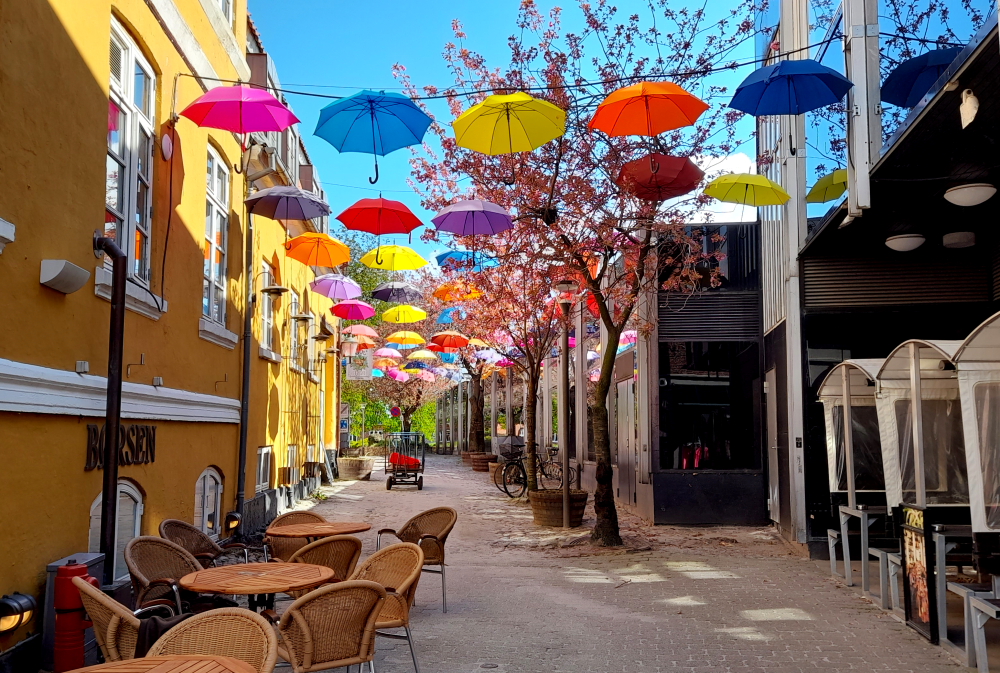
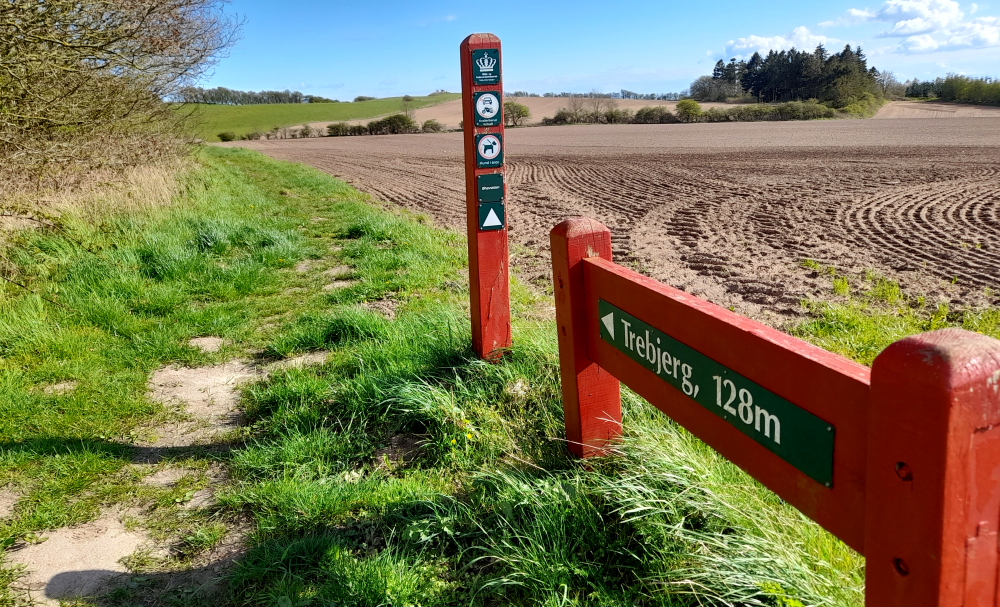
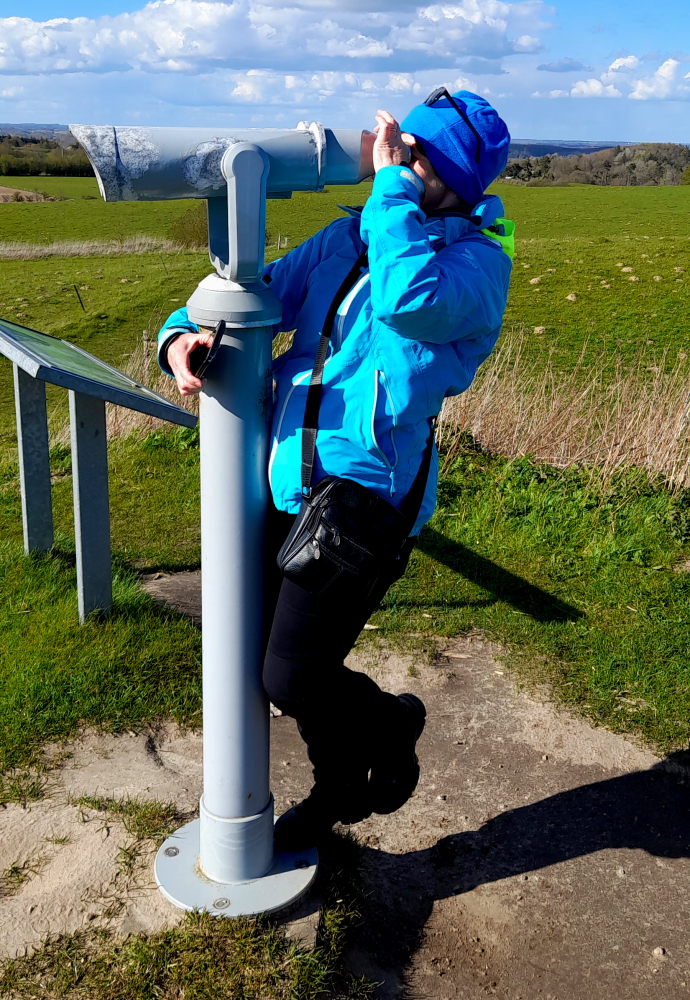
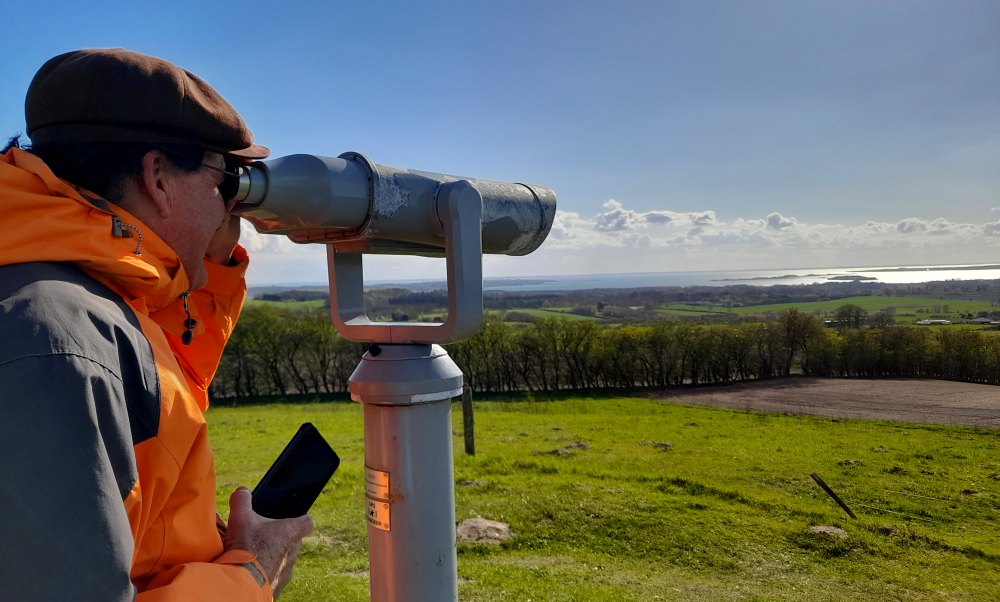
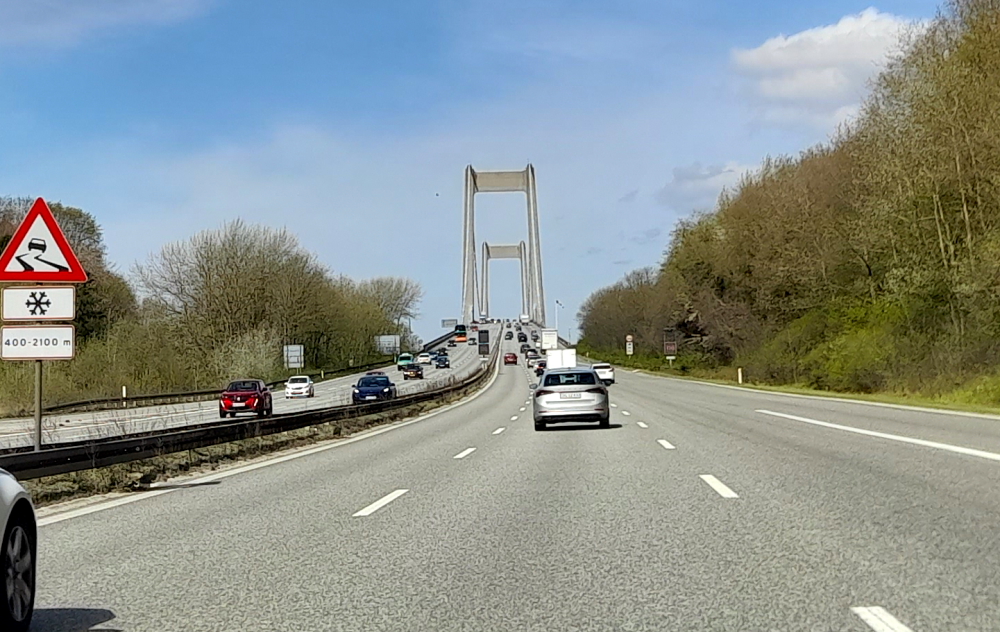
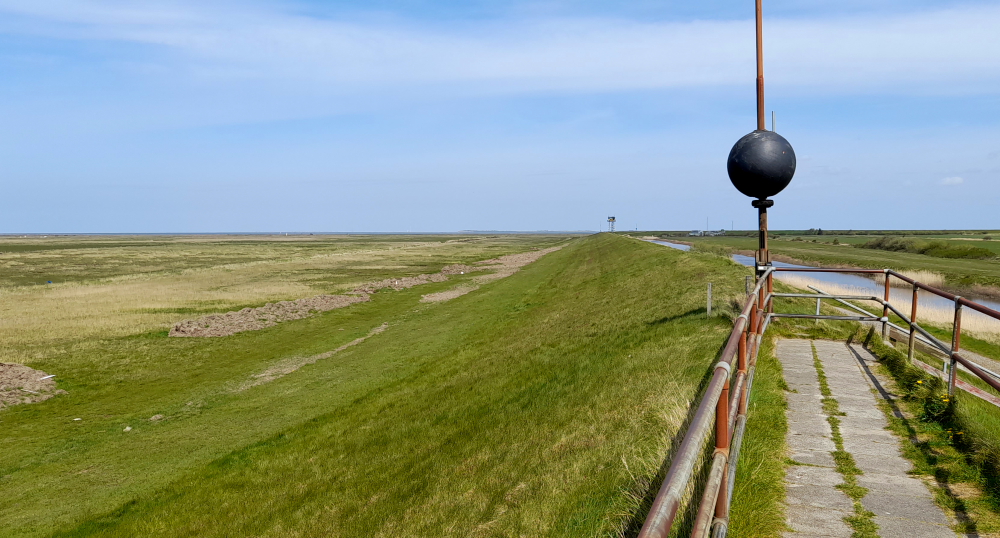
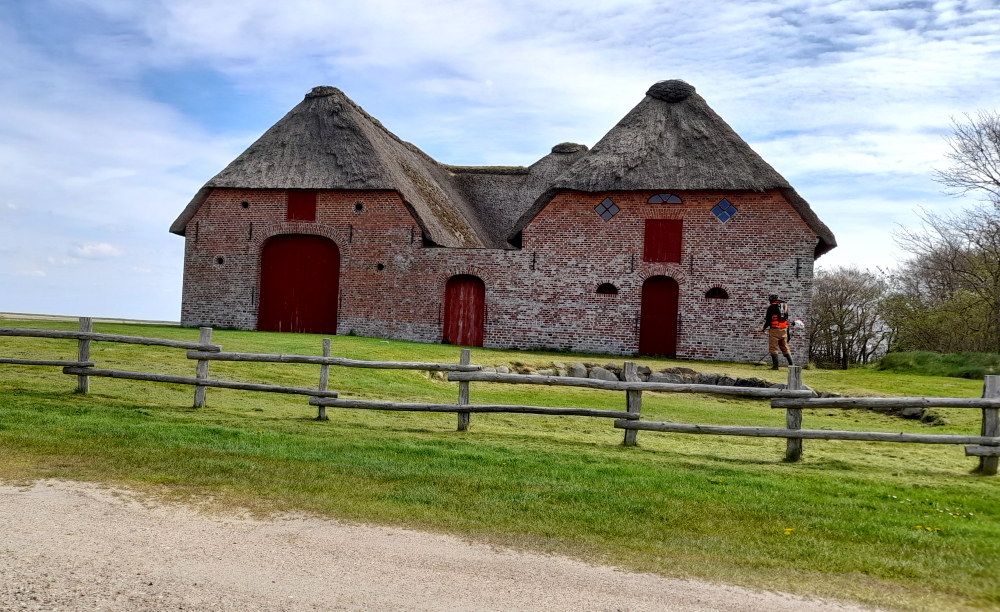
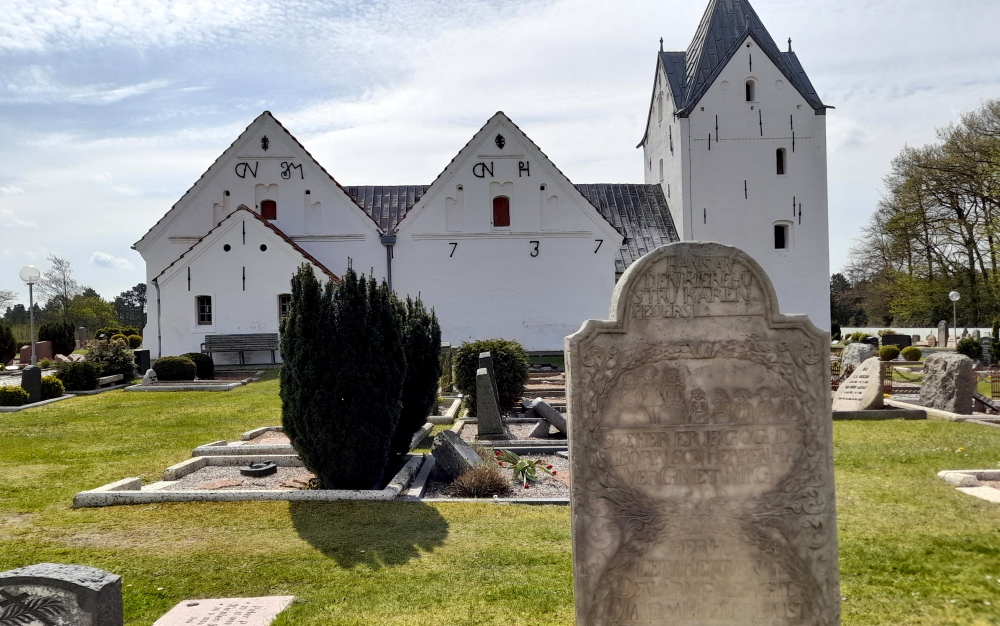
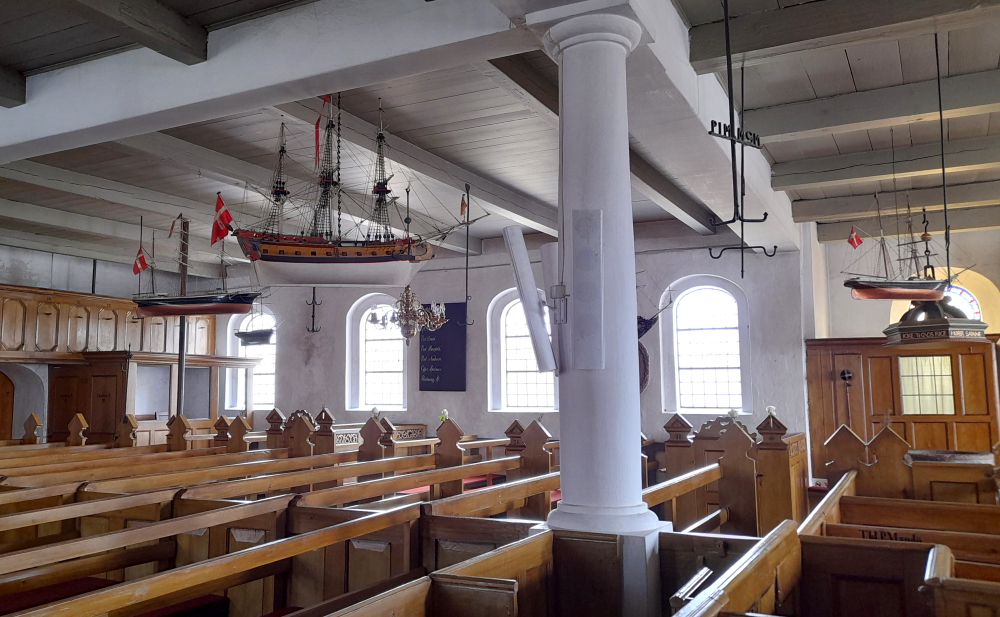
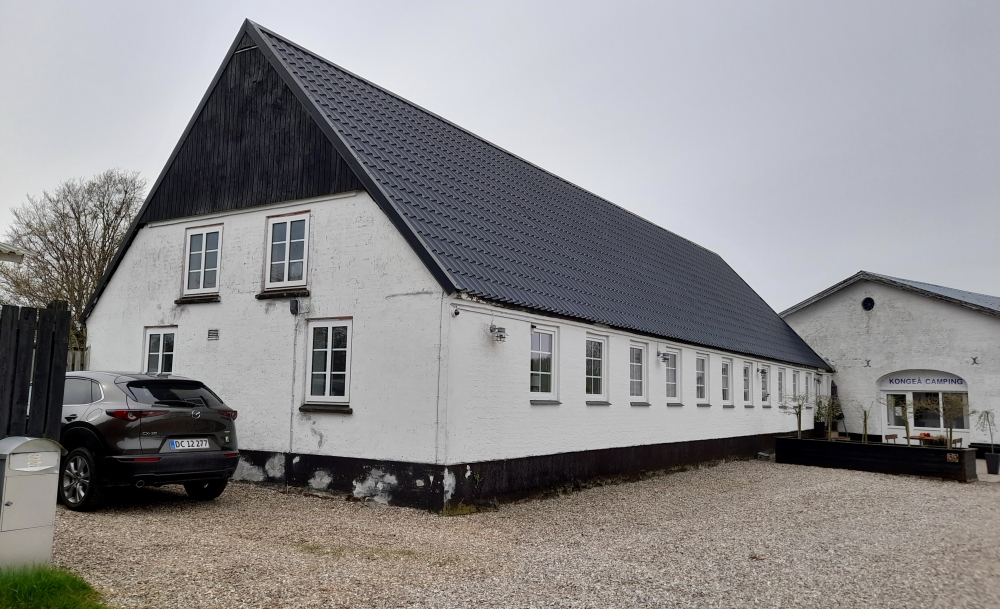
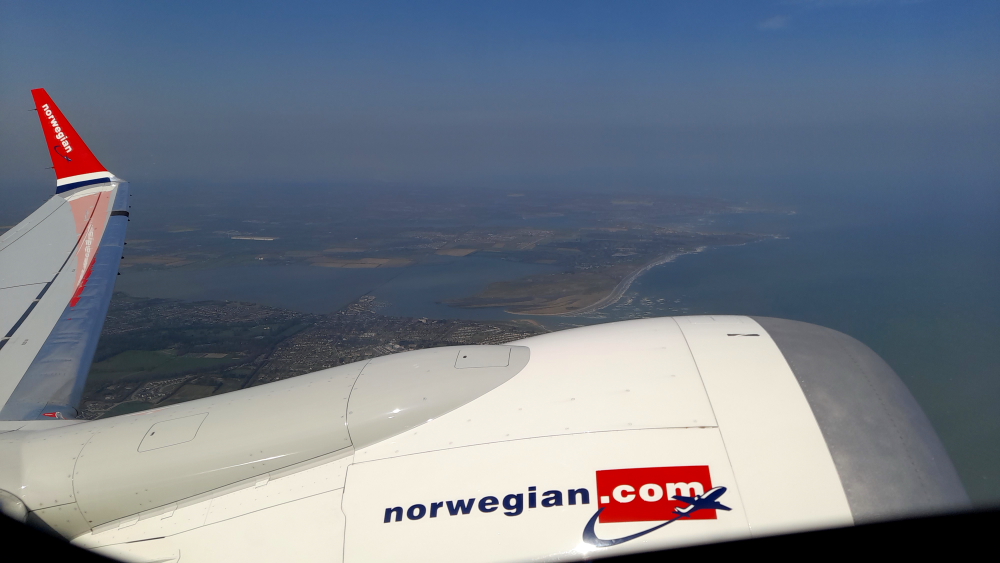
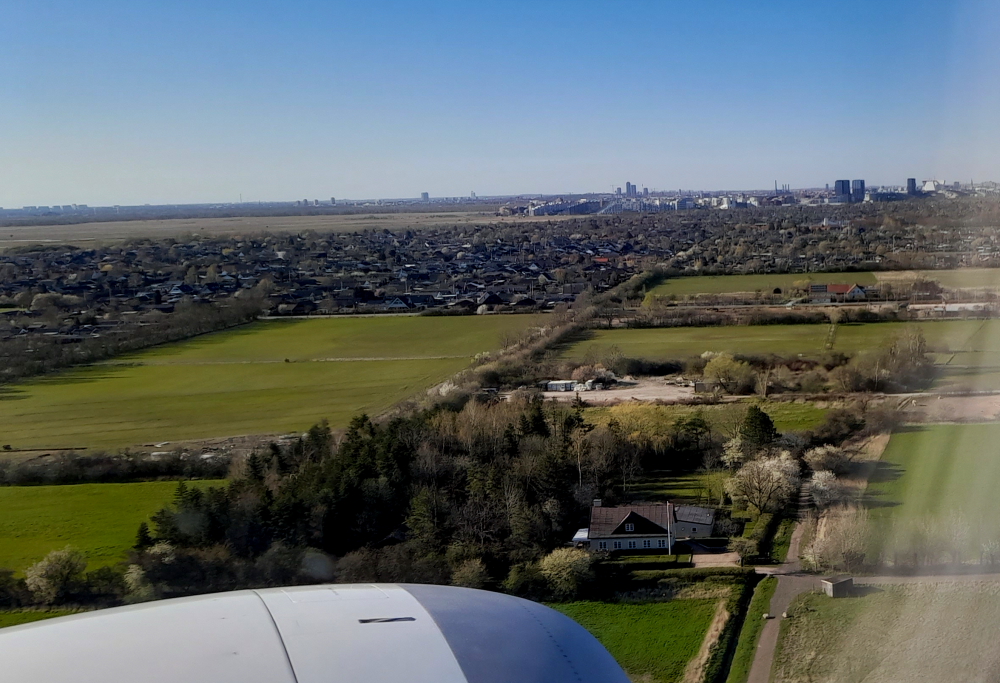
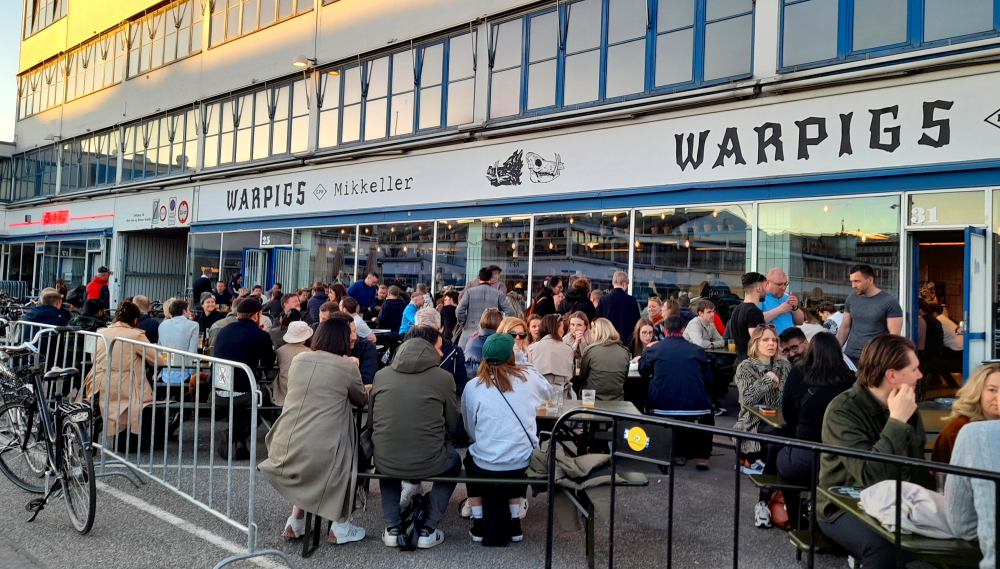
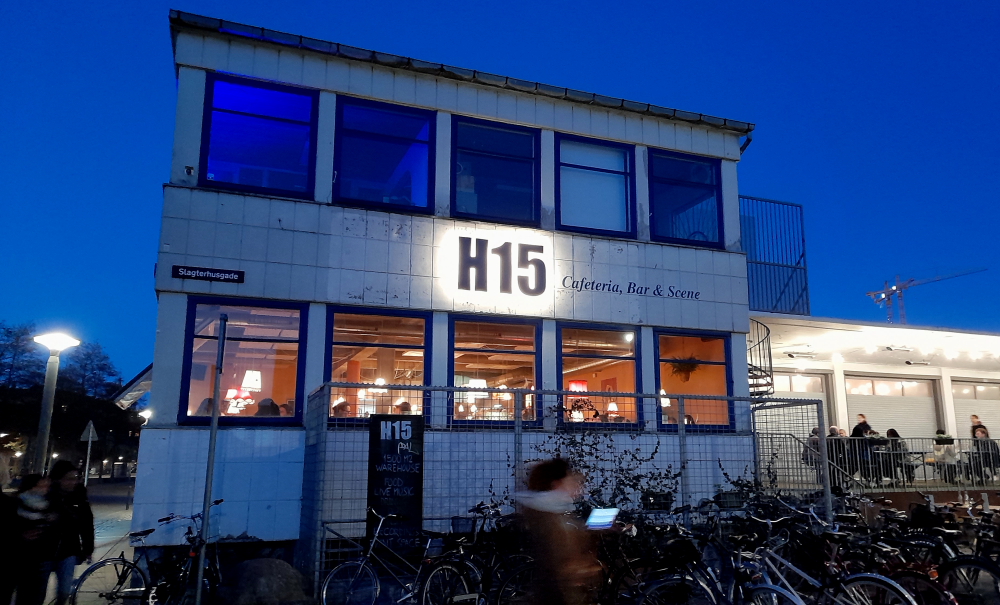
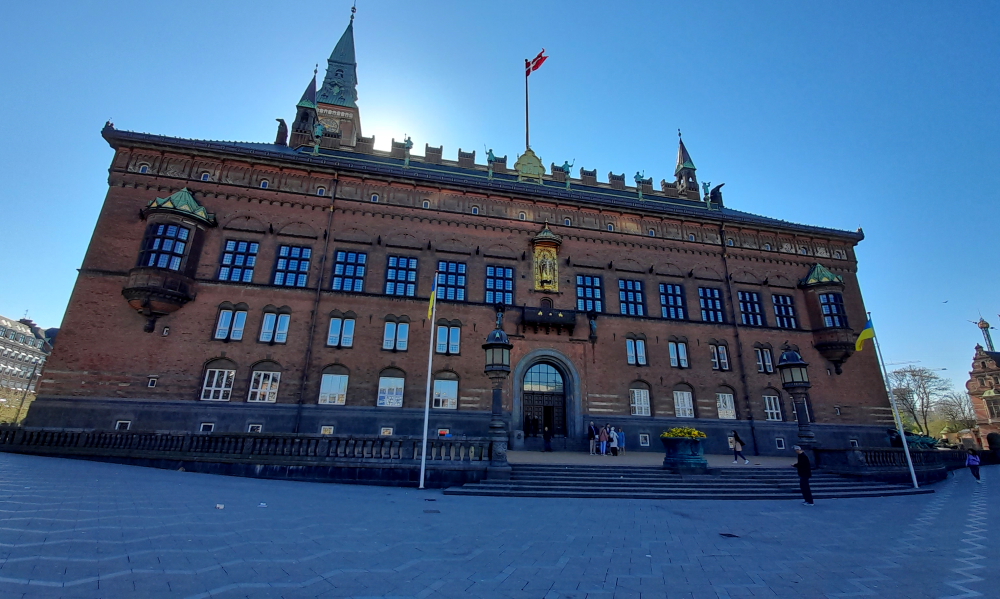
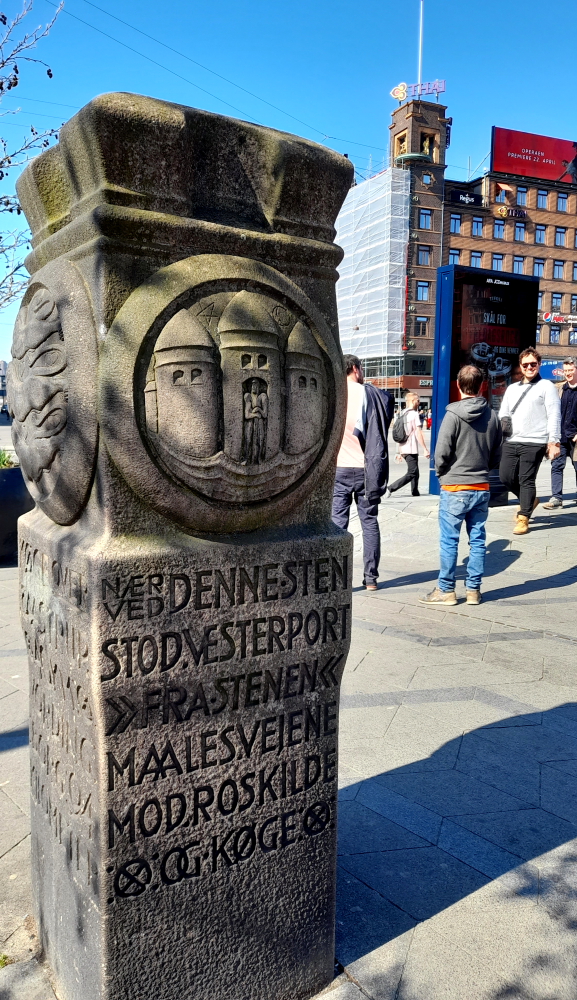
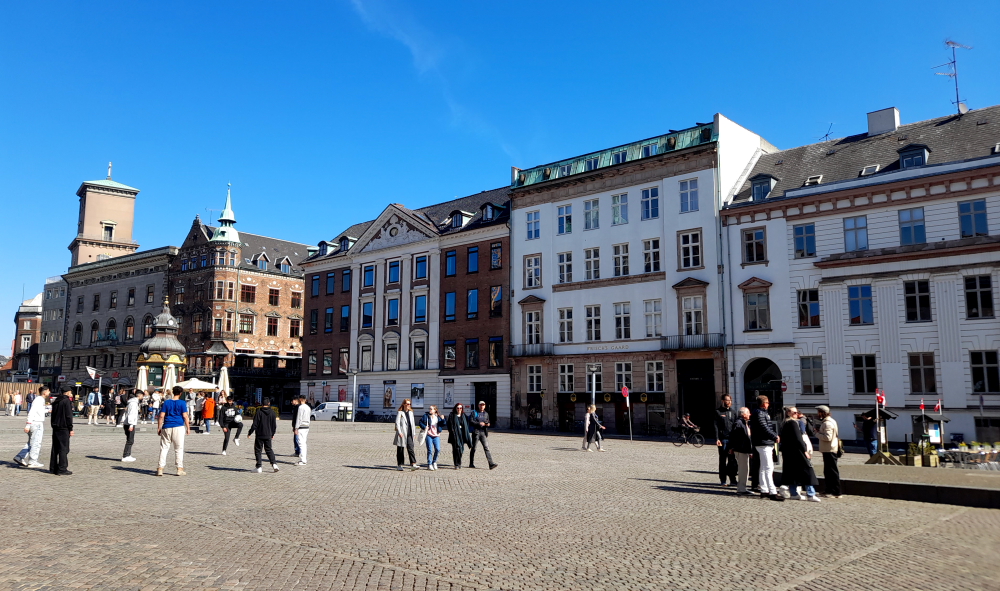
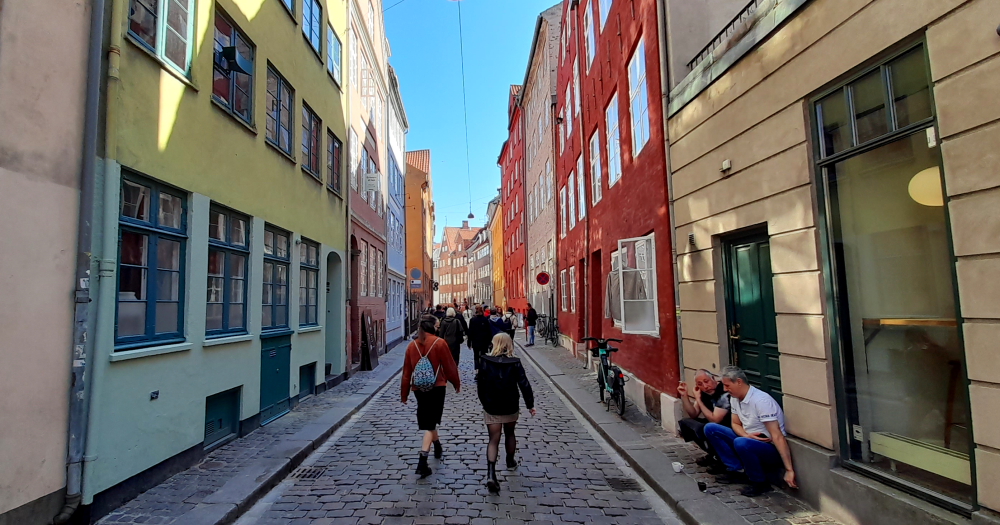
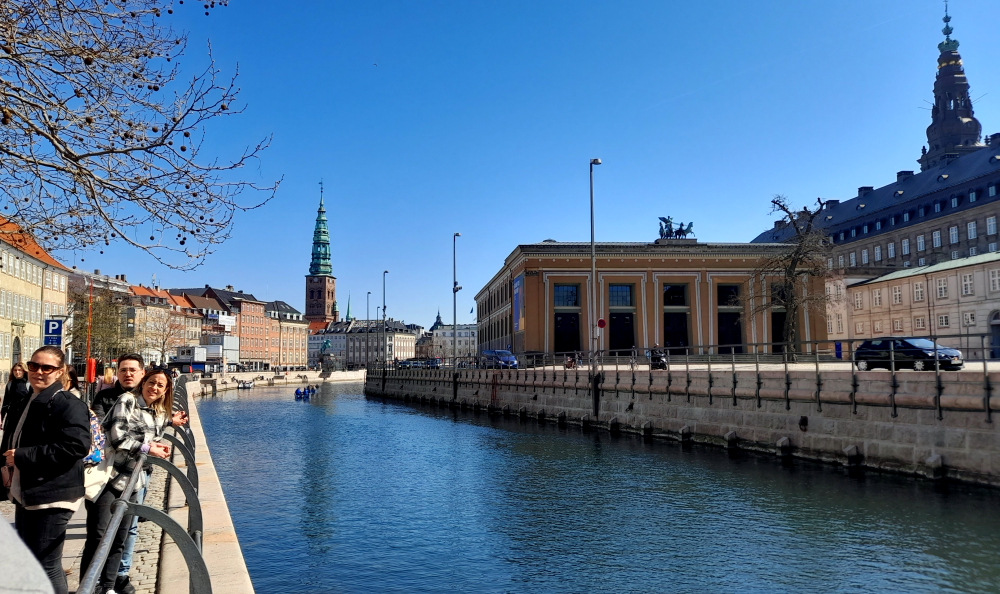
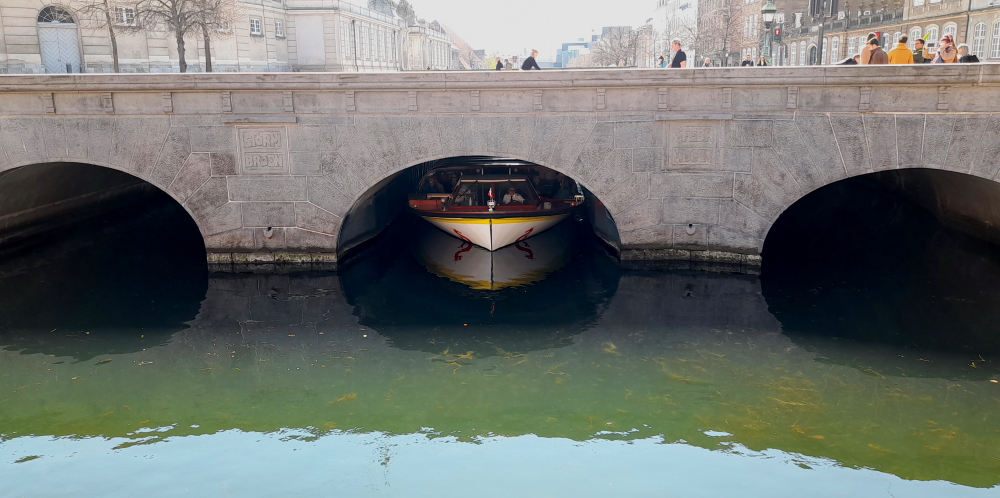
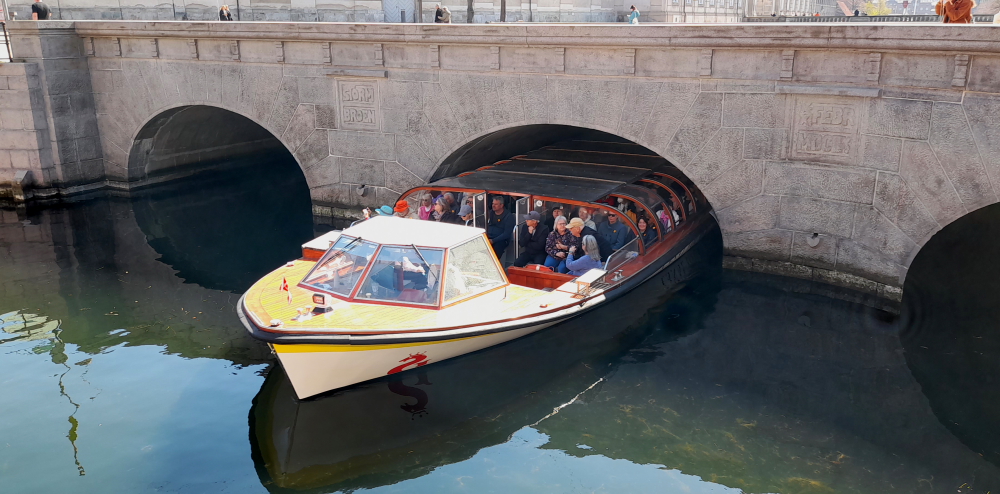
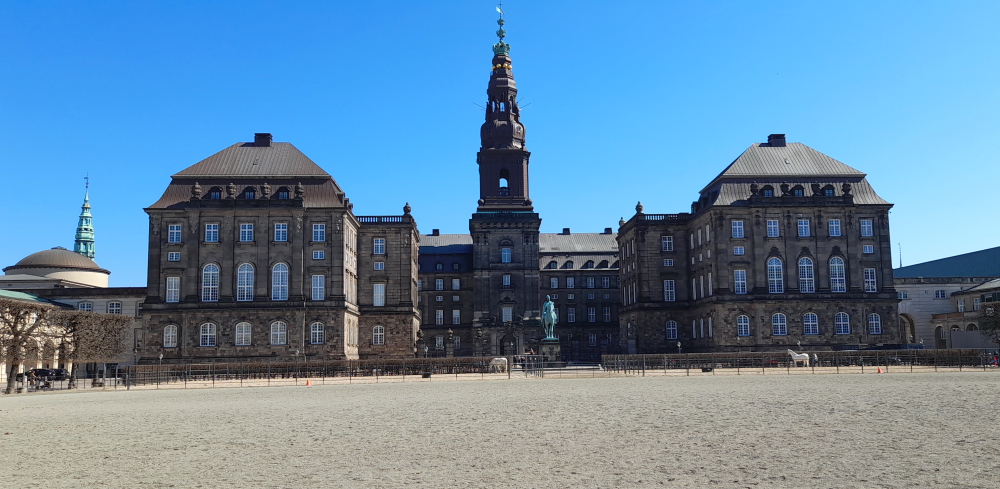
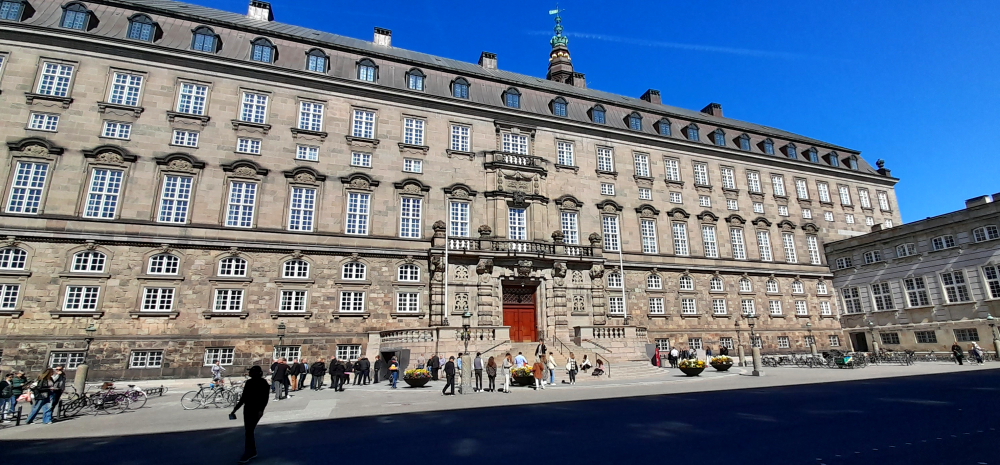
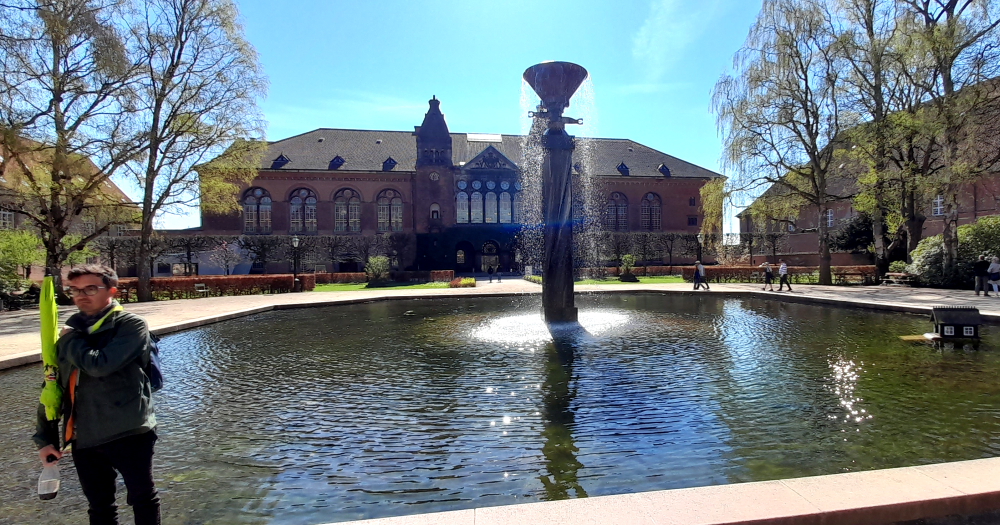
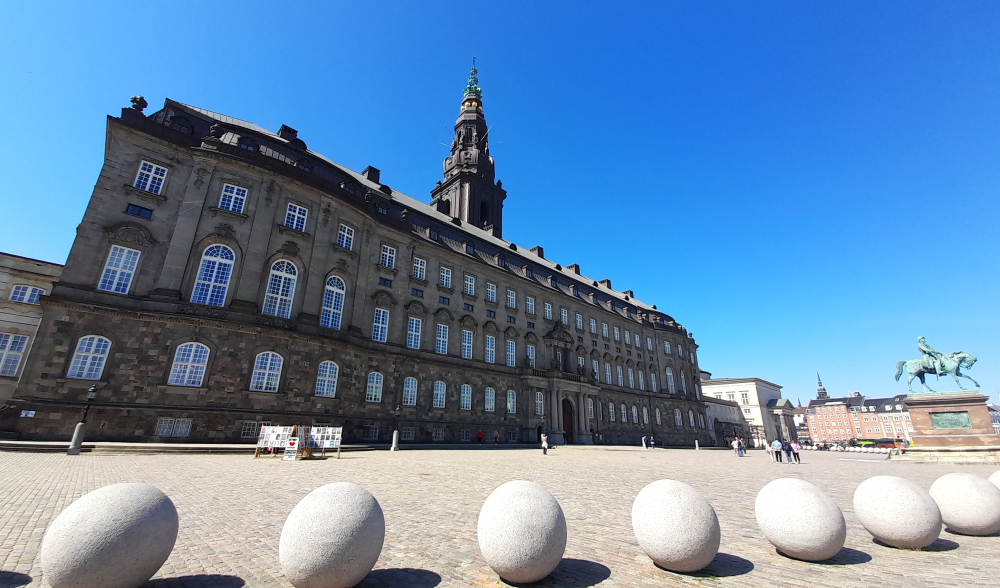
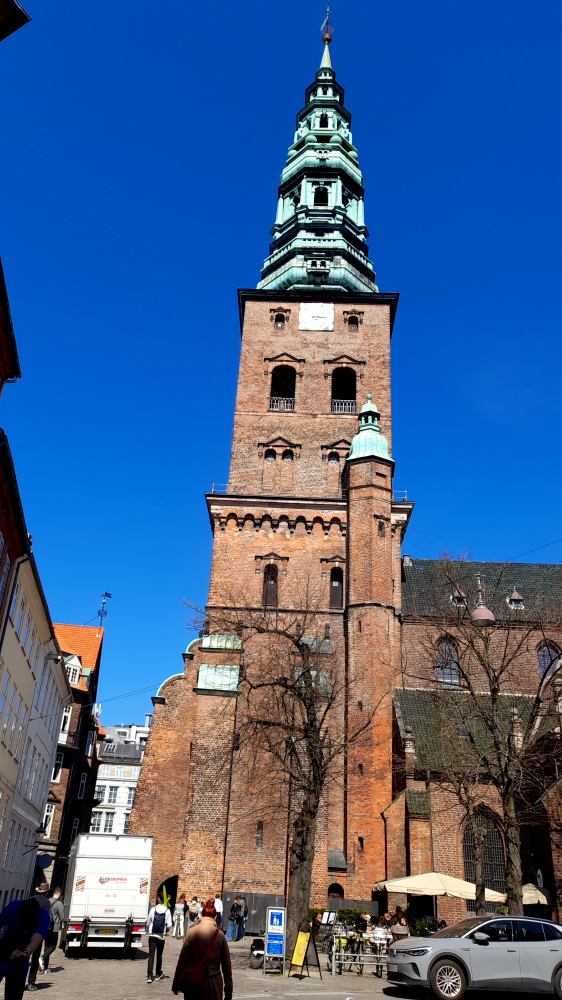
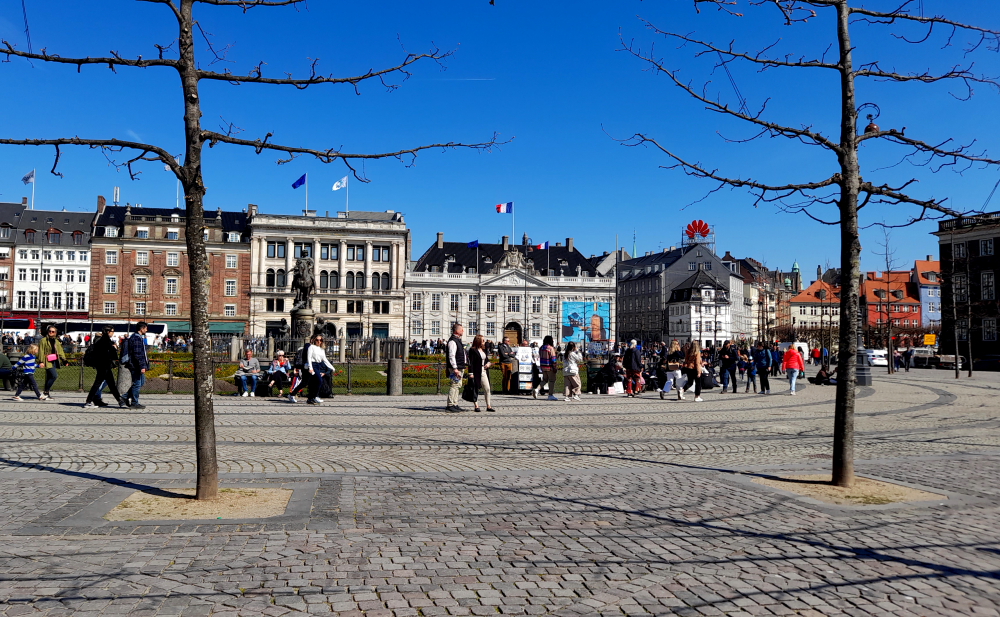
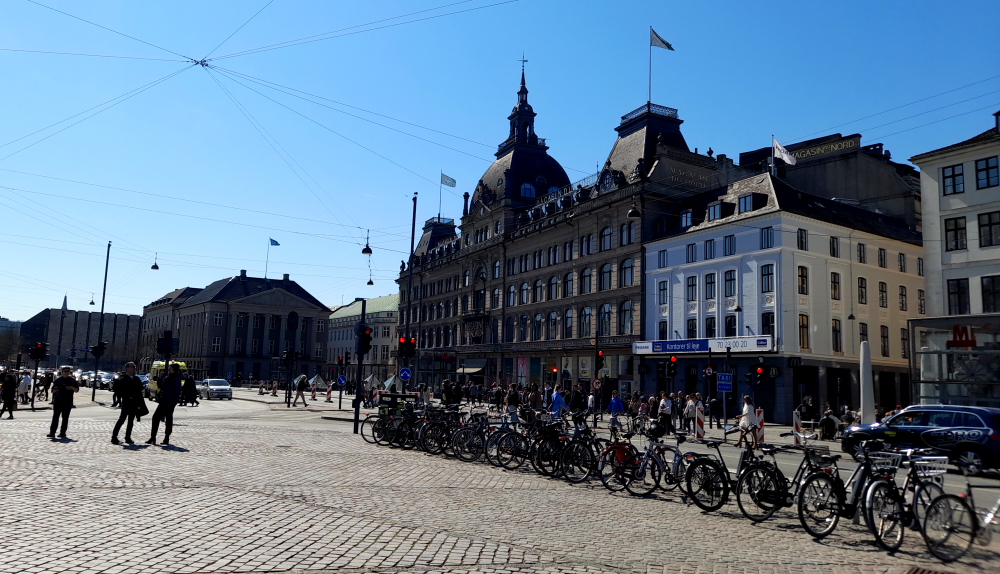
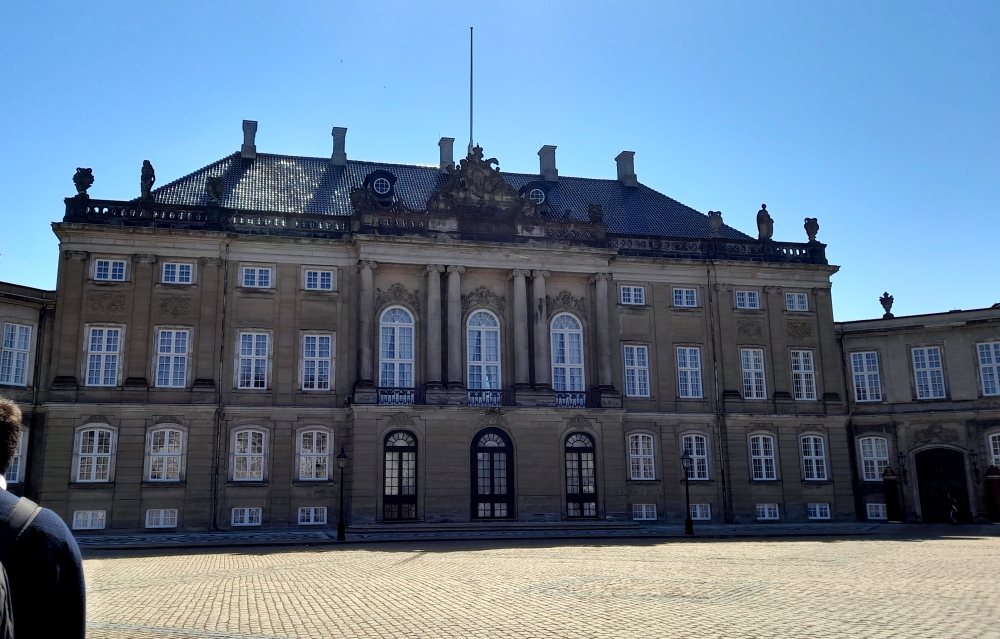
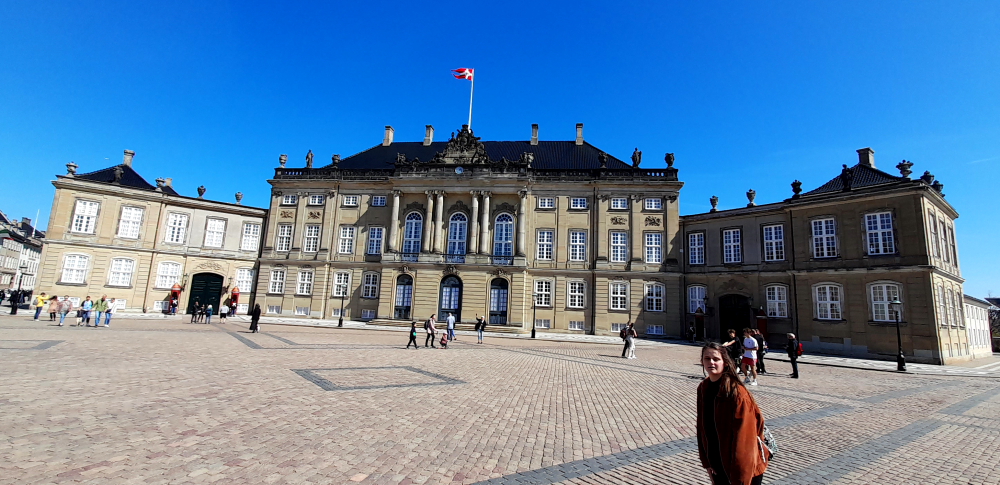
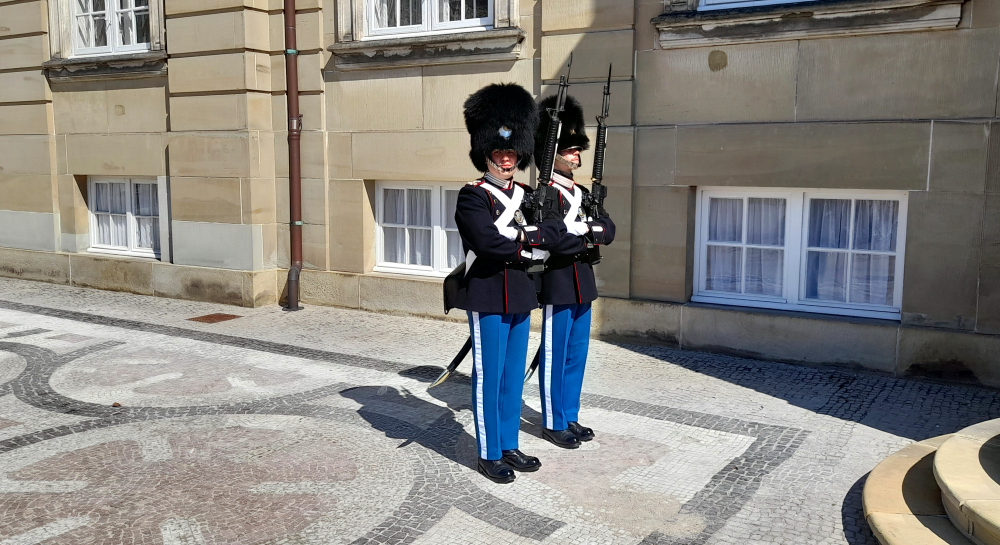
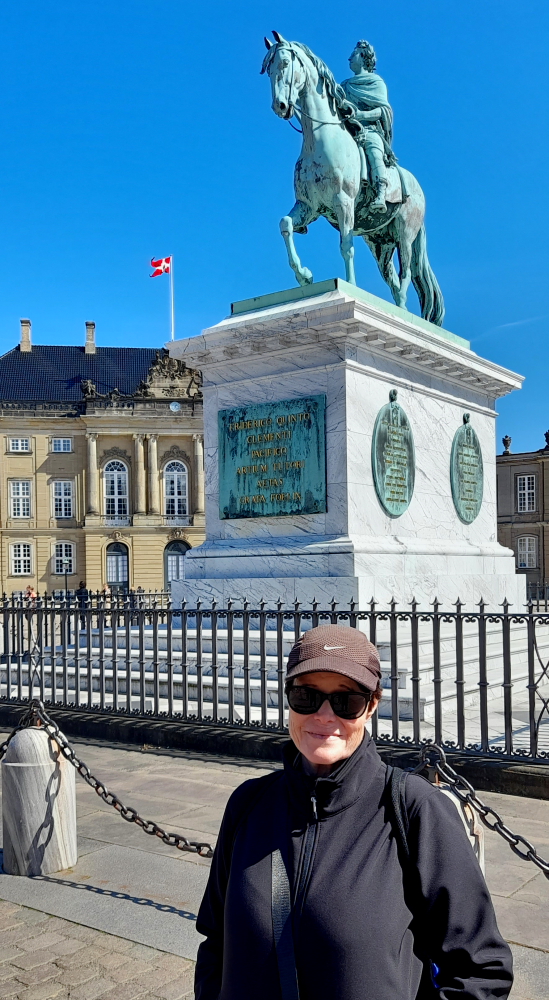
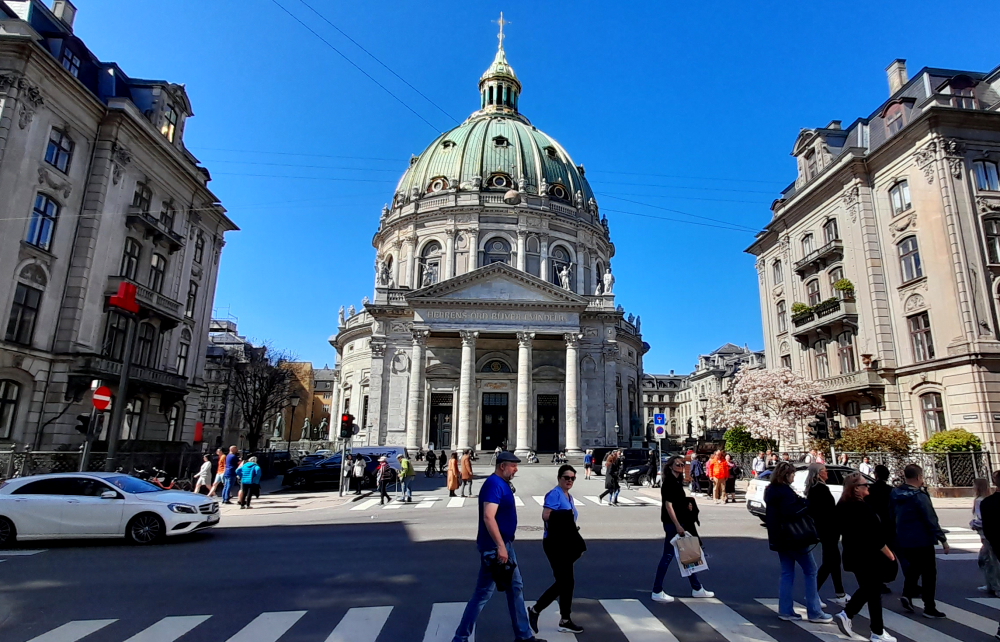
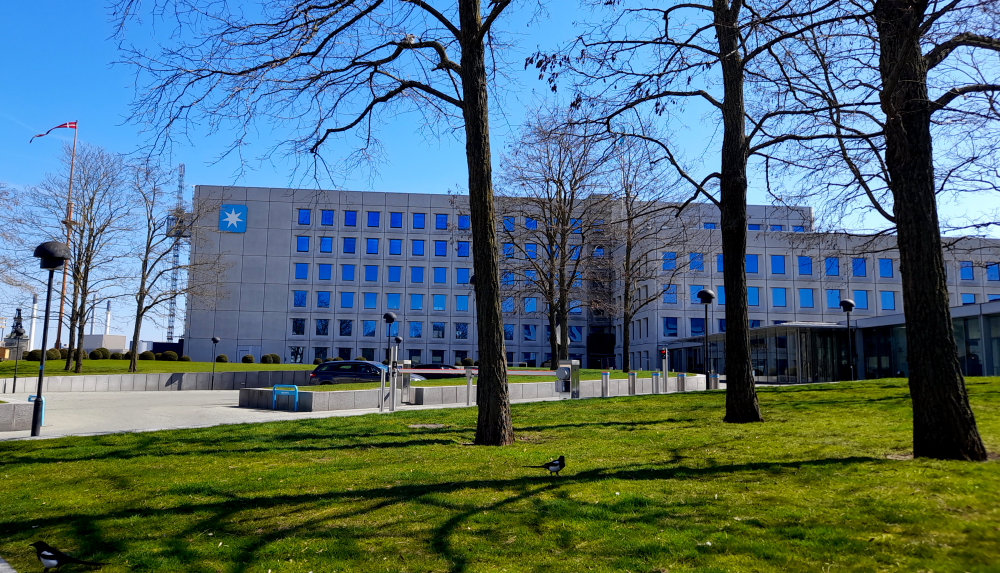
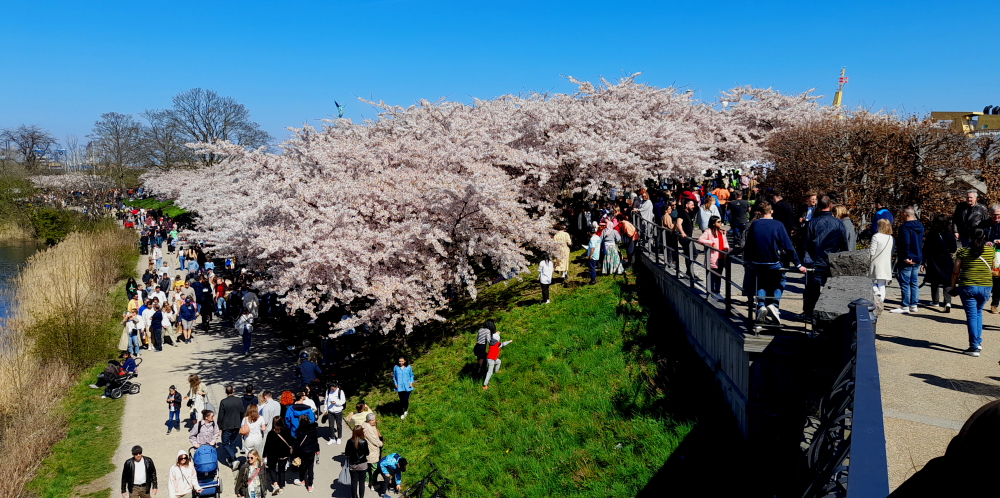
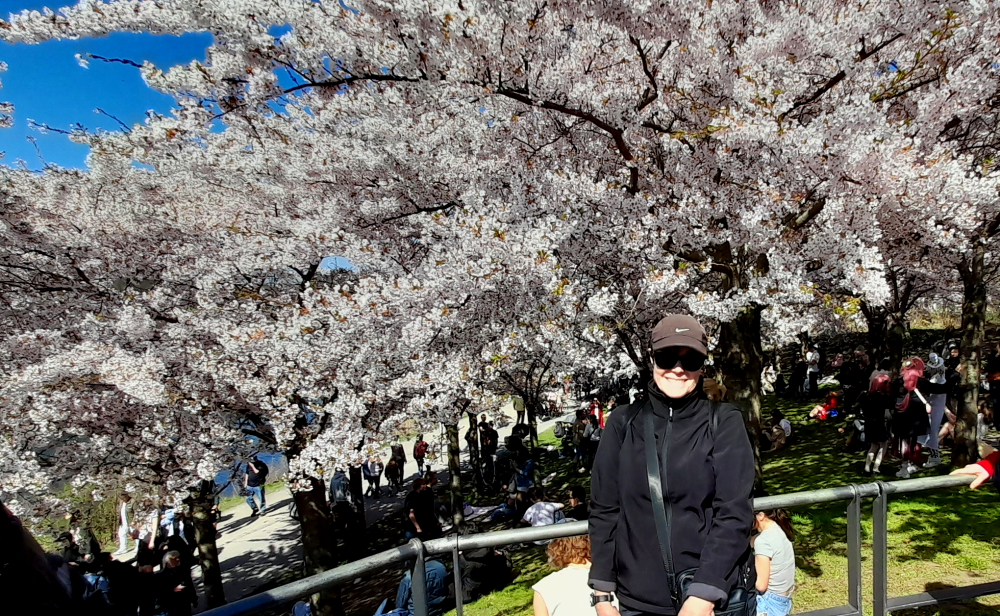
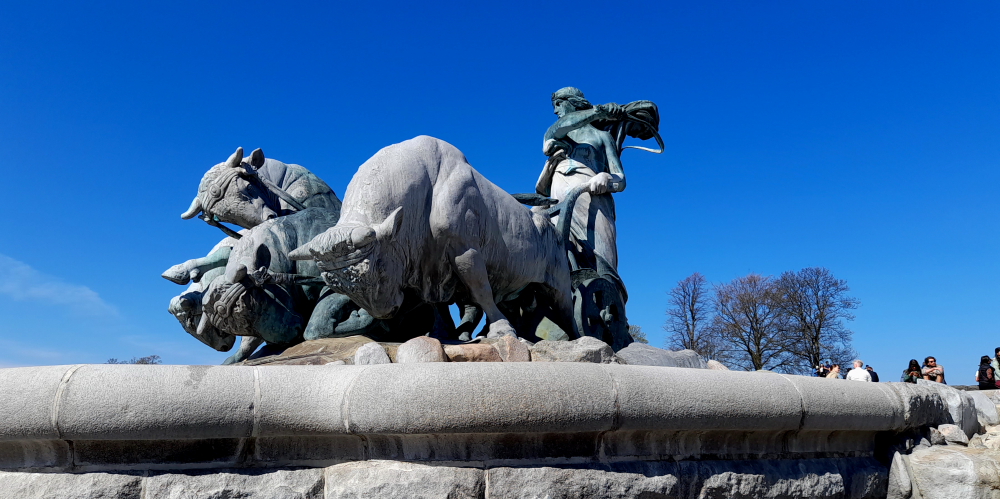
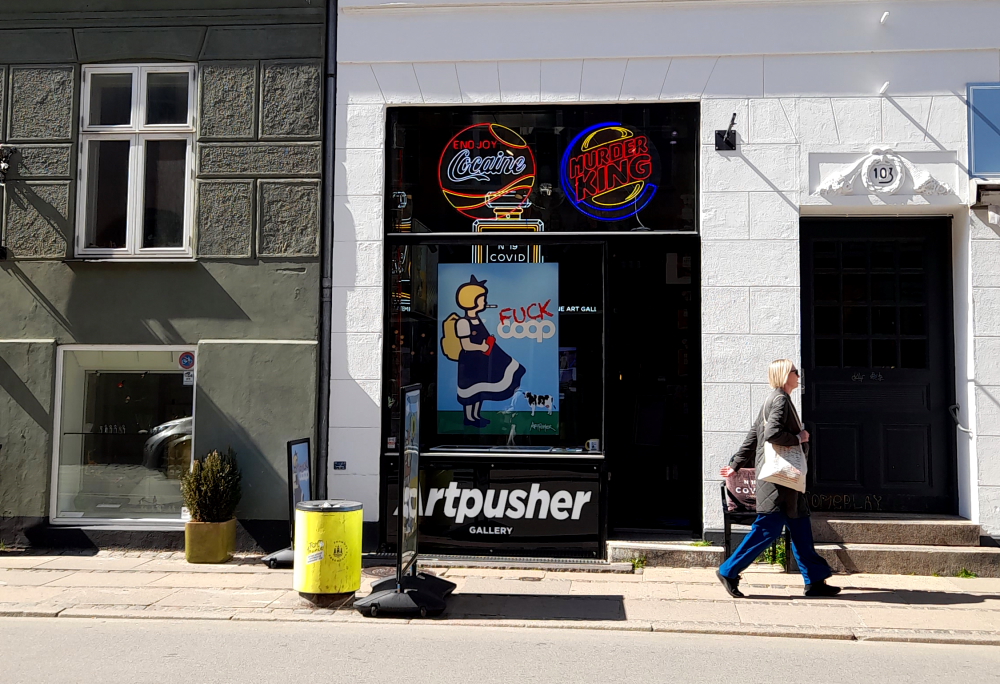
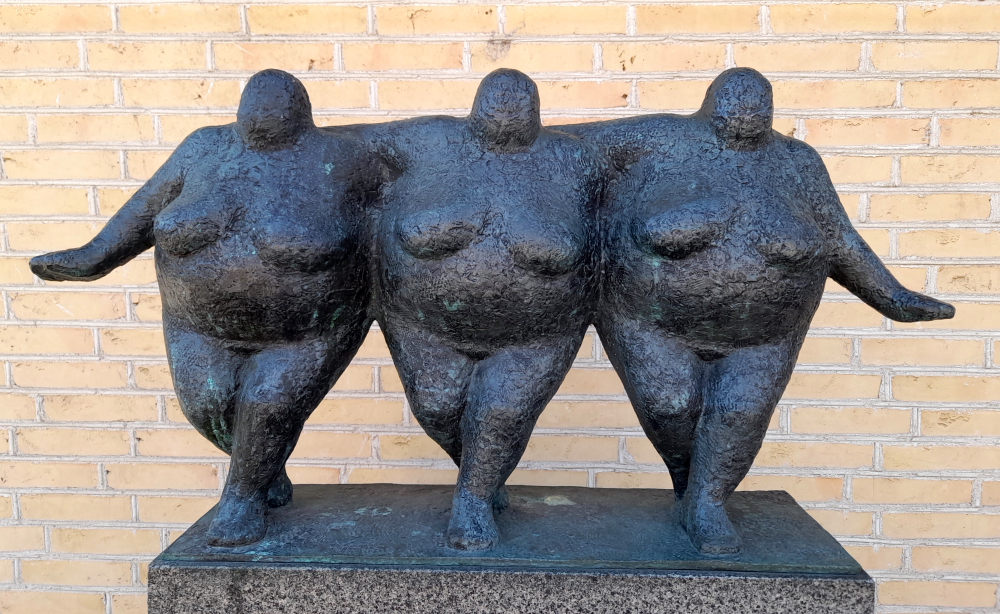
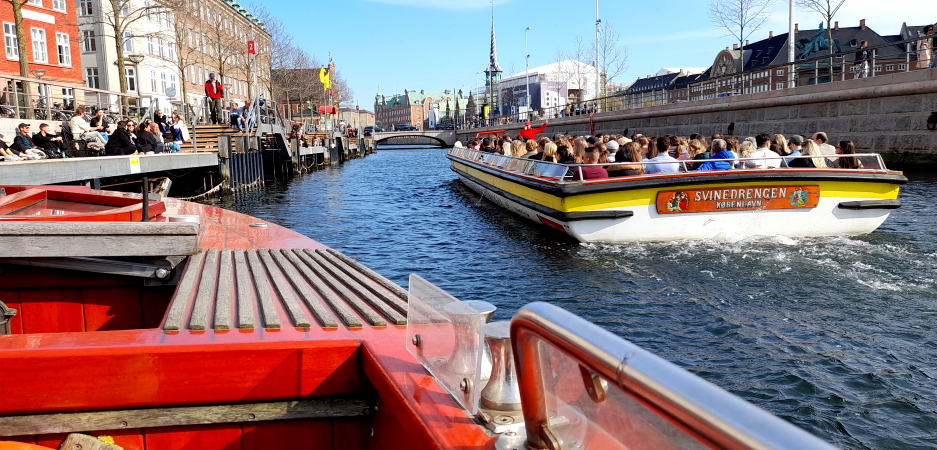
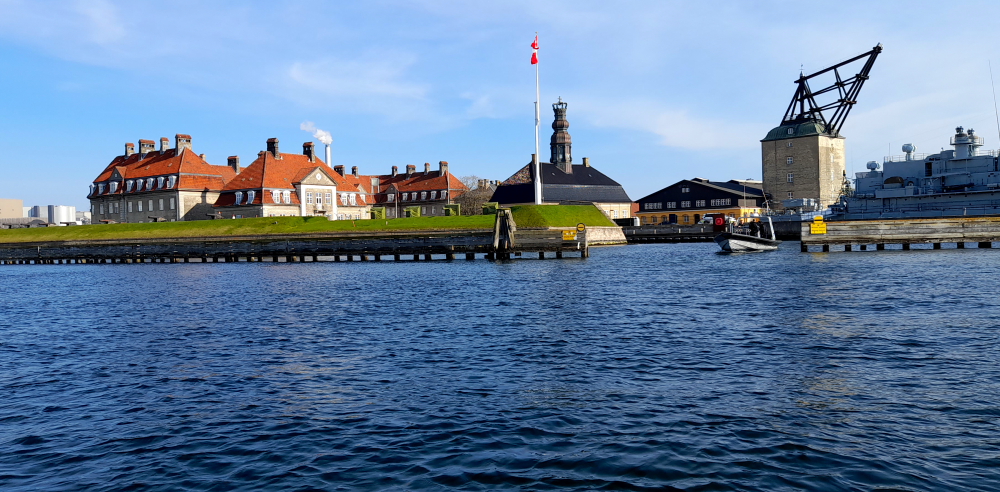
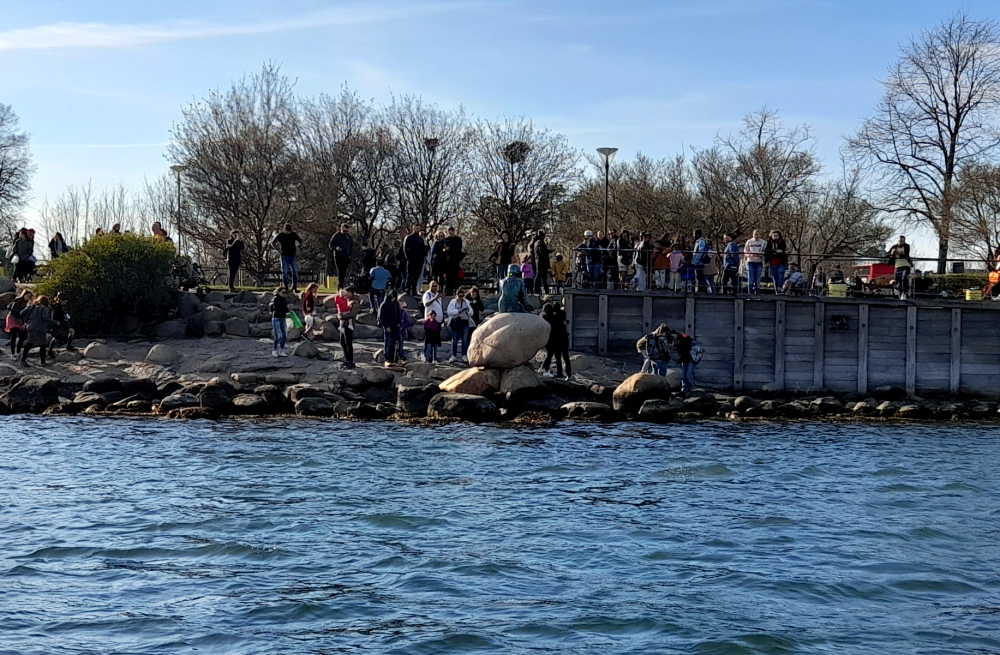
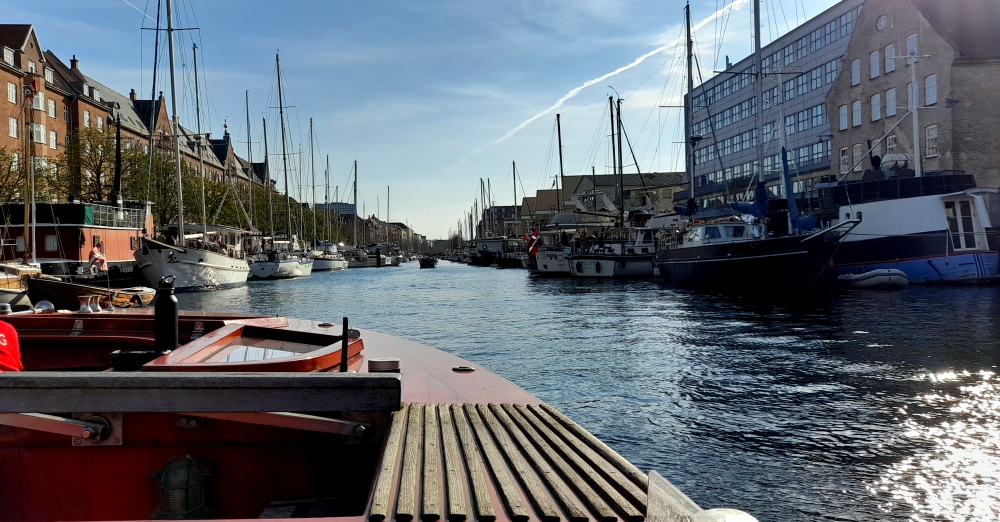
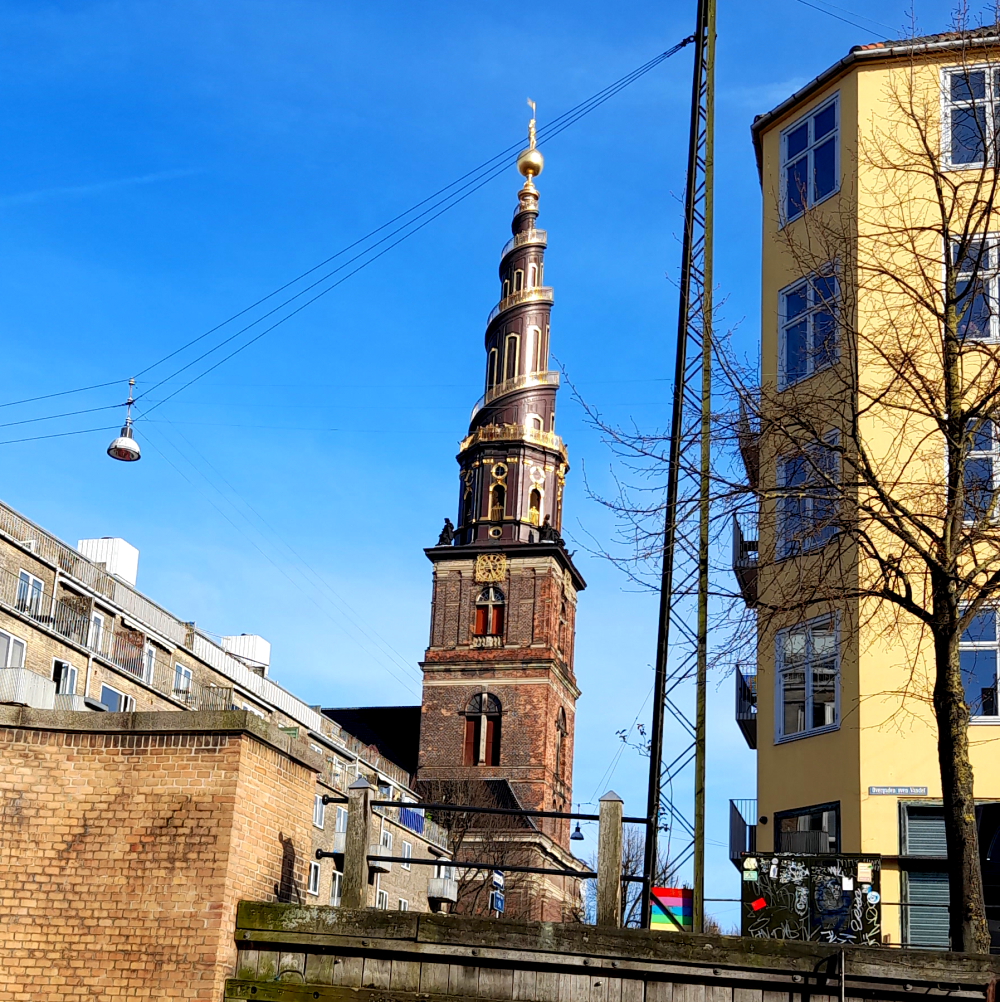
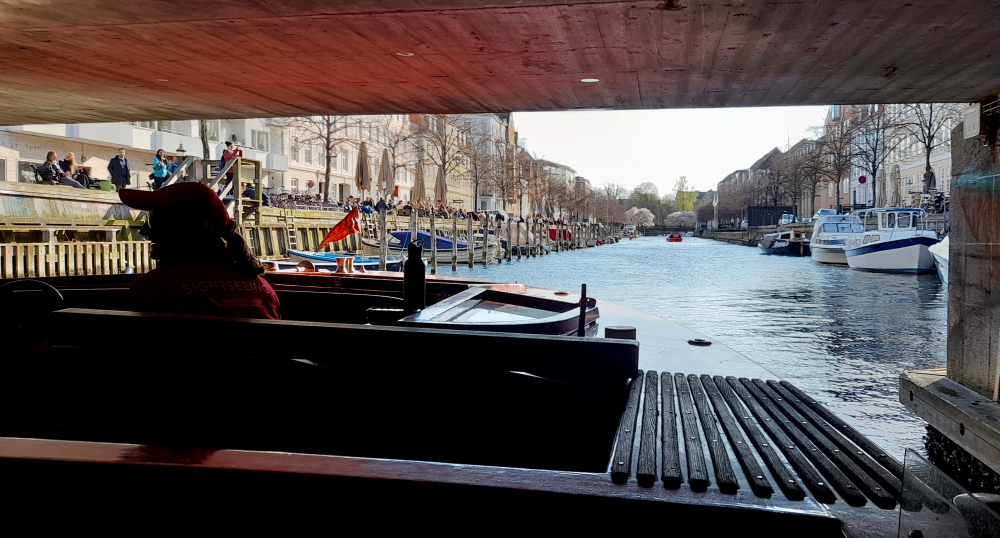
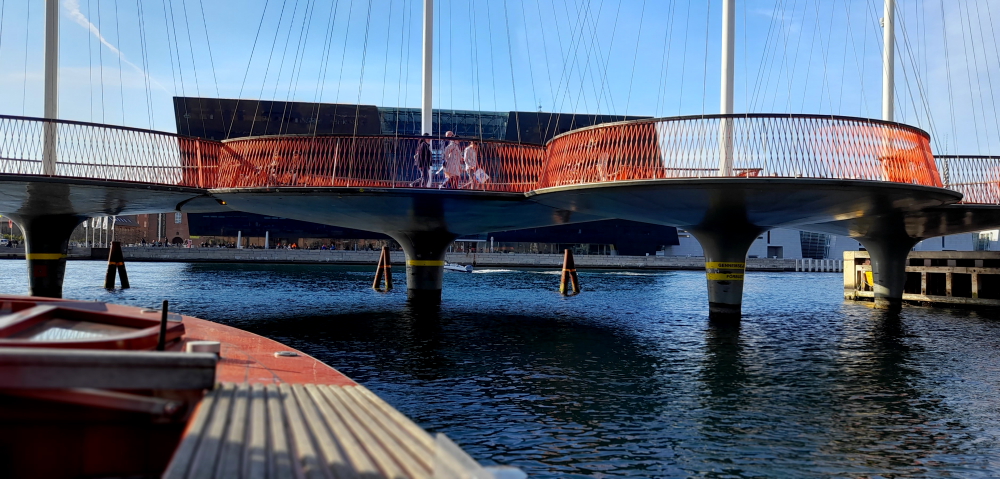
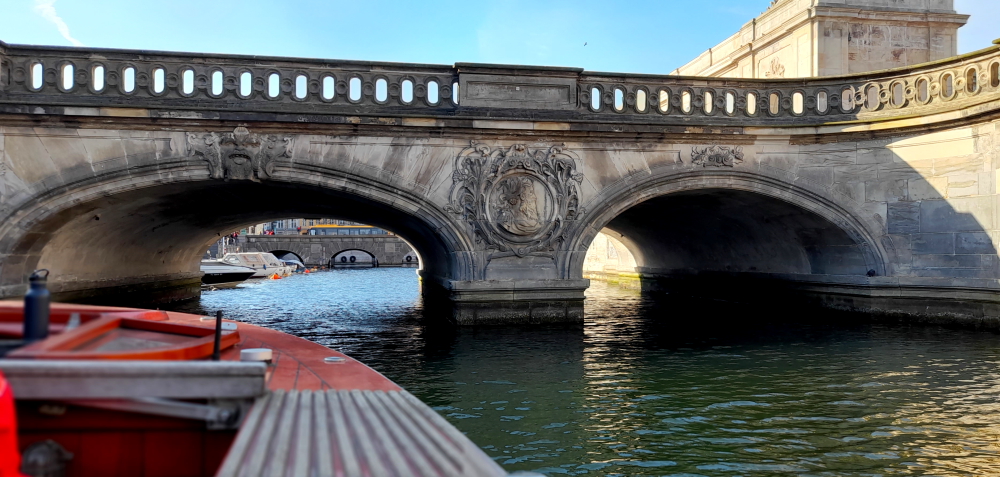
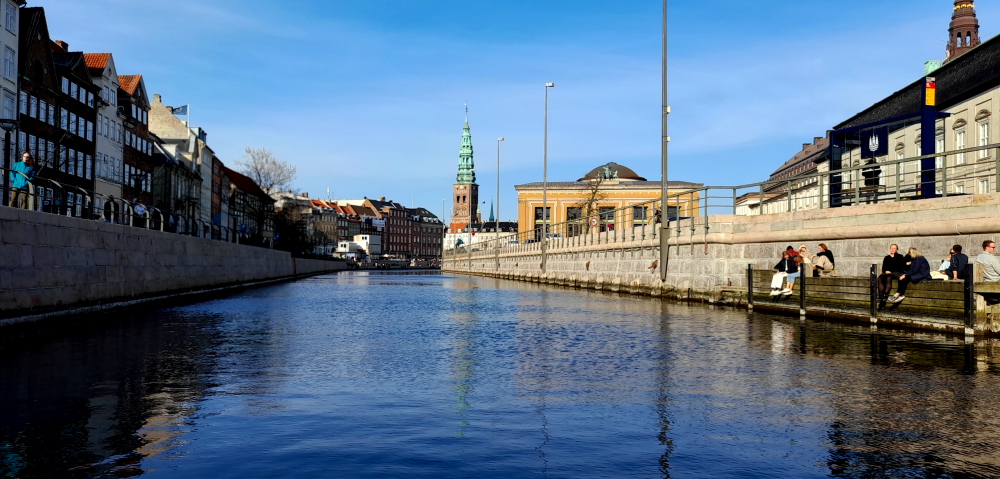
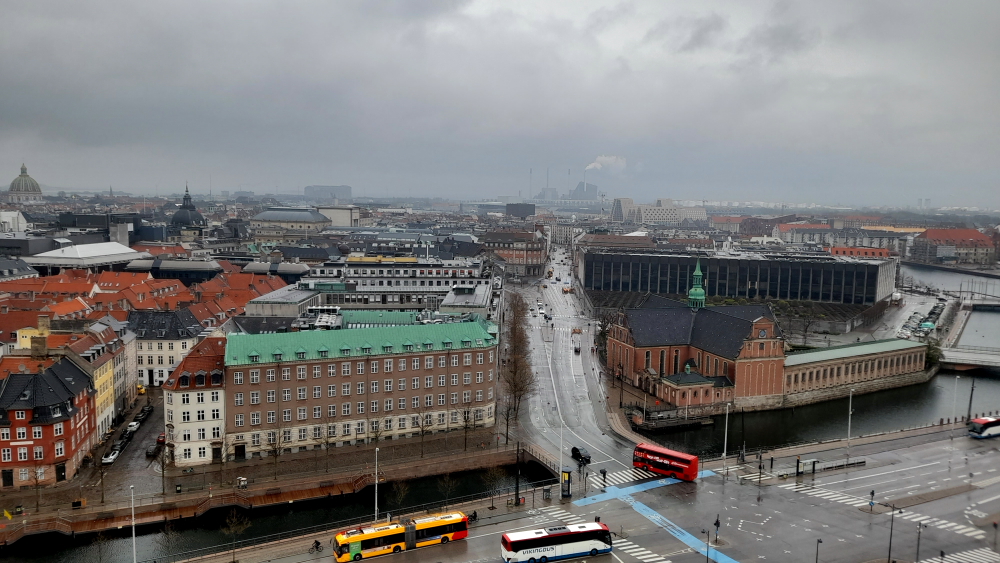
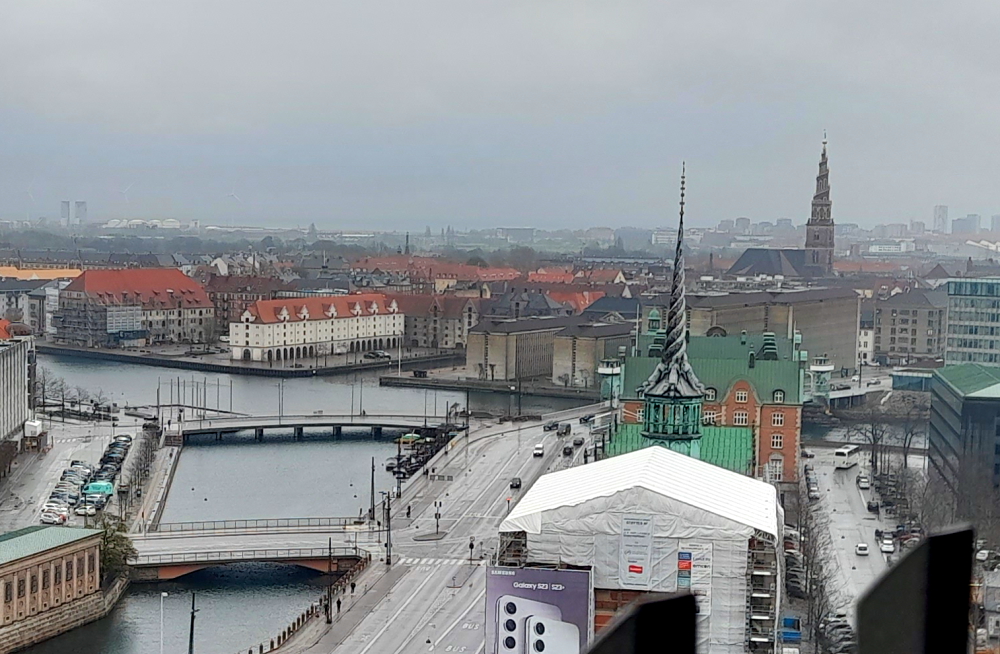
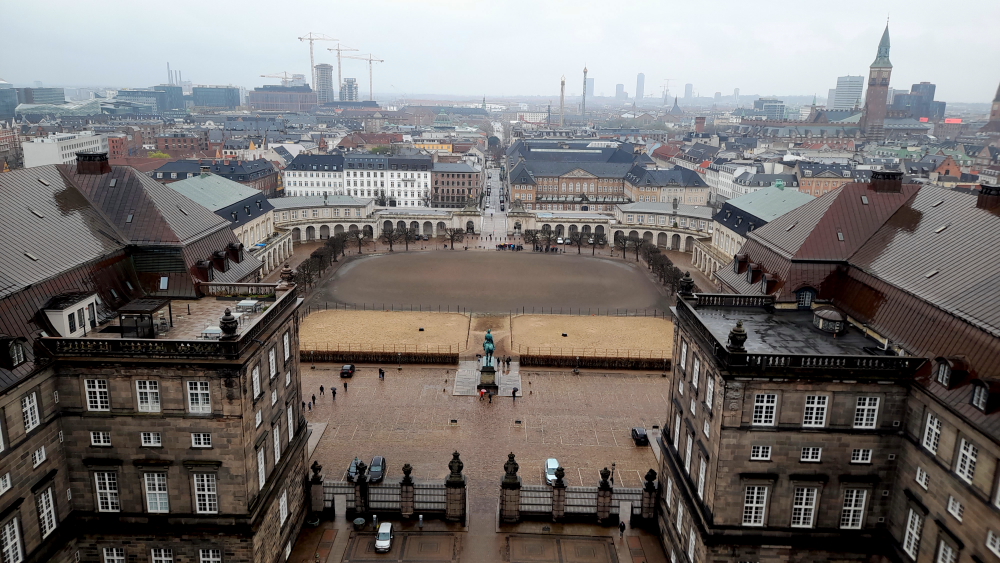
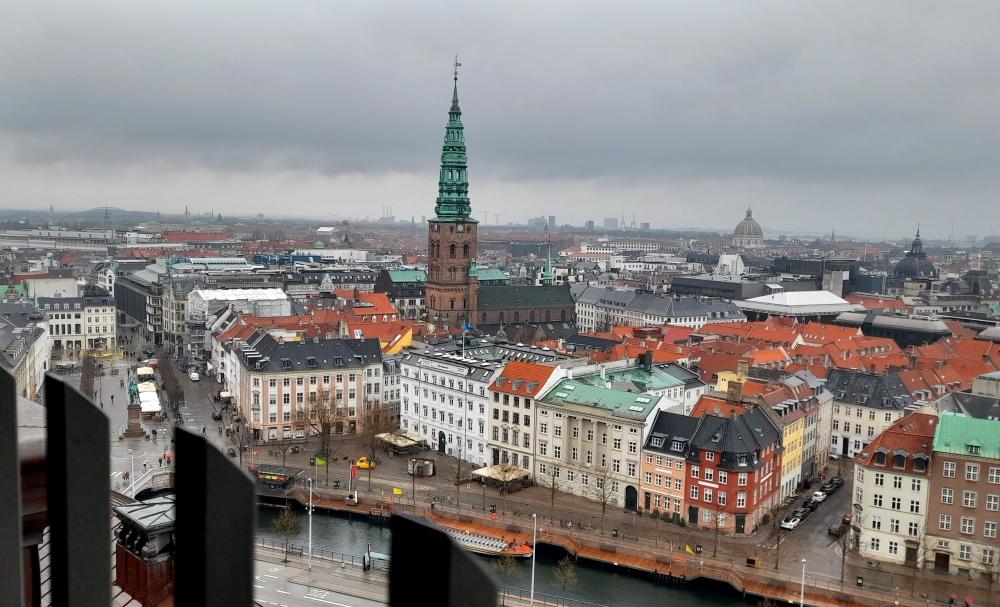
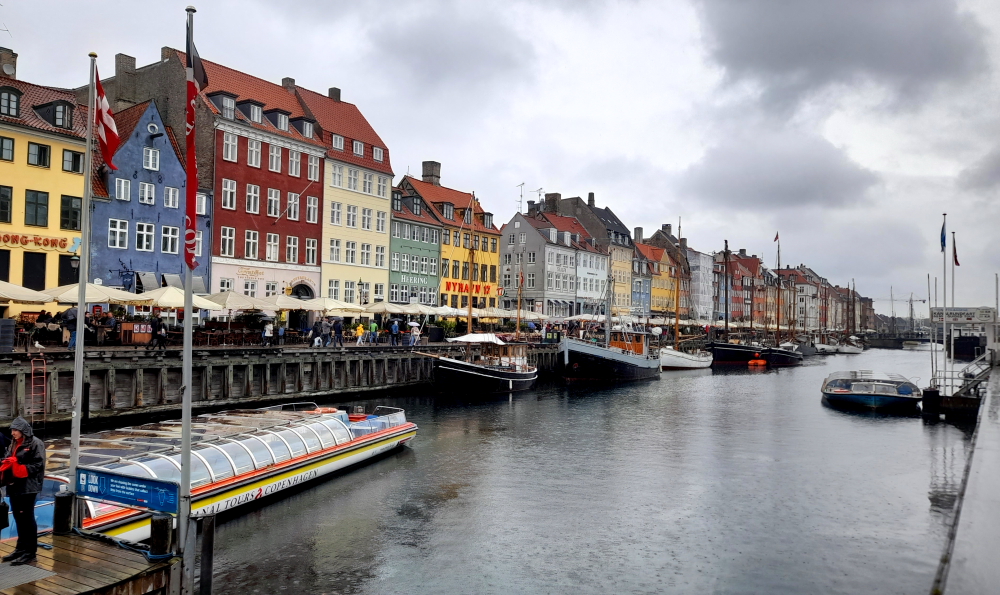
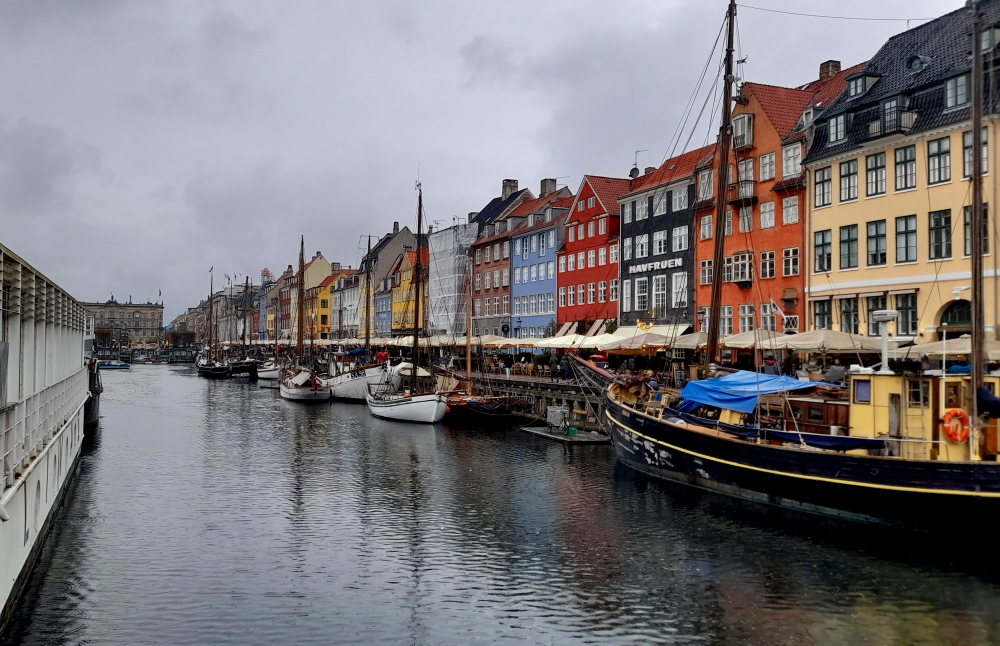
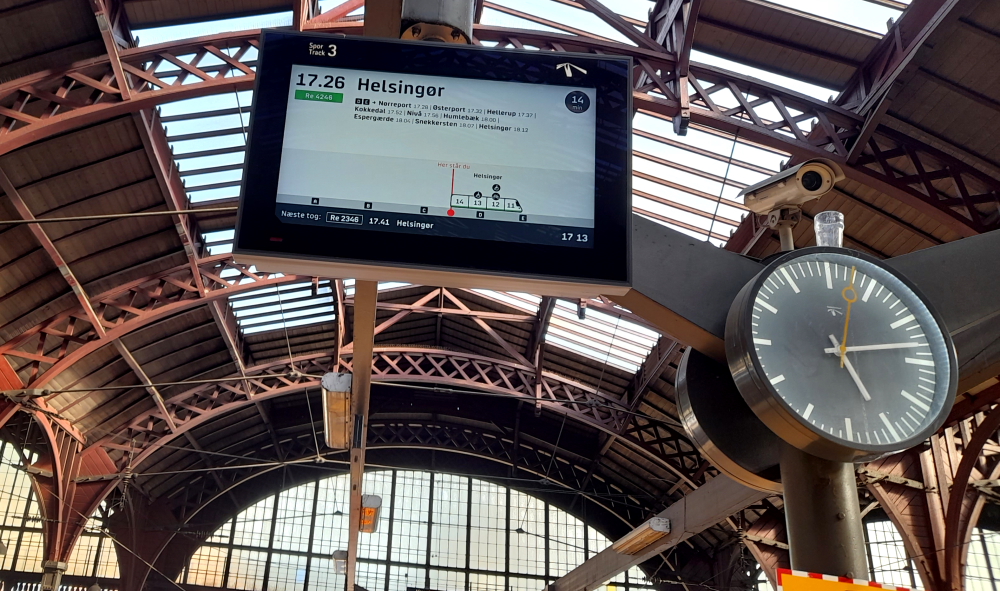
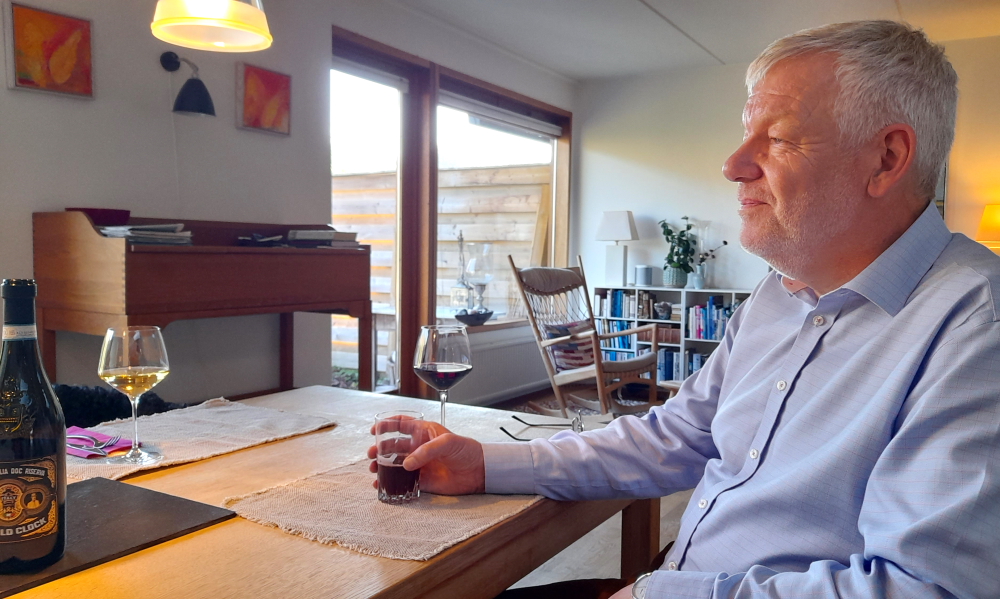
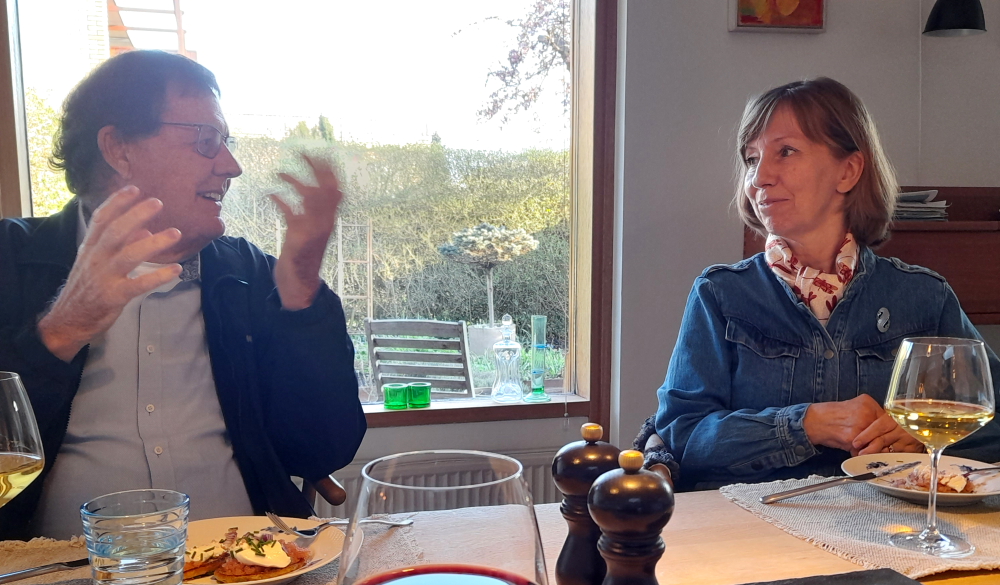
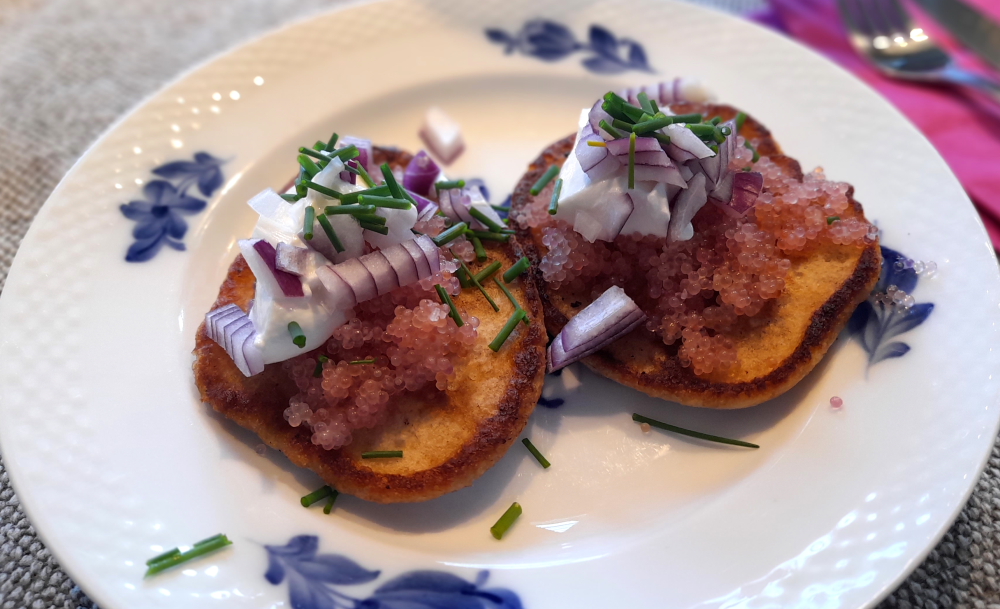
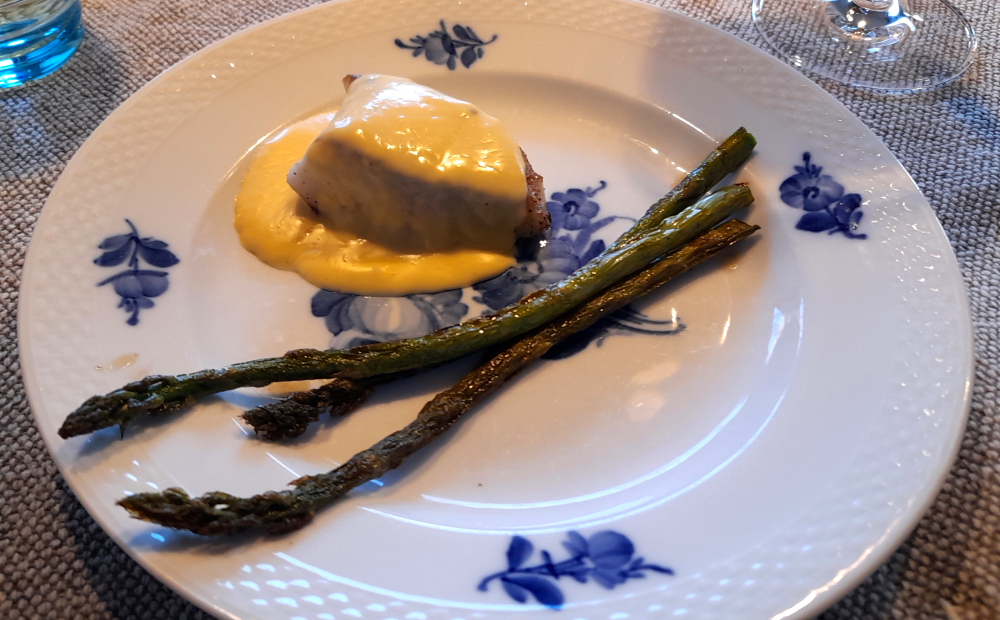
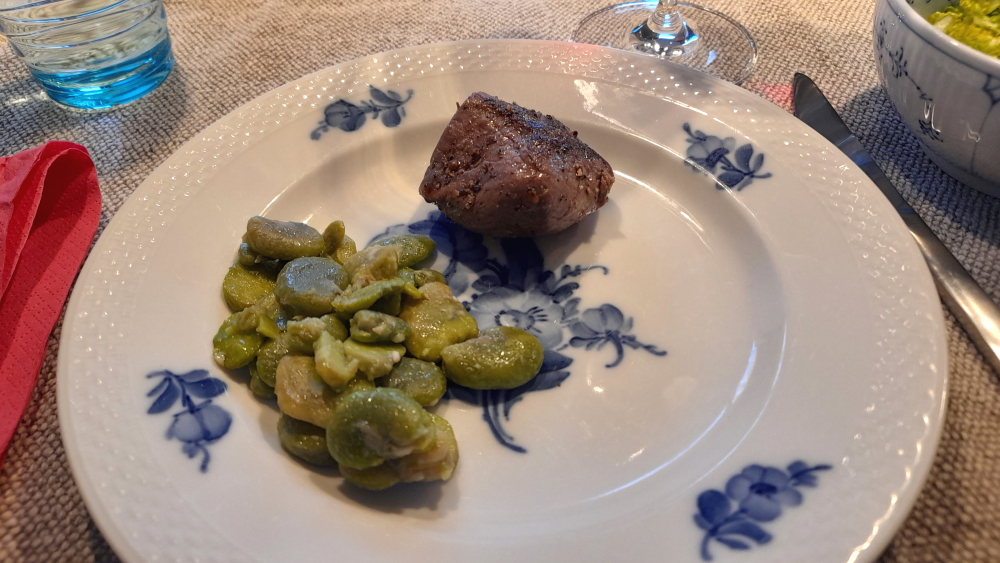
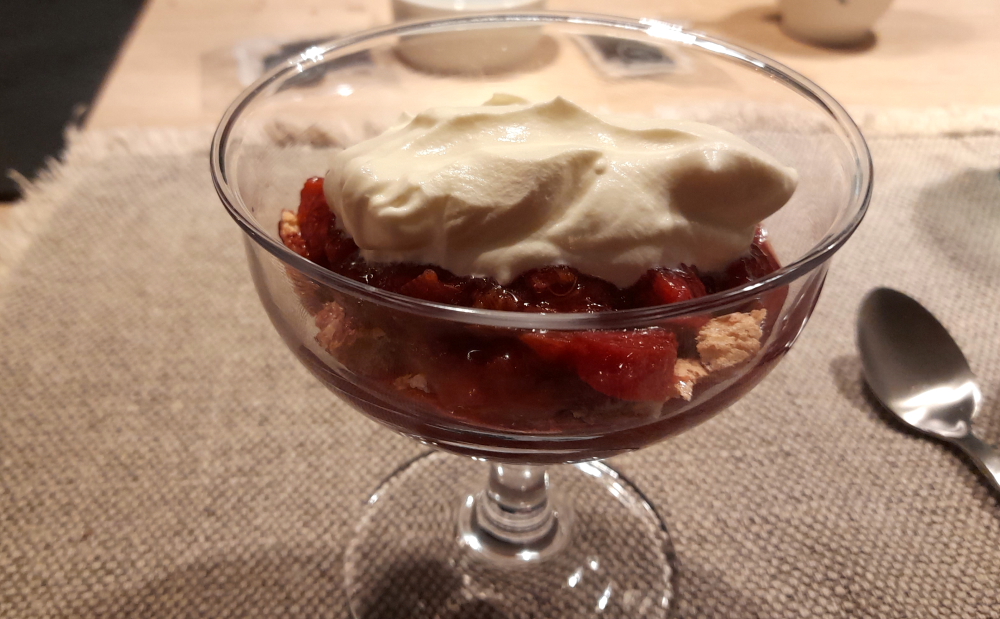
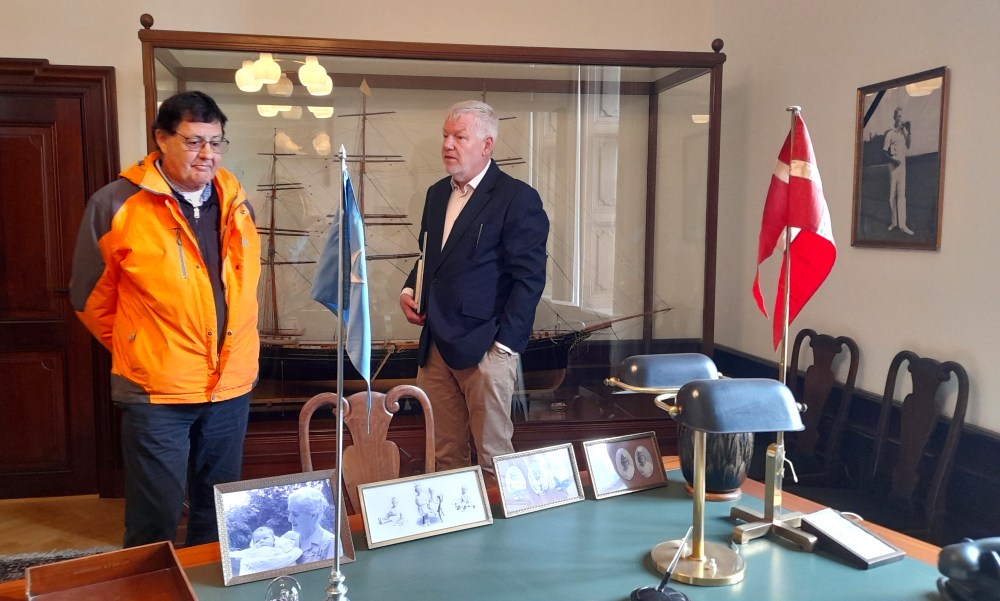
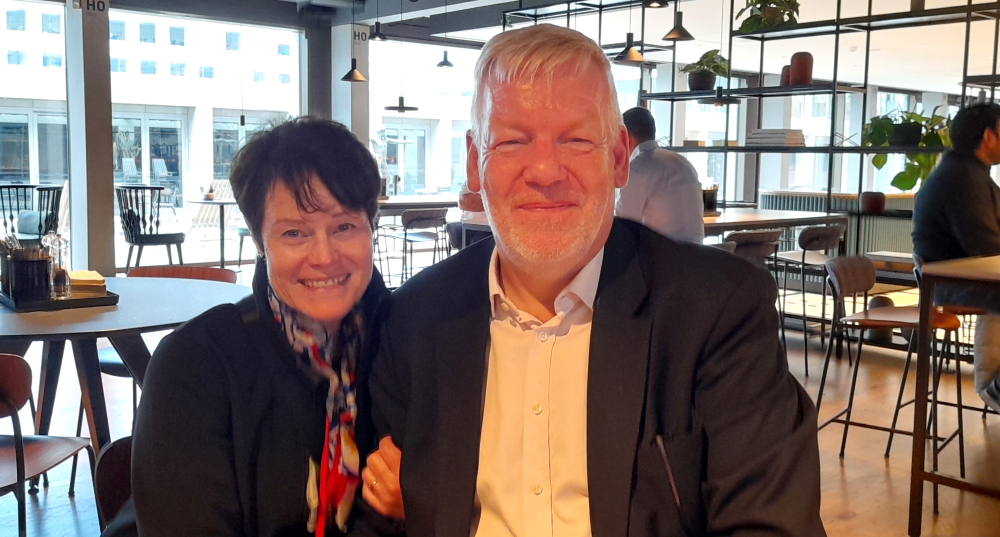
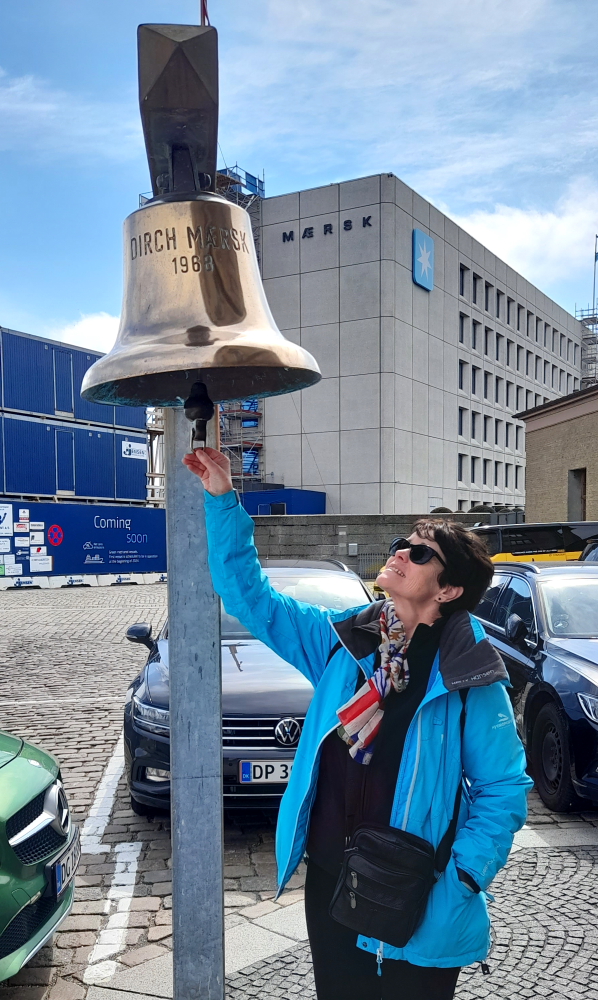
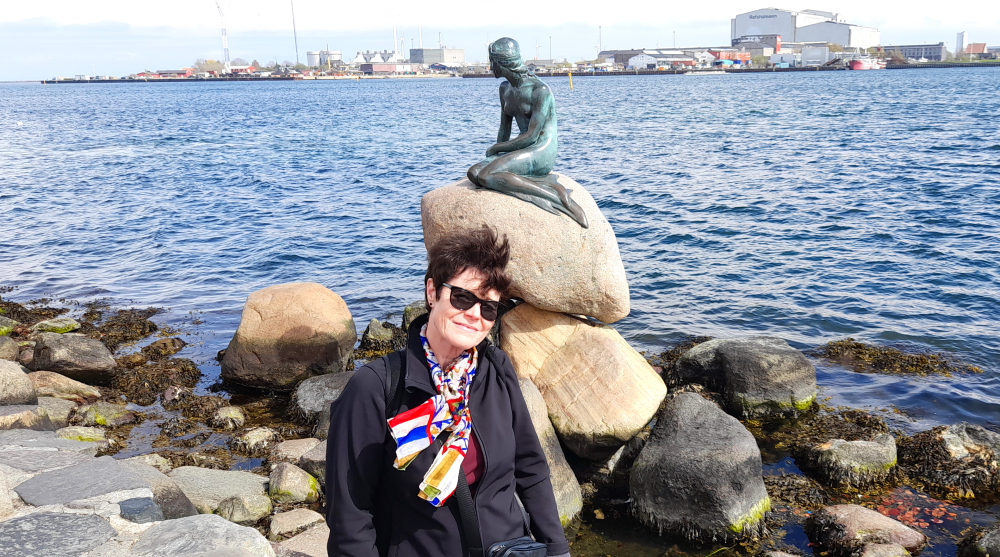
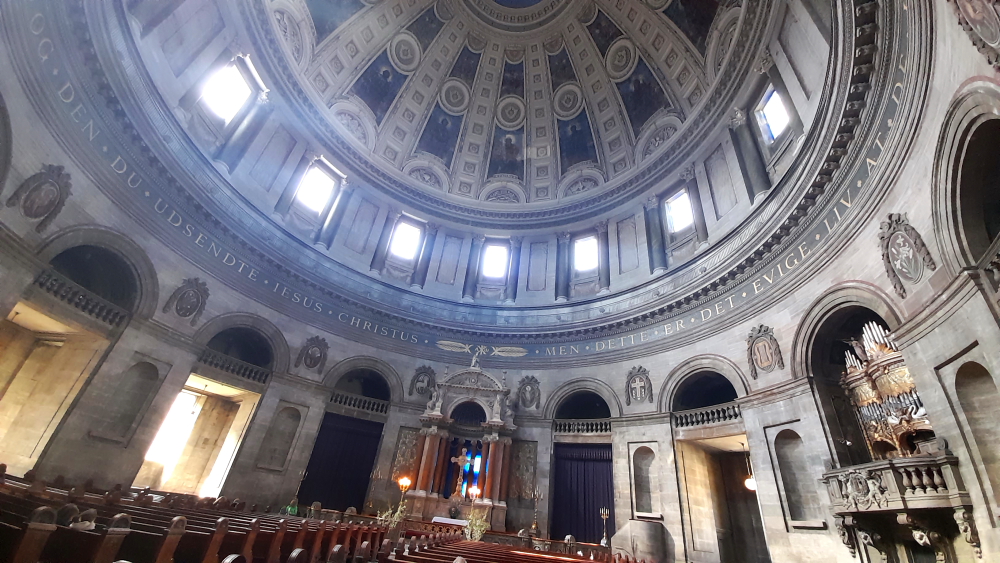
 THE CONTINUING TRAVELS OF YOGI & BOO BOO