
17 October, 2023
We were planning on getting away at 11:30 am this morning, but are delayed when Lynn Googles ‘how to pay for tolls in the Czech Republic’. It is unclear as to whether we need to get an eVignette before we enter the country or we can just purchase one at a toll barrier. Not to have one incurs a hefty fine.
Asking the receptionist, she says we need to buy an eVignette as soon as we cross the border and tells us where there is a petrol station to do this. So, off we go at 11:45 am to travel the 150 kms to Prague.
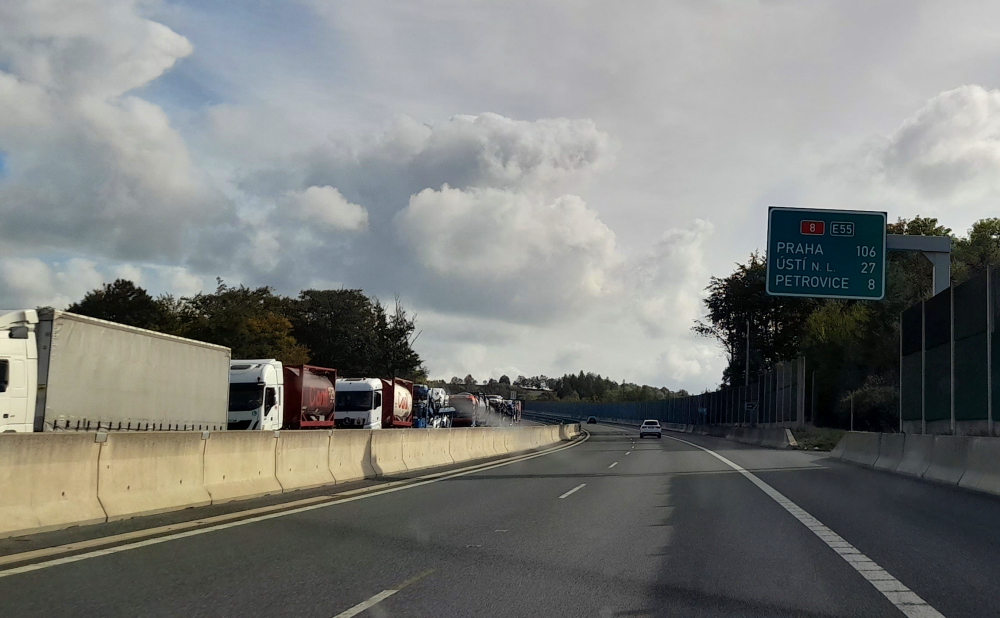
Following her directions we take the first off ramp to a petrol station in a village where we purchase fuel for CZK40.40/litre. When I go to pay I also ask the non-English speaking attendant that I want to purchase a Vignette (via offline Google Translate on my phone), she indicates we purchase it on the autobahn.
OhhKaay. Let’s see what happens. After joining the motorway again Lynn sees a roadway sign that seems to indicate that we can purchase one at the next petrol station 1 km away, so we pull off and discover that there is a kiosk with 3 or 4 screens where we can purchase one. (BTW, the price of petrol here is CZK41.41 so the village stop was still a good call).
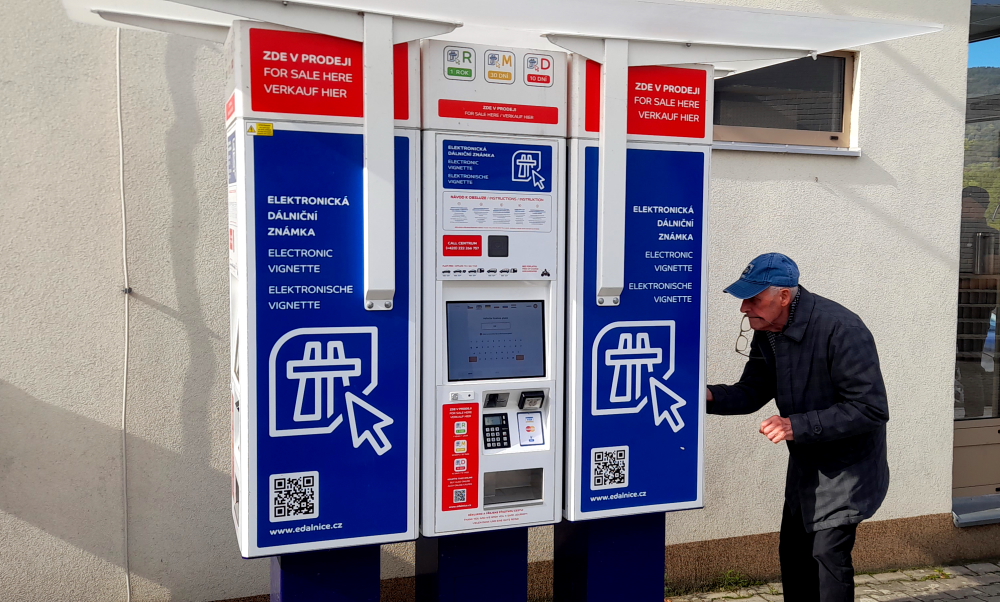
Fortunately there is a Union Jack button we can press for English instructions and proceed through the series of screens. Although we will only be in CZ for 11 days the only options for passes are 10 days (CZK220) or 30 days(CZK440), so 30 it is. All goes well until the final step, a print out of our confirmation. The machine has run out of paper! That probably explains why everyone is huddled around the far screen to the right.
An attendant assures us that as the system is electronic and based on car registration recognition, we don’t actually need the printout. Sure enough, there are no toll booths, just gantries bristling with cameras.
There is a bit of gridlock as we enter the city of Prague but soon find ourselves outside our hotel near the Karlovo Namesti Metro station on the yellow B line. There is some work being carried out in the lobby (fixing air conditioning by the look of it) which the receptionist warns us about and says that if the noise disturbs us to let him know and he’ll put us in another room.
So we take the lift to the 2nd floor to drop our bags as we need to move the car from the front of the hotel down the road to the parking garage.
When we return to the lobby the receptionist tells us he has decided to move us anyway (if we want) to a 3-bedroom room on the 7th floor, which we accept, and return to the 2nd floor to retrieve our bags and drop them on the 7th where our more spacious room under the roof has a view of the city from its skylight windows.
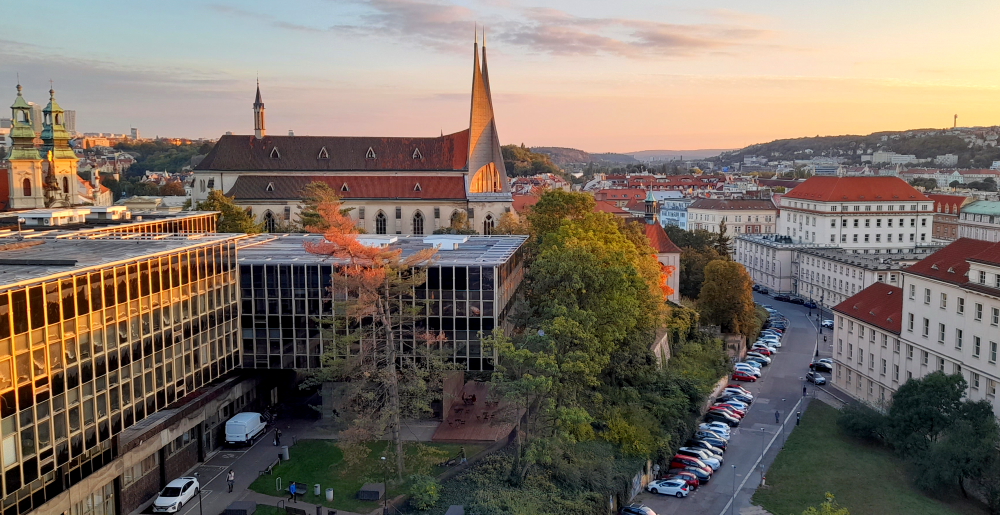
Returning from the car park the receptionist also provides us with a city map and suggestions of where to visit, including some sites that tourists often don’t know about.
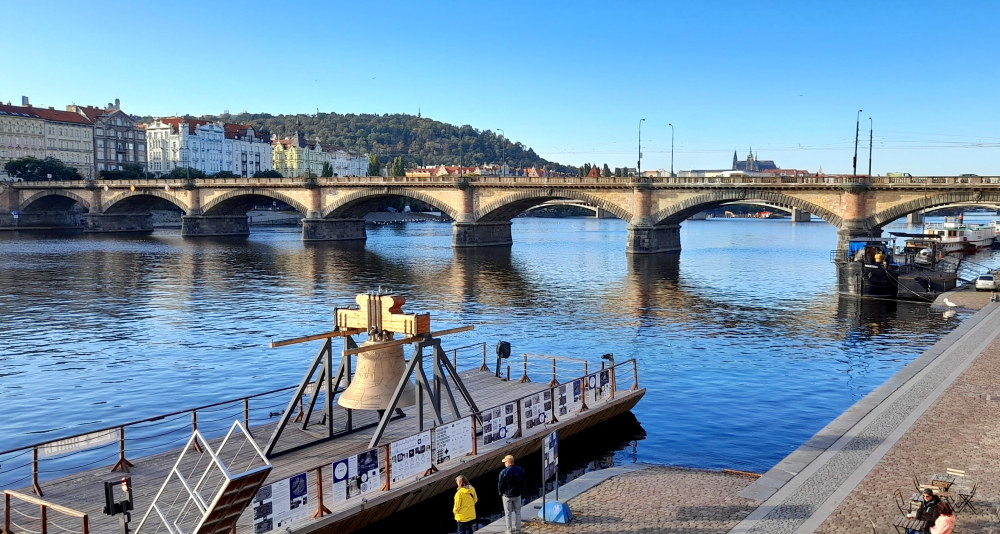
After unpacking we take him up on one of his suggestions – a walk south from our hotel along the river then up some stairs for a view of the city near the Vysehrad Church – the Basilica of Sts Peter and Paul at Vysehrad.
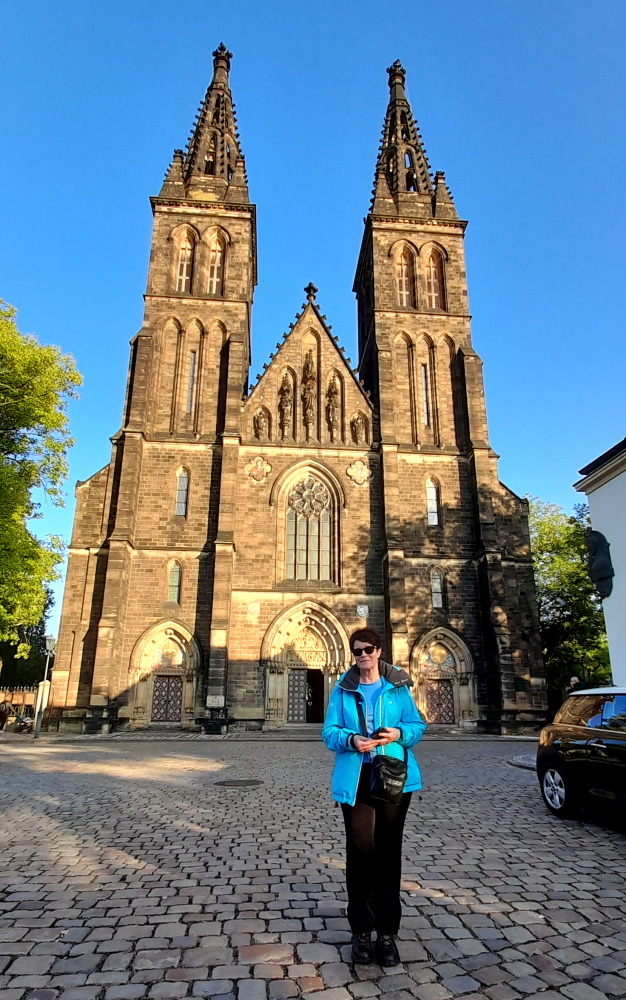
The Basilica is a neo-Gothic church in Vyšehrad fortress in Prague. Founded in 1070–1080 by the Bohemian King Vratislav II, according to the model of the Roman Church of St. Peter and Paul, when the prince began to build his seat at Vyšehrad as a purposeful opposite to Prague Castle. The Romanesque basilica suffered a fire in the year 1249 and has been rebuilt in Gothic and later in neo-Gothic style. The basilica features an impressive stone mosaic above its entry, and its twin, hollow 58 m towers can be seen atop a hill to the south from along the Vltava River in central Prague.
The interior is richly decorated with Art Nouveau ornamental and figural wall paintings, inspired by the art of Mucha. The church’s treasury houses an exhibition of jewellery and rare textiles from the Vyšehrad Chapter.
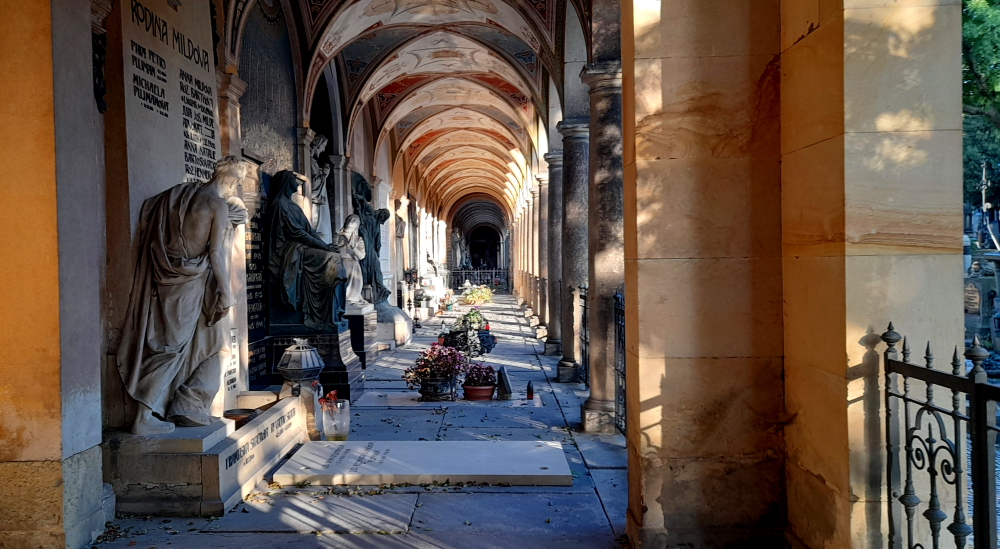
Behind the church is located large park and Vyšehrad cemetery, the final resting place of many famous Czechs, including author Karel Čapek and composer Antonín Dvořák.
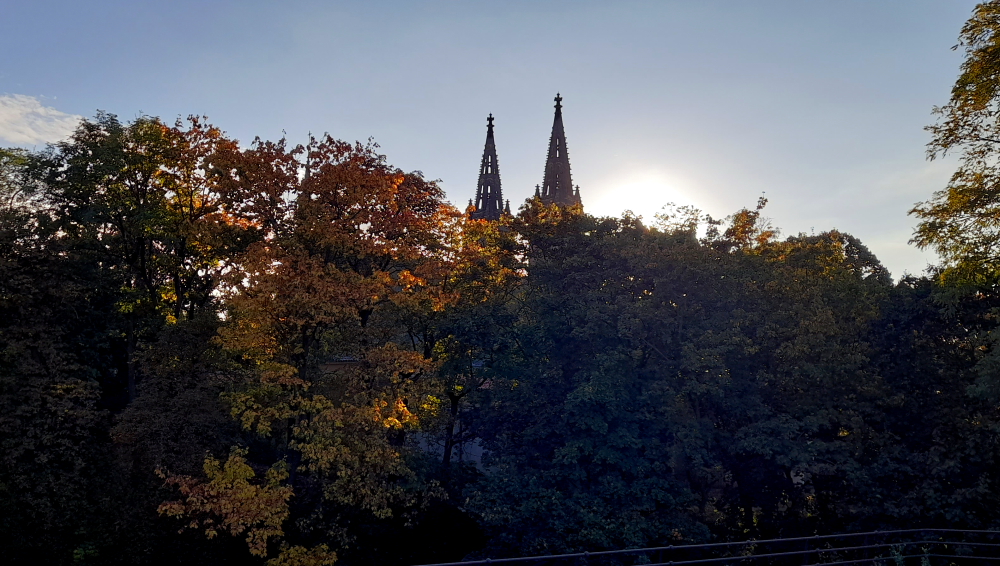
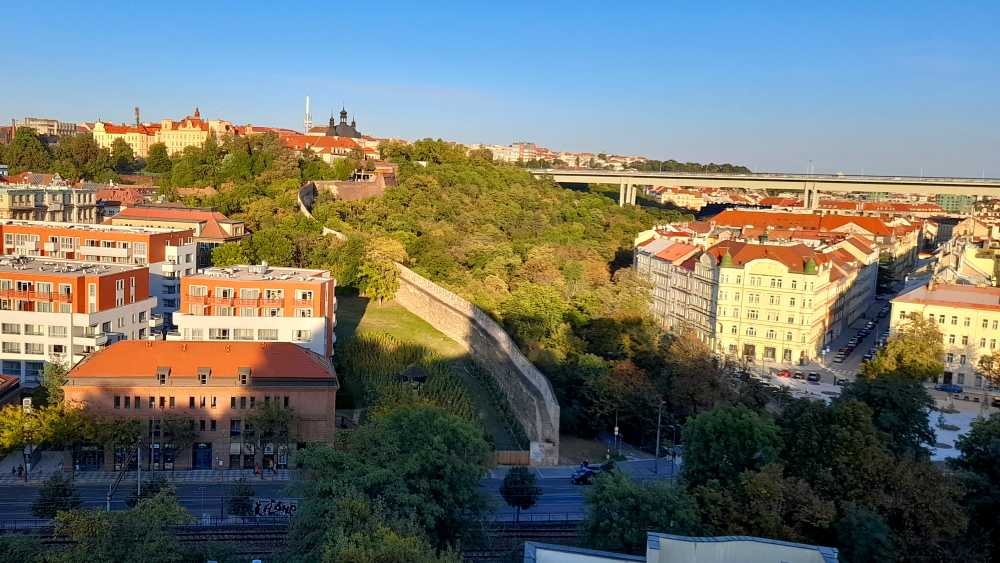
We take a walk along the fortress’s ramparts with views north and east. Autumn has definitely arrived with the changing colour of the leaves and conkers on the footpaths.
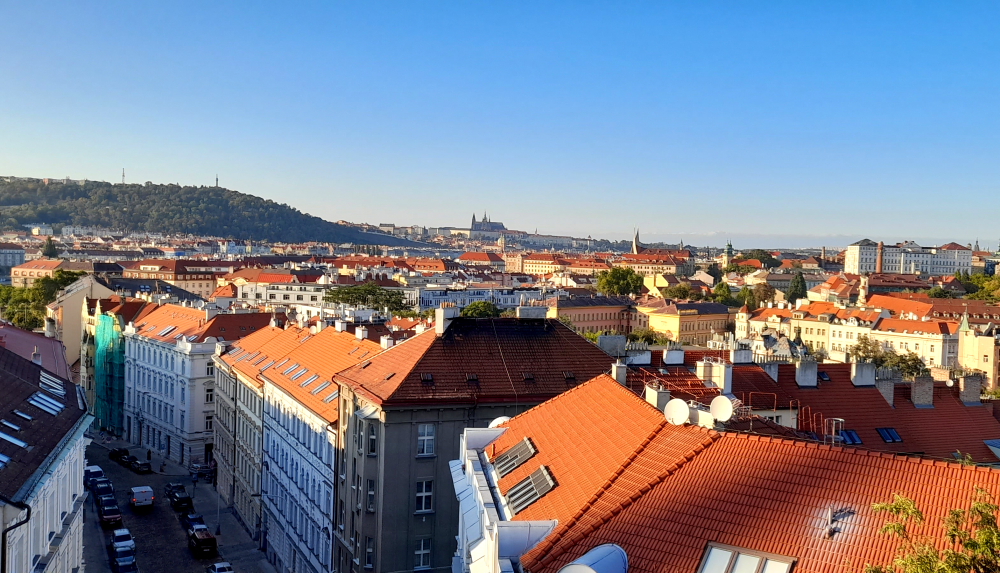
The fortress wall is extensive. A counterpoint to it is a modern road bridge that straddles a valley towering above period apartment blocks.
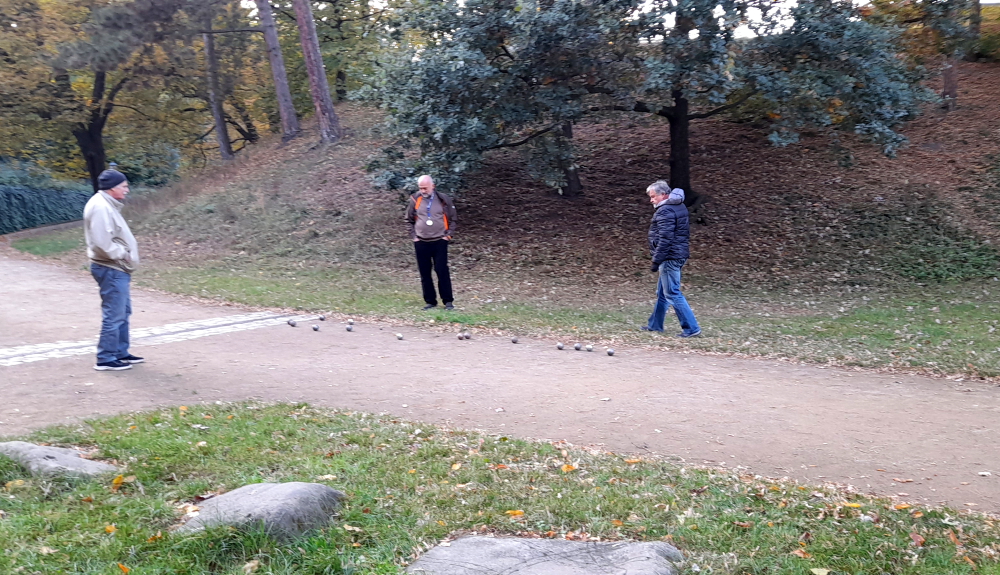
Descending the ramparts we come across a group of oldies engaged in a competitive game of bocce.
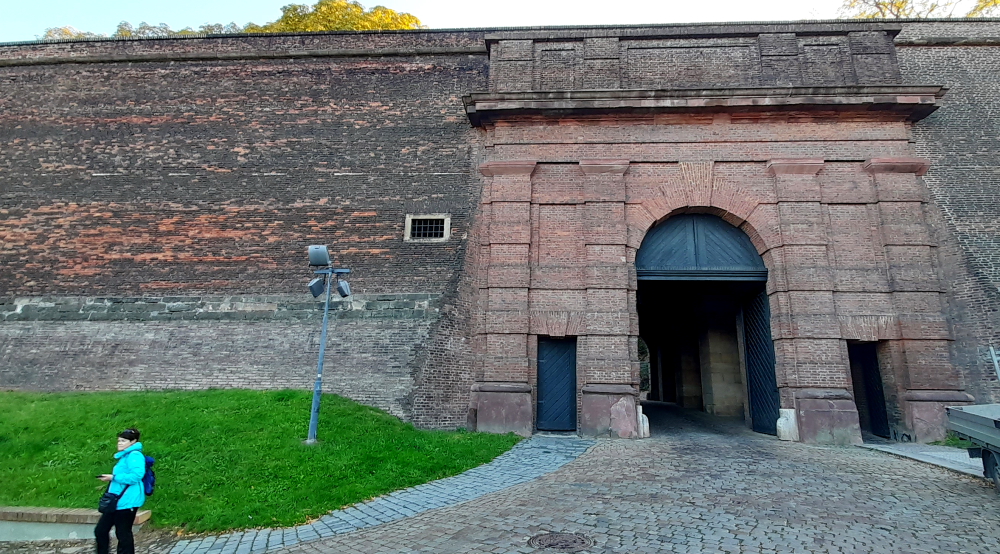
We exit via the Brick Gate and casemates which highlight Vyšehrad’s role as a military fortress in the 17th and 18th centuries, a period when the area was fought over by Austrian, Prussian and French forces.
Across the road from the hotel is an authentic Italian restaurant with delicious Italian wine where we dine before we retire for the evening.
18 October, 2023
Lynn has booked us on another GuruWalk this morning – Prague Castle and District.
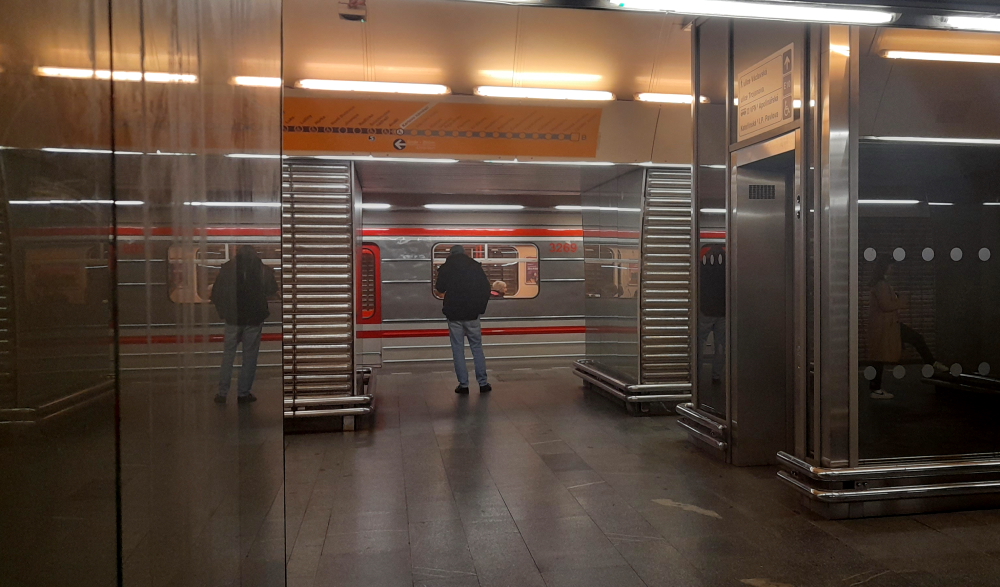
When researching Prague’s public transport system I discovered that over 65s of any nationality can use the metro, tram and bus services free of charge! Bewdy!
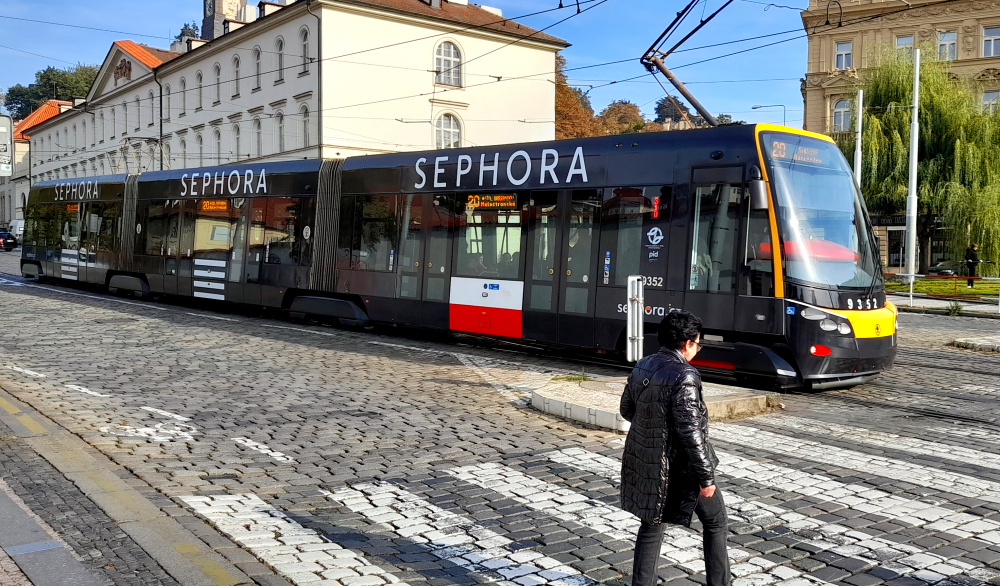
At 10:15 am we walk the short distance to the Karlova Namesti metro station and take the B (yellow) line 2 stops to Mustek on the A (green) line, then 2 stops to Malostrankska where we meet the tour guide, Daniel, at 10:40 am.
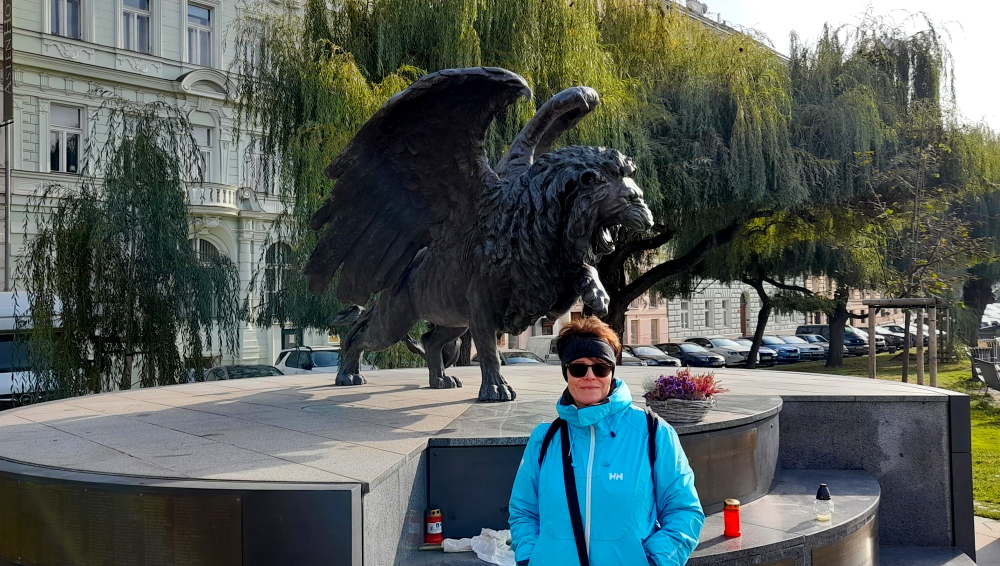
While we wait for the tour to start we cross over the road to Park Klarov to check out the Winged Lion Memorial to 2,500 Czechoslovak RAF service men and women. The winged lion with a split tail is the city’s, and the Czech Air Force’s, emblem.
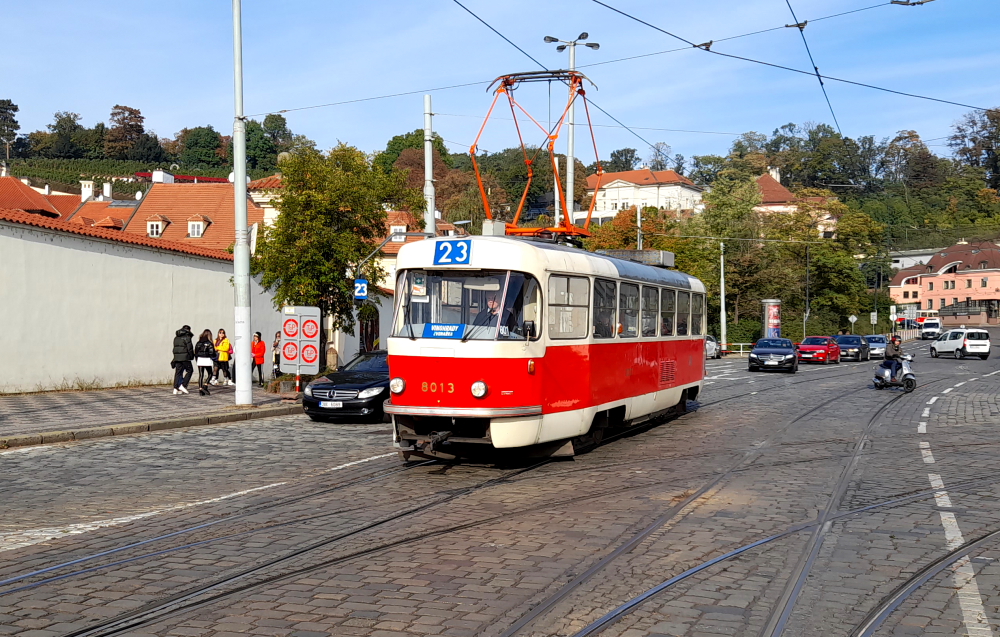
At 11:00 am our tour group of 15 jump on a No. 23 tram and alight 4 stops later at Pohorelec at the top of the hill entrance to the Castle District.
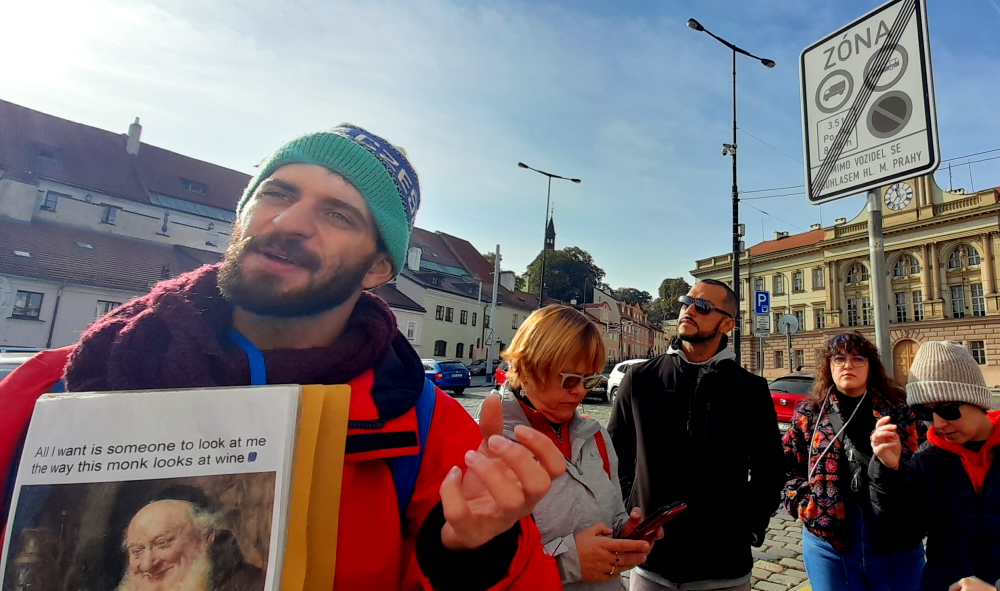
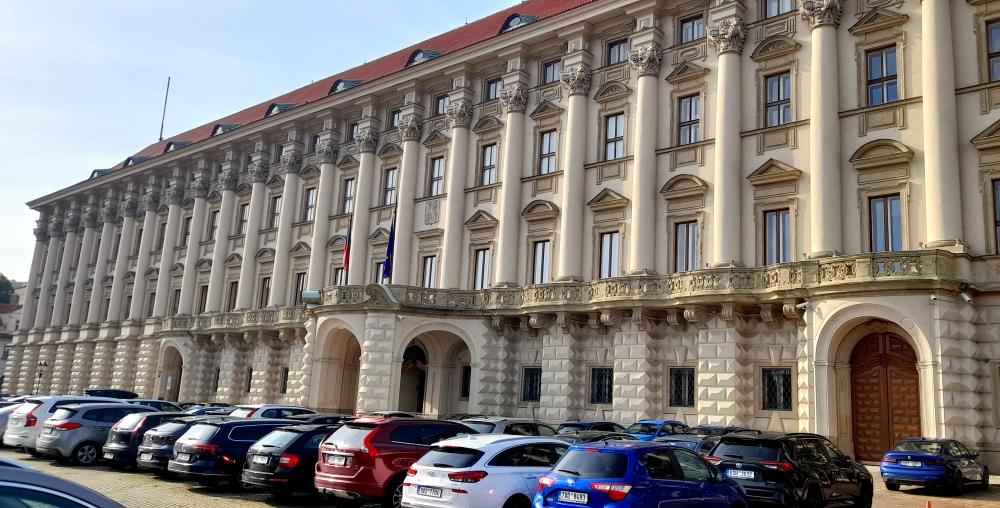
Our first stop is at Loretanske Square to view the Czernin Palace, the largest of the baroque palaces of Prague, which has served as the offices of the Czechoslovak and later Czech foreign ministry since the 1930s. It was commissioned by the diplomat Humprecht Jan Czernin, the Habsburg imperial ambassador to Venice and Rome, in the 1660s.
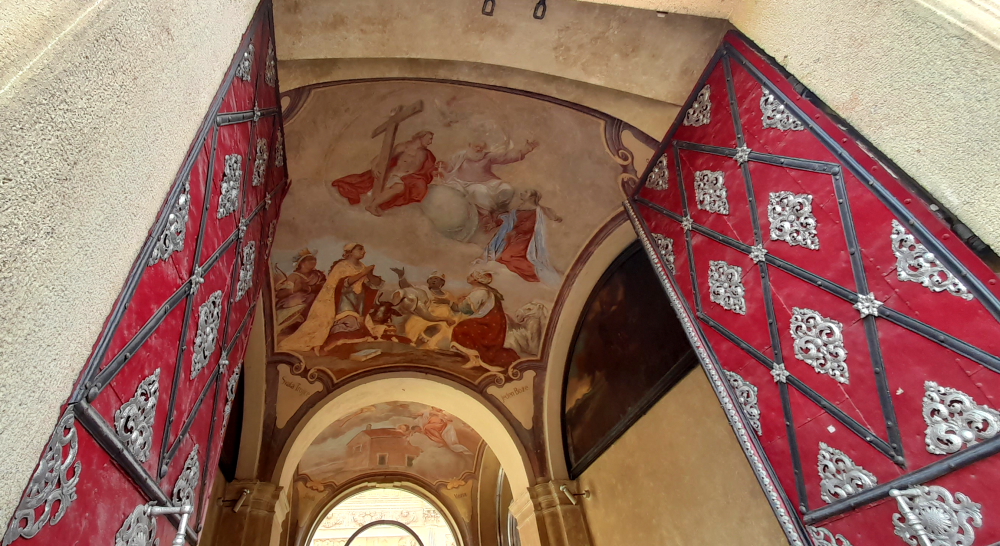
Down some steps from here is the Loreta, a pilgrimage destination in Hradčany, a district of Prague. It consists of a cloister, the church of the Lord’s Birth, the Santa Casa and a clock tower with a famous chime.
Construction started in 1626. The architect was the Italian Giovanni Orsi, and the project was financed by Kateřina Benigna, a noblewoman of the Lobkowicz family. Fifty years later the place of pilgrimage was surrounded by cloisters, to which an upper storey was added after 1740. The baroque facade was designed by the architects Christoph Dientzenhofer and Kilian Ignaz Dientzenhofer, and added at the beginning of the 18th century.
The chapel is most known for its peal, heard since August 15, 1695. It was constructed during 1694 by watchmaker Peter Neumann from thirty smaller and larger bells. Today the building also houses a museum with a large collection of liturgical tools, mainly monstrances (in the Roman Catholic Church, an open or transparent receptacle in which the consecrated Host is displayed for veneration). Currently on display is an exhibition of Masterpieces of the Loreto Treasury, where one monstrance in particular, the Fragile Sun Monstrance, is made of gold and 6,222 diamonds.
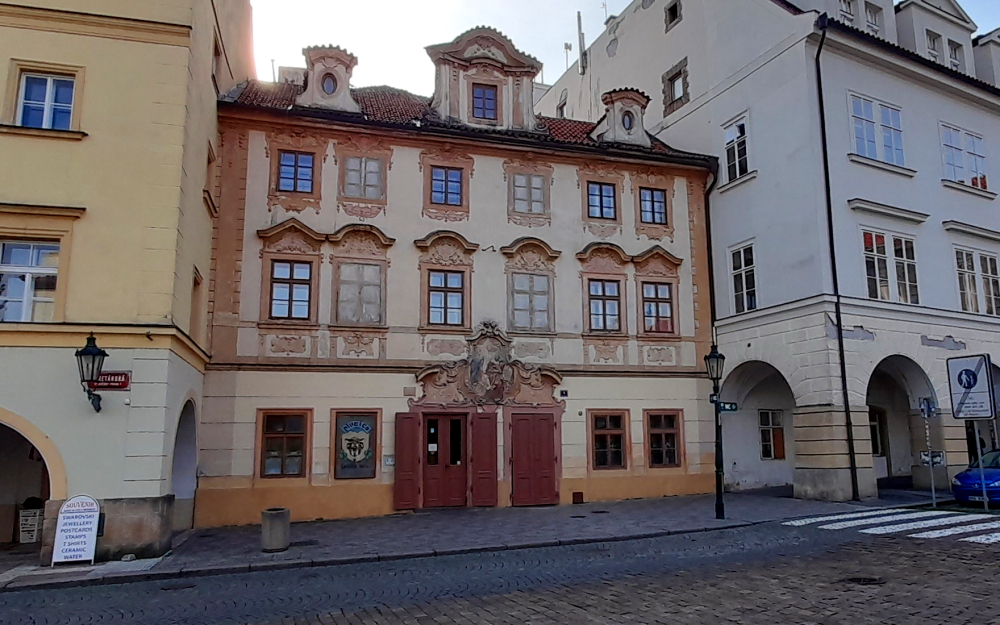
Further down the road we come across a house that has 4 false windows in its 12-window facade, a relic of window tax times.
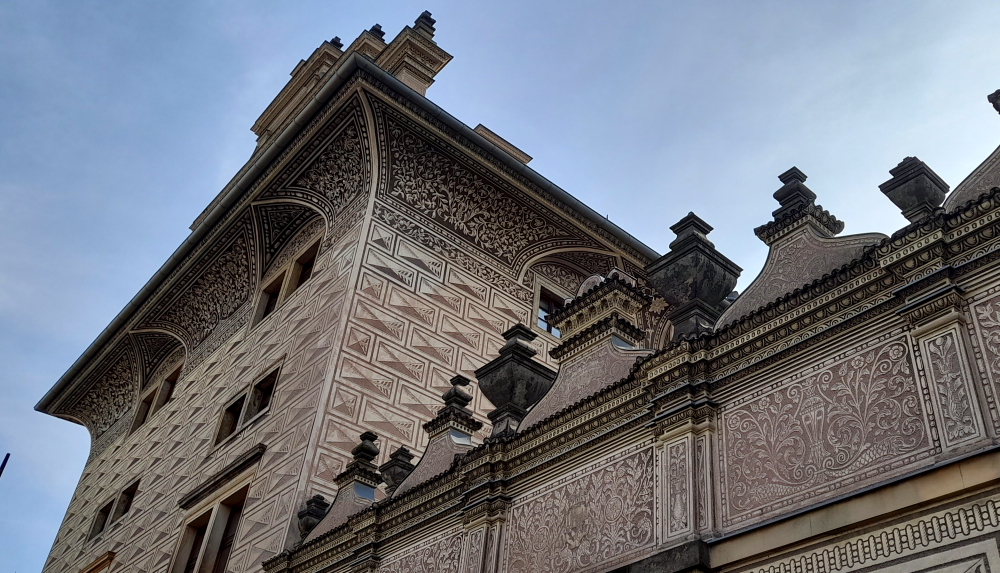
Nearby is the Schwartzenberg (Lobkovicky) Palace which houses the permanent exhibition of Old Masters paintings. In the past it served as a representative residence at the seat of the Czech kings, first for the heads of the Lobkovic, Rožmberk, Eggenberg and finally Schwarzenberg families, who owned the palace until 1947.
It is a distinctive and relatively early Renaissance building, the facades of which are decorated with richly shaped sgraffito decor.
Our walk down the cobblestone street continues to one of the entrances to Prague Castle.
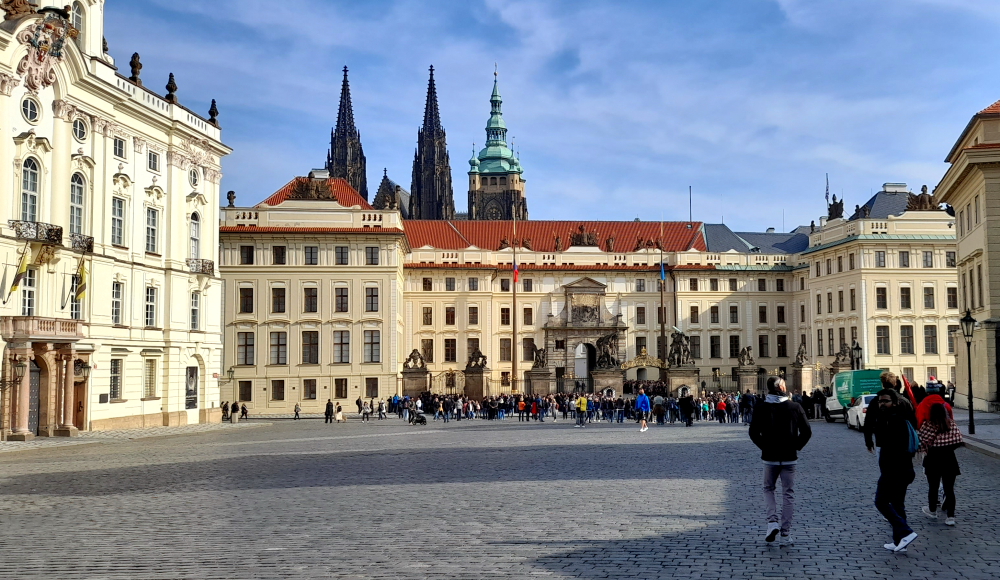
It’s now 12 noon and time for the Changing of the Guard ceremony, with music.
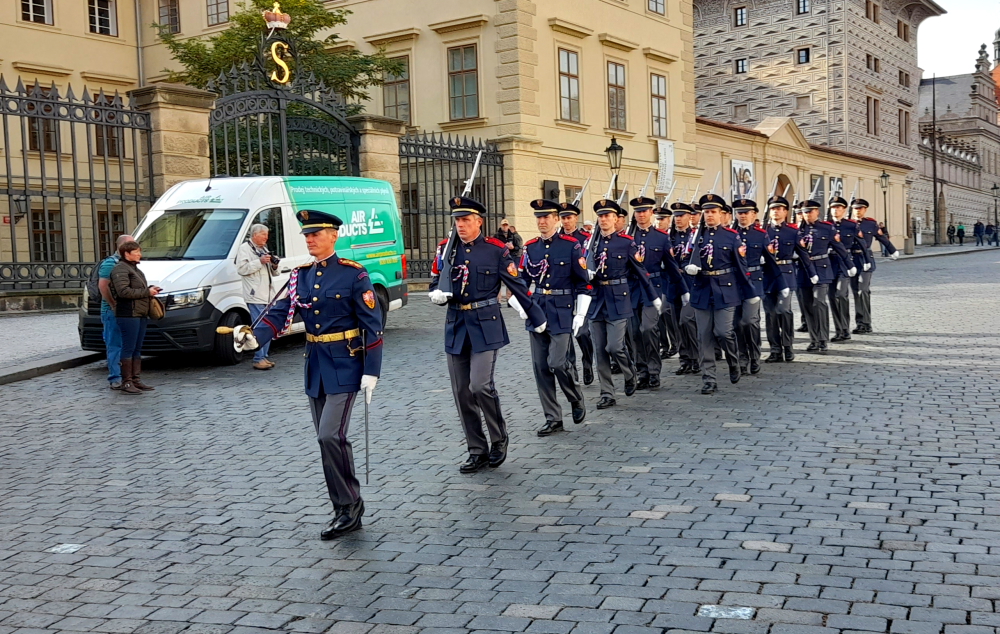
As usual, there is a throng of tourists waiting to see the spectacle.
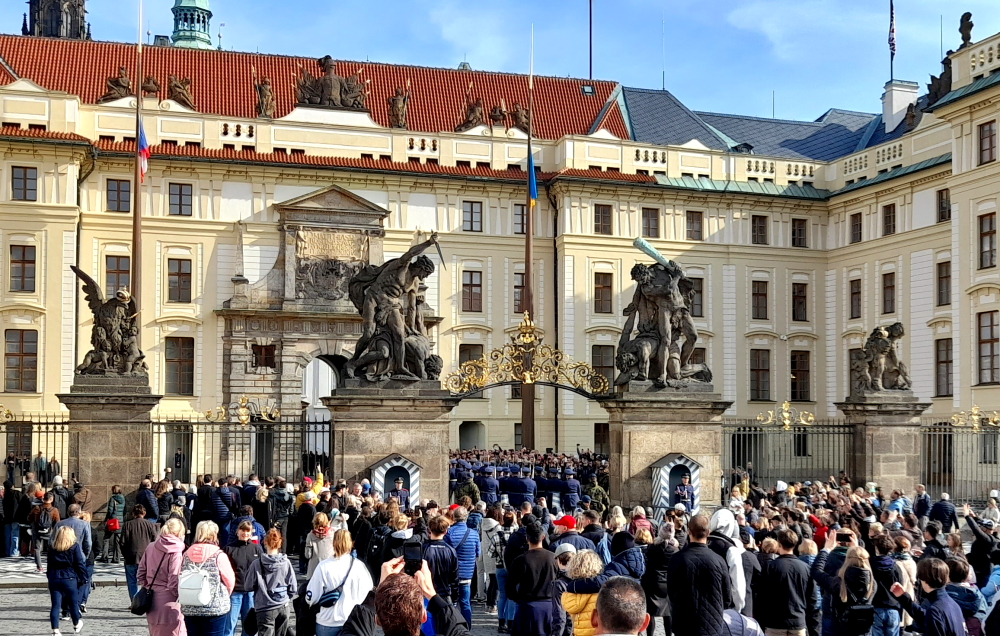
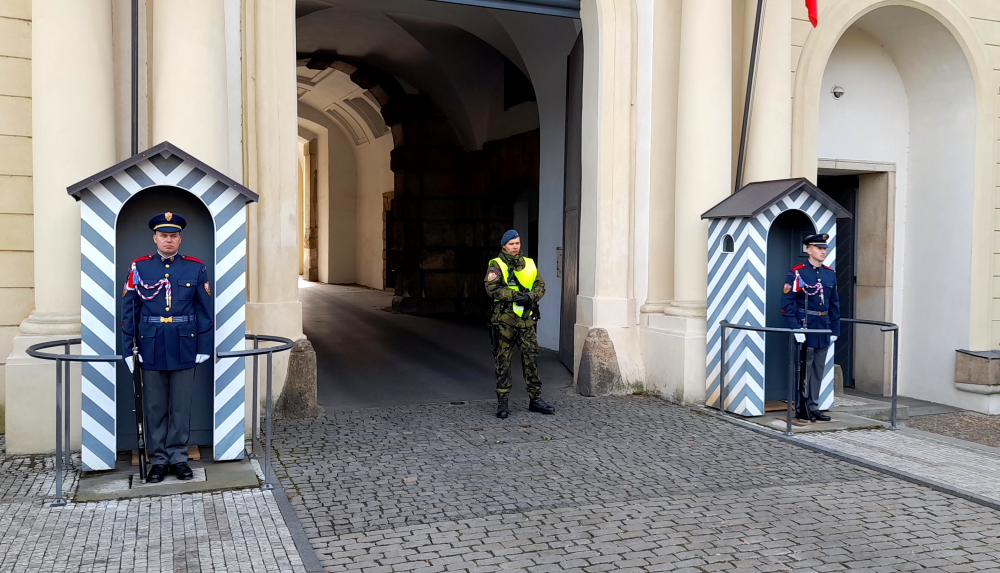
After a fan fare, the uniformed guards with bayonet rifles at the various posts are simultaneously changed, while at the same time are watched over by a band of camouflaged, automatic weapon-wielding soldiers.
We then proceed into a courtyard of the Castle to be confronted by the majesty of the St Vitus Cathedral.
The Metropolitan Cathedral of Saints Vitus, Wenceslaus and Adalbert is a Catholic metropolitan cathedral in Prague. Until 1997, the cathedral was dedicated only to Saint Vitus, and is still commonly named only as St. Vitus Cathedral.
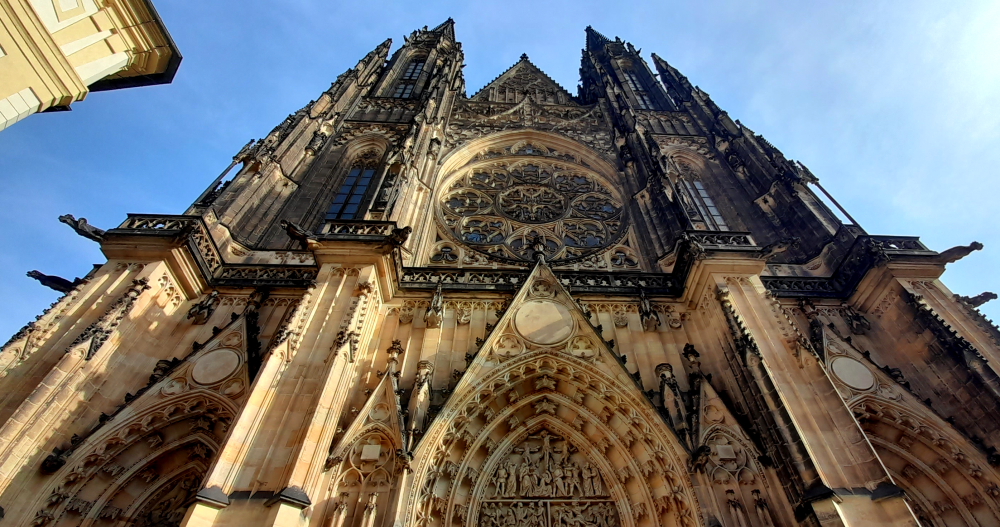
It’s a prominent example of Gothic architecture and is the largest and most important church in the country. Located within Prague Castle and containing the tombs of many Bohemian kings and Holy Roman Emperors plus the Saint Wenceslaus Chamber with the Bohemian Crown Jewels, the cathedral is under the ownership of the Czech government as part of the Prague Castle complex. Its length is 2/3rds that of a normal cathedral (an existing building was in the way preventing an extension) and its main tower is 102.8 m (337 ft) high.
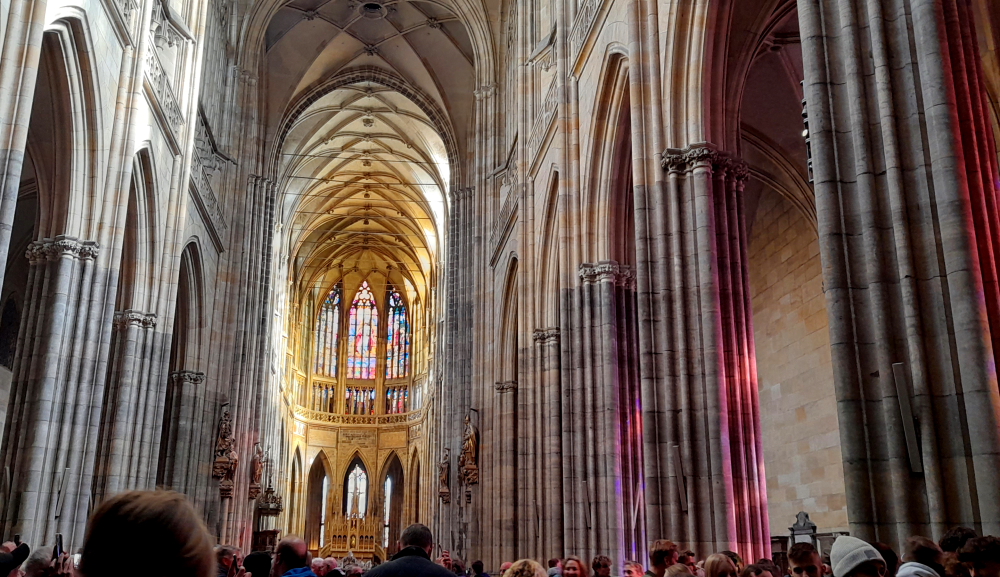
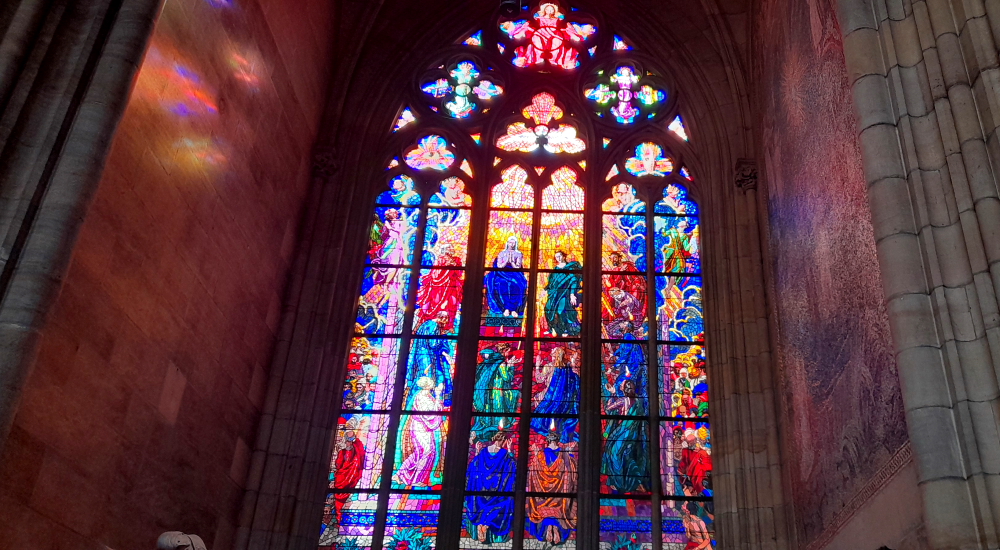
Of the stained glass windows, one is by famous Czech Art Nouveau painter Alfons Mucha in his inimitable style and 2 others have, in a corner each, their names as sponsors – namely a bank and an insurance company. Talk about money changers in the temple!
As it took over 600 years to complete the Cathedral’s construction, there are various architectural styles within the building and surrounding ones, as seen below, including the Baroque spire versus the main Gothic spire of the Cathedral.
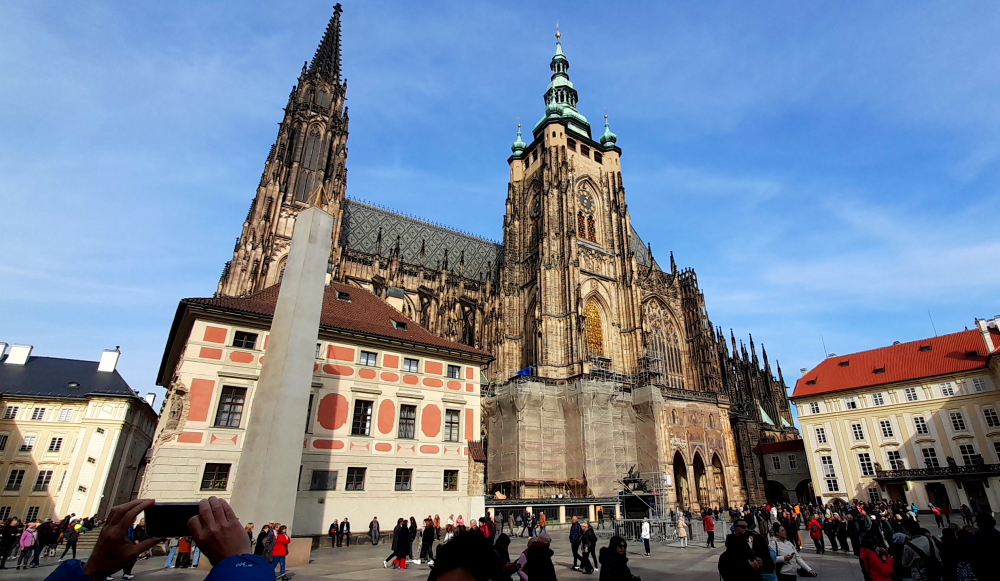
The gable which connects the tower with the south transept is nicknamed ‘Golden Gate’, likely because of the golden mosaic of the Last Judgment depicted on it, and it is through this portal that the kings entered the cathedral for coronation ceremonies.
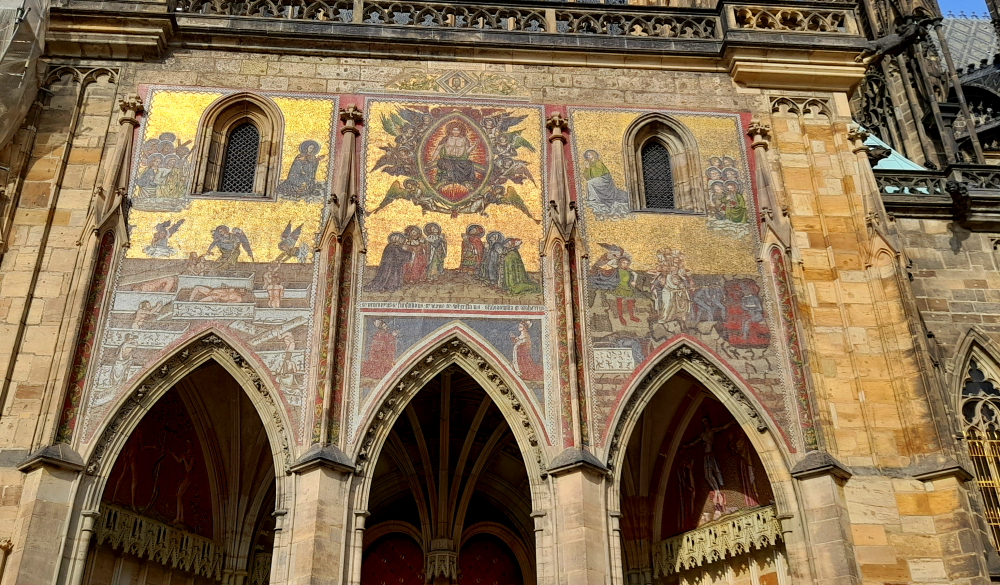
2 hours and 45 minutes later our tour comes to an end at the main entrance to the Castle.
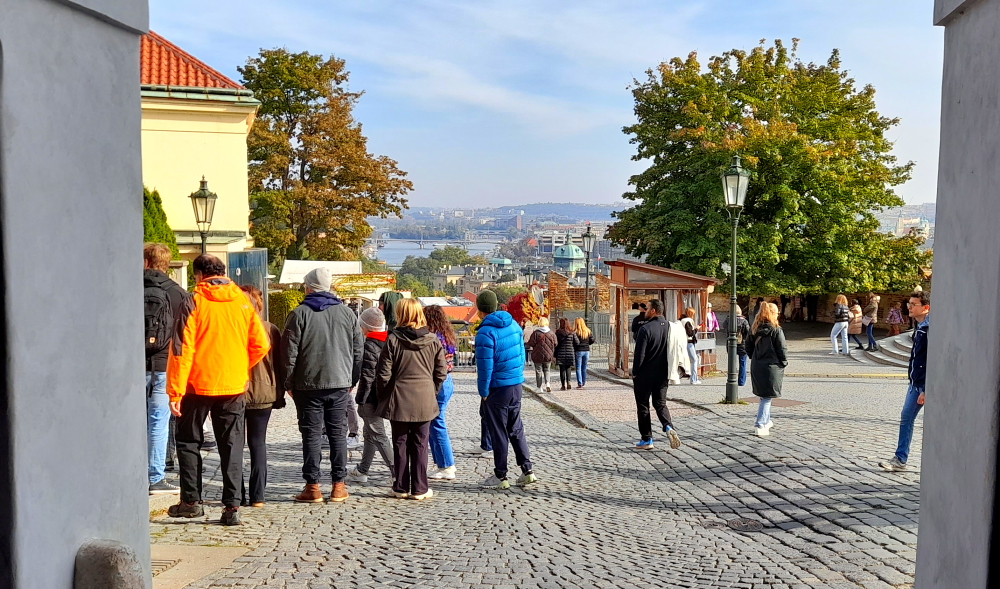
As it’s such a sunny (but chilly 12 Deg C) day we walk through the Castle’s South Gardens.
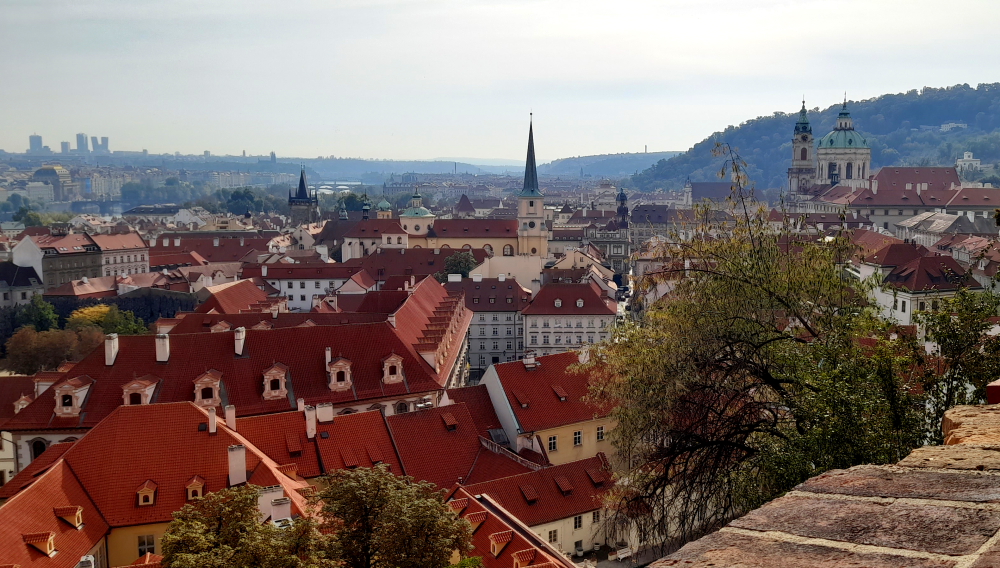
The South Gardens were established gradually on the location of bulwarks beneath Prague Castle. The last renovation in 2012 restored their original appearance from 1920’s when they were renovated by the Slovenian architect, Josip Plečnik, for the first Czechoslovak president T. G. Masaryk.
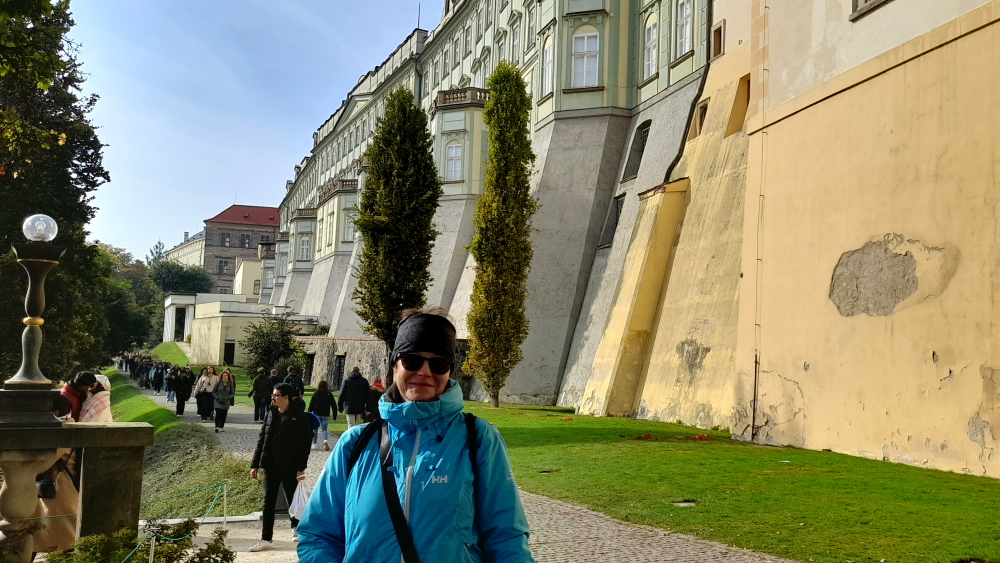
The South Gardens are nearly 500 metres long and are comprised of three smaller gardens: Paradise Garden, Garden on the Ramparts and Hartig Garden.
Paradise Garden is situated on the spot of the oldest garden in front of the southern wall of the Castle, where a private garden of Archduke Ferdinand used to be and similarly, the emperor Rudolf II also had his private garden here with a bath and an aviary.
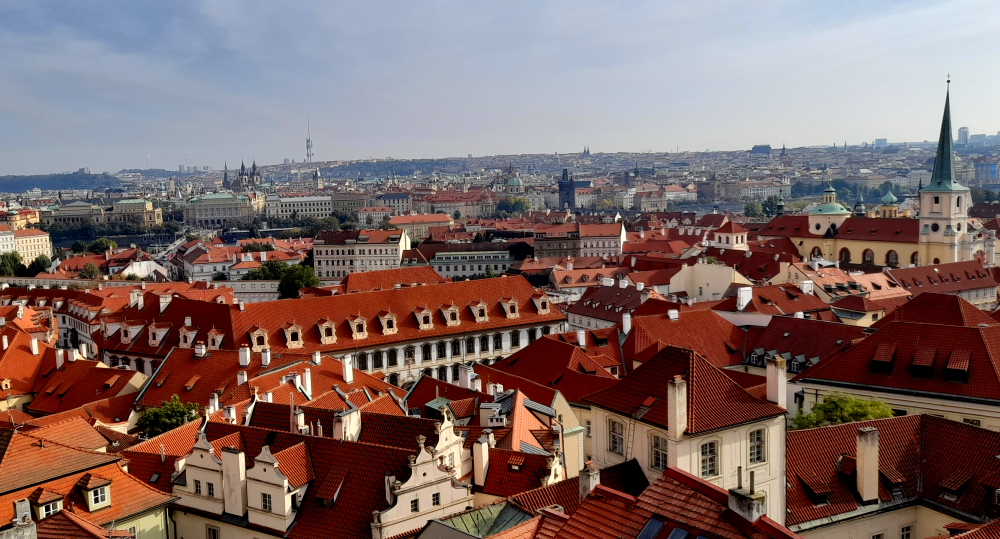
The Garden on the Ramparts’ central terrace offers a breathtaking view of Prague.
We return to the tram stop where we arrived and discover that the No. 23 tram stops near our hotel so we ride one all the way home. After a short break we catch another tram to take us to the Ujezd tram stop so that we can ride the funicular to the top of the Petrin Gardens. Alas, the funicular is under repairs. Natch!
Home again. Later we walk down the block to a restaurant with traditional Czech fare and order goulash with dumplings and spare ribs.
19 October, 2023
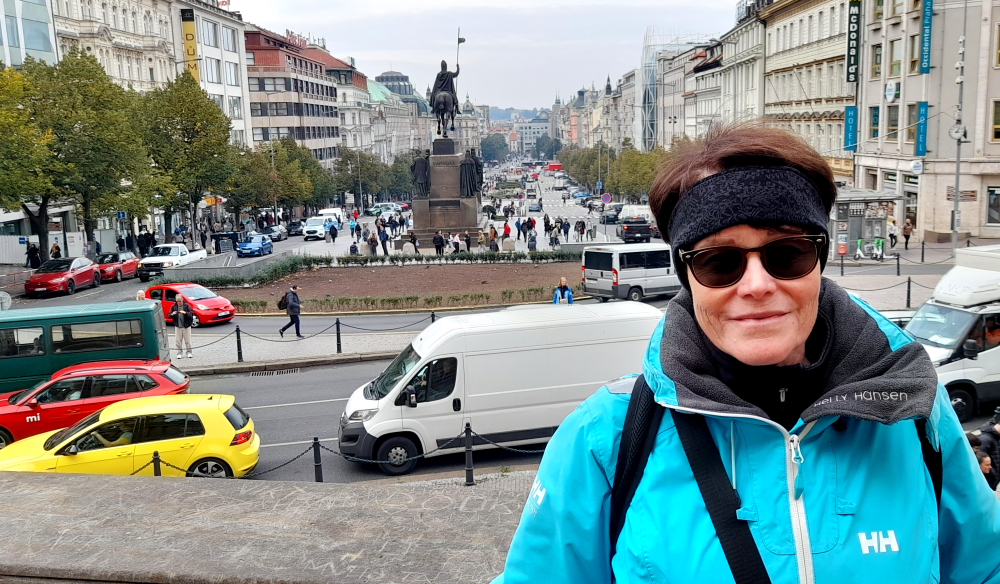
Due to the weather forecast of rain this morning, Lynn reschedules another GuruWalk to tomorrow morning. Instead, we’ll spend the morning catching up the past 2 days of blog then venture out later to see Prague’s main drag, Vaclavske namesti, from the viewpoint of the St Wenceslas statue. Lynn remembers it from her first visit to Prague in September 1992. In particular, her shock at the time of seeing a branch of McDonald’s (it opened in March 1992). Will it still be there?
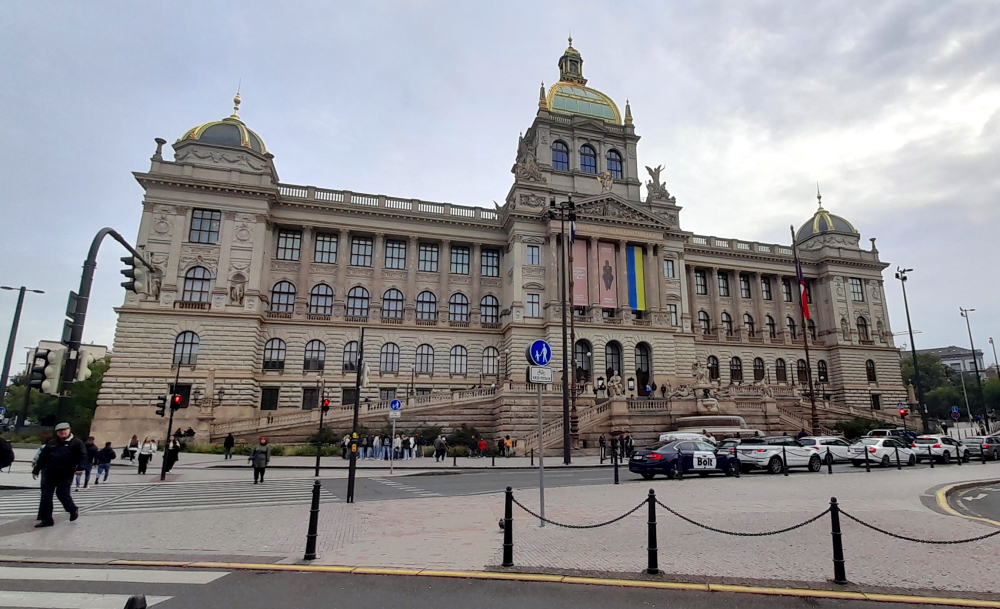
Around 2:30 pm we walk to the Metro station and ride the metro to the Muzeum stop. We surface near the St Wenceslas statue and walk across the road to mount the National Museum steps for a view down the main street.
Sure enough, Macca’s is still there!
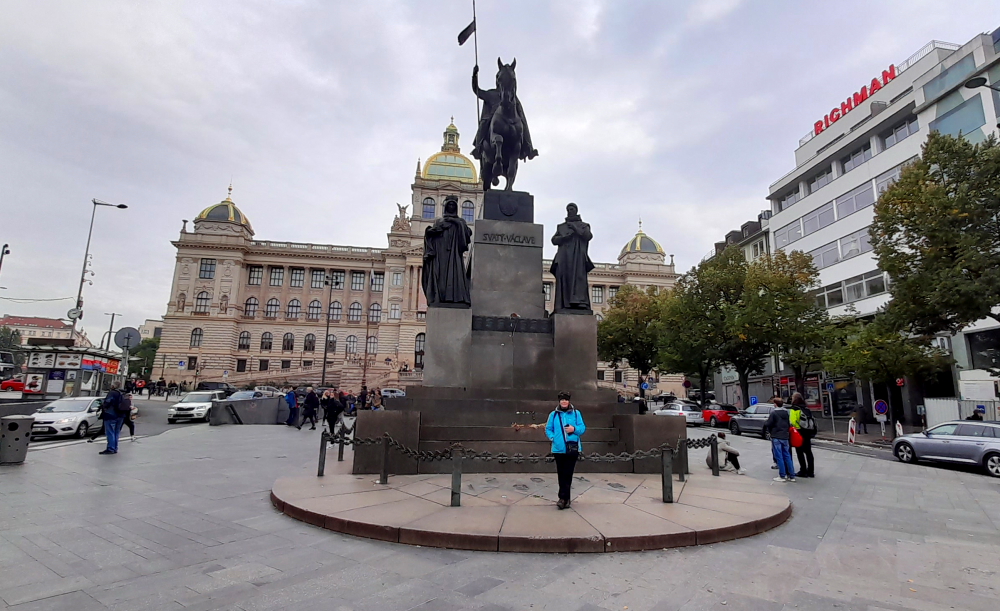
The statue of Saint Wenceslas depicts Wenceslaus I, Duke of Bohemia. The mounted saint was sculpted by Josef Václav Myslbek in 1887–1924, and the image of Wenceslas is accompanied by other Czech patron saints carved into the ornate statue base: Saint Ludmila, Saint Agnes of Bohemia, Saint Prokop, and Saint Adalbert of Prague. The statue base, designed by architect Alois Dryák, includes the inscription: “Saint Wenceslas, duke of the Czech land, prince of ours, do not let perish us nor our descendants.”
Strolling down the street I spy a Marks & Sparks near the Mustek Metro entrance so we enter the store to check it out. I need some new grundies but not willing to pay AUD80 for a pack of 5. Meanwhile, Lynn buys herself a white, long sleeved t-shirt at a more reasonable AUD38.
While I sit outside waiting for Lynn, a bunch of fire trucks, police cars and cops suddenly converge on the Metro entrance and cordon off the entrance and the street both sides of the intersection.
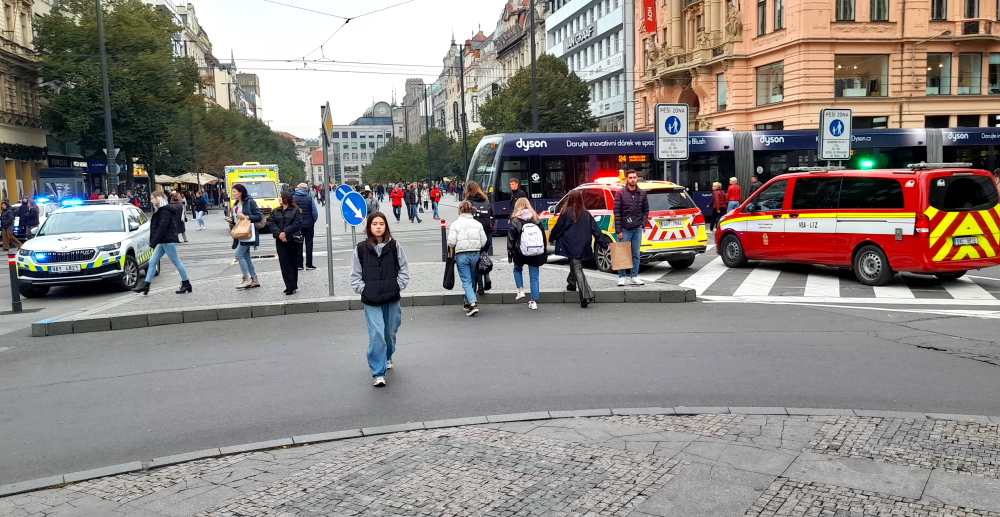
We quickly walk to the other side of the cross street to catch a tram that will drop us near the hotel. While waiting for Lynn there was a constant stream of trams. Now, none to be seen. Fortunately it’s only a 15-minute walk to the hotel so off we trot.
No mention on the local news as to what the incident was all about.
20 October, 2023
What was forecast to have been a cloudy morning is instead wet with constant mizzle. Not to worry, we’ll press on with our walk of the Old Town, Jewish Quarter and Charles Bridge.
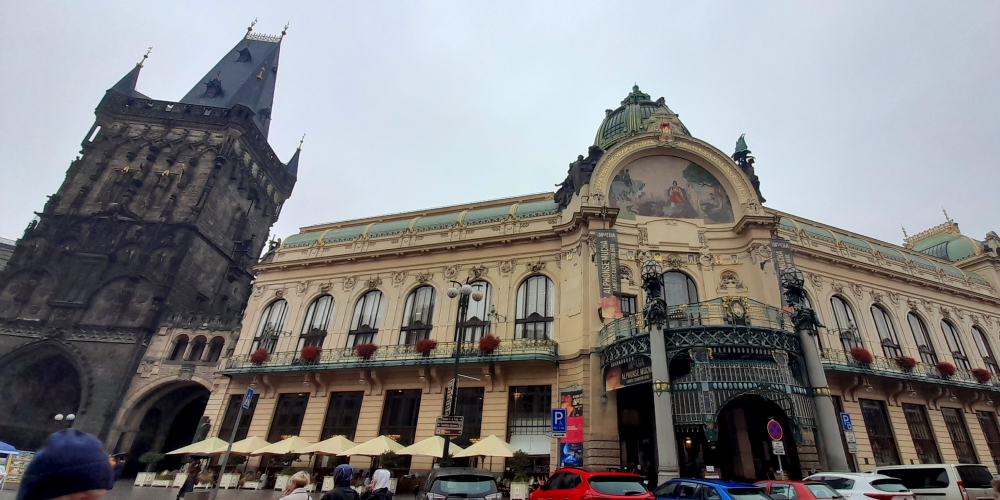
After leaving the hotel at 9:15 am we take the Metro 3 stops to Namesti Republiky and join the tour group in front of the Powder Tower.
The Powder Tower is one of the original 13 city gates in Old Town, Prague. Its construction began in 1475. The tower was intended to be an attractive entrance into the city, instead of a defensive tower. The foundation stone was placed by Vladislav II. The city council gave Vladislav II the tower as a coronation gift. While it was being built, it was called the New Tower. The look of the tower was inspired by the work of Peter Parler on the Charles Bridge.
Vladislav II had to relocate due to riots, so the tower building stopped. He returned in 1485 to live back in Prague Castle, where he lived for the rest of his life, along with the rest of the Kings of Bohemia who lived in Prague. Kings would not return to use the tower or Royal Court until using it for coronation ceremonies starting again in 1836, where they would pass through the tower to go via the Royal Route to St. Vitus Cathedral at the Castle.
The gate was used to store gunpowder in the 17th century, hence the name Powder Tower or Powder Gate. The gate suffered considerable damage during the Battle of Prague. The sculptures on the tower were replaced in 1876.
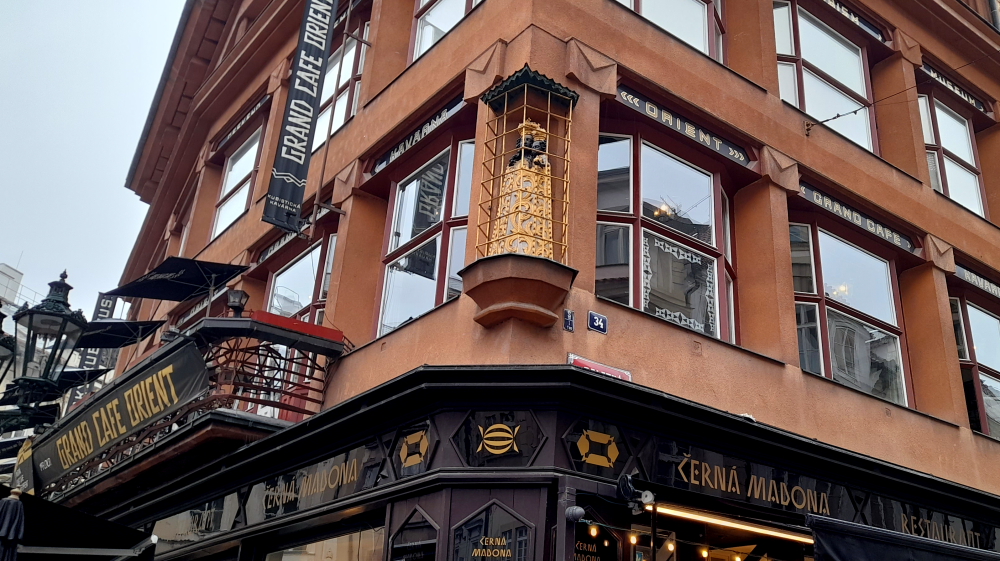
3 minutes later we are at the House of the Black Madonna. Back in the day when literacy was low, buildings had statues on them so you could easily refer to them such as, “let’s meet at the house of the Black Madonna”.
It’s also a cubist building designed by Josef Gočár in mid-1911 for the wholesale merchant František Josef Herbst. Like many of Gočár’s buildings, the House of the Black Madonna was built with a reinforced-concrete skeleton inspired by the Chicago School. The use of a reinforced-concrete skeleton allowed for large interior spaces without ceiling support, which was better suited to Cubist aesthetics. The first floor café, free of interior pillars, was a feat of engineering at the time.
The building, completed in 1912, is named after the baroque sculpture of a Black Madonna that adorns it, a remnant of an earlier baroque .building on the site. It is the earliest example of cubist architecture in Prague. Although few original plans had survived, black-and-white photographs documenting the café’s interior décor from 1912 were used during renovation. Replicas of café furniture and brass chandeliers were constructed to revive the café and showcase Czech cubism to customers
Today, the ground floor houses a café, while the four upper floors are used by the Museum of Czech Cubism.
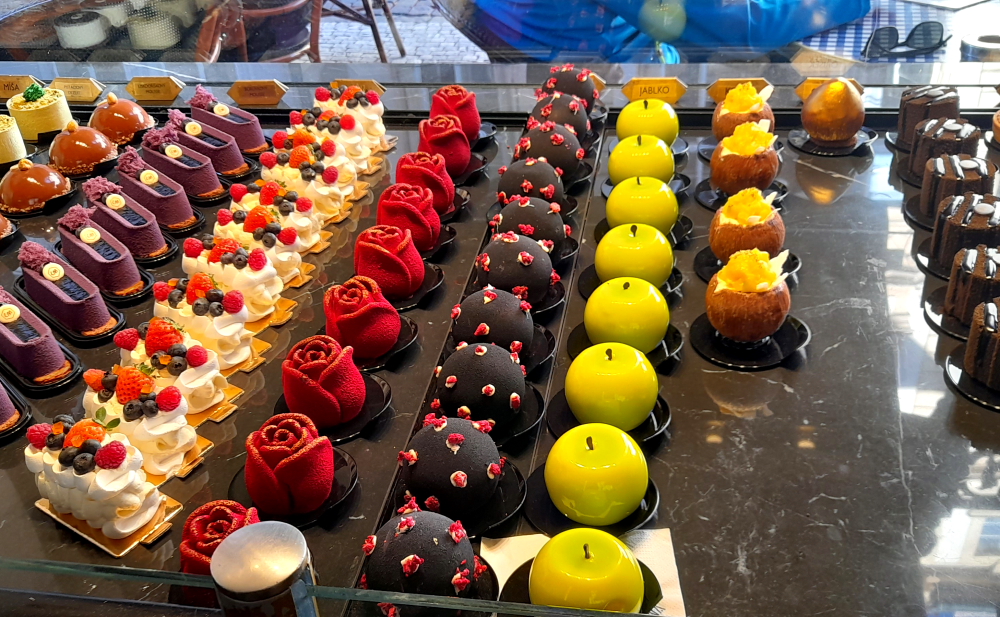
During the Chinese Covid Pandemic many restaurants, hotels and Cafes went out of business. The Cubist Cafe decided to invent a Covid looking cake and apparently it was such a hit that it saved the Cafe.
2 minutes later we come to The Estates Theatre, built during the late 18th century in response to Enlightenment thought regarding general access to the theatre, and theatres themselves demonstrating the cultural standards of a nation.
While the theatre was initially built with the intention of producing German dramas and Italian operas, works in other languages were also staged. Czech productions were first staged in 1785 in order to reach a broader Czech audience but by 1812 they became a regular feature of Sunday and holiday matinées. The first Czech modern opera, František Škroup’s The Tinker, was staged here in 1826 and in 1834 the premiere of the song “Where is my Home?” was performed by bass Karel Strakatý which would later become the Czech national anthem.
Many famous European artists were also active. Individuals such as Carl Maria von Weber, Anton Rubinstein, Karl Goldmark, and Gustav Mahler conducted at the Estates Theatre. Other famous names include the actors A.W. Iffland, F. Raimund, J.N. Nestroy, along with opera singer Angelica Catalani and violin virtuoso Niccolò Paganini.
One of the Estates Theatre’s many claims to glory is its strong link with Wolfgang Amadeus Mozart, who conducted the world premiere of his opera Don Giovanni here in October 1787. Also, in 1791, Mozart’s La Clemenza di Tito was staged in public here for the first time in celebration of the coronation of Emperor Leopold II. It is the only theatre left standing where Mozart performed.
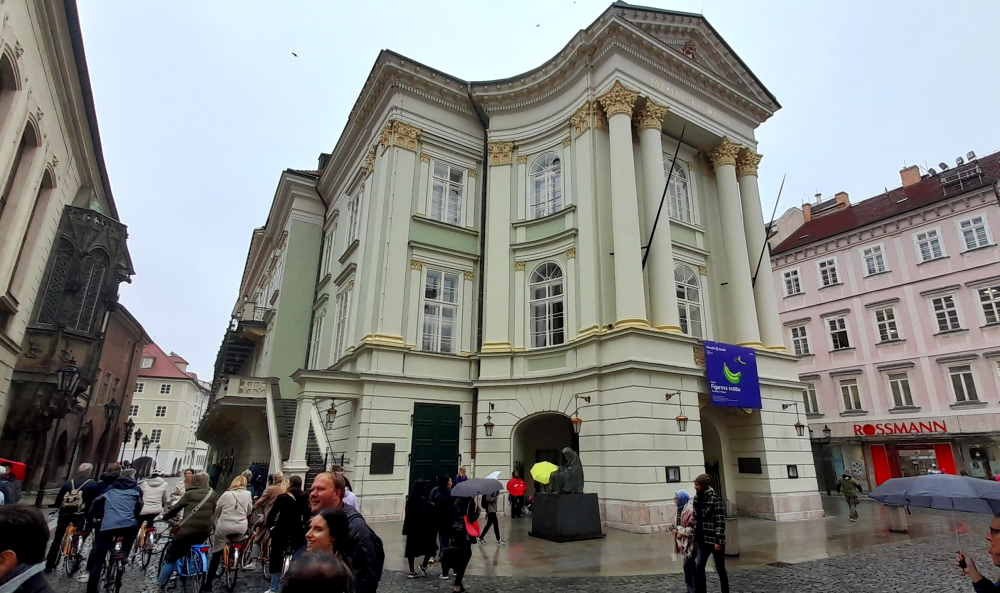
The Estates Theatre currently offers performances of dramas, ballets and operas with the focus of the opera company on the work of Wolfgang Amadeus Mozart. Most of the opera scenes of Miloš Forman’s film Amadeus were shot at the Estates Theatre. The theatre was also featured in the Beethoven biopic, Immortal Beloved, starring Gary Oldman.
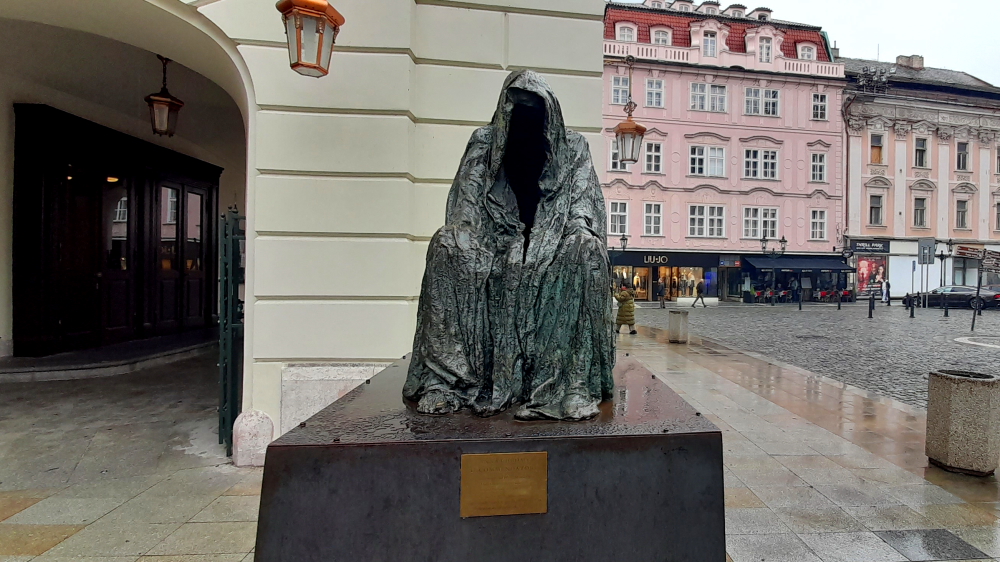
Anna Chromy’s statue Il Commendatore, inspired by the character from Don Giovanni, was installed in front of the theatre in 2000
A 4-minute walk along Zelezna brings us to the Old Market Square and Town Hall.
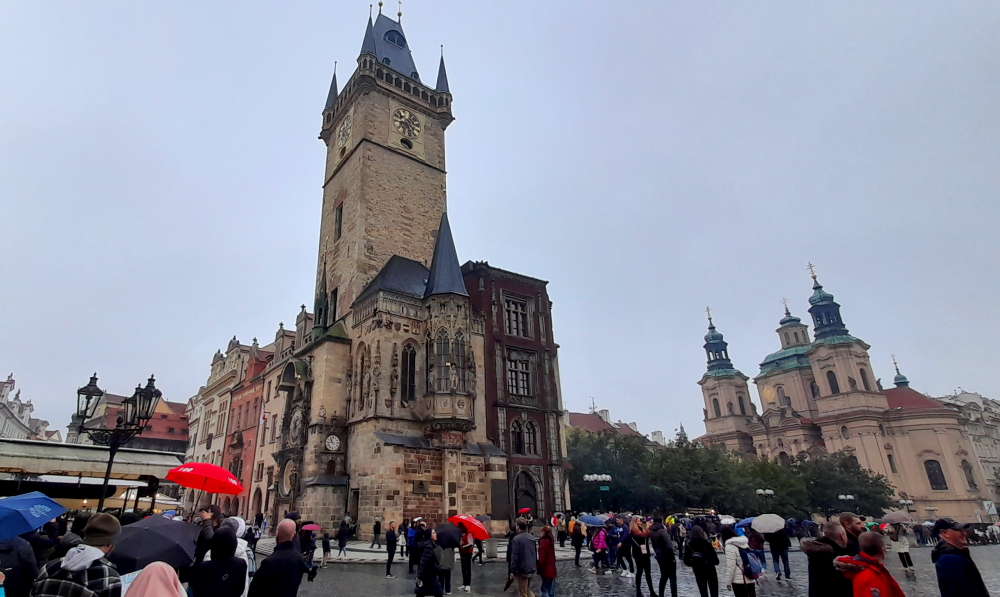
Here it is possible to see, side by side, the changing architectural styles over the centuries.
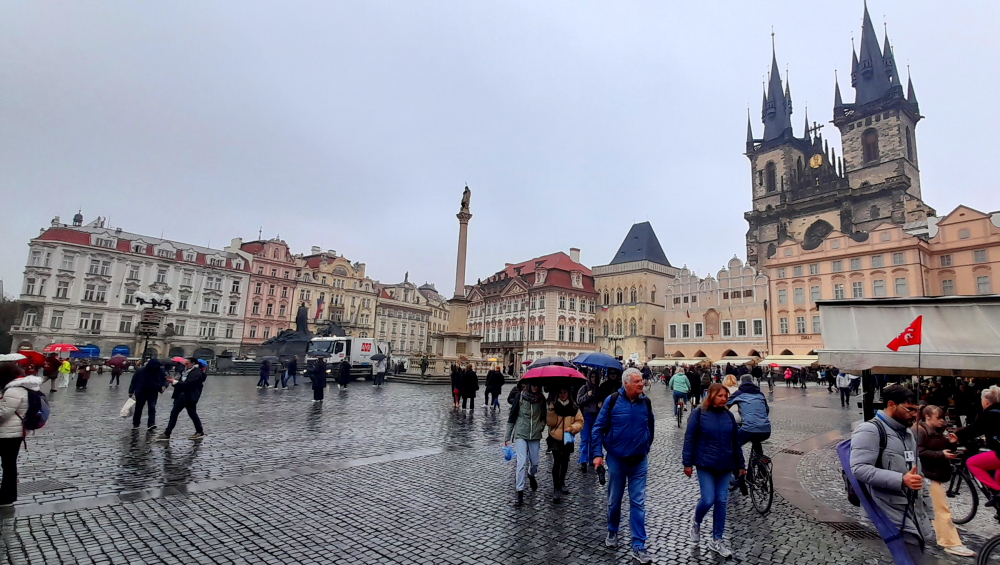
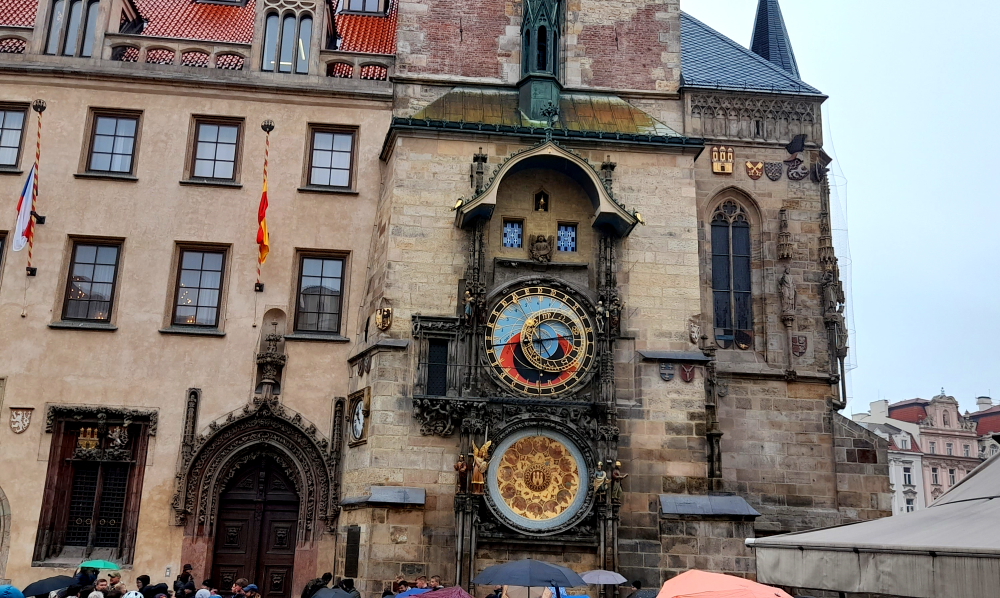
Our main reason for stopping here is to hear the 11:00 am chiming and see the display of animated figures on the medieval Astronomical Clock attached to the Old Town Hall. The clock was first installed in 1410, making it the third-oldest astronomical clock in the world and the oldest clock still in operation.
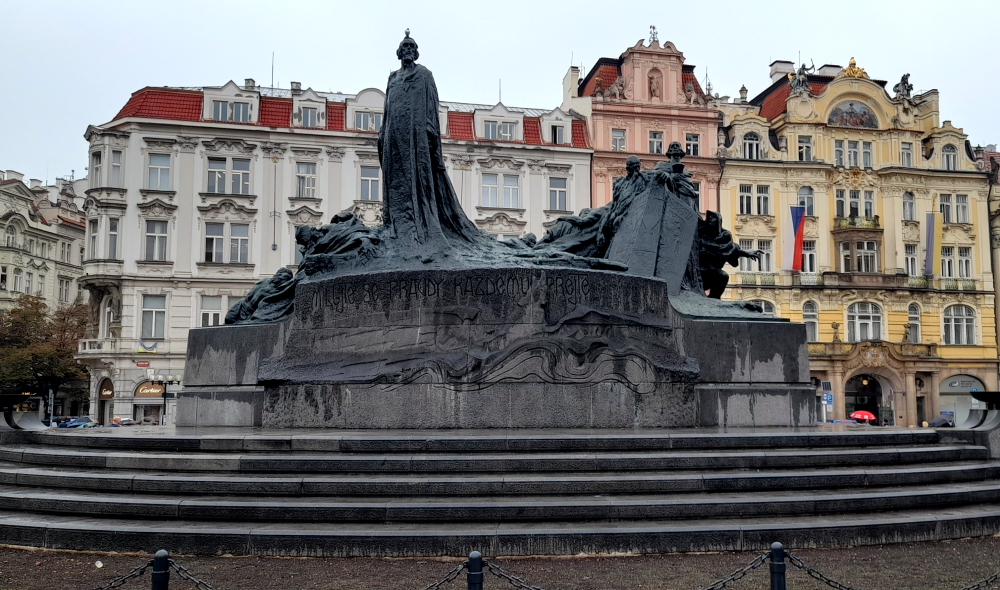
Also in the square is a monument to Jan Hus, a Czech theologian and philosopher who became a Church reformer and the inspiration of Hussitism, a key predecessor to Protestantism, and a seminal figure in the Bohemian Reformation.
After being ordained as a Catholic priest, Hus began to preach in Prague. He opposed many aspects of the Catholic Church in Bohemia. Alexander V issued a Papal bull that excommunicated Hus; however, it was not enforced, and Hus continued to preach. Hus then spoke out against Alexander V’s successor, Antipope John XXIII, for his selling of indulgences. Hus’s excommunication was then enforced, and he spent the next two years living in exile.
When the Council of Constance assembled, Hus was asked to be there and present his views on the dissension within the Church. When he arrived, with a promise of safe-conduct, he was arrested and eventually taken in front of the council and asked to recant his views. On 6 July 1415, he was burned at the stake for heresy against the doctrines of the Catholic Church.
After Hus was executed, the followers of his religious teachings (known as Hussites) refused to elect another Catholic monarch and defeated five consecutive papal crusades between 1420 and 1431 in what became known as the Hussite Wars.
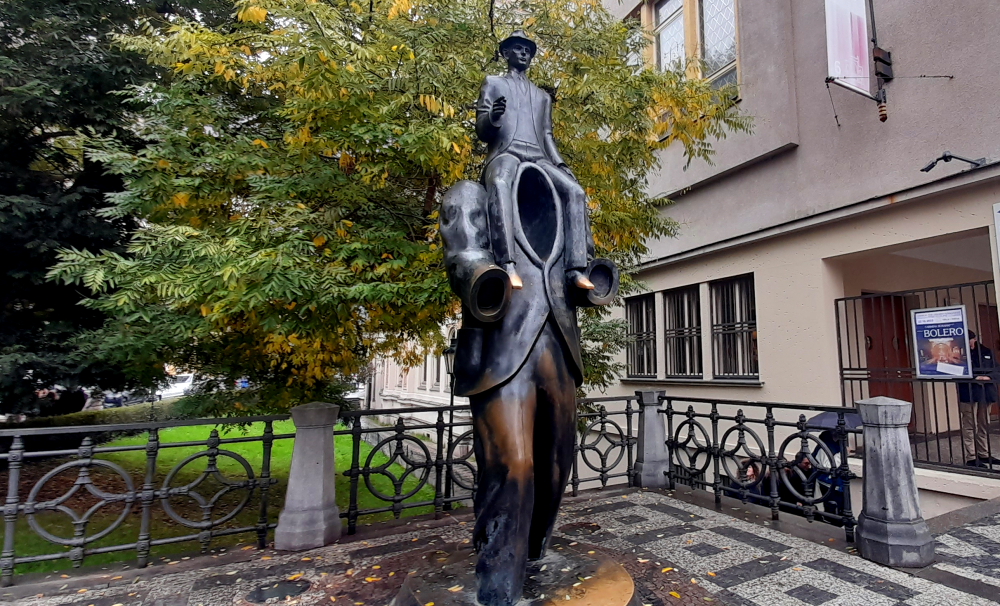
After a 15-minute break we proceed along Dusni to the edge of the Jewish Quarter where we encounter a statue of Franz Kafka by artist Jaroslav Rona. It was installed on Vězeňská street in the Jewish Quarter in December 2003. It depicts Franz Kafka riding on the shoulders of a headless figure, in reference to the author’s 1912 story “Description of a Struggle”.
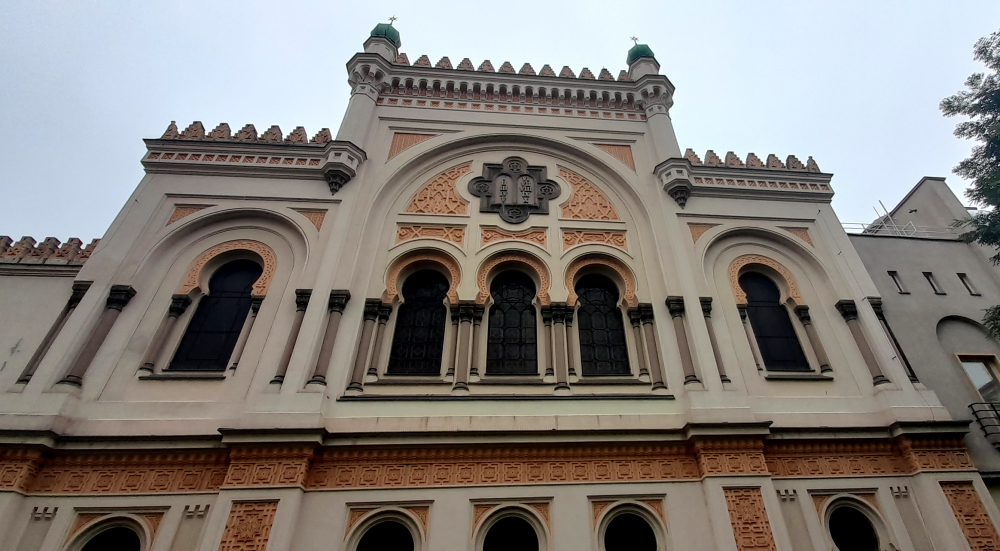
Next door is the Spanish Synagogue, the newest synagogue in the area and was built at the site of the oldest synagogue in 1868. The synagogue is built in Moorish Revival Style which was inspired by the art of Arabic period of Spanish history. Today, the Spanish Synagogue is administered by the Jewish Museum in Prague.
Nearby is the Old New Synagogue situated in Josefov, and is Europe’s oldest active synagogue. It is also the oldest surviving medieval synagogue of twin-nave design. Completed in 1270, it was one of Prague’s first Gothic buildings.
Legend has it that the giant, Golem, used to live here at the back of the synagogue, hence the iron railings up the wall, starting about 6′ off the ground, leading to a door in the attic.
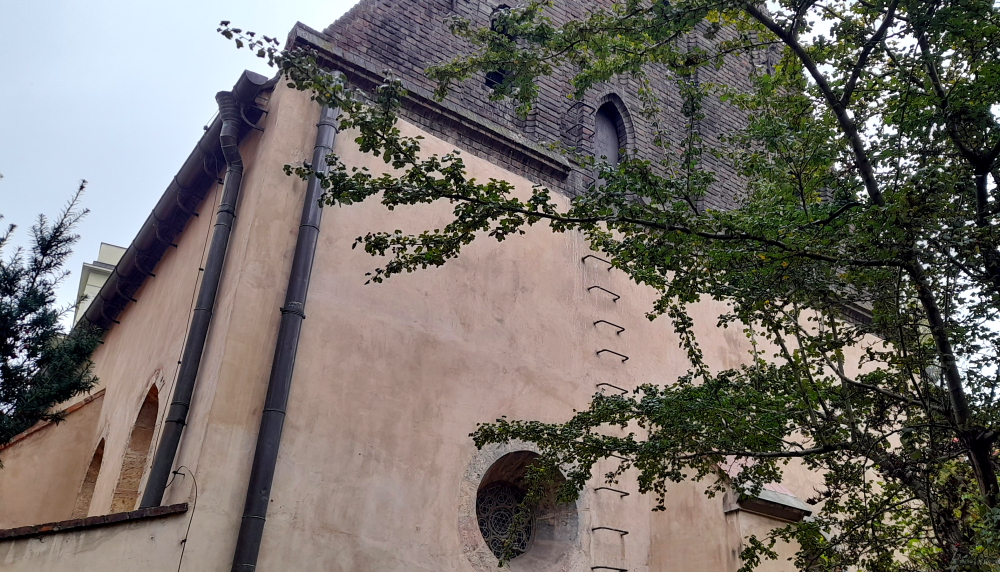
Down the road from the synagogue we can see the burial ground on the left and the Ceremonial Hall at the end of the street.
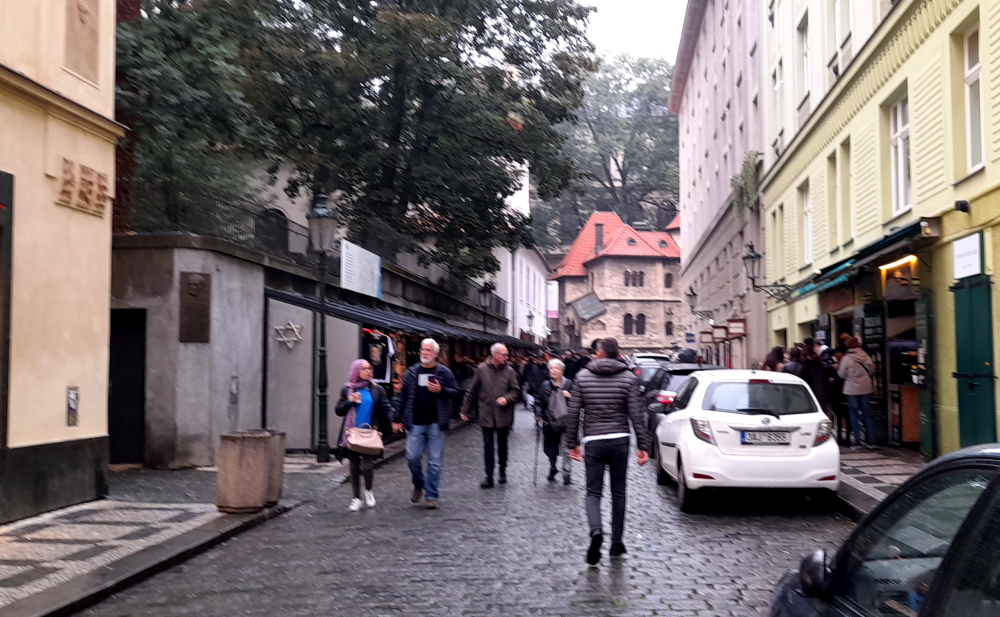
From here we walk 5 minutes south to the Prague New City Hall. An important piece of Art Nouveau architecture dating back to 1908-1911. Since 1945, it has been the seat of the Prague City Hall and Prague’s Mayor.
On our way to the Charles Bridge we walk past the Clementinum, an historic complex of buildings which houses the National Library of the Czech Republic.
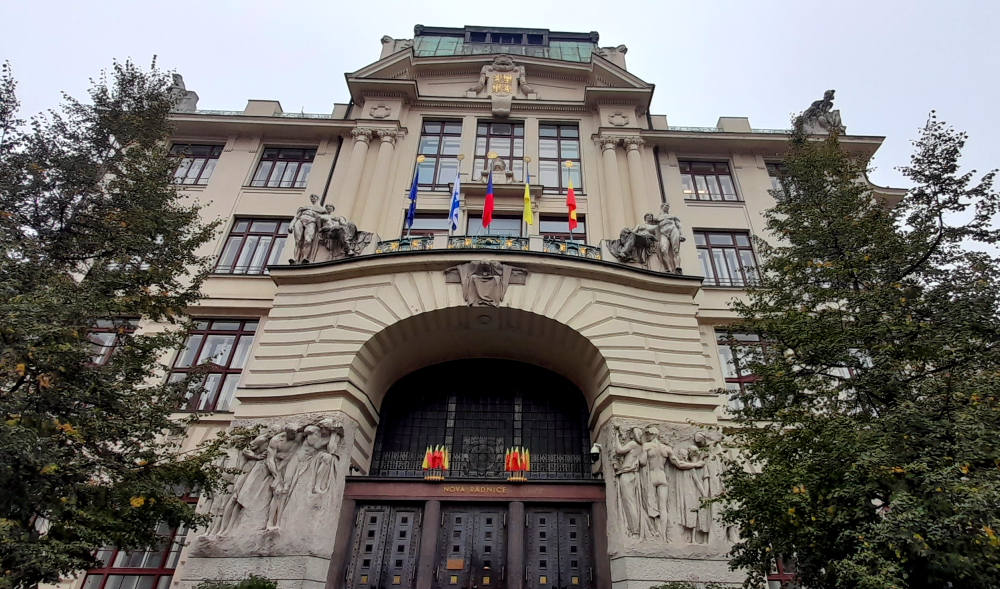
Its history dates from the existence of a chapel dedicated to Saint Clement in the 11th century. A Dominican monastery was founded in the medieval period, which was transformed in 1556 to a Jesuit college. In 1622 the Jesuits transferred the library of Charles University to the Clementinum, and the college was merged with the University in 1654. The Jesuits remained until their suppression in 1773, when the Clementinum was established as an observatory, library, and university by the Empress Maria Theresa of Austria.
The National Library was founded in 1781 and from 1782 the Clementinum was a legal deposit library. In 1918 the newly established Czecho-Slovak state took over the library. Since 1990, it has been the National Library. It contains a collection of Mozartiana, material pertaining to Tycho Brahe and Comenius, as well as historic examples of Czech literature. The architecture is a notable example of Baroque architecture and the Clementinum, covering 20,000 square metres, is the second largest complex of buildings in Prague after Prague Castle.
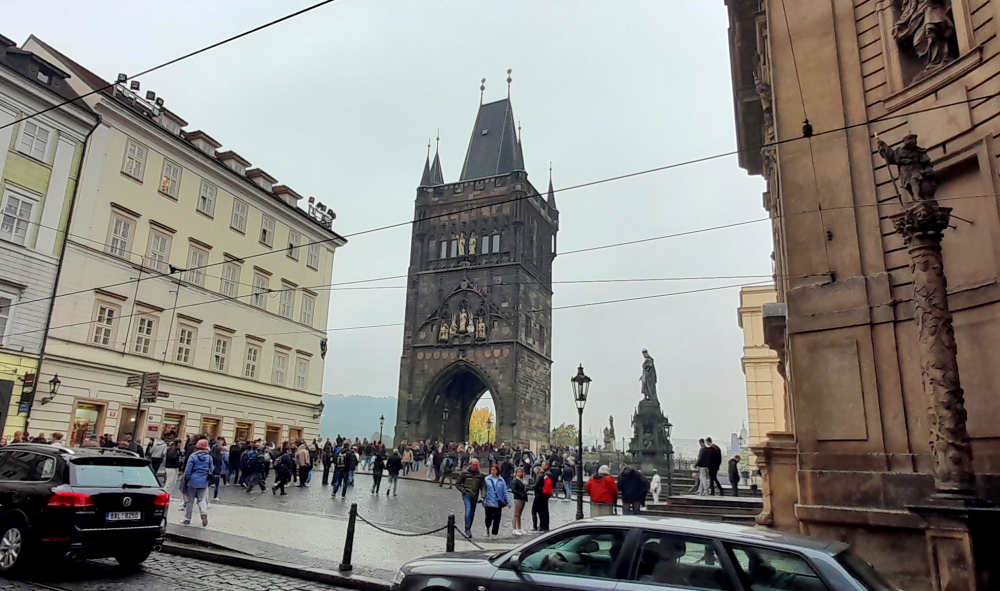
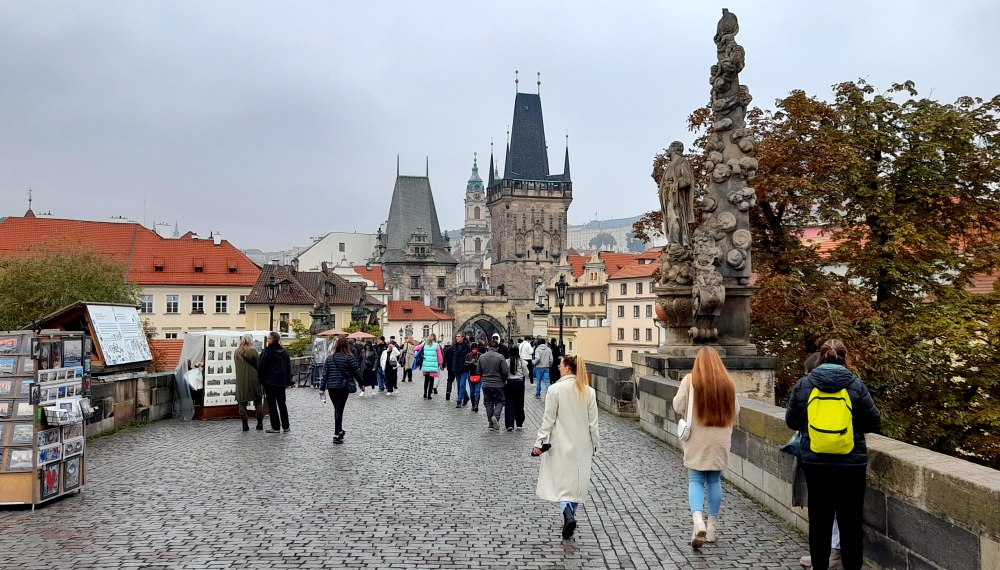
We approach the commencement of the Charles Bridge where we are presented with the imposing Old Town Bridge Tower, a gothic monument. The tower, along with the Charles Bridge, was built by Emperor Charles IV according to designs by Petr Parléř in the mid-14th century. The gate to the Old Town was also conceived as a symbolic victory arch through which Czech kings passed on their coronation processions just like the Powder Gate 1.1 kms east along Celetna.
Before the Tower and located in the Knights of the Cross Square is also an imposing monument of King Charles IV. It is one of the best preserved and most significant neo-Gothic statues in Central Europe. It was created in 1848 on the occasion of the 500th anniversary of Prague Charles University, which was founded by Charles IV in 1348.
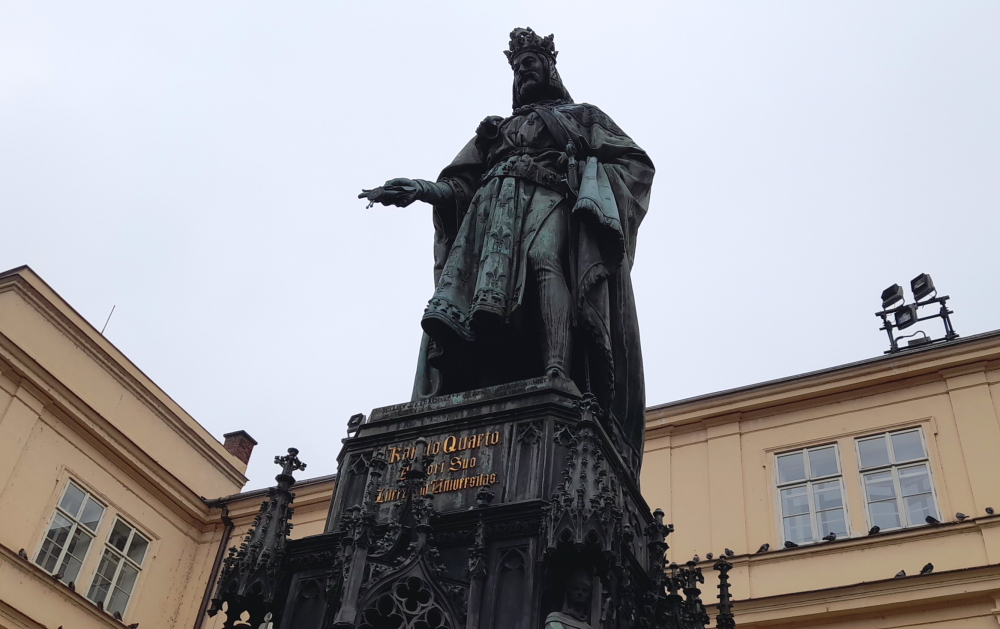
Charles IV (Karel IV in Czech) ruled the Bohemian Kingdom in 1346-1378 and the Holy Roman Empire in 1355-1378. He was also the King of Italy and Burgundy. In the Czech Republic, he is considered one of the most important persons in Czech history (if not the one most important – he is often called the father of the country) and the period of his reign is considered the Golden era of Prague and Bohemia, as Prague was virtually the capital of Holy Roman Empire and big part of Europe at that time.
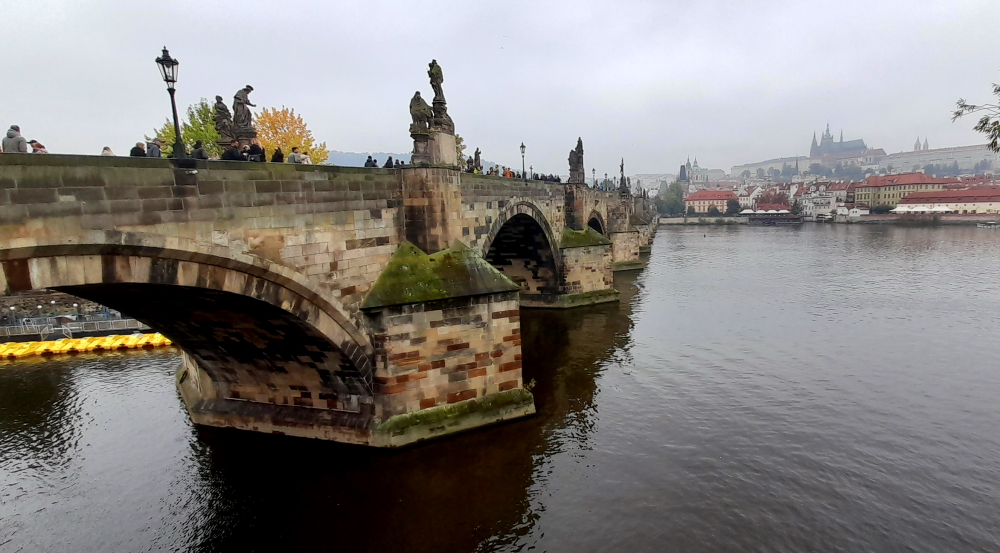
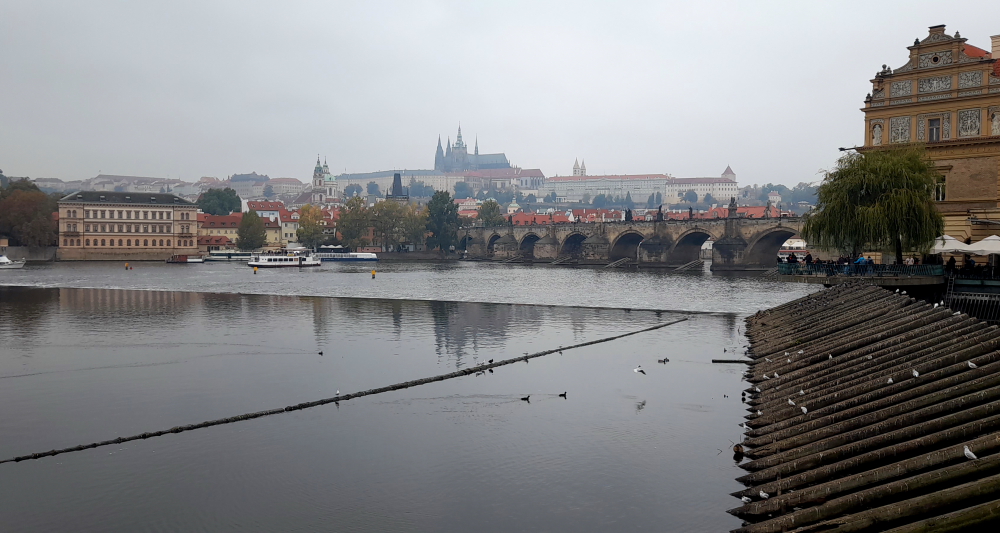
Charles Bridge is a medieval stone arch bridge that crosses the Vltava river. Its construction started in 1357 under the auspices of King Charles IV, and finished in the early 15th century. The bridge replaced the old Judith Bridge built 1158–1172 that had been badly damaged by a flood in 1342. This new bridge was originally called Stone Bridge or Prague Bridge but has been referred to as “Charles Bridge” since 1870.
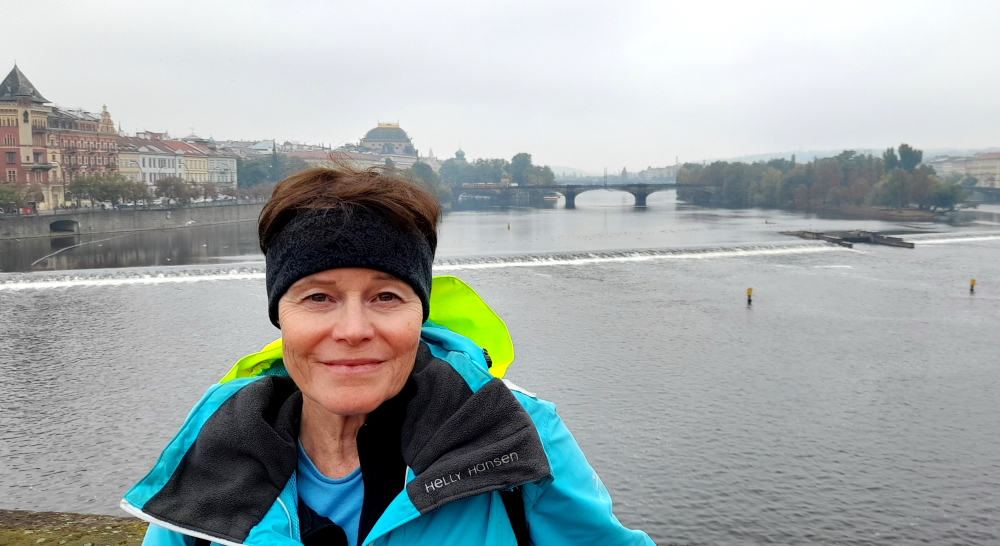
As the only means of crossing the river Vltava until 1841, Charles Bridge was the most important connection between Prague Castle and the city’s Old Town and adjacent areas. This land connection made Prague important as a trade route between Eastern and Western Europe.
The bridge is 516 metres (1,693 ft) long and nearly 10 metres (33 ft) wide. It was built as a bow bridge with 16 arches shielded by ice guards. It is protected by three bridge towers, two on the Lesser Quarter side (including the Malá Strana Bridge Tower) and one on the Old Town side, the Old Town Bridge Tower. The bridge is decorated by a continuous alley of 30 statues and statuaries, most of them baroque-style, originally erected around 1700, but now all have been replaced by replicas.
A short walk away is the John Lennon Wall where our walk terminates, some 3 hours later. The Lennon Wall or John Lennon Wall is a wall in Prague reminiscent of the East Side Gallery in Berlin. Since the 1980s, this once-typical wall has been filled with John Lennon–inspired graffiti, lyrics from Beatles’ songs, and designs relating to local and global causes.
Located in a small and secluded square across from the French Embassy, the wall had been decorated by love poems and short messages against the regime since 1960s. It received its first decoration connected to John Lennon—a symbol of freedom, western culture, and political struggle—following the 1980 assassination of John Lennon when an unknown artist painted a single image of the singer-songwriter and some lyrics.
In 1988, the wall was a source of irritation for Gustáv Husák’s communist regime. Following a short-lived era of democratization and political liberalization known as the Prague Spring, the newly-installed communist government dismantled the reforms, inspiring anger and resistance. Young Czechs wrote their grievances on the wall and, according to a report of the time, this led to a clash between hundreds of students and security police on the nearby Charles Bridge. The liberalization movement these students followed was described as Lennonism (not to be confused with Leninism), and Czech authorities described participants variously as alcoholic, mentally deranged, sociopathic, and agents of Western free market capitalism.
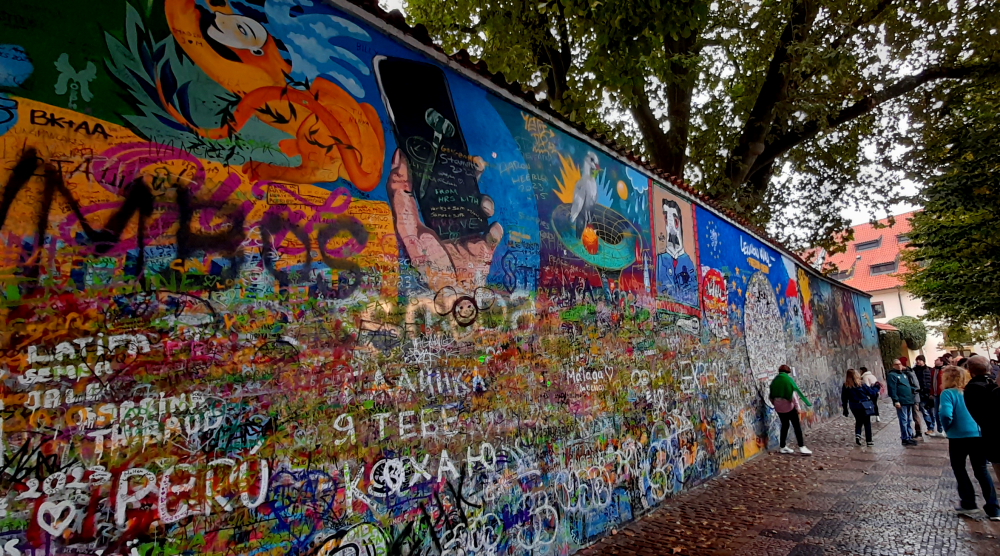
The wall continuously undergoes change, and the original portrait of Lennon is long lost under layers of new paint. Even when the wall was repainted by authorities, by the next day it was again full of poems and flowers. Today, the wall represents a symbol of global ideals such as love and peace. For example, there are several doves, and Ukraine’s contribution was of a military tank in a field of sun flowers.
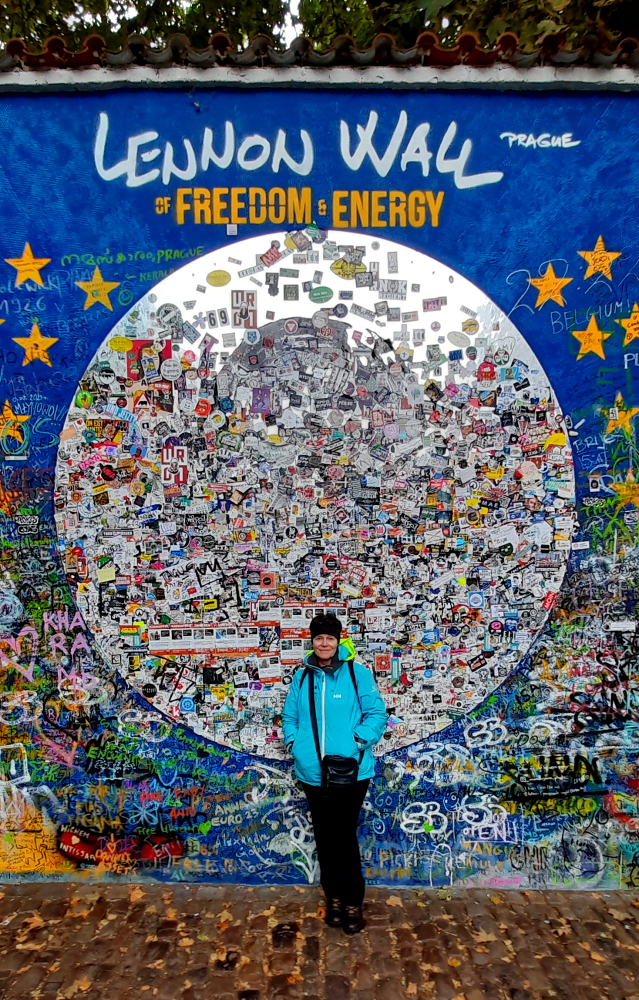
The wall is owned by the Sovereign Military Order of Malta, which allowed the graffiti, and is located at Velkopřevorské náměstí (Grand Priory Square), Malá Strana.
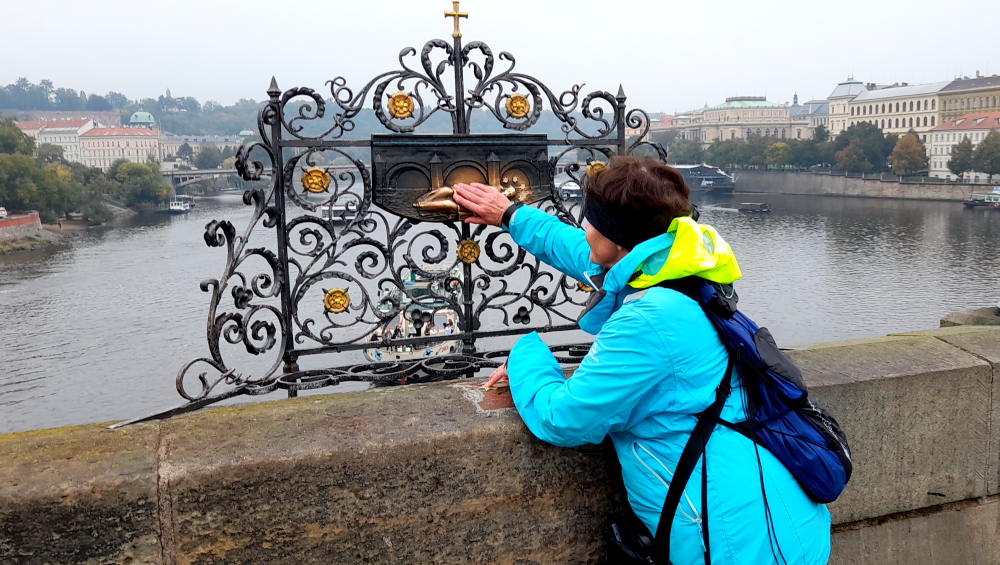
To return home we retrace our steps across the Charles Bridge and when we come to the plaque commemorating one of the saints we both make a wish, as is customary. When in Rome, or Praha…
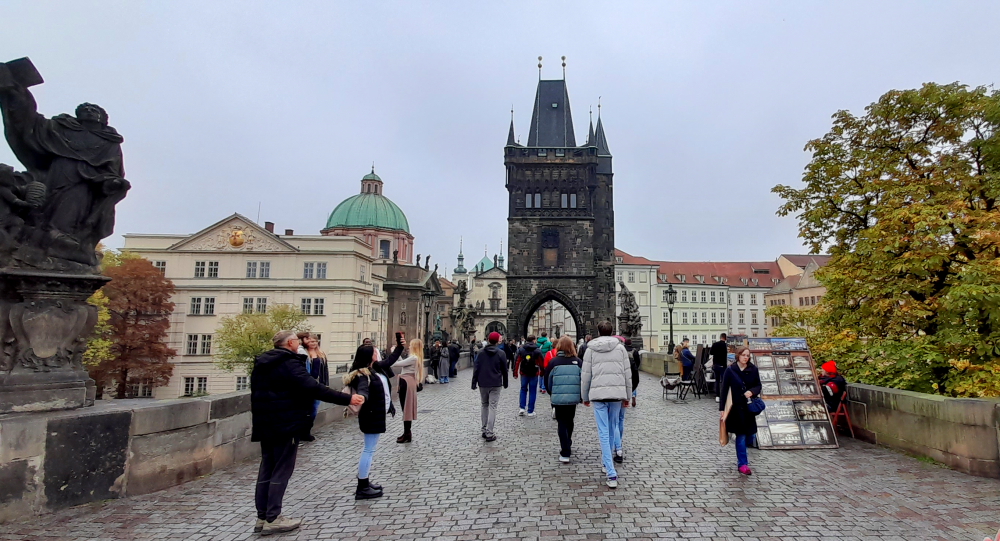
Close by is a tram stop where we jump on a No. 17 which drops us near to our hotel.
21 October, 2023
What a difference a day makes! Not a cloud in the sky this morning. After breakfast we plan to take the Metro back to the Republic square and walk the Royal route to the Charles Bridge, check out the western bridge gate, walk past the Wallenstein Palace building then on to the start of the Prague Castle stairs.
We take a number of photos of the important landmark buildings that we took yesterday in the rain. They are much more impressive in the bright sunlight but I won’t bother repeating them on the blog.
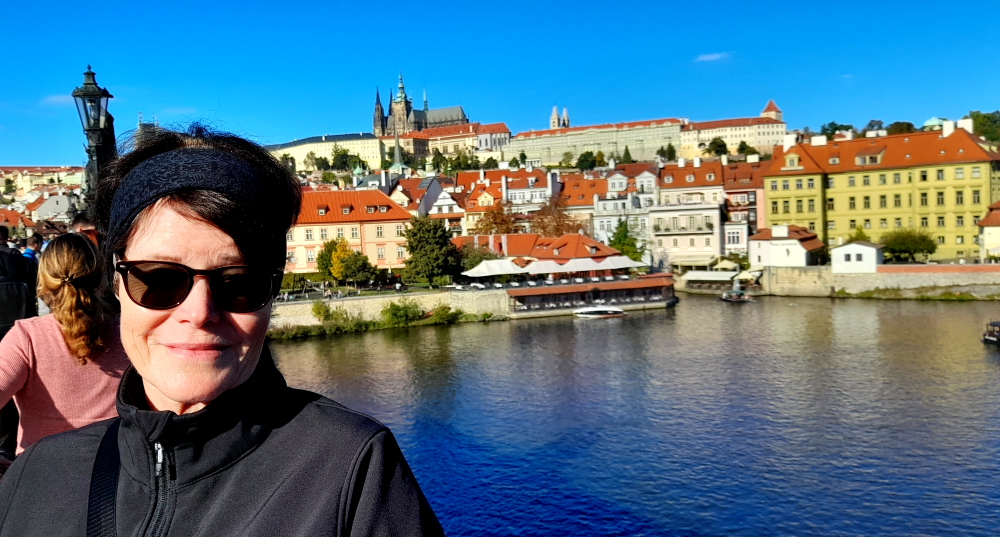
It’s going to get to a very warm 21 Deg C today and by 11:00 am we already know that we are overdressed compared to being rugged up for a wet 11 Deg C yesterday.
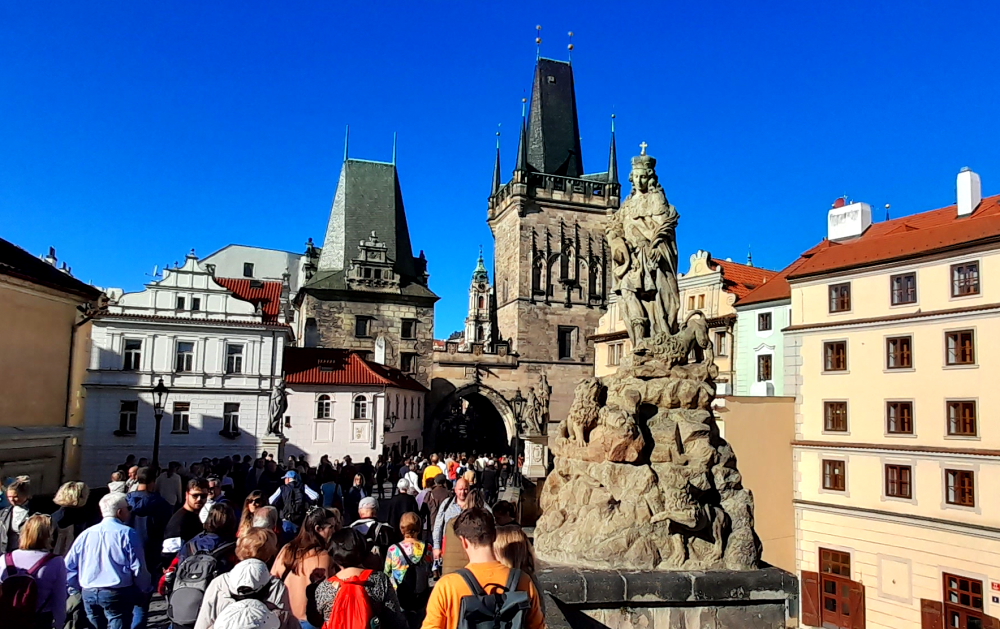
It’s Saturday today so with the excellent weather and a weekend the tourist crowds are heaving. It would have been difficult to do a walking tour in a group today. We may have complained about the weather yesterday but the tour without the crowds was very good. Shame about yesterday’s crappy photos.
From the end of the bridge we continue on to St. Nicholas Church but I manage to convince Lynn that it isn’t necessary to see yet another European church, especially in an agnostic country. We turn right towards the Wallenstein Palace.
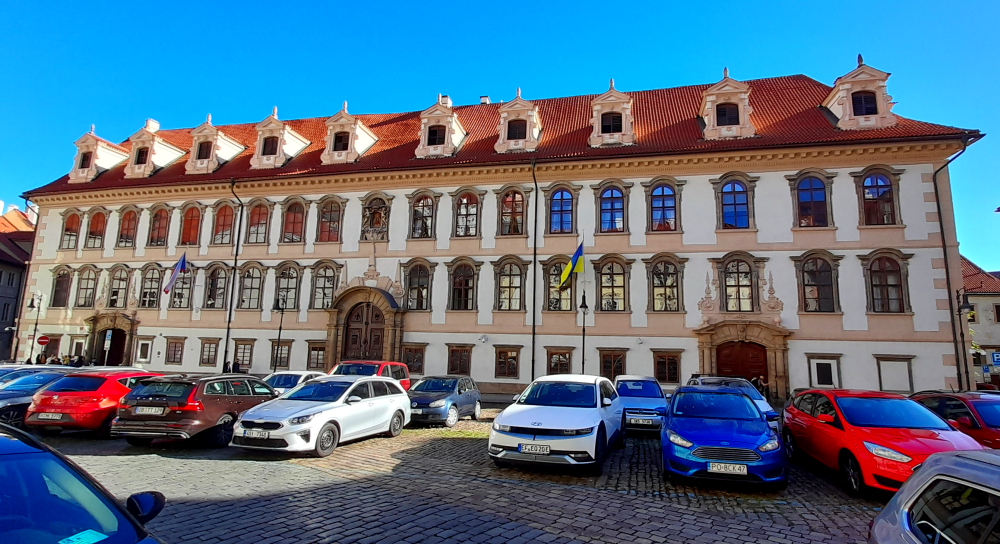
Wallenstein Palace is a Baroque palace in Malá Strana, Prague, that served as a residence for Imperial Generalissimo Albrecht von Wallenstein and now houses the Senate of the Czech Republic.
The original Palace was built during 1623-1630 by Albrecht von Wallenstein, Duke of Mecklenburg (1583-1634), who made his name and fortune as the Commander-in-Chief of the Imperial forces in the Thirty Years War. Emperor Ferdinand II feared Albrecht von Wallenstein’s calculating mind and had him assassinated in 1634 in the town of Eger (now Cheb). He lived in the palace for only a year before his death. His widow sold it to his nephew and it remained in the Wallenstein family until 1945. After the Second World War, the palace became Czechoslovak state property and was renovated to house government offices. Today, the Senate of the Czech Republic operates out of the main palace buildings.
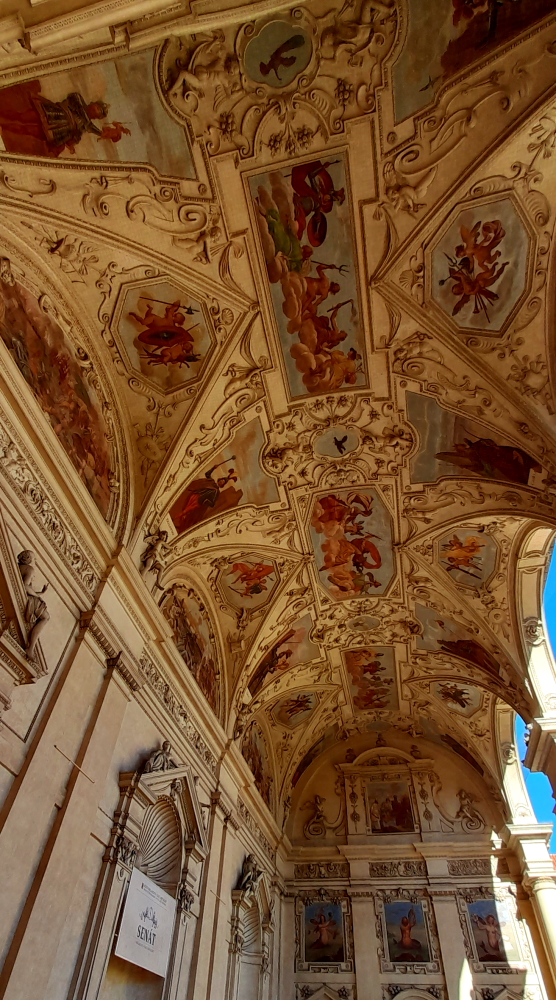
Typical of Socialist Leftist Governments. Wait until someone has spent years building and maintaining assets then just take them for themselves (not for the people as they claim). It is only a matter of time before the Australian Labor Party decides that people who have worked hard to build superannuation in Australia to become self-funded retirees and not be a burden on society should have those assets taken away by either additional taxes or tax them as an inheritance tax so the next generation can’t have a good start in life. Just a little rant after reading that the Labor Treasurer states in this morning’s news that Australians have been better off under a Labor Government but when analysis has been done to prove that, in fact, Australians are now significantly worse off.
Anyway, back to the Palace. We take a stroll around the gardens in the inner courtyard as you do on a beautiful sunny day.
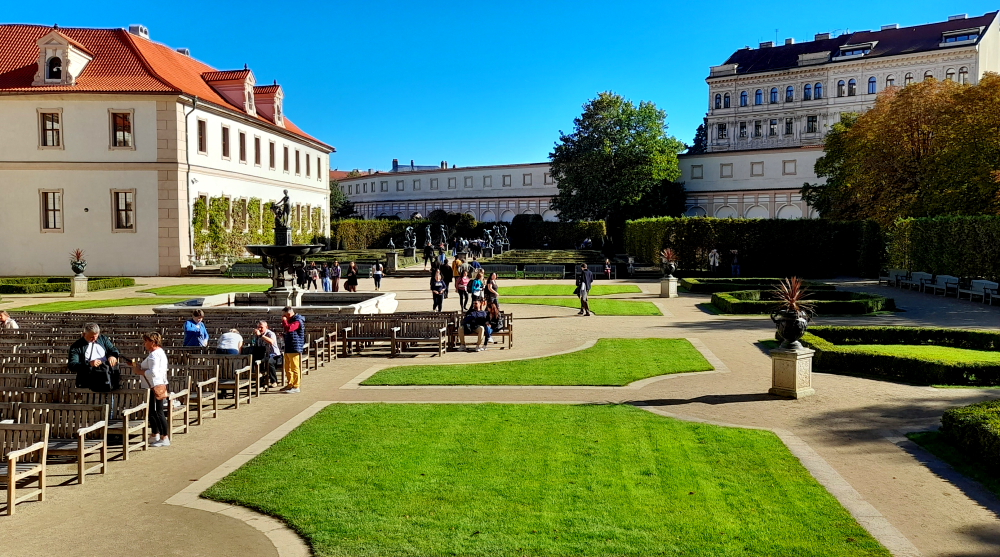
I note that the bronze fountain in the courtyard had water spouting from the breast of the main statue but Lynn wouldn’t let me include that picture. Probably for the best as it may offend the wokes.
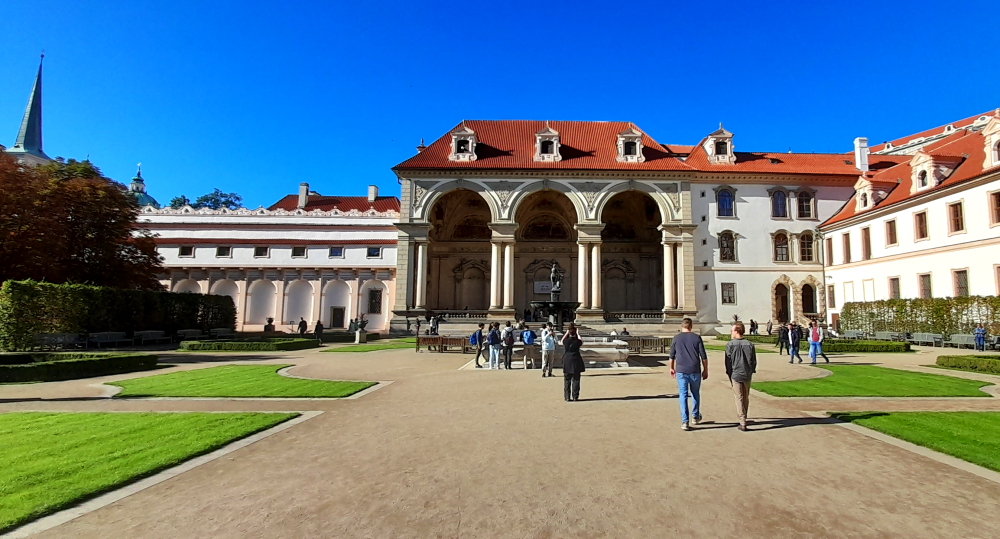
It is only another 200 metres to the Prague Castle stairs but by the time we reach them the crowds are impossible. I am not that keen to walk up to the castle again so we decide to head back to the Vyserad Cathedral to look for Dvorak’s Grave that we missed on our visit here on our first day in Prague.
This time however, I know how the trams work and I find that a No. 2 tram will take us all the way from Prague Castle to the Cathedral. This so we can enjoy the sunny day at the Cathedral and still avoid walking about 5 kms.
It is still a steep walk from the tram stop up the hill to the Cathedral but we get to enjoy the views on the way up.
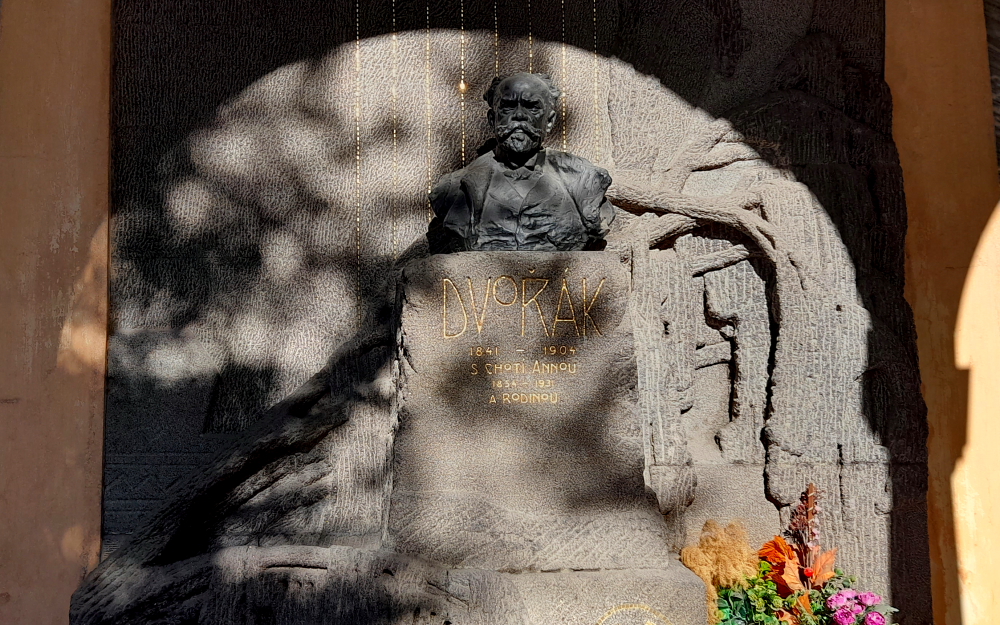
Antonín Leopold Dvořák (8 September 1841 – 1 May 1904) was a Czech composer. Dvořák frequently employed rhythms and other aspects of the folk music of Moravia and his native Bohemia, following the Romantic-era nationalist example of his predecessor Bedřich Smetana.
Dvorak is one of my favourite composers and I especially enjoy his Symphony No. 6 in D Major.
All of Dvořák’s nine operas, except his first, have librettos in Czech and were intended to convey the Czech national spirit, as were some of his choral works. By far the most successful of the operas is Rusalka. Among his smaller works, the seventh Humoresque and the song “Songs My Mother Taught Me” are also widely performed and recorded. He has been described as “arguably the most versatile… composer of his time”
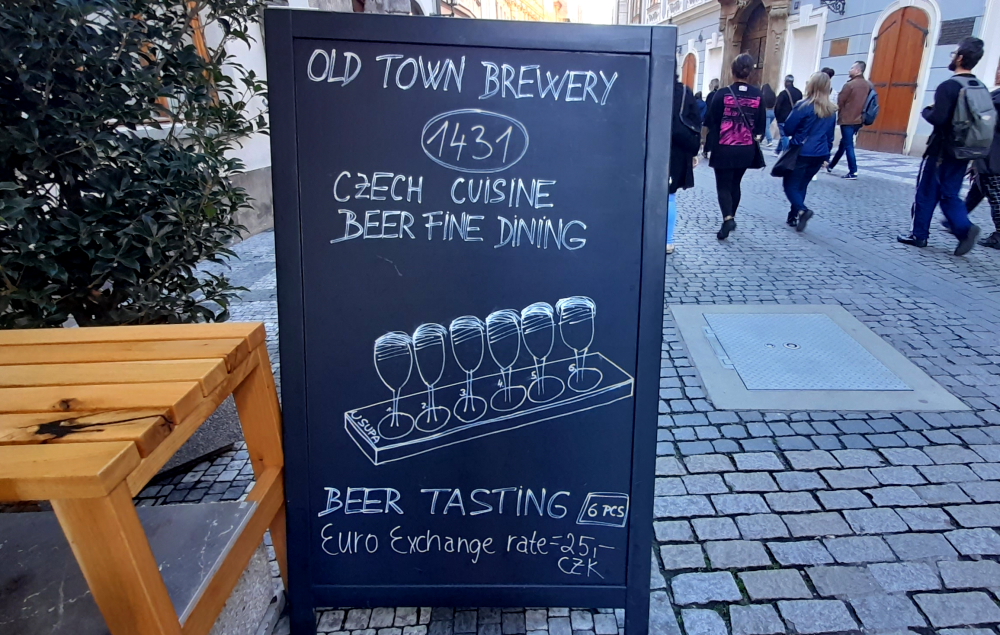
By 2:00 pm it feels like beer o’clock or it could be that, because this country is now the biggest beer consumers per head of population in the world, that it is just expected to have a beer at this time of day. We head back to the hotel to cool off and catch up on the blog.
22 October, 2023
Another bright and sunny day but a cool 15 Deg. C. as we leave Prague for our next destination, Pilsen (Plzen), only 90 kms SW or about an hour’s drive away in Western Bohemia.
Founded as a royal city in the late 13th century, Plzeň became an important town for trade on routes linking Bohemia with Bavaria. By the 14th century it had grown to be the third largest city in Bohemia. The city was beseiged three times during the 15th-century Hussite Wars, when it became a centre of resistance against the Hussites. During the Thirty Years War in the early 17th century the city was temporarily occupied after the Siege of Plzeň.
In the 19th century, the city rapidly industrialised and became home to the Škoda Works, which became one of the most important engineering companies in Austria-Hungary and later in Czechoslovakia. The city is known worldwide as the home of Pilsner beer, created by Bavarian brewer Josef Groll in the city in 1842; today, the Pilsner Urquell Brewery is the largest brewery in the Czech Republic.
And that’s why we are here: the birthplace of pilsner beer – my favourite!
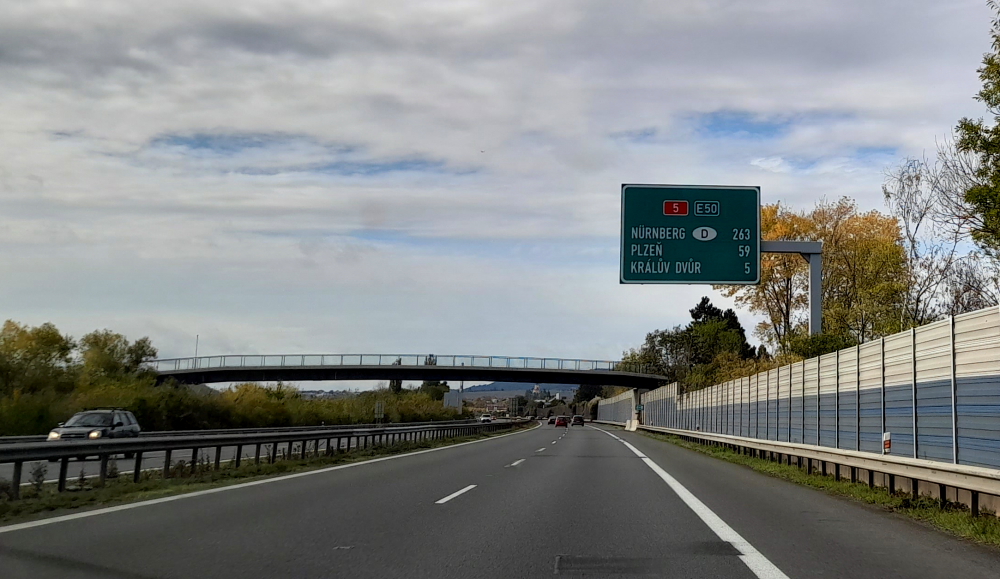
Although we arrive early our room is ready and after parking the car and dropping our bags we go for a stroll around the Old Town.
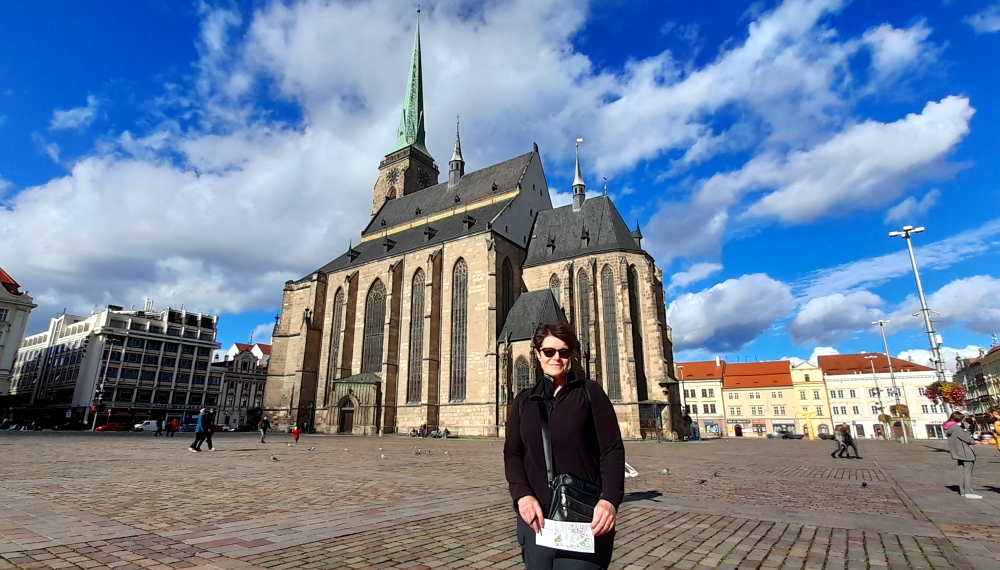
Around the corner is Republic Square, the historical centre of town and is one of the largest medieval squares in Czechia.
Plzeň as a town appears at the end of the 13th century, the square existing since then. Around the oblong square regular blocks of houses delimitated by a rectangular network of streets were built.
In the beginning of the 16th century the water supply became critical. A water tower with a mechanical pump was erected, the water being stored in a leaden reservoir and fed through wooden pipes to public fountains at the main square.
A graveyard had existed on the square since the town was established until 1789, when Emperor Joseph II ordered to close such graveyards.
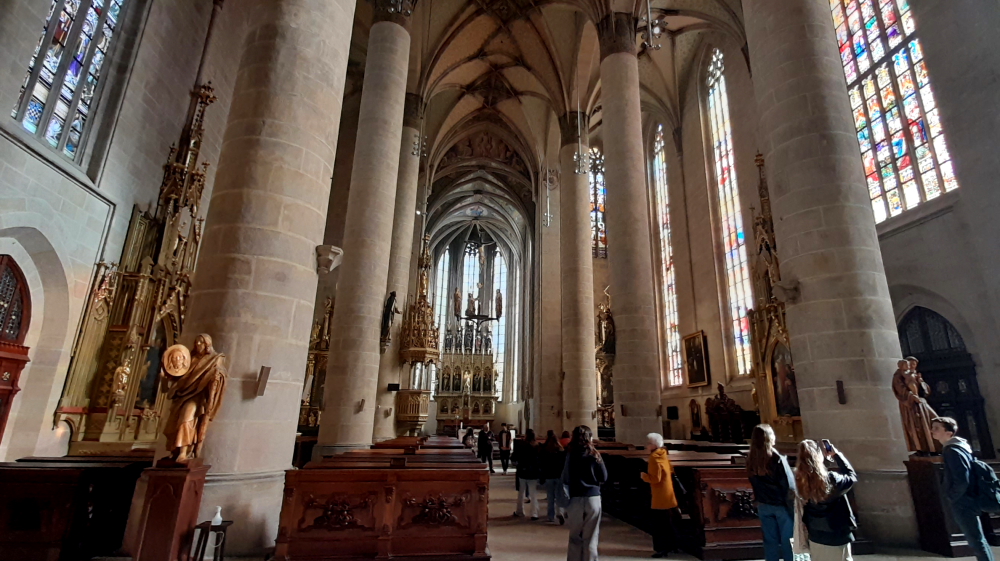
The buildings in the square are predominantly build in Gothic and Renaissance styles. In the courtyards to the east remains of the medieval walls are still preserved.
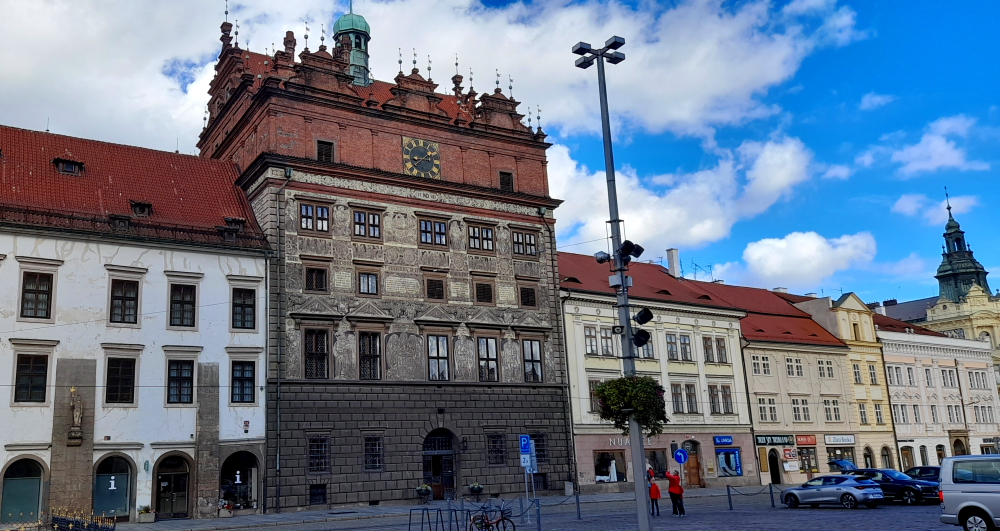
The most important historical landmarks are Church of St. Bartholomew (1295, since 1993 a cathedral), the city hall (since 1496) and St. Mary’s plague column from 1681 by the Plzeň sculptor Kristian Widman.
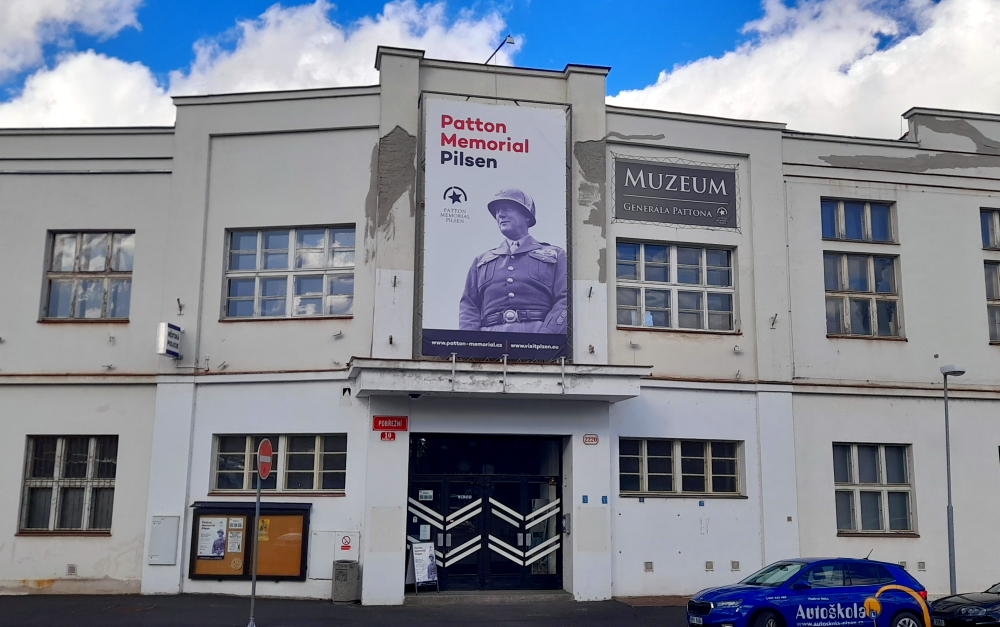
We elect to walk to the NW corner of the town to see the Patton Memorial Museum, then to walk in a counter-clockwise direction visiting the various sights working our way back to the hotel.
The Memorial to the American Army 1945 is a museum in Pilsen ceremonially opened on May 5 , 2005 on the occasion of the 60th anniversary of the liberation of Pilsen and southwestern Bohemia in 1945 and the end of World War II in Europe. The memorial is located in the building of the Peklo Cultural House , Pobřežní street 10, which also housed the editorial office of Masaryk’s magazine Nová doba before the First World War.
The museum houses more than 1,000 exhibits, especially from private collections – period photographs, documents, newspapers and magazines, equipment, armaments, medical supplies, food supplies, field rations, sports and recreational accessories, craft tools and much more. The exposition is complemented by sound effects and authentic film sequences. The museum documents the period of the last air raids in western Bohemia and the bombing of the Škoda factories, the advance of the American army in Czechoslovakia and the stay of American soldiers until November 1945. The exposition is largely reminiscent of the legendary commander of the US 3rd Army, General George S. Patton and his friend General Ernest N. Harmo , who provided technical and material assistance in the reconstruction of the destroyed country.
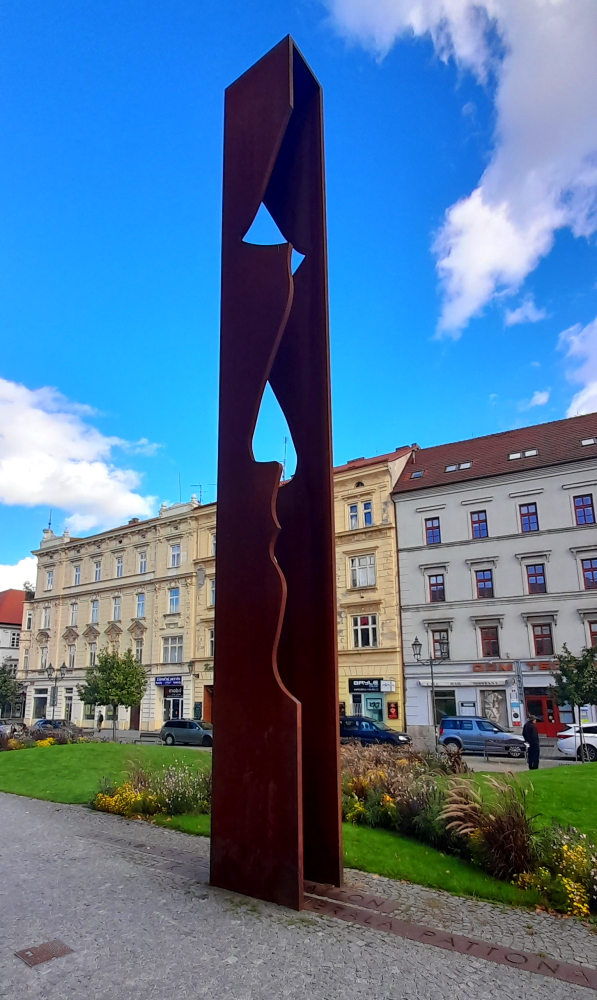
Walking south we come across the new memorial to Patton which was unveiled on 1 May 2015. The memorial was presented by the members of the Pilsen city council, Patton’s grandson George Patton Waters, politicians and representatives of the US Embassy. The memorial, crafted by the sculptor Lubomír Čermák and architects Tomáš Beneš and Václav Zůna, won an architecture contest in 2009.
The subtle statue is made from two opposing meter-wide metal slabs and is meant to allude to the Arch of Triumph. The General’s silhouette is portrayed in both of the slabs bigger than life-size. The rust on the seven centimeter-thick and 9.5 meter-tall slabs is reminiscent of the armor of tanks and also reminds the visitors that more than 70 years have passed since the war. The special Atmofix steel has a “corroded“ surface covered in iron oxides that protect the metal from the weather.
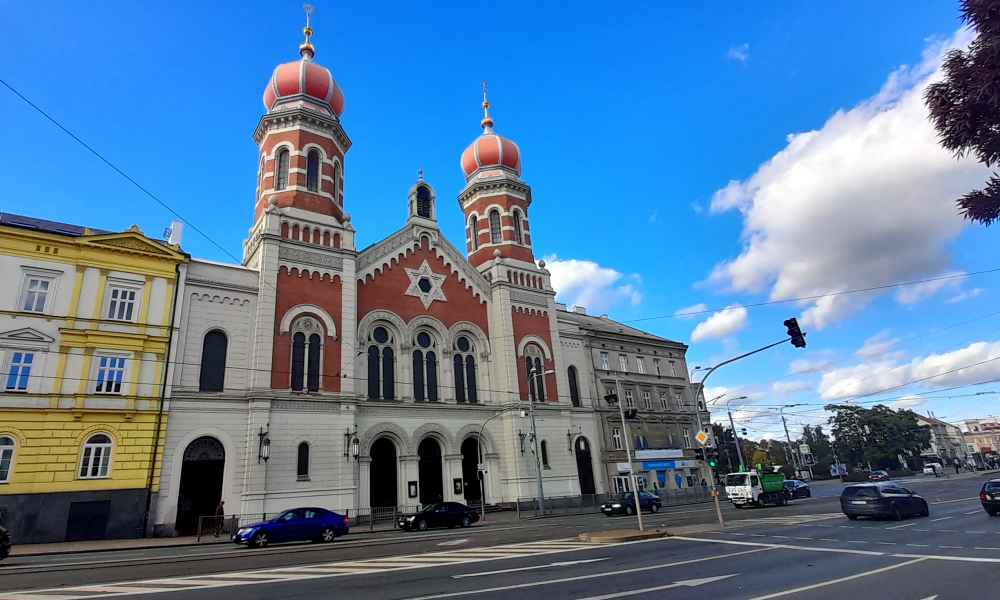
Further down the street is the Great Synagogue, not to be confused with the Old Synagogue, and is the second largest synagogue in Europe to Budapest’s.
In 1890 Emmanuel Klotz put forward a new design retaining the original ground plan and cornerstone and creating the distinctive look combining Romantic and neo-Renaissance styles covered with Oriental decorations and a giant Star of David. The design was quickly approved and master builder Rudolf Štech completed work in 1893. At the time the Jewish community in Plzeň numbered some 2,000.
It has an eclectic style from the onion domes of a Russian Orthodox church, to the Arabic style ceiling, to the distinctly Indian looking Torah ark. The synagogue was used without interruption until the Nazi occupation of World War II. The synagogue was used as a storage facility during the war and was thereby spared from destruction. The Jewish community that retook possession of the synagogue at the end of hostilities had been decimated by the Holocaust. The last regular service was held in 1973, when the synagogue was closed down and fell into disrepair under communist rule.
Restoration was undertaken from 1995 to 1998 when the synagogue reopened. The central hall is now often used for concerts while the walls host temporary photographic exhibitions. The synagogue is still used for worship, but only in what was formerly the winter prayer room. The present number of Plzeň Jews is a little over 70.
Turning the corner we come across the J K Tyl Theatre, It was built between 1899 and 1902 in the neo-renaissance style with some art nouveau elements to the design of Antonin Balsanek. Every year the theatre performs some 18 premieres of drama, operas, operettas, ballets or musicals. Since September 2014, actors of the theatre also perform at the New Theatre, a modern building.
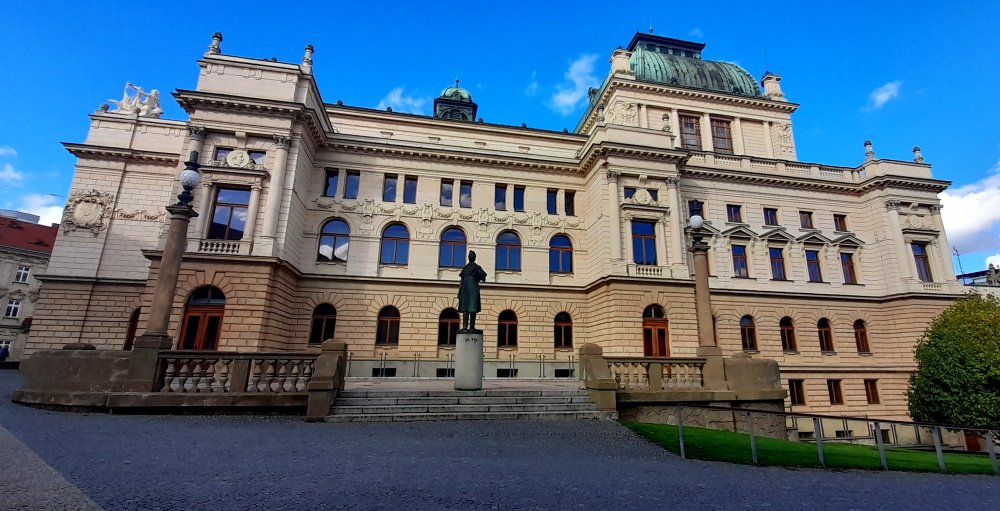
In front of the façade stands a statue of Josef Kajetán Tyl by Alois Soper.
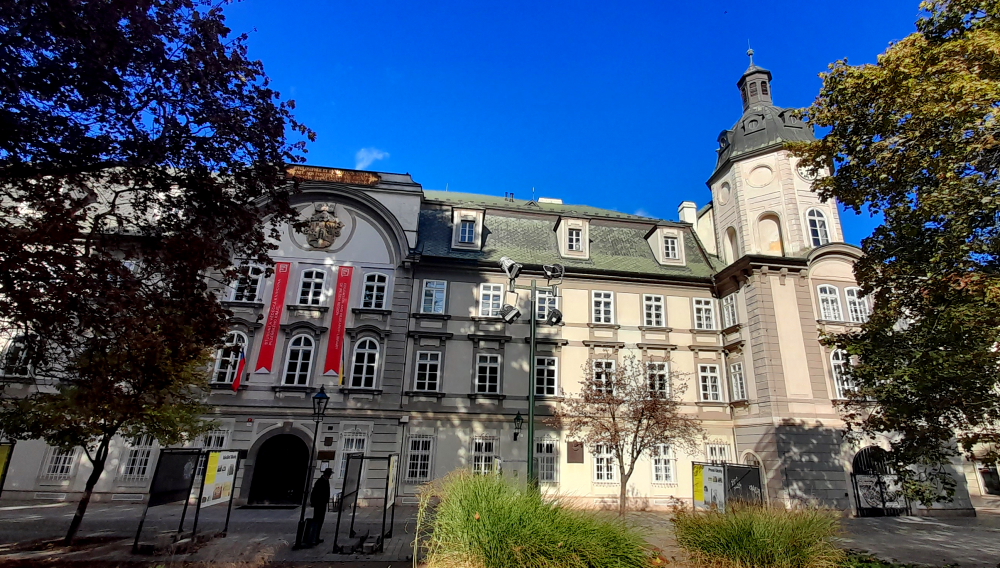
In place of the original city walls and moat, the historical centre of Pilsen is surrounded on three sides by a green belt of gardens. Along this section of the old town is a green belt of gardens with several prominent buildings bordering it.
One of these is the Mestanska Beseda building – the Burgher’s Hall. This Neo-Renaissance building stands out with its glorious Art-Nouveau decor and interior. Since it was completed in 1901, the Hall has served as both a social and cultural hub. Balls, dances, concerts, theatre performances as well as other events are held here. Every year in September the theatre becomes the primary centre for the Finále film festival.
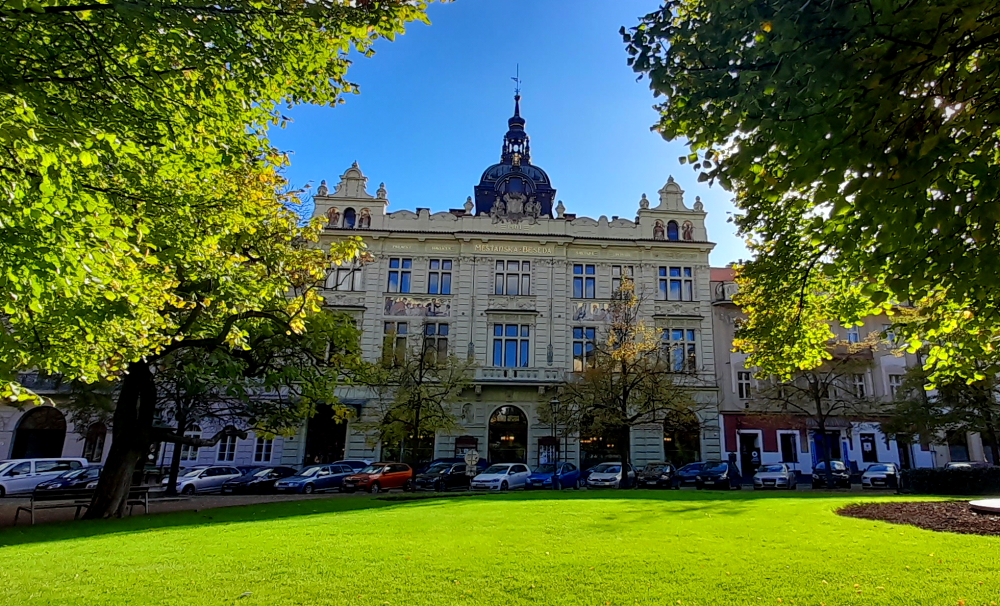
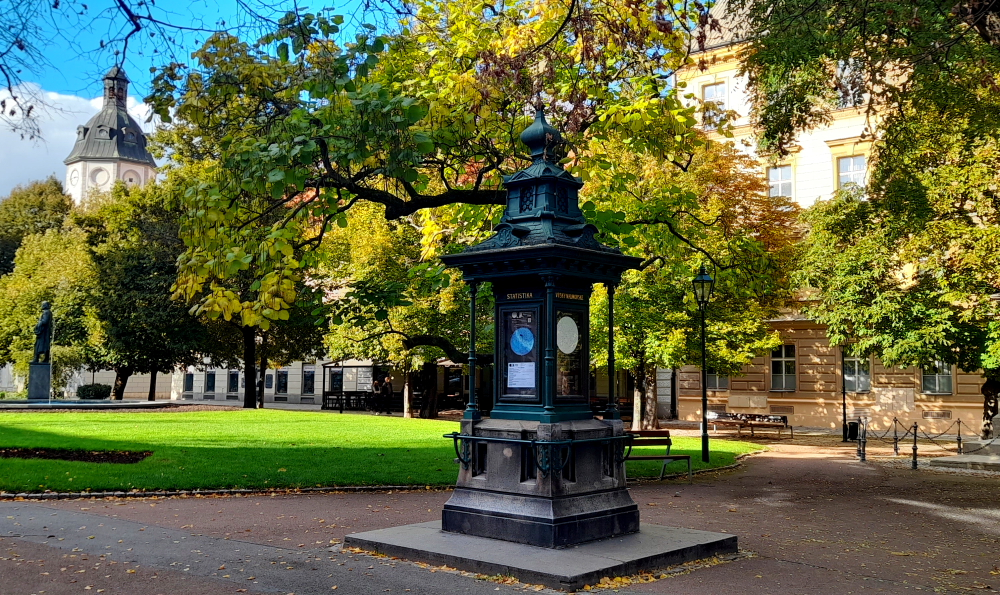
In front of the Hall, in the middle of the park, is an ornate weather station.
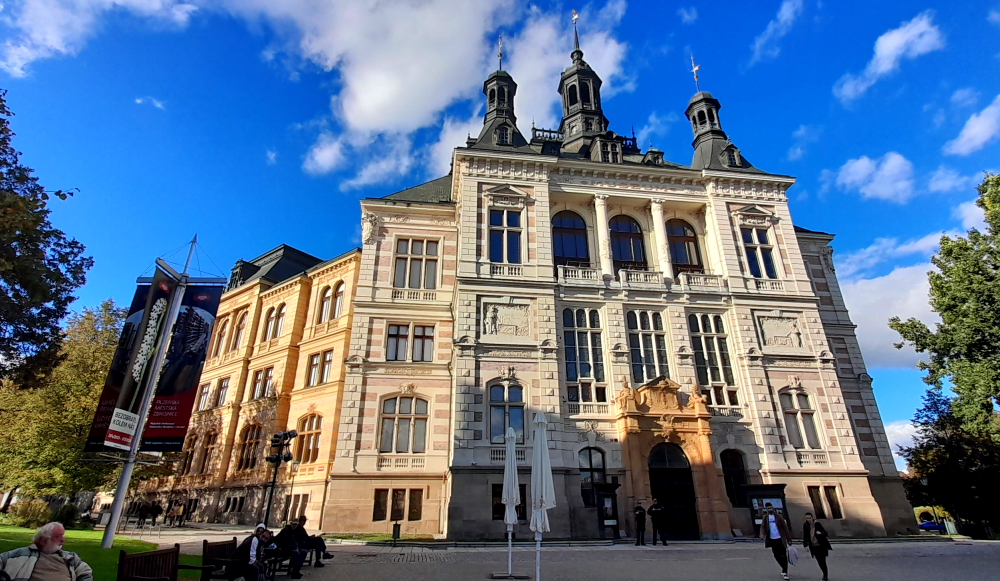
At the end of the block is the monumental neo-Renaissance building, the Museum of West Bohemia. Among some of the unique items on display include a rare collection of early European firearms from the 14th-17th centuries, which is located in the municipal armoury, a library in the Art Nouveau style, complete with invaluable first editions and a high-quality collection of applied arts.
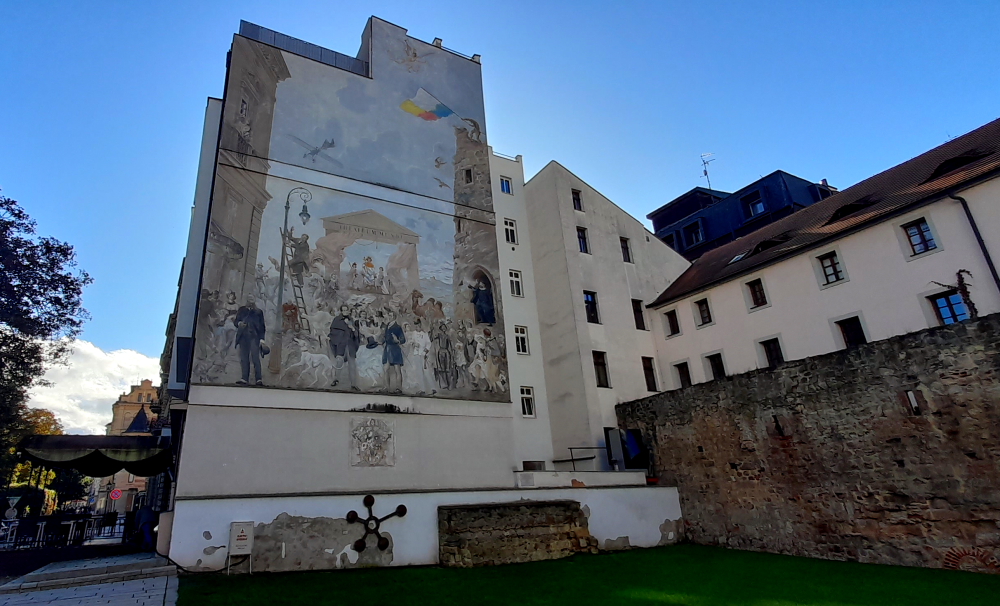
Around the corner and in the next block is a section of the old city walls and the “Theatrum Mundi”. This work of art was inspired by the tradition of figural painting in Pilsen. Famous celebrities connected with the history of Pilsen are painted on an area of more than 200 sq. metres.
At the corner of the street where our hotel is, we come across the 16th century former city water tower, now a monument to Professor Josef Skoda.
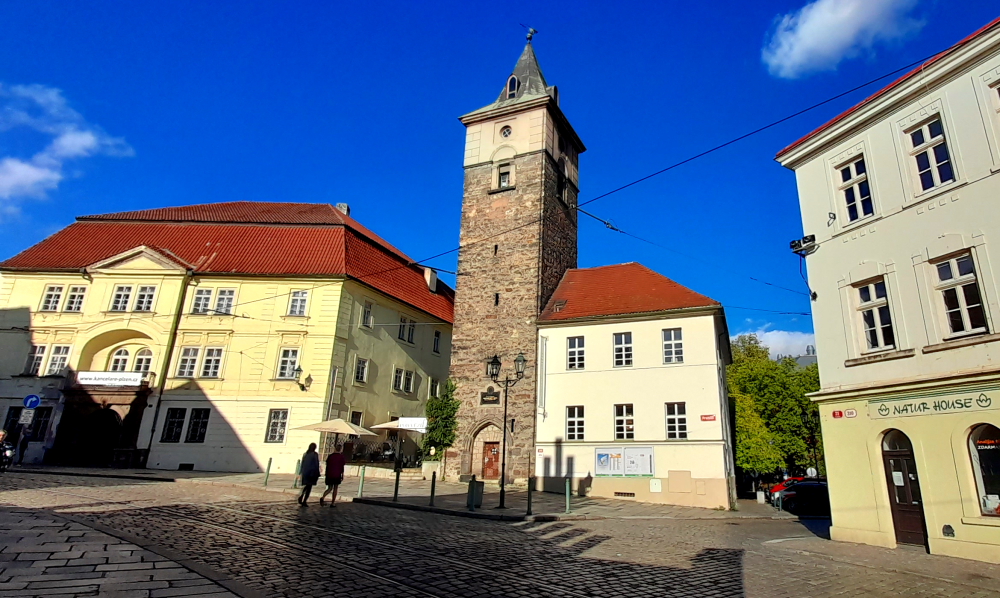
Built in 1532, the former water tower was integrated into the city’s fortification system at Prague Gate. Another storey was added in 1822 in French Imperial style.
The Gothic portal dating from the 1500s and coming from another house, which had been demolished, was added in 1912. Above the portal there is a commemorative plaque dedicated to Dr Josef Škoda (a professor at the Vienna University), who was born next door on 10 December 1805.
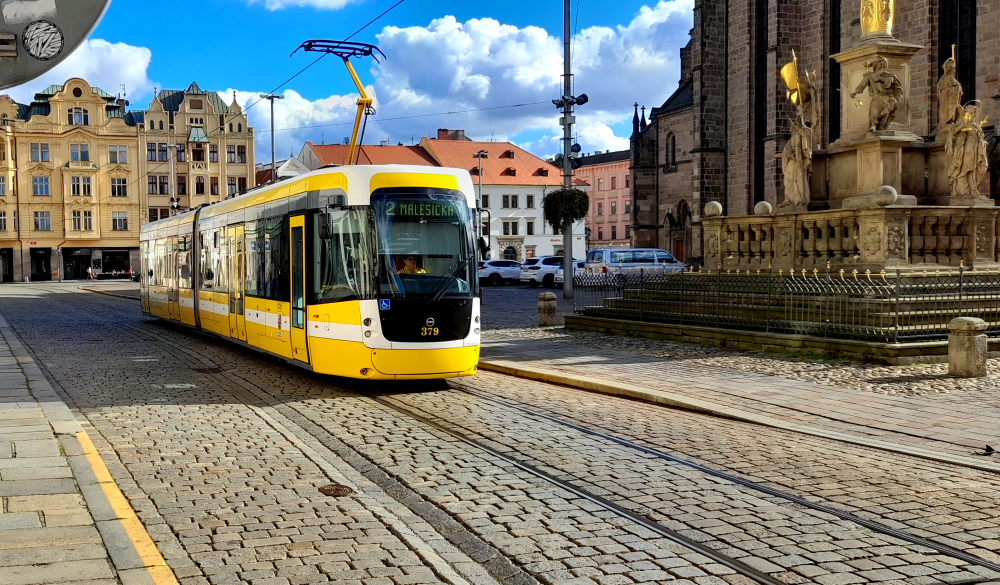
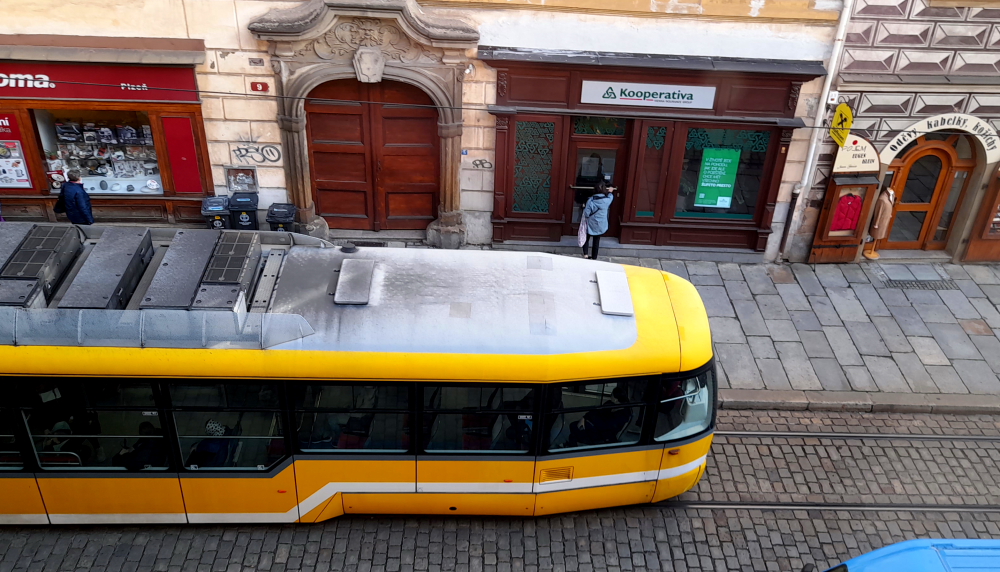
Our hotel is just up the road on the main tram route through the old town to the North. On the other side of the town square is the South bound tracks.
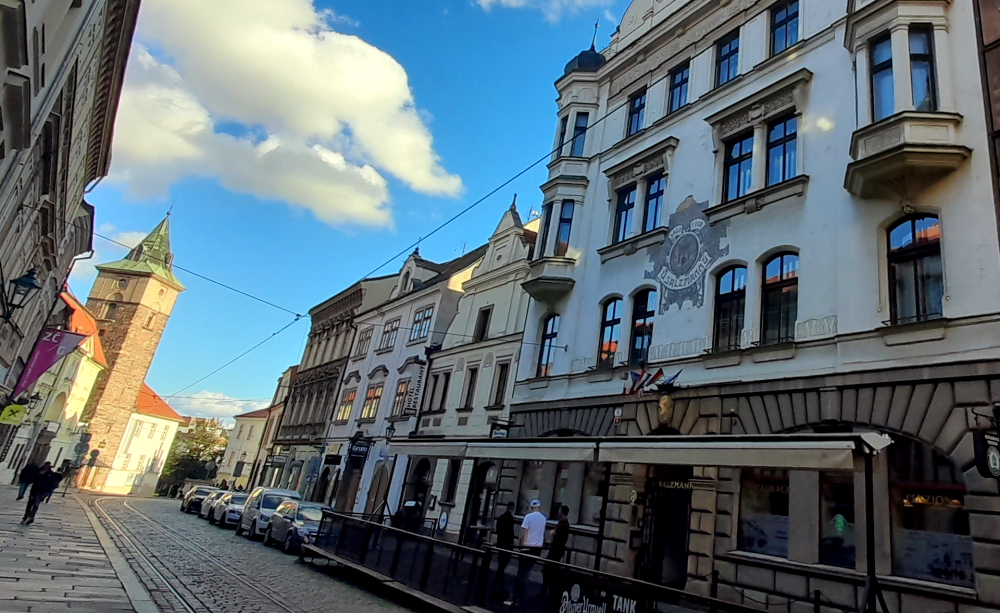
When we read the reviews of our hotel there were some comments about the noise levels. We have been supplied with ear plugs but it turns out that with the double-glazed windows closed the noise levels are lower than we are used to in Brisbane so the ear plugs are not needed.
Around the corner from the tower is the Brewery Museum.
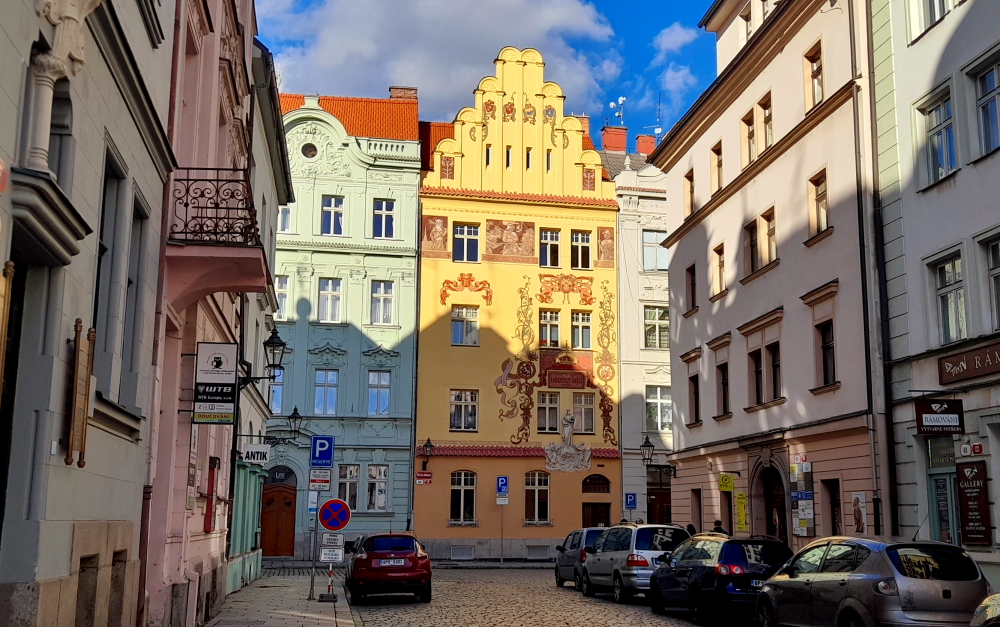
Inside an original brewing house from the 15th century, the museum tells the story of the production and consumption of beer from its early days, all the way to the present.
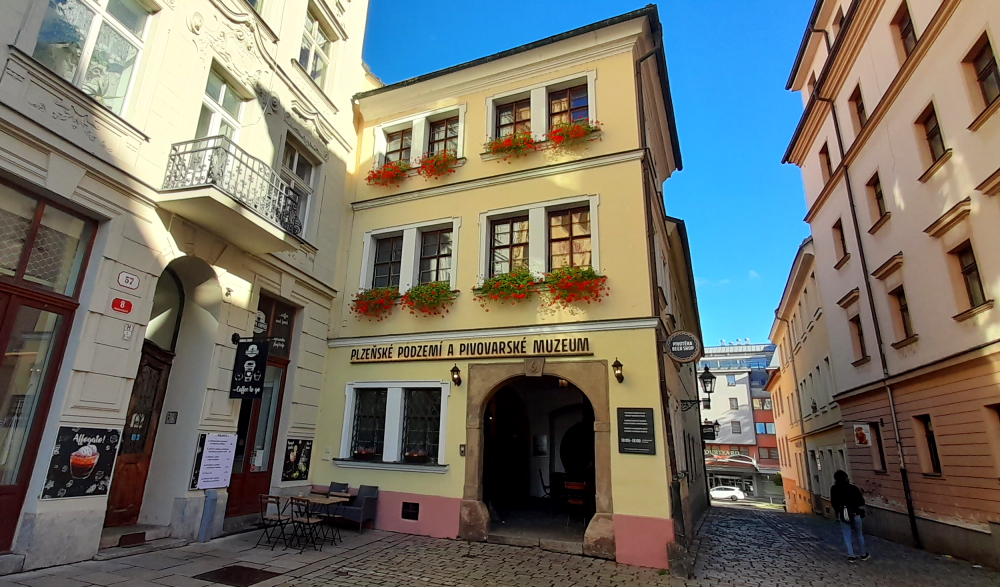
We plan to return tomorrow to visit the museum.
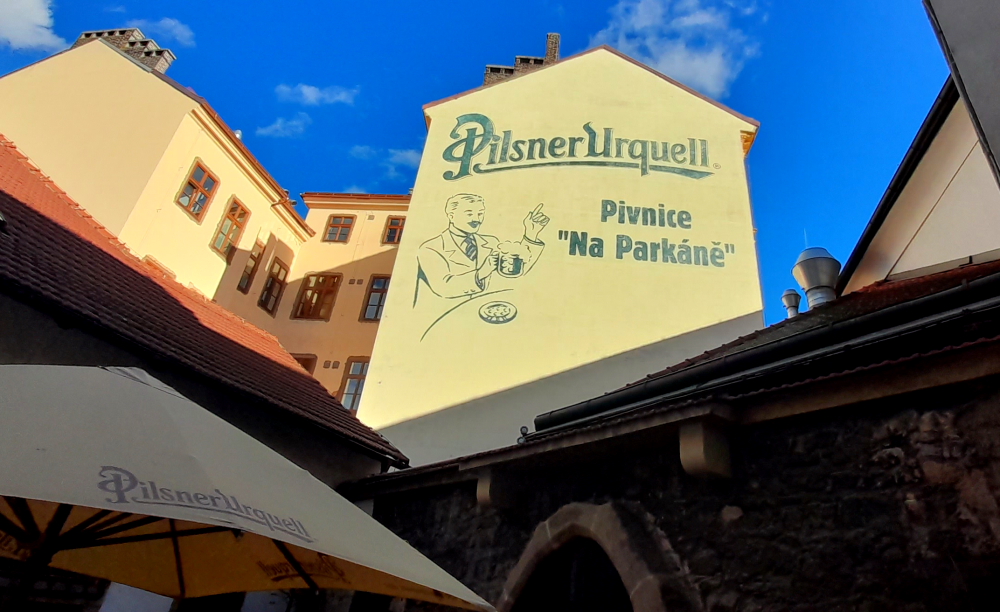
Lynn wants to check out a monastery so we criss-cross the old town. On the way we pass more interesting architecture.
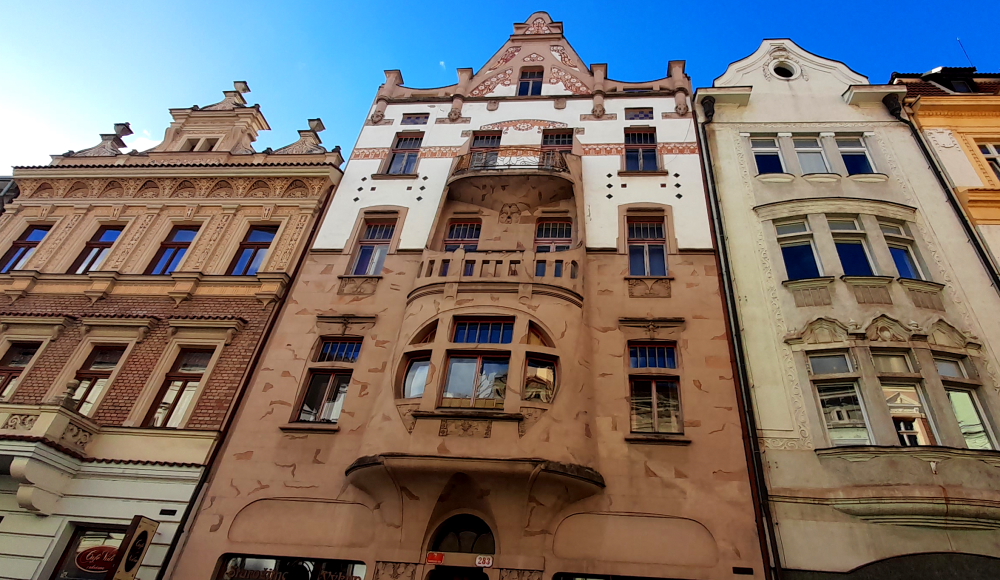
Down a side street I check out the local barbers as I’ll soon be due for a No. 2. They seem to cater for a questionable clientele.
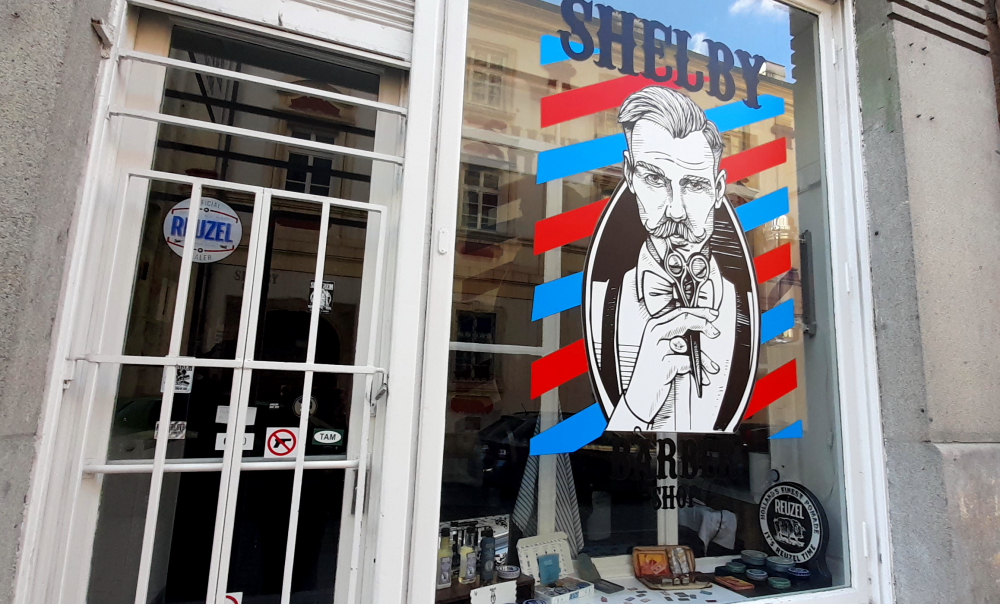
But they don’t allow customers to bring in their guns. A bit like the old west towns in the USA. I can’t see this catching on in America.
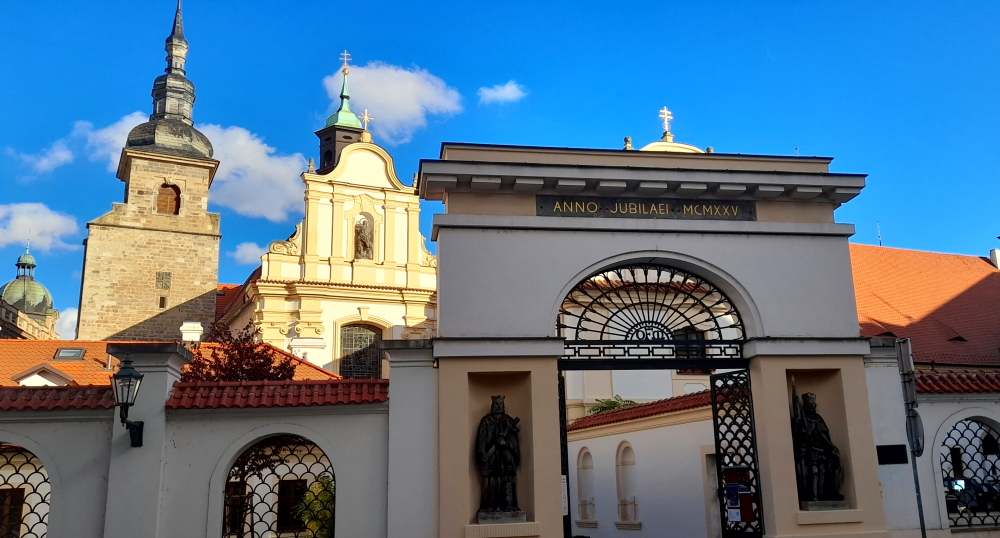
The Franciscan Monastery originally belonged to the Minorites. The later Franciscan monastery was founded at the end of the 13th century. The Church of the Assumption of the Virgin Mary, Chapterhouse and Chapel of St. Barbara also belong to the monastery complex.
The Franciscan church and monastery are among the city’s oldest buildings and, for all the calamities of the Hussite era and Thirty Years’ War, have, in essence, preserved their original early Gothic form.
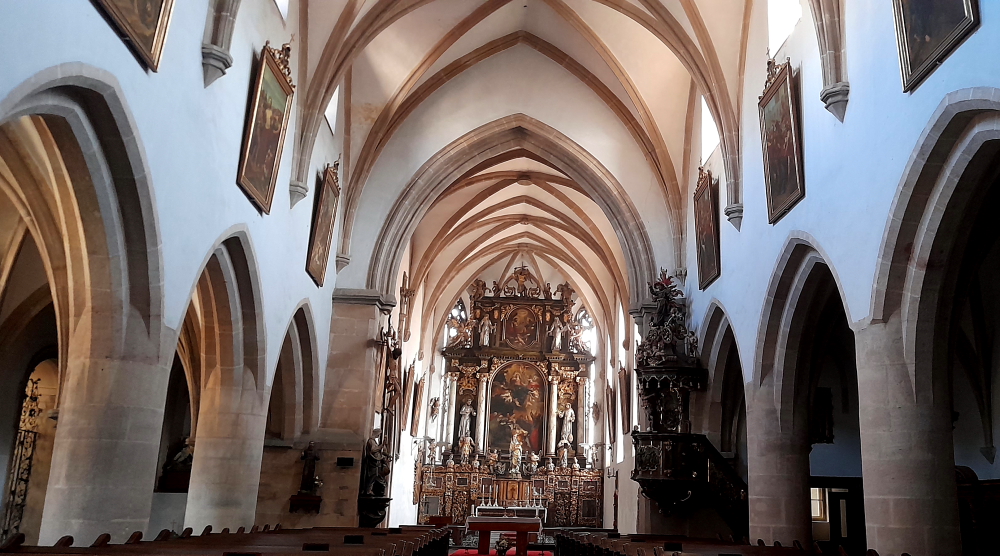
We have dinner at the hotel restaurant tonight in the basement. The food is reasonable, the ambiance is good but a bit overpriced for a country town.
23 October, 2023
The main item on today’s plan is to visit the beer museum which is just around the corner from our hotel. The museum covers the history of beer making in Pilsen since the 13th Century and includes beer making equipment from the earliest days through to the history of the local manufacturing (brewers and breweries).
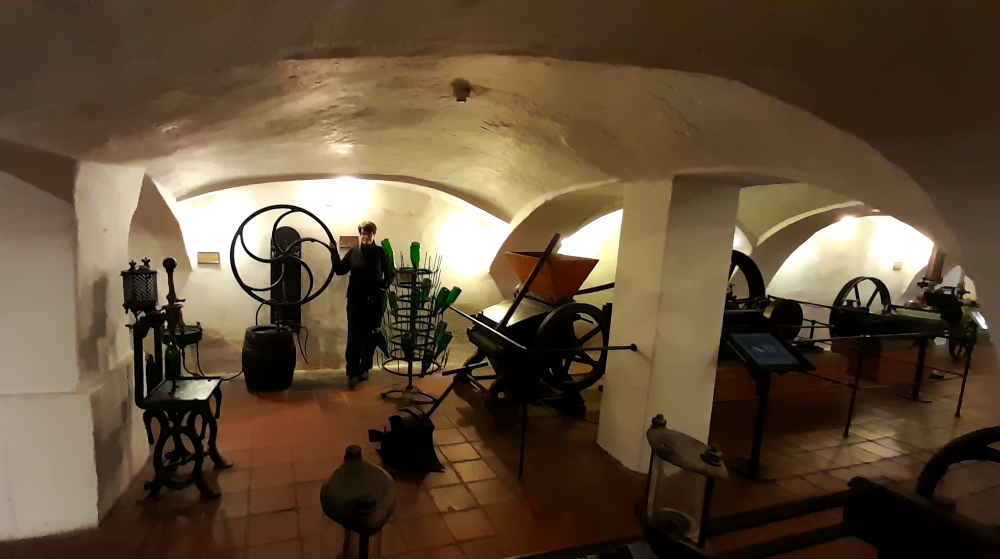
The museum is housed in one of the early brewing houses and extends over four levels starting in the vaulted ceiling basements of the building.
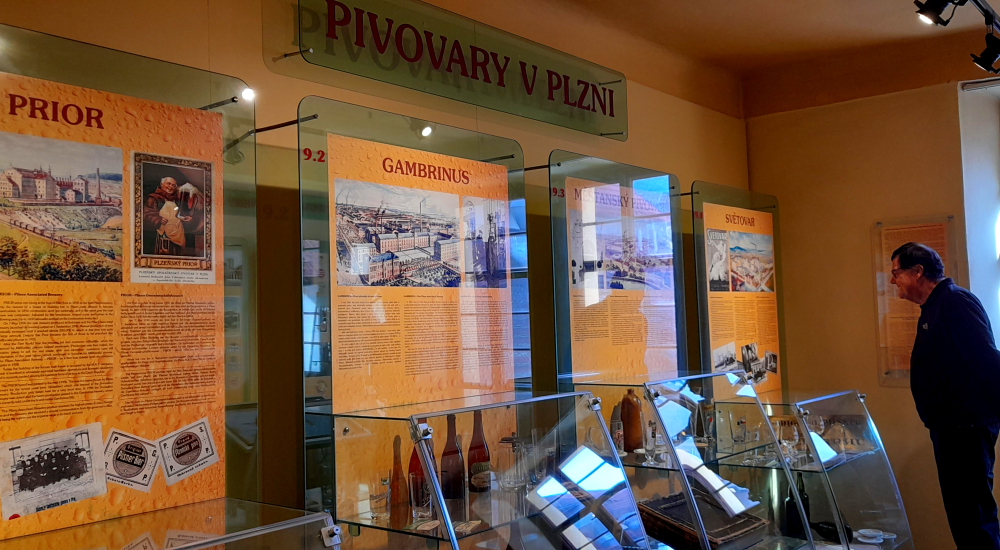
Typical of any rapidly expanding industry the Pilsen brewers were uncontrolled in the beginning when there were over 370 brewers in the town. Almost everyone was home brewing and every brew was hand made. In the early days the need to be competitively priced resulted in counterfeit ingredients resulting in poor quality beer. A bit like the quality of the Chinese Car industry.
Industry regulation and licensing were introduced and the poor quality producers went bust and the remainders merged and started automating processes to improve efficiency and consistency of quality.
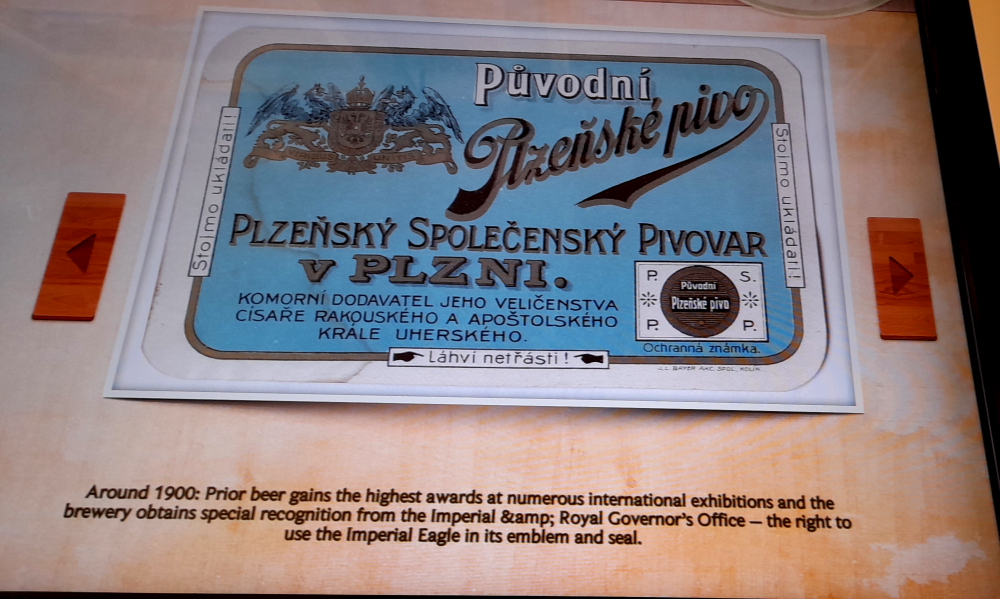
By the late 19th Century the beer industry was getting its act together but the need to introduce the latest technology and industrialisation meant that the smaller, under financed breweries had to either merge or fail.
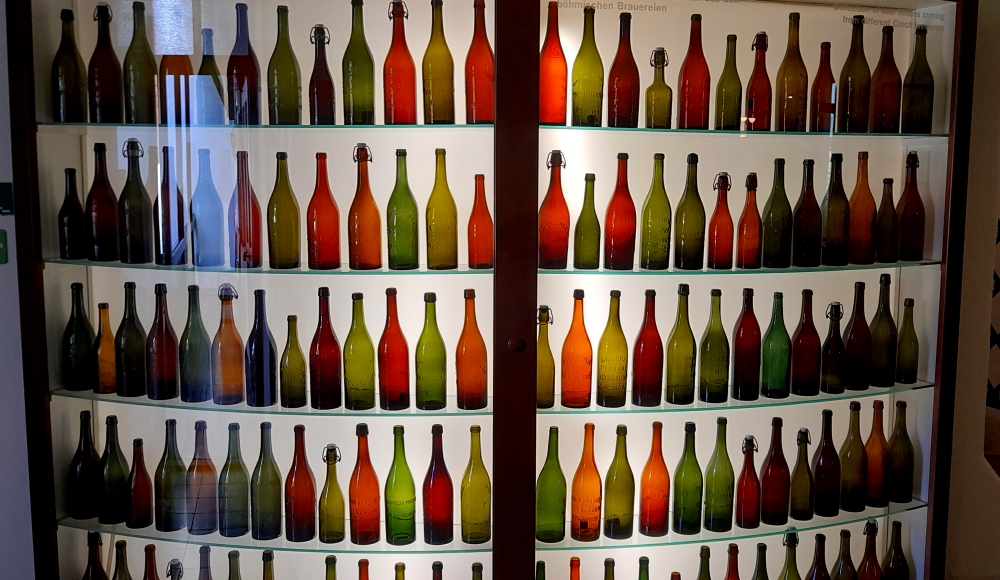
Even the humble beer bottle was being redesigned and production processes improved and specialised.
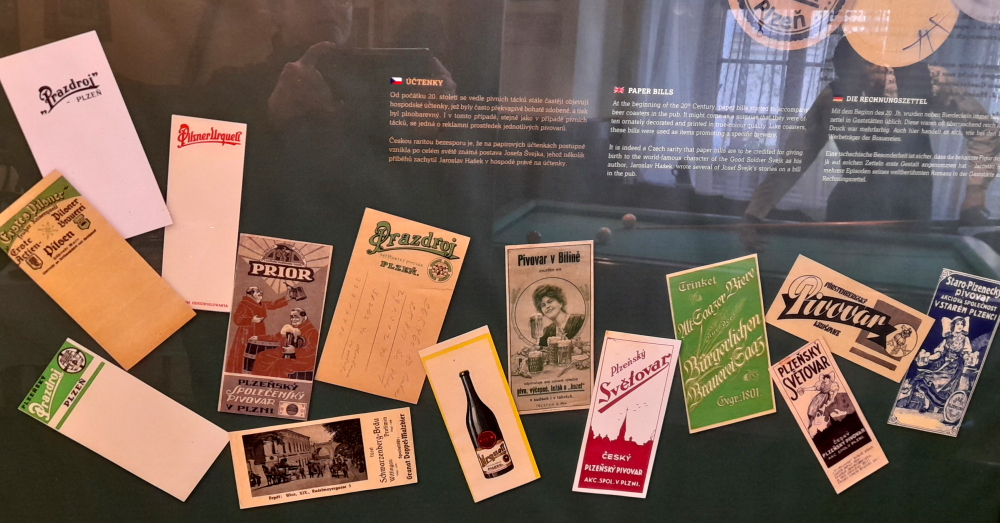
The museum also has a section on the invention of the beer coaster. Apparently drinkers needed to cover their beer to keep out insects and dust while drinking at the pub. The original coaster was a dust cover (before steins had lids) then they became a way of keeping tally of beer tabs. They eventually replaced the ceramic “drip” trays and went on to be printed with advertising by the breweries.
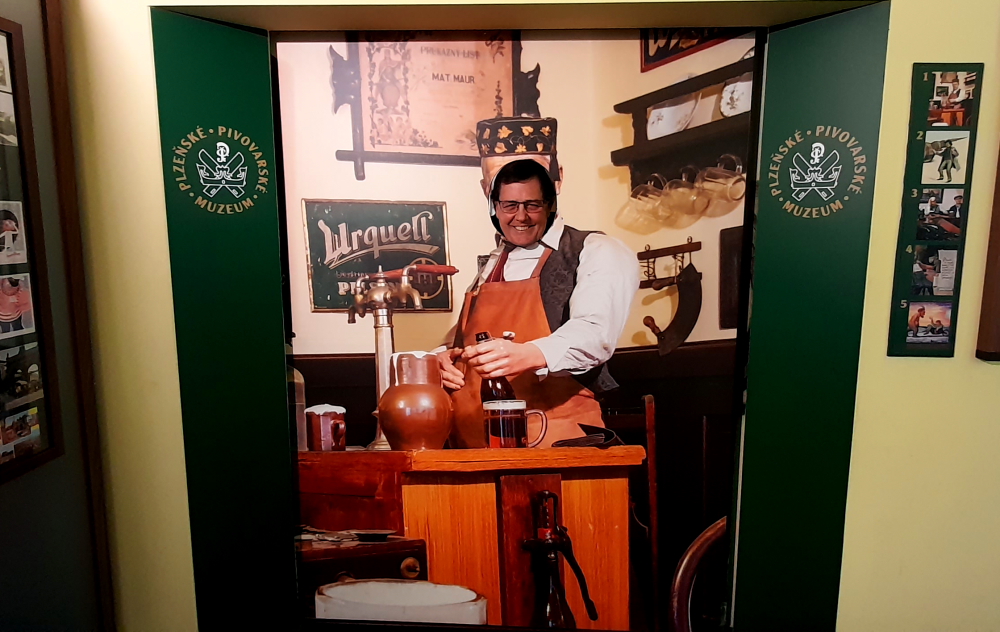
The museum is very informative and even has a section on the manufacturing of beer barrels (coopering).
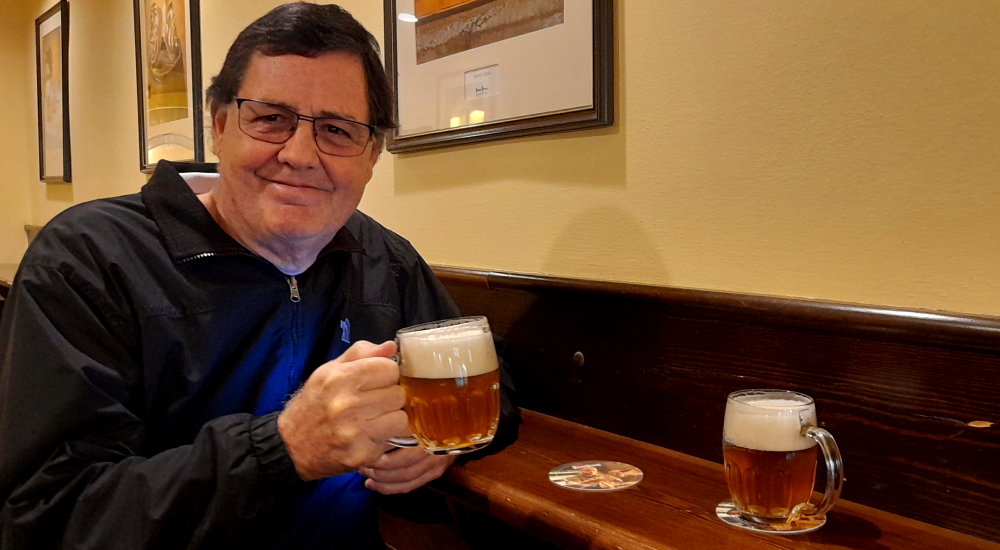
Our museum entrance tickets also included a free local beer after the tour. The local Pilsner is probably not my favourite Pilsner so perhaps the product has developed over the centuries. I will drink it anyway.
We have a lot to do back at the hotel this afternoon but it is such a beautiful day we stop by the river for a photo then check out a couple of possible restaurants for tonight.
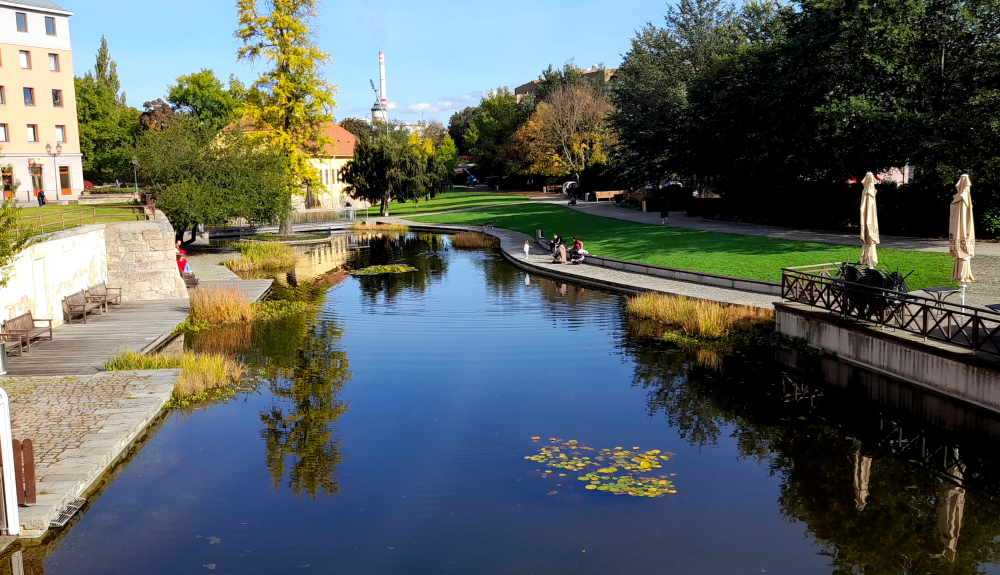
We are trying out a local Czechia restaurant behind our hotel tonight. The waitress talked me into trying a local dish but it was just corned beef in a thick gravy with a dumpling. Not really to my delicate palate.
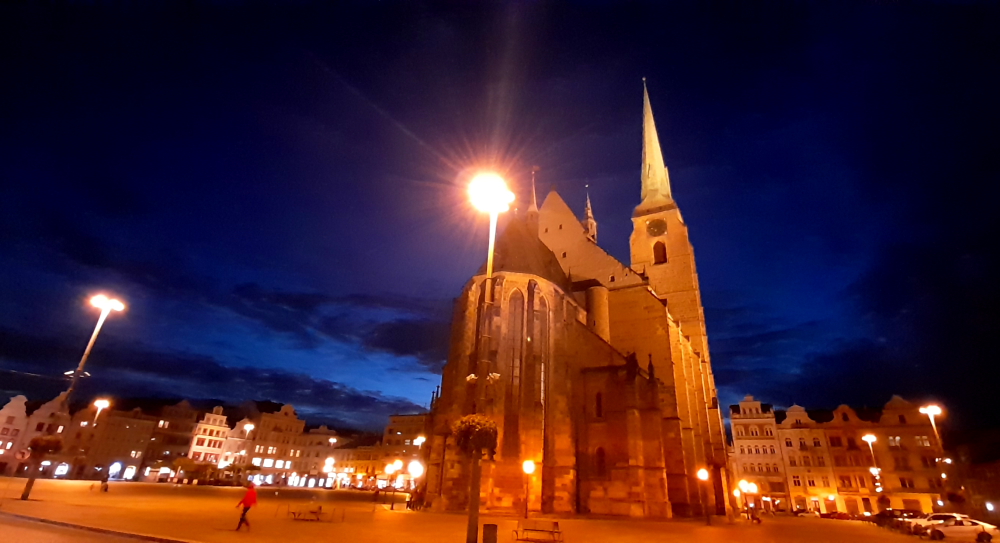
Tomorrow we are heading closer to Austria and staying at an apartment in Ceske Budejovice, Czechia for 4 days which will be more or less some catch up time.
24 October, 2023
Today we have a 135 km drive to Ceske Budejovice which should take about 2 hours. It’s overcast and 12 Deg. C. when we drive out of the cobblestoned car park behind the hotel.
Except for the short distance driving out of Pilsen and that driving into Ceske B. our route takes us along the 20.
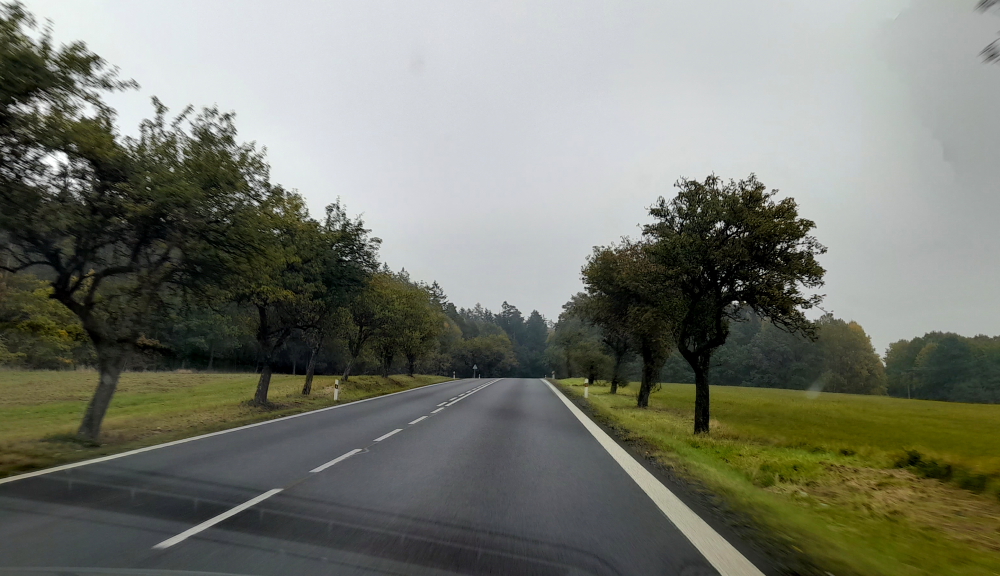
For most of this journey we note 4 things: (1) apple trees lining the road (2) load speakers attached to light posts in main streets (left over from Communist propaganda days? Reminds us of Vietnam) (3) the small towns en route look run down (4) regardless, there are a lot of castles along this route.
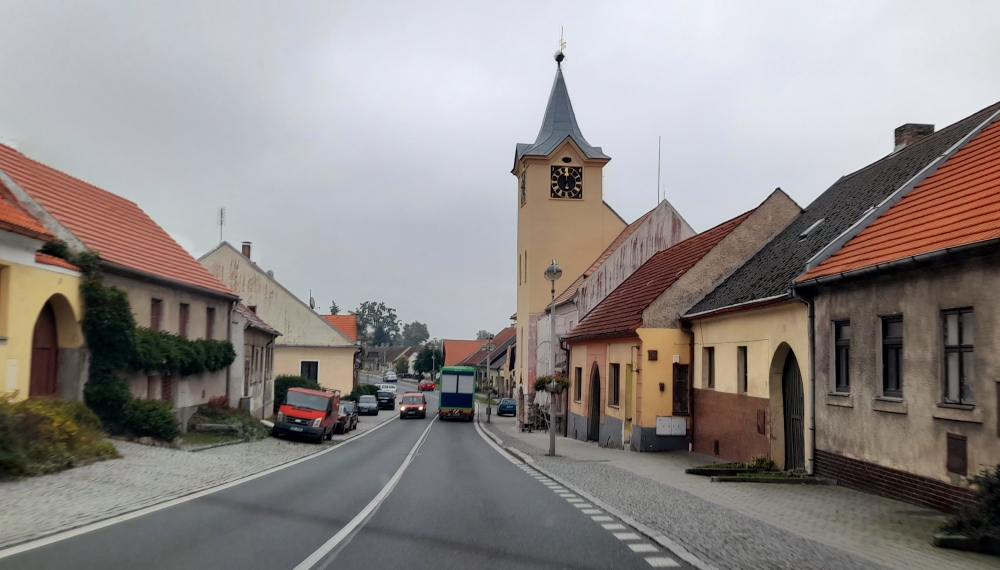
By the time we get to Ceske B. it’s just before 2:00 pm with light rain so we call into the local Tesco Superstore for supplies including jocks for me.
Shortly after we find the car parking station that we need to use and after trying to scan a QR code on my phone at the barrier we are finally let in and park.
The check-in instructions for this accommodation are overly complex. When we find the self-checkin kiosk Lynn notices that the reception office is actually manned so we give the kiosk the flick and are quickly checked in and on our way via the elevator to our split-level apartment on the 3rd floor.
Having to lift our rolling-suitcases over the numerous steps in the corridor should have alerted us to a design flaw in this residential block. At least they could have put ramps in rather than/together with steps.
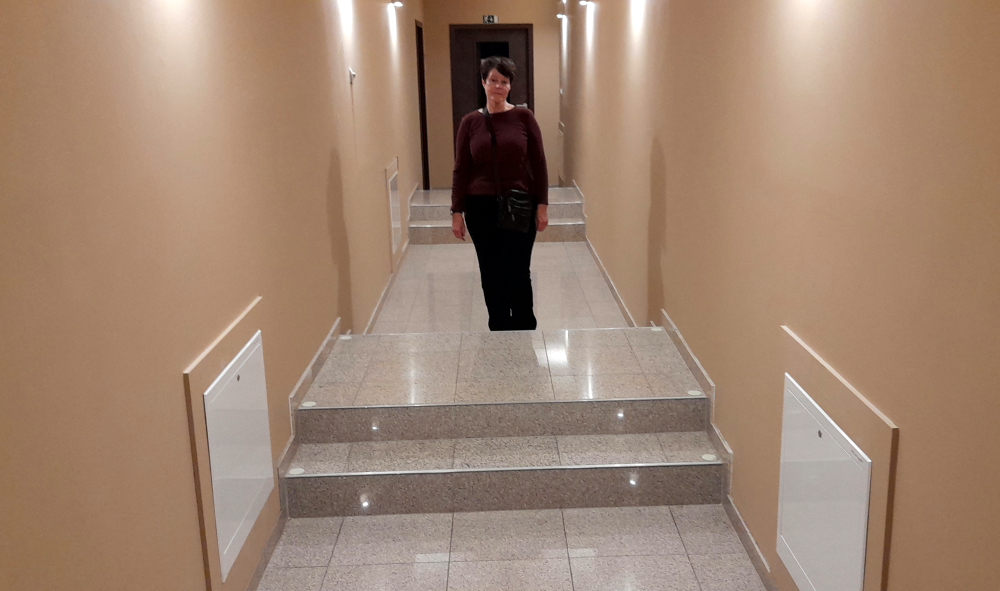
And when we get inside the door we immediately see a whole host of them.
Although we have a spacious apartment the loft bedroom has a low ceiling with even lower wooden beams. Likewise the ceiling beam between the lounge and kitchen area not to mention a bloody great wooden beam 30 cms high that bisects that space that you have to step over all the time.
The rail to the wooden-tread staircase from the bedroom ends a step before the staircase does which meant I tripped down the last step.
When I brought out a load of washing from the machine in the bathroom, the load I was carrying in front of me obscured the 2nd step in the bathroom so I tripped and fell out the bathroom door and onto the kitchen floor with the washing flying in all directions.
To add insult to (actual) injury, the guest manual has a passage which we read later:
“Warning: Please, we ask all our guests … to take care of their own safety … and to act cautiously and responsibly to their own health during the whole stay. Please be warned in particular about the danger of accidents and injuries caused by: … walking and moving in the apartments – danger of slipping (wet floors, slippery shoes), stumbling (stairs, landings, steps etc) or falling on the furnishings…”
No mention about the proprietor’s responsibility for providing a safe environment!
Boy, it is going to be dangerous going to the loo in the middle of the night!
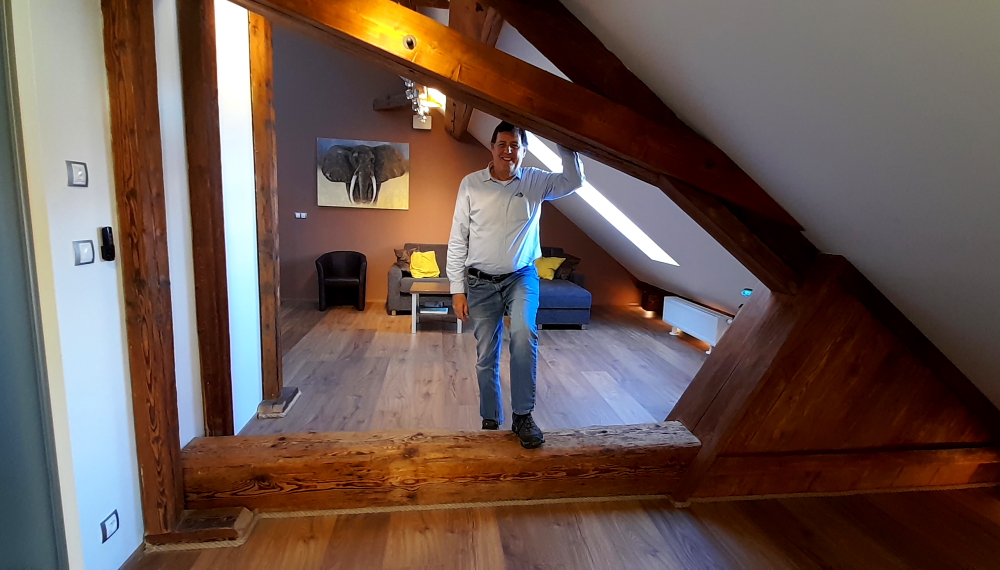
Even though there are lots of power points in the apartment, including in the toilet cubicle (!), none is where it’s needed for the laptop at the only ergonomic surface, the kitchen table.
As we head out to dinner Lynn asks at reception for an extension cord. “Sorry” is the response. “We don’t have any of those. Only Maintenance.” She insists that they call Maintenance to see if we can have one delivered tomorrow. Let’s see if it arrives.
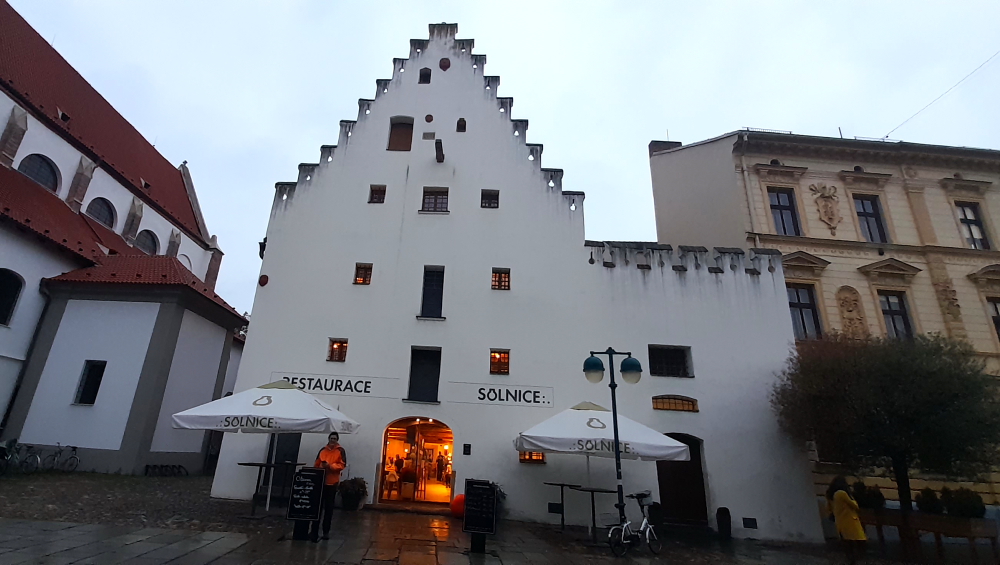
There is a brewery cum restaurant nearby so we head there for hearty meals of schnitzel and beef cheeks. I try their Solnice 10, a mid-strength Pilsner which turns out to be what I like. I’m glad I didn’t go for their stronger Solnice 12 which would have been bitter, like the Pilsner Urquall that I tried in Pilsen and disliked.
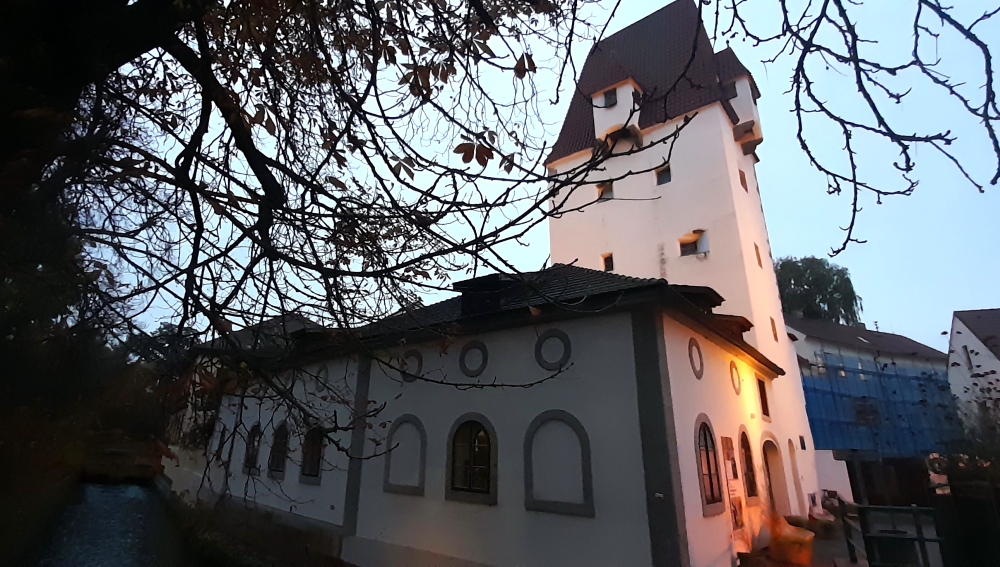
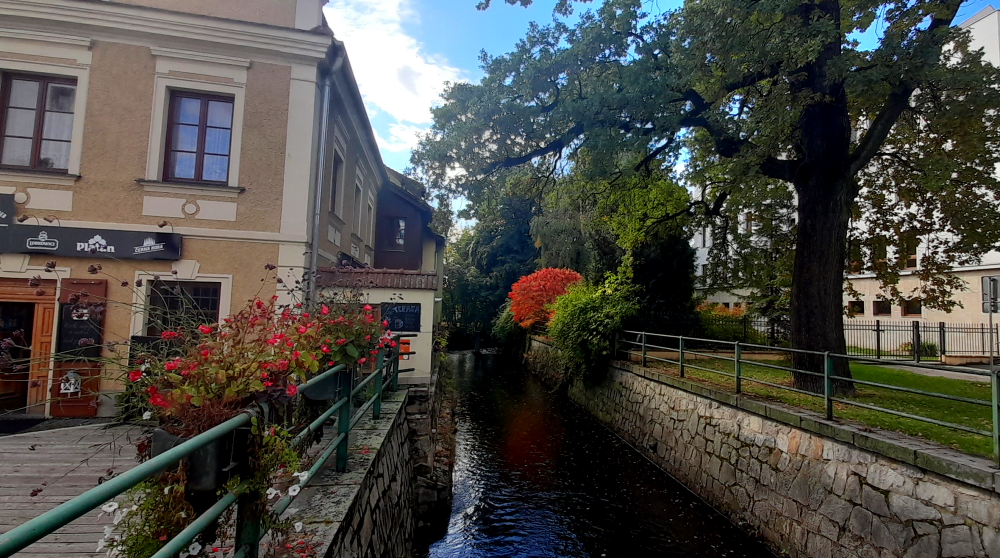
On our way back to the apartment we cross over the Mill Stream which is adjacent to the Rabenstein (Rabenstejn) Tower. The 14th-century tower is one of the oldest heritage sites in České Budějovice. This four-story, rectangular structure is one of two existing fortification towers, once part of the city walls. It is probably named for Wolfgang Rabenstein, a monk from the Dominican monastery. However, it is unlikely that he would have owned it, lived in it or contributed money to its construction.
From the very beginning it was used as a refuge for town defenders. It covered the area outside the main fortifications with fire, and gunpowder and guns were stored in it. It was used as a prison until the early 19th century. Convicts were imprisoned in the upper stories for less serious offences such as debt, libel, disorderly conduct, and the sale of poor-quality wine. There was a prison cell in the tower for more serious cases. It had no windows, and food was lowered through a hole from the upper floor. At that time, the tower was also used for ordered checkups of prostitutes. The municipal physician called here twice a week. At present, the tower houses an exhibit of historic weapons.
25 October, 2023
Bliss! Finally, a chance for a lie-in. After a late breakfast we walk 2 minutes to a cafe which is on the other side of the mill stream. Fortified by a damn fine latte we stroll around the Old Town which will take 15 minutes tops to see the couple of sites.
Firstly, St Nicholas Cathedral which is adjacent to the Black Tower. The establishment of the Cathedral dates as back to the 13th century, when it was founded as a parish church for the royal town of České Budějovice. It was rebuilt in the Late Gothic style in 1518-1535. A large fire consumed almost the entire building in 1641, and afterwards it was rebuilt again, this time in the Baroque style.
Its Baroque renovation was entrusted to Italian architects J. Cipriani and F. Canevalle who completed it in 1649, but another Italian architect, G. A. de Maggi, converted the church facade to its present-day form in 1686-1688.
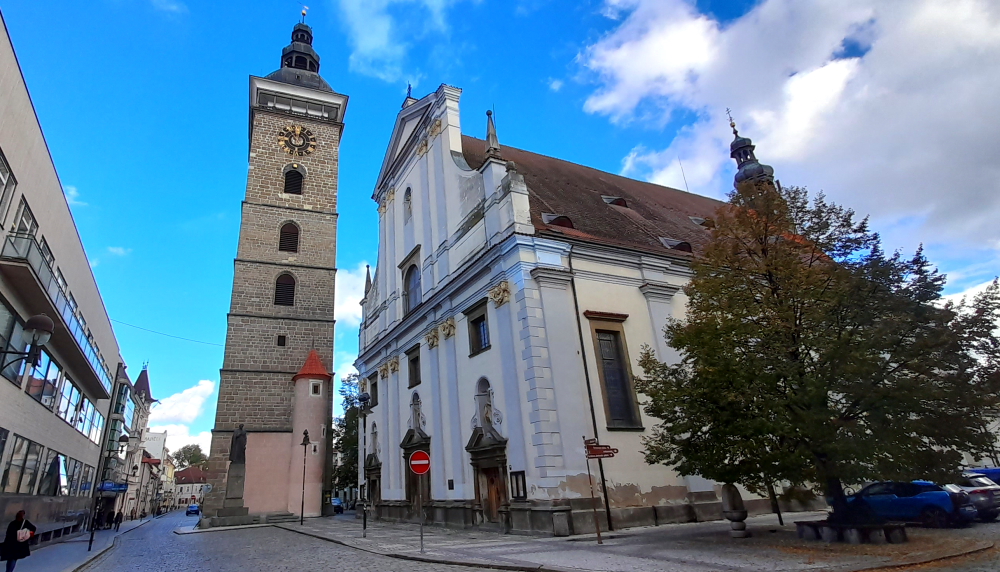
There was a cemetery in the immediate surroundings of the church; it was functional from the city’s foundation to 1784, when it was closed. It was intended primarily for the city’s burghers. An archeological excavation in 2001 uncovered these items from the graves: jewelry, medallions and necklace crosses.
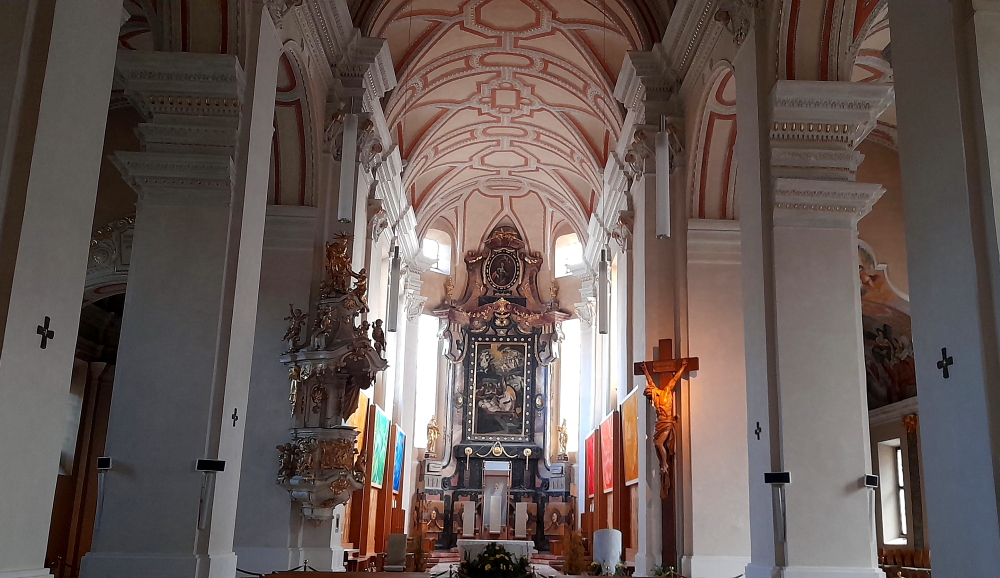
The rich stucco decoration was made by T. Zeisl. The main altar dating to 1791 by Z. Hueber is dominated by a large-scale painting of St Nicholas from 1648 by D. Bachmann.,
During 1550-1577 the Black Tower’s construction was supposed to reflect the city’s economic upswing.
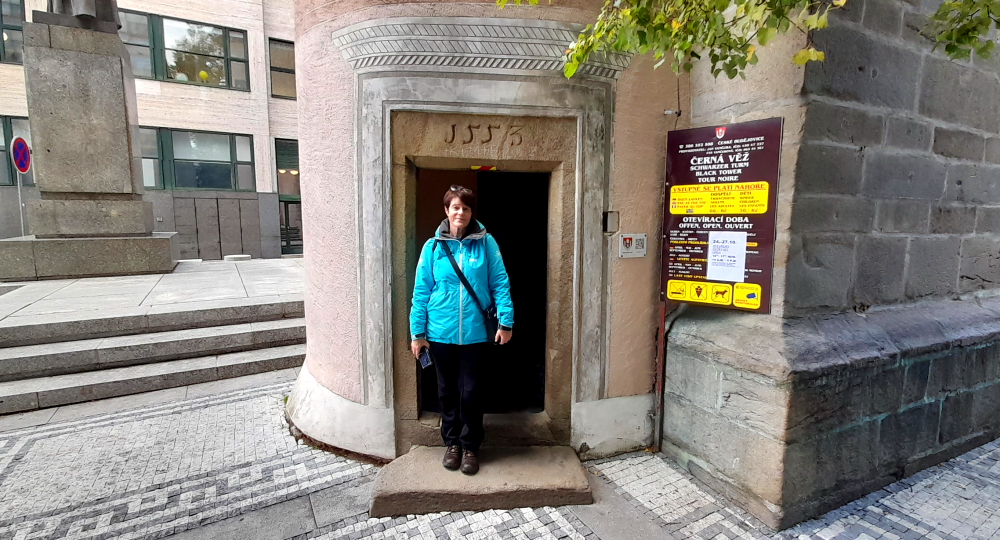
Led by Italian master builders, it rose to the then unprecedented height of 72.25 meters.
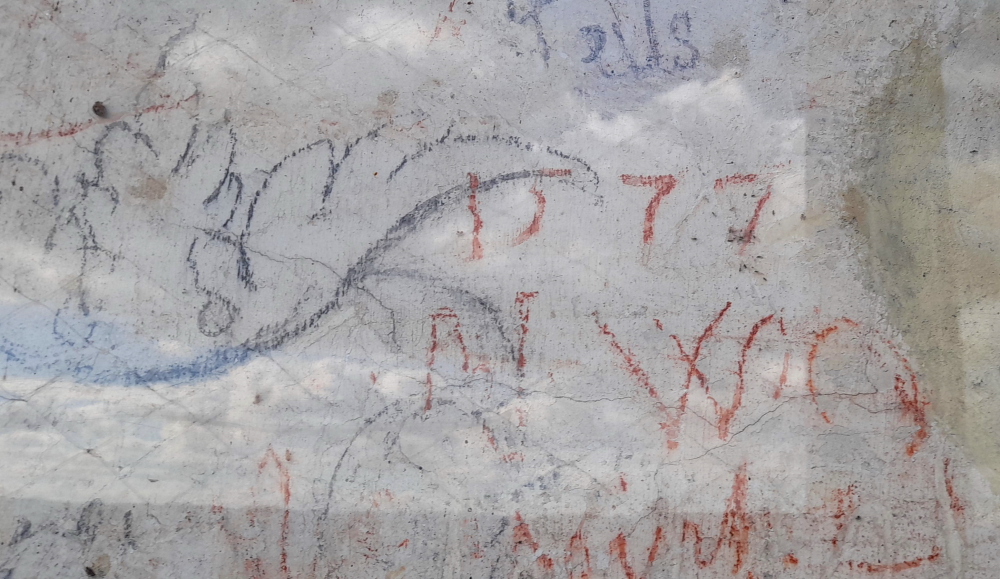
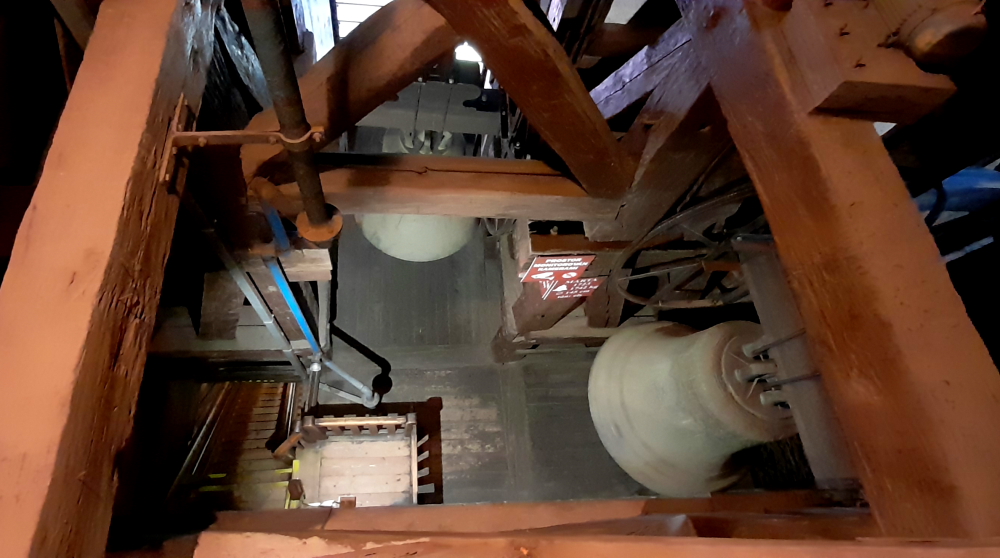
As we climb the very steep and thin wooden stairs the midday bells began to chime. It is deafening so we were glad that we had only managed to climb half way up so far.
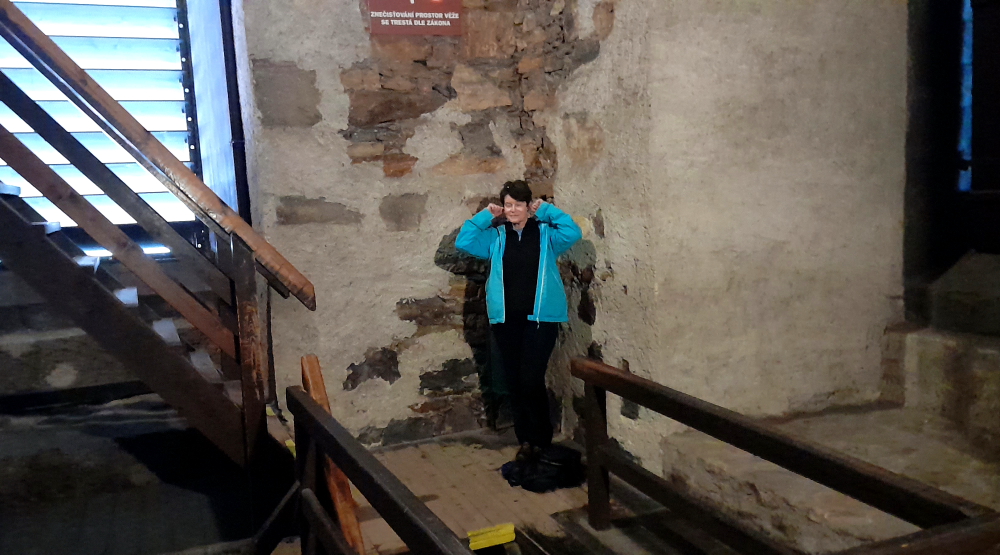
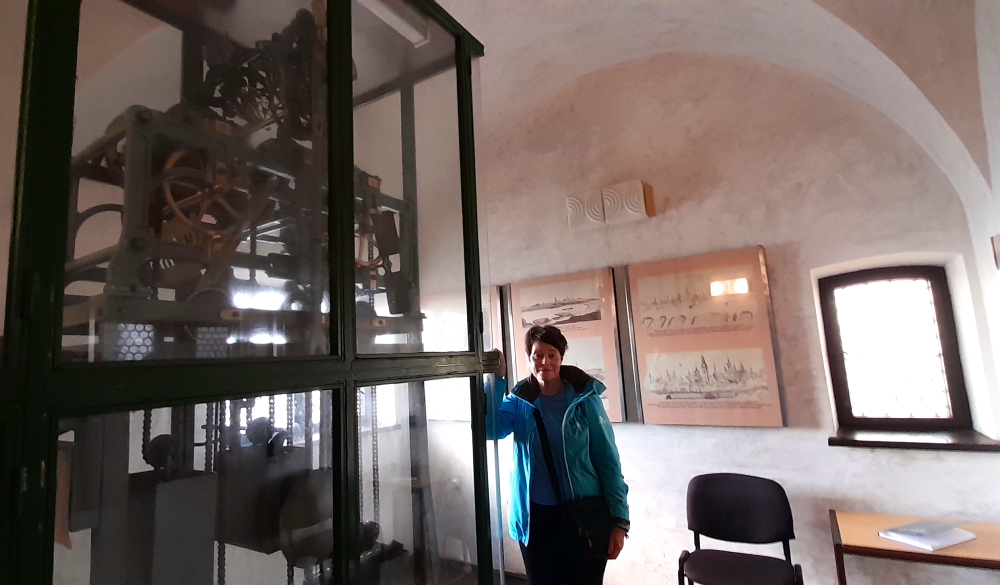
The tower doubled as a belfry and watchtower, continuously guarding the city of České Budějovice from the risk of fire.
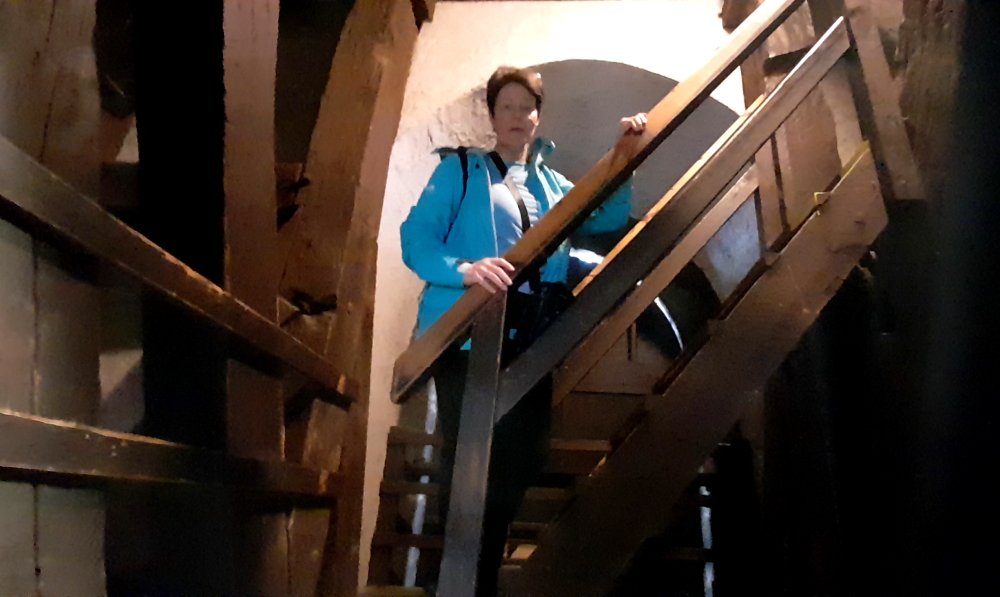
The guard who lived in the tower was tasked with cautiously watching the city and its surrounding area.
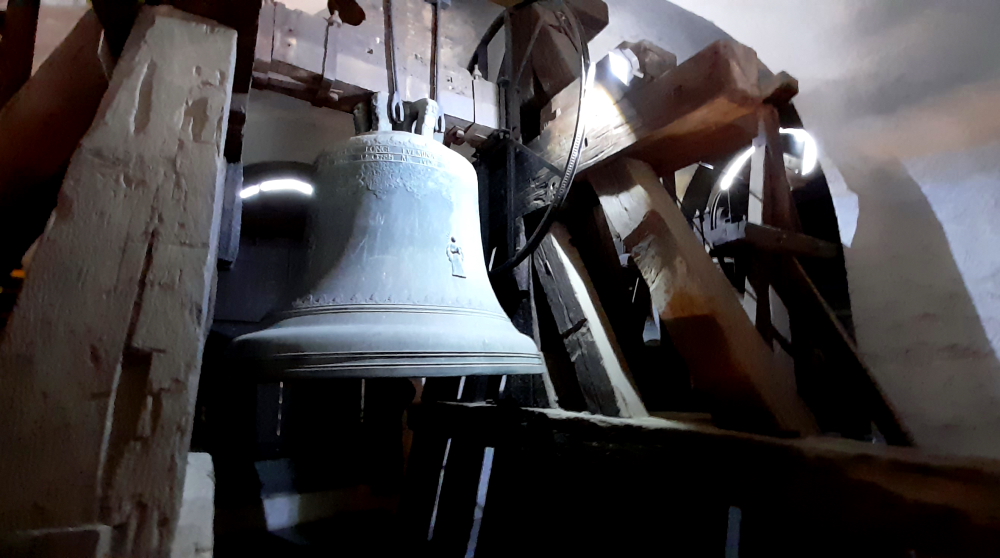
Until the tower was equipped with a telephone to the fire station, the tower guard had to warn about suspicious fires or smoke by ringing the bell and exhibiting a red flag by day and a red lantern at night.
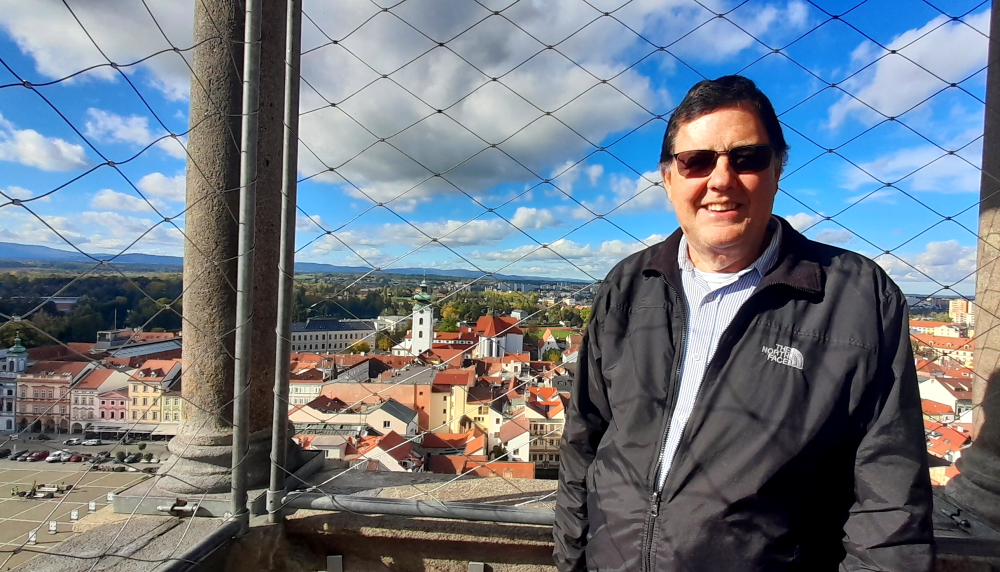
The tower guard lived in the tower with his family, pulling water and everything else up to the tower using a winch, and even keeping small domestic animals in the tower: geese, rabbits, and sometimes even a goat or a sheep.
The tower contains 6 bells, the largest being the Bummerin, weighing 3.5 tons.
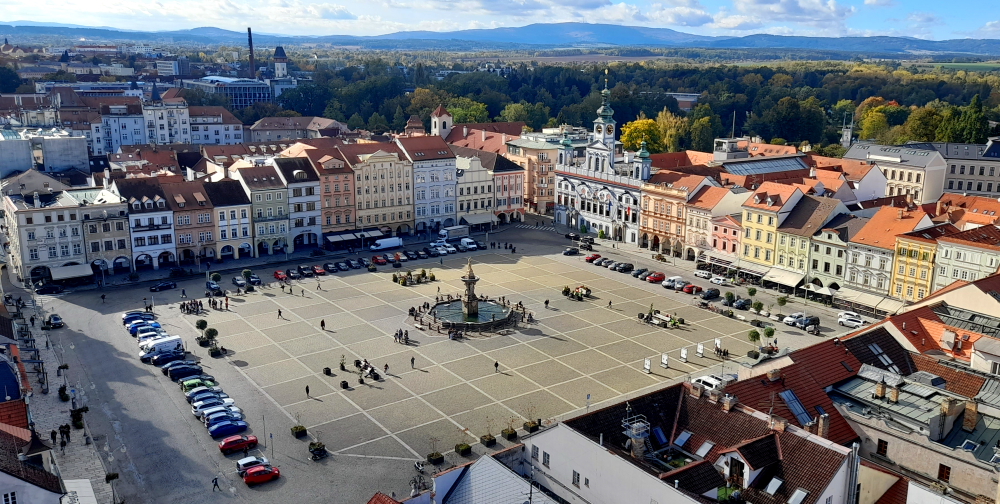
Nowadays this tower is among the most popular tourist destinations for the splendid view of the town and its surroundings from its gallery.
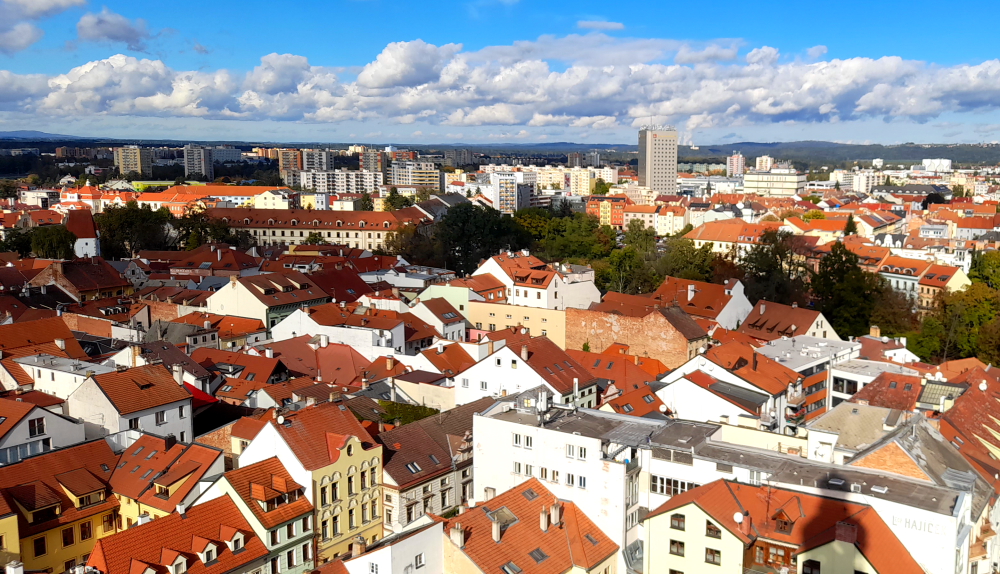
The gallery is located 46 meters above the ground.
To access the gallery you need to climb the 225 stairs, mostly steep wooden staircases.
Once we descend the tower we walk into the Old Town Market Square known as Namesti Premysla Otakara II currently named after the founder of the city, the Czech king Přemysl Otakar II. With an area of 1.7 hectares, it is one of the largest squares in the Czech Republic.
Since 1915 the square has had 6 different names, including Adolf Hitler Platz during the occupation.
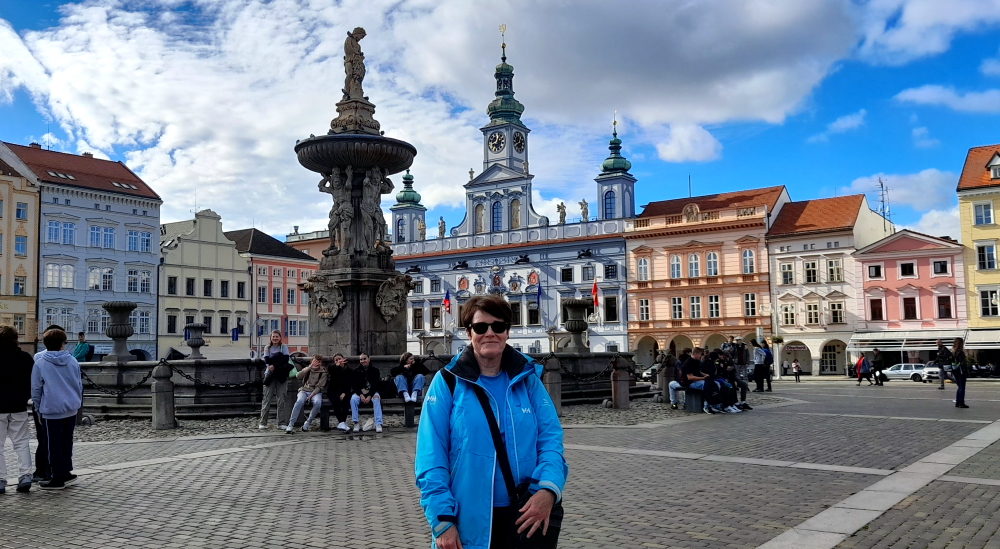
For some time there were also meat shops on it, before they were ordered by Charles IV to be torn down and relocated to today’s Krajinská Street. In the first half of the 20th century, trams also ran along the outer sides of the square .
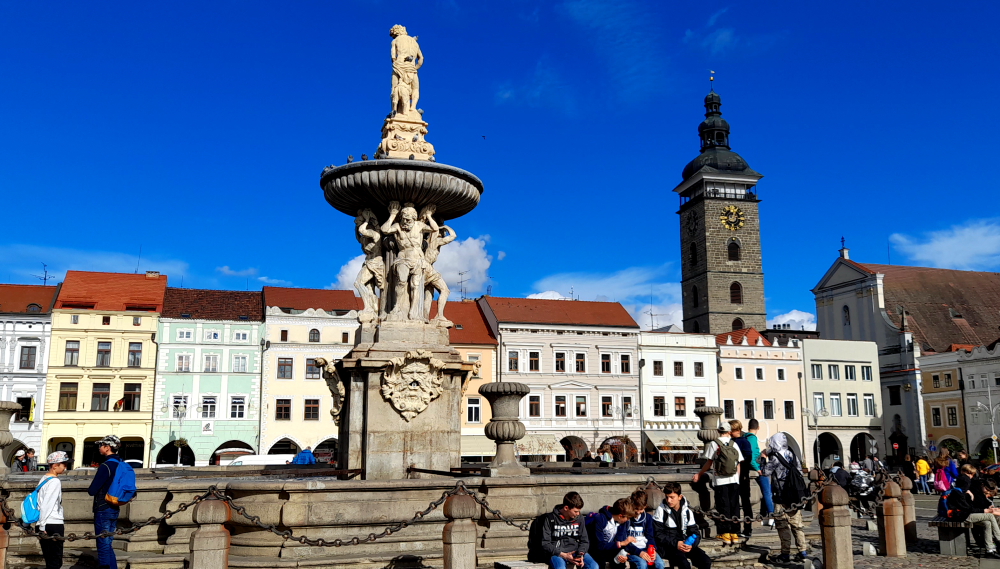
Today’s landmark of the square, Samson’s Fountain, was built in the 1820s in the middle of the square.
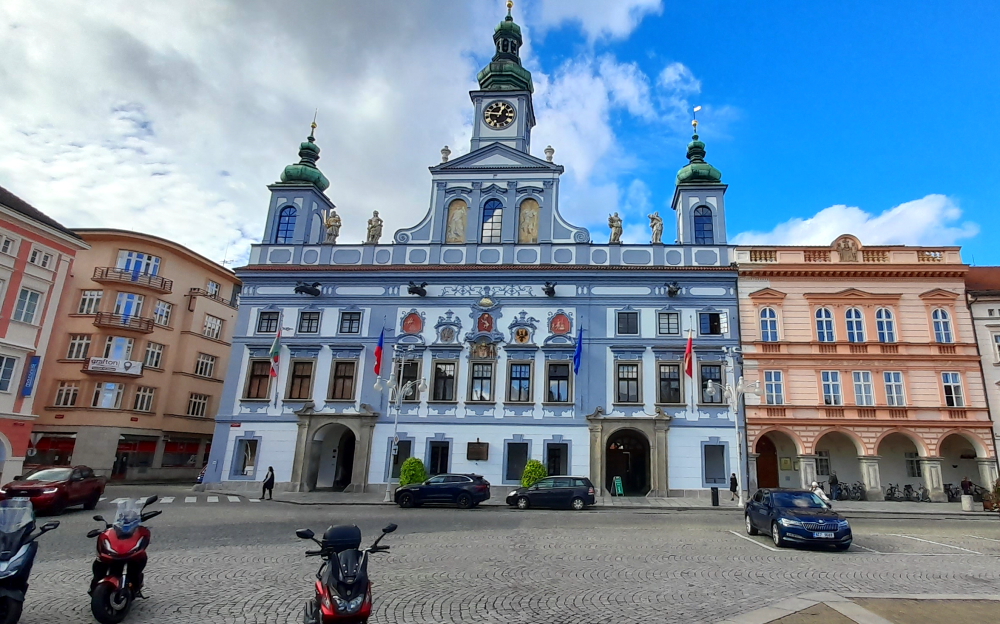
On the western side of the square stands the Baroque Town Hall which acquired its present form roughly during the reconstruction in 1684-1747.
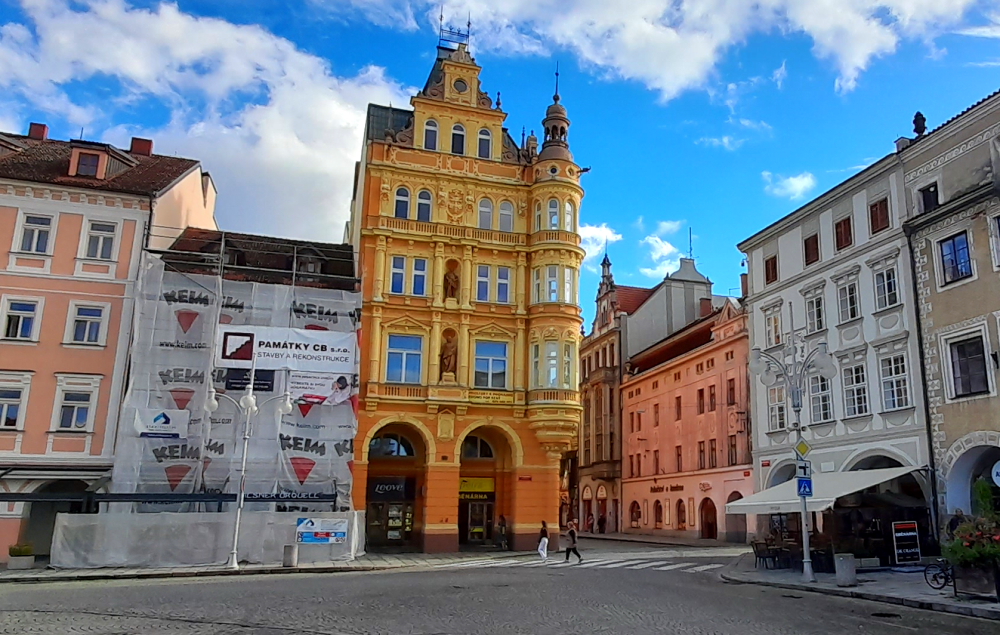
On the opposite corner of the square to the Town Hall is this yellow structure, the Palace of the Bee. A house from 1895–6, it was built for the German financial institution Spar und Vorschussverein Biene , Czech for Bee. The ornaments of bees and beehives are meant to symbolize frugality.
What we notice about this town square is that a lot of the surrounding buildings form protective arcades with small shops and, from time to time, a large doorway into an inner courtyard.
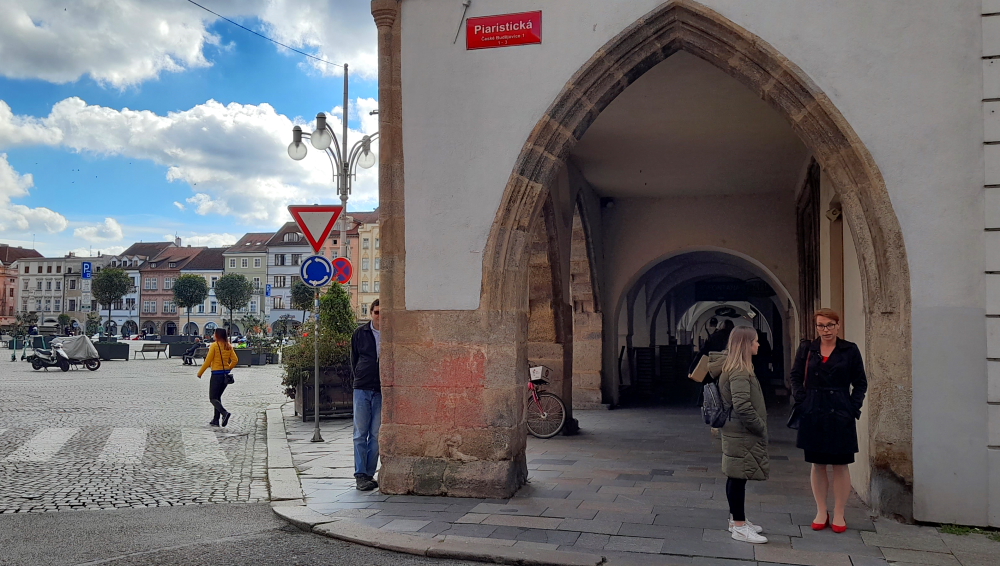
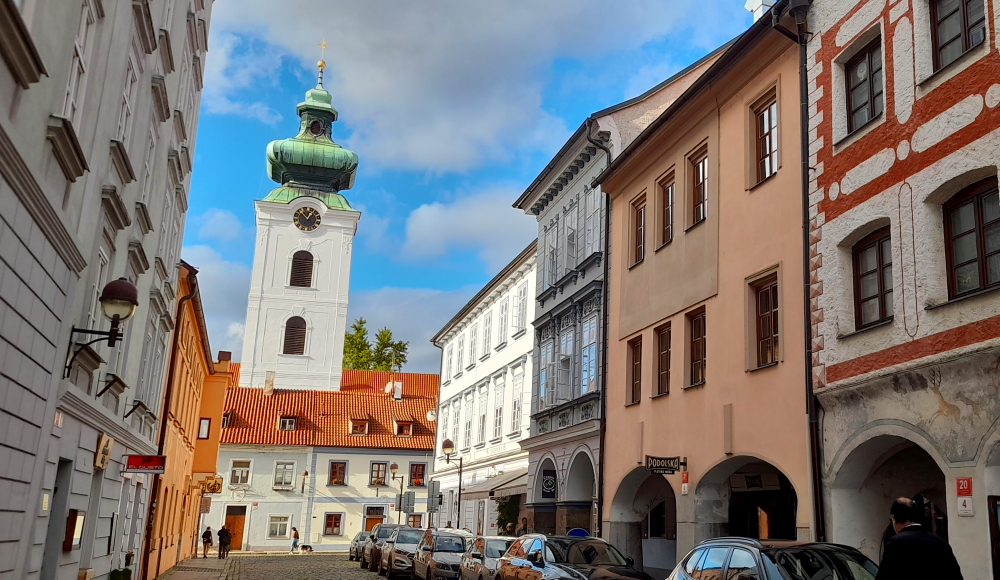
Nearby is another striking tower and spire, that of the Church of the Sacrifice of the Virgin Mary which we were next to last night at the restaurant.
From here we head down Panska Street, a narrow and colourful cobblestoned street in the town’s conservation area.
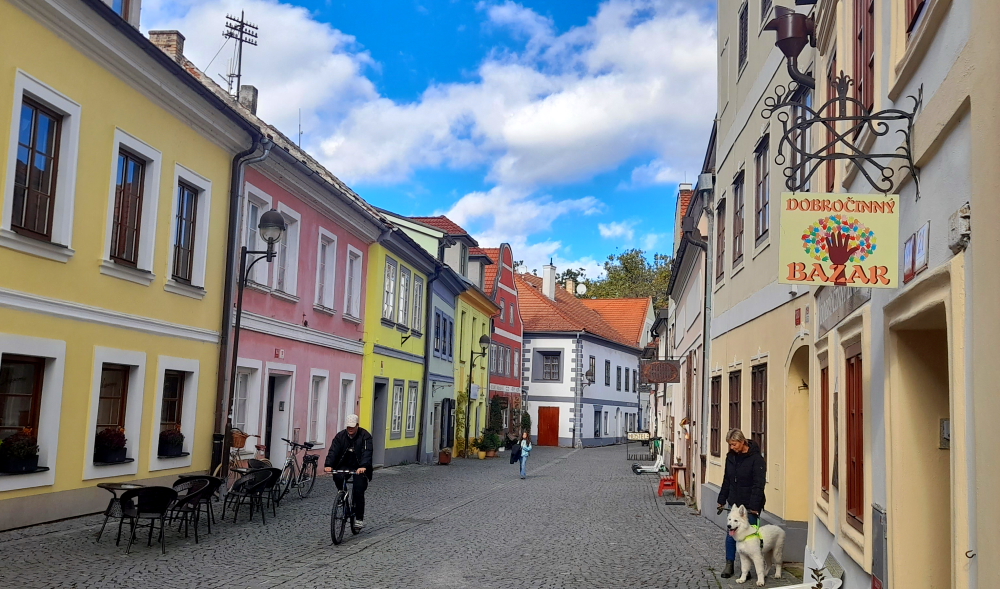
On 17 December this year Panska Street will be transformed into an Old Bohemian Lane with the pre-Christmas sale of traditional folk art (Christmas decorations, gingerbread, ceremonial pastries, candles, candlesticks, ceramics, glassware, bobbin, crochet, woven products and woodcuts) together with Christmas trees, mistletoe, game and pheasants. Shoppers will also be able to wash down Old Bohemian delicacies with warm punch, wine or mead. Attendees are also encouraged to take Christmas bells, sparklers and candles with them.
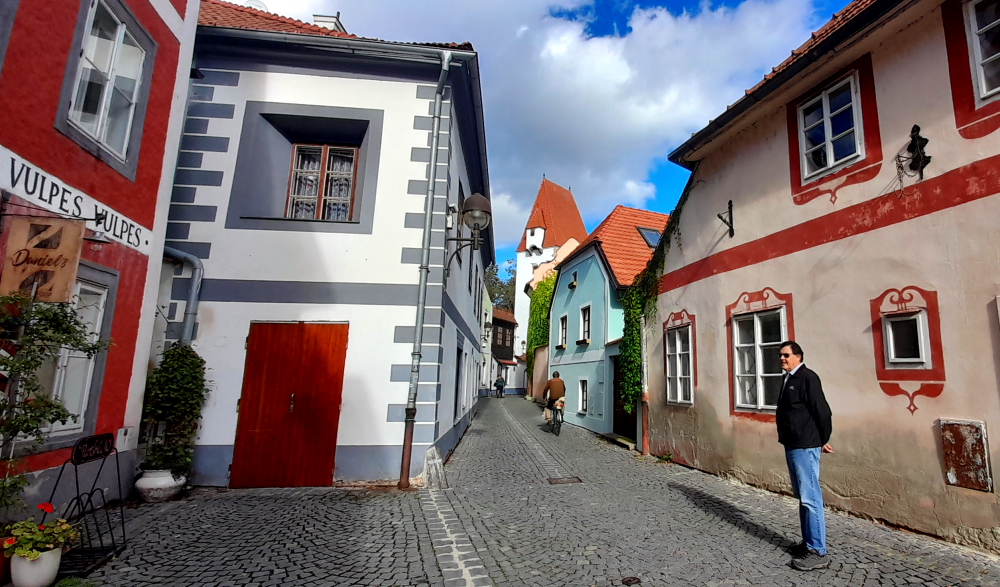
Panska Street ends at the Rabenstein Tower and the Mill Stream which we cross to arrive at the apartment.
This afternoon is dedicated to updating the blog while Lynn does the ironing.
By the time we have caught up on things it is about 7:30 pm. The original plan for tonight is to go out for Mexican but two of the three restaurants are now closed.
On the way to the third restaurant we stop to try to photograph the Errant Stone which is located across from the Town Hall in the Market Square.
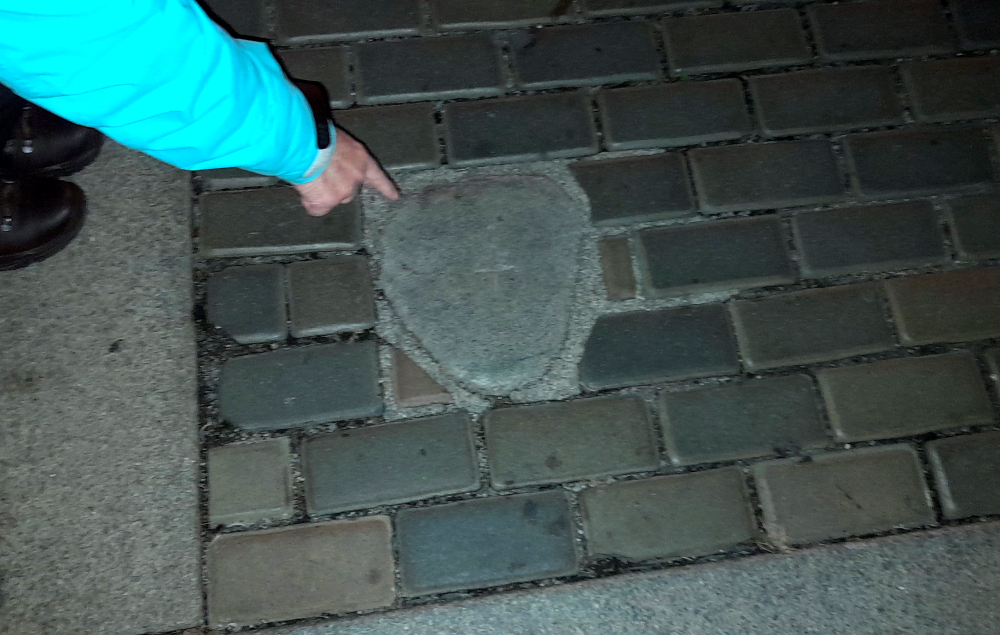
Over time, the square was paved and a well and a gallows were built on it. Today, the Errant Stone is located in the gallows’ place. According to legend, the execution log stood at this place. In 1470 or 1478, 10 young men suspected of murdering the magistrate were allegedly executed on it.
The Mexican restaurant is on the Market Square but once we get there in the chilly darkness we find that there are only a couple of inside tables and the outside seating area has no heating. Take-a-way it is then. At least we can have a few glasses of red wine with our Mexican food without paying more for a small glass of wine than we pay for the food.
26 October, 2023
We are taking a couple of hours today to visit Cesky Krumlov which is a 25-minute drive SW of here. It’s a town in the South Bohemian Region of the Czech Republic. It has about 13,000 inhabitants and is known as a tourist centre, which is among the most visited places in the country. The historic centre with the Český Krumlov Castle complex is protected by law as an urban monument reservation, and since 1992, it has been a designated UNESCO World Heritage Site because of its well-preserved Gothic, Renaissance and Baroque architecture.
Due to its convenient location by the river, the area has been permanently inhabited. The area’s oldest settlement goes back to the Older Stone Age (70,000–50,000 BC); mass settlement in the Bronze Age (1,500 BC); Celtic settlements were here in the Younger Iron Age (c. 400 BC), and the first Slavic settlement from the 6th century AD. In the Early Middle Ages, trade routes led through this territory along the Vltava River.
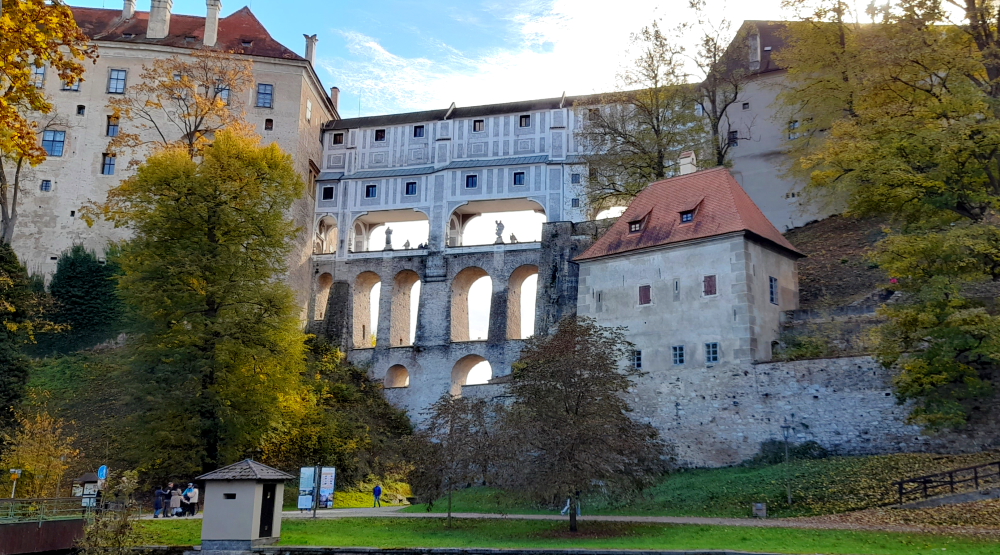
The Český Krumlov Castle was founded shortly before 1250 by a local branch of the noble Vítkovci family, descendants of Witiko of Prčice. The first written mention of Český Krumlov was in a 1253 deed as Chrumbenowe.
The town was established in two stages. The first part called Latrán was built spontaneously below the castle, settled mostly by people who had some administrative connection with the castle. The second part was subsequently founded as a brand new settlement and called Old Town. Since the foundation of the town, both Czech and German nationalities were represented. A Jewish community is documented since 1334.
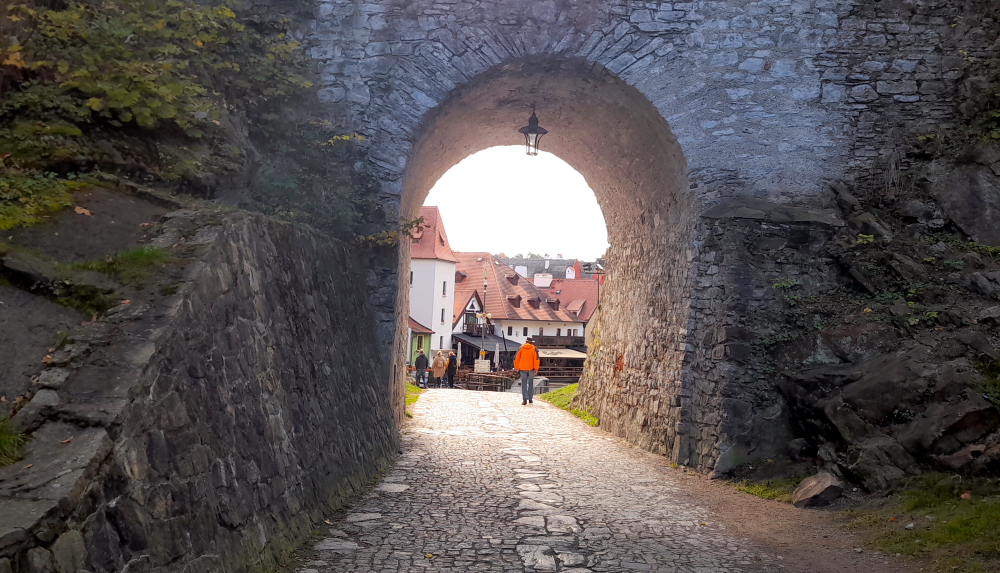
In 1302 the Vítkovci line became extinct and King Wenceslaus II, who acquired the estate and castle by escheat, ceded it to the Rosenberg family, who later made it the main residence of their family. Peter I of Rosenberg, the Lord Chamberlain of King John of Bohemia, had the present upper castle erected in the early 14th century. Under his rule the Rosenberg estates flourished. Český Krumlov achieved the highest prosperity in the 15th century during the rule of Oldřich II of Rosenberg, when the estate territory was considerably enlarged.
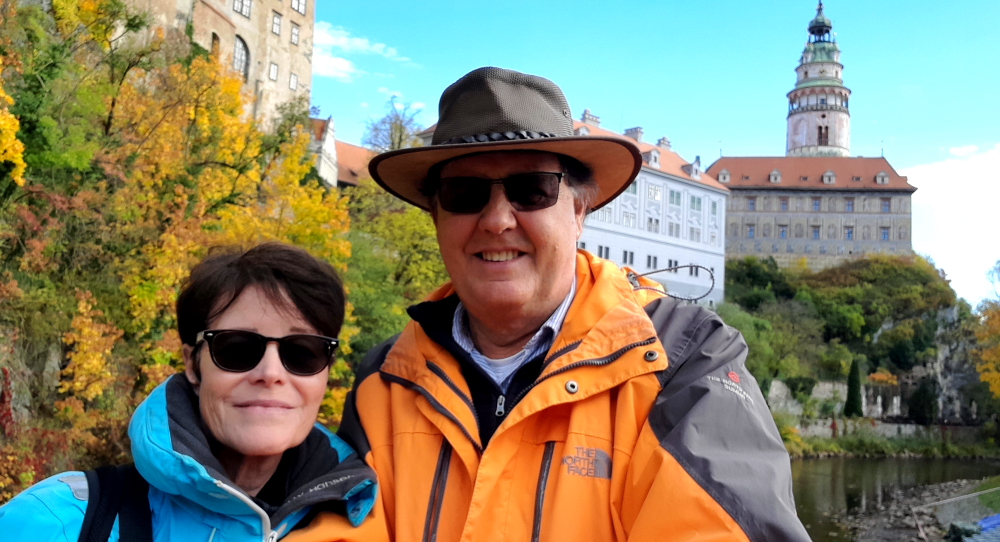
The Rosenbergs strongly promoted trade and crafts within the town walls. In the late 15th century, when gold was found next to the town, German miners came to settle, which shifted the ethnic balance even more. In one of the churches, the sermons were preached in Czech until the 1780s, when Church of Saint Judoc was closed. In 1555, William of Rosenberg joined the town parts of Latrán and Old Town, which had been up to then separate, and unified the town. In the late 16th century, he had the castle rebuilt in the Renaissance style
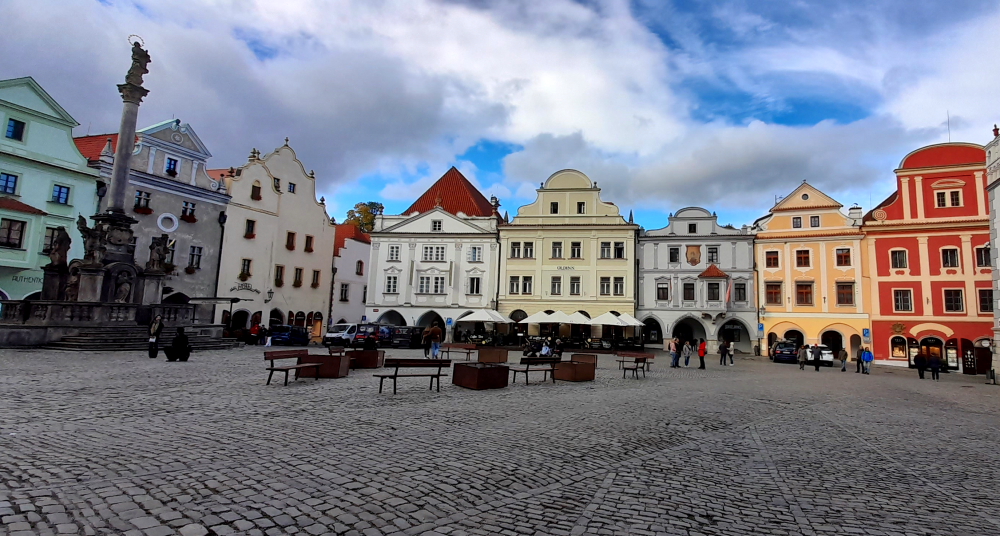
In 1602, William’s brother Peter Vok of Rosenberg sold Krumlov to Emperor Rudolf II, who gave it to his illegitimate son Julius d’Austria. After the Bohemian Revolt and the 1620 Battle of White Mountain, Emperor Ferdinand II gave Krumlov to the noble House of Eggenberg and the town became the seat of the Duchy of Krumlov. From 1719 to 1947, the castle belonged to the House of Schwarzenberg.
In the 19th century, the industrialization and development of transport occurred, and most of the town fortifications was demolished
Up around the corner from the Town Square is St Vitus Church, a Gothic three nave construction from the period of 1407-1439. It was built on the foundations of an older building from the year 1309. The Gothic entrance portal was erected in 1410. In the 17th and 18th centuries, the Church continued to be extended and modified.
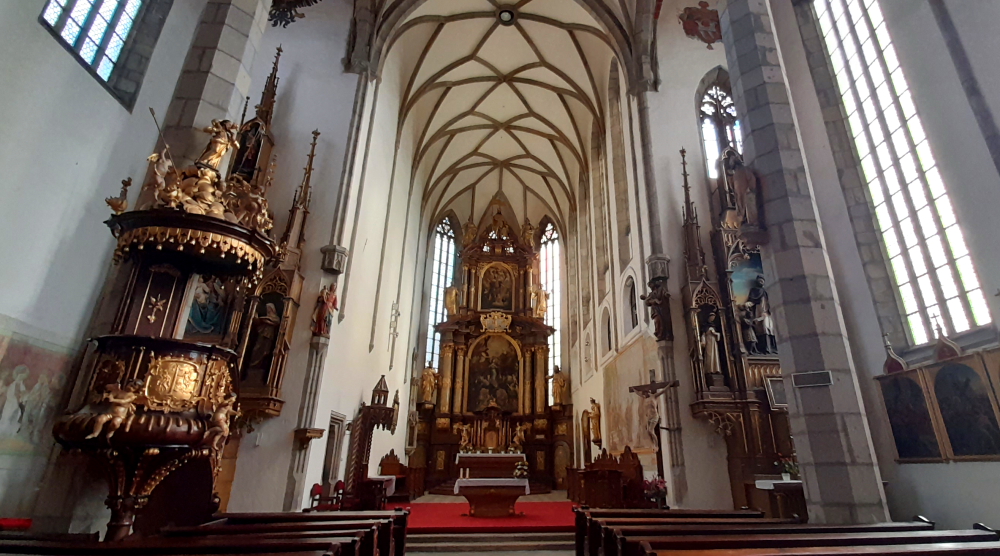
There were 8,662 inhabitants in Krumlov in 1910, of which 7,367 (85%) were Germans and 1,295 (15%) were Czechs. After World War I, Český Krumlov became a part of the Bohemian Forest Region in a newly-created Czechoslovakia, but German-Austrian deputies declared the region be part of German-Austria. In 1919, the Treaty of Saint-Germain-en-Laye recognized the area as part of Czechoslovakia. In 1938, it was annexed by Nazi Germany, as part of the Reichsgau Oberdonau unit of Sudetenland, under the Munich Agreement. After World War II, the town’s longtime German majority population was expelled and the town was returned to Czechoslovakia.
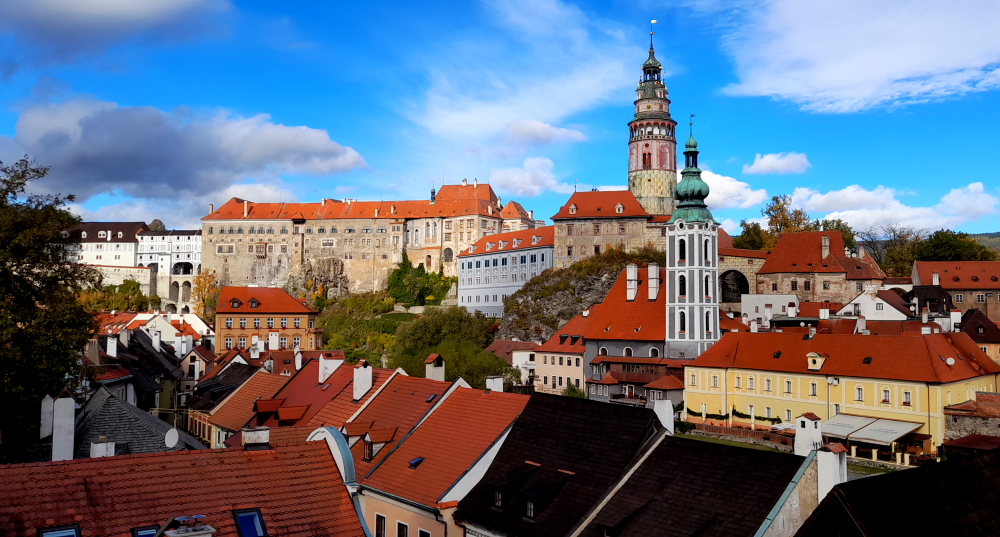
During the Communist era of Czechoslovakia, the historic Český Krumlov fell into disrepair. However, since the Velvet Revolution of 1989 much of the town’s sights has been restored, and it is now a popular tourist destination.
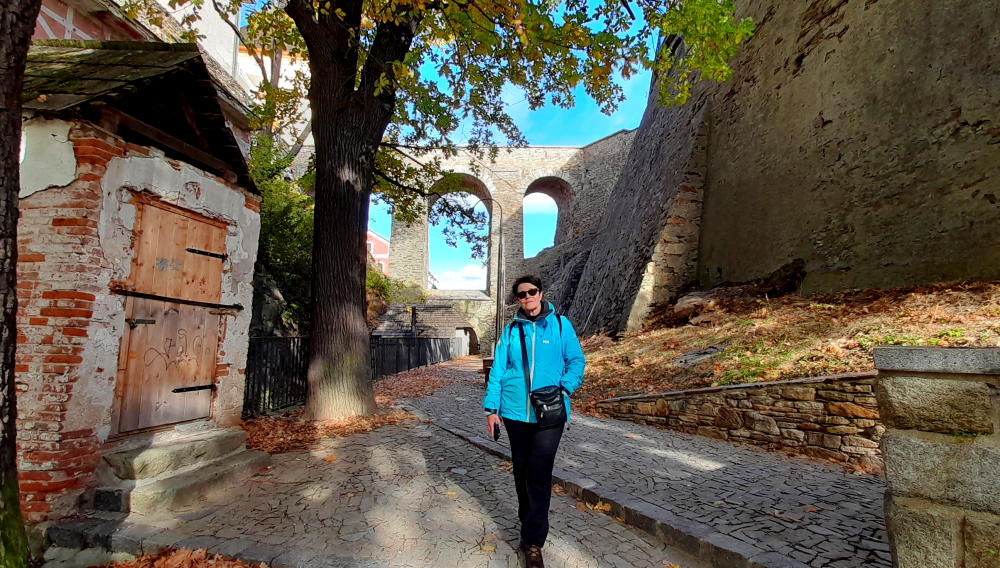
In August 2002, Český Krumlov was damaged by the 2002 European floods.
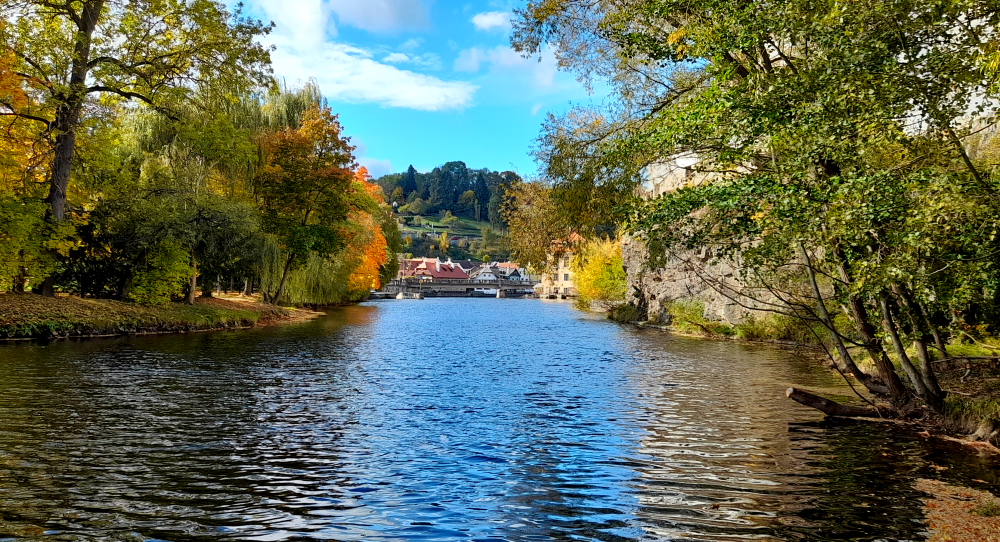
After walking through town we loop back to the Castle via Latran. The castle stands on a steep and long rocky headland, which is lined with Vltava from the south.
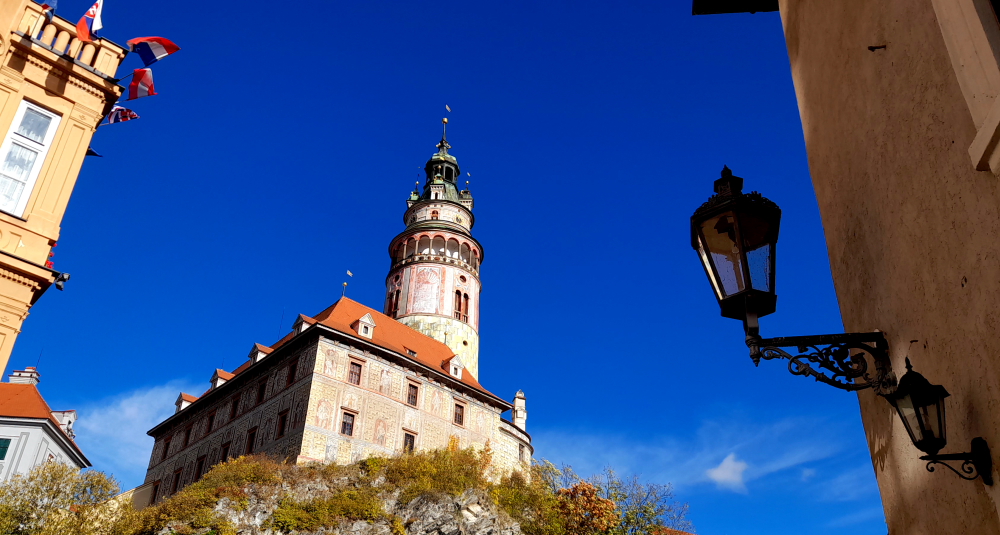
The castle and chateau complex is connected to the town by the Red Gate which gives access to the 1st courtyard, once the agricultural area of the castle and animal enclosure.
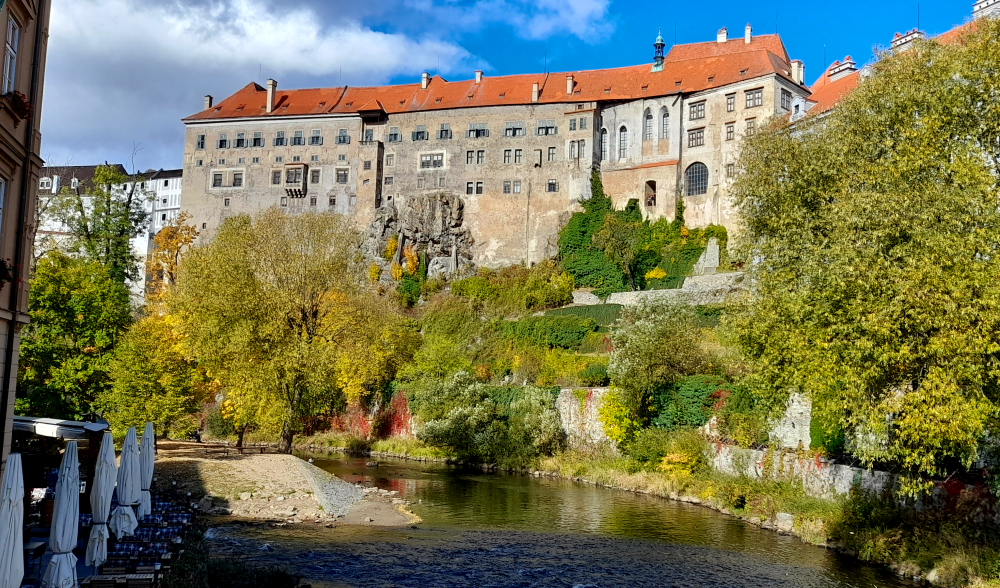
The bridge over the Bear Moat leads through the passage to the Lower Castle and the 2nd courtyard and on the left side is the oldest part of the castle (Hrádek), an old palace with a tower from the 13th century and paintings from 1580.
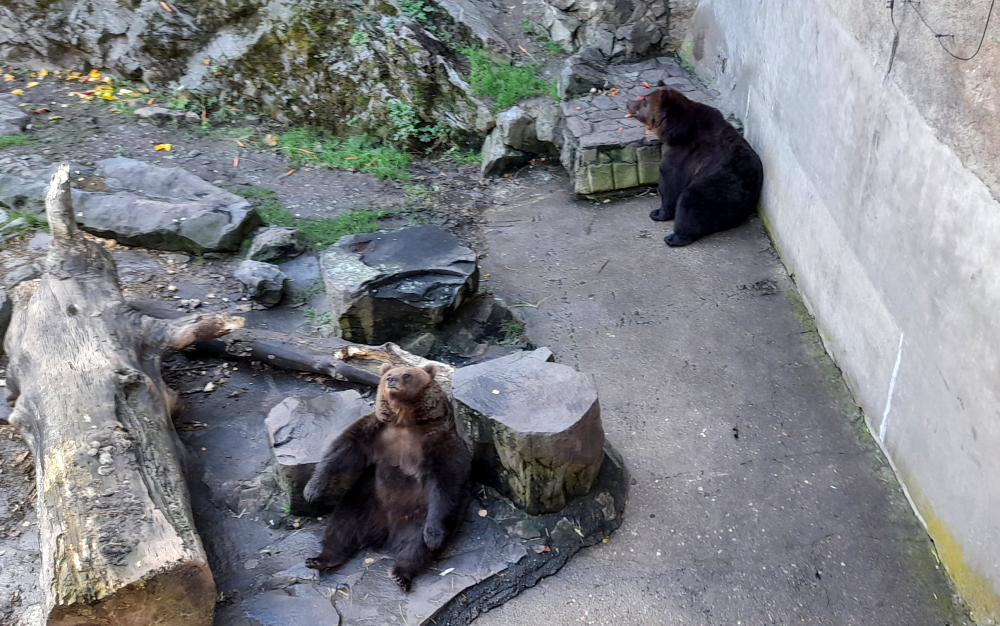
Bears have been kept here since 1707. Bears have apparently been kept in the castle, however, since the mid-16th century. Their presence is due to Vilém of Rožmberk‘s attempt to maintain the legend of a kinship between the Rožmberks, through the Vítkovci, and the Roman noble family of the Orsinis (the word Orsa means she-bear in Italian). The “author” of the legend was apparently Oldřich of Rožmberk (1403-1462). The purpose of this legend was to place the origins of the House of Rožmberk to the glorious days of ancient Rome, thus enhancing their own superiority over the other noble families of Bohemia.
The second castle courtyard had the same name as the Guards. The barracks on the ground floor of the New Burgrave was used to house the Schwarzenberg grenadier guard, located at the castle for more than 200 years – from 1742 to 1948.
Across another moat a brick bridge leads to the Upper Castle, the Rosenberg Palace. At the top of the steep hallway just before the entrance to the 3rd courtyard there is a small balcony that offers a stunning view of the town.
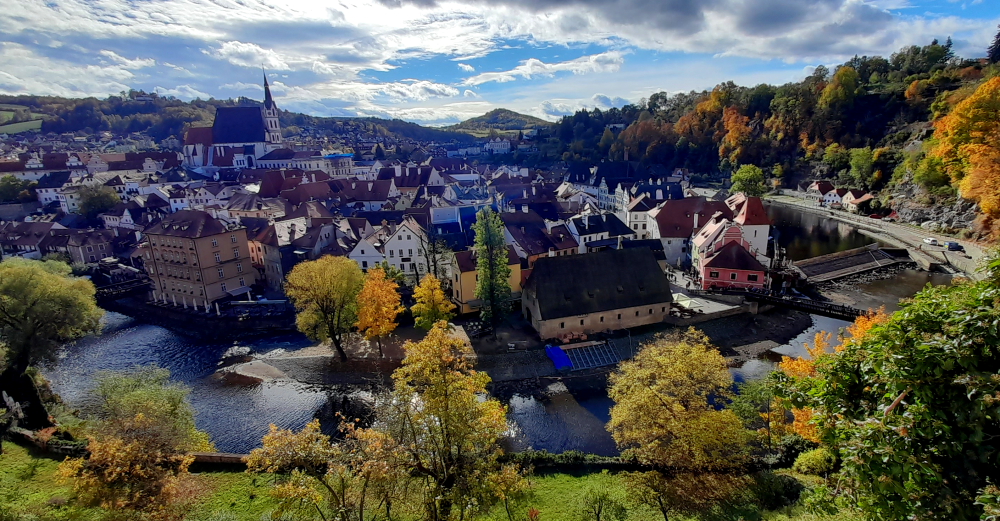
Passing through a steep windy hallway, its size rather suggesting a vehicle passageway, there is the 3rd courtyard.
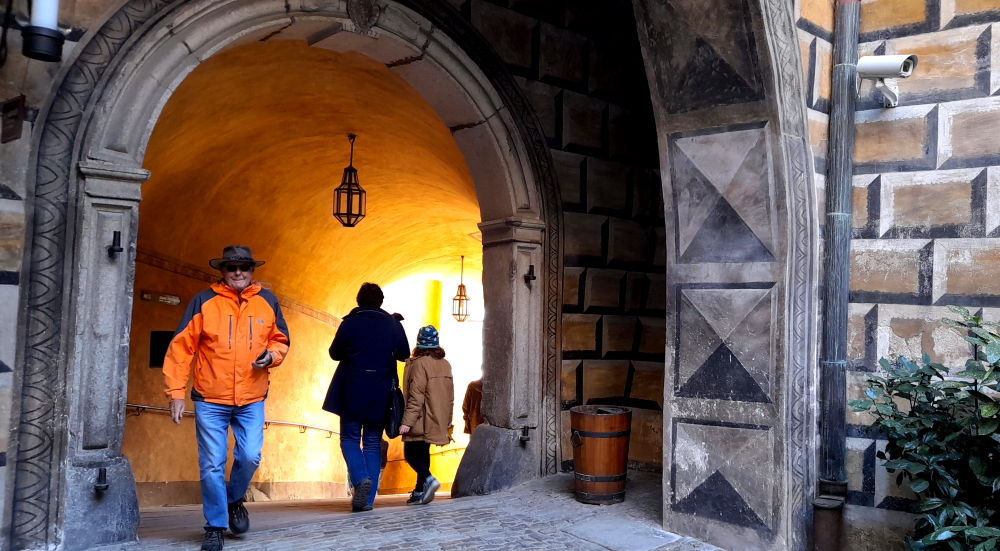
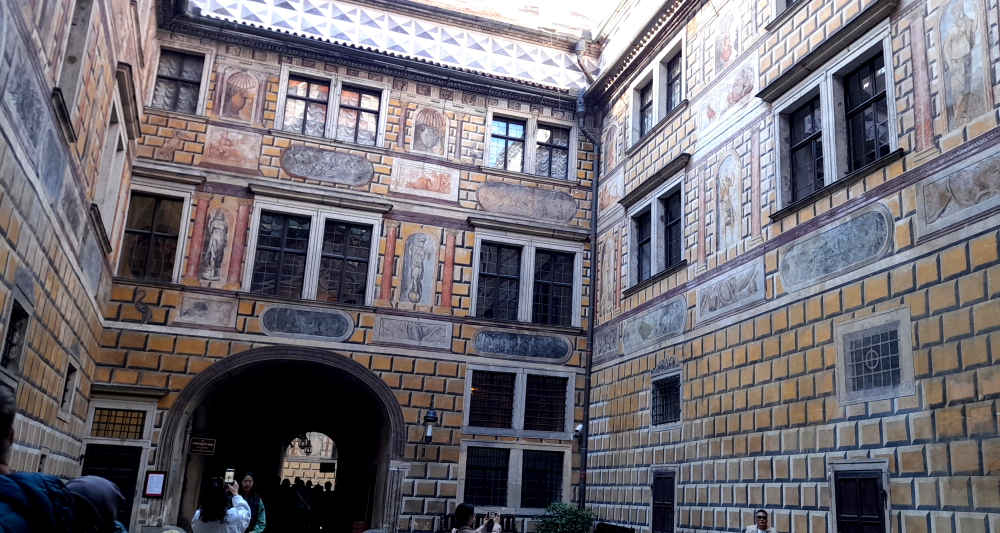
The Upper Castle is formed by buildings of a palatial character with grandiose aristocratic interiors. The palaces have been preserved in nearly their original Renaissance appearance from the 16th century during the reign of Vilém of Rožmberk.
The Renaissance character is emphasized by the rich facade decorations from the late 16th century. The author of the frescoes on the 3rd courtyard was the Rožmberk court painter Gabriel de Blonde.
The hallway from the 4th courtyard opens onto the bridge called “Plášťový”, or Cloak Bridge, a unique 5-storey bridge. This bold structure spans the deep ravine, artificially deepened in the Middle Ages, between Upper Castle and the 5th courtyard.
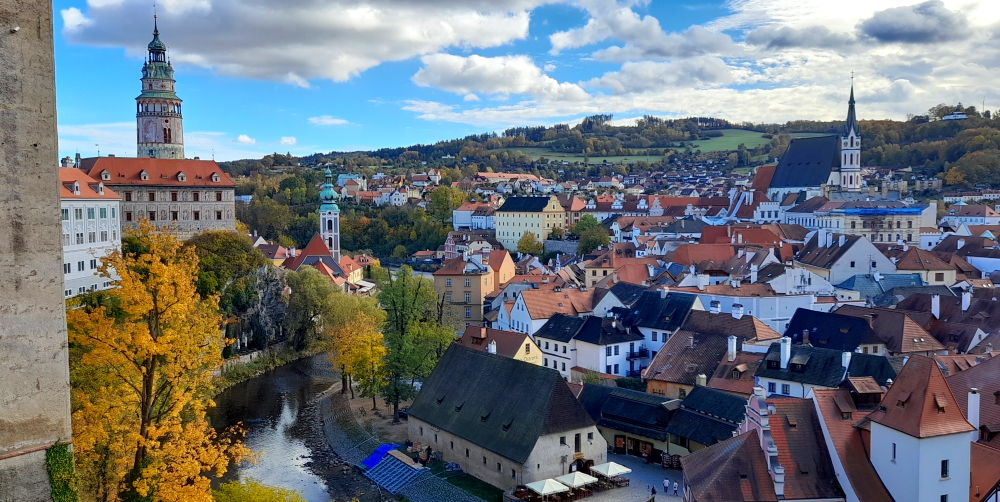
Built in several stages from the late 17th century until the mid-18th century the bridge replaced the original wooden footbridge. It is passable through three floors – above the accessible open part – and below there are two more indoor corridors, located one above the other. The lower links the Masquerade Hall with the Baroque Theatre, while the upper allowed the gentry to pass unhindered from the gallery to the castle garden.
From parking the car to collecting it again takes a whole 1.5 hours!
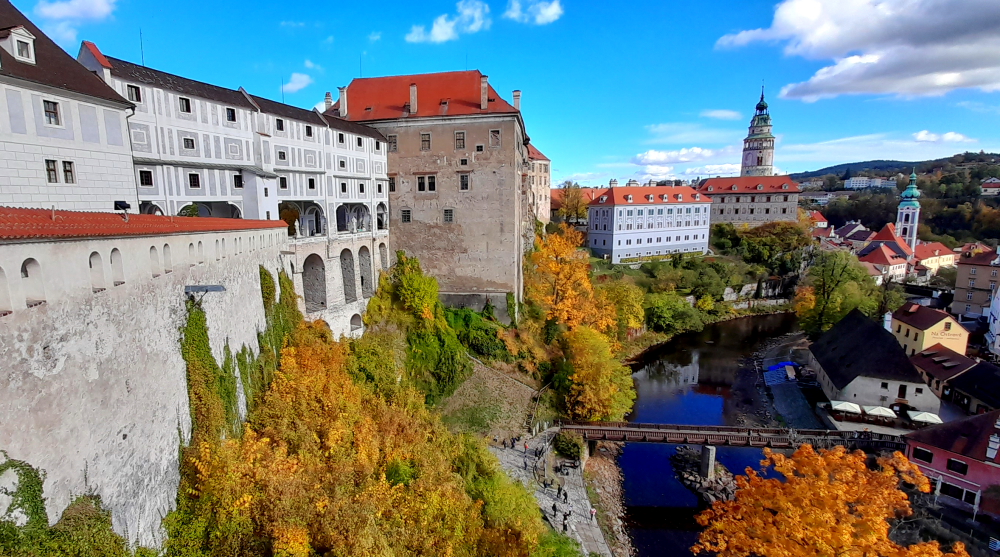
Just as well we went this morning as around 3:00 pm sitting in the apartment the sunny skies of this morning have disappeared and it is now raining heavily.
27 October, 2023
It is bucketing down this morning but we have slept in until about 9:30 am. We have a slow breakfast and as the rain eases off we head to the market square for a coffee and Lynn has a cheese croissant.
We still have not finished off booking our Wales travels for March next year so that will be the priority this afternoon.
It takes all afternoon just to agree on the booking so we still have a few things to get done today such as dealing with HSBC (they messed up Lynn’s Global View for her online accounts and an AUD Term Deposit for me). We are not sure how they can screw things up but they seem to do it regularly and take weeks to try to fix things. Not what I would call a reliable bank.
Tomorrow morning we are leaving Czechia and heading for Steyr, Austria. It is about a half hour drive to the Austrian border from here where we have to buy yet another Vignette for our drive through Austria. We tried to buy an online Vignette but because you can claim unauthorised Credit Card payments for online purchases in Austria you have to buy the pass 18 days in advance. Yet, we can buy one at a vending machine at the border with the same credit card on the same day. Yet another example of European inefficiencies. Why do people live in the UK or Europe? Frustrations seem to be a daily experience here. Perhaps the UK Department for Making Things More Difficult has spread to Europe. Or did it start here and hence Brexit????
It must be red wine o’clock.
 THE CONTINUING TRAVELS OF YOGI & BOO BOO