
7 October, 2023
A sunny but cool 18 Deg C morning as we collect the car from the underground car park and depart Brussels at 10:55 am. As it’s an hour and 20 minute drive we should arrive in Spa at 12:15 pm.
Which is the case. But, we are reminded that check-in is FROM 3:00 pm so we leave our cases at reception and drive the 5 minutes into town and park in front of the Hotel de Ville (not to be mistaken for an actual hotel, but rather the Town Hall).
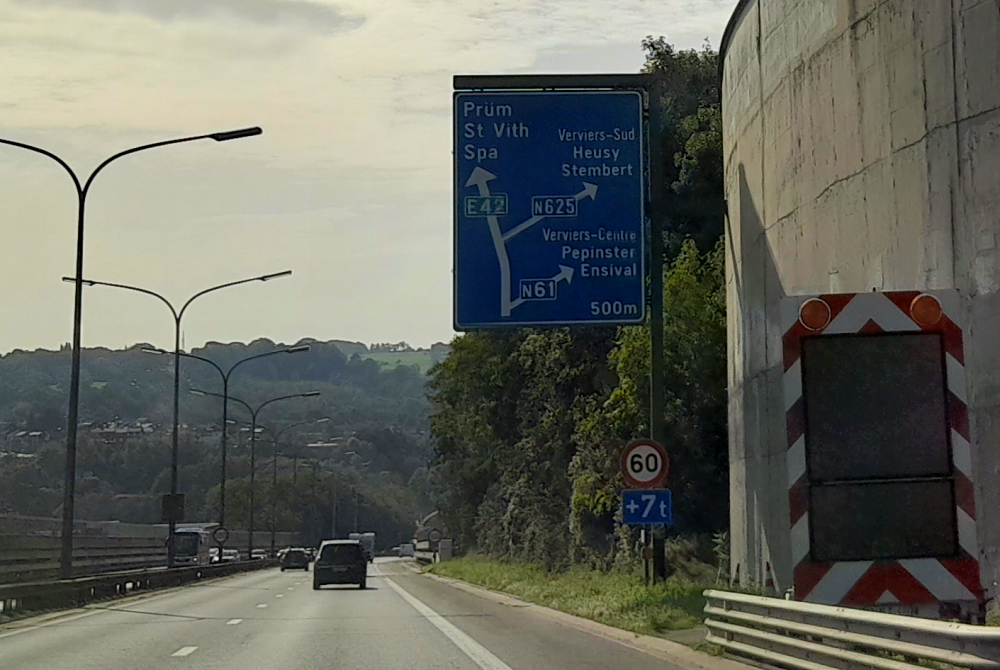
Despite being known internationally for the Francorchamps motor-racing circuit, the town of Spa is above all a cradle of balneology. In English and other languages, this practice has been given the generic term of “going to a spa”.
Going back to the writings of Pliny the Elder, the watering point was already well known during the time of the Romans for its healing effects. But it was not until the 14th century that an actual urban centre sprouted up around the springs of ferruginous water, the most famous of which is still called Pouhon Pierre-le-Grand to this day.
The town reached its peak during the 18th century. In 1717, a visit by Tsar Peter the Great made the springs in Spa famous all over Europe. Joseph II speaks of Spa as the ‘Café of Europe’’. After that, nobles from all over the continent came for a stay every summer, creating a unique atmosphere. Spa became one of Europe’s definitive spa towns alongside other prestigious towns like Bath and Vichy. Today, it is recognised as a ‘Great Spa Town of Europe’ along with 10 other spa towns and is officially listed as a UNESCO World Heritage Site.
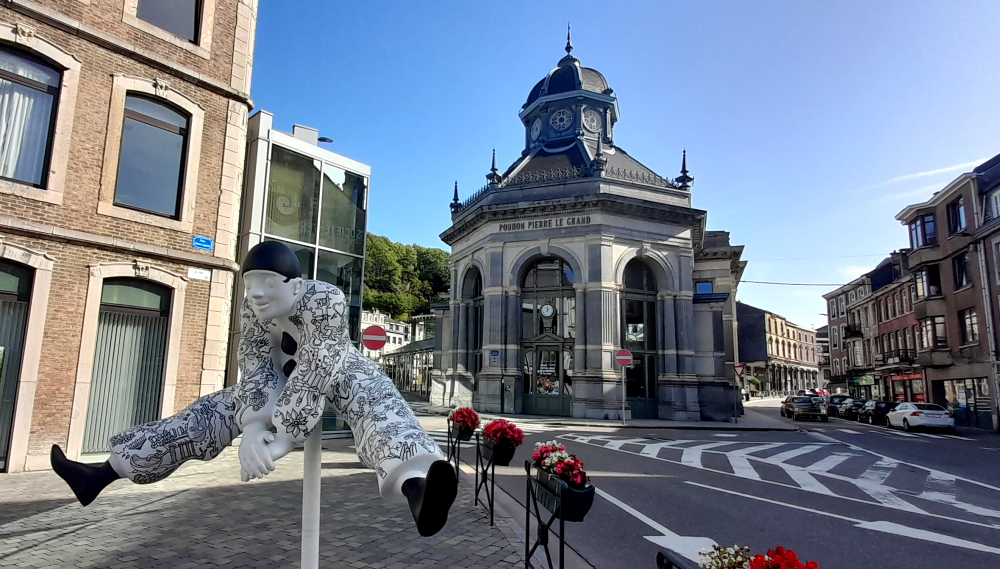
After dropping into the Tourist Information Office we collect a map with a town walk and commence.
To the side of the Tourist Information Office is a mult-sided, domed building which is called “Pouhon Pierre Le Grand” – The Spring of Peter the Great.
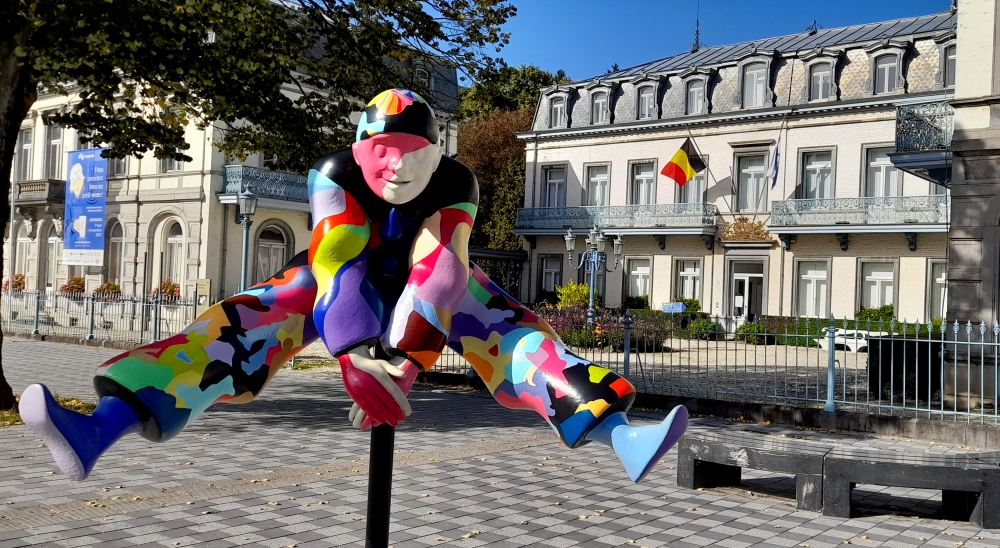
Throughout town we find various “Pierrots”, the town’s local mascot – all with the same leapfrogging pose but decorated individually by Belgian and French artists.
The route takes us to the base of the funicular to “Thermes” which we duly ride to the top to be delivered into a modern complex that houses pools sourced from the local Clementine spring and naturally heated to 33 Deg. C.
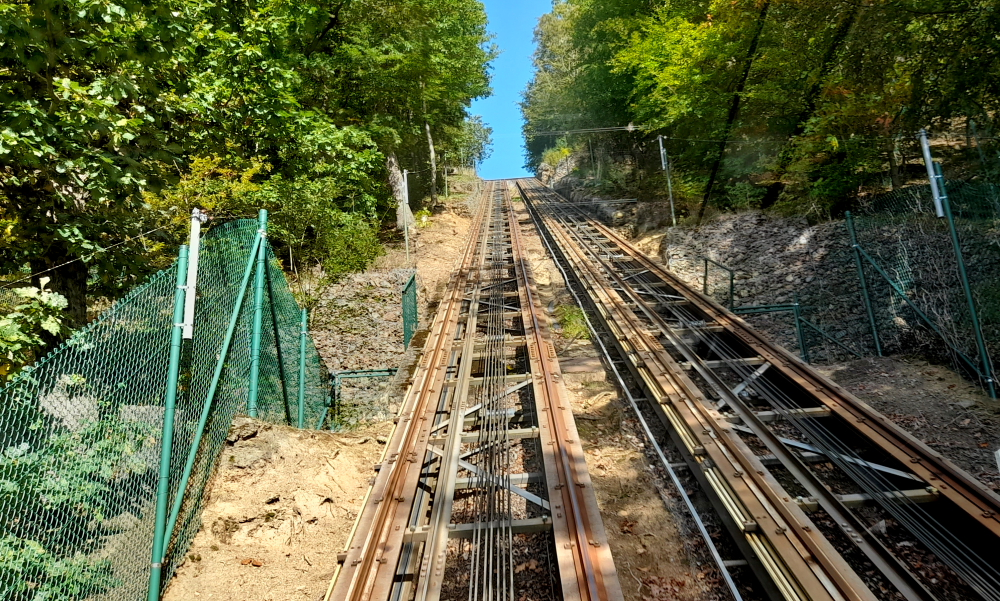
The only place we can catch a glimpse of the famous pool is through the window of the brasserie where we decide to sit and sip some cool beverages.
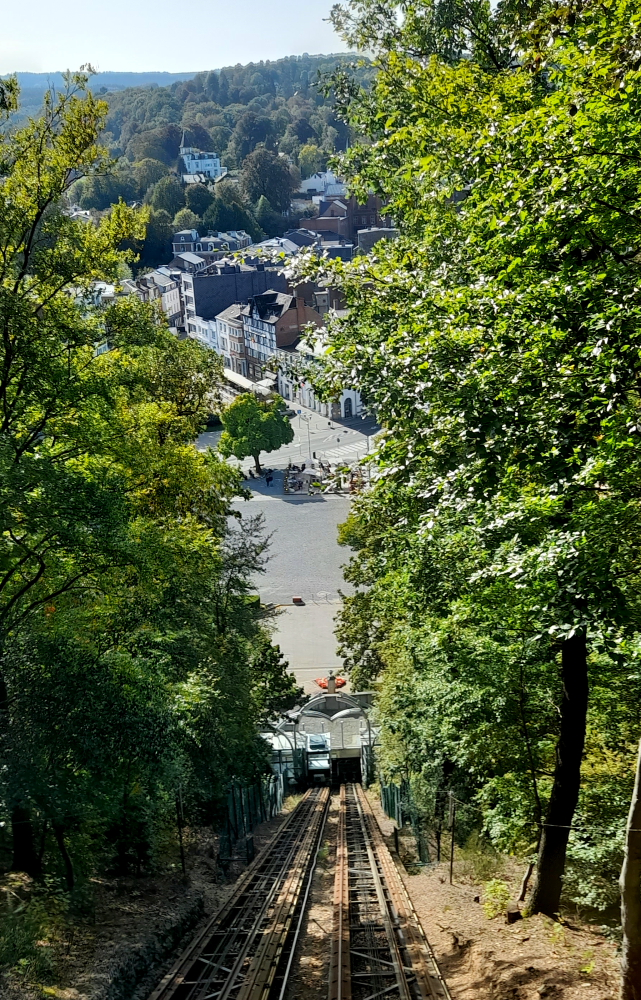
Back on the flat we walk past the Musees de la Ville d’Eaux – The Water Town Museum. Located in the former Royal Villa, residence of Queen Marie-Henriette, 2nd Queen of the Belgians, the Water Town Museum houses collections relating to the history of Spa: a collection of “Jolités” or Bois de Spa, from the 17th century to the present day, as well as old posters, engravings and various objects evoking the activity of the famous spa town.
Up the opposite hill we come across Waux Hall, one of the oldest games rooms in Europe. A vast building, it is the work of Liège architect Jacques-Barthélemy Renoz. The building, classified as a monument since July 24, 1936, has been included by the Walloon Government on the exceptional heritage list since 1993.
Restoring the exterior envelope of the building was completed at the end of 2009. The second phase (interior restoration and development, treatment of the surrounding areas) commenced in 2022 at the estimated cost of Eur6.26m. Today the building is surrounded by construction materials but it looks like Academy classes occupy some of the space.
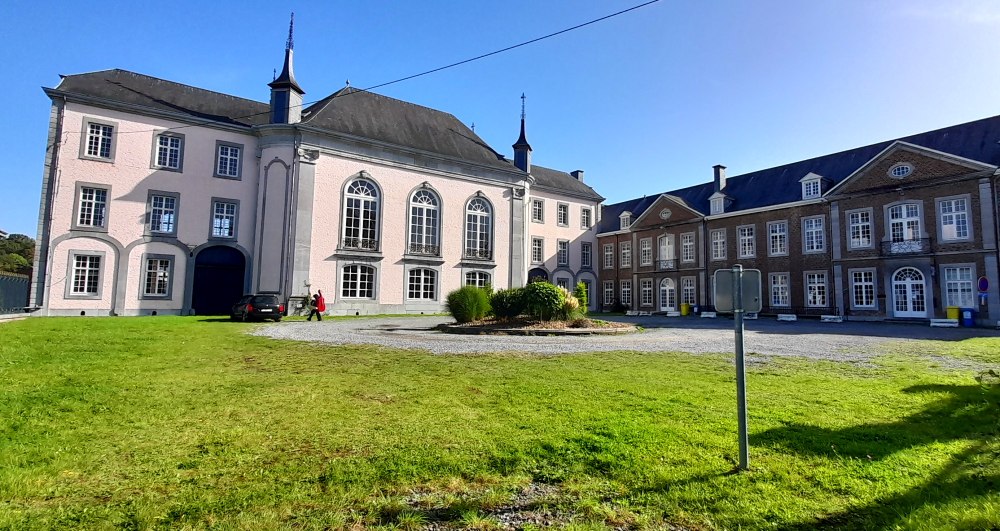
Partially down the hill we arrive at L’Eglise Saint Remacle. The Catholic parish of Spa was established in 1573 at the request of the population who wanted to fight against the growing influence of Protestantism carried by foreign visitors.
The current church was built in 1885 following the plans of the architect Eugène Charpentier. In the Romanesque-Rhineland style, which remained popular in the ancient principality of Liège, it was consecrated in 1886 by the Bishop of Liège.
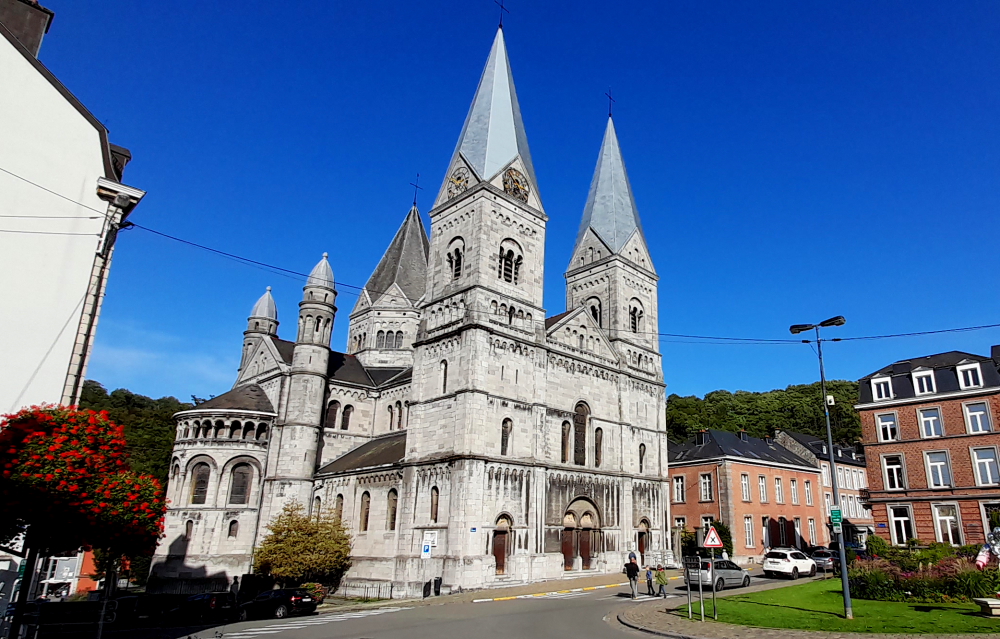
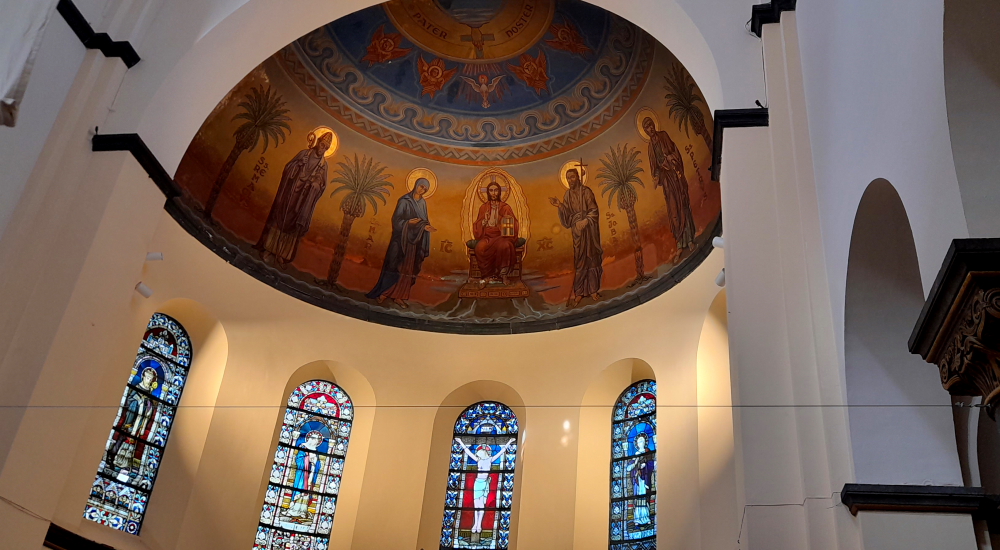
Queen Marie-Henriette of Belgium, who had retired to Spa and resided there in the Villa Royale, died in Spa in 1902. Her funeral was celebrated in this church.
Although the “Anciens Thermes” is in the next block it’s inaccessible as it is surrounded by roadworks and construction.
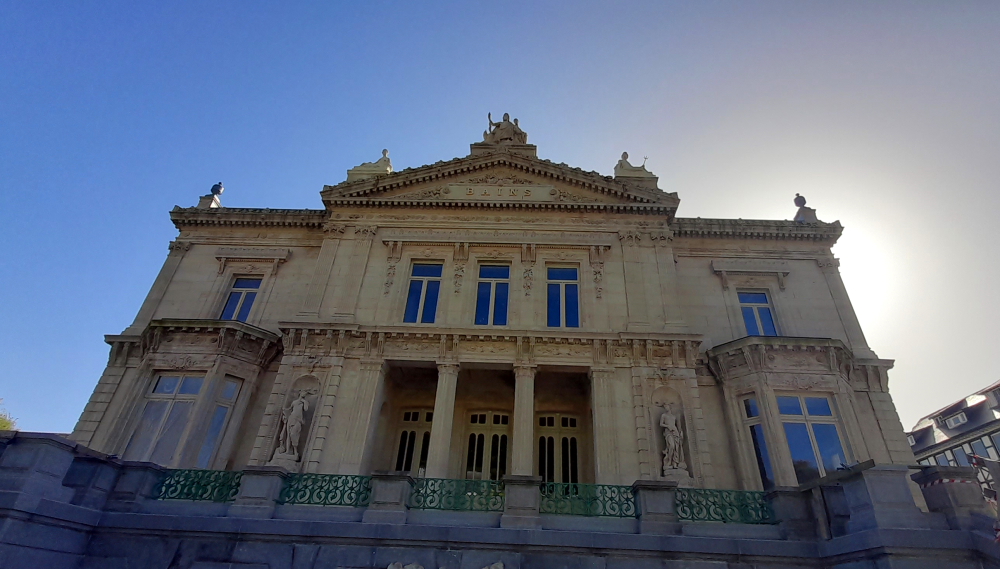
The old Spa thermal baths, or Bains de Spa, are located in the center of town and were the 3rd spa baths built in the town. The imposing two-story building is built in a French neo-Renaissance style to the plans of architect Léon Suys.They have been part of the exceptional heritage of the Walloon Region since 2016 and UNESCO World Heritage since 2021.
Under the leadership of Mayor Servais, these thermal baths were inaugurated in1868 on the Lezaack meadows. This was a first-class hydrotherapeutic set which cost the very significant sum for the time of 1,500,000 Belgian francs. These thermal baths hosted up to 167,182 thermal operations per year (in 1967).
Originally, this establishment had 52 bathroom cabins with 54 bathtubs, 2 large high-pressure shower rooms, 2 large ordinary and hydrotherapeutic shower rooms with immersion basins, 2 actual hydrotherapy rooms, 2 rooms for circle showers, seat showers and foot baths with running water as well as 2 plunge pools. Subsequently, numerous modifications were made in order to modernize the establishment.
After 135 years of operation, these baths closed their doors in 2003 and were replaced by a modern establishment (the fourth thermal baths) on the hill of Annette and Lubin – the current Thermes accessed by the funicular.
Along the street is the current Spa Casino. In 1762 when it was built it was called La Redoute de Spa. Today, the Spa casino is considered to be the oldest casino in the world.
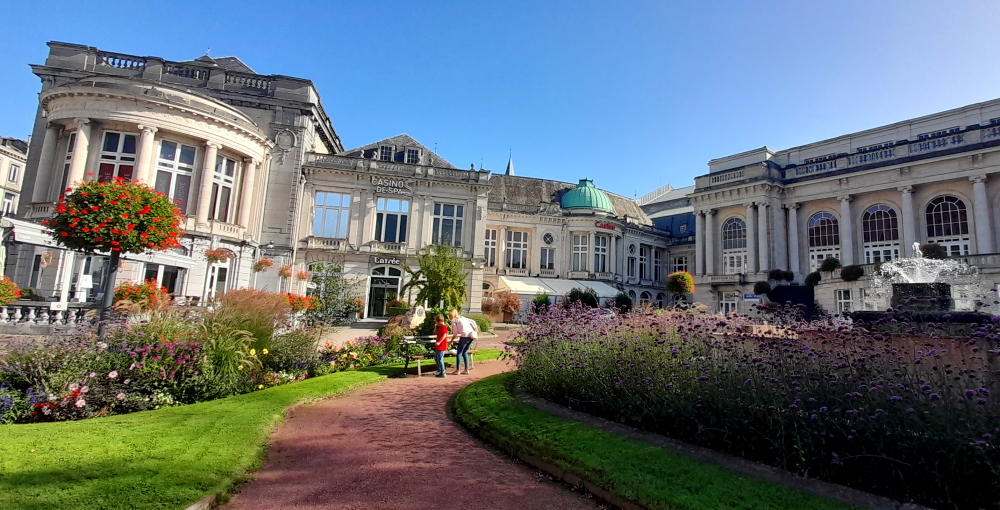
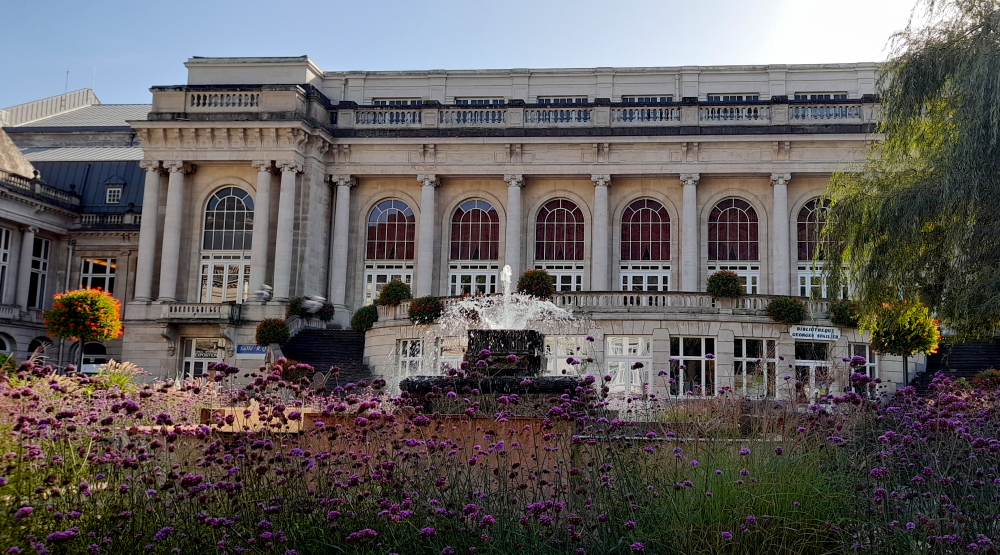
In 1762 construction was entrusted to the renowned Liège architect, Barthélémy Digneffe (1724 – 1784), and to Italian decorators specialized in palace decoration. The Redoute de Spa was, according to contemporaries, the prettiest and best maintained assembly house in Europe. It is then described as a “delicious white and gold candy box”. It included a ballroom, a theater and a games room. In 1918 it was rebuilt several times following fires. In 1980-1981, the Casino regained its former splendor thanks to renovation work.
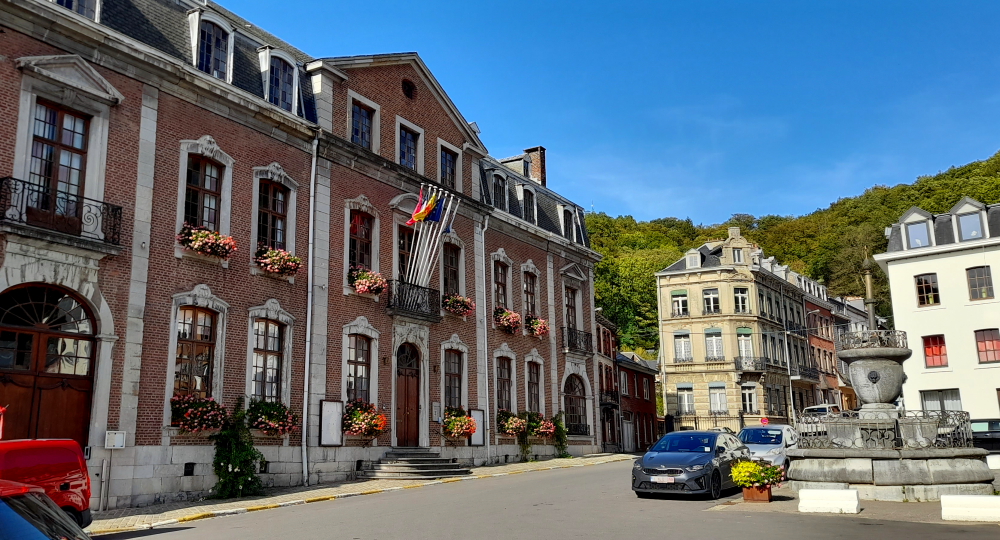
It’s now close to 3:00 pm so we walk back to the Hotel de Ville. A Louis XVI style building, the work of the architect Digneffe, the Town Hall was built in the years 1762-1768. In the 18th century, it welcomed the great Lords who came to take the waters as it was then “The Grand Hotel”. In 1822, it became the property of John Cockerill who transformed it into a card and pin factory. Today, this building houses the administrative services of the Municipality. Opposite the entrance to the Town Hall stands the PERRON de SPA, emblem of the municipal franchises granted to the Town by the Prince Bishop of Liège in 1594.
It’s now 3:15 pm so time to drive back to the hotel to check in. Lynn takes to heart the credo, “When in Spa, spa” and books a spa treatment available at the hotel for Monday. As the bar offers snacks we decide that will do for dinner tonight.
Before we retire the world news is that Hamas has attacked Israel from Gaza and Israel’s PM has said “We are at war”. Just what we need, yet another war on this beleaguered planet of ours.
8 October, 2023
The hotel was fully booked last night which is evident when we arrive at breakfast. Pandemonium!
After breakfast I catch up with who won Bathurst this year. Shane van Gisbergen, 3rd year in a row, and a fitting send off as he will leave V8 Supercars in 2024 for a career in Nascar.
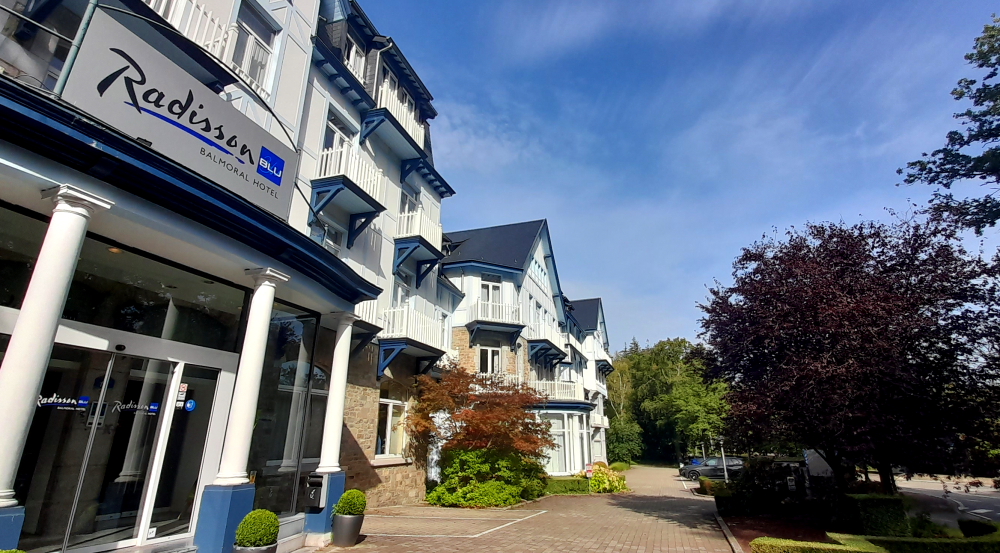
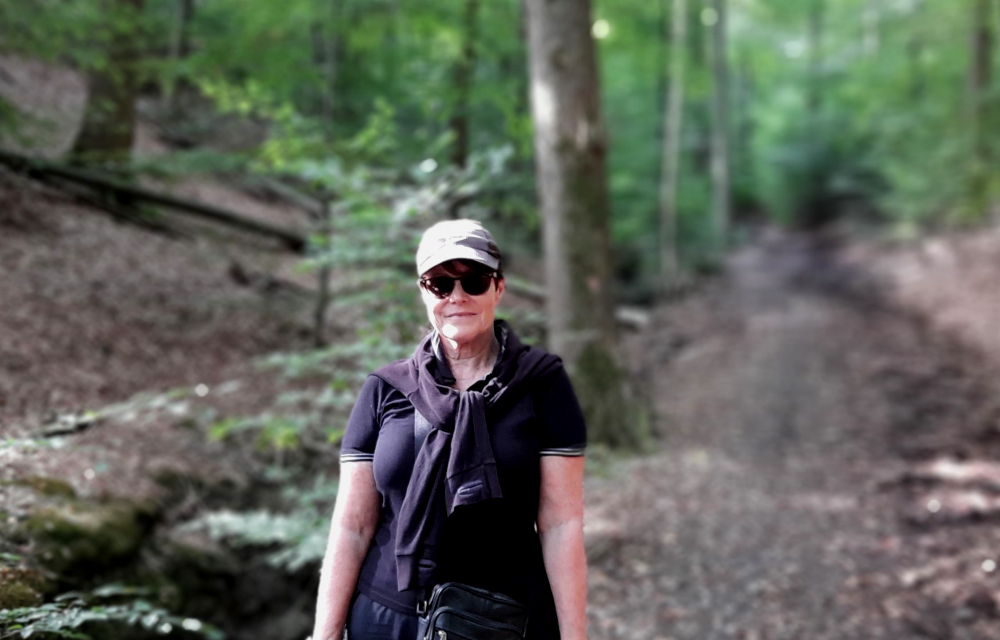
As it is such a nice sunny but cool morning we decide to circumnavigate the nearby Lac de Warfaaz which takes a 10-minute walk down a steep woodland path to reach the lake.
According to Wikipedia: “The lake Warfaaz is an artificial lake located in Wallonia near the thermal city of Spa in Ardennes, Belgium. The dam was built in 1892 on the Wayai river. The water volume is 360,000 m³ and the area is 0,08 km². It is a tourist attraction, with water sports, including pedalo and fishing.”
Not today, it isn’t! Reeds everywhere with just a trickle of a stream snaking its way through the vegetation.
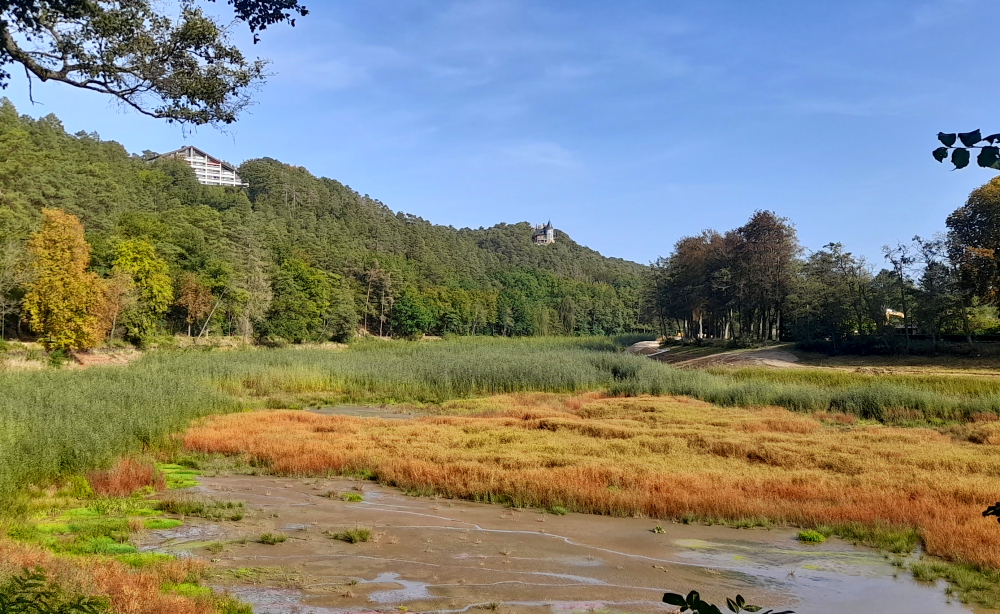
In fact, the lake edge is so dry that a road is being bulldozed along the lake’s perimeter.
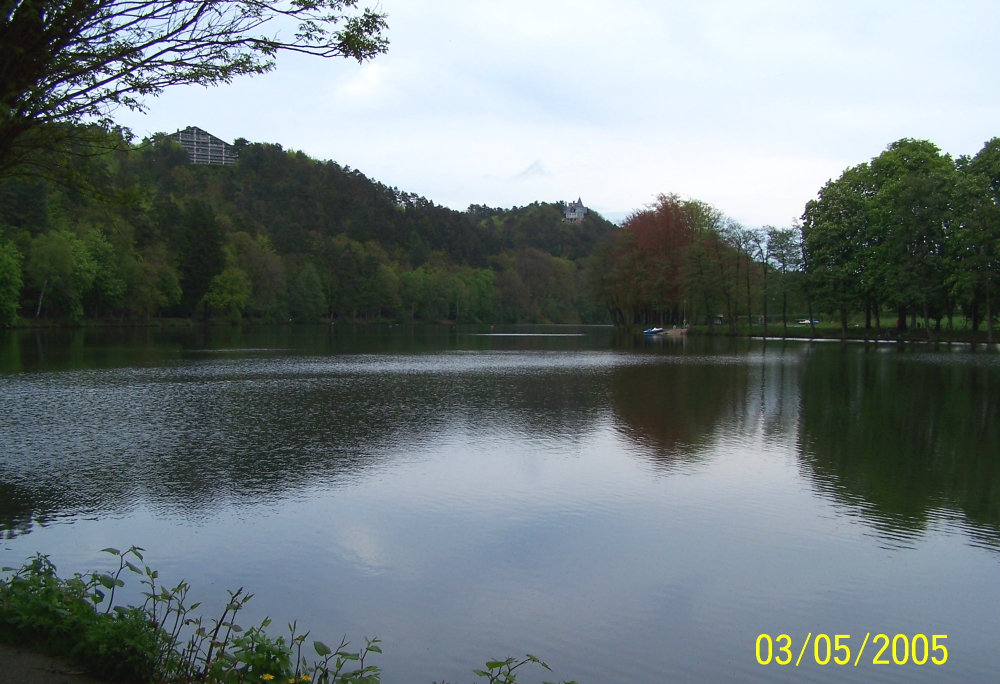
As for pedalo and fishing, forget it!
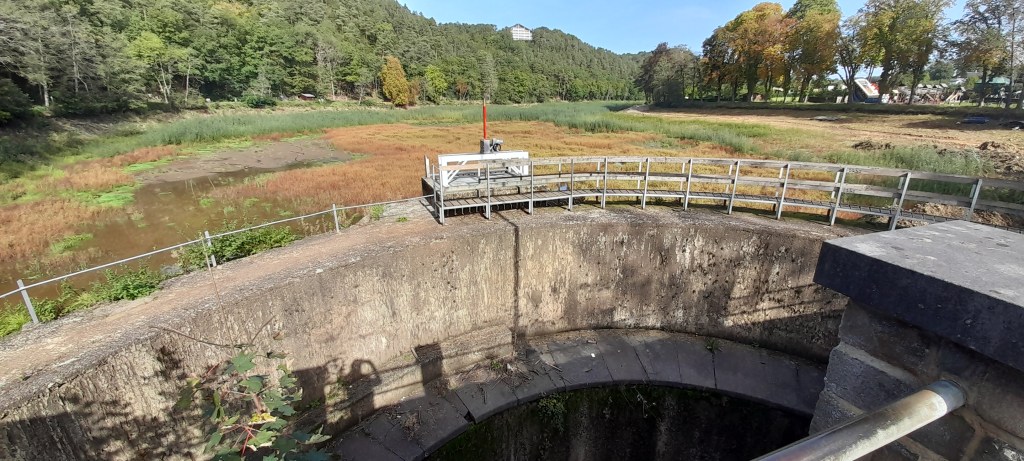
It appears that the pedalo kiosk has been closed for quite some time and various businesses are for sale. Really disappointing to see.
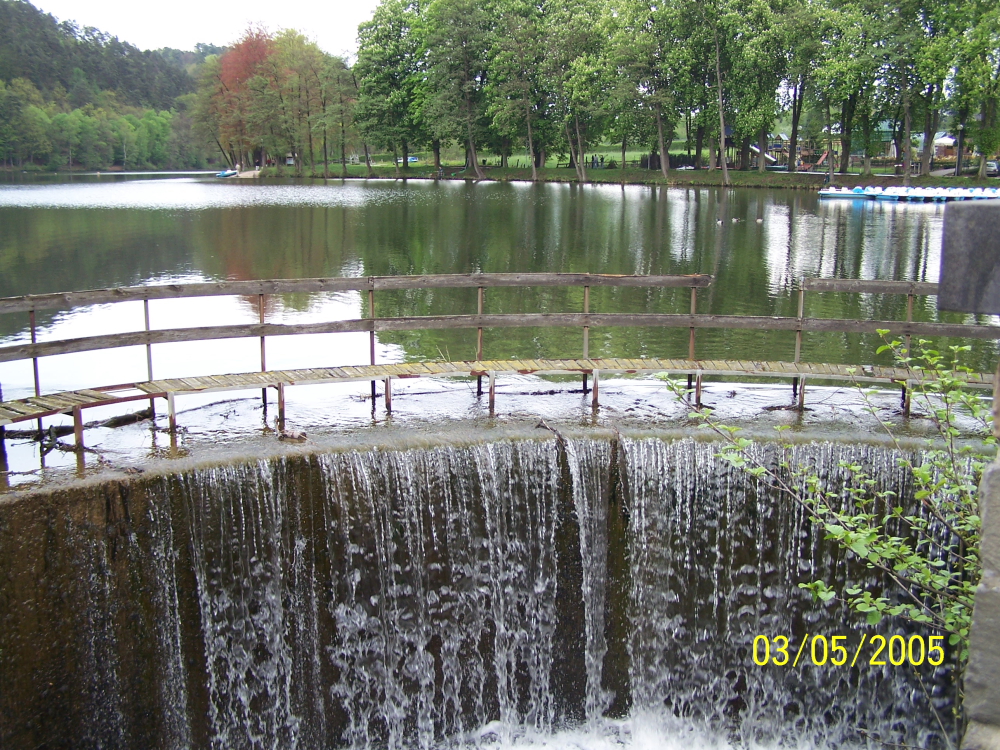
After about an hour out walking around the lake, we return to do some accommodation bookings for Wales for our trip there in February. Then we have an early dinner in the bar. Only us and 2 others, compared to the evening before when the place was noisy and heaving.
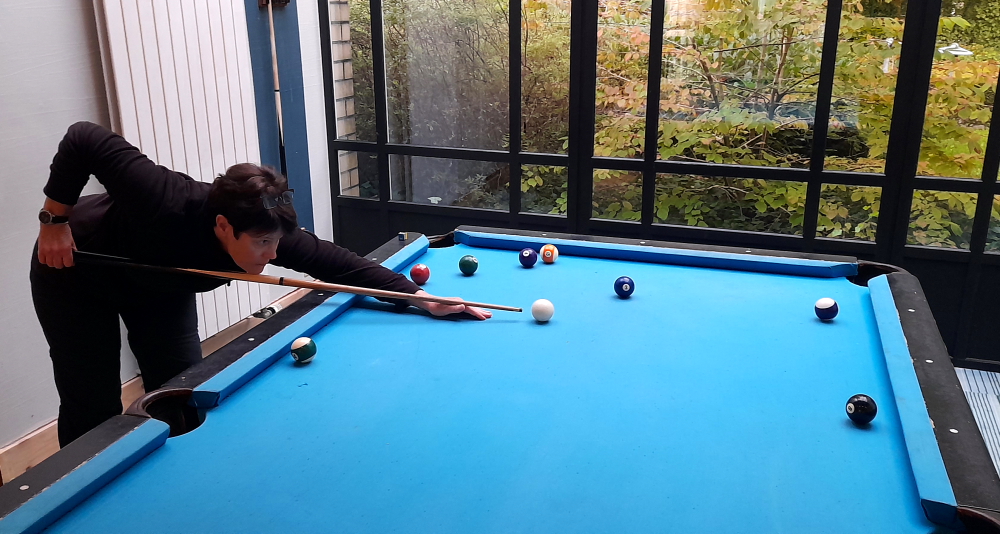
Time for a game of pool while we wait for our meal to arrive. Four years ago in the USA – a long time between games.
9 October 2023
This morning we virtually have the restaurant to ourselves for breakfast. Lynn has her massage this afternoon at 12:30 pm and while she’s away I’ll crack on with finalising our Wales bookings.
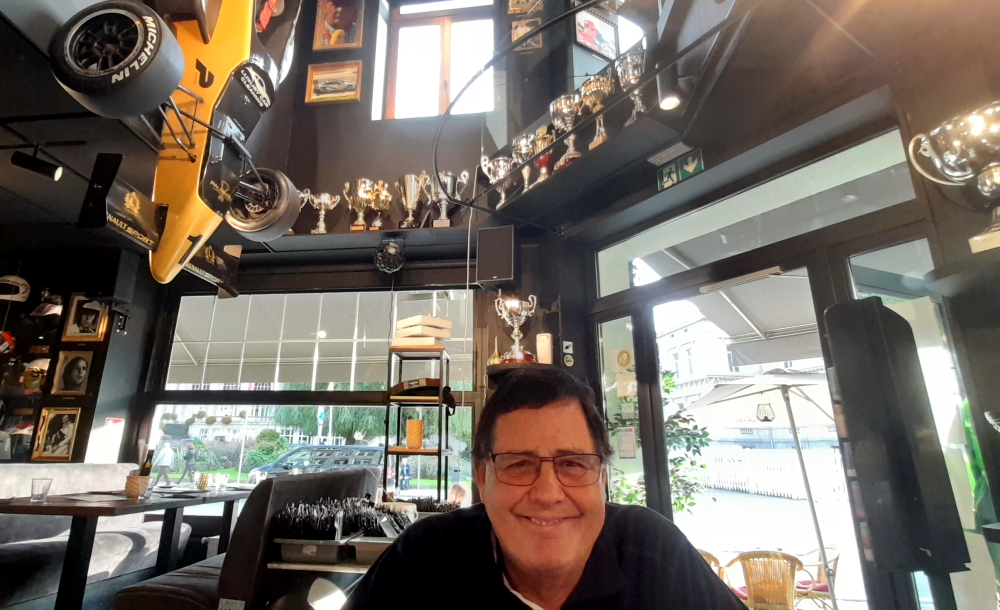
Tonight we head downtown to the restaurant area in Spa. Since it is Monday evening most of the restaurants are closed so we don’t have much choice. We settle on the busiest bar/restaurant. If it’s good for the locals then that will suit us. Since we are fairly close to the Spa Francorchamps Grand Prix race track it’s not surprising to see the bar is adorned with lots of memorabilia. Still, the food is good and reasonably priced.
Tomorrow we are heading east back into Germany as we start the second half of this Northern Europe trip.
10 October, 2023
Today we are driving 157 kms NW from Spa to Antwerp, a 1 hr 45 min drive, to meet up with an old friend of mine, Luc, and his wife, Ilse.
I first met Luc 20 years ago when we both attended an ANZ Bank training offsite.
When I came to Europe in 2005 we met up in Sint Nicolas, Belgium and toured Ghent, Bruges, Brussels and the Champagne region of France.
We get away at 8:30 am, half an hour earlier than planned, expecting to arrive at 10:15 am, but thanks to regular, long tailbacks we don’t arrive at the underground parking garage until 10:45 am.
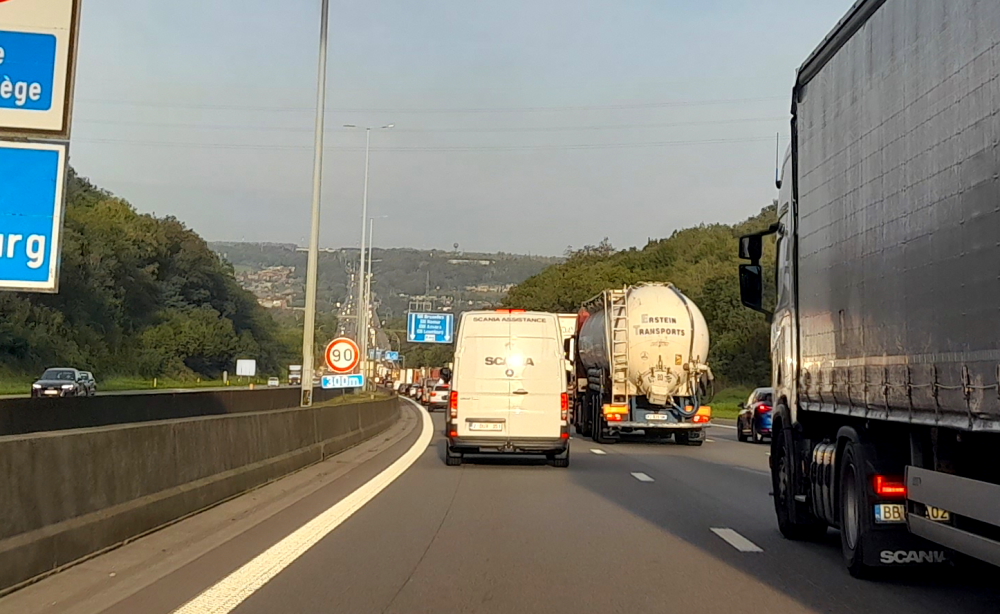
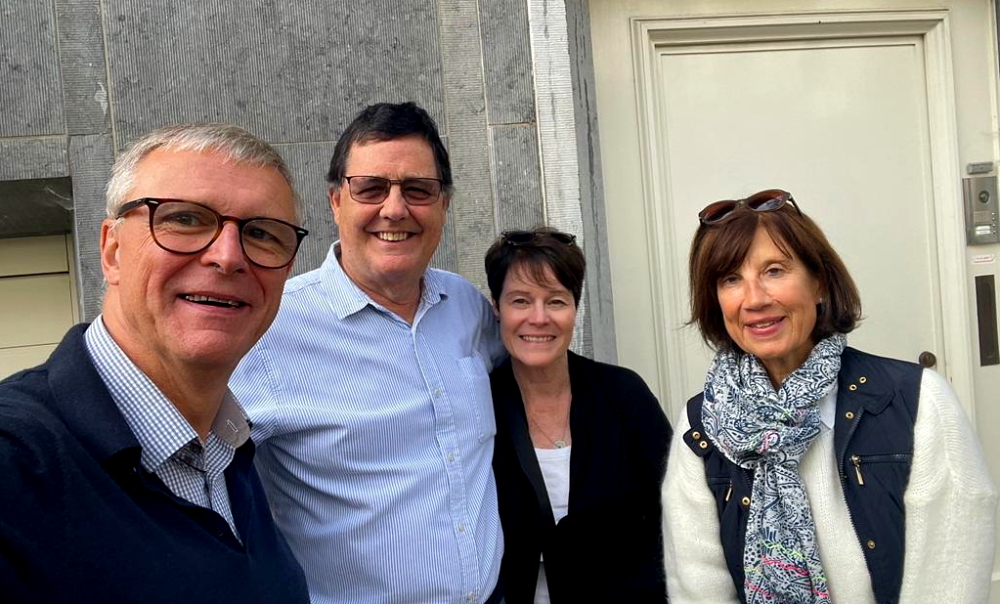
A 15-minute walk later we are knocking on Luc and Ilse’s front door.
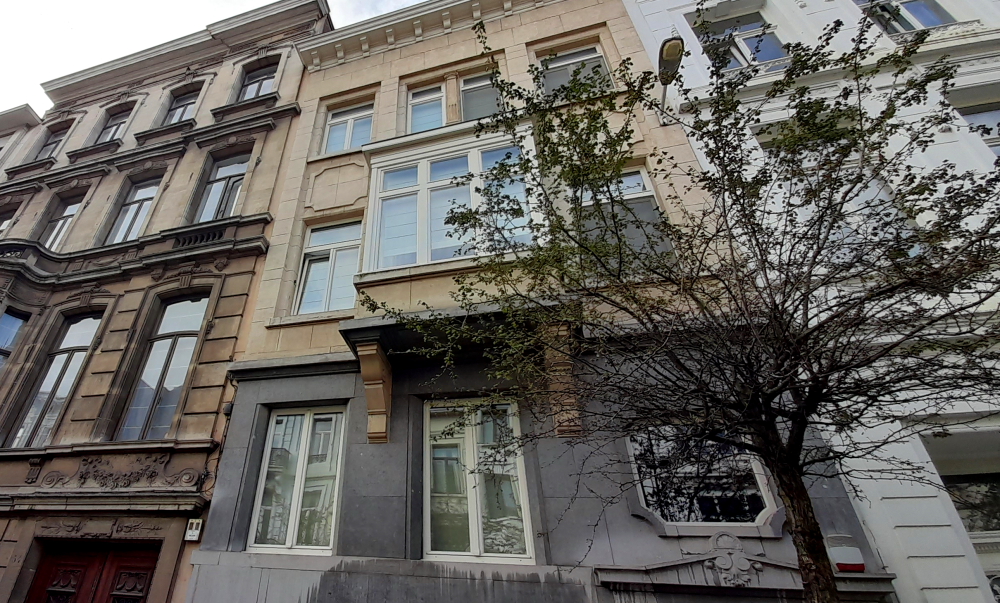
After a quick morning tea, we all head out the door for a walking tour of the town.
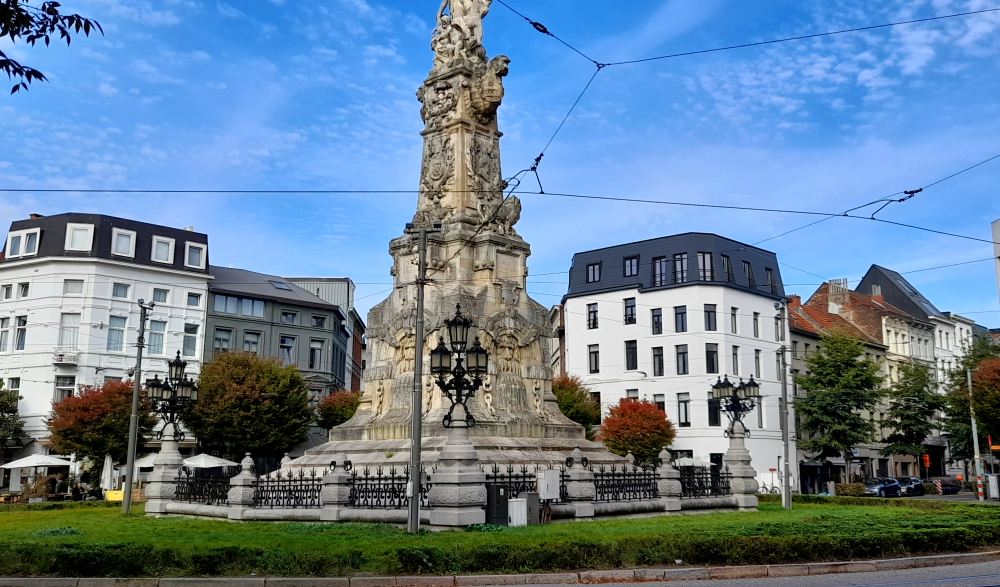
At the end of street, on the Marnixplaats, is the Schelde Vrij monument. The statue was designed in 1873 by architect Jean-Jacques Winders, in collaboration with the sculptor Louis Dupuis (lions and medallions), Jacques De Braekeleer, (Neptune and Mercury) and Frans Floris (female figure). The monument was completed in 1883.
The monument entitled “Schelde Free” commemorates the lifting of the blockade of the Scheldt (River), which lasted from 1585 to 1863.
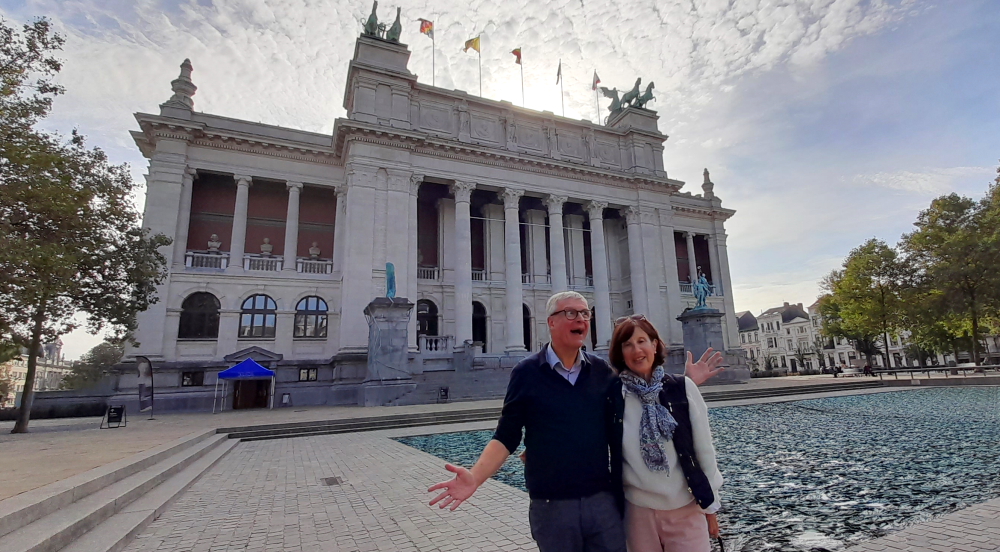
From there we walk past the KMSKA – the Royal Museum of Fine Arts.
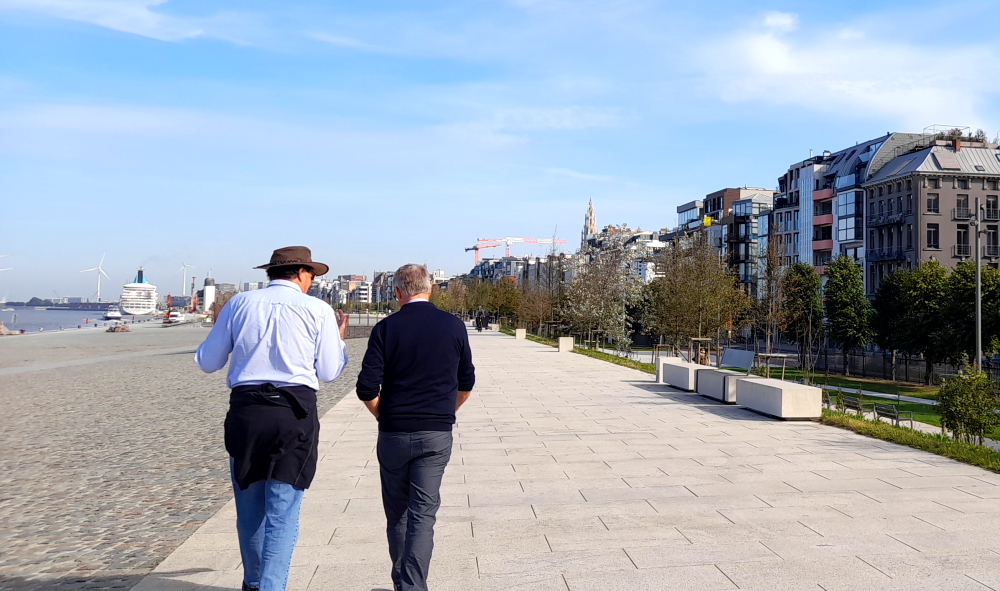
Then onto the redevelopment of the river promenade. This area was, until quite recently, the usual industrial docklands found in any port city. It is now being redeveloped by building parklands above underground car parking spaces. The area has become beautiful city living space.
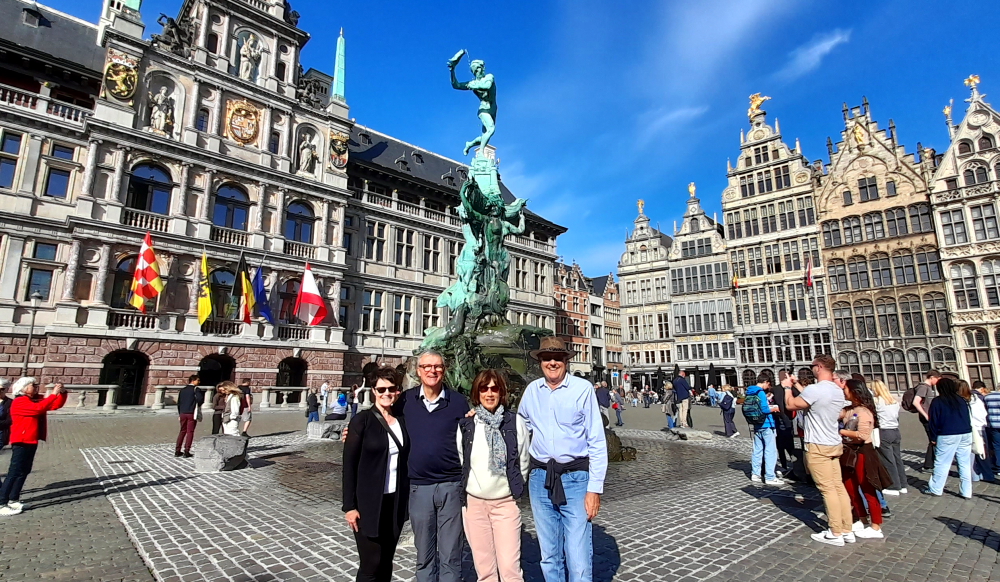
From there we work our way towards the beautiful City Hall (Stadhuis) in the large, market square. The town hall is on the UNESCO World Cultural Heritage list as part of the group registration Belfries in Belgium and France. A Renaissance building, designed by the architect Cornelis Floris De Vriendt, it was built between 1561 and 1564.
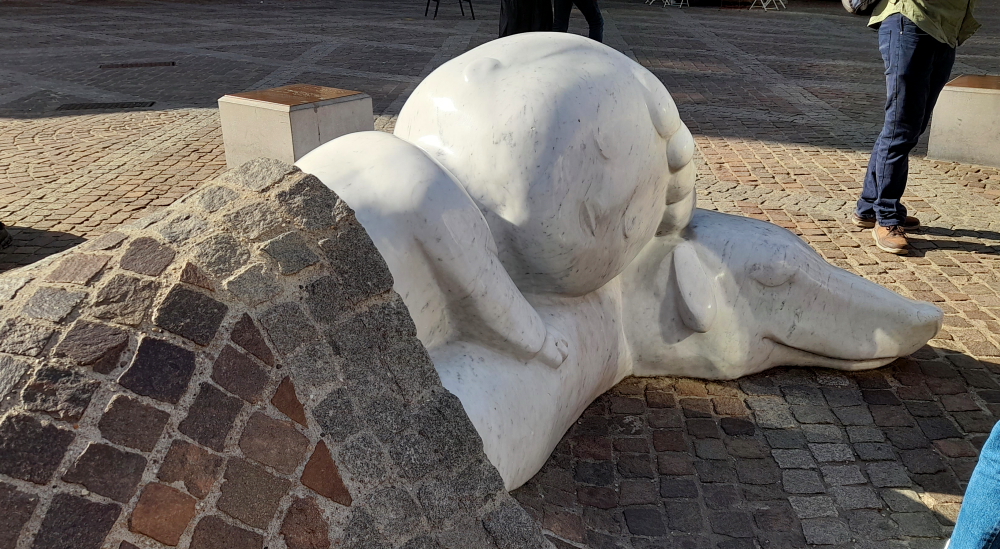
Close by is a prone sculpture using the cobblestones as a blanket. It is a tribute to the novel “Nello and Patrasche” by Oulda, about the misadventures of young Nello and his dog, Patrasche. Apparently these characters are famous in Japan with Japanese tourists querying unsuspecting, and unaware locals, about the location of the sculpture.
The Cathedral of Our Lady is a Roman Catholic cathedral. Today’s See of the Diocese of Antwerp started in 1352 and, although the first stage of construction was ended in 1521, has never been ‘completed’. In Gothic style, its architects were Jan and Pieter Appelmans.
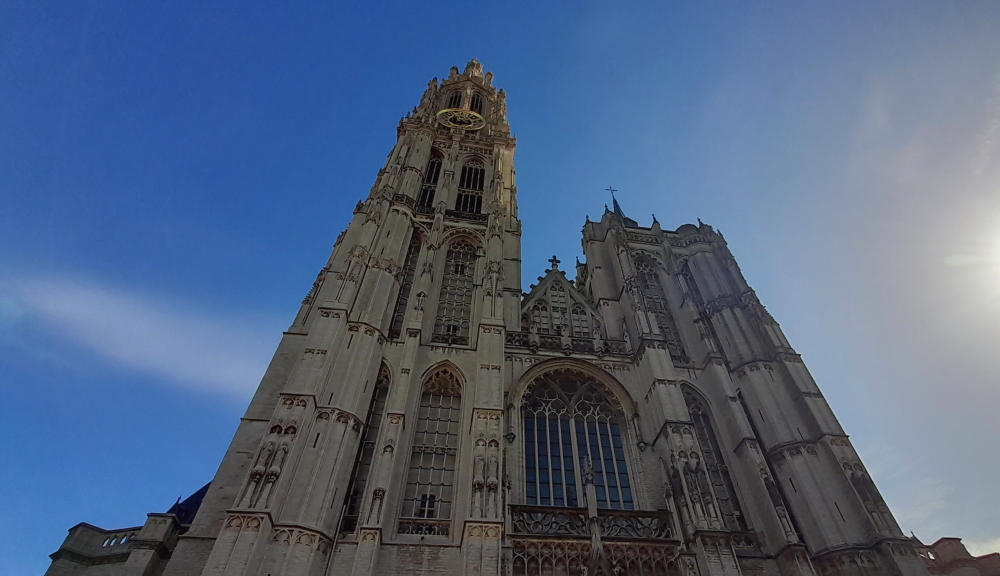
It contains a number of significant works by the Baroque painter Peter Paul Rubens, as well as paintings by artists such as Otto van Veen, Jacob de Backer and Marten de Vos. The belfry of the cathedral is included in the Belfries of Belgium and France entry in the list of UNESCO World Heritage Sites.
Today the Cathedral is also a Museum, charging Eu12 per person, so we forego the pleasure of viewing the Rubens’. The last time I was here in 2005 the entry was free. Make your own call about the necessity of a fee for maintenance or that the artwork should be in a free gallery for all the people to view their own artworks.
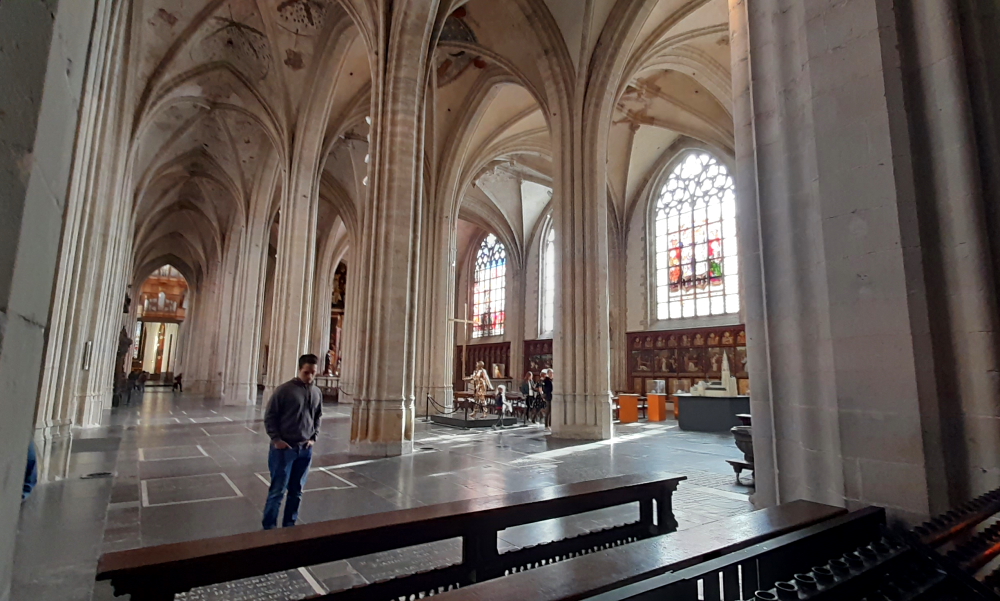
Next we walk to see the St Charles Borromeo Church – a former Jesuit church where Ilse is a guide.
The church was built in 1615-1621 as the Jesuit church of Antwerp, which was closed in 1773. It was rededicated in 1779 to Saint Charles Borromeo. The church was formerly known for 39 ceiling pieces by Rubens that were lost in a fire when lightning struck the church on 18 July 1718.
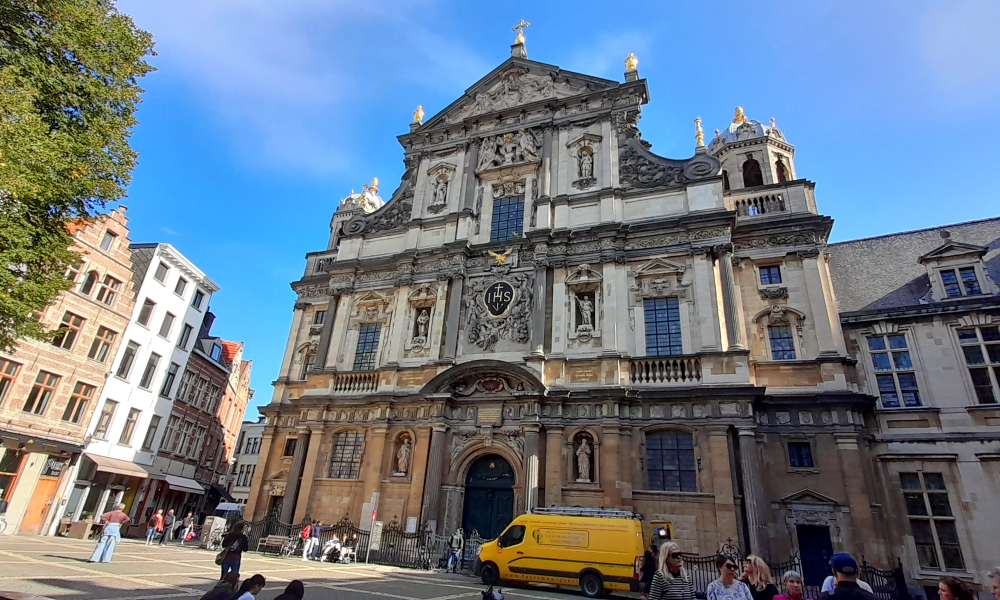
The church was inspired by the Church of the Gesu, the mother church of the Society of Jesus, a Roman Catholic religious order also known as the Jesuits. It was the first church in the world to be dedicated to the Jesuit founder, Ignatius Loyola.
In 1773 the Society of Jesus was suppressed and the building was confiscated. It reopened in 1779, renamed St.-Carolus Borromeuskerk, after Charles Borromeo, Archbishop of Milan (1564-1584) and leading figure of the Counter-Reformation.
Since 1803 the St.-Carolus Borromeuskerk has been in use as a parish church. During the Dutch reign preceding Belgium’s independence in 1830 the baroque interior was sobered to make it a Protestant church but a restoration campaign in the 1980s brought back the church’s baroque splendor.
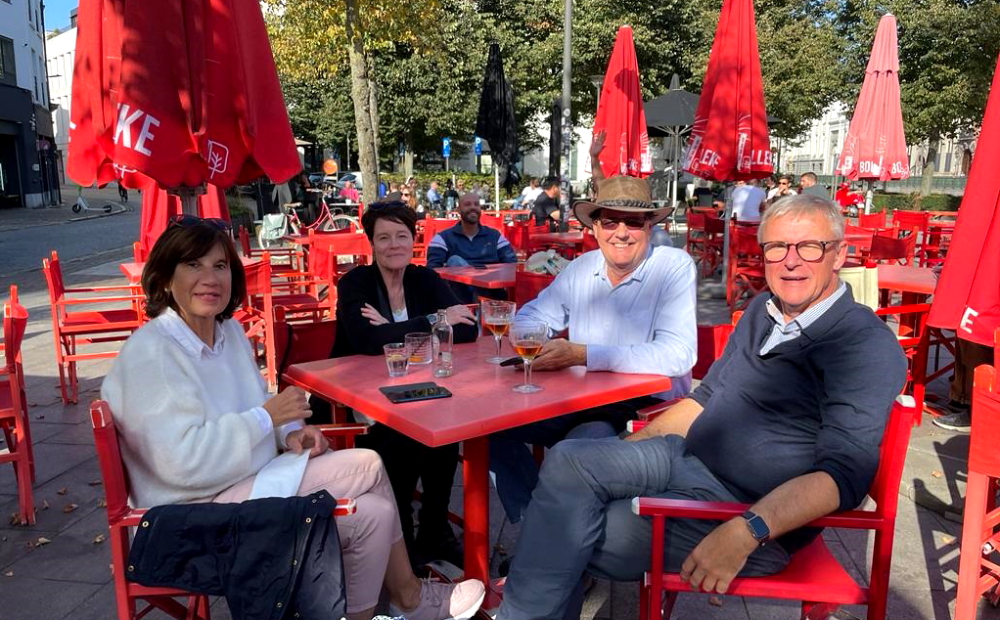
By now it’s well past beer o’clock so we head to a favourite outdoor lunch spot near the apartment.
Then return to apartment to enjoy delicious Lints’ tarts and champers on the balcony in the sunshine.
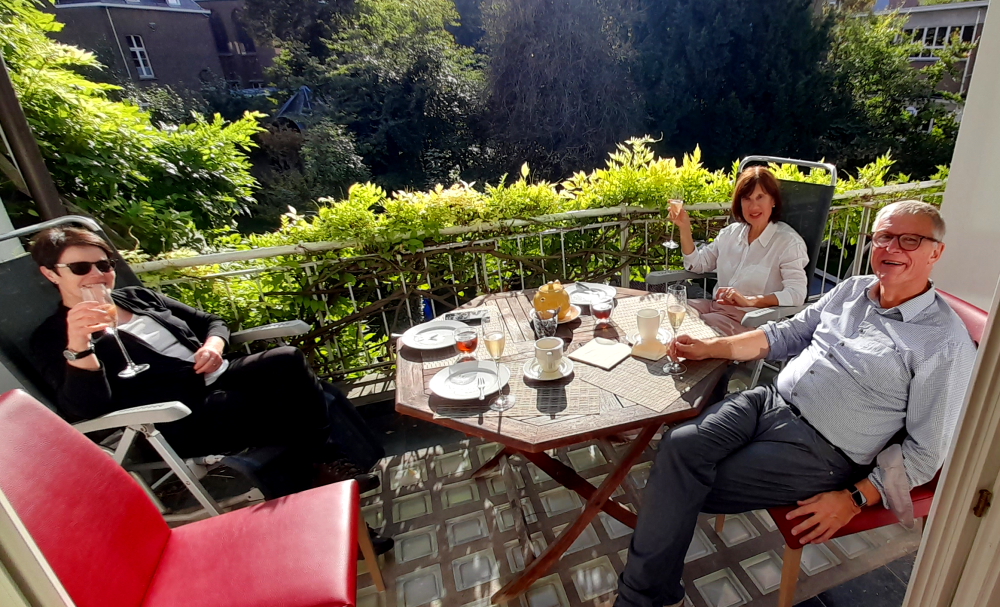
It’s been a brilliant day but now it’s 6:00 pm so we say our reluctant ‘au revoirs’ to our dear friends, with invitations for them to join us ‘somewhere in Europe’ over the next year or, failing that, to visit us in Brisbane.
Once again we sit in traffic jams on our return journey, losing 30 minutes to arrive back in Spa at 8:45 pm in the dark.
We latter learn that my granddaughter, Zara Elizabeth Edenhofner, is born today.
What a perfect day – a celebration of friends and family!
11 October, 2023
Our destination today is Hannoversch Munden, aka Hann. Munden, a 3.5 hour drive east into Germany, 380 kms away.
We leave the hotel at 11:20 am so we should arrive at our destination at 14:45 pm.
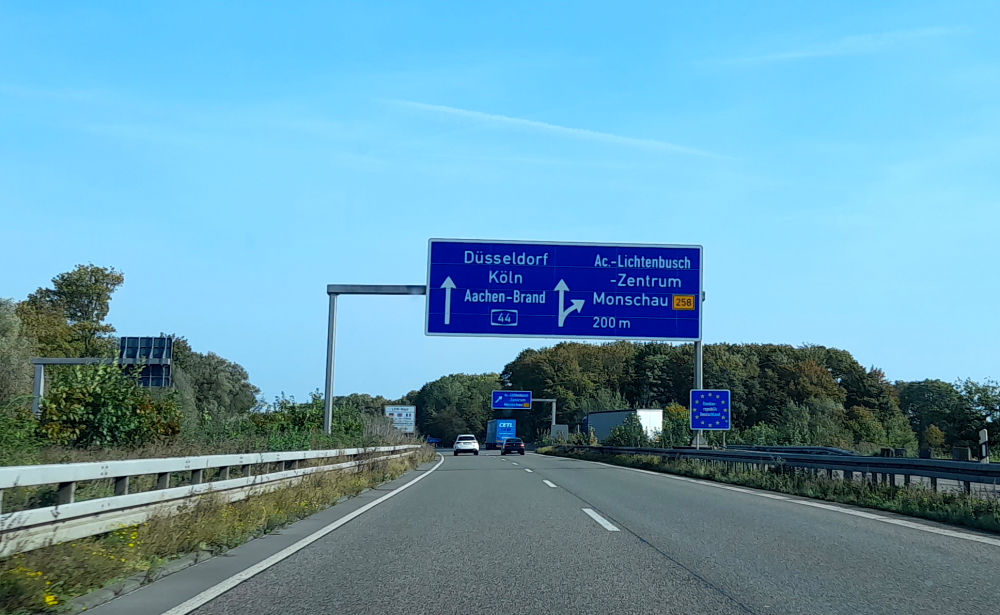
But, like yesterday, we are hit by “Stau” after “Stau” (jam).
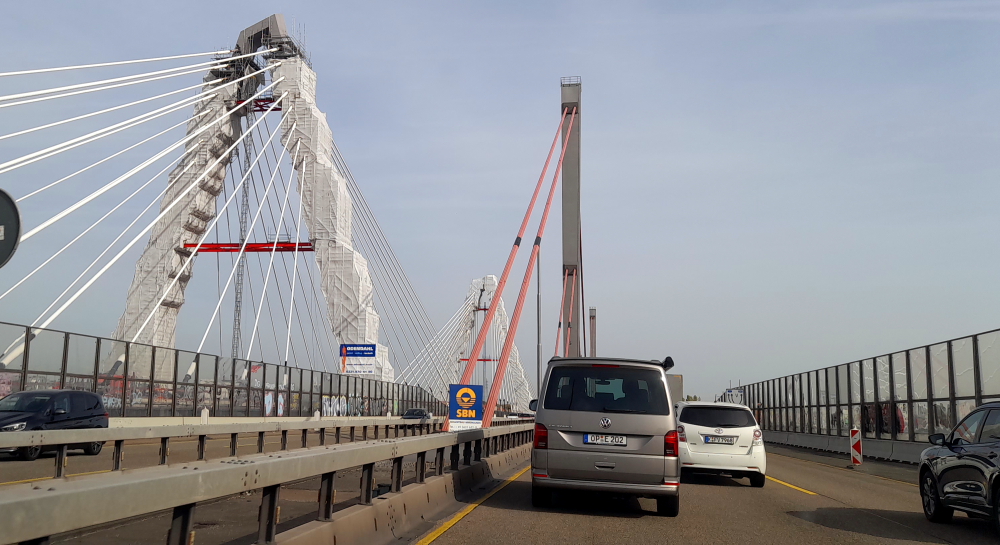
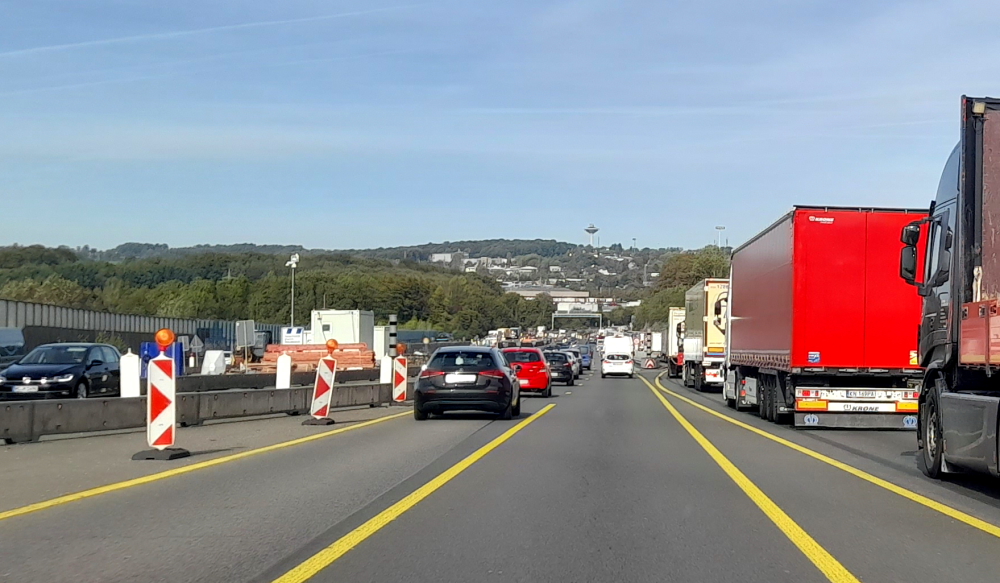
One jam seemed to be due to the road authority checking the weight of vehicles in various lanes, others due to road works past and present, yet others due to congestion. I think Europe has seriously lost the plot when it comes to road infrastructure and freight. The number of lorries far outweigh the numbers of cars on the road, with often the slow lane where lorries are restricted to is just one, long, car park. I’d hate to be a freight company owner. The costs and delays must be horrendous. Perhaps Greta Thunberg could reduce fuel consumption and CO2 emissions by getting her supporters to fix the roads in Europe.
It’s closer to 4:00 pm and a warm 23 Deg C when we finally pull up outside our hotel, having driven down a leafy, wooded road with hairpin bends into the town on the River Fulda.
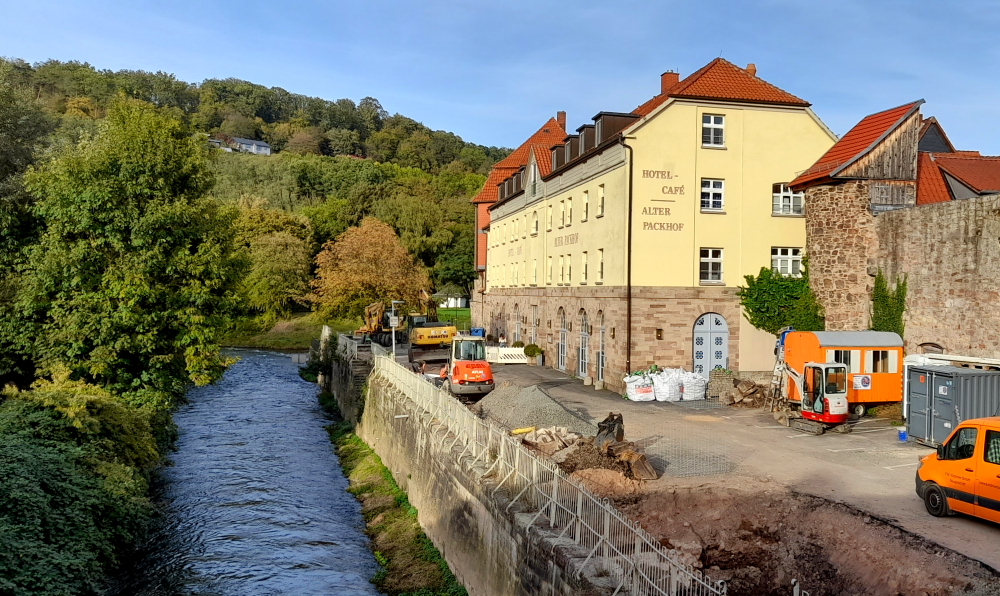
At the time we booked the hotel we were told about the imminent roadworks alongside which would make their outside terrace inoperable, but we were so taken by the hotel’s location and the quaint, half-timbered town that we still confirmed our booking.
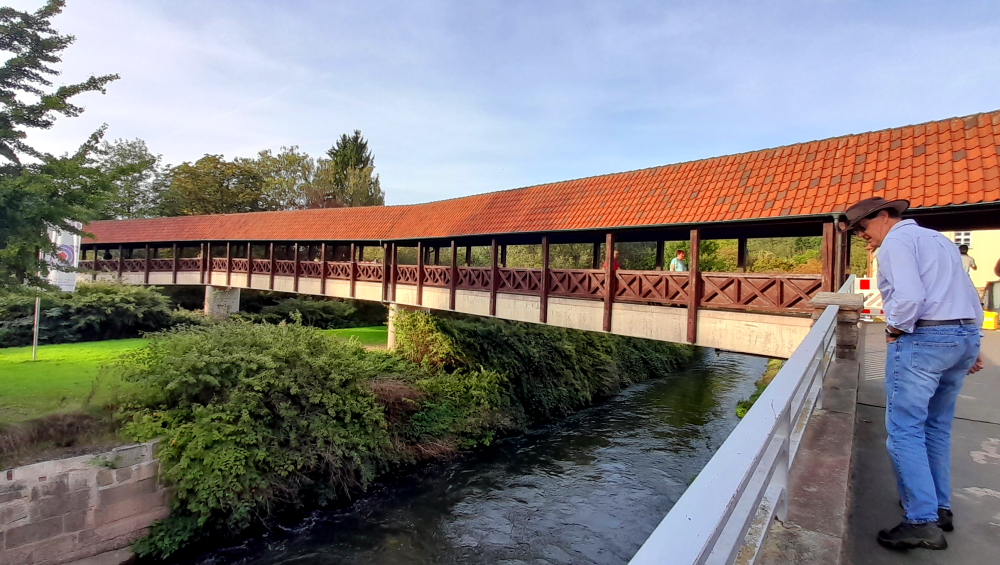
As rain is forecast for the rest of our stay we dump the bags and head out for a tour of the town.
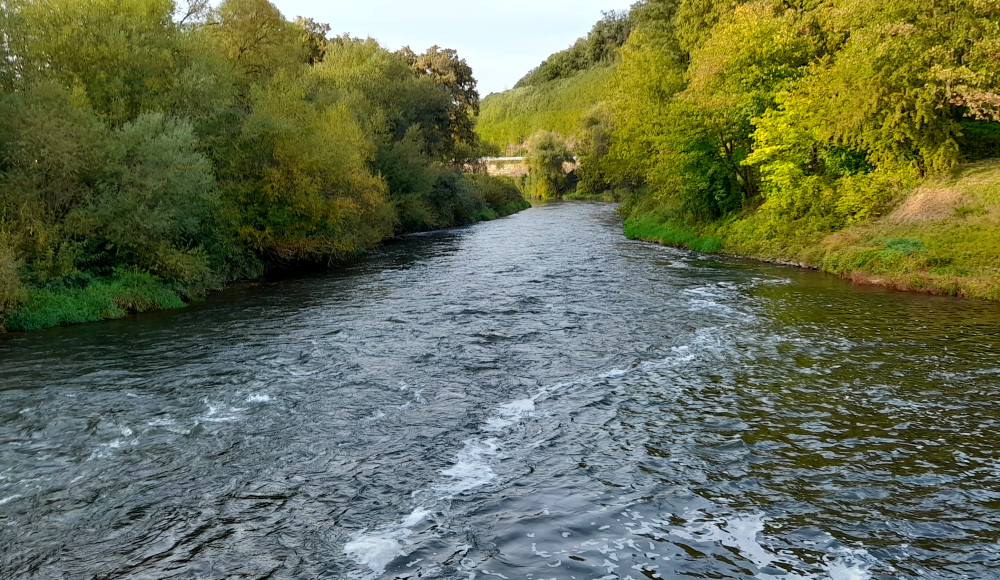
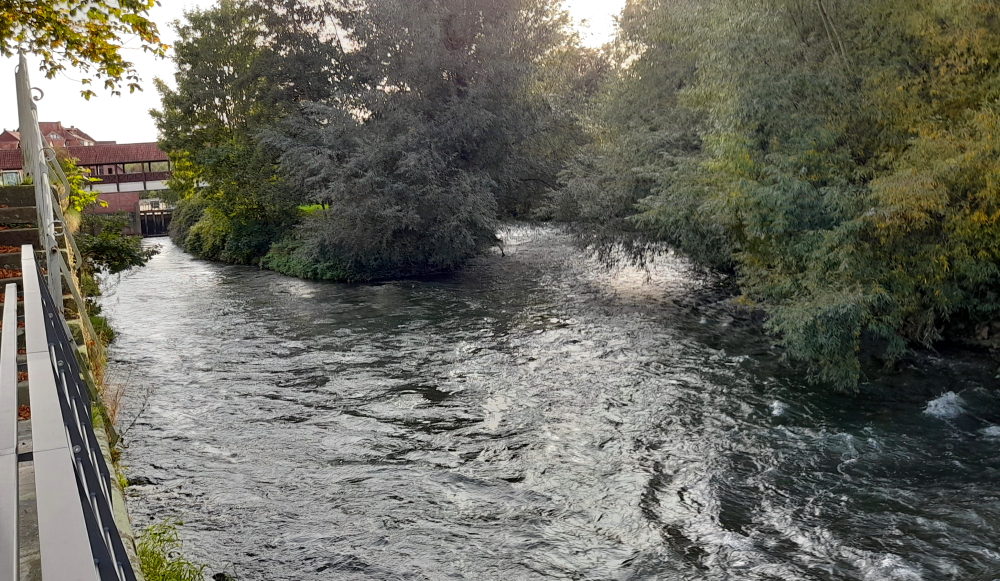
We discover that the hotel is located on the NW corner of the town where the rivers Fulda and Werra meet.
Hann. Münden (abbreviation of Hannoversch Münden ) is a medium-sized town and independent municipality in the district of Göttingen, southern Lower Saxony. The core town is a state-approved resort .
The village is located at the confluence of the Werra and Fulda to form the Weser. That’s why the city is also called the “Three Rivers City”. Alexander von Humboldt (German explorer and co-founder of geography as an empirical science) is said to have been impressed by the city’s location in the Weser valley. However, there are no written records of the often used Humboldt quote that Münden is “one of the seven most beautifully situated cities in the world”.
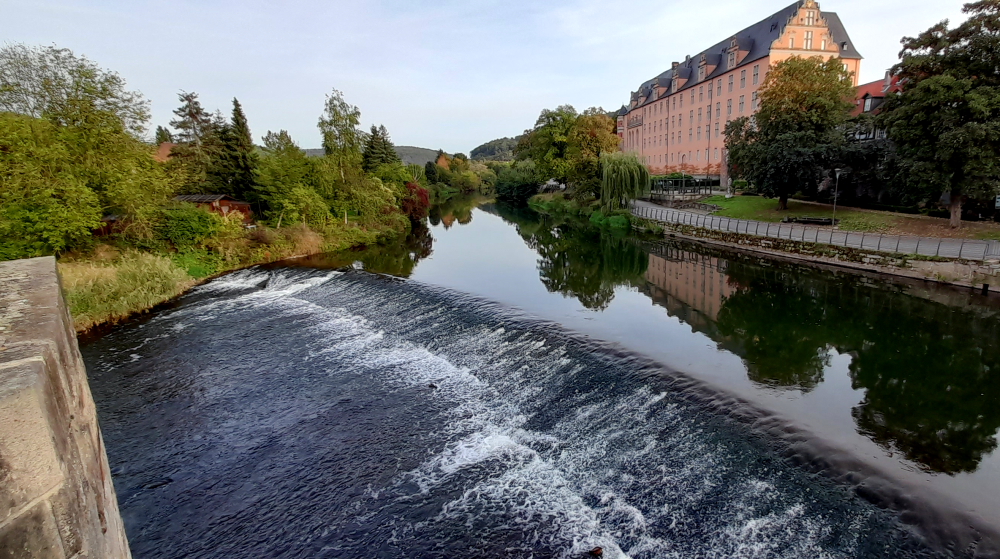
In the oldest document from the year 860, Münden is mentioned under the name Gimundin as already existing around 800. The city of Münden was probably planned and founded by Henry the Lion between 1170 and 1175. Around the year 1200, construction began on the Münden city fortifications as a city wall with city gates and wall towers.
The beginnings of today’s city probably lie in a fortified imperial farm on the current castle grounds. According to a foundation stone that was found after the castle fire in 1650, the castle is said to have been founded in 1070 by Otto von Northeim, meaning that the old Münden estate was owned by the Counts of Northeim.
In the 16th century, through the Weser trade, Münden was the most important trading town up to Bremen for goods, especially from Thuringia . Accordingly, the Schlagden (shipping piers) emerged on the western and northern edge of the old town as trading, transshipment and docking points on the Werra and Fulda shipping routes. On the Werra was the Wanfrieder Schlagd and on the Fulda were the Bremen and Kassel Schlagd, where the Packhof and Alten Packhof warehouses (our hotel) still exist today were built. The main items traded and transported on the Weser were woad, an important blue dye at the time, glass, textiles and rafts with wood and grain from Thuringia plus North Sea fish.
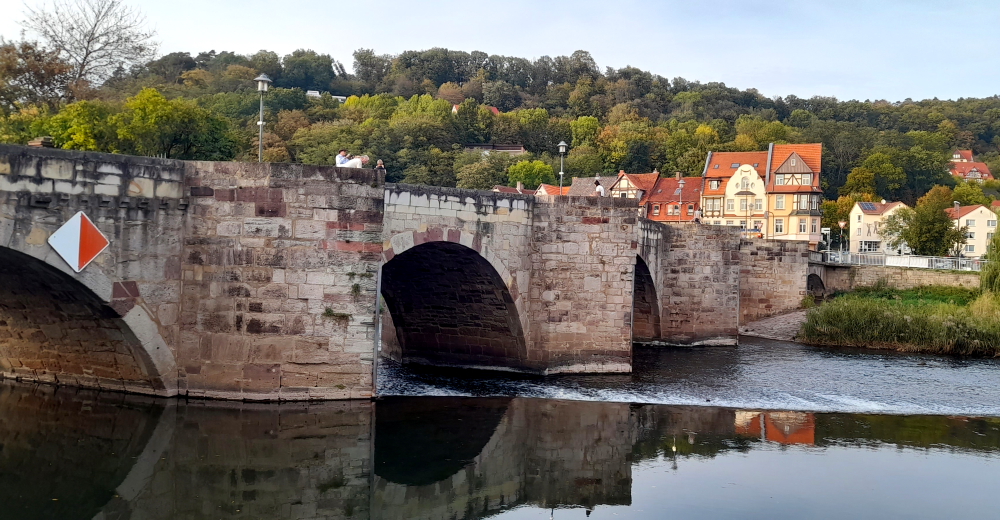
Through her marriage in 1525 to Erich I, Elisabeth of Brandenburg was granted Münden as her territory. Elisabeth came into contact with the ideas of the Reformation (Protestantism) early on and brought the reformer Antonius Corvinus to Münden. After the death of Erich I in 1540, Elisabeth took over the reins of government as guardian of her son Erich II, who was still a minor, and ruled from her residence in Hann. Münden until 1546.
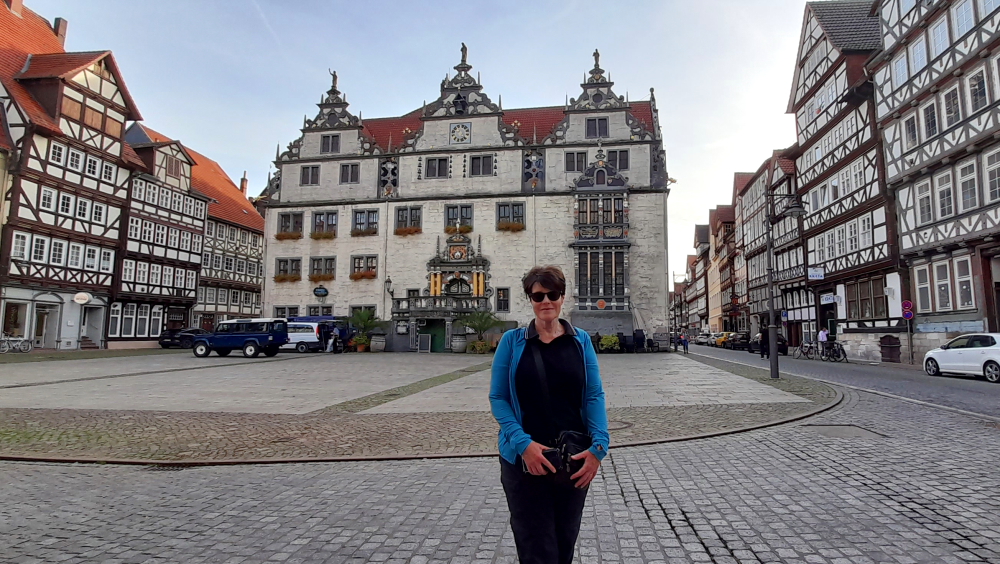
During the Thirty Years’ War the city was destroyed in 1626. During the Seven Years’ War, the city was repeatedly occupied by French troops between 1757 and 1762 who built the French redoubt on Questenberg .
In 1776, almost 20,000 Hessian soldiers embarked from Münden, which the Landgrave of Hesse-Kassel Frederick II handed over to the Hanoverian Elector and King of Great Britain, George III. They were used in combat against American troops in the American Revolutionary War. The soldiers were also repatriated via Münden in November 1783, but barely more than half came back.
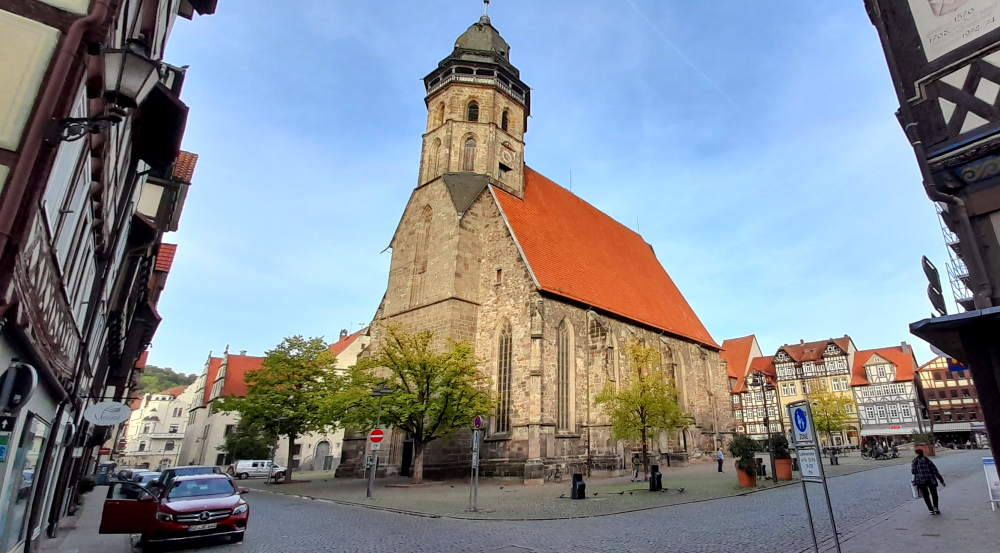
On March 30, 1933, Adolf Hitler was granted honorary citizenship of the city. It was only 75 years later, on March 27, 2008, that this honorary citizenship was unanimously revoked by the city council.
As part of the “Action Against the Un-German Spirit”, some National Socialist students from the forestry faculty staged a book burning in the market square on May 10, 1933, as in many other places in Germany .
Already on November 8, 1938, considerable pogrom damage to property was committed in the Münden synagogue and the Torah scrolls, prayer books and mantles were publicly burned on the Tanzwerder. In 1942, the remaining Jewish citizens were deported to concentration camps where 126 people died.
With a few exceptions, Münden was spared from the direct effects of war. On May 17, 1943, the city was hit by a tidal wave caused by the bombing of the Eder Dam in Operation Chastise (The Dam busters raid).
Two air raids on Münden took place on March 30 and 31, 1945; 32 people were killed and 50 seriously injured. On 5 & 6 April 1945, shortly before the arrival of the advancing American troops, German pioneers blew up all the bridges in the city except for the historic Werra Bridge, especially the Werra Valley Bridge on the Reichsautobahn.
On 6 & 7 April 1945, American troops took part in the battle for Münden. According to the Allied agreements, the city was in the British zone of occupation, and on May 20, 1945, British soldiers moved in.
In the hotel room there is a brief summary of the history of the hotel building. Most of its life it was a warehouse but in 1938 it was a Hitler Youth Home then in 1946 it became a refugee camp then a city archives storage before being converted to the current usage as a hotel in 1998.
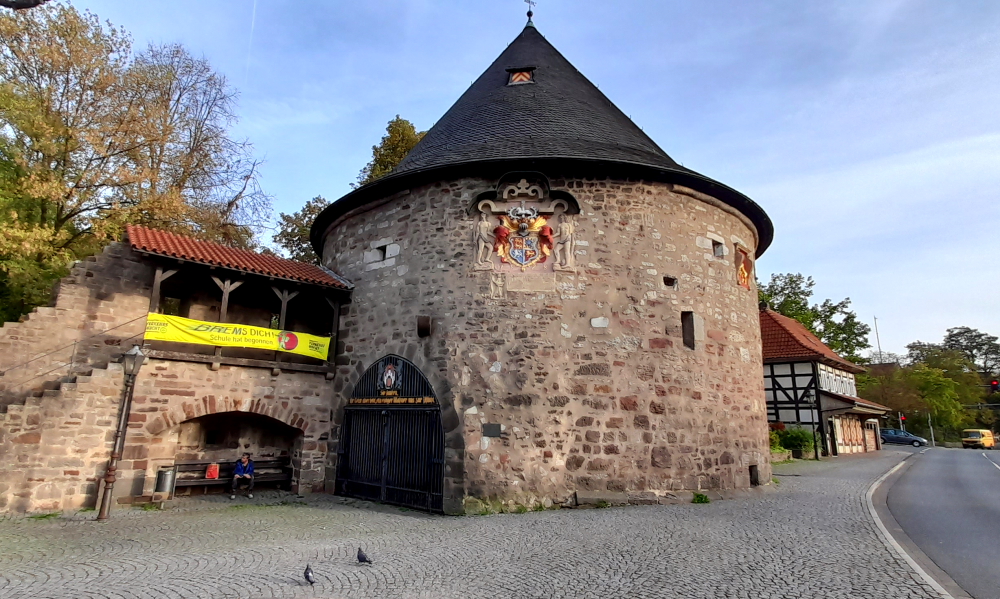
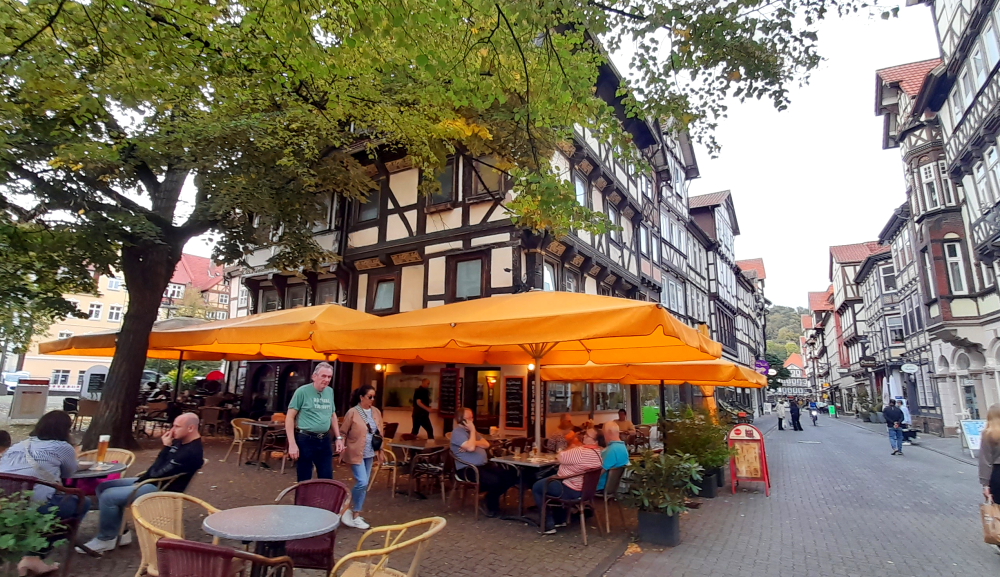
After we traverse all the north-south streets in the grid-based town we decide it’s time for dinner and opt for traditional German meals.
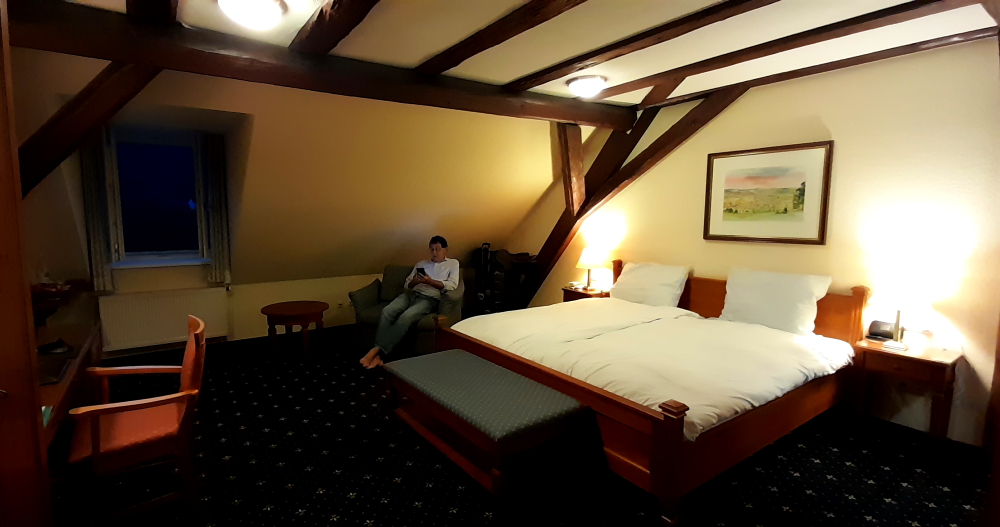
Back in our spacious 3rd-floor hotel room we open the window so that we can fall asleep to the gurgling sound of the fast-flowing river below.
It has been a lovely walk around the town looking at the amazing old buildings and cobbled streets. Perhaps we should have planned to stay here a little longer. This little town is highly recommended.
 THE CONTINUING TRAVELS OF YOGI & BOO BOO