Category Archives: Belgium

Spa and Antwerp

7 October, 2023

A sunny but cool 18 Deg C morning as we collect the car from the underground car park and depart Brussels at 10:55 am. As it’s an hour and 20 minute drive we should arrive in Spa at 12:15 pm.

Which is the case. But, we are reminded that check-in is FROM 3:00 pm so we leave our cases at reception and drive the 5 minutes into town and park in front of the Hotel de Ville (not to be mistaken for an actual hotel, but rather the Town Hall).
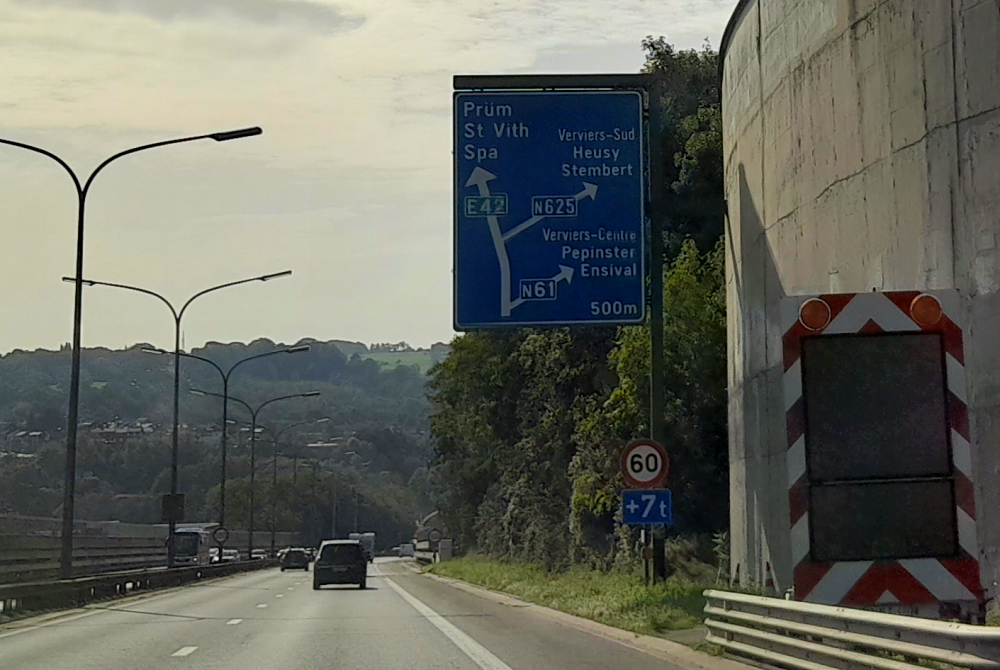
In the Belgium hills near Spa.

Despite being known internationally for the Francorchamps motor-racing circuit, the town of Spa is above all a cradle of balneology. In English and other languages, this practice has been given the generic term of “going to a spa”.

Going back to the writings of Pliny the Elder, the watering point was already well known during the time of the Romans for its healing effects. But it was not until the 14th century that an actual urban centre sprouted up around the springs of ferruginous water, the most famous of which is still called Pouhon Pierre-le-Grand to this day.

The town reached its peak during the 18th century. In 1717, a visit by Tsar Peter the Great made the springs in Spa famous all over Europe. Joseph II speaks of Spa as the ‘Café of Europe’’. After that, nobles from all over the continent came for a stay every summer, creating a unique atmosphere. Spa became one of Europe’s definitive spa towns alongside other prestigious towns like Bath and Vichy. Today, it is recognised as a ‘Great Spa Town of Europe’ along with 10 other spa towns and is officially listed as a UNESCO World Heritage Site.
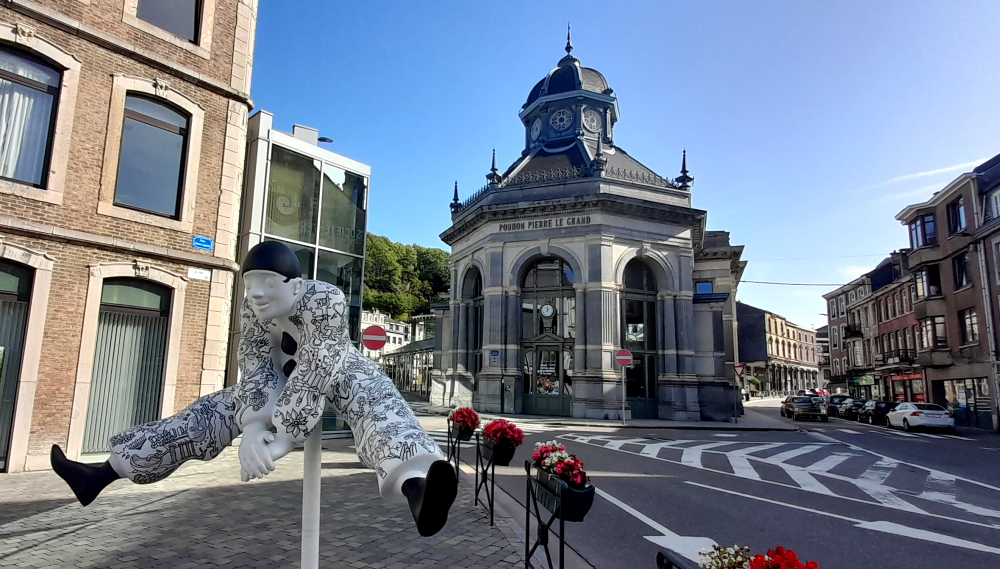
Pouhon Pierre Le Grand.

After dropping into the Tourist Information Office we collect a map with a town walk and commence.

To the side of the Tourist Information Office is a mult-sided, domed building which is called “Pouhon Pierre Le Grand” – The Spring of Peter the Great.

Throughout town we find various “Pierrots”, the town’s local mascot – all with the same leapfrogging pose but decorated individually by Belgian and French artists.

The route takes us to the base of the funicular to “Thermes” which we duly ride to the top to be delivered into a modern complex that houses pools sourced from the local Clementine spring and naturally heated to 33 Deg. C.
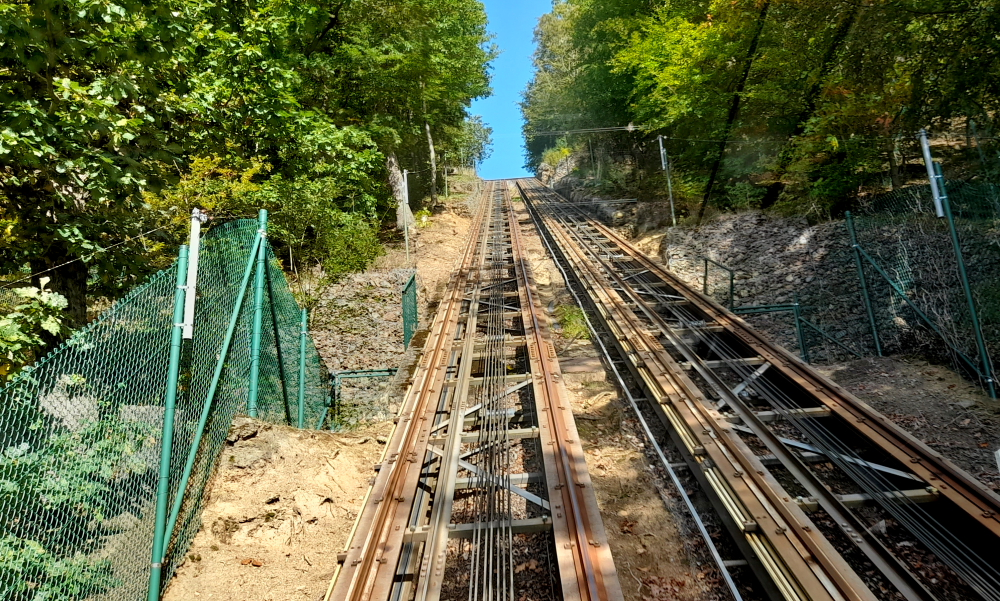
Going up the funicular.

The only place we can catch a glimpse of the famous pool is through the window of the brasserie where we decide to sit and sip some cool beverages.
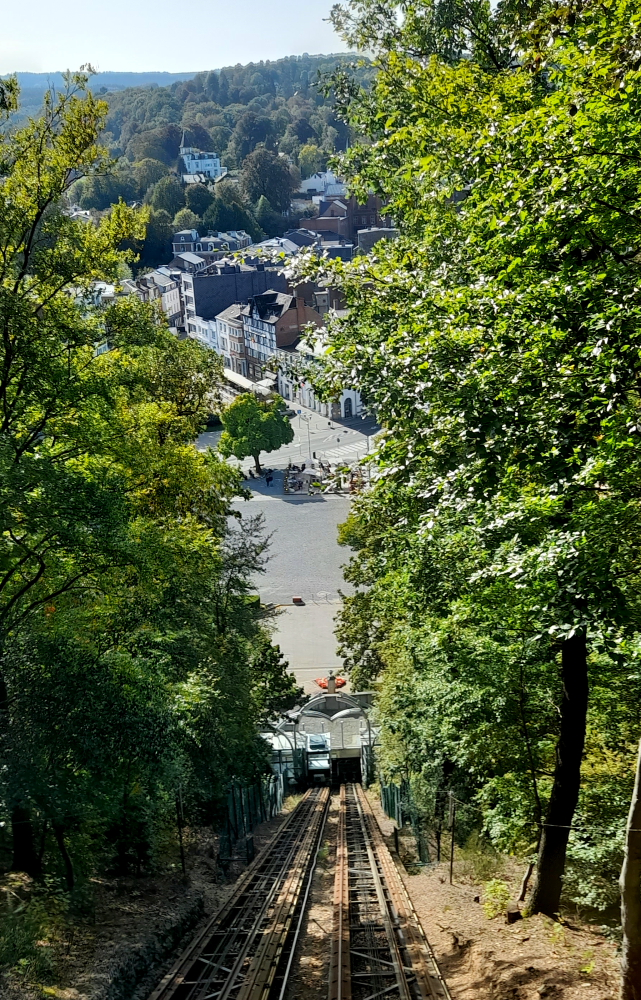
Nice view near the top.

Back on the flat we walk past the Musees de la Ville d’Eaux – The Water Town Museum. Located in the former Royal Villa, residence of Queen Marie-Henriette, 2nd Queen of the Belgians, the Water Town Museum houses collections relating to the history of Spa: a collection of “Jolités” or Bois de Spa, from the 17th century to the present day, as well as old posters, engravings and various objects evoking the activity of the famous spa town.
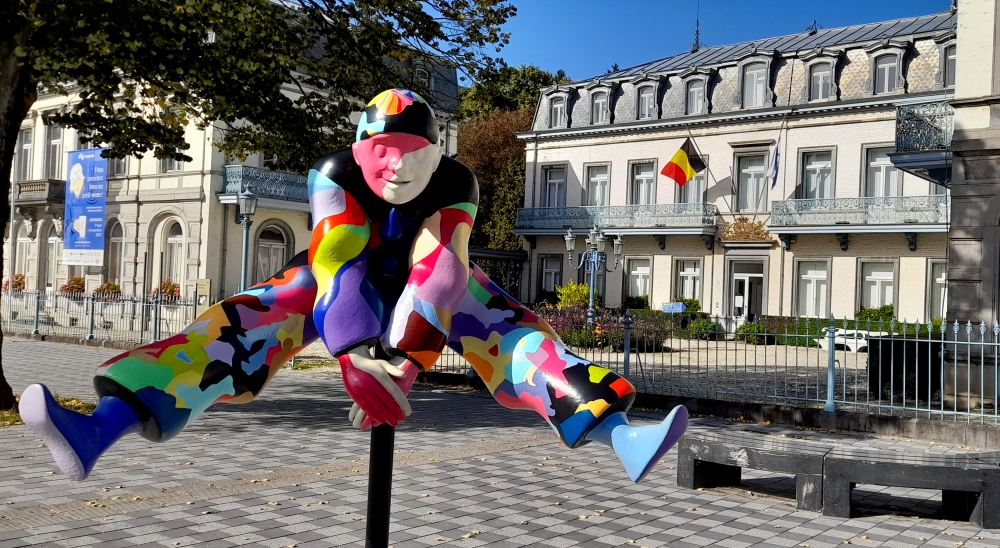
The ex-Royal Palace – now Musees de la Ville d’Eaux.

Up the opposite hill we come across Waux Hall, one of the oldest games rooms in Europe. A vast building, it is the work of Liège architect Jacques-Barthélemy Renoz. The building, classified as a monument since July 24, 1936, has been included by the Walloon Government on the exceptional heritage list since 1993.

Restoring the exterior envelope of the building was completed at the end of 2009. The second phase (interior restoration and development, treatment of the surrounding areas) commenced in 2022 at the estimated cost of Eur6.26m. Today the building is surrounded by construction materials but it looks like Academy classes occupy some of the space.
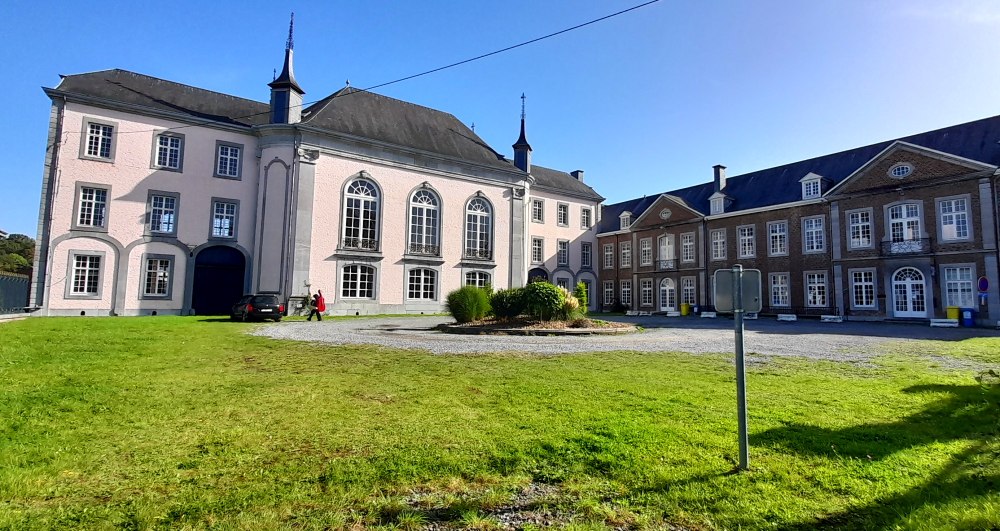
Waux Hall.

Partially down the hill we arrive at L’Eglise Saint Remacle. The Catholic parish of Spa was established in 1573 at the request of the population who wanted to fight against the growing influence of Protestantism carried by foreign visitors.

The current church was built in 1885 following the plans of the architect Eugène Charpentier. In the Romanesque-Rhineland style, which remained popular in the ancient principality of Liège, it was consecrated in 1886 by the Bishop of Liège.
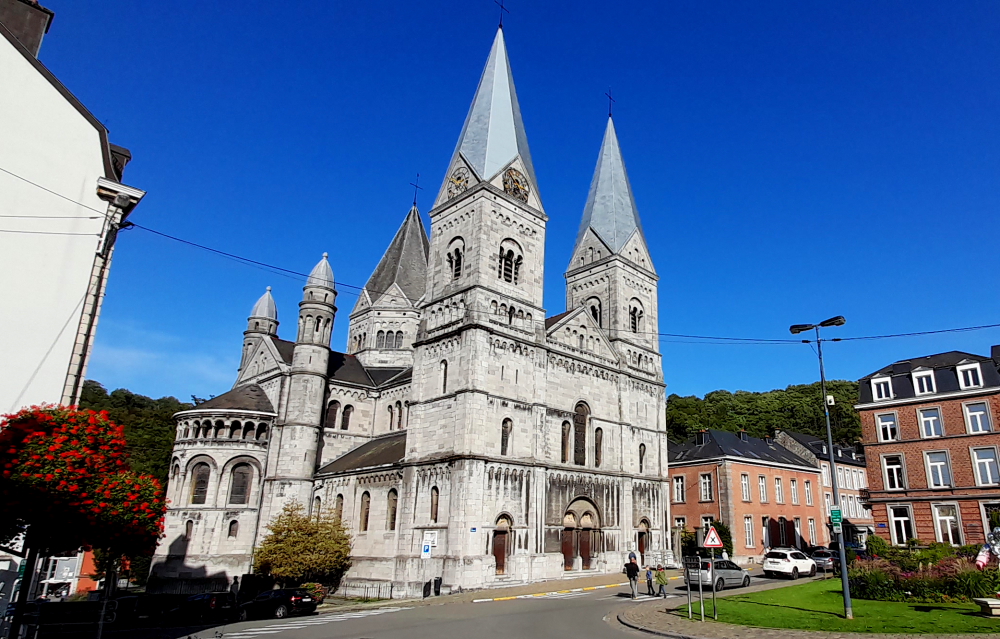
Notre Dame et Saint Remacle Church.

Queen Marie-Henriette of Belgium, who had retired to Spa and resided there in the Villa Royale, died in Spa in 1902. Her funeral was celebrated in this church.
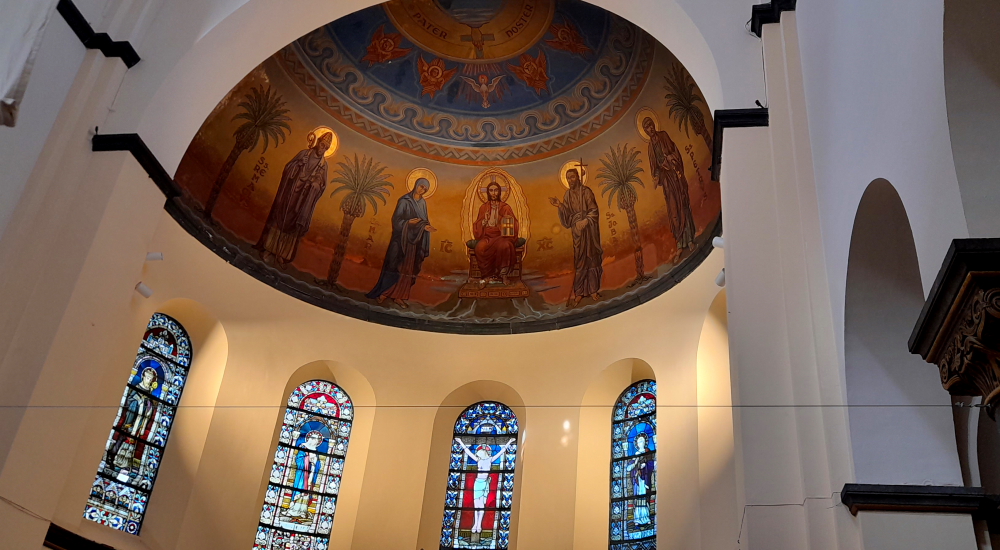
The church’s interior.

Although the “Anciens Thermes” is in the next block it’s inaccessible as it is surrounded by roadworks and construction.

The old Spa thermal baths, or Bains de Spa, are located in the center of town and were the 3rd spa baths built in the town. The imposing two-story building is built in a French neo-Renaissance style to the plans of architect Léon Suys.They have been part of the exceptional heritage of the Walloon Region since 2016 and UNESCO World Heritage since 2021.

Under the leadership of Mayor Servais, these thermal baths were inaugurated in1868 on the Lezaack meadows. This was a first-class hydrotherapeutic set which cost the very significant sum for the time of 1,500,000 Belgian francs. These thermal baths hosted up to 167,182 thermal operations per year (in 1967).

Originally, this establishment had 52 bathroom cabins with 54 bathtubs, 2 large high-pressure shower rooms, 2 large ordinary and hydrotherapeutic shower rooms with immersion basins, 2 actual hydrotherapy rooms, 2 rooms for circle showers, seat showers and foot baths with running water as well as 2 plunge pools. Subsequently, numerous modifications were made in order to modernize the establishment.

After 135 years of operation, these baths closed their doors in 2003 and were replaced by a modern establishment (the fourth thermal baths) on the hill of Annette and Lubin – the current Thermes accessed by the funicular.
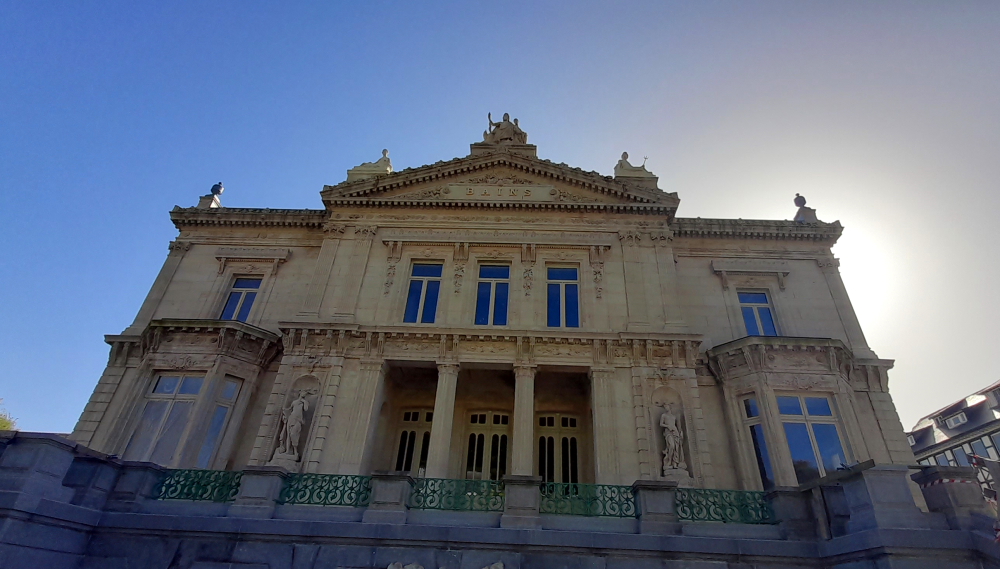
Bains de Spa.

Along the street is the current Spa Casino. In 1762 when it was built it was called La Redoute de Spa. Today, the Spa casino is considered to be the oldest casino in the world.
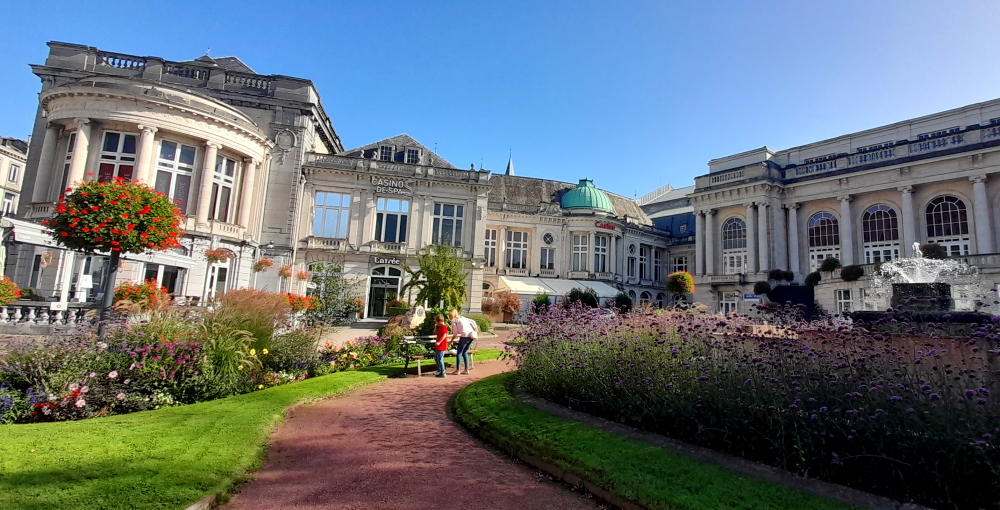
Spa Casino – formerly La Redoute de Spa.

In 1762 construction was entrusted to the renowned Liège architect, Barthélémy Digneffe (1724 – 1784), and to Italian decorators specialized in palace decoration. The Redoute de Spa was, according to contemporaries, the prettiest and best maintained assembly house in Europe. It is then described as a “delicious white and gold candy box”. It included a ballroom, a theater and a games room. In 1918 it was rebuilt several times following fires. In 1980-1981, the Casino regained its former splendor thanks to renovation work.
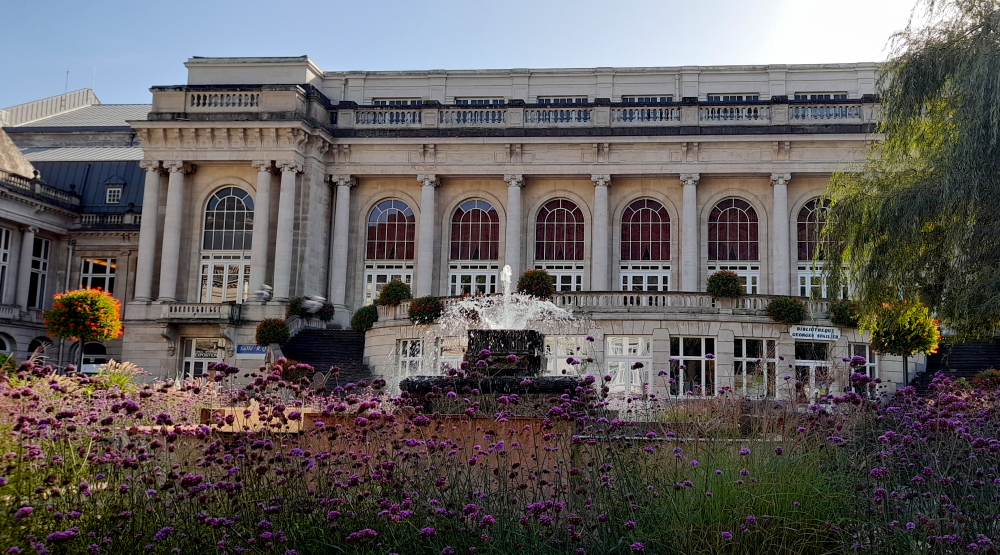
Spa Casino.

It’s now close to 3:00 pm so we walk back to the Hotel de Ville. A Louis XVI style building, the work of the architect Digneffe, the Town Hall was built in the years 1762-1768. In the 18th century, it welcomed the great Lords who came to take the waters as it was then “The Grand Hotel”. In 1822, it became the property of John Cockerill who transformed it into a card and pin factory. Today, this building houses the administrative services of the Municipality. Opposite the entrance to the Town Hall stands the PERRON de SPA, emblem of the municipal franchises granted to the Town by the Prince Bishop of Liège in 1594.
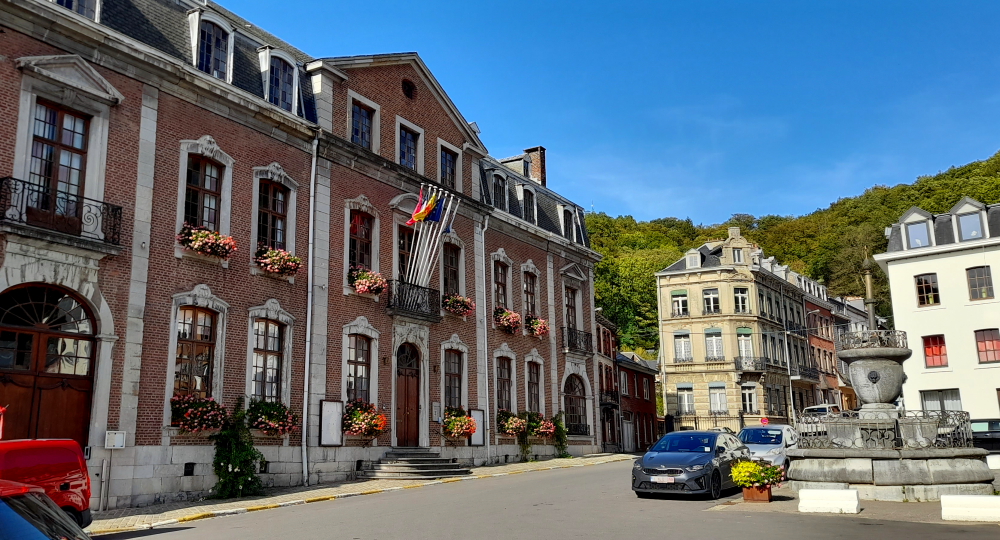
Hotel De Ville.

It’s now 3:15 pm so time to drive back to the hotel to check in. Lynn takes to heart the credo, “When in Spa, spa” and books a spa treatment available at the hotel for Monday. As the bar offers snacks we decide that will do for dinner tonight.

Before we retire the world news is that Hamas has attacked Israel from Gaza and Israel’s PM has said “We are at war”. Just what we need, yet another war on this beleaguered planet of ours.

8 October, 2023

The hotel was fully booked last night which is evident when we arrive at breakfast. Pandemonium!

After breakfast I catch up with who won Bathurst this year. Shane van Gisbergen, 3rd year in a row, and a fitting send off as he will leave V8 Supercars in 2024 for a career in Nascar.
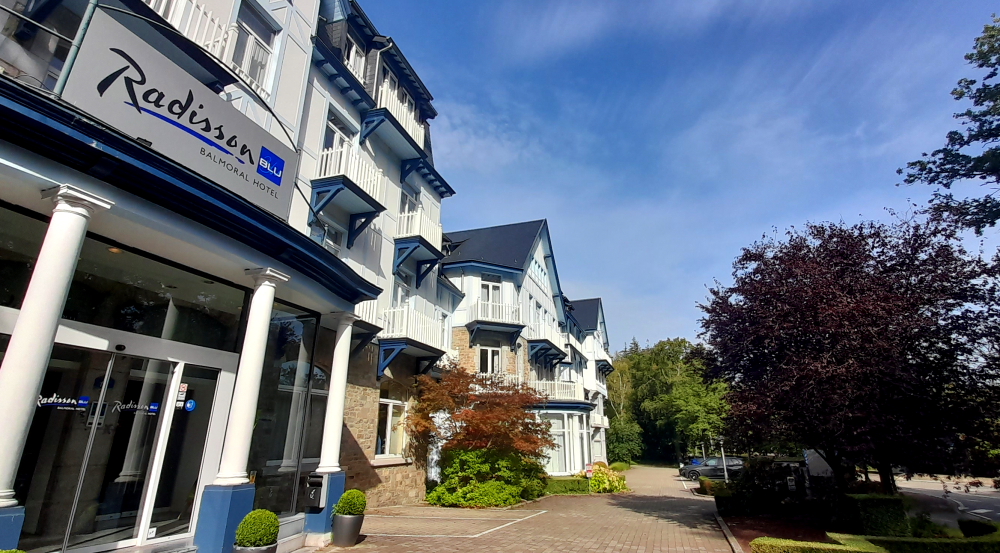
Out for a walk around the lake on a sunny morning.

As it is such a nice sunny but cool morning we decide to circumnavigate the nearby Lac de Warfaaz which takes a 10-minute walk down a steep woodland path to reach the lake.

According to Wikipedia: “The lake Warfaaz is an artificial lake located in Wallonia near the thermal city of Spa in Ardennes, Belgium. The dam was built in 1892 on the Wayai river. The water volume is 360,000 m³ and the area is 0,08 km². It is a tourist attraction, with water sports, including pedalo and fishing.”
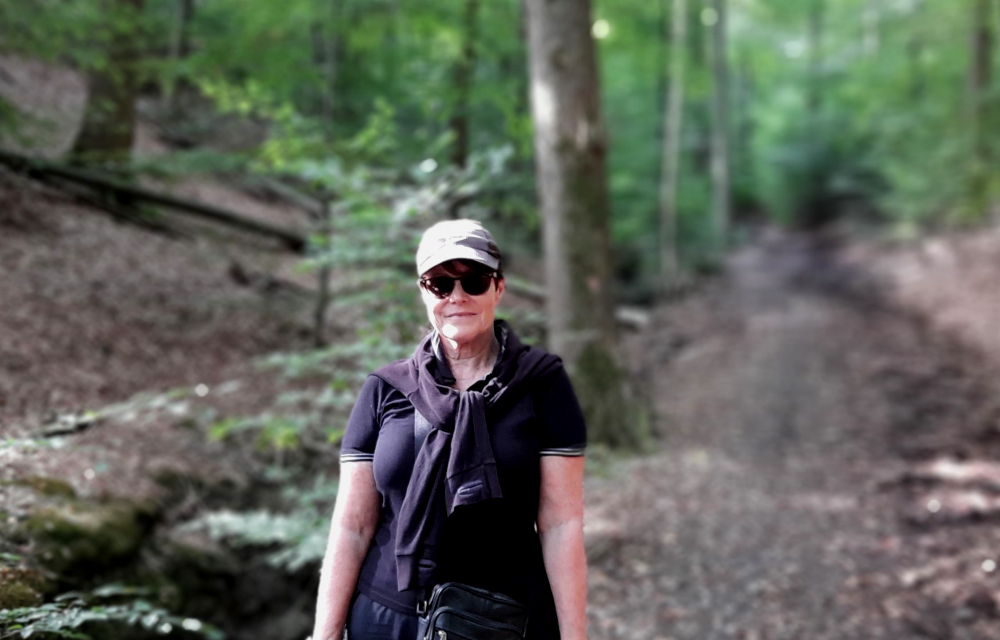
Steep trail but cool in the forest.

Not today, it isn’t! Reeds everywhere with just a trickle of a stream snaking its way through the vegetation.
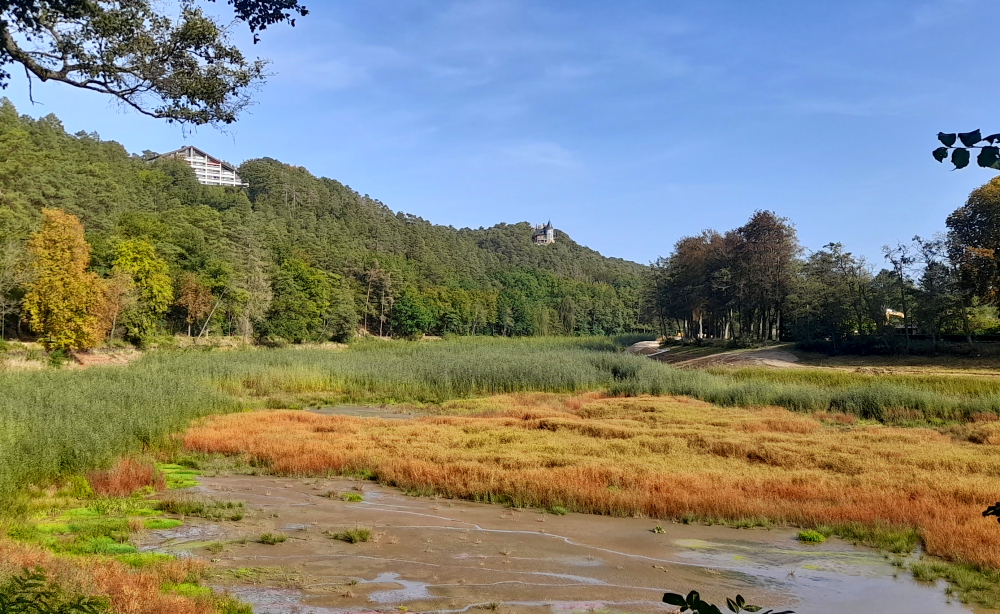
Almost dry lake.

In fact, the lake edge is so dry that a road is being bulldozed along the lake’s perimeter.
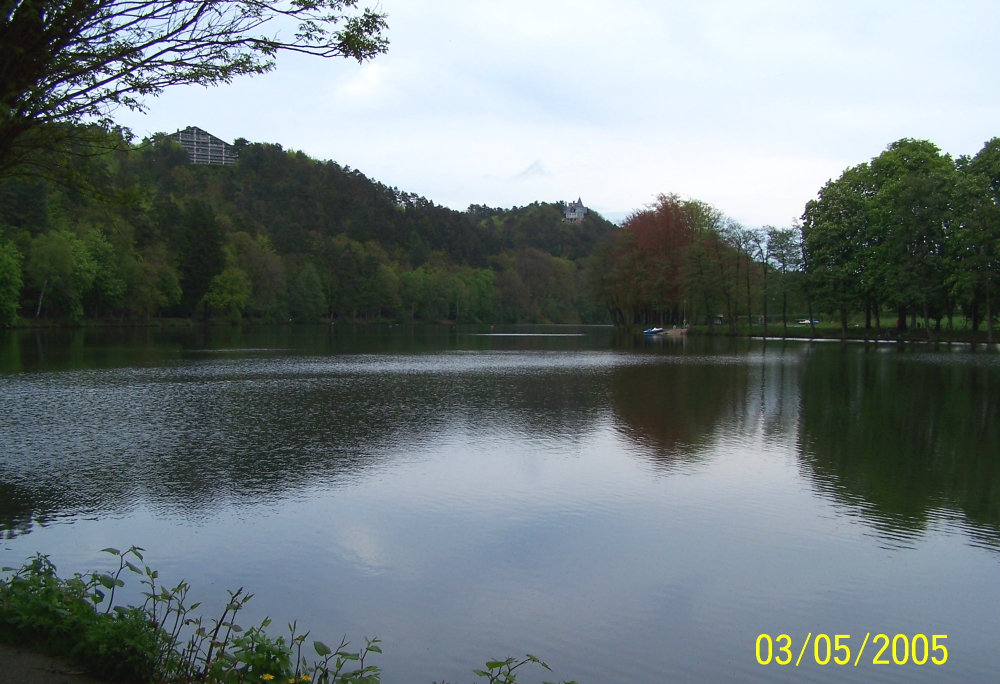
How it was in 2005.

As for pedalo and fishing, forget it!
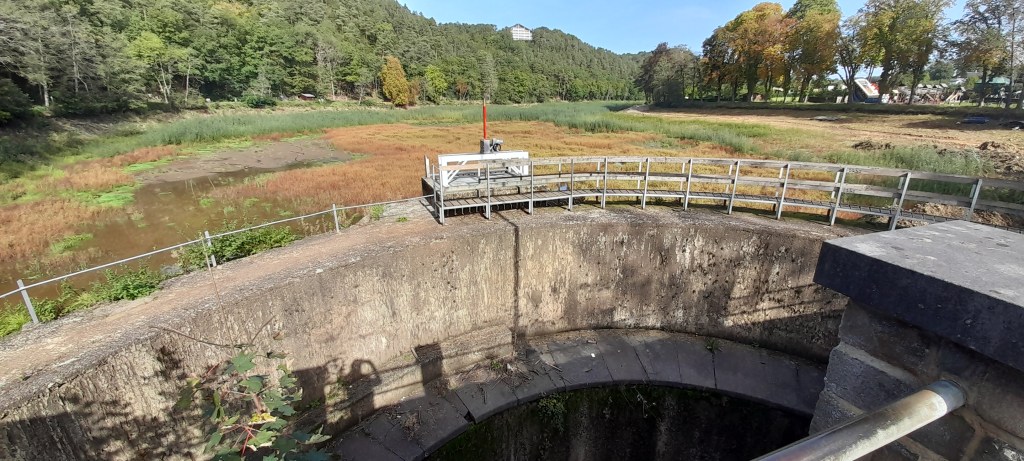
No water in the dam.

It appears that the pedalo kiosk has been closed for quite some time and various businesses are for sale. Really disappointing to see.
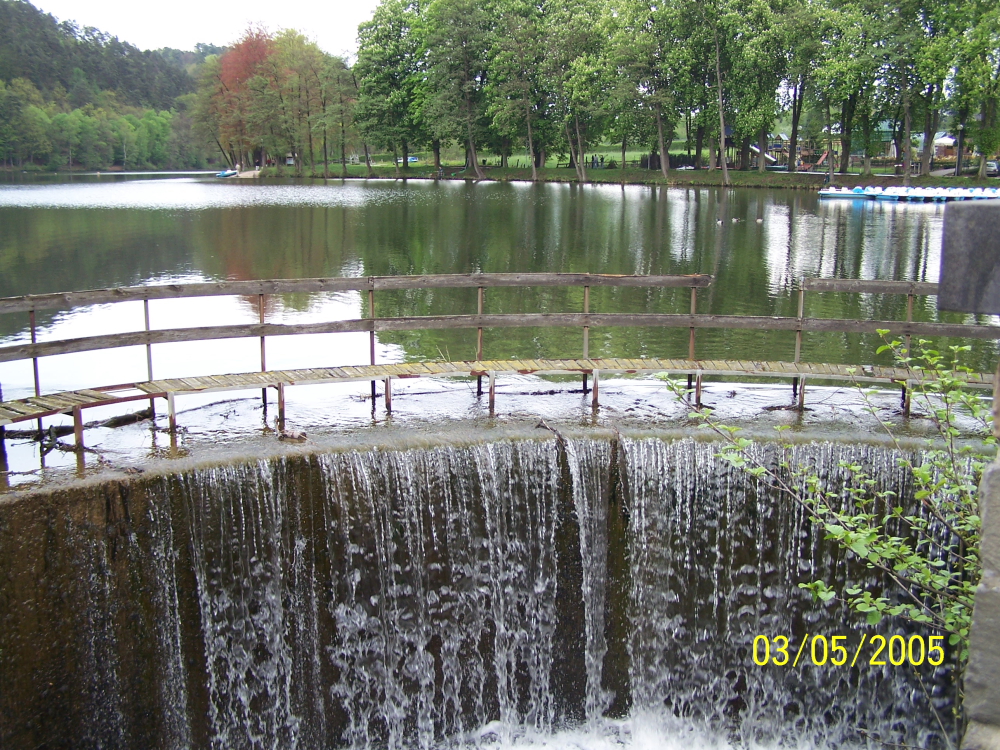
The dam in 2005.

After about an hour out walking around the lake, we return to do some accommodation bookings for Wales for our trip there in February. Then we have an early dinner in the bar. Only us and 2 others, compared to the evening before when the place was noisy and heaving.

Time for a game of pool while we wait for our meal to arrive. Four years ago in the USA – a long time between games.
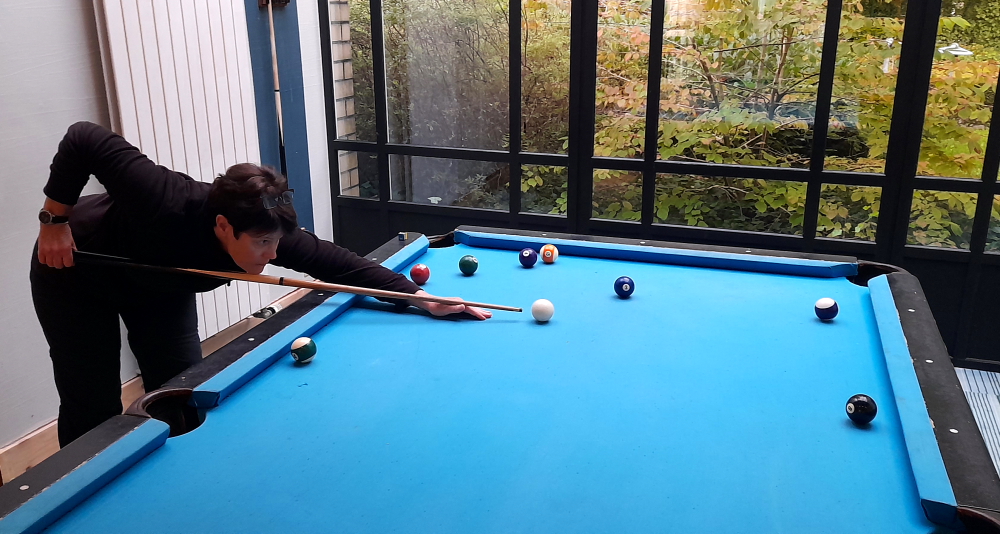
Close game right to the end.

9 October 2023

This morning we virtually have the restaurant to ourselves for breakfast. Lynn has her massage this afternoon at 12:30 pm and while she’s away I’ll crack on with finalising our Wales bookings.

Tonight we head downtown to the restaurant area in Spa. Since it is Monday evening most of the restaurants are closed so we don’t have much choice. We settle on the busiest bar/restaurant. If it’s good for the locals then that will suit us. Since we are fairly close to the Spa Francorchamps Grand Prix race track it’s not surprising to see the bar is adorned with lots of memorabilia. Still, the food is good and reasonably priced.
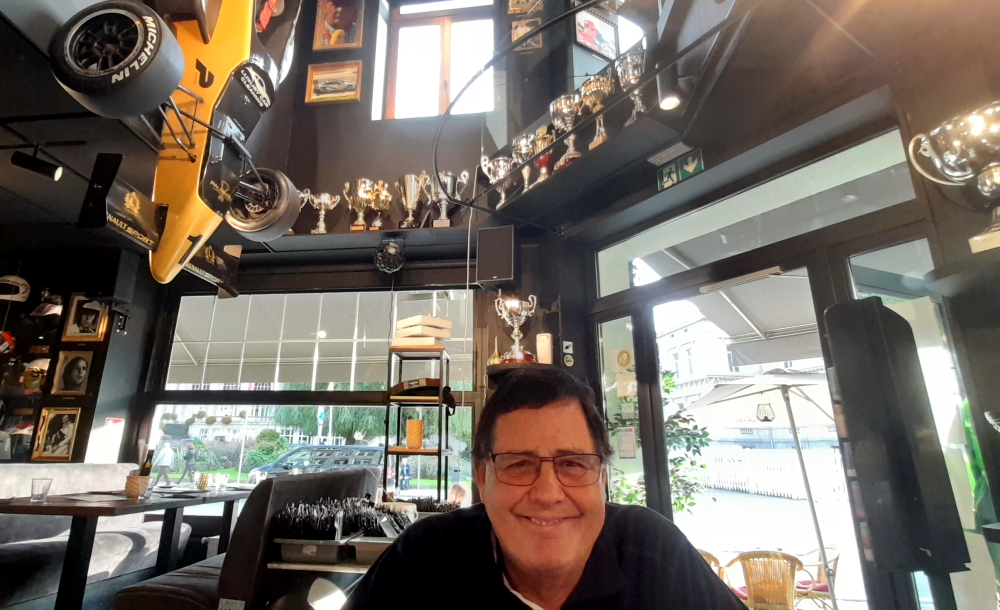
Dinner with car racing memorabilia.

Tomorrow we are heading east back into Germany as we start the second half of this Northern Europe trip.

10 October, 2023

Today we are driving 157 kms NW from Spa to Antwerp, a 1 hr 45 min drive, to meet up with an old friend of mine, Luc, and his wife, Ilse.

I first met Luc 20 years ago when we both attended an ANZ Bank training offsite.

When I came to Europe in 2005 we met up in Sint Nicolas, Belgium and toured Ghent, Bruges, Brussels and the Champagne region of France.

We get away at 8:30 am, half an hour earlier than planned, expecting to arrive at 10:15 am, but thanks to regular, long tailbacks we don’t arrive at the underground parking garage until 10:45 am.
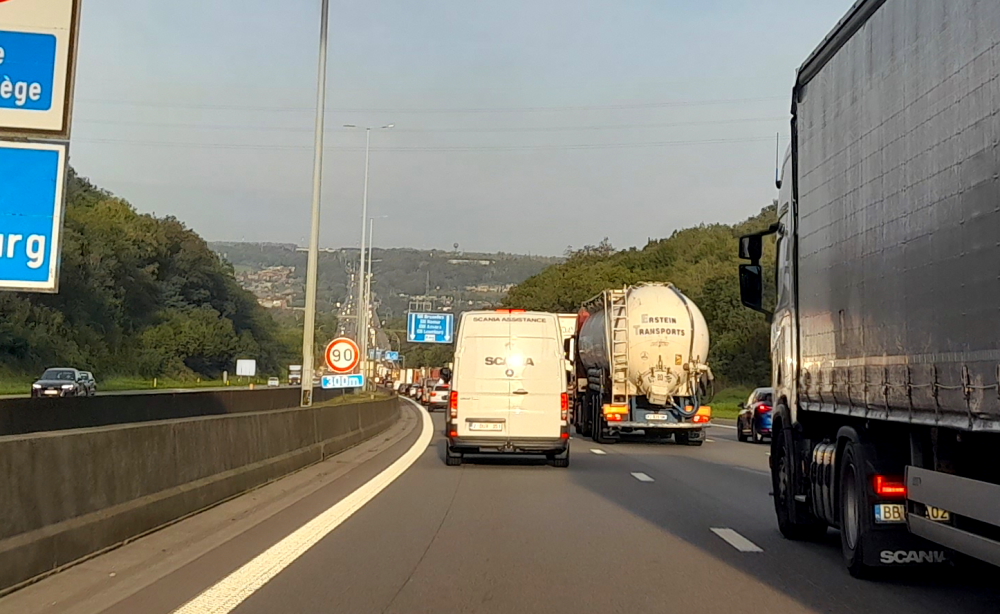
Stop, start bumper to bumper traffic.

A 15-minute walk later we are knocking on Luc and Ilse’s front door.
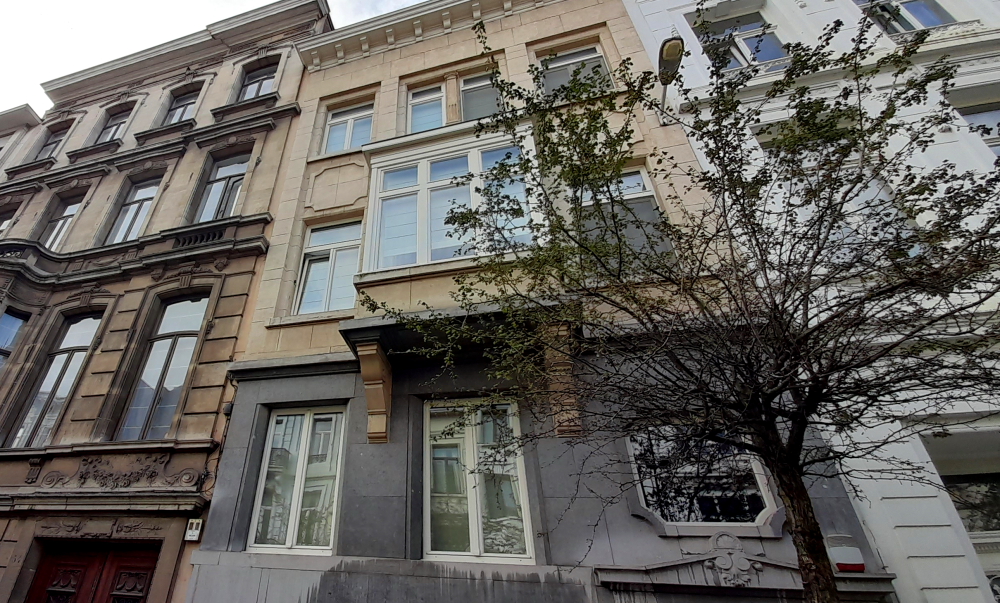
Luc & Ilse’s beautiful apartment in Antwerp Centre.

After a quick morning tea, we all head out the door for a walking tour of the town.

At the end of street, on the Marnixplaats, is the Schelde Vrij monument. The statue was designed in 1873 by architect Jean-Jacques Winders, in collaboration with the sculptor Louis Dupuis (lions and medallions), Jacques De Braekeleer, (Neptune and Mercury) and Frans Floris (female figure). The monument was completed in 1883.

The monument entitled “Schelde Free” commemorates the lifting of the blockade of the Scheldt (River), which lasted from 1585 to 1863.
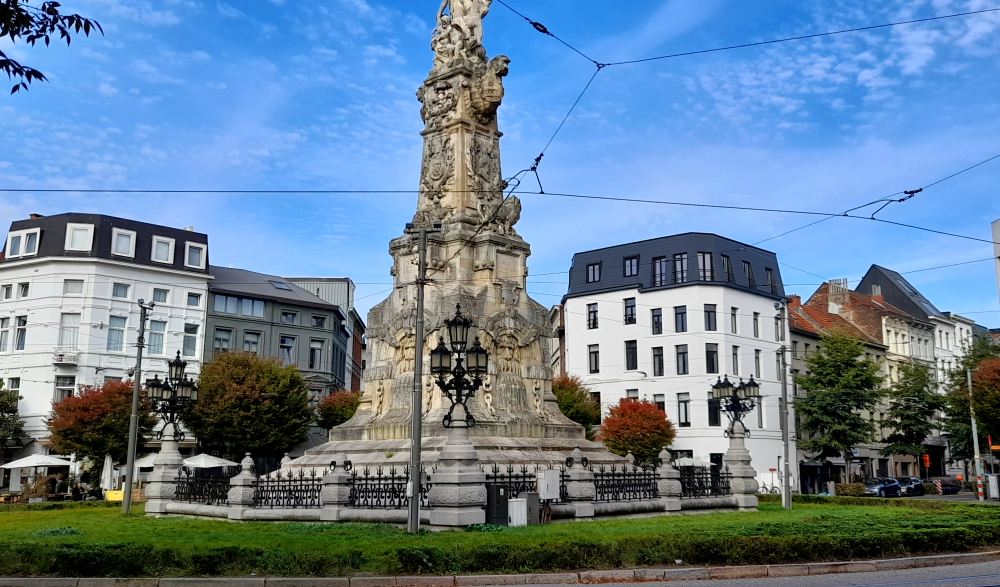
Schelde Vrij Monument.

From there we walk past the KMSKA – the Royal Museum of Fine Arts.
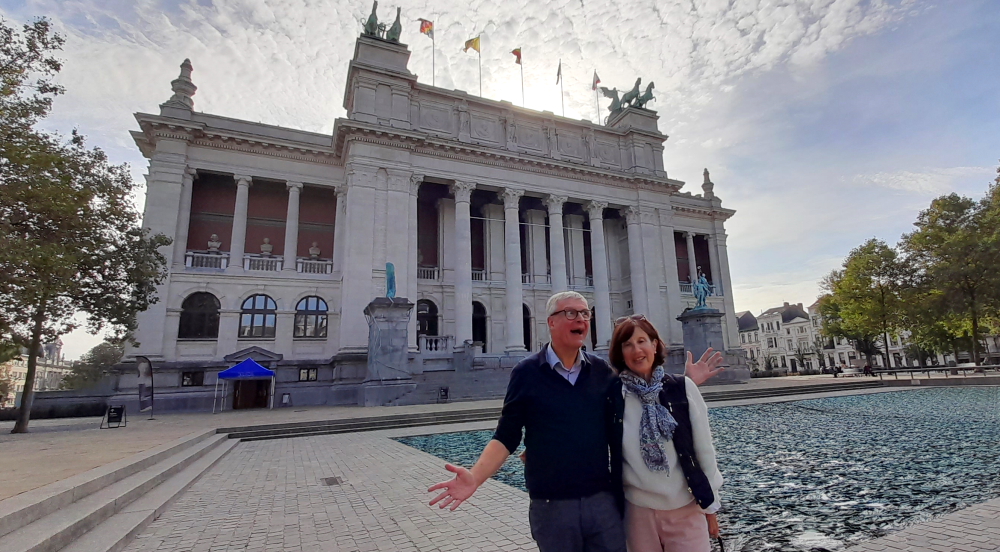
The Royal Museum of Fine Arts.

Then onto the redevelopment of the river promenade. This area was, until quite recently, the usual industrial docklands found in any port city. It is now being redeveloped by building parklands above underground car parking spaces. The area has become beautiful city living space.
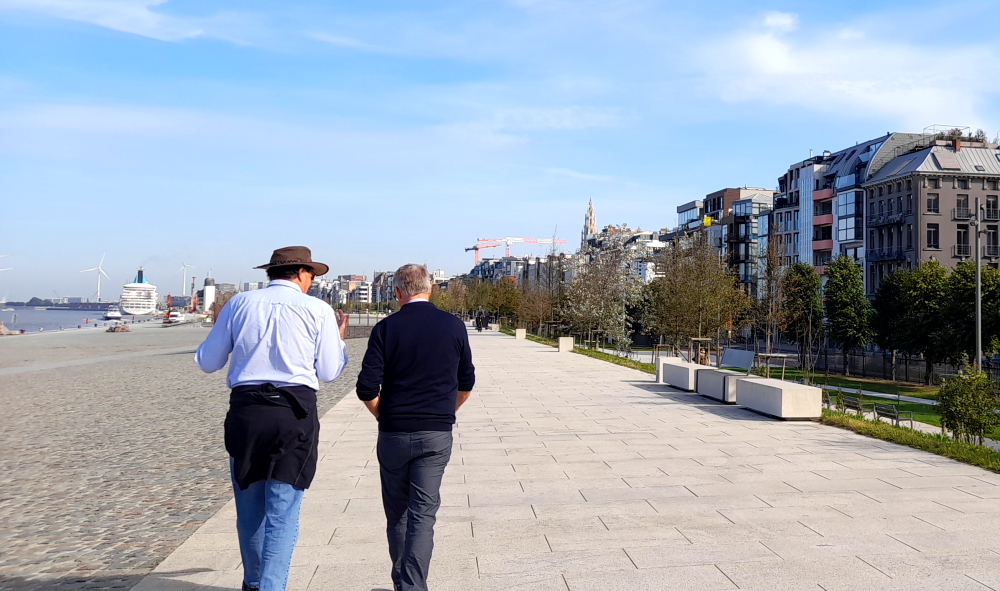
A stroll along the riverside.

From there we work our way towards the beautiful City Hall (Stadhuis) in the large, market square. The town hall is on the UNESCO World Cultural Heritage list as part of the group registration Belfries in Belgium and France. A Renaissance building, designed by the architect Cornelis Floris De Vriendt, it was built between 1561 and 1564.
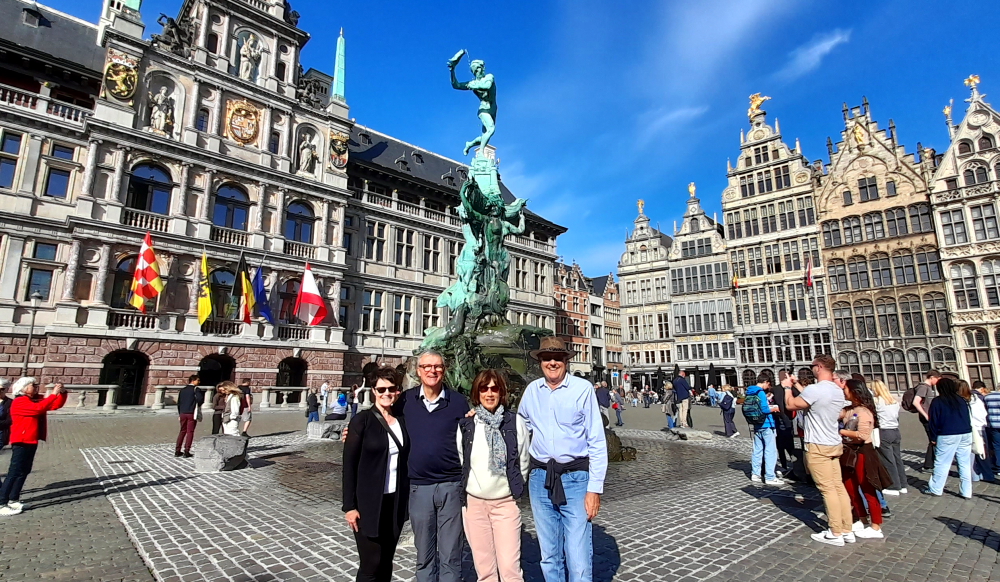
The Stadhuis in Grote Markt Square, Antwerp.

Close by is a prone sculpture using the cobblestones as a blanket. It is a tribute to the novel “Nello and Patrasche” by Oulda, about the misadventures of young Nello and his dog, Patrasche. Apparently these characters are famous in Japan with Japanese tourists querying unsuspecting, and unaware locals, about the location of the sculpture.
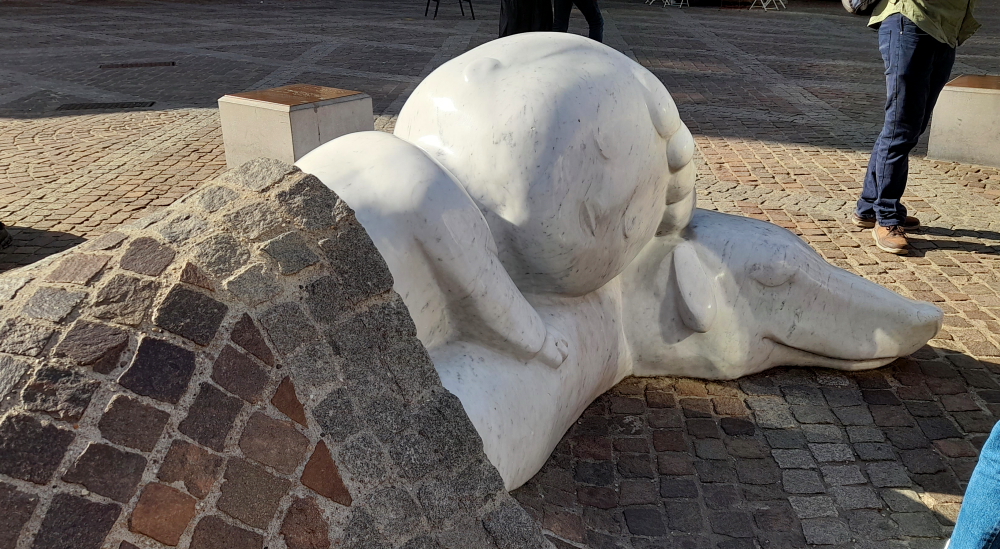
Nello & Patrasche.

The Cathedral of Our Lady is a Roman Catholic cathedral. Today’s See of the Diocese of Antwerp started in 1352 and, although the first stage of construction was ended in 1521, has never been ‘completed’. In Gothic style, its architects were Jan and Pieter Appelmans.
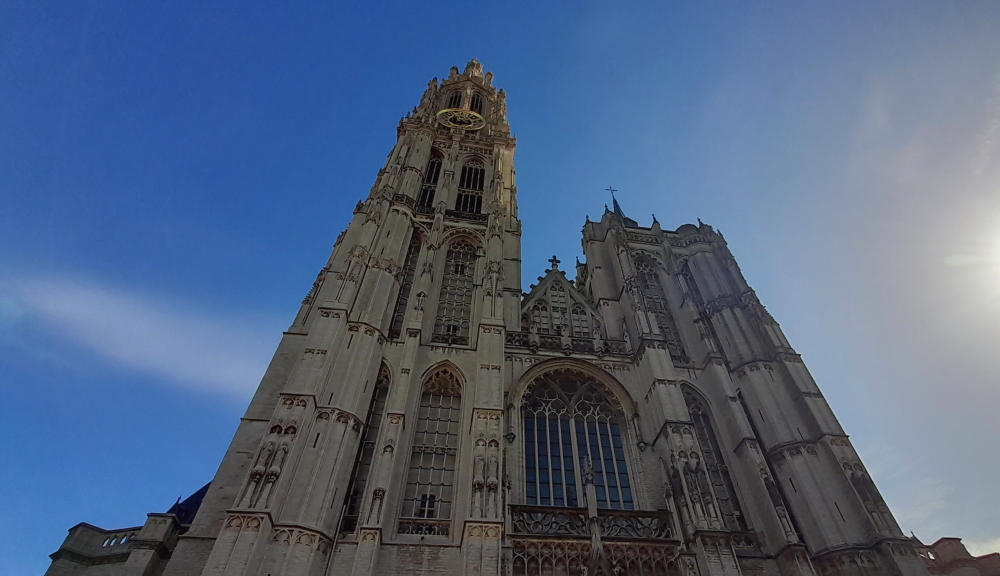
Cathedral of Our Lady, Handschoenmarkt.

It contains a number of significant works by the Baroque painter Peter Paul Rubens, as well as paintings by artists such as Otto van Veen, Jacob de Backer and Marten de Vos. The belfry of the cathedral is included in the Belfries of Belgium and France entry in the list of UNESCO World Heritage Sites.

Today the Cathedral is also a Museum, charging Eu12 per person, so we forego the pleasure of viewing the Rubens’. The last time I was here in 2005 the entry was free. Make your own call about the necessity of a fee for maintenance or that the artwork should be in a free gallery for all the people to view their own artworks.
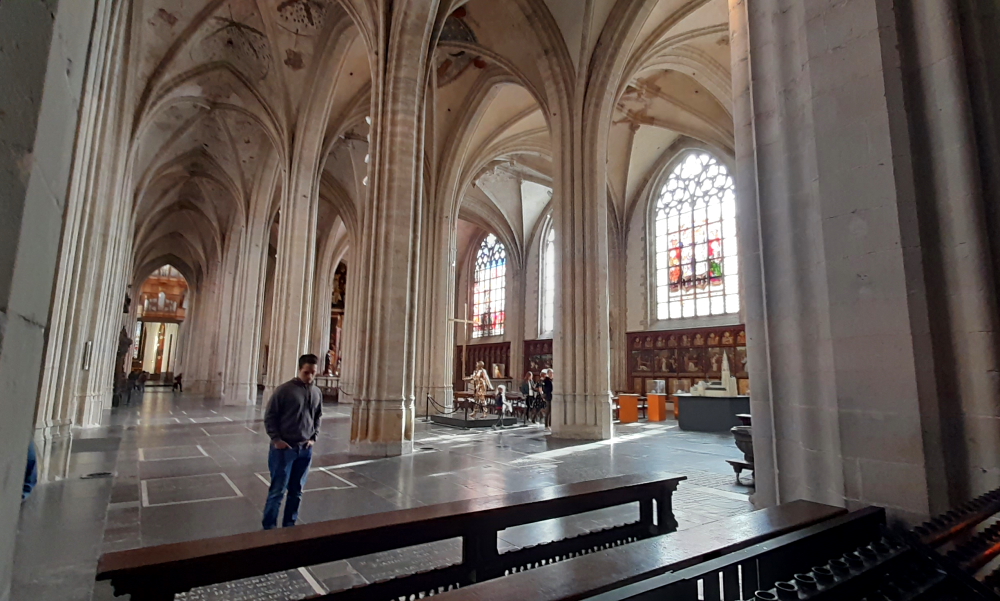
View of the Cathedral’s interior from the shop.

Next we walk to see the St Charles Borromeo Church – a former Jesuit church where Ilse is a guide.

The church was built in 1615-1621 as the Jesuit church of Antwerp, which was closed in 1773. It was rededicated in 1779 to Saint Charles Borromeo. The church was formerly known for 39 ceiling pieces by Rubens that were lost in a fire when lightning struck the church on 18 July 1718.
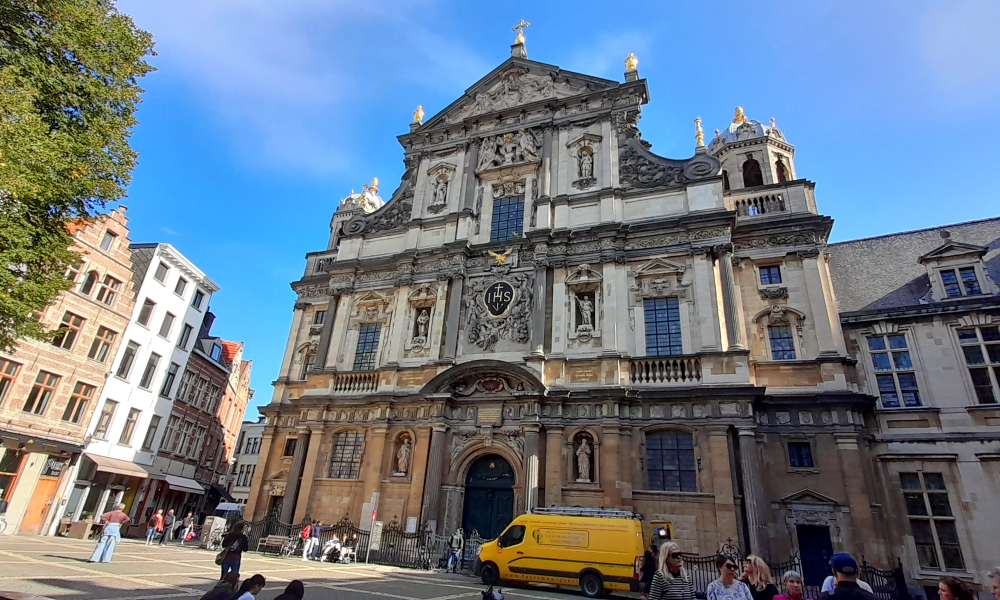
St Charles Borromeo Church – former Jesuit Church.

The church was inspired by the Church of the Gesu, the mother church of the Society of Jesus, a Roman Catholic religious order also known as the Jesuits. It was the first church in the world to be dedicated to the Jesuit founder, Ignatius Loyola.

In 1773 the Society of Jesus was suppressed and the building was confiscated. It reopened in 1779, renamed St.-Carolus Borromeuskerk, after Charles Borromeo, Archbishop of Milan (1564-1584) and leading figure of the Counter-Reformation.

Since 1803 the St.-Carolus Borromeuskerk has been in use as a parish church. During the Dutch reign preceding Belgium’s independence in 1830 the baroque interior was sobered to make it a Protestant church but a restoration campaign in the 1980s brought back the church’s baroque splendor.
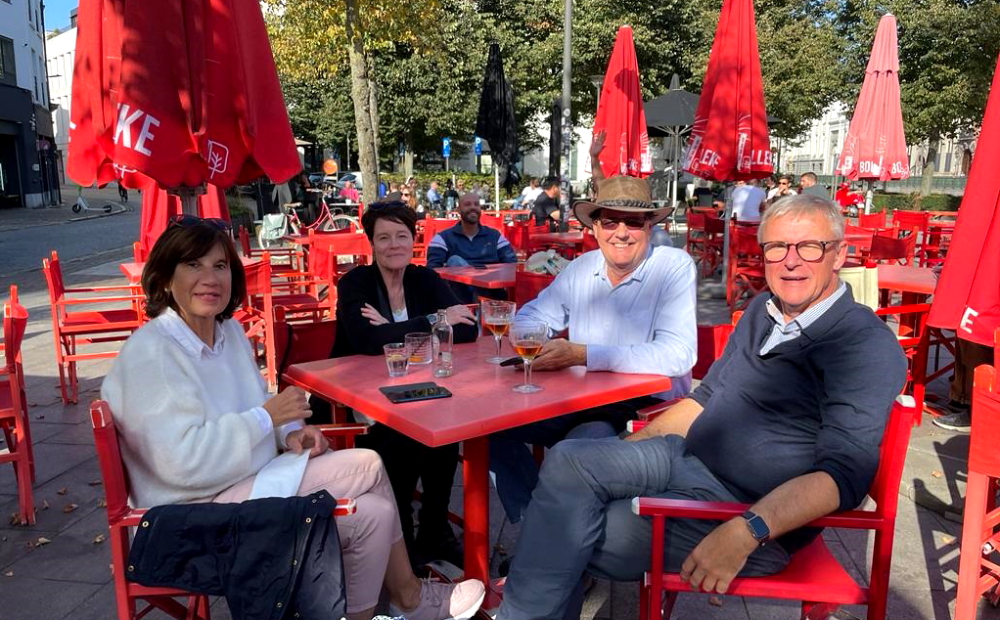
Beer o’clock!

By now it’s well past beer o’clock so we head to a favourite outdoor lunch spot near the apartment.

Then return to apartment to enjoy delicious Lints’ tarts and champers on the balcony in the sunshine.
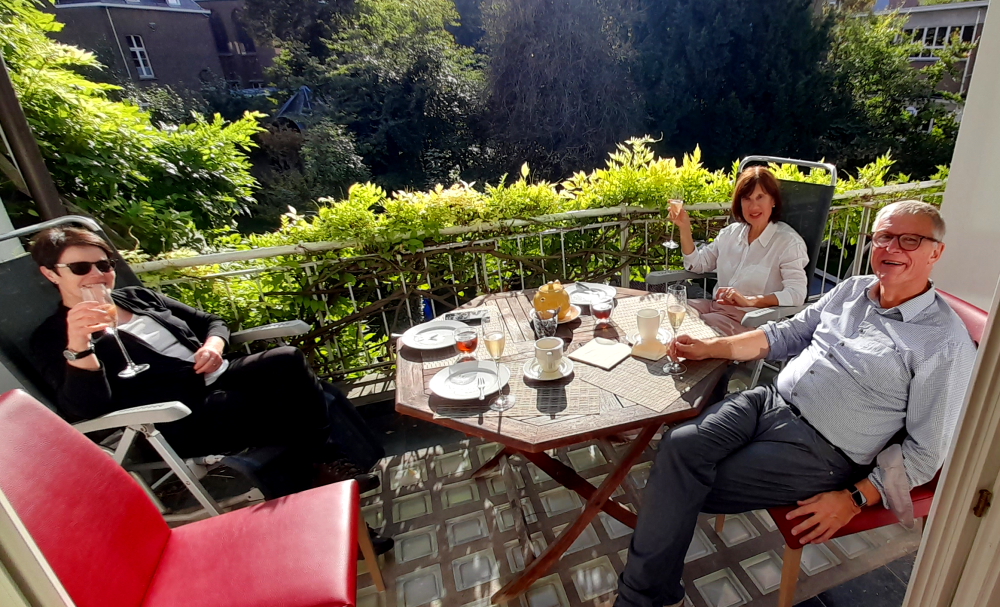
Champagne on the balcony.

It’s been a brilliant day but now it’s 6:00 pm so we say our reluctant ‘au revoirs’ to our dear friends, with invitations for them to join us ‘somewhere in Europe’ over the next year or, failing that, to visit us in Brisbane.
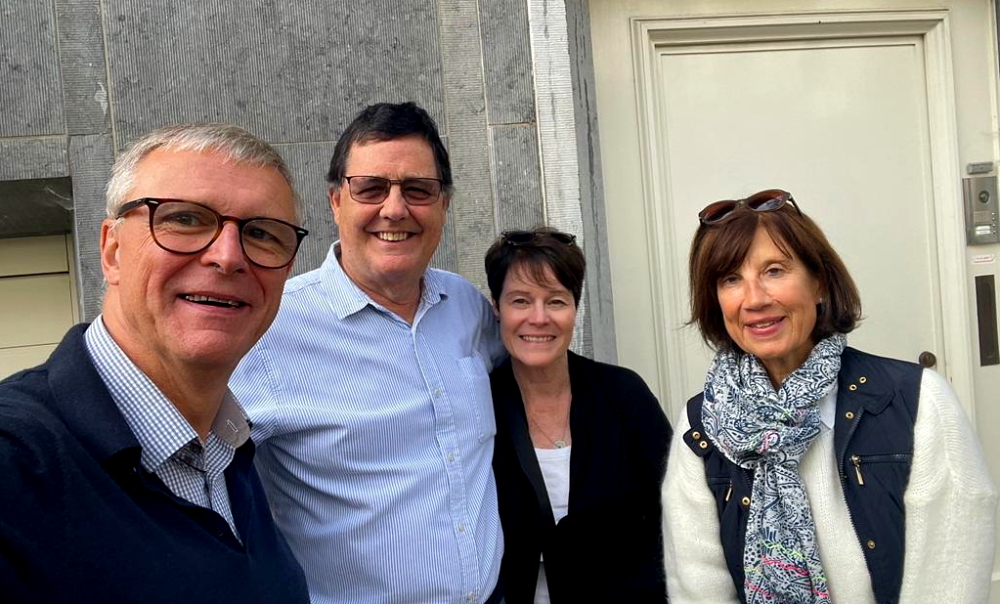
Saying goodbye after a wonderful day.

Once again we sit in traffic jams on our return journey, losing 30 minutes to arrive back in Spa at 8:45 pm in the dark.

We latter learn that my granddaughter, Zara Elizabeth Edenhofner, is born today.

What a perfect day – a celebration of friends and family!

11 October, 2023

Our destination today is Hannoversch Munden, aka Hann. Munden, a 3.5 hour drive east into Germany, 380 kms away.

We leave the hotel at 11:20 am so we should arrive at our destination at 14:45 pm.
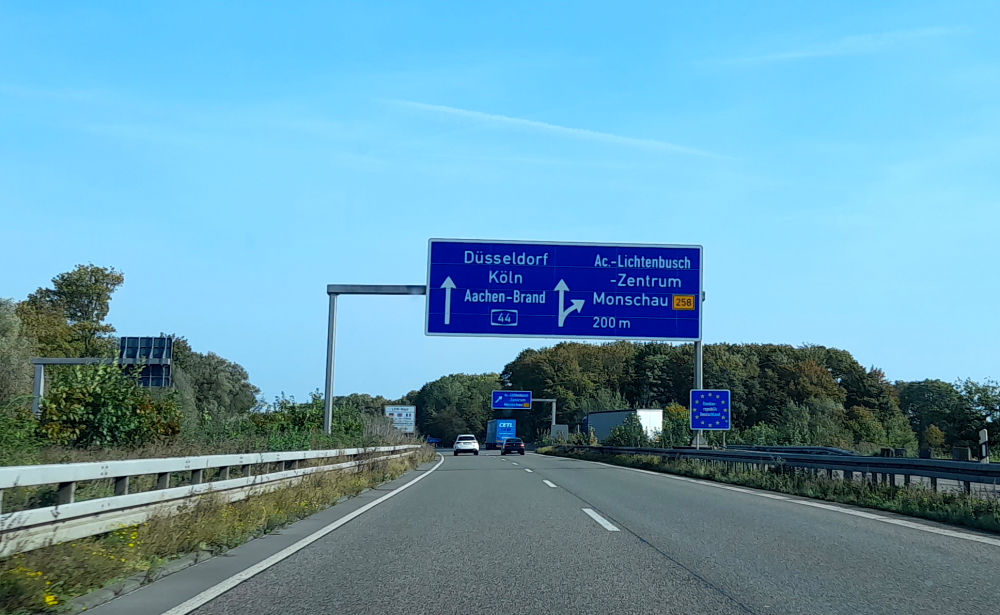
Approaching the German border.

But, like yesterday, we are hit by “Stau” after “Stau” (jam).
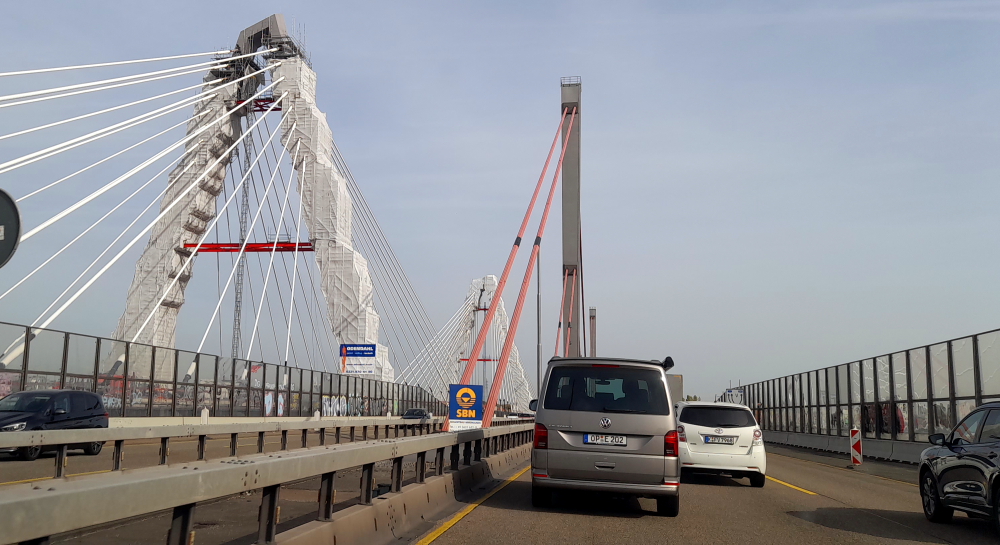
Another traffic jam crossing the Rhine River.

One jam seemed to be due to the road authority checking the weight of vehicles in various lanes, others due to road works past and present, yet others due to congestion. I think Europe has seriously lost the plot when it comes to road infrastructure and freight. The number of lorries far outweigh the numbers of cars on the road, with often the slow lane where lorries are restricted to is just one, long, car park. I’d hate to be a freight company owner. The costs and delays must be horrendous. Perhaps Greta Thunberg could reduce fuel consumption and CO2 emissions by getting her supporters to fix the roads in Europe.
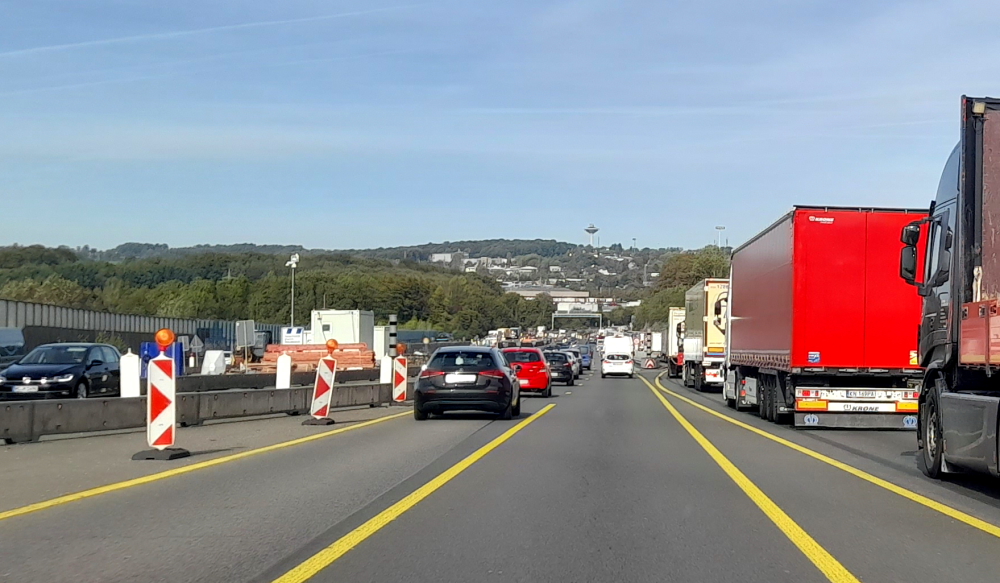
Yet another traffic jam.

It’s closer to 4:00 pm and a warm 23 Deg C when we finally pull up outside our hotel, having driven down a leafy, wooded road with hairpin bends into the town on the River Fulda.
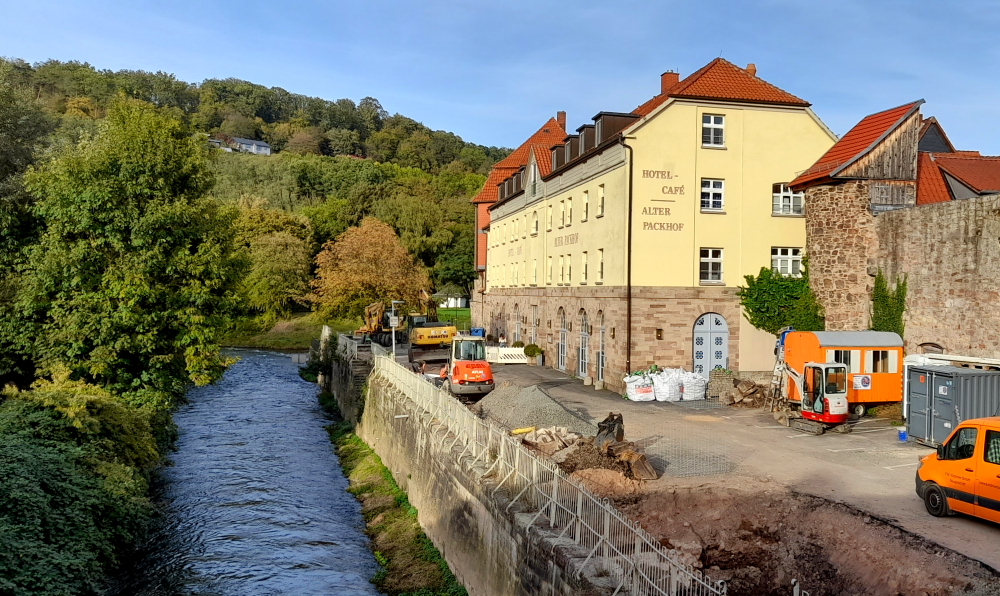
Our hotel Alter Packhof on the banks of the River Fulda.

At the time we booked the hotel we were told about the imminent roadworks alongside which would make their outside terrace inoperable, but we were so taken by the hotel’s location and the quaint, half-timbered town that we still confirmed our booking.
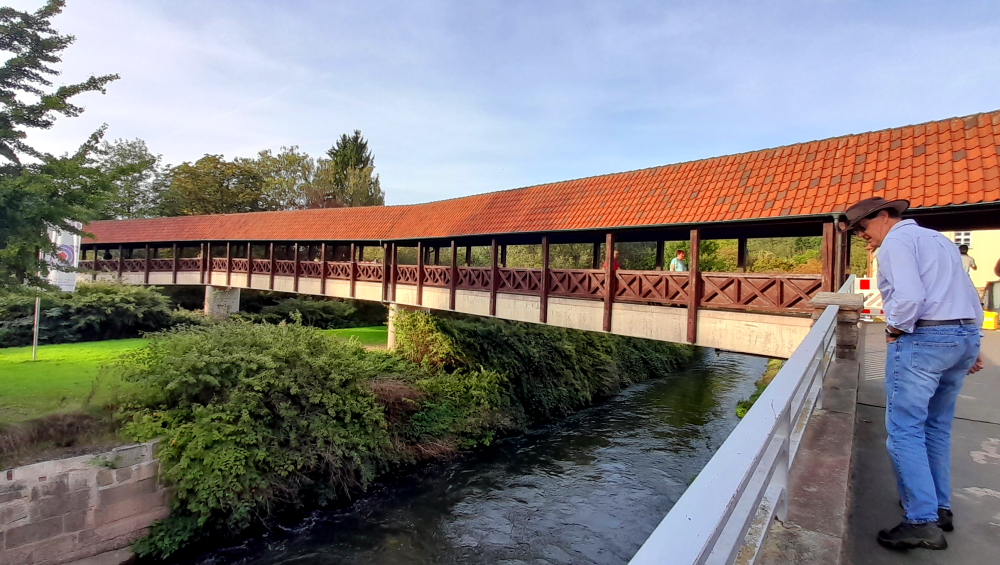
Checking out the old mill stream.

As rain is forecast for the rest of our stay we dump the bags and head out for a tour of the town.
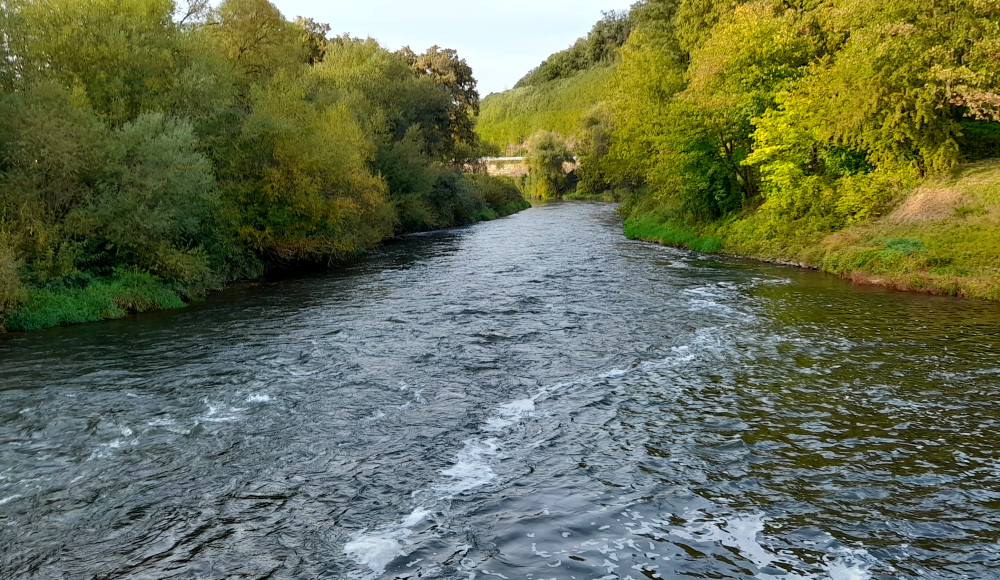
Where the river branches meet below our hotel.

We discover that the hotel is located on the NW corner of the town where the rivers Fulda and Werra meet.
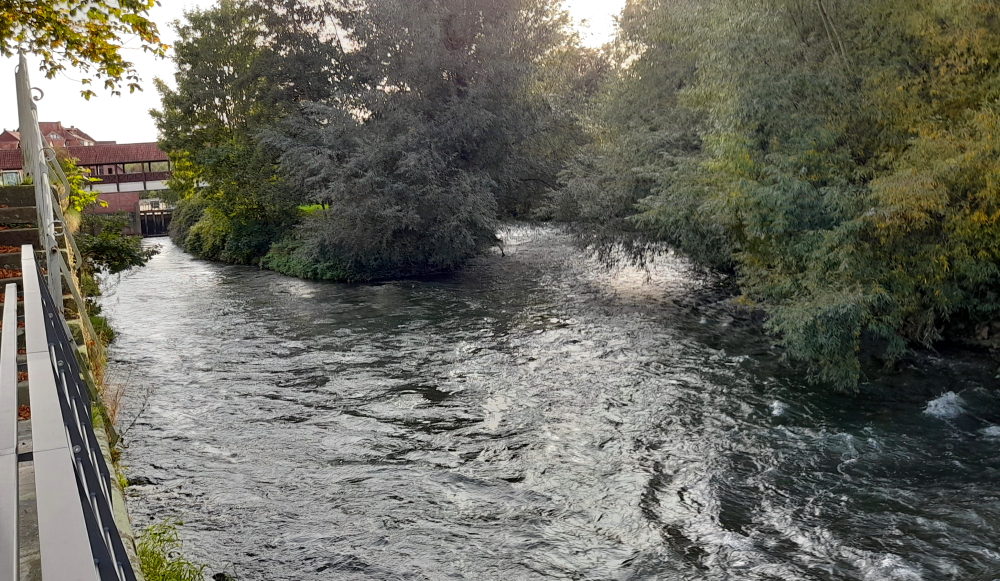
The fast flowing river below our room.

Hann. Münden (abbreviation of Hannoversch Münden ) is a medium-sized town and independent municipality in the district of Göttingen, southern Lower Saxony. The core town is a state-approved resort .

The village is located at the confluence of the Werra and Fulda to form the Weser. That’s why the city is also called the “Three Rivers City”. Alexander von Humboldt (German explorer and co-founder of geography as an empirical science) is said to have been impressed by the city’s location in the Weser valley. However, there are no written records of the often used Humboldt quote that Münden is “one of the seven most beautifully situated cities in the world”.
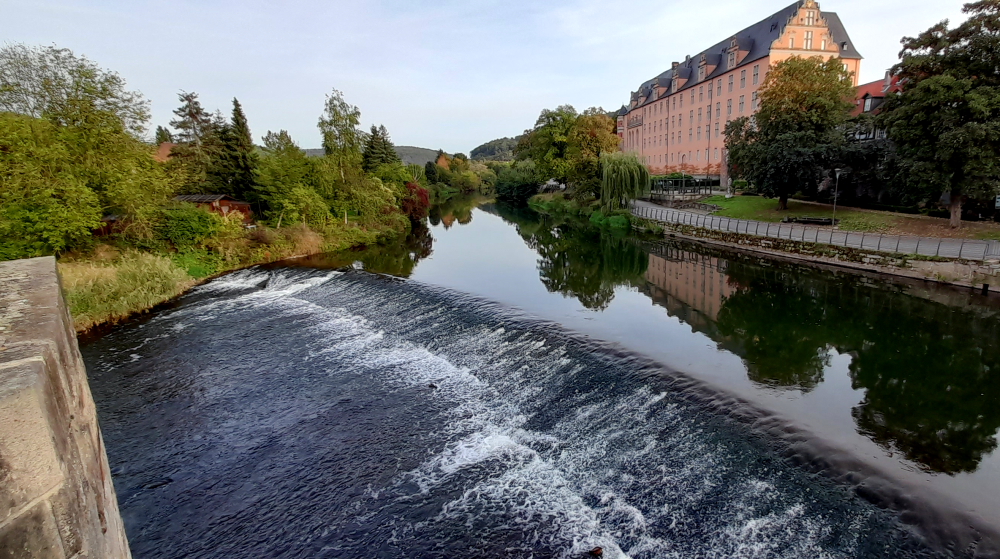
The weir on the other branch of the river.

In the oldest document from the year 860, Münden is mentioned under the name Gimundin as already existing around 800. The city of Münden was probably planned and founded by Henry the Lion between 1170 and 1175. Around the year 1200, construction began on the Münden city fortifications as a city wall with city gates and wall towers.

The beginnings of today’s city probably lie in a fortified imperial farm on the current castle grounds. According to a foundation stone that was found after the castle fire in 1650, the castle is said to have been founded in 1070 by Otto von Northeim, meaning that the old Münden estate was owned by the Counts of Northeim.

In the 16th century, through the Weser trade, Münden was the most important trading town up to Bremen for goods, especially from Thuringia . Accordingly, the Schlagden (shipping piers) emerged on the western and northern edge of the old town as trading, transshipment and docking points on the Werra and Fulda shipping routes. On the Werra was the Wanfrieder Schlagd and on the Fulda were the Bremen and Kassel Schlagd, where the Packhof and Alten Packhof warehouses (our hotel) still exist today were built. The main items traded and transported on the Weser were woad, an important blue dye at the time, glass, textiles and rafts with wood and grain from Thuringia plus North Sea fish.
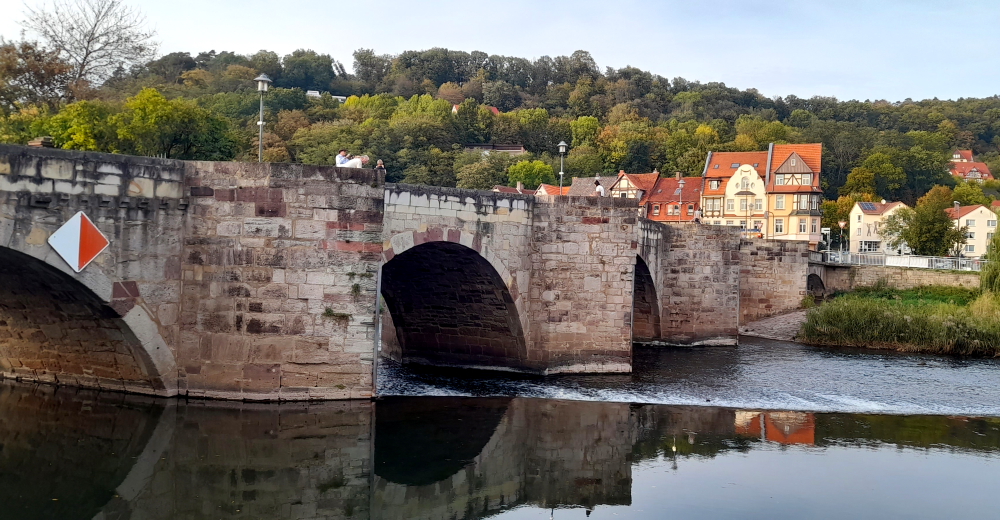
The Alte Werrabrücke bridge and weir across the Werra River.

Through her marriage in 1525 to Erich I, Elisabeth of Brandenburg was granted Münden as her territory. Elisabeth came into contact with the ideas of the Reformation (Protestantism) early on and brought the reformer Antonius Corvinus to Münden. After the death of Erich I in 1540, Elisabeth took over the reins of government as guardian of her son Erich II, who was still a minor, and ruled from her residence in Hann. Münden until 1546.
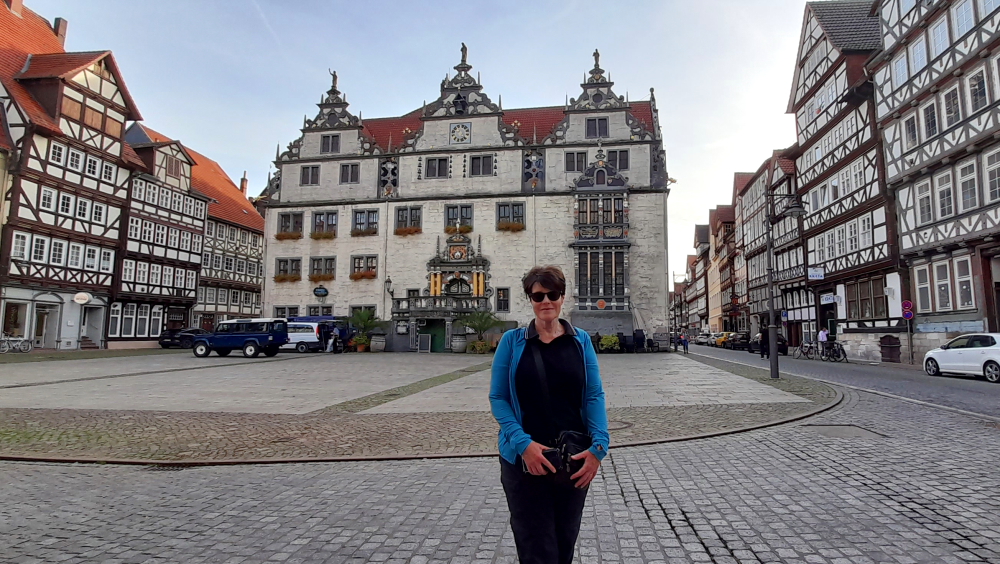
The City Hall and market square.

During the Thirty Years’ War the city was destroyed in 1626. During the Seven Years’ War, the city was repeatedly occupied by French troops between 1757 and 1762 who built the French redoubt on Questenberg .

In 1776, almost 20,000 Hessian soldiers embarked from Münden, which the Landgrave of Hesse-Kassel Frederick II handed over to the Hanoverian Elector and King of Great Britain, George III. They were used in combat against American troops in the American Revolutionary War. The soldiers were also repatriated via Münden in November 1783, but barely more than half came back.
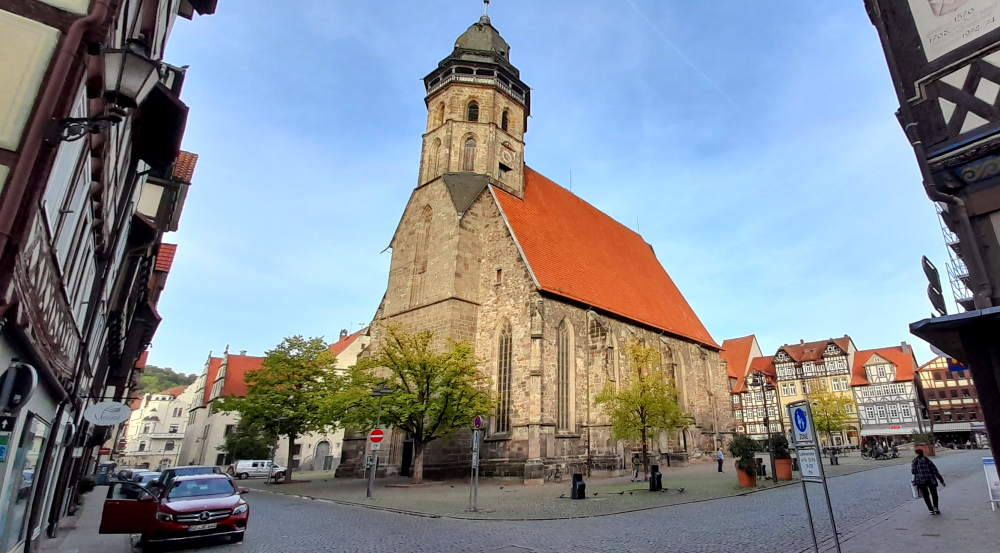
St. Blasius Church in the town square.

On March 30, 1933, Adolf Hitler was granted honorary citizenship of the city. It was only 75 years later, on March 27, 2008, that this honorary citizenship was unanimously revoked by the city council.

As part of the “Action Against the Un-German Spirit”, some National Socialist students from the forestry faculty staged a book burning in the market square on May 10, 1933, as in many other places in Germany .

Already on November 8, 1938, considerable pogrom damage to property was committed in the Münden synagogue and the Torah scrolls, prayer books and mantles were publicly burned on the Tanzwerder. In 1942, the remaining Jewish citizens were deported to concentration camps where 126 people died.

With a few exceptions, Münden was spared from the direct effects of war. On May 17, 1943, the city was hit by a tidal wave caused by the bombing of the Eder Dam in Operation Chastise (The Dam busters raid).

Two air raids on Münden took place on March 30 and 31, 1945; 32 people were killed and 50 seriously injured. On 5 & 6 April 1945, shortly before the arrival of the advancing American troops, German pioneers blew up all the bridges in the city except for the historic Werra Bridge, especially the Werra Valley Bridge on the Reichsautobahn.

On 6 & 7 April 1945, American troops took part in the battle for Münden. According to the Allied agreements, the city was in the British zone of occupation, and on May 20, 1945, British soldiers moved in.

In the hotel room there is a brief summary of the history of the hotel building. Most of its life it was a warehouse but in 1938 it was a Hitler Youth Home then in 1946 it became a refugee camp then a city archives storage before being converted to the current usage as a hotel in 1998.
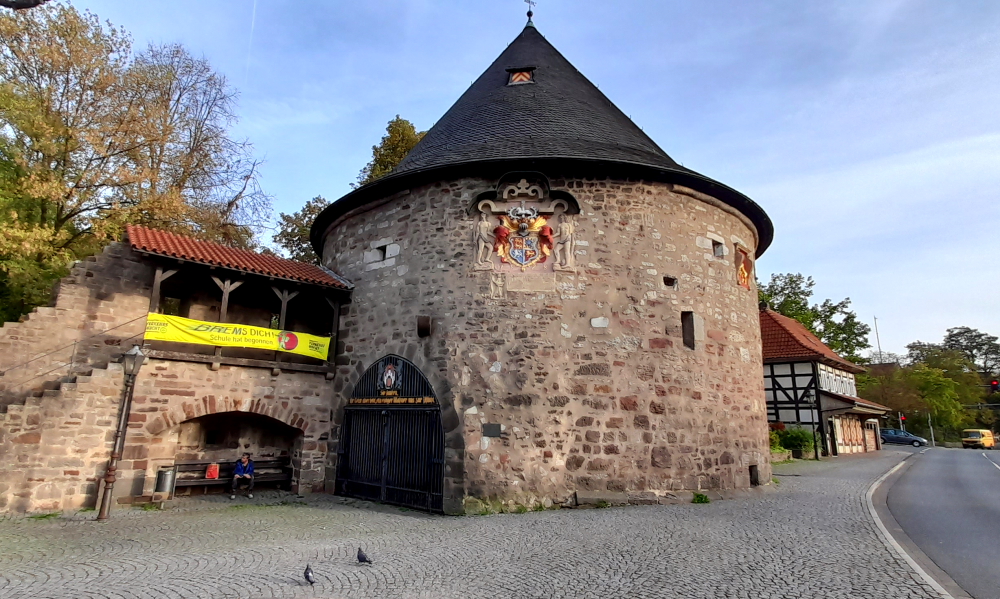
The rotund below the Wallanlagen Castle.

After we traverse all the north-south streets in the grid-based town we decide it’s time for dinner and opt for traditional German meals.
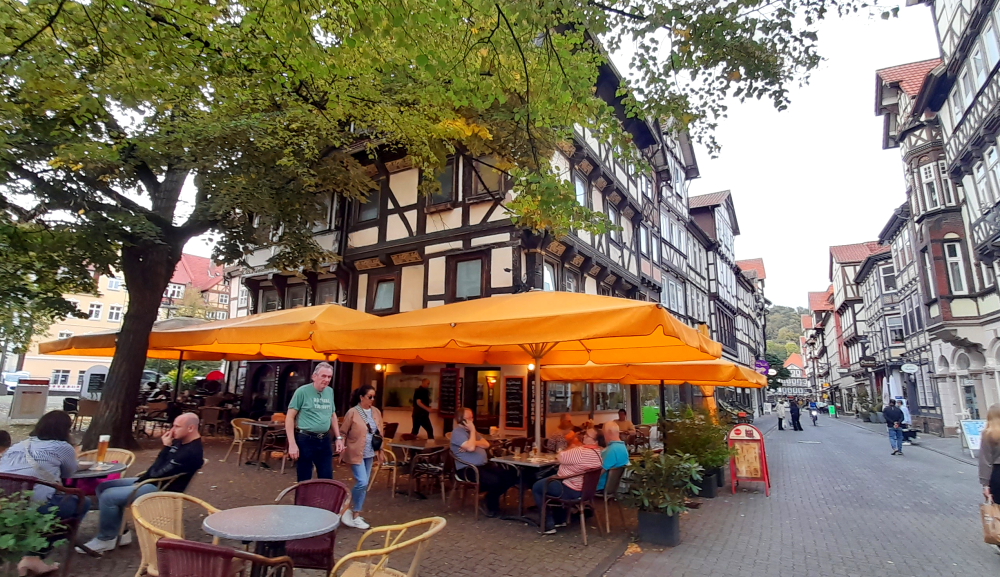
Dinner at the Kuesterhaus Restaurant.

Back in our spacious 3rd-floor hotel room we open the window so that we can fall asleep to the gurgling sound of the fast-flowing river below.
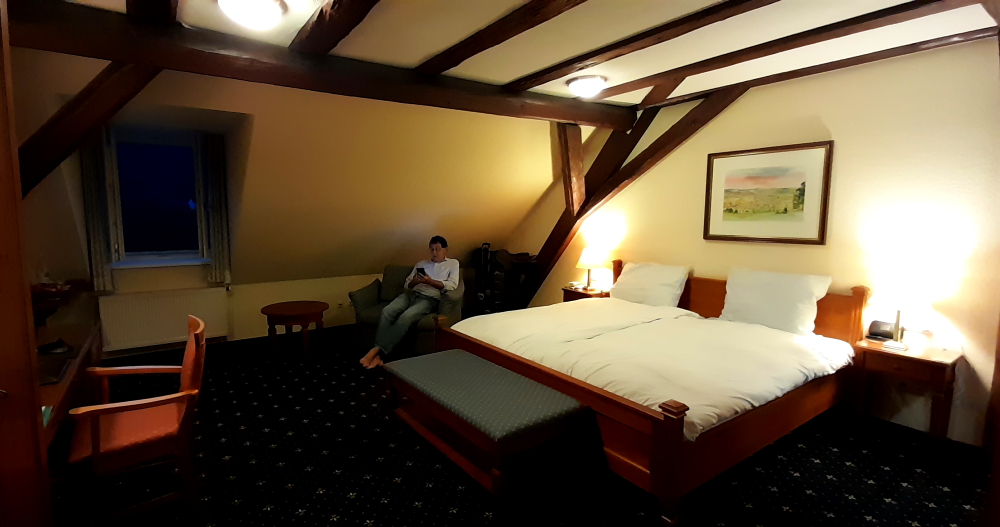
Our room in the Hotel Alter Packhof.

It has been a lovely walk around the town looking at the amazing old buildings and cobbled streets. Perhaps we should have planned to stay here a little longer. This little town is highly recommended.
Ghent & Brussels, Belgium

2 October, 2023

This morning we are checking out of our hotel in Middelburg and driving to Ghent in Belgium. Since we have both been to the usual tourist places in Belgium such as Bruges we decided to just go to Ghent (I liked it a lot last time I was there), Brussels (to catch up with an old colleague of Lynn’s), Spa for a few days’ rest and Antwerp as a day trip to catch up with some friends of mine.

Check out should have been easy this morning. Walk the 10 minutes to the car park then bring the car back to the hotel in Middelburg, load up and drive the 55 minutes to Ghent. No, nothing is ever straight forward in Europe. We went to pay for the 4 days of parking but we find that the auto-pay system at the parking station doesn’t take debit or credit cards. No problem we thought. We have a Eu50 note to pay for our Eu40 parking bill. Nope… the machine doesn’t take Eu50 notes. WTF! Do the Europeans go out of their way to be obstructive? How hard is it to just accept all forms of payment? Lynn decides to run around town to look for someone who will break a EU50 note. Meanwhile I have a standup argument with a voice on the other end of the stupid machine. “Why don’t you take card payments?” I ask. “Because we don’t” is the response.

Why would anyone live in a country that can’t do basic efficient processes? I have come to the conclusion that Hitler didn’t lose the war. He just couldn’t stand the medieval thinking still going on to this day in the rest of Europe (and the UK for that matter – remember the Department of How Can We Make Things Harder to Do?).

Finally a helpful German couple turned up to pay for their parking and they had a wallet full of cash. They agreed that they have to carry a lot of cash in The Netherlands due to the inefficient or non-existent payment process here. Meanwhile Lynn has completely gone missing so I finally get the car out and drive the 20 minutes back to the hotel. It is 20 minutes because you can’t just drive there without taking the most inefficient route. They all ride bicycles because the road system is slower than walking. It turns out that Lynn has not been able to break her EU50 note in any of the shops so she finally walks nearly all the way back to the hotel before she finally has to buy something to break the note.

To make things worse, it seems that while the car was parked in the parking station someone backed in to the hire car and we now have a new dent in the bonnet and number plate. I always new that Dutch drivers were bad but that is just rude.

I now know the next location for “I’m a Celebrity, get me outta here”. Do it in a town in Europe!

We finally break out of the convoluted town roads and head to the border. On approach to Ghent it looks like the Belgians have learnt from the Dutch (it is Flanders after all). Our hotel is 50 metres inside a Low Emissions Zone (LEZ). You have to apply online for an exemption or cop a EU150 fine. Not a problem, I can understand not wanting vehicles with high emissions in the Old Town. The problem is that when you go online to apply for the entry you need vehicle details such as the date of first registration of the car, the EU emissions rating code, the car engine size, fuel type code, registration number, etc plus the registration address of the owner. Hey guys, what about tourists with hire cars? Bloody morons! So it seems that not only do the Europeans hate cars, they also hate tourists and rental companies. They must find things so easy when they are tourists in Australia.

I phone the help line but no one answers the phone so I email them outlining our situation including the fact that the hire car company hasn’t given us any registration documentation about the car at all. I also email a copy of our hire agreement, a photo of the registration plate and the contact details for the car hire company and tell the LEZ department to contact the hire car company for any further information. I’ve done my bit so over to them. Their automated response is that they will respond within 10 business days. We’ll be gone by then! Surprisingly, a short time later I get another email saying that the car has been registered and it can return to Ghent anytime without further registration between now and December 2027 when the registration will expire. Terrific!

Anyway, we finally get to our hotel and drag our suitcases up the stairs (at least this place has an elevator for part of the way). Too bad about anyone in a wheel chair. Our room is poorly lit, has head-banging ceiling trusses and a literal closet for a WC – the space from your knees and the door is less than in an aircraft loo! According to our room key cover we are in room 39 on the 3rd floor. Once we get to the third floor we find that there is no such room as 39. Back down to reception we find that “39” written on the folder is actually “32”. Just another way to piss people off because Europeans can’t write a 2 like the one that is on their keyboard!

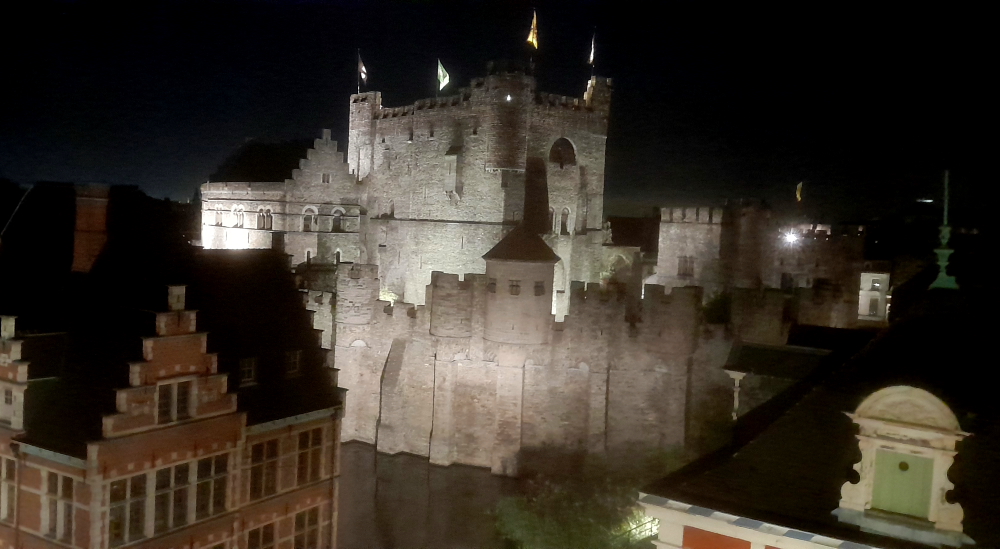
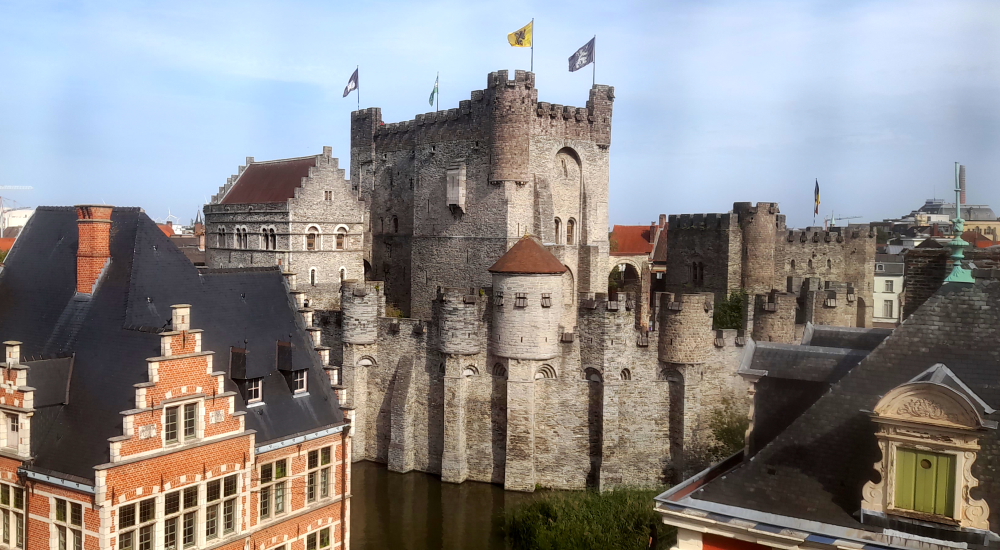
At least we have a reasonable view of the Gravensteen Castle across the river. It would be a better view if for some reason hotel maintenance would clean the fly screen. I guess I shouldn’t complain. At least the room has a fly screen. It even has an almost working air conditioning split unit.

View from our window through a dusty fly screen.

We quickly unpack and since it is forecast to rain tomorrow we decide to go on a canal boat tour. A boat tour is not a “must do” in Ghent (unlike Bruges) but we are booked on a walking tour tomorrow which Lynn plans to change to the following day for a better chance of fine weather.

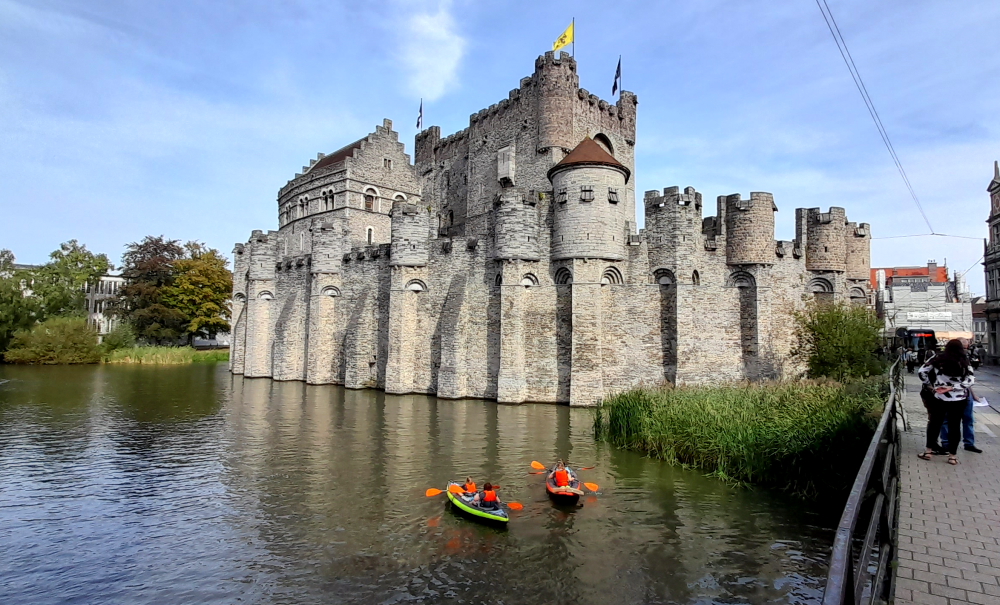
Another view of the Castle from street level.

After sleepy Middelburg, Ghent is bustling with tourists. Considering that it is Monday today and a Monday in October the heavy crowds seem out of place. However it is a sunny 25 Deg C this afternoon and by the end of this month it will be lucky to reach 10 Deg C. So maybe the locals are just trying to enjoy every last minute of warm weather.

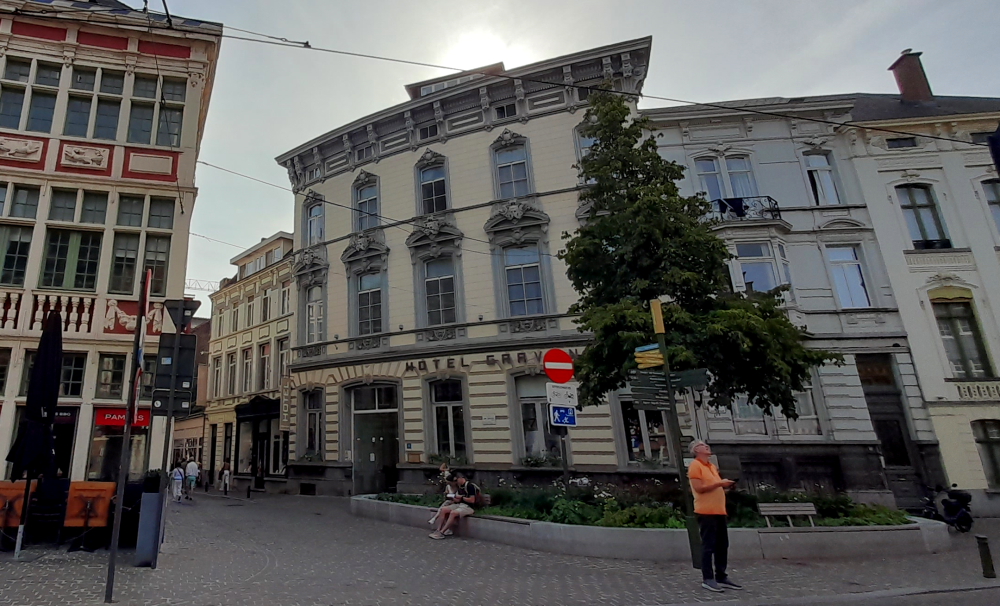
Our Hotel Gravensteen.

The closest canal boat tour is just around the corner from the hotel. There is a tour at 3:15 pm which is about 25 minutes away. We purchase 2x Seniors’ tickets and go in search of a milkshake for me which we quickly find. The 2 waitresses in the cafe look like they are too young to know what they are doing. After a delay I get my milkshake to go – an eye-watering Eur8 (AUD12!!) for what I would consider to be the size of half a regular-sized milkshake. Beer is cheaper in Belgium.

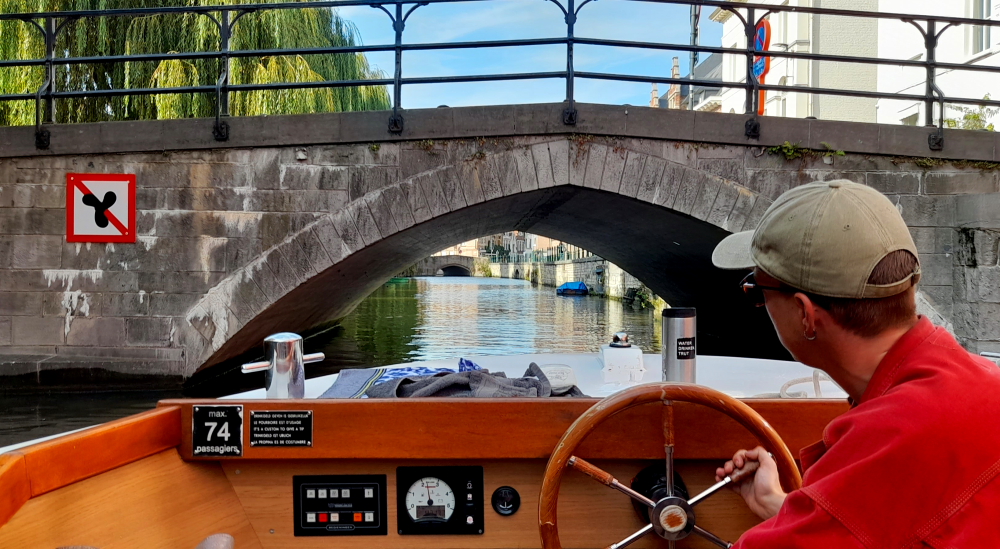
Back at the tour departure point at 3:05 pm we see that the boat is already filling up so we jump on and snaffle the front 2 seats, right behind the skipper/tour guide’s seat.

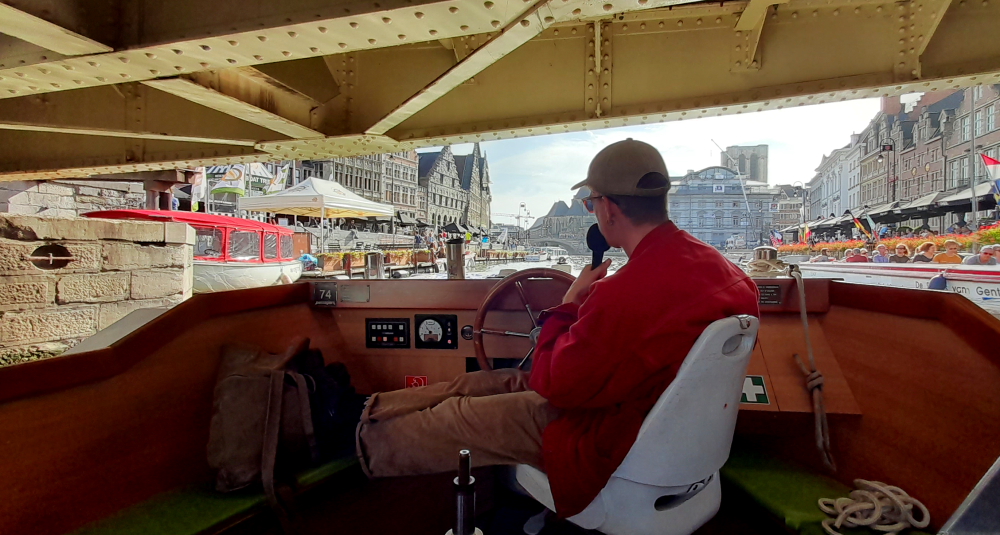
Boat cruise on the Ghent Canals.

We have a wait of 10 minutes in the sun – wow, is that sun packing a punch!

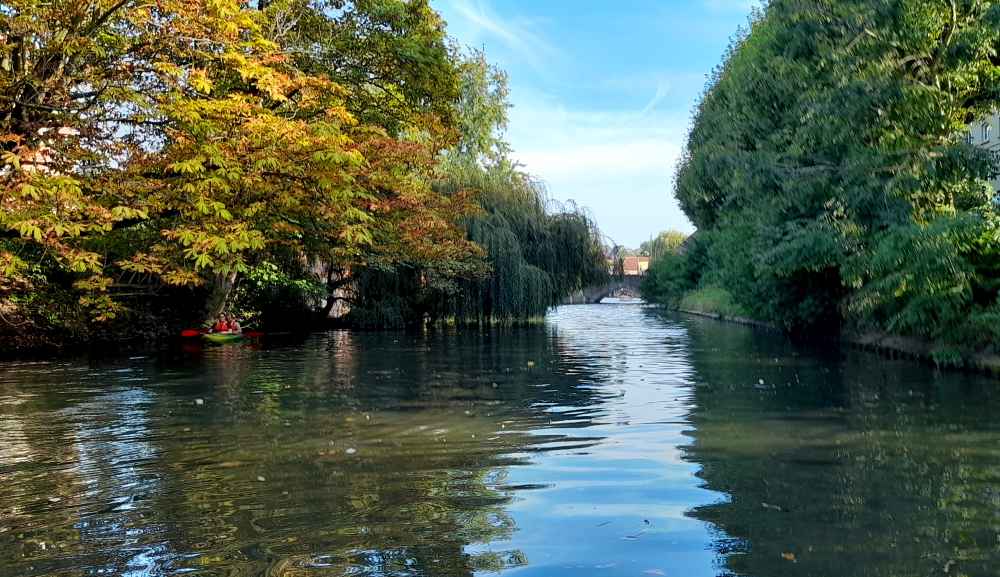
The smaller canal towards Bruges.

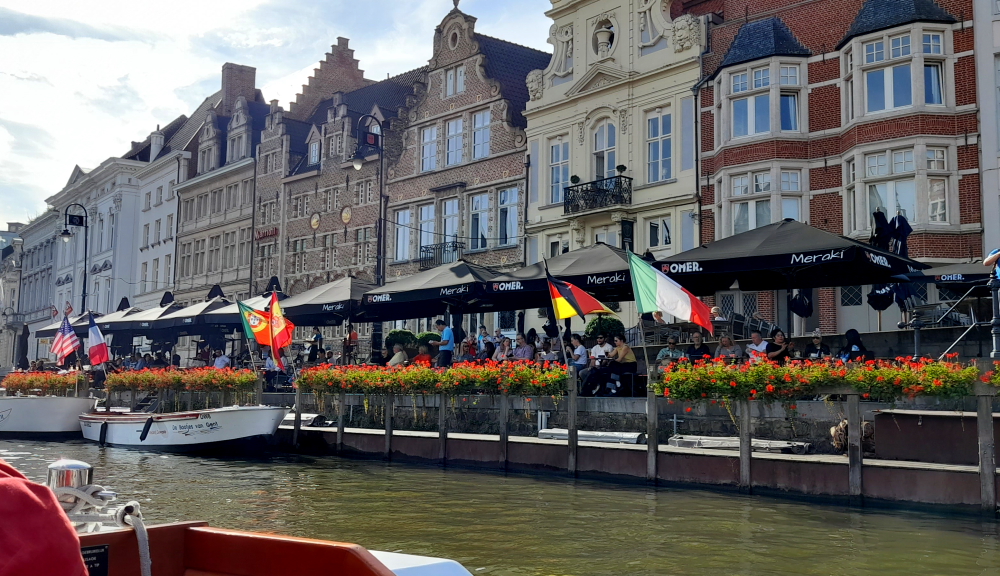
Initially we head in a SW direction along the Leie River between the Korenlei and Graslei roads.

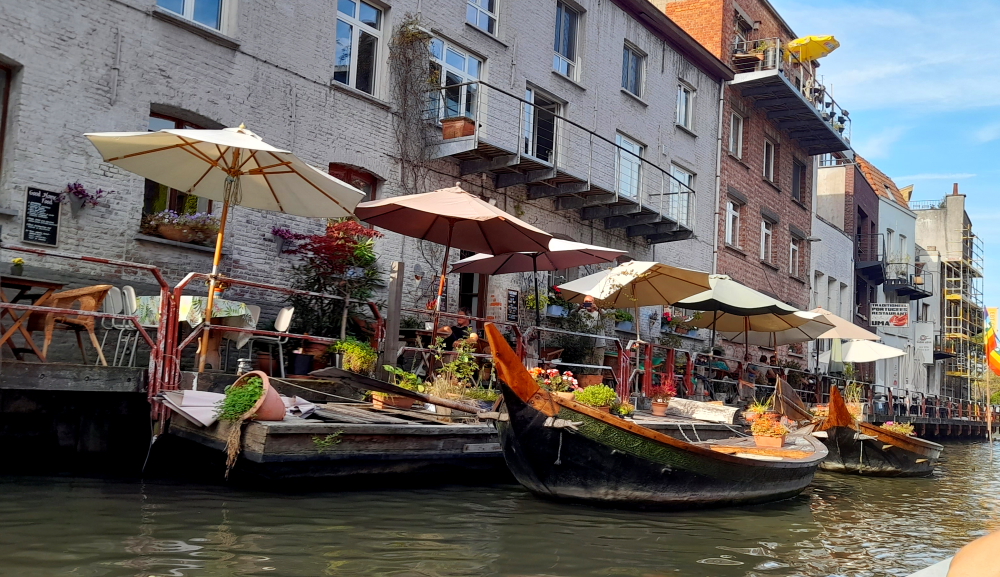
Nice restaurants along the Canals.

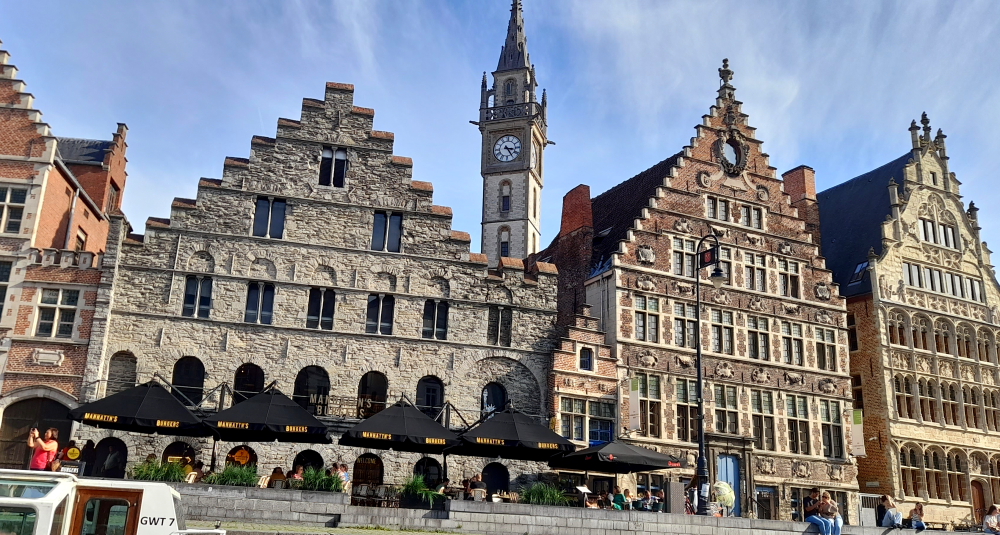
This takes us past the Ancient Port of Ghent with its quay walls and its old guildhalls – boatmen, masons, grain measurers, fishmongers and hagbutters (soldiers armed with a hagbuts or arquebuses). Each guildhall has carved motifs on its facade as to the occupation it represents.

Left – grain warehouse – the oldest building in Ghent.

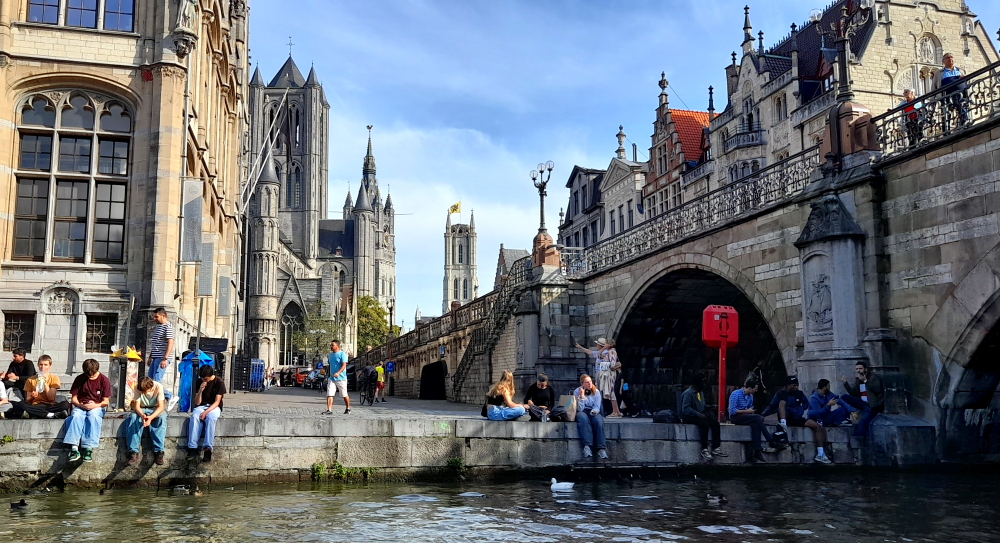
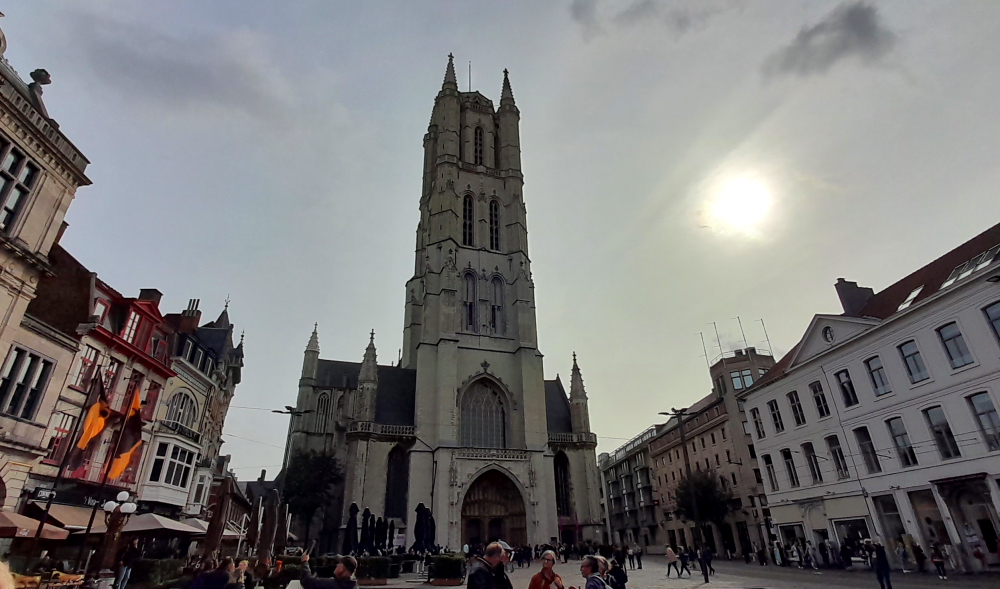
Cruising past these guildhalls we catch a glimpse of Ghent’s 3 famous towers: St Bavo Cathedral, the Belfry and St Nicholas Church.

The Three Towers of Ghent – (L-R) St Nicholas, the Belfry & St Bavo Cathedral.

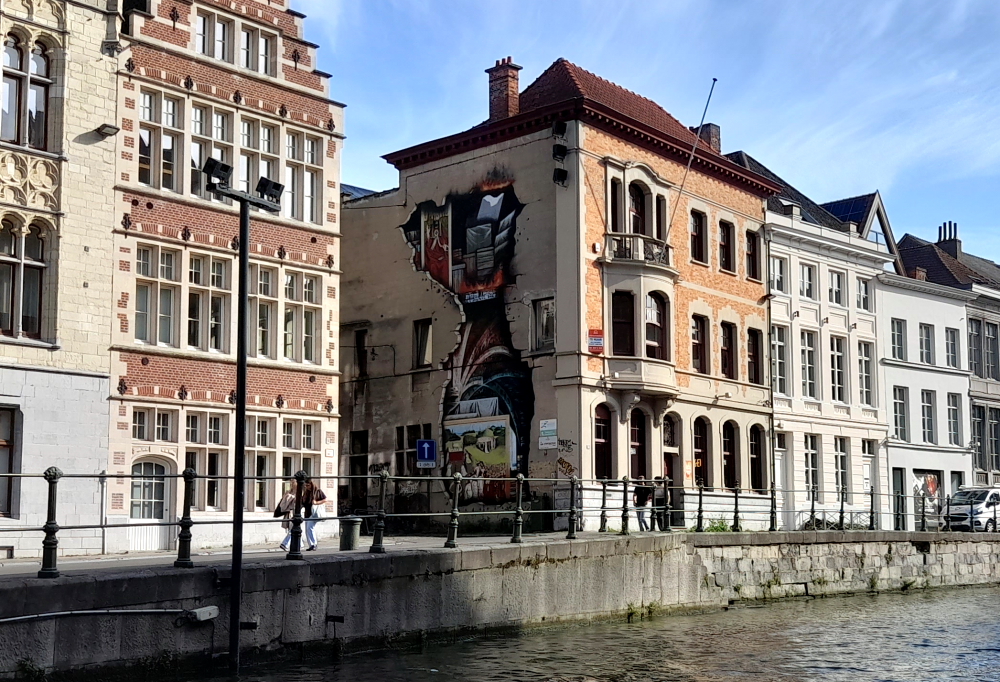
As we make a U-turn we get to see some street art on one of the buildings’ wall on the corner of the Predikherenlei and Van Stopenberghestraat. After the cinematic release of “The Monuments Men”, graffiti artist Bart Smeets created a 100m² mural here.

Street Art in Ghent.

We cruise back to our starting point then travel in the opposite, NE direction along the Leie River past various canal-side restaurants and previous multi-storey brick factories.

Trying to be like Venice?

Today these canals are covered in low, narrow bridges, but apparently these were built in the early 1900s with the previous industrial, working bridges that allowed larger boats to enter the ancient port of Ghent having been demolished in favour of these.

Wide boat, narrow bridge.

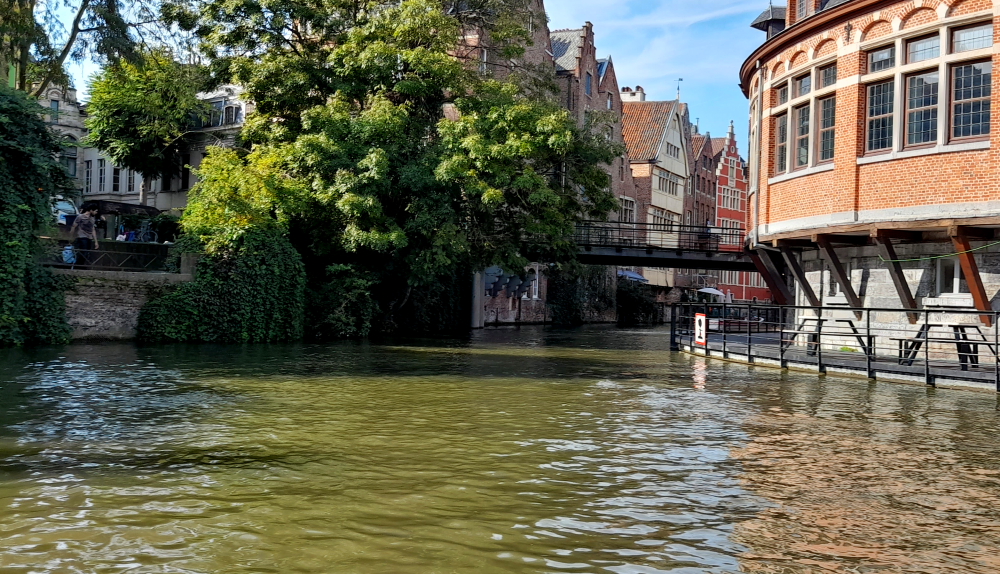
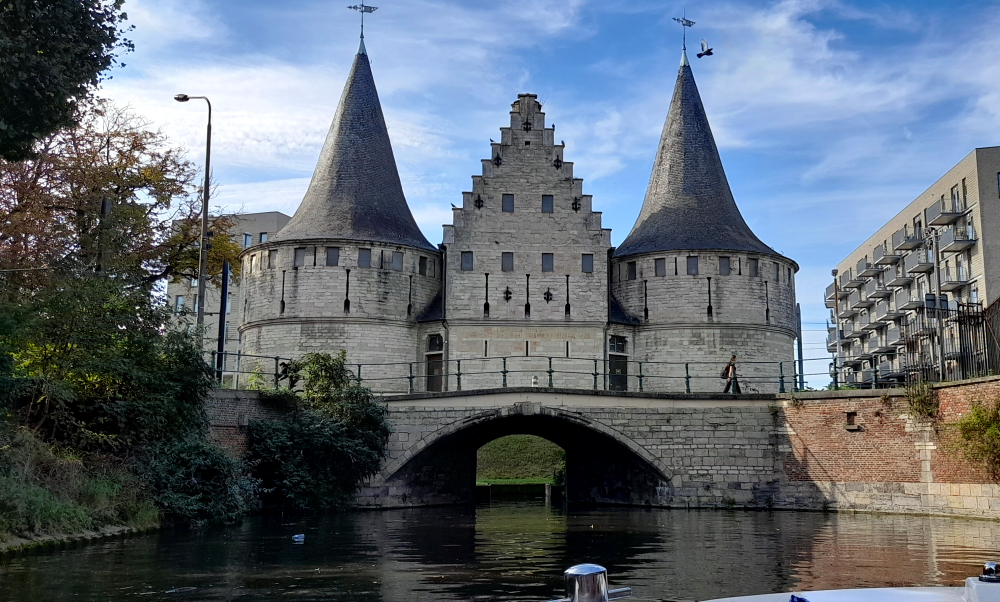
Having executed another U-turn we return to our starting point then turn north, again on the Lieve River. Our cruise in this direction terminates at a monument called the Rabot. There used to be a rabot on the site of the building (a lock with a closure in the form of a single lifting door or sliding door), but the name Rabot has been transferred over the years to the towers defending this hydraulic structure.

The Rabot Monument.

During the Flemish Revolt against Maximilian of Austria, Habsburg troops came to besiege Ghent in 1488, but had to retreat after 40 days. At the place where they were stationed, the people of Ghent built two monumental towers on the existing rabot in the Lieve canal as a triumph.

Time to trim the trees.

In 1491 , the construction of the Rabot was completed: a fortified lock at the intersection of the Lieve with the city canal. De Lieve in turn provided the connection to the Zwin and further to the sea. After Maximilian’s victory in 1492, he ordered that the people of Ghent had to demolish the Rabot towers as punishment and use the stones to build a forced castle in the Prinsenhof. They refused and managed to renegotiate the sentence into a heavy fine.

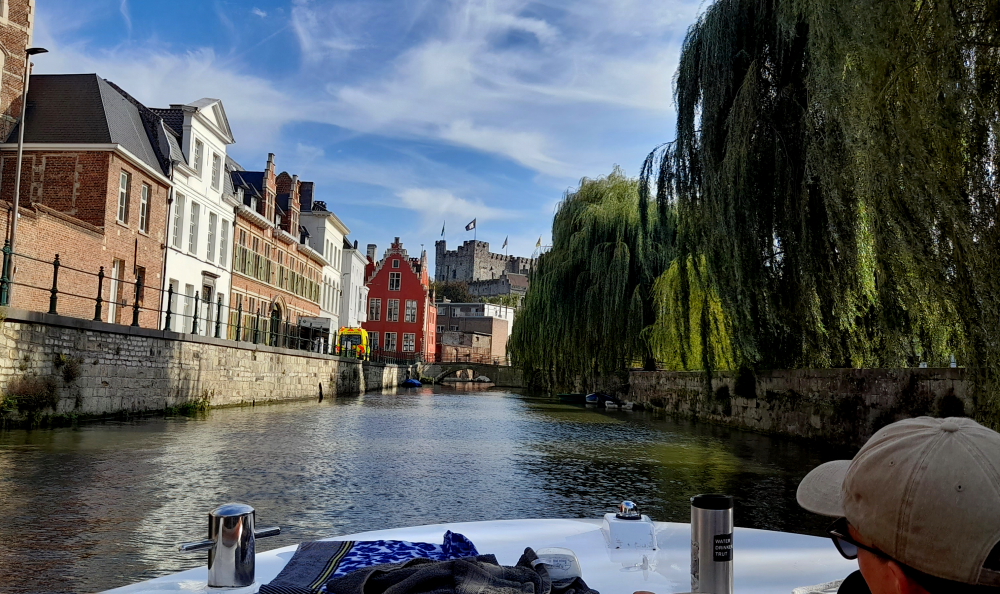
Heading back to the Castle.

Gravensteen (also known as the Castle of the Counts) is a medieval castle that dates back to the 12th century. This impressive fortress was once the residence of the Counts of Flanders and played an important role in the city’s history.

Today, visitors can explore the castle and its many rooms, including the Great Hall, where important meetings and banquets were held, and the dungeon, plus climb its battlements. The castle also houses a museum that showcases artifacts from its past, including weapons and armor.

50 minutes later we are back at our starting point.

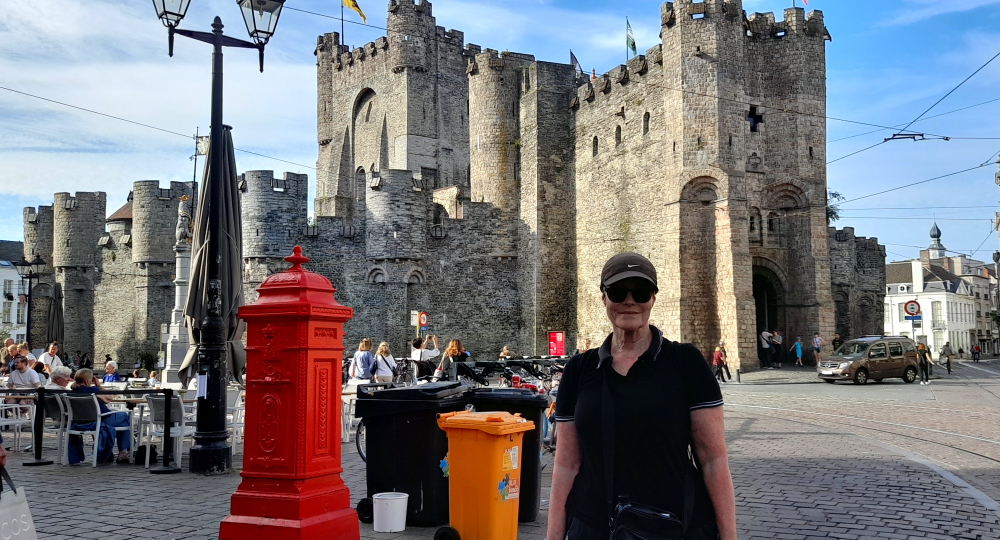
Queen of the Castle – & the post box and the bins.

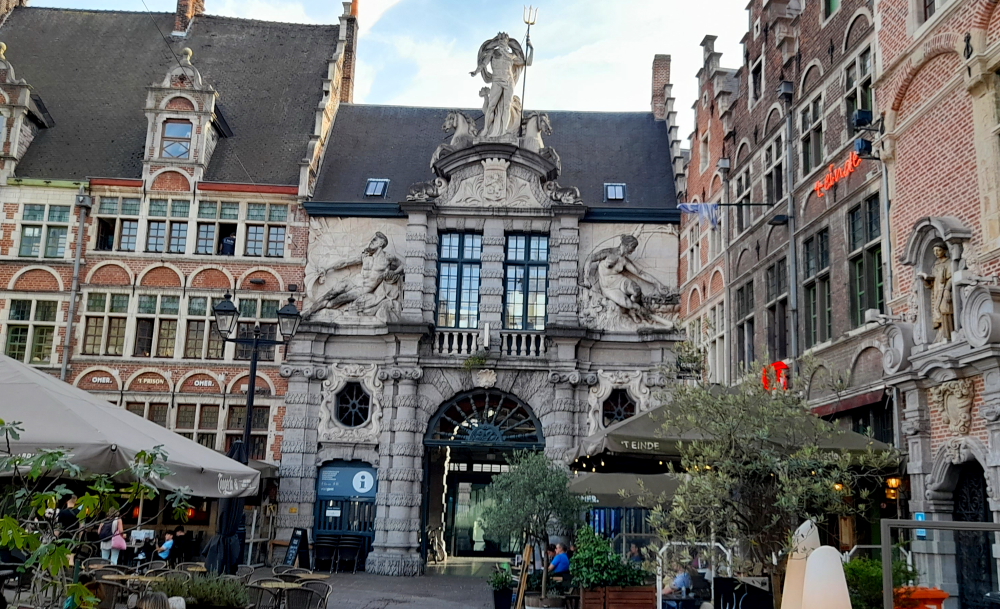
Across the road from the Castle is a square bordered by restaurants but in the corner is a magnificent building which used to be the Fish Market, now the Tourist Information Centre.

The old fish market – now the Tourist Information Centre.

Before we return to the hotel we take a stroll down Jan Breydelstraat that runs alongside the hotel where there are some promising eateries backed onto the canal.

The LEZ next to our Hotel.

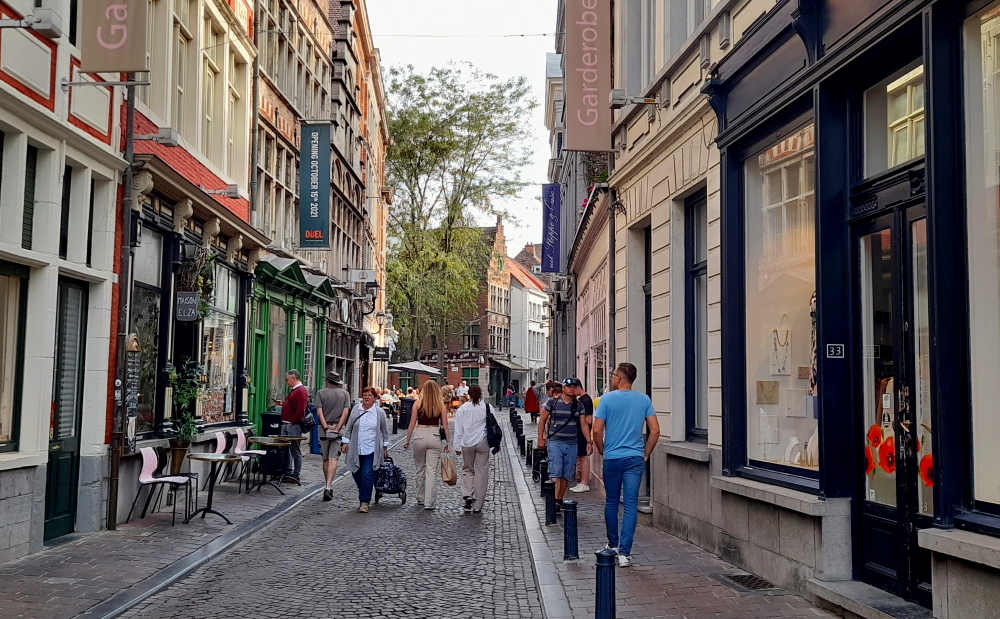
Back at the hotel we check with the receptionist for restaurant recommendations and decide to visit Oudburg Street which has lots of ‘world’ eateries – Greek, Turkish, Asian – and is 4 minutes’ walk away.

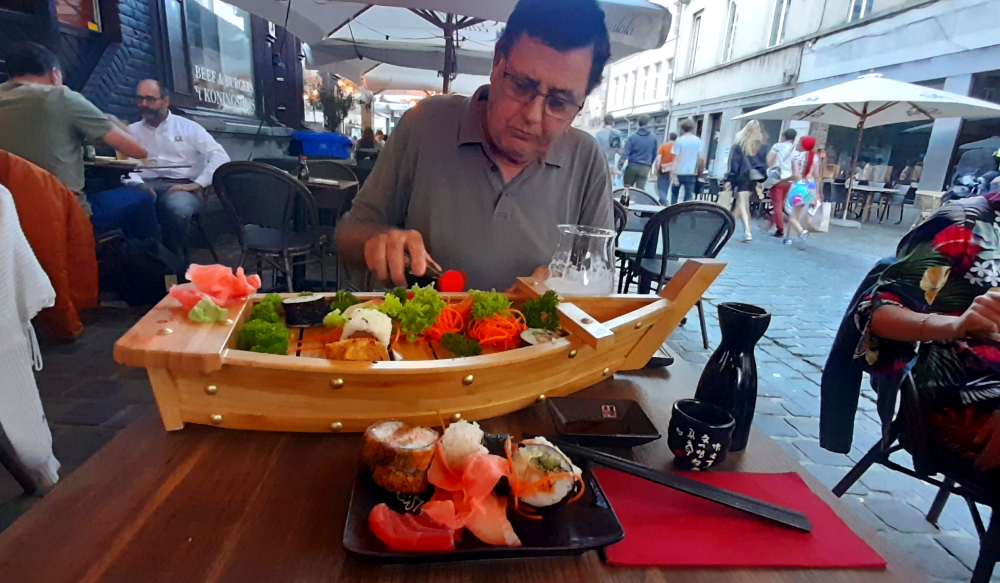
We opt for the Sushi Palace and order a combo of sashimi, sushi and nigri but for 1 person (25 pieces) which we’ll share and wash down with a beer and a cold sake. It comes out on a boat. Good call for the single serving – anything larger would have been way too much.

No sushi train, just a sushi boat.

3 October, 2023

As predicted it is cold and bucketing down with rain when we wake this morning. Just as well Lynn moved our city walking tour to tomorrow.

We need a catch up day anyway so the plan is to sort out some issues with HSBC Bank (they seem to have lost Lynn’s “Global View” of all our accounts for Australia, UK and America). It is not a major issue while we are in Europe but we need to move some GBP from Lynn’s UK account to our Australian Everyday Global GBP account before we head back to the UK in November. We also need to do our weekly laundry at the laundromat near last night’s sushi restaurant.

After a few frustrating hours HSBC UK can’t solve the issue so they promise to sort it out within the next 15 business days. Another case of poor user acceptance testing when they did their last system update I suspect.

After all things done and sorted we head out to dinner at a recommended Italian restaurant. The food is excellent and we consume a half litre of house red. We needed that after the frustrating day dealing with banks.

Back at the hotel it seems that the Castle is lit up tonight. Lynn commented last night that the Castle wasn’t illuminated. Apparently Ghent is going to participate in ‘The Night of Darkness’ on 14 October when all monumental lighting will be extinguished. Perhaps last night was a trial run??

The Castle all lit up.

4 October, 2023

A cool but sunny morning today. Perfect weather for a 2-hour walking tour.

We’re at the meeting place at 10:15 am and join 40 other people. The group splits into 2 and we have Leisa, a Ghent-born history teacher, as our guide.

When Lynn booked the tour several months ago we weren’t planning on doing the canal boat tour. So, for the first half of today’s tour we are given information we’ve heard before on the boat tour 2 days ago.

The Brewers Guildhall and St Michael’s Church’s unfinished tower.

For example, the tower of St Michael’s Church was supposed to have been the 4th tower in Ghent. Unfortunately, the Brewers Guildhall which was responsible for its construction was unable to finish it so just ‘topped’ it off.

Also, the Great Butchers’ Hall was originally a covered market. This hall, which dates back to the 15th century, was the central place where meat was inspected and traded. This was partly because selling meat door-to-door was forbidden in the Middle Ages.
The former Great Butchers’ Hall – soon to be bicycle parking.

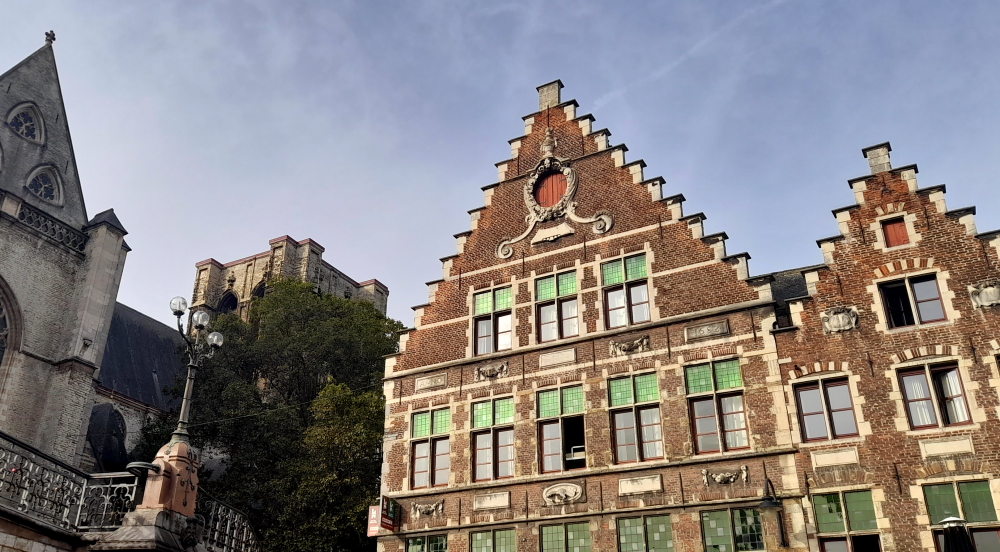
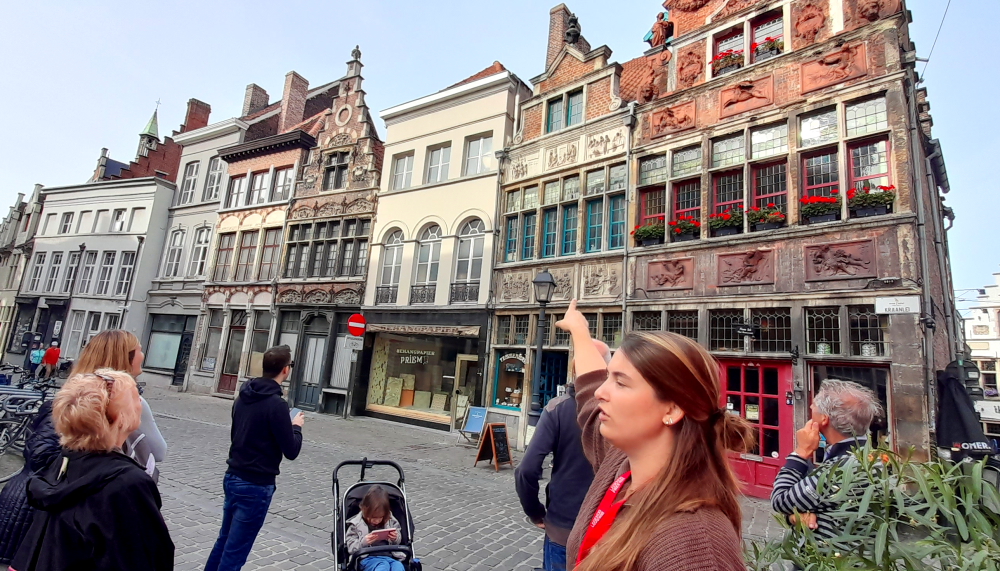
Most of the town centre that we see today has been reconstructed. Only a few buildings are original medieval, such as this row of shops in Kraanlei Street, one of which is a traditional sweet shop owned by a 5th generation confectioner.
Our guide indicating original, medieval buildings.

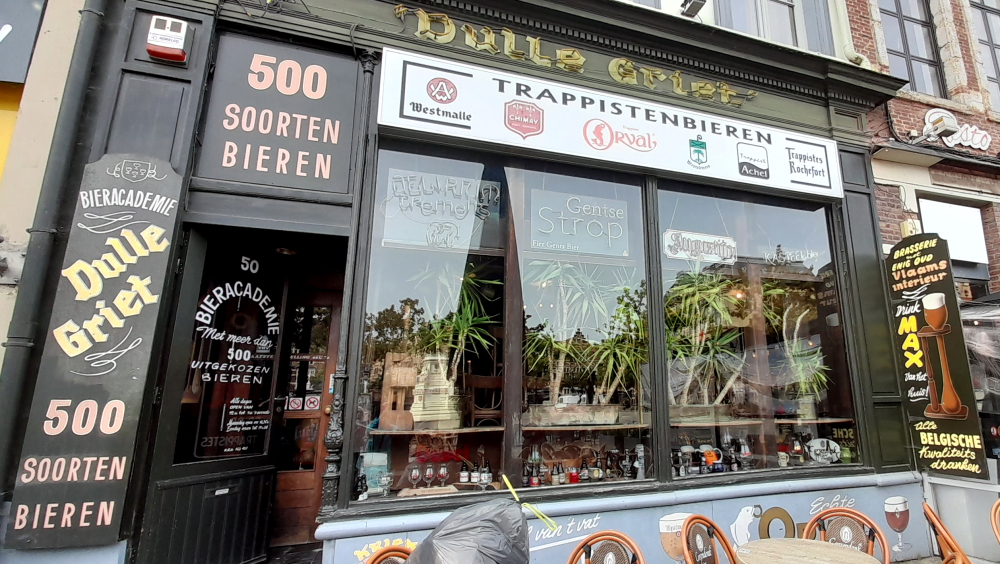
On Vrijdagmarkt (Friday Market) our guide introduces us to ths Dulle Griet pub which boasts 500 different types of Belgian beer including 12 rare Trappist beers, 6 of which are Belgian – as advertised on the front window.

Also advertised is what Australians know as a ‘yard glass’. Here in Belgium this is a koetsiersglas aka “Coachmen’s Glass.” Legend has it that tavern owner Pauwel Kwak designed the unique shape in the 1790s when Napoleonic Code took hold in Belgium. One stipulation of the stringent new legal code was that coachmen were no longer allowed to drink with their riders. This tactic focused on drawing a clear line between the wealthy and working classes. And it meant left of potential customers had to wait outside Pauwel’s bar.

Like any enterprising entrepreneur, he figured out a loophole: coachmen couldn’t come in, but beer could come out to them! He designed a wooden cupholder of sorts to hold a glass. The coachmen could attach this cupholder to their coach. Then, Kwak created a glass that would stay in the cupholder, or in the hand of the coachman on even the bumpiest ride.

The tricky part was that the glass had to be narrow enough for a coachmen to wrap their hand around it even with thick gloves. This left a long slender neck of a glass with most of the beer contained in a bottom bulb to prevent sloshing in a bumpy coach. The already odd looking contraption has a massive lip at the top to make drinking (while driving, yikes!) easy and to contain spills. The 18th century version of a sippy cup!

Lots of beers available in yard glasses.

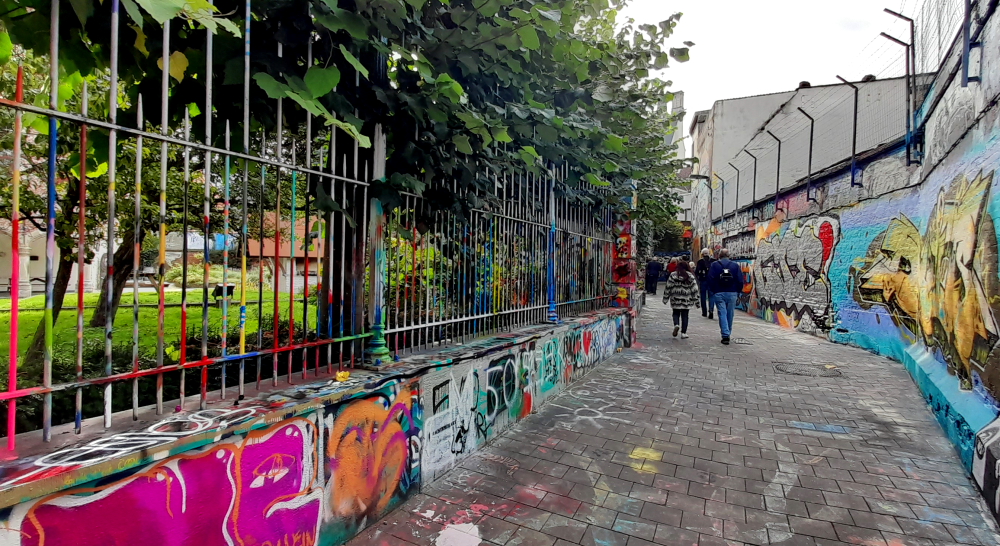
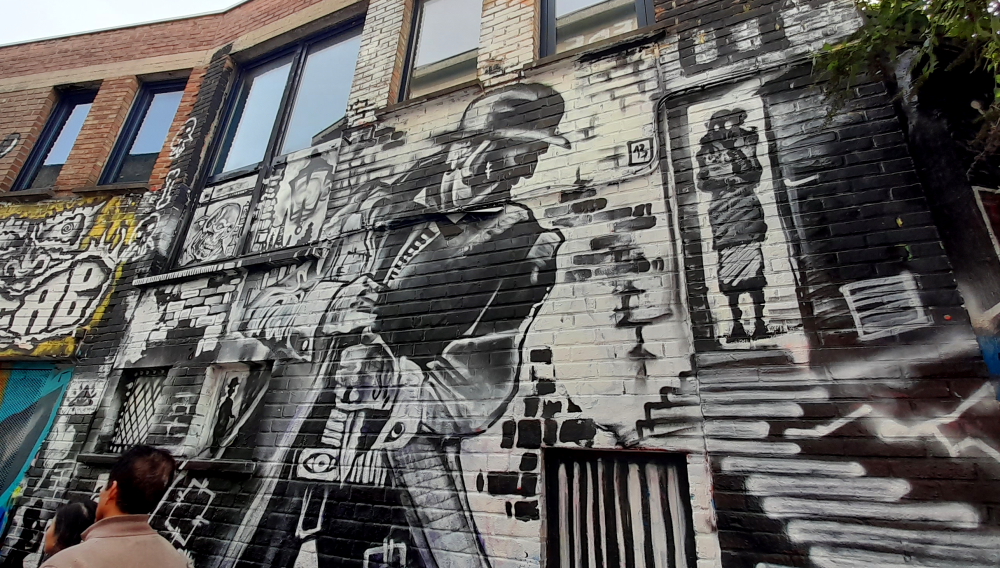
Nearby is Graffiti Street. People sometimes say you can recognise a vibrant city by its street art. Ghent is a hip and free-thinking cultural city where everyone is welcome and free to do their thing. Werregarenstraatje in Ghent is a public canvas for young street artists.

In Graffiti Street, street artists create striking spray-can art to their heart’s content. This means that Graffiti Street never looks the same from one week to the next, or even one day to the next.

Graffiti Street overlooking museum gardens.

In our opinion, the section of Graffiti Street that overlooks the beautiful and peaceful grounds of a museum is far preferable to the corridor’s boisterous vandalism that passes as ‘art’.

Street art or vandalism?

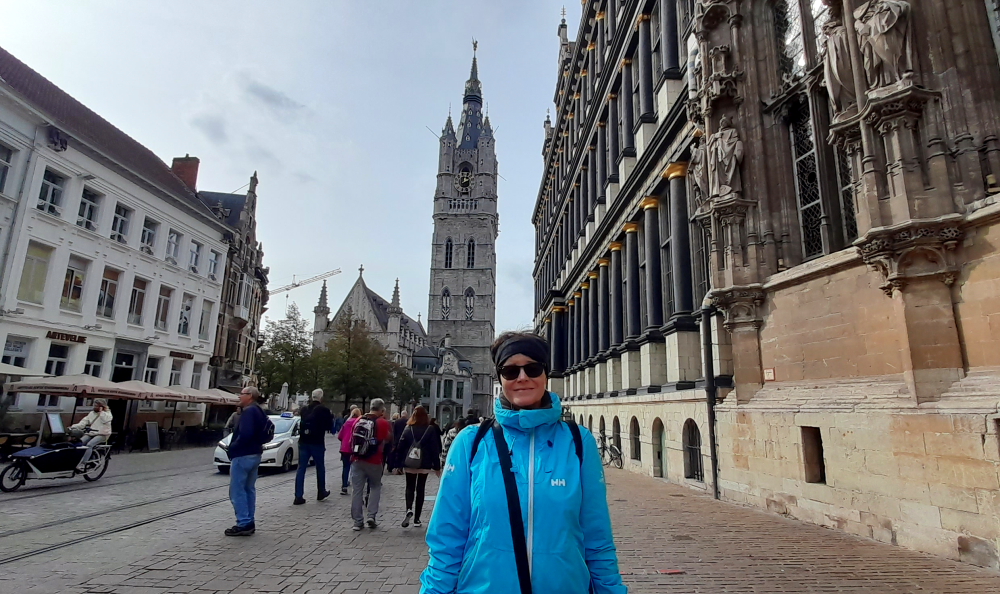
Leaving Graffiti Street we come upon the Stadhuis which has 2 faces to the building: one Gothic , the other Renaissance. This schizophrenic building consists of two parts and it shows a fascinating sight in political Ghent. The facade on the Hoogpoort side shows you the flamboyant late Gothic style of the early 16th century. This style contrasts sharply with the Renaissance style of the facade on the Botermarkt. In this younger wing (1559 -1618) you see Doric, Ionic and Corinthian three-quarter columns and pilasters, inspired by the Italian palazzi.

Stadhuis (on the right) backdropped by The Belfry.

The Ghent Belfry is recognized as a UNESCO World Heritage Site. In 1402, the city privileges were kept in a trunk in the secretory of the Belfry. The dragon, which has stood on the tower since 1377, not only kept an eye on the city, but was also the symbolic treasure keeper of the Belfry. The Belfry also proudly carried the storm bell, the ‘Great Triumphant’.

Saint Bavo’s Cathedral, also known as Sint-Baafs Cathedral, is the seat of the Catholic Diocese of Ghent. It contains the well-known Ghent Altarpiece, originally in the Joost Vijd Chapel. It is formally known as the Adoration of the Mystic Lamb after its lower centre panel by Hubert and Jan van Eyck. This work is considered Van Eyck’s masterpiece and one of the most important works of the early Northern Renaissance, as well as one of the greatest artistic masterpieces of Belgium.

Part of the painting, the lowermost left panel known as The Just Judges, was stolen in 1934 and has not been recovered. It has since been replaced with a facsimile by Jef Van der Veken.
St Bavo’s Cathedral.

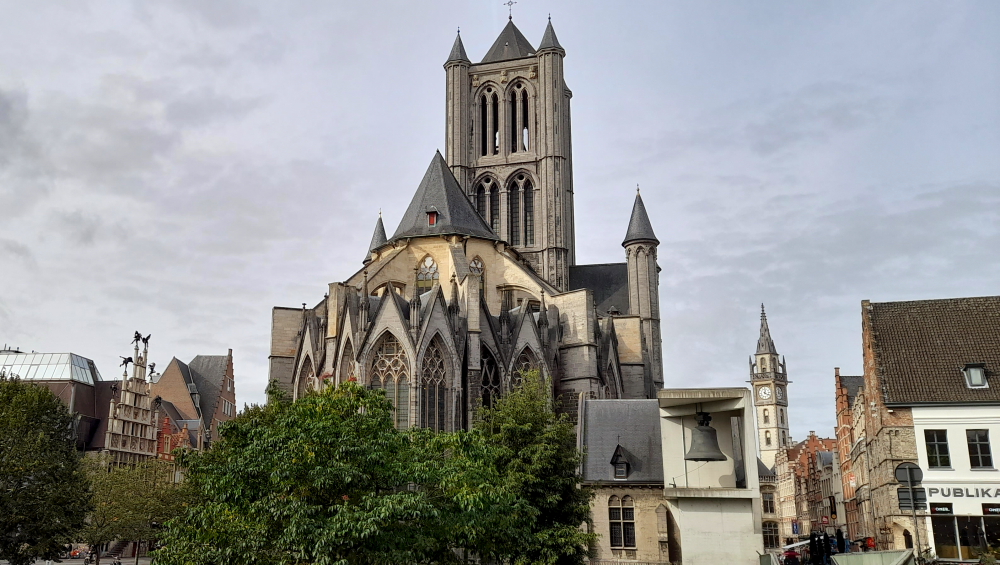
St. Nicholas Church is one of the oldest and most prominent landmarks in Ghent. Begun in the early 13th century as a replacement for an earlier Romanesque church, construction continued through the rest of the century in the local Scheldt Gothic style (named after the nearby river). Typical of this style is the use of blue-gray stone from the Tournai area, the single large tower above the crossing, and the slender turrets at the building’s corners.

Built in the old trade center of Ghent next to the bustling Korenmarkt (Wheat Market), St. Nicholas Church was popular with the guilds whose members carried out their business nearby. The guilds had their own chapels which were added to the sides of the church in the 14th and 15th centuries.

The central tower, which was funded in part by the city, served as an observation post and carried the town bells until the neighboring belfry of Ghent was built. These two towers, along with the Saint Bavo Cathedral, still define the famous medieval skyline of the city center.

St Nicholas Church.

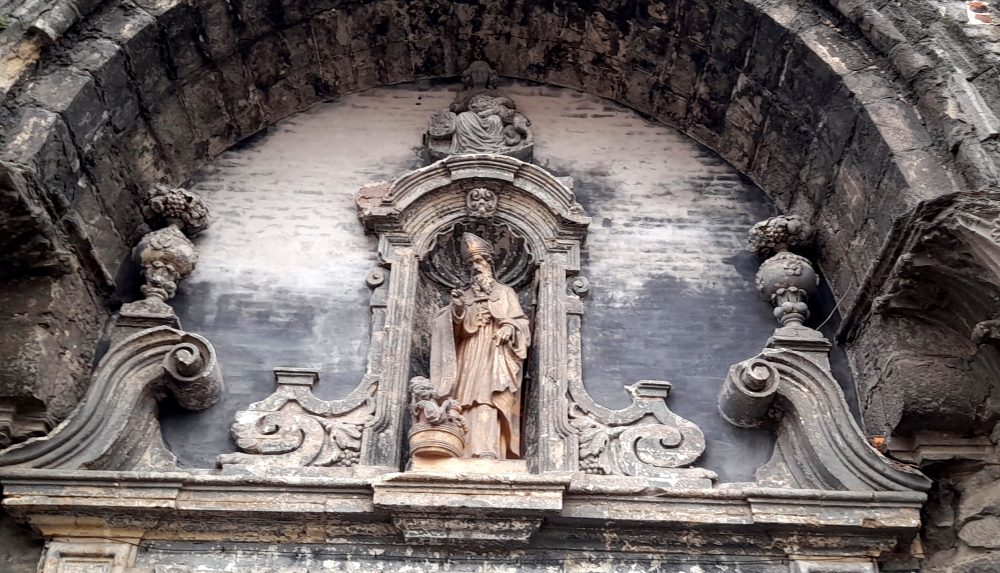
Saint Nicholas is the patron saint of sailors, merchants, archers, repentant thieves, children, brewers, pawnbrokers, unmarried people, and students in various cities and countries around Europe. His reputation evolved among the pious, as was common for early Christian saints, and his legendary habit of secret gift-giving gave rise to the traditional model of Santa Claus (“Saint Nick”) through Sinterklaas.

Here in Ghent the story goes that he became the patron saint of children after he heard that a butcher had murdered 3 starving waifs, put their bodies in a barrel to be sold as ‘high quality meat’ to wealthy patrons. When St Nicholas heard this, he visited the butcher and after blessing the barrel the children came alive and were intact – hence he became the protector of children. This depiction is above a door of the Ghent cathedral which has a barrel with a child in it at the lower LHS of the statue.

Saint Nicholas himself.

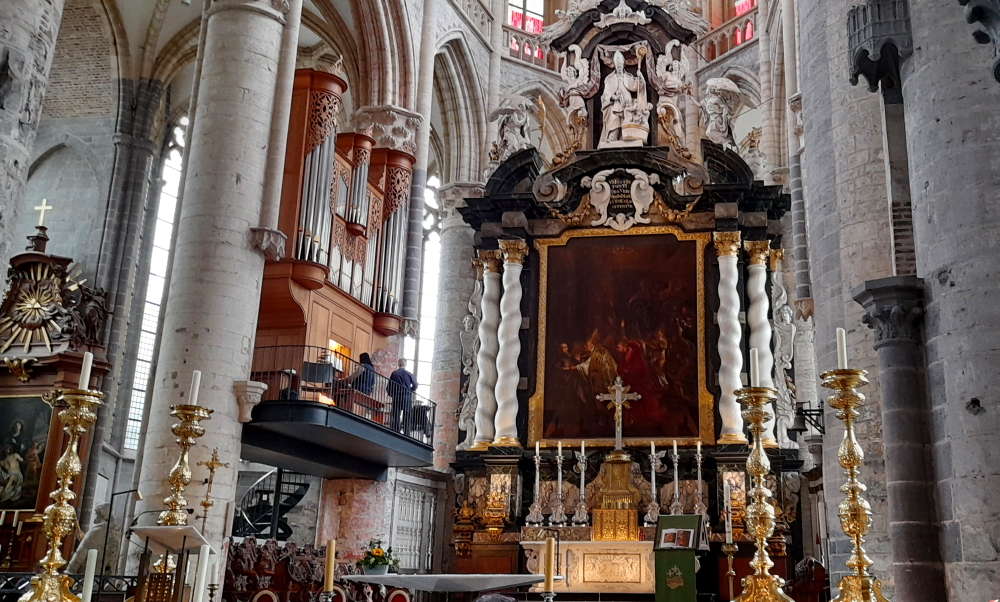
One of the treasures of the church is its organ, produced by the famous French organ builder Aristide Cavaillé-Coll.

Organ recital in St Nicholas Church.

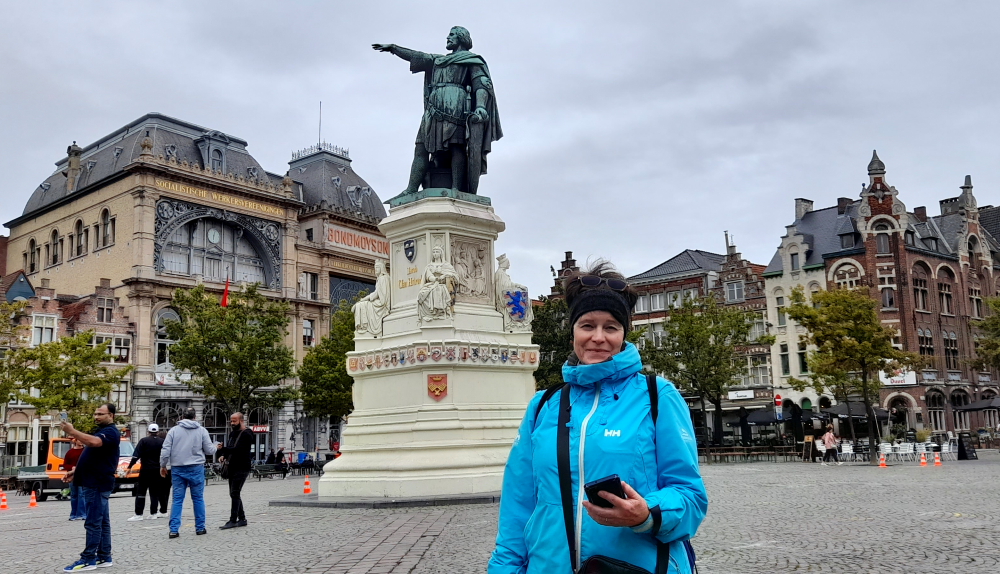
At the end of the tour we cut through the Friday Market Square where there is a statue of Jacob van Artevelde (c. 1290 – 1345), also known as The Wise Man and the Brewer of Ghent, a Flemish statesman and political leader.

Since we’ve arrived in Ghent I keep saying to Lynn that I remember a large fountain. Do you think I can find it?

Jacob van Artevelde statue – 2023.

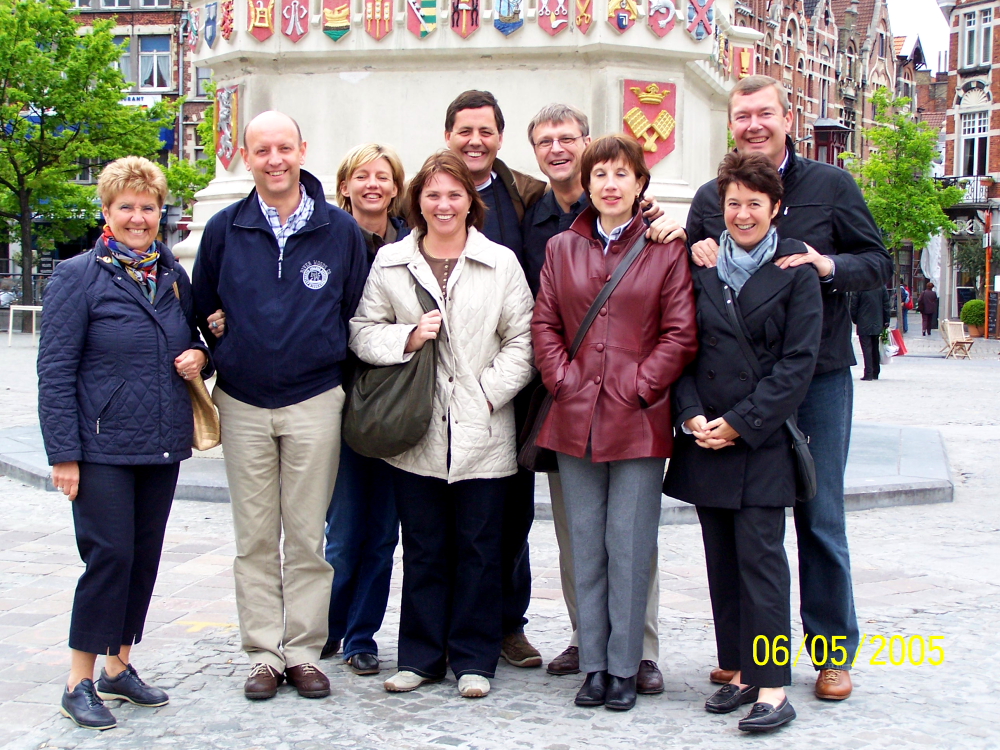
Then, when we get back to the hotel I check the photos of my visit to Ghent in May 2005. Guess what, it isn’t a fountain at all, it’s this statue!

In front of the “Fountain” in 2005.

We’re going to try the cafe/bar, “Et Alors”, just around the corner for dinner tonight to sample their savoury and sweet crepes. Question is: will we be eating crepes or craps?

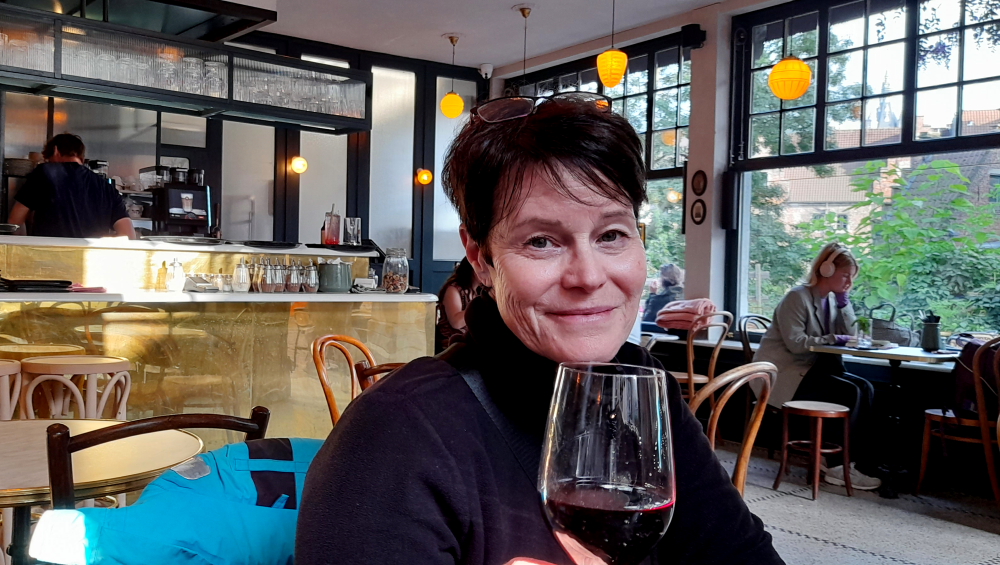
Red wine and crepes.

As it turns out, the crepes are delicious!

5 October, 2023

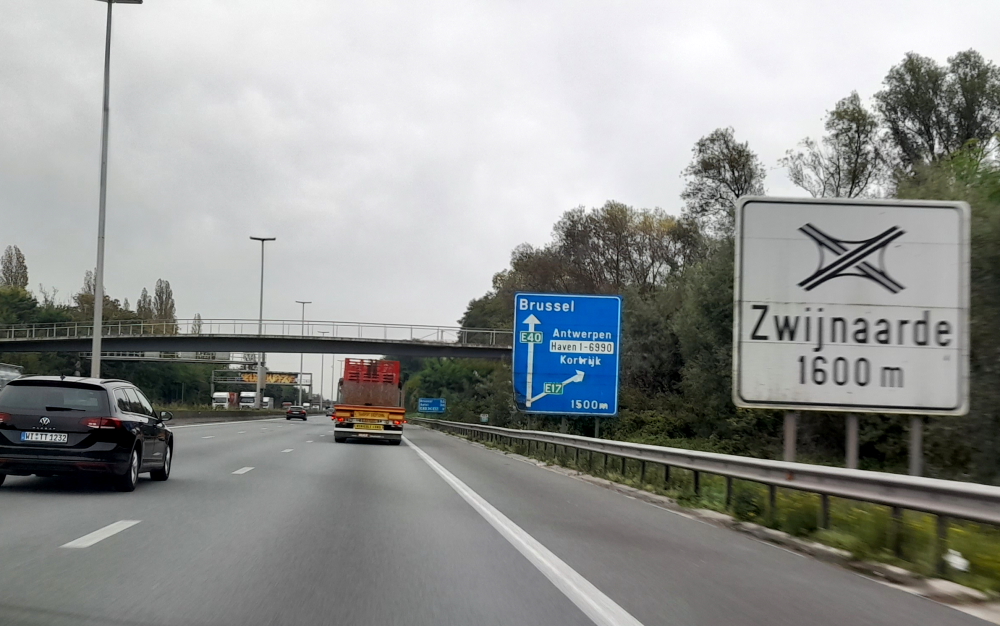
This morning is overcast and 15 Deg C as we depart Ghent at 10:55 am. After a short stop to top up the fuel tank we take the E40 SW to Brussels.

Driving to Brussels.

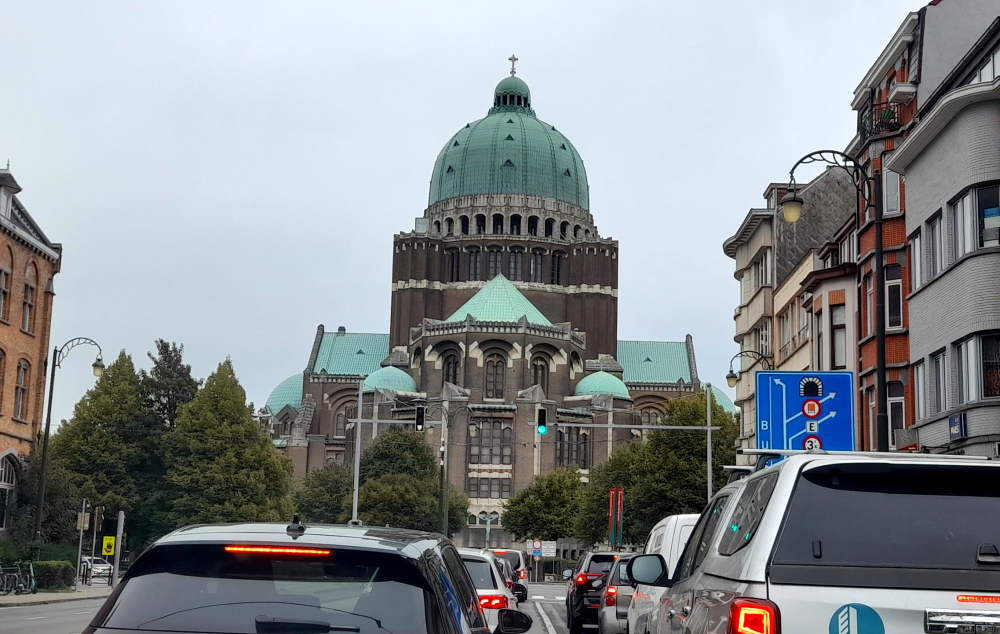
As we hit the ‘burbs we soon come to the National Basilica of the Sacred Heart church then disappear into several tunnels that take us under the city and out the other side to our hotel which overlooks Parc du Cinquantenaire.

The National Basilica of the Sacred Heart in Brussels.

Although the Best Western website said that street parking was available at Eur25 per day, it turns out it costs more like Eur25 for 12 hours so we take the car to a nearby shopping mall that has 24-hour, open air public parking onsite, call into a nearby Aldi then check in and unpack our bags.

Buggar! After I unpack I realise that I’ve lost my brown, suede flat cap between Ghent and here. Chances are it fell off the sofa in our hotel room and because there wasn’t any lighting in that half of the room, it got missed!

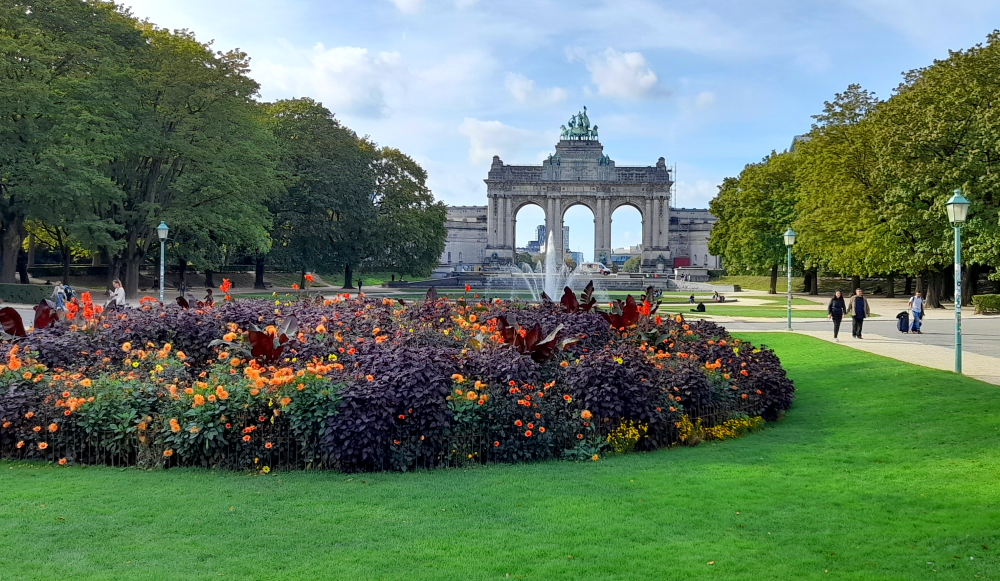
Triumphal Arch in Parc du Cinquantenaire.

As it’s now sunny we decide to locate the restaurant where we’ll be meeting up with Michiel, a former colleague of Lynn’s, tomorrow for lunch, then take a wander through the adjacent park which our hotel room overlooks.

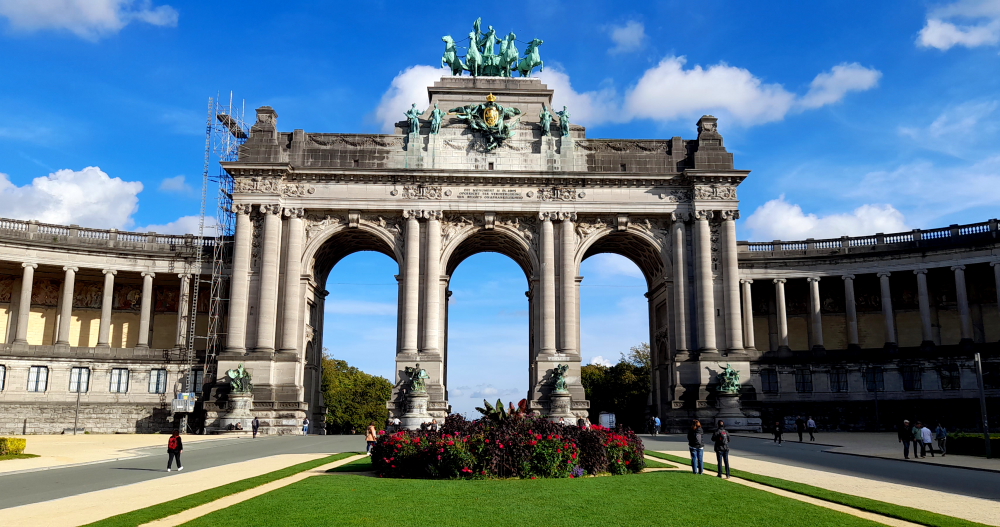
The Cinquantenaire Arcade is a memorial arcade in the centre of the Parc du Cinquantenaire in Brussels. The centrepiece is a monumental triple arch known as the Cinquantenaire Arch. It is topped by a bronze quadriga sculptural group with a female charioteer, representing the Province of Brabant personified raising the national flag.

The city side of the Arch.

The Cinquantenaire Arcade was part of a project commissioned by the Belgian Government under the patronage of King Leopold II for the 1880 National Exhibition, commemorating the 50th anniversary of the Belgian Revolution. In 1880, only the bases of the memorial arch’s columns were completed, and during the exhibition, the rest of the arch was constructed from wooden panels. In the following years, the monument’s completion was the topic of a continuous battle between Leopold II and the Belgian Government, which did not want to spend the money required to complete it.

The original single arch of the 1880 exhibition was conceived by the architect Gédéon Bordiau, but upon his death in 1904, the arch’s design was revised by the French architect Charles Girault, chosen by Leopold II. Girault designed a triple arch, but preserved Bordiau’s idea of the quadriga. The foundation of the new arch was laid down on 4 January 1905, replacing Bordiau’s temporary arch. The basic construction was completed with private funding in May of the same year and the arcade was inaugurated by Leopold II on 27 September 1905, just in time for the 75th anniversary of Belgian Independence.

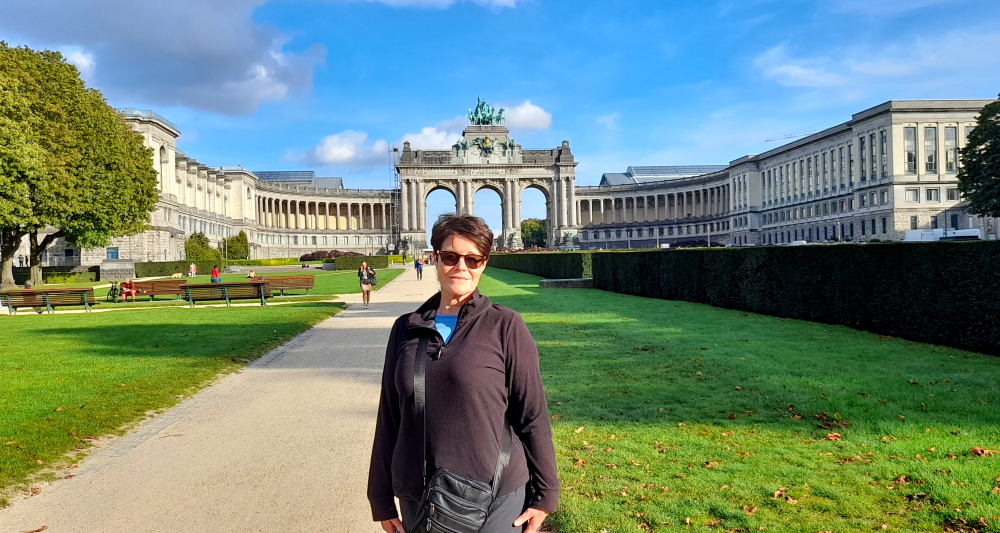
The full view.

We walk under the Arch to the commencement of the parkland on the city side. Then retrace our steps along the opposite side passing the Royal Museum of the Armed Forces and Military History.

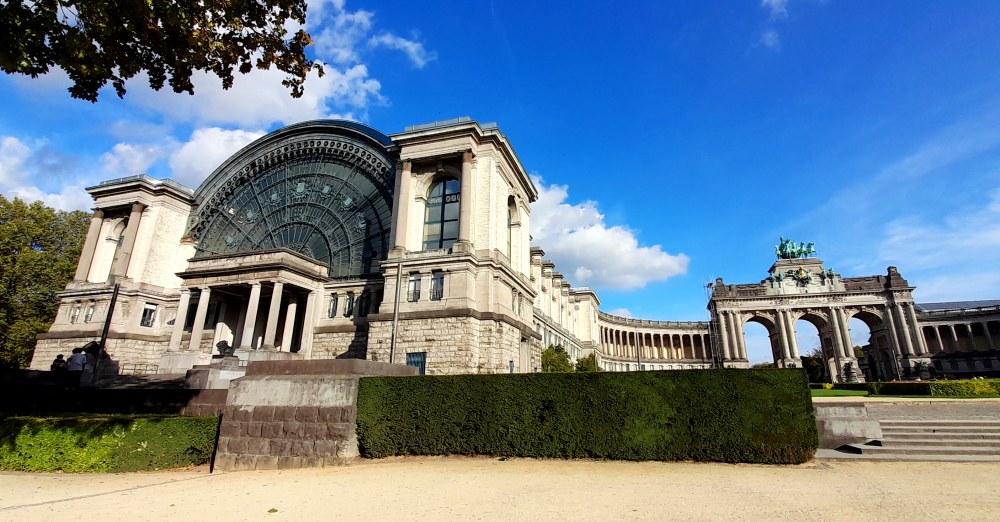
The Military Museum pavilion.

Created on the occasion of the 1910 Universal Exhibition, the Museum of the Army and Military History was established in the Cinquantenaire in 1923. The museum not only displays arms, armour, uniforms, planes and tanks, but also reveals genuine works of art such as paintings, statues and miniatures.

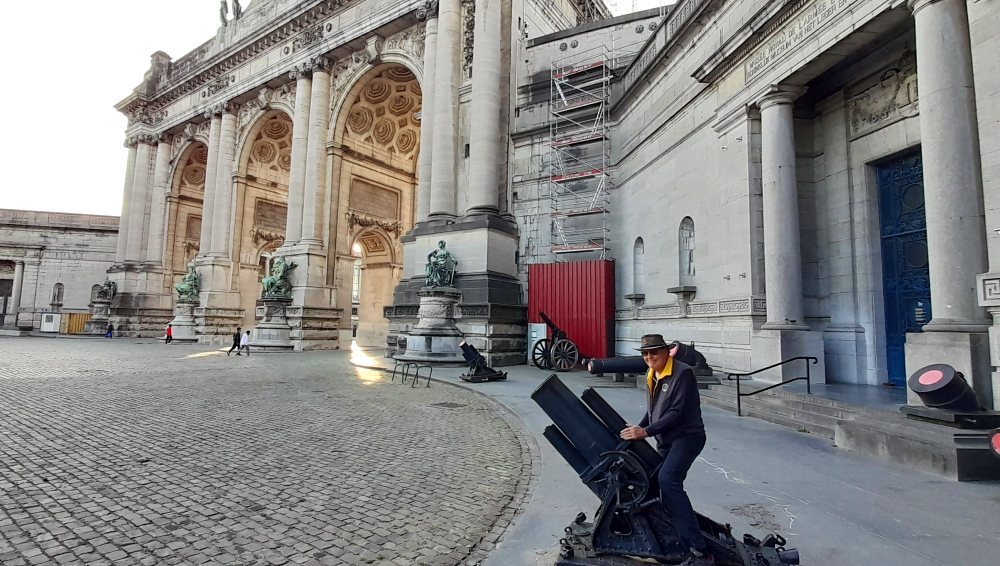
Long ride on a short canon.

The history of soldiering around the world and technical developments are related from medieval armour up to modern-day camouflage gear, via the two World Wars.

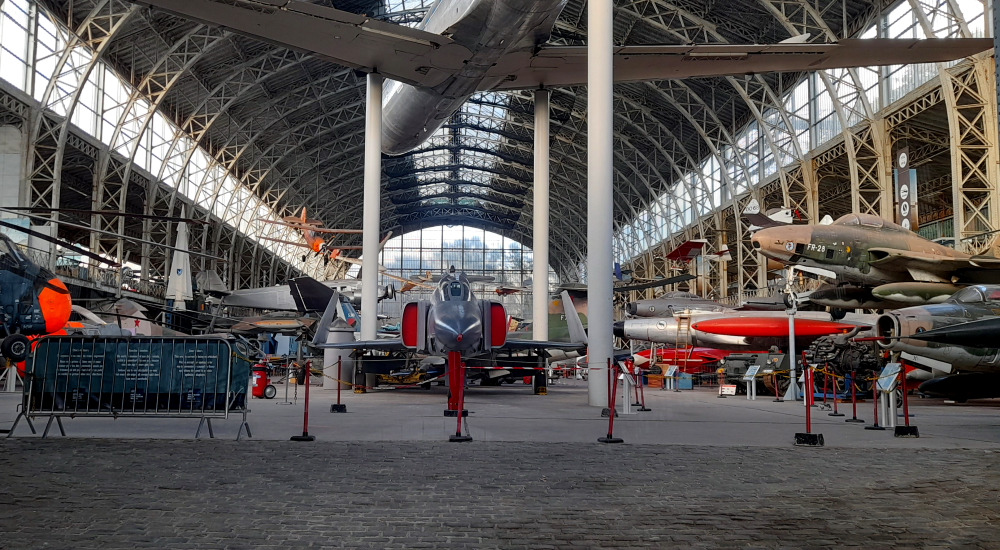
The aircraft section of the Military Museum.

By now it’s around 5.30 pm so we decide to return to Avenue des Celtes opposite the Merode metro station for some Belge fare at the Carpe Diem restaurant then call it a night.

6 October, 2023

Today we are meeting up with Michiel, a former colleague of Lynn’s from her ARMA Europe days. Michiel used to be ARMA’s European representative and organised several annual conferences in Brussels. The last time they met was at a strategy meeting that Lynn arranged to be held at the Credit Suisse offices in London in January 2010.

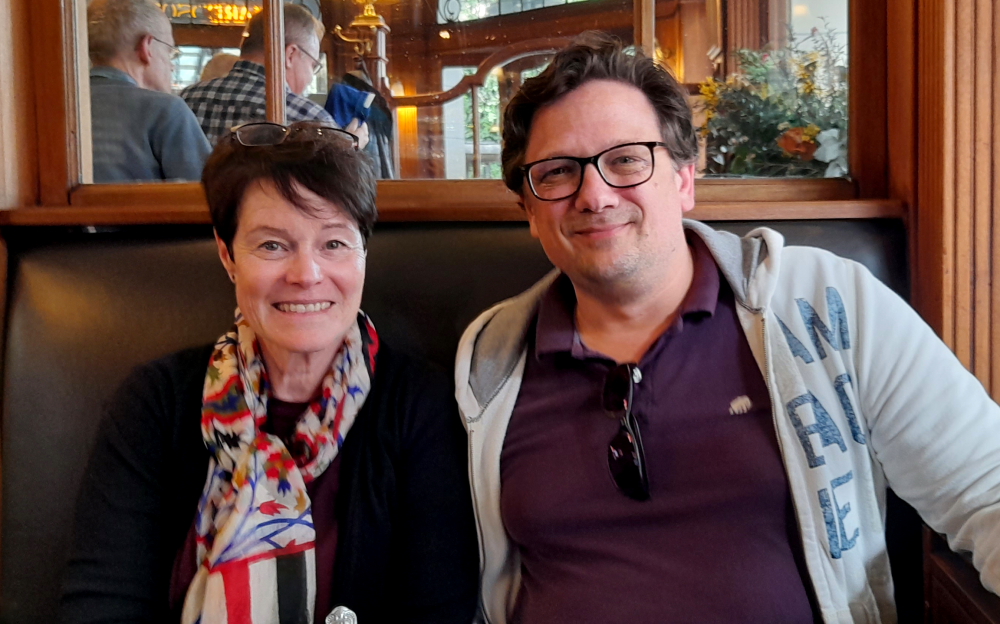
Lunch with Michiel.

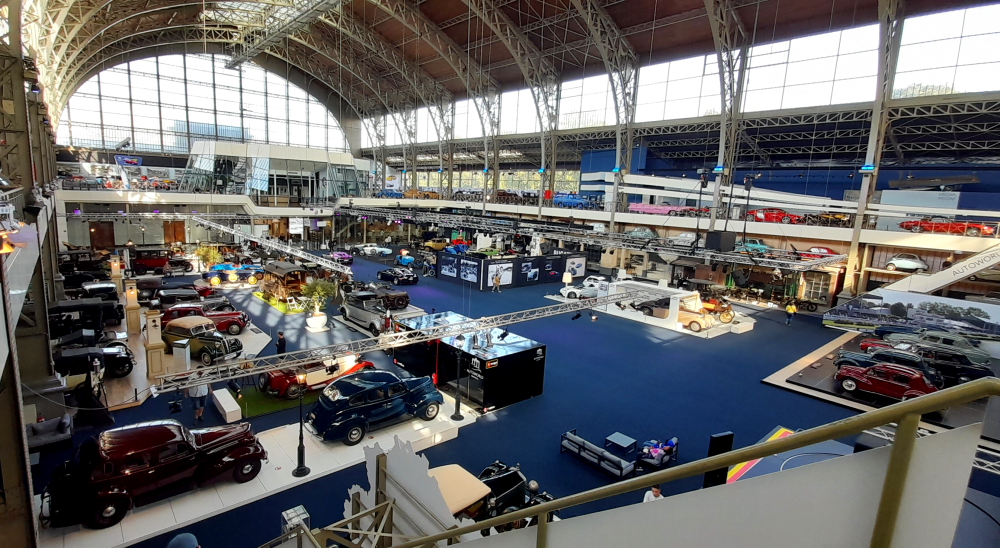
After an enjoyable lunch with Michiel we walk to the park opposite the hotel to Brussels’s Auto World – formerly the Museum of Vintage Cars. Today it hosts vintage and modern cars and motor bikes.

Auto World Museum.

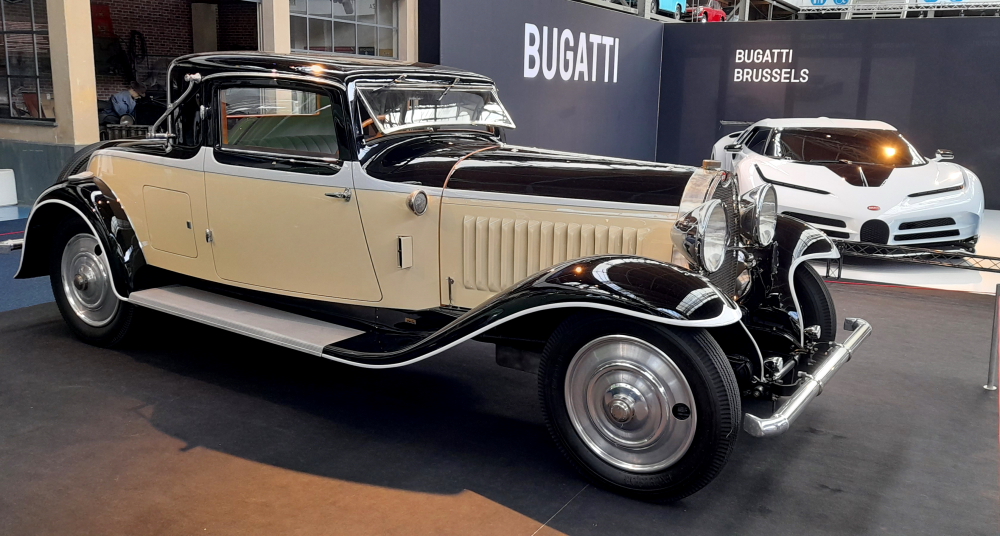
For the next couple of weeks Bugatti is on special display with models from its racing days in the early 1900s to the one-of-one 2021 La Voiture Noire model.

1930 Bugatti Type 49 on display.

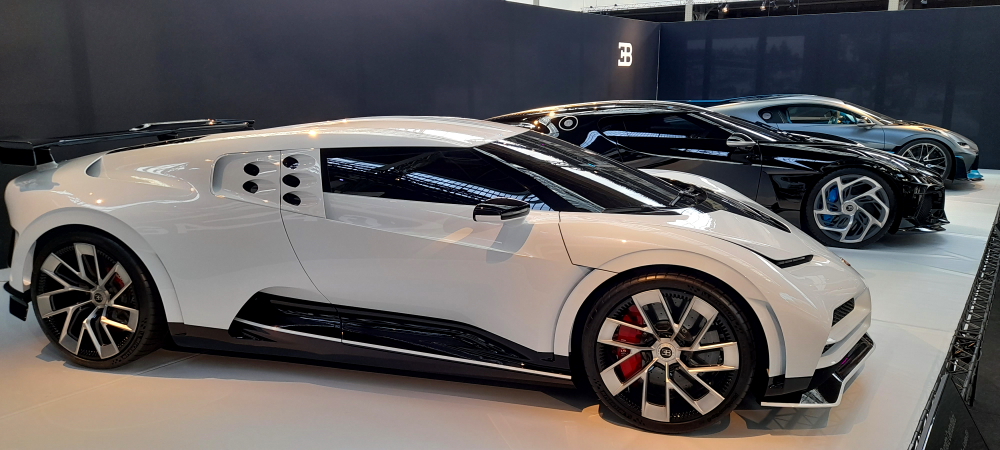
Centre stage are the 2006 Veyron and 2018 Chiron, plus the 2020 Divo and Centodieci and the 2021 La Voiture Noire. Apparently the COVID years had no impact on design and production – nor price for the one-off La Voiture Noire – $18.7m!

(L-R) 2020 Centodieci, 2021 La Voiture Noire, 2020 Divo.

Since we had lunch today we are not up to a full dinner so we head down to Cape Diem Restaurant and indulge in Belgium waffles and ice cream with chocolate sauce. Let’s call it last night’s dessert and we won’t feel so bad. Tomorrow we are off to Spa, Belgium for what is supposed to be a three day rest. Reviews of the Radisson Blu are a bit concerning especially since they seem to have come in after we booked the hotel some 6 months ago.