Our 350km drive today from Zarasai in Lithuania to Taagepera in Estonia – driving straight through Latvia – should take about 5 hours. It’s 21 degrees as we depart at 9:50 am and threatening rain.
Initially we were going to take the major ‘A’ roads that would take us right across Latvia into Riga before heading back out but, at 11:30 am and half way to Riga, we decide to give the smaller but unknown ‘P’ and ‘V’ roads ‘a crack’ which take us northwards and saves us half an hour. Thank goodness we’ve left behind the bone-shaking, patched and pot-holed roads of Lithuania.
The P37, 30, 33, 27 and 24 take us through a picturesque landscape of Latvia, in particular the gentle slalom course that is the P33 between Vecpiebalga and Smiltene where we join the P27. Even the single section of roadworks we come across on the P27 only delays us by 5 minutes.
En route we see more storks, this time at least a dozen, rather than 1 or 2, grazing together or a flock flying low over fields. More tractors and workers are out and about as grass is being cut.
We enter Estonia after a convoluted crossing over the Pedele River at Valga then, for the next 8km, the road continues right next to the Latvin border with not a barrier in sight.
Latvia (L), Estonia (R) – the Latvian border markers from Estonia.
The ‘6’ then takes us through the pretty towns of Torva, Helme and Ala where we turn left onto a road through beautifully-kept wooden dwellings and manicured lawns and gardens to arrive at the archway of what was once, in the 1900s, Taagepera Castle now known as Castle Spa Wagenkull, our destination.
In 1907, Baltic German Hugo von Stryk (1827–1912) began building a castle on top of Taagepera (then Wagenkull) hill. Under his guidance and based on the design by Riga-based German architect Otto Wildau, an Art Nouveau fairy-tale castle was completed in 1912, with the 42m tower offering a view of the surroundings.
Driveway to Castle Spa Wagenkull, Taagepera, Estonia.
Back in January when we booked this hotel we chose it as, although more expensive, it would be something different and it offered full spa facilities with unlimited access to hotel guests so we were looking forward to 3 days of relaxation. The Castle is very remote so even finding a local restaurant would mean a drive of at least 15 minutes each way.
Little did we realise that during our stay the hotel would be hosting an 11-week ‘Alice in Wonderland’ floral festival, 7 days a week from 11 am – 8 pm.
Flame tree, but not as we know it (paper leaves & plastic trunk), Floral Festival, Castle Spa Wagenkull, Taagepera, Estonia.
When we pull up to the barrier at the archway to the property we are surrounded by queues at the gate ticket office, then throngs of people on the front lawns, in the cafe, in the car parks, in front of the hotel and in the hotel. People, people everywhere! Considering that it is mid-week and this place is at least an hour’s drive from the nearest big town the place is heaving with families.
Luckily we snag a parking spot to the left of the hotel and we are the only ones at the tiny check-in desk in the small lobby at 2:40 pm. 15 minutes later as we are bringing our luggage through the lobby to our ground-floor room the check-in queue is out the door!
Look what you can do with a couple of hanging baskets! Floral Festival, Castle Spa Wagenkull, Taagepera, Estonia.
So, to the rallying cry of “if you can’t beat ’em, join ’em” we venture outside. The rear garden centres around a fountain which has 2 pergolas bedecked with a multitude of hanging baskets of petunias either side plus some beds of flowers around colourful trees and a purple ‘Wendy House’.
The theme is ‘Alice in Wonderland’ so around the grounds are large posters of scenes from the story in floral frames. The reason being that the story depicts a mystery taking place in a castle belonging to the Queen of Hearts so what better setting than a former castle.
Torrent of blooms, Floral Festival, Castle Spa Wagenkull, Taagepera, Estonia.
Likewise in the grounds at the front of the hotel. This time with a large, artificial, wisteria tree.
And a large white, floral heart in front of the Cafe and Park House, a residential wing of the hotel.
Although a nice enhancement to the otherwise unadorned grounds the festival is largely made up of a huge number of baskets of multi-coloured petunias hanging from lamp posts, pergolas and trees. At least as hotel guests we forego the entrance fee of Eu15/adult.
Back inside, we check out the Spa which is in the basement. Again, the small, enclosed area is heaving, especially in the pool which has been taken over by a bunch of unruly and noisy kids.
Lynn’s brief enquiry about the facilities and services is met by a terse response from the 2 reception staff, even when she reveals that we are hotel guests. Upshot, we won’t darken their door again. Obviously the service standards are a left over from their Soviet era.
Park House & Cafe, Floral Festival, Castle Spa Wagenkull, Taagepera, Estonia.
Fortuitously, we had booked a table in the restaurant for dinner this evening. There aren’t that many tables so the place is booked out. My duck breast with risotto is nice as is Lynn’s roast salmon with teriyaki sauce, salad and glass of Cava, but not so my glass of Spanish red. Normally we would expect to pay about Eu55 for this meal, not the Eu71 we are charged.
But, we’ll be back tomorrow night as the restaurant options outside the hotel aren’t that numerous. The hotel prices reflect the captive market.
18 July, 2024
Up at 8 am as breakfast closes at 10. Thanks to a bed made up of 2 doubles, a comfortable night’s sleep although I had to wear my eye mask again with outside light framing the curtains all night.
Our bathroom takes up one wall of the room, dominated by an old fashioned roll-top bath with clawed feet in the centre, a poky, wet-room shower to the left, a narrow cupboard and sink with very little light to the right and a small cubicle with loo and basin next to that. 2 large curtains can be drawn shut for privacy and as a shower curtain. Takes me forever to get wet under the shower.
Gathering storm clouds this morning. Castle Spa Wagenkull, Taagepera, Estonia.
The buffet breakfast is busy at 9 am with not that much in the way of quantity or quality to entice me. One would have thought that for such an expensive hotel that breakfast would be a la carte with table service. I am so looking forward to the Pullman Hotel in Bangkok.
It’s now 1:30 pm, the sun is out and the crowds are growing.
Dinner is back in the hotel restaurant. Chicken caesar salad for both of us and served by Taavi who seems to be more Finnish than ex-Soviet, with a smile and lovely demeanour to go with it. The salads are surprisingly tasty and a Goldilocks’ portion size – just right.
19 July, 2024
World news today is that there has been a massive, global IT outage due to a flawed software upgrade by Crowdstrike (how aptly named!) with Microsoft which has affected, amongst other things, some airports resulting in cancelled flights. Hopefully things will be back to normal in 10 days’ time when we are due to fly from Helsinki to Bangkok.
A slightly cooler day today at 20 degrees max. and a chance of rain. Sadly, this morning Lynn watches a funeral service recording that took place in Canberra a couple of days ago – a small blessing from Covid with live streaming and recordings made available to those who can’t be present physically. Tony, (Captain, retired) who died last month aged 89, together with his wife Elaine (who died in 2019) became close friends of the Coleman family from 1975 after Elaine became one of Lynn’s university lecturers. In 1982 Lynn visited them in Jakarta when Tony was the Australian Naval Attache there and later Elaine was instrumental in Lynn’s employment with BP Oil in the UK in 1990. We last saw Tony in Canberra in 2022 when we had lunch with himself, his nephew Duncan and Duncan’s wife, Ilse.
Early afternoon we venture out for a 45-minute walk down the road to the local museum and back for the exercise – occasionally attacked by more stinging horseflies – and just make it back before the heavens open which puts a bit of a dampener on the crowds. Lynn indulges herself with a bubble bath in the roll-top tub before we go to dinner.
Tomorrow we drive 86km NE to Tartu which will take us about an hour 15 minutes where we’re staying in an apartment for 4 nights. Tartu is our penultimate destination in Estonia before we drive to Tallinn on 24 July.
20 July, 2024
It’s overcast and 19 degrees when we depart at 10:40 am. We retrace our route along the 6 to Torva then take the 73 and 52 to Rongu where the 3 takes us into Tartu. En route it’s encouraging to see that Europe’s stork population is thriving in the Baltic states.
We drive to a supermarket near the apartment for supplies around noon and phone to arrange to meet our host, a jovial Martin, at 12:30.
View NE from our balcony in a similar building (L), Tartu, Estonia.
After being shown where to park in the underground garage Martin accompanies us in the lift to the apartment on L7. Here he shows us where everything is and how everything works.
View NNW to the “Snail Tower”, Tartu, Estonia.
Finally! It’s only taken us 2 years on the road to find an apartment that is modern, clean, functional, in working order, nicely decorated with quality fittings and furnishings, stocked with essentials, has welcome gifts of cold drinks, chocolate and fruit, well located, has secure undercover parking and is managed by a friendly host who is also the owner. The Brits and French in particular should take a leaf out of his book!
5 minutes’ walk away is a former industrial complex that has been converted into shops and several restaurants and bars so I book us a table online at the “Kolm Tilli” restaurant.
Kolm Tilli, Tartu, Estonia.
Must be something to do with the name as the young staff members are great as are the food and booze.
21 July, 2024
Unbelievably, this morning we wake to a blanket of fog which starts to recede so that by the time we are due to meet up with our final GuruWalks tour at 11 am, the day has become sunny and a cool 18 degrees – perfect walking weather.
And today is my youngest grandson’s birthday. Happy 3rd Birthday, Hamish!
A blanket of fog this morning.
It’s a 20 minute walk to the river and while we wait for our guide, Stas, to arrive we wander about.
Which is where we encounter some of Tartu’s sense of humour expressed in its street art …
Warhol gone awry, Tartu, Estonia.
… such as “The Many Faces of President Pats”, depicting the 1st president of the Republic of Estonia by Edward von von Longus.
Perennial Lennon, Tartu, Estonia.
We meet up with about 14 other walkers on the other side of the Emajogi River on the edge of Ülejõe Park at a statue in the Lydia Koidula & Johann Voldemar Jannsen Memorial Square which was opened in 2018.
Statue of JV Jannsen, Ülejõe Park, Tartu, Estonia.
In 1863, their family moved to Tartu, where the father and daughter issued the Estonian newspaper Eesti Postimees, founded the theatre company Vanemuine, and in 1869, organised the first song festival in Estonia. Both were promoters of the Estonian national movement and cultivators of Estonian-language culture [visitestonia.com].
From here we walk back across the river over the single-arched pedestrian bridge, Kaarslid, which connects the city centre with the Ulejoe district. The bridge was built in 1957-1959 on the site of the former Stone Bridge (Kivisild).
Kaarsild, Tartu, Estonia.
Which is a far cry from what the bridge looked like in the 18th century, built with the funds requested from Catherine II the Great.
Model of Kivisild, the former stone bridge over the Emajogi River, Tartu, Estonia.
Tartu is Estonia’s 2nd city and as the home to its oldest university, it is often considered the country’s intellectual capital. This year it holds the title of European Capital of Culture.
Tartu – 2024 European Capital of Culture.
Tartu was first mentioned in 1030 as a fortress built by the Grand Duke Yaroslav of Kiev which would make it the oldest city in the Baltics. Since then the city has been destroyed several times – by Estonians in 1061, by Germans in 1224, by the Great Northern War in 1708 and by fires in 1708, 1763 and 1775. Most of the classical buildings in the old town date back to the 18th century. [Brief history https://tartu.ee/en/history-of-tartu ].
For centuries, the centre of the City of Tartu has been the Town Hall Square, the history of which dates back to ancient times. Even then, the Square was the main trading place which connected the stronghold, located on Toome Hill, and the ports along the Emajogi River.
On Town Hall Square there are 3 notable structures. The Art Museum (Tartmus), founded in 1940 to collect, preserve, and promote contemporary art. Tartmus is located in a crooked house built in 1793. Slanted by 5.8 degrees due to the marshy banks of the Emajõgi River, means that the house has more of a tilt than the Pisa Tower [visitestonia.com].
Cobbled streets & a wonky Art Museum (C), Town Hall Square, Tartu, Estonia.
The current town hall is the 3rd building that has been erected on this spot. In the 18th century, the square was the location of the most important market in the city – der Grosse Markt, or the Great Market.
Every day, bells ring out from the Town Hall’s tower. Its 18 bells were forged in the bell foundry in Karlsruhe, Germany, and 16 bells were cast for the 15th anniversary of bell-ringing at the Royal Eijsbouts Belfry in the Netherlands.
Town Hall behind the Kissing Statue, Town Hall Square, Tartu, Estonia.
The fountain has stood in the same place since 1951 and the sculpture, Kissing Students was added to the fountain in 1998 [visitestonia.com].
Next we walk along 4 blocks of the paved street, Ruutli, until we arrive at St John’s Church (Jaani kirik) of the Estonian Evangelical Lutheran Church.
Ruutli, Tartu, Estonia.
The Church, which was built in the 14th century in the Gothic style, is 1 of the oldest in Estonia.
St John’s Church & spire, Tartu, Estonia.
Moreover, it is unique in Europe due to its many original terracotta sculptures. Today, almost 1,000 terracotta sculptures survive, their age reaching nearly 700 years [visitestonia.com].
Terracotta figures in niches along the spire wall, St John’s Church, Tartu, Estonia.
Around the corner is the University of Tartu (Tartu Ülikool); founded under the name of Academia Gustaviana in the Swedish province of Livonia in 1632 and ratified by King Gustavus Adolphus, shortly before the his death in the November in the Battle of Lützen. It taught philosophy, law, theology, and medical faculties enjoying the privileges of the University of Uppsala.
Main Building, Tartu University, Estonia.
Due to wars and occupations over the years University of Tartu moved to Tallinn and Parnu in the 1650s and 1690s. Reopened in 1802 the university educated the local Baltic German leadership and professional classes, as well as staff, especially for the administration and health system of the entire Russian Empire.
The Main building of the University is 1 of the most notable examples of classical style in Estonia. Built between 1804 and 1809, it was designed by the architect Johann Wilhelm Krause. In scholarship, it was an international university; the time between 1860 and 1880 was its “golden age”.
In 1898 both the town and the university were renamed Yuryev, and this university existed until 1918. Named Ostland-Universität in Dorpat during the German occupation of Estonia in 1941–1944 and Tartu State University in 1940–1941 and 1944–1989, during the Soviet occupation. Finally, the University of Tartu since 1992 [wikipedia].
Path from Jacobi through the Park to Toome Hill, Tartu, Estonia.
Next we walk around the corner along Jacobi then take the long, climbing footpath that crosses Toome Hill Park until we reach Toome Hill where today are located several University of Tartu buildings including its Museum and the ruins of a cathedral.
Cathedral ruins, tower base (L), Toome Hill, Tartu, Estonia.
Toome Hill (Toomemagi) was home to the ancient Estonian stronghold/hillfort, Tarbatu. In the Middle Ages, Tartu began on Toome Hill. The medieval castle stood on 2 hilltops and the rest of Toome on an escarpment cut off by a moat and fortified with the town wall. The cathedral was surrounded by the Episcopal town (upper town) that was destroyed during the Livonian War.
Interior, Cathedral ruins, Toome Hill, Tartu, Estonia.
The construction of the largest medieval church in Estonia began after the establishment of the Tartu diocese in 1224. Over the centuries the look of the cathedral changed many times and was only finished at the turn of the 15th/16th century – a 3-nave basilica with a choir and 2, monumental towers of unknown height. As an indicator, today only the original 22m high tower base survives.
En route to the nearby Estonian Supreme Court we pass by more street art, this time in the form of a decorated electricity box which this particular artist targets in Tartu.
More significantly than the modern Supremem Court building is the street art opposite it. The figure in the large hat is an Estonian folklore character symbolising the forest but in this image the moss that usually entwines his beard has been replaced by cannabis leaves.
A Banksy-style policeman is handcuffing this character and the message, to the lawmakers over the road, is something along the lines of cease stopping and searching individuals for small amounts of pot, focus on gangs who are responsible for hard-core drugs.
Street art opposite the Estonian Supreme Court, Tartu, Estonia.
Traversing the hill we walk past a domed building in the classicist style, part of the University, that is the Old Anatomical Theatre that was built in 1805 as a teaching building for the university’s Faculty of Medicine. Nearby is the former maternity hospital. In accordance with Estonian practice, the most clinical environment in which to give birth is in a sauna and, back in the day, this hospital followed that practice.
The Old Anatomical Theatre, Tartu University Museum, Toome Hill Park, Tartu, Estonia.
Next is the Tartu Old Observatory, Tartu Tahehorn (Horn of Will), Estonia’s first observatory. It was constructed between 1808-1810 to the designs of university architect Johann Wilhelm Krause on the site of a former medieval castle on Toome Hill. Restoration works were finished in April 2011, when it was reopened as a museum to mark its 200th anniversary. Exhibitions focus on the history of astronomy and present-day science. In 2005, Struve’s Geodetic Arc, 1 measurement point of which is located in the Tartu Observatory, was included in the UNESCO World Heritage List.
Allegedly, the flag pole atop the tower was where the Soviet flag was replaced defiantly by the Estonian national flag for several hours during the Soviet occupation.
Tahehorn, Toome Hill Park, Tartu, Estonia.
Notably, the tricolour is connected to Tartu’s University. The flag’s exact colour combination of blue, black and white was used for the 1st time at the“Vironia” Society’s foundation (now the Estonian Students’ Society) at the University of Tartu on 29 September 1881. The 1st flag was handmade in 1884 by Paula Hermann, wife of Dr Karl August Hermann, an honorary member of the society. The flag was made in Tartu, in the kitchen of the Hermanns’ house on Veski Street. Flag Day is celebrated on 4 June since 1884 [estonianworld.com].
View of the Old Town from top of stairs to Vallikraavi St, Tartu, Estonia.
Down the stairs from the Park to Vallikraavi Street we come to the statue “Vile ja Vine” (1999) in front of Wine and Art restaurant. It’s a fun speculation about literary history.
It features the Irish writer Oscar Wilde (1854-1900), who was born in Ireland, and the Estonian writer Eduard Vilde (1856-1933), both of whom belonged to the same generation, sitting on a bench together. Sculptor Tiiu Kirsipuu, who modelled the writers according to photos, has noted that the year she had in mind when she created the sculpture was 1890, when the 2 Wildes could have met for a witty chat.
Wilde & Vilde statue (1990), Tartu, Estonia.
Here our 2-hour walk ends at which point I ask Stas, a Ukrainian who has lived in Tartu for the past 5 years, about the war in Ukraine.
According to Stas, the battle lines are holding but they are awaiting the F16 fighter jets from the USA which are expected to make a difference. He advises that the best thing to come out of the war so far is that the Ukraine has been cleaning up corruption and gradually replacing politicians who are self power focused vs the country focus. I didn’t make any comments about Australian Labor leftists or King Trump at this point.
Following the maxim, “If it ain’t broke, don’t fix it”, we dine at the “Tilli” restaurant again tonight, looked after by our lovely waitress, Elisabeth. Then we watch “Find Me Falling” starring Harry Connick Jr and “Love is in the Air” featuring Delta Goodrem on the tube.
Tonight we learn that Joe Biden has withdrawn from his presidential campaign. That may be a better solution than a missed bullet.
22 July, 2024
A lazy day today with a lie-in, Lynn doing my ironing and while she catches up 2 days of blog I take the car for a wash to get rid of the bugs and the gravel from the wheels still lingering after the 30km of road works. The gravel’s gone but not so the bugs … I try to buy more wash time but suddenly my HSBC Debit Card won’t authorise further payments. The wash will have to do so I abandon the wash and head back to the apartment.
Dinner tonight will be at … Tilli’s. I tried to pay the bill but it looks like HSBC have blocked my card. Luckily Lynn’s is still working. Not happy!
23 July, 2024
Another 27 degree day is promised today so after I get off the laptop to HSBC in order to get my multi-currency debit card reinstated (HSBC locked it yesterday for a suspicious transaction after I paid Eu5 yesterday at the car wash and despite having used this card extensively throughout Estonia, Latvia and Lithuania these past 8 weeks for far greater amounts without a peep!) we walk into town.
The idea is to check out a couple of places that are listed on the map that we didn’t see on the walking tour.
First stop is the Tartu Market Hall down near the river that was built in 1937.
Bronze Pig, Market Hall, Tartu, Estonia.
For the market’s 70th birthday, the sculpture ‘Bronze Pig’ by Mati Karmin was installed in front of the building to symbolise wealth and trading
Inside the hall is cool, very clean and orderly with mainly meat products, a stall of biscuits/pastries and 1 of fruit and veg. Down a couple of steps is located the fish stalls.
Interior, Market Hall, Tartu, Estonia.
From here we walk along the Emajoe Riviera promenade, under the Arch Bridge to Freedom Park.
Emajoe Riviera promenade, Tartu, Estonia.
Here there is an imposing statue entitled Tartu’s “Statue of Liberty”. It commemorates the heroes who fell in the War of Independence (1918-1920). It was unveiled on 17 September 1933. Sculptor Amandus Adamson chose Kalevipoeg, hero of the Estonian national epic, as the symbol of liberty.
It was destroyed by the Soviet authorities in 1950 and was replaced in 1952 with the monument of F R Kreuzwald (now 20m away in the same park), author of the national epic “Kalevipoeg”. The restored statue by sculptor Ekke Vali was unveiled on 22 June 2003.
Kalevipoeg, Statue of Liberty, Freedom Park, Tartu, Estonia.
Next we revisit St John’s Church but this time we enter to view the other terracotta figurines that make up the 1,000-odd that grace this church.
Terracotta figurines decorating the church’s interior, St John’s Church, Tartu, Estonia.
Also inside the church we find the lavishly-decorated coffin of Anna Elisabeth von Münnich, built in Lübeck in 1747 and buried in the Lübeck chapel in St John’s Church, Tartu. In addition to draping the coffin with textile it was also adorned with rich metal ornaments, had 6 clawed feet and a crucifix. The coffin was found during excavations of the tower’s floor in 2022 [researchgate.net; news.postimees.ee].
Coffin of Anna Elisabeth von Münnich (1747), St John’s Church, Tartu, Estonia.
The Munnich family line begins with Hermann Mönnich of Oldenburg (died before 1617), a settler at Neuen Weg near Blankenburg Abbey. His great-grandsons Johann Dietrich (1638−1718) and Anton Günther (1650−1721) rose to Danish nobility in 1697 and 1688, respectively. Burchard Christoph von Münnich received the title of count of Russia in 1741 and also the title of state count in Dresden. In the register of chivalry, the lineage was matriculated in the Knights of Estonia (No. 253) and Livimaa (No. 127) [wikipedia].
Around the corner from the Church is the 1755 dwelling house of Pastor T. Plasching. Now the most outstanding wooden structure of baroque period in town, it was built on the plot unused since the Great Northern War. The baroque portal located in the end wall is unique in Tartu. In the great town fire of 1775 the building was the only one to survive among the structures of the type. The building was restored in 2009-10.
1755 dwelling house of Pastor T. Plasching, cnr Jakobi & Lutsu Streets, Tartu, Estonia.
Along the street from here is a small park at the back of the University of Tartu’s Main Building. Here stands the statue of Gustav II Adolf, the former King of Sweden and founder of the University whose original monument stood here from 1928-1950. The restored monument was unveiled in April 1992 by the Swedish King Carl XVI Gustaf and Queen Silvia.
Restored monument of King Gustav II Adolf, former King of Sweden & University founder, Tartu, Estonia.
That just about does it for sightseeing in Tartu. It’s quite hot walking back to the apartment under the sun as there are storm clouds building.
Tomorrow we plan to depart around 9:30 am for the 2-hour, 178km journey to the car rental place near Tallinn airport, via the nearby petrol station and car wash. Then we’ll call a cab to take us into the Old Town back to the Rixwell Collection Savoy Boutique Hotel. Hope they’ve fixed their bloody AC like they said they had!
At least my HSBC Debit card worked at dinner tonight.
24 July, 2024
We depart this very lovely apartment in Tartu around 9:30 this morning for the 2-hour drive back to the car rental office at Tallinn Airport via the car wash.
It’s an easy drive back to Tallinn with some good highway and some stretches of freeway. All of the roads are littered with speed cameras but luckily our GPS has them marked and Lynn is a secondary spotter with her MapsMe App. Half way back to Tallinn we pass through some heavy rain and it may persist all the way to Tallinn so we decide to take a risk of not having the car washed again as the rental agreement states that the car has to be returned “reasonably” clean. The term “reasonably” is not definable so since I removed most of the bugs and mud yesterday the car is still reasonably clean despite the rain so we will take a punt and avoid the additional car wash.
Returning the rental car is easy (as long as we don’t get hit with additional fees in a few months’ time) and Julia orders us a taxi to take us to the hotel in Tallinn.
Despite receiving a message a few weeks ago advising that the Rixwell Hotel’s air conditioning is now working, when we check in we are told that we have been lied to and it is still not operational. If we had known while we were at the airport we would have insisted that we were refunded in full and would have walked from the car rental desk across the road to the Mercure Hotel. REALLY NOT HAPPY. They offer to move us to another hotel but we just can’t be bothered since we already paid for a taxi to the hotel. My annoyance will be reflected in their Booking.com review.
At least we are only here for 2 nights.
We head out to dinner relatively early at about 4:30 pm as Lynn wants to go back to the Lido canteen and she is hungry since we had an early breakfast this morning. We also need a few supplies so we stop in at the supermarket on the way to the Lido.
Much to my annoyance my HSBC card is again blocked by the pathetic HSBC fraud security system or the idiot Chat line person screwed up the unblocking process so Lynn had to again use her card to pay for our groceries and dinner. The world is full of incompetent people. That is what happens when idiots are over protected and the human race doesn’t let Darwinism occur so that the gene pool is cleaned out regularly. Centuries ago the Trumps, Putins and wokes would have been sacrificed by the smarter majority so that the human race evolved. Now the stupid breed and the human race will descend into a world of dependents.
25 July, 2024
I am on to the HSBC Chat line again early this morning and manage to get the same idiot that supposedly unblocked my card 2 days ago. I vented my disappointment that it has taken 2 attempts to get this simple HSBC-induced issue resolved and that I expected it to be permanently resolved this time or I would would be escalating my frustrations if it happens again. If we could get this product from another bank we would have closed our HSBC accounts years ago.
This day doesn’t get any better. Breakfast at this bad hotel is the worst that I have experienced in Europe so far. The bacon is cold, the powdered, scrambled egg is cold and there is nothing but luncheon meats and boiled vegetables available. Only another 24 hours to go before we escape back to Helsinki.
Last night we had thunderstorms so today it’s overcast with a top forecast of 19 degrees, a drop of 12 degrees! Brrrr!
Klaipėda (formerly Memel) is an historic and relatively tranquil port city on Lithuania’s Baltic coast. Since it was first mentioned in historic records in 1252, it has variously been governed by the Teutonic Knights, the Kingdom of Prussia, the German Empire, and the Soviet Red Army.
Thanks to its historic role as one of the foremost ice-free ports in the Eastern Baltic, Klaipėda has long been an important maritime location, with large shipyards and fishing ports. In more recent years, visitors have come here to enjoy the nearby white sand beaches and the city’s numerous theatres, museums, historic sites, and traditional breweries [atlasobscura.com].
Speaking of beaches, there is also a nudist beach (Smiltyne nudistu papludimys) located on the spit of land that stretches from Klaipeda to Kaliningrad (Russia) to the south. The spit can only be accessed by ferry. A review described the beach as: “…nude, angry, baboushka beach!” Don’t think we’ll be going there any time soon.
The house in which our apartment is located (side, middle row, 3 windows at left) was built in 1783 by the carpenter Goblieb Dietz – a fachwerk type and trapezoidal form building. Over the years it suffered from fire.
Our apartment building, Sukileliu Street 18, Klaipeda, Lithuania.
In 1983 it was decided to rebuild it using as much of the original material as possible such as old bricks (authentic bricks of nearby Klaipeda Castle) and wooden beams. Special attention was paid to the building’s windows, reconstructed with their original dimensions, binding types and locks as these windows were characteristic of the Klaipeda region in the 18th century.
A traditional exterior but our apartment is spacious, modern and tastefully decorated with parquetry floors and with the original hewn timber beams exposed.
Cremia Cafe & Gelateria, Klaipeda, Lithuania.
After a late breakfast we go for a bit of a stroll through parts of the Old Town. We call into ‘Cremia’ cafe and gelateria on Theatre Square for a morning coffee. It’s also a bakery where we can see tall trolleys laden with trays of freshly-baked bread plus delicious pastries on display. Damn fine coffee as well.
Modern-day ‘carpe diem’!
Strolling up Turgaus Street we pass by a somewhat alarming sign. From what we saw last night, several of the young waitresses in town have already heeded the message.
Street banners for the Tall Ships Races 2024, Klaipeda, Lithuania.
While we were staying in Liepaja, our hotel room overlooked the canal where, for several days 2 tall-masted sailing ships were moored, then they disappeared. Looks like they were headed here to Klaipeda for the weekend.
Further up the street is a vacant block of land with a large bell and poster of a church. Apparently an appeal to the locals to donate to the restoration of St John’s Evangelical Lutheran Church which stood on this spot from 1696 until 1854 when it was burnt down. And again during its 1856-58 reconstruction when a 75m tower was completed in 1864. At the end of WWII the damaged church was demolished.
Ghost of St John’s Evangelical Lutheran Church, Klaipeda, Lithuania.
At the end of Turgaus Street we come to the grassy city bastions on the banks of the Dane River.
City bastions & Dane River, Klaipeda, Lithuania.
Cutting across the tip of one of the bastions we arrive at the path where the ‘Meridianas’ tall ship with its transparent sails is docked, today housing a restaurant.
‘Meridianas’ docked on the Dane River, Klaipeda, Lithuania.
Crossing the nearby Birzos Tiltas brings us to the opposite shore and the parkland of Danish Square (Danes skveras). At its entrance is the arka paminklas vieningai Lietuvai – the monument to a united Lithuania.
Monument to a united Lithuania, Danish Square, Klaipeda, Lithuania.
From here we walk back across the bridge and down Tiltu gatve (Bridge Street) where we see an assortment of building styles.
Assortment of building styles, Klaipeda, Lithuania.
We’re puzzled, as while we’ve been walking through the Old Town we haven’t seen examples of the German-style, 18th-century wood-framed buildings that the Old Town is known for.
Puppet Theatre Educational Centre, Vezeju g. 4, Klaipeda, Lithuania.
We see the Puppet Theatre on Vezeju Street, and nothing on Aukstoji Street, north of Darzu Street, which runs parallel to our street.
Aukstoji Street, south of Darzu Street – a block from our apartment.
It’s not until we walk towards the northern end of Aukstoji Street, towards the quaint single-story building with painted wooden window shutters at No. 5 …
Aukstoji g. 5, Klaipeda, Lithuania.
… that we come across what appears to be a former warehouse. Still, only a handful of wood-framed buildings.
Aukstoji g. 3, Klaipeda, Lithuania.
Around 7:00 pm we head into the Old Town to find a restaurant. En route we walk past a rather intriguing tall, metal box with reliefs. In this town of multiple sculptures it’s surprising that there is no mention as to what it represents other than its date of 1990.
Metal tower sculpture, Klaipeda, Lithuania.
As we haven’t had Mexican for a while we choose the restaurant ‘Casa de Locos’ which is over several floors. The building appears to be a repurposed industrial space.
Casa de Locos, Klaipeda, Lithuania.
Turns out to be ‘Mexican, but not as we know it’, rather a somewhat Lithuanian spin on Mexican cuisine. We finally settle on tacos as the waiter’s description of these seems to be as close to what we understand what a taco is and its traditional fillings.
Lots of seats but few patrons.
At least nothing has been lost in translation with their Margaritas!
2 July, 2024
99% chance of rain is the forecast today so after breakfast we walk to the river then turn left under the Pilies Bridge and walk towards the spit.
Repurposed warehouses now modern hotels, river side, Klaipeda, Lithuania.
At the beginning of the 18th century castle ditches were used as ports for ships and timber, so there was a need to dig a narrow canal to connect to the river Danė. Over this narrow canal a small, revolving bridge was built by a wealthy merchant that leased the castle ditches. In 1839 the bridge was reconstructed and replaced in 1885 by a new metal portal drawbridge – the Chain Bridge [krastogidas.lt].
On the other side of the Chain Bridge is a sculpture, ‘The Black Ghost of Klaipeda’ which is crawling out of the water of the narrow canal and up the side of the dock. There seems to be something in the Baltic States’ psyche that relates to these spectral, faceless and hooded forms.
Juodasis Vaiduoklis (The Black Ghost), Klaipeda, Lithuania.
The sculpture represents a character from the legend of Klaipėda. According to the book “Rytprūsių padavimai“ in the evening of 19 February 1595, when Hans von Heidi, one of the guards at Klaipėda Castle, was doing his nightly rounds near the harbor.
From out of nowhere, a hooded figure appeared near the water’s edge. Rather than attack the startled guard, it asked him how the city’s supplies of grain and timber were holding out. Von Heidi informed the ghost that the city had sufficient supplies, but the ghost warned him it would not be enough. At that point, the apparition vanished.
Back in the good old days, of course, people were inclined to believe the words of ghosts, witches, goblins, and giants. And so Hans von Heidi dutifully informed his superiors of his ghostly encounter, and the city set about increasing its supplies of timber and grain. Then followed a bleak few years of hunger and shortage, which the people of Klaipėda only survived because of the ghost’s warning [atlasobscura.com].
As we turn to walk back to Theatre Square and the Cremia Cafe it starts to rain – bang on 10.15 am as predicted by the weather forecast. It rains for the rest of the day so we spend it indoors catching up with stuff.
Interior, Restorans Katpedele, Karlskronos a., Klaipeda, Lithuania.
Earlier we had walked past Restorans Katpedele on the riverbank so we return there tonight for dinner. Lynn chooses homemade sausages with mash, sauerkraut and mustard while I choose crumbed pork chop with salad and fries accompanied by a half carafe of red. Quite satisfying, athtough it took a whlle for our order to arrive and there weren’t that many in the restaurant.
Perhaps that should have been a clue when we then ordered dessert as it took 55 minutes for it to arrive! On the menu it said “Austriskas Strudelis su Varske” and without even using Google Translate you could see it said “Austrian Strudel”, although the menu’s translation said “Australian Studel with Curd”. It was nothing like an Austrian, or even an Australian, strudel!
3 July, 2024
Another 19 degree day but with 85% less chance of rain so we jump in the car and drive the half hour back up the coast to Palanga – the resort town we drove through on our way to Klaipeda but couldn’t find anywhere to park.
This time we actually find a paid parking bay and purchase, coins only, an hour’s worth of time from the meter on A. Mickeviciaus g., a block away from J. Basanaviciaus g., the main drag. Believably, there are more than 100 cafes on this street. Here we walk up the street which leads to the beach and directly onto the pier.
Located on the shores of the Baltic Sea, Palanga is a seaside resort town and is the biggest and busiest summer resort in the country, located only 29km from Klaipėda.
J. Basanaviciaus g. leading towards the beach & pier, Palanga, Lithuania.
Originally a fishing village, Palanga was first mentioned in written sources in the 12th century. The inhabitants were not only engaged in fishing, but they also collected amber, which reached the distant countries of Europe and Asia via trade routes. Which explains the presence of an Amber Museum in the town’s Botanical Garden.
This museum was built by Feliksas Tiskevicius in 189. The museum displays what is said to be the 6th-largest collection of Baltic gold in the world – some 20,000 pieces in all. The exhibits span from the origins of amber and its early use in Neolithic times to the eye-catching contemporary jewelry of today.
Brrr! Chilly Baltic breeze & view of the L-shaped pier, Palanga, Lithuania.
In the 19th century, Palanga began to develop into a spa town, which was a great merit of the dynasty of Count Tiškevičius (Tyszkiewicz), who moved to the town at that time. A park was created, a new palace was built, a harbor was established, a center for natural medicine was launched, a new church was built, and then the pier was erected. The first national play in Lithuania, America pirtyje (America in the Bath) by A. Keturakis, was performed here in 1899.
Where Palanga is located on the Lithuanian seacoast it’s famous for its white sand and dune beaches, something that cannot be found anywhere else on the coast Baltic Sea.
Palanga Beach looking south from the pier.
The sandy coast stretches for 10 km and is surrounded by a pine forest and dunes.
Palanga Beach looking north from the pier.
The Palangos Tiltas is a 470 m long, L-shaped pier that is one of the main attractions of Palanga. It has a view over the dunes, the beach and the sea and in the evening the path is illuminated by lanterns.
The pier was built in the 19th century as a wharf to allow Palanga to handle watercraft. Frequent sandstorms and hurricanes eventually destroyed the building, but at the end of the 20th century, the pier was restored by means of more durable materials.
Palangos Tiltas, Palanga, Lithuania.
Interesting facts: in the Palanga pharmacy, Griūningas invented and patented the famous mixture of 27-year-old Lithuanian herbs: “Three Nine” (Žalios Devynerios). The pharmacy also used to sell hanger blood, mummy powder, and wolf claws.
View from the beach end of J. Basanaviciaus g. looking towards town, Palanga, Lithuania.
In 1919, after the breakup of the Russian Empire, Palanga became a part of Latvia, like the rest of the Courland Governorate. Until 1921, Lithuanians fought with Latvians over Palanga, but eventually Palanga was passed to Lithuania.
Driving back out of town we pass by the extensive Botanic Gardens on our right, which border the beach. The Tiškevičiai Palace’s park was converted into a botanical garden in 1960. Today it contains 200 different types of trees and shrubs, including an oak tree planted by President Antanas Smetona [adventures.com/baltic-countries/attractions/cities-towns/palanga].
Botanic Gardens (R), Palanga, Lithuania.
Driving towards the river on our return to Klaipeda we’re confronted with the 2-odd shaped, modern buildings that comprise the 4* Amberton Hotel. The main building has 122 rooms, and the K-centre (K-shaped) building has 96 with a view of the sea and the Curonian Lagoon.
The 72m-high K-centre has already become a symbol of Klaipėda, which can be seen both when entering the city by car and when entering the port by boat. The building is decorated with red clinker bricks and glass and metal structures reminiscent of the half-timbered style, suggesting a link between the Old Town and the Town Hall micro-district, which are separated by the Dane River.
The 2, jarring Amberton Hotel buildings, Klaipeda, Lithuania.
We return to the Lithuanian-food restaurant on Theatre Square (Teatro Aikste) for dinner. As early as the 17th century various plays were performed in the theatre square by passing actors [klaipedatravel.lt].
Anikė of Tarava statue in front of the Atrium Theatre, Theatre Square, Klaipeda, Lithuania.
Tomorrow we are moving away from the western coast and venturing SE into the interior of the country to Kaunus.
4 July, 2024
Not only is it American Independence Day today, it’s also the UK elections where it is predicted that Labour will win with a landslide after 14 years of Tory rule. (Spoiler alert: they did.)
We depart at 11:00 am and drive the 2215/A1/1922 to the village of Raudondvaris, 15 minutes’ drive NW of Kaunas.
En route we drive through undulating countryside with meadows, wheat, hay, cabbages and corn and lots of storks, either in nests or grazing in fields or, more likely, on the grass verge of the motorway. Surprising there isn’t more roadkill, but does explain the cabbage patches.
About an hour into the journey we see a sign for the slip road onto the A12 which will take you the 74km to the Russian border of Kaliningrad.
En route to Raudondvaris on the A1, near Butkiske
The main item of interest in Raudondvaris is its manor – the beginning of 17th century Renaissance architecture in Lithuania. The manor overlooks on the right bank of the upper terrace of the river Nevėžis near the confluence of the Nemunas and Nevėžis, 12 km from Kaunas. The main building is the castle-palace with a tower. The estate, together with 3.8 hectares of park and 2 office buildings, an orangery, stables and an ice-house, make up the complex.
The Orangery, the Manor, Raudondvaris, Lithuania.
Historians claim that the castle started being built by Kaunas chamberlain, Wojciech Dzewaltowski in the 2nd half of the 16th century. Later the castle estate was owned by a number of prominent Lithuanian nobility.
Office buildings, the Manor, Raudondvaris, Lithuania.
After the fire in 1831 where the wooden castle buildings were burned, Count Emmanuel Benedykt Tyszkiewicz built a new brick mansion. During this period there were working well-known architects: Lithuanian Margevičius John, Jacob Wöhler from Prussia and Italian Laurus Caesar Anikini. When the castle has been managed by Tyszkiewicz it became a luxurious residence with huge paintings, art works, rare books and exotic plant and animal collections.
The Castle, the Manor, Raudondvaris, Lithuania.
Now the main manor house (castle), stables, an ice-house and orangery are restored and adapted for cultural tourism. The ice-house opened in 2011 where the Kaunas region tourism information centre is located. The Orangery opened in 2012 and became a restaurant with banquet halls. The castle is open for guests since June 2012 and works as the Palace of Culture and Arts. Here takes place civil marriages, conferences, concerts, presentations, commemorations of statehood day. In 2015 the reconstructed and extensive brick stables were adapted for the Arts with a theatre and concert hall of 500 seats and residential premises for young artists from all regions of Lithuania [raudondvariodvaras.lt].
Castle tower, the Manor, Raudondvaris, Lithuania.
The other item of interest is the Church of St Theresa of the Child Jesus which is located a couple of blocks away.
The old brick Raudondvaris church that used to be in the place of the current one was among the most decorative ones in the country. Construction according to the design of the Italian architect Lorenzo Cesare Anichini took place during 1846-57. The church funder was Count Benediktas Emanuelis Tiskevicius. A chapel-mausoleum with crypt was added to the end of the church where the deceased members of the Tiskevicius family were buried.
Church of St Theresa of the Child Jesus, Raudondvaris, Lithuania.
During WWI both the towers and the entire church were bombed completely. The current parish brick church was built in the interwar period from parishioners’ donations. The church with Baroque and Renaissance styles was finished in 1938. During WWII the church suffered some damage and was later restored.
The church is rich in sacred art. Paintings of Stations of the Cross by A. Slodzinskis, paintings “Virgin Mary with the Child” and “The Death of St Joseph” by G Berti. Tiskevicius family members rest in the church yard [information board].
Interior inc. sacred art, St Theresa Church, Raudondvaris, Lithuania.
Shortly after we arrive at the apartment around 2:00 pm. It’s spacious, modern, on the 4th floor with loads of skylights and a view of the Nemunas River on 1 side and the tiled roofs of Old Town residences on the other. The view comes with a price in terms of me lugging 2x suitcases up those stairs and Lynn limping behind.
Casa della Pasta (L), Vilnius g, Kaunas, Lithuania.
Not to worry, we quickly turn on the AC full blast, unpack and put on a load of washing before we venture up the street to the local supermarket. Later we walk up the block to Vilnius gatve, the main drag of the Old Town and also its restaurant street.
Loads of restaurants, bars & cafes nearby.
We are spoilt for choice but the menu and the al fresco dining area of Casa della Pasta tempt us on this balmy evening. Great choice – food and wine as good as you’d get in Italy.
5 July, 2024
It’s been 4 weeks to the day since Lynn injured her knee and it’s almost better but, unbelievably, she manages to tweak it again last night so it’s back to being painful and swollen this morning.
Undaunted, she straps on her heavy-duty knee brace, pops a couple of pain killers and we slowly make our way to the meeting point of our next GuruWalk, “Hidden Gems of Kaunas”, for 11:00 am.
It seems that Kaunas has quite the sense of humour, as illustrated by its numerous whimsical sculptures that inhabit the town.
Our meeting point is at the monument of Grand Duke Vytautas at the junction of L. Sapiegos g. and Laisves al.
“Zen Triusis” (“The Zen Rabbit”) by Lithuanian sculptor Lukas Siupsinskas, Gimnazijos g. Underpass, Kaunas.
Kaunas was once a castle then a fortress city and later it became the cultural and political centre of Lithuania. First mentioned in 1361 when the Teutonic Order was preparing to attack Kaunas Castle. The city’s history, however, started in 1408, when Grand Duke Vytautas granted its citizens the privilege of self-government based on Magdeburg Law. Thus the community of free and economically-independent merchants and craftsmen was legalised, responsible directly to the ruler.
In June 1812 Napoleon with his army of about 220,000 started crossing the Nemunas by pontoon bridges. 6 months later he returned, retreating to France, having lost the war in Russia.
Monument to Grand Duke Vytautas (1350-1430), Kaunas, Lithuania.
During WWI Kaunas was occupied by Germans in 1915–1918. After the war, Vilnius was taken by Bolsheviks, and later by Poles, so Kaunas was a provisional capital of Lithuania from early January, 1919 to October, 1939 during which time it was modernized.
On 15 June 1940 the Soviet Union occupied Lithuania. In a year’s time, on 22 June the war between the Soviet Union and Germany broke out, and the following day an uprising was organised by the Lithuanian Activist Front (LAF), which soon spread across Lithuania. The activists, from Kaunas radio station, declared restoration of independence and formation of a provisional government. After the Germans entered Kaunas on 25 June the Provisional Government was dissolved on 5 August – only 6 weeks of independence.
On August 1, 1944, Kaunas was re-taken by the Soviet Army, beginning the second Soviet occupation. Kaunas became the major centre of resistance. From the very start of the Lithuanian guerrilla war, the most important guerrilla districts – Tauro, Prisikėlimo, Didžiosios Kovos – were based around Kaunas. In July 1945, the Declaration of the Lithuanian Nation was proclaimed in Kauna.
Interwar modernist architecture, Central Post Office, Kaunas, Lithuania.
On All Souls’ Day in 1955, the 1st public anti-Soviet rally took place in Kaunas. On 14 May 1972, 19-year-old Romas Kalanta, having exclaimed “Freedom for Lithuania!“, immolated himself in front of the then city Executive Committee building. The event led to total passive resistance all around Lithuania.
Lithuania declared the sovereignty of its territory on 18 May 1989 and declared independence from the Soviet Union on 11 March 1990 as the Republic of Lithuania.
Monument to Romas Kalanta’s self immolation in 1972, Kaunas, Lithuania.
Around the corner on Maironio g. is Lietuvos bankas, the Bank of Lithuania. It’s the Lithuanian member of the Eurosystem and has been the monetary authority for Lithuania from 1922 to 2014, issuing the Lithuanian litas, albeit with a long suspension between 1940 and 1993. Since 2015, it has also been Lithuania’s national competent authority within the European Banking Supervision.
Entrance to the Bank of Lithuania, Kauras, Lithuania.
The Bank of Lithuania was 1st established in Kaunas on 27 September 1922. Its 1st task was to replace German ostmark and ostrubel, which circulated after WWI with a Lithuanian currency litas. In 1931, the bank became a member of the Bank for International Settlements (BIS) organization. Fortunately, during the German and Soviet occupations, both used the building as a bank so the building, and its interior, remain unchanged since 1922.
Today its primary functions are: maintaining price stability, formulating and implementing the monetary policy of the eurozone, and acting as an agent of the State Treasury.
Sumptuous & original entrance to the Bank of Lithuania, Kaunas, Lithuania.
Nearby we come to a residential block and our guide points out 3 narrow recesses which have been bricked in with different coloured bricks to the rest of the building. Back in the day, before refrigeration, there were windows here which kept the contents of the cupboard inside, cold.
Pre-refrigeration remnants, apartment building, Kaunas, Lithuania.
On E. Ozeskienes g. there is the “In the Yard Gallery”.
Entrance to the quirky “In the Yard Gallery”, Kaunas, Lithuania.
This is a very particular museum in the centre of Kaunas, located in the courtyard of a residential building.
Courtyard, In the Yard Gallery, Kaunas, Lithuania.
The gallery’s creator, artist Vytenis Yakas, started to highlight the problem of alienation of people and neighbors over a decade ago.
On the walls, you can see the stories of the inhabitants of this courtyard, which was once a part of the Jewish ghetto.
Stories of courtyard inhabitants, In the Yard Gallery, Kaunas, Lithuania.
These stories are mostly not so jolly, even tragic, some narrate about the WWII and the Holocaust.
Remembering a resident Jewish couple & their Holocaust experiences, In the Yard Gallery, Kaunas, Lithuania.
But despite this, the gallery has become a favorite meeting place for neighbors, artists, citizens and tourists [visitbaltics.net].
A year after the stork appeared, so did babies to some of the courtyard residents, In the Yard Gallery, Kaunas, Lithuania.
And celebrations – weddings, babies …
Our guide, Vytenis, & some members of the walking group, Kaunas, Lithuania.
At the end of the street we arrive at St Gertrude’s Church (Kauno Sv. Gertrudos baznycia). This church, which is one of the oldest churches in Lithuania, was built during the 2nd half of the 15th century. This small sacral building is a nationally significant monument of Gothic architecture.
The crucifix, which has been preserved there for several hundreds of years, is the Church’s most valuable object. There is a small candle shrine in a rear basement, alongside a newly-built one, to accommodate all the donors who wish to light a candle that burns for 7 days in support of a specific prayer [visit.kaunas.lt].
St Gertrude’s Church, Kaunas, Lithuania.
From here we cross under Gimnazijos g. and enter the Old Town. We are on Vilniaus g. where there is a sculpture of a boy on a bike with a dog. Not by chance this sculpture was chosen by Kęstutis Balčiūnas – the sculptor aimed to humorously represent Kaunas Old Town urban development by unfolding one historical period of the street where the sculpture is located.
The brick-paved road that the boy is riding on sweeps under an adjoining building, the paving indicating the original direction of the oldest street in Kaunas, part of the Middle Ages road from Kaunas Castle to Vilnius [en.kaunas.lt].
“Nežiopsok!“ (“Don’t cry”), Vilniaus g., Kaunas, Lithuania.
Our last stop is 500m away at the Cathedral Basilica of Apostles St Peter and St Paul (Kauno sv. Petro ir Povilo arkikatedra bazilika), the only church in the Gothic style of basilica design and the biggest building of Gothic sacral type in Lithuania. But before we get there we all have to take shelter in one of the many courtyard archways for 5 minutes while a torrential rain shower passes.
Cathedral Basilica of Apostles St Peter and St Paul, Kaunas, Lithuania.
Although the Cathedral was built in the 15th century, it was reconstructed several times and acquired Renaissance, Baroque, Classicism, Neo-Gothic and Neo-Baroque architectural features. In fact, the monumental and rather severe style of the current basilica is transitional between gothic and renaissance.
Interior, Cathedral Basilica of Apostles St Peter and St Paul, Kaunas, Lithuania.
The Cathedral has 9 altars, the newest of which is that of Pope John Paul II with the saint’s relics (blood) and a painting.
Pope John Paul II’s altar, Cathedral Basilica of Apostles St Peter and St Paul, Kaunas, Lithuania.
Pope John Paul II visited Kaunas during his apostolic trip to the Baltic States in 1993, just 3 years after Lithuania became a republic and so this church is included in John Paul II’s Pilgrimage Road.
Detail of Pope John Paul II’s blood reliquary – the blood slide would do Dexter proud!
The Chapel of the Blessed Sacrament is extremely original; it’s like a small church, in the church, decorating the Cathedral with its wooden interior [visit.kaunas.lt].
During the walk 1 of the group, Katherine, has struck up a conversation with us, noticing from my vest that we come from Brisbane. So at the end of the walk we, Katherine, her husband Kevin and daughter Caroline head off for lunch together in the nearby Town Hall Square.
The family that travels together …
As Ken and Katherine live in Tucson AZ and Caroline lives and works in Bangkok, Thailand, they use opportunities to meet up somewhere in the world and travel together.
After several hours of sharing travel experiences we part company with the promise that when we finally get to Tucson we’ll call in to see them, and vice versa for their potential visit to Brisbane. So nice when we meet kindred travelers along the way!
6 July, 2024
After 2 busy days it’s time for a lie-in and a day to catch up which is just as well as it’s 27 degrees out and we have AC!
Mad Brothers’ burritos, Kaunas, Lithuania.
After several attempts in these 3 Baltic States, finally we get to have burritos, at Mad Brothers.
And apparently today, 6 July, the whole of Lithuania commemorates and celebrates Statehood Day (the coronation of the only Lithuanian King Mindaugas on 6 July 1253) and the National Anthem. As we are about to hit the sack at 10:40 pm we hear then see some fireworks but sadly they aren’t all that effective as the evening sky is still light as sunset wasn’t until 10:00 pm.
7 July, 2024
It’s predicted to be 27 degrees and to rain after 1:00 pm so we head out the door to view a couple more sights.
Firstly, Kaunas Castle which is a 10-minute walk away.
Colourful restaurant on M. Valanciaus g., Kaunas, Lithuania.
On approach to the Castle is the usual city sign …
Getting a handle on Kaunas.
… and an interesting-looking sculpture. It’s entitled ‘Kanklininkas’ – a man playing the kanklės, a traditional Lithuanian plucked string musical instrument, of the zither family. It was sculpted by Robertas Antinis in 1968.
‘Kanklininkas’ sculpture, Kaunas, Lithuania.
Kaunas Castle, at the confluence of the Nemunas and Neris Rivers, was built in the 14th century to repel Crusader attacks. It is not only the oldest brick castle in Lithuania, but also the only one with two rows of defensive walls. A settlement was built around this Gothic defensive structure, which grew into the current city.
Kaunas Castle, Lithuania.
The castle was first mentioned in written sources in 1361. Rebuilt several times, the castle lost its significance in 1408, when Kaunas was granted the rights of Magdeburg, and the entire life of the city moved to the then Market Square (Town Hall). In the 16th century a prison operated in the castle.
More Statehood celebrations today?
Currently, the Kaunas City Museum department operates in the castle and the city’s cultural events take place every year in the entrances – like last night for the Statehood celebrations as this morning a temporary stage is being dismantled.
Vytis sculpture, “Warrior of Freedom”, Kaunas Castle, Lithuania.
In 2018 next to the castle, the Vytis sculpture – “Warrior of Freedom” – was unveiled, by sculptor Arūnas Sakalauskas, and artists Borisas Krylovas and Olesius Sidorukas from Ukraine.
Vytis sculpture backdropped by the Neris RIver, Kaunas Castle, Lithuania.
Santaka Park, the heart of Kaunas, is located next to Kaunas Castle. Here the Nemunas and Neris rivers merge and there are a number of places to visit: an altar where pagan rites were performed; the Pope’s hill, where in 1993 Mass was celebrated by Pope John Paul II, and in 2018 by Pope Francis; a statue of Pope John Paul II, and St. George’s Church together with the Bernardine Monastery.
Neris River & start of Santaka Park, Kaunas, Lithuania.
Next stop is Town Hall Square. Until the 16th century the Town Hall Square was famous as a market square. On July 28, 1542 the construction work of the Town Hall started and was controlled by architect Benediktas Chojnauskas. In 1638, during 1771 -1775 and 1836 reconstructions occurred, the last provided the residence for Russian czars.
Today it is used for the wedding ceremonies, official welcome of city guests, signing of agreements and official events and houses the Museum of Ceramics.
Town Hall, Kaunas, Lithuania.
Besides it, the square is made up of: Siručiai Palace, now the Literary Museum; the Zabielai Family house; the Church of St. Francis Xavier and the Jesuit Monastery; the Communication History Museum and Kaunas Post Station buildings, and the Kaunas Holy Trinity Bernardine Church and Convent.
Now, the same as in the past, the Town Hall Square holds different events and fairs. There is a monument for the prominent romantic poet, Maironis, and bishop, Motiejus Valančius [keturiossostines.lt].
Town Hall Square with a view of the St Peter & St Paul Cathedral.
Beneath the Square near the entrance to the Town Hall, covered by a perspex frame, is an ancient wax melting furnace. When Grand Duke Vytautas granted Magdeburg Law he ceded Kaunas the right to own the scales, wax processing, and woolen cloth trimming facilities [datos.kvb.lt].
At the SE corner of the Square, is Aleksoto g. which leads to the Nemunas River bank. On this street is the House of Perkunas (House of Thunder).
Built by Hanseatic merchants at the end of the 15th century, this is one of the most original examples of Late Gothic secular architecture in Lithuania. The magnificent house is named for the thunder god Perkūnas, whose likeness was discovered during renovations in 1818.
During its time it served as a Jesuit chapel, a warehouse, a school and a Soviet repository and is now back in the hands of the Jesuits who use it for school art classes. Inside is a small exhibition dedicated to the life of the romantic poet Adam Mickiewicz (Adomas Mickevičius) as well as a gallery and concert space [inyourpocket.com].
House of Perkunas (Thunder), Kaunas, Lithuania.
Diagonally opposite is the Vytautas Magnus Church (Vytautas the Great Church) aka the Church of the Assumption of the Blessed Virgin Mary. This is oldest church in Kaunas, built in 1400. It is the only Gothic-style church with a cross-shaped plan in Lithuania.
According to historians, the Lithuanian Grand Duke Vytautas was beaten up in battle with the Tatars at Vorskla and almost drowned in the river. Upon his rescue, to show his gratitude, Vytautas promised the Virgin Mary to build a church on the bank of the river. The church first referred to in documents in 1439 belonged to the Franciscans.
Church of the Assumption of the Blessed Virgin Mary, Kaunas, LIthuania.
The waterfront at the Vytautas church was equipped with a marina so that sailboats could moor, and later steamers. In 1877 a Nemunas water level gauging station was established next to the church. Zero altitude is 20.8 meters above sea level [visit.kaunas.lt].
Also next to the gauge is a plaque indicating the height of the 1946 flood at 2.90m.
Northern bank of the Nemunas River, Kaunas, Lithuania.
From here we return to Vilniaus g. where we stop for a coffee at Motiejaus Kepyklele, a bakery, because it’s in an old, red brick building. This pedestrianized street is part of the old medieval road to Vilnius. Many of the buildings along this road were wooden, later red brick houses of wealthy townspeople, some of which have survived to this day.
Motiejaus Kepyklele, Vilniaus g. 7, Kaunas, Lithuania.
Here at No. 7 there was a wooden house which burned down, and on its ruins in the 16th century a brick Gothic-style building with ornate pediments on the east and west ends was built. After wars and fires, it was rebuilt in 1808, given to the Augustinian monks and then restored in 1984. In the middle of the building was the entrance to the courtyard.
Colourful glass gift shop on Vilniaus g., Kaunas, Lithuania.
At 1:45 pm it rains heavily and continues to rain until around 4:00 pm.
As we had such a good meal at Casa Della Pasta we return this evening and are greeted by our previous waitress, the lovely Eimanti. My saltimbocca is top-notch.
While I head back to the apartment, Lynn decides to shuffle the 2km along Vilniaus Street and Laisves Avenue (Freedom Avenue) to its end where the St. Michael the Archangel Church is located.
The lovely Eimanti at Casa Della Pasta, Kaunas, Lithuania.
Along Laisves Aleja, opposite where we met up for the GuruWalk, is Kaunas State Musical Theatre. This is the building where not only professional Lithuanian drama, opera and ballet was born, but also where the Lithuanian state was created as during the interwar period the 1st meetings of the City Council and later of the Constituent Seimas were held here.
A small square theatre building was erected next to the City Square in 1892 for touring troupes and was designed by Kaunas province architect Justinas Golinevičius. As early as 1919 the first performances of the “National Theater” occurred here and from 1920 the drama and opera halls were established here too. In 1922, these were nationalized and the State Theatre was established. Various rebuildings from the interwar period to today have resulted in today’s building and its facilities [[teatraspastatas.lithuaniantheatre.com].
State Musical Theatre, Kaunas, Lithuania.
Today, the Kaunas State Musical Theatre is a repertoire theatre with as many as 30 different performances including operas, operettas, musicals, musical revues, concerts, dance performances, and shows for children [dance.lt].
Walking east along Laisves al. the imposing building of the St. Michael the Archangel Church looms larger.
Sculpture outside the National Drama Theatre, Laisves al. 78, Kaunas, Lithuania.
In 1895 Russian Czar Alexander III ordered construction of the Orthodox Cathedral for the Kaunas fortress garrison expressing luxury and official status. A neo-byzantine-style building was specially designed for the centre of the square. The Sobor was designed by Russian architects and decorated by Petersburg artists.
In 1919 it was transformed into a Catholic St. Michael the Archangel church garrison. In 1965 the church became a stained glass and sculpture gallery. After the restoration of independence, the Catholic Church was operating again and its crosses reinstated. Church music concerts, performances by actors and exhibitions are regularly held here [tourist brochure].
St. Michael the Archangel Church, Kaunas, Lithuania.
Walking back up Laisves al. a prominent tower to the right becomes visible – Christ’s Resurrection Church (Kristaus prisikėlimo bazilika) – a striking modern church with soaring interiors and a roof terrace offering panoramic city vistas.
Christ’s Resurrection Church, Kaunas, Lithuania.
Laisvės Alėja is an important street in Naujamiestis (New Town), Kaunas, and is 1 of the longest pedestrian streets in Europe – nearly 1.7 km long with an east-west orientation.
View west along Laisvės Alėja, Kaunas, Lithuania.
Walking down Laisvės Alėja reveals the unique and plentiful Kaunas interwar modernist architectural heritage. Kaunas remains probably the only city in the world where so many modernist, German Bauhaus-style buildings were built and still stand: the former Lithuanian Post, Kaunas State Musical Theatre, Bank of Lithuania, and many others. In September 2023 this area attained UNESCO World Heritage Listing [tourist brochure].
Bespoke painted canvas covering building awaiting renovation, Kaunas, Lithuania.
An interesting practice in the town is to drape buildings that are due for renovation with bespoke, fitted, painted canvases which gives an instant solution to eye-sore buildings.
A final view of Vilniaus g. before Lynn returns home.
Picturesque Vilniaus g. with Town Hall tower in the distance, Kaunas, Lithuania.
Tomorrow we are only driving 100km to the capital, Vilnius, where we are staying on the edge of the Old Town at the Grotthuss Boutique Hotel – time will tell if that is the case.
8 July, 2024
‘Convoluted’ and ‘complicated’ pretty much sums up our ‘short’ journey from Kaunas to Vilnius. Just outside of Kaunas we have to negotiate a complicated roundabout system to get from the 140 to the A1, including crossing the river twice!
Then on the A1 extensive roadworks and finally, getting to the hotel, lots of ducking and diving down narrow streets only to find that where the GPS says “turn right” it’s a 1-way street going left!
It’s the usual transition driving into the city with modern buildings and shopping centres on the outskirts followed by rundown neighbourhoods then classical buildings as we come towards the centre.
Dominant on J. Basanavicaus g. is the Orthodox Church of St. Michael and St. Constantine, a Russian Orthodox church. It was built in 1913 to commemorate the 300th anniversary of the Romanov dynasty.
Orthodox Church of St. Michael and St. Constantine, Vilnius, Lithuania.
And we are quite surprised by the number of Soviet-era styled trolley buses that we come across.
We manage to arrive unscathed and have to park in a nearby car park as the hotel entrance is on a narrow, 1-way, cobbled street. And that is just the beginning of a series of ‘things that don’t work or don’t exist’. Perhaps the peeling paint on the outside of the hotel might have been a clue?
Grotthuss Boutique Hotel, Vilnius, Lithuania.
Firstly, we need a code to open the door to reception. At no time in the numerous friendly and helpful communications we’d had from the hotel was this mentioned.
The receptionist has only been here for a week and it is quite obvious that he hasn’t been trained properly and his youth precludes him from having a clue about hotel guest needs, experiences and expectations.
Still using Soviet-era styled trolley buses??
Despite the hotel approving our arrival time, our room is not going to be ready for another hour so we park the car in the shady courtyard and go in search of a damn fine coffee – just around the corner at the Moss cafe.
Next we walk to the Town Hall Square to the Tourist Information Centre in the Town Hall but we can’t see one. Instead there is a black and white photographic exhibition on display so we go upstairs to check it out.
Main staircase, Town Hall, Vilnius, Lithuania.
The silver bromide prints of people going about their everyday lives seem to be taken during the 1960s. Curiously, one of the photos is of Simone de Beauvoir and Jean-Paul Sartre walking the dunes of Nida, Lithuania’s Curonian Spit resort in 1965.
Simone de Beauvoir & Jean-Paul Sartre, Nida Dunes, Lithuania, 1965.
Off the Square is Stikliu g., an intriguing, narrow, curved street with an angel at one end and large, single-stemmed blooms above.
Angel at the start of Stikliu g., Vilnius, Lithuania.
‘Stikliu’ means glass and is part of the Glass Quarter. For more than 600 years, the quarter, which once occupied most of the current Old Town, was a Jewish residence, a town of goldsmiths, glassblowers, artisans and financiers.
Large, single-stemmed floral decorations, Stikliu g., Vilnius, Lithuania.
The quarter still houses jewelers, shops and workshops of local artists, artisans, cozy restaurants, a chamber orchestra, art galleries and one of the oldest operating Stiklių hotels [www-govilnius-lt].
Dom Bow Ties, Stikliu g., Vilnius, Lithuania.
In an alleyway off Stiklių g. is ‘Dom Bow Ties’ with a interesting display of wares, including a fun black moustache bow tie!
Jewish Centre of Culture & Information, Mesiniu g., Vilnius, Lithuania.
From here we return to the hotel which takes us past a strip of parkland, the Square on German Street, and down Mesiniu g., one of the streets in what was the Jewish Quarter and ghetto. This quarter started at the end of the 16th century and occupied 3 streets of the city: Sinagogos, Mesiniu and Sv. Mikalojaus. Later Jews settled between Vokieciu and Stikliu, Didzioji and Dominikonu streets.
After the Russian Revolution (1917-18) thousands of Jews seeking refuge from pogroms flocked to Vilnius. After WWII the quarter had lost its inhabitants and most of its buildings.
Jewish street art, Mesiniu g., Vilnius, Lithuania.
We pass by the Jewish Centre of Culture and Information and some Jewish street art depicting a 20th century character.
When we return our room is ready in the new wing. The receptionist takes us there (avoiding the new lift as it isn’t operational at present), opens the door and leaves. Although it’s a beautifully-appointed room, it’s only when we try to turn on lights and the air con we realise that the new-fangled switches that require pressing rather than flicking have difficulty working or don’t seem to work at all.
View of the hotel courtyard from our 2nd-floor room.
It’s the height of summer (26 degrees today and will be hotter later in the week) but the underfloor heating in the bathroom is on. Where to turn it off? Who knows? The air con controller doesn’t respond then we’re told that if we want it cooler reception will have to do it via their computer. Ggggrrrr!!
The bar that is supposed to open at 5pm is locked. The advertised restaurant is only open for breakfast. The Wellness Centre is yet to be found. But we did come across some stylised, 2D traditional Lithuanian masks. This is the first time we’ve seen or heard of these.
Stylised, 2D traditional Lithuanian masks.
At 6:00 pm we walk back to the Town Hall Square where we saw earlier a restaurant that served delicious-looking pizzas. Into ‘Maurizio’s’ we go where we tuck into a scrumptious Neapolitan pizza followed by stracciatella ice cream, a cannoli and finish with some delish limoncello.
Maurizio, ‘Maurizio’s’, Vilnius, Lithuania.
Even the man himself, a Venetian, is in residence, firstly smoking by a red Fiat 500 then sitting at a front-row table for dinner.
9 July, 2024
We’re booked on another GuruWalk, this time of Vilnius Old Town, at 3:30 pm today and at 29 degrees it’s going to be a tad warm. At the appointed time a group of 14 of us meet in the shade of the statute of the Grand Duke Gediminas in Cathedral Square. Our guide, although very knowledgable and very fluent in English, chooses to talk at us for the next 2.5 hours, hardly drawing breath for any questions about the history of Lithuania, Vilnius, its various buildings, the city’s uniqueness and its culture.
Cathedral Square with belfry and Grecian-looking cathedral, Vilnius, Lithuania.
So, below is a summary. Lithuania, since the 13th century, has had 4 capitals: Kernave, Trakai, Kaunas then Vilnius. The town’s unique features include its hills and forests that reach the town centre which is unusual for a medieval town. Compared to other towns of Eastern Europe it has 1 of the biggest Old Towns. Its 16th century 1-sq. km town was framed by a defensive wall – a large area for a medieval town. Today Vilnius Old Town occupies 3.5 ha. whereas the city as a whole covers 401 sq. km and is expanding.
While there are examples of almost all architectural styles, Vilnius is called “the town of baroque”. It’s the most northern town from the Alps where baroque is the dominant architecture – “Little Rome”.
Statue of Grand Duke Gediminas (1275-1341), founder of Vilnius, & the Palace of the Grand Dukes of Lithuania, Cathedral Square, Vilnius.
Vilnius Old Town has been formed by its multicultural environment. From old times people of different nationalities, cultures or religions could find a safe haven in Vilnius. Today its 542,000 population comprises 57.8% Lithuanians, 18.7% Poles, 14% Russians, 4.0% Belarusians, 1.3% Ukrainians and 0.5% Jews. In 1994, for its uniqueness, the Old Town was listed as a UNESCO World Heritage Site.
The Neris River divides the town into 2 parts – old and new. The town’s development started in the 14th century from the three castles – Upper castle, Royal palace and Crooked castle – and accelerated after being granted the Privileges of Magdeburg (self-government) by Grand Duke Jogaila in 1387 who later became of King of Poland (1386-1401) [vividvilnius.lt].
Detail of the Grand Duke Gediminas’s statue, Cathedral Square, Vilnius, Lithuania.
From here we walk to the nearby square of Simonas Daukantas (a graduate of Vilnius University and author of the 1st history of Lithuania published in the Lithuanian language in the 19th century) to view the Presidential Palace of the Republic of Lithuania.
Front of the Presidential Palace of the Republic of Lithuania, Vilnius.
From the 16th century, it served as a residence for Vilnius bishops. In the 18th century, when Lithuania was occupied and annexed to the Russian Empire, the palace served as a residence for the Governor-General of Vilnius. Russian Tsar Alexander I, French King Louis XVIII, Emperor Napoleon Bonaparte, and Polish Marshall and statesman Józef Piłsudski visited the palace. In 1997, the building was renovated. Presently, the President of Lithuania and his Chancellery occupy the building, and leaders of other countries are received here [govilnius.lt].
Vilnius University buildings on the other side of Simonas Daukantas Square.
We exit the square onto Universiteto g. then walk along an alleyway to a vantage point which overlooks the grounds at the rear of the Presidential Palace.
View over the grounds of the Presidential Palace, Vilnius, Lithuania.
Further along we have a view of the Dominican Church of the Holy Spirit where our attention is drawn to the various Lithuanian representations of a cross – incorporating leaves, sun rays etc – i.e. not just a simple, basic cross but ones with flourishes.
Various crosses adorning the Dominican Church of the Holy Spirit, Vilnius, Lithuania.
Stikiliu g. is nearby which we walk down part way then branch off into Zydu gatve, the central artery of the historical Jewish quarter in Vilnius. Although it was severely damaged during WWII it retains elements that hint at the colorful past of its inhabitants before the war – the Great Synagogue stood here, 1 of the first public toilets in Vilnius that operated here and about the Vilna Gaon that worked here [www-jewish–heritage–lithuania-org].
The Gaon was Elijah ben Solomon Zalman (1720-97) who, through his annotations of Talmudic and other texts, became one of the most familiar and influential figures in rabbinic study since the Middle Ages [wikipedia].
Zydu g., Jewish Quarter, Vilnius, Lithuania.
Crossing Town Hall Square we exit via Saviciaus g. and descend a series of stairs to Maironio g. which runs along the Vilnia River. Here at Uzupio g. and its bridge we learn about the Republik of Uzupis.
Užupis is the smallest district in Vilnius and is separated from the Old Town by the Vilnelė River. Formerly a troublesome place in the early 1990s due to the home of the Lithuanian Russian Marfia who gradually returned to Russia by 1995, Užupis has grown into a neighbourhood of artists, intellectuals and entrepreneurs.
Sign at Užupis Bridge declaring the border of the Republik of Uzupio, Vilnius, Lithuania.
On 1 April 1997, residents of Užupis decided to somewhat sarcastically declare independence. An independent republic has to have money, power, an anthem and constitution, and above all, a free spirit. Apparently, all of this can be found in Užupis [govilnius.lt].
On the other side of the bridge there is a shop acting as the ‘Border Control’ where, alarmingly, you can have your passport stamped with the Republik’s stamp. How to invalidate your passport in 1, swift movement!
Vilnia River, Užupis Bridge to the Republik & the Swing of Destiny, Vilnius, Lithuania.
On the opposite side of the road is the Cathedral of the Theotokos. One of the oldest buildings in Vilnius it was built in 1346 during the reign of Grand Duke Algirdas for his Orthodox 2nd wife, Uliana of Tver. It was also the site of the marriage between Grand Duke Aleksandras of Lithuania and Helena of Moscow, daughter of Ivan III, which took place in 1495. Helena was later buried there in 1513.
Despite being damaged during WWII the cathedral was restored in 1948, although renovations were not completed until 1957 thanks in part to Soviet inefficiency. Today, the Cathedral belongs to the Russian Orthodox Church serving the ethnic Russian and Belarusian residents of Vilnius.
Cathedral of the Theotokos built 1346 on the banks of the Vilnia River, Vilnius, Lithuania.
Weary, hot and with a growing thirst, the tour ends in Literatu g. just past 6:00 pm when I declare that it must be beer o’clock. We head to Stikliu g. and take an outside table at one of the restaurants in the very narrow M. Antokolskio g. that branches off Stikliu g.
Returning to the hotel we are surprised to find that the Terrace’s chairs now have cushions on them, the tables are occupied, the fairy lights are on and there is a bar service!
10 July, 2024
Another 29 degree day is predicted so we walk back to Cathedral Square to check out the Belfry, Cathedral, Ducal Palace and the Upper Castle that were mostly ignored on out Guru Walk yesterday.
As it turns out that there are stairs on the path up the Bastion to the Upper Castle, Lynn delegates to me the task of checking out the view from the top while she checks out the Belfry and Cathedral.
I am so over European Churches that I would gladly hike up a steep hill in the hot sun than visit yet another bloody church.
Grecian-looking Cathedral Basilica of St Stanislaus & St Ladislaus decorated with incongruous saints on the roof, Vilnius, Lithuania.
The Cathedral Basilica of St. Stanislaus and St. Ladislaus is built in the very centre of the city on the site of a former pagan temple and next to Vilnius’ defensive castle. Rebuilt several times as a result of frequent fires, wars and unstable foundations, the building currently reflects the Classicist style (architect Laurynas Stuoka-Gucevičius), but its walls have traces of Gothic, Renaissance and Baroque styles. On 4 September 1993, Pope John Paul II began his historic apostolic journey through Lithuania from this Cathedral [govilnius.lt].
A 57-m tall bell tower stands right by the cathedral and is one of the symbols of Vilnius. The history of the tower dates back to the middle of the 13th century. In the 16th century the defensive tower that stood here became a bell tower and got its current appearance at the beginning of the 19th century. The city’s oldest clock at the top of the tower chimes its bells to invite people to mass [govilnius.lt].
Interior, Cathedral Basilica of St Stanislaus & St Ladislaus, Vilnius, Lithuania.
Meanwhile, I tackle the climb up the Bastian to Gediminas’ Castle Tower, the remaining fortification tower of the Upper Castle.
Gediminas’ Tower on Gediminas’ Hill (L) & The Three Crosses Hill (R), Vilnius, Lithuania.
Lynn’s knee would not have managed the steep climb over uneven large cobbels and the washed out path. The easier path is currently closed while they resurface the cobbled track with a smoother concrete surface.
By the time I reached the summit I was hot and swetty but it was till much better than being dragged in to yet another church.
Gediminas’ Castle Tower from the top of the Hill, Vilnius, Lithuania.
Legend has it that the Grand Duke Gediminas dreamt of an Iron Wolf howling at the top of this hill, which he took as a prophecy of the great city that would one day stand in this place. The hill is where he eventually built a wooden castle.
View SW from the Hill over Cathedral Square & the Ducal Palace, Vilnius, Lithuania.
Grand Duke Vytautas completed the city’s first brick castle in 1409. Gediminas’ Tower has changed purposes since then, including being used as the city’s first telegraph building in 1838. The Lithuanian flag was first flown at the top of the tower a century ago. The Vilnius Castle Museum was opened in 1960. Since 1968 it has become a subdivision of the Lithuanian National Museum [govilnius.lt]
The 2nd floor of the Tower contains the interactive exhibition “Visual timeline: a look through the Windows of Gediminas Tower”, which invites visitors to experience an attack by Crusaders; they can also see what Renaissance Vilnius looked like and compare this image with a panorama of the Upper and Lower castles from 1785, a time when these buildings had already lost their political importance. This journey is an opportunity to experience the changes the city has gone through from the 14th to the 21st centuries – by both looking through the tower windows, then at the tower itself.
On the 3rd floor visitors can experience what it meant to stand in the Baltic Way – one of the most memorable of the big anti-Soviet demonstrations, when, in August 1989, close to 2 million people linked hands from Vilnius to Tallinn.
View NW across the Neris River towards the New Town, Vilnius, Lithuania.
The Hill is one of the best places to see the panoramas of Vilnius. The red roofs of Vilnius, the church towers, and the narrow streets of the Medieval Old Town are a stunning sight.
Of course, the other stunning sight is of the bloody funicular that is on the other side of the Hill, out of sight from the Cathedral Square where most people would access the Hill! It would have been nearly 1km to circle around the hill to the funicular so maybe the steep climb was still the fastest way to the top. (Still better than going inside another church!).
A funicular?? No way!! Not mentioned anywhere in the tourist literature!
Back at ground level we walk to the Ducal Palace and into its courtyard. A fortified wooden settlement existed on this site from the 4th-8th centuries. During the 13th and 14th centuries, it was converted into a well-fortified castle with brick walls. At the end of the 15th and the beginning of the 16th centuries, the Gothic-style castle of the Middle Ages was transformed into a luxurious Renaissance-style residence. During the 17th century, the palace was reconstructed in the early Baroque style, and the rulers of Lithuania and Poland who lived there amassed extensive collections of famous artworks and disseminated new cultural ideas throughout the country.
The political fates of not only Lithuania but also of all Central, Eastern, and Northern European countries were decided there. During the mid-17th century war with Moscow, the palace was devastated, never rebuilt, and never again a residence for rulers. At the end of the 18th and the beginning of the 19th centuries, all except the palace’s eastern wing was torn down on the orders of the Tsarist administration.
Courtyard, Palace of the Grand Dukes of Lithuania, Cathedral Square, Vilnius, Lithuania.
The idea of restoring the Renaissance palace in which the national art gallery would be housed emerged as early as 1983. 6 July 2018, the Coronation Day of Lithuanian King Mindaugas, marked the end of the reconstruction of the Palace. Since that day, all the museum’s spaces have been open to visitors.
En route to the Uzyoio neighbourhood we pass by St Anne’s, a Roman Catholic church in the Old Town, on the right bank of the Vilnia River established circa 1495–1500. It is a prominent example of both Flamboyant Gothic and Brick Gothic styles and has remained almost unchanged over the last five centuries. I managed to drag Lynn onward to avoid the entrance.
Next to the church stands a bell tower built in the 19th century, imitating the Gothic style [govilnius.lt].
St Anne’s Church, Vilnius, Lithuania.
We cross over the Vilnia River at the Malunu g. bridge into the Upuzis neighbourhood to find that filming that we saw in the Old Town yesterday is located here today.
Filming Works, no parking today 5am-10pm, Uzupis, Vilnius, Lithuania.
In fact, its all happening in an apartment building in the square where the Angel of Uzupis is located. Potentially, it’s filming for the American TV series “Truth and Conviction” based on true, shocking events. Parts of Vilnius are being transformed into 1940s Hamburg.
Filming next to the Angel of Uzupis, Vilnius, Lithuania.
En route to the square the path runs by the Vilnia River and the extensive Bernadinai Garden and Park.
Bernadinai Park (L) & Vilnia River, Upuzis, Vilnius, Lithuania.
Stairs take us up to a passageway called “Jono Meko skersvėjis” (John Meko’s draft) which features some very realistic street art and suspended handcrafted jellyfish decorations.
Street art & decorations, Jono Meko skersvėjis, Upuzis, Vilnius, Lithuania.
Walking down Uzupio g., past the Angel, we approach the bridge and the shop that also acts as the Border Control for the Republik of Uzupis.
Border Control, Republik of Uzupis, Vilnius, Lithuania.
Passing along Saviciaus g. the Bromas pub catches our eye as (1) it has a surfboard bolted to its wall and (2) it has a sign advertising ‘Prosecco on draught’.
Long way to the surf from here!
As I return to the hotel, Lynn carries on up Didzioji g. to the Church of St Casimir which has an intriguing crown on 1 of its spires. Yeah, I managed to avoid more churches!
The Baroque Church of St. Casimir is the only church in Lithuania that was built according to the example of the Church of Jesus of Rome (Il Gesu). The church towers are decorated with a royal crown and three late Baroque artificial marble altars inside. Construction began in 1604 by Jesuits.
Church of St. Casimir, Vilnius, Lithuania.
The church is dedicated to St. Casimir, canonised in 1602, and proclaimed heavenly Patron/guardian of Lithuania in 1636. St. Casimir was the son of the Grand Duke of Lithuania and King of Poland, Casimir. He was born on 3 October 1458 in Krakow and distinguished himself in spirituality and piety. He died of TB and was buried in the Vilnius Cathedral, in the chapel named after him.
Altar, Church of St. Casimir, Vilnius, Lithuania.
In 1949, Soviet authorities closed the Church using it as a wine warehouse and none of its contents was preserved. The Church was returned to its congregation in October 1988 and is still open to Lithuanian Jesuits.
Just after 6:00 pm we walk around the corner to the ‘Georgian House’ and dine al fresco, once again. At least this Georgian food is on par with the excellent fare we had in Helsinki.
11 July, 2024
It is forecast to reach 31 Deg C today so I am more than happy to spend the day catching up on financial matters and other admin tasks while Lynn heads off early to visit the Bernadinai Park and Vilnius University before the city heats up.
Bernadinai Park, Vilnius, Lithuania.
Formerly called Sereikiškės Park by residents of Vilnius, Bernardine Garden is situated in the heart of Vilnius between Gediminas Hill, the Vilnelė River and the Bernardine Monastery. One special section of the park is the botanical exhibition, which commemorates the Vilnius University Botanical Gardens that once grew here in the 18th century and were the largest in Eastern Europe. Bernadine Garden is also home to the oldest oak tree in Vilnius, which is approximately 400 years old.
Dancing Fountain, Bernadinai Park, Vilnius, Lithuania.
In 2013, the park was restored to its authentic 19th century environment and now features sunny meadows, a central square, a rosary and a rock garden with a pond designed by artist Alexander Strauss. The original name of the park, Bernardine Garden, was also reinstated [govilnius.lt].
Lynn says that sitting waiting for the ‘Dancing Fountain’ to reach its height, it was more like ‘Teasing Fountain’ as the jets would start and climb slowly and just when she thought it was there, the fountain would turn off! Then start again…
A 10-minute walk west from the Park is the University which Lynn accessed via a gated archway off Pilies g. then through 3 smaller, separate courtyards to arrive at this major one with a fountain.
Courtyard, Vilnius University, Lithuania.
Vilnius University was founded at a time when the Reformation movement was spreading in Lithuania and Jesuit monks were invited to fight the Reformation. The monks of the Jesuit Order quickly took education into their own hands. And founded a college in 1569 before establishing Vilnius University in 1579 [google.com].
Lynn has suggested, as an option, a restaurant for dinner tonight that she saw during her walk around this morning. It’s down by the river in the Bernadinai Park. It is still 31 Deg C outside as we head off. It must be a very nice restaurant to go hiking in this heat for over 20 minutes so I tag along, even though I know that it would take us this long to get there.
Well, it’s hot and sticky as we sit outside to order dinner from a QR code which I hate doing. There’s the odd bug about, a screaming child and a function adjacent to the restaurant that is about to pump out loud piano music. So far, not so good. The menu is very thin and it seems more like an ice cream parlour than a restaurant. We place our order for the only things that look edible and a couple of drinks. At least the beer is cold.
40 minutes later and we are still waiting for our food to arrive so Lynn heads off to find out when it will arrive. She is told that it will be another 15 minutes as they have a party of children that they are feeding. No thanks, it isn’t that nice of an eating establishment to wait an hour for food. We cancel the order and just pay for the drinks. I am far from happy after hiking in the heat for 20 minutes, waiting 40 minutes for ordinary food then having to hike up the hill back towards the hotel in the still very hot 31 Deg C.
We settle for a Beer House and Kitchen just around the corner from the hotel to see if the food and service is any better. Well, they have a better selection of cold beers, the place is air conditioned, the menu is extensive and the prices significantly better than the garden party cafe down by the river. The food is good and we are back at the hotel 5 minutes after we finish dinner. Much better idea. And that’s my rant for today.
Ahem … seems I failed to mention that as we walked past this restaurant at the beginning Lynn did say to me, “Or, we can just go here.”
12 July, 2024
While I’m mucking about on the computer this morning Lynn has located a nearby Maxima supermarket, a 5-minute walk away along Ligonines g. which becomes Visu Sventuju g. past a couple of parks.
Just before the supermarket is the market hall – Halės Turgus – the oldest marketplace still operating in Vilnius. In the 15th century, the site of the current marketplace was initially named the Horse Market then the Grain Market in the 16th century, when, after the city wall was built, it found itself in the suburbs.
In 1906, at the intersection of Pylimo and Bazilijonų Streets, a new market was erected, designed by Vilnius architect and engineer Vaclovas Michnevičius with help from local entrepreneur Petras Vileišis. Only in 1914 did the name Halės Market take over from the Grain Market.
Halės Market, Vilnius, Lithuania.
The market’s roof and modern form, completed in 1906, coincided with the metal structures – bridges, towers, and railway stations – sprouting up across in Europe at the time. Halės is a relative and a peer of the famous Krakow and Budapest Markets, and rests on a metal frame similar to the Eiffel Tower. The building has stood for more than 100 years as Halės Market [govilnius.lt].
Today’s Friday market is busy – not so much inside the Hall with its long counters and small shops, but rather around its edges with crowded flower, fruit, vegetable and clothing stalls and even on the footpath where a couple of individual ladies are standing with a few vegetables at their feet, waiting for a cash sale.
Interior, Hales Market, Vilnius, Lithuania.
After last night’s fiasco we agree to walk down Mesiniu g., past the Beer House and Kitchen to the strip of park next to the Town Hall. Here we have found another Casa della Pasta. Does not disappoint.
13 July, 2024
According to Google maps, this morning we have a 2-hour, 148 km north-easterly drive ahead of us mainly on the A14 then near Utena the A6 to Zarasai. The A6 section looks like we are driving through a previous glaciated area with the road threading past lots of small lakes, similar to driving in parts of Canada. Zarasai is itself located on Zarasas Lake.
Just before we cross the main bridge over the Neris River in Vilnius we notice a high-rise building ahead of us with a very large sign displayed at its rooftop: “PUTIN, THE HAGUE IS WAITING FOR YOU.”
As with Kaunas, it’s convoluted and chaotic to exit Vilnius and, as soon as we get on the A14, it’s quite noticeable again how pot-holed and patched this Lithuanian highway is, at which point I comment: “This road needs a decent layer of bitumen on it before the concrete layer is breached and becomes damaged.” Me and my big mouth … !
High-rise message to Putin, Vilnius, Lithuania.
26 km north, near Radziuliai, we pass a road sign that says: “Geografinis Europos centras” – Geographical Centre of Europe. 12 minutes later it starts to rain with the skies around us laden with storm clouds.
Surrounded by storms, nr Pivoriunai, Lithuania.
20 minutes after that, just as we cross over a roundabout near Kemetiskiai, there is a “No entry” sign across the highway (so like France!) so we have to leave the roundabout at the next exit onto the 114 then we follow the cars in front of us up a dirt road, parallel to the A14 – there are no diversion signs anywhere – as it joins the A14 about 700m away.
Slight diversion from the A14, bypassing Kemetiskiai, Lithuania.
Wrong! That roadway onto the A14 is also blocked so we drive to the next entrance a further 600m away.
1 of at least 10 sets of traffic lights!, A14, Lithuania.
And from here to where we eventually leave the A14 at the 208 which bypasses Utena, some 30 km, we are repeatedly driving on muddy, rutted and pot-holed surfaces in torrential rain for 2km stretches before we have to pull over at a traffic light that takes forever to change before we bounce for yet another 2 km stretch.
So long in fact, that given the conditions, the convoy doesn’t get through before the lights at the other end change then there’s incidences of lorries having to reverse as another lorry is coming through, etc. Total chaos! But we had to laugh when, just as we come to the end of the roadworks, a Maserati drives past us going in the opposite direction!
It appears that the road builders have taken on too much road length in a single task. The road build is falling apart before it can be finished. Absolute chaos!
When is this sodding nightmare going to end!
And we come to the conclusion that the small lakes aren’t due to a glaciated past, it’s due to torrential rain! So, that little escapade delayed us 1 hour 45 minutes. Instead of arriving at the apartment at 1:30 pm, we arrive at 3:15 pm.
We dump our bags then drive to a nearby supermarket for supplies.
Cheap vodka at the local supermarket.
We must be close to Russia (well, Belarus actually, 35 km away), as the price of vodka is cheap compared to Brisbane BWS prices – at least half the price for a litre. And there is a far greater choice of vodkas, real Russian vodkas, in fact.
Catherine II the Great vodka with her image on the other side of the bottle, viewed through the ‘mirror’.
Speaking of alcohol, we make a bee-line for a nearby restaurant, Restoranas Monopolis on Seliu Square, and are pleasantly surprised that the austere entrance conceals the large verandah out back that has a view of the lake and a cool breeze. Nothing like a cold beer, Martini Rosso cocktail, good food and service and a view thrown in to revive the spirit.
View of Zarasas Lake from Monopolis Restaurant verandah, Zarasai, Lithuania.
Back at the apartment we put on 3 loads of washing in the miniscule washing machine – miniscule so that it can fit inside the miniscule bathroom. In fact, the bathroom is so compact that the basin sits on top of the washing machine! There is no drying rack so we resort to using the multitude of wire coathangers to hang our clothes to dry.
Since we booked this apartment back in early January we’ve had misgivings about it but it seemed to be the best of a bad lot that offered free, onsite parking and a washing machine in this lake district town.
Sure enough, it’s like showering in a cigar tube as the shower cubicle is so narrow; you have to step out of the bathroom into the hallway to dry off as the bathroom is so small and compact; there are no black out curtains and no airconditioning or fan. We leave the windows ajar overnight to get some cool air only to be subjected to a constant barrage of a nearby ‘doof doof’ beat way beyond 2:30 am.
14 July, 2024
After a late breakfast we decide that we will resort to Plan B – book into a nearby hotel and only use the apartment for breakfast and laundry. A short stroll to the cafe attached to the Brut Winery Hotel (has to be good!) for a coffee, we make enquiries and, as the hotel is fully booked tonight, we book its last remaining room for the following 2 nights.
About this time we learn of the assassination attempt on Trump’s life during a rally in Pennsylvania. The suspect’s surname is Crooks. Crikey! I wonder if he’s a distant relative???
Zarasai – 7 lakes and an island, hills, rivers, and a forest, plus the town is surrounded by more than 300 lakes, with some of them being the biggest in the whole of Lithuania – Drūkšiai, Sartai and Luodis. Some people also call this town Lithuania’s “Little Switzerland” because of its lakes and Lithuanian hills.
Zarasai town was known from the end of the 14th century. Originally, it was the place where an ancient Baltic tribe Sėliai used to live. Nowadays, Zarasai is a resort town located in NE Lithuania and is very well-known for its aquatic tourism [livetheworld.com].
So, after coffee we stroll down the hill to the lake’s edge for a view of the water jet and the lake’s Great Island beyond.
Zarasas Lake, water jet & Great Island, Zarasai, Lithuania.
While there we come across a rather lovely sculpture of a local photographer. Moisiejus Botvinikas (1901-1984) was the 1st photographer in Zarasai who captured thousands of images of the Zarasai region and its people.
He also introduced modern technology to Zarasai as in 1928 he also opened the 1st electrical goods store where local people could buy radios, luxury items at that time. Botvinikas served as a volunteer in the Lithuanian army and fought in the Lithuanian independence war (1919-1920). In early 1941 he was deported by the Soviets to Siberia, and in 1955, after 14 years, his family returned to Zarasai and Moisiejus continued to work as a photographer. In 1972 he emigrated to Israel [jewish-heritage-lithuania.org].
Moisiejus Botvinikas (1901-1984) – from Box Brownie to Smartphone selfie, Zarasai, Lithuania.
After collecting the car back at the apartment we drive across the bridge to Great Island. There are lots of people about enjoying the weekend sunshine and the island’s facilities – glamping, water park, cable skiing, beach volleyball, swimming, canoeing, restaurants and cafes, to mention a few. However our planned route to the centre of the island is hindered by scaffolding – looks like a rally is due to happen soon.
View of town & the twin spires of the Church of the Assumption of the Blessed Virgin Mary, Zarasai, Lithuania.
Instead, we decide to do a quick circumnavigation of the lake by car which takes about 15 minutes. Stopping at the view point on the A6 …
Viewpoint over Lake Zarasas from A6, Zarasai, Lithuania.
… which overlooks the lake and nearby Putinu Sala (Snow Island) and in the distance, Great Island and the twin spires of the church.
Viewpoint vista of the lake and Snow Island, Zarasai, Lithuania.
3 km up the road near the entrance to town is the Observation Wheel/Bridge/Circle, opened in 2011, similar to the couple we saw in the Scandies. This observation bridge, designed by architect Šarūnas Kiaunė, is a feature of the town and its architecture is unique in Lithuania. From the 17m-high bridge are panoramic views of the lake, islands and parts of town.
Observation Wheel/Bridge, Zarasai, Lithuania.
The bridge curves around and down to a stairway which leads to a pier and also to the lake path, about a kilometre long. It’s a perfect place for swimming and picnicing in summer, and in winter, “it perfectly suits to the long and slow walks, with a tea and hot chocolate in the hands.” [livetheworld.com].
Back in town I drop Lynn off at the Church of the Assumption of the Blessed Virgin Mary, a Neo-Baroque style church built on the highest place of the town. As previously stated I an so over these European Churches.
The history of the present church’s construction is long and complicated, from 1830s to 1874, with stoppages due to technical problems and construction faults. Such a complicated history perhaps explains its architecture, slightly eclectic and unusual, where one can see Neo-Renaissance, Neo-Baroque and Neo-Classical forms. The rectangular volume of the church, ended with a smooth wall and covered by a pitched roof, is close to Lithuanian churches of Classicism style [architekturalietuvoje.lt].
Church of the Assumption of the Blessed Virgin Mary, Zarasai, Lithuania.
Above the main altar a semicircular window is cut, where the historic St. Virgin Mary painting “Madonna with Child” with inscribed Latin text is placed. An inscription tells that the picture was brought here from Vilnius and hung here to remind of its miraculous rescue from a huge fire [visitzarasai.lt]
Interior, Church of the Assumption of the Blessed Virgin Mary, with semicircular window above the main altar, Zarasai, Lithuania.
After doing my ironing Lynn updates the blog. Tonight we return to the verandah of the Monopolis Restaurant. Lynn informs me that, being half Brit, at 10:00 pm this evening she will be watching the UEFA Euro Final – England vs Spain. Have fun as I’ll be asleep – now with ear plugs in addition to my powder-blue eye mask.
15 July, 2024
Besides the lakes there aren’t much more to see in Zarasai. Other tourist suggestions include 2 locations out of town – Daugavpils and Stelmuze. Today we are going to 2 sites in the nearby town of Daugavpils which is 27km NE away and is actually located in Latvia.
Crossing the border into Latvia near Smelyne, Lithuania.
Daugavpils, the 2nd largest city in Latvia, is located on the banks of the Daugava River in the SE, 232 km away from Riga. The city has changed its name several times: Dinaburg (1275 – 1656; 1667 – 1893), Borisoglebsk (1656 – 1667), Dvinsk (1893-1920), Daugavpils (from 1920).
Dubrovin Park, Daugavpils, Latvia.
The 1st site to visit is Dubrovin Park, named after its creator Pavel Dubrovin (1839–1890) and city mayor from 1876 to 1890. The next site is the impressive Daugavpils Fortress.
Aerial view showing design & vastness of Daugavpils Fortress, Latvia.
The origins of the city’s history dates back to the Middle Ages, when Dinaburg Castle was founded in 1275 by Ernst von Ratzeburg, the Master of the Livonian Order, on a trade route on the borders of Russian and Polish lands.
Mihaila iela casement access to the Fortress, Daugavpils, Latvia.
In 1577, the Russian army of Ivan the Great conquered the castle but it was destroyed during the Livonian War. However, the border post, where the interests of Russia and Poland crossed and which was reached by the Swedes at times, could not be left unfortified.
Former Commandant’s House, now regional HQ for Latvian State Police, Daugavpils, Latvia.
Therefore Ivan the Terrible started to build a new fortress 19 km down the Daugava River from the old castle.
Extensive barracks near former Commandant’s House, both derelict & renovated buildings, Daugavpils Fortress, Latvia.
In 1810, following the intensification of Russia’s relations with France, it was decided, with Russian Emperor Alexander I’s approval, to rebuild the small Dinaburg Fortress into a first-class fortress in preparation for Napoleon’s invasion.
Outbuilding ruins, Daugavpils Fortress, Latvia.
By the beginning of the war in 1812, the construction works had not yet been completed but Napoleon’s attacks were still repelled. Hence the subject of Pyotr Ilyich Tchaikovsky’s 1812 Overture. After the war, the construction of the fortress continued, with consecration in 1833 and construction works completed in 1878 [daugavpils.lv].
Path to the main Nicholas Gate (L), Daugavpils Fortress, Latvia.
The Fortress’s miliary use continues until 1993. During WWI the 5th headquarter of the Imperial Russian Army is located here at the end of 1917. During 1918-20 the Fortress is temporarily occupied by Bolshevik, German and Polish military forces.
Grassed moat, Daugavpils Fortress, Latvia.
1941-44 the Nazis arranged a Jewish ghetto and a camp for Soviet prisoners of war in the fortress territory “STALAG 340”. Finally, during 1948- 1993 the Daugavpils Military School of aviation engineers was established in the fortress precinct.
Reconstructed Nicholas Gate, Daugavpils Fortress, Latvia.
Its civilian life commenced in 2011 when the Fortress Culture and Information Centre was established in the reconstructed water tower building.
2013 was a busy year with the Daugavpils Mark Rothko Art Centre/Museum opened in the reconstructed artillary arsenal building (painter Mark Rothko was born in Daugavpils at the time of the Russian Empire); the regional department of the Latvian State Police moved into the repaired premises of the former Commandant’s House, and the Nicholas Gate reconstruction was finished [Walking around Daugavpils Fortress – brochure].
Mark Rothko Centre (R), Nicholas Gate entrance into Fortress (L), Daugavpils, Latvia.
Initially, we access the Fortress precinct through the extensive casement and drive to the former Commandant’s House, now the Latvian State Police regional HQ. We are taken by the vastness of the complex with row upon row of barracks, both derelict and now renovated buildings, which surround a rectangular park in front of the Commandant’s House.
Thinking that we had seen the extent of the Fortress we take the exit route through another casement and turn onto the P67. It’s only then that we realise that the ‘official’ access to the Fortress is on this road, facing the river so we park and enter via the imposing Nicholas Gate. This gate is 1 of 4, namely: Alexander (N), Constantine (W), Nicholas (S) and Michael (SE).
Nikolaja iela inside the Fortress featuring the White Horse Art Gallery & a Medical exhibition about contraception, no less.
Exiting the town over the Daugava River we are confronted with a stark reminder of this town’s Soviet occupation. Situated near the confluence of the Daugava and Laucesa rivers, the monument was unveiled on 5 July 1975 as part of the celebrations to mark the 700th anniversary of the city of Daugavpils. The site for the 7m-high monument was chosen because it was here that one of the bloodiest battles of the Latvian War of Independence (1918-1920) took place on 27-28 September 1919 [kathmanduandbeyond.com].
There is no plaque or information board to be found. A clue might be the article that appeared in Le Monde on 6 July 2022, “In Latvia, Soviet monuments are in danger of being taken down.” Apparently the Latvian parliament planned to submit a list of 69 buildings and memorial plaques to be dismantled or relocated. But the move offended the country’s Russian-speaking minority.
in the Baltic States, all of whom unconditionally support Ukraine, the public’s attention has focused since the beginning of the conflict on the imposing Soviet memorials erected to the glory of the soldiers fallen during the “Great Patriotic War.” In some cases, monuments were vandalized, tagged with the colors of the Ukrainian flag, or even disappeared [lemonde.fr].
1975 war memorial statue, “Monument to the Latvian Red Riflemen 1919”, Daugavpils, Latvia.
Both on entry to, and exit from, Daugavpils we are also confronted with its stark prison complex which was built in 1810.
Daugavpils Prison, Latvia.
Time to leave!
Back into Lithuania.
Similar to the other side of town, yet another sign for Zarasai in the form of a sail boat.
Yet another Zarasai sign.
It’s now around 2:30 pm so we call into the apartment to collect our gear to take around the corner to the Brut Wine Hotel for check-in at 3:00 pm.
On the fact of it, the apartment building looks reasonably new and modern.
Apartment bulding, Zarasai, Lithuania.
It isn’t until you step through the outer door that you realise that the exterior of the building is a shell or facade, hiding its Soviet origins. There are several apartment buldings in this area, all the same.
Narrow concrete stairs into the apartment building, Zarasai, Lithuania.
In contrast, the renovated Brut Wine Hotel, cafe and restaurant.
After checking into our room which is modern, clean, with a reasonably-sized bathroom and ice cold air conditioning, we go downstairs to the cafe for dinner.
Signs for the cafe, restaurant & hotel, Brut Wine Hotel, Zarasai, Lithuania.
The cafe/delicatessen is very impressive and stylish with high-quality local food and alcohol offerings, gift packs, pates, olives, olive oils, chocolates, gelato, coffee, breads, cakes and pastries.
Speaking to the owner’s lovely daughter she mentions that not only do they have the cafe, restaurant and hotel (with plans for an extension) they also have a winery and distillery with products made from fruits and berries. Their brand has a stylised horse’s head and called Gintaro Sino.
Ginarto Sino bottled wines, Brut Wine Cafe, Zarasai, Lithuania.
When we visited here yesterday we were taken by the lovely smell of hot pizzas, which is what we both order, only to find that they are frozen supermarket pizzas, reheated! Plus, we are asked what sauce we want. We look at each other quizzically and reply, “Tomato”. Sure enough, we get a pot of ketchup to add to our pizzas at which point we both say, “How Lithuanian”. And, adding insult to injury – or should I say injury to insult – while eating said pizza I lose part of 1 of my back teeth.
Think we’ll visit the only other restaurant in town for dinner tomorrow evening.
16 July, 2024
30 degrees yesterday, 31 degrees predicted today so after breakfast back at the apartment we jump in the car and drive to the post office to see if they have Zarasai postcards. No, so around the corner to the Tourist Information Centre which does. We are also given some places to visit today such as the Slyninka Water Mill.
After commenting to the young guy manning the Centre that practically everyone young person that we meet in the Baltic States all speak very good English. “Do you learn it in school?” Lynn asks. “No, since a kid I picked it up reading comics, watching the Cartoon Network on TV and playing video games.” No need for an expensive subscription to Babel, then.
Back at the PO we write our 2x cards, buy stamps and post them off to my daughters and their families.
Our next port of call is 15 minutes’ drive north to the village of Stelmuze to see its oak tree (Stelmužės ąžuolas). The Stelmužė oak is a Lithuania natural monument, 1 of the oldest oak trees in Europe and the oldest tree in Lithuania. It is believed that the age of the oak is 1000 – 1500 or even 2000 years. The oak is 23m in height, 3.5m in diameter and 13m in girth at ground level (8-9 men are needed to fully embrace the trunk).
On a nearby information board there is a copy of a drawing of the tree in 1553. Even then the oak looked ancient.
“Stelmužė oak – is a tree which has seen a lot during his life. Lithuanian dukes, crusaders, Knights of the Sword, Swedish armies have been here. Kaiser and Hitler armies passed by this place. A human skeleton and a French rifle found in the hollow suggests that it probably was a hiding place of one of the Napoleonic soldiers, when he was on his way from Russia” [visitzarasai.lt].
Stelmuze Oak, Stelmuze, Lithuania.
Our last stop is the Slyninka Water Mill (Slyninkos vandens malunas), on the other side of the lake from Zarasai. En route we pass by Stelmuze Lake (Stelmuzes ezeras) which is a fishing paradise with the usual suspects like pike, perch, catfish and eel. In fact, a total of 20 types of fish are listed on the zvejogidas-lt website along with the length and no. of units you are allowed to catch. Some of the other fish listed are: Rope, Heat, Whip It, Radish, Goofy and, worryingly, Schoolgirl!?
Stelmuze Lake, Stelmuze, Lithuania.
In this area of Lithuania we’ve seen the most number of nesting storks and, since we first arrived in the Baltic States 7 weeks ago, those fluffy stork chicks are now the same size as their parents, all standing around the rim of their huge nests.
Chicks ready to fly the nest, Lithuania.
Other signs of summer are hay bales in the fields, pale yellow fields that have been stripped of their grain, impassable tractors on the road…
Tractor factor! Lithuania.
15 minutes later we arrive at the Mill, only to find that it’s closed today. So much for Tourist Centre information! But the owners kindly let us wander around.
Water Mill, Slyninka, Lithuania.
It’s an historic working mill, a 300-year-old technical heritage building with authentic equipment producing national heritage flour, semolina, and bran.
Bags of grain ready for milling, Slyninka, Lithuania.
Next to the mill, when it is open, the house of crafts will offer national heritage rye, wheat bread, various baked goods, and ancient dishes made from flour milled here accompanied by herbal tea, bread gira (soda drink made from fermented brea) and Lithuanian beer [visitzarasai.lt].
Down by the stream with view of the wheel, Water Mill, Slyninka, Lithuania
We’re back at the hotel around 2:30 pm and glad to get out of the 31 degree heat. After Lynn catches up the blog for the past 2 days we head out to dine at the remaining gig in town, the “Restobazar”, over the road from the Church.
Restobazar Restaurant
After a 30-minute wait our orders arrive: my succulent steak sandwich between 2 slices of fried bread and Lynn’s pulled pork nachos starter. These are followed by a slice of apple pie and ice cream which I’ve been looking forward to as you don’t often see apple pie on Baltic dessert menus. But, surely not drizzed with chocolate sauce! What is it about sauces that the Lithuanians just don’t understand??
Tomorrow we will have to set an alarm so that we don’t sleep in again as we have a 5 hour drive completely across Latvia to a small valliage just on the Estonian side of the border.
About 11:00am we checked out of the very comfortable Radisson Blu Hotel in Riga. It’s a cool 17 degrees and a cloudy morning as we cross over the Vansu Bridge on our way to Ventspils on the Latvian Baltic Coast. The A10 will take us all the way there.
The Vanšu Bridge in Riga.
Originally we were going to call into the nearby resort town of Jurmala on the Gulf of Riga known for wooden, art nouveau seaside villas, Soviet-era sanatoriums and the long, sandy Jūrmala Beach. But, unlike anywhere else in Latvia, one has to pay a toll, called an entrance fee, to access this town.
Heading to our next stop at Ventspils, Latvia.
In fact the A10 is diverted into a huge roundabout affair for those of us who want to bypass Jurmala. Just before the Rigas iela road crosses the Lielupe River to Jurmala there is a layby set up with a series of parking metre-type machines in a row where you pay the fee before you rejoin the road to Jurmala. Around 12:30 it starts to spit rain.
Same, same…
We continue to drive past undulating green meadows, extensive silver birch and pine forests, farm houses and more elevated stork nests. Today and tomorrow are public holidays to celebrate Midsummer so a new feature of the landscape today is pop-up stalls (i.e. out of a car boot, on wooden tables or racks or just someone standing on the side of the road with a headdress and wreaths hanging off both arms) selling swatches of greenery, headdresses made out of greenery and/or flowers as well as selling punnets strawberries.
On one stretch of road there are multiple cars pulled over selling their verdant and floral wares – talk about stiff competition!
… but different.
As we are about 30 minutes early to check in we stop at a local shopping centre which has a Rimi supermarket for supplies. Earlier, Lynn had discovered that the stand on the back of her phone case has ‘ceased to be’ so we also call into a phone shop to buy a new case. A bargain at Eu9.
Like several women shoppers in the supermarket, the phone shop sales assistant is also sporting a simple but gorgeous Midsummer wreath – hers made from maidenhead fern studded with blue flowers.
Midsummer chic.
Around 2:15 pm we arrive at our apartment to be met by Viktor, our host, who is sitting outside in the car park under a large sun umbrella. He, and his Thai wife, show us around the apartment but it takes him a while to find the English language option on the TV for us. Better him than me as his English is better than my Russian!
Unpacked and several loads of washing later we venture around the corner and find that the Grill Pub is open and doing a roaring trade so we pop in for dinner. Lamb kebab, salad and a beer for me and potato pancakes with salmon, sour cream, salad and a campari and orange for the Missus.
Grill Pub – perfect name.
After watching a bit of telly back home we hit the sack around 11 pm, but the locals will probably go to a park after midnight to celebrate Midsummer. Priecīgus Jāņus! Happy Midsummer!
24 June, 2024
Unlike yesterday’s gloom, today promises to be bright, sunny and 21 degrees.
After breakfast we go for a stroll to check out part of the town. Driving into town yesterday we could see that it is a Latvian port city on the Baltic Sea, thanks to its large rail terminal and the number of huge cranes on the Venta River that dominate the skyline.
We walk up Leila iela, past the Grill Pub, straight to the junction with Ostras iela (Ports Street) that runs parallel to the river.
Cranes on the Venta River that bisects Ventspils, Latvia.
At that junction is a fountain named the “Shipwatcher” – probably one of the ugliest fountains we’ve ever seen.
What’s the point of this?
This part of the Old Town is odd – historic buildings either renovated, or not; the odd derelict wooden building surrounded by an unkempt yard; old military buildings cheek-by-jowl with modern art installations …
Restored Freeport administration building, Ostras iela, Ventspils, Latvia.
Half way along our route we come to the sculpture, “The Monument to Krisjanis Valdemars” (1825-1891) – the founder of the Young Latvian movement, publicist and politician, as well as the founder of the first Latvian maritime school.
The bronze sculpture “observes” the operation of Ventspils port, as well as every ship that enters Ventspils port through the sea gate. It is life-size and concrete, placed on a cast-iron bench in the old town of Ventspils on the river bank next to the Freeport administration building overlooking the sea [visitventspils-com].
“The Monument to Krisjanis Valdemars”, Ventspils, Latvia.
Ventspils is also known as “Cow Town”. Here we see come our 1st cow – Sea Cow – complete with fins on its hooves. It’s like visiting Rockhampton with its statues of bulls!
Cow Parade is an international public art exhibition that has been shown in major cities around the world. It began in Zurich in 1998 and the idea has been adopted by other cities that have chosen animals for public art projects with painted fibreglass sculptures.
The fibreglass cow sculptures were created by local national artists, expressing their vision, message and story to society through the image of the cow. The painted cows were placed in public places in city centres and after the exhibition, which can last several months, the cow statues are auctioned with the proceeds donated to charity. Ventpils hosted the Cow Parade 2002, which is considered as the largest and most successful public art event in the world.
Sea Cow
There have been 2 Cow Parades in Ventspils. Today, cow sculptures of various sizes and colours, created by famous Latvian and foreign artists, can be seen here. There are 25 life-size and 3 large cows in the city – the Sailor Cow, the Flower Cow and the Travelling Cow – 4m high and 7m wide.
“Travelling Cow” – both of them!
The Travelling Cow created by Pauls Spridzāns symbolises the journey of the Cow Parade project around the world to the cities where these art parades have taken place; the cow is created as an old suitcase covered with stickers (just like ours!). 3 of the stickers are Sydney 2002, Auckland 2003 and Margaret River 2010.
Retracing our steps we walk past the 13th-century Castle of the Livonian Order which now houses Ventspils Museum and into the Old Town.
13th Century Castle of the Livonian Order, Ventspils, Latvia.
With cobblestone streets and 17th-century storehouses, the Old Town is centred on Town Hall Square and Market Square.
Pulksteņa tornis (Clock Tower), Skarnu iela, Ventspils, Latvia.
Only a block away from the Market Square are quiet cobbled streets with wooden houses.
Baznīcas iela, Ventspils, Latvia.
On Tirgus iela is the Evangelical Lutheran Church of St. Nicholas. Named after Nicholas I following a donation from the Emperor to build the church between 1834 and 1835. The church remained intact during the two World Wars, and was restored at the beginning of the 21st century.
Today, on Town Hall Square, there is a structure that seems to be a combination of a May Pole and a brazier. Will it be burned tonight at the last celebration of Midsummer?
Rātslaukums (Town Hall Square), Ventspils, Latvia.
As we wander around town this morning it becomes obvious that just about everywhere is closed today for the public holiday. But, we find that the Grill Pub has its doors open for lunch so we book a table for dinner tonight. Just as well, otherwise we’d be eating Cornflakes for dinner!
25 June, 2024
Another sunny day with a top of 22 degrees. We’re going to venture farther afield by car to check out the other ‘must see’ sights that Ventspils has to offer.
First up is its beach on the Baltic Sea side of the harbour, a popular spot for both tourists and locals. The beach spans over a kilometer and boasts clean, white sand, earning it the Blue Flag award for its pristine condition. The peak season for Latvian beaches is in late July and August, so it’s still a month before the crowds appear [beachatlas.com].
It’s hard to believe that behind the concrete wall that supports the sand dunes and across the river is the Baltic Coal Terminal in all its rusty, industrial glory.
Ventspils Beach, Latvia.
Further along the breakwater is another of Ventspils cows – Sailor Cow, located on South Pier – the idea being that it can greet visitors who come to Ventspils from the sea.
“Hello Sailor” – Sailor Cow, South Pier, Ventspils, Latvia.
Just where the river joins the harbour is the Ostas Street Promenade with a wide view of the Venta River, the sea gate, the old workshops of the Port and an impressive artistic collection of buoys.
Buoys, Ostas Street Promenade, Ventspils.
Nearby is the Beach Waterpark where one of the town’s many floral sculptures is located – “Underwater World”.
Driving to our next location we pass by an estate of ugly, patched concrete high-rise flats, in stark contrast to the single-story, wooden houses nearby.
Closer to the centre of town, at the junction of Lielais Prospekts and Kuldigas iela, at the edge of Jaunpilset Square garden is another floral sculpture – “Bobsleigh Team” – with the sled of Latvian athlete S. Prusis.
Across the road in Lielais laukums (Big Square), in front of the Latvia Concert Hall is one of the numerous town fountains, “Whalefish” established in 2016. The construction of the 3-masted frigate Wallfisch (Whalefish) in January 1644 is the source of inspiration for this fountain. Owned by Duke Jacob (1610-1682) of the Duch of Kurland and Semigallia, records show that in 1651 the ship sailed to The Gambia in West Africa, a colony of the Duchy at the time which is interesting as Lynn worked in The Gambia a number of times in the early 1990s.
“Whalefish” fountain in front of the Latvian Concert Hall, Ventspils, Latvia.
The concert hall has a unique stave organ and the world’s tallest upright piano “47i”, created by Dāvids Kļaviņas [latvia-travel.
Further up Kuldigas Iela is another park with the fountain “Umbrella” which has ‘rain’ falling from the inside the brolly – totally contrary to the purpose of an umbrella.
“Umbrella” fountain, Ventspils, Latvia.
From here we drive up to the riverside again to the Stena Line building on Darzu iela where both the “At the Mirror Cow” and the “Storm Cow” are located.
“Storm Cow”, Ventspils, Latvia.
Flying seagulls carrying a Storm Cow across the Baltic Sea towards the windy shores of Ventspils, a 2012 entrant [visitventspils.com].
Driving along the river we arrive at the VIZIUM (Vision) Science Centre where more than 80 interactive exhibits, science shows, laboratories, conference rooms, classrooms and technical creative workshops are available to visitors, introducing physics, chemistry and other natural sciences [latvia-travel].
Vizium Science Centre, Ventspils, Latvia.
And across the road in another park, Sarkanmuizas Meadow, is the massive “Flower Cow”, opened in 2012 in preparation for the 10-year celebrations of the Ventspils Cow Parade. It’s also the 1st thing you see when you cross over the river and drive into town – just like Rocky (Rockhampton)!
“Flower Cow”, Ventspils, Latvia.
All this driving is thirsty work so when we get home Lynn opens a can of Rose Lemonade (exactly what it says on the tin) and a packet of Riekstini – biscuits that look like walnuts with a caramelised milk filling – which we 1st discovered in Cesis.
Rose lemonade & Riekstini biscuits.
Tomorrow we drive to the 5* Promenade Hotel in Liepaja, about 120km due south. Liepaja is another port town located on the west coast of Latvia between the Baltic Sea and Lake Liepāja which is connected to the sea by the Trade Channel.
The city has grown from the fishing village of Liva, an ancient settlement by the outlet of Lake Liepāja to the sea [wikipedia]. And it seems like everywhere else we’ve been in the Baltic states, in 1263, the fortress of the Knights of the Teutonic Order was built here.
Al fresco dining at the Ratsgalds Cafe, Town Hall Square, Ventspils, Latvia.
In the meantime we dine at the cafe in Town Hall Square that our hostess had recommended to us when we arrived – the Ratsgalds Cafe.
26 June, 2024
It’s sunny and 21 degrees when we exit the apartment’s car park at 11:25am. First up we’ll visit Pavilosta along the way. En route we see more storks’ nests with fledglings, extensive meadows with white, blue, yellow and orange wildflowers and red poppies.
70km and an hour’s drive south later we arrive in Pavilosta (population 901). In 1879, the German baron Otto Friedrich von Lilienfeld founded a harbour and town here which was called in the name of his brother – Governor of Kurzeme Paul von Lilienfeld – Pāvilosta (Paulshafen). Pāvilosta was used to call Āķagals.
Boat sculpture, Pāvilosta, Latvia.
At the end of the 19th century 15 sailing ships were built voyaging as far as France and Spain. Pāvilosta’s fleet of sailing vessels and motor boats was badly destroyed during WWI. Around 1935, a fisherman’s cooperative was formed and in 1947 they established a fisherman collective farm “Dzintarjūra”. The town prospered and developed as a significant fishing harbour with a fleet of 17 vessels.
Pāvilosta Beach, Latvia.
In 1974 “Dzintarjūra” became a division of the Liepāja fishermen’s collective farm “Boļševiks” according to state policy but ended in bankruptcy as a result of mismanagement. However, the local fishermen started coastal fishing, forbidden during Soviet times, and renewed the motorboat fleet by purchasing them from Gotland [pavilosta.lv].
Today, the town seems to be a summer slow-tourist destination with some hotels, camping facilities, a couple of cafes, restaurants and bars. Visitors are attracted by its white-sand beach, the Saka River, and hiking, cycling, swimming, sunbathing and sailing activities.
Saka River joining the Baltic Sea with the beach separated from the river by a long, stone breakwater.
Musical vibes from Das Crocodill Bar lures us in to imbibe in a chilled Original for me and a proper iced coffee for Lynn.
Das Crocodill Bar, Pāvilosta, Latvia.
The young barman, who normally lives in Riga, tells us that the town only operates during the summer months from June to end of August then it totally closes down.
He also tries to entice us to sample their oysters but Lynn’s not a fan thanks to a dodgy oyster years ago and at Eu5 a piece, nor am I.
Eu5 a piece, so a bargain at Eu25 for 6!
50 minutes later at 1:55 pm we pull into the car park at the rear of the Promenade Hotel in Liepaja (pronounced Leeaparya) which overlooks the Tirdzniecibas kanals (Trade Channel) – our home for the next 4 days.
Front entrance of the Promenade Hotel, Liepaja, Latvia.
The “Promenade Hotel” is a part of the history of this city of maritime fishermen, sailors and travellers. The history of the port’s vicinity starts at the beginning of the 18th century when 2 wealthy German traders – Lorenz Joachim Huecke and Anton Witte – organised extensive ship traffic.
Reception area in the restored warehouse/hotel.
In 2007, the old spīķeris neighbourhood experienced its rebirth and the port warehouse was turned into the Promenade Hotel with a modern design, an elegant restaurant and an art gallery. In fact, the entire hotel is an art gallery with oil paintings and old photographs gracing all the walls.
Lounge area between the restaurant & outdoor terrace, Promenade Hotel, Liepaja, Latvia.
The goods received – fabric, cereal and salt – were stored by the German traders in the large port spīķeris warehouse built from the dark red brick which has now become “Promenade Hotel”. These gentlemen were also benefactors and philanthropists who supported the development of the seaside city.
Main lounge area with art gallery back right, Promenade Hotel, Liepaja, Latvia.
Looking through the hotel windows, the ships at the waterfront of the port continue the old story about world travel which will always end with a journey home [promenadehotel.lv].
Unpacked, we take a stroll along the canal’s edge in the direction of the sea.
View of the Trade Channel & sailing ships from our 4th-floor room, Promenade Hotel, Liepaja, Latvia.
Here we come across a well-patched, grey naval boat and a row of 7 fishing boats, all the same, all bar one with their sterns abutting the dock. 4 no longer have a net wound onto their large drums, rather sporting a growth of weeds from wooden decks.
Impressive fleet of fishing boats until you see over half aren’t operational.
Unfortunately we can’t go much further as we’re prevented by a high wire fence which protects a fleet of grey naval vessels, so we walk over to Graudu iela where the Art Nouveau heritage of the town spans almost the length of Graudu Street and also Lielā Street.
The 1st Art Nouveau buildings were built in Liepāja at the beginning of the 20th century, a time when the city began to build many great buildings as a result of the economic upswing. Art Nouveau was the chosen style for rental properties and buildings of public interest, such as the theatre, schools, cinemas, and office buildings. Today there remain around 70 Art Nouveau buildings, most of them being built in a modest and simple manner, making them fit in harmoniously with the rest of the city’s buildings [liepaja.travel].
Dika iela, Liepaja, Latvia.
Dika iela, one of the streets off Graudu iela has a couple of 3- and 4-storied brick and rendered buildings interspersed between a neighbourhood of original, old wooden buildings.
Art Nouveau residential building with shops, Graudu iela 44, Liepaja, Latvia.
In contrast, Graudu iela has principally 4-storied buildings of which 7 are Art Nouveau.
Multifunctional building, Graudu iela 45, Liepaja, Latvia.
Crossing over the tram lines that run down Liela iela, we walk past Rose Square and under the arch of the Art Hotel Roma into the 19th century Romas Darzs (Roman Garden) courtyard and shopping arcade.
Tramline, Liela iela, Liepaja, Latvia.
Romas Darzs was built in the 19th century as a shopping arcade with a wide and romantic courtyard which were popular in all European capitals at that time, but later it turned into an hotel.
Romas Darzs 19th century courtyard & shopping arcade, Liepaja, Latvia.
Currently, the building houses the Art Hotel Roma, a bakery, offices and shops, while an art gallery with a shop, a doll art and design museum and a conference room are located in the underground tunnels of the building [liepaja-travel].
Bakery, Romas Darzs, Liepaja, Latvia.
Across the road is Rozu Laukums (Rose Square), the heart of the city and a meeting place. True to its name, its constant value is the roses that have been planted here for more than a hundred years.
Historically, this place housed the New Market. This is still evidenced by the buildings with two towers next to the square, which used to be the market’s meat stall. In 1910, after the market moved to Kuršu Street, where it is still located today, the city authorities decided to create an open garden with roses. It is designed strictly following the geometric composition of the square with a rose bed in the center and symmetrically arranged paths. Rose Square got its current name in 1911 [liepaja-travel].
Rose Square, Liepaja, Latvia.
Walking up Liela iela towards the canal, is located the Holy Trinity Cathedral where, from the top of the church’s 55m high tower, the panorama of Liepaja can be seen.
Holy Trinity Cathedral, Liepaja, Latvia.
The cathedral was constructed between 1742 and 1758 in Baroque-style decorative brilliance with Classicism features.
A unique treasure of the church is the oldest unreconstructed mechanical organ in the world. It was built by Heinrich Andreas Contius who was one of Europe’s greatest craftsmen. The organ has 131 stops, 4 manuals and over 7,000 pipes. It is played during church services, but every September International Organ music festival takes place. Lynn even gets to enjoy a small impromptu concert while visiting.
The cathedral’s interior is characterized by its Roccoco features and luxurious furnishings with wood carvings and gold plating. The Trinity Cathedral once housed the congregation of the local German Lutheran community. The Duke or Courland’s (the dukes of Kurzeme) private box stands to this day on the second floor of the church [latvia.travel].
Roccoco interior & the Duke or Courland’s private box, Holy Trinity Cathedral, Liepaja, Latvia.
The cathedral was witness to an important event in Finland’s fight for independence. This fact is evidenced by a plaque commemorating Finnish Jägers who swore allegiance to their newly-formed country in 1918, while serving in the military of the German Empire [liepaja.travel].
While Coffs Harbour has its ‘Big Banana’, Liepaja has its ‘Big Amber’ – its concert hall – which is opposite our hotel and took more than a century to come into being.
Lielais Dzintars (the Big Amber) Concert Hall, Liepaja, Latvia.
In 2015 the concert hall was opened. The excellent acoustics, contemporary building architecture and multi-functionality have earned the building various awards. The modern premises are suitable not only for high artistic cultural events and exhibitions, but also for conferences and corporate events.
The concert hall’s architectural concept was created by Austrian architect Professor Folkers Gīnke and is based on the symbol of Latvia and the Baltic Sea coast – amber. Its home to the Liepāja Symphony Orchestra and the Liepaja Music, Art and Design High School.
From an architectural and engineering viewpoint, the building is unique – there are no right angles in it. The eggshell principle was used in its design, meaning that the shape of the building itself guarantees the strength of the structures. 8 stories high, its total area is more than 14,600 square metres made from reinforced concrete, metal and glass.
The Concert Hall’s amber facade & interior ramp, Liepaja, Latvia.
The sunny tone of the hall’s facade creates visual associations with amber which is often washed up by the Baltic Sea on Liepāja’s beach after a storm.
“Dragon Sushi” is around the corner from the hotel so we walk there for an excellent share plate of fresh sushi for dinner.
27 June, 2024
It’s 28 degrees out today so after breakfast we opt to sit out on the shady terrace overlooking the canal. As we saw all the sights in the Old Town yesterday, today’s a catch-up day so we can enjoy the 5* facilities.
Bel Cibo Italian restaurant, Liepaja, Latvia.
It must be time to take advantage of this warm weather so we head to Bel Cibo’s al fresco courtyard where we share a pizza.
28 June, 2024
Today we’re going to check out the other attractions that Liepaja has to offer – the ones out of the Old Town.
First off, we drive 11km north to see the remains of the Ziemelu forti (Northern Forts). To protect the Liepaja Navy Base in the event of a possible enemy attack in the 19th and 20th centuries, Tsarist Russia constructed fortifications that encircled the whole city.
Blasted ruins of the northern fortification, Liepaja, Latvia.
The northern fortifications, now known as the Northern Forts, included coastal battery No 1, landline ramparts and stationary artillery battery positions.
In November 1908 as a result of a change to the Russian Empire’s national defence plan, the Liepaja fortress’s status was downgraded. During WWI the fortifications were blasted to avoid them falling into the German Army’s possession [information board].
Northern fortification ramparts blasted during WWI, Liepaja, Latvia.
From here we drive a short distance inland to the historic fort of Redans, almost encircled by a moat. Today it houses the Karostas and War of Independence Museum.
Bridge across the moat to the entrance to the Redans Historic Fort, Liepaja, Latvia.
The Redan is a part of the late 19th century Liepāja Sea Fortress, where battles important to Latvia have taken place. Despite the fortifications around Karosta being acknowledged as strategic mistakes and being mostly blown up, the Redan has remained almost completely intact. It is also the only part of the fortifications where actual battles have been fought.
On 14 November 1919 several battles in the War of Latvian Independence were fought here when defending Liepāja against Bermondt’s forces. In the morning of 14 November, Bermondt’s troops crossed the frozen Lake Tosmare and took the Redan. However, in only a few hours the local forces mounted a fierce counterattack and the Germans were forced to retreat.
The remains of the fort houses a museum outlining a timeline from the mid 19th Century to present day with various artifacts on display. The museum highlights how Latvia has been occupied by the Tsarist Russians, the Germans in WW1, the Bermondt’s German forces in 1919 then the Germans again in 1939 and finally the Soviets from 1941 to 1991. Latvian Independence seems a fragile and fleeting dream.
First sign we’ve come across declaring a tick-infested area, Latvia.
A 7-minute drive SW from here we arrive at the local beach near Karosta.
Local beach, near Karosta, Latvia.
At the southern end of the beach is the Northern Breakwater. The longest breakwater in Latvia it was built at the end of the 19th century as a crucial part of Liepāja’s fortress and military port.
Northern Breakwater, near Karosta, Latvia.
The breakwater is 1800m long and 7.35m wide. It is a favourite spot for locals to watch sunsets, stormy seas and to go fishing in the sea [liepaja.travel].
Good use of an old tram – a beach bar!
Across the main road from here, 2 minutes’ drive away inland, is Karosta, the largest historical military territory in the Baltics. The massive construction of a Russian imperial military base with fortifications and a military camp was begun in 1890. It was named after its founder – Port of Emperor Alexander III and designed as a fully-autonomous, populated area with its own infrastructure, electricity power plant, water supply, schools and church.
Only at the time of the 1st Latvian independence it was more often referred to as Kara osta (War Port), later – Karosta.
Splendor of St Nicholas Russian Orthodox Naval Cathedral in stark contrast with Soviet-era housing, Karosta, Latvia.
The St. Nicholas Russian Orthodox Naval Cathedral is the dominant visual and spiritual feature of Karosta sharply contrasting with the surrounding panel apartment blocks.
Russian Tsar Nikolai II and family participated in the ground-breaking ceremony when construction began in 1901. The church was built according to the principle of the 17th century Russian Orthodox churches – one central dome and four domes on the sides.
At the beginning of WWI many of the cathedral’s objects, such as bells and icons, were taken to Russia. The rest was looted by soldiers of the occupying German army.
Interior, St Nicholas Russian Orthodox Naval Cathedral
After WWII the USSR occupying army opened a gym, cinema and entertainment centre for sailors and soldiers. The central dome was sealed with concrete in order to stop the fantastic acoustics from interfering with the sounds of the films being watched. The military left the cathedral in September of 1991 and the first church service was held there in December [liepaja.travel].
Golden domes of the Cathedral dazzling in the bright sunlight.
During the Soviet era, Karosta was a closed and covert zone inaccessible even for the civilian citizens of Liepaja. Today, the central part of Karosta is occupied by public and residential housing. The minor port is occupied by the National Armed Forces of the Republic of Latvia.
Water Tower, Karosta, Latvia.
Nearby is the water tower on Ģenerāļa Baloža Street – an architectural monument of national importance built in 1905. At that time, water was pumped into the attics of surrounding houses 3 times a day for certain hours, using steam-powered water pumps. Then people could fill their baths, buckets and other containers with water. In Soviet times steam pumps were replaced by electric ones.
The water tower had a significant role in the Latvian War of Independence in November 1919. While the Latvian Army repelled the attacks of the Bermont-Avalov battle group, Allied-British warship artillery fire was adjusted over the telephone from the water tower. It played a crucial role in the defense battles [karosta.lv].
Around the corner is the garrison prison of Liepāja’s Karosta, built at the beginning of the 20th century and since then it has been used as a short-term disciplinary penalty place for navy sailors and non–commissioned officers by both the Soviet and Latvian Navy. Garrison sailors, who participated in the events of the revolution in 1905, served their sentence here. The last of the convicts scratched calendars, drawings, slogans, catchwords and messages on the walls of the cells just a short time ago, in 1997.
Prison, Karosta, Latvia.
It’s the only military prison open to tourists. No-one has ever escaped from here. It’s been named as the most surprising and most unusual hotel in the world [karosta.lv]. You can even book a room here on Booking.com – currently a budget double room with queen bed, free cancellation only Eu60/night. “Couples in particular like the location – they rated it 8.3 for a two-person trip.” [Booking.com].
We cross back over the Karostas kanals on the Oskars Kalpaks bridge, a swing bridge built in 1906, and is one of the oldest metal bridges in Latvia. It has 2 identical sides that both pivot, each in its own direction over the Karosta Canal. Even though the bridge is built from metal, the surface is covered with wooden planks.
During the lifespan of the bridge, it has been seriously damaged several times including being hit by ships. After its reconstruction in 2006, the Oskars Kalpaks Bridge connects Karosta to the rest of the city. As the Canal is an active shipping route, 4 times a day it’s open for shipping traffic [liepaja.travel].
Oskars Kalpaks Bridge with pipes to guide ships (?), Liepaja, Latvia.
Our drive to the southern end of town, skirting the ferry port, brings us to Jurmalas Parks also known as the Seaside Park. The 3km-long park occupies a territory of 50 ha – currently one of the largest planted parks in Latvia. It was 1st created at the end of the 19th century in order to beautify the area planned as a spa resort, as well as from a purely practical perspective to stop sand from being blown into the city.
Just as then, it’s a favourite spot to rest and relax with a children’s playground, cafés, football pitches, a basketball court and tennis courts and a boardwalk right onto the sands of Liepaja Beach. Luxurious 19th and 20th century villas can be seen along Dzintaru and Liepu Streets at the east side of the park [liepaja.travel].
Walking through the park we pass by a beautifully-restored pavilion. At the beginning of the 20th century, during the reign of Russian Tsar Nicholas II, the wooden pavilion was built in the Jurmala Park to the design of the German-Baltic architect Paul Demme (1857-1919) to welcome the Russian Tsar on his visit to Liepãja.
After the pavilion had served its original purpose, it was opened as a café for all Liepãja residents and guests, a favourite place during the summer season. 3 years later it burnt down in 1906.
Park Pavilion, Jurmalas Parks, Liepaja, Latvia.
It was given a 2nd life and reconstructed 2 years later. In the 1950s, the building housed the “Dzintars” café, and finally from 1960, the “Banga” restaurant. Tragically, the building caught fire in 1977 and burnt down again.
The building was abandoned to its fate until the Kirhners family gave it a 3rd chance: In 2020, the Kirhners began rebuilding the Emperor’s Pavilion and it was finally completed in August 2022 [rheinzink.com].
Garden view from inside the Park Pavilion, Jurmalas Parks, Liepaja, Latvia.
5-minutes later we are walking to the edge of the boardwalk and onto the sands of Liepaja Beach. By now it’s 29 degrees.
Liepaja Beach, Latvia.
Our last stop today is another 4.5km drive south to the ruins of the Dienvidu Forts (South Fort) of Liepaja Fortress.
A fort was planned to protect the port of Emperor Alexander III from the south, 2km from the southern border of the city. It was to be located between Liepāja Lake and the sea, supplementing the reinforced concrete fortifications with a moat. Although the fortifications were almost completely finished, the armaments had not been deployed.
Graffitied ruins, Dienvidu Fort (South Fort), Liepaja, Latvia.
The constructed cellars were used as storage facilities during both world wars. However, this fort never took part in war because in all the wars the invaders besieged the eastern shore of Lake Liepāja and tried to invade Liepāja between Lakes Tosmare and Liepāja [militaryheritagetourism.info].
Moat, Dienvidu Fort, Liepaja, Latvia.
After a WhatsApp video call with our Philly friends and Champagne region travel companions, Becky and Jerry, we opt for the hotel’s Piano Restaurant for dinner. True to its name, we are entertained by the resident pianist who seems to be an Abba fan!
Piano Man, Pavilion Hotel, Liepaja, Latvia.
And true to the weather forecast, around 9pm we have thunder, lightning and torrential rain.
Which is why the forecast for tomorrow suggests a 9 degree temperature drop to a max. of 20.
29 June, 2024
Several days ago the Tourist Office told us that a cultural festival is to be celebrated today in town with a parade ending at the Rose Square followed by a concert.
Latvian Minorities Festival 2024, Liepaja, Latvia.
What they didn’t tell us is that there is also a summer half marathon being run today, the start/finish line next door to the hotel and across the road from the Concert Hall. There’s also a stage so no doubt we can expect a noisy concert tonight!
Liepajas vasaras pusmaratons (summer half marathon), today.
But, it looks like the race is not just confined to the half marathon for adults as a gaggle of kids, accompanied by their parents, are toe-ing the starting line at 11:15 am. Later we see a 2-year old in nappies sporting a huge medal hung from his neck!
We leave them to it and walk to the Rose Square where the first few groups of the Minorities Festival parade are arriving.
Elegant & colourful costumes & headdresses.
Today and tomorrow the Latvian Minorities Festival is taking place gathering almost 1,500 participants – singers, dancers, and craftspeople – who share the traditional cultural heritage of their people from all over Latvia.
A well-drilled group!
The varied program will showcase 16 different minorities in Latvia – Azerbaijani, Belarusian, Bulgarian, Chinese, Georgian, German, Jewish, Italian, Lithuanian, Moldovan, Polish, Romani, Spanish, Pakistani, and Ukrainian.
Club Old Riga troupe.
This is the 3rd time this festival has taken place and aims to promote and develop the traditional cultural heritage of minorities living in Latvia, to encourage them to understand the importance of their culture in Latvia, and to promote intercultural interaction.
Straw headbands for the women, but a sensible straw hat for his nibs.
More than 150 nationalities live in Latvia.
An eclectic costume collection for this group.
The festival is organized by the Ministry of Culture of the Republic of Latvia, and the Latvian National Center for Culture in cooperation with the Liepāja City Municipality and the Liepāja Folk Art and Culture Centre.
Brass band & dignitaries at the Main Stage, Rose Square, Liepaja, Latvia.
The festival is included in the program of celebrations to mark the 20th anniversary of Latvia’s membership in the European Union.
Just like the Olympics, national groups standing together for the Opening.
The 2-day event will feature concerts, an art exhibition, a costume show, a festive procession, national food tastings, lectures, masterclasses, and other activities on the main stage in Rožu Square and elsewhere in the city [lsm.lv].
Samovar tea time.
Adjacent to the Square are numerous small marquees offering drinks, food and handicrafts.
Loom-woven fabrics.
Either side of the Square are rows of benches to view the concert of musicians, singers and dancers.
Blue & white costumed members of the Belorussian Society “Lanok”.
Once the formalities have ended the concert begins with a couple of songs from this choir, backed by their musicians …
Mature ladies’ choir.
… followed by a spirited folk dance by its troupe.
Prancing girls.
Inevitably, there are group photos being taken everywhere to mark the occasion.
When it doesn’t matter when you are wearing the same outfit as someone else!
Walking back to the hotel we call into the Concert Hall where there are several exhibitions on display – fashion …
2 moods of Latvia in winter, oils, Concert Hall, Liepaja, Latvia.
With all the tourists in town today we find that most of the good restaurants are booked solid. We tried the pub next door but they advised that their kitchen was so backed up that it would be at least an hour before they could fill our order. Looks like we are back to the Piano Bar at our hotel again tonight. The food is very average and expensive for what it is. That probably explains why we can get a seat without a booking.
Tomorrow we are checking out and heading south along the coast to Lithuania. Neither of us have been to Lithuania before so we have no idea what to expect. Will Lithuania be still influenced by its Soviet past or will it be more like our experiences in Poland?
30 June, 2024
It’s 22 degrees when we leave Liepaja at 12:15 pm on our way along the A11 to another west coast port town, this time Klaipeda in Lithuania.
What?? Everyone seems to be leaving Lithuania!
As it’s only 1.5 hour’s drive away so we decide to call into Kunigiskiai in Lithuania to check out the beach.
Lithuanian border guards? Why, when a restaurant will do?
At the Lithuanian border the A11 becomes the A13, noticeable by the number of patched potholes we have to drive over. We soon turn off it and drive along a road bordered by pine forests until we come to a new subdivision with swank-looking beach chalets. This is Kunigiskiai, what appears to be a revamped holiday camp.
Unlike the elegant Latvian deer signs, these Lithuanian ones look like stick figures.
Closer to the beach there are more traditional houses and caravan parks and anywhere where you can park is covered in cars. The place is heaving and as we aren’t renting a chalet, apartment or caravan park slot we have nowhere to park. So we drive on to Palanga,
New ‘beach chalets’ in Kunigiskiai, Lithuania.
Palanga is a resort town on Lithuania’s Baltic coast. Palangos Pliažas is a long beach, backed by dunes.
New residential housing in Palanga, Lithuania.
Palangos Tiltas, an L-shaped pier, was constructed in the late 1800s. It joins the lively, pedestrianized Basanavičiaus Street, lined with bars and restaurants. Again, parking is at a premium and there are lots of people walking along Basanavičiaus Street on their way to the beach.
This resort town looks very prosperous. There is a mix of traditional wooden villas, renovated villas and architecturally designed villas and hotels. Very nice!
Blind people crossing or you must wear sunglasses here??
It seems that everyone from the Lithuanian Capital City of Vilinus has gone to the beach for a summer holiday. We have no option but to drive through the town and rejoin the A13 that takes us into Klaipeda. Perhaps we’ll revisit this town over the next couple of days when it is not the weekend and not great beach weather.
Mobile chicane, otherwise known as a tractor.
From Kunigiskiai onwards we witness a prosperous area. Most people are driving new cars and top of the range ones like Audis and BMWs.
Akropolis Mall, Klaipeda, Lithuania.
This is further enforced when we call into the Akropolis Mall to the south of Klaipeda to visit the Maxima Supermarket there. The Mall is large, spacious, very modern and not one of the shops is vacant. Apparently it’s the largest multi-functional shopping centre in western Lithuania in terms of area, number of shops, and selection of services and entertainment.
Ice rink central feature of the Akropolis Mall, Klaipeda, Lithuania.
It even has an ice rink in the middle of the Mall which is patronised by 5 kids while were were there. Figure skating performances and ice hockey matches can be observed from cafes installed around the ice arena.
Around 3:30 pm and in 30 degree heat we pull up in front of the apartment building on Sukileliu Street, over the road from the moated Klaipeda Castle. Klaipėda is a port city in Lithuania, where the Baltic Sea meets the Danė River. The old town features German-style, 18th-century wood-framed buildings.
Plaque on outside of our apartment building, Klaipeda, Lithuania.
And we are staying in one of them. On the front of the building is a plaque that says: “Lithuanian architectural monument residential house 18th century. Protected by the state.”
After getting settled we walk down the street which ends in Theatre Square.
Sukileliu Street – our apartment is located at the top end of this street.
Here we dine at a traditional, family-style Lithuanian food restaurant – Etno Dvaros. Lynn orders a kastinys su karšta bulve (trans. box with hot potato).
Etno Dvaras Restaurant, Theatre Square, Klaipeda, Lithuania.
The menu’s photo looks like a plate with chunks of fetta cheese with seeds, a small salad, some roast potatotes and a small bowl which looks like sour cream.
Turgaus Street – view of thermal power plant smoke stack from Theatre Square.
Turns out that the “cheese” is sour cream butter that is served as a cold, hard disk. No wonder she abandons it and tucks into my beef goulash!
My beef goulash is delicious and I indulge in a very nice Lithuania lager to wash it down. It seems that Lithuania is going to be another unexplored and underrated country.

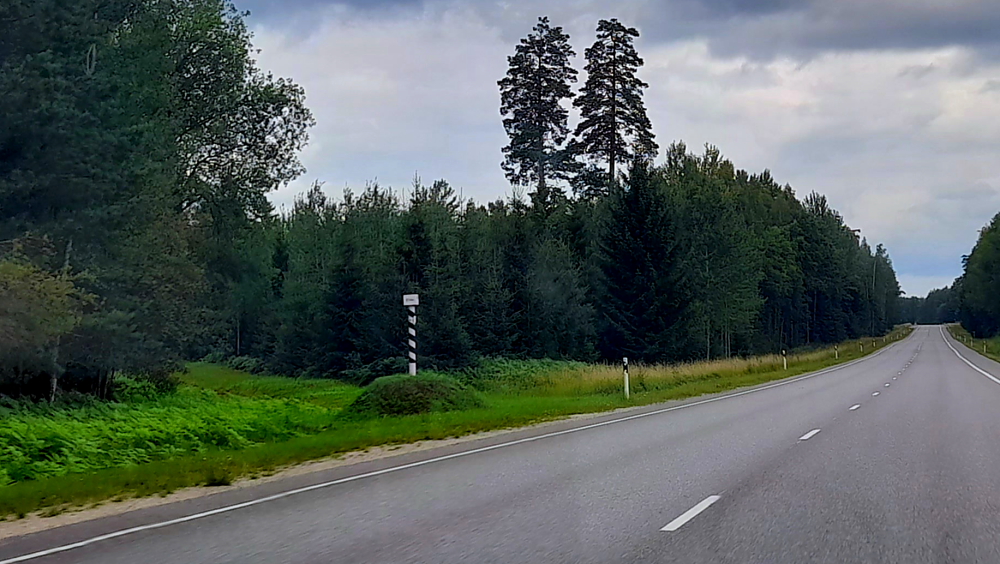
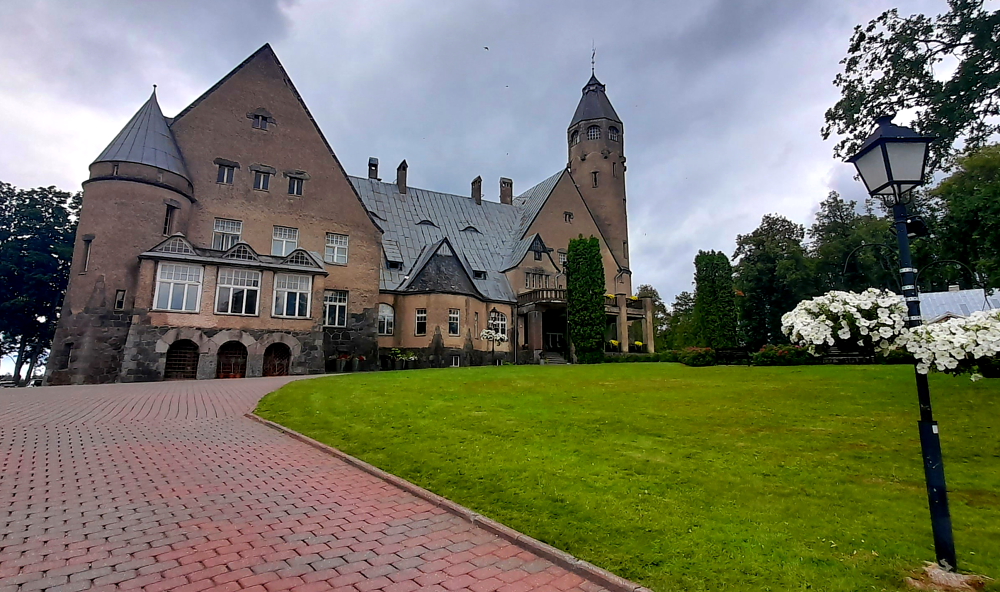
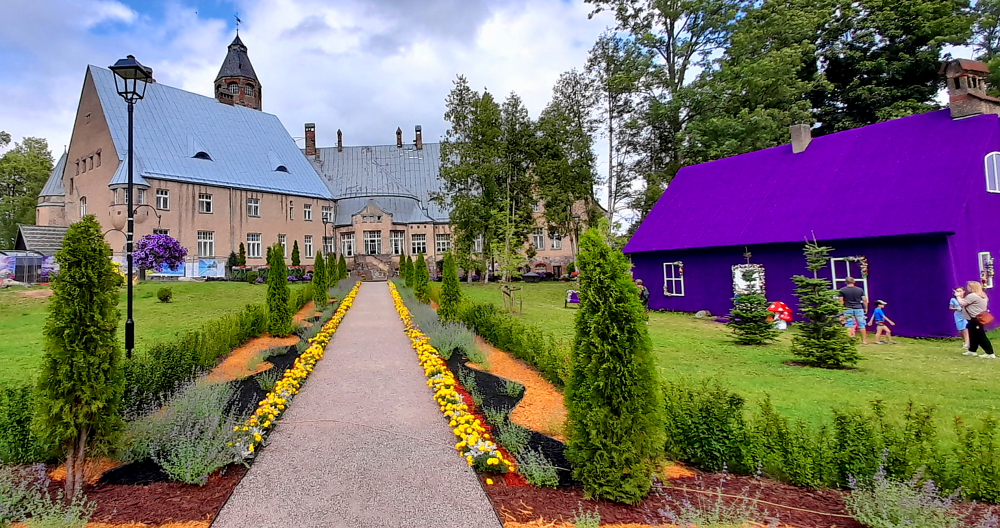
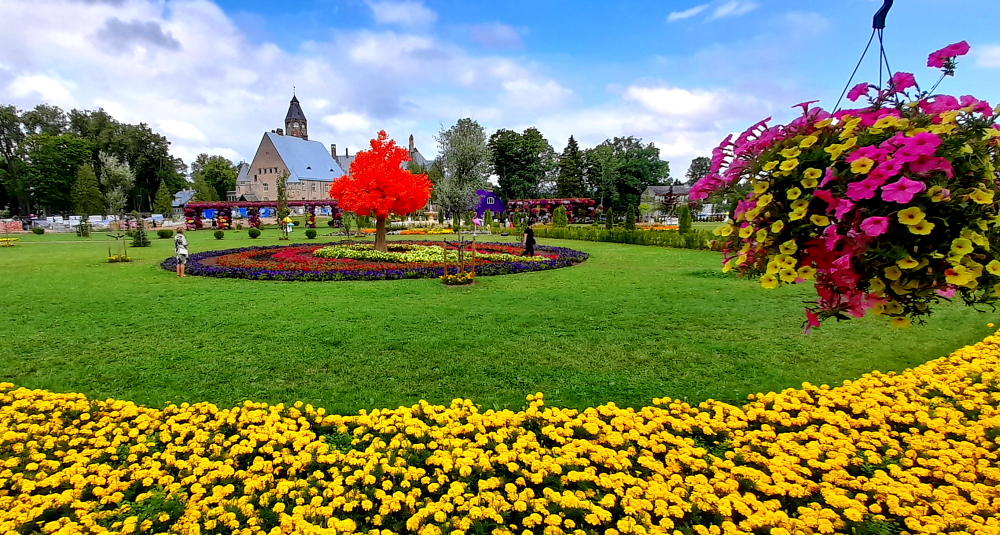
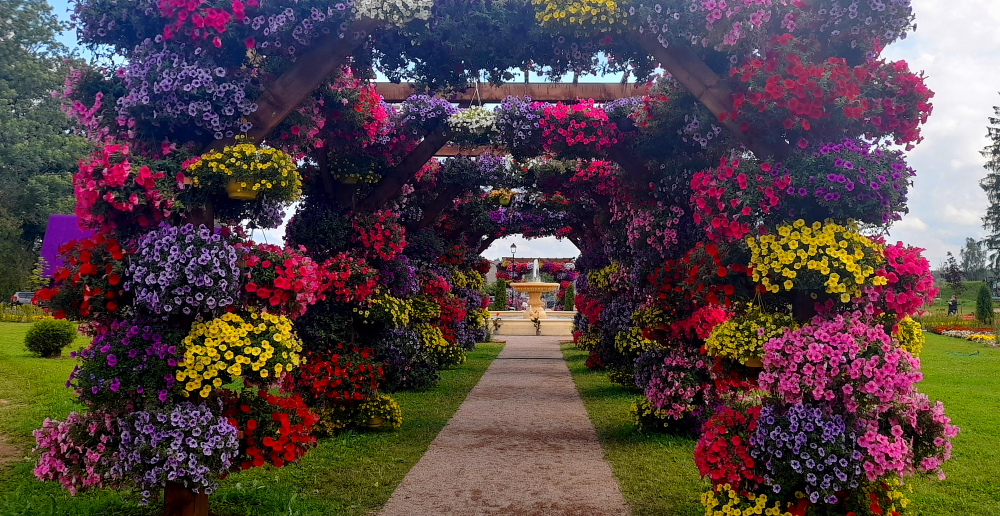
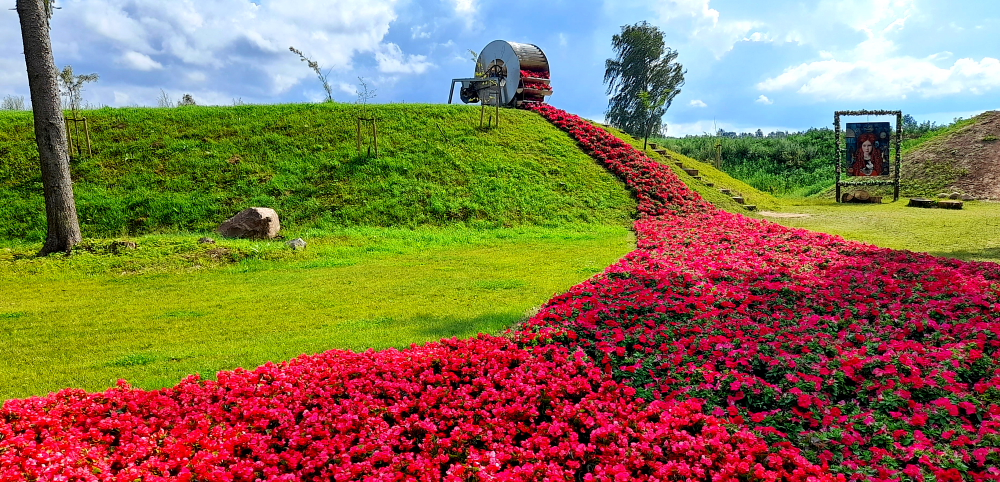
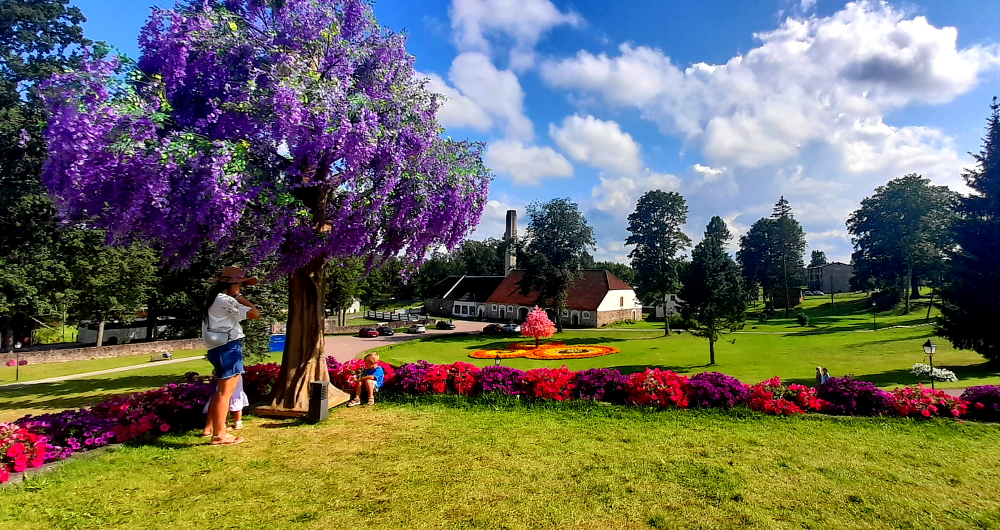
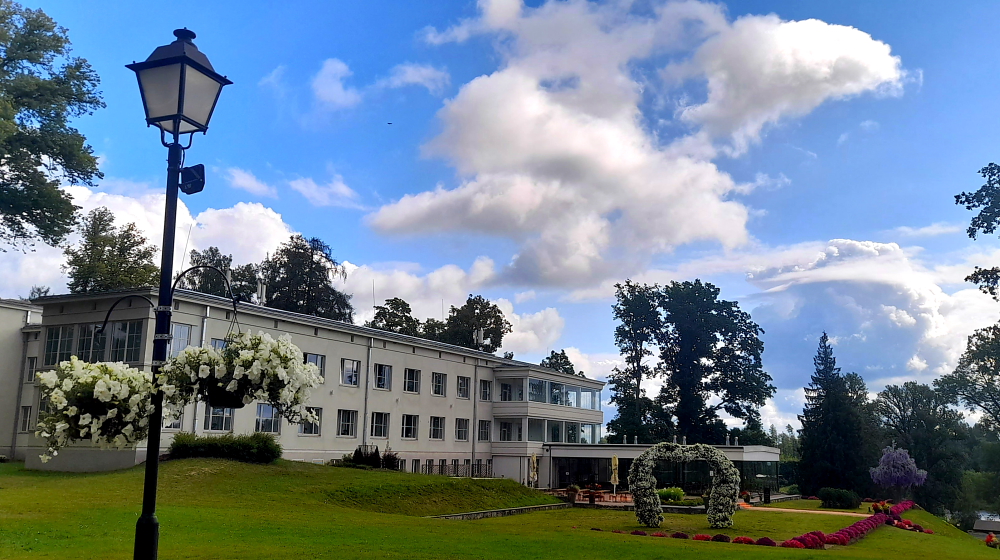
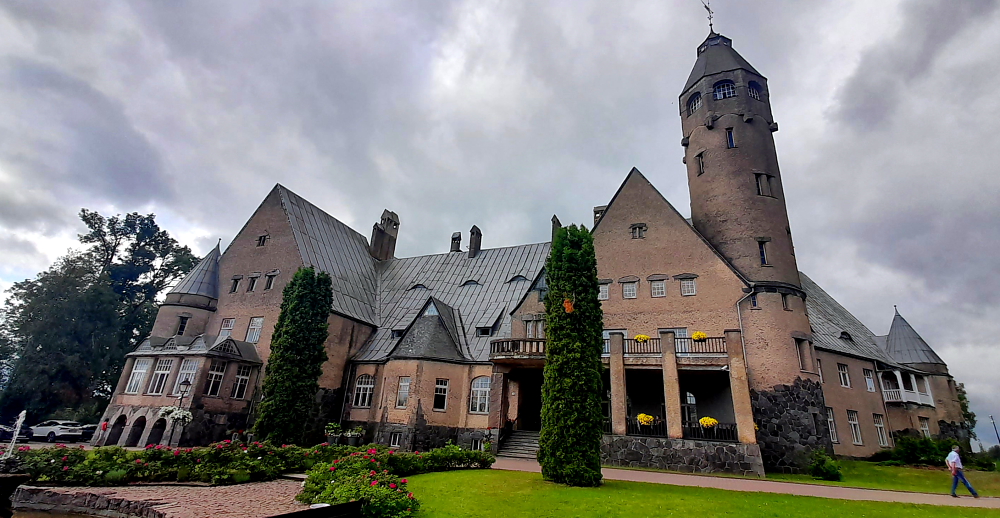
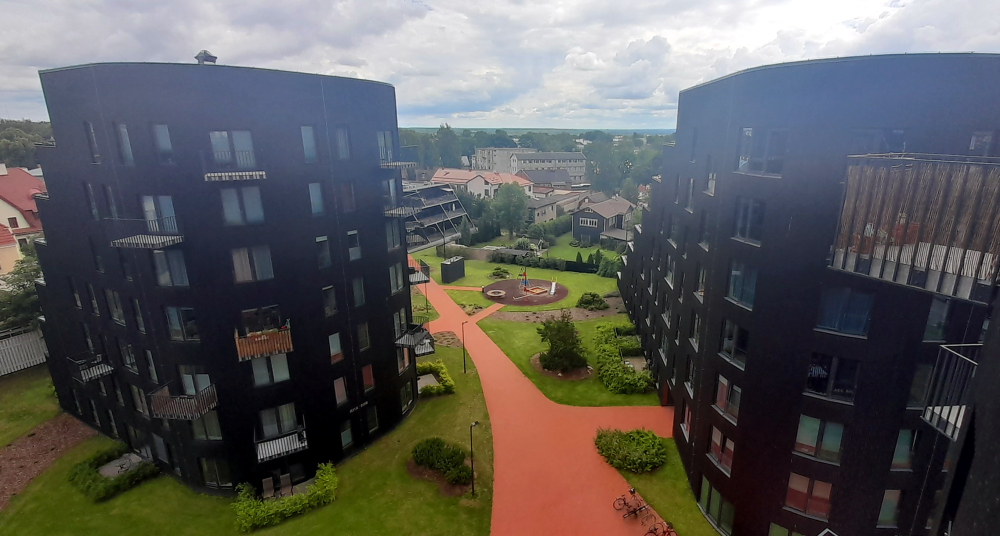
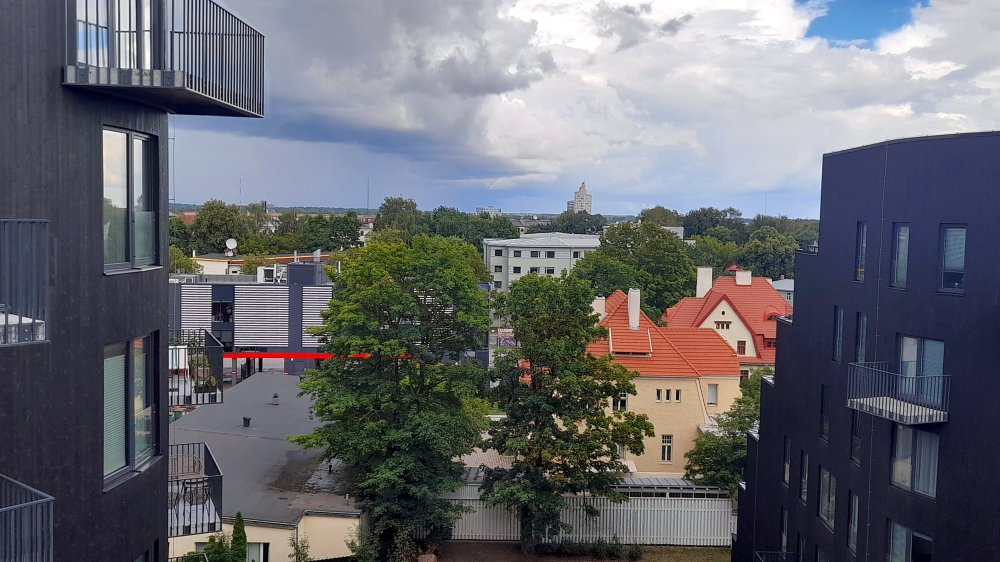
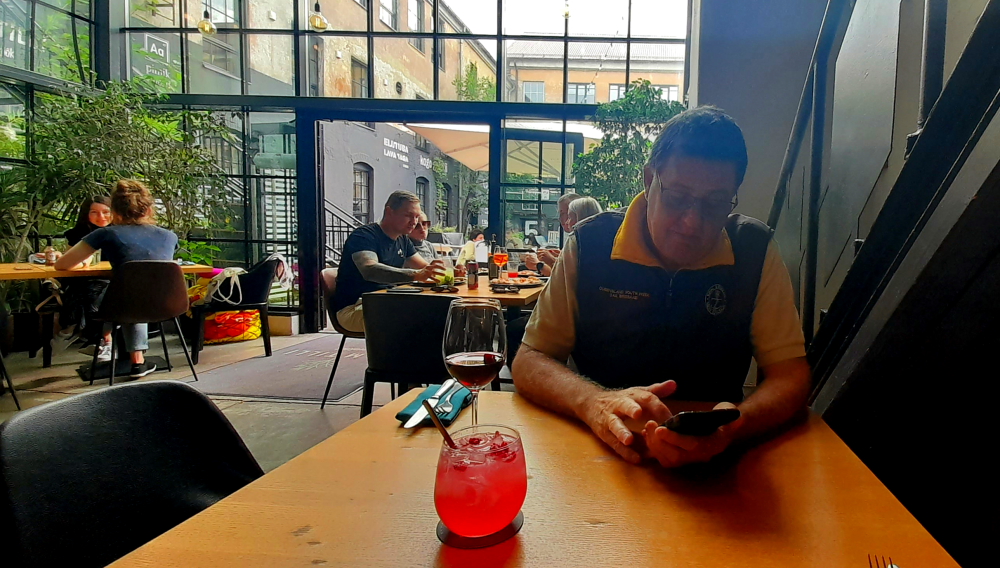
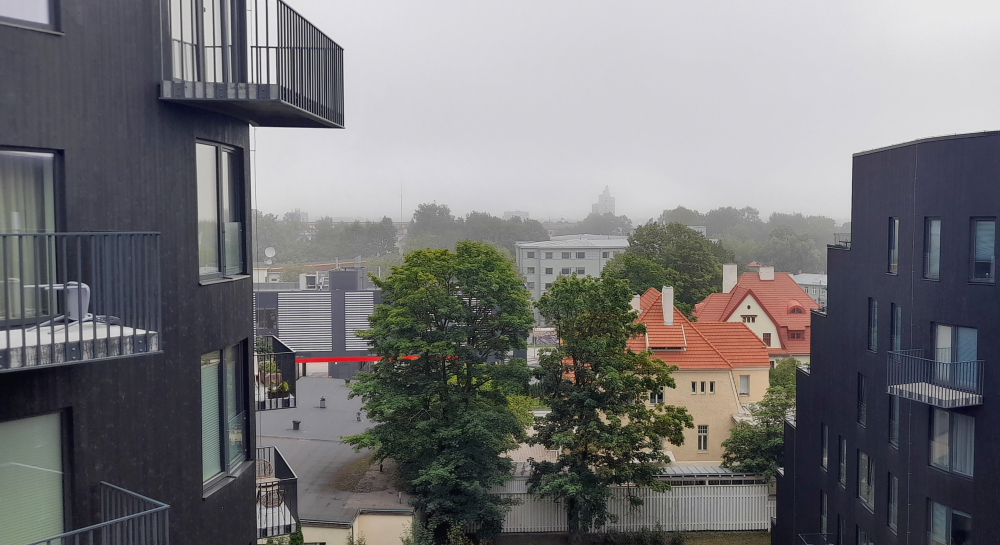
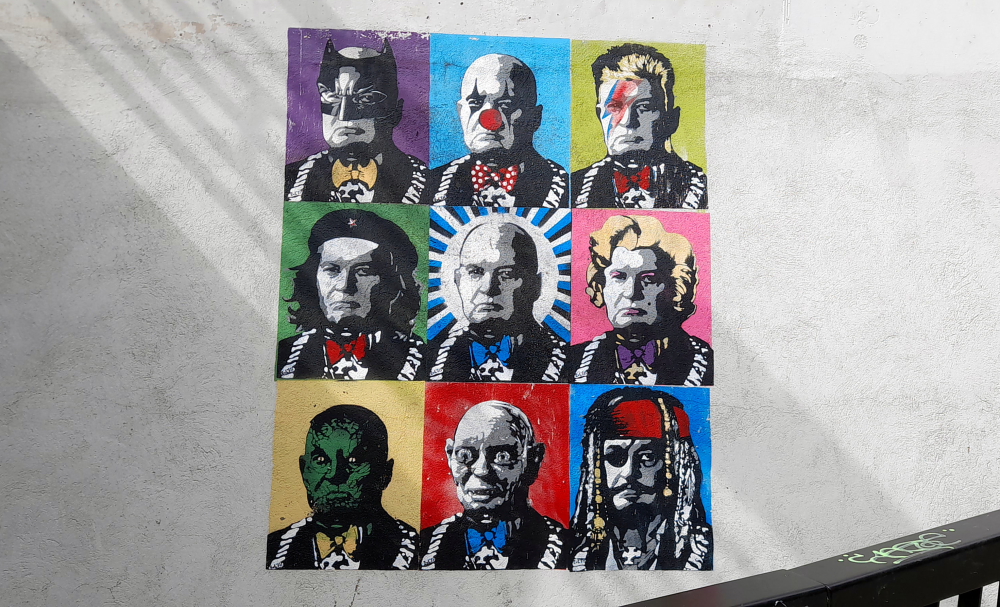
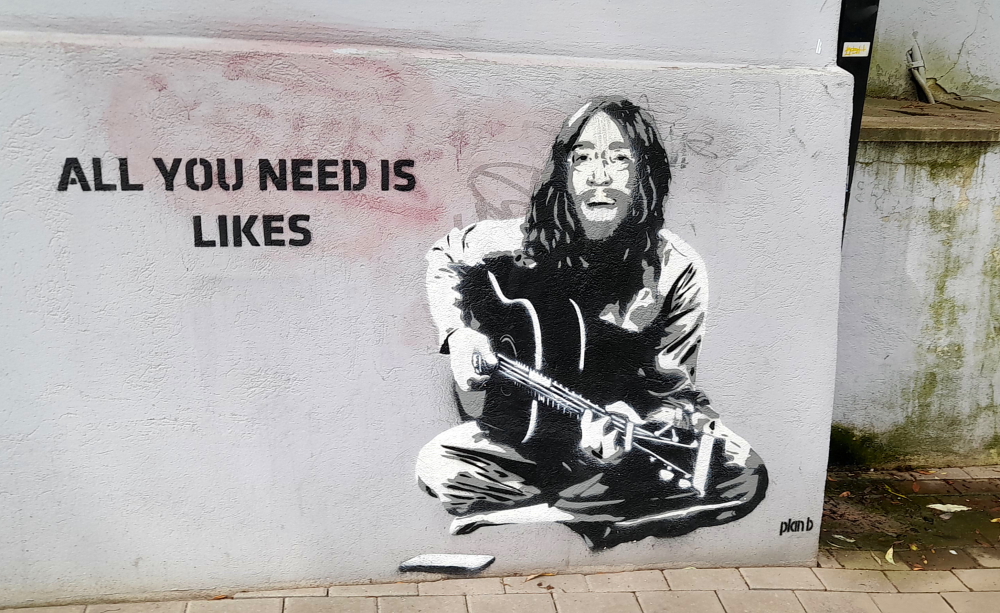
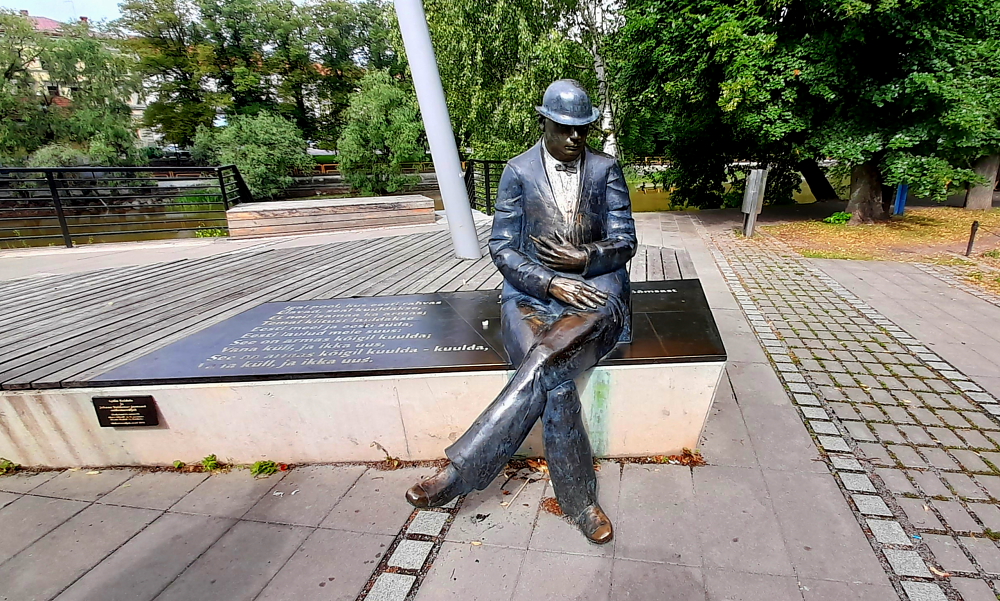
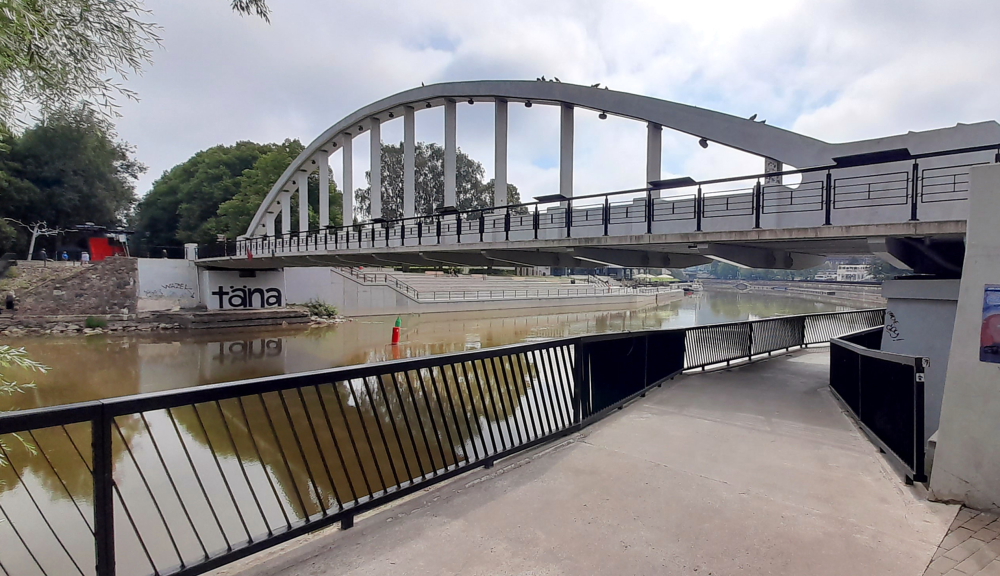
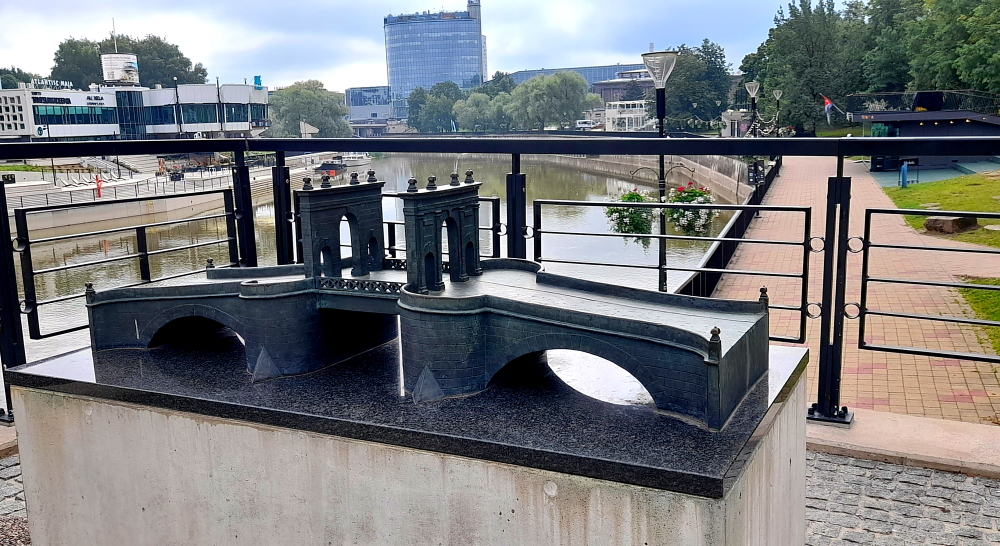
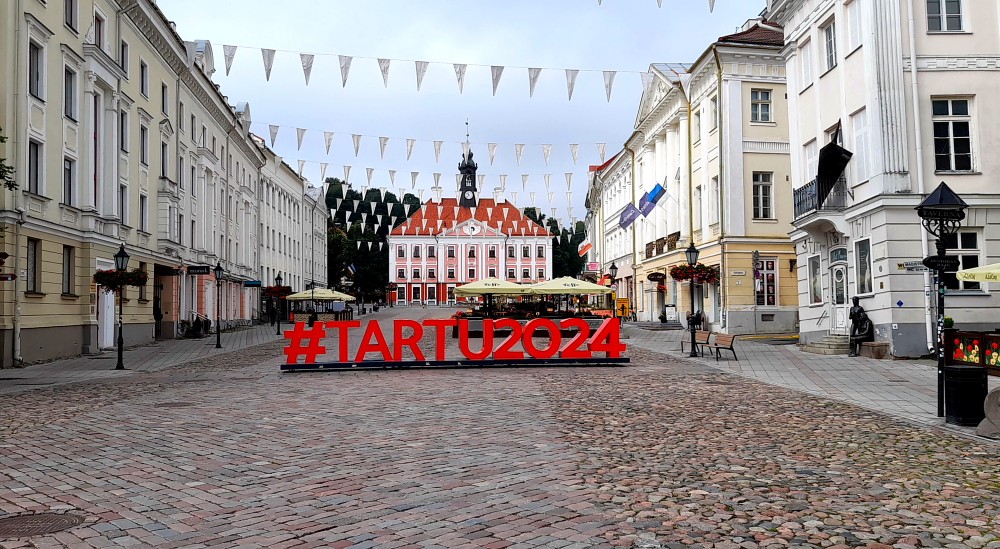
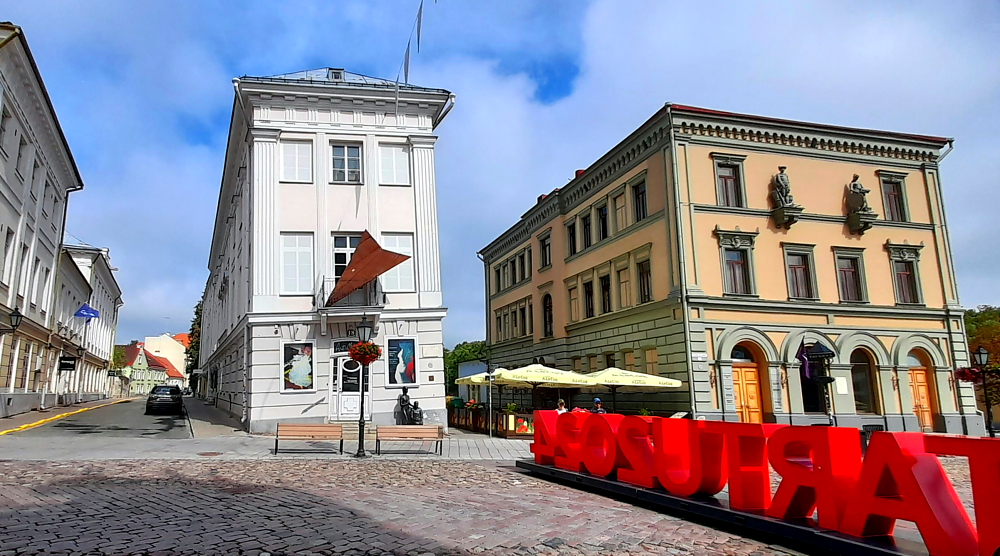
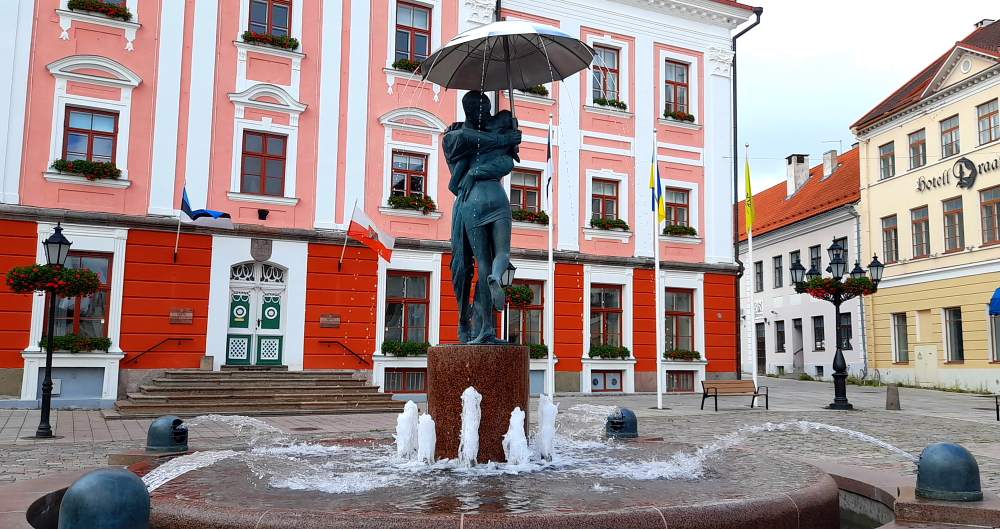
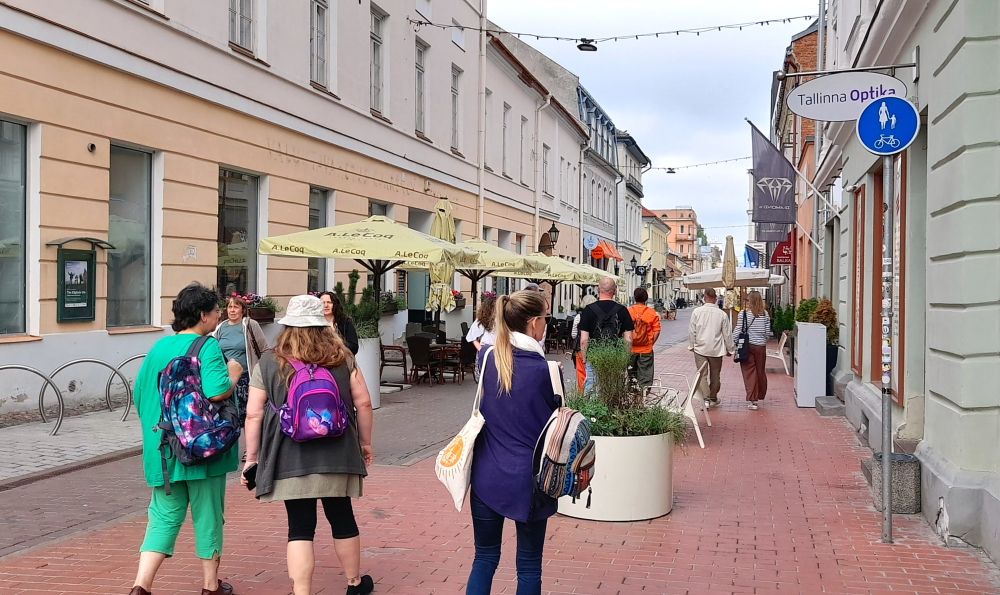
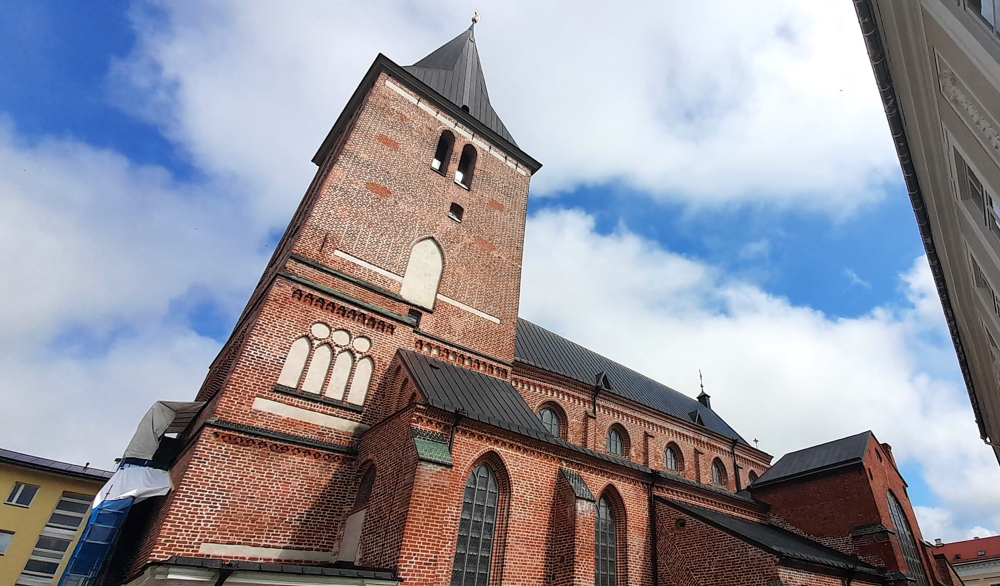
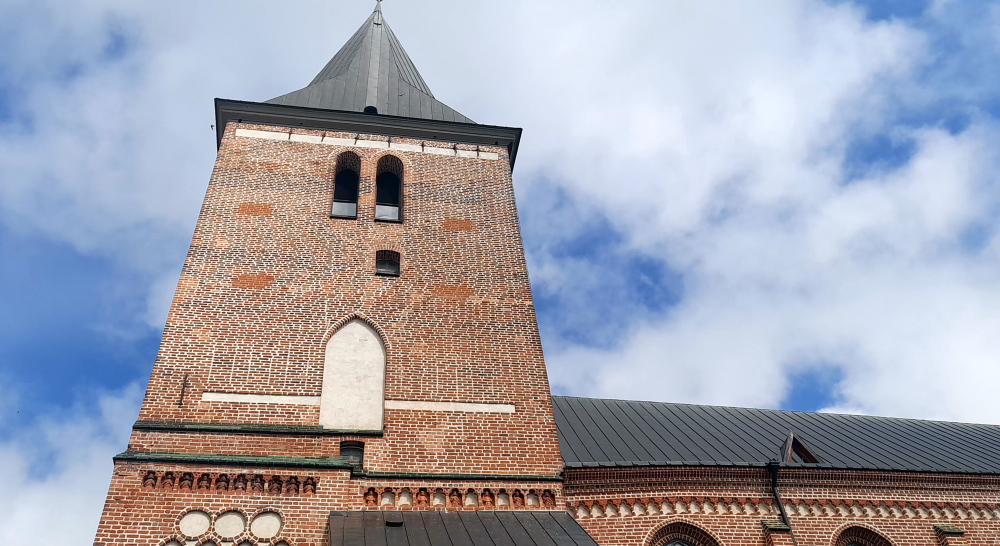
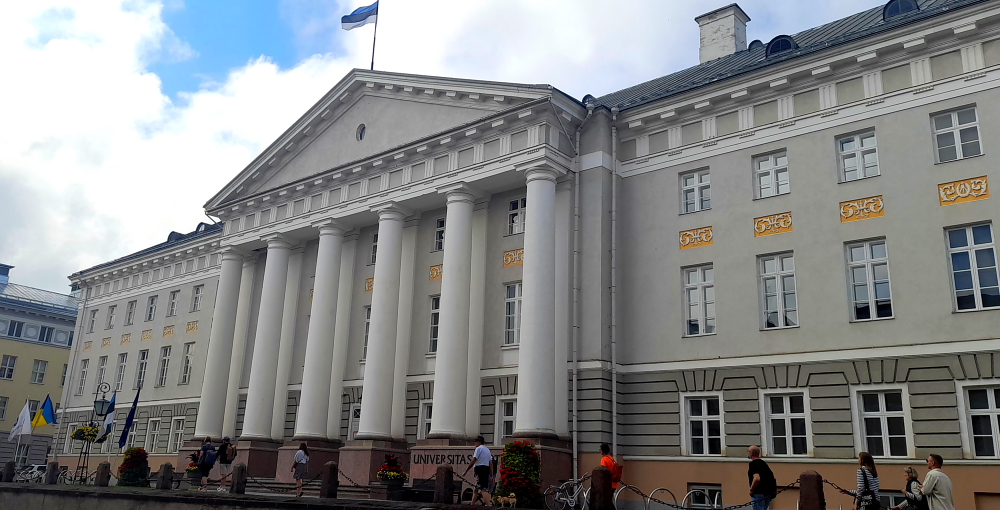
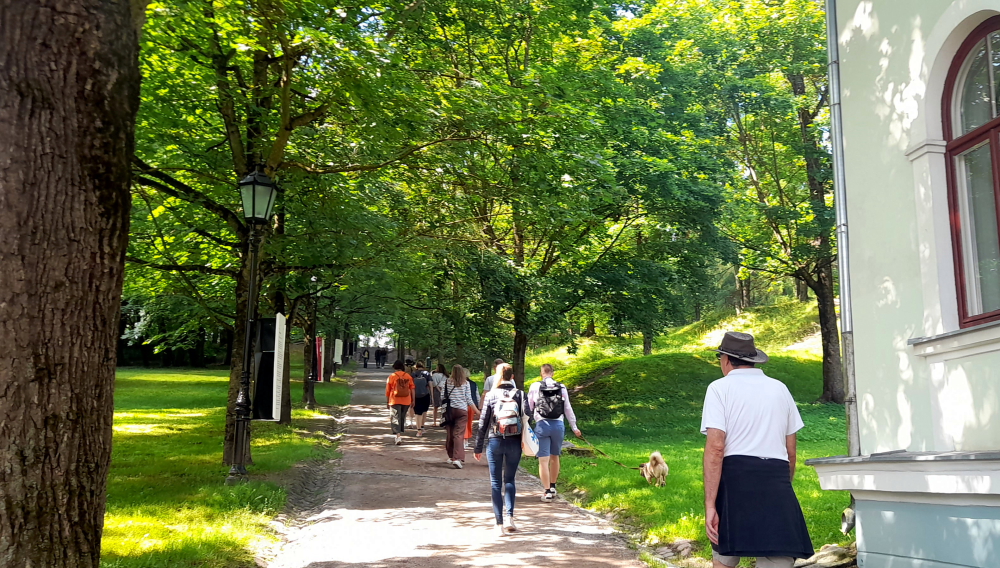
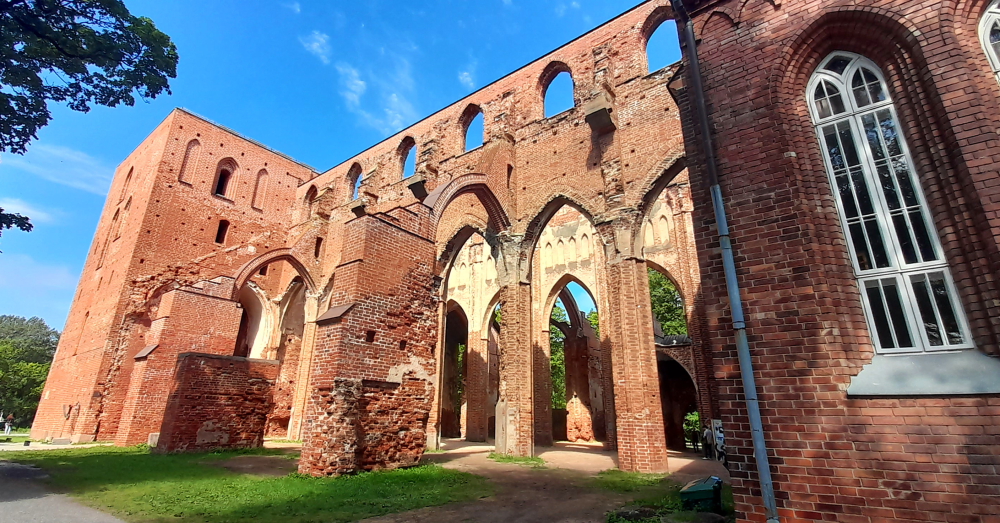
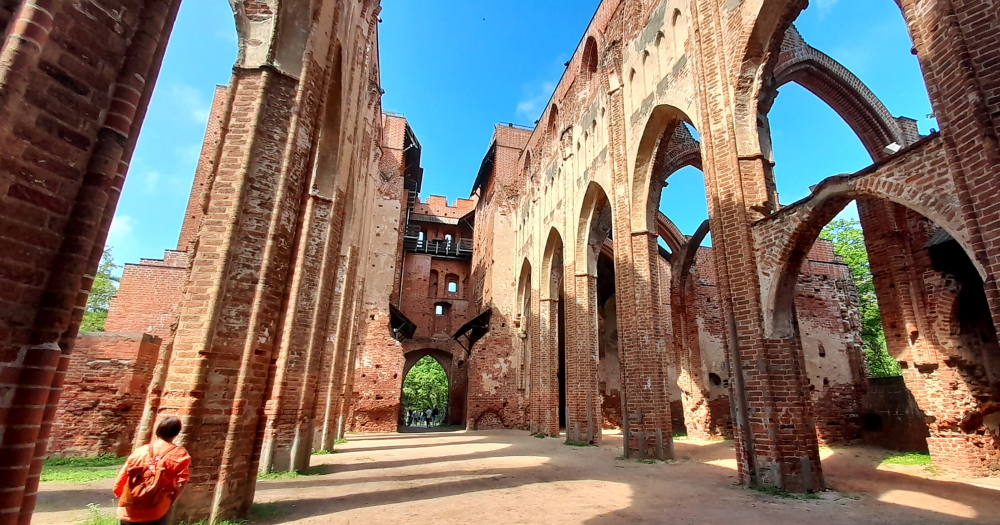
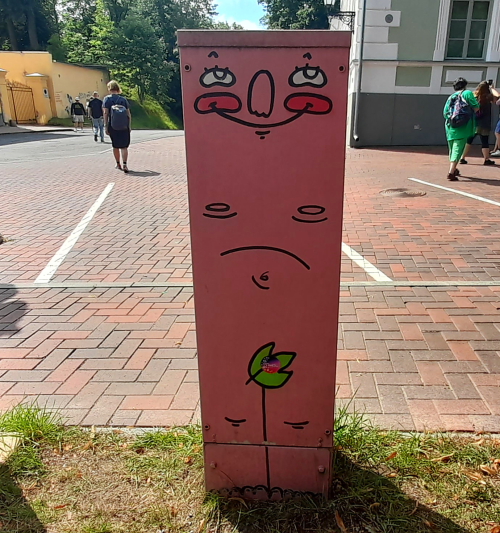
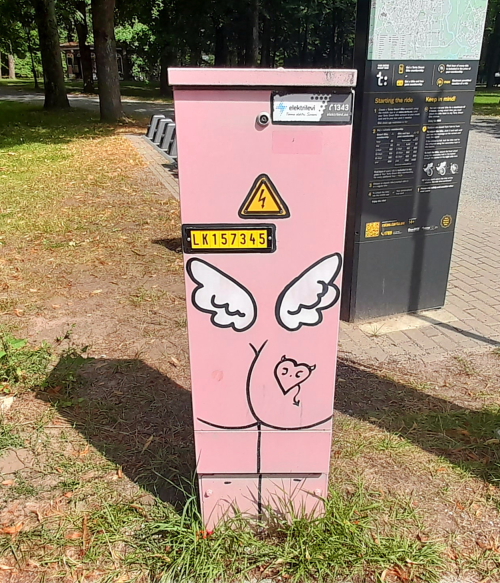
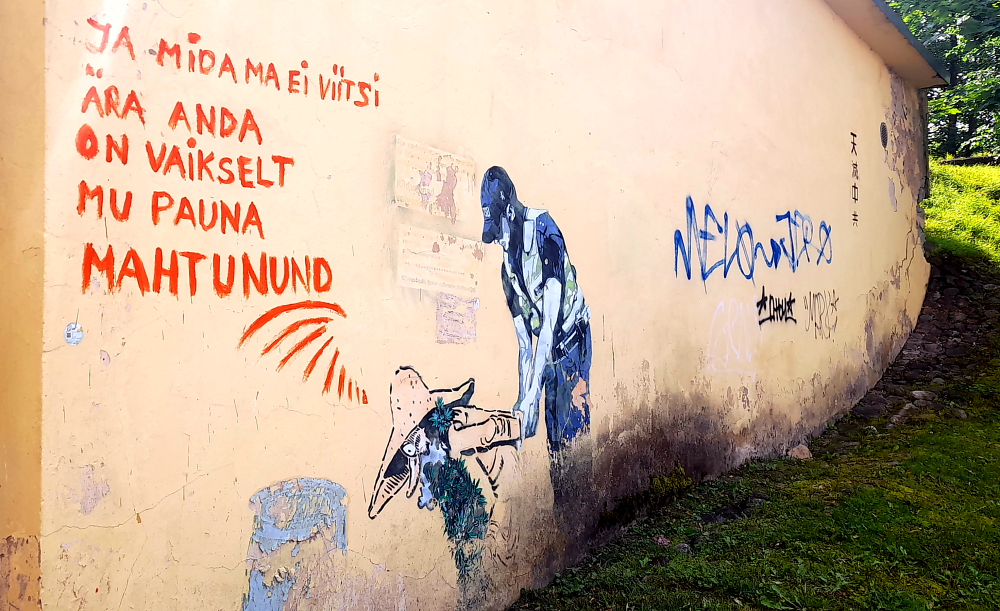
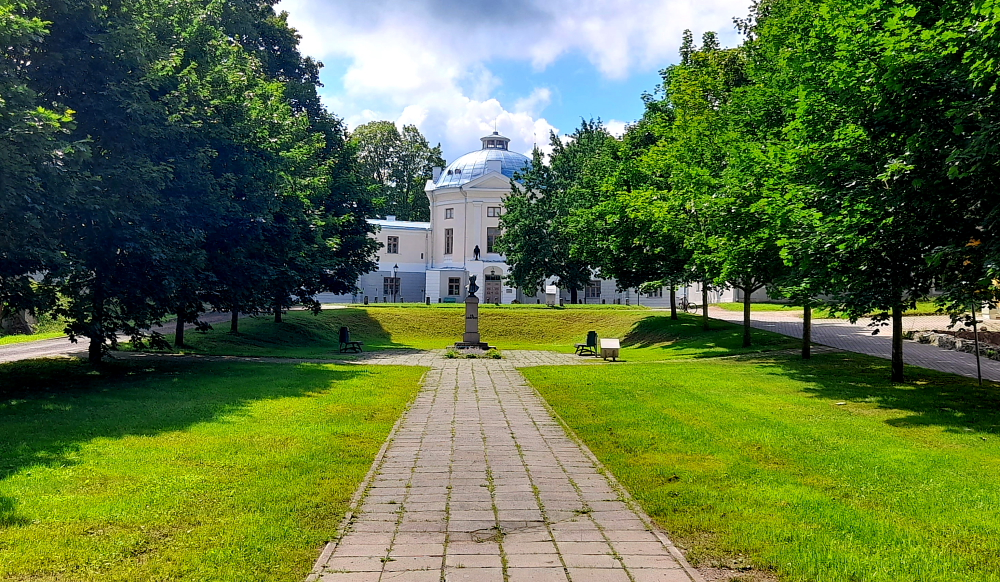
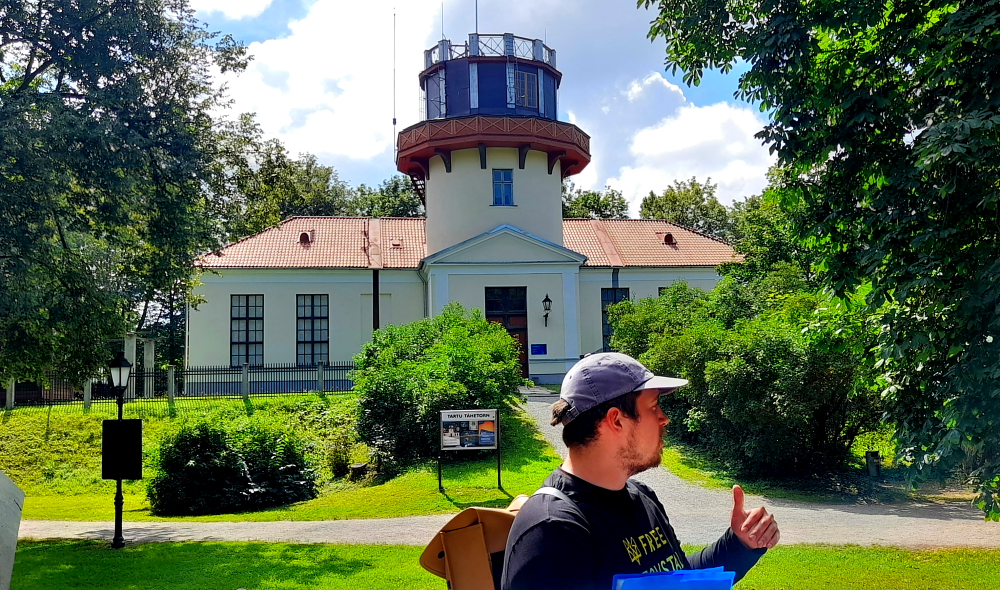
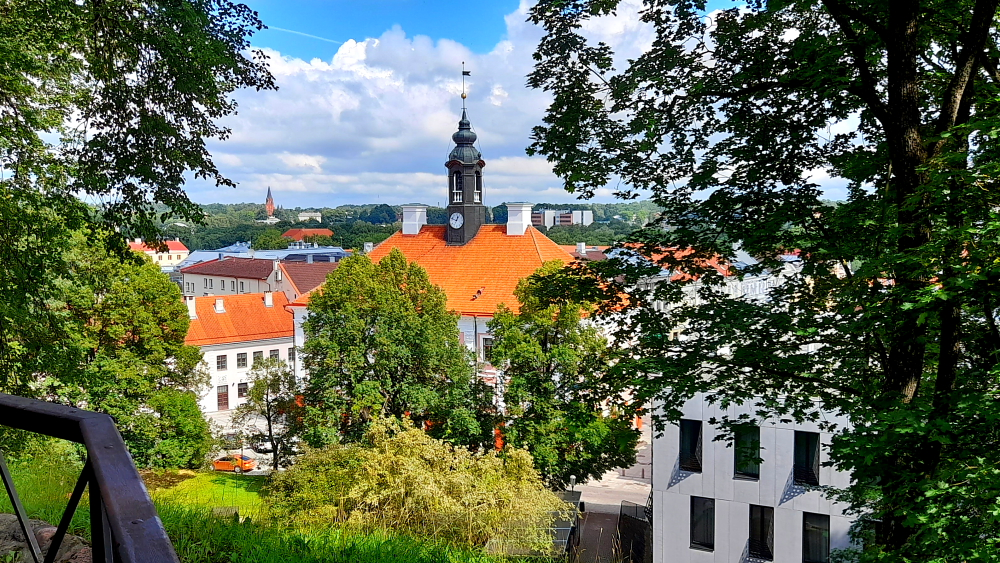
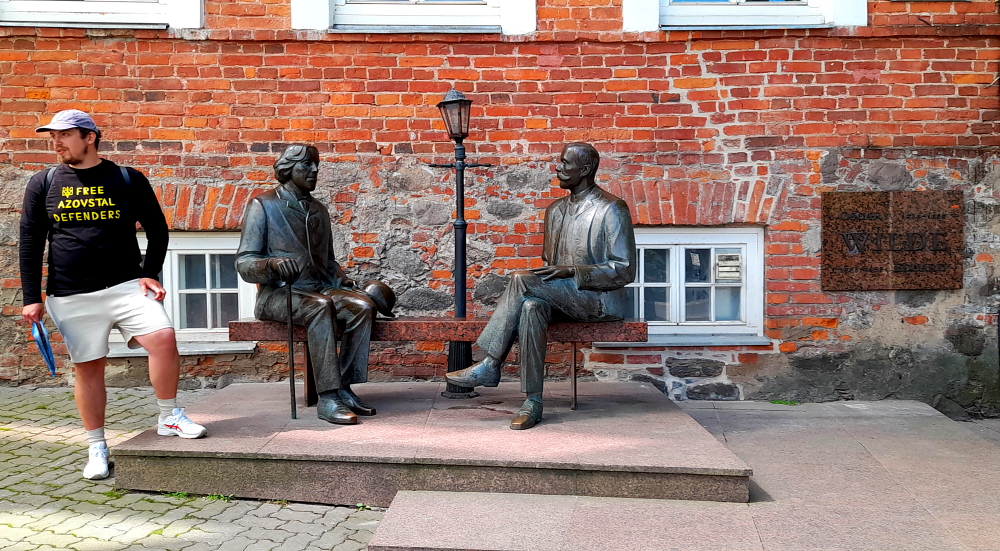
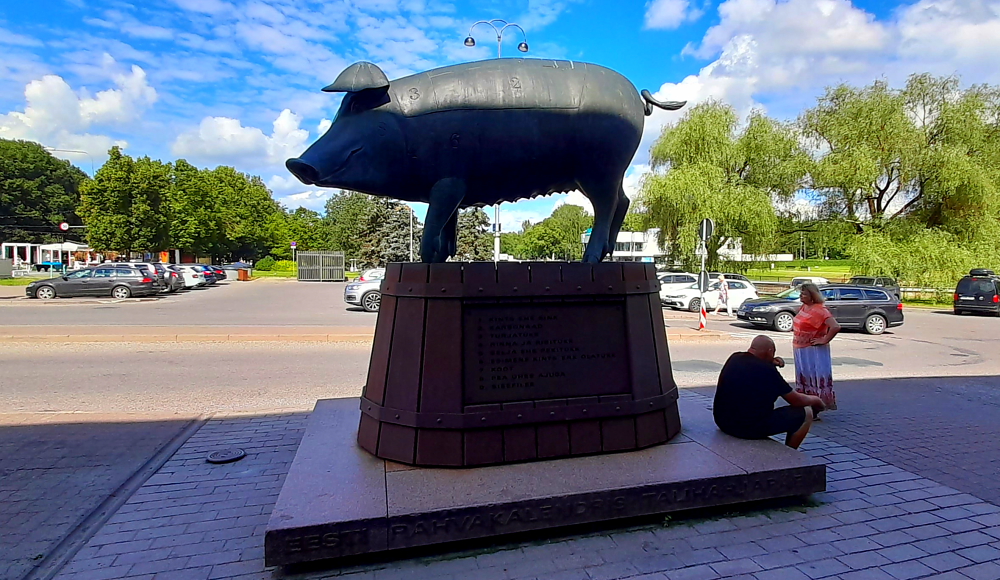
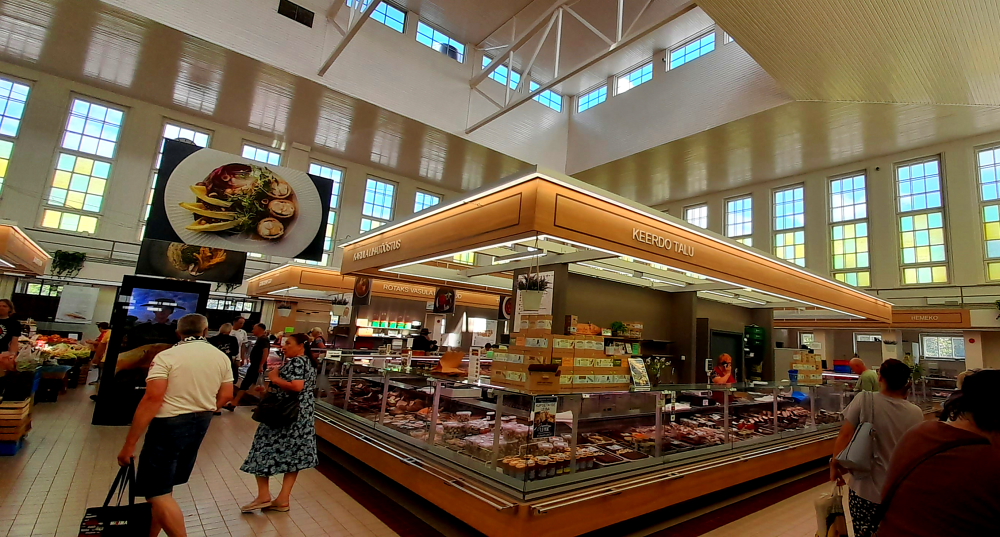
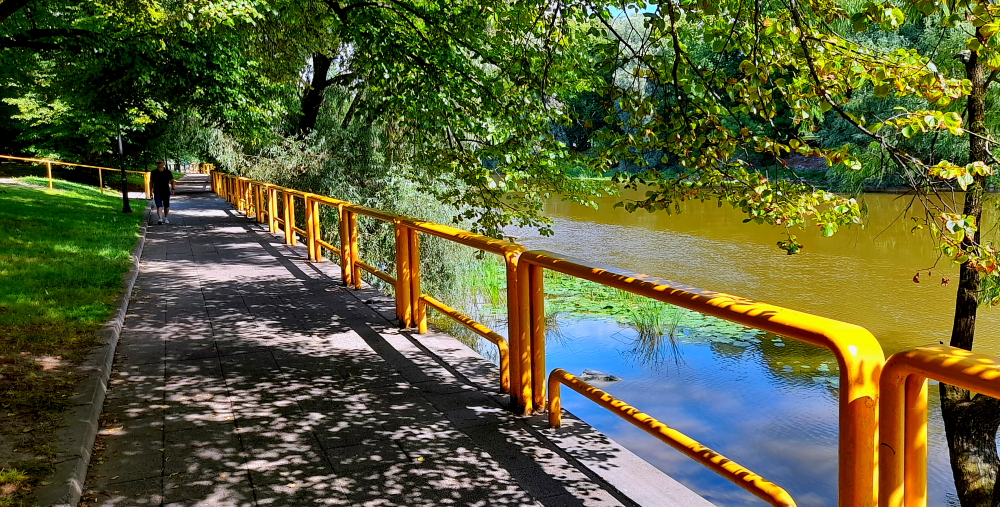
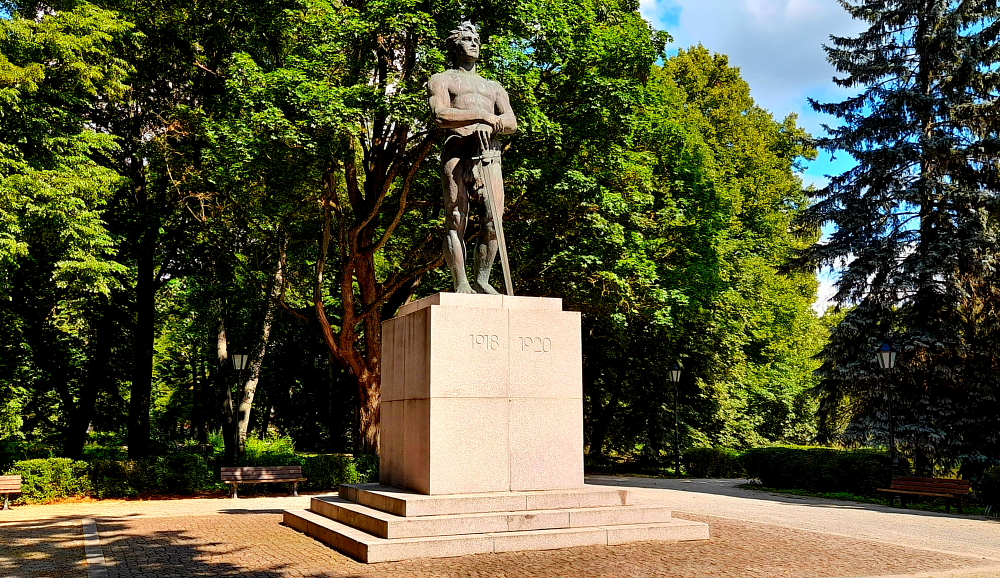
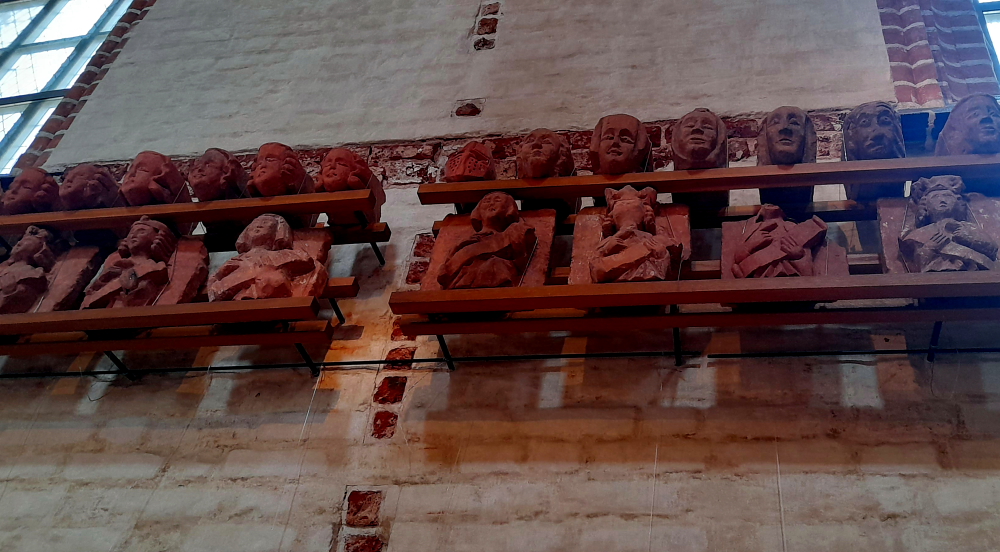
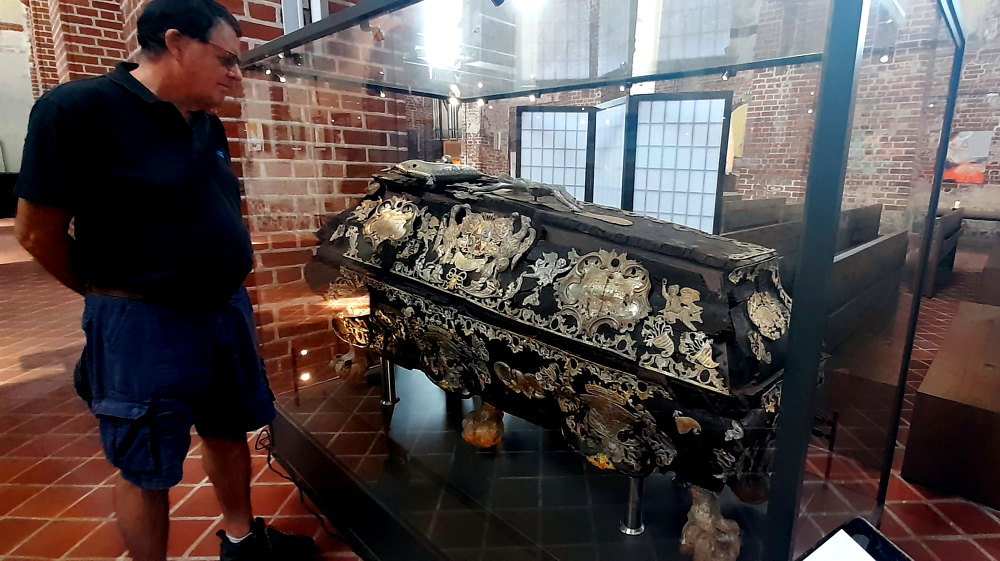
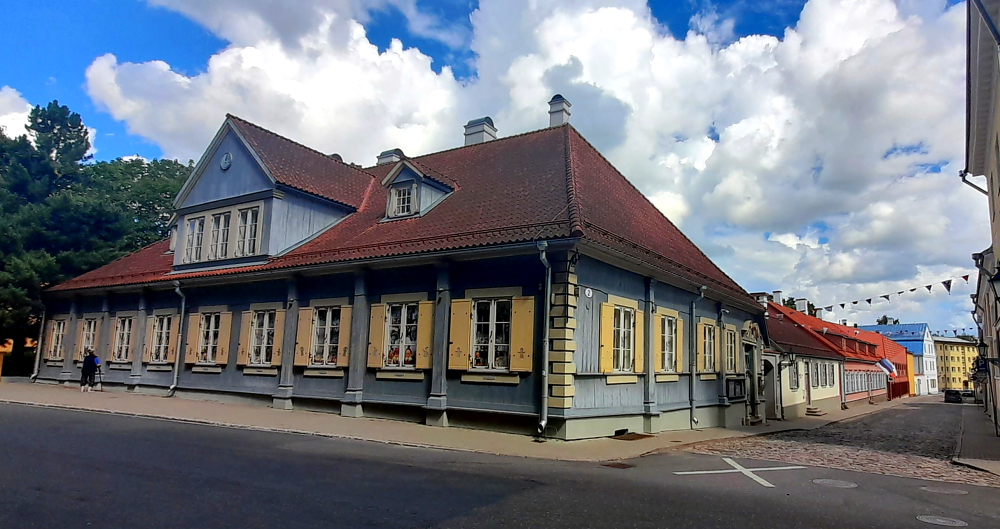
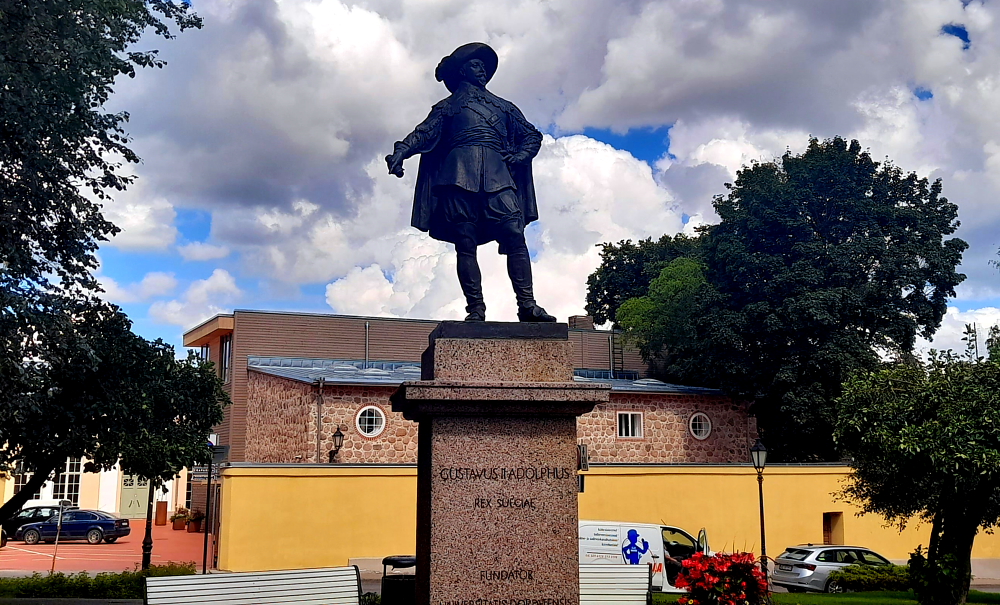
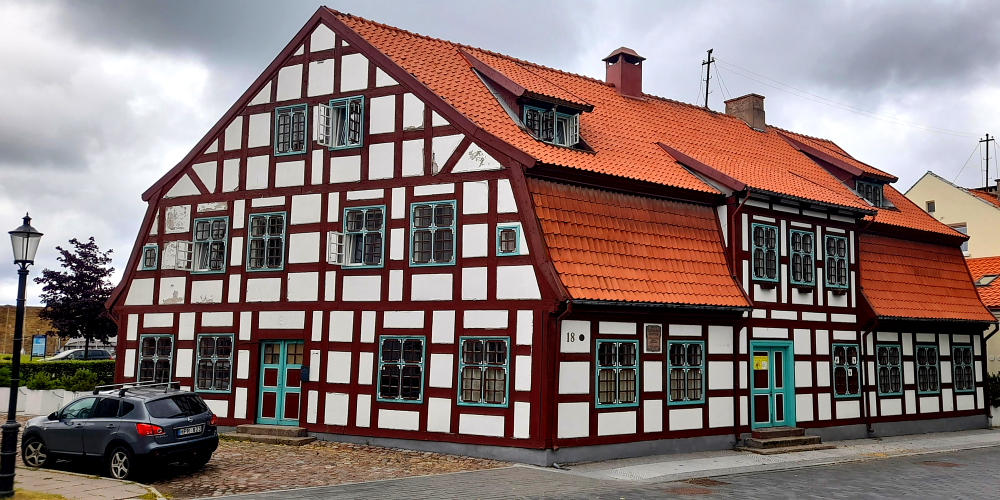
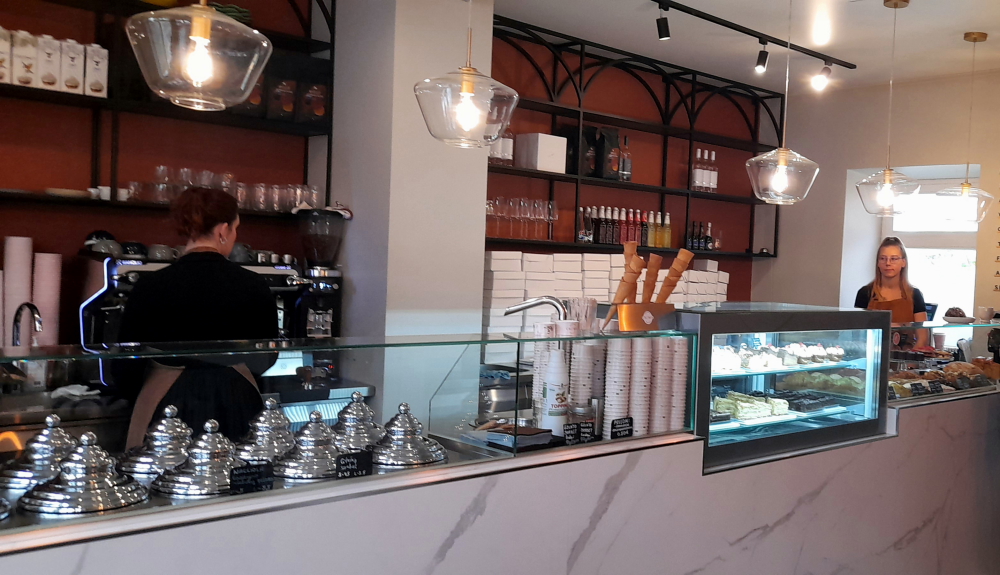
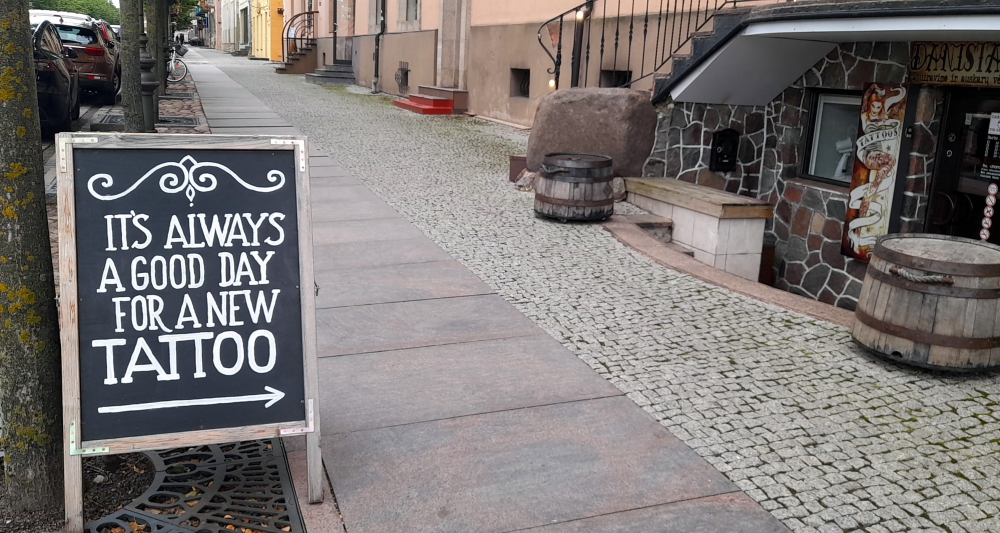
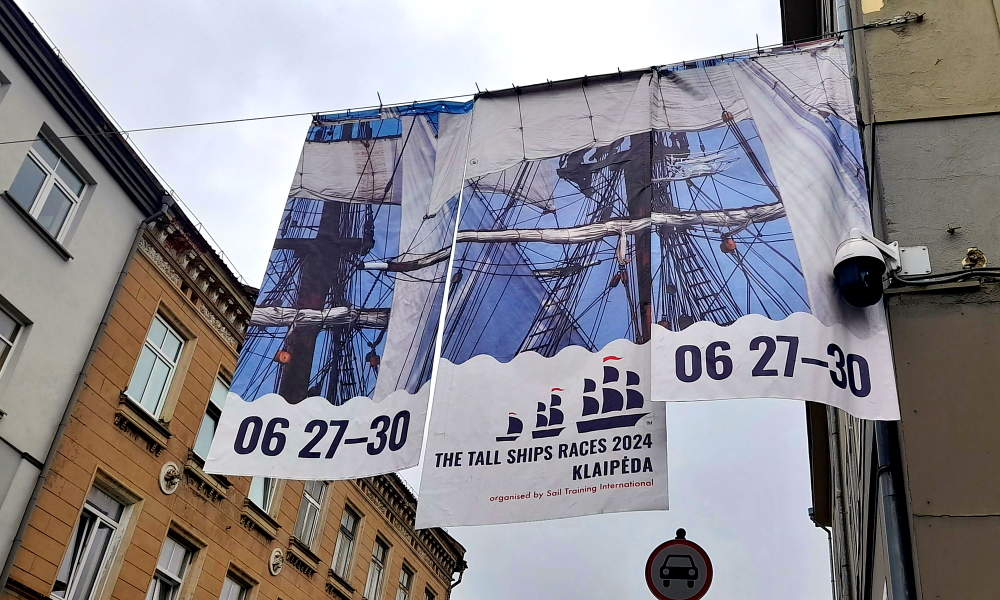
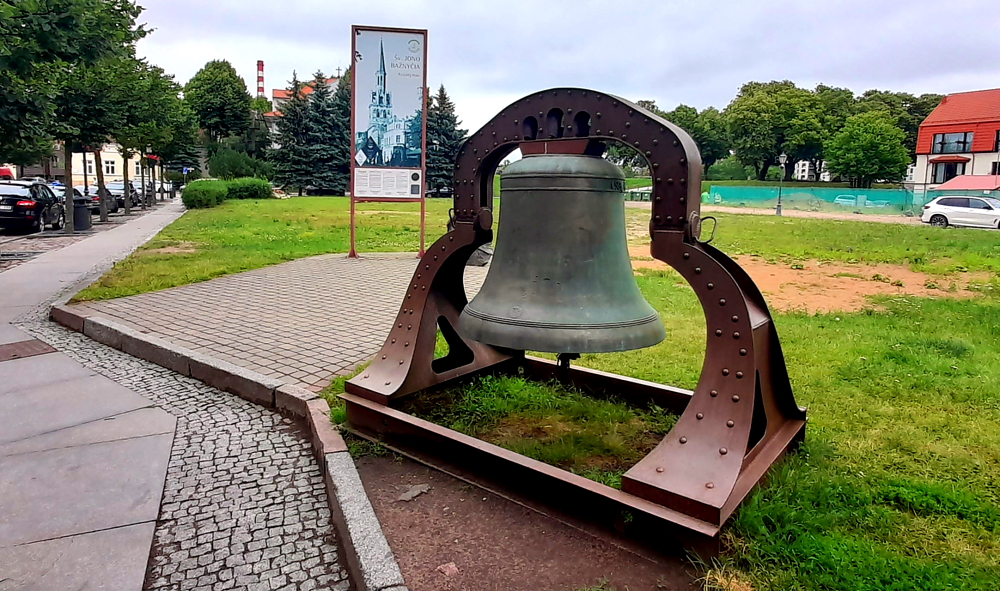
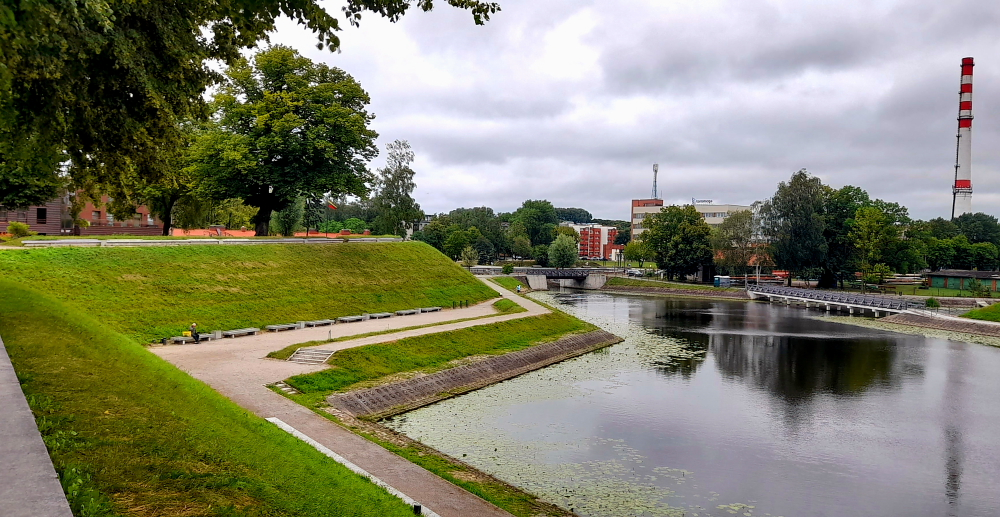
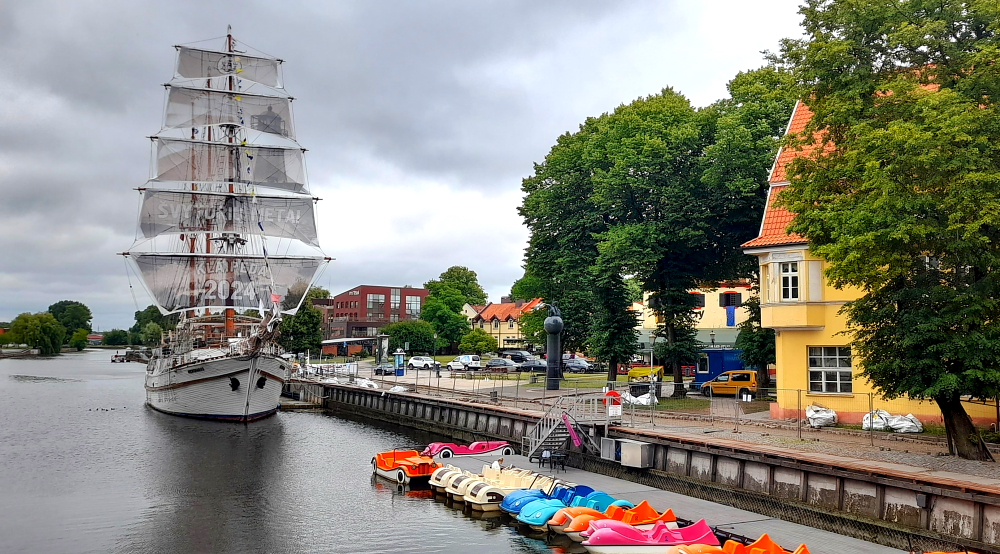
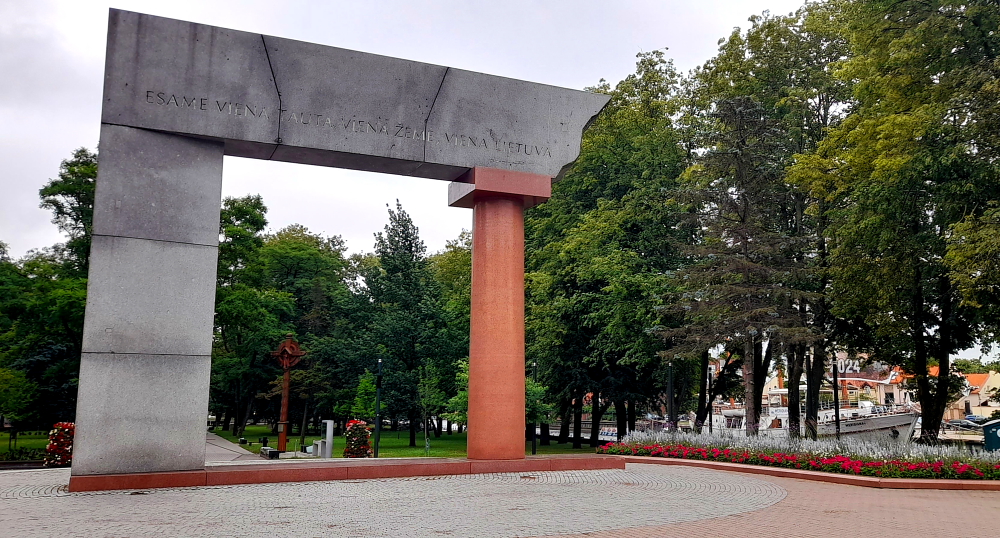
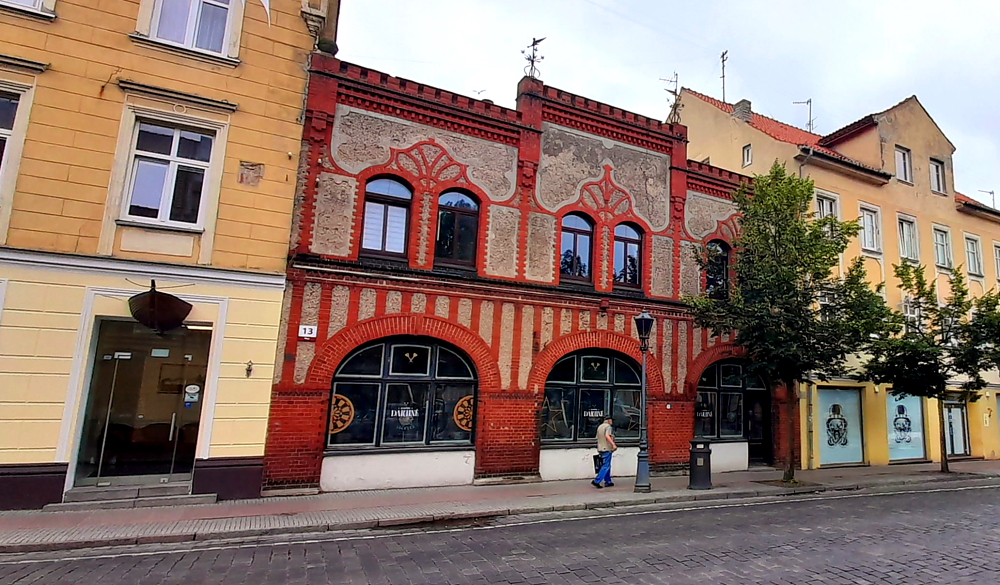
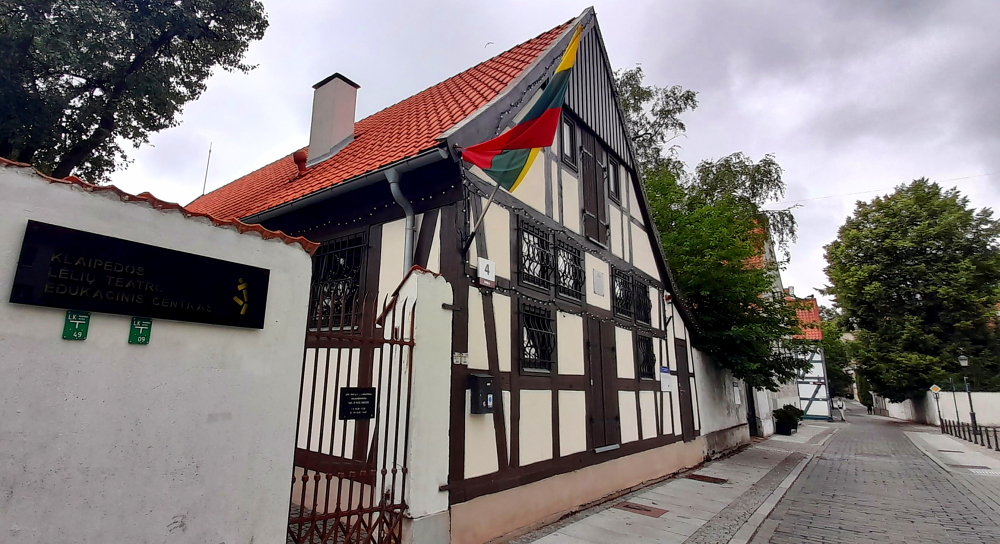
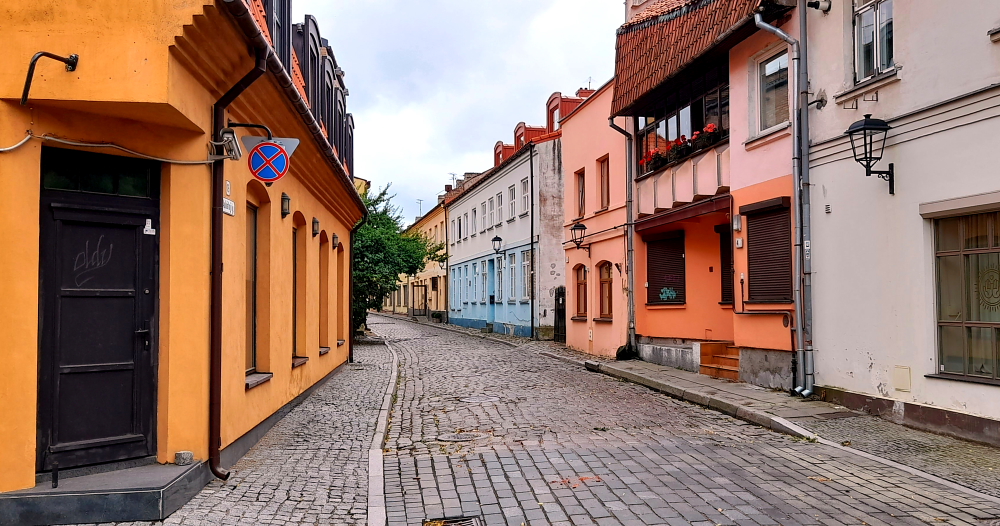
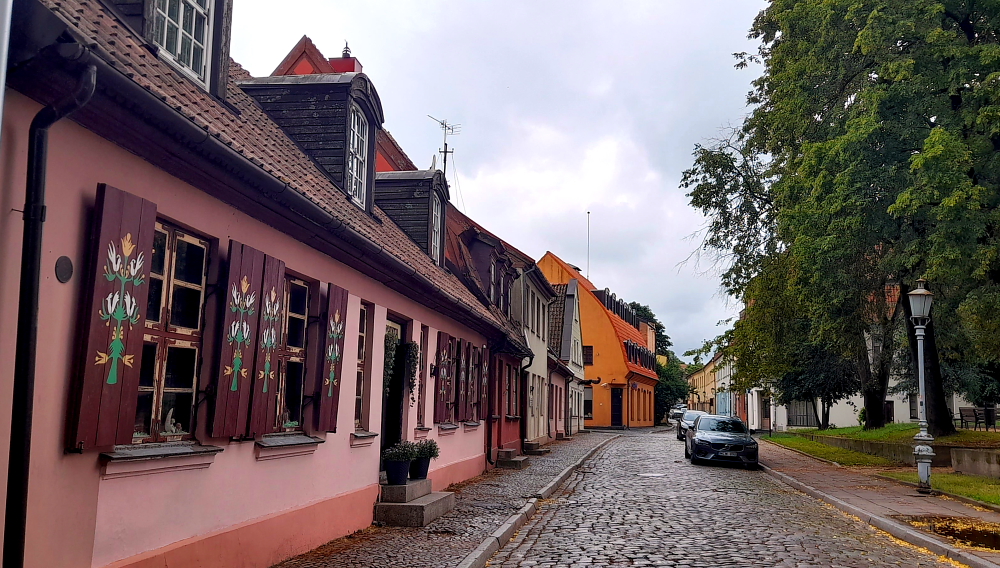
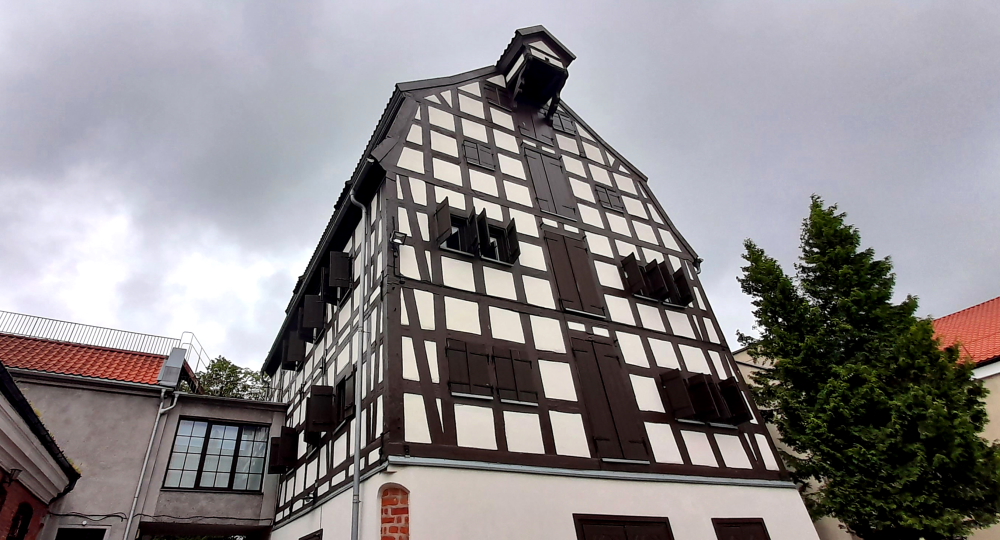
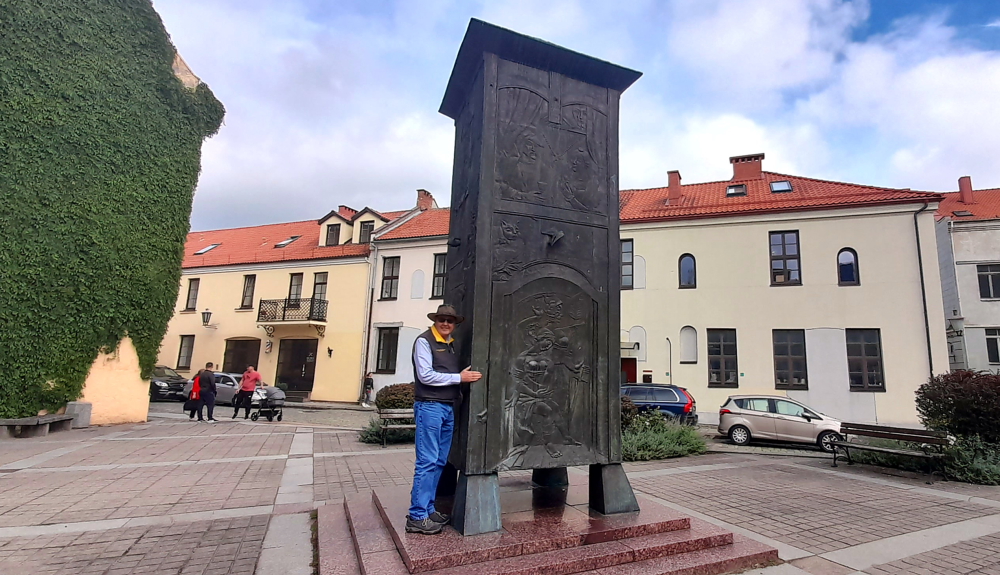
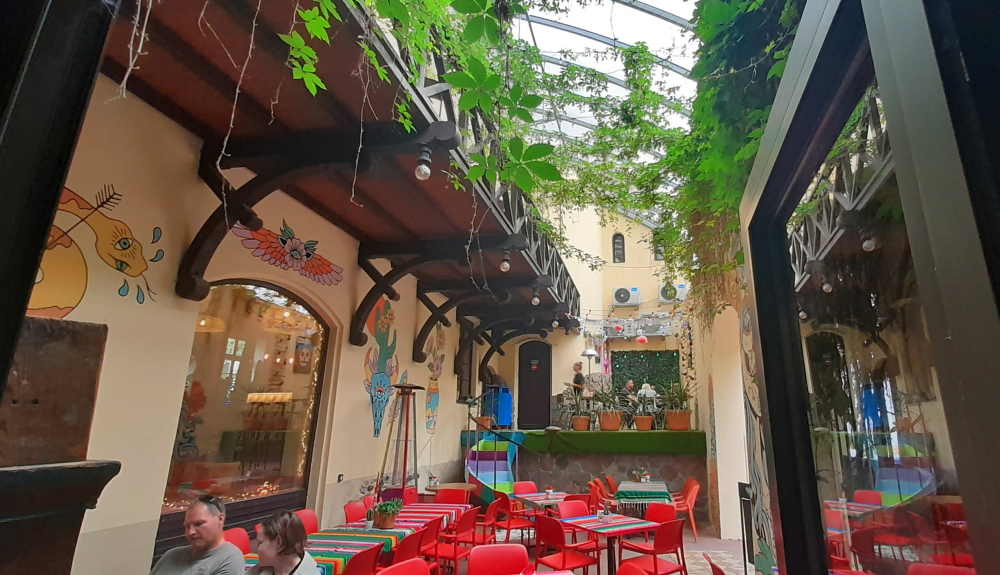
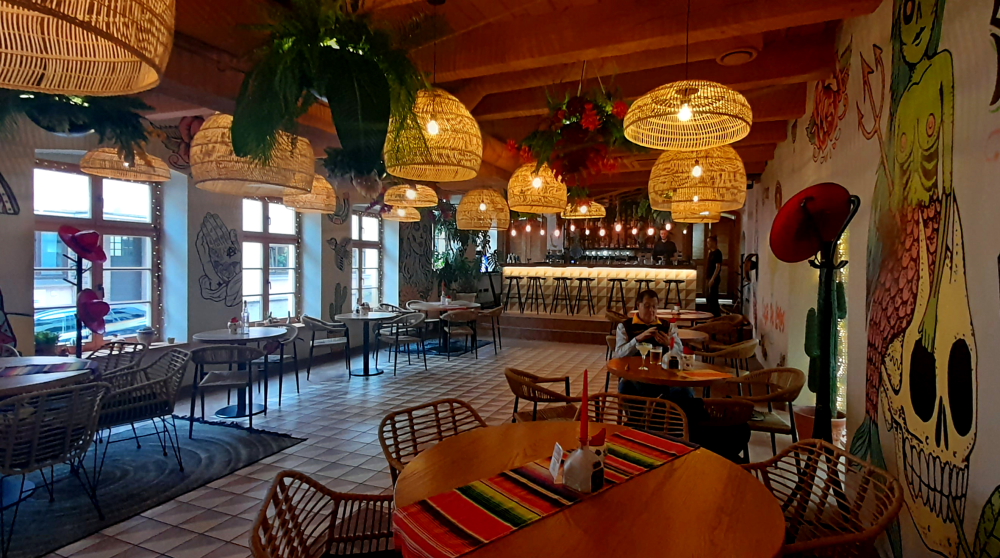
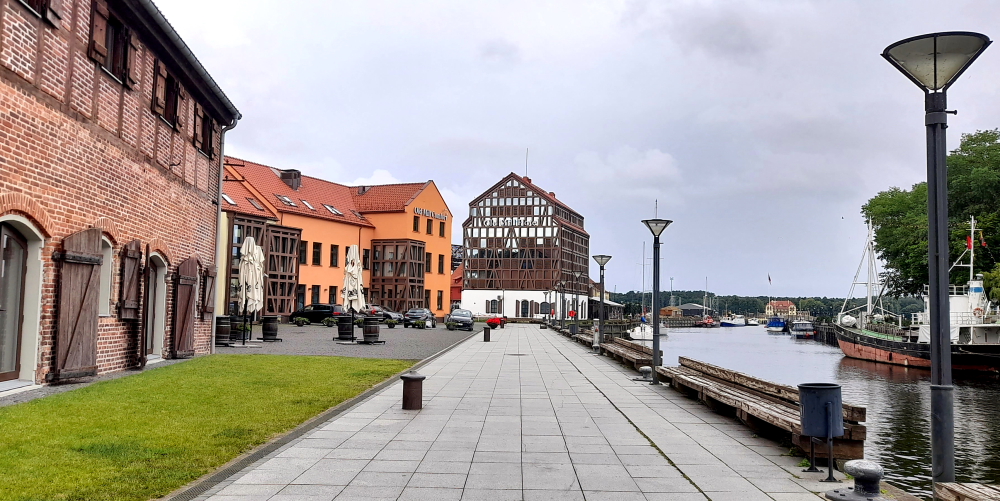
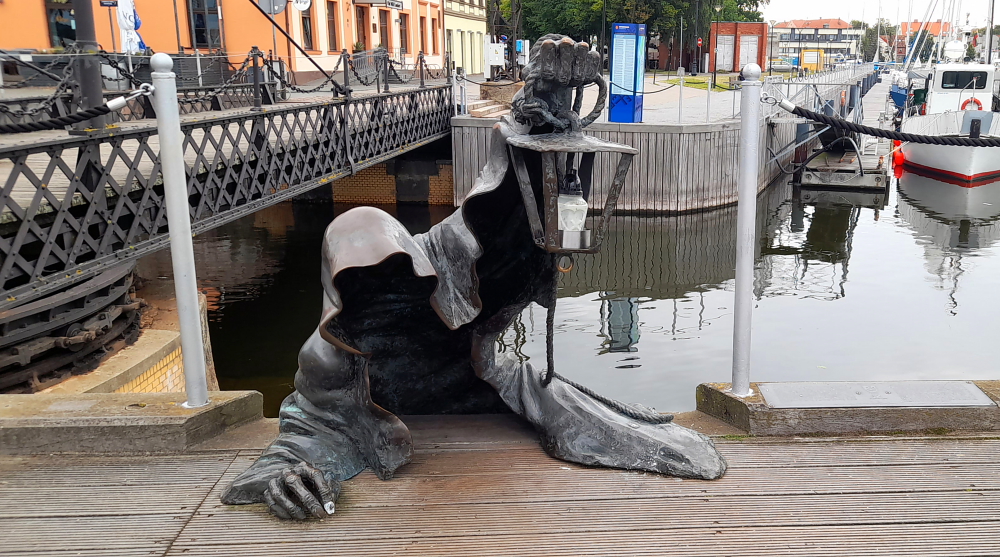
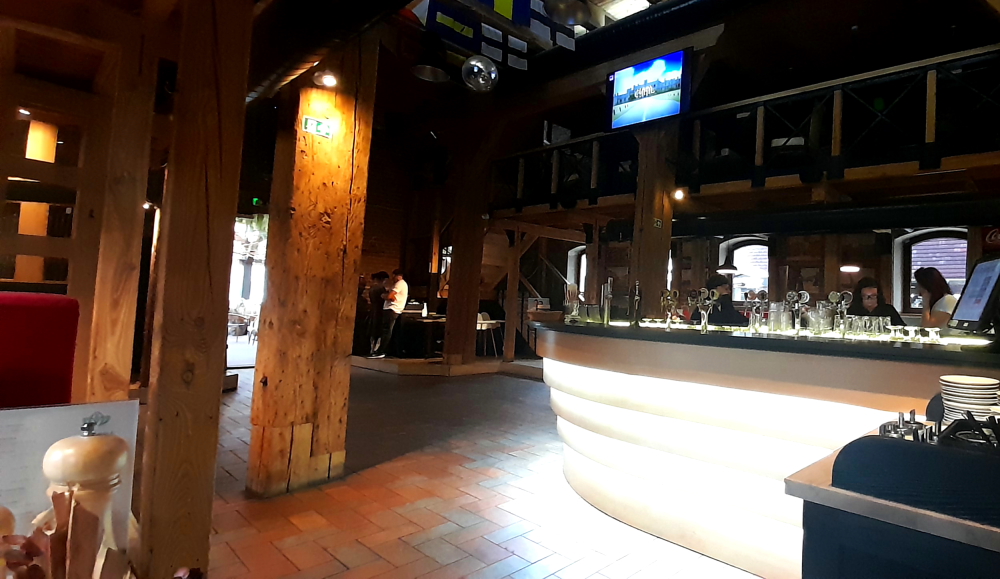
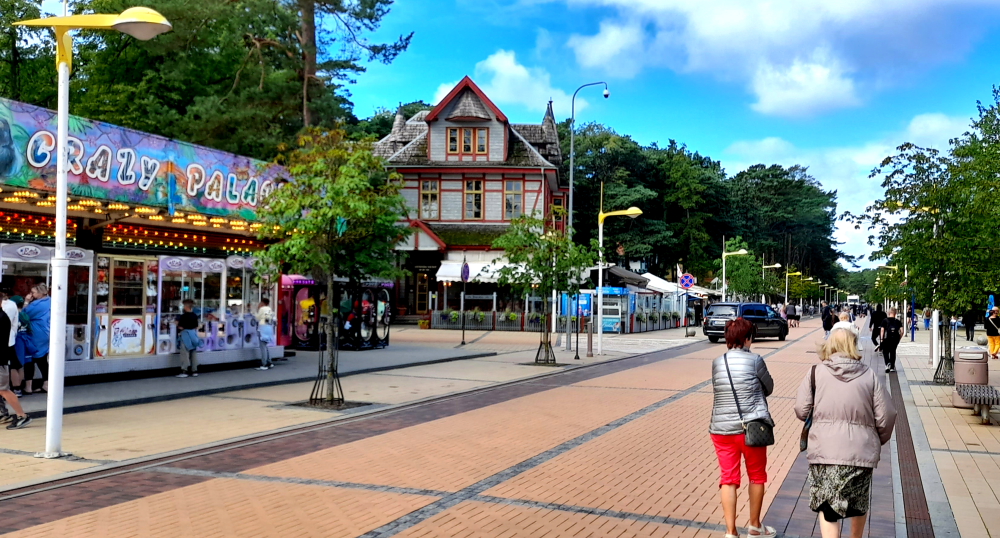
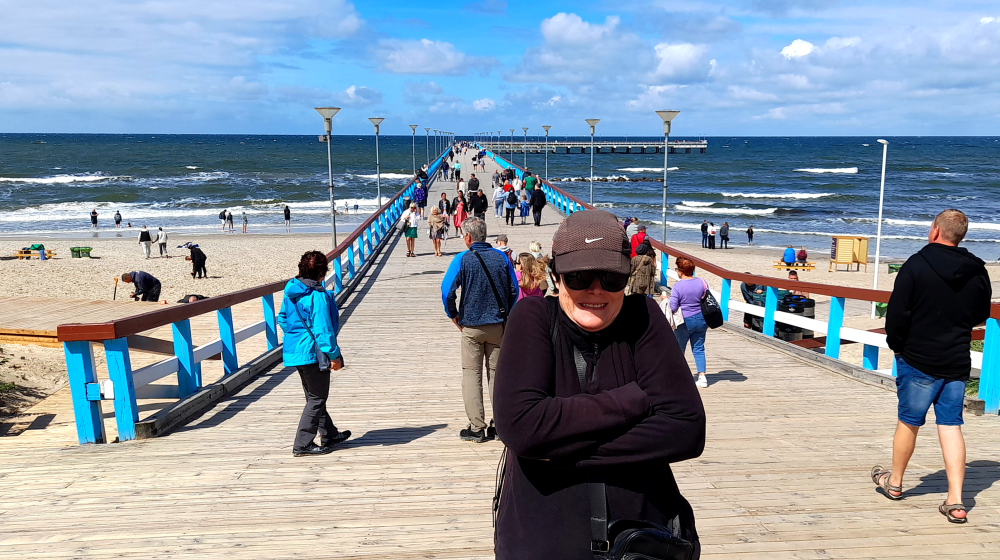
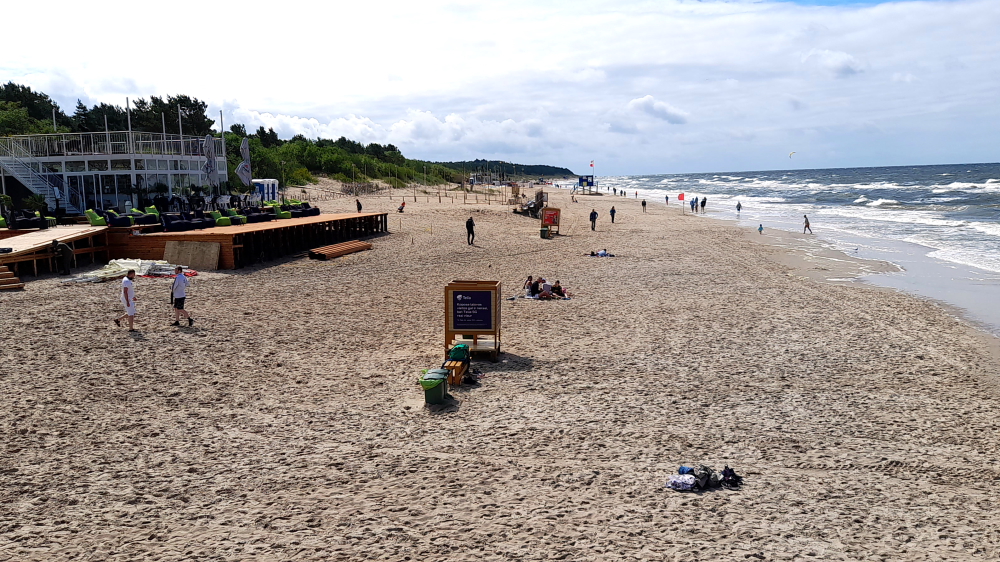
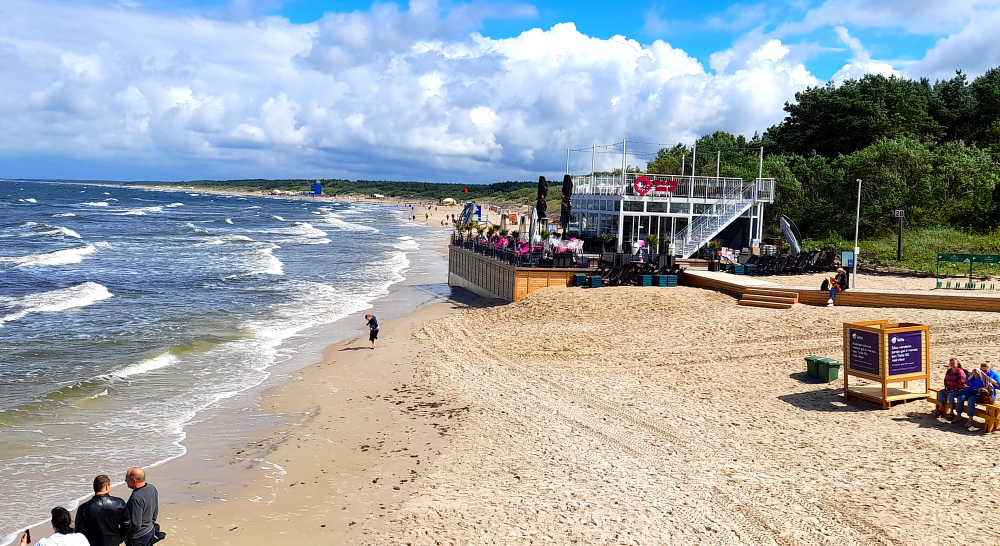
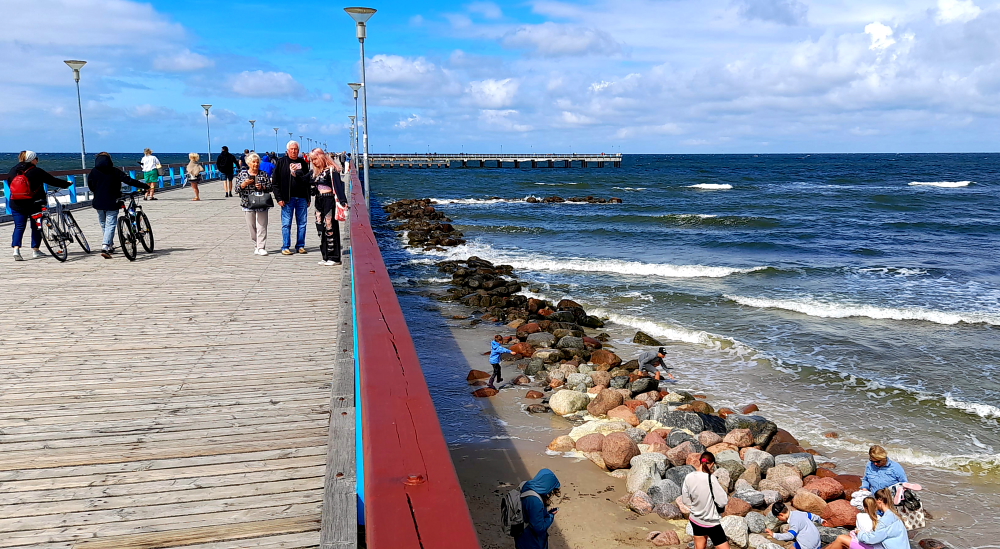
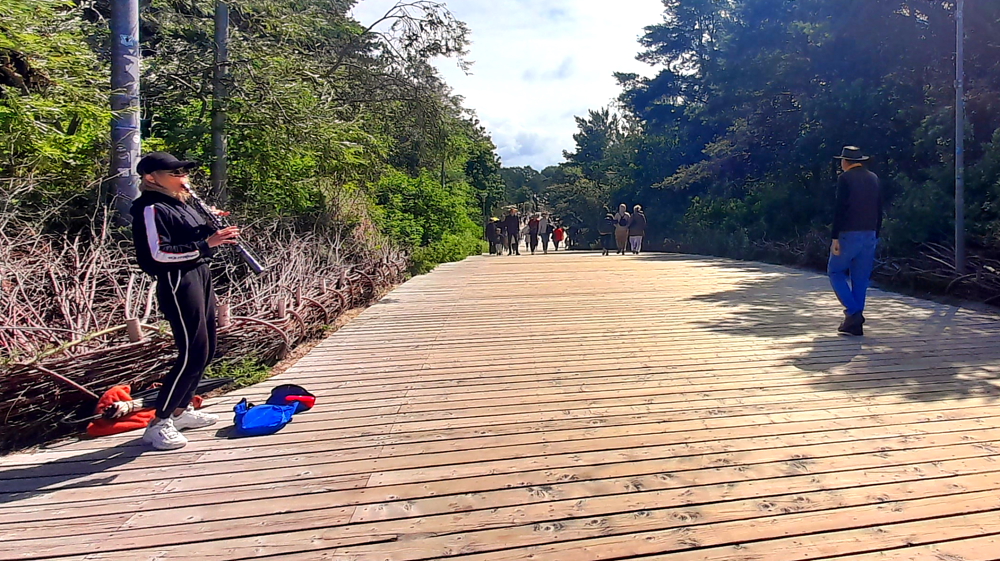
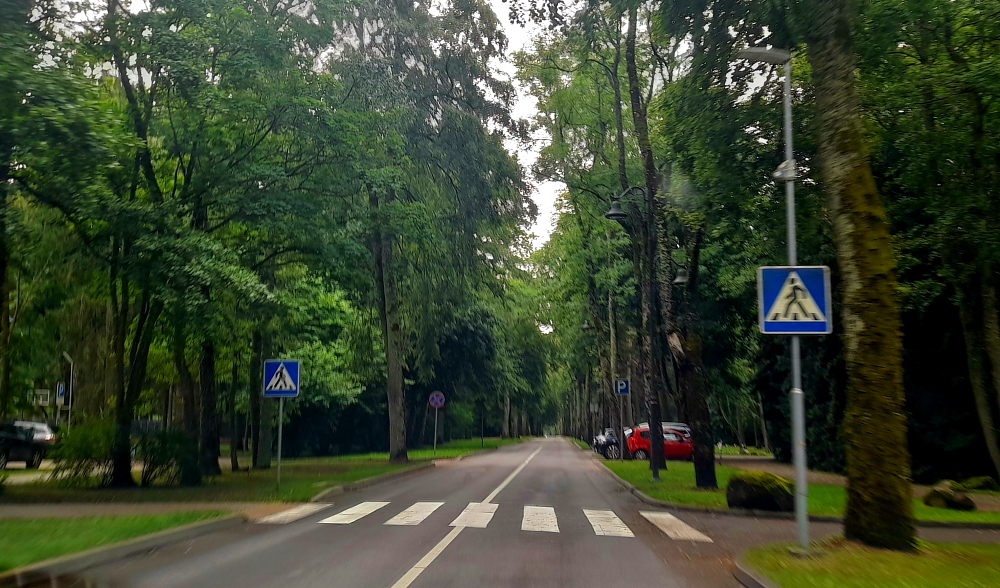
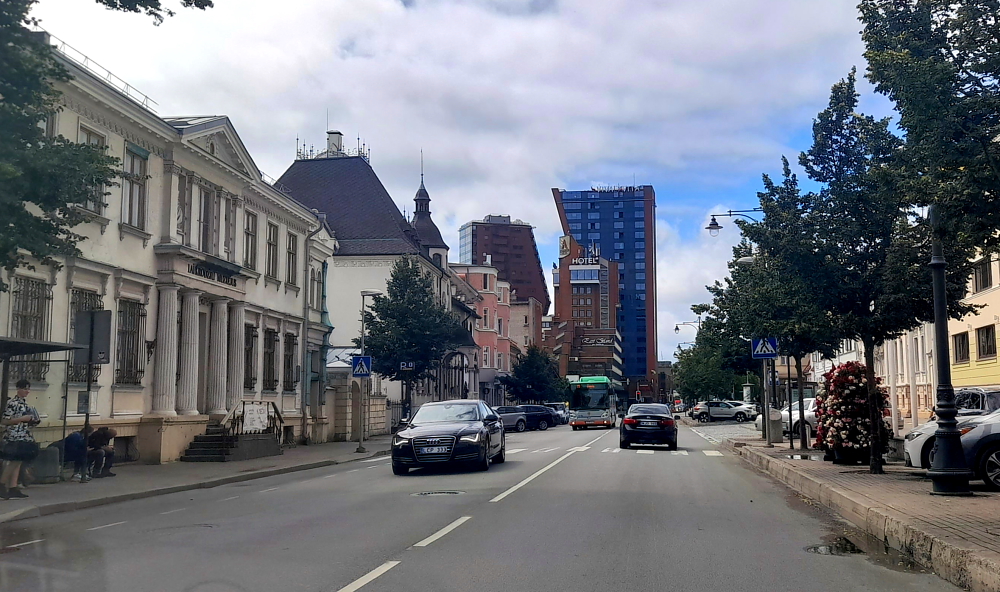
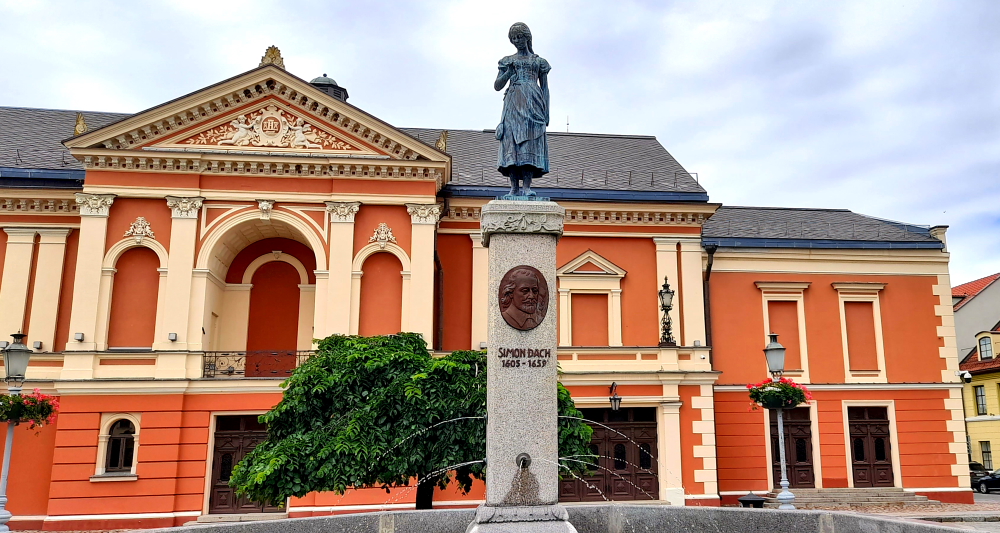
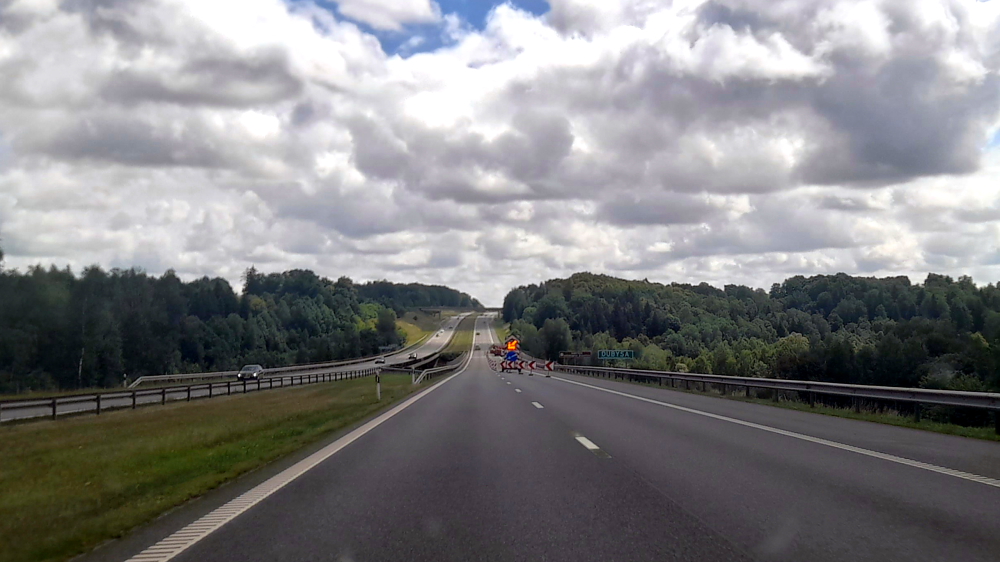
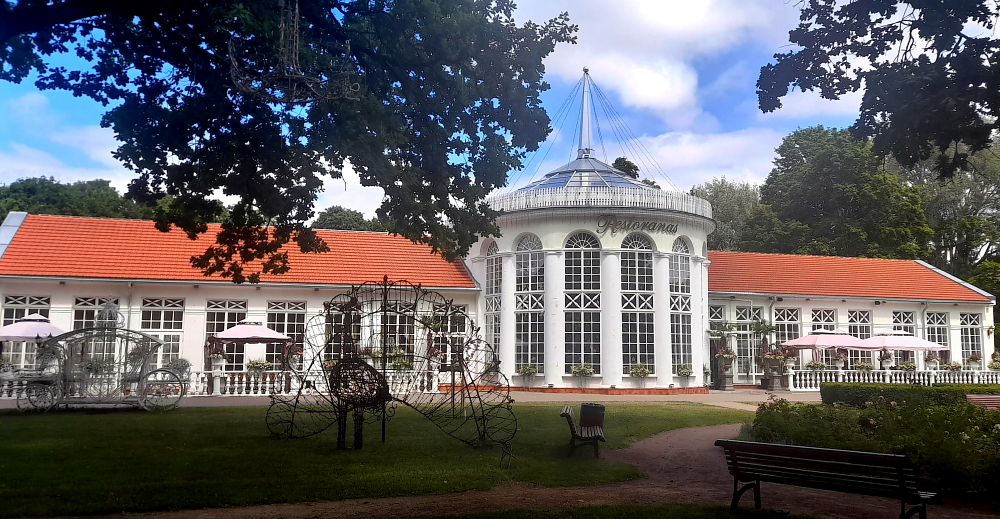
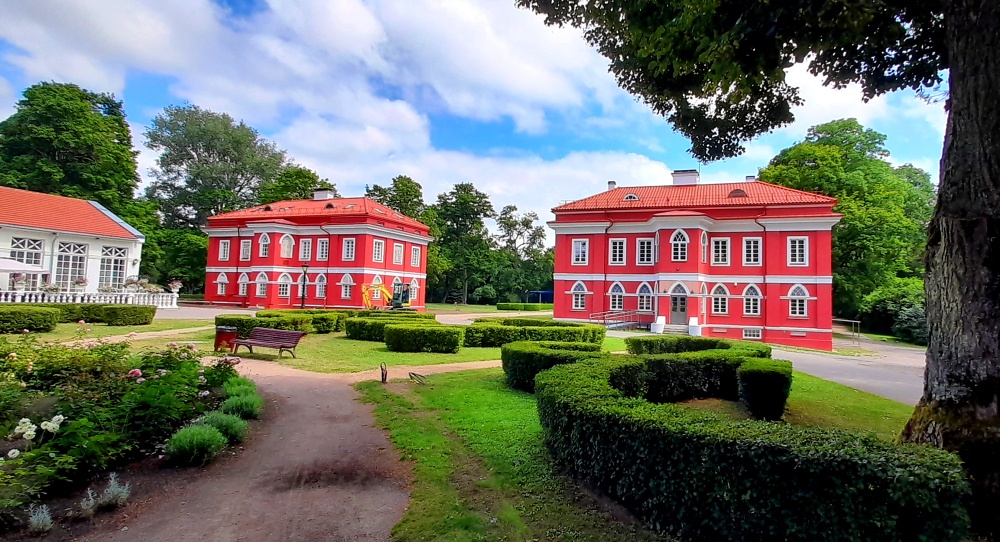
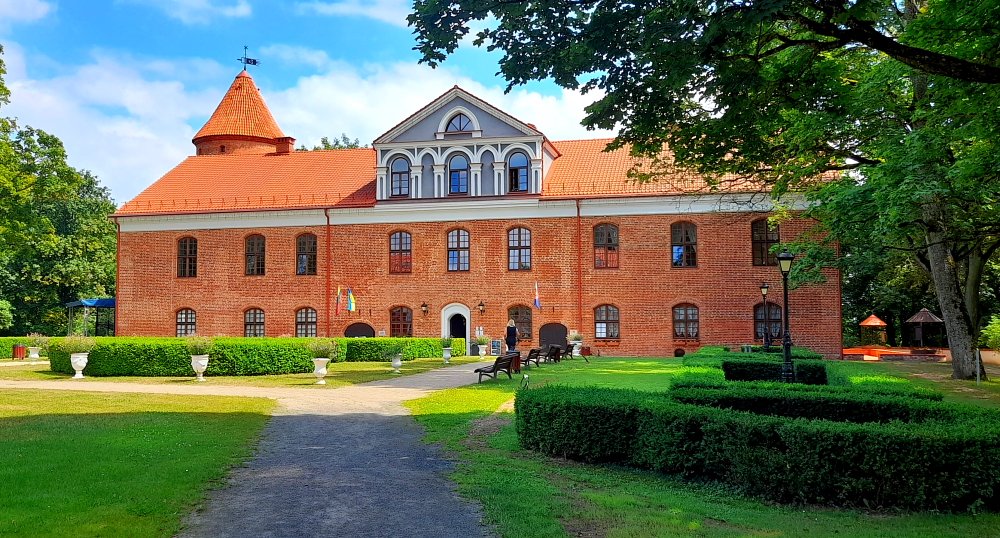
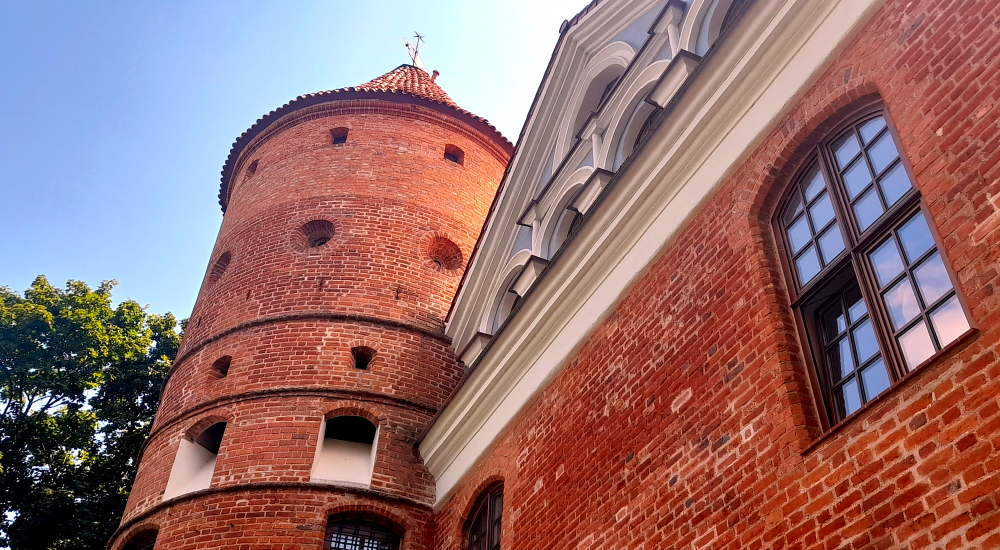
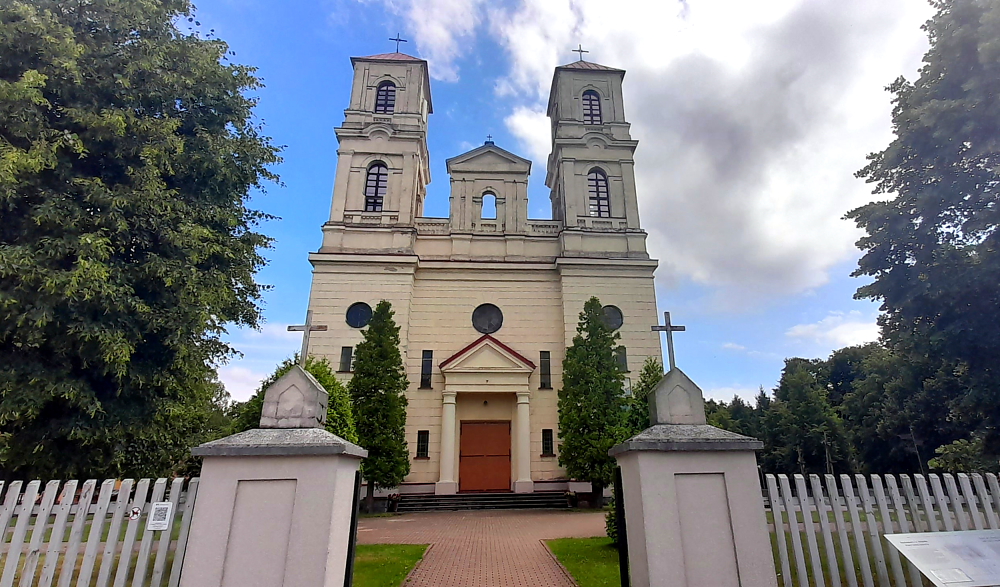
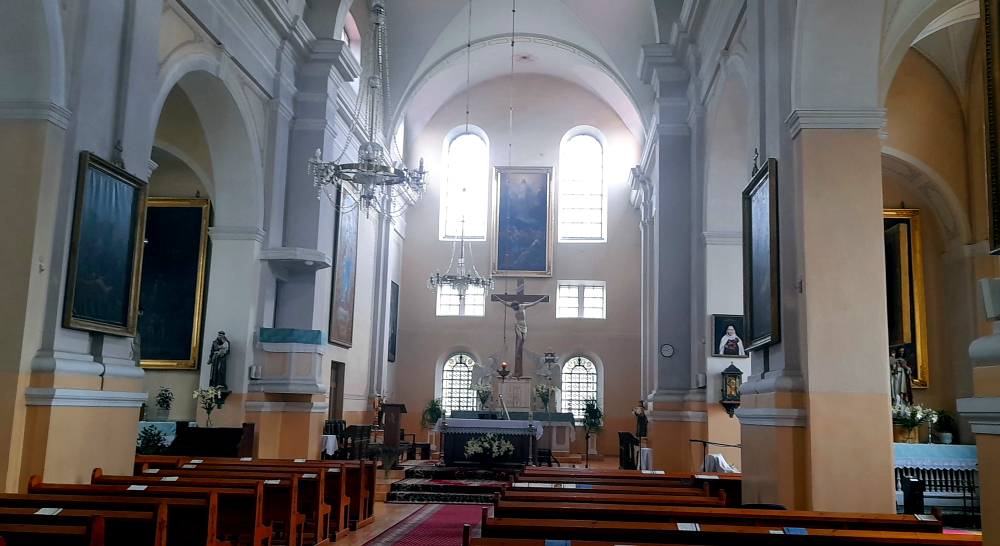
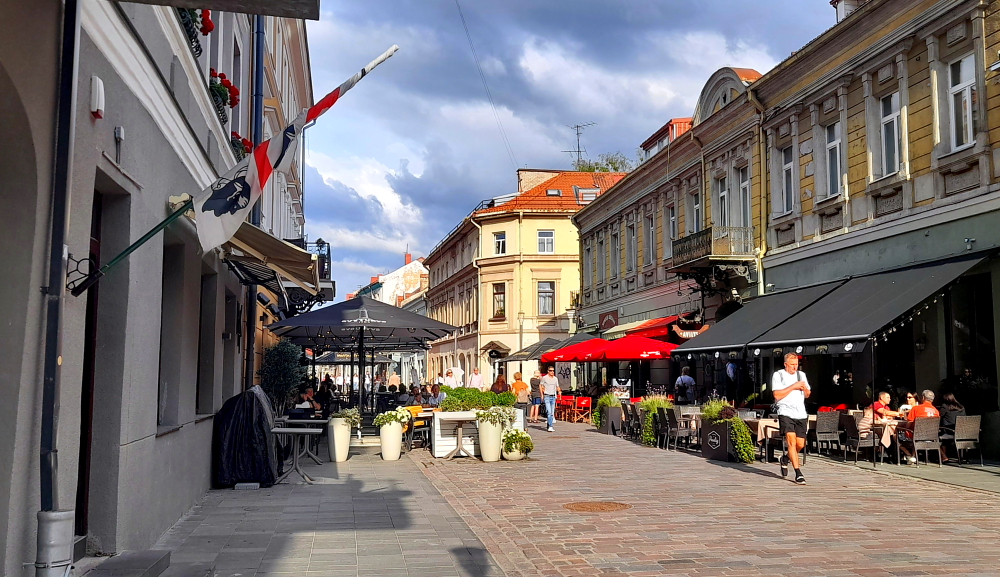
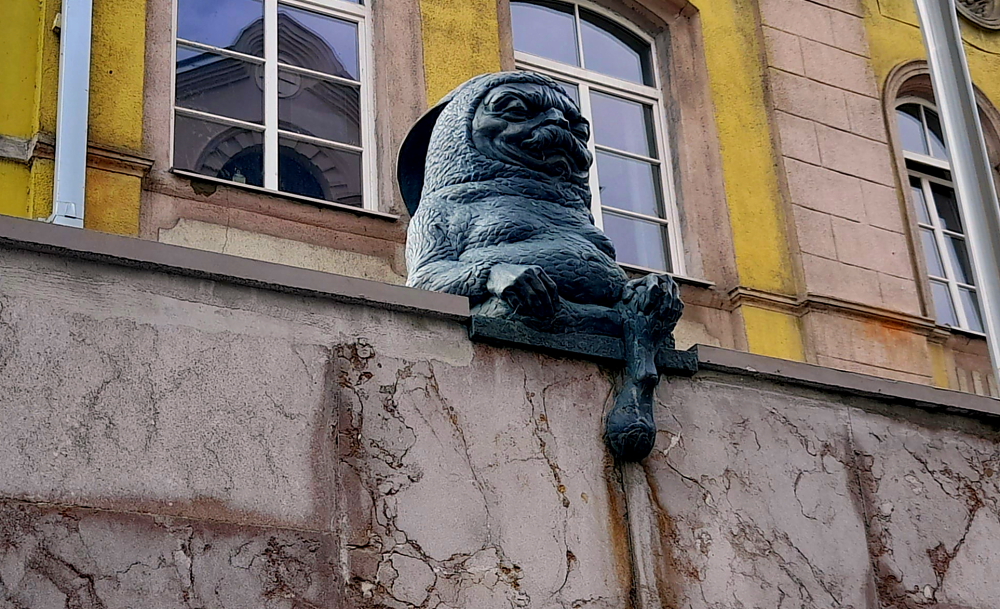
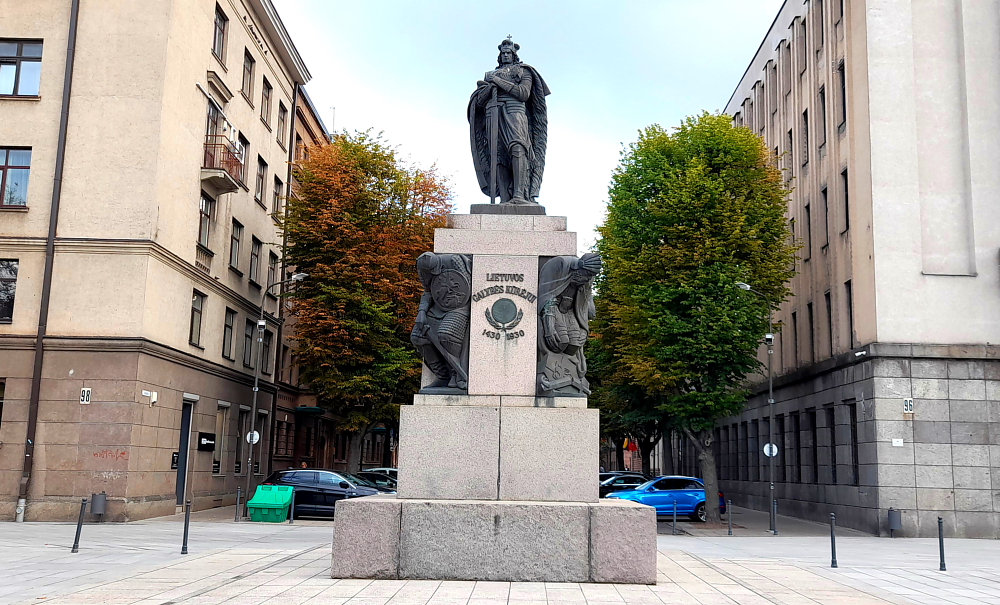
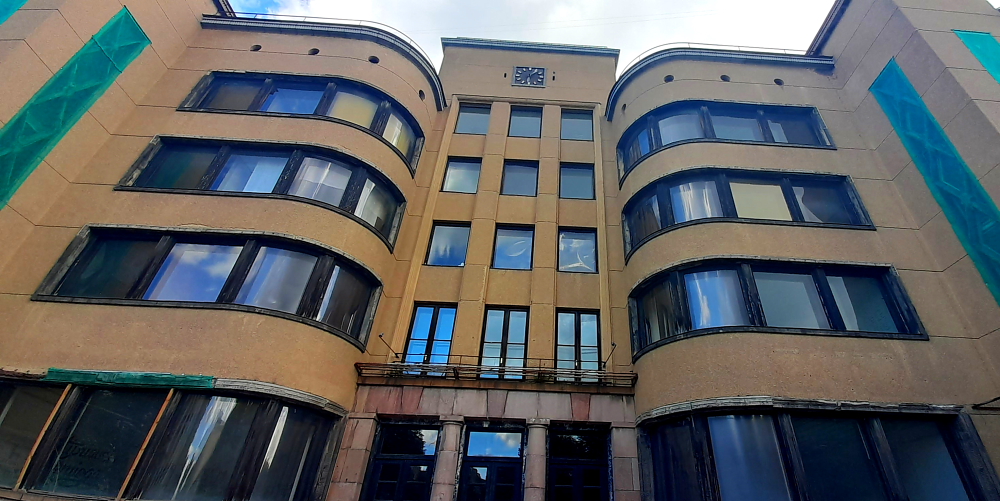
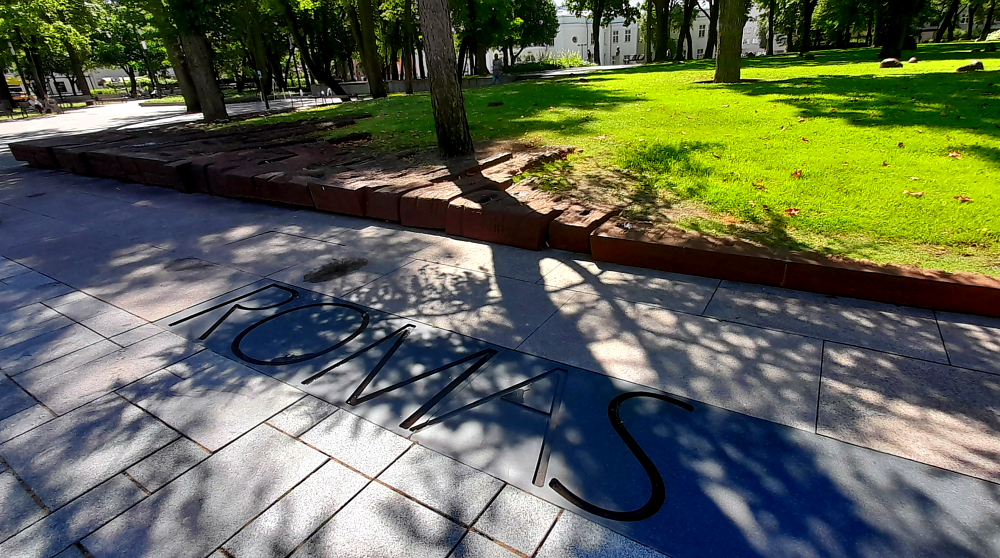
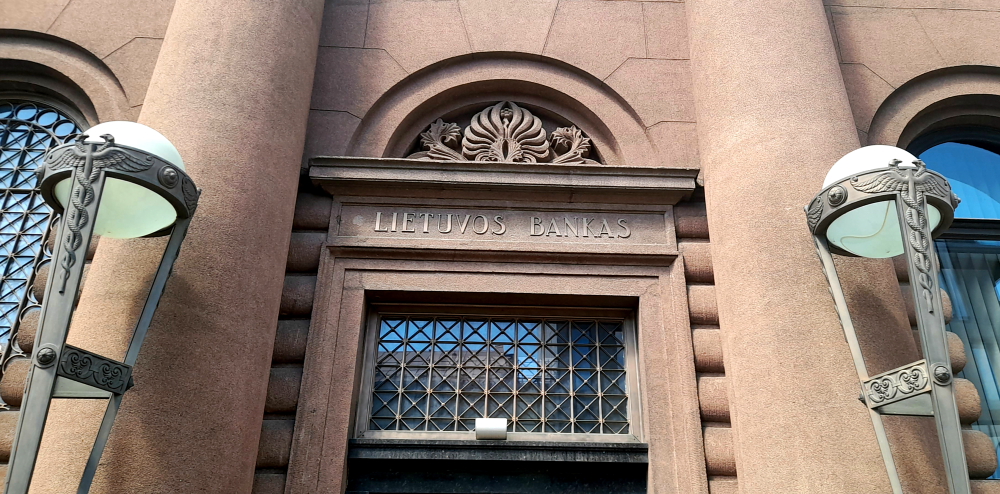
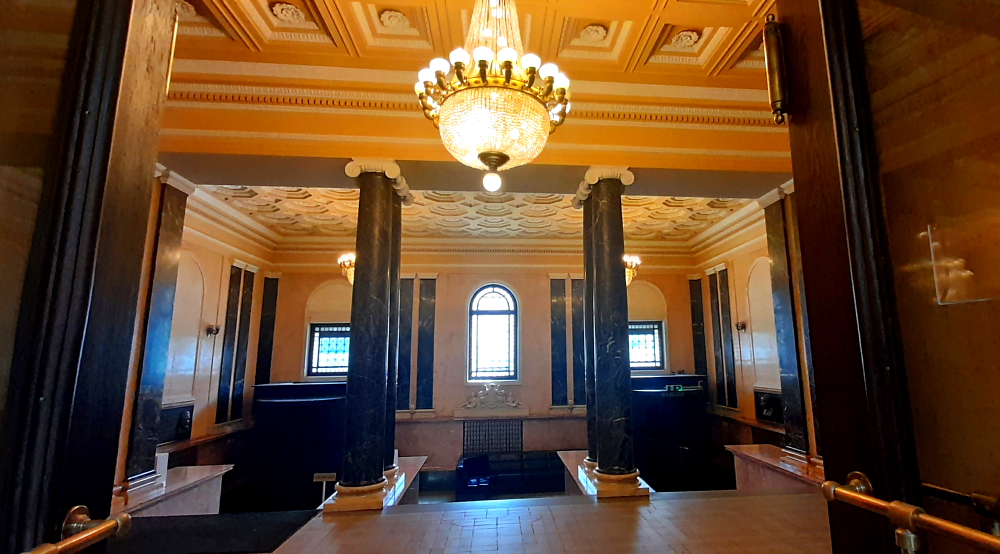
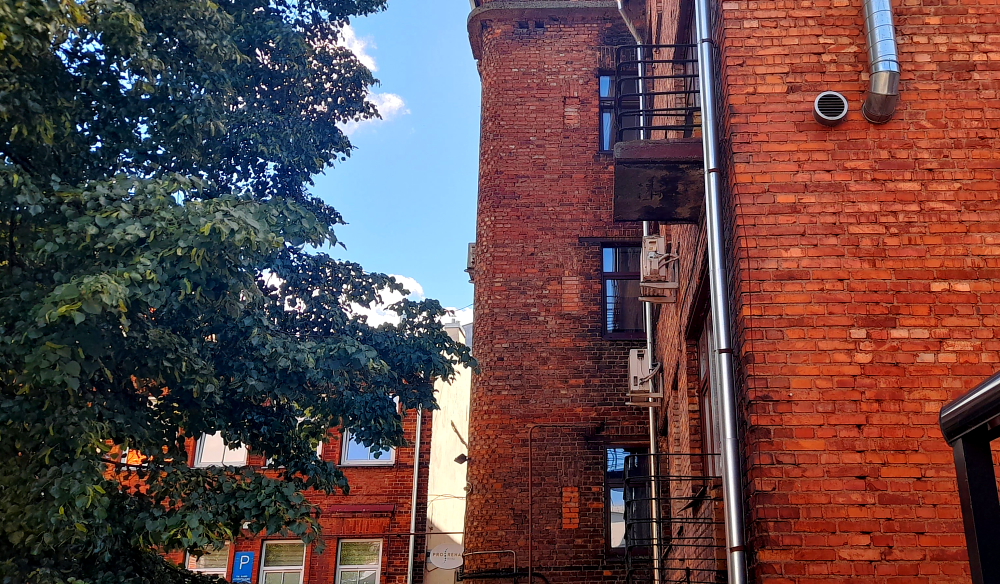
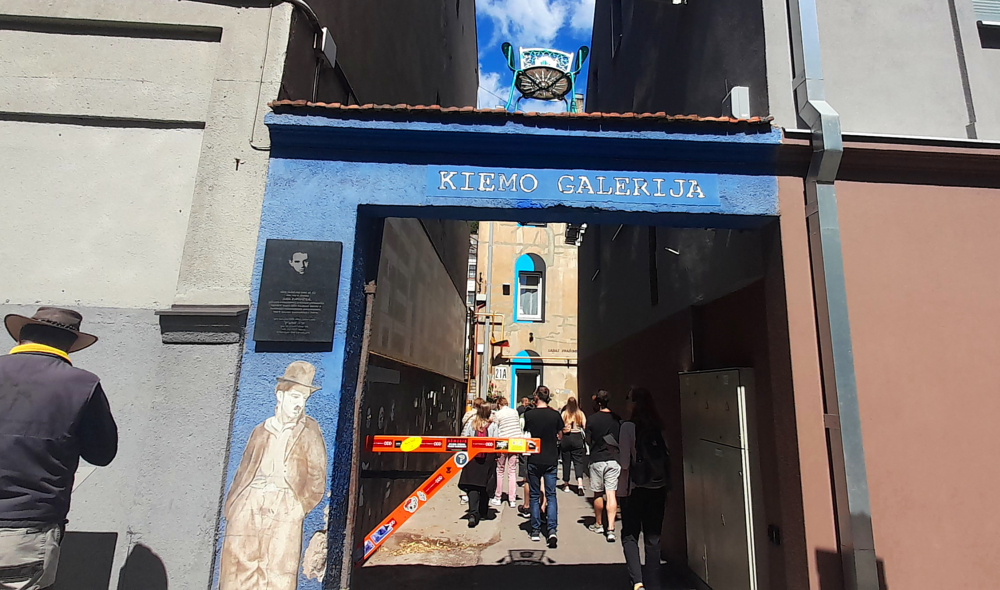
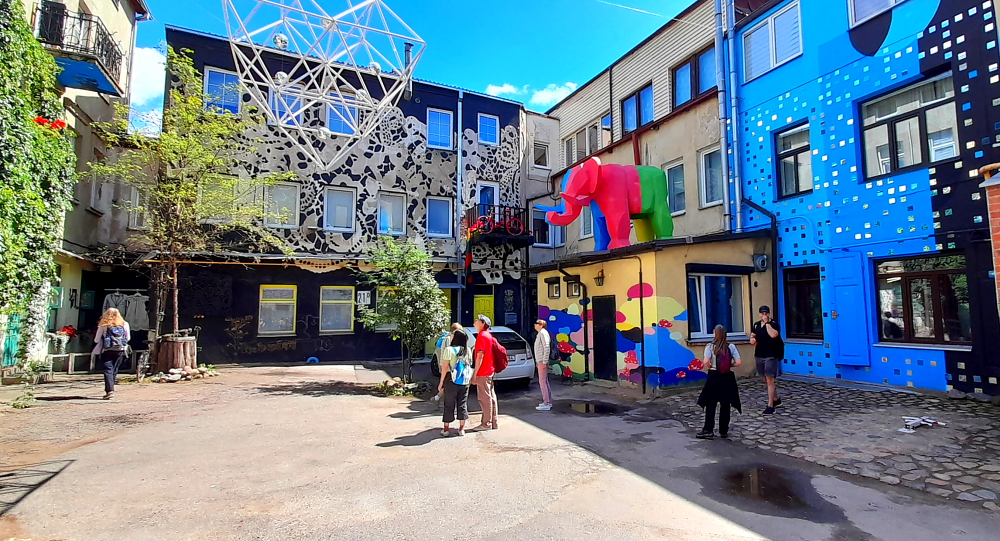
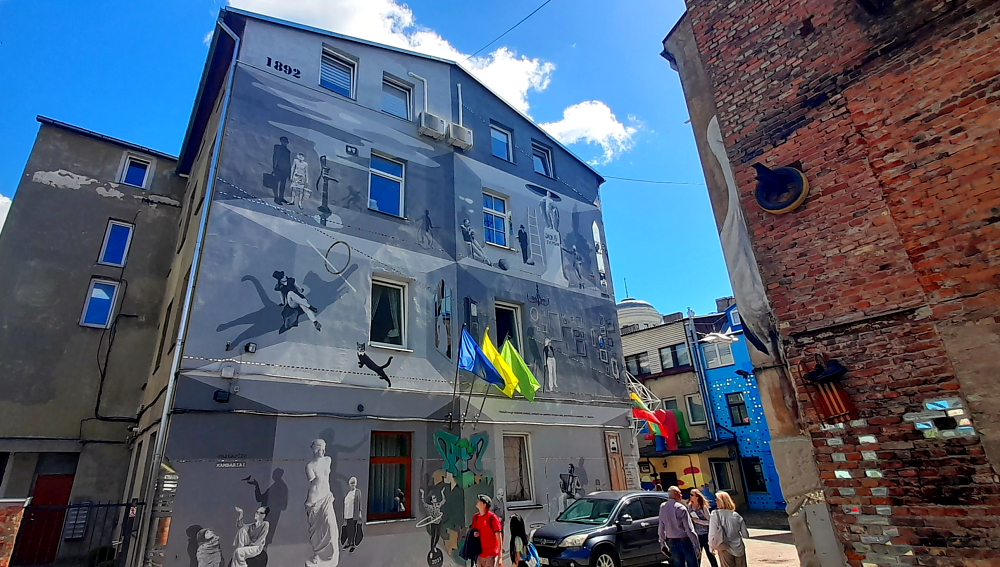
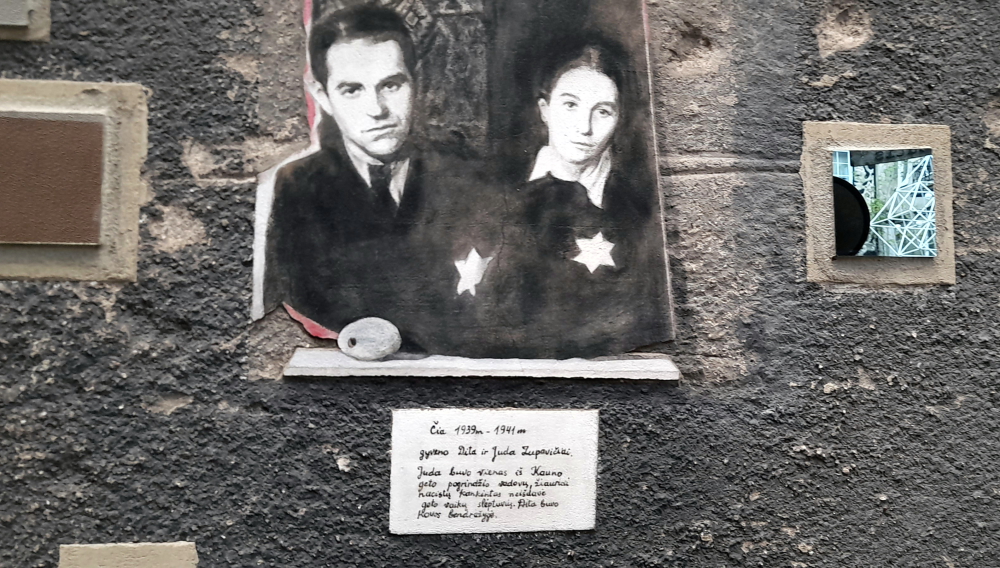
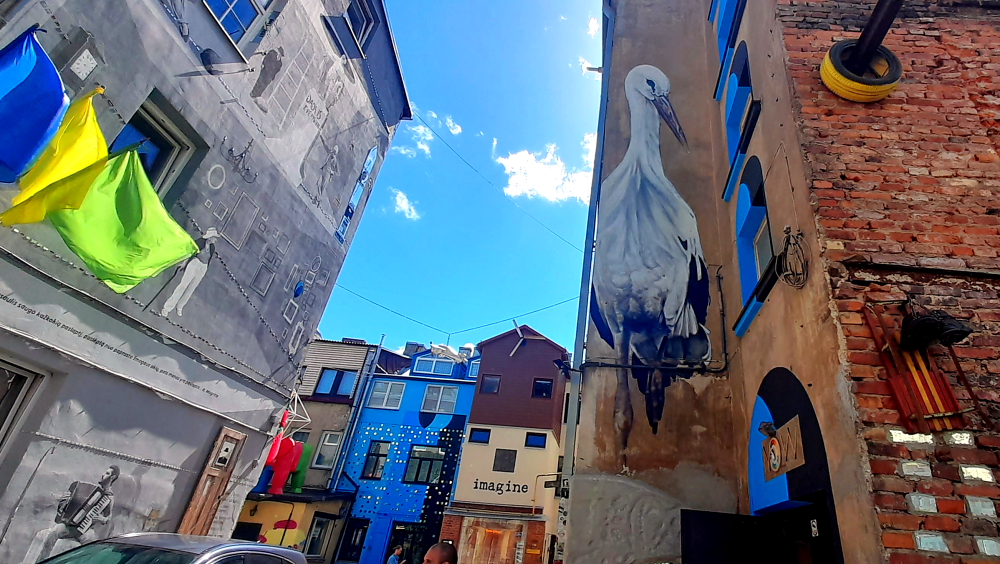
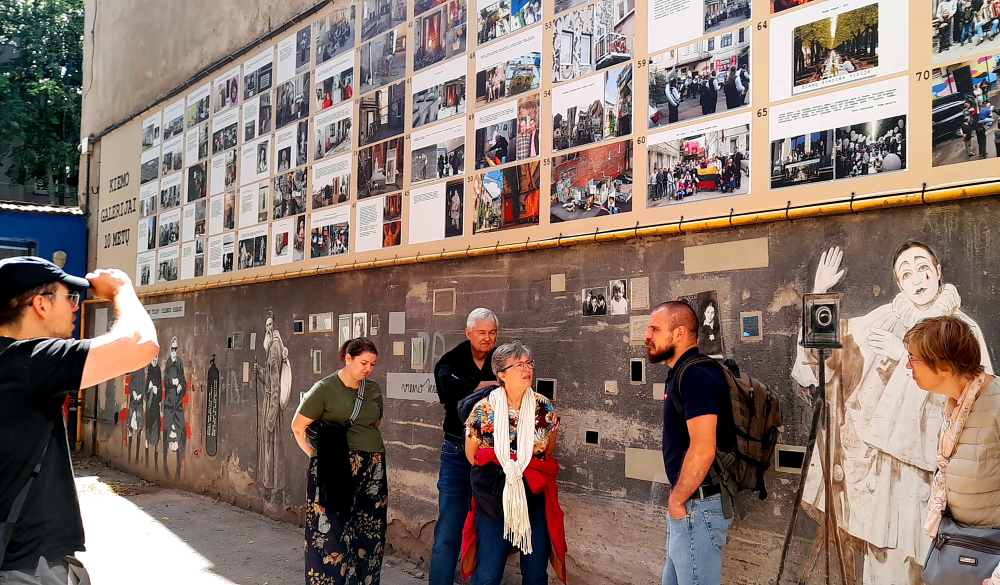
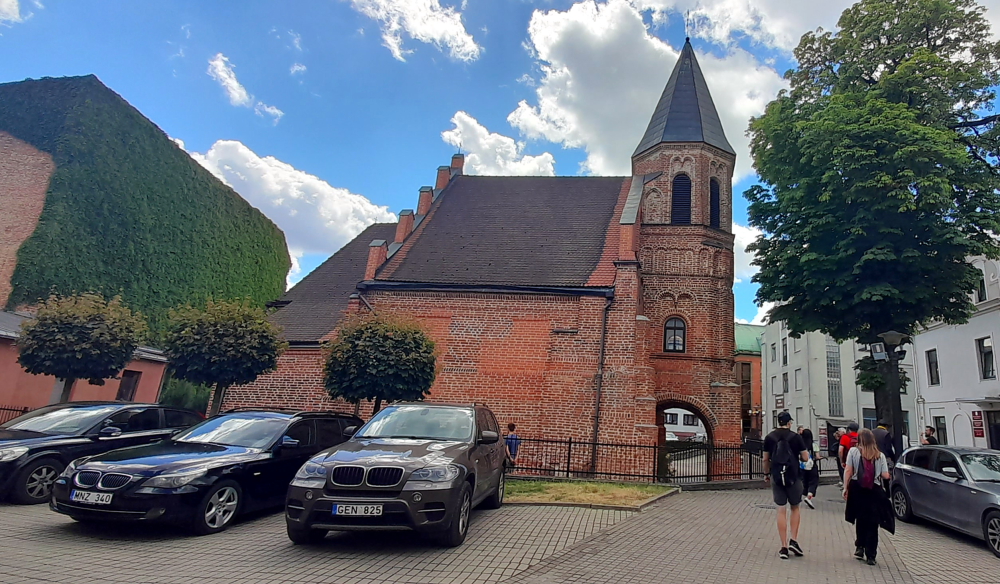
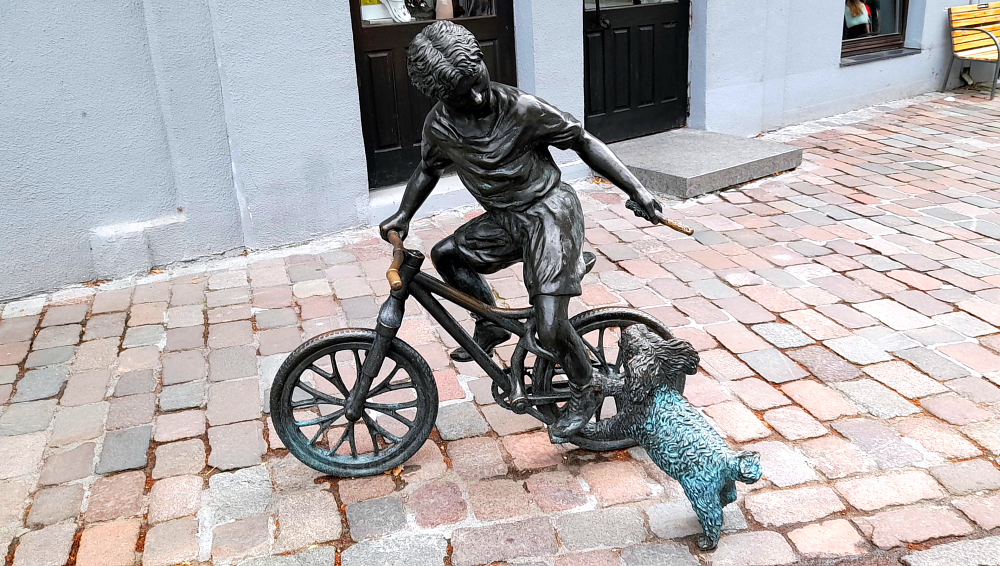
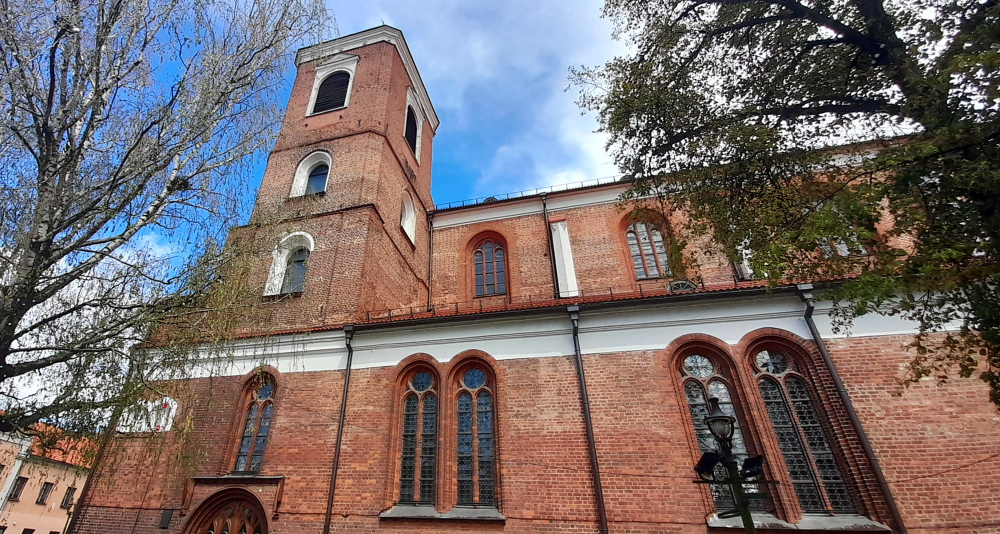
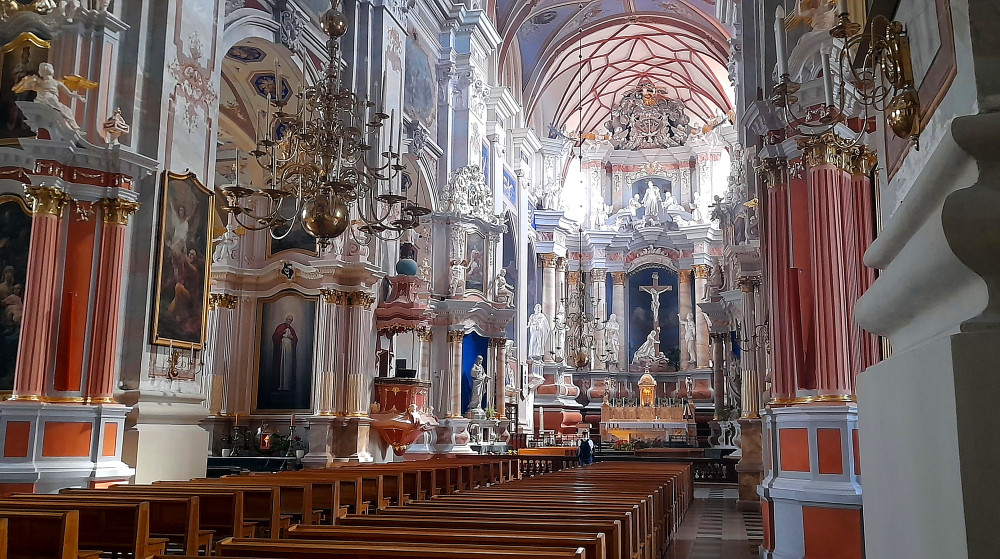
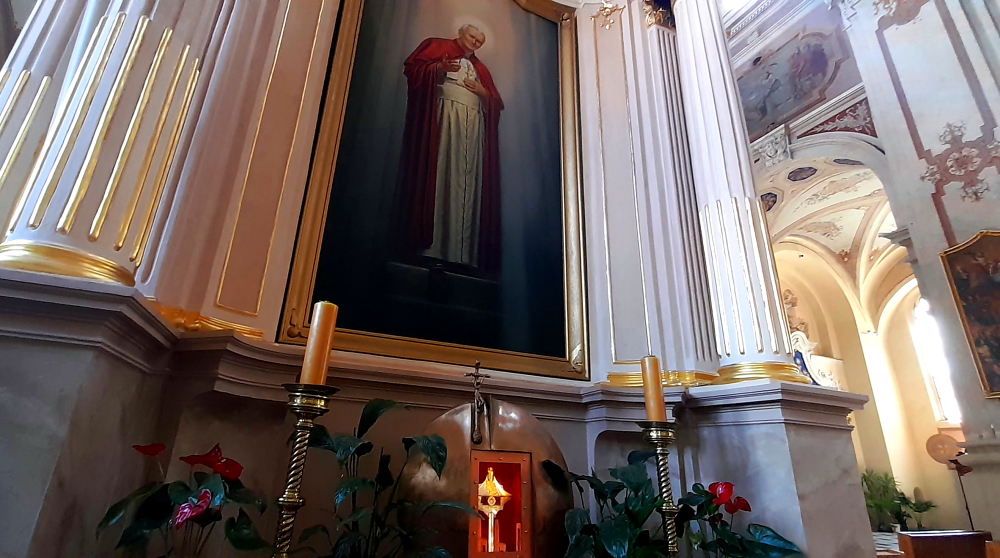
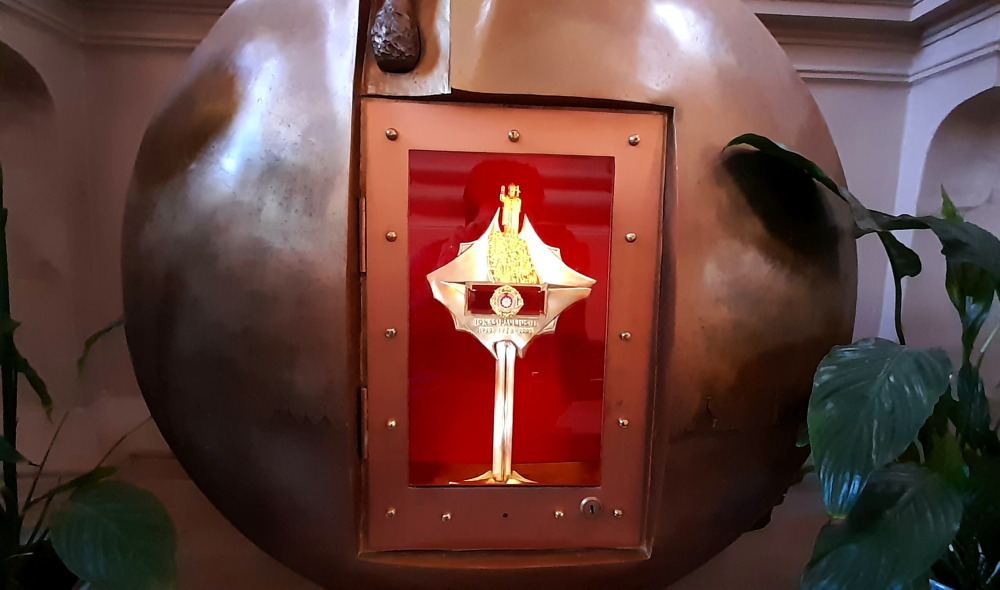
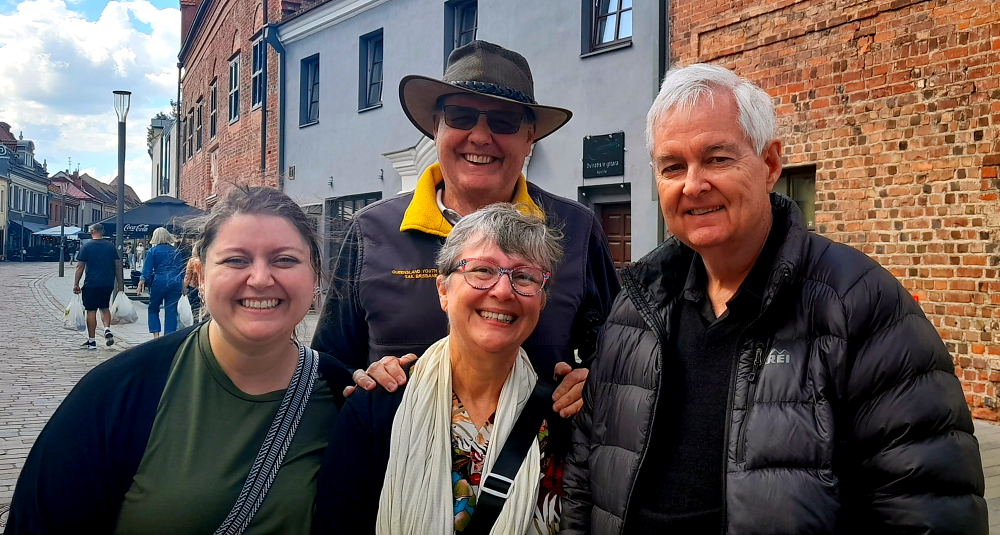
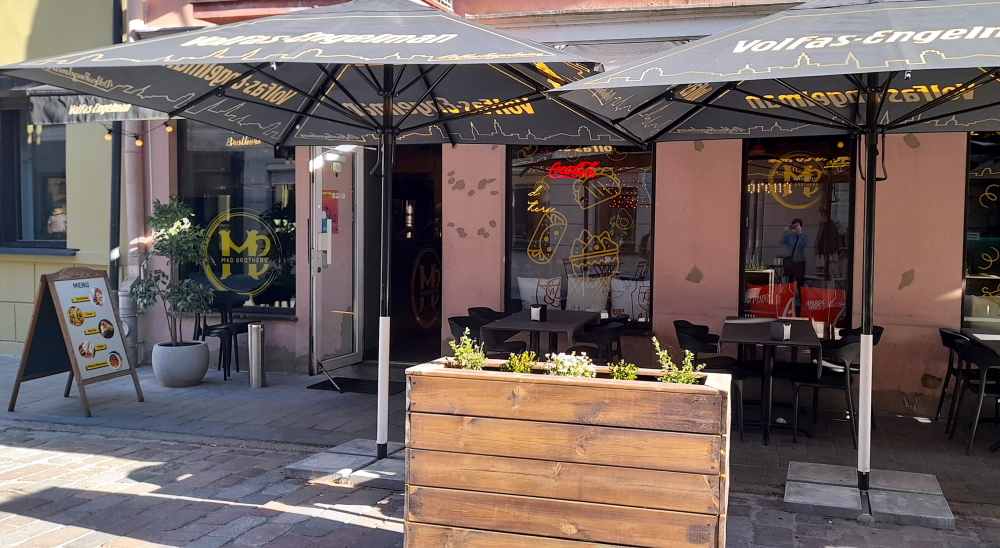
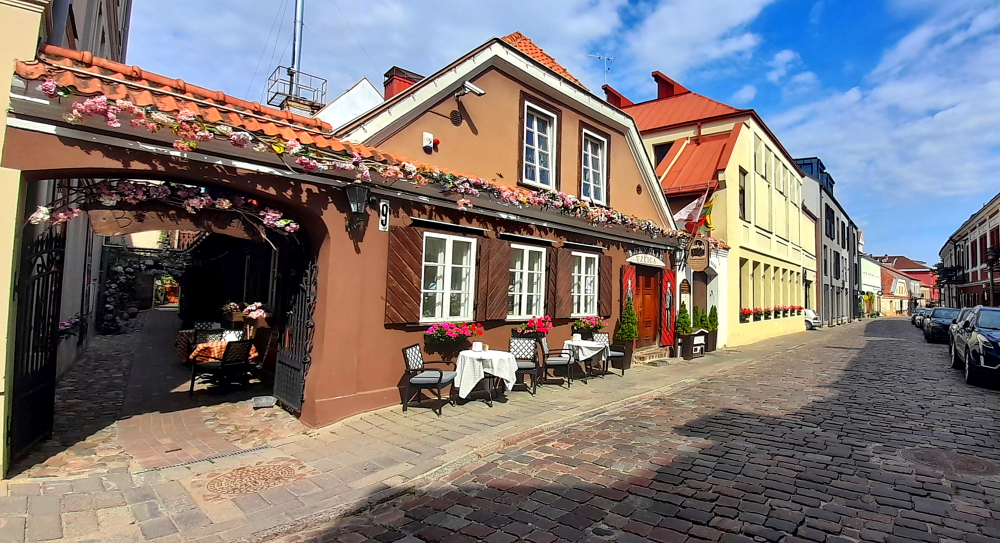
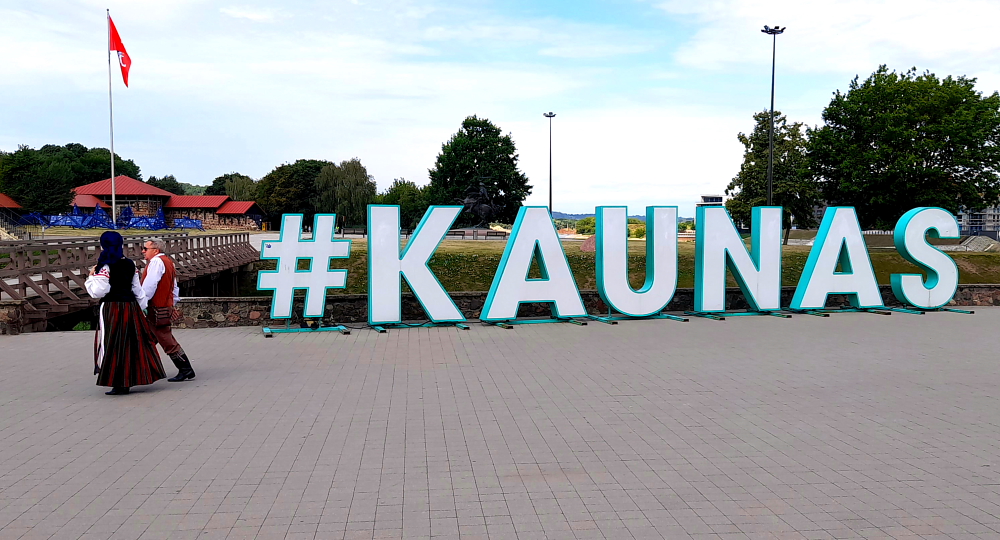
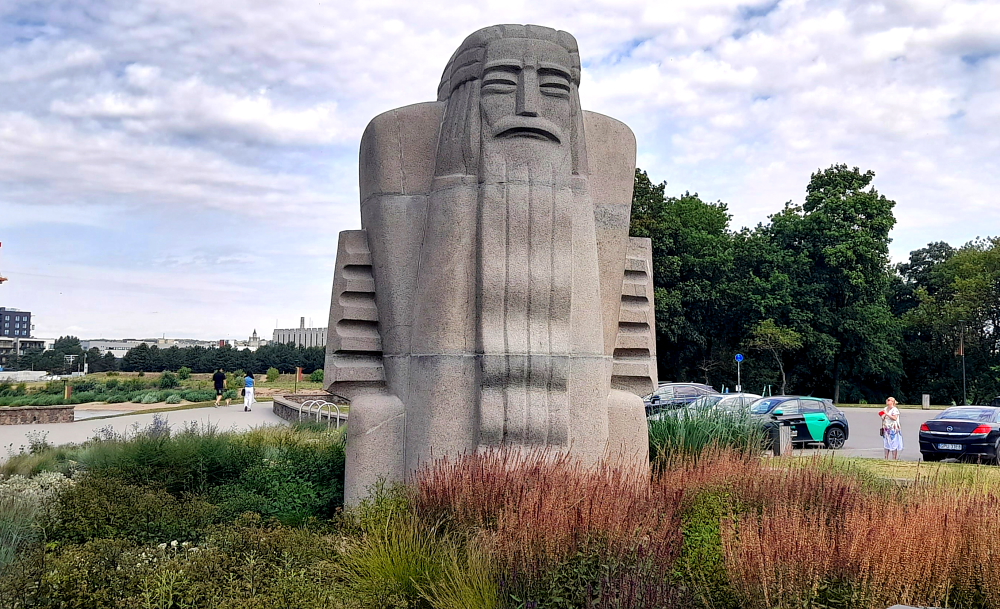
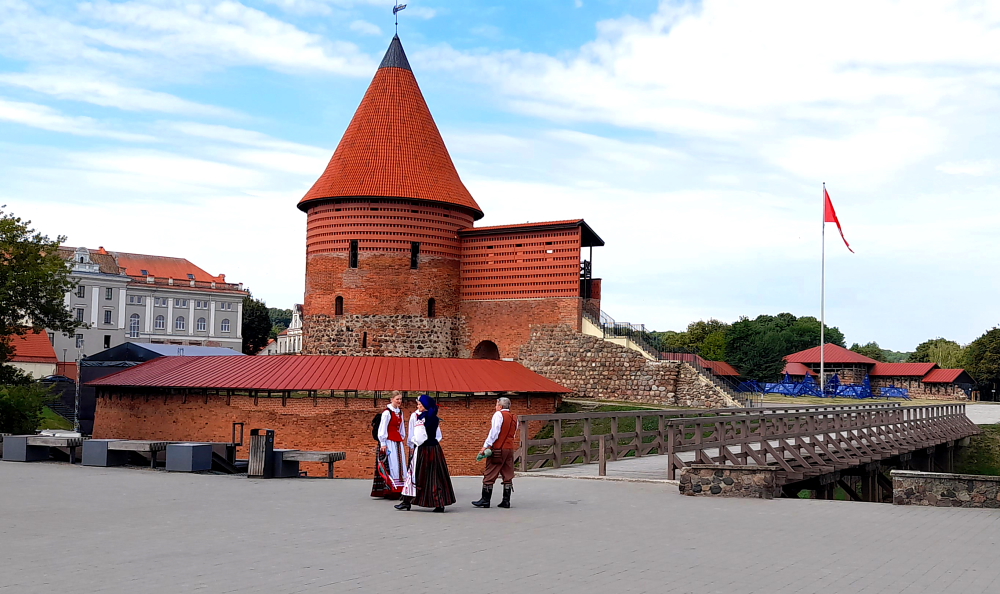
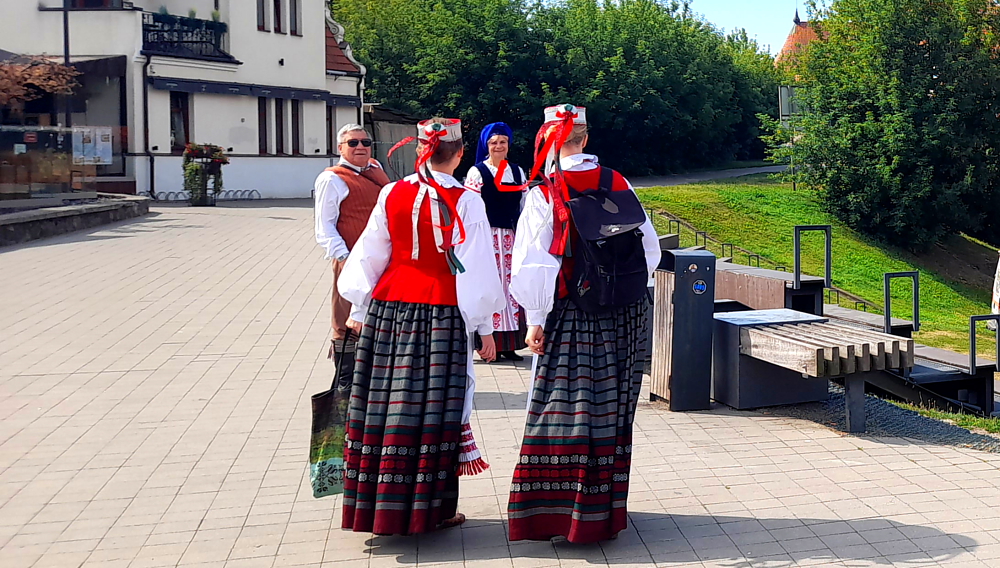
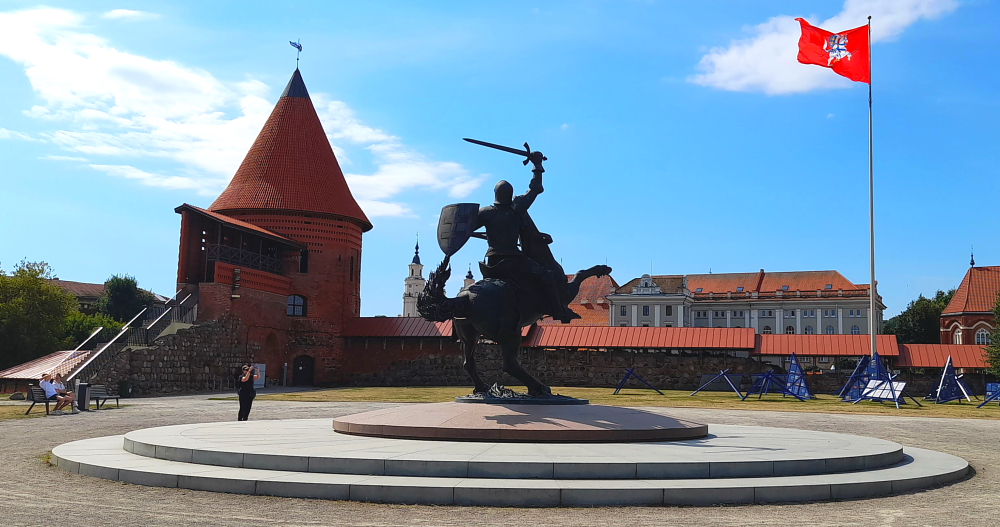
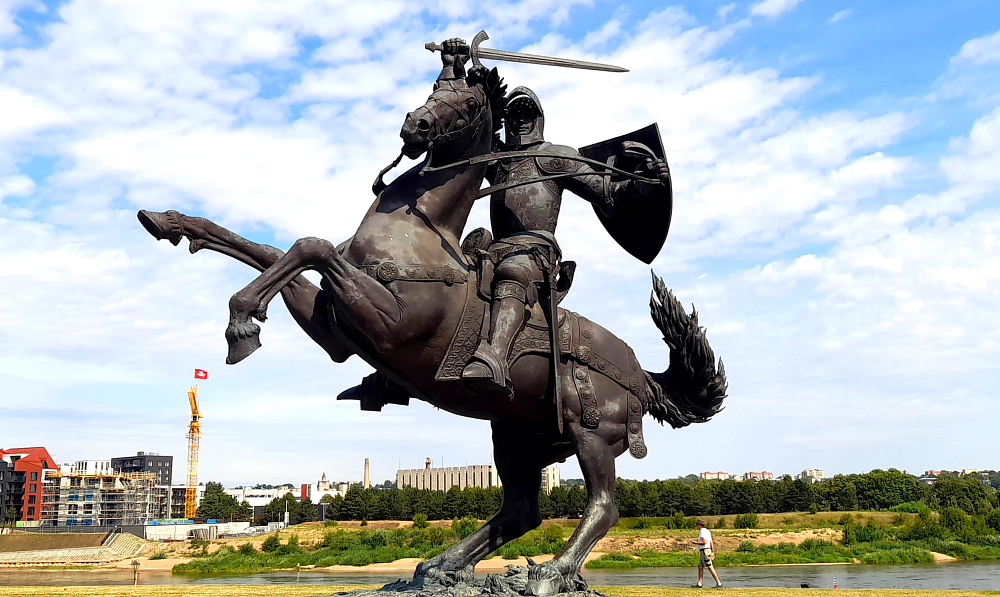
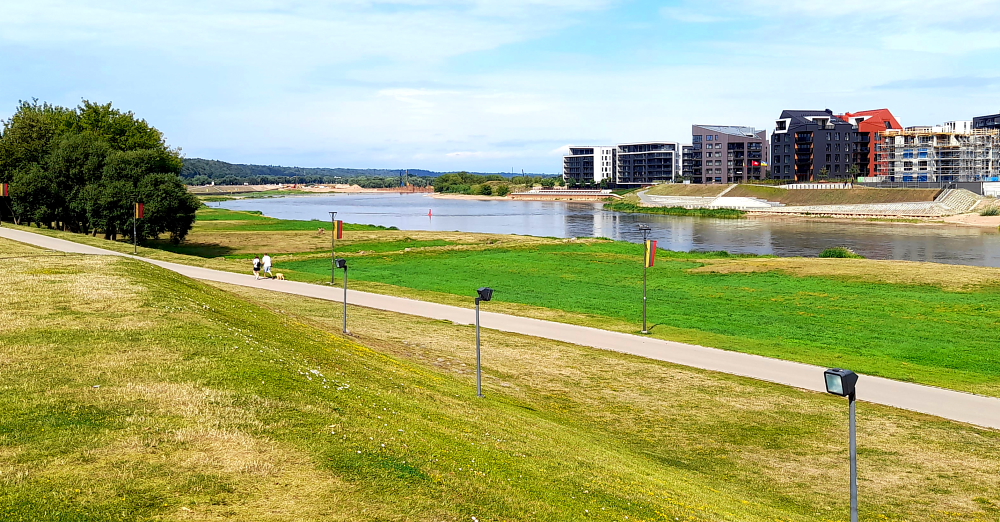
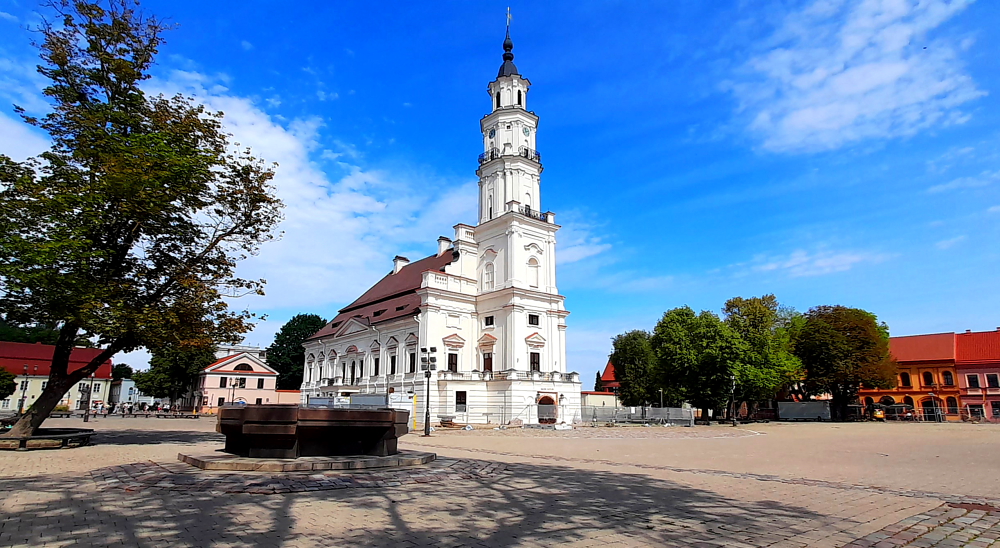
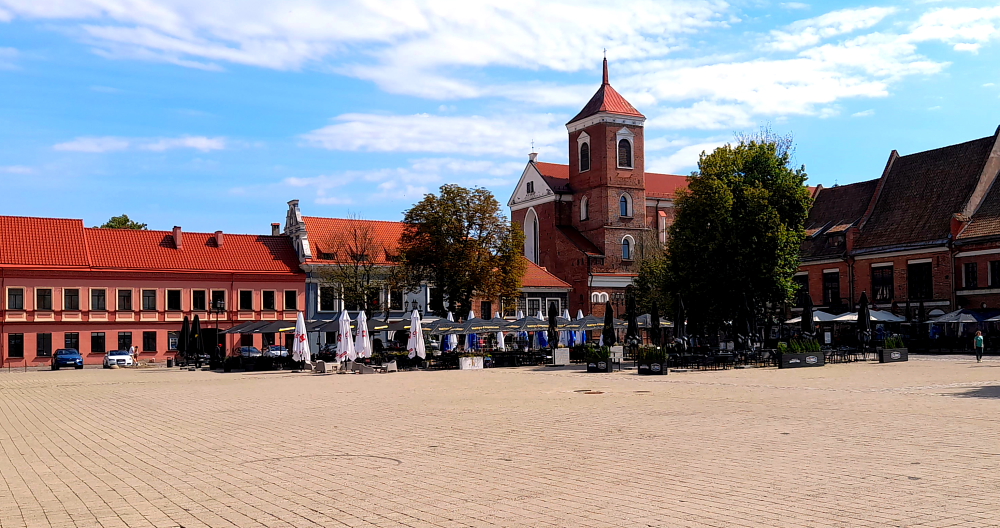
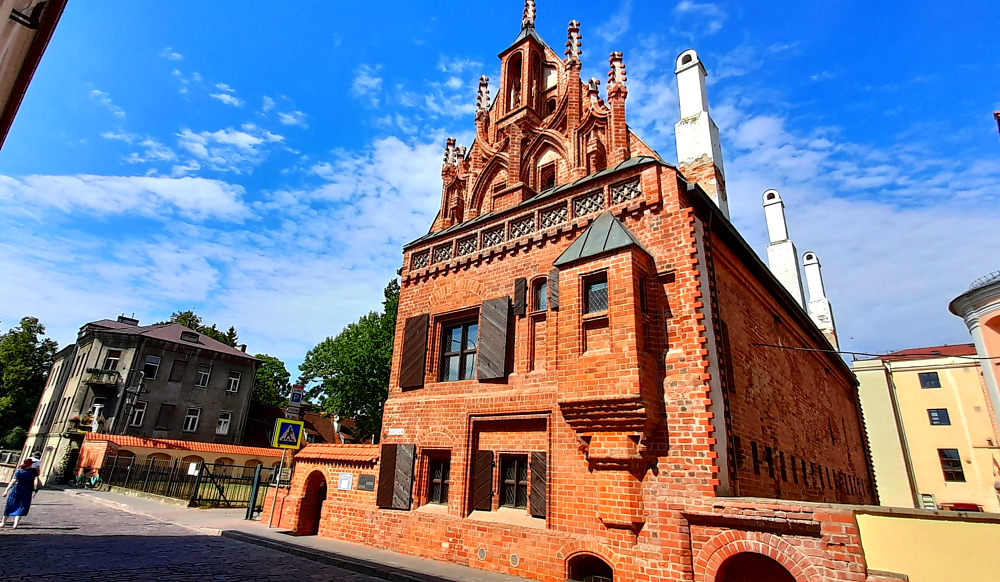
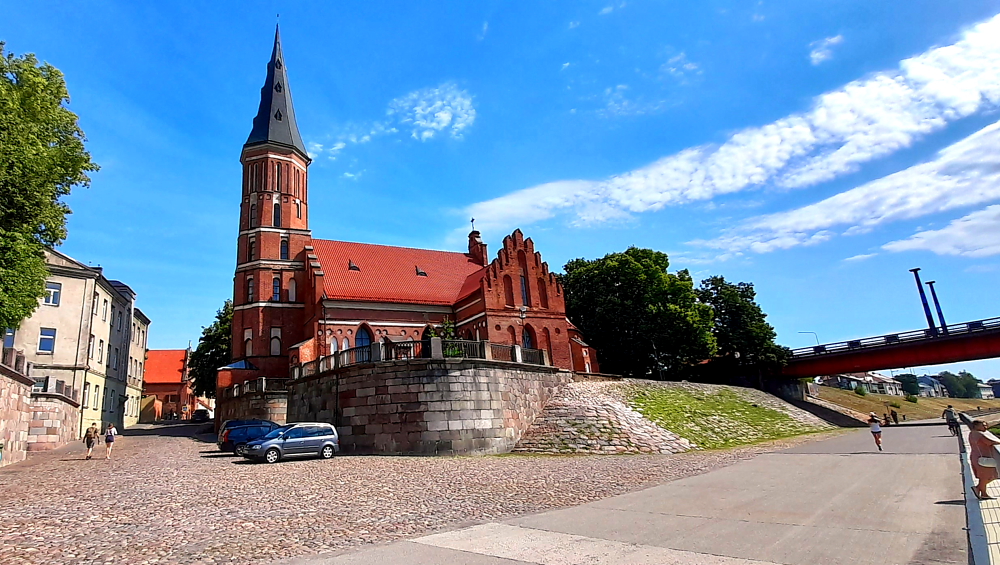
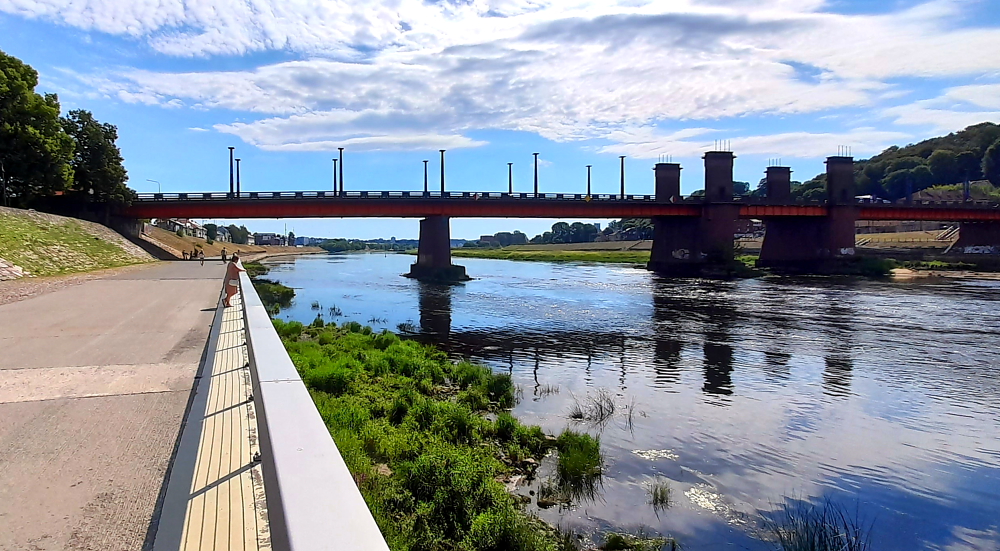
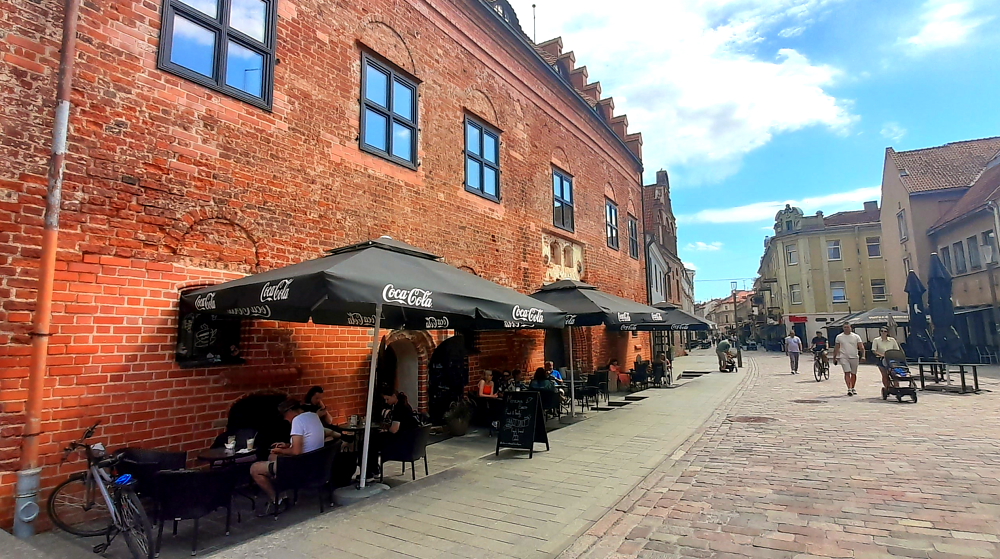
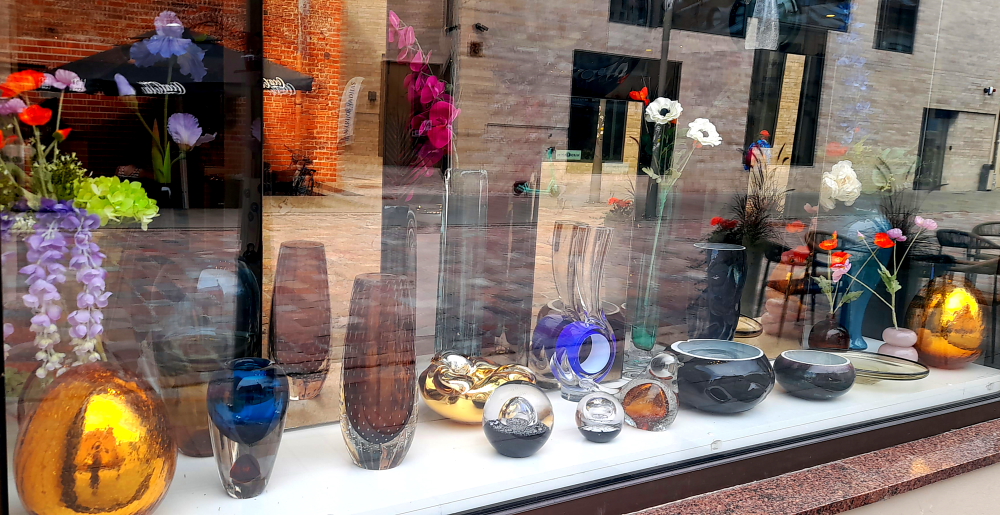
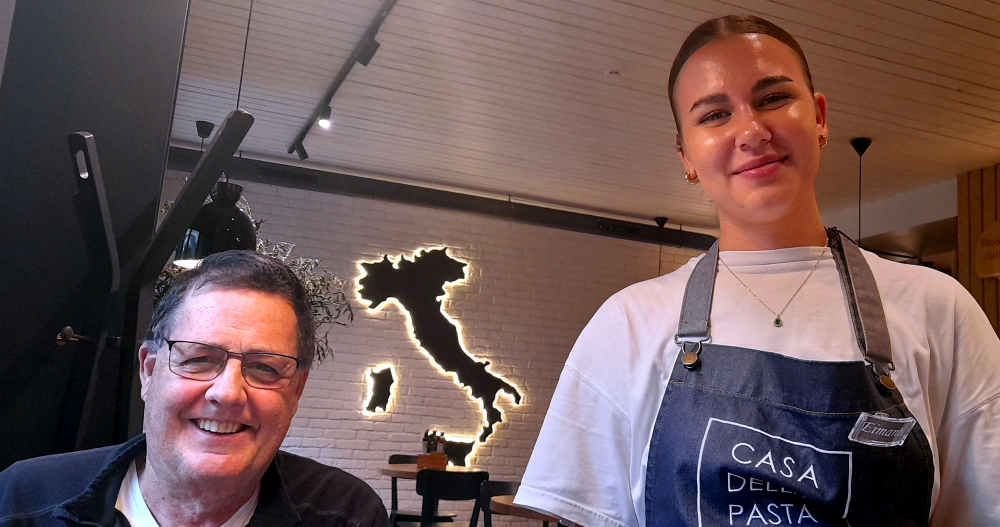
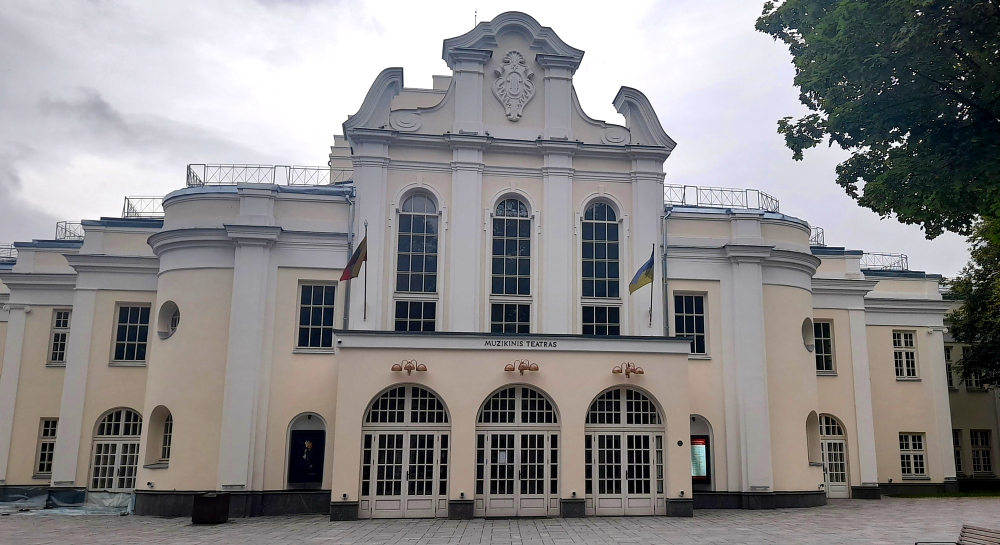
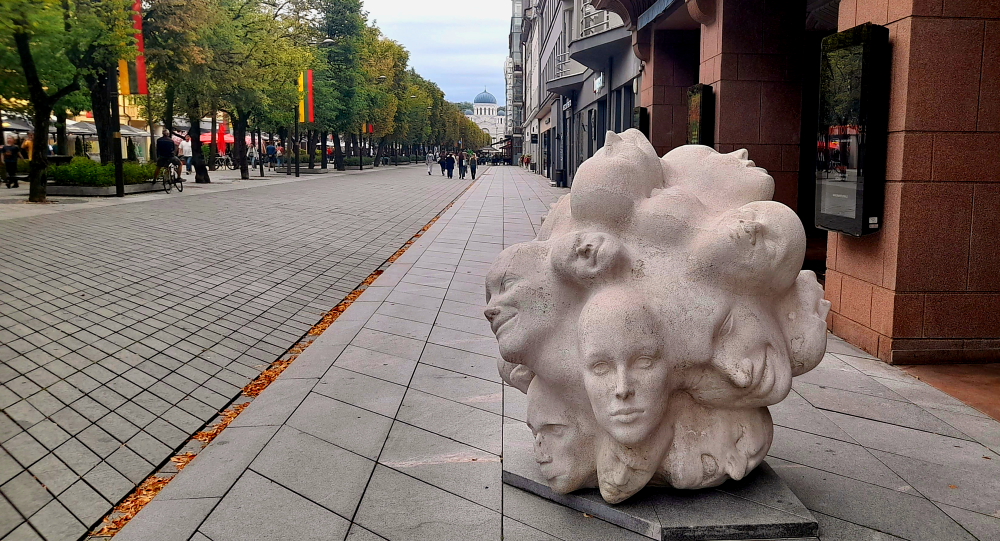
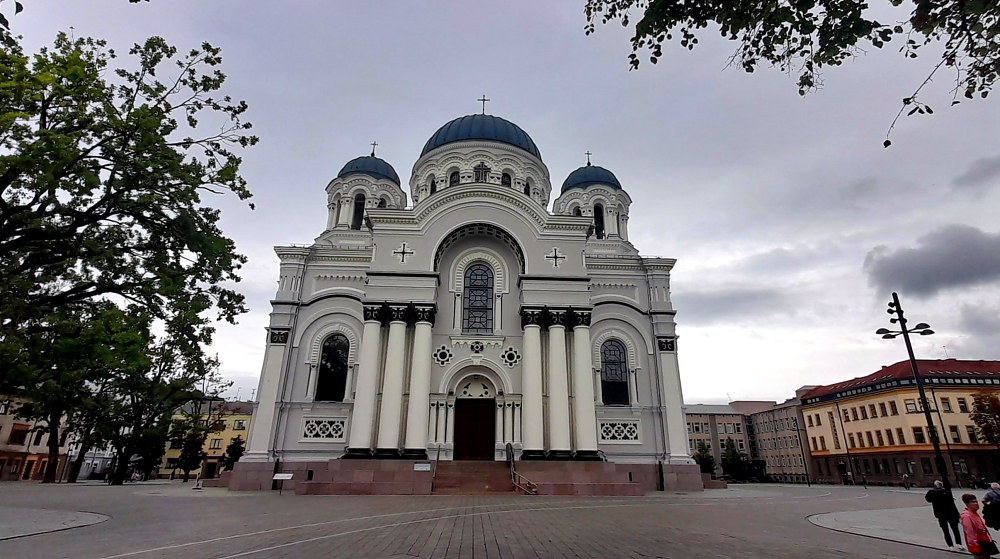
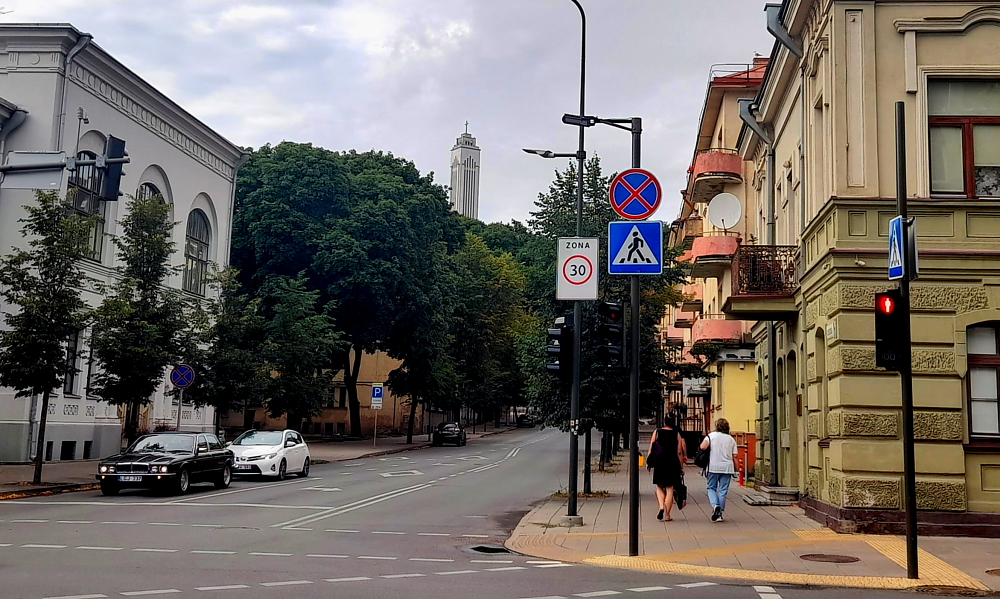
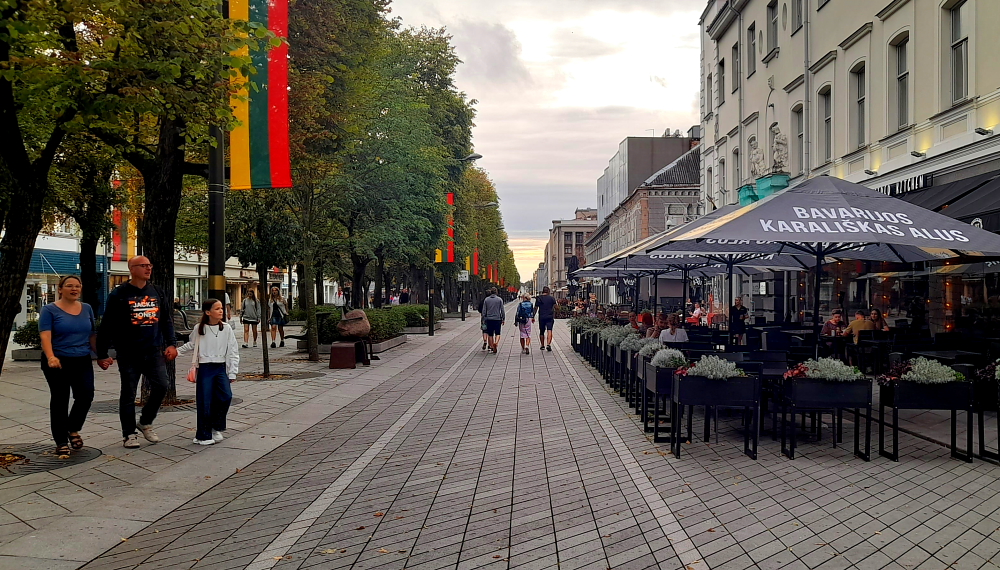
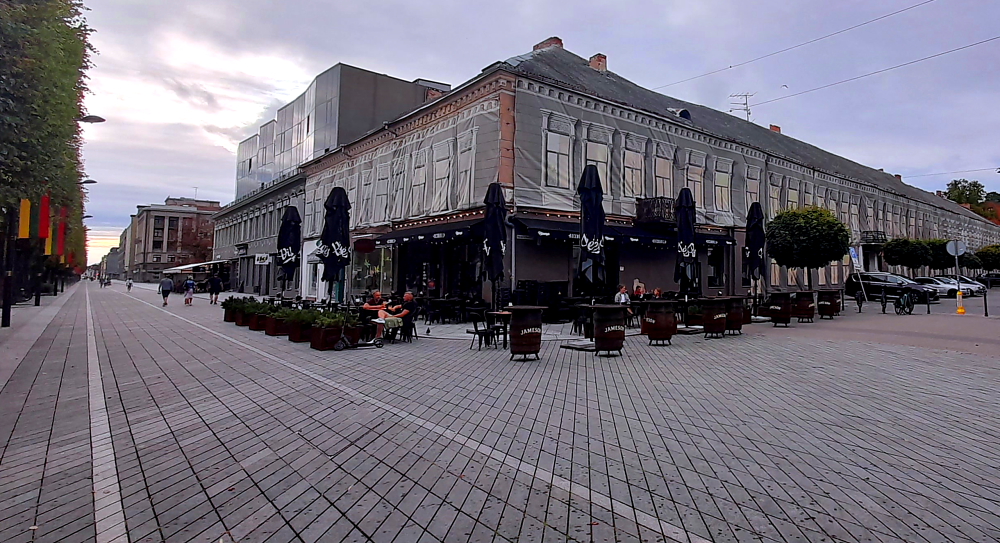
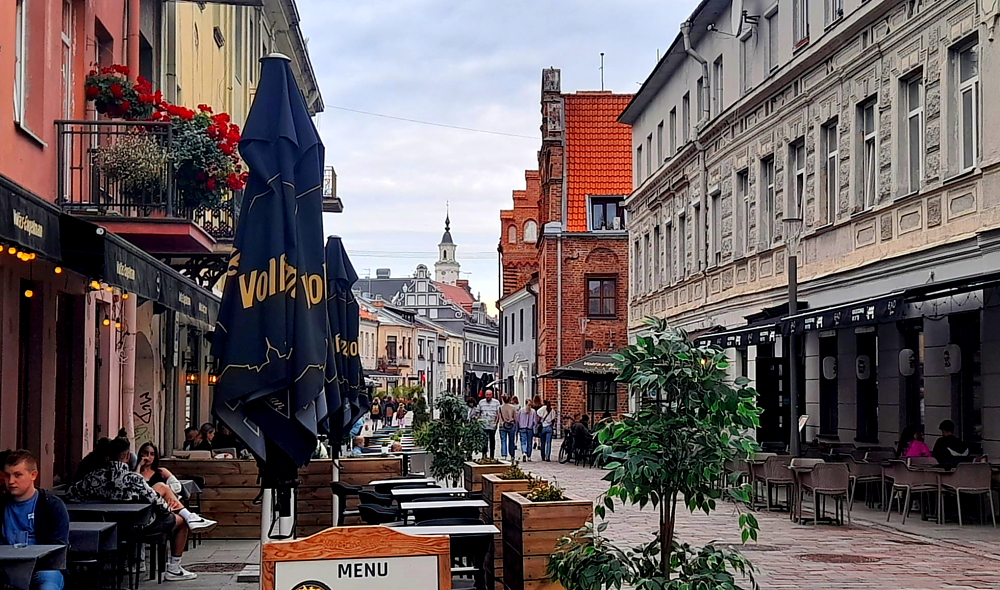
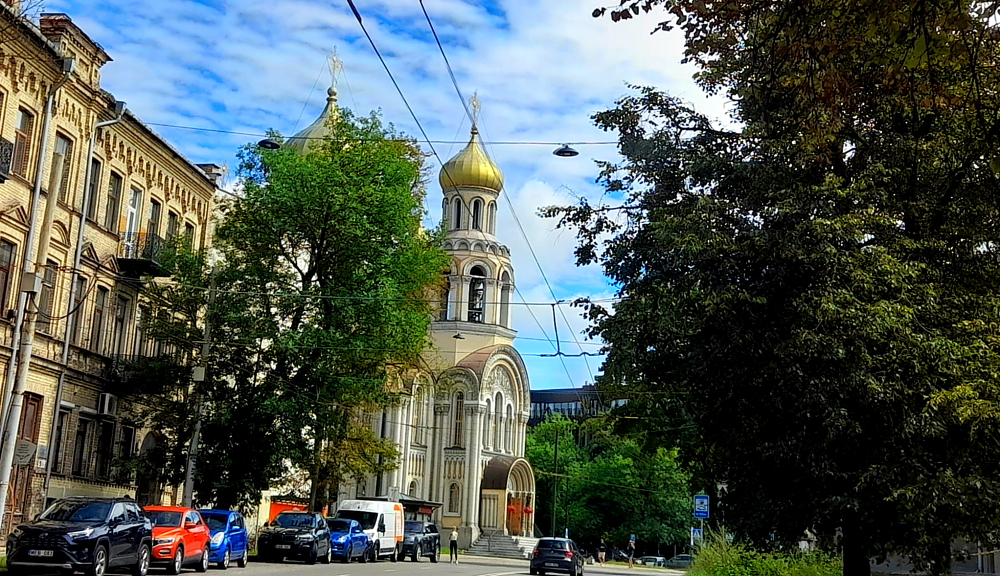
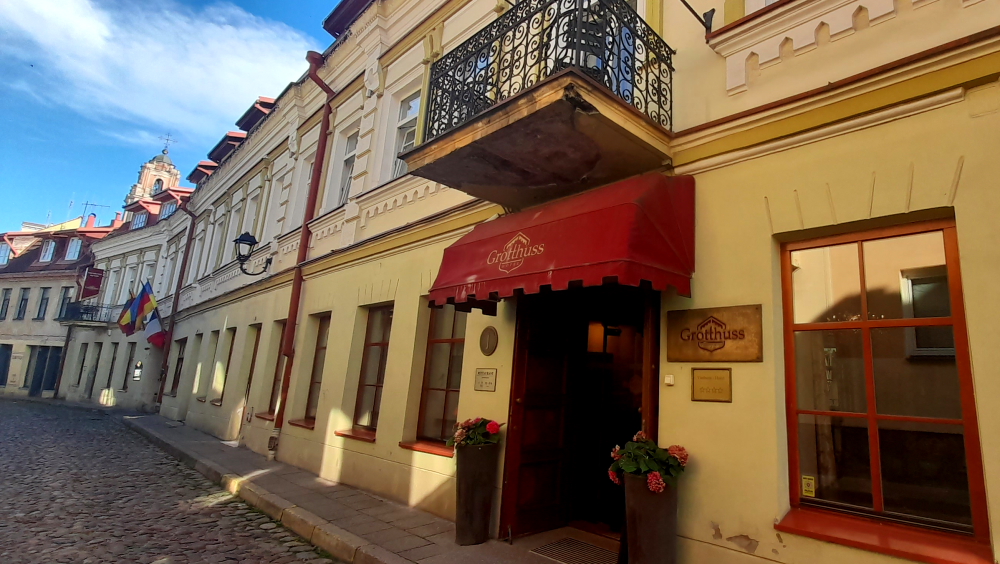
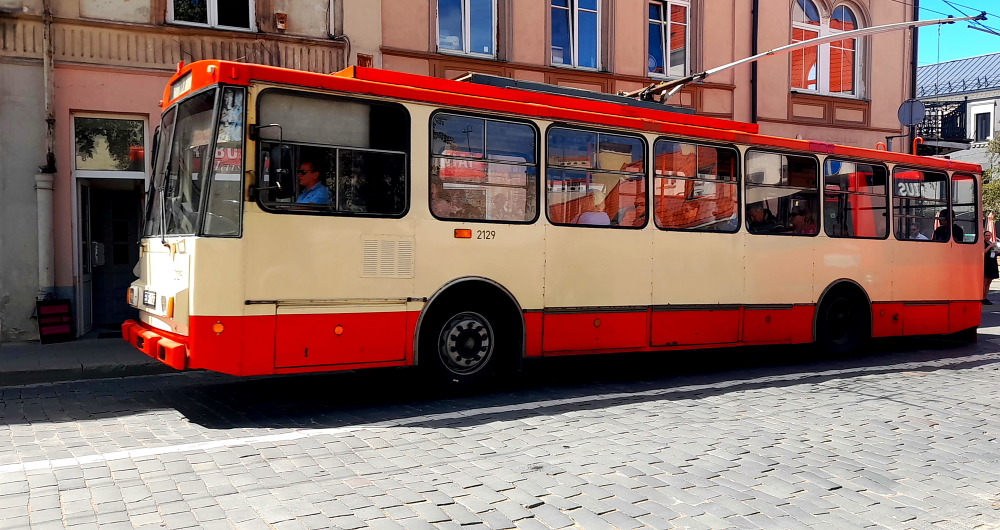
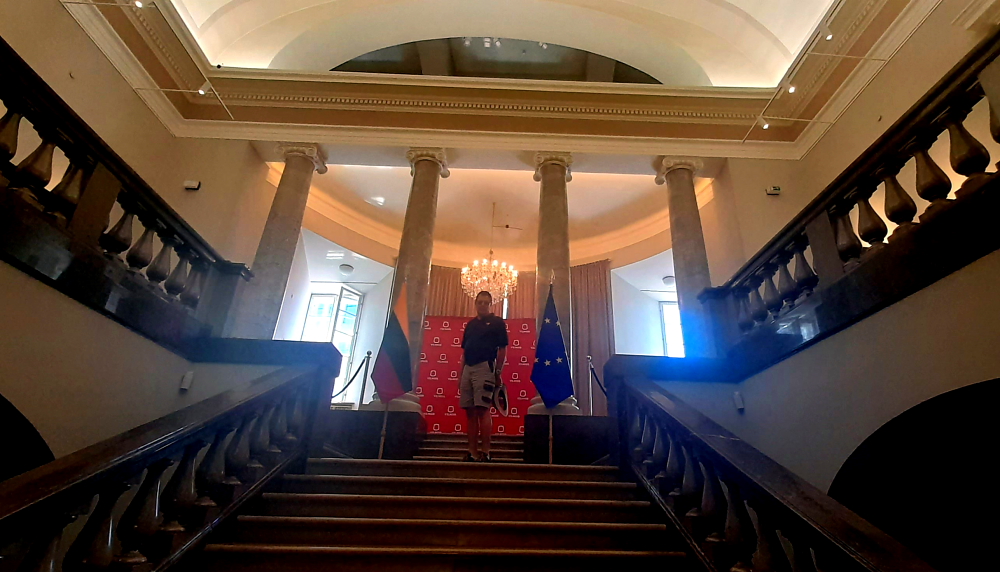
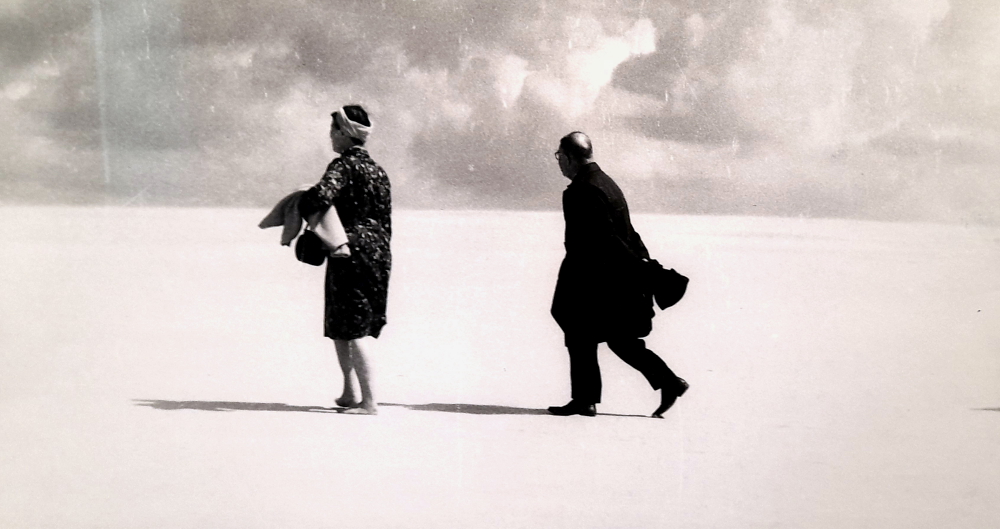
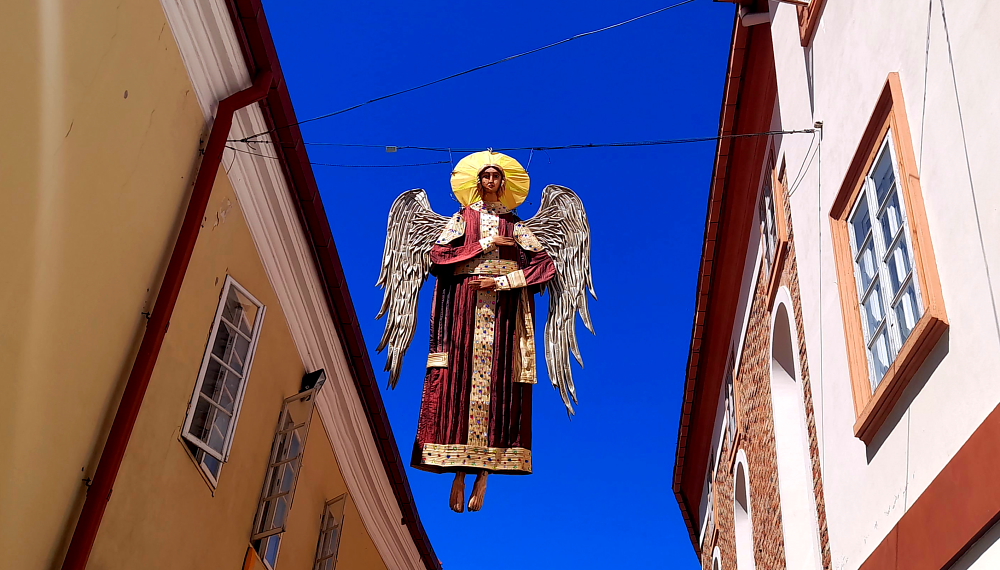
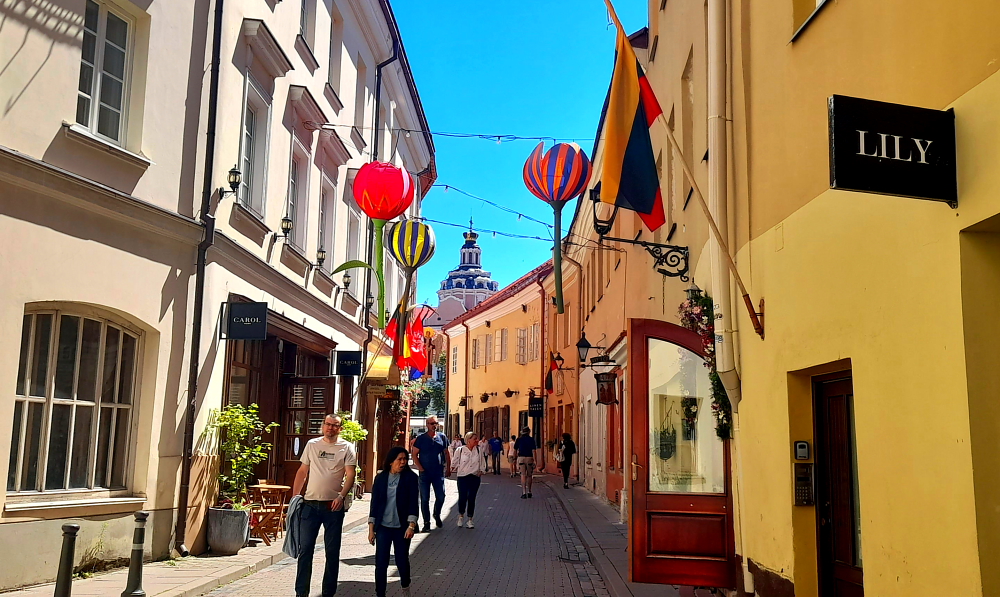
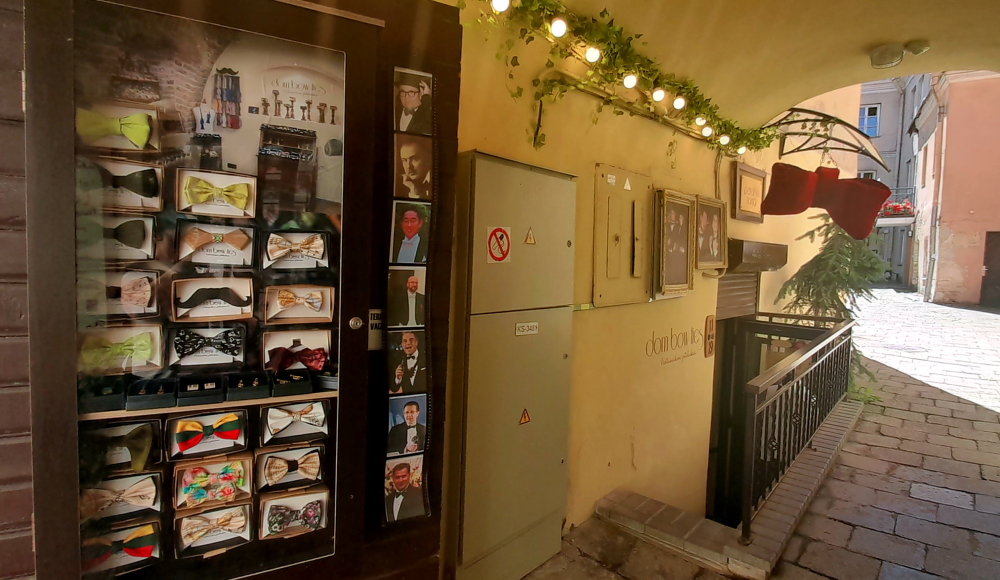
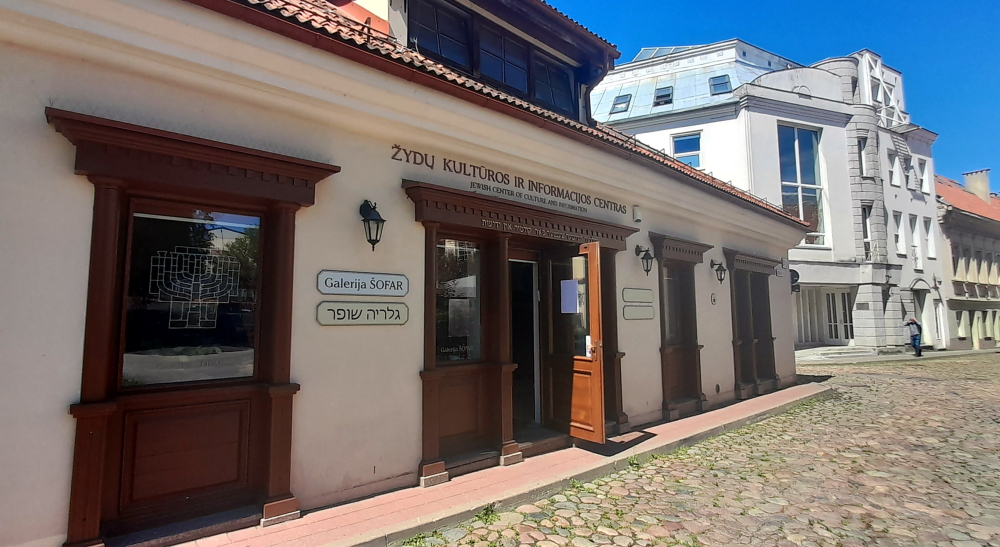
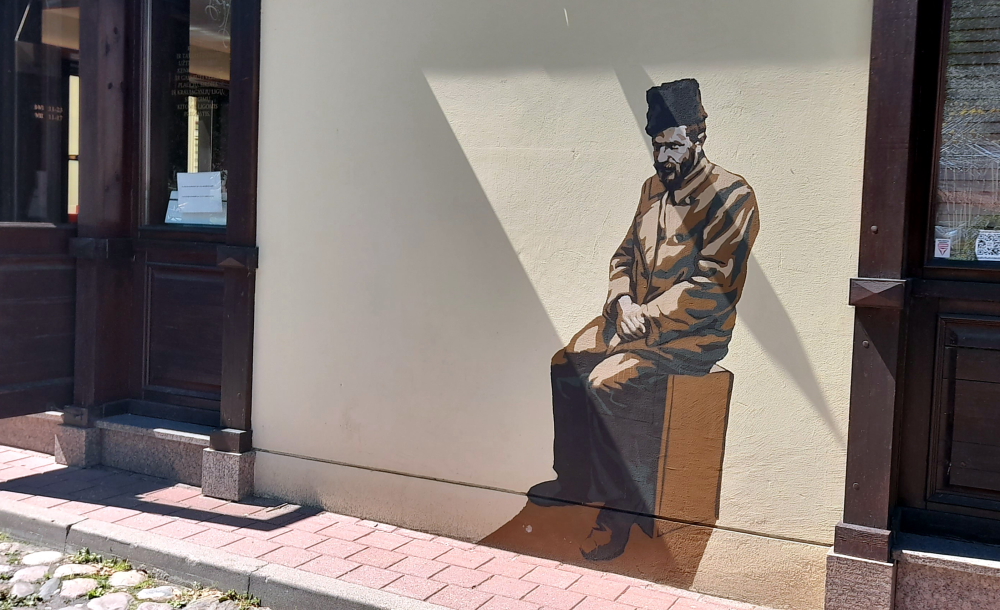
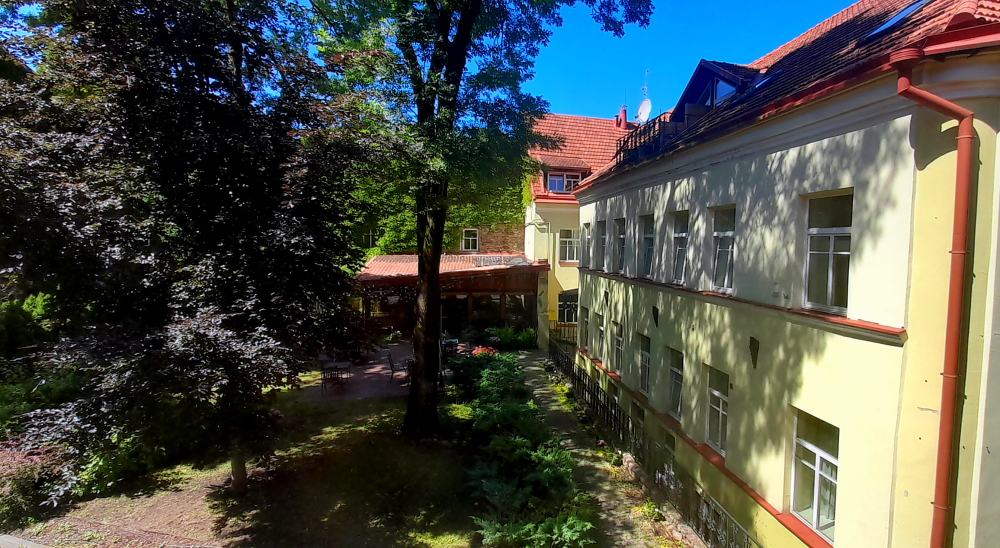
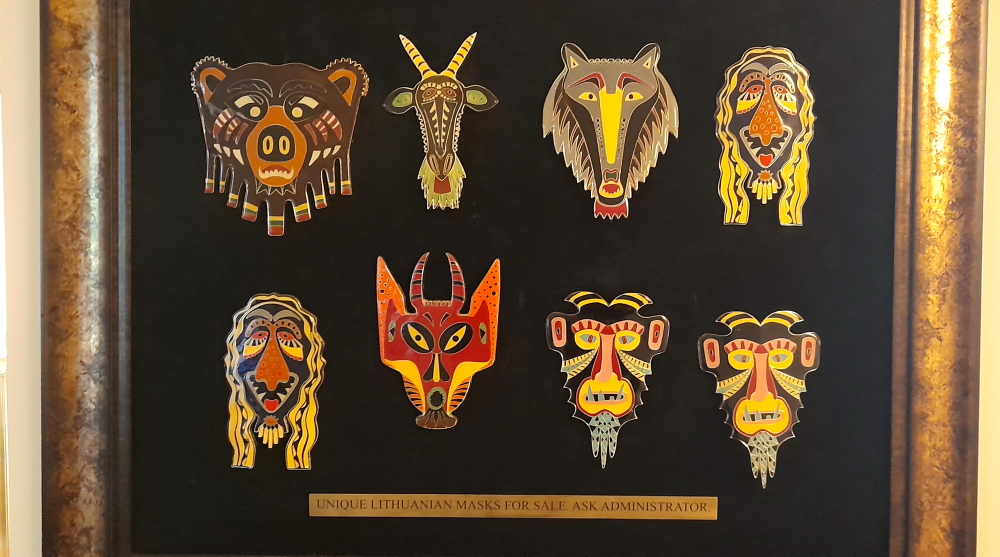
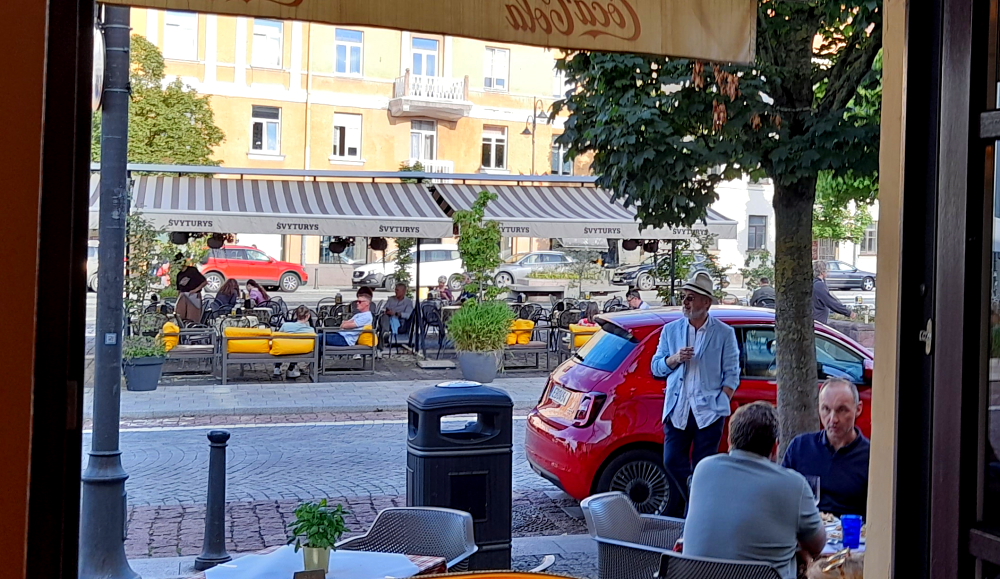
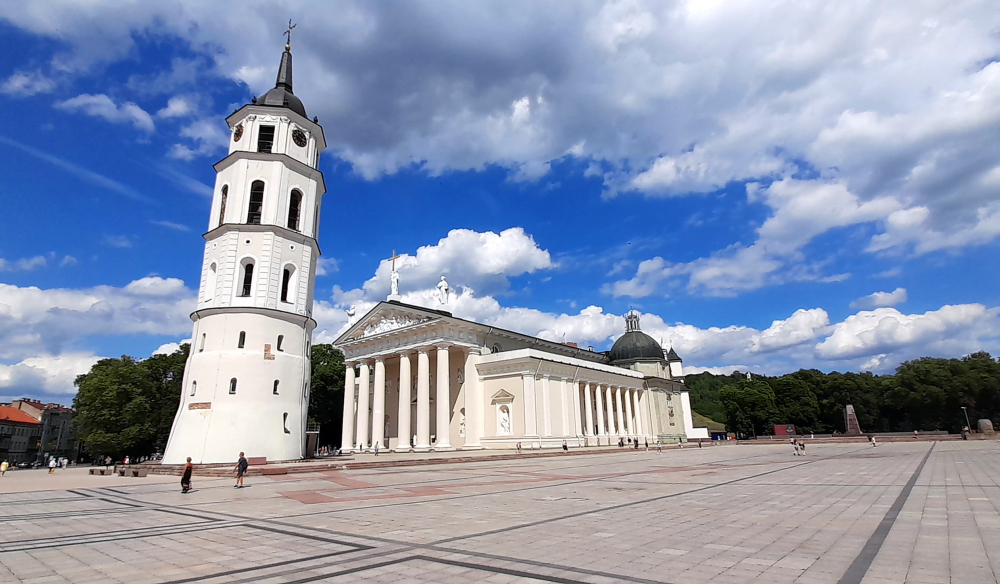
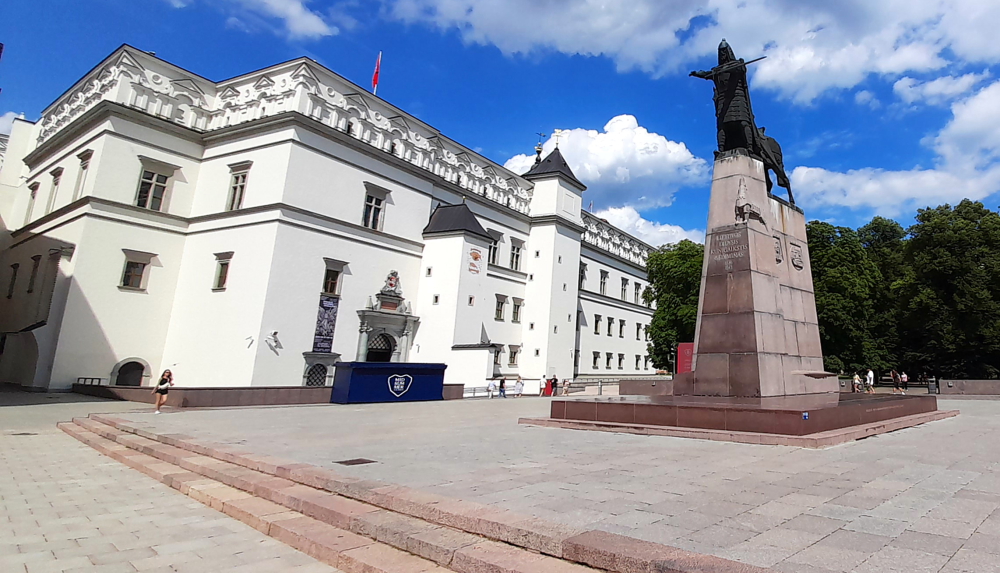
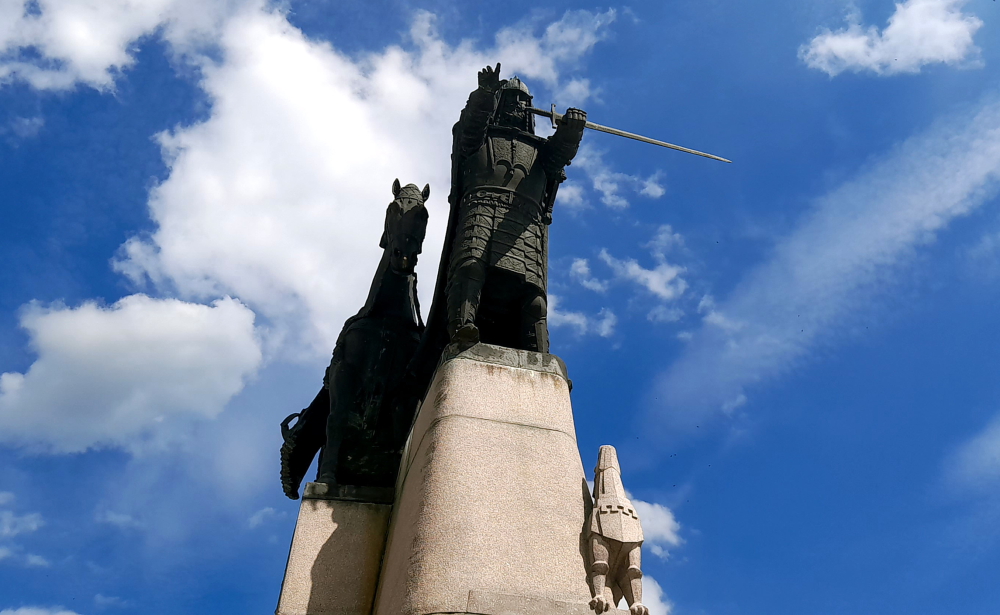
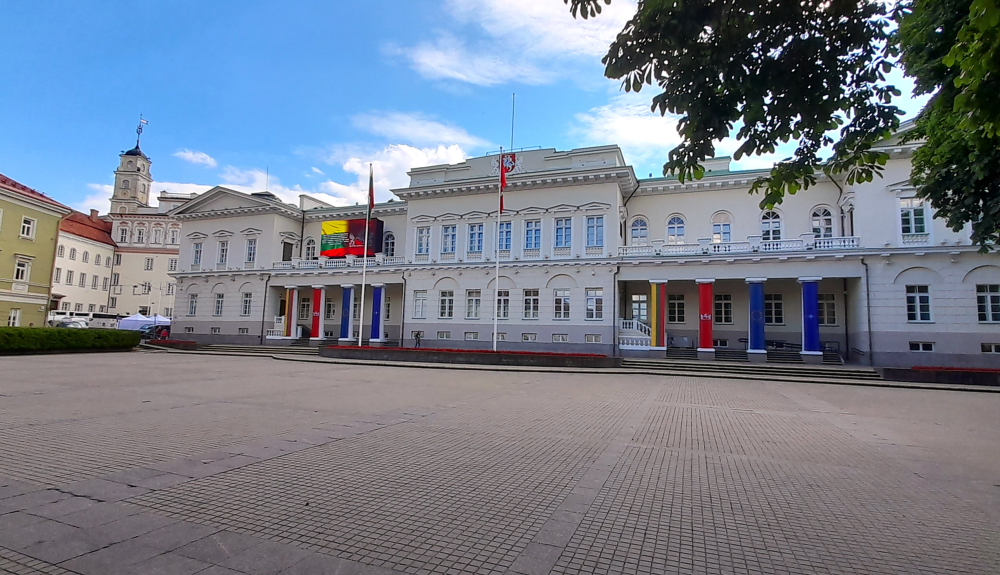
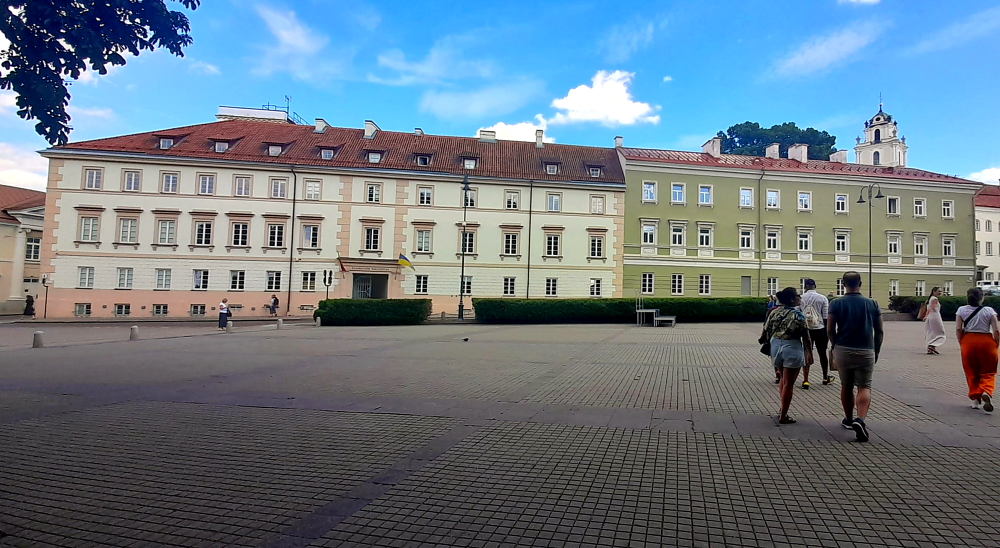
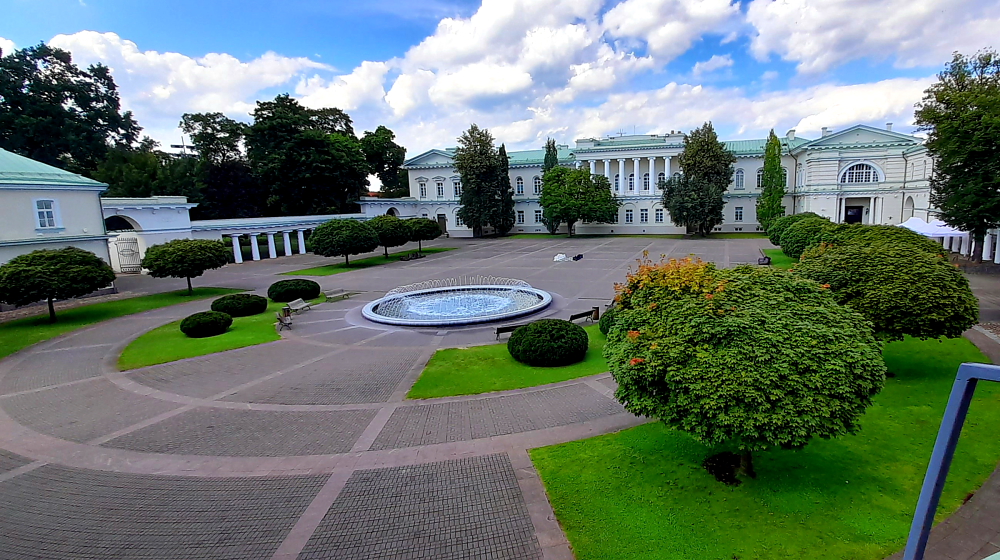
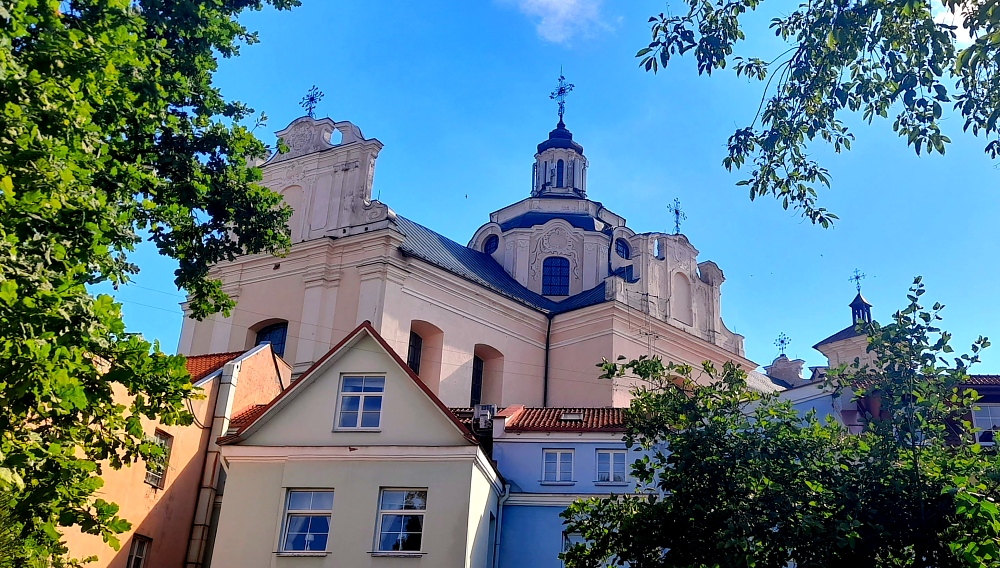
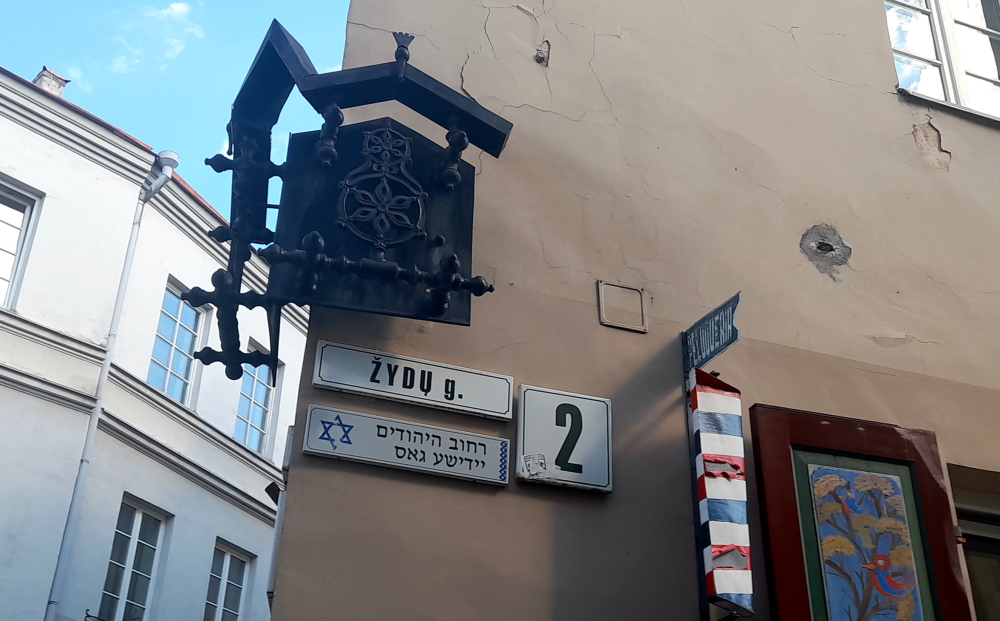
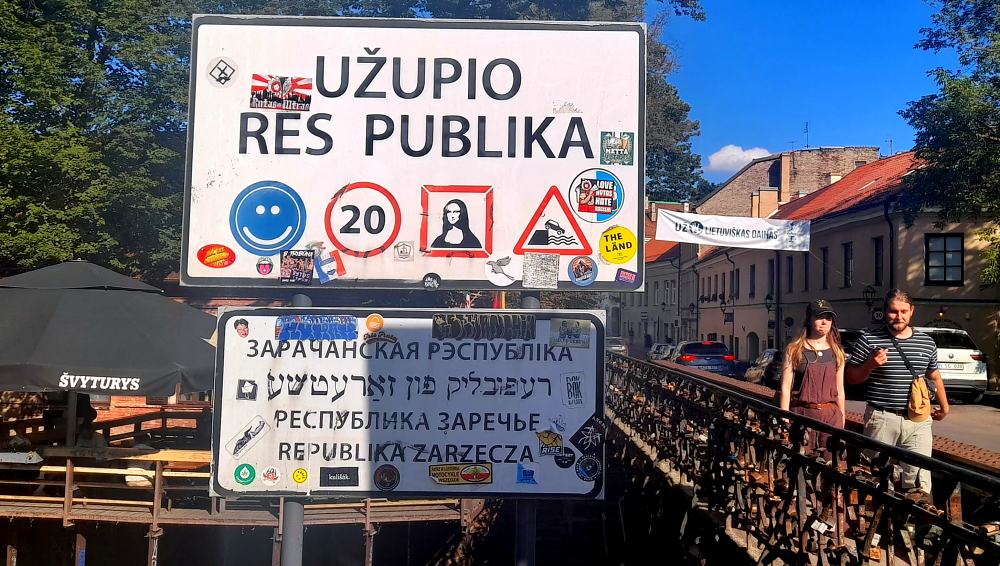
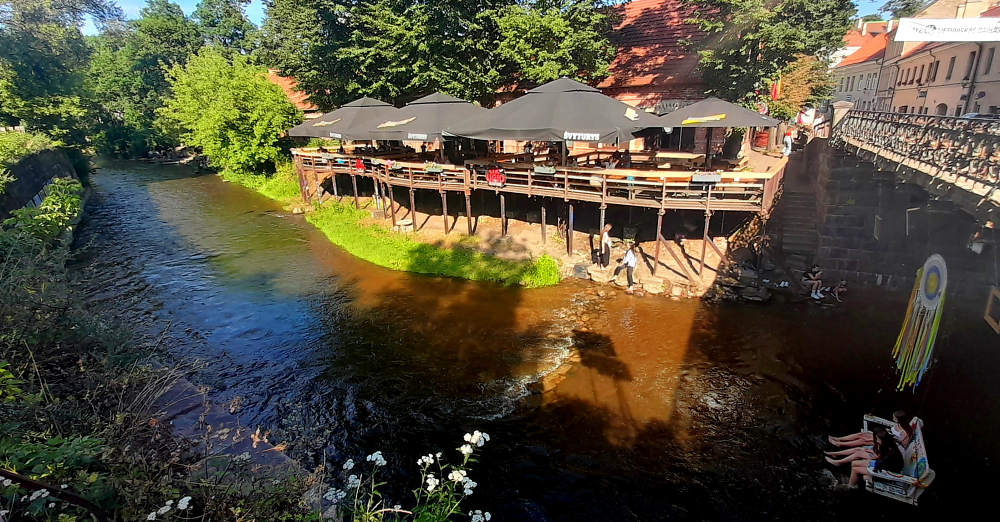
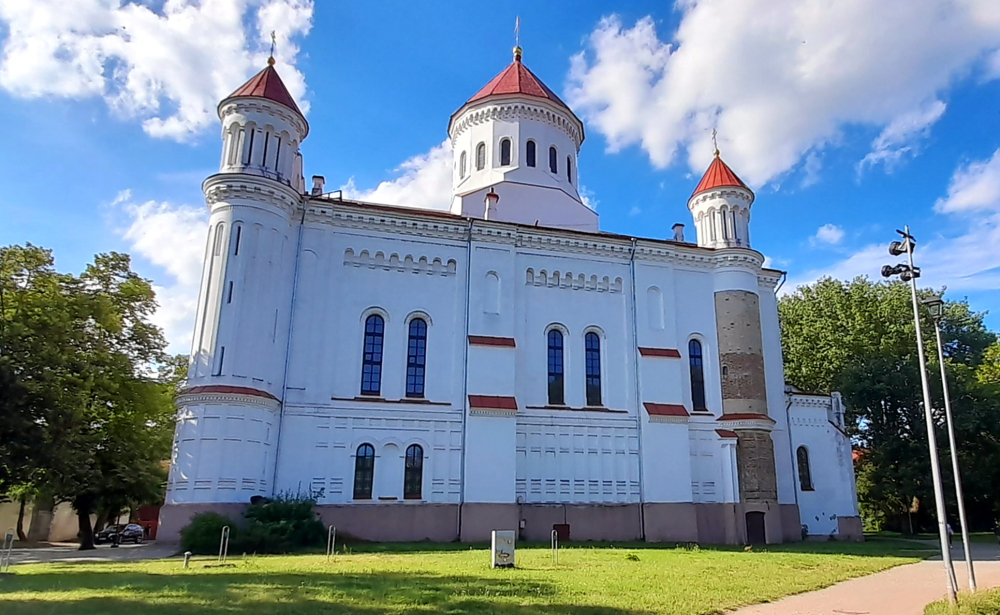
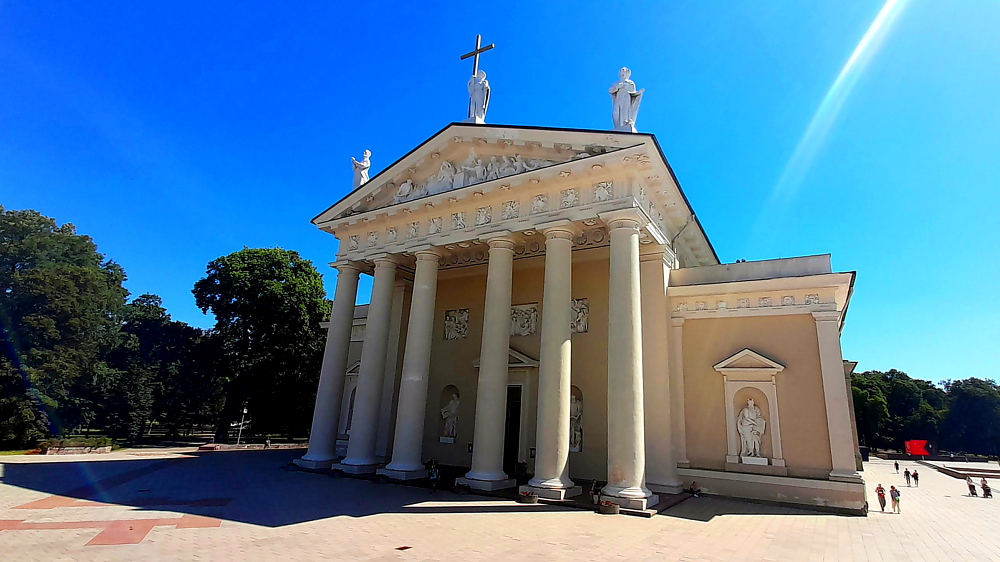
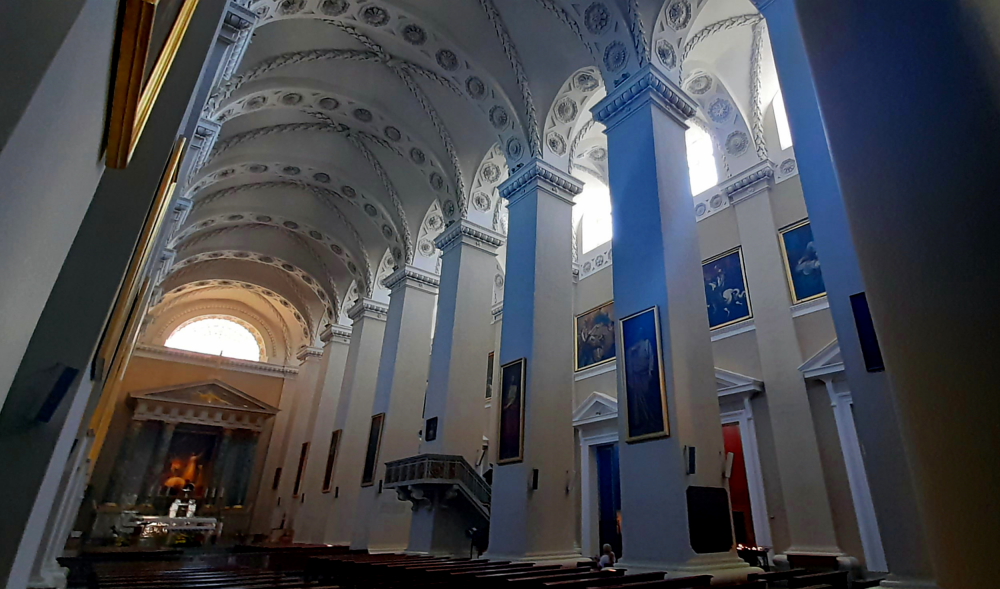
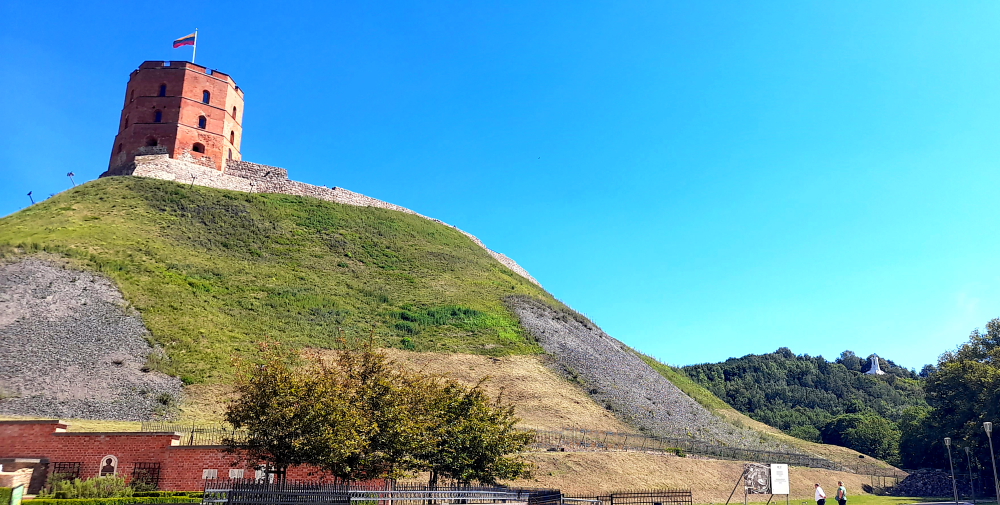
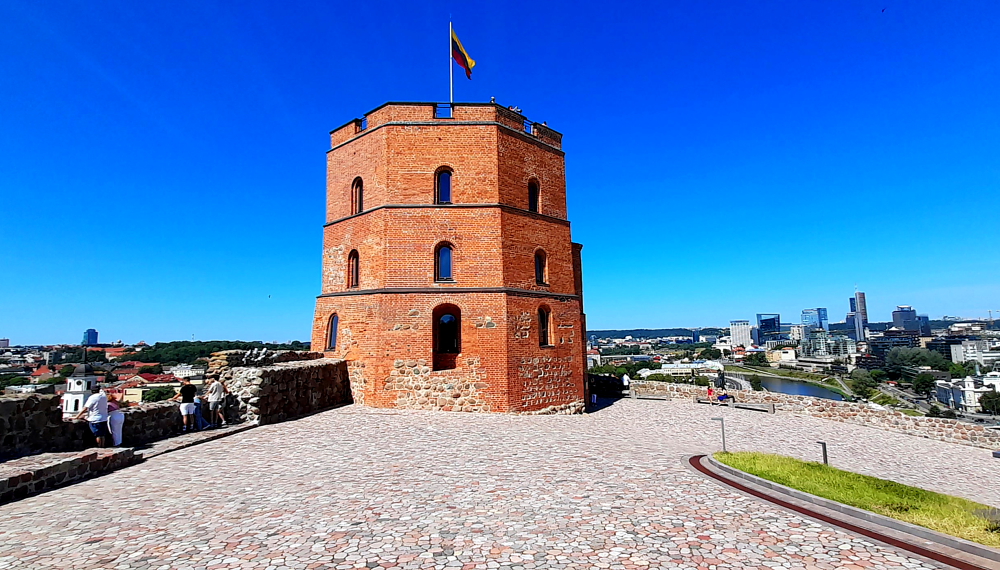
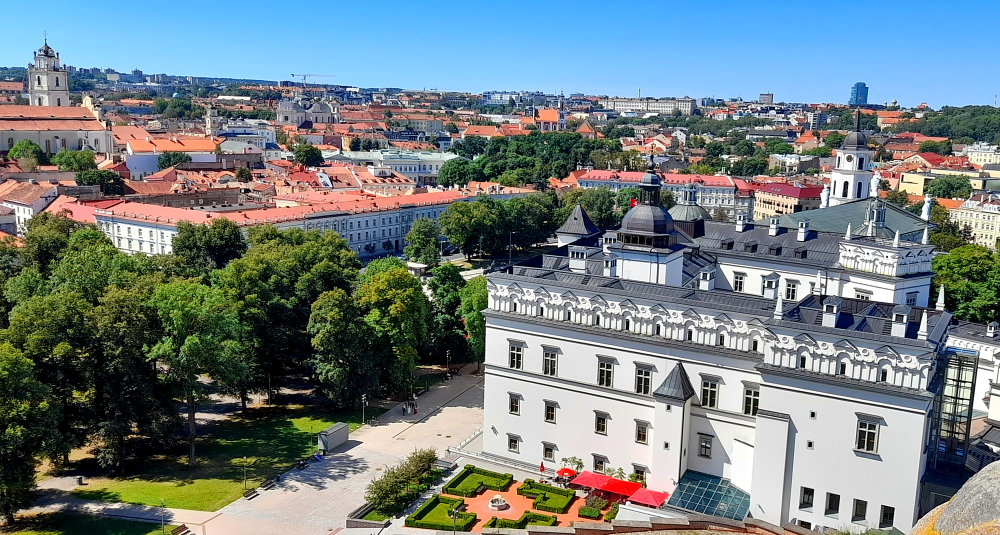
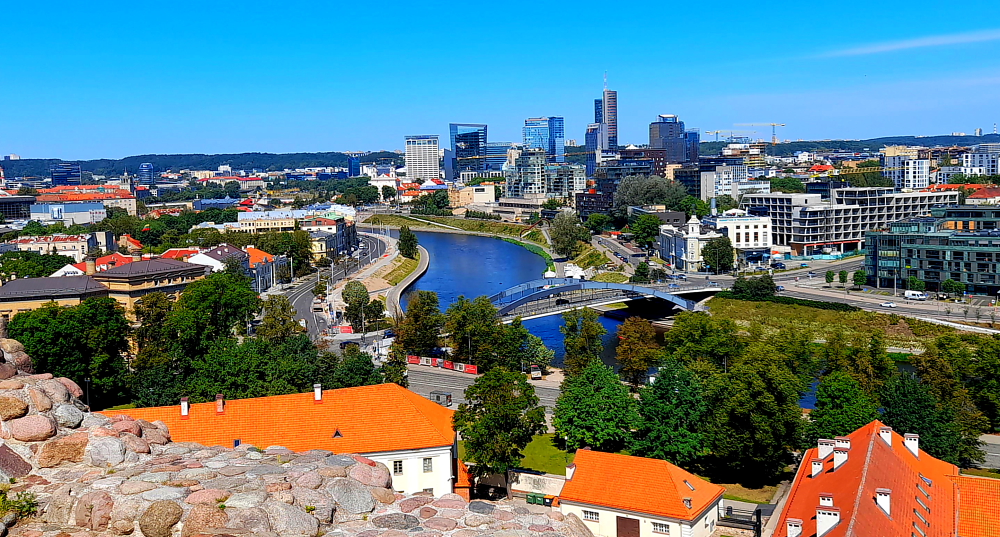
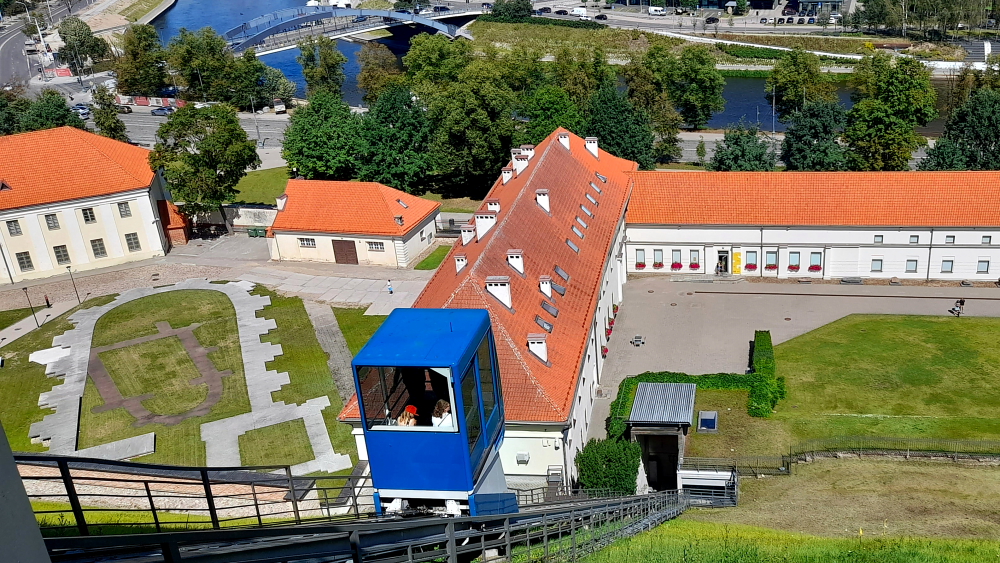
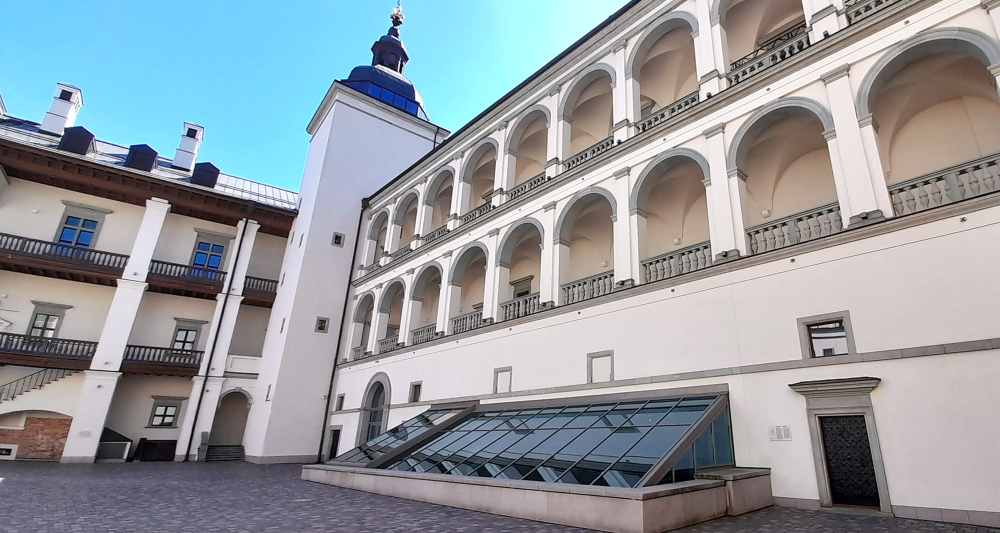
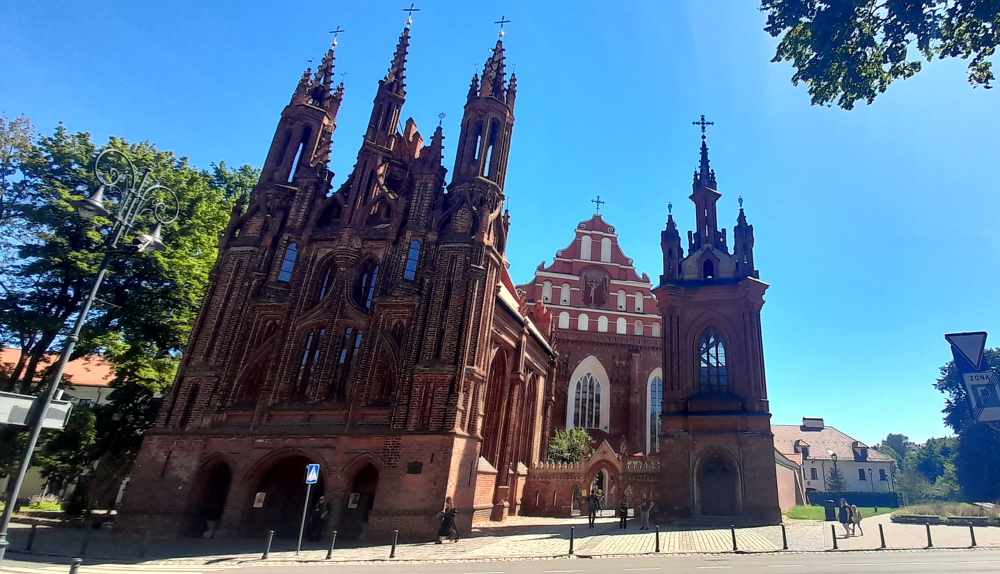
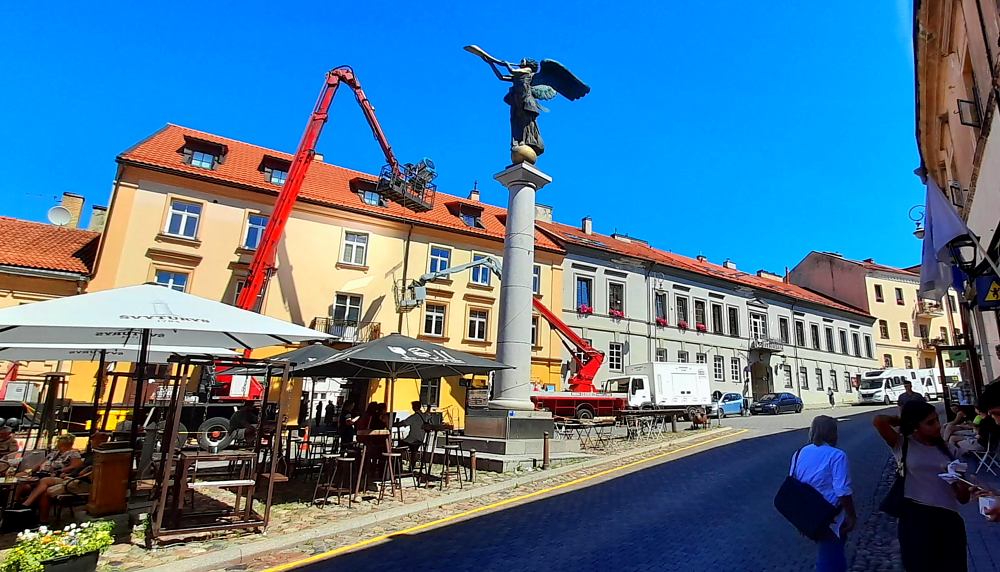
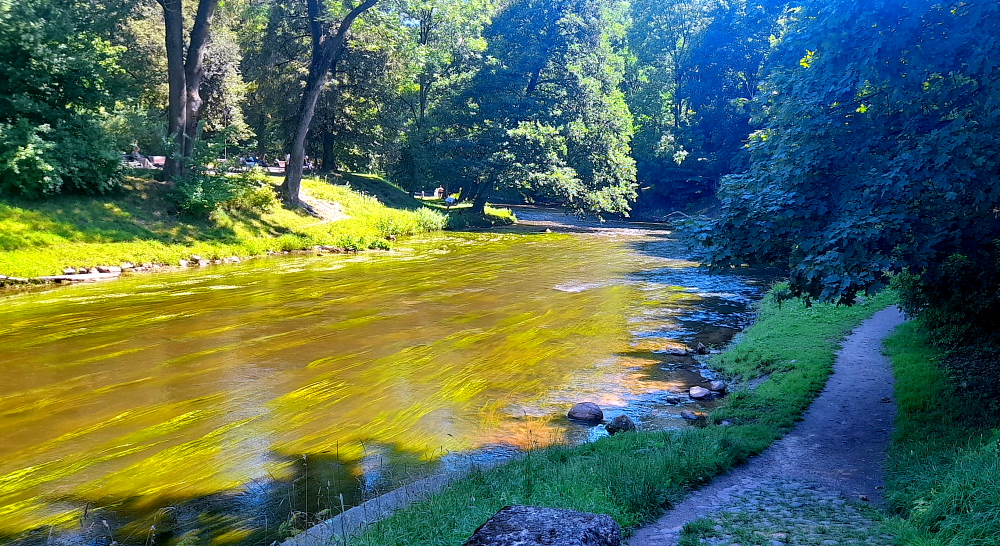
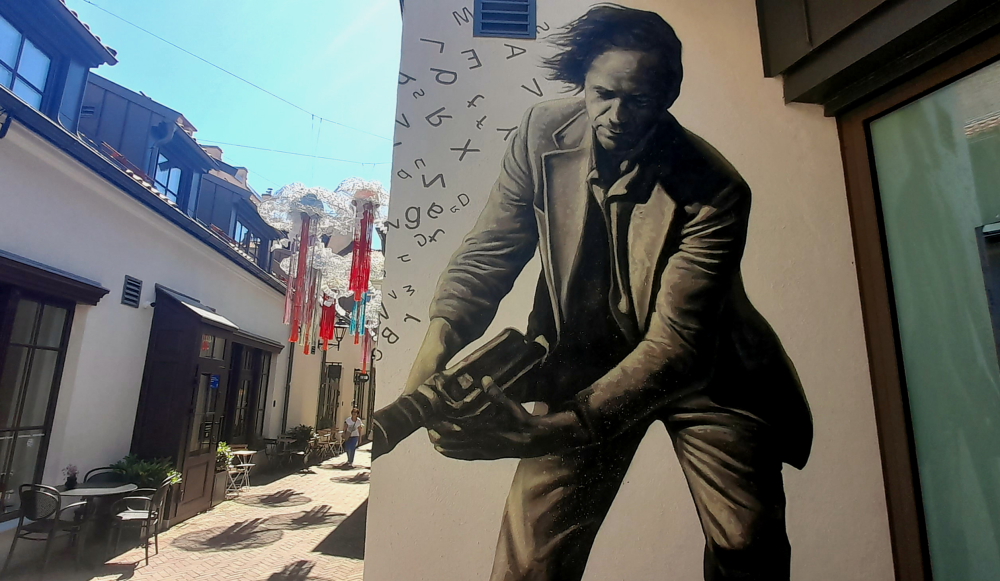
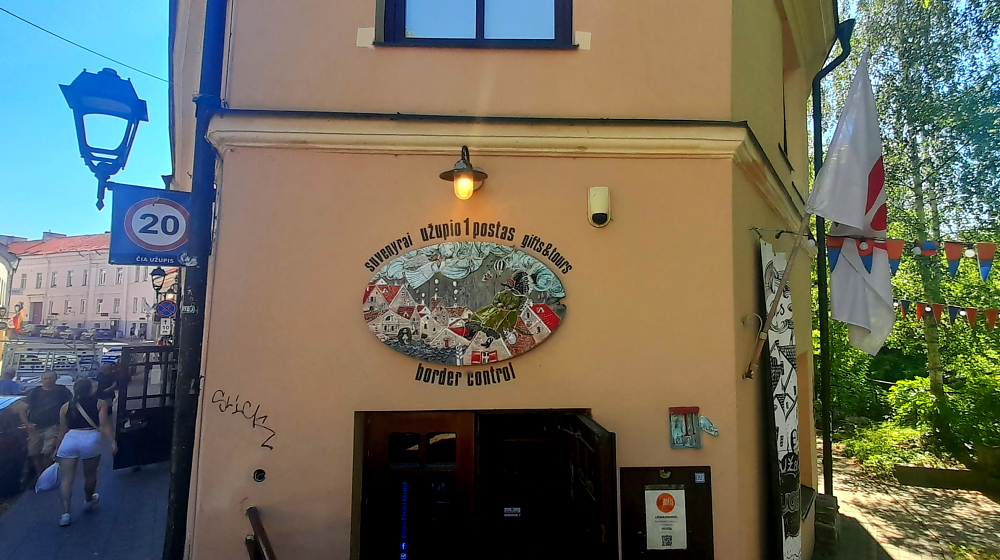
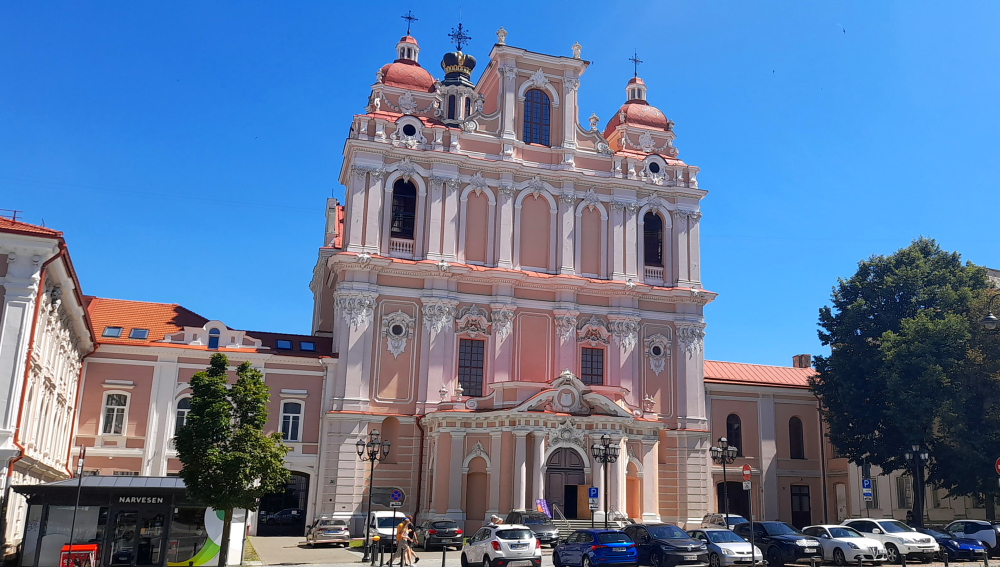
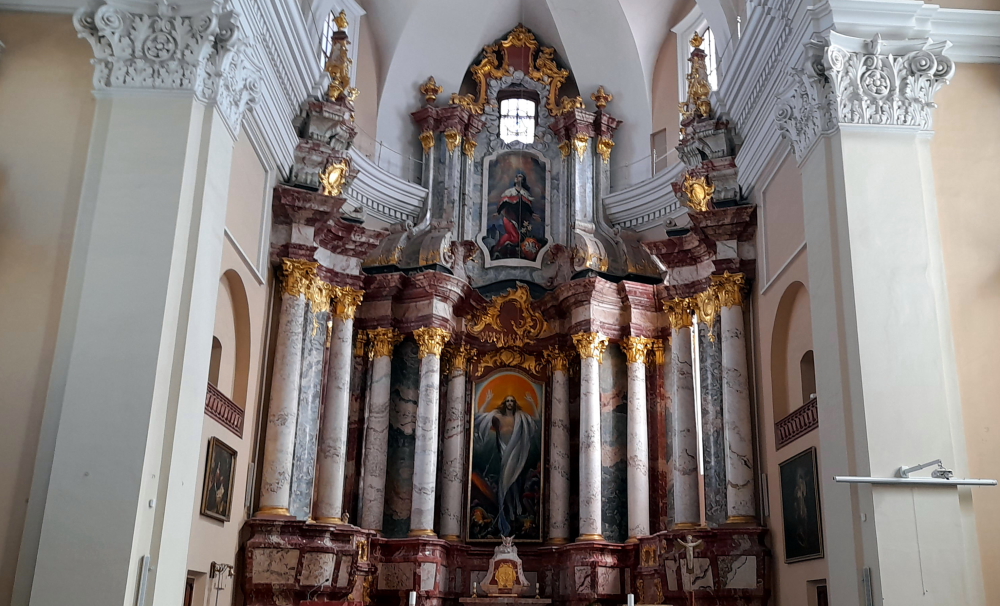
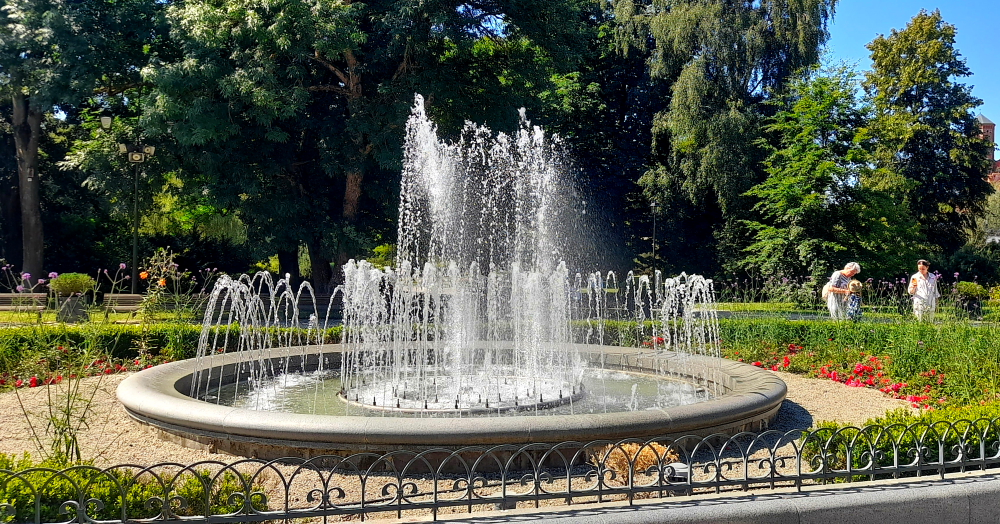
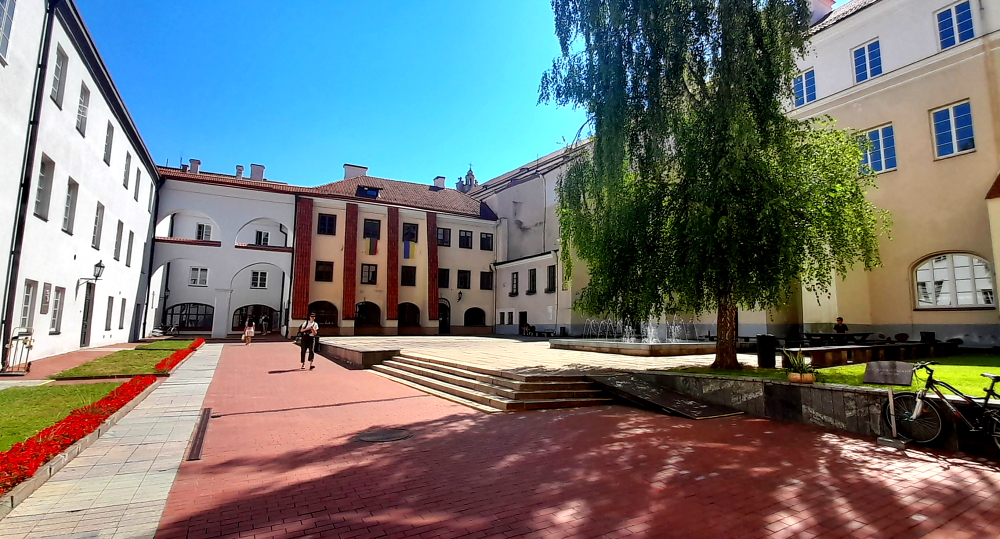
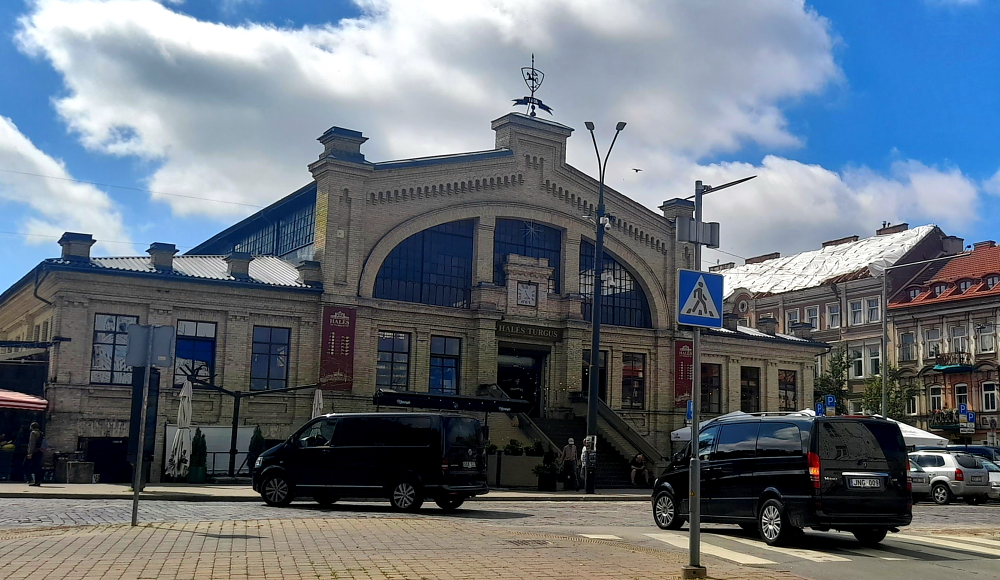
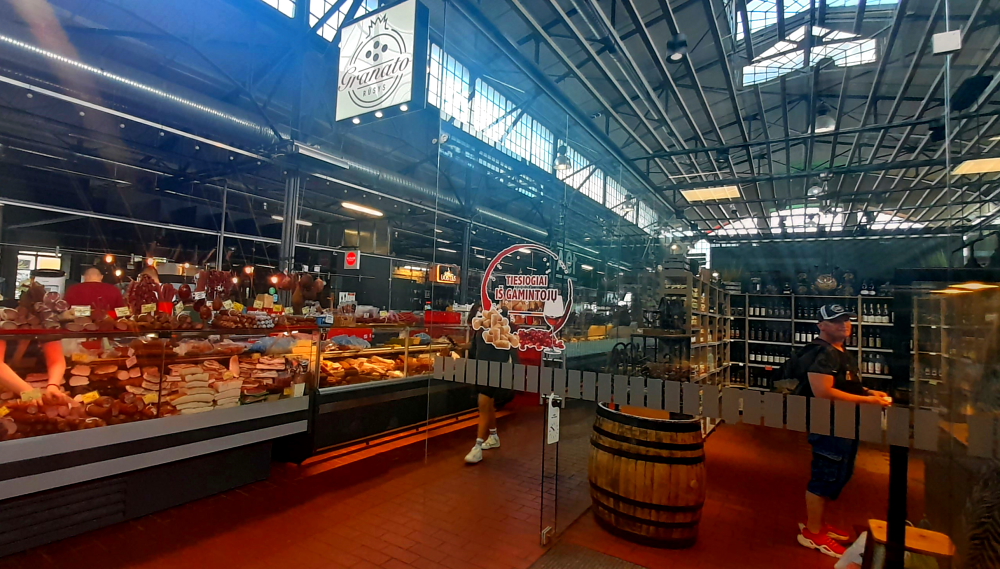
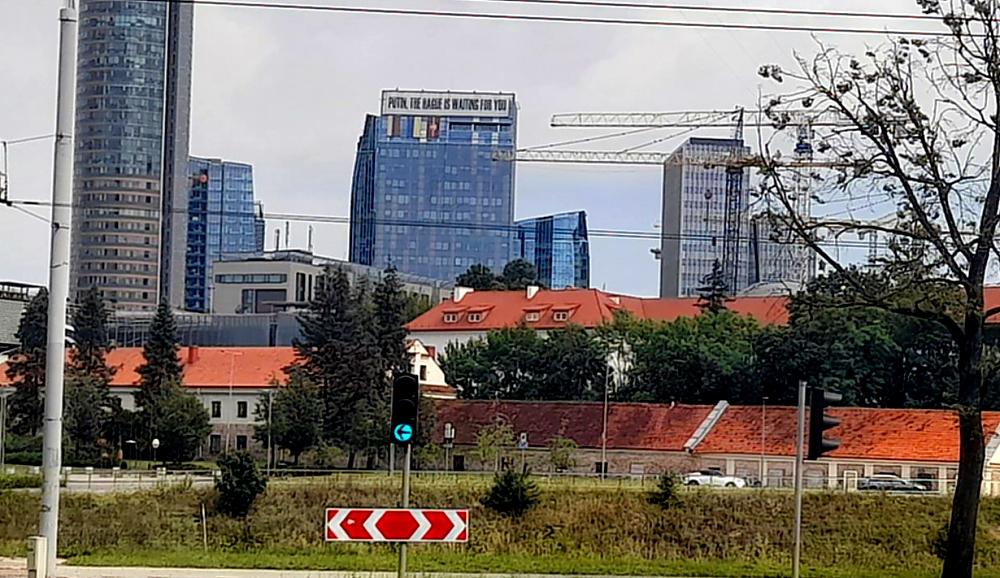
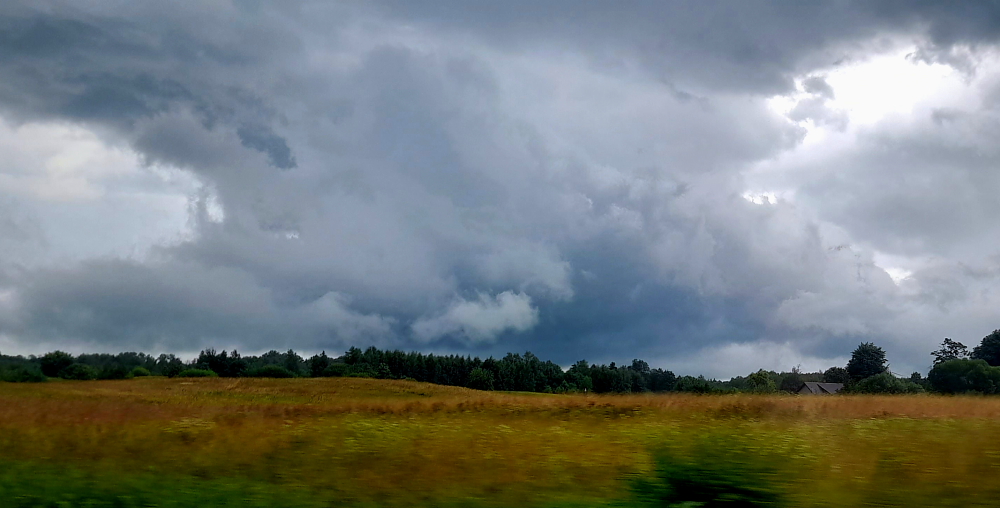
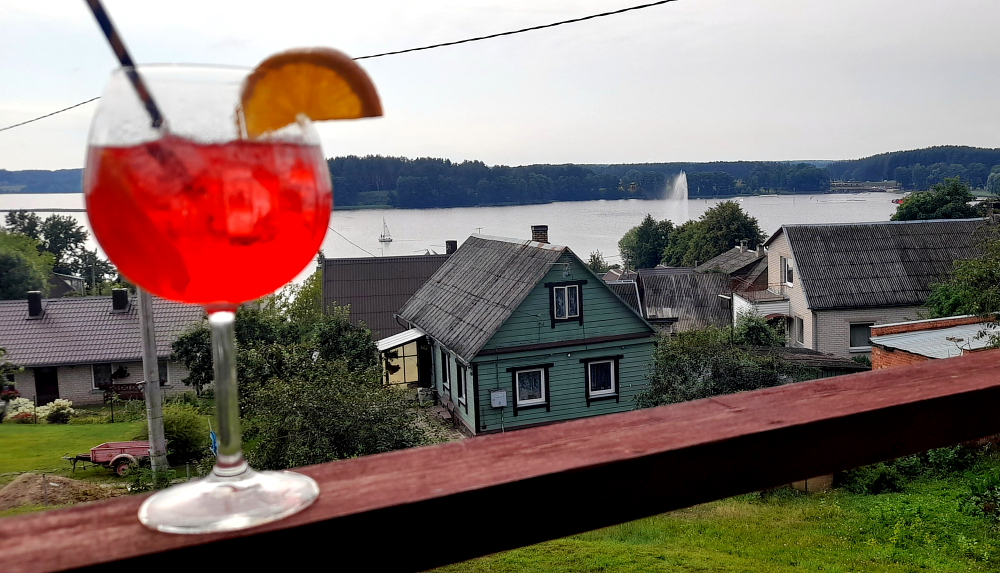
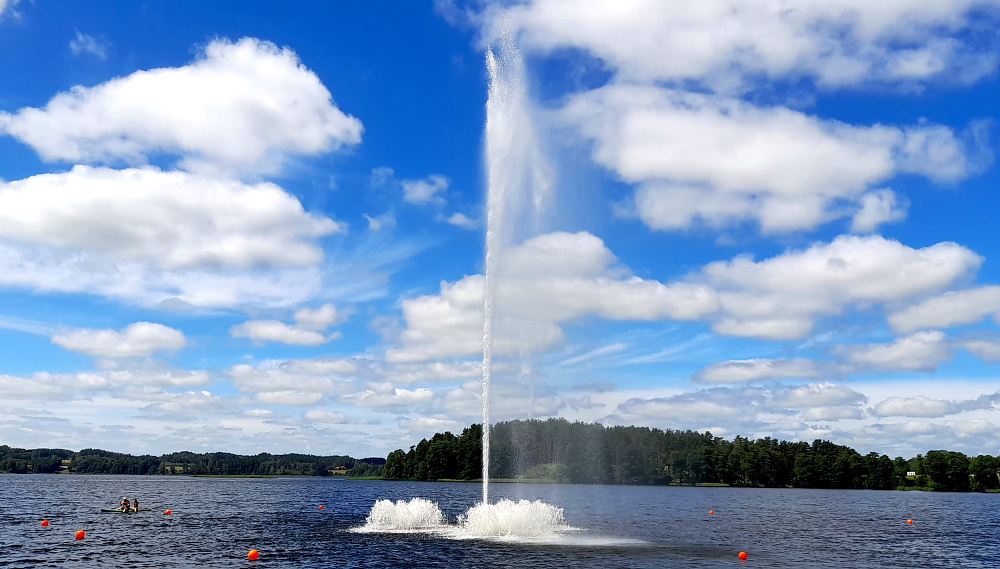
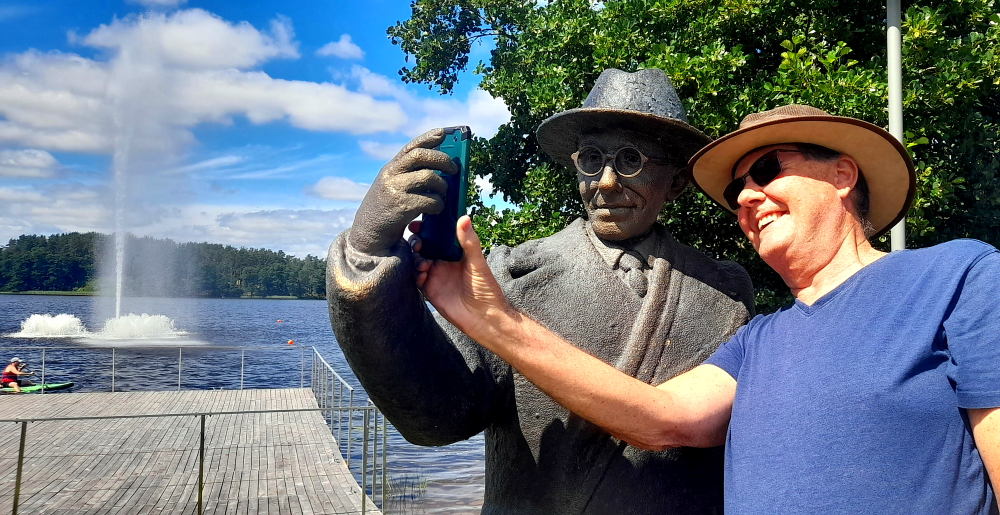
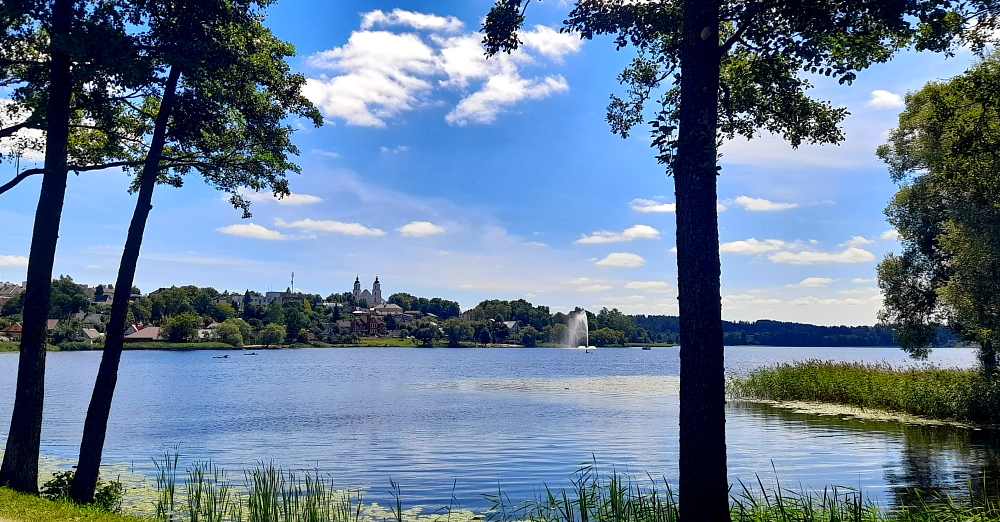
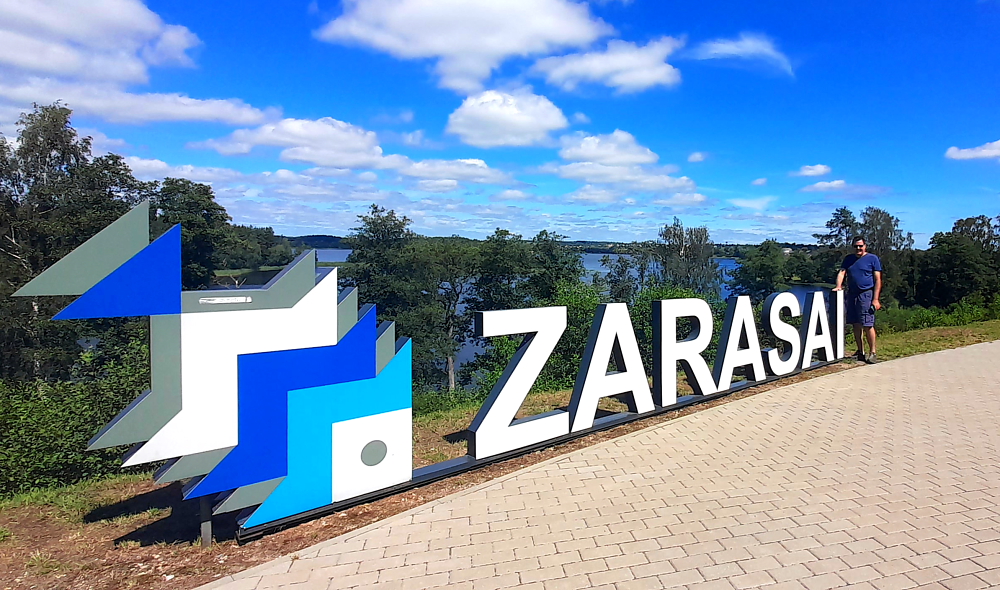
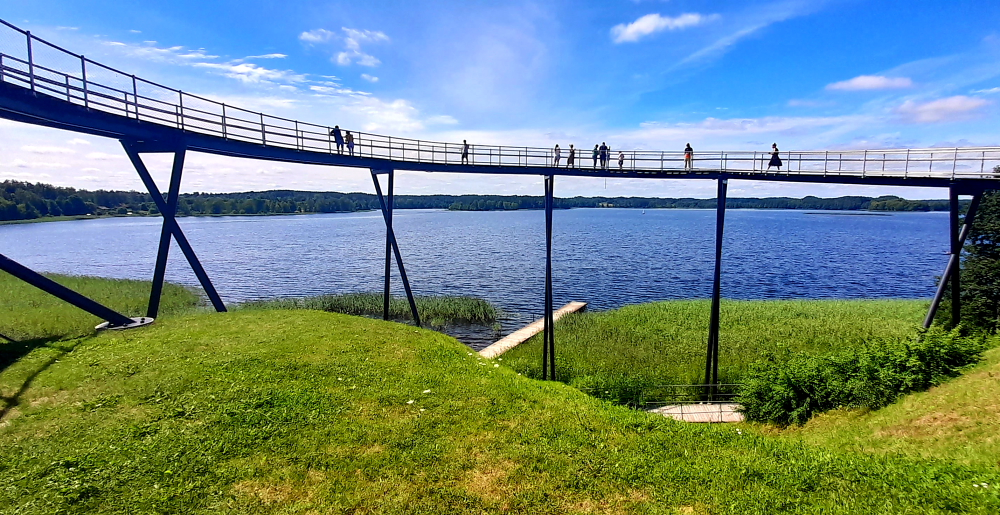
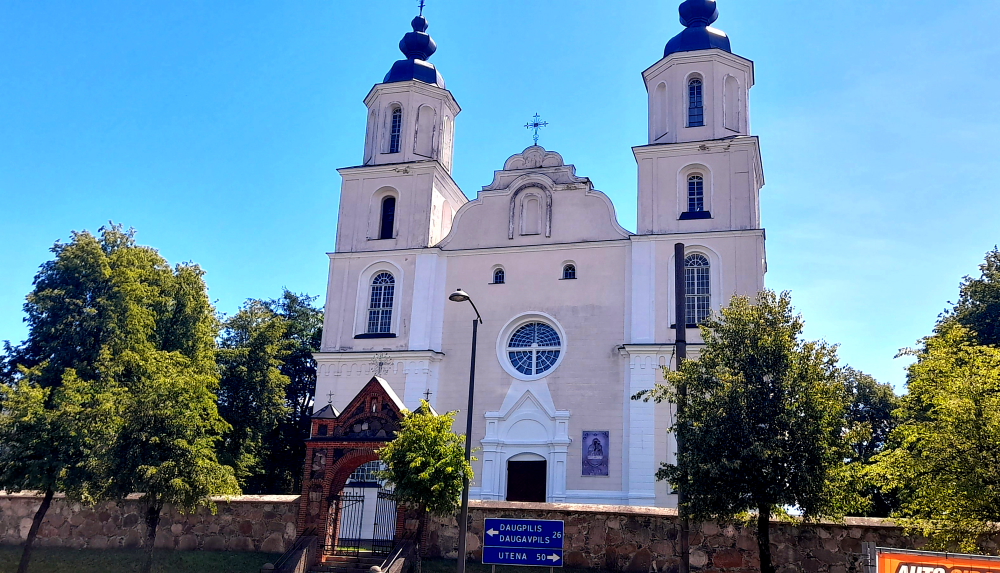
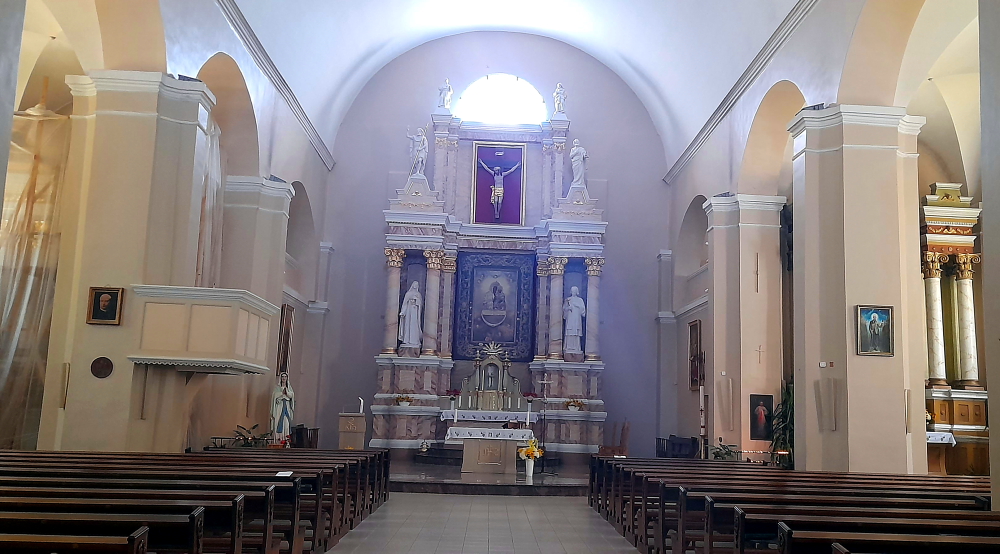
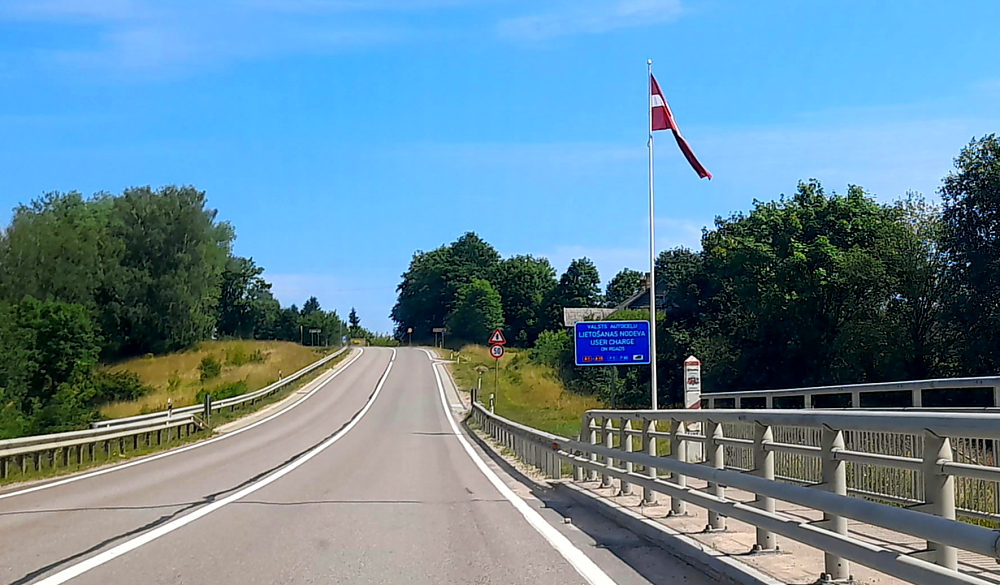
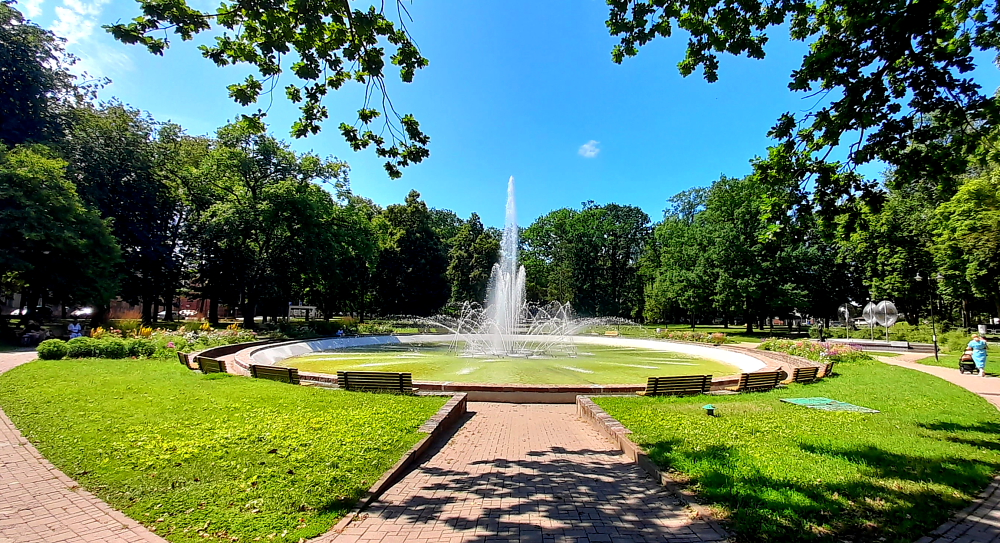
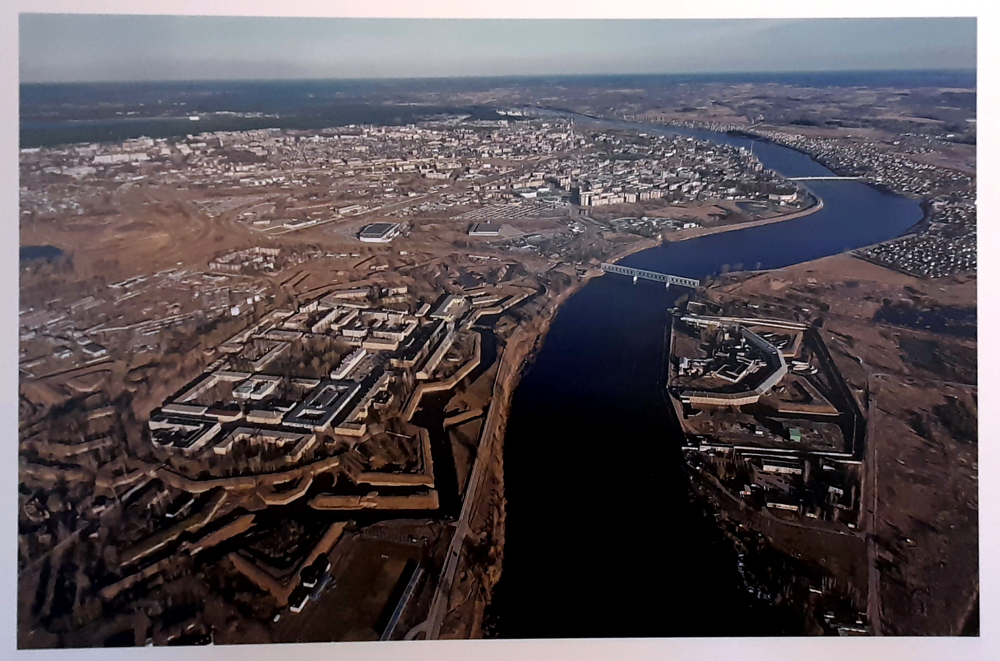
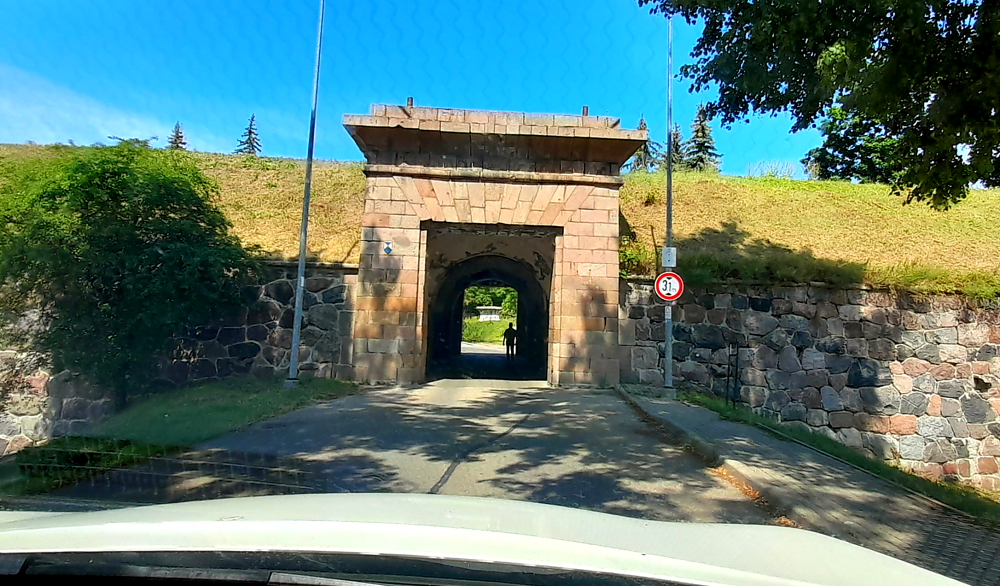
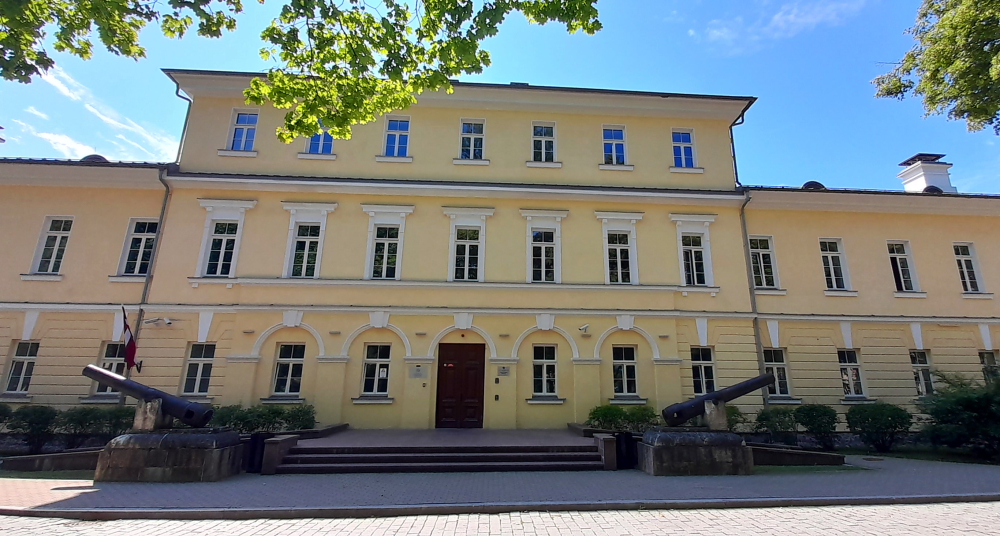
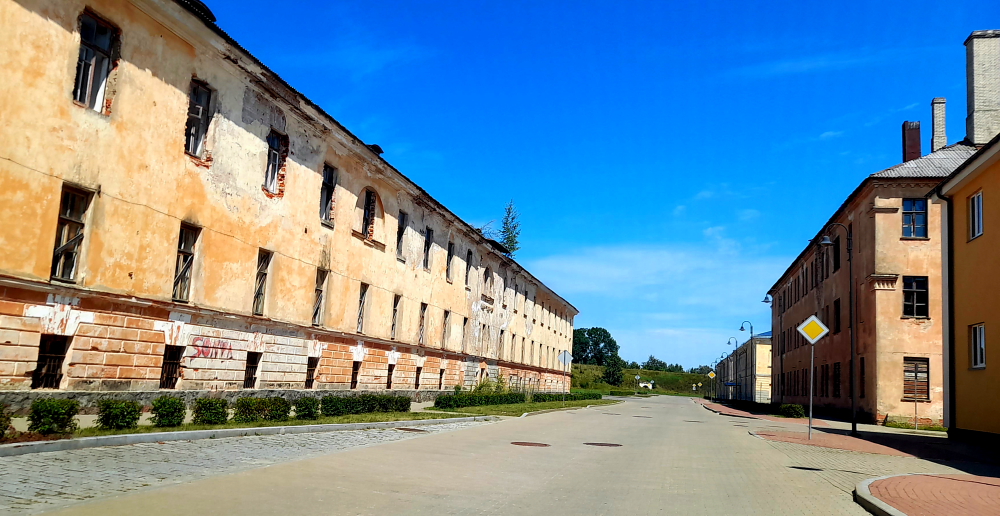
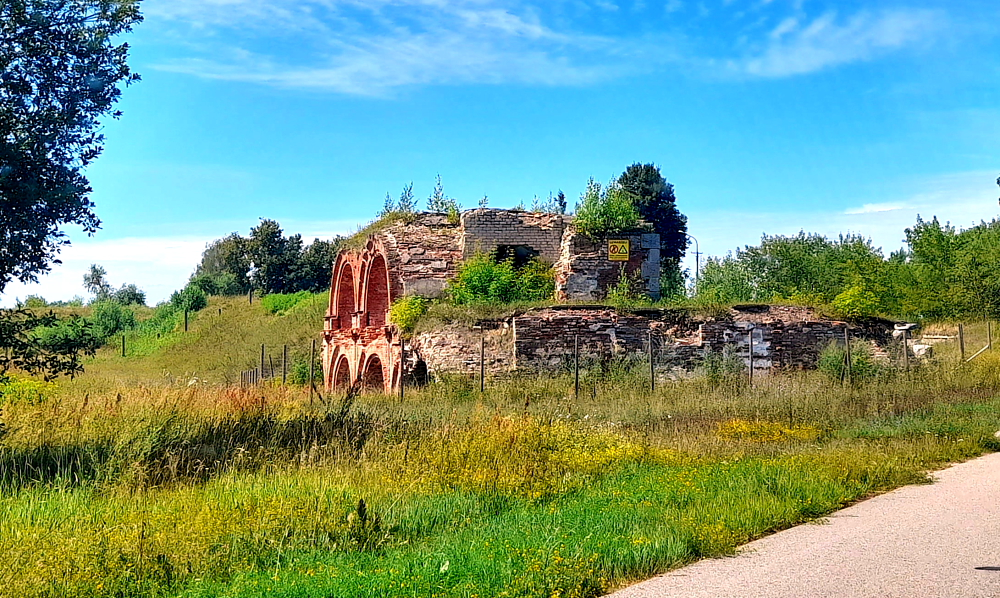
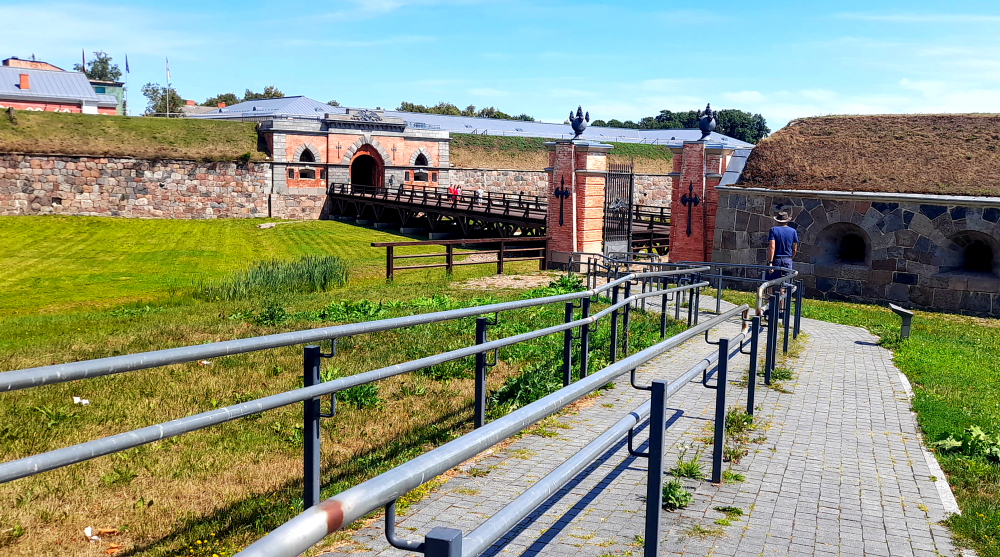
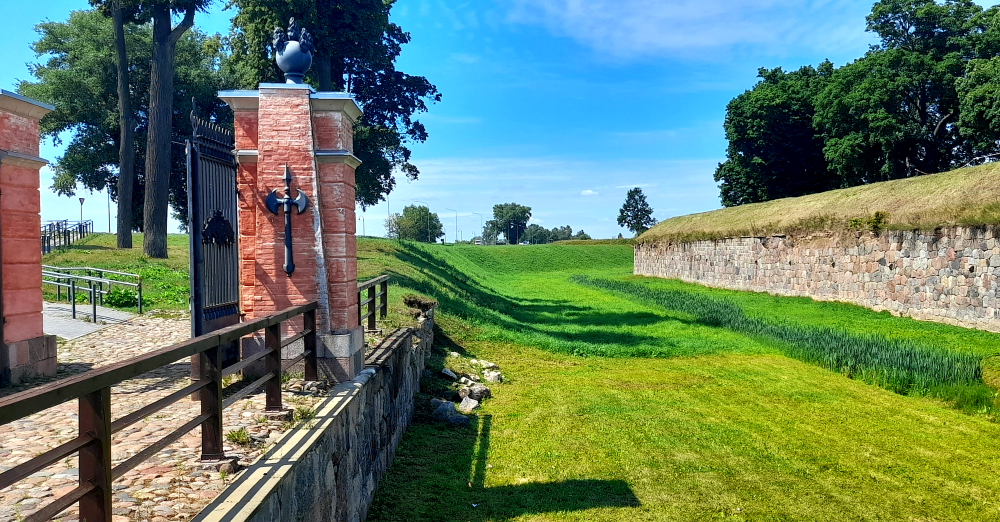
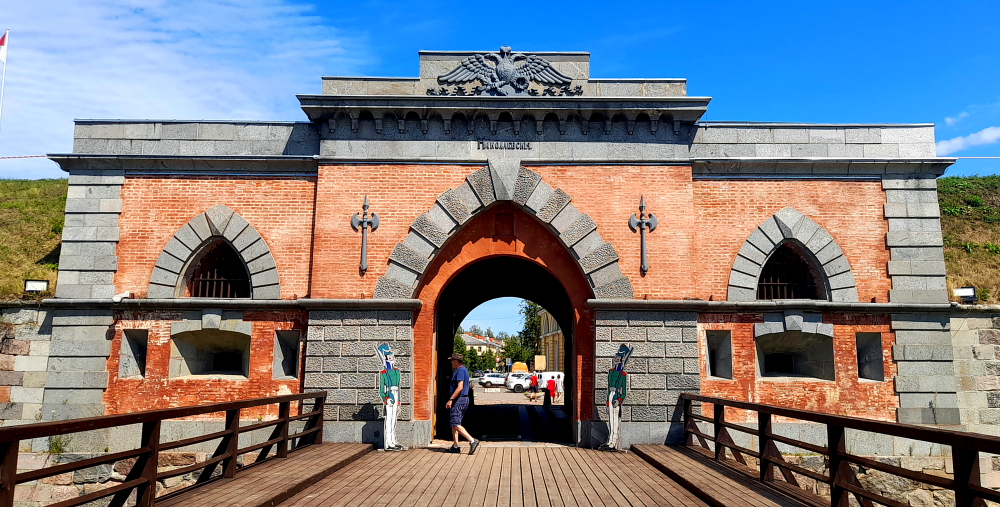
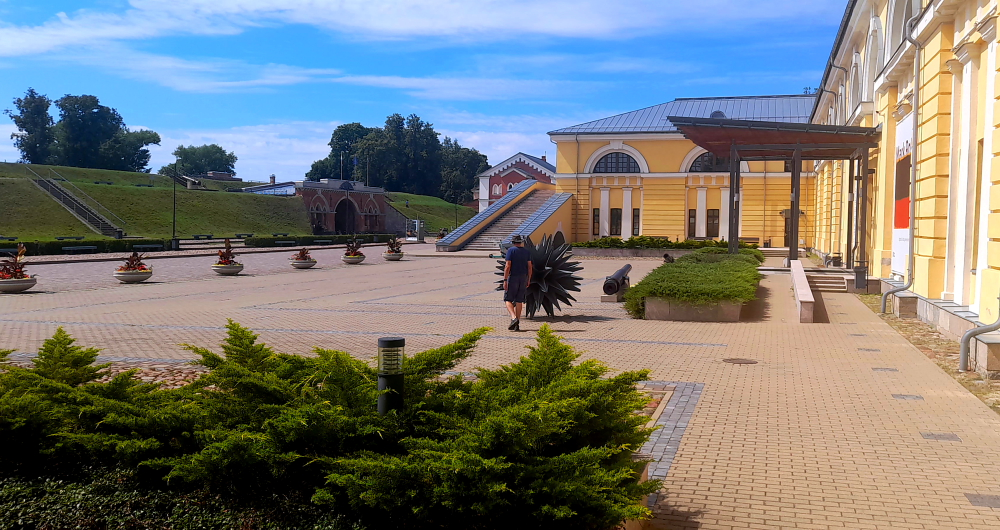
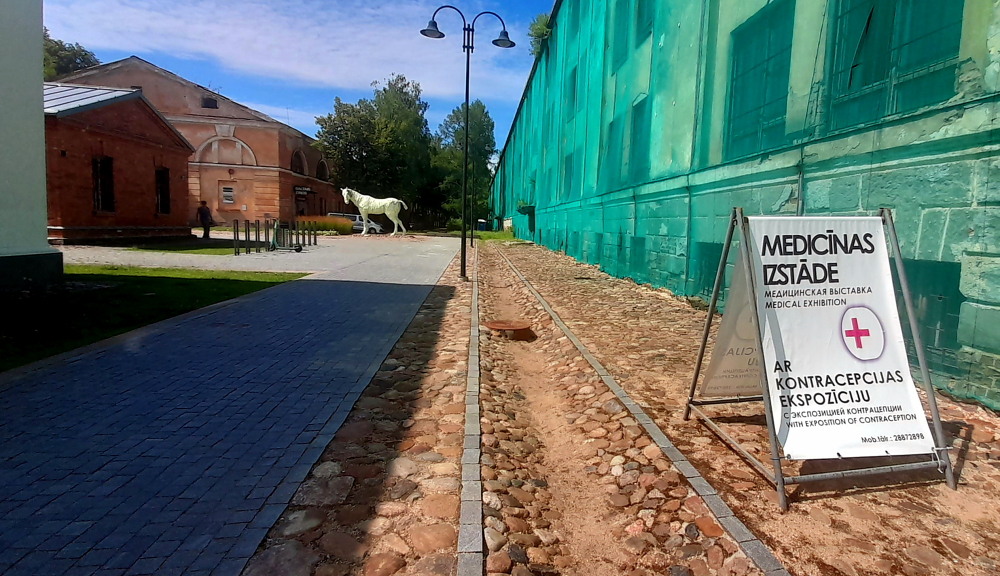
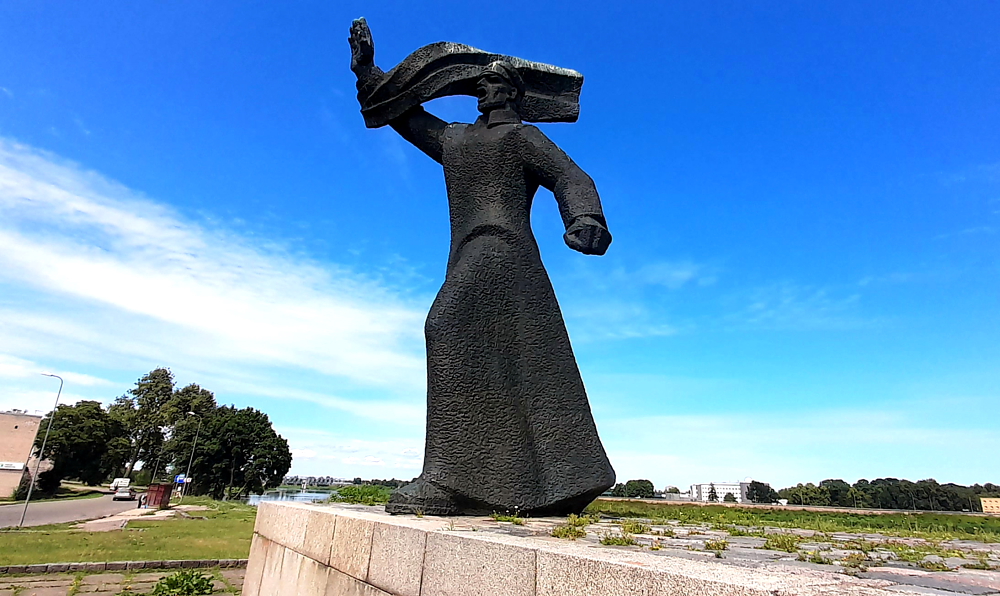
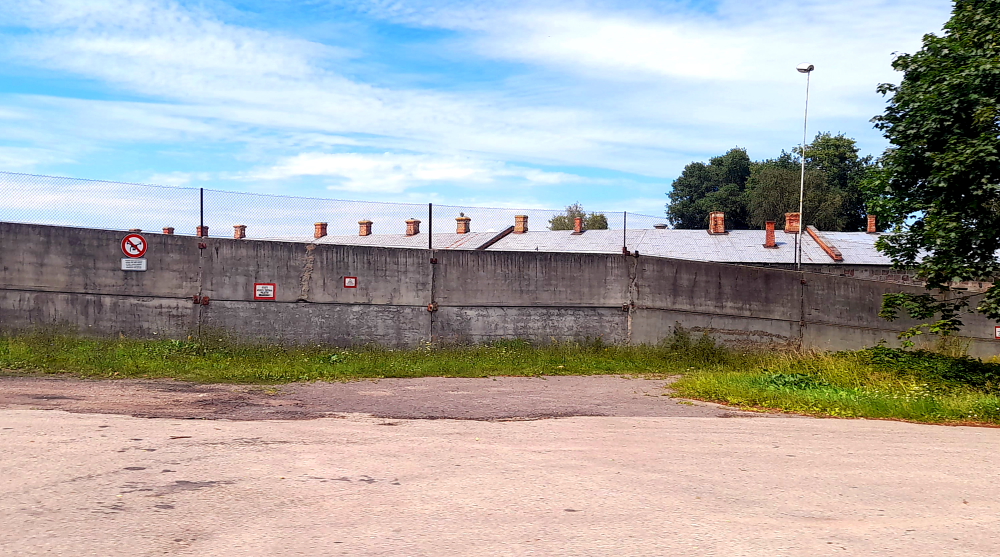
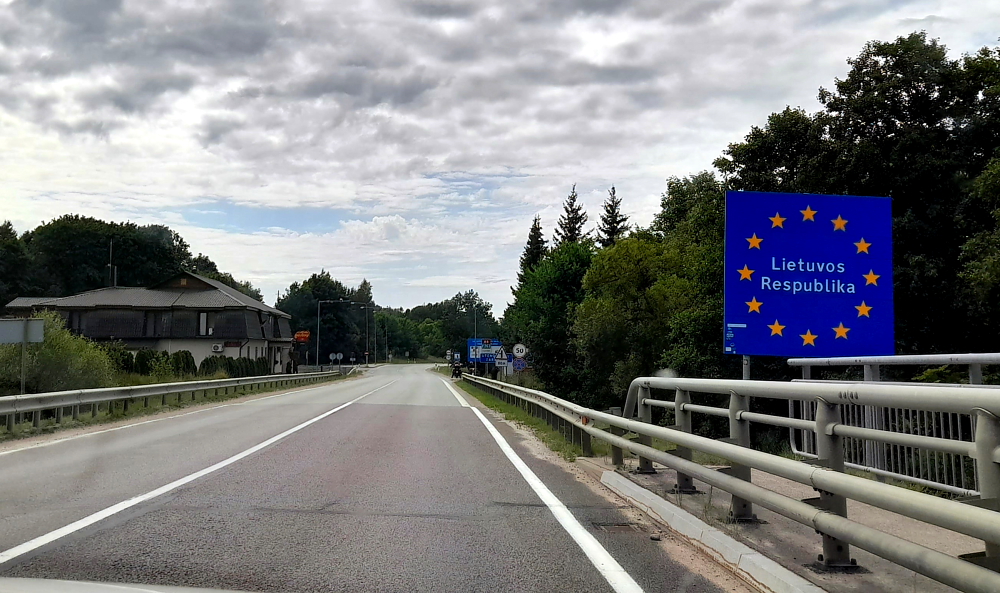
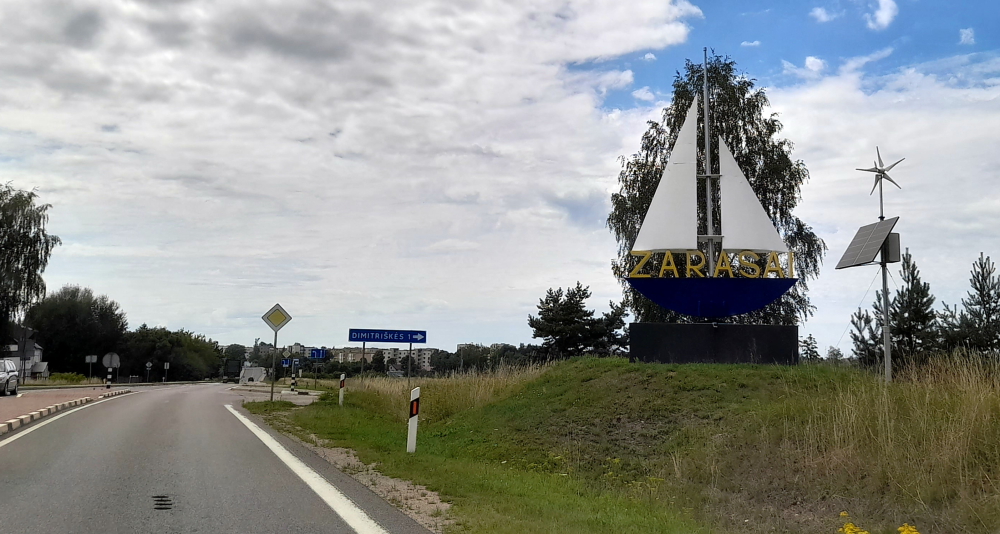
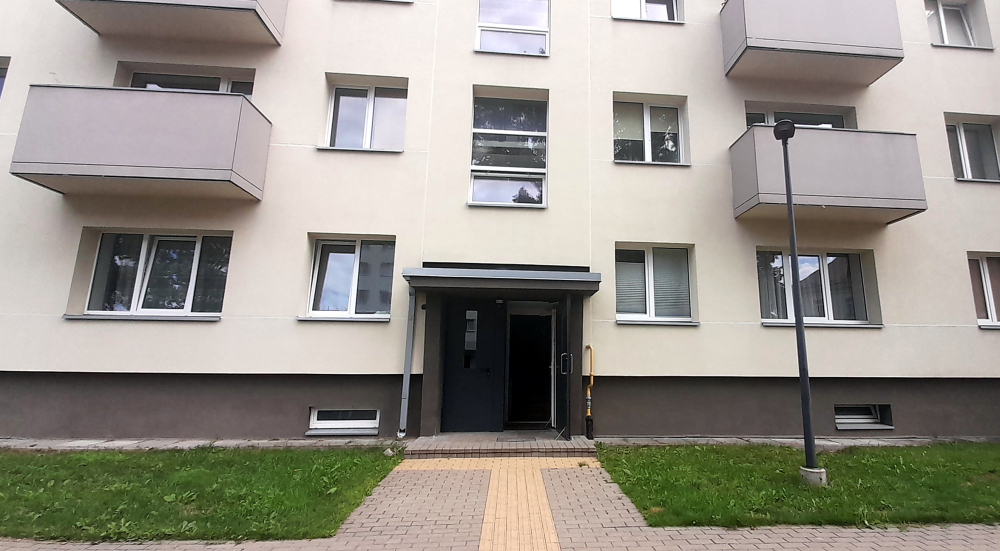
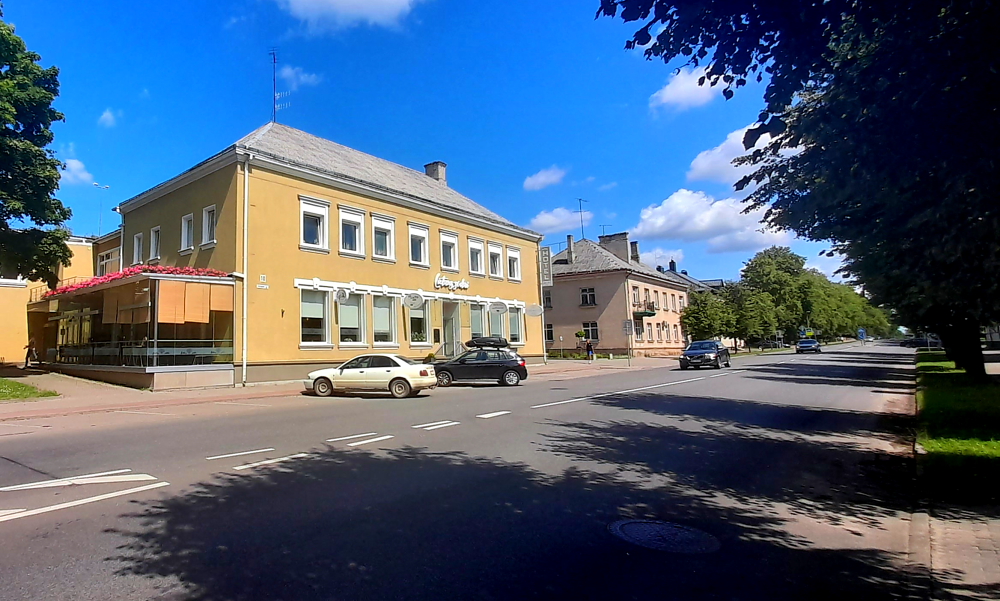
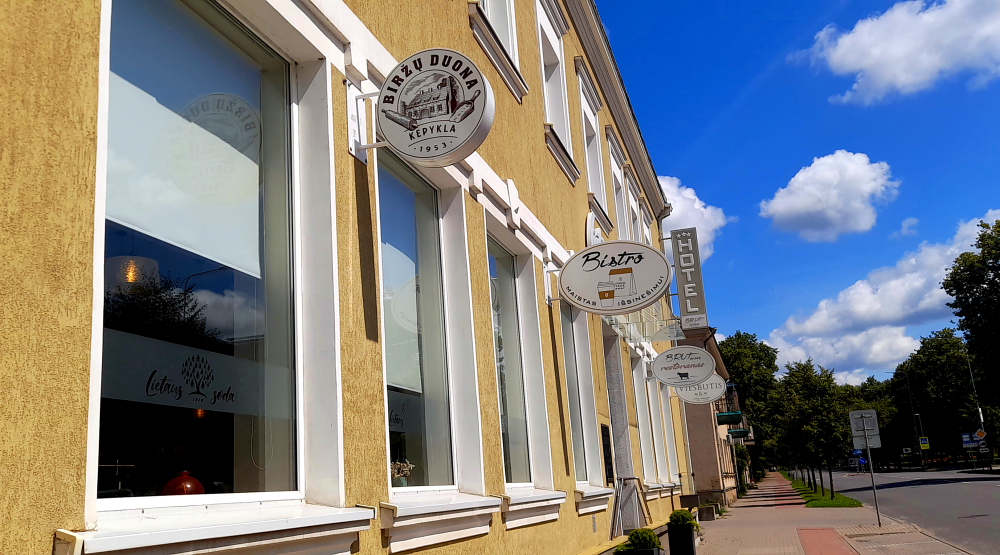
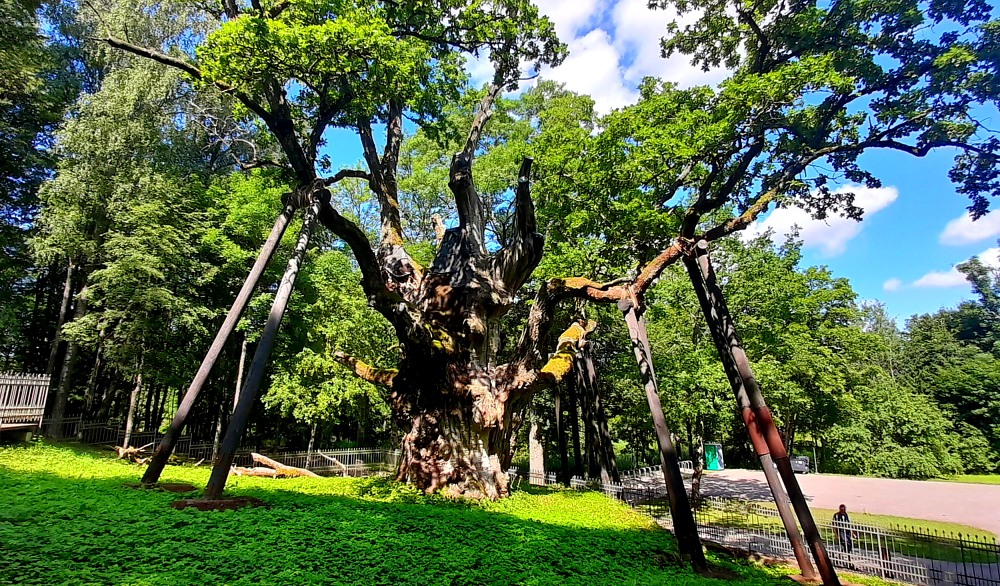
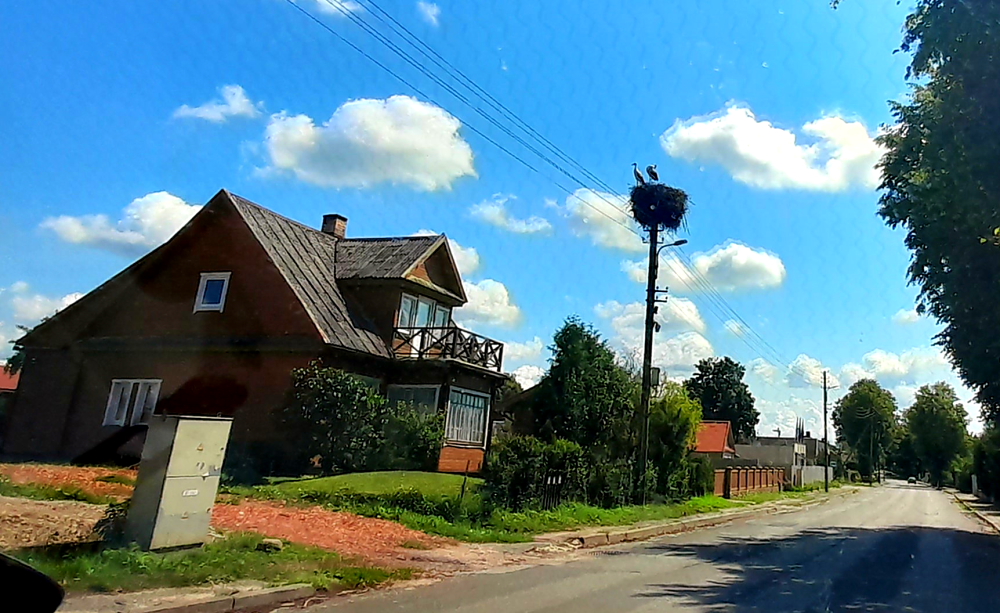
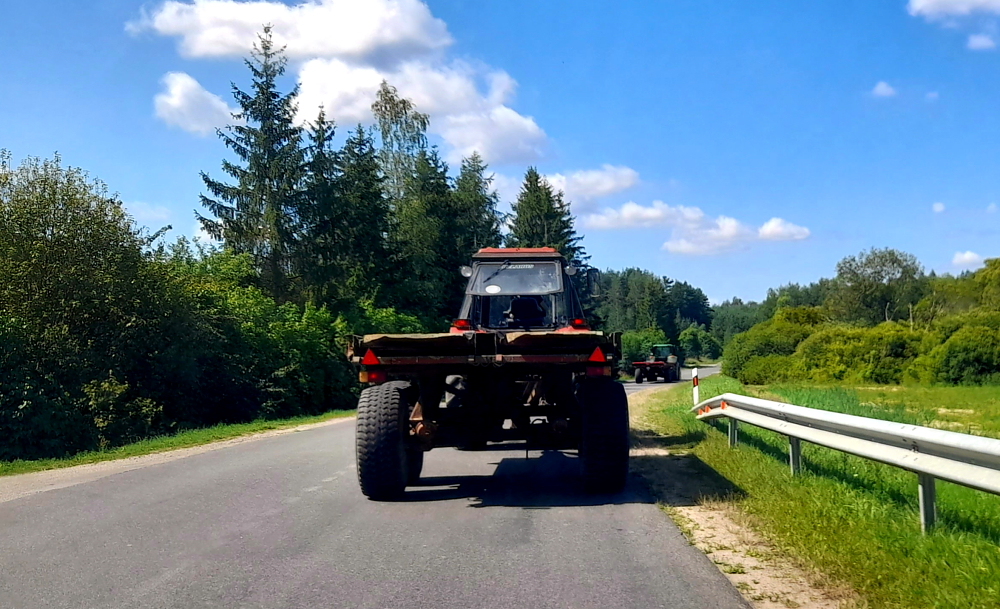
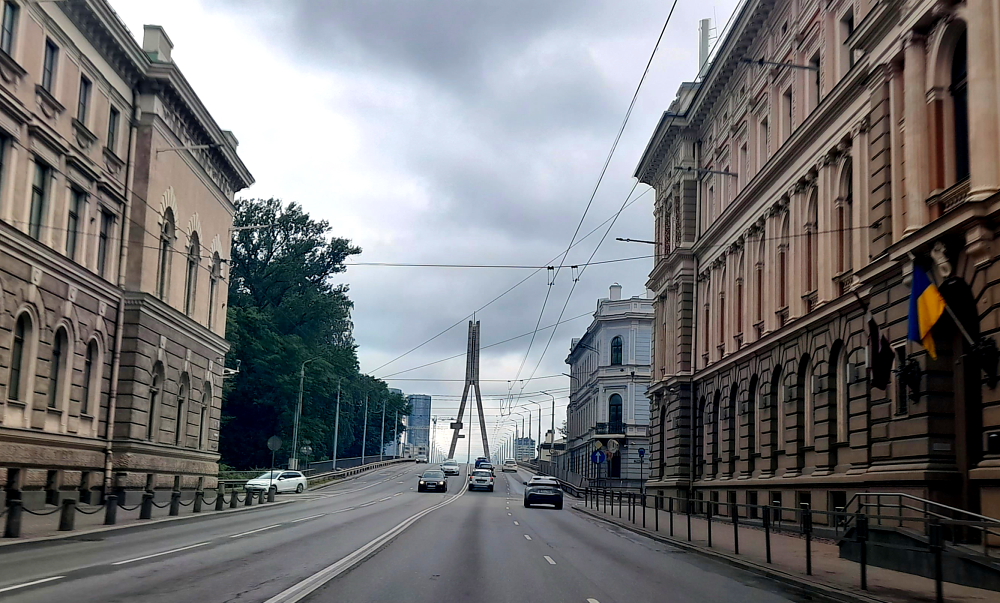
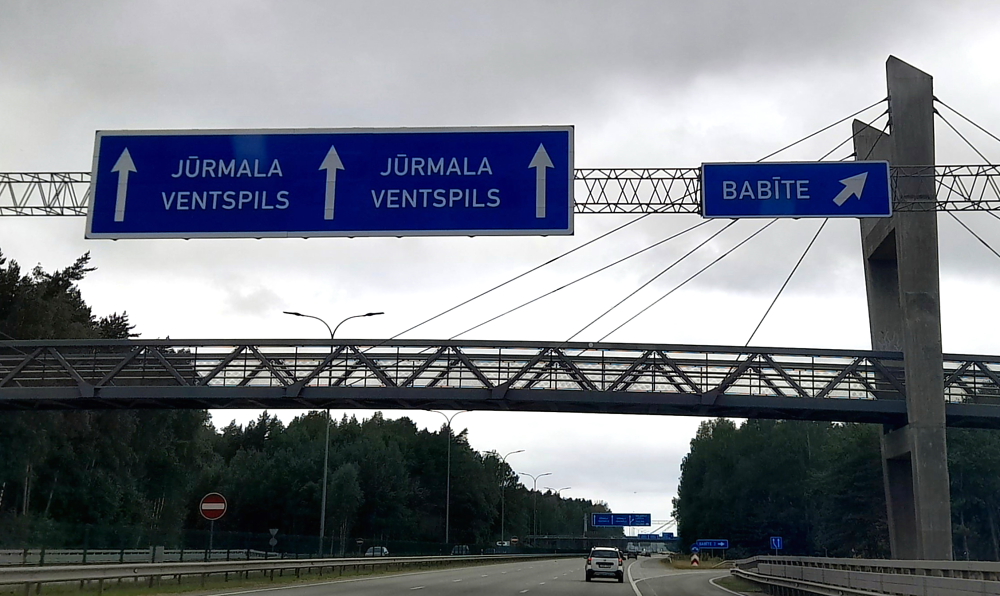
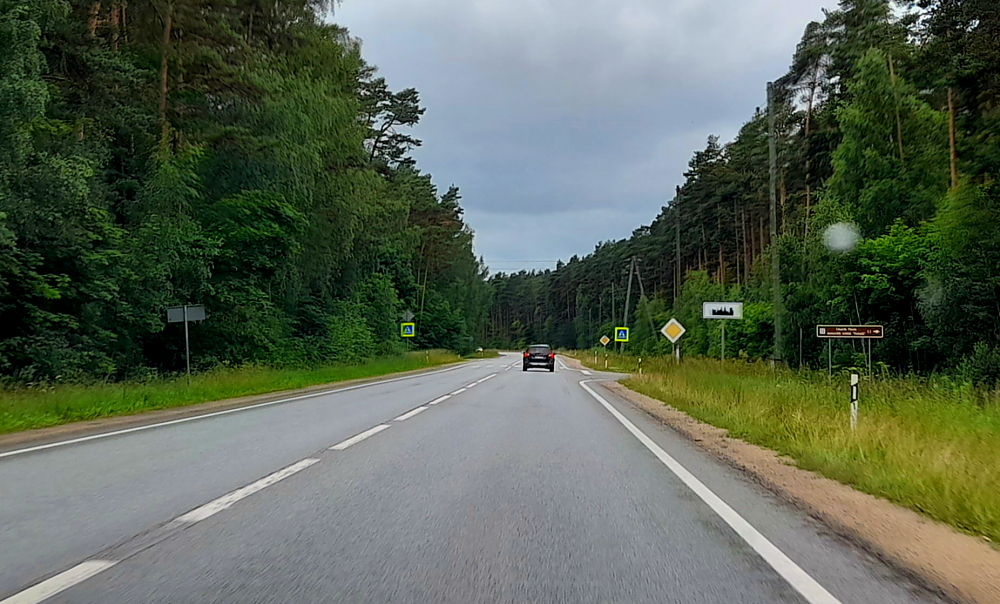
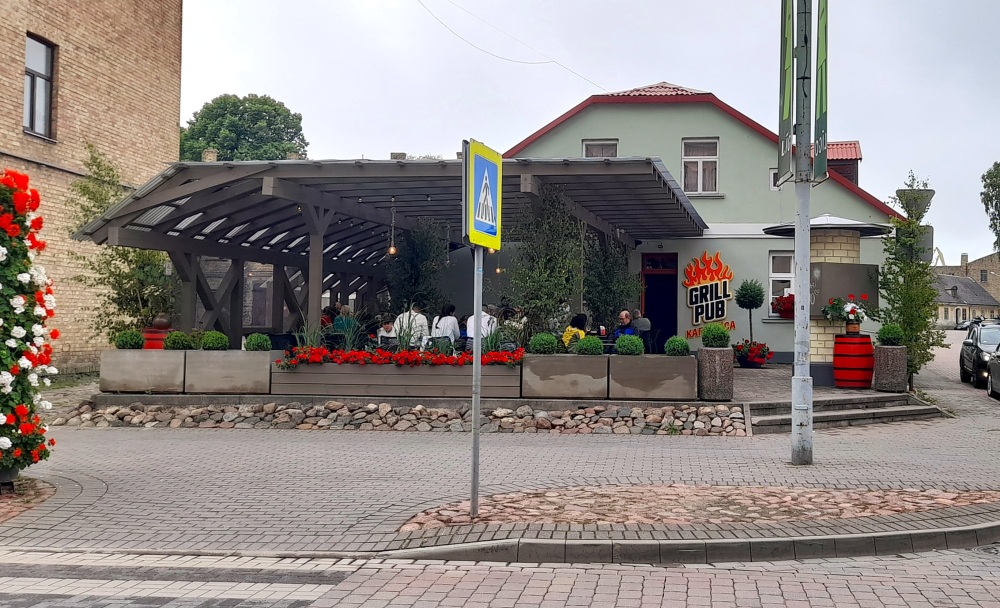
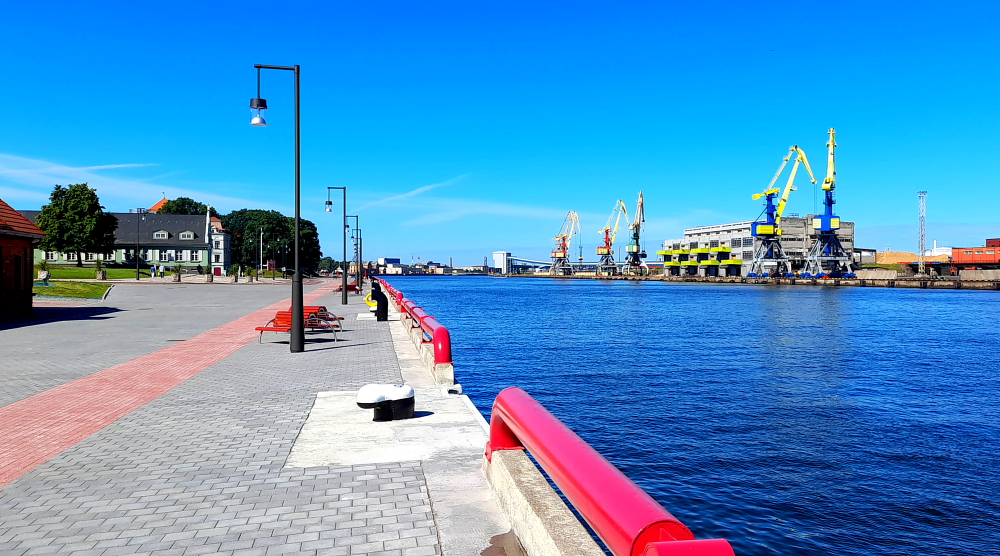
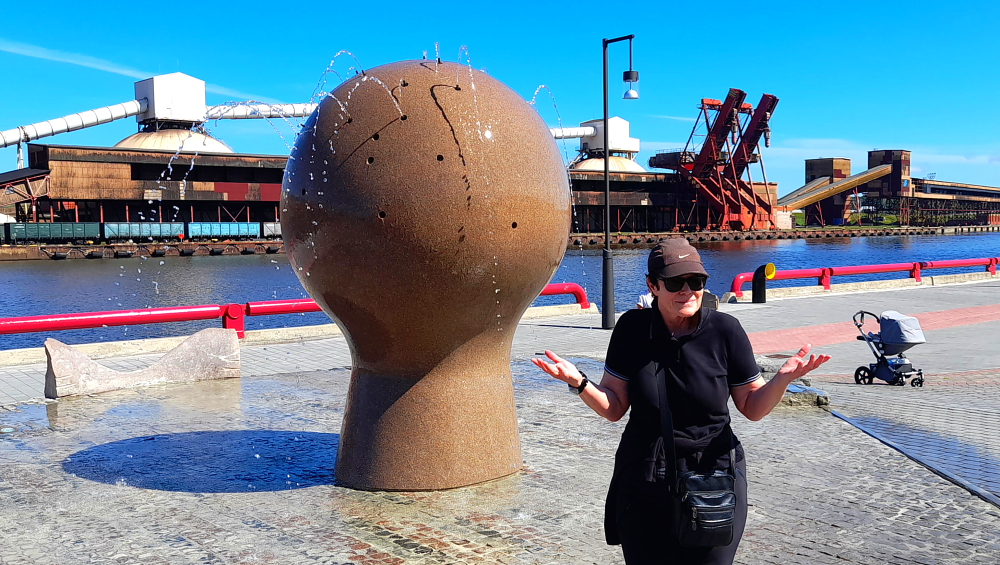
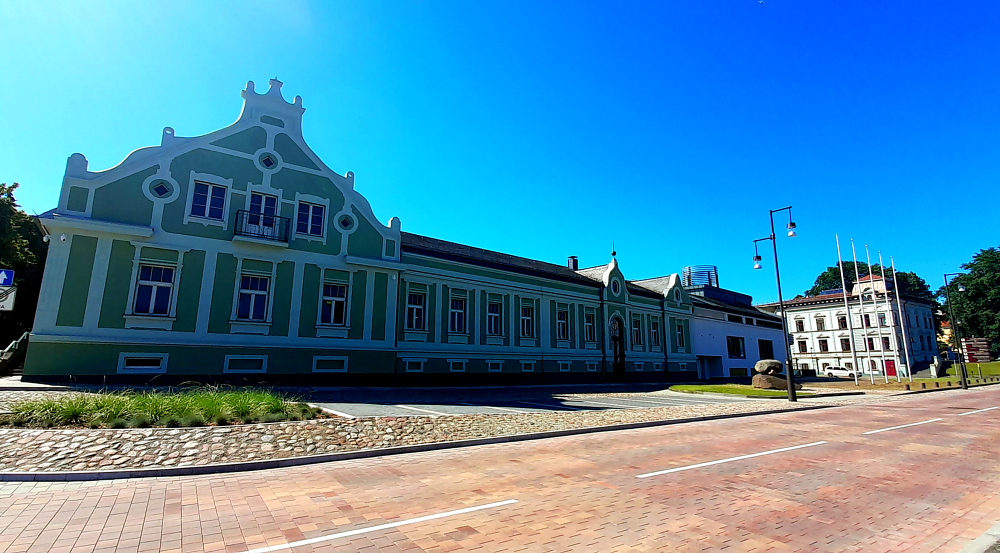
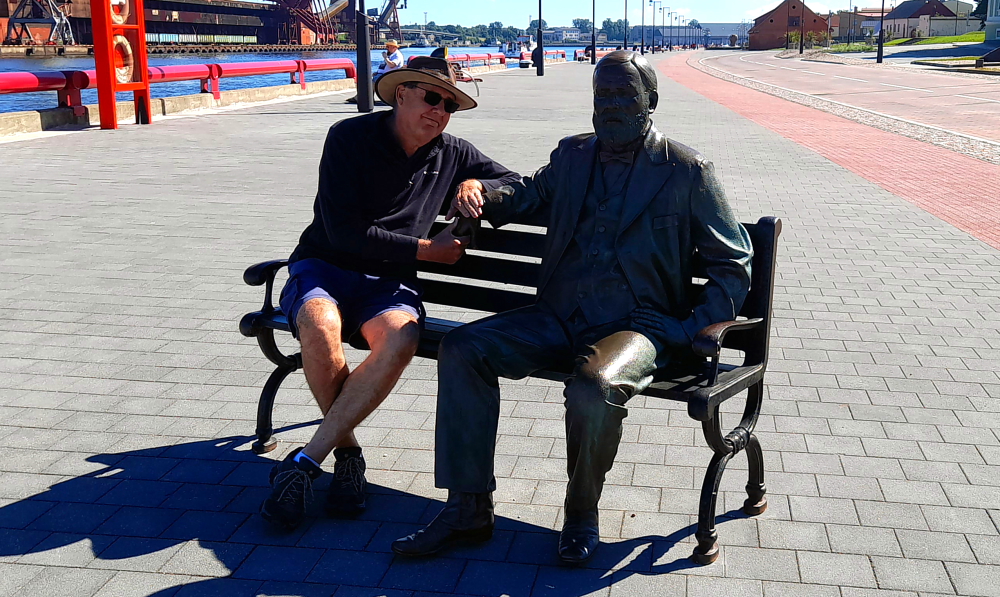
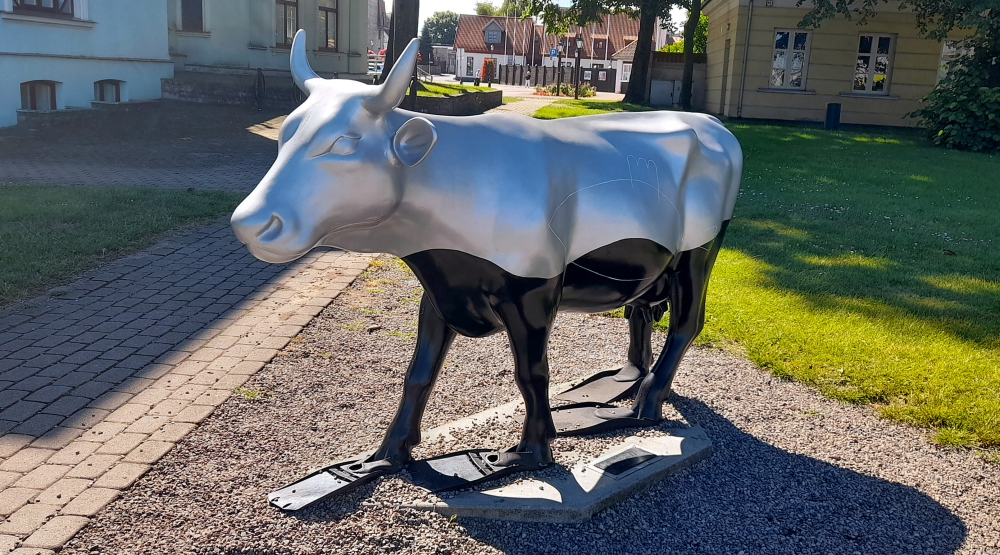
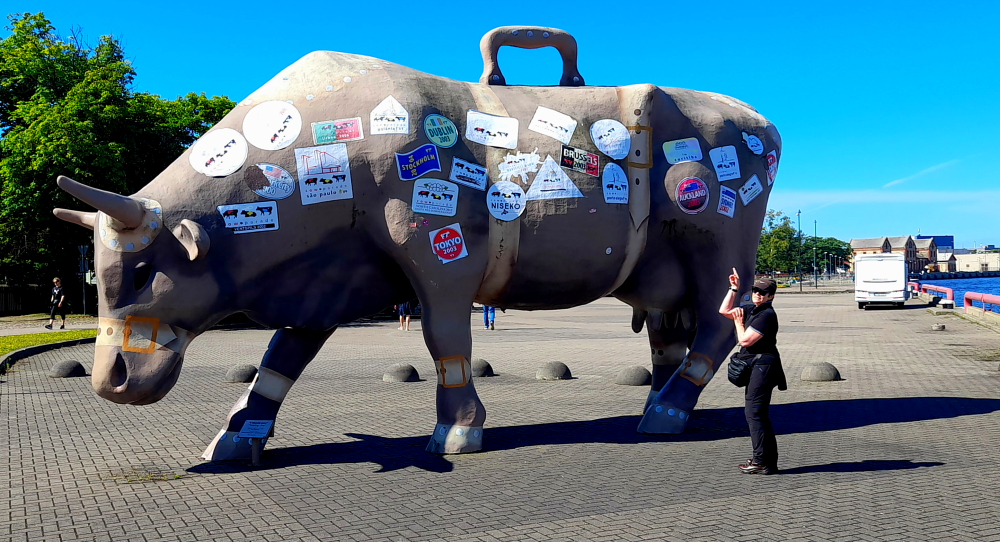
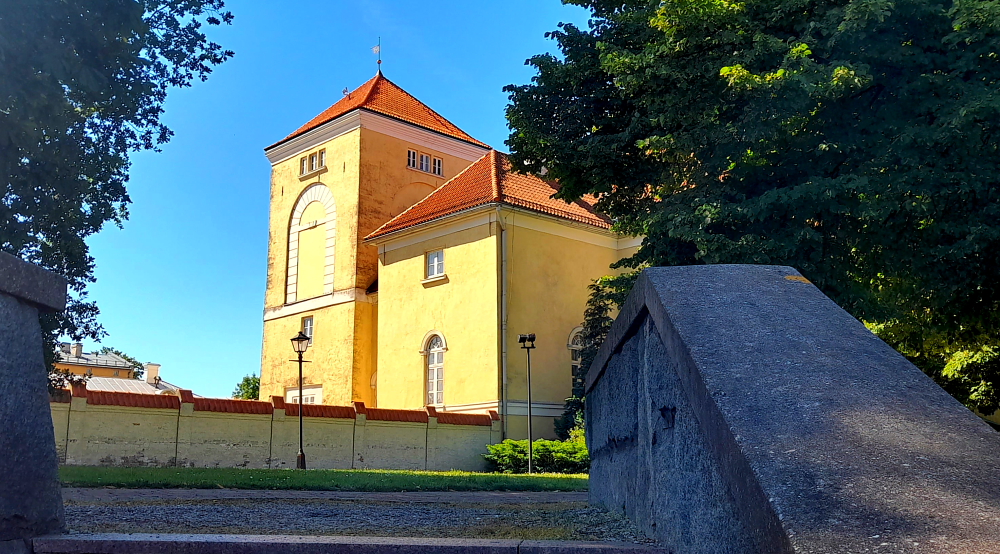
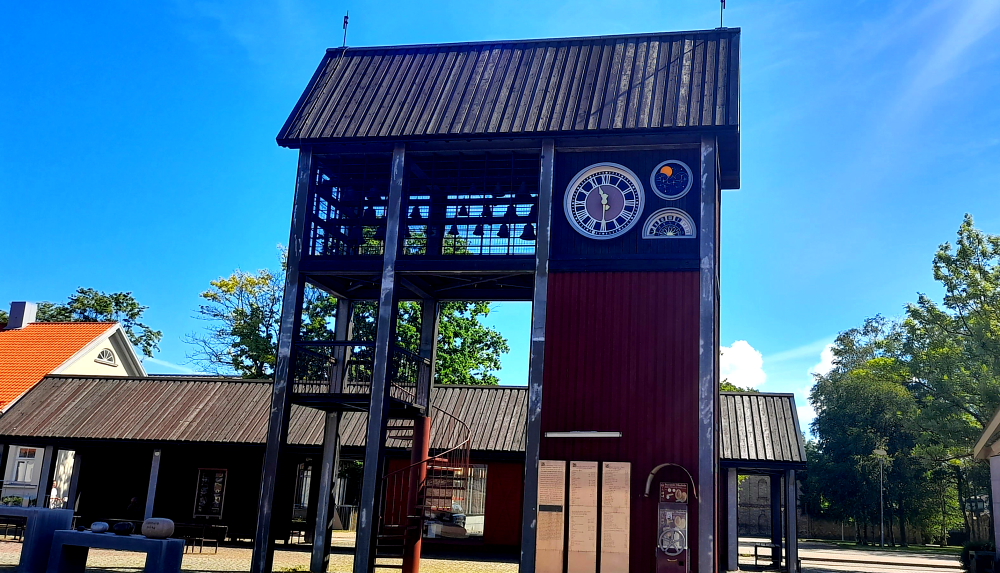
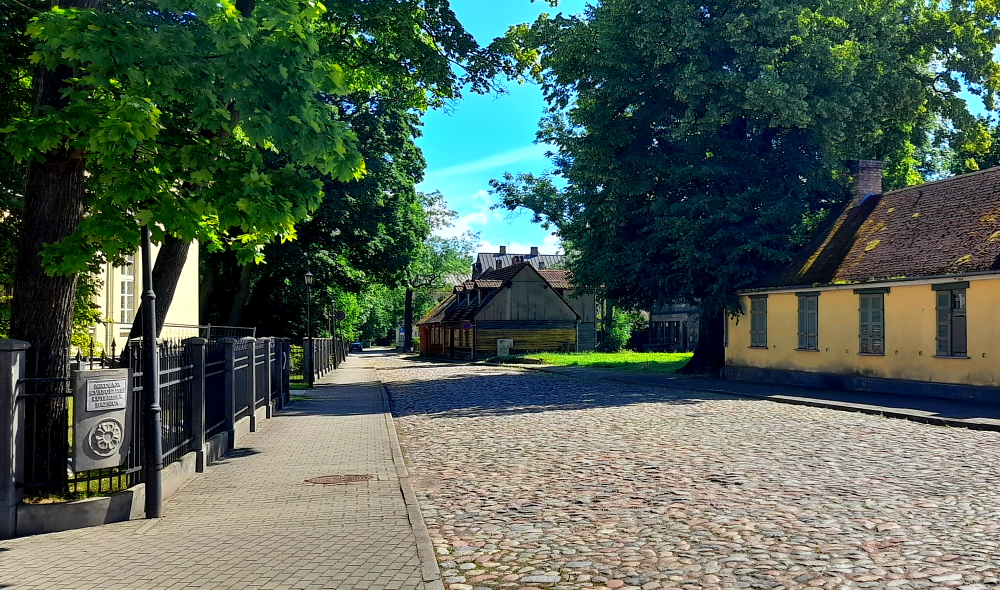
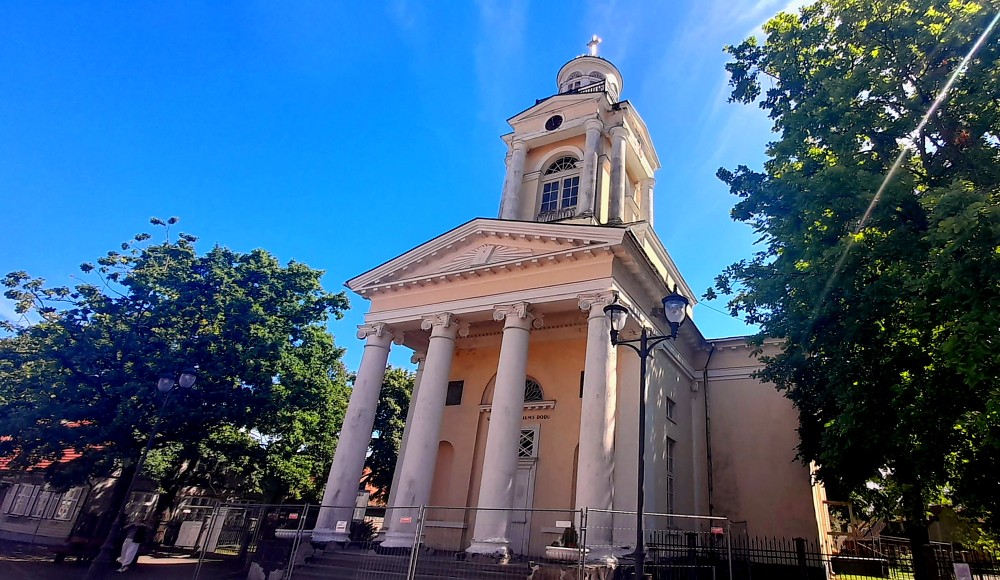
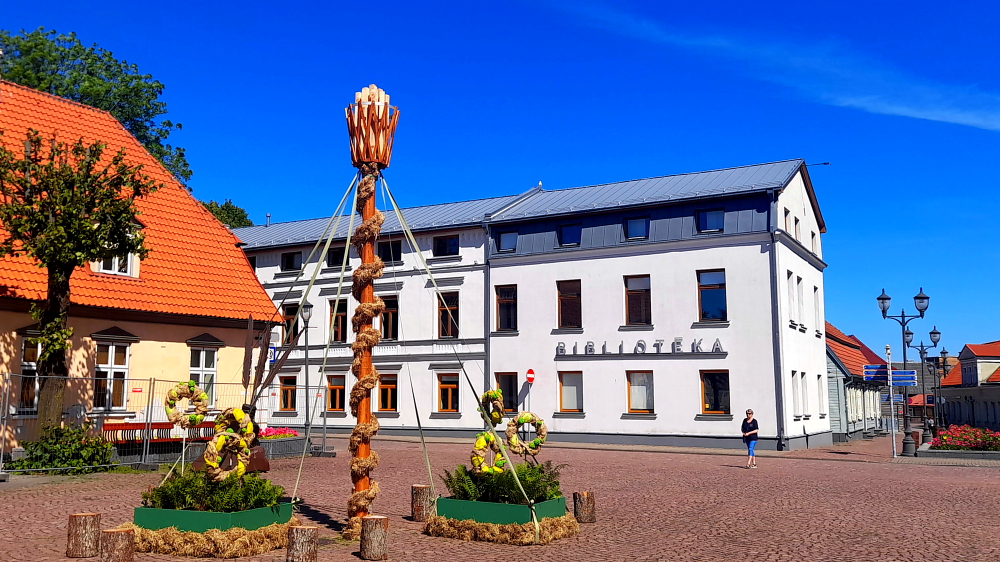
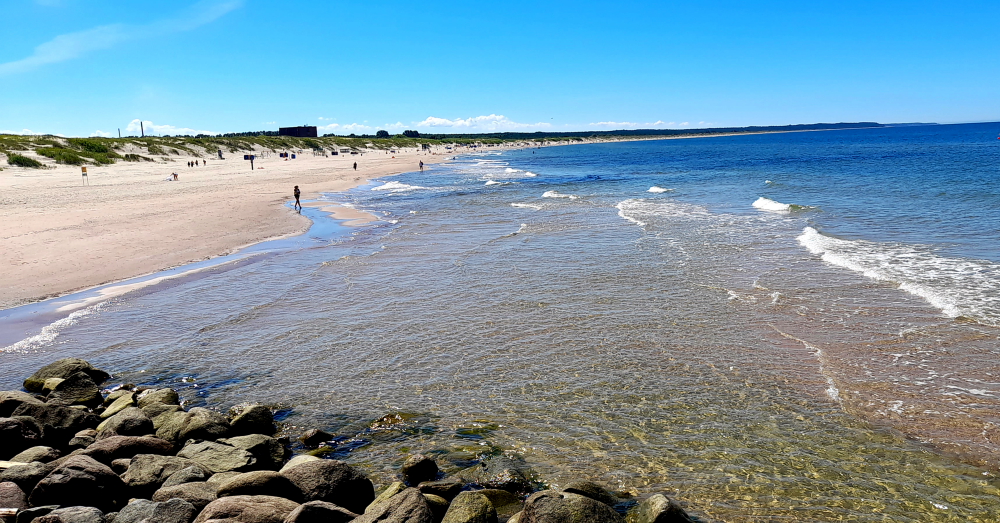
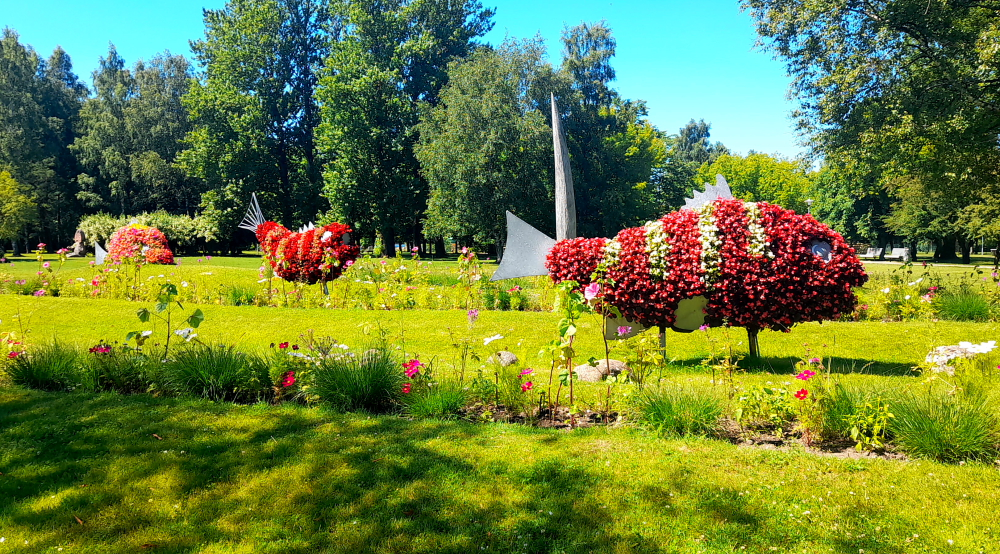
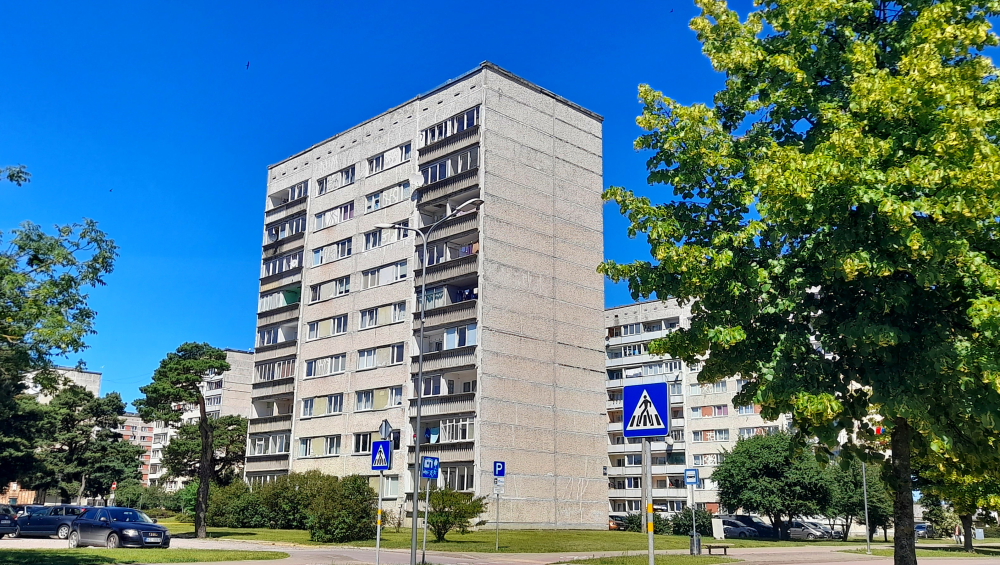
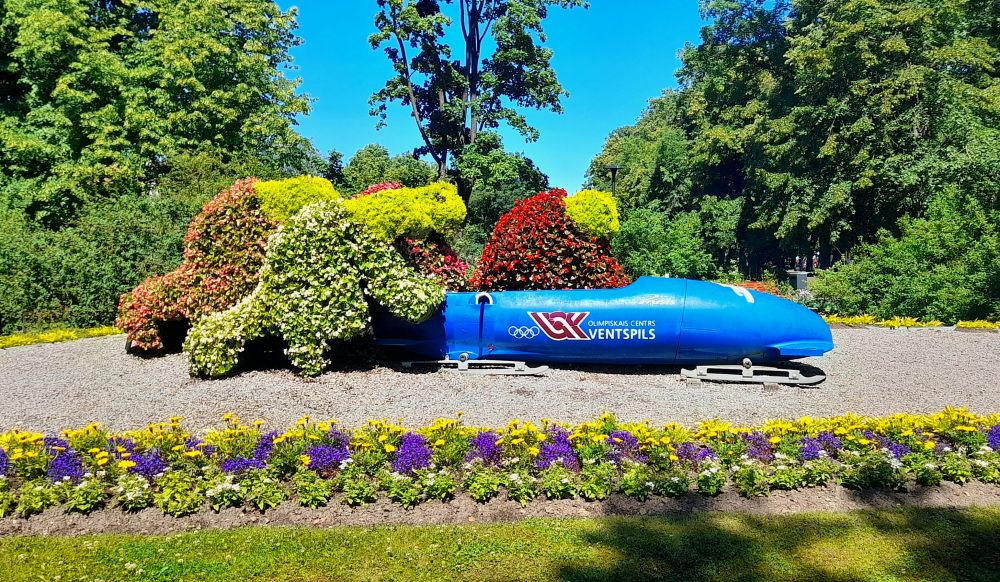
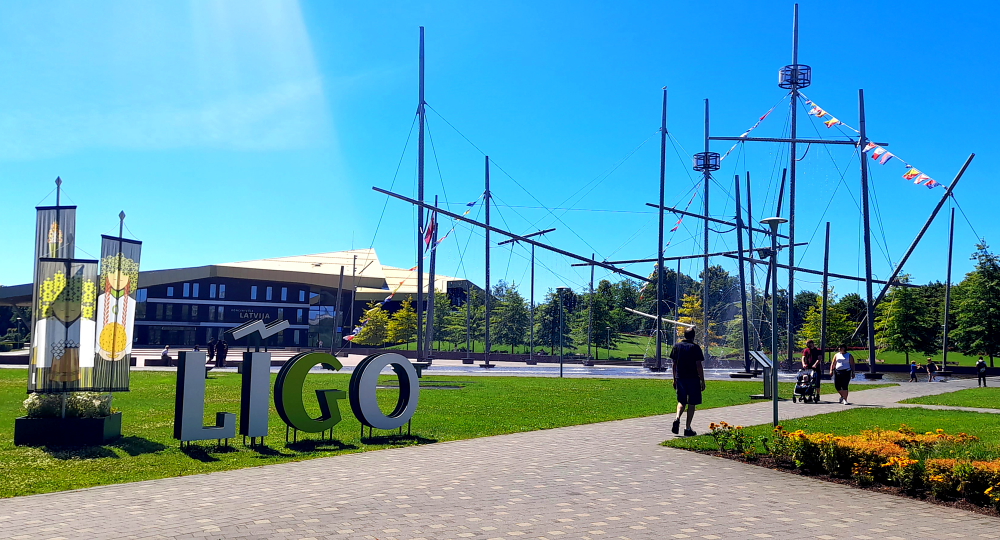
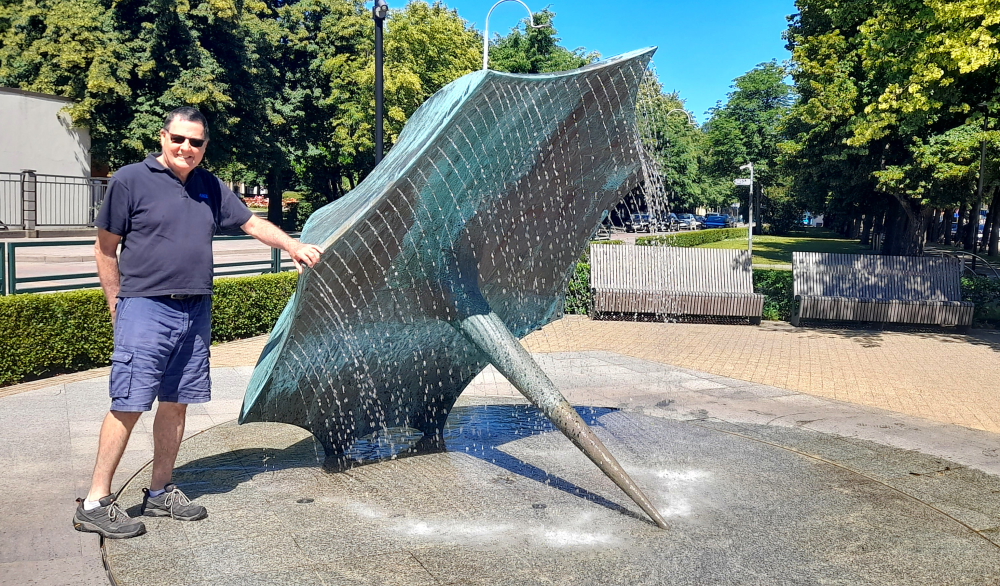
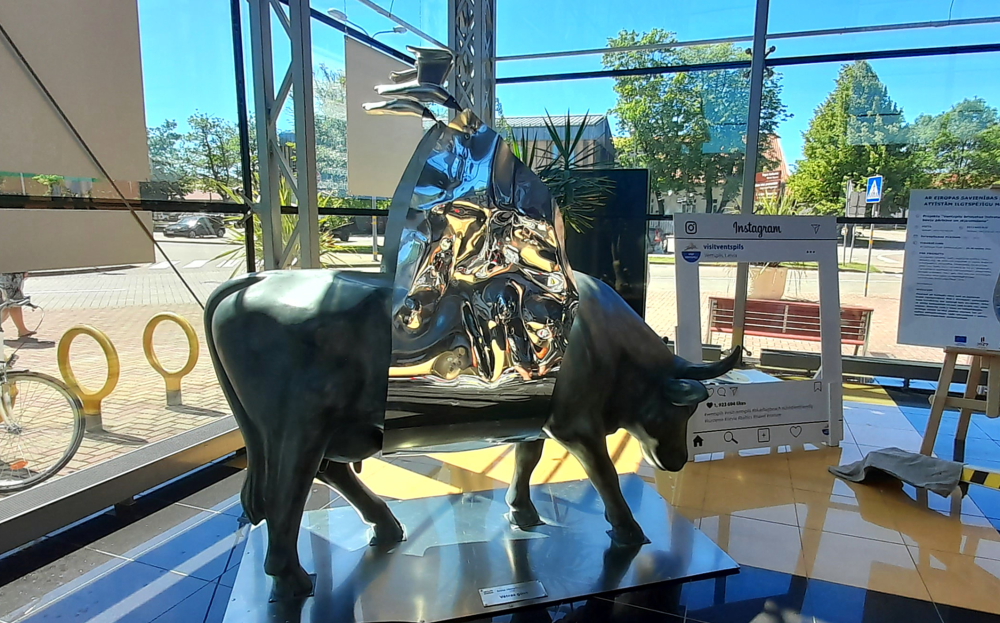
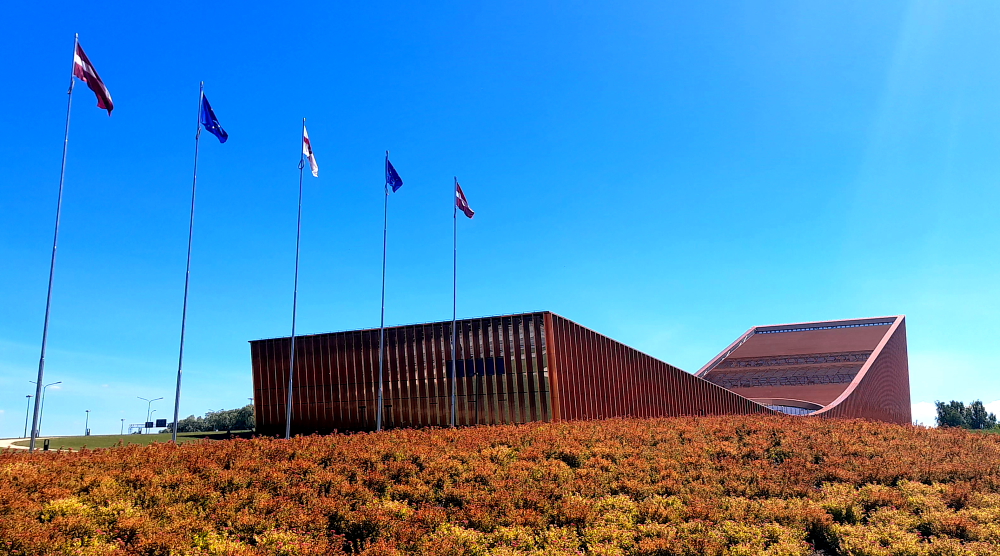
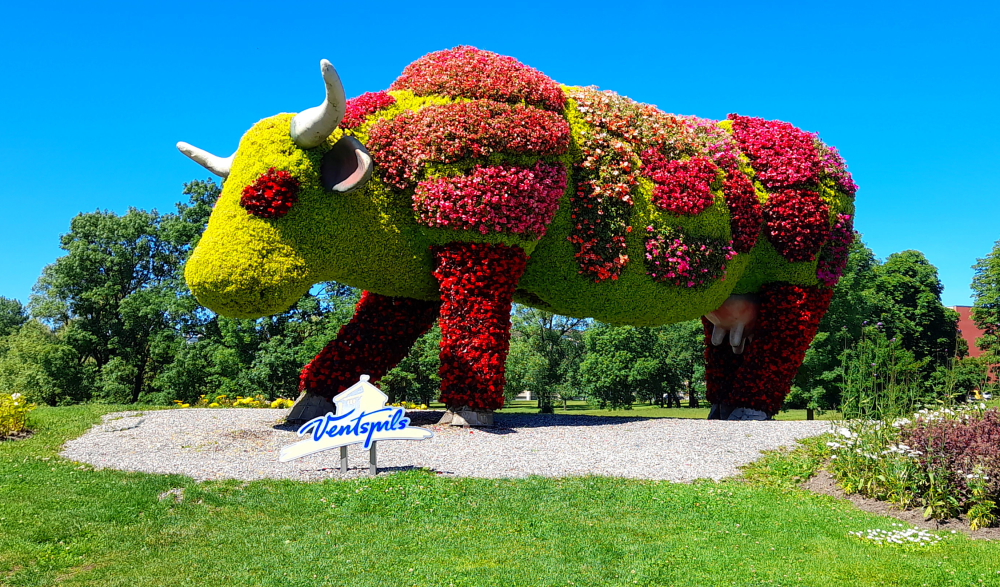
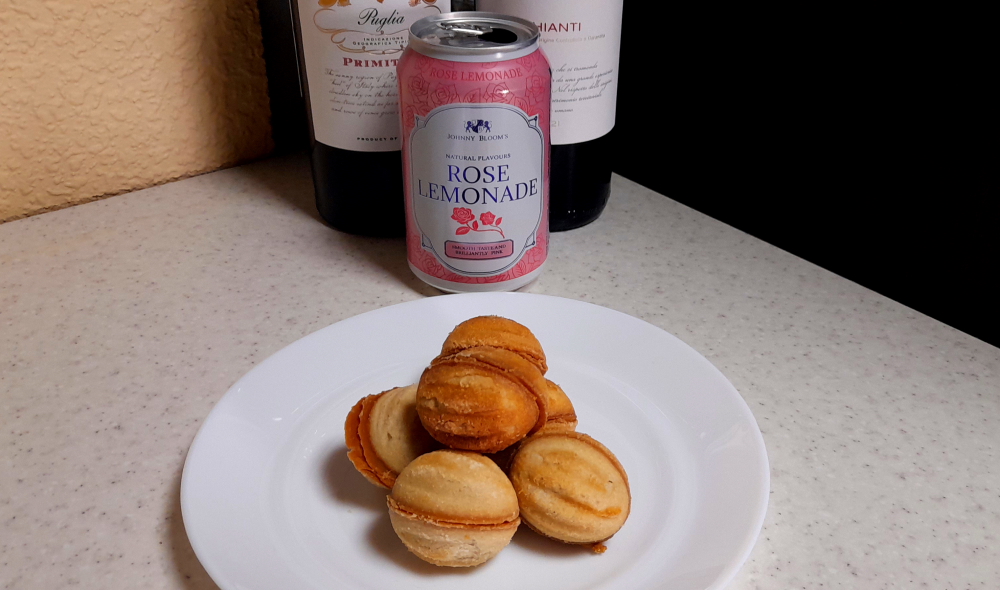
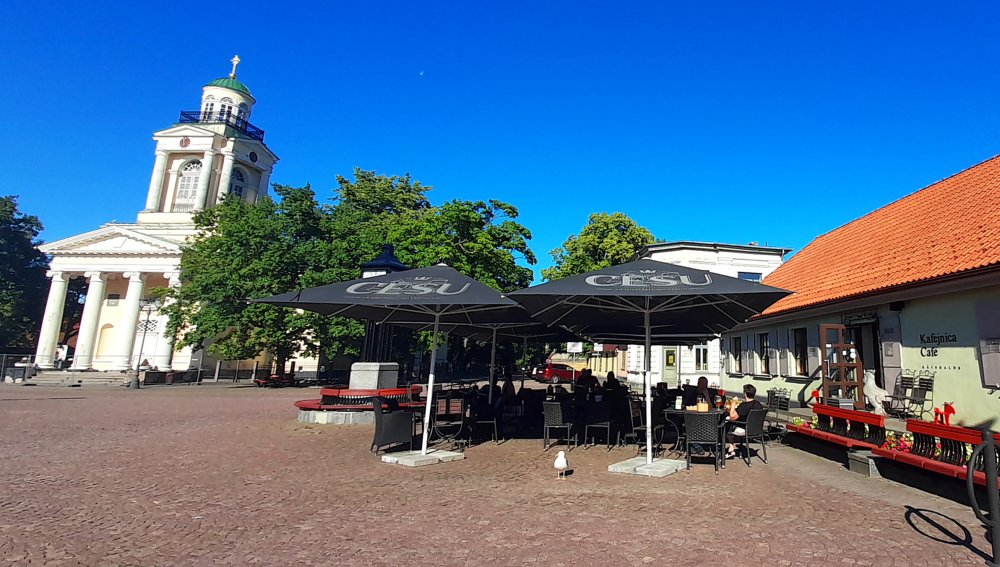
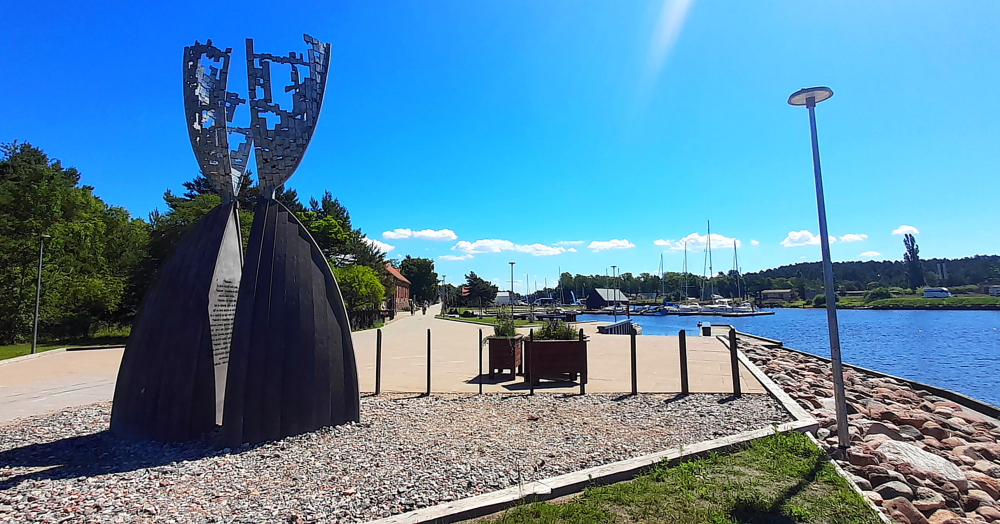
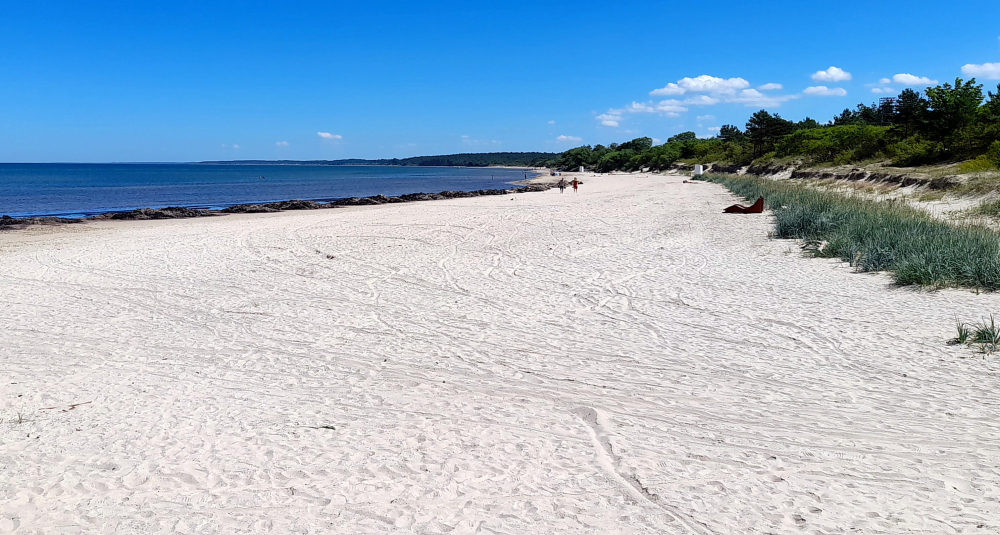
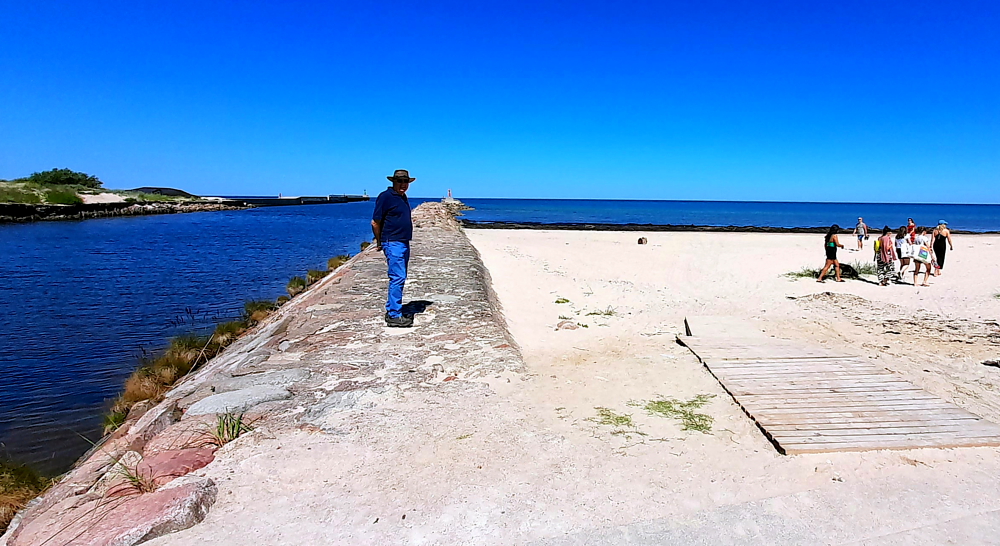
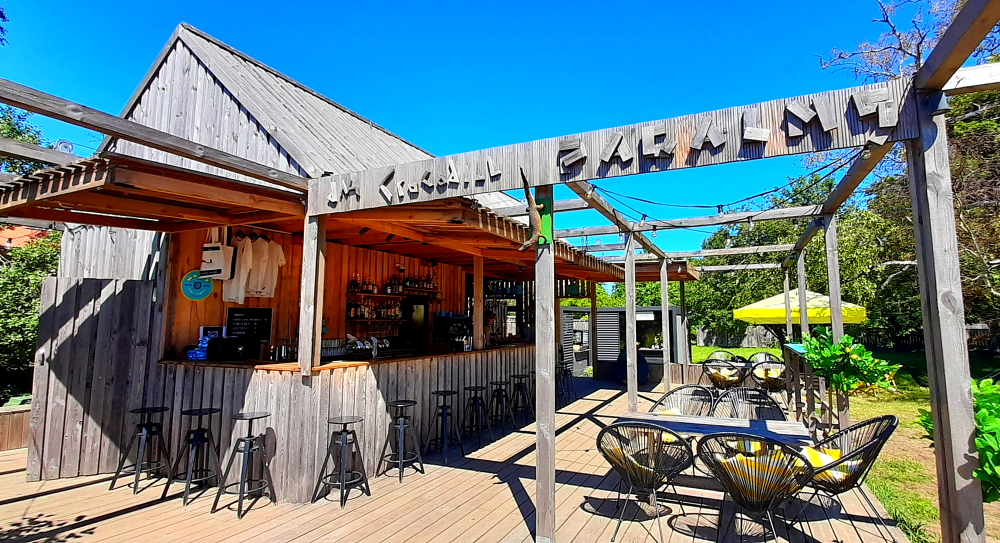
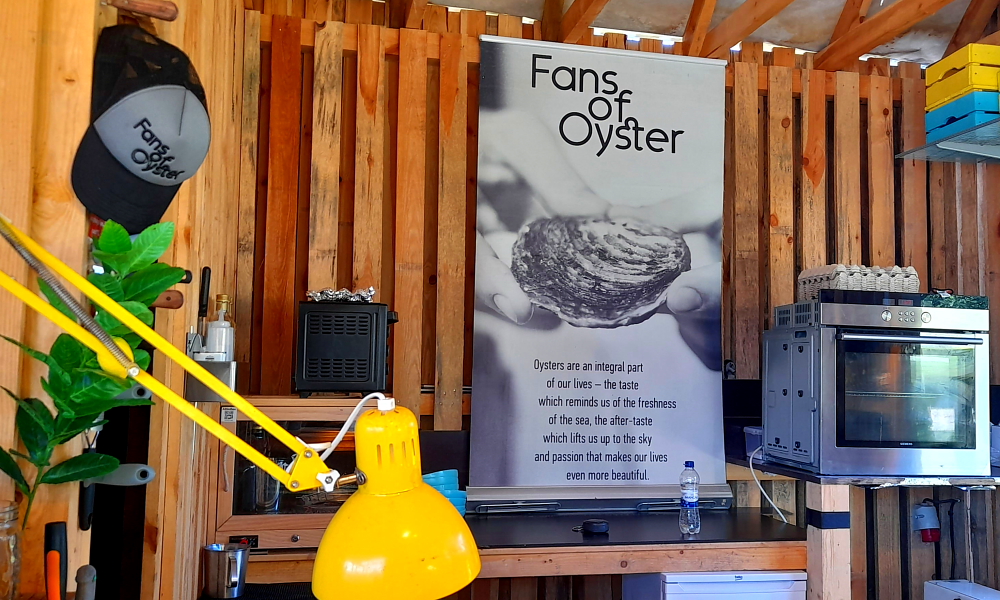
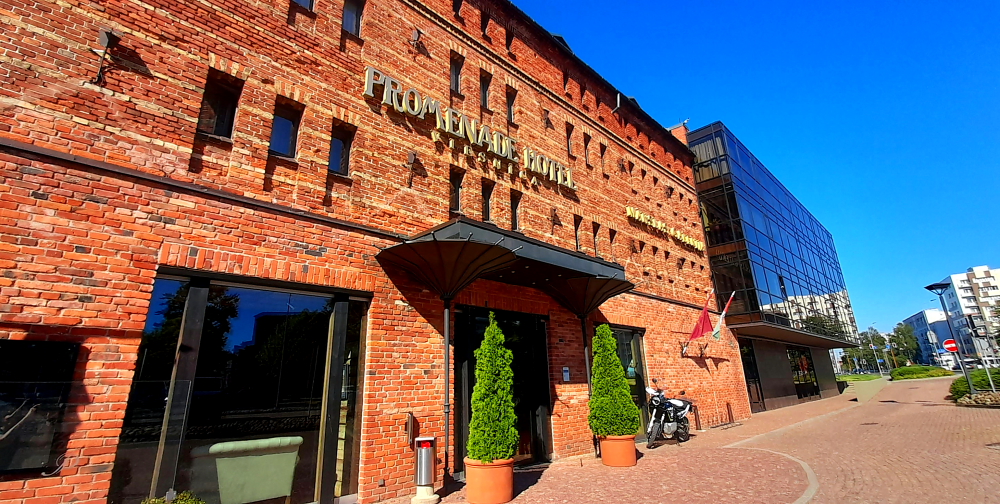
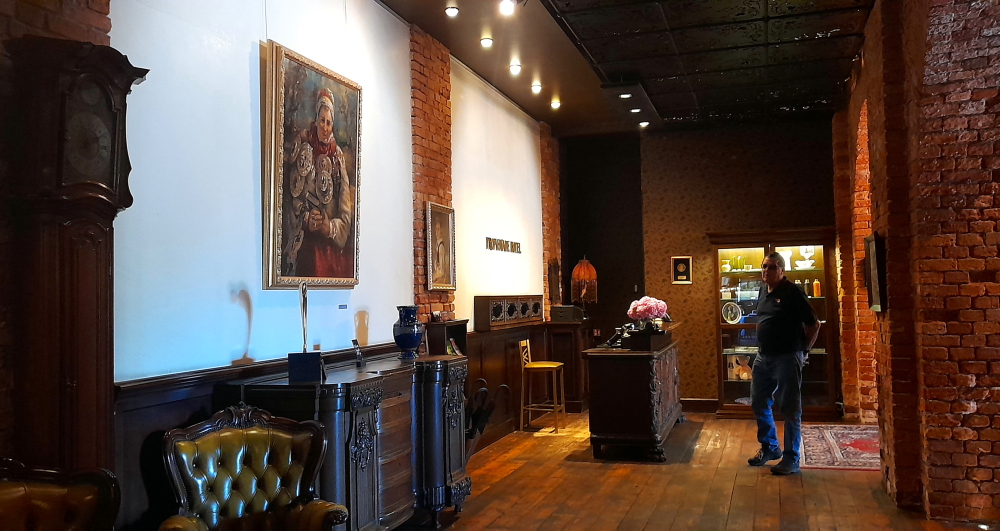
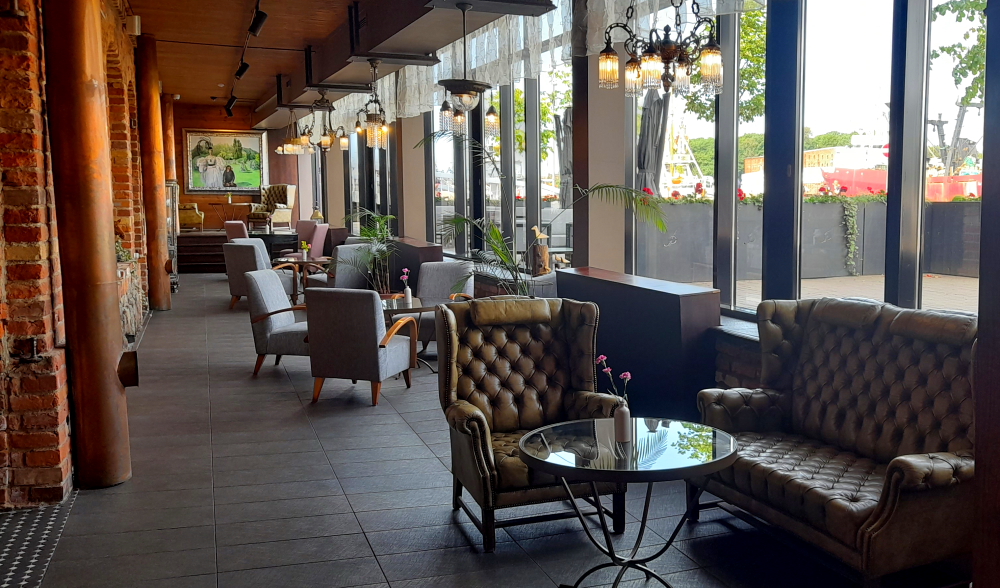
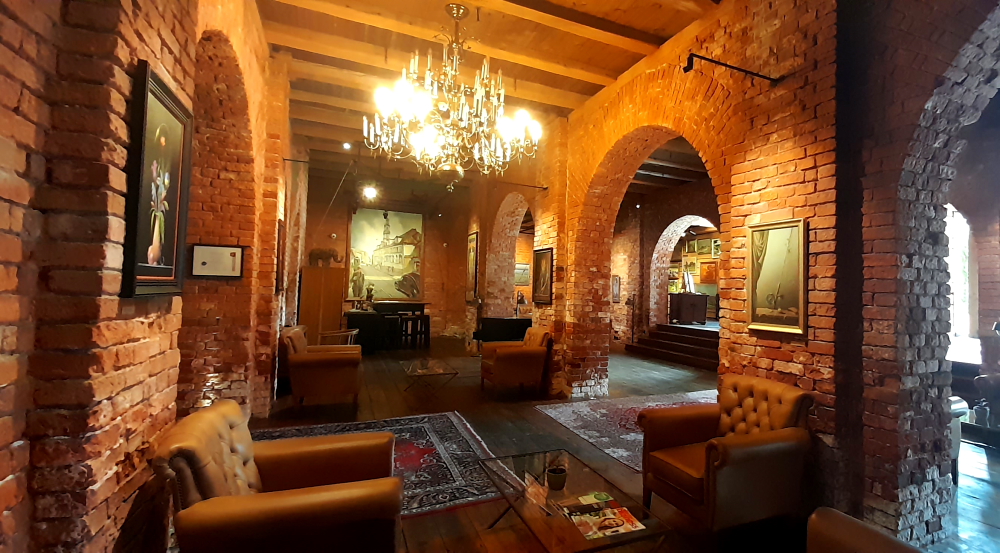
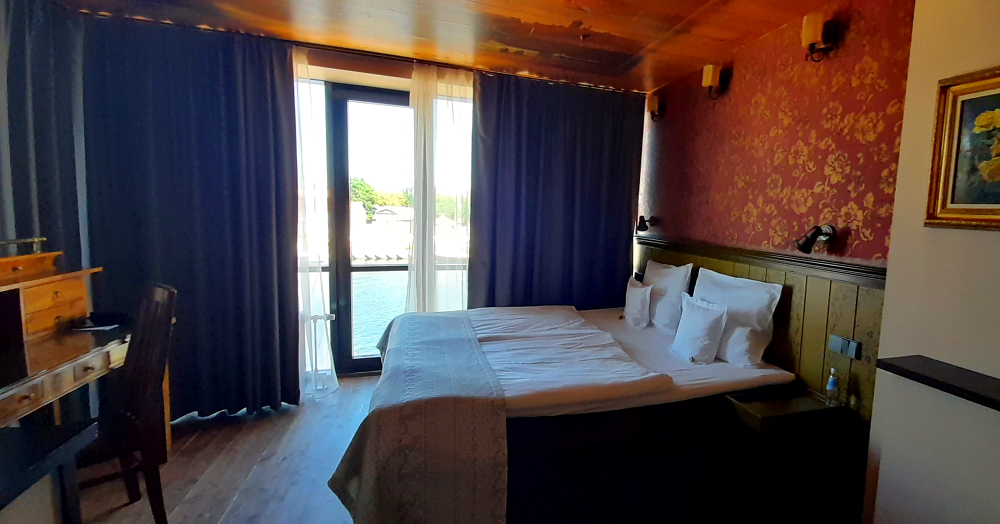
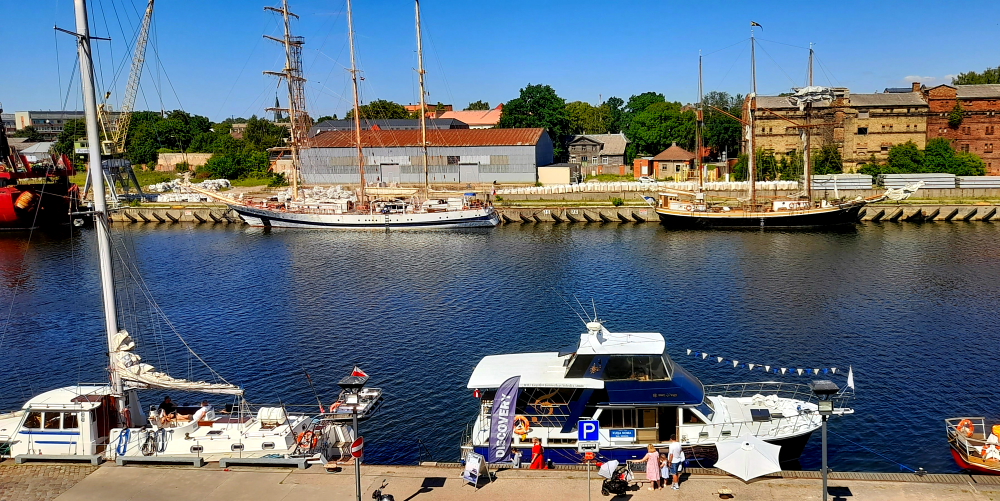
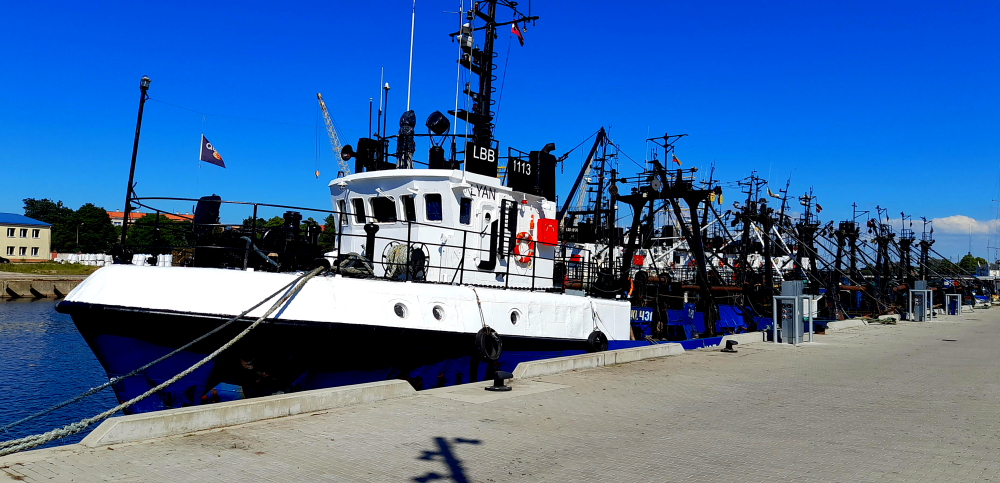
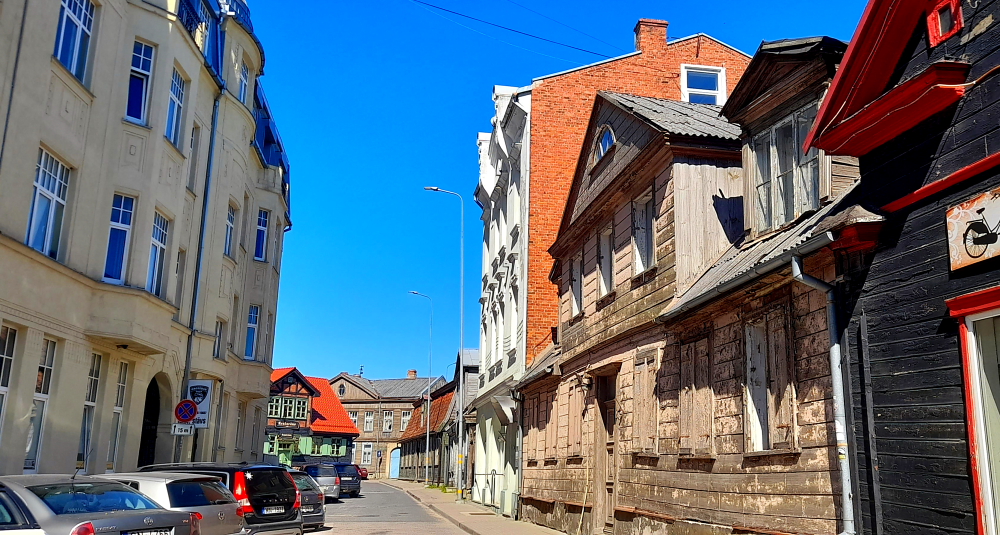
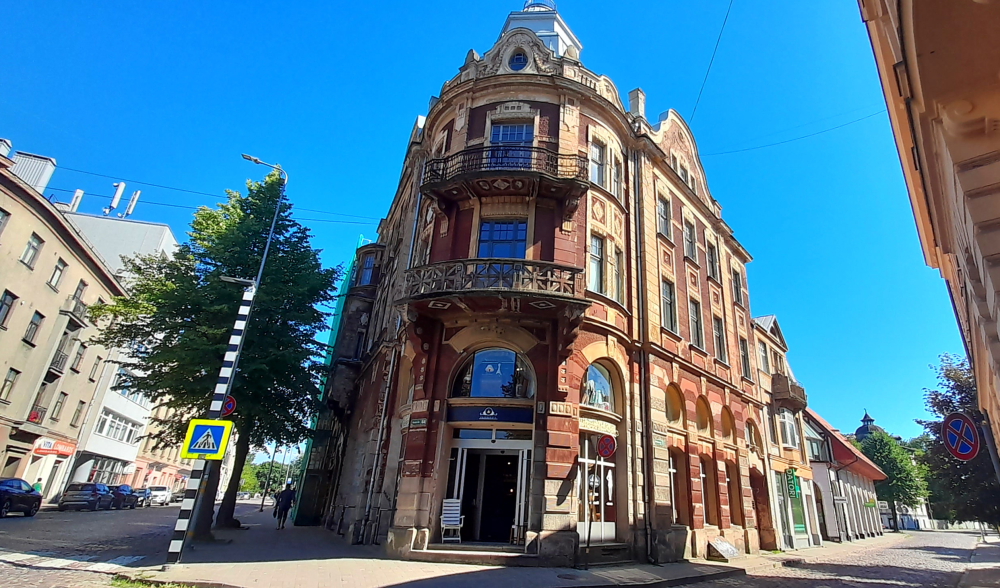
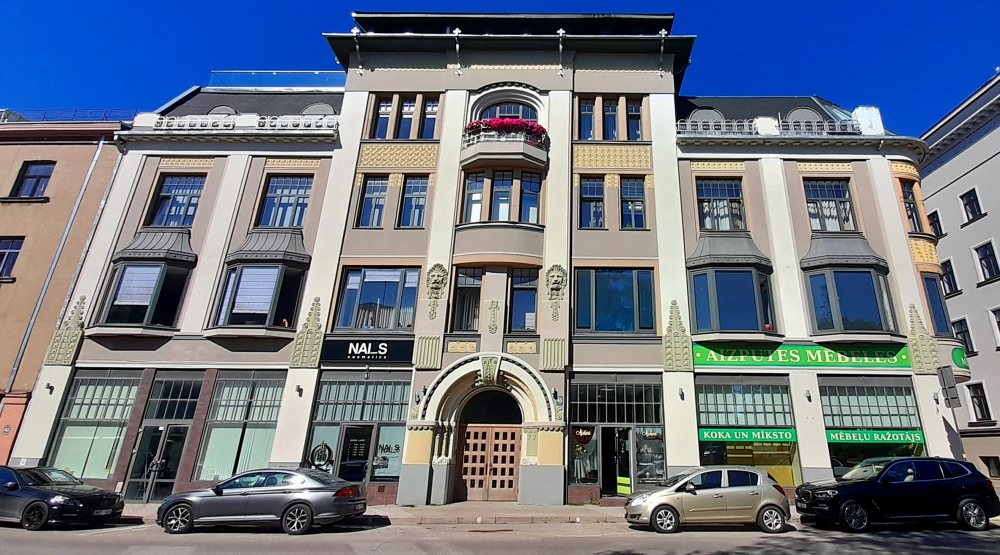
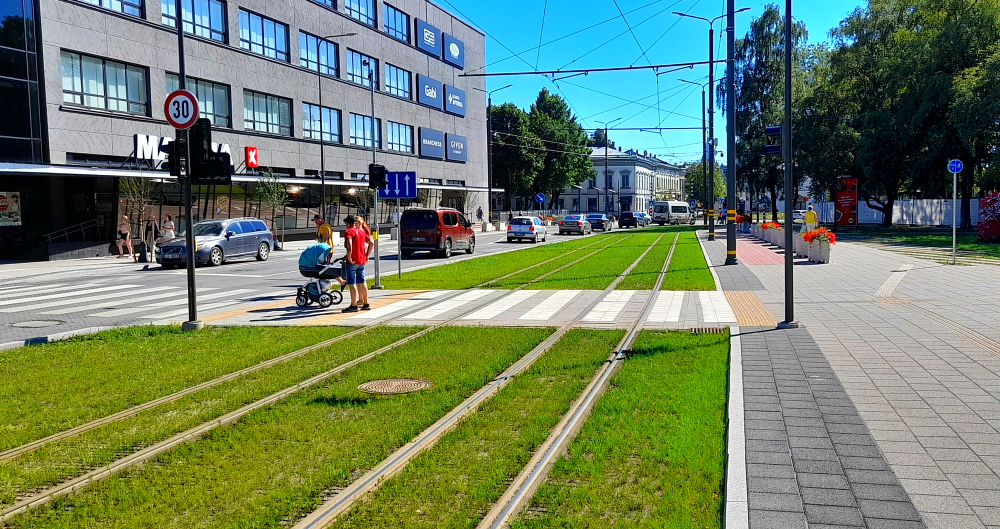
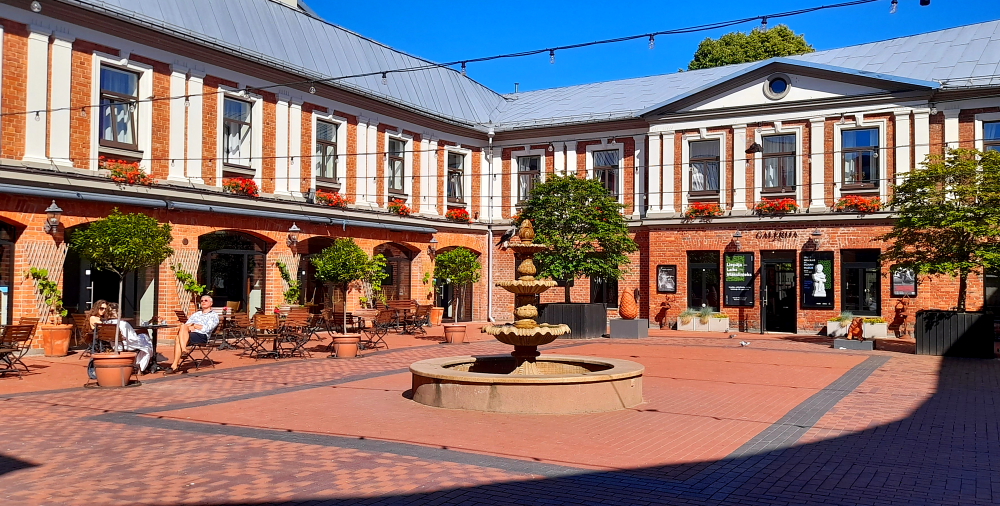
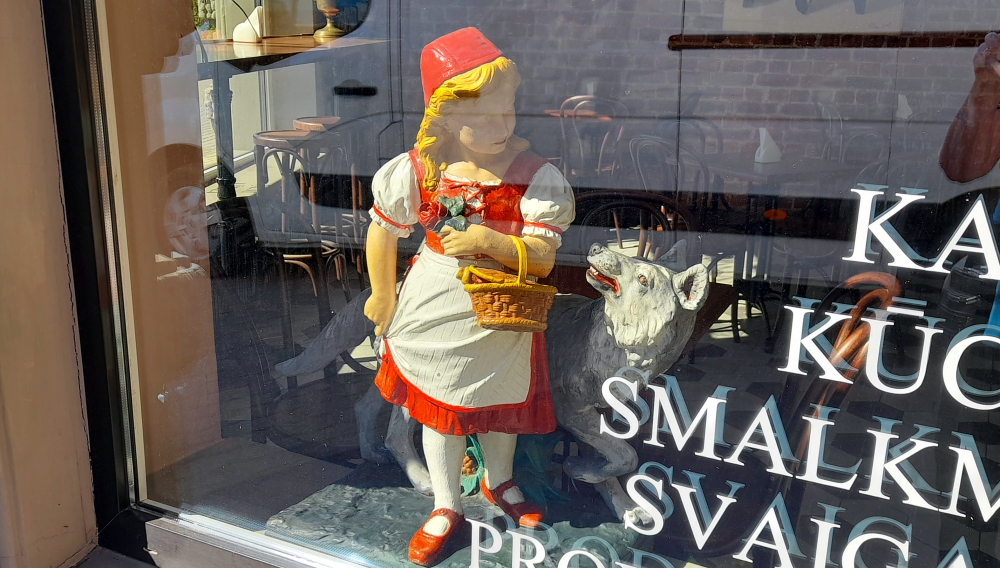
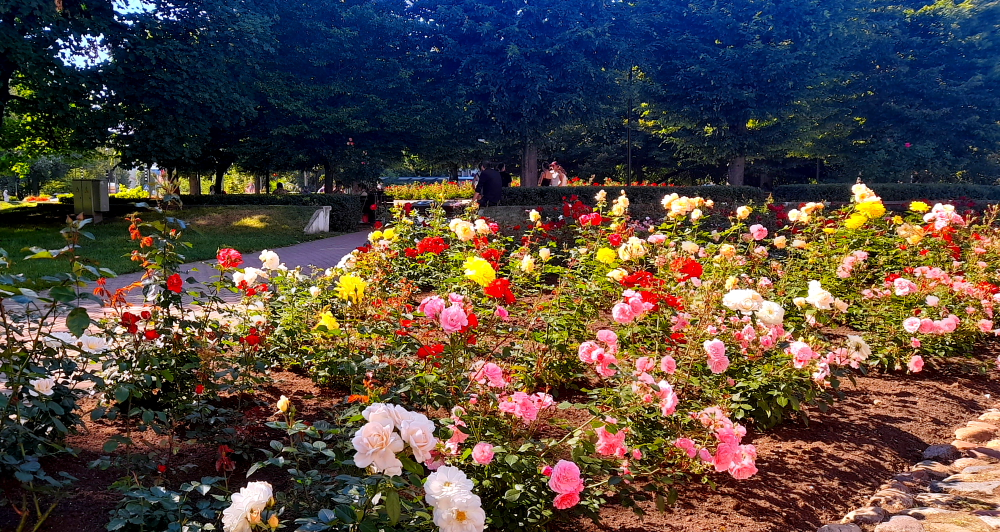
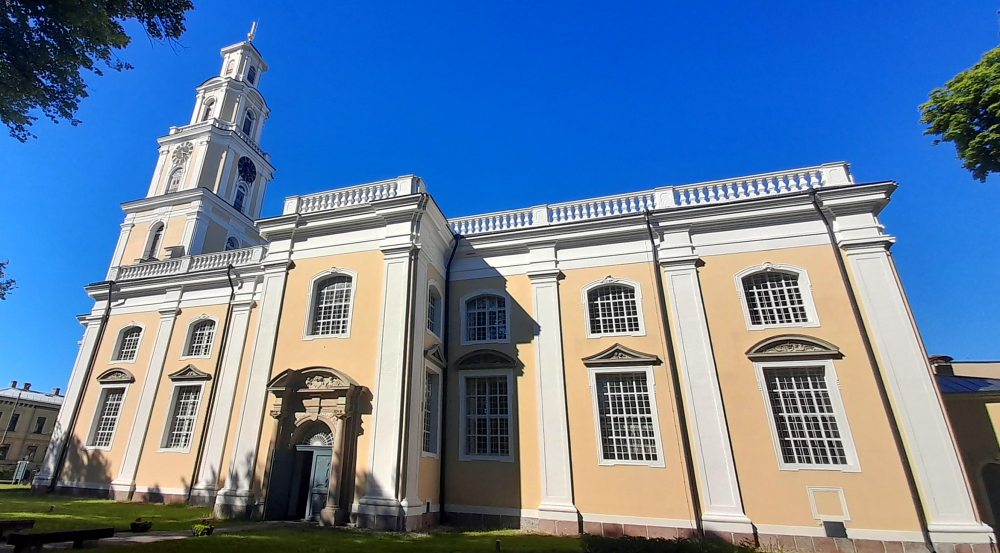
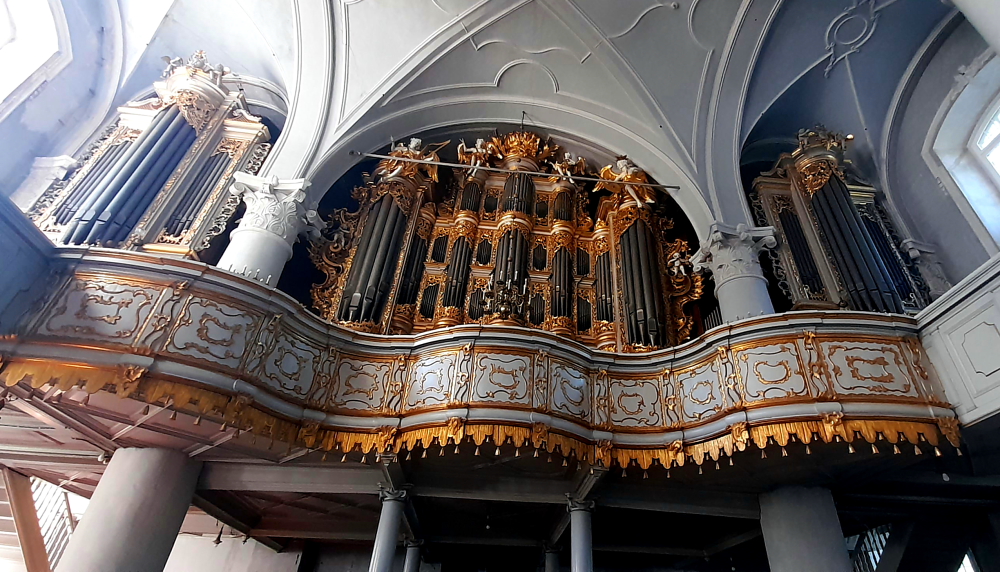
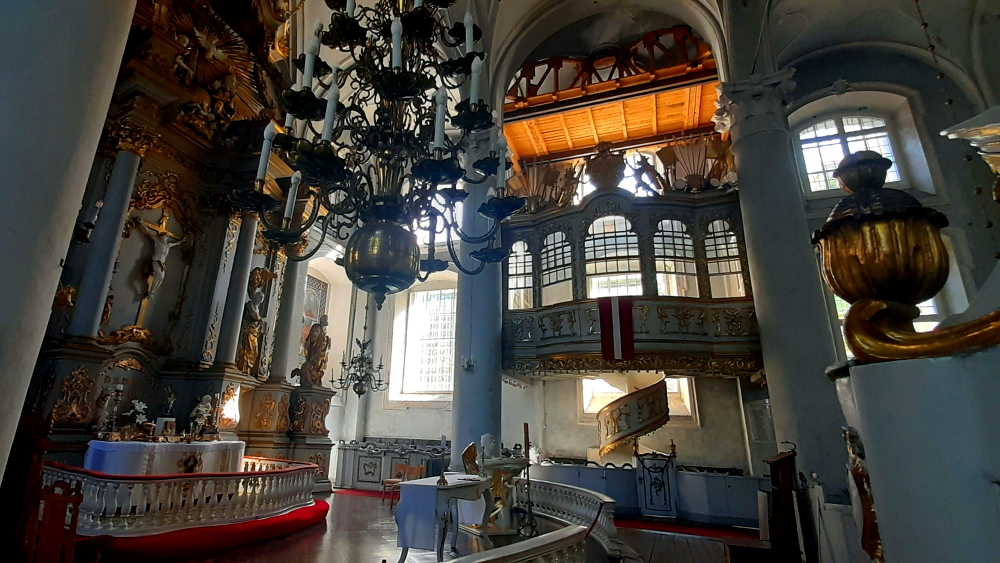
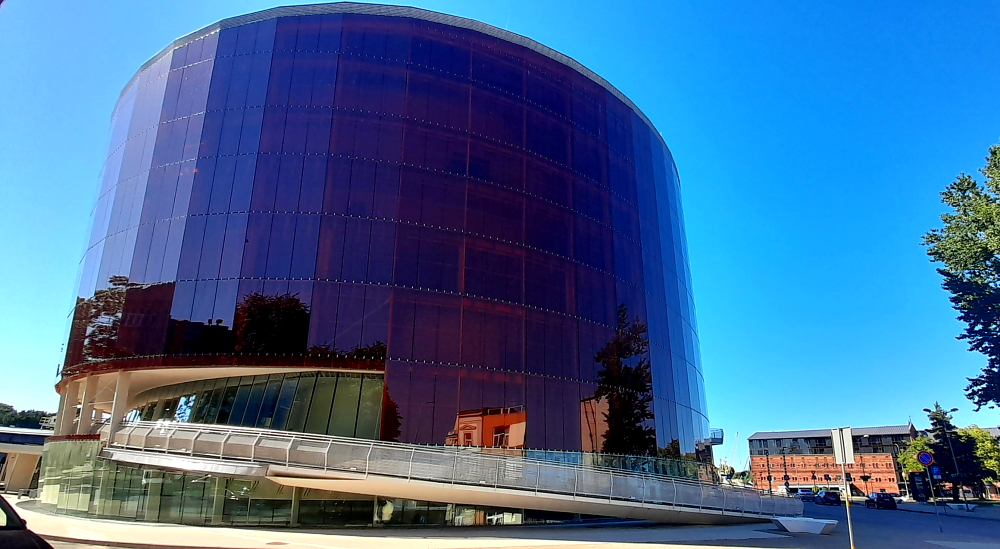
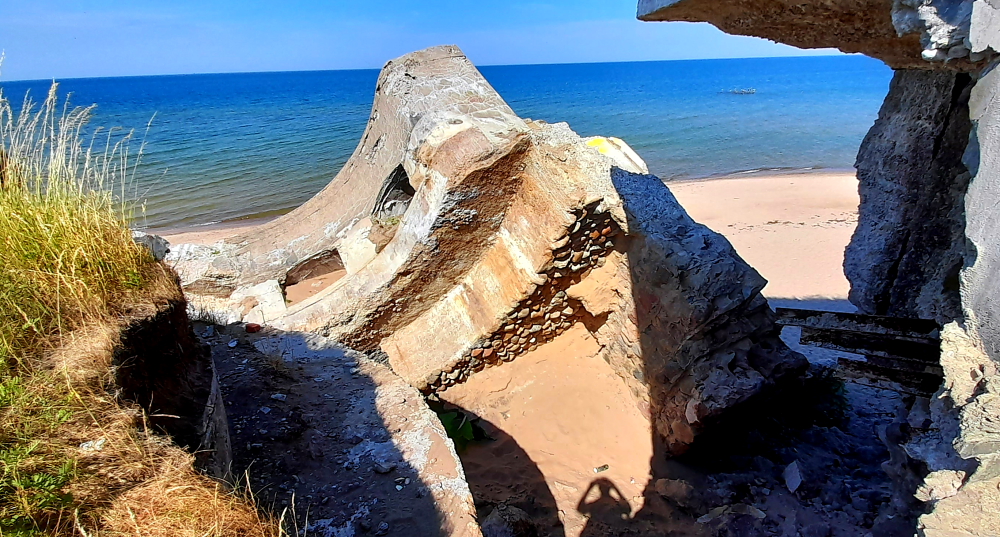
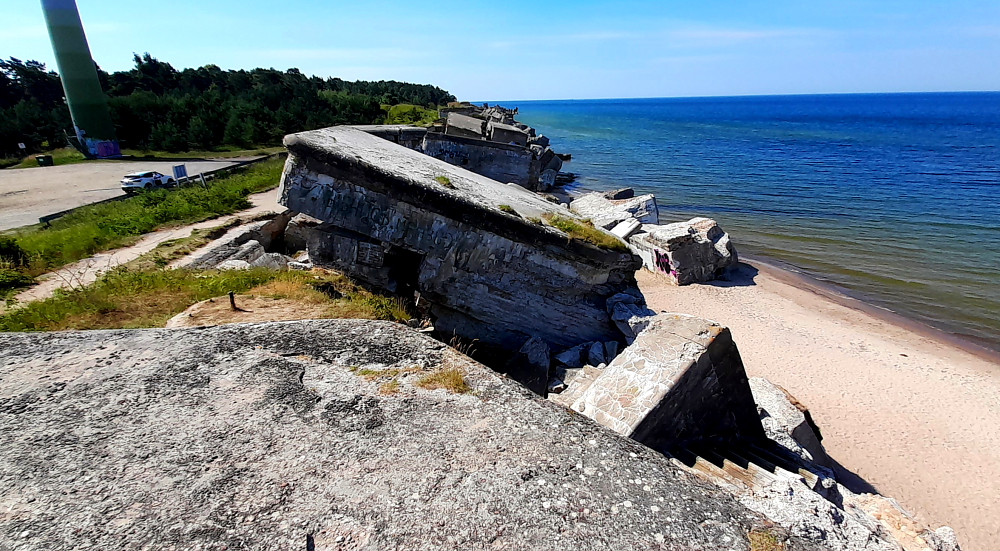
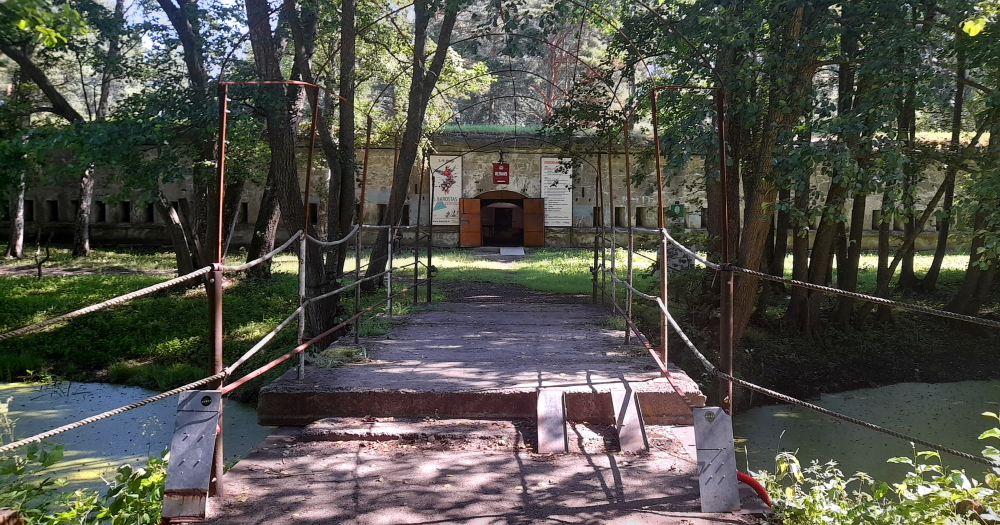
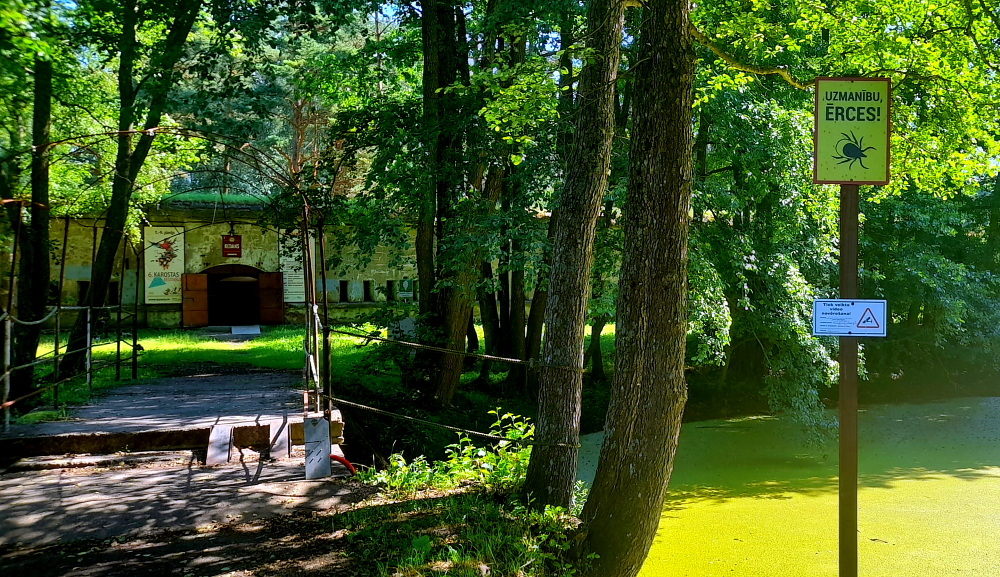
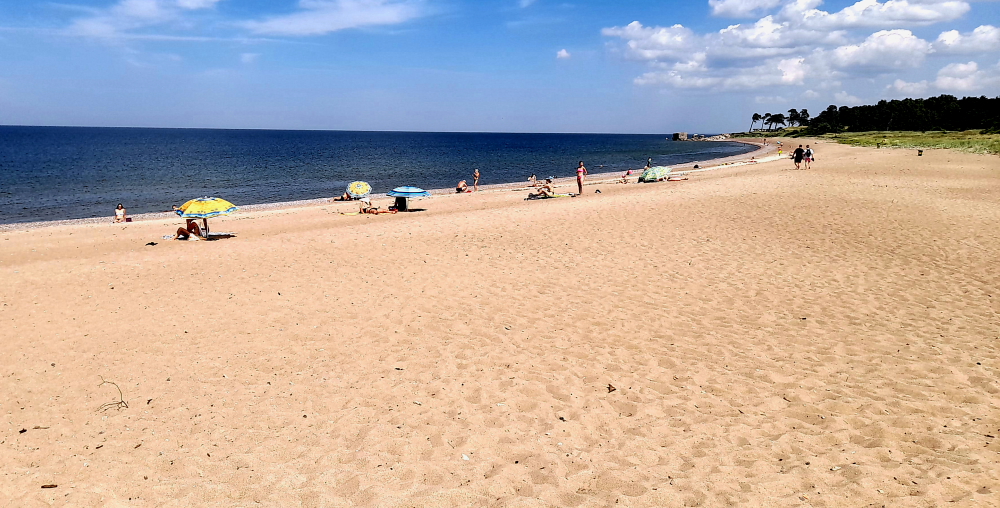
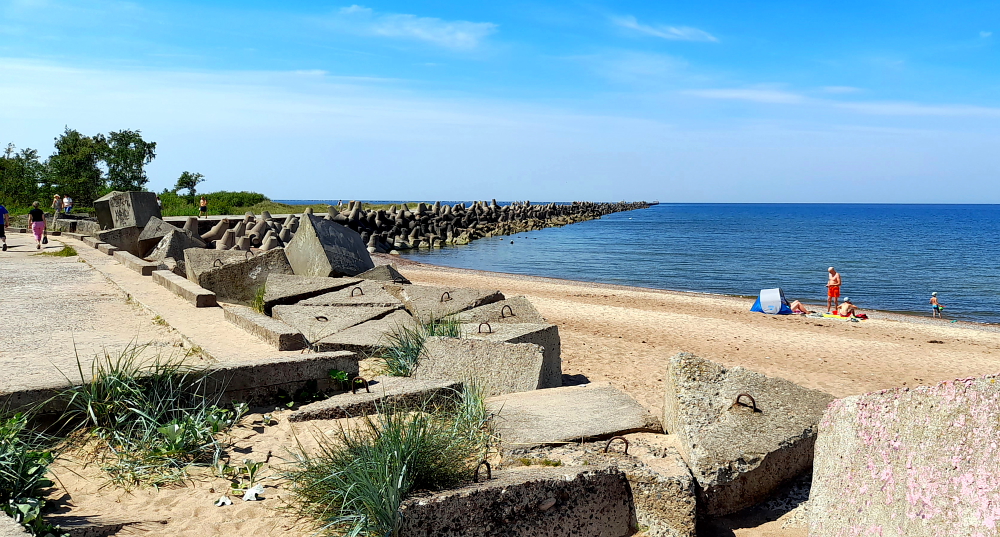
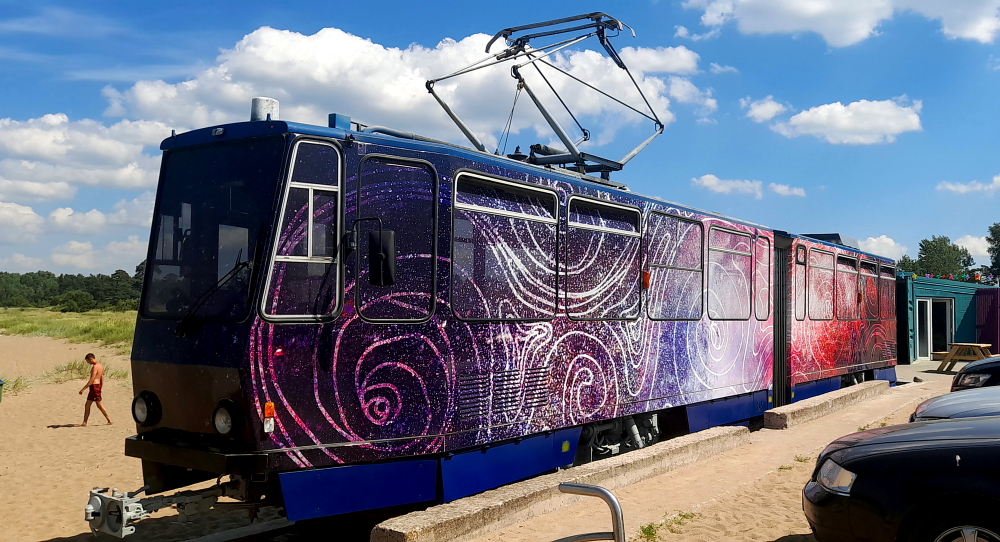
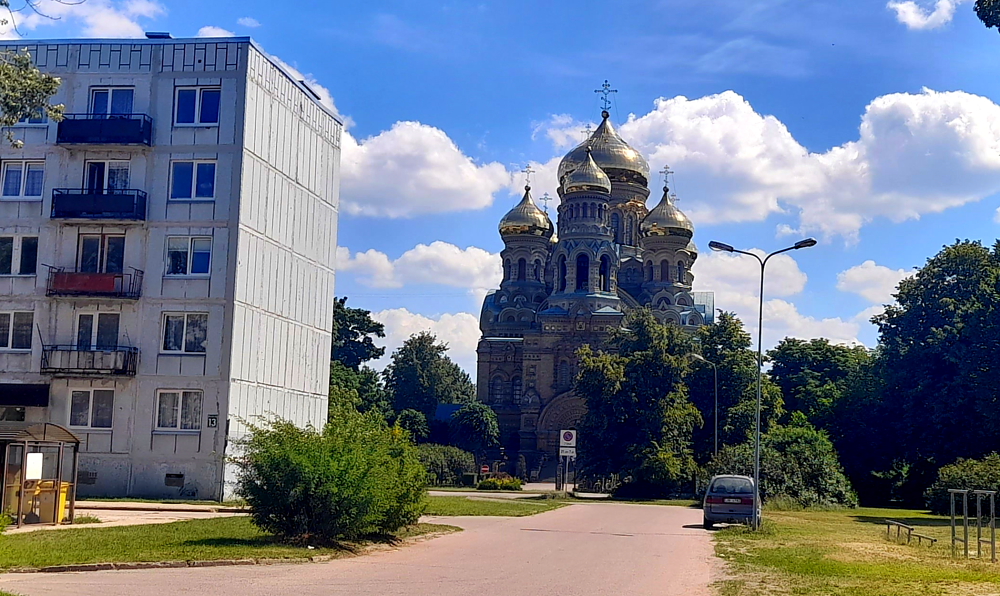
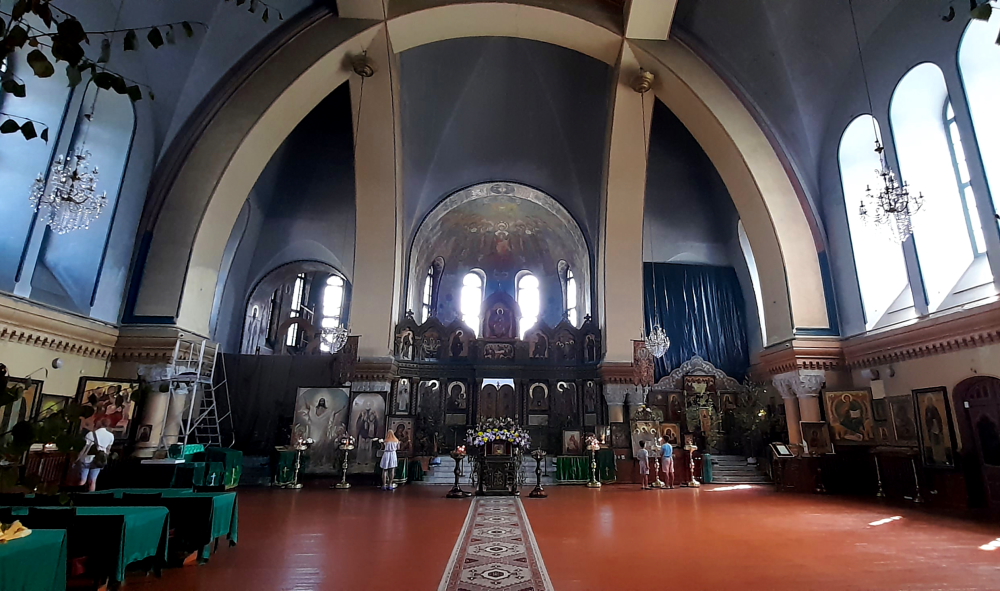
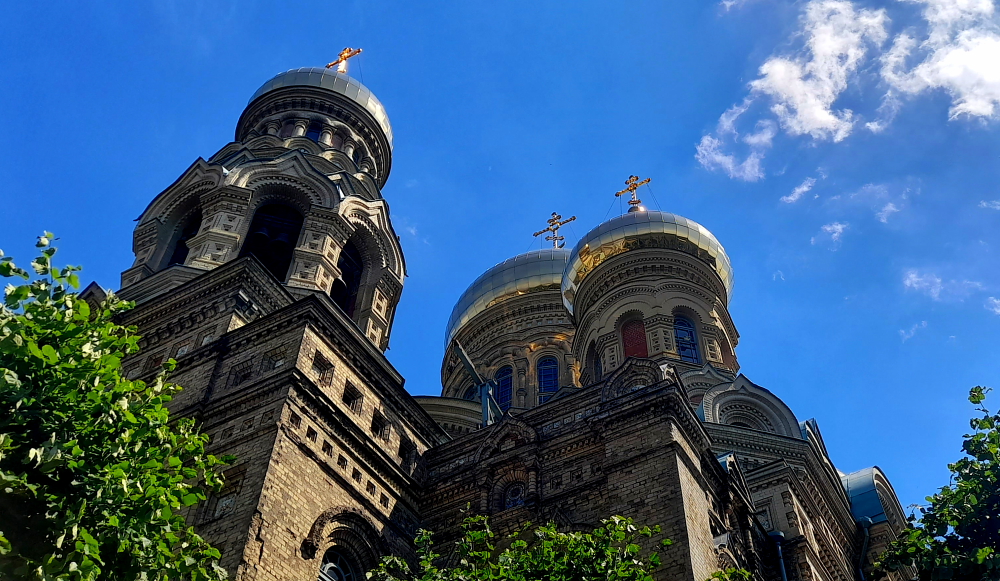
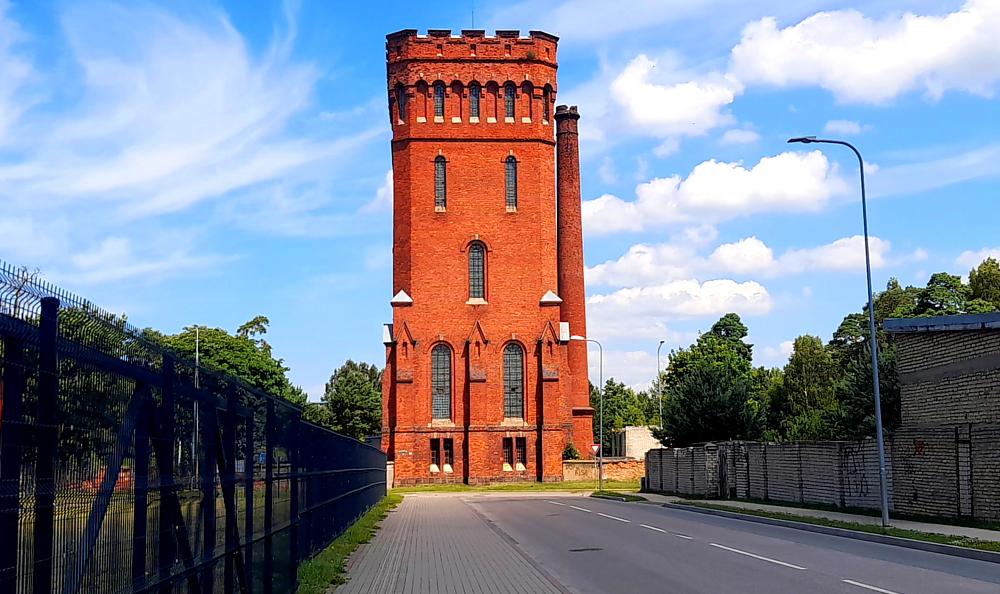
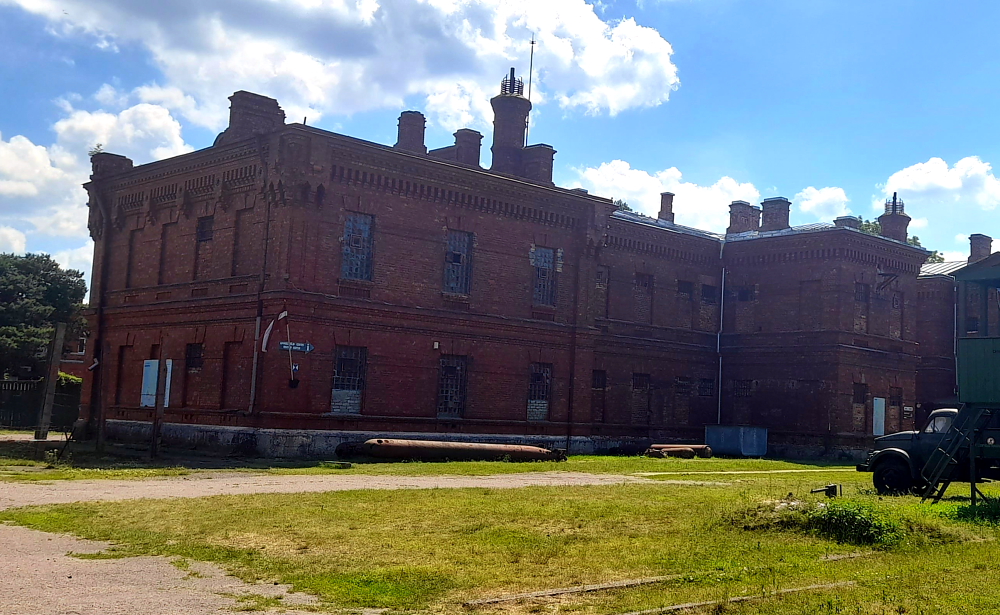
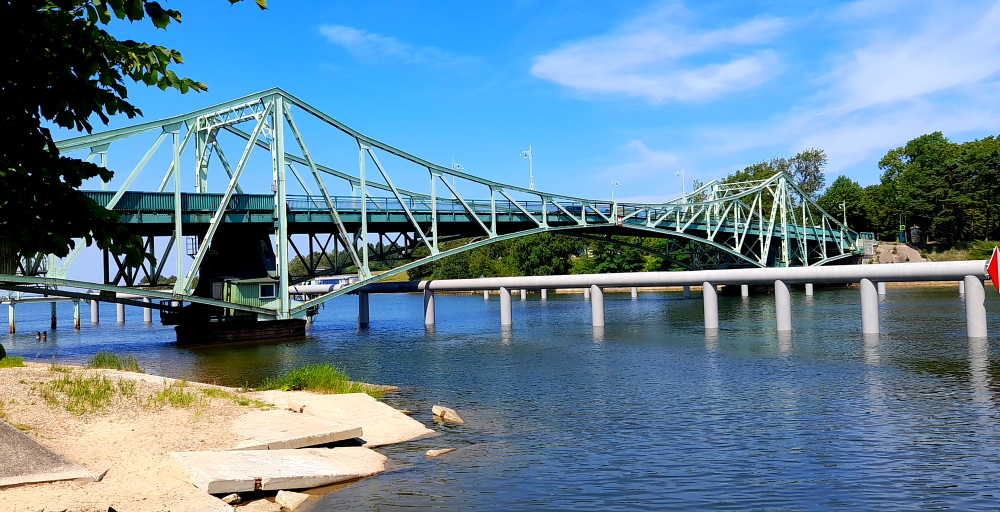
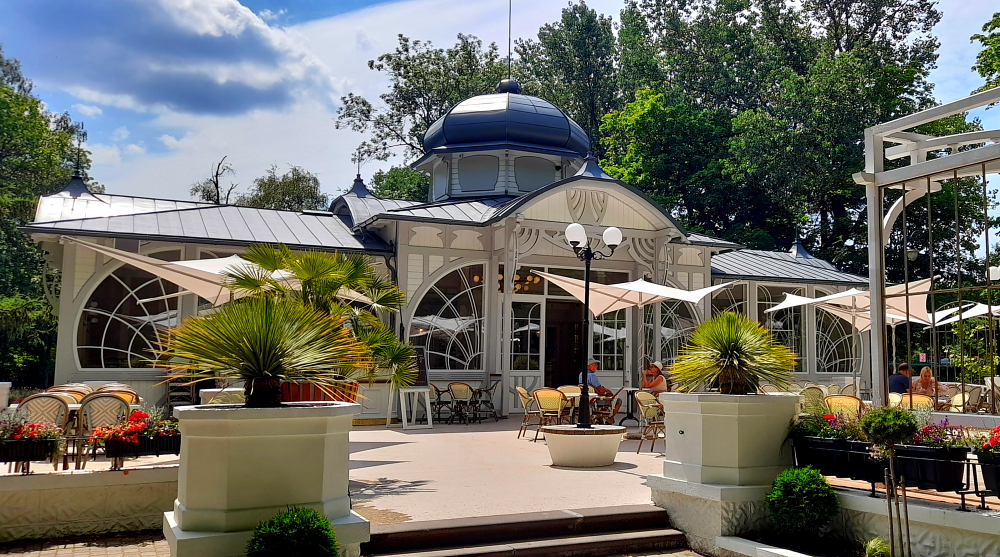
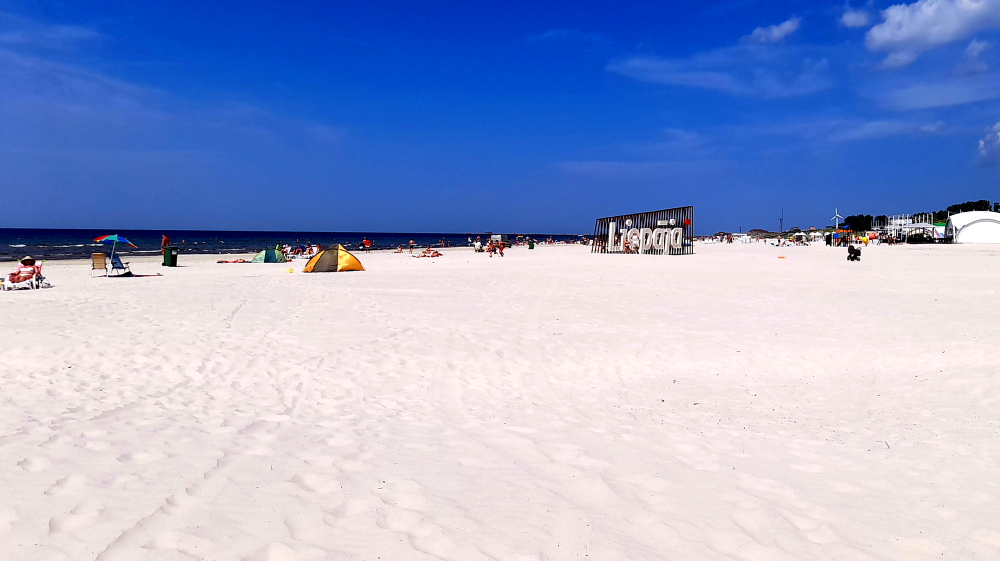
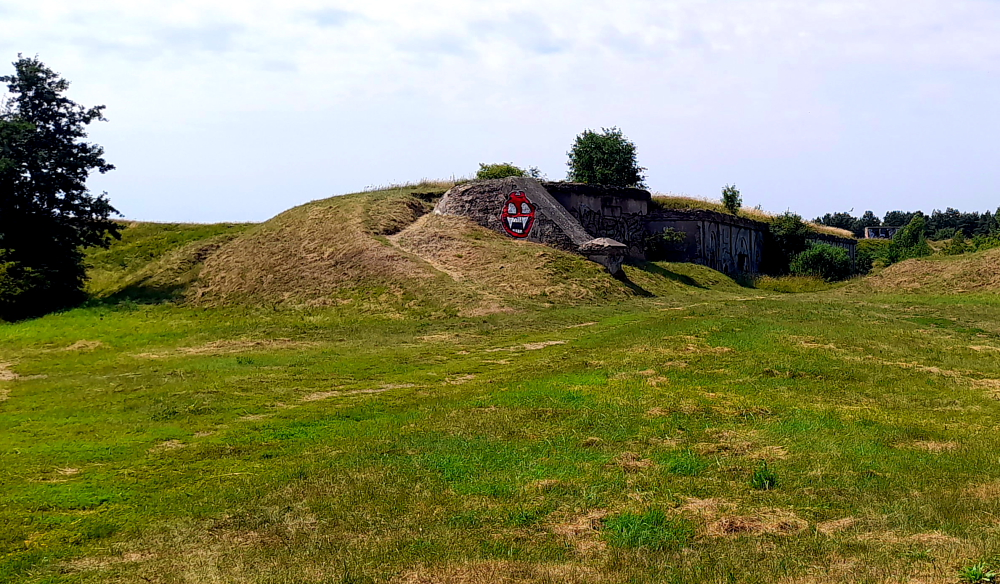
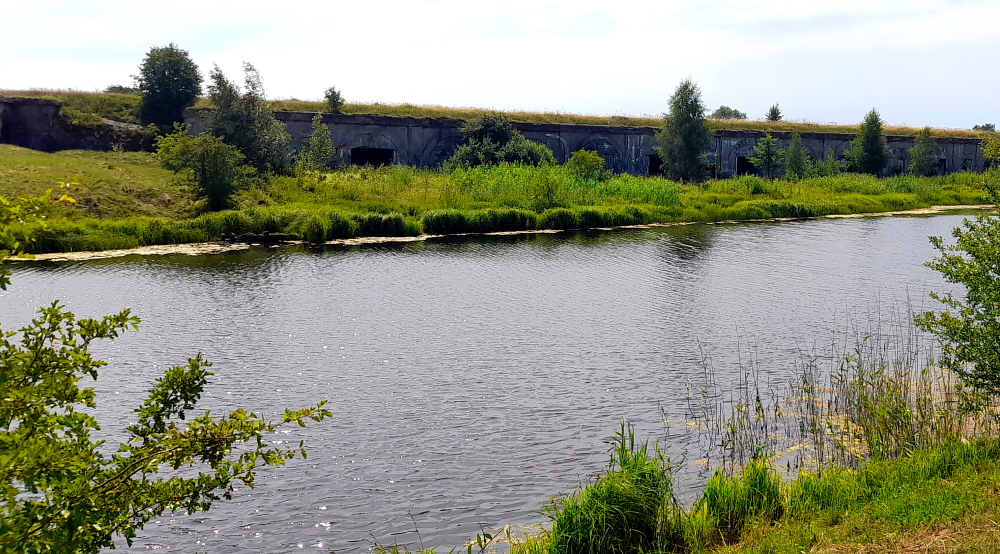
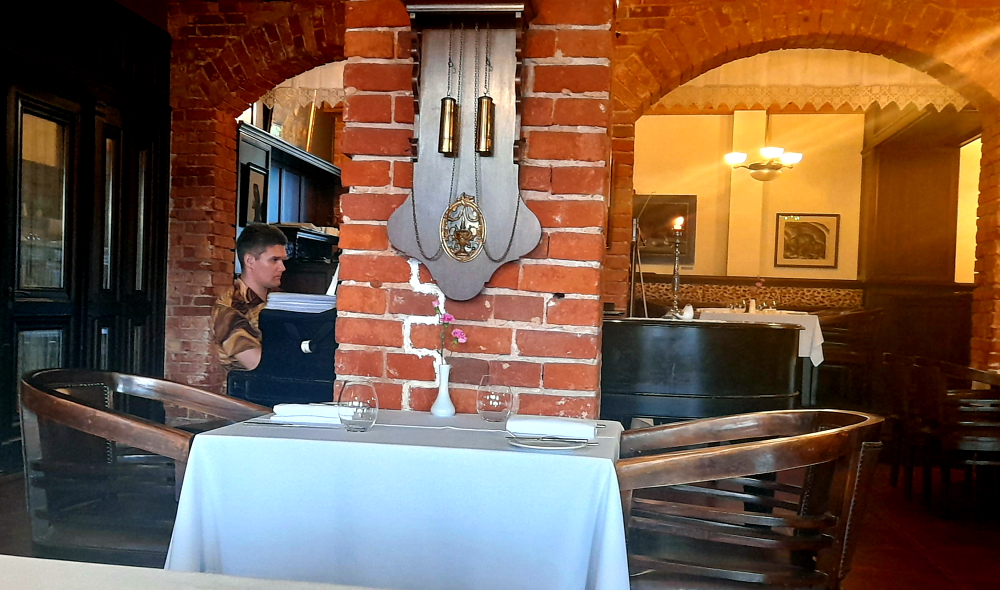
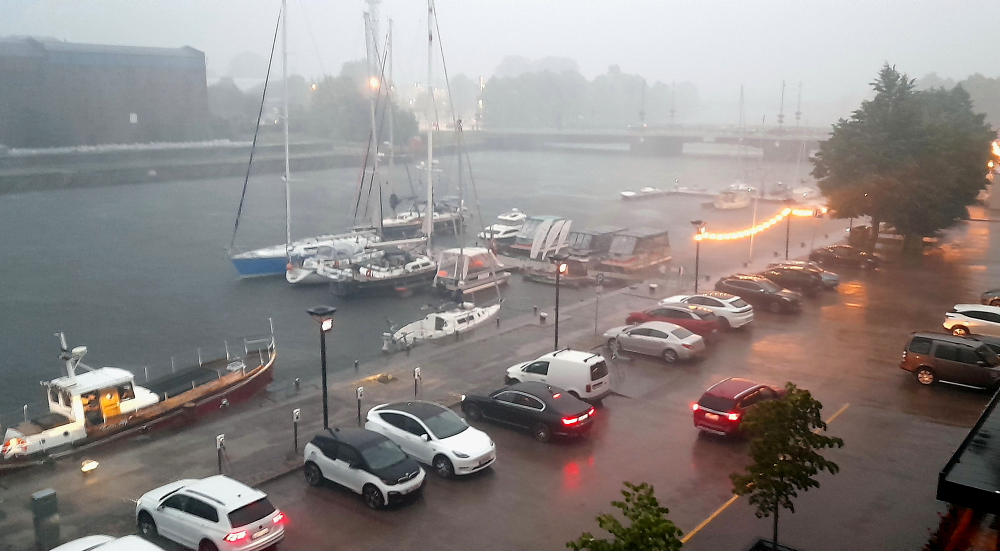
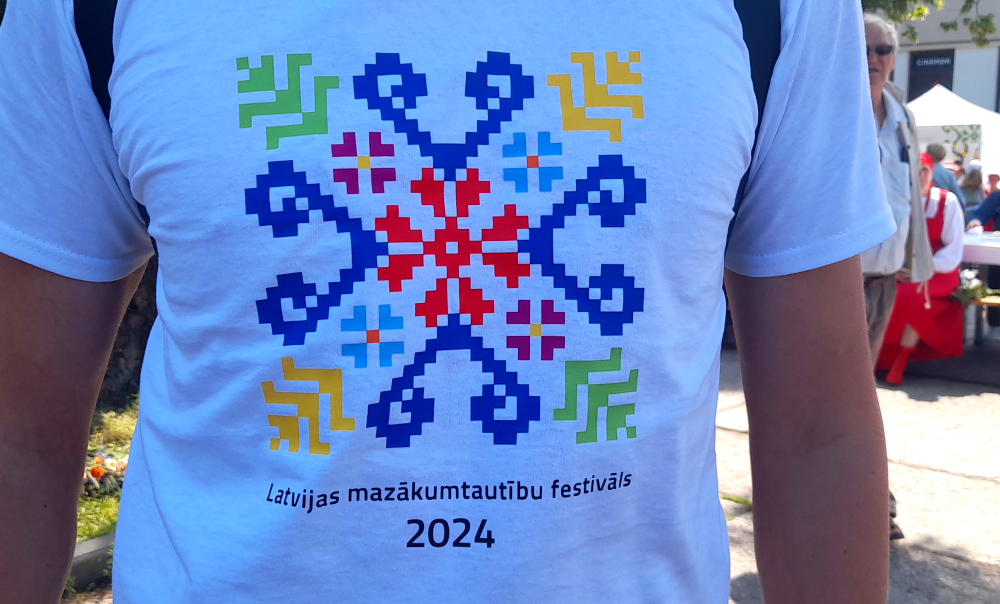
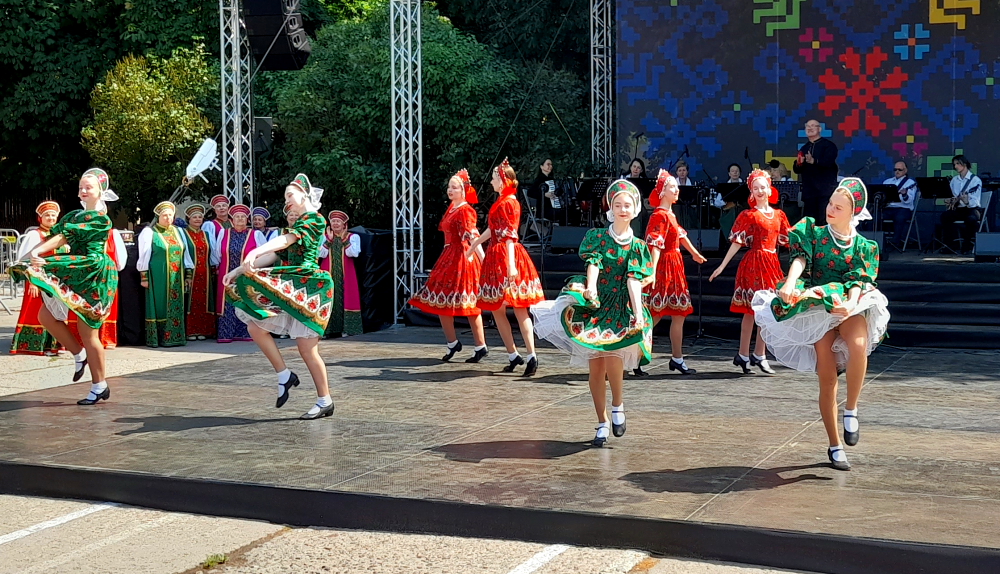
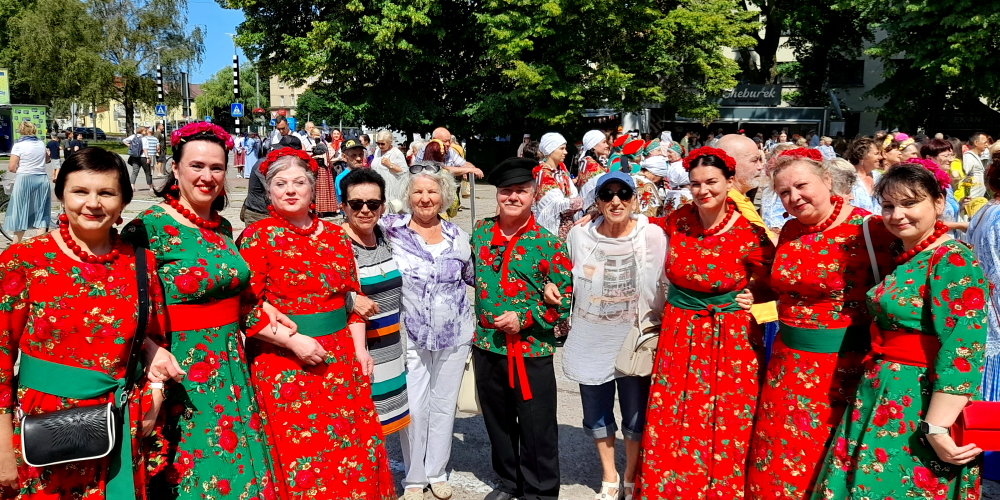
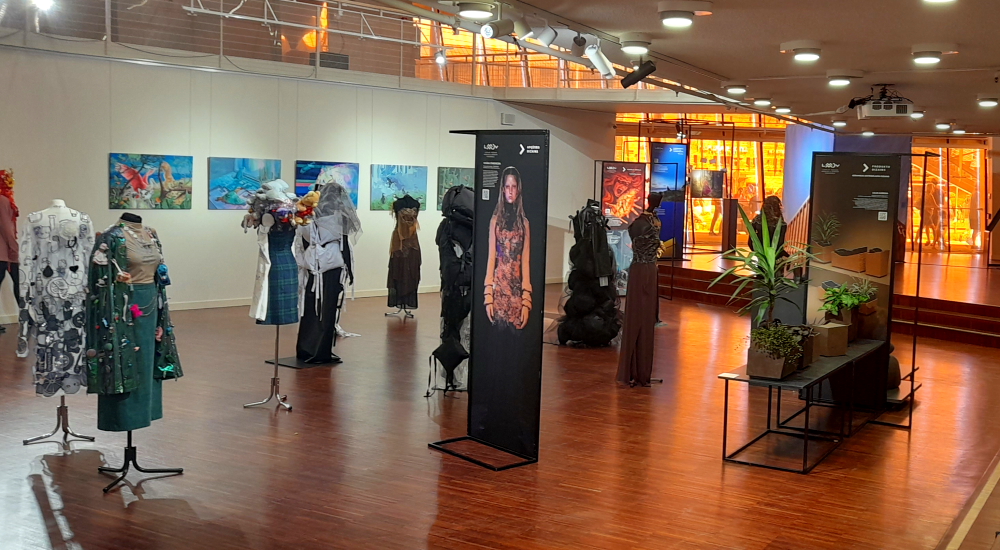
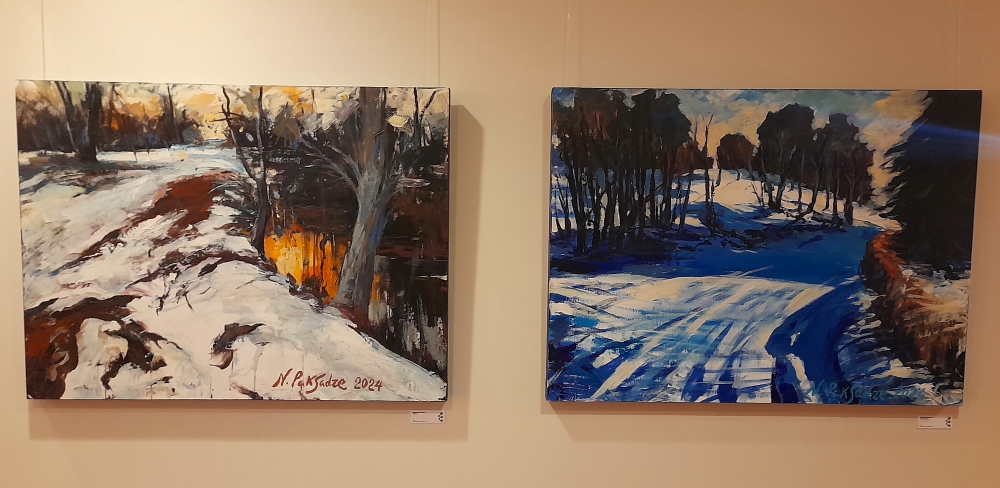
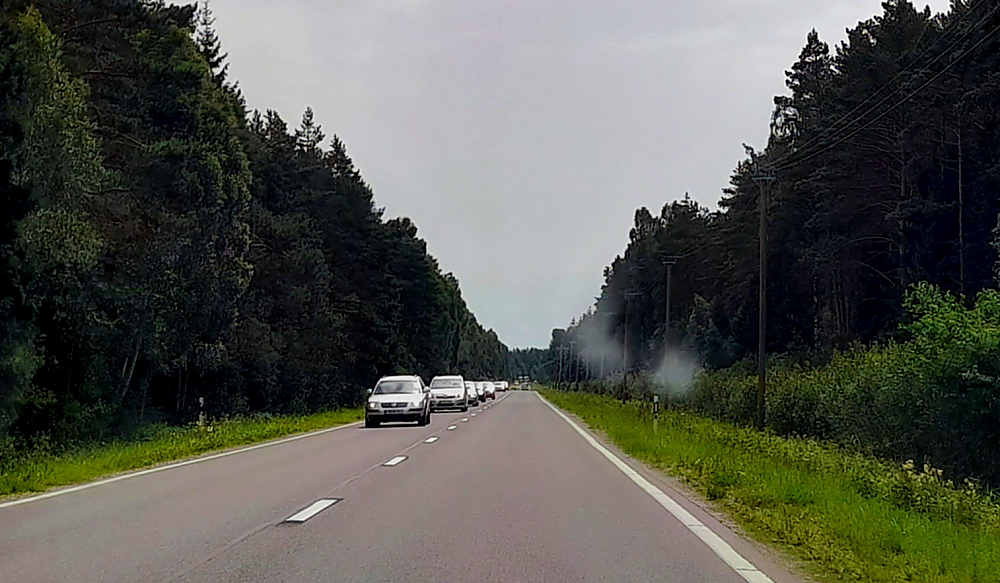
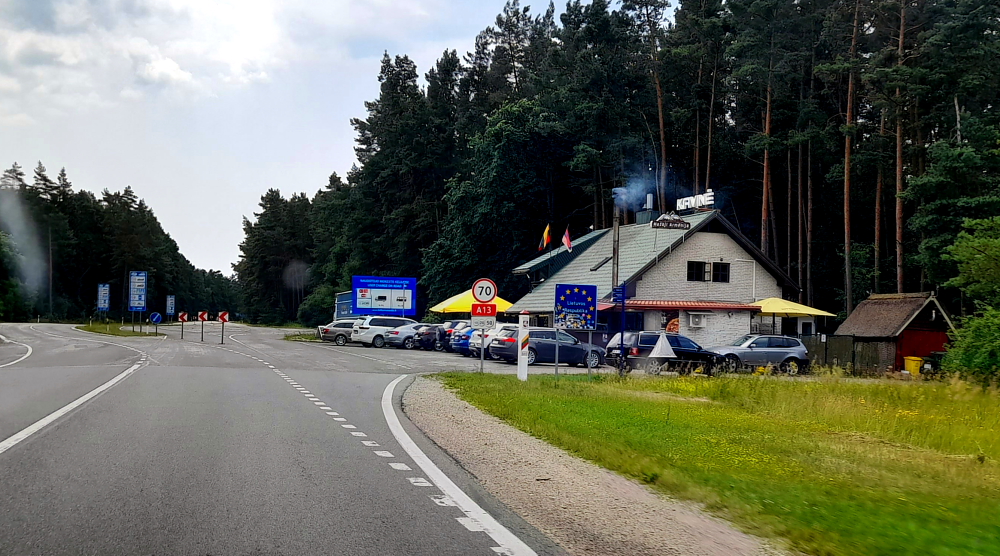
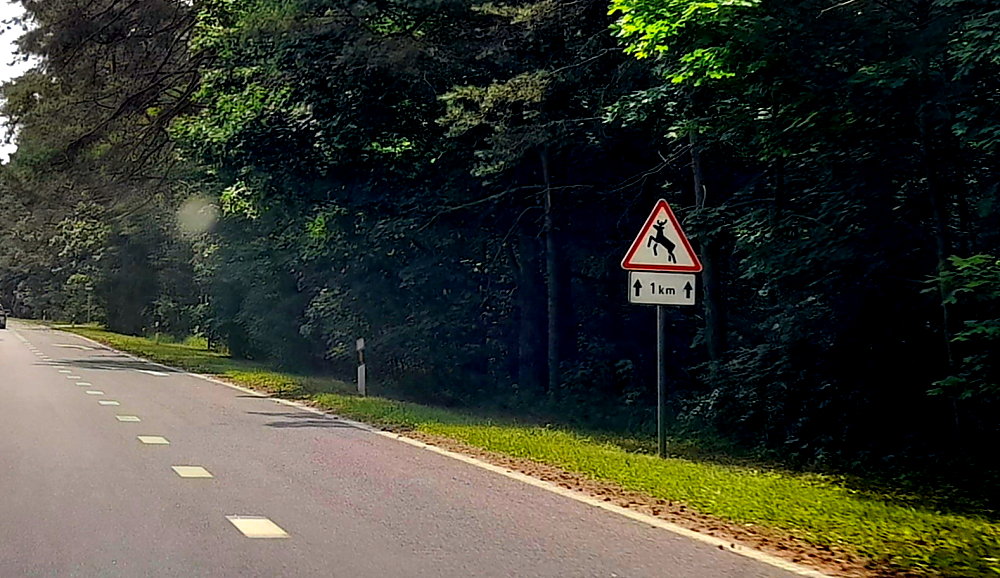
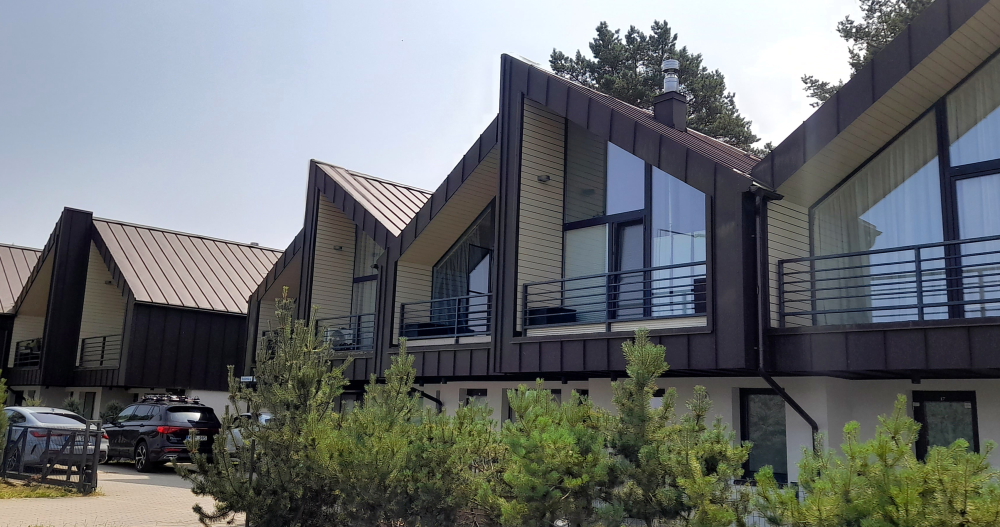
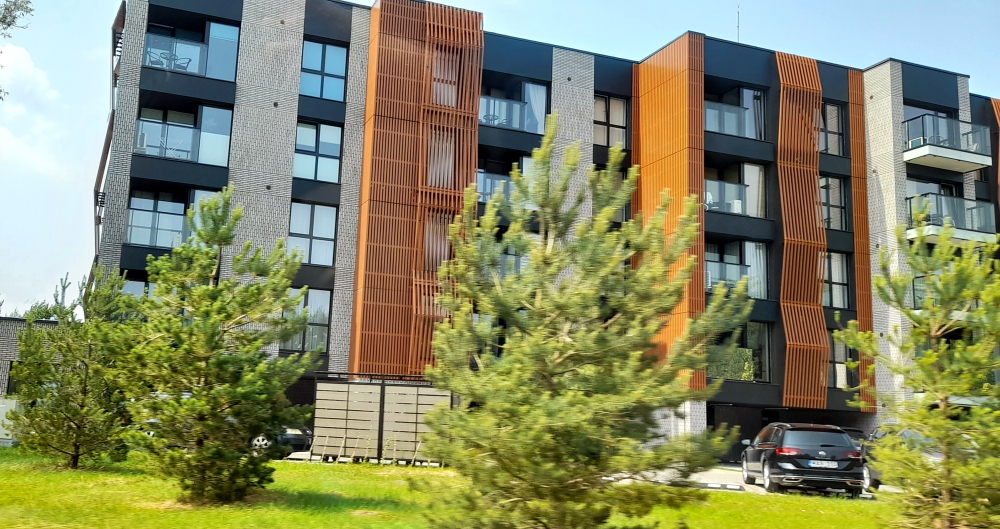
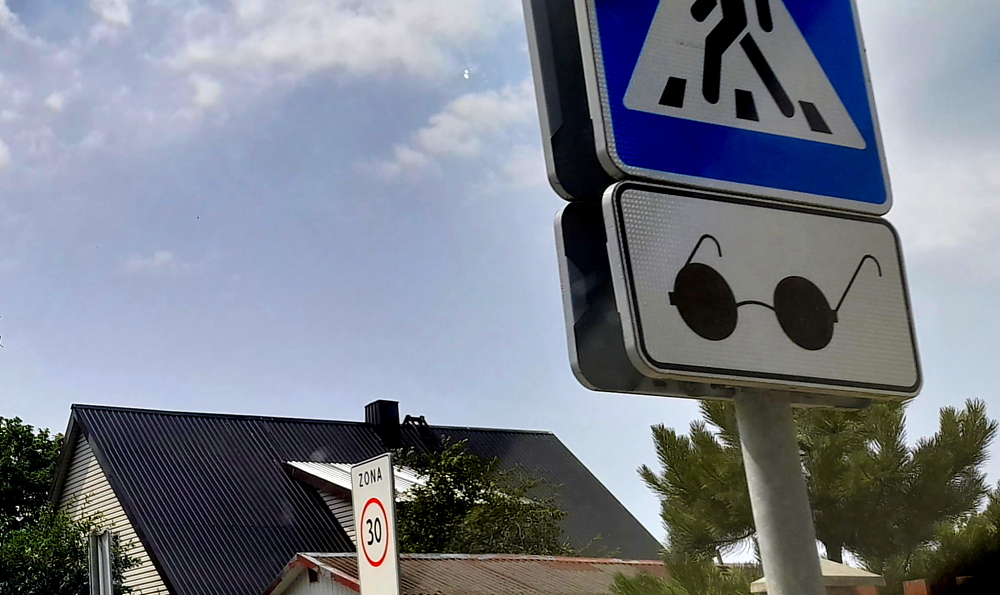
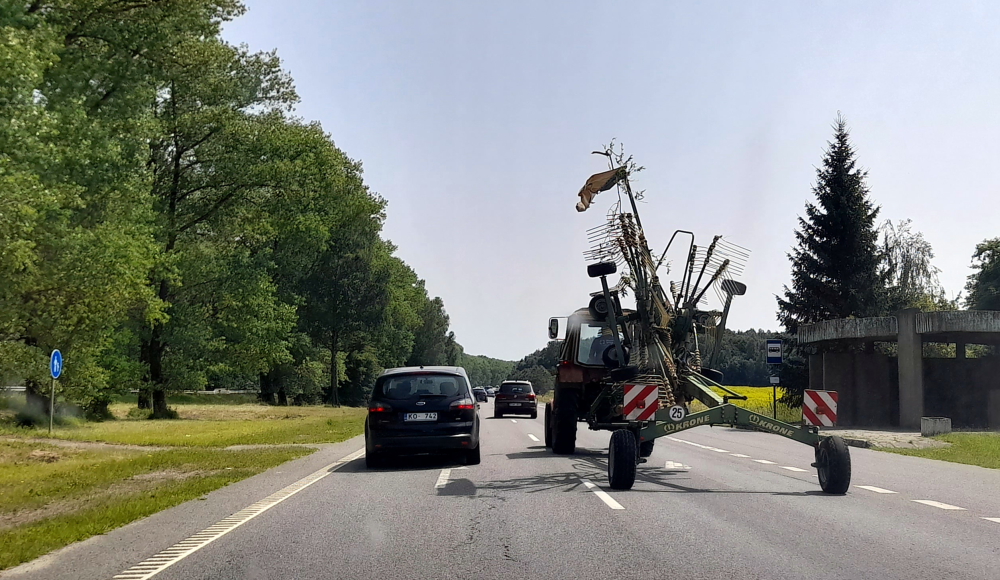
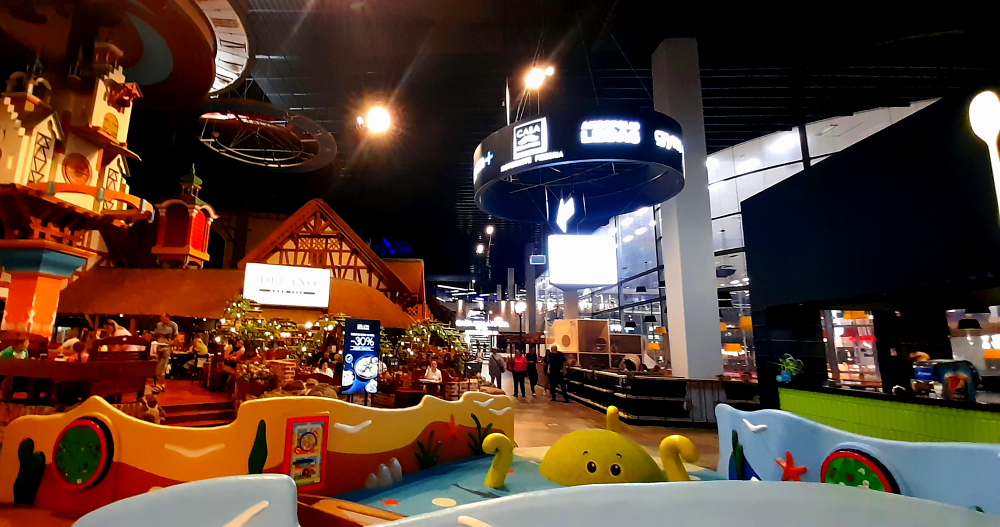
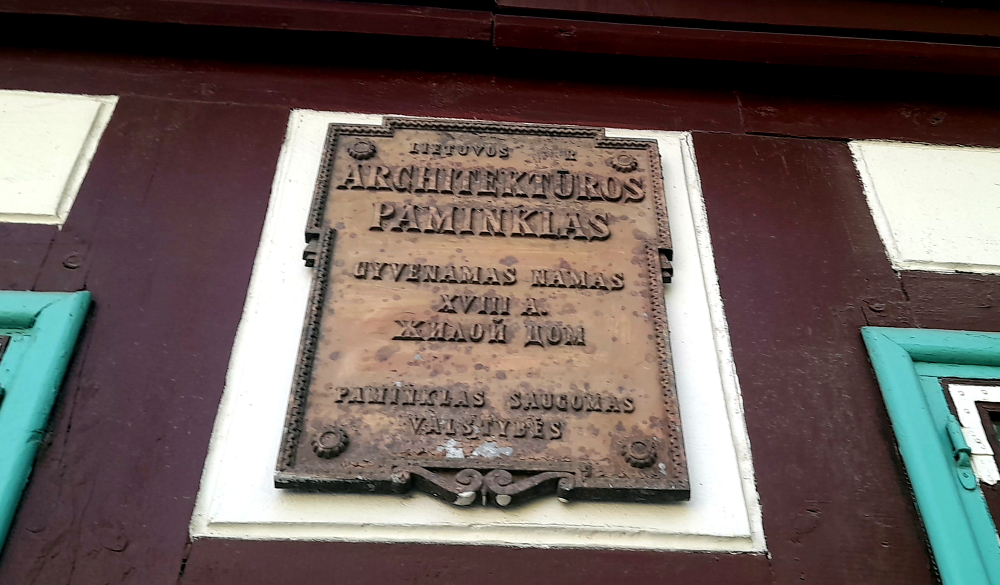
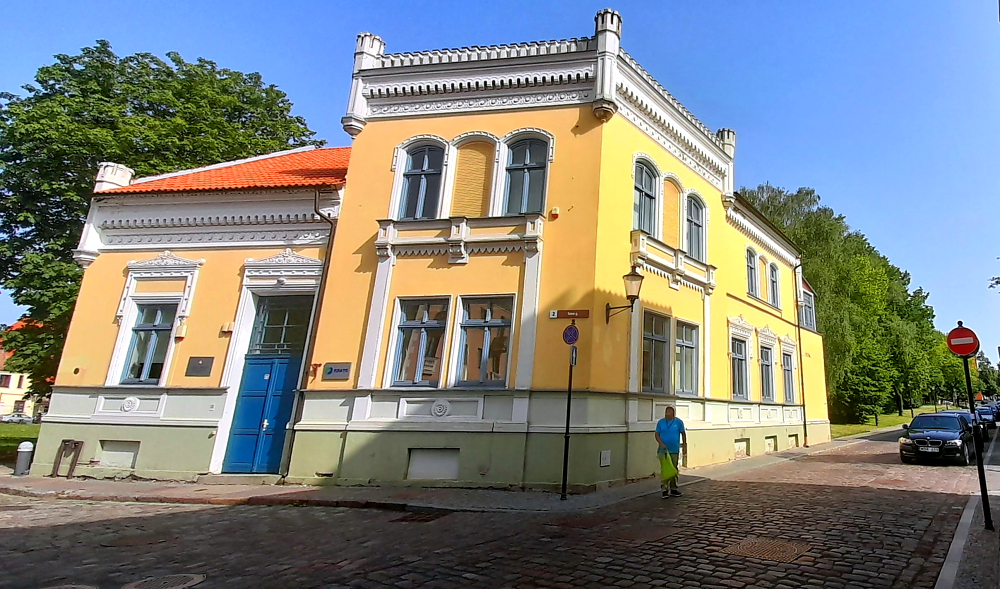
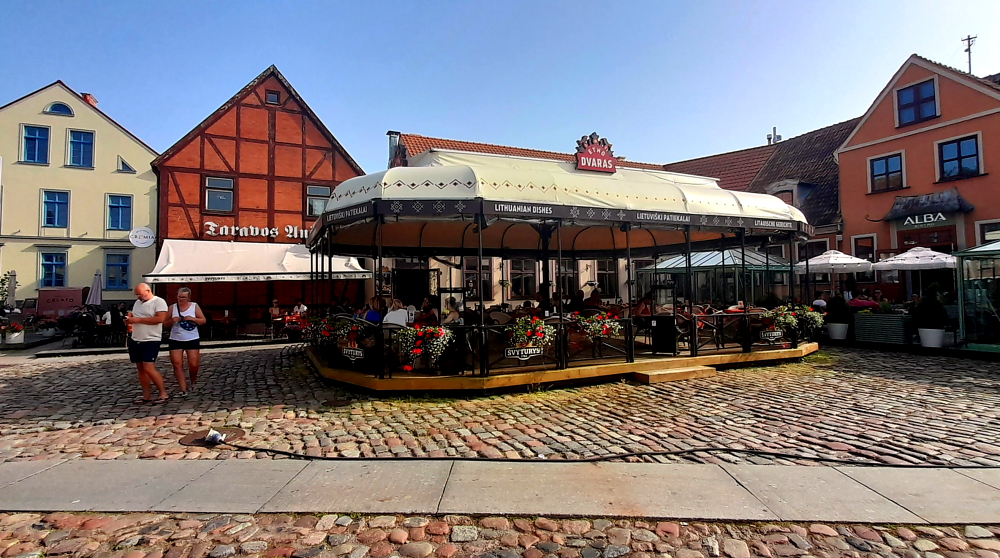
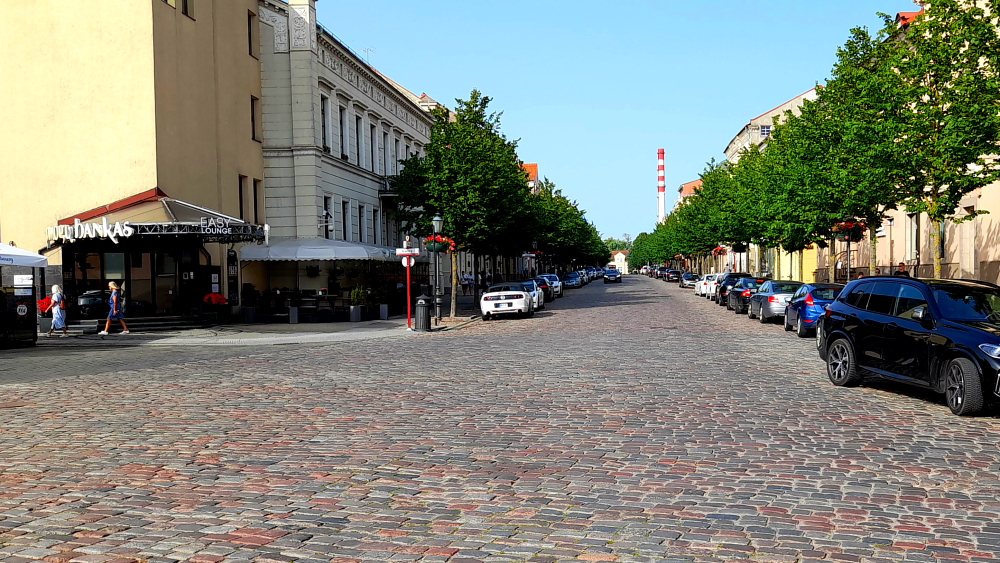
 THE CONTINUING TRAVELS OF YOGI & BOO BOO