
5 May, 2023
Today is ‘Great Prayer Day’, a national holiday. As some of the museums and sights might be closed we were going to spend the day driving the north coast of Jutland. However, the weather forecast is 10 Deg C and for 65 kph winds so we opt for the ‘shelter’ of city building windbreaks instead.
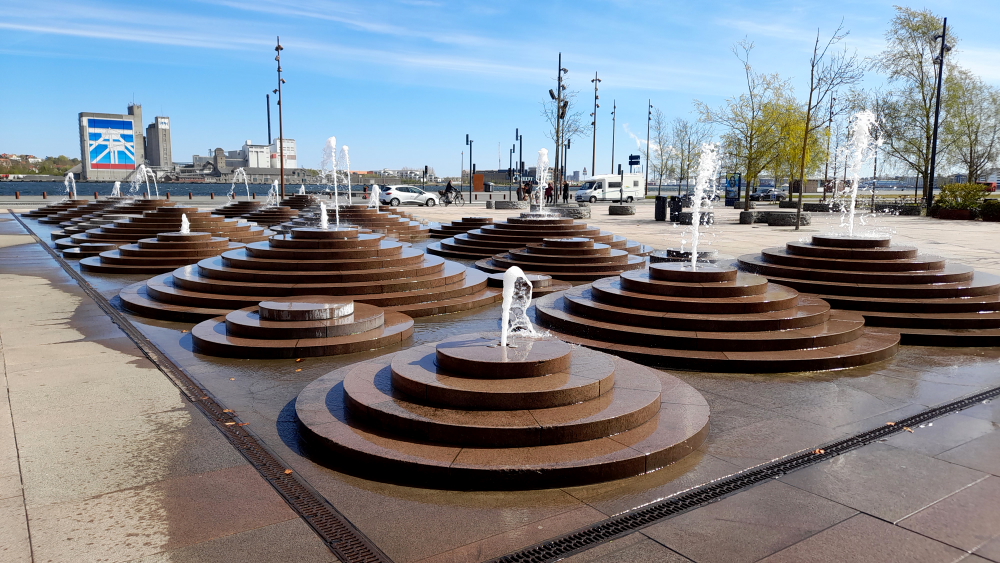
First port of call is the fountain in front of the old Customs House – the Toldbod Plads Springvandet – Denmark’s first musical fountain erected in 2007. In summer, 4 times a day, the fountain is accompanied by an overture from Georg Friedrich Handel’s Water Music.
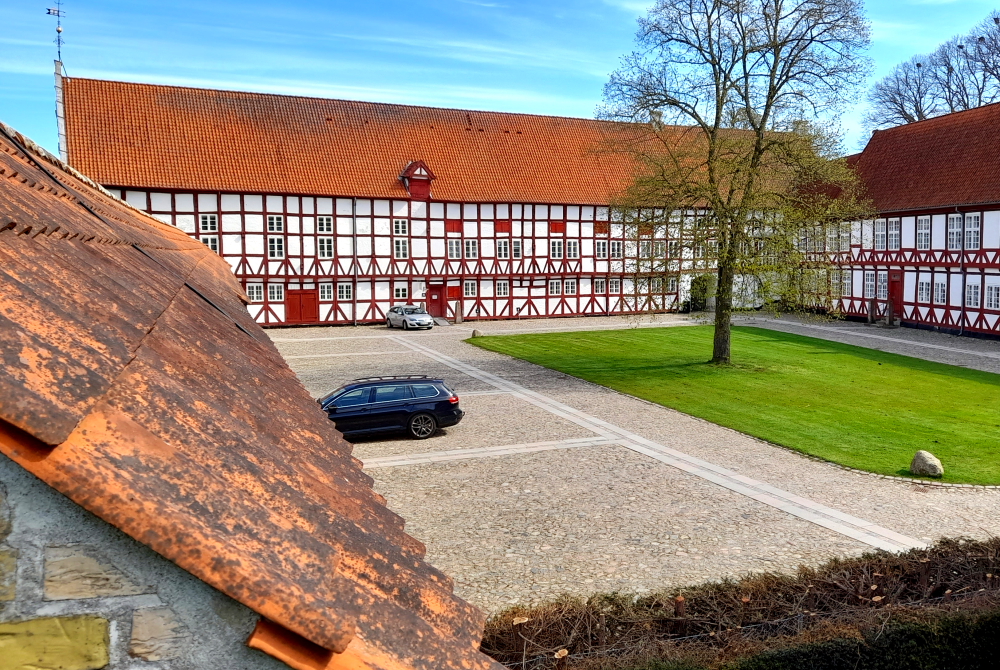
Further along the harbour front we come to Aalborghus Slot, its Castle. It is a half-timbered castle built by King Christian III from 1539 to around 1555 initially as a fortification.
A building had existed at the site before Christian III’s castle. It stood south of the castle and is mentioned in the first documentation of Aalborghus, dating back to 1340. It was owned by Margrethe I and was the death place of King Hans in 1513 who died in a horse riding accident.
Over the road is the main focus of our sightseeing today, the Utzon Centre. We front up to the main entrance only to find that the Centre is shut today. The bloody Danes are at it again! The website makes no mention that it is closed today. In fact, it gives the opening times for holidays!!!! Perhaps tomorrow?
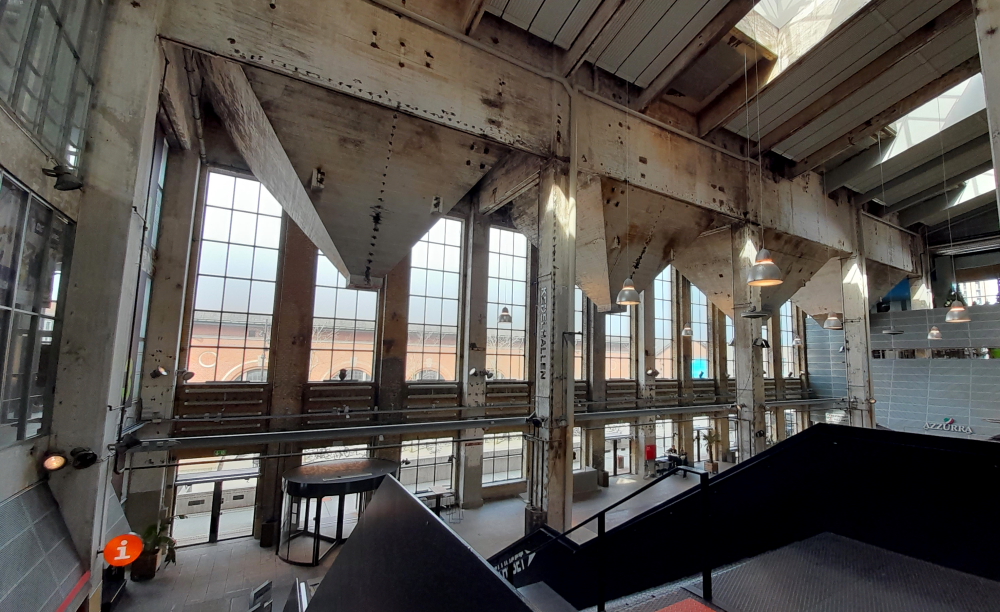
Striding into a freezing cold wind we walk a couple of blocks further on to visit Kulturhuset Nordkraft, Aalborg’s Cultural Centre. Opened in 2009, it is located in a former electricity generating station close to the waterfront in an area designated for cultural development. Nordkraft is home to several cultural institutions including Skråen, a venue for jazz and rock concerts, Teater Nordkraft, the Biffen Art Cinema, the Kunsthal Nord art gallery and Dreamhouse, an innovative creation facility. Lynn visits the art gallery to view a free exhibition of work by Marie Thams entitled ‘person’ which is essentially a video of some of her creations.
Another “brisk” 20-minute walk we arrive at The Singing Trees Park of Music which is the back garden of the Aalborg Kongresog Kulturcenter (AKKC).
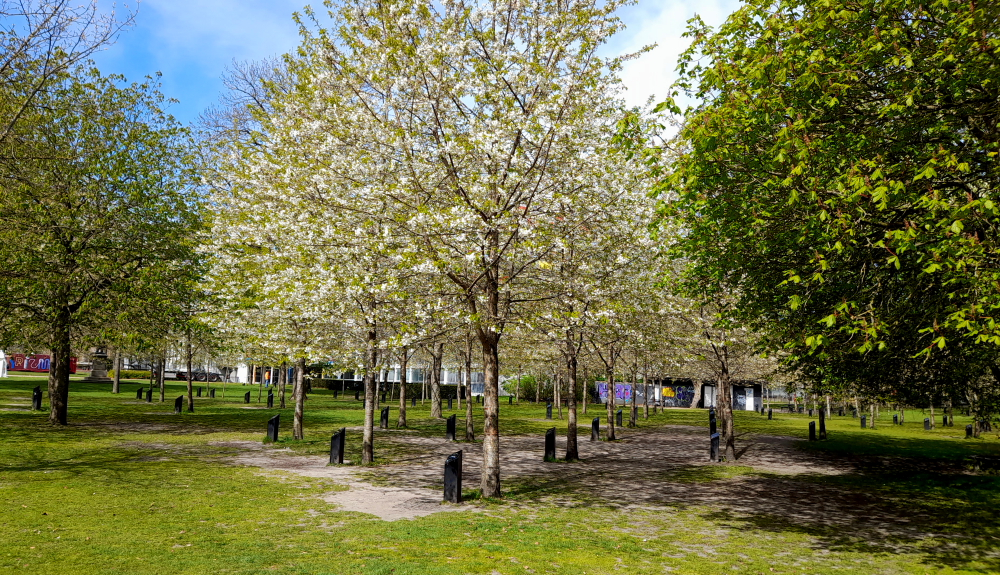
Since the mid-80s, many celebrities have stopped by Kildeparken and planted a tree. In 1987, Sir Cliff Richard was the first to do this and the area was called Kunstnerparken.
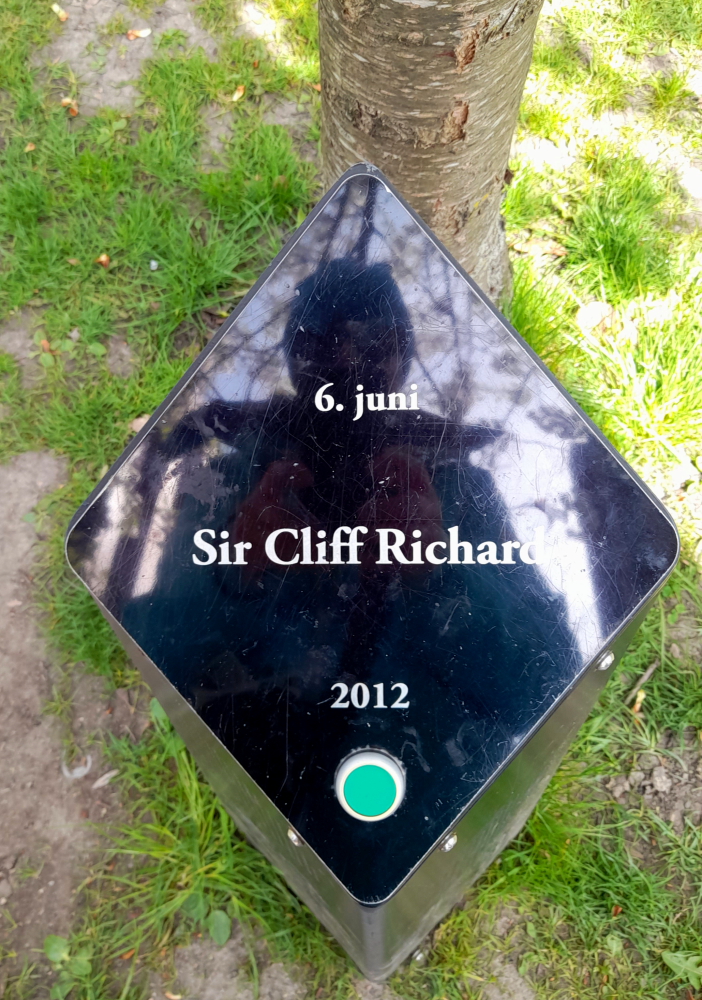
In 2011 the managing director of AKKC, Ernst Trillingsgaard, wanted stars to leave more than just a signature in the visitor’s book: rather a living reminder of their visit to Aalborg and performance at the AKKC.
In 2012, the trees also started singing the songs of the celebrities, or at least the boxes next to the trees can do this. The musical initiative was inaugurated by Sir Cliff Richard on 6 June 2012.
Poignantly, we play the recording for Dame Edna dated 22/11/1994. RIP Barry Humphries, 22 April, 2023.
While I head back to the warmth of the hotel room, Lynn soldiers on. She calls at the Budolfi Kirke only to find that it is shut – on a National Prayer Day???? Another one for tomorrow!
Next is Jens Bang’s Stenhus. Built in 1624 as a counterpart to the then mayor and Jens Bang’s half-brother Jørgen Olufsen’s farm and, together with the city’s church towers, formed Aalborg’s skyline. The house was thus the first sight that met the visitors when they came to the city. Jens Bang himself lived in the house until his death in 1644.
The Swan Pharmacy was located on the impressive ground floor of Jens Bang’s Stenhus in 1666-2014. Over the years, the pharmacies have filled the old attic with all kinds of jars, furniture and expired medicines. By agreement with the Aalborg Historical Museum, it is possible to experience the Apothecary Collection under the eaves.
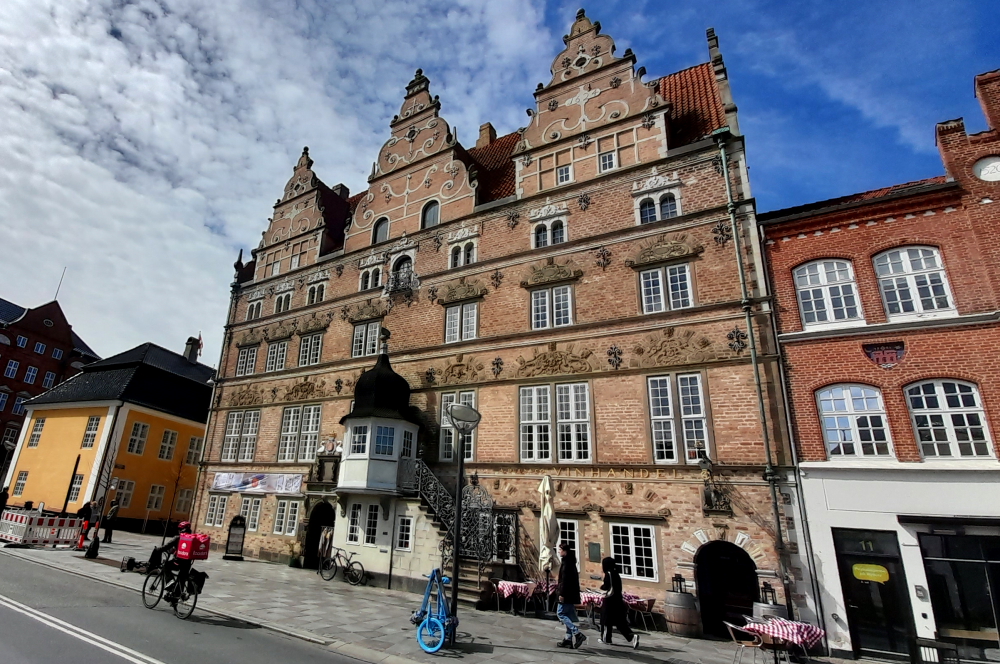
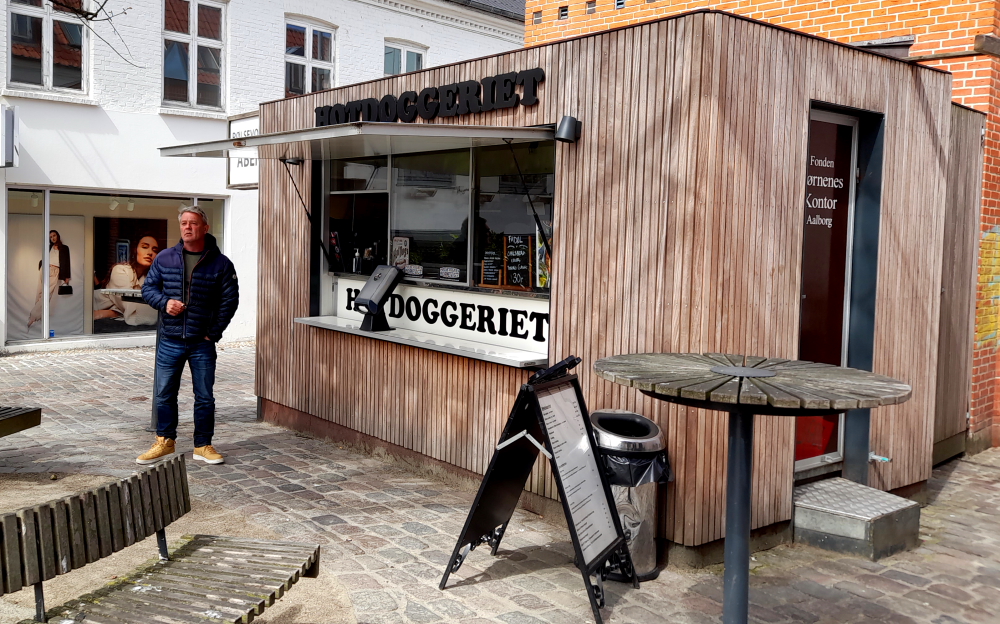
Cutting back through the Cathedral Square, a ubiquitous food van which you don’t even need to understand Danish to know what it’s selling.
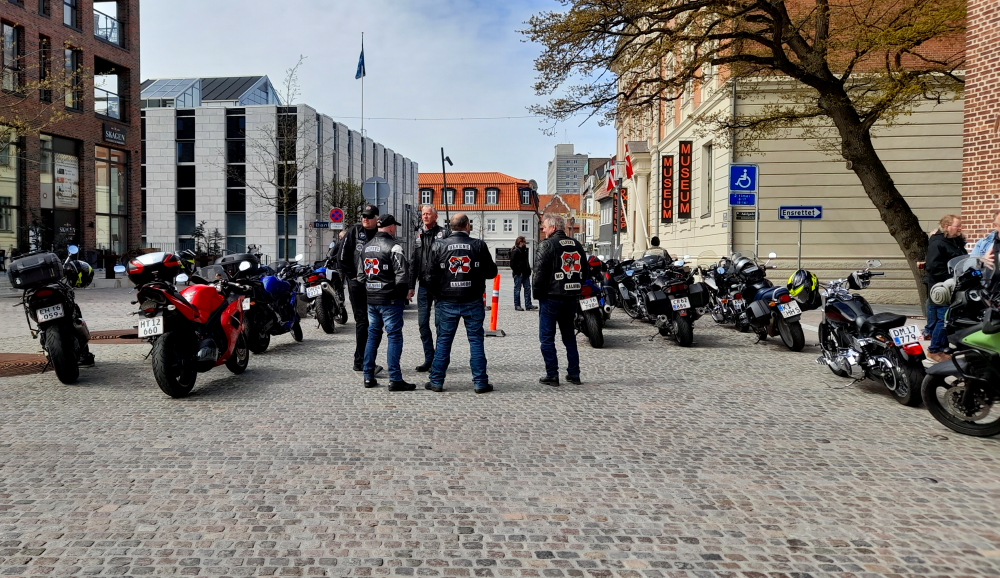
Also hanging around the Cathedral Square is a large group of bikies together with a pop-up bar selling beers and a stand selling leather bike saddle bags and vests. Just what you expect on a National Prayer Day – a bikie rally!
6 May, 2023
Today is King Charles III’s coronation. Originally we had planned to take a drive along the west coast but there is still a strong and very cold wind blowing from the north so Lynn asks me to check to see if the coronation is being telecast. Since Charles’s paternal grandfather was Danish it seems that the entire coronation is being broadcast in Danish on the local TV channel.
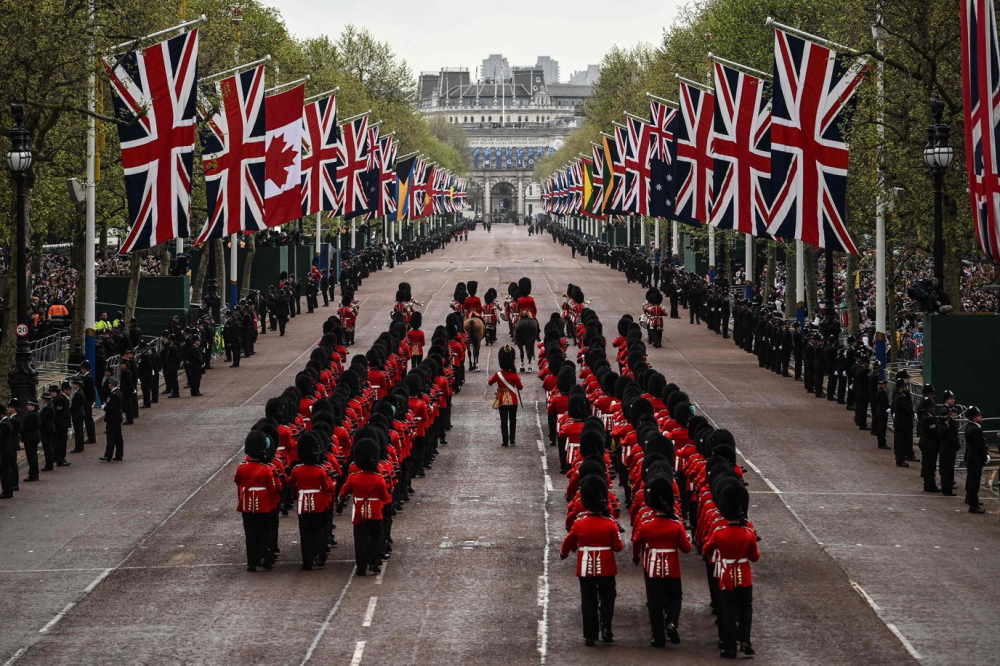
Denmark is an hour ahead of the UK so we end up indoors for a big chunk of the day glued to the TV watching the telecast – in Danish.
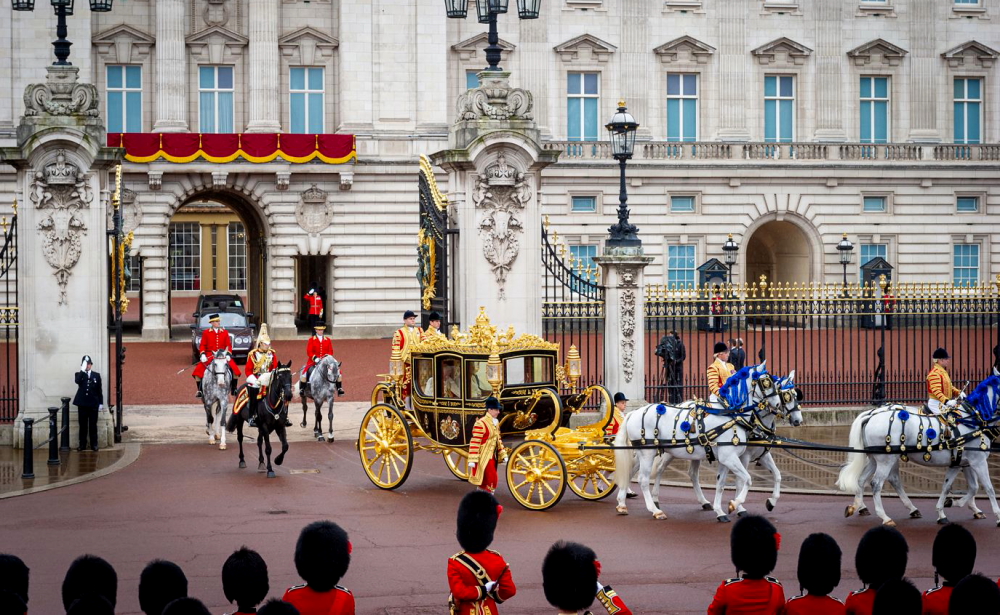
Thank goodness the service itself is in English!
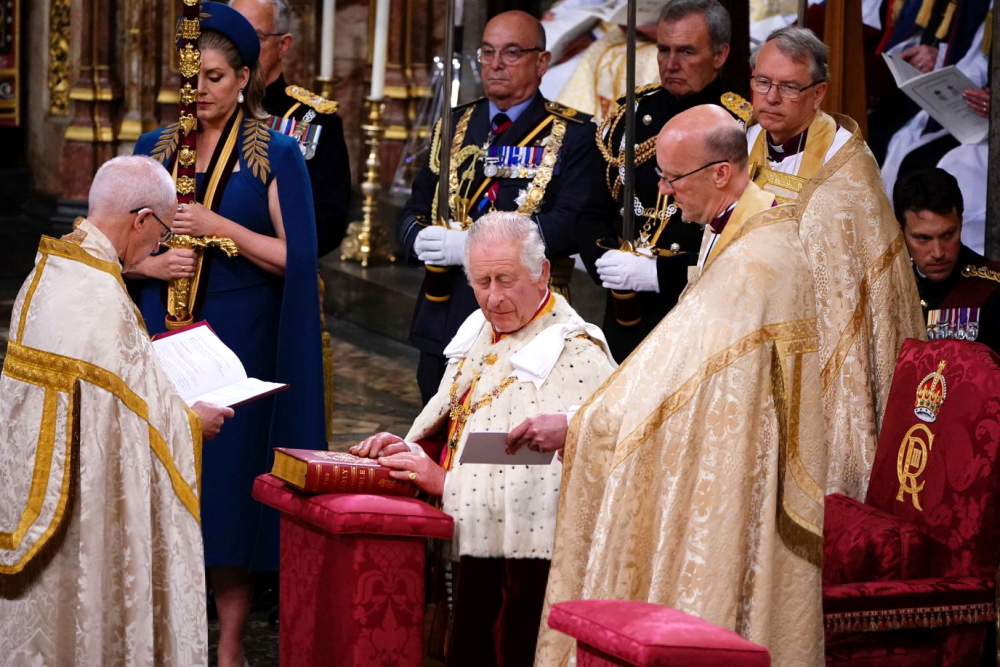
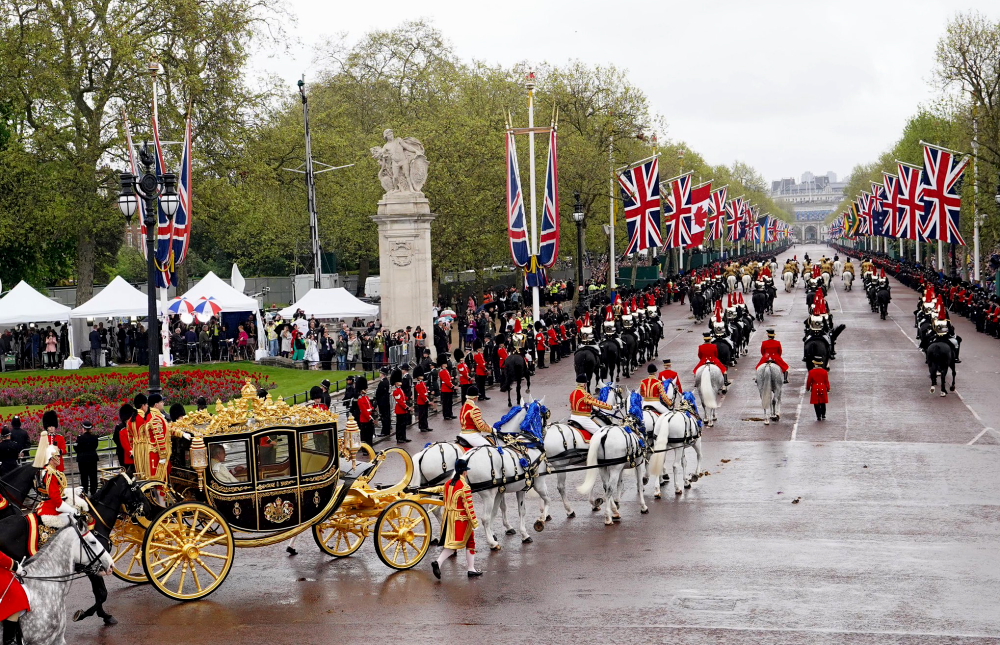
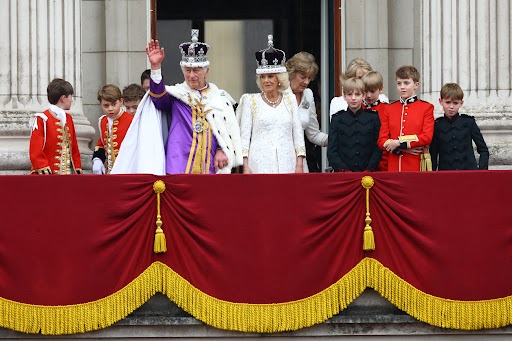
These photos are taken from the Internet to remind us of how we spent most of today.
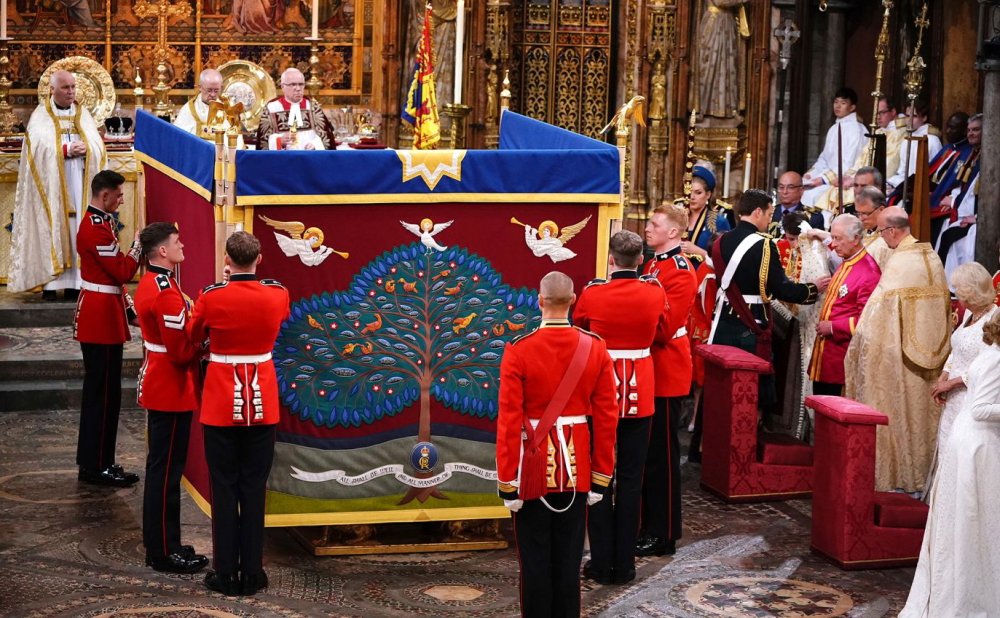
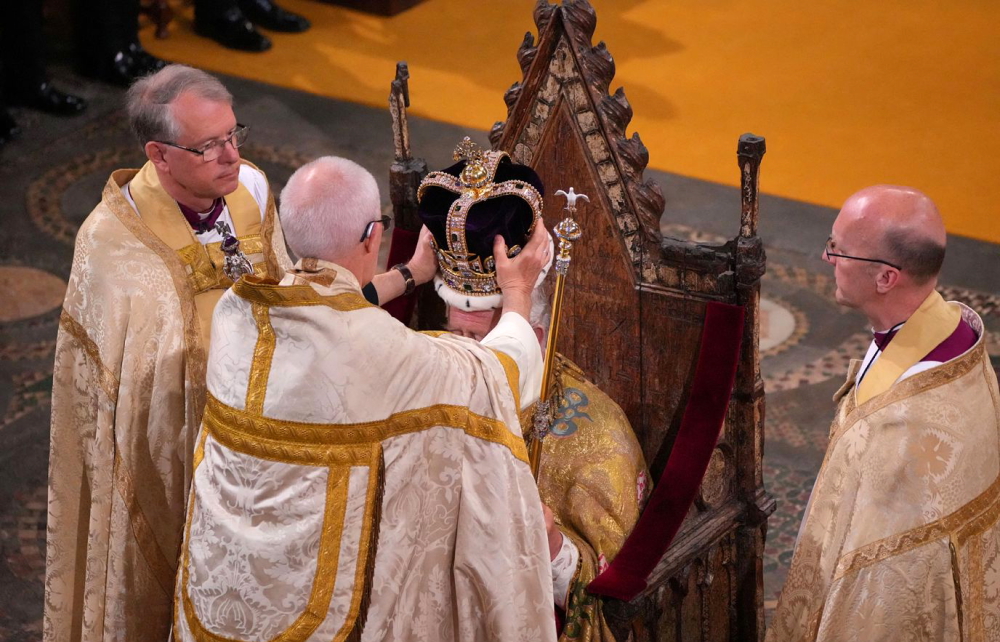
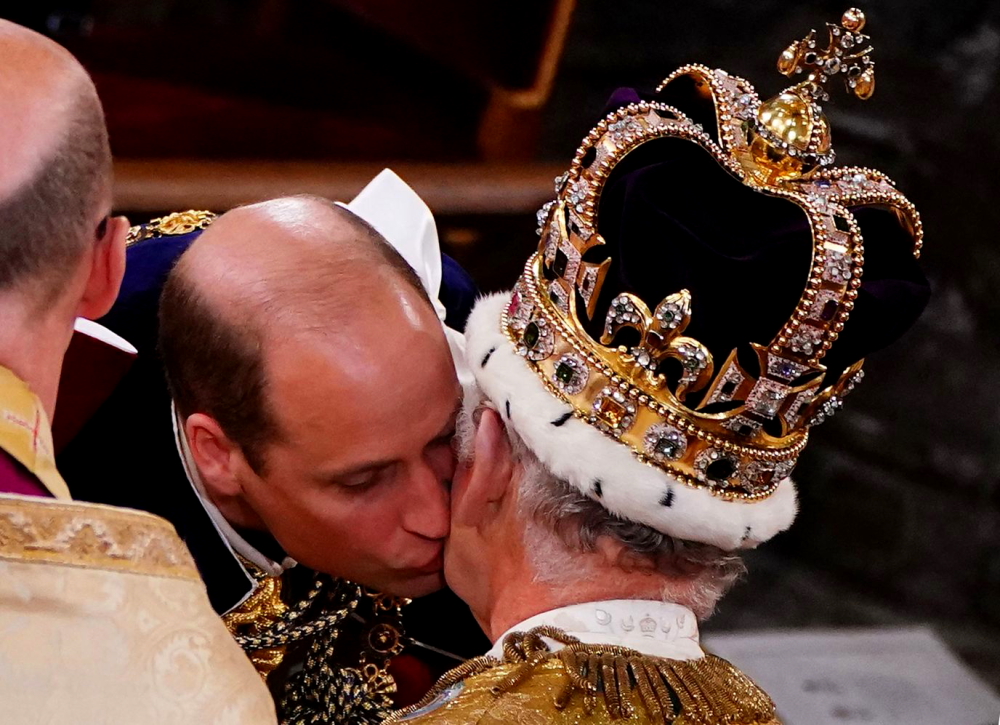
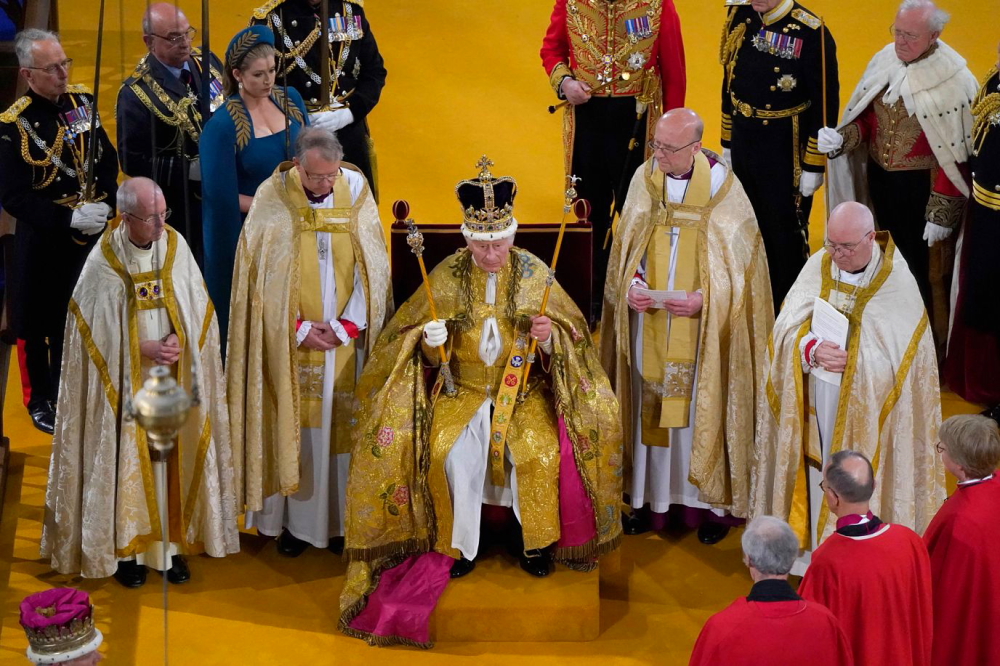
It seems that the English weather is the usual drizzle all day. Why would these onlookers hang out for days to get a view?
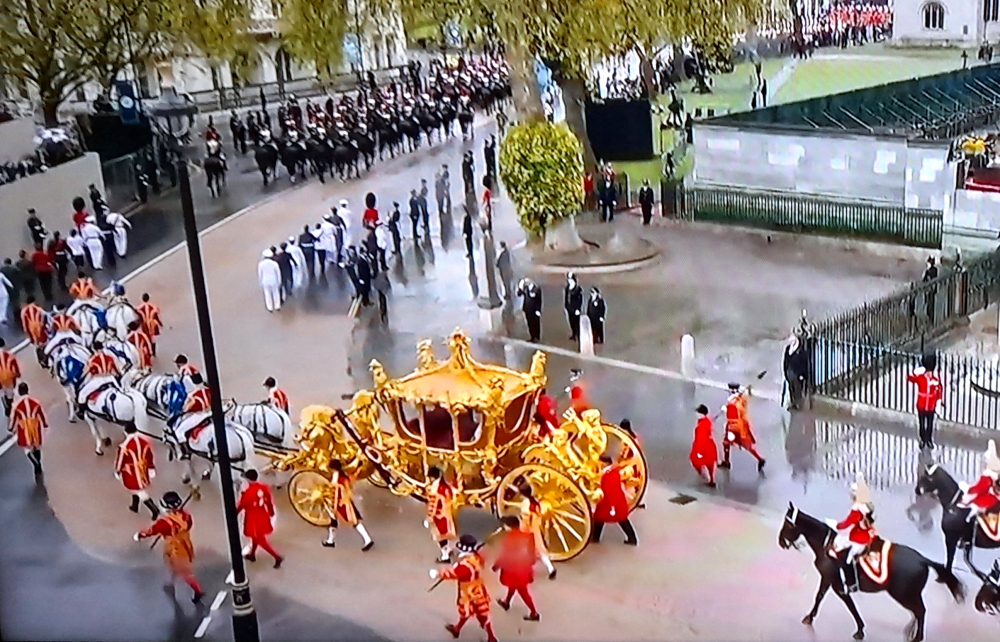
All very ceremonial.
After all the speculation as to who would appear on the balcony, who would have thought that the page boys would get precedence over the heir apparent and other real Royals!
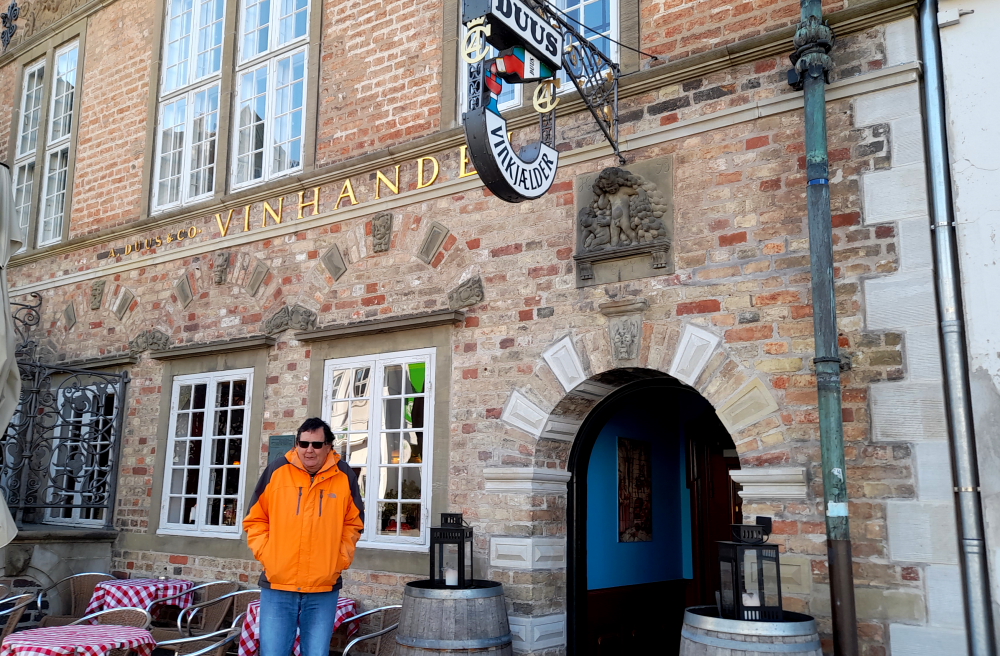
A dining recommendation when in Aalborg is Duus Vinkjaelder (Duss Wine Cellar) which is located in the Jens Bangs Stenhouse. A genuine, Danish medieval atmosphere in a brick, vaulted cellar with homemade food highlighting local, fresh ingredients.
The restaurant is also home to Christian IV’s Guild where some 70-year-old traditions are maintained and is still a meeting place for guild members who visit Aalborg every year on an official occasion.
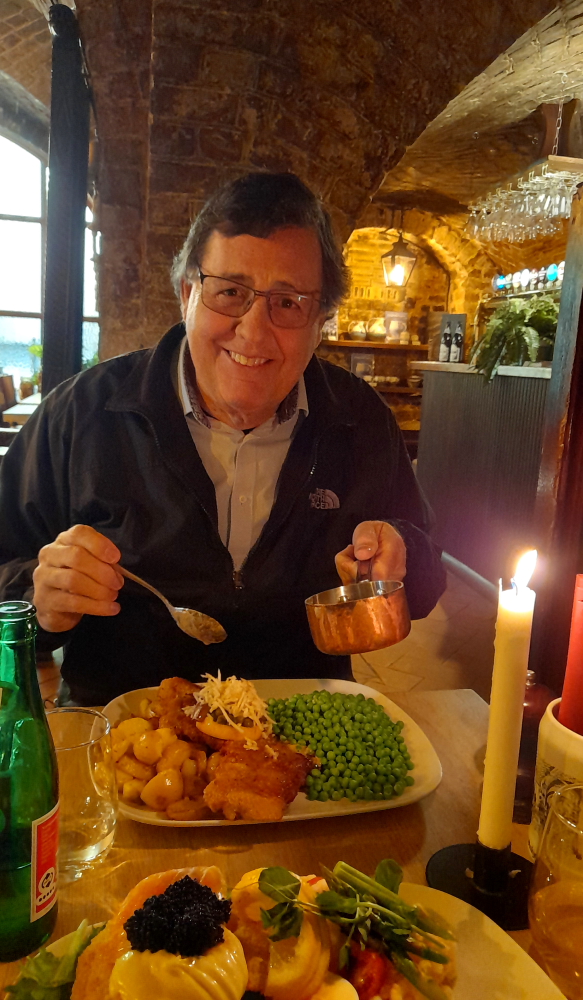
Lynn was planning to have some snaps to warm up but got the giggles.
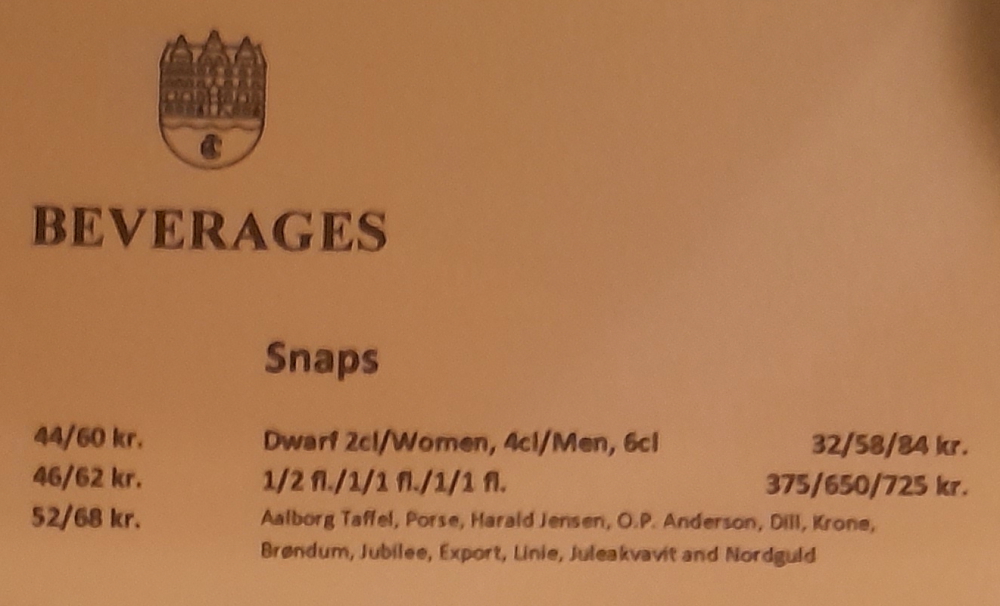
I went to bed early but Lynn sat up reading her book. At 10:00 pm it is still rather light. It is not yet mid-summer so sunset will be very late by the time 22 June comes around and we will be even further north.
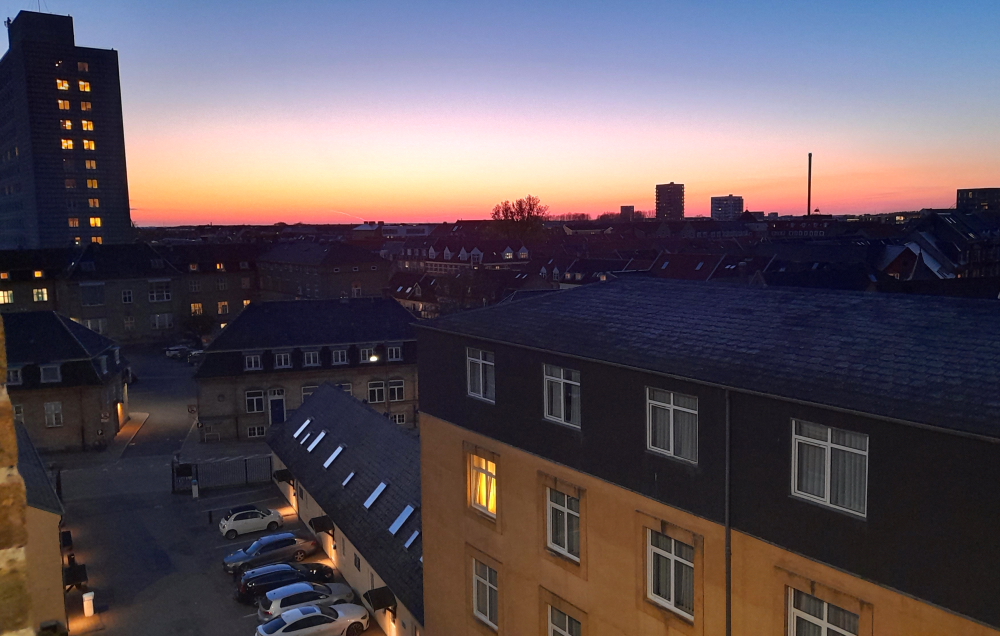
7 May, 2023
Sun up is bloody early so we are out of bed by 7:30 am. Lynn has a full day of tourist stuff planned so it is an early breakfast then out to the Utzon Centre.
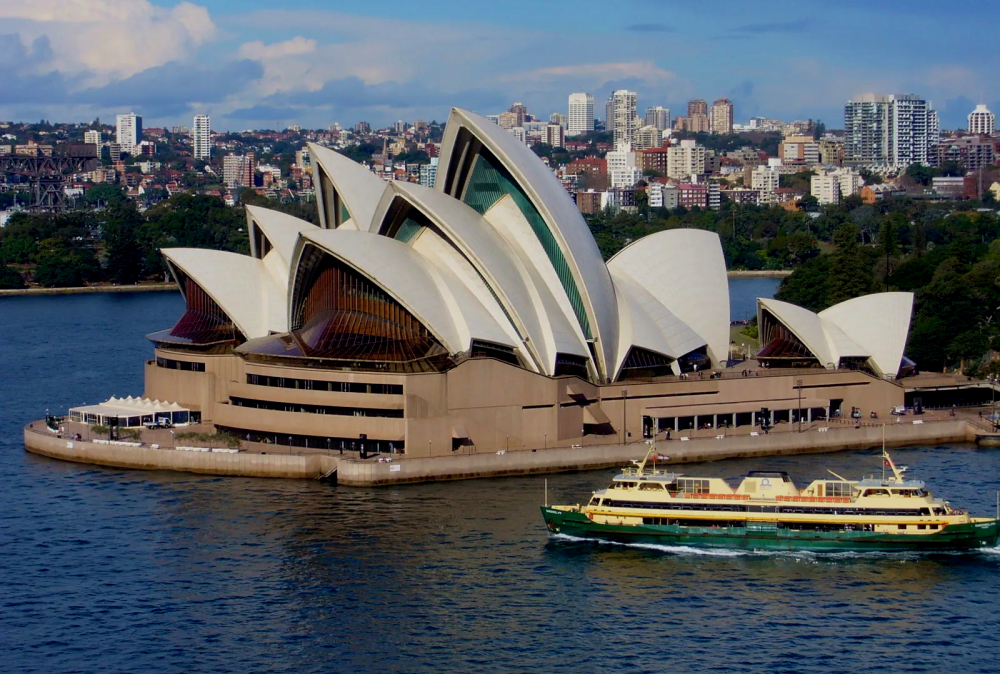
Jørn Utzon, born April 9, 1918, Copenhagen, Denmark. Utzon was a Danish architect best known for his dynamic, imaginative, but problematic design for the Sydney Opera House in Australia.
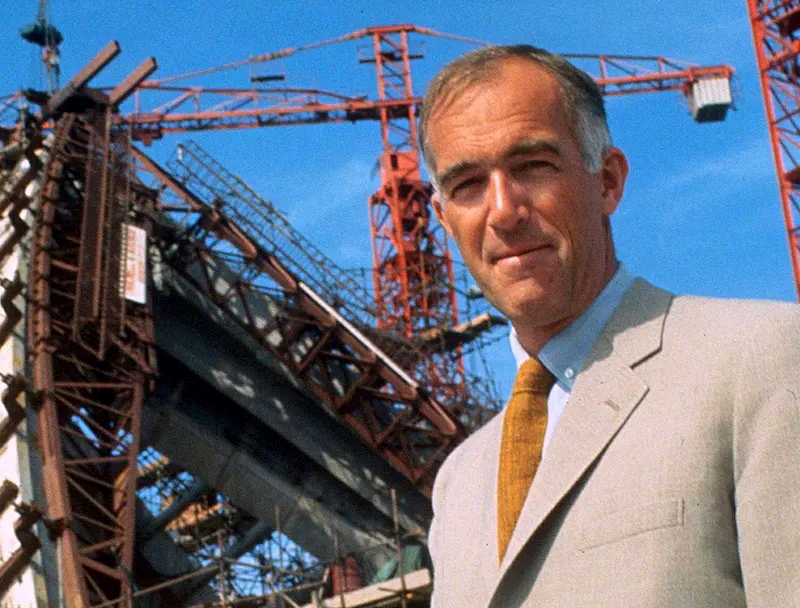
In 1957 Utzon won the design competition for a new opera house at Sydney with a dramatic design that brought him international fame. Construction, however, posed a variety of problems, many resulting from the innovative nature of the design, a series of sail-like shells. He resigned from the project in 1966, but construction continued until September 1973. The completed Opera House is now Sydney’s best-known landmark. In 1999 Utzon agreed to return as the building’s architect, overseeing an improvement project. He redesigned the reception hall—the only interior space that had been true to his plans—and it opened in 2004 as the Utzon Room. Two years later a new colonnade was completed, marking the first alteration to the Opera House’s exterior since 1973. In 2007 the Opera House was designated a UNESCO World Heritage site.
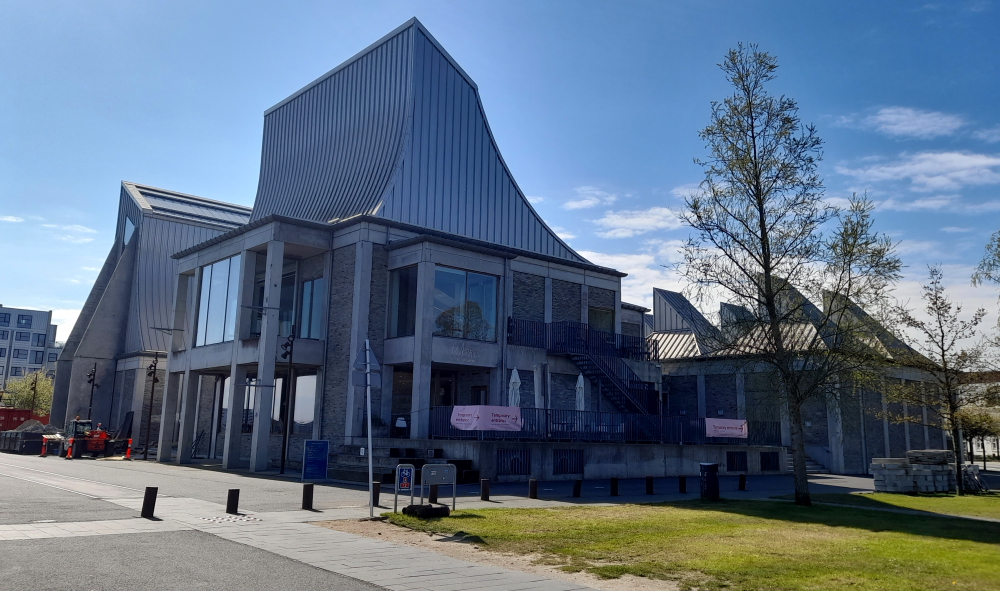
The Utzon Centre in Aalborg was the last building to be designed by Utzon. In collaboration with his son Kim, who provided the final construction drawings, he planned the centre not as a museum but as a place where students of architecture could meet and discuss their ideas for the future. Located on the Limfjord waterfront in the city where Utzon spent his childhood, the building was completed in 2008, the year Utzon died.
The centre has some features similar to our Opera House. It has unusual ceilings and impressive water views of Limfjord.
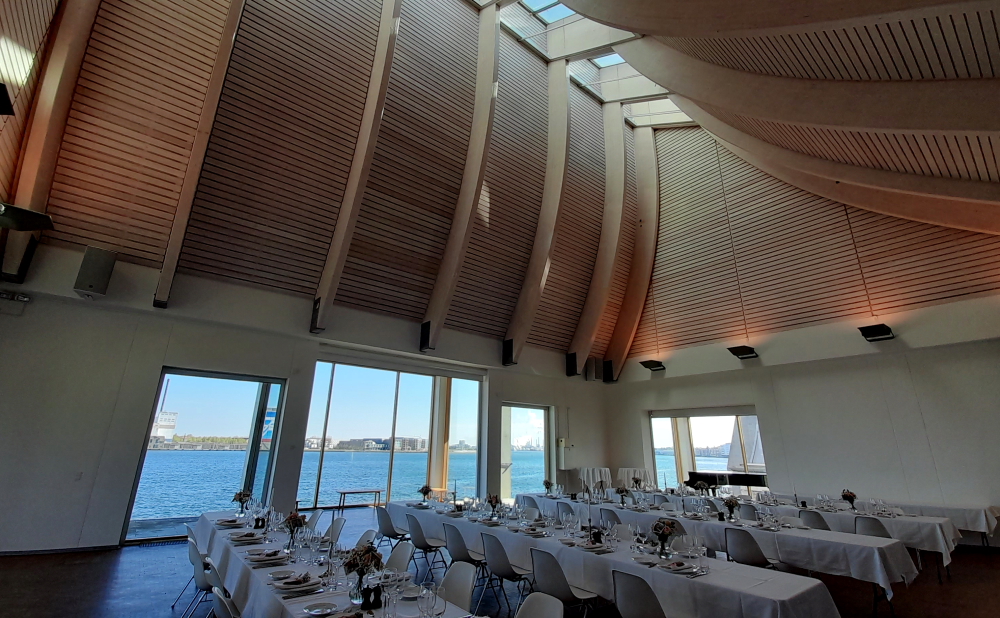
We spent an hour walking around the Centre. Architects must come from another planet. They seem to test the limits of shed design until the shed becomes ugly. How about considering function while dreaming up strange forms?
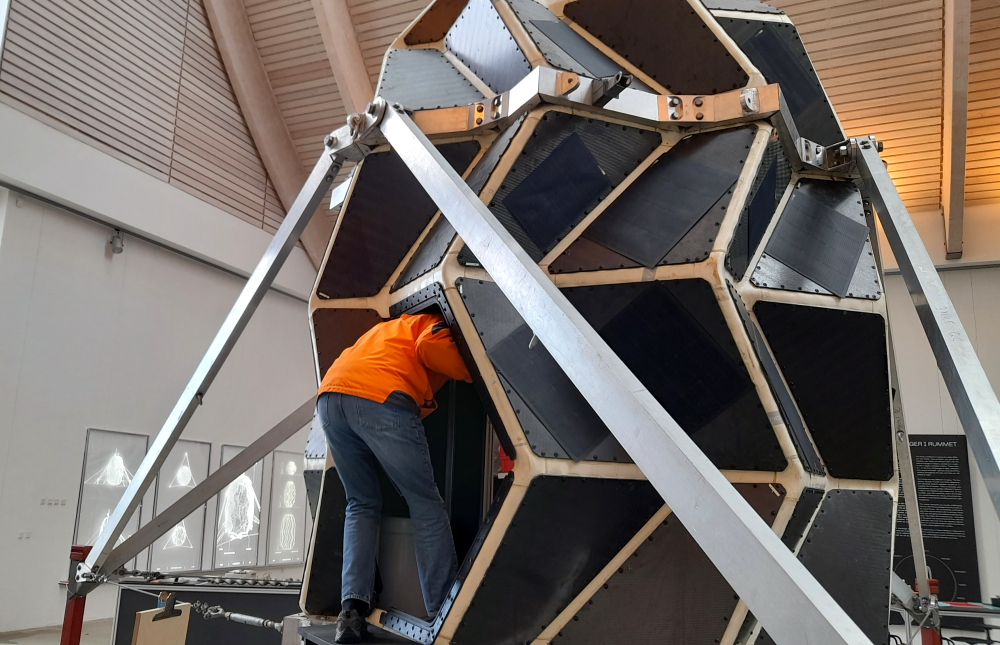
We checked out a design for a moon habitat but even Lynn noticed that the first thing that you have to squeeze past it a poorly-located toilet at the entrance to the structure. I don’t think that I want to climb over that every time I go for a moon walk.
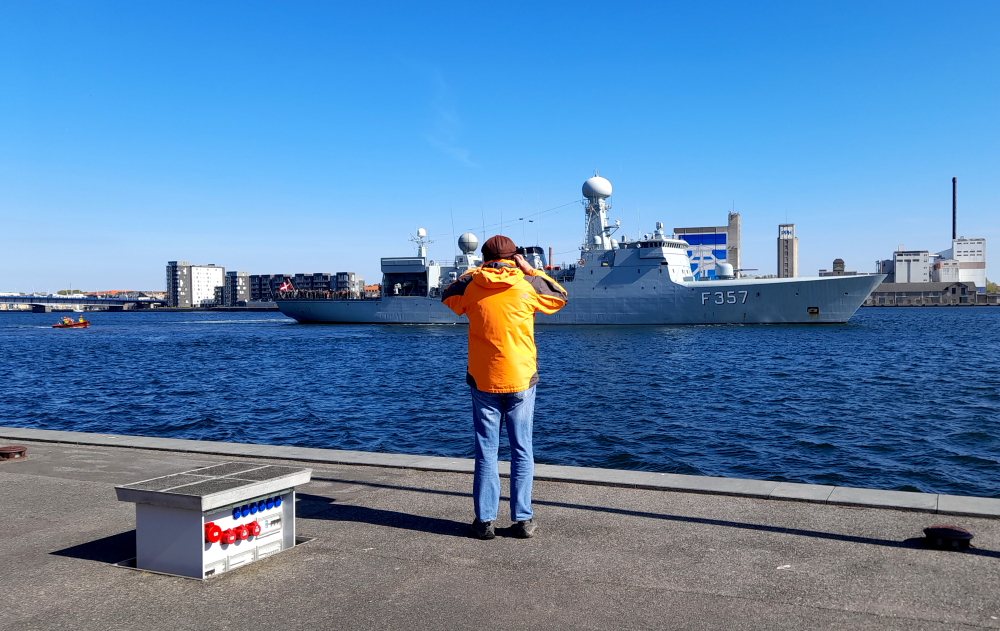
Out front of the centre we spot a Danish Navy patrol boat leaving the dock with a bunch of civilians on board. Perhaps public servants going for a river cruise compliments of the Government purse?
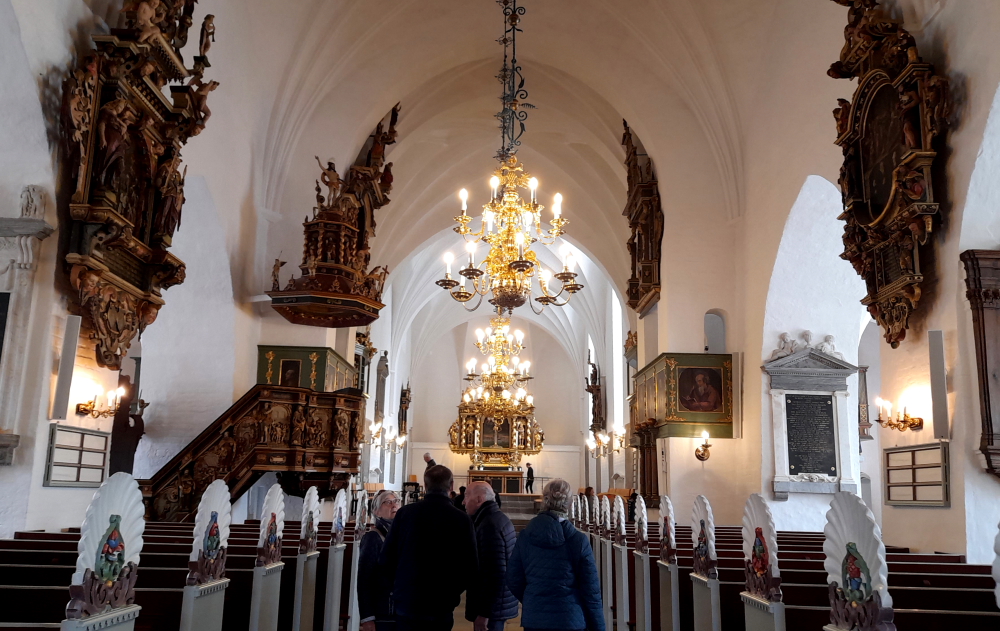
On the way back to the hotel to collect the car Lynn notices a break in the weekend confirmation services at the Church and slips in to check out the interior.
We picked up the car and drove to the coast to the Bunkermuseum Hanstholm. Hanstholm fortress was a large coastal fortification, built by Nazi Germany at Hanstholm in north-western Denmark during World War II. The remains of the fortress is now a World War II museum.
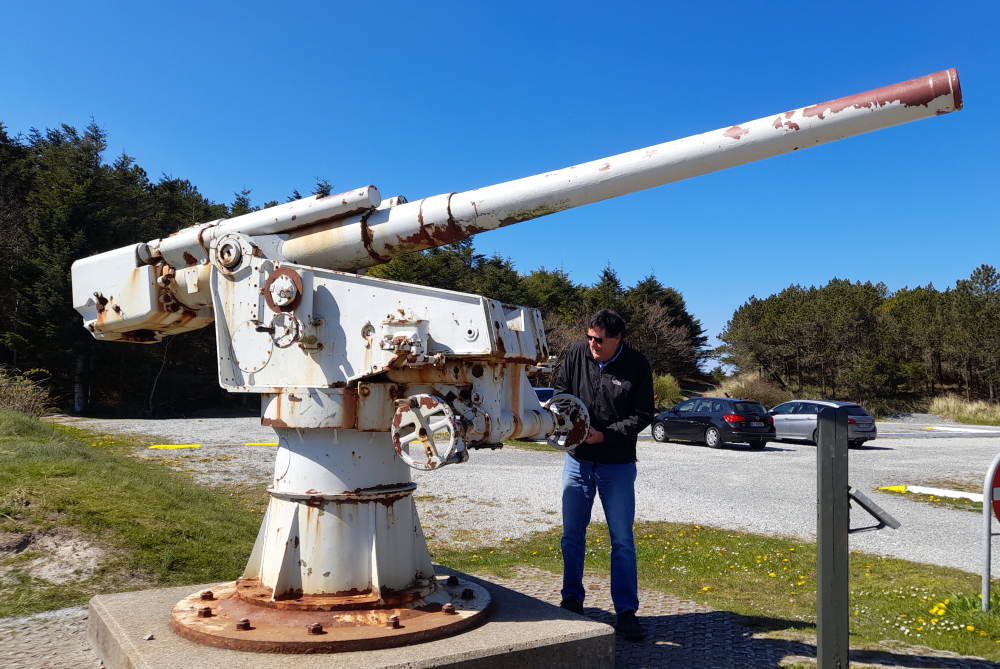
The large battery gun has now been put on display separate to the gun housing which was dismantled after the war.
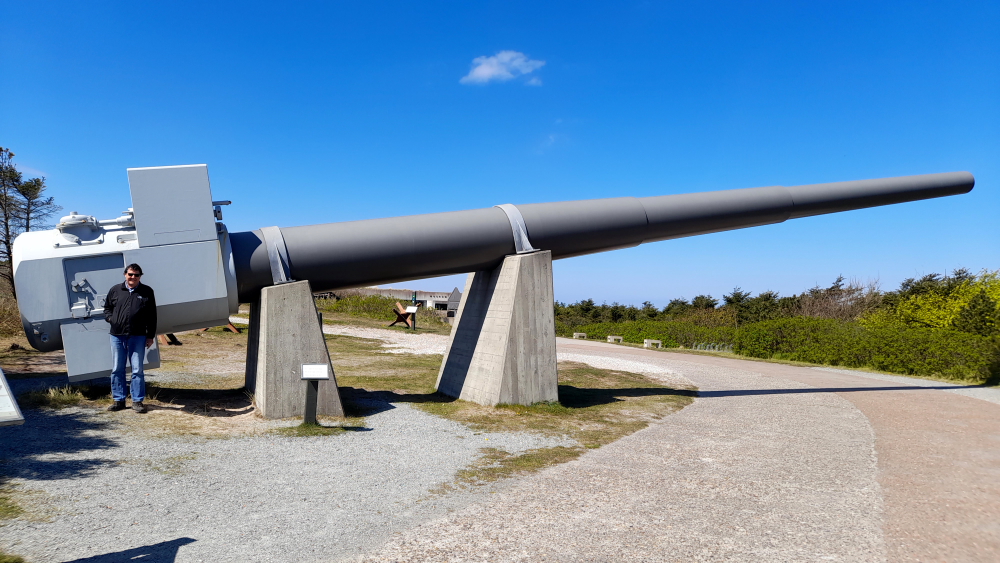
The fortress is a large underground complex which is accessible via the museum. Lynn has no interest but she knew that I would be up for a visit – hence the trip here. Prior to heading down under into the fortress we took a stroll around the external park and checked out a small sighting bunker and the remains of the gun emplacement.
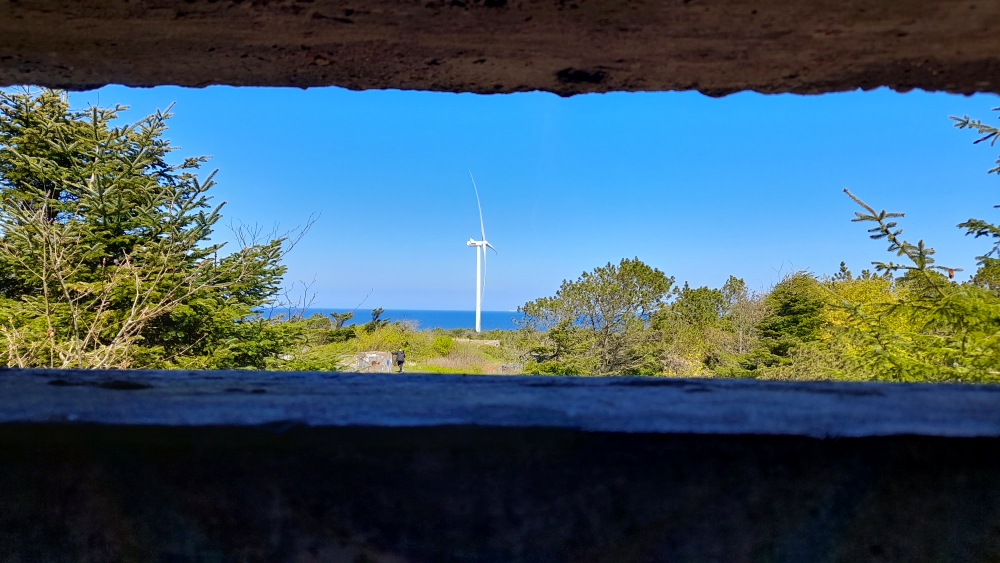
The view from the sighting bunker is a lot greener than in 1941. Just a wind turbine can be spotted.
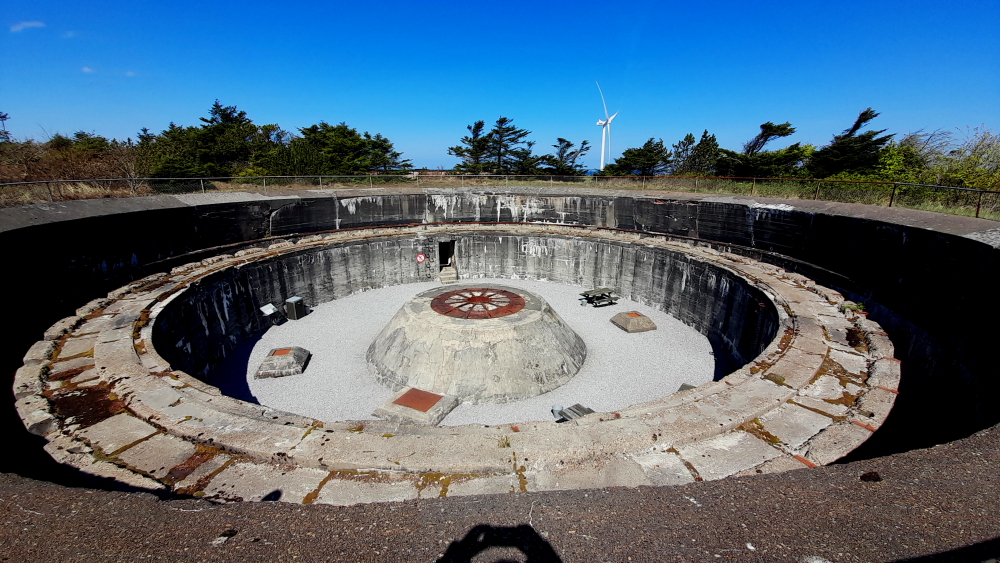
I then headed underground to check out the fortress while Lynn sat patiently reading her book. I was down there for about 75 minutes checking out all the German military equipment and the shell-loading processes.
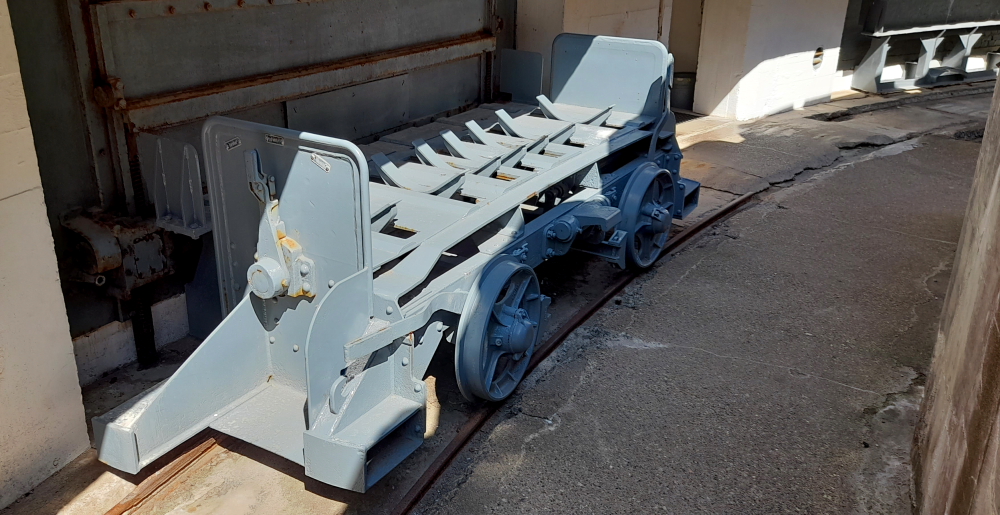
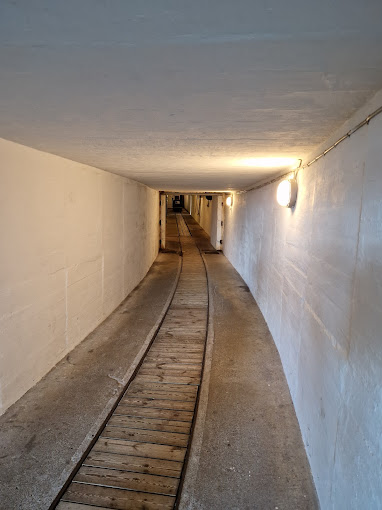
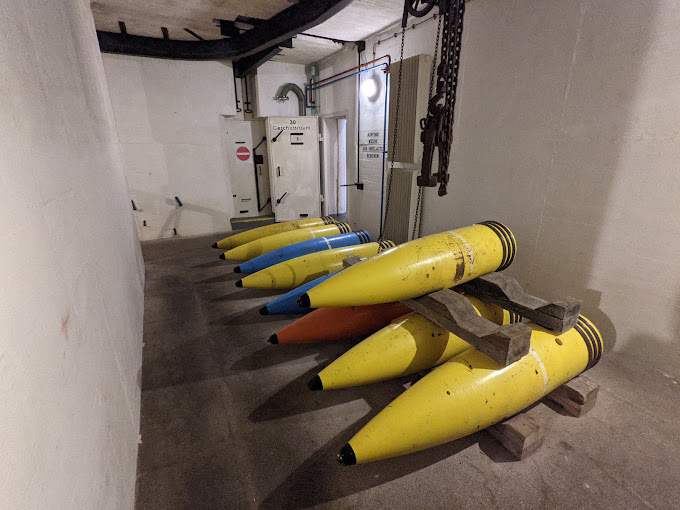
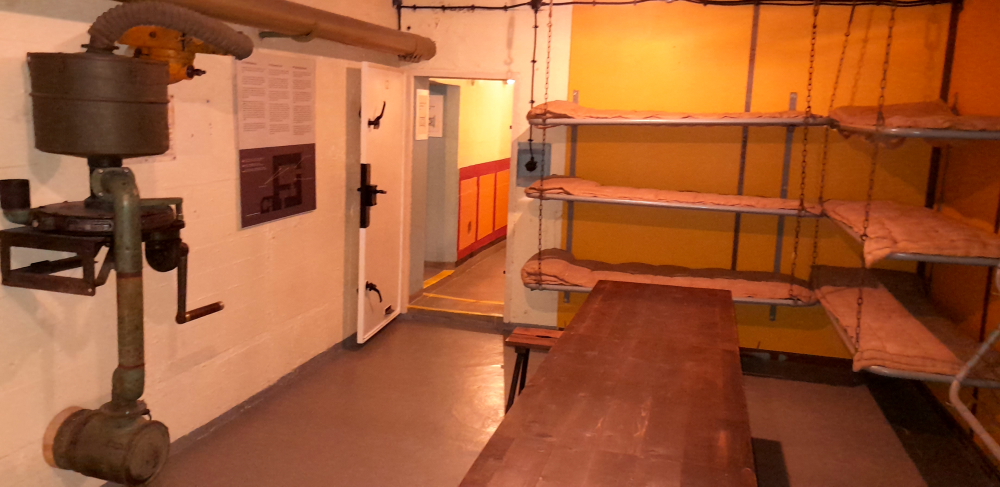
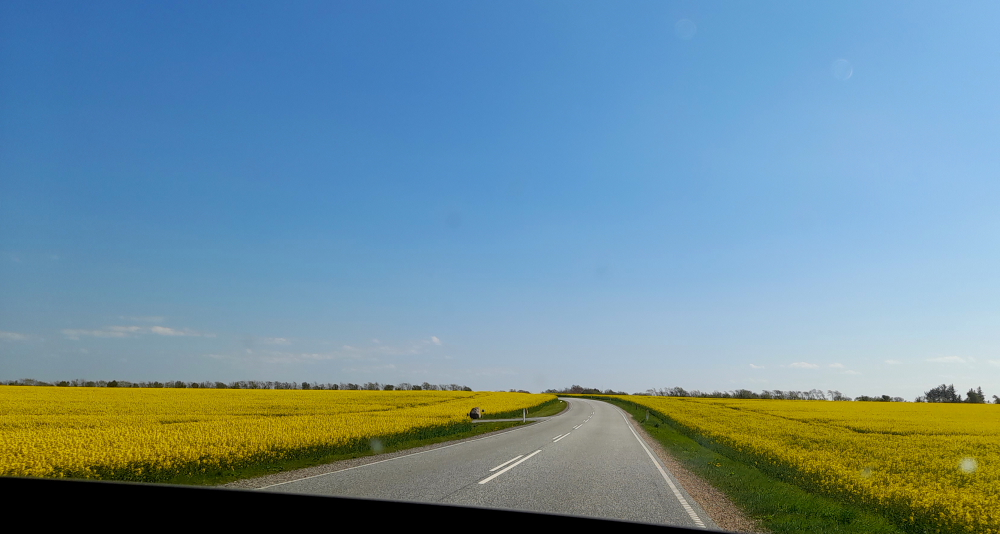
I emerged and we headed the 45 minutes along the coast to Bulbjerg Cliffs and beach. We drove past large fields of yellow flowering rape seed which have been prevalent since our arrival in Denmark.
Yes, there was yet another German bunker at Bulbjerg Cliffs but more of a sighting bunker. Still, the views are impressive.
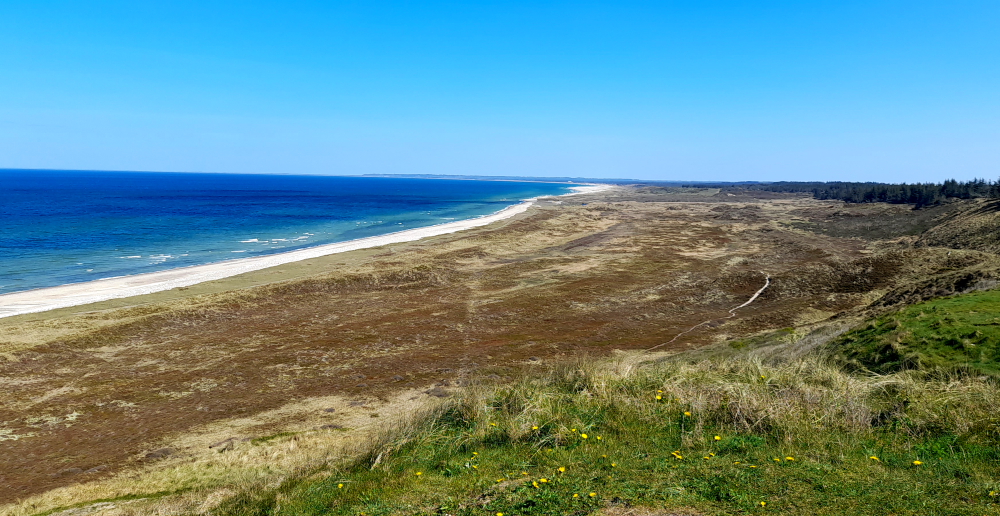
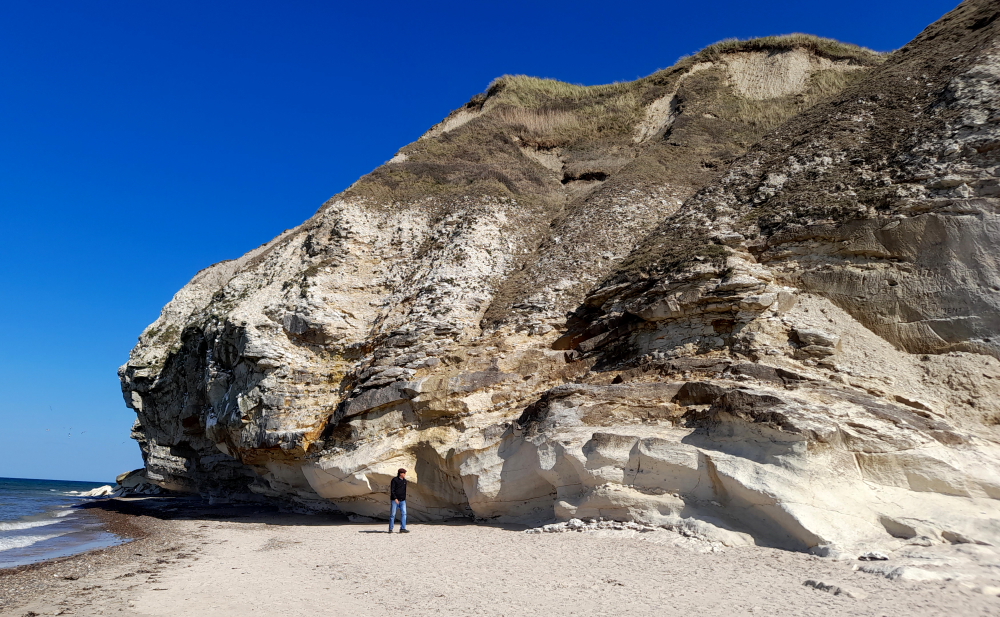
We stood on the bunker and had a great view over the Bulbjerg Cliffs. Luckily the wind is just a gentle breeze today and it is about 15 Deg C. Not warm enough for a swim but nice to be out in the sunshine.
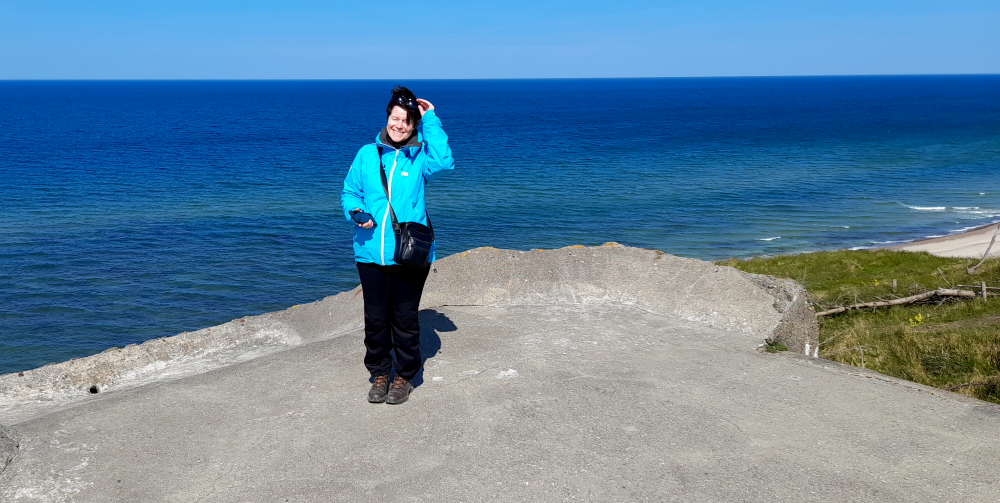
The beach looks excellent from up here so after a few photos we plan to head down to the beach below.
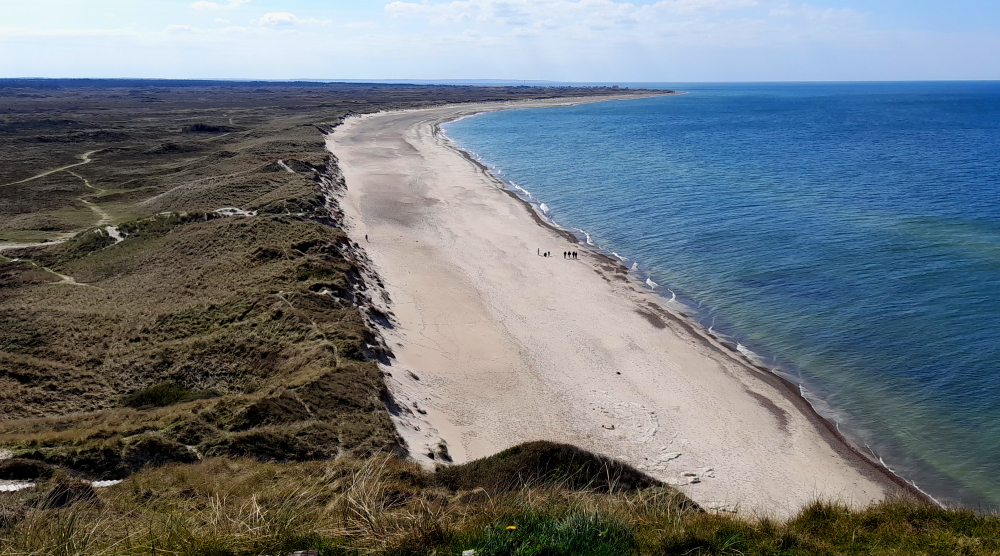
Rather than walk all the way down and up again we notice a parking area down at beach level so back to the car and two minutes later we walk from the parking spot to the beach. Unfortunately the sand is very soft so I think that we will be emptying sand from our boots tonight.
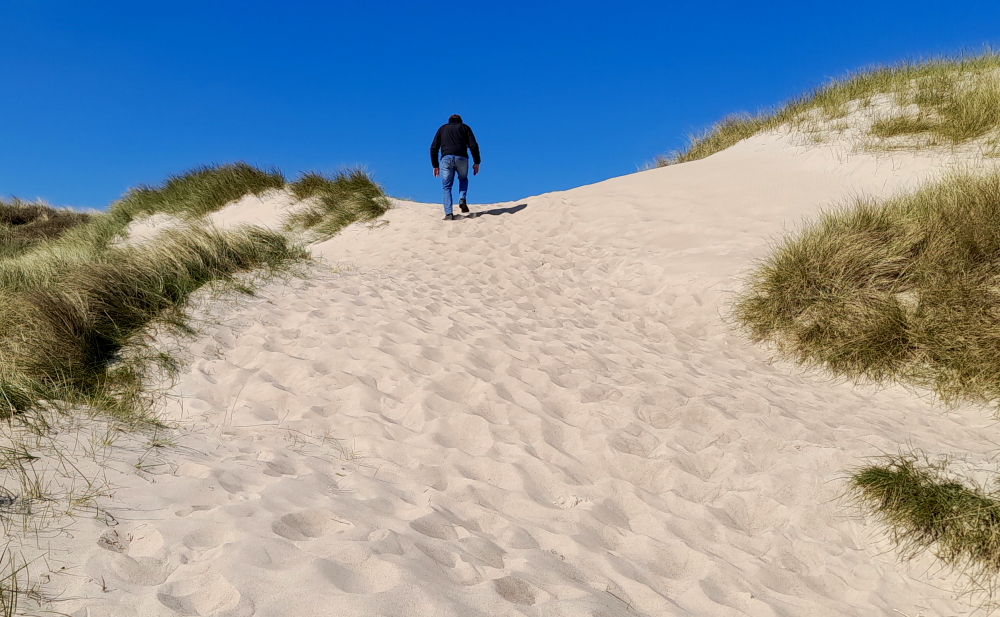
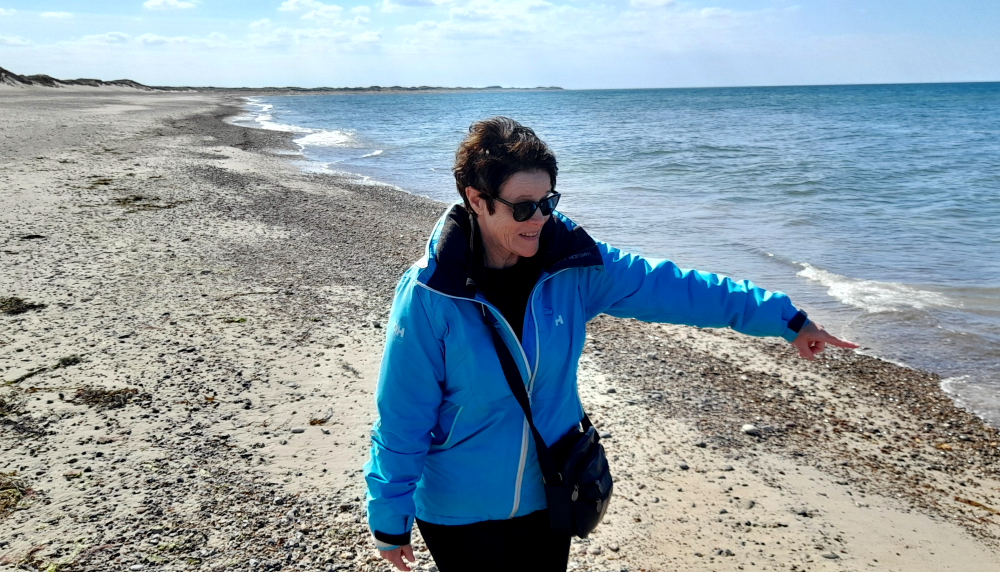
The beach looks better from a distance. Up close there are lots of pebbles. The water is way too cold to even consider a swim.
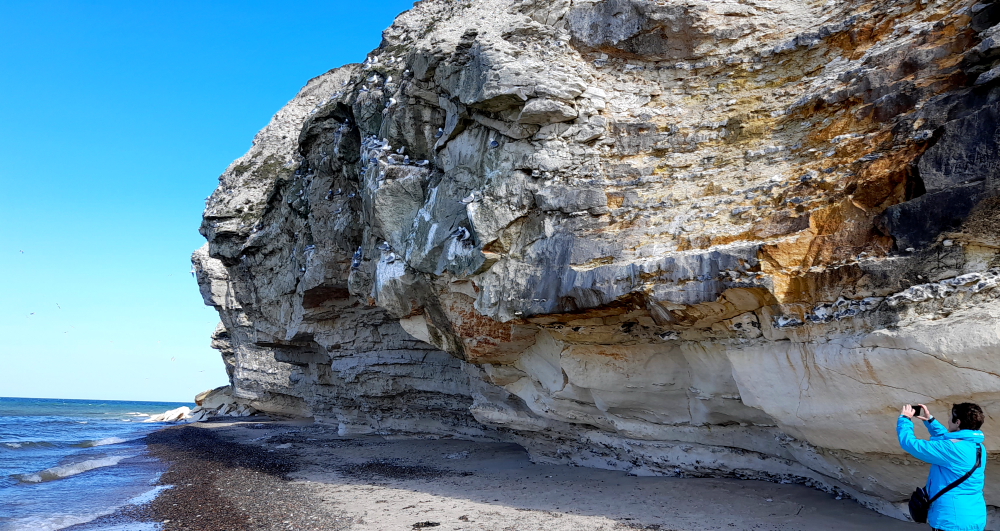
Bulbjerg is a limestone cliff and is the only rock formation in Jutland. It is also the only bird cliff on the Danish mainland, and as such the only breeding place of the black-legged kittiwake on the Danish mainland.
Lynn headed back along the beach and back over the sand dune to the car but I noticed a wooden, stepped pathway which led back up the cliff but it also crossed the dunes without deep sand so I take an alternate path back to the car with less chance of filling my boots with more sand.
Back at the car and the outside temperature has risen to an amazing 18 Deg C. Once out of the sun trap however the temperature quickly returns to a cool 14 Deg C. It is time to head back to town. Lynn reminds me to make a note on the blog about the very nice country roads here in Denmark but they all have a ridiculously low speed limit of 80 kph in the countryside for single carriageways and it is only on dual carriageway road that speeds can climb to 110 kph or even 130 kph on expressways.
However the majority of the roads are country roads that would be 100 kph in Australia but are all 80 kph unless near an intersection when they drop to 70 kph until the intersection is passed and all tiny villages get a snail’s pace of 50 kph. This reminds Lynn of Japan so it takes forever to go short distances.
The problem in Denmark is that there are radar traps everywhere. It feels like a slow Queensland except that the road are wider, smoother, straighter and flatter here in Denmark. This is either being super conservative in Denmark or they can’t drive. I suspect that the issue is in winter when much of the country roads would have very dangerous ice patches. Perhaps they could have a summer and winter speed limit system?
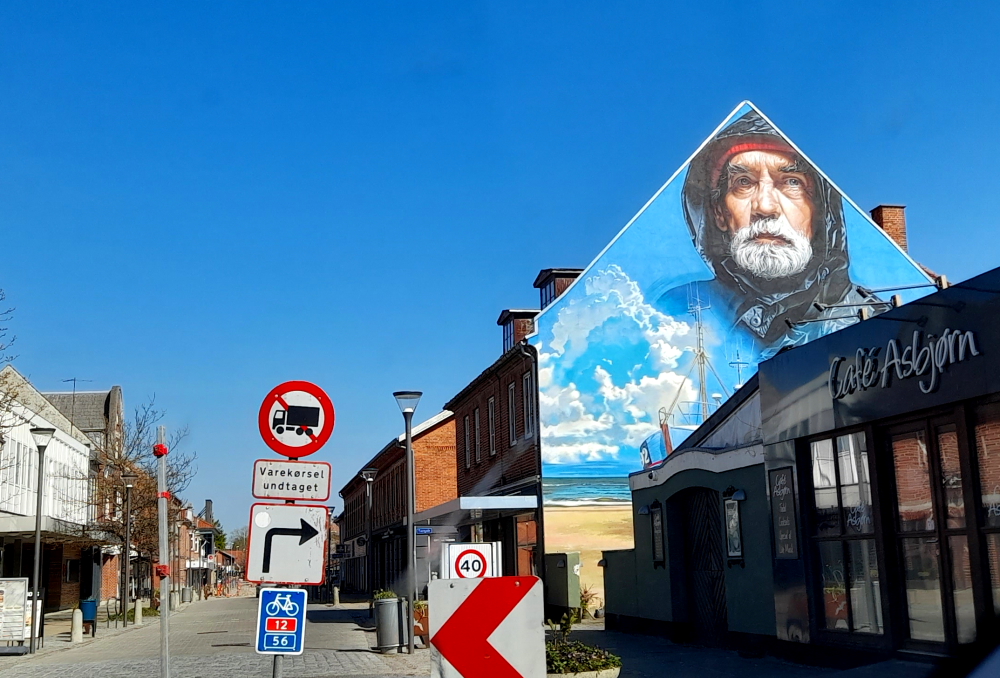
Still, it has been a pleasant drive in the country in beautiful sunshine. On the way back to town Lynn notices yet another mural – “Old Fisherman” by Romanian street artist, Bogdan Scutaru, now resident in Horsens, Denmark.
8 May, 2023
Today is our last full day in Aalborg. Tomorrow we check out of this hotel and head to Frederikshavn where we will spend 3 days before taking the ferry to Sweden.
It is a beautiful day outside with an expected maximum of 17 Deg C but we have a few indoor things to catch up on so our outdoor activities will be limited to going out for coffee and dinner tonight at an Irish Pub in the old town area.
After some big crowds in the hotel over this past long weekend breakfast is very quiet this morning as most folk checked out yesterday.
By mid-morning it has warmed up to pleasant 14 Deg C so we head out for coffee at the rooftop cafe of Sallings which is a department store in Aalborg. They also have a rooftop bar and restaurant but it is a bit early for a cocktail.
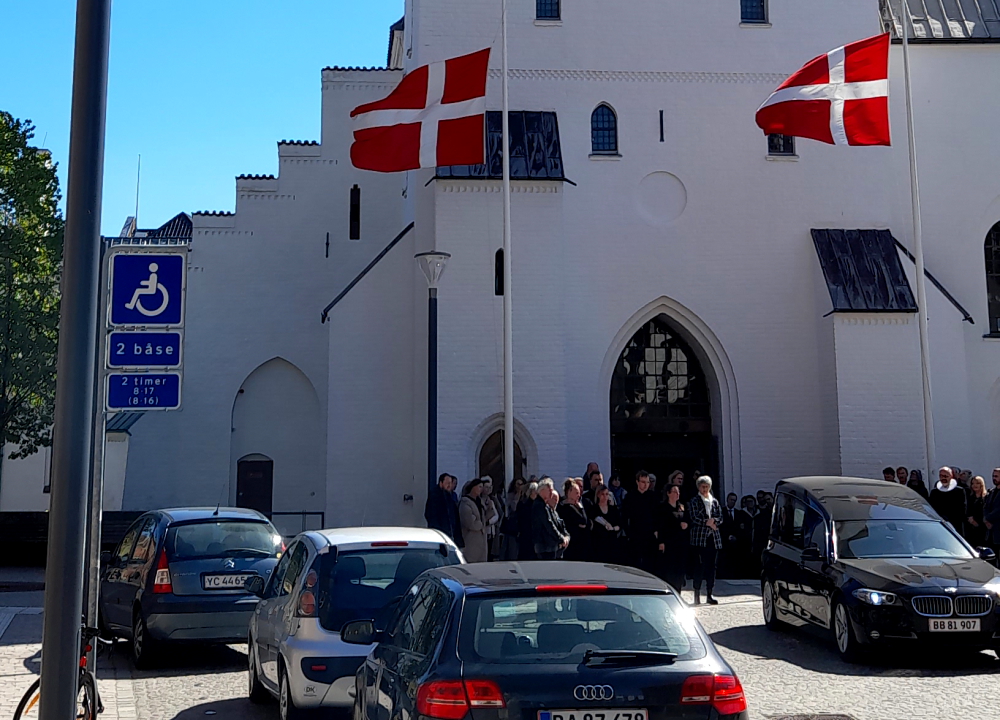
On the way to Sallings we have to pass by the Budolfi Church and as we approach the church bells are ringing. There is a funeral on here this morning which probably should have been over the weekend but the church was undoubtedly booked out all weekend for confirmations.
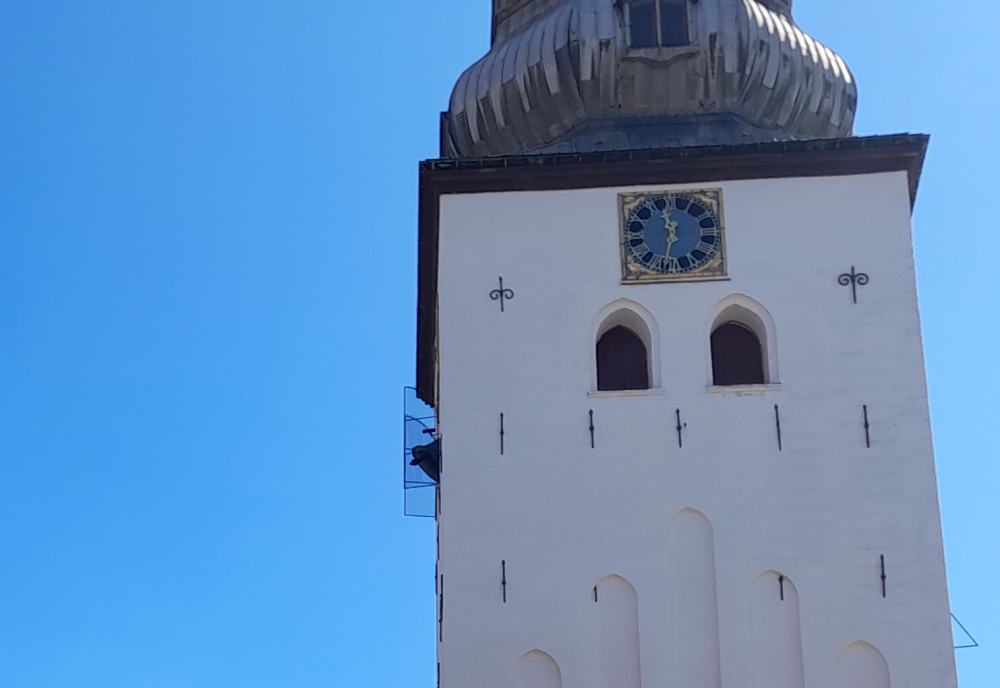
Lynn notices that the bell tower has the mesh windows open to allow the bell to toll outside the actual tower structure. Is this poor planning? Perhaps the largest bell was added at a later date after the church was built? Or perhaps the bell is designed to chime outside for a louder toll?
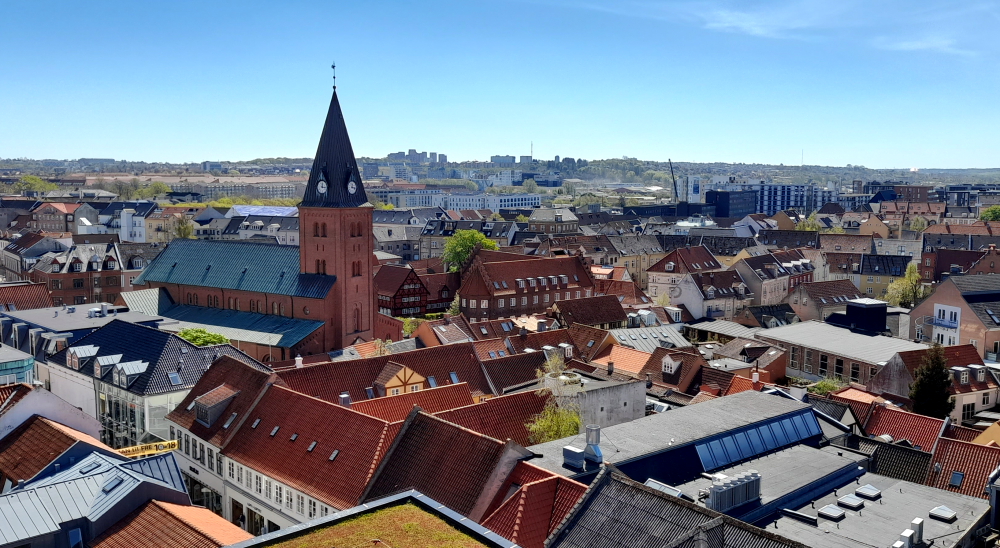
We continue on to Sallings and head to the rooftop cafe for a coffee / hot chocolate and find a nice table in the sun that is sheltered from the still quite chilly breeze.
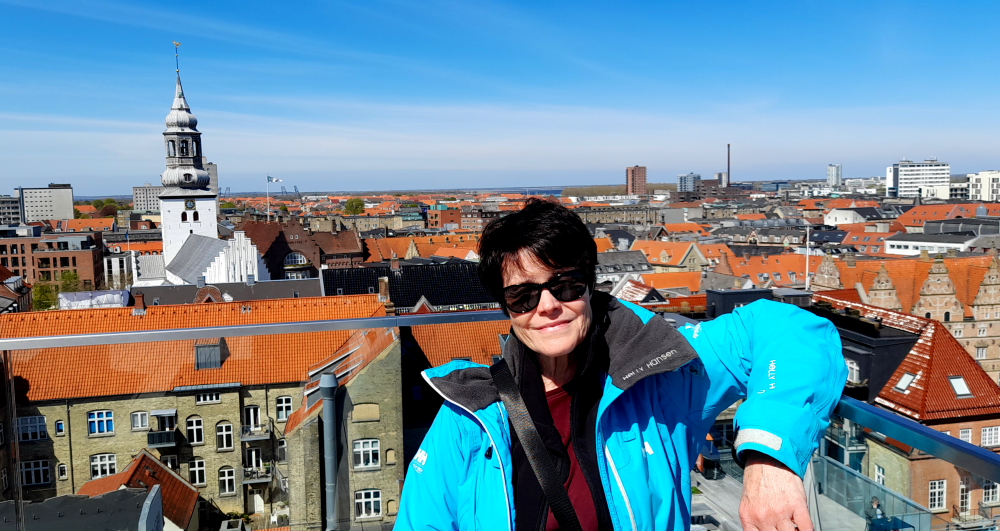
Most of the view from up here is of a car park and the building is only about 6 stories high but still one of the best views in town.
The restaurant and bar is another two levels higher so we head upstairs to check it out.
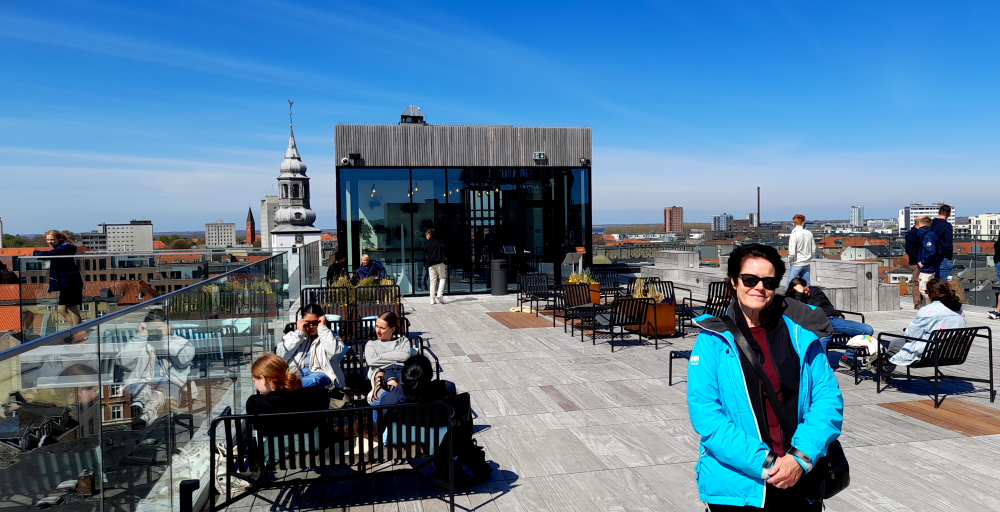
The bar would be very popular on a sunny summer afternoon but it is a bit blustery up here today.
Tonight we are off to an Irish Pub for dinner. Lynn was planning to have an Irish Stew but they had run out. Unfortunately the food was very disappointing and the place reminded us of the “unIrish” pub in Osaka, Japan. Maybe we should leave our Irish pub visits to Ireland, the UK and Australia.
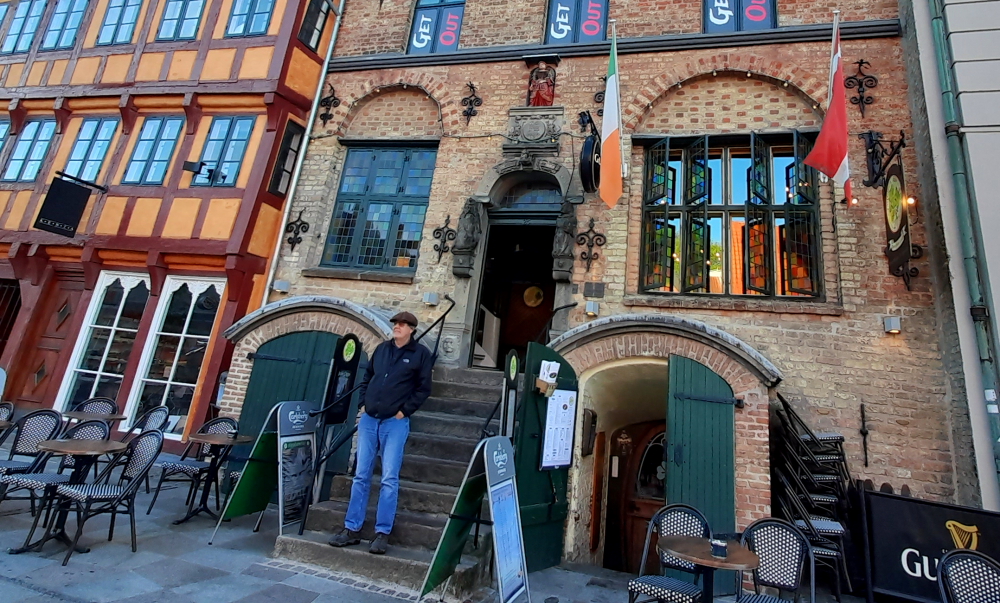
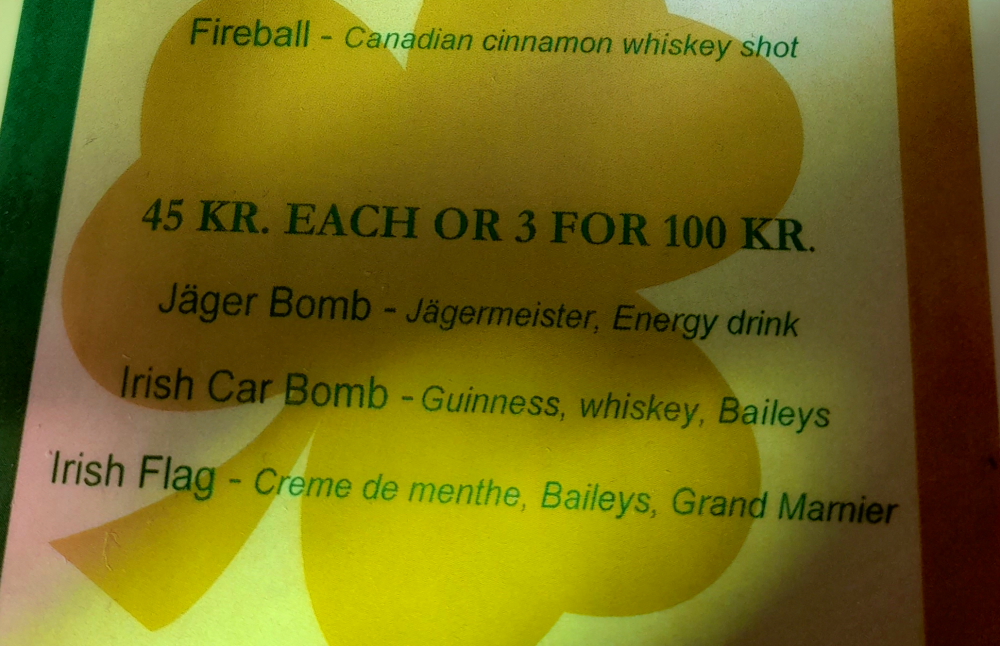
Still, the selection of cocktails amused Lynn even though she only drank a half of The Guinness.
Tomorrow we are on the road again and are heading to our last stop in Denmark before we take the ferry on Friday to Gothenborg, Sweden. We do however plan a couple of visits on the way to Frederikshavn from where the car ferry departs.
9 May, 2023
Another sunny day with temperatures due to rise to 18 Deg C. If we take the direct route on the E45 to our next accommodation in Frederikshavn it’s only a 38 minute drive. However, Lynn has managed to put together an itinerary that will have us arrive in Frederikshavn in 6.5 hours’ time!
We depart around 10:30 am and drive north to Bronderslev. The town name is derived from a local Norsemen chief, Brunder. We stop next to Hedelund – a parkland.
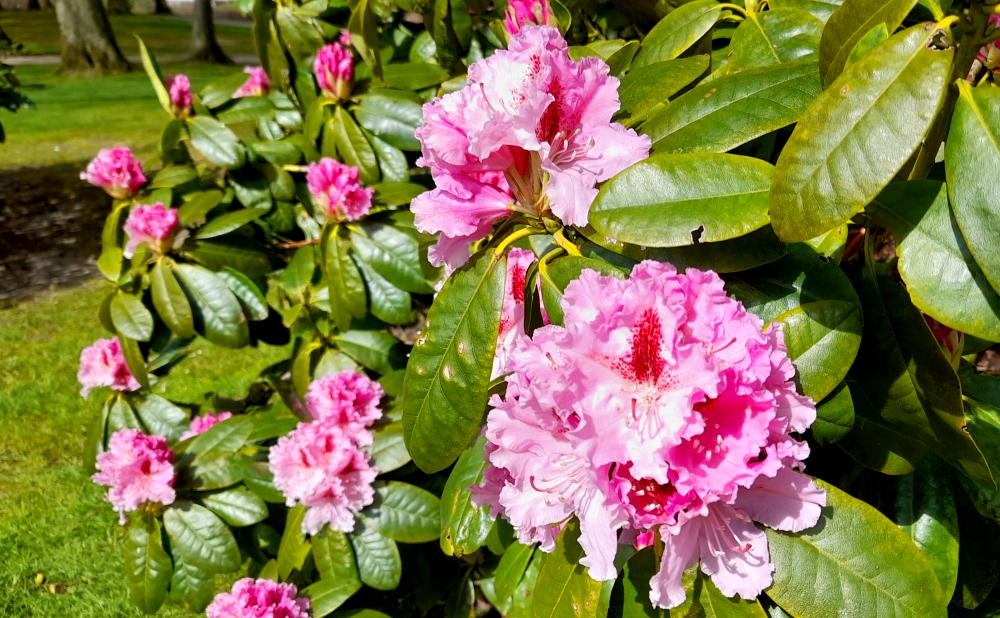
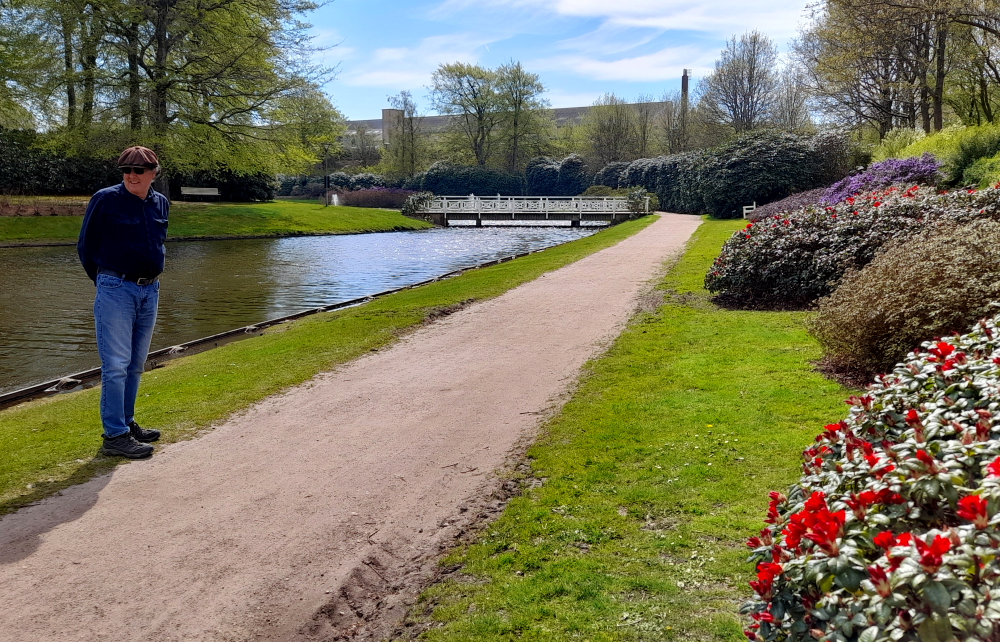
The reason we are here is because of its Rhododendron Gardens which are supposed to be in bloom during May-June. Only some bushes are in bloom – not the full-blown colour spectacle that it will be.
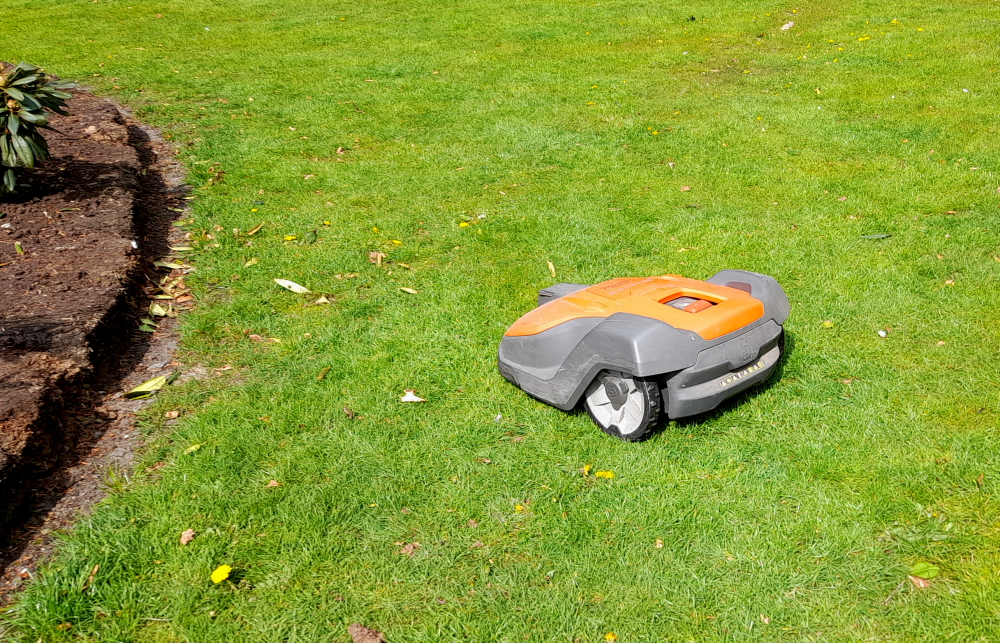
In 1994, the Hedelund Rhododendron Park was established within the city on the site of a beech tree park which had been there since 1890.
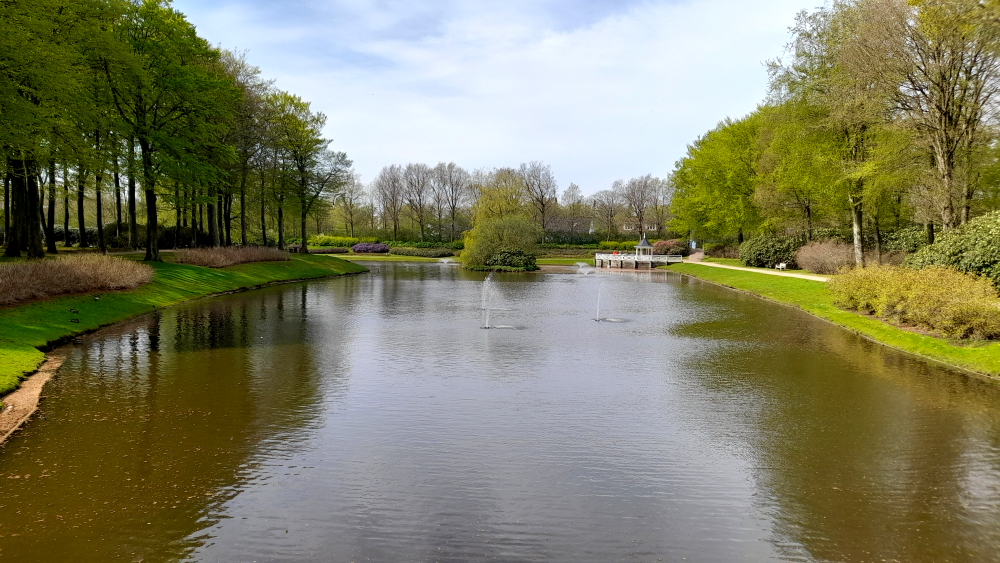
The park covers an area of 7 hectares, making it one of the largest of its kind within the nordic countries.
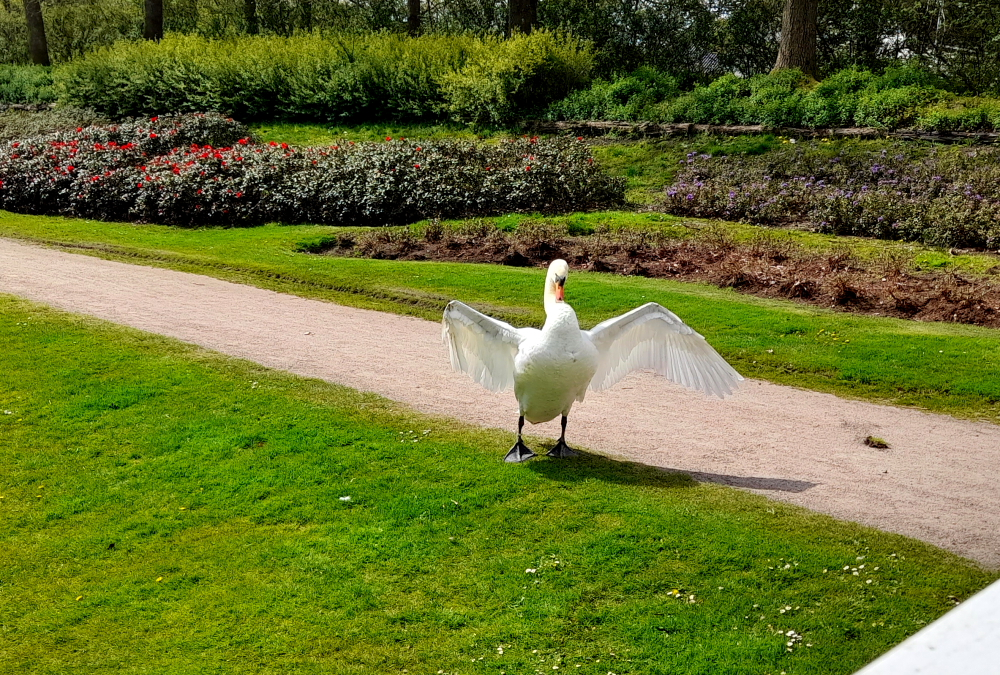
It contains more than 10,000 individual plants from over 130 different species of Rhododendron.
Next we drive NW to Lokken Beach – apparently one of Denmark’s best beaches.
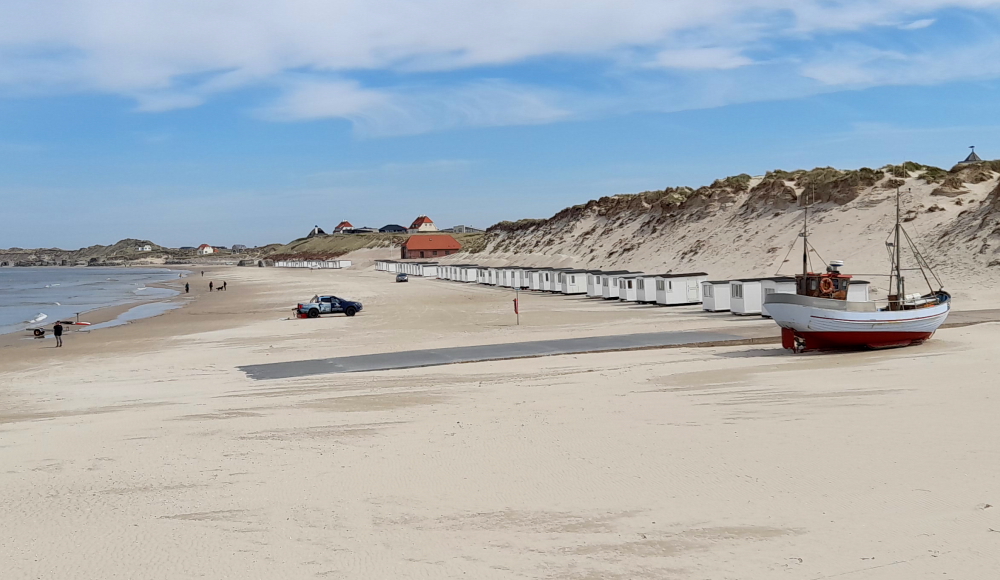
Stretching for 10 km Løkken Strand is home to some of the best waves and softest sand in the whole of North Jutland. Adding to the distinctive quality of Løkken Strand are hundreds of white-washed beach huts which line the dunes.
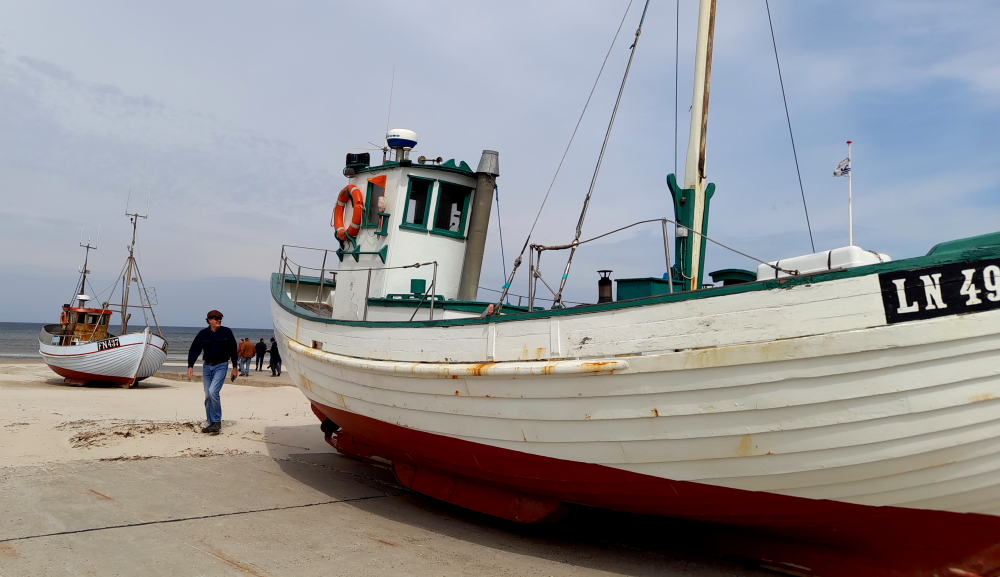
During the summer months boats will dock at the beach and sell their catch direct from the boat.
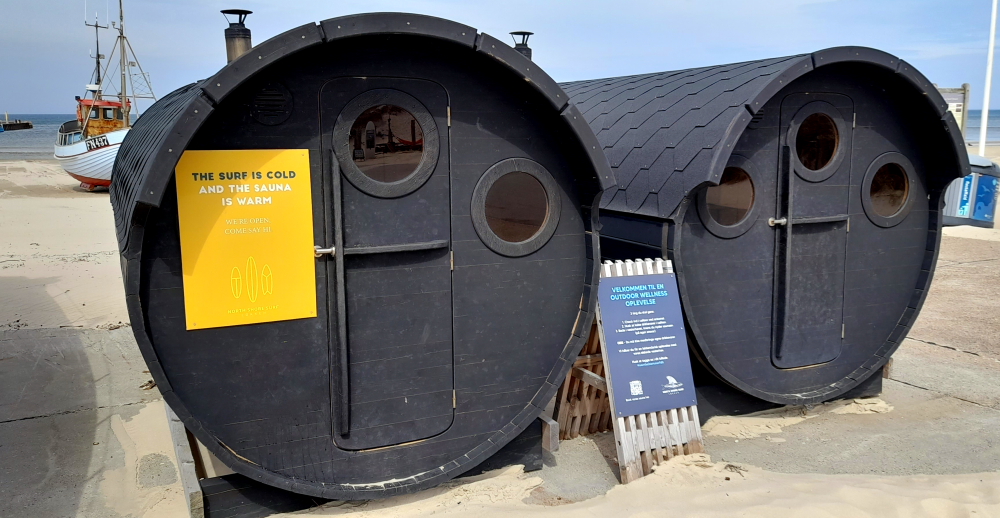
At the beach is the North Shore Surf shop that not only offers surfing lessons but also the use of two saunas.
30 minutes’ drive north is Hirtshals where we park at the lighthouse. It was opened in 1863 and was constructed in King Frederik VII’s time. The king’s monogram adorns the tower just above the entrance door. In cloudless weather the light can be seen 25 nautical miles from land.
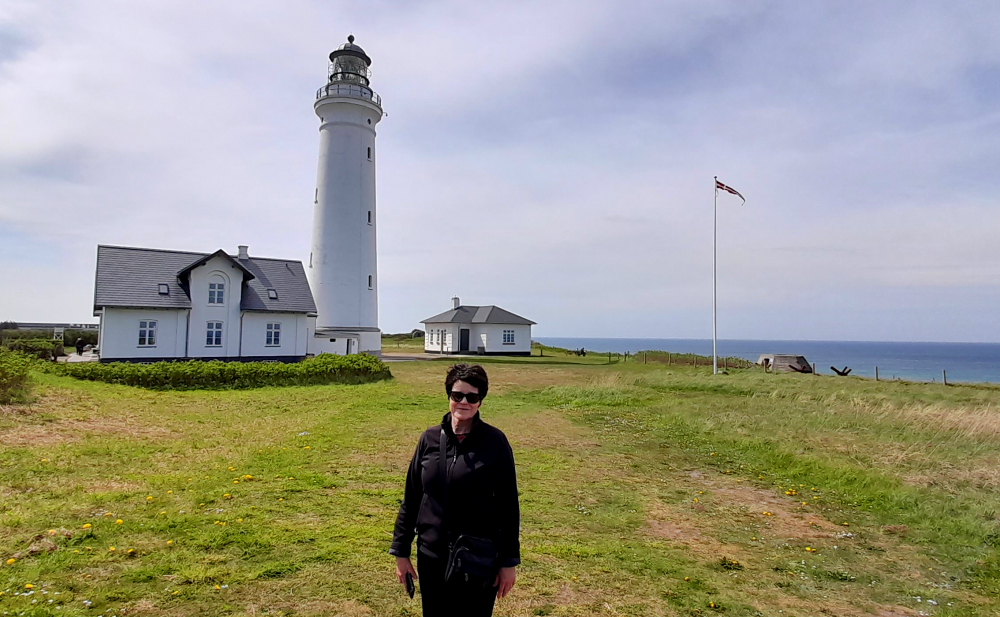
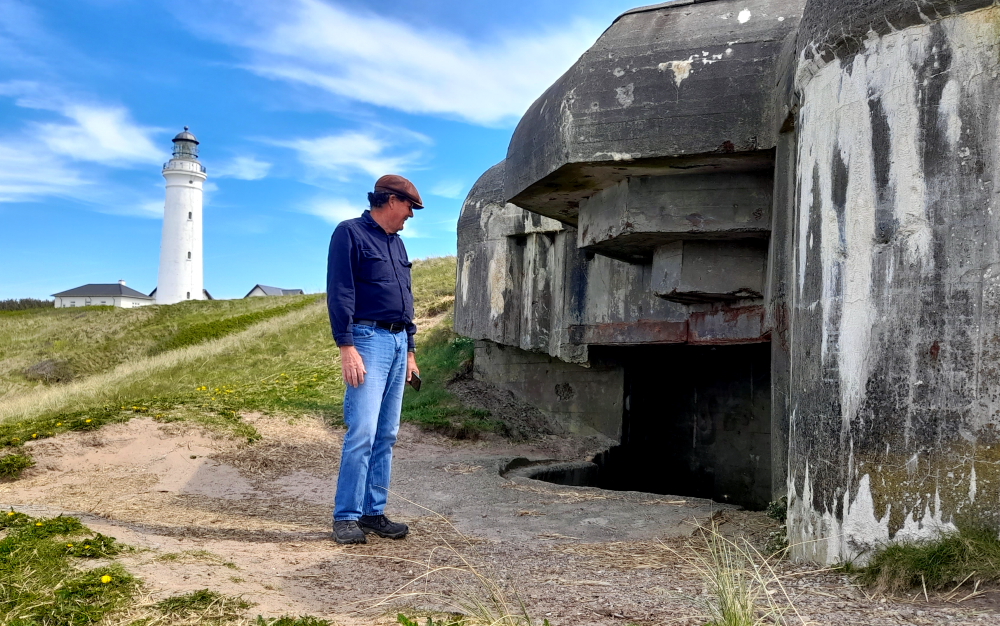
Also at this site, the Bunker Museum Hirtshals is the only excavated, complete German defence-installation from World War II in Denmark. The Museum consisits of 54 excavated bunkers along with many gun, mortar and machine gun emplacements. There are also radar and searchlight installations. In all, the area consists of 70 different locations connected by 3.5 kilometres of trenches.
So far we haven’t visited any art museums in Denmark, mainly due to the cost of the entrance fees, but Lynn tells me that we will be visiting the Skagens Museum – home to the artwork of Denmark’s impressionist painters – several of which are favourites of Lynn’s.
Skagens Museum is an art museum in Skagen, Denmark, that exhibits an extensive collection of works by members of the colony of Skagen Painters who lived and worked in the area in the late 19th and early 20th centuries and who were inspired by the area’s light and landscape.
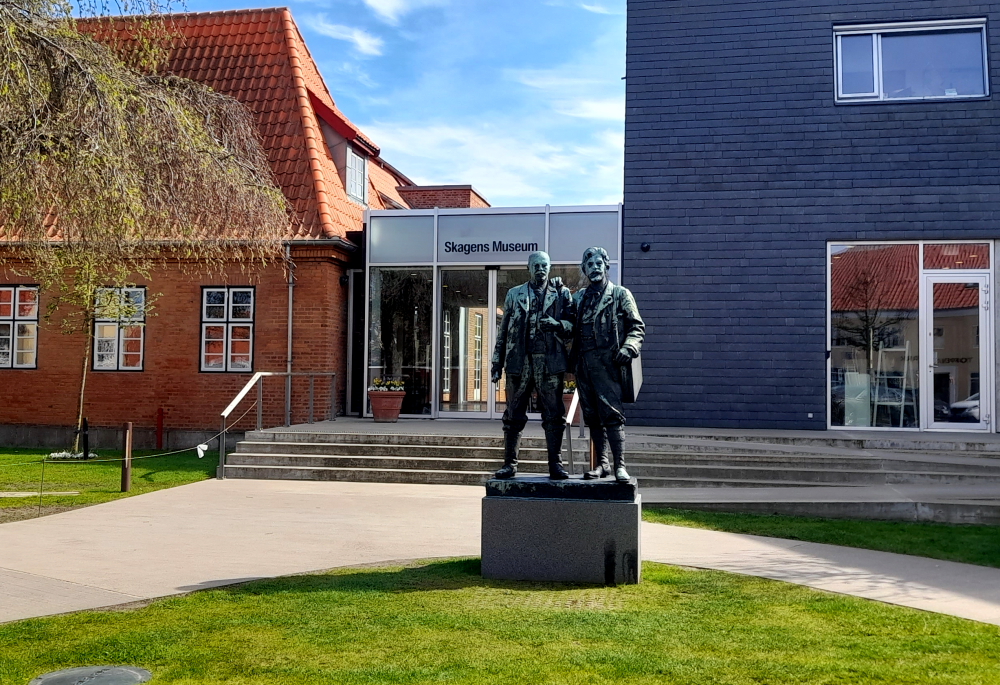
Initially formed by Karl Madsen and Michael Ancher in the summer of 1874, this group of painters started meeting at Brøndums Gastgiveri, a guesthouse in the fishing village of Skagen, on the northern tip of Jutland (Jylland), Denmark. The group was initially reacting to the fixed styles of Historicism and Neoclassicism being enforced by the Royal Danish Academy of Fine Arts (where Ancher, Madsen and Johansen studied) and the Royal Swedish Academy of Arts.
In 1875 they were joined by Johansen, and over the following two summers others joined too. Ancher married Anna Brøndum from the guesthouse in 1880, and Krøyer joined the group and became its unofficial leader in 1882. The Anchers lived in Skagen from 1880, Krøyer from 1894, and Tuxen from 1901. With the death of Krøyer in 1909, their traditional gatherings came to an end, but younger Danish and other Nordic painters continued to visit.
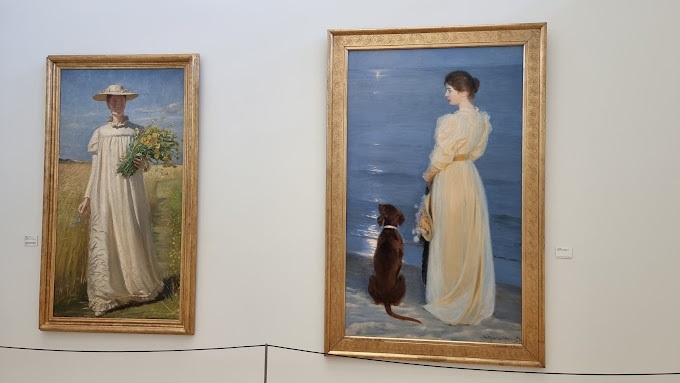
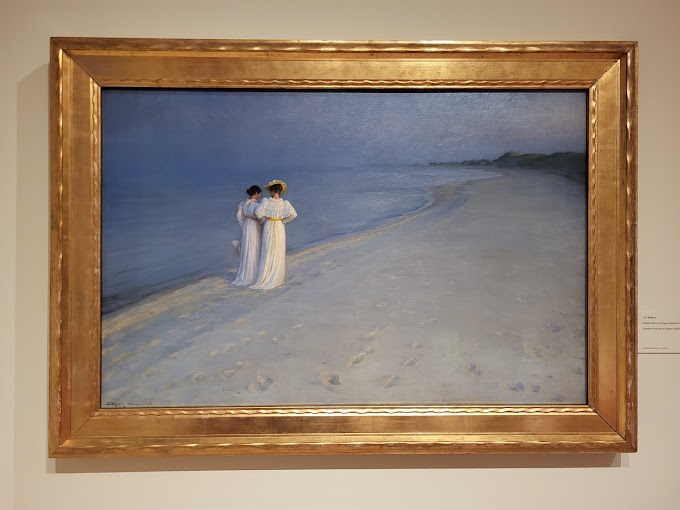
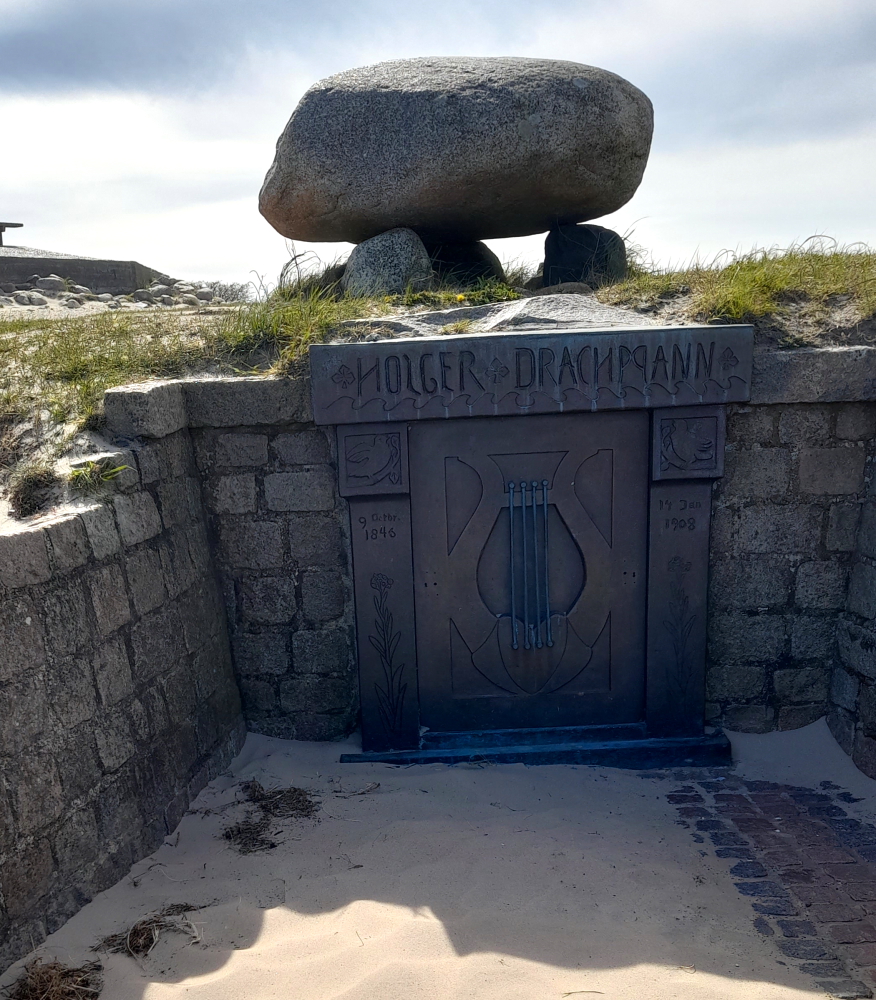
Holger Henrik Herholdt Drachmann (9 October 1846 – 14 January 1908) was a Danish poet, dramatist and painter. He was a member of the Skagen artistic colony and became a figure of the Scandinavian Modern Breakthrough Movement.
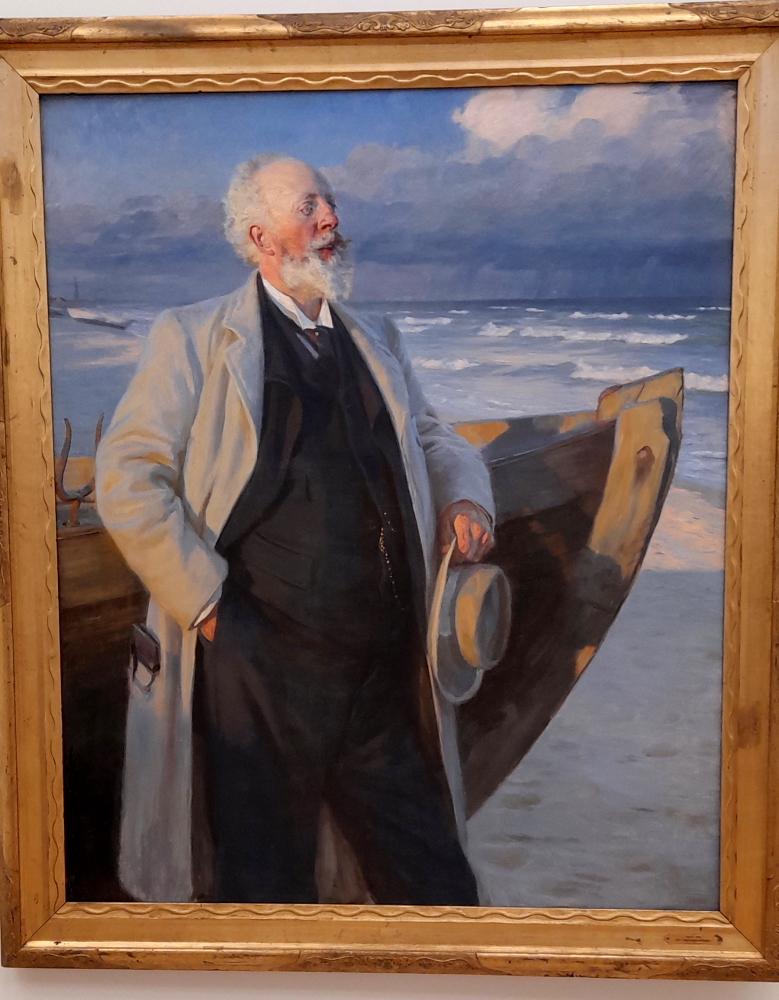
Drachmann first visited Skagen in 1872 with the Norwegian painter Frits Thaulow. He frequently returned, associating with the growing colony of artists known as the Skagen Painters (Skagensmalerne) although his painting took second place to his writing. In 1903, he and his third wife Soffi settled in Skagen’s Vesterby in their Villa Pax. Later in life, Drachmann returned to art, often painting pictures of ships and the sea. He’s buried at Grenen (see below).
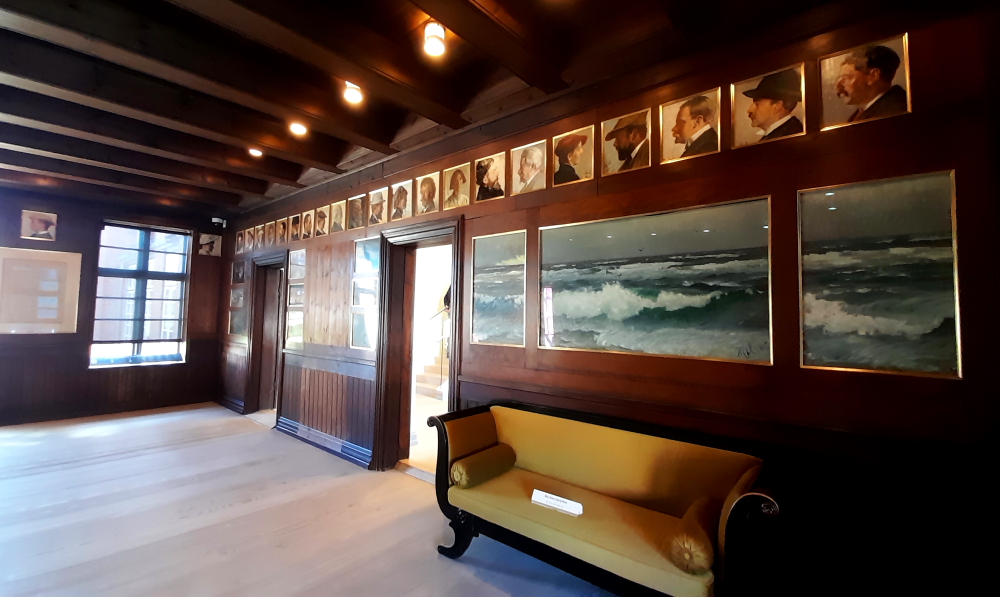
Since the 1870s, Brøndum’s hotel had been the meeting place of the Skagen painters. The artists gathered here to debate, to eat, and to party.
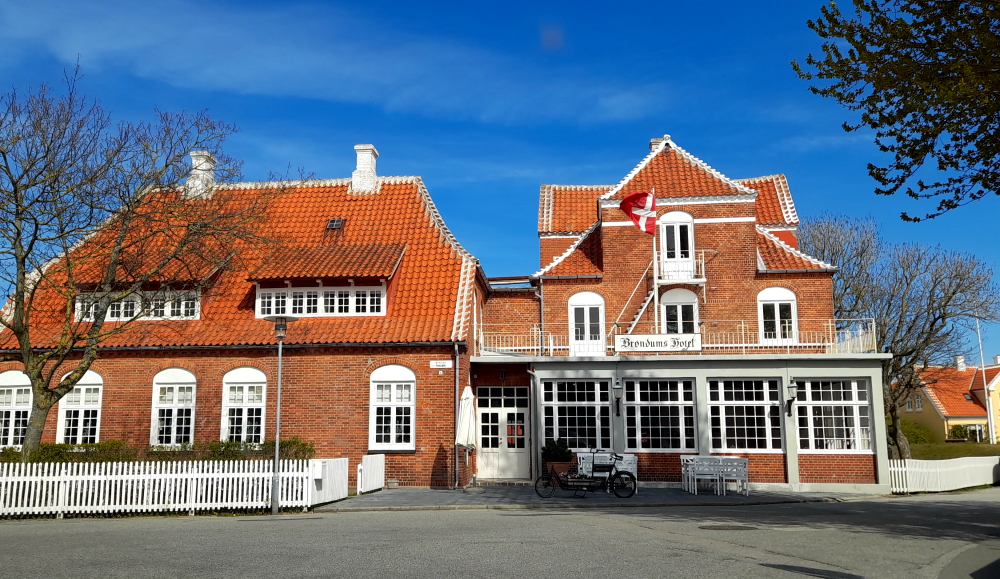
At the foundation of Skagens Museum in 1908, the decision was made to transplant the dining room in its entirety in the future museum building. The museum building was completed in 1928, but the dining room was only moved there in 1946, since Degn Brøndum wished to keep it at Brøndum’s Hotel for the duration of his sibling’s lifetime.
Brøndum’s dining room was designed by the architects Ulrik Plesner and Thorvald Bindesbøll in 1892 in connection with the first major expansion of Brøndum’s Hotel. Following the suggestion of PS Krøyer, hotelier Degn Brøndum’s collection of 81 paintings was integrated into the decorative scheme of the room. The artists, who had been Brøndum’s guests, had through the years given Brøndum portraits of other members of the artists’ colony. These portraits were fitted into a frieze below the ceiling of the dining room.
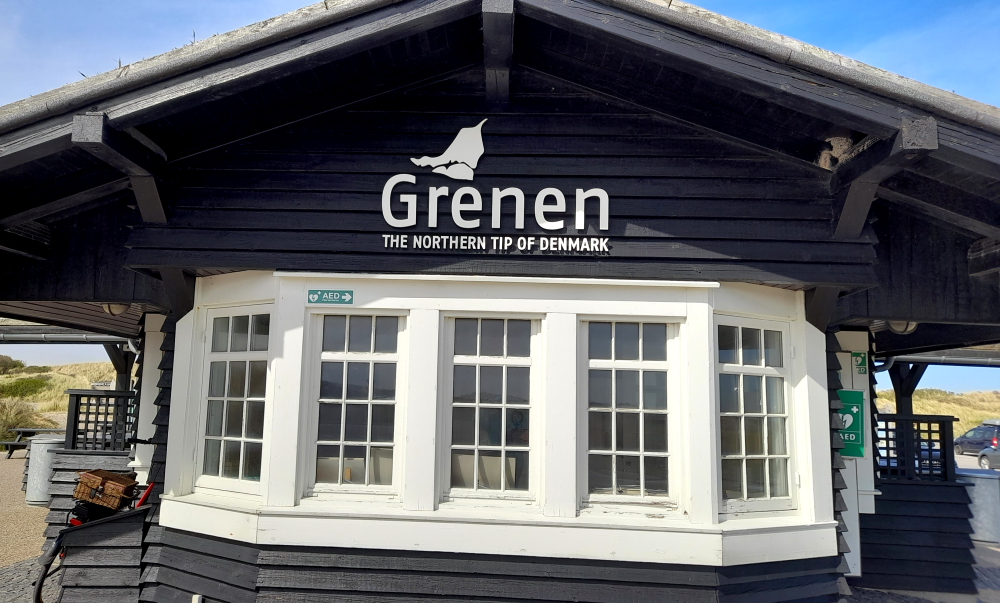
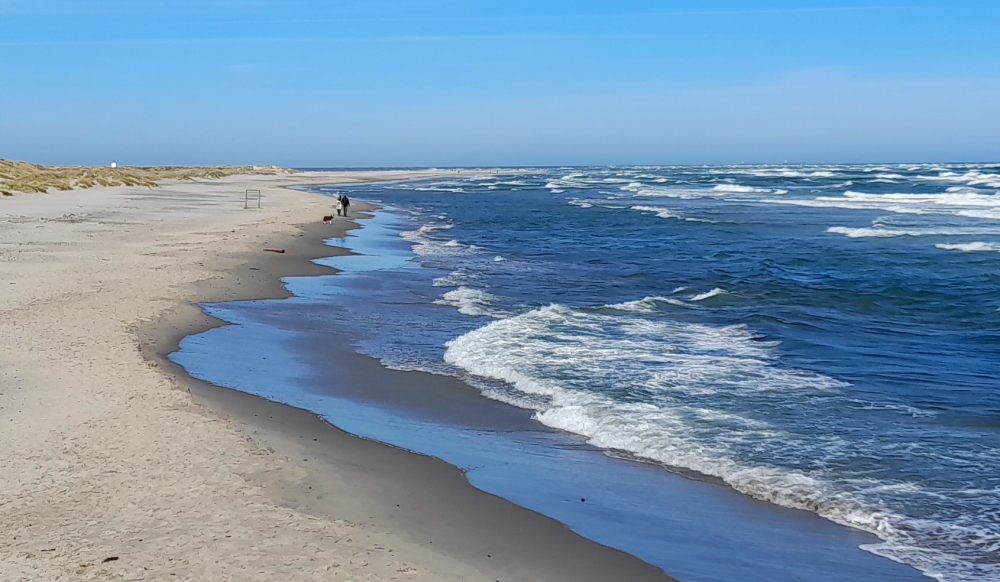
North of Skagen is Grenen, the northern tip of Denmark where 2 seas meet – the North Sea and the Kattegat Sea.
After viewing an empty sea along the western coast of Jutland it comes as a bit of a shock to view the Kattegat Sea with at least 6 large ships all in a row.
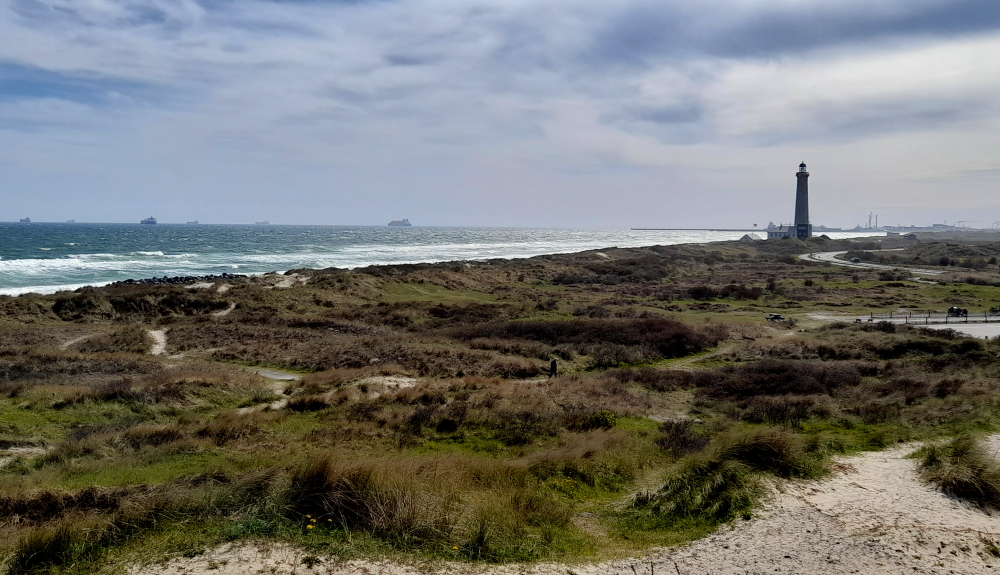
Again, this area is riddled with concrete bunkers.
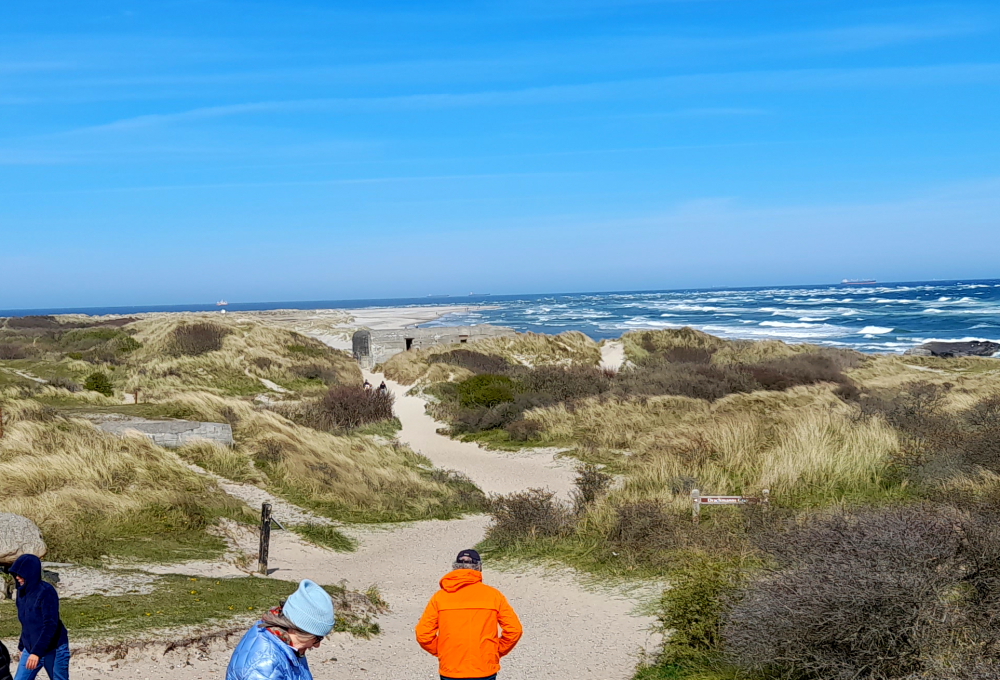
And surprisingly it is the North Sea that is flat and calm and the Kattegat Sea between Jutland and Sweden that has white caps – and is the body of water that we will be sailing across for 3.5 hours on Friday!
Another surprise is the grave of Holgar Drachmann. He was buried on 26 January 1908. The burial chamber is located on Grenen and was designed by the artist’s friend, PS Kroyer.
After being blasted with cold wind and sand we head back down the eastern side of the Skagen Peninsula to Frederikshavn to check in to our hotel for the next 3 days.
To our relief, the toll transponder that I ordered online 2 weeks ago has arrived. That will save us a bit of money on the countless number of expensive tolls we will be charged to use Norway’s roads, bridges and ferries.
We are staying at the Best Western Hotel Herman Bang (a Danish journalist and author (1857-1912)). There is not much accommodation in town and everything is booked out tonight. Our room is tiny and not much bigger than the hotel room we had in Seoul, South Korea. I remark to Lynn that we had bigger cabins on our Celebrity Cruises. Still, it will do for three nights considering that we have two of the nights free which we booked using points from our USA trip and the hotel is right in the centre of town.
 THE CONTINUING TRAVELS OF YOGI & BOO BOO