
29 April, 2023
Finally – a sleep in! As we are staying in self-catering accommodation these next 3 days we don’t have to be up at a set time for breakfast. Which means that we don’t drive into Ribe until just after noon.
Ribe is Denmark’s oldest and best preserved town which still has a beautifully-preserved medieval town centre with old half-timbered houses, cobblestone streets and a cathedral.
It began as an open trading market on the north bank of the Ribe River where it runs into the North Sea. Danes, Norwegians, Swedes, Germans, Frisians, English and other cultures occasionally brought exchange goods here from all parts of northwestern Europe. The landscape around Ribe is flat, wind-blown and sandy, without any particular natural harbour, but in former times, boats could enter the river from the sea and reach the town. By the late Medieval period, the natural sedimentation processes of the Wadden Sea had closed that option. Ribe Market was sanctioned by either King Angantyr (Ongendus) or King Harald Hildetand as early as 705. In the Viking era, Ribe was a bustling international trade center.
After finding the 48-hour P-Nord car park we walk along Saltgarde towards the town’s centre. Just as we cross the Ribe A river the street becomes pedestrianised and the name changes to Nederdammen (the Lower Dam), then Melledammen (the Middle Dam) and then Overdammen (the Overdam) as the street crosses 2 islands. At each point the Ribe A river has been channeled into 3 sluices. The first at Nederdammen has the last water wheel, the other 2 at Melledammen and Overdammen are no longer there, only the sluices.
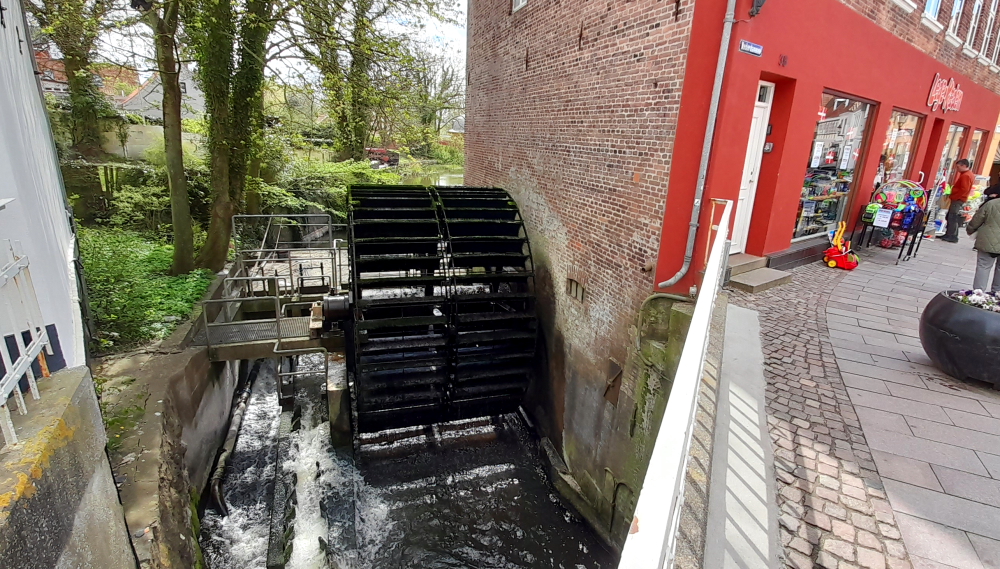
Today there are street stalls lining the pedestrian mall with lots of shoppers milling about.
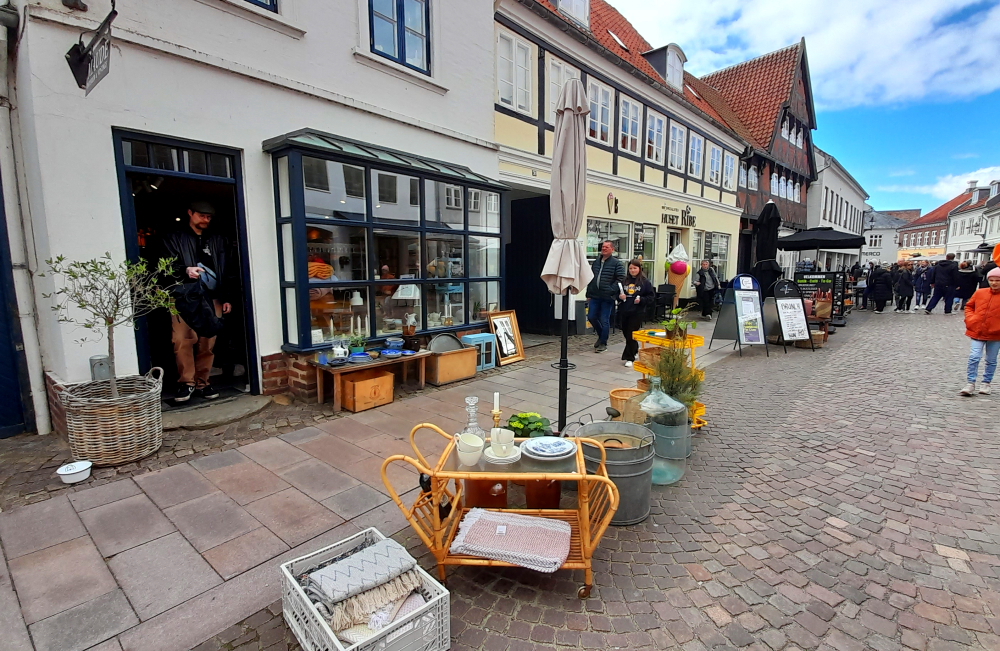
8 houses along these 3 streets are highlighted as being representative of their era and are listed buildings.
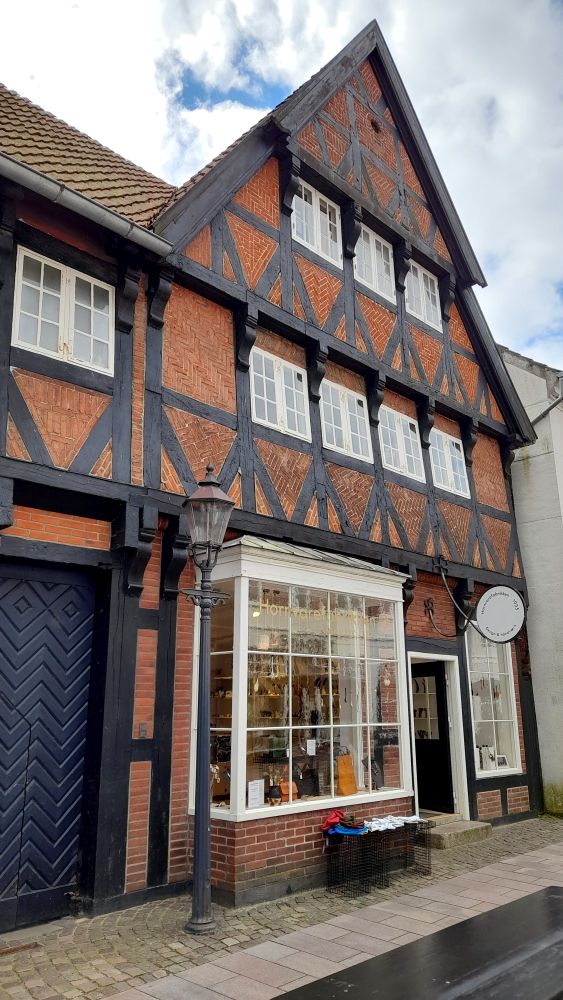
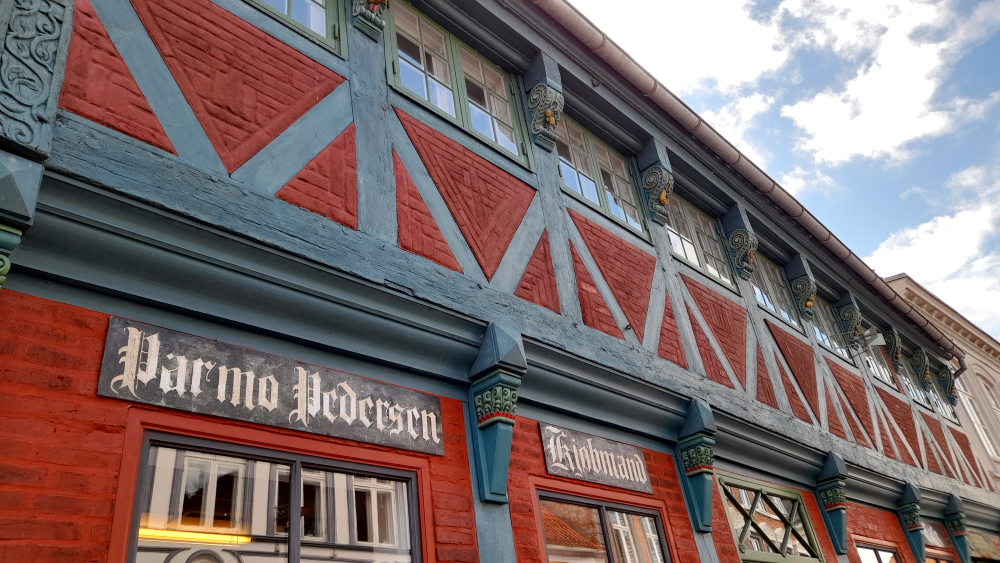
The Parmo Pedersen store has ceramic decorations on its exterior. It used to be a confectionery store – now a cafe/delicatessen.
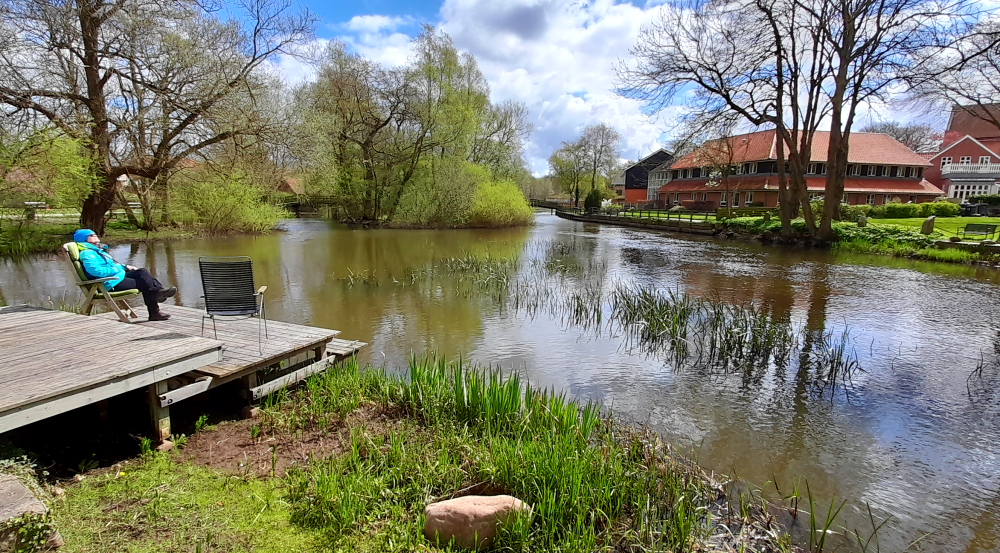
It has a door that leads out to the back garden so we decide it is time for a coffee while sitting in the sun in the back garden enjoying the river view.
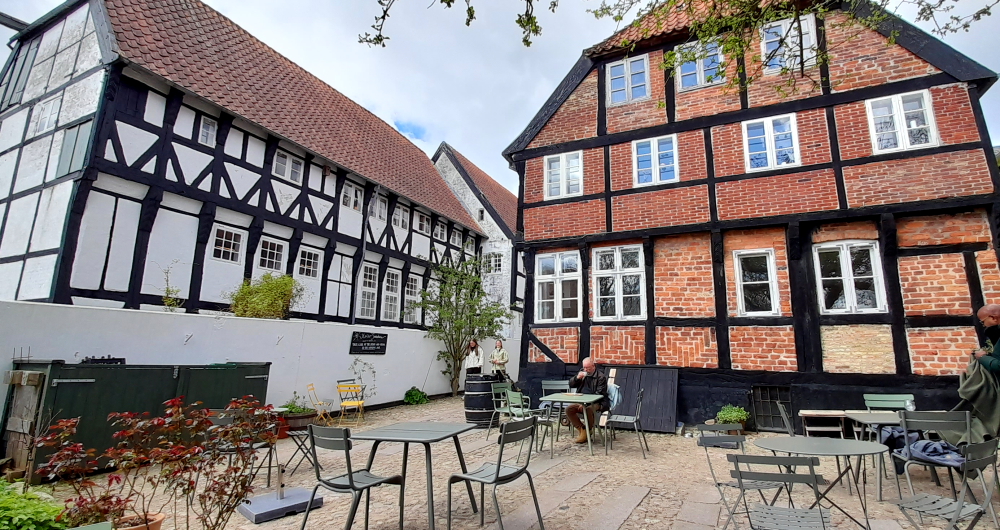
There is also a paved courtyard at the back of the cafe.
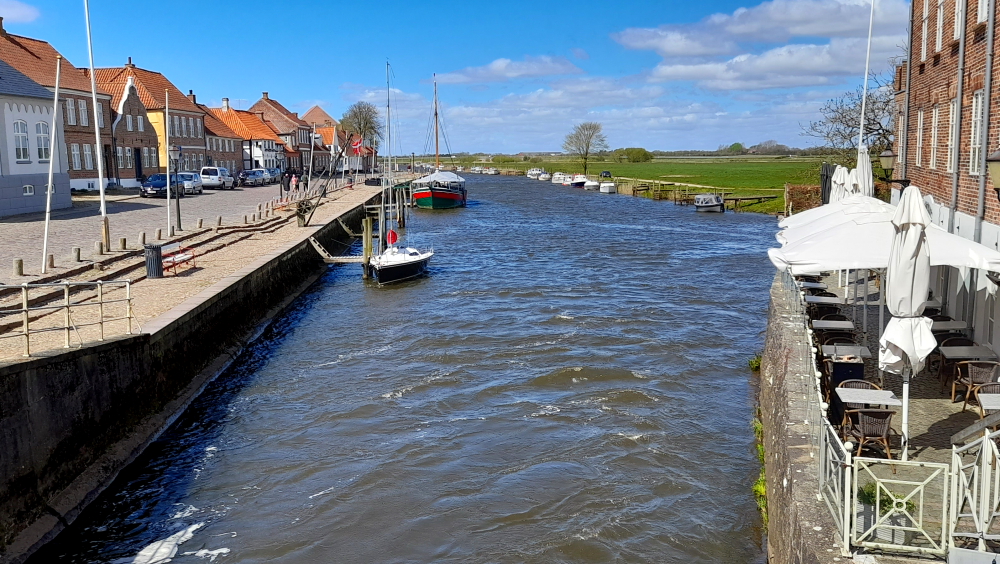
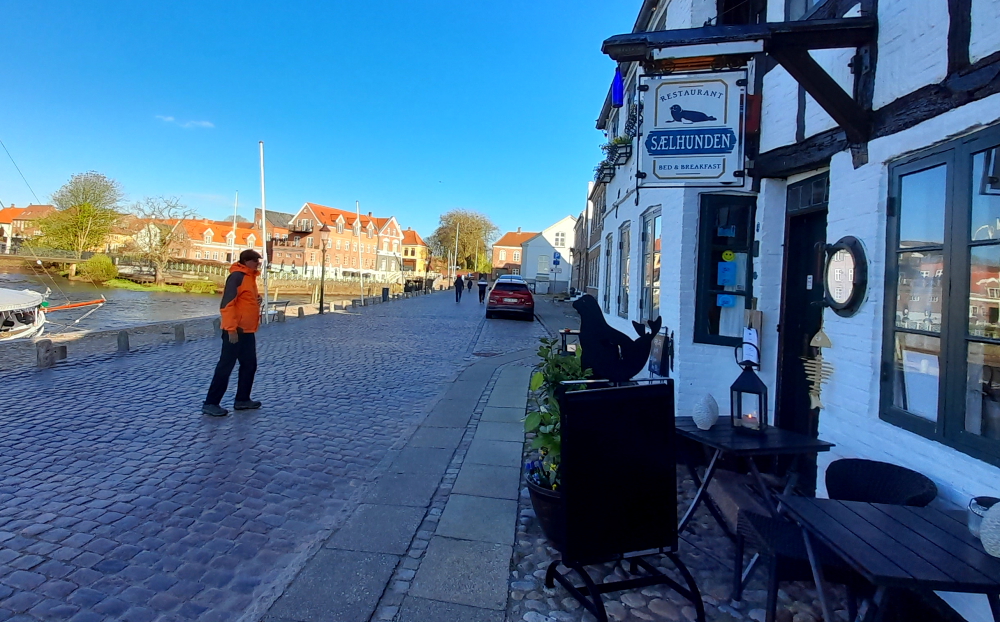
Skibbroen Street flanks the Ribe A as it flows between Overdammen and Mellemdammen. Lynn has booked a table for dinner tonight at the Restaurant Saelhunden on Skibbroen which is the white building about half way down on the left hand side of the river.
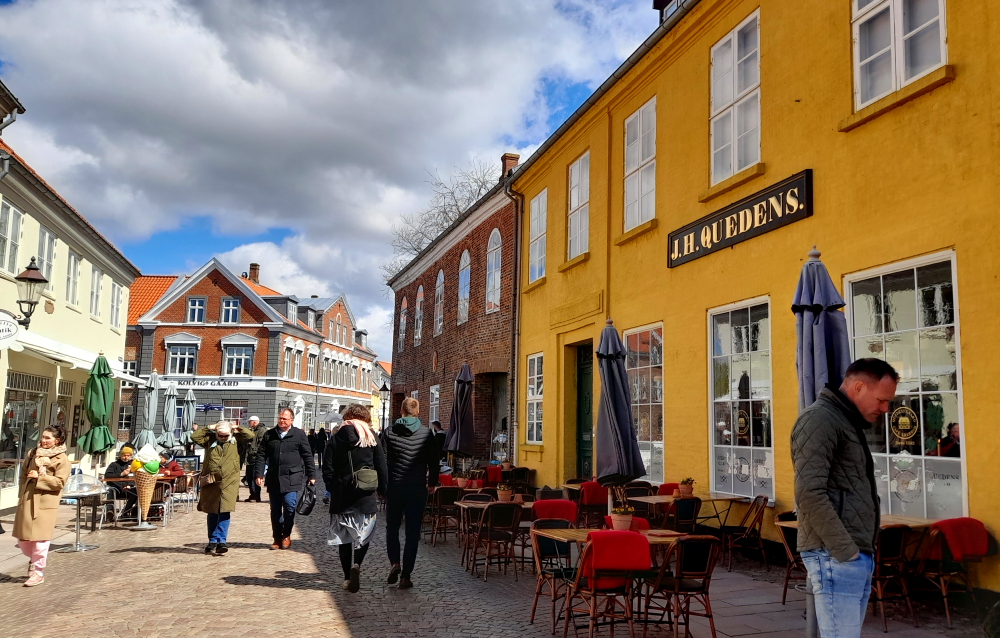
More colourful buildings line the street as we progress into the town’s centre. Queden’s farm is a large, former merchant’s farm with roots in the 16th Century and 17th Century but with significant renovations later. On the land where Quedens Gard is now located, three properties were re-established in the years after a major town fire in 1580. Today it is Quedens Gaard Cafe.
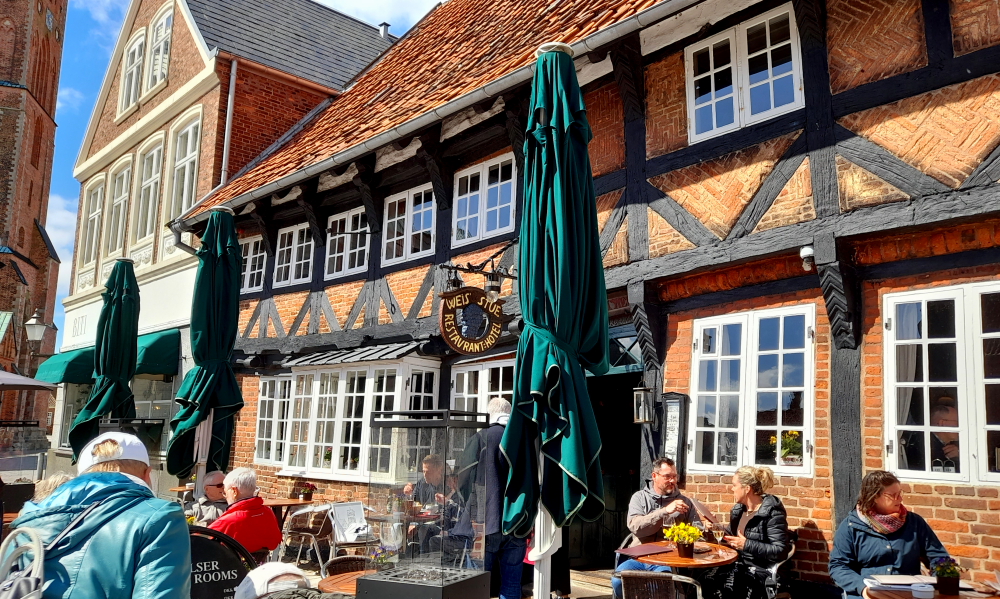
On the corner of Overdammen and Cathedral Square is Weis Stue, the restaurant we have booked for dinner on Sunday.
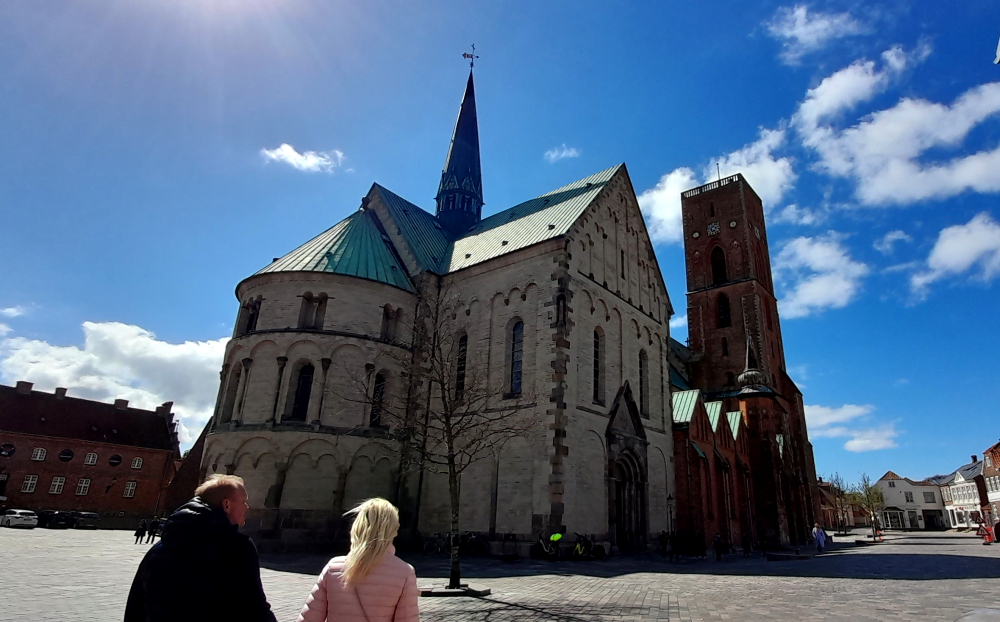
Ribe Cathedral was founded in the Viking era as the first Christian church in Denmark by Ansgar, a missionary monk from Hamburg, under permission of the pagan King Horik I. The cathedral has experienced several damaging events throughout its long history and has been restored, expanded and decorated repeatedly. As it stands today, Ribe Cathedral is the best preserved Romanesque building in Denmark, but reflects a plethora of different architectural styles and artistic traditions.
There is a wedding on in the cathedral today so it is closed to the public. Perhaps tomorrow?
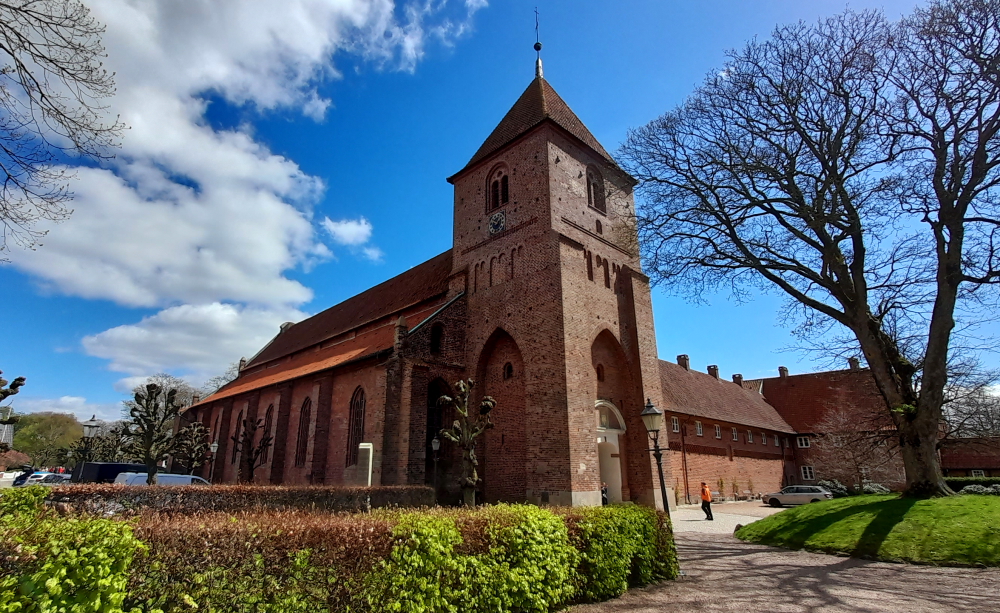
Nearby is St Catherine Church and Priory. It is one of the oldest and best-preserved monastic buildings in Scandinavia. It was an important early Dominican friary from 1228 until 1536. During the Reformation in 1536, a total of 14 Catholic churches, monastic buildings and chapels were demolished in Ribe and their property appropriated by the king. Only St. Catherine’s church and the Cathedral escaped demolition.
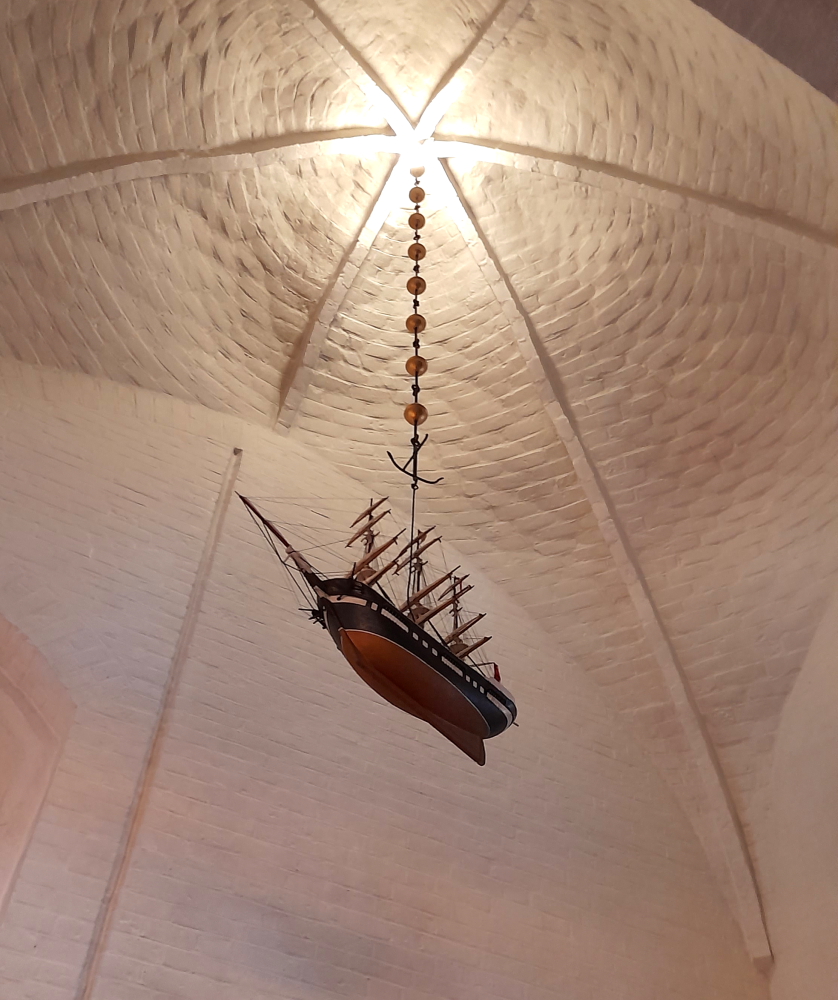
Typical of most Danish churches the interior is quite stark and again there are several ships hanging from the ceiling.
The priory became the town’s first public hospital. The buildings still stand, although there is no monastic community here today.
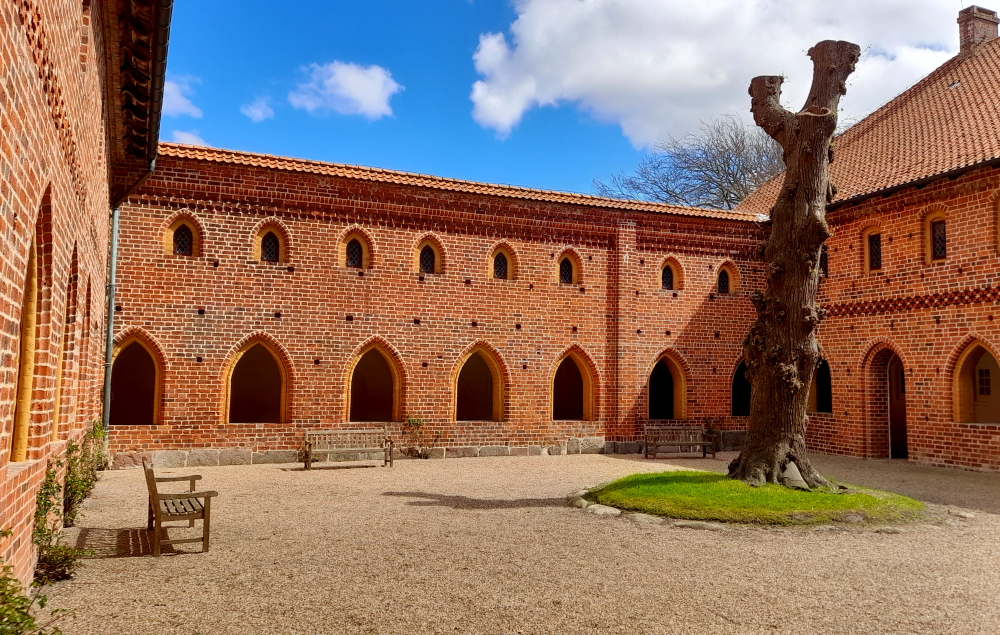
St Catherine Plads leads to the river and several wooden bridges of the river.
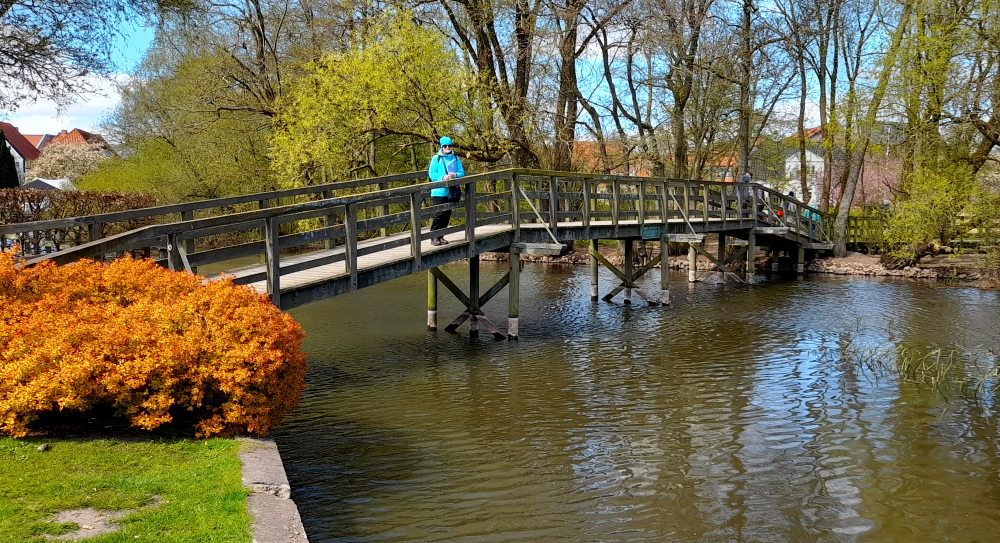
Leading to the garden behind the Ribe Kunst (art) museum.
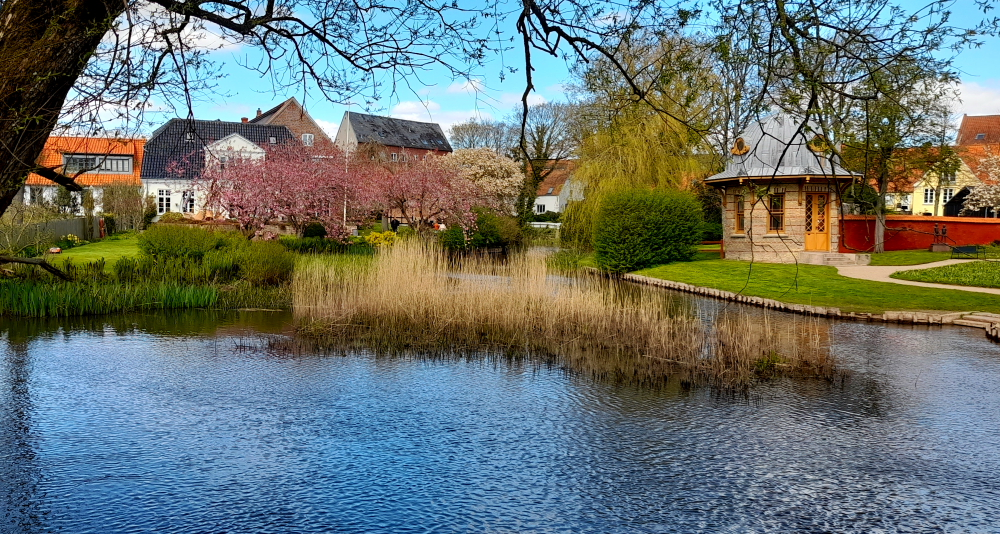
After a couple of quick purchases at the local Lidl, we drive back to the apartment for a couple of hours.
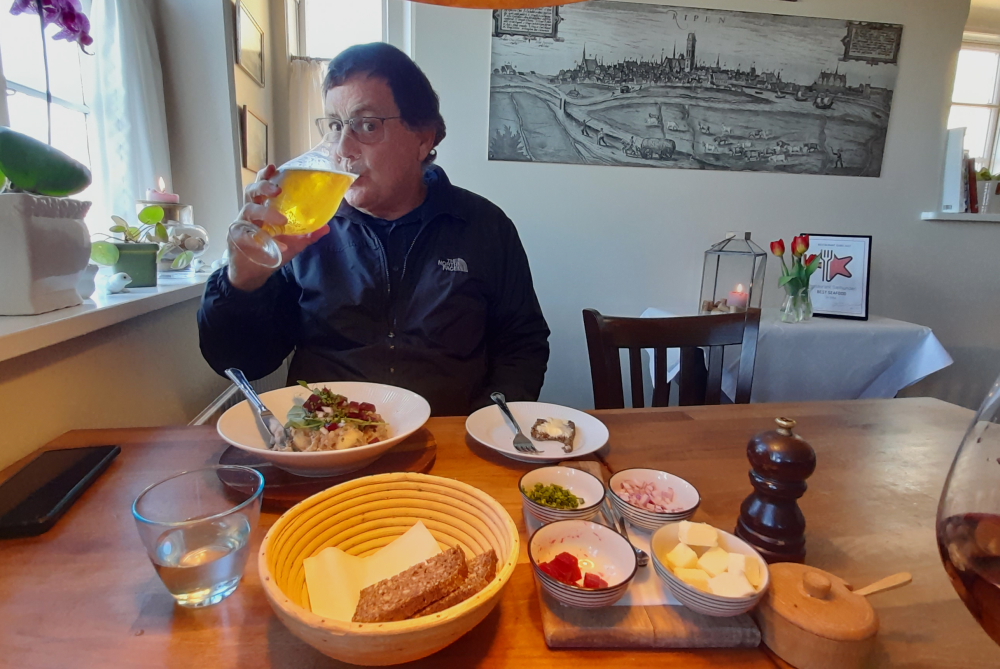
At 4:30pm we drive back into town to dine at the Restaurant Saelhunden (Seal Dog). Just as I sit down at the table Lynn gets up and walks through the door again. When she comes back she says: “Thought so. I’ve dined here before, in the other room. There is a picture of a seal on the wall and I remember being photographed sitting at that table with the seal above me while I tucked into a local dish – rhubarb soup!”
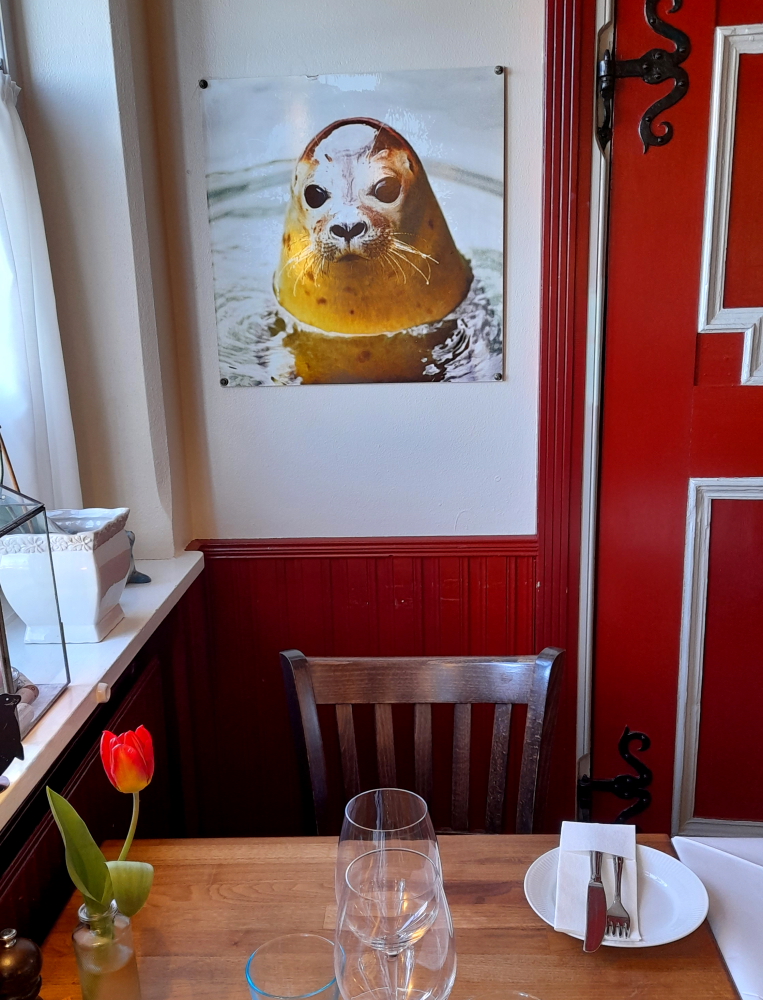
Although the restaurant had won a RIbe award for best seafood in 2022 we both plump for a beef casserole served with beetroot, onion, chives, rye bread and butter washed down with a pilsner and a glass of Italian red. Lynn finished off with a schnapps shot.
Leaving the restaurant it is still light outside. The late sunshine says summer but the 6 Deg C with a chilly wind says winter. Crazy place, Denmark.
30 April, 2023
Another sunny morning and another lie-in. Nothing is planned today except for dinner at 5:00 pm so we decide to take a walk to check out the local countryside.
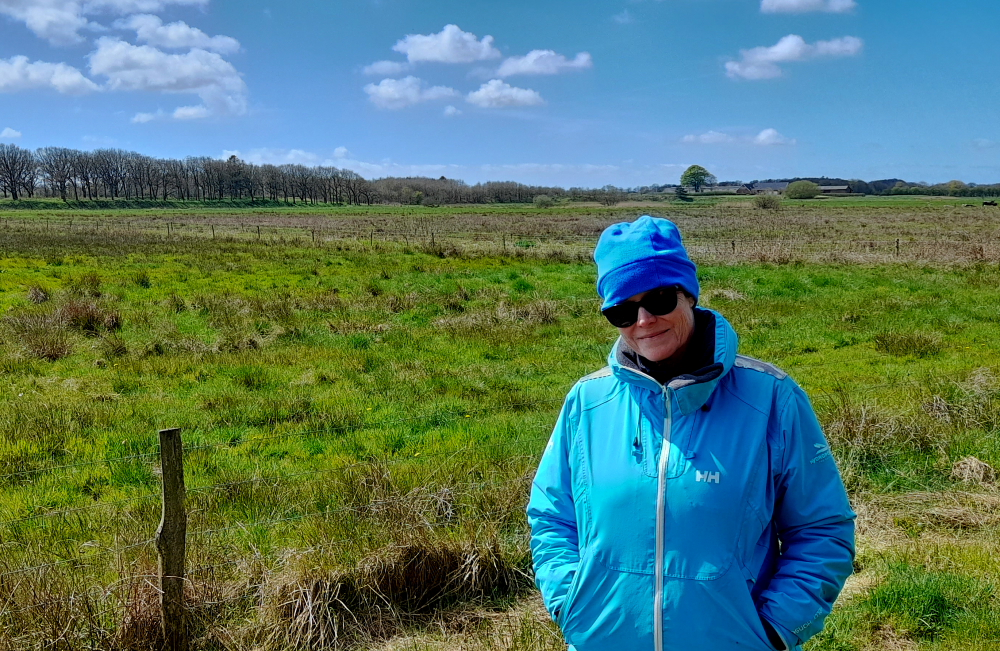
After checking out the fishing spot at the river we notice that there is also a marked hiking trail. Kongeåstien is a 67 km long hiking trail that runs from Kongeåslusen in the west to Fårkrog south of Vejen in the east.
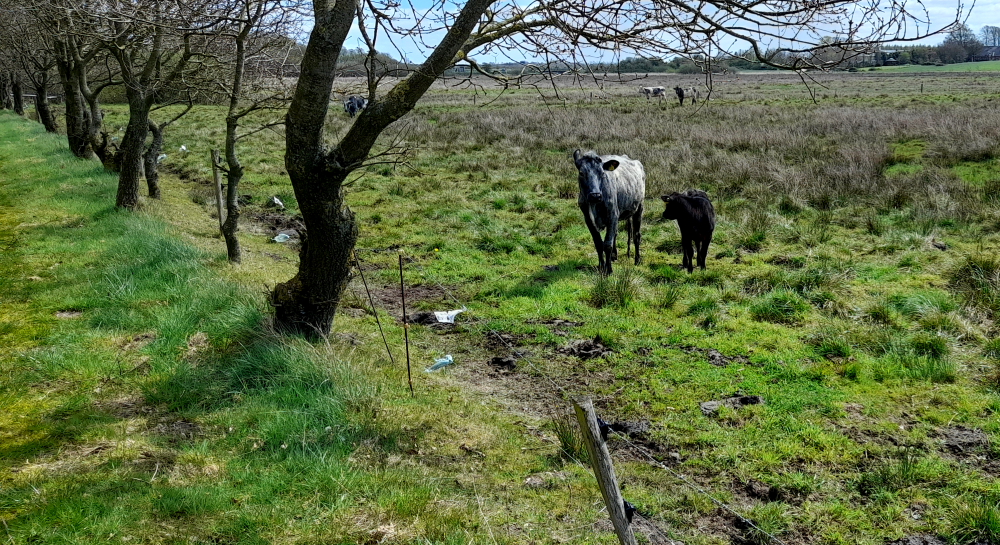
The path is a so-called tramp path that goes along the stream and through meadows and is marked with red-topped poles. Amenities are provided along the trail such as loos, wooden shelters and fire pits.
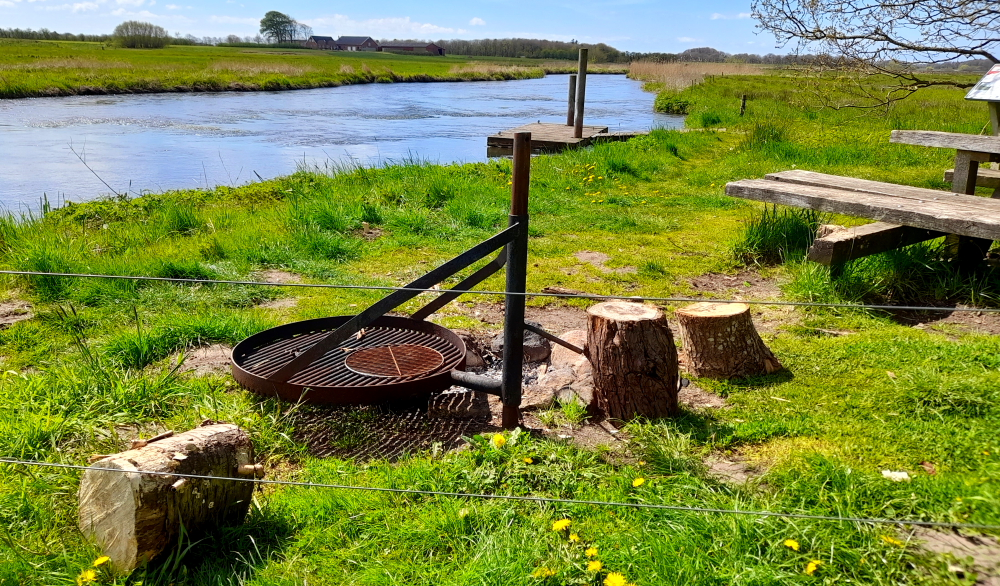
Another path shares part of the Kongeåstien and it is called the Graensestien – the Border Path.
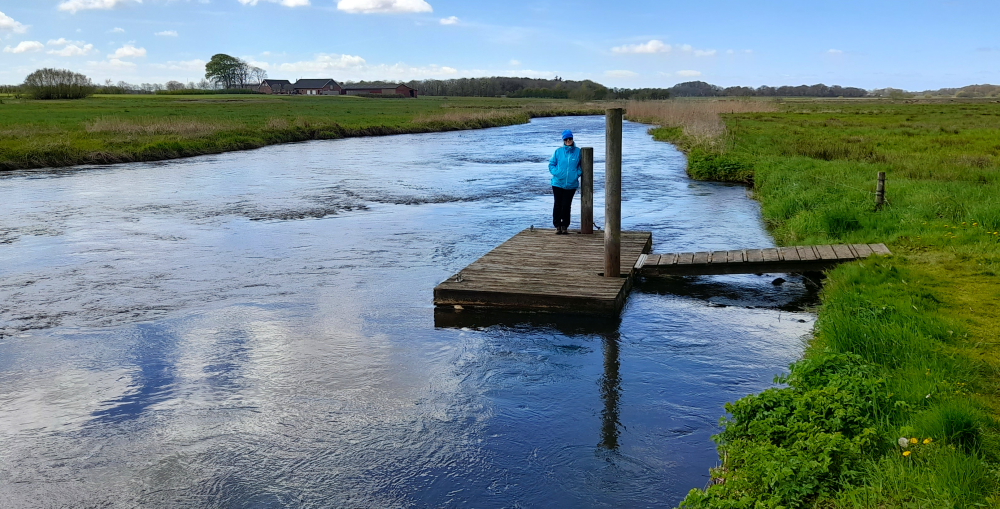
Following its defeat by Prussia in 1864, Denmark lost a third of its land. Southern Jutand became German and the new border ran south of Kolding, along the Kongea River to continue south of Ribe.
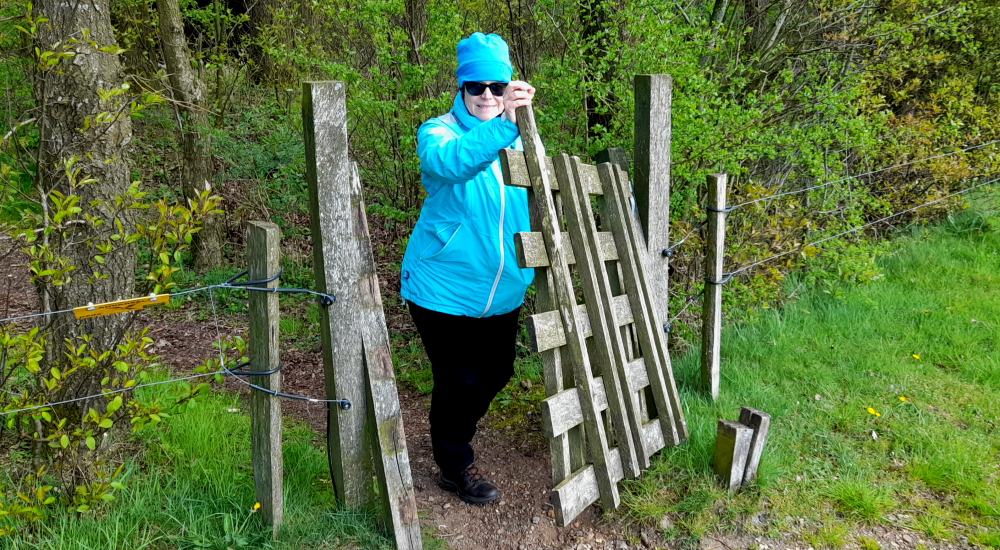
The Graensestien follows this border from the Danish Wadden Sea to Kongeaen. Its main path stretches for 48 kms.
The path takes a left turn and heads towards a 7-metre high burial mound – Storehoj. However, the electric fence runs out leaving no barrier between us and a herd of cows. As usual, Lynn refuses to walk any further. Her fear of domesticated dairy cows astounds me as she is the one born in a country town with grand-parents who owned a farm.
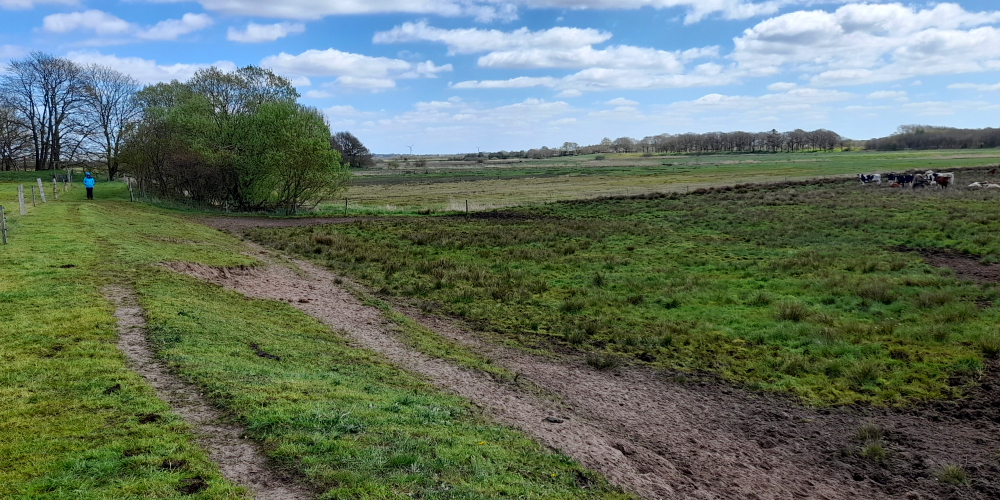
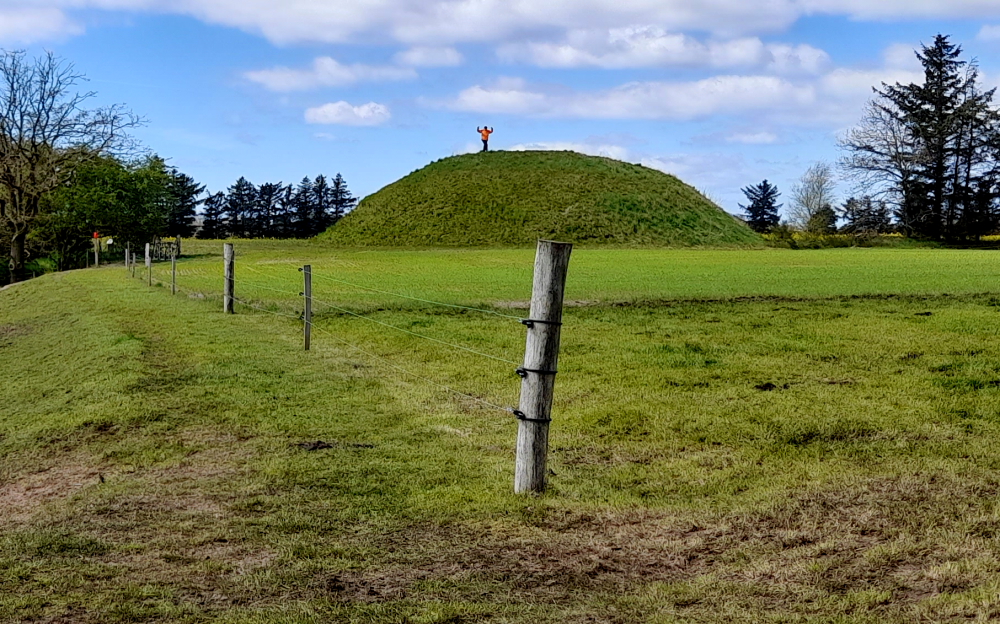
Storehoj – Great Barrow – is from the middle of the Early Bronze age (3,500-3,300 years ago). It was constructed over a single tomb and site close to where the waters of the Tobol Baek run into the Kongea meadows.
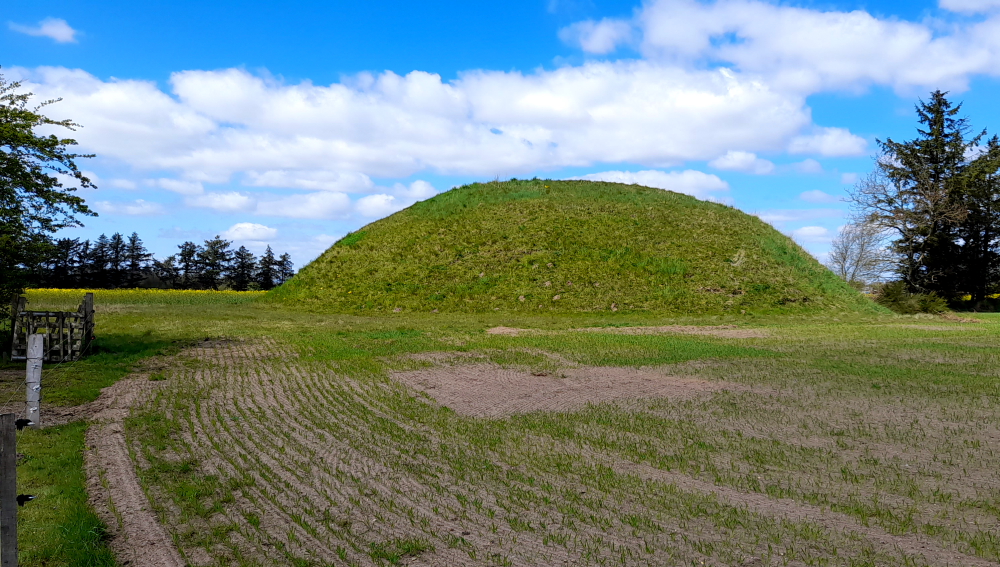
The barrow is quite steep but I just have to climb to the top. The view is excellent from up here and I can see that Lynn is still hiding from the cows.
After the barrow was completed it was used for yet another burial – probably for a woman.
She was placed in the hollowed trunk of an oak tree. Her garments were richly ornamented, bearing artifacts from central Europe and the British Isles. The most unusual artifact was a four-spoked bronze wheel. used as a belt ornament.
It is starting to get cold with a chilling wind from the north so we head back to the apartment to warm up and take a rest before dinner.
At 4:30pm we drive into town and walk to the Weis Stue Restaurant, one of Denmark’s oldest and most beautiful inns. The house is half-timbered and dates back to 1600. The interior is still the original from 1704 with decorated ceilings, Dutch tin-glazed earthenware, panel walls decorated with biblical subjects, a 400-year-old clock and a 700 year-old baptismal dish.
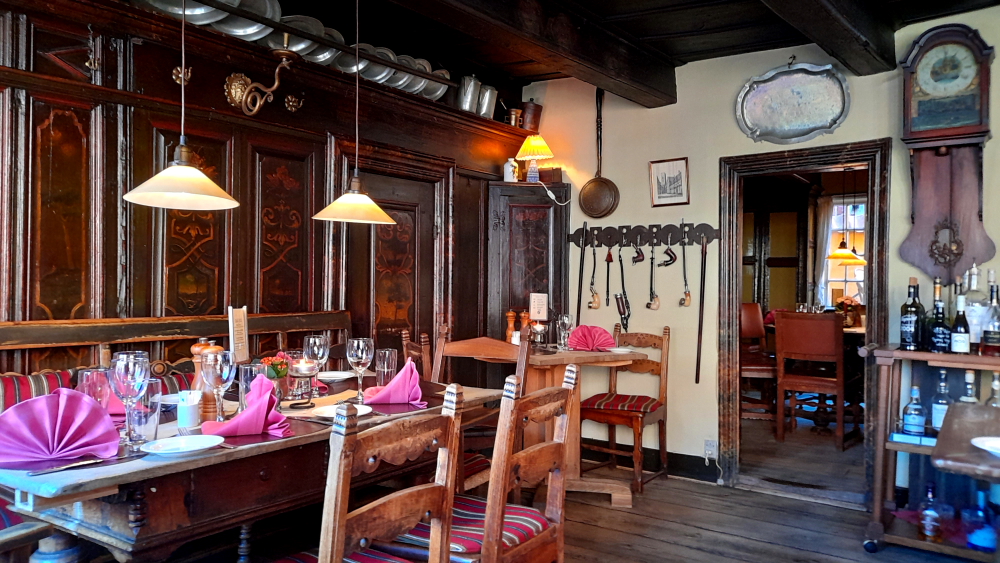
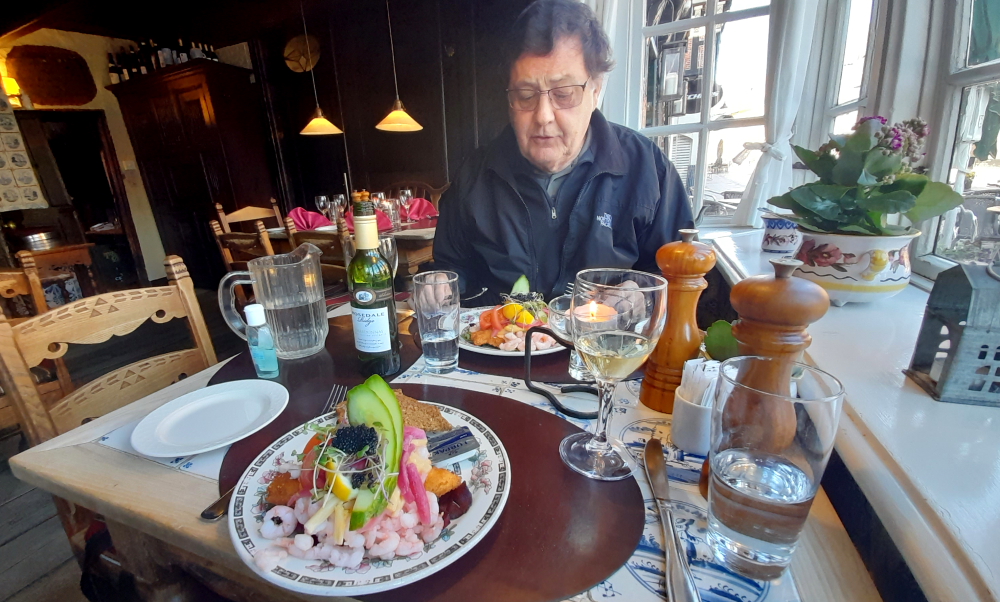
We both order the crumbed and fried fish fillet with shrimp (Thailand frozen prawns), caviar and rye bread washed down with an Ozzie Chardie, followed by a shared Danish Apple Crumble. Oddly, served in a parfait glass with the breadcrumbs and smashed amaretti biscuits in the bottom, followed by stewed apples and topped with whipped cream and chopped nuts. Breadcrumbs and amaretti biscuits?? Not my idea of a proper Apple Crumble!
Now that we’ve eaten way too much it is time for a stroll so Lynn suggests we visit the moat a couple of blocks away.
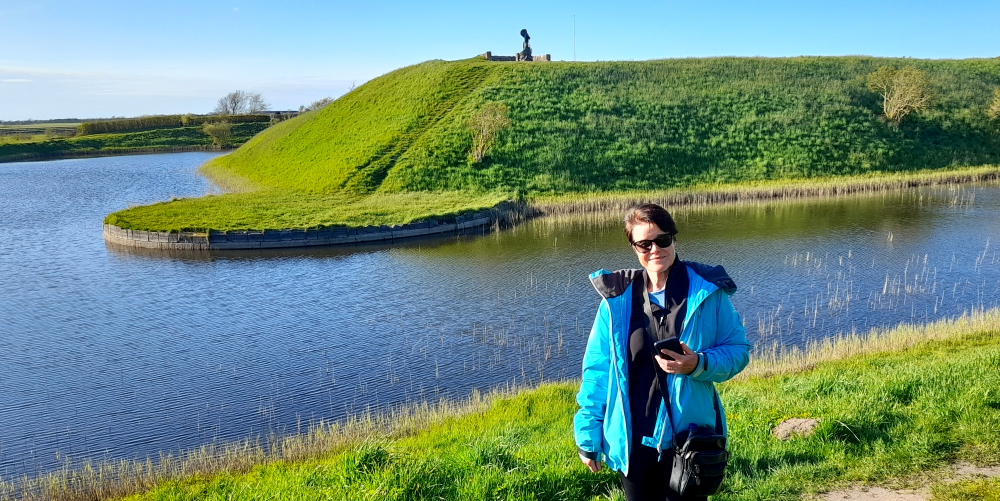
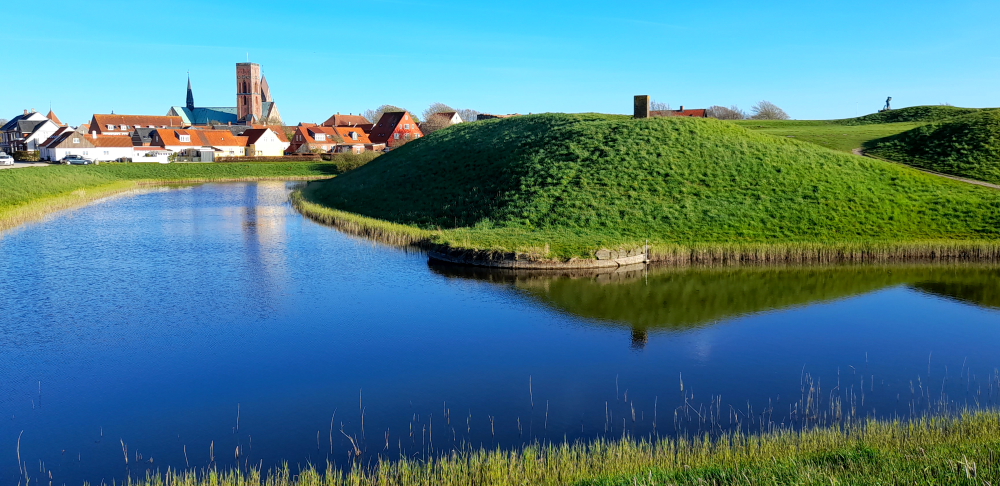
Riberhus is an 8-metre high castle bank surrounded by moats immediately northwest of Ribe.
On the bank stood a castle that was probably built by King Erik Klipping in the 1260s. The castle suffered badly during the Swedish Wars in the 17th Century and then fell into disrepair, after which the stones were reused during the 18th Century for church repairs and road construction in Ribe.
On the eastern corner of the bailey today are the remains of a cellar from the 14th Century. On the southern corner stands a statue of Queen Dagmar, made by Anne Marie Carl-Nielsen and erected on 24 August 1913.
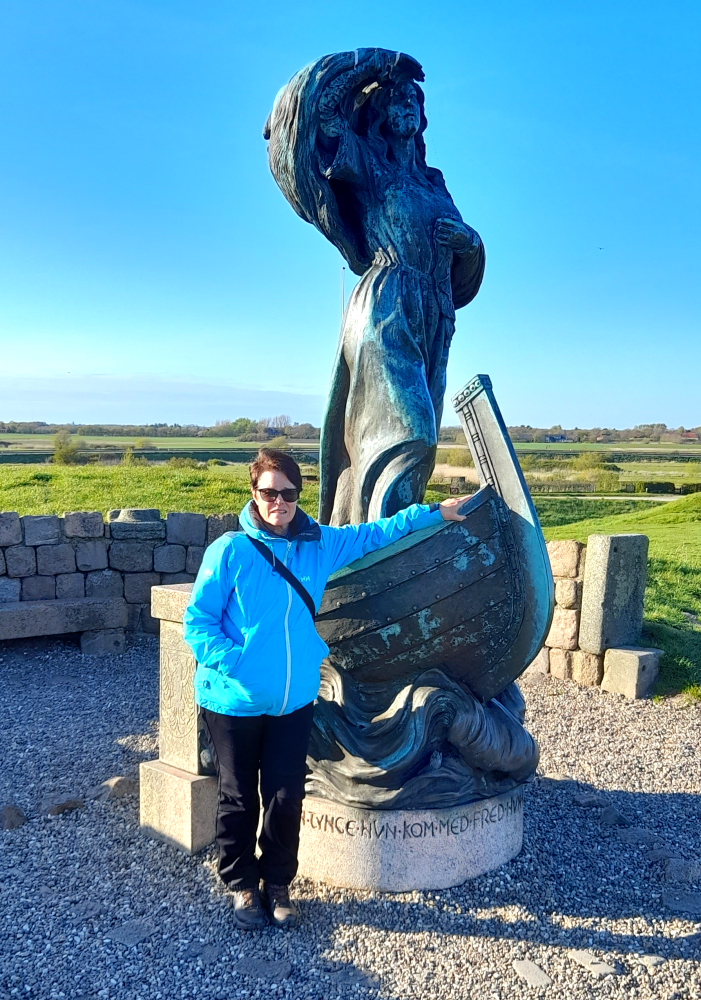
The beloved Queen Dagmar was born a princess in Bohemia and became the wife of thirteenth-century ruler King Valdemar the Victorious.
In 1205, Dagmar sailed to Ribe from Meissen to marry the Danish King. According to tradition, the day after the wedding, Dagmar received a morning present from Valdemar, but she had not wanted jewelry or other riches. Instead she wanted all prisoners in Valdemar’s prisons released and the high taxes for farmers to be lowered. Valdemar granted both her wishes and Dagmar quickly became a beloved Queen of the people. Dagmar died seven years later during childbirth. She was just 23 years old. According to folk songs, Queen Dagmar died in the castle on 24 May, 1212.
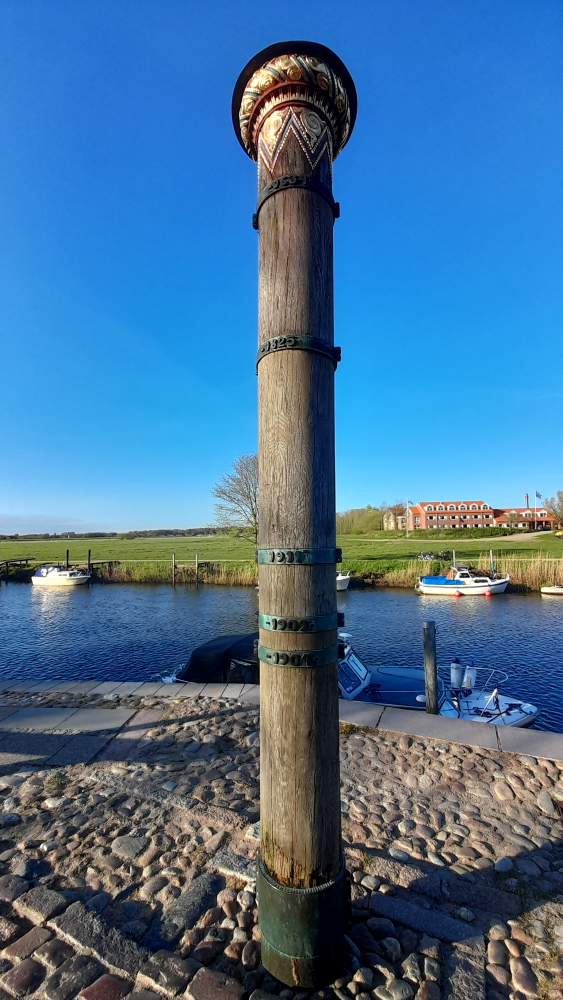
We walk back down Skibbroen and come across an ornately-decorated wooden post – a flood column. There are different dates listed on each metal band clamped to the post. 1634 at the top followed by 1825, 1911, 1909 and 1904. Difficult to imagine the town flooded at any of these depths.
1 May, 2023
We are checking out of our pretty ordinary holiday rental this morning and heading to a funky aparthotel just outside of Aarhus. Lynn has an interesting drive planned for us on the way that will take us to a large seaside art sculpture at Esbjerg then across the Sonder Klitvej sand spit west of the Ringkobing Fjord (just a large saltwater inlet) through Hvide Sande to an arts centre at Herning then to the Himmelbjerget tower near Silkeborg.
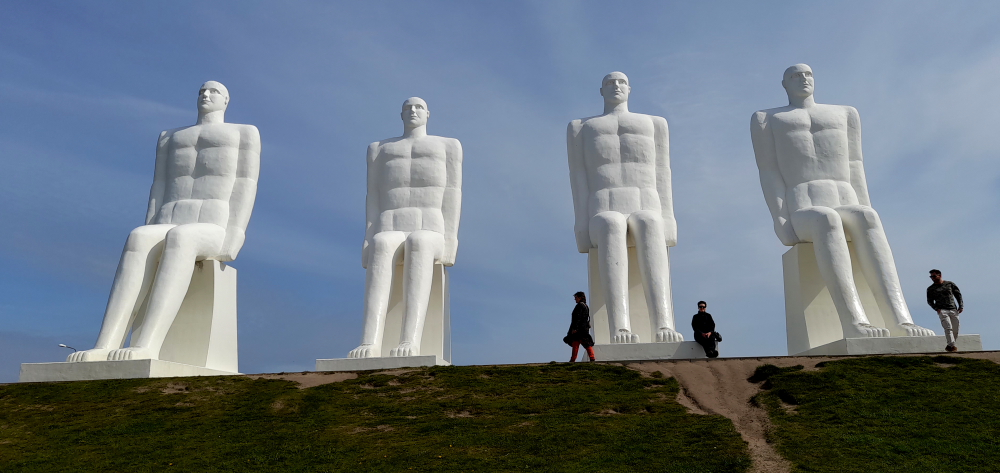
The statue is a 9-metre tall white monument of four seated males located west of Esbjerg next to Saedding Beach.
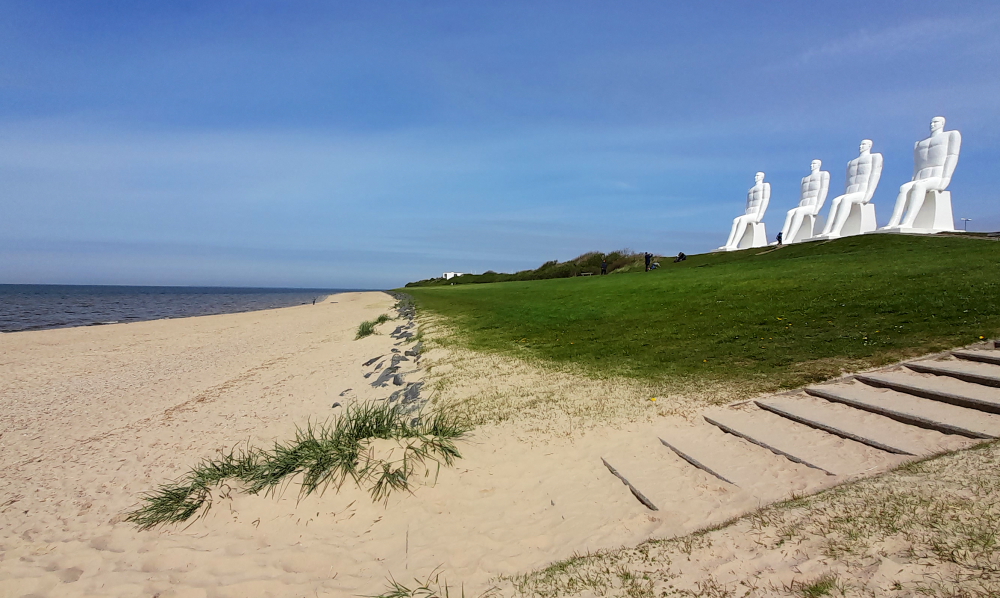
It was designed by Svend Wiig Hansen and installed in October 1995 to celebrate the 100th anniversary of the municipality in 1994.
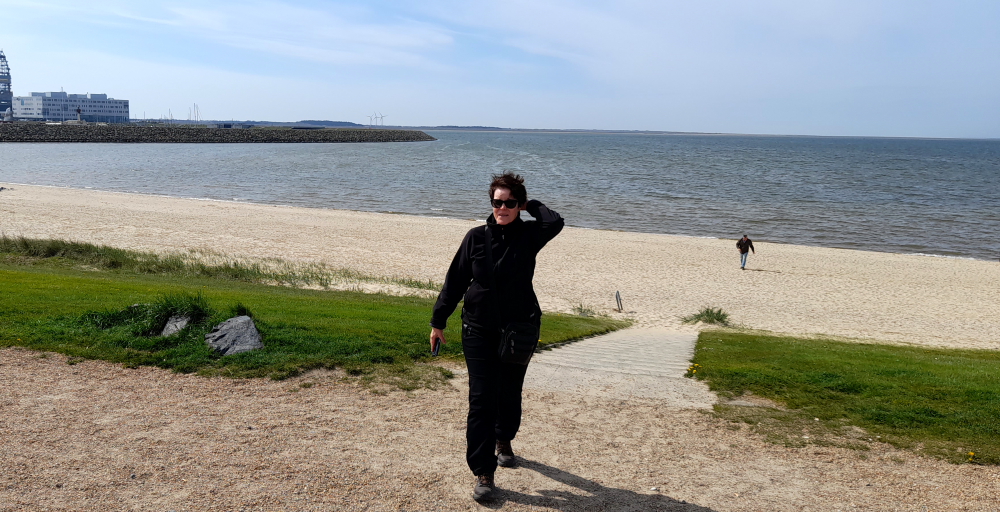
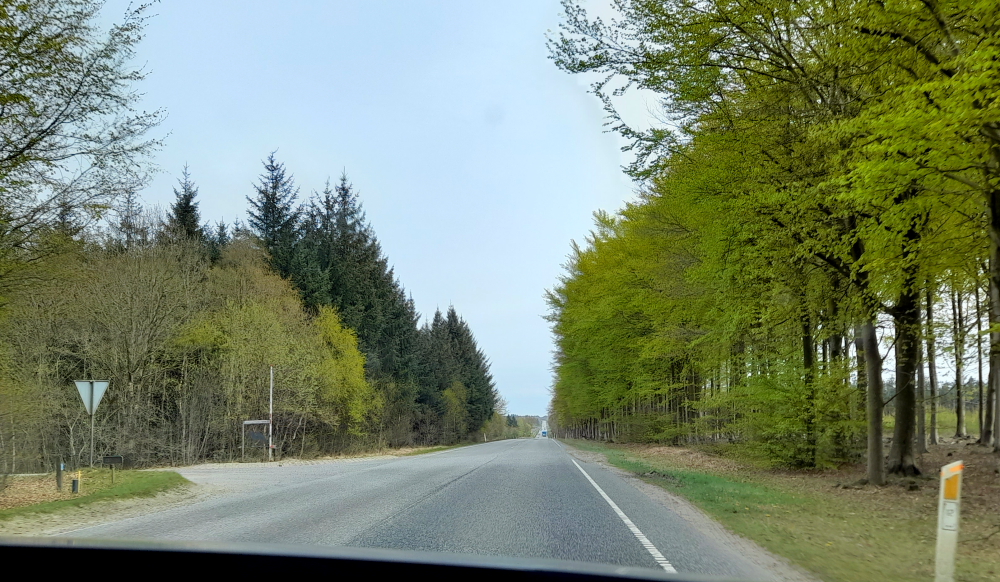
The drive along the spit from Esbjerg consists of reed-covered sand dunes, summer beach houses and swamps. The sea is just over the dunes and it seems that a lot of Danes holiday here and walk to the beach. I just can’t image the sea being warm enough to swim in at any time of the year.
We see a large house in the process of being re-thatched and at several locations along the road at reed beds are stacks of cut and bundled reeds, ready for transportation to the next roof thatching job.
Just over half way along the spit we arrive at Hvide Sande and sit in a traffic jam for over half an hour. As we arrive at the bridge we find that they are resurfacing the bridge so the traffic is banked up both ways. Our side is particularly long as some of the locals take back roads and have right of way at the roundabout just before the bridge. This process just manages to reduce the number of north-bound cars that can cross the bridge between light changes.
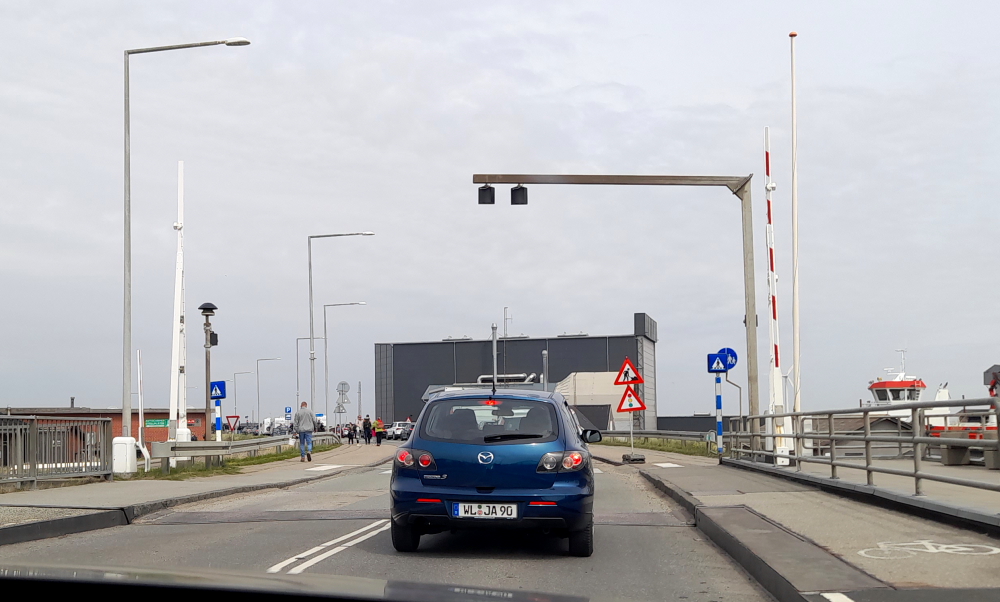
We are further delayed along the route by the number of German drivers who don’t seem to be capable of using roundabouts. They stop at the roundabouts and won’t go until there are no other cars within sight then when they finally move off they drive at about 20 kph under the speed limit where nobody can pass. Bloody tourists!
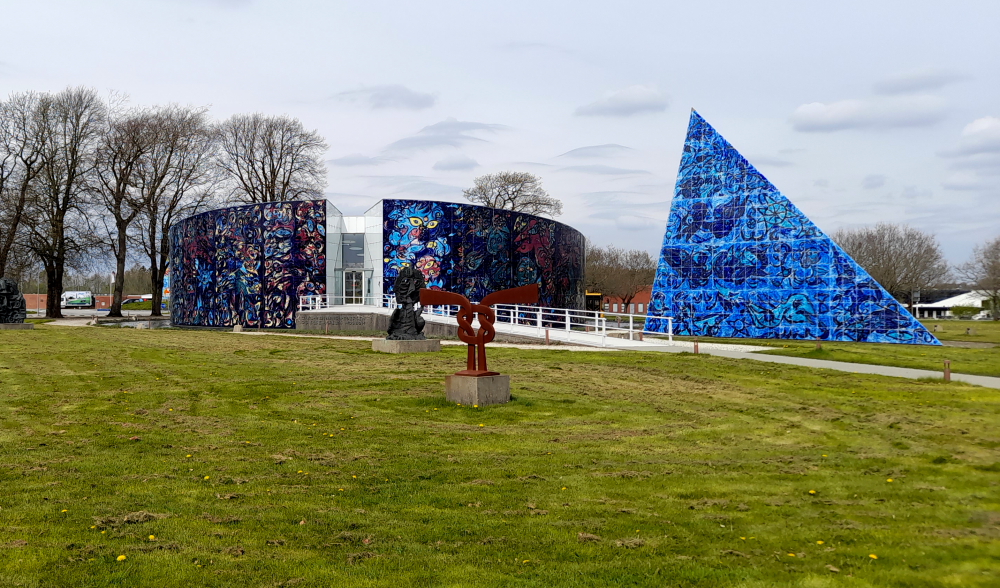
To break up the 150 kms drive from the west to the east of Jutland we stop at Herning to see the colourful Carl-Henning Pedersen and Else Alfelts museum located in an art park.
The artist donated several thousand of his own and his wife Else Alfelt’s works to Herning in exchange for a suitable frame being built around the collection. It became the unusual, round museum building that was inaugurated in 1976 and then expanded with the underground exhibition hall in 1993.
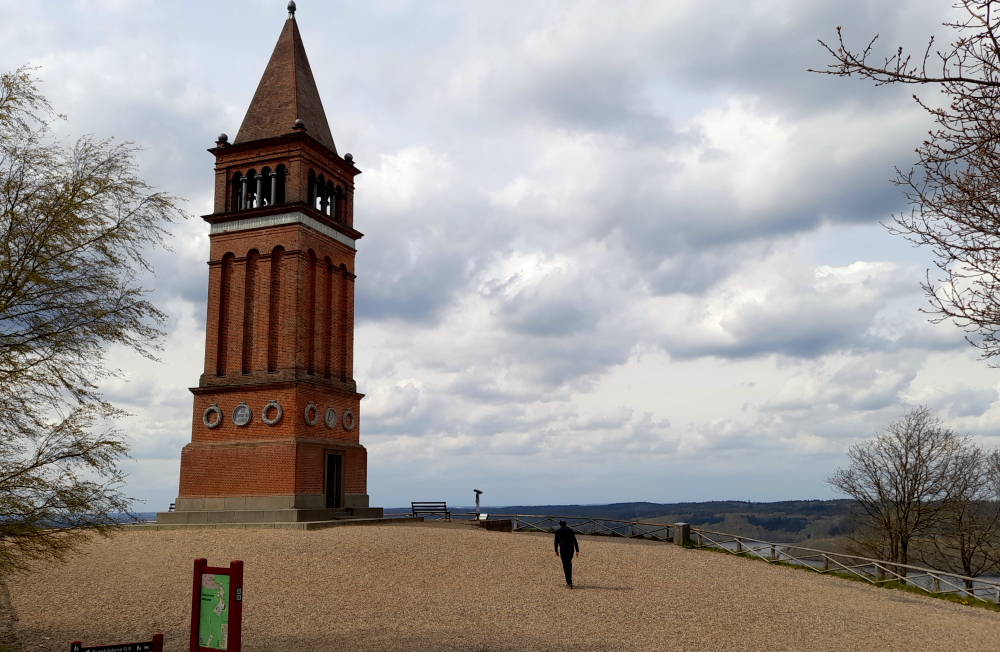
40 minutes later we arrive at the Himmelbjerg Tower near Silkeborg. The tower is a memorial to the Constitution and King Frederik VII who by signing the law abolished autocracy and introduced democracy. The tower was inaugurated in 1875 and designed by Danish architect Ludvig P Fenger at the request of the Tower Committee. This committee was founded by paper manufacturer Michael Drewsen in 1867.
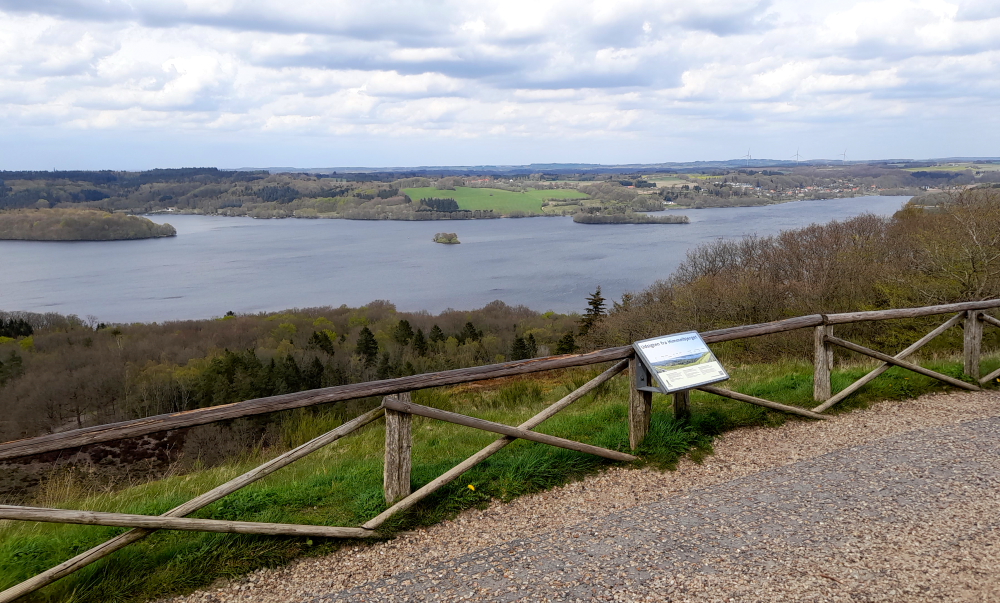
In Norse mythology, Himmelbjerget is the highest mountain in the world of the gods, Asgård. Himmelbjerget was perceived as Denmark’s highest point until the middle of the 19th Century.
50 kms later we arrive at our accommodation on the outskirts of Aarhus.
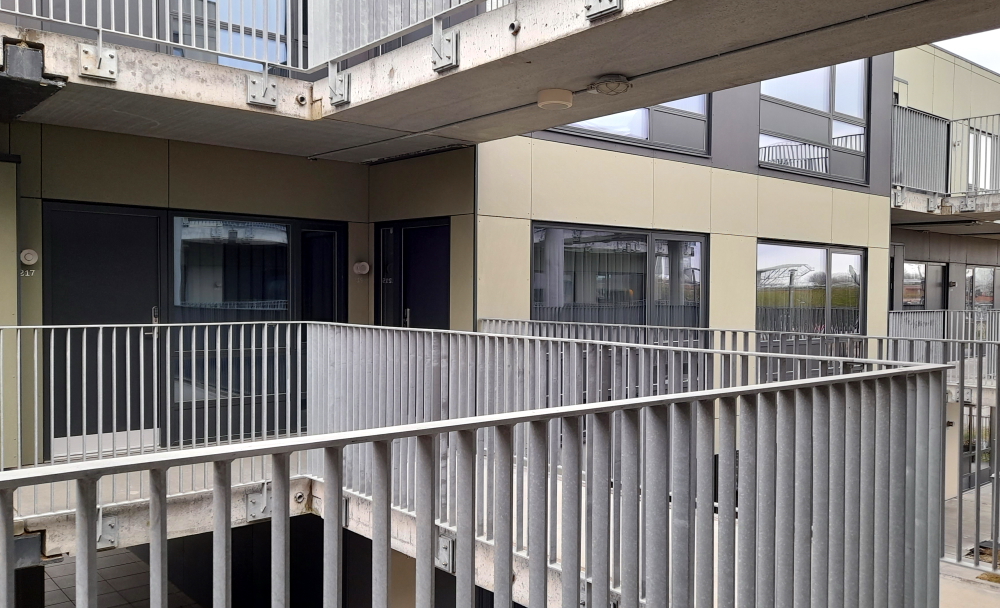
En route we receive an SMS to tell us that our room had been upgraded then we received another one to tell us that we had been checked in and our door code. How convenient!
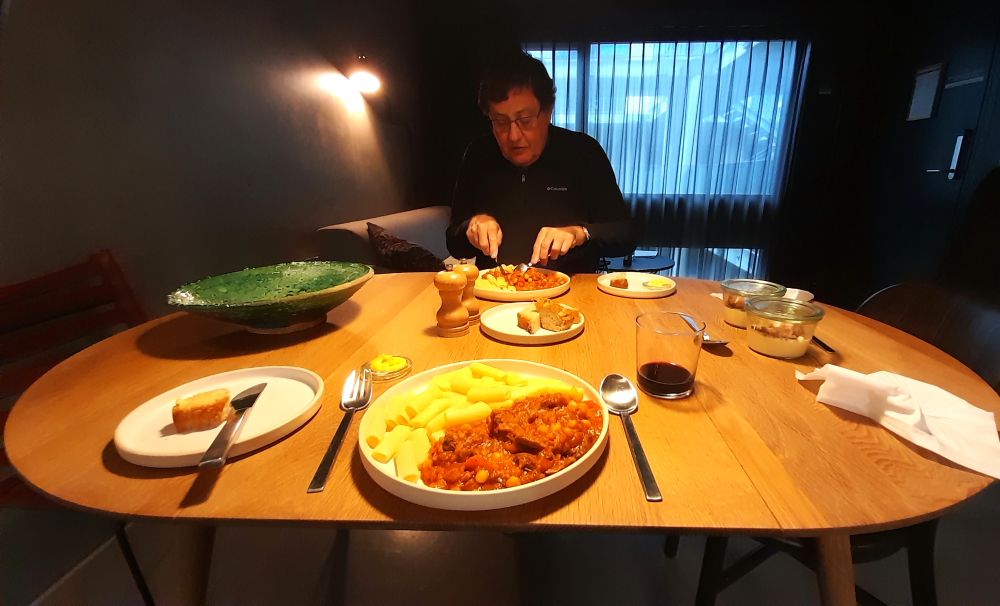
We noted that there was a restaurant at the hotel where we decided we would dine as we were tired from the long day. However, it turned out to be that you purchased the ready-prepared ingredients and reheated them in the kitchen in your apartment. So, beef and pasta with homemade sourdough bread and a vanilla pudding washed down with a pilsner and red wine.
As with all the Danish beds so far, our king bed has two very narrow duvets. Not the best to stay warm or cuddle up at night. It is a wonder that the Danes every have children.
 THE CONTINUING TRAVELS OF YOGI & BOO BOO