
25 April, 2023
It is Anzac Day back in Australia today but here in Copenhagen it is just another chilly day. After breakfast we are heading out to Copenhagen Airport by Metro to pick up our hire car which will transport us around the Scandinavian countries for the next 84 days.
After our short time in Copenhagen we have easily mastered the Metro and the station entrance is only about 400 meters (6 minutes’ walk) from our hotel. We are lucky that it is only a chilly wind blowing and not rain as we drag our luggage to the Metro. We have only one change of trains on the way to the airport and the exit of the Metro at the Airport is right at the transfer bus station that takes us to the Car Rental Desks.
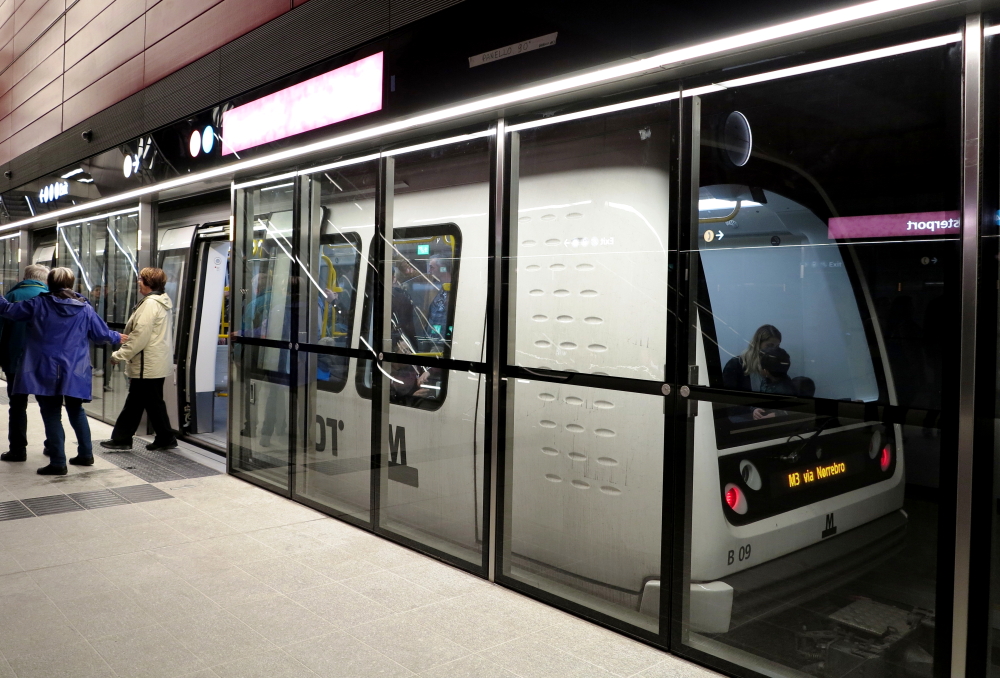
The Metro trains turn up ever 2 minutes so the trip is stress free. Let’s hope the car rental process is also stress free. We have booked an intermediate-sized car (Ford Focus or equivalent). We know that we won’t be able to fit both suitcases in the boot so one will have to ride in the back seat between accommodation. The rental car was booked through Rentalcars.com for a total cost of A$2,560.00 for 84 days including full insurance cover and unlimited kms. The normal price for this deal at the moment is between A$7,500 and A$11,000 so I am expecting all sorts of hassles at the hire desk and a roughy car with lots of kms on the clock. The actual rental company is Europcar which we have used in the past with varying degrees of customer satisfaction.
The car is booked from 12 noon so that we have plenty of time to return the car in 84 days. We arrived at the Europcar desk at 11:00 am since it was faster and easier than expected to get from the hotel to the hire car centre. The guy behind the rental desk stated that it would be an hour before the car would be ready so my first thought is that we are going to be stuffed around due to the low cost of the rental.
We waited around for the hour and the paperwork was sorted in a few minutes. We have the car key and head to the allocated parking space where the car is located in the attached garage.
We are pleasantly surprised. Our hire car for the next 84 days is a near-new Mazda CX-30 Hybrid Automatic SUV. My first concern was that at A$3.20 per litre how expensive will the fuel cost be during our rental period.
We can’t quite fit the two suitcases in the boot without laying the back seats slightly down but this car has all the gadgets including GPS, auto lights and wipers, adaptive cruise control and key-less start. This is going to be a very comfortable drive. It was definitely worth the hour wait. Far better than any Ford.
Now to master the left hand drive…. and all the gadgets.
Lynn has planned for us to do a couple of touristy things on the way to our accommodation in Lyndelse this afternoon. Our first stop was going to be the Viking Ship Museum at Roskilde on the island of Zealand (the island where Copenhagen is located) but at A$35 per entry I would prefer to spend that amount of money on a good wine. Plan B was to visit Roskilde Cathedral. The entrance fee for the Cathedral was A$15 each and since I have no interest in Churches, Lynn did the visit while I educated myself on the use of the Mazda CX-30 features.
Roskilde was the original capital of Denmark so all the Kings and Queens of Denmark are buried in its Cathedral.
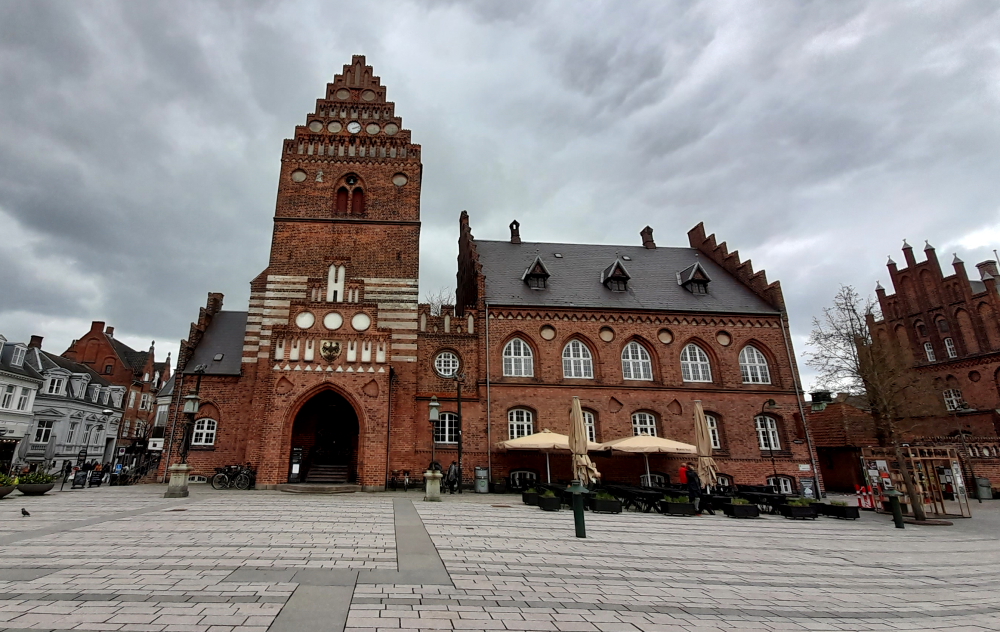
Included in the burials is King Harald “Bluetooth” Gormsson, who was well known for uniting Denmark and Norway in 958 and for his dead tooth, which was a dark blue/grey color, and earned him the nickname Bluetooth.
Harald Blåtann, the Viking and King of Denmark, and son of Gorm the Elder, was known to be a skilled communicator. During his reign, Denmark turned its back on pagan beliefs and Norse gods and gradually converted to Christianity. The inventors of the current Bluetooth comms process used this name for the process pending a name to be determined by the marketing department. It stuck.
The corridors around the Nave of the cathedral are surrounded by 9 chapels in which various coffins are displayed including the Chancel which has Bluetooth’s grave and the Canon’s Chancel where Queen Margrete I’s sarcophagus is displayed.
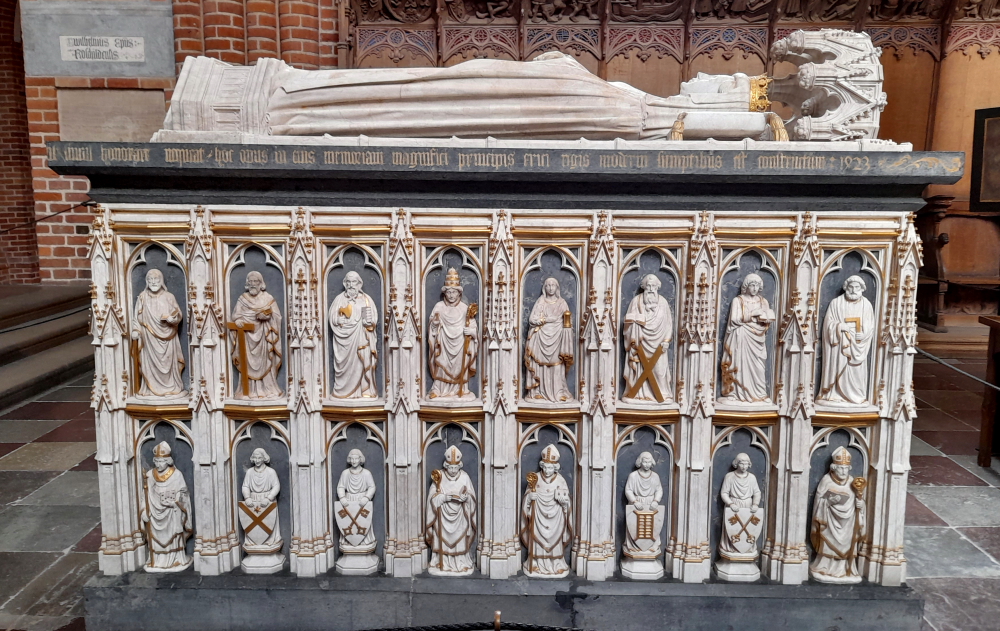
Most of the Royal coffins are spectacular including Sophie Frederikke’s coffin in the Frederik V’s Chapel.
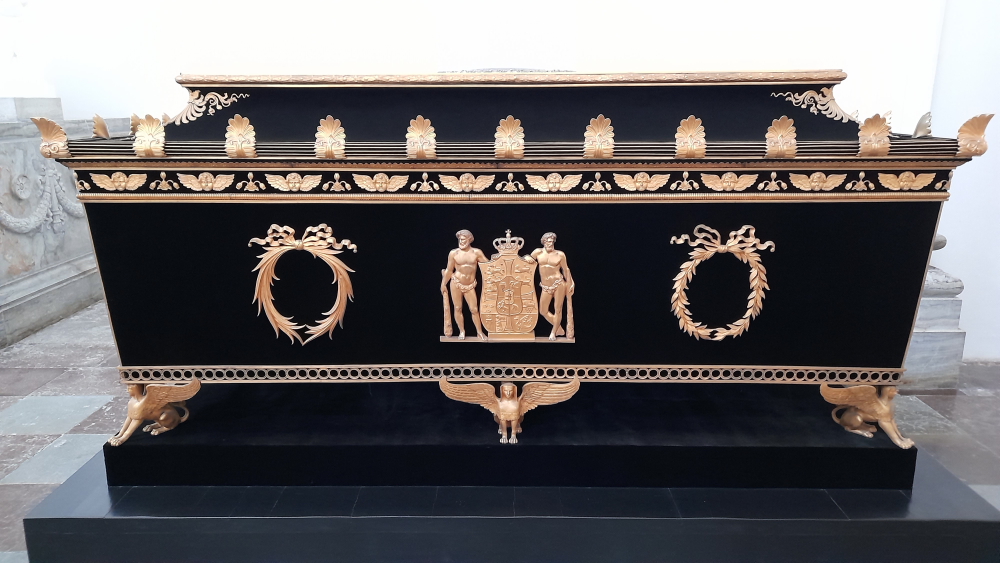
Christian IV’s coffin in his Chapel.
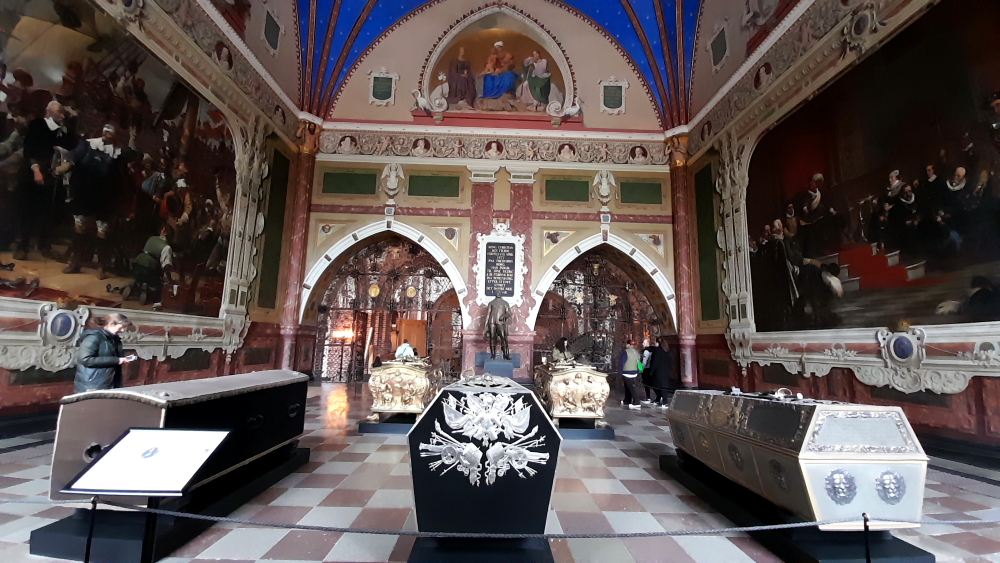
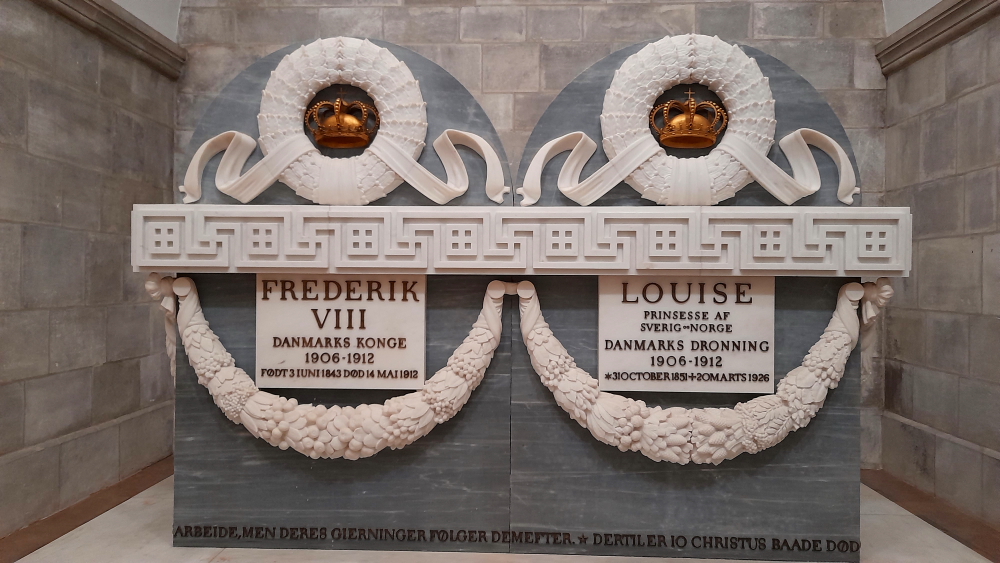
The sarcophagi of King Frederik VIII and Queen Louise in The Glucksburger Chapel.
Our next stop is Odemark, Soro, where a relative of Lynn’s, Lars Christian Larsen, the father of one of her maternal great uncles, was born in 1840 before he moved to Australia via Germany and England in 1860.
Part way down Odemarksvej the road deviates around a large, walled estate at Odemark and in the road is a flock of 6 pheasants.
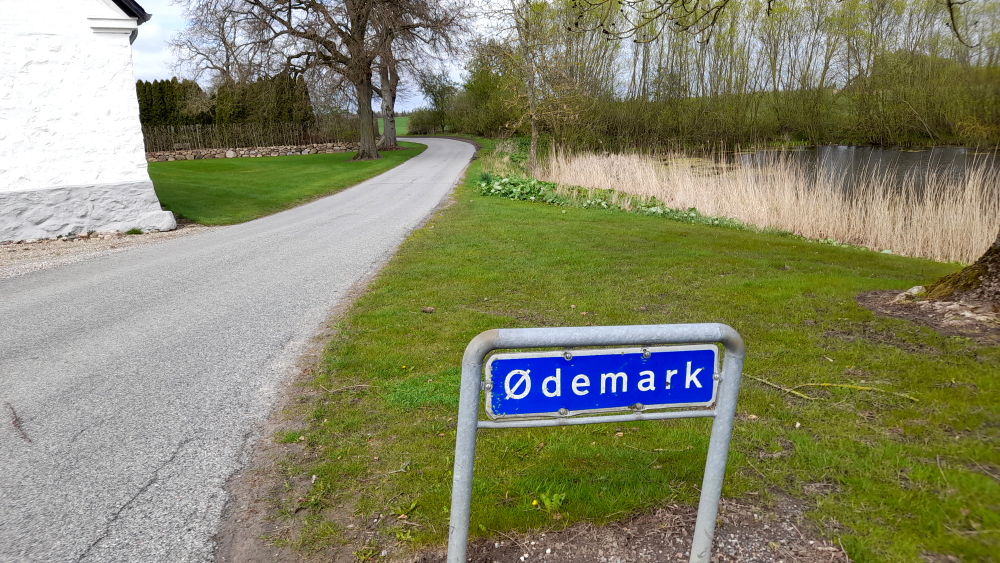
Peeking around the open gate revealed a huge courtyard with a large house at one end and extensive outbuildings along 3 sides.
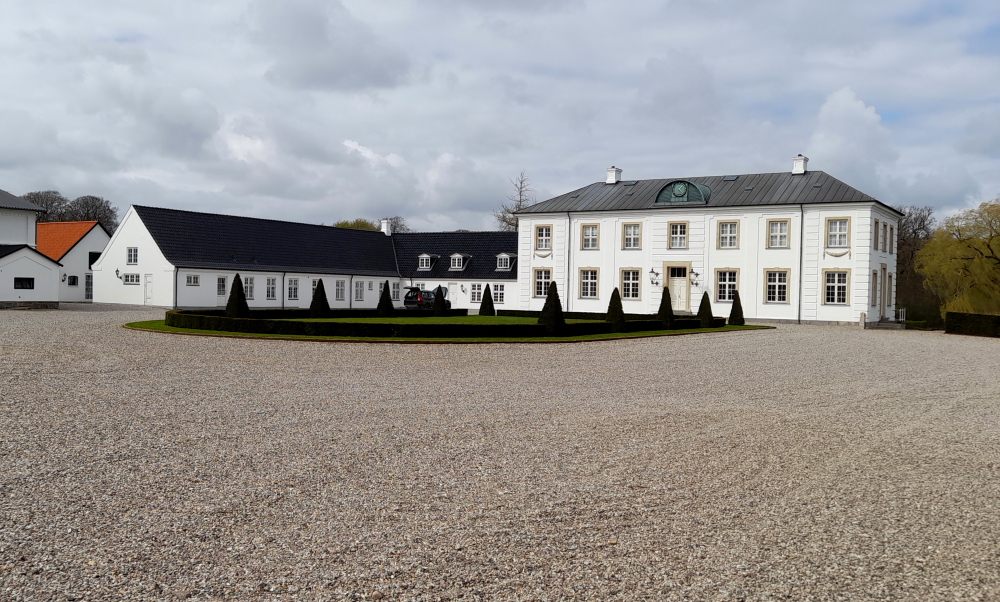
We have no information about where in Odemark he was born or what occupation his father, Issac, had. Perhaps they worked at the Main Farm. The current estate has a website – http://www.oedemark.dk – which states that the current main building was built in 1880 in 2 half-timbered buildings with a side wing.
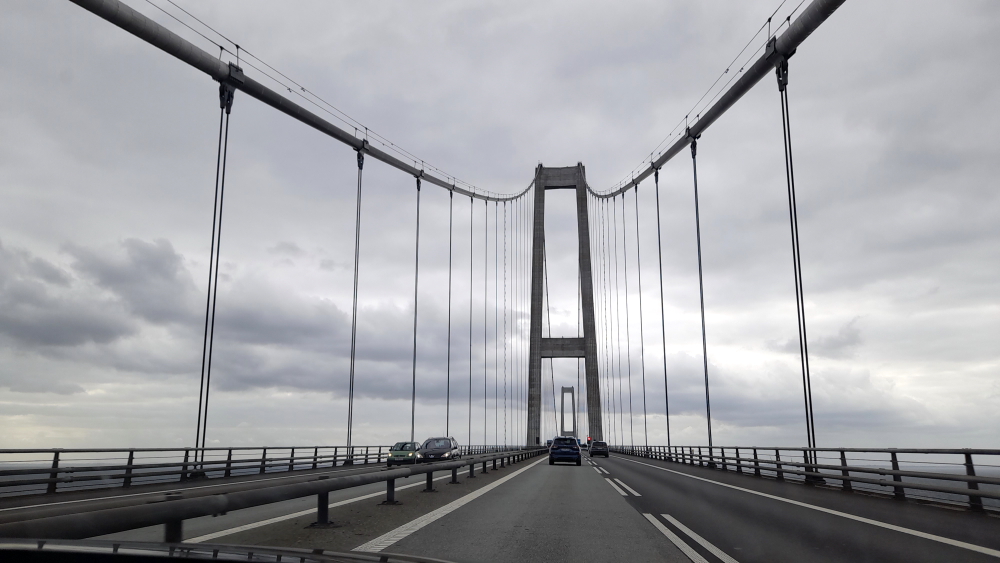
After our visit to Odemark we headed on towards our accommodation at Sandholt Lyndelse which is on the next island of Funen, west of Zealand, which means we have to cross the 18 km-long Great Belt Bridge. By this time the wind had picked up and it was very difficult to stay in our lane. I would hate to be driving across this bridge in a high truck in a strong wind. Way too scary.
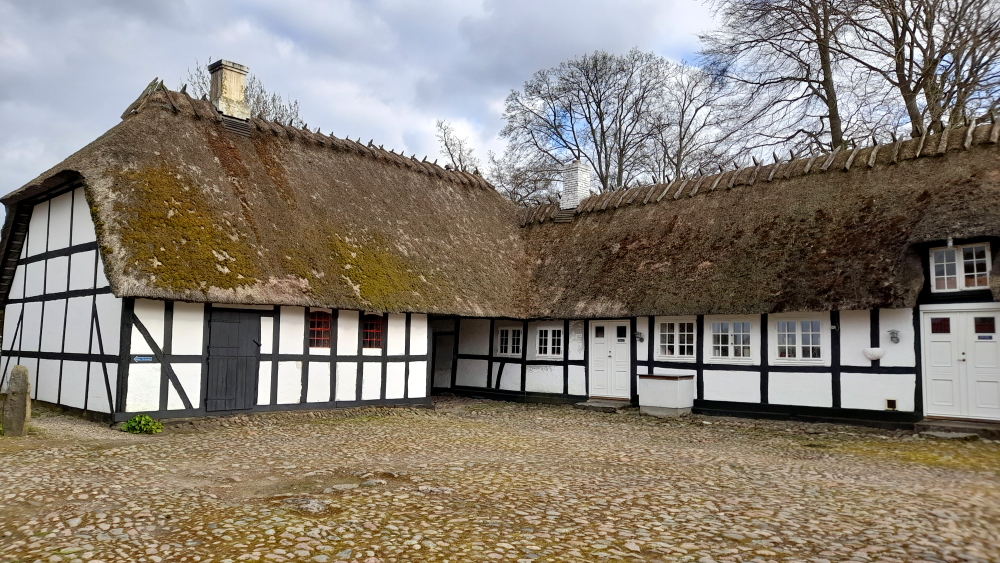
We arrived at our accommodation just after 5:30 pm which is about 2 hours later than our intended arrival time due in part to our stops along the way. The B&B is impressive for a two room B&B. Our host Fraser met us and showed us around. Fraser in an Englishman who has lived here for the past 20 years with his Danish wife, Sally.
We quickly unpacked as we have booked in to attend an Organ Recital at the St Canute Cathedral in Odense at 7:30 pm. We had a very quick “fast food” dinner at the McDonalds just around the corner from the Cathedral and made it to the Cathedral 5 minutes before the recital began with Johann Sebastian Bach’s Toccata Og Fugi i d-mol.
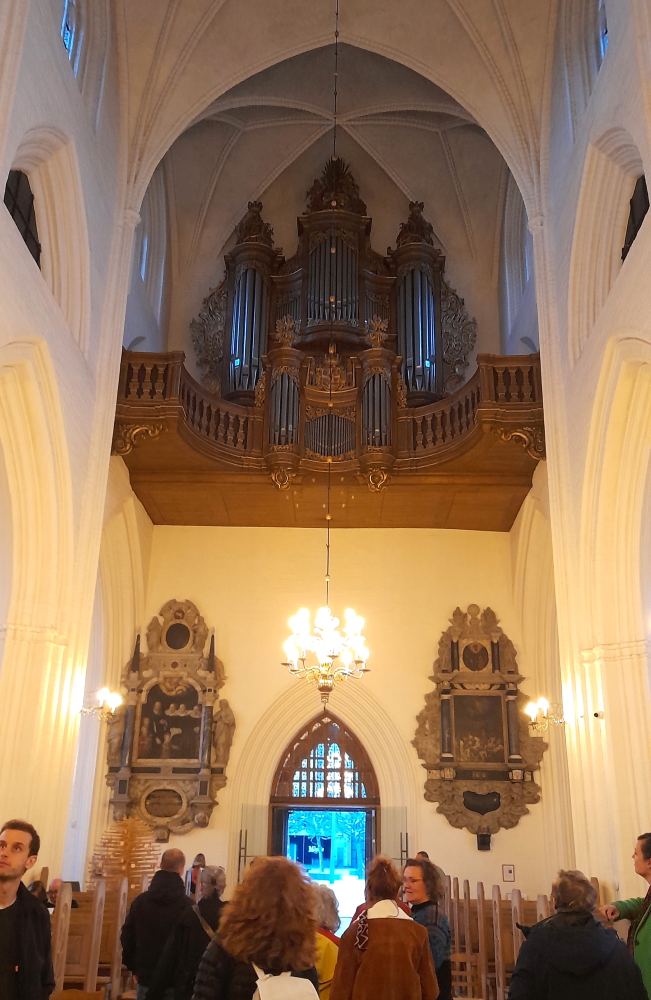
The recital ran for just over an hour then we headed back to our accommodation for an early night. I was exhausted and fell asleep very quickly.
26 April, 2023
Breakfast is planned for 9:00 am and Fraser brings in our tray right on time. We have a reasonably easy day today so we are in no hurry.
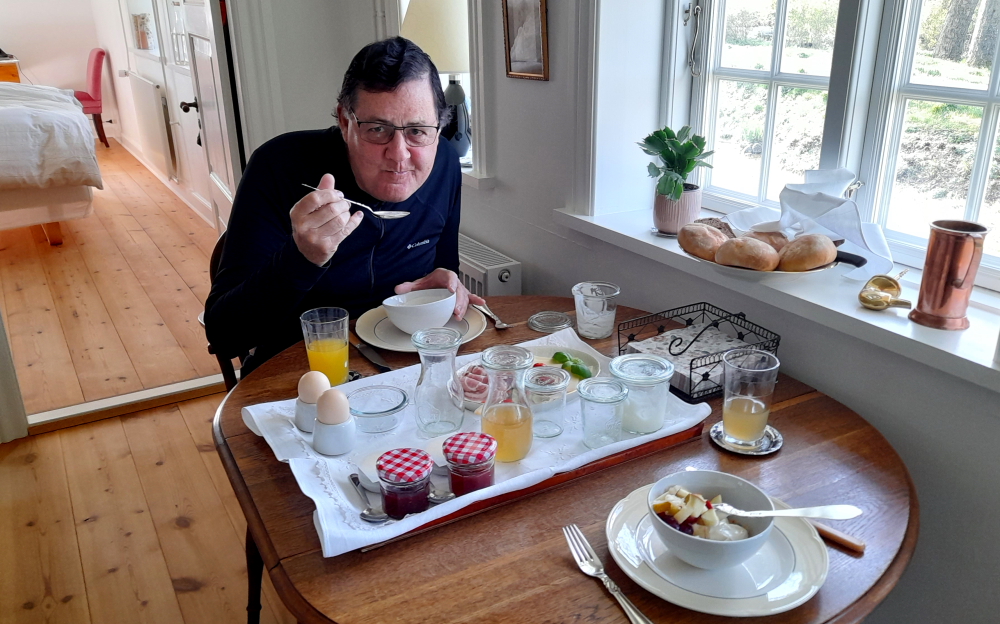
After we finished breakfast Fraser returns to clear away and we have a long chat about what to see and do on the island of Funen.
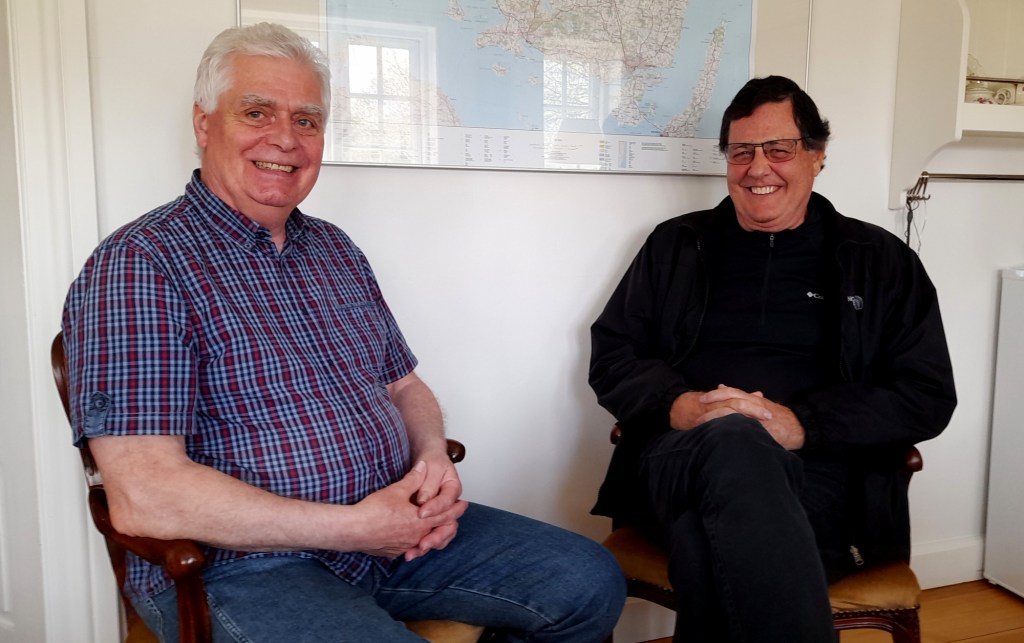
It was a sunny morning while we had breakfast but the clouds are starting to build up. We need to get moving to visit Faldsled Harbour, Faaborg and Pipstorn Forest.
Faldsled Harbour is a small, pretty harbour and marina in Helnæs Bay.
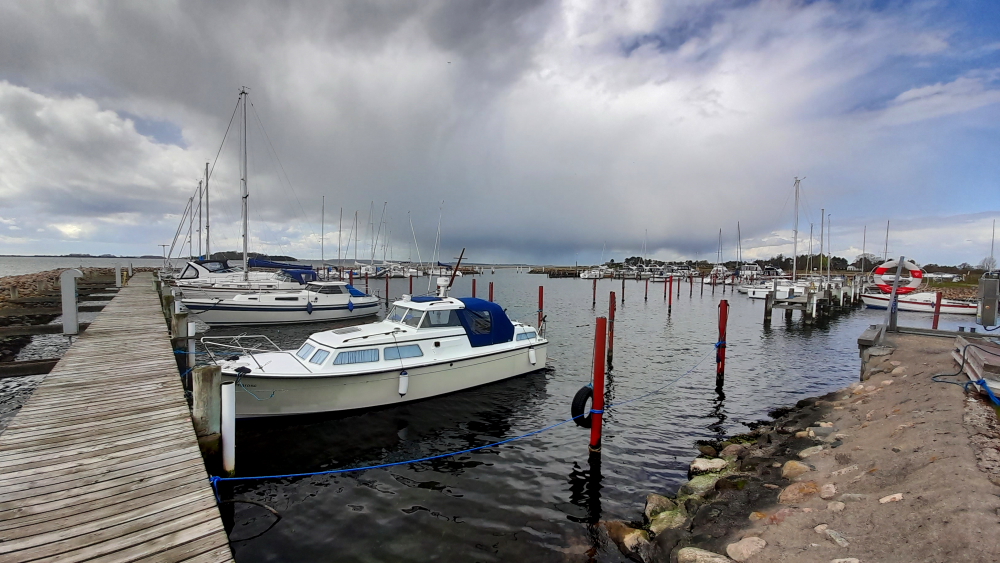
9 kms away is Faaborg, an old port town located on Faaborg Fjord. Faaborg is first mentioned as Foburgh in a document located in the French National Archives, Paris, dated 25 June 1229. It is a deed of gift that gives Faaborg and the south of Funen to Eleanor of Portugal from Valdemar II to his daughter-in-law. It is mentioned as a castle (Foburgh meaning Fox Castle), so it must have existed before this date. However, this date has been used as the birth date of Faaborg and thus the town celebrated its 775th anniversary in 2004.
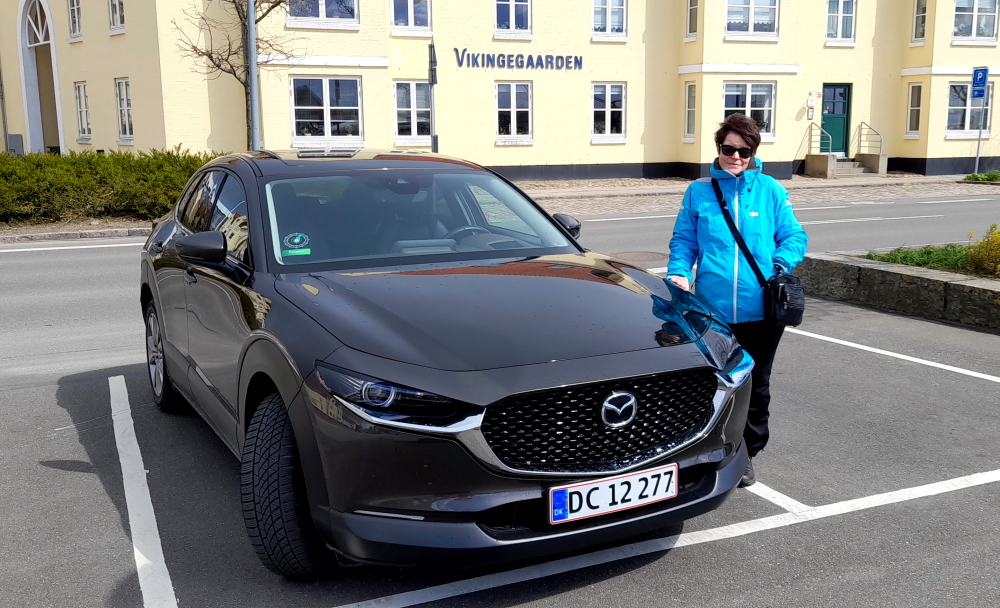
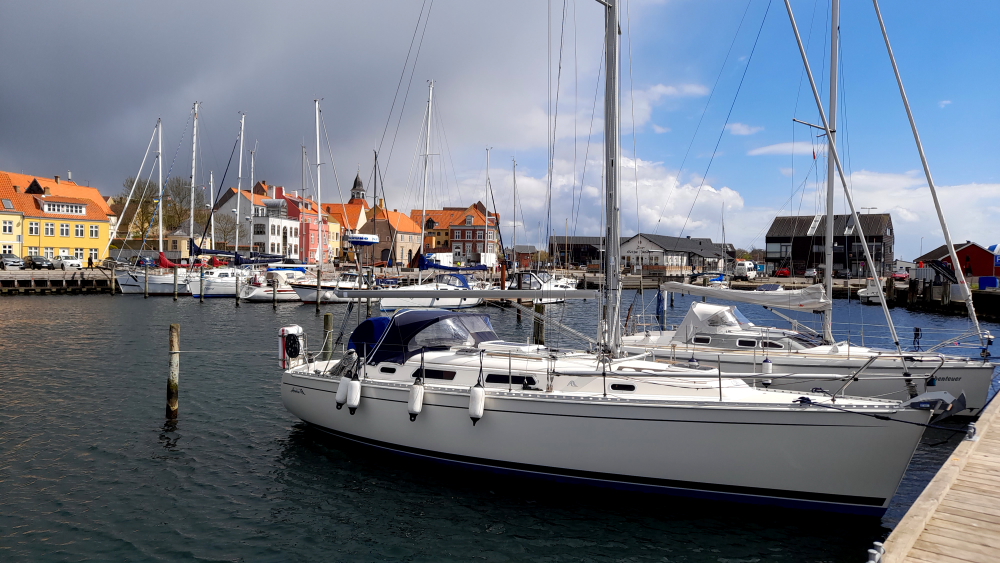
It began to prosper as an important port in the 18th century. By the 1890s, ships from Faaborg sailed as far as the Mediterranean. In the 19th century, the United Kingdom replaced Norway as the main trading partner and, in the second half of the century, trade extended to China and Australia. Today the harbour, old streets, historic mansions and town houses all make Faaborg a pleasant city for visitors.
6 kms SE of Faaborg is Pipstorn Forest known for being one of Denmark’s largest prehistoric burial sites – a place with a 4,000-year-old history.
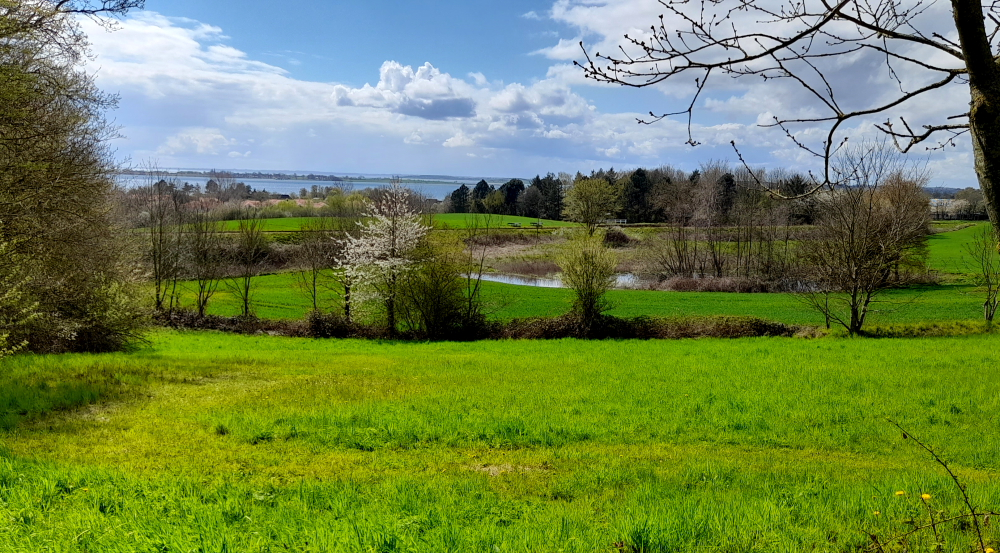
Today, Pipstorn is a mixture of ancient burial sites, forestry operations (at Holstenhuus Manor, which owns the woods), a recreational area and a habitat for wild animals and several rare plants, bisected by a railway line.
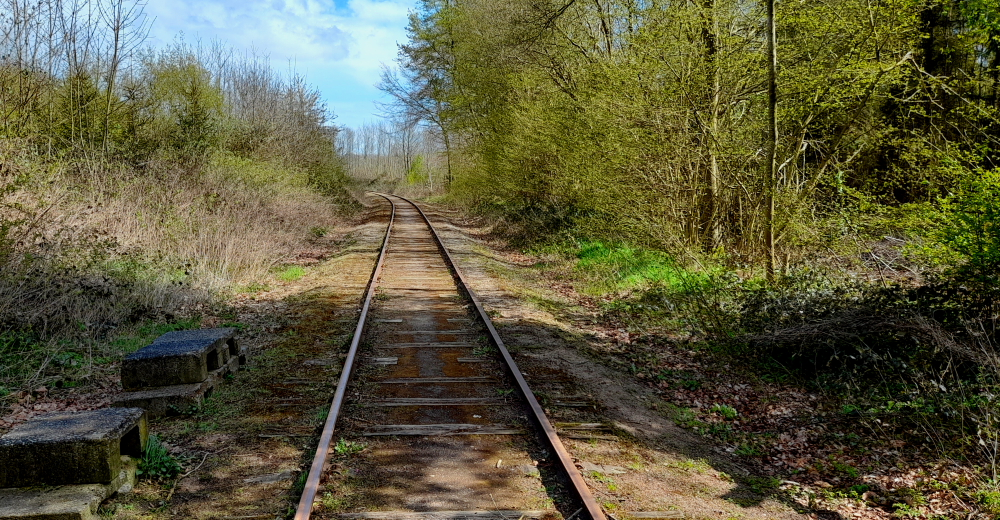
We walk one of the tracks towards a tuft grave – cremation pits covered by a low mound of earth and are often associated with the large burial grounds from the pre-Roman Iron Age (approx. 500-1. BC). It was difficult to make out the mounds amongst the vegetation. We backtracked to a sign towards a series of early Bronze Age long barrows but as there was no indication of how far away the barrows were and as it had started to rain with a touch of sleet we head back to the car.
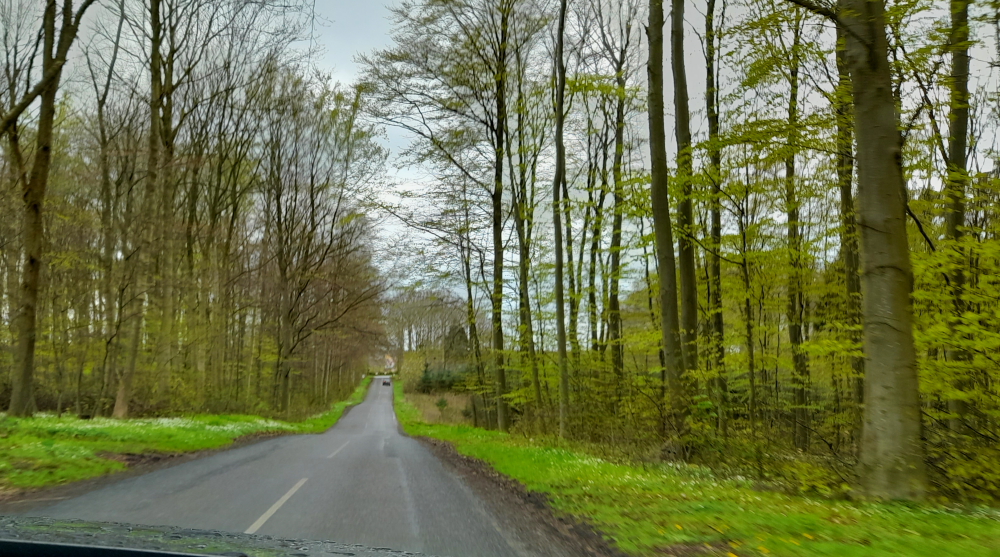
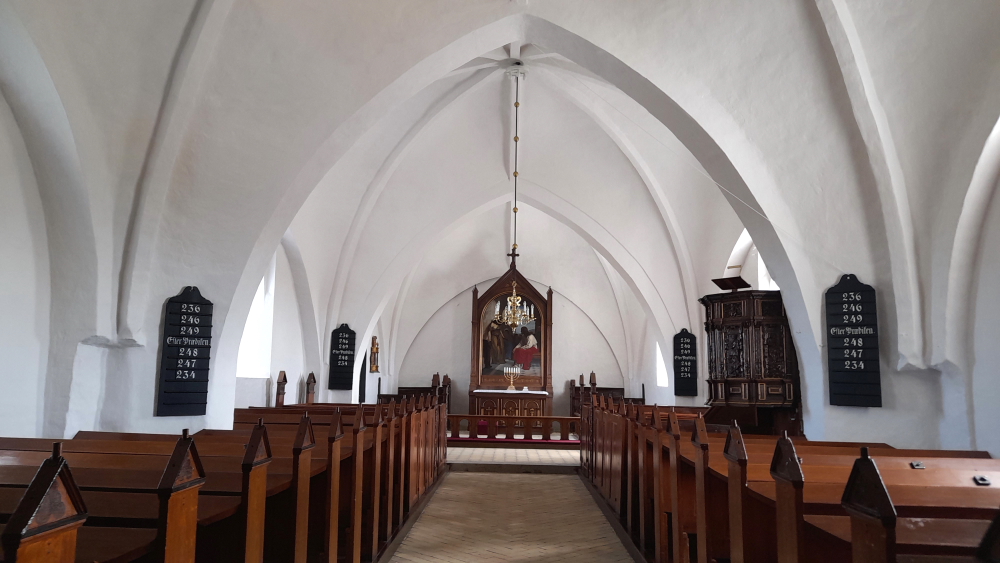
Back at the B&B Lynn walks up a slight hill to the local church.
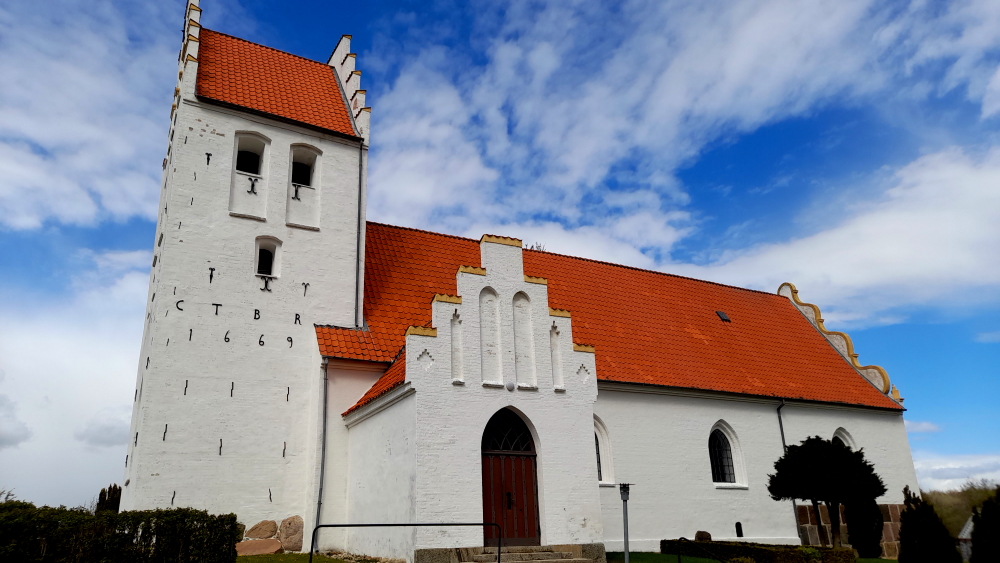
Although the doors were locked we returned the next day and the verger (or Danish equivalent) was mowing the lawns so the church was open and Lynn snuck inside to take a few photos.
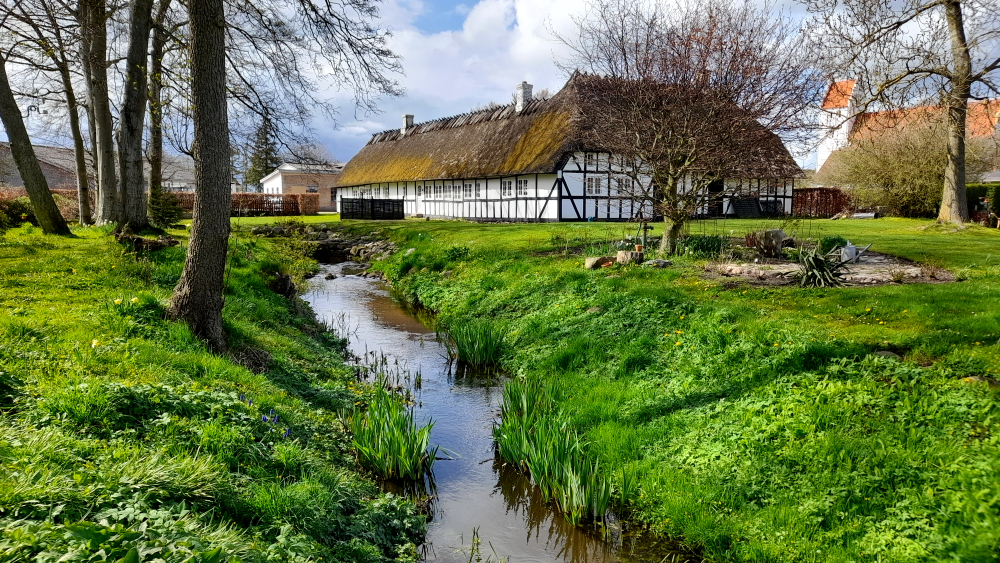
After the church visit she strolled around the B&B and its garden and saw the resident pair of pheasants.
The afternoon is very chilly so we spend the evening updating the blog and resting up. We even have to turn up the heat as the apartment is now getting quite cold. Dinner is in tonight and consists of the remainder of this morning’s breakfast.
We will be in bed early tonight.
27 April, 2023
We are out of bed a bit earlier this morning as we have ordered breakfast for 8:30 am so that we can get on the road to see the sights that Lynn has researched.
First stop this morning is the Egeskov Slot (Castle).
Egeskov was first mentioned in 1405. The castle structure was erected by Frands Brockenhuus in 1554.
Due to the troubles caused by the civil war known as the Count’s Feud (Danish: Grevens fejde), general civil unrest, and a civil war introducing the Protestant Reformation, most Danish noblemen built their homes as fortifications. The castle is constructed on oaken piles and located in a small lake with a maximum depth of 5 metres (16 ft). Originally, the only access was by means of a drawbridge. According to legend, it took an entire forest of oak trees to build the foundation, hence the name Egeskov (oak forest).
The estate has belonged to the Bille-Brahe family since 1784, when they acquired it from descendants of the Brockenhuus family. In 1882 it was inherited by the counts Ahlefeldt-Laurvig-Bille, who still own it.
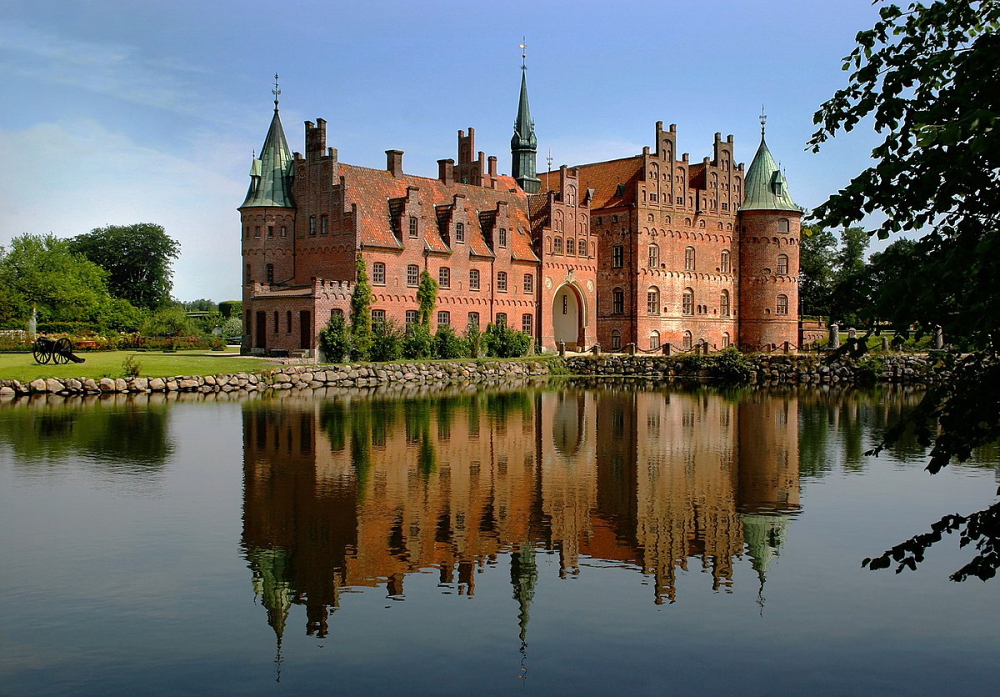
We had planned to go inside and visit the Slot but the entrance fee is prohibitive and we have seen much older and bolder castles in the UK.
We are headed to the two small islands of Tasinge and Langeland which are connect by long bridges via Sio island.
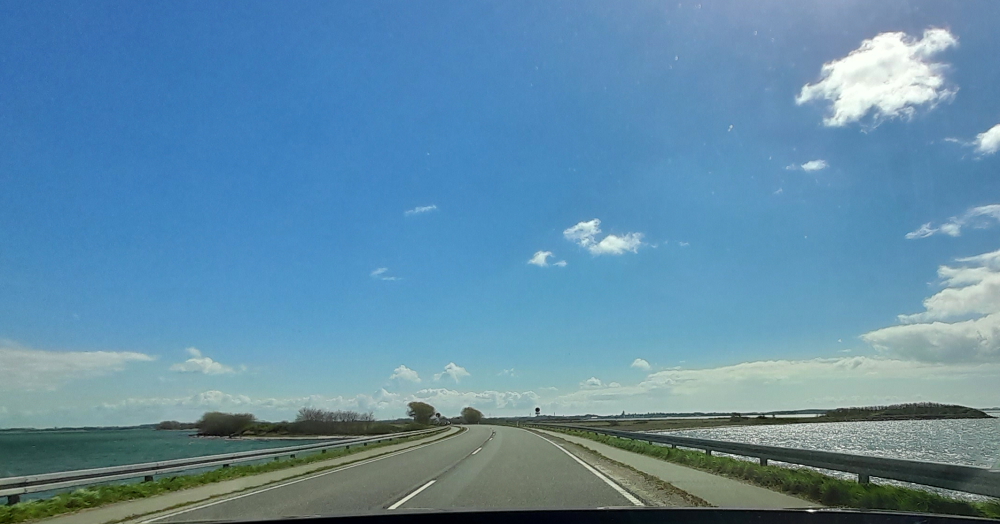
After crossing Sio island (part of the low bridges connecting the islands) we stopped in at a small town called Rudkobing as we enter Langeland Island.
We parked the car on the outskirts of town and wandered through the pedestrian streets.
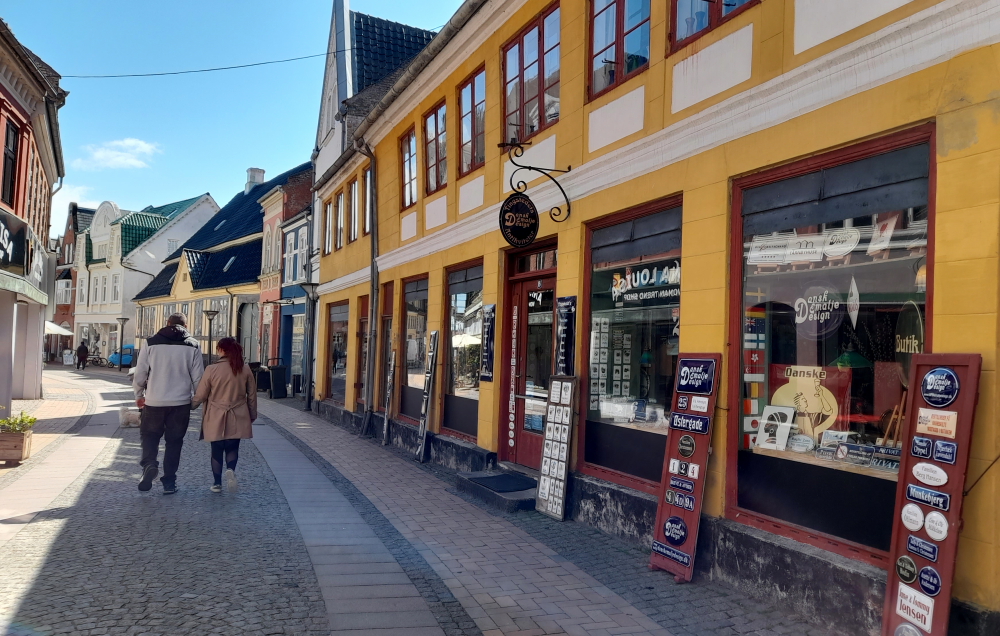
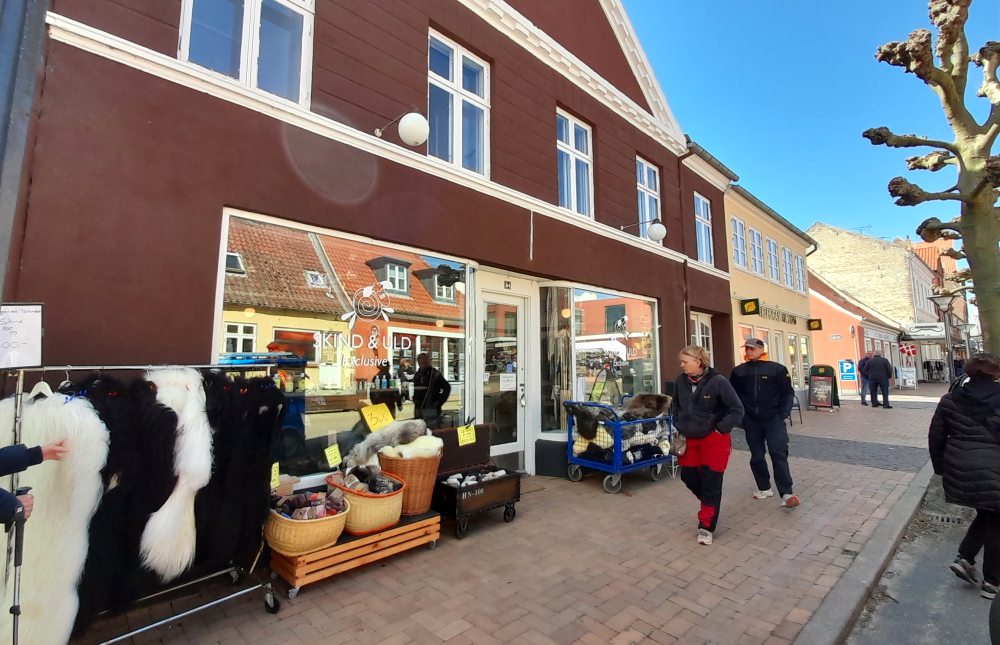
We found a woolen wear shop that had some woolen socks on sale. My cotton socks from Brisbane are just not cutting the cold weather so I bought a pair and Lynn bought two pair of bamboo socks since she needed thinner socks for her walking boots. My socks are traditional, Danish patterned.
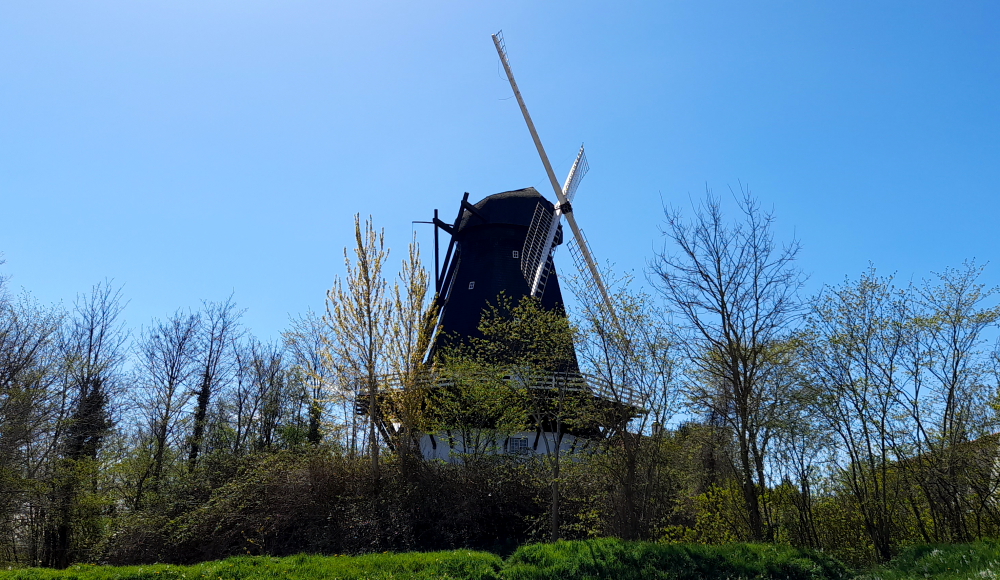
Up one of the alleyways behind the main street we spied an old windmill which seems to be in working condition.
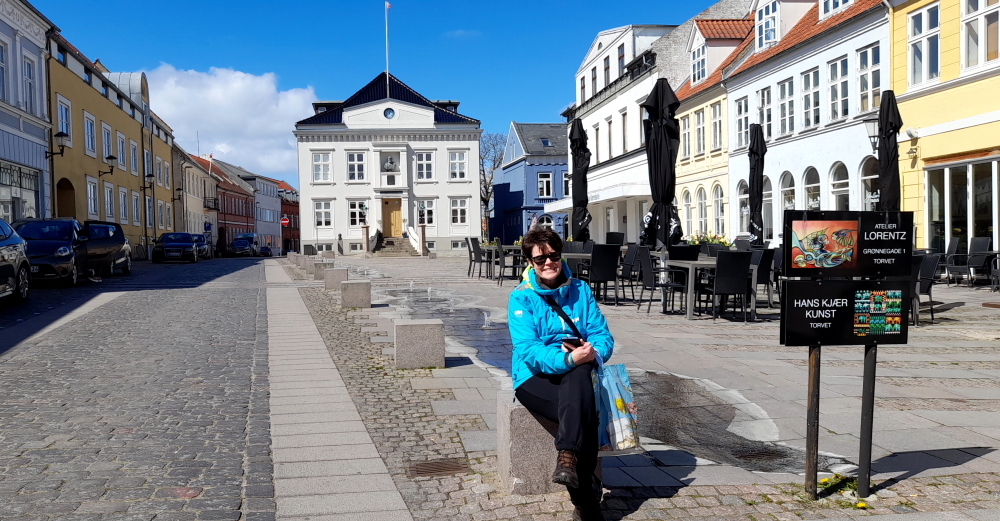
We continued walking through the town centre to the Town Hall. The buildings sheltered the plaza from the chilly north-eastern winds so it was very nice in the sunny pocket.
The first mention of Rudkøbing was in 1287, when it was given market town privileges by Duke Valdemar IV of Schleswig, who held the title of rigsforstander (da) under King Eric VI Menved. The original Rudkøbing Church was built most likely in the late 12th century or early 13th century. During the Count’s Feud (1534–1536) and again during the Dano-Swedish War (1658–1660), Rudkøbing was under siege by Swedish troops. Both times, the town’s fortifications prevented Rudkøbing from immediately falling, but the town eventually had to give in to the Swedes. The town was hit by the Black Plague during the 16th and 17th centuries, and experienced fires in 1590 and 1610.
From the town centre we continued on to the harbour. Rudkøbing got its first proper harbour in 1826 (it had previously only had a pier). In 1898, in a town of about 3,500 people, there were 152 ships based in Rudkøbing. Every year, over 2,500 ships (carrying over 18,000 metric tons of cargo) came in and over 2,800 ships (carrying over 11,500 metric tons of cargo) went out, mostly to and from elsewhere in Denmark. The town was connected by steam ferry routes to Copenhagen, Korsør, Marstal, and Svendborg.
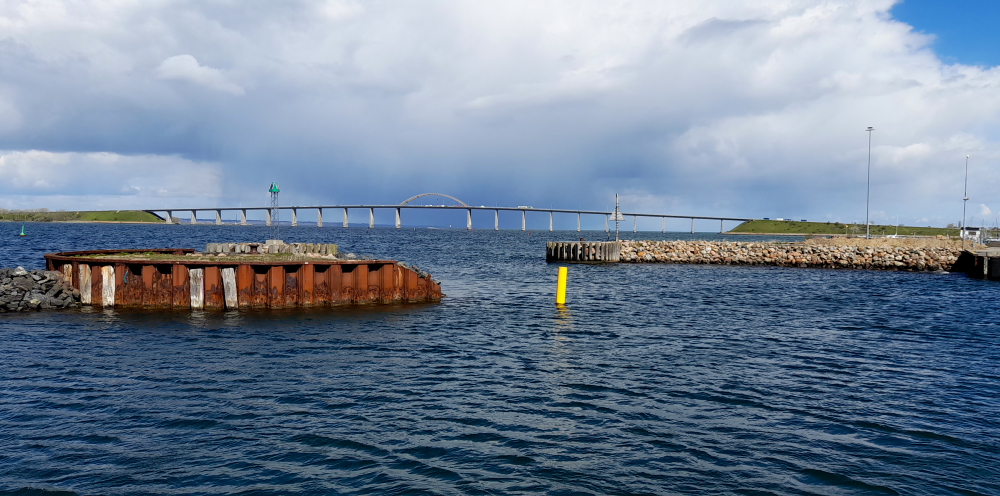
There are some excellent refurbished old buildings down by the harbour including the old railway station which is now the city’s historic archives building. The old 24-hour railway clock still adorns the building.
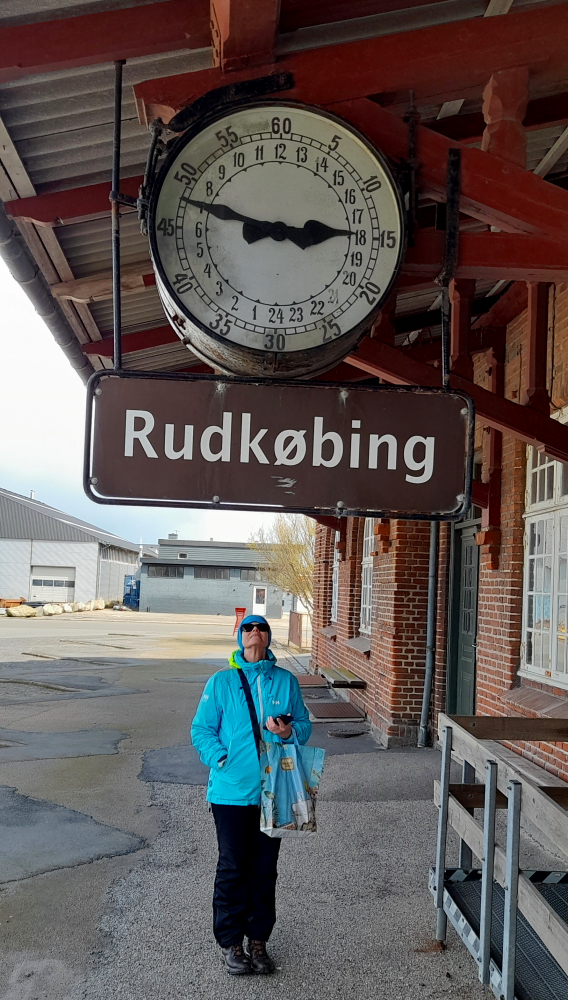
From 1911 to 1962, Rudkøbing was the main station of the Langeland rail network, called Langelandsbanen (da). The network was connected to Svendborg in 1926, when a railway ferry route made it possible to move train wagons between Rudkøbing and the mainland of Funen.
Before the harbour was built there were a number of small houses along the then beach front where the usual seaman, fishermen and paupers lived. The street is called Ramsherred and the word Rams-herred means “inhabited by bad-uns”. This area is now a very gentrified with very expensive harbourside renovated cottages.
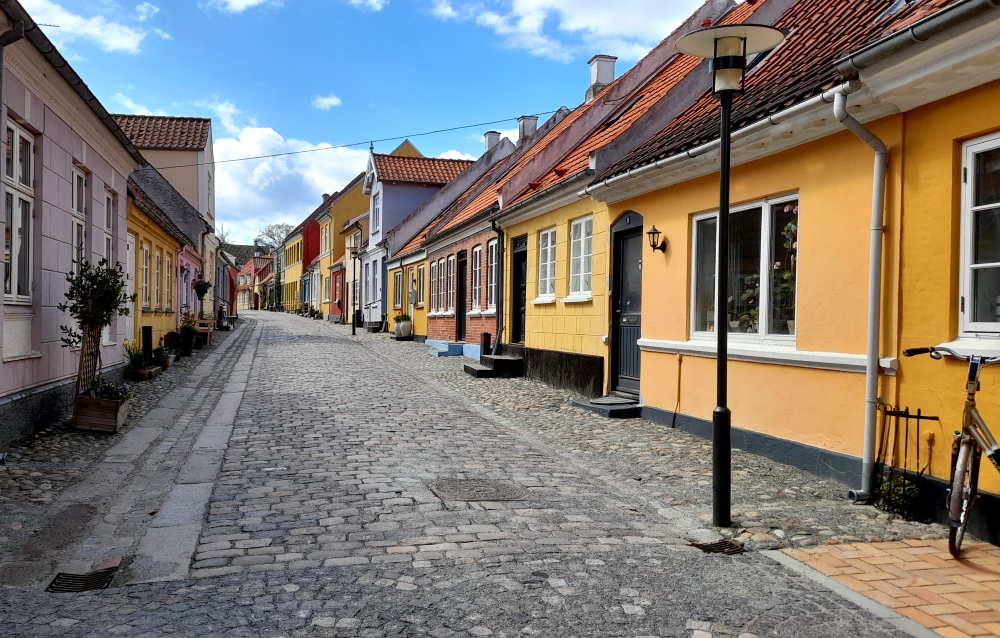
Back to the car and we then headed to the bottom of Langeland Island through a town called Humble. We couldn’t find the Humble Pie shop, unfortunately. The farmland around this area has lots of small hills and mounds. Some of these mounds are supposedly old viking burial mounds.
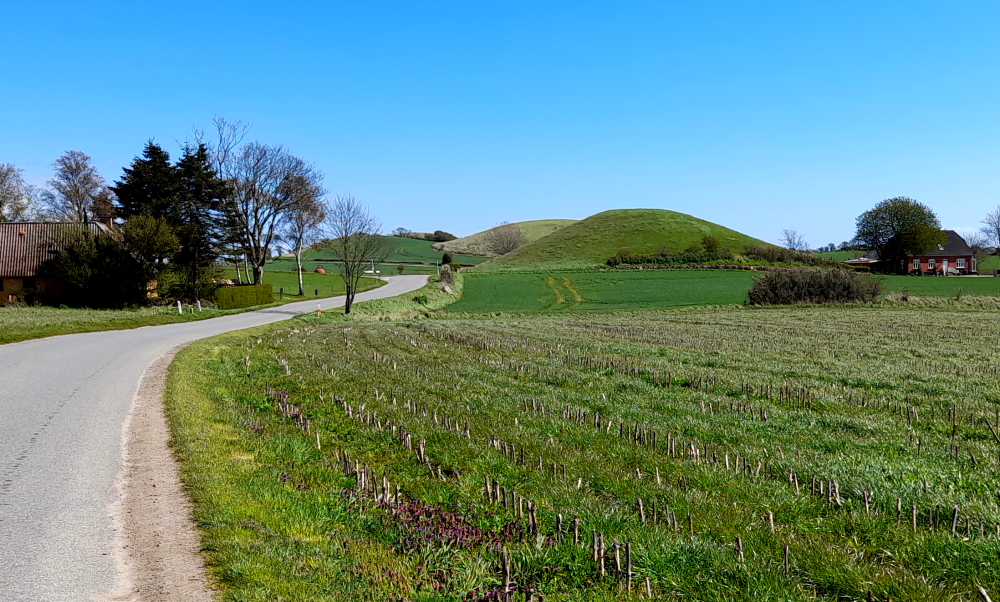
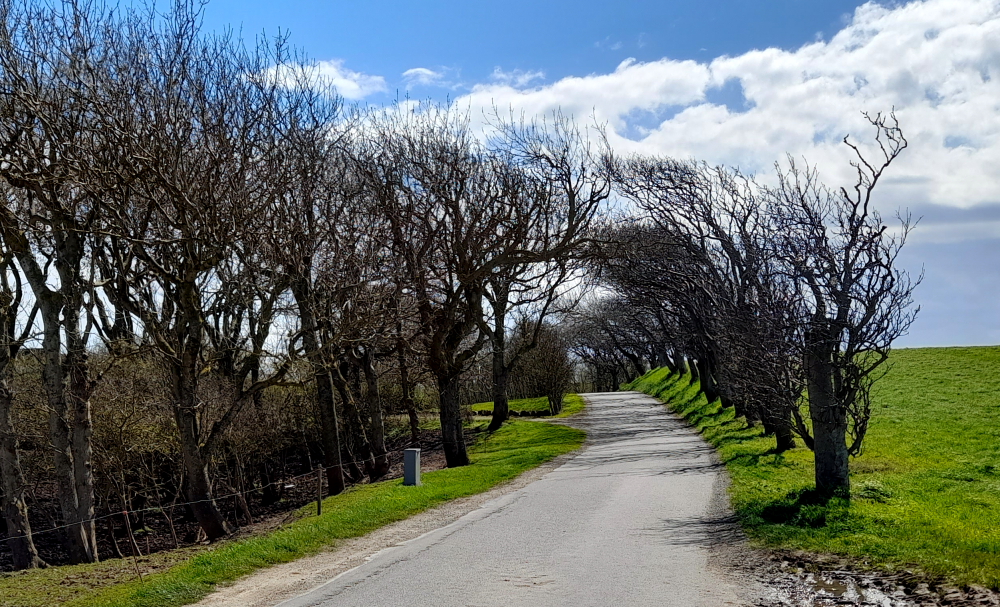
We are now close to the southern coast of the island and there is evidence of significant sea winds that must drive the local farmers crazy.
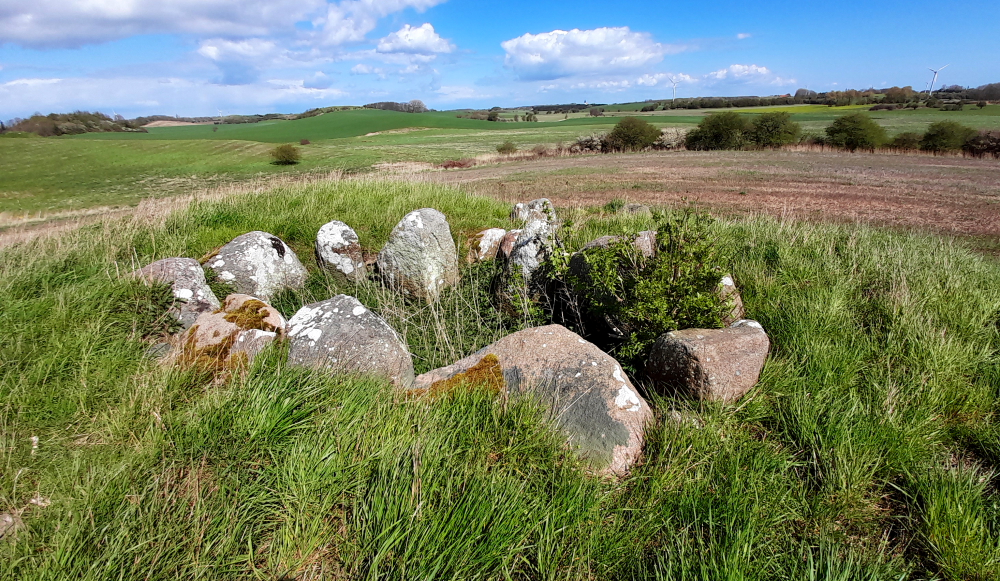
A little further along Lynn noticed a mound in a field so I stopped and she walked across the field to the stone-covered mound. It turned out to be a passage grave and apparently some 5,000 years ago there were 7-8 large stone tombs in this area.
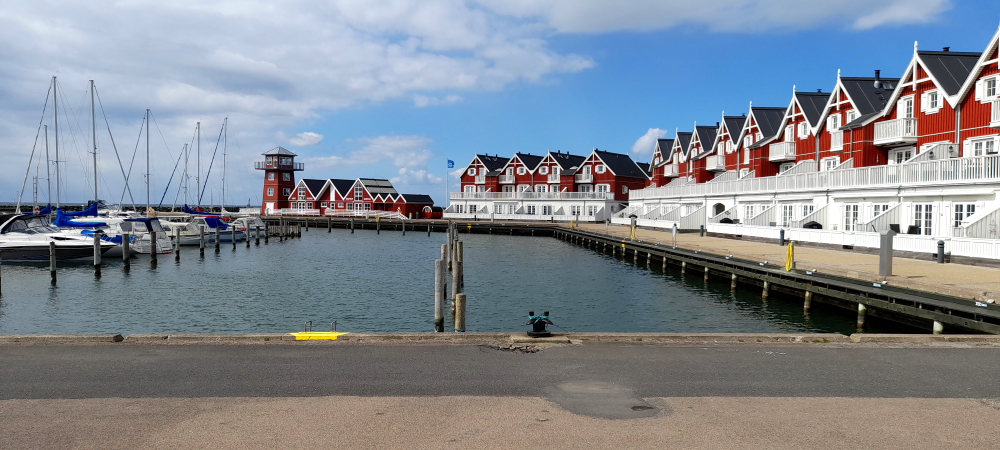
Our next stop is at the base of the island, a small holiday harbour village of Bagenkop. It is very quiet here at the moment as it is way too cold for the summer holiday crowds. In another 6 weeks this place will be heaving.
The adjacent beach looks way too cold today but looks like it could be a very nice swimming beach in summer.
There is just one cafe/souvenir shop open at the moment so we stop in for a hot chocolate for Lynn and a hot dog for me. The locals check us out and it seems that they are thinking “why are there tourists here in this cold weather?” Still, it is not raining and the sun is shining even though it is a chilly 8 Deg C and that’s without the wind chill factor.
On our way back to Lyndelse we check out Svendborg on the main island of Funen as this was where AP Moller-Maersk was established in April 1904. We parked near the harbour and walked the old town centre.
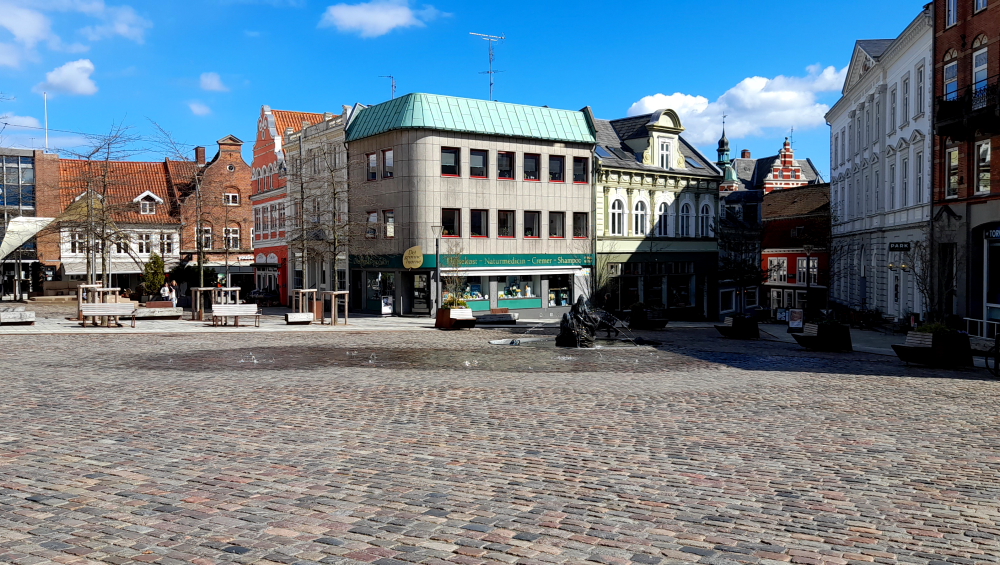
There are some interesting shops, churches and buildings in the town so we walked quite a few blocks to check it out.
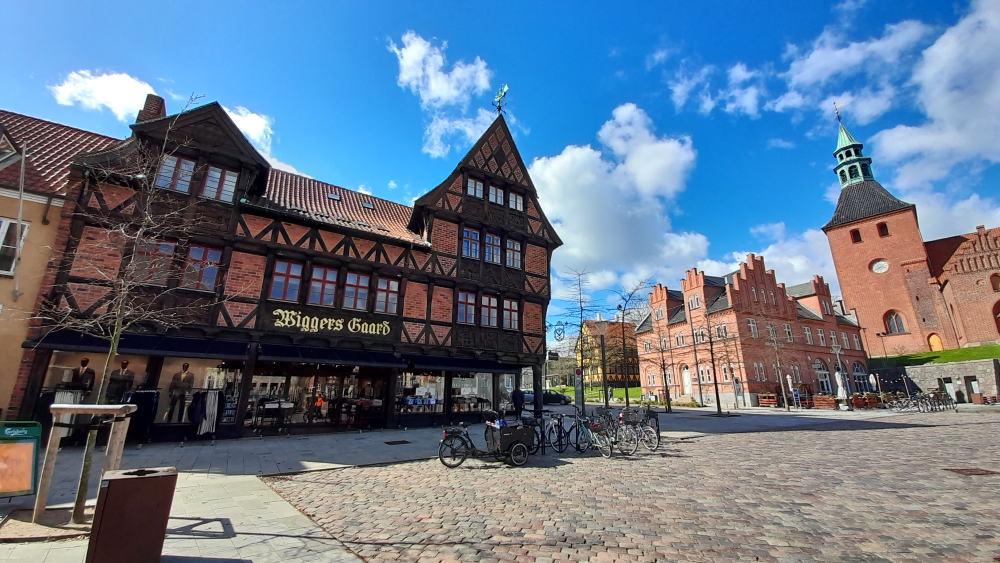
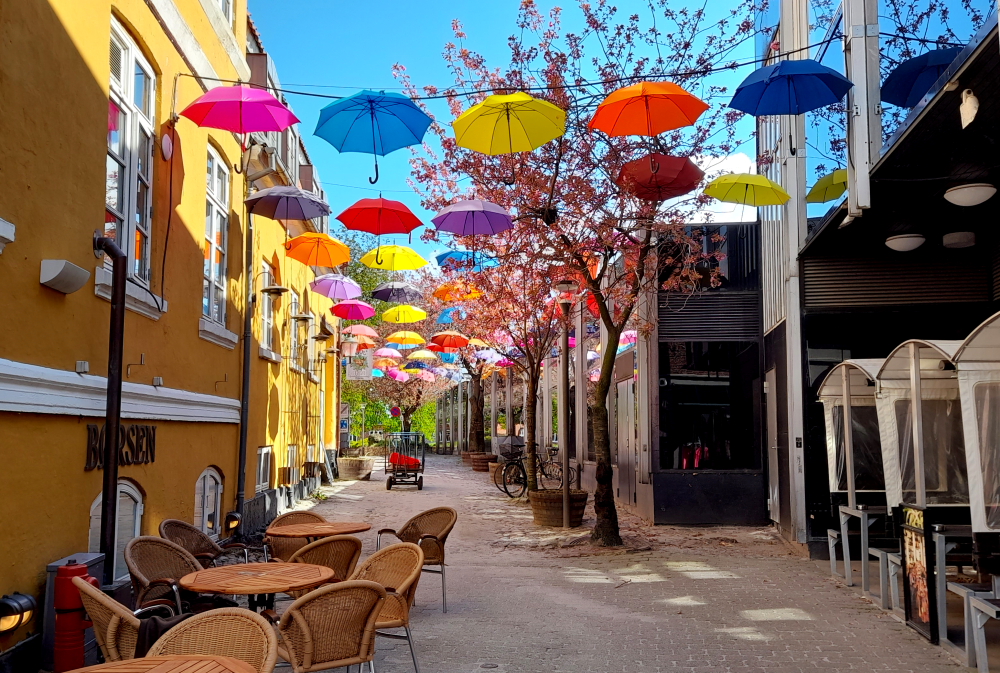
As we walked back to the car we noticed an interesting street decoration.
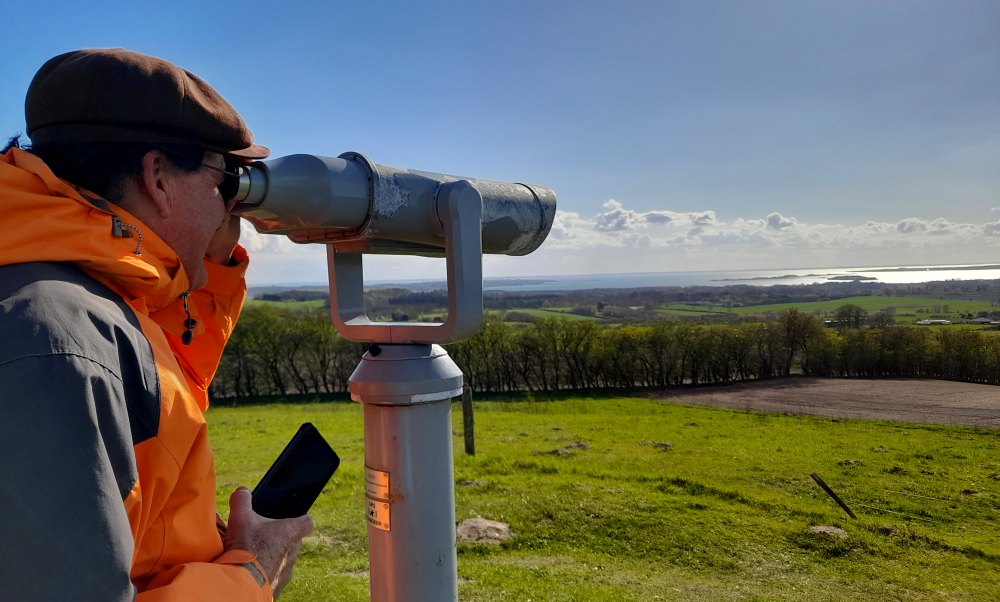
It is time to head back to Lyndelse but we will have one more try to walk to the top of the Trebjerg Hill for the view over the bay, archipelago and on to Jutland. This will be our third attempt as each other attempt was washed out with rain storms.
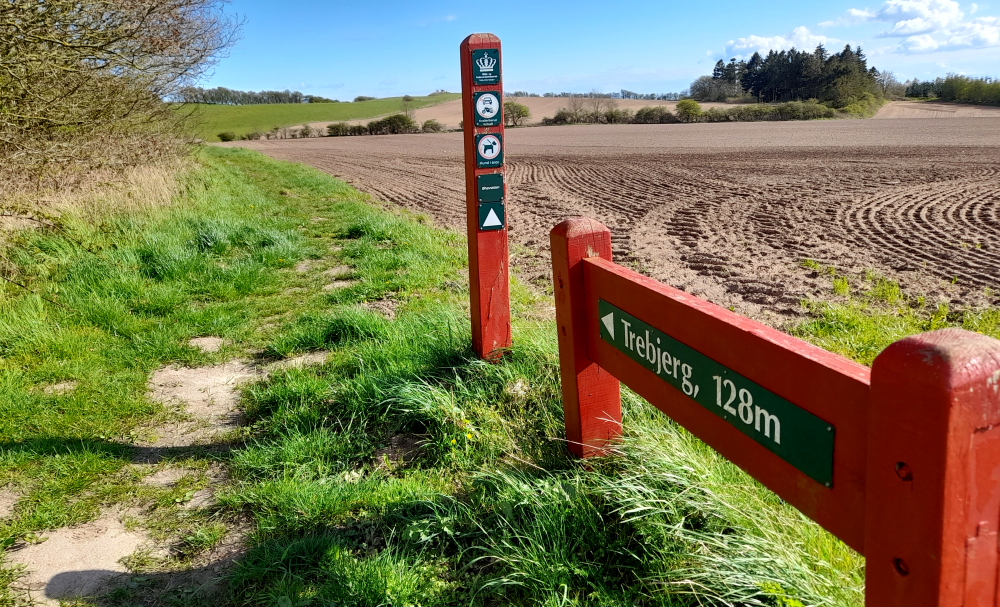
It is sunny but the wind is blowing a chill through our souls but we make it to the lookout.
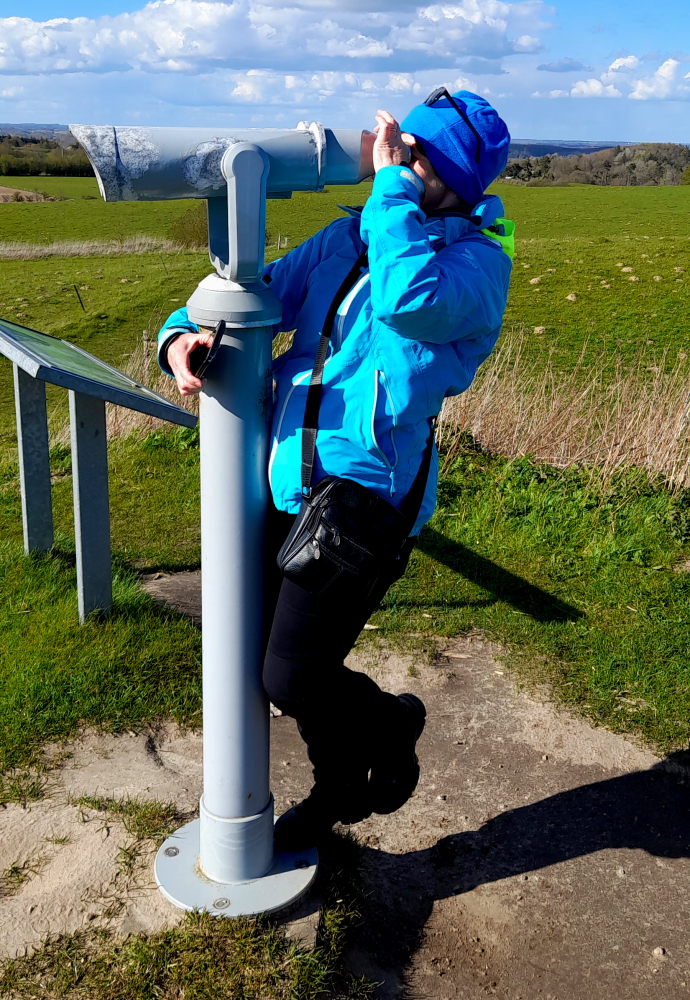
The view is pretty good but it is way too cold to linger here for very long. It must be nearing wine o’clock.
We stop in to buy a tank of petrol on the way back to the B&B as we are nearly down to a quarter of a tank. We fill up with 36 litres of petrol for an eye-watering A$115.00. Now I know why Europe is so small. They can’t afford a larger area at these prices!
28 April, 2023
After bidding Fraser farewell we depart Lyndelse just after 10:00 am for our first stop at the Wadden Sea National Park lookout near Juvre on the island of Romo which is 182 kms west on the Jutland peninsula. It should take us about 2 hours and 15 minutes.
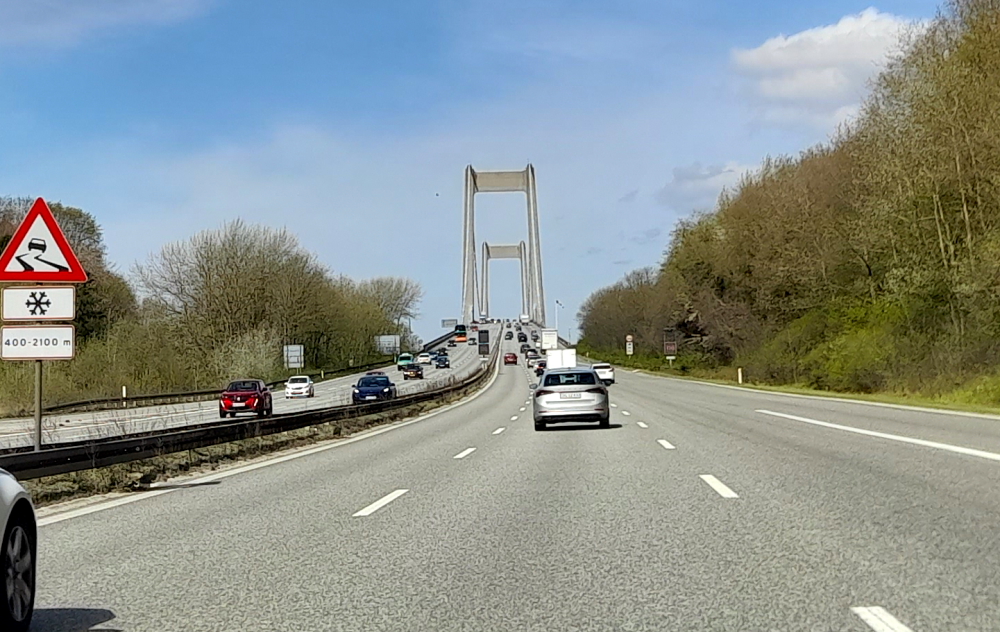
The E20 takes us across the Den Nye Lillebaeltsbro Bridge between Funen and Jutland then we take the 25 then the 175 which takes us over mashland and the body of water known as the Danske Vadehavsoer to Romo Island.
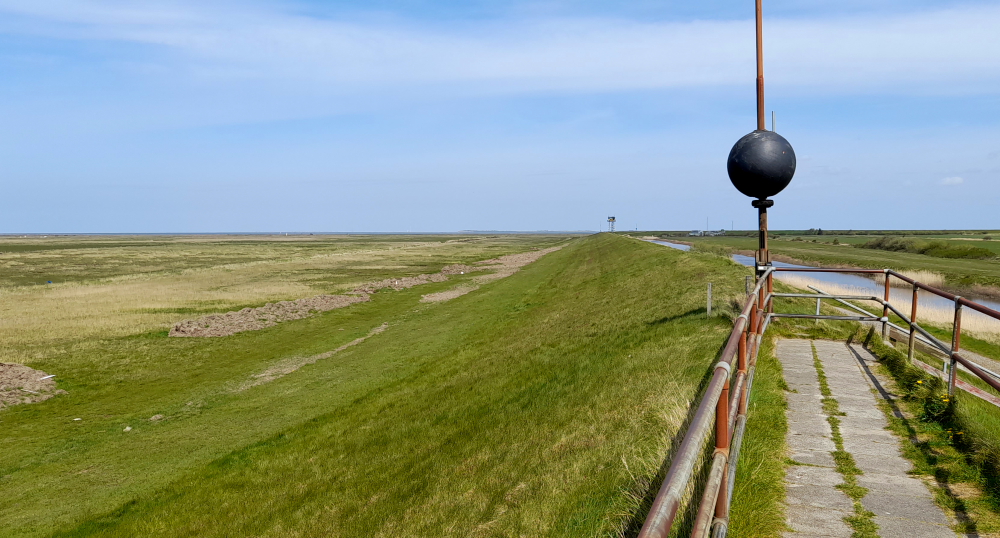
To our surprise, when we get to the look out, there is no water to be seen, just grassland which is not depicted on the map. Instead there are warning signs that the area that we are overlooking is, in fact, a live firing range! We’ll have to find somewhere else to lunch.
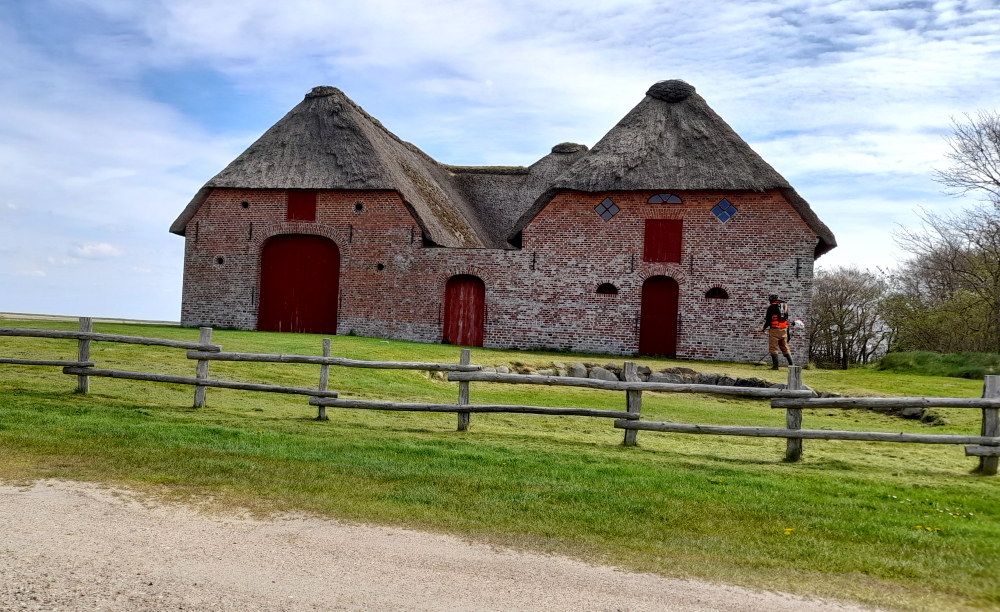
There are several solid buildings in the neighbourhood. The local museum and a farm house.
As we drive through Romo Kirkeby on our way south on the island we stop at St Clemens Church which is one of Lynn’s ‘must see’ spots.
The church was dedicated to Saint Clement, the sailors’ patron saint. One of the old tombstones lining the cemetery wall was inscribed with a ship.
The oldest part of the church was built sometime after 1250 and expanded four centuries later. Possibly in the latter half of the 15th century, the church tower was built in the Gothic style. The church was expanded in the 17th and 18th centuries.
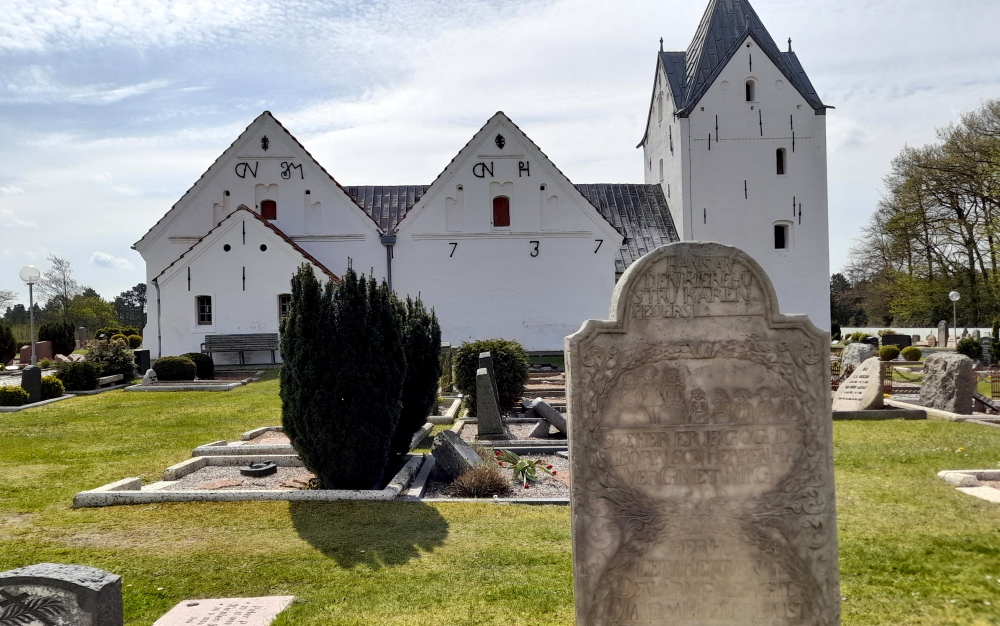
The date on the exterior of the church says 1737 while the highly-decorative pulpit is dated 1534.
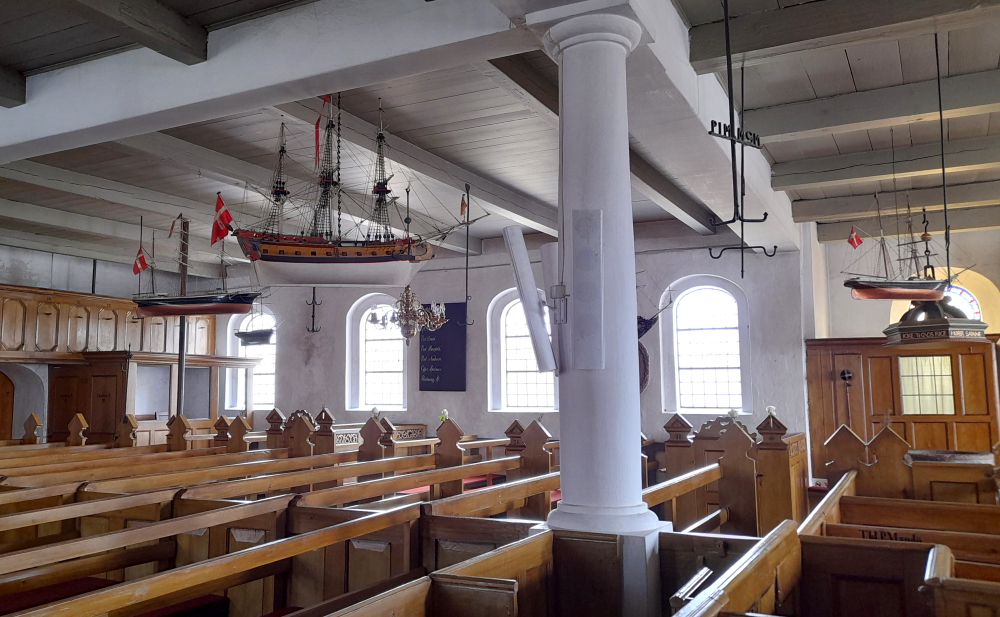
Interestingly, inside there are several votive ships hanging from the ceiling – just like in some of the corridors of the Kykkos Monastery in Cyprus.
At the southern end of the island is Havneby where the ferry to List auf Sylt on the adjacent island of Westerland, Germany, arrives and departs.
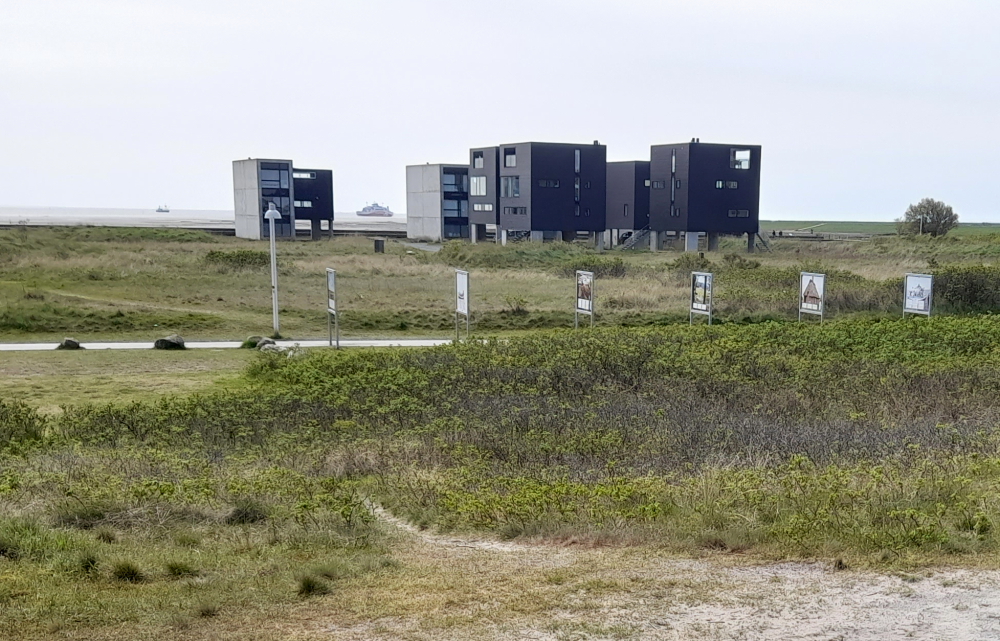
We find a bench in the park to eat our rolls overlooking some funky concrete blocks that are supposed to be apartments/houses.
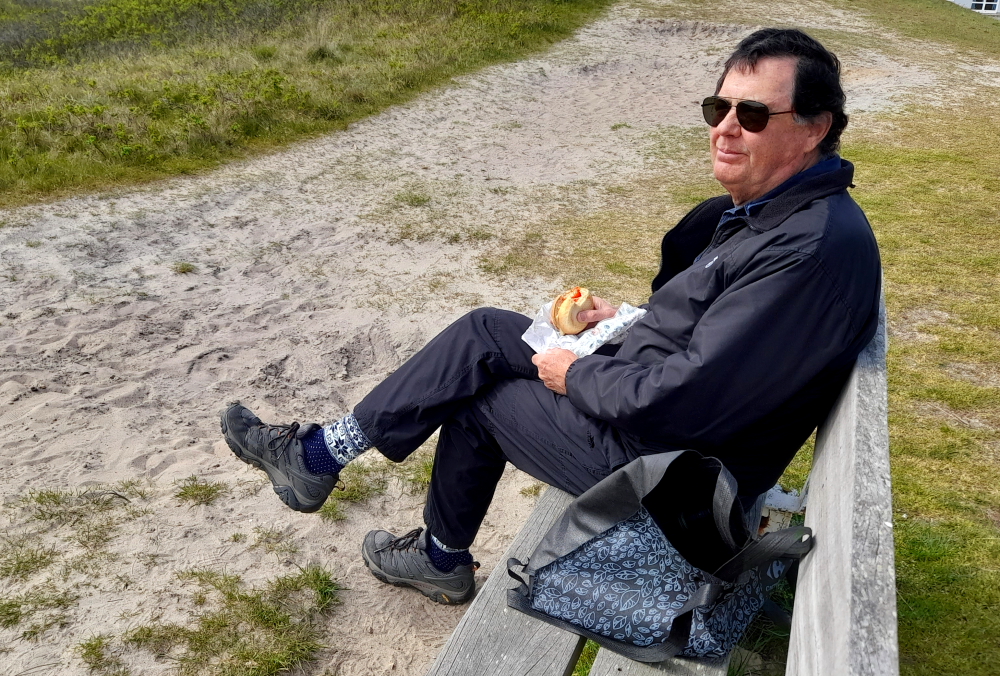
Our accommodation is 52 minutes away so we rejoin Jutland and take the 11 which bypasses the town of Ribe. 15 minutes later we arrive at our next accommodation, Lejlighed ved Kongeaen – a two-bedroom apartment which is located – wait for it – next to a camping ground! This is the closest to ‘glamping’ that I will ever get!
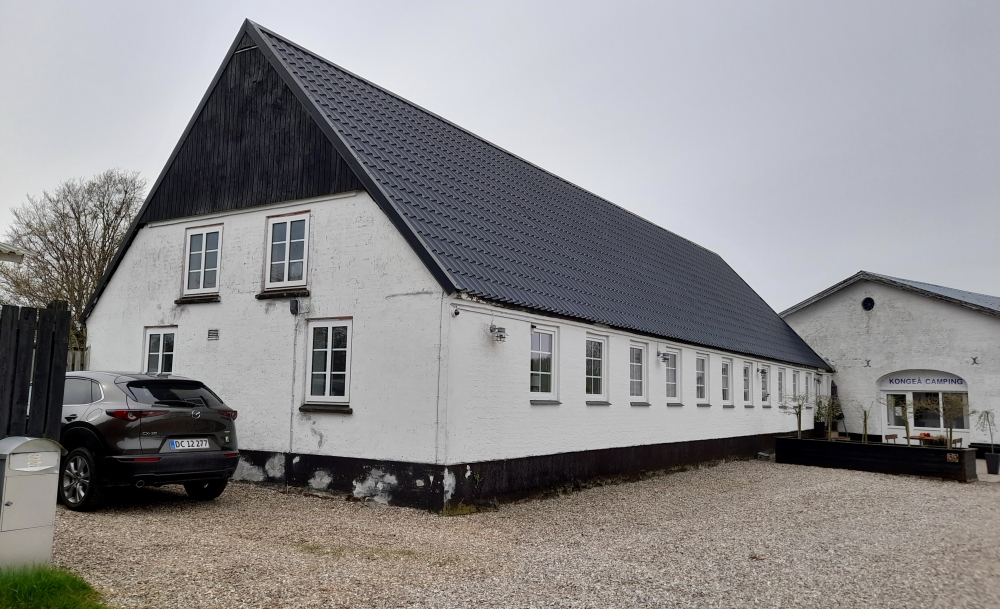
We booked the apartment as it had a washing machine. However, it is located in another building which the campers would use, too. And, to add insult to injury, I had to make my own bloody bed when we arrived!
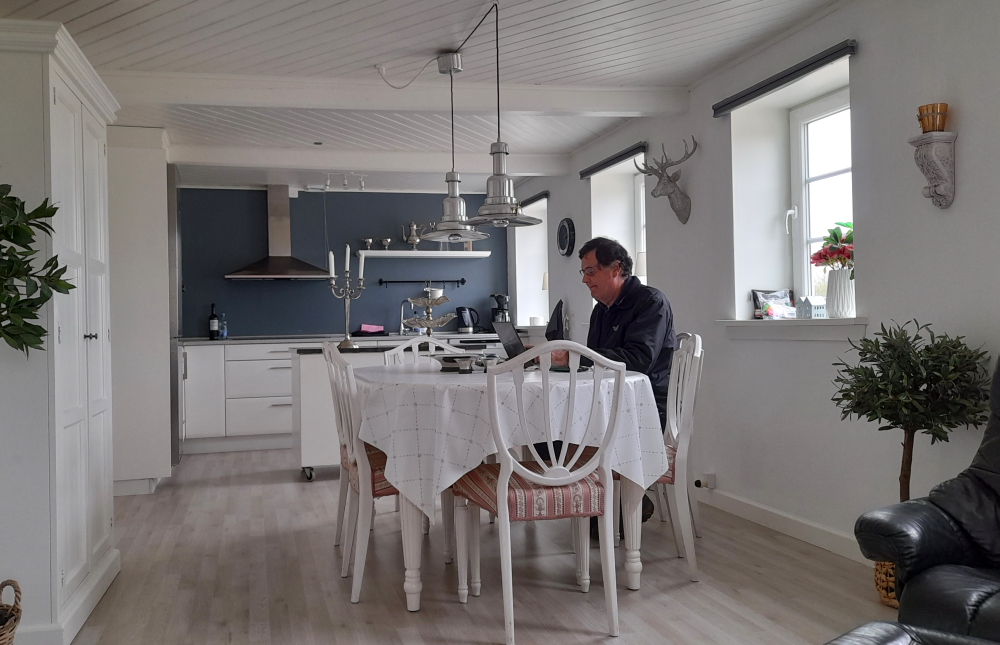
After we returned from a short visit to the local supermarket to buy breakfast supplies I had to do the washing since it has been nearly 2 weeks since our last washing in Cyprus. I miss Kristia!
 THE CONTINUING TRAVELS OF YOGI & BOO BOO